Category: AOR

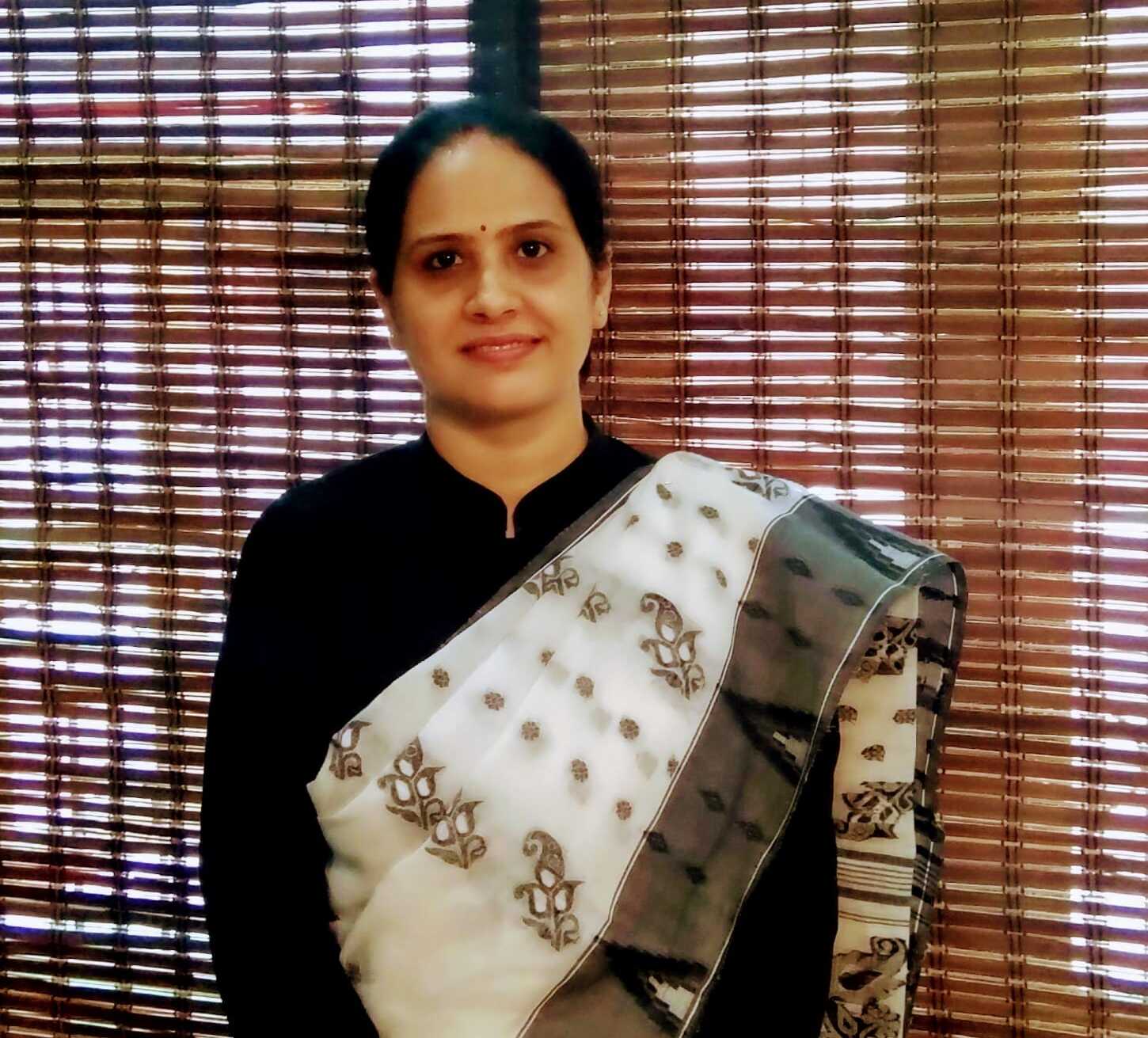
  • “To handle a wide range of cases effectively, a litigator must develop a robust set of core skills that transcend subject matter.” – Nishank Tyagi, Advocate on Record at Supreme Court of India.

    “To handle a wide range of cases effectively, a litigator must develop a robust set of core skills that transcend subject matter.” – Nishank Tyagi, Advocate on Record at Supreme Court of India.

    This interview has been published by Anshi Mudgal and The SuperLawyer Team

    Being an AOR today with nearly a decade of experience, what initially motivated you to pursue law as a career? Was there a defining factor that guided this decision?

    If I was to sum up my decision to opt for law, I would say that I was running away from engineering and landed up at law school. Law was not the obvious choice for me initially. I was a science student in school and my parents wanted me to prepare for competitive exams and pursue engineering as engineering was the obvious choice for all science students, however, very early on in 11th standard in school, I realized that it was not my cup of tea. I wanted more than just a simple 9 to 5 desk job. I wanted a career which would make me look forward to work everyday and also give me an opportunity to serve the society and that is how law, especially litigation became the obvious choice for me.

    In your early years, you worked with various lawyers and law firms. What were some of the experiences that laid the foundation for your practice, and how did you deepen your understanding of law during that period?

    I consider myself extremely fortunate to have worked with some of the greatest minds in the field of litigation very early on in my career. After completing law, my focus was to learn the complexities of litigation and understand the world of Trial Courts. I had initially joined the chamber of Mr. Ratan. Kumar Singh, Senior Advocate where I learned about arbitration and commercial litigation which was an enriching experience. Later, I joined BAV Partners where I got to work with Mr. Vibhor Garg, whom I deeply regard as he gave me ample opportunities to appear before various courts in Delhi. Mr. Garg encouraged me to argue matters independently and to cross examine witnesses whenever required which honestly laid down the foundation of the litigator that I am today. I also worked at a prestigious law firm like Dentons Link Legal where I saw the more organized and structured side of litigation and arbitration and handled some high-stake matters under the guidance of Mr. Atul Sharma and Mr. Ravi Varma who are both luminaries of the legal fraternity. 

    What challenges did you face being a first-generation lawyer?

    Just like any other profession, litigation also has its share of challenges and being a first-generation lawyer sometimes puts that extra burden on your shoulders, however, I am a firm believer that first generation lawyers should stay away from these negative debates of “insider-outsider”. Thinking too much on these lines will put you in a negative loop and divert your focus from important things. Rather than focusing on other people’s plate, one should put their head down and focus on improving core skills that a litigator requires. At the end of the day consistency and hard work can beat any kind of legacy.

    After almost five years in the legal industry, you took the step of establishing your own practice with Adel Legal. What inspired this decision, and what initial hurdles did you face in setting up your firm?

    From day one of me joining litigation, I was absolutely clear that someday I will set up my independent practice/firm. Though it always confused me as to what should be the timing of going independent and how much experience would be enough to go independent. Later, I realised that there is no straight jacket formula to this and everyone has their own circumstances. I knew that as I progressed in the world of law firms, both remuneration and responsibilities would increase but my risk-taking capacity would decrease. Hence, I thought the sooner the better for me and decided to take this calculated risk of going independent with just 5 years of experience.

    Having represented a wide range of clients, including banks, government entities, and foreign corporations before diverse judicial forums, what do you consider the most critical skills a litigator must develop to handle such varied cases effectively?

    To handle a wide range of cases effectively, a litigator must develop a robust set of core skills that transcend subject matter. Analytical & Strategic Thinking, Oral & Written Advocacy, Interpersonal & Negotiation Skills are important to name a few. A litigator must have a good sense of judgment and he must know when to push aggressively versus when to negotiate or settle. Also, litigation is adversarial and often high-stress. The ability to maintain focus, motivation, and composure through long, contentious cases is essential.

    With your experience in arbitrations under international institutions such as ICC, SIAC, and LCIA, how do you see the role of international arbitration evolving for Indian practitioners and clients in the coming years?

    I am extremely positive about the role of international arbitration evolving for Indian practitioners and clients in the coming years. Practitioners need to stay abreast of legislative reforms, institutional rules changes, and emerging jurisprudence. Indian parties are very active users of foreign arbitration institutions for international contracts. At the same time, there is increased demand for India‑seated or Indian institutions to handle international arbitrations, which reflects growing trust in domestic institutions. The Supreme Court and High Courts have increasingly issued pro‑arbitration judgments, pushing back against unnecessary judicial interference in arbitral awards, enforcing foreign awards.

    Having represented the Government of Delhi before the Delhi High Court, what has been one of the most challenging cases in your practice, and how did you approach and handle it?

    Handling Government litigation often involves chasing various departments, officials and civil servants for the required instructions, which is an additional challenge. I had recently worked on a case where government land worth hundreds of crores right in the heart of south Delhi had been encroached upon and even sale deeds were executed which were used to claim title over the said land leading to loss of revenue for government authorities. However, with the correct strategy and timely instructions, we were successfully able to defend the possession of the government authorities over the said land. 

    How has been your experience of working as Jail Visiting Advocate with the Delhi High Court Legal Services Committee?

    I got empanelled as a Jail Visiting Advocate with the Delhi High Court Legal Services Committee in the year 2022. I visit various jails in Delhi every week and interact with prisoners to know their grievances and ensure that they get the required legal help and adequate representation before the High Court of Delhi and Supreme Court of India. I file bail applications for under trial prisoners and file appeals on behalf of inmates who have been convicted by trial courts. I have closely experienced the working of jails and have tried to contribute in making lives better for the prisoners. Overall, it has been one of the most satisfying experiences of my career.

    What resources or methods do you rely on to stay updated with the latest legal developments, and what advice would you give to students aspiring to enter litigation? What habits should they build early in their careers?

    One doesn’t need subscriptions of any legal database or fancy website to stay updated on legal issues. The website of the Hon’ble Supreme Court and various High Courts are good enough to keep you updated about the latest judgments and legal trends. But one must develop the habit of reading.

    I consider myself a student of law and still learn from my mistakes, so I am not sure what advice I can offer but I can list down couple of mistakes I made in my career and would request my young friends joining litigation to avoid the same if possible:

    • Not doing enough internships with litigators and Judges.
    • Not networking enough from the very beginning.

    I learnt it the hard way but the above mistakes can be avoided. Be Patient: Litigation takes time to pay off.

    Becoming an AOR is a significant achievement. Could you share your journey towards this milestone and the responsibilities it brings to your role?

    The Supreme Court of India conducts the AOR examination every year and the syllabus and study material can be found on the Supreme Court’s website. Preparation for the AOR exam was a learning curve, however, since I had been in practice for many years, that experience along with a solid strategy helped me sail through in my first attempt. Becoming an AOR and representing clients before the Supreme Court of India is a matter of great pride for me, but it does come with its share of responsibilities. The Supreme Court Rules and various landmark judgments of the Apex Court define the duties and responsibilities of an Advocate on Record. The Supreme Court only recognises AORs for the purposes of filing and an AOR can be held accountable for anything filed under his name and signature. But the biggest perk is that you get to file cases and represent clients from all parts of the country before the highest court of the land.

    Balancing multiple responsibilities as an AOR and as the founder of your own firm can be demanding. How do you manage to strike a balance between professional commitments and personal life?

    This is one challenge almost all litigators face in their lives, however, with effective time management one can easily wrap up work in reasonable working hours. I personally believe in putting in effective working hours and leaving office by 7pm and encourage associates at our firm to do the same. Unfortunately, at a lot of law firms working till late hours has become the new trend. I personally do not support or encourage that working style. Even in high-pressure environments, one should try to maintain core working hours and stick to them. Dinners with family, workouts, or personal hobbies should be treated as non-negotiable meetings.

    Get in touch with Nishank Tyagi –

  • “The responsibility of being an AOR is immense as you’re a bridge between the Registry and the Hon’ble Judges, not just in argument, but in procedure.” – Udian Sharma, Advocate-on-Record at the Supreme Court of India.

    “The responsibility of being an AOR is immense as you’re a bridge between the Registry and the Hon’ble Judges, not just in argument, but in procedure.” – Udian Sharma, Advocate-on-Record at the Supreme Court of India.

    This interview has been published by Anshi Mudgal and The SuperLawyer Team

    Coming from a background in Science from Hindu College, University of Delhi, what inspired you to pursue a career in law? How has your technical background  influenced your approach to complex commercial or infrastructure disputes? 

    As a first-generation lawyer, I often say that I did not choose law, law chose me. Growing  up, I was deeply influenced by my grandfather, who fought legal battles for decades to  protect our ancestral land. His relentless perseverance, even against an unresponsive  system, left a profound impact on me. By the time I graduated in Science from Hindu  College, I had already seen how the law could be both an obstacle and a tool for justice.  

    My scientific training gave me a structured way of thinking. In Science, you learn to  analyze problems by breaking them down into fundamentals. That has greatly helped me  in disputes involving infrastructure and complex commercial contracts, where one must go  through technical details like engineering reports, financial data, regulatory compliances,  and present them in a manner that is both legally persuasive and technically accurate. It  allows me to approach my cases not just as a lawyer, but as someone trained to understand  the “nuts and bolts” of technical issues. 

    It has been an interesting journey, from solving arithmetic problems and arriving at ‘LHS  = RHS’ to addressing complex questions of law and concluding with ‘Hence, this SLP’. 

    In the early stages of your career, you worked with various senior judges and  advocates. How did these experiences shape your approach, and which lessons from  that time have had a lasting impact on your professional philosophy? 

    I had the privilege of clerking with Justice A.K. Sikri at the Supreme Court and Justice Siddharth Mridul at the Delhi High Court. Observing them up close taught me two  invaluable lessons: the importance of clarity, and the importance of compassion. Justice  Sikri had an extraordinary ability to simplify the most complex constitutional questions,  and Justice Mridul always emphasized the human element in adjudication. 

    Later, when I began working with senior advocates and counsels at the Supreme Court, I saw how preparation and integrity defined good lawyering. One lasting lesson I carry is that courts are not swayed by theatrics- they are swayed by sincerity and substance. These  experiences shaped my professional philosophy, that law is not just about winning cases, but about ensuring justice is meaningfully served. 

    What motivated you to establish an independent practice, and what hurdles did  you face while launching your chambers during COVID? How did you overcome  them, and what was your vision for the practice? 

    The decision was born partly out of necessity and partly out of conviction. During COVID, the legal profession itself came to a halt. Many colleagues struggled, and I realized that if I wanted to carry forward my vision of a client-centric and socially conscious practice, I  had to build something of my own. 

    I started my chambers quite literally from one room in my home (with immense gratitude  to my parents who allowed me to turn it into an office) with files stacked in the boot of my car. The hurdles were immense, no physical hearings, clients uncertain about the future, and the financial strain of running an independent practice in such times. But adversity also  brought clarity. I invested in technology, conducted virtual hearings, and slowly built a  team that shared the same values of hard work and service. My vision was, and remains to create a Chambers that combines courtroom advocacy with policy thinking, and where  every matter, whether commercial or public interest, is handled with the same dedication. 

    You have handled complex commercial disputes and arbitration, including cross border infrastructure matters and international arbitration, across areas such as  employment law and customs law. Can you share some major challenges you faced in  a complex arbitration case and the unique difficulties it presented? 

    One of the most challenging arbitrations I handled involved a cross-border infrastructure project. The difficulty lay not just in the scale, but in the diversity of the issues, technical  construction delays, regulatory clearances, and overlapping jurisdictional laws. 

    The unique challenge was coordinating with multiple stakeholders, engineers, financial  experts, and foreign legal teams, while presenting a coherent case before an arbitral tribunal presided over by a retired Supreme Court judge. It taught me that arbitration advocacy  requires more than just legal arguments, it demands the ability to understand complex  technical data into a persuasive legal narrative. 

    You have demonstrated a commitment to advancing legal discourse and  contributing to scholarly debate. How do you balance active practice with legal  writing and academic contributions? 

    For me, writing is not separate from practice, it is complementary. Courtroom advocacy is about the urgency of the present; academic writing is about reflecting on the future. Balancing both is difficult, but I make time because writing forces me to step back and  critically examine the jurisprudence I am part of. Recently, I have also begun teaching law  to students and interns- a pursuit I deeply enjoy, as it allows me to give back to the fraternity  while shaping the next generation of lawyers. 

    During the pandemic, for instance, I wrote extensively on the importance of impartiality in arbitrations and timelines in insolvency laws. These writings later informed some of the  arguments I made in court. In a way, legal writing sharpens my practice, and practice keeps  my writing, whether it’s articles, blogs, or pleadings, grounded in reality. 

    Clearing the Advocate-on-Record exam on the first attempt is a remarkable  achievement. What were your preparation strategies, and what primary  responsibilities come with being an AOR? 

    The AOR exam is as much about discipline as it is about knowledge. I prepared with the  belief that procedural law is the backbone of effective litigation. My strategy was simple:  treat every question as a live brief. I wrote my answers as if I were filing in court or briefing  a Senior Advocate. That practical approach helped me clear the exam on the first attempt. 

    The responsibility of being an AOR is immense. You are the face of your client before the Supreme Court and a bridge between the Registry and the Hon’ble Judges, not just in  argument, but in procedure. You are responsible for ensuring filings are correct, deadlines are met, pleadings are true and that clients receive the highest level of professional care.  It’s a trust that must never be broken. 

    How has the arbitration landscape in India evolved over the last decade? With the  advent of technology, what changes do you see in Supreme Court litigation strategies  post-COVID? 

    Over the last decade, arbitration in India has been projected as having matured from an  ‘alternative’ mechanism to the preferred mode for commercial disputes, with a legal framework aligning with international standards.  

    However, the ground reality is far more complex. Arbitration has, in practice, become less  formal, yet more vulnerable to judicial intervention at almost every stage. In one matter I argued before the Supreme Court, the Arbitral Tribunal, the Single and the Division Bench  of the High Court, each gave separate findings every time a cross appeal was filed by the  parties, resulting in six different outcomes before the case finally reached the Supreme  Court. This not only delays justice but also makes arbitration extremely costly and  cumbersome. Increasingly, I see my clients preferring to opt out of arbitration clauses  altogether, choosing and trusting Courts as their primary forum for dispute resolution,  driven largely due to the greater efficiency brought in through the Commercial Courts Act. 

    Post-COVID, technology has changed Supreme Court litigation in profound ways. Virtual hearings, digital filings, and e-briefs are now routine. This has enhanced accessibility and opened new opportunities. Lawyers today can complement their oral advocacy with strong  digital advocacy, while clients too can easily attend and witness hearings in real time from  anywhere in the world, ensuring greater transparency and participation. 

    What has been the most challenging matter you have handled, and how did you  navigate it? You have also worked extensively in animal welfare, environmental law,  and public interest litigation. What motivates you to take up these cases? 

    One of the most challenging yet fulfilling matters I handled was Jaggo v. Union of India, 2024 SCC OnLine SC 3826, which I argued before the Supreme Court on behalf of the  Appellant. The case involved a woman Safai-Karamchari, who had been working with the  Central Water Commission for over two decades, as a so-called part-timer. Despite her  long service performing essential duties, her plea for regularisation was rejected not only  by her employer but also by CAT and the Delhi High Court. To make matters worse, she  was illegally terminated, even though she was the sole breadwinner of her family, surviving  on a meagre salary of just ₹4,000 per month. 

    I decided to take up her case pro bono, moved by her plight and the larger issue of systemic exploitation of temporary workers. The challenge was immense, not only did I have to  defend her against three concurrent adverse findings, but I was also pitted against the office  of the Additional Solicitor General (ASG). But the Hon’ble Supreme Court heard me  patiently, and it was deeply encouraging to see the Court give weight to every argument  raised by me in Court. 

    Ultimately, the Supreme Court held that such long-standing service warranted regularisation rather than termination, and that arbitrary dismissals without cause, violated natural justice. Drawing from constitutional principles under Articles 14 and 16, as well as international labour standards and comparative jurisprudence, the Court delivered a  landmark judgment that has since been widely relied upon across the country to protect the  rights of temporary and contractual workers. 

    For me, this case reaffirmed why I chose litigation. It was an uphill battle against the odds,  but it showed me that with persistence, empathy, and conviction, the law can restore dignity  and transform lives. 

    I’ve also had the privilege of being appointed as amicus curiae by the Hon’ble Delhi High Court to represent victims/ prosecutrix in POCSO cases, an experience that has deepened  my commitment to matters of public interest and justice. 

    How do you balance your personal life with such demanding professional  responsibilities, and how do you manage stress and maintain personal well-being? 

    Honestly, balance is not always easy. The legal profession demands long hours and deep  emotional investment. What helps me is grounding myself in simple things, spending time  with family, unwinding with my office colleagues, catching up with my close circle of  friends, and taking out time to travel with them. These moments keep me centered amidst  the demands of practice.

    I’ve realised balance in this profession is a constant work in progress. The long hours and  high stakes can be demanding, so I make a conscious effort to attend therapy and stay  grounded, whether by taking out time for myself, slowing down when needed, or ensuring  I maintain a non-toxic and supportive environment around me. 

    I try different ways to manage the stress that inevitably comes with the job, but what keeps  me going is focusing on the parts I truly enjoy, being on my feet in Court. That’s where I  feel most alive. After all, we lawyers live to hear the three words, ‘Issue Notice. Stay’.

    Get in touch with Udian Sharma –

  • “One of the most significant lessons I’ve learned is that you must never allow yourself to be caught off guard. Being fully prepared not only helps in presenting your arguments convincingly but also helps you gain the court’s confidence.” – Ramchandra Madan, Advocate on Record at the Supreme Court of India.

    “One of the most significant lessons I’ve learned is that you must never allow yourself to be caught off guard. Being fully prepared not only helps in presenting your arguments convincingly but also helps you gain the court’s confidence.” – Ramchandra Madan, Advocate on Record at the Supreme Court of India.

    This interview has been published by Anshi Mudgal and The SuperLawyer Team

    With such a diverse range of skills and experiences, when you reflect on your journey, what were the pivotal moments that led you to choose law as a career? How did your time at Symbiosis Law School, Pune shape your legal interests, and which areas of law caught your attention early on?

    Growing up in Shimla, a town known for its serene beauty and quality of life, I was fortunate to receive a good education. However, the opportunities for students to explore diverse interests and extracurricular activities were relatively limited. This changed when I moved to Delhi and joined Vasant Valley School, an institution renowned for its academic and extracurricular excellence. The shift broadened my perspective immensely.

    At Vasant Valley, I actively participated in theatre, debates and business competitions, which helped me develop critical thinking, public speaking and teamwork skills early on. At the time, my plan was firmly set on pursuing entrepreneurship, an idea that took shape after I won an international business competition alongside my team, earning me a prestigious scholarship However, on the advice of teachers, peers, and family, I decided to also appear for law entrance exams while awaiting results from some top business schools. This decision, made at the last minute, turned out to be pivotal for my career path.

    Joining Symbiosis Law School in Pune was a transformative experience. It was my first time living independently, away from the comfort of home and I found myself surrounded by incredibly intelligent peers. In Pune, I continued to explore my passions, albeit with some limitations. Theatre, which I had always loved, took a backseat, but I remained active in debating, public speaking and participating in moot court competitions. Representing Symbiosis at both national and international moot court competitions was a highlight of my time there, giving me invaluable practical experience and honing my legal acumen.

    Law school also instilled in me a strong sense of community. The alumni network, which remains robust and supportive, has been an anchor in my journey in litigation. I was also fortunate to intern with some of the most respectable legal professionals, including Mr. Neeraj Kishan Kaul, Mr. Prashant Mehndi Ratta, Ms. Nandita Rao, and Mr. Sameer Oberoi. These internships were a window into the world of litigation and I liked the view! My law school experiences helped me discover my passion for law and I haven’t looked back since.

    Having yourself pursued an LLM at the prestigious LSE, can you talk about your experiences studying there and also outline the advantages of getting a master’s degree? 

    The decision to pursue an LLM should not be made with the sole objective of securing a higher salary. An LLM is best pursued for the academic and holistic growth it offers. While it undoubtedly enhances one’s credentials, especially as an independent practitioner, it’s not a guaranteed pathway to higher financial rewards.

    Initially, I hadn’t planned on pursuing an LLM, having interned extensively with my senior, Mr. Neeraj Kishan Kaul during law school, I was eager to start my litigation practice under his tutelage. However, at the encouragement of close friends, I decided to try my luck and applied to a handful of prestigious schools. To my surprise and delight, I was accepted into the London School of Economics & Political Science (LSE), an institution renowned for its remarkable legacy and association with eminent academics, lawyers and thought leaders, including luminaries like Dr. B.R. Ambedkar. Additionally, the central location of London, a global cultural and academic hub, was a significant factor in my decision. 

    I was also accepted and awarded a partial scholarship for taking residence at The Goodenough College, a highly selective residential college for distinguished graduate students from around the world. This scholarship made my decision to join LSE even more compelling as it would have significantly reduced my financial burden.

    My experience at LSE was transformative. The faculty’s expertise and the rigorous academic environment pushed me to expand my intellectual boundaries. I delved deeply into subjects such as competition law, arbitration law, refugee law and international law, examining them through post-colonial and literary perspectives. These courses broadened my understanding of the law and shaped my approach to legal issues in a nuanced way. I was also fortunate to read under experts such as Dr. Chaloka Beyani, my supervisor, who is the former UN Special Rapporteur on the Human Rights of Internally Displaced Persons. 

    Equally enriching was my time at the Goodenough College, where I had the privilege of living amongst some of the brightest minds across various fields. Even our regular, dinner table conversations were intellectually stimulating and inspiring. Beyond academics, living in London allowed me to experience its vibrant cultural scene—world-class theatre, opera, orchestral performances—and explore Europe on a shoestring budget, further enriching my worldview.

    The admissions process was rigorous but immensely rewarding. For aspiring students, my advice would be to focus on crafting a strong personal statement that highlights not just academic achievements but also a clear vision of how the LLM fits into your long-term goals. My journey to LSE taught me the value of taking unexpected opportunities and it’s a decision I’m deeply grateful for.

    Prior to going independent, you worked alongside Mr. Neeraj Kishan Kaul, Senior Advocate. How did this experience enhance your legal expertise, and what valuable lessons did you gain from working with such an esteemed mentor?

    When I first joined Mr. Kaul as an intern as early as 2012 I knew that I wanted to follow in his footsteps and be a litigator. I was in such awe of Mr. Kaul that I even kept the cause list from my internship days as souvenirs. Even when I chose to pursue my Masters in London, I knew I was never going to stay on and was going to come back to India to litigate. Which is why when I was invited to join Chambers with Mr. Kaul I was elated. 

    Working with Mr. Kaul was like a crash course in litigation and the art of advocacy- there are only a few, if any, who understand how to read the Court as well as him. Here, you can expect an extremely steep learning curve, where nothing short of perfection is expected from a Junior. We were always expected to add value to the brief by coming up with new arguments that even the solicitors missed out on. We were to pre-empt questions, whether direct or ancillary, that may fall from the Bench. 

    Equally important was the fact that Mr. Kaul‘s Chamber gave me invaluable colleagues who became my professional family, supporting me as I began my career and always a text message away whenever I needed to pick their brains or discuss strategy despite their own busy schedules. I will forever be grateful to Sir and my seniors and colleagues at the Chamber on who’s shoulders, today, I try to stand.

    You have successfully argued some important cases before the Hon’ble Supreme Court of India, the NCLAT and the Delhi High Court. Could you walk us through the challenges you encountered while arguing and how you navigated them?

    Each case presents its own unique challenges, but for a first-generation lawyer, especially one considered young in the profession, the hurdles are particularly distinct. Ours is a profession built on trust—trust from clients, peers, and, most importantly, the Courts. This trust must be earned, and for a young lawyer who is an unfamiliar face, the road can be difficult. Courts often view you with a degree of skepticism, and there is a natural resistance to accepting your arguments until you establish your credibility. 

    Arguing cases before forums such as the Supreme Court, the NCLAT, and the Delhi High Court has taught me that preparation is the key to overcoming these challenges. The only way to level the playing field—especially when appearing against eminent senior counsels—is to be thoroughly prepared, often better prepared than your opponent. Creativity and hard work are what help young lawyers stand out. When you can bring to the table insights or arguments that others, even with years of experience, might overlook, you begin to gain recognition.

    Every appearance in court must be treated with the seriousness and dedication of a final hearing. There is no room for complacency. Judges often test the mettle of young lawyers by probing their understanding of the case and the law. If the court perceives even a hint of unpreparedness, it is likely to challenge you even more. Anticipating these challenges and preparing meticulously has been my strategy in navigating these situations.

    One of the most significant lessons I’ve learned is that you must never allow yourself to be caught off guard. Being fully prepared not only helps in presenting your arguments convincingly but also helps you gain the court’s confidence. Over time, as you consistently demonstrate your competence and dedication, that initial resistance from the Court, gradually gives way to trust and acceptance.

    While the challenges are real and sometimes daunting, they are also what drive me to work harder, think deeper, and perform better with each case. The journey of a young, first-generation lawyer is not easy, but it is incredibly rewarding when you start seeing the trust you’ve earned reflected in the court’s acknowledgment of your efforts.

    You have been involved in a lot of pro bono work. What inspired you to dedicate time to legal aid, and how has this shaped your broader legal practice?

    Law is often referred to as a noble profession and as officers of the court, our primary duty is to the cause of justice. For me, this principle has always been at the heart of my practice. I find enormous satisfaction in being able to provide my services to those in need, and I strongly believe that no person should be denied justice due to their financial constraints.

    A significant portion of my practice has been dedicated to pro bono work. I was associated with the Delhi State Legal Services Authority (DSLSA) on the Criminal Panel for three years. This experience was both a profound learning opportunity and a stark reality check, as it exposed me to the vast inequalities in access to justice. It brought into sharp focus the glaring class divide in our country.

    What struck me most during my time with the DSLSA was the reality that for the majority of Indians, litigation begins and ends at the trial courts. Even in a city like Delhi, where the High Court and Supreme Court are often less than 10 kilometres from any district court, access to justice remains out of reach for many. The economic and social barriers faced by individuals trying to navigate the legal system were a stark reminder of the responsibility we hold as lawyers.

    Today, my private practice serves as a means to support my pro bono initiatives, allowing me to contribute meaningfully to society. I believe that as lawyers, we must recognize our obligation toward the community. Rendering services to those who cannot afford them is not just an act of charity—it is our duty to uphold the ideals of justice. 

    You’ve represented social media influencers and journalists in defamation cases against corporations. Given the fast-evolving nature of digital media, how do you approach defamation law in this context?

    Freedom of speech and expression is one of the most vital facets of the fundamental rights enjoyed by individuals in India. Beyond being a constitutional guarantee, it is also recognized as a human right, forming the cornerstone of any democratic society. The right to express freely and without fear gives meaning to all other rights, making it essential to uphold. However, this right is not absolute and is subject to reasonable restrictions under Article 19(2) of the Constitution.

    In my experience representing social media influencers and journalists in defamation cases, I have observed a worrying trend- powerful entities often misuse criminal and civil defamation proceedings to suppress fair and honest criticism. Freedom of speech in India, while constitutionally guaranteed, comes at a cost—it must be zealously protected from those who attempt to silence dissent or critique.

    The rise of digital media has democratized the exchange of ideas like never before. Today, with greater means available to everyone to voice and exchange opinions without the institutional barriers that once limited public discourse, people are more empowered to engage in critical dialogue, satire, and even humour- all of which are essential for a healthy democracy. One must be mindful, however, that this freedom cannot be used to justify the spread of hate speech and malicious falsehoods. 

    My approach to defamation law in the digital age emphasizes striking a delicate balance. On one hand, it is crucial to safeguard freedom of speech and resist any attempts to weaponize defamation laws to curb legitimate critique, satire, or dissent. On the other hand, the right to reputation and privacy, both of individuals and corporations, must also be protected from truly defamatory or intentionally harmful statements.

    Our society must develop a greater tolerance for humour, satire, and criticism while ensuring that boundaries are maintained to protect against harm caused by defamatory speech. In representing influencers and journalists, my goal is to advocate for the right to speak truth to power while promoting responsible discourse. The evolution of defamation law must adapt to this changing landscape, fostering an environment where free expression and accountability coexist.

    Throughout your career, you’ve been invited to judge competitions, participate in panels, and deliver lectures. What role has mentorship and legal education played in your own professional journey, and how do you view the future of legal practice for young lawyers in India?

    Mentorship and legal education have been integral to my professional journey, as they are for any lawyer striving to succeed in this noble profession. In law, one’s growth often relies on the guidance and wisdom of seniors, colleagues, and even opponents at the Bar.

     My own journey has been deeply rooted in the mentorship I have received from my seniors and peers, as discussed previously. I have been fortunate to experience the kindness and support of both the Bar and the Bench, which has enabled me to make small but meaningful strides in my career.

    Here’s where an interesting titbit comes to mind. Historically, in England, a lawyer qualified as a barrister and was called to the bar only after attending a series of formal dinners. While this tradition may seem unusual, it symbolized an important truth: the essence of legal education lies in the exchange of ideas and the wisdom shared by those who have walked the path before us. This spirit of learning continues in courtrooms, where lawyers and judges alike contribute to the collective growth of the legal community.

    The law, being one of the oldest professions in the world, carries a rich tradition of passing the baton of knowledge from one generation to the next. For anyone who has attended court proceedings, it is evident that the legal fraternity operates as a community invested in nurturing young talent and preserving the integrity of the profession.

    I view mentorship not just as an opportunity, but as a duty. One of the primary responsibilities of a lawyer is to carry forward this noble tradition by supporting and guiding the next generation. Whether through judging competitions, participating in panels or delivering lectures, I see these opportunities as ways to contribute to the ongoing dialogue of legal education and to help young lawyers navigate the challenges of a demanding profession.

    As for the future of legal practice for young lawyers in India, it is both exciting and challenging. The landscape of law is rapidly evolving with technological advancements, the growth of niche areas like data privacy and fintech law, and increasing global interconnectivity. Young lawyers must adapt to these changes while staying rooted in the foundational values of the profession—integrity, diligence, and a commitment to justice.

    As an Advocate-on-Record with extensive experience, what advice would you offer to young lawyers just starting out, particularly those interested in specializing in areas such as arbitration, company law, and bankruptcy?

    I believe young lawyers embarking on their journey, particularly in specialized areas such as arbitration and bankruptcy, must approach their careers with a clear sense of purpose and dedication. Here’s my advice for those starting out:

    • Patience and Grit Are Essential: Success in the legal profession is a marathon, not a sprint. It requires unwavering patience and resilience. The journey can be slow, but perseverance and consistent hard work always pay off.
    • Prioritize Quality Work Over Monetary Gains: Early in your career, focus on gaining valuable experience and honing your craft. Money will follow as a byproduct of expertise and reputation. 
    • Volunteer and Be Available: Offer to assist seniors on briefs and be available whenever they need help. The willingness to learn and support seniors demonstrates your commitment and eagerness to grow, which will open doors for mentorship and challenging opportunities.
    • Always Be Prepared and Professional: Every appearance in court, every draft you submit, is an opportunity to make an impression. Your reputation is built over years of consistent effort but can be lost in an instant. Never take any task for granted and always strive to be at the top of your game.
    • Stay Up-to date with the law: Laws specially like the IBC and Arbitration in India are still evolving and have not yet fully settled. Whether it’s new judgments, legislative amendments, or emerging trends, constant learning and staying up to date is a non-negotiable part of a lawyer’s journey.
    • Read the Travaux Préparatoires: To understand new laws like bankruptcy, it is essential to study the Travaux Préparatoires—the preparatory documents and discussions that shaped the legislation. For instance, the Bankruptcy Law Reform Committee (BLRC) Report, along with various Law Committee reports, provides invaluable insights into the origins and objectives of the Insolvency and Bankruptcy Code (IBC). By examining these foundational documents, one can better grasp the reasons behind the law’s enactment and its subsequent amendments, leading to a deeper and more nuanced understanding of the IBC.
    • Adopt a Holistic Perspective: No law operates in isolation. Having a broad-based understanding of other areas of law and industries will provide context and depth to your practice, making you a more versatile and effective lawyer.

    The legal profession is demanding, but it offers unparalleled opportunities for growth and impact. By focusing on continuous learning, maintaining the highest standards of professionalism, and demonstrating a commitment to the law, lawyers can carve out successful and meaningful careers in arbitration, bankruptcy, or any other field.

    Given your demanding professional commitments, how do you manage to strike a balance between your career and personal life? Are there specific practices or strategies you use to maintain focus and well-being?

    “Law is a jealous mistress” is a saying often repeated for its undeniable truth. To pursue a career in law, especially in litigation, one must be deeply passionate about the profession, as it tends to permeate every aspect of a lawyer’s life. 

    While striking a good-balance is often very difficult when court is in session, litigators are fortunate to have court vacations scattered throughout the year, and I make the most of these breaks by traveling. I make the most of such breaks and ensure to plan at least one trek and one surfing trip each year to help me disconnect and recharge.

    On weekends, I enjoy attending plays and concerts in Delhi, which provides a creative and cultural outlet. Maintaining health is also a priority; I’ve recently started swimming 2–3 times a week, which helps me keep physically active.

    Ultimately, striking a balance is about finding activities that allow you to unwind and maintain focus. For me, travel, the arts and physical activity are key to sustaining my well-being alongside my professional commitments.

    Get in touch with Ramchandra Madan –

  • “The early stages of a lawyer’s career can be analogically likened to the early stages of development of a child. One needs to have an extremely inquisitive and childlike approach towards learning the law and the legal procedures in the early stage.” – Anuj Tyagi, Advocate-on-Record at Supreme Court of India.

    “The early stages of a lawyer’s career can be analogically likened to the early stages of development of a child. One needs to have an extremely inquisitive and childlike approach towards learning the law and the legal procedures in the early stage.” – Anuj Tyagi, Advocate-on-Record at Supreme Court of India.

    This interview has been published by Anshi Mudgal and The SuperLawyer Team

    Given your extensive expertise and experience, was law always your first choice of career, or did your path evolve over time? Could you share some key moments from your academic journey at National Law Institute University, Bhopal?

    Law was never my first career choice. I even prepared and appeared for engineering entrance examinations, including IIT JEE.  Law happened completely by happenstance. My father heard his colleagues including a District Magistrate speaking to another colleague (in the context of his son’s higher education) about entrance examinations of National Law Universities which, in their words, were like the “IITs of Legal Education” and if one could get through such NLUs, they would have a very bright career. After enquiring further with the said District Magistrate about the NLUs and the entrance procedure, my father, in the evening broached the possibility of my appearance for law entrance examinations. In a way, law immediately sparked my interest, and I immediately went to the so-called ‘cyber-cafes’ of those days and researched further about the scope of the entrance examinations and how I could prepare for the entrance examination. I then came across Law School Tutorials (LST) and ordered their study material and started my preparation. I subsequently qualified the entrance examinations of Symbiosis Society Law School, Pune, Army Law School, Mohali, GGSPIU, NLIU (Bhopal) and several other entrance examinations and eventually joined NLIU, Bhopal, after briefly enrolling and studying at SSLS, Pune. So clearly, the road that led me to law evolved over time.

    After completing your law degree, what motivated you to pursue an LL.M. at Queen Mary University of London, and how did it enhance your previous education? Can you also share your experiences and the differences you observed in their teaching pedagogy?

    I was of the firm belief that at all times after you graduate, you must either be in the pursuit of earning or learning. I had been harbouring this desire to pursue an LL.M. right since I graduated.  When COVID-19 struck, I took this opportunity and enrolled myself for an LL.M. in International Dispute Resolution at QMUL, UK. It was very hard to keep up with the expectations of the teachers in terms of the pages to be read per day, despite the substantially reduced work pressure but I somehow managed to graduate with Merit. The biggest difference in the teaching pedagogy between the two great institutions was that at NLIU, at the undergraduate stage, the focus somehow remained more on foundational, theoretical, lecture-based learning while at QMUL, in the graduate programme, stress remained on in-depth analysis, critical thinking, and practical understanding of key concepts. There was no scope of securing good marks at QMUL, if one did not understand the intricacies of the key concepts concerned. Mostly the questions were in the form of real-life situations and one was supposed to write a suggestive note as to what one, as a Counsel, would have advised one’s client in the fact situation concerned. The other key difference was in the method of marking and evaluation at QMUL. Upon the end of the evaluation of the answer sheets, at QMUL, we would not only receive the marks but also detailed comments from the evaluating teachers which would further help us acquire an in-depth understanding of the concept and also help us understand where we lacked in the evaluation of the given factual situation. That was, in my view, a game-changing aspect. If one would not understand what one could have done better, one would commit the same mistakes again and achieve the same range of marks. However, a clear understanding of the areas where one could have done better in terms of expression or otherwise, would always promote a deeper learning of relevant concepts.

    In the early stages of your career, you must have encountered various learning experiences. Could you share some of these with aspiring lawyers? Additionally, what prompted you to start your own practice, and what were some of the initial challenges you faced in establishing it?

    I would like to first underscore the importance of the answer to this question for your readers. Please note that this is the most important and relevant part of this interview, from the perspective of an aspiring lawyer or a law graduate. I was indeed exposed to many learning experiences, especially in the early stages of my career. I would begin with saying that the early stages of a lawyer’s career can be analogically likened to the early stages of development of a child. One needs to have an extremely inquisitive and childlike approach towards learning the law and the legal procedures in the early stages of one’s career. The first year was mainly about familiarising myself with the procedures and practices at the Hon’ble Supreme Court, the Hon’ble High Court, the District Court and the various buildings and rooms that formed a part thereof. I, fortunately, had a senior from my college who was working as an Associate at the first chamber I joined immediately after graduation. I used to pose at least 100 questions to him on a daily basis in the course of our daily trips to the court. He was very patient with me and answered all my questions with calmness and ease. Thanks to him, I quickly understood the basic legal procedures, including but not limited to the courtroom etiquette, which side of the dias to stand on when representing either side, how to give appearance slips to the court staff, how to hand over documents/judgments at the bar, the position of the various courts, the important offices of the officers of the registry, how to inspect the file etc. It is very important to have gone through the grind yourself at the initial stages because if you haven’t done something yourself once, you’ll never get to understand the procedure in detail and will encounter issues even while delegating it to your juniors/clerks in future.

    One of the early learning experiences taught me to show up at the courts at least 15 minutes before the designated court commencement timings to avoid missing your matters and eventual embarrassment, regardless of the position of your matter on the causelist. In my initial years, a matter was listed at item no. 42 in a cause list listing a total of 70 matters for consideration of the Hon’ble Court. Assuming that the matter would certainly not be called out in the first hour, I turned up at 11:30 am instead of 10:30 am when the court concerned would commence the hearing. Much to my surprise, the matter had already been called out and taken up. Upon enquiry with the court master, I learnt that between Item no. 1 and 42, there were two connected batches cumulatively concerning 35 matters and that the rest of the matters had been passed over and therefore the matter came up for consideration earlier than expected. I had to wait till the court had taken up all the other matters and was to rise when I mentioned my matter and got my presence recorded and thankfully prevented any harm to the client’s interests. 

    Through one of the other learning experiences, I learnt to not take pleadings casually and to be absolutely accurate with the words while drafting pleadings. In one of the cases being conducted by one of the Advocates I was associated with in my early years (who held the brief for the defendant), I observed that while denying the pleadings of the plaintiff in the written statement, instead of the word ‘plaintiff’, the word ‘defendant’ was wrongly used. The enormity of the consequence of this inadvertent error was such that a civil suit filed by the plaintiff was decreed, under Order XII Rule 6 of the Code of Civil Procedure, 1908, on the sole basis of this inadvertent ‘admission’. This caused immense loss to the client and massive embarrassment to the concerned Advocate. After learning this important lesson, I haven’t ever filed any pleading/statement in any case without reading it at least thrice and believe you me, I have found some mistakes even in the third reading. I feel there is no other way to ensure accuracy. I further think that as an Advocate, you shouldn’t be making careless mistakes. You are paid not to make mistakes by the client. As such, you must conduct your cases with a heightened sense of responsibility. 

    Another learning that I drew from the whole episode was that one should keep one’s eyes and ears open and learn from the mistakes committed by others, without waiting to commit a mistake oneself, at the expense of one’s client. 

    Lastly, through another experience that I had with a client, where the client abruptly denied a clear understanding which I had with a client, I learnt that an Advocate should record the understanding arrived at with the client in regard to any aspect of the matter being handled for the client. Before filing pleadings/statements on behalf of the client, one should always email it to the client and ask the client to read the same in great detail and then respond to that email with an instruction to file the same if the same is in order. In my experience, following this practice will certainly save a legal practitioner from many embarrassing situations on more than one occasion in future. Further, in answer to question at serial no. 8, I have enlisted many other useful lessons I have learnt in the last 15 years as an Advocate.

    In so far as the second part of your question is concerned, there comes a stage in every lawyer’s life when you feel that you’re ready to take the plunge. The stage is usually marked by reasonable confidence that the lawyer would be able to handle a given matter by himself/herself before the court and that he/she will be able to sustain his/her basic expenses without any external help. When I got reasonably sure in regard to both the aspects mentioned above, I took the plunge into private practice, in October of 2015 and god has been kind ever since. I always tell my associates that the biggest challenge in advocacy is not advocacy itself, but the art of dealing with the clients so as to ensure that the clients pay up your fee well in time and your relationship with your clients remains cordial and transparent, built on the edifice of trust. In this regard, please note that the issue of fee should be discussed and settled soon after the client has conveyed his decision to hire you, without any delay. There should be no hesitation in discussing and settling fee with the clients at the earliest opportunity. I realise that this is easier said than done and that it takes years to get good with this but this is one of the most important aspects of advocacy. That said, the other biggest challenge which you have to overcome in setting your own practice is to get enough clients to sustain your practice and to grow it sustainably. You may be an exceptional advocate, but you don’t get to display your skills unless you appear before Courts frequently and that doesn’t happen unless you hold enough briefs for your clients to make that happen. The initial challenges for me too, therefore primarily pertained to having a good number of clients, getting those clients to realise the value of my legal advice and getting them to pay up my fee on time.

    Having represented clients in both domestic and international commercial arbitration, could you describe one of the notable cases you’ve worked on, especially your experience in the ICC Arbitration in Zurich?

    The international arbitration matter between an Austrian Company which was represented by me and a government organisation functioning under the aegis and administrative control of the Government of India, deserves a special mention here. Brief redacted facts were that my client was an Austrian Company which, along with its Indian Collaborator, supplied a complex chemical plant to a government organisation. The contract subsequently ran into rough weather and our client issued a Request for Arbitration [RFA] to the said government organisation, in accordance with the terms of the contract and the ICC Arbitration Rules [ICC Rules]. The seat of arbitration was Zurich and the other side was represented by a well-known and established Indian law firm which was substantially bigger in size than our team. The valuation of the subject matter of this arbitration was in excess of Rs. 1000 crores. We first represented the client before the Hon’ble Delhi High Court and obtained a stay against encashment of the client’s bank guarantee. This reaffirmed the client’s faith in us and led us to represent the client in the entirety of arbitration proceedings. The arbitral tribunal comprised of 3 members, including a former Chief justice of India, and a German engineer as co-arbitrators and a lady from Beirut, Lebanon, as the chairperson of the tribunal. The arbitration was administered under the aegis of ICC and governed by the ICC Rules. We had the hearings of this arbitration at Zurich, Paris and London and eventually succeeded in the case. Our claim was largely allowed and the Respondent’s counterclaim was dismissed. The victory was significant and it sparked my interest in arbitration which would become a lifelong association in times to come.

    You have significant experience in sports-related litigation. Can you discuss some landmark cases you’ve handled involving National Sports Federations and the Indian Olympic Association?

    I was introduced to sports-related litigation by a dear friend of mine in the year 2020 and since then, it’s been a constant in my practice. I have represented/advised the Kho Kho Federation of India, the Handball Association India, the Rajasthan State Olympic Association, the UP Olympic Association, the Pondicherry Olympic Association, the Delhi State Kabaddi Association, and famous discus thrower in a wide array of legal proceedings, including proceedings before Hon’ble Courts/arbitration tribunals. One of the landmark cases that I’ve been a part of is the PIL bearing W.P(C) 195/2010, titled “Rahul Mehra vs. Union of India and Ors.”. In this matter, I represented KKFI, which was an impleadment applicant. By way of the judgment dated 16.08.2022, a division bench of the Hon’ble High Court of Delhi held that the National Sports Code is applicable to the Indian Olympic Association and the National Sports Federations along with their constituents. The Hon’ble Court further extensively dealt with and ruled on various aspects of the administration of the Indian Olympic Association and National Sports Federations including the validity of permanent posts like life president in IOA, differential voting rights to National Sports Federations and State Olympic Associations in IOA, the applicability of Model Election Guidelines, the applicability of age and tenure guidelines on members of the Executive Committee of NSFs and IOA, size of the Executive Committee, eligibility of a person against whom charges have been framed to contest the elections. Though the judgment is under challenge before the Hon’ble Supreme Court, it makes for an essential read for every sports lawyer in the country just for the ground it covers in the realm of sports regulation and administration.

    The said judgment was challenged by the Indian Olympic Association before the Hon’ble Supreme Court by way of SLP(C) 14533/2022. In the said matter, the Hon’ble Supreme Court initially appointed a one-man committee headed by a former judge of the Hon’ble Supreme Court tasked with the mandate to suggest amendments to the constitution/Memorandum and Rules of the Indian Olympic Association. The said committee held public hearings at the Jawaharlal Nehru Stadium, which were attended by all stakeholders including the representatives of the National Sports Federations and State Olympic Associations. I represented the Kho Kho Federation of India, the Handball Association India and the Rajasthan State Olympic Association at the public hearing. The matter is still pending adjudication before the Hon’ble Apex Court and I am fortunate to be representing the Kho Kho Federation of India and the Handball Association India who are the impleadment applicants before the Hon’ble Apex Court in the said matter.

    Another seminal sports-related litigation was a challenge to the elections of the then President, IOA by way of a civil suit for Declaration preferred by an eminent sportsperson whom I represented. The matter was hotly contested with several senior counsels representing either side. The matter went on for a couple of years and was ultimately rendered infructuous midway as the then President, IOA, voluntarily resigned from the said position before the end of his term and the matter was rendered infructuous as the desired objective was achieved before the conclusion of the trial.

    With your background in sports law and international arbitration, how do you foresee the future of sports law in India over the next 5-10 years?

    I foresee great developments for sports law showing up on the horizon. As of this day, the sports organisations, principally being the Indian Olympic Association and the National Sports Federations are regulated by the government through the Ministry of Youth Affairs and Sports [MYAS] by issuance of executive instructions, circulars and letters which are binding on the NSFs and IOA. A compilation of such executive orders, instructions, circulars, and notifications issued by the government over a period of time, created in the year 2011, came to be referred to as the National Sports Development Code of India, 2011 [National Sports Code]. The National Sports Code has been holding the field to date. However, recently, the MYAS introduced the Draft National Sports Governance Bill, 2024, which was also put up for public consultation in the recent past. The bill proposes many reforms, making provisions for establishment of Sports Regulatory Board of India to regulate and supervise the National Sports Federations (NSFs); establishment of an internal grievance mechanism for athletes and coaches; establishment of an Appellate Sports Tribunal tasked specifically with the objective of adjudication of sports-related disputes, reservation for women and sportspersons of outstanding merit [SOM] in Executive Committee posts; establishment of Athlete’s Commission; relaxation of eligibility criteria for contesting of Executive Committee posts for wider representation.  Once the National Sports Governance Bill, 2024 is promulgated into law, it is going to revolutionise the administration and regulation of sports and herald a new era of sports development in India. 

    How do you manage the complexities of handling a wide array of civil and criminal matters at the Supreme Court of India? Can you share an example of a particularly interesting case and how you addressed the challenges it presented?

    My practice before the Hon’ble Supreme Court of India is mostly confined to matters on the civil side. That said, one can manage the complexities of any case, one handles, with an in-depth knowledge of the factual and legal issues involved. The soundness of your research, the clarity of your expression, and the dint of your hard work would dispel the complexities with ease.

    One particularly interesting case that I can immediately remember was a bunch of 5 SLPs preferred by a group of Nursing Colleges situated in a particular state, inter-alia, against the Nurses Registration Council [NRC] of the said state. The Petitioners were represented by a number of AORs, Counsel and Senior Advocates and the NRC was singularly represented by me as its Standing Counsel. The matter came up before Court No. 2 of the Hon’ble Supreme Court, headed by a division bench of 3 Hon’ble Judges of the Hon’ble Court, quite early in the morning and since the matters cumulatively comprised at least 2000 pages, I requested the Hon’ble Court to grant me some time for filing of proper counter-affidavits to the said SLPs. Considering the stress on the ‘urgency’ involved in the said matter and considering the ‘future of the students’ was said to be at stake in the said matters, the Hon’ble Court declined my request and asked me if I could prepare a summary and a chart to assist the Hon’ble Court by the following day. Daunted at the prospect of being able to comprehend and assist the court effectively with the matters in less than 24 hours, I requested the Hon’ble Court to grant me time till the day after. The Hon’ble Court, kindly agreed to my request and posted the matter for final hearing after two days. The task was daunting, still as these were the first 5 matters assigned to me by the MPNRC and I was at that point in time, not familiar with even the applicable statutory provisions, rules and regulations governing the subject matter of the said SLPs. Regardless,  I put everything else aside and started grasping the essence of each one of the said 5 SLPs. With great difficulty, after sleeping for less than 6 hours in the intervening 48 hours, I ended up making a note and table for the Hon’ble Court’s consideration. When the matter was taken up, I cumulatively argued for more than 30 minutes, without having to look at any of the case files. Several Advocates and Senior Advocates marshalled their arguments against the position taken by me. However, at the culmination of the hearing, the Hon’ble Court thankfully dismissed the entire batch of matters, on the strength of the arguments advanced by me and barred the Petitioners therein from approaching the Hon’ble Apex Court ever again on the said issue. The process that led to the culmination of the aforementioned matter not only enriched me immensely as an advocate but also reaffirmed my faith in my advocacy and on the principle that with hard work you can surmount insurmountable odds. Further, as is the case with the overcoming of any challenge, I felt victorious and encouraged to work harder and harder to sharpen the essential tools for my law practice.

    What advice would you offer to young lawyers who aspire to have a successful career like yours? Are there any resources or practices you recommend for staying updated with evolving legal trends?

    Some of the good habits I would encourage young lawyers to inculcate in the early years are:

    • Treat the matters of your senior as your own and handle them with the same level of ownership and responsibility. This will help you immensely later when you start your own practice.
    • Read your drafts at least thrice before filing the same. Every time you run through it, mark my words, you’ll find mistakes. Impeccable drafts create a great primary impression in the mind of the judge.
    • Never try taking shortcuts in the profession. They’re likely to do more harm than help you.
    • Read the whole judgment. Don’t just read the headnote to grasp the ratio. 
    • Never give in to the lure of unethical practices.
    • Always be loyal to your client but at the same time, remember that your ultimate loyalty lies with the court. 
    • Never mislead a judge and answer questions posed by the bench directly and promptly.
    • Have a sincere demeanour becoming an advocate while sitting inside the court. Don’t engage in fun or banter inside the court.
    • Communicate your fee structure to your client promptly, and without delay, and if possible, during the first meeting itself. 
    • Be thorough in your research and endeavour to know the jurisprudence regarding the legal proposition applicable to your case, in all its variations and limitations.
    • Lastly, remember that above-average intelligence, along with sincerity and hard work will do the trick for you in the profession.

    Further, it is substantially easier to stay abreast with the evolving legal trends than it was for the previous generation of lawyers. Earlier, to stay updated, lawyers had to rely majorly on law reports and journals. In contrast, today you have the advantage of a world connected with hi-speed internet which makes this job a whole lot easier. The other day, while I was patiently sitting and waiting for my matter to be taken up by the Hon’ble Supreme Court, a matter pertaining to legal ramifications arising from obscene comments made by a popular content creator was taken up by the Hon’ble Court. I was surprised to note that even before the matter got over, a popular online platform publishing legal news had already published a whole article on the issue. Today we live in a fast-paced world driven by technology where one has ready access to online law journals, online news portals, online legal research portals, video lectures on law by prominent jurists, and the latest addition to the list is AI driven legal research tools. With all this at one’s command, one can learn immensely and stay abreast with the latest legal trends at the same time, with ease.

    Managing a demanding legal career alongside a personal life can be difficult. How do you balance your professional commitments while maintaining a healthy work-life equilibrium?

    My senior once told me that if you’ll not strike a work-life balance, you will never find enough time to complete the endless work that will keep you drowning till neck deep in its vast expanse. He always told me to leave for home on time every day so that you make the most of your days with your family. Law, as they say, is a jealous mistress. It certainly demands a lot of time and dedication from you, if you aim to excel in the legal profession. However, I am a firm believer of the age-old adage which states in the relevant part, that “if health is gone, everything is gone”. I endeavour to go to the gym 3-4 times a week to ensure my physical and mental well-being and I try to leave the office by 7-7:30 pm every day so as to be with my family by 7:45-8:15. These two habits have helped me in maintaining a healthy work-life equilibrium.

    Get in touch with Anuj Tyagi –

  • “As a lawyer, I have the chance to advocate for people’s rights, help those who need it most, and work toward a fairer society.” – Sudipto Sircar, Advocate-on-Record at Supreme Court of India

    “As a lawyer, I have the chance to advocate for people’s rights, help those who need it most, and work toward a fairer society.” – Sudipto Sircar, Advocate-on-Record at Supreme Court of India

    This interview has been published by Anshi Mudgal and The SuperLawyer Team

    Your legal journey spans nearly a decade, during which you’ve handled a wide array of cases. Could you share what initially drew you to the field of law and if there were any particular experiences or influences that guided you toward this path?

    When I reflect on my journey into law, I can’t point to one single moment or experience that set me on this path. It was more like a gradual, almost magnetic pull. You could say it was a slow evolution, starting from my desire to pursue a career in journalism after my 10th class board exams. At one point, I was seriously thinking about a career in music – I’ve always loved playing the bass guitar, and during my final school years, I would practice for hours, often losing track of time and neglecting my studies and preparations for the law entrance exams. There were nights when I’d be lost in my music, while my textbooks sat untouched.

    But then came a pivotal moment. One evening, my father sat me down with a look of concern and said, “You need to make a decision. Choose a path.” And that was the wake-up call I needed. Sure, I still play the bass with as much passion as ever – it’s my way to unwind after a busy day in the courtroom. By day, I’m a lawyer, and by night, I’m a bassist. It’s quite the balance, one that keeps me grounded and inspired.

    What draws me to law is its ability to make a real difference. As a lawyer, I have the chance to advocate for people’s rights, help those who need it most, and work toward a fairer society. It’s not always glamorous, and it’s definitely not as simple and straightforward as it might seem from the outside—there are challenges, frustrations, and setbacks along the way. But despite all that, it’s about using the law to level the playing field, ensuring everyone is heard and treated fairly. At the end of the day, it’s about creating tangible change, and that’s something I find deeply fulfilling.

    In the early stages of your career, working as an associate must have been a valuable learning experience. Having worked with big names, could you highlight a few key lessons or insights that significantly shaped your understanding of the law and contributed to your professional growth?

    I say now in hindsight, particularly for pursuing a long-term career in litigation, but the hardest (and the most important) part of starting your journey in this profession is finding and joining a good Chamber. It can literally decide the course and quality of your career. Honestly, being a first-generation lawyer, I did not have this understanding at the time, but I am grateful as to how life has worked out. I have had the good fortune of working under Mr. A.D.N. Rao (he was an Advocate-on-Record during my days under him) and Mr. Shyam Divan, Senior Advocate, and it has been (and continues to be) an amazing journey.

    If I had to highlight the key lessons I’ve learned, it would be threefold. First, it all comes down to hard work. It’s not always easy, and yes, it means sacrificing weekends and putting in long hours. But the more you give, the faster you learn. It’s the foundation for everything that follows.

    Second, embrace the diversity of work, especially when you’re just starting out. The more varied your tasks, the broader your understanding of the field. It’s in the variety that you truly grow.

    And lastly, be ready to take responsibility for your mistakes, no matter how tough it is. Whether it’s a scolding from a senior over a drafting error or a misstep in court, don’t let it bruise your ego. Mistakes will happen—there’s no way around it. What matters is acknowledging them, learning from them, and using those lessons to become better. Every mistake is a step forward if you let it teach you.

    Having appeared before both the Supreme Court of India and several High Courts, you’ve dealt with a wide range of legal issues. How do you approach preparation for such high-stakes cases, especially those requiring in-depth legal analysis and argumentation? What’s one crucial skill you believe every legal professional should cultivate early in their career?

    When preparing for high-stakes cases, especially those requiring complex legal analysis, my approach is grounded in thoroughness and meticulous planning. First, I immerse myself in the facts of the case—ensuring that I fully understand every detail before moving to the legal aspects. I believe that every great argument begins with understanding the context. Once I have that, I turn to the law itself—scouring precedents, statutes, and legal commentary. I approach each piece of research with a critical eye, looking for nuances that might not be immediately obvious but could make or break an argument.

    Beyond the legal research, I focus on refining my arguments by simulating different scenarios and anticipating possible challenges. This helps me stay flexible and confident in court, ensuring that I can respond effectively to unexpected questions or shifts in direction. 

    As for one crucial skill, I would say it’s the ability to think critically and analytically. Developing the habit of breaking down problems into their core components and approaching them with a clear, logical mindset is essential. This skill doesn’t just help in court—it’s what will guide you through the toughest cases and the most complicated legal challenges. Cultivating this skill early in your career will set the foundation for everything else that follows.

    Your practice covers a wide spectrum of areas, including compliance, agreement drafting, IPR protection, and more. Looking back, what has been the most challenging case you’ve worked on, and what strategies did you employ to navigate the complexities of that matter?

    There have definitely been many challenging cases! And let’s be honest, the definition of a “challenge” evolves as you grow. When I first joined the Bar, even my first appearance before the Supreme Court (just a mentioning, mind you) felt like a monumental task. Now, after a few years, I’ve worked on plenty of complex matters, so the “challenge” isn’t necessarily in the complexity anymore—it’s more about maintaining the same level of attention and quality across every case. It’s like trying to keep your enthusiasm for a TV show after the 10th season… You just have to keep the energy up!

    But if I had to pick one instance that stands out, it would have to be the Ram Mandir dispute. It was my first day under Shyam Divan Sir, and he handed me the small task of diving straight into over 200 volumes of pleadings and evidence. And, mind you, this was pre-COVID days—so we’re talking about physical volumes here, the kind that could double as gym equipment. And later, it turned out that by the end of the week, I was required to prepare the first draft of the Written Submissions. 

    Needless to say, I ended up spending my nights in the office, burning the midnight oil every day from the very first week. And honestly, I loved every minute of it. I was grateful for the trust Shyam Sir had placed in me, and I was determined not to let him down. Looking back, I can confidently say that it was one of the most intense but fulfilling experiences of my career. If you ask me now, I wouldn’t trade that first week in his Chamber for anything!

    In your advisory role with various companies, especially in the telecom sector, you deal with a constantly changing regulatory landscape. What are some of the biggest challenges you face in this area, and how do you navigate the evolving regulations to ensure compliance?

    The biggest challenge is keeping up with the ever-changing regulatory landscape. It’s like trying to catch up with a moving train, except the train keeps changing direction and speed. The simple solution I’ve found is to read—constantly. I devour multiple newspapers and magazines (and thank goodness for Magzter, which has been a lifesaver for both domestic and international updates), and I make it a point to regularly check the websites of regulatory bodies. They’re the first to spill the tea, so I’ve got to be there.

    But beyond just staying updated, ensuring compliance is a constant back-and-forth with various departments. I’ll admit, it’s like trying to decode a puzzle at times, but the experience has generally been positive. Most bureaucrats, when approached with an issue, are surprisingly understanding and willing to help clarify things. They get that regulations can be tricky, and they’re usually happy to work towards a solution. I always tell my clients to steer clear of litigation unless absolutely necessary. With regulatory work, litigation should always be the last resort—sort of like trying to use a sledgehammer to crack a nut. It’s far more effective to talk it through first.

    Your work in environmental law, particularly as assisting the Amicus Curiae in major Supreme Court cases, speaks to your deep commitment to this field. What first sparked your interest in environmental litigation, and what drives you to keep contributing to this area? Furthermore, how do you assess the evolution of environmental jurisprudence in India, particularly in the context of judicial interpretations of laws like the Forest Conservation Act and the Environmental Protection Act?

    To be honest, I didn’t set out to specialize in environmental law or mining law when I first entered the profession—it just happened. It all started because Mr. A.D.N. Rao is the Amicus Curiae in several landmark environmental cases [T.N. Godavarman Case (Forest Conservation Case), M.C. Mehta (Taj Trapezium Case), Goa Foundation (Goa Mining Case), Common Cause (Orissa Mining) and Samaj Parivartana (Karnataka Mining Case)]. He was also very active before the National Green Tribunal. So naturally, I was more than happy to assist him in these high-profile cases. It was chaos, but it was one heck of a learning experience. Mr. Shyam Divan is also the Senior Amicus in Samaj Parivartana.

    Fast forward, when I joined Mr. Shyam Divan’s chamber, my work on Samaj Parivartana continued. In fact, some of my colleague’s joke that this case is what officially got me into the Chamber, since it’s how Shyam Sir got to know me—thanks to my constant presence at briefings with A.D.N. Sir. Alongside that, under Shyam Sir, I also became heavily involved in the Krishna and Cauvery River water disputes, which was a whole new world of learning.

    Through all of this, I can now confidently say I’ve by now internalized environmental law, mining law, and water disputes law. All the major judgments and orders from these cases are by now permanently etched in my brain.

    As for the evolution of environmental jurisprudence in India, I think we’re entering a new phase. In the 1980’s and 1990’s, right up until 2014-2015, the Supreme Court was basically the environmental superhero, swooping in with orders and directions that the government had to follow— It was practically the Court which was running the show.

    But now? Things are shifting. This new phase sees the Court stepping back a bit. Why? Well, for one, many of the major environmental issues the Court was grappling with have been resolved or are winding down. Secondly, we now have a dedicated Environmental Tribunal, which takes up a lot of the heavy lifting that the Supreme Court used to earlier. And, of course, the government is playing its part too, providing more clarity in compliance—though some might argue that this clarity is more developer-friendly than environment-friendly, but that’s a debate for another day.

    The bottom line is, the Court has moved from being the enforcer of environmental laws to more of a law interpreter, and I think it’s striking a balance between being pro-environment and pro-development. It’s no longer just the hammer; it’s more like the guide. And I think the Court is doing a good job of maintaining an equilibrium.

    Enforcing occupational health and safety regulations in India, particularly with respect to the OSH&WC Code, 2020, presents several challenges. From your perspective, what are the key hurdles in ensuring effective enforcement of these regulations? Additionally, could you shed light on your role as a legal consultant in finalizing the standards under the OSH&WC Code, and how your involvement helped shape these regulations?

    The biggest hurdle in enforcing the OSH&WC Code? Well, it’s like trying to run a marathon with one shoe—it’s all about infrastructure and resources. On the bureaucratic side, there are still far too many vacancies in government departments, and that’s not changing anytime soon. On the industry side, especially in the MSME sector, it’s a whole other ballgame. Large corporations can foot the bill for compliance, but for micro and small enterprises? It’s like throwing another weight onto an already overloaded backpack. And let’s not forget, many of these enterprises operate in the informal sector, which only makes enforcement more challenging. This has been a long-standing issue, and there is no quick-fix magic wand in the Code or the regulations that will suddenly solve it overnight.

    As for my role as a legal consultant, I was brought in when the regulations were getting fine-tuned for submission to the Ministry. And let me tell you, it was a race against time. I practically set up camp at the Headquarters of the Director General Factory Advice Service & Labour Institute (DGFASLI) in Bombay for an entire week. It was me and a team of experts from across the country, working long hours, getting up at the crack of dawn and going till evening, vetting every line of the regulations. We worked even during the weekend. But the real fun for me began when the day’s work was over. I stayed up late into the night fixing all the errors and amendments we had discussed for the portion that was completed, so that the next day, there was an updated draft before the team to confirm and finalise.

    On the first night, the DGFASLI staff got a bit of a shock to find me still working past regular office hours into the night. The night guard practically kicked me out of the building so that he could lock up. So the next day, I spoke to the Director and got permission to keep a room in the main building open and running with the guard staying awake to lock up after me. I am pretty sure he was cursing his luck to be stuck with me at night, but hey, we got the job done!

    But in the end, it wasn’t just about hitting deadlines—it was about shaping regulations that could make a real difference and make life a little easier for everyone in the industry. Sure, there were some late nights and a few cups of coffee that felt more like lifelines, but the experience was fulfilling, and I’m proud to have played a part in it.

    With increasing focus on technology, sustainability, and corporate responsibility, how do you see the future of environmental law and occupational safety evolving in the next decade? What emerging trends do you think young lawyers should be preparing for? Also, what advice would you offer to young professionals aspiring to excel in law, particularly in fields you’re deeply engaged with?

    If you asked me what’s changed the most in environmental law, I’d say it’s paper. Pre-COVID, we were practically drowning in it, with piles of pleadings that could take over entire tables, with additional mini towers on the side. Big environmental litigations often run into thousands of pages. But with e-filing and PDFs taking over, paper use has drastically reduced. It’s still a bit of an adjustment for me. I still prefer scribbling down notes on paper with a pen during final arguments, but overall it’s better for the environment, and the back and arms, which were practically crying from the weight of all those files. 

    Looking ahead, I see compliance becoming even more central to environmental law and occupational safety. With technology, sustainability, and corporate responsibility gaining traction, the pressure to comply with environmental standards will only increase. Add to that the rise of AI, and we’re looking at a future where regulations and compliance will be handled more efficiently (but no less seriously) than ever before.

    For young lawyers entering this field, I think the biggest trend to prepare for is the shift towards smaller offices. Technology has already made it possible for lawyers to do what used to require an entire team of stenographers, typists, clerks, and assistants. When I started out, if you didn’t have a good stenographer, you were essentially behind the curve. Now, you can draft petitions on your laptop without needing anyone else to type them out. The upside? It means less overhead costs, making it easier for junior advocates to set up their own practice. The downside? Fewer jobs in law chambers, because there’s less need for large teams to manage all the paperwork.

    So, what does this mean for fresh law grads? It means adaptability will be your best friend. If you’re tech-savvy, you’ll have an edge. But, and this is important, you can’t just rely on the machines. AI might help with drafting and research, but nothing beats good old-fashioned brainpower and creativity when it comes to solving legal problems. Similarly, technology may assist with legal procedures, but it can’t replace the art of persuasion or the nuanced skill of court craft. Those come with experience—and time.

    So my advice to young professionals is two-fold: First, be a sponge—absorb as much knowledge as you can, and do it fast. The legal world is changing, and you need to keep pace. Second, as you adapt, don’t forget the fundamentals. Stay curious, stay sharp, and remember that no amount of technology can replace the value of your own thinking. And, of course, no matter how advanced AI gets, it will never be able to match your charm in the courtroom. That’s the stuff that wins cases.

    As both a legal consultant and advocate-on-record, you manage a broad range of responsibilities. How do you maintain a work-life balance in such a demanding profession? Are there particular habits or practices you’ve adopted to stay focused and energized in this high-pressure field?

    It’s tricky, for sure. But I didn’t enter this field by accident—so I’m not about to complain. The reality is, work-life balance in law is more of an ideal than a constant state. It’s hard to achieve it when your schedule is always in flux, whether you’re waiting in court or running to brief a Senior Advocate. There’s also the drafting, vetting, and admin work that’s part of the daily grind.

    But here’s the thing—there will never be enough hours in the day to do everything. So instead of stressing over the balance, I focus on making time for what truly matters. I make sure to spend time with my wife and family, because that’s the best way I know to recharge. I’m also a philatelist, and I try to dedicate at least a little time each week to that hobby, even if it’s just 30 minutes.

    Beyond that, I walk and meditate when I can. Some days I miss them, and that’s okay. But I also use my car rides—whether I’m heading to the office or coming home—as a chance to think through the day ahead or unwind after a busy one.

    So no, I don’t have a perfect “work-life balance” in the typical sense. But I do make time for the things that keep me focused and energized in a profession that demands a lot.

    Get in touch with Sudipto Sircar –

  • The Endless Journey of Learning and Growth: Why a Career in Law Keeps You Forever Young –  Mayuri Raghuvanshi, Advocate on Record (AOR) at the Supreme Court of India.

    The Endless Journey of Learning and Growth: Why a Career in Law Keeps You Forever Young –  Mayuri Raghuvanshi, Advocate on Record (AOR) at the Supreme Court of India.

    This interview has been published by Anshi Mudgal and The SuperLawyer Team


    Having such immense experience in diverse fields, can you share the story behind your choosing law as a career and what kind of moments or experiences have motivated you to continue for almost two decades now?

    Well, I think simply because one life is not enough for law. Every day passes by, and you know you have learned something new. There will not be a single day in this profession where you will not go to bed with a feeling that you have learned something new today. And yet when you try to ask yourself, do I really know the subject, the answer will definitely be no, because it’s vast, it’s huge, and it is dynamic.

    For example, several of the subjects we practice today, we have not studied in law college. They are new to us, and we learn every day. And the profession, I mean, now, of course, there are various aspects. Once you have your law degree, there are various ways in which you can put your legal education to use. But even if we are just talking about litigation alone, every day you will learn something new. I have been doing this for almost two decades, as you rightly pointed out, but there are still so many areas of law that are new to me, and I’m still looking for an opportunity to learn and grab that.

    So I think that’s the romance of law. That’s the whole idea and the fun of being a lawyer: you learn every day. I mean, look at it like this — suppose I were in a different profession, you would have called me a middle-aged woman, but I’m a toddler in the profession still. We have a very long professional life that keeps us young and alive, and that’s the beauty of the profession. That’s why it’s all worth it.
    When we were in school, the usual thing was that if you’re a good student, you would study science. So, I also wanted to believe that I was a good student. I took maths with biology as a subject in class 12, which clearly shows that I was confused and not very clear about what I wanted to do. But yes, everybody said, we have to now sit for the competitive exam. I had though had one advantage, my parents had studied law. And I think by far, I have, in that sense, inherited my father’s passion for law, for the subject. So, I remember my evenings were earmarked for me with my father. And once, where I think what sparked the interest was when I was in class 7th or 6th, my father was reading Lord Denning’s closing chapter. And he would come back, and, you know, I still have a very vivid memory of the time he would spend with me asking me what I was doing. He would sit on the corner of a sofa and just sit with a book, and perhaps he was so engrossed in reading it.

    I thought, who is this bald man who has eaten up all my time? I wanted to know who this bald man was, not knowing that who actually Lord Denning was. And that’s where I started actually going through his books and all. So, very often it happens that we are interested in, or we choose a field because we have a role model, and we want to become something, we want to become a lawyer. So, we want to study law. In my case, it was the other way around. I was so confused about what I wanted to study and what I really enjoyed reading. Today, I am able to articulate it, but when I was a young girl, I had difficulty in articulating or understanding my own interest.

    So, while I was interested in stories, history, and all sorts of books around me, when I looked at even science subjects like Math, Physics, Chemistry, and Biology, the ones I was reading to score marks, it was more out of a curious interest. My hobby or the time when I had to recreate or my leisure was all filled with all kinds of books. My father once pointed out to me that, “Look here, this is your bent of mind. This is what you should look at making your profession.” So I would write poems, I would read poems, I would do things, but I was really never able to understand it. And as I was telling you, I did clear an engineering entrance exam.

    And a day before I cleared, and interestingly, when we were in school, the whole quest about getting into a law college — there weren’t so many law colleges then — and my father is the old-world person in that sense of the term, believing that if you want to study law, you should have certain maturity. He says, “You can’t teach fundamental rights to a 17-year-old boy.” That’s how he looked at it. So, when I first started expressing myself that I wanted to study law, my father was of the view that I should do a graduation program in any subject I wanted and then take up a three-year law course. Because, as he still believed, how could a 16-year-old person understand jurisprudence or what is a fundamental right? And he would always tell me, “To understand the right to life, you have to live a life.”

    There were some five-year law colleges that had come up. So, I finally managed to convince my father to let me sit for an entrance exam. Or, if I can recollect correctly, there was National Law School, Bangalore, which I could not appear for because by the time I convinced my father, the dates had closed. So, the only entrance exam I took was for Symbiosis. In those days, there was only one Symbiosis, which was in Pune and affiliated with Pune University. It wasn’t even a deemed university then. I remember I had my entrance exam at Teen Murti Bhavan, and I enjoyed the entrance exam like anything. I knew the answers at the back of my hand.

    See, Maths, Physics, those legal deductions, when you were studying Math in class 12, were like baby steps. It wasn’t difficult at all. General knowledge — I realized that’s where I really understood that I knew almost everything. For example, there was this question, “What does Parliament consist of?” I knew that it was Rajya Sabha, Lok Sabha, and the president. There were questions on legal news and current affairs, and I knew all of that. I remember when my name came up, I was at serial number eight on the list.

    So, when I went to my father and said, “Let’s go for this,” and that’s where my mentor, Dr. Akilen Pandey, played a very important role in my final decision. Because, all said and done, even in those days, someone would call you a fool for giving up engineering and studying law. But I was glad I was surrounded by people passionate about law, who were able to guide me and show me how beautiful the subject was. And once I was in college, I remember after the first class, I called up my father and said, “I finally know what I’m going to study for the rest of my life.” My soul had found its place. So, for me, it was more about the passion for law. Even today, you know, while I am a lawyer, I practice law in court, it’s not about what I want to become; it’s always the subject that is the core of everything I do. It’s the love for the subject that takes precedence over everything else.

    I enjoyed it, actually. You know, there are two exams that I enjoyed thoroughly. One was my law entrance and the other was my advocate-on-record exam. Even if a bomb would have dropped outside, I would have cared less. I would have perhaps continued participating in the process.


    Ma’am, at the very start of your career, you had the option of joining esteemed advocates like Advocate Gopal Subramanium. How did that experience shape your approach towards law, your research, and the way you work today?

    You know, the most important thing in a lawyer’s life is the chamber they start from. I had been exceptionally blessed because of the people I worked with, particularly in the initial years. In our profession, we say that the horse is from which stable—that’s your genealogy, your pedigree. And I am very lucky in that way because that’s what shapes you. On the face of it, it may look like we were just assisting them, but the relationship between a senior and junior is very much like a parent and child.

    When you are a baby, you hate everything that your parents say. You disagree with them. You don’t understand why they’re doing something. Sometimes, you find them irrational. But as you grow up, you begin to realize why they behave the way they do. And to your nightmare, you’ll realize that you’ve also turned into them.

    So, in a way, there are things, like for example, Mr. Subramanium’s chamber — I can bet you, you go to any junior who has come from that office, you will see we all have a style of preparing a note that we take to court. This is the note we used to prepare for sir. I still don’t know how to read a file or go to court without a note in my hand. Now, of course, my notes have shifted to electronic notes, but even today, while I use LiquidText and its features, I still make my note. All my files have a note. It’s a very typical thing, and I can bet any junior today from Mr. Subramanium’s chamber would not have a note in their file. We don’t know how to read our files without the note.

    So, it’s like I just said, this is one thing we’ve all imbibed. We’ve all imbibed certain traits, the way we work, the way we think. For example, Mr. Subramanium was an early riser. He would start early in the morning. Now, most offices work late into the night. I have, by default, become an early morning person. I can start early because he worked that way. So we got acclimatized to the way he worked.

    Those things you may not realize like I didn’t realize it for a very long time, but now, when I sit back and reflect, I think I’m always more comfortable starting early rather than doing something late at night. I like to read my files, revise them early in the morning, or have a meeting with clients in the morning rather than late at night.

    So, it defines almost everything. And it’s not just the people you work with — we also have the benefit of working with some of the stalwarts in the profession, assisting them. Every time we assist them, there’s something you learn from them. By just observing them, watching them. If you ask me, the person who actually teaches you the law is the judge sitting on the other side. That person, and if you want to learn the procedure, the person sitting in the registry will teach you the procedure. So, these two people are actually our gurus in that sense, because we learn while interacting with them. They are the best teachers, actually. The judges are the best teachers in that sense.

     Ma’am, you practically take out all that guru factor from everywhere you go—from the registry to judges, to even your juniors, and seniors. Obviously, everyone has their own style. How did you choose your style, and when did you decide to start your own practice? What kind of motivation was behind all of it? Because it’s not always easy, I would say, to make the decision to go independent and start a whole firm for yourself. When and how did you decide to take that step?

    So, there wasn’t a particular moment when I decided. I started working at my first chamber, which was an advocate-on-record’s chamber. I had the advantage of being clear in my head that if I wanted to practice in the Supreme Court, I needed to become an advocate-on-record (AOR).

    I knew it would take me five years, but effectively six, because our results in Pune University were declared in June, so by the time we got our certificates and enrolled, it was July. The AOR rule requires you to complete one year of training after four years of enrollment before taking the AOR exam. For us, post-April enrollments meant an additional year, so it became a six-year process for me. I started preparing for the AOR exam during this time.

    My journey began in the chamber of an advocate-on-record. After that, I got an opportunity to work with Mr. Subramanium. Back then, he was Solicitor General, and his practice was focused entirely on Supreme Court work. I worked with him for a while, but the exposure I gained was mainly in the Supreme Court.

    By 2009, after three years of practice, I realized I had zero experience in original side work, trial courts, or High Courts. The only forum I’d worked in was the Supreme Court. However, being based in Delhi, I had the advantage of having access to various courts and tribunals, and I was eager to learn. I started taking up work from different people and assisting whenever I could in trial courts, learning things I hadn’t done before, like drafting plaints.

    Then, Mr. Sanjay Ghosh came into the picture, and his practice in the High Court gave me my first exposure to original side work. I also started volunteering for arbitration proceedings, marking them on my calendar and following them as if they were my own cases, even though I had no client or fee.

    By the time I became an AOR, I had some matters here and there. But once I passed the exam, my practice truly began to take off. One major benefit of being an AOR is the liberty it offers—you can take on a case pro bono and still handle everything, from drafting to arguing, without needing to depend on anyone else. This flexibility allowed me to build a practice independently and create opportunities for myself.

    Ma’am, there are times when people question this aspect as well that if you keep doing things for free, when will you start charging? I’m just stating what has often been said. How have you navigated such challenges and strategized your practice? What suggestions would you have for newcomers or people who want to create their own path? You’ve worked in such diverse areas like service laws, company laws, taxation, civil, constitutional law, etc. How have you managed all of that?

    One of the best strategies is not to let an opportunity slip by, even if it seems like something that cannot be monetized immediately. Sometimes, what appears to be free work today can translate into valuable opportunities later.

    For example, when the Sexual Harassment Act was passed in 2013, many organizations struggled to set up their sexual harassment committees. Some of my clients from PSUs reached out to me for advice, and though I didn’t charge for it initially, I helped them understand the new rules and how to form committees. It seemed like free work at the time, but it eventually led to more billable work, and what started as a small thing turned into a significant opportunity.

    It’s important to note that this doesn’t mean you should work for free indefinitely. In fact, it’s essential to know your worth and charge for your time when it’s appropriate. But early in your career, you must recognize that sometimes giving away a bit of your expertise for free can build trust and open doors.

    For instance, my pro bono work with the All India Judges Association started in 2014. Although I wasn’t paid, that work led to other opportunities. Similarly, the work I did for free or at a minimal rate built a foundation for my practice to grow.

    The key here is not to have a myopic view of your career. Understand that, as a lawyer, you are not an employee. You are an entrepreneur. It’s different from a regular job where you can clock in and clock out. As a lawyer, particularly if you’re aiming to be an arguing counsel, you need to realize that you’re in charge of your own success.

    Once you understand this, everything becomes easier. You won’t get caught up in the conventional expectations of time sheets or packages. You’ll embrace the ups and downs of the profession because you’re building your own practice, and that mindset will ultimately make the journey smoother.

    Ma’am, you have also been involved in a lot of gender awareness initiatives, especially your role in the internal complaint committee under the Sexual Harassment of Women at Workplace Act and your position as an external member for organizations such as Rashtrapati Bhavan. What kind of challenges do you face when addressing gender sensitization issues, particularly concerning sexual harassment prevention? How do you assist or advocate for individuals in overcoming these issues, especially with more women entering the workforce in various environments? How have you addressed these challenges under your supervision?

    There are two main aspects to the work I’ve done. First, gender sensitization is a subject I’m deeply passionate about. In fact, I’m currently pursuing a PhD in feminist jurisprudence, an area of growing interest for me as I continue working on these issues. I’ve had the opportunity to engage with this law in three capacities: as a lawyer, where I represent clients in court; as a member of an internal committee, adjudicating complaints under the law; and through conducting awareness workshops, which I love doing. These workshops have been conducted in various institutions, each with its own unique challenges.

    One of the biggest challenges is that, as a country, we’re still not entirely clear on what constitutes sexual harassment from a legal standpoint. For example, the Vishakha guidelines were established in 1997, and although the 2013 Act is essentially a continuation of those principles, the law remains quite skeletal. It states that sexual harassment includes any unwelcome advance, but what qualifies as an advance is not clearly defined. In the virtual world, what might be considered a form of sexual harassment could be something as simple as sending a WhatsApp message or insisting on a cup of tea when someone is uncomfortable. It’s unclear how these actions should be categorized.

    Another issue is the diversity of workplaces – the law applies to a law firm, a school, a multinational company, and even Anganwadi workers, each with distinct sensitivities. For example, in multinational companies, a simple gesture like a peck on the cheek may not be seen as problematic, but in other workplaces, it may be inappropriate. So, determining where the line is between workplace conflict and sexual harassment is often not easy. The definition of sexual harassment is still a point of confusion, even within legal circles.

    I’ll give you an example. In 2015, the Ministry of Women and Child Development came out with a handbook categorizing various incidents as “sexual harassment,” “may or may not be,” or “definitely not.” However, this handbook is just a guide and not legally binding. So, even though it can help, it still leaves room for confusion in how to conduct inquiries and address harassment cases.

    A particularly common mistake is when people try to substitute their own sensibilities for the person making the complaint. For example, if a woman reports that a man tried to touch her, a person might dismiss it as just a handshake. But we need to understand whether the person making the complaint is genuinely uncomfortable with it. This has been a difficult concept for many, including judges, to grasp. The challenge is to put aside your own sensibilities and view the case from the perspective of the individual making the complaint. We need to ensure we’re not dismissing their feelings just because we would have acted differently. It’s essential to have training that allows us to understand these issues in layman’s terms so that people can really apply these systems with clarity.

     Ma’am, you’ve stated that you’ve gone paperless and, in your words, you’ve become a semi-technology-equipped lawyer. With more of our lives going online, such as court appearances and meetings, do you think we’re addressing online harassment in the same way we’re addressing physical harassment? In particular, the psychological impact of online harassment, which can be unforeseen, and what steps are being taken to address that?

    That’s a great question. In fact, Rajasthan High Court recently ruled that the concept of “workplace” under the Sexual Harassment Act should also apply to virtual spaces. This means that online meetings and virtual workplaces are covered under the Act, which is a step in the right direction. The issue is now clear: even online harassment is covered. There’s also international precedent, with countries like Australia issuing similar guidelines during the COVID-19 pandemic. Many organizations have updated their sexual harassment policies to ensure that online platforms, emails, and WhatsApp groups are covered.

    The challenge is that people often still don’t recognize that online harassment exists. It’s difficult for many to comprehend that harassment can happen without any physical contact. Even in situations where we’re having a conversation online, harassment can occur. That’s why sensitization is so important. People need to understand that harassment isn’t just about physical actions—it’s about respecting another person’s comfort level.

    It’s also crucial to recognize that sexual harassment doesn’t always involve a clear sexual offense. Many people confuse harassment with sexual offenses, simply because the word “sexual” is involved. Some individuals believe that their actions, such as making a comment or joking, are harmless because they don’t intend to cause harm. But it’s not about intentions; it’s about whether the other person feels uncomfortable. Understanding each other’s sensibilities is key to creating a respectful environment, whether online or offline.

    Ma’am, balancing your roles as an advocate, faculty member, and the head of your law firm is incredibly demanding. There’s also the aspect of mental health in this profession, something that isn’t often discussed. How do you manage to balance all of these responsibilities? What advice would you give to young professionals entering this field, which is both demanding and stressful?

    You’ve raised an important issue. The most important thing for a successful lawyer is good mental health, but we don’t talk about it enough. As lawyers, people come to us with problems—emotional, financial, personal—and we bear that burden too. Balancing all the different roles you mentioned requires resilience. For me, it’s essential to find time to laugh, stay positive, and not get overwhelmed. Burnout is a real issue, especially with the long hours we often work. Many of my students, after about 10 years in practice, experience this burnout.

    The first thing I would advise young professionals is to pay attention to your health—both mental and physical. Don’t skip meals, don’t compromise on sleep, and make sure you’re doing something that rejuvenates you, whether it’s exercise, reading, or even just watching a movie. I often ask my interns when the last time was that they went out for dinner or watched a movie. Many of them are so stressed out they don’t even want to talk about it. It’s important to take a step back and realize that life isn’t just about work.

    As women in this profession, there’s also the issue of “pipeline leakage,” where many women drop out between the ages of 30 and 45, especially when they’re balancing career and family life. It’s a challenging time, and the profession doesn’t always make it easy. But for me, having a supportive environment at home has been a huge privilege. I live with people who are gender-neutral and more progressive than I could ever claim to be, which makes a huge difference.

    I always tell young lawyers that there’s no rush. The profession is long, and you don’t need to achieve everything by the age of 30 or 35. Take care of your mental and physical health, and enjoy what you do. If you enjoy your work, it won’t feel like a burden.

    Ultimately, work-life balance is individual. Everyone has their own version of balance, and you have to find what works for you. For me, teaching gives me a different perspective and rejuvenates me to come back to my litigation work. So, I stay busy, but I enjoy everything I do. And that’s the key: to find joy in your work and make time for fun along the way.

    Get in touch with Mayuri Raghuvanshi –

  • “I believe an inherent interest and love for the Law, coupled with deep reserves of patience is an absolute essential if choosing to pursue litigation.” – Aditi Tripathi, Advocate-on-Record at Supreme Court of India.

    “I believe an inherent interest and love for the Law, coupled with deep reserves of patience is an absolute essential if choosing to pursue litigation.” – Aditi Tripathi, Advocate-on-Record at Supreme Court of India.

    This interview has been published by Anshi Mudgal and The SuperLawyer Team

    With over a decade of experience now, what initially sparked your interest in pursuing a career in law? Was it a deliberate decision to enter the legal profession, or was there a specific event or experience that inspired you to take this path?

    I never had to look for inspiration beyond home. My father, Justice Ajay Kumar Tripathi, was a first generation lawyer, who in turn was encouraged to pursue law by Prof. N. Madhava Menon, the architect of modern legal education in India. Watching my father burning the midnight oil in preparation for matters, and listening to his stories about particularly challenging days in court was always fascinating. Even as a child I could glean that here was a career that encouraged inculcating intelligence, quick thinking, and an ongoing quest for knowledge coupled with an element of public service. 

    By the time I was at the cusp of entering college, my father was elevated to the bench, which gave me fresh and unprecedented insight into the gruelling demands of the profession, not only as part of the Bar, but even on the Bench. Having an innate inclination towards humanities over the sciences, I loved studying history and political science and ultimately, decided to appear for the law school entrance exams.

    During my time at NUJS, Kolkata I endeavoured to gain a broad spectrum including during internships. In my penultimate year of law school my elder sister, also a lawyer, advised that I apply for an internship with Amarchand & Mangaldas & Suresh A. Shroff & Co., New Delhi (now Shardul Amarchand Mangaldas/SAM). I interned with the Litigation and Disputes Resolution practice area at AMSS. I assisted the associates in active matters with research and drafting. It was exciting and challenging, and led me to realise that litigation was my true calling. Having liked my work, AMSS recruited me while I was still in my 5th year.

    Having worked with several distinguished legal chambers and law firms, how did these early experiences shape your approach to legal practice? Are there any key lessons or insights that you gained from these experiences that continue to inform your work today?

    My litigation journey started with the Litigation and Disputes Resolution Team at AMSS. AMSS is one of India’s top-tier law firms, while you feel fortunate to be a part of the organization, life at a law firm is gruelling. The long hours, in a high pressure environment is ‘baptism by fire.’ However, working at one of the leading law firms of the country, I learnt to emulate the industry’s best. Law firms give you great exposure, both at a professional and personal level. Handling high stakes matters, I inculcated critical thinking, which makes for a good lawyer, and as a solicitor, I also mastered skills like time and client management. The most important skill I imbibed at AMSS was attention to detail. Another learning from Mrs. Pallavi S. Shroff, the Managing Partner was to always be prepared with the brief, even if you are the junior-most lawyer on the matter. She guided young lawyers to learn every aspect of the matter, including the most fundamental things like ensuring no typographical errors, correct pagination of briefs, preparing proper case compilations, and brief management. Even now in the era of digitisation, these skills continue to serve me well and have set high standards for my final work product.

    Wanting to be in courts more regularly, I joined the Chambers of Mr. Paras Kuhad, Senior Advocate and Former Additional Solicitor General of India. The experience at a senior’s chamber after a law firm was equally if not more challenging and demanding. The most important insight Mr. Kuhad provided was that as a litigator one has to marshall the facts of a brief. Arguments may be subjective, depending on the side you are defending, but not the facts. In court, I frequently see Judges calling upon young counsels to apprise them on the facts of a petition. Judges are always encouraging of juniors who are well prepared. As a young counsel, to receive a compliment from the court is an unparalleled feeling, and goes a long way in building your confidence. This also instils a sense of ownership towards the brief.

    I also had the privilege of being a part of Mr. P.S. Narasimha, Senior Advocate’s chamber (as he then was). While the volume of work made it a high pressure work environment, it was also the most ideal office, with an exceptionally congenial atmosphere. The biggest insight I garnered during my time there was that – with the right attitude and guidance, people thrive and are encouraged to show up and give their 100% every day. As a part of Mr. Narasimha’s office, I worked on matters, which engaged the attention of the nation. Observing Mr. Narasimha, I learnt that keeping your composure, no matter the complexity of the brief, is the touchstone of a good lawyer, and also of a good human being.

    Undoubtedly, the common thread running through all the offices I have been a part of is that there is no substitute for hard work in our profession. 

    After gaining experience with various legal entities, you chose to establish your own practice. What motivated this decision, and what challenges did you face in the early stages of building your independent practice?

    While mentorship under a Senior Advocate helps lay the foundation to your foray into the practise, it is still a bubble. I had already received a taste of solicitor practise, and realised I enjoyed being a litigator more. Therefore, instead of going back to a law firm, I dove into the deep end.

    I decided to go independent while the world was still overcoming the rigours of the pandemic. It was daunting, and there were difficult days. Work was slow and sporadic. After being accustomed to working at a 100 miles an hour, 7 days a week, for close to a decade, this was a new normal. I had to make peace with a different pace. As a silver lining, I got time to prepare for the Advocates-on-Record Exam, which I cleared in 2022.

    The idea is not to get disheartened. Litigation is a patience game, and the patient are surely rewarded. 4 years later, slowly yet steadily, work and clientele has grown, and life has come a full circle. The familiar hectic nature of the practise, 7 days a week is back. I have come to relish it as I now get to work on my own terms. 

    Being an Advocate on Record, what are some of the most challenging legal issues you have encountered? How do you approach representing the Government in the Supreme Court, and can you share an example of a significant matter you handled for the Union?

    The Advocate-on-Record is a bridge between the clients and the court, ensuring compliance with legal formalities and maintaining the integrity of the judicial process. Managing client expectations along with the strict scrutiny from the Court is a fine balance to be struck on a daily basis.

    As Panel Counsel for Union of India, the challenge arises from the multifaceted nature of litigation involving the Government of India. Representing the government requires a nuanced understanding of both legal and administrative issues, with the added pressure of ensuring that the legal positions are consistent with existing policy and legislative frameworks. In cases involving matters of national significance — such as land acquisition, criminal laws, or fiscal regulations — the government’s stance must be defended without compromising on constitutional principles. One dons two hats in such cases, i.e., that of a counsel and also an officer of the court. The responsibility and care when drafting on behalf of the government is also greater. This demands an in-depth grasp of public law, detailed preparation, and an ability to respond swiftly to dynamic legal developments in a high-pressure and high-stakes environment.

    My approach to high-stakes matters involves meticulous preparation and intelligent strategizing. One has to be ready for all possible questions that fall from the Bench. By being proactive, I work towards achieving favourable outcomes even in the most complex issues and questions of law.

    You represent a variety of public-sector organizations. How do the legal challenges differ when representing government-owned entities compared to private clients? What strategies do you employ to address complex issues, particularly when public interest is at stake?

    The most significant challenge is striking a balance between the rights of individuals, the existing policy framework and the larger public interest, especially in cases that involve public welfare or environmental protection. In such cases, stakes are often high, and the outcome can have far-reaching consequences. Additionally, interpretation of laws, particularly in unchartered questions of law and in evolving social and political landscapes, add a layer of complexity that requires constant adaptability and precision.

    You have represented clients in arbitration cases involving significant monetary stakes. Can you elaborate on your approach to high-stakes arbitration and the strategies you employ to achieve favourable outcomes? Additionally, how do you navigate the complexities of cross-border disputes, especially those involving international arbitration bodies?

    In high-stakes arbitration, my approach centres on a deep understanding of the legal nuances, the facts of the case, and the business interests of my clients. With significant monetary stakes involved, my priority is to build a strategy that is both legally sound and strategically astute.

    First, I focus on thorough case preparation. This means not only understanding the applicable law in-depth but also conducting a meticulous review of the evidence, the contract terms, and any prior communications that could impact the dispute. I always anticipate potential challenges and prepare pre-emptive responses. At the same time, I try to understand my client’s broader goals—what outcome they are hoping for beyond just the legal victory—and this informs how I present the case.

    A key part of my strategy is identifying and leveraging early opportunities for settlement or negotiation. Arbitration, while a powerful tool, can be a time-consuming and costly process. If we can settle on favourable terms, I pursue that route, ensuring my client secures a win without unnecessary delays. I assisted Mr. Narasimha in drafting the Mediation Bill under the aegis of the Supreme Court Mediation and Conciliation Project Committee. In the course of the same, I realised the merits of Mediation in assisting clients finding speedy resolutions to their disputes, while the courts grapple with pendency. However, when arbitration is the only viable option, I embrace it fully and leave no stone unturned in presenting the case at its strongest.

    In terms of navigating the complexities of cross-border disputes, especially involving international arbitration bodies, I recognize that each jurisdiction has its own unique set of rules and procedural nuances. My approach to cross-border disputes is based on a clear understanding of both the international arbitration framework and the local legal systems at play. This includes knowing the procedural rules of the institution governing the arbitration, anticipating enforcement challenges, and managing any potential jurisdictional issues that arise.

    International arbitration requires a blend of legal expertise and global perspective. I pay careful attention to jurisdictional choices, as these can have a profound impact on the outcome. A robust understanding of public international law, private international law, and the evolving trends in international dispute resolution ensures that I can effectively navigate the complexities of cross-border disputes and craft arguments that resonate with international tribunals.

    Finally, I focus on maintaining effective communication with all stakeholders involved, including clients, opposing counsel, and arbitrators. Building trust and confidence in my representation is critical, especially in high-stakes matters where the pressure is intense.

    Looking back, what has been one of the most interesting or difficult cases you have handled? How did you approach and navigate the complexities of that particular matter?

    While every case presents its own complexity, in the past couple of years, I have had the privilege of being part of legal teams appearing before Constitution Benches of the Supreme Court. It is incredible. The matters that stood out for me are – the Ayodhya Ramjanmabhoomi Dispute, In Re: Article 370 (the abrogation of Article 370), and the Aligarh Muslim University Minority Status dispute. Apart from being some of the leading cases of their time, these matters also provided the unique opportunity to assist and learn from some of the finest legal minds of our time.

    The learning curve in such cases is undoubtedly steep. In such matters, I learnt that one has to navigate two aspects of the matter – One is the preparatory aspect. Each of these matters were highly contentious, with voluminous pleadings, running into thousands of pages. The facts as well as the dispute itself, in each of these cases also presented the unique challenge of spanning decades. There was also the challenge of tight timelines. While the sheer size of the pleadings can initially feel very daunting, it is important to understand that to be able to effectively assist a Senior Counsel in trimming down all the weight to come up with the best arguments, one’s role as a briefing counsel assumes great significance. The briefing counsel has the task of setting up the foundation for the arguments to be put forth by the Senior Counsel. Here, one gets the opportunity to be creative and come up with novel arguments in support of the brief. For this, one has to be well-versed with the matter including facts, arguments, documents and pleadings – both in support of and against one’s case. 

    It may seem like an oversimplification but in my experience, the only way to do that is to take it head on and get into the depth of the brief. The devil is in the details. The preparatory part of the matter can be gruelling with long hours of research, reading, refining and reshaping of arguments. Of course, it helps that the courts have become committed to going paperless and that makes handling the records in such cases much easier.

    The second aspect is the hearings. Constitution Bench matters pose the challenge of being time-bound, which means the matters may be heard on a day-to-day basis, often spanning many days, from morning to evening. As a briefing counsel, one not only has to keep up with the arguments of the day, note the questions and observations falling from the Bench, but also prepare for the next day, alongside assisting the senior in refining arguments as the matter progresses. Cases of such magnitude and public importance, help develop promptness, lateral thinking and the ability to handle pressures.

    Having worked in both private practice and public sector legal roles, how do you view the evolving landscape of Indian legal practice, particularly in fields such as arbitration and regulatory disputes? How do you see the role of legal practitioners evolving with the advent of technology into the sector?

    The most striking facet of the Indian legal landscape is its dynamism and constant evolution. The ease with which we have been able to navigate hearings before Constitutional Benches of the Supreme Court, such as the ones I mentioned before, is evidence of our profession’s adaptability and the efficacy of going paperless.

    The Indian legal sector is undergoing a period of rapid transformation, driven by both domestic shifts and global developments, and I see this as a golden opportunity for young practitioners like myself.

    In arbitration, India has become an increasingly attractive hub for both domestic and international arbitration, with courts taking steps to reduce delays and create a more favourable environment for dispute resolution. Government of India’s focus on strengthening arbitration laws through reforms, has been vital in this evolution. I also believe that the growing emphasis on institutional arbitration, alongside India’s position within global arbitration networks, will elevate the country’s standing as a leading arbitration venue.

    Regarding regulatory disputes, India’s economic growth and regulatory framework are becoming more complex. Areas like competition law, antitrust, and environmental regulations are seeing increasing levels of scrutiny. Government initiatives to streamline regulations through digital platforms, like the Ease of Doing Business reforms, have also led to a surge in litigation, especially involving corporate governance, compliance, and tax matters. These regulatory shifts require legal professionals to stay ahead of developments and offer creative, proactive solutions to clients who are navigating these dynamic environments.

    In my view, the role of legal practitioners in India is evolving in exciting ways due to the integration of technology. Legal tech tools, artificial intelligence (AI), and data analytics are already reshaping how we research, draft, and even negotiate. The use of AI for contract analysis, predictive legal outcomes, and managing case precedents is quickly becoming standard practice. For young lawyers, this means we need to become proficient with emerging technologies to stay competitive. 

    At the same time, technology provides opportunities to streamline processes, reduce costs, and improve the efficiency of legal services, which can be particularly valuable in high-stakes disputes and regulatory matters where timelines and costs are often significant concerns.

    Furthermore, technology is also facilitating greater access to justice, especially through platforms that enable online dispute resolution (ODR). This is a significant shift in the way legal services are being delivered, and I think it will greatly benefit sectors such as arbitration, where parties can engage in virtual hearings, consultations, and settlements. From a strategic perspective, these technological advancements allow legal practitioners to work more effectively, handle higher volumes of work, and cater to a more global client base.

    While technology will drive efficiency, I firmly believe that the need for human judgment, creativity, and expertise will always be central to legal practice. The ability to navigate complex regulatory environments, understand nuanced legal principles, and build persuasive arguments for arbitration cases or regulatory disputes cannot be replaced by technology. As such, the evolving role of lawyers will likely involve leveraging these technological tools to enhance their practice while continuing to hone traditional legal skills.

    What advice would you give to aspiring legal professionals looking to build a career similar to yours, particularly those interested in litigation, arbitration, and constitutional law? Are there specific areas of law or skills they should focus on to thrive in today’s legal environment? Additionally, could you recommend resources to help them stay informed about the latest legal developments?

    It’s heartening to see the competitiveness and acceptability Law as a profession has achieved. It is also wonderful to see the diverse avenues available to law graduates these days, as compared to the time when I went to law school. But I believe with respect to some aspects of the profession, the more things change, the more they remain the same. This is especially true for litigation as a preferred choice of career for young legal professionals. I believe an inherent interest and love for the Law, coupled with deep reserves of patience is an absolute essential if choosing to pursue litigation. 

    A career in litigation is like a 5-set tennis match. It is important to remember that it is a marathon and not a sprint. To win, one needs to invest time and hard work, while keeping in sight the larger picture. While you may win or lose a particular point, you have to move on and continue to play the next point to win the game, the set and the championship. Similarly, each brief that a client comes to you with, each order, favourable or adverse is a lesson and the building block for sharpening your skills and honing  your court craft. The learning never stops. Recently, Mr. Sidharth Luthra, Senior Advocate, happened to see me during arguments. He met me after and gave me very sound advice – the outcome of a matter is a combination of many factors, and it does not matter whether you win or lose. The important thing is to be on top of the matter and give your best. Hence, one must remain committed to putting in the hard yards and give your best shot at every juncture. 

    Another advice I would like to give to aspiring legal professionals is to initially try and gather as much varied experience as possible. In the initial years it is better to be a jack of all trades. Many young law graduates these days on being asked what their preferred career trajectory is, tend to answer that they would like to pursue a full-time career in one field of law such as arbitration, intellectual property, technology law, etc. While an interest in a specific field of law and clarity in the early years is great, however, the legal arena is ever-expanding. For a well-rounded development as a good litigator, it is advisable to have a general approach so as to learn as much as possible. 

    As for keeping oneself informed, about the latest legal developments, there is no dearth of information, especially in the era of social media and dedicated portals that update latest legal pronouncements and developments in real time. That being said, one must guard against falling prey to the tendency of the “3-second attention span” and scrolling culture. The idea is not only to be aware but well-informed. Therefore, it is important to read, not just the news flashes but the very judgments and reflect on the same. I am somewhat old school that way and have found in my experience that books and commentaries are great allies when wanting to understand the evolution of the law, and achieve greater clarity on principles of law.

    With your career balancing both high-profile legal work and professional responsibilities, how do you manage your work-life balance? What strategies or practices help you maintain personal growth and stay motivated to excel in such a demanding and fast-paced field?

    Managing work-life balance in a demanding career requires a combination of personal discipline and regular self-reflection. The hard truth is, the practise of law is not for the faint-hearted. Personally, the concept of work-life balance has eluded me throughout the better part of my career. That being said, court vacations provide a welcome opportunity for respite, offering precious time to reconnect with family and loved ones. Beyond these breaks, I believe it is essential to cultivate at least one hobby or interest outside of work. My mother encouraged me to take up gardening. Spending time in my garden is my favourite way to destress. I also find travel rejuvenating. It helps to reset perspectives and makes returning to the demands of the daily rigmarole more manageable. I also try to catch up on reading. Not just the law books, but good old literature. Sports is also a great way to get centered. I love to swim, play tennis and practice yoga. I try to be regular, even on working days. I recently picked up ballroom dancing. While one’s career is undeniably important, it is only with a healthy body and a healthy mind that one can give their best.

    Get in touch with Aditi Tripathi –

  • “What keeps me drawn to the profession of Law is how justice is truly poetic, not just in its finality but also in the journey that it takes to get there.” – Dr. Divyadeep Chaturvedi, Advocate on Record at Supreme Court of India.

    “What keeps me drawn to the profession of Law is how justice is truly poetic, not just in its finality but also in the journey that it takes to get there.” – Dr. Divyadeep Chaturvedi, Advocate on Record at Supreme Court of India.

    This interview has been published by Anshi Mudgal and The SuperLawyer Team

    With your broad experience as an AOR in the legal field, what first inspired you to pursue a career in law, and what continues to ignite your passion for it today?

    The law was not my first love, but like all great romances, it found me when I least expected it. Growing up in a small town, I saw justice as a distant grand ideal, often out of reach for those who needed it the most. At a very young age, I was able to observe and acknowledge the invisible establishments that do not allow equality to breed in society. What keeps me drawn to this profession is how justice is truly poetic, not just in its finality but also in the journey that it takes to get there. Justice, like a perfect poem, is not merely written but felt, its weight resting in the space between reason and longing. I grew into the law much like one grows into the rhythm of an unfamiliar but haunting melody. It wasn’t love at first sight, but somewhere between its Shakespearean tragedies and Wildean wit, I found my art, one that demands precision, patience and the perfect closing. 

    After completing your law degree, you went on to pursue a Master of Laws in Advanced Studies in Public International Law, specializing in International Criminal Law, at Leiden University. What led you to choose this specific university and specialization? Could you share some highlights from that experience with our readers?

    Leiden University has a rich history in international law, and its faculty includes some of the most distinguished names in the field. My decision to specialize in International Criminal Law stemmed from my deep interest in justice beyond national borders. I developed a keen interest in the evolution of this specialised field of law that addresses mass atrocities, often referred to as “crimes of crimes”. Leiden University was therefore, the only University where I had applied for my Masters as it also offers an insight into the practical aspects of international criminal law in action aided by its proximity to most of the international criminal tribunals. One of the highlights of my time there was studying under Prof. William Schabas and Prof. Carsten Stahn who was also my thesis supervisor. The experience not only deepened my understanding of legal principles but also broadened my world view on justice and accountability.

    Early in your career, you had the opportunity to intern in various insightful environments, domestic and international. Could you reflect on some of the most memorable experiences from these internships and jobs that helped shape your understanding of the law? Are there any key lessons from that time that have stayed with you?

    Early in my career, I was fortunate to intern in diverse and intellectually stimulating environments, both in India and internationally, each shaping my understanding of the law in unique ways. Working with Mr. J.N. Mathur, Senior Advocate and then Additional Advocate General of Uttar Pradesh, exposed me to the complexities of constitutional and administrative law, while my time with Ms. Indu Malhotra, Senior Advocate at the time and who later became a Judge of the Supreme Court of India, deepened my grasp of arbitration and commercial litigation. Under the guidance of Late Mr. Pawan Sharma, erstwhile Standing Counsel (Criminal) for the State of NCT, Delhi, as well as under the guidance of Ms. Manisha Bhandari, I developed an understanding of criminal law, both at the trial and appellate stages. Beyond the courtroom experiences, I had the rare privilege of being awarded the Spic Macay Scholarship that led me to working with the Tibetan Government in Exile in Dharamshala, where I engaged with human rights and international law issues and had the profound honor of meeting His Holiness The Dalai Lama. This was also a unique and humbling experience as I stayed with the monks in H.H. The Dalai Lama’s monastery in Dharamshala during my tenure there. 

    Perhaps one of the most defining experiences of my early career was my time at the Office of the Prosecutor at the United Nations Special Tribunal for Lebanon, where I had the invaluable opportunity to contribute during a pivotal moment – the commencement of the Ayyash Trial. Being witness to the transition from the pre-trial stage to the trial stage and participating in the first day of the trial was an extraordinary learning experience, offering firsthand exposure to international criminal proceedings. These experiences collectively shaped my legal perspective, reinforcing the importance of meticulous preparation, intellectual curiosity, and a commitment to justice.

    Over the years, you’ve represented clients in landmark cases like the Nithari Killings and the IPL spot-fixing case. What were some of the distinct challenges these cases presented, and how did you approach them from a legal perspective?

    Working on cases like the Nithari Killings case and the IPL spot-fixing case reinforced a fundamental truth for me – that there are no shortcuts to thorough preparation. I first worked on the Nithari Killings case as an intern at the office of Ms. Manisha Bhandari, who was representing Mr. Moninder Singh Pandher, and over the years, I progressed from being an intern on his case to representing Mr. Pandher as an Advocate on Record in the Supreme Court of India. This case has been a continuous source of learning, and I was fortunate to be led and guided by Mr. R.S. Sodhi, Senior Advocate, Ms. Manisha Bhandari, and Mr. Omkar Shrivastava, who not only allowed me to be part of their defense team but also taught me how to navigate a high-intensity, high-stakes matter. One of the greatest challenges in this case was the media and public’s tendency to arrive at unfounded conclusions long before the courts rendered their verdicts. Managing the crumbling spirits of a client who had spent years in jail, awaiting justice, was another formidable challenge. Jail visits during such a prolonged litigation are emotionally taxing, as one cannot help but feel for the client who loses hope with each passing day. The slow churn of justice, especially in death sentence cases, is a heavy burden. Each passing year is not just time lost but a test of endurance, where hope flickers like a candle in the wind, struggling to stay alight.

    You’ve been deeply committed to pro bono work, advocating for marginalized communities. What motivates you to focus on these vulnerable groups, and how do you manage balancing this crucial work with high-profile criminal cases?

    Justice, to me, is not just about legal arguments or courtroom victories. It is about who gets to be heard. Too often, the most vulnerable are the least represented. Their stories are lost in a system that moves too fast for those without power. My pro bono work is driven by a simple belief that access to justice should not depend on privilege. Balancing this with high-profile cases is not a challenge but a responsibility. The law is at its best when it serves everyone, not just those who can afford it. And if I have the skills and opportunity to make that balance possible, then that is exactly what I must do. 

    Criminal law is a constantly shifting field. How do you stay updated on recent developments and emerging trends, particularly in cases related to white-collar crimes or cybercrimes?

    The law is a living, breathing entity, constantly evolving to meet the demands of an ever-changing world, and to stay ahead in the dynamic realm of criminal law, especially in areas like white-collar crimes and cybercrimes, one must embrace learning not just as a practice but as a discipline of vigilance. It is not enough to master how the law may be used. One must also understand how it is misused, manipulated, and twisted to serve those who seek to undermine justice. For instance, in cases involving unscrupulous elements, such as the land mafia, the challenge is not merely legal but systemic, as the police machinery is too often found to be not just complicit but, at times, an extension of the very forces the law is meant to curb. To be effective, one must stay immersed in legislative developments, judicial pronouncements, and global trends, ensuring that the law is wielded as a scalpel against injustice rather than a shield for those who corrupt it.

    Passing the Advocate-on-Record (AOR) exam is no small feat. What aspects of the exam did you find the most challenging, and what strategies or preparations helped you succeed in this prestigious exam?

    The AOR exam is an arduous test, demanding not only a deep reservoir of legal knowledge but also the ability to think critically and apply the law with precision. Its true challenge lies in the depth of one’s understanding of the principles laid down by the Supreme Court. There is no room for superficiality. My approach was rooted in disciplined reading, where I meticulously analyzed leading judgments, unraveling their nuances to grasp the core principles. Drafting, however, is a skill honed over time and refined through constant practice. Some of the most valuable lessons in Supreme Court drafting come not just from the theoretical understanding of the structure of a draft, but from the process of eliminating and curing defects, ensuring that files are cleared for listing by the registry. Ultimately, success in this exam is not just about intellect, but about practice, perseverance, and the invaluable experience gained along the way.

    Outside of law, you’re passionate about poetry, music, and surfing. How do these creative pursuits influence your personal development and help you maintain a balance in managing the demanding nature of your legal profession?

    Poetry, for me, is a way of making sense of the world. It is where I find my voice beyond the courtroom, where I explore life not through statutes but through metaphor and rhythm. Law, much like poetry, allows for interpretation in the face of ambiguity.

    Music is another language by itself. As a DJ, I know that a well-placed beat can shift an entire room’s energy, just as the right argument, delivered at the right moment, can turn the tide of a case. Mixing music is an art of timing, of intuition, of knowing when to hold back and when to let go. It is a lesson that applies just as much to advocacy.

    And then there’s surfing. The ocean is the greatest teacher of all. It humbles you. No matter how skilled you are, the waves have the final say. It teaches patience, resilience, and the art of surrender. You can’t fight the sea. You learn to move with it and to respect its rhythm. In many ways, law is the same. You don’t control justice, but you learn to navigate its currents, to read its shifting tides, to time your movements with precision. Each of these pursuits ground me and add balance to what happens to be a highly stressful profession. 

    What advice would you offer to young law students or aspiring lawyers, particularly those interested in criminal litigation, who are hoping to follow a path similar to yours?

    Be relentless in your pursuit of knowledge, but never lose sight of the people behind the cases. Litigation is not just about statutes and precedents, it is also about understanding human behavior, motivations and social realities. Read voraciously, observe experienced lawyers in court, and take on challenging cases even when they seem daunting. Most importantly, swear by the thumb rule – “when in doubt, ask.” One must not hesitate to seek guidance when in need of it. 

    Get in touch with Dr. Divyadeep Chaturvedi –

  • “Tax laws, though complex, ultimately test your reading and interpretational skills. If a lawyer learns tax law in earlier stage of their career then they can read and interpret any other laws with less effort.” – Anurag Soan, Advocate on Record at the Supreme Court of India.

    “Tax laws, though complex, ultimately test your reading and interpretational skills. If a lawyer learns tax law in earlier stage of their career then they can read and interpret any other laws with less effort.” – Anurag Soan, Advocate on Record at the Supreme Court of India.

    This interview has been published by Anshi Mudgal and The SuperLawyer Team

    Coming from a science background, what experiences led you to pursue a career in law and ultimately gain admission to Symbiosis Law School, Pune?

    In Tier II cities [like Bhopal], engineering and medical streams were the most sought after graduation qualifications. Going with the flow, I opted PCM as the stream in 11th & 12th standard and prepared extensively for competitive exams like IIT and AIEEE for two years. However, I realised that my core acumen is more suited for law where I can perform and achieve better as compared to hardcore technical streams like engineering. I found law to be attractive, expressive and more relatable. When I conveyed the same to my parents, they happily supported my decision and gave me free hand to do whatever I felt comfortable in life. My father, who himself was heading the Editorial department at a PSU and an avid reader, knew that the legal profession is a dignified and respectable profession, and motivated me to take the chance at law, though a less opted path at that time. On a lighter note, 3 Idiots was also released in 2009 and it gave a clear message that unless you are a Rancho, it is okay to go for course correction like Farhan or Rastogi, so I also had some kind of validation for taking a leap of faith. In 2010, I appeared for various Law Entrance Examinations and cleared Symbiosis Entrance Test [SET] with AIR 49. I happily joined Symbiosis Law School, Pune which was the best decision of my life.  

    How was your experience working at three tax law firms in New Delhi? What influenced your decision to specialize in Tax Law, and what early experiences helped deepen your understanding of the legal field?

    As a law student, I didn’t have many things under control such as choice of internships and specific teams where I wanted to intern. The foundation of one’s inclination towards a specific field of law is built through the work done during law school such as moots, research papers etc. 

    My influence towards the tax laws began when I participated and won the Nani Palkhivala Research Paper Competition in 2013 [3rd year of Law School] on ‘Advance Pricing Agreements’ [International Taxation]. At the prize distribution event [in GLC Mumbai] I had the privilege to briefly interact with Retd. Justice Sanklecha [Heading the tax roster bench of Bombay High Court at that time] and Sr Adv. Soli Dastur [a doyen in Bombay High Court tax circle] who motivated me to explore tax practice in future. However, I never had any exposure to tax laws at that time. Out of my 11 internships during law school, I then interned for more than 4 months in PDS Legal Bombay to understand the aspects of ‘direct tax litigation’ under Mr Nishant Thakkar and Ms. Jasmin Amalsadvala. During internships, I regularly attended proceedings before the Bombay High Court and observed many prominent seniors arguing the cases before the High Court. It was the exposure to Courtrooms during my internships that inspired me to become an arguing counsel. Though I got placed from College at a Company in Mumbai, I chose to go for tax litigation at Delhi.

    In 2015 when I joined my first Firm [Reina Legal], I started practicing indirect tax litigation, which had a much wider base than direct tax litigation as Indirect taxation at that time covered laws like VAT, Service Tax, Excise, Customs etc.. My mentor Mr. Gajendra Maheshwari trained me from scratch and gave me arguing opportunities in tax matters before the Tribunals and High Courts which is quite rare in the current era. It was a rocket start for a fresher who was dreaming to become a litigator one day. He taught me things like a younger brother and corrected my mistakes with compassion.

    When I joined Advaita Legal [best friend firm of KPMG] in 2017, I had the privilege to work with stalwarts of indirect taxes such as Mr. Sujit Ghosh [Now Sr. Adv, SC], Mr. A R Madhav Rao and Mr. Sudipta Bhattacharjee [now at Khaitan & Co.]. I learnt many new concepts while working under my seniors as to how a problem is approached and how a strategy is devised which brings a relief to the client. They were live databases of the jurisprudence on indirect taxation and taught me the foundation and history of each dispute. Tax disputes are as old as the laws are being in existence, thus the evolution of jurisprudence bears huge history. 

    Thereafter, I joined DMD Advocates [formerly Dutt and Menon] in 2019 where I joined the team of Mr. Tushar Jarwal. It was like working with Special Forces. One aim, no error was the policy. I was expected to prepare the matters within a limited time frame without compromising on quality. Working under Mr. Jarwal was more of a training of mind that every case has to be won at any cost and we have to give 200% to the case. The preparations for the matters were so thorough that there was no room for error, whatever may be the query which may come from the Hon’ble Bench or the opposite counsel. War scale preparation would be an appropriate description for the same. In my understanding, knowledge is something which one continues to gather and accumulates but the way of execution and getting results is something which changes your perception towards the work. This policy was applicable irrespective of worth of matter, whether it was a 10,000 crore tax dispute or a pro bono matter for a poor retired employee, mindset has to be the same. Discipline and devotion to work is something which I cherished in the team.

    In nutshell, the experiences in the three firms developed my overall mindset and personality, be it knowledge or quick execution. It led to the creation of an independent human being and a lawyer who was ready to face the challenges in the coming future.

    How briefing of Sr Counsels takes place in high stake tax matters? Having had the privilege to work with prominent senior counsels like Harish Salve, Arvind Datar, S Ganesh, N Venkatraman how did these experiences shape your approach to law? What valuable lessons have you learned from them that you apply in your own legal practice?

    The fate of any case being weak or strong is based on its drafting and presentation of correct facts and law. But the magic comes when it is being argued by arguing counsels using their experience, court craft and convincing skills. At the High Court and Supreme Court, the stakes are usually high, and the drafting counsels usually try to incorporate all the legal arguments for their cases. On the other hand, Senior Advocates know that which precise legal point will turn the tides in Clients favour. This is a skill acquired by years of practice and there is no shortcut to it. The entire art before the Court is to present the most complex situation in simple words so that each and every person in the courtroom can understand and relate to it. It is the crystal clear presentation, in the shortest possible time, by Senior Advocates that makes them so special.. 

    During briefing, the briefing counsels are expected to explain the entire case to the Seniors crisply so that they understand the issue and initiate their thought process. This involves preparation of comprehensive briefing notes and compilations for the Senior Advocates so that they can scan the relevant details and accurately present the case before the Court. 

    While working with some of the leading Senior Advocates I learnt that thinking out of the box is very relevant as the case may not be covered by any existing precedent and the Hon’ble Court is required to be persuaded in a manner which yields a positive outcome. The situation is more difficult when there are existing precedents but against us. In such situations, the burden is on us to distinguish and make out a case for the client. Further, I clearly learnt that every matter is build block by block and there is no jumping to the conclusion howsoever easy the issue may appear. The facts are analysed in detail and documented, the applicable laws are checked with amendments along with their legislative intent. Post this grounds and prayers are structured. If this foundation is strong then it becomes much easier to persuade the Hon’ble Court and results are better.      

    After gaining significant experience at various law firms, you chose to start your own practice. What prompted this decision, and as a first-generation lawyer, what challenges did you face in the early stages and how did you overcome them?

    Independent practice arms a lawyer to drive a matter according to his own acumen, understanding and experience. Unlike a Firm structure where every step is scrutinised at multiple levels, such is not the case in independent practice. The entire responsibility is on your shoulder to take the case to its logical end. I chose independent practice as it gave me the stage to argue before the courts on an independent basis. The sooner you start the easier it is. I am not over quoting by making a reference to a movie named “The Judge” wherein Robert Downy Junior [& other lawyers] used to feel nauseous before each court hearing due to the extreme pressure of courtroom. Such situations are real because the Hon’ble Judges may ask questions from anywhere in the brief and it is on the arguing counsel’s shoulder to satisfy the queries of the judge. The stage fear is real till you get used to it. It is a dive which every aspiring litigation lawyer is required to take and believe me there is never a perfect time for the same. 

    Having worked with different distinguished lawyers in the industry, I was able to understand the pattern and art of executing a case from drafting to final arguments. In my previous firms I had handled complex tax litigations which prepared me to face any challenge which may come in future.  

    In initial years of independent practice you are one man army who will have to handle the drafting, filing, arguing, client handling etc. on your own. This is time consuming but necessary also. Another hurdle is the infrastructure which is required to operate a full time litigation chamber. But this is the time when your good deeds pay back. Your previous interns, colleagues, relatives refer you cases. Independent practice is one man show but built on many peoples support and trust based on you by well-wishers. 

    For freshers and aspiring independent litigators, the most important aspect in litigation is to not get demotivated and keep struggling. There will be days with no work but that time can be utilised in going to courts and networking. The Internet is free, one can write articles and keep his/her presence alive. The entire game of litigation is to never leave the game. There will be financial hit initially but if that period is crossed then you will realise that it is the best decision of life.

    You successfully cleared the AOR exam in December 2022 on your first attempt, after studying a broad range of laws beyond tax. How does being an AOR impact your legal practice, and can you share some tips or tricks that you employed for clearing the exam for our readers?

    Before preparing for the AOR examination, taxation law was my lifeline and core expertise. There was never any need to understand any other procedural laws like CPC or CRPC as Tax Adjudication system have their own hierarchy and own dispute resolution system. For example, adjudication starts with Commissioner, against which appeal goes to Commissioner (Appeals), followed by appeal in Tax tribunals and then to High Court and Supreme Court. The tax laws are code in itself and there is hardly any requirement to make reference outside such statutes.

    On the other hand, the AOR examination is all about knowing the powers and limits of the Supreme Court. Such knowledge or procedure is an outcome of the Constitution, Supreme Court Rules, 2013 and the judicial precedents. The judicial precedents can be from any stream of law, for example a famous matrimonial disputes case laid down the jurisprudence on Review and Curative jurisdiction of Supreme Court [Rupa Ashok Hurra v Ashok Hurra]. A case of sexual offence on social worker, led to the laying down of guidelines for sexual harassment by Supreme Court expanding the scope of judicial activism [Vishakha v State of Rajasthan]. A case on Taxation on denatured alcohol led to the expansion of doctrine of prospective overruling [Synthetics and Chemicals v State of UP].

    It is immaterial as to which area of law one had specialised before appearing for the AOR exam. One needs to know everything from the perspective of working for the Supreme Court. Bare minimum knowledge of each subject is necessary if one is aiming to appear for the AOR exam.  

    There are two cheat codes which I followed during my examination preparation as I only had three weeks to prepare due to my hectic schedule at the office. First, pattern of last five year question papers. And Second, lectures conducted by SC Registry and SCAORA. If one blindly follows these two methods then it is easy to decipher as to what are the expectations of the examination body. Since I had considerable experience in drafting SLPs, Writs before the Supreme Court during my tenure at previous firms, the drafting examination paper was not a big challenge.  

    After becoming an AOR, having read/acquainted with the major/relevant laws, I got the confidence to take up any matter and execute the same as the AOR examination preparation clears up your core concepts and builds your ability to think on first principles. Though, legal field is an ocean in itself, clearing the AOR exam gives a sense of confidence and completion. 

    Can you share one of the most fascinating cases you’ve worked on so far? How did you prepare for such a complex and intriguing case?

    I have majorly represented companies before the High Courts and Supreme Court in tax matters. In such cases, human emotions are not involved and ultimately the companies are benefitted or take a hit as a ‘corporate entity’. However, when you deal with cases involving life and liberty of an individual, then the real heat is involved. A win or a loss strikes you personally as you tend to feel elated when the outcome is positive or you tend to feel guilty/sad when the outcome is negative. These emotions are very personal and impacts the mindset of a lawyer. 

    I recently did a pro bono case, wherein my house maid informed that her neighbour’s new born daughter is missing after being forcibly taken from her parent’s custody. The parents were labourers and uneducated and had been trapped in a child trafficking racket/syndicate. Neither the police nor any NGO was ready to provide any assistance to the poor parents. Everyone had a perception that parents are part of the racket and are equally guilty. Until I met the parents, I was also reluctant to take this case as my conscience was not allowing me to defend someone who is remotely involved in any form of child trafficking. However, when I met the parents, my views changed and I deciphered that it was a case not only involving a child trafficking racket but also a case of police brutality/custodial torture on parents who were victims in true sense. We immediately moved a habeas corpus petition before the Hon’ble High Court and got the matter listed on the same day. Subsequently, the 14 day old baby was traced and handed over to the parents. Parents were also given protection from police subject to their participation in the investigation. I learnt my lesson that as a lawyer having a pre conceived notion is not appropriate and one must perform his/her duty to defend its client. For me it was an emotional moment when I saw the baby girl being rescued who could not have survived without her mother. Sometimes the profession gives you the chance to become  Sunny Deol [of Damini Movie] and you should never think twice to accept such a role. To rise and fight for the weak is what about legal profession is for.     

    With continuous reforms in Indian Taxation laws, how do you see the landscape evolving? How do you stay informed about the latest trends, particularly in taxation, and can you recommend any resources for our readers?

    The concept of tax is simple. The government needs money to run the country. Tax statutes keep on evolving to tax such transactions which involve some sense of commerce or business. On the other hand, the assessee or the tax payer will always try to claim a benefit or rebate or deduction on such taxes. This fight is never ending. For example when crypto currencies or online gaming were introduced in the country the tax departments were quick enough to issue notices to levy GST on such transactions. It is at this point when the lawyers come into picture and question the procedures or the levy itself in light of the constitution and the applicable statute. Writs are filed under Article 226 of the Constitution to contest such demands and this cycle goes on. A tax lawyer is hired for the fact that the client may be saved from paying taxes but in accordance of the law and within legal mandates.

    There are dedicated portals like taxsutra, taxmann, taxmanagementindia etc. which keep on sending the updates on a daily basis. When you are in practice, one can easily relate as to which update is relevant with respect to his/her brief. Also, these portals publish articles by industry professionals which keeps you updated about recent disputes and litigation.

    Tax Law is a specialized field. What advice would you give to young, aspiring lawyers who wish to pursue a career in taxation?

    Tax laws, though complex, ultimately test your reading and interpretational skills. Generally speaking, if a lawyer learns tax law in earlier stage of their career then he/she can read and interpret any other laws with less effort. For example when you have already completed a marathon then you will never find a 5K or 10K run a challenge. When you have already tackled the most complex statute you will find some ease in interpreting the other laws.

    Some of the legendary lawyers in the history of Indian Legal System were/are primarily from tax background, such as Nani Palhivala, Harish Salve, Arvind Datar. 

    Balancing a demanding legal career with personal life can be challenging. How do you manage to maintain a healthy work-life balance while meeting the demands of your profession?

    In the beginning of career, I used to work like a frontline soldier. I hardly cared about my health and routine and gave preference to myself only on Saturday and Sundays which were off days in Court. Those days also went in partying or meeting friends.  However, after 6-7 years, this disbalance showed impact on health with weight gain and also high levels of stress and cholesterol. This reduced overall efficiency and had a deep impact on mind. The main issue with beginning any exercise is that if your mind is cluttered or stressed you will find exercising as a burden. Therefore, the first step I took was to reorganise my thought process and then started mild exercises at home. COVID 19 was an eye opener and made me think that if I am not exercising still, being at home then it is entirely my lack of motivation as I was anyway saving 2-3 hours of travelling in lockdown. Therefore, I gradually started challenging myself and started doing pushups. Began with 2-3 in a day to 100 pushups in a day. I started to monitor my heart using a smartwatch and started full-fledged gym. Now this has become a routine. Half of the day is already won when you achieve that adrenaline rush at Gym in the morning. I also play badminton on weekends which is an amazing way to hangout with friends and release stress. 

    However, sometimes when there are back to back hearings in Court across the week, this routine has to be moulded and I try to compensate by lifting some extra kilos on the weekends. On a lighter note, there are many seniors in the Supreme Court who run from court to court faster than the much younger generation. If you cannot keep up your pace with them at a younger age then it is high time to introspect your health.

    Get in touch with ANURAG SOAN –

  • “Anyone who seeks to build a career in Law must learn to master time management, particularly in a dynamic field such as litigation.” – Hiresh Choudhary, Advocate on Record at Supreme Court of India and Partner at C&S Law Chambers.

    “Anyone who seeks to build a career in Law must learn to master time management, particularly in a dynamic field such as litigation.” – Hiresh Choudhary, Advocate on Record at Supreme Court of India and Partner at C&S Law Chambers.

    This interview has been published by Anshi Mudgal and The SuperLawyer Team

    What initially inspired you to pursue a career in law, and what factors influenced your decision to enrol at the National Law Institute University in Bhopal, Madhya Pradesh?

    When I decided to pursue a career in law, my understanding of the legal profession was limited to what happens in courtrooms. The idea of litigation seemed quite appealing to me. While I have since discovered a number of other facets of the legal profession, I remain enamoured with a disputes oriented practice. 

    The decision to enrol at NLIU Bhopal was quite an easy one. When I was applying to law schools, it was ranked in the top five universities in the country. They also had an excellent faculty and a vast alumni network. 

    After 3 years of practice, what motivated you to pursue an LL.M. at Columbia Law School? Additionally, could you elaborate on the admission process, particularly for young aspirants in the field of law?

    While an undergraduate program provides a broad survey of the various areas of law, a postgraduate degree such as the LLM enables one to dive deeper into specific areas and even undertake a comparative analysis. Practising for a couple of years before applying to universities allowed me the opportunity to narrow down my areas of interest through a process of elimination. I was keen to attend Columbia Law School because of its flexible approach to its curriculum. Students get complete freedom to choose any of the courses offered by the Law School and even other schools at the University. Given my interests in arbitration law, I was also quite keen to take the International Commercial Arbitration course taught by the legendary professor George Bermann. 

    From what I understand, most law schools look for candidates who have a clear vision of their academic and professional goals and are able to describe exactly how the LLM can help them achieve those goals. It also helps to have a balanced CV that can demonstrate a mix of academic excellence, extra-curricular interests and work experience. 

    Having worked with a prestigious law firm for three years before pursuing your Masters, how did this experience contribute to your professional development and shape the trajectory of your legal career?

    In my opinion, the first few years of practice greatly influence your career trajectory. This is the time when you develop a work ethic which inevitably tends to mirror that of your seniors. I spent three years at Wadhwa Law Chambers in the team led by Mr. Anirudh Wadhwa, who has been a great mentor to me. Working in his team exposed me to a wide range of cases and provided ample opportunities to take independent charge of cases. He also encouraged me to apply for the LLM. It is a testament to our rigorous professional training that all my colleagues from WLC continue to excel in different roles, most of whom have now set up successful independent practices. I still enjoy a great relationship with Mr. Anirudh Wadhwa and we often brief him as counsel in several cases. 

    In 2021, after gaining vast experience you decided to establish your own practice. What inspired you to take this step, and what were the initial challenges you faced when setting up your own legal practice?

    Starting my own practice was always part of the plan, but timing a major decision such as this is quite tricky. Everyone has different ideas about it. I set up C&S Law Chambers with Surbhi Sharma when we felt confident in our ability to effectively advise clients without supervision. 

    It has been rewarding and challenging in equal measures. On the work front, the challenges were along expected lines. But we were also confronted with unexpected challenges across the other dimensions of running a practice, such as managing client relations, building a team, setting up office infrastructure, hiring staff, etc. We are constantly learning and finding ways to navigate such challenges. 

    Clearing the Advocate on Record (AOR) examination is a remarkable accomplishment. What aspects of the AOR exam did you find most challenging, and what steps did you take to successfully prepare for this prestigious examination?

    The AOR exam is considered challenging for a couple of different reasons. First, you become eligible for it only after 5 years of practice. This means that you are now entering that phase in your career where you are expected to take independent responsibility for the cases you are working on, whether or not you run your own practice. Finding the time to study for the exam becomes the primary challenge. The second challenge is that the exam is a handwritten one. This can seem insignificant but plays a huge role. After spending years mastering typing speed and accuracy, one has to now go back to writing by hand. Even the petitions for the drafting exam have to be written by hand. It took a lot of practice to get used to writing by hand while maintaining speed and legibility. I started preparing for the exam around 2 months in advance and whenever possible, tried to spend a couple of hours studying for the exam in the evening after completing the work for the day. 

    You have represented parties in both international and domestic arbitration. Could you provide an example of a particularly complex arbitration case under ICC or VIAC rules? What was your role in the process, and what were the key challenges you faced in navigating international arbitration laws?

    I can discuss a recent case where we secured a favourable award for an Indian company against a Vietnamese company in a Vietnam seated arbitration. This was a case for recovery of certain unpaid dues arising out of a contract for supply of equipment for a hydropower plant. Since the agreement was governed by Vietnamese law, we had to first engage a Vietnamese firm to represent the client. We also had to spend a fair amount of time trying to understand the structure of Vietnamese commercial law and the remedies available to parties so as to assist the client in taking the right call. 

    We advised the client to institute arbitration proceedings under the arbitration rules of the Vietnam International Arbitration Centre (VIAC). Interestingly, the VIAC Rules permit the parties to invite witnesses to attend the hearing and even submit fresh documents or evidence during the final hearing. During a marathon final hearing that went on for 11 hours from 7 AM (IST) to 6 PM, the Respondent introduced several fresh factual arguments in an attempt to suggest that the equipment supplied by my client was failed to meet the technical specifications. Rather than seeking time to respond, we took the collective call to address these new submissions in the same hearing. I had to then act as a real-time link between the client’s team in India and the Vietnamese lawyers who were addressing the Tribunal. We were able to work with the client to provide point wise response to all the fresh submissions – all within the 2 hour lunch recess. Thankfully, the Tribunal passed the award in our favour. 

    Now we are navigating the fresh challenges that arise with enforcement of the award. I think the key take away is that each case comes with its own unique challenges and there are no easy cases. But that is what makes our work so engaging. 

    You were involved in challenging the constitutionality of the Haryana State Employment of Local Candidates Act, 2020. How did you approach preparing for such a challenging case, and what strategies led to a favourable outcome? 

    It would not be proper to go into the merits of this case since an SLP is still pending before the Hon’ble Supreme Court. I can only discuss my involvement in the case, which was one of the best learning experiences of my career so far. 

    We were representing one of the two main petitioners (both associations of industries in different districts of Haryana) who had challenged the Act before the Hon’ble Punjab and Haryana High Court. Working on cases such as this is always a team effort. We must credit the client for taking a bold decision and promptly providing us with the necessary instructions and supporting documents. At the time of drafting the Petition, we had to do a broad review of all the possible arguments and incorporate them as grounds of challenge. Then we worked with our colleagues practising in Chandigarh, who advised us on the applicable procedures and helped us in briefing the senior advocate. Finally, the most important role was that of the senior advocate, Mr. Akshay Bhan. He quickly grasped the case and was excellent in his arguments. He also guided our research in the right direction and we learned a lot working with him. 

    Given the demanding nature of your practice, how do you manage to maintain a balance between your professional responsibilities and personal life?

    I like to limit the number of hours that I work in a given day, since there is a noticeable dip in my productivity beyond that. Of course, there are situations of extreme urgency where we need to file applications seeking interim relief and time is of the essence. But those situations are exceptions rather than the rule. 

    It also helps that we run a digital office with little to no requirement for any physical documents. There is no need to stay in the office, even where urgent work requires putting in a few extra hours. I can always go home for the day, spend some time with my family, reset mentally and then continue my work from where I left it. I advise our associates to follow a similar approach to the extent possible. 

    What advice would you offer to law students aspiring to build a successful career in law? Are there any specific resources, tools, or practices you regularly rely on when navigating the complexities of the legal profession?

    Anyone who seeks to build a career in law must learn to master time management, particularly in a dynamic field such as litigation. Your plan to work on a given task is always in tension with time spent in courts, the timelines imposed by courts and tribunals in different cases, response time of clients, instructions of senior advocates and the case load of your own team members. You have to constantly reassess what requires your immediate attention and how much time you can afford to spend on a given task. I like to plan all the work that needs to be done for a given month, then split the tasks into different weeks and take a call on a daily basis as to what requires immediate attention on a given day. This allows sufficient flexibility to work on any urgent tasks that may come up while still meeting my weekly goals.

    Law school certainly provides a flavour of this time management dilemma through the challenge of juggling your time between course readings and other activities such as competitions, sports, clubs, etc. One can get better at time management by thinking more intentionally about it and testing out different strategies. 

    Get in touch with Hiresh Choudhary –