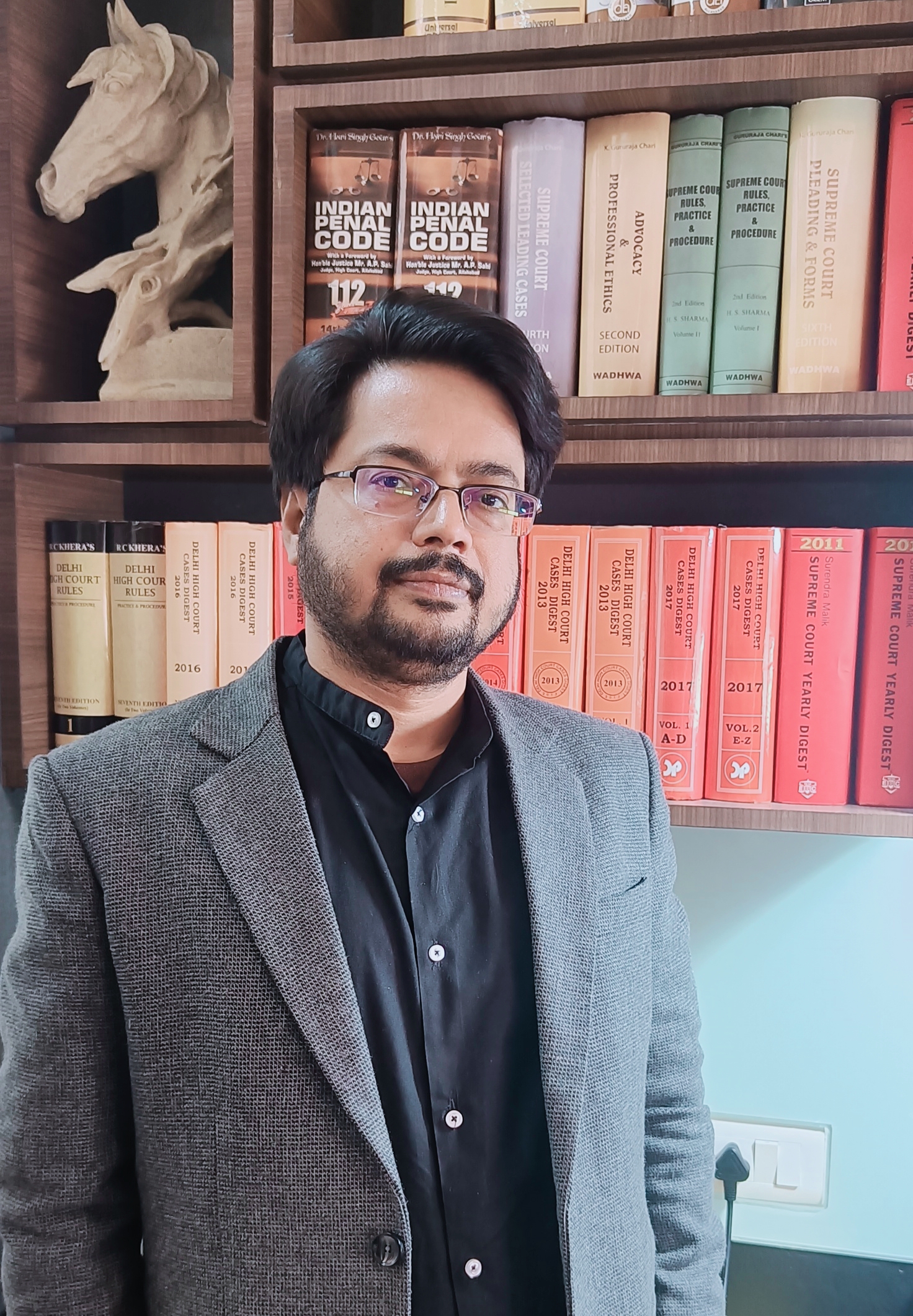
Category: AOR

  • “The legal system plays a pivotal role in addressing economic and social disparities, with ongoing efforts to create a more inclusive and equitable society”- Siddhant Sharma, Advocate-on-Record

    “The legal system plays a pivotal role in addressing economic and social disparities, with ongoing efforts to create a more inclusive and equitable society”- Siddhant Sharma, Advocate-on-Record

    This Interview has been published by Pragya Chandni and  The SuperLawyer Team
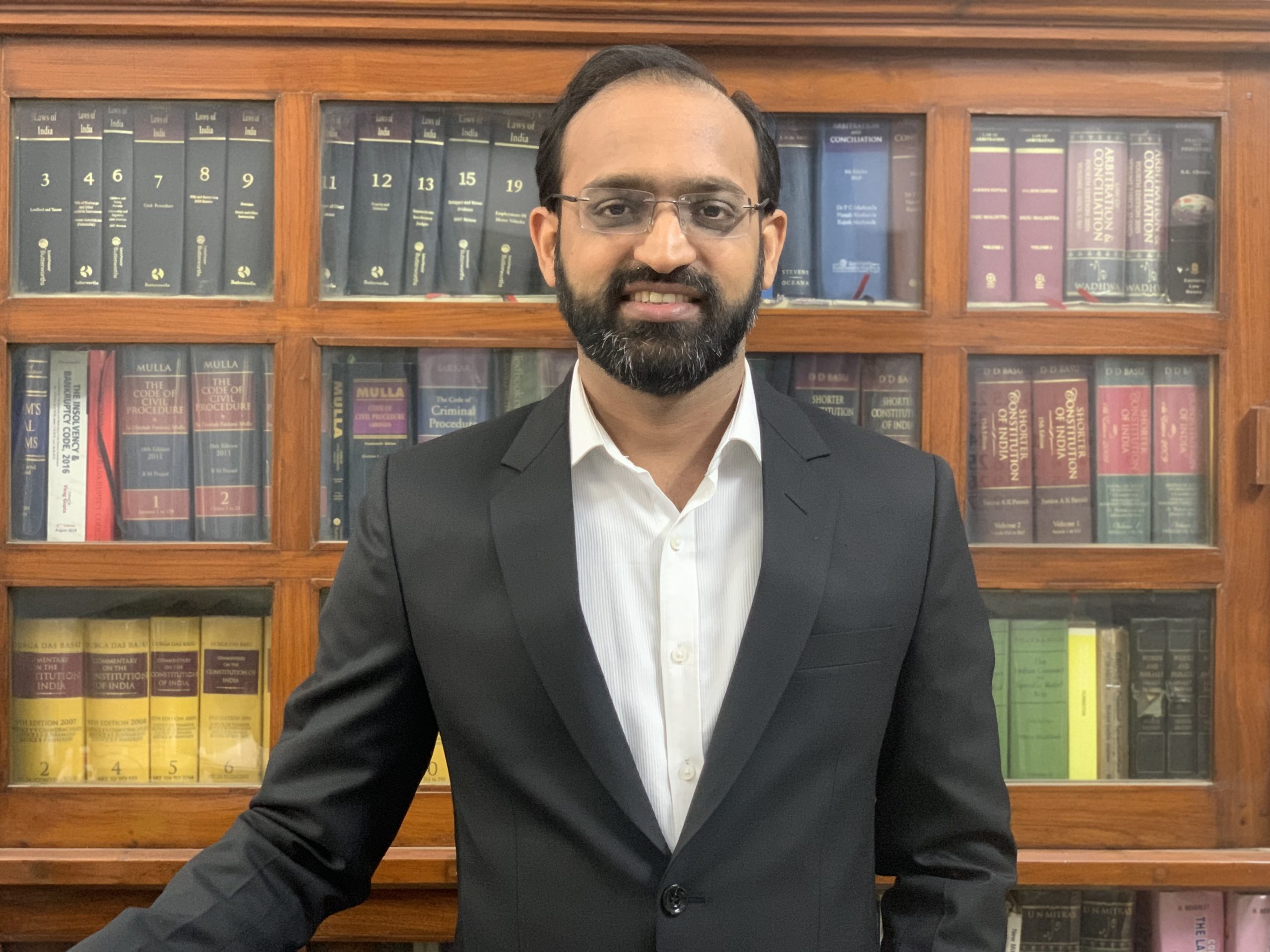
    Can you share a bit about your background and upbringing, especially how you ended up pursuing law as a career?

    My journey into the field of law is somewhat unconventional, rooted in an upbringing that seamlessly blended athleticism and a commitment to education. Hailing from Himachal Pradesh, I was born in Bangalore and received my education in Patiala, Chandigarh, and Delhi, reflecting the diverse cultural influences that shaped my worldview.

    My parents, with my father being a Dronacharya Award Winner in Judo and my mother serving as the Chief Judo Coach with Sports Authority of India for over 35 years, instilled in me the values of humility and hard work. The mantra that ‘hard work has no substitute’ became a guiding principle, thanks to my father’s wisdom.

    Initially immersed in a promising career in sports, representing Himachal Pradesh in various BCCI tournaments from U-15 to U-23 levels, my trajectory took an unexpected turn due to a sports-related injury. This setback prompted a moment of introspection, leading me to re-evaluate my career path.

    Amidst the contemplation, the decision to transition into law emerged organically. Inspired by a desire to push beyond my comfort zone and propelled by the encouragement of my parents, I embarked on the journey to become an advocate. This shift was marked by rigorous preparation for the Delhi University entrance exam, which I successfully cleared, ultimately choosing to enrol at Campus Law Centre, Delhi University.

    It was during my time at CLC that I discovered the rich legacy of its alumni, further deepening my appreciation for the profession I had serendipitously found myself in. In retrospect, I didn’t so much choose law as it chose me, a realization that has fuelled my commitment to excellence and continuous growth in the legal field.

    I am profoundly grateful for the opportunities that shaped my journey, and I carry forward the invaluable lessons of discipline, resilience, and dedication instilled in me through my unique blend of experiences. Today, as a seasoned lawyer with nine years of experience, I draw upon both my sporting and legal backgrounds to approach challenges with a well-rounded perspective and unwavering determination.

    You completed your LLB from Campus Law Centre, Delhi University. What factors influenced your decision to study law, and were there specific experiences during your academic years that shaped your interest in the legal field?

    Honestly, after cricket I had no other option but to choose law, there is no specific reason or any decision that influenced me to study law.
    I pursued my LLB at Campus Law Centre, Delhi University, and my journey into the legal field was somewhat unconventional. Having initially aspired to pursue a career in cricket, the transition to law emerged organically.

    In my first year, following the advice of my seniors to enjoy the initial phase, I focused on grasping the fundamentals and keeping a balance between academic studies and my passion for cricket. It was during this time that I discovered a genuine interest in Criminal Law, sparking the beginning of my journey in the legal domain.

    As I progressed into my second year, subjects such as Criminal Procedure, Evidence, and Civil Procedure captivated my attention, deepening my understanding and enthusiasm for the legal intricacies. An internship experience further exposed me to the practical aspects of legal work, where I engaged in clerical tasks, gaining invaluable insights into the operational side of the profession.

    The turning point came in my third and final years of college when I made a conscious decision to fully commit to my legal studies. Realizing that my cricketing aspirations were taking a back seat, I explored potential career paths. A pivotal moment occurred in March 2015 when a senior connected me with an internship at Luthra and Luthra, providing me with a firsthand experience of the legal profession.

    Simultaneously, a subsequent internship with Mr. KTS Tulsi, Senior Advocate, in April further solidified my interest in law. The dynamic and challenging nature of the work at both offices fueled my passion, ensuring that each day was intellectually stimulating.

    The opportunities I got was only because of cricket which landed me to my internships, which shaped my professional trajectory. These experiences have not only enriched my legal knowledge but have also instilled in me a deep sense of commitment and enthusiasm for the legal field.”

    You’re currently engaged in independent legal practice, handling a diverse range of cases. Can you walk us through the pivotal moments that led to your decision to transition from working with law firms to establishing your independent practice?

    Embarking on my legal journey, my initial exposure to the legal profession unfolded through internships at Luthra and Luthra, a prominent law firm, and later under the guidance of Mr. KTS Tulsi, Senior Advocate. These experiences, though disparate, were pivotal in shaping my journey as a lawyer.

    During my stint in a law firm, the routine was structured, demanding undivided attention to assigned tasks within the confines of an office. However, my subsequent internship with Mr. Tulsi, Senior Advocate, introduced me to a different world—a dynamic blend of courtroom advocacy and after court management. Witnessing the strategic use of skills, experience, and court craft to win cases ignited a profound fascination within me.

    Despite the allure of firm remuneration, I recognized a deeper passion for the courtroom. The prospect of being confined to an office space without the vibrancy of court experiences did not resonate with my vision for a fulfilling legal career. Driven by a belief instilled in me since childhood—that hard work paves the way to success—I transitioned to LawRato, where I honed my communication skills with clients. However, the confinement of a firm environment eventually led me to seek a more dynamic setting.

    Gratefully, I found mentorship under Mr. Jaspreet Singh Rai, a period that contributed significantly to my growth and gave me a fair bit of experience in Trial Court. Destiny smiled upon me when I secured a position at the Chambers of Mr. Tulsi, a dream opportunity by the support of Mr. Amit Sharma and Mr. Raj Kamal. 

    Before venturing into independent practice, I had the privilege of working with Mr. Karan Bharihoke, Advocate-on-Record who played a transformative role in shaping me from a novice into a confident, independent lawyer. His mentorship instilled in me the courage to appear before the court and the resilience needed to pursue my goals.

    You’ve had significant experience in handling high-profile cases, including criminal matters, civil matters, and more. Could you share a challenging or notable case that you’ve worked on and the lessons you learned from it? 

    In my not so extensive legal career spanning nine years, I’ve had the privilege of handling some high profile cases, each carrying its own weight of significance. High-profile cases, in particular, demand a heightened level of diligence and responsibility, given the elevated stakes involved for both the client and the legal representative.

    Throughout my journey, I’ve had the honor of collaborating with seasoned advocates and independently handling noteworthy cases. One such pivotal experience that stands out is my involvement in the Nirbhaya Case (Appeal) at the Supreme Court, where I assisted my senior who was representing the parents. The magnitude of this case not only underscored the gravity of criminal law but also provided me with a profound insight into the nuances of Supreme Court procedures.

    This experience served as a springboard for my subsequent work, notably in preparing and drafting the Petition in the Arushi Talwar Case. The lessons gathered from these high-profile cases have been instrumental in deepening my understanding of criminal laws and honing my legal skills.

    I am deeply appreciative of the trust placed in me by seniors, which has been a constant source of motivation throughout my career. Every case, regardless of its nature, has been a stepping stone for my professional growth. I firmly believe that embracing and learning from each experience is imperative for continuous development as legal professionals.

    In essence, my journey has been shaped by a commitment to excellence, a deep appreciation for the opportunities afforded to me, and an unwavering belief in the transformative power of every legal experience.

    You’ve worked with esteemed advocates such as Mr. KTS Tulsi, Mr. Harin P. Raval, and others. How has mentorship played a role in shaping your career, and what advice do you have for young lawyers in finding the right mentors?

    In this profession finding the right mentor is what every young lawyer would dream. In my legal career, the significance of mentorship has been profound and instrumental. I have had the privilege of working alongside distinguished advocates such as Mr. KTS Tulsi, Mr. Harin P. Raval, Mr. Karan Bharihoke, and Mr. Raj Kamal, each of whom has played a pivotal role in shaping my professional journey.

    The mentorship I received from Mr. Bharihoke and Mr. Kamal, spanning the entirety of my career, has been invaluable. Their guidance has not only illuminated the path but has been a constant source of support during challenging times. I consider them beacons of wisdom, always approachable for clarifications, and ready to provide insights into the intricacies of the legal profession.

    Reflecting on my experience, I would advise young lawyers to seek mentors who not only possess exceptional legal acumen but are also genuinely invested in nurturing the next generation of legal professionals. The essence of a good mentor lies in their ability to impart knowledge, offer constructive criticism, and share their practical experiences. A mentor should be someone who sees beyond the professional competition, taking the time and effort to contribute to your growth.

    I am deeply appreciative of the guidance I have received, and it has instilled in me the importance of paying it forward. As a seasoned practitioner, my advice to young lawyers is to actively seek mentorship, be receptive to constructive feedback, and cultivate relationships with mentors who prioritize your professional development. In doing so, not only will you acquire valuable skills and insights, but you will also contribute to the perpetuation of a culture of mentorship within the legal community.


    From your perspective, how would you describe the current legal landscape in India, especially in areas like economic offenses, commercial dispute litigation, and recent legal developments? How has technology impacted the practice of law in recent years?

    Thank you for the opportunity to share my perspective on the current legal landscape in India, particularly in the areas of economic offenses, commercial dispute litigation, and recent legal developments.

    The landscape of economic offenses in India has seen significant changes in recent years. The country has witnessed legislative developments aimed at addressing white-collar crimes, with a focus on laws such as the Prevention of Money Laundering Act, 2002, and the Prevention of Corruption Act, 1988. These laws, along with the Companies Act, 2013, and the Indian Penal Code, 1860, form the backbone of India’s regulatory framework against economic offenses. In 2023, pivotal judicial decisions brought clarity and precision to the nuanced aspects of money laundering, including territorial jurisdiction, bail eligibility, and the procedural obligations of enforcement agencies.

    Commercial dispute litigation in India has also evolved, with the establishment of specialized commercial courts designed to provide efficient and timely resolution of conflicts. These courts employ case management techniques to streamline proceedings and encourage parties to explore alternative dispute resolution methods such as mediation and arbitration before proceeding to trial. The trend towards alternative dispute resolution methods is increasingly being embraced by companies in India.

    Recent legal developments in India have been multifaceted, reflecting the complexity of the challenges faced by the nation. The legal system plays a pivotal role in addressing economic and social disparities, with ongoing efforts to create a more inclusive and equitable society. The Supreme Court and High Courts have been active in shaping the legal landscape, with rulings on a wide range of issues.

    Technology has had a profound impact on the practice of law. It has streamlined processes, improved access to legal resources, and enabled more efficient communication. In the context of commercial courts, technology integration has been instrumental in promoting a more effective dispute resolution process.

    Drawing from my nine years of experience in the legal field, I would advise aspiring lawyers to stay abreast of these evolving trends and developments. It’s crucial to understand the interplay between law and technology, and to adapt to the changing dynamics of the legal profession. Always strive for excellence, but remember that the pursuit of justice should be at the heart of all we do as legal professionals.

    In conclusion, the legal landscape in India is dynamic and evolving, shaped by legislative developments, judicial precedents, and the integration of technology. As legal professionals, we must navigate these changes with diligence, adaptability, and a steadfast commitment to justice.

    You’ve been involved in cases that have gained public attention, such as the Aarushi Talwar Murder Case. How do you manage the pressure and public scrutiny that comes with handling high-profile matters?

    Each case, regardless of its prominence, brings unique challenges and learning opportunities. Drawing from my sports background, I understand the importance of timing – knowing when to start and when to stop. This philosophy translates into legal practice, emphasizing a focus on the task at hand.

    Handling high-profile cases, like the Aarushi Talwar Murder Case, demands a blend of professional poise and personal resilience. Recognizing the inevitable pressure and public scrutiny, my approach revolves around a practical mindset.

    I prioritize client objectives over the name of the case, steering away from unnecessary pressure. Overthinking is counterproductive. Trust in thorough preparation and professional competence forms the foundation of my approach.

    Anytime you appear before a court, you always have butterflies running through your stomach. But my only mantra is not to think  much and deal with every case as it comes. My experience in high-profile cases underscores the need for a strategic and composed outlook. Success hinges on maintaining professional rigor while navigating the intense scrutiny, much like delivering a top-tier performance in sports.

    Having excelled academically, how do you balance the theoretical knowledge gained in law school with the practical challenges faced in the legal profession? What advice do you have for fresh law graduates entering the field?

    Honesty, Patience and Hard Work is the advice I shall give fresh law graduates entering the field. In my experience, I’ve noticed a shift among interns and young lawyers, with some placing undue emphasis on stipends and remuneration rather than on learning and professional growth. (I know the younger generation would not like this part). Patience is paramount in our field; the legal profession offers boundless opportunities for those who approach it with dedication and a long-term perspective. 

    Hard work, another cornerstone of success, involves staying focused on your goals, mastering procedural intricacies, understanding the law thoroughly, and presenting your cases with unwavering commitment. Success, I believe, is an outcome of consistent, diligent effort.

    Addressing the evolving nature of law, it’s imperative to keep abreast of daily developments in statutes and judgments. However, the true essence of this profession manifests in the courtroom—where legal theories transform into practiced skills, confidence, and court craft.

    For aspiring legal professionals, my advice is to approach each day as an opportunity to learn, adapt, and refine your skills. Embrace courtroom experiences as they come; there’s an undeniable beauty in the synthesis of theory and practice. As you navigate this dynamic field, you’ll discover the profound fulfilment that stems from a genuine passion for the law.

    I encourage new entrants to the legal field to embrace this journey wholeheartedly, with humility, and to derive satisfaction not only from personal achievements but also from contributing positively to the legal community.

    Considering your achievements and experience, what advice would you like to offer to fresh law graduates who are embarking on their legal careers today? If there’s one piece of advice you wish you had received at the beginning of your career, what would it be?

    I am still learning and I have a lot to achieve in life. As a friend who possesses a little bit of experience over the others who would be graduating soon or have entered the profession.

    Reflecting on my own journey, if there’s one piece of advice I wish I had received at the outset of my career, it would be to find joy in the process of learning. This profession is dynamic and ever-evolving, presenting opportunities for growth at every turn. By immersing oneself in the school of learning, one not only acquires knowledge but also cultivates a mindset that views every experience as a valuable lesson.

    I often share the sentiment that in the legal profession, you never truly lose – you consistently gain insights that contribute to your professional evolution. Aspiring legal professionals should approach their careers with a clear vision, a full commitment to the journey, and an unwavering determination to learn from every experience. In the words of a mantra I hold dear, ‘Clear Eyes, Full Heart Can’t Lose.’ 

    Get in touch with Siddhant Sharma-

  •  “I have come to the conclusion that in the intensely dynamic environment that we live in where the laws are revolving on a constant basis, it is imperative to have at least the bare minimum knowledge of all fields of law, so as to best advise your client” – Shashwat Tripathi, Advocate on record at the Supreme Court of India

     “I have come to the conclusion that in the intensely dynamic environment that we live in where the laws are revolving on a constant basis, it is imperative to have at least the bare minimum knowledge of all fields of law, so as to best advise your client” – Shashwat Tripathi, Advocate on record at the Supreme Court of India

    This Interview has been published by Pragya Chandni and The SuperLawyer Team

    Can you share with us how your journey in law began, and what inspired you to pursue a career in litigation and dispute resolution?

    Specialization and Expertise: Commercial Litigation, Insolvency and Arbitration. 

    To be honest, I belong to a family of lawyers, my father and my elder brother are both lawyers, although both have worked/work in starkly different fields. One (my elder brother), being a hardcore IPR expert and the other (my father) who has seen the growth of litigation in the once colonial town of Allahabad and been actively involved in service matters before various High Courts. 

    As they say, you sooner or later become a victim of your surroundings. However, in my case, it worked for the best and I can turn the statement around and say, “I am a true by-product of my enriching and encouraging surroundings”!

    I would often as a child accompany my father to the court or interact with his colleagues and associates at home as well as in social spheres. In my opinion (of course as lawyers we are bred in a manner to specify our opinions !) my liking and fondness towards the profession began then itself, in my formative years. Thereafter I saw my brother go to law school as well, which is when my intentions to pursue a career in law solidified and I was sure that I wanted to become a lawyer. 

    My decision to pursue litigation is however a result of my internships and work experiences at various law offices. The irony is that my first job offer and might I add, with a hefty pay in a big firm, was NOT in litigation but the General Corporate  team. However, even then, I refused to take up that opportunity and decided to start all over with the process so long as I was given Litigation. Thus, inherently, my brain and heart were always drawn towards litigation. 

    With expertise in civil and commercial disputes, arbitration, intellectual property, and more, what specific aspects of law drew you in, and how did you develop such a diverse skill set over the years?

    My personal favourite has always been the constitution, which is why I was driven to even appear for the Advocates-on Record examination, which I successfully cleared in the year 2022!

    However, over the last couple of years, I have come to the conclusion that in the intensely dynamic environment that we live in where the laws are revolving on a constant basis, it is imperative to have at least the bare minimum knowledge of all fields of law, so as to best advise your client. Let’s say you have a client who approaches you for a simple case of corporate fraud, your advice however will start on the basic provisions of companies act in the north pole and span to filing a criminal complaint in the south pole. For the naked eye, one is a civil remedy and one is criminal, but for me, both are equally important. Thus, I feel, skill sets also develop over the years based on the kind of matters and briefs you receive or work on as well as the happenings  and trivia in the legal fora, which in my view, every budding lawyer should keep pace with. 

    Establishing your own law firm is a significant accomplishment. What motivated you to form Aeddhaas Legal, LLP, and how has the experience of working with accomplished legal professionals influenced your approach to legal practice?

    From the time I decided I wanted to pursue a career in litigation, I had my eyes on like a hawk!! on opening my own law firm and setting up my practice. 

    I was fortunate to have met people who I connected and bonded well with, who echoed the same feeling as mine, and thus, we all got together and created Aeddhaas. 

    One thing I learnt the most from all the stalwarts at the bar as well as all the accomplished legal professionals I have worked with is the golden rule of always being prepared. One thing I preach to every lawyer is that you must always read your brief to the fullest  (of course over time you learn the art of swiftly navigating ) as well as prepare your draft after a detailed research to seal any/all loopholes. A good draft in my opinion is not one which runs into 100 pages but one which briefly summarizes the issue in question. At the same time, a good argument is not the one which involved showing to the court every document (in most cases pleadings exceed 10000 pages!!), but one where the advocate runs through the essentials, to touch the heart of the case. 

    I also learnt the benefits of team work and how to be calm and patient even in the time of an urgency to take the right decisions. 

    Thus, Aeddhaas for me is the final dish, of all such ingredients, hard work, team building, patience (most important virtue of a lawyer) and attentiveness! 

    Your experience in handling matters under the Insolvency and Bankruptcy Code is extensive. Can you share insights into the complexities involved in such cases and the strategic considerations one needs to keep in mind?

    Insolvency and Bankruptcy code is now one of the most commonly invoked statutes in our country. I have always had an affinity towards commercial laws and hence, once the code was published, I was naturally drawn towards the same. 

    To be frank, as it is still fairly new as a law in our country, it still keeps evolving. It’s an extensive statute with various regulations and rules made thereunder. 

    I would recommend that to be abreast, the best way is to read the recent judgments and monthly updates released by various legal media. Nowadays live law and bar and bench upload updates even before the judgments are released online! Life has become easy because of them. So, we must use these mediums to our benefit. 

    For handling matters under the IBC, strategy planning with regard to the end goal at the very initial stage, whether you are for the corporate debtor or the creditors, goes a long way.  

    With a focus on arbitration matters, including those related to construction contracts and commercial agreements, what role do you see arbitration playing in resolving disputes, and how has the landscape evolved during your career?

    Arbitration is the need of the hour. In my opinion an arbitration clause has become as important as a confidentiality clause in any agreement/contract and there has been a paradigm shift worldwide towards arbitrating disputes viz entering into long drawn litigation battles, which in case of international commercial contracts is a nightmare, be it in the initial stages of overcoming the hurdle of jurisdiction or seeking the enforcement of a decree. 

    Having said this, even though the Indian Arbitration Act was enacted to be time bound, today, realistically speaking the Appellate courts are burdened with appeals and challenges to the awards passed by arbitrators, leading to a delay in execution. All in all however, the interim reliefs and ease of dispute management are unparalleled with arbitration. 

    Unlike courts that are often overwhelmed with a high volume of cases each day, comparatively, arbitration provides parties with more time and opportunities to present their arguments. In arbitration proceedings, parties have more flexibility in scheduling hearings and presenting evidence, which can result in a more efficient and streamlined resolution of disputes. This is because arbitration is a private and confidential process, and the parties have more control over the proceedings, including the selection of the arbitrator (who can be a specialist in case of subject matter being technical in nature). As such, arbitration can be a more attractive option for parties seeking a faster and more cost-effective resolution of their disputes.

    Reflecting on your career, what would you consider as the key milestones or turning points, and how have any challenges or setbacks contributed to your growth as a legal professional?

    Well I am fortunate to not come across any setbacks as yet and I hope it continues to be the same. My journey so far has been exactly the way I thought it would be. Turning point is of course setting my own practice and qualifying the Advocates-on Record examination.

    The transition from working for someone else or a law firm to establishing one’s own practice presents numerous challenges beyond just completing tasks. In addition to securing new clients and meeting their expectations, there are other obstacles to overcome such as financial management, marketing, and building a reputation in the legal community. These challenges can be overwhelming, but successfully navigating them is a significant milestone for any lawyer.

    As a legal professional, it is my duty to provide my clients with the most effective solution within a specific timeframe. So far, I have been doing justice to my work and that I think the actual growth one should be aiming for.

    As someone with a wealth of experience, what advice would you offer to law graduates entering the field today, especially those aspiring to build a successful career in litigation and dispute resolution?

    Law is a dynamic field. You could be making policies sitting in the parliament  or  challenging their implementation. You could be the mastermind behind a watertight contract or the person whose job is to find ways to read into the clauses. You could be the one because of whom we resonate a tick to Nike and an apple to Apple) or the one because of whom an acquisition or merger failed.

    My advice is simple, whatever it is that you intend to do, be it corporate, litigation (civil or criminal), be it IPR or policy, one should begin planning their way forward the day you step foot in law school. I am sure there are days when confusion is bound to occur, however, the sooner you surpass that, you will be way ahead of many others by the time you graduate. You would get the advantage of taking up internships in the specific field and building your CV, additional courses, writing papers and attending conferences in the field of your preference. This way, by the time you graduate out of law school, you are not a ripe student looking for direction, but someone who would add value to the place which hires you.

    Get in touch with Shashwat Tripathi-

  • “Every friend you make lifts you just one notch higher. And being likable makes you lighter to lift.” – From village roots to Supreme Court heights, Naveen Kumar, Advocate-on-Record at Supreme court of India.

    “Every friend you make lifts you just one notch higher. And being likable makes you lighter to lift.” – From village roots to Supreme Court heights, Naveen Kumar, Advocate-on-Record at Supreme court of India.

    This interview has been published by Namrata Singh and The SuperLawyer Team

    Mr. Naveen, your journey from the University of Delhi to becoming an Advocate-On-Record with over two decades of experience is impressive. Can you take us through the pivotal moments or decisions that shaped your path and brought you to where you are today?

    While the journey from Delhi University onwards may be as good as it could be, the expedition from a village school to CLC (Campus Law Centre of Delhi University) is nothing short of a miracle. As it is said, if you believe in miracles they do happen. Today while I can boast myself as a modern english educated person having scientific temperament, I owe a lot to the scriptures, especially “The Ram Charitramanas” (by Goswami Tulsidas) without which I could not have grown even as an educated person.

    As in the first page of the epic Tusidas ji has worshiped goddess of faith and belief by saying “भवानीशङ्करौ वन्दे श्रद्धाविश्वासरूपिणौ” (alute lord Shiva and mother goddess Parvati who are personification of faith and belief). In hindsight, I can trace my existence to the very faith and belief (in God and oneself) which shaped my early life. Thus, I have no hesitation in confessing that I could not have received even an elementary education but for my interest in spiritualism and mythological stories such as Ramayana, Mahabharata, Puranas etc which used to be daily ritual in my family, while growing up in a village of district Siwan (Bihar).

    Of course, the spiritual light was sparked by the parents, especially my father, a deeply religious person, who used to narrate bed time stories of Ramayana, Mahabharata and Puranas etc.

    In this backdrop even before starting formal schooling, I was able to recite Chaupai and Dohas. My father had a fixed routine throughout his life, he used to do puja (worship) every morning which included Path (recital) Ram Charitmans. The child’s natural curiosity led them to look through the pages of the epic, perhaps starting with the photos, and thereafter reading the stories. Soon I grew up as a favorite child to be called for reciting Dohas and chaupais in front of guests and visitors by my father.

    I don’t remember anything more about my studies or schooling up to class 8th. A significant milestone (again in hindsight) was surpassed when I was shifted from the village primary school to high school in class 9th in the year 1984-85. Because of my interest in Hindi poetries etc., and the ability to orate them loudly in front of anyone, a few of my teachers somehow started admiring and encouraging me.

    In the year 1985, during the 9th class, I won the first prize in antakshari on Tulsi Jayanti. Though it may not have seemed much worth at the time, today, it appears to be one of the significant events of my life. This achievement drew the attention of more and more teachers in school towards me, leading to special attention in my studies.  

    Due to the encouragement of the teachers, I began to take my studies more seriously, ultimately becoming the highest scorer in the 10th board exams in the whole village. Even today, I can vividly recollect my first day as I started learning my alphabets in the sunshine on the auspicious day of Basant Panchami in 1985 when one my teachers, Shri Hiral Lal Singh, started teaching me ‘angrezi’ (English).  

    Because of the encouragement (rather blessings) of my teachers I grew up to become the first person in the joint family (of about 30 people), consisting of all of my cousins, to study beyond Class 12th.

    The first seed of big dreams were planted again by sheer coincidence (almost like a miracle). In 1987, my identity as a sincere student received a boost due to my good result in 10th Board. Simultaneously, an unrelated event occurred where a native of Siwan district topped the UPSC Civil Services Exam in the same year. Instantly, it became a matter of huge celebration and talk of every nook and corner of the district including my village. A number of inspiring tales of hard work and success left a lasting charm of civil services which stuck with me and played a role in drawing me to Delhi.

    As I landed up in Delhi with big dreams and empty pockets the hard realities in the form of huge financial constraints and cultural shock put insurmountable challenges; in that backdrop few well-wishers suggested getting admission in a Law course in DU which would give access to library and other facilities. Accordingly, preparation for DU entrance started, and luckily, I secured a few tuition assignments to sustain survival in the life of the metro. After having secured good rank in the entrance test, doors of CLC opened and so the new horizon of hope, aspiration and struggle. 

    During CLC days I was again dear to my teacher who inspired me to engage in the extracurricular activities as visits to Tihar Jail, Criminal Courts, Slums-areas, I used to perform in Nukkad-Natak etc,. as a part of our Legal awareness activities which opened the doors of real-life learnings and helped me to develop a keen interest in interplay of law justice (or injustice) at the crude level.

    Thus, my journey is an intricate interconnection of how spirituality, education, and the quest for knowledge all played a role. Starting from the small village temple to studying law, each part of my journey has added to my life story, making me who I am today.

    Your career spans over 24 years in litigation, with a focus on diverse areas like Energy/Natural/Mining Laws, Intellectual Property, and more. Can you share a case that significantly shaped your approach to law and advocacy?

    After having completed my LL.B. degree in 1998, I got my bar registration and plunged into practice; the obvious choice for me was to start from Tis Hazari court as some of my friends as well as seniors were practicing there. I drifted for about 2 years in various chambers of Tis Hazari court. In 3rd year through a senior’s reference, I joined the chambers of Mr. Gopal Jain, (now a senior advocate). This opportunity proved to be a very huge milestone as I got access up to the highest echelons of litigation practice. Because of my initial training in district courts and hardworking nature my senior started giving independent briefs for subordinate courts and showed full faith in me.  I got various chances to handle the cases independently which ultimately turned out to be a good grooming process. While working with Mr. Jain, I had numerous opportunities to brief various senior advocates, including the most renowned ones and these opportunities enhanced confidence and enriched my understanding of diverse legal areas.

    Like any other young aspirant, I too was fascinated by the grandeur of the Apex Court. I was a regular visitor to the premises of the highest court of the land. However, I didn’t get any case in the Supreme Court despite my sincere wish for that. As it is said, that every thought is a prayer, my purposeless visits manifested into a reality when I got my first Supreme Court case in the year 2005 with reference to one of my distant relatives. Later on, another milestone in my career as an advocate of the Supreme Court was achieved when I got one case involving eleven policemen accused of murder in an encounter in Jharkhand, which later on became a landmark judgment on Section 482 of the Cr.P.C. 

    During the grooming days striving to become a practitioner in the Hon’ble Supreme Court and High Court(s) of India, my mentors/seniors instilled the ethos of “working like a horse and living like a hermit”. A junior is expected to be very thorough with the list of dates, comparative analysis of rival pleadings, argument points, compilation of case laws and also possible arguments of the other side (devil’s advocate) etc. As I always aspired to be a litigation lawyer in higher forums, I was constantly asking my seniors to provide me more and more work or opportunity to read files, also, I used to ask for those matters, which were not assigned to me. In that process and during my association with Mr. Jain I gained invaluable experience and professional maturity.

    A significant turn happened in 2011 when I handled a case related to illegal mining before the Supreme Court of India, arguing against a renowned Senior Advocate and securing a favorable outcome for the mining lease holder. The controversial and politically sensitive nature of the case gained widespread attention in the State of Odisha consequently I started getting a lot of mining cases which eventually created my reputation as a mining lawyer and till date I have handled almost 500 mining cases before Mines Tribunal, NGT, different High Courts and Supreme Court. In fact, in 2018, in one of the most controversial mining cases, a bench of the Apex court asked a super senior to give way to me to address the court, and after five days of full day arguments a reported judgment was delivered. This provided firmness in Supreme Court litigation practice, marked by strong desire, hard-work, consistency and consequent abilities to overcome the hindrances/ barriers created by language, lack of family background, or financial or other support from parents.

    Your extensive list of publications showcases a keen interest in legal commentary. How do you decide which topics to delve into, and what impact do you hope your writings have on the legal community or society at large?

    In determining the topics for my legal commentaries, I am guided by a dual purpose – a passion for the subject matter and a commitment to addressing issues that hold relevance for the legal community and society at large. Each publication represents a careful selection based on contemporary legal challenges and emerging issues.

    For instance, my book titledSand Mining Laws in Indiadelves into a crucial yet often overlooked aspect of environmental law. Through this work, I aim to shed light on the intricacies of sand mining regulations, contributing to a better understanding of the legal framework surrounding this environmental concern.

    The articleJudicial Restraint in Tender matters – A perspective,” published in SCC Online, reflects my interest in exploring the nuanced application of judicial restraint in the context of tender matters. By sharing this perspective, I hope to initiate thoughtful discussions within the legal community and contribute to the development of jurisprudence in this area.

    Similarly, my writings on topics like “Principles of Bail in Financial Crimes,” “Goal of Net Zero,” “Ban on Single-use-Plastic,” “Gender Pay Gap,” and “Compensatory Afforestation” aim to bridge the gap between legal theory and practical implications. These pieces in Bar and Bench and Live Law are designed to prompt reflection, foster informed dialogue, and potentially influence legal discourse and policy-making.

    Ultimately, my goal is not only to contribute to the legal scholarship but also to bring about positive changes and make contribution in the legal discourse. I aspire for my writings to serve as catalysts for discussions, policy reforms, and a deeper understanding of the legal complexities surrounding these critical topics.

    You’ve authored “Sand Mining Laws in India.” What inspired you to write on this specific subject, and what challenges did you face in distilling such complex legal issues for a broader audience?

    So far as the sand mining is concerned, from my experience in appearing before NGT and Supreme court, I realized that there is a serious discord between the authorities who are granting quarry leases for sand and those who are regulating and implementing the environmental regulations concerning the sand mining. Through interactions with numerous lease holders, it became evident that they were uninformed about the intricate statutory rules, regulations, circulars and office memorandums etc., governing their business of sand mining. Due to the lack of awareness, many miners incur the ire of NGT, resulting in the imposition of significant penalties. Many times, penalties are computed by the committees constituted by the NGT, which are based on an eye estimation, surmises, conjectures and which is far beyond the paying capacity of the respective quarry holders. This mainly inspired me to write a book on this specific topic with a purpose to spread awareness amongst the stakeholders about the required compliance as sand the most extracted materials from the earth’s crust and a lot of environmental, social, sustainability concerns do arise from it. Thus, it underlined the necessity of basic awareness within the mining community and other stakeholders. Another aim is to provide a view point to the policy makers, researchers and to facilitate informed decision-making in this crucial sector.

    Your practice extends to various tribunals like NGT, NCDRC, NCLT, NCLAT, and more. How do these forums differ from appearing in courts like the Supreme Court or High Courts, and how do you adapt your advocacy style accordingly?

    Practicing in different forums like NGT, NCDRC, NCLT and NCLAT is little different from that in higher courts like the Supreme Court or High Courts. These tribunals specialize in handling specific cases, such as those related to environment, corporate and financial matters. The rules and procedures in these tribunals are designed specifically for the types of cases they adjudicate, showcasing a nuanced and specialized approach in contrast to the broader scope of the Supreme Court or High Courts.

    On the other hand, the Supreme Court and High Courts have a broader jurisdiction, dealing with a wide range of legal issues beyond specific specialties. Appearing in these courts involves navigating more general legal procedures and practices.

    The main difference is that tribunals are specialized, allowing for a more focused and streamlined approach to cases within their specific areas. This sets them apart from the broader and more diverse settings of the higher courts, with their own dynamics and nuances.

    Usually when we prepare for cases, we do extensive research of all the relevant case laws and topics which are germane to that particular matter. To adapt my advocacy style accordingly, I focus on the specific rules and procedures of each forum. The key is to be flexible and adjust my approach based on the unique requirements of each forum.

    You’ve presided over workshops on legal awareness. Why is legal education and awareness crucial in today’s society, and what challenges do you see in bridging the gap between legal intricacies and public understanding?

    Legal awareness programs hold immense significance for several reasons, and if we impart basic legal awareness to the masses, it will be the most effective tool for empowering them. Equipping people with fundamental information about their legal rights and responsibilities is a necessity, as it enables them to deal with injustice which they face on a daily basis by the police and other administrative machinery. In fact, when we used to do street plays, we ensured that through that play we educate the public about their rights and duties and create legal awareness. These events provided a unique opportunity to establish direct connections with the masses, offering valuable insights into the practical application of laws.

    The challenge in bridging the gap between legal intricacies and public understanding lies in making the law simple and accessible to everyone. Legal terms and processes can be complex, and people might find them difficult to grasp. As an advocate, my role is to break down these complexities, use simple language, and provide real-life examples that the public can relate to. Therefore, conducting legal awareness programs, using plain language in legal communications, and engaging with communities directly are some ways to overcome this challenge. Making the law less intimidating and more understandable for everyone is crucial for ensuring justice reaches every corner of society.

    As someone with experience in arbitration, what advice would you give to businesses entering into arbitration agreements to safeguard their interests?

    Having observed the evolution of Arbitration as the most effective mechanism for alternative dispute resolution in India, I have gathered insights into the crucial aspects that need consideration by all stakeholders. The challenges which arise from court interference, delays in arbitral award execution, and concerns about the quality of arbitrator asks for careful attention. To my clients, I have always been advising that they should be objective and fair while negotiating and drafting clauses in arbitration agreements. Where the arbitration clause and the terms of the arbitration agreement are one-sided, then the scope of interference from the courts would be much wider at different stages. I have always advised my clients that the arbitration clauses should provide for selection of an impartial and experienced person as an arbitrator and both the parties must have fair chances and stake in the appointment of the arbitral tribunal and conduct of the arbitration proceedings and the clauses of the agreement should be drafted accordingly.

    Away from the legal arena, what are your hobbies or interests that provide a respite from the complexities of your profession? Any particular activity that helps you recharge?

    I engage in hobbies that offer an escape from the intricacies of my profession. Reading historical and spiritual books, immersing myself in the calming melodies of classical music, and enjoying moments of solitude are my chosen activities. Additionally, I find fulfillment in social initiatives, interacting with people on my own accord. These pursuits not only provide a break but also contribute to my overall well-being. They bring to life the childhood dictum, “विद्यां ददाति विनयं, विनयाद् याति पात्रताम्,” reinforcing the importance of both knowledge and humbleness. Engaging in these diverse activities provides me with energizing distractions from my high demanding profession and allows me to return to my legal responsibilities with a refreshed perspective and renewed energy.

    Simultaneously, participating in social initiatives deepens my connection with the community, instilling a sense of responsibility and empathy. This active engagement not only broadens my understanding of societal issues but also provides an avenue to contribute positively. The synergy between these diverse activities creates a harmonious rhythm in my life, enabling me to navigate the complexities of my demanding profession with resilience, a balanced perspective and a genuine appreciation for the multifaceted tapestry of my life.  

    With your extensive experience, what advice would you give to young lawyers aspiring to build a successful career in litigation and advocacy?

    My rocky journey in this profession may have some advice for younger stars such as-

    Ø Consistent Hard Work- While I was traveling in the DTC bus a co- passenger while interacting made a statement that “it is very easy to get a law degree but it is extremely difficult to become a good lawyer”. This statement of a stranger echoed in my mind throughout my struggle period and it holds good even today which is evident from the fact that we have a huge pool of young law graduates but there is a dearth of good lawyers in each court of India. What shaped my life in initial days is that I had inculcated a few small but good habits such as I used to read bare acts, legal magazines and cases even though I do not have any brief relating to the respective subject. These seemingly small habits paid off, as clients recognized me as a well-read individual, enhancing my “likeability factor”. My advice to budding lawyers is to keep learning, even in the absence of immediate briefs, as continuous learning prepares one for future opportunities.

    Ø Work is worship- One small event which I could recollect is that one of my clients advised me saying that “one’s commitment to work should supersede all other priorities”. The advice came roughly because I had got delayed in reaching the court and because of my being late the matter was passed over. Being late for a court appearance taught me a direct lesson. The client’s advice was straightforward – giving preference to any family event or anything else instead of work would not bring either the success or happiness or even the admiration of family members. This lesson stuck with me every for the whole of my formative age in the professions. I can say with conviction that a legal profession is a very high demanding profession which requires the highest degree of focus and dedication and that too without much reward in initial days of practice.

    Ø Patience and Big Goals- Overcoming initial challenges requires patience and a larger vision. Although the situation has improved significantly due to the emergence of numerous law firms, opportunities in the corporate sector, and academia, young law graduates now have a variety of choices. Despite these growing opportunities, struggles persist. In the early days, I had few techniques to keep myself inspired. While practicing in district courts, I regularly visited the Supreme Court and High Court to observe the legends of the legal profession and used to idolize them. Seeking inspiration from legendary lawyers in the Supreme Court and Delhi High Court kept my ambitions high.

    Ø Learn broadly and with focus- Another ritual of observing the court proceedings of all the courts helped me in staying motivated. Thoroughly reading legal documents, bare acts, law magazines etc. proved very beneficial. Later on, one of my seniors advised that you must flip through (using tai-lopez method of speed reading) the bare acts and rules whenever you get a case relating to that subject.

    I would like to quote an excerpt from David J. Schwartz- “The Magic of Thinking Big” which is a must for this profession “likeability factor”-

    Mark this point well. A person is not pulled up to a higher-level job. Rather, he is lifted up. In this day and age nobody has time or patience to pull another up the job ladder, degree by painful degree. The individual is chosen whose record makes him stand higher than the rest. We are lifted to higher levels by those who know us as likable, personable individuals. Every friend you make lifts you just one notch higher. And being likable makes you lighter to lift.

    To sum up, my advice to the young lawyers is simple – Dear young lawyers, here’s a piece of advice: alongside your legal studies, make sure to gain practical experience. Real-world situations teach you valuable lessons that books alone can’t provide. So, dive into the practical side of law to become a more skilled and effective legal professional. embrace hard work, treat work as worship, practice patience, think big, and focus on continuous learning as well as ensure to have a likable personality. These principles, from personal experiences, pave the way for a successful legal career. 

    Get in touch with Naveen Kumar-

  • “To be well-prepared, one must consider all aspects of the file. While you may have read it, meticulous attention to every minute detail is essential, depending upon the nature of the case being argued.” – Ayush Negi, Advocate-on-Record, Supreme Court of India.

    “To be well-prepared, one must consider all aspects of the file. While you may have read it, meticulous attention to every minute detail is essential, depending upon the nature of the case being argued.” – Ayush Negi, Advocate-on-Record, Supreme Court of India.

    This interview has been published by Namrata Singh and The SuperLawyer Team

    Your family has a rich legal legacy, with your grandfather being the first Advocate General of Uttarakhand. How has this legacy influenced your journey as a third-generation lawyer, and what values or lessons have you carried forward from your family’s legal background?

    I have always been around lawyers at my house and have had the opportunity to be inspired by my grandfather and my father. My grandfather always used to tell me that all I can give you is the family name and the rest is upon you what you make out of it, so till date, I’m trying to live up to his legacy and be a better lawyer every day. The lesson I have learnt is that hard work is the key to success no matter what generation you are if you don’t work hard you will not get work one needs to constantly keep working on his advocacy skills and perform better every day.

    Transitioning from a small law firm to establishing your own practice is undoubtedly a significant step. Can you share a memorable experience or a turning point in your early career that shaped your approach to building your practice from the ground up?

     I learnt the basics of drafting and working with a small team at the law firm. I still remember my senior used to always ask us where do you see yourself in 5 years and I told him that I see myself as an Advocate on Record at the Supreme Court of India, so that was my manifestation and somehow with the grace of god I could achieve it in my first attempt. Thereafter I started hustling and doing small matters at the trial court and kept working constantly at honing my drafting and argument skills. I would like to especially thank Adv Dattatrey Vyas who was my immediate senior in the law firm for constantly helping me by vetting my drafts and guiding me through the drafting process while I was at the firm and later when I was away. I think I was lucky to have good mentors like Adv. Anurag Tomar who gave me constant opportunities to argue and appear before various forums right from the beginning of my career which paved the way for me to argue matters before the Supreme Court of India. One of the few instances I remember is while arguing an admission matter before a division bench presided by Justice Gyan Sudha Mishra at the Supreme Court, it was a MACT matter and I argued all the aspects and informed the court about the injuries on the lower part of the left leg of the petitioner, the court after hearing me asked about the exact part of the leg and the nature of the injury which at that point of time was not very clear in the documents as there was some medical term used which was not known to me or the court. The court then passed over the matter to enable me to take instructions about the same and eventually when the matter was heard I was able to answer the query of the court and notice was issued in the matter. The lesson I learnt is that one has to be well prepared from all aspects of the file no doubt you may have read the file, but one has to be careful about every minute detail depending upon the nature of the case being argued.

    You’ve been practicing law across various courts, including the Supreme Court of India and the National Green Tribunal. How do you manage the dynamics of different legal forums, and do you have a preference for any particular type of cases?

    Practicing across various forums can be tiresome at times as we have a lot of running around to be done apart from the preparation for the matters to be argued at various stages. But having a good team of associates around who help ease the burden by holding the fort while I can travel from one court to the other at times. But yes we have over time developed an effective way of taking separate dates for various courts so there is no clash between cases. But I constantly motivate my juniors to start arguing applications before the trial courts or tribunals so that they build up the confidence and eventually pave way for them to start their own practise later in life. Though I am most comfortable at the Supreme Court of India, but yes I love appearing before trial court and have had the opportunity of appearing before Trial courts and High courts across states like U.P, Uttarakhand, Punjab etc. There is a whole lot of thrill in the process of cross-examination which I truly love about trial court advocacy which requires a different skill set especially compared to appellate court advocacy and appearing before trial court is always enriching.

    As Counsel for the State of Uttarakhand at the National Green Tribunal, you’ve been involved in cases related to environmental issues. How does your role contribute to your personal commitment to environmental sustainability, and do you have any personal initiatives in this regard?

    I have been on the panel of State of Uttarakhand at the National Green Tribunal, Principal Bench Delhi right from 2017 and have been appearing regularly. After the retirement of Retd Justice Swatatantra Kumar from the post of Chairperson the approach of NGT of dealing with matters had changed drastically as they started the process of letter petitions the filing of Original Applications came down drastically and reduced the role of counsels to a large extent which in one way made the court more accessible to the common man, but yes the role of state counsels and other counsels was reduced to very minimal until and unless a specific response was called from a particular authority on an issue. Rest we keep assisting courts as and when we are called upon to file Joint inspection reports or filing responses and explaining the stand of the authorities. Further with regard to my personal view on sustainability I as an individual try to save water and electricity and follow basic civic rules of not littering around on highways or public roads etc. I think if all the citizens of the country follow these rules strictly then our country will be a much cleaner place. I think awareness amongst people about waste management can take our country a long way towards environmental sustainability.

    Balancing criminal trials along with civil trials is not common among lawyers. What motivated you to diversify into criminal trials, and how do you approach the unique challenges they present?

    As I have already mentioned my love for trial court advocacy, especially the part of cross-examination of a witness, so I have done my fair share of civil trials and  Criminal Trials under section138 Negotiable Instrument Act cases and had never thought of delving into criminal trials but, recently in 2021 one client approached me for conducting a criminal trial under POCSO Act at Ghaziabad Sessions court, after going through the file and as the matter was at evidence stage in the peculiar facts and circumstances I took up the matter and eventually the Prosecutrix a 11-year-old girl went hostile which led to the conviction of my client after the incarceration of 3 years. My experience in this trial was worth sharing first and foremost is the non-adhering to the basic principles of an In-camera trial as envisaged under the Section 37 of the Protection of Children from Sexual Offences Act 2012, though the same is followed to the teeth in the trial courts in Delhi, but I was shocked to see that the evidence of the prosecutrix including the examination in chief and the cross-examination was all done in open court.

    After this trial, I have taken up a few more matters including a trial under SC/ST act before the Rohini Court and another matter under section 376/354 of the IPC on behalf of the accused before the Dwaraka Sessions Court. But, yes for the readers I have to clarify that while I have taken up these matters I did thorough research on the subject matters of these cases and did a lot of consultation with senior colleagues who have had long experiences in handling these matters before the trial court, it is very crucial that we know the finer nuances of such trials before we start conducting one as life and liberty of person depends on us.

    Apart from this some basic things that I felt were a problem in other states was the lack of judicial infrastructure like stenographers for judges and in some courts, the courts even didn’t have a computer system. I think little changes in the whole justice administration system would affect the quality of the justice being delivered across all courts, especially trial courts.

    Your 45-day judicial internship with Justice Dalveer Bhandari seems to have been a turning point. How did this experience influence your perspective on legal practice, especially in the Supreme Court, and set the course for your career?

    The internship with Retd Justice Dalveer Bhandari is where it all started and it was my first experience at observing the practice and procedure at the Supreme Court of India. I along with my friend had the special privilege back then to join this internship as then the clerkship and the internship program was only for the students of the National Law Institutes and we would have had no chance at getting the internship if our Professor Ms Deesha Meshram had not provided us this opportunity. We were in our 8th Semester of 5-year Integrated law Course and had the basic knowledge of the subjects such as CPC, CRPC, Evidence etc, but this internship changed our perspective. During the internship our tasks included reading briefs of admission hearing matters and preparing a brief note and then finally presenting the matter before Justice Bhandari just like we do now in the Supreme court before the Hon’ble Judges, he would then ask us basic questions about the case about findings in the trial court judgement and things like issue involved etc. This exercise majorly helped me to see up close how the mind of a Supreme judge works and a brief idea of the kind of queries that can entail in a fresh matter. Our tasks also included providing the law clerk with research materials in the after-notice matters apart from observing the matters that we had briefed sir on being argued in court. It was truly an enriching experience and it was only after this internship that I made up my mind about settling down in Delhi and practising before the Supreme Court of India. Some of my positive takeaways from this internship were learning the basic skill of reading an SLP and the relevant papers, preparing a note and relevant case research on the subject matter and knowing how the synopsis and list of dates play a very crucial role in the fate of the matter before the Supreme Court.

    You’ve represented organizations like the National Institute of Technology, Srinagar (Garhwal), and provided litigation support to companies on a retainer basis. How do you navigate the dual role of legal advisor and litigator, and what challenges and rewards come with this multifaceted approach to legal practice?

    Over the span of 12 years of being a litigator i have had the opportunity to represent many corporations and companies before various courts some of them would be Uttarakhand University, NIT Uttarakhand,Transunion CIBIL, Carnival Cinemas etc. the key to working with big organisations and corporations is timely delivery of work and adhering to high professional standards. I completed my 1-year Post Graduate Diploma in Entrepreneurship Administration and Business Laws from NUJS, Kolkatta in 2016 which helped me equip myself with practical skills related to business laws. Later in time, I ventured into providing my services on the advisory side related to Contract Drafting and allied services related to day to day functioning of the companies so that the companies could avoid or at least try to keep their disputes and litigation to the minimum. Time management and organising the work schedule between courts and the advisory work is the key to balancing the work between both the fields and rest having a good team to assist me helps me a lot. The benefit of playing the dual role of litigator and legal advisor helps one to broaden one’s horizon and then you are never short of work.

    In addition to your legal responsibilities, you’ve represented the Cricket Association of Uttarakhand. Are you an avid cricket fan yourself, and if so, do you have a favourite cricket memory or player that you hold dear?

    I like the game of Cricket and follow all the major tournaments, IPL etc., but no I have not played cricket at any level as such. I have been appearing for the CAU before Uttarakhand HC, District Courts and before the Hon’ble Ombudsman which is an internal dispute mechanism at the Association. Associating with the CAU has also been a great learning experience in getting to know the nuances involved in the cricketing field and kind of dispute and the resolution process before the Ombudsman which all is done in terms of the Constitution of the Association which is framed under the aegis of BCCI.

    Clearing the AOR exams is a significant accomplishment. How has being an Advocate on Record at the Supreme Court impacted your career, and what advice would you give to aspiring lawyers aiming for a similar milestone?

    As I mentioned earlier, clearing the AOR Exam was my dream from the day I started practising because I had fair knowledge about the role that is played by an AOR in the Supreme Court of India through my previous internship experience with Retd Justice Dalveer Bhandari. Nowadays we see a lot of people who have not practised at the Supreme Court or intend to practice at Supreme Court think that it’s crucial for one to be an AOR to appear before the Supreme Court which is not the case. The fact of the matter is merely clearing AOR exam doesn’t help one start practise at Supreme Court, but yes my advice would be that one should join some chamber and get to know the basic procedures of the court and functioning of the court and then try to clear the exam it would really help to make the mark may be in your first attempt. Further with regards to the exam I would advise all those who are preparing to start with the Supreme Court Rules and practising drafting petitions on paper as with the advent of computers we are more used to typing on our laptops you may be thorough with drafting but it’s really a difficult task when comes to doing the same manually, so the key is to try and time yourself in solving the previous year’s drafting problems that will give you an edge while you write your paper. My last word of advice is that try and keep the presentation of your answer neat considering the time you have to write the paper and answer all the questions.

    Get in touch with Ayush Negi-

  • “One must dive into the ocean of cases to understand the real intricacies and interpretation involved in Law.” – Pawan Reley, Advocate-on-Record, Supreme Court of India.

    “One must dive into the ocean of cases to understand the real intricacies and interpretation involved in Law.” – Pawan Reley, Advocate-on-Record, Supreme Court of India.

    This interview has been published by Namrata Singh and The SuperLawyer Team

    Reflecting on your journey from law school to becoming an Advocate-on-Record at the Supreme Court, what were the pivotal moments that shaped your career?

    “Qabza dila diya mujhe mere makaan ka

    Mere jo hain vakil adeem-un-nazeer hain

    Poochho jo unki fees, tou ab us makaan mein

    Khud hazrat e vakil rihaaish-pazeer hain.”

    -Anwar Masood

    (English Meaning-

    “My lawyer helped me get possession of my house.

    He is blessed with unmatchable foresight. The fees, however, were so high that it cost me to cover the house itself.”

    The aforesaid lines I came across in my law school days stirred a profound transformation within me, redirecting my aspirations from a corporate job towards the realm of practicing law and aiding those in need as much as possible. I harbored a persistent dream of exerting every effort to alter the public perception of advocates for the better.

    Though my odyssey of the profession of law commencing from law school has not been an easy one but an arduous endeavor. As I was a Hindi Medium Student, even in Law school I encountered myriad problems. I got back in two subjects (English and Economics) in my inaugural semester. My peers hesitated to form a moot team or collaborate on articles with me, exhibiting their professional reservations despite amicable personal relations. In that time some latent sense of inferiority had pervaded my psyche. I don’t blame anyone for this. As humans, everyone wants to be with the best, which I was certainly not in the sight of my colleagues. I decided to fight this and transcend these challenges. I made all possible attempts to hone my linguistic prowess after reading various literature and Judgements. I started writing various articles on different topics. I decided to become the only Speaker in Moot Court competitions to conquer the fear of facing the judges. Colleagues now started trusting me for all kinds of work. Ultimately, I topped my last semester and earned the accolade of Student of Excellence. While I secured a few placements, I opted to practice law in Delhi. I joined the office of my senior with a stipend of Rs. 10,000/- in the Supreme Court of India.  However, this was not enough to survive. I also realized that learning the trial court work for any first-generation lawyer is highly essential. Thus, I used to work in Trial Court from 9 am to 6:30 PM and earn Rs. 10,000/-, take personality development classes from 7:30 PM to 9 PM (Monday to Saturday) and earn Rs. 5,000/-, and then work for the Supreme Court drafting from 10 PM to 2 AM and earn Rs. 10,000/-. These circumstances fortuitously instilled in me resilience to confront challenges with unwavering resolve. I also initiated pro bono law classes for the underprivileged students for the preparation of Judicial Services Preparation from 2016. When people around reposed trust in me, they gave a few really challenging cases to fight. I tried my best and the same resulted in fortifying the trust of people in me.  I decided to write an AOR exam in 2023. My foundational academic expertise, cultivated through instructing judicial services aspirants, facilitated success in the AOR examination. In the legal profession, while supreme intelligence may be optional, mastery of patience remains an indispensable requisite.

    As someone who handles diverse cases, including civil and criminal, could you share an experience that was particularly challenging and how you navigated through it?

    Allow me to recount a pivotal case, which was like a litmus test for my tenacity and devotion to the legal profession. It was my first big case, which I got by god’s grace merely after seven months of my practice. I had a very small office in Pocket -2, Mayur Vihar Phase-I, Delhi. It was the evening of 12th of February 2016, which unfolded a narrative that would indelibly mark my legal journey. A group of around 8 to 10 people entered my office and told me that the Government of Delhi was cutting thousands of trees in the green belt area of Sector 15-16 Trilokpuri in order to build flats for the people whose land had been seized by the Delhi government for the Nizamuddin Metro project. Their plea was urgent, as the matter was slated for final arguments in the High Court on February 14. They implored me to initiate proceedings before the National Green Tribunal (NGT) on February 13 and concurrently file an Impleadment application in the High Court on February 14.

    Those people divulged to me that since they were unable to get other advocates to file the matters in such a short duration for a reasonable amount of fee, which led them to seek my assistance. They further asked me if I would be able to file the case in such a short duration before NGT and in the High Court. Undaunted, I seized this opportunity without a moment’s hesitation and said “Yes”. Despite lacking experience in filing Original Applications before the NGT and possessing no format for such applications, I committed myself to the challenge. They endowed me with three hundred pages of representation and other notices in Hindi. I enquired about the format of Original Application with other friends. My inquiries among legal peers yielded no guidance, as they were unacquainted with NGT proceedings.

    I knew that it was a daunting task to go through the entire file and draft the application in a 12-hour window. I read the file till 5 AM the next day. I thought it was impossible for me to complete the same. I thought of giving up. I was quite broken. Faced with exhaustion and contemplation of capitulation, I discerned a divine test of my dedication to the legal profession. Resilience prevailed, I again started working and completed the draft by 10 AM without any sleep. I filed the matter before NGT after serving the copy of the case to five different counsels on the other side. I mentioned the matter and after fearless arguments secured the stay from NGT on the same day. Next day again I could not sleep because I had to file an impleadment application before the Hon’ble High Court. I filed the application just in time and it was allowed by the Hon’ble High Court. The bench, after giving me a patient hearing, held that it is the duty of the Government to provide home to the aggrieved persons but not at the cost of cutting trees.

    This case not only introduced me to local communities but also attracted independent clients seeking my advocacy. I share this experience as a testament to the crucible moments faced by young advocates. In the face of adversity, it is imperative to rise, sprinting with unwavering determination, for it is the endurance forged in such crucibles that propels young advocates forward in this demanding profession.

    Your book, “Iudexcracy vs Democracy: Revisiting Fourth Judges Cases,” is noteworthy. What motivated you to write it, and what key message do you hope readers take away from it?

    My fervent inclination to contribute to this work predates the NJAC case escalation to the Apex Court.  As a law student, I harbored a profound interest in Constitutional law, initiating my engagement with the field early on. With guidance from seniors in Law school, I started writing articles and presenting papers from my first semester itself. In the beginning of sixth semester, my team participated in a Moot Court competition centered on Judicial Appointments and the National Judicial Appointments Commission (NJAC). Later in my final year, I thought of extending the research on Judicial Appointments and NJAC through my dissertation. When I graduated from law school and started practicing law in Delhi, I found that the 99th Constitutional Amendment Act, 2014 along with NJAC Act had been passed in Parliament and the same had been challenged in the Supreme Court. My co-author (who was interning in the Supreme Court at that time) and I diligently used to observe daily proceedings every day from 10.30 AM to 4 PM captivated by the profound legal minds presenting eloquent submissions. Amidst this intellectual panorama, we envisioned ourselves as solitary islands, fervently desiring to contribute our perspectives to this ongoing debate. Our initial intention evolved into a more concrete idea – encapsulating our insights in the form of a book. Then, we were astonished to see the voluminous judgment consisting of more than 1,000 pages. Undeterred, we scrutinized it meticulously, identifying flaws that spurred our decision to conduct a critical analysis. The book meticulously explored judicial appointment procedures in other nations, drawing comparisons with the Indian context. It articulated arguments both for and against the basic structure doctrine, delving into its genesis. Additionally, the book elucidated arguments supporting the constitutionality of the NJAC with few suggestions. The book lauded the dissenting opinion of HMJ Chelameswar and called him an unsung hero because he was the only judge who fearlessly maintained in his dissenting opinion that there is “nepotism” in the judiciary.

    Winning the Atam Samman and the Udbhav Cultural Award reflects your significant contributions to the legal field. How do you handle the balance between a successful legal practice and your role in academia?

     I am really humbled and honoured to receive these awards. It is my deep interest in academia which has given wings to my legal practice granting me a multifaceted perspective.  When any academician studies any law subject for teaching the student, he studies that from beginning to the end. Thus, whenever I find any case to represent in Court be it Civil or Criminal, where interpretation of any provision is required, I in the dual capacity of academician and practicing lawyer can see various angles which may sometimes be overlooked by few practicing lawyers. As far as I have researched, almost all legendary advocates and Judges have been great academicians. For instance, Shri Nani Palikwala, despite his busy practice, used to devote his time to teaching law to students and was a part-time Lecturer at Government Law College, Bombay. He endeared himself to students by his clear exposition of the subject—always with a dash of humour and eloquence (At that time he was lecturing on the Evidence Act.). 

    I would like to narrate one of my real stories which is connected to academics and legal practice. In the year 2017, when I was waiting for my item to reach before one Single bench in Delhi High Court, one of my colleagues at the Bar was making his submissions before the Court that he sent the representation to the Government. Then the Ld. Judge posed him a question that, “When a Communication of proposal and acceptance is complete and under what provision of law is it provided?”

    Then my colleague at the Bar started referring to some Judgements. The Court specifically pointed out that it does not want judgement but provision of law. When the counsel could not answer, Court posed the same question to the members of the bar present in Court to be answered. Upon receiving the opportunity I raised my hand and answered the question, as at that time I was teaching my students Indian Contract Act, 1872 only.  The court, acknowledging my response, expedited my case, demonstrating the tangible benefits of a robust academic foundation in legal practice. I believe that the marriage of academia and legal practice is indispensable for cultivating a flourishing and enduring legal career.

    Your involvement in guiding judicial services aspirants pro bono is commendable. How important do you believe it is for legal professionals to contribute to legal education and mentorship?

    If you have knowledge, let others light their candle in it.-

    Margaret Fuller

    There is really a dire need in the Society of the “good legal professionals”. I regularly interact with Law students across the country. I feel that they really want to study and aspire to be good advocates but lack proper guidance and mentorship, causing them to veer off course in their pursuit of legal excellence. Problem is many law students are neither given proper practical insights by their law college nor guided by any experienced law professional. One can become a good legal professional only when one gets proper guidance, right mentorship and proper exposure to the law field. Study confined to four walls of law school is not sufficient. One must dive into the ocean of cases to understand the real intricacies and interpretation involved in Law. It is the bounden duty of all experienced legal professionals to extend a guiding hand and to give back to Society whatsoever limited they have.  It is the duty of the Law professionals to instill the sense of honesty, integrity and confidence in the young minds for their future. This noble profession demands a commitment to service rather than a mere quest for financial gain, and imparting these values to aspiring lawyers is pivotal.  I request all law professionals through this platform to treat law students with respect even if they don’t know anything. They don’t know that is why they are students. Don’t neglect or demean them even if they do not have the basic understanding of law. They would be natured and nurtured through your profund guidance.

    You recently spoke at TEDx. Could you share the central theme of your talk and any key takeaways you want the audience to remember?

    My TEDx talk was not related to Law or the legal profession. It ventured beyond the legal sphere. The title of my talk was “Why we need to relearn the art of Crying”. It was related to the perception with which we should see the world. I have discussed why we need to let go of our ego, and why it is required to leave everything on nature when we have already acted and when our true faith and the situation has gone beyond karma. I discussed how this nature gives you everything without even demanding it. My talk emphasized the superpower of crying. It explains why respect and power of this world lies under softness (in Hindi “Komalta”) and not under hardness (in Hindi “Kathorta”), and thus why you need to be soft and gentle. I would to place the Urdu couplet from Habib Jalib which matches my TEDx talk and is apt for the people with ego considering themselves as God specifically in the field of law:

    “tum se pahle vo jo ik shaḳhs yahāñ taḳht-nashīñ thā 

    us ko bhī apne ḳhudā hone pe itnā hī yaqīñ thā”

    “ab vo phirte haiñ isī shahr meñ tanhā liye dil ko 

    ik zamāne meñ mizāj un kā sar-e-arsh-e-barīñ thā”

    Outside of your legal endeavors, what are your personal hobbies or interests that help you unwind and find balance in your busy schedule?

    Beyond the legal realm, I find solace in playing Chess. It is like a booster dose for me. I also love indulging in the rich tapestry of Indian Philosophy (Bharatiya Darshan) from Charvak Darshan to Mimansha Darshan etc. In my free time I also read old Hindi Literature. Nowadays, I have immersed myself in the world of Munshi Premchand as I am reading his novel namely Gaban. It soothes my mind as it takes me to the old lifestyle of the village and makes it dreamy and nostalgic at the same time.

    What advice would you give to aspiring legal professionals, considering your own experiences and the evolving landscape of the legal field?

    I will give the following advice:

    1. Find your right mentor:

    The first and one of the most difficult challenges for any young advocate who wants to dive into law practice is to find his/her right mentor who is not only a good lawyer but also a good human being. A mentor who gives his juniors the opportunity not only to seek adjournments and conduct research but also to argue some small matters in the beginning of his practice. A mentor who does not disrespect his juniors and can show his junior the right path and guide him in case of any need. Thus, the journey of finding the right mentor should start from the first year of law school itself.

    1. Read Judgements consistently:

    Cultivate a practice of reading judgments every day. There should not be even a single day when you have not read any judgement. Take small judgements in the beginning and not the long judgements like “Keshavanada Bharti (1973)” or “K. S. Puttaswamy (2017)”. Completing small judgements will boost your confidence. Keep reading it for 6 months without having any expectation. Reading judgements will improve your drafting skills, court language, legal vocabulary, interpretation of law, knowledge, and communication of law.

    1. Do anything and everything to improve your communication Skills:

    Recognize that effective communication is as vital as legal knowledge, with the ability to express ideas clearly a hallmark of a successful lawyer.

    1. Try to have positive social media presence specially if are first generation lawyer:

    Harness the power of social media specially if you are First generation lawyer, but with caution, ensuring accurate and verified information to avoid negative repercussions.

    1. Try to start your practice from Trial Court or at least learn the work of Trial Court specially if you are First Generation Lawyer:

    There are a very limited number of cases which come to the Supreme Court. Thus, the first-generation lawyers who start practicing in the Supreme Court find it difficult to survive after four to five years of practice as they get very few cases. I have witnessed many first-generation lawyers leaving practice and joining firms or companies with meagre salary because of high instability in their legal practice leading them to depression and anxiety. Thus, as far as my opinion and experience is concerned, for first-generation lawyers, gaining experience in Trial Court work is crucial for survival and growth in the legal profession.

    1. Embrace hard work, dedication, and patience: 

    These virtues are the cornerstone of success in the legal profession, fostering resilience and long-term prosperity.

    Get in touch with Pawan Reley-

  • “There is nothing in this universe that goes to waste.” Channel your energies positively, maintain steadfast faith, and be assured that your efforts will lead to success. First-generation lawyer R.V. Prabhat, Advocate-on-Record at Supreme Court of India.

    “There is nothing in this universe that goes to waste.” Channel your energies positively, maintain steadfast faith, and be assured that your efforts will lead to success. First-generation lawyer R.V. Prabhat, Advocate-on-Record at Supreme Court of India.

    This interview has been published by Namrata Singh and The SuperLawyer Team

    We are delighted to have you for this interview. To kick things off, could you please introduce yourself and share what led you to pursue a career in law, especially with a focus on arbitration and civil-commercial litigation?

    Thank you for having me. I am R.V. Prabhat, an engineer who transitioned into the realm of law, now practising independently in Delhi with a focus on civil-commercial laws, constitutional matters, and arbitration law. My journey into law was somewhat serendipitous. During engineering, a family property dispute piqued my interest in the field of law. This experience, combined with my keen interest in current affairs and policy, steered me away from conventional engineering paths towards a legal career. I am a first-generation lawyer with no direct or indirect background in law.

    The choice did not seem logical to close relatives and well-wishers at the time, but if you are clear in your head what you want to do at the end of the day, that more or less settles the issue. Today, I am happy I took the plunge. 

    I chose to pursue law at the prestigious Indian Institute of Technology, Kharagpur. The thrill of interpreting laws, formulating arguments, and persuading judges to see things from your perspective is exhilarating. It is this intellectual challenge and the dynamic nature of litigation that cemented my decision to build a career in litigation.

    Throughout my law course and subsequent internships, I was consistently drawn to the complexities and nuances of arbitration and commercial disputes. With a background in engineering, I was drawn to the analytical aspects of legal disputes, and arbitration offered a dynamic arena where technical knowledge often plays a crucial role. The satisfaction of unravelling complex legal scenarios and advocating for a client’s position is unparalleled. This passion for litigation and a desire to make a meaningful impact in the legal landscape continue to drive my career as a litigator.

    With degrees in engineering and law, as well as completing the Executive Level of the Company Secretary course, your educational background is quite diverse. How has this multidisciplinary foundation influenced your approach to handling legal cases?

    My multifaceted educational journey has been pivotal in shaping my approach to legal practice. The analytical skills honed during my engineering degree is invaluable, especially when dealing with cases involving complex technical details. It enables me to dissect intricate issues and understand the underlying mechanics of a dispute, which is often critical in technical litigation cases.

    Further, the insights gained from the intermediate level of the Company Secretary course have deepened my understanding of corporate governance and compliance. 

    This multidisciplinary background empowers me to view legal issues through a wider lens, considering various angles and potential implications that might not be immediately apparent. Beyond my formal education, I maintain a keen interest in history, current affairs, technological advancements, and policy changes. I firmly believe that the practice of law is based on continuous learning.

    Overall, the combination of technical knowledge, corporate governance insights, and a broad interest in various disciplines has helped me to bring a unique and comprehensive approach to handling legal cases, often leading to more holistic and effective solutions for my client

    As an accomplished author in the legal field, your commentary book on Arbitration Law has received praise from eminent jurists. What inspired you to venture into legal writing and how does it complement your legal practice?    

    Writing, for me, has always been a profound way to crystallise and disseminate my experiences and insights gained through legal practice. The acclaim my commentary on Arbitration Law received, notably from esteemed jurists, was both humbling and affirming. I owe a debt of gratitude to Eastern Book Company, and particularly to Mr. Sumeet Malik, for their pivotal role in the success of the book.

    The act of writing, in my view, is an exercise in clarity and rigour. It exposes any logical inconsistencies in one’s understanding and compels a thorough comprehension of the subject matter. This process of writing and articulation began during my law school days, under the mentorship of Prof. Dr. Uday Shankar. 

    In the legal profession, where direct advertising of one’s capabilities is not allowed, writing serves as a vital medium for a lawyer to showcase expertise and contribute to the broader legal discourse. It is a pathway through which the world gets to know and understand our legal acumen and perspectives.

    Moreover, the legal profession and academia are intertwined. The depth of knowledge required for writing and the very process of organizing and presenting one’s thoughts in writing contribute significantly to a lawyer’s ability to reason and argue with clarity and coherence. In essence, my venture into legal writing is not just a parallel academic pursuit; it complements and enriches my legal practice, offering a platform for continuous learning and intellectual growth.

    You’ve been empanelled as legal counsel for prestigious organizations like ONGC, ECL, NHPC, and NCL. How does your role as Senior Panel Counsel for Union of India contribute to your professional growth, and what unique challenges does it present?

    As a first-generation lawyer, these roles have provided me with a consistent platform to present cases in court, which is invaluable. As in any profession, the maxim ‘practice makes perfect’ holds particularly true in law. Regular court appearances have honed my advocacy skills and deepened my understanding of legal nuances. Working with government departments has introduced me to the complexities of bureaucratic decision-making processes. Navigating these intricacies has been both challenging and enlightening, significantly enhancing my comprehension of governmental legal frameworks as well as my understanding over administrative law and constitutional law principles. This experience is instrumental in broadening my perspective, enabling me to see cases from both private and public viewpoints. Understanding the motivations and constraints of government entities offers a unique vantage point that enriches my legal strategies for private clients. The learning derived from balancing the interests of private clientele against public responsibilities is profound. It’s not just about legal knowledge; it’s about developing an intuitive understanding of varying perspectives and leveraging this insight to craft more effective and nuanced legal strategies. This dual perspective is invaluable.

    You’ve written on diverse legal topics, but your article about “Balancing Act: Reassessing the Safe Harbour Provisions In the Age of Digital India and Global Connectivity” caught our attention. How do you stay updated on emerging issues in the legal landscape, especially in areas like technology and data protection?

    Staying current with the rapid advancements in technology and data protection is indeed crucial in the modern digital era. To ensure that I am up-to-date with these evolving legal areas, I actively engage with a variety of academic sources, frequently attend seminars, and participate in legal forums dedicated to technology law and data protection. This field, by its very nature, is dynamic and constantly evolving, which necessitates a commitment to continual learning and a proactive approach to stay informed about the latest developments.

    In 2023, the transformation of the Data Personal Data Protection (DPDP) Bill into an Act marked a significant milestone with profound implications on everyday life and legal practice. My involvement in the constitutional challenge of the Aadhaar Act before the Supreme Court’s constitutional bench provided me with a unique perspective on these matters. This experience was instrumental in developing a deeper understanding of data protection laws in India.

    From the early stages of the conceptualization of the DPDP Bill, I have been closely monitoring and analysing its development and continuously engaging with subject matter.  Keeping pace with these changes is not just a professional requirement but a personal interest, as these advancements shape the legal landscape in which we operate and have far-reaching effects on society as a whole.

    What upcoming projects or areas of law are you excited about, and what goals do you envision for your practice in the coming years?

    My legal practice, characterized by its dynamic nature and diverse challenges, keeps me thoroughly engaged. As an independent practitioner, there is an inherent need to balance current commitments with a forward-looking approach towards emerging areas of law. I am particularly excited about delving deeper into the realm of technology laws, specifically focusing on the Digital India Act and the Data Protection and Digital Privacy (DPDP) Act and Constitutional law. My objective is to contribute significantly to the existing legal landscape through comprehensive writing projects in these domains.

    Having recently passed the Advocate on Record (AOR) exam, a major focus for me in the coming years is to increase my presence in the Supreme Court and various High Courts. I aim to seize every opportunity to argue and present matters at these higher judicial forums, enhancing my skills as a litigator.

    In addition to my practice, I am passionate about sharing my knowledge and experience in legal education. I am currently teaching a course on Alternative Dispute Resolution at IIM Bodh Gaya, and I plan to expand my teaching engagements to other law and business schools. This involvement in academia is not just about imparting knowledge; it’s a reciprocal process where teaching sharpens my understanding and argumentation skills, ultimately enriching my capabilities as a counsel.

    Overall, my vision for the future encompasses a blend of active legal practice, scholarly writing, and academic contributions, each reinforcing the other in my quest to become a more effective and knowledgeable legal professional.

    You’ve successfully represented multinational companies in high-stakes arbitration disputes. What unique challenges do such cases pose, and how do you navigate the complexities of international legal matters?

    Representing multinational companies in high-stakes arbitration disputes has been a journey filled with unique challenges and profound learning experiences. There are 3-4 cases, each in a different domain of law, which have not only improved my skills as a lawyer but also gave me the required confidence to have a sense of self-belief to compete and sustain at the highest level. 

    One of the most pivotal experiences in my career was a complex construction arbitration against a public sector undertaking (PSU), which I handled at a relatively early stage of my career. This opportunity, graciously provided by my former senior, was a significant turning point. It imparted lessons and insights that years of working under a senior or within a firm might not have offered. As is often said, the most profound learning comes from first-hand experience. The responsibility of representing a client in such high-stakes scenarios necessitated an extraordinary commitment, leading me to dedicate countless nights in pursuit of a successful outcome. This particular arbitration dispute played a crucial role in shaping my journey as a legal counsel.

    Another defining moment was my involvement in a constitutional challenge before the Constitution Bench of the Supreme Court. The process of daily briefings and brainstorming sessions with some of the most esteemed senior counsel in the field, coupled with the experience of appearing before the nation’s highest court, reinforced my belief in my capabilities to perform at the topmost level of the legal profession.

    A piece of wisdom from the octogenarian Mr. Fali Nariman, as mentioned in his seminal autobiography, has been a guiding light and holds me in good stead in my approach to legal problem-solving. He advises “Always remember, it is better to spend more time thinking about a case than merely reading the brief”. This approach has consistently helped me in unravelling complex legal issues, allowing me to develop more comprehensive and effective strategies for my clients.

    In sum, navigating through the complexities of domestic and international legal matters in high-stakes arbitration cases demands not just a deep understanding of legal principles but also the ability to think innovatively and persevere through challenging circumstances.

    What’s your favourite thing about living in the capital city, and do you have any go-to spots or activities that you enjoy in your free time?

    Living in New Delhi offers a blend of vibrant culture and intellectual stimulation. The city provides endless opportunities for exploration and relaxation. For me, the true essence of New Delhi lies in its diversity and the myriad experiences it presents.

    In my free time, I find great joy in simple yet fulfilling activities. I often indulge in sports, which serve as a perfect counterbalance to the mental rigors of legal practice. Engaging in physical activities provides a much-needed mental refresh.

    Another passion of mine is reading, and there’s no better place for this than Bahrisons’ in Khan Market. It’s a haven where I can immerse myself in the world of books, often losing track of time.

    When it comes to unwinding, I’m not particularly fixated on specific spots; for me, it’s more about the company I’m with. Exploring New Delhi’s diverse culinary scene with friends is something I thoroughly enjoy. The city’s gastronomic landscape is as diverse as its culture, offering everything from local street food to high-end dining experiences. It’s these moments of shared meals and conversations that I cherish the most.

    In essence, living in New Delhi is about embracing the city’s dynamic character. This city always has something new and exciting to offer, making every experience unique and enjoyable.

    For aspiring lawyers looking to specialize in arbitration and civil-commercial litigation, what advice would you give based on your own experiences and the evolving landscape of legal practice?

    Drawing from my experiences and the ever-changing legal landscape, I would emphasize that patience, self-belief, and hard work are fundamental. Litigation is a field where rewards and recognition often come over time, not overnight.

    One valuable piece of advice that has been handed down to me by my seniors, and which I find particularly relevant, is the importance of focusing on the present. Commit to learning something new each day. A practical way to do this is to read at least one case law daily. This steady, incremental learning will compound over time, significantly enhancing your legal acumen.

    Set your goals high, aim for the peak, but do not be daunted by the journey ahead. Instead of being overwhelmed by the distance you have yet to travel, find solace and motivation in each step you take forward. Seek mentorship and guidance whenever possible; the insights and advice from experienced practitioners are invaluable.

    Remember, no opportunity for learning is too small or insignificant. Embrace every chance you get to grow, be it through complex cases or seemingly minor legal tasks. 

    Stay humble and grounded. Keep your friends close. Maintain strong relationships with your peers and colleagues. 

    Swami Vivekananda’s words resonate deeply in this context: “There is nothing in this universe that goes to waste.” Channel your energies positively, maintain steadfast faith, and be assured that your efforts will lead to success.

    Get in touch with RV Prabhat-

  • “The tactics to use criminal law for  monetary gains need to be checked for a healthy Indian Society. I feel it is a misuse of the judicial process and sensitization of different stakeholders is necessary to avoid misuse  of criminal law for personal satisfaction”- Saurabh Kapoor, Advocate on Record at Supreme Court of India

    “The tactics to use criminal law for  monetary gains need to be checked for a healthy Indian Society. I feel it is a misuse of the judicial process and sensitization of different stakeholders is necessary to avoid misuse  of criminal law for personal satisfaction”- Saurabh Kapoor, Advocate on Record at Supreme Court of India

    This Interview has been published by Pragya Chandni and and The SuperLawyer Team

    Can you share the pivotal moments that led you to pursue a career in law, from your  LL.B. at Maharaja Ganga Singh University to becoming an Advocate on Record at the  Supreme Court of India? 

    Honestly, I admit that I am an accidental Advocate. I had never thought to pursue  LL.B. and practice Law. Rather, I first visited Courts, on the day of joining in the  profession as an intern at District Courts, Ludhiana in February, 2012. I am basically a physiotherapist and even worked as respiratory physiotherapist at Dayanand Medical  College and Hospital, Ludhiana before starting my independent practice as  physiotherapist. My father was a bank officer and I also wanted to join Government  Service, so I tried my luck in UPSC and developed interest in the Constitution of India.  During my job as physiotherapist, I developed a habit of using the library in 2008. That was the turning point of my life. 

    But destiny wanted me to join the legal profession, as one of my friends during my UPSC  preparation advised me to pursue LL.B. It was November, 2009 and admissions were  closed as the examination was scheduled for March, 2010. My friend who was already  pursuing LL.B. from that University advised me to visit college. I got admission on  payment of late fees and penalty. My friend left LL.B. after second year but I continued and completed my degree. I started my career in the Chamber of Sh. Amandeep Singh  Grewal at District Courts, Ludhiana in 2012. Being from a medical background, I have  keen interest in reading, subscribed to quarterly law journals to keep myself updated since the beginning of my career and even opened a small office at Ludhiana. Sh. Davinder  Pal Singh, my dear friend and senior, gave me the opportunity to address the judicial  magistrate on preliminary summoning in 138 N.I. Complaint. He had also trusted my abilities and referred to a proclaimed quashing to me during earlier days at High Court.  In 2013, a retired bank officer visited my office to claim benefits as he was dismissed  by disciplinary authority in 2001 and reinstated by appellate authority in 2003 with  punishment for stoppage of increments for 5 years. The bank counted 5 years from 2003  instead of 2001. Being fresher, I was reluctant to take his case whereas the client not only  trusted my ability but motivated me to proceed with his Civil Writ Petition. I learnt High  court etiquettes on observing advocates while waiting for my turn at Punjab and  Haryana High Court, Chandigarh. The notice was issued and thus started my journey at  Punjab and Haryana High Court. Similarly, I was successful in getting the Proclaimed  Order quashed without even issuance of notice to the respondent by Punjab and Haryana  High Court. So, people started referring to my work. 

    I was appearing before DRT, Chandigarh and other forums as well because I never  wanted to specialize but to expand my wings. It was tough during initial years but I  never stopped and kept moving with the flow. Thereafter, in 2017, an advocate referred  me two Special Leave Petitions pertaining to bail in 420 IPC. I contacted Ms. Manju  Jately, AOR for filing and started appearing as arguing counsel before Supreme Court.  During lockdown, I planned for AOR examination as Court work was limited, so joined  Ms. Manju Jately as a trainee. I appeared in AOR examination in December, 2021 

    but could not make it in the first two papers because simultaneously I was pursuing LL.M. As such, I was determined to become AOR and succeeded in April, 2023. 

    You’re currently pursuing a Ph.D. at Rajiv Gandhi National University of Law,  Punjab. How do you balance your academic commitments with your active legal  practice, and what motivates you to continue your scholarly pursuits? 

    It is really difficult to pursue both things together but my friends and associates  helped me during mandatory Ph.D. coursework. The Ph.D. research has helped me to  refine my legal skills and knowledge. The research work does have an impact on my  professional career. As my supervisor has shared a time Schedule to complete various  stages of the research, therefore, I have become selective in accepting matters since  2022. I have a library in my office and I even use the Court Library during free time at courts to continue my research. I have also got a new teaching assignment and was invited by Punjab  Police Academy for training of Punjab Police Officers. I was felicitated by the Director,  Punjab Police Academy and this motivated me to pursue my research further. To curb  the pressure, I have already closed Facebook and other social media applications. I am  going to shift to keypad mobile to save myself from distraction and limit internet usage.  

    You’ve qualified in the Canadian Law examination. Could you elaborate on your  interest in international law and how it has influenced your practice in India? 

    I had planned to migrate and therefore, wanted to pursue a career in law after  migration. I applied for assessment before migration to Canada in 2015. But I did not  find Canada as a place to live for the rest of my life and returned back. To enhance my skills  and legal acumen, I appeared in examinations conducted by the National Committee on  Accreditation for law society of Canada. I have been influenced by many legal issues and have even included in my professional and academic life to name a few:- 

    The Canadian Supreme Court decision on disclosure influenced me to a great extent.  The Court in William W. Stinchcomb v. Her Majesty The Queen held that “The Crown  has a legal duty to disclose all relevant information to the defence. The fruits of the  investigation which are in its possession are not the property of the Crown for use in  securing a conviction but the property of the public to be used to ensure that justice is  done. The absolute withholding of information can only be justified on the basis of the existence of a legal privilege and privilege is reviewable”. 

    As I wanted to do something on disclosure by prosecution in India, so this is my research  topic in Ph.D. During interview for Ph.D., Prof. (Dr.) G.S. Bajpai, Vice Chancellor,  RGNUL (Punjab) appreciated my research interest in disclosure and advised me to  conduct pilot study. I have also got an article published on “Inconspicuous Duty of the  Prosecution to Disclosure” in Criminal Law Journal, March, 2022. My Supervisor, Dr.  Shiva Satish Sharda at RGNUL, Punjab has also motivated me to pursue comprehensive  research so as to work in directions for necessary amendments in legal regime looking 

    problems of overcrowding of prisons, increasing under-trials population and low  conviction rate in India.  

    I am also advising during training to the Police Officers at Punjab Police Academy to  respect the fundamental rights of accused and disclose the fruits of investigation to  avoid false prosecution. I have even impressed the trial court for disclosure of withheld  exculpatory evidence collected by the investigating agency in one or two criminal trials.  

    The Model Code of Professional Conduct is another area which helped me to learn  lawyer’s ethics and was useful in AOR examination. The Model code forbids the  lawyers to advise clients to initiate criminal and quasi criminal proceedings to secure  satisfaction of private grievances. But it is common in India to initiate criminal  proceedings to threaten or intimidate the opponents for personal matters like financial  disputes, property matters, family disputes including marriage and custody of children 

    and sometime even the consensual sexual relations are given the color of rape as  recently noticed by Madhya Pradesh High Court. The tactics to use criminal law for  monetary gains need to be checked for a healthy Indian Society. I feel it is a misuse of the judicial process and sensitization of different stakeholders is necessary to avoid misuse  of criminal law for personal satisfaction.  

    Your practice spans across various courts and tribunals, dealing with a wide range  of cases. How do you manage such a diverse portfolio of legal matters, from civil writs  to criminal appeals and everything in between? 

    My mentor has been dealing with both civil and criminal matters but he has  not been dealing in service matters. I got an understanding of service law as my father  retired as a bank officer and my first matter at High Court pertains to service matters of a  retired bank employee only. I am always keen to learn and spread my wings, therefore,  I shifted to Punjab and Haryana High Court, Chandigarh. Being the capital of two states,  there are various forums. As such, I never denied matters for forums like DRT, State  Consumer Commission, Human Rights Commission and NCLT. The initial foundation days gave me exposure to both civil and criminal branches of law before various forums. 

    I have been associated with the Department of Defence welfare (Punjab) since 2019 and  this has helped me to refine skills in civil writs and service matters including  departmental disciplinary proceedings. Even today, I take original civil and criminal  matters before all courts because I believe one should not stop learning and limit oneself to any stream of law. One needs to accept change and challenges of life with open arms  and mind. Litigation is a team work, I have always been assisted by friends, colleagues  and even my senior appears for me at District Courts whenever required because I could  not spare except Saturday for District Courts. Lastly, I am indebted to my associates  and clerks at Supreme Court, New Delhi, Punjab and Haryana High Court, Chandigarh and District Court, Ludhiana for timely filing, without whom, it is not possible to appear  at different courts.

    Your civil writ petition in 2019 regarding CCTV installations in polling booths  received media coverage. How do such cases with public interest components shape  your approach as a lawyer, and what impact do you aim to achieve beyond legal  resolutions? 

    There is a difference between Public and Publicity Interest Litigation as recently  highlighted by the Former Chief Justice of India. I never used PIL jurisdiction for publicity  and have not received any case even if any matter is reported in the media. I am very  particular about professional ethics. The civil writ petition pertaining to CCTV  installations in polling booths was pro bono and I mentioned the same in morning to get  it listed in afternoon. The Court found legal points in the matter and issued directions to  install CCTV cameras at Polling Booths with the objective of fair election looking at  apprehensions of the petitioner. An advocate being aware of the constitutional and  statutory rights of the people and citizens of India, must use its expertise for the welfare  of the society. I am impressed by Sh. Mahatma Gandhi, father of nation, the way he  used his legal expertise against oppressive law in South Africa and he is being  recognized globally for his welfare activities and Indian struggle for independence.  Similarly, one should not limit his legal expertise for dispute resolution but work for  social welfare and learn from seniors in the profession. 

    You’ve provided legal opinions for Indian Express Pvt. Ltd. Can you share an  instance where your legal advice played a crucial role in the resolution of a complex  legal matter? 

    I have been associated with Indian Express since 2017 and contested their civil  matters at District Courts, Ludhiana and Chandigarh and NCLT, Chandigarh. But, I  have been specifically engaged by Indian express in 2019, to carry out the thorough  legal search and submit a report on the status of the complainant partnership firm as directed  by the Supreme Court in a defamation complaint against Chairman, Indian Express pending  before Chief Judicial Magistrate, Ambala. On the basis of the report, the Supreme Court  quashed the criminal complaint and summoning order issued in 2000 against the Chairman,  Managing Director and Editorial Director of the Indian Express Group. 

    You’re actively involved in legal awareness programs and social welfare activities.  How do you believe legal professionals can contribute to the betterment of society  beyond their regular legal practice?  

    I feel it is the duty of every person to contribute to society. So, to repay the debt of what has been gained by me during the course of professional and personal  experience, I try to volunteer within my limits and even try to settle the family and  personal matters at the pre-litigation stage with honest advice. One can contribute by  organizing camps at villages and also by starting lecture series for different stakeholders. Our government needs good legal instructors with bare minimum expenses, therefore, one can apply as instructors/trainers at different training governmental and non governmental institutes or organizations. In the world of the internet, social media is a good  platform for necessary legal education. The legal awareness and education should not  focus on work procurement but with welfare objectives. Presently, the crime against  children is rising and therefore, I feel it is important to sensitize the people with sex  education, penalties in sexual crimes. People need to be aware of fundamental duties as well rights because duties are equally important as rights. The most important duty of every advocate is to educate the youth of the nation as most of them, due to physical  interaction indulge in activities forbidden by law and destroy their career and life. 

    Considering your extensive experience, what advice would you give to law  graduates who are just starting their careers in the legal field? 

    The first lesson, my senior taught me that never run for money but work hard,  the money will follow you. India is a developing nation, where people need affordable  and quality legal assistance. There is no dearth of work and the only precondition is hard  mental labor to update oneself with all facts and relevant legal issues. There is neither  any shortcut nor scope of smart work in the legal field. Last but not least, honest efforts by  lawyers, honest thorough presentation to court and honest updated advice to clients. Honesty, dedication and hard work automatically pay back. Failure does not determine success but the response to it. Therefore, always be ready to learn, unlearn and  relearn. 

    In the end, I am grateful to the SuperLawyer Team for this interview.

    Get in touch with Saurabh Kapoor-

  • “As a first generation lawyer, you cannot be choosy as you have to run your show and household both”- Abhinav S. Raghuvanshi, Advocate on record and  Manging Partner, Legal Intellizence

    “As a first generation lawyer, you cannot be choosy as you have to run your show and household both”- Abhinav S. Raghuvanshi, Advocate on record and Manging Partner, Legal Intellizence

    This Interview has been published by Pragya Chandni and and The SuperLawyer Team

    Sir, could you share with our listeners how you embarked on your journey in law? What motivated you to pursue a career in the legal field?

    Infact, my current profession of being a litigation lawyer is my second avatar as a professional as I started my career as a Scientist/Assistant Professor of Physics at Delhi University and I still consider myself to be a scientist by training and education but a Lawyer by profession. I am a first generation lawyer with no direct or indirect background in Law till I completed my LL.B. My real-life experiences rather confrontation with Law and Law enforcement agencies and my quest for the justice to the common masses motivated me to make my career in Law. During my stint as Professor of Physics, I was quite captivated by the working of certain law enforcement agencies and other government Institutions under the aegis of Constitution of India  and the interplay of the Legislature, the Executive and the Judiciary. Post my LL.B. from University of Delhi, I got shortly associated with the office of ASG, Government of India and AAG for the state of Rajasthan at Hon’ble Supreme Court, and thereafter, I started my own independent practice in the year 2012. 

    My cordial associations and relationships with my seniors at Supreme Court and other Courts helped me a lot in learning and developing the idea of litigation in a short span of time. 

    From your early career as a Jr. Associate at the office of the Additional Solicitor to become an Advocate-on-Record of the Supreme Court and to your current role as Senior Central Govt. Counsel, Counsel for DDA, Counsel For state of U.P. and several other PSUs including PNB & RFC and being lead and arguing Counsel for few big Corporate Houses like HAL Offshore, McDonald’s, Ultratech Cement, Binani Cement etc, you’ve navigated through different roles. How did these transitions shape your legal perspective, and what key responsibilities have defined your journey?

    Though, I had very short stint as Junior Associate in the office of ASG, Union of India and AAG, State of Rajasthan but I had a lot of learning in those offices and that helped me develop basic idea of litigation in a short span of time and with almighty’s grace, I was also able to strike very cordial associations and relationships with my seniors colleagues as also officers of registry at Supreme Court and other Courts. After only 15-18 months of my Jr. Associateship, I got onto my own independent practice because I started getting a few independent assignments based on my basic understanding of Court Ecosystem. However, my relations with my seniors at Supreme Court, High Courts and District Courts/Tribunals helped me in perfect execution of those assignments, thereby getting the intended reliefs. This is how the journey began and since then I have never looked back. 

    I am practicing as an independent Litigation and Arbitration Lawyer since Aug’2012 at Supreme Court of India, Delhi High Court, Mumbai High Court & Other High Courts across India, DRTs, DRAT, NCLT, NCLAT CCI, CAT ( erstwhile BIFR & COMPAT) at New Delhi. 

    The key responsibilities include:

    • Drafting & Vetting of Pleading of SLPs, Writs, PILs, Suits, Original Applications, Securitization Application, Misc. Applications, Service Matter Petitions, Claim Petition, Counter Claims, Evidence Affidavits,  Legal Notice, Reply/rejoinders and conducting Civil Trials and Appeals as also Arbitration matters. 
    • Appearing in all Court proceedings before the Hon’ble Justices & Registrars of Supreme Court of India, Delhi High Court, Bombay High Court, CAT, DRT, DRAT, NCLT, CCI, COMPAT & SAT at New Delhi, Kolkata and Mumbai.
    • Well versed with SARFAESI Act’ 2002, Recovery of Debts due to Banks & Financial Institutions Act’1993, DRT Rules, DRAT Rules, Banking Regulation Act’1949, Banking Companies Act’1970, Companies Act’2013, Insolvency & Bankruptcy Code’2016, SEBI Act’1992, PMLA Act’2002, Information & Technology Act’2000, Arbitration & Concilliation Act’1996, Specific Relief Act, Registration Act, Contract Act, Specific relief Act, Civil Procedure Code.
    • Vetting of Contracts, Agreements, Licenses, Hypothecation,  Mortgage & Conveyance Deeds.

    I am regularly appearing and conducting Litigations before Supreme Court of India, High Court of Delhi & Mumbai, DRT- Mumbai, DRT Kochi, NCLT & NCLAT Delhi, NCLT Mumbai, High Court of Calcutta, High Court of Kerala at Ernakulum, High Court of Orissa at Cuttak for my clients. Apart from my appearances before the Courts, I am also representing many of clients in their Arbitration cases at Mumbai and Delhi. I am also a qualified Mediator and am empanelled as Mediator- at Supreme Court of India. 

    Your profile showcases extensive experience in Civil-Corporate Litigation, Arbitration, and White-Collar Crimes. How did you develop an interest in these specialized areas, and what challenges and rewards have you encountered along the way?

    To be honest with you, as a first generation lawyer, you cannot be choosy as you have to run your show and household also. Therefore, during my initial years, I took variety of cases, which ranged from appearing before a Revenue Officer to going to Police Station or Human Right Commission. From drafting of criminal Complaint to drafting of Consumer Complaint. From drafting a Claim Petition for MACT to drafting a Claim Petition for Arbitral Tribunal. Doing almost all the work at Supreme Court/High Court registry myself. Took every assignment irrespective of its pecuniary rewards or forum or rigours with only one thing in mind that each case was learning experience and success at these cases boosted confidence and fostered new relations at different levels of hierarchy. Success in these small assignment perhaps got me noticed by my senior colleagues and few Corporate Heads and the insight, which I gained during these exposures lead me to convince my initial Clients with confidence. I started getting cases related to Banking and Recovery before DRT Delhi & DRT Mumbai and also erstwhile BIFR. After implementation of IBC regime, these cases took me to NCLT & NCLAT. These financial/ banking cases with big exposure values invariably involve criminal aspects of wilful default, siphoning off and diversion the funds, fraud or money laundering. Similarly Property disputes these days have intrinsically some criminal colour in form of forgery, cheating and Service matters may also have flavour of corruption involving PC Act. Thus, despite not exactly planning for venturing into a specific area of expertise, I gradually got specialised into these areas. The best reward and motivation to keep on moving in these areas of expertise was the pecuniary benefits and broad and global exposure to working of various Industries such as Cement Industry, Shipping Industry, Oil & Gas Industry, Minning Industry, FMCG Companies, Banking and Non-Banking Institutions, Event Management Companies, Hospitality Companies etc. However,  the challenge is obvious, one needs to extensively study and understand working of each Industry so that one have an insight of practical execution of business in such Industry or Sector,  secondly since stakes are high in these commercial matters, therefore there is constant pressure to outperform the routine practitioners and one has to keep toiling, traversing and translating the strategies into court room success.  

    You’ve represented significant industrial houses and corporations in high-stake litigation and arbitration cases. Could you share a specific case or accomplishment that you consider particularly impactful or challenging in your career?

    There is not one  or two but rather 4-5 cases, each in different domain of law, wherein my legal mettle along with personal traits of being lawyer was put to test. Out of 5, I succeed in three but lost in two but all 5 cases, I consider as most challenging and which left long lasting affect in my career journey. These cases gave me learning for lifetime and helped me to meta morph into a seasoned lawyer. It is difficult to describe the entire experience in this short interview but in hint, I can say that one matter was an arbitration matter against a big Corporate giant of this Country being represented through battery of senior designated lawyers.  But as luck could have it, my grit and determination finally prevailed and the Tribunal went by merit and not by the stature of either the Corporate House or the Sr. Counsel. Another matter was a matter against a Head of top Government Institution, who had entangled a female employee in her service matters ostensibly, whereas in reality it was a criminal matter having contour of POSH and other criminal element. This Officer was being defended by a Sr. Counsel, who was from a family of Judiciary and exuded aura and confidence. Though, we had initial success, however his aura prevailed in later part. Finally our persistence paid and fortunately after 4.5 years this person was booked by CBI and taken into custody but not before we had filed several cases before several forums in 3-4 years unshakingly, unperturbed and  undeterred by initial setbacks. The third one relates to a case before CCI & COMPAT, which gave me my entry into corporate litigation and again this was example of purely Out of Box thinking, wherein, we took advantage of legal technical loopholes to save 18.5 crores of rupees and to buy time to properly strategise our bankruptcy filling before NCLT, Kolkata. These instances lead me to believe in the famous saying- ‘ A lawyer never looses- either He Wins or He Learns ! ‘         

    How do you approach the unique challenges presented by different clients and Industries?

    The first and foremost thing, which I do, is to understand and identify the core issue/dispute involved in the given case and the mindset of client and his desired goal. Thereafter, I make a fresh & unorthodox approach towards finding all the possible legal remedies available for the client and devise strategies with precision taking holistic view of the matter to suit specific requirement of the client but at the same time ensuring that each step involving the dispute resolution is in sync with the legal requirements. Most of the time it requires – ‘Out of Box thinking’ and Risk taking. At times, it involves working beyond clock hours and travelling to different cities and interacting with people from different walk of life. To have a clear and succinct understanding of an event or case, I meticulously study each transactions or step involved till arising of the dispute and thereafter take a practical overview of working of that Industry or Office to get nuances and peep into intention of the person or parties behind such transaction or dispute. Once I am clear on this, I devise a multi- pronged strategy to tackle the issue effectively and efficiently. In accordance to the strategy, the steps are legally executed to get the intended result. So far it has given me success@85-90%. I do not believe in misleading a client or over stating before a client and therefore adopt a pragmatic approach towards the dispute resolution.  I am a firm believer of settling dispute through ADR mechanism especially in commercial disputes and that also makes a client to trust my bonafide. In order to understand financial jargons, nuances and technicalities with more clarity and in order to empower myself with a knowledge, wherein I could not only answer to the Court Room queries but also to Board Room queries, I did Executive Program in Business Finance ( (EPBF)from Indian Institute of Management, Ahmedabad.  

    Given your rich experience, what advice would you offer to fresh law graduates who are about to embark on their legal careers? Are there specific skills or mindsets you believe are crucial for success in the legal profession?

    Rather than advising, I shall prefer to share my experience which itself comprises of experiences of several associates of mine. Here, I would like to mention three things that I have learnt in the process. Firstly, during the initial phase of your career, give most of your time in learning the methodology of doing things, like how are the things being done. Understand the ecosystem in which we work. Learn and understand what is the ecosystem of the District Courts, the High Court, the Tribunal and the Supreme Court. Nobody can learn that ecosystem in such a short span of time therefore you need to have patience and perseverance and an undying attitude for exploring and learning. You need to understand what is registry, what is court master, what is cause list, what is the interplay of various officers in the court, what is the roster, how is filing done in registry, what is the defect curing technique, what is criteria for listing and how are matters listed and more. People think that every day when a case is listed, it is listed for the argument. No, it is not true. On a given day, a matter may be listed only for limited purpose of notice or for limited purpose of arguments or for a limited purpose of compliance. Therefore, we need to understand as to what is required for us to learn during formative years and than learn them effectively. 

    Secondly, as a law student or young lawyer, you should try to learn things other than the law itself. You need to read and understand polity, history, sociology, economics and finance but not in theoretical sense but the news part or the part of it actively influencing day to day life. You need to read news, you need to read technology. You need to read several other things more than the core law during these formative years.

    Thirdly, as a law professional, your connections and relations with people from several walks of life help you in securing cases and to effectively tackle it. Thus you need to forge and curate your relationships and connections with outmost sincerity and caution during these formative years. Even today, I seek guidance and help from my seniors and my cordial relations with them have helped me a lot in advancement of my career.

    In crux, I intend to say that litigation is not just about researching or presenting arguments before the Courts. There is some basic homework which as lawyer you do before arguing your case or presenting your case in the Court on a given date. Now those requisite skills cannot be learnt in the law school but only during your exposure with the Court Eco-system. Moot courts can definitely hone your researching and arguing skills but devoted internships and association as Junior Advocate with right mentor/ senior associate and your personal capacity to grasp things by observing and studying can help you take large strides. Mastering your drafting skills, client handling skills, communication skills and system management, makes you a wholesome lawyer. We, as established advocates always look up for competent juniors with good skills and traits. Learning law in the law school and its application in the real life court scenario with efficiency and effectiveness can help you become excellent litigation advocates of tomorrow. Learning the process and procedure is the key.

    Devotion, perseverance and consistency along with right approach will make one sail through it. Ultimately, it is one’s own hard work and patience that pays. Keep on learning each day. Even as an established advocate, I still thrive to learn each day.

    Get in touch with Abhinav S. Raghuvanshi-

  • “It is extremely important to keep your head down and continue working hard at every stage of your career”- Pratiksha Mishra, Advocate-on-Record, Supreme Court of India

    “It is extremely important to keep your head down and continue working hard at every stage of your career”- Pratiksha Mishra, Advocate-on-Record, Supreme Court of India

    This interview has been published by Namrata Singh and The SuperLawyer Team

    Pratiksha, it’s a pleasure to have you with us. Could you start by introducing yourself to our readers, giving a glimpse into your journey from law school to becoming an Advocate on Record at the Supreme Court of India?

    I graduated from the Army Institute of Law in 2015. I began law school with the idea of venturing into the corporate/transaction side. However, during my early internships I realized that I enjoy litigation and foresee myself practicing in courts. This was largely because of the mentors I came across during the course of internships and, my senior and  very close friend from college, Niyati Kohli who really encouraged me to pursue litigation. 

    I started my career at the chambers of Mr. Balaji Srinivasan, Advocate on Record where I got the opportunity of independently handling matters before the Supreme Court and a variety of other forums such as the TDSAT, NCLAT and the NCDRC. The professional guidance and moral support I got from Mr. Srinivasan helps me with my work even today.  I must also mention that I had a wonderful set of colleagues at the chamber with whom a 7-day work week never felt burdensome. 

    Having worked at an AOR Chamber, appearing for the AOR exam had always been a priority. By the time I became eligible and appeared for the exam, I was at Khaitan & Co. Apart from everything else that goes for any other exam, appearing in the AOR examination also entails handling the pressure of the preparation process, alongside the responsibility of your regular practice. In my case, this entire process was relatively easier because my husband was also appearing for the exam the same year. 

    You’ve had an impressive career at Khaitan & Co. Can you share some pivotal moments or cases that shaped your journey and defined your focus in areas like IBC litigation, commercial and civil litigation, and arbitration?

    I joined the Delhi Office of Khaitan & Co after completing 3 years at Mr. Srinivasan’s chamber. Thanks to the firm and my seniors, Mr. Diwakar Maheshwari and Mr. Karun Mehta, I have had the chance to work on some extremely challenging and nuanced propositions. I got to contribute to several high-stake IBC disputes almost immediately after joining the team. Over five years of working with the firm have given me the opportunity to interact with and represent a variety of clients. One of the most valuable lessons I have learnt is the importance of understanding the commercial objective behind a litigation and coming up with a solution to achieve the same. 

    My expertise in areas of IBC litigation, commercial and civil litigation, and arbitration, essentially came from the work that has come my way during my time at Khaitan and Co. 

    Your practice involves a wide array of legal areas, including IBC litigation, commercial and civil litigation, and arbitration. How do you manage to balance such diverse responsibilities, and do you have a favorite among these areas?

    Irrespective of the subject matter, the way one approaches a case is largely the same.  Having said that, the procedural law followed in an IBC proceeding, an arbitration and a civil suit is very different. The style and structure of the pleadings differ from fora to fora as well. For example, a plaint/arbitration claim is starkly different from a petition under IBC which is largely as per a prescribed form.  

    I work with an extremely competent team of lawyers and support staff from the firm. They make managing the volume and diversity of work much easier. 

    I do not have a particular favorite area of work. I enjoy the pressure that the stakes of an IBC proceeding inevitably brings. At the same time, I find the process of initiating a suit/arbitral claim and seeing it through to its logical end extremely fulfilling. The rush of adrenaline that follows a good cross-examination is unmatched. As I have said earlier, I have been fortunate to have been exposed to a gamut of work. I hope that the same continues in the future. 

    As someone who has represented clients in insolvency proceedings, could you share an interesting or challenging experience that stands out in your career so far?

    IBC as a legislation has been extremely dynamic and fast-paced. There have been numerous cases where amendments to the law have been introduced having completely altered the course of a matter overnight. 

    Another great thing about working on a relatively new subject is that you get to test innovative propositions which have not been examined by the Courts before. I have found it extremely satisfying when arguments based solely on the reading of provisions of the IBC have been canvassed by us and accepted by the Court. The chance to contribute to the development of new jurisprudence in this manner has been both – the most challenging and the most fulfilling experience in my career thus far. 

    Looking ahead, what are your aspirations for the future, both professionally and personally? Are there specific areas of law or causes that you are passionate about and would like to contribute to in the coming years?

    Professionally, I hope to be able to continue doing good work and turn out as a well – rounded and reliable professional for my clients. Having worked on the commercial side for 7 and a half years, I hope to be able to make time for taking up pro-bono assignments in the future and to be able to somehow contribute to society. 

    On the personal front, it has always been an endeavor to maintain the right work-life balance and make time to pursue some hobbies outside work. 

    Beyond your legal pursuits, do you have any personal interests or hobbies that play a role in maintaining a work-life balance? How do you manage the demands of a challenging legal career while nurturing personal well-being?

    I have always enjoyed participating in physical activities such as swimming, running, boxing etc. I believe that taking care of your physical health, in a way, helps you also take care of your mental health. Setting aside, a few hours in the morning before work for exercise helps me decompress and prepare for the day.  

    For aspiring lawyers entering the field, given the competitive environment and long working hours what advice would you offer? 

    There are no shortcuts in this profession. It is extremely important to keep your head down and continue working hard at every stage of your career. Given that we spend most of our time around people we work with, it is essential to be inclusive and have a good equation with colleagues. Like I mentioned earlier, having a good team around you effectively reduces the stress of the long hours one has to put in.

    Get in touch with Pratiksha Mishra-

  • “As per my experience, judges in the Delhi High Court are very cooperative, and empathetic towards young lawyers who are at the learning stage”-Mohd Fuzail Khan, Advocate on Record at the Supreme Court of India

    “As per my experience, judges in the Delhi High Court are very cooperative, and empathetic towards young lawyers who are at the learning stage”-Mohd Fuzail Khan, Advocate on Record at the Supreme Court of India

    This Interview has been published by Pragya Chandni and and The SuperLawyer Team

    Sir, can you share with our listeners how your journey into the field of law began? What inspired you to pursue a career in law, and how did your early experiences shape your decision to become an Advocate on Record?

    When I completed my law in the year 2023 I had decided to pursue my career as a lawyer so initially I started my practice from the Lucknow bench of the Allahabad high court in 2003 till 2006. After that in July 2005 I joined the chambers of senior Advocate late Shri R K Jain. To start your career in the field of law one has to have a good senior who acts as a mentor. Learning law is also similar to learning about life. If one has to practice in the Supreme Court, a lot of dedication is required.

    Having completed your B.A LL.B (Hons.) from Aligarh Muslim University, could you highlight any specific aspects of your education that you believe significantly contributed to your success as an advocate? What motivated you to enroll in the Bar Council of Uttar Pradesh?

    In order to practice law a student has to work on certain subjects such as IPC CPC CrPC, Evidence Act etc but most importantly one has to thoroughly read a newspaper. The law page is the most important. The availability of a large number of cases and overload on judiciary motivated me to enroll in the Bar Council. 

    You started your practice as an advocate in the High Court of Delhi and the Supreme Court of India. Can you share some memorable experiences from your early years, including the types of cases you handled and any significant challenges you faced?

    To practice in Delhi High Court and the Supreme Court one has to be punctual and secondly good command over English language. As per my experience, judges in the Delhi High Court are very cooperative, and empathetic towards young lawyers who are at the learning stage. I have a lot of experience in civil cases because of the interest. The challenges include adapting with the new age technology and striving for perfection with each amendment.

    Your profile mentions handling matters in various domains, such as criminal, service, civil, and constitutional law. How did you navigate the diverse legal landscape, and were there specific cases or areas that you found particularly intriguing or challenging?

    It is never easy to choose a particular field. In my case, I was fortunate enough to gain experience in diverse types of laws and ultimately, I understood that all of them are equally important. As far as the challenges are concerned, civil law as well as criminal law pose a lot of challenges in college years. 

    You’ve worked with notable legal figures such as Late Mr. R.K. Jain and Mr. P.C. Hota, as well as with organizations like the Yash Birla Group and Karims Mughlai Foods. How did these collaborations influence your professional growth, and what lessons did you learn from working with such experienced individuals and entities?

    All of them have had a great impact on my overall development. Professional growth is a slow and steady process, and it would be wrong to give all the credit to just one organisation. We keep learning through the way. The only lesson that keeps me going is that nothing in life comes easy, irrespective of the field of law chosen.

    Your work experience includes associations with companies like Lemon Entertainment Ltd. and Shambhu Technology Services P. Ltd. Could you share insights into how your legal expertise was applied in the corporate context, and what unique challenges did you encounter in these roles?

    Corporate law offers a plethora of opportunities. When I started practicing, it was never a goal to become a corporate lawyer. Based on the opportunity, I learned a lot about Contracts and other aspects of corporate law. As such, there have been no unique challenges but deep learning all the while. I then apply the learning in upcoming cases to solve them in a more comprehensive manner. 

    You’ve appeared in various tribunals, including the Central Administrative Tribunal and National Green Tribunal. How does advocacy in these forums differ from traditional court settings, and what skills do you consider crucial for success in specialized tribunals?

    Contrary to popular opinion, the nature of work remains the same. It is just that the tribunals have a more streamlined process and the cases are disposed of quite expeditiously. Critical thinking skills will help in the long run, for people who wish to pursue a career on this path.

    Drawing from your experiences and achievements, what advice would you give to law graduates who are just starting their careers? Are there particular principles or strategies that you believe are essential for success in the legal profession?

    Everyone has their own fields of interest. My only advice would be to give your 200% in everything, even in petty cases. It will shape you as a lawyer and definitely make you a better thinker. There are no particular principles, since law is not just a subject but a way of life. All law graduates should try to imbibe everything they hear about the latest laws, for a successful career in any aspect. 

    Get in touch with Mohd Fuzail Khan-