Category: Associates, In-House Counsels and Advocates

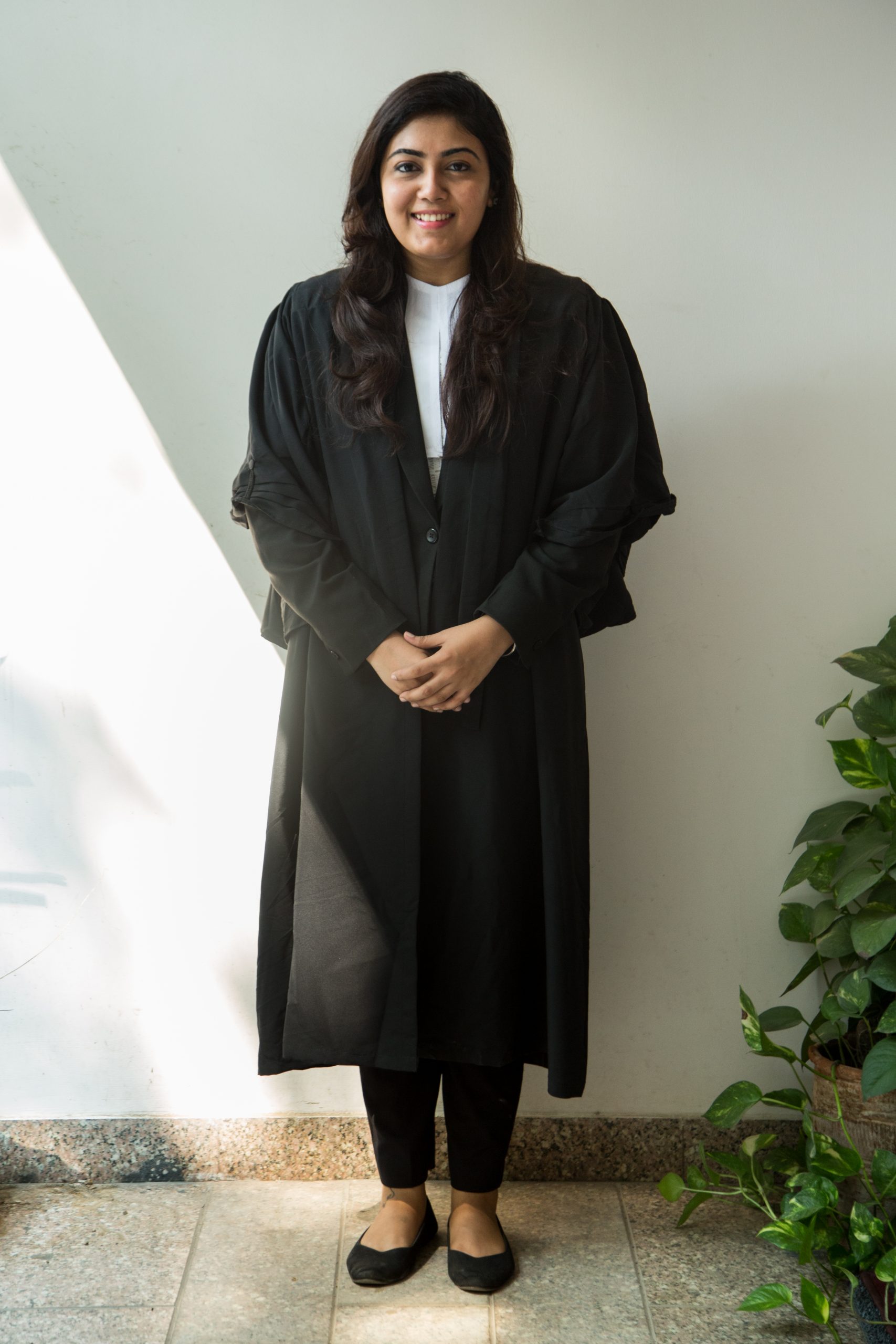
  • In Conversation With: Meenu Padha- an Advocate, an Activist, and also the President (Jammu and Kashmir) of the National Child and Women Development Council, India & the Vice President (Women Empowerment and Child Rights Movement) of the National Council of News and Broadcasting, India

    In Conversation With: Meenu Padha- an Advocate, an Activist, and also the President (Jammu and Kashmir) of the National Child and Women Development Council, India & the Vice President (Women Empowerment and Child Rights Movement) of the National Council of News and Broadcasting, India

    This interview has been published by Sonali ParasharOjuswi Sahay, and the SuperLawyer Team


    You chose law as a profession. Do you believe that the legal profession has the power to shape society?

    I strongly believe that Law is the only profession which has the power to shape society. Being a lawyer is a noble and honourable profession that requires a manner of conduct to be carefully followed.
    Apart from fighting cases, lawyers provide their skills and knowledge to society by doing pro-bono cases and lending legal services to the poor and needy who cannot afford the services of the lawyer for the conduct of a case or legal proceedings in any court, tribunal or before any authority.

    Lawyers can deal with all the fields of society including science, social values, human rights, banking, intellectual property etc. So I think only the law profession has the power to shape society.

    You graduated from the University of Jammu, considering the prevalent situation there, how challenging was it for you to complete your studies. What is the current scenario in Jammu and Kashmir on this educational front?

    Frankly speaking, there were challenges and still are there. But we should know how to overcome the challenges.
    Law has been my passion since my school days. I always wanted to do law. But I am from a middle-class family so the first challenge was of course the fee for law school. When I cleared the entrance of the University of Jammu and got a seat in The Law School my parents got me admitted to The Law School despite all the financial problems they were facing.

    As I am a first-generation lawyer, I know that there is always a fear among first-generation lawyers that it will take a lot of time to settle. But yes, later I realised that nothing is difficult when you give your best.

    Indeed, students of Jammu and Kashmir do not have the same opportunities as the students who are from other parts of the country. Because of this reason, most J&K students go to other parts of the country to pursue their studies. And it is also true that everyone cannot afford to study outside J&K.

    But yes I strongly believe that God helps those who help themselves. No obstacle can stop you if you have faith and you give your best on your goals.

    You are an independent practitioner in Jammu & Kashmir and Ladakh High Court and Legal Representative of IRCON, a PSU of the Ministry of Railways Government of India. Would you like to share your daily rundown with the readers?

    Yes I am an Independent Practitioner and my main area of practice is Criminal Law. Besides I am also the Legal Representative of IRCON before the Jammu & Kashmir and Ladakh High Court. To represent IRCON before the High Court is one of the best things. I feel delighted to represent IRCON International Ltd, a PSU of the Ministry of Railways Government of India.

    And so far as my criminal practice is concerned, I generally represent the rape survivors before Court. Despite being a first-generation lawyer, I never joined any senior and starting my own practice, as an Independent Practitioner is a bit challenging. But with the blessings of Lord Krishna and my parents, I will overcome it as well.

    Raising women and child rights matters accompanies appreciation and criticism too. How do you deal with the hurdles in the way of your goals?

    Yes Working for the rights of children and women has always been my interest since my law school days. Women in J&K are not so aware of their rights. To create awareness to them about their rights and then help them through litigation to get justice is quite a satisfying thing for me. As I said, I usually represent rape survivors before the court and all the vulnerable sections of society like women, children, SCs, and STs. This is the most satisfying thing for me. That’s the reason I love my work.
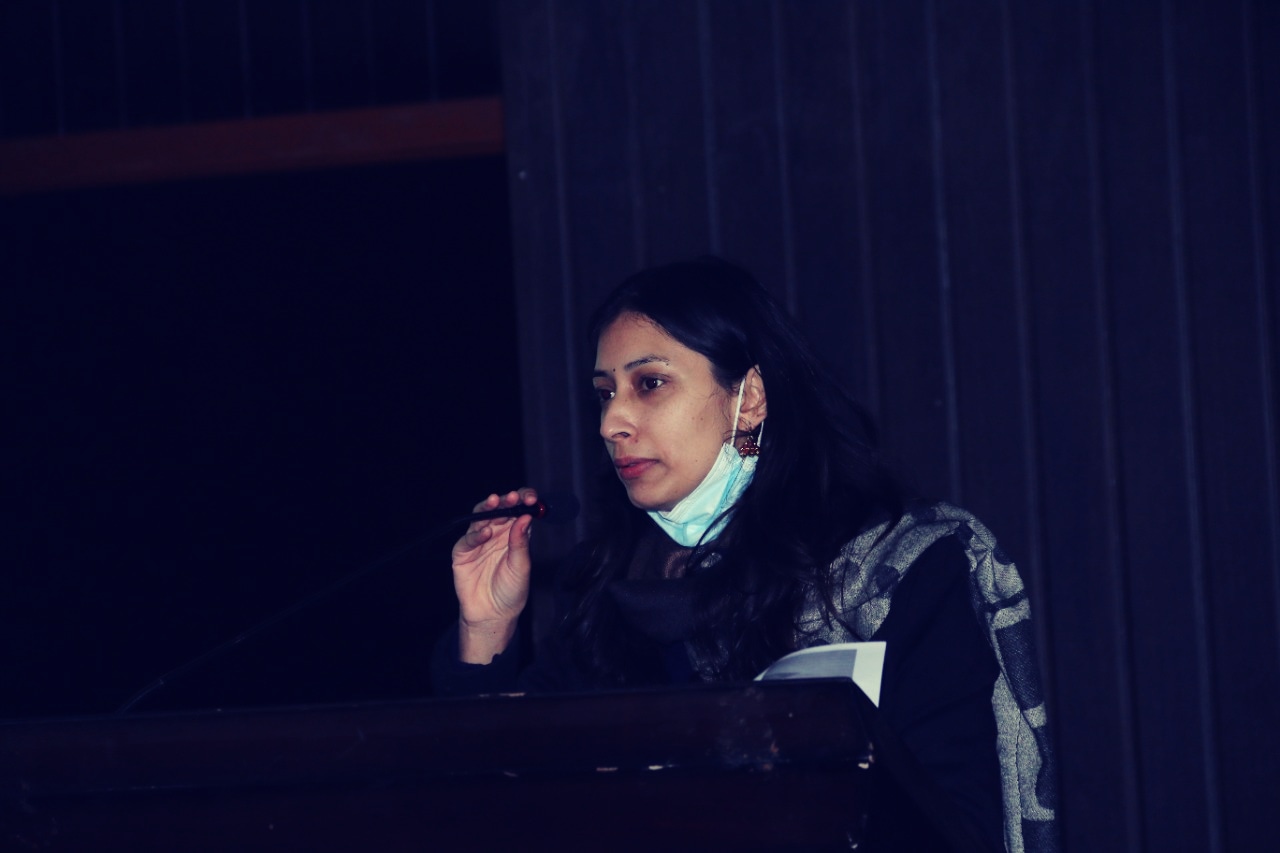
    You are appointed as the President (Jammu and Kashmir) of the National Child and Women Development Council, India; the Vice President (Women Empowerment and Child Rights Movement) of the National Council of News and Broadcasting, India. What responsibilities do you get in your respective capacities? Is the situation any better in J&K after your initiatives?

    Working for the rights of children and women has been my dream since the days I was doing my law. As women in J&K are not much aware of their rights. So to create awareness about their rights and help them through litigation as well is a really satisfying thing for me.

    I usually represent rape survivors & vulnerable sections of society like women and children before court. After being appointed as President of J&K, I conducted a number of awareness campaigns, workshops, webinars, seminars, and sessions for women and children in the outskirts of J&K. A number of women approach me because of the violation of their rights by their husbands, family members, people and sometimes by authorities. I try my best to help them to provide justice and to help every woman and child out there to get justice through Administration or Legally. Recently, I have also filed a Public Interest Litigation before J&K High Court because of rising cases of child abuse during COVID.

    Recently, I have also met with the Hon’ble Lieutenant Governor of Jammu & Kashmir Shri Manoj Sinha Ji and submitted a memorandum on women and child rights issues. Hon’ble LG has taken immediate action on the main points of the memorandum like he has ordered for the fresh reconstitution of Child Welfare Committees in every district of J&K. And giving approval for the Women Commission for J&K which was abrogated after Article 360 in J&K.

    What made you focus only on women and child rights? How close are we to ending the era of feminism?

    The rights of women and those of children have been promoted in isolation from one another.

    See women’s rights and child’s rights are human rights. These include the right to live free from violence and discrimination; to enjoy the highest attainable standard of physical and mental health; to be educated, to vote, and to earn equal wages in the case of women.

    Feminism is a movement that fights for women who are facing monumental odds. But it is also paving the way for gender inclusivity and equality that benefit society as a whole.

    Feminism is about supporting and empowering people which is something that is still needed even in 2022.

    Education is the most powerful weapon in the world”. How true are these words according to you?

    As Nelson Mandela says, “Education is the most powerful weapon which you can use to change the world.” Education is the key to eliminating gender inequality, reducing poverty, creating a sustainable planet, preventing needless deaths and illness, and fostering peace. I am also running a school for underprivileged children here in Jammu namely Masti Ki Pathshala a school for underprivileged children. It’s an evening informal School were out-of-school children who are mostly involved in some kind of child labour come during the evening time to get a basic education. So I believe education can change the shape of society. Children are our future. The right to education is their fundamental basic right, which should be implemented properly.

    Would you like to share a few tips on how even a student can uplift the marginalised?

    I want to tell the students that if you are doing law, then use your knowledge. Because what a law-knowing person can do, no one else can.


    Get in touch with Meenu Padha –

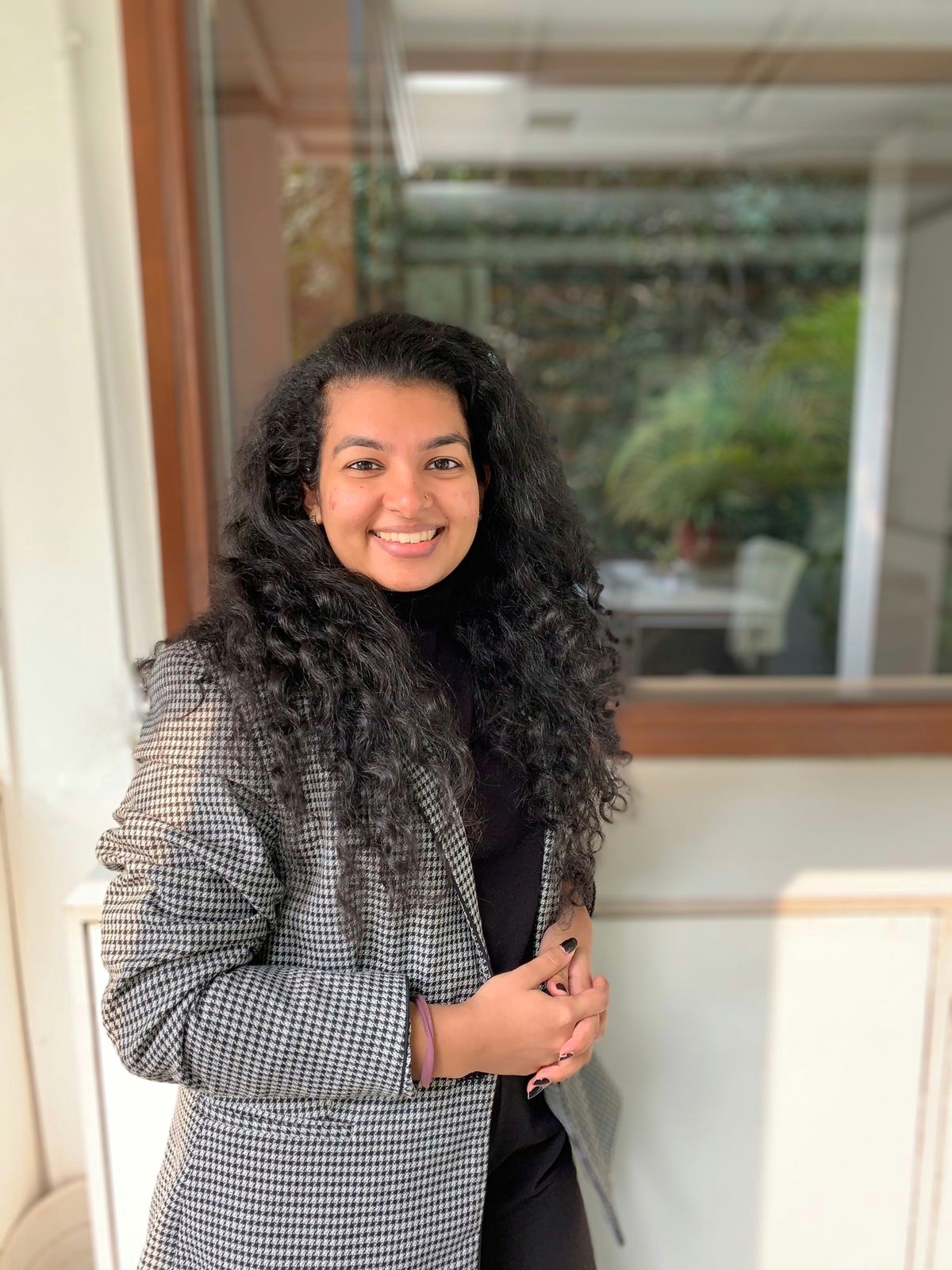
  • In Conversation With: Namrata Pahwa, Advocate- practicing Fashion and Entertainment laws, and also featured in the WIPF Powerful Women in IP, 2021.

    In Conversation With: Namrata Pahwa, Advocate- practicing Fashion and Entertainment laws, and also featured in the WIPF Powerful Women in IP, 2021.

    This interview has been published by Sonali ParasharOjuswi Sahay, and the SuperLawyer Team


    What factors made you opt for Law as a profession? How would you describe yourself as a law student? 

    There were 3 main reasons for me to choose to study law– a) I was good at debating and articulating my thoughts; b) I was in sheer awe of the black robes worn by Advocates and c) I wanted to opt for a profession different than the members of the family (the rebel in me).

    You completed your masters in International Business Law from the National University of Singapore (NUS). What challenges have you faced in the admissions process? 

    I applied to NUS because I was aware of and most impressed by their pedagogue and selection methodology. NUS always looks at a student in a holistic manner without focusing on one aspect alone. I remember writing my Statement of Purpose with a lot of heart and I think that’s what got me through. The admission process was as smooth as butter and it was the best time of my life!

    What special efforts does a law student have to make while pursuing law as a profession?

    For any student to succeed in the field of choice one has to be diligent, focused and disciplined. These key strengths are what will get you through anything. In the same vein, I would like to add, that as a law student, you should write as much as you can, do as many internships as you can and be a part of the requisite co-curricular.

    After interning and working under various law firms, you started practicing independently in Fashion and Entertainment Law, IP Prosecution, transactional and litigation. How would you describe your role as an independent practitioner? How strenuous is it to deal with and lead the matters? 

    My role as an independent practitioner is manyfold and I get to wear different hats from being an accountant to a paralegal to even a PR manager, but I wouldn’t have it any other way. It is most stressful but not as much as it is exhilarating and satisfactory.

    Fashion and Entertainment Law, these words excite most young creative-minded lawyers. What according to you this area of law seeks from an advocate? Is this area as exciting as it sounds? How can one enter into Fashion and Entertainment Law?

    I say often that I work in the most exciting genre/vertical/niche of civil law which is Fashion and Entertainment. I can understand the appeal that it has over students and young lawyers but I must warn them that like any other vertical of law, this also demands an equal amount of research, skill and strategy. Fashion and Entertainment law is an umbrella that houses many genres of law like Torts, Contracts, Intellectual Property, Custom law, Employment law, Criminal law and many others.

    First, a student must understand each aspect of Fashion and Entertainment law which only internships can provide. Read as many cases and keep yourself updated on the latest developments. One can join a law firm with such a vertical or be an in-house lawyer for a fashion brand or even enter it through academics.

    Would you like to discuss how brand names create a monopoly in the fashion industry? 

    For a brand name to create a monopoly in the market, they have to protect its name in terms of a trademark, its designs in terms of copyright or design, and its technology in terms of a patent and safeguard all of them through contracts. Apart from this, global goodwill and repute play a big role in creating a niche in the market.

    You are also accredited with WIPF Powerful Women in IP 2021. Would you like to discuss your achievement and the hard work involved in that?

    Before WIPF I was offered many awards for which I would have had to pay a sum of money in some form or the other. I detest that approach. So when WIPF got in touch with me, their first email stated that this did not involve any pecuniary transaction. This list was a compilation of the best Female IP lawyers in the country. For me to be on the same list as Justice Pratibha Singh and both of my ex-employers, was enough gratification for me. 

    Since the first lockdown, I shifted my focus online by conducting various webinars and talks. I also formulated my own Fashion Law Module. All I had was consistency and hard work and that was all I needed to get me to where I am today.

    What considerations do you take into account while hiring a legal professional/ graduate in your firm? What advice would you give to others who want to set off in a similar direction?

    I look at my juniors/interns as my colleagues and equals and expect them to work as hard as I do. A brief understanding of IP is important, the rest one always learns along the way. 

    Don’t be afraid is what I’ll tell others. Don’t hesitate in asking for work or looking for guidance. Teach yourself something new every day and you shall be more than fine!


    Get in touch with Namrata Pahwa –

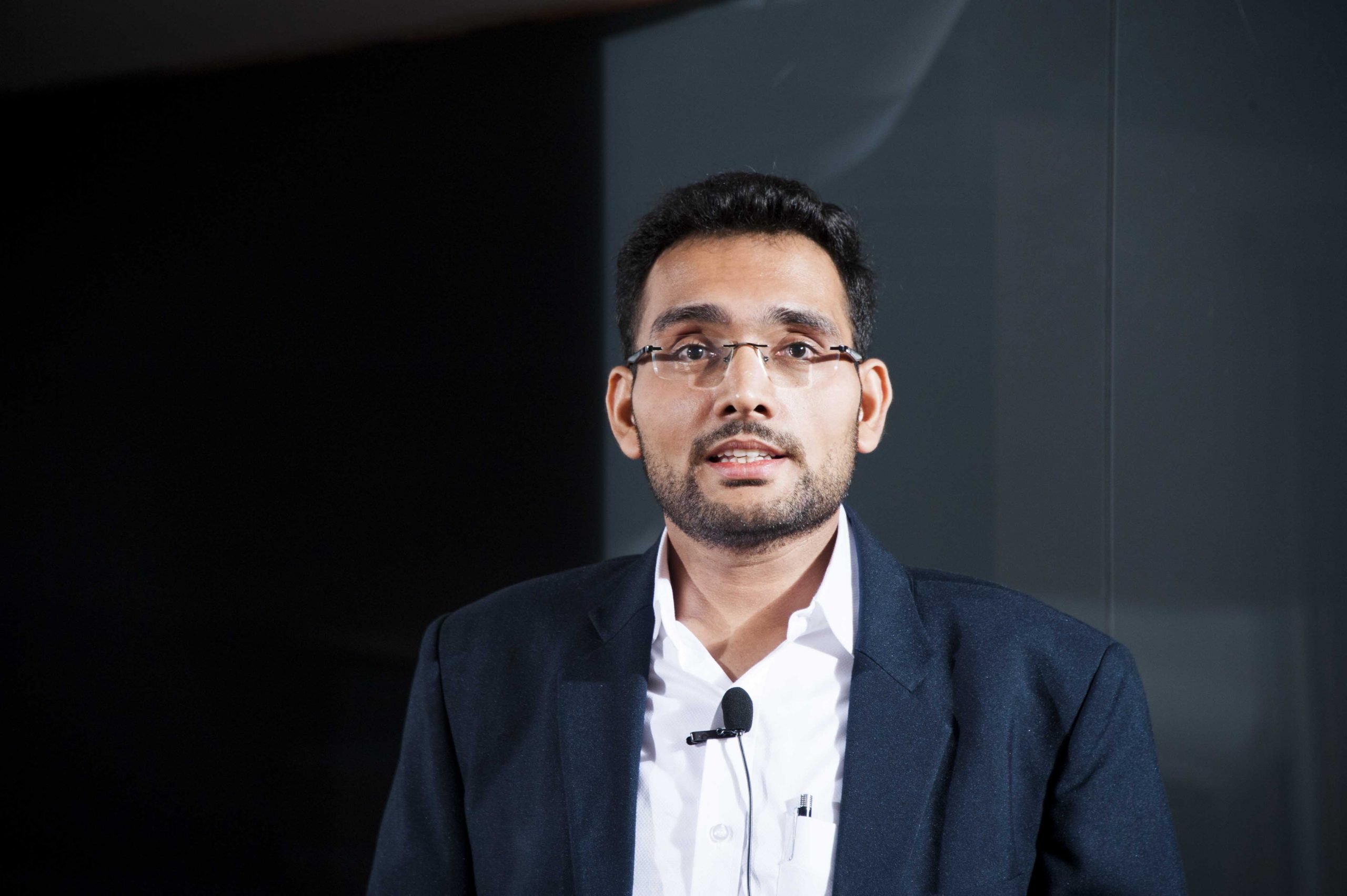
  • In conversation with Mr Nishant Prasad, Chief Compliance and Legal Officer (CCO) at Wint Wealth, talking about in-house role as well as working at law firms, and choosing between the two

    In conversation with Mr Nishant Prasad, Chief Compliance and Legal Officer (CCO) at Wint Wealth, talking about in-house role as well as working at law firms, and choosing between the two

    This interview has been published by Sonali ParasharOjuswi Sahay the SuperLawyer Team


    Let’s start with a cliché, why did you decide upon law as your career? Happy accident or predetermined plan?

    The career choice for me was probably a mix of a predetermined plan and my own interests as I was growing up. In school, my interest always peaked in Social Science subjects. Reading about the freedom struggle in history, the state of our community and how it functions in Civics and Political Science, especially the entire phase of the drafting of the Indian Constitution was highly intriguing. 

    The constituent assembly debates were a pleasure to explore and the opportunity to have a glance into the lawmakers’ thought processes at the time, to construct laws that stand relevant even to this day and probably for many more in the future, was inspiring. Understanding the interpretations and the multiple perspectives which can be present for a single phrase of legislation was absolutely addictive, and I think the decision was made right there. Add to that the ever involving nature of law where it always keeps you on your toes is great I think. You can’t get lazy. 

    That, supplemented by a background of law in the family, was a heavily contributing factor in the career choice. My great grandfather was a well-respected lawyer even during the British era and my Nanaji was a judge as well as a lawyer. Their stories and experiences narrated to me by my parents are etched in my memory and they became my career role models. 

    But I think one ironic trait I have as a lawyer is that I always hated reading a lot, so that part of my personality probably did not make the career call. 

    You have been part of the esteemed Law Schools of India, NALSAR University for your bachelor’s degree, and NLSIU, where you are currently pursuing an MBL Degree, i.e., Masters in Business Law. How would you describe your Law School days?

    Law school was an enlightening experience. I knew that I wanted to pursue law as a career but it was only after going through law school that I got a firm reason as to why. Law school was a humbling and highly educational experience and I do not mean only in terms of learning the law. 

    I learnt life lessons during law school, through experiences which were both great and some not so great. Just by living life with my batch mates and other members of the NALSAR community, I was exposed to a range of different experiences, thoughts, issues and perspectives which I think was instrumental in shaping me to be the individual I am today. I not only learned how to be a good lawyer at NALSAR but also how to be an open-minded and strong individual. Law school taught me to be open to opinions and shape them after considering all perspectives rather than be stubborn and just maintain the stand on what you believe with no recourse. 

    Other than that, it was an absolute blast to stay in the hostel and conjure up some of the best memories of my life, be it the lifelong friendships I have built or the probably insane activities we participated in sometimes. The madness of law school academics was always nicely supplemented by old school fun. I have a rather distinct memory of our entire boy’s hostel preparing for an all-night barbeque party which was made possible by the base stands of water coolers, steel mesh purchased from the village near NALSAR and groceries ordered through our mess representatives. It was a night of good food, blasting music and plain and simple fun. Memories which cannot be replaced. 

    Law is an ever-evolving profession and it was with this in mind that I joined the MBL degree at NLSIU as part of their distance learning programme. I think it has helped me to touch base with core concepts of law again and also learn the present-day evolution of the understanding of those concepts. It has been an enlightening experience so far and I look forward to completing this journey as well next year. 

    Your professional journey started with working at Khaitan, where you worked on Private Equity, M&A and VC transactions. What was your overall law firm experience like?

    The law firm experience was incredible for me. I won’t be lying when I say that after I joined Khaitan, in my head I knew the objective was to make it as a Partner in the firm and serve out my service years there completely. The people were incredible. My true mentors in the profession have to be all my colleagues and seniors with whom I worked in Khaitan. The work was of the highest quality and professionalism was at its best. The Khaitan team is where I learnt what it means to be a ‘professional’ and the honesty and integrity that should come along with it. 

    Yes, there was a lot of work going into a fair number of days with long hours but when the people you’re working with are amazing, the long hours are also quite fun.  I have learned immensely with the members of Khaitan and am truly grateful to Khaitan for being the stepping stones to any success I have today, it would not be possible without them. The exposure to how the law works in the real world was shown to me by Khaitan and the opportunities provided to learn from the best within the firm and from outside through other firms or clients in multiple transactions was an amazing experience. 

    Even after moving on from Khaitan, I am a proud Khaitan alumnus and they actually do have a newsletter which is sent out to all their ex-members as well to keep you apprised of what is happening. Ex colleagues are still great friends and mentors and you may have heard the famous quote in Harry Potter which states ‘Help will always be given at Hogwarts to those who ask for it’, this statement stays true for Khaitan as well. 

    You made a switch to an in-house role by joining Scripbox, which is a fintech company based out in Bengaluru. What made you decide on switching to an in-house role?

    I think this decision was purely based on the sheer curiosity of what lay on the other side of the fence. While I was part of several large ticket PE and M&A transactions at Khaitan, I was always left curious as to the impact any transaction made on the day to day functioning of the clients. For example, we would have probably closed a 100 million USD funding round but the execution and money transfer were the final destination for me as a law firm lawyer. 

    The ins and outs of how a business works and how such transactions impact the business on a daily basis were where my curiosity always lay. 

    And in my view, satiations of curiosity at an early stage of your career is a must to ensure there are no regrets at a later stage in life where you are stuck with the age-old thought of ‘ Should I have done that?’. 

    What are some of the challenges you believe an in-house counsel faces and how should the upcoming professionals prepare themselves for these?

    The primary challenge which I faced moving in-house was the difficulty in blending legal advice with business goals. If I talk specifically about the fintech field, it is a heavily regulated space and as the name suggests it’s all about technology and providing access to financial products digitally. 

    But to advise on compliance for the business would necessarily involve understanding how the business works and that means not only from a theoretical angle but also the ground realities of how a product functions. You have to understand each step of the entire product as a legal and compliance professional so that when a regulation, circular or any guidelines of any sort come up, you are immediately aware of whether any part of the business is impacted by it. 

    This involved learning a little of everything within the organisation, product, tech, operations, customer service, data privacy, labour laws for the employee-related aspects and of course your basics of contracts continue. You also need a deep understanding of the business strategy and the plan ahead by the management so you can be a productive participant in the discussions. It’s an all-around role and just being a lawyer is not helpful. 

    Another major challenge in today’s industry is to change the perception of lawyers. You will always see that the compliance and legal teams are viewed as blockers in the business industry and they just have to deal with them because they have to and more often than not, they are disappointed by going to them. The requirement of creating a good relationship with all stakeholders within a company, educating them on why you provide a certain view and rather than being a blocker, working with them to create a workable solution for what they are wanting to achieve is exceptionally challenging. 

    The only way to prepare for this I think is to go in head first and attempt it. Having an open mind and not being stubborn about your own thinking is always good. Having an open mind, leading discussions and collectively coming to decisions with logic and as a team will be helpful. Teamwork and a sense of ownership towards meeting the goals of the organisation as a whole are key to success in an organisation. Making yourself useful by providing valuable inputs not only as a lawyer but as a customer of the business or the users of the business or as a product manager thinking of how something needs to be made, what issues need to be solved – that is gold in an organisation. 

    You are currently working for Wint Wealth which is an upcoming Startup in the fintech space, as the Chief Compliance and Legal Officer (CCO). We’d love to know more about the organisation and your role in it.

    Wint Wealth is an exciting platform democratising debt investments in India by offering an alternative investment platform towards fixed income high return assets in India and is a unique platform in the Indian finance ecosystem providing the average retail investor with a great short term alternative debt investment product with fixed and high returns.

    The team at Wint Wealth is young and driven, striving to provide the best experience to its customers. We like to think of ourselves first as educators, attempting to create maximum awareness among customers about the products we provide access to as well as the other financial products. As the CCO, my responsibility of course includes ensuring that the organisation as a whole remains compliant with the regulations and laws of the land. But as previously mentioned, the job involves understanding the needs of the organisation from within as well as those from the perspective of our customers. 

    We have always been a customer-first organisation and that involves doing what’s right, being compliant and doing what’s best for the customer. So I do manage and take care of what you would say are the standard lawyer duties of reviewing the various contracts and general compliances of the company. However, a major part of the job is to remain updated on all the moving pieces of the organisation and be involved at all times to enable constant overview, ensuring that any developments being made by the organisation are all within the purview of the law and are for the benefit of the customer. 

    A daily effort to remain updated about what’s happening in the legal and regulatory space is a major part of the job to ensure that any impact on the organisation is identified and actions which may need to be taken are done at the earliest. 

    Congratulations on winning the Lex Falcon Award in the Lex Talk World Global Conference held in Dubai in February 2022 in the category of Legal (Under 10 years) for impactfully contributing to the legal industry with great knowledge, reach and innovation with a futuristic spirit and approach. Please share your thoughts on receiving such a prestigious award with us.

    It is an absolute honour to be recognised by the Lex Talk team. The conference was an amazing experience and an opportunity to interact with colleagues from India and other countries as well and a great learning experience. 

    The feeling of receiving the award was absolutely overwhelming and provides encouragement to lawyers like me to continue what we are doing and strive for excellence in what we do. Accepting an award in front of colleagues from the legal fraternity, many of whom are close friends, is always something to cherish. 

    The fintech industry provides a massive opportunity for legal innovation and an opportunity to reach the masses and finance is for every individual and organisation. It is a tough and arduous role to play balancing the legal needs and customer needs necessitating innovation in the way one looks at law. Recognition for playing an active part in this proposition of innovation is very satisfying and validation of the good work that the fraternity is doing in this field. 

    Finally, what would you advise an upcoming professional who is confused between a law firm role and an in-house role?

    I think the answer to this question cannot be black and white, as with any legal issue. It is highly subjective depending on the individual and their personality. As we propagate in the financial world, the identification of goals is of utmost importance to plan well and take apt decisions. 

    In my view, one must utilise their internships throughout the law school phase to get an understanding of what they are enjoying. Supplement that by actual experience in the real world after being employed by either a firm or in-house – one can learn what they enjoy doing. It’s a cliché line, but you must do what you enjoy the most. Maybe your two options may not include what you enjoy most, but what you enjoy more is always something you know. I probably enjoy cricket the most, but we all know that’s probably not the best career choice in India, especially at present.

    Never hesitate to take a leap of faith and try something different. But a calculated risk must also be taken. In my opinion, taking these leaps of faith early on in one’s career is helpful as it will help you gain the clarity you need for your future path very quickly.  However, if you are enjoying what you do, then there is no necessity to try something different just for the sake of doing so. 


    Get in touch with Nishant Prasad –

  • In conversation with Mahafrin Sidhwa, an Advocate practicing in Media and Entertainment laws as a Senior Member of the Legal Team at Only Much Louder

    In conversation with Mahafrin Sidhwa, an Advocate practicing in Media and Entertainment laws as a Senior Member of the Legal Team at Only Much Louder

    Let’s start from the beginning, are you a first-generation lawyer? What gravitated you towards choosing law?

    I am a second-generation lawyer, my mother is a trademark attorney and many of my family members are advocates and Senior Counsels. 

    What truly gravitated me to do law, was my keen interest in the business law paper during my B.Com days. That’s when I got acquainted with what law truly was and that has been my first step towards an interest in this direction.

    I was almost certain I wanted to pursue post-graduation and a specialization in something. I was least inclined towards M.com as that was mainly pursued by persons wanting to be professors, MBA required a fair number of entrance exams and you have to be inclined towards business and administration or marketing and I had no such inclination. When it came to law, I had a fair number of examples around me of successful lawyers and hence I didn’t mind pursuing this line. Moreover, I am a very rights-based person, “no harm in knowing the laws of the land” is what I thought.

    Do you think Law as a profession gives hard time to young lawyers? How can one overcome the ‘unsatisfied feeling’ of self? 

    I think every career path has its own set of challenges and is ultimately the “survival of the fittest”. I also feel everyone’s path is different, some young lawyers, may face herculean challenges and other might strike success a lot easily. I do feel young lawyers with no Godfathers in the business might struggle to get their break, especially on merit and it may take years to find ones footing in the profession. 

    The key to overcoming any “dissatisfaction” in the legal path is to keep at it. and failure or criticism should not deter one from prodding on. 

    Even if someone throws you under the bus or puts you in a tough spot, know that this too shall pass. Keep going on till you see the light!

    How would you describe your shift from M&A to the M&E sector? How important is it to find your right calling?

    I would consider it most important to find the right calling, as whatever you do, you should be able to sustain in the long run, in fact till your death bed.  No knowledge will ever go to waste. 

    My shift from M&A to M&E was a turning point in my life. I had a very basic foundation of M&A and understand documents like a Share Purchase Agreement or Loan Agreement and have managed to work on those as well post specializing in M&E, but M&E is what I could never get tired of. The knowledge keeps evolving considering how new platforms and technology are developing.

    You have been a part of various distribution and acquisition deals all over the world from Russia to the USA to South Africa. How well did IN10 Media Private Limited push your growth curve? 

    IN10 Media is a company which runs EPIC Television channel famous and one of its kind for info-entertainment. When I joined the company, it was in the process of its own growth since the applications EPIC ON and Docubay (a documentary streaming application) were nascent, and wanted international presence with various application integration in devices,  payment facilities with telecom partners through direct carrier billing middle entities, payment gateway and discount vouchers, along with forming a channel of its own with other content partners like Amazon etc. The Docubay app would acquire content from content partners all over the world on a day in and day basis and it’s important to be careful to acquire as many rights as possible such that when content is distributed there are no fetter or special approvals required. The sure volume and variety of these agreements gave me a steep growth curve, and not to mention other responsibilities towards the production of web series and acquisition of content for its allied channels and legal day to day issues of its news handle, Latestly.

    What is the main role of any lawyer working in Media and Entertainment Law? Can you tell us something about your current role? How would you describe yourself as a senior member of the team at your current place? 

    The Role of a Media and Entertainment lawyer is very demanding and requires one to work at the spur of the moment. My current role is that of a senior member of the legal team at Only Much Louder. Here, I focus on representing various brands like Facebook, Tinder, Bumble, YouTube etc., as well as celebrities, influencers writers, and show-runners like Dolly Singh, Abish Mathew, Rahul Subramaniam, Sumukhi Suresh etc. 

    Here I am also involved in various Writers, Director and Actor Agreements as also Endorsement Agreements or appearances at events and even production agreements for literary works created by the talents of the organization. At times, I also distribute content on platforms or towards entertainment transport facilities towards a pre-recorded stand-up comedy show recorded by the talents of our organization. I do any other technical agreements relating to IT and other ancillary documentation or advice towards trademarking and any other intellectual property-related advice etc., from time to time.
    I am a lawyer, who believes in being fair and I do what’s best for the entity or person I represent and I aim to get the best bargain in any deal with a solution-oriented attitude. I also believe that I give gratitude and utmost respect to my seniors and subordinates.  Sometimes an artist or an influencer or even a business person may not understand legal terms and their repercussions, I take time to explain these legal terms in layman’s language. When it comes to subordinates, I am fairly patient with newcomers and learners and have shaped a fair number of young media and entertainment lawyers without being selfish with my knowledge.

    After moving to OML Entertainment, you represented several renowned social media platforms like Facebook, Tinder, Bumble, YouTube, etc., and on the artist management side, you represented a fair number of stand-up comedians, writers and directors. Do you believe hard work always pays off? Would you like to drop a hint about your next big step?

    For me Work is Worship, it’s about giving your 100% to what you do and enjoying what you do. Once you enjoy what you do work won’t be considered “hard” if you are acquainted with its nuances and are focusing on continuous evolution, work won’t seem that difficult and will become a way of life. Hard work does pay off definitely, Rome was not built in a day, the struggle is a part of life, but I don’t believe in overworking or burning the midnight oil or a “show/pretence of work or abilities”.  I believe in work-life balance and to keep evolving and learning aspects of law and serious observance of disputes and issues in the legal aspects of the media and entertainment industry. 

    My next big step, none that’s planned as of now on the professional front. I believe in taking small steps, “slow and steady wins the race”.

    How interesting is it to advise and contract vetting for Artists mainly comedians and their appearances and performance for shows? Would you like to share any story where you worked for your favorite Artist?

    As already mentioned, the key issue in dealing with an Artist is, that they may not understand legal terminologies and the repercussions of clauses in the agreement that don’t favour them, so you have to be patient in explaining the terms and conditions in simple words such that they can give instructions which can be incorporated in the agreement. Besides the current talent of influencers and comedians,  I have worked on contracts for a fair number of A-listers like Neha Sharma, Saif Ali Khan, Hrithik Roshan, Dia Mirza and the likes. I will be very honest, I am not technically “star-struck” as I have dealt with all sorts of talent – be it upcoming or famous and established personalities. 

    Also, they are all normal people like us and some of them are extremely humble and listen to what is told. I think for me its more about the kind of deal or structuring of a document that excites me the most. Gratefully, there were several of those recently relating to comedy related live sports content with HOTSTAR and in the past various deals for the HRX brand and their association with Curefit and Cult fit.

    Do you believe Bosses and work environment play a crucial role in polishing the skills of a good lawyer? Would you like to give any parting message to young lawyers?

    Yes a good Boss is like a God sent Guru, but a selfish, rude, difficult, insecure frustrated Boss is a living curse, it might kill your morale to pursue your goals. Moreover, toxic work cultures and over working might derail you.  My message to Young Lawyers is to first have a goal, next would be to work on gaining knowledge by themselves and next to have strong observation skills and lastly to continuously evolve and stay updated with developments in the line of law they wish to specialise in. 

    The media entertainment sector has so many areas from publishing of music to sports and event as also digital show and acquisition/ licensing of softwares, artist management, production and law focusing on television and news etc. You have to endure different aspects of the industry you chose and “Keep at it”, success does not come overnight.

    Connect with Mahafrin Sidhwa:

  • Kalpit Khandelwal, Principal Associate at Vaish Associates on venturing into law from a business background, the value of mentorship, and focusing on the present 

    Kalpit Khandelwal, Principal Associate at Vaish Associates on venturing into law from a business background, the value of mentorship, and focusing on the present 

    This interview has been published by Sonali Parashar and the SuperLawyer Team


    Coming from a business background, how did you gravitate towards the law? What other career would you have chosen, if not law? 

    From my early days, I was intrigued by the corporate world and wanted to be a professional instead of continuing my family business. As part of career counselling, law was identified as one of the professions’ I had the skill set for, maybe, due to my problem solving and persuasion skills. My parents always encouraged me and gave me full freedom to pursue any career of my interest. They supported me in all ways when I decided to pursue law as my career. Since my childhood, I was inclined towards computer games and also had an imaginative mind. So, if not law, I would have enrolled myself in a game designing course.

    It is said that getting a mentor is the first step towards attaining success. How true do you think the saying is? Do you think a mentor plays a crucial role in the growth of a person? What type of mentor would you suggest for a law student?

    I completely concur with the above saying, indeed I was lucky enough to get mentors in my life who had seen more talent and ability in me than I myself would have seen and helped in bringing out the same. They gave me an opportunity to work and assist them on big-ticket and complex transactions at a very early stage. I was made part of each and every phase of the transaction from the very beginning of my career so that I could learn in its entirety. I truly believe a saying that mentoring is a brain to pick, an ear to listen and a push in the right direction. In my view, every law student should have a mentor who is approachable, non-rigid, a good listener, non-judgemental, eager to invest in others, able to give honest and direct feedback. I am also fortunate enough to become a mentor for other law students now by becoming a mentor at Mentorology.     

    Litigation is notoriously time consuming and unpredictable. What changes according to you should the litigation sector imbibe to truly turn into the fundamental learning place for an advocate? Is struggling in the litigation sector worthy of effort? 

    In my view, one of the perennial reasons for excessive delay in delivering judgements is the ease of adjournments. Although Supreme Court had advised and Civil Procedure Code has enough provision for the imposition of realistic costs for every adjournment, costs are rarely imposed and therefore, litigants and their counsel think nothing before asking for an adjournment. Further, the registries of the courts are tasked with the judiciary’s administrative functions. Administrative support functions needed by the judiciary, identification of process-related inefficiencies and advisory on legal reforms, should be delegated to a specialised professional agency that has administrative expertise, specialisation, modern management practices and technologies. Also, a massive house-cleaning exercise in every single court to identify cases that are infructuous or not worth pursuing will surely reduce the pendency of legal cases. Indian legal system is also required to adopt technology and artificial intelligence in every phase of functioning. 

    Most of us struggle with pursuing different courses at a time but you pursued the Company Secretary course and Master in Business Laws while you were pursuing your law graduation. How did you manage to pull it off? Can you tell us a bit about your study pattern, and would you like to share a few tricks to ease the learning?

    The mantra I always used to sing while studying is to read as much as possible and re-read it at regular intervals. Always remember, play when you play and study when you study. Being focused in every moment is very important and challenging at the same time in today’s age of cell phones and tablets. Underlining keywords with different colours and complementing the study notes with mind maps will surely reduce the time in memorising the legal concepts. One should also inculcate a habit of reading bare acts, being the holy water of law, and judgements from college time itself. 

    You worked for almost 9 months as a Paralegal at ARA LAW, a boutique law firm and later you were handed a PPO. Can you share about your job responsibilities of both while you were a Paralegal and later on when you landed the job?

    I was never a morning person until I joined ARA LAW and used to reach the office an hour early. Every day before office hours began, I used to read the latest updates to existing laws, important judgements, legal news, etc. and used to discuss the same with my seniors, as keeping abreast with the rapidly changing corporate legal environment is essential for any lawyer. As a paralegal, I also used to research, attend and take notes of the calls/meetings, proofread agreements and make summaries of agreements/documents provided by the target entity for due diligence purposes. I have always believed in doing work diligently and sincerely without thinking much of the outcome. My work spoke for me and as a result, I was offered PPO by ARA LAW. As a lawyer, I used to assist my seniors in drafting and revising the transaction documents, preparing the due diligence reports, drafting legal opinions, etc.   

    Can you tell us a bit about your current job role and responsibilities? 

    As a transactional lawyer, I wear several hats in the process of working through a deal i.e. an advisor, mediator, negotiator and drafter. I provide advice on matters relating to M&A, strategic alliances, regulatory aspects, etc, prepare reports and opinions on diverse corporate matters relating to Companies Act, FEMA, SEBI regulations, stamp duty, etc., handle legal due diligence exercise, negotiate the transactional documents, drafting, vetting and execution of all the transactional documents. One of the biggest challenges and at the same time, most exciting aspect of M&A practice is that your schedule is exceptionally uncertain and highly variable in terms of intensity. I am fortunate enough to lead a team of associates who are extremely capable and flexible enough which makes my life easy when we are faced with an accelerated deadline. 

    You have led several acquisition deals like Patanjali’s acquisition of Ruchi Soya, acquisition of Innov8 by OYO, Lemon Tree’s acquisition of Keys Hotel and more. What were your key experiences/takeaways from these acquisitions?

    The sound understanding of commercial and business complexities besides the legal intricacies of a long-drawn M&A transaction and precisely communicating the same to the client as well as the other side while negotiating the deal is a bedrock skill that cannot be dispensed with. Further, a corporate lawyer is expected to think and reach with the same sense of adventure as that of his client as in the corporate world, there is no decision making without an element of risk. At times, in M&A transactions, you are faced with seemingly insurmountable obstacles wherein you have to train yourself to not merely focus on the specific issue at hand but also you have to consider every possibility, never being dismissive of anything and think out of the box to steer your client through the M&A deal. Further, we need to be highly responsive to clients and comfortable with interweaving work and personal life because of the technology we have today.

    What will be your parting message to our young lawyers?

    I have heard several times from young lawyers that they ‘do not understand’ their seniors or ‘have no idea what is going on’. Bizarrely on the same knot, they also shared that they do not address their queries and issues with their seniors. Establishing an open channel of communication with seniors would certainly help you in setting the work environment straight. These seniors can also show you the ropes and take you under their wings. As young lawyers, we are often driven to learn as much as we can and as fast as we can. Blinded by the thirst to improve, often we find ourselves volunteering to take on voluminous tasks which we may not be able to execute effectively. In case you find yourself in such a position, speak to your superior in advance, instead of attempting to move mountains in a short span of time. At the same time, remember always that the grind in the early years will pay off in the long years ahead in your practice. Focus all your energy on working hard. Attention to detail is also indispensable for any corporate lawyer as small mistakes could significantly cost a lot to your clients (and your organisation) and therefore, it is an absolute must for you to work on this quality from the start. 


    Get in touch with Kalpit Khandelwal:

  • Habin George  Sebastian  – International Lawyer, Georgetown University Law Center (USA) alumnus: 2017, ILS (Pune) alumnus: 2016, NUJS Entrepreneurship Diploma Alumnus: 2013

    Habin George Sebastian – International Lawyer, Georgetown University Law Center (USA) alumnus: 2017, ILS (Pune) alumnus: 2016, NUJS Entrepreneurship Diploma Alumnus: 2013

    This interview has been published by Tanmaya Sharma. The Interview was taken by The SuperLawyer Team.


    HOW WOULD YOU INTRODUCE YOURSELF TO OUR READERS?

    I am a self-motivated individual who tries to see positive things in all spheres of my life. “All is well, All is well” is my motto! (I presume you have seen the movie, 3 Idiots.)

    WHAT FACTORS INFLUENCED YOU TO PURSUE LAW. PLEASE TELL US SOMETHING ABOUT YOUR COLLEGE LIFE.

    To be honest, like any high school student I was also in a dilemma whether to choose law or any other subject for a career path. However, I believed my instinct to choose law as my career. I was good at logical reasoning and analysis in every aspect of decision-making in my life and these qualities are required for a lawyer.

    I enjoyed being at ILS, Pune. I was fortunate enough to be taught by Professors such as Prof. Nilma Bhadbhade, Prof. Sonali Jadhav, Prof. Anagha Kadolkar, etc, and even got some wonderful friends for life.

    WHAT IS THE SECRET TO SUCH A SUCCESSFUL ACADEMIC RECORD?

    I don’t have any secret for my academic excellence. However, like anyone else, I worked hard and achieved good grades. But I feel, it’s paramount for everyone to keep a positive attitude when preparing for their exams and never get into exam stress. Make a plan at least 2 months before the Semester exams and make sure that you stick to it.

    YOU HAVE DONE MANY INTERNSHIPS IN TOP-TIER LAW FIRMS DURING YOUR TIME AT LAW SCHOOL. HOW DID YOU BAG THEM? HOW WOULD YOU SAY THAT AN INTERN CAN GENERATE A POSITIVE FEEDBACK IN THE LIMITED TIME THEY HAVE?

    I have done several internships with some of the largest law firms in India. I secured a few of them through their internship opportunity application in their career section and others through networking. To make a positive impact on your internships, it is essential to display that you are passionate about your work. Further, you should be willing to clearly listen to the instructions provided by the Associates and Partners and thereafter, provide them with the exact material they are looking for, which may help them during the corporate transactions. In case, if you didn’t comprehend the specific tasks given, then you may kindly let them know. They will surely simplify the tasks and they may explain the concepts to you. Besides, keep in mind that time is very important and you should submit the work within the given time frame. I also suggest you reach the office early and make yourself ready for the day.

    YOU HAVE PURSUED A DIPLOMA IN ENTREPRENEURSHIP AND BUSINESS LAW FROM NUJS. PLEASE TELL US SOMETHING ABOUT THIS COURSE. WOULD YOU RECOMMEND IT TO LAW STUDENTS?

    I am happy to let you know that I was in the first batch of the NUJS diploma. This course helped me to know more about the basic practical insights of Entrepreneurship and Business Law. I recommend it to all law students. 

    My special thanks to Mr. Ramanuj Mukherjee who guided me throughout my career process.

    WHAT MOTIVATED YOU TO GO FOR A MASTERS PROGRAMME? HOW DID YOU CHOOSE YOUR SPECIALISATION?

    I always wanted to pursue a Master’s from any of the elite institutions in the world. I used to read about top law schools and even dreamed about getting into one of them since my second year of law school. During my research at that time, I came to know about corporate law, and international arbitration, and its possibilities in the real world such as leading and managing mergers and acquisitions, restructuring, private equity, general corporate advisory works, etc, and the role of international arbitration in resolving disputes between an investor and the sovereign state. From that moment, I made up my mind to become an international lawyer and to pursue a specialization in international business law and international arbitration from one of the top three universities in international law in the United States. Fortunately, I got into the International Business and Economic Law program of Georgetown University Law Center with immense hard work and dedication.

    WHICH UNIVERSITIES DID YOU APPLY FOR LLM? HOW DID YOU CHOOSE GEORGETOWN UNIVERSITY LAW CENTRE?

    I have applied to some of the top law schools in the United States. Here, I chose Georgetown Law

    because of several reasons such as the following: 

    1. Location: Georgetown Law is situated in Washington D.C and D.C have enough opportunities for networking in international law-related careers considering most of the international agencies and big US law firms are located in Washington D.C.

    B) Externships: Another reason that I would like to mention here is their Externship programs. They have a lot of great externship programs that may allow you to work with international organizations and international law firms in D.C. 

    C) World-class international law library: Georgetown Law has a brand new world-class library specifically for International Law with the library of Congress nearby.

    D) Celebrity International Law Professors: The other most important factor for my consideration to apply to Georgetown Law is their International Law Professors. Georgetown Law has world-class celebrity international Law Professors to teach international law.

     E) Ranking with respect to International Law: Georgetown Law is always listed ahead of Harvard and Yale in the international law category and most of the time in the top three international law programs in the United States as per the widely recognized US News Ranking. 

    WHAT SHOULD BE KEPT IN MIND WHILE WRITING SOP FOR LLM ABROAD?

    SOP: I must confess that the SOP writing part is the most difficult in the whole LL.M application process. I suggest you write your SOP at least a year before your application submission due date. The SOP must have a proper direction (means must look like a life story linked with real-life events ) where the admission committee can easily follow your genuine motivation towards your LL.M studies: (it is paramount to show your genuineness in your SOP) and what you aim to achieve after the graduation. (Always keep in mind that words should be used in minimal in number maybe 650 words or lesser)

    PLEASE TELL US ABOUT YOUR TIME AT GEORGETOWN UNIVERSITY LAW CENTRE? WHAT SHOULD A LAW STUDENT EXPECT WHEN GOING FOR AN LLM ABROAD?

    It was awesome! I got the opportunity to meet several brilliant minds from all over the world. Now, I can say I got friends from all over the world. 

    Be ready to work hard! Keep your expectation very high and this expectation will strive you to work hard to achieve your target.

    PLEASE TELL US ABOUT THE RECRUITMENT PROCESS AT JSA?

    The recruitment process in JSA is very transparent. You can apply through their career section on their website and wait for their response. 

    WHAT WOULD BE YOUR PARTING MESSAGE TO OUR READERS?

    Always be positive! You are gonna achieve your dreams. If you think you are an average or below-average student, don’t ever stick to that point. Get up and think, think, think! What should I do from now to change myself to my best? You should not compare yourself with others. Believe in yourself!


    Get in touch with:

  • Lovejeet Singh- Managing Associate at Chandhiok & Mahajan, Alumni of Cardiff University UK, who paved his path in assorted parts of the law

    Lovejeet Singh- Managing Associate at Chandhiok & Mahajan, Alumni of Cardiff University UK, who paved his path in assorted parts of the law

    This interview has been published by Tanmaya Sharma. The Interview was taken by The SuperLawyer Team.


    Why does corporate law attract so much attention? What makes it so unique?

    The corporate sector in India is at a developing stage. The majority of the mid-size businesses in India are still not structured formally and are gradually moving towards formalization. Considering the aforesaid, there is a huge potential in corporate law practice. Further, there is a dearth of corporate lawyers in Tier II and Tier III cities including small towns. I think this is one of the key reasons that corporate law attracts more attention.

    The other aspect which makes corporate law unique is the financial aspect. Starting one’s legal journey in courts in India is still not financially viable, whereas, a career in corporate law with a law firm usually leads to a decent pay package even at the early stages of the career.  

    If we start from the beginning, were you ever dicey while choosing law as a career option? 

    I was never dicey while choosing law as a career option. As my father is a tax lawyer, I always had an inclination to be a lawyer from my school days despite being aware that it requires a lot of hard work and determination. I used to accompany him to tax tribunals at times during my school vacation. The courtrooms always intrigued me to be a lawyer. 

    However, I took time in choosing my practice area. I joined law school with a thought process that I will become a tax lawyer and join my father, however, later I realized my inclination towards corporate-commercial law. 

    You completed your LLB in 2008 from Panjab University and LLM (Commercial Law) in 2009 from Cardiff University, Cardiff (UK). How strenuous was it to get into Cardiff, a top ten university in the UK? Would you like to share your internship experience with a Kuala Lumpur-based law firm?

    I would say that completing Masters in Law at Cardiff University was more strenuous than getting into the university. As the Indian legal education system (when I completed law) was more subjective, getting a hang of the English education system (which focuses more on the practical side) took some time and effort in the initial days. Education at Cardiff University helped me to enhance my analytical and problem-solving skills which are much necessitated for a lawyer.  

    I had a delightful experience with Azmi & Associates, a Kuala Lumpur-based law firm. It was my first experience with a foreign law firm. I worked on corporate transactions and did advisory work during my internship. Perhaps, some of the assignments involved Indian parties so I also used to refer to Indian law. Further, the Contract Act and Companies Act applicable at that point of time in Malaysia were similar to what was applicable in India, hence adapting with work was not difficult. The Firm and its members were very supportive. I am still in touch with the Managing Partner and Corporate Partner of the firm.

    You assisted many renowned authors like Late Dr. Avtar Singh and were engaged in legal research while employed in LexisNexis. Immediately after that, you moved to CLG and dedicated almost 5 years. How has research work helped you in establishing your legal understanding at CLG?

    I think one of the important requirements for legal practice is that you should be aware of where the law is and what it says. Implementation of the law is a subsequent step. The research work done at LexisNexis helped me to gain an in-depth understanding of what the law says. Considering my interest in corporate-commercial law, I was always given the opportunity at Lexis Nexis to work on books relating to corporate-commercial law. 

    I would say that the research work gave me a foundation to practice law. At CLG, I worked in different areas of law including advice on corporate matters, regulatory aspects (in sectors like food processing and pharma) and disputes resolution. While I was not very keen to work on the disputes side, the Managing Partner at CLG persuaded me to have some experience of commercial litigation/ arbitration to have a holistic experience of legal practice. 

    You advise in assorted sectors like aviation, automobile, chemicals and fertilizers, food processing, manufacturing, IT, infrastructure, hospitality, and shipping. Which industry interests you the most? How does one handle advising all such evolving industries together?

    I find the transport industry (specifically aviation and shipping) more interesting in comparison to other sectors. I still remember my first assignment concerning aviation finance advice at Clasis Law. I found it challenging initially but, the aspects involved while advising on the assignment were fascinating. Subsequently, my secondment at Clyde & Co, Dubai in 2018 brought me closer to the aviation sector where I worked with the aviation team and got an opportunity to work on various aspects of aviation. I am currently advising on shipbuilding contracts and contracts relating to the procurement of equipment for shipbuilding.

    With regards to handling evolving sectors together, I think it is imperative to stay abreast with the legal developments in these sectors. As these are evolving sectors, the law keeps on developing from time to time and it is important to keep yourself updated to advise on such evolving sectors.

    What responsibilities do you carry out as a Managing Associate with Chandhiok & Mahajan (C&M)?

    At C&M, I handle transactional and advisory work. I have been working on assignments relating to aviation, automobile, chemicals and fertilizers, manufacturing, IT, and shipping. In addition, I am also gaining exposure to other areas of law such as insolvency and restructuring. 

    We often hear that a lawyer has a never-ending learning process. What is your next move to accelerate your career?

    Yes, learning is a never-ending process for lawyers and I believe it is important to upgrade your skills from time to time. 

    Going forward, I intend to focus on business development and further enhance my advocacy skills. I am currently exploring suitable study programs which can be taken up simultaneously with work to enhance my aforesaid skills. 

    Other than work, you are a fitness enthusiast and are involved in reading insightful books. How would you inspire a young mind to follow a healthy routine? 

    I think a healthy routine is not just for physical fitness, it also has an impact on your professional life. 

    For instance, following a regular fitness regime requires persistent determination and it keeps you more disciplined and focussed. Achieving fitness goals also boosts a person’s confidence. In my view, discipline, perseverance, a focussed approach, setting goals, and learning something new each day are a few of the key essentials for a successful professional life. I believe the advantages of a healthy routine and prerequisites for a successful career are interlinked.

    This connection can probably be a source of inspiration for young minds as everyone aims for a successful career. Further, reading insightful books keeps me motivated to keep going. I remember a quote from my recent read – Robin Sharma’s ‘5 AM Club’ which says “When you feel like surrendering, continue. Triumph loves the relentless.


    Get in touch with:

  • Bhavana Chandak- Associate at Kachwaha & Partners, Delhi, also volunteering as an Additional Director of Philanthropy at CAN Foundation

    Bhavana Chandak- Associate at Kachwaha & Partners, Delhi, also volunteering as an Additional Director of Philanthropy at CAN Foundation

    This interview has been published by Tanmaya Sharma. The Interview was taken by The SuperLawyer Team.


    You participated in a few National Rowing Championships and secured a great position. What made you choose law over sports? 

    Rowing till date is very close to my heart and I will never forget the days where it was rain or shine we would go down to the jetty and race against others. My passion kept me in the sport and I won the gold medal at the National Championships more than once. I loved my journey as a rower but at the same time, I was not keen on making it my full-time profession. In the penultimate years of school, I decided to pursue law. The prospect of being a lawyer and having a voice in a society wherein I could defend myself lured me to choose law as a career. 

    Do you think that participating in National MUN, National Parliamentary Debate, or National Moot Court Competition helps in real litigation or legal fields?

    Any form of extra-curricular, be it MUN, parliamentary debates or Moots plays an important part in one’s journey in law school.    A MUN gives you exposure to a pre-prepared competition in international diplomacy whereas a Parliamentary Debate teaches you to be quick on your feet and cull out the most interesting arguments in a short span. While the former is a well-rehearsed and researched competition the latter is dependent on your knowledge. Both these competitions are extremely fun, but I would prefer a Parliamentary Debate, because of the adrenaline rush. They help hone your public speaking skills. 

    Moot Court Competitions for sure help you in real-life litigation because they are the closest experience to a courtroom during law school. You learn how to draft issues, present arguments, learn court demeanor, and understand the courtroom. You may participate as a researcher or a speaker, but in either role, you understand the basics of real-life litigation, which you can then build upon once you’re a professional. For instance, when I took part in Mediation at the Symbiosis ADR Competition, I found one of my interest areas in law and when I won the third best memorial at the Philip C. Jessup, I learned how to deal with multi-dimensional issues, court craft, and drafting. I cherish all my participation and accolades in Moot Court Competitions because they have helped me grow as a student of law. 

    Should one always intern under the same Advocate/firm or explore new places with time? What will be best for a law student to establish his/her career in law? 

    Internships are without a doubt a vital part of law school which helps you find your passion and interest areas. Having said that, it is implied that one should explore through in their nascent years, say up to your 3rd year by working at different places. By interning at different places, one is exposed to different laws, working environments, projects. For example, in my first three years, I worked with NGOs, State Commission, a boutique family law firm in Bangalore, a Calcutta High Court Advocate specializing in company law matters, Sr. Advocate Siddharth Luthra specializing in criminal law. In those years I learned how different Courts operate and got a macro understanding of various laws and practices. On the way, through my internship with the Disputes team at Khaitan & Co., I found my interest in arbitration. 

    Then in my last two years, I streamlined my internship opportunities at the Disputes team of various law firms, like Nishith Desai Associates, Dua Associates. In my final year, I was looking to intern with a law firm for the long run or do repeat internships to secure a job. Since I already knew by then that I wanted to practice arbitrations I applied for an internship at Kachwaha and Partners. Once I completed that, I received my assessment internship at the firm for two months and then I was offered a PPO in my last semester. 

    My only reason to lay down my journey so far is to depict that one should not lay their eggs in the same basket. If you are trying to find your interest then explore your options, after a while streamline your internships and then choose what fits you the best. 

    You are dealing with national and international arbitration matters. How do you feel about it?

    I am fortunate that Kachwaha & Partners has allowed me to work on multiple high stake arbitrations. The experience has been exhilarating so far! I have for a year working on both ad hoc and institutional arbitrations on an array of topics. I feel humbled that I have worked so early in my profession, worked on such big-ticket matters, and attained knowledge about the intricacies of the profession. All in all, I would say that I have had a great kick start to my journey in the field of arbitration and undoubtedly it will go a long way in the profession. 

    Could you please tell us about your role in the CAN Foundation? How has your experience with the Foundation been until now? 

    Before I get into the specific role, I’d like to tell you a little about our work. At the Foundation, we support law students at various National Law Universities to complete their academic courses and freshers as well. I work there in the capacity of Additional Director of Philanthropy. My main role is to secure as much financial support we can to help out our applicants. Over the past few months, I have worked closely with Siddharth Sir (the CEO of the Foundation) and spearheaded the fundraising campaign for our flagship program Eklayva (wherein we provide scholarships to financially distressed law students). One would expect it to be a fairly simple task, but over almost three months, my team had approached approximately 400 potential donors daily to raise funds. 

    Being involved in fundraising at such a big scale has made me more humble and conscious of my privilege. While perusing through the applications, the obstacles which students have faced, the backgrounds they hail from, their stories, can shake a person to their core. It is honestly a fulfilling task to see that our hard work over the past few months has led to awarding of scholarships to so many students in need. 

    We have an audience that is interested in legal writing. Could you tell them how to utilize their interest in shaping their career?

    Legal writing is undoubtedly a very important part of our profession, and it is a skill best developed if started early. The beauty of legal writing is that firstly, it provides you with a holistic understanding of the topic one is writing on, and secondly, it improves your drafting skills. I would advise interested students to try and pen one article each semester. This would not even put a lot of pressure on the student or hamper their extracurriculars. It is important to mention that, it is not necessary to write your articles on the same law, but rather you can choose to diversify depending on the current topic of relevance and interest. For example, I have written on niche topics in arbitration, and alongside have written pieces on environmental law, human rights law, etc. The tricky bit while writing is not penning down the article but rather choosing a good platform to publish it. One should choose a forum of repute while sending in their manuscript for publication; only then will the publication be of relevance in the long run. 

    You are a young established legal professional. What is your success mantra?

    Thank you for your kind words, but I think I am too young in the profession to be called established. However, the only mantra I abide by is to learn something new every day, however inconsequential it may seem. It may so happen that the task you are allotted might be small but only if your basics are coherent can one build a strong empire. I would also like to say that it is important to not rush in the journey because it is a marathon, not a sprint. You need to perform every day and be a better version of yourself as compared to yesterday.  

    What career tips do you want to give to our readers? 

    The only career tip I would like to give everyone who is reading this is to do their tasks diligently. There is no shortcut to hard work. So if you put in your hours and apply yourself to the task you are working on and be patient, there is absolutely nothing stopping you from attaining success in the field of your choice. 


    Get in touch with:

  • Binoy Parikh- part of Katalyst Advisors, a boutique structuring & advisory firm focussing on Mergers and Acquisitions

    Binoy Parikh- part of Katalyst Advisors, a boutique structuring & advisory firm focussing on Mergers and Acquisitions

    This interview has been published by Tanmaya Sharma. The Interview was taken by The SuperLawyer Team.


    How tough was pursuing C.A. with additional professional degrees like B. Com & LL.B.?

    There are two parts to any academic journey, especially when it involves an extremely practical/on the ground kind of qualification such as pursuing CA – first is the academic or theoretical knowledge itself, which is not as tough as one would perceive since many concepts would overlap with B.Com and LLB. If the fundamentals of various topics are clear (at Foundation/Intermediate level), then the theoretical knowledge is relatively comfortable to maneuver.  

    However, the second one, which is more important and will result in long-lasting benefits is the “Articleship”. I started working when I was 17 and worked effectively, in three shifts – from 9 am to 11 am, in M&A/Corporate Tax Litigation, thereafter from 11 am to 6 pm in Audit and again from 6 pm to 9 pm in M&A/Corporate Tax Litigation. Of course, given the time commitment, one has to prioritize a lot and that does create additional pressure while pursuing other degrees. However, to manage the time and overall pressure, one does have to commit to a particular mission, and while on that the time management associated with it. 

    Many students feel that tax litigation is hard to follow, but the same amused you. How can corporate tax be learned in a fun way?

    My stint with corporate tax litigation was during my Articleship/Internship period – in this context, I was new to the field and found the concept of litigation fascinating since it tests the technical prowess of corporates (and their advisors) on one hand, and the might of the Income-tax authorities on the other. Further, complex issues involving corporate restructuring, interpretation of a particular exemption/deduction, etc. would have required in-depth planning and analysis before taking such a position in the return of income, and therefore, the fascination lies in the fact that one would have to defend such a position during litigation, which would have been analysed thoroughly in the past. To me, the learning and the associated fascination comes from the fact that each position or stand is not taken on a stand alone basis, but after considering the previous stands, impact on the future financials of the company involved, interaction and interconnectedness with other regulatory laws (such as corporate law, securities law, FEMA, IndAS, etc.) and therefore, to understand a particular issue under litigation is to again understand that entire gamut of analysis undertaken in hindsight, and what could have been done at that time so that the litigation scenario could have been obviated.

    Binoy Parikh

    Would you like to share your experience of any M&A transaction that shaped your career?

    Initially, I had started my career with KPMG Mumbai in their M&A Team at the age of 20. Then when a part of the team transitioned to PwC Mumbai, I got an opportunity to directly work with the India M&A Head of PwC at the age of 22. And it was at that time, I was handed the responsibility of conceptualising and executing the merger of Cairn India with Vedanta in a $2.9 Bn all-share swap deal. The concept itself dealt with a gamut of laws and regulations owing to a complex ownership structure – tax, corporate law, FEMA, securities law, stamp duty, etc. At that time, IndAS was just taking shape, and we had to figure out the overall impact of IndAS on standalone as well as consolidated financial statements of Vedanta, and without any specific guidance, it was a challenge to apply IndAS 103 and IndAS 110, dealing with business combinations and consolidation/control assessment. Dovetailing and interconnecting all the laws was a task in itself at a conceptual level. 

    In addition to that, corporate India was transitioning from a High Court based jurisdiction to a National Company Law Tribunal based jurisdiction. So, from an execution perspective, we had to unlearn the old procedures, re-learn the new ones, and then present to the NCLT the merits of our case, which was one of the first few to be sanctioned by the NCLT post its formation. 

    I think the key takeaway from this is that the tax and regulatory landscape in India are ever-evolving and one cannot work in a static environment. And I have learnt to rely on my fundamentals while applying the fundamentals to the constantly changing dynamics in the M&A landscape.

    You are a part of “Katalyst Advisors” (Mumbai), a boutique firm focusing on Mergers & Acquisitions. How has the journey been so far?

    The journey has been fantastic so far, to answer in one line. 

    To elaborate – when I joined Katalyst Advisors since its inception, our vision has always been to be a boutique firm, focussing only on M&A and related aspects, and with a limited team so that we can do justice to the matters at hand, especially when it involves complex commercial, regulatory and tax matters. 

    Today, in the era of “accumulation”, quality has been overwhelmed by the quantity, and therefore, our vision, since its inception 4-5 years back, has been to focus only on the quality of our advice, rather than the quantity or volume of clients. This has worked well for us as we have worked on some major deals in the last couple of years – major family separation of the TVS Group, divestment of Eureka Forbes by Advent International, acquisition of Thyrocare by PharmEasy, private InvIT structure between Singapore based GIC and IRB Infra, major fundraising-related structure for the Shapoorji Pallonji Group, etc. This has added a lot of value to our learning in addition to us providing value addition to the client. 

    Apart from the client work, the notion of building a firm right from the beginning – designing the website, newsletter, etc. has excited me a lot and has given me immense satisfaction as compared to my previous endeavours.

    How challenging has it been maintaining a work-life balance in this era of Work from Home?

    Well, we have been partially working from the office since June 2020 after the first complete lockdown – however, I must say that, as an M&A professional, the focus of clients on consummating any deal has increased, and in the last 1 year, as I mentioned, we managed to close three major deals – the TVS Family restructuring (a $7 Bn family separation), acquisition of Thyrocare by PharmEasy and acquisition of Eureka Forbes by Advent International, and therefore, the work pressure has certainly increased. Of course, with high stakes involved, the concept of 9 am to 6 pm workday, or Monday to Friday working week is not obliterated, but at the same time, I have consciously managed to take some time out to maintain my physical and mental health (through regular meditation and cardio), and the hobbies that I love (for example, playing the Tabla), given that in the times of such uncertainties and limited social interaction if one focuses on being mentally and physically fit, one has won half the battle. 

    I look forward to taking some mask-less vacations soon, but till then, the personal health regime that I have managed to maintain has helped me a lot over the last 15-20 months to cope up, and, be more effective at my work.

    What is your current role? Could you walk us through how a normal day looks like in your life?  

    I am into Mergers & Acquisitions at Katalyst Advisors presently. I handle promoter-related issues, such as family settlements, succession planning, pre-IPO planning, etc. corporate restructuring and deal/ transaction advisory related issues, certain specific regulatory-related and corporate/ international tax-related issues and deal with a whole host of laws such as income-tax, FEMA (outbound/ inbound/ debt investment advisory), securities’ law (LODR, ICDR, Takeover Code, AIF/ InVITs/ REITs/ etc.), corporate law, stamp duty, IndAS, competition law, etc.

    In this context, given that we deal with very interesting issues, involving interaction with a lot of tax and regulatory laws, a “normal” day differs from day to day, but largely, it involves conceptualisation of deals, which involves various laws mentioned above, and coming up with innovative ideas to achieve the commercial objective of the client, while keeping in mind the tax and regulatory fetters. Conceptualization becomes all the more challenging and interesting, if it involves listed entities or non-resident parties, etc. 

    From an execution perspective, given that any M&A deal would most likely have in place a Share Purchase/Subscription Agreement, Shareholders’ Agreement, Non-competes, etc. and if it involves a merger/ demerger, then the entire NCLT approval process in place for approval of a Scheme of Arrangement, it requires a thorough understanding of the commercial objectives of the client, and ensuring that the same is reflected in various transaction documents, as well as ensure that the regulatory approvals (NCLT/ RD/ RoC/ OL, etc.) come through based on the definitive agreement.  

    As a result, a “normal” day would involve interacting through meetings and calls with the clients, lawyers, valuers, regulators, etc., preparing decks, notes and emails capturing our advice, following through with the above to get our idea to the client, and finally negotiating and closing the deal with the other parties/ regulators to see the deal seeing the light of day!

    You have authored several articles in relation to the M&A field, rendered several seminars, and co-authored “Impact of GAAR on Holding Structures” published in Compendium of GAAR published by the Bombay Chartered Accountants Society. How important is it to publish legal articles for law students fundraising-related in their career?

    One needs to write articles. There are several reasons for this – firstly, providing an output in a limited number of words requires a combination of thorough research, understanding the issue at hand in-depth, and then paring out the “noise” to articulate in the best possible manner so that your readers understand the core issues. Therefore, writing articles not only help in the technical knowledge getting sharpened (through research) but also the articulation skills getting honed depending on the platform where one is publishing – for example, on a technical platform, one may want to discuss more intricate technical issues, while on a general platform (such as financial dailies), one may want to translate the technical issues into more commercial ones for a wider reach.

    Binoy Parikh

    As you are an expert on Mergers and Acquisitions transactions, would you like to advise anything specific to the like-minded aspirants?

    If one likes the M&A/deals space, then one needs to understand, in detail and thoroughly, the entire gamut of tax and regulatory laws, as mentioned previously. Once the fundamentals are cleared, one can easily traverse through the constantly changing tax and regulatory environment – however, if fundamentals are not clear, then one would be lost in a cyclone of the dynamic environment. In addition, and equally important, is for one to research the commercial aspects of a deal – what was the rationale of a particular deal, what were the valuation parameters, are there similar deals taking place in the same space, was it a distressed or a voluntary deal, what would be the impact on the overall group business as a result of the deal, what would be the impact on the promoters, etc. As I mentioned earlier, any deal is different from any other deal, a deal evolves constantly before its consummation, and therefore, each deal requires a “tailored fit”, which, in turn, requires one to understand the commercial, regulatory and tax matters in-depth and apply one’s knowledge to facilitate deal consummation.


    Get in touch with:

  • Meenal Garg- Associate at K.N. Legal, a boutique Arbitration Law Firm, also an ODR Consultant, Member of Young ICCA, SIAC, LCIA and MCIA, a libertarian exploring Arbitration

    Meenal Garg- Associate at K.N. Legal, a boutique Arbitration Law Firm, also an ODR Consultant, Member of Young ICCA, SIAC, LCIA and MCIA, a libertarian exploring Arbitration

    This interview has been published by Tanmaya Sharma. The Interview was taken by The SuperLawyer Team.


    Did you always want to become a Lawyer or was it something that you decided in the later part of your school life? What other career options would you have considered, if not law?

    Law was never my first choice. In fact, I was oblivious to the law as a profession and wanted to be an engineer like most of my peers. In my 10th standard, I was inevitably put to choose a career path like any other 14-year-old kid. Though I didn’t have any preference in my mind, I was introduced to the law as a profession by my father. After talking to my friends, neighbours, teachers etc. about the same, I was convinced that law would be the perfect field for me as it could help me fulfil my dream of doing a corporate job while learning something new every day. I believe that had I not been a lawyer, I would probably have been a CA or an MBA executive or maybe even an engineer.

    You are quite active on LinkedIn. How important do you think LinkedIn is for professionals? Does that also discourage young struggling minds?

    I believe that after COVD, Linkedin has become the foremost place for networking amongst the legal fraternity. According to me, if used properly, anybody can immensely benefit from this platform. At the same time, it cannot be denied that students may feel discouraged after seeing the achievements of their peers or lack of response. However, this cannot be treated as a hurdle and rather this is the necessary motivation required to reap the full benefits of this platform. According to me, continued usage of Linkedin along with posting valuable content can easily boost someone’s career. Networking has never been so simple and accessible in the legal profession before Linkedin.

    You also took part in various competitions and have published numerous papers and Articles. How important do you think these are in shaping your understanding of law?

    Writing is one of the most rudimentary skills of a lawyer. As a law firm associate or as a junior lawyer, much of a young lawyer’s time is spent drafting briefs, research notes and petitions. Therefore, through writing a lawyer can improve his understanding of the law and how to communicate his thoughts properly. Another underrated advantage of writing is a novelty. Lawyers are required to generate out of the box solutions every day to tackle everyday problems. Writing papers compels a lawyer to think and to bring novelty in his arguments. I believe that all my writing achievements and endeavours have played a major part in shaping my career and helped me reach where I am today.

    You have been working on Arbitration cases since the beginning of your career and are now working as an Associate at KN Legal. Why did you choose Arbitration and what scope do you think it has in the future? 

    I have always considered myself to be a libertarian. Therefore, the consensual basis of arbitration resonated with the libertarian in me. Moreover, as I started exploring arbitration, I just couldn’t think of anything else apart from arbitration as my career path. This is because virtually every commercial contract contains an arbitration clause today. Disputes may be big or small, but today every commercial dispute is adjudicated through arbitration. Moreover, I believe that arbitration is the future of commercial arbitration. Anyone desiring to work in a corporate setup or the commercial litigation sector necessarily needs to know about arbitration. Furthermore, in the context of India, we may see more and more instances of mandatory statutory arbitration. Therefore, the scope of arbitration is limitless.

    You also happen to be a member of various International Arbitration Centres. Besides ADR, you are a mediator and ODR Consultant at Sama. Do you think it is time for India to adopt ODR on a larger scale?

    ODR has been a subject matter of debate in India for quite some time now. However, it was because of COVID that litigants were compelled to explore ODR as an option. Moreover, in my experience, such litigants have now started to recognize the benefits of ODR. Another factor is that India’s digital infrastructure has considerably improved and therefore, repeat players should consider adopting ODR for at least less complex and repetitive disputes.

    Meenal Garg

    Can you walk us through a day in your life?  What is the life of an Associate of a boutique law firm like?

    To say that a law firm associate’s life is busy would be an understatement. Moreover, with the advent of COVID and the work from home option, the lines between professional and personal life have considerably blurred. However, this comes with a silver lining as it allows me to develop my specialisation at a quicker pace. Moreover, I am involved in every step of arbitration and litigation including pre-litigation strategy, client meetings, drafting and appearing during the hearings etc. Furthermore, the small size of the team helps to ensure effective communication. 

    You completed your Masters’ dissertation on the topic ‘Promoting Efficiency of Arbitration in India by Using Technology’. Can you tell us a bit about it and how you see promoting Arbitration using Technology in India?

    In spite of being a practising lawyer who has seen virtual arbitrations every day, I was surprised to see that there was no information regarding the use of technology in Indian arbitration. There is no awareness regarding the use of technology in arbitration in India. Therefore, I took up this topic to discover the viability of the use of technology in the Indian arbitration landscape. After my interactions with various industry experts (whom I cannot thank enough), I believe that there is a huge scope for use of technology in Indian arbitration especially in small value disputes because of its cost-effectiveness. Moreover, this market seems to be niche and only a handful number of players and users exist which is largely due to COVID. However, through proper endeavours, technology can have long term benefits for India seated arbitrations.

    Lastly, is there any suggestion or advice that you’d like to give to our readers? 

    I always say that ‘it is good to dream big but it is not bad to start small’. Students and young professionals like me should see every opportunity as a learning opportunity. With the advent of COVID, knowledge and opportunities have never been easier to grasp. Contrary to popular beliefs, quality internships can be done right from the comfort of home. Furthermore, as already stated above, writing is the most important skill for a young lawyer. Lastly, reading and engaging in meaningful conversations pertaining to any area of law can be a sure shot way to be a successful lawyer.


    Get in touch with: