Category: Associates, In-House Counsels and Advocates

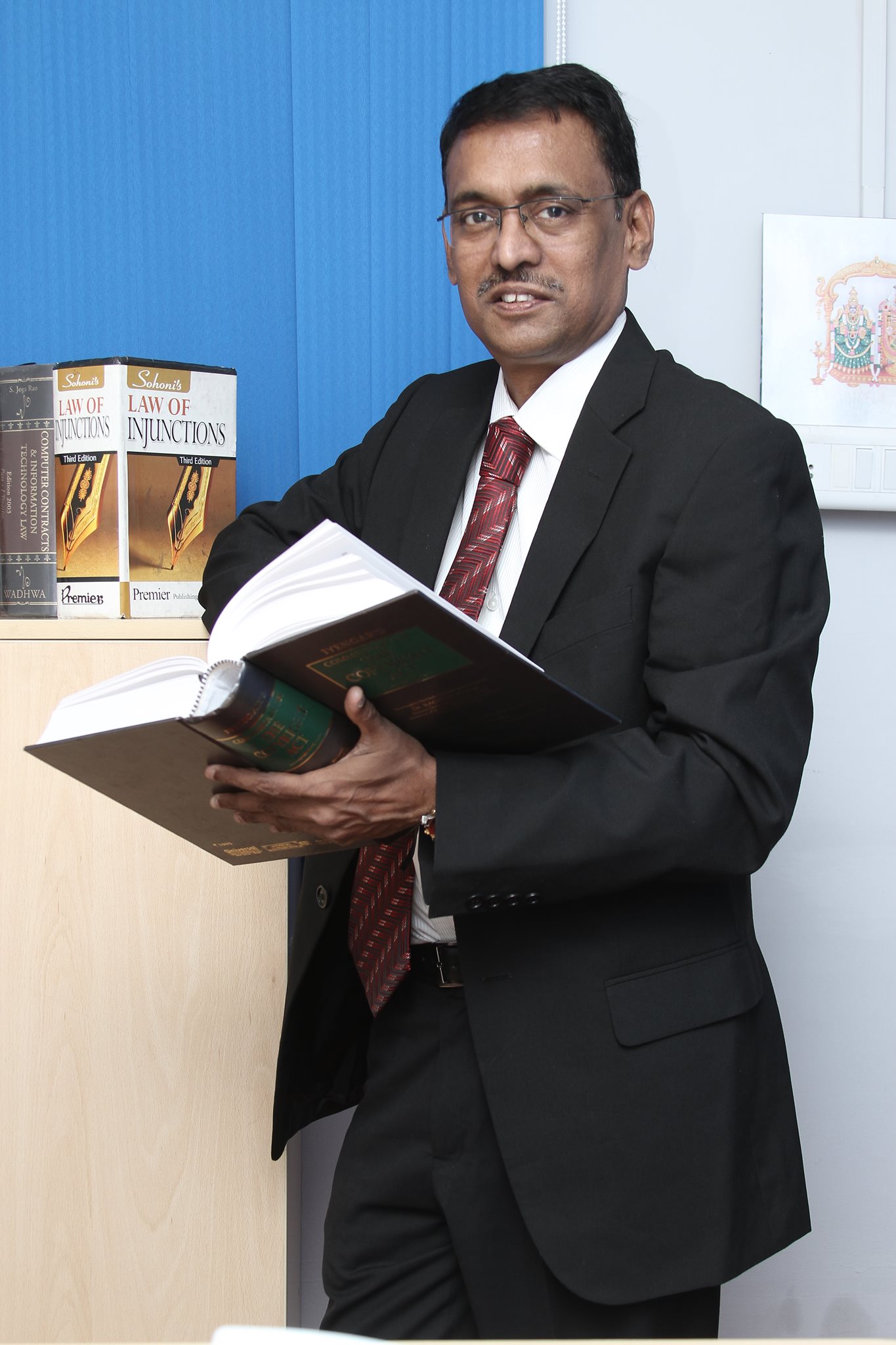
  • Ashok Ram Kumar shares his experience of being an IP & Tech lawyer for over 30 years, building WordictIP, IP Markets and Innovpath and advising young lawyers.

    Ashok Ram Kumar shares his experience of being an IP & Tech lawyer for over 30 years, building WordictIP, IP Markets and Innovpath and advising young lawyers.

    This interview has been published by Isam Kabir and The Super Lawyer team .

    1.Please tell us about your law school journey; what inspired you to join this profession? 

    My great-grandfather, the late Mr Sivashankaram Pillai, had a substantial impact on my decision, and I also drew inspiration from a dear lecturer Mr Prasad. As a result, I secured a high rank in Osmania University’s first-ever entrance exam for its esteemed LLB program. A few quality professors filled my student life with simplistic learning and ever-lasting memories. These three years also saw me be a medal-winner athlete, not to overlook my captaincy of the OU Cricket Team. 

    My typical day would begin with travelling 24 km to reach the University and sit for long hours of classes. Afterwards, I would alternate between “A-Grounds” for cricket net sessions and the library.

    2.When and how did you develop an interest in IP law?

    I believe what I am today is because of my Seniors, Mr R. Sashidharan and Mr Krishnamurthy. During my time in the Chambers of Mr Krishnamurthy, I developed a great interest in intellectual property and researched upon it extensively. I would often travel to Chennai and spend time learning the various procedures in the Trademark Registry. Initially, I started dealing with trademark applications, and the first application I had filed was for a mark “Cyber Shopee”.

    3.You established your IP-based firm while working with different companies as a legal consultant over the years. How did you manage the two simultaneously?

    I initially started an IP Consulting Firm named “IPR Consultants”. I didn’t realize the impact a name could have until a client pointed out that the title suggested a consulting firm. This prompted me to rechristen IPR Consultants to Wordict and later as Wordict-IP. Wordict-IP became a well-known brand, first in the undivided state of Andhra Pradesh over the last few decades. I was a counsel for various companies, including Sierra Atlantic (now Hitachi Consulting), TMC (now Vijay Sales), SIS Infotech (a KPO Firm ), MedRC (now MediSys), Knoah Soft, Mold Tek Packaging, Aditya Birla, etc. Initially, it was difficult to spare time between Wordict-IP and consulting firms, but with time, I could cater to the work and deliver on time.

    4.What kind of challenges did you face during the initial years of establishing your firms, IP Markets, and Wordict-IP?

    I was confronted with substantial challenges during my initial years of practice. The first challenge was the lack of awareness amongst clients who thought filing a trademark or a copyright application was an exercise in futility. 

    The next challenge was to tackle the education of the lower court judges. I taught myself to be patient and develop a positive teaching attitude when dealing with matters before the lower courts. I would make it a point to thank all the judges who would be patient during my arguments and would understand the subject to pass good orders. 

    5.Please tell us about your law firms’ areas of expertise. What were your reasons for establishing separate firms for prosecution work and IP litigation?

    Wordict-IP deals with IP prosecution, including filing, prosecuting, oppositions, and rectifications. The consistent inflow of filing and prosecution work demanded greater attention, and Wordict-IP was able to cater to this by implementing in-house data management and analytical systems to ensure error-free and time-efficient compliances. 

    The management became more accessible when my wife, Sheela Ram Kumar, a software engineer, started helping with the filings. Later, she went on to pursue law at the age of 50. She enrolled herself under Telangana Bar and took complete charge of Wordict-IP. 

    While Wordict-IP catered to the needs of filing and prosecution of IP applications, the necessity to handle IP enforcement was also vital, therefore in 2013, IP Markets was established.

    I established two separate firms to have distinguished areas of operation. However, managing two different firms becomes hectic and demanding sometimes, but never was I put in a situation where I had to forgo one firm for another. 

    6. During your illustrious career spanning over three decades, you have worn many hats in the profession. What does an average day look like for you work-wise?

    I would divide this into three phases. The first was when I joined Mr R. Sashidharan in Chennai. My typical day would start with checking the list of court dates, followed by a brief discussion with my senior. Afterwards, we would rush to the court and in the evening would return to the office and look into drafting or case laws. 

    The second phase began when I joined Mr V.V. Krishna Murthy. I repeated the same practice as in Chennai, except my senior allowed me to argue most cases. He would brief me thoroughly, and I was never found stumbling through the arguments. 

    The third phase of my practice commenced the moment I decided to become independent and established Wordict-IP. My court attendance was cut to a minimum. When IP Markets was founded, it was the first time that my typical day did not have any routine since sometimes my work would start as early as 4 in the morning. 

    7.With various ventures under your expertise, how do you manage to fulfil client expectations and meet deadlines?

    Every client deserves strong advocacy that would defend their cause rather than defend them. Hence, a lawyer should be defending his client and should not be defensive. Every client expects their lawyer to win irrespective of their strength in the case, but a lawyer does not always win. Therefore, protecting a client’s interest to the best of one’s ability and managing a client’s expectations are both crucial. Both my seniors taught me that a lawyer ought to put their best leg forward. However, they should never promise the client a win in their case. 

    I believe that once a lawyer gets defensive, they are bound to lose focus and rationality. Any logical deduction made before a proceeding befalls as pointless if a lawyer does not display their calibre by presenting rationality. I warn all my clients that I can only promise my best performance rather than a win in our favour. An essential part of my practice includes mutual punctuality between the client and myself.   

    8.After filing thousands of patent/copyright/trademark applications, what do you consider to be your most noteworthy contribution?

    There is always more than what meets the eye, and to my delight, Wordict-IP rightfully claimed its facade to my other significant contributions to the IP world. Corporate Social Responsibility is the most undervalued service that a corporation can offer to the world. Every corporation must work on its CSR and aim to maximize its social appendages. Giving back to the IP world is more than a simple act of goodwill. I believe every IP granted adds up to the IP prowess of the country.

    9. In your opinion, is a background in science essential for being a patent lawyer?

    A lawyer should advocate, and that is not inclusive, to understand every minute detail of a client’s invention. But, moreover, I believe that a capable lawyer can develop skills and understand every subject, at least to the extent of arguing their client’s case. 

    A science background might be helpful while drafting a patent application. However, a lawyer who is well briefed and well prepared can handle the matter irrespective of background. 

    10. Through your venture, InnovPath, you have been involved in teaching and training law students and developing IP courses. Kindly elaborate upon the work being done through this venture?

    Innovpath is very close to my heart since teaching is my passion, and I believe knowledge is meant to be used and shared unconditionally. My idea of setting up Innovpath ensued when I was invited to become the expert resource person for Engineering Staff College of India. Innovpath is wholly involved in training, mentoring, and conducting seminars. The tag line “Pathfinders for Innovators’’ lays down the nature of work that Innovpath deals with. My immediate idea when I founded Innovpath was to involve technology in all its grandeur by formulating an innovative teaching and mentoring system. At Innovpath, emphasis is laid on the practical aspects of monetization. 

    11. Comparing your journey as a law student to that of the students today, what significant changes have you noticed?

    My journey as a law student has been comparatively more manageable than that of the students today. With the introduction of National Law schools and the Common Law Admission Test, there is hardly room for students who do not display a passion for law. Diversity in spaces is an ongoing cause, and while there is still a long way to go, there was never a better time for a student than today to dream big. Practical learning spaces gave real meaning to the concept of “true” teaching and learning. 

    However, improved education and educational facilities come at a cost, and law programs today can be financially burdening for parents and law aspirants. 

    12. What are the key traits or skills you look for while hiring a junior?

    I thoroughly believe that this is the only profession where a junior can grow in the shadow of a senior. The relationship between a senior and a junior ought to be highly healthy, transparent, and built on trust. Hiring a junior would entail bringing in someone who will have access to confidential information about your clients. This doesn’t need a walk-on-fire test for the new appointee. However, the juniors need to have the following traits.                                                                             

    1. Hard work and Burning Midnight Oil
    2. Research & Analysis
    3. Perseverance
    4. Creativity thinking Ability
    5. Listening, writing, and public speaking skills. 
    6. Patience

    13. Do you have any parting advice for law students aspiring to make it big in niche areas of law such as IPR or Technology law?

    Initially, multi-dimensional exposure in all branches of law is essential, along with building knowledge in filing procedures. Specialization can be taken up at a later stage. Thus, a lawyer’s life has three steps. 

    Stage 1: No work, no money.

    Stage 2: All work, no money.

    Stage 3: No work, all money.

    Every lawyer has to pass through these stages, and I believe that every lawyer ultimately will succeed in this profession.

    Doing specialization in IPR is rewardable, but other domains like Sports Law, Aerospace Law, or Maritime Insurance and Admiralty Law that the junior lawyers can look to specialize on. I am reminded of the saying of Joan Didion “Do not whine, do not complain, work harder, and you will never get betrayed.”

    Get connected with Ashok Ram Kumar

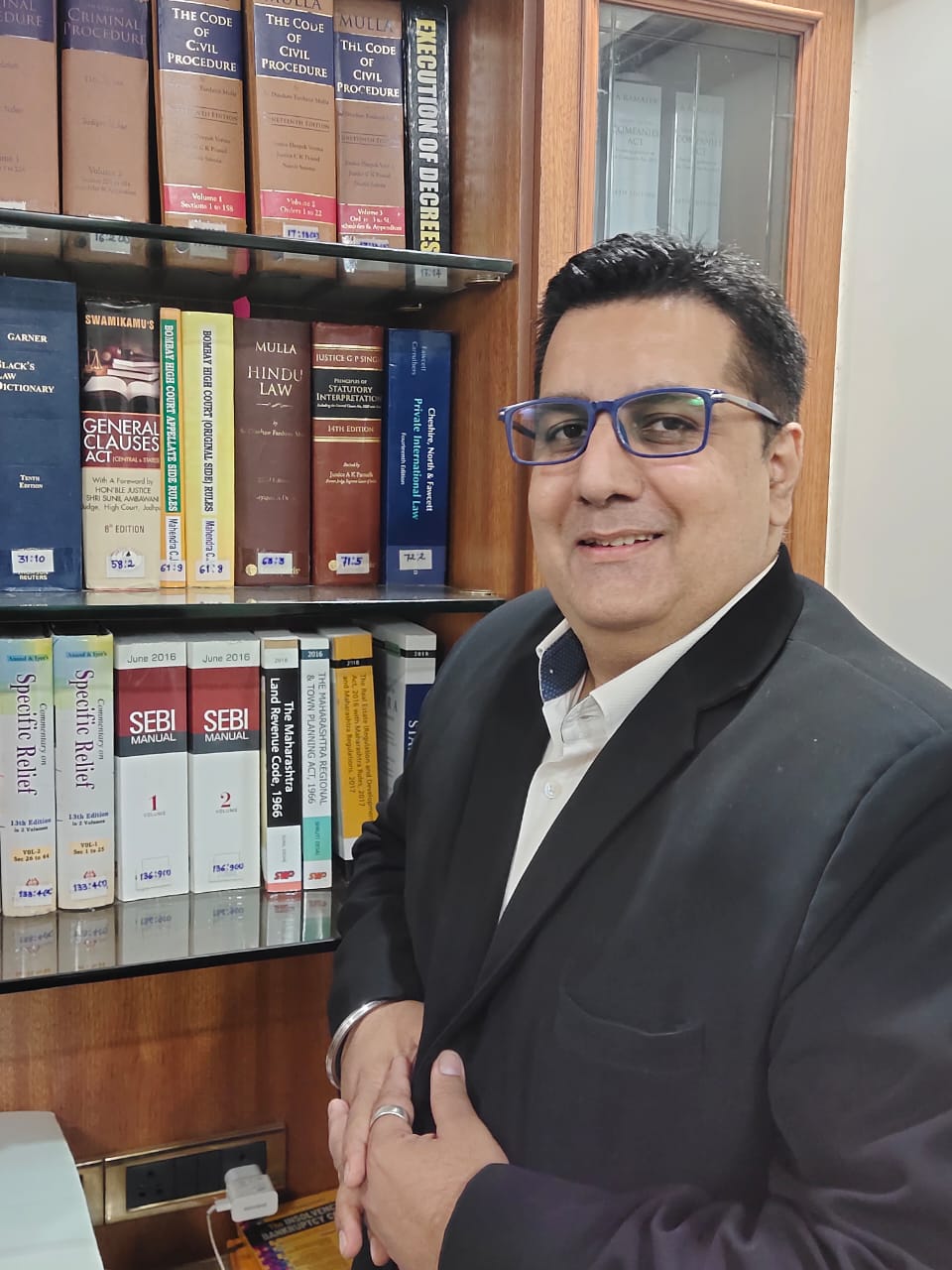
  • Aashhok Prohit on being a third-generation lawyer, winning a case against Queen’s Counsel and having faith in himself.

    Aashhok Prohit on being a third-generation lawyer, winning a case against Queen’s Counsel and having faith in himself.

    This interview has been published by Isam Kabir and The Super Lawyer team .

    1 How did you choose law? What were the key deciding factors for you?

    I am a third-generation lawyer; I have looked up to my grandfather and father for guidance and wisdom. My grandfather pursued LLM and was a Company Secretary (from the first batch of CS). My father was a Lawyer and Certified Internal Auditor. He was working as a Legal Consultant with many International Companies. He was actively involved in compliance and regulatory requirements of companies interested in setting up their offices overseas. 

    Looking at their vast experience and accompanying my father for his conferences, the law was a natural choice. My work ranged from making notes, helping him in drafting and referring to points discussed in the meeting. While observing their communication, I moulded my analytical thinking from a legal perspective, and I realized that then there is no surrogate for hard work and success.

    My father always asked and taught me to “Carve My Path”. Therefore my initiation into the field of law was an interesting journey in itself.

    Two individuals going through the same school and curriculum will come out equipped with different skill sets. Therefore the fundamental moulding gave me an objective view to analyze cases and set me apart from my other fellow students. This mindset prepared me to deal with anything that came my way. 

    2. Before venturing into law, you had been a science student and earned a degree in Chemistry. However, you also read law as well as pursued Masters in Finance. Can you tell us about the factors that influenced you to pursue these different pathways?

    After my 12th, I was offered to study in a UGC Sponsored program of Chemistry and Industrial Chemistry, a course customized to create entrepreneurs with a science background. This course enhanced my logical evaluation from a scientific and management perspective. 

    After my graduation, I visited an education fair for Universities based in the United Kingdom (UK), where I applied and was later offered a part-scholarship for doing a Masters in Banking and Finance from a prestigious University in the United Kingdom. 

    After completing my graduation and working in the field of Finance, I saw a vacuum in the compliance work being carried out in the legal department. My inner calling for law pulled me to apply for a conversion course into law, and I graduated in the field of law.

    3. Do you believe having foreign education is more glorified on merit than its due?

    I don’t believe that foreign education is glorified; it is the opportunities attached to it which makes it a more lucrative option for students. 

    The courses designed by the international universities require total commitment from the students. Therefore, it is often a requirement for students to stay on-campus during the term, especially when a student is pursuing a Masters degree program. In addition, there are many resources of databases made available to students to enhance their research. This practical based teaching methodology sets the foreign universities apart.

    In my humble view, there is a clear requirement for a more practical based teaching methodology in the Indian education system.

    4.For people who want to work in European and American countries, what would be your advice?

    Firstly the cultural difference in both countries is significant. People who intend to go and work there need to be prepared to adapt themselves to the work-life, work ethics and work culture of western countries. 

    It is often a culture shock for most Indian students and as there is a completely different work environment that makes them uncomfortable. 

    In my experience, the work demands immense commitment and requires a person to constantly update their skill sets to adhere to strict deadlines and deliver results. This is coupled with the pressure that the companies are hugely invested in the individual through their recruitment process.

    I suggest to all aspirants that they should be prepared to shun their comfortable living habits, something which they are used to in India with their family around them. 

    5. How did you decide upon practising litigation after being on the corporate side of work?

    While assisting my father in drafting and due diligence, I actively got involved in dispute resolutions. I realized the Bar was my calling and felt comfortable in making appearances before tribunals. I believed that I could argue as well or even better than some counsels I had witnessed.  

    The current legal system in India possesses provisions in the law that enable the litigants who are below the poverty line (BPL) free government legal aid. In addition, the advocates on the legal aid panels are experienced enough to assist the litigants through the trials. However, I feel that there is a lack of ProBono work, and the leading law firms should participate more proactively in Pro-Bono work. 

    6.You were also a Director at an NGO called Global Vision India Foundation, whose work taught the poor, providing food and education. How did this NGO become a part of your endeavours?

    Whilst pursuing my LLM in criminology, I interacted a lot with the then Head of Law Department of Mumbai University, Dr Ashok Yende Sir. He was a great mentor and a very committed person who wanted to contribute to society. He realized through my work that we shared similar ideologies. So I felt privileged when he asked me to be a part of his NGO and appointed me as the youngest director.

    7.You have fought a landmark case that allowed Asians, especially Indians, to apply for firms in London and the UK. Could you share any insightful details from this matter with our readers?

    To qualify as a solicitor, every law student had to get a training contract in a UK-based law firm. The application had to be submitted, and interviews were conducted two years before the training contract job. 

    Since I was not a British National or a European Economic Area (EEA) National, I was informed that it would be impossible for me to get a training contract. It was uncommon for law firms to recruit a non-EEA National.

    I shared my shock and surprise regarding the discriminatory policy of recruitment by all the law firms and especially the top leading law firm in the UK with my tutors. I explained how it was both essentially and morally wrong.

    Ironically, the country known as the ‘torch-bearer’ against racism was refusing jobs based on race. All the law firms I approached refused to take my case pro bono or professionally, as they felt the recruitment procedure being followed was as per the land law. 

    And no person had every filed such a case to challenge this discrimination policy of recruitment, as even after knowing that it existed they still could not prove it in court. Some experienced advocates from India who had gone to pursue their masters had also accepted this discriminating policy instead of fighting it. I only received negative feedback in regards to challenging the discrimination.

    Finally, I discussed the matter with my father and informed him that “I felt what I was proposing was correct, and therefore I was going to fight an uphill battle with all the leading law firms in the UK.” He was very pleased with my objective evaluation and I got all the moral support from my parents to take on all the law firms single-handedly. 

    I applied for a job in a law firm in the UK for a training contract, and as expected, my application was rejected due to the absence of a work permit. However, I still proceeded and filed the application form in the online application process.

    My application was immediately rejected within minutes of submitting it. Following this, I challenged the top ten 10 law firms in the UK court. 

    It was revealed that my application was graded because there was a court case against the law firm. Before that, all non-EEA National Applicants’ were segregated and automatically rejected. 

    I explained to the courts that it was the employer’s job to spend thousands of pounds in evaluating applicants to objectively prove to the UKBA ( The UK Border Agency) that a work permit should be granted.

    I successfully proved in court that the application and recruitment process must be based entirely on merit. However, that was only on paper. There was an underlying indirect racial discrimination process being followed by all the leading law firms who advised all the big companies to segregate all NON_EEA Applicants applications. 

    I single-handedly won the case as a student against the well known Queen’s Counsel (QC), who was instructed  by some of the leading solicitors and backed by law firms. I put forth my arguments against racial discrimination and how the law firms were misinterpreting the law. The Hon’ble Judge and the respected panellist at Bristol Employment Tribunal passed the judgment in my favour on account of my arguments.

    I successfully defended my victory in the Employment Appellate Tribunal (EAT), London as well. Afterwards, they could either go to the Court of Appeal (CA), London or House of Lords, the UK, which the Law Firms had no intention of pursuing.

    It was a major setback for them since a NON-EEA National Law Student single-handedly defeated them and put them back on the blackboard.

    This ruling has changed the entire recruitment process of UKBA and all the companies in all the fields in the UK.

    8. Why do you think this systemic racism and xenophobia existed, which gave preference to Caucasians and native residents over people of colour? 

    The UKBA believed that only the UK and EEA (European Economic Area) Nationals would be suitable candidates for the job and should be preferred irrespective of merit. 

    The application of a non-EEA National, irrespective of his merit, would only be considered after he has passed all these almost impenetrable hurdles. 

    Interestingly, they made Standard Operating Procedure (SOP) Guidelines for companies. Some law firm partners even authored books as a guideline to follow the recruitment process, which was unfortunately entirely based on their misinterpretation of discriminatory laws and policies.

    However, this position has changed post judgement of my case.

    9. In your portfolio, you have mentioned that ‘fortune favours the bold and prepared minds’, and it’s evident that you have taken many decisions in your career that required courage. What would be your advice to young professionals who are fearful of change?

    If you believe in something right and have done all your research, be prepared to take the right steps. Failure happens only when a person doesn’t try.

    No one will walk you to your destiny. Instead, you will have to cover the journey and create your destiny!

    I have never hesitated to explore and have always considered attending new courses with time. Don’t get carried away by looking at what others are doing. Work on your strengths. When I judge moot court competitions, I make it a point to test students outside their comfort zone, which brings the best out of them. I have built a reputation for testing students and keeping them on their toes, as I have always prepared myself before judging the competition as if I am participating in it. The students feel that they have fought and won the competition as if they have won an actual case in court. 

    It is important to identify your strengths and work on them. If you want to practice litigation, then don’t hesitate to work in the lower courts. I was walking the corridors of the High Court of Bombay, working on some media highlighted matters. However, when someone asked me how the matter eventually ended up in the High Court, I was unaware. So I decided to go and learn the basics of trial by observing trial courts, and it has been a learning experience. 

    Initially, I had a rule that I would never take up work for the money. I used to do it for bare minimum fees and at times free, but with the commitment similar to a well-paying client. These are the things that paid off as it was the experience and exposure I got to deal with matters, and the more favourable orders I got, the more my confidence increased. So the underlying principle is that a person should not hesitate to work.

    The best way to learn is to work in an uncomfortable environment. That teaches a person the most.

    10. How has the pandemic been for you? How have you dealt with it personally and professionally?

    It has been a testing time personally and professionally. However, the things that kept me going are adaptability and family support. 

    The lockdown let me search myself and gave me the time to read, brush up and update my legal knowledge. 

    There have been changes in how the hearings have been conducted in courts, and it has taught me that a person needs to be prepared to incorporate changes in their own life. 

    Most importantly, this lockdown has allowed me to spend more time with my family, especially my daughters. So it has been satisfying on a personal level. 

    11. What has been the biggest risk that has paid off for you or the biggest moment of learning for you in your entire career? 

    Fighting against the top law firms was the biggest risk in itself. If I failed, no law firm in the UK would employ me. 

    I remember that none of the law firms was prepared to take my case professionally or pro bono. However, I got the opportunity to prove them wrong and understand the true meaning of ‘Interpretation of law’. I had a nostalgic moment remembering what my respected late father advised me “Law is not taught in law schools or books of law, but it is a gift of the gap”. 

    12. Lastly, any parting advice to our readers who are exploring the legal field? 

    If you believe in something, work hard towards it and bring the change that you envision!

    Do not shy away from negativity and welcome constructive criticism. This is the only way of self-improvement and being the best version of yourself.

    I have noticed a trend among students being overwhelmed by those from higher-ranked law schools. I’ll suggest that if you have worked hard, have done your research, and then you should only be concerned about giving your best. 

    Never feel pressured and underestimate yourself. Always aim to give it your best. The outcome is not in your control, but the efforts are.

    Get in toutch with Aashhok Prohit

  • Harpreet Singh Hora shares his experience of being an engineer turned lawyer, student politics and changing fates through PILs.

    Harpreet Singh Hora shares his experience of being an engineer turned lawyer, student politics and changing fates through PILs.

    This interview has been published by Isam Kabir and The Super Lawyer Team. The Interview was taken by Priyanka Cholera.


    (1) Having pursued a Bachelor’s Degree in Computer Science from LPU, what motivated you to switch streams and pursue law at Delhi University?

    I passed CLAT in 2011 when I got in touch with the current LawSikho management team, which ran a CLATHacker platform back then. However, due to financial restraints and my family’s wish, I pursued Engineering instead and later opted for a three year LLB degree from Delhi University. As far as the reason is concerned, I have always been intrigued by the field of law. I believe that this is a dynamic profession that gives you excellent learning opportunities. Moreover, this profession accentuates your personality, and that’s what perpetually kept me devoted to it.

    (2) During your graduation from Delhi University, you worked as a quiz master at LPU. Later you’ve also provided your services on similar lines at DAV College and MMU Mullana, Ambala. You also occupied the Hot Seat opposite Amitabh Bachchan in Kaun Banega Crorepati, Season 9. What is it about quizzing that interests you so much?

    I was majorly introduced to the culture of quizzing during my school days and then continued it during my college days, both inter and intra college. I participated in a quiz competition organized with the Association of Indian Universities (AIU) in my engineering college, where students from different universities competed at the zonal and national levels. Eventually, I qualified for the nationals. After that, I began conducting quizzes for my hostel and my department in engineering, and from there, the students from other universities and colleges began inviting me to their institutions. So the journey from being a quizzer to a quiz master has been a fascinating one.

    I had been a hot seat contestant in KBC in 2017. It was one of the most memorable experiences in my life.

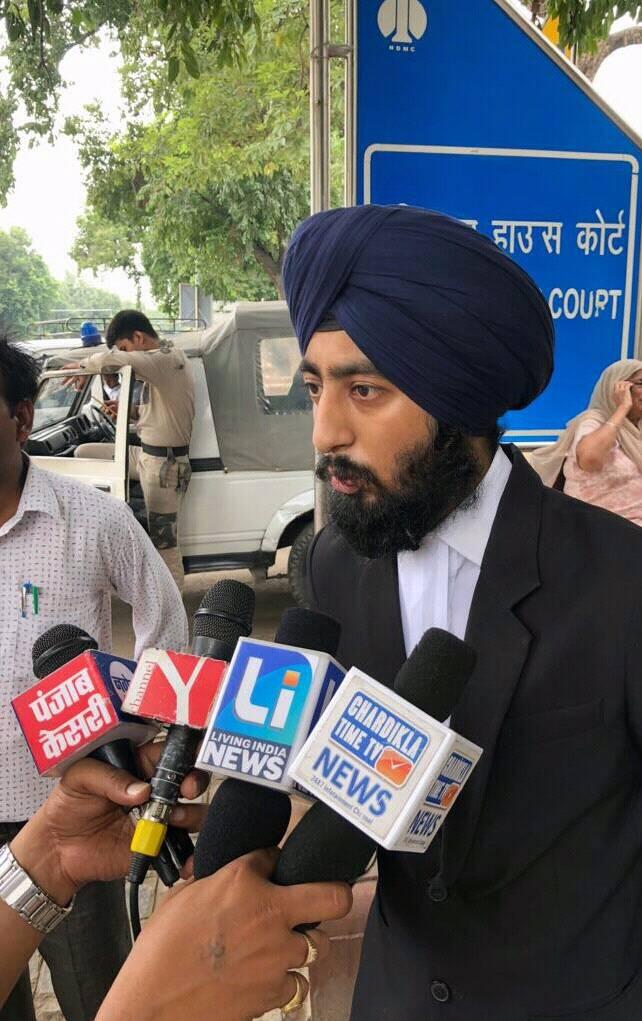
    Harpreet Singh Hora

    (3) How has your time at Delhi University shaped you as a person? You contested in the elections for the post of General Secretary as a youth leader. How did you happen to join politics?

    Everybody in Delhi University is interested in contesting elections, directly or indirectly, and I was no exception. When I first stepped into the law faculty, before I could see the board where the college’s name was written, I saw posters of students interested in contesting elections. And Delhi University elections were a big deal on the news channels. I discovered that the people in reputed higher political positions in Delhi are associated with student politics at Delhi University, which intrigued me. It was one of the best decisions I have taken because it ultimately helped me network and establish better connections with people active in the Political circles. The university seniors always said that the Delhi University elections teach you a lot, and I agree.  

    Contesting elections in law school, i.e., the University of Delhi law college, is one of the most challenging contests. The University features politics on two different levels, one on the college campus level where the political parties are not officially involved, and the other is at the university level, where parties directly back up the student organizations. In the faculty of law, the students participate at both levels in politics. Most of the faculty of law students are prior students of the Delhi University (during their graduation). They have already experienced student politics for three years at the base level, but it was alien. In my experience, the elections were indeed complex and demanding, but the challenges had taught me indispensable lessons. 

    (4) One thing that sets you apart from other first-gen lawyers is you have dived right into PIL work while most people chase settling and big clients. Was this a conscious choice?

    The issues I have generally dealt with and the case laws that are a part of my research primarily concern the aspects of prison reforms, social justice, and the 1984 Anti Sikh Genocide victims. However, that does not limit my work to PIL as I have my own Pan India practice in criminal law, service law, matrimonial law, and writing. Although, I have always believed that society needs improvement or the system requiring some restructuring. Thereby I have focused on petitions that deal with social justice or public interest. As far as we have noticed, young lawyers are generally more concerned about acquiring potential clients and earning their remuneration, and there is absolutely nothing wrong with it. In conclusion, the positive attribute of this profession is that one can directly contribute to the system’s development and align the same with their professional capabilities. 

    (5) You started your practice as an assistant to Zoheb Hussain, Senior Standing Counsel of Income Tax Department, Delhi High Court. What value did this experience add?

     Working under Zoheb Hussain has been an absolute pleasure. He is a hard-working man, and I am sure he will soon reach new heights in the industry! I did not have prior knowledge about tax law, and neither was I acquainted with commerce. However, the interview mainly focused on our personality and the type of lawyer we aspired to be, rather than focusing on whether we know about the subject. He aimed to make us more responsible as junior associates with a different approach. First, when we received a file from the client, from the receipt of that file to the disposal of the case, everything was responsible for one associate. Secondly, he also gave us the autonomy to monitor the whole case on a micro-level, which involved the responsibility to abide by the dates and timelines. 

    If a petition was drafted, he did not just make corrections and send it back to us; instead, he called us in his office, and he would begin live editing that petition in front of us. l After pointing out the mistakes, he gently; explained the format, the methods and everything that was to be taken care of. Thereby subconsciously, one starts picking up those habits; and would often refrain from repeating the same mistakes. I had noticed that once associates completed their tenure at his office, they had improved as lawyers.

    (6) A good mentor makes a good mentor. Do you also consciously choose to do that for your juniors or your interns, let them see your formatting and styling live in front of you and make sure that you also have the same aura or demeanour as your junior? What do you look for when you hire someone?

    I am still in the learning phase. I try to be with my colleagues. Eventually, all of us are learners. From a recruiter’s point of view, my primary focus during an interview is to know if the interviewee can understand the concepts. Secondly, I judge the knowledge of the candidates based on their CVs. I will not ask the interviewee a random question on constitutional law or criminal law. The academic score in those subjects does not matter to me. However, If the person has written a research paper, they would have to explain it. It also gives me the idea that the individual has learnt through that activity and was not a mere co-worker who got the name published in somebody else’s research.

    (7) You represented the NGO- Justice for Rights in the PIL seeking regulations, licensing, and guidelines on Internet platforms, including Netflix and Amazon Prime Video platforms. How is it like standing in front of the most prominent players in the game?

    As a young lawyer, these types of cases do come off as an opportunity for one to learn, and it hardly matters if a favourable judgment is received or not. The clients, back then, were students and could not find a resolution to the case. I felt that it was a thrilling matter and took this as a great learning opportunity. I was also curious to know about the possibility of any platform that broadcasts audiovisuals on your mobile phone or laptops and if one can go ahead without regulation. On the first day of the argument of this case, the judge had completely bashed me. I believe that it was my fault as a lawyer since I could not convey the point. The honourable bench remarked that if the Censor Board Certification did not have an issue, I did not have the authority to object. Then it struck me a gap between what I was trying to say and what the bench had understood. I then pointed out that they are not even supposed to carry a Censor board certificate. I even attached the RTI, where the ministry provided that they do not have specific regulations on that, and I had an intense exchange of argument with the judge. After this, the bench was half convinced. They had sought a reply from the ministry. Eventually, it came out from the ministry that this is a new phenomenon, and they do not have such regulations which they have asked for on these platforms. We fought the case and brought it to a logical end, but ultimately it got dismissed by the Delhi High Court.

    The students back then were in a dilemma about going behind for an SLP or not and questioned the chances of it succeeding. I believed it looked like a good case and that there was a probability of the conveyance of my point to the Supreme Court that wasn’t conveyed to the bench earlier. And fortunately, they decided to take the case forward. Ultimately, the Supreme Court was convinced to notice the case, and the SLP was admitted. So although the matter is still pending in the Supreme Court, there have been impacts.

    (8) You appeared on behalf of the Delhi Sikh Gurdwara Management Committee to secure the students’ right to the Sikh community to wear Articles of Faith- The Five Ks in the NEET examination. Can you tell us about that experience and case?

    The topics related to the case of these five articles of faith in Sikhism are inherently close to me because I have read in-depth about the history of Sikhs of securing their right to wear a turban starting from the Mughal’s era, to the time of the British Colonisation, to the post-independence phase. Any development of legislation in India, specifically in the respective regions, impacts the legislation in different parts of the world. Back in the 1970s, the right to wear a turban while riding a motorcycle was a major controversial issue in England’s Road Traffic Act. The right to wear a kara, the right to wear a kirpan has been most talked about in different countries and recently, like 10 or 15 days ago, there has been an unfortunate incident in New South Wales, Australia. They are now drawing on some legislation and guidelines on the right to wear kirpan by schools or college students. So this has been a topic that I believe still needs to be researched upon, to include more legislation concerning these topics. These are the grey areas that are often brushed aside. Indeed it was a great experience working on such a case. On the other hand, a phenomenal incident that occurred was that a favourable order was passed just three days before the exam, which eventually changed the fate of the course when I was representing the case for Sikh students.

    (9) You are also working for the up-gradation of facilities in jail and reforms in prison. Can you share the timeline of this journey and how close you are to achieving what you set out to achieve?

    I’ve started working for prison reform. That is a system I always believed needed to be looked into with profound research. But, unfortunately, even after 74 years of Independence, we still follow those archaic prison rules and manuals.

    The issue began when an inmate did not receive adequate physiotherapy facilities in the prison. This was followed by two other cases, where one concerned the assault on inmates and in the other, the fight was for all the inmates respectively. These petitions got clubbed, the local commissioner appointed by the Court took a survey of those prisons and suggested improvements in the petition. we even challenged the discrimination between prisoners’ facilities when the high-security ward prisoners had alleged discrimination in terms of facilities against the facilities provided to the general ward prisoners

    IN another case, an executive order was petitioned against, where the prisoners held under a particular act would not be allowed to conduct mulaqat (meeting) with anyone but their blood relation. The case is pending in the Delhi High Court. I believe there needs to be a great deal of improvement in the prison area. Ironically, if we do not take action right now, it may become a full-fledged practice area in the coming time.

    (10) In what ways has the ongoing pandemic affected your practice? Do you have any suggestions for maintaining one’s mental health, mainly due to the workload that comes with being a lawyer?

     The biggest challenge the young lawyers face is the hiring freeze by law chambers. With the decrease in workload, the chambers are cutting down associates instead of hiring new ones. As a result, many lawyers have relinquished their chambers or offices and have shifted back to their hometowns. They claim that there is hardly any inflow of new clients, and when necessary, the cases can be conducted through video conferencing. As for me, being a workaholic, the dip in the workload has indeed started affecting my mental health.

    Therefore, I would advise all my colleagues to adapt to new technology and the new methods the Court and the authorities are coming up with. I can claim with absolute surety that the technology in law is here to stay. I believe it should remain. Although video conference has its challenges, it has also opened up new doors of opportunities for young lawyers. Furthermore, we need to explore new ways to use this technology to improve our financial status and acquire more work. Presently we have witnessed clients being more inclined towards engaging lawyers who they believe can represent your entrust appropriately in the Court, irrespective of their experience in terms of practice in a number of years. 

    As for keeping oneself sane, it is advisable to use this time to learn the things one has always wished to know or pursue a hobby.

    (11) If given a chance, what would be one piece of advice you would give to first-gen lawyers and law students about beating the odds?

    My advice to everybody alike is to have a clear goal; The sooner you have clarity in what you want to do, the better. The second is to consider achieving that goal, and it would help if you had a good plan coupled with a realistic timeline. Never compare your success with somebody else’s. Some people have struggled in this covid period, and some rose high during this pandemic. Focus on your own goal, even if you think you are lagging. Each person has the time to rise and shine on one’s own accord.


    Reach out to Harpreet Singh Hora

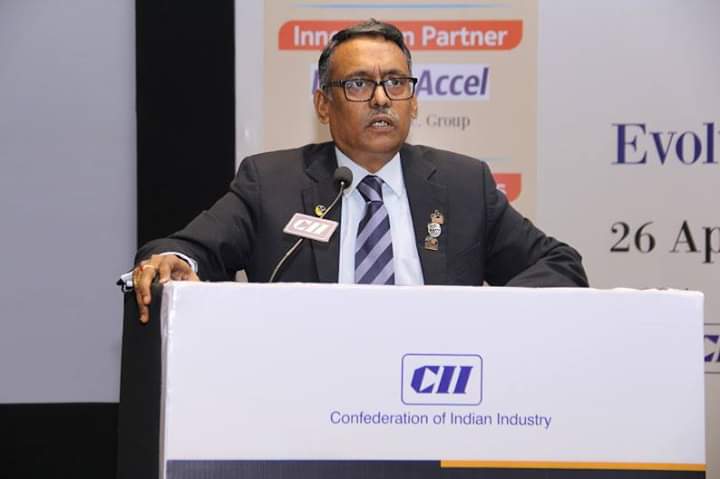
  • Abhijit Mukhopadhyay, President (Legal) & General Counsel, Hinduja Group, on his illustrious career in In-house legal roles and working in London

    Abhijit Mukhopadhyay, President (Legal) & General Counsel, Hinduja Group, on his illustrious career in In-house legal roles and working in London

    This interview has been published by Ayush Verma.

    What was the motive or inspiration to join the legal field?

    There was no specific reason for joining the legal field. I did my graduation with honors and simultaneously studied company secretaryship and pursued a law degree. I had a sense that in the future, the legal profession would acquire prominence, and fortunately, I was right.

    As General Counsel of a conglomerate, what functions of the company do you look over?

    The Hinduja Group, with an annual turnover of USD 15 billion has 150,000 people working in 60 odd countries. We are in 12 business verticals and we carry out our business in more than 100 countries on five continents. I am involved in the Group’s legal matters worldwide. I am also the director for several group companies in seven countries. In essence, I advise the group companies and the ultimate promoters in legal and strategic matters.

    In your entire career trajectory that we know of, you have always worked as an in-house counsel, did you always have the same plan?

    In my entire career so far, I have worked in-house. I never considered joining a law firm. When I started my career, working in a law firm was not fashionable, so to say. Since the Indian economy did not open up, the applicability of corporate laws was severely restricted or limited. Today the situation has changed considerably and there is good demand for corporate lawyers in external law firms. Be that as it may,  I do not regret my decision as yet! 

    You’re the in-house of a multi-billion dollar company, how does one make decisions, when they shoulder a huge responsibility such as yourself?

    Decision-making requires certain individual qualities. You need to understand your organization, its products, strategy, its people, and most importantly which decision to take at the appropriate time. In today’s business, time is money and you need to decide as fast as you can. There is no perfect decision, so do not aim for perfection but take timely decisions and never regret afterward. When course correction is needed, do the course correction.

    How has life changed after moving to London? What are some challenges you faced as an immigrant?

    In India, I was the General Counsel and Company Secretary simultaneously in several large public sector, private sector, joint sector, multinational, and privately held organizations. What I learned in these organizations came in handy when I joined the Hinduja Group which is a conglomerate.  London is the nerve center of the global legal profession. You won’t survive here unless you have the knowledge and ability to perform. After arriving in London, I acquired further qualifications in law and chartered secretaryship. Then I started updating my legal knowledge on a continuous basis which I do even today. Fortunately, I have not faced any problems being an Indian. Our global headquarters in London, where I sit, have got nationalities from many countries around the world.  

    Do you believe AI will replace the majority of the human force in the legal profession in the upcoming years?

    Artificial Intelligence (AI) has become an enabler or a tool to assist us in our work. Its application and expansion in in-house legal capacity would depend upon the benefits it would bring as compared to the cost. You may rest assured that there is no replacement of human beings by AI.

    During the pandemic, how have you adjusted to the shift to a virtual workspace? In your opinion, how can senior members of the industry adapt to the same?

    The current situation and its impact on human life are profound. However, it has created an opportunity to work from home (WFH). The concept has both advantages and disadvantages which we are aware of. Human beings are receptive to changes of all kinds. We have adapted to the new reality of WFH. In our Group, I am involved in many big business deals that have been ongoing during the pandemic while working from home.  

    You’re a member of several education societies, and address the younger members of the industry frequently; what are the key differences between lawyers of your era and today’s generation?

    What I learned as a student of law has got no relevance in today’s world. Almost all the laws that I learned have become irrelevant today. This has been happening for decades and not only now. You have to keep yourself updated in order to remain relevant. This is true for any generation. I mentor students and I am involved with the Queen Mary University of London in its advisory council which shapes up post-graduate courses. Whenever I address students, I preach what I practice, and if you do not remain a student all your life, you become irrelevant in your profession.

    You have had the honor of addressing students at Harvard Law School; why has your interest in mentoring the younger generation not translated into teaching?

    Along with my employment, I have always been involved in teaching. During my days in India, I was a part of the guest faculties of three well-known universities apart from several academies. I was the paper setter and examiner in professional courses like the Company Secretaryship. Even in London, I address students of several universities. I have not taken up a full-time teaching job. However, I address seminars and conferences all over the world throughout the year. You never know, I may become a full-time teacher in the future!    

    We see a lot of younger lawyers complain about burnout or lack of work-life balance. How have you maintained the right balance being in this career for over 40 years now?

    A lot would depend upon your desire to maintain a work-life balance. 24 hours a day has got a lot of time. Try to see it half full rather than half empty. Use your technology effectively without being excessively reliant on it. Try to do things more efficiently and work on your multi-tasking ability. My strength comes from my family. Therefore, they will always remain my first priority.

    What major changes do you anticipate in the legal profession for the coming years?

    Lawyers need to understand business. While remaining academically inclined, they must develop skills to provide practical solutions to the problems being faced by the business. They need to become an integral part of the commercial activities of an organisation and provide value if they wish to remain indispensable.  

    Looking back on your journey, can you share with us a few career-defining moments that inspire your present work ethic?

    There are many. The most difficult thing in my professional career is to have the courage and ability to say no when work ethics demand it which I have done many times in my career. Trust me, it gives confidence to your employer. However, it should be used judiciously.

    What advice would you like to give to the present set of law students and lawyers?

    Be a lifelong student; update and upgrade your knowledge all the time. Bee articulate whenever you are conveying your thought process. Be sensitive to the needs of others, be helpful and above all, be a good human being. At the end of the day, it is all that matters.

  • Mr Aishwarye Dubey, Associate Fellow at National Maritime Foundation, shares his experiences as a Maritime Lawyer and Consultant

    Mr Aishwarye Dubey, Associate Fellow at National Maritime Foundation, shares his experiences as a Maritime Lawyer and Consultant

    This interview has been published by Ayush Verma.

    How would you like to introduce yourself to our readers in your own words?

    I am a Maritime Lawyer whose journey has been full of ups-and-downs. I graduated in Law from the National Law University, Odisha in the year 2016. In my undergrad years, I was a sportsperson and did not really cherish the idea of mooting. However, ADR (Alternative Dispute Resolution) caught my attention and I went on to participate in multiple ADR tournaments, both in India and abroad. Mediation and Negotiation were my forte. However, in my final year of law school, I decided to appear for the UPSC Civil Services Examination. Three attempts later, I thought that maybe it is not my cup-of-tea. Then, in the year 2019, I decided to pursue LL.M in Maritime Laws. In the year 2020, I graduated with flying colours and I joined the National Maritime Foundation (New Delhi) as an Associate Fellow.

    You talk about your love for the defense maritime sector in your portfolio. Did your upbringing or parents have anything to do with that or were you influenced by some other role model?

    While in school (La Martiniere College, Lucknow), I had joined the National Cadet Corps (NCC) and I have served 5 years in that organization, both as a Cadet and a Senior Under Officer. Therefore, the love for the Armed Forces has always been there in me, ever since I was a kid. Incidentally, another factor that played its part in this journey was the fact that my house in Lucknow (my hometown) is located nearby the residence of a Param Vir Chakra awardee- Captain Manoj Kumar Pandey (PVC). 

    You could have joined the Navy or taken up other ventures under defense. How did this passion for the oceans find intersectionality with the law for you?

    My father is a Marine Engineer and hence, the inspiration to try something different comes from him. As a child, I lived in Port Blair (Andaman & Nicobar Islands) and have seen the life of a seafarer from close quarters. Therefore, when I decided to pursue a Masters degree in Law, I had already made up my mind that I shall opt for Maritime Laws. In addition, Maritime Laws are not confined to any one particular jurisdiction. Rather, it is of an international character with eccentricities usually not found in any other branch of law.  

    The conviction to choose this avenue is still uncommon. To any young law student, how would you describe your work?

    It is quite unorthodox and it does not fit the bill of “usual legal work”. This is because maritime law is an arena which is evolving with each passing minute considering it is heavily enmeshed along with geo-politics and geo-strategy. It has a vocabulary of its own which needs to be understood by the incoming law student who wishes to make a mark in the domain of maritime laws. Hence, if you are willing to go that extra mile to try something new, a career in maritime laws certainly will satiate your hunger.  

    What according to you is the key to success in this branch of law? Do you suggest any particular internships or volunteer work to develop an interest in the field?

    The mantra for success is hard work and a passion to work for the betterment of the maritime fraternity. Initially, it might seem that the investment (both psychological and monetary) is a bit too much but as time passes by the journey will become not just smooth but also pleasant. Internships are a great way to get oneself initiated into the arena of maritime law and practice. I would recommend that an internship in a maritime law firm or a shipping company would be a good starting point for a beginner. 

    You have acquired an LL.M in Maritime Laws from a well-reputed university. However, is a postgraduate degree or diploma really necessary to make a career in this field?

    I would say that knowledge of maritime laws (either theoretical or practical) is essential to gain a headstart in this profession. To become a maritime lawyer, it would be advisable if the candidate undertakes some sort of formal education- whether a PG Diploma or Post Graduate Degree- in maritime laws. Not only will the candidate be well versed with the nuances of maritime laws but she/he shall hold much more credibility in the market.  

    Based on your experience in the field, which organizations or law firms do you recommend working with to gain good field experience?

    I would suggest the name of Bose & Mitra Co. as a credible maritime law firm wherein the students can get a good hands-on experience of the real world vis-à-vis maritime laws and practice. If the student wishes to enter the domain of maritime research and academia, I would suggest the name of National Maritime Foundation as the place to start one’s journey. The exposure that the students will get is exemplary. Hence, the choice rests with the student since opportunities are immense.

    Do you think law schools in India provide diversity for career choices to students post-law school? What advice do you wish you had received in your law school years?

    I certainly think that law schools can work constructively to invite eminent resource persons from various fields of law (be it maritime law or any other) to allow students to interact with them. Exposure to various opportunities and domains will really help the cause of students. Also, the students should actively engage with the University administration to request them to facilitate more of such interactions because the students will eventually benefit from such endeavours. Thankfully, NLUO (my alma mater) was one such institution wherein the student community was highly active and energetic. The result is that, we have law graduates from our senior batches who are accomplished fashion designers in today’s time. 

    I wish somebody had asked me to take risks and try new things, as much as I can. We, in India, are afraid of trying something new. That hinders our creativity. If we do not take risks when the stakes are low, we will never be able to take the leap of faith when it matters the most.    

    Besides building a rich practice, what activities or interests outside of the legal field do you like to engage in?

    I am a sportsperson at heart. I like to engage in some kind of sporting activity or fitness regimen. It can be as simple as walking for long distances or playing a volleyball match with my friends. The second hobby that I cherish is that of reading. I am a voracious reader and the genre that I love the most is history.

    You have an impressive record of achievements but what is the one thing you hold as a badge of honor?

    The award of being the Best NCC Cadet (Senior Division, Army Wing) is the one which I wear with immense pride. 

    Considering your skills, did you ever consider a career either in litigation or a corporate job? More importantly, what pushed you away from this lifestyle? 

    I did consider a career as a Litigation Lawyer whilst I was interning in the Allahabad High Court (Lucknow Bench). However, I never visualized myself as someone who is cut out for the corporate arena. I always believed that I would never do something (professionally) which everybody else vies for. I had to do something different because I have always been that person who does not walk the path which has already been tread by many. Another reason was that my parents gave me the freedom to explore uncharted territory. Their faith in me is rock-solid. Hence, I took the plunge and I feel happy today that I did. 

    You have acquired an education on ‘Maritime cybersecurity’. Do you feel that cyber-crimes are increasing in the maritime sector so as to adversely impact national security?

    Cyber security in maritime operations has become extremely vital considering we live in a digital age. While we are witnessing the advent of autonomous shipping and port security being automated, it is highly imperative that maritime cyber security be implemented in the right earnest with proper infrastructure. There are certain critical maritime physical infrastructures which need protection round-the-clock because they are vital for the maintenance of smooth maritime operations. If they are hit, the entire maritime infrastructure and supply chain will be severely impacted. For example, offshore oil drilling installations are vital assets for our economy. If they are targeted in a terrorist strike, one can only imagine the disastrous effect it will have on our economy. Therefore, the robustness and efficacy of cyber security of such critical maritime infrastructure will play a vital role in the overall growth of our maritime industry.    

    Any parting advice you’d like to share with our readers?

    Please be bold and take risks- but with your eyes open. Learn to venture out of your comfort zone and explore uncharted territory. You may suffer some setbacks but do not be disheartened. Keep trudging along. I say this because life works in mysterious ways and you never know how you might find your calling, unless you take the leap of faith.

  • Sonia Sahijwani Saini, Assistant Manager Law, Maharatna Enterprise shares about the challenges of working as a legal advisor at a PSU

    Sonia Sahijwani Saini, Assistant Manager Law, Maharatna Enterprise shares about the challenges of working as a legal advisor at a PSU

    Sonia Sahijwani Saini is a law graduate from Campus Law Centre, University of Delhi (2007-2010) batch.  She comes from a commerce background and pursued journalism at IIMC New Delhi before making the digression to the field of law. With Masters in Business Laws degree from NLSIU, Bangalore, instead of opting for a law firm/ litigation or a private company, she rather chose the non-conventional route and got an opportunity to work for a job in a public sector in 2010 as a law officer through campus placement. Her first stint was at a Miniratna public sector enterprise under the Ministry of Commerce. In 2014, she got selected in a Maharatna enterprise in the oil sector as a Law Officer With approx 9 years of experience as an in house legal counsel for a semi-govt set up, currently, she is working as Assistant Manager Law at its Marketing Office at Chandigarh.

    Her debut novel ‘Yours Legally-a collection of short stories’ has recently been published by becomeshakespeare.com and is available online on Amazon, etc. In the interview, she has shared about the challenges of working as a legal advisor at a PSU, common mistakes made by people while drafting contracts and how law students can prepare for PSU jobs. 

    What are the challenges of working as a legal advisor at a PSU? What is different from working at a private company as an in-house counsel?  What are the kinds of legal issues faced by you on a regular day?

    To be honest and on a lighter note to start with, I never ever imagined that I will end up in a PSU! Though my father retired from State Bank of India, but like all ambitious young boys and girls my age, I always thought I would be either working in a private company or would be self-employed. However, to everyone’s and my own surprise, during the fag end of my LLB Degree, while I was applying for the campus placements, I willingly and voluntarily chose a lesser known public sector which was a ‘Miniratna’ enterprise under Ministry of Commerce based in New Delhi. I started out as a Management Trainee in 2010, got promoted to Probationary Manager and before being selected in my current job, I was last working as Dy Legal Manager with my previous employer. In 2014, I shifted to a different organization as a Law Officer and currently, I am working as Assistant Manager Law.

    Experience of working in a PSU: Before I talk about my transition to a Maharatna enterprise and the challenges of working in a PSU especially in a mammoth organization such as mine, I would like to state why personally I feel,  I made the right decision by starting out from a small company. The biggest benefit I gained from working in my first company was the amount of direct involvement and interaction we had with the Top/Senior Management including the Chairman and Directors almost on a daily basis based out of the Head Office. It was amazing to see the amount of detailed attention that was given to the legal issues faced by the company by the Management and what impressed me most about the organization that there was no rigid hierarchy. Being a mere fresher with only a few months of experience, the seniors never made us feel any less and treated us at par with them. From civil writs to complaints under the Negotiable Instruments Act, from Arbitration claims to labour law matters, in my first job, I got exposed to diversified litigation and attended courts on an almost daily basis.  My experience and exposure in my first job definitely laid the foundation for my next assignment.

    PSU vis a vis Pvt Sector:

    Let me talk about working as an in house counsel of a public sector vis a vis a private sector. It is normally assumed that as an in-house counsel semi govt/govt set up, you are reduced to being a mere link or better said a liasoning officer between the company and the advocates on its panel who act as the real counsels. But for all those of you who still have these notions and assumptions, out of my own experience I would like to tell you that it is infact not true. With first-hand knowledge and information about the company affairs and its working and policies, I was and still not only given the freedom to brief and prepare our advocates for our cases but very often given the critical tasks of drafting and finalising the applications, petitions, notices on my own.

    In a private set up, either you work as a corporate lawyer or as a litigating lawyer representing your clients in the courts, but being in the legal department of a public sector, you get to see the best of both the worlds. You not only get to deal with the company’s cases at hand but also learn to develop an expertise in a particular field for eg. being in the oil sector has given me immense knowledge of the kinds of issues an oil company faces and also made me acquire certain expertise in its agreements and policies. In a private sector, though one advantage is that with different clients/companies, you get to experience a variety of litigation, but I feel in the current set up, one needs to have a competitive advantage in a particular segment and excel in it if one is to thrive and grow in its career path. While on one hand there will definitely be a lot of flexibility in the procedures and work culture in a private company, a public sector on the other hand works and is based on well established set procedures, rules, guidelines and protocols which one is bound to follow.  But with recent innovative HR practices and much more critical roles being given to young officers, even the public sector companies are re-organising themselves to enhance the productivity of their employees.

    I strongly feel that at present, the public sector companies have completely turnaround, undergone a facelift as you could say and with the number of professionals like me opting for them these days, they are definitely now most sought after. And let me tell you, it is not just about the job stability, fixed income, job security and the perks associated with it. True, those are definitely add on benefits which act as great incentive to apply for a govt/semi-govt job, but being in a public sector myself now for past 9 years, I can easily say that the job responsibilities and work pressure is no less than in a private sector company.

    My current company is spread across the length and breadth of the country and is a popular and known name to all. In my current role, I feel an elevation not just in terms of the magnitude of the organisation and the number of people we deal with on a daily basis, but also in the critical nature of the legal cases involved which affects not just my company but the general public indirectly as well.  

    Challenges and issues: Coming to the challenges being faced by us, they are umpteen: with respect to the litigation aspect, we have to multi-task a lot of issues; handling hundreds of cases pending before various forums on a daily basis and engaging counsels for proper representation, ensuring no case goes unrepresented, getting replies/counter affidavits filed on time without any delays and most importantly to make rigorous efforts to not have any adverse order passed against the corporation which may act detrimental to its commercial interests. In cases where such orders are passed which do happen frequently, utmost priority is given to such cases by the legal department. For us to be able to defend the corporation and to make sure our advocates are well briefed and aware, it is imperative for us to be also thorough and well versed with the company’s various policies, guidelines and rules and regulations. That is a huge challenge in itself and requires being up to date all the time.

    To add to the above, as in house legal officers of the company, we not just take care of all the legal cases filed by and against our company for our respective locations but also perform a much more critical role that is of giving our legal opinions to the multiple legal issues we deal with on a daily basis.  With the increasing litigation and active litigants, each company these days strives to protect itself and its commercial interests by way of inserting suitable and appropriate legal clauses in their contracts and agreements to safeguard itself. Whether it is vetting of such agreements, drafting suitable bonds, undertakings, deeds on a case to case basis, handling RTI issues to giving our opinions in land-related matters, the role of law department in a public sector company cannot be undermined.

    I urge all of you law graduates out there to definitely give PSUs a chance. It will be worth it.

    You studied strategy for a year at IIM Kozhikode. What did you learn? How do you apply that at your work? What are the 3 most valuable things about the strategy that you can share with your readers so they can benefit from that?

    Well, let me begin by saying, strategy is a common word, and all of us are using it all the very time in our personal and professional lives both. We just don’t realise it. While I was in school and college, I always devised a strategy on how to prepare for my examinations. Nothing was ever random or unplanned. Each day before the exam was well planned as to what shall be studied on which day and it was always my endeavour to finish everything 1- 2 days in advance. Even writing an exam was and continues to be a strategy. From how to frame my answer on how to highlight the most critical points, from how to go step by step in a maths paper so to say on what sequence to choose while answering the questions, everything required strategy. While I was into sports, there was always a plan on how to outperform my opponent. From using his/her weakness to my advantage and on using my own strength against her, the strategy was and is very much a part of each sport being played in the world. And while we are in the professional world, don’t you think we are always following some mechanism, some process, approach and plan?

    Hence while in 2017 I was browsing through the courses at IIM, I could apply to, the course on Strategy Management caught my attention. My interview wasn’t easy though. It took me a while to convince the professors why a journalism cum law graduate is interested in this management subject. Once selected, I felt completely out of place since I was one of the youngest in my batch consisting of VPs and senior executives. And without a doubt, I was the only lawyer. But the course and the time and resources we invested in it was definitely worth it.

    Coming to what I learn there and how do I apply it into work well to sum up in the one year course, we studied strategy management in detail, from analysis to implementation, from evaluation to modification, we were apprised of the phases of strategy management. With the help of interesting articles, readings and real-life case studies, it opened my mind immensely. Since I am working in a mammoth organization and for me to be able to grow professionally and academically it is imperative for me to understand how companies work, how they make decisions, how big companies sometimes unexpectedly fail and what kind of strategies companies use to outperform others.

    From strategies on creating and sustaining competitive advantage i..e. business strategy to moving ahead to corporate strategy, from factors guiding companies on decisions as to make, buy or borrow to choosing whether to go for horizontal or vertical integration or related or unrelated diversification, we were given a detailed insight into all these topics and more which really opened up our minds to how companies really become successful and retain their competitive advantage.

    Though there is a lot I can talk about which I found relevant to my personal as well as professional life, coming to what I apply to my work are the following three valuable insights which I took out of the entire course and which I feel each one can relate to in their life as well.

    • To raise your Core Effectiveness

    core effectiveness/core competency in general means the main strengths of a particular enterprise, a company, a department or an individual which helps it to distinguish itself from others. In the context of law dept, it may imply the main strengths of the dept, the skills and resources it has which helps it to add value to the Corporation as a whole and gives the law dept a unique identity due to its critical importance to the organisation. In terms of an individual, I can say that one must try to look within and identify your strengths and weaknesses, do a SWOT analysis and identify your biggest competencies so that you can stand out from others in that particular expertise, area, the domain of work.  

    To recognize your core capabilities (and constraints), enabling optimal utilization of resources: As a lawyer, one can use this regularly while applying our mind to the legal cases and identifying whether we have a strong case in our favour or not. We can work upon the constraints i.e. where policy/law is silent, where documents are not available and try to strategically use the points which work for us.  

    • Resource leverage

    To have an effective strategy for leveraging resources and to ensure its positive impact on the organization

    Resource leverage is a means to close the gap between an organisation or department’s resources, capabilities, competencies on one hand and its aspirations aims and objectives on the other hand. In the context of a law dept of any organisation or a self-employed lawyer, it may mean how to effectively utilise the resources available with the dept in order to have an effective functioning and obtain positive results for the Corporation. For closing this gap, the law dept needs to frame/define a strategic intent, a sense of direction about its long term strategic position which it wishes to achieve. Hence it means to leverage/effectively utilise its resources and competencies to achieve its aspirations/goals

    • Develop a competitive advantage

    Therefore, strategies form an essential part of an organization’s effort(s) to achieve its long-term goals and objectives, having developed an understanding of the current business scenario, therefore, in this era of globalization where change is the only constant, the success of a business and of an individual too depends by and large on its ability to develop a strategy and implement it tactfully. At a time when we have hundreds of lawyers enrolling with the Bar each day, each lawyer has to act as a strategist in order to distinguish himself from others and to have a competitive advantage which is unique to itself. The work of a strategist does not simply end with identifying the long-term goals and formulating strategies accordingly. Instead, these strategies must be designed and redesigned and modified from time to time, in order to adjust to the dynamic external environment.

    In your experience, what are the five most common mistakes people make while drafting contracts?

    Law of contracts has been one of my fav subjects since my commerce graduation days at Delhi University. Most litigation in our country I have seen arises from poorly drafted contracts. If our agreements were clear, non-ambiguous, precise containing the suitable legal clauses, half of the lawyers would run out of jobs!!! Coming to the five most common mistakes people make while drafting contracts are as follows:

    • Leaving the date of execution or place of execution blank or incorrect dates surprising but true. I have often seen that private parties or companies for some reason make an error in this regard. At the time of execution, it is very important that the agreement is dated, even while signing the persons signing it must put a date on it. secondly, it is critical to know where the agreement is being executed as it helps in deciding the question of jurisdiction if and when any dispute arises. Either party gets an advantage in this regard wherein the date of execution which could imply the validity of the contract (5 years from the date of execution for eg) or the place of execution is ambiguous or simply left blank. I urge you all to avoid making this mistake.
    •  Unnecessarily long contracts having irrelevant clauses: it’s not the quantity but the quality that matters. While drafting contracts, sometimes they are so lengthy and running into so many pages that the essence of the particular contract goes missing and haywire. While it is important to ensure that no relevant clause is missed out on, what’s more, important to see is that clauses which have no relevance and are unrelated to the scope of the agreement are removed and a crisp agreement is executed which is easy to refer to and implement.
    • Omitting to have a dispute resolution clause: many times while vetting agreements, I have been faced with a perennial question, ‘madam, we doubt if any dispute will arise what’s the need of such a long dispute resolution clause? I only reply with mostly a smile first. I wish to explain that the aim of having a comprehensive contract is to safeguard us not just with the current scenario when everything looks positive and bright but to also protect us for any sort of eventuality wherein a dispute MAY or is likely to arise in the future. Please remember that a dispute resolution clause survives the termination of an agreement as well and if god forbid the other party stakes any claim, then having a well defined structured dispute resolution mechanism preferably arbitration with the clear defined procedure will help the parties from wasting unnecessary time and resources on litigation in courts.
    • Not choosing the right jurisdiction/no jurisdiction/multiple jurisdictions in a single contract: sometimes it has come to our notice that parties incorporate the jurisdiction clause but leave the place as blank. Or they do not have a jurisdiction clause at all. Even furthermore, they may execute the agreement say in Delhi, the parties may be in Delhi and Chandigarh (either party) and due to some error or having resorted to previous agreements, the jurisdiction clause is chosen as say Gujrat. This serves no purpose whatsoever. Always make sure that the jurisdiction clause is either mutually agreed upon or in standard contracts, it is the place where the party’s head office/ regional office/registered office is located. Or it could be the place where the contract is being performed. Having a well-established place of jurisdiction in the agreement itself can be extremely helpful in the event any legal proceeding is to be instituted or defended.

    While there may be many more such common errors, the above I feel must be taken care of by individual/companies while finalizing and executing contracts.

    If I want to work in a public sector as a legal advisor and I am just a law student now, how should I prepare myself and go about things?

    Well as of now, most public sectors either have their in-house written exam or opt for a score of CLAT (Common Law Admission Test) for LLM exam. You need to enroll for the written exam and the company shall obtain the score automatically (if it is taking the CLAT score). Past years papers of CLAT or of the concerned organization if it’s conducting an in house exam should be easily available online.

    A minimum of 1-2 years experience is generally preferred by most PSUs (albeit some which may also allow freshers without any experience to apply). At my time, my company asked for an experience of two years. After being shortlisted through the written exam follows the Group discussion and personal interview for which one must be thorough with the basic laws like CPC, CrPC, Contract Law, Company Law etc and procedures and the latest Acts which have come into force. Since most public sectors have an all India transfer policy you must be ready and willing to take up the post wherever it is offered and not be resistant to it. You will start as a Law Officer/Legal Manager/ Assistant Manager and promotions happen as per usual practice in approx 4-5 years time.  Once selected, be assured you have made the right choice.

    You managed to write a novel. Tell us about it. It is very difficult for most to have the discipline to finish one. How did you manage to stay on track? Did you follow a routine? Many people think of writing a novel but never manage to. what is the secret of you actually being able to finish it? Tell us something we don’t know and can learn from.

    Ahh, finally my novel. “Yours Legally” is something which is closest to my heart after my son and husband since it has been published in February recently after my son was born. It is my first novel whose draft was written years ago only to be modified and re-modified with my new and challenging experiences with the legal profession. Writing is my hobby, my passion and a form of meditation for me and I have been into it since school life. The idea to write a book was being nurtured since I was young and I truly feel when you are doing what you love, you put your heart and soul into it. Publishing a book with managing my infant was a tough task as I was sailing in two different boats at the same time. However, it was my sheer passion and dedication to see myself as an author which kept me going even after spending most nights awake with feeding and diaper changing sessions on the go. We all have a story to tell but most of us are rather scared of picking up that pen or laptop and penning down our thoughts. Perhaps we are just too lazy. As far as my journey is concerned, I was a habitual writer from diary writing, to writing articles, poems, working on my blog and once a week I always dedicated some time to express my thoughts and opinions. While working on this book, I made sure I write when my mind is free from any disturbance and it was mostly in the wee hours of the morning. The secret perhaps to me being able to get my book out in the literary world is my hunger to become an author and the fact that I never lost hope and patience.

    Another thing which I wish to state is that one must write from the heart and the soul and not from the mind. I write what I feel deserves to be written not just to please and attract any particular reader segment. I write with a lot of heart and emotion, perhaps I am too emotional once I start writing but I feel that’s what it actually takes to be able to become a good writer at least as per my standards.

    My book Yours Legally is a collection of six short stories inspired by true events related to the legal profession. Check it out on Amazon and Become Shakespeare.com.  If the back cover interests you, do buy it and give it a read.

  • Sanjit Ganguli, Legal Manager, ICICI Bank, on roles and responsibilities of a legal counsel; and the finance and banking sector

    Sanjit Ganguli, Legal Manager, ICICI Bank, on roles and responsibilities of a legal counsel; and the finance and banking sector

    Sanjit Ganguli graduated from the Symbiosis Law School, Pune in 2018. He currently works with the Corporate Legal Group at ICICI Bank. He regularly advises on, negotiate and structure domestic and cross-border transactions for the Corporate, Project and Structured Finance portfolios of the Bank. He is also actively involved in loan and asset recovery proceedings for the Bank before the National Company Law Tribunal and other forums.

    In this interview, we speak to him about:

    • Roles and responsibilities as Legal Manager at ICICI Bank
    • Experience as an in-house counsel
    • Importance of Certificate Courses for Law Students
    • Bagging internships at top-tier law firms
    • Importance of writing research papers.


    HOW WOULD YOU LIKE TO INTRODUCE YOURSELF FOR THE BENEFIT OF OUR READERS?

    Sanjit Ganguli is currently a legal manager at ICICI bank. He graduated from Symbiosis Law School, Pune. During his time at college, he participated in various moot court competitions, parliamentary debates and Model United Nations both at a national and international level. He has also published and presented papers at conferences and journals of national repute. He has interned with numerous top law firms in India with a strong academic record. In 2014 he was the only resident Indian invited to chair/judge a committee at the Ivy League Model United Nations held in India that year. Sanjit is an enthusiastic young lawyer who is always looking for new opportunities to learn, improve his skills and hone his craft

    Apart from the law, Sanjit is a budding wildlife and street photographer, a die-hard Bengaluru Football Club fan and a huge connoisseur of food with an insatiable appetite to travel and explore new frontiers. Sanjit is an alumnus of Bishop Cotton Boys’ School in Bangalore.

    AS LEGAL MANAGER AT ICICI BANK, WHAT ARE YOUR ROLES AND RESPONSIBILITIES?

    I work with the Corporate Legal Group at ICICI Bank. My role largely entails, drafting documents, structuring, negotiating and advising on domestic and cross border finance transactions that the Bank is a part of. I also work on debt and asset recovery proceedings before the National Company Law Tribunal and various other forums.

    DID YOU ALWAYS INTEND TO WORK AS AN IN-HOUSE COUNSEL OR DID YOU HAVE OTHER PLANS? WHEN DID YOU ZERO IN ON THIS CAREER TRAJECTORY?

    When I was in my fourth year, I was interning with the Finance practice at AZB Partners and I really enjoyed working in the Banking and Finance space. At that juncture, I felt that to succeed in this industry one required a thorough knowledge of the commercial aspect that the law was being employed for as well and ICICI Bank seemed to be the perfect fit for that. Also as in-house counsel, you get to learn every aspect of the Banking and Finance Industry and encounter a wide array of problems that require legal advice. I also have the privilege of working with and learning from not only some of the best legal minds in the country but some of the brightest and leading individuals of the finance sector in India.

    DID YOU METICULOUSLY PLAN YOUR INTERNSHIPS? DO YOU HAVE ANY TIPS TO OFFER TO LAW STUDENTS WHO INTEND TO INTERN AT TOP-LEVEL LAW FIRMS?

    Yes, I did have a basic road map. I explored both litigation and corporate law firms and various practice areas within corporate law such as capital markets, general corporate and Project/Banking and finance before deciding on my area of interest and then pursued internships in my desired field. For students looking to intern at a top level law firm, they must plan their dates and apply well in advance. Many firms have questionnaire/research questions with follow up interviews and one must prepare thoroughly for these and set aside time from their college activities for this. In my personal experience, a good performance at a moot court competition/research conference organized by a firm also goes a long way in securing an internship at the firm.

    WHAT EXTRA-CURRICULAR ACTIVITIES WERE YOU INVOLVED IN AT SLS? HOW IMPORTANT ARE EXTRA-CURRICULAR ACTIVITIES TO A LAW STUDENT?

    Law as a field of study offers the opportunity of multiple extra circulars (Research and Paper Publications/conferences, Moot courts, Parliamentary Debates, Model UN conferences, etc.) to enhance one’s research and oratory skills and me for one embraced all of the aforementioned with gusto. I maintain that a healthy mix of all these activities made my experience at SLS and unforgettable and thoroughly enriching one. Not only did these activities build my ability to build my analytical, research and soft skills it gave me the opportunity to travel across the country and in Asia, meet people from different law schools and legal professionals across the world from both common and civil law jurisdictions. These activities are hence not only academic and informative but also serve as huge networking opportunity which I believe is extremely essential for a young lawyer. I also had an engaging experience in student governance and was an active member of the Students’ Council or Student Advisory Board as it is now called at SLS and finished as Vice President at the Board.

    HOW IMPORTANT DO YOU THINK CONDUCTING RESEARCH AND WRITING RESEARCH PAPERS FOR PUBLICATION ARE?

    In my opinion, writing research papers are one of the important activities at a law school outside one’s curriculum. They help you delve deep and learn about various diverse areas of law the issues pertaining to them both in the present and the possibilities for the future. More than anything, while working on my publications I enjoyed the challenge of engaging multiple portals of research to arrive at the right answer to a research question. From burning the midnight oil in the library to circulating and questionnaires to your target audience, working on a research paper thoroughly improves one’s analytical skills

    ARE THERE ANY WAYS OF LEARNING YOU OPTED FOR APART FROM CONVENTIONAL CLASSROOM LEARNING, LIKE CERTIFICATE COURSES? HOW INSTRUMENTAL DO YOU THINK THEY ARE IN HELPING A LAW STUDENT WIDEN HIS/HER KNOWLEDGE?

    Yes, I took up various certificate courses in IPR, competition law, etc. while I was in college. They are extremely helpful in picking up legal knowledge which does not form part of the college curriculum and I find the knowledge gained through them extremely useful in my professional life. I also started pursuing my company secretary course while at college and that gives me a huge insight into the regulatory aspect of the law along with a detailed overview of the procedural requirements that a corporate lawyer should be aware of.

    WHAT ARE YOUR THOUGHTS ON MOOTING BEING CONSIDERED A NON-NEGOTIABLE ACTIVITY IN MOST LAW SCHOOLS? DO YOU HAVE ANY TIPS FOR LAW STUDENTS WHO MOOT IN UNIVERSITY?

    As someone who has mooted both domestically and internationally, I think participating in a moot court competition is an experience every law student should experience at least once. Mooting gives a law student a first-hand experience into the adversarial aspect of the law along with in-depth research into what is often a relevant and contentious point of law. This is, however, personal opinion and I wouldn’t go as far as to say that it is a non-negotiable activity as an extra-curricular activity. At Symbiosis, Pune however, we had Moot courts and mock trial advocacy regularly as part of our curriculum across our five years in various subjects ranging from Tort Law to Company Law to Criminal and Evidence Law which was something I personally enjoyed as we got to engage with the various subjects we were studying on a practical basis in a court room setting.

    For students looking to Moot at university, I would encourage them to participate in moots in diverse and different areas of law. It really helps to broaden one’s view and to learn not just different areas of law but different legal systems as well. The differences of pleading before different forums across jurisdictions make each moot a challenging but very rewarding experience and this can work as a great launch pad to decide the field of law one would want to set out on.

    DO YOU THINK LAW STUDENTS POSSESS A SOCIAL RESPONSIBILITY? IF SO, HOW DO THEY FIND OUTLETS TO HELP SERVE SOCIETY BETTER?

    I think the youth of today, irrespective of whatever field of study they are pursuing have a social responsibility to improve both the country and society. Law students because of their study of human rights backed by their strong constitutional awareness are strategically poised to help out in numerous NGO’s, think-tanks and even government organizations who working for the electoral, judicial and government reform as well as for the protection and upliftment of human rights/animal rights and the environment as well. Many of these organizations offer internships and later permanent positions which law students can take up.

    At Symbiosis, Pune we had a Legal aid cell which would among various initiatives organize workshops for free legal aid for the underprivileged. I am sure law schools across the country have similar clubs/cells which help develop social responsibility in law students

    WHAT WOULD BE YOUR PARTING MESSAGE FOR OUR READERS WHO ARE COLLEGE STUDENTS?

    Life at college is up there as my fondest memory. Always remember there are so many new avenues to learn. It is important not to get carried away by the pressure and rigours that come with college and enjoy the overall experience so that you can take away the most from it. A word of caution though, five years is a long time, make sure you have a basic plan and an end-game and while you enjoy five fantastic years with some of the best friends that you will make, never lose sight of that end-game.


  • Pavan Duggal, Advocate, Supreme Court, shares his views on protecting privacy, cyber security issues and enforcement of cyber laws in India

    Pavan Duggal, Advocate, Supreme Court, shares his views on protecting privacy, cyber security issues and enforcement of cyber laws in India

    Pavan Duggal is an Advocate specialising in the field of cyberlaw and e-commerce. He has been recognised as one of best cyber lawyers around the world. He has made a tremendous impact with an international reputation as an expert and authority on Cyberlaw, Cyber Security Law and e-Commerce law.

    His empanelment as a consultant to UNCTAD and UNESCAP on Cyberlaw and Cyber crime respectively, membership of the AFACT Legal Working Group of the UN / CEFAT, consulting as an expert with the Council of Europe on Cyber crime, inclusion in the Board of Experts of European Commission’s Dr. E-Commerce and his work as an expert authority on a Cyberlaw primer for e-ASEAN Task Force and as a reviewer for Asian Development Bank speaks volumes of his worldwide acceptance as an authority. He is the President of Cyberlaw Asia, Asia’s pioneering organisation committed to the passing of dynamic Cyber laws in the Asian continent. He is also a member of the WIPO Arbitration and Mediation Center Panel of Neutrals.

    He has been associated with the Ministry of Communication and Information Technology, Government of India on Cyberlaw and Electronic Governance legal issues. He is a member of Advisory Committee on E-Governance in Karnataka constituted by the Government of Karnataka. Pavan is a member of Information Forensic Working Group on e-Information Systems, Security and Audit Association.

    He heads his niche law firm Pavan Duggal Associates, which has practice areas, amongst others, in Cyberlaw, Business Process Outsourcing Law, Intellectual Property Rights and Information Technology Law, Information Security Law, Defence, Biotech and Corporate Law.


    HOW WOULD YOU LIKE TO INTRODUCE YOURSELF TO OUR READERS? PLEASE TELL US SOMETHING ABOUT YOUR PRE-COLLEGE LIFE?

    I would like to introduce myself as a student of Cyberlaw.  A person who is constantly trying to discover new nuances pertaining to legal, policy and regulatory aspects pertaining to the Internet, Cyberspace and the newly emerging technologies.  A scholar who has dedicated more than 23 years of his life in this space and who still believes that he is at the outside periphery of knowledge.  A person who believes that the Internet is a game-changing paradigm, which is potentially the most significant, that human civilization has seen after the advent of fire.  I have been working on various issues on the intersection of law and technology.  Hence, my path has not been like traditional lawyers.  I have chosen to create my own path on the road to discovery.  In fact, it is strange that you could never even think while in school what you will ultimately land up doing in life.  I have been the student of Delhi Public School, Mathura Road, New Delhi and did my entire schooling from that school, excelled in academics and topped the school in Humanities and was also in the merit list.  As a student, I was extremely active in extra-curricular activities including debating, music, theatre, dance, essay writing, quizzes and various other kinds of extra-curricular activities.  I won a record number of prizes in school.


    YOU ARE FAMOUS AS A CYBER LAW EXPERT. WHAT KIND OF WORK DO YOU CURRENTLY DO?

    It is true that today I am known as a Cyberlaw expert.  This is primarily so because of the kind of super specialization that I have acquired the area of Cyberlaw. I have worked for more than the last 2 decades in this space. I have been extensively working on the intersection of law and technology. Currently, I do various kinds of works. I advise clients on nuances pertaining to cyberspace transactions, compliances under the applicable provisions of the Indian Cyberlaw, advise on cyber/electronic transactions and the legal nuances, help companies to protect and preserve their domain names and their web presence online, do litigation for variety of clients so as to protect their legal interests, whether in the form of plaintiffs or defendants.  I write extensively and have written 102 books on various aspects of Cyberlaw and connected nuances.  I teach extensively in select law colleges and international and national institutions including the National Police Academy, National Judicial Academy, Delhi Judicial Academy and various state judicial academies.  I extensively interact with various international stakeholders on the nuances of cyberspace.

    I had been contributing a column entitled “Brief Facts” for 8 years in the Economic Times. I have extensively featured in various international and national media.  My different columns published in various media, news portals and columns include The Economic Times, The Hindustan Times, The Business Standard, The Pioneer, The Deccan Chronicle, and The Mint etc.  I have launched a Course on Cyber Security Law last year, which today has more than 9750 students from 157 countries.  I speak at various conferences, seminars and workshops.

    I am the Conference Director of the International Conference on Cyberlaw, Cybercrime &Cybersecurity which is the world’s unique Conference looking at the intersection of Cyberlaw, Cybercrime &Cybersecurity.  I am chairing the International Commission on Cyber Security Law which is looking at collating legal principles governing cybersecurity at a global level.  I am also heading the Artificial Intelligence Law Hub which is looking at the examination of cutting-edge nuances concerning Artificial Intelligence.  I am also heading the Blockchain Law Epicentre which is also looking at legalities concerning Blockchain. I am extensively working with international organizations including UNESCO, ITU, ICANN, Council of Europe, INTERPOL and many other organizations so as to contribute to the evolving jurisprudence on Cyberlaw, Cybercrime &Cybersecurity. In my humble manner, I have been trying to contribute my small inputs to pushing the envelope of evolving jurisprudence on Cyberlaw, Cybercrime and Cybersecurity.  In a nut-shell, I try to do the variety of activities all surrounding the Internet, cyberspace and legal, policy and regulatory issues connected therewith.   I advise the Government of India and its various Ministries especially the Ministry of Electronics & Information Technology, Government of India on various issues concerning Cyberlaw and am part of various governmental bodies.  I have also been part of G Gopalakrishna Working Group on Electronic Banking formed by the Reserve Bank of India which determined and set the cybersecurity standards for Banks in India.


    WHAT SORT OF CASES DO YOU USUALLY HANDLE?

      I handle a variety of cases on diverse issues. These cases invariably involve data thefts in the corporate sector, unauthorized transmission of data, violation of trade secrets, breach of privacy of individuals, disputes concerning electronic contracts, cybercrime prosecution and defence. I also do cases pertaining to liability arising from contravention under the law.  I advise on domain name disputes and try to get domain names back from the squatters.  I do a lot of cases for protection of reputation.  I do cases concerning cyber defamation, cyber nuisance, cyber harassment, cyberstalking and trolling and help affected persons and provide advisories.  I also do various cases pertaining to breaches of cybersecurity and the potential ramifications emerging therefrom.  I also advice intermediaries, in terms of their respective compliances on how they can limit their liability for third-party data.  I do cases pertaining to abuse of Over The Top Applications and also the social platforms like Facebook, Twitter, Instagram etc.   I also do cases for protecting and preserving digital rights of netizens.  I also file Public Interest Litigations (PIL) on legal aspects concerning cyberspace which impact the public interest at a broader level.


    HOW IS CYBER LAW AND ENFORCEMENT SYSTEM IN INDIA? IS IT ADDING TO THE CHALLENGES OF TIME?

    The Cyberlaw system in India has been put in place by virtue of the Information Technology Act, 2000.  India enacted this law, keeping in mind the UNCITRAL Model Law on Electronic Commerce.  The said legislation is indeed historic as it not only legalized the electronic format but also paved the way for the growth of electronic commerce and electronic governance in the country.  It also sought to cover various cybercrimes.  This law also elaborated the liabilities of intermediaries. However, in the year 2000, this law did not specifically cover the mobiles, despite the fact that mobiles had already emerged as a major factor in mainstream society.  The Information Technology Act, 2000 was amended by the Information Technology (Amendment) Act, 2008, after 26/11 Mumbai attacks.  The said amendments sought to enhance the scope and applicability of the Indian Cyberlaw to be applicable to all kinds of mobiles and communication devices. Various new cybercrimes were added and also the concept of intermediaries and their liability was more specifically well defined. Cybersecurity as a concept was distinctly added in the said law and various provisions concerning the same were also adequately put in the same.  It has been for the last more than 10 years since the amendments have taken place. However, when one looks at the cyber legal regime in the country, one finds that it has not been effectively implemented.  First and foremost, it needs to be understood that the Information Technology (Amendment) Act, 2008 effectively watered down the deterrent effect of the previous law.  This is so because, barring few cybercrimes, almost all cybercrimes were transformed into bailable offences where the accused is entitled to bail.  I was the counsel for the complainant in India’s first cybercrime conviction in the year 2003.  We had hoped that this first conviction could be the precursor of more convictions to follow. However, with the change of law and given the sloppy enforcement of the law, cybercrime convictions have effectively dried up. Today, India is seeing a famine of cybercrime convictions.  This is also primarily so because enforcement of provisions of law has not been very effective.  The way the Police is detecting, investigating and prosecuting cyber crimes, leaves a lot of potential gaps.

    Electronic evidence is not given the right kind of legal treatment, as is mandated by the Hon’ble Supreme Court of India in its various judgments. Consequently, there is a big gap between the registration of such cybercrimes and final prosecution. Majority of electronic evidence has not been able to be put in the right manner that further complicates the entire scenario.   Further, it needs to be understood that technology is a constantly growing target and technology invariably leaves the law 10 steps behind.  The problem in the Indian Cyberlaw is that despite various shortcomings, it is not effectively amended, given the newly emerging challenges that have already come up, which have not been appropriately addressed under the law.  Social media as a paradigm has not been adequately addressed.  Further, issues like cyber stalking, cyber trolling and cyber harassment are not effectively detailed in the said law.  The advent of Over The Top Applications has brought forward new challenges, which are not adequately covered under the law.  Further, the coming of new technologies like Blockchains, Artificial Intelligence and the Internet of Things have further highlighted the inadequacy of the Indian Cyberlaw. There is a need for appropriate amendments in the same so as to make it topical and relevant to the requirements of today’s times.  While it is indeed laudable that the Indian Cyberlaw has provided the legal framework for the legal validity, sanction and growth of electronic commerce and electronic governance, the fact remains that there is lot more work that is required to be done.  India as a country needs to provide utmost focus and priority to Cyberlaw frameworks since the Indian Information Technology Act, 2000 is special legislation and it supersedes any other law prevailing for the time being in force.  Currently, I do feel that due to the advent of emerging technologies, the inadequacy of the Indian Cyberlaw has not been effectively brought forward. It is high time to make the Indian Cyberlaw more topical and relevant, by updating it and incorporating new offences so as to deal with new technological challenges.


    HOW DID YOU BUILD YOUR PRACTICE? THREE STEPS YOU HAVE TAKEN THAT MADE THE DIFFERENCE.

     I began as a civil and corporate lawyer.  I started practice in Tis Hazari Court, Delhi and then moved on to the High Court and Supreme Court.  I was initially interested in technology. In the early 1990s, I got certain software clients and that retriggered my interest in technology.  The advent of the Internet provided a completely new game-changing moment in my life.  After being overwhelmed by the media in the first couple of months, I quickly realised that there are a lot of legal, policy and regulatory issues that need to be appropriately addressed and I started working on the same.  At that time, there was not much work happening in India and I started working with the international players.

    Towards the end of 1990s, the Government of India was preparing the Information Equipment Bill, 1999.  I got active and started working with various stakeholders including the Parliamentarians and the Government of India so as to give inputs on the Bill.  I also started working with the Ministry of Electronics & Information Technology, Government of India on Cyberlaw issues.  All this time, I had started doing work on domain name disputes.  The coming of the Information Technology Act, 2000 provided a new area to focus on, where I focused. As time passed by, clients came back and said that they wanted us to expand the scope of services that we were providing. So, I swam with time and kept on expanding the bouquet of services that were provided to clients and slowly, the practice grew. Today, I am primarily known because of my super-specialization in Cyberlaw, Cybercrime and Cybersecurity.  My law firm PavanDuggal Associates, Advocates also does commercial and civil litigations as well.

    As regards three steps that I have taken that made the difference, I believe that Almighty has got its own ways of getting work done from us. I distinctly believe that we all are puppets on the stage of life, for whom all work has been predetermined.  Looking back, the three steps that made the difference for me would include the following:

    I was driven with my passion for technology and its intersection of law and technology.  I followed my passion and my heart and landed up where I am currently standing.

    My perseverance and hard work.  A lot of people only try to see the glossy side of legal career.  However, it takes a huge volume of untiring effort to make one’s position and contribution.  I have been extensively doing hard work which potentially could also be a contributing factor to my current position.

    Patience is also one factor that has helped me. A lot of people often run out of patience and do not have the patience to pursue their passion for their dreams, if they don’t get early success. There were numerous hiccups and massive earlier failures that I actually experienced but I felt that cyber is the next domain of the future and I need to focus. I patiently waited and kept on working silently in this space.


    COULD YOU TELL OUR READERS ABOUT THE FIRST TIME THAT YOU APPEARED IN COURT?

     I remember the first time when I appeared in the Court. That was immediately after passing out from LL.B. My first appearance was in the Tis Hazari Court, Delhi.  I was nervous.  I was appearing before a Trial Judge and while I was reading the case, I was slightly confused as to how to address the Judge, whether the Judge should be addressed as Your Honour or My Lord.  I had done a lot of preparations for the case and ultimately, when the hearing of the case happened, it took a couple of minutes.  I did fail initially because of the slight nervousness but as the case began, I confidently stated what I had to state and the Judge also asked the other side about the proposition and thereafter proceeded to pass an order.  That particular appearance is still vivid in my mind.  It was a completely different experience from the traditionally filmy legal appearances that we are used to seeing in the Bollywood and Hollywood films.  However, I distinctly remember extensively reading the file prior to my first appearance. I also told myself that I need to be most updated with all the aspects of the file, and worked towards that direction. It was my very interesting first appearance.


    WHY DID YOU CHOOSE CYBER LAW AS YOUR SPECIALISATION?

     I chose Cyberlaw as my specialisation because I felt that cyberspace is the paradigm of the future.  I was very clear that the world is increasingly going more and more digital and therefore if I have to look in the future, I must be fully prepared for the same. Hence, I chose Cyberlaw as my specialisation since I felt that over a period of time, my specialisation will increasingly have to grow very significantly and will even land up having a large impact, on other specialisation as well.


    MANY LAWYERS ARE INTERESTED IN CYBER LAW. WHAT WOULD BE YOUR ADVICE TO THOSE WORKING AS CYBER LAWYERS?

     My advice to lawyers who are interested in working as cyber lawyers is that there is a lot of scope in Cyberlaw in the coming times.  However, everything is not as rosy, as it appears.  There is a lot of hard work, required before one can achieve the desired destination.  There is an increasing need for cyber lawyers as more and more stakeholders are increasingly using the digital format and are using cyberspace as a central theme point for all their operations, activities and initiatives.  As time passes by, the volume of work is constantly going to increase. So if you are interested in Cyberlaw, this is the right time to get started and be involved in this area.


    HOW IMPORTANT IS IT TO HAVE MENTORS FOR A YOUNG LAWYER IN STARTING HIS CAREER? WHO WERE YOUR MENTORS AT THE START OF YOUR CAREER?

     It is very important for a young lawyer in starting his career to have mentors.  Mentors are not just pillars of strength but also inspiration, encouragement and source of advice.  One should not believe that one knows everything in the starting of the career. On the contrary, after passing out from the law college, it is very important to unlearn what you have learnt and then relearn aspects in the profession.  Mentors help guide and supervise young lawyers and also put them in the right direction.  The brilliant aspect about mentors is that mentors can use their lifetime experience to guide youngsters to reach their best potential.  My mentor in the starting of my career was my father and he still continues to be my mentor.  My father is a practicing Advocate.  I looked upto him as my hero, as my idol and as my mentor.  Consequently, I started looking up to him for all advice and inputs to get started and what to do in important cases that I am doing. My father still plays a very significant and invaluable role in my evolution as a lawyer. He is the rock-solid pillar to whom I always go back in the event of any challenge.  He appropriately guided me in the right direction and also warned me on how to face various challenges that lie ahead in my legal practice.


    PRIVACY HAS BECOME VERY FRAGILE. HOW INDIA SHOULD PROTECT PRIVACY OF CITIZENS?

     Privacy is an integral part of our human existence.  No wonder, when the Hon’ble Supreme Court has declared the right to privacy as an integral part of the fundamental right to life, it is effectively ventilating the hopes and aspirations of millions of Indians.  India needs to do extensive homework to protect and preserve the privacy of its citizens.  Currently, India does not have a dedicated law on privacy.  The Indian Information Technology Act, 2000 is not a law on privacy and only has provided lip service to privacy.  There is a need for a dedicated law on privacy that would help define the roles, duties and responsibilities of various stakeholders. Personal and data privacy needs to be adequately specifically addressed.

    As a nation, we should not confuse privacy with data protection. Data protection is important but privacy is critical to human existence, human dignity and human life.  As a nation goes forward, we need to have specific courts who only look at privacy related violations so that privacy violation matters are handled with utmost care in a very gentle manner and with distinctive victim friendly approach. With now increasingly the Government being straddled with the duty to ensure that the right to privacy is effectively implemented, the Government has also a lot of work to do.   India is currently in the process of coming up with a new Personal Data Protection Bill. While that could address some aspects of privacy, but India needs to do far more. Privacy would require the adoption of distinctive new approaches for the purposes of adequately addressing it.  Also, stringent, effective and efficacious remedies need to be provided to victims whose privacy, both data privacy and personal privacy is infringed or violated.  India needs to provide for a regime of exemplary damages so as to give a right message to all stakeholders, that privacy of citizens cannot be taken for granted and is a value of human dignity that needs to be respected and handled with utmost care, caution and regard.


    WHAT IS THE CURRENT STATE OF CYBER SECURITY IN INDIA?

     Today, India as a nation has not been giving its best efforts to the cause of cybersecurity. In fact, India as a nation is giving only lip service to cybersecurity.  India did come across with its National Cyber Security Policy, 2013 which was a remarkable document containing good motherly statements and the Policy of the Indian nation on cybersecurity. However, the last 5 years have shown that the National Cyber Security Policy of 2013 has only remained as a paper-tiger. In addition, we need to appreciate that India does not have dedicated legislation on cybersecurity, in comparison to a large number of other countries.  The Indian Information Technology Act, 2000 is not a cybersecurity legislation.  This is despite the fact that cybersecurity as a concept has been defined and introduced under the Indian Information Technology Act, 2000 by virtue of the Information Technology (Amendment) Act, 2008.

    At a time when countries like China, Singapore, Vietnam, Egypt etc. are racing miles ahead in terms of coming up with detailed and elaborate cyber security legislation, India as a nation has been left behind.  Further, as a nation, we are also not clear as to whose responsibility is cyber security.  A large number of people in India believe that cyber security is a governmental responsibility, without realising that it is not a correct picture. Cyber security is a collectively shared responsibility for all stakeholders. The Government has to play an important role in cyber security, but other shareholders have to increasingly also play a very significant role in this direction.  India as a nation needs to define the rights, duties and responsibilities of various stakeholders. Indian networks and systems are constantly under attack and as a nation, we have not been very effective in terms of repelling those attacks.  There is a need for a dedicated cyber army in India who can actually protect and preserve cyber security attacks, both in the actual world and also in cyberspace on a 24/7 basis.   We still don’t have a dedicated cyber security authority in the country.  Cyber security is a shared baby and is a subject of turf war amongst various ministries.  India as a nation needs to quickly realise that in case if we are not effectively working on protecting and preserving cyber security, it could potentially start adversely affecting the sovereignty, security and integrity of India in the coming times.


    WHAT IS YOUR OPINION IS ON ONLINE DISPUTE RESOLUTION. DO YOU THINK IT WILL BECOME REALITY ANYTIME SOON IN INDIA.

     I feel online dispute resolution is the way going forward.  We have seen the success of online dispute resolution for protection of domain names with the effective implementation of Uniform Domain Name Dispute Resolution Policy (UDRP) of the Internet Corporation for Assigned Names & Numbers (ICANN).  We have also started seeing the beta use of online dispute resolution. It will become a reality very soon with the coming of a few years in India.  In fact, cyber arbitration should be an important element in online dispute resolution in the coming times.


    WHAT IS THAT ONE CASE THAT HAS LEFT A LASTING IMPACT ON YOU?

     The one case that has left a lasting impact on me is the case that I did for an online card processing company. The company suffered a cybersecurity breach and the said breach was extremely complicated and sophisticated. The breach led to not just theft of data but also subsequent cloning of credit cards of some high net worth individuals. The said cards were subsequently cloned and sent to different countries. In more than 2 dozen countries, the said cards were used in massive global operations all aimed to physically withdraw millions of dollars from ATMs across the world.  Our client lost millions of dollars. The client was however insured. This case demonstrated to me the enormity of cybercrimes through various highly professionally organised and ultra sophisticated cybercrime gangs.  It also showed the inadequacy of organisations and companies to deal with cybersecurity breaches and new challenges of cybercrimes. This case brought to my attention the enormous manipulations of ATMs and planning done by cyber criminal gangs and also showed me the ground reality that in the present and in the coming future, there is nothing known as complete security and that nobody is secure. This case further sensitised that everybody is capable of being hacked and therefore now the new norm has to be to accept the fact that breaches of cybersecurity will be a part of our day-to-day lives. How can we concentrate on cyber resilience and how can we be up and about after being breached by the cyber attack, has to be the new focus area.  This case has been an important case which made me understand the impermanence of today’s present scenario.  Just because everything is going fine, there is no guarantee that these things will keep on going fine tomorrow. On the contrary, change is constant and will be so, in the lives and times of stakeholders in the digital and mobile ecosystem.


    HOW CAN A JUNIOR WISHING TO WORK UNDER YOU GET IN TOUCH WITH YOU? WHAT QUALITIES WILL YOU LOOK FOR HIRING A JUNIOR?

     Any junior who wishes to work under me could get in touch with my law firm PavanDuggal Associates, Advocates.   He/she could contact us at email ID info@pavanduggalassociates.com or could also reach out to me personally at my email ID pavan@pavanduggal.com and pduggal@vsnl.com.  I am looking for the hunger and passion to learn as important qualities of any junior that could work for me. A lot of juniors today are not willing to learn.  They come out under the presumption that they know everything and due to overconfidence, often land-up missing important milestones.  Hard work, perseverance, patience, dedication, discipline and good interpersonal relations are important attributes and qualities that I look forward to while hiring a junior.


     WHAT INSPIRES YOU TO WRITE? HOW DOES BEING AN AUTHOR OF NUMEROUS BOOKS AND ARTICLES HELP YOU IN YOUR CAREER?

     I believe that life is short.  We will all be dead and gone tomorrow. Hence, it is very important to write your thoughts and express them in print so that they can be your contribution to society.  I get inspired to write because I believe that my thoughts must be well captured and communicated to other stakeholders.  I have had a flair for writing from the very beginning.  I love to write as I feel that writing is the best way of sharing experience, knowledge, perspectives and opinions.  I write rigorously and regularly. Over the last more than 2 decades, I have authored 102 books on different aspects of Cyberlaw, Cybercrime &Cybersecurity and connected legalities.  In addition, I have written a number of articles that have appeared in various newspapers, online media platforms, websites and other publications.

    Being an author of articles and books will help you in your career. People see you with a different perspective and in a different light, once you become an author.  They start giving you more respect and regard and also your books then become ambassadors of your capacities and capabilities. Also, writing books demonstrates your authoritative command on your subject and hence contributes to your career.


     YOU ARE A PROLIFIC WRITER. DOES IT HELP A LAWYER TO WRITE ARTICLES AND BOOKS?

    As a prolific writer, I believe that it does help a lawyer to write articles and books.  We have to traditionally change our mindsets about the legal profession. The perception that lawyer must only go and argue matters in courts is an old perception and needs to be slightly changed with the times. Today, lawyers are expected to do multi-dimensional roles. Hence, they must not only have people friendly soft skills but also have appropriate contributions to give back to society. Writing books and articles is one such contribution that one can make in terms of giving back to society.  Your books and articles could get read by members of the public who will then become your potential clients and will start forming an opinion about you.  In the event of any challenge and issue, they would come back and seek your opinion.  So over a period of time, a lawyer which writes books and articles not only tends to enhance his/her capability but also tends to contribute to the growth of evolving jurisprudence.  Having authored 102 books and numerous articles, I believe that it definitely helps lawyers to write articles and books.

    In the end, I would just like to say that the world is a constantly changing paradigm. Everything is in a constant state of flux. Hence, the focus of any lawyer has to be to try to update his/her skill-sets. We must unlearn, relearn, unlearn, relearn all the time.  This is so because the coming times are very challenging times ahead. The advent of new technologies will bring in, not only new challenges but far more opportunities as well. It requires a vision to understand and identify some key opportunities that the coming future will bring across. The legal profession has been one of the best professions in the world. I believe that with the advent of technology and cyberspace, it will continue to grow by leaps and bounds.  Cyberlaw, as a discipline, will increasingly contribute in the evolving digital law jurisprudence at global and national levels.

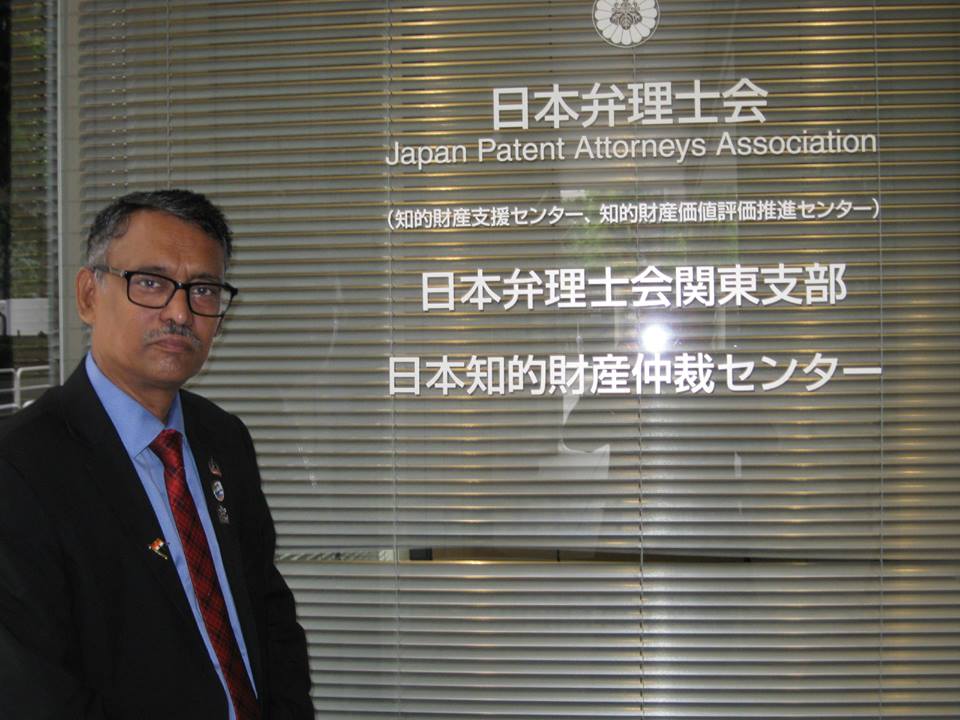


  • Pratik Bakshi, Business Development Associate, J. Sagar Associates, on launching World Law Forum, and resolving Business and Human Rights disputes through arbitration

    Pratik Bakshi, Business Development Associate, J. Sagar Associates, on launching World Law Forum, and resolving Business and Human Rights disputes through arbitration

    Pratik Bakshi graduated from National University of Advanced Legal Studies (NUALS), Kochi in the year 2018. He is currently working as a Business Development Associate with J. Sagar Associates, Gurugram. He has founded several organisations, such as World Law Forum, the Network for International Law Students, and The Union Debates (previously, Indian Union Debate Forum). He is one of the few people working extensively on Business & Human Rights in India and is a member of the Sounding Board of the Hague Rules on Business and Human Rights International Arbitration, a committee working on establishing a system to adjudicate business and human rights disputes through arbitration.

    In the past, he has worked with Ram Jethmalani as his PR/Social Media Manager; and advises various law-focused start-ups, including The Negotiation Academy, The European Centre for Career Education etc. Through his latest venture, World Law Forum, he aims to bring a transformation in the world through law. World Law Forum has since its foundation worked on crucial and niche areas, such as Modern Slavery in Australia and Anti-SLAPP Legislation in India.

    In this interview, he talks to us about-

    • His law school experience at NUALS;
    • His internship experiences with Mr Mahesh Jethmalani, Khaitan & Co. and J. Sagar Associates;
    • His experience as the founder of Network for International Law Students and World Law Forum;
    • Prioritising works in law school;
    • His appointment experience as a Business Development Associate with J. Sagar Associates; and
    • His opinion about resolving human rights disputes through arbitration.


    HOW WOULD YOU LIKE TO INTRODUCE YOURSELF TO OUR READERS? PLEASE SHARE YOUR ACADEMIC AND PROFESSIONAL BACKGROUND.

    I like to introduce myself as a lawyer by profession and an entrepreneur by passion. I graduated earlier this year from the National University of Advanced Legal Studies (Kochi) and I am currently working at J. Sagar Associates. Since my first year at law school, I have founded six organisations, half of them were successful and the other half not-so-successful. But I guess, that’s part of being an entrepreneur.

    WHY DIDN’T YOU OPT FOR CONVENTIONAL DEGREES IN ENGINEERING OR MEDICINE?

    To begin with, I wanted to be an automobile engineer and had made up my mind to develop the next cutting-edge car design and technology. I remember being super-excited when we were about to start our Physics lesson on ‘Torque’ in school. Almost needless to say, I didn’t understand anything, and after a few weeks, I made a conscious decision that it was not my thing. Well then, like many others, I chose law because I didn’t fit in elsewhere. I also heard that law graduates made good money compared to other graduates, so that helped me make my mind a bit as well. Looking back, I would say that it was one of the best decisions that I have ever made in my life.


    TELL US A BIT ABOUT YOUR TIME STUDYING LAW AS AN UNDERGRADUATE AT NUALS, COCHIN. ARE THERE ANY MEMORABLE MOMENTS OF LAW SCHOOL, WHICH YOU WOULD LIKE TO SHARE?

    When I started law school, there was absolutely nothing to do there. We had classes for six hours till 04:30 in the evening; and the library would shut at about 06:30 if I remember correctly. There was barely any time and resource for the students to take on any extra-curricular or extramural activities. Things changed and became better after a year or so with some positive reforms coming in, but personally, I had already lost hope/interest in whatever goes on in law school. By then I had already started the Network for International Law Students (NILS), which kept me busy. It was a new organisation then, and I was excited to work with students and lawyers from across the world. Then during my third year, I contested for being the Debate Secretary of the law school and lost (by a huge margin, I remember). I was the most experienced in organising debates, or would I believe, but then you know how things work in an election. So, I started another organisation called the Indian Union Debate Forum along with a classmate of mine, who was equally frustrated with the whole high-drama politics that was going on. The idea was to introduce the Oxford/Cambridge Union-styled debates in India. We had our first debate three to four months later and were thrilled by the response that we got. We got Ram Jethmalani, Subramanian Swamy, Manish Tewari, Madhu Kishwar, KTS Tulsi, Pinky Anand among others as speakers and debate against each other – a never seen before the scene in India. So, it was probably the most engaging and exciting period of my law school life.

    INTERNSHIPS PROVIDE STUDENTS WITH THEIR FIRST EXPOSURE TO THE PRACTICAL ASPECTS OF THE LEGAL PROFESSION. COULD YOU TELL US ABOUT THE INTERNSHIPS YOU TOOK UP, AND WHAT YOU LEARNT FROM THOSE EXPERIENCES?

    Internships are helpful because they help you realise what you are made for. For me, it made me realise that I am certainly not made for transactional law. Of all the internships that I have done, I have enjoyed three of them thoroughly – Mahesh Jethmalani, Khaitan & Co, and J. Sagar Associates. When I was an intern under Mahesh Jethmalani, there wasn’t a lot of work for the interns to be honest, but the aura of watching Jethmalani Jr. in the court and see him argue made up for it. Plus, you got to be involved in all the cases that you see every day in the news, so it was all very exciting. Next up, Khaitan & Co, I was with a great bunch of people and enjoyed all the work that was given to me – primarily disputes matters. And lastly, JSA because it introduced me to the area of business development for law firms in which I am currently involved now.


    YOU ARE THE FOUNDER OF THE NETWORK FOR INTERNATIONAL LAW STUDENTS (NILS), A STUDENT-RUN BODY WHICH HAS ITS PRESENCE IN 26 COUNTRIES. COULD YOU PLEASE TELL US A BIT ABOUT THIS ORGANISATION AND WHAT MOTIVATED YOU TO ESTABLISH THIS ORGANISATION?

    As said earlier, when I joined law school I always felt that one has to take a lot of his/her own initiative to keep herself engaged. I believe it’s the same with most law schools in India and other developing countries. I started NILS with a focus to provide something to students especially from developing countries to farther the exposure and engaging themselves in activities which otherwise they wouldn’t in their law schools. We did some interesting events and exchange programmes which were highly praised and received wide attention. I was fortunate to come across a bunch of enthusiastic students who believed in my idea and took it to the next level; and as you said correctly, currently we have over 5000 members in 26 countries across all continents, except Antarctica of course.


    LATELY, YOU CO-FOUND WORLD LAW FORUM. WHAT STIRRED YOU TO LAUNCH THIS ORGANISATION AND CAN YOU TELL US A BIT ABOUT ITS GOALS?

    I was set to retire from NILS in 2018. Many people advised me not to retire as it was my baby, but then I wanted NILS to grow as a democratic organisation, run by and for law students. Therefore, it did not make sense for me to stay there forever, after ceasing to be a law student. I wanted to take my experience to the next level and founded World Law Forum, along with a colleague of mine who I worked briefly in NILS. The idea behind World Law Forum is to engage people in discussions on areas of law which are rarely discussed upon, either because people are not aware of them or because they think they are not important enough. Therefore, the core-topics that we work on are cutting-edge and will be the most relevant topics in the next decade. We organised the first-ever conference on Modern Slavery in Sydney earlier this year, after the Modern Slavery Act coming into force in the New South Wales. In India, we organised India’s first-ever conference on Strategic Lawsuits Against Public Participation (SLAPP), with over 620 participants. Therefore, the areas of our work are generally the “first-ever” or “among the firsts”, and we try to promote such areas of law, which would be relevant in the future. So far we have got a really good response, with eminent people including Head of States, Noble Laureates, Judges and the most eminent lawyers, journalists and academics having attended our event.

    Another thing that led to the foundation of World Law Forum is that we felt that the legal profession is a bit isolated and most events organised in the legal sector involve mostly members of the profession and barely from other professions or walks of life. However, the law is something which affects everyone and therefore ours is a platform for people from all walks of life to come together and discuss the law.


    WAS IT DIFFICULT FOR YOU TO RUN THESE ORGANISATIONS CONCURRENTLY WITH YOUR LAW SCHOOL WORK? HOW DID YOU MANAGE TO HANDLE BOTH THE WORK SWIFTLY? DID YOU EVER PRIORITISE THESE WORKS OVER YOUR ASSIGNMENTS AT LAW SCHOOL?

    It was not difficult at all. Rather, it was the most fun part of my law school. You have to prioritise your work and that’s what I did. There were some subjects in our curriculum that I was not interested in, so they were low on my priority list. While, there were some subjects and professors I really liked, and I focussed on them. And most students in India cover most of the curriculum a couple of nights before the exam, I was part of the same gang. So, it was all good. At least it helped me learn the skill of multitasking which is very essential.


    DO YOU FEEL THAT HUMAN RIGHT DISPUTES ACROSS THE GLOBE CAN BE RESOLVED THROUGH ARBITRATION INSTEAD OF COURTS? IS ARBITRATION THE PROPER ADJUDICATORY MECHANISM TO RESOLVE THESE DISPUTES?

    I am a member of the Sounding Board of The Hague Rules on Business and Human Rights Arbitration. The Working Group is working on developing this system where Business and Human Rights disputes can be solved via International Arbitration. The Drafting Committee is chaired by Bruno Simma, a former Judge of the International Court of Justice.

    So, most of the Business and Human Rights cases arises from countries or regions where the courts and other mechanisms have failed to deliver justice, which can be because of lack of courts or corrupt courts etc. Even where competent courts are available, Arbitration offers an attractive alternative with speedier procedure and awards that are potentially enforceable throughout the world under the New York Convention.

    We are often asked why businesses would who are accused of human rights abuses chose to submit the disputes to arbitration. We must understand that today, the consumers have started looking into the business ethics of companies before buying products and have in the recent past seen boycotting of products of companies accused of human rights abuses. Therefore, when a corporation’s reputation is questioned, the management might prefer speedy resolution of the dispute, rather than a lengthy litigation in court. In the case of arbitration, the parties may also choose judges with expertise in Business and Human Rights, rather than submitting the matter to the court where the judge is chosen by “the luck of the draw”. An expeditious and fair hearing would limit the reputation damage and can also help the victims in accessing justice faster and more conveniently.


    YOU HAVE WORKED AS PUBLIC RELATIONSHIP MANAGER WITH THE OFFICE OF RAM JETHMALANI AND HAVE BEEN ADVISING THE NEGOTIATION ACADEMY ON ITS BUSINESS EXPANSION. WHEN DID YOU DEVELOP YOUR INTERESTS TOWARDS THESE SORT OF BUSINESS DEVELOPMENT WORKS?

    I have known Mr Jethmalani for a while now, as he was the first Patron of NILS. When he resigned from his own newspaper, The Sunday Guardian after an editorial dispute, I suggested that he should consider having his own blog, considering he already has a mass following. He agreed to the idea and I started running his blog/website, and slowly was assigned the task to handle his media accounts. As far as the Negotiation Academy is concerned, I had invited Claudia Winkler to India for a series of workshops on negotiation targeted at law students. Until then, she had mostly trained lawyers; but after seeing the potential in the student market, we decided that an academy on negotiation with a focus on training students would be great. And so, I’ve been involved with the Negotiation Academy from the scratch and advise on the business strategy.

    For most of the last five years of my life, I’ve been doing business strategy and development for the different organisations I have been involved with – so my interest in it evolved over the years.


    HOW DID YOUR RECRUITMENT TAKE PLACE AT J. SAGAR ASSOCIATES? WHAT DOES A TYPICAL WORKING DAY LOOK LIKE FOR YOU?

    I interned with J. Sagar Associates during the final year of my law school and it seemed to be a great place to work for. As I was deciding on what career path should I choose after law school, JSA seemed to be a great stepping stone as I had always admired the principles on which the firm has been founded – of being democratic and providing equal opportunity to everyone; which is a rare sight in the legal industry in India. And so, I showed my interest to have a permanent position in the firm and after sending my CV etc, and I was selected to work for the firm.

    I am responsible for the submissions that the firm makes to different journals, improving market-visibility, working on proposals and pitches, analysing the business of peer law firms, identifying conferences and events which the firm can participate in, and forming other marketing and branding strategies.


    DO YOU THINK YOU LAW DEGREE PROVIDES YOU WITH AN EDGE IN PURSUING YOUR WORK AT J. SAGAR ASSOCIATES?

    The work at the firm is not directly related to law, but then having studied law always provides you with an edge, since it takes you considerably lesser effort in understanding how a law firm works, what visibility is essential for a law firm and what do the clients look for.


    PLEASE SHARE SOME ADVICE TO YOUNG LAW STUDENTS WHO WISH TO HAVE A CAREER IN ENTREPRENEURSHIP?

    I have always followed the principle of ‘Zero to One’ by Peter Theil, which basically means that to be successful in entrepreneurship, you must be the first in the market. If you are just copying someone else or trying to do what already exists in the market, you are only one in the ‘n’ number of competitors. While if you’re coming with an innovative product or service, you are the only one in the market, you get the first-movers advantage and almost enjoy a monopoly till someone else comes up. Therefore, to be successful in long-term, you must be innovative and work on something which is missing in the market; or provide an out-of-the-world perspective/angle to an existing product or service. This applies to all sectors. Even for law firms, one must show how one’s firm is different from its peer law firms. So, you need to find your USP and start working on it at the earliest. Don’t overthink – just go with the flow. You may want to make your Plan A and Plan B, but in entrepreneurship, mere Plan B is not enough, and you might need to plan yourself until Plan Z or even further. But as you start working on it, you learn to improvise and move on. Patience is supremely important. Don’t worry about funding because if you have a solid plan/idea, money would come in from one side or the other. And the best time to start working on it is while you are studying because there’s not much at stake, you have more time and can take risks.


    WHERE DO YOU SEE YOURSELF TEN YEARS FROM NOW?

    It’s a tough question. I don’t generally think that far away. But I would say I see myself as an entrepreneur who has brought at least something valuable to the world. Ticked off my bucket list. Maybe, politics? But I know that I would be a really bad fit in there.


    WHAT WOULD BE YOUR PARTING MESSAGE TO OUR READERS WHO ARE PRIMARILY LAW STUDENTS AND YOUNG LAWYERS?

    Work towards what defines you. Just because you went to law school does not mean you have to be a lawyer. There are so many more opportunities out there if you can convince yourself that it is worth that tiny risk. Parents are always harder to convince, but then they will be convinced in a few months if they see you making a living and happy with what you are doing.


  • Bivas Chatterjee, Special Public Prosecutor, Govt of WB, on challenges in cyber law and skills to become a good cyber lawyer

    Bivas Chatterjee, Special Public Prosecutor, Govt of WB, on challenges in cyber law and skills to become a good cyber lawyer

    Bivas Chatterjee qualified in Law from University of Calcutta in the year 1997, thereafter he pursued his Masters in Law from the Kakatia University.  He is currently Special Public Prosecutor in Cyber Laws and Electronic evidence related cases, engaged by Government of West Bengal. He has over sixteen years of professional experience and has experience of working in cyber law. He deals with major Information Technology, telecom and infrastructure companies. He is also the author of Electronic  Evidence, Cyber Criminal Manual, Cyber Security and The Law, Cyber Contract(Legal Analysis), Dense Cloud( Legal Analysis of Cloud), Information Technology Manual, Your Ultimate Protection Guide, Cyber Adjudication. CID, West Bengal got its first conviction in the case where he was the special public prosecutor. He shares the challenges and experiences being a cyber lawyer in India.

    In this interview, he talks to us about:

    • Challenges faced in cyber law
    • The importance of cyber awareness in the digital world.
    • The skills to develop to become a good cyber lawyer
    • Combining technology with cyber law


    PLEASE EXPLAIN TO OUR READERS: WHAT IS CYBER LAW? DOES THIS INCLUDE TECHNOLOGY LAW?

    Summarily law, which governs the cyber/virtual world, is cyber law in common parlance. As cyber world has taken an unprecedented proportion, it has now various sub-structures. For example, people say that today it is a data world and to govern the data world, especially in this big data world, we have in USA, ECPA or other legislations to govern various data-breaches.

    In my opinion it is purely a technology law or it can be coined as techno-legal subject. We know technology runs much faster than appropriate legislation to come and that is why there is a clear constrain between law and technology and hence the present subject requires a thorough techno-legal-experimental attitude and flair to solve various legal issues or problems.


    WHAT KIND OF WORK DO CYBER LAWYERS DO?

    The areas of works are limitless and also unexplored till date. A cyber lawyer can fight the cyber crime related cases (be in defence side or as prosecutor, in prosecution side). Actually specking every modern day lawyer should have a fare bit of understanding on cyber related matters. Even in civil suit, namely matrimonial suits, etc., the litigants are coming with Facebook pages or other various types of electronic evidences. The application of electronic documents in every spheres of legal world is now inevitable.


    ARE THERE DIFFERENT KINDS OF CYBER LAWYERS WHO DO DIFFERENT KIND OF WORK LIKE THERE ARE DEAL LAWYERS WHO SPECIALISE IN DIFFERENT KIND OF DEALS?

    Cyber lawyers can practise in various civil as well as in criminal cases. Cyber lawyers can also give advice to the lawyers in various fields and can also share their knowledge with various LEA, academies etc. The prospect is growing everyday.


    IS A CAREER IN CYBER LAW VIABLE? WHAT KIND OF OPPORTUNITY IS THERE FOR YOUNG LAWYERS IN CYBER LAW?

    I have already discussed that present day lawyers can not proceed with their jobs without a fair bit of knowledge in this techno-legal field. The next generation legal fields require huge number of cyber-lawyers who will assist the judicial system in various ways in Courts apart from various in house legal jobs.


    HOW DID YOU MAKE A CAREER IN CYBER LAW?

    Being a first generation practitioner, when I started my career, I started with telecom industries. In the year 2002 I was engaged as a lawyer in a very famous telecom company in West Bengal and lateran one by one other telecom companies engaged me as their lawyer. In the year 2008 I have dealt with one of the first case of cyber corporate espionage between two very famous telecom company and later in the year 2010, I single-handedly dealt with one of the famous defacement case of a world renowned telecom company, spreading entire India, on behalf of the company. It was one of the first and biggest success in cyber crime related cases in the eastern India. Then onwards, I simply fall in love with this subject and it has become rather passion than to only profession. That time I could foresee the potential of this subject and since 2012, I have been engaged with all the various prestigious academies in India, I used to speak in those classes or seminars, that the future lies in the digital/electronic cases. I love to see that what I have thought and predicted years before, has actually proved to be truth. Though I was from the science background but not from information technology background, I have to upgrade and update myself to the present day changes in this filed. Actually technology moves mush faster than law or legislative changes or amendments. Even today, everyday I have to learn new changes taking place in this world.


    WHAT WERE THE FIVE BIGGEST CHALLENGES YOU FACED ALONG THE WAY? HOW DID YOU OVERCOME THEM?

    From day one I have faced various challenges in this field and I have to make over them in various ways. The following will make things clear:

    • In the yearly days, dealing with only cyber laws would not suffice for my living and I had to do other conventional cases along with the same to sustain my family. It was very tough and struggling period.
    • The law-enforcement machineries in the beginning was not ready, which they are now, to welcome the changes in the legal and other related fields. In various cases, there was lacuna in investigation for want of sufficient knowledge to collect, preserve and present digital/electronic evidences. For the last five years or so, I have trained more than thousands law enforcement officers in India, written books on how to solve and investigate various types of cases so that the evidence can be presented before the Learned Court.
    • The application of E-evidence in the existing conventional fields, like paper-oriented court system, was and still is a challenge. To make things uncomplicated, I have started to file written argument in details highlighting the recent development in these fields. I have been taking various classes covering the entire area/domain for learned judicial officers and public prosecutors.
    • To make things easier I have also written various books covering various areas of this techno-legal field. I have my blog/page under Facebook under title, “Cyber Crime Awareness Campaign”, through which time to time I post and share various articles, so that people specially the legal friends get help.
    • Finally, as I am the only Special Public Prosecutor in cyber-crime and electronic evidence related cases in Bengal today, I have very hectic schedule in everyday life and I have to continue my study in various related fields, which I have to do in my way to various Ld Courts sitting in vehicles through mobile or laptop. Everyday I have to work 16 to 18 hours to keep up with my hectic schedule.


    WHAT COURSES, BOOKS WOULD YOU RECOMMEND FOR A LAW STUDENT LOOKING TO SPECIALISE IN CYBER LAW?

    There are lot of books but students have to go through the contents and look into books which contain the practical-approach-oriented materials before purchasing. The best way to learn is to look into the various resources available in the internet but they should verify them and if possible cross-check with other resources. The student should have interest in technology, specially software development. I love to code everyday in my favourite languages like python, javascript etc.


    IS IT IMPORTANT TO GET A DEGREE OR DIPLOMA IN CYBER LAW?

    In my opinion there is no need to get a degree or diploma, rather a law degree is enough. The online certifications on various new fields are more useful than any diploma. The fundamental concept matters most.


    HOW DO YOU KEEP YOURSELF UPDATED GIVEN THAT CYBER AND TECHNOLOGY LAW IS AN ALWAYS EVOLVING FIELD?

    It is an ever-changing world. The platform or technology in buzz today may be obsolete tomorrow. I am sure the knowledge, which I acquire today after a lot of arduous efforts, is of no use tomorrow. Technology moves much faster than legal amendments. Everyday I dedicate at least three to four hours to study technology and sometimes I felt frustrated that my study-hours cover more technology study than law. I think law is more interpretation than only the statues and hence for those areas I need to allocate times to study. I have to allocate more time on real life problem-solving issues, like how the security breaches occur, the technique of hacking, the data-breaches etc.


    WHAT BLOGS, JOURNALS OR WEBSITES DO YOU FOLLOW?

    Various online website / blog of USA, Canada and European Union etc. dealing with this techno-legal world.

    I have mentioned details of the url/links in my books, students can follow those links.

    Study through you tube or Google article related to this field.


    IF I AM INTERESTED IN CYBER LAW, WHOM SHOULD I FOLLOW ON TWITTER AND LINKEDIN IN YOUR OPINION?

    You go through works of various persons and can follow one you think credible. You can follow me at:

    https://www.linkedin.com/in/bivaschatterjee/

    bivas.chatterjee@gmail.com

    https://twitter.com/cybercrimemanua

    https://www.facebook.com/bivas.chatterjee.5

    https://www.facebook.com/awarenesstocyber/


    WHAT ARE THE TOP FIVE SKILLS TO DEVELOP IF I WANT TO BE A GOOD CYBER LAWYER?

    The following top 5 skills are desirable from a cyber lawyer:

    • Tenacity and eagerness to learn new things everyday, specially new development in this field.
    • A little bit thorough knowledge of computer system specially hardware details of computer, mobile, IOT devices etc.
    • A little bit thorough knowledge of operating software, other computer software especially in depth knowledge of at least the grammar of a single computer language i.e knowledge of coding.
    • A little bit thorough knowledge of networking system specially web-development, network protocols, various frameworks and at least one server-side and one client-side language, namely php, javascript, nodejs etc.
    • A little bit thorough knowledge of cyber and electronic evidence related laws in India and beyond India, various case studies, case laws related to that.


    WHO ACCORDING TO YOU ARE THE BIGGEST INFLUENCERS IN CYBER LAW IN 2018?

    There are various stake-holders who have the biggest influences in cyber laws and some of them are as follows:

    •  Law enforcement agencies that can ethically hack and solve the cyber crime related cases.
    • Intermediaries i.e. various online service providers as defined in section 2(w) of Information Technology Act,2000, as amended.
    • Technical experts who have thorough knowledge on the ins and out of a system.
    • Banking sector companies, online wallets companies etc. who provide online money transactions platforms.
    • NGOs working in this field(though the number is meagre), public prosecutors, lawyers and judges.

    UNDERSTANDING CYBER LAW – DOES IT ALSO REQUIRE A DETAILED UNDERSTANDING OF TECHNOLOGY?

    The obvious answer is yes. If practising lawyers does not know the practical details of ins and outs of the technology, how can he find the actual problem and provide solution which is admissible and acceptable by Ld. Courts and society at larger.


    SHOULD ENGINEERS AND CYBER SECURITY EXPERTS LEARN CYBER LAW? HOW CAN IT POSSIBLY HELP THEM?

    If a fire-tender does not know how to deal with fire, how can he make himself safe from being burnt and more so how can he make other safe. For example, person dealing with private, secure, sensitive data or electronic systems may at any point of time implicate himself or herself in unnecessary legal binding / litigation. (Say for example after the GDPR, in European Union, huge compliances are required, otherwise stringent actions may follow). In every sphere, the knowledge of cyber laws around the world is a prerequisite for engineers and cyber expert and the knowledge will provide a safety-valve to them.


    WHAT IS THE EARNING POTENTIAL OF A SUCCESSFUL CYBER LAWYER?

    Earning potential as a profession cyber lawyer is good in my opinion. The number of Cyber lawyers are numbered and crimes and contraventions are on increase in virtual world.


    IS IT BETTER TO PRACTICE INDEPENDENTLY OR TO WORK WITH A LAW FIRM OR COMPANY?

    It depends on person to person. But for the newly-started professionals, it is better to have one guide, though being the pioneer in this field, I never felt the urge to have someone. If someone has the highest level of passion, zeal, dedication, honesty and integrity, he or she will surely succeed.


    HOW DOES ONE GET STARTED IN CYBER LAW PRACTICE?

    In my opinion to start in legal professional, one should not be very choosy, and in the early stages he or she should do or put his head into various issues and as the cyber-law related issues are everywhere, one who wants to pursue the career in cyber law can start only specialisation work after at least 5 years of his or her practice years.


    DO YOU THINK INDIAN CYBER LAW REGIME NEEDS AN UPGRADE? WHAT ARE THE AREAS THAT NEED ATTENTION OF LAWMAKERS?

    After the amendment has been made by way of Information Technology Amendment Act, 2008, some of the famous judgements been pronounced, and lot of technological changes took place, especially in arena of Data-science, cloud-computing, Artificial Intelligence and its predictive algorithm, Blockchain etc., Indian Cyber laws should require upgradation. The following areas need attention:

    • Getting evidences from the intermediaries, especially from WhatsApp and other Instant messenger services.
    • Appointment of Examiners of Electronic evidence.
    • Laws relating to forensics evidences, especially incorporating chain of evidence in Indian law.
    • Details of laws clarifying the process of collection, preservation and presentation of electronic evidence.
    • Clarifying the status of the cyber security personnel and IT- security audit or ethical hacking.
    • Strong data-protecting laws (We already got the Personal Data Privacy Law Bill, 2018)
    • Changes in procedural laws in cyber crime investigation,
    • Laws dealing in details on Child pornography and Online-Trafficking.
    • Laws relating internet of things (now Internet of Everything)
    • Laws related to CCTV footage, etc


    WHAT ARE THE MOST PROMISING AREAS OF WORK WITHIN CYBER LAW IN THE NEXT DECADE?

    The most promising areas are:

    • Artificial Intelligence, Machine Learning and Deep Learning.
    • Cloud-computing
    • internet of things (now Internet of Everything)
    • Data privacy and security, specially big data, data-analytics and predictive and destructive logarithm.
    • Blockchain and crypto-currencies.
    • Dealing with digital/electronic evidence in non conventional and conventional fields.


    DOES IT MAKE SENSE FOR LAWYERS TO SUPER SPECIALISE WITHIN THE DOMAIN OF CYBER LAW?

    If any lawyer wants to specialise in cyber law arena, specialising within the domain is obviously required, specially regular and intensive study in technology and exploring its new areas is a must. Dedicated and passionate effort is a prerequisite in this domain.