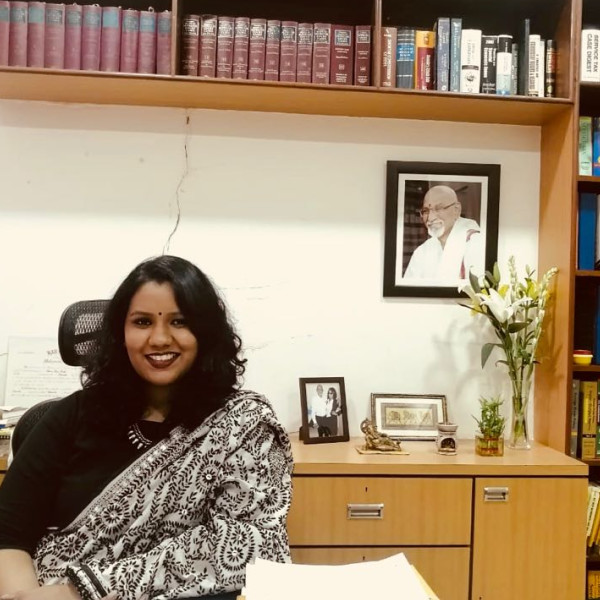
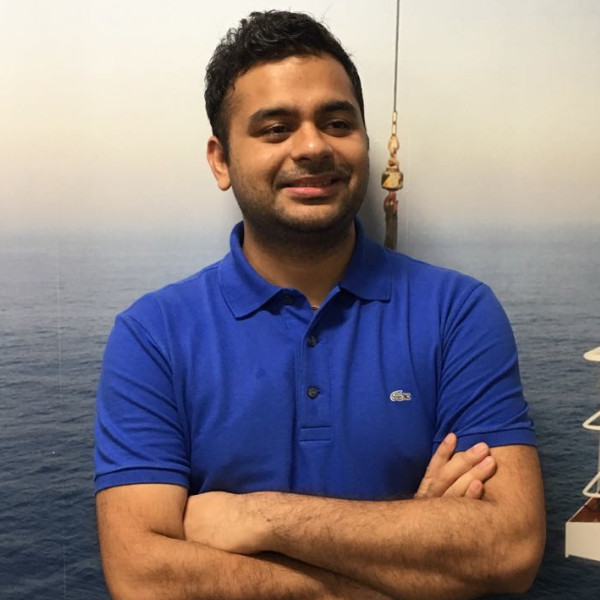
Category: Associates, In-House Counsels and Advocates

  • Siddharth Acharya, Independent Counsel, on challenges of litigation, planning internships, and directing documentaries

    Siddharth Acharya, Independent Counsel, on challenges of litigation, planning internships, and directing documentaries

    Siddharth Acharya graduated from Government Law College, Mumbai in 2014. After a very brief stint at Oasis Council & Advisory and Khaitan Legal Associates, started his own independent practice before Supreme Court of India & High Courts and various forums like the National Company Law Tribunal, National Company Law Appellate Tribunal and Securities Appellate Tribunal.

    In this Interview, we speak to him about

    • His formative days as a transactional lawyer;
    • His transition from a transaction lawyer to a litigator;
    • His fondness for directing films and his documentary “The Abandoned Cranes” which received attention across the globe and
    • His inclination towards working for think-tanks on various public policy related works.


    HOW WOULD YOU INTRODUCE YOURSELF TO OUR READERS?

    Rather than calling myself as a Super-Lawyer, I will introduce myself as an independent practising super-struggling lawyer who is out there to carve a niche for himself in the Meccah of litigation which is New Delhi. I am in process of building my practice brick to brick here and intend to become Advocate on Record in future. I take up consumer matters pertaining to Insurance and company matters pertaining to Insolvency and Bankruptcy as I personally believe consumer forum and National Company Law Tribunal are the best places where you shall start arguing and it is quite heartening to see how encouraging Judges these days encourage you to speak in court. It is an organic process and takes time but yes I am out there to work hard and learn something daily.


    TELL US ABOUT YOUR PRE COLLEGE LIFE. WHAT MADE YOU DESCEND TOWARDS LAW?

    I was an above average student of Bikaner Boys School. During my school days I had keen interest in quizzing, cricket and debates. I was not a rank holder in my class but I use to get decent grades and use to secure highest marks in History and Political Science. My other interest was the theatre which I used to pursue in my school and read novels and plays of Shakespeare, Munshi Premchand, Anton Chekov, Fyder Dostoevsky and George Bernard Shaw. My great-grandfather was a District Court Magistrate and a prestigious senior lawyer in Bikaner. I still have fond memories of seeing him in the profession. He was a voracious reader and had garnered a lot of respect in the legal fraternity of Bikaner. He used to do a lot of pro-bono work and his stature and prestige stayed in my sub-conscious and has a lot of impact on me even till now. Law as a profession did not come to me as a natural choice, I was clueless and confused after my school on what to pursue. I secured admission in reputed Biotechnology College in South and Agriculture University and wanted to prepare for Civil Services but back in 2009 CLAT was gaining a lot of popularity among the youth in my hometown. My cousin ended up securing job in her campus placement in SEBI after finishing her education from National Law School, Jodhpur and suddenly word of mouth spread in the family that if you wish to have a successful professional life and end up in a dignified post after your graduation then it is the best time to pursue law.


    WHO WAS YOUR MENTOR, OR MAIN SOURCE OF INSPIRATION WHO MOTIVATED YOU ALL ALONG THE WAY?

    There are various people who have motivated me in the journey. My initial mentor was Mr. Dinesh Shripat who is my uncle and he had persuaded me to take up law as a career. After I finished graduation, I started working with Mr. Haresh Jagtian in Mumbai. His flamboyance, articulation, magnanimity and charisma is infectious. I really consider him as an institution and one can learn a lot from him be it law or life. His understanding about subjects like Jurisprudence, Evidence and Constitution is exceptional and I was fortunate to have been associated with him directly on PIL which he had filed against the State of Maharashtra on criminalising possession of beef. I got to work with various legal and constitutional jargons of Bombay High Court Bar including likes of Aspi Chenoy and Navroz Seerwai.

    Another person from whom I garner a lot of inspiration is Mr. Sharan Jagtiani and Mr. Somasekhar Sundaresan, both of them are among the most sought after counsels in the fraternity. At their age, if I achieve even a fraction of their accomplishment, I would consider myself successful. Mr. Sakate Khaitan, Managing Partner of Khaitan Legal Associates and Mr.Yogesh Chande from Shardul Aamarchand also have a strong influence on me professionally.


    HOW WAS YOUR EXPERIENCE AT GLC, MUMBAI? WHAT WERE YOUR AREAS OF INTEREST IN THE LAW? DID YOU ENGAGE IN EXTRA-CURRICULAR ACTIVITIES WHILE IN COLLEGE?

    GLC taught me to be independent and courageous. I was a young naive boy who was going through everyday cultural shock as the transition from a small place like Bikaner was a bit painful to go through. I got to intern with various law firms like Junnarkar Associates, AZB and Partners, J Sagar Associates, Luthra to name a few. I found the firm environment extremely challenging and intimidating and to be honest did not really enjoyed it. Coming from a small place and fear of survival mounting on my head in a super-expensive city like Mumbai, I did not have the courage to take up litigation immediately after graduation so reluctantly I decided to join the firm.

    My area of interest was Investment Laws especially Securities as I had obtained post graduation diploma also in it but what really intrigued me was Constitutional Law. I started watching ShyamBenegal’s series Samvidhan on YouTube which covers the constitutional debates that took place in Constituent Assembly before India became Republic in 1950. My love for politics helped me to understand the contemporary political problems of this country along-with nuances and intricacies involved in the drafting of the most sacrosanct document of the nation. The upheaval and challenges which founding fathers of the Constitution must have had gone through. Understanding the entire process made me aware about the importance and indispensability of Constitution to run such a diverse and pluralistic democracy.

    I was engaged in extra-curricular activities like Model United Nations and authored a paper those days on problems faced by Muslim women in India. I also did Moot Courts and Model United Nations. But what I liked doing the most was debates.
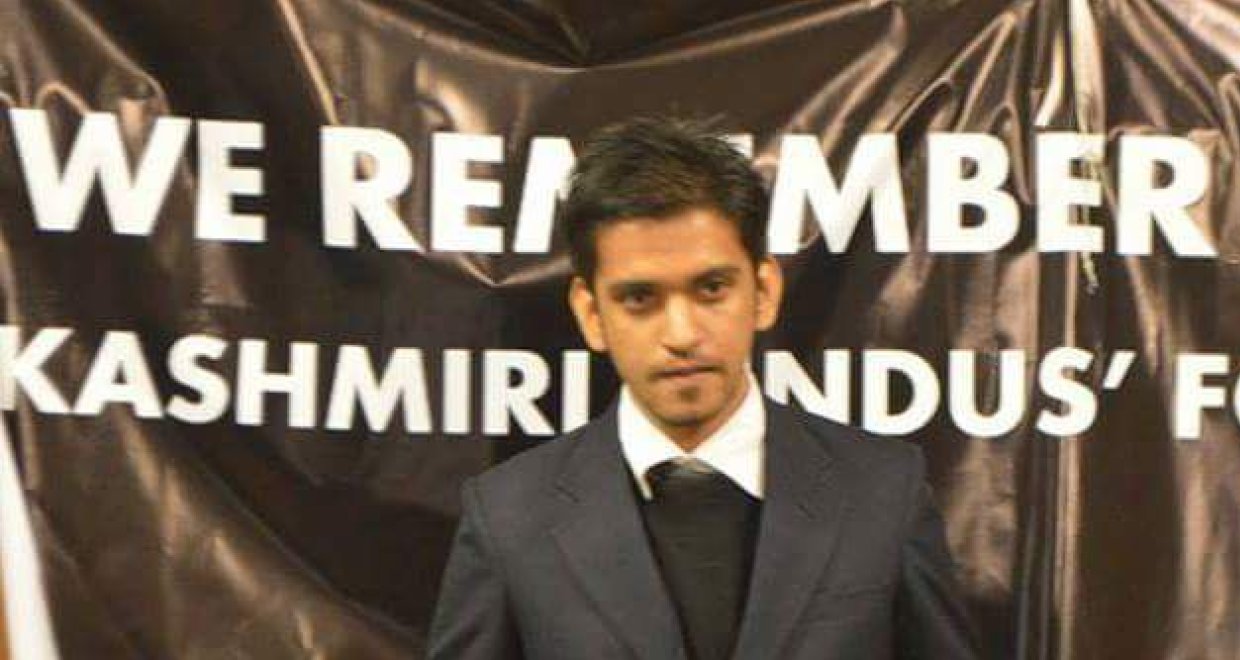
     

    DURING YOUR LAW SCHOOL YOU HAD DIRECTED VARIOUS SHORT FILMS AND DOCUMENTARIES ONE OF THEM WAS THE ABANDONED CRANES WHICH RECEIVED ATTENTION ACROSS THE GLOBE. COULD YOU PLEASE TELL US ABOUT THE DOCUMENTARY AND YOUR CHALLENGES WHILE PREPARING THE SHORT FILM?

    (Siddharth’s documentary The Abandoned Cranesgot screened at the House of Commons and was screened at Brussels in European Union Headquarters. He has addressed the British Parliament and French Parliament on the socio-economic concerns that hound the Kashmiri Pundits. )

    The Abandoned Cranes was a subject which I would say I had lived with for many years before making it. It was a 52 minute comprehensive documentary film based on Jammu and Kashmir conflict. It was an earnest attempt to sneak into the genesis of political problems in the state of Jammu and Kashmir after the rigged elections that happened in the state in 1986. I also traced reasons on how militancy mushroomed in the state thereafter making Kashmiri Pandits leaving their homeland and also analysing Armed Forces Special Powers Act and Public Safety Act. It took me eight months to complete it and interesting fact remains that I did not inform my parents about the making of film and shooting in Kashmir along-with likes of Yaseen Malik and Bitta Karate (dreadful militants of those times) and other surrendered militants. The film was appreciated at various human rights film festivals and I got an opportunity to speak at House of Commons. I came across various challenges as I had literally risked my final year of law in terms of grades and thereafter my career. From shooting till editing I was a learner myself as I did not come from film-making school but I was so deeply entrenched into it that I could not think of anything else at that time. My parents were apprehensive that this would spoil my career as I was not making it with any commercial interest and had abandoned my regular studies for a while. Finishing documentary itself was an accomplishment and I am really glad that it was appreciated by people all around.


    WHAT ARE THE CAUSES YOU FEEL STRONGLY ABOUT?

    I am extremely sensitive towards the plight of people who cannot afford basic medical facilities and health care. The State plays an important role in providing free medical services through health insurance cards but under the guise of schemes like Rashtriya Swasthya Bima Yojana and Mukhyamantri Swasthya Bima Yojana of States, people have been cheated and most of the premium released by government is siphoned off by the private hospitals and Bureaucrats. The lackadaisical attitude of Bureaucrats in resolving the issue and being insensitive towards them is something I am willing to take up soon in Court of Law.

    I am also extremely sensitive towards what is happening today in State of Jammu and Kashmir. The youth in Kashmir today feels oppressed, marginalised and victimised and rants anti-India slogans. Due to poverty and various other reasons, youth there feels completely disconnected with rest of India. On a personal level, I have taken an initiative where I have hired a law graduate Suhail Ghanie from Kashmir University as my sub-ordinate and in coming years will be giving internships to Kashmiri youth. If my practice picks up more in coming years then I will be doing the same experiment in naxal affected areas and other troubled areas. The time has come where new generation in conflict areas have to be psychologically integrated with our country. If they get exposure to justice mechanism and get aligned to the mainstream which other youngsters do then only they will be able to subscribe to the idea of unified India.


    YOU HAVE DONE SO MANY INTERNSHIPS. PLEASE TELL US HOW FAR DID YOUR INTERNSHIPS DURING LAW SCHOOL HELP YOU IN YOUR CAREER AFTER YOUR GRADUATION? HOW WOULD YOU RECOMMEND THE PRESENT LAW STUDENTS PLAN THEIR INTERNSHIPS?

    (Siddharth has interned at the Chambers of Mr. Harish Salve, Senior Advocate, Luthra and Luthra (Law Offices), J. Sagar Associates, AZB & Partners, Anand and Anand, Crawford & Bayley Co and various other places.)

    Numerous internships actually helped me to analyse myself. It helped me to understand my mettle as a lawyer. What I am suited for and what I am not suited for? Like for an example during my stint in J Sagar and AZB, I realised I can’t become a good transaction lawyer. Those internships and small conversations with accomplished legal luminaries helped me to unleash my own calibre and understand that everyone here is gifted with some ability or the other. Like I remember this encouraging conversation coming from a Senior Partner of a reputed law firm, where he said these words “Every law firm intern wants to take up a corporate job and gets disappointed thinking he does not deserve it. We hire people not only considering the merits but also deeply pondering on the entire thought process of the candidate as to whether he or she will able to acclimatise to the working environment of the firm. We tend to not imbibe free thinkers in the firm. That does not mean we don’t like the candidate or we feel they are good for nothing. Someone who has it in him or her will definitely find the path and next five to seven years decide whether you have it in you or not.”

    Also your internships dismantle various myths and pre-conceived notions legal career and teach basic jobs like filing, co-ordinating with court-clerk, adapting to the chaotic phases in the litigation. In the process, you learn to value everyone working around you. What it teaches you the most is discipline and if you get the right mentor then there is no stopping for you.

    I would suggest law students to try their hands in various fields in initial years so as to understand and grasp the nitty-gritty of various things and analyse your potential. It will help discovering themselves.


    HAVE YOU EVER FELT THE NLU AND NON- NLU DIVIDE? DO YOU THINK IT IS A CONSIDERATION FOR EMPLOYERS?

    It is quite unfortunate that it exists in the fraternity and it is a harsh reality. I am an ardent supporter of non-NLUs as during my own college days, I was a victim of this class divide. Like I remember interning in a premier law firm, the Partner of the firm always use to encourage and delegate work to associates from a specific university where he had passed out from. I am not saying this exists everywhere but employers do prefer N schools and there is a clear bourgeoisie-proletariat kind of divide and they are ruling the roost in firm recruitment. N-school graduates do have an advantage in terms of placement and recruitment but ultimately it is non N-school candidates who emerge more successful in the long run as the vision of N-school alumni do not go beyond campuses and big corporate towers.


    HOW DID YOU SECURE YOUR FIRST JOB? HOW IMPORTANT DO YOU THINK A HIGH CGPA IS FOR RECRUITERS?

    All thanks and regards to Mr.Haresh Jagtiani who had given me a chance in his law firm.

    Recruiters and HR in our country feel CGPA is the most sacrosanct thing in a student’s life, securing important CGPA is very important as it shows how diligent and focused a student is.


    WHY DID YOU MAKE A TRANSITION AFTER WORKING AT CORPORATE FIRMS TO PURSUE A CAREER IN LITIGATION?

    I would say circumstances got me into private practice as neither I come from an established legal background nor I am a local Delhi boy or Bombay boy. My fate offered me the opportunity and I could not succumb to the temptation. Litigation and arguing in court gives me more thrill than sitting and working for hours on a long draft and activist bent of mind helps you in litigation more than corporate.
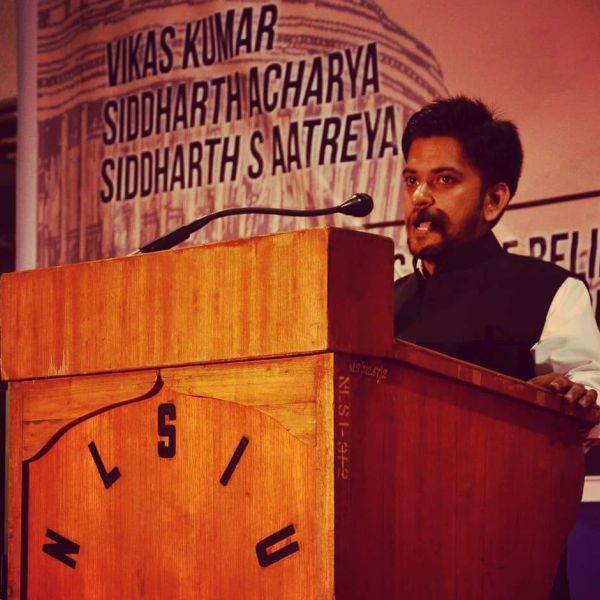
     

    WHAT WERE THE STRUGGLES THAT YOU FACED AS AN INDEPENDENT COUNSEL?

    I am facing struggles on a daily basis as most clients do not tend to take you seriously when you are in your twenties. You get to do matters which have small stakes and the appeals which you receive from lower courts and commissions and has already been decided against your clients. These matters are called ventilator matters and they make you an expert at condoling people. But honestly, no fat cheque can match the happiness which you get after a favourable order in the court of law.


    WHAT INCLINED YOU TOWARDS PROPOSING, DRAFTING, FRAMING AND SUGGESTING ON VARIOUS PUBLIC POLICY RELATED WORKS FOR THINK TANKS AFFILIATED TO GOVERNMENT OF INDIA?

    (Siddharth has worked on various policy related work pertaining to Life Insurance and General Insurance and regularly gives legal inputs to the Department of Financial Services, Finance Ministry and Health Ministry on National Health Protection Policy.)

    What really made me inclined towards public policy was an unfavourable order I got from Chief Justice K.M. Joseph of Uttarakhand High Court. This was a PIL filed in September, 2016 where I had brought irregularities to the notice of the Court about how tender processes are rigged in the health sector and beneficiaries of healthcare schemes are not getting benefitted at all due to poor claim settlement ratio thanks to private hospitals. Uttarakahand at that time did not have any tertiary level treatment hospital which could cater heart transplant and cure for serious diseases. I realised it was the time to take a plunge to counter the nexus between bureaucrats, politicians and businessman who will destroy the healthcare system of the country. Healthcare being dormant yet important sector is the pillar of modern India. If the system fails to provide it to the needy then what is the difference between India and a remote third world country in Africa.


    WHERE DO YOU SEE YOURSELF TEN YEARS FROM NOW?

    Honestly speaking I am not that foresighted, I intend to do in what comes to me and rise gradually. I would like to be known as an upcoming lawyer in constitutional courts seeing myself arguing on various constitutional matters.


    WHAT WOULD BE YOUR PARTING WORDS TO OUR READERS, WHO ARE PREDOMINANTLY LAW STUDENTS AND YOUNG LAWYERS?

    Have faith in yourself and keep going. There will be moments of highs and lows in your professional career. Stop comparing yourself with your contemporaries or taking a keen interest in their monthly earning and packages and keep experimenting.
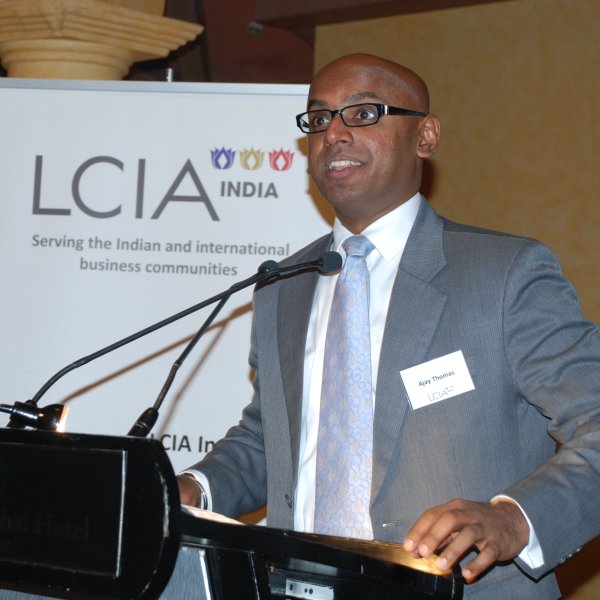


  • Ajay Thomas, Advocate and Arbitrator, on being a good arbitrator and career in International Commercial Arbitration

    Ajay Thomas, Advocate and Arbitrator, on being a good arbitrator and career in International Commercial Arbitration

    Ajay Thomas is an independent arbitrator and advocate based in New Delhi. He is also the Vice-Chair of the ICC’s India Arbitration Group.From 2009-2016, he was Director and Registrar with the Indian subsidiary of the London Court of International Arbitration (LCIA), and also a member of the LCIA India Board of Directors.He graduated from the University of Goa (LLB), and did his LLM from the National University of Singapore (NUS) .

    Prior to joining LCIA India, Ajay was Counsel with the Singapore International Arbitration Centre (SIAC). Ajay was also a member of the expert committee constituted by the Law Commission of India to assist in the preparation of its 246th Report (August 2014) on ‘Amendments to the Arbitration and Conciliation Act, 1996’.

    He is a guest faculty at the Indian Society of International Law (ISIL), New Delhi since 2009, where he teaches international commercial arbitration. Ajay is also Hong Kong 45’s (HK45) Regional Ambassador for India, in addition to serving as the Country Representative for the Asia-Pacific Forum for International Arbitration (AFIA).

    In this interview we speak to him about:

    • Importance of LLM for the career
    • His experience at NUS
    • His roles and responsibilities as the director and registrar of LCIA
    • Skills required for being a successful arbitrator


    HOW WOULD YOU LIKE TO INTRODUCE YOURSELF TO OUR READERS? PLEASE TELL US SOMETHING ABOUT YOUR CHILDHOOD AND PRE-COLLEGE LIFE?

    New Delhi-based independent arbitrator and advocate is what best explains my current professional status.

    Be that as it may, “a serial institutionaliser” is how many in Indian arbitration circles introduce me to their friends and acquaintances. Perhaps, because of the fact that over the past decade or so, I have had the unique distinction of working at four of the world’s leading arbitral institutions: Singapore International Arbitration Centre (SIAC), Singapore Chamber of Maritime Arbitration (SCMA), London Court of International Arbitration (LCIA), and now the International Chamber of Commerce (ICC) – where I have been appointed Vice Chairperson of the ICC’s India Arbitration Group. And, evangelising the cause of arbitration, especially institutional arbitration, has been a very integral part of my professional life.

    I was born in a land situated between the latitudes 14°53′54″ N and 15°40′00″ N and longitudes 73°40′33″ E and 74°20′13″ E, a land blessed with sandy beaches, swaying palms, and magnificent churches. My formative years were spent in the sleepy but charming village of Aldona. Life in those simpler times revolved around school (St Thomas Boys, and later St Britto), the playground which you shared with the neighbourhood water buffalos, and home which was conveniently just a hop, skip and jump away.

    Given my ability to appear at the wrong places at the worst possible times, I had a rather nasty reputation of being a “Jack-in-the box” in primary school, which thankfully evolved to a more respectable “Jack-of-all-trades” in high school. I wasn’t particularly brilliant in studies but was an avid quizzer and excelled in badminton, basketball and the throwing and jumping disciplines on the athletics field.


    WHAT PROMPTED YOU TO BECOME A LAWYER AND WHEN DID YOU THINK OF A CAREER IN INTERNATIONAL COMMERCIAL ARBITRATION?

    Post high school, I enrolled for a Bachelors programme in Commerce, followed it up with an LLB from the Salgaocar College of Law, pursuant to which I spent an eventful few years as a greenhorn litigator at the Bombay High Court.

    I became a lawyer by sheer accident. It was not a conscious well charted journey. Growing up, I was fascinated with being a police officer. Why a police officer? The lure of the khaki, the stars and the Ashoka on your epaulettes, and the bit of idealism left in me that made me think that I could make a difference. When that dream did not materialise, I decided to become a lawyer. But I was clear that I did not want to be a generalist and wanted to find a niche practice area that interested me. I zeroed in on maritime law, and I was extremely fortunate to be accepted as a junior at the Chambers of Senior Advocate S Venkiteswaran (Venki), regarded by many as the guru of maritime and admiralty laws in India.

    Again, it was sheer serendipity that led me to a career in international commercial arbitration. One of the elective courses that I had opted for at the LLM programme at NUS was international commercial arbitration, the teaching for which was led by Adjunct Professor Lawrence Boo, who in those days was the CEO and Deputy Chairman of the SIAC. It so happened that one day during class he mentioned that there was an opening for an India-qualified lawyer at the SIAC and urged the half-dozen Indian lawyers on the course to consider applying for the position. Given the compensation on offer, and the fact that I would be sailing away from maritime law into a totally different arena, I was initially quite hesitant. To cut a long story short, I finally applied and was offered the position subject to me successfully completing my LLM coursework requirements. The SIAC position was effectively my gateway to international commercial arbitration.


    YOU HAVE DONE POSTGRADUATE DIPLOMA COURSES IN ‘INTERNATIONAL LAW AND DIPLOMACY’ AND ‘SHIPPING MANAGEMENT’ HOW FAR HAVE THESE COURSES BEEN HELPFUL?

    My love for ships and the seas, coupled with the desire to specialise in a niche practice area, led me to pursue a “Post Graduate Diploma in Shipping Management”. This held me in very good stead when I started off practicing maritime law at Venki’s Chambers. The course gave me an excellent overview of the dynamics of the shipping industry, which I believe gave me an edge over my peers.

    The course in “International Law and Diplomacy” from the Indian Society of International Law (ISIL) helped me in preparing for the combined civil services exams, where I had opted for law as one of my optional subjects. At the end of the course, fortuitously, I discovered that I had topped the course and was awarded a gold medal, which came in very handy in securing an admission to the LLM programme at NUS.


    CAN YOU PLEASE TELL US ABOUT YOUR EXPERIENCE APPLYING FOR YOUR MASTER’S DEGREE? DO YOU BELIEVE IT IS MORE DIFFICULT FOR NON-NLU STUDENTS TO GET THROUGH INTO FOREIGN UNIVERSITIES?

    Ever since my LLB days, I always wanted to pursue a master’s degree. However, I realised that a couple of years in the profession would make my graduate studies more meaningful and purposeful, and not to mention, more money in the bank to fund my studies. Further, work experience helped me to clarify career objectives and gain invaluable hands-on experience in my area of interest.

    I do think that it takes a bit more effort for non-NLU students to successfully complete the application formalities. I was probably one of the very few students from my college to have applied for an LLM overseas, and consequently I did not have access to the usual advice and war stories from seniors.


    YOU PURSUED AN LLM AFTER HAVING SPENT ALMOST FIVE YEARS IN THE PROFESSION, A LITTLE LATE BY INDIAN STANDARDS. WHAT DO YOU THINK AN LLM DEGREE CAN DO FOR YOUR CAREER?

    An LLM programme in my opinion serves many purposes: for those who have spent some time in the profession, it’s a great way to slow down the pace of life, after the initial rigours and stresses; to look at life from a different perspective; it provides a wonderful opportunity to recharge one’s batteries; and most importantly, it acts as a refresher course to update one’s knowledge and aids in focusing on an area of specialisation.

    A LLM from a foreign university is always appealing to potential employers as it adds a bit of exoticism to your CV which employers love. The fact that you have studied abroad is also quite helpful when it comes to dealing with international clients.

    In my opinion, an LLM is a great option to young lawyers in search for a break from the monotony of a very demanding profession. It gives them some time to stop, ponder and take the right decision as to their future as lawyers. In the bargain, one gets to update one’s knowledge base, acquire new skills and get a hold on one’s life and career.


    WHAT PROMPTED YOU TO CHOOSE THE NATIONAL UNIVERSITY OF SINGAPORE (NUS) FOR YOUR LLM?

    An extremely distinguished faculty; an ambience replete with academic activity; an LLM programme which blended high quality, intensive course work with research; the numerous opportunities to interact with professionals from the legal profession and the commercial world; the hope that the extremely competitive environment at NUS would bring out the best in me, coupled with the fact that Singapore was rapidly emerging as a maritime and arbitration hub were factors that prompted me to choose NUS.

    Further, in those good old days, the fees at NUS and the cost of living in Singapore were relatively reasonable, these were additional but important factors that influenced my decision.


    PLEASE TELL US ABOUT YOUR EXPERIENCE AT NUS?

    The LLM coursework at NUS was extremely demanding, more so in my case, where I was getting back to academia after a very long time. There were hours spent in the library trying to cope with the numerous assignments, and preparation for next day’s classes; the nervous tension to meet deadlines; and copious amounts of Kopi O and Red Bull that were consumed to keep you going. And, now when I look back, I get the feeling that I strangely enjoyed it all.

    The facilities at the Faculty of Law at NUS were brilliant and state-of-the- art. Incidentally, the Faculty of Law along with the School of Public Policy had a bit of exclusivity to it, being located on a lovely secluded hill besides the Singapore Botanic Gardens, and miles away from the crowded main Kent Ridge campus.

    Singapore is also the perfect base to explore the Southeast Asian region. Given the travel bug in me, I took the opportunity of the month-long semester break to explore the region. I spent a few wonderful weeks backpacking through Malaysia, Thailand and Cambodia. It was an amazing journey of discovery!


    NUS IS WELL RENOWNED FOR ITS BRILLIANT FACULTY. HOW WAS YOUR EXPERIENCE WITH THE FACULTY?

    The faculty at NUS were a good mix of regional and international, full-time academics as well as adjuncts-who were usually practitioners from Singapore. I had the good fortune to learn from, and interact with, stalwarts such as Lawrence Boo (international commercial arbitration), Stephen Girvin (maritime law), M Sornarajah (international investment arbitration), and Francis Reynolds QC (admiralty law). I also fondly remember Lee Kiat Seng – who made it a point to treat the entire class to hot coffee, steaming paus (Chinese buns) and curry puffs, perhaps, in the hope that we would be more attentive at our early Saturday morning reinsurance class!


    WHAT WERE YOUR ROLES AND RESPONSIBILITIES AS THE DIRECTOR AND REGISTRAR OF LCIA, INDIA?

    By way of brief background, LCIA India was the established in 2009 as the first independent subsidiary of the London Court of International Arbitration (LCIA) outside of London. The institution aimed at providing a LCIA quality of case-administration services to Indian parties and also international parties doing business in and through India, at localised rates.

    As founding Registrar and Director, I was tasked with establishing the Secretariat in New Delhi, rolling out the India-specific arbitration rules, and popularising the LCIA India arbitration clause amongst end-users – which involved running an extensive and sustained outreach programme, comprising one-on-one meetings, presentations, workshops and conferences. It also fell on me to oversee the administration of cases that came to be referred to LCIA India.

    Being on the LCIA India Board of Directors gave me a great insight into policy making, strategy and planning. And, given that the institution was established as a private limited company, I also donned the hat of defacto General Counsel, ensuring that LCIA India complied with the laws of the land.

    I must say that it was truly a privilege to have been given the responsibility to establish and run an arbitral institution at a relatively young age (thirty two), which would not have been possible but for the unwavering support and guidance from Adrian Winstanley OBE and his hardworking colleagues at 70, Fleet Street.


    WHAT IS THE SKILL-SET REQUIRED FOR A PERSON TO BE A SUCCESSFUL ARBITRATOR?

     Strictly speaking there are no qualifications prescribed to be an arbitrator. In tune with the principle of party autonomy, disputing parties (to quote Professor Gary Born) have the broad freedom to choose dispute resolution mechanisms (and dispute resolvers) “short of authorising trial by battle or more doubtfully by a panel of three monkeys”.

    Be that as it may, I had the recent occasion to meet the Professor Martin Hunter, the author of Redfern and Hunter on International Commercial Arbitration. During the course of our pleasant conversation, over Sula and delicious Delhi kebabs, his advice to young lawyers was that one should never in the early stages of his/her career aspire to be an arbitrator, the emphasis should be to immerse oneself in the theory and practice of arbitration, and aim to be garner as much experience as possible as advocate in arbitration.

    I cannot but agree with Martin that there is nothing like solid work experience to lay the foundations for a future career path as arbitrator. And, whilst one goes about acquiring that broad depth of knowledge and experience, it would be useful to enroll for formal arbitrator accreditation courses such as the Pathways Programme offered by the Chartered Institute of Arbitrators (CIArb). Fellowship of CIArb is one of the minimum qualifications prescribed for formal empanelment as arbitrator with many of the leading international arbitral institutions.


    WHAT WOULD BE YOUR SUGGESTION FOR STUDENTS AIMING FOR A CAREER IN INTERNATIONAL ARBITRATION?

     Work hard, work smart, and tune in to the recent updates to the law and practice of arbitration. It is nice to have a plan, but be open to opportunities, which may not always be what you were hoping for. For all you know it, these opportunities might lead you to a new vista that you never knew existed. Finally, it would be extremely helpful to have an earthly mentor to guide you along the way. Bon voyage!


  • Kunal Sarpal, Founder and CEO, White Collar Legal, on being an entrepreneur, TEDx speaker and a corporate lawyer

    Kunal Sarpal, Founder and CEO, White Collar Legal, on being an entrepreneur, TEDx speaker and a corporate lawyer

    Kunal Sarpal graduated from ILS Law College in 2016. He is the Founder Partner of White Collar Legal LLP. He is also a company secretary. Very passionate about entrepreneurship, he regularly speaks at various seminars and is also a visiting faculty at various institutes including the TISS, MIT College, Pune. Corporate and IP lawyer, Tedx speaker, entrepreneur, author are only few feathers in his cap.

    In this interview we talk to him about:

    • About specialisation in corporate law
    • Pursuing CS along with LLB
    • Being an Entrepreneur
    • Success of White Collar Legal LLP


    HOW WOULD YOU LIKE TO INTRODUCE YOURSELF TO OUR READERS? PLEASE TELL US SOMETHING ABOUT YOUR PRE-COLLEGE LIFE?

    I was once called a renaissance man by a senior colleague and have always tried to live up to that label. The best part, Leonardo Da Vinci is my all-time idol and inspiration, coincidentally after-whom, the Renaissance man term was coined. Hence, very special for me.

    I practice, teach and preach law and entrepreneurship. By qualification, I’m a Commerce and a Law graduate, a qualified Company Secretary, one of the youngest to clear the course in India at 20 and having started practice immediately.

    I am the Founder Partner of White Collar Legal LLP, a multi-state Corporate and Intellectual Property Law firm, started in 2013 now having over 20 employees and 3 branches.

    I love enterprises and entrepreneurs and how law can be an enabler to anyone who wants to start, scale or save his enterprise.

    I absolutely adore public speaking and hence am routinely giving key note speeches everywhere, am a Tedx Speaker (you can find the talk here https://www.youtube.com/watch?v=-cwTyIOPCC0) and very recently, I have also started making small investments into Social Enterprises.

    Just written a book this year on Internships (you can find it here https://www.flipkart.com/intern-ceo-50-practical-tips-ace-internship/p/itmf3ye9tfhqdbaw)

    Given my love for speaking coupled with teaching, I am fortunate to be a faculty (visiting and adjunct) with Flame University, TISS, MIT and many more, wherein I primarily cover law and entrepreneurship.

    I’d love to go on, but for more (visit my linkedinprofile here https://in.linkedin.com/in/adv-kunal-r-sarpal-3b404635)

    Pre College:

    I can be summoned up in 3 words. Creative. Speaker. Organizer.

    I was all over the place. Extra curricular activities were my thing. Hated academics big time. Still do.

    Loved attending school and college and rarely missed a single day, because there was so much to do!

    Did my schooling from J.N. Petit Technical High School, followed by college at Ness Wadia College of Commerce and ILS Law College. CS was done along-side my Commerce degree. Surprisingly, had great grades throughout after clearing school. Into Top 5 always.

    Throughout school and college, you could find my participating in every event that was going on, be it as a participant, as a delegate or as an organizer. Loved the entire concept of learning from doing. Experiential learning is what they call it today. I have this huge trophy chest and a pile of certificates which I am very proud of.

    Very notorious, always getting into trouble. When my school friends look at me today, they say I’ve changed completely. Few hours spent with them, they realize that not much has changed.


    HOW DID YOU DECIDE TO PURSUE LAW AFTER B.COM? MANY PEOPLE HAVE THE OPINION THAT THE THREE YEAR LLB IS NOT ADEQUATE FOR THE STUDY OF LAW. DO YOU AGREE?

    While I was pursuing my CS along with B.COM, my interest in Company Law and other mercantile laws grew. To satiate this curiosity, I had to do law. Now, after practicing for more than four years, I can safely say that it was a great decision.

    On a lighter note, I’m sure, the only folks who say that are five year law students or graduates!

    To put it straight, the study of law cannot be construed through a tenure or a timeline. It is continuing.

    I enjoyed the three year timeline because it was crisp, all-encompassing and gave me the skill of reading the law. To understand and severe the difference between, what the law is, and between, what the law is for.

    And frankly, that’s all you need to know.

    Interacting with a lot of lawyers now, senior and junior, with a three year and five year law education, I can confidently say that it holds little ground in the long run. Especially in practice. Maybe in employment, the 5 year course is preferred.


    WHAT FACTORS INFLUENCED YOUR DECISION TO SPECIALISE IN CORPORATE LAW?

    My prior education as a CS, study of the legal sector from the practise scope and my inclination towards helping entrepreneurs.

    Since I was the first generation lawyer getting into practise, I knew it’s going to be an uphill task to build clients, generate work, to create a brand and so on.

    Internships were key too. When I interned with lawyers, I realised that litigation at the lower level is not for me. And litigation at the higher level won’t accept me right out of college. So, the choice.

    This also opened a beautiful new area to practise in. The Tribunals. Both NCLT and the IPAT.

    Further, my CS internship with Amanora Group (City Corporation Limited) and my Corporate Law Internship with DSK Legal really gave me exposure to Corporate Law, to practise and to really savour the entire consulting approach to law. I love it till date.

    As a natural corollary, we are now into Intellectual Property Law too.

    I’d say, once you’re really into something you like, things develop. Just give it time. And if you don’t like something, please shift. Don’t give it time.


    YOU ARE ALSO A QUALIFIED COMPANY SECRETARY. WOULD YOU RECOMMEND STUDENTS AIMING TO BE CORPORATE LAWYERS TO ALSO PURSUE CS?

    Oh yes. Definitely. A 100%.

    It’ll help both in employment and practise. Will give you a wider scope and your grasp, especially on Company Law and other allied laws will be super.

    CS is a great course in terms of how it’s administered by ICSI. Especially the examination. Gruelling, lengthy and mind boggling. Application of knowledge is rewarded over reproducing information/retention power. It being a competitive course, clearing it with flying colours will also validate your choice and give you the confidence to choose Corporate Law as a long term career path.


    YOU STARTED YOUR OWN FIRM AFTER YOUR GRADUATION. WHAT WERE THE CHALLENGES IN YOUR INITIAL YEARS? HOW DID YOU OVERCOME THEM?

    Oh my my! (He smiles remembering those days..)

    The challenges just didn’t seem to end for the first few months. As mentioned earlier, no clients, no experience, monthly rent, expenses, over confidence of sitting out of placements, family taunts, not meeting classmates to avoid humiliation, loss of social life, was constantly giving me nightmares. You really need to have to be strong emotionally if you’re starting out from scratch like me. Those were testing times.

    The only thing that kept me going was assignments which came now and then and since I was good at speaking with a decent knowledge of the law, I used to moonlight as a visiting faculty with a few coaching institutions. A habit that stayed, even today, I may have moved on from coaching institutions but am not associated with top Indian Institutions. At most times, I’m teaching students who are my age or older. I think it is fitting to mention here that I’ll be 25 this year.

    By one and half year or so, we had our first employee, office renovated and our names on the building wall with a decent per month takeaway.

    After year two, it was beautiful. A quarter on quarter growth of 25% and above. Since then, no looking back.

    Year three onwards, it’s a well-oiled process driven machine now wherein we target to help 100 new entrepreneurs each year.

    What I did well was, lot of article writing on leading portals and magazines, speaking a lot at conferences and events and teaching. Writing gave me clarity and certain fame. Speaking helped me establish my brand. And teaching helped me stay updated. So in a way, what I loved doing helped me, even though it wasn’t strategic.

    Since we can’t market or solicit clients, the above are excellence avenues to organically create your network. Because your network will eventually become your net worth.


    PLEASE TELL US ABOUT YOUR FIRM WHITE COLLAR LEGAL LLP?

    It’s my baby. My brainchild and comes above everything else.

    To start this journey alone but now sharing it with more than 20+ partners and staff and over 350+ clients is truly rewarding.

    We at White Collar Legal LLP, help individuals and businesses, start up, secure themselves, structure themselves and scale up. Corporate and Intellectual Property Law is where our core competence is. We help execute Ideas. Taking Ideas to IPO or Ideas to Impact.

    We help companies establish their entire legal framework so that the entity is driven by systems and processes and not by promoters or people, so it stands the test of time, the investors and the shareholders. A lot of credit goes to our investors and clients whose constant feedback to us helps us compound our learnings and apply them to future projects. Hence, I’m usually quoted at the office saying that the client feedback is the greatest teacher.

    Right from registering one’s entity to drafting all agreements to getting all the IP secure to advising on M & A, we help entrepreneurs deal with the entire legal framework, partnering with him or her.

    From student startups to large clients like Natural Ice Creams, we cater to them all.


    WHAT DOES IT TAKE TO BE A GOOD ENTREPRENEUR?

    Lots and lots of guts. Being laser focused/Master of one. The ability to eat humiliation for breakfast every day. Clairvoyance to see where you’re industry is headed and accordingly adjusting. A tab on international trends. Using Technology to automate everything non-essential/mundane and for MIS. Incessant reading to keep yourself updated. Very strong skill to sell. A strong WHY/ passion behind doing what you’re doing. Service nature by upbringing. Pro-activeness. Ability to do multiple things. People management. Excellent communication skills. Impeachable character/name/brand. And lastly but most importantly, oodles and oodles of humility.


    YOU HAVE BEEN A TEDx SPEAKER. PLEASE SHARE YOUR EXPERIENCE.

    It was fantastic. Truly. To be able to share your story with the world is something else.

    I feel very lucky and blessed to have had the opportunity. In the Tedx talk, I spoke about youth entrepreneurship. Till date, I keep receiving emails from students about the ideas they have and about people who want to support. An ecosystem is getting built and that’s awesomeness!

    TEDx talk led to many new and better opportunities from a practice, teaching and speaking point of view.


    YOUR FIRM HAS WON NUMEROUS AWARDS. WHAT FACTORS WOULD YOU ATTRIBUTE TO THE SUCCESS OF YOUR FIRM?

    Complete focus on client service. Being their partners in growth and not just cold third party service providers.

    Getting things done. Less talk, more action. Always going out of the way.

    Being young and small, it also helps us stay lean and agile and deploy tech to our advantage, to understand and respond to client needs better.

    The Japanese principle of Kaizen (continuous improvement) is what serves us well.

    To mention my Partner Ms. Isha Eklaspur (ex- VRL Logistics) and two of my key members, Mr. Praful Srivastav and Ms. Gemini Rajgor, who were key in setting the culture of excellence in client service and delivery.


    WHAT SUGGESTIONS DO YOU HAVE FOR LAW STUDENTS AS TO HOW TO BE A GOOD ORATOR? HOW DO STUDENTS OVERCOME STAGE FRIGHT?

    Practice. At every given opportunity.

    Speaking is a skill. And just like archery or swimming or driving or any other skill, you will learn it only by doing it. Not by reading about it or watching videos or listening to lectures.

    10,000 hours of doing anything, will make you bloody good at it!

    And yes, join your nearest Toastmasters Club.


    YOU ARE ALSO A VISITING FACULTY AT TISS, MIT PUNE AND FLAME UNIVERSITY. HOW IS YOUR EXPERIENCE AT TEACHING?

    It is pure bliss and very necessary at the same time. It keeps me updated as I have to read to prepare, it helps me keep in touch with current trends through student discussions and it helps me gain wider perspective, as I have students ranging from all ages and all walks of life.

    I chose to do this only when I received feedback that I was great at it.

    As a student, I always enjoyed listening to visiting, guest or outside faculty a lot. Purely because it brought change and also gave industry perspective. I love doing that with my students. Sharing snippets of what I do with them. Notably, my favorite teachers at college were always visiting faculty. To name a few, Mr. Ajit Kulkarni (for Drafting), Mr. Aglawe (For Land laws), Mr. Dangre (For Criminal law), Mr. Ganu (for CPC) and many others were just fantastic at ILS.

    But we also had equally erudite faculty among others in Mr. Jain (For Constitutional Law), Mrs. Bhadbhade (For Contracts), Mrs. Sagade (For Family law), Mrs. Satya Narayan (For Torts) and Mrs. Sonali Jadhav (For IPC). We were lucky as ILS has the best of both worlds!


    WHAT WOULD BE YOUR WORD OF ADVICE TO YOUNG LAWYERS AND LAW STUDENTS LOOKING TO MAKE A CAREER IN CORPORATE LAW?

    Intern for a minimum of two months and see if you like the work. Work at both small and large firms (at least a quarter dozen) and see if you can do it for 50 years and more of your life.

    Ask questions to your seniors at college and at work. The more the better. The weirder the better. To those who have been there and done that. Don’t assume anything. And don’t settle on Corporate Law or Litigation for extraneous factors such as money, fame or feel good factor. Do it only if you really really love it.

    And if you’re planning to practise, make sure you have all the traits of being an entrepreneur.

    All the best! Crush it!

    Share your thoughts with me at : kunal@whitecollarlegal.in

    Link to company website: www.whitecollarlegal.in


  • Anmol Anand, Associate, AZB & Partners, shares his experience on LLM from Georgetown University and career in taxation law

    Anmol Anand, Associate, AZB & Partners, shares his experience on LLM from Georgetown University and career in taxation law

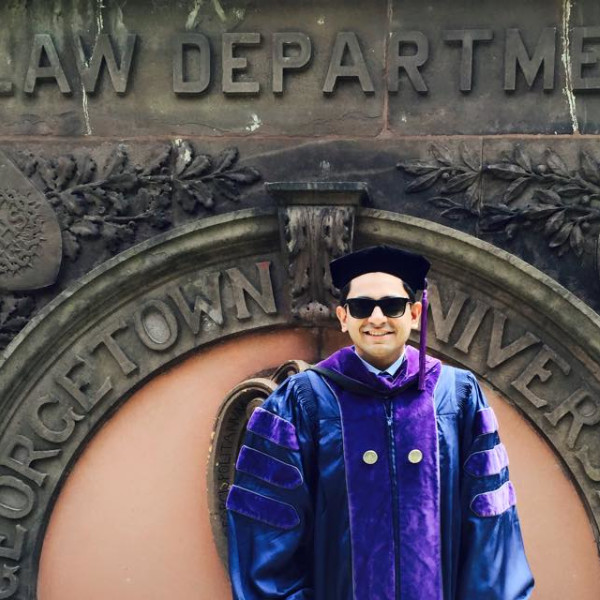
    Anmol Anand graduated from ILS Law College, Pune, in 2014. He then went to Georgetown University Law for studying LL.M in law of Taxation. After a brief stint as International Tax Analyst at Bloomberg BNA he returned to India and worked with PDS Legal. Currently, he working in AZB & Partners as an Associate.

    In this interview, Anmol talks about:

    • His experience at Georgetown University Law Center
    • Career in taxation law
    • Difference between International Tax and Domestic Tax Practice


    HOW WOULD YOU LIKE TO INTRODUCE YOURSELF TO OUR READERS? PLEASE TELL US SOMETHING ABOUT YOUR PRE-COLLEGE LIFE?

    Not sure how to put this across for readers, but Hi! I am Anmol, just another lawyer with a curious and ambitious mind.

    Well before ILS happened, I had a pretty nerdy journey through the better half of my academic career. I had scored pretty decently in my X and XII, which at that time seemed satisfactory to my ambitious mind.

    Coming from a family full of lawyers, I was on the path to become an engineer. I was a science student with aspirations of making it through the best colleges for B.Tech. I also had law as my backup option since I was a firm believer in not wasting time or creating any gap in my resume. I thought of law as an alternate option in the event I would not get through any of the engineering entrances so as to try a different field while perhaps preparing for taking another shot at the engineering entrances a year later.

    Soon it was all over and I was left with my score in XII standard and an option to take up engineering colleges’ way down my priority list. Bogged down with not making it to any of the preferred institutions for B.Tech I chose to go ahead with law, at least for a year, wherein ILS was the clear cut choice, being one of the better institutions as per reputation. I mean there were couples of reasons for choosing ILS – one that there was no entrance exam and that selection was based on XII score and second it was away from Delhi.

    So from a family of lawyers, and from never having set foot outside Delhi, I chose ILS and flew to Pune.


    PLEASE TELL US SOMETHING ABOUT YOUR COLLEGE LIFE. HOW IMPORTANT WAS YOUR COLLEGE IN SHAPING YOUR CAREER?

    ILS as mentioned earlier, was perhaps a stopgap arrangement for me when I made the decision of studying there. Well, it turned out to be the best decisions of my life.

    I remember my first day in ILS and was immediately hooked on. I was surrounded by highly competitive peers who either had law as a preferred career choice or were far too serious about ILS being a stopgap arrangement for them. However, soon for me, I became adamant of continuing at ILS and taking my career forward from thereon.

    ILS as an institution threw various options at students to pick from. One could enroll oneself in any particular kind of specialised academic cell or pick up a moot-court competition or engage in research paper writing etc. after regular classes. Since regular class hours were not long, I had ample time to pursue a lot of extra-curricular activities.

    I would, therefore, remember ILS as a place that taught me the value of opportunities, self-learning and leadership. From acting in dramas to representing college at national level moots to leading the charge for sports activities, I had bagged various opportunities and converted most of them into success, while also making a lot of friends, who will remain so for life.

    I also took time out to enrol myself in the Company Secretary Course, which was the first time in point when I got interested in tax laws. Although I could not manage completing it, given that I left the country right after ILS for my masters, it’s important to mention that at ILS it is manageable to be able to pursue the CS and that pursuing so opens up a wider perspective that I believe everyone should endeavour to at least discover.

    To conclude, I would say that I had to pick ILS for the lack of better options at that point of time but I am happy to have studied there and gathered most of out.


    WHAT MOTIVATED YOU TO GO FOR A MASTERS PROGRAMME? WHAT LED YOU TO CHOOSE TAXATION AS YOUR SPECIALISATION?

    Well taking up LLM as the next move in my academic career was largely because I had the will to dig deeper in tax laws.

    That does sound boring. But honestly I felt that I had the knack for tax laws once I started pursuing CS, followed by various internships in tax firms. What really had me hooked up to the idea of LLM in tax laws was one of the national moots that my peers and I participated in. It was in international tax and although, unfortunately for us, we ended up as runners up, it opened the idea for me to explore the subject of international tax.

    The other reason why I picked taxation as specialisation, apart from tax being a heavily litigated subject, was perhaps because it was rarely chosen by law students (may be because it sounds boring to a lot of people), which to my mind was an opportunity for the future. I knew I had a knack for a subject, which to a lot of people would always remain a text book that they will dread opening.

    Therefore, before I could to step into the shoes of being a hardcore tax lawyer, I wanted to dig deeper into the subject, which is why I chose to take up LLM in tax laws as my next move, by the end of fourth year in college.


    HOW IMPORTANT IS TAXATION AS A SUBJECT FOR LAW STUDENTS? WHAT COURSE OF ACTION WOULD YOU SUGGEST TO STUDENTS LOOKING TO SPECIALISE IN TAXATION?

    I believe that even if one is not willing to be an expert in tax, one should not neglect it completely. India is the front-runner when it comes to aggressive tax jurisdictions. Newspapers make headlines almost every week with some or the other tax policy or decision which shows the volatile nature of the subject in India.

    It’s not a secret that demonetisation was aimed at booming the revenue by increasing the tax base, GST was brought in for achieving better compliances, GAAR and concepts like equalisation levy were all directed against tax planning and at times to counter what the courts had otherwise held in favour of the taxpayer. It’s important to realise that this country runs majorly on taxes. Most of the times the income tax department tries to extract more than what is allowed to be gathered as taxes as per law. This outreach, apart from being unreasonable, brings with it most interesting issues that are at times dragged to the supreme court only to have the government amending laws to nullify a taxpayer favourable supreme court decision. On the other hand, businesses are always looking to pick up tax advantages in every transaction, which is where the involvement of tax lawyers has become inevitable. Therefore, its time law students should realize the importance of tax laws and work towards putting a couple of pointers regarding the same on their respective resumes.

    Taking up specialised courses in tax, pursuing CS/ CA or like courses, taking up internships or going all the way in spending a year or two in tax LLM would definitely help.


    WHICH UNIVERSITIES DID YOU APPLY FOR LLM? HOW DID YOU CHOOSE GEORGETOWN UNIVERSITY LAW CENTRE?

    The biggest challenge to apply for LLM in tax laws is that not every university around the world has a tax specialised LLM. Therefore, again I chose to have back up options like National University of Singapore for a general LLM program.

    However, I had a preference to go to the United States given its unique and discrete tax policies that are followed world over. I had applied to most of the the specialised tax LLM courses at universities like New York University, Northwestern University, University of Florida, Boston University, Georgetown University Law Centre etc.

    Given that Georgetown University was considered to be one of the best in the world for specialised tax LLM courses, it was the inevitable choice for me. The options for tax courses were extraordinary and were far from being imaginable for a student just out of law school like me. I remember this one course, which was called “international business planning workshop”. It was taught by an adjunct professor who was also the chairman of national tax practice at Baker Mckenzie. The course involved practical international tax planning issues for business looking to restructure globally and was graded on one’s understanding of such issues and capability to present the same. All this is to say that the learning experience at Georgetown that I have had is unparalleled and I would highly recommend law students to explore the option of LLM abroad, if possible.


    WHAT DOES THE CV OF A STUDENT SEEKING ADMISSION TO A PREMIER UNIVERSITY OFFERING AN LLM PROGRAM HAVE TO LOOK LIKE? WHAT SHOULD BE KEPT IN MIND WHILE WRITING SOP FOR LLM ABROAD?

    I believe, that the CV of a student looking to apply for an LLM should be clear and reflective of one’s decision of picking a specialisation, if any. It should be short, preferably one page and should include references to instances that show one’s capability of being an opinion maker.

    SOP on the other hand could be as long as two pages. It should be crisp, should reflect on the personality of the candidate and the flow should come out naturally. The candidate should put in there his/her thought as to how a particular course at a particular university in a particular city will help the candidate in achieving his/her short term and long term goals.


    YOU HAVE WORKED AT BLOOMBERG BNA, WASHINGTON DC POST YOUR LLM. HOW WAS YOUR EXPERIENCE WORKING THERE? HOW IS THE WORK CULTURE ABROAD DIFFERENT FROM INDIA?

    BNA was a fantastic stint. I would rather say that it was an extension of my LLM program since I was working exactly in what I had just been trained for at Georgetown. My job was research oriented and advisory in international tax and I had to play around with tax laws in about 114 countries, which was tedious but interesting.

    Working at BNA under Bruce Reynolds was inspirational. My other colleagues at BNA were very supportive and insightful and it was real fun to be working with them. Work culture was very typical as per American standards. Best part about working in Virgina was that it was about a few minutes away from where I lived in Washington DC, the working hours were decent, people at the organisation were compassionate and respectful and mindful of everyone’s personal life.

    Working here in India, although not complaining, is very aggressive. Everyday here is a new challenge, sometimes with added levels of difficulty. Work hours are long, but none of this makes it worse. It is rather better.


    WHAT FACTORS INFLUENCED YOUR DECISION TO COME BACK TO INDIA AFTER WORKING IN WASHINGTON DC?

    Well the biggest factor that influenced me to come back to India was visa issue. I had the option of opting for a program called CPT, which allows you to study and work alongside, but that seemed to be taking the issue too far for me. Because of the visa issue, it was becoming difficult to find a job at a law firm in the US, since they would not offer one to someone not holding a valid H1B visa already. Clearly that was a vicious circle. With my back against the wall, I decided to move ahead in career and look for jobs in hometown rather than opting for CPT.


    PLEASE TELL US ABOUT THE RECRUITMENT PROCESS AT AZB? HOW IS THE WORK ENVIRONMENT AT AZB?

    AZB Delhi recruitment happens in different manner for different teams I believe. For our team, its need based as is in most cases and we look to identify candidates based on their level of reception to most of the queries and their responses of course. If you are an entry-level candidate, your merits won’t matter as much as your ability to demonstrate interest in the subject.

    I think working at AZB exposes you to the best of all practices. I am part of the tax litigation team here. So primarily, I represent a number of major MNCs pan India. I think it’s much more smoother to do so at AZB, given AZB has presence in major cities like Mumbai and Bangalore and therefore traveling from Delhi to at least either of these jurisdictions assures full ground support.
    I also engage in tax advisory, which flows from various practices that run parallel at AZB. For instance, I also work with corporate partners of AZB located in different cities, on the tax side of a particular transaction/ restructuring.
    What makes working at AZB special is the quality of work and the work culture that I believe is inherent in the nature of every lawyer here. Anyone at AZB can freely walk up to any else for help and help is never denied. Also I should mention that AZB hosts an annual off site for all AZB lawyers across the country, which is an absolute delight to be at.


    WHAT IS A TYPICAL DAY AT WORK LIKE? HOW DO YOU MANAGE TO STRIKE A BALANCE BETWEEN YOUR PERSONAL AND PROFESSIONAL LIFE?

    Typical day at work normally starts with courtroom followed by meetings or calls or just completing pending assignments. The best part about working at AZB is the team that I work with. It is spear headed by Mr. Deepak Chopra who is not only inspirational, but also instrumental in making sure that his associates’ personal lives are not compromised. We as a team work for mostly corporate clients representing them before various forums pan India in relation to issues of international tax and corporate tax.

    I believe that at this stage of my career, its important to invest more time in professional life, while focusing on personal life on the sidelines. In early stages in a lawyer’s career, it’s easier to do so I believe. Most of my time, these days, is spent in traveling and as soon as I get time off, I like to spend that with family, or get some rest or maybe catch up with some friends. I believe that if one is happy professionally, then at least at the earlier stages of career, one is bound to strike balance with one’s personal life.


    HOW IS INTERNATIONAL TAX PRACTICE DIFFERENT FROM DOMESTIC TAX PRACTICE?

    Totally different. International tax issues arise out of cross border transactions. Most of these cross border transactions involve the interplay of tax treaties between India and the other country at the other end of a particular transaction. Rules relating to interpretation of such tax treaties emanate out of documents published by OECD or other international organisation or negotiations between the two countries. They trump the application of domestic law if they are more beneficial to taxpayers.


    WHAT DOES IT TAKE TO BE A GOOD TAX LAWYER?

    To be a good tax lawyer, one needs to have a strong accountancy base. It’s very essential. Secondly, it’s important that tax lawyers, at least in the early stages, focus on lower authorities first rather than jumping to the high court level and Supreme Court level. Thirdly, it’s important for a tax lawyer to keep his/her knowledge up to date, especially given the divergence in view on various tax issues across the country. Fourthly, it is highly recommended for lawyers interested in tax to become acquainted with concepts of international tax and transfer pricing as the world is seeing numerous changes in those fields which are bound to give rise to issues that will be ripe of advisory and litigation in the near future.


    LASTLY, WHAT WOULD BE YOUR PARTING MESSAGE TO OUR READERS?

    My grandfather used to say that a lawyer is a student for life. One should always give importance to self-learning, as the knowledge you gather today will be your biggest weapon in future. Also, learn the importance of networking. Your network will sooner or later decide your fate as to where you land up in future.


  • Varsha Ramann, Junior Associate, Bose & Mitra, on studying maritime law from Southampton University, writing SoPs and bagging Scholarships

    Varsha Ramann, Junior Associate, Bose & Mitra, on studying maritime law from Southampton University, writing SoPs and bagging Scholarships

    Varsha Ramann is a graduate from ILS Law College, Pune in 2015.  She pursued an LL.M in maritime law from University of Southampton, England. She has an excellent academic record and participated extensively in various national and international moots including William C. Vis International Arbitration Moot and Insurance Law Moot at Southampton Law. She is presently a Junior Associate at Bose & Mitra & Co.

    In this interview she talks about:

    • LL.M from Southampton University
    • Tips on writing SOPs and traits required to  bag a scholarship
    • Scope of maritime law in India
    • Work experience in Bose & Mitra & Co.


    HOW WOULD YOU LIKE TO INTRODUCE YOURSELF TO OUR READERS? PLEASE TELL US SOMETHING ABOUT YOUR PRE-COLLEGE LIFE?

    I am a full-time lawyer, a full-time Carnatic classical musician (yes, both form equal facets of my life and one is not more or less important than the other) and a part time Jill of many trades. I love learning languages; as a Tamilian raised in Maharashtra, I automatically learnt four languages simultaneously and later took up French and German. Books and libraries are my best friends. I strive for everything I do to be perfect, much to others’ chagrin and usually set very high standards for myself in whatever I take up. I meditate, practice Yoga and crochet and occasionally dabble in other forms of art when I get some time to myself.

    I did my schooling and junior college in Pune and it came as quite a shock to people who knew me when I picked commerce in class XI, after scoring 91% in my board exams. Having decided to pursue law as a career when I was in Class VIII, it was not a difficult decision to make. Two years of junior college at BMCC were mostly spent being editor of the college’s in house magazine, participating in college fests and occasionally studying! I guess I have always been a proud nerd! (by the time I was done with school, I had exhausted the book collection of two libraries and had asked that the libraries be restocked!!)


    PLEASE TELL US SOMETHING ABOUT YOUR COLLEGE LIFE? HOW INSTRUMENTAL HAS YOUR COLLEGE BEEN SHAPING YOUR CAREER ?

    Although I had decided that I wanted to be a lawyer when I was thirteen years old, being a first generation lawyer, I hadn’t the faintest clue about all the available opportunities out there, the different areas of practice, etc. Movies and shows influenced me at that time (Alan Shore from Boston Legal continues to remain a tremendous inspiration till date) and I walked into ILS wanting to be a corporate lawyer (who doesn’t!). One ‘corporate’ internship later, I knew that that was not my cup of tea. I then got my first taste at mooting in my second year and I was addicted to it! After that point, my entire law school life was divided between mooting, more mooting and studying for my exams (in that order). A combination of obsessive mooting and litigation internships made me realise that my true calling lay in litigation. ILS’s rich mooting legacy has certainly contributed a lot to the path that my career has taken. It was, in fact due to a moot that I got my first academic exposure to maritime/ shipping law, in which field I later went on to do my masters degree.

    ILS also introduced me to Dr. Mrs. Nilima Bhadbhade, with whom I had the good fortune to work closely during my college years. I have grown to admire her as a person and consider her my role model. She once told me “never let your profession get in the way of a timely meal. Nothing is more important than eating on time to ensure you remain healthy enough to work well.” I remember these words every time I miss a meal or eat late due to work and try my best to keep my meals on schedule.


    YOU WERE INVOLVED IN MANY EXTRA CURRICULAR ACTIVITIES AT COLLEGE. HOW IMPORTANT IS IT FOR A LAW STUDENT TO PARTICIPATE IN MOOTS AND OTHER EXTRA CURRICULAR ACTIVITIES?

    I have never believed in being a uni-dimensional person. As a child, my parents encouraged me to try my hand at anything I was even remotely interested in and that resulted in me being curious about anything that came my way. I was into debating and elocution through school and junior college and was exposed to the world of mooting and MUNs in college. MUNs bored me but mooting was my thing. I feel it is very important to participate in extra-curricular activities- it is not only a great stress buster but moots, MUNs etc certainly teach you valuable lessons in team work, division of labour and leadership. Mooting also gives you opportunities to travel to other places and interact with people from other universities, which is a fantastic opportunity for networking.

    Focusing more specifically on mooting, I would say that mooting changes the way you approach a legal problem. It strengthens your analytical skills and most importantly, helps build confidence in standing and speaking in front of a ‘judge.’ The real art of lawyering lies in your quick thinking and presence of mind when you are on your feet before a judge and fielding questions that you may not have prepared answers for. Although mooting is a far cry from how things work in real life in courts, it certainly trains you well to face reality.

    The mooting addiction could not be contained even after graduating. I was chosen to be part of the home team in the Insurance Law Moot hosted by Southampton Law School and managed to reach the semi finals with just two days of preparation. This moot was specifically special for three reasons- first I got to meet and interact with Sir Richard Aikens, got to visit the Supreme Court of the United Kingdom (that’s where the final rounds happened) and this moot gave me the topic for my 15,000 words dissertation in marine insurance law.

    A senior of mine in college and I conceptualised ILS’s very own intra-college Contract Drafting Competition under the able guidance of Mrs. Bhadbhade. We had three successful years of the competition until the time I graduated from ILS. Everything from drafting the problem to managing the logistics upto the day of the competition and later were handled by us and these certainly improved our management skills.


    ARE THERE ANY MEMORABLE MOMENTS DURING YOUR COLLEGE THAT YOU WOULD LIKE TO SHARE?

    The third, fourth and fifth years of my college life were the most eventful in terms of good memories. ILS organises an annual intra-college moot court competition called Raghavendra Phadnis Moot Court Competition which witnesses close to 400 participants every year. The top 60 rank holders get to represent the college at national moots of their choice. I secured rank 1 in the Phadnis moot in my third year. In the same year, our team finished as Runners Up at the Surana and Surana National Trial Advocacy Moot 2013.

    In my fourth year, I was fortunate to be part of a team that represented ILS at the Willem C Vis International Arbitration Moot Court Competition in Vienna, which really gave me a whole new perspective on law, mooting and career options and a bunch of new friends from different parts of the world!

    I returned after Vis, full of ideas to improve the mooting standards in college and along with my Vis teammate, co-founded ILS’s Moot Court Society. The last year was all about giving back to the college and guiding and learning from juniors, who were very enthusiastic and full of new ideas!


    WHAT MOTIVATED YOU TO GO FOR A MASTERS PROGRAMME? WHAT LED YOU TO CHOOSE MARITIME LAW AS YOUR SPECIALISATION?

    I was not entirely sure about pursuing a masters degree by the time I finished my third year because by that time, I had discovered my love for litigation and everyone I spoke to advised me that there was no point in having a masters degree because litigation was all about learning ‘practical skills on the job.’ My father, who is a staunch believer in education never really going waste, encouraged me to not shut out the possibility of continuing my education. It was at such an indecisive time of my life that I stumbled by maritime law.

    My discovery of maritime law was a happy accident. When I was preparing for Vis in my fourth year, I happened to read the Philip C. Jessup moot problem for that year, which was on maritime law. It piqued my curiosity and I dug a little into the subject to see what it was all about. What I read got me interested and led to some more reading. By the end of my fourth year I was pretty sure I’d like to do something in this field. I then did an internship at United Maritime Law Chambers in Kochi to get a taste of the practical aspects of the field. The internship helped me decide that I was interested enough in this field to spend a year living in a different country, cooking, cleaning and washing by myself and generally survive on 4 hours of sleep the whole year. Whether to do an LLM or not is surely NOT a decision one can or must take overnight.


    WHAT ARE THE NECESSARY TRAITS ARE REQUIRED TO BAG A SCHOLARSHIP FOR LLM?

    Having decided to pursue my masters in shipping law, I had zeroed down on England as my country of choice. Each university will have their own requirements for eligibility for a scholarship, although a fairly common academic requirement is to have over 60% as your aggregate score in your undergraduate studies. Even if you don’t make it to the 60% mark, some universities may consider giving you a scholarship if you have a good CV with prior work experience in the designated field.


    WHAT SHOULD BE KEPT IN MIND WHILE WRITING SOPS FOR LLM ABROAD?

    I very strongly believe that SoPs must be genuine, believable and from the heart. A good SoP boils down to honesty, a quality that is rarely appreciated these days. It is important to remember that the people who scrutinise your SoPs have probably been doing that for years and years and they will be able to spot a superficial and unnecessarily glorified SoP from a mile away! I have had a lot of juniors send me their SoPs asking me for my opinion- a common thing I have observed across the board is that they all say that the applicant got into law school because they wanted to make the world a better place, wanted to help the poor wanted to be the next Harvey Specter (nope, not kidding!) Please remember that these are poor clichés and will result in one-way tickets to the shredder for your precious SoP. Remember that there are thousands of other applicants vying for your spot and your SoP needs to make the reader sit up and do a double take within the first paragraph. Bring something fresh to the table, humour in small measures helps. DO NOT start with fancy quotations from great personalities- your SoP is about YOU, not the celebrity you are quoting. Another important tip would be to keep it to a maximum of two pages (1.5 would be ideal); brevity is a virtue that will certainly come to your aid.

    My SoP took me two hours to draft, proof read and finalise, after which it was sent to my father and one of my closest friends for their opinion.


    WHAT DIFFERENCES DO YOU SEE IN THE LEGAL EDUCATION SYSTEM IN INDIA AND ABROAD? HOW CAN THE INDIAN EDUCATION SYSTEM IMPROVE?

    I think we all know the answer to this fairly well already- there is no concept of rote learning abroad. As far as classes go, you are expected to come to class having read at least a bare minimum on the topic that would be discussed. It is true that you may not understand a word of what you read when you do this before class, but as the professor explains concepts in more detail, the foggy words come to life in your brain and everything just fits together beautifully like a jigsaw puzzle. Professors who teach you are mostly stalwarts in the field and are a powerhouse of information. They’ll not only give you academic insights but will also teach you practical ‘tricks of the trade’ where pure academic knowledge may not be of much assistance.

    I must say that I was most chuffed with the manner of assessment in examinations. You are assessed as per your understanding of legal concepts and your ability to apply them to practical problems (yes, your question paper will also contain practical legal problems to which you will be expected to apply the law you studied and provide a solution- it’s like a fun mathematics paper!) Universities abroad do not expect you to remember the names of every case law (you’ll study more than 200 of them during the year!) and reproduce them in your answer sheet. Some people are better at remembering case law in the form of a story that happened and as long as you write the correct facts and ratio, you are awarded full marks even if you did not write the name of the case. Question papers are provided to you 30 minutes before your three hours’ time; you are expected to use this time to ‘think’ about your answers, structure them on a rough sheet of paper and give it the right flow. Such application based evaluation and the importance to quality over quantity certainly makes students better equipped to deal with the shocks of the real world when they graduate.

    I think the Indian education system could do with borrowing a leaf or two from universities abroad and be a little less pedantic in their expectations. We presently proudly tell our graduates that their ‘real’ learning will start only once they step into the practical world. While that is true to a certain extent, our current standards of university education do not do even the bare minimum to equip you to deal with the real world.


    AS JUNIOR ASSOCIATE IN BOSE & MITRA & CO, WHAT ARE YOUR ROLES AND RESPONSIBILITIES?

    Junior Associates at Bose & Mitra get to dive head-first into literally every aspect of practicing law, be it drafting pleadings, legal opinions/ advice, research or the occasional appearance in court. While we prepare the first drafts of every opinion or pleadings, our seniors then vet these drafts and tweak it as they deem necessary. This ensures that as juniors, we get to learn to do the big stuff, the seniors can focus on more work since the juniors have already structured the drafts substantially and while vetting their junior’s work, they also get an opportunity to correct our mistakes.


    WHAT IS THE SCOPE OF A CAREER IN MARITIME LAW IN INDIA?

    India is fast growing as a country of maritime activity. Europe has not yet managed to get back on its feet entirely post the 2008 economic slump and the east is now making hay as the sun shines. The scope of a career in maritime law in India has just widened with the coming into force of the Admiralty (Jurisdiction and Settlement of Maritime Claims) Act 2017. The Bombay High Court now loses its pan India jurisdiction to arrest ships all over the country and it would be interesting to see how other jurisdictions blossom on their admiralty side. Although Bombay still remains a commercially sought after jurisdiction and has a rich heritage of maritime judgments, there is now more opportunity for maritime lawyers in India to open shop in other jurisdictions and establish a good maritime practice.


    WHAT WOULD BE YOUR MESSAGE FOR YOUNG LAWYERS AND LAW STUDENTS LOOKING TO SPECIALISE IN MARITIME LAW?

    Maritime law is definitely extremely interesting as a subject but it is also an incredibly niche field. I would advise students considering the field to take a lot of time before deciding to commit to it. Be at least reasonably sure what your priorities are in life and what you want to do with your qualifications- do you want to practice law or work as an in house counsel for a shipping company? Do you want to combine a degree in maritime law with an MBA and get into core business? The opportunities are endless but you have to find what suits you best. Read up on career prospects and universities enough before you make up your mind. If you wish to work abroad after your specialization, ensure that you are well aware of the odds of success on that front- nobody likes disappointment like that. Most importantly, read about the subject a lot (it’s alright even if you don’t understand much, the subject must keep you hooked) and get a taste of at least some practical exposure before you put in your applications to universities abroad.


  • Parvathy Tharamel, Associate, Trilegal, shares her work experience and on converting her internship to PPO

    Parvathy Tharamel, Associate, Trilegal, shares her work experience and on converting her internship to PPO

    Parvathy graduated from ILS Law College Pune in 2014. She completed her Masters in Business Laws from National Law School of India. She has an enviable academic record and an excellent series of internships at law firms.  She was also nominated by the faculty of ILS Law School by consensus and was awarded the ‘Best Student Prize’ of the five year law course. Soon after graduation, she started working as a Senior Executive, Wipro, Bengaluru where she worked for close to two years. She is currently working with Trilegal, as an Associate in Labour and Employment team.

    In this interview, she talks about:

    • Work experience at Trilegal
    • Converting internships to PPO
    • Importance of extra circular activities in law student’s life
    • Significance of moots and their preparation


    HOW WOULD YOU INTRODUCE YOURSELF TO OUR READERS?

    Though this is a common (yet difficult) question, I still don’t have a rehearsed answer. Let’s just say, I’m a lawyer by profession with an infectious smile who loves to work!


    WHAT FACTORS INFLUENCED YOU TO CHOOSE LAW AS A CAREER? WHY DID YOU CHOOSE ILS LAW COLLEGE FOR PURSUING LAW?

    The result of an aptitude test was a key decisive factor in choosing law. My uncle is a successful lawyer and his work had inspired me right from the beginning. The environment at my school, St Josephs’ Anglo Indians Girls Higher Secondary School, Calicut encouraged students to look beyond the four walls of classroom and my teachers gave me the confidence to take part in debates, elocution competitions and to express my opinions. All these factors prompted me to choose law as a career option. Above all, my father intended to be a lawyer when he was young. So, when I decided to pursue law, I felt that I am fulfilling his dream in my own special way.

    I wrote CLAT and got through NUALS, Kochi and I also made it to ILS, Pune on merit, based on XIIth board marks. Until then, I’d enjoyed the privileges of being at home and a convent school in Calicut. Hence, my parents felt that the exposure in a prestigious institution in Pune would make me independent and that sealed the deal.


    PLEASE TELL US ABOUT YOUR TIME AT LAW SCHOOL. HOW WAS YOUR APPROACH TOWARDS ACADEMICS WHILE IN COLLEGE.

    ILS was a beautiful learning experience and I truly cherish my five years in Pune. It was not just about learning law and giving exams in ILS. Friends became family and I’m confident they will remain so for life. The discussions outside classrooms during intervals, running around in college, the long queues for collecting marksheets, the podium, the pavilion and the beautiful campus. I miss them all now!

    The state of the art library, the committees, events and other extra-curricular activities run by the faculty offered me tremendous opportunities. I had the chance to meet and work with great legal minds in country while working for the Corporate Law Cell and the Editorial Board. The early morning lectures with the added requirement of 75% attendance taught me punctuality and discipline. I maintained a first class throughout all five years of law school. The lecture schedules provided flexibility to pursue other areas of interest and I could be a part of a research project funded by the Commonwealth foundation and complete my Diploma in Corporate Laws at ILS. As I was pursuing a five year integrated course, I received my Bachelor’s degree from the University of Pune after third year and I was able to apply for my Master’s in Business Laws from National Law School of India University, Bangalore (NLSIU). Hence in 2014, I received my LL.B. as well as my Master’s degree.


    HOW IMPORTANT ARE EXTRA CURRICULAR ACTIVITIES TO A LAW STUDENT?

    Extra-curricular activities have proven to be beneficial for me and I believe it would help individuals to hone their skills. Let me cite some examples. As the Student Coordinator of Moots and other Advocacy Skills Activities for three years, I had the chance to organise moot court competitions, conduct mooting workshops for students. I learned something new each time when I donned the hat of a coordinator because I had to interact with a group of more than 300 students each year, who represented ILS in moots, client counselling, negotiation competitions etc., keep track of these competitions and report the progress to faculty. Being the coordinator taught me teamwork, to be a good listener, how to be organised and mange my time. It also helped me to improve my problem-solving and communication skills. There was a sense of satisfaction when I was able to find solutions to problems. Through presenting papers at seminars, I left behind my fear of addressing an audience. With each and every extra activity and going beyond the curriculum, I was learning to unlock another milestone.


    YOU HAVE REPRESENTED YOUR COLLEGE AT PRESTIGIOUS MOOT COURT COMPETITIONS. HOW DO YOU RECOMMEND ONE SHOULD PREPARE FOR THEM? DO YOU THINK MOOTING IS SIGNIFICANT FOR LAW STUDENTS?

    A while ago, I came across a meme which said that “asking someone to be your moot partner is the single most important decision you make in law school“. I couldn’t agree more and I’ve been fortunate to work with wonderful people on challenging moot problems when I was in ILS. A significant part of the preparation goes in forming the group and identifying the competition one wishes to take part in. The selection procedures may vary from one college to another. But I feel the broad steps to address any moot problem is similar. Once you have the moot problem, the key tasks are to (1) understand the facts, (2) identify the issues, (3) research on the law, (4) apply it to your case (5) draft arguments accordingly and (6) improvise them based on multiple round of practice sessions. This is tried, tested and highly recommended.

    Most of the questions in exams tend to judge the memory of the student rather than analysing their reasoning or logical skills. Mooting provides a platform to test a student’s analytical skills. It also trains a law student to prepare effective arguments and to do thorough, in-depth and exhaustive research. Moreover, it also teaches law students to work in a team. Hence, I believe mooting is important.


    HAVE YOU EVER FELT THE NLU AND NON- NLU DIVIDE? DO YOU THINK IT IS A CONSIDERATION FOR EMPLOYERS?

    No. While this may have been true for some, I think recruiters focus on whether the individual would fit in their working environment rather than their law school. At the end of the day, the work speaks for itself and the NLU or Non-NLU tag will not create a distinction at workplace.


    HOW DID YOU SECURE YOUR FIRST JOB? HOW IMPORTANT DO YOU THINK A HIGH CGPA IS FOR RECRUITERS? TELL US MORE ABOUT YOUR SELECTION PROCEDURE AT WIPRO?

    Wipro offered me a PPO based on my internship.

    Though it may not be the sole criterion, I believe that marks generally play a critical role in shortlisting candidates for interviews.

    For internship, Wipro invited applications through the ILS Placement Cell and shortlisted candidates based on their CVs. Thereafter, interns were selected based on two rounds of telephonic interviews. I was offered a PPO based on my mentor’s feedback, the presentation before the legal team and an interview with the General Counsel.


    TELL US ABOUT YOUR ROLE AND RESPONSIBILITIES AT TRILEGAL?

    I’m part of the labour and employment practice at Trilegal. The employment practice in law firms is not confined to the law regarding factories and industries as taught in law schools. Trilegal has one of the first dedicated as well as the most comprehensive employment practices in the country and I consider myself lucky for being able to work under the guidance of Mr. Atul Gupta who inspires me to find practical solutions to issues. I’ve grown as a lawyer, thanks to his brilliance and insights.

    At Trilegal, I routinely work on a variety of labour and employment issues ranging from recruitment until termination of employment. I assist in advising Indian and multi-national clients on matters regarding disciplinary proceedings, senior management exits, anti-harassment, structuring employee benefits, leave entitlements, immigration, transfer of personal data. I’m also involved in business transfers and related employee transfer scenarios. Trilegal has changed the way I look at problems and I’m grateful to the support I receive from my excellent team who makes every day worthwhile at work.


    YOU WORKED AS A SENIOR LEGAL EXECUTIVE AT WIPRO. WHAT WERE YOUR MAIN TASKS AND WHAT RESPONSIBILITY DID YOU UNDERTAKE?

    Parvathy is a recipient of the ‘Best New Lawyer Award’ which is given annually to Wipro’s best in-house lawyer.

    Wipro is a great place to learn and I was truly blessed to have worked with wonderful mentors and colleagues who motivated me at every juncture. I was part of the Compliance team at Wipro and I was primarily advising on Global Data Protection compliance. My portfolio also included advising business, HR and contracts teams on immigration, employment, export control and other regulatory issues in Europe. With the support and encouragement of my mentors, I also had the chance to assist the Government Advocacy team to on matters regarding public policy and also work with the Ethics Compliance team to ensure compliance with anti-corruption, anti-harassment laws etc. The team dynamics influenced my performance and I had a great journey in Wipro.


    WHAT ADVICE DO YOU HAVE FOR OUR READERS, WHO ARE PRIMARILY COLLEGE STUDENTS?

    This is one of the best time in your life and it is important to enjoy what you do. The thought of internships and career prospects can be overwhelming at times. It’s quite normal and everyone goes through the same. So, don’t worry about it. Be confident and express your views and opinions. Work towards enhancing your writing skills. Try to write on a regular basis. It is essential to articulate your thoughts into words and to write with clarity. As Mathew Arnold once said, “Have something to say and say it as clearly as you can“. Channel all your energy in the direction which interests you. Nothing is impossible!


  • Tariq Khan, Senior Associate, Advani & Co., on authoring a best seller book and challenges faced by Non NLU students

    Tariq Khan, Senior Associate, Advani & Co., on authoring a best seller book and challenges faced by Non NLU students

    Tariq Khan completed his graduation from Faculty of Law, Jamia Millia Islamia in 2014. He specialises in International and Domestic Arbitrations, MSME disputes, Commercial Laws, Writ Remedies, etc. He is currently working as a Senior Associate, Advani & Co., Barristers-At-Law, (New Delhi) and has also been appointed secretary to the tribunal for SIAC arbitration.

    He is also a guest faculty in various law colleges across Delhi and NCR including Indian Law Institute and is currently working on his next book. Recently, Tariq featured in Fortune 500 (India) magazine (Special Issue, 2017-2018) for authoring the best seller book ‘On the Rise’ published by Universal Law Publishing (an imprint of Lexis Nexis). In 2017, All India Reporters Association conferred on him the title of Shaan –E- Awadh. He is a columnist and made it to the conference round of Judge Advocate General. He is associated with various NGO’s, commissions and is frequently invited by law colleges across the country for interactive sessions.

    With his demonstrated experience of working as a lawyer, author, academician, columnist, he talks to us about:

    • Problems in the Indian Legal Education
    • Biggest Challenges faced by Non-NLU students and First Generation Lawyers
    • Challenges faced in authoring first book
    • Making litigation more attractive to young lawyers


    HOW WOULD YOU LIKE TO INTRODUCE YOURSELF? PLEASE TELL US SOMETHING ABOUT YOUR PRE-COLLEGE LIFE?

    This is perhaps the first time I am writing about myself and it reminds me of a line from the brilliant film The Devil’s Advocate: “Vanity is definitely my favorite sin.” I am extremely fond of music and an ardent traveler. I can be described as a lone ranger who lives life by his own template and a frugal eater who mostly gorge on snacks. Incidentally, it is also literature that fills me with inspiration. I sometimes write on arcane but interesting topics and I feel that reading has shaped me personally and professionally. To sum up, I am brusque, direct and unbending.

    I belonged to a middle class family and spent my early childhood in Shahjahanpur, a small city in Uttar Pradesh. I was an average student in a very average school and never possessed erudition or eloquence. English was a language I was not very familiar with. When I was in my seventh standard, I was relocated to New Delhi where I jumped eighth standard and took admission directly in ninth standard. I had a tumultuous school life in view of fact that my parents put me in science stream as a consequence of which I had a terrible sort of anger and grudge against them. The minutiae of mathematics and science did not interest me at all. Contrary to my apocryphal perception, my father would always tell me not to run after money but prodigious prospects. Throughout my school life I had a feeling that I was never adequately praised or appreciated for my achievements but frowned upon transgressions. All in all, suffering has been the best teacher as it has bent and broken me but in a better shape.


    WHAT FACTORS INFLUENCED YOU TO CHOOSE LAW AS A CAREER? WHY DID YOU CHOOSE JAMIA MILIA ISLAMIA UNIVERSITY FOR PURSUING LAW?

    Well the truth is that I never wanted to be a lawyer for three reasons firstly, I did not have command over English language; secondly, I had stage fright and thirdly, I hated studying/reading. I clearly remember my father telling me to give law entrance however; I told him that I would do anything but law. I surreptitiously began exploring other options as I did not feel the influence of law, lawyers and judges in my life early on even though much of my character was built early in life as I grew up in a household where free expression was practiced and encouraged. Since I was a science student, I wanted to be an engineer and hence, I appeared for various engineering exams however, I failed miserably. I must add that it is hardships in life which we have to meet with and overcome them to build our true character. Nevertheless, I realized the unvarnished truth that it’s not what we take, it’s what we leave that enables us to sieve and confidently winnow down the choices to career path and therefore, I can vouch for the fact that I didn’t choose law , law chose me.

    Amidst challenging economic circumstances, not all can afford the exorbitant fees charged by private law colleges and thus, Jamia was a perfect choice as our annual fees was around five thousand rupees.


    WHAT ALL ACTIVITIES DID YOU TAKE PART IN DURING YOUR TIME AT LAW SCHOOL? HOW IMPORTANT DO YOU THINK IS MOOTING FOR A LAW STUDENT?

     My law school journey was fraught with controversies and obstacles. Compared with my contemporaries in other law colleges, I was a struggling law student in the first two years. What was even more disconcerting was that there was no mooting or debating culture in our college and there was hardly any support from seniors barring one or two. There was dearth of internship opportunities and there was no campus placement. But there’s a silver lining; in stark contrast to this depressing picture, Jamia gave me a larger slice and a canvas to draw on. We learn best when we learn by doing and that’s exactly how we learnt. At the end of the day, it’s all about your perspective whether you see the positive or the negative. Some people complain because God put thorns on roses, while others praise God for putting roses among thorns. You always have that choice.

    During college I applied for internships in almost every senior’s chamber and almost all tier one and tier two law firms however, most of them never responded despite repeated follow ups though, some of the firms were gracious enough to revert with a standard email saying “Currently we do not have any slot available. We will get back to you in case of a suitable opportunity”. Interestingly, this was the response even when I applied one year in advance. However, instead of giving up, I would remind myself of William Ernest Henley’s golden words in the poem, Invictus: “It matters not how strait the gate, how charged with punishments the scroll, I am the master of my fate: I am the captain of my soul.” Consequently, I had the rare honour of interning under the tutelage of veteran lawyers and in tier one law firms. Insofar mooting is concerned, my team won various national and state level moots. To my surprise, my team qualified for the Oxford Price Media Moot Court Competition and we were the twelfth Best Team of South East Asia. This was the first time Jamia participated in Oxford Price Media International Moot. I was an avid debater in college and won in various national debate competitions. As the president of the debating society of my college, I organised the first Jamia National Parliamentary Debate and also worked as the Coordinator for Internship and Placement Committee.

    Mooting broadens the horizon of law students and provides them with a platform wherein they can learn, grow, work in new environments and of course travel and meet new people. It is the most enriching activity that gives law students a firsthand knowledge of being a lawyer. It’s a platform for the law students to polish their rhetoric and research skills. However, appearing before a judge in a court of law who has to adjudicate many matters in a day is completely a different experience. Hence, in my view mooting doesn’t really help much after the student graduates.


    WHAT ACCORDING TO YOU ARE THE PROBLEMS IN THE PRESENT INDIAN LEGAL EDUCATION?

     To borrow the golden words of Justice Krishna Iyer: “Education is now priced in India, not given.” Money power has captured legal education in our country which is nothing but malignancy. Law colleges have become money sucking engines. Surprisingly, law students are being taught by teachers who have never even appeared in any court. There are certain anomalies e.g. we are taught penal statutes and tax statutes in second year or third year however, we are taught Interpretation of these penal and tax statutes in the fourth or fifth year. Serendipitously, we were fortunate to have a professor like Mr. Atyab Siddiqui who is a brilliant lawyer and equally a good professor who taught us the practical applicability of law using analytical method rather than the rote method.


    WHAT ARE THE BIGGEST CHALLENGES FACED BY NON NLU’S AND THE FIRST GENERATION LAWYERS IN THE LEGAL PROFESSION?

     There are more than 1300 Non NLU’s in India and the law firms recruit only from the top most law schools. Even the internships are given on the basis of the tag of your college and not on the basis of your achievements. Unfortunately, some law firms discriminate between trainees/associates at the same position or level by offering lower salaries to the Non NLU’s. These practices deprive meritorious students of opportunities. Also, Non NLU’s don’t get internship opportunities with a lot of tier one law firm. In litigation even today, it is extremely difficult for a first generation or a Non-NLU student to get into a good chamber.

    Nonetheless, it doesn’t matter which college you are from and it doesn’t matter ‘who you know’, the only thing that gets you ahead in the profession is ‘what you know’. It doesn’t matter whether you are a first generation lawyer or a second generation lawyer. There are ample opportunities for all of you who are ready to face the challenges and strive for such opportunities. There are humongous prospects for those who are willing to make their mark in this field. This reminds me of few lines by George R.R. Martin “Never forget what you are, for surely the world will not. Make it your strength. Then it can never be your weakness. Armour yourself in it and it will never be used to hurt you.” Initially the profession may not be very rewarding however, if you stay in the profession and not give up, then you will be rewarded beyond your imagination. My mentor Dr. Singhvi has very rightly said that being a second or third generation lawyer definitely gives you a push and backup however, if you do not do well in first few cases, the system rejects you.


    HOW DID YOU GET A JOB AT A TOP TIER ARBITRATION LAW FIRM? TELL US ABOUT YOUR LIFE AT ADVANI AND CO.?

    When I was in my final year of law school I was very restless and perplexed and I would ask myself, what’s next? It seemed like a dead end to me with no place to go. Mr. P Chidambaram has pithily put it that “In law, there is no dead end. What seems to be the end could very well turn out to be a new beginning.” During my final exams, I applied for a job at Advani and Co. even though I had never studied Arbitration as a subject in college. I was interviewed by the then partner Mr. Apar Gupta who did not judge me on the basis of my law school and gave me a job. I was fortunate to work with him in the very first year of my career and learnt various facets of drafting and research under his tutelage. Thereafter, Mr. Gupta set up his independent practice as a counsel and left the firm. Since then, I have been working with Mr. Shashank Garg who is the partner in charge of our Delhi office. Mr. Garg in true sense is my ‘Arbitration Guru’ as he introduced me to the arbitration fraternity and gave me innumerable opportunities to argue matters in district courts, high courts and handle domestic as well as International Arbitrations all by myself. Advani and Co. has helped me grow as a person and as a professional. Since day one I have been working closely with Mr. Hiroo Advani who is an authority on the subject and I am privileged to have learnt the art of cross examination from him.

    As a senior associate at the firm, I am primarily representing various Multi National Corporations, Public Sector Undertakings and individuals in high profile arbitrations and civil litigation. I have also published various articles on the subject and I am a guest faculty at Indian Law Institute where I teach ADR in PG Diploma Course.


    YOU HAVE WRITTEN THE BOOK ‘ON THE RISE’ . PLEASE TELL US WHAT MOTIVATED YOU TO WRITE THE BOOK AND HOW CHALLENGING IS THE TASK OF AUTHORING A BOOK?

    (Tariq authored the book ‘On The Rise’ that covers inspiring stories of young legal professionals which featured in Fortune 500 magazine.)

     I realised that there is no dearth of opportunities, but it is the dearth of information that restricts the trickling down of variety of options available to budding lawyers and hence, I felt that there was a dire need for a publication to give budding lawyers an insight of the legal profession and the challenges that follow. I must thank my mentor Mr. Shashank Garg who helped me extensively and also motivated me to come up with a book like this. Incidentally, the 20 contributors who believed in my idea deserve full credit of this book. When I came up with this idea, many people in fact discouraged me thereby making it one of the most challenging works of my life. It was difficult to execute the idea as it was my first book and being a first generation lawyer I did not have any connections however, I felt that here was no harm in taking aim, even if the target was a dream.

    There has been a divine intervention in my life that cemented my faith in this noble profession as there are some veteran legal eagles namely Justice A.K. Sikri, Dr. Abhishek Manu Singhvi, Mr. Sidharth Luthra, Mr. Fali S Nariman, Mr. J.P Sengh, Mr. Arvind Datar and Dr. Faizan Mustafa that have constantly motivated and guided a ‘nobody’ like me. This book would not have been possible without their support. To my surprise the book featured in Fortune 500 Magazine. All in all the journey of this book has taught me that ideas become clear as we work on them. We just have to get started.


    ACCORDING TO YOU, HOW WOULD LITIGATION BECOME MORE ATTRACTIVE TO YOUNG LAWYERS?

     Most of the law students come from middle class and lower middle class families. After graduating, they have to assure their parents that they are going to be self sufficient if they are not making fortunes and will not be requiring the support of their family financially. This is possible only when seniors in the profession become more professional about this. Young lawyers on joining should be assured of reasonable remuneration. Of course an individual litigating lawyer would not offer as much as law firms would offer and those juniors who enter into litigation are generally prepared for that however, those who have responsibilities or family expectations, they avoid entering litigation but it often happens that when they join chambers, they are not told how much they are going to get. Those who take juniors owe a duty to their juniors clearly as to how much they are going to pay them. Additionally, what puts off many young entrants is the spectacle of lawyers hanging out in the courts during the day often without substantial work and then having work in the evening later hours. I feel time management in courts and in office can make litigation more attractive.


    WHAT ADVICE OR SUGGESTION WOULD YOU LIKE TO GIVE TO OUR READERS, WHO ARE PREDOMINANTLY LAW STUDENTS AND YOUNG LAWYERS?

    I may not be the right person to give any advice or suggestion to young lawyers as I am myself in my legal cradle striving to grow up and increase knowledge and stature however, we must always remember that no matter how big the problem is, time will solve it. First and foremost, get rid of all the negativity around you, some people in our lives act like anchors that are constantly trying to slow us down, cut them lose. Live in your present and plan the future because if you carry the burden of past negativities/unpleasant memories and recall them, then your downfall is inevitable. Always remember that the greatest successes come from having the freedom to fail and by keeping your mind on the objective, not on the obstacle. Keep in mind, success is the best revenge. My senior friend Mr. Bharat Chugh time to time keeps reminding me that readers are leaders and he keeps giving me books to read. Reading definitely helps! In my free time I see speeches/videos of the legends of law and learn from them and I read judgments of my role model centenarian Justice Krishna Iyer who possessed hoarded wealth of a vast vocabulary which helps me in writing articles and has also improved my legal lexicon over the period of time. Keep yourself updated with recent developments in law that can easily be done by following legal news portals like Live law, which is an excellent initiative, by MA Rashid. Scrolling through Live law for two minutes in a day gives me insights of what’s happening in the legal fraternity.

    Lastly, I would like to borrow words of Chief Justice John Roberts who is one of the most brilliant judges in the world: “From time to time in the years to come, I hope you will be treated unfairly, so that you will come to know the value of justice. I hope that you will suffer betrayal because that will teach you the importance of loyalty. Sorry to say, but I hope you will be lonely from time to time so that you don’t take friends for granted..And when you lose, as you will from time to time, I hope every now and then, your opponent will gloat over your failure. It is a way for you to understand the importance of sportsmanship. I hope you’ll be ignored so you know the importance of listening to others, and I hope you will have just enough pain to learn compassion. Whether I wish these things or not, they’re going to happen. And whether you benefit from them or not will depend upon your ability to see the message in your misfortunes.


  • Pooja Reddy Chirra, Proprietor, C.Subba Reddy Co. Advocates and Consultants, shares her experience on managing her own firm

    Pooja Reddy Chirra, Proprietor, C.Subba Reddy Co. Advocates and Consultants, shares her experience on managing her own firm

    Pooja Reddy Chirra completed her graduation from Fergusson College, Pune University in 2014. She is currently managing her own firm  and her area of expertise is indirect taxation. She is actively involved in litigation of IDT matters.

    In this interview we speak to her about:

    • Challenges of managing her own firm
    • Importance of academics and grades
    • How to convert internships to PPO


    HOW WOULD YOU LIKE TO INTRODUCE YOURSELF TO OUR READERS? PLEASE TELL US SOMETHING ABOUT YOUR PRE-COLLEGE LIFE?

    I am 26 year-old Hyderabadi who is Mumbaikar by heart, an advocate by day and dramatic all the time! I specialise in Indirect Taxation and currently run my own firm, but I am more than my job description. I work with the Rotary Club of Bombay Powai, who were kind enough to let me organise the ‘Unsung Hero Show’ which has played a huge role in helping me do things which I would otherwise be too scared to take up. I also started organising etiquette workshops in 2015, focusing mainly on schools and colleges with students majorly from low income families.

    My pre-college life was simple, protected and uncomplicated, like most other kids at the time. My brother and I were raised by a set of no-nonsense parents who moved to Mumbai nearly 35 years ago and built the life they have today, with no help from anyone else whatsoever. We were both sent to Kendriya Vidhyalaya, IIT, Powai. Mainly because I had started to demand luxuries, like a chauffeur and a full time maid to cater my every need (I was six!). My parents always were very conscious about us being humble and modest, and so, Government School it was.


    HOW WOULD YOU DESCRIBE YOUR JOURNEY AS A LAWYER?

    Back in 2014, right after I graduated from college, I joined my father’s firm. Two weeks after I started, my dad had cardiac arrest and was hospitalised. Things got tense. My mother told me that if I wanted to help, the only thing I could do is to take care of work so that he won’t have to worry about it. I was beyond overwhelmed because I had no idea who half of our clients were and I had zero experience in the subject. During that time, when my father was still in the ICU, one family member lectured me in the ICU waiting area, saying that if I wanted my father to get better I should get married, preferably to a lawyer, so that he can take care of dad’s firm. It hit me then that in his eyes I had failed even before I attempted. Those words stuck me ever since and has been one of the reasons I so desperately want to make something of myself in the field of law. Fortunately, my parents were far more sensible and supportive. My father trained me in the strictest way possible, in the years that followed, we set a rhythm to our work, he did advisory and I did litigation, he would deal with the clients and I did the running around, we took turns taking vacation and we always had each other’s back.

    I realised later that during those few months when dad was ill, the kind of work I was doing was intense. I was appearing before various authorities without ever having accompanied a senior to observe how the proceedings are conducted. Of-course, it helped a great deal that my father prepped me well. But in those few months, my interest in the subject peaked and all inhibitions disappeared and I started to understand the subject instead of being afraid of it. After that there was no looking back.


    WHAT IS YOUR TAKE ON ACADEMICS? HOW IMPORTANT ARE GRADES IN LAW SCHOOL FOR AN ILLUSTRIOUS CAREER?

    Academics and grades are important, but it is not sufficient. Simply because you score well in school or college, will not ensure a lifetime of illustrious career. Definitely not in the field of law.

    Your clients will come to you for your work ethic, your knowledge, sometimes even your honesty and compassion. Similarly, in a corporate office, your boss will not continue to keep you employed because you scored well in college, if you can’t get the work done.


    HOW FAR DID YOUR INTERNSHIPS DURING LAW SCHOOL HELP YOU IN YOUR CAREER AFTER YOUR GRADUATION? HOW WOULD YOU RECOMMEND THE PRESENT LAW STUDENTS PLAN THEIR INTERNSHIPS?

    I interned during every college vacation, either with a counsel or with a firm. But the biggest mistake I made was to plan on what I intended to learn during the internship, and like most other law students, I tried to cram as many internships. The end result was that, I was once actually caught sleeping on the sofa by a Senior Counsel. Fortunately, he was nice enough to simply say, “go nap at the corner cubicle where no one can see you, so that others don’t get sleepy.”

    Regardless, internships can do no harm, if you pay even the slightest bit of attention to your surroundings, you are bound to learn something or the other, whether you want to or not. However, one bit of advice to every student, would be to do long term internships. Instead of doing one month internships, opt for one, three-month internship. You’ll end up learning way more and also increase chances of a PPO.

    And, at the end, pick a boss, not a job.


    HOW DID YOU CHOOSE YOUR SPECIALIZATION? HOW DID YOU GO ABOUT ATTAINING EXPERTISE IN THEM?

    I didn’t chose my specialisation, my specialisation chose me.

    *dramatic pause*

    In all seriousness, I actually never wanted to take up Indirect Taxation. In fact, during the first year or so of law college, I wanted to graduate and immediately become a famous, dramatic criminal lawyer or become a savvy corporate lawyer with a huge pay package. (Yes, I blame the movies and shows too.)

    It was only after I started working on Indirect Tax cases, that I realised how interesting they were. There is constant change in the law, which keeps you on the toes. Each case is so beautifully different from the next. And in most cases you’re dealing with hyper technicalities, which can be extremely fun to research on.

    HOW CHALLENGING IS THE TASK OF RUNNING YOUR OWN FIRM? WHAT ARE YOUR ROLES AND RESPONSIBILITIES?

    I wouldn’t say it was easy.

    I lost my father on 10th August, 2017. He died so suddenly that even till today it is hard for us to believe that he isn’t around. The day after we cremated him, I started getting calls from my office and a few clients even I also got news of people trying to poach clients. I went back to work on 12th August and we immediately went into survival mode. Apart from my support staff, I have two colleagues with me, Arjun Nair and Vinit Dubey. They have proved to be the best team one could ask for. My dad’s death was a huge loss for them too, but they never took a day off. For several months, we worked seven days a week and twelve to fourteen hours a day.

    During the first few weeks I spent most of my time speaking to clients who were worried about the fate of their case. Several clients showed a lot of faith in us and stayed back, no questions asked. Some needed a little more persuasion.

    What was more interesting, was to see how most people were more curious about whether I would continue to work, since I was recently married and what would happen if I had babies? There were a few others who told me that since everyone at the office was below the age of 30, we were too young to do this kind of work. And all this made us work even harder. Today it has been a little more than eight months and we are doing good. The initial fear of losing clients and not being able to pay the bills and salaries has gone down the drain, we have got new clients as well.

    Through all of this, on several occasions I felt like closing the firm. It was emotionally and physically gruelling. While, my mother, brother, aunt, uncle and husband proved to be the best cheerleading squad one could ask for, I was more than fortunate to have Balani Sir, Krishnakumar Sir, Anish Desai and a few others encouraging me to continue. If it weren’t for them, maybe I wouldn’t have continued with this office.

    I would still say that this is my father’s firm, that he built on his own with the help of my mother. It is his legacy that he has passed on to me and right now I am only a guardian. Only after I build it further and scale it, I can truly call it my own firm.


    WHAT WOULD BE YOUR ADVISE TO STUDENTS WHO ARE LOOKING TO MAKE A CAREER IN INDIRECT TAX?

    Don’t be afraid of the subject. Once you start getting a grip of it, it becomes an addiction.


    WHAT ARE THE SKILLS ONE NEEDS TO DEVELOP TO SUCCEED IN THE LEGAL PROFESSION?

    Be a good orator, learn to listen carefully, be ethical in your work and read like your life depends on it.


    WHAT IS THE PROCEDURE FOR A LAW STUDENT TO APPLY FOR INTERNSHIP AT YOUR FIRM? HOW DO YOU SUGGEST THE STUDENTS CONVERT THEIR INTERNSHIPS TO PPO??

    Anyone who wishes to apply either for internship or a job can simply send us an email at subbareddyandco@gmail.com.

    If you want to convert your internship into a PPO, do the following:

    • Work on your research skills.
    • Be proactive. Don’t constantly wait for instructions.
    • Don’t be tardy.


    HOW DO YOU KEEP YOURSELF UPDATED WITH LATEST LEGAL DEVELOPMENTS IN THE FIELD OF TAXATION CONSIDERING THE CONSTANT CHANGES?

    For indirect taxation, there are weekly journals that are published, which my dad would read regularly. I picked up the habit from him.

    Also, we live in a world today, where for every activity and for every group of people, there is a WhatsApp group. The CESTAT Bar Association also keeps up with this trend. On a regular basis, there are advocates who keep posting the latest amendments and judgements on the group, which is followed by an insightful discussion on the same where everyone weighs in their opinions.

    The ‘Chai Pe Charcha’ sessions outside the courtroom while we each wait for our matters to come up, also helps us stay updated.


    YOU ARE CURRENTLY PURSUING YOUR MASTERS, HOW IMPORTANT IS IT TO GET A MASTER’S DEGREE IF YOU’RE PURSUING A CAREER IN LITIGATION?

    If you want to practice in courts and focus on litigation, what matters the most is that you start appearing in courts as soon as possible and as often as possible. All your learning will happen in a court room and court room training is irreplaceable. Spending two more years in a classroom after finishing law, may not be of much use.

    However, if you want to broaden your sphere of knowledge, then it would help to do an online course while you’re working. You could be a lawyer by day and a student by night. Just make sure you pick a university / course where examination is application based and not purely theoretical.


    LASTLY, WHAT WOULD BE YOUR PARTING MESSAGE TO OUR READERS?

    Truly learn to enjoy your life in college and don’t be stuck in the library, since most of the real learning happens outside of it anyway.

    Spend more time to develop life skills and long lasting relationships instead of trying to memorise the contents of the books enlisted in your syllabus.

    Experiment, learn, make mistakes and grow.


  • Ankit Rajgarhia, Senior Associate, Karanjawala & Co., shares his experience in dispute resolution

    Ankit Rajgarhia, Senior Associate, Karanjawala & Co., shares his experience in dispute resolution

    Ankit Rajgarhia graduated from Symbiosis Law School, Pune, in 2012. He joined Induslaw after his graduation and worked there for three years, he then moved to Karanjawala & Co.,New Delhi, where he works in the capacity of Senior Associate. His primary practice area is dispute resolution-litigation and arbitration.

    In this interview he talks about:

    • His experience at Symbiosis Law College
    • His experience in dispute resolution
    • Difference between working in a firm and with an independent counsel
    • His experience at Karanjawala & Co


    HOW WOULD YOU LIKE INTRODUCE YOURSELF TO OUR READERS WHO ARE MOSTLY LAW ASPIRANTS, LAW STUDENTS AND YOUNG LAWYERS.

    I’m currently associated with Karanjawala & Co., a leading litigation & dispute resolution law firm as a Senior Associate in the Civil and Commercial litigation, Arbitration and Disputes Resolution team, headed by Ms. Meghna Mishra- Partner.

    Prior to joining Karanjawala & Co., I worked under Mr. Amit Kumar, Managing Partner of Indus Law Associates & under Mr. Ranjit Kumar, Senior Advocate (former Solicitor General of India) assisting them in Hon’ble Supreme Court of India and Hon’ble High Court of Delhi. I have also authored articles on ‘Anti Dilution Protection’ and ‘LML-PIAGGIO dispute’ which got published on various online legal portals like JurisOnline.in, Legal Articles Directory, Lawyers Club India. My latest article on ‘Financial Creditor and Operational Creditor’ was published on the Viewpoint section of Bar and Bench.

    I got my B.A. LL.B degree from Symbiosis Law School, Pune in the year 2012 and have since then represented domestic and international clients in many complex commercial litigations and arbitrations.

    Apart from an active litigation practice I have been a cricket enthusiast representing Karanjawala & Co., Supreme Court Bar Association etc. in major cricket tournaments.


    TELL OUR READERS A BIT ABOUT YOUR CHILDHOOD AND PRE-COLLEGE LIFE AS WELL AS EDUCATIONAL BACKGROUND. DO YOU HAVE LAWYERS IN YOUR FAMILY WHO MOTIVATED YOU TO PURSUE A CAREER IN LEGAL FIELD?

    I was born and brought up in Patna. To be honest, I was predisposed to pursue Law since childhood. I hail from a family of lawyers including my grandfather, father and brother. My father was a Tax Lawyer and one of the youngest lawyer in Patna to become a Senior Advocate in his times. I have grown up spending most of my post-school hours in his office full of law books.

    Honestly, I was a very average student throughout my school and college life. However, I took deep interest in sports, debates and social events. Even though I wish I had put in more hours of hard work in studies, I am glad to have honed my skills of communication and networking, which have equal importance in the field of law.


    WHAT WERE YOUR AREAS OF INTEREST DURING YOUR GRADUATION? HOW DID YOU GO ABOUT DEVELOPING EXPERTISE AND KNOWLEDGE IN THESE AREAS?

    During my college days apart from academics I had the opportunity to intern at various organisations, to name a few such as Hon’ble Justice Pradeep Nandrajog, High Court of Delhi; Senior Advocate Jayant Bhushan, Supreme Court of India; Former Additional Solicitor General of India, Mr. Amarjit Singh Chandhiok, High Court of Delhi; Former Additional Solicitor General of India, Mr. P.P. Malhotra, Supreme Court of India; Jyoti Sagar Associates; NGO Pragya etc. While interning at these places the primary responsibilities were working on cases relating to Civil Law, Arbitration, Dispute Resolution, Criminal Law, Administrative Law, Constitution Law and Disputes relating to property apart from visits to Hon’ble Supreme Court of India, High Courts of various Jurisdiction and District Court of Delhi.

    These internship experiences not only groomed my practical legal knowledge but also motivated me towards litigation in India. While interning at above mentioned places I had the privilege to work along with Senior Advocates, Managing Partners and other legal personalities which not only taught me the art of drafting but also groomed my drafting and research skills. In my present employment I have realised that to excel in litigation you need to have a good foundation in drafting and court craft and not only be limited to good command in English language.

    An aspect of Law that has always been of interest to me is that, Law influences almost every facet of our life, and is constantly evolving to keep up with the dynamic changes to which we constantly try to adapt. In particular, I am always drawn towards Dispute Resolution mainly because it consists of constructive legal argument and an analogy of legal reasoning more often than in many other careers. I strongly believe in following one’s passion and a career in Law has always been my calling.


    YOU GRADUATED FROM SYMBIOSIS, LAW SCHOOL IN THE YEAR 2012. HOW WOULD YOU DESCRIBE YOUR EXPERIENCE AS A STUDENT ASPIRING TO BE A PROFESSIONAL THERE? HOW INSTRUMENTAL WAS SYMBIOSIS IN SHAPING UP YOUR LEGAL CAREER? TELL US ABOUT ORGANIZING AND CONCEPTUALISING AND PLANNING THE FIRST EVER SYMBIOSIS PUNE FEST (SYMBHAV IN THE YEAR 2008).

    My life at Symbiosis Law School, Pune was blissful not only in terms of academics but also extra-curricular activities. While I was a mediocre student at college, I also made it a point to focus on mooting, articles and extra-curricular activities such as sports or organising university level events.

    I would give my college full credit for expanding my mental horizon and for encouraging lateral thinking in me through free discussions and healthy debates in classrooms. Apart from having a great faculty structure in college, we have also had the honour of closely interacting with guest faculties such as Mr. Ram Jethmalani, Senior Advocate & HMJ Pradeep Nandrajog. I learnt that more than securing good marks in legal education, it is important to learn and stay updated about latest developments through interactions and discussions with peers and stalwarts in the field of law.

    I was fortunate to be part of organising committee of first ever Symbhav [Symbiosis First ever legal fest, 2008]. In the very first year of college, taking cue from the pattern of other major legal fest in the country, we conceptiualised the idea of Symbhav. My role was to spread awareness about Symbhav. Now in its 10th year, Symbhav is one of the major legal events across Indian Law Colleges. Now in its 10th year Symbhav continues to be a major legal event across Indian Law Colleges not limited to Law Students but other branches of stream in India.


    AS A MEMBER OF THE CIVIL AND COMMERCIAL LITIGATION, ARBITRATION AND DISPUTES RESOLUTION TEAM, TELL US ABOUT YOUR ROLE AND RESPONSIBILITY. WHAT IS A TYPICAL DAY LIKE?

    I had the privilege to join Civil and Commercial litigation, Arbitration and Disputes Resolution at Karanjawala and Company in the year 2015. Over the two years, I have carved out a niche practice for myself at Karanjawala and Company by providing clients with prompt legal assistance and delivering results. I credit my growth over the last two years to my boss and mentor, Ms. Meghna Mishra- Partner, who is a leading name in Dispute Resolution.

    I am an early starter. I have long travel hours between Gurugram (my home) and Delhi. I use this time to plan and coordinate court visits and client meetings. I strongly stand by my principle of doing thorough preparation before entering the the court. Latter part of the day is spent in briefing senior counsels, attending conferences with Senior Advocates, Advocates and General Counsels followed by preparation for upcoming matters including drafting and research. It is very important to stay up to date with the amended laws as well as recent Judgments passed by the Hon’ble Judges of different tribunals. This helps in carving out strategies for the upcoming matters and communicating the same to the clients. According to my father, majority cases are won by thoughtful and out of the box strategies.

    YOU JOINED KARANJAWALA & CO. IN 2015 AND WERE PROMOTED TO SENIOR ASSOCIATE IN 2017. WHAT LEAD TO THIS ALLEVIATION? HOW CAN ONE/ WHAT SHOULD ONE DO TO ACQUIRE THIS POSITION IN A SHORT SPAN OF TIME?

    I was elevated to the position of Senior Associate within two years of working in Karanajawala & Co. and overall of five years in legal practice. I have worked very hard at every step towards this position. Legal practice demands dedication, sincerity and perseverance. Moreover, building a strong foundation of the simplest of legal concepts has kept me on the right track. I have always made sure that the firm and the client are always on the same page and that the client gets full satisfaction from our services. At the same time, time management is quite crucial and I would credit my mother for imbibing this in me at a very early age.


    TELL US THE DIFFERENCE BETWEEN SMALL SCALE BRIEFS AND HIGH STAKE BRIEFS IN INDIA? WHAT IS THE INITIAL ART OF BRIEFING SENIOR COUNSELS?

    According to me no brief is small stake or high stake ; only the quantum mentioned in the brief is high or small. We enter the profession to learn each and every day and learning is a never ending process for lawyers. In the initial years of profession it is very important to work on all kinds of matters and briefs, to be able to learn from all aspects of Law. Having said that it is also very important to work in different Tribunal/District Courts/ High Courts to be familiar with different working culture of different forums.

    The initial art of briefing Senior Counsels is to be thoroughly prepared with the matter as if you have to argue in the court. It is also important to know the latest Judgments or case laws along with respective paragraph numbers, pertaining to the issues involved in your briefs. In order to optimise on the briefing time, it is important to have case note ready to enable you to give quick answers to the queries put forth by Senior Counsels. It is important to be aware of particular styles of working of different Senior Counsels (for example some would start with prayer of the brief and the others would start with brief facts of the case).

    While it is important to assist Senior Counsels through the matter, it is equally necessary to be able to put forth your suggestion with reasoned logic before the Senior Counsel. I personally feel that no reasonable suggestion given is a wrong suggestion.


    YOU HAVE PENNED DOWN QUITE A FEW ARTICLES PUBLISHED BY REPUTABLE WEBSITES IN THE LEGAL WORLD. HOW DO YOU FIND TIME TO WRITE? WERE YOU ALWAYS PASSIONATE ABOUT WRITING?

    Since my college days, more than class room studying I have been more driven towards the practical aspect of law, be it reading the Judgments thoroughly or penning down my opinions either for or against the Judgment. Soon after my third year of my college I started penning down my views in the form of Articles, some of which got published in leading legal websites and journals. Expressing my reasoned views helped me in having a clarity on my research studies.


    PRIOR TO JOINING THE KARANJAWALA, DESCRIBE YOUR TIME AT INDUSLAW. WHAT WAS YOUR WORK PROFILE?

    I was with IndusLaw for a valuable period of three years wherein Mr. Amit Kumar- Managing Partner was like a mentor to me. In Indus Mr. Kumar not only gave me an opportunity to draft for various clients but also gave me an opportunity to brief Senior Counsels as well as appear before different forums. The different things which I learnt at Indus are:

    • Learning professionalism
    • Experiencing Criticism
    • Determining your future
    • Building relationships

    At Indus under the guidance of Mr. Amit Kumar I worked for a number of prominent clients such as- CCIC, Medical Council of India, Pawan Hans, Handlooms And Handicrafts, Ranbaxy, Rail Land Development Authority. Mr. Kumar, not only helped me in drafting but also gave me opportunities to appear before various forums. I have appeared in matters before the Hon’ble Supreme Court of India, Hon’ble Delhi High Court, Hon’ble District Courts, Hon’ble Green Tribunal, Hon’ble Consumer Forum, Hon’ble DRT/DRAT, Hon’ble NCLT, Hon’ble BIFR/AAFIR And Labour Commission and Tribunals such as the National Company Law Tribunal, the National Company Law Appellate Tribunal, National Green Tribunal and Telecom Disputes Settlement and Appellate Tribunal.


    HOW WOULD YOU TELL OUR READERS ABOUT THE DIFFERENCE BETWEEN WORKING IN A FIRM AND WITH AN INDEPENDENT COUNSEL?

    Being an independent litigator or founder of a firm, in the bubble of the bar, is a pretty big deal. Most who start in litigation, often only on nominal remuneration (if any) doled out by well-paid senior lawyers, dream of the day they can finally set up their own shop.

    While it might seem to outsiders like all it may take to become a successful advocate is talent and passion, the skills required lie in the business realm more often than in legal.

    “There’s no way to study this rationally as a business. A business consultant would lose his mind trying to study what the independent (law) practice looks like. It makes no sense financially. It is a completely messy, uncertain area; no two people have anything going on which is alike,”. “(A business consultant) will ask, ‘Where’s the cash flow?’, and you’ll say, ‘Cash flow was there yesterday but then my clerk used it all up on photocopying.”

    Indeed, going independent is often less about business rationale than something more intangible.

    “It’s only about passion “If you love wearing black and white and if you love appearing in courts, you can start up from anything to go up to any level for appearing in courts. I can’t sit one day at home, I want to go to court every day.”

    Yet, despite the passion, not every independent litigator stays the course.


    LASTLY, WHAT BE YOUR MESSAGE TO OUR READERS WHO WANT TO CREATE A NICHE FOR THEMSELVES?

    • Plan before you act.
    • Read a lot but do not just read; understand the law as well and implement it accordingly.
    • There must be clarity in your thought process and the same must be reflected in your drafts and correspondence.
    • Be confident and professional in your approach!
    • Do not be shy or hesitant in seeking help from seniors when in need.
    • Be ready to fail, learn from failures and keep moving forward. If you lose a case, take it as an opportunity to learn and move on.
    • Hard work! [I am a firm believer that hard work pays one day and there is no substitute for hard work]
    • Lastly, Lawyers are made by the society, whatever a person is today is because of society therefore, one must give it back to the society [Always help others, in whatever way you can].
    • Take no short cuts in litigation. Progress to higher level could be slow, but remember to never jump steps.
    • Litigation demands confidence to be able to argue in front of the judge. So work on building confidence by interacting and networking.


  • Siddharth Ranka, Assistant Manager-Legal, Scorpio, on pursuing Maritime law, studying in Southampton and his experience

    Siddharth Ranka, Assistant Manager-Legal, Scorpio, on pursuing Maritime law, studying in Southampton and his experience

    Siddharth Ranka graduated in law from ILS Law College, Pune, in 2008. He then went on to pursue his Master’s degree from the University of Southampton, specialising in Maritime Law. After the post graduation, he joined Bose & Mitra & Co as a senior associate he then moved to Allen & Gledhill as foreign associate. He is currently assistant manager – legal, at Scorpio, where he handles the Group’s global contentious and non contentious maritime issues, compliance and general corporate practice.

    In this interview he speaks to us about:

    • Maritime Law as a career and its scope.
    • Experience at ILS Law College and University of Southampton.
    • The difference between legal education in India and abroad


    HOW WOULD YOU LIKE TO INTRODUCE YOURSELF TO OUR READERS? PLEASE TELL US SOMETHING ABOUT YOUR PRE-COLLEGE LIFE?

    I would like to introduce myself to the readers as Siddharth Ranka, an outdoorsy, yet rooted individual with a great respect for my life, my loved ones and the work I do. I grew up in Pune where I spent more time playing sports and being outdoor than indoor. I was an erratic student and a nightmare for my parents and teachers. Being a sports fanatic and extrovert, I wanted to pursue a career in sports or event management, but life had different plans, as it always does, in its charming un-foreseeability.

    Fast forward to today, I am a maritime and compliance lawyer with Scorpio Group (Scorpio). Prior to Scorpio, I worked with Bose & Mitra & Co in their Mumbai office (BMC) and Allen & Gledhill in Singapore (A&G).


    HOW WAS YOUR EXPERIENCE AT LAW SCHOOL? ARE THERE ANY MEMORABLE MOMENTS THAT YOU WOULD LIKE TO SHARE?

    ILS Law College, Pune was a remarkable experience. As a local from Pune, it was probably the first time I met a lot of people from different parts of the country who brought with them their own unique culture. So, one was always learning both in law school and outside. What was not surprising was that the students, and my batchmates, were extremely talented, ambitious and competitive, and at the same time helpful.

    I have tons of memories attached to that time in my life, and two standout the most. First and most importantly, meeting Priyadarshini,my wife. Secondly, the students who stood up against the unfortunate ragging incident that took place in the college campus in 2008.


    WHAT MOTIVATED YOU TO GO FOR A MASTER’S PROGRAMME? WHAT LED YOU TO CHOOSE MARITIME LAW AS YOUR SPECIALISATION?

    A close friend, Riti Tyagi, introduced me to maritime law in my fourth year of law school. At the time, it sounded like a “fun” thing to do; but because we did not have maritime or allied laws in our curriculum, the basic knowledge was missing. What made it tougher back then, was the fact that there was very little information available, with professors, online or in books, regarding its scope.

    When I took up my first job at BMC, I was going into the unknown. Fortunately, I was trained and guided by Amitava Majumdar (Raja) and Shiv Iyer, both of whom had studied maritime law in England.

    What I quickly learnt was that maritime law is heavily reliant on English law – even outside the so-called “commonwealth” so it was important to get a good platform on the subject from an English law perspective. This was essentially, when I made the decision to pursue an LLM in Maritime Law. In my decision to pursue further studies, I had steady and relentless support from my parents, who constantly urged me to follow my passion and pursue higher studies, and Priyadarshini, who was instrumental in grooming and guiding me in my decision to study and work abroad and channelized my efforts into reality.

    Shipping is so internationally connected that if one needs to succeed as lawyer in this niche area of law, you must make contacts not only locally but also with our international counterparts. For this, my LLM proved to be the ideal platform. I studied and met students from more than 25 nationalities, and consequently still refer business and matters to each other.


    WHAT ARE THE NECESSARY TRAITS THAT ARE REQUIRED TO BAG A SCHOLARSHIP FOR LLM?

    I would wholeheartedly suggest getting enough work experience, building a strong academic background and gathering good recommendations from industry personnel. Furthermore, writing articles or technical papers on legal issues which highlight your intent to pursue an LLM will increase your chances to bag that scholarship.


    WHAT SHOULD BE KEPT IN MIND WHILE WRITING SOPS TO PURSUE AN LLM ABROAD?

    One must focus on their motivation, objective and what is guiding them to pursue the LLM, and these must be expressed clearly, but succinctly. One should not say that they are interested in IPR or Competition law, when they are applying for a LLM in maritime law, because that would clearly conflict, showing lack of requisite knowledge, interest and aspiration.

    Lastly, the most important and yet often overlooked facet would be the skill of writing clearly with no grammatical errors.


    WHAT DIFFERENCES DO YOU SEE IN THE LEGAL EDUCATION SYSTEM IN INDIA AND ABROAD? HOW CAN THE INDIAN LEGAL SYSTEM IMPROVE?

    The courses abroad are more structured, and a lot of importance has been given to self-educating. One must be prepared well in advance, for the lectures and classes they attend. Theory is given importance but the scales tip more towards understanding a subject practically. Since law, as a discipline is neither black nor white, there is nothing deemed to be right or wrong – one is allowed to express as they perceive.

    Another pivotal difference is, we have time-allotted “lectures” in India, while abroad you have interactive sessions which are followed up with tutorials or group discussions. This encourages the expression of thought and evokes confidence when speaking in public.

    The Indian legal system is complicated but the most obvious criticism will be the delayed time frame in the delivery of cases.

    To address this, there is an urgent need for reforms when it comes to, imposition of legal costs in commercial litigation and protection of client’s rights against lawyers.

    I am an advocate for courts to be accessible to all, but the process cannot be abused. The Commercial Courts Act does address this effectively, but in practice, courts have been generally reluctant to award costs. The risk of costs exposure would discourage frivolous litigation and go on a long way to reduce the backlog of cases that we presently find in Indian Courts.

    Also, lawyers should be treated in the same manner as doctors or engineers when it comes to negligent advisory. This will not only improve the legal services being offered but also reduce frivolous proceedings, which are filed at the instance of lawyers.


    YOU HAVE WORKED AT ALLEN AND GLEDHILL, SINGAPORE POST YOUR LLM. HOW WAS YOUR EXPERIENCE WORKING IN A FOREIGN LAW FIRM? HOW IS THE LAW FIRM CULTURE ABROAD DIFFERENT FROM INDIA?

    Singapore is a modern story for global financing and business. It has been able to attract professionals and businesses from different parts of the world and has developed into one of the leading dispute resolution centers in the world. The advantage, therefore, is that one is exposed to diverse cultures, different stakeholders and global issues, rather than being jurisdiction specific.

    My stint at the A&G helped me tremendously to mature and evolve as a lawyer. More than legal acumen, it exposed me to soft skills, which include, internal training, importance of presentation – drafting pleadings or advices, client management, file management, etc. It was also stimulating to work with clients and lawyers from different parts of the world, and has greatly impacted my upward learning curve.

    Firms abroad are very structured and lean on transparency in the working culture. There is a great deal of investment put in the employee development and data management, which, improves consistency in work across different departments and better time management.


    WHAT FACTORS INFLUENCED YOUR DECISION TO COME BACK TO INDIA AFTER WORKING IN SINGAPORE?

    I was very interested to see and learn the litigation practice side of the law and wanted to understand the working of Indian courts, both from a strategic and legal point of view. For this, it was important to be in India, considering one sees far more litigation action (in court or arbitration) here than abroad.


    AS ASSISTANT MANAGER-LEGAL WITH SCORPIO, WHAT ARE YOUR ROLES AND RESPONSIBILITIES?

    Scorpio is probably the only foreign shipping company with their shipping legal team based out of India. This basically means that I, along with my team, handle Scorpio’s compliance issues (sanctions, anti-corruption, etc), legal shipping disputes, risk assessment and risk management issues. The role requires my team to assist internal stakeholders in any dispute or issue that they face around the world.

    To give you quick sneak peek, on a particular day, I could be handling a contractual dispute under English law, a collision in the Indian Ocean and conducting a compliance check for a new entity which Scorpio is considering doing business with, simultaneously.

    A lot of the time is spent working internally with stakeholders to understand the issues they are facing and study market trends, understanding how their position can be best protected from a contractual standpoint.

    In addition to the legal side of work, my role involves managing my team.


    WHAT IS THE SCOPE OF A CAREER IN MARITIME LAW IN INDIA?

    When one refers to “Maritime law” they are really speaking about a wide spectrum, ranging from ports, custom, shipbuilding, ship breaking, cargo traders, charterers, ship management and obviously shipping companies.

    This is a niche area and has traditionally been dominated by boutique small sized firms. Recent years have seen an influx of the so-called “big firms”, which enhances the career options in the otherwise less-sought out area of law. Other than law firms, one can look at in-house roles with shipping, chartering, trading houses and ports.

    A lot of foreign shipping companies carry out operations throughout India, but when it comes to legal issues, they are still handled by in-house legal teams based outside of India. At Scorpio, we have done things differently and have an expert team of Indian lawyers who handle legal disputes involving the Group not only in India, but also abroad. For me, this is an area that I can see developing and would increase career opportunities in maritime law.


    WHAT WOULD BE YOUR MESSAGE FOR YOUNG LAWYERS AND LAW STUDENTS?

    I am committed to my contention that to succeed in the legal sector, knowing the law is only half the story; the other and probably more important half is developing your inter-personal skills and the ability to “sell” the services you offer as a lawyer.