Category: Associates, In-House Counsels and Advocates

  • Jyoti Kakatkar- Senior Legal Counsel with Eight Roads Ventures- an international VC/PE firm and an ardent animal lover breaking ceiling in the Investment sector

    Jyoti Kakatkar- Senior Legal Counsel with Eight Roads Ventures- an international VC/PE firm and an ardent animal lover breaking ceiling in the Investment sector

    This interview has been published by Tanmaya Sharma. The Interview was taken by The SuperLawyer Team.


    How smooth is it to be an in-house counsel? Or is it the other way round?

    In my view, neither the in-house counsel role nor the law firm role is completely devoid of challenges and hurdles. Having been a part of both legal worlds I can safely state that each role comes with its own set of challenges and privileges.

    However, it is extremely incorrect to assume that in-house counsels are just “glorified paper-pushers”. There is a lot of responsibility that comes attached to an in-house role. When you hire an external law firm, its role and liability are limited to the ‘scope of work’ and ‘exclusion’ clauses elucidated in its engagement letter. My employment contract as an in-house counsel is devoid of any such sections. The legal liability of the organisation/transaction rests on your shoulders; even simple human errors can sometimes cause you sleepless nights due to the potential repercussions they may have. Even if you hire an external counsel, they have limitations either on bandwidth or the complete know-how regarding the commercial dynamics of the deal. There are many matters which are done/resolved without any external help. 

    So many assumptions have been made over the years regarding my move to an in-house role; that I left the law firm life “to retire”. With quality legal work coming my way at Eight Roads, I feel anything but retired. I can say that the work of an in-house counsel is exciting as well as challenging. Unfortunately, in-house roles are not always given due recognition or respect.

    People may have come across some in-house lawyers who may take their role lightly but people equally come across some law-firm counsels who may shirk responsibility. I believe that the generalization of any work role — legal or otherwise, is unfair; it’s honestly up to each individual on how they want to make the best use of the opportunity they have been presented with. I truly hope I am!

    You worked in the most renowned law firms like Cyril Amarchand Mangaldas & Khaitan & Co for about 5 years and now working as a Senior Legal Counsel with Eight Roads Ventures (an international VC/PE firm). What major changes have you found in the working approach between the three?

    It was an absolute honour to start my career with the likes of Cyril Amarchand Mangaldas and Khaitan. Both the firms are filled with some of the most reputed lawyers, and I had the chance to train under some of the very best.

    As a junior, I had the opportunity to work on some complex, high-stake transactions; and even if I wasn’t lead counsel, I got to do the groundwork, research on obscure legal points, and observe and learn from all parties involved.

    As the years progressed, so did my responsibilities, direct exposure to clients, and the learning curve was steep. However, as a part of a law firm, my daily work interactions were primarily with other lawyers. While it is the best way to garner more legal knowledge and stay abreast with the constant change in-laws, it also limited my views on how the corporate world truly applied our legal advice to their business. 

    Within the Eight Roads ecosystem, I am interacting with persons from different spheres globally — investment, finance, HR, communications, founders, company CFOs and so forth daily.

    Listening to their various conversations has given me a better understanding of how businesses operate and how best to curate my legal advice. As an in-house counsel, you don’t work “for” the client but “with” the client. You are part of the same team and are equally responsible alongside the investment members for the success or failure of any investment/project. Knowing the law is important but it is meaningless if not practically applied in any given situation. More often than not, I am aware of the commercial nuances of each deal and this helps me negotiate the key legal points, take commercial calls, and reach a mid-way understanding on other issues. There is a more holistic approach to my legal review which goes beyond just the transaction at hand. While the work of an external counsel ends once we close a deal, my work continues well beyond. I must help maintain ongoing collaborations. 

    Now we know that you work as a Senior Legal Counsel with Eight Roads Ventures, could you highlight your role in the firm?

    The role at Eight Roads is a multi-faceted one. I deal with a range of legal issues right from investment agreements, exit documents, tax matters, confidentiality concerns, debt financing, vendor documents, legal notices, insurance, corporate governance to employment contracts.

    As part of the Eight Roads’ Ventures India team (ERVI), I help strategize, negotiate and close investments in the early/growth stages of companies operating in fields of healthcare, technology, consumer, and financial services.

    I also play an important role in negotiating and implementing fund exits. The legal work at Eight Roads is not merely transactional but also relates to internal fund compliances and portfolio management. Given that Eight Roads is a part of a global platform, my work goes beyond Indian law issues. I regularly encounter matters concerning international jurisdictions and it is very interesting to compare how people commercially and legally view and assess risks associated with VC/PE deals in different jurisdictions.

    ERVI also endorses CSR activities and I am honoured to have been given a chance to spearhead these.

    A very important aspect of my role is balancing commercial considerations and relationships with founders/partner companies while ensuring I negotiate in the best legal interests of Eight Roads. Many times, I am also required to chase law firms (sometimes even my ex-peers). There may be some commercial implications, which are highly confidential if a deal does not close within certain timelines. 

    I often joke with my colleagues that the founders and law firms must equally dislike me! Unfortunately, that is the nature of my job and I can only hope that the industry can know me beyond my in-house counsel role — I am not that bad a person (at least that is my view!). I strive to the best of my ability to be practical under the given circumstances and help cultivate lasting partnerships. 

    Not many young female lawyers reach the height you achieved, what was the story behind your success? Were you the privileged child or had to dig in deep to quench the thirst? 

    I was extremely privileged to have loving parents who were supportive of my education and career decisions. Having said that, I am a first-generation practising lawyer in my family and had to find my own feet in the legal profession.

    I have no godfather in the legal industry. Before joining the three-year law course in Government Law College, Mumbai (GLC), I had completed my graduation in Mass Media from Jai Hind College. It was an altogether different field.

    While many of my media classmates had already secured jobs and earned their first salaries, I was studying hard, with no promise of a job and limited financial means.

    During my law school days, it was difficult to secure internships with law firms if you weren’t from an N-law school or had influence with a law firm partner. Having been rejected by several internship programs, I remember wanting to give up on my legal profession dreams. I nevertheless studied hard and made the most of the few internship opportunities I did manage to secure.

    My real break came on 22 September 2011 (yes, the date is imprinted in my mind) when I secured a job with the Mumbai office of the then Amarchand Mangaldas through the GLC campus placement program. After all the rejections I had faced till then, I was absolutely over the moon to have been selected by one of the best names in the industry based purely on merit. My years of hard work and my family’s faith in me had finally paid off. I couldn’t wait to treat my family to a lavish dinner with my first salary (it was Konkan Café at the President Hotel — my mother’s favourite). The rest, as they say, is history.

    In India, working females still have a responsibility to maintain their household. You are on the next level of achievement, how do you balance your professional and personal life? 

    A lot is written about working mothers and their struggles (rightfully so!). However, there is an unspoken challenge being faced by many working women in India — balancing professional lives while also being the caregiver of aged parents. With age come many illnesses, and unfortunately, India’s professional caregiver services are very expensive and unreliable. Further, not every Indian woman is a part of a large joint family with several helping hands at home. After everything our parents do for us, we would be unjust in abandoning them in their hours of need. Invariably, the caregiving duties fall on the women of the house.

    My mother was extremely ill and constantly in and out of hospitals for about a decade which spanned through my law school and the formative years of my career. At that time, we were not working from home, but I feigned sickness and worked from home, hospital, and everywhere else.

    I will not lie that it was a struggle to balance my stressful work hours, caregiving responsibilities, and just finding time to unwind; I came close to having a nervous breakdown. However, with the support of my immediate family members, I dragged myself through the hard times and found normalcy in mundane tasks.

    Today work from home has helped me find a better balance between my professional and personal life.

    During my mother’s caregiver journey, I rarely asked for help and kept my situation under the wraps at the office to continue with the image of normalcy. I have now learned that it is important to be open about any difficulties you are personally facing and not fear being judged or professionally reprimanded — especially women. Even if people return to their office full time, they should be more than encouraged to seek any assistance if needed. After all, each office colleague also has her/his own family and we can make it a safe working space by supporting each other.    

    Apart from being suit up, what interests you in your leisure time? 

    The two things I love the most and help with my stress management — spending time with animals and exercising.

    For several years, I have fostered and helped with the adoption of stray animals. In the coronavirus-induced lockdown, stray animals in my locality (and all over India) were cut off from their daily food source and were going hungry. With work from home, I was able to feed and take care of the strays in my area every day. This has now become a part of my routine and I feel incomplete without greeting my furry friends. Lately, I have also been researching animal protection laws (or lack thereof) in India. All life forms need to be equally respected and protected by law. My work and views about speciesism, animal rights, and preserving the natural environment would make for a whole separate interview!

    Exercise and the endorphins released as a result have helped me emotionally cope with some of the toughest phases in my life. I would especially recommend it to lawyers; our work can be extremely overwhelming. Physical fitness does not necessarily mean an hour of HIIT session or pumping heavyweights at the gym; it may be a brisk walk for 30 minutes around your colony. If you do not exercise, please do not wait for the New Year or a Monday! Please start slowly and you will notice positive differences — physical and mental.  

    We found that you are an active social worker. Would you like to mention your beliefs about the same?

    Jyoti Kakatkar

    Many years ago, I had read a quote by American actor Lily Tomlin which stuck with me — “I always wondered why somebody doesn’t do something about that. Then I realized I was somebody.”  It dawned upon me that I had the power to help those in need myself and did not have to wait for NGOs to do the work; NGOs are already inundated with the work pressure.

    A small act of compassion can go a long way in improving someone’s life. The act can be as simple as buying Diwali lights and giveaways every year from NGOs instead of an established brand.

    As lawyers, we do hold a certain position of power in society and legal aid is one of the most useful services we can offer to non-profits. I have had the privilege of helping a few with their legal affairs; the work is challenging and only improves my legal acumen. There are several causes out there, be it children’s education, women empowerment, poverty, terminal illnesses, environment, and so forth. If each of us picked one cause that we felt passionate about and donated our money and time towards it, our future generations will experience a kinder world. 

    The covid-19 pandemic was tough for all of us and we can still find its traces now and then. Do you want to suggest anything specific to the readers concerning the same?

    Covid-19 has been surreal and its effects devastating globally. Many people have lost livelihoods and many more loved ones. In this light, the pandemic has brought about discussions on an extremely pertinent and unspoken topic in India — grief. The Oxford Learners Dictionary defines grief as “a very sad feeling, especially when somebody dies.” I never felt the need to research the meaning of grief until my mother passed away pre-pandemic pursuant to her illness. To me grief is undefinable.

    Fully being aware of my mother’s oncoming death and having mentally prepared for the same, grief took me by surprise after a month of her passing and punched me hard in my gut. I was on my way to the airport for a work trip abroad when it hit me that I will never again receive the hundred “annoying” calls/messages from my mother asking me if I had gone through security, landed safely, had eaten well, and have enough jackets to brace the cold. It was the most damning feeling in the world.

    Since then grief continues to hit me in waves, even at some of the most inappropriate occasions with varying intensities. The reason I was so surprised at feeling grief is that none of my close friends or relatives who had lost loved ones ever warned me or confided in me how hard it is to lose someone. Every single person experiences their own, highly curated version of grief, and each version is hard. 

    While the circumstances are extremely unfortunate, it has been encouraging to see more people come forward and speak about their encounters with grief. Reading other people’s experiences with grief had helped me feel less alone, and I hope to spread more awareness on this issue. In India, Bhavana Issar’s organisation, Caregiver Saathi has created a safe space for family caregivers to exchange stories on caregiving and grief, and I am extremely happy to be associated with it. Mental well-being is necessary to be able to perform well at your job. There is no shame in asking for help. If anything, you will be doing your job and yourself a disservice if you don’t.      

    Where can we see you in the next 10 years? Are you planning for something big or staying low at the moment?

    Hopefully still be alive, healthy and happy — a decade is a long time away! Experience over the years has taught me to take one day at a time. Too many of my plans have been foiled due to unseen circumstances. Then there were plans I never made, and still, life fell into place. I do hope to continue making a positive difference — whether in the lives of animals or human beings (several or even one). 

    Any career tips to the young minds in the investment sector?

    Foremost, I would like to give a general but a very important tip to every young professional out there —please do not compare your career trajectory to others and ever feel less worthy. Yes, it is important to draw inspiration from success stories, but success again is a relative term. Each of us comes from varying backgrounds, societies, support systems (or lack thereof) and we can only try our best. 

    For young lawyers looking to start/move in-house and particularly enter the investment sector — it is a very exciting space to be in and there is ample opportunity to do good challenging legal work.

    Even the pandemic could not dampen the ever-buzzing VC/PE activity in India. India is filled with talented founders and ambitious teams, and it gives great joy to be a small part of this thriving ecosystem. However, move in-house for the right reasons — there is also hard work involved and timelines to meet. Instead of verbose paragraphs, please learn to put legal advice in simpler words. Even I am learning to better my skills every day; learning is a continuous process without an expiration date. Enter the field with an open mind. As stated earlier, in-house is less about interacting with other lawyers and more with persons from different career backgrounds. It is a great opportunity to learn different topics from them while sharing your legal expertise. In the end, find joy in the work you do, and the rest will follow (and if it doesn’t, do not be disheartened, your time will come!).


    Get in touch with:

  • VISHWASAI RAJENDRA, IN-HOUSE LEGAL COUNSEL AT HSBC ON MAKING A CAREER IN LAW, HIS EXPERIENCE IN CORPORATE AND COMMERCIAL LAWS AND WORKING AS AN IN-HOUSE COUNSEL

    VISHWASAI RAJENDRA, IN-HOUSE LEGAL COUNSEL AT HSBC ON MAKING A CAREER IN LAW, HIS EXPERIENCE IN CORPORATE AND COMMERCIAL LAWS AND WORKING AS AN IN-HOUSE COUNSEL

    This interview has been published by Maaz Akhtar Hashmi and The SuperLawyer Team. The Interview was taken by Priyanka Cholera.


    You have various roles and achievements credited to your name, from working with Lakshmikumaran & Sridharan, Aarna Law, King & Partridge, to being an In-house Counsel at HSBC. Apart from what makes headlines, what would you like our readers to know about you?

    I believe my journey so far is filled with highs and lows, acceptances and rejections and good and bad days, but every single event has definitely contributed to it. Apart from being a passionate footballer and football fan and a topper in law college, my legal journey includes various shifts from a Tier 1 law firm to a boutique law firm, from senior designations within the organization, to being the youngest legal head of a Company, to starting off from scratch, from tax laws to corporate and commercial laws and from a fintech startup to a Global Bank. I was also blessed with the opportunity to work with two of the greatest legal minds in the industry, my forever mentors and well-wishers, Mr. KP Kumar (Senior Counsel) and Mr. G Shivadas (Senior Counsel).

    I think it’s important for people in the field to know that one’s achievements/experience should never be defined by designations or places of work, rather by the things they have learned along the way (both about law and life), the people they have met and learnt from, the mentors they can look up to and the impact they have had on the people they have worked with.

    Having studied law at MS Ramaiah Law College, you established a keen interest in Corporate Law., what drew you towards making a career in law?

    I am a first-generation lawyer coming from a very traditional Indian family who believed (at the time) that the only way to make a career and name for yourself was to take up engineering. In fear of disappointing my family, I pursued science in 11th and 12th and even did a year of B.sc post that. It was during this year that I realized that I wanted to be part of a profession where I would be making a difference each day and would stand out from the crowd. At this point, I met a few lawyers who gave me a lot of insight into how the industry functions and from the get-go, it had my attention. It is one of the hardest decisions to leave a course by choice and pursue something completely new and different. There is no way to be completely sure, but you have to believe and listen to that inner voice and follow your instinct. When I took this step, I knew that I had to outperform myself to prove that I made the right decision, and it introduced me to a whole new side of myself. I worked harder than ever before and topped my course. But the best part? I enjoyed every minute of it and met some great friends along the way.

    You pursued an LLM in Corporate & Competition Law from Durham University. Could you please tell our readers how the international exposure has helped you gain perspective to improve your skills in the legal field?

    International experience is something I would always recommend. Apart from the course structure itself, it is the style of teaching and method of examinations which is something I had never experienced before. It gives you a more holistic view of the subject and helps you think outside the box. It is not just limited to topics which you may study from a textbook and also vastly improves your research skills. This really helped me during my work as I started to think outside the normal course of the law and started to question judgements, articles and the applicability of certain laws itself. Also, my method of research changed vastly, and it was no longer limited to just textbooks, bare acts and case laws, but moved to commentaries, articles on the subject etc., to understand the history and different opinions on the point before I could form my own.

    What are the most important things that students pursuing their LLM abroad should keep in mind?

    To start off, I would say that it is always better to work for a year or two before pursuing an LLM. This not only gives you work experience but changes the experience of your LLM completely. Your outlook on the subject increase, and you are also able to apply what you have learnt from your previous work experience to excel in your LLM. This also helps while applying for a job abroad, as prior work experience in the field is always an added advantage.

    I believe that the overall experience of studying abroad is sometimes lost among students due to the pressure of having to find a job abroad as soon as possible. This makes them miss the little joys and experiences of day-to-day life, which goes a long way in shaping perspective, people skills and attitude – critical for a lawyer! Therefore, my second advice to students would be to make the most of each day. Enjoy the experience, take part in as many extracurricular activities, meet and speak to as many foreign students as possible and make the most of your time abroad.

    You started your legal career with Lakshmikumaran and Sridharan (L&S) as an Associate immediately after law school. How has that experience shaped you and contributed to your interest in Corporate & Commercial Laws?

    This is actually a very interesting question as L&S had a huge role to play in many career decisions I took. I started my career as an Indirect Tax litigator, working under the smartest Indirect Tax lawyers in the Country. I adapted quickly to the pressure of being in a Tier 1 law firm and started to enjoy the overall experience of finally applying to practice what I had learnt for 5 years in law school. Everything was a new experience. From your first case and client to your first mistake, your first victory in the legal profession, your many defeats which teach you so much, watching your seniors argue and trying to replicate their mannerisms while you argued etc. was such a great and cherishing experience, and when I look back on it now, it paved such an important path to the professional I am today.

    At the same time, I wanted to gain experience in different laws and sectors. Since I started off with Tax, I wanted to explore other Corporate and financial laws so as to expand my legal knowledge and horizon. This led me to pursue an LLM in Corporate and Competition Law in the United Kingdom. Upon completion of my LLM, I returned to L&S for a short period before eventually moving out to gain more experience in Corporate and Commercial laws.

    You recently joined HSBC as a Counsel providing Global Legal Services to the clients. Could you explain what kind of work an In-house Counsel entail?

    Initially, it was a huge change for me, moving from litigation and advisory role in a law firm to an in-house legal team of a Company. The structure of an in-house role is designed in such a way that your clients are the other teams within the same organization, and there are a lot more processes to follow. You need to provide efficient and timely support to your internal stakeholders to ensure the smooth running of the business. It also involves a lot of negotiation and consultation with other in-house Counsels from different Corporates, along with awareness and knowledge of all laws and the constant changes to them.

    Currently, at HSBC, I draft and negotiate derivative contracts with our Clients across the world. This was a completely new sector for me and the opportunity to learn something which I had never done in the past. This is what excited me the most, as I always wanted to learn more than just one kind of law. Working in a Global Bank comes with its own excitement and challenges. You get to learn a lot about the Global financial market and the laws regulating the same. It requires a lot of hard work, uneven hours, and it requires you to think on your feet. Everyday is a challenge and an opportunity to learn something new from immensely talented lawyers all over the world. It broadens your entire legal horizon as it gives you Global exposure and gets you used to a tried and tested process.

    Your practice areas include Fintech Law, Regulations governing NBFC’s, Corporate and Commercial advisory and litigation, Contract Management, Civil and Commercial Litigation, Dispute Resolution, Arbitration, Consumer Disputes, Corporate and Tax litigation and advisory. Which area, according to you, interests you the most and why?

    Having started off with Tax law and having learnt Tax from 2 of the most prominent Senior Counsels in the field i.e Mr. KP Kumar and Mr. Shivadas, I believe that I will always have a soft corner for Tax. Arguably, Tax law is one of the toughest laws in the Country and learning to interpret Tax law always gives you the advantage while interpreting or understanding any other law.

    Having said that, I absolutely enjoy what I am doing today, and every law I have practiced in the past has given me a different insight into the profession. Although I do advocate specialization in the field of one’s choice, I do believe that one should get their feet wet in a few areas of law before deciding what they want to excel in.

    The pandemic has completely changed the ways industries operate. Will the face of the legal sector undergo a drastic change, keeping in view the challenges entailed by the pandemic?

    When it comes to litigation, I believe that physical hearings will always be more prominent than virtual hearings, and I trust that virtual hearings may never fully replace physical hearings. Although virtual hearings did have a positive side as much as one could attend hearings in different cities, from their home or office, I do believe that physical hearings can never and will never be replaced. Therefore, other than E filing of documents, I don’t think there will be a drastic change in the field of litigation.

    With non-litigation roles, however, I do think that there will be a drastic change as far as work from home is concerned. I believe more and more companies and firms are switching to a hybrid work from home model, which I believe to be very successful.

    Being extremely busy working in a corporate setup, how do you take care of your mental health and strive towards a good work-life balance?

    Mental (and physical) health is a growing concern all over the world, and rightly so. I try to take care of my mental and physical health by keeping fit, spending time, and travelling with family and friends.

    I always was and still am very passionate about sports, especially football and badminton, and I make sure that I have time to play them both at least once a week. In fact, I still enjoy playing competitive football and recently also represented the Advocates Associate Bangalore in the inter bar association tournament.

    I think it is more and more important for organizations to understand the importance of the mental and physical health of their employees and take active measures to ensure that each one of them focuses on the same. However, more than the organization, it is also equally important for each individual to understand the importance of this, to make time to do what they always loved and speak out whenever something is bothering them.

    Would you like to accord our readers with any further suggestions?

    The legal profession is a roller coaster, and there will always be ups and downs. Try to stay positive through the entire journey, and life will always find a way. Don’t let rejections get you down. Never be afraid to make a shift and trust your instinct. Work hard but also try to enjoy a bit in the process. Most importantly, never let any person or organization change or hamper your identity.


    Get in touch with:

  • BAHULI SHARMA, ASSOCIATE (LITIGATION & DISPUTES) AT BHARUCHA & PARTNERS, ON BEING A RHODES SCHOLAR, HER INTERNATIONAL ACADEMIC EXPERIENCE AND HER LITIGATION JOURNEY AT THE FIRM

    BAHULI SHARMA, ASSOCIATE (LITIGATION & DISPUTES) AT BHARUCHA & PARTNERS, ON BEING A RHODES SCHOLAR, HER INTERNATIONAL ACADEMIC EXPERIENCE AND HER LITIGATION JOURNEY AT THE FIRM

    This interview has been published by Maaz Akhtar Hashmi and The SuperLawyer Team. The Interview was taken by Priyanka Cholera.


    You’ve presided over debating societies and have been a part of MUNs since your school days. You have also served as the President of the Debating Society at St. Stephen’s College as well as a debate coach to students at Vasant Valley School, New Delhi. Did your inclination towards debating and public speaking make law a natural career option?

    Since school, I had participated in and enjoyed theatre, debating, and any other co-curricular activity which involved interacting with people or facing an audience. Growing up, I developed a keen interest in politics and participating in debate competitions meant deliberating upon topical issues of relevance pertaining to both national and international affairs. So, I would say that I was interested in becoming a lawyer since school, but my initial interest in criminal law was triggered at Stephen’s, while reading for history, through my study of the intersection between penal and coercive processes of the colonial rule. My gravitation towards law was a culmination of all the of the above: my flare for debating & public speaking coupled with my study of Indian history!

    You graduated with LL.B. from Delhi University and then went on to pursue BCL, you also pursued double Masters from the University of Oxford and Harvard Law School. Can you tell us about your experience at these various world-renowned alma maters?

    My experience as a law student at Campus Law Centre, Delhi University, was exciting and enriching.  Faculty of Law, Delhi University was like India in a microcosm: a melting pot of diversities. I met students with varied ideological beliefs and opinions. Apart from academic exposure to law, my three years at CLC offered me a real & practical insight into student politics and election campaigning.

    My two years at Oxford, academically, were instrumental in giving me a legal and theoretical insight into the functioning of different criminal justice systems. During the BCL, my study of the relationship between criminal justice, security, and human rights helped me understand the interplay between intersecting but ostensibly competing rights of liberty and security, especially in cases of terrorism. Courses such as Children, Families, and the State, helped me gain a foundational understanding of Children’s rights and agency and the way legal systems should accommodate their interests. The MSc, on the other hand, helped me understand the sociological context in which crime occurs and explore both qualitative and quantitative research methodologies in the field of criminal justice.

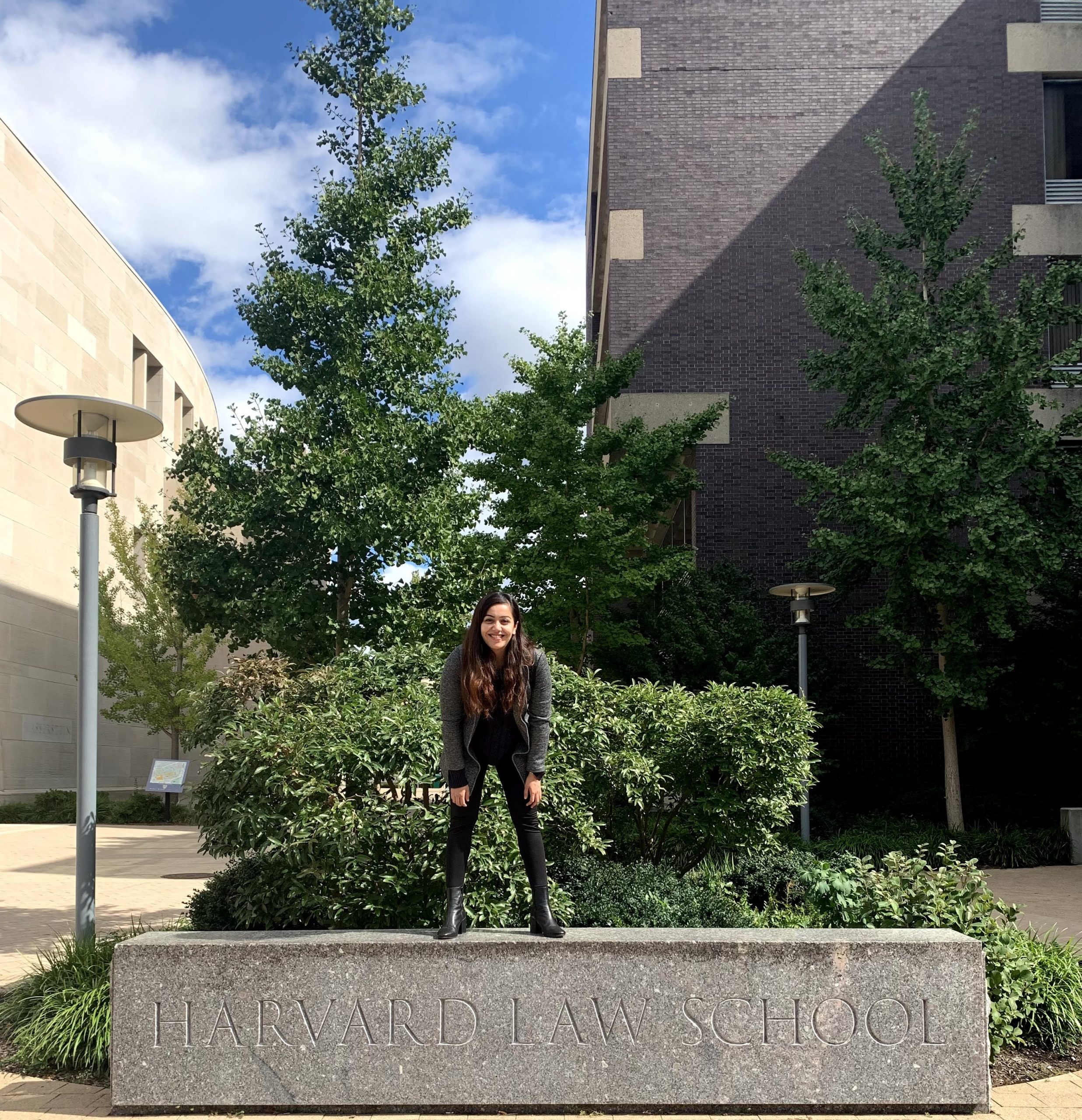
    At Harvard, I decided to venture out of my comfort zone and explore different facets of criminal law through my study of white-collar criminal and cyber-criminal law. Additionally, the Harvard LLM provided me with the opportunity to study Fintech & its interaction with different legal systems in the world. As somebody who had no prior knowledge about Fintech, Blockchain or Cryptocurrency- the course provided me with the unique opportunity to learn about how emerging technology impacts extant legal systems and regulation.

    Apart from the academic exposure, I also had the opportunity of making life-long friendships and being mentored by some of the best professors. This made my time there enjoyable and wholesome.

    The Rhodes Scholarship is the oldest and perhaps the most prestigious international scholarship programme in the world. Could you suggest to our readers an ideal roadmap to qualify as a Rhodes Scholar?

    Simply put, there is no specific roadmap. The Rhodes Scholarship, more than anything, is about authenticity: about unapologetically being yourself. Applying for the scholarship was not a knee-jerk decision for me. In my first year at CLC, I had decided that I wanted to pursue my master’s from an International University. I worked towards that goal for the next three years and finally applied for the scholarship in 2015. During the application process and my interviews, I realised that there is no prototype of a Rhodes scholar: anybody and everybody can and should apply. I think the commitment to service, humility, authenticity, and perseverance are the four pillars of the scholarship. This belief was further strengthened when I met Rhodes Scholars from across the world at Oxford- we were all very different from each other! The only thing in common between us was our collective and individual desire to give back to society.

    What would you advise to all the forthcoming applicants who are applying to universities abroad?

    Firstly, the decision to pursue your education outside India should not be an impulsive one. It should be well-thought-out and deliberated upon as the application process is extremely tedious and fastidious. It requires a lot of dedication and time.

    Secondly, I would recommend extensive research before you begin the process. I spent months just reading up about universities in the United States and the United Kingdom to understand their admission processes, requirements and, more importantly, to gauge the academic ethos of the Universities. The American process is quite different from the English one in terms of SOP focus and academic/extra-curricular requirements. After this, I read up on all the potential scholarships that I was eligible for. Subsequent to this, I prepared a list of my preferred Universities and the scholarships I wanted to apply for. Once my groundwork was done, I had dived into the application process. This helped me streamline the entire process, which can otherwise be a bit overwhelming and daunting.

    You have worked as a legal consultant to HAQ – Centre for Child Rights. You have also served as the Convener of the Legal Aid Society. Speaking, retrospectively how can law students make a difference when it comes to legal aid and legal-social work?

    My work with the Legal Aid Society and then with HAQ (2018-2019) gave me direct exposure into the actual working of the criminal and the juvenile justice system in India. It additionally also gave me the necessary insight into the systemic challenges faced by our criminal justice system.  Particularly, my research projects with the Delhi State Legal Services Authority shed light on the several institutionalised impediments faced by the incarcerated in actualising their legal entitlements and the general apathy of the justice system to prisoner rights and well-being. My work as a paralegal also made me aware of the paucity of research into the causes of criminogenic behaviour and the general gap between academic research and praxis in the field of criminal law.

    Law students are in a remarkable position to facilitate change at both the ground level through fieldwork and through the law in courts. Exposure to fieldwork is essential for lawyers and law students alike to discern the complex challenges faced by our criminal justice system in order to craft a purposive and humanised approach or to create feasible/sustainable interventions. Law school is a great place to garner this experience- law students should volunteer as much as they can during their study of the law. I believe legal aid work prepares you for litigation in courts in India.

    You are presently working as an Associate at Bharucha and Partners in the Litigation & Disputes Team. Could you highlight how a foreign LLM helped you in litigation? How has your experience in litigation been since you returned from Harvard?

    My academic experience helps in legal research and in developing submissions and arguments grounded in legal jurisprudence. The LLM trains one to discern the fundamental legal principle behind an issue. It also inculcates the skill to analyse and organise voluminous material in a coherent manner.

    Upon my return to India last September, I hoped to work and broaden my experience in criminal litigation, with a special focus on white-collar criminal law, anti-corruption, governance, and international financial crimes. Bharucha & Partners’ Litigation & Disputes Team was the perfect fit- a small team with a lot of criminal trial work. The litigation team, led by Mr. D.P. Singh and Ms. Sonam Gupta, specializes in white-collar crimes and regularly appears before Courts and Tribunals in cases involving both domestic and international financial crimes and general criminal law. Under their collective tutelage, I have had the chance to appear across all levels of the adjudicatory process.

    You recently cleared the New York Bar examination and the England & Wales (MCT) Examination and will be qualified to practice in three jurisdictions soon. Could you throw light on the process to register for bar examinations outside India and how to prepare for the same?

    I qualified for the Indian Bar in 2016. I sat for both the New York and England & Wales Bar (MCT) examinations this year.

    To be eligible to sit for the New York Bar Exam, you need to have an LLM from an American Law School. Further, you need to dedicate approximately 12 credits to the Bar Exam during your LLM. On the other hand, you don’t require an LLM to sit for the England & Wales Examination. You only need to be a lawyer qualified to practice in a common-law jurisdiction.

    It was challenging to manage my preparation with work, and it wouldn’t have been possible without the unconditional support of my team. Preparation for both exams is extremely arduous- especially, New York. Both examinations require consistent dedication and a lot of discipline. I used to devote 4-5 hours during weekdays and approximately 10-12 hours a day during the weekends.

    You have also been invited by International Organisations such as WIPO and leading law schools in India to deliver guest lectures on Fintech & Emerging Tech.  Your work has also been published in international journals. Are you interested in simultaneously pursuing a career in academia?

    I am definitely interested in contributing as visiting faculty at universities and law schools in India. I have been fortunate enough to be invited by some law schools in this regard. Further, I really enjoy legal research and legal writing. Going forward, I would like to write and publish more on topical legal issues. I feel this provides an opportunity to conduct in-depth research on a particular area of law and to pen legal arguments in a cogent manner which in turn helps gain clarity on the law. Similarly, teaching a subject also sharpens your understanding of a particular area of law as you explain the concepts in a simple way (often through illustrations and examples) to students.

    What does your legal career trajectory look like? What advice would you have for law students & young lawyers who want to pursue a legal career in a similar direction to yours?

    Honestly, my heart lies in child rights and juvenile justice, but I hope to garner as much experience as I can in the next 4-5 years in different areas of law before jumping back into it and establishing my own practice. Eventually, joining politics is also on the cards.

    I think my advice is that law students and young lawyers shouldn’t be in a hurry to specialise. There is merit in being a generalist rather than a specialist early on in your legal career. Second, be kind to yourself during the process. I have a hard time practising this as well, so this is my advice to myself too. Failure is inevitable, and you need to keep at it despite it. Third, invest in your friendships and relationships. Take out time for people who matter. Don’t prioritize work over your mental & emotional well-being. On your worst days, your investment in your friendships will always come through.


    Get in touch with:

  • ABHISSHEK SINGLLA, SENIOR LEGAL COUNSEL AT ANDRITZ, SHARES HIS EXPERIENCE WORKING AS A CORPORATE LAWYER AND HIS ROLE AS AN IN-HOUSE COUNSEL

    ABHISSHEK SINGLLA, SENIOR LEGAL COUNSEL AT ANDRITZ, SHARES HIS EXPERIENCE WORKING AS A CORPORATE LAWYER AND HIS ROLE AS AN IN-HOUSE COUNSEL

    This interview has been published by Maaz Akhtar Hashmi and The SuperLawyer Team. The Interview was taken by Priyanka Cholera.


    Having studied BA.LLB at Kurukshetra University, Haryana. Did any particular incident, interest, or influence prompt you to think of pursuing law?

    I had my senior secondary education with non-medical subjects. However, it was after I met my brother-in-law (who was a civil judge in Haryana Judicial Services at that point of time), I was motivated to pursue a career in law. Considering my limited exposure during my school days and being a small-town boy, my parents always wanted me to get an education from a nearby college.  Therefore, I applied for 5 years integrated law course at Kurukshetra University and got myself enrolled. 

    While choosing to pursue Masters of Law (LLM) from King’s College, London. What were the factors involved in choosing commercial law for advanced studies?

    While pursuing my law in India, I used to work with my father in his manufacturing business in order to manage multiple things, wherein at first instance, I got to know in brief about the understanding of corporate law and its role in the economics of the world. Eventually, I did a couple of internships in a corporate team of law firms, wherein I got a further understanding of corporate laws in India and their applicability in day-to-day affairs. Accordingly, in order to broaden my horizons and gain specialization in a specific branch of law, I could think of no better option than going in for the study of commercial law.

    What were the key differences between your experience of Indian & British law school? Could you please tell our readers how the international exposure has helped you gain perspective to improve your skills in the legal field?

    Being in a British law school is altogether a different ball game in comparison to studying in an Indian law school. One of the major differences I could experience in a British law school is the emphasis given to the practical side of the law, wherein one is asked to solve complex legal problems, whereas, in Indian law schools (limited to what I know), a vital role is played on theoretical practice, although I believe this is changing now. Another major difference is that the British law schools lay particular emphasis on a student having read up in advance the designated chapters of the reading list before attending a particular lecture each day so that an informed discussion could take place in the classroom. Lastly, the student-teacher ratio is generally low, and accordingly, the class size is small. 

    We are looking a decade back, from being a Trainee at PwC and to an International company as a Senior Counsel. How has this journey been for you?

    The journey has been challenging yet rewarding so far,  akin to a roller coaster ride. Considering my family’s limited experience in law (especially in corporate law) and recession in various parts of the world during 2008-2009, job hunting was a difficult task when I commenced my career. Further, working in different practice areas such as PE/VC/M&A in IndusLaw, Project Financing in Link Legal, Clasis Law, and IT in HCL has been a bit challenging in the beginning due to the said practice areas being completely different. However, with the passage of time and given my aim of gaining a varied experience, such a challenging experience has become rewarding for me.

    After having a stint at renowned law firms, IndusLaw, Link Legal India Law Services, Clasis Law, you moved to an in-house role at HCL Technologies Limited. Could you explain what kind of work an in-house Counsel entail?

    At HCL, I got to work in a largely similar fashion like I was working with law firms, except that my thought process of reviewing and negotiating a document became different. In an in-house practice, one has to review the document to figure out the risk involved and to find risk mitigation to such risk, from the point of view of securing the commercial interest of the company and minimising the chances of litigation, either by factoring in such risk in financials or to negotiate the document to the limited sense of removing/limiting such risk.

    You moved to ANDRITZ, an international technology company serving as a Senior Legal Counsel. How was that decision to switch from a law firm to an industrial company rewarding on a personal as well as the professional front?

    So far, it has been the most rewarding experience due to multiple reasons. The foremost is that I get to work on a multitude of contractual litigation issues. Another one is internal legal team support, wherein one can easily adapt to the environment within a span of a few months.

    Your experience includes rendering advisory and transactional services in a variety of practice areas, including Project Finance, Private Equity/Venture Capital investments, Acquisitions and General Corporate Commercial. How do you keep the team spirits elevated and make a positive work environment handling high-stakes deals?

    While working in a team, I believe that one has to ensure that you are available for support throughout to provide timely support to your team. Secondly, you have to uplift your junior colleagues while educating/supporting them as and when required. I have always ensured that I follow these in order to have high team spirits. 

    What keeps you busy other than work? Could you tell our readers about your hobbies? Any movies, work of art or books that have had a profound impression on you.

    I really like watching content on OTTs (like Netflix, Amazon Prime) and listening to music and podcasts. I am not very fond of reading novels/books except those pertaining to law and finance, as I have a keen interest in the same. Additionally, I like reading columns written by influencers, as it motivates me to keep my life on track.

    The pandemic has affected people, work, businesses, etc., around the world. How do you take care of your mental health and strive towards a good work-life balance?

    Though pandemic has affected people and businesses (including me as I got infected by COVID-19), however, I ensure that I follow certain practices in order to safeguard myself and people around me, such as physical training for an hour on a daily basis, eating mostly home-cooked food, or food from hygienic places in case I have to, avoiding travelling to public places and busy market places, especially during the weekend. So far as striving for a good work-life balance is concerned, being able to spend quality time with family and close friends and unwinding by spending time with nature personally helps me achieve that.


    Get in touch with:

  • RAJARSHI SEN, LEAD COUNSEL – SIEMENS ENERGY INDIA AT SIEMENS, ON PURSUING LAW, HIS ROLE AS AN IN-HOUSE COUNSEL AND HIS ADVICE TO LAW STUDENTS & YOUNG LAWYERS

    RAJARSHI SEN, LEAD COUNSEL – SIEMENS ENERGY INDIA AT SIEMENS, ON PURSUING LAW, HIS ROLE AS AN IN-HOUSE COUNSEL AND HIS ADVICE TO LAW STUDENTS & YOUNG LAWYERS

    This interview has been published by Maaz Akhtar Hashmi and The SuperLawyer Team.


    You have had quite a journey as a law student at National Law University Jodhpur and then as an in-house lawyer with TATA and Siemens groups. How did you come to choose law as a career?

    Accidentally. I fully intended to study English or history or even journalism. Then a couple of my friends applied for law school entrance exams, so I decided to give it a shot. I did not know that law school tutorials existed back then, so my preparation was limited to solving collected question papers. I was on the waitlist for some other law schools but got through National Law University Jodhpur.

    I was ridiculously underprepared for law school. So much so that I seriously contemplated leaving for the first few months. Many of my batchmates were already familiar with what was being taught in class from law school tutorials and already knew much more than me about law and the legal profession. Some of them even had a clear career plan in mind and knew which magic circle law firms they wanted to join when they graduated. I did not even know what a magic circle was! I kept imagining a bunch of wig-wearing black-robed lawyers standing in a circle holding thick ancient books and chanting magic spells in an archaic language. Of course, I was completely wrong about that – the wig and black-robe are no longer compulsory.

    Luckily, I realized – through some amount of trial and error and a lot of help from my friends – that law is mostly general knowledge and common sense. That made it much easier to find my way in law school over the next five years.

    Did you ever regret your choice to stay on? How would you describe your time at law school overall?

    Never. I made some lifelong friends, had some life-changing experiences, and had a lot of fun along the way.  I also managed to learn something about the law. I still rely on the expertise and experience of my fellow alumni whenever I have questions, which is quite often.

    It would be unfair to paint a completely rosy picture, though. I also experienced some bullying (including some death threats!) for my political opinions. My room was broken into several times, and my possessions (especially my books) were vandalized and mutilated. One time, I came back from dinner to find that there was a fire in my room. Perhaps it was the recklessness and stubbornness of youth, but I did not take it as seriously as I should have.

    It was only much later that I realized that we do not talk about the toxic aspects of law school and the legal profession enough. My silence was part of the problem. Even now, we have barely begun to have the conversation about how to create safe, inclusive and welcoming spaces for everyone. I am glad that my time in law school taught me this important life lesson. Overall, I gained a lot more from the experience than I had ever imagined.

    During your time at law school, you held quite a few positions of responsibility in the NLUJ Law Review, the Film Society and the Literary & Debating Society. How did this contribute to your development as a lawyer?

    I never really looked at them as positions of responsibility. I always enjoyed extra-curricular activities more than being in the classroom. I was just grateful that law school gave me the opportunity to indulge in all my favourite activities – debate, drama, film and literature. I co-founded the Film Society and the Literary & Debating Society so that I could do just that.

    Our school and college life are the best time to find out what we are interested in outside of academics and work. This is what makes us more interesting and helps us to be interested in others. This is especially important for us as lawyers because we work with people all the time, even though we tend to forget it! Law schools already have quite an active extra-curricular calendar in terms of moot courts, sports and cultural events. But there is always so much more that can be done.

    The Film Society would screen one movie every week. The screening was open to all, and we had special dispensation to stay up late, so we got quite good audiences. The Literary Society also met once a week to discuss what we were reading and writing. The Debating Society was also quite active – we went to lots of debates across India and – on one memorable occasion – even Bangladesh. I got the opportunity to travel and meet lots of interesting people. This helped me make friends across disciplines, something that does not happen too easily when you are in the law school bubble. It also taught me the importance of finding time for yourself to relax and unwind – in good times and bad. In some ways, I was already a firm believer in work-life balance even before I began my career.

    Your career journey began at Voltas Limited as their Legal Counsel in 2009. Most law students aspire to join law firms or litigation practice. What factors made you choose the road less travelled?

    Again, luck played a role. I knew that work-life balance would be quite a challenge if I chose to join a law firm or a litigation practice. One of the senior lawyers I had worked with warned me that I should opt for litigation only if I had some financial stability for the next 5-10 years as it would take that long to make a mark as a first-generation lawyer. I did not.

    So, I was very lucky that a team from TATA Group led by the then General Counsel decided to come to NLUJ for campus recruitment. They were looking for someone to work on some international disputes for Voltas Limited, which is one of their group companies. Everything just fell into place – I was the right person in the right place at the right time!

    I spent two years working for Voltas on some major infrastructure disputes in India, the Gulf and Singapore. I enjoyed every minute of it. I had to unlearn almost everything I knew about legal research and drafting and relearn how to work on a real live dispute with factual backgrounds going back years or sometimes even decades! Over time, the business and project team colleagues started approaching me for contract and claim management topics at the pre-dispute stage. This was when I realized that part of the magic of working in-house is that you can (and should) get involved long before the faeces hit the fan. Our job is to help prevent disputes rather than fighting them! I learned so much about how to think like a business lawyer. I had some great mentors – both from the business and the legal team – some of whom had been in the industry for two or three decades!

    All in all, I was very lucky to get an opportunity to work in both national and international environments at such an early stage of my career. A lot of my friends in law firms and litigation were surprised to learn that in-house lawyers got to travel to such interesting places and do such interesting work, plus have a work-life balance! To be honest, so was I.

    Looking back, this really should not have been so much of a surprise for us. In law school, the focus is on law firms or litigation as career options. Granted that I should have probably taken matters into my own hands and done my research on possible alternatives. At the same time, law schools should widen the scope of the career advice that they give to law students. An in-house career should not be looked at as “the road less travelled” but as one of the many (often interconnected) roads that are open to lawyers.

    I think this has already started – law students today are much better informed about the outside world than I was at the time. Alumni associations and external service providers like yourselves are already trying to explain various career possibilities after law school, such as academics, civil service, entrepreneurship, journalism, judiciary, public policy, strategy etc. However, there is a much broader mindset change that is still required. These career paths are still seen as being somehow less important or prestigious than the big two of law firms and litigation.

    You then moved to Siemens as a Contract Manager in 2011 and currently hold the Lead Counsel position at Siemens Energy India. How has your in-house journey been so far for you?

    To be honest, luck played a role here as well. I was very happy at Voltas. At the same time, living out of a suitcase for most of the year was tiring. I missed home and my loved ones. One day I was at a conference where I connected with some contract managers from the Siemens India legal team. They were looking for someone with contract and claims management experience to work from my hometown Kolkata. Once again, I was just the right person in the right place at the right time!

    I spent the next five years working on major railway and metro infrastructure projects as a Contract Manager for the mobility business. As a function, contract and claims management is a lot more collaborative and customer-facing than other legal roles. Ultimately, everyone on the project is working together for the common good of the project. So, you need to build trustful and collaborative relationships with each and every stakeholder. Even if you have the best legal arguments, you do not want to be in a dispute situation where you need to use them! Instead, you need to find commercial solutions that are a win-win for everyone. This tests your legal competence as much as your communication, negotiation and stakeholder management skills. I was very lucky to work with project and business teams where every meeting with external stakeholders was a masterclass in these skills.

    One of the best things about working for a multinational the size of Siemens is the sheer variety of opportunities available internally in different functions, businesses and regions. When the senior legal counsel of the energy business left for other opportunities, I asked to be considered for the role. A couple of years later, my then reporting manager also left for other opportunities. I already knew the team, the business and the organization as well as anyone – and they all knew me. Again, I was the right person in the right place at the right time!

    The fact that I have been here for a decade now speaks for itself. I do feel like a dinosaur sometimes for having been around so long. But what is really cool is that I have friends in the legal department and the business who have been around even longer than I have. It’s always comforting to know that others have made the same mistakes that you have!

    Jokes aside, it’s been an amazing journey – the work has been exciting, the challenges have been stimulating, and the lessons learned humbling (to say the least!). Some days were tough and frustrating, while others were more exciting than I would have hoped for. A few (thankfully very, very few) were boring. Every single day of these last twelve years was a crash course on being an in-house lawyer in a multinational, multicultural environment. Especially the bits that they somehow don’t teach in law school but definitely should (like brevity, effective communication and intercultural stakeholder management). What has made it all worthwhile has been the comradeship and the camaraderie along the way. There’s something to look forward to almost every single day – I’m always either learning something new, working on something exciting or even making new friends in different parts of the world.

    Can you walk our readers through a typical workday as an in-house lawyer?

    It is a little difficult to describe a “typical day” as an in-house lawyer. This is simply because of the sheer range of subjects that we get to work on almost daily. As business lawyers, we are usually generalists (even if we sometimes have our own specializations). We have to look at anything that comes to our table, especially if it involves a legal issue but sometimes even if it doesn’t! Often, the largest chunk of our time is spent understanding and collating the facts, strategizing on commercial solutions and ensuring alignment between business and corporate functions etc. Some may consider this non-legal work – especially if they believe that a lawyer should only deal with pure legal topics. I disagree; I believe that this is at the heart of what we do as lawyers. We apply the law to uncertain situations to achieve a satisfactory resolution. This means that a solid understanding of legal concepts and the ability to apply these concepts in practice is just basic table stakes for being an in-house counsel.

    Another major chunk of what we do as business lawyers is contract management throughout the entire contract lifecycle. We get involved right at the start at the business development or bidding or contract negotiation stages to identify, evaluate and try to mitigate contractual risks. During the contract execution stage, we work with the business to resolve any issues which may arise, preferably without litigation. When litigation becomes necessary, we handle most of the work in-house. We develop the overall dispute management strategy, the arguments and counter-arguments and then brief external counsel to argue the matter.

    Every once in a while, there’s also some transactional work. The frequency really depends on the organization. In an organization as large and complex as Siemens, there’s always some restructuring (including mergers, demergers, share transfers etc.) going on somewhere in the organization. I have personally been through 4 internal reorganizations in my 10 years at Siemens. Sometimes, the only thing that changed for me was the details on my business card. Others were more profound and required more work. During this time, we also carved out our healthcare and logistics businesses, both worldwide and in India. Recently, we completed a major transaction for the global carve-out of Siemens Energy and a transfer of 24% shareholding of Siemens India from Siemens to Siemens Energy. This took up most of our time for more than a year.

    There’s also a fair bit of corporate work. As a governance function, we act as one of the conscience-keepers of the organization by conceptualizing, implementing, and overseeing internal processes which ensure that we do clean, compliant and sustainable business.

    Recently you did an Executive Education Programme from IIM Bangalore. It is often said that in-house lawyers are not only legal advisors but also business advisors. Do you agree with this school of thought?

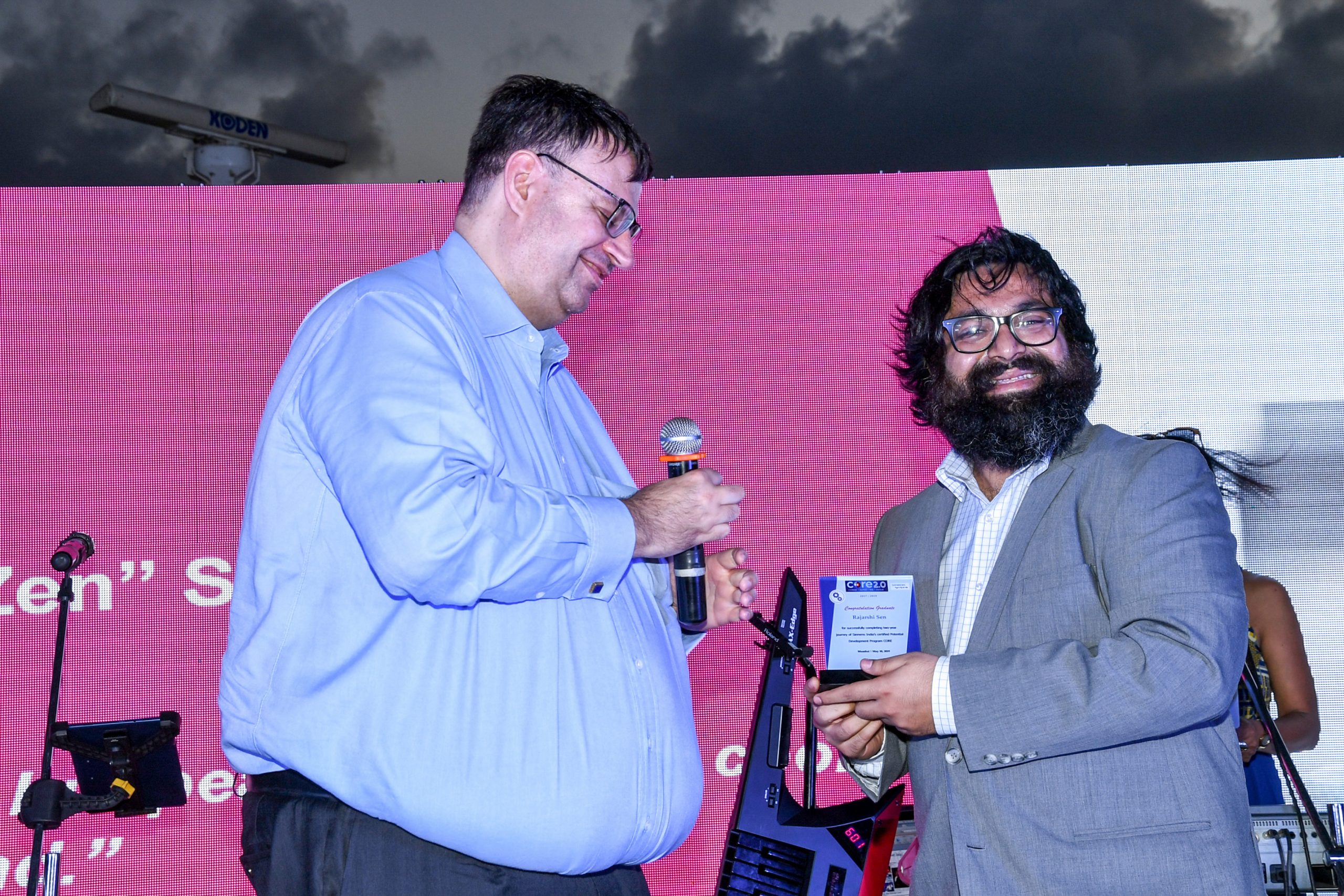
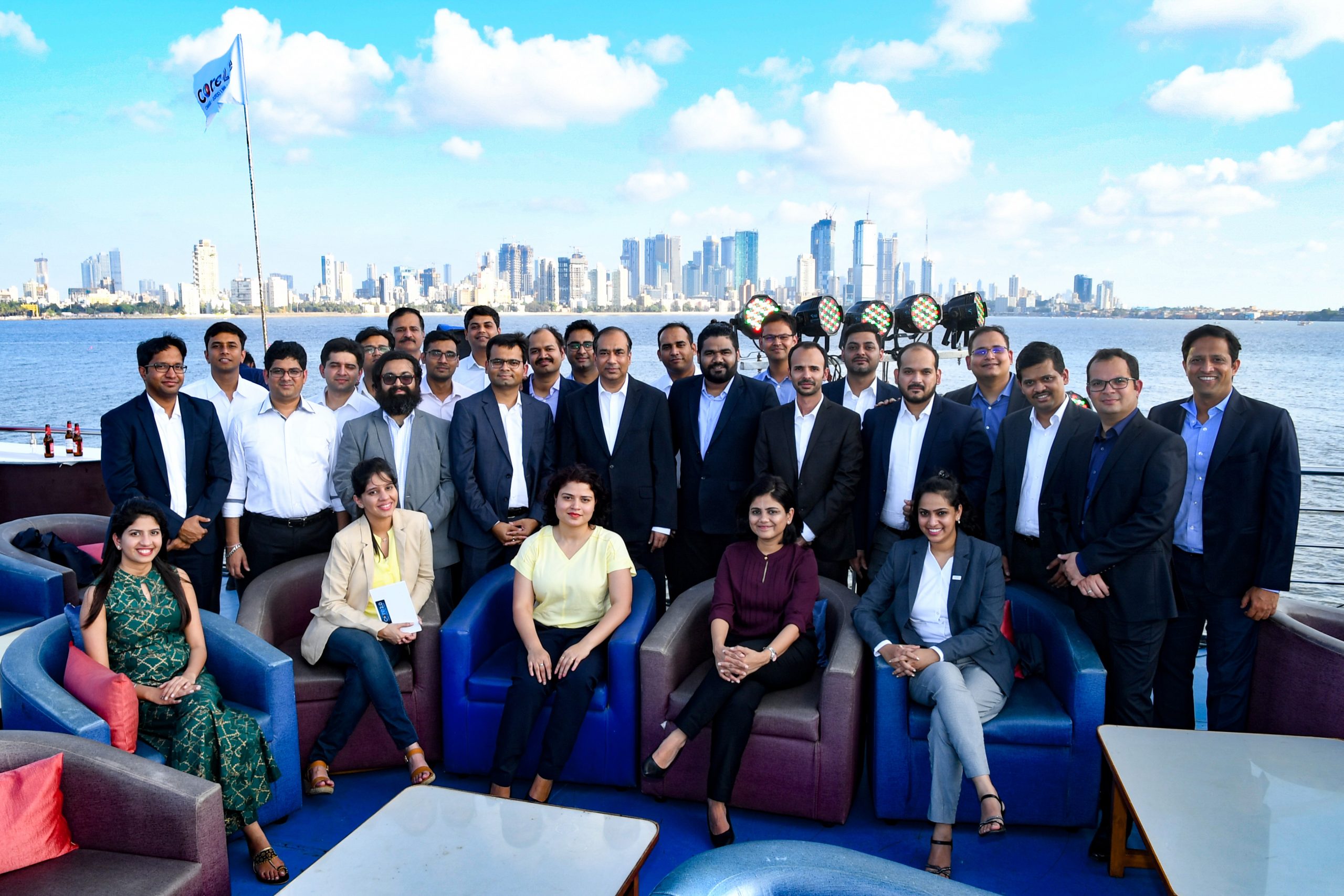
    The IIM-B course was part of a two-year potential development programme organized by Siemens. The idea of this potential development programme – which is currently on its fourth batch – is to bring together a diverse bunch of young people within the organization with the potential to grow and then give them opportunities to learn by doing. I was part of the second batch of thirty colleagues who were chosen for this programme. The highlight was spending five weeks on campus in IIM-B learning strategy, communications, career management, corporate finance, sales and marketing, human resource management etc., from their faculty. Since it was an on-campus programme, the thirty of us quickly became close friends. Looking back, we learned as much from each other as we did from the faculty! What I learned over the course of the two-year programme definitely helped me be a better version of myself, not just a better business lawyer.

    As far as being a business lawyer goes, I would go even further than that and say that we are not just business advisers but strategic business enablers. The days when in-house lawyers sat in an ivory tower of their own making, spoke in a strange language called legalese to the business and tried to eliminate all risks through “write-only” legal documents that no one else reads are long gone. Legal is no longer the department of “no” but the department of “yes, and…”. Our business colleagues know that we will provide strategic advice and practical, commercially viable solutions that help the organization to grow sustainably. Our internal processes are built in such a way that legal and business as well as other functions (to name just a few – bid management, project management, finance, risk and internal controlling, sustainability) need to work together from the very beginning to the very end. This is a win-win for everyone. As support functions, we get to be involved from start to finish and have instant access to all the information we need to do our jobs. And the business has instant access to practical and solution-oriented advice. Of course, we are still a governance function and need to take some difficult decisions. This is actually much easier to do as the department of “yes, and…” – when your business colleagues know that you always do your best to find a solution, they respect your decision much more when you say that this is not the right thing to do. Luckily, such situations are quite rare.

    You took on a leadership role just a few months before the pandemic hit. How did you stay focused on team management and handling high stake tasks with such a crisis happening just a few months into a new role?

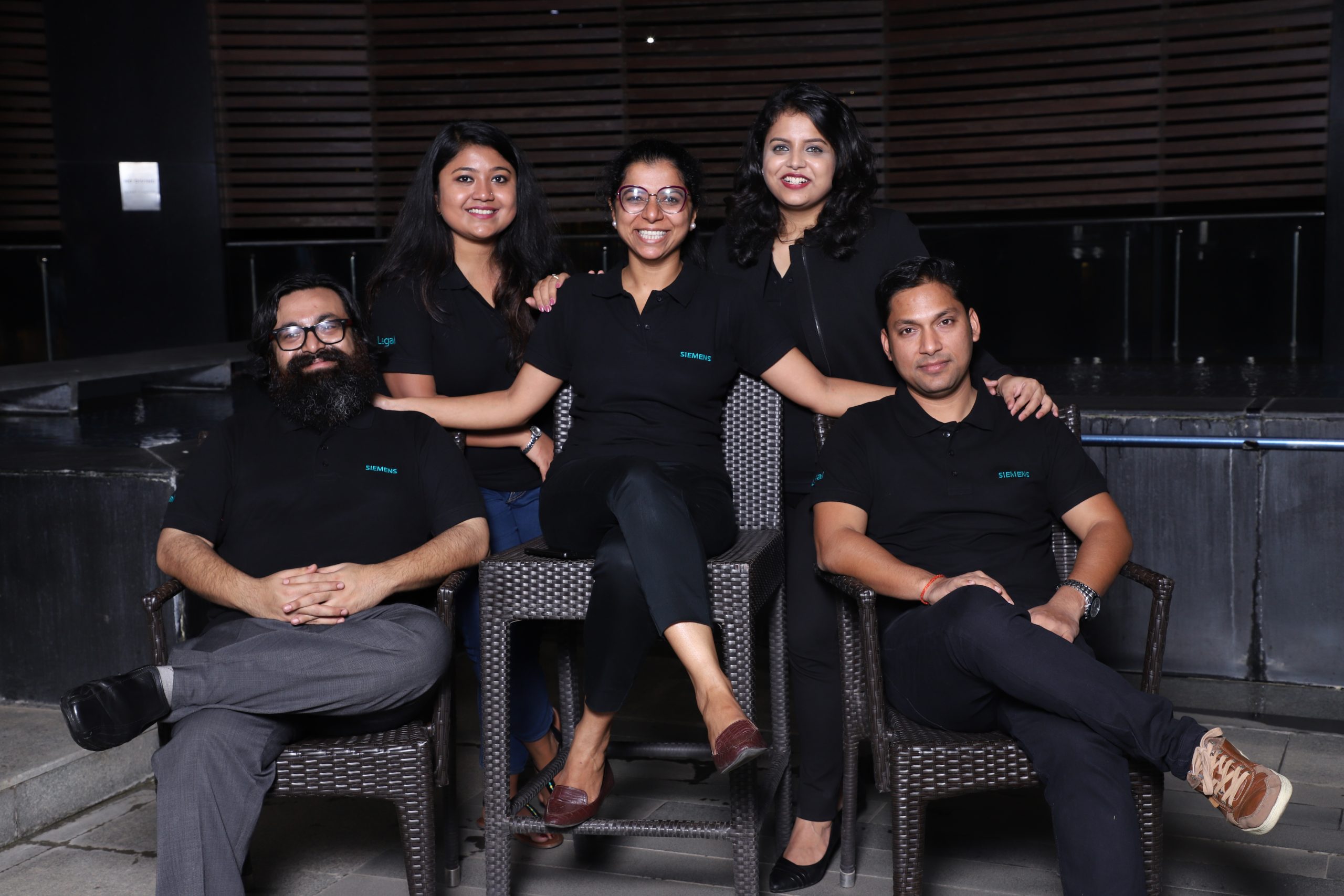
    Again, I was just very, very lucky. One of the many benefits of being a relative dinosaur in the department is that I already knew the business and the team very well. We were friends, and we worked well together. I got some great advice when I took over this role, which was to just be myself. After all, what can be easier than leading a team of your own friends? All I had to do was get out of the way so that we could all be ourselves. And it has worked out great.

    Of course, the pandemic and lockdown affected everyone both personally and professionally. Professionally, we took the lead on crisis management from a contractual perspective. Luckily, we already had fairly mature project management and contract management systems in place. This helped us to streamline our COVID-related correspondence with customers, subcontractors and other stakeholders through a judicious mix of global standardization at a macro level and hyper-local strategies at a micro-level. The fact that this happened in the middle of a major transaction (the global carve-out of Siemens Energy) was quite a stretch for all of us.

    On the bright side, this meant that we were fully occupied at a time that business came to a grinding halt for many organizations. Making the switch to working from home was fairly easy because we had already built a culture of trust, empowerment and proactive collaboration within the team. These are values that you need to build over time; it does not happen overnight. We had been living these values every day, even before the pandemic. We already had a practice of having a mid-week catch-up call where we discuss what we are working on, what is going well (and therefore we should do more of), what could be better (and therefore we should do differently) and where we need support from each other. This was really helpful because we could re-distribute the workload dynamically to make sure that everyone had some breathing space to take care of themselves and their loved ones during – and we tend to forget this – an unprecedented global crisis. In times like these, you have to have each other’s backs. And that’s what we did. And the best part? That it happened organically – because we were already doing it anyway. The crisis was just the backdrop.

    Of course, like everyone else, the pandemic affected us all either directly or indirectly. Everyone lost someone – friends, family, colleagues. In times like these, you need to find ways to still have fun as a team. This may seem silly, but one of the things that we realized we really missed as a team were our water cooler conversations over tea/coffee. We built this back into our regular schedule with Friday Fundays – this started as a way to connect with each other every Friday evening over your drink of choice to just chat about our personal lives. The only two rules of Friday Fundays were “we do not talk about work” and “we do not talk about work”. Since we were already friends, the conversation always flowed easily. We felt lighter going into the weekend, having had these chats. Soon, we extended them to old friends in other teams – inviting colleagues from different functions and businesses whom we missed hanging out with. They loved the idea too. Then we started to invite colleagues whom we wanted to get to know better, and they loved the idea even more. From being a way to help us stay connected within our team while we all worked from home, it has now become a way of networking and making new friends across the organization. The contribution to our overall mental health was immeasurable.

    You have been quite vocal on the topic of mental health in the legal profession. What measures can we take in the coming years to ensure the mental health and well-being of legal professionals?

    Not vocal enough! For example, this is the first time that I am talking about the bullying that I experienced in law school on a public forum. I have talked about this in my personal and professional groups, but I should have been much more vocal about this from the beginning. Most lawyers struggle with mental health challenges in silence, as I did. At the root of it all is the culture of perfectionism in the legal profession, which stigmatizes “weakness”. This is what ultimately leads to impostor syndrome, lack of work-life balance and burnout.

    Lawyers see themselves as problem-solving superheroes who always have the right answers to any and every problem. When we quite inevitably fail to achieve the impossible standards that we have arbitrarily set for ourselves, we overcompensate by working harder and longer hours to prove ourselves not just to ourselves but to those around us as well. More office-time, more work, more side projects, more billings, more clients, more revenue, more more more. We feel like we must be workaholics who are available 24/7/365. Why? Because we compare ourselves to others and see that everyone is doing it. There’s no shame in admitting that we have all done this. In fact, it’s important to understand that we ALL do this. A lot of the guilt and anxiety of impostor syndrome is feeling like the only impostor surrounded by otherwise perfect beings. It’s illogical, but it’s true. The first step is admitting it.

    How do we overcome it? Well, of course, there are far more mental health resources that are available nowadays than ever before. The problem is the stigma of “weakness” associated with seeking professional help for mental health in the legal profession. So it is critical that we address the root cause of the culture of perfectionism in the profession, which causes such issues in the first place.

    One of the best coaches I ever met once told me that “perfect is the enemy of good” and “good is good enough” – it was a small but simple realization which stayed with me. We can adopt a growth mindset only when we stop chasing the impossible dream of perfectionism. Instead of wasting time comparing ourselves to others, we can focus on simply being better than we were before. Made a mistake? That’s okay! Instead of telling ourselves that we are terrible at this (which will become a self-fulfilling prophecy), we can think about what we can do better next time. Is there someone better at this than we are? That’s great! Instead of telling ourselves that we will never be as good as them (which leads to further anxiety and impostor syndrome), we can ask them for help so we can do better.

    One simple example – I struggle with timeliness. For example, joining meetings on time used to be a challenge because my calendar was so packed. This is a problem that’s gotten a lot worse for all of us while working from home, with back-to-back meetings becoming the norm. One of the best hacks is to let the problem (our schedules) be part of the solution. Instead of being a slave to my calendar, I started to use it to my advantage. If I had an important task, I would schedule a meeting with myself to complete that task. If someone called me in the middle of working on this task, I would just tell them when I am free next and ask them to schedule for a more convenient time. My schedule immediately became much more manageable.

    Another great hack was to use the meeting reminders to my advantage. Earlier, I would only start wrapping up what I was doing when I got the 5-minute reminder for my next meeting. Now, I use the 15-minute reminder to do that. If there’s too much left to do, I schedule another slot to finish that work instead. This leaves me with enough time to get prepared for the next meeting. And the 5-minute reminder? I now use it to do nothing at all. I clear my mind and focus on being mindful. This may seem like a silly example, but the benefits to my mental health have been immeasurable. You just need to find what works for you.

    Of course, this can only work if our workloads (and timelines!) are manageable in the first place. This is a structural problem that can only be addressed if we start setting healthy boundaries while still being flexible. I keep reminding my team and my business colleagues that if everything is urgent, then nothing is urgent. To set reasonable timelines, we need to distinguish between urgent tasks (which are time-sensitive in the short-term) and important tasks (which contribute to your long-term goals) and then prioritise accordingly:

     URGENTNOT URGENT
       
    IMPORTANTPrioritize tasks with significant outcomes and clear deadlinesSchedule tasks with significant outcomes but no fixed deadlines
       
    NOT IMPORTANTDelegate or streamline (standardize/templatize) tasks with clear deadlines but which require less expertise  Delete or mechanize tasks that do not add any measurable value

    Last but certainly not least, the usual boundaries between our personal and professional lives have dissolved, with hybrid working becoming the norm. That is not necessarily a bad thing. We can embrace the flexibility this gives us to manage our workload better by deciding when we are “in the office” and when we are “at home”. For example, I find it helps me to take breaks in between office work to do household chores like prepping meals, cooking and cleaning. Others may prefer to continue having a clear distinction between office/home, for example, by doing office work between 9-to-5 and taking care of household chores before or after that, or starting office a little later in the day after taking care of some household chores and then working till a little later in the evening. Or vice versa. It all depends on what works best for you. At the end of the day, it’s important to get some “me-time” and “we-time” to focus on ourselves and our loved ones. Some people are calling this work-life integration because you can choose how to integrate different aspects of work-life balance into your schedule in a flexible way.

    We can only do this if we – as employers and employees – change our mindset to start focusing on achievements in terms of outcomes rather than activity and office time. We don’t (and we shouldn’t!) have to do this alone.

    What would be your advice to law students and young lawyers who aspire to establish themselves as in-house counsels?

    I get these questions quite frequently from law students and young lawyers. This is a very positive development because it shows that they are already aware that an in-house career is a viable career option and are actively considering it. I usually try to turn the questions around and ask them what they want and expect in terms of purpose, roles and responsibilities, career growth, compensation structure, flexibility and work-life balance. Based on their responses, I try to explain what in-house life has to offer them.

    The most frequently asked question is how to get an in-house role. For example, we get a lot of requests from law school placement committees to attend campus recruitment. We also get a lot of internship applications from law students who tell us that they would be interested in securing a pre-placement offer. Finally, we also get requests for referrals for roles within the organization. I have to explain that in-house recruitment works very differently from law firm recruitment simply because an in-house team is part of a larger business organization and therefore is structurally different from a law firm.

    In-house teams have a fixed headcount which increases irregularly over time (rather than annually, as in law firms). This means that it is quite difficult for in-house teams to make recruitment offers in advance. Most in-house vacancies become available as and when the incumbent leaves for other opportunities. Such roles are usually advertised on the organization’s careers page, job aggregator sites and through recruitment consultants. You will then need to do some research on whether this is the right role for you. This is where dinosaurs like us can be of some help. Have you seen an in-house role that interests you and want to learn more about it? Come to us with your questions, and we would be more than happy to help! Not with a referral because a referral for someone you do not know and have not worked with is fairly useless. But to help you understand how you can be the best fit for a particular in-house role and then excel in it:

    1. Know yourself – What kind of career interests you? Do you want to be more of a generalist or specialist? Do you want to focus on doing interesting legal work or take on more and more administrative responsibilities? There are no right or wrong answers because this depends entirely on what works best for you at that time. You can always change your mind and try something else because there will be lots of opportunities to do different things in every organization.
    2. Know the business – As an in-house lawyer, you are a strategic business enabler whose job is to help the business succeed in doing clean, compliant, sustainable and, of course, profitable business. To do this, you need to know the business as well as your business colleagues do – what do we sell? who do we sell to? Who are our competitors? What are our short-term and long-term strategic goals? Law school does not prepare you for any of this. Thankfully, most organizations have technical and finance trainings for non-technical/non-finance colleagues who do a great job in explaining these topics in language that even a lawyer can understand! 
    3. Develop your soft skills – Legal competence is a basic expectation of every in-house role. However, what will get you noticed is your soft skills because – consciously or unconsciously – everyone in the organization is constantly evaluating you on these skills. This can be tricky for lawyers because law school does not help develop skills like approachability, empathy, active listening, effective communication, strategic thinking, ownership, curiosity and even common sense. In fact, what we learn in law school can hinder the development of these skills without us knowing it. Again, most organizations have training programs that cover all these skills. 
    4. Be the department of “Yes, and…” – Law school prepares us to analyze and avoid risks rather than mitigating them. To be strategic business enablers, we have to find common-sense, practical and commercially viable solutions. Our job is to advise the business to make sure that these risks fit the risk profile of our business and that they are approved at the right approval levels with the right mitigations in place. 
    5. Ownership – Take ownership of everything you do. As lawyers, we tend to focus on legal aspects rather than the business aspects of an issue. Finding a commercial solution to a business issue requires different functions within the organization to collaborate. Legal is best placed to help steer this collaboration and be part of the ultimate (hopefully successful) outcome. This will make you the go-to person for everyone in the legal department as well as in the business. If you can also volunteer for some special projects or special topics within the legal department, you will have more opportunities to develop and demonstrate your capabilities to management. You just need to spot the right opportunity or even create them, if necessary. 
    6. Make friends – It helps. It really does. Being able to bring my whole self to work and having fun at work gives me the psychological safety I need to be my best self at work. I am who I am today largely because of the friends I have made at work and outside work. 
    7. Be the right person in the right place at the right time – I’ve always believed in the old Scouts & Guides motto – “Be Prepared”. Opportunities may come when you least expect them. It helps to think a few moves ahead – what are the skills that I need to do my current job? How can I develop these skills further? What are the skills that I need to do the next job I want to do? How can I develop those skills further? That way, when these opportunities do arise – you are already seen as the right person in the right place at the right time!

    Get in touch with:

  • SMITA RAJMOHAN, SENIOR PRODUCT COUNSEL AT AUTODESK, ON BEING A LAWYER, HER EXPERIENCE IN LEGAL COUNSELING ON PRODUCT AND COMMERCIAL ISSUES AND HER ADVICE TO LAW STUDENTS

    SMITA RAJMOHAN, SENIOR PRODUCT COUNSEL AT AUTODESK, ON BEING A LAWYER, HER EXPERIENCE IN LEGAL COUNSELING ON PRODUCT AND COMMERCIAL ISSUES AND HER ADVICE TO LAW STUDENTS

    This interview has been published by Maaz Akhtar Hashmi and The SuperLawyer Team. The Interview was taken by Priyanka Cholera.


    How did your journey in law begin? Was being a lawyer always a dream?

    After graduating from higher secondary school, I took up Science with a plan to pursue engineering but realized that it wasn’t really my true calling. I decided to sit for the law school exam since I was good at debating, elocution, recitation, and other extra-curricular competitions. While it was not a path that I initially considered, I figured it might be a good thing to try. So, I took a few coaching/classes for law, and I immediately liked everything I learned there. I decided to go down that path instead. I will say that even though I took up Computer Science but didn’t seriously pursue it, in hindsight, it definitely helped my career as a Tech Lawyer. So, however you land and wherever you land, experiences are always valuable.

    You have established a clear focus on the Intellectual Property and Technology domain through your roles at the Kirkland & Ellis and Cooley LLP. Among so many other practice areas, what drew you towards IP and Technology?

    I went to Amity Law School, IP University, and then pursued my Master at the University of California, Berkeley, in Law and Technology. I enjoyed both experiences. The Berkeley experience was more focused on IP and Tech, which I was really interested in. Having had some work experience prior to joining Berkeley Law, I knew what I wanted to make my primary focus.

    When I landed in Berkeley and had to choose my classes, I sought out the classes that were being taught by actual practitioners. A lot of the questions that the technology companies in California face are related to Intellectual Property and Privacy. So, when I started taking those types of classes, I thought that they were interesting subject areas that I wanted to learn about. They also had ubiquitous relevance generally in Silicon Valley. I also had some fantastic professors, and naturally, you tend to love the subject more if you have good subject teachers.

    Could you please tell our readers about your time at the University of California, Berkeley? How did you see your journey to becoming an international technology lawyer in the United States?

    I came with the determination to try and to get a job here. I wanted to try and learn as much as I could from the experience of the LLM. I started to find research projects I could work on for professors. I tried to enroll in classes so that I could get practical knowledge as soon as I came here. It wasn’t easy to network in a new country where I didn’t have any roots, but as you network, you figure out the kind of things you would need to do to qualify as a US attorney and how one should study for the bar exam. These sorts of things will come to you if you ask the right questions, and you will always find people who are willing to give answers. It is a matter of trying and some good luck, but above all, being prepared for the opportunity when it arises. Pursuing the LLM was not an easy decision, and I had to take an educational loan to pay for my course, so there was some level of pressure and seriousness in how I approached the program. But I tried not to stress about it too much, and I really shouldn’t have. Stress doesn’t help.

    You have recently joined Autodesk, a computer software company, as a Senior Product Counsel. Could you please share about your new role?

    Sure! I am really enjoying it because it is a kind of a generalist Role. You are a kind of Legal Business Partner to an entire department. You are the first point of contact for any kind of legal issue that a particular department faces. You end up being a business strategy advisor. Autodesk is a really great software company doing very interesting things, and it is very exciting to work here.

    Your engagement with various organizations at the International level portrays that you have always been a leader. Does it come naturally, or would you refer to it as a call for opportunity?

    Leadership is often helping people out, delegating the right task, and empowering them to do their stuff without getting in their way. I didn’t take any Leadership Courses, and I haven’t done an MBA or anything like that. I’ve been fortunate that I have had some great role models to look up to. I learn by following their leadership and management style because I think they are great leaders and inspire me.

    As a tech lawyer, what potential do you anticipate in India? How do you believe, as a developing nation, we can use technology positively to bridge the socio-economic gap?

    India is already killing it in this part of the world. Many Indian professionals have founded or led transformational companies in Silicon Valley, in the United States, and worldwide. There is no dearth of talent in India. The Indian startup ecosystem has also seen a boom in recent years. I definitely think India is on the rise in terms of growth in tech, at least. India has a bright future.

    You have been part of multiple deals over the years involving IP & Technology matters. Could you describe some of your most exciting/challenging deals? How do you deal with matters that entail high stake pressure?

    I definitely worked on some interesting deals. As a tech lawyer, it depends on what kind of group, company, or law firm you are in. I’ve had the opportunity to work on a lot of deals that have been interesting and where high-profile companies have come together. You get to think about many interesting issues like IP, antitrust obligations, privacy, etc. You get to think about how the tech will get integrated between the two companies and the roadmap for the tech in the future. There’s a lot of interesting work that you can do as a tech lawyer. At this time, there are so many other burgeoning fields inside Tech like Health Tech, or FinTech, or Tele-Medicines. I’ve had the opportunity to work on a lot of interesting deals ranging from Apple to Autodesk. It is a great field for anybody who does not want to be bored.

    The Minority Corporate Counsel Association recognized you as MCCA Rising Star 2020 for your diversified work & accomplishments in the socio-legal sector. How does it feel to receive such an honour?

    It feels good. I think it’s nice to see that your pro-bono work or work overseas is getting recognized. MCC is a great organization and does a good job. I do that stuff because I find it fun and interesting to talk to different people who are women, or people of color, or are under-represented. I like talking to people and helping them out whenever I can. And, being called ‘Rising Star’ feels very nice.

    You were associated as a Product Counsel for Apple and worked on varied legal issues. Would you like to recall your exciting role working with arguably the most significant technology company in the world?

    Everywhere I worked, I worked with people who were smarter than me. It has been my goal to go work at a place where I can learn something new. All of the places I worked at had really brilliant minds. It also depends on what kind of work you do, and what kind of joy, and how much learning opportunity you can derive from a certain experience. No matter where you work, whether it is Apple or any other big company, there’s always something to learn. I am grateful to have got such opportunities, and it feels good to work on something everybody knows about, and everybody recognizes the name of. I’ve treated all of my work equally and never prioritized any work over the over. As a lawyer, you do all the work and are happy with all of your clients’ successes.

    Generally, in the US, when you practice law, you have to think about client expectations. You have to set expectations and boundaries and think about providing advice, not just based on what the rules or the law say. It also has to be pragmatic and commercial. You have to think about risk calculation – this is what the law says; this is its interpretation. Let’s think about X approach or Y; what would the risk be from the perspective of regulators, courts, consumers, and think about issues that are not only legally problematic but also ethically. It is really interesting being a tech lawyer in a company as you get to think about all the business interests, ethical dilemmas, BR Issues, along with giving legal advice.

    You are a part of the San Francisco chapter of UN Women USA, working towards initiatives on gender equality in the Bay Area. Does the support for the cause stem from personal experiences subjected to sexism? In 2020, you were also featured in the ‘Unstoppable Women 2020 List’. How do you think the organizations and companies should lay enabling measures to empower women? 

    I feel like I have a lot of responsibility to provide support to those who need it. I am happy to help in any way I can. I get outreach from students who are trying to get into LLM or who are already here for the LLM and are job-hunting. Most of them are at Berkeley because of the alumni connection, and whenever I see a Linkedin direct message, I try to reach out and set up a one-on-one and have a chat. I think everybody who is in a position to affect change should. To the extent that I could affect change, I help by preparing people for the interviews or answering basic questions like how to network, navigating the US market, pointing to how to write a resume, or hiring and recruitment. I also sit on various non-profit boards, which is also a very gratifying work because you can bring change outside your workplace and get involved in projects. I don’t think you need to reach a particular pedestal to affect a change; you can bring as much change as I can. So everyone should start doing their own bit.

    What would be your advice to people who look up to you?

    I would say I’m flattered, but anyone can do it. You just need to be determined. Even if you face rejection, just keep at it. I’ve been rejected so many times and continue to be. Be resilient. I can’t say that my career path is the only path to success. There are various ways to have a successful career and a career that makes you happy. You need not be in an office atop a high-rise building to be successful in your career. You need to be grinding at something you really enjoy so it doesn’t feel like work, and that’s success to me. Find out what you love, and if you find a way to get paid for doing it on a daily basis, that’s success! Keep at it, keep networking, and try to find common connections with folks on LinkedIn. People are generally helpful. I find the US to be a meritocratic system, for the most part, so what truly matters is how much you know, what you can do, and what you are capable of.


    Get in touch with:

  • NITI NADARAJAH, HEAD OF LEGAL (AUSTRALIA) AT PHILIP MORRIS INTERNATIONAL, ON WORKING AS AN IN-HOUSE COUNSEL, AND HER DIVERSE EXPERIENCE AT INTERNATIONAL LAW FIRMS

    NITI NADARAJAH, HEAD OF LEGAL (AUSTRALIA) AT PHILIP MORRIS INTERNATIONAL, ON WORKING AS AN IN-HOUSE COUNSEL, AND HER DIVERSE EXPERIENCE AT INTERNATIONAL LAW FIRMS

    This interview has been published by Maaz Akhtar Hashmi and The SuperLawyer Team. The Interview was taken by Priyanka Cholera.


    When did it dawn unto you that Law is the correct pathway? You have learnt French during college, are you still fluent in the language as you were during your diploma days?

    When I was in school, I had decided to study Commerce because I liked Economics, and at the same time, I also wanted to study languages because I was studying French and Mandarin Chinese. But when I started attending university, I realised that Economics taught in the university was different from what was taught at school and that I didn’t like it anymore. At the same time, I was studying some Law subjects and realised that I preferred Law to Commerce. This is the primary reason why I chose to become a lawyer.

    Unfortunately, my Mandarin is non-existent now because I stopped learning the language in grade 11, 20 years ago.  But I continued learning French throughout university and obtained a Diploma in French. I also lived in Montreal for half a year as an exchange student. During those years, my French was fluent, but it is now quite rusty.  It does come back pretty quickly though if I travel to France or another French-speaking country. I still love the language.

    After spending 6.5 years at Allen & Overy LLP, you moved to Philip Morris in Melbourne. Was that transition planned or a leap of faith?

    I worked at law firms for around a decade. I was at Blake Dawson Waldron (now Ashurst) in Melbourne before moving to A&O in London. Quite early on during my time in private practice, I realized that it wasn’t fit for me because although I enjoyed the work, I did not like the lifestyle. I found that the focus on presenteeism and billable hours drove inefficiency. It seemed counterproductive to leading a healthy balanced life. Life is about family and the things you do outside of work; it’s the things that bring you happiness. So, for me, it didn’t seem like a sustainable career choice.

    I had done a secondment at Citigroup while I was at Allen & Overy and had really enjoyed the in-house experience. I liked understanding more about a company rather than moving from one transaction to the next. Having that continuity really appealed to me. When I moved back to Australia, I decided that it would be easier to move with the firm for a number of reasons. I later realised that was probably not the best decision. Hence, the move to Philip Morris. I love being in-house. It’s a very different working style to being in a law firm and it really suits me.

    During 2008-2009 you had worked as a legal counsel in an in-house team at Citigroup, in the backdrop of a global recession. How was the experience of working with a leading finance group during a financial crisis? 

    I was on secondment from A&O with Citigroup for about 10 months and started there about a week before Lehman Brothers collapsed. The GFC impacted London-based investment banks both from a people perspective, but also in relation to the nature of the work that was being done. On a broader scale, the GFC had a huge impact on London. You could see it on the streets with businesses closing down. You would hear about friends going through restructuring processes at their workplaces; we went through one ourselves. Restructures were not as common back then, so going through them taught me a great deal about resilience. 

    As for the last year, it’s been challenging on a very different level. I think the one critical learning that has come from the pandemic is that, while you need to be resilient, you need to be human first. The uncertainty attached to the last year made me realise that life is short and that you need to live in the moment and do what you want now, not put it off to a later time.  I also learned that you need to support other people through a crisis; to not pretend that everything is okay, but rather acknowledge that it is not. What people ordinarily call “soft skills” really came to the fore in this period.

    You have worked with Philip Morris in Australia for almost 9 years now. What has the experience been like working as an in-house lawyer compared to your law firm days?

    I love working In-house; it brings consistency of workload; it allows you to really understand the business, understand the issues and get to know people on a much deeper level.

    You have been an advocate for various social issues like mental health, gender equality and leadership fluidity. How have you incorporated these topics as boardroom conversations? How can the legal industry or corporates be more inclusive of gender and mental health issues?

    I have been involved in a number of initiatives over the years, including a project regarding mental health awareness within my organisation. I was also involved in an initiative relating to flexibility in the workplace and changing perceptions around flexibility, and have done a lot of work with our inclusion and diversity committee. I believe that having conversations on all of these issues is important. As and when something comes up that relates to one of the topics that I am passionate about, I make sure I find my voice and offer my opinion on the matter.

    Secondly, it’s important is to know that you can have an impact outside of your organisation too. I have realised through my journey on LinkedIn that there are many people out there doing great work in these areas and that you can get involved at a more grassroots level.

    You’re associated with The Pink Elephants Support Network as a Peer Support Champion. Can you walk us through your role and impact the organization is trying to make? Did the support for the organization stem from a personal experience?

    In between my two children, I had two miscarriages. They had a devastating impact on my mental health. After my first, I kept working as a form of distraction, even though I was suffering internally.  When I had my second, some months after my loss someone asked me if I was okay; it made me pause. I realized in that pause that I wasn’t okay and needed to talk about why I wasn’t okay. What I realised through that conversation and my experiences is that there is a cone of silence surrounding early pregnancy loss. I didn’t realise how many people I knew had gone through something similar until I started talking about my losses. Then people would say, “I had one too, and it was horrible and really hard”.

    That’s why I started talking about my losses more publicly – to bring a voice to the topic – and during that time, someone connected me to the Pink Elephants Support Network. When I saw the work the organisation does in helping to support women who have suffered early pregnancy loss, I knew I wanted to get involved.

    You have completed a Company Director’s Course from the Australian Institute of Company Directors. Do you believe that “one should never stop learning or upscaling” even if they’re at the peak of their careers?

    I think that continuing to invest in your own learning and development is critical at any stage of your career. And that can involve a variety of things beyond formal training courses, such as listening to other people’s talks or seminars, reading books or articles and of course, learning on the job.

    What would you advise people who’re finding it difficult to voice their concerns about their workplace? Is there anything they need to be cautious about or prepare beforehand?

    I think there are a couple of things that you need to ask yourself: who is the person I am going to voice my concerns to, is that person someone I trust and do I think they are going to do something to affect change.

    I definitely think speaking up is important though.  In a LinkedIn post the other day, I said that what you walk past is what you’re willing to put up with

    The other thing I think you need to ask is whether the organisation is right for you if you are questioning toxic behaviour in that workplace.

    In the early stages of my legal career, I definitely experienced some workplace issues, including a certain level of toxic behaviour. It’s hard to speak up and have a voice in those environments when you’re so new to the profession. When we’re in the junior stages of any career we often have blinkers on with respect to the range of options available to us – they do however exist.

    You are an inspiration to many leaders who encourage vulnerability and open conversations on mental health. Do you think that Emotional Intelligence has helped you be a better leader?

    Yes, a hundred per cent. I believe Emotional Intelligence is incredibly important nowadays. It enables you to listen to people, stand back, put yourself in their shoes, and be empathetic. Emotional Intelligence is definitely one of the most important skills leaders should have.

    Have you faced silent sexism or racism for being a woman of colour? How have you dealt with it or moved past it?

    Everyone has different experiences. My personal experience has not been one of having faced overt discrimination as a woman of colour. That’s not to say that these issues don’t exist. These issues are very real, and I hear about them all the time. I view it as my privilege that I have not faced these issues myself, and therefore, I need to have a voice on these matters to be able to give back and help others who have faced these issues. Pregnancy and maternity leave is for example still a challenging area for many organisations. It is a critical time in a woman’s career and negative perceptions and biases can play a role in the way women are viewed in organisations and how they continue to progress in their careers.

    Being the wonderful storyteller that you are, have you ever considered taking up storytelling as a full-time career?

    I have fallen into storytelling very recently as a result of my journey on LinkedIn. What I have realised through telling stories is that it needs to be a part of our day-to-day life. Whatever profession you are in, storytelling can play an important role.

    For me personally, storytelling is something that I really enjoy as I love the human side of work. I believe that we are first human beings and what we do comes after that. It is important to let other people see who you are and that, for me, is where storytelling becomes relevant.

    My fundamental message is to be yourself, be authentic, do not force yourself to be someone you are not, look deep within, try and understand who you are and bring that with you to work, wherever you are! 


    Get in touch with:

  • NIYATI AHUJA, ASSOCIATE AT STEPTOE & JOHNSON LLP, ON PURSUING LLM FROM UC BERKELEY SCHOOL OF LAW, HER INTEREST IN INTERNATIONAL ARBITRATION AND WORKING WITH AN AMERICAN LAW FIRM

    NIYATI AHUJA, ASSOCIATE AT STEPTOE & JOHNSON LLP, ON PURSUING LLM FROM UC BERKELEY SCHOOL OF LAW, HER INTEREST IN INTERNATIONAL ARBITRATION AND WORKING WITH AN AMERICAN LAW FIRM

    This interview has been published by Maaz Akhtar Hashmi and The SuperLawyer Team. The Interview was taken by Priyanka Cholera.


    You have an intriguing trajectory that we are excited to talk about. Did you envision this for yourself in the first year of law school?

    Thank you for inviting me. Indeed, it has been a very interesting journey so far and I hope that it continues to be. When I joined law school in 2012, I did not in any way anticipate that I would be working at a law firm in New York or moving to a new country altogether. I wanted to get an LL.M. degree to take advantage of the several practical opportunities available to understand the legal practice in foreign universities, which are still missing in Indian universities as their main focus remains on teaching the theory of law. I hadn’t decided at the time whether I would pursue my LL.M. in the United Kingdom, like most law students in India, or the United States, where job prospects after an LL.M. for Indian lawyers are considerably limited. With hard work and some luck, I was admitted into the University of California, Berkeley which is a great school, and my launching pad into a career in the United States. During my LL.M., in addition to my coursework, I did a part-time internship with the Office of the General Counsel at the Bay Area Rapid Transit. I truly cherish that internship as my first exposure to the workplace in the U.S. The journey has been surreal and has involved plenty of blood, sweat and tears. It also required ample time and perseverance to continue looking for a position that would entail work in the areas of law that I enjoy. Overall, the journey has been interesting, and I hope it stays that way!

    Let’s start from the beginning: why law out of all the career choices available? And how was your experience at Guru Gobind Singh Indraprastha University?

    I had wanted to become a lawyer ever since I was in ninth grade. It wasn’t an obvious choice, though, as everybody in my family is either a doctor or an engineer, and my father was in the army. However, the ability to use analytical reasoning, writing and oratory skills in a profession were factors that got me interested in the legal profession. I have participated in several debates and had been commended in school for my writing skills, which aided my decision to become a lawyer. Essentially, the profession indeed is a mixture of a lot of writing and speaking. When I started law school, I was very interested in venturing into and specializing in criminal law; however, I was advised by senior lawyers that it wasn’t the safest profession for women in India and that I should consider corporate law instead and that is what I did. Most of my internships during law school in India were in the field of corporate law and capital markets. 

    Regarding my experience at Guru Gobind Singh Indraprastha University, I would definitely say that the five years were very formative in my career development, especially in terms of thinking about legal issues. I participated in many Model United Nation conferences and Parliamentary Debates, which ultimately had a bearing on my choice of practice area.  I think the best part of being in law school is that the only responsibility is understanding the courses, getting good grades, interacting with other students and professors, and participating in co-curricular activities. I chose my university mainly for two reasons – first, it had an option to pursue a Bachelor of Business Administration integrated with the LL.B. and second, the class size was very small (30) for this course, which is a great way to get individual attention from professors.

    During your time in law school, you interned at different offices, including a senior advocate, a medical devices company, capital markets departments of two of the biggest firms (Luthra and Khaitan) etc. What value did these internships add?

    Every internship teaches you how to think and write like a lawyer. Even though an intern isn’t given huge responsibilities or assigned drafting an entire document, you get to witness and assist lawyers by researching specific points and producing early drafts. It becomes a part of the learning process. Amongst my several internships, I had the greatest learning experience when I interned with a Senior Advocate in the Delhi High Court who practices in Criminal Law and with the capital markets team of Khaitan & Co. as well as Luthra & Luthra Partners where I learnt a lot from a small team including a partner and a senior associate. The internships shaped me as a lawyer, and they essentially helped me learn how to think, research and write.

    However, the style of writing adopted by lawyers in India is very different from American or British lawyers. Therefore, I had to adapt my writing style to what is expected from an American lawyer. The LL.M. program and taking the New York bar were very important in my understanding and adaptation of writing an effective brief like an American lawyer. 

    In one of your interviews, you stated that while shortlisting schools for LL.M., you considered the quality of journals published by various law schools in America. And even during your time at Berkeley, you were a part of many renowned journals. Would you please share the thought process behind giving such importance to journals? How has being associated with these journals shaped you?

    That is correct, one of the many factors I considered while shortlisting schools to apply to was the quality of journals published by the law school. I was an associate editor for both the Berkeley Business Law Journal (BBLJ) and the Berkeley Technology Law Journal (BTLJ). Most law schools have good journals. However, some are more renowned than others, for instance, the Berkeley Technology Law Journal is one of the top journals in the U.S.  

    As a member of these journals, I was exposed to various interesting articles submitted for publication and participated in cite and source checking for these articles, as well as took part in several activities organized for the members. The activities provided access to various law firm organized events as well as to students pursuing their J.D. who had a different perspective on the law school experience as compared to international law students and insight into the American legal market. When you’re working for such journals, you get to read a lot of excellent literature that has been written, understand the editorial process, which is immensely helpful if you are interested in publishing articles later in your career.

    One of the most interesting observations we have noticed is that it was only after you started pursuing your LLM that you streamlined your work towards arbitration. Was there any particular experience/incident that inspired you to pursue a masters?

    First, regarding the focus on arbitration, it is correct that after my LL.M. I refocused on opportunities in the international arbitration field. However, my interest in the field was longstanding. During my third year in law school, one of the Model United Nation conferences I attended included a ‘Permanent Court of Arbitration’ committee and the case we were arguing was the famous Philip Morris v. Australia case. I found it very interesting how parties had the autonomy to choose the law applicable to their dispute, the seat of arbitration and the arbitrators deciding the dispute. I found the entire procedure really different, giving a lot of autonomy to the parties. That is how I got interested in arbitration. Once I started my LL.M., I opted for all courses related to international arbitration. Fortunately, my commercial arbitration professor was very patient and encouraging and his coursework genuinely reinvigorated my interest in international arbitration. 

    Second, I aimed at specializing in business laws during my LL.M. and opted for as many international law courses as I could. My LL.M. was never meant to focus on international arbitration alone and I am glad it didn’t since I have used various business law concepts in my international arbitration practice so far.

    Right after Berkeley, you attended the International Arbitration Academy in Paris, one of the most renowned institutions worldwide for studies on Arbitration. Could you share with our readers your experience at the Academy?

    It was an absolutely great experience. We were a class of around 80 students including young to mid-level practitioners sharing a common interest, international arbitration. The courses are taught by renowned practitioners from all over the world. To name a few, we had professors from the University of Paris 1 (Panthéon-Sorbonne), the University of Liège and Brussels, the University of Oslo, the University of Geneva, Dean of Swiss International Law School and Professor emerita of Private Law at the University of Basel/Switzerland.

    There were also workshops and seminars conducted by ​legal counsel from ICSID, Deputy Secretary-General and Principal Legal Counsel, Permanent Court of Arbitration, Secretary-General, ICC International Court of Arbitration, Deputy Secretary-General, ICC International Court of Arbitration, Secretary-General, Hong Kong International Arbitration Centre, as well as arbitration practitioners from Shearman Sterling.

    Not only did I get exposure to the teachings of the esteemed faculty, I also learnt about the difference in practices and experiences of the other students coming from approximately 30 countries. Overall, it was an excellent learning experience and networking opportunity. I made several cherished connections which I maintain to date.

    You have interned at various US law firms, like Alston & Bird, Busse Disputes. How have these experiences contributed to your growth? Do you think it would have been easier to land a role if you attained bachelors from a foreign university?

    I admit it would have been considerably easier to be employed in the U.S. had I pursued my Juris Doctor (J.D.) in the U.S. As a matter of fact, I did consider it, however, I had already completed my B.B.A. LL.B. and LL.M. degrees, so I didn’t really think it was an economical option. 

    It is difficult for international students/lawyers to break into the legal market in the U.S. as U.S. law firms generally hire from their summer associate cohort, and international profiles aren’t the usual suspects owing to the obvious lack of a conventional J.D. degree. However, difficult does not mean impossible, many LL.M. students who went the extra mile are now working in law firms in the U.S.

    I worked with Alston & Bird, New York for around eight months with a team of very competent and approachable lawyers. I also made some great professional connections which I maintain to date. I not only learnt how to draft legal memoranda, effectively conduct research in American and International law, and understand aspects of an arbitration proceeding and enforcement action. This was my first experience and exposure to US law firm culture which is different in many aspects from Indian law firms.

    When I went to Germany to intern at Busse Disputes, it was a country and culture that I did not know much about. It was my first experience with a boutique arbitration firm, and it was interesting to learn how a boutique firm functions. I also had the opportunity to understand an arbitration proceeding from the perspective of an arbitrator. The manner of working and assigning tasks is comparatively different from the U.S. I found that German firms are more formal and hierarchical whereas U.S. firms (or at least the ones I have worked with) are collegial and tend to give you as much responsibility as you are willing to take. 

    What were your key responsibilities as an Associate at Diamond McCarthy LLP? What are key firm culture differences in India and the US?

    As the only associate in the international arbitration practice group at Diamond McCarthy, I was entrusted with a unique level of responsibilities and autonomy on a range of complex arbitration and related litigation matters. I conducted legal research and drafted pleadings, witness statements, instructions to experts, document production requests and responses, and handled correspondence with opposing counsel and tribunals. I was also heavily involved in the business development efforts of our practice group. 

    I think it was a great learning experience since it led me to understand how all aspects of a case really works and how different components come together, as well as the requirement to consider external factors which impact a case. 

    With the passing years and stricter visa regulations, we understand that getting a job in the US with an LL.M. is not very easy. What did you do differently to penetrate the legal market, and is there any advice for people looking to enter the US legal market?

    There is this notion that visa regulations restrict international lawyers from getting employment. However, I think that is only partially true. Once you have proved your mettle, firms will gladly sponsor your visa. The greater barrier is the unconventional profiles that international lawyers bring to the table. If you look at tech companies, they hire immigrants (including Indian engineers) all the time and sponsor their visas. 

    I encourage people to not be disheartened owing to this preconceived notion regarding potential visa issues, and apply to as many jobs as you can with a cover letter and resume tailored to the position. 

    I quickly learned that U.S. law firms were not willing to hire me as an associate straight off the bat, so I started applying for trainee and internship positions. I also networked quite a fair share and tried to attend all available dispute resolution related events, even during my LL.M.

    As far as the financial side of things is concerned, I took a loan for my LL.M. An LL.M. is a huge financial investment, and I was determined to ensure that the investment was worth it by persevering and leaving no stone unturned. I will not deny that there were times when all I wanted to do was give up, take the easier route and apply to a position at an Indian law firm. At such times, my mother gave me the strength to keep at it and reminded me that there is always a light at the end of a tunnel.

    You were a gold medalist at Delhi State Inter- School Karate Competition. And even during your time at Berkley, you opted for a Yongmudo (Korean Martial Arts), Taekwondo, and Ballet course. Could you tell us more about these interests of yours?

    My father was in the army, and since I was a child, he always encouraged my sister and me and provided me with avenues to participate in physical activities like rock climbing, rappelling, skiing, basketball and Karate. 

    I moved to the U.S. for my LL.M. when I was 22 years old, I was learning about a new country, its legal market, and dealing with applying to internships and associate positions. At times I found myself overwhelmed by these things, and the Ballet course, Yongmudo, and Taekwondo classes were an effective way to cope with the stress and give myself a break from law school. An added advantage was that I made some good friends and met many people who I wouldn’t have had access to if I only spent my time in law school. I think overall it did wonders for my mental and physical health.

    The pandemic has been quite challenging both personally and professionally. What are your coping mechanisms? What would be your parting advice to students and lawyers who want to work in American law firms?

    The uncertainty combined with the devastating state of affairs during the peak of the Covid-19 pandemic affected everyone all over the world. Personally, there was and continues to be a lot of hard work which goes into coping with everything, and hobbies like gardening, reading books, and painting really helped me. But I won’t lie, there were days during the pandemic when I felt burnt out. That being said, it also made me acknowledge that mental health issues remain unspoken in our profession, making it even more important to reach out to others if things get overwhelming. 

    My advice for students and junior lawyers, especially during this pandemic, would be to take small steps towards your goals but keep moving. The small steps and plans that you layout seem achievable that way. I would suggest that they meet new people – virtually or if you are able to in-person, even if it makes you feel uncomfortable at first. Once you start, you will eventually enjoy interacting with people who share a mutual interest with you.  The best relationships I have fostered with colleagues are the ones that began organically and also making the effort to stay in touch with them. Be confident and express your interest if you are interested in a person’s practice and would like to learn more about it. You will be surprised at how many people respond and would like to help younger lawyers build a successful career. Lastly, I would just advise or rather preach something I do practice – never give up, your dreams might seem big right now, but believe in yourself and you will achieve what you set your mind to. It will not be easy, but it will be worth it, and eventually, everything will make sense. For the fear of sounding too much like Dr Seuss, I truly believe that in life, you can steer yourself in any direction you choose. I hope that does not sound too cliche, but I truly believe it. Last but not least, make sure you have fun in this journey even though it’s a difficult one. Take care of yourself and hone your skills continuously to become the best version of yourself.


    Get in touch with:

  • ADITYA JAIN, CO-FOUNDER OF J&G ADVOCATES ON ESTABLISHING A PRACTICE IN THE FIELD OF DISPUTE RESOLUTION, MEDICAL & HEALTHCARE LAWS AND WHITE-COLLAR CRIMES

    ADITYA JAIN, CO-FOUNDER OF J&G ADVOCATES ON ESTABLISHING A PRACTICE IN THE FIELD OF DISPUTE RESOLUTION, MEDICAL & HEALTHCARE LAWS AND WHITE-COLLAR CRIMES

    This interview has been published by Isam Kabir and The Super Lawyer team.

    Please tell us about your journey towards choosing the legal field. What made you pursue a career in law, given that you were a science student?

    Law somehow always intrigued me as a child because of its dynamic and ever-changing nature. As a student, I was always fascinated by dozens of books that lawyers possessed and what they did with all of them. My uncle is a corporate lawyer, and I remember visiting his office once. I was somehow amazed at the setup, his command over the language, and his ability to organize and analyze facts.

    My interests as a school student were rooted in Geography, Physics, Mathematics and English. An explorer by nature, I wished to study everything in-depth, so I found formal schooling education very dull.

    Law allows you to explore every single day.

    You have pursued multiple internships during law school in different areas of practice. How have these internships shaped your career and choices? What do you believe is the relevance of internships for a law student?

    Yes, I am a lawyer today because of my internship experiences. I am fortunate to have gotten an opportunity to pursue 14 different internships ranging from NGOs, Companies, Law Firms, Litigation Lawyers at The Supreme Court, High Courts and Trial Courts and with a Policy Research Centre. 

    From this vast palate of internships, I decided that litigation and dispute resolution would be my first choice. 

    Coming to its relevance, I feel that litigation gives you real-world exposure to the subjects that you read in college. One must structure them in such a way so that maximum benefit can be derived out of them. Try to structure your internships around the laws that you read in the preceding semester. My advice would be to keep on experimenting with your internship preferences till you reach your final year.

    With your rich experience at both The Supreme Court and the Rajasthan High Court, what key differences have you noticed in the work culture at the courts in Delhi and Rajasthan?

    As different as Chalk and Cheese!

    I am glad that I got an opportunity to work in both these jurisdictions. For me, I started working at:

    Supreme Court on the Government’s side for two years, and simultaneously worked in Delhi High Court and other Tribunals.

    Learning: Drafting of Special Leave Petition, Registry and filing work at SC, Patience and Perseverance in dealing with Government Officials, Court preparedness and ability to think on your feet.

    Rajasthan High Court, Jaipur and Jodhpur (along with frequent visits to the SC) and Trial Courts and Tribunals.

    Learning: Command over the Hindi language for Trial Courts, Cross-Examination of Witnesses, Preparing evidence, Understanding the Relevance of Facts at Trial Stage. Appreciation of evidence by Appellate Courts. The difference in the practice of Civil Law, Criminal Law, Service Law and Commercial Law.

    Advisory for Startups in Healthcare and E-commerce Space.

    Learning: Relevance of understanding a business from a commercial perspective and understanding the needs of a company and its future goals. Most importantly, building a contract and a strategy in sync with the business processes.

    Being a founding partner in a law firm and becoming an Advocate-on-Record at the Supreme Court of India.

    Learning: Nothing comes easily, and initially, you have to be an all-rounder to establish your enterprise, the importance of team building and leading by example, of fruitful conversations and discussions. Advocate-on-Record is a huge responsibility as it involves diligence and allegiance to your parent court, i.e. The Supreme Court. You are responsible for the cases that are being filed in your name.

    In your opinion, is it better for a fresh graduate to begin their litigation career at the Supreme Court, or is it better to practice at the courts in one’s city, considering one would have a well-established network there?

    I took a reverse trajectory in the sense that I started from the Supreme Court, then worked at the High Courts and Trial Courts for a while to establish my practice. Today, I am an Advocate-on-Record at the Supreme Court of India. Litigation is a challenging ball game altogether.

    Today I would like to break a well-established myth that one should work for 5-7 years with a Senior. I say, don’t. Work for 2-3 years at max, identify your area of interest and then go independent. You are then required to catch up with your peers by running around and researching about Courts/Tribunals where there is a vacuum of good lawyers. Go and pursue your area of interest, and in 2-3 years, you will be able to create your space.

    Do not limit yourself to your city, instead use your existing connections to the maximum. Start with pro bono work, and slowly build your network.

    What inspired you to go independent and start your law firm, J&G Advocates, six years into practice? Please share some details about your firm’s areas of expertise?

    I have an exciting story to tell for this segment. Like other individuals, I also wanted to set up my firm. Initially, I worked for two years at the Supreme Court of India and realized that until & unless I don’t brush up my basics and trial skills, I won’t become a complete and competent lawyer. At the Supreme Court, I was fortunate enough to argue some good cases given to me by my seniors, and I learnt a lot.

    When we started the firm, my colleague Neha had only 30-40 cases. In 1.5 years, the number rose to 120+ (despite the lockdown) because of our consistency and persistence. We did suffer in the past year, but we just didn’t stop working. The sheer independence one gets with his/her firm is unparalleled, even more than Startups (who are majorly investor driven).

    Our firm specializes in Commercial Litigation, Dispute Resolution, White Collar Crimes, and Healthcare and Medical Laws.

    How has the Diploma in Entrepreneurship Administration and Business Laws from NUJS shaped you as a professional? 

    Primarily, it sparked my interest in the practice of commercial law and litigation. Secondly, the course structure and lectures are nuanced and help get your basics right.

    But, unfortunately, I think that is where they grab the bull by the horn.

    How did the pandemic change your approach towards work, and how did it affect your practice or career plans?

    To speak the truth, it affected our practice since the pandemic hit when the firm was only six months old. We started our practice on 1st October 2019, and COVID struck us right in March 2020. 

    As a ray of hope, I cleared my Advocate-on-Record Exam on 23rd March 2020. It opened another avenue for us as our work in the Supreme Court increased.

    We also started doing a lot of advisory and non-litigation work to balance our work and compensate for our litigation practice during the lockdown.

    You have expressed your compassion for health care laws in interviews as well as on public platforms. How did you develop an interest in such a niche and unexplored area of law, and how do you continue to cultivate your interest in this area?

    As a kid, I was always annoyed by Pharmaceuticals’ overpricing of drugs and medical equipment. The sufferer is the common man. 

    While in my initial years of practice, I got a chance to look after a patient’s medical negligence. We got a compensation of Rs 5 lakhs for him from the Courts, which piqued my interest in this area of law.

    Yet another side of Medical Law, which intrigued me, is Digital Health and its regulation, as I feel that it is the need of the future. But, at the same time, we need to have proper systems to regulate these laws.

    I recently launched a course on Medical and Healthcare Laws with Enhelion, which law students can pursue to get an idea of the sectoral regulations.

    How would you describe your career choices, starting from your internships to establishing your firm? Intuitive or well planned?

    I don’t want to sugarcoat things. We all make intuitive decisions, and so did I. It is outstanding to do that, but at the same time learn from them. Even intuitive choices can make you understand the nuances of life. For example, my intuitive decisions helped me plan my future, and at the same time, taught me to never look up to anyone and never look down on anyone!

    College life should be a mix of fun and work, so live it fully while you’re at it. By 4th year you should be able to figure out your career path.

    What advice would you give to lawyers who want to start their practice as well as law students who are in the process of figuring out their interests?

    Kids, if you’re in the fifth year and still haven’t figured out your interest, it’s terrific. In that case, find out what you’re good at and do it. Eventually, you will come to a situation where you would be able to identify your interest and your skill. Then, choose a career option, which has both these elements.

    If you want to start your practice, just follow a few things:

    1. Join a decent chamber, and learn the basics of drafting, filing, research and arguments. Do not shy away from dealing with the registry.
    2. Do not compare yourself with your friends who are working in law firms. They must be having a hefty pay package, and you must be getting pittance despite all the sweat and hard work. But ultimately, a litigator would be in a better position five years down the line to establish and run his/her law firm since he would not shy away from doing the tiniest of tasks. To avoid comparison, develop a spiritual sense of being.
    3. No work is negligible. It is about what suits you. If you want to know the society in and out, go to the trial court. Litigation is one of the most fulfilling professions, which gives you money and recognition after a few years. So be patient, and things will come your way.

    Where do you see yourself in the coming five years? What changes in current trends do you expect?

    In the coming five years, we see ourselves expanding wholly in the field of Healthcare and Medical Laws and establishing our presence in this niche area. We also see our firm robustly practised in the Supreme Court and all the Commercial Courts and Tribunals. We further look forward to building collaborations with various law firms to increase headcount and practice areas.

    Is being a second-generation lawyer liberating or restricting?

    My father is a criminal lawyer in Jaipur. From the very outset, he was very strict and never spoon-fed me to get matters or empanelled anywhere. It was evident that I wanted to establish my firm at a certain point. My mother was instrumental and encouraged me to do the same.

    It is majorly about your mindset, you may limit yourself to your father’s area of practice, or you may venture out to newer areas. It’s more about what you dream of and how far are you willing to go to fulfil that dream.

    What professional choices would have differed for you had you been a first-generation lawyer? Would you have preferred a corporate practice over litigation?

    Never. I initially chose to practice in Delhi even when I could have joined my father’s chambers in Rajasthan. The reason was simple and straightforward, and I wanted to see the best in business, how they conduct their cases, and what distinguishes them from the rest. 

    I briefly worked in my father’s chambers from 2015 till 2018 to learn the nuances of Criminal Law and Commercial Writs. He encouraged me to take up my matters and allowed me to argue his cases at times. I still remember him asking me to argue a matter just minutes before the matter was about to close. From this, I developed a habit of going through every file.

    Any parting advice for our readers? What are some critical skills that law students should look to develop to succeed in litigation?

    Read, write and speak! Start this from Day 1, and you will be noticed. A lawyer without the law is like a labourer without skills. 

    Develop the skills of persuasion and patience. I would urge all the young litigators to sit in courts and watch proceedings as much as they can. Observe the skills of client counselling and watch your senior while he counsels a client.

    Make the journey interesting by talking to fellow lawyers, taking their opinions on your cases or vice versa. A true test of a man is in the face of adversity, and litigation precisely does that. It tests you now and then.

    Get in touch with

  • BIJIT DAS, LEGAL COUNSEL AT OYE RICKSHAW, SHARES HIS VALUABLE INSIGHTS FROM THE FIELD OF IP LAW AND TRANSACTIONAL CORPORATE LAW

    BIJIT DAS, LEGAL COUNSEL AT OYE RICKSHAW, SHARES HIS VALUABLE INSIGHTS FROM THE FIELD OF IP LAW AND TRANSACTIONAL CORPORATE LAW

    This interview has been published by Isam Kabir and The Super Lawyer team .

    How would you like to introduce yourself to our readers in your own words? 

    I am a legal counsel presently working with OYE! Rickshaw. I have been working in the legal industry for the past seven years and was a graduate of NLU Odisha, 2014 batch, the very first batch that the college had. The college gave me many good experiences, which I have nurtured and replicated in my professional life. 

    Did you ever consider litigation as your career option?

    Yes, I was litigating for the very first year of my professional life. Still, I eventually realized that it did not suit my aspirations, so I mainly shifted to intellectual property and corporate transactional law.

    You were a Humanities student in high school. Did the subjects you study then help you choose law as a career, or were you aware of your interest in the legal field from an early point? 

    It’s a bit of both and neither of both. I took humanities back in high school purely out of self-interest. I was never good with mathematics and numbers and mainly was into literary and other creative things. I loved reading books, and I have been a voracious reader throughout my life. On the other hand, I always have been inclined towards social science subjects like Political Science, Sociology, History, etc. I liked reading social science subjects quite a lot, which is why I selected Humanities. I generally did not have law as a career path in mind at that point in time. In the last ten years, the law has picked up quite a lot among the masses, but it wasn’t an obvious choice for me. I thought I would become a journalist or be in a profession with something to do with creative writing, pursue English Honors and then take it forward from there. But one last push from my parents and I got enrolled at a one-month CLAT crash course with a friend. When I did that, I realized that I already possess a unique skill set for the subjects that are in CLAT like General Knowledge, analytical reasoning, writing and comprehension. And with just one month of a crash course, I cracked CLAT and made it to NLU Odisha. At that point in time, I was also exploring B.A. in English or Sociology. Still, when I went through the course curriculum at NLU Orissa, I realized that law itself is like a social science subject, and for the first two years, I will study a lot of social science subjects. Therefore, it appealed to me, and that is why I went for NLU Odisha.

    You recently joined Oye Rickshaw during the pandemic, so what has been the significance of this change during this time, and how would you like to elaborate on the work that OYE rickshaw essentially does?

    Just a brief background about the Company, Oye! Rickshaw is a shared, electric, micro-mobility marketplace redefining how the honest Bharat commutes. It was founded in 2017, and since then, Oye! Has raised $10Mn in Series A funding and $1Mn in Seed funding from investors like Matrix Partners, Chirate Ventures, Xiaomi, Pawan Munjal etc. With an employee base of 250+ and 7000+ Drivers, the Company is working towards making the most suitable, convenient, environment-friendly, and pocket-friendly mobility option for the people of India.

    I am currently working as a Legal Counsel at the Company, and I report to the Head of Finance. My job here is to standardize all legal processes because it is a growing company, and I manage and coordinate all the legal and regulatory aspects related to the business, and perform a highly cross-functional role which entails providing product and business counsel; structuring, drafting and negotiating commercial transactions; managing Intellectual Property (IP), real estate/lease and employment-related matters of the Company. 

    You have majored in Criminal Law at NLU, Odisha. Could you elaborate upon your experience?

    I majored in criminal law mainly because of our first Vice-Chancellor, Mr Faizan Mustafah, the current vice-chancellor of NALSAR. When he started university, he wanted to do a lot of experiments with the course curriculum. What generally happens these days at NLUs, barring a few, is that the BA LLB degree that you get is a very generalized BA LLB. You study everything, it’s optional, and you study whatever subjects are being offered, but what happened back then was that they wanted to experiment with specialized LLBs. What they did was they gave us few options like constitutional law, corporate law, criminal law, and intellectual property law. So I took up criminal law in this context. Criminal law offered a lot of diverse subjects which were not strictly related to law per se. For instance, as a part of this course, I studied a separate paper on criminology, penology, prison conditions, forensic psychology and other allied fields. That decision I had to take in the third year itself. At that time, I chose criminal law exclusively because it offered subjects I was interested in studying. Unfortunately, after coming into professional life, I realized that it’s tough to be a criminal lawyer the way I like my life to be governed. So, the knowledge of criminal law I had, I was never able to apply. I went into a completely different field. 

    Despite majoring in criminal law, you’ve interned and worked almost exclusively with law firms in the corporate field. What factors affected your choice? 

    Once I entered the profession, it was about earning a stable income and making a living and living independently. At that point in time, I was 25, and that is what mattered to me. So, a criminal practice at that time, from a non-legal background, will not fetch you a good standard of living. So, unfortunately, I couldn’t pursue it.

    Having worked both with a law firm and as an in-house counsel, what are the significant differences in the work of representation by a senior associate at a firm and an in-house counsel?

    Over here, the significant difference that I have perceived as a law graduate is the feeling that we have. The perspective that we have is we need to learn every day. We need to draft something. We need to go to courts daily, and we need to go to tribunals and keep ourselves busy. So this is one difference that I have found over here. As an in house counsel, my job is not more of a conflict generator but more of a conflict mediator. In the Company, the trend that I have noticed for the last 4-5 months, whenever there is a conflict that arises, the first thing is to mediate it, resolve it and put an end to it internally and only as a last resort go to Courts. 

    BIJIT DAS

    You mentioned that at SS Rana, one of your roles was generating work as well. So, that means you were actively involved in procuring clients?

    The firm operates because the people at the partner level encourage every person to be a working generator. Right from the 1st year itself, the firm gives you a good exposure so that while you enter the 3rd year or 4th year, you independently get to manage a lot of clients of your own also. In the second year itself, they had started sending me to conferences abroad. In the field of Intellectual Property, there are many organizations like INTA, APAA, AIPPI, etc. Year-round, every month someone has a conference somewhere around the world, and through that, everyone gets a lot of exposure. 

    You have outstanding work experience to your credit. What kind of skill set did you have to develop to adapt to diverse work environments at your workplace, be it at Axiom or a firm like UnitedLex? 

    When it comes to the skill set that I’ve developed over the years, the most important one is being an effective communicator and articulates better. This refers to both verbal communication as well as written communication through your drafts and your submissions. Another virtue that I feel is important is patience. This profession demands high levels of tolerance from you, especially in the initial two to three years, which helps you find your mojo. The third skill required is good networking skills. At any point in time, you need to have a group of people you could rely upon for professional and personal help. To have a positive growth trajectory in the law firm sector, you can’t just show up, work and then leave. You need to have a corresponding level of growth in your network each year. These three are the most critical skills, in my opinion. 

    You have been contributing as an author at Lexology, conducted workshops on trademark laws, and judged a moot court at Jamia Islamia; do you think it is essential for established members of the legal industry to interact with young law students?

    Yes, these are just those events published in an online forum, but I have spoken at multiple conferences. Jamia Islamia happened through the firm that I used to be associated with, and at that point, we used to get a lot of requests to speak at these seminars. I saw some of my colleagues taking it as a burden or an extra day of work, but I approached it differently because I just loved communicating and talking to people. I was offered to speak on IP at a conference held by Lovely Professional University. Post that, I realized that speaking at such places is an empowering experience that you do not get to enjoy every day. Most of the requests that came through were for the partners, and the rest, I used to take up. I realized that it was a chance to make your presence felt productive, so I engaged with these conferences a lot.

    I believe it is essential for established members of the legal industry to interact with young law students. I think students must see different flares in life. They should witness an advocate from the Delhi High Court as a partner at a law firm or even a CA working at a law firm. They should also interact with established academics or even members of non-legal fields to get an idea of what is possible with the education they’re getting. 

    Since you have worked with technology firms, how do you reckon the developments in the field of AI are affecting technology laws? 

    I got to practice IP at a firm and could witness the path-breaking changes it was bringing to the legal field. IP as a practice involves a lot of administrative work like maintaining an excel sheet, doing trademark searches or looking up if any new mark has been registered, which is identical to your client’s signature. Earlier, all of this was done manually, and you had to follow this chain of reporting to finish the task. However, these days I have witnessed a change that many startups, especially in the legal field, are offering automated alternatives with more accessible online forms to fill, quick search options, etc. Due to the effective utilization of technology, a lot of time has been saved for a lawyer, which can now be used on more critical tasks like brainstorming or litigating. 

    BIJIT DAS

    If given a chance, what would be one piece of advice you would give to your younger self or change one professional decision you made and why? 

    I think I would like to go back to college and study more commercial law subjects rather than criminal law. This is strictly because the work that I am doing pushes me to improvise a lot. I think I would have been in a better position if I studied these things academically before working on them.  

    Finally, any parting words of advice to young lawyers and law students? 

    I understand that it is a difficult time for everyone but even though we’re locked in our houses, try to get in touch with people, network and have a ‘can-do attitude’. Just explore the different walks of life, sit back and introspect to see what is better suited for you and pursue the same. 

    Get in touch with