Category: Associates, In-House Counsels and Advocates

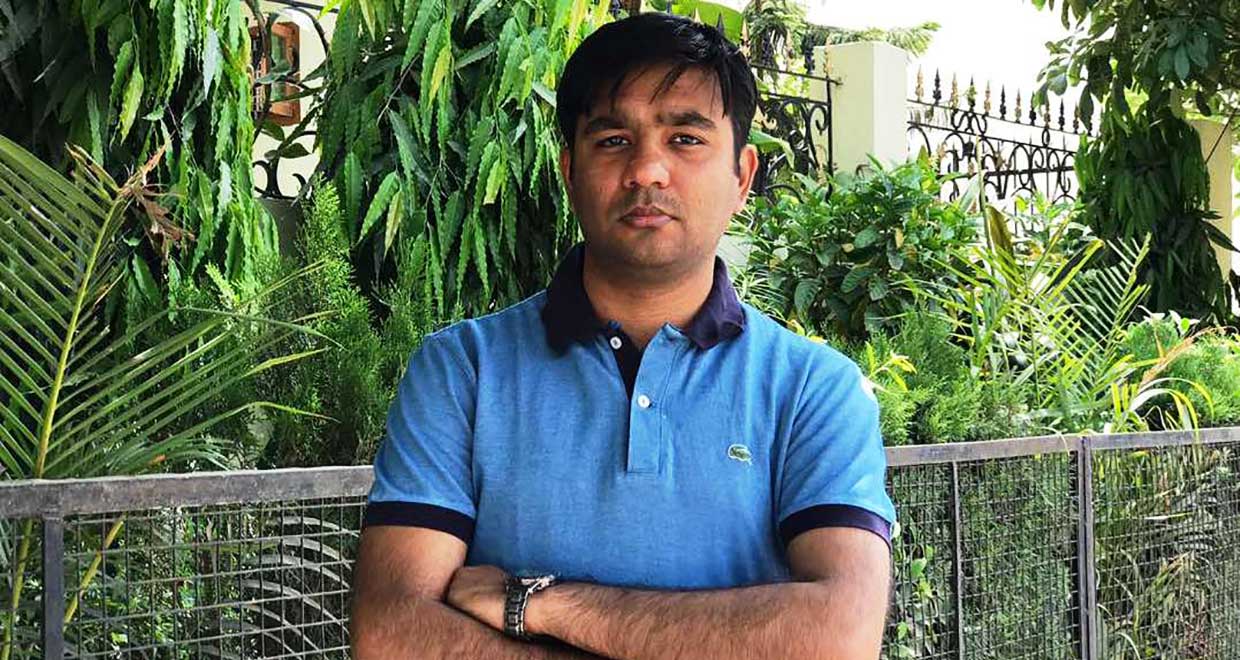
  • Chaitanya Ramachandran, Legal Counsel-India, Twitter, on technology and law, and his experience

    Chaitanya Ramachandran, Legal Counsel-India, Twitter, on technology and law, and his experience

    Chaitanya graduated from NLSIU in 2009. After a successful stint at Clifford Chance LLP, he went on to pursue his Masters at Stanford Law School, with a specialisation in Law, Science and Technology. He is currently Legal Counsel (India) at Twitter, where his role entails managing litigation in courts throughout India, drafting and negotiating commercial agreements for all Twitter products, services and partnerships, advising on Intellectual Property, Privacy and Data Protection law, developing and enforcing robust corporate governance policies, and developing and delivering training programs on Twitter policies and processes for both internal and external audiences.

    In this interview we speak to him about:

    • His time at NLSIU
    • Marrying law with technology
    • His experience at Twitter

    What would you like to say to our readers in the manner of an introduction of yourself?

    I’m a technology lawyer and work for Twitter, where I lead the Legal function in India.


    What inspired you to take up law?

    I was always interested in computers and technology, so as a senior school student I did briefly consider engineering. But I noticed that hardly anyone I saw studying engineering in India actually ended up becoming an engineer; the “engineers” all seemed to end up in finance, consulting, management, or pretty much anything other than actual engineering. So I quickly realized that it wasn’t for me. Around the same time (this would have been around the 10th standard), I started to become interested in law, largely owing to interesting and vigorous debates in the media about the controversial laws of the time (the Prevention of Terrorism Act being a notable one). I also knew a few seniors who had been admitted to the five-year law programs, and their accounts of law school life sounded very appealing to me! I’m not a first-generation lawyer, but my family was quite supportive.


    Tell us a bit about your time studying law at NLSIU.

    I have fond memories of my five years at NLSIU. I wasn’t particularly fixated on academics to be honest; it was the non-academic pursuits that captured my imagination. Quizzing was foremost – I have always been a quizzer, and NLSIU has a very rich tradition of quizzing. It was an honour to have been part of that tradition, and to have been part of Bangalore’s quizzing scene, which is India’s finest. Another interest that developed at NLSIU was writing – I wrote a few articles on technology law, and was involved with the publication of the Indian Journal of Law and Technology (IJLT) in its formative years. I also spent a LOT of time listening to music and discovering new artists and genres! Looking back, it was a fun, relaxed time when I was mostly free to explore whatever interested me.

     

    Could you tell us about the internships you took up, and what you learnt from those experiences?

    I don’t think I was very serious about my internships. I did one per year, which was the minimum amount required. Three of those were litigation internships in Delhi, where I experienced every level of practice from trial up to the Supreme Court. While I worked with some truly accomplished and supportive seniors, I realized that litigation as a career wasn’t for me. I didn’t enjoy the chaos and wastage of time that are an inescapable part of the day-to-day practice of litigation in India, nor did I see myself thriving in the increasingly aggressive milieu of the Bar. So more than anything else, my internship experiences steered me away from a potential career path – not that that’s necessarily a bad thing!


    What advice would you give students in avoiding a decision paralysis?

    Go with your gut. If you are reasonably engaged with what’s happening at law school, you should find your inclinations emerging naturally during the five years. As you learn what interests you, seek out more research, writing or internship opportunities in that field, and if you can, reach out to people in the field to learn more about what they do. Perhaps most importantly – don’t do something just because other people are doing it. That’s probably the single worst reason to do anything.


    Tell us about your early professional experiences at Clifford Chance LLP. 

    The transition was difficult. In addition to the transition from student life to working life, I also had to contend with the transition from India to a completely new culture. But my main motivation in signing on with Clifford Chance was to experience living and working overseas, so I met the challenge willingly. What appealed most to me about the big London law firms was that all trainees are required to rotate through three or four practice areas in the first two years, which gives you a pretty comprehensive overview of legal practice when you’re fresh out of law school. I also got the chance to spend half a year in Brazil on secondment, which was a fantastic experience. These experiences built my confidence in being able to do business across borders and cultures, which is central to what I do today. In retrospect, another thing I appreciate about these early experiences is that one tends to develop good working habits in the type of demanding work environment that firms like Clifford Chance offer, and these stay with you later, even if you eventually choose to move on to something different.


    Did you have a mentor or guide during the formative years of your career?

    I didn’t have a mentor, which I suppose isn’t surprising because I became interested in technology law when it was a brand-new, mostly unknown field, and nobody was making a career out of it, at least in India. It really took off in India only about five years ago, and today there’s no shortage of people in the field whom law students can seek out for guidance. Based on my experiences, I don’t think it’s necessary to have a mentor. What’s important is getting to know yourself and what makes you tick, and creating opportunities for yourself. A strong drive and quality work product will help you get noticed. I’ll also add that I’ve been very fortunate to have had some extremely supportive bosses at every stage of my career – at Clifford Chance, Amarchand Mangaldas, and now at Twitter – who have encouraged me to follow my chosen path and provided sound advice when I needed it.

     

    What motivated you to pursue an LL.M?

    Two things. The first was that I knew relatively early in my law school career that I wanted to make a career out of technology law, and a specialized degree seemed like a good way of embarking on that path. The second was that I wanted to experience a foreign academic culture and learn from the world’s leading minds.


    How did you keep up with the challenging academic rigor at Stanford?

    I think attending Stanford has been the single most important decision that I’ve taken in my career to date. “Rigor” is the right word – the LL.M. was a very demanding course for me. But staying motivated was never a problem; US law schools allow you to design your own LL.M. program, so I was only taking courses that I was genuinely interested in. “All killer, no filler!” In fact, the real problem at Stanford was that I was interested in more courses than I could realistically take during the LL.M. year, so deciding which courses not to take was a conundrum. Stanford Law School allows you to take courses outside the law school as well, so for the first time in my life I was able to experience a bit of non-legal higher education! Another standout part of the Stanford experience was that my professors were all world-renowned authorities in their field, and my fellow students were an extremely accomplished bunch, so the classroom environment was excellent. That encouraged me to put in the work to be able to come into the classroom and hold my own, day after day.


    How would you compare your LL.M experience with your under grad legal education in India?

    The difference is stark. The pedagogical cultures are fundamentally different. Five-year law schools in India are focused on classroom teaching. The vast majority of your time as a student in a US law school is spent in self-study, and you come into the classroom to both refine and question what you have learned on your own. US law schools make huge demands on your time with respect to reading, and focus much more on primary materials including case law and statutes. This helps greatly with the transition from studying to practice, as knowing your way around a judgment or statute is such a fundamental skill in practice.


    How did you come to work with Amarchand Mangaldas? 

    Having tossed my hat over the wall of technology law, I wanted to work with a practice that would allow me to specialize in this field. The team at Shardul Amarchand Mangaldas (which was still AMSS at the time I joined) was in the process of building out their technology practice (which was then housed within the policy and regulatory practice), and I saw this as a good opportunity to start the next phase of my career. Over two years at SAM, I got to do some very interesting work with a client base that included some of the world’s leading tech companies, and was also exposed to industry bodies and Internet institutions like ICANN and ISOC, which I remain engaged with today. I also had two incredibly supportive bosses in Mr. Shardul Shroff and Mr. Sandip Beri, who encouraged me to pursue my chosen path and gave me the opportunity to prove myself.


    How do you deal with the massive challenges of representing one of the most important social networking sites world over?

    (Chaitanya is Twitter’s first Counsel in India.)

    It never gets boring, that’s for sure! Twitter is a unique place, and I never cease to be amazed by the ways in which our users are constantly reinventing how they use our platform; to joke, to speak up (or speak out), to connect with like minded strangers, to share information at the speed of light, to stay connected with what’s happening in the world. I often have to deal with difficult legal issues where the law provides little to no guidance and there’s no ready solution, which is precisely the kind of challenge I thrive on. It’s also a privilege to work for a company that shares my own values – that free speech is valuable and worth defending. I always find my work engaging due to the inherent nature of Twitter; the legal issues I encounter are closely connected to current events in India and beyond. When work gets especially demanding, I stay motivated by remembering that what we are doing is giving every person in the world a voice –an idea that has gone from being absolutely unthinkable to indispensable reality within my own lifetime. That’s powerful stuff.


    On what parameters do you choose the projects you work on? 

    These days, as an in-house lawyer, I don’t have much room to choose – I have to deal with whatever crosses my desk! Though as someone who has always wanted to work in tech, I find most issues I come across at Twitter very interesting. In previous roles, I definitely tried to build up a corpus of work in my chosen field, and was fortunate enough to have access to clients that offered exactly the type of work that I wanted to do. I’ve learned that you must proactively seek out the type of work that you want to do – don’t count on it finding you. While fresh-faced graduates may not have a huge amount of choice right off the bat, this becomes easier to do with more experience.


    Could you take us through a typical working day at your office?

    I don’t think I’ve had a single day at Twitter that has gone perfectly according to plan! Nevertheless, to give you a representative example, I typically start work early and catch up on my inbox and the news. I try and reserve technical work like marking up an agreement or reviewing a litigation draft for this time of the day, when I’m at my freshest. I may have a Hangout scheduled for mid-morning with one of my internal business clients, where I’ll bring them up to speed on the current status of their ongoing deals, and learn about other deals that are in the pipeline. I may then move on to reviewing requests from various parts of the company that I need to approve; these could be anything from supplier contracts to press releases to creatives for an upcoming ad campaign on the platform. While my colleagues and I always talk about having a sit-down lunch at one of the many restaurants nearby, this mostly remains a pipe dream, and I usually only have time to grab something from one of my favourite shops or food trucks and catch up on Twitter or The Economist. Post-lunch, I may have a regular Hangout scheduled with one of my international counterparts in the Legal organization, after which I’ll usually try and check off the remainder of my list of goals for the day – perhaps complete a piece of legal research, respond to a customer or internal client, or work on an internal company policy or process that’s being updated. I’ll then try and beat the notorious NCR traffic on my way back home, where I’ll resume attacking my list and catch up on my inbox. Later that night, I may have a cross-time zone call with our headquarters team and outside counsel to set our strategy and prepare for an upcoming court hearing. I’ll hopefully end the day feeling that, while not everything may have gone to plan (there are always surprises and emergencies that you can’t account for), I made meaningful progress on my goals for the week.


    What books, judgements that you have read would you say have played an integral role in shaping your legal philosophy?

    I’d say my philosophy has been strongly influenced by the writings of three lawyer-statesmen: Thomas Jefferson, for his conception of individual liberties and their central role in society as well as his mastery of the written word; Jawaharlal Nehru, whose idealism and clarity of purpose shone through vividly in his writings; and Lee Kuan Yew, whose warnings about the essential fragility of civilization and the dangers of populism seem especially prescient in 2017.

    With respect to my day-to-day work, a book that has influenced me greatly is High Performance with High Integrity by Ben Heineman, which I was introduced to as a student at Stanford. It is essential reading for in-house counsel, and I strongly recommend it to anyone who is interested in this line of work.


    What are the key attributes that one must develop in order to excel in this industry?

    I think the key skill for in-house lawyers is being a good listener. The outcome that we are always pursuing is helping our business colleagues achieve their goals while simultaneously protecting the interests of the company. Listening well helps you identify potential risks and ask the right questions. An added benefit is that it helps you learn something new every day, especially at a large, diverse company where you’re surrounded by colleagues working on amazing stuff that’s well outside your comfort zone as a lawyer. The only way to develop this skill is to practice it everyday.


    How do you manage your time between your professional and personal interests? 

    I’ve learned that you have to make the time for the things you value in life – no one’s going to hand it to you. Music is my first love; when I’m not at work you’ll probably find me playing or tinkering with one of my guitars.

     

    How do you keep yourself updated about the latest developments in law?

    On Twitter!


    What advice would you like to give our readers, who are mostly law students and young lawyers?

    I don’t know how qualified I am to give advice, but since you’ve given me a soapbox, I’d encourage anyone reading this to be original and follow their own interests within (or outside) the law, wherever they may lead. I often turn to a great quote by Phil Knight that has pride of place outside the Stanford Graduate School of Business: “There comes a time in every life when the past recedes and the future opens. It’s that moment when you turn to face the unknown. Some will turn back to what they already know. Some will walk straight ahead into uncertainty. I can’t tell you which one is right. But I can tell you which one is more fun.”


     

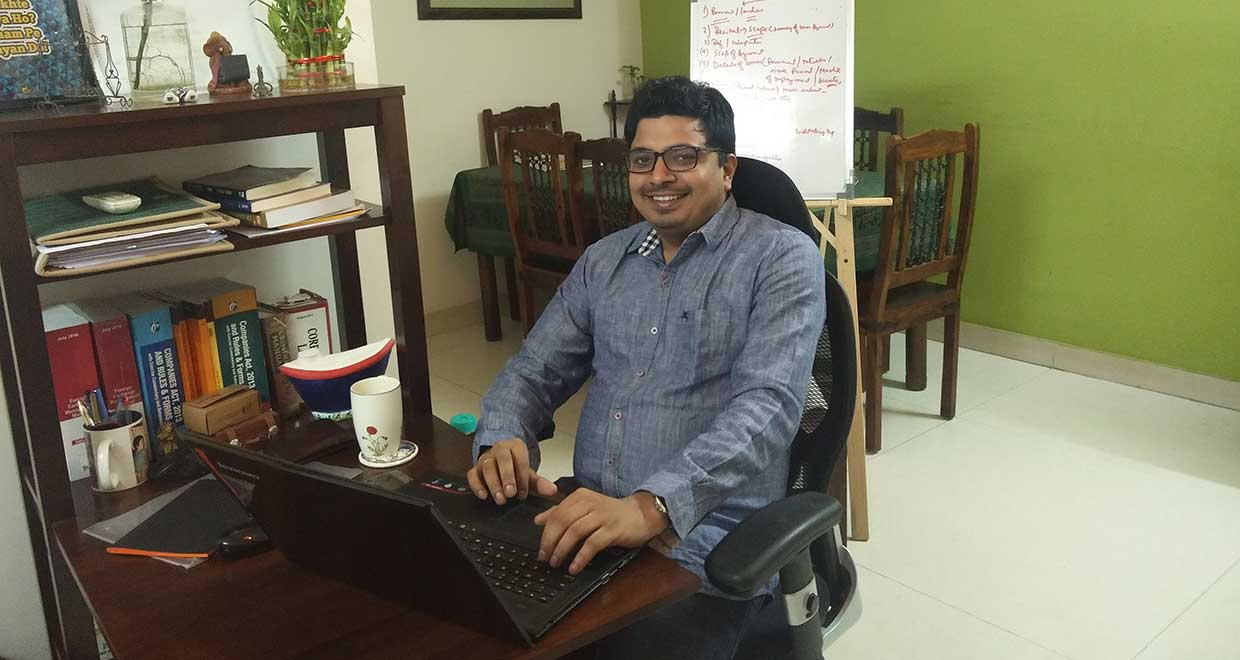
  • Sarvesh Saluja, Senior Associate, Trilegal, on working at Khaitan & Co., corporate law, and the need for an LL.M

    Sarvesh Saluja, Senior Associate, Trilegal, on working at Khaitan & Co., corporate law, and the need for an LL.M

    Sarvesh Saluja graduated in law from Vivekananda Institute of Professional Studies affiliated to Guru Gobind Singh Indraprastha University, in 2008. He then went on to pursue his Masters from Kurukshetra University and holds a Post Graduate Certificate in Cyber Laws from Indira Gandhi National Open University. After successful stints at The Practice, ibibo Group, PAV Law Associates, BT Telecommunications, Khaitan & Co., and Accenture, he is currently Senior Associate at Trilegal, where his role entails advising on various aspects of telecommunication, broadcasting and information technology regulations like interpretation of terms of various telecom licenses like UASL, UL, Audiotex License, OSP Guidelines, uplinking and downlinking guidelines, M&A Guidelines, spectrum trading and sharing guidelines, IT Act etc.

    In this interview we speak to him about:

    • His expertise in media, telecom, and technology law
    • The importance of pursuing an LL.M
    • His experience thus far

    How would you like to introduce yourself to our readers?

    On the professional front, I am a corporate lawyer specializing in Telecom, Media and Technology matters. On the personal front, I am a sports junkie. I follow most sports and try to take out time for some sports like cricket which are very close to my heart.


    Did you feel like not being from an NLU was a disadvantage in any way?

    Nostalgia kicks in when I think about law school days. They were an eclectic mix of varied influences and activities. Activities in law school comprised moots, paper submissions in addition to the usual classes and the most important of all, college banter. I think the diverse activities and influences shape your personality in addition to your professional skills. Personally, I did not face any discrimination because of the lack of NLU tag. Most law firms judge you based on the work done. Having said that, having the tag of a prestigious institution comes with its advantages but one has to follow up with good work to actually build on the advantage.


    What were the activities, academic or otherwise, that you undertook in your law school days which in your opinion have shaped you and your career?

    I was an active participant in various moot courts organised by our college. Also, we had a regular system of court visits. I think the court visits and the moot courts got me acquainted with the level of persistence required in the profession.


    What kind of internships did you engage in during your student years?

    My internships were a heady mix of court practice and corporate law firms. I think the initial internships were more about finding out the fields which excited me and the later ones were about trying to gain a perspective on the work and tasks to be performed. I think all my internships gave me a perspective about various facets of law. I feel that the experiences gained at various internships lay down the foundation on which an individual can shape up the career.


    Are LL.Ms absolutely necessary for a career in law?

    I do not think that LL.Ms are an incumbent for a career in law unless one is looking to go towards academics. An LL.M program requires you to delve deeper into the areas of law one chooses. So in effect, one gets to do a lot of work and research on the chosen topics. Also, one gets to interact with a variety of people and gain perspectives which enhance the networking skills.


    What in your opinion are the factors to be taken into account by a student while choosing a field to specialize in?

    I feel that specialization comes in much later. A student should try to gain experience in at least the basics of law before going in for a specialization. One should take into account, I think, one’s aptitude and strengths. Also, one should also be very careful about the anxiety to jump into a specialization very early in career as the basics are something which cannot be ignored.


    Could you give us some insights on working with a tier-I firm like Khaitan & Co.?

    Khaitan is a truly professional law firm in every sense of the word. Khaitan gave utmost emphasis on looking for pragmatic solutions for clients and building a relationship on the basis of good work. I think the work culture and timings in most Tier-I firms revolve around the requirements of the clients. However, in terms of mentorship and colleagues, I think I was fortunate enough to work with some exceptional mentors and colleagues in Khaitan.


    What should the CV of a student aspiring to land a corporate job look like?

    A student should try to build in ample internship experience in corporate law firms/ corporates to land a good corporate job. Having said that, other activities like moot courts, court visits and being part of various committees carried out in college also count and one should build up an impressive array of activities to be put in a CV.
    I am a firm believer in the notion that during the formative years one should try to get into as many varied internships as possible. Also one should interact with the professionals in the field to gain perspective about the work and understand the finer nuances of the profession.


    How do you say interns should go about their work at a firm like Khaitan & Co., so as to get noticed in a positive way in the limited time they have?

    Due to heightened competition for slots in Tier-I firms like Khaitan and Trilegal, an intern has to be really pro-active. The earlier measure of just performing the given tasks has been upgraded and now the emphasis is on the analytical capabilities, smart work and ability for value add. I think these factors would help interns get noticed in a positive manner.


    Tell us about your current work profile with Trilegal.

    My current work profile in Trilegal is a mixture of the general corporate and TMT work wherein I am involved in both transactional work and regulator advisory. A typical day starts much before reaching the office when I read the e-mails and make plans for the work to be done. The timings hover depending on the requirements of the clients. A typical day would involve drafting, internal discussions and research on various aspects.


    What is your message to our readers?

    As a parting message, I would like to quote Justice Joseph Story who said, “The law is a jealous mistress and requires a long and constant courtship. It is not to be won by trifling favors, but by lavish homage.”

    In the present context, I believe this quote has become even more relevant and would go to the extent of saying that it is not only the lavish homage which is required but a lavish and consistent intellectual homage which is required to win it over.

  • Abhiraj Krishna, Founder, Abhiraj Krishna Associates, on independent practice, and e-commerce law

    Abhiraj Krishna, Founder, Abhiraj Krishna Associates, on independent practice, and e-commerce law

    Abhiraj graduated from NLIU, Bhopal, in 2009. Soon after, he joined the Mumbai Office of Khaitan & Co. While with Khaitan, Abhiraj worked on diverse client matters, on domestic and cross‐border mergers and acquisitions, private equity and business transfers. Abhiraj advised many domestic and international clients, on entry options in India and assisted them in setting up businesses in India by advising them on key structuring issues with respect to Indian law including foreign exchange regulations in India. He is currently sole proprietor at his independent venture, Abhiraj Krishna Associates, which aims to provide participative and facilitative legal solutions to business eco-systems in India.

    In this interview we speak to him about:

    • His time at NLIU
    • His experience at Khaitan & Co.
    • Venturing into independent practice

    How would you like to introduce yourself to our readers?

    My professional credentials aside, on an aspirational note, I would always like to be introduced as a lawyer with solutions. And as a business facilitator and somebody who takes the stress out of the legal practice but not seriousness.


    Give us a brief overview of your NLIU experience

    The NLIU experience is fundamental to the development of my overall personality. Law school years are the foundation blocks and so this experience would always remain precious for me. At the cost of sounding a little grandfatherly, I would like to emphasise that law school experience is far more than just legal learning. This is the time for you to involve and engage with the argumentative and reflective side of you. It is this that you carry forward in your life.

    One thing that was distinct at NLIU during our time there was that things were not always easy. The institution was still in its evolutionary stages (from both infrastructure and public perception perspective). Since we knew that things were not always easy to get, we always had the zeal to go that extra mile and we learnt how to wait. The relationships we built then, we carry with pride till today. I am not talking about only my wife, Aditi (who was my batch mate in law school), but also our faculty, office staff, helpers everyone. The immense diversity in terms of social and cultural background of students at NLIU instilled in us acceptance for all. And the ability to hear, understand and appreciate other perspectives. These are real learnings.


    What are the subjects that you took particular interest in during your law school days?

    I have always been the type to be interested in philosophy courses. I was one of those in law school who was often caught reading Kafka, the one who was often told by everyone to stop the gyaan! No wonder then that I have many nicknames around that. So, yes, I had a keen interest in courses that reflected on the philosophy of law like the courses in English (that was more Law and Literature Course), sociology of law, jurisprudence, etc.
    To be honest, these fundamental courses have gone a long way even in developing my practice of corporate law. The methodology of analysis learnt through these humanities courses lay the foundation of going beyond the book. I think this is absolutely critical when you want to expand your practice.


    What kind of internships did you undertake during your student years?

    I have interned at a variety of places, State Human Rights Commissions, SEBI, Khaitan & Co, Talwar Thakore & Associates, district courts and High Courts. I don’t think there is any strategy for internships. However, in my view, five years at law school with approximately ten months of internship is a great time to peep into various practice areas. The best part about legal education is that it opens a whole set of career opportunities. The more you explore the better it is. It is important that you love what you do and it’s difficult to find real love in the first shot. So keep exploring. However, it is still recommended, especially if you are purely applying for jobs through campus or otherwise, that by the start of fourth year you start focusing on internships in the area that you want to work on.


    In your opinion, what are the law school centric activities that you would recommend as necessary experiences for every law student?

    Anything and everything that you are interested in. I am too small to comment on the requirements of being a successful advocate. We all are students and will always so remain. There is so much to learn and explore. I am of the view that this “balanced CV” issue is overhyped. In this profession, you are as good as your last deliverable. So, you would actually not carry your grades, moot-court certificate, or papers anywhere. What you can carry is your learning from them. Having said that, you have to justify your law school stay to your perspective employer. Not doing anything may not be the best option if you’re looking for a job.


    Growing up, did you have a mentor?

    I have received so much guidance from so many people that it is difficult to single out names. But yes, my mother is my constant source of inspiration. My wife, Aditi, is my biggest critique and a pillar of strength. Life is a beautiful gift and legal knowledge is a very effective tool in adding to not only your beauty (through hard-earned money) but also for really creating a positive impact in your client’s business and/or life. This realisation itself is a very positive and inspiring thought.


    What does it take to make the cut and land a Tier-I job?

    (Abhiraj had previously worked with Khaitan & Co., one of the most sought after firms for placements by students, as a Senior Associate.)
    For one, I was amongst the top students (in terms of grades) and had previously interned with KCO. However, ours was a very difficult time in the wake of recession (2008-2009), so it was a lot of divine grace in my case. Law firms today are looking for aptitude and attitude. At times, where we are already discussing artificial intelligence, conventional ways of looking at legal practice of only having certain CGPA/ papers is slowly becoming redundant.


    How significant is Grade Point Average with respect to recruitment at Tier-I firms?

    This is a first indicator of a student’s seriousness, so it is relevant. The first level filter. Grades do not show how intelligent you are but it is a good indicator of how diligent you are. So, it is important to have good grades but that number/rank race is irrelevant.


    What or who motivated you to take the leap of faith to found your own consultancy firm?

    It was an individual phase-wise evolution. Whatever legal practice I have is from my learning at KCO. However, there came a time where I decided that it is time for me to move and concentrate on the areas of law that I am passionate about. I still get a lot of guidance from my seniors at KCO. My father (who was a law professor himself) used to tell me always that in legal practice, if you do not have confidence of earning your bread and butter from independent practice, then don’t expect a law firm to give you a job. They will require you to earn at least four parts so that you can take one part for yourself.

    AKA just happened. Really, I did not think this through then and I am fairly instinctive about this even now. I am fortunate that corporate leaders and institutions have shown faith in my work. I just endeavour to deliver to the best of my ability. This is a long journey. But it is fulfilling and I am enjoying it. This is all what matters now.


    Do you provide internships at your office?

    Yes. We do have a comprehensive intern guidance program. We are open to both in-office and remote working arrangements. We have commenced recruitment and are primarily looking for freshers. The quality we seek is appreciation and eagerness for learning; don’t say no to any work. Since we are not receiving huge amount of applications at the moment, we really don’t need to apply the grade filter


    What does your regular working day at AKA look like?

    To be honest, a typical day is as busy as any corporate firm. Multiple matters are underway at any given point in time. However, we try to keep it as stress free as possible. Removing unnecessary formality in the way of our functioning, we have a relaxed work culture. We do a lot of regulatory structuring / start up advisory so there are lots and lots of discussions. Challenging new developments present themselves every day.


    If given an opportunity, what would you do differently in your career journey up to this point?

    Nothing. The only blunder one can do is to believe that there can be any blunder in career. It is an evolution. There is always a U turn, few miles away. Don’t restrict yourself in any stereotyped images. Experience, explore, then firm up your mind.


    Is there any other suggestion you would like to give to our budding lawyers?

    The legal profession is a very demanding one. You have to enjoy this journey to sustain. While money is a good reason to choose corporate law, it is not good enough to sustain your practice of law. Find your own path. Try opening a PPF account as soon as possible-patience, perseverance, and faith. This account is helping me realise my dreams. It may also be helpful for you.

  • Rupesh Mishra, Assistant VP-Legal, Everstone Capital, on being In-House Counsel, working at Khaitan & Co., and his experience

    Rupesh Mishra, Assistant VP-Legal, Everstone Capital, on being In-House Counsel, working at Khaitan & Co., and his experience

    Rupesh Mishra graduated in law from National Law Institute University, Bhopal, in 2007. After a successful stint of approximately seven years at Khaitan & Co., he joined Everstone Capital, a South East Asia focused private equity fund and presently works as Asst. Vice President – Legal (Private Equity) at their Bangalore offices. He focuses his expertise on private equity and venture capital investment, joint ventures, mergers and acquisitions, strategic alliances, foreign investment laws, and general corporate law advisory work.

    In this interview we speak to him about:

    • His time at NLIU
    • Working at Khaitan & Co.
    • His experience thus far

    How would you like to introduce yourself to our readers?

    First and foremost, I would like to thank SuperLawyer for this interview. By way of introduction, I was born and raised in Rewa, Madhya Pradesh, a district town better known for white tigers. In my free time, I like to spend most of it playing with my one-year-old daughter, Miraya, helping my wife with her ventures, and reading fiction.


    Tell us a bit about your time as an undergraduate at National Law Institute University, Bhopal.

    It is indeed a great privilege to attend an NLU. Law school was a massive platform for me both in terms of personality development as well as career opportunities. During the five years, I had the good fortune of reading and understanding law and literature, I met some brilliant minds and inspiring characters, and made some friends for life. Overall, law school was full of fun, friends, aspirations, hard work and, of course, a race to score grades.

    Did you take part in co-curricular activities while in college?

    (Rupesh has represented his law school at the Philip C. Jessup International Law Moot Court Competition.)

    I used to play volleyball, did a few plays, participated in moot courts and essay competitions and wrote a few articles. However, I feel that I could have done much more than this. Co-curricular activities are a medium to express various traits of your personality. It also helps in learning team work, coordination, management, organising skills, etc.

    The Philip C. Jessup International Law Moot Court Competition was probably the biggest event of my law school life. It was the first and only time I participated in a moot court competition. I would like to offer my sincere gratitude to the two speakers of my team who preferred me as their researcher. I think we were a remarkable team. We were really thrilled after qualifying for the international round particularly because it was the first time our university qualified for the international round of Philip C. Jessup International Law Moot Court Competition. The feeling of representing our nation and university on an international platform was incredible.

    The entire process was enriching. It was amazing to witness law students from around the world approaching the same problem in various different ways with their unique style of arguing. It was a great confidence booster for me. It also helped in refining my research and analytical skills which have always been noticed and appreciated throughout my professional career.

    What were your areas of interest during your legal education?

    During the law graduation course, I was more inclined to substantive laws than procedural laws. Contract law, constitutional law, corporate laws, public international law, IPC were my favourites. I developed an inclination for corporate laws in the last two years of the course when I was sure that I will pursue a career in corporate laws.

    What are the causes you feel strongly about?

    I feel strongly about wildlife and nature. I believe that it is our duty to preserve them for the future generations. I am associated with a few NGOs which support these causes.


    What advice would you give students in avoiding a decision paralysis?

    I am always in favour of more education. It is always a plus to your personality and legal acumen. If one has the time and resources, he/she should definitely pursue higher studies without comparing its utility and returns in monetary terms. In my view, going for further education after four to five years of work experience is a better choice.


    From a law student to a lawyer, how will you describe the transition?

    Transition from a law student to a lawyer is a gradual process, not an event. It is about responsibility, accountability, coordination, professional conduct, discipline, etc., which you learn over a period of time. Due to the guidance and support of people with whom I worked during my initial professional life, it was quite a smooth transition for me. According to me, perseverance, hard work and discipline are the keys to success.

    Could you please share with us your early professional experiences at Khaitan & Co?

    At Khaitan & Co. my core area of practice was M&A and general corporate advisory. I also worked extensively in the areas of education law, NBFCs and real estate laws. I feel fortunate to be picked up by Khaitan & Co. on day zero of campus placement. In 2007 when I joined Khaitan & Co., it was not as big as it is today. There were a handful of lawyers in M&A and the general corporate team. I had the great privilege of directly working with the managing partner as well as other senior partners of the firm. This helped me immensely in terms of exposure, client management, time management, quality of deliverables, etc. The overall experience with Khaitan & Co was enriching. It laid a strong foundation for my professional career going forward.

    After seven years at the firm, what I can say for sure is that there is no short cut for success; you should keep working towards your goals every day, and over a period of time you will definitely see favourable results.


    What prompted you to take up a position at the Everstone Capital?

    I was always fascinated by the position of a General Counsel, the kind of respect they command inside and outside the organization, their business acumen, their practical and holistic approach towards any legal issue and tremendous risk assessment ability.

    After leaving Khaitan & Co. in April 2014 and shifting base to Bangalore due to personal reasons, I came across this opening at Everstone and decided to go for it. I was particularly impressed with the job profile (mainly the private equity related work, which I enjoyed doing in the law firm as well) and the unique opportunity to get a first-hand experience of private equity business. Today, after working at Everstone for more than two and half fruitful and successful years, I can say that I am a better ‘business’ lawyer. I am glad I took the right decision at the right time! Everstone has a very strong in-house legal and secretarial team. My role as an in-house lawyer is professionally very different than an associate’s role in a law firm. My role is more about risk management and enabling the business to maximize opportunities within its risk appetite. As in-house counsel, I have to move beyond the narrow technician tag and be a proactive and trustworthy partner rather than someone who is reactive and deals with a problem when they arise. Also, there is a great sense of partnership at Everstone—where all functions support each other extensively—as well as support Everstone’s partners such as its portfolio firms and its advisers.

    Right from the non-disclosure agreement and term sheet stage, I am actively involved in drafting and negotiation of definitive documents, monitoring the transaction and implementing the process and systems to achieve the desired outcome in light of my knowledge and understanding of the “bigger picture” of the company’s operations, in coordination with my very smart colleagues and inspirational seniors. Further, I am also responsible for coordinating with and managing multiple work streams such as bankers, legal counsels, tax advisors, internal investment team, finance team, secretarial compliance, etc. This is an exciting experience and allows for great learning. I also help the portfolio companies with legal advice or documentation from time to time as and when required.


    Could you share with us the process you adopt from choosing a research question to writing the article?

    I prefer to write about contemporary issues. There are a couple of processes through which I choose a topic. Firstly, if I have to deal with any peculiar issue as part of any transaction or otherwise, I like to share my research and learning about that issue in the form of an article. Secondly, if there is a new legal development which may have a significant impact on my practice area, I like to share my thoughts about that as well. After selection of the topic, I think about the readers who will be interested in that subject matter. Depending upon the category of readers, I decide the scope, content, and language of the article. Once these things are sorted out and I have a synopsis ready, I start working on the content of the article. For that, I do extensive research and speak to experts to get their practical inputs. Once the first draft of the article is ready, I share it with at least one subject matter expert and someone from the target readers’ community for proof reading and inputs.


    What does a typical working day look like for you?

    There is nothing like a typical working day, every day in office is different. The beauty of private equity is that no shortage of action, especially at an active and highly professional firm like Everstone. There will always be something exciting happening either in the form of potential investments, live deals, exits or portfolio management. A regular working day will involve discussion with business folks on new investments, live deals and exits opportunities, working on NDAs, LOIs, terms sheets, transaction documents and some advisory work for portfolio companies. Further, given that in a private equity firm you are surrounded by many investment professionals, I spend a lot of time discussing and understanding business and market related matters on a daily basis. This helps in honing my commercial and business acumen and the investing professionals at Everstone have a great depth of experience and are very supportive.


    Did you have a mentor or guide during the formative years of your career?

    Yes, I had a few mentors during the different phases of my career. It was a mix of senior folks in the law firm, friends from law school and close family members. In my view, it is vital to have someone around with whom you can share your doubts or problems and who can guide you towards the right path. Having said that, one should not expect that someone else will steer your boat away from troubled waters. That is something you yourself have to do. A mentor or guide can help you with developing the right perspective and a balanced approach to various things but at the end of the day, you have to execute and implement those learnings.


    Where would you like your career to take you five years down the line?

    Five years is a long time and it is difficult to predict anything right now. I am extremely satisfied with wherever I am and what I am doing presently. I wish to continue this momentum and keep discharging my responsibilities with utmost enthusiasm and excellence. In terms of career goals, as an in-house counsel, I am particularly looking forward to enhancing my domain knowledge and acquiring the right skill set to manage and resolve disputes. Further, I look forward to developing expertise in the domain of new laws relating to food products, pharmaceuticals, e-commerce, payment systems and taxation.


    Given the dynamic nature of the field you practice in, how do you keep yourself updated about the latest developments in the law?

    I religiously read at least one business newspaper every day to keep myself updated with current affairs. Apart from that, I read newsletters circulated by the Big Four firms and certain law firms on important legal developments. I also visit websites of key regulatory bodies such as SEBI, RBI, DIPP, FSSAI on a weekly basis to track any new circulars/notifications. Further, I read the IPO prospectus filed by the companies with SEBI in detail to understand different sectors and regulatory environments relevant to that sector.


    Do you observe a paradigm shift in the demand for In-house counsels with large companies beefing their in-house legal teams?

    Over the last ten to fifteen years most corporates and financial institutions have come to realize the benefits of having a dedicated legal team and now we see teams of more than just a General Counsel, with many hiring specialist lawyers with niche skills. Today, there is a trend to do more internally than externally. This trend is underpinned by proven cost savings and growth in complexity and risk in modern business models and industry-specific regulations which often need a lot of practical experience to deal with. Often the best response is to have expert lawyers in-house.

    Although the internal legal teams continue to expand due to solid demand for in-house counsels with five to eight years’ post-qualification experience, I believe that there is still room for growth. A lot of large companies still have just one or two lawyers and people still do not know the value that a good in-house legal department can bring because they just go to lawyers when they have a problem and do not have coherent internal processes and procedures to stop them getting into problems. I do hope that there will be an improvement in demand and supply of in-house lawyers. Everstone is one company that really understands the importance of in-house counsels and put them to very good use.


    What would be your advice to current students aspiring to be an in-house counsel and why?

    Contrary to the general perception, being an in-house counsel is no less challenging than being a lawyer in a law firm. Start with being a great lawyer, and then develop the other skills that may prove essential to your career choice. In-house counsel can be a great stepping stone for those who want to be further integrated into the management of an organization. Just like law firms, in-house counsel departments vary significantly in terms of their size, resources, work-life balance and a variety of work. Based on my limited experience in each role, I have found that both positions provided me with tremendous learning opportunities and helped me develop different sets of skills that are applicable to the practice of law, whether it is at a firm or in-house. In short, as with any career decision, there are always advantages and disadvantages. The decision to move to an in-house role is certainly not for everyone and depends on each individual’s personal preferences and career goals. For me, joining Everstone as part of their in-house counsel team was a great step and learning opportunity. Moreover, the opportunities in in-house or in private practice vary significantly and exist across a spectrum rather than as two discrete options. At the end of the day, finding the perfect job is as much of an exercise of introspection as it is an external search.


    Is there any other suggestion you would like to give to our budding lawyers and corporate law enthusiasts?

    Dream big and dare to achieve it. Corporate law practice is not rocket science. Anyone with strong domain knowledge and decent drafting and persuasive skills can do really well. Be original and never lose your identity in the process. Do not let failure go to your heart and do not let success go to your head. Have fun and enjoy every bit of the journey.

  • Shweta Bharti, Senior Partner, Hammurabi & Solomon, on management, studying at Harvard, and her diverse experience

    Shweta Bharti, Senior Partner, Hammurabi & Solomon, on management, studying at Harvard, and her diverse experience

    Shweta Bharti graduated in law from the Faculty of Law, University of Delhi, in 2002. She then went to Harvard Business School to pursue the Executive Education Programme. Shweta is currently Senior Partner at Hammurabi & Solomon and possesses experience of close to fifteen years in dealing with litigation and dispute resolution.

    In this interview we speak to her about:

    • Marrying law with management
    • Being Senior Partner at Hammurabi & Solomon
    • Taking time out for pro bono work

    How would you like to introduce yourself to our readers?

    A learner of law with an insatiable hunger to learn and excel and give my heart, soul and energy to all the matters that are being dealt with by our firm. I have been trained as a litigator and have handled crucial legal battles on behalf of clients based out of India and abroad. Being a first generation lawyer and having been thrown into an ocean of opportunities, I have learnt to swim against the tide and have thoroughly enjoyed the journey so far.

    What are your areas of specialisation and how did you go about choosing these fields?

    My interest in law developed while doing my B. Com (H) from Indraprastha College for Women, Delhi University, where I got exposed to certain areas of law, viz. Contract Act, Companies Act and Income Tax Act. I found the subjects intriguing and decided to pursue law as a career option, and also decided to do my Masters in Business Administration (since I was already working as a Executive-Business Development). As luck would have it, I got married to a lawyer who not only encouraged me to complete my course but also advised to start working as a paralegal in order to learn the basics of law while studying the subject, which would enable me to have a better understanding of the applicability of certain laws. I thereafter left my job and devoted my time pursuing law. It was then that I decided to pursue litigation, idolizing my senior colleagues, looking at the manner in which they convinced the Judges and moulded the judgments in their favour. That inspired me to opt for litigation and since then the journey has been long and interesting.

    The passion for dispute resolution developed over a period of time after attending to a few matters which gave opportunity to analyse the subject in further detail. The informal set up of resolving critical disputes with arbitrators to pursue parties to resolve the disputes in an expeditious manner was the key to dispute resolution. However, over a period of time, it is also a fact that Dispute Resolution mechanisms were only used by scrupulous litigants to buy time. While domestic arbitrations have been a huge learning, the maximum learning came from the ICC Arbitrations where the Arbitrators are particular about timelines, precision and detailing of filing the paperbook and where the expeditiousness along with quality delivery is the key.


    How were the first few years after your graduation?

    The initial years after coming out of Law College were extremely challenging with exposure to various facets of law which were alien to my knowledge and curriculum. I was trained to understand law but the implementation of that understanding was something that was new and challenging. While law college taught me the nuances of law, the real training came from the years I spent as paralegal, where I was involved in critical matters and got to observe how the law was to be interpreted and presented before the Court of Law, also developed research and drafting skills which enabled me shape my career as Lawyer.


    How do you think your managerial education has helped in furthering your career in law?

    (Shweta has engaged in a fair bit of managerial studies, from reputed institutions like Harvard Business School.)

    Being a  lawyer in today’s time also requires strategic knowledge and expertise besides the legal skills. In this age of globalization, to have the combination of law and management can hugely enhance one’s career prospects. Also considering the demand for combination skills, it definitely has its perks to have a degree in both, law and management. While managing your law firm, the business skills are of utmost importance, though it is hugely undermined by law schools and colleges. We are prepared and trained to be lawyers, but we are not prepared to be managers. Being a Senior Partner of a law firm requires you to be a Manager having the ability to handle organizational challenges, which can be as varied as Human Resource Handling, Business Development, Finance and Billings and Recoveries, etc. The art of managing an organisation is not necessarily an inherent skill, and the same has to be developed over a period of time. The managerial education enabled me to acquire those abilities.

    In the earlier times, lawyers considered it below their dignity to seek/solicit work from clients and they believed that if you have the skill set, the clients shall walk up to you on their own. Further, if you notice, the pouch behind the lawyers’ gown was meant to put whatever fees the client deemed appropriate considering your arguments advanced before the Hon’ble Courts. However, as ways of conducting business changed, the culture of running multinational companies trickled down to law offices as well. Now lawyers are akin to entrepreneurs where they need to hone their organisational skills as well and if required hire specialists in their organisation to handle the various organisational facets. However even in such circumstances, it has become imperative to have the managerial knowledge in order to ensure achieving the desired results.

    What is the ideal time for a student who’s looking at pursuing an MBA after their legal education–right after law school, or after a few years of practice?

    It is best to pursue your MBA after a few years into practice of law, since it is only at a higher rung in the ladder that you are expected to deliver both your legal as well as the business/entrepreneurial skills. It is necessary to mention here that not all the lawyers have managerial skills, which is a completely different ball game. Also with the demand for in-house counsels rising, having a management degree gives you a competitive advantage. Many such in-house counsels are also now taking up the role as the CEOs of the companies.


    Are there institutes in the country that offer joint degrees in law and management?

    (With IIMs in India being harbours for IIT graduates and with a bare minimum legal crowd, their courses and entrances are also being structured for engineering students.)

    Presently there are only a few institutions offering LLB-MBA degree. NALSAR is one of the pioneers to offer a combination of law and business qualifications. NLU, Jodhpur offers an MBA (insurance), and is amongst the first ones in the country to offer the combination of business and law. There are a few universities offering BBA-LLB degree but still the offering is a far cry as compared to the present day need.

    Do you offer internships at Hammurabi & Solomon?

    We do offer internships at Hammurabi & Solomon and have had interns from various law schools. We also have a Fellowship Programme, where the final year students can engage themselves with the firm full time for a period of six months and upon their successful completion of thep rogramme, are inducted into the team as lawyers. They are paid a stipend during this period and I have personally found this Programme to be a win win for both the learners as well as the firm since we are able to understand the potential of a candidate while the learners get the opportunity to learn on the job the nuances of law and its practical application.


    What does a regular day look like for you?

    My average working day as Senior Partner requires me to fulfill both my roles, as a lawyer as well as manager efficiently while creating a balance between both the critical aspects. Any dereliction in either responsibility has its own downfall and thus creating the right equilibrium is the key to success. My daily working has its unique challenges and thus am compelled to set my priorities for the day straight early in the day. The targets are set and thereafter I get rolling with completing my assignments one after another. There are days of high adrenaline when the deadlines are super imposing and there are cheat days when I do get some time to read something interesting I have been postponing for a while. The day is a mix of team meetings, Court/Arbitration hearings, Client meetings and thereafter also handling the day to day administrative challenges related to Human Resources, Finance and Billings, Recoveries, Business Developments etc.


    What is your success mantra which has helped you balance your hectic professional life with your social life? 

    (Shweta is also a very active member at various international forums including the International Bar Association (IBA), Organization for Economic Co-Operation and Development (OECD), Inter-Pacific Bar Association (IPBA), Society of Indian law Firms (SILF), I-Tech Law, Legal & Tax Summit of Indian Power Producers Association of India (IPPAI) on Nuclear Liability Bill, International Academy of Law on Competition Law, International Indian Bar Association on new business laws of India to name a few. Shweta is also writing a contribution for a German Federal-News- Publisher –‘Bundesanzeiger verlag’ regarding the compliance laws in India. She is also acting as the External Female Member of the Complaint Committee formed by various organisations pursuant to the Vishakha Guidelines laid down by the Supreme Court of India, in order to put in place a grievance redressal mechanism against sexual harassment of women.)

    Our profession is extremely demanding and leaves very little room for any other engagements. However as we grow in the profession the ideologies with which we are brought up also demand satiation. That was the motivating factor to get engaged with causes related to societal impact including women empowerment. My understanding is that the real success is in making the lives of others better in whatever manner we can. As lawyers we have developed a skill which can be utilised to make the lives of those downtrodden women for whom law is unaffordable a little better by fighting for their rights. Our pro bono works have been much acclaimed and we aim at continuing our good work for the betterment of our society. The only mantra is hard work. There are no short cuts in this profession. The more hard work we put into the profession the better is the outcome. Also the hunger to excel is a huge driving force and keeps us striving for doing better. I am hugely inspired by the legal luminaries and reading through their biographies, I have noticed a common thread running through their successes and that is the attitude of giving back to society. All of us are duty bound to give back to society from which we gained so much. That is a huge motivation in itself and keeps me going through the tough and challenging times.


    What is your message to our readers?

    My message is short and crisp, endeavour to excel in whatever you do. Patience, perseverance and persistence always pays, and the only shortcut to success is hard work.

  • Arijit Bhattacharyya, Assistant Manager/Senior Consultant, PricewaterhouseCoopers India, on working for the Big Four, and his diverse experience

    Arijit Bhattacharyya, Assistant Manager/Senior Consultant, PricewaterhouseCoopers India, on working for the Big Four, and his diverse experience

    Arijit Bhattacharyya graduated from Symbiosis Law School, Pune, in 2010. After successful stints with Softcell Technologies Ltd., and AXA Business Services Pvt. Ltd., he went on to work in the capacity of Consultant- Risk Advisory Services (TMT) at Ernst & Young LLP. Currently, he is a TMT Lawyer and a Business Consultant currently deployed in the Risk Advisory Services LoS of PwC specialising in providing ITeS clients advisory services overlooking areas of Overseas Expatriate Taxation, Employee Mobility strategy and policies. He regularly advises clients on regulatory compliance of employment, payroll tax and mobility laws of predominantly Americas and Europe region.

    In this interview we speak to him about:

    • Working at two firms out of the coveted Big Four
    • Striking work-life balance
    • His experience thus far

    What inspired you to take up law? 

    While there was no such resistance from my family and acquaintances, there was a lot of doubt / suspicion regarding the career path I would eventually follow. I am a first generation lawyer in the family and no one in my immediate family is associated with law or legal practice. However, when I was starting to prepare for my 12th board exams, I was specialising in commerce, two of my seniors were trying for national law schools through various entrance tests. There was no CLAT back then and each law school conducted their own entrance tests. One of my seniors cracked NALSAR and I was bit by the curiosity bug. I researched about the five year integrated law course and the diverse career options it comes with. My parents were supportive of the fact that I took one whole year off just to prepare for the entrance exams and after a year of preparation I finally got into Symbiosis, Pune. Symbiosis was a good and established brand and thus I went ahead with the admission formalities.


    Tell us a bit about your time studying law as an undergraduate student at Symbiosis Law School, Pune.

    I hail from a small town in West Bengal, and as such soaking up the popular Pune culture took time. Law as a discipline was new to me. Nevertheless, I managed to stay afloat academically while participating in various extra-curricular activities throughout the first two years of college. During my first year, I participated in a cultural exchange programme titled “Lexus Nexus Symphony” and went on to participate in fests such as Mood Indigo – IIT Bombay. My grades improved drastically third year onwards as I got a foothold on the exam pattern as well as when specialised subjects were introduced like International Law, Corporate Finance, Accountancy and Taxation. I took a general liking towards the specialised subjects in which I scored more.


    What were your areas of interest during your legal education? 

    My areas of interest during my law school days were a mix of subjects. I took general liking towards International law, Company law and Taxation. Naturally, my interest in Company law paved the way for my inclination towards regulatory compliance. However, in practice, my short traineeship in Legasis Partners opened up Regulatory Compliance as a viable practice area. Nevertheless, it has taken me seven years to gain a foothold in the Regulatory Compliance domain. While on the domestic front Regulatory Compliance is seeing frequent enforcement now, the scenario is very different in global markets with enforcements being conducted by enforcement agencies frequently. Hence, subsidiaries of Indian companies run the risk of getting pulled up by enforcement agencies quite often. Very few people know that Regulatory Compliance as a career choice is equally rewarding.


    Could you tell us about the internships you took up, and what you learnt from those experiences?

    Of all the organisations I interned with, my memorable experiences are when I had interned with Victor & Moses, a full service law firm based out of Kolkata, and Tata Steel, Mumbai. Both the internships were very enriching and taught me the everyday nuances of a corporate lawyer’s life that I am leading now. More than expertise, these internships taught me the schedule of a corporate lawyer and the various roles you need to juggle with when at work. I would not be honest if I mentioned that the above internships imparted expertise in the truest manner, as, you need to intern with a particular law firm twice or thrice to gain a foothold in any particular subject matter.

    What advice would you give students in avoiding a decision paralysis?

    Rather than choosing to study further immediately after completion of graduation, I would suggest students to focus on choosing the right place of work where for the first three years, one would learn from their seniors thereby acquainting themselves to a particular service area. Any further study should be taken up by an individual only when he/she has a foothold over an area of specialisation and want to probe more into the subject matter. Further, in light of the present day recession, the pros and cons should have been measured by the individual regarding the return on investment. This according to me is the practical choice, however, choices differ and ambitions vary from person to person, hence this is very much subjective to individual choices.


    From a law student to a lawyer, how will you describe the transition?

    The transition from a law student to a lawyer has not been smooth. Each day was a learning for me. Law schools invest heavily on the theoretical knowledge and do not prepare you with the practical knowledge of advocacy as well as advisory. Time and again the in-house counsel roles have changed to include popular business skills such as risk evaluation, risk management, data analysis, excel skills and cost evaluation.

    When it comes to a career in a Big Four advisory firm, the gamut of skills that you should be equipped with change drastically. Apart from soft skills, one should be very skilled in evaluating numbers and should at least have a basic idea of data analysis. I had to invest a lot of time in learning number crunching, excel analytics, advanced excel and data analytics for my roles in EY and PwC. As assignments in Big Four advisory are shorter in nature, one has to be very through and precise with knowledge pertaining to the regulatory risk area, its impact and the enforcement risk.

    What are some of the key nuances that are often overlooked in drafting and research?

    There is only one guideline to drafting and research and that is “attention to detail”. Any research work or drafting assignment should be properly thought through, comprehensive in nature and should not end in a rush. Remember, that even after checking the document n number of times there can be improvements made in the document and mistakes discovered.


    What prompted you to take up a position at the Ernst & Young LLP?

    The Brand itself was a deciding factor. EY is a leader in consulting, tax and audit not only in the global arena but in India, it tops all the other Big Four firms in terms of revenue, ranking, growth and employee strength. Moreover, EY was always a dream job for me. Bagging EY gave me recognition amongst my peers and even boosted my confidence. I owe my practice area and specialisation to my learning in EY. A regular year at EY would constitute of specialised trainings, business simulations and learning academies for honing business consulting skills.

    In EY I was part of the TMT team overlooking Technology sector and occasionally Telecommunications. I was part of the largest Technology team servicing a client list of who’s who of ITeS industry, NYSE listed organisations and Fortune 500 Companies. As a consultant, my primary job was to conduct third party regulatory assessments of overseas subsidiaries of ITeS companies in the areas of Employment, Immigration, Payroll tax and Data Protection laws, highlighting red flags, suggesting process improvements and cost saving initiatives. This aside, there were other assignments as well which kept me busy, such as compliance framework services for ITeS clients and contract risk review projects for Telecom clients.


    What was the experience of meeting with the Global CEO of Ernst & Young and sharing stage with him like?

    Typically, throughout school and college extracurricular activities have always kept on interesting me. Similarly, in EY I got the opportunity to be a founder member of an in-house rock band named RAAGA. Being a self-taught guitar player I play electric guitar mostly in my leisure time, and had the opportunity to participate in college fests during my early college days. However, when there was an announcement by a HR team member in the induction regarding registrations being sought for musicians, I couldn’t help but register myself. Over the next year and a half, the Partners at EY were supportive enough to invest in full studio equipment for us and we did host some of the memorable in-house rock shows in EY. One such in-house performance was scheduled specifically for the visit of the Global CEO and on completion of our show, we were greeted by him personally. He literally spent two minutes talking with us on stage. That was a priceless moment for me and would always remain etched in my heart. Meeting and talking to the Global CEO of an organisation like EY doesn’t happen everyday.


    Tell us about your present role at PricewaterhouseCoopers.

    The core service area and target clients I cater to has not changed much from my stint at EY. As an Assistant Manager / Senior Consultant, I now have got the opportunity to delve more in the practice areas that interest me. I am a subject matter expert of Overseas Expatriate Taxation and primarily specialise in leading third party regulatory compliance assessments of overseas subsidiaries of ITeS companies in the areas of Expatriate Taxation, Employee Mobility strategy and Regulatory compliance with employment, payroll tax and mobility laws of predominantly Americas and Europe region. PwC has offered me the opportunity to diversify my industry expertise to include Pharma clients as well. A routine yet significant part of my role also covers training of junior resources as well as taking part in sales pitch and other business development activities for my practice.


    What does a typical working day look like for you?

    A typical working day would start at 10:00 in the morning and go on till 10:00 / 11:00 in the night during peak season. However, there are regular shorter days at work during the lean season. My work profile includes meeting and interacting with clients, understanding their business needs, their business model, operations and business functions in order to add value to my services.

    Every single day at work is unpredictable which is why working in a Big Four is severely competitive and interesting as well. There are lots of multitasking required on a daily basis as one may be working on multiple projects/assignments at the same time. Time management, attention to detail and soft skills are of essence as there are stringent deadlines to be met more often and you have to be on your feet constantly.


    Did you have a mentor or guide during the formative years of your career? 

    I did have a mentor and guide during my college days and also during the early days of my career. In my college days it was my senior at college Adv. Boudhayan Bhattacharyya. While on the career front it was Apurva Amitesh who helped me develop my core expertise in regulatory compliance. It is certainly important for anyone to have a role model and a mentor to guide you during the early days of your career. It helps you to learn important skills from your mentor as well as prepare you for future roles.

    How do you manage your time between your professional and personal interests? 

    My interests outside law are motorcycle touring and playing guitar. Though time available is very limited during a working week, I do follow my interests and hobbies on weekends. I strictly take an annual vacation of ten days at the end of the year to strike a balance between leisure and work.


    Where would you like your career to take you five years down the line?

    Well I sincerely want myself to be regarded by my clients as one of the finest TMT lawyer and Business Consultant in the global employee mobility space.


    Is there any other suggestion you would like to give to our budding lawyers and Corporate law enthusiasts?

    Once you have chosen law as your career, at least by your fourth year be certain of the line of practice that you would want to pursue after graduating (advisory, academia, law firm, in-house counsel). Be sure to intern in a law firm more than once and keep exploring lines of service which interest you. Chances of landing a pre-placement offer with any law firm increases once you have interned with the law firm at least thrice and have been able to demonstrate keen interest in a specific area coupled with commitment to better your prospects in that area. In any case internships should be strictly limited to law firms as you learn more in a law firm. And like I said earlier, be focused on choosing the right place of work where for the first three to four years, you would learn from your seniors and get acquainted to a particular service area.

  • Kuber Dewan, Senior Associate, DMD Advocates, on Dispute Resolution, commercial litigation, and his experience

    Kuber Dewan, Senior Associate, DMD Advocates, on Dispute Resolution, commercial litigation, and his experience

    Kuber Dewan graduated from Symbiosis Law School, Pune, in 2008. After a brief stint with Khaitan Sud & Partners [erstwhile Khaitan Jayakar Sud & Vohra (KJSV)], he moved to DMD Advocates (erstwhile Dutt & Menon), New Delhi, where he works in the capacity of Senior Associate. His primary practice area is dispute resolution-litigation. He has represented the firm’s clients across fora, which involved appearing in and arguing matters before Courts and Tribunals, research, drafting and drawing up pleadings, submissions, notices, briefing & assisting Senior Counsel and research.

    In this interview we speak to him about:

    • His time at Symbiosis
    • His involvement in landmark cases
    • His experience thus far

    What would you like to say to our readers in the manner of an introduction of yourself?

    I have been practising in New Delhi since July 2008 and have been engaged with DMD Advocates (formerly known as Dutt & Menon) since November 2008, where I am currently retained in the Dispute Resolution team. My role involves representing the firm’s clients in arbitrations and commercial litigations across fora.


    Are you a first generation lawyer?

    While I would not say that I come from a family of lawyers (my parents are not lawyers), I do have a fair number of lawyers in my family, each of whom has played a contributory role in my choosing law as a profession.

    Tell us a bit about your college days at Symbiosis Law School, Pune. 

    Well, college days at Symbiosis and college days at Pune, while interrelated, are completely different and separate topics of discussion. Symbiosis had a course structure and execution thereof, which was unlike any other institution at the time, and the faculty was extremely supportive. No testimonial to Symbi is complete without special and specific mention to a couple of Professors who etched themselves in the memory of probably each and every one of my batchmates – one who took upon himself to introduce all of us to the creature known as The Law of Torts – calling upon each student by name, never making a mistake, never losing his temper – even at my tardiness in keeping to the time table as I was always late for his lecture, every single day (Torts was the first lecture of the day); the other, a practising lawyer, who took the time (and the pain) to explain, not teach (figure the difference) the concepts of the law of contracts. It was by reason of such institutions within an institution which made Symbi a great platform for legal education.

    Pune on the other hand, was a forum where I was introduced to the myriad cultures of the country, in that I had the opportunity of meeting and befriending individuals who hailed from different parts, each carrying with them cultural nuances, which I had never been exposed to in my school years in Delhi. It was also the first step towards actually growing up. The lessons learnt aren’t available in paperback or otherwise – they flow from the experiences lived. The friends and acquaintances gathered, have to a large extent shaped me to be the person I am today.


    Did you take part in co-curricular activities while in college? 

    Co-curricular activities are important in everyone’s life – not limited to a law student, I feel. That said, I have to confess that I was not very active with respect to co-curriculars in my college days. Barring participating in a singular moot court and two conferences organised by the college, I was not very active within the college – outside was a different story.


    How did you make the decision between Litigation and Corporate practice?

    To be honest, I did not know what people meant when they referred to “Corporate Lawyers” or “Corporate Practice” till I completed my first year. To my mind, the practice of law meant only that which involved studying in a chamber and appearing in court. Having learnt the distinction, the decision for me was a no-brainer, I had to get into the actual practice of law (no disrespect to corporate lawyers). While many may disagree and counter, my personal (and by no means popular and/or exhaustive opinion) is that the litigation practice is more dynamic and impactful, involving an incomprehensible number of variables and lastly is just down right exciting.


    Could you tell us about the internships you took up, and what you learnt from those experiences?

    I personally feel that internships are an extremely important part of a lawyers’ education. You can’t learn how to ride a bike by only reading about it can you? My initial internships were not participatory– I would merely shadow the lawyers whom I was training under; picking up tips & tricks along the way. Slightly smarter and better read, my internships during my third to fifth year, were where I had the opportunity of actually feeling like a lawyer – being knee deep in research and drafting (let’s not get too excited, they were just notes). Internships are a window into the profession. They may help a law student decide which field – litigation or corporate – they fancy and/or are better suited to.


    What advice would you give students in avoiding a decision paralysis?

    While further studies are never a bad option, it is a very individualistic choice – depending always on what direction a law student is looking to head in. It is therefore, in my view, important to first gather a year or two of experience in the profession before taking a call on whether or not to pursue further studies – be it an LLM, MBA or any other course. If a law student has the opportunity of pursuing further studies, that too overseas, the least s/he will take away from such a course would be experiences and insights of individuals from different parts of the world (or different ‘jurisdictions’ as lawyers would enjoy calling it) and develop a great network, which is invaluable for a lawyer, litigator or corporate.


    What influenced your decision in taking up a position with Khaitan & Khaitan [formerly Khaitan Sud & Partners]? 

    The decision was a guided one. 


    What was the transition like, from a law student to a lawyer?

    It’s not a transition – it’s a rude shock! From a happy-go-lucky attitude to suddenly waking up and smelling the coffee, quite literally. Initially it is a little tough to get your bearings, but you manage to settle in after a while. A whole lot of responsibility is thrust upon you all of a sudden, but you have to learn to cope with it – involves a little bit of growing up. The thrill of the first paycheck versus the monthly pocket money from home, lets you know that you have arrived.


    Do you think it is important to have someone to look up to and guide you during the initial phase of your career?

    Yes, but it is being betrayed by the roaring success that first-generation lawyers are achieving.


    What was the nature of work you took up during your time at Khaitan & Khaitan?

    Primarily research, miscellaneous/minor drafting, appearing before the Trial Courts, appearing before the High Court (seeking pass-overs and adjournments), assisting my seniors, senior counsel and the like.

    Though I was there for a short time, I picked up a lot – the mentoring style was to throw you into the deep end – the surest and quickest way to learn; which is something I appreciate to date.


    Tell us about your experience working at DMD Advocates?

    Diverse. Rigorous. Founded by two very passionate and dedicated lawyers, Ms. Dutt and Ms. Menon, both of whom I credit for shaping me into the lawyer and the person I am today, have taken the firm from its humble beginnings to the high powered juggernaut that is DMD today. The dedication and passion towards each and every matter inspires the best out of everyone. The smallest of court cases or transactions receives the same kind of attention and importance as the highest stake ones. You learn to appreciate that no work is too small or unimportant. Client satisfaction is paramount. At DMD it’s not just about winning the prize, but also about learning and respecting the game.

    The culture here is very unlike any other firm, where you are allocated into a particular team, ‘specializing’ in a particular area – at DMD, you are always in the ‘pool’ not settling into a particular stream or kind of work – the idea being that you should be a well-rounded lawyer – able to answer any query put up by a client. As a result of which I have had the opportunity to experience pretty much the A (Arbitration) to Z (Writs) of law, being involved in everything from Aviation cases, Arbitration & Commercial disputes, Consumer disputes, Tax matters, Mining matters to maritime & shipping related cases. Obviously, as you gain more experience and develop a skill-set associated with a particular field, you tend to lean more towards that particular field, which is appreciated and encouraged at DMD. The partners are always there to guide you, irrespective of seniority and the mentoring process is ongoing, at every level.


    What are the challenges and learning opportunities that you were faced with in your career as an advocate?

    No lawyer can ever claim to know everything. The practice of law is an ongoing education. Every brief, every case, every transaction, there is something new to learn. Each new case is a challenge. There is always a new question, a new issue, a new problem – if not new, it’s always different. You have to keep yourself abreast with the latest developments in law, constantly read up case law, familiarize yourself with commentaries, articles and publications. Attend seminars (or webinars, which are gaining popularity).


    What does your role entail at DMD Advocates?

    As a member of the Dispute Resolution practice at DMD, I am engaged with representing the diverse international & domestic clients of the firm in corporate commercial litigation and arbitration matters, across fora. The job entails drafting, research, engaging & assisting Senior Counsel, appearing before various judicial and arbitral forums including the Supreme Court of India.

    As for my involvement in the arbitration practice at DMD, it has always been an area I have been keenly interested in. I enjoy reading case law dealing with the various aspects of arbitration. Commentaries are a great source for guidance. However, at the end of the day, there is no better teacher than experience. You learn something new and fortify earlier learnings, with every step forward that you take. I am also actively involved in the aviation practice of the firm – another area of interest – I mean, who isn’t fascinated with aeroplanes!


    What does a typical working day look like for you? 

    My method of preparation for a hearing, whether I am to appear myself or assisting counsel, is pretty simple and straightforward – read the brief cover to cover, prepare notes, read and ready the case law, make notes. Making my own notes obviates the need to re-read the entire brief before every hearing – you cannot afford to waste time revising the entire matter before a hearing; quite often you have multiple matters listed before different courts, yet your time for preparation is limited. It is however extremely important to update your set of case law before every hearing. You do not want to end up citing a judgment that has been overruled. The research and case law are very important to your case. I was told very early in my career that, a lawyer who does not have/bother to carry judgments for the hearing, should not bother appearing.


    Having appeared before the High Courts and the Supreme Court, could you share with us some interesting cases that you have worked on?

    During my tenure at DMD I have had the great fortune of appearing in cases which have made their way into the law report (and at times, the headlines). The front runner being the Vodafone case against the Income Tax department [(2012) 6 SCC 613]. The preparation for the matter was, to say the least, very taxing. Other interesting cases, which have been reported are Arun Dev Upadhyay v. Integrated Sales Service Ltd. & Anr. (NP) [(2016) 9 SCC 524], Petromarine Products Ltd. v. Ocean Marine Services Co. Ltd. [(2015) 7 SCC 229], GE India Technology Centre Pvt. Ltd. v. Commissioner of Income Tax [(2010) 10 SCC 29], Safmarine Container Lines N.V. v. Amita Enterprises & Anr. [197 (2013) DLT 181], Naval Gent Maritime Limited v. Shivnath Rai Harnarain (I) Ltd. [174 (2009) DLT 391], A.K.G. Exim Pvt. Ltd. v. Efesan Demir Sanayi Ve Ticaret A.S. & Anr. [164 (2009) DLT 341] – covering diverse questions, ranging from maintainability of appeals, enforcement of arbitral awards, applicability and effect of the provisions of the Income Tax Act, 1961.

    Other cases that I am currently involved with at DMD, involve questions of, inter alia, the setting aside of arbitral awards, the challenge to the enforceability of foreign awards in India, the interpretation of the provisions of the Multi-State Co-operative Societies Act, 2002, the interpretation of the provisions of the Electricity Act, 2003.


    How do you manage your time between your professional and personal interests?

    I enjoy watching movies in my free time – science fiction, thrillers, action and adventure are the broad genres. I find watching movies to be a great way to unwind after a days’ work. Unwinding is very important for a lawyer. You are constantly wired while you are at work, with a dozen and more thoughts running through your mind. When you leave the office, you need to leave it all behind – else you will lose your sanity!

    Reading fiction used to be a habit that which I have now lost touch with. Reading is a very important habit that every young lawyer must develop. You could read fiction, non-fiction, pretty much anything that suits your fancy – after all, the profession requires copious amounts of reading.

    Another interest I harbour is that in automobiles – be it ogling at and drooling over super cars, or just driving around; I find it to be a great way to relax (difficult to believe with Delhi traffic – but the right kind of tunes can take your mind off that).  


    Given the dynamic nature of the field you practice in, how do you keep yourself updated about the latest developments in the law?

    Reading – case law, commentaries, newsletters, articles, blogs, pretty much anything one can get their hands on. I subscribe to weekly newsletters which provide the latest developments, legal reporting websites, which provide daily updates on the happenings in the profession and quite often also carry very informative articles published by respectable names.


    What advice would you like to give our readers, who are mostly law students and young lawyers?

    I will preach what I try to practice – read – case law, commentaries, newsletters, articles, blogs, pretty much anything you can get your hands on. Subscribe to weekly newsletters – todays’ technology has made information very easily accessible – there is no excuse for not being informed. While the trend today is to come up with on-the-spot research and answers, one should never forget that the learning and understanding to be gained from books, cannot be substituted by your favourite search engines.

    If you are in law school, take your internships seriously – they are the windows to the world that you are planning to step into. Once you have entered the profession, you have to be prepared to make sacrifices. Your time will not be your own. Your life will not be your own. You have to develop & possess the dedication to put your profession before yourself.

    That being said, remember the age old saying, work hard and party hard, Counsellor.


  • Anirban Sen, Litigation Attorney, on bridging the gap between technology and policy, and IP Law

    Anirban Sen, Litigation Attorney, on bridging the gap between technology and policy, and IP Law

    Anirban Sen graduated from Symbiosis Law College, batch of 2004. After serving at the Calcutta High Court as Advocate for three years, he went on to purse his Masters from George Washington University Law School, specialising in Intellectual Property Law. He is admitted to the New York State Bar Association as well as the American Bar Association. He is currently Advocate at the Courts of Delhi.

    In this interview we speak to him about:

    • Marrying technology with law
    • Studying in the US
    • His experience in IP Law

    How would you like to introduce yourself to our readers?

    I am an all-round general litigation lawyer although I have specialised in both IP and Technology laws as well as Media and Privacy laws.  My hobby had been to build electronic gadgets since my early school days, and later to write computer code.  In some ways I think I still know more about computers and technology than I know about law. However, having actually studied and practised law for so many years, I enjoy the opportunity to explain one field of knowledge to people from the other field. Usually, technical persons do understand the law to some extent, but usually lawyers fail to move beyond the basics of technology.  Hopefully, this will change soon.


    What is unique about the B.S.L., LL.B course that you undertook, and how did it contribute to your career in law?

    The B.S.L., LL.B. course is a 3+2 year course which was available at Symbiosis Law College under Pune University. There was a two-fold advantage to this course.  As a science student in 12th standard, I had never studied subjects like Sociology, Political Science or Economics which create a good base in the understanding of law. Secondly, there was an option to just get a B.S.L. course and then study a different postgraduate degree.  The unique advantage in studying towards a B.S.L. degree is that the subjects help your understanding of the law and its social implications.


    To what extent does one’s GPA affect one’s chances of landing jobs in top firms?

    Grades are unfortunately very important.  It doesn’t matter if you get good grades, but very bad grades will make you look poor in the corporate law world.  Of course a better grade may just get you that interview that you have been eyeing, but internships hold more value in deciding who would be hired.  Of course, if you interested in a career in litigation and want to start apprenticeship under an advocate, what matters most is your understanding of the courts, followed by knowing how and where to look up the relevant law.

    What subjects did you take particular interest in during your law school days?

    As far as law school (LL.B.) degree goes, I did not take particular interest in any one subject. Of course, I found Constitutional and Administrative Law to be the bedrock of litigation, but subjects such as Evidence and the Indian Penal Code were interesting too. Interest in a subject may not affect career choice in India but rather how much of what you know.


    What were the activities, academic or otherwise, that you undertook in your law school days which in your opinion have shaped you and your career?

    For me it was having a keen mind that shaped both me and my career.  Those days there weren’t that many options. I wasn’t particularly interested in mooting.  But I did read, a lot.  Mostly news and current affairs.  Those days there was no Google or Facebook or Twitter. News sites and periodicals kept the interest alive.  I also kept up my interest in building electronic gadgets and writing computer programs which later helped in realising that lawyers and technophiles are largely a mutually distinct group. During my Masters’ degree, I wrote a paper on governing virtual reality given the speed with which immersiveness of artificial, interactive media was increasing. Yes, in India this may take some time to evolve, but once the prices come down, there would be rapid adoption and the law would be far behind.


    Who was your mentor, or main source of inspiration who motivated you all along the way?

    I did not really ever have a mentor or single source of inspiration. I have worked with many different lawyers with different philosophies towards life.  However, I found my father’s way of working to be the most balanced in terms of both working hard and enjoying life. Although he is a Barrister-at-law and Senior Advocate, he can mix with anyone with ease and regularly takes out time to visit new and interesting places every year and I am happy to accompany him.


    What kind of internships did you engage in during your student years?

    I did only three internships in my last two years of college, each in a different city.  The different environments of different cities also contribute towards one’s career.  Since each was a different type – firm, individual, and Delhi litigation (Supreme Court), and offered me a unique perspective at the time and age, I wouldn’t trade one for the other.


    Would you say higher studies are relevant for a career in litigation?

    LL.M.s per se really don’t have much value in litigation. However, a good college (at least in the U.S.) imparts far more knowledge than a five year course in law here does and I would highly recommend one as a course which can help a person grow. Also, in later life, the Master’s degree helps.  Add to this the thrill and the opportunity to study with international students is something to look forward to. And when it’s all over, it’s simply great to have friends from all over the world.


    Which universities in your opinion, offer a worthwhile L.L.M program in IP law?

    There are many universities offering good programs, but The George Washington University Law School is one of the best in IP law.  That said, a candidate has to marry their interests with what a law school offers and this requires an in-depth, time consuming research – both online and through students of those colleges.


    Which is the ideal time to do an LL.M?

    An LL.M. should ideally be done after two or three years of practicing law in courts.  It gives one better focus and the habit of addressing courts goes a long way in posing critical questions to professors in class.  For someone in corporate law or in-house practice, an LL.M. can be done even after five or six years while on a planned sabbatical. That said, if one is so inclined, there is no set age limit for broadening your educational horizon.


    Tell us about your work experience at Anand & Anand where you’d held the position of Senior Associate.

    This position helped me understand how Delhi courts worked and  acquainted me with the Delhi style of practising law. Although short, I really enjoyed my time there.


    Between Calcutta and Delhi, which city do you feel is more receptive to a newbie in litigation?

    Each city has its pluses and minuses.  Delhi is commerce driven and works well in set schedules.  Calcutta allows juniors to address courts easily and the financial stakes of cases are not as high, making it better for a newbie to argue and learn drafting.  The Calcutta style drafting follows more traditional methods and is probably more sound. However, Delhi drafting is more flexible and is focused more on the objective than form.  For a newbie, I recommend working in Kolkata for a few years to gain sufficient experience in addressing courts and arguing matters alone.


    Is there any other suggestion you would like to give to our budding lawyers and IPR enthusiasts?

    Budding lawyers these days are much better prepared than we used to be.  However, I would advise that future lawyers must understand not just the law, but the history and tradition of the profession from seniors.  Law is not a money-making business, but a profession (although many lawyers, especially in Delhi, are amongst the highest paid).  Read up about the life histories of different lawyers or spend time with lawyers you know. Get to know their schedules and how they conduct their lives.  This will help you appreciate the responsibility of not just being a lawyer, but also help you understand how to carry yourself in public. For an IPR enthusiast, get to know the underlying subject as well. To understand copyright, understand how the music business works.  For patents, know the underlying physics or biochemistry. For technology, go to the basics and understand how and where it evolved and why. This will give you an edge over an otherwise simply bookish lawyer and this practice will hold you in good stead throughout your life.

  • Avirup Nag, Partner, IndusLaw, on working with Trilegal and Herbert Smith, and his experience

    Avirup Nag, Partner, IndusLaw, on working with Trilegal and Herbert Smith, and his experience

    Avirup graduated from NLSIU, Bangalore, in 2005. He then went on to receive his Master’s degree under the European Union Erasmus Mundus programme, from University of Hamburg and University of Vienna. Avirup is currently is a Partner at IndusLaw. He is part of IndusLaw’s Energy, Infrastructure and Natural Resources practice, and specialising in power, roads, railways and PPA. He has more than twelve years’ experience in the field of energy and infrastructure advisory, and he regularly advises various Indian and overseas IPPs/project developers on a range of issues relating to development of renewable energy projects, including in relation to development contracts, off-take arrangements, regulatory issues. He regularly acts for financial and strategic investors on energy/infrastructure M&A transactions involving purchase or sale of infrastructure and energy assets (including large portfolio deals, single-asset deals and joint ventures), particularly in the renewables sector.

    In this interview we speak to him about:

    • His time at NLSIU
    • His experience at Tier I firms
    • Being Partner at IndusLaw

    How would you like to introduce yourself to our readers?

    Well, I am Avirup, father of a three year old daughter, and a commercial lawyer specialising in Energy and Infrastructure. I live and work in Delhi, and am a big Manchester United fan. I think that enough to go on for now.


    Why did you choose to pursue a degree in law, amidst the many options that you had after school?

    Honestly, I chose law because of my inability to handle mathematics – I was studying economics and I was bored with all the mathematical models you are required to create to explain any theory in economics. Also, the concept of being a deal maker always fascinated me (although when I left school I didn’t have much idea of what a deal maker is supposed to do – other than wear fancy suits and sit in fancy conference rooms!), and I thought my ineptitude at math will came in the way of going to a B-school after my undergrad degree in economics – so I chose to go to law school instead. I felt that lawyers are deal facilitators and are intrinsically involved in shaping commercial deals, but to tell the truth I didn’t have much idea about what to expect from law school.

    I think one of the problems with the Indian education system is that they make you take the hardest decisions about your life at the time when you have no experience with the outside world.


    Give us a brief overview of your life at NLSIU.

    Honestly, I have kind of forgotten what the day to day life in NLS was like other than the fact that the food was nothing to write home about – I graduated almost twelve years ago!

    However, NLS is a truly amazing institution which lets you discover your strengths and weaknesses. What really comes to my mind when thinking of NLS is “competitive” – the place makes you really competitive and pushes you to challenge yourself, which I think kind of prepares you for the world outside. Also, what I really liked about NLS was the fact that some of the professors (but not all) there really taught you to question things which one would otherwise take as obvious – this really helps when you have to look at structures/proposals and analyse them, it helps you question things others consider ‘standard’ or ‘market’.  The academic schedule at NLS was quite intense and consisted of four courses a trimester which involve four hours of classes every day. The trimester was divided into phases where you either study for your exams (mid-term and final!) and writing research papers that are mandatory for every course, and this kind of keeps you on your toes and teaches you a lot about time management and delivering under pressure.


    What kind of internships did you engage in during your student years which you feel were invaluable to you in reaching your current position?

    Other than two mandatory litigation internships, all my internships were with commercial law firms – I was clear from my third year onwards that I wanted to be a commercial lawyer and not a litigator. I did couple of internships with Trilegal (where I got a PPO).  During my first internship at Trilegal I worked on some aspects of the then new electricity act which really interested me, so after that I did internships with firms with good infra and energy teams and tried working more with the folks working in those fields. So, in a nutshell I kind of chose a specialization really early and tried to get more practical experiences of that field during my internships – this was important since infrastructure and energy laws are not something which were offered as a concentration at NLS.


    Are LL.Ms absolutely necessary for a career in law?

    No, I don’t think an LL.M degree is absolutely necessary for a career in law (unless of course you are taking about a career in legal academics, in which case yes!). While recruiting I really don’t care if you have a LLM or not. My hiring decision will be not made on the basis of the LL.M but on the basis of the LL.B, your aptitude and attitude and your relevant work experience.  

    However, having said that I believe if one wishes pursue a specialisation in some fields of law (like tax, maritime law etc.) or understand the specific technical nuances behind why certain things are structured certain way (such as long term contracts/concessions etc.), lawyers can use the LL.M. to deepen an existing specialization or develop a new one, particularly when their first law school didn’t offer that concentration.  


    Which is the ideal time to do an LL.M?

    I would say the right time to do an LL.M is when you have worked for couple of years, and know that specialisation you want to pursue or which areas of law really interests you. To me, an LL.M is about enhancing your knowledge about a specialised field and increasing your exposure to the world – so you are better off doing it when you are got some practical experience of that field and know what you want from that one year.


    What does it take to make the cut and land a Tier-I job?

    (Avirup had previously worked with Trilegal, New Delhi, one of the most sought after firms for placements by students, as a Counsel.)

    When I joined Trilegal it was a firm experiencing a steep growth trajectory and it was exciting to be part of that – honestly I didn’t have an interview or go through any formal process while joining Trilegal. I had done couple of internships there and got a PPO from them.

    I think what it takes to make the cut and land a Tier-I law firm job (or any job for that matter) is demonstrating or signalling to the firm or the interviewer that you really want it, and most importantly convey to the firm that once in you will be willing to put in the hard work and that your ambition matches that of the firms’.  Be clear on why you want to join a particular firm and show confidence in your ability.

    Personally I don’t have any fixed criteria for assessing a newly qualified candidate – of course for a senior level hire relevant experience becomes key. For NQ hires, what I look for in a candidate is whether he/she feels bad if their work is criticised and take that criticism to improve the next piece of work they give me. Also, I put a premium of how confident they are in defending their work and do they take pride in the piece of work they hand over to me.


    What is the level importance given to a student’s Grade Point Average with respect to recruitment at Tier-I firms?

    CGPA is important, but it is not the be all and end all. CGPA serves as an indication of the capability of the candidate (not always accurately – for example a candidate may have a good CGPA because of good grades in social sciences but may not have done that well in commercial law subjects), but equally important is the sense of confidence, ambition and the commitment to put in the hard work to back that ambition. Also, commercial law firms look for candidates who have a genuine interest in how businesses work and how this may affect the clients the candidate will be working with – this will become more and more important as the clients become more sophisticated and start demanding that their lawyers understand their businesses in order to provide more tailored solutions.


    How do you say interns should go about their work at a firm like Trilegal, so as to get noticed in a positive way in the limited time they have?

    As I said earlier, you cannot repeat mistakes and you need to use all feedback and criticism to improve your next piece of work during an internship. Be prepared to defend your and most importantly each piece of work you hand over to your senior should be the best you can do.  Also, you need to show the commitment – be in office on time, don’t leave without completing your work and respect deadlines.

    Also, I have noticed that most interns complain that they don’t get to work with partners – in a big firm you will hardly get that opportunity – remember that the SA/associate you are working with has much more practical experience than you and you can learn a lot from them. If you are good, they will recommend you to the partners. Most firms usually rely on the feed-back received from SA/associates in giving PPOs to interns.


    What was the reason for your transition from Trilegal to Herbert Smith Freehills LLP (London)?

    After completing my masters I applied to various law firms in London, and was accepted by a few including Herbert Smith. At that time international law firms were recruiting a lot of Indian lawyers in the hope that Indian market will be opening up for them soon – I felt it was a great opportunity to get some international experience under my belt and may be come back to India as part of an international firm when the market open.

    I think Trilegal is the closest you can get to an international firm in India – it is very professionally run and they believe in doing first class business in a first class manner. So the bedding-in at Herbies from a work culture perspective wasn’t a big challenge. However, the focus at all major international law firms is on specialisation and the business understanding of the partners about their clients’ business is tremendous – they encourage you to become a legal-commercial advisor as opposed to limiting yourself to a pure legal advisory role. Also, the support system (in the form of knowledge management/precedent banks etc.) that fee earners have is far ahead of what we have in India – even in a place like Trilegal which is very forward looking in these areas.


    Why did you then choose to come back to India?

    I chose to come back to India because the action was shifting to India (and other emerging markets). Because of the way Indian firms are structured and their size (as compared to firms like Herbert Smith), in India you tend to get thrown in to the deep end much quicker than you would be in a foreign firm – I thought I was missing all the excitement in India. Also, it was evident that the India legal market wasn’t going to open up anytime soon, and it was a time for me to make a decision about whether I wanted to stay for the medium-long term in London or come back to India – I chose India because of the sheer volume of deals happening in India.


    What was the rationale behind moving to a smaller firm (HSA Advocates)?

    I felt I was beginning to get typecasted in Trilegal as a regulatory-advisory lawyer and I wasn’t doing as many deals I would have liked – especially on the Energy M&A side of things. The fact was that there were quite a few other M&A partners at Trilegal who were looking to specialise in M&A deals in Energy/Infrastructure sectors and therefore building a niche for myself as an Energy/Infrastructure and Energy/Infrastructure M&A specialist at Trilegal may have been difficult.

    HSA, though smaller than Trilegal, was doing a fair bit of transactional work in the Energy & Infrastructure space and was a leading name in the Energy & Infrastructure space, and I joined them with an understanding that I will continue doing transactional work in the Energy & Infrastructure work and also try and build up my M&A practice focused on the Energy & Infrastructure space leveraging my regulatory and transactional experience in the Energy & Infrastructure space- thankfully, I was able to do that and today 60-70% of the work that my team handles is related to M&A/JVs in the Energy & Infrastructure space – the rest being regulatory and transactional work in the Energy & Infrastructure space.


    Tell us about your current work profile as Partner at IndusLaw.

    My practice focuses on all commercial law aspects of Energy & Infrastructure, and we advise various Indian and overseas project developers on a range of issues relating to development of energy and infrastructure projects, including in relation to development contracts, off-take arrangements, regulatory issues. We also act for financial and strategic investors on energy/infrastructure M&A deals particularly in relation to structured acquisition of infrastructure and energy assets (including large portfolio deals, single-asset deals and joint ventures). However we have been so busy in the renewable energy field that I keep joking that our practice is 100% renewables, 80% infrastructure, and the rest regulatory advisory.

    There is no regular day and each day is different – this is the charm of being a commercial lawyer and the drawback too since you can never plan your day. I show up knowing what I am going to be working on that day but them something comes out of the left side of the field and derails all my plans and I end up fire-fighting the rest of the day.

    On a good day, I typically work on maybe three to four different matters and on a bad day, I feel like I am jumping from one foot to the next, and maybe work on seven to eight different matters – typical tasks includes reviewing drafts, con-calls, attending negotiations, responding to email, setting-up business development meetings, sending out pitches for new work etc. etc.

    Having had experience working at a Tier-I firm as well as a Tier-II firm, which of these would you recommend for a fresh recruit who’s aspiring to obtain a placement right out of law school?

    Both have their pros and cons – I would suggest that as a newly qualified lawyer the best place to begin one’s  career is a firm experiencing a steep growth trajectory and which is professionally run. In a place like that a newly qualified lawyer will get the maximum exposure to varied and good quality work, and will be able to choose a specialisation. Also, since the firm is growing fast, the money will probably also be good – which is important too no doubts.


    Where do you see yourself ten years from now?

    I am not one for making long term plans. But hopefully ten years on I will still be advising companies in doing deals the energy and infrastructure space – basically keep doing what I love and be a better lawyer thanks to ten more years of experience. Ten years hence if I am in a position to advice governments /regulatory bodies and able to shape some of the policies governing the energy and infrastructure sectors I think that will be the icing on the cake. Also, I won’t mind being able to buy an Aston Martin in ten years.


    What would your parting words be for our readers?

    If anyone reading this wants to become a commercial lawyer I would advise them to develop a genuine interest in and understand how businesses work, choose some sectors to focus on (I believe even in India the days of a generalist lawyer is limited), and keep updated will developments (legal and business related) which may affect the clients operating in his or her chosen sectors of focus. Finally, I would say work hard and more importantly work smart.

  • Abhijit Poonja, Associate Director-Legal, EdgeVerve, on corporate law, and his diverse experience

    Abhijit Poonja, Associate Director-Legal, EdgeVerve, on corporate law, and his diverse experience

    Abhijit Poonja graduated from University Law College, Bangalore, batch of 2008. Since then he has worked with Trilegal as Associate, Infosys as Associate and later Senior Associate, and Lead Counsel PPS as Senior Associate. He is currently Senior Member, Legal to Associate Director, Legal, at EdgeVerve, a wholly owned subsidiary of Infosys, in Bangalore. His responsibilities include direct reporting into CEO, Dotted line into Group Dy. General Counsel, acting as personal advisor to the Board, to name a few. 

    In this interview we speak to him about:

    • Being an extraordinary student all through his graduation days
    • Being a first generation lawyer
    • The art of writing

    What would you like to say to our readers in the manner of an introduction of yourself?

    I am a people centric person and have always surrounded myself with great company right from my childhood. I find my life far more rewarding when achieving milestones with a great group of people around me instead of being defined by inanimate rewards from individualistic efforts. Apart from this, I am a very outcome driven person and try to measure my life against a bigger picture. As a philosophy, I prefer learning and teaching about life and as one reads this interview they will get a deeper insight of this philosophy and what makes me who I am.


    What inspired you to take up law? 

    Heading into my 12th standard summer holidays I had no definite plan for a major. I knew I would not pursue the traditional majors from Science or Commerce. During the summer holidays, I chanced upon a Law of Torts book at a family friend’s house, which I found far more interesting than any book I had ever read. I eventually finished reading this book in about two days! This set the ball rolling for my conviction to take up law.

    Initially my family was not convinced with this decision, given my father and older brothers were all engineers. However, upon seeing my resolve they eventually realized that law was my calling and my parents and brothers became my biggest supporters and mentors. I am now the first generation lawyer in my extended family consisting mostly of established doctors and engineers.


    Tell us a bit about your time studying law as an undergraduate student at University Law College, Bangalore.

    Before I explain about my experience at ULC, I would like to briefly explain the life which preceded college. I did my schooling at Bishop Cotton Boys’ School, Bangalore. While I had numerous well-wishers in school, my two biggest supporters were my principal, Dr. Abraham Ebenezer and the senior program coordinator, Mrs. Indrani Sudarshan. They inspired me to trust my instincts and push the boundaries for excellence. It was this inspiration that made me take up law. Their guidance and influence has remained with me to this day as I consider them my life mentors.

    At ULC, I believe what stands out for me is the perspective I got from my various interactions. I befriended people from all walks of life who shaped my outlook and notions of life. I am indebted to my college mates and college professors, especially the Dean Faculty of Law at ULC, Prof. Sudesh V., for playing such a pivotal role in making me the person I am today.

    Abhijit with Dr. Ebenezer and Mrs. Indrani


    What advice would you give our readers in managing academics and co-curricular without compromising either?

    (Abhijit has had an excellent academic record as a topper during his legal education.)

    When I completed my five years at ULC, I was a University top five ranker, a University double gold-medalist, the college basketball team captain and member of the college cultural festival team. I had such varied experiences owing to my desire to excel in these disciplines and the support from the college ecosystem. They are mutually intertwined.

    I would recommend to all students, that if the college ecosystem permits such diverse experiences, one must methodically chart out their semester/trimester (as the case maybe) and plan how best to participate and excel in academics, sports, moot courts, extra-curricular activities etc. I can assure each law student, from my personal experiences, if one makes the time and puts in the effort to experience differential disciplines it will only lead to a broader outlook in life.


    What were you areas of interest during your legal education?

    I took each year of law for the experience it had to offer, with an end-objective of deciding on my major in the final year. For these reasons, I can safely tell you I had the most rewarding experience whether it was contracts, company law, environmental law, jurisprudence, human rights and labour or IP laws. The preference to pursue corporate law after graduation is more attributable to my experiences during my internships, which has been explained in detail below.


    Could you tell us about the internships you took up, and what you learnt from those experiences?

    I did five internships during my college days, basically one in each year. I interned with a Senior Advocate (High Court of Karnataka), Holla and Holla, Dua Associates, Biocon and AZB Partners. You will observe these internships cut across the major areas of litigation (private practice), litigation (law firm), corporate law (law firm) and in-house. This was strategically planned as I traversed my college journey. I am grateful to each of these individuals and firms for giving me an internship and teaching me how to analyse and solve basic legal issues. However, my biggest take-away would be from the time spent at Dua Associates and Biocon. I worked directly with Partners/Heads of Legal and the manner in which these individuals analysed issues and arrived at answers was truly a revelation and a big learning. It was these experiences which paved the way for me to pursue corporate law once I graduated from ULC.


    What advice would you give students in avoiding a decision paralysis?

    As a person I am not comfortable when not in control of the end-outcome. This coupled with the fact that I was the first generation law student from my family, made me realize that I had to carefully plan each step to avoid being in a dilemma when graduating from ULC especially given the fact that I did not have a safety-net.

    Towards this objective, I carefully charted out the different options which the legal profession had to offer and finally zeroed in on corporate law around my 9th semester. Had it not been for this foresight early on, I suspect I too would be struggling to find my calling after college.

    On the issue of studying further, I chose to enter the profession from the get-go as corporate law had no requirements of higher studies for one to excel. This was further substantiated by my internships and interactions with individuals who were doing well for themselves in corporate practices of law firms or in-house.


    From a law student to a lawyer, how will you describe the transition?

    In my view, the most challenging aspect to overcome once we graduate is the daily pressure and associated decision making which comes with being a professional. In college, we do have some sense of comfort and protection, however, when we become a professional this requires us to take decisions in otherwise ambiguous moments and then stand behind those decisions. If students can make this transition successfully, the hard work and strong work ethics that accompany any successful professional can take such individuals to greater heights.  


    Tell us about your early professional experiences at Trilegal.

    As I mentioned earlier, I was keen on pursuing corporate law, whether it was at a law firm or in-house. During my 9th semester exams, a senior of mine from college mentioned Trilegal was recruiting. I finished my last exam and immediately attended the Trilegal interview the same day. The interview went well and I was offered the role of an Associate in the Bangalore office.

    In 2008, when I joined Trilegal, it was a small firm of fifteen lawyers including the founding partners. Hence, during my short stint of one year and few months, I was fortunate enough to work with the founding partners Rahul (Matthan) and Prem (Ayappa) and then newly appointed partners, Ajay (Raghavan) and Kosturi (Ghosh). These individuals played a big role in my development as a lawyer. I credit a lot of my good practices such as diligence, basics in law, attention to detail and presentation skills to Trilegal and its team back in 2008-2009.

    I must share an incident with Rahul from my Trilegal days. During a review, he told me, “Write to be read and never write to read”. I never fully understood that statement during my stint at Trilegal, but later on, as I matured, this was one of the best pieces of advice I received and I understood the intent behind that statement. If I am able to be a trusted advisor to my clients today, one of the tenets of this trust is built on audience profiling, which was inspired from that advice by Rahul.


    How would you compare the work environment and job profile between law firms and companies?

    From my experiences, I found the difference to be the industry / market exposure. At Trilegal I was given exposure to legal issues across industries such as manufacturing, pharmaceutical, financial services etc. as back in 2008-2009 I was not assigned to any specific team and worked with all partners/associates. While in Infosys and now EdgeVerve I have opined on differing legal issues within the same industry i.e. IT and ITES.

    Barring the above, I genuinely do not believe there is much difference between law firms and in-house. There are notions of one group working longer hours and harder than the other. However, this is good only for debates, but holds little objective merit. I have seen numerous lawyers who put in the long hours in both firms and in-house and have a stable grounding in the nuances of law.


    How did you come to take up a position with Infosys?

    In year two of my law firm journey, I asked myself what was truly my goal eight to ten years down the line. I quickly realized that being closer to business stakeholders and at the decision making table was my calling instead of playing the role of an external advisor to clients, which has its own merits and importance. Given this desire to move in-house, I reached out to an ex-Trilegal colleague of mine, who was working at Infosys, and I secured an interview and subsequently a job with Infosys Limited. At Infosys, I have encountered numerous bright individuals and influencers, but the ones who stand out are Dinesh (Vijayakumar), Utham (Chengappa) and Gautam (Rohidekar). All of these individuals taught me how to understand the core business issues, analyse the relevant legal frameworks and then arrive at the most pragmatic business advice. Learning to operate and stand-out within a reputed and vast ocean like Infosys is largely attributable to the mentorship I received from the above gentlemen.

    Abhijit with the Group Legal Team at Infosys


    How did you come around to running the internship program for Infosys?

    In 2012, I mentioned to the then Dy. Head of Legal (Gautam) that we must collaborate with the student community and tap into the talent this community has to offer. Given this realization and the endorsement by Gautam, we designed a definitive process to re-institute the Infosys internship initiative, which operated in a more ad hoc manner prior to this. The internship initiative has been quite successful with few associates joining Infosys after initially starting out as interns. On a side note, I must say the law students today amaze me with their focus and determination. Should students be interested in applying to Infosys and its group of companies for an internship, they can reach out to Abhijit_Poonja@edgeverve.com and Riddhika_Shetty@infosys.com.


    What does your role entail as an Associate Director – Legal at EdgeVerve?

    In my role, I am responsible for the Legal function for EdgeVerve (the products subsidiary of Infosys) and its business operations across all geographies. This role requires me to be a personal advisor to the Board, CXOs and all Business Heads. Given the complexity of the role, one cannot be familiar with only India operations. Towards this requirement, I have developed my skills to deal with cross-functional and cross-border issues through extensive research and due diligence, a history of managing such transactions and the experience which comes with it and finally partnering with in-house counterparts and external advisors in these regions when dealing with ambiguous scenarios which research and experience are not able to navigate.   


    What does a typical working day look like for you?

    Being primarily accountable for the legal function at EdgeVerve, my portfolio includes matters across contracts, employment, compliance, regulatory and statutory queries, core product company issues like open source, export and encryption etc. My team and I manage all transactions related to the above. The team is co-located in the same office, i.e. Electronics City, hence we work very collaboratively in all transactions right from receipt to closure. Apart from this, I strongly believe in a work-life balance, therefore my team and I are in office usually by 9 AM and are off for the day by 7 PM.

    Abhijit with the EdgeVerve Legal Team


    On what parameters do you choose the projects you work on?

    I made a conscious decision to specialize in corporate law. Apart from this, my association with the IT industry is more attributable to the advent of technology in the last decade and our fascination with software and its related businesses. Given this background, and within the IT industry, I chose to keep my body of work diverse and this is evidenced by the current role I am playing at EdgeVerve. I felt this gave me the best chance to grow in the profession and also gave me a broader perspective when analysing issues.


    Did you have a mentor or guide during the formative years of your career?

     If you see my journey, as detailed in this interview, I have cited numerous influencers who made a big impact on my career. I do not believe we should look up to a guide or mentor only in the initial phases of our career but throughout. For example, I had about six years of experience when the EdgeVerve opportunity came along. Over the last three years at EdgeVerve, I was fortunate enough to have the guidance of the current Dy. General Counsel of Infosys, Gopi (Radhakrishnan). Gopi has helped shape my knowledge of the software business and put me on the path to becoming a seasoned attorney in this domain.

    Outside of law, a very strong influence in my life has been my association with the Chief People Officer of EdgeVerve, Sushanth (Tharappan). I have found that sometimes consulting a seasoned professional, with no nexus to the legal profession, can often yield a different perspective which opens our mind to different possibilities and solutions. Sushanth certainly is that unbiased advisor in my life who has brought a different perspective to the way I approach life and work.

    Without mentors in our life, we lose the benefit of their experiences and this is a disservice to their knowledge. As John C Maxwell said, “One of the greatest values of mentors is the ability to see ahead what others cannot see and to help them navigate a course to their destination.


    Having published academic articles, could you take our readers through the process you adopt in writing papers?

    I look at four factors – (a) the topic; (b) the medium; (c) the audience; and (d) the end-objective of the article. More specifically, let me explain these factors when I did the article for Association of Corporate Counsel (ACC).

    I discussed with ACC and suggested an article on privacy legislation in India. Towards this objective, I recommended co-authoring an article along with Anind Thomas (Partner, AZB Partners) on the “Landscape of Data Privacy Legislation in India”. This article was going to be published in ACC’s magazine for in-house counsels across ACC’s global footprint of subscribers. To reach this many subscribers to de-mystify a legislation which has taken shape in the last decade presented an interesting opportunity and therefore I was keen to write this article.   

    How do you manage your time between your professional and personal interests?

    My biggest interest outside of law has been the game of basketball, which I have been playing for over twenty years! I felt basketball gave me a platform to mould my personality. Through basketball, I learnt team work, tasting both success and failure as a team, and displaying perseverance and will power in the most adverse times. I meet my group of friends from school, college and corporate circles whom I play with and against every weekend. This serves as a great stress buster in our otherwise busy lives.


    What advice would you like to give our readers, who are mostly law students and young lawyers?

    I have seen that trusting one’s instincts, charting out and executing according to a specific plan, being guided by a trusted confidante and putting in the hard work day-in and day-out can only result in continued success. In conclusion, I wish that my story has added a different perspective to all young readers and I wish all of them the very best in their careers.