Category: Associates, In-House Counsels and Advocates

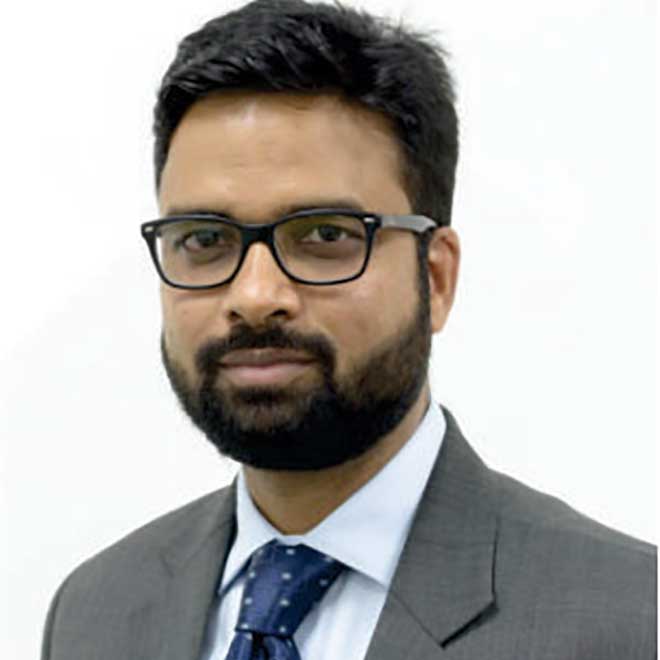
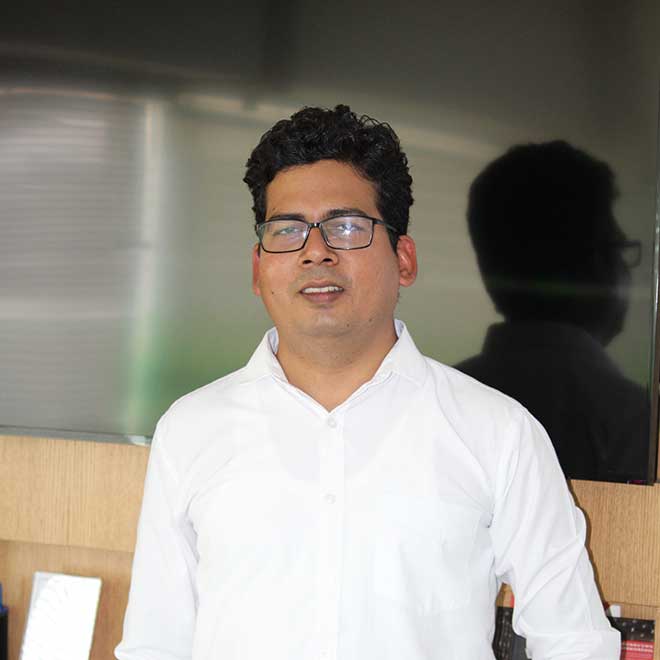
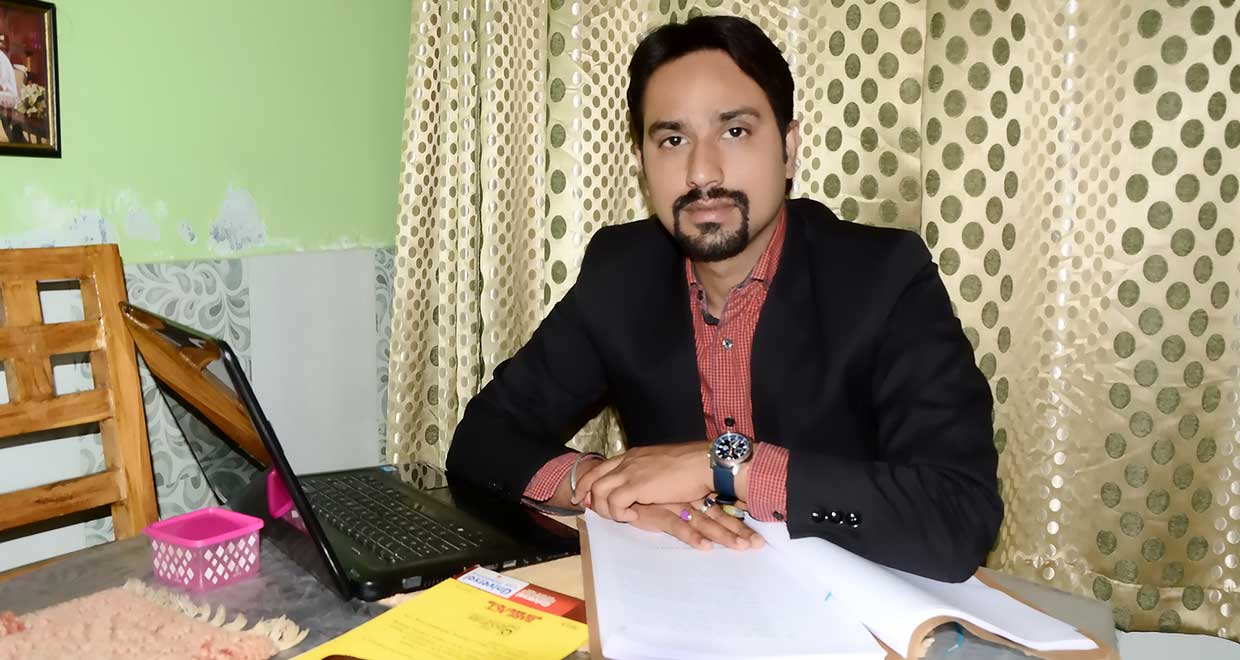
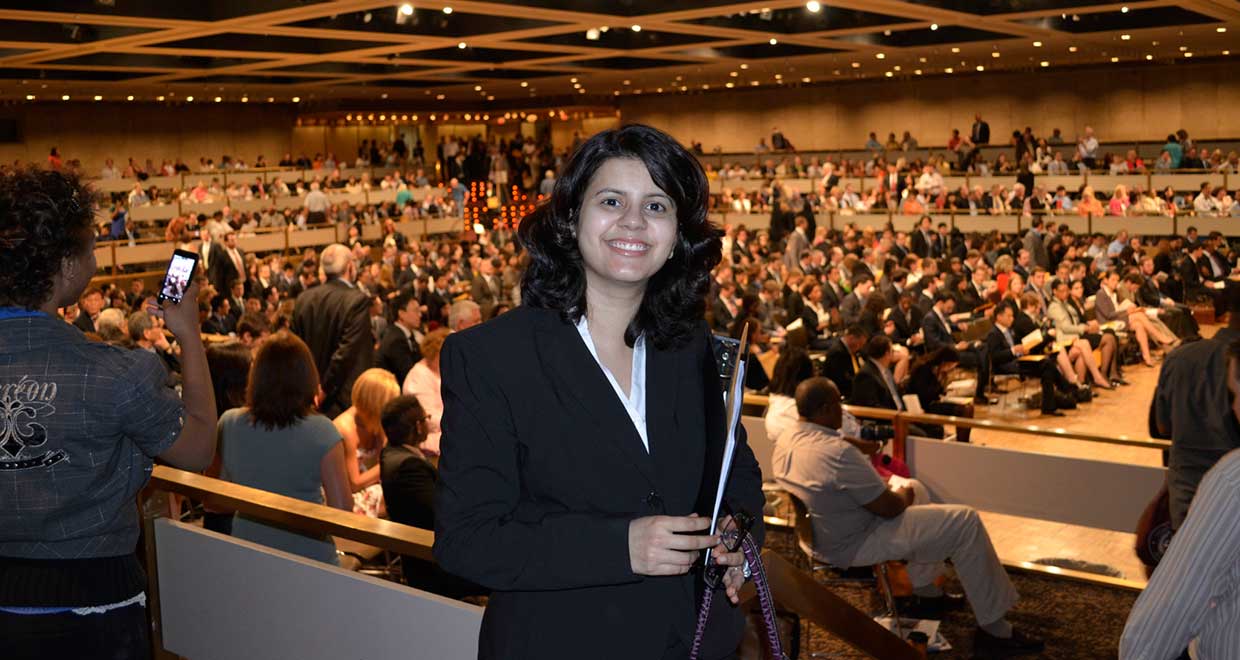
  • Kirti Krishna, Senior Associate, Khaitan & Co., on corporate law, turning author, and his experience

    Kirti Krishna, Senior Associate, Khaitan & Co., on corporate law, turning author, and his experience

    Kirti graduated from SDM Law College, then affiliated to Mangalore University, in 2012. With a very minor litigation stint, he moved on to a boutique law firm called Themis Associates, during which he was also on secondment with Sequoia Capital. He moved to Khaitan & Co in 2015 and has since been a part of their Securities, Capital Markets and Corporate team. His experience spans Mergers and Acquisitions, Venture Capital / Private Equity investments and the Securities market. He is also deeply inclined to labour law and compliance in general.
    In this interview we speak to him about:
    • Juggling extracurricular interests with academia
    • Writing his book
    • His experience in corporate law

    When did you decide to take up law as your profession?

    Unlike most others, I always knew I wanted to be a lawyer. Back in school, I was greatly drawn to academic disciplines that discussed human culture, history, and politics. The farthest memory I have of me wanting to be a lawyer is from my fifth grade. I recollect having participated in a debate competition, winning it, and getting back home only to tell my parents that I will be a lawyer someday. By the looks of it, I’ve successfully lived up to achieving my childhood goals.

    I’m told that my maternal great-grandfather was a District Judge in Alleppey, Kerala. Apart from him, to the best of my knowledge, I think I’m the only person in my family who took up law as a profession.


    Tell us a little bit about your life a student of law at SDM Law College. 

    Some of my best years were spent at SDM Law College. The institution is a private law college in Mangalore, Karnataka. As a student of law, I found deep interest in academics as well as co-curricular activities. Given that Mangalore is a very education-centric city, we would have colleges host student festivals every other week. Apart from participating in moots, I also had the opportunity of participating in an array of management fests, and finding newer avenues to excel, without limiting myself to law. As a student, I kept myself on the move all the time and enthusiastically involved myself both with the college’s moot court society as well as the students council.


    How did you divide your time between academics and co-curricular engagements?

    Luckily enough, my college had very flexible hours. Between my first and fourth year, I had classes from 09:00 AM to 12:30 PM, and for a part of my final year, I had classes from 09:00 AM to 1:30 PM. During my final year, I recollect my batch creating a ruckus when we were told that our classes may be extended by an hour. Our principal had to finally give in, and we ultimately managed to ensure that our classes did not extend beyond 12:30 PM.

    Given these hours, I would typically use the rest of the day to focus on participating in moots, fests and other activities. When I was in my first year, I had made a goal of attending at least one moot each semester. While I couldn’t quite achieve this, I managed to make it to about six moots in the five years that I spent in college. As a student, apart from academics and co-curricular activities, I also took up part-time jobs to earn extra pocket money. Between my first and third year, I worked as a part-time news anchor for a local cable show, and also undertook some assignments for the All India Radio. In my final year, I worked part time at a call centre.

     

    What kind of activities did you undertake in law school that helped you nurture this interest in writing and editing?

    I come from a family which draws a lot of inspiration from the arts. I have always been interested in writing and don’t think I consciously took up activities in law school that helped me nurture this skill. My folks always laid too much emphasis on the power of books and the habit of reading. When I was barely six, my mother gave me about a 100 Amar Chitra Katha books and made sure I read at least one book each week. In my teens, I was introduced to the likes of J D Salinger, Fitzgerald, and Ayn Rand. Amidst all of this, I was also gifted the entire Harry Potter series at some point resulting in me, a 27 year old man, continuing to identify myself as a hardcore Potterhead. With all the books I read, my imagination found newer dimensions to explore. What began with scribbling random thoughts on pieces of paper, transformed into me writing blogs, and ultimately, writing a book.


    From a law student to a legal professional, how will you describe the transition?

    Back in college, I had idealistic dreams of getting into litigation after graduation and saving the world. My lecturers continue to find it really hard to believe when I tell them that I changed paths and took up corporate law as a profession. To be honest, the transition from college to the legal profession was not very easy. I started working immediately after I gave my final exams in the year 2012. For the first six months, I practiced law, traveling from court to court and making minor submissions whenever I was given the opportunity. I then moved to Themis Associates, a full service law firm, which gave me the jump start I needed. Themis introduced me to the nuances of corporate law, and gave me hands-on experience on how the system really works.

    After spending nearly three years in Themis, I moved to Khaitan & Co., which again, opened up abundant opportunities for me to explore and learn. When I look back, I see that my five years of law (though filled with a lot of fun) were fairly monotonous. For instance, every year I followed a fixed routine: classes, co-curricular activities, work, tests, and friends. The past five years of my ‘professional life’ have been a whirlwind of sorts. There has been so much activity and learning that I’ve hardly found time to pause and think about how much has changed. To me, the transition has been all about being laid-back in college, to becoming extremely fast-paced (while learning on the job) at work. Corporate law has over anything else taught me the importance of time and how fast months roll into years.

    Tell us about your early professional experiences Themis Associates. 

    Since I had a very minor stint as a litigant, for all purposes, my job at Themis Associates was pretty much my first big job. I spent close to three years at Themis and was given several opportunities to understand law, and find different ways to excel. When I joined Themis back in 2012, I had very little understanding of corporate law, and found it very difficult to draft basic documents. I still remember working on my first due-diligence and being rebuked by my immediate senior for my ‘abysmal’ work. To make things worse, back when I had just started working, I thought that the ‘main objects’ of a company was its mission statement – and not something that is crystallized in its charter documents. Some smartness, no?

    As I progressed though, week by week, month by month, the more assignments I was given (and the more number of times I was berated for my work), the better my understanding of law became. At Themis, I was a part of the firm’s transaction advisory team as well as the compliance team. Being a part of the transaction advisory team, I had the opportunity of advising funds and companies on various rounds of investment. In the compliance practice, I was part of a team which created 360 degree compliance structures for companies across sectors including healthcare, FMCG, and e-commerce. Given the diversity of my profile at Themis, I was taught that there is absolutely no substitute for hard work – and to be able to create a difference, one must learn how to work smart. This apart, through Themis, I also ended up meeting some of my closest friends, each of whom are today, very well settled in their respective areas of practice.


    On what parameters do you choose the projects you work on? 

    I have never been picky about the projects I work on. To me, it is very important to be practice agnostic and make an attempt in doing anything and everything that comes your way. In my five years of practice, I have managed to gain some experience or the other across both ends of the spectrum. At both Themis and Khaitan, I have been very flexible in terms of assignments and have never quite complained about the kind of work I have been handed over. Since the very beginning of my career, I have wanted to be a generalist without consciously building my practice around a specific body of work.

    As a part of Khaitan’s Securities, Capital Markets, and Corporate practice, I have been involved in initial public offerings, qualified institutional placements, and offshore bond issuances in various capacities. In these transactions, I have typically represented the issuer, the book running lead managers, and / or the selling shareholders. This apart, my role also entails providing regulatory and general corporate advisory on regulations issued by the Securities and Exchange Board of India, foreign exchange regulations, and other regulatory authorities. In the corporate space, at Khaitan, I have been involved in advising on venture capital and private equity investments, as well as court convened mergers and amalgamations. I also have a penchant for employment laws. Given this, I have had ample opportunities at Khaitan to advise on various employment related matters.

     

    Tell us about how you developed a passion for writing.

    Like I mentioned earlier, I have always enjoyed writing. My book, Piece of Mind – Pun Intended was released way back in 2013 and I took to writing it because I have always wanted to be identified as a writer. Very honestly, I drew inspiration from the banality of my own life, and decided that it was important to achieve something out of the ordinary, at the time when I had ample time and an abundance of opportunity. I started writing the book some time in my final year of college. It took me about seven months to come up with a concrete idea and about a month to execute it. Though it has been about five years since I wrote and published the book, I have very fond memories of the entire process.


    What are the challenges and learning opportunities that you were faced with in writing this book?

    I came across two major challenges while writing and publishing the book. My first major challenge was ensuring that the book was well-edited. Finding an editor to read my book and share meaningful insights on the language and grammar was a herculean task. My second major challenge was finding a good publisher. Fortunately for me, my publishers were very enthusiastic about my book and provided me with all the support I needed.

    There are several authors who have inspired me. While I do enjoy fiction, I have been deeply inclined to philosophy. I have found extraordinary inspiration in the writing of authors such as Albert Camus, Ayn Rand, Jean-Paul Sartre, and Ernest Hemmingway. I recollect Sartre having once said, “everything has been figured out, except how to live”. Back when I wrote it, my book was my personal attempt at figuring out how my life should be, and what I need from it. The proficiency and composition came with aligning my thoughts and finding the right words to express myself. I spent about seven months to come up with the idea because my thoughts were scattered and I had absolutely no idea about where to begin and where to end. The moment I managed to have my thoughts in place, I had the flow in control and the book came along.


    Could you tell us about your experience participating and going on to win the reality show on MTV called On the Job 2?

    Back in college I worked part-time with a local cable operator in Mangalore as a news anchor for extra pocket money. Hoping that this experience would help, I auditioned for ‘MTV On the Job – 2’ when I was in my second year, in the year 2008. The show, focused on showcasing off-beat careers such as journalism and radio-jockeying had contestants being pitted against each other. As a part of my challenge, I was given an assignment with Headlines Today (now India Today), where I had to read news, live on-air (or so told), and face real time challenges. While I was on-air, my teleprompter went off and when I was asked to break the news of UFOs being cited – I said ‘aliens were going to take over the earth in some time’. After what all my friends referred to as a ‘comedy of errors’, I, along with another contestant ended up winning the show. A good takeaway from participating in the show was an internship programme with Headlines Today.


    What are the social causes you feel strongly about? 

    Back in college, I was involved with two organisations for most part. Firstly, I was involved with a home for the elderly called ‘Vishwas Trust’. At Vishwas, I had the opportunity of setting up a helpline and day care centre for geriatric patients suffering from Alzheimer’s disease. Given that my mother too was an enthusiastic social worker, I was given a freehand in organising various programmes to raise awareness on Alzheimer’s disease and means, using which, such illnesses can be treated. This apart, I was also involved with Make a Difference, an organisation which aims at imparting education to children who live in street shelters. Since I had ample time back in college, I always found it easy to involve myself with some social cause or the other.

    Since I began work, I haven’t quite had the time to personally involve myself entirely with social work. However, I vicariously support a few organisations such as the ‘Deepika Centre’, a school for special children in Bangalore, and IDIA.


    Where would you like your career to take you five years down the line?

    A friend once told me that you can’t have it all. But to me, life has always been about achieving it all no matter what it takes. Personally, I don’t believe in long term goals and rather believe in taking in one day at a time. This policy has helped me well, and I have complete faith that it will continue to lead me on in my journey of life. As for where I see myself five years from now – I hope, on a holiday at one of the Caribbean islands.


     

  • Sarthak Sarin, Principal Associate, Khaitan & Co., on studying in Oxford, mooting, and his experience

    Sarthak Sarin, Principal Associate, Khaitan & Co., on studying in Oxford, mooting, and his experience

    Sarthak graduated from Symbiosis International University in 2010. He then went on to pursue his Masters from Oxford, with a Masters of Science in Law and Finance. He is currently Principal Associate in the Corporate and Commercial team at Khaitan & Co., and has advised the likes of CK Birla Group, HCP Healthcare, SBS Holdings, among others.

    In this interview we speak to him about:

    • Studying in Oxford
    • His experience in commercial law
    • His mooting experience


    How would you like to introduce yourself to our readers?

    I am a first generation corporate lawyer with an enormous appetite for travel and binge-watching. I am currently a Principal Associate at Khaitan & Co and my practice predominantly focuses on domestic and cross-border M&A, joint ventures and collaborations, retail trade and e-commerce, exchange control laws and general corporate and commercial advisory.


    What motivated you to opt for a career in law, amidst the many options that were available to you?

    Coming from a business family, I did not have much of an option in choosing a career path, given that the majority of the dinner table discussions (on the topic of career choices) with my family were consumed by the glorification of the family business and how I was expected to accentuate the legacy that my father had worked very hard to create. Consequently, my career trajectory was meant to sail through a course in business studies from an overseas institution.

    Little we knew that destiny had something very different planned for me. Just around the time of my graduation from senior school, my father had asked me to get involved in a project that entailed a joint venture which my father was eyeing from a long time. Given the indispensable need of legal services, I very soon, found myself surrounded by a group of lawyers on a daily basis. Watching the lawyers negotiate the various facets of the joint venture arrangement was captivating and sparked curiosity in me about the practice of corporate law. Fortunately, the transaction went on for a good period of time and provided me with multiple opportunities to interact with legal practitioners and better appreciate the minutiae of corporate legal practice.

    The ensuing experience and my new found interest in the work of John Grisham ultimately sealed the deal for me. Convincing my father was not an easy discussion, but a good old bottle of scotch and my endless pitching of the entrepreneurial element underlying the corporate legal practice did the trick.


    Do you think or ever felt that there is a divide between NLU and Non-NLU students in the matter of getting jobs with law firms?

    No, I have never felt or experienced any unfavourable reception from the legal fraternity just because I am a non-NLU student. At the same time, my experience also dictates that the law firms are seasoned enough not to disregard a good talent just because a law student lacks the NLU tag.  Nevertheless, having said that one thing that one cannot (and does not) overlook is that getting admission into a prestigious law school in itself is seen as an accomplishment for a limited purpose of appraising dedication and ambition in a potential candidate.


    How important is mooting in the life of a law student? 

    (Sarthak has himself been judge at several mooting contests.)

    The importance of mooting in the life of a law student cannot be over-emphasised for a simple reason that the skills that are required to excel in this extra-curricular activity are very much akin to the skills that a lawyer requires to prosper in not just the litigation practice, but in other practice areas as well. In my view, the following qualities/skills separate a good mooter from the crowd:

    • A comprehensive understanding of the facts in question together with the applicable laws, jurisdictional issues and the underlying legal principles and propositions;
    • An ability to present the arguments with confidence and civility;
    • A curiosity to go beyond the scope of the matter in hand for the sake of comprehensiveness coupled with ingenious thinking to effectively tackle probing questions;
    • strong interpersonal and communication skills;
    • an innate competitive spirit; and
    • clarity of thought as regards to the reliefs sought.


    What kind of internships did you undertake during your student years? 

    My internships portfolio was quite diversified and involved training under NGOs, trial lawyers, senior advocates, judges, medium to big sized law firms and a private equity fund. Fortunately, I had started out early and before the end of my law school, I had acquired reasonable insight into a variety of practice areas (covering company litigation, general corporate advisory, IPR and finance) and consequently was quite clear of my career trajectory.

    Before narrowing down on the places to intern at, it is advisable to first clearly identify the practice areas one is interested in exploring. A clear thought process and a corresponding plan of action really comes in handy when strategising around internships. Moreover, given the competiveness of the legal profession, it is always useful to maintain a broad list of internship targets; which are also diverse enough so as to ensure a sufficient depth and breadth of experience. Lastly, it is equally important for the law students to understand that there may be rejections (and more so from your most preferred options), but that should not hold you back since there is always a next time or some other equally good opportunity awaiting you.


    Would you say higher studies are relevant for a career in corporate law? 

    In my experience, higher studies from a prestigious institution abroad does have a propitious influence on one’s career trajectory; but (most importantly) it is the network that you build during your higher studies that creates a real value in the long run. For the foregoing reason coupled with the dynamic experience of living in a foreign country amidst a completely diverse culture and lifestyle, I would suggest looking only at the options outside India.


    What does the CV of a student seeking admission in a premier university offering an L.L.M program have to look like?

    Comprehensive, inimitable, seamless and immaculate – that’s how a CV should like for any post-graduate program.

    • Comprehensive: A CV should be a perfect blend of a consistently good academic performance, internships experience and a number of extra-curricular / co-curricular activities.
    • Inimitable: what makes a CV standout from the rest? It is the inclusion of that one unique extra-curricular activity, internship experience or accomplishment that invigorates the readers and makes them believe that the applicant in question will undoubtedly bring a fresh breath of outlook and experience to the course. Pertinently, this element of uniqueness is assessed against the applicant’s own background, experience, education qualification and the eventual career goals and (in some way) should reinforce the skill-set that the applicant is relying on to vindicate his or her application for a particular course.
    • Seamless: A CV should be seamless in the matter of establishing a logical nexus between the career trajectory and the ultimate aspiration of the applicant. Accordingly, if one aspires to be a corporate lawyer and has applied for a specialised program in corporate law, then the CV should demonstrate in a coherent manner a trajectory that accentuates the applicant’s enthusiasm, efforts and ambition in the subject/practice of corporate law.
    • Immaculate:  Check and double check; a CV should be crisp, readable and devoid of any typos and grammatical error whatsoever.


    How important are grades, in your opinion? 

    Grades are certainly not a reliable yardstick to judge how successful a law student would be as a lawyer. However, in my view, consistently good academic performance does play an important role in the matter of securing admission for higher studies in a prestigious institution abroad or at least pushing one’s job application at the top of the stack. The reason being that when faced with an overwhelming amount of job or post-graduate applications for a limited number of openings, it is not unusual for the HR / admissions department to give a significant weightage to grades so as to shortlist the potential candidates, since a consistently good academic track record demonstrates commitment, focus and hard work.  

    Accordingly, in my view, grades / rankings are given a serious consideration in the matter of weeding out the crowd from the promising applications; but, ultimately, it is the overall comprehensive profile (in terms of an impressive statement of purpose, grades, extra-curricular activities, internships, publications and interpersonal and communication skills) fortified with a good amount of luck that seals the deal in the matter of securing admission for higher studies abroad or securing a job in a top notch law firm.


    Which is the ideal time to do an L.L.M?

    Given the investment that one needs to put in for pursuing a post-graduate program in law (both in terms of money and time), the ideal time to pursue such a program should be after a few years of practice. This way an individual will have the opportunity to better understand and appreciate the intricacies that underlie a particular practice area and what skills he/she would need to progress in such practice area. Consequently, he/she will be much more informed (than a law student) in the matter of evaluating the benefits that a post-graduate program would bring in his/her progression as a lawyer.


    What are your areas of specialisation and how did you go about choosing these fields?

    My areas of specialisation include domestic and cross-border M&A, joint ventures and collaborations and commercial disputes. Within these practice areas, I further specialise in retail and e-commerce sectors. I was very passionate about these practice areas right from the very beginning. Accordingly, I was very selective about my internships and focused extensively in familiarising myself with each of these practice areas. Nevertheless, realising the importance of some basic court experience, I started my career in litigation practice. During my momentary involvement in the litigation practice I predominantly focused on commercial litigation and arbitration (entailing shareholders’ disputes, oppression and mismanagement cases, interim reliefs under Section 9 of the Arbitration and Conciliation Act etc.) and regularly appeared before the Company Law Tribunal and the High Court of Delhi.

    Once I was confident that I had acquired some basic understanding of the commercial disputes practice, I shifted my focus on transactional advisory work. Before joining Khaitan & Co as a corporate lawyer in 2013, I pursued MSc in Law and Finance from the University of Oxford. This program helped me refine my skills in transaction structuring, introduced me to the global industry practices and trends in financial and strategic collaborations and M&A and reinforced my zeal in corporate practice.

    As part of the corporate group at Khaitan & Co, I have had the opportunity of working on a number of complex and multidisciplinary transactions. Khaitan & Co strongly believes in encouraging its lawyers to engage themselves in a variety of industries and sectors, with the impetus being that each lawyer should pick at least one industry and sector of his/her interest and specialise in it. To this end, we have weekly CLE sessions across all our four offices, wherein latest updates in each industry/sector and practice area are discussed interactively. It was on account of these sessions that my interest got entrenched in retail and e-commerce sectors and since then I have been actively engaging myself in a variety of transactions and advisory work in these sectors.


    At what stage in one’s law school life must one pick a specialisation?

    My experience dictates that for any law student choosing one particular area of practice as a career choice is the most vexing decision. The right time to make a decision in this regard should be around the fourth year of the law school, so that there is still some more time to ensure that the chosen practice area is actually the calling that one is indeed most passionate about.

    For someone who is yet to make this choice, the only way to find out which practice area appeals/suits you the most is to get as much experience as you can in a variety of practice areas. However, if the foregoing words of wisdom have not worked any wonder for you, then enter the legal profession with an open mind and try getting a good amount of experience in a number of practice areas/sector before taking the plunge.

    How would you say interns should go about their work at a firm like Khaitan & Co., so as to get noticed in a positive way in the limited time they have?

    From the standpoint of expectations at least, law firms do not differentiate between interns and the first-year junior associates. Accordingly, every intern should conduct himself/herself and go about his/her work in the same manner as a first-year associate does. To this end, an intern should (a) demonstrate enthusiasm and competence; (b) have a positive can-do attitude; (c) be eager to learn and absorb things quickly; (d) be confident to put forward his/her opinion and inputs; (e) have the ability to work under pressure and come up with practical and commercial solutions; (f) never shy away from responsibility; and (g) be proactive in seeking feedback. At the same time, an intern must possess remarkable interpersonal and communication skills and should also actively contribute to the knowledge management and the CLE sessions of a law firm.


    Is there any other suggestion you would like to give to our budding lawyers?

    Always endeavour to learn something new on a daily basis whether legal, commercial or general. However clichéd this may sound but the truth of the matter is that (in this profession) knowledge is the real power. Moreover, do not forget that the legal profession is really very demanding and competitive, so never hold back from putting in the hours and, while at it, creating a niche for yourself in at least one practice area/sector.


  • R. Thirunavukarasu, Advocate, Independent Practice, on litigation, and his diverse experience

    R. Thirunavukarasu, Advocate, Independent Practice, on litigation, and his diverse experience

    R. Thirunavukarasu graduated from Government Law College, Chennai, formerly known as Madras Law College, in 1996. With over nineteen years of experience in litigation, he has specialised in company law, arbitration, labour law and consumer law, incorporation of company, debt recovery cases, cases under negotiable instruments act, economic offences, etc. He has  been independently handling cases in High Court, Company law Board, Arbitration, Debts Recovery Tribunal and Appellate tribunal, Magistrate courts, and Consumer Forum. He is presently Standing Counsel for Karnataka State Pollution Control Board(KSPCB) before National Green Tribunal,Chennai. 

    He is currently engaged in independent practice with his wife, Advocate M. Swarnalatha, where they focus on Environmental Law, Competition Law, Company law, Arbitration Law, and appearing for Aviation industry for their customer related issues before Consumer Court.

    In this interview we speak to him about:

    • His illustrious experience spanning nearly two decades
    • His experience in various courts
    • Private practice with his wife

    How would like to introduce yourself to our readers?

    I’m a practical lawyer, I take life as it comes.


    Give us a brief overview of your life in law school. 

    Before joining Law college I attended Loyola college briefly for three months; did B.Sc. Visual Communication. My class was the first batch to have co-educational system. Classes were regular and attendance was  strict. If we miss any class, we had  to give reasons to our HOD. We had five hours of college from 8:30 AM to 2:30 PM with a one hour lunch break. Having experienced this system of college I had lot of expectations while  entering law college. However, it was a different experience altogether in law college. The college building had a majestic look and  a magnificent campus which is more than 100 years old. Boys and girls were divided into different sections. We had only two hours of class per day. We never had full strength in our classroom. We were never certain whether we will have classes on a particular day or boycott. The college will not function most of the time. Attendance can be compensated by paying a condonation fee. The college lacked basic infrastructure and there was no facilitator or coordinator for students to guide or regulate their affairs. But despite all the odds, our college produced bright students and often won the Philip C. Jessup Moot court competition. The students participated in all academic events including oratorical, cultural events and sports. Our college was able to win in all major events.

    Being a first generation lawyer I had no idea about practising law. In fact it was my last option. I was more focused into competitive examinations particularly civil service. I was able to crack the UPSC Ministry of Home Affairs- Assistant Commandant Examination and selected for the post. I got necessary help from a friend in preparing for the physical fitness also. But I was not able to join the force due to personal reasons. My father suggested that I practise law and be stationed at Chennai. On my friend’s suggestion, I joined a public speaking, leadership and assertiveness course to improve my skill in public speaking to overcome initial inhibitions. After completing the course I participated in debates. The course changed my mindset and boosted my confidence. Simultaneously I did B.A.-Public Administration from IGNOU hoping to clear the main paper in civil service.


    What subjects did you take particular interest in during your law school days?

    During college days, I found History of Courts and legislature, Constitutional law, Law of Torts, particularly Jurisprudence very interesting. I was not able to determine my choice in career. I focused on Constitutional law as it was interesting.


    What are your areas of specialization and how did you zero in on this?

    During college days I had no idea which branch of law I should pursue. I liked my senior office and his office was looking into company law, arbitration and civil law. After joining my senior in 1998 there was no question of looking back. Now I have started on environmental law and competition law.

    As far as advice on choices to make, I do not have any. It  depends on the person’s  likes  and attitude towards practice.


    Would you say law school prepared you for the real world of legal practice?

    The answer would be a loud, resounding, “no”.


    Give us some insight into your experience at M/s.Surana and Surana International Attorneys, your first job.

    Mr. Surana’s son was my classmate in Law college. During my fourth and final year I worked  in their firm as paralegal and I did my internship as per BCI Notifications. We were the  first and last batch to do internship before we enrolled  as Advocates. Law firm practice is different from  independent legal practice. In a law firm there are a  lot of restrictions and strict  working hours. I  felt there is  more  freedom of thinking, responsibility and trust in independent practice. Again it all depends on the  individual comfort and attitude. I felt  that  I will not fit into a law firm practice.


    Why did you leave the firm to join the office of a Senior Advocate? 

    I did my internship in the law firm and after enrollment I joined my Senior’s office who is an expert in Company Law and Arbitration. My senior office had limited juniors and  so I  had a prime role to play in the office. My Senior was a thorough professional and I closely observed him and watched  how an Advocate’s office works. I got more opportunities to represent in court and attended Arbitration hearing. I worked with my senior closely in setting aside the award in Pamban Road bridge case connecting Rameswaram island and the Indian mainland. Each day was a great learning experience to watch my senior in conceiving his thoughts and arguments. My senior also specialized in cases relating to mismanagement and oppression under company law. He had remarkable memory and command over language. I worked with him for nearly nine years.


    What in your opinion is the charm of the court which drew you to this profession?

    Initially I was assisting my senior and appearing in the original side of the Madras High Court- Company court, I.P. Arbitration and civil suits. Later on, I also handled white collar crimes cases before Chief Metropolitan Magistrate Courts. I appeared before Company Law Board, and Arbitration Proceedings, with my senior. The Consumer Forum  is another court which actually moulded me in advocacy.

    The power and stature of courts give me immense mental satisfaction, and makes me want to look forward to the next day.


    During your development years as a lawyer, did you have mentors?

    My senior was my mentor who guided and shaped me. I just observed the way he conducted himself in court and his sincerity towards his profession. The fascination for the court and facing the Hon’ble Judges and getting relief to  the clients motivated me to stay in practice.


    What are the challenges that one needs to prepare himself/herself for once they step out of the comfort of law school and into the real working world?

    Frankly, I should confess that my college did not provide either comfort or guidance. In a professional course I believe the students should have good interaction and team spirit should be developed in their college days itself to face the future. Hope the present generation lawyers are effectively groomed by the law university and guiding them in all aspects. Now present colleges have latest infrastructure and periodically conference and workshops are conducted in Law College. My advise to law graduates would be:

    • Enjoy you college days. Too much  thinking about your future  will only spoil the present happiness.
    • Strive to work harder on academics. Keep yourself updated on current affairs.
    • Focus on your strengths and visit to  courts  to get practical lessons
    • Attempt all competitive examinations conducted by UPSC or state service commission and judicial service or any other group–I service.


    When did you take the leap of faith to break away and start your own practice with your wife? 

    I was with my senior for nearly a decade. I was given opportunities to handle a variety of cases. During that period, I got married to my colleague. My senior advised me to start my own practice after a particular point. So with the support from my wife, I started my own practice.


    Give us a peek into what regular life looks like for your wife and you.

    I  attend to  court related work and my wife handles drafting and research. We don’t have fixed working hours and keep it flexible depending upon the volume of work.


    What would be your message to our readers?

    Each and every day gives me a new learning experience. Having a lawyer wife according to me is a blessing as she is not only my partner but also my intimate friend with whom I can share ups and downs in my career  as well as my personal life. I do not know how successful I am in my career but I am very content with my profession and family.

  • Abhinav Lohia, Partner, Davies and Associates, on immigration law, qualifying the NY Bar, and being a legal entreprenuer

    Abhinav Lohia, Partner, Davies and Associates, on immigration law, qualifying the NY Bar, and being a legal entreprenuer

    Abhinav graduated in law from Guru Gobind Singh Indraprastha University in 2007. He is a dual qualified attorney, admitted to the practice of law in the State of New York and the Republic of India. He was admitted in the Bar Council of Delhi in 2007. From 2007 to 2010, he was involved in mixed litigation including criminal defense, defamation, corporate criminal and intellectual property litigation at all levels of Judiciary including the Supreme Court of India. In 2010, Abhinav decided to concentrate solely on Intellectual Property litigation. In 2012, in order to pursue LLM from George Washington University School of Law, he moved to the United States. After graduating from the law school, he passed the New York State Bar Exam in 2013 and got admitted to the New York State Bar. In early 2014, he joined Davies and Associates, LLC, a full service immigration law firm headquartered in Manhattan. In 2015, Abhinav became a partner in the firm and the Head of India and South East Asia practice group. 

    Abhinav is a lawyer by profession and a traveler by passion. He is a member of Royal Beasts Motorcycle Club in New Delhi. He has traveled from Delhi to Mumbai, Hyderabad, Bangalore, Chennai, and Ladakh on his Royal Enfield motorcycle.

    In this interview we speak to him about:

    • His experience in IP Law
    • Studying in the US
    • His plans for the future

    What inspired you to take up law? 

    Like many other Indian children I was pushed to take up science in high school. My parents and I soon realised it was a big mistake. My sole motivation to work hard and graduate from high school was not studying science for an additional year. After graduating from high school, I decided to be as far away from science as possible and got admitted to a five year law program.


    Tell us a bit about your time as an undergraduate.

    I did not enjoy studying at my law school. It seemed like an unending marathon where we had to chew up the course work every day for five years and spit it out on the exam sheets. That to me seemed pointless. Courts are not interested in knowing how good your memory is, they care about precedents and arguments. A successful attorney needs good research skills, logical and quick thinking. Unfortunately, law schools fail to develop these skills. I did enjoy my internships though.


    Did you take part in co-curricular activities while in college? 

    I was part of the law school’s choreography club, basketball and soccer team. I am a strong advocate of co-curricular activities. It is great to spend time with like-minded people. Outside of law school I was an avid motorcycle rider. I traveled from Delhi to Chennai and Ladakh on my motorcycle. I think I covered around twenty states on my motorcycle. Motorcycling was my escape from everything. It is how I define freedom.


    What books, judgements that you have read, would you say have played an integral role in shaping your legal philosophy?

    I liked anything and everything to do with criminal law. Indian Penal Code was like a novel for me. The most memorable experience of my law school was drafting my research paper on Constitutionality of Brain Mapping and Narco-Analysis. At the time Telgi Scam was a hot topic. What made it challenging was that there were no Indian precedents. The matter was sub-judice in the Supreme Court of India.  I was forced to research on American Case Laws. This exposure was valuable on many levels.


    What were you areas of interest during your legal education? 

    As mentioned above, Criminal Law was my passion. I always wanted to be a litigator. I started my career as a criminal defence attorney. It was exciting at first and also gave me a sense of power. But soon that faded away. The long delays in court and the slow progress of cases killed my passion. I still wanted to be a litigator though. I researched and found out most intellectual property cases in Delhi are filed directly in the High Court of Delhi owing to pecuniary jurisdiction. They are fast paced as compared to Criminal and Civil Cases. I quit my job, took a pay cut and joined an I.P. law firm. For the first time in my legal career I was seeing the end of cases that I was filing instead of countless adjournments for questionable reasons.


    Could you tell us about the internships you took up, and what you learnt from those experiences?

    Internships are very valuable if you take them seriously. I primarily interned at Karanjawala & Co. It was a fruitful experience. My mentors were great, they pushed me to research all the time. The skills I picked up during my internship gave me a head start when I became an attorney.


    What motivated the shift from Chambers of Ankur Chawla to Lex Infini? 

    I moved to Lex Infini to pursue intellectual property litigation. It is here I found another mentor, Mr. Sushant Kumar Thakur.  He took me to the next level, professionally. He made me a fearless litigator and helped me transition to intellectual property. He gave me the freedom to work on matters from scratch to finish. He encouraged me to develop my own practice. It is here I started transitioning from a lawyer to a legal entrepreneur.

    What led you to decide to focus specifically on IPR litigation?

    (Abhinav’s diverse repertoire includes cases pertinent to areas of litigation including criminal defense, defamation, corporate criminal, among others.)

    I wanted to be a litigator and wanted a speedy disposal of cases. I also wanted to deal with corporate clients but never wanted to practice corporate law. Also, I.P. law was considered a niche field a decade ago.


    Tell us a little bit about your life a student of law at George Washington University School of Law. 

    Studying at G.W. Law was a great experience. It was the first time I saw the professors and students engage in a discussion as equals. The lectures were well structured and the course material made sense. We were not pushed to memorize everything; 90% was practical application. Most of our exams were open book and some were research based. The university also emphasized a lot on networking- they pushed us to meet lawyers and arranged a lot of networking events. There were a lot of social events within the school for students to interact and network with each other. I was on the board of Student Bar Association as a representative for LLM students and was also on the board of South Asian Law Students Association. Both these positions required a lot of student and faculty interaction and organizing events. I enjoyed every bit of it.  


    What was your experience with the Bar Exam in New York? 

    New York State Bar exam is one of the hardest exams I have taken in my life. As an international LLM student I attended only a year of American law school. I had to learn two years of law school courses in ten weeks during the bar prep course. Almost every day my friends and I questioned our decision of signing up for the bar exam. It was twelve to fourteen hours of torture every day for ten weeks.


    Can you please share with the readers your work profile so far at Davies & Associates, LLC? 

    I am a Partner at Davies & Associates, LLC. I head India and South East Asia for the firm. I represent corporates and high net-worth individuals from India and South East Asia who want to establish a presence in the U.S. I am one of the rain makers for the firm. A typical day for me starts with responding to queries of all the attorneys and paralegals that I supervise. I have a client facing role so most of the time is spent interacting with clients and scheduling meetings with them. I visit India and South East Asia every 40 days for client meetings. I meet with clients, explain the immigration process to them, tell them about our firm, and sign them up.

    Can you shed some light on the kind of work you and your firm are doing considering the current immigration crisis in the US?

    The immigration system is broken and needs an overhaul, however some of the suggested measures may make it very hard for some nationalities to immigrate to the United States. The change that impacts our practice the most is increase in investment amount to get investment based green card (EB5 Visa) from $500,000 to $800,000. This jump will make it very hard for a lot of people from India and other developing countries to get an investment green card owing to the week currency. We are part of various organizations that lobby against such changes. Also, I am on the Board of South Asian Bar Association, we run a pro bono immigration clinic to help immigrants who have limited or no access to legal representation.

    How do you manage your time between your professional and personal interests? 

    After a decade of working I have been able to find a work life balance. I love traveling, and fortunately some of it is satiated by the nature of my job. In order to spend time with my family I start my day early so that my evening are free. I try not to take client calls when I am at home. I figured clients will respect my personal life if I respect it.


    Where would you like your career to take you five years down the line?

    I achieved professional success in a short period of time since I moved to the States. Having become a partner at my firm, I cannot get promoted further. I joined a fairly new law firm that grew rapidly. I want to continue riding this wave and grow the firm. I also want to author publications and become an adjunct professor in a university, preferably George Washington University.


    What advice would you like to give our readers, who are mostly law students and young lawyers?

    Be fearless, it is never too late to change your career path. I found my calling after seven years of practicing law, changing my fields thrice and moving to a different country. Also, this is the age of being a legal entrepreneur instead of just being a lawyer. Develop networking skills, gain some knowledge regarding marketing and sales.

  • Manish Gupta, Partner, Link Legal ILS, on working at Luthra, and his diverse experience

    Manish Gupta, Partner, Link Legal ILS, on working at Luthra, and his diverse experience

    Manish Gupta graduated from NLIU, Bhopal, in 2004. After successful stints at Titus & Co., Advocates, and Luthra & Luthra Law Offices, he is now Partner at Link Legal Indian Law Services.

    In this interview we speak to him about:

    • His time at NLIU
    • His experience at Luthra & Luthra
    • His role at Link Legal ILS

    How would you like to introduce yourself to our readers?

    I am someone who has grown and is still growing as a legal professional through hard-work, sincerity, focus on quality and a problem solving approach.


    Give us a brief overview your NLIU experience.

    I was in the second batch of NLIU and there were few issues relating to infrastructure at that point of time. Despite all that, it was a wonderful experience and the things which I learnt there were useful when I started my career and are still useful. While I do not know much about other institutions, things which make NLIU stand apart from other institutions are (i) its location at the outskirts of Bhopal, which in a way avoids distractions, offers more opportunities for students to interact and debate with each other, including their seniors and juniors as well as the resident professors, (ii) a good mix of students from all over the country which exposes students to understand and interact with students having different backgrounds.

     

    What are the subjects that you took particular interest in, during your law school days?

    I was interested in constitutional law and criminal laws. They did not directly affect my career, but the concepts and logic behind them always allows me to understand other laws well (e.g., why a particular law is being enacted or amended, to what extent the Parliament can go and regulate the conduct of the citizens, etc.)


    What kind of internships did you engage in during your student years which you feel were invaluable to you in reaching your current position?

    I interned with a few litigators and a couple of corporate law firms. Apart from the exposure of working on real life situations, I used to try to cash on these opportunities to closely observe real life law practitioners, who interpret and apply laws in a very different way, work in a very competitive and unpredictable world and deal with real life clients / counter-parties / judges. I tried to apply these learnings when I started working and it eventually helped me to some extent.   


    What are your areas of specialisation in law?

    I do not think that I have specialisation in anything but I do work a lot on transactions in the field of mergers & acquisitions, private equity and venture capital, both domestic and cross-border. Frankly, I did not preplan much from law school days and faced life as it came to me. Perhaps I got the opportunities I liked and moved on with the same, but that is of course not ideal and may not work for everybody.


    How were the first few years after your graduation?

    Quite tough, there was a lot of hard-work – both mentally and physically. There was always an atmosphere of fierce competition and a fear of unknown – what you do not know and what you have not done. I learnt the difference between theory and practice in a very hard way, but yes, the learnings from my law school helped me a lot. At least, I knew the basics of law and I was equipped with the ability to interpret the law. With hard-work and patience and a little bit of good guidance, I eventually managed to cross that hard part of my professional life. Having said that, life is difficult every day for legal professionals.


    In your opinion, is an L.L.M absolutely necessary for a career in law?

    I do not think so but it might give you a different exposure and perspective on things and most importantly, it would look good on your CV. But my advise would be to not do LLM in the very early phase of profession.


    What does it take to make the cut and land a Tier-I job? 

    (Manish has previously worked with Luthra & Luthra Offices., one of the most sought after firms for placements by students, as a Managing Associate.)

    In my case, it was a typical example of being at the right place at the right time. But later on, I have taken a lot of interviews of candidates there and in my view, what we at Luthra & Luthra wanted to see was logical approach, correct basics, some relevant experience and a lot of hunger to grow.


    What is the level importance given to a student’s Grade Point Average with respect to recruitment at Tier-I firms?

    It plays some role in creating the first impression or opening of the door, but it is not the most important or crucial thing.


    How do you say interns should go about their work at a firm like Luthra, so as to get noticed in a positive way in the limited time they have?

    Show more focus and sincerity towards work and desire to learn and work more. Also, try to interact with lawyers/ seniors there to understand their perspective on issues as well as give your views (if they are logical and to the point). Contribute as opposed to simply work on the assignment given to you.


    What was the reason for your transition from the Luthra offices to Link Legal ILS?

    I was looking for some change, including a different role and better challenges and Link Legal came at the right time. It was largely suited to my requirements and fortunately, I was also fitting their requirements. Link Legal is a relatively smaller firm but provides a much better platform for you to express yourself, create your own space and work in your own style. Further, Link Legal is growing very fast and thus, offers a lot of opportunities for you to not only become a part of its growth story but also a growth factor.


    Tell us about your current work profile with Link Legal ILS.

    Every day is like being busy with four to five ongoing transactions, one or two in the pipeline, some administrative and business development work and internal coordination with other corporate partners. My current profile is mergers & acquisitions, private equity and venture capital transactions, both domestic and cross-border.


    Where do you see yourself ten years from now?

    I don’t think that far, but would not be executing work as much.


    What is your message to our readers?

    Success is a constant journey and you should always travel with hard-work, sincerity, logical and problem-solving approach, in your travel bag. In the end, it is more satisfying than taking a short-cut.   

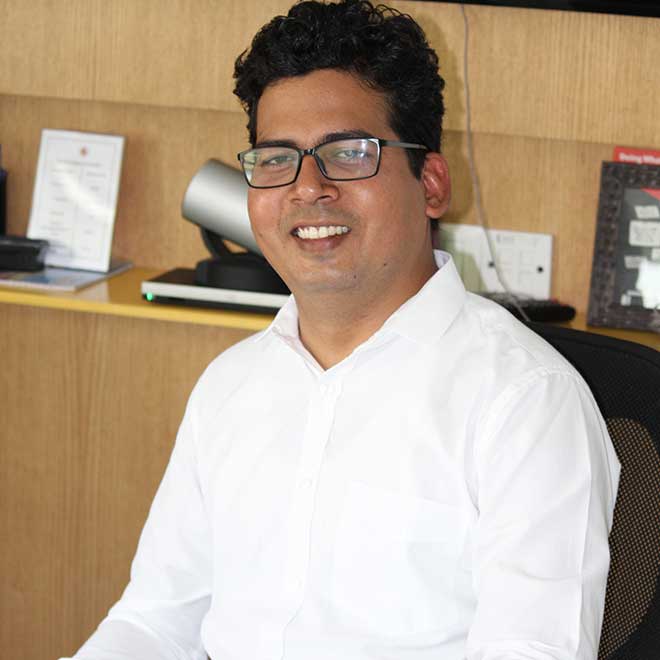
  • Ankit Dixit, Circle Legal and Nodal Head, Vodafone, on being in-house counsel, corporate law, and his diverse experience

    Ankit Dixit, Circle Legal and Nodal Head, Vodafone, on being in-house counsel, corporate law, and his diverse experience

    Ankit Dixit graduated from NLUJ in 2006. Post his graduation he has worked with both law firms and companies. He has spent over a decade working with corporates and law firms. In his current role, he is heading the in-house Circle Legal and Nodal teams of Vodafone.  During his law firm days, he has had the opportunity to advise some of the well-known foreign firms and clients on transactional work. As in-house counsel, he has worked in sectors such as insurance (with Bajaj Allianz), infrastructure (with GMR Airports) and telecom (with Vodafone).

    In this interview we speak to him about:

    • His time at NLUJ
    • His role at Vodafone
    • His diverse experience

    Why did you choose to pursue a degree in law, amidst the many options that you had after school?

    I initially wanted to pursue a career in finance and so wanted to do a M.B.A. in corporate finance. However, getting a law degree was also an obvious choice as I belong to a family of lawyers. When I wrote the law entrance, I was mainly eyeing to get into the integrated course in law and management offered by NLUJ. Although after five years of law school, I realised that I am more inclined towards law than management as a career choice.

    Give us a brief overview of your life at NLUJ.

    I take much pride in the fact that I could witness the formative years of NLUJ, when the foundation of this great institution was built by sheer conviction of a handful people like Prof. Dr. N.L. Mitra, the founder Chancellor of the University. It was first institution of its kind which offered integrated courses combining law with management, humanities and science. Along with the unconventional legal education, the university offered superior infrastructure including campus library, science laboratories and sports facilities for the all-round development of its students. NLUJ was meant to be one of the best institutions for legal education in India and today it is truly living its fate.


    What subjects did you take particular interest in during your law school days? 

    Among the many interesting areas of law, I was always inclined towards corporate laws, which is why I did my honours in Corporate Legal System. The choice of corporate laws as honours course largely benefited me to have an overview of the relevant laws regulating sectors like banking, capital markets, insurance and foreign investment. Although the nuances of any area of law are learnt only when you actually get to experience it, if you are well acquainted with what’s coming ahead it surely helps you in taking an informed career decision. My career choices were also greatly influenced by my academic inclinations and, therefore, I landed up with corporate sector straight after my law school.


    How important are grades, in your opinion?

    Although grades do help you in getting a career head start, I would not like to over emphasise their significance. The grades you secure are not the only deciding factor of your capability to get your dream job. How you impress the recruiters at the interview also plays a significant role. Nonetheless, in the long run, grades have a very limited role to play in shaping your career as it’s more about the experience and knowledge which you gain at your workplace and less about how you performed in law school.

    What kind of internships did you engage in during your student years which you feel were invaluable to you in reaching your current position?

    The NLUJ internship programme was designed to encourage each student to intern with an NGO/Govt. Organisation in the first year, with lawyers in the second year, with law firms in third and with companies in fourth year. In the fifth year, students had the liberty to go for internship of his/her choice. Accordingly, these diverse internships presented me with an opportunity to work in environments ranging from hinterlands to niche law firms. These varied experiences influenced not only my career choices but also my outlook and my choice for the kind of life I wish to lead.


    What motivated your unconventional career choices?

    (Ankit has worked with corporate giants such as GMR and is currently with Vodafone. His career choices differ greatly from the conventional ones of the average Indian law student who walks out of his/her placement year with a job in a multi-service firm.)

    I believe that getting placed with a top law firm is not the only preferred career choice of law students nowadays. Of course, the coveted jobs at law firms can really be financially rewarding but if you are someone who does not want to miss out on life while you work, you may find an in-house role equally lucrative both in terms of money as well as for maintaining the desired work-life balance, which the young lawyers often crave for. With the maturing of Indian corporate space, in-house roles are getting their due place and the legal market is witnessing shuffle of lawyers from law firms to companies and vice-versa. The conventional mind-set that puts law firm associates ahead of in-house counsels is also blurring away and lawyers as well as their employers are increasingly evolving towards a flexible career approach, thereby switching their interest areas and roles more frequently than ever before.


    What does your regular working day at Vodafone look like?

    Vodafone inculcates the best practices of international human resource management, which is why the work environment is extremely employee friendly and informal in its entire approach. As head of the Legal Department, I have to advise various business teams on the routine legal issues that they face in their work space. The issues range from tax demands to regulatory challenges; from handling of customer issues to management of employees; from filing civil recoveries to defending personal liability matters; from drafting of complex business contracts to drafting of court pleadings. You can never expect what advise will the business seek on any given day. Thus, as a legal adviser of the company it is expected that you will not only guide the business about the potential legal challenges of any business decision but you’ll also suggest a way out which is legally feasible and business friendly. Thus, you should be well acquainted with all the laws which affect your workplace and should know the business well too. Also in the present environment of cost optimisation, companies would like you to manage a major share of work in-house rather than hiring expensive external lawyers for a given job. As in-house counsel, your advice is always valued and acted upon by the management and with the evolution of the compliance culture and the ever changing regulatory space, the in-house legal teams are emerging as the most respected and admired among all the functions and are becoming equally rewarding too.


    Is there any other suggestion you would like to give to our budding lawyers?

    I would first like to congratulate all those who have taken up law as their profession as it’s a very intellectually fulfilling and rewarding field, which will always keep you thrilled and excited with all its possibilities. The good thing is that future is all the more promising for young lawyers and there is no dearth of opportunities for the right talent. You just need to keep pace with the evolving legal and business environment. Please do experiment and explore various available choices, until you identify your core competencies. Till then, just keep investing yourselves and you’ll surely find your rightful place. All the very best!

  • Rahul Bhandari, Advocate-on-Record, Supreme Court, on litigation, starting independent practice, and being a first generation lawyer

    Rahul Bhandari, Advocate-on-Record, Supreme Court, on litigation, starting independent practice, and being a first generation lawyer

    Rahul Bhandari graduated from Symbiosis Law School, batch of 2009. He has been engaged in litigation since then. He has assisted Senior Advocate and former president of Supreme Court Bar Association, Dr M.N. Krishnamani in Supreme Court of India, briefed him in various landmark Constitutional matters, Service matters, and Criminal matters in Supreme Court of India and in various High Courts of the Country before starting his full fledged independent practice.  He has been handling various matters on an independent level in Supreme Court and High Courts.

    In this interview we speak to him about:

    • His passion for litigation
    • Being an first generation lawyer
    • Starting independent practice


    How would you like to introduce yourself to our readers?

    I am an Advocate-On-Record at the Supreme Court of India and practising counsel for close to eight years now. I am a first generation lawyer and I come from a humble background. My father is a senior journalist with a leading Hindi newspaper and most of my family members including my brother are into print journalism. Therefore, establishing myself in the field of law was quite challenging as I had no legal background. However, Symbiosis helped me gain exposure and contributed greatly to the grooming process. I have been engaged with litigation since the beginning of my career. I started working with Mr. S.D. Salwan, a leading lawyer in Delhi, and was exposed to quality matters and independent handling of matters in courts. We closely worked with the Commonwealth Team and looked after their legal issue, worked for the India Today group and for the Government of Delhi. In the start, it was not easy and at times very frustrating since the stipend offered is not impressive. But the real test is to stay on and keep inspiring yourself. After almost two years of working experience, I switched to Mr. Rajiv Bansal, a leading lawyer in Delhi High Court. That was the office which gave me number of opportunities in terms of self exposure. Mr. Bansal being a Standing Counsel for DDA and Delhi High Court, had a plethora of matters and he trusted me and my confidence. Therefore, I had all the opportunities to appear and contest matters in Delhi High Court and Trial Court. This boosted my confidence greatly. Remember one thing; working with a lawyer who has government panels is the best thing in the initial years of your career. Since there are a number of matters in their office and some amount of calculative risk can be taken in the government matters before the court, unlike the private matter where a senior would not want you to appear and contest so often. It helped me a lot in gaining momentum and establishing my independent practice. I got pretty good exposure working for Delhi Development Authority, Delhi High Court, GAIL and so many other well known companies. Thereafter, I planned to switch to Supreme Court and that’s the reason I Joined Late Dr. M.N. Krishnamani, Senior Advocate (Padma Shree) and former President of Supreme Court Bar Association. Working with him was a phenomenal exposure and I consider him my Guru. I always wanted to go step by step and that’s the reason I ensured not to directly reach the Supreme Court, which in my opinion is very important for anyone who wants to pursue his independent practice. With him, I got an exposure to Constitutional Matters, Service matters and other matters of great importance in the Supreme Court. I got to learn how to advance arguments, the art of briefing, and researching, which eventually helped me in clearing the Advocate on Record exam in the very first attempt.


    Give us a brief overview of your law school days.

    Pursuing law in an institution like Symbiosis Law School is a matter of immense pride. Law school days were as challenging as they were joyful. Symbiosis played a big role in my career. When you actually start working then you realise the importance of a good law school. In today’s competitive world where even law has become glamorised and more people are being attracted to this profession, it is essential that your base be very good. I mean if you are from a good law school, you are respected and you have some initial confidence which makes you different in that big crowd of lawyers.  There are so many lawyers in the country,  but having a degree, and education from a good law school is all what you need to start well. During law school days, I was more into sports. But I was fortunate for it did not affect my academic performance in any way. I did my Diploma in International Business laws and in Intellectual Property Law apart from obtaining the degree. However, the fact is that scoring in law school and practising in courts is not the same thing.  A person scoring excellent marks during law school days may not necessarily do well and shine bright in litigation just because he or she was an excellent student during school days.


    What were the activities, academic or otherwise, that you undertook in your law school days which in your opinion have shaped you and your career?

    Our college has given us a lot of exposure. Good teachers, competitive environment and a cosmopolitan crowd make a difference. You learn from each other in such an environment. We had very good visiting faculty teachers which included the likes of Mr. Ram Jethmalani, among others.  Frankly speaking, I was more into sports during law school. Academically the only credit which I take is that I cleared my all papers without any backlog with first division and did some diplomas in order to have an extra edge over others. I did participate in some mock trials, and some moot court competitions but I believe that interning at the right places is more important. During our law school days, it’s important to focus on doing internships at a place of your interest as it gives an exposure which you may not get sitting in the classroom. Not to undermine the credibility of law school but I feel apart from just performing academically you need to do all kind of extra curricular activities which can shape your personality. Personality building is very important for this profession which can be very well done during your college days.  On a funny side, I must tell you last minute study was a common thing in our college.


    What kind of internships did you engage in during your student years which you feel were invaluable to you?

    Internships are very important during your law school days. During that phase, I interned with various law firms. I did internships in both corporate and litigation. Initially, I wanted to get the experience of both corporate and litigation in order to decide what would suit me for a long term future and that’s the reason I chose to intern in both streams. Initially I interned with a Lit Law Firm and got exposure to Courts. Thereafter, I interned with some of the big corporate law firms which included Udwadia and Udeshi in Mumbai,  Lall and Sethi an IPR law firm in Delhi, Associated Law Advisors and Rajinder Narain and Co. in New Delhi, a leading name in the Aviation Sector in New Delhi. After few internships, I realised that I want to pursue my career in litigation and came to Delhi. In fact, I had an offer from one of the law firms where I interned, but I chose to work in Delhi since I wanted to practise at the Supreme Court.


    Who was your mentor, or main source of inspiration who motivated you all along the way?

    Every office and senior would play an important role in your career and life. From your first office to last office, you would learn so many things, both good and bad, which are so valuable in shaping your career. Its very important to choose a good office which can give you good exposure, opportunities and confidence. If you want to see yourself as an individual legal practitioner, it’s important to utilise as many opportunities which come you way. For that you must choose an office which allows your individual growth, an office or senior who can give you opportunities to appear and argue in courts. And that’s very important, especially when you are a first generation lawyer as you will not get fixed clients and you will have to learn and inculcate those values, ethics and standards of the profession.

    As a first generation lawyer, its very important to have belief in yourself and patience in abundance. The initial years will throw a lot of challenges and I have seen so many of my colleagues leaving litigation practice and moving to companies and the corporate sector. Especially, the number of hours you would be required to work and the kind of stipend you are paid for that work would be minuscule. However, the key is to keep going. But it’s very important to learn the ethics and discipline of the profession which you can gain only from a good senior or good office. My first motivation was my father only though he was not a person from the legal profession. You need a lot of family support particularly who can believe in you and can allow you to take your own time for growing in this Profession. However my biggest inspiration and ideal from the legal sector was my mentor and senior late Dr M.N. Krishnamani , Senior Advocate of Supreme Court. He was a president of SCBA and four time recipient of the Padma Shree Award by the Government for his valuable contribution to this field. He was also a first generation lawyer and due to his sheer hard work and ability, he rose to such a position in life. I worked with him for more than two years and he guided me a lot in life. His ethics and discipline in the profession was unmatched. I remember, he always used to say if you believe and know  you are standing for the right values then don’t hesitate  to raise your point even before the highest court of law. He always used to say as a young lawyer you should not be afraid of speaking for the right reasons and there is burden on you to take the profession in the right direction and set up examples.  He never returned any client for the sake of money and always used to help struggling lawyers and clients who could not afford hiring such a big name for the Supreme Court. I remember reading a book on great Mr. Nani Palkhivala titled The Courtroom Genius where it was emphasized that a good senior is all what you need in the initial years of your career to shape up your future and that’s absolutely right. That came true in my life and am proud of the fact that I am from the Chambers of Dr. M.N. Krishnamani. With him, I had an opportunity to attend Constitutional Matters, Service matters, and various other matters. I was a part of some of the landmark judgments including the challenge to law of Defamation i.e. Section 500 of IPC in Supreme Court and a case of highest ever compensation granted in the field of medical negligence. There is always a continuous pressure to perform and deliver while maintaining the ethics of the profession if you are from such a chamber.


    At what stage in one’s law school life must one pick a field to specialize in?

    It all depends on your interest which you are picking up during law school days. I think, the last one years of your college, one should be in a position to make up his mind whether he wants to pursue corporate or litigation. Though I again feel there is no straightjacket formula and there are eminent lawyers in our Country who after working for companies and corporate  in initial years came to practice and earned a big name today. Internships are very important to decide the specialization that time.

    I would say, it’s your sheer hard work, determination and faith in yourself which works in this profession and there is no substitute for that. You need a single point determination to succeed.  You have to have a lot of patience and faith in yourself since the initial days would be very very challenging. The initial four to five years are very important for shaping your career and ambitions therefore one should be particular in choosing a good office and senior. And in my opinion, one who wants to work in litigation he or she must start from Trial/High Court and then come to Supreme Court because when you start on your own, you will have difficulties in conducting the case for clients and there will always be a gap in your understanding.  Have faith and confidence that you can do well and keep doing continuous self improvement.


    What would you say to aspiring lawyers who think that litigation and corporate drafting must necessarily be mutually exclusive?

    (Rahul has experience working in both areas of the law.)

    First of all, I must say I have yet not mastered both areas of the law. I am yet to learn and grow in this profession. But yes, I have worked in both environments. The point is very simple; both corporate and litigation requires you to apply your mind and work diligently. Both corporate and litigating lawyers have a different style and requirement of working. Drafting is very important for both. What I feel is that a person who has done drafting in the Lit side may have an edge over the people working in Corporate, since litigating lawyers are more exposed to courts. I have both corporate and lit clients. However, very rarely a person into corporate would be required to draft cases and appear in Courts.


    Tell us about one particular matter that you’ve previously worked on, which left a lasting impact.

    There are a number of matters in different different offices. I remember working on one defamation case on behalf of India Today in the initial days of my career. In my first office, I was assigned to attend an outstation matter in  Trial Court in Bareily and there was a very interesting issue wherein India Today published an article relating to assassination of Gandhiji and RSS filed a defamation case against them. I used to read a lot during that case.  I also had an opportunity  to look after the issue of Commonwealth games.  I worked on various land acquisition cases in Delhi High Court. During my last case I got a lot of exposure working with my senior in Supreme Court on the constitutional validity of law of defamation section 500 IPC in Supreme Court. A number of matters were filed challenging the validity of criminal action prescribed under the said section. We were defending the said law. A number of eminent seniors were involved and I got see each and everyone arguing. A number of points were raised and we also presented our case. We worked on that matter for more than a month  and my senior Mr. Krishnamani used to ask us to research on different propositions every day. Ultimately, the challenge to the said law was dismissed by the Supreme Court recently in a reported judgment.  So it was an overall a great experience working on that case. Every case is a teacher.


    What is the charm of litigation, in your opinion?

    In one word, very addictive. The charm of representing your clients in Court and getting justice for them is unmatched. Litigation throws continuous challenges and with every case, there is something new to learn. The feeling of standing in Court and persuading the sharpest mind in your field gives you immense satisfaction and pride. For me it is like  once you have experienced it you would not want to leave it just because it takes longer to establish yourself. I don’t think in today’s world any field can be more enterprising and challenging than this. It’s very inspiring to work for others. I still remember my first case where I argued in Delhi High Court for a BSF guy who was not given an appointment letter, owing to a frivolous reason, despite him clearing the exam. I fought hard for him and got him the favourable order and he was taken back into service. The feeling of getting justice/relief for someone is unmatched. There are several events like this and with every case, you would individually grow and learn. It’s not static and you have to keep enhancing your skills. And if you are in Supreme Court, the standards are very high and challenging.  Which is the profession where even at the age of 70 or 80 you would be respected and valued this much? That simply works for me.  


    How important are grades, in your opinion?

    Grades are important but I don’t think they make a lasting impact. See, if you have done well in your law school days, obviously that gives you confidence and opportunities to grow. However, what we learn in college and in Courts are entirely  different things. I don’t believe that one’s GPA affects one’s ability to achieve great heights in the legal arena. You may be a topper in college but the actual execution of your knowledge starts when you are in this profession, especially when you are in litigation. Litigation requires a different attitude, confidence and belief in you. I know people who have done very well in college but are reluctant to come and argue in courts.  A practical experience makes the difference and that is a real test in litigation. What you learn in college has to be executed here and that’s interesting and challenging.  


    What are your views on pursuing a Master’s degree?

    An L.L.M is any day a plus point and if you want to study more and gain expertise in one particular subject, it may be relevant. It depends on the person entirely. I feel in litigation, it may not be of paramount importance whether you have done an LL.M. or not. For me personally, the stepping stone was becoming an Advocate On Record and that’s helped me more than anything else.


    If given an opportunity, what would you do differently in your career journey up to this point?

    I would want to not repeat the mistakes which I did at the time of assisting my seniors, at the time of conducting cases, conducting myself, and or any common mistakes which every amateur lawyer would do. One thing I would definitely want to do is to improve my focus towards that direction. It’s essential to have a plan but at the same time you need to work towards achieving that. You know you are going in a right direction when things happen at the right time with you. For me clearing the AOR exams in the first attempt and also becoming Amicus Curiae in the Supreme court gave me a belief that I am going in the right direction after all these years.

    Common blunders which a student should avoid in my opinion are to think of achieving everything in a limited span of time. I have seen  fresh law graduates  losing patience and wanting to establish himself/herself in just two or three years. In litigation, you have to have a lot of patience and dedication. You need to deliver a lot and focus on first learning things. It’s important to train yourself . Unlike Corporate, we don’t get good stipend or handsome salary in the initial years and growth is little slow. But if you have the will and determination then this will be worth waiting for.


    How has being an AoR changed your life?

    (Rahul is also on the panel of Amicus Curiae in Supreme Court.)

    Becoming an Advocate On Record was a matter of pride  and gave me a satisfaction that I am making the right moves in my career. I became an AOR in the year 2016. Fortunately, I was able to  clear it in the first attempt itself. The learning and exposure which I got in the office of my mentor Dr. Krishnamani gave me confidence in clearing the exams of AOR in Supreme Court. Frankly, I did not have much time to prepare since I used to work from Monday to Sunday in his office and I was given only the last month  to prepare for the exams. But I believe all your work experience apart from studying for the exams helps in clearing the papers. Being on the Panel of Amicus Curiae in Supreme Court is again a matter of pride and a huge responsibility comes with that status. Both are very important and as an AOR and Amicus you owe a big responsibility towards Supreme Court. Unlike legal aid matters, here you get a chance to assist the Honourable Judges on questions of law and you need to give it your best.

    As an AOR, you have to be very careful that you should not end up becoming just a filing counsel. You have to be very particular about your filings in Supreme Court, ensure that no reckless filings are done and should be present at the time of matters in Court. When you are conducting matters in Supreme Court, you have to be very dignified and disciplined. Here you don’t have the scope of committing mistakes. Supreme Court is very strict about reckless filings by the AORs, language used in the drafting and about their presence when the matters are called up.


    How challenging is it for a first generation lawyer to set up independent practice?

    As a first generation lawyer, it’s  quite challenging and tough to get clients during  initial practice . Therefore, you need to deliver your best. You need to focus and work in the right direction. I have been handling matters in the Supreme Court, High Courts and Tribunals. I do travel a lot for conducting outstation matters. In your independent practice , you  get to work for both individual and corporate clients. Getting variety of matters is a plus point as you tend to work on different subjects. For me , it has been a wonderful journey till now and I get opportunities to work for for some leading law firms in Delhi too. In your independent practice you are the master of your own acts and sometimes you have to take important calls relating to matters which are challenging and interesting. When you are working with a senior, you are dependent on his understanding and ideas but in your independent practice, you have to more responsible and committed. What I feel is the best client for a first generation lawyer who wants to establish his own practice is a lawyer and/or a senior colleague. As an independent professional, you have to ensure you maintain the professional ethics and standards which is very important. At times in order to grow soon, people do commit some common mistakes which we should avoid.  We don’t have to just do what the client says, you should be in a position to decide between right and wrong.  You have to really burn the midnight oil and keep yourself aware about the changes in law. But it’s not that tough and a common myth that it takes so many years to establish is also not correct. You have to just go in the right direction and then nothing is impossible. Time management is another task which we have to get used to in litigation.  

    What is your message to our readers?

    I would simply say believe in yourself and work hard.  Keep improving yourself. There is no substitute for hard work and dedication. This field requires continuous improvement. Decide your priority carefully and work in that direction.


  • Rajiv Kumar Jain, Legal Advisor, on corporate law, independent practice, and his experience

    Rajiv Kumar Jain, Legal Advisor, on corporate law, independent practice, and his experience

    Rajiv Kumar Jain graduated from Pune University, in 2009. Since then he has worked with Dhir & Dhir Associates in the capacity of Associate, with Sarthak Advocates & Solicitors in the capacity of Senior Associate, and with Poenix Legal as Corporate Lawyer. He is currently engaged in independent practice.

    In this interview we speak to him about:

    • Starting out on his own
    • His diverse experience
    • The corporate law scenario in Jharkhand

    How would you like to introduce yourself to our readers?

    I am a corporate lawyer currently based in Jharkhand. I have worked with and for/against various top notch law firms in India and abroad. At present, I shuffle between Delhi and Jharkhand and mainly focus in the state of Jharkhand to build a robust practice of corporate law and assist a young state with its strategic development.


    What motivated you to pursue law?

    Well, I am a first generation lawyer. I am the first person in the entire family to enter this profession. I belong to a hard core business family where people are born businessmen/businesswomen. Honestly, taking up law happened to me by chance. As a matter of fact it was my elder brother, Rahul Jain, who lured me to take this professional course by offering me a five year prepaid holiday against the condition that my results should not be compromised.


    Tell us a bit about your time studying law at Pune University.

    Pune is a relaxed place to live in where you have the feel of a metropolitan city and comfort of a smart city. Life in Pune University was filled with lots of fun, friends, bike rides and frequent trips to nearby places. Pune University offers rich culture, history and a variety of courses where you end up having friends from all streams. I had the privilege to be among a group of future lawyers, doctors, engineers, actors, and sportsmen. During my stay at a hostel in Pune with students from various backgrounds and courses, I had lot of opportunities in public speaking where addressing a gathering of 500 students was very frequent. This helped me a lot in developing my oration skills which I think is an important pillar of being a lawyer.


    Could you tell us about the internships you took up, and what you learnt from those experiences?

    I was blessed with a couple of grilling internships. During those days I used to think that interns are given menial odd jobs. But now, after being in the profession, I know how important they are. During my first internship in Kolkata, the first thing I was assigned was to stitch a file (the High Court of Calcutta still has the practice of stitching the file before submitting it to court) and at that time I wondered whether this even was required for a lawyer. Today, I know how important it was for me learning that also. Therefore I strongly advise all law students to go for internships seriously and take up each and every task assigned by the lawyers with an open mind. A law student should try and get as much internship as possible and should undertake them very seriously.


    What advice would you give students in avoiding a decision paralysis?

    Personally, I think a lot depends upon the student’s background. If a law graduate is from a law background, his/her parents are aware of hardships of the profession and therefore the burden of expectation or being able to take care of one self is reduced drastically. While litigation is a slow start, the corporate side of practice is much more lucrative in terms of pay. An average law student should always analyse (a) his/her family background (in terms of financial stability) and (b) his/her interest towards the side of practice he/she is inclined after undertaking four to five internships and then decide what he/she wants to do.

    As far as studying further is concerned, I would always recommend law students to be in the profession first for a couple of years and then decide whether studying further is required or not.


    Tell us about your early professional experiences at Dhir & Dhir.

    Well, I belong to the batch when there was almost negligible recruitment and more news of “pink slips”. This was the global economic slowdown period. While I was among the lucky ones to get campus placement, the formal offer letter never reached. While, the wait was long, I never stopped trying during the waiting period. It was not long before I had a couple of offers and after discussing with people in the profession, I decided to take up Dhir & Dhir under the then corporate litigation partner. I was happy with the role as it included both litigation as well as corporate exposure. This was the only reason I chose Dhir & Dhir among others, apart from Dhir & Dhir being a well-known law firm.


    How did you come to work with Sarthak Advocates & Solicitors?

    While I was working at Dhir & Dhir, I got to know that an ex-Luthra employee is setting up his own practice and looking for fresh talents. I thought there was no harm in meeting him and after meeting Abhishek Nath Tripathi, a thorough gentleman and an institution unto himself, it clicked and I started working with him. When I had joined Abhishek, we were working under the banner of Abhishek Nath Tripathi & Associates and Sarthak was formed in front of us. I have participated in every aspect of Sarthak, right from choosing logo of the firm, to the color of the wall, to the desktops, business card tone and texture, etc. Sarthak is and will always remain close to my heart. Every minute spent there is memorable and I have learnt a lot by working in Sarthak with the people who have worked and still working in Sarthak.

    On what parameters do you choose the projects you work on?

    I like working on challenging assignments, but I take work as it comes. I give importance to all work and give my best to each and every work.


    What prompted you move to Phoenix Legal?

    Sarthak is a small size law firm and Phoenix Legal is much more established as compared to Sarthak. Before joining Phoenix Legal, I was very clear that working with Phoenix Legal would give me exposure to complex and big ticket transactions and would require much more hard work. I was lucky to work with Mr. Saket Shukla whose expertise lies in working around complex and big ticket transactions.


    What are the challenges and learning opportunities that you encounter as an independent advocate?

    Being a corporate lawyer (which is still a new concept in most of Jharkhand and most of the developing states of the country) is very challenging to convince corporate houses and enthusiast individuals in Jharkhand about its usefulness. Most of the work of a corporate lawyer is catered by established Chartered Accountants in this part of the country. Established corporates find it difficult to understand the use of a corporate lawyer when they have their Chartered Accountants handy. However, things are changing and after a lot of convincing and explaining the advantages of a corporate lawyer, and how it is different from Chartered Accountancy.


    What are the areas of law that you are looking at as part of your independent practice?

    As part of independent practice, I am taking up everything that is coming my way (as long as the quality is not compromised). I am keen on setting up robust corporate law practice in the state of Jharkhand.


    What are the key attributes that one must develop in order to excel in this industry?

    Read, read and read and discuss. This is a profession where reading and updating yourself never stops and should not be supplemented. One should also take part in constructive discussions and be patient while hearing. As a lawyer one should learn to listen more and speak less.

    How do you manage your time between your professional and personal interests?

    Having a balanced life is very important. As a lawyer some days may require round the clock dedicated to clients and then there are days which are relaxing. A lawyer should be happy with both the situations and take life as it comes.

    Outside law, I like spending time with my family, watching movies, going out with friends, indulge in adventure sports, going out for vacations or long drives.


    How do you keep yourself updated about the latest developments in the law?

    I keep on reading legal journals, business newspapers, blogs, official websites and legal updates to keep myself abreast with the legal as well as political developments. All thanks to the technology, a smart phone is enough to be updated.


    What advice would you like to give our readers, who are mostly law students and young lawyers?

    Enjoy the profession and be prepared for few bad days and few good ones. Always remember this is a benevolent profession and please be careful with what you speak and write.


  • Neha Chaubey, Freelance Attorney, Upwork, on admittance to the Bar in India and New York, compliance, and her experience

    Neha Chaubey, Freelance Attorney, Upwork, on admittance to the Bar in India and New York, compliance, and her experience

    Neha Chaubey graduated from Nagpur University in 2012. She has been admitted to practice law in India and New York.  She has over six years of experience in corporate law, personal injury law, deductible recovery for AIG, and document review. She has experience in both transactional and litigation aspect of law.  She has conducted numerous depositions, and attended conferences for personal injury cases in various courts in New York.  She has worked as an Associate Attorney in law firms in India and United States. She is currently pursing opportunities in Compliance.

    In this interview we speak to her about:

    • Practising in India and New York
    • Pursuing an LL.M
    • Her diverse experience

    Give us a brief overview of your life in law school in India.

    I completed my LL.B., a five years integrated course, from Nagpur University in 2008.  I paid excessive importance to academics and was the first merit in the Nagpur University. I was awarded highest number of gold medals in my class, for proficiency in various subjects.

    Late Prof. Mahabal, of the Nagpur University, had a very big impact on me in my LL.B. I religiously participated in his group discussions on various diverse topics every weekend.  I participated in numerous paper presentations, debates, turn-coat competitions, Model Parliaments, and moot-court competitions in my LL.B.    

    According to me, participation in each and every activity offered by the law school should be given utmost importance.  These activities prepare students for life after law school.  


    Is an L.L.M absolutely necessary for a career in law?

    LL.M is not mandatory for having a successful legal career.  LL.B. should definitely be sufficient. However, if a person wants to pursue law in the United States, the first option is to pursue JD, which is equivalent to LL.B. and the second option is to pursue LL.M.  Both the options have their advantages and disadvantages.  

    When a person completes J.D. from Unites States, it opens far more avenues for one’s career as opposed to LL.M. However, J.D. takes longer to complete than LL.M. and is much more expensive.

    When I was in the final year of my law school I started thinking about the next step.  I narrowed down my options to three categories, namely- to appear for CAT in order to pursue MBA; to prepare for TOEFL in order to pursue LL.M abroad;  or to prepare for JMFC (Junior Magistrate First Class).  As my elder sister has studied abroad for her M.S. in Chemical Engineering, I decided to follow her footsteps and pursue LL.M.  I chose Widener University, located in Delaware, U.S., to pursue my LL.M. in Corporate Law and Finance because Delaware is the most corporate friendly state in the United States.  A very high majority of companies, irrespective of their location, are incorporated in Delaware, because of its corporate friendly nature.

    During my LL.M. studies I had to complete a total of 24 credits. These 24 credits could be completed by taking some core courses (mandatory courses) and some electives (optional courses).  Each subject comprises a number of credits.  When a subject is extremely pivotal, it comprises of more credits, like Business Organization has four credits, whereas a relatively easy subject like Colloquim comprises only two credits.  These 24 credits can be completed in one year.  However, I chose to complete them in two years in order to get some extra time to pursue some internships before graduation.  I completed good amount of credits in my first year so that I had very few credits remaining in my second year.  This helped me to focus on finding internships.  In the second year, I decided to do judicial externship with a District Court Judge for which I received three credits.  I thought that receiving credits for a judicial externship would be better than taking an elective course because it would give me some invaluable first hand experience in the workings of a court.


    What kind of internships did you engage in during your student years which you feel were invaluable to your experience as an attorney?

    Being the first person to pursue law from my family, I did things by trial and error method.  I did not pursue any internship during my LL.B. If I could go back in time, I would definitely pay attention to securing internships early in my career.  I understood the importance of internships by the time I started my LL.M.  I interned at the Department of Justice and did Judicial Externship with a District Court Judge in Delaware.  I also interned with an Honorable Judge from Superior Court in Delaware.

    Which is the ideal time to do an L.L.M; right after undergraduate studies, or after a few years of practice post undergraduate studies?

    There are advantages and disadvantages of pursuing Masters right after LL.B and after acquiring some legal experience.  I did LL.M. right after LL.B.  This helped me in completing my studies in one stretch and I was done with my studies at a specific age.  Thereafter, I could focus my energy on other aspects of my life.  However, if given a chance, I would gain some experience before pursuing LL.M.  The main advantages of this second approach is that many law schools prefer students with some legal experience.  Moreover, good legal experience can come in handy when a student has less than perfect GPA.  Also, a person can decide their specialization for pursuing LL.M with more certainty after acquiring some years of legal experience.  


    How important are grades, in your opinion? 

    Grades are very important not only for securing admission in Masters but also in job search.  Many job descriptions specifically mention that students above a specific GPA would only be considered.  Moreover, some jobs require students to submit their resume, writing sample and law school transcript in order to apply for the job.  Therefore, it is important to pay attention to GPA from first year onward.  


    What is your message to our readers?

    I have been a law student and I can totally relate to the confusion and endless career related questions students may have.  When I was on the cross-roads and was contemplating whether I should pursue LL.M or not, I met a handful of seniors who had pursued masters from abroad.  Students can feel free to contact me on Linkedin for career related questions and I will try to answer them to the best of my ability.  

  • Tanmay Amar, Director-Legal, Omidyar Network, on transactional law, working with Luthra & Luthra, and his diverse experience

    Tanmay Amar, Director-Legal, Omidyar Network, on transactional law, working with Luthra & Luthra, and his diverse experience

    Tanmay Amar graduated from the National Law School of India University, Bangalore, in 2006. Immediately after graduation, he joined Luthra & Luthra Law Offices in New Delhi. He spent nearly seven years there, before moving in house with Sequoia Capital India, in Bangalore, where he spent almost three and a half years. And he has been with Omidyar Network as Director – Legal for the last five months.

    In this interview we speak to him about:

    • His time at NLSIU
    • Working at Luthra & Luthra
    • His diverse experience

    Are you a first generation lawyer?

    Technically not, practically yes. My mother qualified as a lawyer, and she did practice for a few years, but had stopped practising well before I was born (soon after the birth of my elder brother – she chose to give up her legal practice), so I never really got to see her as a lawyer, nor did we have any conversations around law/ legal developments.

    I did find the Civics classes in school interesting, but what really motivated me to consider applying for law school was Perry Mason. I was fascinated with Perry Mason books, though he didn’t influence me enough to conclusively choose law as a career. Towards the end of my school days, I was still considering multiple careers, but once I got through to NLS, Bangalore, I decided to go for it, given its reputation and standing.


    Did you take part in co-curricular activities while at NLSIU? 

    Yes, I absolutely loved participating in co-curricular activities. I found it quite enjoyable and ended up taking part in almost everything. I mooted, took part in client counselling/ negotiation competitions, quizzed, did dumb charades/ what’s the good word/ Pictionary/ antakshari, debate adjudication, danced (awkwardly) for the class on western and eastern music inter-class group dance events, organized various events, was vice-president of the student body, wrote articles, was on the editorial board of our flagship journal, went for a couple of legal literacy programmes where you educate people on their rights under law, represented the class in a couple of inter-class sports events, was active on the hostel management committee (general welfare committee), conducted orientation for juniors, once even went for a student protest in Bangalore against S. 377, IPC. So, there was very little I didn’t do in terms of co-curricular activities in college. Did well in some, was happy to merely participate in others. I probably spent 80-90% of my time in co-curricular activities and am happy that I did that. I felt like I made the most of the opportunities at college and generally look back with very fond memories.

    I would pay attention in most classes, that helped ensure I was doing decently in academics, apart from studying before exams.


    Could you tell us about the internships you took up, and what you learnt from those experiences?

    Most of my internships were litigation based – I did later wish that I had gone for more diversity. It was generally exciting just going to court, witnessing proceedings up close, particularly in the trial courts. I picked up stuff about court procedures and how things work practically. I can’t say that I picked up a new skillset or that my internships shaped my career in any significant way though.

    My most memorable internship was with Mr. Parag Tripathi, a senior advocate in Delhi. He had received a brief for opinion from a company and he asked me to prepare the draft response – this was early on, in my internship. He was very happy with the draft and barely changed a few words here and there, and thereafter gave me a fair bit of research, to help him prepare for his cases. The confidence he reposed in me was gratifying. It felt great being useful in real cases at a young age.


    From a law student to a lawyer, how will you describe the transition?

    One learns how to find the law in college. However, finding the right answer is not enough anymore once you become a lawyer. You have specific problems to solve, and apply the law to find solutions. You may have done that in moot courts and internships while in college, but not often enough.

    Also, most lawyers in their early years are required to put in long hours, so one does tend to miss the free time one had earlier. If you are in a corporate law firm, you do enjoy the money that comes with it. As one of my friends had put it, you go straight from 8 pm to Black Label when you move from college to a law firm.

    You are usually required to focus on areas of law, which cater to the requirements of your clients/ organization, which may not match your areas of interest. In college, you could have focused a lot more on areas, which interested you. However, your advice / work actually impacts real world decisions and when you see that happen, it can be immensely satisfying.


    How do you keep yourself abreast with the latest legal developments and industry news?

    I follow the news, online legal blogs and keep and keep an eye out for notifications from regulators in my area of work. Also, receiving alerts from law firms we engage is helpful. I am afraid I am not able to read as many cases as I would have liked to, but once in a while, I do read original judgements. For industry news, I rely on online editions of financial newspapers and some specific sites catering to the industry or on social media.

    Tell us about your early professional experiences at the Luthra & Luthra Law Offices.

    When I started, the team I joined had a lot of regulatory advisory work (it later expanded to work on a lot more transactions), so there was a lot to learn, as we do very little work on that in college. My first boss, Mr. Dudeja, was a chartered accountant cum lawyer, and it was an education to see him piece together effective transaction structures while navigating tricky regulatory restrictions. We got thrown into the deep end early, there were client interactions from the first few months onwards. In the first couple of years, there were many long days and some overnighters. However, I had a group of peers – there were some eight to nine of us from our batch, who hung out together at work and beyond. We got along very well and watched each other’s backs and made life easy for each other generally. Was thankful to have that group around me and we still remain close friends. And the firm was still not very large then, so one had easy access to the senior management like Mr. Luthra and Mr. Saraf, who were quite receptive to our suggestions and inputs. It helped me feel like an integral part of the firm and acted as motivation to work hard and do well.

     

    As the Managing Associate at the Luthra & Luthra Law Offices, what were the roles and responsibilities you took up?

    There was of course legal advisory work, which one needs to do at any level in a law firm, but with varying levels of involvement. In addition, mentorship was a very important aspect of the role – that involved sharing your perspective and experience with the juniors in your team, the two most critical things a mentor can provide a protégé. Client management was another large part of the role. One also had to do more administration work like reviewing description of billable hours and ensuring invoices were raised on time, and followed up on. At some point of time, one was expected to start business development as well, but I left before I could get to the deep end there.


    Having worked there for over six years, what did you enjoy most about the experience?

    There was a familial feel to things there, which is hard to replicate. I made a great set of friends there, met some exceptionally smart people and toiled hard. Got to learn a lot – there was plenty to pick up from the seniors there. I still enjoy an excellent relationship with people from Luthra.


    What motivated your move to Sequoia Capital? 

    Professionally, I felt that I needed to do something different after spending more than six years in Luthra. Some of the excitement from the early years had gone and I wanted a change of scene. I had done a fair number of transactions in my latter years in Luthra and had taken a shine to them, but wanted to have more perspective on them from a client’s side. And this opportunity came along, which was very appealing, so I went for it.


    On what parameters do you choose the projects you work on?

    It is not that easy to choose. You are usually steered by your organization’s needs. It may be possible to choose one of the areas you constantly work on, and develop an interest in that, but your choice may not be too broad. I do envy those who still manage to spend substantial time engaging in projects they have always been passionate about. I do not try to consciously build a specific body of work.


    Could your share some of the interesting cases/projects you have worked on and how they have helped build your career as it stands today?

    There was a transaction, which I did in my second year at Luthra, which shaped me and my career in a significant way. There was an overseas fund, which was investing in India for the first time and had engaged Luthra. I was on the team with a couple of seniors, but in the week that the client’s team was flying in to Mumbai for negotiations, both seniors ended up being unavailable for pressing personal reasons and I ended up leading the transaction, by default. It was not terribly complex, but there were a couple of unchartered regulatory issues to be addressed, and it was a little scary, considering that I was less than eighteen months into the profession. However, I put my head down and applied my mind and came through in good stead for the client. The general counsel of the fund was very appreciative of my work, and sent a glowing commendation specifically mentioning me to Mr. Luthra at the end of the deal, who forwarded it to the firm. That transaction gave me a lot of confidence and standing within the firm. It also steered me towards more transactional work in the future. The fund invested infrequently in India, but they did request for me to be staffed on the team each time.


    What does a typical work day look like for you?

    It varies a fair bit. There may an odd term sheet to review some day, on another I may be reviewing transaction documents, sometimes there will be negotiations on the documents, sometimes you meet founders / their team and discuss legal issues they are facing on current/ new projects, sometimes you meet people from the law firms, you generally engage. On a few occasions, you spend time reading up on law, or having calls with counsel in other jurisdictions trying to understand local law and apply to it your proposed investments there. Sometimes there are simple internal issues to deal with – like agreements with new vendors or getting corporate secretarial processes completed.


    How do you manage your time between your professional and personal interests?

    As long as the work is done, there is a fair amount of flexibility in terms of not being required to be physically present in office, so that helps. I have a toddler, so in the last couple of years, my kid has been the focus of most of my free time, but I do like to read. I spend around half an hour everyday reading myself to sleep and read more, if I get the time, particularly when I am travelling. Apart from reading, I am an avid sports fan. I love cricket, but also follow several other sports, particularly if Indian athletes are playing. I am constantly on cricinfo, when an India match is on, if not in front of the TV. I have recently learnt to swim and am trying to spend more time practising that.


    What advice would you like to give our readers who are inclined to developing a proficiency in Corporate Laws?

    One needs to understand commercials and business to be able to provide sound legal corporate advice. This may require a fair amount of extra reading, but unless that is done, one won’t understand the rationale behind various business decisions / requirements and one won’t be able to provide effective legal advice. One would be providing academic advice instead of marrying legal solutions to commercial requirements. One may be a great legal researcher, with impeccable analytical skills, but rarely do clients come to you for a simple opinion, they usually come to you to solve their legal problems and you can’t help unless you learn to create legal solutions that match business requirements. It is often a balancing act to find the perfect solution – sometimes you may need to suggest alternations to the business plan to provide an effective legal solution, which you can do only if you understand the business well enough to know what alternates would be acceptable and what not, from a commercial point of view.