Category: Associates, In-House Counsels and Advocates

  • Sakshi Raut, Legal Manager, DSK Legal, on her internships, corporate law, and her experience thus far

    Sakshi Raut, Legal Manager, DSK Legal, on her internships, corporate law, and her experience thus far

    Sakshi graduated from Symbiosis Law School, Pune in 2010. She joined DSK Legal, Mumbai, right after law school and has been working there for the past seven years. Her primary focus currently is on corporate law which includes corporate transactions, corporate advisory and commercial contracts.

    In this interview we speak to her about:

    • Her time at Symbiosis
    • Her internship experience
    • Her role at DSK Legal


    How would you like to introduce yourself to our readers?

    Independent of my work, on a personal level, I am a person who loves to travel and explore various aspects of a culture.

    When did you decide to make a career in the world of law?

    I was the first lawyer from my family in the recent generations. Initially my father would always encourage me to pursue Economics. However, post high school, I nearly took up Economics as my graduation subject. While discussing future possibilities with a friend of mine, I stumbled upon the opportunities which law could offer. I liked the knowledge and the opportunities it brought to the table.


    How were your years as a student at Symbiosis Law School, Pune?

    Coming from a relatively traditional city, Pune was quite liberal, I must say. Symbiosis Law School (SLS) had students who came from various parts of the world and different sections of the society with diverse thoughts. The five years at SLS helped me connect with such people ultimately contributing to my growth as a human being. My father being in a transferable job ensured we kept moving cities while I was growing up and this helped me connect with different people from different walks of life.

    During my time at SLS, we did not have many internal assignments like they do today and therefore I had the luxury  to explore a variety of extra-curricular activities as well as carry out assignments outside of college. Having said that, academics and my grades have always been very important to me. Therefore, while I used the extra time to carry out extra-curricular activities which I can elaborate on a little later, I used a lot of my time to explore the city and nearby places. However, I never compromised on my grades. It is very important to strike the right balance between these two.

     

    Did you take part in any extra-curricular activities?

    College is where everyone finds his or her interest and mostly it is discovered through the trial and error method. Everyone tends to take part in things not solely because of their inclination or interest but also because they see their counterparts doing the same things and in the process, we find our muse. The same thing happened to me. Initially I engaged in several extra-curricular activities like moots, volunteering for different events including our college fest Symbhav. However, I think what I enjoyed doing most was the work I got to do as a part of the Human Rights Cell of my college. It was a very enlightening experience. During one of my assignments, I had to visit the women at the red-light area of Pune and encourage the use of condoms amongst them. This whole experience exposed me to the harsh realities of life which most of us have been fortunate enough to not be faced with. This is when I realized that it is us who must stand up for people who do not have the means to fight for themselves.


    During your formative years as a student, what were your other fields of interest?

    As indicated earlier, my father was (actually still is) in a transferable job and hence moving with him regularly I lived in multiple cities at different points in time. Every place was different in its own way, I made new friends and gained varied experiences. This is represented in my love of travel. Travelling can be inspiring and enriching. I also was a swimmer and represented some clubs that I was a part of. Dance and music have always been very close to me since I was in school.


    What are your fields of specialization?

    Here I must admit that DSK Legal has been kind to me. At DSK Legal, I have been fortunate to have had the opportunity to experience a large gamut of work, which has in fact allowed me to realise what my interests are. The best part of having to do a broad range of work is that it helps you decide where your interest lies, what you are good at and what challenges you while also giving you the legal knowledge and practical experience of how things are done. Over the years, I have got more focused on certain areas which have interested me, and accordingly, most of my work today would primarily focus on advising and assisting clients for their investments/acquisitions/mergers (both India and cross-border) across several industry sectors and advising global companies having an Indian presence under corporate and labour laws and commercial contracts. As a lawyer, you are always learning something new every day. This is what drives me on in this profession.

    To find out what interests you and what challenges you, you must try out different things. Therefore, it is essential that in the initial years on the job you engage in a variety of work which can ultimately help you to make an informed decision. I know for a fact that doing a due diligence is not something that fascinates everyone, however, the amount of knowledge that one gains in the process is immense.


    Could you please tell us about the internship programs you were engaged in?

    When I was in law school, Pune did not have much of a presence of law firms as it does now. Hence, the period of your internship was limited to the vacation time which may not be enough considering there is so much to learn. However, I was very particular about one thing which was that I had to experiment with multiple aspects of the legal field. Accordingly, I started my internship with an NGO. After that I interned with a law firm in Bombay which primarily dealt with banking laws. Thereafter, I interned with a Senior Counsel in the Supreme Court, followed by an internship at an IPR firm in Delhi and then DSK Legal, Mumbai. During my first internship at DSK Legal, I got a call back for a second internship. As luck would have it, I was the only intern in the team at the time, and therefore I got some great work both in terms of quality and quantity. I was also fortunate to have very supportive seniors who were there to guide me through every step of the way. At the end of my final year, I was offered the position of an Associate. The idea on internships was that you should try and get a variety of internships so that you can gather different experiences and choose what fields of law really interest you. Practical knowledge on a subject is important when making this decision.

     

    How would you describe the period from being a graduate to starting as a corporate lawyer?

    Fortunately, for me, since I had already had two stints of internship at DSK Legal before joining them as an associate, I did not face many challenges in the transition process. Additionally, I joined work only a few days after my final semester exams so the process was very quick for me and before I knew it, I was already on the job doing my first corporate transaction. While I do not believe that it should happen to everyone the way it happened in my case, it is very important for both the lawyer and the firm, that the prospective joinees intern in the field of their choice of law and acquire practical knowledge before they start work as an associate.


    How would you describe a day in the office of a Manager at a reputed firm like DSK Legal?

    After having spent seven years in the profession, there vests a reasonable amount of responsibility and supervision on my shoulders. However, at DSK Legal, we are encouraged to take on a lot more at this stage. While this role encompasses supervision and review of the work done by your junior colleagues, taking responsibility and ownership of the entire collective assignment, while ensuring an effective execution and implementation of the task assigned is essential. The task need not be matter specific at all times. At this stage, it is also about what it is that you bring to the table which takes you, at a personal level and the firm at a larger level, ahead. Being in the service industry, client acceptability is critical for us. Besides this, you also have the duty to mentor your juniors and participate in client strategy discussions.


    Could you share some advice for the interns at DSK Legal?

    While it is not fair to expect an intern to know the practical aspects of law, it is expected that they know the basic legal concepts. For any person, willingness to happily learn should be the most important thing under any circumstance. It is one of the most important driving factors which motivates you to enrich yourself. One should also be sincere towards their work, being responsible is an essential attribute for any professional. Also, one must respect the values any organisation is built with.


    Do you have any causes which you strongly feel for?

    I feel very strongly for two things, people who are less fortunate and people who do not have the means to stand up for themselves. I feel I have been fortunate and it is my duty as a fellow being to help such persons and contribute in bringing change however small it may be.


    What do you do when you’re not working?

    Like I said before and at the cost of sounding repetitive, I love to travel. A new place, an unfamiliar environment, an unexplored culture brings out a different spark in you. You learn how to handle a situation, how to conduct yourself according to the situation, how to be with people.

     

    Any parting words of wisdom for our readers?

    Just work hard, be sincere, always put your best into whatever you do and be open to learning and never give up. And job is a means to an end not an end itself. So, it is equally important to enjoy life, make memories which will last a lifetime. It is okay to have your share of sorrows and failures as for every experience make you the person that you are.

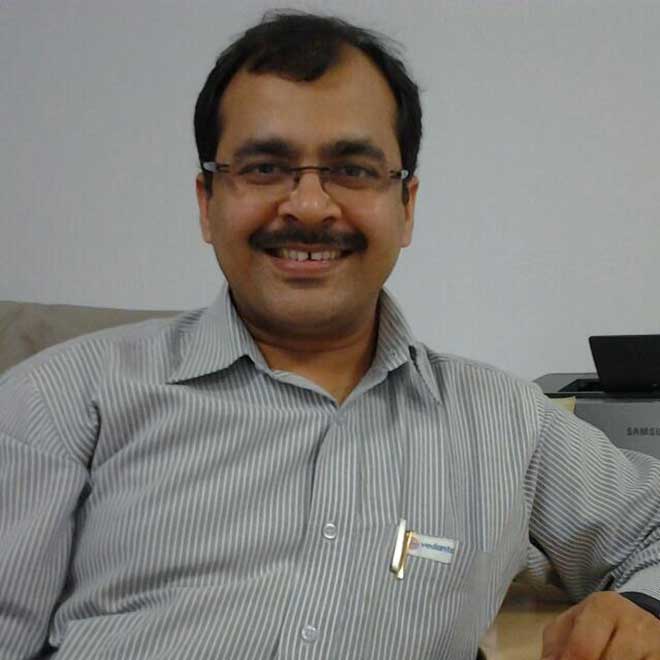


  • Rajiv Choubey, General Counsel, HCL Infosystems, on the Indian legal regime, Corporate Law, and his experience

    Rajiv Choubey, General Counsel, HCL Infosystems, on the Indian legal regime, Corporate Law, and his experience

    Rajiv Choubey graduated in law from Faculty of Law, University of Delhi, in 1999. He is also a certified Company Secretary. He then went on to pursue his LLM from Kurukshetra University in 2014. Rajiv is an in-house corporate counsel working for the last twenty years in the field of Corporate Laws (having handled M&A, JVs FDI Policy, Foreign Trade Policy, in bound & out bound, Securities Laws, Corporate Governance), Commercial Laws, International Trade Laws, Environment related laws, Electricity related issues, Industrial & Labour Laws, Economic laws-Excise, Service Tax, Customs and Foreign Trade Policy.

    In this interview we speak to him about:

    • His diverse experience
    • Corporate Law
    • Pursuing an LLM in India

    What motivated you to pursue law?

    I was born and brought up in Asansol in West Bengal. Honestly, as a kid I wanted to pursue sports and become a footballer. However, that remained an unfulfilled dream since sports wasn’t encouraged or taken seriously back then. I pursued commerce, which was another happy accident. I like commerce as a subject, which exposed me to economics and I developed a liking for the subject. While pursuing B.Com at University of Allahabad, I was introduced to Law of Contract as part of Business Law. A lot of credit goes to our teacher, Prof. Arun Garg, who taught “Contract Act” with a lot of passion and interest. He taught packed classrooms and his students admired him so much, that sometimes we stood at the back of the classroom for lack of space, just to hear his lectures.


    Tell us a little about your days in law school.

    The best part of the DU law curriculum is that it is based on case studies. The moment you get admission, as part of admission process they hand over a booklet of case studies. Initially, I could not understand, what kind of booklet is this? Then I understood the system of study, the method of citation. It created immense interest in me and it changed the entire approach to study law. The best way to study and understand law is the case based approach. It was completely different from the Business Law we studied during our graduation day.


    What were the activities, academic or otherwise, that you undertook in your law school days which in your opinion have shaped you and your career?

    When I did law, the number of activities were much less when compared to the present day. Further since I was also pursuing CS at the same time, I could not participate in many of extra-curricular activities.


    Who was your mentor, or main source of inspiration who motivated you all along the way?

    My teacher at Allahabad University Mr. Arun Garg and former boss Mr.Vinay Shukla (who himself is LLB and CS) and Mr.Vikas Goel (who is CA) always motivated and were sources of inspiration.

    While working with Vedanta, Chairman Mr. Anil Agarwal and Vice-Chairman Mr. Navin Agarwal were great sources of inspiration. In one of my key matters, our Chairman made us believe that we can achieve something which we thought was impossible.  I had the opportunity to work with lots of colleagues at Vedanta and it was fantastic to work with them and handle some of key environmental issues and coming out successful. My current Group CFO, Mr. S.G. Murali is a great source of inspiration, as he leads by example. I am greatly privileged to work with some of great minds.


    Are L.L.Ms absolutely necessary for a career in law?

    I do not think so. At the same it is good if one can pursue the same from any foreign university, with specialisation in any particular area (say Competition law, IPR, M&A, etc.) which one ultimately desires to pursue. If someone wants to go into academics, LLM is a must.


    What should one expect out of an L.L.M program, if they opt to pursue one?

    I have expressed my views that LLM should be with the sole intention of obtaining specialisation in any particular area. One should always do the cost/purpose – benefit analysis before pursuing any further studies. Doing LLM from a foreign university also provides the global perspective and outlook, which is essential in today’s world, where one may be required to handle clients across the globe.


    Why are students only considering universities abroad for an LLM?

    There are good universities in India such as NLS, Bangalore, NALSAR, Delhi University and other National Law Schools. I think one of the reasons students go abroad is because the LLM there is only a year long. Now, even Indian Universities have switched to a one-year curriculum. However, the key reasons for pursuing LLM in foreign universities is that you get specialisation in one particular area, which one would like to pursue. Further, it provides you a global perspective, experience and access to some of best faculties.

    One the issue of Indian legal education system (on LLM Curriculum), I feel Indian Universities need to upgrade their curriculum and focus on specialisation. Currently, it is more inclined towards an academic perspective. Universities can have two branches of LLM, one LLM (Specialisation) and the other LLM (Academic), the former being more inclined towards practice areas and other more inclined towards research and academics.


    Which is the ideal time to do an L.L.M?

    I am personally of the view that one should pursue LLM after at least five years of practice, when you feel the need to specialize in a particular area. The initial years of practice will provide clarity in terms of areas of interests, in which one would like specialise. It is like doing MBA after initial years of experience as post work-experience, one can appreciate various facets of management and can link it with their experience.  Ultimately, it is an individual choice as many people find it difficult to pursue LLM once they start working.


    From your experience, would you recommend the corporate environment for fresh graduates?

    (Rajiv has worked with several corporate giants such as Vedanta Ltd. and Maruti Suzuki before joining HCL Infosystems Ltd.)

    Career is an individual choice. It also depends what is one liking, strengths. When I started my career, there was no concept of in-house legal counsel and only few MNCs like Hindustan Lever had strong in-house counsels. The role of in-house counsel in other companies was limited to attending courts on behalf of the company. However, the scenario today has completely changed post the 1991 Liberalisation policy. It took almost ten to fifteen years for the role of in-house counsels to shape up and take prominence. India today is an open economy but at the same time has a strong regulatory regime. Today, the exposure of corporates on some of key regulatory issues being faced in the telecom, coal, power, mining and other sectors has increased the scope and role of in-house counsels. I have been a witness to some key environment and mining issues and without the contribution of the in-house counsel/ legal department, it would have been difficult to successfully win the battle in court and clear the regulatory hurdles. Hence the in-house counsels used to ride pillion earlier, but now, they are at the helm of all corporate affairs. Be it advising on contracting, dispute resolution, M&A, structuring transactions, advisory, regulatory issues, or compliance, in-house counsels are playing a major role. Their role is comparable to what the HR Department used to do several years ago. Today HR has moved away from the traditional personnel and administration to more organizational development, strategic utilization of employees to serve business goals, talent management and development. Similarly, in-house counsel is to work closely with the business in terms of advising them on key issues and resolving the same to meet the business objectives and plans of the organisation.

    Fresh graduates can look at working in-house as it offers you a variety of roles and is not limited to only doing a routine job. HCL offers opportunities in all facets of law, contracting, advisory, litigation. The Legal Department is mid-sized law firm, which deals with multiple customers and meets their expectations every day.  Since we are dealing with variety of issues, it is a real challenge in terms of delivery and at the same time upgrade ourselves with the latest of what is happening in law as well as in the industry.


    What does a regular working day look like for you, as General Counsel of HCL Infosystems Ltd?

    Prior to taking over as General Counsel of HCL Infosystems Ltd. in June last year, my entire experience was in the manufacturing sector. HCL being into distribution, services and system integration, the issues are completely different. The business model is different, the issues are different. Every day, we have different issues to handle. Since we participate in various bids/ tenders, we receive numerous requests for vetting from the business for RFQs/ RPFs other contracts with Business Partners/ Vendors/ Channel Partners. As I stated, we are in multiple businesses – distribution, services, learning, system integration, financial inclusions; every day is full of action. Apart for advisory, we also have to attend to the pre-litigation advise and strategize in all litigation matters, brief counsels etc. There is no time for the team to relax as it very action packed.

    My previous organisation was into commodities/ natural resources, where issues were different. In HCL since you are essentially providing different services, as the in-house legal department, we are involved in advising the business in contracting, risk analysis/ mapping. Further, since in our business of providing services, they are always issues of recovery of money, which leads to multiple litigations, arbitrations. The in-house team also advises on many pre-litigation issues, which may be potential litigation issues. However, due to the intervention of the legal department, we are able to recover dues. I have felt that people in sales/ marketing and the delivery team are reluctant to take issues with the customer, even where we have delivered. Sometimes issues also arise with respect to understanding the contract obligations to issue such as drafting and put the perspective to clients/ customers. To bridge the gap, we have started an initiative called ‘Legal for Non-Legal’ where we will conduct workshops to improve the understanding of basic facets of law so that they can front face the issues in a better way and take care of the organisation interest. I have a big team of more than fifteen lawyers. Some of the lawyers have joined us at different level with two to eight years of practice. While they are good at general understanding of law, it is always better to improve their understanding or other facets of corporate laws. I have started internal workshop for my team for knowledge sharing called ‘Episteme’ where we discuss various changes/ developments in law, landmark judgments. One recent example is to update my team on the ‘Insolvency & Bankruptcy Code’ (IBC), which I felt was very necessary. There is no much to do and very less time.


    If given an opportunity, what would you do differently in your career journey up to this point?

    I could have practised at the Bar as I am the outgoing type. I love to take challenges, meet people and present my point of view. Further, when you are practising at the bar, apart from your practice and service to clients, you can also help people who cannot afford to engage a lawyer. Of course, there is still time and I can still purse the same.

    A student should purse that career option, which he thinks he will be good at and which excites and interests him or her. Once should never try to emulate, seeing the success of others. Further, there is so short cut to success and one has to go through the rigour which is required to prepare oneself to be in a position to advise someone and to deliver to the satisfaction of the client.


    Is there any other suggestion you would like to give to our budding lawyers?

    When we pursued law, it was a profession where there was lots of struggle and there was lack of guidance. Being a first generation lawyer, there was no one to guide me. Initially I wanted to practice at the bar but people discouraged me saying it is very difficult. Because of my dual qualification of Law and CS, people advised me to join corporate, saying it is financially rewarding. I still feel that I should have practised at the bar.

    My suggestion to young lawyers is to pursue their dreams – i.e., if they like litigation, they should follow the same and should not swayed by financial aspects. At the same time, if one likes advisory/ solicitor job, they should join a law firm, which has its own challenges. If one wishes to start their own firm, they should take the plunge early, may be after five years of experience. One needs self-belief and determination to start on their own. Today law as a profession is very rewarding and if one remains focused and willing to put in hard work, success is just a matter of time.

    Young lawyers should be tech savvy as today technology is being used big time in law and hence traditional approach needs to be married with new tools being used to deliver to the satisfaction of clients. One more word of advice to young lawyers is that, today’s world is an era of specialisation. While one needs to have a decent understanding of various facets of law, only those who specialize and develop expertise will survive and be valued.


  • Harshleen Kaur, In-House Counsel, ShopClues, on her diverse internships, working at MNCs, and her experience

    Harshleen Kaur, In-House Counsel, ShopClues, on her diverse internships, working at MNCs, and her experience

    Harshleen Kaur graduated from University of Legal Studies, Panjab University, in 2015. During her time as an undergraduate, she has interned with the likes of Philips Electronics India Limited, Bharti Airtel Limited, Reed Elsevier, among others. She is currently in-house counsel at online shopping portal ShopClues.

    In this interview we speak to her about:

    • Her diverse internships
    • Her time at ShopClues
    • Being in-house counsel

    How would you like to introduce yourself to our readers?

    Someone who aspired to become a designer but ended up becoming lawyer, as strongly enforced by destiny. Nevertheless, unquestionably an in- house legal counsel by dint of my peculiar, rather unconventional choice. I love my work and area of practice. I am extremely enthusiastic about my work and love to take up complex challenges. I believe in making and maintaining good relationships so that people remember me for the kind of person I am.


    What motivated you to pursue law?

    Well, I did not choose law as a career option until I was guided to do so  by my counselor. My initial aim was to get into one of the best design schools of India but was unsuccessful in clearing the requisite entrance exam. Disheartened with the result, I decided to visit a counselor as I was unsure about what I wanted to become and what options I had. My counselor after evaluating my skills suggested I become a lawyer. Convinced by his rationale and strongly believing the result of the assessment, I decided to pursue law. And as they say “what is meant to be always finds a way”. I was, perhaps, destined to be a lawyer.

    Career counseling played a pivotal role in my life. I would strongly recommend students who aren’t very well versed with the options available to them or are confused about what do in life, to opt for career counseling. Career counseling seeks to help you pick out a career that is tailor made to an individual’s interest, aptitude, needs and personality. Hence, it helps you to choose the right career for yourself and ultimately leading to professional success and contentment.


    What subjects did you take particular interest in during your law school days?

    I loved studying Intellectual Property Rights. With the advent of information technology, which our generation has been an eye witness to, intellectual capital has gained substantial importance. With intellectual works being accorded the same protections that real estate or other forms of property enjoy under the law, intellectual property and rights attached thereto have become precious commodities and are being fiercely protected. Amused by the protections available I was and I am interested in learning more about the subject. But however, this was not a deciding factor in determining my career choice. Taking an in house-counsel role was primarily driven by my internship experience.


    What kind of internships did you engage in during your student years?

    I started with basic internships in Human Rights Commission and State Legal Service Authorities, Chandigarh.  These helped me understand the rights available under law to an aggrieved person and free legal aid services to certain weaker and underprivileged individuals in the society. It also helped me in understanding the procedure followed by Lok Adalats and appropriate skills required for amicable settlement between parties. I also visited the most special homes of India, a Juvenile Home in order to devise an acumen of the conditions, facilities, ideologies, sensibility of the inmates.

    I then moved on to corporate internships so as to understand the nature of legal work embarked upon by the legal counsels in the companies. I interned at Philips India Limited in Gurgaon for a month and assisted their legal team in auditing the modern trade agreements and also supported them on a project regarding slum sale of audio-visual business of the company. I got a flavour of what an in-house counsel does and that inspired me to take up the legal profession as an in-house legal counsel. Since I had clarity about my preference for working as an in-house legal counsel, I focused more on corporate internships. I did my consequent internships in Bharti Airtel, Vasant Kunj and Reed Elsevier, Gurgaon. All my corporate internships helped me enormously to understand the basic skills which an in-house counsel is required to possess and a basic understanding of the applicable laws to various industries which do not form a part of the curriculum during the legal course.

    Apart from corporate internships, as a part of academic internships I worked under various lawyers in District Court and Punjab and Haryana High Court at Chandigarh. I also interned as a law researcher in office of Justice M.S. Chauhan, Panjab and Haryana High Court under the ambit of judicial internship.

    As per me all the internships are learning mechanisms where we can afford to ask silly questions and make mistakes. It helps us understand our weaknesses and turn them into strengths so that we becomes better and better in whatever area of work we intend to undertake.


    When and why did you make the decision to be an in-house counsel?

    Frankly speaking, interning or working in a law firm never fascinated me. I had heard enough stories from my peers and seniors on the amount of time they had to give in working for a firm. Everyone has a different personality and I strongly oppose stressful working hours, as I feel occupational stress impacts our overall well-being. Working in a stress-free environment intensifies one’s capabilities and I found that working as an in-house counsel you do not have to juggle between court and office that often, as compared to working in a firm. I was attracted to the working culture of the companies during my corporate internships.This work experience during my internships gave me the confidence that I am well suited for the profession and combined with my constant efforts to learn more on my own I felt well prepared for the corporate world. I focused on more corporate internships and remained in touch with most of the people I worked with. I was fortunate enough that the legal team at Philips remembered me even after two years of my internship and during my fifth year final exams, I was asked to join the legal team at Philips for an ongoing demerger project.

    How were the first few years after your graduation?

    UILS placements were a little difficult during my time. I was lucky to have a job before I finished with my final year. Nonetheless, the first six months were actually tough. Once you become an employee, you no more are treated like an amateur. There is no one to guide, teach or make you understand the rationales of any decision being taken. It was difficult for me because what you study in theory is not what you practice. Law school did not prepare me for the nuances of practical law. College was about attending lectures, participating in events and above all, making great memories with friends. The world seemed to be a new place when I moved from a small city like Ambala to a corporate hub like Gurgaon. But making mistakes and falling helped me understand that the glory is not in never falling, but in rising every time I fall. Hence, the toughest few months made me much stronger and confident to take up whatever came my way.


    How does one go about securing an internship, and subsequently a job at MNCs?

    MNCs are not very keen on getting freshers onboard. In fact all companies, MNCs or Indian companies prefer candidates for a fresher position, who have worked or interned with them before. This helps them know the qualities, capabilities and willingness of a candidate to learn and grow in their job. Grabbing an internship in an MNC can only be attained if you have some good connections, unless the MNC is in dire need of an intern and has posted in some job portal. In case companies do not visit the law school, recommendation is the best route which can be opted as per my view. One should try and find someone who works at the company and is willing to refer. This actually has an advantage in a way that you’ve got a kind of a middle-man between you and the company. Once should always focus on learning the maximum and building a good network. One should never forget that there are lakhs of candidates in the market, but what makes one standout from the crowd is the qualities of a team player, a peoples person, skills, applicability of existing laws and willingness to work hard. If the employer is convinced on these skills, getting the opportunity to work as an in-house may be certainly fulfilled.


    Give us a brief overview of your current work profile with Shopclues.com.

    First of all, I am glad that I chose a smaller company shopclues.com as compared to Philips. I was loaded with work when I joined, as the team was very small and was the second legal counsel to join. I got the chance to learn to a lot both on my own and with supervision of the existing members in the team. Working in a smaller rather than a larger company has allowed me to take on more responsibilities, be in a direct contact with higher management and  progress faster by understanding the business requirements  and develop essential legal skills.

    As an in-house counsel you do a little bit of everything. There is work related to different areas like policy drafting, IPR litigation, compliance, transaction, acquisitions, and contracts. Since the company has a  global presence, international law also comes into play sometimes. As an in-house counsel you are expected to foresee potential problems  and stop them before they become a legal issue. It is more about working closely with business teams to identify legal issues and decide what type and level of risk is acceptable. One thing which most legal in-house counsels do not get the opportunity to do is litigation. But I am fortunate enough to have this area as a large part  of my responsibility. Working on existing IPR matters has helped me immensely to understand the procedural law. As an in-house one is suppose to strategise the matters keeping in mind the best interests for the company in a way which does not affect the business.


    Is there any other suggestion you would like to give our budding lawyers?

    It is very important for law students to choose their area of practice. I would advise all the law students to carefully and timely decide on what exactly they intend to take up. Stay abreast of legal developments. You must undertake as many and as diverse internships as you can and make the most of them. Know the limits of  your time and of your expertise. Understand the kind of work profile under different roles and make sure you develop a good relationship with all your assigned mentors during internships. No matter what you get as a remuneration or designation, if it is the profile you would like to work on, you must take whatever comes your way. Always remember that opportunities are like sunrises, if you wait to long, you miss them.


  • Jeevan Ballav Panda, Principal Associate, Khaitan & Co., on Dispute Resolution, Environment Law, and his diverse experience

    Jeevan Ballav Panda, Principal Associate, Khaitan & Co., on Dispute Resolution, Environment Law, and his diverse experience

    Jeevan Ballav Panda graduated from Hidayatullah National Law University, Raipur, in 2008 with Distinction in Environmental Law and Intellectual Property Rights. He has experience handling litigation and arbitration proceedings including interaction with clients, liaising with clients/ counsel, undertaking legal research and formulating strategies, drafting and preparing pleadings, briefing and assisting counsel, regularly appearing and arguing matters before the Supreme Court of India, Delhi High Court, National Green Tribunal (Principal Bench, New Delhi), National Company Law Tribunal (Principal Bench, New Delhi), Debt Recovery Tribunal, Delhi and Arbitral Tribunals (both domestic and international).  He has also appeared before Calcutta High Court (Original Side & Appellate Side), Goa Bench of the Bombay High Court, Jharkhand High Court, National Green Tribunal (Southern Zone, Chennai), City Civil Court, Calcutta, District & Sessions Courts, Magistrate’s Courts, Labour Courts/ Industrial Tribunals, Consumer Forums, Trade Marks Registry and other administrative/quasi-judicial authorities.

    In this interview we speak to him about:

    • His time at HNLU
    • Dispute Resolution and Environment Law
    • His experience thus far


    How would you like to introduce yourself to our readers?

    It is indeed my profound pleasure and privilege to give this interview. I would like to thank SuperLawyer for giving me the opportunity to help its followers in whatever possible manner.

    I was from the science stream and was supposed to be a medical aspirant but destiny had some other plans and it was by chance that I ended up pursuing law in the first batch of HNLU. The five years of Law School saw a complete metamorphosis of my personality from an introvert and reserved individual when I joined in 2003, to pursuing Dispute Resolution practice after graduating in 2008.  Being in the inaugural batch of the university gave me much needed exposure and I thoroughly enjoyed the five years in law school by participating as a speaker in some of the most reputed Moot Court competitions across the world, participating in about a dozen seminars/ conferences, publishing about twenty articles, being the first in the university to do a foreign internship, first in the university to get a pre-placement offer (PPO) and ultimately  working in one of India’s oldest and leading full service law firms for the last nine years or so.


    What motivated you to opt for legal studies after school?

    As I said earlier, I was from the science stream and was supposed to be a medical aspirant, considering the fact that that was the most conventional career choice at the time. Law was never considered as a preferred career option then and was looked down upon and perceived to be pursued by those who did not have any future in engineering or medicine. Though I came from a family full of engineers including my father, sister, cousins and later my wife, I was personally never keen on pursuing engineering. I have always been fascinated with cars so my heart at some stage wanted me to pursue Automobile Engineering but my mind deterred me from doing so because even this field required studying some common subjects like other Engineering courses. I was also not confident of pursuing Medicine as a career option.

    It would not be out of place to admit that right before my class 12 examinations, a discussion with my maternal grandfather Mr. Bisweswar Purohit (who is well known and a leading Advocate in Western Odisha) and whom I hold in high esteem really convinced me into pursuing law. My maternal grandfather who recently stopped practising after about 55 years of practice, was a self-made man and as a child I was always attracted towards the respect he commanded in society and the unlimited scope of emoluments the profession provided on being successful. As luck would have it  I did not score good ranks in the Medical or Engineering entrance examination and around the same time someone told my father in his office that with the advent of the five years integrated law course from National Law Schools, law has a great scope in the near future. On enquiry it transpired that the due date for appearing in the National Entrance Test (NET) of the then existing five National Law Schools were over. I was not interested in losing out a year by preparing for any course. Coincidentally my sister found a Newspaper Advertisement for commencement of HNLU and that the NET was scheduled two days after. I appeared in the NET by travelling to Raipur the very next day and when the results were out I was pleasantly surprised to have been shortlisted. That’s my journey of landing in a National Law School.


    Give us a brief overview your HNLU experience.

    In my opinion, five years of law school is a great opportunity for each student to experience the wide range of extra-curricular activities that it offers apart from the courses offered as part of the academic curriculum. When I graduated in 2008, an NLU tag possibly had more significance because NLUs were considered to be equivalent to IIMs or IITs for law and it gave you a good platform. Needless to mention, you still had to make good use of the platform and prove yourself. However, today with NLUs mushrooming across various states and several private and other law schools doing equally well in terms of exposure, faculty, and facilities, I do not think that not having an NLU tag is in itself a set-back, if otherwise the student is passionate about law and focused. The private and other law schools these days have discipline in their management and a wide variety in their course curriculum with mandatory attendance for classes, internships made compulsory and student exchange programmes with universities abroad providing excellent exposure and opportunities.

    Being in the first batch of HNLU was in fact a blessing in disguise since it was a small batch of about 50 students from different corners of the country. We had the advantage of being taught by some of the most experienced and brilliant legal minds from across the world and also were usually the first choice for being considered for representing the university in any competition or forum. Moot Courts gave you popularity amongst the junior batches, even more than topping the semester and I realised it very soon. Apart from that, the in depth research and team work that it brought in motivated me to participate as a Researcher in the Surana & Surana Corporate Law Moot Court Competition in the second year of law school itself. Thereafter, I participated as a Speaker in various other Moot Competitions like Henry Dunant, Commonwealth, Murdoch University International Maritime Arbitration and Willem C. Vis International Commercial Arbitration (West) and gained experience which immensely helped me during my initial days as a qualified lawyer to cope up with the pressures of a matter. I participated in various seminars and conferences as a Speaker on contemporary issues/ subjects both in India and abroad.  I converted my project papers into articles and got them published at various national and international books and journals.

    I utilised my extensive research work done at the Indian Society of International Law (ISIL) Library for the Murdoch University International Maritime Arbitration Moot Court Competition by applying and obtaining a month long Internship at Cocks Macnish, Perth, Australia before being joined by my team for the Moot Court Competition.


    In your opinion, what are the activities that you would recommend as necessary experiences for every law student?

    Internships, moot courts, client counselling, publications, seminars/ conferences, etc. are equally important as scoring good grades in the semesters. In my view, one should not lose out on the opportunities that the law course provides to a student because each activity has a significant role to build and shape significant skills like researching abilities, legal reasoning, analytical skills, confidence level, personality building, public relations, etc. which are indispensable in one way or the other for a successful advocate.


    From your experience in legal writing, please share with our readers the kind of topics that one must write on if they hope to get their work published in reputed journals?

    Writing is not something which came naturally to me. I tried to gradually improve this. In law school, I chose my project topics very carefully considering its relevance and wrote them after thorough analysis and research. Hence, it was easier to convert them into articles and make them worthy of publication. Writing article helps one to keep abreast with latest developments.

    Even now, I continue to write articles and choose topics of contemporary relevance like the significant decision of the Supreme Court or a High Court on a particular issue, ambiguous/ conflicting legal position, absence of legislative framework or implementation mechanism in a particular field, comparative legal position across jurisdictions, change in law and implications thereof, etc.

    For writing a good article to generate interest in the readers, originality, thorough analysis of the existing legal position and clarity of expression of views/ thoughts/ opinions are a must, apart from identifying the targeted readers. One should also consider his/ her own areas of interest before choosing a topic to write an article.


    What kind of internships did you undertake during your student years?

    I started interning with my maternal grandfather in the first year, followed by internships with the Senior Advocate in the Orissa High Court, Sandersons & Morgans, Kolkata, Khaitan & Co, Kolkata, Cocks Macnish, Perth, Australia and Zeus Law Associates, New Delhi. I did not have any references and managed to get confirmation for all my internships on the basis of personal application and calculated follow ups. With some contacts/ references maybe that I could have secured few more internships in other Tier I Firms, however there are no regrets.

    I think these days securing a good internship is getting more and more difficult as the internships one gets is more to do with the contacts/ references one has. With a small legal fraternity and the increasing demand of students to pursue law, mushrooming law schools, the competition for securing an internship is increasing day by day with very limited number of slots left for internship through the internship coordination committee.

    Choosing places for internship has got more to do with variety in the first three years of law school, such as NGOs, District Court, High Court/ Supreme Court and Company and narrowing down the choices in the fourth and fifth year depending on whether one is inclined towards Dispute Resolution or Corporate practice.

    I still feel that one should make the most out of the opportunities that comes his/ her way. If one has options to choose from, then of course you can strategize and choose the internship that best suits your interests and profile in the longer run. I feel each internship opportunity is a chance of proving yourself and have an edge over others interning along and get noticed by the firm/ organisation. It is as good as giving an interview for securing a job on a continuous basis, with each day of your internship tenure giving an opportunity to exhibit your skill sets.


    What are your areas of specialisation and how did you go about choosing these fields to specialise in?

    In law school, our course curriculum BA LLB (Hons.) required us to choose two subjects as Honours/ Specialisation papers so I chose Environmental Law and Intellectual Property Rights. The choices were unconventional as majority of my batch mates chose Corporate Laws or the like. On the basis of my internships and inclination towards pursuing Dispute Resolution practice, I decided not to go with the herd mentality and saw lot of scope and potential in Environmental Law and Intellectual Property Rights in the near future. I could also secure Outstanding and Distinction Grades in both the Honours papers I chose. It is very important that one understands the relevance of a specialisation subject for himself/ herself and chooses the subject accordingly and not just for the sake of it or just because the majority is choosing it.

    At what stage in one’s law school life must one pick a specialisation?

    In my view, in law school one must aim at learning and understanding the basics right. After completion of third year, on the basis of internship experiences one can make a broad choice of whether he/ she has an inclination towards Dispute Resolution practice or Corporate practice. The specialisation/ Honours papers, if any, may be chosen accordingly. The internships for the fourth year and fifth year should also be streamlined and planned in such a way.

    In my view, after graduating irrespective of whether one has chosen Dispute Resolution or Corporate practice, it is important to build up a strong set of basic skills. Dispute Resolution practice and handling Court matters gives you that much needed exposure. However, most of the firms do not give you that exposure and in the event you are hired for Corporate or Real Estate or Tax practice, you are trained for such specialised area of practice from the first day of joining. Some firms do have a rotation policy by which freshers are given exposure to different areas of practice including Dispute Resolution for a year or two. I strongly believe that for every law graduate it is important to do Dispute Resolution practice on general laws and make the basic and foundation strong in first two to three years of their career. This is very important because once you have your basics right, it is easier to pick up a specialisation.


    Who was your mentor, or main source of inspiration who/which motivated you all along the way?

    While my maternal grandfather Mr. Bisweswar Purohit has been my mentor and continues to be my constant source of inspiration, different people at different stages have played a pivotal role in providing me the right guidance and advice. Needless to mention that a mentor can only show you the path and what is right and wrong but to ensure that the path is followed and the suggestions are effectively implemented is still to be carried out by oneself only.

    In my association with Khaitan & Co., I have had the privilege of assisting stalwarts of the legal profession like Mr. Ram Kishore Choudhury, Mr. Pradip Kumar Khaitan, Mr. R.N. Jhunjhunwala and Mr. Padam Khaitan, and directly working under their supervision, guidance and advice. Their experience and expertise inculcated in me deep rooted traditions of integrity, the ability to handle complex situations in life and in profession with ease, discipline, humility, meticulousness and how to continue hard work irrespective of your position and stature because there are no shortcuts in life and no substitute to hard work. Mr. Pradip Kumar Khaitan and Mr. R.N. Jhunjhunwala being the senior most Partners of Khaitan & Co. have been like family and all along led me as my guru, philosopher and guide. Presently, I have the pleasure of assisting Mr. Ajay Bhargava and Ms. Vanita Bhargava, who have two decades of experience in handling complex litigation in diverse fields of law and have their unique ways of approaching a legal issue. Their success and popularity at such a young age is motivating and inspiring.


    What does it take to make the cut and land a Tier-I job?

    Ownership and belongingness towards the firm, combined with hard work, dedication, and responsibility in what is entrusted to you is important to make the cut. Hard work, discipline, honesty, integrity, sincerity, loyalty and willingness to learn are the quintessential attributes of a lawyer which are indispensable for a prospective candidate, whether it is a Tier I Firm or any organisation for that matter.


    What is the level importance given to a student’s Grade Point Average with respect to recruitments at Tier-I firms?

    Grade Point Average may definitely give the student an edge over others on Day Zero to be shortlisted or interviewed by a Tier I Firm. However, mere Grade Point Average according to me is not adequate if the rest of the CV of the student does not reflect the overall outlook and personality required for the profile. An average student with better exposure in terms of internships and learning in those internships, moot courts, seminars/ conferences, publications, etc. may fit in to a role better than a topper of the batch with good Grade Point Average but no real exposure in terms of extra-curricular activities. I believe as a student of law it is important to be a Jack of all trades.


    How do you say interns should go about their work at a firm like Khaitan, so as to get noticed in a positive way in the limited time they have?

    Exhibit initiative and willingness to learn and having solution driven approach in the work assigned rather than sitting over the same work for days or weeks together without any progress. The four to six weeks tenure one gets as an intern is a golden opportunity to prove yourself and your skills every single day and project yourself to be better than the rest. Acclimatize to the working style and environment quickly, get involved with the work assigned, show ownership, responsibility and belongingness towards the legal issues and try to come out with high quality research and solution/opinion, as the case may be. Consider your internship as a now or never opportunity to get noticed (not only in terms of your talent but your behavioural skills as well) and secure a Pre-Placement Offer. I am sure such approach will have a lot of positive impact and definitely help in the longer run.


    What does a regular work day look like for you?

    In hindsight, I seem to have taken my school’s (DAV Public School) motto of “Work is Worship” quite seriously. I am a workaholic and passionate about what I do. As a Dispute Resolution lawyer the day usually starts with early morning conferences, appearances before Courts preceded/ followed by discussions/ interactions with counsel/ senior counsel or other legal professionals in Court while waiting for matters or after that, dictating matter updates for clients, arbitrations in the afternoon/ evening followed by drafting pleadings/ opinions/ preparation for the next day matters.

    I enjoy the presence of the firm, complexity of the matters, court appearances, dealing with high profile clients and matters that it provides but at times it does affect your work-life balance, which one has to cope with and sometimes accept.


    Is there any other suggestion you would like to give to our budding lawyers?

    Be honest and sincere to yourself and understand your strength and weaknesses. Take your decisions rationally and not impulsively. Self-motivation and self-confidence is very important. Learn to stay grounded and lie low with humility irrespective of whether you are flying high or passing through a difficult phase in life. Everything is temporary and change is the law of nature. Be passionate about what you do and do it like no one else can do it better than you.


  • Shubhangini Rohatgi, Deputy Manager-Legal, Mahindra, on studying in London, IT Law, Contracts, and her diverse experience

    Shubhangini Rohatgi, Deputy Manager-Legal, Mahindra, on studying in London, IT Law, Contracts, and her diverse experience

    Shubhangini graduated from Guru Gobind Singh Indraprastha University, in 2007. After having worked for five years in the IT and Telecom Industry, she decided to pursue higher studies and thus, completed her LLM in Corporate and Commercial Law from Queen Mary, University of London, in the year 2013, with specialization in Cyberspace, Privacy and Information and E-Commerce laws. Her forte has been Commercial Contracting with a focus on the IT (Software) sector. She is currently associated with Comviva Technologies Limited (a subsidiary of Tech Mahindra), as a Legal Counsel handling reviews and negotiations of commercial contracts along with providing general advisory as well as advisory related to employment matters. She has previously worked with Oracle India and British Telecom.

    In this interview we speak to her about:

    • The Indian legal education regime
    • Studying in London
    • Her experience in IT

    How would you like to introduce yourself to our readers?

    I am a transactional lawyer, having worked in the field of Information Technology and Telecom for close to a decade. Quite contrary to the profession I’ve chosen for myself, I am an introvert at heart, and a not-so-social butterfly. But that has never deterred me from moving ahead in my career.


    What motivated you to pursue law?

    My Mother! She always wanted me to do something different. As a matter of fact, I was known to be a very argumentative child, as my father always observed and never failed to highlight, a quality which later helped me decide my future plans. My parents, being from the medical and teaching fields, encouraged my elder brother and me to pursue an unfamiliar path. Around that time, in the late ’90s, the usual career choices were either medical or engineering. My brother opted for hotel management, a career decision which many questioned, but supported by my parents, he proved himself in that field and is now doing very well in the hotel industry. When my time came, in early 2000, I did not wish to take up the regular courses, and of course had to follow in his stead, and thus chose between Law and Journalism. It’s a decision I am very proud of today.


    Would you say that the teaching methods here and abroad are vastly different?

    It would not be correct on my part to decide the level of difference in the teaching processes in India and abroad. Foremost reason being, that there is a vast difference in taking a course at an under-graduation level and post-graduation level. It was in India that I learnt the basics of education, and which brought me to the stage that I have reached. As part of my Masters’ degree in Law, I got the opportunity to be taught by acclaimed professors who were authorities in themselves. The focus of the professors is on imparting a practical sense of understanding rather than bookish knowledge. I am sure the same mechanism is being imbibed by faculty in India as well, making lectures more and more interactive. Unfortunately though, I have learnt the hard way that a Masters’ degree in Law, even from a prestigious international university, is not equivalent to an MBA. So, it is your basics which must be absolutely strong, and I believe, India has enough law colleges of repute which focus on the same.


    How significant do you think internships are for law students? 

    Internships must be made an integral and mandatory part of the law program starting from the first year itself. It helps in determining your likes and dislikes and paves the way for deciding which field to enter in the future. Of course, no one’s stopping you from choosing a different path even after! During my law school, I interned with several law firms, as well as with independent lawyers. It was because of this one internship with a Delhi based law firm in my fifth year which helped me get my very first job with British Telecom, a multi-national telecommunications company headquartered in UK. While I was interning I got a flavour of contracts, and got to know about the various terms which form part of contracts. It was a simple exercise of comparing two draft versions of a contract and highlighting the areas of difference. It may sound like an effortless job, but for a person still in law-college this was a very important piece of work assigned by a senior at the law firm. So I had to give it my best shot. In the process, I read through the entire contract, word by word, and few terms from the contract (which we call “boilerplates”) got etched in my mind (so much so, that even after eleven years, I still remember the name of the client whose draft it was, but for confidentiality purposes, will not pen down here). This simple piece of work helped me get my first job with a top MNC, while I was still in final year.


    Did you have any mentor or guiding figure during your formative years as a lawyer?

    I am a first generation lawyer, so it was not that I could rely on a lawyer in the family for deciding my career path or even understanding the nuances of law. My parents have always been my guides and mentors, and any and all decisions that I take, are taken giving due consideration to their advice imparted to me during my formative years.


    What are your fields of specialization? 

    My field of specialisation is reviewing and negotiating commercial contracts, more particularly software contracts. By way of qualification, I have specialised in e-commerce, privacy and data protection and cyber laws. It was during the initial six months as trainee at British Telecom that made me realise that commercial contracts were my calling. As I have primarily worked with Telecom and IT companies, it was an obvious choice to take up privacy, cyber laws and e-commerce as subjects of specialization given the fact that these are still considered niche and up-coming fields in India.


    Having worked in firms like British Telecom and Oracle India, what would be your advice for job seeking aspirants?

    From a value perspective, I feel that employers seek to engage with people who are sincere and committed. Unfortunately, integrity is a facet not seen in many. No matter what the situations and circumstances are, one should not deviate from the value of integrity. It goes a long way, and you will be remembered as an honest and truthful soul. From a work perspective, one should choose a career/job which one truly enjoys doing. Ultimately, it is your life and you alone should be responsible and accountable for the direction it goes in.

    I find myself fortunate to have gotten the opportunity to work with big names like British Telecom and Oracle. But, it wasn’t an easy job. One has to be focused and driven by passion to achieve something. My first six months at British Telecom, which was my very first job, was about preparing an online contract repository, which quite literally involved typing/copying clauses from PDF versions of contracts and pasting them on an online tool which was developed for creating an online repository of contracts. It may seem a dull and monotonous piece of work (and which quite frankly it was!), but it really helped me understand contract terms and conditions – just imagine the wide range of clauses I would read day in-day out.


    On what basis would you hire an intern?

    First and foremost, the person deciding the selection should keep in mind that an intern is still a student, and should be treated as one. He or she comes with a passion and is full of vigour.  Having said that, the key quality that I would look for, while selecting, would be the individual’s enthusiasm and eagerness to learn. I firmly believe that one may not know all, but with a learning bent of mind, one can achieve anything. The other quality I’d look for in an intern would be a sense of commitment and dedication. Not that I would want my interns to slog the entire day, as I am also a firm believer of having fun at work, but, such fun should be accompanied by serious commitment towards work.


    How do you stay updated on the latest legal developments?

    I regularly read the newspapers, and articles from various legal news websites to abreast myself of the latest updates and developments. Also, as my husband is a litigating lawyer, we often have dinner table discussions around various topics.


    What do you like to do when you’re not working?

    I like to read. More than reading, I like to collect books and articles. Although I may not get the time to read much, I feel content in the fact that I have something to rely upon.


    Any word of advice for our readers?

    The key to real success is happiness and contentment. I believe in the fact that though commitment and dedication is an essential element of climbing the ladder of success, the most important one is being happy and enjoying the work you do. If you enjoy your work, you are happy, and if you are happy, then dedication and commitment will reflect in your demeanour, and success will automatically follow you.


  • Apurva Agarwal, Founding Partner, Universal Legal, on starting his own firm, and working at Luthra & Luthra

    Apurva Agarwal, Founding Partner, Universal Legal, on starting his own firm, and working at Luthra & Luthra

    Apurva Agarwal graduated from National Law School of India University, Bangalore, in 1999. Soon after, he started work with Shah Desai Doijode & Phatarphekar.  He then pursued his LLM, with a focus in Corporate and Commercial Laws, at Bond University, Australia, where he achieved academic distinction when his name appeared on the Dean’s List.  Upon completion of his LLM he returned to India where he worked for DSK Legal (formerly Andersen Legal India) and Luthra and Luthra Law Offices.  He now has his own firm, Universal Legal.  His areas of expertise include Real Estate, Corporate and Commercial, Medical, Intellectual Property and Media. His articles have been published in various newspapers and magazines.  

    In this interview we speak to him about:

    • Working at Luthra & Luthra
    • Starting his own firm
    • Being a first generation lawyer


    What motivated you to pursue a career in law?

    I have always wanted to be a lawyer. And being a first generation lawyer at that made it all the more challenging. 


    Tell us a bit about your time at NLSIU, Bangalore.

    Studying law was challenging as the methods adopted in NLSIU were different. It was not lecture-oriented but discussion-oriented. Students were expected to read before coming to class, so that a healthy discussions could happen. It was an initial shock to me coming straight out of school to this. I come from an all-boys school, hence interaction with girls on campus was a pleasant surprise. Further, the faculty included stalwarts like Dr N R Madhava Menon, Dr. N. L. Mitra, Prof. S. V. Joga Rao, etc. which gave us perspectives of law beyond our imagination. Also, we had practicing lawyers coming and sharing their experiences with us , which allowed us to have practical insights to law.


    Did you take part in co-curricular activities while in college? 

    Yes, I did take part in co-curricular activities. I participated in a few moot courts—although, with rather unsuccessful results, I should add. I helped the institution organise several conferences.  The highlight was, when I led a team to organise an international conference on Human Rights in association with Interights. The conference was attended by 40 odd judges including Chief Justices from across the world, including Dr. A. S. Anand, the then Chief Justice of India.


    What were you areas of interest during your legal education?

    I was interested in doing Corporate Law. However, when I got into practical world and started working, real estate and succession planning became my forte. In fact, I have also authored a book on real estate called Layman’s Guide to Property Transaction Rights.


    What are the causes you feel strongly about? 

    We need to simplify the laws and legal writings so that a common man can understand it. I consciously wrote my book in a language other than English, to make it more accessible. Further, I conduct legal workshops and lectures through various fora to make people understand the same.


    What advice would you give students in avoiding a decision paralysis?

    Unless you want to get into academics or work abroad, pursuing further studies is not required. It’s better to dive into the big bad world headfirst. Practical experience is the best teacher.


    How did you keep up with Bond University’s academic rigour? 

    It was very exciting as you got to meet with students from across the world, which was not possible in India. It was a melting pot of diverse cultures. It was a confluence of various legal systems. The university expected very high standards of academic performance from all its students. The faculty was very approachable and friendly. We used to have lunches and drinks together and learn more outside the class than inside it.


    Tell us about your early professional experiences at DSK Legal and Luthra and Luthra Law Offices

    DSK Legal, through its managing partner Anand Desai taught me how to apply law to suit the clients’ requirement. The aim was to provide the client with the most appropriate solution. At the Luthra and Luthra Law Offices, I learnt to work against stiff timelines. The body of work was varied but mainly concentrated on Real Estate and Media.


    Did you have a mentor or guide during the formative years of your career?

    I did not have a mentor. I think it’s essential to have someone to look up to and guide you during the initial phase of your career.


    How did you come to be the Founding Partner at Universal Legal? 

    I was one of the first few recruits of Luthra and Luthra Law Offices, in Mumbai. This enabled me to get insight on how to establish a law office. This got me thinking, if I can do it for someone else, then why not for myself. We are a full service law firm. At the firm, we tried to incorporate all that we admire about reputable Tier-1 firms, and add a personalised touch to it. Also, we did not want to sit in office and idle our time. It was clear that people have to work long hours if there is work on the table. But if there are days, when there is less work, you are not required to sit in office. We believe in five day weeks and promote a healthy work life balance.


    Do you consciously focus on building a specific body of work? 

    Yes we do.


    What are the challenges and learning opportunities that you have faced in your career so far?

    The challenges are to constantly get work in the firm and keep abreast with the developments happening in the field of law. With the laws changing so fast and being adapted to new scenarios, we have to be on our toes.


    How do you deal with the pressures associated with your position?

    If you enjoy what you are doing, then there is no pressure.


    What qualities and achievements do you look for in potential job applicants/ interns at Universal Legal?

    The person should be willing to learn and have the basic knowledge of law. The person should have the ability to find the law and solution.

    Can you describe the process that goes behind writing?

    There is no processes as such. It’s the knowledge that we gather along the way gets translated into the writing.


    How do you keep yourself updated about the latest developments in the law?

    Reading and doing research. Also, by trying constantly reinvent myself

    What advice would you like to give our readers, who are mostly law students and young lawyers?

    Just be yourself and enjoy what you do.

  • Deepika Raikwar, Regional Legal Manager-North, Hindustan Unilever Limited, on life at NLIU and IIM, and her experience

    Deepika Raikwar, Regional Legal Manager-North, Hindustan Unilever Limited, on life at NLIU and IIM, and her experience

    Deepika Raikwar graduated from NLIU, Bhopal, in 2006. She then went on to pursue her Masters in Business Management from IIM, Kozhikode with a focus on Strategy and Marketing. She has worked with companies like TATA AIG as an Assistant Manager, Max Bupa Health Insurance Company Ltd. as Manager Legal and Aviva Life Insurance Company as the Senior Manager. In December 2014 she started working for Hindustan Unilever Limited as its Northern Region Legal Manager where her practice is focused upon Consumer Protection, taxation, food and safety law.

    In this interview we speak to her about:

    • Marrying law with management
    • Interning at Yahoo!
    • Her diverse experience

    Tell us something about yourself, apart from your profession. 

    I am an adventure sports enthusiast with a keen interest for understanding world cultures.  Living with a motto of making each minute count, I have couch surfed and hosted people from nearly half the world. I have an eclectic choice in music from a thumri to a psychedelic trance, and everything in between. I generally like to take life easy; only when I’m not working, of course!


    What made you choose law as a career?

    The smell of old books, lateral thinking, and fascination for courtroom dramas.


    Tell us about your time at NLIU Bhopal.

    Being a first generation lawyer and belonging to one of the first few batches of NLIU (and literally having no placement data/ record or assurance) it felt like subscribing to a much hyped IPO. The jitters and vulnerability were overwhelming for the first few days. The old campus was a small building in a jungle, which made me reconsider my choice many times. But soon it became a milestone in my memory to be a part of the transformation story of NLIU, Bhopal. The campus moved to the new education block while I was in my second year and the new library was also inaugurated. Voila! From a dull and boring life, the campus suddenly transformed into a much talked about hub. The new campus won us over, new batches came in, great friendships were discovered. We had a lot of fun, but the curriculum was equally challenging. 

    The level of exposure and education is and has always remained very structured in NLUs. The trimester pattern gets the rigour going in the right direction. I am impressed by the level of extracurricular activities people get exposed to in law schools these days along with academics, though back then we had fewer choices and avenues. The level of competition is also much higher,which makes every graduate an adept legal professional.


    How much do you recommend pursuing MBA after LL.B?

    MBA+LLB is a great combination, especially if you want to excel in the corporate/ commercial/ start-up space. It always helps one switch between roles and have a larger economic and legal perspective on a global scale. Anyway, what’s the point if you do not understand the other side of the story? How can one think through business when every product, business idea, or operations of a venture is riddled with legal challenges. In fact, many sectors are/ were heavily regulated. I felt a person wearing multiple hats of legal aptitude and business understanding would be able to offer effective solutions as opposed to a plain vanilla approach. Also, CAT was quite sought after and I certainly wanted to crack it. 

    MBA is a great course, which certainly empowers one to think in a larger context by breaking through the stereotypical legal mind-set and is totally recommended for people who want to do different things differently. One should just be mindful of the ground reality. There are very few sectors which can offer combination profiles and cross functional exposure wherein one can use both sets of learning and skills. Typically, the trends are indicative of niche jobs being claimed by combination profiles, and this may result in very few possible change or movement options in the long term.


    Tell us about being a Management Trainee for Yahoo!

    It was an interesting hybrid internship for me. Yahoo! offered a project based role where I was working on a few yet to be launched products to evaluate them legally and to partner the technical team to build up the business case and later ideate on the product specifications along with their think tank. The culture was so strikingly different that in my induction session with the CEO, the gentleman in a floral shirt and shorts assured me it was acceptable to dress casually and told me it was okay to remove my jacket if I wanted to. The law firm internships were equally exciting, though intensely formal.


    Tell us about your experience with TATA AIG.

    TATA AIG was my campus recruiter from IIM, Kozhikode. Joining an insurance MNC as a management associate exposed me to various interesting profiles like Marketing, Business strategy, and finally gave me an opportunity to try my hand at Financial Product Manufacturing. The profile is mentally stimulating and requires a thorough understanding of the regulatory frameworks, finance and advance contract drafting skills. The insurance market leader, was surely on an aggressive plan to expand their national and international product portfolio. I was lucky enough that my first job was very demanding and stressful and I got the support and guidance of some very fine leaders.


    How would you describe your experience Aviva Life Insurance Company?

    Aviva Life exposed me to a large scale life insurance set up with all kinds of legal and business challenges. I also got great exposure to M&A from the strategic and legal side and totally enjoyed leading a very high potential team.


    How was your experience with Max Bupa Health Insurance Company Ltd? 

    I got exposure setting up the health insurance business in India while the industry was just about a start-up. It is an interesting field and requires a deep understanding of healthcare, human physiology, and medicine. The product development and drafting is a complicated process as healthcare sector in itself is changing every day. To draft and make a futuristic product which is market ready, and sustain the test of scrutiny of the regulator is a quite a task.


    Tell us about your role as Regional Legal Manager, North, for Hindustan Unilever Ltd.

    Unilever is a world in itself, every category has multiple brands and the scale of manufacturing and distribution is massive. There is a variety of issues to be handled from business to litigation, IPR, generic strategy. The best part about the work is the complete freedom it offers. The organization loves creativity and would never restrict any one to a particular ‘role’ or profile. The avenues of growth are varied. This imparts dynamism and empowers the next generation of leadership. My immediate goal is to lead a world class legal team and empower my people to grow well, both in the organization and in profession.


    There exists a huge debate with regard to being an in-house counsel versus a law firm counsel. What is your opinion on such a comparison?

    I think this debate’s existence per se is a loss of one’s focus. The right debate to have in one’s mind is how to excel in whatever you choose to do. There are different skill sets which the two profiles would certainly impart. It is completely the individual’s prerogative. 


    How would you suggest a law student should plan his/her career if he/she wishes to join the legal department of any company?

    Just be very good with whatever you study and do. The keenness to learn and the consistency to perform is the success mantra to be ‘employable’ in an organization. What matters most is persistence, perseverance, and the ability to think quick. This would certainly help not only to have a rewarding career, but a sorted life in general. There is no special preparation required; one should just be good with the basic subjects.


    Any other parting advice to our readers?

    There is nothing called preparation, it is just about changing habits to get an impact. My only share of personal experience would be read more, work hard, party harder, and stay focused. 


  • Vishrut Jain, Banking and Finance Laws Specialist, on the Indian banking regime, and his experience

    Vishrut Jain, Banking and Finance Laws Specialist, on the Indian banking regime, and his experience

    Vishrut Jain graduated in 2012 from WBNUJS, Kolkata. He is a Senior Associate in the Banking & Finance team of VDB-Loi a law firm based in Myanmar, with offices in the South East Asian region. Prior to this he has worked as an in-house counsel, first as a Manager with ICICI Bank, then as a Senior Manager with Tata Capital and after that as an Assistant Vice President with Yes Bank. He is also a designated advocate of the Bombay High Court.

    In this interview we speak to him about:

    • His experience in the banking sector and the banking regime in India
    • His experience thus far in the legal field


    WHAT WOULD YOU LIKE TO SAY TO OUR READERS BY WAY OF INTRODUCTION?

     Growing up, I was always surrounded by law books as I am a fourth generation lawyer. In school, I was a voracious reader and enjoyed participating in debates and theatre. I would describe myself as having a gregarious personality and a curious outlook to life, therefore I like meeting new people and learning new things.


    WHAT MOTIVATED YOU TO TAKE UP LAW AS YOUR CHOICE OF CAREER?

    As I mentioned, law is in my blood, so to speak. Having said that, I was never forced to make it my career choice, rather I gravitated towards it organically. I was really impressed by the respect that the legal profession commanded and the fact that it was really about helping people in their time of distress. This is why it is called a noble profession.


    TELL US A BIT ABOUT YOUR TIME STUDYING LAW AT NUJS.

    I am proud to say I am an alumni of NUJS. It is a fine institution with an excellent faculty and one whose students have gone on to achieve great things in life. In college I was a member of the literary and debating society and headed the society for advancement of criminal justice and also the magazine committee. I also took active part in moot courts, MUNs and the cultural festivals. The learnings I received, both inside and outside the classroom, the life experiences I had and the friendships I made — these will stay with me for life. I do want to make a point here though. College life comes with it many challenges and everything is not always smooth sailing. It is in these difficult times that one has to carry on and hope that things will work out. And most times, they do.


    COULD YOU TELL US ABOUT THE INTERNSHIPS YOU TOOK UP, AND WHAT YOU LEARNT FROM THOSE EXPERIENCES?

    As is the norm, my first internship was with an NGO, followed by court internships (district courts in Delhi, Delhi High Court and the Supreme Court) as well as a judicial clerkship. Thereafter I interned in law firms such as AZB & Partners and Khaitan & Co. While academic learning is essential, there is no substitute for practical experience and I learnt the practical aspects of being a lawyer during these internships.


    WHAT ADVICE WOULD YOU GIVE STUDENTS IN AVOIDING A DECISION PARALYSIS WHEN MAKING A CAREER CHOICE?

    A decision paralysis is actually a blessing, since it is caused by having an abundance of choices. Ultimately, it comes down to what you enjoy doing. If you enjoy being in a court setting, and do not mind waiting a few years before raking in the big bucks, then a career in litigation may be for you. If you prefer the corporate lifestyle with the glamour of closing deals, then you may consider a law firm or an in-house role. The beauty of law school is that it opens up the doors to a variety of options – graduates have also chosen to join the civil services, judicial services, teaching profession and even politics.


    TELL US ABOUT YOUR EARLY PROFESSIONAL EXPERIENCES AT ICICI BANK LIMITED. 

    I was fortunate to get an opportunity to start my career with ICICI Bank. The legal team at ICICI is especially renowned for building a strong foundation in its fresh recruits. I gained transactional knowledge and learnt the intricacies of the banking sector during my time there.


    WHAT WAS THE TRANSITION LIKE FROM LAW STUDENT TO A LAWYER?

    Every student finds it intimidating when thinking about the shift from law student to lawyer and I was no exception. Three things helped make the transition smoother – the training I received in law school, self-discipline along with self-motivation and the guidance from my senior colleagues.


    HOW IMPORTANT IS IT TO HAVE A MENTOR?

    It is not only important, but absolutely essential to have a mentor. In fact, I would say not only one, you must have as many mentors as you possibly can. Mr. Edwin Vanderbruggen, Ms. Jean Loi, Mr. Jeffrey Martin, Mr. Nishant Choudhary, Mr. Arun Khanna, Mr. Kumar Medhavi, Mr. Raunaq Baid, Ms. Leena Chacko, Ms. Sarita Kamath, Ms. Nitu Agarwal and Mr. Sanjay Nambiar have guided me along my path.


    HOW DID YOU COME TO WORK AT TATA CAPITAL FINANCIAL SERVICES LIMITED AND WHAT WAS YOUR EXPERIENCE LIKE?

    Having worked in a bank, I wanted to gain experience working in an NBFC and this was an ideal opportunity. I worked closely with various stakeholders including other creditors, multiple borrowers, business teams and law firms, to build common ground and resolve legal and commercial issues to ensure that a deal goes through. At this time SARFAESI also became applicable to NBFCs and I helped revise the debt recovery policy of the organisation. I find the NBFC space to be an interesting sector with its own unique challenges.


    HOW WAS YOUR EXPERIENCE WORKING AT YES BANK LIMITED?

    YES Bank is the fastest growing organisation in the banking sector and the first greenfield bank to be licensed by the RBI. I was involved in a variety of transactions, including GIFT City funding and Masala Bonds. The experience I gained there is invaluable.


    WHAT IS IT LIKE TO WORK IN MYANMAR? WHY DID YOU MAKE THE SHIFT?

    It is an exciting place to be in since the country has only very recently opened up its economy. There are new projects coming in every day with foreign investors, and the legal regime is being overhauled as well. So, I am getting the opportunity to learn a lot and, at the same time, make a meaningful contribution to the progress and development of the country.


    ON WHAT PARAMETERS DO YOU CHOOSE THE PROJECTS YOU WORK ON?

    First, as expected, I work on the projects I have been assigned, which consist of a variety of transactions, including project finance, structured finance and debt recovery. Beyond this, I choose to work on projects which are somewhat new and off the beaten track. For example, in Myanmar I have worked on a World Bank project for the restructuring of state owned banks and advised the government on the drafting of housing laws. I have also made presentations on the new company law, investment law, insurance law and condominium law. I advised a foreign airline company on market entry into the aviation sector.


    COULD YOU TAKE US THROUGH A TYPICAL WORKING DAY AT YOUR OFFICE?

    Typically, a working day would see me handling multiple transactions at a time, meeting with clients and, time permitting, work on drafting a memo on a new law or a legal update.


    WHAT BOOKS HAVE YOU READ WOULD YOU SAY HAVE PLAYED AN INTEGRAL ROLE IN SHAPING YOUR LEGAL PHILOSOPHY?

    Three that immediately come to mind are Before Memory Fades by Fali Nariman,Roses in December by Justice M.C. Chagla and On Balance by Leila Seth. These autobiographies of renowned jurists have greatly influenced my thought processes.


    WHAT ARE THE KEY ATTRIBUTES THAT ONE MUST DEVELOP IN ORDER TO EXCEL IN THIS INDUSTRY?

    A person who reads a lot is bound to excel in this industry. Hard work and discipline are a must. It is important to enjoy what you do, since that keeps you motivated. And finally and most importantly, the key to success lies in one word – practice.


    HOW DO YOU MANAGE YOUR TIME BETWEEN YOUR PROFESSIONAL AND PERSONAL INTERESTS?

    Work-life balance is important to avoid getting burnt-out. I enjoy traveling, reading, biking, trekking, swimming and spending time with my pets.


    HOW DO YOU KEEP YOURSELF UPDATED ABOUT THE LATEST DEVELOPMENTS IN THE LAW?

    I feel the best way of learning is by doing. If I hear about some new developments in the law, I try to write about it. We regularly hold presentations and circulate a legal newsletter. External sources such as legal websites (Bar & Bench, Legally India) and newsletters from other organisations are also a useful source of information.


    WHAT ADVICE WOULD YOU LIKE TO GIVE OUR READERS, WHO ARE MOSTLY LAW STUDENTS AND YOUNG LAWYERS?

    To law students I would say, even if you decide not to become a lawyer, five years in law school teaches you how to think. This will hold you in good stead wherever you go. To young lawyers I would say play the long game. Law is truly a jealous mistress, but if you serve her well, she will take you places.

  • Anupam Sanghi, Founder, Anupam Sanghi & Associates, on Competition Law, her pro-bono work, and plans for the future

    Anupam Sanghi, Founder, Anupam Sanghi & Associates, on Competition Law, her pro-bono work, and plans for the future

    Anupam Sanghi graduated in law from Nagpur University in 1997. She then went on to pursue her Masters in Competition Law from Kings University, in 2010. Anupam is the Founder and Managing Partner of Anupam Sanghi & Associates (ASA), and heads the TMT, Competition/Antitrust and Regulatory Practice. She has pioneered in these areas for the last eighteen years of practice, advising MNCs and SMEs on every aspect of legal & regulatory strategy, M&A transactions, compliance & training, intellectual property rights and dispute resolution / arbitrations. She is also a frequent writer, speaker and presenter at national and international conferences and seminars.

    In this interview we speak to her about:
    • Her experience in competition law
    • Her pro-bono work
    • Starting independent practice

    How would you like to introduce yourself to our readers? 

    Hello Superlawyers, to all those who consider themselves so! I initially wanted to be a CA, and law was the second option in that list. But it’s turned out to be the best choice I’ve made. I find the legal profession exciting and creative as it has the potential to transform society and move us towards a growth trajectory.  

    What motivated you to take up law? 

    I am actually a third generation lawyer. My grandfather, Late Vishnu Kumar Sanghi, was a leading lawyer, practising at the Nagpur Bench of the Bombay High Court during the period of 1940 to 1990. My uncle, Late G.L Sanghi, was a Senior Advocate, practising in the Supreme Court of India between 1957 and 2006. My grandfather inspired me to study law. He wanted me to pursue law even if I didn’t intend to practise it in the future. Though I had enrolled in the CA/CFA programme initially, I decided to pursue law soon after. As a final year law student, I worked in the chambers of Mr. Rajiv Nayyar where I got a chance to learn drafting Intellectual Property and Commercial Litigation matters. Once I started to work, I was more and more inclined to making this my career and soon found myself jumping into it like a fish takes to water.

    Did you take part in co-curricular activities while in college?

    As a student, in school as well as college, I was interested in co-curricular activities and participated in music and sports. I am trained in Indian classical music. I have participated in table-tennis championships. My love for sports made me play other games like squash and lawn tennis. In my opinion, co-curriculum is a very important aspect in a student’s life. These activities have helped in shaping my personality as a person who loves to take challenges and never gives up. A very important life lesson that sports teaches one is to accept defeat graciously and never give up. The defeats have in fact motivated me to do better. I feel it is a must for students to be part of co-curriculum, to take challenges and to realise that winning and losing is part of the learning curve. Engaging in sports, debates and other hobbies would certainly help students and fresh graduates to get a holistic perspective of life, deal with their pressures more positively and not get overwhelmed with the competitive atmosphere they face.  


    What books, judgements that you have read would you say have played an integral role in shaping your legal philosophy?

    In the beginning of my career I had picked up Nani Palkivala’s We The People. His speeches on the Indian economy were illuminating. He elaborated on the advantages of de-control and modernization in his budget analysis. In my opinion, the fundamentals of capitalism discussed by him in the book are very relevant in today’s time and would help budding entrepreneurs understand the economy better. He dedicated his time meticulously to work, as best exemplified by his success in the case of Keshavananda Bharati, one of the landmark matters he  argued in the Supreme Court. Interestingly, as a man of such sharp intellect, he also enjoyed reading self-improvement books (especially those  by Peter Drucker).

    The other legal luminary who has immensely inspired me is Soli Sorabjee. Besides the books he has authored, I used to be thrilled to read “Soliloquies”, his column published in the Indian Express. The way he made even inane matters seem humorous left me in awe of his staggering wit. 

    My Uncle, Late G. L. Sanghi, who was a Senior Counsel in the Supreme Court also had a very powerful mentoring effect on me. He was deeply perturbed by the the rampant human rights violations all around. However, he was always optimistic and truly believed that the legal profession would play a significant role in finding a solution. He felt deeply about the role of law societies (like LAWASIA where he was a past President) in these changing times. He also encouraged me to attend seminars from the very beginning of my career. I have been part of various seminars, in India and overseas, and am an active member of LAWASIA. At the LAWASIA conferences, I have met various brilliant jurists from all over the world who are like family to me today.

    In practice, all my seniors have played a crucial role in shaping me, both as an individual and as a professional. I was fascinated to meet Mukul Rohatgi, who was my first senior. He would argue in fifteen to twenty matters one after the other. Working with him, I learnt court craft and brevity. I am still learning how to be precise and make sharp arguments like him. After about a year I joined my dream firm, the erstwhile Amarchand & Mangaldas & Suresh A Shroff & Co. At the Firm, I was drafting and handling clients and court matters, dealing with senior counsels, billing, and so on. I was a part of all the activities required to run a practice. I was fortunate to handle big litigation matters in emerging areas like Telecom and Arbitration. I single handedly worked on the matters, used to report to Pallavi Shroff or Ritu Bhalla. They were extremely demanding as bosses and they brought out the best in me. For me, every day was a new test and a new incarnation of she-who-must-excel. I would have never learnt so much if I would have stayed under the family umbrella. In AMSAS, I also got a chance to work with Shardul Shroff in a couple of advisory matters and it was at this firm that I harboured dreams of one day setting up my own practice independently.

    In order to further polish my skills as a practitioner, after three years in AMSAS, I joined the chambers of Neeraj Kaul when I was also appointed as a Counsel for the Central Government. With him, I learnt court strategy and how to think on my feet. Besides sharpening my skills as a litigator, he made me take inspiration from my work and to work harder rather than questioning the sluggish legal system.


    Could you tell us about the internships you took up?

    Before I graduated as a lawyer, I interned with EY and learnt accounts, cost auditing and also a fair bit of accounting standards. I also worked in the Chambers of the present Attorney General, Mukul Rohatgi. There I learnt court strategy and case research. In those times research wasn’t as convenient as it is today. We didn’t have sites like SCC online and Manupatra to assist us. In order to get the relevant judgment, one had to understand the proposition to be argued and also the applicable legislation and provisions. Today, even non-lawyers can mindlessly do a keyword research and get relevant judgments. Knowing the exact point in issue is an art, which I learnt while working in the chambers of Mr. Rohatgi. I consider myself very lucky to have had such an opportunity.


    From a law student to a lawyer, how will you describe the transition?

    A part of me is still a student. It keeps my enthusiasm and the eagerness to learn more alive. To be a good lawyer, it’s imperative to be a good learner. My journey has been very fulfilling and enriching. I took the learning path by first joining the chamber of a senior counsel to know and understand the law well, then a law firm to apply the law and to learn to manage a legal practice. Then I went on to develop myself as a professional and as an independent arguing counsel and finally as a specialist in niche areas. My transition has been enlightening and I hope I can inspire my juniors to find their niche practice and polish their knowledge and skill sets in the same.


    Given the dynamic nature of the field you practice in, how do you keep yourself updated about the latest developments in the law?

    I wake up early morning for a walk and before going to courts or meetings, I must sit and read some case laws or articles on current issues for an hour. In the beginning of my career, I inculcated the practice to read a lot and to reflect the same in my work.

    I have been sharing my insights on new developments in Competition law on various social media platforms like Linkedin, Facebook, etc. It has the advantage of getting responses and knowing the viewpoints of others.

    I have been part of the LAWASIA network since 2003 where I participate in seminars on different areas of law every year. Since the enforcement of competition law in 2009, I have had the opportunity to speak in antitrust / competition law events organized by other forums around the world.

    What are the causes you feel strongly about? 

    I like to guide and support senior citizens with their legal issues and wills, especially when they are torn between their children who are too busy in their lives to care about their parents. Another segment which I think needs help is juvenile delinquency. I have been involved with the cause, whether it’s relating to their legal issues or overall development. I am also part of Project Abhimanyu where we provide free guidance and mentoring to law students. Lately, I have been involved in guiding young Indian entrepreneurs who lack awareness of legal and regulatory matters for their startups. I truly believe that it is not possible to have a sustainable business in an unsustainable policy environment. All business models rely on certain external conditions. Most important among these are a country’s economic policy and regulatory framework.

    There is a yawning communication gap between the government and businesses. With the right mindset, this gap can be bridged and doing business can be made a lot simpler. The economy needs to grow steadily to ultimately alleviate disparity and poverty as well. Creating a competition culture by proper enforcement of competition law will surely enable this.


    Tell us about your early professional experiences at Amarchand & Mangaldas. 

    Before I joined AMSAS, I was already working till midnight in the chambers of my uncle who was a Senior Counsel (Late Mr. G. L. Sanghi) in the Supreme Court. I used to be delighted to work with him, I would read and research with him till late night, post dinner. I used to enjoy getting an insight into issues that came to his mind at real time. However, in senior counsels’ chambers, Friday evenings were sacrosanct and there was always a pre-planned dinner or outing with other lawyer friends.

    Though I already had long working hours, at AMSAS, the pressures were different – it was more about client handling, team work, drafting and filing matters. I had to give up on Friday evening plans and even work through weekends. But at the end of the day I was happy and satisfied with the work, so the long working hours never bothered me.

    What were the challenges and learning opportunities that you faced in establishing Anupam Sanghi & Associates?

    One major challenge that I faced while developing my clientele is that managers in the corporate sector often look at small term solutions. Although I would show them the importance of looking at a long term solution to mitigate legal and regulatory risks, they cannot look beyond temporary corrective measures. If stakeholders appreciate the need to seek strategic advice, follow compliances before legal issues arise, a lot of knee jerk litigation can be avoided resulting in smooth functioning of their business plans. It gets very challenging to explain this to some business managers, especially those managing the Tech Start-Ups who need to safeguard their investments the most. However, they are beginning to see the benefit of my approach with the funding drying up and fire fighting not helping them in their litigation strategy.

    Also, the legal field is getting so competitive that we lawyers tend to get caught up in the rat race. Since I was finding this frustrating, I focused on developing my practice in a few niche areas. Thankfully, I could overcome this challenge as I resisted the rat race and stayed focused in specializing in niche areas, like competition and regulatory law.

    Building a team was also difficult as a hard task master. Now I can say I have been lucky enough to work with a dedicated and hardworking team that enjoys working on emerging issues. I feel in this day and age of social media distractions, it’s important for budding lawyers to be disciplined and to be molded into thorough professionals from the very beginning of their careers. The attractive salary packages being offered by big law firms also pressurizes them to target on earnings while they lose their formative years of knowledge building.

    Can you tell us about your experience interacting with legal stalwart Prof. Richard Whish?

    (Prof. Whish’s book on Competition Law is followed as part of the curriculum in almost every college, globally, and Anupam has had the opportunity to attend training sessions by him.)

    While doing telecom litigation, I would be looking for solutions to bring about a level playing field as DoT & PSUs like BSNL / MTNL have policy better policy benefits compared to the private players who were sinking in huge funds only to be at risk in an uneven playing field. I found that competition law did have the solution as it can be a great leveler. I enrolled at King’s College for their Postgraduate Diploma in EU Competition Law to add to my knowledge base. Prof. Richard Whish made the subject so easy and interesting that I would not blink in the entire session from 9 AM to 5 PM. The course was never ending as the latest case until the date of examination had to be studied, analysed and applied. Even for a lawyer, competition law as a subject  is not easy to understand theoretically. However, I treated Prof.  Richard Whish’s book like the Bible and what seemed like a complicated subject with more of economics became interesting. The college does have a great faculty, the other professors who took some modules were also quite good and made the subject interesting for us. I think I would never be able to understand the real philosophy behind competition law if I had did not gone through the program. It has helped me to wear two hats – one as a lawyer and the other as an economist.

    I used to enjoy studying  macro economics and costing while studying CFA (from ICFAI) prior to law. So, I think I found what was closest to my heart by studying competition law at Kings, London.

    How do you feel about the present competition law regime in India? 

    The Competition Regulator, Competition Commission of India (CCI) has created an impact in several sectors by fining for anti-competitive business conduct. For instance, the CCI has imposed a penalty of around Rs.6300 Crores on the cement cartel for price fixing, Rs.250 Crores on the LPG cylinder cartel for bid rigging, Rs.2500 Crores on car manufacturers for exclusive dealerships, Rs.630 Crores on DLF for abusing their dominance by unilateral agreements, and so on. The CCI has also come down heavily on PSUs such as Coal India for abusing their dominant power by forcing one sided terms in their Fuel Supply agreements with SEBs.

    These are record breaking fines making headlines since 2011 and by now CCI has created a fear amongst managers who are conscious of getting under the CCI scanner.

    Some of the other giants under CCI investigation are Ola, Google, Monsanto & Ericsson. In the last seven years, CCI has made its presence felt well. Though there is still a long way to go as most of these orders imposing penalties are challenged before the Delhi High Court, questioning the jurisdiction of CCI, the appellate tribunal COMPAT has remanded back cases to CCI to comply with principals of natural justice. Few matters are also before the Supreme Ccourt on issues regarding CCI’s jurisdiction and to decide on the method of calculation of the penalty. So, the courts would hopefully further evolve the law enabling in creating a competition culture. The characteristics of online markets are quite different compared to the traditional markets and free pricing / predatory issues arise. So, although the key prohibitions that violate competition law would be the same, the market data has to be analysed with a different approach as technology has changed the way the market works. Due to lack of sophisticated market definition and economic analysis, in the earlier years, CCI passed some inconsistent and / poorly reasoned orders, with two different approaches to market definition in similar markets. Advocacy for a level playing field at the policy level, following international jurisprudence and trends set by competition authorities from developed jurisdictions would help develop this sector.

    On what parameters do you choose the projects you work on?

    I have been focusing my work on evolving regulatory issues in the TMT space. So, I consciously developed a practice around Telecom, ICT / Technology sector. Competition regulation is an overarching law. Further, as a complete / holistic lawyer, it’s imperative to deal with dispute resolution. Therefore, I have developed a corporate / commercial law practice involving litigation & advisory in niche areas.


    How do you manage your time between your professional and personal interests? 

    Work keeps me wired in all the time but I do snatch out time for my love for concerts and music jams, going to the sports club on weekends, reading good humour by witty authors like P. G. Wodehouse and Oscar Wilde, Bill Bryson who depicts his traveling so hilariously. There is no other way but to somehow squeeze in these activities in my agenda.


    Where would you like your career to take you five years down the line?

    I would like to contribute to the development of competition law as a practitioner and academically as well. Actually, I would like to spend more time visiting universities sharing practical guidance with students and corporate managers, organize more events for students as a mentor in Project Abhimanyu. Hopefully, I will be working on a Artificial Intelligence (AI) project to further simplify my legal practice.


    What advice would you like to give our readers, who are inclined to developing a proficiency in Competition Law?

    Competition law is an emerging field. It is going to take some time before every firm develops a particular team for Competition law. Lawyers/freshers who want to develop a career in competition law will have to be patient to get work opportunities. It is imperative to focus on learning and research and finding solutions to every grey area in the field. Also as competition is a niche area the cases are limited as compared to general litigation. Having said that, every year the practice is evolving and is becoming more demanding. It is important for the lawyers to be focused at this stage, as this field will certainly gain an edge over other practices.

  • Ajoy Halder, Partner, HSA Advocates, on his time at NLSIU, and his experience in Energy and Infrastructure Law

    Ajoy Halder, Partner, HSA Advocates, on his time at NLSIU, and his experience in Energy and Infrastructure Law

    Ajoy Halder graduated from NLSIU, Bangalore, in 2004. After successful stints at Trilegal, Amarchand Mangaldas, Pinsent Masons, among others, he is currently Partner at HSA Advocates. Ajoy has diverse experience of representing sponsors, banks and governments on all aspects of infrastructure transactions including PPP transactions, EPC/construction contracts, project finance transactions and M&A/joint venture transactions (in infrastructure sector). The sectors in which Ajoy specialise are transport including airport, rail/metro, port and road; power including renewal and non-renewal; water; and oil & gas. He has extensive experience of advising on infrastructure and energy transactions across Asia including India, Philippines, Malaysia, Singapore, Myanmar, China, Indonesia, Bangladesh, Pakistan and Sri Lanka; Africa including Uganda, Kenya and Zimbabwe; and Middle East.

    In this interview we speak to him about:

    • His time at NLSIU
    • The best time to pursue an LL.M
    • His experience in energy and infrastructure law


    How would you like to introduce yourself to our readers?

    I am an energy and infrastructure lawyer with more than thirteen years of experience in this practice area.


    Give us a brief overview of your life at NLSIU. 

    NLS is a very liberal and tolerant institute which provides opportunities to (and teaches) the students to have diverse views and co-exist. In addition to law, it teaches skills which are needed to survive/succeed in life, such as making presentations, public speaking, social skills, etc. The schedule at NLS can be a bit hectic – attendance is compulsory, multiple research papers are to be written each trimester followed by presentations and exams. The regular classes commence early in the morning and get over by lunch, which provides ample time to the students to engage in co-curricular/ extra-curricular activities. Life at NLS would often depend on the interest of an individual student. I was moderately active on the co-curricular/ extra-curricular activities. It could be very competitive but I kept myself away from that. Based on my experience, NLUs being specialized institutes for legal education, are probably more conducive to legal education.


    What kind of internships did you engage in during your student years?

    I interned with NGOs, corporates and law firms with a slight exposure to dispute resolution. Internship gives you an insight into the real world, therefore, law students should utilize internship opportunities and explore various fields of law and understand the work culture associated with different fields of law. The exposure from the internships and feedback from my professors/ alumni helped me realize that I wanted to be a corporate lawyer during my initial years after law school.


    What internships would you recommend to a student who also aspires to carve out a career for himself/herself in corporate law?

    I would recommend interning with litigating lawyers, law firms and corporates. Litigation exposure gives a good understanding of how laws and contracts are interpreted when it comes to disputes and corporate internships give an insight on what the corporates expect from a corporate lawyer working at a law firm.


    What are your areas of specialisation and how did you go about choosing these fields?

    I specialize in advising on energy and infrastructure projects across Asia. I have also worked on a few projects  in Africa and the Middle East. During my initial years as a lawyer, I practised a little bit of everything (mainly general corporate, banking and projects). I started liking energy and infrastructure projects better than other areas of practice and thus specialized in energy and infrastructure. Further, my stint with Pinsent Masons in Singapore gave me a greater exposure to energy and infrastructure projects across Asia, Africa and the Middle East, and my liking for this area of practice continued. It is very interesting to advise on energy and infrastructure projects in different jurisdictions. Most of the jurisdictions have their own peculiarities, which makes these projects more interesting, and of course, your learning curve is very high. The learning from one jurisdiction is usually utilized in advising on energy and infrastructure projects in a different jurisdiction and vice versa. I plan to continue working on this area of law.


    At what stage in one’s law school life must one pick a specialisation?

    A corporate lawyer should ideally not decide on which field he/she wants to specialize in law school. In fact, one should not commence specialization until two to three years of practising law. It is very important to have knowledge of most areas of law. The initial years should be spent on working on as many different areas of law as possible. This will not only help in deciding which area of law one is good at but will also help in providing all round advice to clients in subsequent years.


    Who was your mentor, or main source of inspiration who motivated you all along the way?

    I did not have any mentor. Initially, monetary consideration was an important inspiration; however, (luckily) as I started working, I started enjoying infrastructure and energy related assignments. I started understanding the sector, not only the legal aspects but also the commercial aspects- this helped me grow as a commercial lawyer. I tend to learn from people around me, they are my inspiration. Some are good at drafting, some at analysis, while others at some other aspects of legal practice. I try to pick up different attributes from different people.  


    Would you say law school prepared you for the real world practice of law?

    I am not sure if law school prepares you for the real world of practice of law. But if we enter the legal profession with an open mind and are willing to un-learn and re-learn, success is around the corner. It is very important to work diligently during the initial years. Most of the important skills (research, drafting, analytical skills, client management), which will sustain us as a lawyer for the rest of our careers, are learnt during the initial years of law practice. I worked diligently during my initial years trying to absorb as much as possible. The learning curve should be very high during the initial years of law practice.


    Tell us about your experience working at a Tier-I firm like Amarchand & Mangaldas.

    I think confidence plays an important role. Confidence usually comes with knowledge and willingness to learn. In most leading firms, a lawyer would be dealing with clients across continents. Therefore, a professional approach and some social skills are also a prerequisite for success at a leading firm.


    How do you say interns should go about their work at a firm like Amarchand & Mangaldas, so as to get noticed in a positive way in the limited time they have?

    Small things go a long way; be on time, complete tasks on time, work sincerely on the assignment given to you, proofread documents before sending to the attorneys, dress professionally, don’t repeat mistakes. Basically, be diligent and sincere.


    Back in your student years, did you ever see yourself becoming the partner of a firm as reputed as HSA?

    I am happy that I am a partner at HSA. However, I don’t remember being concerned about or putting too much of emphasis on partnership during my college days. I was more concerned about job satisfaction and growing as a lawyer and as a person. Luckily, early on in my career I realized what area of law I wanted to specialize in and I kept at it. Thus, perseverance/consistency played an important role in my career. I was fortunate to get the opportunity to work at Amarchand & Mangaldas and then at Pinsent Masons in Singapore. These two law firms played a very important role in my career. In addition to knowing/learning the law (which should be a given for any lawyer), one needs to have strong analytical and social skills to be in any leadership position. Both these law firms taught me plenty of these.  


    Give us a brief capsule of the life of a partner and your average working day experience.

    I am quite hands on when it comes to execution. Therefore, I spend a lot of time on execution of transactions. In addition, I spend considerable time on business development activities and some time on administrative matters of the firm. An average day would start with replying to various mails, followed by legal work and business development activities (may not be in this order).


    If given an opportunity, what would you do differently in your career journey up to this point? 

    I have worked in Delhi for the longest time, then briefly in Mumbai and then for a few years in Singapore. This has given me diverse experience and I am quite happy about that. I am content with where I am.  In the initial years, one should concentrate on learning and should not change too many jobs.


    Is there any other suggestion you would like to give to our budding lawyers?

    Work hard, and more importantly, be kind(to yourself and people around you). Law is a demanding profession and maintaining amicable relations with clients and colleagues will help your career in the long run. After all, it’s a small world.