Category: Associates, In-House Counsels and Advocates

  • Vikram Wadehra, Advocate, Vidhii Partners, on heading their Kolkata wing, commercial litigation, and his diverse experience

    Vikram Wadehra, Advocate, Vidhii Partners, on heading their Kolkata wing, commercial litigation, and his diverse experience

    Vikram Wadehra graduated from Symbiosis Law School, Pune, in 2010. Since then he has worked at Roy & Co., Advocates & Solicitors, and R.L. Gaggar & Co., Solicitors & Advocates. He is currently an Advocate with Vidhii Partners, where he specializes in litigation. His role entails matters pertaining to general civil, banking, dispute resolution and real estate. Over the course of his experience, he has advised and represented various companies, asset reconstruction companies, banks and government institutions in various legal forums.

    In this interview, we speak to him about:

    • Working at Vidhii Partners and heading their Kolkata wing
    • His time at Symbiosis
    • His work experience

    How would you like to introduce yourself to our readers?

    I am a lawyer presently heading the Kolkata wing of Vidhii Partners, Advocates. I started my professional life working with some distinguished and eminent lawyers in the fraternity. I am extremely passionate and look forward to creating a positive dent in the eco-system I operate within.


    What motivated you to pursue law?

    I am a first generation lawyer, and law has always been my first choice. Debating and mock parliaments were my favourite extracurricular activities and I bagged a few laurels representing my school. As a student, I was fascinated reading John Grisham’s legal thrillers. As a budding lawyer, I admired Harvey (of Suits fame) and Alan (from Boston Legal) and fantasised about donning the black robe in the hallowed courtroom corridors.

    However, it was not long before these fascinations were replaced by the grueling reality of the legal system. With an intention to make a positive impact on the legal system, I was convinced of my choice to become a lawyer.


    How would you describe your time at Symbiosis Law School?

    Fun-filled to say the least; the weekend parties, the informal debates at the canteen, the late night group study sessions, grappling with a difficult paper and the ecstasy of doing well, all these memories beautifully woven together. One of the biggest advantages of studying at Symbiosis Law School, Pune, was the access to the multi-cultural student body which I was exposed to. While staying at the college hostel, I made friends from all across the globe studying different courses at the college, some of whom have become associates and we continue to help each other professionally. While legal education was demanding, the campus was a live wire with cultural fests, moot courts, debates and sports. I was fortunate to have a great set of friends which helped me through the thick and thin of my academic term at college.

    While I tried my best to balance academics with extra-curricular activities, I was particularly inclined towards moot courts because it gave me the adrenaline rush and the thrill of the court room discourses. I also wrote for magazines on pressing legal issues of that time.

    How must one decide the future course of action after graduation?

    The wide array of career options that are available to law graduates could often prove daunting while making the right career choices. While many prefer to join corporates to help them navigate legal intricacies, other might prefer litigation while a Masters/Doctorate degree could entice those academically inclined.

    There is no dearth of literature available on the internet, weighing the pros and cons of each approach recent graduates might want to take. While I was at a crossroads, the KSF (Key-Success-Factors) matrix helped me decipher my next career move. In the table I created, I listed down my priorities of what I wanted to achieve in my career and assigned weights to them (with the most important priority having the highest weight/importance). While a number of parameters might assume importance while making the next career move, I certainly feel quality of work and being able to associate with a mentor who could guide you and channel your efforts in the right direction assume prime importance. However, I would suggest that the intuitive inner calling has to be balanced aptly with reasoning and logic. Irrespective of the career choice, one has to push oneself to grow in the profession.

    Could you share with us the most important learnings you have had from your internships?

    I certainly think that internships are among the most important aspects of the education which any student receives at a law school. The fact that one can tie up the innumerable case laws and endless class discussions and case facts into practical and real life situations is what makes internships such a vital component of the education. Moreover, it would provide the student to test his inclination towards a particular subject or an area of interest and explore just how it might be to take that up full time. This is also critical because as an intern you can really look to forge relationships which would help you in the course of your career when you graduate.


    What areas of law interested you during your legal education?

    As a student, it was the allure of litigating in court that drew me. This quickly changed during my time at law school, where I found the intersection between business and law, particularly negotiation and creative problem solving attractive. This was particularly evident during my internships, since most of them were with law firms into Corporate Litigation & Advisory. This perhaps could stem from the fact that I was good with Accountancy in school and was always curious to understand the interplay of various elements within a legal setting. All of this, I believe, were important precursors which prompted me to choose this as my area of expertise.


    Did you have a mentor or guide during the formative years of your career?

    It is extremely important for one to have a mentor during the formative years of his/her career. I would go on to state that it is just next to acquiring your degree in law or clearing the Bar. This is because a good mentor would not just help you make strategic career choices or help you while you are at crossroads, he would also help you with insights which only an experienced mind can provide and would be extremely beneficial to a young lawyer.

    While I got to know the technical nitty-gritties of how a lawyer might approach a particular case and the thought process that goes into delivering a compelling argument, I was fortunate enough to find mentors during my internship stints who helped me as an aspiring lawyer. Whether it was seeking a second opinion on the case I had been stuck with or just bouncing off my ideas on a matter of importance, I always had experienced minds to tap into which have been instrumental in shaping up my career as it stands today.


    On what parameters do you choose the projects you work on?

    I try and consciously build a specific body of work. I am very careful while choosing the kind of projects that I work on.

    One of the most important parameters is the fact whether I would be able to do justice to what the client expects out of me. I try and do justice to every project I take up; not just in terms of the deliverable expected out of me and the team but also in terms of the time I am able to dedicate towards a particular project. I treat every project I associate with as an opportunity for me to learn something different and hence I consciously look for diversity on the work I do. This also helps me evaluate whether a particular project which I am going to associate myself fits in the long-term scheme of things i.e., how a particular project would help me achieve my career objectives.


    Could you take us through what a typical work day looks like at Vidhii Partners, Kolkata?

    A typical day at Vidhii Partners, Kolkata begins early with clients reaching out for updates to their matters. This is followed by arguing matters at the court-room, attending conferences with senior counsels, helping my team with issues that might have had them stuck, meeting prospective clients and ensuring that the expectations of all our existing clientele is met. We have internal meetings and huddles based on the team’s availability to discuss status on the matters in progress and chart the strategy for the future course of action. Further, it includes a mix of reviewing and drafting petitions and contracts along with negotiations with respect to the contracts.

    Having said that, the satisfaction at the end of a hard day’s work is unparalleled. Over the years, I have started to equate a successful day with the satisfaction of doing something meaningful. A couple of “Aha! moments” in a day, just makes the day so much more special and keeps you wanting to tide over the night and get back to work.


    Please share with us some of your experiences from the various commercial litigations that you have worked on.

    The first time I appeared in court as a new lawyer, I remember thinking to myself, “They sure don’t teach you this in law school.” Sure, I went through a course in trial advocacy and also was on moot court competitive teams. Yet, nothing would prepare me for the realization that I, a recent graduate surrounded by much more experienced attorneys (some of whom were admitted to the Bar the year I was born), was responsible for representing my client on my own. That realization was empowering and thrilling, but, if I am being completely honest, it was mostly terrifying.

    It is important to know your case. In my few years of practice, I have already learned that I will never be the smartest, the most experienced, or the most eloquent person in the room. But I believe that knowing your case better than your adversary is the first step to being a successful lawyer. It is equally important to know your judge. Every judge has his/her own idiosyncrasies that must be accommodated. A young lawyer’s ability to be flexible and adapt to judges will go a long way toward improving that lawyer’s reputation in the legal community. If possible, ask other lawyers about a judge’s pet peeves and unique practices. Taking this step will mean fewer surprises and less anxiety.

    Transitioning from learning the law to eventually imparting legal advice can seem daunting. Even now, I struggle with convincing myself that I can properly advise my clients, especially because I am often half their age (and look even younger). You might be inexperienced, but you do not have to act that way. I find that it is possible to appear confident, even when you are not. For me, I am most confident when I am thoroughly prepared. I make outlines and notes that will help guide me through an argument or presentation before the court. I practice even the simplest of arguments by talking it through to myself, to my colleagues, and sometimes to non-lawyers, which ensures that I really have a handle on the issues.

    Litigation is filled with conflict, emotion, and stress, so it is inevitable that someone will say something to you that is offensive. Ignore it and do not lose sight of your goal of effective representation. Responding in kind only results in collateral damage to your client.


    What are the challenges you have faced in building up your career as it stands today?

    As ambitious lawyers eager to make a difference, students and aspiring lawyers often set unrealistic expectations out of themselves. One should keep in mind that it takes years, if not decades, to establish credibility and even attempt to create a change. Most lawyers, very early on in their careers, often get frustrated with the lack of results their efforts often yield and end up contemplating pursuing an easier path which might yield quicker and short terms results. I have lost count of the number of talented and capable lawyers I have met who are disillusioned with the system. Peer pressure and expectations from family doesn’t help either and most lawyers lose the steam halfway through the marathon.

    Another major challenge which I would like to highlight is effective time-management. With so many pressing issues demanding immediate attention, it is of paramount importance that you learn the skill to prioritize issues and effectively delegate work which you think could be adeptly handled by someone in your team. It is an art which often takes years to master and the earlier a lawyer gets it, the better he is poised to take on the demanding work-load a legal career requires.


    What are the key attributes that one must develop in order to excel in this industry?

    Hard-work is the most critical attribute one must develop in order to excel in this industry. There is absolutely no substitute for pouring over endless case literature, the late night discussions, working over weekends and extending hours to prepare for an appearance next day. There are days, I must confess, where the work-load is simply unmanageable and one cannot avoid but going through the day which most outside would term as boring, routine and monotonous. This is precisely the reason why it is important to be passionate about what you are doing.

    It would also help to have clarity of thought in your approach to a particular situation. While the enthusiasm and drive would propel you to strive to achieve perfectionism with almost everything you set out to achieve, having a clear thought process of what the stakeholders want might help you achieve the desired results quickly. Building relationships with clients, mentors, internal teams and various other stakeholders is just as important. Trust is an important aspect which drives business the industry and it’s important to invest in developing quality relationships.

    I started developing these skills while I was still a student. A lot of it was the unstinting support I received from my mentors and colleagues during the formative years’ of my career; which I am so grateful to.


    How do you keep yourself abreast with the latest legal developments and industry news?

    I read, mostly over the internet, and books to keep myself updated with the industry news and the latest legal developments. I also make time to browse through a few blogs which people have expressed their opinions over developments in the industry. This helps me gain perspective on issues which helps me gain clarity on my own thought process.

    I also make time to pursue online courses to keep myself abreast on all what’s happening globally. This gives me insight into some of the cutting edge research which is being done in my field and allows me to learn continually.

    Any parting message to our readers?

    Love what you do and you will never have to work another day in your life!


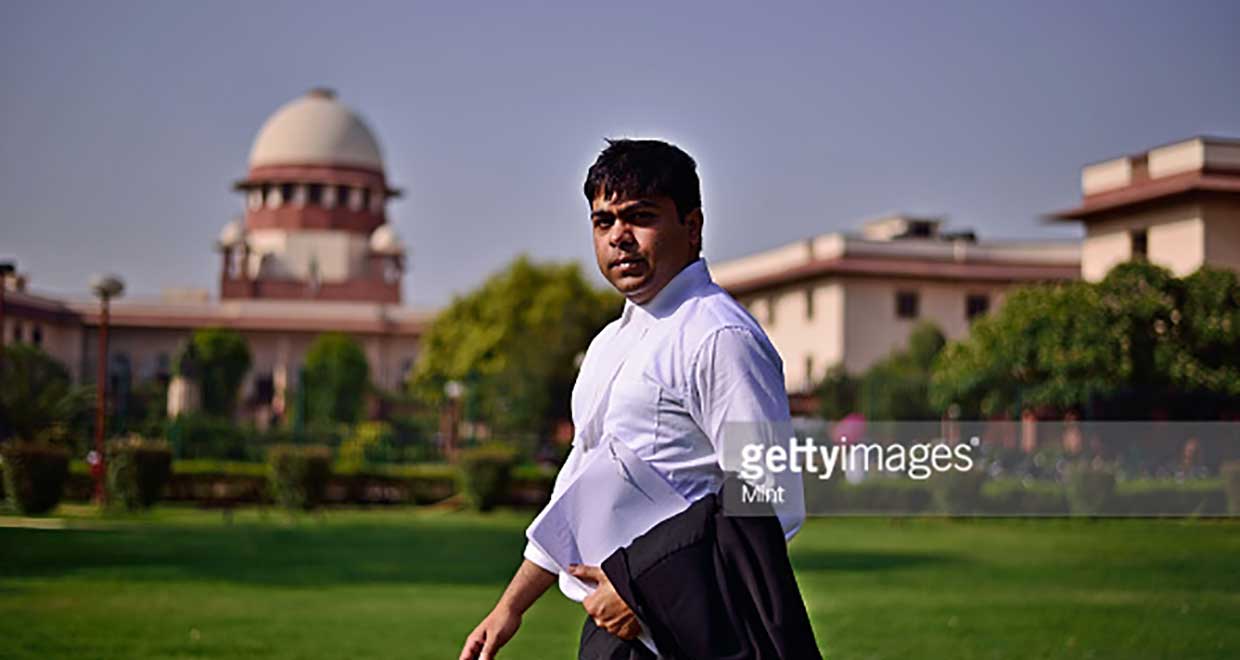
  • Kabir Dixit, Advocate-on-Record, Supreme Court of India, on independent practice, litigation, and working in corporate firms

    Kabir Dixit, Advocate-on-Record, Supreme Court of India, on independent practice, litigation, and working in corporate firms

    Kabir Dixit graduated from Campus Law Centre, Delhi University, in 2006.  Subsequently, he worked in the chamber of now Solicitor General of India, Sr. Advocate Sh. Ranjit Kumar for a year. Thereafter, he worked full-time for two years, and part-time for five years with KSB Partners (now SB Partners), with special mention for Mr. Kilanbi Singh Bedi. He has been engaged with litigation since then.

    In this interview we talk to him about:

    • His experience as an AoR
    • The importance of working with a law firm in order to understand the judicial process better
    • His experience in litigation and at a law firm


    Tell us about your time as a law student.

    I ventured into law at a time when the discipline was considered a back-up option for failed engineering and medical aspirants. This was also a time when the NLU phenomenon was taking over the legal industry. In law school, I interned with Trial Courts, Centre for Study of Developing Societies, and certain law firms which did not deal with Corporate Law.

    In my first year after graduation, I worked with Sh. Ranjit Kumar who was a Senior Advocate then (now Solicitor General of India). He was a one man army and it was astonishing and encouraging to see how much a single person could achieve while sitting alone in a room, reading case laws and preparing matters at hand. However, because he did not ever feel the need for associates or interns, I probably could not contribute as much as I would have liked to.


    What motivated the shift from litigation to a law firm?

    Taking up a law firm job was mostly because of the necessity to pay living expenses in a city like New Delhi (remuneration with Sh. Ranjit Kumar was negligible and the law firm paid a lot). In the firm, I was earning equal to what my father earned while working as a Central Government employee. In addition to the monetary incentives, I also felt like I was making a more substantial contribution as the firm had just started out.


    How did you move back to litigation again?

    Inside my heart, I always wanted to pursue Litigation. I took a sabbatical of six months and went to my hometown to decide what to do further in life. A friend of mine made me meet Mr. Jaideep Narayan Mathur (then Additional Advocate General of Lucknow) and I joined him. There, another mentor of mine was his brother Mr. Dhruvi Mathur, from whom I learnt a lot. Both of them were top counsels and the experience was supremely exciting. The level of competence from colleagues was excruciating and the talent pool was amazing.


    How challenging was the experience of setting up independent practice and working in Delhi?

    I was very sure that I wanted to settle in Delhi and also that I wanted to work in the Supreme Court of India as I used to look up to Mr. Rohinton F. Nariman (who was also from my college). Practising in Delhi was culturally different than in Lucknow and a tad bit more competitive as high value matters were entrusted upon Senior Advocates and not young lawyers. However, I had good bit of work from the side of U.P. Govt as I was on its Panel of Advocates, but I wanted to help out individuals with their cases.

    The struggle of setting up a practice was to make others understand that you are a competent advocate. Such an impression can be created by a lot of material things like fancy cars, a lavish office, a Mont Blanc pen, foreign holidays, etc. and this is the reason why you can see a fleet of luxury cars in the SC parking lot on any given day.


    How did you crack the AoR exam?

    Till 2015, my private work grew and I started to lose interest in government side work. I always wanted to be an AoR at the Supreme Court and I took a shot at it in 2015. My conceptual clarity of laws taught during law school and experience in litigation helped me crack the exam in one attempt. I also think the way you write your answers determines your success.

    I was elated and overwhelmed to become an AoR and the fact that I was registered with the Supreme Court of India. Many new opportunities came my way as I was retained by PSUs and a couple of corporate. Also, I was treated specially by clients, and more recognition for work came towards me.


    What would be your advice to young law students?

    Students should have the sense of excitement and hunger and zeal to learn more. Command over the English language certainly helps, so if you don’t have it, make efforts in that direction. Don’t focus on money, be patient as money will eventually come, but give due importance to money. Also, entering into litigation, the stress free and thrilling environment (something new every day) makes work seem fun and you don’t need a foreign country holiday to rejuvenate. Life at litigation is a marvelous experience.

    I definitely provide internship opportunities to law students, they may reach me on  LinkedIn and send in their applications wherein I make sure that they learn drafting legal documents and researching case laws.


  • Neha Mishra, Doctoral Candidate, University of Melbourne, on international practice, qualifying the Bar, and being a solicitor in UK

    Neha Mishra, Doctoral Candidate, University of Melbourne, on international practice, qualifying the Bar, and being a solicitor in UK

    Neha Mishra graduated from NLSIU, Bangalore, batch of 2008. After a brief stint at Herbert Smith, she went on to pursue her masters in Public International Law, from the London School of Economics and Political Science. Since then, she’s served as Lecturer at NLSIU, and as Associate at Economic Laws Practice, before pursuing a second master’s degree in Public Policy from National University of Singapore. She is currently a Doctoral Candidate at The University of Melbourne.

    In this interview, we speak to her about:

    • Her teaching experience
    • Practising internationally
    • Balancing extracurricular interests with academics


    How did you get into the field of law?

    Well, it is hard to remember what got me interested in law as a teenager. I think I was driven by instinct, rather than a rational decision. However, I did feel that the legal profession would be to my liking (of course, some of it may have been a result of watching ultra-glamorized legal dramas on TV). I think it was actually during my years at law school that I built up my motivation to learn more about the field – I was really inspired by several of my teachers and guest lecturers, as well as many of my classmates, who had such a natural flair for legal argumentation and writing.


    How is your experience being a Doctoral Candidate in Melbourne Law School, University of Melbourne?

    The decision to join Melbourne Law School was largely based on my interview with my current supervisors at the university. They were extremely engaged with the process of mentoring their doctoral students, and it seemed that the school would be an excellent place to pursue my research. The experience so far has been positive, and I have perhaps got more than what I had expected. It also helps that Melbourne has a very vibrant, multicultural feel to it.


    Tell us about being admitted to the Bar in India and also having qualified as a solicitor in the UK.

    The system for bar admission in India was different when I graduated. I didn’t need to take an examination – it was actually pretty straightforward. However, in UK, I needed to take an exam to qualify as a solicitor. The process was made very easy by the firm I was working for at that time. The exam was not particularly hard, but required some level of effort and systematic studying. I think dual qualification is really helpful if you want to pursue an international career.


    How do you go about teaching?

    (Neha was invited to teach undergraduate courses in National Law School of India University, and was even invited back because of the popularity of one of her courses.)

     I think it is hard to suggest one particular method of teaching or instruction as such – a lot depends on the context – the subject matter, the number of students, the evaluation criteria, the key objectives of the course (for instance, theory-oriented versus practice-oriented).  However, a couple of things that I valued as a teacher were: (a) I wanted students to engage in the class and in their assignments with an open mind, without fear or prescription, and to reflect on their original thoughts and arguments–to that extent, I always welcomed arguments that challenged my lectures and new ideas for evaluation; and (b) I think a lot of course materials and teaching/evaluation methods need to updated so as to keep it relevant, which means that teachers need to continuously update themselves too. If you have nothing new to offer, I feel students start feeling disengaged from the process. However, it is not always possible to experiment, given the administrative and logistics limitations at institutions.

    How did you develop an interest in languages?

    I have always loved learning languages – but to be honest, my approach has largely been casual, and mostly driven by personal interest. Sometimes, learning a new language was also circumstantial–for instance, I had to speak a basic level of Japanese, when I spent a few months in Tokyo. I know a lot of people who pursue this hobby much more seriously than I do and have a high level of fluency at least in two or three languages–I hope in the future I can engage more seriously with this pursuit. I feel learning a new language often helps to learn about a new culture, plus it makes travelling a lot more fun. I also wish that in the future, the education system in India (both at school and at university level) increases focus on learning both vernacular and foreign languages more seriously.

    What do you think are the most important skills any aspiring lawyer should possess?

    I think there are some basic skills lawyers should try to cultivate early on–attention to detail, a clear writing style, and a general awareness of issues in the society. Most of these skills are sharpened in course of studying and then practising law. I would suggest students to take studies in law school seriously, not necessarily from a grade point of view, but from a learning point of view. The other thing is to continuously upgrade one’s drafting and research skills–I think getting feedback from peers and your superiors (teachers, bosses) is a also a great way to improve. Finally, I think legal practice or writing requires a certain level of confidence that largely comes with thoroughness and sincerity. As a lawyer, one needs to remember that the learning process is always ongoing.


    What makes a well-rounded résumé?

    I think it is hard to prescribe what a good résumé should contain. Of course, to get admission into most top schools, grades matter. But there are several other factors at play–I think it is up to every student to capitalise on their strengths, and present them effectively in their resume and personal statement. It also depends on what one’s end goals are – pursuing higher studies may require a higher academic orientation, while pursuing a corporate career may require a greater focus on internships, practical experience. What is most important is to enjoy one’s time at law school, by learning as much as one can, not only from the books or course materials, but also from one’s teachers and classmates. Co-curricular activities not only taught me essential legal skills (for instance, while mooting or doing legal aid work) but also taught me to work in teams and build long-term friendships. I think students should aim to achieve a balance between academic pursuits and co-curricular activities, in a manner that suits their personality and long-term interests/goals.


    What has it been like working in so many different countries?

    I would say the biggest adjustment (or rather lesson) is to work with people from different cultures. Of course, practising across different legal systems requires some unlearning and re-learning. But as long as one’s legal basics are grounded, it is not the biggest challenge. I think the biggest challenge is being able to adjust to different working styles in different countries, and reading into different cultural codes. I think if one has an open mind and a high level of awareness of one’s environment, it becomes easier with time to work across different countries or cultures. Perhaps, in today’s world, it is a necessity for most lawyers, even if they work within a single jurisdiction.

    What are your hobbies outside of work?

    I like to learn languages, as I mentioned previously. I also love travelling and trying out cooking new cuisines.

    If you could, what would you tell yourself in your first year of your B.A. LL.B.?

    I think I would tell myself to be more proactive in classroom discussions, and be less intimidated by people who spoke a lot more in class. I would also tell myself that if I just focused on learning, the good grades would come automatically.

    What message would you like to leave our readers with?

    I think the more one enjoys the process of learning, the higher are the chances of becoming an accomplished lawyer. Also, it is important to relax, have fun and make friends at law school–life as a legal professional can be highly demanding and rigorous, and the opportunities available at law school never really come back.


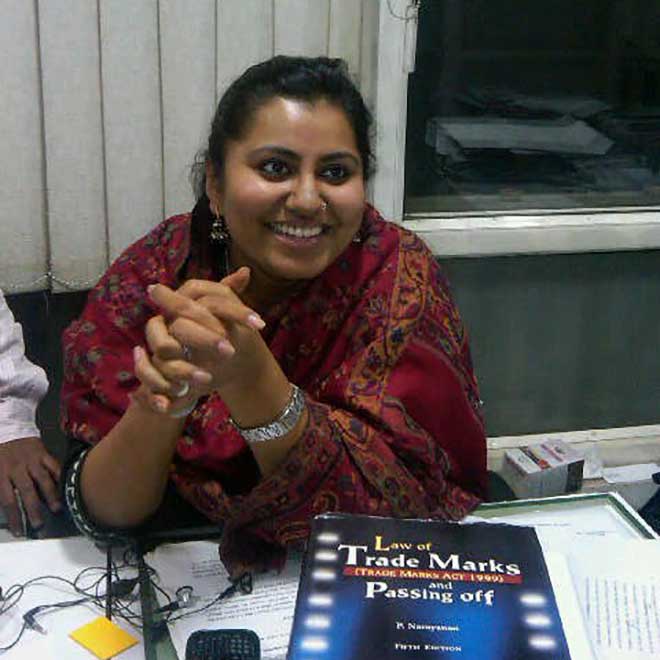
  • Saumya Prakash, Legal Assistant Manager, HT Media, on her experience as in-house counsel and working for a firm

    Saumya Prakash, Legal Assistant Manager, HT Media, on her experience as in-house counsel and working for a firm

    Saumya Prakash graduated from Guru Gobind Singh Indraprastha University, Delhi, in 2010. After a successful stint with UCOL, Advocates & Consultants as Associate, she went on to work for HT Media Limited in 2014, as Assistant Manager-Legal. Her role entails catering to their print business pan India on legal matters pertaining to contract management and advisory.

    In this interview we speak to her about:

    • The difference between working as in-house counsel and being in a firm
    • Her role and responsibilities at HT Media Limited
    • Her diverse experience

    How would you like to introduce yourself to our readers?

    Introducing yourself is one of the most difficult jobs in the world. It is one of those questions that put you into deep introspection. Answers may change depending upon your platform and your audience, as it rightly should. We are many things, they all define us. I am a positive, happy person. If there is something I want from life, that’s:

    Inspiration- to do well, to do better, to do more, new, keep that spark alive

    Challenges- to keep me agile, on the edge, to give you the taste of success- be it big or small

    Failure- cause they teach us more than success does

    Purpose- to know you contributed, you added value to something, for me that’s one of the most fulfilling feelings.
    Professionally speaking, I am a lawyer. I have been working for the past six to seven years now and currently working with the Hindustan Times Group where I cater to their print business pan India on legal matters pertaining to contract management and advisory.

    What motivated you to pursue law?

    Choosing law as a career happened to me in the most sedimentary way. There wasn’t a particular defining moment, but rather many sub-conscience stances that led to my inclination towards law. Be it the impression of A Few Good Men on me, or my nagging habit to debate and elucidate and establish my opinions on almost everything, I suppose, added to my set of reasons. But all I remember is the conviction that I felt for only this field to take up as the next step towards my career and I kept moving in this direction. Through the years in college while I studied law books (albeit I was a terrible scorer) and my inclination towards writing were the live reasons that made me believe that I am made for law and I never second guessed this choice.
    I remember my mother used to point out to me that while writing, my sentences used to be awfully long and complicated and she used to advise me to keep my sentences short and crisp and use the full stop once in a while. But I never understood how someone can put a break to a flowing thought. Later I realized habit was used to my advantage for reading bare acts and drafting.


    How do you think your internships have shaped your career?

    Studying law and pursuing it in the practical form are two very different things. While theory is important, you will never know its relevance until it’s applied in real life. Internships are the brief trailers that a law student can see (and if you have good mentors, then live) before they star in the movies. Law is such a vast sea of knowledge and practice. All a law student can wish is to get as much exposure or acquaintance to the possible shores before they choose where to sail from and where to dock. Internships will help you analyze and ascertain what are your interests, what your strengths are. You may even see in you a change in thought and direction as your gain varied experiences. The course of your life, job interest or career path may change even at a much later stage too, or you may have a stark clarity of what you want and go for it head strong, but you’re always better off having tested different waters. Internships at a younger age will help you network, get to know some great and some not so great people in life. It just prepares you for what to expect when you finally step out of that law school.


    What was your experience working for a law firm?

    I worked with a boutique firm called UCOL (United Chambers of Law) headed by Mr. Sachin Puri and Ms. Kaadambari Puri for the first four years of my career. Needless to say, everyone’s first job is quite special for them. I realized the significance of the knowledge I gained from there after I shifted to my second job at HT. The greatest benefit of boutique firms is the vastness of the work you get there. It’s like a multi-vitamin for a law graduate. The hands on experience you gather there is unparalleled. Boutique firms are close-knit communities with ten to fifteen lawyers who share the entire work load. So you will get to do drafting – from simple letters to pleadings and agreements, you will get to appear in lower courts (and learn from your mistakes, which is crucial), your research–litigation as well as corporate. For your first job go to a place where you are given the opportunities to take actions, make decisions and learn from your mistakes. I remember what Ms. Kaadambari Puri told me once – the first five odd years of your practice are the most crucial. That’s the only time when you can dig in your heels and work with 100% dedication and its benefits are invaluable. We had worked weeks for a stretch there, almost fifteen hours a day, challenging issues, on short deadlines and demanding clients and seniors. That’s the necessary grooming (grilling) that makes a lawyer!


    Why did you shift from a mid-sized law firm to a company?

    Law is immense, with varied sectors, many streams and various aspects. There is knowledge and learning everywhere. You should expose yourself gather from where ever possible and imbibe as much as you can. After working with a law firm for four and a half years I felt that there is a lot more out in the world that I can gain from and felt the urge to broaden my horizon. I realized that to grow more I needed new experiences. Sometimes, when you work at one place for a considerable amount of time, you create a comfort zone for yourself there, which is good but what’s better is grow, meet new challenges and invoke a whole new set of what when how why. The biggest challenge for a lawyer is to be experienced and versatile. I knew that to better myself I needed to venture into different fields and explore different fields of law and master them and hence landed my job at HT.


    What are the challenges you face being an in-house counsel?

    Any lawyer would agree that the difference or relationship between a lawyer and an in-house counsel is of two people sitting on either side of the table but working on the same problem. By way of definition, in-house counsels are non-practicing lawyers and while a lawyer has many clients, an in-house counsel has only one client- i.e. its company. Taking on the job at HT made this transition as smooth and beneficial as it can possibly get. The working of the legal department at HT Medial Limited is so self-dependent and active since most of our legal work is done in-house only as opposed to other companies which outsource most of their legal work to the advocates and law firms they have engaged, which is why the transition for me for so rewarding as it caters to me being a lawyer by profession and an in-house counsel by occupation. Challenge for me if any was to get accustomed to the corporate culture as opposed to the type of working environment I came from at a law firm. Coming from a small law firm which had only lawyers I joined an organization that has many businesses pan-India and every department at every location is your client. Change is good. It keeps alive your ability to adapt. Given enough time and space, you slowly learn to ride the tide.


    How important are grades?

    There is no straitjacketed formula to success. A hard working student will show diligence, sincerity and the willingness to perform. At the risk of sounding clichéd, ‘hard-work always pays’ has truth to it. As I have said previously- there is so much to know, it’s impossible that a person would have knowledge of everything. A hard-working student will prove to you that he may not know but sure has the ability to and if given the opportunity, most probably will succeed.
    On the other hand, you can trust a street smart one to get the job done. What is an added advantage of a street smart person is that not only would they be effective, they would be efficient at it. May the best candidate win!
    Good grades are important. Not in life, but in crucial junctures of your life. Scoring well doesn’t ascertain but surely helps you cruise through the path you chose. Good grades in 10th and 12th standard help, in fact permit you to choose the career of your choice, get into the college and course of your choice. For professional courses, competitive exams rankings are crucial. In your under-grad courses, your CGPA will allow you interviews with the top firms at the placement cells of your college. Good grades get you only so far and making it till here is a scholar achievement. To reach this point of your life as per your wishes, good grades are your guiding stars. But from hereinafter, you are a package of your knowledge, ability, and willingness.


    What are the attributes indispensable to an in-house counsel?

    When you are working for a company as an in-house counsel you need to always remember that you are the conduit between law and business. You are there to make sure that the business is run smoothly, from the inception of a proposal till the end and to defend their interests when disputes arise. Being singularly a lawyer would only be half the job requirement- the other half requires you to understand the business, the sentiment of the business and you need to function on how you can assist in running of the business as smoothly and profitably as possible from a legal stand-point. Being a strict black and white legal officer would create a sense of a strict monitor which may render you more of deterrence than a facilitator.
    Legal departments of companies are support functions, and by definition it’s the job of the legal department to support the business. For your growth, the company’s growth is paramount and the comfort of the business runners in approaching you for redressing their concerns providing them that support to carry on their work is what would help you grown too. Working as an in-house counsel would require firstly a well rooted understanding of the business and its functionalities. With in-depth understanding of the business you can warn them of the pot-holes, the preventive measures, the compliances, the safeguards, and damage-control measures.


    Is it true that work in-house is less tiring than a firm?

    There are two sides to every coin. Law-firm jobs are demanding, of your time, energy, and effort, while you have a better work-life balance in a corporate job. But in-house counsel jobs are stressful because you are accountable. Your word and advice matter. You are the counsel in their house. They approach you for legal advice and you provide this advice, be it through opinions gathered from outsourced counsels or on the basis of your knowledge and expertise. The company acts on the basis of your legal counsel, hence you are the face of law for a company. Such intangible responsibility on the shoulders of an in-house counsel has the potential of a stress of another sort. On the basis of your advise, the company binds itself to the actions it takes, hence the accountability, answerability and pressure is more intense for an in-house counsel.


    What would be your advice to our readers?

    The only advice I can give is based on the learning I took from my professional life. There isn’t one particular mantra or motto to lead your life by but it will be varied and will present itself in different people, choices and challenges. Trust me there is learning in everything! In wins and losses, in yes and nos. My advise would be to be smart enough to recognize these learning.

    Another thing I have learnt from my seniors and later found myself advising to my juniors was to read! Read not just a section, but the Act, not the clause, but the Agreement. If you didn’t understand, read again and again. It starts to make sense after all. Reading is a cornerstone of the legal profession. I can’t stress enough, but never laze out of reading and always read more that the bare minimum, you will realize it gives you an edge; sometimes above yourself, sometimes above others.

    Compete. But compete with yourself. Better yourself, improve yourself. Inspiration is good, but jealously and comparison has high potential of discouraging you than motivating, and you may exhaust yourself, because there may be people who are better than you, at higher positions or higher salaries, just like some with less than you but their story is different, their journey is not yours. Don’t compare what has no similarities.

    Hard work pays. However, deliverance is subjective. Patience is needed too. There is no fixed time frame to fruits of hard work, therefore be patient and keep persevering.

    Law, when you practice is two sides to the same coin; plaintiff-defendant, winning-losing, truth and lies. All of that is your job and you should it with honor and integrity. But don’t ever mix your morals with profession. Morals can get diluted, make sure they are separated and intact (not kept aside in a corner).

  • Shashank Garg, Partner, Advani & Co., on being a first generation lawyer, and his experience in litigation, arbitration, and commercial law

    Shashank Garg, Partner, Advani & Co., on being a first generation lawyer, and his experience in litigation, arbitration, and commercial law

    Shashank Garg is a graduate from Guru Gobind Singh Indraprastha University, batch of 2008. Since then, he has worked at Parag Tripathi Law Chambers, Accendo Law Partners, Advani & Co., among others. He has represented the state of UP as well as the central government before the Supreme Court of India. He then went on to pursue his Master’s degree from the University of Nottingham in 2008, with a focus on International Commercial Law.

    In this interview, we speak to him about:

    • Being a first generation lawyer
    • His experience in arbitration, litigation, and commercial law
    • His successful publications, and studying in the UK

    Please introduce yourself to our readers.

    I am an avid traveler by choice, and a commercial lawyer for nine years by profession.


    Were you always inclined towards law?

    I zeroed in on law after eliminating all other possible alternatives. My parents had given up on me after they noticed my general apathy towards anything that involved reading or writing. Funnily enough I ended up choosing law where both the things I hated as a kid became an indispensable part of the job. I am a first generation lawyer and frankly that is a blessing in many ways as you can carve out your own path without the pressure of any standards/expectations set out by your elders in the profession. I studied at USLLS (GGSIP University, Delhi) which gave us enormous exposure. The energy on campus was infectious, to say the least. Diverse internships, conferences, moots and other events that I was involved in helped me crystallize my interest towards litigation.


    How did you start your legal career?

    I was amongst the lucky few who got the opportunity to wear the robe for the first time at the Chambers of Mr. Harish Salve, where I was already an intern before graduating. I proceeded to do my masters in a few months thereafter but that short experience reinforced my liking for litigation. My masters was in International Commercial Laws from the University of Nottingham, U.K, which was my real introduction to the world of commercial law. However, on my return I joined the chambers of Mr. Parag Tripathi, Sr. Advocate, (then Additional Solicitor General of India) which meant dipping into to the deep ocean of litigation, since he was a government law officer. The chamber used to deal with more than twenty matters on admission days in the Supreme Court. Mr. Tripathi is a tough taskmaster but it was an overwhelming experience. I soon decided to set up an office with two friends (Apar & Animesh) and we founded Accendo Law Partners. We were inexperienced but had a lot patience and energy to make it work. I can’t say if it really worked the way we wanted it to but it was certainly a rewarding journey. We merged with Advani & Co. where our practice became more about hardcore commercial disputes. This meant less of court and more of arbitration but this was in no way any less exciting than litigation. I would say arbitration is a sophisticated version of litigation in terms of action; I now do a balanced mix of both.


    Tell us about your time in Nottingham.

    Going for masters was an impulsive decision that I thoroughly enjoyed. I made friends with new subjects; ones that I didn’t think were my cup of tea. I was taught Commercial Conflict of Laws by Prof. James Fawcett (author of Cheshire on Private International Law). He is a true legend of the subject. I did my dissertation under him and received distinction. This was my first exposure to world class learning. The faculty teaches so passionately that it motivates every student to perform better. We cannot deny the fact that most law schools in India lack such levels of commitment by faculty members; this is the first big difference you get when you choose to study abroad. Exposure to a foreign university is a great addition to your skill set, however it really depends on an individual how much he can make out of this one year. LL.M. from an Indian university is a great option too since it has been reduced to a year now and most National Law Schools offer very interesting and niche areas for masters programs. One needs to understand what a masters degree is to be able to make this informed choice. Students often take it as an extension of student life by a year but in reality it is deeper understanding of few subjects that you may want to take up as a career choice. I would strongly urge students to go for masters after three to four years into the profession, when they have found their area of interest. It’s always easier to do your masters in a subject that you are practising in then to come back and find a job in the subject area you did your masters in.


    Could you talk to us about the certificate courses you pursued?

    (Shashank went to Hague Academy for the summer course on private international law in 2009 on scholarship and then took up some more certificate courses internationally.)

    I applied to Hague academy while I was doing my masters in U.K and my letter of recommendation was written by Prof. James Fawcett. I feel that his LoR made the difference, Professors of his repute do not write LoRs often. I was informed by the academy that I have been awarded complete scholarship for the course which meant my course fee, my air travel and my stay in Netherlands was paid for by the academy. After coming back to India, I decided to take up new avenues to learn and hone my legal acumen. I attended Certificate Mediation training organized by ADR Group UK which made me a certified civil and commercial mediator, I also attended the 12th Arbitration Academy at University of Cologne, Germany. Even today I try and make a couple of academic trips in a year whether it is to judge an international moot or to speak at a law school. This keeps me connected to the academic world in many ways.

    What are your thoughts on arbitration in India?

    (Shashank is currently associated with various ADR bodies like IAF, PACT, KCIA and Arbitration Sub-committee of IBA.)

    Arbitration in India is the talk of the decade. Fortunately this decade has seen a lot of positive change. We have seen the amended law in arbitration which was brought to imbibe more confidence in the end users. However, with that noble thought our legislature proceeded in an over-zealous manner, thus creating a rather impractical scenario of arbitration instead. The Arbitration is here to stay and thus the courts and charming lawyers are finding innovative solutions to the problems being posed by amended law. Courts in India, especially New Delhi, have to be given their due credit in making arbitration stand tall and firm. We are also witnessing rapid growth of institutionalized arbitration in India, with most PSUs using ICC, SIAC or LCIA clauses in their commercial contracts with foreign parties. MCIA at Mumbai is certainly a fresh breath of air in this environment with world class facilities and some of the top people worldwide endorsing it to be the next big thing in the Asian region.

    Practise of arbitration is distinct from litigation. Unless you do arbitration the way it’s to be done, you wouldn’t notice the difference. Sadly, many civil lawyers doing arbitration have made CPC their Bible for all practical purposes, causing confusion of concepts amongst law students and young lawyers. The most important thing to keep in mind for practising Arbitration is the fact that it is a private justice delivery system with the backing of law.


    In your opinion, what skills have contributed the most to your success?

    I would not call my experience a lot but yes I had the good fortune of exposing myself to diverse fields, I authored a book titled Tourism Laws in India in 2013 for travelers to have a ready compendium of laws that they may need during their journey in India as a tourist. The second edition is likely to come this year by May. My other book on ADR is being published by Oxford University Press and should be out by July 2017. Moreover, I am working on another book which is being published by EBC on Criminal Investigation and prosecution. Recently I contributed to the LexisNexis publication on arbitration that was published for Niti Ayog. In my practice, other than commercial arbitration, I am doing criminal law, media and entertainment law and aviation law as well. Diversity comes from curiosity; I have been curious about my limits, interests, and capabilities, and in this process I have gained tremendous amount of confidence in dealing with my limitations.

    Being a first generation lawyer one should prepare for an adventure. If you go the traditional way, you are likely to give up soon as the charms and gifts of the legal profession take time to come by your side. Be self aware and work towards your shortcomings by accepting them and not by covering them up. Perseverance and commitment are the two key skills that should be learnt at an early stage in your career. As a lawyer, your communication is your identity, whether written or oral; be clear and crisp in that to create a strong impression. Simple steps such as reading the newspaper can help you develop awareness of issues around you giving you confidence to communicate in any setup. Use your time carefully when you intern as those are the places you can afford to make mistakes and create opportunities for yourself.


    Did you also engage in any extra-curricular activities as a student?

    As a student I focused on anything that was new and challenging, I would not call these activities extracurricular as such. Our law school was quite new and we were the third batch to come in, I decided to make a mark for the law school by organizing various events such as international moots, (Jessup, North India) and the Law Lecture series (lectures were delivered by: Justice R.C Lahoti then Chief Justice of India, Mr. KK Venugopal, Mr. Soli Sorabjee, Dr. L.M Singhvi, Mr. R.K Jain, Mr. Ram Jethmalani and Mr. Harish Salve). I really doubt if any law school in the country has had all these legends coming to speak at their campus. We did many such things with the help of great batch mates and highly reliable juniors. In fact, my student life at the law school was more outside the classroom than inside.  My current hobbies would include travelling and sleeping as much as I can – I hope I don’t have to change any of these in future also.


    Talk to us about your resume as it stands today.

    I have been a chamber junior at litigation chambers; I have been a partner at my own start-up followed by being a partner at a 30 year old arbitration specialist law firm and then being a partner at another more than 30 year old traditional commercial litigation law firm. The journey was exhilarating; each place had its own character and persona. Today I am wearing multiple hats and happily so–Partner-In Charge for Advani & Co. Delhi, Spl. Counsel for Delhi Development Authority, and Standing Counsel for State of Goa are some of my active roles.

    A resume/CV should not exceed two pages and in rare cases, three. For a fresher applying for a job or for a student applying for an internship their resume/CV is their face for the prospective employer and most decisions are taken by way of elimination. In other words given the heavy application load, HR of firms often look for mistakes in the resume to trash it so that only most serious and sincere students make it.

    As a tip, keep it clean and honest (removing achievements of school life and things that are unlikely to matter to your employer).You should be able to answer everything on your CV as the puffery used in CVs is often detected by the interviewer. No particular aspect can be considered more important than other as all of it would depend on where you are applying and what is your choice of practice area. As a matter of practise: academics, internships, publications, extracurricular would together form a complete CV.


    What do you think is the best way for students to prepare themselves for the professional world?

    The first step is realization; the sooner a student realizes that he has to step into the professional world after law school is over, the better it is. Many students realize this in the last semester and by then it gets too late to build a formidable CV. Also, during internships you should identify areas you don’t like instead of areas you like, this way you keep many options open by eliminating areas that are not your cup of tea. First two years will be intense and harsh and the same should be treated as training on a stipend to feel better about it. Your internships will give you a preview of what you are likely to see when you join an office. No work in office should be considered below your dignity–standing in queues, picking up files, photocopying, etc. are some of the usual tasks in the early years of the profession.

    I was prepared for it all but yes, it is never enough. You feel the pressure of deadlines like never before as these are real clients and real cases. Weekends and friends can suddenly become a myth and sleep is your only craving. But it all gets better with time and you start enjoying the pressure.


    Tell us a little about your internships.

    Being a first generation lawyer, internships were the first thing I focused on. I had no network or contacts to get into prestigious firms and chambers. So I decided to create opportunities instead of waiting for them. I interned with Sr. Advocates like Shanti Bhushan, Collin Gonsalves, Harish Salve, Iqbal Chagla, M.N Krishnamani and K.K Venugopal, and firms like AZB & Partners, Vaish & Associates, and Archilex Law Corporation in Singapore. I also interned at NHRC and Securities Appellate Tribunal, Mumbai. Each internship opened new avenues of opportunities. Since most of my internships were with senior counsels in Supreme Court I was sufficiently prepared for my role as a junior counsel or at least I thought so.

    There was so much to learn at each of these places, I learnt core professional values while getting exposed to the various nuances of legal world. It is difficult to spell out what I had learnt but I learnt an important lesson that winning the court is different and far more important than winning the client.


    Any last piece of advice for our young readers?

    There is no dearth of work in this profession but there still is cut throat competition. Getting insecure is the last thing you should do when you begin you career. Let your long term career goals chart out your short term career choices and not the other way round. If you get a chance to work at a good office which offers you comfort and mentoring both, do not be in a hurry to leave it for a fatter pay cheque.


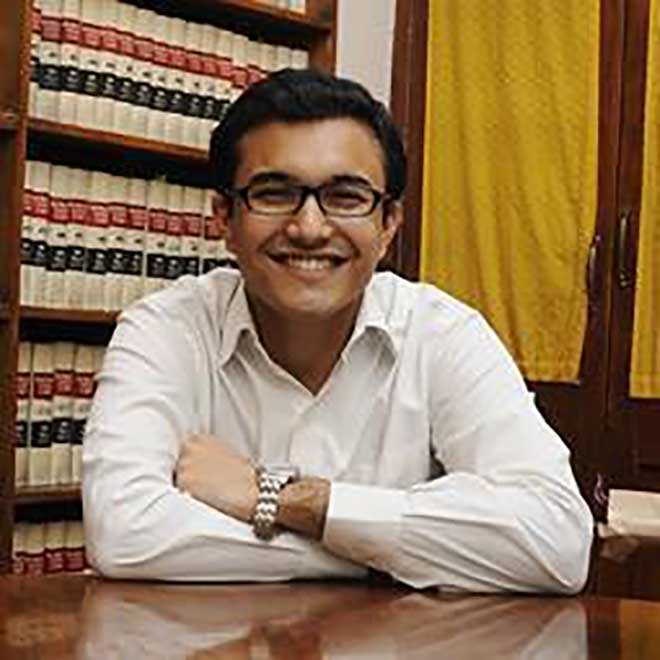
  • Siddharth Marwah, Associate, IndusLaw, on student politics, the art of writing, and his experience in commercial law

    Siddharth Marwah, Associate, IndusLaw, on student politics, the art of writing, and his experience in commercial law

    Siddharth Marwah is a graduate in law from Campus Law Centre, Delhi University, batch of 2015. He established the Legal Aid Cell in his college and was declared the best paralegal by DLSA. Since then he has been working with IndusLaw in their corporate-commercial team. His area of practice involves mergers and acquisitions, joint ventures, foreign investment and general corporate and commercial matters. During his time in law school, he was actively involved in the Delhi University student politics and legal aid and was awarded a 100% scholarship by the University of St.Thomas, Minnesota.

    In this interview he talks to us about:

    • Being convener of the Legal Aid Society in his college
    • His involvement in student politics
    • His many accomplishments as paralegal, writer, etc.


    How was life at Campus Law Centre?

    Life at CLC was a rollercoaster ride to me. From managing the scores to being the part of Student Union was fun and taught me various aspects of law and gave an insight into politics.

    How was your experience working as a paralegal?

    (DLSA awarded him as the best paralegal volunteer 2014 and he was also the Student Convener of the Legal Aid Cell at his college)

    Legal Aid in our country still needs a helping hand from the authorities to enhance the justice system. Being the student convener of the Legal Aid Cell, I helped establish the Legal Aid Clinic in our college. I was involved in organizing legal awareness drive in slums and informing people about their basic rights, organising legal aid camps and conducting PLV training sessions. Working as a paralegal made me question conventions that we had unquestioningly come to accept. DLSA, on seeing my zeal towards the work awarded me as the best Paralegal in 2014.


    Do you have plans now for an LL.M?

    I always had a plan to work for sometime in India before going for further studies. St. Thomas School of law awarded me a 100% scholarship to pursue LL.M but I chose to practise law in India first. My family supported my decision and IndusLaw provided me an opportunity to work with them as an associate in their corporate team. Yes, I do have plans to study further and I am seeking LL.M. oppurtunities in business and corporate laws.


    How does one go about the art of writing?

    (MONDAQ awarded his article on GST as the “Most popular article in India”.)

    Article writing requires in-depth research on the topic and one should use simple as well as classic vocabulary in order to make the article attractive and understandable even to a layman. Article writing plays an important role in improving your research skills and it adds stars to your CV if published.

    In what way do internships help a student?

    (Siddharth has interned with the likes of Trilegal, Luthra&Luthra, and Senior Advocate Mr. Amarjeet Singh Chandhiok in the past.)

    Internships are very important for a law student as they provide a practical exposure to the student and help him to analysis knowledge of books in real life. Working under Chandhiok sir was a thrilling experience and made me follow a concept of love what you do and do what do love. Internships play a vital role for a law student and one must try to get an exposure of all fields through internships in order to evaluate his interest before graduation.


    What does your work at IndusLaw entail?

    My area of work at Indus Law includes mergers and acquisitions, joint ventures, foreign investment, and general corporate and commercial matters. Working in a law firm is a great learning curve for me and I’m happy doing it. The main element in a law firm is its working environment and Indus in this aspect is the best place to work.


    Tell us about your tryst with student politics.

    (Siddharth served as the Vice president of Campus Law Centre Student’s Union 2013.)

    I always wanted to help students who face problems on entering an English institution from a vernacular background. The sole purpose in contesting elections was to uplift the conditions of students in the college and to provide various opportunities to strengthen the students interest. Student politics gave a lesson that one should be happy to help others in order to achieve the desired mark in politics.


    What would you like to say to the upcoming lawyers?

    Work in an area of your interest. Enjoy your days in college and study for good scores too. In the field of law, you can achieve success only by hard work and once you attain that position, sky is the limit for your prosperity and fame.


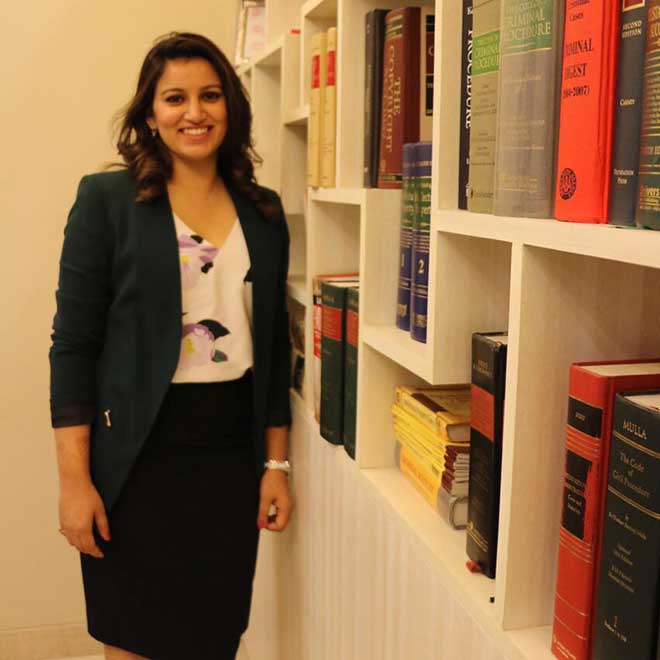
  • Naga Lakshmi Bhagavatula, Associate Contracts Manager, Amazon, on being a dancer, blogger, and studying in the US

    Naga Lakshmi Bhagavatula, Associate Contracts Manager, Amazon, on being a dancer, blogger, and studying in the US

    Naga Lakshmi Bhavagatula graduated from ILS Law College, Pune, in 2011. After a successful stint at Infosys as Associate Legal Counsel and subsequently as Senior Associate Legal Counsel, she went on to pursue her masters from the University of Pennsylvania Law School, with a focus in business laws. She was also member of the Wharton India Economic Forum, 2015 Organising Committee during her time there. She is currently Associate Contracts Manager at Amazon, where she is member of the Amazon Media Group Legal team, focusing on supporting Sales and Display Ad Services. She works on reviewing and processing all insertion orders (IOs) for the US Sales org, drafts and negotiates Upfront Agreements and MSAs.

    In this interview we speak to her about:

    • Her internship experience and her current role in the e-commerce giant’s legal team
    • Her passion for dance, and how it inspires her
    • Her engagement with blogging, and how she juggles it with the pressures of work


    How would you like to introduce yourself to our readers?

    Lawyer by profession, dancer by passion, blogger by will and a radio jockey by chance. I currently live in Seattle and work in the legal team of Amazon during the day and run a dance school in the evenings.


    Tell us a little about your time in ILS Law College, Pune.

    The five years at ILS are some of the best days of my life. As most of my ILS friends would say, it is a place of opportunities and self-learning. It sometimes got me lazy and sometimes put me on my toes. I learnt how to make mistakes and learn from them, taste success and not fall for it and finally be competitive and not lose the spirit of competition. All in all, I owe lot of what I am today as a person and professional to my times at ILS (people and place).

    Regarding my activities at ILS, I was not much into moot courts. For the major part, I enjoyed being the researcher and work with the team. However, I tried my hand in other stuff like the Model United Nations, client counselling, negotiation and drafting competitions. I was on the editorial board of the college magazine for couple of years and was elected, the Ladies Representative to Pune University in my final year. It was a fulfilling five years.


    What prompted you to pursue this stream?

    Well, as a small town girl, when I was in Class 12, my awareness about career options was limited. All I knew was that I didn’t want to be a doctor or an engineer. I just wanted to do something different. I wanted to be a journalist. But my parents, who were already worried about me discarding medicine and engineering(the two professions in vogue in 2005) were flabbergasted when I said I wanted to pursue journalism and they convinced me that I could pursue journalism as a secondary profession but I should choose a streamlined primary profession. Later I decided I wanted to pursue law.  I am not sure if there was anything specific that prompted me to pursue law. Though my father is an advocate, I don’t remember talking to him about my interest in his profession. It just happened and I am glad it did.


    What role does dance play in your life now?

    I am a native of Kuchipudi village, the birth place of the Kuchipudi dance. I am very lucky to have parents who recognised my interest in dance at a very tender age and found me a wonderful Guru, who made me the dancer I am today. It’s been over 25 years of dancing and it is something that lifts my spirit. I feel absolutely privileged to have imbibed this art form and now be able to pass it on to kids of the next generation. I have a dance school in Seattle area (Purna Mudra School of Kuchipudi Dance) and I have about 40 students and I am thoroughly enjoying my role as a teacher.


    How do you prioritise your profession and passion?

    To put it differently, I am trying to balance my profession and passion. At all times, I feel both are my priorities as they complement each other. I surely owe this balance in my life to my mom. When I was a school going kid, my mom always made sure, that I gave equal importance to both dance and education.  This has in a way become an expectation as I moved on in my career path. Balancing dance and work along with other things has become a way of life. According to me, clarity of thought and zeal to pursue something, are two factors that can help anyone to be on top of their profession and passion without having to compromise on either.


    Tell us about your interest in blogging.

    (On her blog The Dancing Lawyer, she vociferously celebrates the interplay of passion and profession, especially in the segment “The Other U”.)

    Blogging in general started off as a hobby and I try to keep up with my blog now and then with various things that interest and inspire me. In the process of keeping up with my work and dance, I have always admired and been inspired by people who balance their passion, profession and personal commitments. So, the category “The Other U” is recognising and celebrating such people, and in a way showing people that this can be done.


    Can you tell us about your role at Amazon?

    When I was in law school, I was academically inclined towards contract law. When I joined Infosys after law school, I had an opportunity to work on rotation with the corporate team and commercial contracts team. Later I ended up in the commercial contracts team and I thoroughly enjoyed working on contracts and slowly that became my area of specialisation. At Amazon, as Associate Contracts Manager, I work on different contracts supporting Sales and Display Ad Services group of Amazon. It has been great so far working in a new industry and a new working environment.


    Talk to us a little about your internships.

    I had four summer internships during my graduation, one every summer for the first four years. Winter breaks were strictly for fun. I used internship opportunities to explore the different avenues I may want to get into when I am looking for a job. I worked with an NGO and political party (Lok Satta), in-house legal team (Dr. Reddy Laboratories), a big law firm (Dua Associates) and a boutique law firm (Krishna & Saurastri). I chose all my internships in Hyderabad and Bangalore as I knew I wanted to live in one of those cities and they were close to home. With these internship experiences, my choice was clear and easy at the end of fourth year. I was sure I wanted to work in-house and started applying for jobs in that direction.


    How was the experience of studying in University of Pennsylvania Law School?

    Honestly, LLM days at Penn just went by in the wink of an eye. The course work was fast paced and rigorous. I totally enjoyed preparing for my classes, the class participation, the cold calling (I dreaded that for a long time and then ended up loving it) and working with law students from various parts of the world just added to the amazing experience. In choosing courses, I experimented with the teaching and evaluation methods, like the lectures v/s. seminars, closed book v/s. open book exams, one final dissertation v/s. multiple presentations. This helped me add to my learnings and build a new perspective about law in general. I also had an opportunity to audit few courses outside law school at Penn and that helped me get introduced to new areas. Penn Law does not offer a particular specialization and so I chose courses related to commercial and corporate law, concentrating more on the practical learning tools like drafting, negotiation, etc.


    How does one strike a balance between academics and extracurricular interests?

    I believe it is purely a personal choice. I never had top grades in law school, but managed to maintain good academic scores. I think at law school, just after 12th, every student goes through the pressure and confusion in deciding priorities at the beginning, due to several factors (peer pressure being one of them). At the end, it is important to understand what brings satisfaction, and for me it was in being able to participate in co-curricular & extracurricular activities and at the same time manage a decent score.


    Any final piece of advice for our readers?

    As Pablo Picasso said “I am always doing things I can’t do. That is how I get to do them”. This has always been my way of life. Since it is best to preach what you practice, my only advice is to keep trying things that you think you cannot do and come out of the comfort zone(both at work or outside). Make time for everything and keep up the profession, passion and most importantly keep up with you.


  • Subhodeep Jash, Masters candidate, Hertie School of Governance, on policy analysis, being an ace quizzer, and studying in Europe

    Subhodeep Jash, Masters candidate, Hertie School of Governance, on policy analysis, being an ace quizzer, and studying in Europe

    Subhodeep Jash graduated from Symbiosis Law School, Pune, batch of 2010. He subsequently went on to become a Young India Fellow, and is an alumni of their founding batch. After successful stints with the Department of Commerce, Government of India, and AZB & Partners, he started working with Dua Consulting as Senior Consultant (Regulatory and Public Affairs), where he was responsible for managing and implementing advocacy programs for Google, Cognizant, Harley Davidson, Hershey’s and others. He also drafted position papers, stakeholder maps and policy monitor reports for their government affairs programs. He is currently enrolled at the Master’s program at Hertie School of Governance, Berlin, with a focus on public policy analysis.

    In this interview, we speak to him about:

    • His passion for quizzing and holding a Limca record for the same
    • Studying public policy, and the need for more lawyers to engage in policy reform
    • Studying in Europe, and his plans for the future


    How would you like to introduce yourself to our readers?

    A lawyer by training and a policy wonk by profession, albeit now in a more academic capacity as a Master’s Candidate at the Hertie School of Governance, Berlin. I have a particular interest in policy debates centred around the digital economy.  I also happen to be a huge cinephile (including TV shows), a trivia nerd, and an ardent supporter of Manchester United.


    What motivated you to pursue law?

    I wouldn’t say that I knew with certainty during high school that I wanted to take up law. I guess the most appropriate way to describe this would be that I stumbled into it knowing about law as a career path. Initially, having chosen to pursue science (in the engineering stream) in my 12th grade in school, I didn’t have the benefit of knowing about the wider spectrum of alternate careers such as law and economics. However, I guess the seeds were sown at a very basic level in the general interest I took in current affairs as a quizzer as well in civics during my history lectures for the boards in class 10.

    But once I took the decision, I knew that the profession would be challenging, lucrative, intellectually stimulating, and one which plays a significant role in shaping social and economic relations across the globe. The profession does demand a great deal of analytical ability, good research and interpersonal skills, and teamwork, which to some extent I have acquired in law school and over the course of my professional tenure as a researcher at the Ministry of Commerce and as a Consultant at Dua Consulting.


    Tell us about how you developed a passion for quizzing and how you continue to pursue it as a prominent interest?

    (Subhodeep has won several quizzing accolades, and also holds the national record in the Limca Book of Records for conducting the first ever quiz in the Antarctic Peninsula in March 2016.)

    From an early age, I had developed a habit of random reading and learning outside my curriculum. This led to my interest in quizzing. Quizzing is an endless mind game which helps individuals keep abreast of developments in general and in their area of interest. It is much more than a trivial pursuit and is as much about knowledge as problem solving. I guess the pinnacle of taking quizzing as a passion forward in a really big way occurred while at law school, where I essentially took more of an interest in participating in quiz competitions over moot courts.

    My interest in knowledge-driven initiatives continued post law school in my association with Walnut Knowledge Solutions (WKS). The idea of starting Walnut occurred in 2011, while I was studying in the Young India Fellowship program. Along with three of my friends from law school, who I believe are amongst the most excellent quizzing minds in India, we envisaged WKS as a knowledge delivery firm utilizing quizzing and other similar knowledge based devices as a means of learning, engagement, and development across schools and colleges.  However, since I didn’t wish to deep dive into this in a more full-time capacity, Sachin and Raghav, the two founding partners took this up as a full-time passion project and it gives me great pleasure to see how they’ve grown with this venture. I did wish to remain on board in a more advisory capacity, and hence I do still keep myself engaged with them. When Sachin and Raghav heard that I was heading to the Antarctic for an expedition, they thought that it would be a great platform for me to conduct a quiz surrounding climate change and related issues right in the heart of the Antarctic Peninsula. Just before I was leaving for the expedition, I was telling them how cool would it to be conduct a quiz there and we were wondering on whether something like this has been done on the Antarctic. The rest, as they say, is history!


    Could you tell us what it was like to be a part of the international delegation of young leaders to travel on the expedition to the Antarctic with Robert Swan?  

    I was a part of the India delegation selected for the International Antarctic Expedition 2016 organized by the 2041 Foundation which hosted a leadership program in the Antarctic to debate climate change issues. The Expedition is founded with a mission to inform, engage and inspire the next generation of leaders to take responsibility, be sustainable, and know that now is the time for action in policy development, sustainable business generation and future technologies. This took place for a twelve day period in March 2016 and was led by Robert Swan, OBE, one of the world’s preeminent polar explorers and environmental leaders, who is the first person to have walked both, the North and South Poles.

    At a personal level, the myriad of landscapes, wildlife & elemental forces experienced there is quite indescribable.  Be it the craggy crevasse of a glacier or the sheer expanse of polar ice, whale-spotting or gazing upon a penguin rookery, zodiac cruising or taking a polar plunge. The glacial calving on display there also portends the urgent need for us to introspect on the need for immediate action when it comes to climate change.

    Subhodeep Jash with Robert Swan


    Can you tell us about representing your university at some very prestigious events?

    (He has represented Symbiosis Law School at the TATA Crucible Quiz in 2008.)

    I was fortunate to have found an excellent quizzing partner in the form of my batch mate, Suvajit at Symbiosis Law School. We managed to excel in many of these business quizzes and won several competitions. Winning the Pune regionals of Tata Crucible Business Quiz, a national level business quiz (telecast on CNBC TV18) was definitely a high point, especially at the time, given the fact that we were one of the youngest teams in the fray and also as typically a law school wouldn’t be fancied much at these business quiz competitions.


    What were your areas of interest during your legal education?

    My theoretical interest in public policy comes from my academic training in Symbiosis Law School and the Young India Fellowship (YIF). At law school, courses in international trade law and arbitration helped me grasp the intricate linkages between the international trade system with industrialization, globalization and multinational corporations. Assignments in law school, business quizzes in national forums, moot court exercises and internships have all been instrumental in inculcating teamwork, adaptability and most importantly, opening up to the idea of a more multi-disciplinary breadth in perspective needed to take up public policy as a career path.

    The impetus towards choosing the career path in public policy was shaped largely by the opportunity to pursue a one year stint with the Commerce Ministry, Government of India straight after law school. I was working as a research trainee with the then Joint Secretary, Mr. Rajeev Kher at the Trade Policy Division on international trade policy issues- WTO and bilaterals.  I was involved in preparation of opinions and research papers to examine the scope of liberalization of certain sectors in the country under the GATS regime. During my tenure, I observed the Free Trade Agreement (FTA) negotiations with EU, Canada and Singapore and carried out background work in this regard. Therefore, these experiences were quite formative in shaping my interest in this field.


    Tell us about the post graduate course as part of the Young India Fellowship that you pursued from Ashoka University.

    The Young India Fellowship (YIF) was a holistic learning environment; we had renowned faculty members and mentors and we were exposed to a wide array of practitioners and phenomenal eminent scholars across various disciplines. The courses on economics and public policy taught by leading development economist A. K. Shiva Kumar, international relations by Devesh Kapur (Director, Center for the Advanced Study of India, University of Pennsylvania) and ethics and technology by Kenneth Foster had a deep impact on me, providing the motivation and tools required to look into policy problems from multiple perspectives and not just from the lens of a lawyer. The selection to the YIF was through a highly competitive process. I was among 57 fellows selected for the program, and that too on a full scholarship for the founding batch (of 2012). This post-graduate liberal arts and leadership development program, run by Ashoka University in collaboration with the University of Pennsylvania, was created with the objective of nurturing potential change agents amongst the youth in India. And, this one year experience was quite the tipping point for me in developing the conviction that I don’t really want to take up the more traditional or mainstream career as a lawyer working at a firm or in the sphere of litigation.

    What was the experience like working as a Project Trainee for AZB?

    I was involved in an eight-month Experiential Learning Module (ELM) project with AZB & Partners, dealing with Competition Law and Policy in India. The project demanded an understanding the Indian Jurisprudence of Competition Act, 2002 in relation to the influence carried in the Western philosophy of evolution of anti-trust jurisprudence. I prepared a report that looked into the legal & economic implications on India’s current Anti-trust regime under the aegis of decisions taken by the antitrust regulator, Competition Commission of India (CCI). It was a great learning experience, especially aided by the able guidance of our mentor for the project, Ms. Vinati Kastia.


    What did a typical day of work like for you at your time in Dua?

    I worked as a Senior Consultant (Govt. Affairs) with Dua Consulting, the regulatory and public affairs arm of one of India’s leading law firms (Dua Associates) for a span of four years.  My responsibilities included managing government affairs advocacy programs for clients across verticals such as IT, telecom, pharma, etc. on specific issues pertaining to their business interests.

    Besides the regular clientele work, I also handled the drafting of varied independent submissions to the consultation processes initiated by the telecom regulator- TRAI on issues ranging from spectrum valuation, network neutrality to broadband access and delivery. I believe that this part of my job added an extra dimension to my work expertise and moreover, in developing my interest in the specific area of ICT (information and communication technologies), especially having the privilege of able mentorship from Mr. BK Syngal, a Senior Principal at the firm and the former Chairman and Managing Director of VSNL.


    What motivated you to quit your job at Dua and pursue a Master’s degree?

    I always did harbour a realization that a more theoretical underpinning and greater academic exposure was needed beyond my training as a lawyer at Symbiosis or in liberal arts at the Young India Fellowship. Hence, I’d made up my mind, around 2014, that I would look to take up a Master’s program in Public Policy.


    What was the application process like for the Hertie School of Governance?

    The application process at Hertie, as with most policy school applications require a Letter of Motivation, which is more or less akin to a Statement of Purpose, the CV and a broad application form fulfilling certain basic criteria along with two letters of recommendation (one each from the academic and professional spheres).

    By the time I applied to Hertie last year, I think I’d become seasoned in writing these policy applications. The first program in fact I’d applied to, was the newly initiated Master of Public Policy (MPP) program at National Law School, Bangalore in the summer of ‘14. I did get an offer from NLS but I wasn’t quite convinced about taking up an MPP in India at the point. Hence, I took the GRE and decided to apply for US policy schools initially in 2015. I did receive admission offers from the Walsh School of Foreign Service at Georgetown, Fletcher School of Law and Diplomacy at Tufts and SAIS at Johns Hopkins but none of these schools offered a significant scholarship, which was imperative for me to take up a program in the US.

    Hence, I had to weigh in and take a hard call that I needed to refocus my energies and look at programs in Europe. That’s how I decided to look at the Hertie school, as it seemed to have a great program. A program in Europe also costs significantly lower than the ones in the US, so with the partial scholarship that I received from Hertie, the decision became easier this time around.


    How are you finding the academic environment at the Hertie School of Governance?

    The academic environment at the Hertie School of Governance is indeed rigorous and challenging, but at the same time the work load isn’t that strenuous that wouldn’t let you soak in the cultural vibe of being in a city like Berlin. I have just completed my first semester which primarily covered core foundational courses in Statistics and Economics along with courses in Public Management and a course on Comparative Political Economy. Right now, as I begin my 2nd semester, I’m in fact taking a Law and Governance course that would examine economic ordering through law in a more European context.

    Besides the academic rigor, I’m part of an editorial team of the school’s policy magazine, The Governance Post.  During my spare time, I also work as a volunteer with Cinema Politica, a Canadian non-profit organization that hosts alternative and independent film screenings in Berlin.


    India often looks to the West and their experiences in developing legislations on emerging fields; how important is it to find an Indian approach to policy making that is indigenous and suited to the Indian context as opposed to borrowing from foreign legislations?

    That’s a very good question and quite interesting that you ask me this. I recall that when I was working at the Commerce Ministry and trying to understand the nuts and bolts that comprise policymaking, the process of developing legislations intrigued me especially while examining the discussion paper on FDI in Multi Brand Retail at the time. The process, which is more or less straitjacketed towards floating a consultation paper, seeks stakeholder inputs and these inputs are then clubbed as per the stakeholder responding to it (i.e., industry, civil society, think tanks, etc.)

    What didn’t seem organic in this entire process for me, was the very basic initial step, the basis on which this initial consultation paper is floated. There is indeed a tendency for us to just pick up international best practices and blindly suggest a model policy along those lines. Thereafter, of course, I’ve had varied experiences of dealing with consultation papers, which have been evolving towards a more Indianized approach. Definitely, one of the most effective and transparent policy making processes we have in place in this country is the route adopted by TRAI.

    I believe, going forward, as we deal with regulation-making in the space of innovation and the digital economy, a more sandbox environment needs to be thought about; that is, to bring in a more collaborative approach with multiple stakeholders involved right from the ancillary stage of floating a consultation paper on a particular issue which would usher in a proactive than reactive paradigm to the policy making process.


    Do you feel that law schools have been successful in producing socially relevant lawyers and researchers in the field of policy reform?

    I do believe that with the growing recognition of law as a career path beyond family lines, as was prevalent even to some extent when I entered law school, there has been a steady churn of lawyers doing really exciting work that is of great social value. There is of course, now a lot more national schools out there to present prospective lawyers with more options in terms of range of institutions. I guess students in law schools should very much explore alternate paths when it comes to internships and I personally find organizations such as Vidhi, Internet Freedom Foundation, or even something like PUCL very apt in this regard.

    But I think there’s still more institutional reform needed in the way the legal profession is governed. Liberalizing the legal services sector would be a bold step in this regard; it’s been an issue that’s been delayed for long, as I recall that this was a point of discussion in the WTO services negotiations, back in 2011. While working at the Ministry, I did even draft a submission in this regard as part of the work at the Trade Policy Division.  This would not only be ideal for competition in the traditional legal space but healthy also for opening up new vistas in the more non-conventional paths.


    What are your plans after graduating?

    I would like to see myself working in a multifaceted institution and work on finding solutions to complex global challenges through the use of technology as an enabler and a driver of inclusive growth in developing nations. The Master’s program that I’m pursuing, I hope will contribute towards providing me with that impetus.

    I haven’t really thought about this extensively, but I would prefer working with an international organization in the immediate future.

    What would be your parting message to our readers?

    I’d strongly encourage those who are either in law school or looking to enter law school, that they should do so with an open mind in terms of the breadth of options that exist beyond a career at a law firm or in litigation. Even for those, who do make up their mind in taking up a traditional career in law, I think it is important that when it comes to the learning aspect, to go beyond just the core law courses and explore learning about developments in other field(s) such as economics and social anthropology. The law school in itself might not provide you the breeding ground on this; hence it’s important to take this initiative by yourself. This would especially help you in understanding problems from multiple perspectives.

    And, if anyone does want to explore a career in public policy, post law school, I’d be more than happy to share my thoughts and experiences with them.


  • Atika Prasad, IP Attorney, Wahl Clipper Corporation, on studying in America, practising internationally and striking work-life balance

    Atika Prasad, IP Attorney, Wahl Clipper Corporation, on studying in America, practising internationally and striking work-life balance

    Atika Prasad graduated from Symbiosis Law School in 2012. She subsequently went on to pursue her Masters from George Washington University, with a focus on Intellectual Property Law. She worked at a boutique patent law firm for about six months, following which she returned to India. She is currently IP Attorney at Wahl Clipper Corporation, where she handles the company’s world-wide IP enforcement.

    In this interview we speak to her about:

    • Being a first generation lawyer
    • Building a strong IP Law practice
    • Managing time between work and personal interests

    Were you always fascinated by the field of IP law?

    IPR is a field that is vast and constantly evolving. The prevalent laws are reformed from time to time in order for it to be in sync with the advancement of technology. In the early years of law school, I was inclined to pursue litigation and was more interested in civil procedural and substantive laws. Soon after, I was introduced to IP and Corporate Law. I was immediately drawn towards the connection between law and the dynamics of innovation. I realized that IP is one such branch of law that forms part of every transaction and has several relevant consequences.


    How did you build up your expertise in IPR?

    To keep my knowledge in the field of IP abreast with ongoing changes, I try to take up IP specific short-term courses from time to time. After completing my LL.M., I undertook a two-week course conducted by the WIPO at the USPTO on Copyright and related rights.  Over a period of two weeks, 40 young professionals, selected from across the globe, deliberated over the intersection of International and domestic IP laws of their respective countries. Thereafter, I worked at Hershkovitz & Associates, a Patent Law Firm in Alexandria, Virginia, for a brief period. In February 2014, I started working as Wahl’s IP attorney to handle their IP portfolio and my responsibilities predominantly included enforcement and border protection measures in India. Wahl provided me with the option of combining my understanding of the laws of India and that of the US. I have also been afforded the opportunity to represent Wahl at different platforms across the globe, INTA being one of them. Wahl encourages their employees to continue learning by means of short-term distance learning courses. While being at Wahl, I have completed a few certificate courses conducted by organisations such as FICCI and WIPO.


    Tell us about your schooling and early life. What, according to you, sparked your interest in law?

    To be the daughter of an eminent orthopedic surgeon (my father) and a renowned histopathologist and former president of IMA (my mother), life has been a sine wave. On one hand you get everything, the right advice, the right resources, and the right environment; on the other hand, living up to the expectations is certainly not easy.

    In school, I lived in the shadow of my elder brother (now a neurologist in USA) and teachers would always compare me with him and his achievements. All that did was to encourage me to put my best foot forward in whatever task and assignment I undertook. Come to think of it, choosing law as a profession was not that difficult of a decision. I had made up my mind when I was thirteen. I was amazed with the idea that throughout my entire life I can continue to be creative in my thought process, read every day, write, get introduced to new people, think and analyze issues and put forth my opinion.


    How important are internships for a law student?

    I feel law schools in India mostly provide theoretical knowledge rather than providing a practical insight. The practical aspect of legal system in India is too distinct from the theoretical aspect. This is where internships play an imperative role in enabling a law student to gain firsthand experience of court practice and understand the practical application of legal theory better. I think varied options of pursuing internships under Advocates practicing at different levels of court in different cities, law firms and corporations, widens the prospects of possible practice fields for a law student. Hands on experience in so far as the practical implications that the profession demands, is an added factor which assists a law student in making one of the most important decisions of being a litigator or a corporate attorney.


    How do you maintain your work-life balance?

    Working for a multinational company not only requires an individual to possess legal acumen but also entails certain added responsibilities. My work profile demands extensive travel to different countries every month. As they say, the transition phase in one’s life is the most important and the sooner one is able to achieve a balance between the conflicting interests of work and life, the better it is for one’s own development in the longer run. Personally, I feel lucky to be married to a workaholic lawyer who not only understands the level of commitment which this profession demands but also encourages me on a regular basis to deliver to the best of my capabilities. Moreover, Wahl gives me a great amount of flexibility, which in effect helps me manage work and personal life.

    How did you decide to pursue an LL.M.?

    Pursuing an LLM was a well thought out decision, which was taken after much consideration and strongly encouraged by my family. While I was studying IP, I realized that the various treaties and conventions to which the country in question is a signatory, govern domestic IP laws. Apart from the various domestic issues involved in this area of law, it also has far reaching international and commercial implications. These factors reinstated my decision to have an in depth knowledge in the subject and specialize in the same. I was convinced that international exposure in the field of IP law via comparative analysis of a developed jurisprudence would be helpful and it actually was.


    What are the essential skills required to be a corporate lawyer?

    Every corporation/law firm/company has a completely different work culture. As a corporate lawyer, one needs to understand the work culture of the corporation for which one works. As far as my experience goes, I believe inter-personal skills are to be given far more credence while representing a corporation. If an individual chooses to practice as a corporate attorney then a conscious effort from the very beginning in grooming communication skills would certainly be advisable. One needs to constantly understand the concerns of the company.  Apart from that, it is always helpful to be aware of general commercial development with respect to the relevant industry practices and also be updated on the same.  Primarily, every corporate lawyer should always have a result-oriented approach, should be able to think on one’s feet and improvise when needed.


    What are the primary professional ethics you follow while at work?

    While prioritizing the interests of the company, I ensure that I listen and understand what the other person has to say and wants, without interjection. Also, management of time is crucial and I make sure that I am clear on the deadlines of any work that is to be done and accordingly, if need be, prioritize. One needs to be mindful that timely adherence to the deadlines while being the face of the corporation reflects not only on the attributes of an individual but also the corporation.

    It’s perfectly human to make mistakes while executing any task; the key is to learn from it as soon as you commit them. Apart from this, it is of utmost importance that an attorney religiously follows the internal code of conduct and other policies of the corporation.


    Where do you see yourself ten years down the line?

    When I was doing my law, I just thought that I would be the country head of a multinational company in ten years. Three years ago, when I joined Wahl as a young attorney who handled their IP portfolio only for India, I did not know that within three years I would be handling their worldwide IP enforcement.

    While working towards one’s goal, one has a better understanding of the opportunities that come along and one’s own capabilities. With the support of my family and the opportunities given to me by my superiors, I can say without a doubt that I have all the determination to be a sprightly attorney, a finisher who has the eye for detail and a manager who takes initiative. I believe my ultimate aim after ten years is the coveted YPO membership, an organization which needs no introduction and its membership would truly be a dream come true.


    What is the role of an In-House/General Counsel in India?

    As of now, my role as the IP attorney of Wahl Clipper Corporation is multifold. I began with handling the IP enforcement of the company with respect to India, in 2014. A few more jurisdictions including the Asia Pacific, Africa, Russia, and UAE were added to my work profile last year and now I handle their worldwide IP enforcement. The job is as challenging as it sounds. Being responsible for so many different countries with different time zones definitely leads to a great deal of travelling and efficient time management.

    As part of the global IP enforcement of the company, I handle IP infringement related lawsuits and negotiations, Trademark and Copyright Customs registrations and also supervise online enforcement. With the laws and regulatory procedures becoming more complex, I believe it is the foremost responsibility of an in-house counsel to secure the interests of the Company from any present or future impediments.

    What would be your parting message to our readers?

    Every day is a learning process. I think willingness/eagerness to learn, skillful time management along with creatively strategizing on the issues at hand, are the most important qualities that one can possess. One should consider failures as stepping stones to success.


  • Joyjayanti Chatterjee, Research Fellow, Vidhi Center for Legal Policy, on studying in Columbia and her experience in corporate law

    Joyjayanti Chatterjee, Research Fellow, Vidhi Center for Legal Policy, on studying in Columbia and her experience in corporate law

    Joyjayanti Chatterjee graduated from Symbiosis Law School in 2011. She went on to pursue her Masters from Columbia University, with a focus on Antitrust Law, Intellectual Property Law, and Corporate Law. She is currently a Research Fellow at Vidhi Centre for Legal Policy. She is part of a team which advises the Government of India on various aspects of corporate law and financial regulation. Prior to this, Joyjayanti was an associate in the Competition Law team of Shardul Amarchand Mangaldas and Co.

    In this interview we speak to her about:

    • Her time in Columbia, the curriculum and studying abroad
    • Her internship experience
    • Her time at Vidhi, the nature of her job, and the responsibilities it entails

    How would you like to introduce yourself to our readers?

    This already sounds like a job interview! I am a first-generation lawyer and policy enthusiast, a bibliophile, and a feminist. I believe in staying true to one’s beliefs, working towards realizing goals and dreams while never taking life or yourself too seriously.

    What motivated you to take up law?

    Frankly, I feel that at the age of seventeen, very few people really know what they want to do with their lives and I was no different. In that sense, I cannot say that I had always been inclined towards law, or any other career, for that matter.

    Growing up, I was a voracious reader and deeply interested in the humanities and social sciences. At the same time, having studied science in class 11 and 12 equipped me with analytical skills and encouraged me to question things and not accept ideas at their face without due scrutiny. I also had a lot of ideas at that point (some of them a tad too idealistic, in retrospect) of going out there and changing the world. That time period also happened to coincide with the unprecedented mass movements surrounding the Jessica Lal murder trial and the Novartis litigation which finally paved the way for cheaper life-saving drugs in India. These events deeply affected me as an impressionable youngster. A crash course with law school tutorials brought me in touch with some really cool lawyers who mentored us and I realized the importance of good lawyers in our society and I guess I wanted to be one of them.

    All of this, coupled with some healthy encouragement from my parents led me to take up law as a choice of career.


    Share with us your experience as a student at Symbiosis International University.

    My stint at Symbiosis Law School was an enriching and enjoyable experience. Apart from sound academic training, I learnt a host of important life-skills from my time spent there. Moving from the small town of Dehradun to the cosmopolitan city of Pune was in many ways a culture shock but I found my footing and made some good friends fairly quickly. Spending five very formative years of my life surrounded by smart and gifted people from around the country influenced me deeply and has significantly contributed towards moulding me into the person I am today.

    Law schools usually provide opportunities to engage in a host of extra-curricular and co-curricular activities and I think that this is something all students should take full advantage of. Be it sports, mooting, debating, fine arts, or even slam poetry, there is something to suit all personalities.

    While in law school I actively took part in moots court competitions and represented my college in a number of them. I also helped organising multiple editions of our college fest. I was a member of the Human Rights Cell and taught underprivileged children over a period of five years, which was one of the experiences I cherish the most.

    Dividing time between activities and studies is largely a matter of balancing of priorities. Whatever be the reason for taking up an activity—be it to further your CV or to do something you love—you’ll find your way around to it.


    Tell us about your internship experience and how that helped you realise your ambitions?

    Internships are no doubt important for law students. I did not, however, follow a fixed strategy towards internships. I had my share of good and not-so-good internships but they all taught me something or the other. For instance, one particular internship exposed me to (what was then still in the drafting stage) Competition Law and led me to study it and then go on to practise it. Other internships helped me realise and hone my love for intellectual property. Some internships helped me find some wonderful friends and mentors. Most importantly, the internships gave me a real-life experience of law which cannot be taught in classrooms.


    How was your experience working at Shardul Amarchand and Mangaldas & Co.?

    I had been interested in Competition Law right from the time I was first exposed to it during an internship. I was fascinated by the intersection of law, economics and policy that this field of law presented. Competition Law was also among my areas of study during my LL.M. The fact that it was the “new-kid-on-the block” of law in India added to its charm. Upon my return to India after completing my LL.M., Shardul Amarchand Mangaldas and Co. interviewed me and offered me a position in their Competition Law Team. SAM’s competition law team has some of the best and the brightest legal brains in the country and the experience taught me a lot; from the nuances of competition law to managing the pressures of working in Big Law. Working on some of the most significant issues in an emerging and exciting field of law was very satisfying professionally.


    What motivated you to quit your job and pursue a Master’s degree?

    I always had the intention of eventually pursuing a Master’s degree. However, I wanted to gather some work experience before that. My family is also very academically inclined and always encouraged me and almost insisted on me studying further. For me, studying further was never just about getting another degree but more also about living in a foreign country, being exposed to a plurality of cultures and view points, and having a lot of adventures. All these factors led me to pursue a Master’s degree.


    What are the parameters one should look at while choosing a grad school for LL.M.?

    The overall profile of the college/university one is applying to, the range of course offerings, and how well one’s particular area of interest ties in with these factors are important criteria, in my opinion. All schools have their strengths when it comes to specializations and faculty and I would encourage prospective applicants to examine these in detail. Most foreign law schools (I can at least speak of US law schools) have a gamut of information, including details about courses, course and professor ratings, reviews, etc. on their websites which serve as an excellent resource. A lot of schools, by virtue of location and/or university affiliation offer added advantages and these can form an important part of the consideration as well. For instance, Columbia Law School is in the city of New York and allows cross credits in not just other schools under Columbia University but also NYU. It allows students a lot of flexibility while choosing courses and offers a wide variety of activities. These affected my decision making considerably.

    I applied to a few other US law schools like NYU, Berkeley, Chicago, and Georgetown.

    What was the academic environment like at Columbia Law School?

    The academic environment at Columbia was very different from what I was used to in India. American universities are very mature in their treatment of students and also expect a lot of maturity in return. While you’ll be given a lot of freedom and leeway when it comes to course selections and other academic choices, the Socratic method requires preparing extensively for every class (often involving hundreds of pages of readings), being ready to be “called on” in class and making meaningful contributions to the class discourse. The quality of classes, professors and infrastructure was unparalleled. I loved the fact that I had people of so many nationalities and from so many walks of life around and the constant encouragement to voice one’s ideas, no matter how far-fetched or ludicrous.

    Also, we had a seemingly endless supply of free food and free coffee and cookies on the campus.  Trust me, when you are a grad student keeping a tab of every dollar spent, these things matter!

    I was the LL.M. representative for the Antitrust Association and helped organize a number of events. I was also members of the Columbia Law Women’s Association and the Gastronomy Club.


    How did you decide to join Vidhi as a Research Fellow?

    While I never doubted my choice of law as a career option, I never saw myself in a law firm setting for the entirety of my legal career. Legal policy in India is still a niche area and there are not too many people doing this work. I knew about Vidhi and was intrigued by how they had made a mark in the legal policy sphere in a very short period of time. I was also awed by the immense talent Vidhi housed. Just as I was looking for a shift, Vidhi was also looking to hire for its Corporate Law and Financial Regulation team. This aligned perfectly with the direction I wanted my legal career to take and I ended up joining Vidhi as a Research Fellow.


    What is the nature of your work at Vidhi Centre for Legal Policy?

    My work at Vidhi focuses on policy and research. Vidhi’s objectives are to plug the gaps in our legal system and to facilitate better working of our legal system. To these ends, we engage with various ministries and offer legislative and drafting assistance to them. Vidhi fellows are also instrumental in identifying problem areas in the socio-legal framework and carrying out independent research reports on them.

    Working at Vidhi has been a truly wonderful experience and has helped me grow professionally as well as personally. The atmosphere at Vidhi is intellectually stimulating and at the same time, vibrant, and tons of fun. I have seen first-hand the transition of ideas and reports into fully functional laws and much required changes in the legal system. This is a very gratifying, not to mention a great learning experience. Vidhi entrusts its fellows with a lot of responsibility and encourages them to do high level work and take ownership of it. Our work also involves continuous interaction with various members of the Government, members of regulatory bodies and industry experts. These experiences have polished my analytical, research and problem-solving skills. Another important skill I have picked up is the manner of interacting with a variety of stakeholders and effectively balancing their interests while keeping in mind the overall policy issue at hand.


    What advice would you like to give students who are keen on publishing?

    Most of my publications are newspaper articles. There is no set approach towards authoring a paper or a publication, really. Pick a topic that interests you. Be mindful of your audience. Are you targeting a non-lawyer, non-academic audience or are you catering to your fellow lawyers? Tweak your approach accordingly. Keep your writing nuanced rather than trying to address too many issues in one piece. Check and cross check your data and as far as possible, rely on primary sources. Aim on using simple, easy understandable language rather than grandiloquent prose.


    What are your interests outside law? How do you find time to pursue them along with your professional commitments?

    I enjoy reading, listening to music, cooking, and occasionally writing. Delhi, for all its flaws, has a lot of history and culture, and I try to take the time to explore these aspects of the city. From time to time, I try to take up a new project, be it trying to learn the basics of a new language or educating myself in a new (preferably non-law) topic.

    It is not always easy to make time for various pursuits but it boils down to the fact that if you really want to, you can make the time for interests in the face of professional commitments.


    What would be your parting message to our readers?

    When it comes to picking a career path, choose something you believe in and are invested in and as far as possible, enjoy doing. The virtues of hard work, focus and determination have been gone into by far more qualified peers on this platform so I won’t delve deeper into that.  For the new graduates or those on the verge of graduating, don’t fret if you don’t land the dream job or the admission in the first attempt. Do not worry about having/not having a plan.

    A law degree opens many doors and there are a lot of directions a career in law can take. Have an open mind and do not restrict yourself in the decisions you make. Be well rounded and well read, and not just in the field of law. Restricting your pursuit of knowledge to your field alone denies you the advantages of versatility and inter-sectoral thinking.

    Lawyers, especially in the initial years of their careers tend to have busy and often grueling schedules. Do try to make time for pursuits, activities and talents. The importance of friends, family and loved ones cannot be stressed upon harder and you’ll constantly need all their support.