Category: Associates, In-House Counsels and Advocates

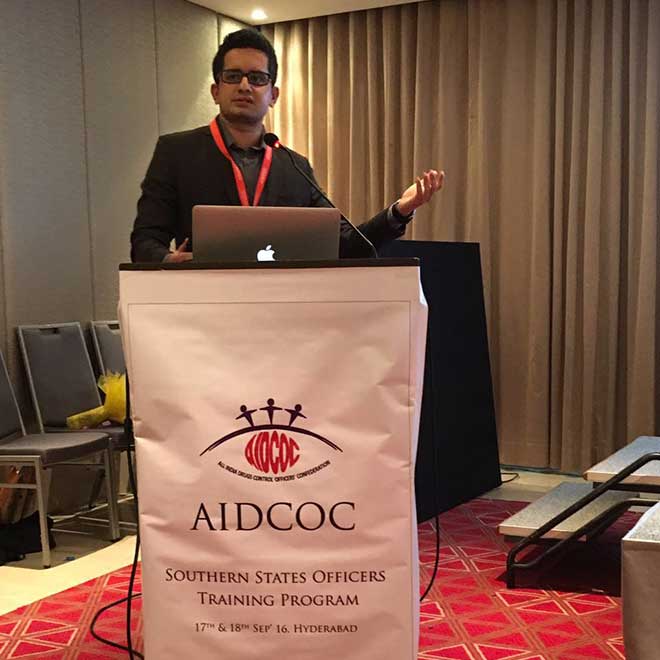
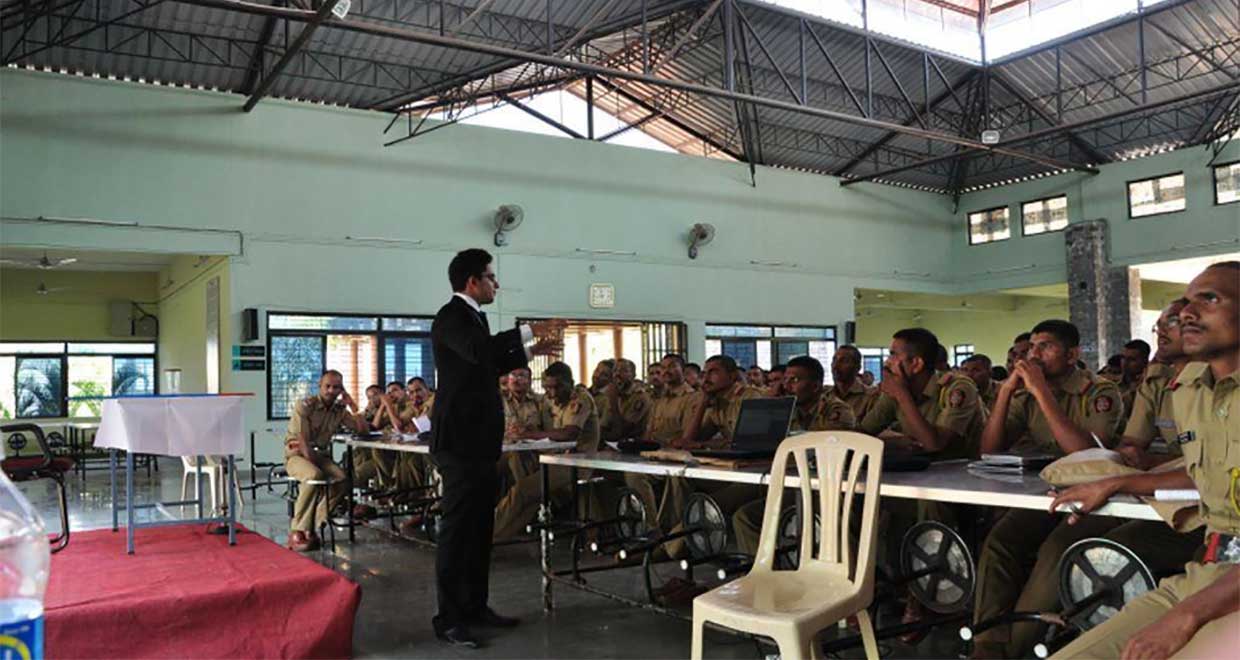
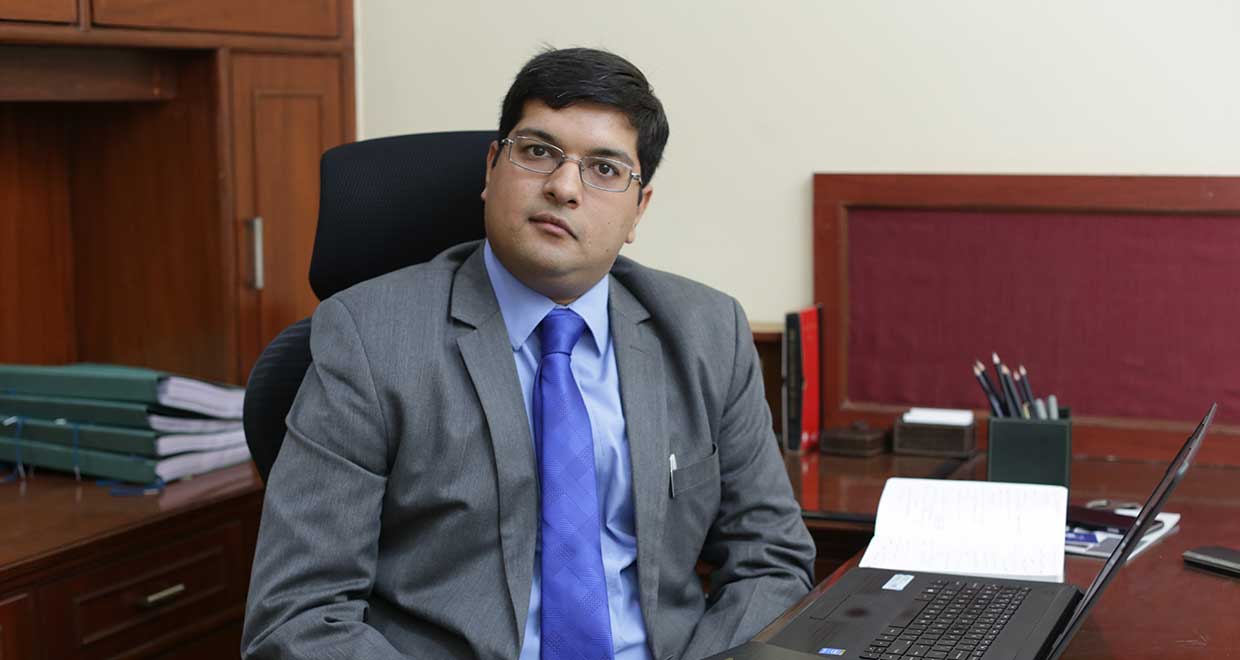
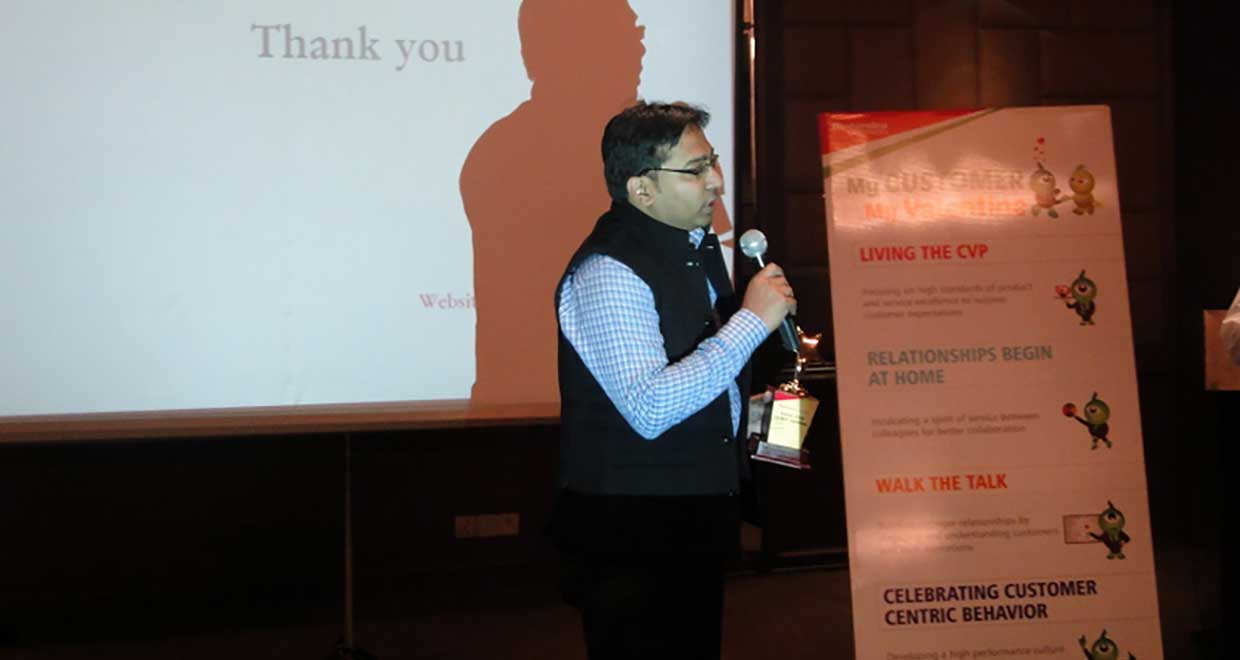
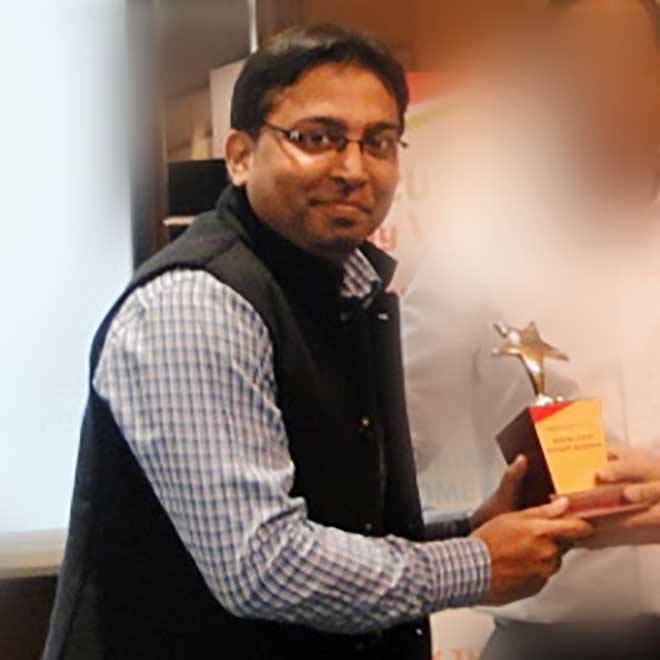
  • Rajas Pingle, Partner, Netlawgic Legal Services, on his passion for technology and the state of cyber law in India

    Rajas Pingle, Partner, Netlawgic Legal Services, on his passion for technology and the state of cyber law in India

    Rajas Pingle graduated from ILS Law College in the year 2011. Since then he’s been visiting lecturer at (DSCI – NASSCOM) India Cyber Lab – Pune, and cyber lawyer at the District/Session Court (Pune)  Bombay High Court and Adjudicating Officer (IT ACT). He is currently Partner at Netlawgic Legal Services, offering services to combat cyber crimes, computer security related incidents, corporate espionage, financial frauds, data theft, hacking , computer security related issues, among others. 

    In this interview we speak to him about:

    • Combining technology with law
    • The state of cyber law in India and what he would like to change
    • Training the police force and being invited to the Rajya Sabha


    How would you introduce yourself to our readers?

    In a nutshell there is only one word which defines me, ‘TechnoLawgy’. I have been practicing Information Technology Law for more than six years and have handled almost every type of cybercrime case. I also conduct training sessions for various government organisations and corporates in India and abroad pertaining to Cyber Law and cyber crime. As they say, “Any sufficiently advanced technology is indistinguishable from magic”. Likewise my love for technology drives me to learn new things every day and to discover this magic.


    What motivated you to take up law as your choice of career? Have you always been inclined to a career in this field?

    I have been a technology nerd from the early ages of my life with no intentions whatsoever in pursuing law as a career. Since my parents were practicing lawyers I got into law school. The first two years went by but I lacked precision. It was only in the third year of law, you can say as Buddha obtained enlightenment, I obtained my illumination when I got introduced to this amazing world of Information Technology Laws (Cyber Laws). That was the turning point in my life and from that day forward, I was certain that I am going to pursue cyber law as my profession in an attempt to combine my technology knowledge with law. When career and passion comes together, work doesn’t seem like work anymore.


    Please tell us a bit about the internships you took up during your legal education.

    Candidly, I did not join any lawyer or apply for an internship in a reputed law firm as every ideal law student does. I earnestly desired to do something different so I applied for an internship in DSCI- (Data Security Council of India), Pune Cyber Lab. It is a joint initiative of NASSCOM and DSCI. The lab was mainly established to train police officers in the area of technology and information technology laws. I used to teach information technology laws to police officers. I learnt a lot from this experience, especially real time challenges faced by police officers while investigating cybercrimes. In addition to interning at DSCI-NASSCOM Pune Cyber Lab, I also used to visit court with my father to learn about the court procedure and it helped a lot. I would say that all this helped groom me as a better lawyer.


    How does one acquire expertise in an inter-disciplinary field like information technology law in understanding both the legal and technical aspects that go hand in hand?

    Interactions on real time cybercrime cases with police officers while teaching them information technology law proved beneficial for me as it supplemented my theoretical knowledge with practical experience. Furthermore, while pursuing law I completed following independent courses:

    • Diploma in Cyber Law
    • PG Diploma in Cyber Law
    • Certified Cyber Crime Investigator
    • Certified Ethical Hacker
    • PG Diploma in IPR

    These courses were both technical and legal in nature which helped me to expand my knowledge base. In the course of my journey, I realised technology is like oxygen- ubiquitous, necessary and invisible and thus it is equally important to be apprised of all latest trends in the field.


    Do you think that the present legal framework in India adequately addresses the growing forms of cyber crimes?

    For every lock, there is someone out there trying to pick it or break in. Information technology alone cannot provide us an absolute shield against its evil twin disinformation technology. Our only protection is law. Information Technology Act was introduced in the year 2000 and it was the first technology related legislation in India. Thereafter, in 2008 the Act was substantially amended to include various offences and definitions. The technology is progressing at a very fast pace and the modus operandi of the perpetrator is ever changing and evolving with the technology. Considering these factors, eight years is too long for amendment. If we consider the investigation perspective, many changes are required to increase the conviction rate. Moreover, as per my observation India is a country where people don’t give that much importance to their personal information. One can read in the news every day, how US and EU emphasize on their data protection laws being well established and stringent while in India we don’t even have a data protection regime in place or separate legislation on privacy. We are yet again completing the eight years cycle, let’s hope for a comprehensive amendment soon.

    Share with us your experiences practicing as a cyber-lawyer before the Bombay High Court and the Adjudicating Officer under the IT Act.

    Proceedings before the Adjudicating Officer are largely based on few provisions of the Information Technology Act and the principles of natural justice. As per the law, the Adjudicating Officer needs to pass a final order within six months from the date of filing. Unfortunately it is very rarely followed. In addition to delays, the Cyber Appellate Tribunal has been out of function for the last five years or so. Under the present system, one needs to approach the High Court directly for an appeal from the order passed by the Adjudicating Officer. With not much precedent in the sector, the practice is certainly demanding and engaging. As far as preparation is concerned, I have to look at the case from both angles i.e. technical and legal. Coming to the preparation of complaint, it is always better to simplify the drafting as far as possible to an understandable format instead of using all technical terms.


    You have been invited by the Rajya Sabha to review the IT Act. Could you please tell us about it?

    I was invited by the Rajya Sabha committee on petitions to give my views on the topic of ‘Cyber Pornography’. The agenda for discussion was “To put a check on Cyber Pornography among children by amending the IT Act, 2000”. The current Information Technology Act does not completely prohibit pornography and private consumption is not punishable. There was productive discussion between cyber law experts and legislative members and I was asked to submit a note on the same.


    What has your experience been like while representing international clients and successfully arguing international cyber law cases?

    I am very fortunate to receive international exposure at the early stages. I have successfully represented clients from Texas, New York, and Puerto Rico in various cyber law cases and also mediation. With hard work and luck on my side, I was successful in recovering respectable settlement figures for my clients against U.S. and Japan based companies in the matter of unauthorised copying of data. Additionally, I am closely working with international clients with offices in India and abroad. While handling international clients, I observed stark differences in their working style and culture. Furthermore, I got exposure to diverse laws which assist you to compare your country’s position in relation to such international issues. Overall it’s been a wonderful journey so far.


    Tell us about your role as Partner at Netlawgic Legal Services LLP. What does a typical work day look like for you?

    I started Netlawgic with the sole intention to provide Techno Legal solutions to the industry. Our focus and experience in both areas of Cyber Crime Investigation and Technology law, allows us to provide our clients with specialized attention and problem solving in all aspects of Technology law. That said, I start my day with reading e-news articles regarding cybercrimes across the globe, to keep the zest of learning alive and thus keep myself updated. Rest of the day is pretty simple with meetings, court and office.


    How has your experience in academia been?

    (Rajas has worked with several governmental and non-governmental organizations in training officers in cyber law. He also teaches cyber law at national and international educational institutions.)

    Education is the most powerful weapon which you can use to change the world. Teaching is one of the things I love and whenever I get time I allot it for teaching. While teaching I cultivate new learnings, ignite the imagination and instil creative expressions. It is a very satisfying experience, especially when I have healthy debates among students/officers on different aspects of cybercrime and cyber law. I also tend to learn a lot from these debates. It’s a completely different experience when I teach in international institutes as the exchange of knowledge is on the global platform and is a synthesis of varied legal practices and procedures. It would be difficult for me to choose between the two, I would love to keep doing both, practice information technology law and pass on that knowledge through teaching.

    How do you manage your time, juggling various roles?

    It is said that time and tide wait for none. Based on my experience, I can say that time management is the greatest virtue and the one who learns to manage it effectively will go many milestones in life. I am still learning to manage the same. Many a time, there are clashes among court dates, meetings and lectures on the table, especially when I travel abroad to deliver lectures. In this situation I have to prioritize and move forward accordingly.


    Do you have any role models/ guides or mentors in the industry?

    I learnt a lot about technology from my brother Mr. Harshad Pingle who is an engineer by profession. Other than my brother, Mr. Sandip Gadiya who is a well renowned Cyber Crime Investigator in India guided me along the way. His knowledge in cybercrime investigation helped me gain deeper insight of cybercrime investigation and for that I am eternally grateful to him. It is definitely helpful to have someone to take advice from when you are starting your career. What is important in the end is that you should keep on learning and always learn from your mistakes while moving forward.


    What would be your parting message to our readers?

    I want to quote Steve Jobs here “Sometimes when you innovate, you make mistakes. It is best to admit them quickly, and get on with improving your other innovations”. The same logic is applicable in law practice, you make mistakes, you learn from them and move on. Ultimately find something which you can relate to and love doing. Don’t be a part of the rat race.


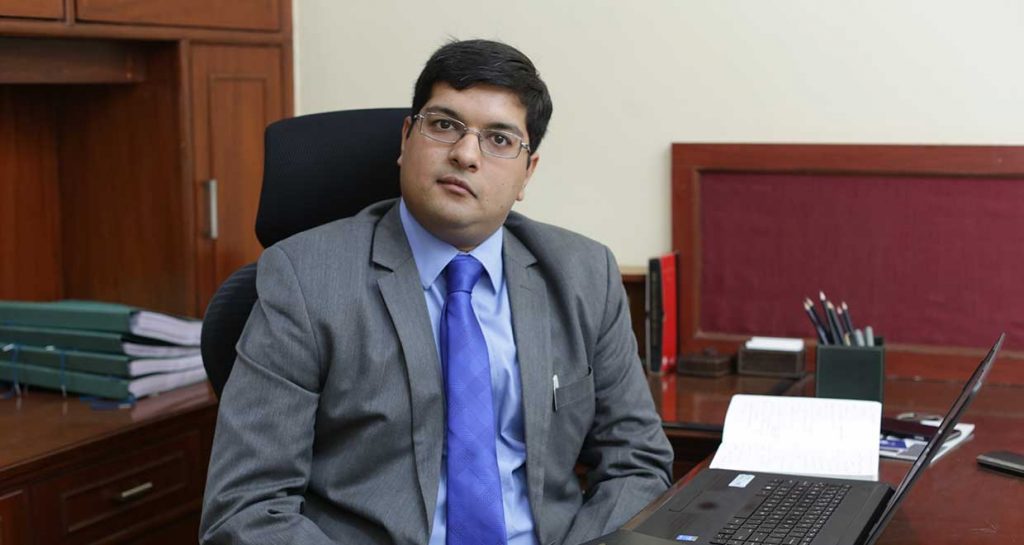
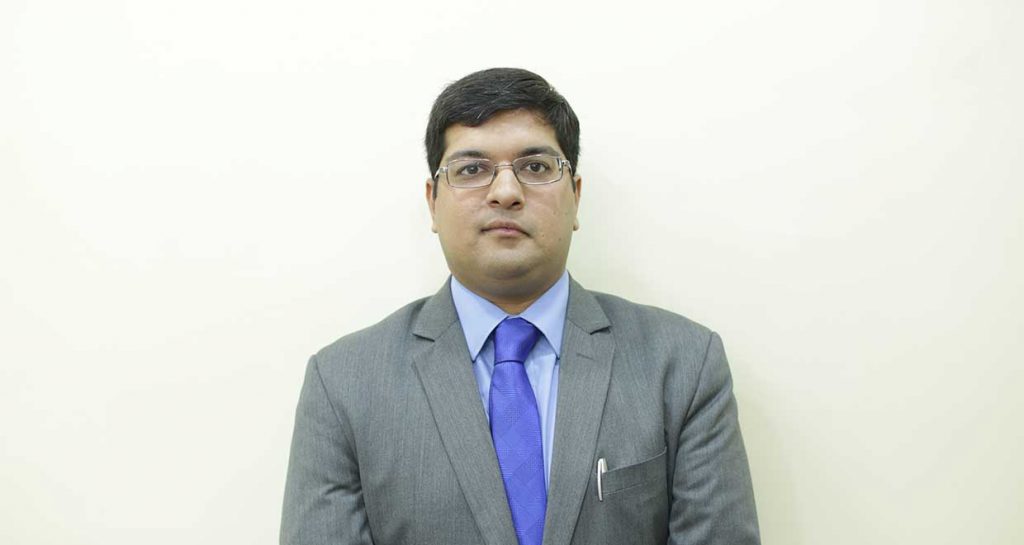
  • Bharadwaj Jaishankar, Attorney, Associate Partner at Sim and San, on being a first generation lawyer, his experience in IP Law, and the importance of internships

    Bharadwaj Jaishankar, Attorney, Associate Partner at Sim and San, on being a first generation lawyer, his experience in IP Law, and the importance of internships

    Having graduated in 2008 from Symbiosis Law School, Pune, Bharadwaj began his career at K&S Partners, a tier 1 boutique intellectual property law firm. Having spent five years there, he joined Saikrishna & Associates, a tier 1 intellectual property & commercial law firm, in November, 2013. Thereafter, Bharadwaj joined  Sim and San, Attorneys At Law. Bharadwaj has over eight years of solid and in-depth work experience and knowledge in the fields of Intellectual Property and Commercial law.

    In this interview he speaks to us about:

    • His experience in IP Law
    • The transition from working for tier 1 law firms to working with a smaller set-up
    • His foray into academia


    How would you like to introduce yourself to our readers?

    I am a first generation lawyer, with my father being a management guru and my mother who, amongst other activities, is a singer. I have a younger brother, who is an aspiring musician and a music producer. In that sense, it is a fantastic and exciting feeling to know that, where I stand today, is on account of my own efforts and hard-work. That being said, I have been extremely fortunate to have had and continue to have some great mentors in my professional career who have played a vital role in my professional career path. My career has also immensely benefited from the fact that my wife, Raddhika Singh, is also a lawyer.


    Could you tell us why you chose B.BA. over a B.A. degree?

    When I joined law school, I had the option of choosing either the B.BA. or BA law degree course. B.BA. was the preferred option for me, as the business subjects (forming part of the course) interested me more. That being said, what I have learnt these past more than eight years is that the specificities of your degree do not matter eventually. Just because someone does the B.A. .LLB course, it does not mean that they are incapable of dealing with commercial/business issues. The same is true inversely. Ultimately, it comes down to the individual.

    By the time I hit high school, I was still unsure of what I wanted to pursue in college. My paternal grandfather, who belonged to the first IAS batch of administrators, played a huge role in directing me towards law. He believed that I had the requisite skills to become a good lawyer. I am extremely thankful for the passion and drive he showed towards my career.


    What are the kinds of activities that you took part in during your legal education?

    In college, I made a concerted effort to participate in moot courts. Moot courts are extremely important for a law student. Some of the skills that are acquired through mooting have immense value to a law student, once they become advocates. These skills include (i) understanding the facts at hand and identifying the key issues involved (ii) conducting research and building up of a case (iii) drafting a memorial (iv) arguing the case (v) court manners (vi) identifying and addressing rebuttal arguments etc. All of the above find an application when handling a real case. The value of participating  in moot courts is, therefore, essential and crucial for the development of a good lawyer.

    Appearing both as a speaker and a researcher in several State and National level moot court competitions, there was also scope to mentor mooting teams in my last couple of years in college. A lot of what I learnt through mooting helped me in my initial years as a green-horn in the profession.

    Apart from mooting, I also helped organize seminars, guest lectures and symposiums for college. If anything, these enabled me to interact closely with some of India’s finest legal minds. I was able to pick their brains and gain valuable insight into the profession, as well as get some solid career advice. I certainly feel that, as a law student, it is also important to interact with senior and respected members of the profession, as their practical inputs and advice certainly help in making career choices for law students.
     

    How important are internships for an aspiring lawyer?

    Being a first generation lawyer, it immediately occurred to me, during my first semester in college, that internships would be crucial to me securing a job. In fact, it is through my internships that I was lucky enough to receive a pre-placement offer from K&S Partners (one of India’s leading boutique IP Firms), before college placement madness began for my batch.

    As a law student, and I still hold this opinion today, it is important to experience different kinds of internships. During my five years at law school, I managed to intern with single practitioners, a designated Senior Counsel, general and boutique law firms, a company, and with an international NGO in South Africa. Doing such a wide array of internships certainly helped me zero in on where I wanted to work and, most importantly, the kind of work I wanted to do. There are just so many avenues of law that can be explored. My internships in the initial couple of years gave me exposure to different types of law. Around my third year, I got interested in IP law and, thereafter, my internships focussed on firms that practiced IP law. Through such focussed internships, I was able to get a PPO.

    It is also important to do internships as often as possible. In my time, we did not have the luxury of doing running internships. Nor did we have a set-up whereby minimal subjects were taught in the final year, thereby providing an opportunity to just intern in the final year, with the objective of landing a PPO. In fact, today, my office has a couple of such final year interns; who have only one subject to study. Such opportunities were not there when I was in college.

    Internships become that much more important when one is a first generation lawyer. Building up contacts through internships is important both from getting a job, as well as from a networking perspective. You never know when a contact cultivated through an internship becomes important at a later date. It goes without saying that the approach of work, the work itself and conduct are extremely crucial during an internship. Just because a law student secures a good internship, does not automatically mean that a PPO is possible. The onus is completely on the law student to make the best of their internship. Going the extra mile on assigned work and deliverables does have a make a big difference during an internship. Apart from the work, the conduct and mannerisms of the law student during internships is also important. Apart from showcasing professional ability, I equally feel that showcasing your personality (as an open and approachable person as opposed to being arrogant or cocky) is also important. I guess to sum it up, a law student would want to be remembered in a favourable light after the conclusion of the internship. From my personal experience, I still remember, and am in touch with, some of the interns who really made a mark when interning with me (or my firm).  


    How important is it to cultivate the skill of academic writing for young lawyers and students?

    (Bharadwaj has had his works published in a wide array of IPR journals.)

    It is really important for a lawyer to write articles/papers. Yes, with demanding schedules, it is easy to ignore this aspect. Writing articles and getting them published have great professional and personal advantages.  It also gives immense personal satisfaction! Some benefits that accrue from writing papers include:

    1. It brings fantastic exposure to the author. Writing in the right publication, having quality and wide readership, provides a brilliant platform for the author to show himself/ herself. The style of writing, manner, background research, thought process, analytical skills etc., all get showcased.
    2. It provides an opportunity for the author to create a niche and become an industry expert. Who knows, potential clients can emerge from reading articles and publications.
    3. It pushes the author to bring themselves up to speed with the law and developments, both in India and worldwide.
    4. It also helps develop drafting and analytical skills.
    5. Adds immense character and value-add to the author’s profile.

    The list of advantages can be endless. Finding a balance between work, personal life and writing is the key. The balance has to be found. If it means staying up a little longer or writing during a holiday, then I suggest you do it. Personally, I try and plan my schedule in such a way that I carve out time, either on a Saturday or Sunday, to try and write. Sometimes, I am able to write an entire article without a break and other times, other circumstances, force me to write in stages. No matter what the circumstances, I do force myself to write. In a way, making a commitment to a publication forces me to honour the same, thereby giving me no option but to write.


    Please share with us your experience at K&S Partners, your first job.

    Working at K&S Partners is something that I will always cherish. I spent my first five years in the profession working with K&S Partners. I was lucky enough to intern twice at K&S Partners, before getting my PPO from them. Hence, when I started working, I knew most people there- lawyers and support staff. That helped.

    I can honestly say today that working at K&S Partners played a HUGE part in shaping me as a lawyer and professional. The first office that a lawyer works with will, and should, always hold a special place. Some of my mentors (who continue to mentor me today) are with K&S Partners. In that sense, I consider myself extremely fortunate. Of course, it goes without saying that this is a two way street. I know the amount of effort and application I had to put in at K&S Partners, to ensure that I benefited from anything that was offered to me by the firm.

    As a fresher, I had to put in extra effort to bring myself up to speed with the law and practice. What I learnt, very quickly, was that the law you learn in a classroom is completely different from the law that is practiced. Even after work, I would spend time reading judgments and commentaries, so that the following day, I could add value. For me (and indeed for every aspiring lawyer), along with doing the grunt work, it is equally important to contribute from a strategy perspective. You don’t want to get tagged as a lawyer who can only execute. It is also important to be known as someone who contributes at the ideation and strategy phase as well. K&S Partners allowed me to do that. Of course, I had to ensure that I put myself in such a position where I was able to do that.

    A lot of what I learnt and imbibed at K&S Partners still stay with me today. Working for five years at a tier-1 firm provided me with an excellent launch pad to make a name for myself in this profession. I will always be grateful for the time I spent with K&S Partners. Apart from having some excellent colleagues, I made some lovely friends, with whom I remain in contact till date.


    What motivated you to choose IPR as your area of expertise?

    Sometime in my third year of law school, I realized that I had developed an interest in IP law. Till that time, I had done some work, through my internships, on other areas of law. I can’t exactly recall what motivated me to pursue IP. I do recall that working with brand names that form an everyday aspect of my life (from my toothbrush brand to the clothes I wore to the pen I wrote with etc.), did influence me. Interning with K&S Partners, a boutique IP firm, influenced me heavily. The work I did as an intern (twice) around brand names, IP in Bollywood, Image rights etc., really got me excited about IP. I have never looked back since.

    Luckily, through my professional career, I have been able to work with different IPs and work on different aspects of IP. In my experience, what a lot of people don’t realize; is how important IP is and can be. It is really looked upon as just another asset and not as a vital asset that can make or break business. A good IP protection, enforcement and exploitation strategy can mean the very existence (including market domination) or destruction of an entity (be it an individual or corporate house). Especially in today’s start-up environment, big ticket funding, series funding etc. can can be rendered irrelevant, and in fact wasteful, if IP is not protected or secured. Working in such an atmosphere is very exciting for me.

    In fact, for over eight years, I made a conscious effort to stay away from patents on the ground that I did not have a science background. I knew the basics of patent law and the importance of securing and enforcing patents, but I never really touched this aspect of IP law. Now, working with Sim and  San, I am actually engaged in a couple of precedent setting patent matters, which includes the Standard Essential Patent litigations going on in the mobile handset sphere. Suddenly, after eight years of working with trade marks, copyrights, designs and geographical indications, I have discovered that patent law also interests me, which only adds to my excitement around IP laws in India.
     

    Could you share your experience representing industry leaders in the field of technology?

    The experience has been both challenging and exciting. Technology and IP laws are connected and overlap quite a bit. It is, therefore, a great chance to learn about new technology while applying IP law to the same. It is also quite exciting to know that some of the mobile applications and technology devices that one uses day in and day out, are being back-ended by your team from a legal perspective.

    It is also very nice interacting with tech leaders. One of the biggest advantages with working with technology and industry leaders is that you get to learn a lot of new things about IP and technology law and the application of existing law to new fields of technology. Since the technology leaders I was fortunate enough to work with were always looking to push boundaries, applying existing law was extremely exciting and challenging. The other aspect which I really liked was the fact that the technology industry leaders I worked with, had a fresh and dynamic approach to their work and product. Such an approach made it extremely fun working with them.   


    How has your experience as visiting faculty at Symbiosis, Noida, been?

    I quite enjoy the experience of being a visiting faculty. After a few years in practice, I was actually looking for a way in which I could give back to my law school. So when I heard that Symbiosis Law School was opening a campus in Noida, and that Dr. C.J. Rawandale was going to be the Director, I got in touch with Rawandale Sir (who was one of the Professors I interacted with a lot during my college days). Sir was immediately keen that I start taking IP classes for the students. Eventually, it also extended to me taking a few classes on Information Technology law as well.

    Being on the other side of the fence, has been an interesting ride. I found it quite amusing that I was, while teaching, asking students to keep quiet, when a few years back I was also probably doing the same very thing. That aside, I learnt, after taking a couple of classes, that teaching is a very challenging profession. It requires a lot of dedication and focus. Teaching at Symbiosis, Noida made me read a lot more because I wanted to keep myself updated on the latest developments in IP law. This, of course, helped me immensely at work as well.

    Also, I learnt being patient and became a better listener, while taking classes. This has also helped me greatly at work, especially when dealing with a difficult client or where I was required to understand client’s requirements before offering advice. That way, teaching has helped me immensely, both as a professional and as a person.

    The other aspect of teaching that I have really benefitted from, is that I got to know some of the students really well, through interactions inside and outside class. This has helped me get good junior associates and interns whenever I have had such a requirement. Plus, some of these students have also become good friends of mine.     


    What motivated you to join an emerging Firm, Sim and San, after working in two tier-1 IP firms?

    I just wanted a new and different challenge. Working with K&S Partners and Saikrishna & Associates, two tier-1 IP Firms, provided me with a fantastic foundation in most aspects of IP law. I consider myself extremely fortunate to have worked with these two firms and, that too, with some fantastic lawyers. But I felt that my professional career needed something new. I wanted to feel challenged once again in my professional career and not get comfortable in what I was doing.

    After working at these two offices, I was sure that I did not want to work, at this moment, with a large set-up. I wanted to take a step-back and join a smaller emerging office, where the scope of work is wider and, therefore, a greater opportunity for me to grow as a professional. A very dear friend of mine connected me with Sim and San, Attorneys at Law. He told me of some of the work that Sim and San are doing, which included being involved in some of India’s biggest patent, GI and trade mark matters. I immediately felt that this could be a good match. Thereafter, I met Mohit and Sidhant Goel, Partners at the firm, and we immediately connected. It was very easy to say yes to the offer.

    There is, of course, a big difference in working with a large firm and a smaller firm. The dynamics, work environment and set-up are different, which I found really nice. It felt really nice to work with a small, motivated and young team, who all think on the same wave length and want the same thing as well. It also felt nice to enter an environment where, after a long time, I felt the focus was only on work and not on other stuff. Somewhere, I felt that I needed to make a big change in my professional life, so that my career could advance. I can say that, three months into my new adventure, I am very happy to have taken a leap of faith.


    What are some of the benefits and advantages with working with an emerging firm?  

    Today, there are so many emerging firms who claim to be experts in IP law. Choosing a good firm, therefore, is very important. The biggest advantage with a smaller firm is that it provides a tremendous space to express oneself as a professional, thereby offering a bigger opportunity to make a name and reputation. I personally feel that in a smaller firm, there is a greater scope of getting yourself known as a good lawyer.

    In a smaller firm, there is a greater chance of doing everything, as opposed to working in a larger firm that has clear and distinct verticals. I find that as a young lawyer or for someone looking for something fresh (as was my case), working in an environment where everyone does everything offers a greater challenge and scope for learning. I do feel a great opportunity exists to become a good and effective well-rounded lawyer.

    Also, with a smaller firm, the management is usually extremely motivated to establish  a firm foothold in the market and tend to look at problem from a different angle. Plus, there is a determined  effort to be a little different from established firms. This is something that personally appeals to me. Put simply, there is a greater opportunity to become a big fish in a small pond, as opposed to a small fish in a big pond.


    What is the experience of being a member of the Emerging Issues Committee of the International Trademark Association (INTA)?

    I am currently a member of the INTA’s Committee on Emerging Issues for the term 2016-2017. Within this Committee, there are various Sub-Committees. The Sub-Committee that I am involved with is looking contributory infringement of intermediaries from a trade mark law perspective.

    The experience in working in such a Committee (including the Sub-Committee) is really nice. I get the opportunity to interact, in depth, with fellow members, who represent firms and companies from around the world. For example, my current Sub-Committee consists of lawyers (in-house and practising) from all five continents. It is a great way to know and understand the development of law (and indeed precedents) that deal with the focus area of the Sub-Committee. I also get the opportunity to explain to my fellow members the state of law in India and the emerging trends, precedents and developments.

    In terms of being a member with organizations like INTA, AIPPI etc., there are quite a few benefits. It obviously affords a fantastic platform to network and build contacts in countries around the world. It also helps in developing mutually beneficial professional relationships between firms. Also, the annual meetings (and other conferences) of these organizations provides a great setting to meet existing clients, cultivate new clients and, also, to meet and catch up with professionals and friends from around the world. Plus, there is a lot of knowledge sharing that happens, which is very useful as a professional.  


    What are your interests outside of law?

    Outside of my work, I am a fanatical supporter of Manchester United. I have been so since about 1996. Subject to my work requirements, I try my level best to catch all their games. There have been times where I have compromised on my sleep to try and catch a later kick-off and be at work early next day!

    I also play the sport of Ultimate Frisbee, an American sport, which is one of the fastest growing sports in India. I represent the Delhi Ultimate team. As part of my love for this sport, I am also one of the legal advisors to the Ultimate Players Association of India.

    I also enjoy listening to music, especially blues and jazz, and love travelling.


    Finally, what parting advice would you give to our readers considering most of them are young lawyers or law students?

    As parting advice, I would say that becoming a good lawyer is like a test match and not a T20. Given that there are so many avenues of law and varied professional and employment opportunities, choosing the right one is vital. Sometimes, identifying your core/ niche area takes time. The right way, in my opinion, is to be guided by the quality of work and not the salary. It is very easy for a law student or a young lawyer to get swayed by the pay package being thrown their way. Sometimes, the work offered (with the large pay package) works out, sometimes it doesn’t. What should matter is the work and work only. Money will follow if you are enjoying the work.  


  • Abir Dey, Counsel, Cyril Amarchand Mangaldas, on being a topper, his experience in litigation and corporate law, and plans for the future

    Abir Dey, Counsel, Cyril Amarchand Mangaldas, on being a topper, his experience in litigation and corporate law, and plans for the future

    Abir Dey is a graduate from Symbiosis International University, Pune, batch of 2006. He is currently working at Cyril Amarchand Mangaldas, Mumbai, as part of the Project Finance team. His core strengths are in Project Finance, Projects and Infrastructure, Banking and Finance and Corporate Advisory matters. In his legal experience, spanning more than a decade, he has structured,negotiated and drafted financing and security documents, ECB facility agreements, debenture and bond documents, master restructuring agreements, investment agreements, EPC contracts, concession agreements and various project documents, opinions, memos and notes for banks and financial institutions across sectors such as power, transmission, road, port, oil & gas, renewable energy, IT, telecommunication, real estate, and hospitality. He has also conducted diligence on corporate structure, regulatory approval and project documents for various projects.

    In this interview he speaks to us about:

    • His time in Symbiosis Law School
    • Being a university level topper, and its benefits
    • His experience in litigation and corporate law


    How did you decide to become a lawyer?

    I am one of the fortunate individuals who come from a family of lawyers and therefore Law was something apparent to me since I was in school. If not the legal profession then I guess I would have ended up in the hospitality industry as my other interests revolve around travel and food.


    Tell us about your college life.

    I joined Symbiosis Law College in 2001, leaving my hometown for the first time after completing school. It was tough to get accustomed to the new environment. It took me some time to make new friends. SLC, back then, used to be located at Senapati Bapat Road in a smaller campus, with no hostel facilities. I used to share a small apartment with two of my batchmates near college. During my SLC days I had a blast, the city which at that point was just started growing, and had the typical charm of a small town and a city with lots and lots of students, roaming around. The lack of hostels meant we weren’t ragged much, but then it also took time to build a rapport with the seniors, which was possibly only during moot courts and seminars. Coming back to my professional choices, had I carried on in Kolkata, chances are I would have ended up being a litigator, much like other lawyers in my family. My stay at SLC has given me the strength to live without family and also provided me with a huge network of seniors and friends who have played an important role in my career progress.

    What are the subjects that interested you in law school?

    I used to like Constitution and Administrative Laws. Internships were very tough to get those days and our placement cell had just been formed. Therefore whatever internships I got with the help of seniors and batchmates I took those opportunities. Most of the time I did research work as intern and involvement in transaction was very less. I have done internships in Delhi, Mumbai and Bangalore and was fortunate to have interacted with different people and cultures.

    How important are academic credentials in becoming a successful lawyer?

    (Abir topped his batch at Symbiosis and during his diploma from Bharathi Vidhyapeeth University, Pune.)

    While my first rank did help me land a good job, I think what matters more eventually is an analytical bent of mind. I have seen many good advocates, some of them are my peers doing very well in their career but they hardly used to attend classes and pass their exams reading Jhabvala notes. On a personal note, I had never been taught project finance in college and acquired this skill at the workplace. Therefore, in my view, to be a good lawyer it’s not only important to have very good academic credentials but also the sector specific working knowledge.


    How did you manage your time and prioritize in excelling at academics and other activities at college?

    Self discipline in any stage of life is important. But it is essentially to each his or her own. I used to plan my work schedule and would tend to focus more over the important chapters to have a better understanding of the law, rather than mugging up the entire syllabus. The fact that I used to focus on specific areas of the curriculum also meant that I had time to pursue my other passions while being in college.


    What were the challenges and learning opportunities that you were faced with during your first year as a young lawyer?

    I got a pre­placement offer from Wockhardt. I was confused between a career in litigation and corporate law. However, I accepted their offer in their Mumbai corporate office. It was quite challenging for a new comer in a big city to start a career without any support of family and friends. Also it was tough to get accustomed to an office working environment coming out of college, following a specific dress code and dealing with a new set of people outside your friend circle.

    Having worked on both corporate and litigation matters in your career, how do you address the conventional debate between the two as a career choice?

    Litigation is a completely different field than corporate practise. I would advise the newcomers to decide their career option based on their interest as well as convenience. To build a career in any field someone needs to be very patient, hard working and focused.


    Tell us a bit about your work experience at Wockhardt and India Law Services.

    When I joined Wockhardt, that time they were expanding into hospital business. I was involved in various collaboration documentations, due diligence and regulatory compliances. So it was a very good opportunity for me to learn and interact with various professionals from different fields. Thereafter I moved to India Law Services (ILS) and initially I was purely doing general corporate advisory work. With the passage of time I was involved in Project Finance transactions as that was the core practice area of ILS and from then on I got into Project finance related work. ILS at that time was a growing firm and work force was limited and that was the reason junior lawyers were given a lot of responsibilities, including meeting clients and handling majority of the transactional work. I was very fortunate to get involved in very prestigious and complicated transactions. I was also very blessed to get tolerant and accommodating seniors/partners in ILS and that really helped me understand the nuances of Project Finance work.


    What does a typical work day look like at Amarchand?

    Working at Cyril Amarchand Mangaldas (CAM) is as exhausting as it is satisfying. Clients have a lot of faith in us and that in turn becomes a responsibility for us to deliver quality and solution oriented results. Quarter ends are like T20s matches and delivery has to be in time bound manner with superior quality. Typically huge amount of money is involved in most of the transactions and most of the time the onus is on us for speedy disposal of complicated transactions. It is hard to spend quality time with family during crunch situations, but with time you learn to manage the situations, even if you are away from your desk, with the help of your colleagues and some ingenuity on your part. As I like travelling, I plan things in advance and make sure that there is no conflict during my travel plans. And while we may be stretched for time, while at work, the one good thing about CAM is the fact that they honour scheduled leaves, as long as it’s thought through and not disruptive to the system and client commitment.

    What are the plans for your future?

    I generally prefer to have short term goals, and right now, my focus is on working on new statutes and regulations impacting the financing transactions and disputes resolutions.

    What parting advice would you like to leave our readers with?

    Keep working hard and I believe whoever keeps working hard with a focus mostly succeeds. It doesn’t matter what law school you go to or what grades you get, your hard work and sincerity help you. Gain proficiency in the subjects that interest you. Build a brand for yourself. To conclude I will reproduce Harvey Specter’s (of Suits fame) quote: “The only time success comes before work is in the dictionary”.

  • V.C. Mathews, Senior Associate, Sujatha Chaudhri IP Attorneys, on studying in London, IP Law, and being a professor

    V.C. Mathews, Senior Associate, Sujatha Chaudhri IP Attorneys, on studying in London, IP Law, and being a professor

    V.C. Mathews graduated from Symbiosis Law School, Pune, batch of 2008. After working with R.K. Dewan & Co. as Associate for two years, he went on to pursue his Master’s Degree from Queen Mary University of London in Intellectual Property Law. Since then he has worked with IP Gurus and Remfry & Sagar. He is currently working in Delhi as a Senior Associate at Sujata Chaudhri IP Attorneys, where his role entails Trade Mark Filing, assignments, drafting responses, appearing for hearings, preparing legal opinions and portfolio management, Copyright filing and legal advise, Preparing and drafting domain name complaints, Criminal Enforcement, etc. He is also Adjunct Professor at Symbiosis Law School.

    In this interview we speak to him about:

    • His experience in IP Law
    • His experience in academia
    • Pursuing his masters in England


    Was taking up law always a part of your career plan?

    I wasn’t very good at Math or Science. So taking up the arts group was the only option. However, at that time, not many schools offered arts in Kerala. Once I got through one of the schools, I had a look at the various options available with a lot of help from my parents and zeroed in on law.

    What was your experience at Symbiosis Law School like?

    The experience in Symbiosis Law School was holistic. It moulded me as a person and in the way I made some amazing friends in my batch and amongst my seniors who till date I am in touch with and meet often. Sports and Moot courts and client counselling were the activities I was involved with in college.

    How did you go about developing an interest in Intellectual Property Rights?

    During the course of our vacations between semesters I used to intern at law firms and under individual lawyers. One of those internships exposed me to Intellectual Property Rights. I liked the subject but was not sure as to if I wanted to take it up as my area of speciality. To discover the same, I did a further two internships with a firm specializing in this field. At the end of those internships, I realized that this was the area of law that I wanted to specialize in. Not many wanted to go into this field at that time as most wanted to do corporate law and the more common fields.


    Can you recall any experiences during college or your internships that have played a key role in shaping you as a lawyer?

    Law is a profession where you need to have good relationships with others. If you are specializing in one field having good working relationships with others in others fields of law always helps. To this end, I have a good number of close friends with whom I can rely on and fall back on. They are a source of help both personally and professionally to me. I spent five years of college with them and have spent many more years outside college.

    How important is developing the skill of writing according to you?

    Writing is a good skill to develop and have. Additionally, it helps you learn about the new topics you write upon. We don’t pay a lot of importance to writing and therefore, currently, not many students/practitioners have articles published in the numerous journals/ publications  out there.

    There isn’t any one way for one to develop their writing skills. The only way to better it is to actually start writing.  Start with blog posts and then write in depth articles for journals and publications.  A good place to start for students is their own college journals.

    Tell us about your internship experience.

    Working at a law firm is a lot different from what they teach you in college. Internships only gave me a small insight into the world of a full time lawyer. However, when one comes out of college and into a law firm environment, one has to learn and adapt fast. It is a fast paced environment with its own pressures and one must learn how to handle it.

    In your opinion how crucial is your first job in determining your career path?

    My first job gave me the base to forge ahead. It was tough first year and my second year was not easy either. However, what I learnt in those initial two years still stay with me as it moulded me as a professional.


    From your own experiences would you recommend that aspiring LLM candidates work after graduation and then pursue an LLM?

    An LLM is one where you actually specialize and go deeper into a subject of law. This must be taken in all seriousness. When I went for my LLM, I found that my batch had an array of people from different countries. But they were all elder to me. In other countries, those who take up masters take it up after a few years of work. This helps them better understand what is being taught as well as the teaching outside India is very unlike how we are taught in colleges here. Therefore, it is always beneficial to work a few years after graduation, figure out what area of law you want to go into and then do a LLM in that field.

    Tell us about the nature of your work and your experiences working at IP firms.

    (He has worked with Remfry & Co. and presently holds the position of Senior Associate at Sujata Chaudhri IP Attorneys, formerly known as IP Gurus)

    On a single day you could handle a lot of matters in an IP firm, each with its own deadlines and complexities. Many of the issues we deal with have real world implications and must be looked at with the larger commercial picture in mind. It is important, therefore, to find a middle ground between the law and the commercial aspect for clients. This offers many challenges. Additionally, IP law in India is still developing which gives rise to lacunae as well as interpretations to legal concepts. As I handle anti-counterfeiting, it has its own difficulties with the police also being involved. Having to work with them is also a challenge.


    Has academia always been of interest to you?

    I am an accidental professor. I never knew I could teach till I was asked to by a former professor. The role is very different from the one that at a law firm, but just as challenging. Being a practitioner helps as my experiences help in holding the attention of the students. Additionally, my classes are more tuned towards the practical teaching of law rather than just the theoretical which has worked with the students.


    As a parting note, what advice would you like to leave our readers with, who are mostly budding lawyers?

    There are a number of lawyers coming out each year. In such an environment, one has to ensure that he is different to others. Sitting and looking at resumes I look for the one candidate who has something extra to offer. This is a hard thing to do. However, the need of the hour is that one needs to mould himself to be different from the others. Internships, writing of articles, etc. all help in this regard.


  • Dhruv Paul, Senior Associate, Watson Farley & Williams, on studying in ILS, practising internationally and pursuing a niche field of law

    Dhruv Paul, Senior Associate, Watson Farley & Williams, on studying in ILS, practising internationally and pursuing a niche field of law

    Dhruv Paul is a graduate from ILS Law College, Pune, batch of 2008. He is currently Senior Associate in the Corporate and Aviation Groups of Watson Farley & Williams. Based out of the Dubai office, he advises clients on a wide range of largely cross-border transactions. Prior to Watson Farley & Williams he worked in the Dubai office of Clyde & Co. and before that in the New Delhi office of Trilegal. His area of expertise includes acting for global and regional conglomerates, financial institutions and high net-worth individuals on acquisitions, divestment and incorporated & unincorporated joint venture transactions, and corporate matters, across the MENA region and India. He also advises clients in the aviation sector, where he represents financiers, airlines, owners and operators on the finance, lease, sale and purchase, and operation & management of business jets and commercial aircraft.

    In this interview we speak to him about:

    • His time at ILS Law School, Pune
    • His experience working in Dubai and the difference in work culture
    • Specialising in niche areas of law


    How would you describe your time at ILS?

    I had five wonderful years in ILS Law College, Pune. It was my privilege to study amongst some of the most talented and ambitious people that I know. My batch mates as well as senior and junior colleagues were always working on moot courts, legal research and writing, sports and drama, volunteer work, and of course lots of internships!  I think we all pushed each other to strive for success, while not forgetting to have our fair share of fun, building life-long friendships and memories.


    Why did you decide to take up a BSL course as opposed to a B.A. or BBA LL.B. course prior to your LL.B. degree?

    As a youngster just out of school, I was not 100% certain about becoming a lawyer. The BSL LL.B. course of ILS Law College allows you to graduate in three years with a B.A. equivalent degree which qualifies you as a graduate to pursue anything else.  I thought this was a very useful feature to hedge my bets, just in case I didn’t like law school, etc. (of course in retrospect, I didn’t elect to opt out but it was good to know that I had an option without needing to spend two more years studying in futility).


    Did you have a mentor or guide during the formative years of your career?

    Yes, I had one or two seniors in college (who eventually graduated while I was still in college) who were of great help in terms of initial career planning. I have tried to build similar relationships with colleagues in each of the organizations that I have worked in. I still use some of them as a sounding board. I think a mentor/guide can add real value at certain junctures, by adding perspective and sharing experience. A mentor or guide can give you useful insight based on their own experience, and in a field where information dissemination is far from ideal, this is a useful tool. That said, I think it is equally important to have conviction in oneself and back yourself to make the right moves.


    Having worked in both India and Dubai, what is the difference you see in the work culture and environment?

    The key difference is that Dubai is an international financial centre and a significant cultural melting pot, whereas India is more uniform. The work culture and environment in Dubai is influenced by its richly diverse stakeholders whereas (in a strictly work culture and environment sense), India is pretty one-dimensional.

    In terms of my colleagues and counterparts in Dubai I regularly work with a diverse cross-section of lawyers qualified in England, Canada, Egypt, New Zealand, Singapore, Lebanon, New York, etc. Each of them approach matters in a slightly different way and offer different perspectives based on their experience and training. It is always an interesting and enriching exercise to work with such a diverse group, and to generally discuss the world-at-large with people with different perspectives.

    The client base also consists of a wide range of global, regional and local players, each represented by individuals belonging to different cultures and trained in different styles. There is always a challenge around the corner in how to deal with a specific situation. Even in terms of the actual work, transactions often involve two or more jurisdictions and could be inbound or outbound in across the region and beyond. Juxtapose this against a colleague pool of largely Indian qualified lawyers, practising Indian law in a largely inbound or domestic transaction environment, for largely Indian (or a few expat) client representatives.


    What prompted you to shift from working at a prominent Indian law firm to an international one?

    A key reason to shift was to experience the sort of diversity that I have described in my answer above. In addition, I was attracted to work in a large international firm with a wide network that would expose me to a best-in-class practice management, learning and development programme, precedent bank, etc. I also wanted to work in a team that acts as international transaction counsel, as opposed to correspondent local counsel. (I should add that my only experience in an Indian firm was at Trilegal, which fares quite well on most of these parameters in any case).

    My stint in international firms has improved my transaction management efficiency. It has helped me develop an intuitive and proactive (rather than reactive) approach to running transactions. I am encouraged to think commercially and practically in order to get the deal done and achieve the parties’ objectives, while of course remaining within legally acceptable parameters. Of course, working with governing laws that have well settled principles (e.g., English law) or with flexible and investor friendly jurisdictions (e.g., the Cayman Islands and the British Virgin Islands), helps this learning process.

    Tell us a bit about your experience at Trilegal for over five years.

    I joined straight out of law college, completely taken up by the novelty of a BlackBerry, a decent regular income, a plush office and the other bells and whistles. The ‘good life’ feeling was quite swiftly replaced by being hit with a wall of learning and development requirements. The next few years can be classified as a mix of a steep learning curve with long hours at the desk, punctuated by much needed (but all too short) breaks, holidays, retreats and bonus/increments. I received excellent training, and it was my privilege to work in Trilegal during its breakout phase in which it broke into India’s tier I market and metamorphosed from a promising start-up into prominent national player. I left with a sound set of lawyering skills and good relationships with seniors, peers and juniors. I couldn’t have asked for more.


    How did you come to develop expertise in niche areas of law, such as aviation and cross-border transaction?

    Having got through the initial slog of adjusting to working life, learning critical job skills and legal principles, and working on delivering projects and transactions; I assessed where I had reached and what I wanted to do next. I realised that there were a fair number of general corporate lawyers like me in the firm that I worked in and in each of the other firms that I could see myself working in. I then decided to try finding ways to differentiate myself. At the same time, I was inclined towards working in an international firm for the type of reasons that we have already seen above. At this stage, I came across a role that would provide me with some exposure to the aviation sector. My research suggested that this is a high growth sector in the Middle East and India. All of these factors, couple with my fascination for aircraft – the decision was made.


    If you could condense your career graph, how would you do it?

    In the initial stage, the challenges were around job/skill gap. I don’t think this was limited to me, most of my peers agree that our law training barely gives you the type of skills you need to succeed in transactional private practice roles. Even though I did a number of internships while in law school, most of my learning was ‘on-the-job’. Once I got comfortable in my (then) current position, I decided to shift gears by taking up a role in a different jurisdiction with an unfamiliar sector specialisation, in a different city and within a different category of firms. Looking forward, I guess I would like to continue developing my career, during a period which may see liberalization of the Indian legal sector, tech disruptions, macro-economic challenges, and the rest!


    What advice would you give the upcoming generation of lawyers?

    Pick up as many practical skills as you can while still in college/law school, but don’t forget to have fun! Learning a bit of coding might be the next differentiator.


  • Shivam Kumar Bimal, Senior Tax Consultant, Deloitte Tax, on studying in the US and practising internationally

    Shivam Kumar Bimal, Senior Tax Consultant, Deloitte Tax, on studying in the US and practising internationally

    Shivam Kumar Bimal is a graduate from Symbiosis Law School, Pune, batch of 2010. He currently serves as an employment tax, employee benefits and executive compensation attorney with Deloitte Tax LLP in the Greater New York area.  He is licensed to practise law in India as well as in the jurisdiction of New York State. While at law school, he was involved in several extra-curricular activities.  After finishing his undergraduate studies, Shivam worked as a law clerk for a year under Justice Surinder Singh Nijjar (now retired) at the Supreme Court of India.  In 2011, he moved to the U.S. to pursue his LL.M. from the prestigious George Washington University Law School and was awarded the reputed Thomas Beurgenthal Scholarship.  After the completion of his LL.M., he worked with a litigation tax law firm in Washington D.C. for three years before moving on to assume his present designation at Deloitte.

    In this interview, we talk to him about:

    • Studying at George Washington University and bagging a scholarship
    • Working with the distinguished tax team at Deloitte
    • Prerequisites for a role in international tax practice


    What do your current job responsibilities entail?

    My present job position is both challenging and exciting, as it provides me with many opportunities to learn.  My responsibilities include advising and representing corporate clients before the Internal Revenue Service (IRS) and state taxing authorities for tax audits and/or employment tax-related issues.  I also advise clients on issues related to qualified and non-qualified retirement plans, health and welfare benefits, executive compensation, and deferred compensation plan arrangements.  I have also advised clients on issues related to Foreign Account Tax Compliance Act (FATCA) and Common Reporting Standard (CRS) under OECD.

    What, according to you, is the most important part about law school?

    Grades are by far the most important factor for law students.  When I was in law school, we only had semester end exams and it was easy to achieve high grades compared to the current CPGA system.  The new CGPA curriculum is more competitive and demands greater attention and hard work from students.  In my opinion, good grades will play a vital role initially to get you a first job.  That being said, publications, moot courts and other extracurricular activities are also important.  Drafting articles for publications and participating in moot court competitions provide a platform to improve research, drafting and oratory skills.  I personally feel that publications and being a part of law review helped me be a better lawyer.


    How would you describe your experience of having worked as a law clerk under the tutelage of a reputed Supreme Court judge?

    After my graduation from Symbiosis Law School in 2010, I worked with Justice Nijjar for over a year.  It was one of the most challenging and enriching moments for me.  Assisting a Supreme Court Judge is a daunting task for any fresh law graduate.  In India, generally law clerks and judges share a very formal relationship.  However, Justice Nijjar was an exception.  He was friendly, thoughtful and always shared his experiences with his law clerks.

    I remember working several late nights and weekends to prepare draft judgments, briefs on SLPs and other ongoing matters.  I consider myself fortunate to contribute, in my small capacity, to numerous landmark judgments written by him, particularly, Iridium India Telecom Ltd. v. Motorola.  I still share a very close relationship with Justice Nijjar and am grateful for all his help and mentorship.


    How did you decide on pursuing an LLM from the George Washington University Law School?

    I remember my conversation with Justice Nijjar where he described how studying in the UK shaped his career.  I had applied to top universities in the UK and the US and was fortunate to receive acceptance from almost all the universities which I applied to.  I decided to attend GW for its high academic calibre as well as the fact that GW offered me the Thomas Buergenthal scholarship, which covered my full tuition.  Moreover, GW is based in the heart of Washington, DC and would provide me with access to many great networking opportunities.

    At GW, I specialized in Business and Finance and was required to take 24 credits including a thesis or research paper.  The courses I took included US law courses like federal tax, international tax, corporations, securities law, antitrust law etc., as well as skilled based class like international negotiations.


    How can higher education in the US be distinguished from that in India?

    I had a great time at GW and I am grateful to all my professors and peers.  We had students from 62 different countries.  Sharing my ideas and engaging in thoughtful debate with some of the best legal brains from around the world was an unmatched experience. It was also a unique cultural exchange with fellow peers.  The fact that GW professors are all experts in their fields, either as judges, renowned academics, or leading attorneys in reputed law schools, allowed them to pass on applied lessons grounded in real-world experiences.  This was one area which I really benefited from.

    In India, generally, we were taught what happened in a particular case where as in the US, we were taught why and how it happened in a particular case.  Basically, law schools in the US try to develop analytical thinking skills in students.  Attaining LL.Ms from Indian universities is not a popular choice amongst students, unless they want to get into academia whereas in the US, students opt for an LL.M if they want to specialize in a particular field.


    How did you decide on your courses?

    I had taken many core US law courses like US Securities law, corporations, and US federal tax, etc.  I wanted to gain as much exposure as I could on US laws.  I wanted to utilize my experiences and knowledge on US law as well as Indian law after my graduation from GW.  I particularly liked tax law because it was challenging, technical and was required for every corporate transaction.


    How did you win the scholarship?

    The Scholarship is awarded in the name of an International Court Justice, Thomas Beurgenthal (now retired).  It is awarded to foreign LL.M students in the form of full or partial tuition waiver on the basis of academic merit and financial need. To apply one has to submit his/her resume along with a 500 word letter to prove yourself worthy of a scholarship.  They also require a statement of purpose and letters of recommendation.


    What extra-curricular/co-curricular activities were you part of while at law school?

    Extracurricular activities are extremely important as it’s an opportunity to develop skills necessary to succeed as an attorney as well as an opportunity to enrich one’s resume, which is an important element when applying to LL.M programs. Some of the extra-curricular activities which I participated in include an essay competition titled “Women’s participation at the grassroots level”, in which our team was awarded the first prize of INR 50,000.  Further, I represented my law school in a client counselling competition, successfully completed numerous projects sponsored by the UN.  I also was an editor of the law review and headed the legal aid cell at law school.  Moreover, some of my articles were published in law firms’ archives and NGO yearbooks.   While pursuing my LL.M at GW, I was elected to be the President of the LL.M Student Association.

    In order to pursue an LL.M from a tier one law school, one needs to conduct proper planning.  Apart from grades, top universities look at your extracurricular activities.  Securing a scholarship from any university is never easy and one needs to have an exceptional resume.  Remember, it is not a matter of selection, but rather a matter of rejection. They reject all until they get their desired selected candidates.


    How big of a difference does an Ivy League institution make?

    Obviously Ivy League law schools are extremely prestigious and can open many doors. However, many people have this notion that getting an LL.M from an Ivy League guarantees you a job abroad, which is false.  Another misconception is that attending an Ivy League school will provide you with the best education available. However, one must take into account the specialization that they want to acquire.  For example, someone who wants to do an LL.M in Intellectual Property (IP) may choose Stanford or GW, which are not Ivy League schools but are better ranked in that specialization.


    Tell us about your experience working in the US.

    Apart from my internships, my work experience in India was limited to my time clerking for Justice Nijjar, which was a very demanding role. Similarly, in the US, I found that attorneys are also given demanding work which calls for long hours.  Generally speaking, I find the nature of work between US and India to be different.  In the US, attorneys have more client based exposure than in India, especially at the early stages of one’s career.  Also, in the US, attorneys are expected to draft all legal documents in a crisp and concise manner.  While this was important in India as well, it was less emphasized than in my positions in the US.


    What do you think about the future of international tax practice?

    Nowadays, it is very common to have corporate transactions involving multiple jurisdictions and corresponding tax implications.  Therefore, it is actually a boon for someone who is a qualified lawyer in multiple jurisdictions.  If you can interpret tax laws of multiple jurisdictions then you are an asset for any organization you work with.  However, it is a niche field where you need a plethora of experience to gain expertise.

    I would advise young lawyers to start with an internship and to ascertain whether you are a good fit or not.  I believe a couple of law firms in India have a good international law practice.  Keeping an eye on international transactions through journals is also a good way to keep yourself updated.  You can also go for higher studies if you want to practise globally.


    Would you like to leave a final message for all our anxious student readers?

    Do not stress out, law school is challenging but fun. Internships will be important to gain practical knowledge and to ascertain what kind of law you would like to practice after graduation.  Apart from aiming for good grades, participate in extracurricular activities and give back to society in any capacity, for eg. pro-bono work.  Remember, a lawyer never stops learning until he/she retires.  Lastly, do not forget to make memories.  Cheers!


  • Sahil Yadav, Associate, Ladas and Parry, on IP Law, the New York Bar and working in the US

    Sahil Yadav, Associate, Ladas and Parry, on IP Law, the New York Bar and working in the US

    Sahil Yadav is a graduate in law from Symbiosis Law School, Pune, batch of 2010. After successful stints with Ranjan Narula Associates, IP Gurus, and Sujata Chaudhri IP Attorneys,  he went on to pursue his Master’s degree in Law, Science and Technology. He is an intellectual property lawyer with over five years of experience in trademark and copyright law in India. Since August, 2016, he has also been working with an intellectual property boutique law firm in New York. He is currently Associate at Ladas and Parry, LPP.

    In this interview we speak to him about:

    • Finding his passion in IP Law
    • Clearing the New York Bar, getting a work permit and working in the US
    • The importance of writing consistently

    Kindly tell us something about your school and college days.

    I was schooled at Delhi Public School, R.K. Puram and I pursued the commerce stream although I was always passionate about computing and technology. At Symbiosis Law School, when I first started, I honestly wasn’t sure what kind of a lawyer I wanted to be. That indecisiveness led me to explore internships with various firms to see what piqued my interested. The turning point in my life was an internship at Anand and Anand in my second year of law school as I grew an instant connection with trademark and copyright law there. I never looked back and continued gaining more experience at IP law firms and I would say that was the most important aspect of my law school life.


    Tell us something about your summer school experience in University of New Hampshire Law School (formerly Franklin Pierce Law Center).

    The summer school at Franklin Pierce Law Center was a great experience. I applied for the one month program when I was in the fourth year of law school because by that time I had decided that I want a career in intellectual property law. For information, it is possible to apply for the course on the University of New Hampshire’s website by filling an application, preparing a statement of motivation and submitting your transcripts. It is quite competitive because it only lets in, on an average, around 30 students every year.

    The summer school was very flexible and I could complete up to three courses of my liking in over a month. It helped me get a taste of western education and learn about intellectual property laws around the world. At the time, my law school did not have any international and comparative courses on intellectual property law and I believe taking such courses at the summer school definitely gave me a competitive edge in terms of having a basic idea of international laws.

    Apart from the actual studying, the summer school is always great to make connections and networks even before your career has started. A testament to that is the fact that I went on to be hired by an alumni of Franklin Pierce Law Center and later by one of the adjunct professors at the summer school!


    What according to you should be an indicator in deciding one’s area of practice post-graduation?

    Based on my personal experiences, I would recommend law students today to intern as much as they can in different types of practices. Law school in India is very different from actual practice and if one tries gaining practical experiences in different settings, one is bound to stumble upon that eureka moment when one knows where their passion lies.

    Having said that, while passion is definitely the most important factor, I would also recommend law students to speak as much as they can to alumni to gauge which areas of practice are hot and which are not. The popularity and earning potential in practice areas varies over the years so as a law student, you want to be sure you’re getting into something that would not only fuel your passion but also match your financial and growth based objectives.


    Can you tell us about your internship experience?

    Internships have had an integral role to play in my career. I can’t stress enough how important they are. At the outset, it helped me in honing in on the area of law I was passionate for. Additionally, because I had completed sixteen internships by the time I graduated, I felt I was up to speed with the practical aspects when I started my first job after law school. I felt that my learning curve was more inclined and I was able to excel at what I did initially. I had varied experiences with different law firms. While some were outstanding, some, not so much. The internship programs at some law firms are frustrating as they only entail clerical work which does not aid in enhancing learning while at others you get to work almost at the level of an associate. It is important for law students to research on internship programs at various law firms and read reviews posted by fellow students online before committing to an internship so that it can meet their expectations.


    When did you know that you wanted to pursue IP Law?

    To be honest, up until my second year I was still not very certain of which area of law captured my imagination. This was until my first internship at an IP boutique law firm. I remember working on a trademark case involving the Power Rangers, a Disney property. Being a childhood Power Rangers fan, the idea of protecting the brand from counterfeit merchandise was very exciting. It also made me realize that I have a marketing bent and from then on, I focused on trademark law. This just goes to show that the moment you decide which area of law you want to focus on can sneak up on you without you knowing or planning for it!


    Do you think that it is important for law students to intern at various law firms in various fields of law?

    This is not a very complicated question to answer. In an ideal world, I would advise law students to experiment as much as they can to dabble in as many different areas of law as possible in the first two year of law school. Hopefully by then, you will have zeroed in on the area of law you want to specialize in. Once you have that, it makes a lot of sense to focus on that practice area and spend the last two years of your law school in an attempt to gain as much practical experience as possible. As someone who has sat in on interviews to hire freshers right out of law school for an IP boutique that I worked for, I can tell you that it is very comforting to see on a CV that the candidate has focused on IP in his or her final few years of law school. The legal environment nowadays is competitive and you need practical experience to gain an edge in the hiring process. Another important pointer for law students is not to go for big names when it comes to internships and focus on workplaces where they will be able to obtain actual practical knowledge. IP as a fraternity in India is a small one and I can say with confidence that firms look for practical experience more than big names on your CV.


    Please share with our readers your experience of working at various IPR boutique firms.

    I started my career with IP Gurus, a small sized IP boutique which was eventually acquired by Anand and Anand. This stint holds a dear place in my heart. I had just graduated from law school and after months of struggle, I was hired by the firm on a retainer of INR 16,000 a month. I was unhappy with the remuneration I was being offered and felt like I had been a failure. All that quickly evaporated as I was thrown into the deep end. Three months into my career, I was asked to prepare the first lawsuit on protection of a trade dress in product configuration. The firm was only five people strong and the one year at IP Gurus exposed me to so much in terms of practical experience, I had a new found confidence in my abilities.

    I then moved to Ranjan Narula Associates which is a bigger law firm. This meant that although I handled a lot of matters, life was easier and the hours were more manageable. After a whirlwind of late nights and working weekends in IP Gurus, I thought this was what I wanted. But I quickly realized that I thrive in a more fast-paced environment.

    I moved back to IP Gurus when I heard that an ex-professor from the United States had moved back to India to head IP Gurus. I was given more responsibility and managed the trademark contentious team at the firm. The long hours were back and I couldn’t be happier feeling valued in the organization.

    I eventually moved with my ex-professor to set up her law firm, Sujat Chaudhri IP Attorneys, when IP Gurus was acquired by Anand and Anand. I had similar roles and responsibilities at the new firm but I was part of the process of setting up an entirely new law firm which was exciting and an experience not a lot of people can get at a young age. From choosing office space to deciding what IT systems and docketing software to use to build clients, I learnt how to do it all. After over a year of working with SCIP, I decided to head abroad for my masters degree.


    You have worked on the landmark case dealing with the protection of product configuration of the Rubik’s Cube. How would you describe your experience working on it?

    The landmark judgment in this case was recently delivered by the Delhi High Court, six years after I had drafted and filed the suit as a 21-years old right out of law school! It was partially in our favour so I’m excited for my ex-firm!

    It was the experience that defined my career as a lawyer, honestly. As previously mentioned, I was only three months into my career hoping to learn more basic things like trademark filings when I was entrusted with this matter because the only senior associate handling litigation had left without notice. It was my own little sink-or-swim moment. The matter was complicated as it was the first of its kind in India and there were no precedents or authorities to guide me under the Indian law.

    This was an opportunity for me to research on trade dress laws of many different countries to find precedents to support our positions. I had taken international comparative trademark law classes as part of a summer school in the US but this research was still the toughest thing I had ever done. In law school, all our legal research had been limited to Indian case law and this got me out of my comfort zone. It also exposed me to briefing senior counsel at a very young age and all of these experiences combined shaped my career.


    What prompted you to pursue post-graduation?

    IP Law and technology are more connected than people think! I always had a passion for technology. I completed a course in C++ as a twelve year old boy outside of school! I chose law, science and technology as my area for a post-graduation as I knew that the course would allow me to hone my already-existing skills in IP law and learn new skills in other upcoming technology law related areas. With the world moving towards artificial intelligence and big data, it is important for IP lawyers to keep abreast of this seismic shift. The course gave me exactly what I needed. I was able to take courses in my core strengths such as trademark and copyright allow. In addition, I also got to learn about very current and hot issues such as artificial intelligence, big data, net neutrality, internet of things, autonomous vehicles, etc.


    Is it true that one needs a Master’s degree, preferably from a foreign university, to land a job?

    I wouldn’t say a graduate degree is not enough to land a job in India. Based on personal experiences, I would urge law students to work for a few years before they make plans to study further and gain a masters’ degree. Once you’ve been in practice for a few years, you learn your strengths and weaknesses and know what you want to focus on. If you’re in that kind of a situation, a masters’ degree can be much more beneficial as you go into it with clear goals. If you go for a masters’ degree right after graduation, you’re bound to waste a lot of time dabbling in different things during your masters’ degree to find your niche or identify your goals. That is not what a masters’ degree is for. I don’t think a masters’ degree without any practical experience is that lucrative in India for employers. On the other hand, solid practical experience with a masters’ degree focused on your area of expertise can do wonders for your marketability.


    As an experienced lawyer in the field of IPR law in India, do you think that this field will expand/grow in the near future?

    Yes, of course. IP law in India is growing at an exponential rate! When I started working seven years ago, I always felt that Indian companies do not invest in IP as much as foreign companies do. While it is still true, the gap is narrowing. Indian companies are realizing the worth and important of IP to their business and this coupled with a concerted push by the government to make securing IP rights in India easier under the new National IPR Policy, makes me confident that IP in India will continue to grow and become more important in the next five years.

    In terms of the job market, I feel it has become very competitive and crowded. The supply of IP professionals far outweighs the demand. If law students choose this path, they could find themselves battling against a rough start. But as soon as they have some experience, they will find that the profession is very rewarding with multiple opportunities available.

    Practical experience is the single most important factor in landing a job in an IP boutique law firm. I would urge law students to intern with as many IP firms as they can.

    Additionally, I would advise that they look to take additional IP related courses outside their law school. This demonstrates a candidate’s commitment to IP law. The course offered by the World Intellectual Property Organization is an excellent example. They are inexpensive and can be completed from home.

    Tell us about the scholarship you secured at Stanford.

    (While pursuing his Masters at Stanford Law School Sahil participated at INTA’s Annual Saul Lefkowitz Memorial Moot Court Competition and won the annual INTA student scholarship.)

    I represented Stanford Law School at INTA’s Annual Saul Lefkowitz Memorial Moot Court Competition. What’s special about this competition is that it is the only moot court competition which solely focuses on trademark law. I encourage any law student who comes to the US to pursue a masters’ degree to participate in this event. Considering that you will be one of very few Indians in the competition, it is a nice way to pit yourselves against American law students on American trademark law. It gives you a taste of practicing trademark law in the United States and also tells you whether you are in shape to handle it.

    I did also win the annual INTA student scholarship as part of which I was flown to Orlando to attend INTA’s annual meeting. Before going into the scholarship program, I urge all law students interested in IP law to purchase a student membership to INTA. It is very inexpensive and opens up a lot of doors in terms of learning and networking opportunities. As for the scholarship, it is open to INTA student members and it is a brilliant way to get to attend the annual meeting which is usually out of reach of law students because it is held mostly outside India. The scholarship gave me a great opportunity to learn and network and also made me more marketable. As someone who has managed hiring, I can tell you that scholarships such as these on a candidate’s CV demonstrate a strong interest in IP law which is very desirable for a recruiter.

    Tell us about your experience working in the US.

    (Sahil passed the New York Bar Exam in July, 2016, and is currently working for Ladas and Larry, LLP.)

    The New York Bar Exam was the hardest thing I’ve ever done in my life. I don’t know what the difficulty level of the Indian Bar Exam is currently, but based on my experience of taking the Indian bar in 2010 and the New York bar in 2016, I can safely say that the New York bar is much tougher to clear. Although this can be a daunting thought, the flipside is that the more difficult an exam is to pass, the more prestigious it is and the more rewards it brings.

    The big difference between the Indian Bar Exam and the New York Bar exam apart from the difficulty level is the fact that the Indian Bar Exam only has objective type questions while the New York Bar Exam has objective type questions in addition to essay questions and practical exercises.

    My advice to law students planning to take the bar exam would be to start very early. You can start playing with the materials and acquainting yourselves with the forma, etc. even one year before you are scheduled to take the bar. Further, I would advise that law students take one of the bar review courses offered by BARBRI, Kaplan or Themis and start studying part-time four to five months in advance with the last two months being full-time study.

    I feel that Indian law students have an advantage with the New York bar exam. A lot of Americans struggle with the bar exam because law schools in the US do not focus on memorization and all of a sudden, when the bar exam comes around, they have to memorize astonishing volumes of material. We, on the other hand, have grown up memorizing material all throughout school and law school. Although this may be identified as a weakness in the Indian legal education system, it works in our favor in this specific context.

    Working in the United States is very different. There are fewer procedural inefficiencies in the legal system which allows lawyers to spend more time lawyering and less time dealing with government offices and courts to get things done. It is a refreshing change and one I’m enjoying. It is also much more financially rewarding compared to working in this field in India. Also, working in India in the IP field largely entails working on Indian law. Working in an international law firm exposes you to matters in jurisdictions around the world. In the short time I’ve been here, I have already handled matters in more than twenty different countries!


    Tell us about your interest in blogging.

    (Sahil has contributed to the World Trade Mark Review and is the co-editor of IP blog ipslate.com.)

    Blogging is a habit I inculcated very early on in my career. There was no specific moment that spurred me to do it. It was just me following valuable advice of more-experienced lawyers.

    Blogging serves three purposes for law students. First, in order to blog regularly, you research on current events and keep yourself abreast of all of the latest developments. Second, by writing more articles you make sure that you are constantly evolving your writing skills which is an integral part of being an IP lawyer. Finally, your blogs gaining visibility increases your marketability.

    What advice do you want to give to students and freshers who are planning to visit US for pursuing their Masters program?

    Obtaining a work visa in the United States is an uphill battle. A lot of law students come to the United States to become US qualified attorneys and work here only to get a rude shock when they put in all the effort and money to complete a master’s degree and pass the New York bar to find out they can’t stay in the country.

    My advice to law students would be to comprehensively research on the probability and possibility of obtaining a visa in the United States before deciding to come to the United States for a masters’ degree if they are interested in working here. You should walk into it with open eyes! Also, the key thing to obtain a job and a visa here is to start to work towards it early in your masters’ degree and network as much as you can in addition to exploiting the usual channels such as job postings, careers services office of your law school, etc.  Eventually, even if you manage to overcome all of these obstacles, whether you get a visa or not is still dependent on a random pick of the lottery so one should always be open to exploring other countries and not have all their eggs in one basket.


    Where do you want to see yourself ten years from now?

    I have modest goals! I want to see myself happy and doing what I love ten years from now.


    What final piece of advice do you want to pass on to law school aspirants, law students and freshers?

    I just want to take this opportunity to tell all of the law school aspirants out there that you have chosen a very well-respected field. With globalization set to affect the Indian legal industry in the next few years, it is an exciting time to be a lawyer in India. Don’t be afraid to think big, work hard, get as much exposure as you can and you will all eventually achieve what you set out to. If someone would have told me I would be a US-qualified lawyer living my dream when I had passed out from law school and started working for INR 16,000 per month, I wouldn’t have believed them! Anything is possible. If you need any guidance related to IP law as a career or becoming a US-qualified attorney, please feel free to reach out at sahily@alumni.stanford.edu and I will be happy to help.


  • Abhijit Mittal, Co-founder, ADAZ Law Chambers, on starting independent practice, being a first generation lawyer and his experience in litigation

    Abhijit Mittal, Co-founder, ADAZ Law Chambers, on starting independent practice, being a first generation lawyer and his experience in litigation

    Abhijit Mittal is a graduate from Symbiosis Law School, Pune, batch of 2011. Post Law School, he worked with Mr. Sanjay Jain, Senior Advocate, who is now the Additional Solicitor General of India at the Delhi High Court. Thereafter, he worked at  MNK Law Offices under the guidance of Ms. Anuradha Mukherjee and Mr. Gyanendra Kumar.  After his stint with Mr. Jain and MNK, he decided to take the plunge and start an independent practice, which is when he co-founded ADAZ Law Chambers with his long-time friend and now partner, Mr. Dhruv Rohatgi.

    In this interview we speak to him about:


    • Striking a balance between academics and extracurricular interests
    • His diverse and prolific internship experience
    • Starting his independent practice


    Kindly tell us something about your college days.

    I pursued the five year BBA LL.B programme where in addition to law subjects (Corporate laws, Civil Laws, Criminal Laws, Procedural Laws, etc.), we were also taught subjects like Business environment & Ethical Practices, Strategic Management and Human Resource Management. While the above management subjects were taught for the first two to three years, the law subjects took the forefront in the fourth and fifth year of the programme. Symbiosis Law School is a fine institution that emphasizes not just on the theoretical aspect of law, but also on the practical aspects of it. It offers various co-curricular and extracurricular activities and I was fortunate enough to be a part of many such activities, which I thoroughly enjoyed. The legal aid, clinical legal and research cells are examples of such cells from where I learnt how to extend help to those who could not afford proper legal aid.  The various initiatives taken by my college not only provided me with the opportunity to showcase my talent, but have also, to a great extent, helped shape my future in the profession. In addition to studies and co-curricular, extra-curricular activities are also given their due. During my college days, I managed my time in a way that I could participate in various sporting events. In fact, I was a part of the college cricket and football team and I represented my college in various inter college tournaments and competitions.   Apart from the life in and around law school, Pune has a lot to offer. Since there are a lot of colleges in and around the city, Pune never seemed dull and was vibrant all day. In my opinion it is one of the best cities in India to enjoy your college life as it strikes the right balance between life inside and outside of a college. After all, there is a reason why Pune is also referred to as Oxford of the east.


    How important do you think CGPA is in shaping a lawyer’s career, especially as a litigator?

    While I was in college, we did not have the CGPA system. We only had a set of external exams every semester and there was no concept of compulsory internships or assignments to be undertaken. Our batch was the last batch that passed out from Symbiosis Law School without the CGPA system. However, over the years, I have discussed the CGPA system with a couple of my juniors and interns and upon my interaction with them, I have gathered that CGPA is a good concept. This is because CGPA keeps the learner engrossed throughout five years and emphasizes on practical knowledge that is going beyond the textbooks and instils the habit preparing presentations, research papers and undertake compulsory internships amongst others. Thus, in my opinion, the CGPA approach enables the learner to get a better approach towards the profession, empowers one to think out of the box, prepare the students to step out of their comfort zone in the initial years and gain more practical knowledge alongside theoretical knowledge, which would definitely be a boon in shaping ones career not only as a litigator but otherwise as well.


    What do you think matters more; in-depth study or studying to perform well at exams?

    I believe it’s a mix of both.  Aiming to excel at exams would ensure that the learner passes with favorable grades and qualifies for placements and/or further studies. However, anybody who wants to sustain and excel in his/her professional career, will require an in-depth knowledge of the subject. This is where I believe the CGPA system comes into the picture and plays an important role in shaping one’s career.


    How important do you think co-curricular or extracurricular activities are in shaping an individual’s career?

    (Abhijit has represented his college in various cricket tournaments.)

    I have been a sports enthusiast all my life. I was a member of the football and cricket teams in school.  Even in college, I was a member of the cricket team which won various laurels for the college at different levels. I believe that being a part of any extra-curricular activity or co-curricular activity plays a very important role in imbibing certain lessons of life in an individual which a textbook simply can’t teach. It teaches an individual how to work in a team cohesively, to handle tough situations which builds in temperament and the ability to manage different things at one time, thereby improving the ability of an individual to multitask and manage time.  Being involved in sports ensures that these facets seamlessly blend into ones character and these are some characteristics which are necessary irrespective of the fact whether you are an independent litigator or working with a firm or in-house.


    When did the litigation bug bit you?

    I took up law as a career only because I wanted to be a litigator. I’ve known that I have been cut out for litigation since the time I decided to pursue law as a career. I have always been a very outgoing person and have never shied away from public speaking or conversing with people on any topic.  Which is why my father always told me that law as a profession would probably be ideal for me. Therefore, for me litigation was never just an option but the only choice.

    I believe that a litigator must possess what I call the ‘three Ps’, i.e. poise, perseverance and patience. These three qualities, along with dedication and diligence would make one a well-equipped and successful litigator.


    Please tell us about your internship experience?

    (Abhijit has undertaken as many as ten internships during his time at law school, a feat very few students have managed to accomplish.)

    As a student, I always looked forward to semester breaks as I was always very enthusiastic about interning and getting to know what practicing law is really like. This is why I always tried to make optimum utilization of each and every break.  Working as an intern not only helped me get an insight into the practical aspects of law, but also helped me get in touch with and socialize with many of my seniors in the profession, which I always believed would be of great help and assistance and it indeed was.

    I had the privilege of working under Mr. Sanjay Jain, Senior Advocate, very early in my career.  Thanks to his guidance, I was able to steer myself well in the profession.  My first three internships were under him and he took a keen interest in teaching me how to conduct myself in meetings and how to proceed with a case once you open the file. Thereafter, I interned in trial courts which was a totally different ball game altogether. My trial court experience taught me the importance of a trial in a proceeding. The entire stage of conducting evidence and cross examination strengthened my will to become a litigator.

    In the last two years of my college, when we were introduced to IPR as a subject, I developed interest in the subject and since I had already had my share of interning at the High Court and trial courts, I wanted to experience what it was like to do an internship at a firm. Since I had never worked at a firm before, I wanted to intern for the sake of understanding how a firm works and what it takes to be law firm lawyer. Also, during my interactions with briefing counsels in Mr. Jain’s office, I gauged that law firms usually prefer interns from senior batches and that is when they are given good work, taken seriously and evaluated properly.  Hence, it is in my final year that I decided to do two internships with Anand and Anand and K&S.  My internships at these firms taught me to be disciplined in my approach and also taught me why it is important to have a regimented approach.

    My varied internship experience was of great help.  In fact, since I was so used to the environment at the high court and trial courts in Delhi, that by the end of five years when I finally joined as a lawyer, I found it very easy to blend into the space which I created over my five years of internship and I did not feel like just another fish in a new pond.


    How will you describe your experience of working as junior lawyer under Senior Advocate Sanjay Jain and as an associate at MNK Law Offices, New Delhi?

    (Mr. Sanjay Jain is currently the Additional Solicitor General, Delhi High Court.)

    My experience at both the places has been wonderful and enriching, to the say the least.  I started my career working under Mr. Sanjay Jain, Sr. Advocate.  His office is very different. He as a boss ensured that all his juniors were up to date with the files. As a matter of principle, the files were called from the briefing advocates a day in advance and the juniors were asked to prepare case notes and do their own research on the issues involved. Another benefit that I derived by working under a senior advocate was that it did not restrict me to a specific field of law but exposed me to several areas of law, very early in my career. The only drawback was that of not having the opportunity to argue in courts, which is why, after extremely enriching initial years with Mr Jain, I moved to MNK law Offices.   After Mr. Jain as a mentor and guide, I consider myself lucky to be nurtured by Ms. Anuradha Mukherjee and Mr. Gyanendra Kumar.  At MNK, I was entrusted with a lot of varied drafting work and was also given the opportunity to argue matters in courts and tribunals. It is at MNK that I learnt the very vital tact of dealing with clients personally, which in my opinion, is of prime importance. It helped oil my engines well in court and provided me with all that I was looking for.  MNK provided me with a lot of intellectual freedom and my seniors had a lot of belief in me, which was a great confidence booster. Working under Mr. Jain and then MNK built the right platform to launch myself independently and if given another chance I would not have it any other way.


    You have also been part of many government panels as legal counsel. Kindly tell us about your work profile and experience there.

    After starting my own firm, I was fortunate enough to be a part of a few government panels in the Delhi High Court such as NDMC, AIIMS, Union of India, to name a few. Being part of government panel is not an easy task.  As a matter of practice, the matters reach you around evening and in most cases the matters are listed the very next day.  One has to study the file through the evening and prepare for hearing the next day. What is interesting and challenging at the same time is that you would be in court the whole day and not know what is going to hit you, when you finally get a call from the respective panel litigation section in the evening. Having panel work keeps one on their toes constantly but it also provides an opportunity to learn about a new subject, new statute and a new branch of law on a daily basis. Furthermore, on numerous occasions, there is an MNC or a business conglomerate on the opposite side challenging one or the other actions/notifications of the government and it is not uncommon for them to engage the best senior counsels in the country. Being pitted right opposite these counsels is in itself a thrilling and challenging proposition. Therefore, I believe that being on a Government Panel brings out the best in a lawyer.


    How much importance did you give to the suggestions offered by peers and seniors?

    I am of the opinion that in this profession it is very important to be guided by the expertise and experience of your seniors and as stated above, I have been fortunate enough to have that kind of guidance and support from my seniors.  Since this profession is very vast, entailing many intricate procedures to be followed and these procedures changing with the drop of a hat, the suggestions and guidance of not only your seniors but your peers are of great significance. Having said that, I also feel that one should always evaluate the suggestions and/or opinions before blindly following them and also rely on one’s gut every now and then.

    What prompted you to start a law firm of your own?

    (Abhijit’s law firm ADAZ Law firm was nominated at the IDEX Legal Awards in the category of best startup law firm of the year 2015-2016)

    I got into this profession with the vision of being an independent practitioner one day. After having gathered experience of both, a senior counsel office and a law firm, I realized that given the vastness of this profession and the numerous forums to be covered, in today’s time, it is extremely tough to have an independent practice, especially if you are a first generation lawyer. I also gathered from my initial practice years that the client (whether an MNC or medium to small business setups) is looking for a one stop shop, for all  sorts of legal queries.  Accordingly, I decided to establish a firm setup, which would serve both the purposes, i.e. being independent and at the same time would be worthwhile of teaming up with like-minded professionals enabling us to scale our practice areas.  Accordingly, I teamed with Mr. Dhruv Rohatgi, who brings varied set of skills on the table, enabling the both of us to work in tandem.

    Thereafter, in just eight months since its inception, we were nominated for the best startup law firm in India by IDEX legal awards, 2015-16. Even though we did not win the award, it made us believe that we are on the right track and if keep moving ahead, we would definitely be able to carve a niche for ourselves in this profession.


    How will you describe your experience working for the firm you have co-founded?

    The experience of having your own setup is a mixed bag of emotions. It is sometimes exciting, challenging, rewarding and can sometimes get demoralizing too. Each day brings with it a new opportunity and a new challenge. However, slowly and steadily, we have been successful in providing quality output to our clients and with almost a year and a half into the game, we have become wiser in our decision making and seem to be heading in the right direction.  As of now, we have a simple plan to stay focused, consolidate and strengthen our existing core practice areas which is dispute resolution (litigation & arbitration). We do, however, intend to widen our scope and venture into the corporate space in the coming months.


    How will you describe your journey from being a law student/legal intern to an associate to the owner of the firm?

    Well, after having spent more than five years in this profession I have realized that even though it is not an easy task to make your mark in this profession, especially as a first generation lawyer, however, it is not impossible to do so. I believe that even if one is a first generation lawyer, it is very important to be determined and focused from the beginning of law school and have able guidance and support from your seniors and your family. I was fortunate enough to have able support and guidance from not only my family but also my seniors Mr. Jain, Ms. Mukherjee and Mr. Kumar, who believed in me, at all times. I also strongly feel that if one keeps a professional approach and is determined to make it somewhere, this profession has enough space for everyone, provided one is extremely focused and has the hunger to grab on every opportunity one gets.

    My journey from a law student to an associate to a co-owner of the firm has nothing been less than a roller coaster ride, it has been interesting and challenging at the same time and continues to be.

    What does it take to start a law firm?

    I am of the opinion that for starting any kind of business, whether it is a law firm or anything else, having the drive and passion to do what you want and to believe in yourself is of prime importance.  Furthermore, it is very important to have the ability to understand and be prepared for the fact that there are going be failures at some stage or the other (lots of them probably).  The key is to not get bogged down by such failures, but to get up and fight it out.

    It is an established fact that a professional’s life is mostly busy and also that’s the way it should be. However, at the same time it is imperative to strike the right balance between one’s personal and professional life.  Come what may, I make sure that I hit the gym whenever possible and on weekends, I ensure that I play cricket as well as soccer, but never at the cost of work.


    What final piece of advice do you want to pass on to our readers?

    Well, just to keep it straight and simple, I would like to quote Bob Dylan and this is something, I always tell our juniors and interns, “What’s money? A man is a success if he gets up in the morning and goes to bed at night and in between does what he wants to do.”
    I feel that this encapsulates everything.  Of course, money is important and the fuel of life. But if an individual does what he or she wants to, he or she will do it to the best of their ability and eventually get the due recognition and reward for it, in whichever form it may be.


  • Shobhit Agrawal, Legal Manager, Mahindra World City, on being an avid negotiator, his experience thus far, and the secret to his professional accomplishments

    Shobhit Agrawal, Legal Manager, Mahindra World City, on being an avid negotiator, his experience thus far, and the secret to his professional accomplishments

    Shobhit Agrawal graduated from Gujarat National Law University, batch of 2011. Being an avid participant of negotiation competitions, Shobhit has represented his university at various national and international platforms. During his time as an undergraduate, he has interned with Wadia Ghandy & Co., Paras Kuhad & Associates and Economic Laws Practice firm. After his successful stint as Associate, Corporate Affairs at Porsche, Shobhit is currently Manager of Legal Affairs at Mahindra World City. His role entails drafting, vetting, reviewing, summarizing contracts, tenders, agreements, work orders, financial agreements, Memorandum of Understanding (MOUs), lease deeds, letter of intent, sale deeds, non-disclosure agreements and various other agreements.

    In this interview we talk to him about:

    • Representing his university at numerous international competitions
    • Preferring negotiation competitions to moot court arguments
    • His experience as Legal Manager

    How would you like to introduce yourself? Tell us a bit about your co-curricular interests during college life.

    I am an introvert. But owing to the nature of my profession, there has been a change. However, I continue to remain the same person at the core. During my college days, since it was a five year course, the first year went unnoticed as I took a bit of time to get myself accustomed to the demands of the college. But in my second year I made it a point to do something good for myself as an intellectual. I wrote an essay for the very first time in my life for Manupatra in its Essay Writing Competition and got 4th prize at a National Level which boosted my confidence and then there was no looking back. There were critics who said it was merely a stroke of luck, but it was this criticism that pushed me harder.


    Please share your experience at Gujarat National Law University, Gandhinagar. Why do you prefer negotiation competitions to moot court competitions?

    Ours was the third batch of the college and was therefore in a very nascent stage, so things were developing slowly and steadily. In my college there were some social pressures which made mooting necessary. So initially I participated keeping this core philosophy in my mind & also since it was mandatory, but I realized very soon that it’s not the correct approach so I changed my thinking. I failed at my first two attempts, but eventually succeeded on my third. I was then viewed as a promising candidate, but after participating in a National Moot and getting the best researcher award and third best mooter, I realised that it is not that interesting. The verdict depends completely upon the judge or the presiding officer and you cannot be yourself when you present your case. So I tried for a negotiation competition which is more lively and spontaneous and tests your capability to the highest degree. I got to know about the Negotiation Competition, applied for the same, got assistance from my senior and mentor and cleared various rounds as a team nationally and internationally.

    That success triggered a new path and boosted my confidence. It was a constant effort and choice which I made over moot court–which I continue to have great appreciation for–but I still feel that the amount of poise, charm, enthusiasm which is there in a negotiation or arbitration is not often seen in a moot court. It’s my personal opinion and I love arbitration, negotiation more than the moot court.


    ­­­­­­­­

    What motivated you to pursue law?

    Well, I am from a science background and was about to join a premier engineering college in Bangalore thanks to good rank in AIEEE. But at that time, I also gave law universities exams and luckily got selected. So there were two options to choose between and I chose law as I felt like it would help me engage with society is a more insightful manner. I come from a family of engineers, so I was also tempted to venture into something new.


    Tell us about the significance of pursuing diploma courses.

    It is indeed important to increase your knowledge and for professionals, it is imperative to be updated as in your professional life. You don’t get enough time so these diploma courses give you an insight about the nuances of law and give you an extra mileage and bite over others. It helps groom your personality and also adds value to your CV.

    What are the skills one must acquire to become a legal consultant or a legal manager?

    It’s a common question which is asked and I have a very simple view on this. For any profession, the one most imperative attribute to have is honesty. If you are honest to your work and are dedicated towards the organization you are in, you will definitely come out victorious. To be a manager, the most important thing is to understand the psyche of your team and to make them comfortable. So, it’s important to have a caring attitude towards your team and have a mixed blend of flexibility and firmness. It is alright even if you are no very well versed with the technicalities. Knowledge will definitely come in provided you have opened the window so basically. You just need to keep an open mind and manage your team well. A healthy mind and a pat on someone’s back can do great wonders. So it’s basically an affable attribute which you need to carry with yourself and try to give your team the respect which they truly deserve and then 90 out of 100 times, it will fall in your way.


    What is the secret to your professional accomplishments?

    (Shobhit has received the “Rising Star” trophy from the top management at Mahindra and received various “Champ of the Month” awards)

    Well, it’s basically some hard work, meeting deadlines and tying up loose ends which had helped. It’s a proven fact that when you try hard honestly and give your best, the management also looks at it positively and gives appreciation which can form as a monthly Champ Certificate or a “Rising Star” trophy. The simple mantra is that you either perform or perish. Performance will only come when you do the work sincerely and diligently without making a fuss of situations or excuses.

    What was your experience like as an Associate at Shreyans Group?  

    As an associate with Shreyans group, it was completely a different feel all together as it was my first job, there was a lot to learn and a lot to do. As it was a core company in the automotive sector, my work varied from resolving disputes regarding consumers, custom matters etc. But in Mahindra, I was aware of the sector and its rich values so I tried constantly to be a part of the family in a more subtle manner and I assume I  achieved it too. At Shreyans, I had the luxury of doing work on customs, meeting influential and renowned people as organization dealt with cars like Porsche, Ferrari, Lomborghini etc. But in Mahindra it was a different story all together due to different stream and the area. Here it’s more of drafting agreements, discussions on company policies, lease deeds, labour matters, land matters, company matters etc. and has its own challenge. But I need to be honest that the amount of love and respect which I have received at Mahindra was not the same in my first job. Maybe because I was new and still trying hard to understand the requirements of the job.


    Could you educate our readers about the significance of learning to draft in law schools and writing research papers?

    It’s an important exercise and one has to devote time to it. It is a key skill wherever you go, whether you join a law firm, work as an in-house, NGO or join academics. Writing research papers is more of an art, I would say, as it’s not just cut and copy but its more about understanding the subject matter and interpreting it in your own way, while also checking for plagiarism. Understanding the subject matter as a whole is the key and once it’s there, other things do take their own course naturally.


    Tell us about the experience of representing the country at various international competitions.

    (Shobhit was part of the delegation from the Prime Minister’s office which represented India at the International Negotiable Forum as a team member and the youngest coach in Copenhagen, Denmark)

     It was a moment of great pride. It is exciting, but one must also tread with great caution. It was the competition of a lifetime and I need to mention here that I got the support of all with whom I have interacted. Initially, as I mentioned earlier, people thought that was a fluke but when we again went and did spectacular work, it was answered and the air was cleared. I need to thank my team members who supported me unconditionally. It’s an experience I will cherish till eternity.


    Please give our readers some tips regarding picking the right courses, interning at the right places and activities to undertake to build their CV?

    Let me answer this part by part:

    About picking the right courses – There will be a lot of conflicting advice and opinions from various quarters. Focus on your strengths, interests and made an informed decision.

    Interning at the right places – Before you aspire to work for the higher courts, start with the lower courts. Starting at the grassroots level gives you a hands-on understanding of the law and how justice is dispensed. Lower courts will teach you the basics, which you can later use to your benefit at higher levels of the judiciary, or at law firms.

    Activities to build CV – First and foremost, academics is very important. Focus on research papers, moot courts, negotiations (if you have an interest), attend conferences, seminars and learn. The more you learn the better it will be.

    Keep working hard and never give up. Law is a noble vocation as one gets to serve society. Never deter from giving it your best and you shall succeed.


    Lastly, what would be your message to our readers who are mainly young lawyers and law students who wish to build a career in negotiations?

    Regrets are the worst. Whatever you do, give it your best and be honest to yourself. Negotiation is challenging, tricky but interesting. Focus on discussions by which you can increase your listening ability, be a patient listener, try to understand the psyche of a person, try to get hold of his mental state, try to understand his query, his problems and then device a win-win situation which caters to both parties’ needs and aspirations.

    In law colleges, you get various opportunities to do negotiations, arbitrations at an internship level, attend conferences where you can be in a panel discussion, attend seminars, be in policy making body as lawyer etc. These are some random ways you can get hold of the system and its core demands. It’s more about understanding the individual and once the meeting of minds is there, more chances are in your favour.


  • Prantika Sengupta, Legal Executive, Coastal Marine, on Maritime Law, studying in Singapore and working pro-bono

    Prantika Sengupta, Legal Executive, Coastal Marine, on Maritime Law, studying in Singapore and working pro-bono

    Prantika Sengupta is a graduate from Symbiosis Law School, batch of 2011. She then went on to pursue her Master’s degree in Maritime Law from the National University of Singapore, with a focus on Admiralty Law, Carriage of Goods by Sea, Conflict of Laws, International Commercial Arbitration, Maritime Law, International Regulation of Shipping,  Maritime Insurance, Charterparties, Contemporary Indian Legal System and Comparative Tort Reform. Since then, she has served as Legal Officer at Global Law Alliance LLC, and is currently Legal Executive at Coastal Marine Pte. Ltd.

    In this interview she speaks to us about:

    • Being a first generation lawyer
    • The difference between universities in India and universities abroad
    • The importance of pro-bono work


    Tell us something about your school and college days.

    I graduated from La Martiniere for Girls, Kolkata which is one of the most prestigious schools in Kolkata. Being from La Martiniere, there was always a huge pressure to excel. However, I wasn’t the most motivated or competitive kid around. I was the happy-go-lucky kind and took life as it came. My grades weren’t the best and neither did I make any effort to participate in school activities. I would be considered as the average kid, who sometimes got into trouble for talking in class. The best part of school was that I made some great friends and most of them inspired me to do well in various ways. By the time I was graduating from school, I did pretty well in my ISC exams and I became more motivated and focused, ready and excited to study law.

    Any Symbiosis Law School student will tell you that college days were pure fun. The first few months were the honeymoon phase with new friends, new environment, new culture, new curriculum and a new approach to life. Only after the initial six months does one realize that it’s not all fun and games, as you suddenly hit the wall called semester exams. Unsurprisingly, I did poorly. It really stressed me out. I thought I was finished and no law firm would offer me a job. However, my dad who is from IIT told me that it was not a big deal and that I could get where I want to in life if I worked hard. After that, I started putting in diligent hours into my studies and maintained consistently decent results. I tried my best to attend lectures diligently at 7:30am and was never part of the TNG list. Surprisingly, I became that person whose notes were distributed amongst batch mates before exams. Rest of the time, it was a joyride through college days.


    What motivated you to pursue law?

    I took up law for an amalgamation of several disjointed and funny reasons. For most of us, when you graduate from school, it’s impossible to know what you really want to do. For me, I knew what I didn’t want to do. I was always very poor in math and science, so there was no way I would pursue a career in anything related to these two subjects. At the same time, I was greatly influenced by one of my school teachers who perceived life in a unique way and somehow I was inspired (maybe even in a naive way) to work towards the greater good and well-being of society. So my option was to study law and pursue a career in human rights. Moreover, given that my father, who has a huge influence in my life preferred that I pursue a professional career, law seemed to be the best-suited option. Also, I am notorious in my family for being the argumentative kind so even my family agreed that law seemed to be the most apt option for me. So I happily pursued it and managed to secure a seat in Symbiosis Law School.


    How do you think law school has shaped your personality?

    Honestly, we are too young during our first three years in law school. It’s only from the fourth or fifth year that one realizes that the party is almost over and we will be out of our protected bubble soon, thrown in the real world. Everybody starts realizing the importance of securing a good job. Some of us decide to pursue a career at a law firm for the big bucks, some decide to join some serious litigation practice with a minimal stipend and then there is a bunch of us who believe in human rights related work. So yes, I do think law school plays a role in shaping one’s career but it’s not the law school or the professor’s advice that makes the difference. It is you who has to pick the right legal line which interests you. It is more of a self-awareness that comes from interning and interacting with peers.


    How important is it to engage in extracurricular activities?

    (Prantika has been very active in extracurricular activities while in college. She won first prize in the Symbiosis International University Intra-university Sports Meet, she represented the swimming team of Symbiosis Law School Pune, was a participant and fund-raiser for Help Age India activities, nominated member of Student Council of Symbiosis Law School, Pune, student coordinator of Placement Cell, Symbiosis Law School, Pune. Apart from this she has participated in a number of debates, stage-plays, elocution and recitation competitions)

    I was too shy to moot which in retrospect was a bad idea. Mooting is crucial. It helps the young lawyers form an idea of how to prepare arguments and submissions for hearings. Isn’t that the most important quality of a lawyer? I strongly advice every young lawyer out there to moot as much as is possible.

    I was involved instead in a lot of extra-curricular activities such as swimming for the Symbiosis Law School team, working for the Placement cell, Student Council, working for the annual fest and also participating in other college fests. Being actively involved in college events and activities helps one develop their personality and makes one more outgoing. In a way, the exposure helps in building ones confidence level and self-esteem, teaches you to accept and work on long term commitments and most importantly makes your CV look good. As they say, “All work and no play makes Jack a dull boy”.

    Tell us about your internship experience.

    (Prantika has interned at firms dealing with financial and commercial law, as well as marine law, both India and abroad. Prantika has interned at Global Law Alliance LLC Singapore, Hill Dickinson LLP Singapore and Bose & Mitra & Co. among various internships she did.

    Initially I did the usual Amarchand – Barucha internship in the corporate sector. I interned at Amarchand, Kolkata, at the end of my first semester. That time, the Amarchand office had just been set up in Kolkata. There was plenty of work and I was lucky as an intern to get quite a few assignments, which were mainly research work. The topics for research seemed like Greek to me and basically I didn’t understand anything then. But over my internship period, I learnt new things and sharpened my research skills because the young associates and senior associates brimming with life, experience and enthusiasm took the time to teach me the fundamentals. I went back to interning at Amarchand in my third year again because my first experience was very good.

    I interned every time during semester breaks because I enjoyed the learning experience. I interned at various other places but another memorable experience was at Bharucha and Partners in Mumbai during my third year. Initially they slotted me in the corporate department. I didn’t enjoy the corporate work at all because I found it dry, researching on boring topics related to banks and company law. So I transferred to the litigation department and that was when I realised that my calling was definitely not corporate law. I was lucky to have done some amazing work there.

    I enjoy reading and writing, so drafting legal submissions and long letters seemed more challenging. I was also intrigued with maritime law which is not a subject offered in the course work in law schools. So I interned at Bose & Mitra, which was a great experience. The maritime laws and admiralty practice is a different ball game altogether. My internship at Bose & Mitra made me realise that I wanted some more experience in the maritime industry. That is why I opted to study Maritime Law as my specialization for my Masters’ degree.

    Once I was in NUS, Singapore I continued to intern during semester breaks instead of going back home. Since I was already pursuing maritime law, it was only appropriate to pursue an internship in maritime law. Interning at an international renowned law firm like Hill Dickinson gave me the much needed exposure in terms of the kind of practical work involved in the shipping industry. Hill Dickinson has a huge client base of the most renowned shipping companies. Thus, dealing with various shipping matters was a great experience.

    The turning point was my internship at Global Law Alliance LLC-Litigation Department in Singapore where I eventually secured full time employment as a Legal Officer. I was given lots of independence to deal with matters on my own and was basically thrown into the deep end to swim through and manage work. Given that it is a litigation firm, I had to learn the Singapore Civil Procedure on my own to understand and manage the work.

     

    Can you take us through the application procedure to law firms in Singapore?

    I have been one of the lucky few who managed to secure a job right after completing LLM from NUS with no prior work experience. There is no special or different way of applying for jobs in Singapore. My advice for those interested to work here would be to apply if they (a)are settled in Singapore or (b)have pursued an LLM degree from Singapore. From my experience it seems that the recruiters usually prefer to hire only those who are residing in Singapore. Why I suggest pursuing LLM degree from Singapore is because one can intern during their semester breaks and gain some Singapore experience that can be added on to their CV. However, it is not usually easy for a non-Singaporean to secure a job in Singapore because of government policies that encourage employers to hire a Singaporean first.


    Can you describe your experience studying in Singapore?

    My experience as an LLM student at NUS has been tough, challenging and exhilarating. It was nothing like my LLB days at Symbiosis. The course work was hardcore, difficult and mature. The classes were three hours each in the form of seminars and interactive sessions, not like teaching a chapter a day. The best part of the curriculum was that the professors interacted with the students (both LLB and LLM) as adults accepting their points of view. The professors were approachable at any time of the day and the general vibe of the law campus was more educational. The students were competitive which was both a positive and a negative quality. The exams held, during my time, were 24 hours take home exams where the question paper would be released online. The questions were scenario based and it was up to the student to tackle the problem and give their answer in the form of a solution to the question within 24 hours. For me, this sort of question pattern was a new experience all together and surprisingly I did well because I had the liberty to tackle the question problem in my own way.


    How do you think are universities abroad different from those back home?

    Like I mentioned earlier, the vibe in NUS was always studious. The focus was always on studies and extra-curricular activities first and then entertainment. It is not like the students were always studying but they definitely spent more time in the library than the canteen. This is unlike a scenario in Symbiosis at least where students are usually found chilling with their cup of tea at NCC canteen. But at the end of the day, a Symbiosis student and an NUS student will do well and go ahead in life. While the course work is probably similar, the method of teaching is different. But then again, I don’t believe in comparing both the systems because ultimately those graduating from Indian universities are doing just fine.


    What other than Maritime Law is your area of expertise?

    I am thankful to Global Law Alliance LLC for giving me the opportunity to practice different fields of law. Medical negligence cases were one field I dealt with extensively. After dealing with so many types of medical negligence cases, I think this is one upcoming subject and very interesting. Law students may consider exploring the option of pursuing a career in this field. Besides Medical negligence, I dealt with lots of insurance work and workman’s compensation act. Dealing with migrant worker’s work injury cases was a real eye opener.

    Now I am back to corporate law mainly drafting and reviewing the various contracts such as Bareboat Charter Agreements, Sale and Purchase Agreements, Non-Disclosure Agreements, Protocol of Technical Acceptance, Reservation Agreements, Commission Agreements, Shipbuilding Contracts Joint Ventures, Collaboration Agreements (and many more).


    How must one go about choosing their university to pursue their Master’s degree?

    If you wish to pursue not just an LLM degree but also a career in that foreign country, it is important that you choose a country for your LLM wisely. The factors that one needs to take into consideration are the (a) country of choice for LLM (b) the LLM subject (c) ranking of the University in the country of choice (d) option of securing a job in that country of choice. For example, if one wants to be in the U.S. then it is important that you do your research on the NY Bar, the universities that are good in the coursework which you want to pursue, and whether there are placement options. Even if the University doesn’t offer placement options, at least you can pursue internships and get a fair understanding of the places you can apply to.


    How would you describe your volunteering experience at TWC2?

    I cannot begin to stress on the importance of young lawyers taking up some pro-bono work that is close to your heart. Even in my busy schedule, I have taken out some time to volunteer at TWC2 in Singapore. TWC2 works on a number of different fronts, ranging from engaging with policy makers to frontline assistance for migrant workers in need. I volunteer in providing social work assistance and advocacy to the migrant workers in need of some help and advice. I provide answers to workers who are in need of advice and prefer face-to-face meetings as they are mostly not aware of their legal rights. Like me there are other volunteers who can help explain to them what recourse they have given their situation.

    It was during the time I represented insurance companies in claims of migrant workers for work injury cases the I was made aware of their plight. Earlier I considered these migrant workers only as plaintiff or knew their name by file numbers. But since I have been interacting with them, I realised how tough life can be and serving these helpless migrant workers or even making 1% difference in their lives, makes me feel a lot more accomplished.


    How important is pro-bono work?

    Pro-bono work can provide early opportunities for substantial, meaningful and direct interaction with your clients and provides young litigators the opportunity to develop skills through experiences that would not be available to them from paid work and gives independence and allows you to think of the solution independently. And most importantly, it provides you with self-satisfaction that you have done something meaningful and made a difference in some one’s life, isn’t that the main job of a lawyer?


    How do professional body memberships help lawyers?

    (Prantika is a member of West Bengal Bar Council India and Singapore Institute of Arbitrators)

    Being a member of various professional bodies helps in networking and often these places hold seminars and conferences on a burning and live legal issue. Attending those seminars and conferences helps one stay unto date with the latest that is going on in the legal fraternity.


    Can you tell us about your experience at Coastal Marine Pte. Ltd.?

    Since Global Law Alliance was my first job right after internship with them, Global Law will always have a special place in my heart. That is the place where I learnt to be a professional, learnt how to handle clients, draft legal papers and basically learnt to become a lawyer. The firm’s directors treated me as their child who they moulded into an argumentative confident lawyer. Then with their blessings, I moved on to being an In-house lawyer because the working hours of an in-house lawyer are better than a law firm lawyer (so I have been told).

    My experience at Coastal Marine since has been an experience where I am learning new things each day. It is a team of four lawyers and we basically do everything under the sun for the company-be it drafting of crucial legal contracts and agreements or simple letters to parties. The highlight of this job is that I get to travel on work. The travelling schedule is very heavy and I usually have to travel every two months to different countries in South East Asia to negotiate contracts with potential partners/buyers or sellers. I am presently giving this interview from Mexico. There is a lot of independence given to you to work.

    I have also always been extremely lucky to have great colleagues who are helpful with no politics involved. My colleagues are also my dear friends.

    Prantika with the team at Coastal Marine


    How do you manage to strike the work-life balance?

    The key to have a work-life balance is to know how to manage your own time. In my initial career years, I had no control over my time and I was basically always in office trying to get my to do list done and by the time I would be back home late night, I wouldn’t have the energy to get my house chores done and laundry kept piling up. But after a point, once you reach a certain level in your job and have more control on your files, it’s easier to get things in control and have a good work life balance.


    Any final word of advice to our young readers?

    To all the young lawyers, don’t fret! This is your time. Enjoy law school while it lasts because these five years will be the best five years of your life before life hits you. Everything falls in place so chill if you don’t secure that perfect grade or that perfect pre-placement offer, or in fact the perfect job, Things will eventually work out the way you want them to. Don’t be impatient. Time management is the key to success and once you have that in control you will be sorted. If you follow these rules then your life as a lawyer will be sorted. (All this free advice comes from personal experience.)