Category: Associates, In-House Counsels and Advocates

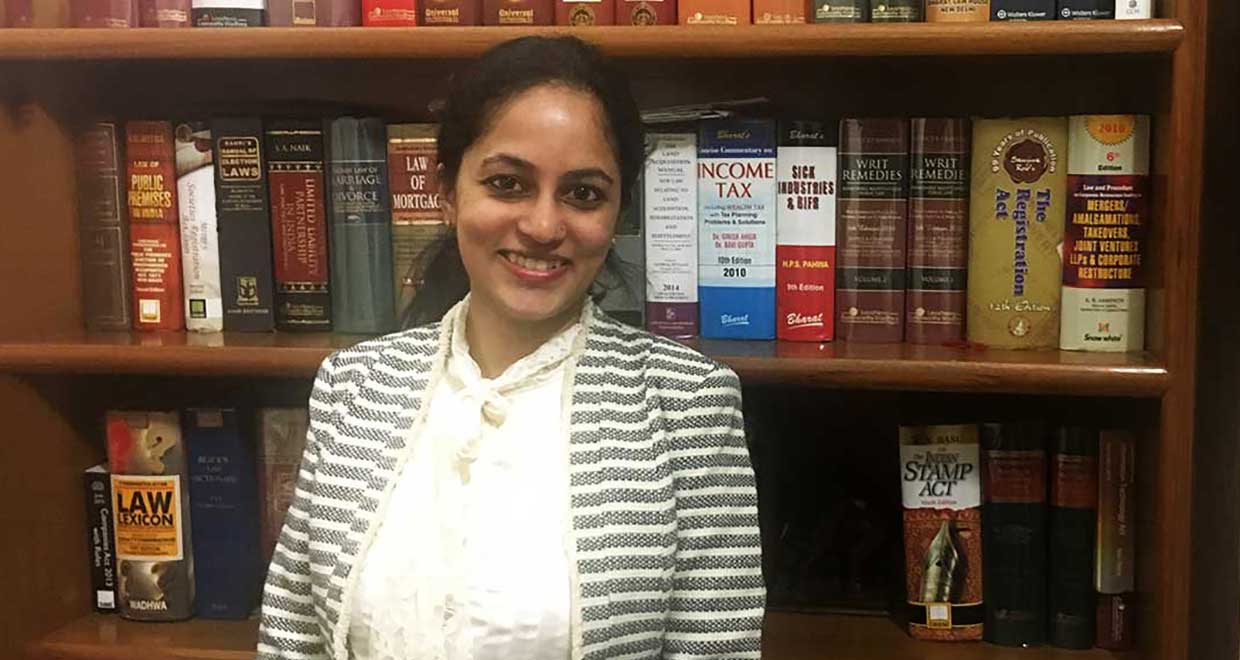
  • Nitika Mehra, Associate Manager, Jindal Stainless Steel, on litigation, corporate law and work-life balance

    Nitika Mehra, Associate Manager, Jindal Stainless Steel, on litigation, corporate law and work-life balance

    Nitika Mehra graduated from Symbiosis Law School, batch of 2010. Since then she has worked at D.K. Sharma and Co. and HCL Infosystems Ltd. She is currently Associate Manager at Jindal Stainless Steel. Her role involves reviewing , drafting and negotiating varied contracts such as Service Agreements, Authorized Service Provider Agreements, Procurement Agreements, Reseller and Distribution Agreements, Software License Agreements, End User License Agreement, Transport and logistic Agreements, Annual Maintenance Contract and Warranty Agreements, Teaming Agreements, Agreement CUM Orders, among others.

    In this interview we speak to her about:

    • Transitioning from litigation to corporate law
    • Striking a balance between work and home
    • Her plans for the future


    How would you like to introduce yourself to our readers?

    In search of knowledge it all began and found refuge in finding always something new, till the time came for me to realize that the true wisdom is only known to a few.”

    I am a very ordinary human being trying to appreciate the extraordinary in all of us, reaching out each day to live life like a dreamer, a lawyer, a girl, a woman and most importantly, a good human being.


    Tell us a little about your time in Symbiosis Law School.

    My time at Symbiosis was enthralling. It helped me shape my personality and gave me a broader perspective on life. At Symbiosis I met some great people who very quickly became my friends and are very much like family today.


    Are there any lawyers in your family?

    I come from a business family, I am a first generation lawyer.

    What sort of activities did you participate in while in law school? Were they mainly academic in nature?

    Symbiosis Law School is not a college where one would learn from the text books alone, but also through the co-curricular activities. I took part in debates, story writing competition, Model United Nations Assembly, essay writing competitions, throw ball competition etc. My batch mates and I started a legal aid cell called “Kilkari” to help underprivileged children and took part in a workshop in OSHE (Occupational Safety, health, environment science).


    What field of law are you most interested in?

    I am interested in Corporate Law. After approximately two years of litigation, I wanted to try corporate. To me corporate was a better match for my personality and what I wanted out of my career. Transactional work appealed to me as I was attracted to its complexity, and I felt that the skills and knowledge I would acquire were more tangible. I realised that corporate law is a vast field with its own niche, providing an individual flexibility to choose from the sub fields one wants to excel in.


    Talk to us about the transition from student to working professional.

    The transition from a student to working professional was very different and initially difficult as well. From being a graduate to being entrusted with responsibilities of cases such as civil as well as criminal was a challenge. However, it was not an impossible task. With the right amount of effort, hard work and a positive attitude one can achieve a lot. It did not take me much time to realise that the practical is very different from the theoretical taught to us and with the amount of reading one needs to do as a lawyer, they are always on their toes.

    As a student one starts off with limited knowledge and understanding however as you grow and years pass one develops the understanding of their field of practice. Since I have litigated in the formative years of my profession, I have a better understanding of the contracts as well. While negotiating or drafting, I am well aware of the actual practice and the repercussions of the clauses in case of litigation. Thus it makes it easier to foresee the consequences of a clause in a future dispute.

    What does a typical day in the office look like for you?

    A typical day would be a mix of reviewing and drafting contracts along with negotiations with respect to the contracts. Support to the cross functional teams in understanding the transaction from legal point of view as well as everyday advice/responses on the queries of the business. Apart from this my profile also involves apprising the external advocate on the cases, reviewing the plaints/submissions/ written statements and other legal documents drafted by the external counsels, actively involved in briefing the senior counsels, as well as court visits.


    If you weren’t in the legal field, what other profession do you think you would have taken up?

    If I were not a lawyer, I would be a life coach or a business woman. Coming from a business family, I was intrigued by the fact that law played the basis or an important part of almost all professions. Before starting any new venture or expanding the already existing one, one needs to check the legal modality of that venture. Upon my interaction with the existing lawyers at that time, I realised that in the coming years an effective legal department will prove to be the backbone of a company, as well as help in risk mitigation.


    Why did you switch from litigation to matters pertaining more to contracts and companies?

    I am a person who believes in hard work but I also believe in work-life balance. During my time in litigation I realised that it was difficult for me to balance my hobbies while litigating. Even though my professional life was booming, my personal life had taken a backseat and I was not able to devote much time to it. Hence I decided to choose an in-house counsel over litigating counsel. As an in-house counsel along with the reviewing, drafting and negotiating contracts I get to engage the services of an external counsel who litigates in the matters with respect to the company I am associated with. An in-house counsel is an interface between the company and an external counsel, which pretty much keeps you in touch with the litigation (only with respect to the company though).  One is also required to review the legal documents drafted by the external counsels, however, in some firms the legal documents are drafted by their in-house counsel itself.


    In your opinion, what are the skills and qualities that have helped you reach where you are?

    A combination of certain skill sets are required to excel as an in-house counsel such as the ability to see things from the business perspective, strategise and anticipate risks for the company, strong communication skills as one needs to connect to a variety of audiences, from external stakeholders to the heads of different departments or colleagues from other functions. Also, there is a need to communicate complex legal terms in layman terms, as well as explain legal concepts and limitations relevant to the tasks at hand.


    What are some goals that you’ve set for yourself in the professional sense?

    The professional goals that I have set in for myself are to expand my domain further by enhancing my knowledge on laws of other countries and take part in international negotiations.

    On the personal front I do a little charitable work such as educating people of their rights, donating blankets etc., however, I would like to provide a platform to the destitute to learn and display skill based knowledge and help them in attaining employment.

    Where do you see yourself in five years?

    In five years I see myself starting something of my own wherein I would be able to give back to the society and provide employment to people.


    Is there any message you would like to leave for our readers?

    Your career will be over before you know it. What do you want it to look like in twenty years? 30 years?  Do you want to be known as a person of integrity, a person who keeps his/her word? A person who follows through? Please ask these questions before making any decision, figure out your ultimate goal.


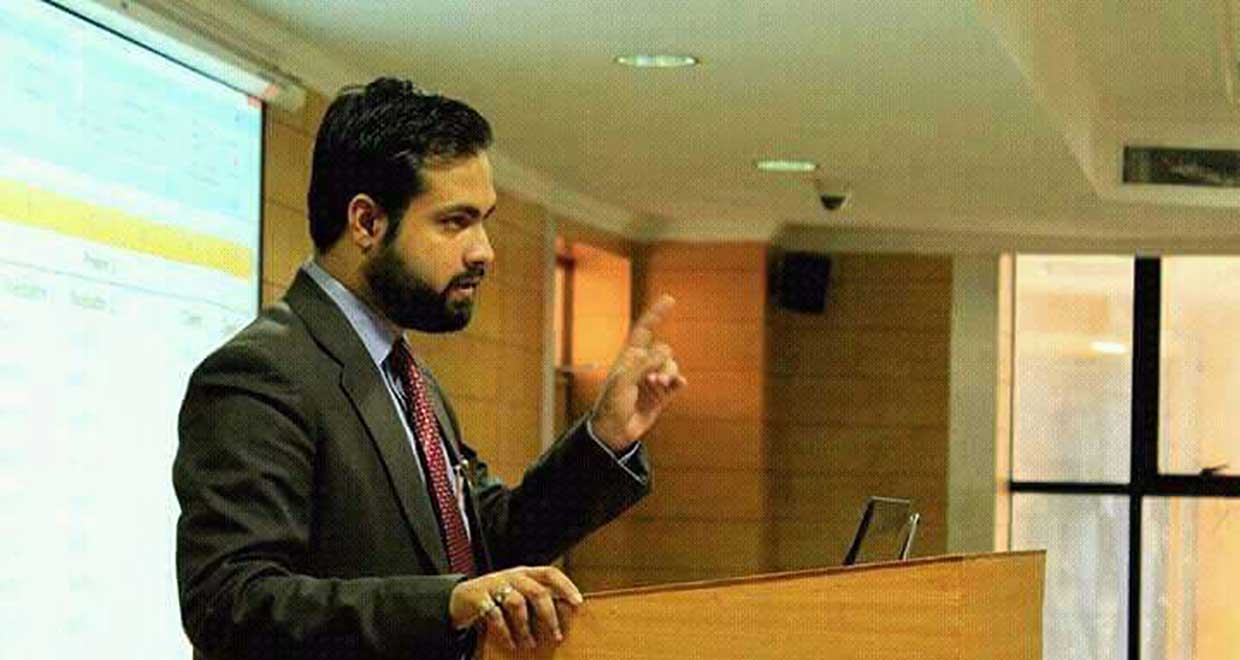
  • Anas Tanwir Siddiqui, Advocate, Supreme Court, on enabling access to justice, heading the Legal Aid Committee, and practising in the Supreme Court

    Anas Tanwir Siddiqui, Advocate, Supreme Court, on enabling access to justice, heading the Legal Aid Committee, and practising in the Supreme Court

    Anas Tanwir Siddiqui graduated in law from RMLNLU, Lucknow, batch of 2012. He has since then served as Convener to the Legal Aid Committee, working in areas of free legal aid, RTI, infocracy, child rights, consumer protection, juvenile justice, etc. He is currently advocate at the Supreme Court of India, with over four years of litigation experience. A first generation lawyer, Siddiqui believes that enabling access to the legal system lies at the core of his practice. He has also just begun independent practice.

    In this interview we speak to him about:

    • Deciding to pursue law despite family pressuring otherwise
    • His life, curriculum and extracurricular engagements in RMLNLU
    • His tremendous contribution to the Legal Aid Committee, and setting up a paralegal system of assistance in his university
    • His belief that at the core of litigation lies the intention to enable access to justice for all


    What would you like to say to our readers in the manner of an introduction of yourself?

    I am just a struggling lawyer who has faced and is still facing all the struggles that a young lawyer faces during his initial days.


    What inspired you to take up law? Did you have to deal with any resistance from family or friends while making that decision?

    Law was never really my first career choice. As any other teenager, I was pressurized into taking science at 10+2 level. So I also opted for PCB and as a natural progression I appeared for medical entrances, couple of which I miraculously cracked as well. However, I was never really interested in becoming a doctor. My family, especially my mother and my uncles, were really supportive, although my father had his apprehensions. The main idea behind opting for law as a career choice was that it gave me the freedom to read and know everything. A law student is never limited to reading law only. Law as a course satisfied my intellectual craving.


    Tell us about your life as a law student at RMNLU.

    Life in RMLNLU was more fun than work. I was never a studious student. However, law school gave me a platform which shaped my personality. When I entered law school there wasn’t much “law school culture”. As we were the second batch and the admissions were not through CLAT back then, the law school culture was absent. There wasn’t any mooting culture or any co-curricular activities. I had resolved from the very first day in RMLNLU that I will utilise every opportunity that this place provides. Much credit goes to La Martiniere Boys’ College, Lucknow, also for giving me the confidence to take initiatives. So with time things got streamlined and RMLNLU was a strong force among the law schools. We were fortunate to have some really good faculty like Prof. A.P. Singh, Prof. K.A. Pandey, Prof. Manwendra Tiwari, etc. The then Vice Chancellor Prof. Balraj Chauhan was also very supportive of the students. We started participating in mooting activity without much guidance. We learnt from our mistakes. In a nutshell, the life at RMLNLU gave me the confidence to lead and be vocal about my opinion.


    What are the causes you feel strongly about? How have you used you legal expertise in working towards them?

    So when I was forced by my father to leave Lucknow and practice in the Supreme Court, he asked me to be a means for the poor to access the highest court of justice. He told me that I should never say no to a brief just because the client cannot afford to pay fees. I myself having been involved with the free legal aid movement felt strongly about the same. So today most of the cases I fight are for those who generally don’t have the resources to access the justice system. I frequently represent the people declared as foreigners by Foreigners Tribunal in Assam. I also feel very strongly about the arbitrariness of government or its failure to control the fringe elements hell bent on destroying secularism in our country. Same is my view about the nepotism that is prevalent in the judiciary even though I myself belong to the same fraternity. So in this regard I have filed, strategized and appeared for causes pertaining to the same.


    Throughout your time at college you have enjoyed authoring essays and papers. How did you find an affinity for legal writing? How do those skills help you in your career today?

    The affinity for legal writing stems mainly from my interest in literature. I read a lot and a natural progression of reading a lot, is writing. Honestly, most of the essays and papers authored by me were more because of the pressure from a friend or for building up a strong resume. So the skills that I developed in law school now help me in drafting. Before becoming independent I have worked with three Advocates On record. The major part of the job profile while working as a junior to an AoR is drafting and this is where my prior experience of legal writing came in handy. Also, before writing any article or essay one needs to think a lot on the issue along with researching, these two skills are very important while drafting an SLP or Writ.


    You have participated and placed in several MUNs, moots and held several organizational positions during your time at law school. What did you learn from these activities?

    Mooting taught me to think like a lawyer and it took out the fear of public speaking or appearing before courts. In moots as well as in courts, you need to have spontaneity, an ability that developed due to my participation in moots and MUNs. I was lucky that I got the opportunity to appear before the Supreme Court in my initial days and I was not hesitant about arguing a matter anywhere. As far as holding organisational positions is concerned, I learnt leadership as well as being a team player from the same. The underlining factor of my participation in different committees was the idea of giving back to the institute. Any educational institution is known by its students and it was just a duty upon us to take RMLNLU forward and create a brand.


    What do you think the present status of legal aid is in India?

    (Anas has served as convener to the Legal Aid Committee for three years, working in areas of free legal aid, RTI, infocracy, child rights, consumer protection, juvenile justice, etc. )

    Last evening I had a chance to watch the video directed by Prakash Jha promoting legal aid in the country. NALSA is reinventing itself and is doing a great job. Having said that, it is very disturbing that most Indians even today don’t have access to justice. People are scared of going to courts or dealing with lawyers. This issue needs to be resolved and it can only be done by making people aware of their rights. My initiative was mostly inspired by the fact that as a kid I used to attend the legal aid clinics organised by various District Courts in Uttar Pradesh under the aegis of UPSLSA. My father was also a member secretary and their motto was “Nyaya chala Nirdhan se Milne”. I was greatly helped by Justice Sudhir Saxena who was then the Member Secretary of UPSLSA when we were trying to establish the Legal Aid Committee. As far as students’ contribution is concerned, I am really happy to announce that the Legal Aid Committee at RMLNLU has started a paralegal program and many students have joined the same. They sit at the assigned place right outside the university campus daily and provide legal aid to the needy. If the same model gets implemented in all law schools, it could be revolutionary.


    Could you share with us some of the highlights from your experiences as an intern during your legal education?

    I was lucky to intern in three major sectors like NGOs, corporate houses and litigation. The three sectors are very different from each other. While interning at Aman Biradri, I got a firsthand experience of the suffering of the street children. During my stint under Mr. Yashowardhan Swarup, I learnt about the intricacies of litigation, especially how to deal with a client.


    What motivated you to choose litigation over your other options?

    I am very old school. Litigation was my first choice. I firmly hold the belief that litigation is a service, and not a business. The idea that my skills can be utilised for those who have no access to justice was in itself a great motivation.


    As a litigating lawyer having worked on several cases, could you share with some of the judgments you have read that have shaped you as a lawyer.

    It may sound clichéd but the minority judgment of Justice H.R. Khanna in the ADM Jabalpur Case had a profound influence on me. Another Judgment that I find to be of great motivation is that of Brown vs. Board of Education, a judgment rendered by the U.S. Supreme Court ending racial segregation in educational institutions. Apart from judgments, two books that I feel every lawyer, especially young lawyers must read is Roses in December by the inimitable M.C. Chagla and Before Memory Fades by living legend Fali.S. Nariman.


    The first few years after graduation are considered to the most challenging . How are you coping with these challenges?

    It’s true that the first few years after graduation are most challenging especially if you’re in litigation and are living away from family. I remember travelling in DTC buses for two years and trying to cut expenses. Work is hard to come by, money even harder. Also, law school is a very protected environment whereas the world outside is harsh. Survival is a challenge. I have seen my friends and colleagues leaving litigation for good in their initial years. The only way to cope with these challenges is by constantly reminding oneself of the objective that one has in mind. One must also not let anyone dissuade you from your aim. When you enter litigation you earn much less and work harder than your friends working in a law firm or a corporate house. It becomes difficult to not give in to frustration and despair. One must remember that patience and perseverance is the key.


    You have argued before the High Court and Supreme Court.  How do you prepare yourself before an appearance?

    I read. I read my brief at least two to three times before standing at the bar. Also one must learn from what to say and even more importantly, what not to say in court. This is something that only comes with experience. Also one must always prepare case notes and do independent research beyond what is given in the brief. The art of advocacy is very much like acting. You need to get into the shoes of your client. You need to imagine all the possible queries from the bench. In the Supreme Court, you don’t get much time to put your point across so you must be very careful while choosing your opening lines.


    What has the experience been like working at the office of Adv. Ejaz Maqbool?

    Ejaz Sir was my first senior. He is known to be a hard taskmaster. He was very particular about grammar and I learnt whatever little drafting I know from him. He believes that the only way to work is by actually doing work, which is why he would often push us into difficult spots, just so we may learn in the process. I was lucky to have been a part of some very important cases like the Sohrabuddin Encounter case, Gujarat Lokayukta Case, etc. Ejaz Sir’s office is rife with opportunity.  Most importantly, I was lucky to have some really good senior colleagues who taught me a lot. I owe to them much more than I owe anyone in the profession.


    Tell us a bit about the nature of work you did at the office of Adv. Fuzail Ahmed. What does a typical work day look like for you?

    Fuzail Ayyubi’s office was like a home to me. I worked there for more than three years. Fuzail Sir’s office gave me the freedom and confidence to trust my work. Also the variety of work there was a huge factor in developing my legal acumen. I have never seen a lawyer as calm as Fuzail Ayyubi. In my three year long stint in his office I rarely saw him angry. A typical work day started with going to the Supreme Court to attend the matters and coming back to office and working on the matters to be prepared and drafted.


    Congratulations on starting your independent practice as of 2017! What prompted you to take that step?

    It was the motivation of Fuzail Ayyubi and support of Mr. Sanjay Hegde, Senior Advocate, that gave me the confidence to start my independent practice. Sanjay Sir has been really magnanimous to let me operate independently from his office under the British Chamber System. This is a very novel experiment that he is conducting and is a really good opportunity for young lawyers like me. I have been practicing exclusively in Supreme Court for a long time and now I intend to practice in other courts and tribunals. I will continue with my social justice litigation alongside commercial litigation and arbitrations.

    What would you like to say to our readers who are mostly students and young lawyers, as a parting message?

    To students I would like to say that the opportunities that you get in law schools shape your personality. Do everything that law school offers. Participate in moots, write research papers and get them published. You’ll never get such an opportunity again. To lawyers younger than me I’ll tell them that lack of means is no excuse. Anyone who works hard will eventually succeed.


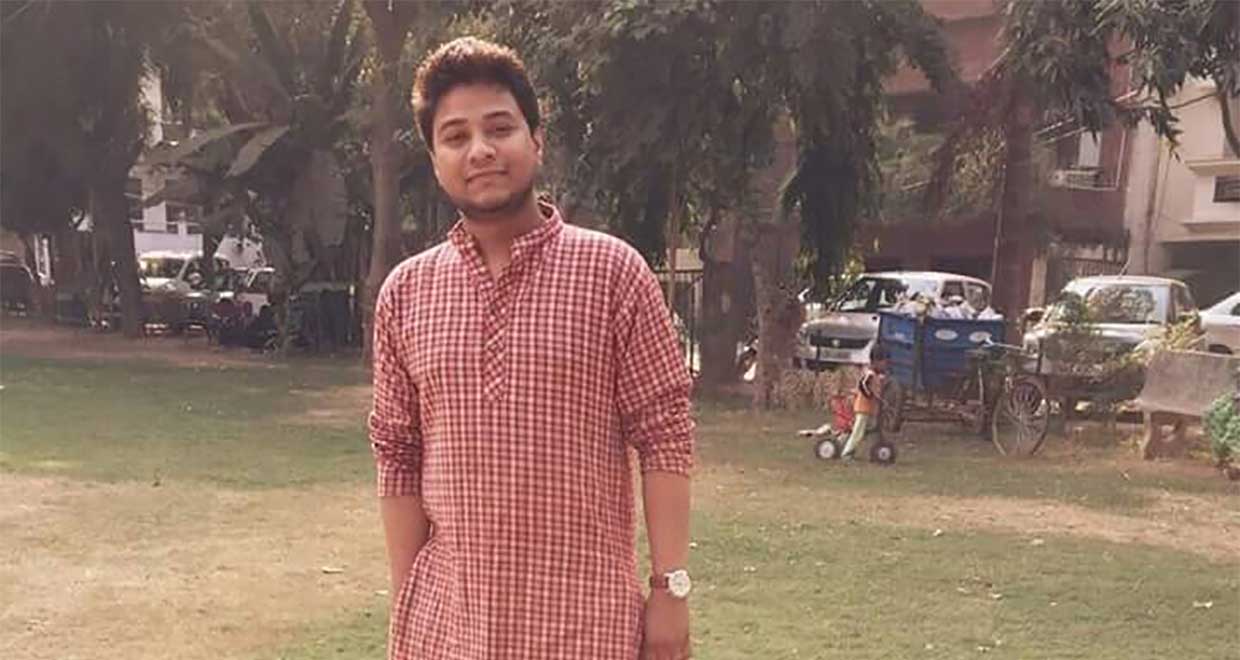
  • Kushal Kumar, Associate, Central Government Standing Council, on looking beyond NLUs and the importance of debating

    Kushal Kumar, Associate, Central Government Standing Council, on looking beyond NLUs and the importance of debating

    Kushal Kumar is a graduate in law from Law College, Dehradun, batch of 2013. He subsequently went on to pursue a postgraduate diploma in International Trade and Business Law from The Indian Society of International Law, Delhi. Kushal has always been an avid debater and public speaker, representing his alma mater at numerous national level events. He currently serves as associate to the Central Government Standing Counsel.


    In this interview we speak to him about:

    • His alma mater and breaking the NLU myth
    • His extracurricular accomplishments and how they have contributed to his skills as a lawyer
    • The importance of internships during law school


    How would you like to introduce yourself to our readers?

    I would like to say that I am a passionate litigation lawyer. I have been enthusiastic and passionate for arguments and addressing the court. Therefore, I have argued in almost every jurisdiction. I have wanted to be a spokesperson for the people and debate from a very early age. My insatiable curiosity makes me knowledgeable in fields besides law as well. I feel strongly for the disprivileged, which is why I have fought numerous cases pro bono, and will continue to do so. I feel. As a national debater I have been fortunate enough to articulate my thoughts in different parts of the country. I want to thank my parents and especially my elder brother who has always supported me for whatever I have done.


    What has your experience with legal education been and how has a degree from a relatively smaller law school, if at all, affected your career prospects?

    I have always been a passionate public speaker who is well read about current affairs. I always wanted to be a lawyer as I wanted to be a voice for the voiceless. Legal education is the best education I feel in this world. In my college, I was one of the more meritorious students and very close to my teachers and my fellow students. It was a central university so getting good grades was very tough. During my law education I got to know about my rights, values and responsibilities towards society. I used to have stimulating political discussions with my friends and we used to study together before exams which helped me to learn about team management. My favourite subject was Political Science and I used to help my peers in the same as well. I would like to use this platform to extend my heartfelt gratitude to some of my teachers who have been a great source of inspiration. Mr. Ashutosh Kumar, Dr. Poonam Rawat and Dr. Chandra Bhushan Nagar have had the most profound influence on me. I am honoured to have known them and be taught by them.

    My college had a strength of approximately 2000 students. The point is, irrespective of the name of the law school, what matters most is your personal effort and hard work. I would like to say that I got ample opportunities to showcase my skills. What matters more than the stature of the college is the environment it breeds. What matters is what you want to be and how much effort you are willing to put in to achieve that. I have represented my college at several national level events such as debates, moots, etc. and even emerged victorious as these competitive events.

    When you are arguing in court before a judge what counts is not how reputable your college was, but how adept you are as a lawyer.


    What differences, if any, would you say there are between lawyers from well reputed NLUs and the rest?

    It depends largely on your area of interest. The only difference it makes, to my knowledge, is the that the exposure an NLU offers to its students far outreaches the exposure a student at a lesser known college gets. But as a litigation lawyer, your alma mater plays only second fiddle to your competence as a lawyer. When you are in court, it is your mastery over the law and your command over the language that eclipses your academic credentials. All great lawyers of India are not from NLUs.


    What internship experiences do you believe are crucial? From personal experience, what can you tell us about the exposure an internship during college gives a student?

    During one’s time as an intern, they understand the decorum of courts and the interaction between judges and advocates. They are a learning curve for aspiring and young lawyers.

    When a law student is involved in any judicial internship, the intern should make the most of it as exposure to court room sessions teach young students a lot. Being a part of client-advocate meetings are also a great experience. I would like to say that I was awarded with the ‘Best Intern award’ during my internship with Biz and Legis, Kerala.

    As a student with average grades, how would you say academic excellence or the lack thereof in an institution translates to the professional workspace?

    I feel academic excellence is just a part of your CV. Being a student of a central university, one just needed to pass the examinations to earn the degree. What matters is being diligent, being kind and sensitive, respecting your peers, seniors and your subordinates. It is these qualities that make you a good person and a good lawyer. Good grades don’t make you an efficient worker or a good team player, it is your personality which does.


    As an avid debater, what would you say your greatest learning is from the activity? How has it impacted your career trajectory if at all?

    I tend to get quite competitive when it comes to debates, which is why my friends and families keep telling me that I should join politics, as I never want to lose.  When I was younger I used to deliver the inaugurating speech at Ram Krishna Mission Ashram on their National Youth Day. I have been awarded as ‘Best Sanskrit Speaker’ for one of my speeches. I recall that my childhood friend, Pratika Shankar who is also a Lawyer, and I, used to win all the prizes in debates at various platforms. I am honoured to have met former President of India Late Shri Dr. A.P.J Abdul Kalam during my school days and I got an opportunity to speak about my school and state in front of him.

    During my college days, I was fortunate enough to represent my college at national debate platforms, which I think were close to sixteen in totality. I am very grateful to my college that they gave me a chance to adjudicate the first National Parliamentary Debate in my college. I helped my fellow students in debates and used to explain to them the technique of delivery. These opportunities and honours have moulded me into the lawyer I am today, confident and diligent.

    I correct people whenever they get their facts wrong. Many young lawyers hesitate to speak up. To this I would like to say that when you are on stage or at the podium, one must speak from the heart and say everything that they have to say. Keep trying and you shall be able to accomplish this. Practice makes perfect.


    Between your work experience at United Lex, S.L. Gupta & Partners, and Monika Arora & Associates, what was your greatest take away from each of the experiences?

    Every work place has its own pros and cons. But ultimately what matters is what you earned and implemented in your life. Unitedlex was my first job. It was an LPO, but since I was among the few fortunate who got placed from my college, I considered it a blessing. I worked there for a few months but then realised that LPO was not my cup of tea. Therefore, I decided to move and went to another law firm where litigation was practised more seriously.


    As an associate to standing counsel for NCTE, UOI, etc. at various levels of  the judiciary, what have been the defining moments of your career so far?

    To be honest, there have been several instances which played a key role in shaping me as a lawyer.  But I think working for the Union of India is a key factor for me. We have lot of cases marked everyday and there are a lot of appearances before different courts daily. I have been a part of many landmark judgments, the latest being the matter of Sushil Kumar, the wrestler who was trying hard to get through the Rio Olympics but coudn’t. Apart from that I have been actively working for NCTE, MCDs and various other panels. It is a simple formula; the more you appear in courts the greater experience and exposure you get. Furthermore, I would like to say to all those who want to pursue litigation as a career, first go to district courts as you learn the basics of advocacy only at the grassroots level.


    As a lawyer who is constantly exposed to the bare functionings of legal systems across India, what would you like to share about the same with aspiring law students and those looking to pursue a career in the same?

    The exposure to the legal functioning of courts across India is more or less uniform.  The only difference is with the jurisdiction of the courts.  As a lawyer, one should have great respect for the Bench and should maintain the decorum of the court. This is the most important thing which is to be learned by lawyers and law aspirants. One should know his facts accurately but state them without a shred of arrogance. That would be my only suggestion to young lawyers.


    Finally, do you have any other advice for our readers, most of whom are college students?

    I would like to say to college students that one should not forget to enjoy college life in the race to secure good grades. The day you get a degree in law and you became a lawyer, that is when the real struggle begins. You face challenging situations and undergo difficult times. But it is your passion for law that makes you exceptional. A law student has to understand four steps of advocacy in particular, i.e. a lawyer must know the facts of the case, make a good draft on the basis of those facts, make a thorough research of judgments, and then deliver his argument in court. I would like to add that as it happens with me, when you appear in court it doesn’t matter who is on the other side. It is important to not be intimidated by seniors and renowned advocates. All that matters is communicating your end of the argument to the judge through foolproof research. In conclusion I would like to say that fortune only favours the brave.


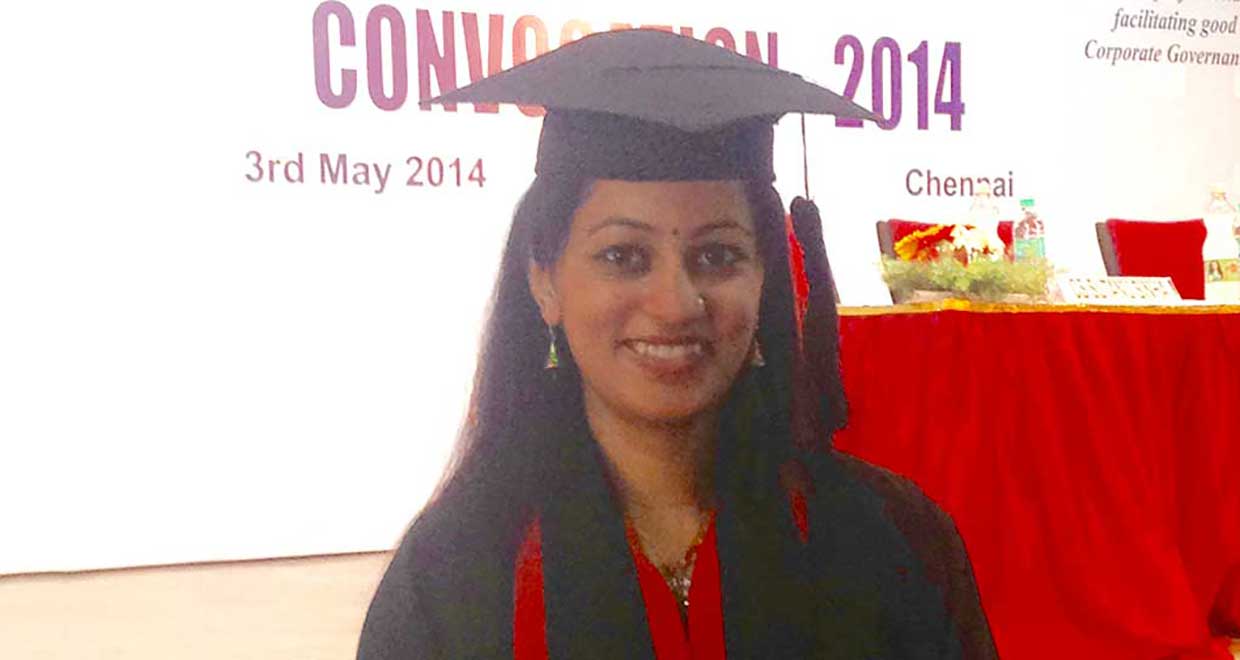
  • Bhoomika Choudhury, Founding Partner, Svadhā Legal, on her time in Symbiosis, the future for start-ups and the importance of pro bono work

    Bhoomika Choudhury, Founding Partner, Svadhā Legal, on her time in Symbiosis, the future for start-ups and the importance of pro bono work

    Bhoomika Choudhury is a graduate in law from Symbiosis International University, batch of 2012. Thereafter, she has gone on to practise with leading firms like Amarchand & Mangaldas & Suresh A. Shroff & Co., Mumbai (now Cyril Amarchand Mangaldas) and boutique tax firm Vaish Associates Advocates, New Delhi. She has also worked as a junior in the Chambers of Dr. Rajeev Dhavan, one of the leading senior counsels in the Supreme Court of India. She has experience handling administrative, civil, criminal, service, bail, intellectual property, tax and water disputes matters. She also has experience in briefing and assisting senior counsels. In 2016, she founded her own legal firm, Svadhā Legal, which offers representation in corporate, commercial, tax, civil and criminal litigation and arbitration matters.

    In this interview, we speak to her about:

    • On being a Chartered Accountant alongside with being a lawyer
    • On the future of “Make in India”, “Start-up in India” and “Skill India”
    • The importance of holistic development as a person in order to be a sentient lawyer
    • On her diverse experience and eventually going independent


    How would you introduce yourself, given that most of our readers are young law students and young lawyers?

    I would introduce myself as a sincere lawyer who has become what she is today solely through her single-minded devotion to be a sensitive and responsible person. If anything other than my work defines my persona, it is the fact that I value and respect relationships, both at the personal and professional level, and feel concerned about developments in our society. Like my name suggests, I have different roles to play during my lifetime and my endeavour will always be to do them to the best of my abilities. I am a daughter, sister, friend and a girlfriend along with being a dutiful lawyer.

    What were the factors which drove you to join law school? Did you ever consider exploring any other fields?

    My father being a college teacher in English, I grew up surrounded by a whole lot of literary classics, and endless discussions on literary topics, and together they had a powerful influence on me. Reading literary classics thrilled me to no end and I realized my career options must be narrowed down to a vocation that must include a lifelong engagement with the humanities. The second most important consideration behind my choosing a law career was my concern for social issues and my pursuit for a vocation that provided fodder to my curious mind. I was greatly influenced by Einstein when I was young and this quote caught on to me greatly:

    “Only a life lived for others is a life worthwhile. I have no special gift. I am only passionately curious. I want to know God’s thoughts… all the rest are details. Joy in looking and comprehending is nature’s most beautiful gift. It’s not that I’m so smart, it’s just that I stay with problems longer.”

    A career in Law seemed to be the ideal choice for me as it combines my literary and social interests along with vocational needs.


    You graduated in law from Symbiosis Law School, Pune. How did the law college prepare you for practice in law?

    To say that Symbiosis Law School is a great place of learning will be an understatement. It takes meticulous preparation to understand the law both in theory and in practice.  This institution gives its students the right portion of both. I was particularly lucky to learn a lot more by way of extracurricular activities as I was selected as the President of Human Rights Cell. As part of the cell, some of the projects we worked on gave us ground level exposure to areas like rights of commercial sex workers in the red light district of Pune, disability rights, an after school educational program for underprivileged children, etc. But we had to go through our own share of trials. My father had accompanied me to Pune for the admissions and I remember him looking a little worried as he came to know the city’s liberal and indulgent way of life. But he had very lovingly only once asked me to shun all the negative influences around the college and the city. I promised him as much and I am happy that I never betrayed his trust.

    How important are internships for a law student? Tell us about your internship experiences while in college.

    It is an important part of a student’s academic life in the sense that it gives real life exposure to the kind of work one will be called upon to shoulder in future. Considering that there are varied kinds of jobs that are available to a law student upon graduation, internships give an opportunity to get a taste of everything and decide on one or two areas on which he/she could focus. It also gives a chance to leave your mark in an office where you would later like to bag a pre-placement offer. Even though your first few internships may appear highly challenging as you are yet to fully learn theoretical aspects of the law, you will gather a great deal of knowledge after working with these offices.

    I tried to keep my basket of internships diverse by picking from NGOs, independent litigating offices, in-house legal team of corporate houses and law firms. I distinctly remember, my social issues have been very dear to me from my early school/ college days, and this interest took me to an NGO called ‘Solidarity for Developing Communities’ and a State Human Rights Commission during the first two internships in my 1st  year of Law School. My experience in these two offices further heightened my interest in human rights issues, so much so that it has become an integral part of me today. By this time I had fully realized the benefits of internships. So when I went for internship assignments to the Essar Group, Mulla & Mulla, Craigie Blunt and Caroe, and the senior advocate of Jharkhand High Court, Mr. Anil Kumar, I was determined to make the most of it. The nature of the legal issues I encountered during my internship was diverse, as were their benefits. My internship stints ended with Amarchand Mangaldas and Phoenix Legal.


    Do you think that Moot Courts are an essential component for the overall development of a law student? Tell us about your experience.

    It is an elaborate rehearsal a law student undertakes, as it accurately reflects the rest of their lives as lawyers and litigators. The very fact that these involve facing rival teams and competitors, both at the national and international level, serves as motivation for every student to put their best foot forward. Ultimately each of these extracurricular activities i.e. participating in moot court competitions, writing research papers, internships, etc. go a long way in shaping you as a lawyer, pushing your name a few notches up during placements and enhancing your chances in getting admission in top law schools.

    One must remember that applications received by law offices, corporate houses or top law schools are filled with students who have managed decent grades in their respective universities. Participation in extracurricular activities makes all the difference in getting your dream job!

    These competitions gave me the opportunity to work with my fellow participants, prepare our case to the best of our abilities, and compete with some of the brightest minds from the legal fraternity. The crowning glory was getting to attend the William C. Vis International Commercial Arbitration Moot Court competition in Vienna in my 4th year of law school. The whole experience was a turning point in my life as a student of law. Getting the opportunity to participate in such a prestigious affair was a very uplifting moment.

    Do you feel that academic excellence is essential to be successful in life?

    The question is too general in nature to beg a straightforward, universal answer. If we are to understand the meaning of ‘success’ in a knowledge economy, as identified with the successes of only the reasonably, moderately educated people, not to speak of the highly educated, talented people with high academic credentials, the importance of education or academic excellence can never be underestimated. The contemporary economic and social conditions acknowledge and respect academically bright people. However, we also know of innumerable successful people who have failed miserably in their initial years of work. The list is endless with celebrated names like Thomas Edison, Albert Einstein, Van Gogh, J.K. Rowling, Oprah Winfrey and the like. However one thing common to all of them is that they were persistent. It is not a shortcoming on their part, it is the world that takes time to identify geniuses.


    You have taken ACCA examinations at the Association of Chartered Certified Accountants, United Kingdom. Tell us about your experience.

    Midway through graduation, it struck me that a course in accounting will be very useful to me in future, especially given my interest in tax law. It was this simple reason that drove me to take up this ACCA course, and I must say that I enjoyed studying and appearing in the examinations, though it was sometimes tough on me to take out time from my regular studies. What helped me greatly is the flexibility that ACCA examinations allow its students. Moreover, the ACCA follows the International Financial Reporting Standards and is globally recognized too.


    It is generally seen that law students and law graduates tend to shy away from taking up pro bono cases. Is this advisable?

    It is advisable that law students and law graduates of our country do not shy away from taking up pro bono cases. In a country such as ours where the majority are poor and cannot afford legal help, it is inhuman on the part of the legal fraternity not to devote some of their time and energy to come to their rescue. This assumes greater importance for law students and law graduates as they themselves will be richer in their learning experience as well as in their moral responsibility towards society. In fact, it ought to be considered a great opportunity for young lawyers.


    You have worked in the Chamber of Hon’ble Mr. Justice Rajiv Shakdher as a Law Researcher- cum- Clerk. Can you tell us about the experience?

    Working with Hon’ble Mr. Justice Rajiv Shakdher was an opportunity I still thank my stars for. I can never thank him enough for the encouragement and the guidance he always gave me whenever I needed. HMJ Shakdher is an extremely well-read, honest and hard working judge who worked very meticulously on each case, and he expected the same qualities from his law interns, assistants, researchers, and clerks. I gained much confidence, learnt such a great deal during the one year time I worked with him, that it helped me in many ways to build my image as a trustworthy lawyer. Whatever I am today is because of his influence on my career. I must say that at the very mention of his name, my head bows down in obeisance and a prayer goes out from my lips for his long, happy life.


    You had previously worked with Vaish Associates and Cyril Amarchand Mangaldas. Tell us about your experience at these firms.

    My time at both these firms was a very productive experience. At this point of my career I wanted to work with taxation related firms to gain more knowledge on this subject or area. The realization was dawning on me that I must at least learn a good deal more than the fundamentals of some areas of legal practice, and I made the best of my time there by learning about taxation, arbitration, corporate tax, and taxation related litigation. Fortunately both my seniors and colleagues at these two firms were very helpful and supportive in my handling of assignments, and the experience has enriched my knowledge of these areas vastly. I owe my special gratitude to Ms. Kavita Jha of Vaish Associates who was extremely helpful and supportive of my work, and always went the extra mile to assign me other litigation cases too. Ms. Jha being one of the division heads at the Supreme Court and High Court, I learnt a great deal during my time at Vaish Associates. My relationship with her and other colleagues will always be very special. The year I worked with Cyril Amarchand Mangaldas too was extremely enriching and fulfilling as I happened to work on some of the very high-profile, well-known cases.


    At Vaish Associates and  Cyril Amarchand Mangaldas, you were concentrating mainly on tax litigation and arbitration, but later you decided to go for litigation practice. What motivated this shift?

    The reason I changed my focus away from taxation-related areas for sometime is the necessity of learning other areas of litigation. With an expertise in one technical area of law, I was veering towards the view that I must learn a great deal on other aspects of legal practice, before I am able to enter into litigation practice on my own. For any lawyer with some aspirations in life, I suppose this is a very modest decision one has to take at the earliest possible time.


    You have assisted eminent lawyer, Senior Advocate Dr. Rajeev Dhavan. Tell us about your experience.

    I consider it my good fortune that Dr. Rajeev Dhavan accepted me as a junior to assist him in his office. I knew it would be a daunting task to meet his high standards, but I was looking forward to it nonetheless. He is a legal luminary and a legend of our times, and his scholarly pursuits, the huge number of books and articles he has written, all of this weighed heavily in my mind as I immediately sat down to work for him. The knowledge and experience I gathered at Dr. Dhavan’s office was immense. I knew I was working for one of the finest legal minds of our time. It was difficult to hold your own and not be intimidated. However the unimaginably rich experience I gathered with Dr. Dhavan has vastly improved my level of confidence, the honesty and integrity of the manner in which I ought to work in future, and more importantly, the realization that I have a long way to go in my further higher studies, in order to pay my little tribute to my godfather. His encyclopaedic knowledge, and his unmatched wit and sense of humour will continue to inspire me throughout my life. It is not for nothing that his academic stature, his unmatched courage, and the unconventional, radical stand he often took in his appearances in the Supreme Court has become made him a legend of our time.

    Earlier this year, you founded Svadhā Legal. What were the challenges you faced in setting up the firm? Could you give us a brief description of the firm and the activities  it performs?

    Svadhā Legal is a dream fulfilled. Legal matters as varied as human rights, taxation, arbitration, corporate law, civil cases, etc. have all been of interest to me, and I thought setting up a law firm will be the best way to handle the wide variety of cases that I expected to come my way. A law firm run as a professional entity will be a good way of attracting prospective clients as well as engaging junior, younger colleagues for those cases.

    Svadhā Legal will also be a great intermediary for pro bono cases that are dear to me, in the sense that considering the large number of cases that are awaiting justice on pro bono basis, the firm will be able to engage or delegate some of the cases to younger professionals looking for such avenues. These were some of the reasons that prompted me to set up Svadhā Legal, and I am happy that quite a number of my friends, colleagues, and juniors have joined me as associates in the firm.

    There were challenges in setting up this firm, considering the fact that I am a first generation lawyer, but I was determined to overcome any such disadvantage coming my way. It is my firm conviction that serious pursuit of a dream will admit no hindrance on the way, and this conviction gives me enough patience and tolerance to pursue my goal. Another challenge was facing rampant sexism in the professional sphere. But here too, I am determined to prove that gender can never be a disadvantage for anyone in any respect, though one will be forced to walk the extra mile to prove that.

    It is a heartening feature of this enterprise that my considerable network of friends and lawyers across the country are helping and encouraging me in my endeavour.


    As a partner at Svadhā Legal, what is an average day at work like? Our readers would love to hear about the day-to-day responsibilities which need to be handled by someone in your position.

    My average work life normally starts early in the morning when I sit down to work at home for at least 4-5 hours before I head to the Courts for my appearances or hearings, and other related work. I find the early morning hours to be the best time of the day for work. Then after a short lunch break it’s time for me to interact with clients, discuss cases, and then devote some time for business development and public relation exercises. Normally I always make a mental plan of work for the day, and it makes it easier for me to complete all my work in time. And then it’s time to head home and may be after a brief rest, it’s back to work and other personal studies.


    A number of campaigns such as “Make in India”, “Start-up India” and “Skill India” have been launched by the Govt. of India. Your views on these campaigns?

    The aim behind the “Make in India”, “Start-up India”, “Skill India”, and “Digital India” schemes is to leapfrog this country into that of an advanced and economically sound country in the shortest possible time.

    The “Make in India” initiative was developed to establish India as an efficient manufacturing unit and lure global markets to consider the subcontinent as a viable investment.  The government promises all kinds of support to the new investors, including the promise of quick clearances and approvals through a channel called Single Window clearance in order to avoid delays and red-tapes. The initiative has already started bearing results in the form of many international automobile, aerospace, software, military hardware, and other manufacturing majors considering setting up manufacturing plants in the country. If the campaign is to achieve its full potential and desired results, what the government must do is to not slow down the momentum and see to it that it is followed in a rigorous manner.

    A similar but a very innovative campaign has been launched by the central government in the form of “Start-up India” in order to help unconventional business plans take flight. There are innumerable success stories of new start-ups having generated remarkable revenue levels owing to their out-of-the-box strategies. There is little doubt that our economy in future is going to be dominated by more and more of these start-up enterprises, most of them in the service sector, and contributing hugely to the economy.

    The central government’s other initiative called “Skill India” too is another campaign that has been launched in order to impart vocational training to the unskilled workforce of our country. Uneducated, semi-educated, and under-employed labourers can learn skills of their choice to aspire for better employment opportunities. The success of the first two campaigns will, to a large extent, depend upon the success of this campaign. It should be implemented in a very urgent basis, without any let-up or loss of momentum.

    These specially, carefully selected campaigns have been launched to make this country a global hub of manufacturing, a great place for young, talented people with innovative ideas to realize their dreams of setting up new enterprises or start-ups and create the best possible infrastructure for the development of the required skill for our millions of young students who will be capable of handling the needs and demands of the new age technological, industrial enterprises. Since we are living in these times, we must make optimum use of these opportunities and participate fully to make our country the most powerful nation on earth.


    Tell us about your experience of working with start ups.

    It all started because of my large network of friends, many of them happening to be young engineering graduates, and quite a few of them deciding to quit their jobs and starting their own start-ups. They are a very talented lot, with new and innovative ideas of developing new technological tools and models for a wide spectrum of use by industries, business enterprises and a host of other organizations. My association with some of these Start-ups began because of their need for legal assistance in preparing regulatory formalities and agreements. It was a great learning experience for me and I was in a way encouraged a great deal by their dreams, motivations, and infectious energy. What’s more, my modest accounting background proved to be of great help in my work.


    Name a few of your hobbies, and how have they proved to be an advantage to you?

    The things that have drawn my continuous interest are literature, painting, gardening, cooking and sports. Some of these interests have grown with me over the years since my childhood, and it would be wrong to say that I am not seriously pursuing or devoting time on a regular basis to all of these areas of my interest. My love of nature has in a way taken the shape of gardening, and I love planting, watering, and taking care of my little collection of indoor plants at my home. I am an inveterate traveller, and I love going places, both popular tourist haunts and less frequented, quaint spots. I love meeting new people on the way and getting to know them.

    These are the areas of my interest and together they constitute my life. I am hopeful that these interests will go a long way in my realization of myself in the future. The journey of self-discovery is still on. A few of my hobbies or interests such as reading literature, humanities studies, and social issues may have proved beneficial to my professional life. But in a broader sense, all the other hobbies have equally contributed to my evolution as a decent human being. In my view I should be a decent human being first, and a good lawyer after that. The two complement each other, and you cannot be the latter without being the former.


    What is your advice for fresh graduates who wish to enter law firms as associates? How should they prepare themselves to cope with the challenges they will face?

    Working for someone, be it an individual or an organization, one has to come to terms with the fact that times are difficult. Considering the nature of the profession one has to look at all the inconveniences as normal and as part of the learning process, and with patience and dedication. Law firms expect from law associates a lot of hard work and the willingness to put in extra hours of work whenever needed. But it is during this time that one learns the most.

    What would be your parting message for our readers?

    Life is too precious a gift to be wasted. We should realize that it is not only what we do, but how we do it that also matters a lot. Ultimately, what matters is not how much money or wealth we have earned, but how decent a life we have lived, how much use we have been to others. There will be hundreds of voices that will discourage you, but just listen to that one voice within; it always knows what is best for you. Dream as much as you wish and realize them all, but remember that a life lived for others is far more fulfilling.


     

  • Shivendra Singh, Senior Associate, Dutt Menon Dunmorrsett, on M&A, corporate law and the potential of start-ups in the legal industry

    Shivendra Singh, Senior Associate, Dutt Menon Dunmorrsett, on M&A, corporate law and the potential of start-ups in the legal industry

    Shivendra Singh is is a graduate from NLIU, Bhopal, batch of 2008. Shivendra has extensive experience in handling Mergers & Acquisitions, Joint Ventures, infrastructure projects and Private Equity deals. He has also been part of several real estate transactions, due diligences, including due diligence on portfolio of assets of banking companies, financing arrangements with banks, and investment in multi-brand retail trading sector. During his professional career, Shivendra has practiced a wide range of laws, such as law of property, companies law, laws pertaining to foreign exchange in India, securities regulations, Sick Industrial Companies Act, trust laws, laws governing education sector, and employment and labour laws. He has regularly contributed several articles to leading law journals and magazines.

    In this interview we speak to him about:

    • His time at NLIU, the curriculum and his extracurricular interests.
    • His decision to move from an established firm like AMSS to a startup, Sarthak Advocate & Solicitors.
    • His experience practising corporate law

    How would you introduce yourself to our readers in one sentence?

    A professional who likes to keep it simple and deliver high quality.


    What attracted you to Law? Is anyone in your family from the legal fraternity?

    During my 12th standard days I stumbled upon a book shelf that belonged to my great grandfather in our ancestral home in Eastern UP. It had a few old law journals. The old collection of books had remained unused as there were no lawyers to come from our family for the following two generations. As a humanities student, I was very excited to discover such an extensive book collection. That was the first time that the thought of being a lawyer crossed my mind.

    Few months later, I came to know about a distant cousin who was in NLSIU, Bangalore and just got placed in Amarchand Mangaldas, Delhi. I can say this event led me and my family to seriously consider law as a viable career option and I ended up applying for few universities.


    Tell us about life at National Law Institute, Bhopal. What was the academic atmosphere like?

    NLIU, Bhopal is a very vibrant campus, where we had space for students who excel not only in academics but also in other extracurricular activities, like moot court competitions, model United Nations competitions and have publications to their name. We even had students who loved to read beyond the prescribed curriculum; they read the likes of Karl Marx, Kafka and other noted philosophers.  .

    I think our university gave everyone a chance to explore themselves in their first three years and then gun after their goal in their last two years. This is why our alumni have made their mark not only in the field of law, but also as social activists, diplomats, bureaucrats and entrepreneurs.


    You have taken part in three moot court competitions, performing well each time. How important is participation in moots?

    I personally consider that moot court competitions teach one how to apply law to a practical scenario. After all, this is what a lawyer does for rest of his life. Participation in such competitions enhanced my research skills, drafting skills, presentation and most importantly, the art of articulation.

    One should definitely experiment with different subjects in moot courts during college. It takes you out of your comfort zone. Then you don’t hesitate venturing into any kind of law because you believe in your core skills as a lawyer. I participated in various moot courts dealing with issues relating to public international law, minority educational rights, cyber law and space law.


    What subjects interested you the most while in law school? Which kinds of internships did you complete while at law college?

    As I mentioned above, I didn’t have any favourite subject consciously but you can say I had an inclination towards public international law owing to my interest in contemporary European history and international relations as an arts student.


    You joined Amarchand & Mangaldas & Suresh A. Shroff & Co., Delhi, soon after graduating in 2008. How did you procure employment there? What was your experience there like?

    I was selected for a four week long internship through the university placement programme. My internship was extended for two more weeks at my request. Few months later, a few other people who had interned there, and I, got a call for an interview. I was selected at that interview.

    Working at AMSS was a wonderful experience. You suddenly find yourself making a small contribution to a headline deal. It was my first job so it will always remain special. An organization that turned a law student into a beginner lawyer, teaching him the nuances of professional life.


    Soon after, you left AMSS to join Sarthak Advocate & Solicitors. What made you shift, especially since AMSS is a leading corporate law firm?

    That was the time of start-ups in law firms. You had success stories coming from every corner. It was an exciting move, where we hunted for our own office and own furniture. It was a fulfilling experience and a risk which a young and carefree lawyer took at that time.


    During the four years you worked there, you moved into the Senior Associate position, and you have continued to hold the position in your present job at Dutt Menon Dunmorrsett. What goes into becoming a Senior Advocate Associate?

    Your responsibility increases manifold when you move up to the position of a senior associate. You are in the driver’s seat of a transaction and the partner would rely on you completely. I have always tried to take as many legal calls as I could with my experience. Number of hours don’t necessarily increase but the timing of those hours does change. You are working or taking calls anytime and anyplace like on the road, in the gym, in the restaurant etc.


    What are your practice areas at Dutt Menon Dunmorrsett? Which kinds of transactions do you like dealing with the most?

    I have always been a general corporate and M&A lawyer. At DMD Advocates, we have a great mix of corporate transactional practice and general corporate advisory. In the last few years, India has seen so many start-ups, a few succeeded and a few failed. At DMD, I got a chance to work with these budding entrepreneurs, almost like a legal incubator, till they reach the angel and institutional rounds. It’s very satisfying to see their journey from a mere business plan on paper to a stage of operational expansion.

    Simultaneously, away from the M&A arena, our other clients who seek day to day advisory on a whole range of laws, such as the Companies Act, FEMA, Aviation Laws and SEBI laws keep us close to the challenges faced by a corporation in its day to day life.


    What are the building blocks for a great practice in M&A? Do you have any advice for young lawyers aspiring to make a mark in this area?

    As is true for any other practice area, providing legal solutions is at the core of M&A practice. Clients appreciate a straight and unqualified view. As an M&A lawyer, you have to completely give yourself to the transaction which goes on for months. You are the anchor for the documentation process and you will be the go-to guy for your client throughout the process. You will have to chase the client for sorting out the commercials between the two parties and keep things moving.

    For young lawyers, my advice is to understand your client’s business and commercials as much as possible. We are business lawyers. We are involved with clients in their day to day life and not only when their dispute reaches court. Therefore, understanding their business challenges is key to solving their problem.


    According to you, which are the arenas of law showing most promise for the near future, and which students should consider taking up law as a career choice?

    India is growing every day and lawyers have a big role to play in this growth story. Corporate law, IPR and Alternate Dispute Resolution will remain at the core of the legal advisory in the times to come. From a start-up to a big corporation, everyone is realizing the value of a commercial lawyer, something which was historically handled by a chartered accountant or a litigation lawyer.

    There is great potential for a corporate lawyer in tier two cities, which are still untouched by corporate law practice. In this age of e-mail, teleconference and video calling, corporate lawyers can disrupt and penetrate cities like Ahmadabad, Kanpur, Indore, Vizag, Kochi, Manesar, etc.


    Which reference authorities do you rely on for your work in the corporate area, as well as for competition law?

    As far as advising the clients on their regulatory matters is concerned, including corporate laws and competition laws it is advisable to rely on the latest printed bare acts and regulations available on the official websites of the regulators. But beyond a point when it comes to more complicated issues, one can refer to a comprehensive commentary and case law research as well.

    For FEMA related issues one can consult updated regulations (Taxmann publications) and Consolidated FDI circular. For competition law advisory, a lawyer can also consult the advocacy booklets published on CCI’s website.


    You were asked to express your views on The Registration (Amendment) Bill, 2013 by the Parliament’s Standing Committee on Rural Development. What was your experience like?

    It was a very enriching experience where I got to share my views with an esteemed panel comprising Rajya Sabha members such as Prof. Saifuddin Soz and Mani Shankar Aiyer. As a real estate practitioner, we apprised them of some practical difficulties faced by people given the archaic nature of the century old legislation. There was a parity of thought on both sides of the table with few common objectives such as ease of registration procedure, prevention of fraudulent transactions, computerization of records and compulsory registration of certain documents.


    How would you suggest students may hone their research skills? What is the secret behind a good quality research paper?

    Perspective, I guess. A quality research paper should reflect clarity of thought backed by comprehensive research. It should give little more than what is already available in the public domain. That little contribution can be in the form of additional facts and information which one has gathered through empirical exercise or in the form of a viewpoint different from what already exists and is well documented.


    What is the one piece of advice you would like to give young law students?

    For the first few years, discover yourself and your inclinations. Experiment as much as possible. You have nothing to lose. Once you know what you want, go all of for it. Most importantly, have lots of fun and make full use of your campus life. Those days will never come back.


  • Goda Raghavan, corporate-commercial practitioner, AK Law Chambers, on being a lawyer, company secretary, author and illustrator   

    Goda Raghavan, corporate-commercial practitioner, AK Law Chambers, on being a lawyer, company secretary, author and illustrator  

    Goda Raghavan graduated in law from University Law College, Bangalore in 2010. She went on to pursue her Masters in Law from the prestigious London School of Economics, batch of 2011. She is also a qualified company secretary and was awarded the gold medal for securing the highest marks in the foundation examination from the state of Karnataka. After working with GMR Infrastructure Limited, Bangalore, as their management trainee for two years and with HSB Partners, Chennai for four years, she quit to set up the corporate-commercial practice at AK Law Chambers. Additionally, she is also a freelance illustrator. She draws a comic strip called “Pickles & Lota” and has illustrated several strips on legal humour.


    In this interview she speaks to us about:

    • Her courses and curricula at the London School of Economics
    • Managing being a company secretary alongside with being a lawyer
    • Her experience working with diverse firms in India and abroad, and building corporate-transactional practice


    You said you’re a third generation lawyer? What was it like growing up in a family with so many lawyers and how has that influenced your career and practice?

    Being a third generation lawyer brings with it a lot of advantages as well as a lot of responsibilities and extremely high expectations. You are judged on a daily basis and quite easily written off for even small stumbles. Yet I am fortunate to be carrying on the family ‘tradition’, if I may call it. My grandfather Justice K.R. Gopivallabha Iyengar was a judge and my father Mr. K.G. Raghavan is a designated senior counsel of the Karnataka High Court. To say that I wasn’t influenced to take up law and that this was a completely independent decision would be a lie. On the contrary, it was a positive influence on me. Immediately after the 10th standard board examination, I specifically opted for commerce to benefit from the courses in economics and business studies to assist me in the five year law program thereafter. As luck would have it, I married Anirudh, who is also a litigating lawyer. It was only then that I decided to focus on transactional work, an attempt to not “duplicate resources” within the family.

    You have a publication “Breach of Representation and Warranties in M&A: A Buyer’s Guide” to your credit? What role do you think writing and research have played in your career? Did you write many papers when you were in law school?

    According to me writing is a very crucial part of being a lawyer – be it writing in the form of drafting or writing for research articles. My schooling has added vastly to my skill in the use of words to convey my thoughts and that has greatly benefitted me in drafting agreements, opinions and pleadings as well. While I presented several papers on corporate laws for the legal and secretarial group meetings that were held monthly, during my training period at GMR Infrastructure, I was hardly left with any spare time between balancing my courses and exams at law school and the company secretary course. I believe that the most important skill of a lawyer lies in articulation- written (be it drafting a pleading or an agreement) and oral.

    What were your priorities during law school? Did you always know which area of law you would set up a practice in or did you decide later?

    During law school, I focused a lot on internships and also on completing my company secretary course. To this effect, I interned at various offices and companies and got an idea of the various kinds of work involved. At the end of five years, I also successfully completed my CS course.  When I started off at law school, the only area that I was exposed to was litigation because of my father. It was only when I began my course at the LSE — by which time I had finished by company secretary course — did I realise that I might be interested in pursuing a career in corporate transactional work. Backed by my experience at GMR Infrastructure, I joined HSB Partners, Chennai, which I believe has one of the best transactional practices in the city. Mr T.K. Bhaskar is a fantastic mentor to have. The exposure to direct client interaction at HSB is a huge advantage and boosts your learning curve and confidence. The interplay of law, finance and business while working in this area intrigued me. All of this led to my decision to set up corporate practice at AK Law Chambers.

    Tell us a little about your course in LSE, please. What are your views on both, pursuing an LLM and studying abroad for Indian law students, from a career point of view?

    At the LSE, I took courses on dispute resolution, project finance, contracts, international business transactions and trademark law. I was particular about taking courses that teach the law as a jurisprudential concept and not courses that are legislative specific to that region. While a one year program does not enhance one’s knowledge of the law drastically, there are three invaluable skill sets that one picks up, especially while studying in one of the best institutions in the world: One is the method in which you approach the situation on hand as taught by the some of the most qualified professors in the world at the university, two is the way in which fellow students from various jurisdictions, who are all top of their class at their universities, approach the same situation, and three is the drafting skill. In addition to the education, the program encourages you to live independently, manage your own finances and travel. All of this adds to the overall personality of a person and this shows in the way one handles a client, their drafting and presentation skills. Even though I went to the LSE straight after college, I would believe that pursuing an LLM after a couple of years of work experience would be a lot more beneficial.

    You interned at Allen and Gledhill LLP, Singapore. How did you choose and apply for that internship and how do you think it shaped your perspective?

    During my term at law school, I had interned with Mr. Uday Holla at the advocate general’s office, the National Human Rights Commission, New Delhi and Crest Law Partners, Bangalore. After working with offices that engage in different types of legal practice and gaining exposure to a variety of domestic legal work, I was keen on working with a foreign law firm to get international experience. Mr. Nakul Dewan was kind enough to accept me as an intern at Allen & Gledhill LLP, Singapore on their dispute resolution team. It was the first time that I lived by myself and worked outside the comfort of my home country. The internship taught me the work culture of a foreign firm, their attention to detail, the meticulous manner in which documentation is done and their focus on specialization.

    What work did you do at HSB Partners?

    At HSB Partners, over a period of four years, I worked in Mr. T.K. Bhaskar’s team. I was involved in private equity transactions, advising promoters and funds, joint ventures, mergers and acquisitions and also general corporate advisory work across several sectors including e-commerce, seaports, automobiles, technology and manufacturing services.


    You are a certified company secretary. What prompted you to pursue the degree?

    I had a fractured leg and was lying in bed when my father brought me a few forms and asked me to sign on it. Few days later he handed me some books for the company secretary course and said that the classes would start in a couple of days. That was how my tryst with the course of company secretary began! I believe that my CS qualification strengthens my knowledge on procedure and secretarial compliance of the companies act, SEBI, etc., which is an aspect that is often not delved into adequately by litigating lawyers.


    Tell us a little about AK Law Chambers.

    AK Law Chambers, a boutique law firm set up in the year 2013, focuses on litigation, arbitration and real estate work. I am now building the corporate-transactional practice. AK Law Chambers comprises fifteen lawyers and four partners, with offices in Bangalore and Chennai.


    Do you have any insights you would like to share with law students on a general or specific note, with respect to getting through law school?

    The most important thing during law school and early years of your career is to keep an open mind and focus on learning everything you can. Give every opportunity its fair share of time. Don’t let preconceived notions come in the way of learning.


  • Priya Rawal, Senior Executive-Legal, Roche Diagnostics India, on healthcare regulations in India, family law and her work experience

    Priya Rawal, Senior Executive-Legal, Roche Diagnostics India, on healthcare regulations in India, family law and her work experience

    Priya Rawal qualified in law from Pravin Gandhi College of Law in 2010 and worked at Dave and Girish as a paralegal and as an associate after graduation. Later, she served at a top tier law firm, Economic Laws Practice before she started working full time with renowned family law expert, Mrs. Mridula Kadam. She eventually steered into the role of a business lawyer and has worked with leading healthcare companies. She is also a Certified Life and Wellness Coach from the Symbiosis Coaching Institute (accredited through the International Coach Federation and the Certified Coaching Alliance). She is currently Senior Executive – Legal with Roche Diagnostics India Private Ltd.

    In this piece, we talk to Priya about:

    • Her experience with assuming varied roles in the legal industry
    • The legal standards and practices upheld by the healthcare sector in the country
    • The difference between being a practicing lawyer and in-house counsel
    • The importance of trying one’s hand at different kinds of law before settling for a particular role

    Tell us a bit about yourself; what inspires you?

    Born and raised in the city of dreams, I am an enthusiastic and ambitious person by nature. That reflects well in the choices I make, both personally and professionally. I trust my instincts and follow the path they take me along, believing that every experience is a stepping stone to the goals I wish to eventually achieve, in terms of my career and life in general.

    My inspiration for everything continues to be the most dominant personal quality of my mother, which is happiness. I follow everything that brings me happiness and with that I can easily say my mother is the biggest inspiration of my life.


    What led you to become a lawyer?

    My decision to pursue law was more of an accident than a choice. I was born into a family of lawyers and for as long as memory serves, I remember watching members of my family read, draft cases and even argue, as much about law as about life. My father has been a major driving force in encouraging me to pursue law as he had immense faith in me. He was always encouraging of my inquisitiveness and thought I was a go-getter.


     How was your first experience working in a law firm?

    My first working experience in a law firm was an eye opener. Before you start working, you don’t completely understand the distinction between theory and practice. I have been fortunate enough to start my career as a student with a law firm that provided me with working opportunities at par with other senior lawyers and also encouraged me to handle challenging roles.


    Tell us about your experience of practicing in the Family Court?

    After around three years of working experience with law firms, I got the once in a lifetime opportunity of working with Mrs. Mridula Kadam, the distinguished family lawyer. Under her leadership, I grew not just as a lawyer but also as a person.

    Being a family lawyer isn’t easy; you need to be empathetic, strong, strategic and reasonable; and sometimes, all at once. You have a larger role to play as it involves life changing decisions for your clients. Practising family law has definitely been one of my best working experiences.

    Moreover, for a well rounded career in law, it is important to understand the judicial system, appear in courts and learn the nuances of arguing, drafting and negotiation in a competitive environment. Dealing with different people is another aspect which plays a huge role in enhancing a lawyer’s emotional intelligence and there is no better field than family law to closely understand the wide spectrum of human psychology.


    How did the transition from practising family law to being an in-house counsel take place?

    The transition was never planned. It just happens when you are open to new experiences, taking certain risks and keen on exploring alternative markets and working environments. I would emphasize that the younger you are, better are your chances at getting a 360 degree overview of the way things operate in different markets. I consider myself fortunate to have experienced working across such diverse fields because it has helped me understand what works for me and what doesn’t.

    Help our young lawyers understand how a typical day in a law firm would be different from being a practicing lawyer or an in-house counsel?

    That’s an interesting question. Let me just say, there is little common in the working environment apart from the fact that all roles deal with the legal issues of one’s clients. A day in a law firm would perhaps comprise a series of highly urgent matters, placed back to back for the lawyer to tackle. The day would most likely be challenging in terms of juggling tough deadlines and quality output. The working hours in a law firm are also very erratic.

    A practising lawyer’s day is relatively far more organized, though they operate within a rather unorganized system. They are usually aware of the nature of the hearing scheduled in court and their appointments post court hearings. All they are never sure of, is whether the court proceeding will make substantial progress or just be adjourned to another date.

    An in-house counsel’s day would be better planned. They are occupied in meetings with the business stakeholders to understand their legal requirements. Having said that, the expectations are higher from a business lawyer as not only does it require understanding the law but also ensuring that the business operates efficiently within the framework of stringent regulations.


    Which statutes regulate the healthcare industry?

    The healthcare industry contains several other industries within its fold, and therefore different laws are applicable to these different industries. By and large, the Drugs and Cosmetics Act, 1940, read with the rules, Legal Meteorology Act, 2009, Voluntary code – Uniform Code for Pharmaceutical Marketing Practices, Medical Council of India (MCI) rules and regulations, Drug Price Control Order, 2013, Drugs and Magic Remedies (Objectionable Advertisements) Act, 1954, healthcare industry codes are some of the important legal statutes that apply to healthcare companies.

    What are the legal challenges involved in the promotion and marketing practised by healthcare organizations?

    Provisions under the Drugs and Magic Remedies (Objectionable Advertisements) Act, 1954 and rules there under, primarily govern the advertisement of drugs. Uniform Code of Pharmaceutical Marketing Practices (UCPMP), a voluntary code, came into effect in India in  January, 2015 after years of deliberation, and laid down key provisions dealing with promotion of a drug, claims and comparisons of a drug, dealing with healthcare professionals etc.

    The challenge as I said is to be within the framework and make business initiatives happen by striking a balance between legal mandates and business requirements. Dealing with HCPs is undoubtedly one of the most sensitive issues handled by healthcare organizations today and they are taking utmost care to manage the same by adopting watertight measures to ensure transparent collaboration with the healthcare professionals.


    What inspired you to take up a Legal & Compliance driven role in your current organization?

    For me, it has always been quality legal role over anything else. In my current role, I am a critical stakeholder in ensuring that marketing/promotional initiatives take place within the framework of Indian laws and regulations. There is a dash of everything, be it strategizing litigation matters, drafting, negotiating and advising on contracts, drafting policies that are business-centric and in compliance with the laws and regulations and also working on audits and global and regional projects. I must emphasize that minimum outsourcing of legal matters to law firms makes the experience even more enriching.

    I enjoy working in an environment which provides room for discussions, debates and opinions. I try my best to leverage my learning as a Certified Life Coach and use it optimally to deliver high performance and mentor myself too.


    What would be your advice to the aspiring lawyers?

    Invest time in discovering your core strengths and which field of law interests you passionately. Experience of working full time with a practicing lawyer and a law firm, undoubtedly lays a strong foundation and provides a holistic overview. Make the most of the opportunities available at law schools by participating in debates, moots and related legal curriculum activities. Do not rush into anything only because it will pay you well or will look good on your résumé.

    One of my other personal experiences is that it is extremely important to understand the ‘why’. When you understand why you are doing something and how it impacts the firm or your client largely, work will become service and providing quality output will become ingrained into your system. Self awareness upon introspection or through coaching/mentoring will help you know yourself well; the rest is mere implementation and tracking the little milestones. I urge the young lawyers and students to use the coaching services available, which will benefit them motivate them to reach their fullest potential. It will acquaint them with the behavioral and technical skills that are required of a lawyer to succeed in their field.


    Disclaimer: The views expressed by the interviewee are personal to the interviewee, and do not represent that of the organization she works for.

  • Dilip Annasaheb Taur, Advocate on Record, Supreme Court of India, on humble beginnings and work experience in Criminal and Civil Litigation

    Dilip Annasaheb Taur, Advocate on Record, Supreme Court of India, on humble beginnings and work experience in Criminal and Civil Litigation

    Dilip Taur is a graduate in law from MP Law College, Aurangabad, batch of 2003. He subsequently went on to pursue a master’s degree in law from Mumbai University. Born into a family of agriculturalists, Dilip braved all odds to become a first generation lawyer. Astute in both civil and criminal law, Dilip has fought and won several crucial high profile cases in the past. He is perhaps known best representing former Maharashtra Home Minister Madhav Kinhalkar in the controversial case of paid media charges pressed against former Maharashtra CM Ashok Chavan.

    With an illustrious career spanning over a decade and a half, Dilip has had experience in all levels of judiciary in India. Currently, Dilip owns and heads Dilip Taur & Associates, a legal firm that deals in filing cases at the Supreme Court of India, High Court of Delhi, National Green Tribunal, Delhi (NGT) and the National Consumer Redressal Commission (NCDRC).

    In this interview, we speak to him about:

    • The importance of getting a hands-on experience in legal procedure versus classroom curricula
    • His experience practising before numerous fora, across all levels of the judicial hierarchy
    • Battling pressure in high profile lawsuits
    • His inspiring journey from a small village in Maharashtra to the Supreme Court of India


    You graduated from MP Law College, Aurangabad. Can you tell us something about the experience?

    I hail from the rural pocket of Marathwada. MP Law College was one of the only options available to me, owing to lack of resources and its proximity to where I lived. The college was not at par with other law colleges in the state such as GLC Pune or Mumbai. I was also fairly irregular in class as I was trying to focus more on practice-based learning by attending court sessions frequently.


    How did attending court proceedings regularly, as opposed to attending class, impact your learning?

    During my college days I would regularly attend JMFC and sessions court. I used to maintain a court diary and would follow senior advocates’ case dates without even knowing them. I used to attend every hearing of important cases. In fact, this experience helped me a lot with my education. The impact of court attendance was such that I was very confident while taking my college exams. I never felt like I was missing out on much by not attending classes in college.


    What is the importance of regularly reading judgments?

    Reading judgements has helped me understand the law, technical difficulties and procedural lapses while dealing with cases. It helped me grasp the various nitty-gritties of law and established legal principles which have been upheld by the Supreme Court. It boosted my confidence when I was drafting cases on my own. Law is constantly evolving and reading judgements helps you stay updated on ongoing developments in the field. I would advise all students of law and amateur lawyers to read judgements regularly in order to understand legal procedure better.


    You thereafter practised in the chamber of Mr. Raja Thakre in the Mumbai High Court. Tell us about the most memorable case you dealt with there.

    One of the most memorable cases I dealt with under the tutelage of Mr. Thakre was an application seeking custody of my client’s stolen property. Mr. Thakre guided me through the procedure and was very encouraging. He also gave me the chance to make an appeal to the High Court, which was my first appearance in the High Court.


    How did working in the chamber of Mr. Raj Thakre make you aware of the difference between being an intern and being a practising lawyer?

    During my time working in his chamber I realised that I should concentrate on drafting cases and work on my arguing skills. I would listen to him with rapt attention whenever he was arguing in court. I also learned a lot from my other senior colleagues whose expertise in the field of criminal law was edifying.


    Tell us about the skills you picked up during your time with Mr. Thakre, and how that paved the way for your litigation career.

    When I joined Mr. Thakre’s chamber I was an amateur with raw skills. Mr. Thakre’s working style influenced me to a great degree. I was always eager to hear his arguments. Initially I used to attend magistrate court sessions with him. Then I started attending sessions court in Mumbai. While working there, I was thoroughly impressed with the drafting skills of his colleague, Mr. Chimalkar, who continues to remain an authority in criminal drafting. I was fortunate enough to learn the craft from the best. In Mr. Thakre’s chamber I attended full-fledged trials, right from framing of the accused till the pronouncement of judgement.


    You had a sudden change of heart and decided to try your hand in the civil and corporate field. What made you make the switch?

    After working for almost two years in criminal law, I realised that criminal law has its limitations and it is restricted to the IPC, CrPC and Evidence Act. So I decided to move to the civil and corporate field.


    Being someone who has practised both civil and criminal law, what are the factors aspiring lawyers should take into consideration before making a choice between the two?

    Someone who has had experience dealing with both sides of the coin will find himself at an advantage during a court proceeding. It helps you identify the criminal element in civil litigations and civil matters in criminal cases. I would personally advise young lawyers to familiarise themselves with both kinds of law in their initial days, before making a definitive choice.


    You have practised before numerous fora including the Supreme Court. Describe one memorable case you have dealt with.

    One of the most memorable cases I handled in the Supreme Court was the infamous case of paid news in the matter of Ashok Chavan, former Chief Minister of Maharashtra and my client Dr. Kinhalkar, former Home Minister of Maharashtra. This case was very challenging and I worked very hard on it. I had briefed the erstwhile Sr. Counsel Uday Lalit (now a Supreme Court Judge) that the opponent was led by stalwarts like Kapil Sibal, Abhishek Singhvi and Mohan Parashar. I handled this case for three years before the Election Commission of India, then handled it for two years before the Delhi High Court and further two years before the Supreme Court of India. We won the case before all the fora. This case gave me the opportunity to closely work with Sr. Counsel Uday Lalit. During these five years of litigation I have worked under immense pressure but never succumbed to it. This case is very close to my heart and I will always cherish it.


    Another forum you deal with is the NGT. What is your view on tribunalisation of justice in India?

    Tribunalisation of justice has been a successful endeavour in India. Tribunals reduce the burden on the High Court and Supreme Court. Also most of the crucial issues related to obtaining environmental clearance for mining projects or disputes pertaining to the same are now being promptly resolved because of the NGT. Earlier, these files would just pile up in the offices of the High Court and Supreme Court, with no action being taken for years.


    For a prospective lawyer looking to go into litigation, how important is it for them to have prior contacts to help guide them?

    For a prospective lawyer I don’t think prior contacts are the only way. Yes it does matter, but all of it is secondary to your competence in the field. The briefing lawyers will identify you and can send the counsel briefs. In this way you can make contacts. Also by joining the chambers of senior members of council you can build contacts. I am the son of a farmer, I had to start from scratch, with no resources at my disposal. That should be testimony to the fact that it is your ability that takes precedence over everything else.


    Did you have such contacts? How did it positively affect your career?

    I started off with no contacts. My only priority was so work hard and in the process I made the acquaintance of some very influential people. Knowing them has helped my career in litigation.


    Do you believe in arguing cases you have don’t agree with morally? Have you ever done it?

    That differs from case to case. As an advocate, I believe I am obligated to fight every case that comes my way. I was morally conflicted during a rape case that I was handling, but that case got dismissed altogether eventually.


    How do you cope with pressure in case of high profile lawsuits?

    During my sixteen years of experience in litigation (three year as an intern and thirteen years of practice) I have handled various high profile cases. There was enormous pressure but I always found myself handling it with relative ease. I love the adrenaline rush of a high profile case. It pushes you to outdo yourself, it keeps you motivated. I actually look forward to sleepless nights; I find that it helps me stay at the top of my game.


    From being an intern to having your own firm, you have done it all. What, in your opinion, are the defining characteristics of a successful litigant?

    I have appeared before all fora from quasi-judicial authorities such as the tahasildar, collector, commissioner, minister and from magistrate courts to JMFC, sessions court, civil courts, High Court, consumer forum, tribunals and finally the Supreme Court. Nowadays lawyers start practice directly at the Supreme Court. I firmly believe that all lawyers should practise before lower courts for at least ten years before moving on to the Supreme Court, as it is in the lower courts that you learn the most.


    If you had to give one piece of advice to our readers, what would it be?

    My only advice to readers is that if you want to become a successful lawyer, work hard. Have experience before quasi-judicial authorities, lower courts. Follow at least 5 full-fledged trials before joining higher courts. Furthermore, work with honesty. Nowadays, even litigants are in pursuit of lawyers who are honest, rather than successful. If you are honest, success will follow.


  • Somnath De, Advocate, Delhi High Court and Supreme Court, on practice in IPR and Cyber Law

    Somnath De, Advocate, Delhi High Court and Supreme Court, on practice in IPR and Cyber Law

    Somnath De graduated from Kalyani University in 2011 he went on to pursue his higher studies from Symbiosis Law School, Pune and completed his post-graduation in Intellectual Property Rights in the year 2014. During his college days, he actively took part in conferences and has completed several certificate courses in Cyber Laws. Post graduation, he started working under the guidance of Adv. Pavan Duggal in his renowned firm Pavan Duggal Associates. During his stint at Pavan Duggal Associates he handled a number of cases pertaining to his specialization of Cyber Law and IPR. Currently he is working at an IPR law firm, Vohra and Vohra. He is a senior consultant of Astrea Legal in Delhi Region in the IP and Cyber Law matters. Based out of Delhi, Somnath practises in both the Supreme Court and Delhi High Court.

    In this interview Somnath talks about –

    • His college days
    • Importance of mooting in college
    • His reason behind the decision of practising in IPR and Cyber law
    • National IPR Policy
    • His work-experience


    Hello Somnath, how would you like to introduce yourself to the readers of Superlawyer?

    I am an Intellectual Property and Cyber Law attorney. My work is to help people protect their ideas, inventions, and identity, and I deal with counterfeiting and online rights and responsibilities towards clients. I help them, protect them from competitors and establish them in the market place.


    Kindly tell us something about your childhood, school and college days.

    I was born and brought up in Bengal. I come from a business family, and therefore, I have no legal pedigree. I completed my primary and secondary school education in Bengal. Subsequent to completing school education, I completed my B.A.LL.B (Hons.) from Kalyani University, W.B. I pursued my LL.M. from Symbiosis Law School, Pune with specialization in Intellectual Property Law. My almae matres , both for LL.B and LL.M, laid great emphasis on extra-curricular activities. I was an active debater and presenter, and loved playing sports. I was very lucky to find good friends with whom I have the warmest of memories.


    Did you ever take part in any co-curricular activities while being in college? Can you please share with us your experience and opinion on the importance of them in a law student’s life?

    I participated in a few moot court competitions as well as numerous national and international conferences during my college tenure. I have also penned a number of legal articles which were published in various national and international journals. However, apart from improving my legal skills, I love to play cricket and badminton, and to even engage in dramatics sometimes.


    How beneficial do you think mooting is for litigation?

    Practicing in court as a litigation counsel is a different ball game altogether. However, participating in moot court competitions can provide you with a very good idea as to what kind of lawyer you think you want to be. Writing skills and speaking skills are invaluable not only as a student but also when you enter the work force. Having to face a panel of well prepared and demanding judges in a courtroom setting can become an addictive experience. Therefore, participating in moot court competitions lays the roots to become a successful lawyer. A law student must make the most of these opportunities and should participate in as many competitions as possible.


    What exactly prompted you to take up law as a profession?

    Actually, there was no affirmed decision to take law on my part. It happened by accident and not by design. However, previously, i.e. during the time of my school days, I had already been introduced to subjects such as Philosophy, Reasoning, Logic, and Political Science, and this drew my fascination towards Law. Apart from that, I was fond of debating and reasoning. I felt that this would come in handy when I had to stand in court and argue on point.


    You have been practising in the cyber law and ipr law domain for quite some time. What made you choose these fields as the relevant areas of your practice?

    (Somnath has done his LL.M in IPR and is a certified cyber crime investigator and digital forensic investigator)

    I chose these particular fields because I am a strong believer in the digital format crucially shaping the future of the world. We are in an information age. We all are living in the digital world. The impetus came when I was in the 2nd year of finishing my LL.B. I used to read journals and numerous technological blogs and it was the complicated technicalities gradually surfacing including that of legal challenges faced by companies that motivated me to get into this nascent legal ecosystem.  In contrast to other disciplines of law, Cyber Law and Intellectual Property law was constantly evolving. I was fascinated by it and decided to concentrate my efforts in that direction. Then, I perused my Diploma in Cyber Law and after one year I became a Certified Cyber Crime Investigator and Digital Forensic Investigator.

    However, the advent of cyber space has brought newer parameters. The digital ecosystem that exists today has seen a dramatic increase in the scope of Intellectual Property Rights and Cyber Laws. Technology has become an integral part of our day-to-day lives and, consequently, the legalities pertaining to the Internet assume extra significance. The legal ramifications pertaining to Intellectual Property and Cyber security are being rediscovered regularly. Therefore, Cyber Law and Intellectual Property are emerging disciplines, as its contours are yet to be defined. The quantum of Cyber security breaches keeps on increasing with each passing day. That is what, even more than other factors, makes it such an exciting time to be specialising in Cyber Law and Intellectual Property Law as a new discipline of law.


    Apart from Cyber laws and IPR, what are the other areas of law that you are interested in?

    Apart from the Cyber Law and Intellectual Property, I am interested and am currently practicing in the fields of Media Law, Corporate Law, Completion Law and Constitutional Law.


    Can you please share with the readers your work profile so far? What is your average daily worktime like?

    After passing my LL.M, I got the opportunity to work with Mr. Pavan Duggal who had specialised in Cyber Law and Intellectual Property Law. After that, I joined Vohra and Vohra, which is a full service law firm, in the field of Intellectual Property and Cyber Law. Apart from this, I am an IPR and Cyber Law consultant to numerous organisations across India. As a legal professional, I have never declined any case or client however small and was least bothered about fees and other attending monetary issues. I think that such a mindset is instrumental for excelling in this field. As a lawyer, I feel, you should give sixteen to eighteen hours per day. As for me, after court matters, I come back to office. After completing my meetings, I prepare for matters which are listed to be heard the very next day. I believe you should plan out your day in such a way that you have about, say, four to five hours of unperturbed time when you can completely apply your mind to the case. I give two to three hours for my independent research works every day and staying up to date with current legal trends and international developments in my field.

    Law students seemed to remain confused on which particular field of law they should choose for his/ her career. What according to you should be the way of coming out from this maze of conflict?

    One of the key challenges is to match the pace of development in law. During your college days, you should do regular reading and be aware of legal developments, amendments to the law in India and elsewhere, cases, precedents and other development in the industry. I must say that you should absolutely listen to your heart in respect of which field you should choose to practice in. It must be something obviously which you are passionate about and have an ardent interest in; that is the key to build up one’s potential in this field and achieve your motive. Every arena of law has its own beauty. While it is true that should you opt for litigation you should possess a great level of patience, but the scope for litigation practice is widening day by day. Be focused, never lose hope and always keep trying. I also advise that you should choose carefully who you work for. Find someone who will teach you, groom you, pay you decently and mentor your practice after you leave.


    From a law student to a lawyer, how will you describe the transition?

    The beauty of this filed is that you will always remain a ‘student of law’. For me this is just the start of my journey, and there is still a long way to go. Things are harder than when I was in college. However, I enjoy my work and the challenges that I face every single day. Nevertheless, I definitely missing the life I once had with my friends.


    Your experience with the Bar Exam

    Well, the Bar exam, formally AIBE, was fun and totally relaxing for me. Apart from the actual examination and its concomitant experiences, it was also a kind of reunion with my friends. I was really pumped; questions were simple and only just needed a little application of mind. It was not a difficult encounter very much at all.


    Red letter day, so far

    I cannot discuss any specific case in detail due to confidentially. However, the classically antique day for me was when I dealt with a very high-profile case in mid-February, 2015, when we had to take an order at midnight from the Delhi High Court. I remember how there was no single restaurant open at the time to serve us any food. At last, we had food at a Gurudwara near Red Fort, Delhi. I had not slept that night and the next day I had to report early to the office to prepare for the subsequent hearing. Another one was when I started my practicing career. I had gotten the opportunity to deal with a matter independently. It was about setting aside an order and the matter was placed before the Division Bench of the Delhi High Court. The first item listed on the day of the showdown was my case. The case was really challenging. I was thoroughly prepared, and argued for twenty to twenty five minutes, faced numerous questions and clarifications as put forward to me by the Honourable Judges. During my argument, the Court Room was completely silent except the reverberation of my own voice and at the end of the arguments I had bagged an order in my favour.


    Any unpleasant or difficult case/ situation in the courtroom or outside

    There are ups and downs, which is part of this profession. Sometimes, really closely listed matters can become nightmares. To read voluminous documents and then complete the draft within time is a difficult situation. Therefore, it’s very important to manage time smartly and to be well versed with all the intricacies pertaining to the concerned matter.


    somnath-de-2

    Your take on National IPR policy

    I applaud the Government for effectively bringing this far reaching document which kindles creativity and innovation across sectors and also facilitates a stable, transparent and service-oriented intellectual property rights administration in the country. The said policy is enormously relevant for a country like India, being a repository of indigenous creativity and traditional knowledge. Further, by this policy, the Government is attempting to resolve the adjudicatory delays in the newly designated commercial courts. The policy further advocates generation of IPR, which will encourage start-ups and safe guard their Intellectual Property, which is the need of the hour given India’s massive strides towards a digital society. However, the said policy should not remain as a paper tiger; the Government should implement the goals envisaged in the practical world in full phase and plan out for proper mechanism, as the same policy is in a comparative context a directive that needs a fresh look.


    Your opinion on the challenges before IPR regime in India

    At the very outset, there is lack of awareness about Intellectual Property protection among many stakeholders. I must stress that a detailed annual plan ought to be there on spreading awareness about Intellectual Property Rights and the involved legalities alongside interactions with all possible stakeholders. There should be a quicker approach to reduce delays in clearing Intellectual Property applications to encourage innovation and entrepreneurship, which are also one of the seven pillars of the National IPR Policy. Furthermore, India faces challenges to its IPR regime as developed countries try to put in place an even stronger framework through mega regional trade agreements such as the Trans-Pacific Partnership. India needs to create its own culture of innovation for its people and grow at a rapid rate. Apart from that, India is facing challenges of online piracy, data protection, vulnerability of trade secrets etc.

    Where do you want to see yourself five to ten years from today?

    My first aim is to build my expertise in my domain. I would like to be an attorney who will make sure every client who comes to me is satisfied with the quality of services and gains trust. I would also like to earn the respect of my seniors, peers and colleagues. Since I love to interact with people, I would additionally like to become an academician in my field of expertise alongside practicing as an attorney.

    Any piece of advice you would like to pass on to the readers?

    You should have the right kind of attitude towards the legal profession. It’s always advisable to think out of the box and be innovative in order to develop the culture and personality of a true legal professional. One should be determined, patient and remember that there is no alternative to hard work. You should always have faith in yourself and should never be disappointed, as failure is an integral key to success. It’s always advisable to stay up-to-date with both the national and international developments of your chosen field of law.


  • Varun Sriram, Partner, J. Sagar Associates, Chennai on steering a successful corporate legal practice with a law degree and completing Company Secretary course

    Varun Sriram, Partner, J. Sagar Associates, Chennai on steering a successful corporate legal practice with a law degree and completing Company Secretary course

    Varun Sriram graduated from Symbiosis Law School, Pune in 2006 and thereafter also qualified as a Company Secretary Course from the Institute of Company Secretaries of India. He is currently a Partner at J. Sagar Associates, Chennai and practices mainly in General Corporate, Mergers & Acquisitions, Private Equity and Banking & Finance. He has over ten years of work experience in corporate legal work.

    In this interview he talks to us about:

    • His law school life at Symbiosis Law School Pune;
    • The essentials of a good corporate lawyer;
    • His experience and work strategies for ruling the corporate market;
    • Opportunities that a corporate practice has to offer;
    • His views on the current demonetization of high value currencies and the new Insolvency Code; and
    • His fondness for corporate and commercial laws.


    What interests or influences propelled you to pursue law as a career? What other options were you considering apart from law and how did you make the final decision?

    It wasn’t out of any specific interest at the beginning. Interest grew over a period of time, over a few years into practice. I took up a science group in eleventh standard since most of my friends chose science and I wanted to continue to be in the same class as them. It was during my mid-term that I started considering options for higher studies mainly due to peer pressure. I knew science wasn’t my cup of tea and I should not continue in that stream. I asked the school principal if I could change streams to commerce and she was gracious to agree. I joined the commerce stream just a week or two before our half-yearly exams and aced business studies, economics and accountancy.  That’s when I knew what my fundamental interests/strengths were even though I was not sure about future plans. I was considering my options in twelfth standard and one of my teachers mentioned that no student for several years had opted for law. Plus I was reading Perry Mason books back then and had seen quite a few movies with court room drama. Thereafter when I heard about Pune law colleges and life out there, I was quick to make my decision. I joined Symbiosis Law College in 2001 and never look back. My other option was to do a professional course in culinary arts and become a chef. I enjoy cooking and thought I would take it to a professional level. Then someone told me I could be a lawyer and still cook for people, but the other way round would not work. It made sense and I stuck to the plan.


    What were your objectives and plans in the preliminary years of law school? What curricular and extra-curricular activities and internships did you opt for while in law school?

    I did not have a plan, at least not for the first two years of college life. I spent time exploring Pune and making new friends. Sometime during my second year, I realised I had lot of time in hand and enrolled for ACS. I did one internship every year including outside of my home town Chennai. I did a few moot courts as well. I was also part of AIESEC, Pune. I would sum up my college life as academically above average, well rounded and a lot of fun.


    Straight after law school, you got an offer from HSB Partners, Chennai. What was the work profile you were entrusted with there and how was your experience there during your initial days?

    I joined HSB Partners by chance and not by plan. I was exploring my options after college. I took up a special project with a Danish MNC based out of Chennai to work on compliance aspects for them. I thought I would take the opportunity to get some perspective on management/strategy issues on the side. Within a few weeks, I realised it was not the right fit for me. I needed professional guidance. I met with some Industry leaders, entrepreneurs and lawyers to get suggestions. I even had an offer from an FMCG MNC based out of Mumbai for a legal role. Still, I was not convinced. I had done an internship with Mr. TK Bhaskar (TKB) in my third year of college and decided it would be good idea to meet him and discuss some options. That was the turning point. He offered me a position instantly after a brief discussion around 8:30 PM. I joined the next day not knowing that stint was going to be my beacon in the years to come. Initially, I worked with HSB Partners for two years. I was involved in a variety of work on corporate & commercial contracts, PE/VC and M&A work, corporate litigation matters, merger/de-merger schemes, drafting legal opinions on various corporate/commercial matters and occasionally even running to the consumer forum. Most weeks were six and half day working weeks. It was a good experience, especially the diversity of the nature of work that I was exposed to. I was also fortunate to get a lot of time from TKB.


    Within a few years, (if I am not wrong it might be shortest journey for a new law graduate) you got promoted to partner at HSB Partners Chennai, a reputed law firm in the southern circle.  What skills and qualities do you think helped you achieve you this position?

    While I continued to enjoy work at HSB Partners, I wanted to have first-hand experience in a Mumbai law firm specialising in PE and M&A work. So I started applying to various firms and had the opportunity to interview with a few of them. A very good friend and senior from college was working in Economic Laws Practice (ELP) and arranged for me to interview with one of the Partners. I interviewed with them and was offered a position instantly by Mr. Suhail Nathani and I took it up. I worked in ELP’s PE/M&A team and did some fantastic transaction work. I learned a majority of private-equity transaction related nuances during my stint here. I moved after a few years to ALMT Legal in Bangalore and worked with well-known names like Mr. SR Arun and Ms. Dhanya Menon. I had the opportunity to do capital market work like IPO, Rights Issue etc. besides some good and large M&A transactions.         I spent almost five years between Mumbai and Bangalore before moving back to Chennai. I re-joined HSB Partners although I had an offer from a national level firm in Chennai. While I started handling more of transaction related work, I worked on other matters from time to time. I was extremely moved when I was elevated as a salaried partner, especially considering I was the first associate to be elevated as such. I think my progression is a result of the combination of many attributes – exposure to a variety of work, good mentorship, strong fundamentals and liking towards corporate/commercial legal matters, my dual qualification (Law and ACS) and my associations with reputed firms and individuals.


    Your linked in profile says that you are driven by an “interest to find resolutions to intricate business requirements” and that your “practice emphasis has always been to add value to clients”. What interests lead you to such a yearning?

    The first sentence of the statement is based on my interest and passion. The second sentence of the statement is the end objective of my first sentence. That’s how I look at it. Without facing challenging requirements, there is no intellectual stimulation. Without finding lawful yet workable solutions to clients under such circumstances, there is no value creation. Without value creation, there is no client. Thus I feel there is immense logic and purpose in that statement and living by it.


    What are the opportunities that a practice has to offer? What are the essential requirements to rule the Indian corporate market?

    The legal profession is going to become more specialised in the days to come. This is the natural progression. Clients demand, and rightfully so, deliverables under tight time-lines to keep pace with various commercial and M&A activities, competition etc. This is possible only if the lawyer in question is fundamentally strong in the subject matter and has good exposure on ground. The requirements for developing into a good corporate lawyer and continuing to be one are always dynamic and not constant or a one-time effort. I think the use of technology effectively will make a difference going forward. It is important to be aware of legislative/policy developments, changes, general business news, developments in transaction structures and practices, new and changing business models etc. It is combinations of all of these that aidsand improves one’s legal acumen and helps one perform better as a corporate-commercial/transaction lawyer. Being level-headed, rational and solutions driven is vital.


    Do you feel that doing a company secretary course from the Institute of Company Secretaries in India will be add fuel to one’s work profile at a corporate practice?

    Completing a Company Secretary course together with Law certainly gives an edge with regard to certain fundamentals academically, in corporate and secretarial laws and adds weight to one’s resume. But I would not attribute more than that. Anything I learned out of a text book until I applied it on the job was to some extent surreal. Most of the real learning is on the job at least that has been my experience. I think if one has the time to study and get an extra degree, why not. It could CS, CA or MBA finance – all of them are good combinations with a law degree.


    The newly enacted Insolvency and Bankruptcy Code, 2016 has stirred a dynamic shift in the insolvency regime. What is in your opinion, efficacious about this code in the Indian corporate market?

    Prior to this legislation, there were multiple laws and forums that dealt with insolvency related issues. The insolvency code is a uniform and complete code dealing with insolvency issues and applicable to all companies (not banking companies), partnerships and individuals. The code has established a new framework, with a regulator, insolvency professionals and detailed adjudication mechanisms. The code if implemented properly, will lead to pro-active and effective resolution processes re insolvency matters.


    You are currently partner at J. Sagar Associates, Chennai. What is your work profile there? Could you share your experience at the firm so far?

    I primarily deal with private equity, M&A and other corporate and commercial matters. JSA is a tier-1 firm both in capability and culture. JSA is known and stands for work quality, expertise and good values. The organisation inculcates and encourages good ethos and transparency in dealing with people, both internally and externally. It is also interesting to note JSA’s active involvement in pro-bono activities. This year being the 25th anniversary, additional pro-bono initiatives are under-way. This milestone is being celebrated by reaching out and giving in ways we can, so that others may be lifted by an experience of equality, empowerment and justice. I feel fortunate, proud and a sense of satisfaction being associated with JSA.


    Why the special interest in corporate laws and commercial laws with a special focus on mergers and acquisitions, joint ventures, private equity, general corporate matters and corporate compliance over a number of sectors?

    While I worked on a variety of matters during the initial two years of practice, I gradually realised I needed to focus on some area of practice. My natural inclination towards corporate/commercial and M&A matters made the choice easier. I think it’s important for any fresh law graduate to get a feel and sense of as many diverse areas of practice as possible, initially. At some point it will naturally lead to a focus in one or more areas of their liking if all goes well.


    Do you think the current demonetization of higher value Indian currency is going to boost the Indian economy?

    The market sentiments are polarised on this. Professional write ups, views and emotions are mixed and economists in some cases have taken a cynical view. While I am no expert on policy issues, I think the logic behind the policy measure is sound. Implementation of the policy is another matter and there possibly could have been more systems and checks put in place for it being more effective and reducing hardship to sections of people relying on physical currency in their daily life. But now that the policy is already in play, improvising implementation dynamically is the need of the hour. Whether the policy will actually meet its purpose and objective i.e. eradicate black money/counterfeit notes, weakens the parallel economy thus consequently leading to better GDP, digitalisation of payments and receipts etc., only time will tell. It is also important to measure the purpose and positive effects of the policy against the cost of implementation of the policy factoring in all adverse ripple effects created, in some objective manner to test the success of the policy.


    What were the challenges you faced in shaping up your career as it stands today and where do you see yourself ten years from now?

    It will be unfair to say I faced any material challenges in shaping my career. I was reasonably dedicated, took a keen interest in work and looked out for client interest while never diluting integrity. I did not see or think of them as challenges. I don’t know where I see myself in ten years. I just hope I have the strength and opportunity to do and continue to do what I like and proud of.


    Do you agree that law students with a corporate legal legacy (family background) are more likely to succeed in practicing it?

    Not necessarily. It may give a person an edge with respect to learning, networking and an immediate name in the market. But I believe one earns the tag as a good corporate lawyer over a period of time based on merit and work quality. Therefore, it is possible for lawyers without legal family lineage to also succeed, catch up, and even go past those who have it. It entirely depends on the individual, his/her capabilities and conviction. It needs to kept in mind that success is subjective, a state of feeling and difficult to be objectively measured.


    What is your parting message to law students and young generation lawyers?

    It is good to try diverse legal work for a few years before focusing on something more specialised. During the initial phase of your career, give more weightage to working with a good and reputed senior rather than the size of the firm, brand of the firm, pay package etc. Don’t give into placement/peer pressure. If often you do not feel a sense of pride/satisfaction relating to the work that you deliver, start assessing the situation as rationally as possible. Never hesitate to make drastic changes in the way you work or your career options when you are convinced the outcome will be more positive. But never make them in haste. Always think through, talk to well-wishers and more experienced people before taking any drastic steps relating to your career.