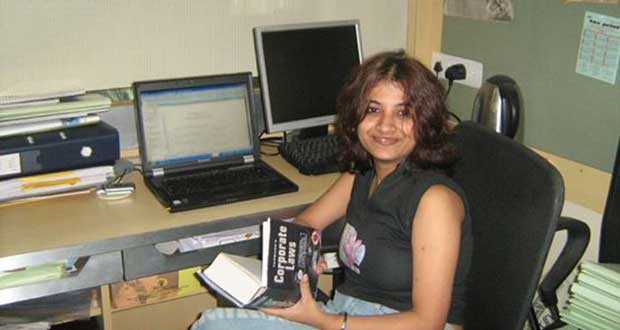
Category: Associates, In-House Counsels and Advocates

  • Albin George Thomas, Associate at Trilegal’s International Capital Markets Team on quitting ICICI Bank

    Albin George Thomas, Associate at Trilegal’s International Capital Markets Team on quitting ICICI Bank

    albin-george-thomasAlbin Thomas graduated from NLIU in 2012. He has an enviable academic record and an excellent series of internships at top law firms. He has been associated with Legal Edge Tutorials as a content developer since his college days. Soon after graduation, he started working as an in-house counsel at ICICI Bank, Mumbai where he worked for almost 2 years. He is currently working as an Associate at Trilegal.

    In this interview, he talks about:

    • Work experience at ICICI Bank Ltd.
    • Switch from in-house counsel to law firm associate
    • Work experience at Trilegal


    Legal studies are still only a backup option for quite a lot of students. What motivated you to choose law as a career? How did you get through to NLIU?

    Yes, back in 2007 (the year in which I decided to pursue law) legal studies were still considered a backup option for most students. However, I think times have changed and law as a career has now become a preferred choice for most students. Personally, being from Bhopal and due to the presence of a national law university in the city, I had opportunities to interact with students from the college and their experiences motivated me to take up law.

    Like most aspiring students at that time, I enrolled myself at Law School Tutorials, which gave me a solid platform to clear law entrance exams for various national law universities, including NLIU Bhopal.


    How did you fare in your academics at NLIU? Would you say a great CGPA is a necessity to kick-start a good career in the legal profession?

    A law university offers a student with a plethora of prospects that include curricular, co-curricular and extra-curricular activities. I did reasonably well in academics, however, my sole focus was not to merely secure top grades, but to utilize the numerous opportunities that were offered at NLIU to further my abilities. A good CGPA can act as a stepping stone for a good legal career, especially for advanced studies and for securing jobs at top-tier law firms. However, practical application of law is vastly different from what is taught in classrooms. Therefore, it would be incorrect to say that a good CGPA is necessary to kick-start a good career.


    What were your areas of interest during your graduation? How did you go about developing expertise and knowledge in these areas?

    During my graduation, I took keen interest in securities law, general corporate law, banking and finance. To further my capabilities in these specific areas, I focussed on three aspects: writing research papers on current issues, participating in moot court competitions that catered to my interest areas. Internships with various banks/financial institutions and law firms helped me gain practical insights to develop an understanding of these subjects.

    In my initial years of college, I realized that I wasn’t inclined towards litigation and therefore my focus was always on enhancing my expertise in corporate laws.


    During your college days, you had worked for Legal Edge Tutorial as a Content Developer. How would you describe your experience as?

    Legal Edge Tutorial was founded by one of my close friends, Harsh Gagrani. I was in my final year of college when Harsh was starting this venture. The biggest challenge we faced initially was to develop our course material that was unique and easily comprehensible, especially since this space was already dominated by established players. I thoroughly enjoyed preparing the course material, (especially the law based material) because the task of explaining legal concepts to young students who were new to the subject in a simplistic manner through illustrations was challenging.

    However, the most satisfying aspect of my stint with Legal Edge Tutorial was my teaching experience. Interacting with my students and motivating them to overcome their anxieties was a completely new experience for me.


    You were the convener of Centre for Business and Commercial Laws, NLIU during your 5th year in law school. What skills do you get to hone while managing such a responsibility?

    Starting out as a member of the Centre for Business and Commercial Laws (CBCL)from its inception and going on to become the convener was a fulfilling learning experience. At CBCL, we published regular e-newsletters, organized workshops on latest business and legal developments. Our aim was to ensure that students had easy access to corporate-related information.

    As convener of CBCL, I was grateful to have the opportunity of hosting a University Grants Commission (UGC) sponsored seminar for academicians and students on “Critical Issues in International Commercial Arbitration”. The seminar saw intense discussions on arbitration-related issues, and was thoroughly appreciated by participants. Based on these discussions, we submitted a list of recommendations to the UGC on changes to the arbitration legislation. Additionally, we also published a book on the subject which was a compilation of the finest seminar papers.

    During my tenure as the convener, I was given a chance to improve my leadership and management skills. Now when I look back, these organisational skills have come in handy in my professional life.


    albin-george-thomas-2

    After graduation, you joined ICICI Bank as an in-house counsel. What had contributed towards this appointment? What did you take away from your experience at ICICI?

    My interest in banking & finance coupled with internships at financial institutions played a critical role in my appointment with ICICI Bank.I joined the Corporate Legal Department of ICICI Bank at its headquarters in Mumbai. My work profile included general corporate finance, debt restructuring, e-commerce and priority sector lending. The transition from being a student to a professional was exciting. As an in-house counsel, my role was two-fold: Firstly, documentation and advisory work for transactions. Secondly, I was also required to act as a transaction manager in various cross-border and high ticket financing deals. This involved liaising with offshore counsels, negotiating with clients along with bankers to ensure timely execution of the transactions.

    What I liked most about my role as an in-house counsel at ICICI was that it gave me an opportunity to directly negotiate and manage transactions at a very early stage with limited hand-holding. During my tenure, I also interacted with a lot of senior people of the legal and business fraternity that gave me useful insights into the banking and finance industry. Apart from developing my technical skills, I also worked closely with bankers that enhanced my understanding of commercials, a skill set that I believe is fundamental for transactional lawyers.


    After having worked at ICICI for more than 2 years, how did the shift to Trilegal take place? What does your current work profile at Trilegal consist of? How is a typical workday like?

    Being involved in the banking and finance sector for more than two years as an in-house counsel, I wanted to broaden my expertise in the field of finance. Therefore, I joined Trilegal’s International Capital Markets practice group as an Associate. Unlike how it is generally perceived, for me the transition from an in-house role to a law firm was smooth.

    Capital markets practice is vastly different from the banking practice that I was involved in for the past two years. Our team advises clients regularly on a variety of capital markets transactions including debt and equity investments, initial public offerings, further public offerings, qualified institutional placements and other related transactions as well as regulatory advice. Being a heavily regulated sector, this practice area requires lawyers to stay abreast with the latest regulatory developments. Further, due to my prior banking experience, I am also involved in the banking and finance practice of the firm specifically transactions dealing with corporate debt restructuring.

    A typical day at Trilegal involves client meetings, negotiations with opposing counsels, managing matters and drafting and review of documents.


    You have had the opportunity to judge theNLIU International Mediation Competition. What did you specifically look for in the mediators?

    Alternate Dispute Resolution has become a key tool in resolving commercial disputes.The NLIU International Mediation Competition is a perfect platform for law students to develop their skills especially since most leading law firms and corporates today have a vibrant disputes resolution practice. My interest in this subject stemmed from our participation at the International Negotiation Competition organised by Harvard Law School and Leipzig Graduate School of Management at Leipzig, Germany. This was a unique competition where students from leading business schools are pitted against law students to negotiate on complex hypothetical commercial disputes. This was a very enriching experience for me. While judging at the mediation competition my prime emphasis was on the temperament of the mediator, his clarity of thought and presence of mind, especially in situations where parties got aggressive during discussions.


    Lastly, what would be your parting message for our readers?

    Please don’t just chase grades, make use of all the opportunities your college provides and remain dedicated to your interests. As far has listing 3 activities are concerned, I would say focus on your choice of internships, read as much as possible on your areas of interest and develop public speaking abilities.

  • Kalpana Garg, Deputy Manager-Legal at Hero MotoCorp on studying law after engineering

    Kalpana Garg, Deputy Manager-Legal at Hero MotoCorp on studying law after engineering

    Kalpana Garg graduated with B.Tech degree from GGSIPU in 2009. Her interest in law led her to join  Rajiv Gandhi School of Intellectual Property Law (IIT, Kharagpur) and pursue LL.B. During law school, she participated in various co-curricular activities including moot court competitions, debates, conferences. She also has a couple of publications to her name. Soon after Graduation she started working as an in-house counsel at Hero MotoCorp and currently works as a Deputy Manager-Legal there.

    In this interview, she talks about:

    • Pursuing Law after Engineering
    • Law school experience at RGSIPL, IIT Kharagpur
    • Appointment at Hero MotoCorp


    Given that most of our readers belong to legal fraternity, how would you introduce yourself to them?

    An engineer and a lawyer working as In-house IP counsel for a leading two wheeler manufacturer for the past 2.5 years handling matters related mostly to IP laws. My hobbies involve reading, writing, and traveling. I believe in Carpe Diem philosophy and live every day to be inspired by anything or everything. I love debating for hours together and gain knowledge and build my opinions over matters with diverse topics.


    Legal studies are still not a mainstream career option for a lot of students. Having done B.Tech from GGSIPU, what motivated you to choose law as a career? How did you prefer Law after Engineering?

    Before pursuing Law, I was an engineering student and quite good at that, trust me. Discussions related to varied things happening around such as criminal cases, company related matters and other legal matters during college hours and hostel hours made me realize my acumen towards legal matters. Saying I preferred law over engineering would be a misstatement as I didn’t choose law over engineering. I preferred to apply the knowledge of engineering concepts and law to understand things from a novel perspective. I completed my B.Tech from GGSIPU in 2009 and post that, joined law school (Rajiv Gandhi School of Intellectual Property Law) at IIT Kharagpur.

    During the tenure of my engineering days, till the third year, I was inclined towards pursuing higher studies in the field of my engineering. During fourth year of engineering, few subjects of second last semester were dedicated towards teaching How Patent regime affects the technological scenario; the significance of prior art and the patent system in general. Further, that was the time when TVS vs. Bajaj was in full swing, and the papers would be full of the detailed analysis of how patents were going to be the game changer. And, being an avid and voracious reader, the more I read about it, the more it convinced me that I would like to work in a field where working within IP regime would describe my passion in one sentence line.


    Were you in double minds before joining Rajiv Gandhi School of Intellectual Property Law?

    Before joining any college, any course or doing even an internship at an organization, an applicant must be sure of what he/she wants from the course/college/organization and how much the course/college/organization would be able to provide. With Rajiv Gandhi Law School, I was convinced that there would be no dearth of learning and opportunities suiting my requirements.


    How did you get through to Rajiv Gandhi School of Intellectual Property Law?

    Rajiv Gandhi School of IP Law at IIT Kharagpur conducts an extensive process to select its candidates for future at Law School. Initial rounds involve a written test with three sections Aptitude and analytical Test; Domain-based Test and Essay writing. Post that, GD/PI session is conducted for the students selected out of the written test. Group discussion round involves sharing your opinion regarding a particular legal scenario and defending your opinion in the discussion panel. Personal Interview round involves questions based on your educational domain, the reason behind aspiration to join legal fraternity, etc.

    For admission to Law school at IIT Kharagpur, the applicant should possess one of the following degrees with or without work experience.

    Degree Requirement:

    First-class Bachelors Degree in Engineering/Technology/Medicine or equivalent;

    Or, First class Masters Degree in Science Or Pharmacy or equivalent;

    Or, First Class MBA Degree with any of the above.


    What were your areas of interest during your graduation? How did you go about developing expertise and knowledge in these areas?

    During law school, I was more inclined towards Intellectual property law, Constitution and economic perspective towards law. Expertise is developed over the years and it’s an ongoing process. However, knowledge in a field is developed through committed persuasion involving writing detailed articles, papers, participating in moot courts and interning in the field of interests.

    For gaining knowledge, I participated in a National Moot Court involving IP case problem, wrote several articles for college law journal and other journals. I interned with IP law firms and IP cell of companies for understanding the nuances of IP law. Furthermore, awareness regarding the changes in IP regime related to law and disputes was one of the goals and for such perspective, followed IPAB Case directory, Finnegan case updates were my bookmarks. Try to participate in national and international conferences as the interactive environment boost your knowledge and lets you defend your opinion and make new ones in the process.


    kalpana-garg-1As a law student which activities did you participate in?  Tell us about your law school journey from the 1st year till your final year. Did you have any guidance on how to go about your academics, co-curricular activities, and internships?

    During my tenure as a law student, I always believed in maintaining a steep learning curve in lecture rooms as well as outside them. I participated in National Moot Court competition, Parliamentary debates, essay writing and conferences mostly. Experience at Law school was full of excitements ranging from extra-curricular participation to organizing moot court within the campus, from classroom assignments to attending guest’s lectures by famous legal scholars. Every activity inside and outside the law school leaves you with a quest to learn more and achieve more.

    During law school, the unparalleled support and guidance from Professors and seniors led me to expand my horizon towards academic and extra-curricular activities. Support and guidance from batch mates and friends shouldn’t go without notice.


    What kind of internships did you do while you were a student?

    Internships for a law student are as important as practical classes for a theory session. I interned with practicing lawyers, law firms and companies to gain exposure of the kind of legal work involved. Internship in law firms and with practicing lawyers gives hands on experience on litigation, case studies and how to do legal research for case laws.


    Did you find that your law school education had prepared you sufficiently for the many tasks you were required to execute during your internships and later at your job?

    Theoretical experience always differs from practical experience. Law school education prepares you for a lot of things but job or internship comes with scenarios where working involves thinking on feet, working on deadlines and sometimes explaining legal interpretations to people with non-legal background. Preparing for such scenarios begins early these days wherein internships and summer projects narrow down the gap of learning between law school and job.


    You started your career at Hero MotoCorp and you currently work as a Deputy Manager there. What had contributed towards this appointment? Please tell us the recruitment process at Hero MotoCorp.

    Recruitment process at Hero MotoCorp involves on campus and off campus placements and the overall process is consistent and transparent. I was selected by Hero MotoCorp in their on campus drive.


    Many lawyers would say that the actual learning takes place in the years of practice. What was the case in your situation?

    Litigation and working in-house are too different grounds and involves different levels of learning. Though in my personal opinion, it actually boils down to one’s passion towards a field and field of interest. I won’t say one is better compared to other however; the pace of learning is different.


    Lastly, what would be your parting message for our readers?

    First and foremost, do not pursue law as a backup option or do not pursue it because the family is full of lawyers. Pursue legal studies because you desire to be a lawyer and see yourself as no one else. And, be respectful and honest towards this profession as it gives you the power to bring justice, to bring a change in the society.

  • Anuj Sah, Principal Associate at Khaitan & Co., on a secondment at Debevoise & Plimpton and a career in corporate law

    Anuj Sah, Principal Associate at Khaitan & Co., on a secondment at Debevoise & Plimpton and a career in corporate law

    Anuj Sah is a Principal Associate at Khaitan & Co. (“KCO”), he is currently working on an international secondment at Debevoise & Plimpton. Anuj graduated from ILS, Pune in 2006, thereafter he worked at Desai & Diwanji and AZB Partners, and finally he joined KCO in 2010. His main practice areas at KCO are related to acquisitions, PE transactions, corporate restructuring, etc.

    In this interview we asked him about:

    • Secondments and their mechanism
    • Work exposure at Debevoise & Plimpton
    • Growing from an Associate to a Principal Associate at KCO
    • Life in a corporate law firm


    How would you introduce yourself? Please tell us a bit about how you gravitated towards law.

    Hi! I am Anuj and I working in the corporate team of Khaitan & Co. (KCO), Bombay. At present, I am on a secondment at Debevoise & Plimpton. Like other corporate lawyers, the assignments that I work on are related to acquisitions, private equity transactions, corporate restructurings, advising on regulatory issues and so forth. I graduated from ILS Law, Pune in 2006 and I joined KCO in 2010.Before KCO, I worked at AZB and also briefly at Desai & Diwanji.

    For me, the real motivation to pursue corporate law as a career happened pretty late. In my early years in the profession, I wasn’t too sure whether I wanted to pursue a career in law/ corporate. So even after I started working after law school, I continued to wait to find my calling. I had the benefit of having good seniors and mentors which helped in learning the ropes. The real motivation to pursue law as a career occurred after joining KCO. At KCO, I got the opportunity to work with some of the lawyers whom I most admire in this profession. It was from them that the purpose of being a corporate lawyer started becoming apparent. I got to see first-hand the value that lawyers could bring on transactions and also the trust being reposed by clients in lawyers. As a corporate lawyer, you work on deals where you may be representing an Indian promoter who is selling all that he has created in his entire lifetime. He puts his trust in you for the sale of his most valuable asset and relies on you to get him a fair deal. On some days, you represent a foreign investor, who rely on you to ensure that he is not short changed while entering a new market. So, it is a lot of responsibility, and when you do your job, there’s also a great sense of satisfaction.

    Although a bit philosophical, I think being a corporate lawyer also in some way provides an opportunity to be of service to the businesses of our country. Businesses create employment, promote growth and lead to development. As a corporate lawyer, whether you represent the foreign investor or the Indian promoter, there is a role to play in ensuring deals are concluded in precise terms so that businesses continue to flourish. Only, when businesses grow, it will be a win-win for everyone involved. I think as purpose became clear, motivation followed.


    Please tell us a little about your law school days at the University of Pune? How were you at academics?

    Law school has some of the best memories. I made some of the closest friends, learnt new things (good and bad), got introduced to the world of legal practise and learnt my basic concepts of law. On academics, we had a robust curriculum, and the standards were pretty good. I think I was a fast learner, which helped.


    How important do you say is a good CGPA for an illustrious career in legal?

    I wish I could say that CGPA is not crucial, but unfortunately, [sociallocker]that’s not the case. Law practice is getting more and more competitive. Although there’s a good demand for corporate lawyers, there’s also good availability of great talent. Earlier, opportunities were limited, and you needed a reason to hire someone but now the quality of talent available in general is so good that you may struggle to find a reason to reject someone. It’s best not to have a poor CGPA as a weakness in this competitive environment. Also, a good CGPA is an indication of the fact that you have good understanding of the fundamental concepts of law that you are expected to know if you choose to join a law firm.


    How do you think internships are beneficial to law students?

    I think internships are an excellent opportunity to get an insight into the functioning of a law firm and its various practice areas. It could help one in deciding if this is what he wants to pursue in years to come. Besides, most law firms I know of ensure that interns are well utilized during their internship and are provided with opportunities to get involved in transactions. One can  be prepared for what he is expected to do if he chooses to join a law firm. Also, for the law students who are trying to get corporate law jobs, I hear of several PPOs being offered to interns all the time.


    How was your first year after graduation? What do you think were the biggest hurdles and challenges in the early days of your career? How did you deal with them?

    For me, the first few years after graduation were the toughest years – you are put straight into the frying pan. I know some junior lawyers go through the same situation. Perhaps, like me, you can also keep reminding yourself that ‘this too shall pass’. I say my first few years have been the toughest because those are the years when you have very limited understanding of the matters that you are working on and also of what is expected of you. Also, there’s so much in corporate law practice which you don’t learn in law school but while working which adds to the challenge. Now when I look back, I think it’s not very difficult to deal with those challenges – read a lot, observe a lot, ask questions, find the answers and work hard. You will get better at the job very quickly. Remember corporate law is pretty simple stuff but requires a lot of commitment and hard work. Once you are good at your job, it will be a lot of fun.


    A lot of law students would be keen to know about the mechanism of a secondment. Please tell us a little bit about your secondment at Debevoise & Plimpton.

    It was  a cross – secondment with Debevoise. A lawyer from Debevoise came to KCO for a secondment for six months, and I came to Debevoise. While, I am primarily based in the London office of Debevoise, I recently also spent few weeks in their New York office. It’s a great opportunity. Debevoise is one of the most reputed firms globally. Corporate law in this part of the world is quite evolved. Capital controls are less of an issue, and the regulatory environment is more light touch in comparison with India. I am working at Debevoise with some of the most acclaimed lawyers, and it’s such a wonderful opportunity. Also, it is a lot of investment by the firm that sends you on a secondment, so it’s a great feeling that your firm considered you suitable for the opportunity.


    How important is it to take the lead in business development while also being a principal associate?

    I think it is very important. The good part is that if you are good at your work, this will happen without much effort. Several clients will start approaching you for their repeat matters. Also, once you are good at your work, and clients realise that, several of them will be your ambassadors and will do this for you.


    How do you maintain a work-life balance? Are there any specific time management tips you would like to share?

    This is a tricky one. The profession is very demanding and requires a lot of commitment. Developments on assignments that you are working on will control your calendar. There will be instances when you may have to cancel a long-planned holiday or skip a friend’s wedding. However, it’s important to have a healthy work-life balance so that you are at your best when working on assignments. Some of the tips I have been using to get better at this are:

    (i) prepare a to-do list every morning of things that need to be completed, this keeps away distractions and reminds what needs to be prioritized;

    (ii) When delegating work, try to give proper background and instructions – this helps in receiving a better work product;

    (iii) try to keep your team members involved in discussions so that they also have the background of what is expected to be delivered, a lot of leakages otherwise could happen in communication from one person to another;

    (iv) longer vacations are not always easy to plan so I prefer taking small unplanned vacations whenever workload is light to spend time with family;

    (v) also, there will be occasions when you will be provided with lots of documents and information to review, keep reminding yourself the objective otherwise it’s easy to get lost with all the excess information available.


    anuj-sah-1

    Tell us about your growth from an Associate to a Senior Associate and then becoming a Principal Associate at Khaitan & Co.?

    I think this is pretty much a natural process. At least at KCO, I have seen that as you get ready for senior roles you are moved up. There is an objective evaluation process where feedback received from partners, clients and other members of the firm is considered. There are also external consultants who are engaged to test softer skills and give feedback. In general once you like your work and are passionate about what you do, moving up will be a by-product. Also, it is important to have an outlook that matches with that of the organisation – sometimes I see lawyers who are good at their work, but suffer because of this drawback.


    What is your current work profile like? Please tell us about the responsibilities you are entrusted with.

    My current work profile broadly includes the entire spectrum of corporate law. Most of the work relates to acquisition/investment transactions where sometimes I represent the buy side and sometimes the sell side. I also do a fair bit of regulatory work which involves advising clients on regulatory issues and outlook of regulators on various policy issues. The gamut of corporate law is pretty wide, and one needs to have basic understanding of several laws including taxation, anti- trust law, real estate, IP laws, etc.


    You must have guided several interns. How would you say that an intern can generate a positive feedback in the limited time they have?

    Yes, I have seen many interns during my career. It’s so good to see several of them working in various firms and doing extremely well. Interns could consider some of the following tips to generate a positive feedback in the limited internship time:

    • When you are assigned work, try and get clarity on what is expected from you. Also, attempt to meet the time line. Sometimes the answer to the work that you will be assigned will be readily available on the internet but don’t stop there. Assume that the person assigning you the work wants you to find more in-depth information than that is easily available on the internet;
    • Ask questions when in doubt. Utilize this time to get your queries clarified;
    • Try to reach office in time, may be a bit earlier than the office start time. It shows good seriousness on your part;
    • If you get free time, spend some of it in the library or going through available precedents of past transactions.


    What has been your strategy to deal with errors and mistakes? How would you suggest a young associate to deal with them?

    Unfortunately, the profession is demanding, the stakes are high and it can be harsh on the one making mistakes. But then it’s only human to make mistakes, and everyone will make mistakes at some point or the other. So the best strategy is to follow the conventional wisdom – learn from your mistakes and try not to repeat your mistakes. I think if you have made a mistake and as long as you can ensure that you will try your best not to repeat it again, you will be ok. Also, try not to cover your mistakes. Own up to your mistakes, feel the pain and try not to repeat them.


    We thank you for participating in this exercise. We’re sure the readers of SuperLawyer would find this interview beneficial and insightful. As a concluding message, what would be your suggestions to law students/younger corporate lawyers?

    Entirely my pleasure! I hope I have been able to provide some insight to law students looking to make a career in corporate law or younger lawyers in law firms. If I have to give some suggestions, it will be the following:

    –           read a lot and keep yourself abreast with the latest developments/transactions;

    –           be solution oriented;

    –           try to be good at finance/commercials/numbers;

    –           try to write in simple English. Write documents and emails keeping the client in mind. Know a lot but it’s not necessary to tell the client all that you know. Remember Mark Twain said, ‘If I had more time, I would have written a shorter letter’;

    –           no point competing or comparing with others. Every person has different likings and strengths;

    –           learn from your seniors – they have a wealth of experience to learn from;

    –           always keep a positive outlook;

    –           and most importantly, be humble and continue to be humble as you walk up the ladder. There are several others who may be as talented, but didn’t get this wonderful opportunity of being in your place.

    [/sociallocker]

  • Jai Sahai Endlaw on moots, litigation and an LL.M from Berkeley

    Jai Sahai Endlaw on moots, litigation and an LL.M from Berkeley

    Jai Sahai Endlaw graduated from NLU, Jodhpur in 2013, and thereafter he had the opportunity to pursue higher studies from the University of California, Berkeley. While at law school he had huge achievements in mooting, his team at NLU, Jodhpur went on to win the 16th Stetson IEMCC World Rounds, an Honourable Mention for Best Respondent Memorandum at the 9th Willem C. Vis (East) Arbitration Moot, at UC, Berkeley also his team made it to the Semi-Finals Pacific Coast rounds of the 55th Philip C. Jessup International Law Moot Court Competition.

    With so much to tell you about him, we could ask only a few questions on:

    • Academics and internships for a career in litigation
    • Partaking in the best moots and acing them
    • LL.M experience from UC, Berkeley


    What is it that motivated you to take up law as a career? Was it an engineered move or a sudden decision?

    I knew early on that I wanted to pursue a career in law. Two factors anchored my decision – It being a family profession, the daily challenge of a court room drama was fascinating, and it was matched with my interest in current affairs, debating and reading.


    Would you say your parents were quite instrumental in making you take law as a career option? Did you get to hear legal discussions right from your childhood days?

    My parents were instrumental in helping my shape my career decision. The choice was entirely mine. In fact they are of the opinion that a study in science at school level helps develop and hone analytical abilities – I studied science at school. My father litigated in the District Courts and High Court. During his practice, he largely dealt with matters on the civil side, original and appellate which included property and rent matters. My parents gave me complete freedom to find my calling at law school, and even supported me when I expressed my desire to pursue further studies abroad. Yes, legal discussions were a part of routine dinner table conversations – I’m a third generation lawyer.


    Having a family with legal background may prove to be a huge advantage as far as establishing a practice is concerned. What is your opinion on the same? Did this factor ever play a role in influencing your decision to take up law?

    A legal background and family practice is definitely a privilege and of help, but only to the extent of giving you a realistic perception about the practice and understanding law as a profession. Ultimately, in the business of advising, you bring ‘yourself’ to the table. There may have been some subtle influences acting upon me whilst I made my choices, but it is imperative for the choice to match your area of interests. Only then can one support and sustain a career long term.


    Did your internships motivate you to get more involved in litigation than corporate law?

    Internships are indeed processes of self discovery. If you work on them seriously, 4 – 6 weeks of work in a firm or under a practicing advocate gives you an insight into what your future requirements may be. My core area of interest lay in a litigation practice of my own, and the internships were great learning experiences. In fact, my first internship was with an advocate who practiced in the district courts as well as at the High Court. I followed him in the Courts and observed him arguing over the course of one summer and that cemented my decision to litigate after law school. Since that involved regular Court appearances and briefings, I felt that working with an advocate would be befitting. Practical, hands on work, always helps to either endorse or change your career trajectory.


    What role do academics play in the career of an aspiring litigator?

    Academics and exam scores are baseline platforms for professionals. One must use the time of five years at Law School to learn to examine critically and couple the approach to build a mature thought process and a confident personality. At the end of the day very few lawyers ask you for your transcripts when you apply for a job as a junior advocate. Our profession is such that law school can only effectively prepare you on the theoretical aspect of law, practical knowledge will come on the job but only after you are sound on what the law says.


    Is there anything apart from academics that a student who wishes to pursue litigation must involve himself in during his law school life?

    I don’t think there are any specific categories of activities that one can pursue at Law School that necessarily help you become a better litigator or corporate lawyer. Having said that, moot courts are wonderful modules with fun and competitive ways of learning the law in a specialized area. They involve in depth research for specially constructed problems, and require clarity of mind and articulation. I haven’t written any papers myself, but I’m well aware that the effort, reading and critical reasoning that goes into publishing is another great opportunity for law students, not only to express their views but to test their analytical skills.


    Your team won the 16th Stetson IEMCC World Rounds and also an Honourable Mention for Best Respondent Memorandum at the 9th Willem C. Vis (East) Arbitration Moot. How big a role do you think mooting plays in the overall development of a lawyer?

    For me personally, mooting was definitely a confidence booster. It also taught me that hard work does really pay off. The way international moots are structured, you read and research about specific areas of international law for months and in the process learn the importance of team work and improve your drafting skills. These are important lessons that stay with a lawyer for their entire career. Actual practice before any court is different in terms of the pressure, you plead your case on behalf of a real client, who is depending on your skills and knowledge to get him relief. Mooting definitely helps in aspects such as marshalling the facts of a case and narrowing down and identifying the issues in a legal proceeding, but appearing before a judge who is sitting not only to adjudicate your case but multiple others on the same day is a very different and unique experience.


    How was your LL.M experience from University of California, Berkeley. Did you always have higher studies in your mind? If not, what motivated you to go in for the same?

    A post graduate degree was always very much on the agenda. What really clinched my decision to apply was my experience at international moots, meeting teams from various countries, observing their approach to the moot problem and touring various American Universities after Stetson. You will be surprised at how easy it is to walk into any law school in the U.S., introducing yourself as a law student from a foreign country and informing them of your desire to pursue higher studies in the U.S. and as a consequence being invited to sit in on one of the lectures being held at that time!


    For those students who are planning to go for higher studies, what do you think would be better- going right after graduation or going after having gained some work experience?

    I can only speak from my personal experience. There are no short term benefits of an LL.M degree/diploma in a career in litigation in India. The take away is largely in terms of personal growth. However, from what I told, as you grow in litigation and deal with MNC’s and foreign clients, a degree that such clients can relate to helps in them relating to the degree holder as well. Couple that with an international network that you develop during your LLM, and it’s a powerful combination.

    International experience is one of the most important components of a 21st century education, and a study abroad can be viewed as a step in that direction. Indian university graduates are relatively stronger on ‘soft’ skills such as interpersonal skills. Foreign degree holders appear disposed towards critical thinking skills, and using their knowledge to solve real world problems.

    The eternal conundrum that law students face is when, if at all, to pursue their higher studies. I chose to go straight after law school because I felt that I couldn’t afford to settle into a litigation career of a couple of years only to uproot it and go abroad for a year (or maybe more). On the flip side, I was one of the youngest in my batch at Berkeley Law and that has its own fair share of baggage!


    What do you think is the perfect formula for candidature at a reputed law school for further studies?

    I don’t think anyone has found the perfect formula to get accepted to the best universities in the world. But I do know that the universities definitely look for candidates with diverse backgrounds. Your personal statement should reflect a focussed approach as to why and how the course you are applying for is the right choice for you and what in your qualifications supports that cause. I would definitely advise any one looking to pursue further studies to keep a healthy balance of their academic with co-curricular activities such as mooting, publishing and presenting papers, participating in workshops and conferences in the area you are looking to speacilize/study further in.


    Is there any tip you would like to give to our readers, most of whom are students pursuing law?

    In retrospect, I found that law school makes available a broad canvas of choices to law students and it is imperative for a law student to figure out in the five years – be it through internships or through pure academic interest – where your passion lies. This can be immensely helpful at the time of recruitment as well as applying to foreign universities.

  • Sonakshi Kapoor on application and getting selected for the LAMP fellowship

    Sonakshi Kapoor on application and getting selected for the LAMP fellowship

    Sonakshi Kapoor graduated in BBA.LL.B from Symbiosis Law School, Pune in 2013. She had joined as a Junior Associate at A. U. Khan & Associates and had mainly worked in litigation matters. In 2014, she applied for the Legislative Assistant to Member of Parliament (“LAMP”) fellowship, her application was accepted along with only 42 others among more than 1200 applicants.

    She tells us in details about:

    • The application procedure, dos and donts in order to get selected
    • Working with legislators and drafting private member bills and assisting them
    • Experience gathered from the LAMP fellowship


    How would you describe your childhood and pre – college life as well as educational background? Did you have lawyers in your family who motivated you to pursue a career in legal field?

    I spent a substantial part of my school life in a boarding school in Mussoorie. The day I declared to my parents that I had decided to study law (I was still in the 10th Grade) they were left confused and quickly dismissed it as a phase. We had no lawyers in my family, except a first cousin of my father, but growing up in a boarding school ensured a very limited interaction with my extended family. So there was no one toinspire me or eventually guide me through a legal career.  It was altogether a scary thought for my parents especially when I decided to go all the way to Pune from Noida to get a degree in law.


    What inclined you towards the field of legal education? Do you reckon any specific incident that made you choose law as a career?

    Growing up in a boarding school, my access to the internet or the TV was so limited that it was almost non-existent. Books were the only source of recreation and inspiration for me. By the time I was 15 and meddling with the possibilities for my future (even contemplated being an astronaut or an archaeologist), I had already drowned myself in dozens of writings and books on women rights, particularly in the Middle East. The fact that a law alone could prescribe or curtail the freedom of an individual and influence life had struck me hard and was pushing me to pursue a career that would simply empower me. Hence, Law.


    Tell us about your law school life, how instrumental was Symbiosis Law School, Pune in shaping up your legal career? Did you grow an interest towards policy making in law school itself?

    Moving to Pune defined a very important phase in my life and my five years in that city have been instrumental in shaping the kind of person I am today. Symbiosis Law School, despite its small campus (the college has a bigger campus now), did manage to offer an education befitting a good law school of our country. We had defined hours and a plethora of subjects to study. This not only ensured that we read and understood almost all important central legislations but we also had ample time to participate in extracurricular activities.

    It was through a pamphlet on the college notice board that I read about the LAMP fellowship and how it offered a platform for young aspirants to participate in the policy making process. I applied for it in 2013 itself, however due to the recent Lok Sabha Elections the fellowship was deferred. My professors in college, who were also helping me with my LAMP application, helped me list out other similar career options that I could apply to. But I decided to practise law and apply for the fellowship a year later.


    You have worked with Senior Advocates and at National Commissions including the NHRC. Any remarkable internship experience which shaped up your career? How would you recommend students to go about choosing their internships?

    Every internship gave me an opportunity to experience something absolutely different. And I am grateful for all experiences, especially the bad ones for they helped me decide on what not to pursue, for instance from my internship at Bajaj, I knew I was not the right fit for a desk job at a corporate house. During my internship with a senior advocate, I was star struck. I learnt a lot but also gathered from my peers and seniors on how difficult a successful career in litigation was especially when you don’t come from a family of lawyers. However litigation is, without doubt, the more exciting career path and even as a LAMP fellow, I sometimes do miss attending courts (even though my practise lasted a year). As a law student, one should not hesitate to intern anywhere and everywhere. It is equally important to intern in a law firm or a company as it is to intern in a district court. However it would be helpful to achieve some clarity during the last two years of your law school, so you can only focus on the work that you would want to eventually do.


    Being a LAMP (Legislative Assistants to Members of Parliament) fellow is a great achievement indeed – you were selected over 1200 applications that were received this year. What all did you have to do in order to get selected?

    The selection process involves filing out an application form with a Statement of Purpose and a brief note on a recent policy or law. While I breezed through my Statement of Purpose, my biggest challenge was the policy synopsis.  I analysed the 2013 legislation on food security and had a tough time battling with the 500 word limit for there was much to say. The Food Security Act is a very controversial law with very conflicting opinions on its implementation and success. However multiple revisions later, I was happy with my note and submitted my application a day before the actual deadline. I was lucky enough to be called in for an interview at the PRS office (PRS also conducts interviews via skype for outstation applicants). The Panel interviewed me on the basis of my resume and my policy note and to adjudge my interest in public policy, my understanding of the fellowship, and my future goals. I was able to aptly respond to almost all the questions except a few to which I admitted having no knowledge of. Overall the interview did go well and I eventually received a mail admitting me to the Fellowship.


    How does one apply for the LAMP fellowship? What are your suggestions to people who aspire to become a LAMP fellow?

    The application process generally begins by April and the deadlines are also released. The general information on the fellowship such as eligibility criteria, selection process, stipend etc., is available on http://lamp.prsindia.org/thefellowship. The Application form is also available on the website and clearly specifies the procedure for filling and submitting the form. If you wish to apply for the fellowship, then you should start keeping a tab on the everyday working of the Parliament including the bills which are introduced or eventually enacted and issues which are discussed (for instance the crisis of black money was recently debated). Once the deadlines are released, start working on your policy note by listing at least 2-3 topics that you would want to analyse and eventually decide on the policy synopsis that you would want to submit. While writing your statement of purpose, try to put down concise information relevant to your achievements and your interest in public policy and the fellowship. Do submit your application few days before the actual deadline for you may face a lot of issues with the website at the eleventh hour, with many applicants trying to submit their applications.


    LAMP fellowship provides an excellent opportunity to interact with Legislators at a personal level, and to understand the policy process. What have you learned in your stint as an LAMP fellow?

    As a law student and then as a lawyer, my most basic achievement was understanding our legal and political structure and as a LAMP fellow, I have continued this learning process. I have dedicated my time and potential to the cause of a Member of Parliament by contributing towards his policy and legislative debates and other Parliamentary interventions (including drafting a bill) which I know will have an impact –in a small way – on the laws and policies of tomorrow. The magnitude of this responsibility alone has been the biggest learning experience for me.


    Please tell us about the kind of work a LAMP Fellow is required to do in a typical workday.

    A typical work day (when the Parliament is in session) involves framing and submitting Parliamentary Questions, Matters of Urgent Public importance that my MP would want to raise in the Parliament and working on supplementary interventions. The biggest task is meeting all the deadlines set out by the Parliamentary Secretariat and complying with its procedural requirements which are very similar to the filing process in courts. The interventions and questions often revolve on issues related to the constituency of my MP. It’s a small contribution to my MP’s work but it keeps his mind free and helps him take up larger issues.

    When the Parliament is not in session, work generally revolves around preparing for the next session, drafting private member bills, working on speeches that my MP is required to deliver on various platforms, and attending workshops and training sessions organised by PRS.


    Do you have any interesting experience whilst being a LAMP fellow which you would like to share?

    As a LAMP fellow everyday offers a different experience. Even though I function within the confines of a schedule and various deadlines, no two days are alike. However rather than an interesting experience, I would like to share an important moment as a fellow which was when my MP raised an issue drafted by me, for the very first time, in the Parliament. It was an intervention (supplementary question) on preserving the language and culture of tribes in Kerala and it taught me the magnitude of my responsibility and of the consequences.


    Do you have any plans to pursue higher education in the future?

    I do wish to pursue a Masters in Public Administration and I am in the middle of shortlisting colleges and universities abroad for my higher education. In the coming months, I will begin with my application process including taking the necessary tests. I would want to eventually work as a forerunner in the framing and implementation of policies and projects that resolve important societal problems.


    Is there any message you would like to share with our readers?

    You should be strong and stubborn in what you want to pursue despite all resistance. Even if it is a different career path, don’t hesitate to explore it but have the courage to make mistakes for they are inevitable and sometimes the best teacher. Studying law can be tedious and monotonous mostly but it is indeed an exciting career option so be strong willed and work hard but don’t forget to have fun along the way.

  • Rijoy Bhaumik, Senior Associate at Lakshmikumaran & Sridharan on a law firm career

    Rijoy Bhaumik, Senior Associate at Lakshmikumaran & Sridharan on a law firm career

    Rijoy Bhaumik is a graduate from National Law Institute University, Bhopal (Batch of 2012) with a B.A.LLB (Hons.) degree. He has an enviable mooting record and an excellent series of internships at top law firms. His diligence and mettle at work was recognized when he bagged a job offer from Lakshmikumaran & Sridharan (LKS) in his 5th year of law school during campus placements. Currently, he is working as Senior Associate there. We asked him to share his experiences and strategies he used over the years.

    In this interview, Rijoy talks about:

    • Co-curricular activities like mooting at NLIU
    • Importance of Internships
    • Preparing for job interviews and securing a job at LKS
    • Work and promotion at LKS


    Give us a brief introduction of yourself. Did you have lawyers in your family? What brought you into studying law?

    It is a very difficult thing, talking about oneself, because you often end up at a loss for words. However, that being said, I must say that such an initiative will allow young law students to learn from the experiences of others and perhaps not make the same mistakes as their predecessors. I am a first generation lawyer from a middle-class family in Kolkata. There are a few advocates in my father’s generation in the family, but in our immediate family, there is none. Choosing this career was not easy, especially considering the thrust of emphasis of the Indian education system towards engineering and science. But from an early age I was interested in Democratic Politics and the constitution.

    Moreover, I was always a talkative child and as my mother would put it, I would love to argue. In such a backdrop, as I grew up, the profession of putting forth a point of view on the basis of rights and liabilities always appealed to me. Even though I was a science student in my plus two years, I decided to try my luck at the various national law colleges that had been established then. In our time there was no CLAT, and we had to sit for each of the entrance exams individually. Luckily, I got through NLIU, Bhopal, HNLU, Raipur, NLU,Jodhpur in their second list and Symbiosis, Pune. Thereafter, my law journey started in Bhopal.
     

    rijoy-bhaumik-2

    Tell us about your time at NLIU. You seem to have participated and excelled especially in mooting activities, can you walk us through the highlights of your life in college in that sphere?

    From the very beginning, I looked at law school as an opportunity to participate and take part in various activities on offer. Naturally, moot court competitions were always regarded as the law school activity, and after winning our first internal moot in the first year, I had the confidence to try out for the University team and represent the University in national and international law tournaments. Thereafter, I would say I was extremely fortunate to have excelled in various moot court competitions, winning numerous personal accolades like speaker awards, etc.

    However, it was the team awards that really appealed to me, wherein my various teammates and I won tournaments like 2nd Christ University National Moot Court Competition 2011, Surana & Surana National Trial Advocacy Moot Court Competition 2010 and the 13th Annual M.M. Singhvi Memorial Bar Council of India International Law Moot Court Competition 2010. Of these, being the finalist in the M.M. Singhvi moot holds a special place in my heart as it was probably one of the most prestigious moots in the country back then (it was discontinued after the 2010 edition), and we bested 66 teams from all over the country to reach the finals.

    Further, it was an international law moot and we had the opportunity to argue before Hon’ble Justice Dalveer Bhandari, among other legal luminaries, and presently Justice Bhandari is a Judge of the International Court of Justice, which makes it all the more special and precious. Most of my time at NLIU was spent in jumping into various activities around the year to keep myself busy, and I am glad that it became the norm, as it was important to keep myself busy while in college as otherwise life would get monotonous.


    As an undergraduate student at NLIU, you took part in other activities other than mooting and also were actively involved in committees. Tell us how these activities and participation in committees helped in shaping your legal career?

    Apart from mooting I was actively involved in debating, client-counselling and alternative dispute resolution tournaments with varying degrees of success in all of them. I was part of the first debate team from NLIU to participate in both the All Asians Debating Championship and the Worlds Universities Debating Championship and won numerous speaker and team awards in national parliamentary debating championships. I was also fortunate to be adjudged Best Student Advocate in the National Client Counselling Tournament at Symbiosis Law School, Pune. But it was alternative dispute resolution that took up most of my time in my later years in law school.

    I took part in the prestigious 5th ICC International Commercial Mediation Competition 2010, organised by the International Chamber of Commerce (ICC) in Paris, France and in the subsequent year I was appointed coach of the NLIU team that represented the same competition in 2011. NLIU also had various committees which regulated mooting, debating, cultural, sports, alternative dispute resolution and many other activities. I was always very eager to be part of organising committees in various years in the institution. I personally feel that one of the facets of a University is the activity that is seen around the campus and everyone in the student community should do what they can to enrich law school life through these committees.

    In the earlier years we learnt how to handle groundwork, and in later years of law school skills of man-management and financial management were required to handle various events, as most of the committees in NLIU were entirely student-run with semi-financial and logistical backing from the University. It was all a part of growing up in law school and exposed us to the tenets of an organisational structure which we have to adhere to for the rest of our lives. In my final year, I was appointed the Convener of the Alternative Dispute Resolution Cell and my team and I planned and successfully organised the NLIU-Khaitan & Co.-INADR Law School Mediation Tournament, 2012 in NLIU, Bhopal.

    This was the first time such a tournament was taking place in India, and we were backed by Khaitan & Co., Mumbai, one of the oldest and most prestigious law firms in the country. Also for the first time, we had substantial backing from the International Academy of Dispute Resolution (INADR), Chicago and their various representatives all across the globe were present in training and judging the participants in the competition. As Convener of the ADRC, I was Convener of the Tournament, and it was the biggest learning experience in my law school career. Not only did the experience teach me various degrees of planning and organisation, it also exposed me to the pinnacle of mediation tournaments right here in India, and I was extremely fortunate to interact and make friends with international mediators from INADR.

    As the first of its kind in India, the Tournament was a roaring success and all 32 team slots were filled, with many teams in the waiting list.It was particularly a big highlight in the twilight of my law school career, and the experiences of delegation of work and handling an organisation tree of many volunteers shall be held with me throughout my life.
     

    rijoy-bhaumik-3You are a senior associate at Lakshmi Kumaran & Sridharan. How did your appointment at take place? Tell us about the nature of work you’re entrusted with therein and what’s a typical day like?

    Lakshmi Kumaran & Sridharan happened through the internship process for me. In May, 2011 I interned at the Delhi office of the firm and was exposed to a work area that was wholly new to me – indirect tax litigation. Through this internship I experienced first-hand, the work ethos of the firm and really liked the kind of ground breaking indirect taxation work that the firm specialised in. Thereafter, in August there was a short interview and the firm confirmed my recruitment on the basis of my internship, with most of my fifth year left before me.

    I joined the firm in their Bangalore office in June, 2012 and thereafter, in June, 2014 I was promoted as Senior Associate in the firm with greater responsibilities. The work involves a variety of areas, especially since I am posted in a new office in Kolkata, wherein we are expected to draft appeals, replies, writs, and also appear before various authorities. A typical day at work involves going to the courts or the Tribunal in the morning, and thereafter returning to draft.


    Lakshmi Kumaran & Sridharan have its main focus in the taxation work area. How do you feel about tax laws not being an important part of syllabus in colleges?

    My experience in L&S tells me that it is not possible to learn the law without working everyday around it. Any three-four month course in University cannot even touch the tip of the iceberg that is taxation laws, and many practitioners have spent their entire lives just practicing only a small part of tax laws. Therefore, an addition or non-addition to the syllabus in colleges shall not matter one bit, as working knowledge of the law can only be gained through experience. That being said, it is the choice of the colleges to include the subject in the curriculum, because then the students shall be exposed to taxation law and the rules of interpretation that guide tax law at an early stage.


    You recently got transferred from Bangalore branch of your office to Kolkata. Does the transfer bring any changes in your work?

    Bangalore office of L&S was already an established office of the firm when I joined with many attorneys already working there. I was assigned an advisory role in the office, wherein my job description was wholly involved in preparing legal opinions and preparing compliance reports, etc. However, when my partner informed me that I may be shifted back to my hometown in Kolkata, where the firm planned to open its ninth office in August, 2013, I was a little circumspect as to what it would offer. However, after shifting to the Kolkata office, we were all thrust into the deep end of the pool so to speak. We were expected to be adept at both litigation and advisory work, and also know various different areas of indirect taxation like service tax, CENVAT credit, central excise, VAT laws, customs, etc. We were a very small team leading a new office, and we all had heightened amounts of responsibility as would naturally be the case with all new offices and small teams. From advisory work, I suddenly found myself doing litigation work and appearing before courts and interfacing directly with the clients. This change was a huge jump in my legal career, as the levels of exposure heightened in Kolkata, within a minuscule span of time.


    What does it take to get promoted from being an associate to a senior associate at a top law firm? Which skills would you say contributed towards your promotion?

    Haha! This question is one which is best answered by my superiors! However, you get some idea as to what is required from the daily rigours of the job and when you do everything required of you consistently enough, they are bound to recognise it. For me personally, moving to a new office was a big challenge that even us junior associates had to stand up to. Due to the lack of manpower and back office support, and owing to the fact that the firm already had a strong foothold in the east, all of us were multi-tasking all the time. Therefore, due to the shift from a large office to a small new office, our responsibilities had grown manifold in a matter of a few days. I guess it brought out the best in me, wherein I was expected to appear in Courts and Tribunals, draft in the evening and even interact with clients on a regular basis, whereas back in Bangalore, we were expected to do only a fraction of such responsibilities. Due to the growth in responsibility and my reaction to the same, I guess the firm recognised the efforts and promoted me to senior associate this year. Therefore, holistically answering the first part of your question, I guess you need to step up and be counted. Mere mechanical work on what you are required to do may not be enough, you may need to try and do more than what is in your plate to convince the hierarchy that you’re ready for bigger challenges.


    Did you ever indulge in academic legal writing? Do you feel extra-curricular activities should be left to the discretion of students or something that students should partake in mandatorily as well? What, in your opinion, are the advantages of taking part in such activities?

    In the initial couple of years in law school, I used to be very interested in partaking in academic legal writing, and in that span of time I managed to contribute articles to 8 different journals on a variety of topics ranging from constitutional law to international law. However, as the years wore on I decided to focus mostly on other activities such as mooting, debating and such and did not particularly write anymore beyond the middle of the third year. However, since mooting particularly also involved drafting of moot memorandums, legal writing was always a huge part of the co-curricular work in which I was involved in.

    I personally believe that law school allows you to take part in a whole host of activities, and such opportunities shall come only once in a lifetime, because thereafter you end up being busy in work and family life. Therefore, every law student should take advantage of the various activities law school life has to offer, apart from the usual academic discourse, because it offers a different experience, a new way to apply and look at the law. Mooting especially teaches you how to conduct legal research and apply them to factual situations correctly, in diverse ways. You’re also given the opportunity to argue your case before various legal luminaries, even before your fledgling law career begins.

    Yes, it may not exactly replicate a courtroom scenario, but it comes close, and such experiences shall hold us in good stead in the long run. Similarly, debating teaches you how to construct logical coherent argumentation in the shortest spans of time. Every activity has some form of take-away on offer to the participant and I believe every law student should at least experience it once for sake of gaining experience, if not for anything else. In my opinion, it is the aggregate of experiences that make you the person you are today, and the more of them you have, the more diversified you are.


    How much time did you devote in preparation for the Jessup round moot and how difficult was it to manage it along with studies and other responsibilities? How did you balance mooting with other important stuff like college assignments?

    The Jessup moot was the single toughest assignment in my entire law school career. To this date, that moot remains an enigma of sorts, and yet it remained unconquered for me in January, 2011. It was simply a lot of work encapsulated in six months of preparation, and it was a huge handful for me in my fourth year. I have spent sleepless nights poring over articles and books on International Humanitarian Law, scratching my head trying to make sense of the sheer bulk of work required to achieve a semblance of respectability in the moot court competition. In my opinion, the Jessup is the toughest assignment in moot court competitions today simply because the best teams from each college participate in the World Cup of mooting and the competition is immense from the first rounds itself.

    Nothing is easy, and every year the Compromis/Moot Problem scales new heights of international legal discourse. The Compromis is drafted in such a way that the presence and/or absence of every word matters, and I believe that is what makes Jessup the single most difficult task facing any law student. It is also rewarding in some respects; personally, the Jessup has taught me a lot on international law, legal analysis, and precision in argumentation. Though, balancing mooting activities and other college activities along with academic discourse was not something that I found difficult in my five years, but the Jessup months were particularly difficult due to the sheer enormity of the work at hand. To this date, preparing for the Jessup itself remains the toughest assignment that I’ve had.


    You’ve had a wide variety of internships during your time as a college student. Do tell us about the places you’ve interned at and whether these were all planned or happened on the go?

    To be honest, I have not interned as much as my peers have, most of them have interned around 10-11 times. I have interned only 6 times in my entire law school career, however, each and every one of them has been enriching in different ways. My first internship was with a counsel, and I was expected to assist my senior in appearance before the High Court of Kolkata. My second couple of internships were in soliciting firms, and we were expected to read the brief and accompany our seniors to conferences and watch the matters. We were expected to draft opinions and writs on occasion as well. But, the internships in Khaitan & Co., AZB & Partners and finally Lakshmi Kumaran & Sridharan were the ones where I was first exposed to the nature of corporate and tax compliance work. We were expected to conduct legal research on various topics and sometimes also draft an opinion based on our research. We also assisted the associates in conducting due diligence.

    L&S was the first time I worked in tax law, and I was particularly impressed by the work ethos in the firm, which finally allowed me to make my choice. Most of my internships were planned well in advance to enable me to get the ones I wanted. These days it is particularly difficult to get a confirmed internship in a big law firm, and you need to apply much in advance to stand any chance of getting one. I did not want to burden my holidays in the initial years, as I was always engaged in various co-curricular activities in law school, however in the third and fourth years I planned well in advance before applying for any internship.


    Many law students strongly believes that getting a job at one of the top 3 law firms is mostly about securing a high GPA. Would you agree?

    I agree. However, securing a job at the top 3 law firms as a fresher is a mere first step. There are many ways to get there eventually through lateral transfers as an experienced professional. Personally, I was always a very average student in law school, and eventually I am at the place I want to be at the start of my legal career. Essentially, the Indian education system wants us to believe there is just one way to get where we want, which is very far away from the truth, because there are a multitude of ways to get where you want. Therefore, a high CGPA definitely helps initially, but it is not the be all and end all.


    How should one apply for an internship at LKS? What do you mainly look for in interns?

    L&S has a centralised internet portal at www.lakshmisri.com wherein interns can directly apply for their requisite period. L&S lays major emphasis on a strong educational background and eagerness to work in the specialisation areas of the firm, in selection of the interns. Discipline is also an important criterion in the selection of interns. L&S has an extremely streamlined process for intern selection, all centrally monitored by the Human Resource team at the Delhi office.


    What would be your advice to the law students aspiring to secure a job at top law firms? What do they need to do, how should they prepare in the last 2 years of law school?

    My advice to law students aspiring to secure a job in top law firms would be to gain as much working knowledge as possible, through internships, in sectors that they want to work in. A law firm will necessarily recruit you if, as a resource, they believe that you have the requisite interest in their work areas. Therefore, identification of work areas where the student wants to work in eventually has to be identified fairly early so that it reflects in their curriculum vitae through their work. No law firm expects you to know the law from day one, as that is an impossibility for a lawyer fresh out of college, but the propensity to work in a particular area and discipline in work ethics are certain criteria that are inherently required to succeed in top law firm jobs. Therefore, planning well in advance and building a CV around interest areas is essential in this day and age where competition for these jobs is immense.


    The opinions are of the interviewee alone and in no way the firm Lakshmikumaran & Sridharan is represented.

  • Rishabh Jogani on LL.M from Queen Mary, mooting and work in litigation

    Rishabh Jogani on LL.M from Queen Mary, mooting and work in litigation

    Rishabh Jogani graduated with a B.L.S.LL.B. degree from GLC, Mumbai in 2012. Soon after Graduation he worked at the Chambers of Senior Advocate Pradeep Sancheti, Bombay High Court for one year and then went on to pursue a Masters in Comparative and International Dispute Resolution from Queen Mary, University of London. Thereafter he returned back to India and again joined the Chambers of Senior Advocate Pradeep Sancheti, Bombay High Court.

    In this interview, he talks about:

    • Moot Court Competitions and acing them
    • Pursuing further studies and LL.M from Queen Mary
    • Choosing litigation over other opportunities


    Given that most of our readers are law students and lawyers, how would you introduce yourself to them?

    I would introduce myself as a young junior counsel practising before the High Court of Bombay with a keen interest in Intellectual Property Law & Arbitration. I am working with Senior Advocate Mr. Pradeep Sancheti as his junior.


    Though it’s one of the most asked questions but yet, why law?

    The answer to that is with another question, why not? Despite being from a business family I realised that business was not my calling in life. I preferred something more on the professional lines and law was certainly my best plausible choice.


    Tell us about your years in law school. What made your journey with Mumbai University worth it? What are the co-curricular activities you took part at Mumbai University?

    I studied at Government Law College, Mumbai (GLC) the oldest law school in the country. Being at GLC itself made my entire time at University worth it considering the opportunities made available to GLC students. I was greatly involved with college activities, the Rotaract Club in particular. I was President of the Club and responsible for numerous events and activites. The College in appreciation of my involvement also awarded me with the Jotimal Chuganee Trophy for leadership.


    rishabh-jogani-2What were your areas of interest during your graduation? How did you go about developing expertise and knowledge in these areas?

    My areas of interest were Intellectual Property and Arbitration.

    With regard to Intellectual Property, I did some courses from the World Intellectual Property Organisation and a Masters in Intellectual Property Law from IGNOU, New Delhi. However, the strongest addition to my knowledge in the field was an internship with Mr. Himanshu Kane of W.S.Kane & Co. who is probably one of the most knowledgable lawyers in the IP circles. Working with someone of Mr. Kane’s standing and expertise gave me great exposure to IP issues and provided me with a strong grounding with regard to IP law.

    As far as Arbitration is concerned, working with Mr. Sancheti had me learn about the various intricacies of arbitral law. I was involved with numerous arbitrations and matters arising out of them. Thereafter, I pursued an LL.M in Comparative  and International Dispute Resolution from the Queen Mary, University of London where I studied International Commercial Arbitration and Arbitration in relation to Energy Disputes. My LL.M thesis was also based on arbitration.


    Tell us a little about your internship at the Supreme Court of India.

    I interned with Mr. Justice KS Radhakrishnan of the Supreme Court during one of my summer vacations at GLC. The experience was extremely enriching, I would read cases and appeals coming to the Court and then attend the proceedings in Court. In the evenings, along with the other intern, we would have some discussions with the judge about what transpired in Court and what we understood from the cases.


    After your graduation, you started working at the Chambers of Pradeep Sancheti. What influenced your decision of working with him?

    My interest in arbitration drew me to Mr. Sancheti’s practice and the learning experience was extremely wonderful. Working with a Senior Advocate like Mr. Sancheti makes one realise that there is always scope to learn more. He is a great senior who besides being extremely nice to his juniors is always willing to answer all queries that come up in our minds.


    What influenced your decision to work in litigation?

    As a student I had interned at the High Court of Bombay and the Supreme Court of India as well as a few law firms and eventually joined Mr. Sancheti’s Chamber as an intern. I realised that I was never interested in working in a corporate structured firm and hence chose the litigation sector.


    Thereafter, you joined Queen Mary, University of London for an LL.M. At what point did you decide to pursue your Masters? What was your motivation?

    I always wanted some exposure to law on a comparative level and an LL.M was probably the best way to get that experience. After a year into practice at the Bar I decided to go for my LL.M. The zest for learning has probably been my strongest motivator and probably what drove me to the LL.M.


    In addition to academics, what did you do during your LL.M year at Queen Mary?

    Whilst at Queen Mary I was involved with ‘qLegal’ a project of the Legal Advice Centre of the School of Law. The work I did was quite interesting, in the sense that I was involved in drafting toolkits on legal issues. I was put in a team which had to draft notes on ‘Company Structure in the UK’ and ‘Trademarks in the UK’ meant for a non-legal audience. It was quite a task to simplify and explain legal terms and concepts but in the end was a rewarding experience.

    I also wrote the Runner Up Prize winning paper of the Preiskel Prize Essay Competition 2013-2014 for an essay titled, “Big data and Marketing – has the law caught up with the new digital reality.”

    Shortly after my exams, I worked with Zaiwalla & Co. a law firm in London. I did some very interesting work at the firm which involved research on English law and drafting litigation proceedings.


    How did you choose Queen Mary over other colleges? What was the decisive factor?

    The School of International Arbitration at Queen Mary is one of the best in the world and lets students study and work with famous international arbitration experts like Profs. Loukas Mistelis, Dr. Julian Lew QC, Stavros Brekoulakis and Dr. Maxi Scherer. Coupled with the fact that I wanted to live in London, Queen Mary seemed a natural choice.

    While choosing a University one should look at the specific courses offered, the courses of interest, the faculty and its reputation. One should not choose a University wholly based on rankings because not all courses offered by the top universities would have the same kind of academicians.

    The Universities in the UK employed a more wholesome approach to studying. There was certainly less classroom teaching than India but however not less learning. There was always voluminous pre-class reading that made sure that students came to lecture sessions well aware of the basics of the subject of discussion. There was a free exchange of opinion in classes and students were encouraged to express their viewpoints.


    What is your view on the latest trend among law students to pursue Masters abroad? How much of a brain drain do you think this is?

    Having done an LL.M myself I would certainly encourage anyone who can do one to seize the opportunity. No amount of learning is ever wasted and knowledge is something that stays with you for life. Some however, believe that a Masters abroad is easy and nothing but an expensive vacation. I would strongly disagree with that opinion for the simple reason that a Master’s degree from a reputed college is certainly not an easy task. There is a large amount of studying involved to pass the exams and extensive research that one must undertake to be able to write a thesis. If a student spends his time well then the LL.M is certainly an added advantage to his career.


    A lot of law students prefer corporate jobs over a career in litigation. What is your take on this? Is it better to work in the corporate sector for a few years before starting litigation?

    Corporate jobs certainly offer more money than litigation in the start and the allure of money is most understandable. Litigation in its early stages certainly is difficult, especially where finances are concerned but one reaps the reward soon after. I think that those students, who choose corporate work over litigation or vice versa, should always make an informed and practical choice, take into consideration their long term career goals and then decide what side they wish to pick. Working at a firm before joining the litigation sector is certainly advisable as it helps you deal with all facets of the profession.


    How has your mooting experience been? How helpful has been mooting in litigation?

    I had a tremendous amount of experience mooting for Government Law College. I represented GLC at numerous national and international moots. Mooting gets a law student as close as possible to a real Court room. There is a great deal of research and drafting involved in preparing for a moot which certainly helps one in the future at the Bar. Arguing before a moot Court also helps instil confidence in a student who eventually gets called to the Bar.

    I also had the opportunity to be part of the Queen Mary team at the Oxford Price Media Law Moot Court Competition and successfully managed to reach all the way upto the semi finals. As part of our training for the Oxford Moot, our coach was kind enough to arrange for a practice round before a sitting judge of the Queen’s Bench Divison of the High Court of Justice. Having always seen the buildings of the Royal Courts of Justice as a tourist and read a catena of English decisions the lawyer inside me harboured a wish to be able to address that Court one day. Participating in the moot fulfilled an otherwise impossible wish.


    Do you think the law school curriculum at the University of Mumbai requires an overhaul?

    The curriculum certainly needs an overhaul at the University of Mumbai. Students are forced to study some redundant subjects to the extent of even studying some repealed statutes. There is a lot of room for improvement at the University of Mumbai. Also, internships or some sort of work experience should also be made part of the law curriculum.

  • Aditya Khandekar on work experience at ICICI Bank and starting out with litigation

    Aditya Khandekar on work experience at ICICI Bank and starting out with litigation

    Aditya Khandekar is a graduate from National Law Institute University, Bhopal (Batch of 2012). Thereafter, he worked as an in-house counsel at ICICI Bank, Mumbai for two years. His interest in litigation led him to leave his lucrative job and start litigation. He has recently started litigating before Madhya Pradesh High Court (Jabalpur).

    In this interview, he talks about:

    • Work experience at ICICI Bank
    • Choosing litigation over corporate job


    Please introduce yourself to our readers. Please tell us a little bit about your childhood and your background?

    My name is Aditya Khandekar. As both my parents work are government servants, I spent my childhood living in Bhopal & Delhi and did my 10th and 12th from Sanskriti School, New Delhi. Having grown up in government colonies where there were a large number of kids of my age, I remember spending most evenings playing different sports such as basketball or cricket, therefore making me an outdoor person. I enjoy travelling, reading books and playing games whether on the computer or outside on the field.


    How did you gravitate towards law? Why law and not engineering or medical studies?

    By the time I passed out of school in 2007, law schools had just started becoming popular. If one sees the curriculum of a 5 year law school one would see that a law graduate studies various subjects such as economics, history, political science and of course the law subjects themselves. I was very keen to study economics but felt that law school might be interesting as there were several other subjects that could be potentially stimulating. However, the real clincher was the fact that a friend of mine recommended that I take a few trial classes at Universal coaching centre for the law admission tests. I attended the class and found it to be quite intriguing and thereafter appeared for the admission tests. I cleared the test for NLIU Bhopal and Amity University which was at that time located in Delhi and then joined NLIU Bhopal.

    Despite being a science student, I was never interested in pursuing science after class 12th, I had taken science only with the purpose of keeping my options open. I was fairly certain that engineering was not my cup of tea.


    Tell us about your years in law school. What made your journey with NLIU exciting?

    Law school was a roller coaster from the very beginning. I was an avid Mooter and Debater and took part in competitions such as the 3 on 3 Asians Debating Competition held at Bangkok, Thailand. I think I took part in almost every competition that took place in college whether it be client counselling, mooting or even dancing for that matter which I am really bad at. I also went for moots to NALSAR, NLU Delhi & GLC, Trivandrum. We won the moot at NALSAR and were the semi-finalists in a moot conducted in New Delhi. I was also involved in organising the 1st NLIU INADR mediation competition which was a great learning experience. I think what made NLIU really exciting, was the many outings that my friends and I had, whether it be to Goa where half my batch ended up going in my final year or the outings to national parks such as Kanha or Bandhavgarh. In the final holidays we criss-crossed the State of Rajasthan and two of my friends actually travelled all the way from Rajasthan to Assam.


    aditya-khandekar-2How did you fare in your academics at NLIU? Would you say a great CGPA is a necessity to kickstart a good career in the legal profession?

    I was fairly decent at academics, I ended up getting around 71% at the end of 5 years and was close to the top 10% in my batch. I think a great CGPA is necessary for applying to certain law firms such as AMSS. Other reputed firms give weightage to internships that a student may have done with them. Some places like ICICI recruit purely on the basis of a group discussion and interview. The CGPA does not guarantee a placement in such cases. Overall, I would say that to get a job from campus it is advisable to be in the top 15% of the batch. This would ensure that you get shortlisted for all the institutions visiting campus for interviews. Publications and good internships are also crucial.


    What were your areas of interest during your graduation? How did you go about developing expertise and knowledge in these areas?

    While I cannot say that I was particularly interested in any one area of law, I ended up doing 2-3 moots on constitutional law in particular dealing with the constitutional validity of certain provisions and therefore my interest gradually grew towards constitutional law. I think a person can develop interest in any field if he/ she spends sufficient time on it.


    You have worked at ICICI Bank as a Law Officer for two years. How was the experience?

    I had a great time working at ICICI Bank as a law officer. I initially began working in the Project Finance team and worked in that group for about a year and thereafter was shifted to the Structured Finance Group where I worked for about 4 months. Both these teams deal with large scale loans that are given to develop infrastructure. While project finance involves heavy documentation which at times can be very arduous, structured finance is relatively lighter in documentation and the stress is more on structuring/ shaping the deal which generally involves multiple entities and trans-boundary issues. ICICI is a place to work where one can have a good work life balance and at the same time can learn.


    Leaving a well paying corporate job must have been decisive. Were you in double minds before starting practice at Madhya Pradesh High Court? Why did you prefer Litigation over your corporate job?

    The dilemma is that a corporate job gives a handsome salary while litigation initially is not very rewarding. Since I enjoyed debating and mooting, I was very keen to at least give litigation a try. The idea of landing a corporate job after passing out of law school was that since the corporate job pays well, it would lead to savings which could be used during the first year of litigation where the pay would not be so good. I opted for litigation over my corporate job because every case is unique and poses new challenges. It is far more rewarding when a judge accepts your argument in comparison to say drafting a deed of hypothecation. Plus I was never happy with a desk job and therefore enjoy the running about which is necessary in litigation.


    Do you think your experience in mooting, debate, ADR and client counseling competitions shall help you in your litigation career?

    Yes, having done public speaking in the past, I have no hesitation while appearing before the Court and that has definitely been a great asset.


    What can the law schools do to encourage more people into litigation? Do you think the law school curriculum requires overhaul?

    Most law schools have a recruitment cell that mainly focuses on getting firms/ companies to campus for recruitment either at the end of fourth year or in the beginning of 5th year. However, these recruitment cells rarely contact Senior Advocates and Advocates on record for internships or recruitment. Many Lawyers these days have started offering competitive stipends which either match or are close to the retainer ships being offered by corporate firms. At times partners of law firms visit campuses to give lectures and conduct seminars, the same opportunity should also be given to Senior Advocates who I am sure would be able to encourage students to opt for litigation. I don’t think the law school curriculum requires a complete overhaul. What needs to be realized is that unlike engineering, law requires a much more hands on approach and therefore the curriculum needs to be aligned to the industry where both transactional work as well drafting/ litigation needs to be intertwined which can be easily done by giving more emphasis to moots, client counselling, adequate time for internships etc. I genuinely believe that internships and moots teach more than what a law student learns in class.


    How is your experience so far? What is your workday like? Are there new challenges every day or did work fall into a predictable pattern?

    My experience has been quite interesting so far. An average work day begins at 10 AM and goes on till about 4:30 when the court closes, thereafter there is drafting/ research/ preparation work in office from 8PM to about 10:30 PM. Therefore, the day is fairly long and at times even stretches well beyond midnight. There are new challenges every day, I on an average appear in 4 to 5 matters every day. These are for different public sector undertakings as well as for certain private clients. Each case requires preparation and has its own distinctive challenges.


    How necessary is it to have a mentor/guide to advise a young lawyer while still in the formative years of the profession?

    The role of a mentor/ guide is vital to a young lawyer. The courts have their own ways of doing things and tend to be very strict on procedure and it takes a while to understand the working as to how the matters are listed, the manner in which the court is addressed, how to pre-empt the questions that a judge may ask and most importantly how to dodge a tricky question/ situation.


    What were the difficulties you faced in the early days of your practice? How difficult would you say it is to build a reputed practice? How many years of hard work would it require to build a firm clientele?

    We have all seen movies where a court scene is shot and the protagonist addresses the court for several minutes trying to convince the Judge/ jury to accept his/ her argument. In realty however, the situation is very different, in the High Courts as well as the Supreme Court when a matter is listed for admission or for grant of stay/ vacation of stay, the decision whether to admit the matter or grant the stay is generally based on 2-3 quick questions which the Court asks. This process generally takes just one or two minutes. Therefore, the most difficult aspect in early days of practice is acquiring the art of giving the perfect one or two line answer which satisfies the court to grant whatever relief the advocate is praying for. This skill takes time to develop and completely depends upon the opportunity that one gets. I think it takes at least 3-4 years to build a reputed practice and a firm clientele.


    Lastly, what would be your parting message for our readers?

    Having enjoyed working in a corporate environment as well in litigation, I just want to say that neither one is perfect and every person is required to decide for himself or herself that which career suits them best. I do not wish to advocate for either of the two and believe that a lawyer must experience both and then decide whether it be through internships during college or thereafter.

  • Priyeta Chowdhury, Senior Executive Legal at Lanco on work at Corporate Bodies like Dell & Balaji Telefilms

    Priyeta Chowdhury, Senior Executive Legal at Lanco on work at Corporate Bodies like Dell & Balaji Telefilms

    Priyeta Chowhury graduated from M.S Ramaiah College of Law (Bangalore University) in 2012. Thereafter she worked as a Legal Administrative Associate at Dell International Services (Chennai) and at Balaji Telefilms Ltd. as Senior Executive-Legal. Currently, she works as Senior Executive-Legal at Lanco Infratech.

    In this interview, she talks about:

    • Law school experience
    • Work experience at Dell and Balaji
    • Appointment at Lanco Infratech


    Most of our readers are law students and young lawyers. How will you introduce yourself to them?

    Though I would prefer the day when I don’t need an introduction. But today I would like to introduce myself as a budding lawyer in the field of law or to be precise as an In-House counsel.

    My journey started in Kolkata, where my entire schooling and childhood was spent, After my completion of 12th in Commerce, and in-between all the hustle of Career decisions and determining which stream to go for, I somehow landed with the choice of studding law, Then the regular pre-law tuition classes for cracking any of the National Law schools entrance also came along. I was somehow unable to crack any of them though.

    So my last hope remained M.S Ramaiah College of Law were admissions were given on the basis of 12th Board Marks. And I somehow secured a place to be a part of the cult I belong today.

    And after my amazingly interesting 5 years of college I got opportunity to be a part of the world famous brand names in a very short span of time.


    priyeta-chowdhury-1How did you gravitate towards law? Why law and not engineering or medical studies?

    I call it a fate, being a daughter of an Engineer and also with a family history of government servants and moreover with a personal choice towards dramatics and art. I somehow landed with Law profession. It was my dad who suggested me the same and like my “parent’s obedient daughter” I thought it to be a good option among all the significant white collar jobs that were prevailing in the market.

    A reason to work for and the sheer power and the glittery gravity of the profession attracted me, though hardly there were people to guide me on this front as I have no family history of lawyers.


    First year of law school can be much challenging at times. What has been your experience?

    Agreed; but with a little personal twist, The first two years of law school decides about all the journey of next three years. My journey took off with the feeling of freedom and the power of the profession.

    Ramaiah was fun, sort of a celluloid movie that lasted for 5 years, friends, rivals, college regulations, teachers and seniors and all the law college legacy and rules.

    But among all these I found the lawyer Priyeta, the choice to pursue In-house opportunities; the choices of right internships and finally the choice of right job, which gave me the first step towards my dream carrier.


    How would you describe your time at M.S Ramaiah College of Law (Bangalore University)? What are the co-curricular activities you took part in?

    As earlier mentioned Ramaiah was like a celluloid movie which lasted for 5 years, I enjoyed my college life thoroughly, I was part of the Cultural Committee and also the sports club of my college, Being the “Miss Fresher” of my batch and part of Cultural committee member I took part in few of the inter college dance fests along with some inter college sports meets.


    What kind of internships did you do while you were a student? Any remarkable experiences during your internships that shaped your career choices later?

    I started my internship in 2nd year of my college with a law firm in Kolkata, the work was good, primarily research work and drafting, along with the opportunities to visit courts. The next few internships were with High Court advocates in the fields of Arbitration and Civil to understand the different facets and integrities of the Court culture, And then final internship with the corporate in-house team, that is Wipro Bangalore. The versatility of my internship gave me an insight as to which field of law I would like to pursue in future. As everyone I was also confused in the beginning of the law school as to which stream of law I shall chose,the major tiff was in between litigation practice and corporate practice. And then Law firms or In-House.

    But after my final internship with Wipro Bangalore I decided as to which side of the table I would prefer. Wipro also presented me with an opportunity to witness projects on Merger and Acquisition which fired my interest towards In-House practice.


    What do you have to say about mooting at law school and legal writing for journals? Are these helpful even after the student graduates?

    Personally I have no clue, how much mooting and legal writing helps us professionally. As I have never had much of keen interest on the same. In my entire law school I have attended only two moots out which one was compulsory. A lot of my friends showed a generous interest towards the moots but I somehow never got attracted towards it. On the contrary I focused on seminars and Discussions. It helped me to shape up my mind and also gave an insight about social legal issues and the thought process of our legal luminaries.


    Did you find that your law school education had prepared you sufficiently for the many tasks you were required to execute during your internships and later at your job?

    To be frank and honest law school knowledge and practical work exposure has hell and haven difference ,but yes I cannot completely deny the fact that knowledge of the law subjects are one of the essential keys to our profession. Thus I feel bookish knowledge along with the exposure’s during internships shapes ones future in our fraternity.


    After graduation, you joined Dell as Legal Administrative Associate. How did you secure your appointment? How would you describe your experience working there? What kind of challenges did you faced during this job?

    DELL INTERNATINNAL SERVICES (Chennai) was a dream come true for me, without any backing of National law school, clearing 8 rounds of interview in a span of 3 months was a challenge. Though I faced the challenge quite well, a little rigorous study over the company and its policies along with general legal knowledge, I cloud secure my position in the organisation. As a fresher the companies look into your drive to learn about the company and its business and your go-getter attitude to handle difficult corporate situations individually.


    Thereafter, you left Dell and had joined Balaji Telefilms Ltd. as Senior Executive Legal. What prompted this switchover? How did the appointment take place?

    After my span in Dell Chennai, I switched to Balaji Telefilms Limited Bombay. The professional networking sites helped me a lot. Coming from an IT company, which shaped my basics; Media was all together was and different industry, a different work culture. But as I had a very keen interest to have a flavour of the Media industry and was also getting an escape from Chennai, thus I made the choice. Though my choice couldn’t hold my interest that well. Alsocoping up with the demands of the fastest and expensive city of India for too long seemed difficult to me.


    Would you say that the work environment at Balaji Telefilms was significantly different from Dell?

    I completely agree with the difference of work culture in an U.S MNC and an Indian Company, that too especially a small production house. There’s a lot of difference in the transaction value and the policies of the companies. MNC’s are more of policy driven organisation whereas Small Indian companies are Individual driven.


    Currently, you are working as Senior Executive Legal at Lanco. What prompted you to make this choice and what made this shift possible? How has been your experience at Lanco so far?

    After Bombay, the next destination was Delhi, “Lawyers Paradise”. The city welcomed me along with my friends and a position in Lanco Infratech Limited. Again professional networking sites along with my knowledge and positive attitude towards exploring a new industry secured me the position in the infrastructure company.

    And my journey in Lanco has been remarkable; Amazing Seniors with a positive attitude of imparting the industry specific knowledge helped me to grow professionally. The company has given me exposure towards Litigations, Project Finance, Asset sale transactions and most importantly CDR process. CDR is a lifetime opportunity for an In-House Counsel to experience and along with the guidance of my seniors I handle the same.


    How different is the working environment of these three companies? How would you describe your experience?

    In my short span of career I have worked in three different Industries, brand name and cities, The work culture of all the three are quite different from each other as Dell being an U.S based MNC, Balaji Telefilms was an Indian production house and Lanco being an Indian MNC.

    But with all the experience till now I prefer to work for a policy driven organisation, where work culture is friendly and more sophisticated, and a lot of importance to the Ideas and innovations are given, thinking on one’s own feet is encouraged. And in the end the organisational culture inspires one to loyalty towards the organisation.


    What does your current work profile at Lanco consists of? How is a typical workday like?

    Being an In-house counsel for an infrastructure Company, my work profile has diverse work schedule. It includes Litigations, Transactions related to sale of Assets, Restructuring of Finances and finally CDR.

    My usual day at work start at 9 in the morning with a cup of tea, then loads of mails and lots of work for the entire day and at times the day prolongs till midnight as per the demands of the transaction. But working in the organisation is fun and the exposure that I gain with each transaction is remarkable.


    Does Lanco take interns? What is the process for same?

    We do take interns. The most important qualities that we look for in an intern is that he/she should be a leader, problem-solver, self-motivated and disciplined. A good knowledge of law is something that can be acquired over a period of time.

    An intern/College Committee shall get in touch with our Legal team or our HR team and send us an email along with a cover letter specifying the duration of the internship for the candidate that is being sought for. We encourage the applications at least 3-4 months in advance.


    Many people believe that working as an in-house counsel affords more work-life balance and is less demanding. What is your take on this?

    I personally feel that there is hardly much of difference in the work culture, yes though I have fix office hours. I do have late sittings, though may be its transaction specific but I do the same work as my external counsel would do. And to guide any external counsel I shall be well versed with the transaction first. And finally as I am the first point of contact for any Legal issues in my organisation I shall always be well aware about all the legal happening in my organisation.


    Lastly, what would be your message for all the law students reading this?

    The last few lines I would like to tell to my fellow friends who are yet to enter the fraternity, is please enjoy your college life which in our college days we used to call “Honeymoon Period”, but just maintain a balance with your internships and Studies as only fun would not fetch us what we have spent five years for.

    There is a lot of opportunities in the market for the right person with right attitude towards work. Learning is a continuous process and in our profession specifically learning never stops. So whatever it takes learn from all the rights and wrongs you do in your life.

  • Esha Chakravarty Rathod, Senior Manager-Legal at UPL Ltd. on leaving law firm and work of an in-house counsel

    Esha Chakravarty Rathod, Senior Manager-Legal at UPL Ltd. on leaving law firm and work of an in-house counsel

    Esha Chakravarty Rathod is currently a Senior Manager-Legal at UPL Ltd. a multinational Agro-chemical company. She graduated from University of Mumbai in 2008, and had thereafter worked in multiple law firms and also as in-house counsels of two large corporate houses.

    In this interview she tell us about:

    • Building up an illustrious career in corporate law
    • Work as an Associate at major law firms
    • Leaving law firms and joining as an in-house counsel


    Given that most of our readers belong to legal fraternity, how would you introduce yourself to them?

    Well, by way of an introduction, I am corporate lawyer, working in the corporate-commercial domain since the past seven (7) years, alternating between law firms and in-house roles. I have been born and bought up in Mumbai.  I completed my education, including the law degree from institutions affiliated to the Maharashtra Board and subsequently to the Mumbai University.  I took up science during my junior college year and subsequently enrolled for a five years law course in a college affiliated with the Mumbai University. I qualified as a lawyer in the year 2008 and enrolled with the Bar Council of Maharashtra and Goa in the same year.  During my undergraduate year, I had signed up articles in the year 2005 for my solicitor’s examination and started working as an articled clerk in a corporate law firm.  Therefore, right from the start of my professional life, I have always worked in non-lit general corporate-commercial domain!


    Legal studies are still only a backup option for quite a lot of students. What motivated you to choose law as a career?

    I understand that legal studies are still a backup option for a lot of students.  This, I believe, is highly unfortunate. Law, as a profession, is wrongly maligned and looked down upon because of certain misplaced conceptions. I would attribute this to a lack of professional counselling at the right age when students make important career decisions. Many of my friends in the non-legal streams regret not pursuing law when they look at the career graph of corporate lawyers and compare it with their respective professional growth. Nevertheless, it is not that I was aware of the corporate law domain when I decided to pursue law.  On the contrary, I was very keen to appear for the civil service exams after my graduation.  Right from the time when I was in class 5, I used to read Competition Success Review and other publications to understand the criteria’s necessary to clear the IAS examination. After reading series of interview of successful IAS candidates, I concluded that studying law would help me prepare for my preliminary IAS examination.  The real motivation to study law was the keen desire to appear for the IAS exams.  However, my thought process from the professional standpoint changed tremendously during my undergraduate years.  I realized I was not cut out for the bureaucratic role and chose to pursue corporate law instead.


    What were your areas of interest during your graduation? How did you go about developing expertise and knowledge in these areas?

    During the five years law course, we were taught a large number of law subjects out of which I enjoyed studying commercial and company laws the most.  I love reading and I am a voracious reader.  I firmly believe that the thumb rule to being a successful lawyer is that you have to love reading! If you do not like reading, you are not cut out for this profession! As my undergraduate years coincided with my article-ship, I used a lot of my article-ship time reading up commentaries on corporate and commercial laws.  I also use to conduct a lot of research on various corporate and commercial law issues by using the internet resources and legal websites like Manupatra and Legal Pundits on the basis of the assignments allotted to me during my article ship years.  My knowledge in the drafting of commercial contracts across various verticals and the various nuances associated with the corporate commercial negotiations started developing right from the time of my article ship years prior to graduation.  I learnt the application of law during this phase and I strongly believe that nothing substitutes the knowledge gained in practical experience.  You will gain real knowledge and expertise only when you start working on transactions and apply your reading to the challenges faced while working on such transactions.  This was the case with me.


    As a law student which activities did you participate in?  Tell us about your law school journey from the 1st year till your final year. Did you have any guidance on how to go about your academics, co-curricular activities and internships?

    I was very active during the first two years of my law college. I participated in a lot of inter-college debates and group discussions and won several prizes. I also participated in a lot of moots and other competitions.  It was a very good experience indeed!  Frankly, there was hardly any guidance and a lot of it was self learning!  We were just the second batch of my law college and hence we did not really have any seniors to look up to.  Therefore, we applied all possible permutations and combinations and relied on our own instincts and research rather than seeking external help!  But this was indeed a blessing in disguise as we went out of our way to set up various committees and putting things in place.  I was very active in all the committee work and it helped me gain a lot of confidence that I could apply to my professional life at a later stage.


    What kind of internships did you do while you were a student? Any remarkable experiences during your internships that shaped your career choices later? When did you join DPA and how was your experience at DPA?

    During the second year of my law school, I worked with a research based website, namely Legal Pundits.  This was a relatively short stint as I worked with Legal Pundits only for four months.  Nevertheless, it was a very fruitful experience as I worked in a professional set up for the first time.  After my stint with legal pundits, I got an opportunity to meet a senior counsel, Mr. Naveen Parekh.  He explained to me the pros and cones of litigation versus corporate law practice. I also happen to meet a couple of solicitors during that phase. They helped me figure out the possible career options. However, getting an article ship was extremely difficult.

    After I left Legal Pundits, I was clear that I wanted to join a corporate law firm and pursue article ship. However, I did not have any backing or contacts that could help me get into a law firm at that stage. My college did not have any active placement committee that could help me with the internship application.  I went for a large number of walk-in interviews and literally went door to door dropping resumes in several law firms for an entire week along with a friend. I finally got a call for an interview from DPA.  It was started by Ms. Deval Patel, who was a partner at one of the oldest law firm, Crawford Bailey & Co.  I got selected in DPA and got to sign my articles after six months of joining DPA. DPA was a non-lit corporate law firm. I worked there for around 3 years, out of which 2 years coincided with my 4th and 5th year of graduation and one year post qualification as an advocate.  I learnt the basics of corporate/commercial transactions at DPA.  I got the opportunity to work on great variety of matters.  This is the best advantage of working for a small set up. You are given a lot of responsibilities right from the early years! It helps you grow tremendously! I worked for a large variety of clients across various industries including, but not limited to pharmaceutical, agro-chemical, power projects, shipping corporations, franchising, real estate etc. I worked on private equity transactions as well. I participated in negotiations and picked up a lot of negotiating skills while working in DPA.  DPA did strengthen the root of my knowledge base.


    What do you feel about the perception that students of certain ‘elite’ NLU’s have a much easier time in kick-starting their career as compared to law students from other colleges? Is this true at all?

    Yes I do agree with this perception.  This perception is not entirely misplaced.  In fact, the other college students are actively discriminated against in the Mumbai Law firms in terms of pay packages and growth prospects during the initial years.  We sarcastically referred ourselves as belonging to schedule caste and the ‘elite NLU’ students as belonging to the Brahmin community in the new found caste system of the legal fraternity.  There is a substantial difference in the pre-placement offer packages of an NLU pass out and other college pass out.  In fact, at times, within the same law firm, a 5 year experienced associate is paid lower than a fresher from NLU. This is unfortunate, to say the least.  Nevertheless, this discrimination does not hold ground in the long run and at the end of the day only your calibre counts when your career advances to the next level. To conclude, NLU kids do get a great launch pad, however, in the long run, it is only your legal acumen that helps you achieve a steady professional growth.


    esha-cr-2

    You left DPA and had joined Majmudar & Partners.  What led to this shift? How was your experience working there?

    Majmudar & Partner was a logical extension of DPA in terms of my career growth. I felt that I learnt what I could in DPA and had to move out in order to gain better exposure. I therefore applied in Majmudar & Partners and joined Majmudar in the year 2010. At Majmudar , I primarily worked with Mr. Neerav Merchant, who handled general corporate, real estate and litigation. As I came from a small proprietorship background, it was a task to adjust to the rigours and discipline of Majmudar in the first year.  I must admit that I owe a lot to Majmudar in terms of my professional growth and discipline.  The firm adhered to very strict principles in terms of quality and speed of response, accuracy of advice and general professional nuances. I inculcated all these values while working for Majmudar.  I worked on a lot of real estate transactions as well and developed the confidence of running the matter on my own.  It was indeed a very good experience and I believe that if you inculcate disciple in your initial years, it helps you tremendously all throughout your professional life. This is the biggest lesson that Majmudar has taught me.


    You thereafter left Majumdar & Partners to start working at Aegis Ltd (Essar Group) as Legal Manager. What prompted you to keep changing your job so frequently? What does Aegis do and what was the nature of your work there?

    I worked with Majmudar for 3 years. While working for Majmudar I use to come across various in-house legal counsels. At times, I failed to understand the rationale behind their decisions as it appeared legally unsound. However, I realized that their decision was driven by commercial considerations.  You cannot be a good corporate lawyer until and unless you are driven by sound commercial reasoning.  I realized that in order to develop a well rounded knowledge of the corporate/commercial principles, it was imperative to gain experience from in-house perspective.  I therefore applied and got into Aegis Ltd., which is an ITES arm of Essar Group.  Aegis is a multinational corporation and it handles back-office operations globally. I joined Aegis Ltd., as Manger-Legal to handle the international corporate-commercial profile.  While working for Aegis, I was assigned the UK and South African subsidiaries.  I handled all the legal issues arising out of those two jurisdictions.  It was a brilliant learning experience as I led and closed several negotiations and even got the opportunity to travel abroad for the purpose of negotiations with some of the top ranking UK law firms.  It helped me understand the commercial rationale behind various decisions. In-house role is a different ball game all together and I picked up the finer nuances of it.


    You’ve recently joined UPL Limited, a multinational agro chemical company as Senior Manager-Legal. How did the switch from Aegis Ltd. take place? Did you get an offer or did you apply for UPL Ltd.?

    I got a call from a consultant regarding a potential opening at UPL.  I researched about the company and found the profile very interesting. I therefore went for the interviews and got selected for the position of Senior-Manger-Legal.  It was a logical progression for my career. UPL is a highly reputed agro-chemical company with extensive operations nationally and internationally. It has done a lot of acquisitions in the past several years.


    What does your current work profile at UPL Ltd. consists of? How is a typical workday like?

    I am required to assist the general counsel in all his matters. The profile is very broad based. It entails M&A, commercial contracts and general corporate matters. A typical day would consist of working on different kind of matters. I may work on one M&A transaction and thereafter get into reviewing and negotiating commercial contracts and thereafter research on general corporate issues. It varies from day to day and is highly interesting!


    Many lawyers would say that the actual learning takes place in the years of practice. How far would you say it is true? What was the case in your situation?

    As stated above, there is no substitute to practical experience. You will not learn the application of law until and unless you come across the real practical challenges. As stated above, I attribute my knowledge to my practical experience thus far!


    Lastly, what would be your parting message for our readers?

    Hard work and patience is the key to being a good professional in any stream. As far as legal profession is concerned, those attributes become indispensible. If you aren’t patient and hardworking, please do not think of taking up this profession!  There is no short cut to success and you will have to burn your midnight oil. In law, you are married to your profession, literally and figuratively!  Be prepared to give the same kind of commitment if you really want to make it work for yourself!  Lastly, learn to manage stress! It is highly important that you do not allow the matters to stress you out! You have to be detached and keep your calm in order to manage your stress levels as transactions can be very taxing at times! To conclude, I feel that patience, hard work, commitment and stress management is the key to being a successful legal professional.