Category: Associates, In-House Counsels and Advocates

  • Sandeep Huilgol, Tax Attorney, King & Partridge on an LL.M from King’s College and work in Civil & Tax Matters

    Sandeep Huilgol, Tax Attorney, King & Partridge on an LL.M from King’s College and work in Civil & Tax Matters

    Sandeep Huilgol is a graduate of ILS Law College, 2010 batch, and of King’s College, London, 2011 batch. For the past three and a quarter years, he has been working in Bangalore, practicing as a civil and tax advocate at King & Partridge. We asked him to share his experiences and strategies he used over the years.

    We took this opportunity to ask him about:

    • Pursuing an LL.M. from King’s College, London
    • Writing a proper SoP for an LL.M and having a Letter of Recommendation
    • Working at King & Partridge


    How did you gravitate towards law? Why law and not engineering or medical studies?

    After I got over my initial, albeit strange dream of becoming a lumberjack in Canada, I only ever dreamed of becoming a lawyer. I was fascinated by civics and political science in school, and the book, “Yes, Minister” further strengthened my interest towards the profession. It’s been nearly ten years since I started at ILS, and I can honestly say that I’ve never looked back.


    How would you describe your time at ILS Pune?

    My time at ILS was a wonderful mix of academics, fun, and growing-up. To be honest, I wasn’t always too hard working as a student, but I managed to put in the extra hours either the week or night before an exam. It’s not an approach I would recommend to anyone, and looking back, I sometimes wish I had worked harder throughout the year. It’s a lesson which, hopefully, the readers of this interview can pick up from me.


    What were your areas of interest during your graduation? How did you go about developing knowledge in these areas?

    Certain subjects fascinated me, such as constitutional law, tax, and jurisprudence. Moot courts however, were something I always looked forward to. I was also very lucky to have had the experience of both, researching / speaking at moot courts, as well as judging a moot court. In my opinion, the best way to go about developing proficiency would be to participate in as many moot courts / debates / seminars as possible. While reading is something all of us can and will do, and over time, knowledge will eventually be garnered, the ability to speak / orate is something that can only be developed by trial and error. Don’t let initial setbacks put you off. Keep trying until it becomes second nature.


    What was your motivation behind pursuing an LL.M right after graduation? When did you finally decide that you need to do masters?

    There were a few reasons that motivated me to apply for an LL,M immediately after my graduation.

    One: I wanted to litigate and I was aware that the chances of me taking time off after commencing work were very low.

    Two: I wanted to push myself academically. Like I said, I don’t think I did justice to my academics during my time at ILS and I felt the growing need to study and learn something out of choice, and not merely for the sake of exams. King’s is a world-renowned institution and I was acutely aware of the quality of its facilities and faculty.

    Lastly, the opportunity to live abroad, and that too in a city like London, was something I could not turn down.
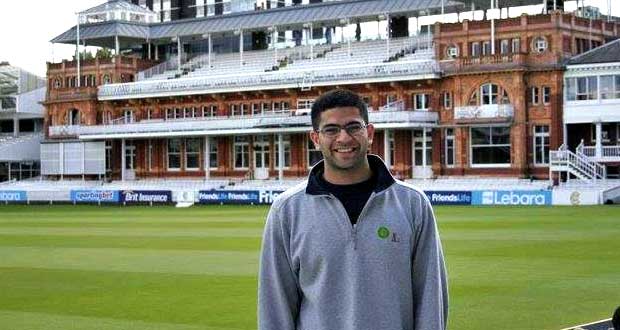
     

    sandeep-huilgol-1

    How did you choose King’s College, University of London over others? How did you go about choosing a university?

    There were a number of boxes I had to check before I opted for King’s. I analysed the Times UK university ratings, sought reviews from my seniors who had actually gone to the UK to do their LL.M.s, attended UK Education fairs, interviewed faculty from King’s and other colleges which had been arranged at these fairs, approached education consulting service providers and lastly, I approached a few senior lawyers in Bangalore and asked them for their views insofar as pursuing an LL.M. was concerned.


    How did you go about writing your SoP? Are there any key factors which one should keep in mind before writing the SoP?

    My SoP was essentially my mission statement. It was my way of putting down on paper the events that led me to opt for law, the reasons for pursuing my masters, the person I would like to see myself become and so on.

    As for the second question, in my opinion, one’s SoP should be a reflection of one’s ideas, thoughts, and aspirations. Honesty in one’s SoP shines through. Be clear in thought and keep it simple. The reader is not going to meet you in person. The SoP is his / her only way of getting to know who you are. In other words, the SoP is your way of making a good first impression. To me, the key points are honesty, simplicity, and clarity of thought.


    How about recommendation letters? Who all recommended you to pursue LL.M?

    Three of my professors at ILS provided me with letters of recommendation (‘LoR’). I asked only those teachers who had taught me more than one subject, and with whom I had interacted with on a more personal level. That way, I hoped that their own impressions of me would be expressed in their LoRs. It’s a tip which I’d give the readers of this interview as well. Again, if a professor asks you to draft a LoR which is to be vetted by him / her, keep it simple, don’t blow your own trumpet unreasonably, and stick to actual accomplishments / feats.

    The readers of LoRs pore over thousands of LoRs annually. They are able to discern the genuine ones from the overly self-eulogising ones.


    How will you compare King’s College, London with that of Indian Law Schools?

    Vastly different. The pedagogy at King’s was much more interactive and engaging. A lot of room was given for individual thought. Subjects were not taught at King’s. On the contrary, subjects were discussed and debated. It was thoroughly enjoyable. My year in London just flew by and I will always look back with very fond memories. A special mention has to be made here for my professor, Ms. Penney Lewis, who is without a doubt, the best professor I have ever had!


    What was your topic of research for LL.M? Why did you choose that subject for research?

    My dissertation was titled, “Are our bodies really ours? A case for legalising the trade in human organs”. It’s a topic which is close to my heart and, while I admit it is a controversial topic, the legalising of trade in human organs is something I’m keen to see it happen in the near future.

     

    sandeep-huilgol-3

    You are currently working at King & Partridge, Bangalore. How did you go about bagging this job? Please tell us about the recruitment process at K&P?

    My application, via e-mail, was addressed to one of the partners at K&P. Thereafter, I was called in for a personal interview with each of the partners, pursuant to which I was offered a job in the firm, which I gladly accepted.


    So how did the interview go? Do you happen to recall any of the questions?

    To be honest, it’s a bit of a blur as it’s been over three years! While I can’t remember the actual questions that were posed to me, I do remember that they were more aimed at determining the person I was and discovering my general attitude and approach to work and life, as opposed to questions of a legal nature.


    What are your day-to-day responsibilities? How is the experience so far?

    As a practicing advocate, my work-profile consists of the following:

    (1) Drafting,

    (2) Researching,

    (3) Assisting my senior colleagues while they prepare for arguments, and

    (4) Appearances before trial courts, tribunals, and the High Court.

    Work has thus far been fascinating, rewarding, and enriching. Most importantly, it’s been fun! However I must admit that I like almost everyone else suffer from Sunday-evening blues!


    What would be your parting message to our readers who are mainly young lawyers and law students?

    First and foremost, enjoy your time in college! You will never get those five years again so make the most of it. Study, participate actively in moot courts / seminars / extra-curricular activities, but also remember to have fun. When work begins however, one must work hard. As clichéd as it may sound, there really is no substitute for hard work. One must read as voraciously as one can, be it work-related briefs and journals, as well as non-work related literature and newspapers / magazines. Although I have not even worked for four years, I can confidently say that it’s a rewarding career-choice. One must however be patient. Only if the foundation is strong and sturdy, which is only possible through diligence and discipline, will the latter years be fruitful. Commitment to the profession and more importantly to justice along with honesty in all walks of life, mixed with a healthy and necessary dose of sports and fun should make for a long and enriching career.

  • Hiral Vimadalal, Assistant Manager-Legal, Viacom 18 on work at law firms and in-house

    Hiral Vimadalal, Assistant Manager-Legal, Viacom 18 on work at law firms and in-house

    Hiral Vimadalal graduated from Pravin Gandhi College of Law in 2009. She is one of the founding members of Moot Court Society at Pravin Gandhi College of Law. She started her legal career as an Associate at ‘India Law Services’. Thereafter she worked at V.A. Associates and Wockhardt Limited. She has recently joined Viacom 18 Media Private Limited as an Assistant Manager – Legal.

    In this interview, we asked her about:

    • Law School experience
    • Importance of internships and co curricular activities
    • Strategies used while working with different law firms and companies


    Why did you decide to study Law? What inspired you to do so? How did you get through to Pravin Gandhi College of Law?

    How the idea of studying law crossed my mind is a very difficult question to answer! Ever since I was a twelve year old, I had pretty much made up my mind to study law. As a twelve year old I had practically zero exposure to what it would be like; but then languages, debates and drama were strong points of interest throughout my school time. I guess law was an extension to doing what I loved the most!

    Well, I guess it was one of those strong intuitive decisions which guide you and shape your future that might’ve inspired me.

    I missed getting into the premier law college in Mumbai and took up admission at another law college closer to home with the intention of working hard in the first year and then getting into that particular premier law college in my second year. However, two months into the course, PGCL (then known as SVKM’s college of law) published an advertisement that admissions for their new five year course were open. Knowing SVKM’s reputation of arranging world class facilities and the best faculty for all their courses, I jumped at the opportunity and moved. I am from the first batch to have passed out of the college. Making that move is one decision I am proud of!


    What were your areas of interest during your graduation? How did you go about developing expertise and knowledge in these areas?

    My key interest areas during my graduation were Intellectual Property Rights, Cyber Laws and Media & Entertainment Laws. My sister has done her MBA in marketing and my best friend is a Creative Designer; hence, I was always over exposed to the world of brands, ads and everything related! I think it was natural for my interest to lie in these areas! A silly confession – I am a brand buff and love advertisements. I am one of the few people who refrain from changing channels during advertisements.

    I had a fabulous college life, where the principal of our college along with the great faculty, ensured that each student’s interests were shown. They arranged for guest lectures and short workshops in various areas of law to ensure that all the students made an informed decision about their future.

    IPR was taken care of in college as a part of the Mumbai University curriculum and I took up a six month certificate course in Cyber Laws from ASCL, Pune. This course provided me with an extensive understanding in Cyber Laws, cases, practical problems and solutions and of course the newly introduced (at that time) Information & Technology Act.


    hiral-vimadalal-2

    As a law student which activities did you participate in? Did you have any guidance on how to go about your academics, co-curricular activities and internships?

    Since we were the first batch, we took up the initiative of setting up the Moot Court Society in our college. I was one of the founder members of the MCS along with few of my batch mates. I have participated primarily in Moot Court competitions in college and also in Client Counselling competitions, essay writing competitions and debates.

    As the years started going by and we grew as an institute, we started taking up the roles as mentors and organizers of various moots in college. We also ensured that the best team gets to represent our college in moots held by other colleges.

    Whatever that I may say about the faculty and guidance, would be less. They ensured that we had great firms/organizations/NGOs coming in for our internships and ensured that we got good exposure in whatever field that we wanted. Of course it was difficult initially being a new college, but we did phenomenally well! We had a very transparent set-up for everything and could openly share ideas and take initiatives for everything from internships, co-curricular activities and even guest lectures.

    Our college organized a one of a kind three day festival called ‘Shartrartha’ which had a series of lectures and discussions by legal luminaries. We had screenings of several trial films followed by discussions on the practicality and applicability.


    What kind of internships did you do while you were a student? Any remarkable experiences during your internships which might’ve contributed towards shaping your career choices?

    I’ve had varied internships throughout my college years. However, I was never working straight throughout those five years since I loved being in college and was actively involved in the fests, moots, etc. I have interned at a full service law firm in my second year (when I hadn’t even started studying the legal subjects) and went back there subsequently in my 3rd year as well. The firm gave me exposure in all sorts of litigation matters, civil and criminal, the nuances of contracts and some knowledge on IPR as well. I used to do a lot of research there, which form the basis of my research skills today.

    Towards the end of my college, I interned at a full service IPR firm, which gave me faith that I could make it as an IP lawyer while reassuring my love for IPR as well. My senior in this firm gave me a lot of insight on Trademarks and the practical applications of what we learn in college. I predominantly did the drafting of replies to the objections raised by the Trademark Registry so it was a stepping stone to what was in store!

    So these internships have shaped different skills and are a founding stone of everything that followed.


    What do you feel about the perception that students of certain ‘elite’ NLU’s have a much easier time in kick-starting their career as compared to law students from other colleges? Is this true at all?

    As much as I don’t want to believe it, it is true. Due to the curriculum and demi-god statuses of the National Law Schools, they manage to get the best internships, best placements and even better salaries. And it is not only the National Schools. It is even between the premier law colleges in cities vis-à-vis the others. I know how many times I have answered questions about my college and why I was not from the premier law college and what my college did. I have seen the scornful look on the faces of prospective employers when they hear that you are not from a particular college. In fact, even after a great interview, things have not worked out because I was not from a particular college.

    I think it is high time the perception changes. People should be judged by their qualifications and talent rather than a name backing their education.


    After graduating from Pravin Gandhi College of Law you joined ‘India Law Services’ as an Associate. How did the appointment take place?

    After completing law, I was looking for a suitable job to kick start my career. I got to know through a friend that ‘India Law Services’ was looking to hire and so I sent my resume. I met the IP partner and it all fell in place.


    You left India Law Services and had joined V.A. Associates. What led to this shift? How was your experience working there?

    Joining V.A. Associates was technically not a shift. The IP partner of ‘India Law Services’ started his own practice and hence the entire team shifted with him. This experience, as I always maintain, was my college to the practical world. Mr. Parelkar is one of the most knowledgeable persons I have come across and to top it, he loves to share his knowledge. I’ve got a great exposure because of him and learned the procedural aspects of IP law, infringement suits and the works. While I was only assisting in suits, it gave me an insight into what is expected in a trademark infringement suit and what must be covered to get a favourable order. I got exposure into the functioning of the Trademark Registry and the nuances of dealing with them. This was also the first real experience at dealing with the clients and the Trademark Registry.

    To sum up, all my skills have been honed by Mr. Parelkar and I would not be what I am and where I am if it were not for this experience.


    You thereafter left V.A. Associates to start working at Wockhardt Ltd. as Senior Legal Executive. What prompted you to keep changing your job so frequently? What was the nature of your work there?

    After working with ILS/VA Associates (which as I explained earlier was not a shift), it was time to spread my wings. I was looking for an opportunity where I could get exposure to the other aspects of IP. Even though my primary interests always have been in Media & Entertainment or Technology, Wockhardt came about and I decided to take it on since Pharma was booming as an industry and lot was happening in the Pharma IP space. My profile was IPR but my responsibility grew manifold. In Wockhardt I was handling a portfolio of 2500-3000 brands and we did everything in-house. We did not engage external counsels, except for litigations.

    The working of a company is completely different than that of a law firm. We were a small team of five-six lawyers and maintained a policy of one-for-all and all-for-one. My senior Debolina Partap might have seen something in me, for she gave me exposure in so many aspects, apart from IP. She groomed me to be an in-house counsel. By the time I left, we had set up a full procedure and SOP for the trademarks/copyrights of the company, I had interacted with a bouquet of law firms internationally for our trademarks, which gave me so much exposure to the Trade Mark policies in various countries and also helped me establish a network. These experiences are really important to shape your future and take you to the next step. I have done several TM litigations, legal notices, and been a keen observer in negotiations, which have all helped me grow in more ways than I can explain. I have done Drug Litigations which involved different laws and had me interact with various government officials. It was also the first time that I got a practical insight into compliances and labour issues. Even though the exposure was limited, I had a lot to learn. I cannot sign off without thanking the organization for giving me my first ever Divestment Transaction. The myriad levels of interaction, the due diligence, IP streamlining, documentation, numerous negotiations and discussions were an experience which I cannot justify with words. Understanding the dynamics of an organization and also the correlation between departments of a company is something that I have Wockhardt and Ms. Debolina to thank for.


    You’ve recently joined Viacom 18 Media Private Limited as an Assistant Manager – Legal. How did the switch from Wockhardt take place? Did you get an offer or did you apply for Viacom?

    Viacom 18 was a dream job. I remember wishing that I somehow land a job there every time I crossed the building. As I said, Media & Entertainment laws have always been a key interest of mine. I was ecstatic when the consultant called me for an interview. While Pharma is extremely lucid and has a lot to offer, I felt it was time to finally pursue a dream job and make the switch before I got labelled as a Pharma Counsel.

    The consultant called me with this opportunity and needless to say, I jumped at it. I was extremely uncertain of landing the job, given my non-media exposure, but my boss may have seen something in me, which I am forever indebted for.


    What does your current work profile at Viacom 18 consists of? How is a typical workday like?

    I am predominantly responsible for the IPR portfolio here as well. Viacom18 is growing every day in terms of IP and the issues are completely different. I am getting more exposure in Copyright and different areas and dimensions of IPRs which are specific to the Media and Entertainment industry. We have also undertaken to sensitize our Business Units to the TM/Copyright Law and hold training for them regularly. I have also been assigned a portion of the litigation profile, which of course is very different from the litigations I am used to handling. So in that sense I am still taking my baby steps with litigation here. My boss, Thomas George is a phenomenal person and is one of the very few “born intelligent” people. He comes from a litigation background, so he is guiding me at managing the litigations like a lawyer, rather than a Manager/In-House Counsel. He teaches in a way that one will never forget for their entire lives. I have a lot to learn from him and hopefully I am taking away as much as I can from his experiences. We have a great team here which is always willing to share and help each other. Everyone is super cool and friendly. It seems like I am working with friends, which makes work twice as exciting. I look forward to every single day here.

    A typical workday is filled with lots of work and lots of fun too. Our day starts at 10.30am and is always action packed. There are several days which are busier than others if there are deadlines in terms of notices, responses to file and if there are several matters on board for that week. But we ensure to get our daily dose of fun as well. So as I said earlier, I really look forward to each day here!


    Does Viacom 18 take interns? What is the process for same?

    Yes. Viacom 18 does take interns. It is need based and we usually route it through HR. Sometimes, we can refer an intern to the team in need for one. However, we do not have a regular policy for taking interns or GTs in the team.


    Many lawyers would say that the actual learning takes place in the years of practice. How far would you say it is true? What was the case in your situation?

    It is true to the last word. While your school or college will lay the foundation stone, it is the practice and what you take out of those experiences that shape the rest of your career and future. You may study the law but will not know which provisions are applicable till you actually do a case involving that law. Further, it is not about the law. It is also about strategy, sometimes avoiding the conflict and how you tie up the interest of the Business unit/client and the facts, to put your best foot forward. Communication is also extremely important. What and how much to say and when is also an important part of the exposure.

    In my case, I believe that every experience I have had during these years has taught me something. Practical aspects of the law can sometimes be very different from what it may appear in theory. This distinction will come only as you move ahead. I have been lucky to have had some great experiences and seniors who have really helped me get till where I am.


    Lastly, what would be your parting message for our readers?

    Law is an amazing field to be in if it gives you the kick. I have never wanted to be anything else. In today’s day and age, when everything can be ‘managed’ it is important to be true to yourself and the profession. We are a big lot and have the power to do a lot if we wish!

    Cherish all your professional experiences. Every challenge you are faced with leaves a lasting impression. So I urge the readers to always be open to getting the best of the experiences, both good and bad. Trust me, the bad ones teach lessons for life! And the good ones stay with you as a fond memory and a teaching for life!

  • Rahul Rai, Competition/Antitrust & Trade Lawyer, AZB Partners on LL.M in International Trade Law from Stanford Law School

    Rahul Rai, Competition/Antitrust & Trade Lawyer, AZB Partners on LL.M in International Trade Law from Stanford Law School

    Rahul Rai graduated from WBNUJS, Kolkata in 2006 and got a PPO from Economic Laws Practice after interning there twice. He joined as an Associate after graduating and worked mostly on international trade and competition law matters.

    In 2011, he decided to pursue an LL.M and got in at Stanford Law School in the USA. He describes his LL.M experience, talks about the world-class professors and facilities and his time as an Article Editor of the International Law Journal.

    After returning to India, he joined AZB & Partners and contributed in building their competition law practice. Here, he talks about:

    • Why he didn’t take up any extra-curricular activities in law school
    • His experience as an Associate at Economic Laws Practice
    • The biggest reason he got through to Stanford Law School, USA
    • Joining AZB & Partners upon his return to India


    Please tell us a bit about yourself. How would you like to be introduced to our readers?

    I am a competition and international trade (WTO law) lawyer working with AZB & Partners in Bombay.


    rahul-rai-2How did you come to know about the newly established WBNUJS? What helped you gravitate towards law?

    Like most kids from my part of the country, I too aspired to crack the IIT-JEE. Like many, I bombed through class XI and XII and unless my parents were to buy a management quota seat in some forlorn engineering college; I stood no chance of becoming an engineer. Even if I were to get into an engineering college, I was confident about my incompetence. Throughout high school I had loved studying non-science subjects like history, economics, and civics. I fleetingly heard about Professor Madhav Menon and the National Law School in Bangalore. Law as a possible career option was becoming more and more promising- it offered the escape from sciences and also promised reasonably well-paid jobs upon graduation. The prospect of landing decent jobs helped win over my parents and their fascination of seeing their son in an IIT. The prospect of getting over the baggage of disastrous XI-XII performance (I got 2/100 in Maths in the first semester in class XI and passed my XIIth with 43/100), never to look back at sciences, studying subjects that I had enjoyed in high school and yet be hopeful of a decent job upon graduation made me zero down on law as a possible career. Thereafter, it was simple. In 2001 Google was relatively new but was catching up as a research tool. I went searching for National Law School, Bangalore and found a thread talking about Professor Menon’s move to Calcutta as the founding Vice-Chancellor of WBNUJS. I wrote the WBNUJS entrance test, got through but failed to crack the entrance to National Law School, Bangalore. So I ended up in Calcutta and WBNUJS.


    How would you describe your time at WBNUJS? Did you partake in extracurricular activities?

    Time at WBNUJS was fun. I entered NUJS with three other friends from school. All four of us had struggled in similar fashion to find a roof over our heads after class XII. The five years at NUJS made me cement the friendship for life. I also met some very interesting and nice people and the friendships forged during college days continue to this day. That is one of my most cherished takeaway from NUJS. Academically, when I look back, I can count 5 out of 50 subjects that were taught brilliantly. I just loved G. Ajay’s Political Science, Prof. Rudranshu Mukheerjee’s History, Prof. BS Chimni + Ms. Sheela Rai + Prof. Mritiunjoy Mohanty’s International Trade Law and M.V. Shiju’s Constitutional and Competition Law courses.

    Extracurricular activities were a strict no for me. I had spent my high school days in boarding school chasing (with reasonable success) the trophies in debates, elocutions and sports and decided to do nothing in law school unless it interested me. So, all I did, was sleep, read a few books, and spend just so much energy on studies that would offer a fighting shot at jobs.


    Right after graduating, you started working at Economic Laws Practice. How did the appointment take place? How difficult were the first few months of ELP given that it focuses mainly on a specific field of law?

    I had enjoyed studying International Trade Law and had done reasonably well in the course. With some good luck I landed an internship at ELP, Bombay. I think I worked hard and that got noticed. I got another opportunity to intern with ELP and I decided to work in their Delhi office. Back in 2006 there were 6 associates in their office and Samir Gandhi led the International trade practice in Delhi. Again, I think I worked hard and ELP made an offer.

    First few months at ELP were difficult. I could barely draft a two sentence email and within the first month I was working on a full blown WTO dispute. Samir was and continues to be a great mentor. I struggled with drafting for about 8-10 months and finally one day I got a draft without any red marks! Working in the area of International Trade law and doing a WTO dispute was more of fun than a challenge.


    How did you build up your expertise in competition and trade law? Please tell us a bit about your work profile at ELP.

    I had joined ELP with the idea of working in the area of International Trade law and the hope that someday when the Competition Act, 2002 becomes operational, take up competition law as well. I spent most of the first eighteen months at ELP working on the WTO Dispute with the US on additional and extra-additional duties on import of alcoholic beverages. I would spend 8 hours in the office and another two to three hours reading up on WTO laws. I guess once you become a lawyer, there is no substitute for reading legal texts and commentaries. I just read as much as I could between Monday to Friday, week after week and month after month while at ELP.

    Sometime in late 2007 I saw an advertisement from the Competition Commission of India for conducting market studies. I took the idea to Samir, who was extremely supportive and so was Mr. Suhail Nathani, my ultimate reporting partner at ELP. We put in our proposal to run a study on the interface between antidumping and antitrust law, the Commission accepted it and thus began my career as a competition lawyer. Again, I read and read- there is just no substitute.

    The work profile at ELP was just what I had asked for- mix of litigation, advisory and policy. Above all, ELP offered the opportunity to do what I wanted to do- trade and competition work.


    rahul-rai

    What prompted you to opt for an LL.M from Stanford Law School? How difficult would you say it was gaining admission?

    The desire to study for LL.M. was driven more by the idea of experiencing life in a very good university and not so much by learning ‘law’ a little more. Perhaps, I wanted to make good for the ignominy of not even coming close to cracking IIT-JEE (I was ranked somewhere around 99000 in prelims)! An LL.M. in the US back in 2011 cost about USD 75K and therefore I wanted to go to a place which ranked amongst the very best. Stanford Law School, of course does not need my certificate. I lucked out, despite my not so great rank and CGPA at WBNUJS, Stanford granted me a seat. In retrospect I think, it was all because of my work experience at ELP.


    Did you apply for any scholarships? How was the academic culture at SLS?

    Stanford Law School does not offer any scholarships to LL.M.s and I had secured the Hugo Grotius scholarship at Michigan. So, it was a tough call. In the end, the lure for the sun and sand in California took me to Stanford. I also tried my luck for INLAKS where I did not even make the shortlist.

    The best part about Stanford Law School was the absence of a formal grading system which made the law school such a fun place. Once you stop pitting students against each other and get rid of the system where one student will necessarily be ranked first and other ranked last, studies become fun. Students no longer run after CGPA, take up courses that they really like and above all study than aim for the top CGPA/rank. Like most top law schools in the US, Stanford attracts the very best of faculty and students. The professors are the very best, the peer group is the most diverse and extraordinarily talented. The law school promotes multidisciplinary education in the truest sense. Some of my friends were able to take up courses at the design school, others opted for ‘coding’. I had read a little on Francis Fukuyama’s work and never knew that he taught at Stanford. Realising this, I ran to register for his introductory course of political theory and despite being very selective he was just glad to take in a trade and competition lawyer with nothing but pop political science theories to offer. Likewise, I wanted to try courses at the Stanford GSB and was able to take up one of the most sought after courses-“Build your own start-up”. If I have to sum up the academic culture at Stanford, I would say that it offers the opportunity to try different things, perhaps fail, try again and in the end if nothing works out then walk out with an experience that will certainly make you a better person, if nothing else.


    You were also an editor of the reputed Stanford Journal of International Law. How did this opportunity come to you?

    Stanford Law School is fairly small but has significant resources. So it offers more opportunities than one can make good of in a year’s time. Every year, the student run law journals invite applications for editors. I had spent close to four years doing trade work and so I tried my luck with the International Law Journal. It worked and I got selected as one of the article editors.

    The experience though was a little ‘under-whelming’ considering how correcting footnotes can be quite boring. The article I edited was written by one of the top trade law practitioners and it was fun to read the primary sources and test the author’s propositions.


    How would you say in retrospect your experience in LL.M. helped you in gaining more knowledge and expertise in competition law? Would you suggest other lawyers having a similar profile to opt for an LL.M.?

    Yes. I studied competition law under Professor Mark Lemley, who is without a doubt one of the very best professors in IP and Antitrust and Charles Koob who has one of the most unparalleled profiles as a practitioner. The lessons in Antitrust and assignments have indeed helped in the manner in which I approach an issue now.

    I would most certainly recommend people to opt for an LL.M. at Stanford. If nothing you’d come back with a lot of good friends and even if you sleep through the classes, the activity surrounding you will leave you richer in many different ways.


    After finishing your LL.M. you started work at AZB & Partners. What prompted you to join AZB? Were there other career options available to you?

    Of course I wanted to spend sometime in the U.S. and had managed to secure an offer from one the top firm’s with their antitrust practice in Washington DC. The law firm withdrew the offer after a few weeks of extending it. I had to come scurrying back to India and look for a job. Although AZB did not have an established competition law practice, Samir and my colleagues from ELP had moved to AZB. I spoke to Samir and Zia and was convinced about the firm’s focus on building the competition law practice. Zia was and continues to be very enthusiastic about competition law and that was a big plus. The prospect of reuniting with the old team at a firm that promised to invest in a new area of law made the decision to join AZB a fairly simple one.

    I would have considered sticking around in the U.S. if we completed the “Build your own start up” course at Stanford GSB by securing the seed capital from a venture fund. All VCs told us we were ahead of the curve (polite way of saying the idea sucks). Once the start up dream failed to take off, and the DC law firm withdrew its offer, I came back to India.  AZB happened and I did not try my luck at any other firm.


    Have you ever considered litigation or starting up on your own? Would you say the opportunity a firm provides for a young lawyer is worth the trade off in building a reputation?

    The romance of doing litigation never got to me. I had grown up seeing a generation of my family and family friends with nothing short of master degrees looking for jobs and not finding any. Deep down I wanted a JOB and at the moment I am happy with the sense of security the monthly pay cheque provides.

    I don’t necessarily see a disconnection between the opportunity offered by law firms and building reputation. All professions are about building trust and maintaining one’s credibility. In a law firm setting, one has to first gain the trust of his/her colleagues, immediate seniors, then the partner and finally the clients. I like the system where you are slowly exposed to different levels of responsibilities. Once you have won the trust of colleagues, seniors, partners and clients, recognition will come. On the point of building reputation I do not see any trade offs between a law firm career track and private practice track. One has to earn the trust of everyone around whether at a law firm or at a counsel’s chamber. Become trustworthy and then recognition is bound to come.


    What are the primary essentials of a corporate lawyer? How do you say a fresh graduate can work on building these skills?

    There is a massive gulf between what is taught at law schools and what is expected from an associate at a law firm. If you manage to learn something, there is a good chance that you will have to unlearn it all once you start working. I generally think that most students walking out of the law schools have more or less the same level of intelligence and certainly sufficient intelligence to become a successful lawyer. The real differentiator is communication skills- written and spoken. The good part is that you need not be a gifted writer or orator- these skills can be acquired. And for that you need to be very very careful in the first job you pick. Rather, the decision to take up a job should primarily be driven by the senior you’d work with. If you find the right senior, the battle is half won. And if the senior has the time and patience to guide you, then nothing like it. Else just observing every single word he/she writes and speaks, analyze the difference in approach, and very soon you would develop your own style, tempered by the basic dos and don’ts taught by the senior.

    The other skill set that law schools can never provide is the ability to handle pressure. As you progress in your career, the pressure points will change and you’d see yourself struggling again. It is a continuous process and I am yet to reach a stage where I can start preaching.


    What is your current work profile at AZB? How can an intern be of help while trying to learn?

    I do a mix of competition and trade law work. I would say about 85% of my work is in competition law. In competition, a bulk of my work involves representation in behavioural cases and merger notifications to the CCI. Increasingly companies are approaching us for risk assessment on their business practice and guidance on mitigating risks. We loosely call it competition advisory and compliance. In International Trade I do the occasional representation for an exporter in an anti-dumping or safeguard duty investigation.

    Interns are quite valuable as the colleagues are working full time. We try and involve interns in ongoing assignments for all types of work, including research and drafting of bits and pieces of let’s say an appeal memo. All that I look for in an intern is ability and willingness to work hard and with diligence.


    What would be your parting message to our readers?

    To continue to work for a long period in a law firm set up can be challenging. Unless you enjoy the work, there is just no way that you will survive. So, pick the area of law that interests you the most and make a career out of that.

  • Mrinali Kaul, Associate at Talwar Thakore, on the Company Secretary course, grades, internships and an ideal law school life

    Mrinali Kaul, Associate at Talwar Thakore, on the Company Secretary course, grades, internships and an ideal law school life

    Mrinali Kaul graduated from ILS Law College, Pune in 2012. She is a qualified Company Secretary and has an enviable academic record and an excellent series of internships at top law firms. As a law student she has been quite active and participated in many debates, MUNs and conferences. By the time she graduated, she had received a job offer from Talwar Thakore & Associates and is currently working there as an Associate.

    We have taken this opportunity to ask her about the several decisive moments in her career amongst other things including:

    • Importance of internships and maintaining grades
    • Importance of extra-curricular activities in law school
    • Completing the Company Secretary course alongside law studied
    • Work at TT&A


    When did you think you were suited to a career in law? How did you get through to ILS?

    Pursuing a career in the legal field was always at the back of my mind whenever I used to read novels written by Jeffrey Archer and John Grisham. The fact that top-notch orators and politicians in the country were lawyers by qualification added to the charm of being a part of this respected profession. Being a lawyer was also listed as one of my possible career choices through an aptitude test that had been conducted in my school, DPS Greater Noida. I made the final decision to take up law and become a first generation lawyer quite late in the day i.e., after giving my class 12th board exams. According to me, the pre-requisites for a career in law are that one should have a good command over the English language, ability to reason, self-confidence and be able to put forth one’s views in a coherent manner. I believed that I possessed the necessary skillset to be a successful lawyer and therefore chose law as my calling.

    ILS admits students based on their class 12th marks and an interview thereafter. As I had a reasonably good score of 94% in class 12th, I was able to join ILS for the five year law course.


    Which subjects did you enjoy during your qualifying degree?

    [sociallocker]The subject which I enjoyed most was company law and this paved the way for a career in corporate law. Company law is like the Holy Bible for those planning to join a corporate law firm and it is essential to be well-versed with it. What I liked about this subject was the logical manner in which it can be understood and one can draw references from the corporate world for understanding any concept. The linkage to the corporate world made it a really interesting subject to grasp and understand.


    Did you ever indulge in academic legal writing? What, in your opinion, are the advantages of taking part in such activities?

    Yes, I did indulge in legal writing and the articles were published in my college journal as well as in relation to the Company Secretary course. I also represented my college in moot court competitions and quiz competitions in the various law festivals held in different colleges. I have also attended conferences individually and presented my papers there. Such events are an integral part of a law student’s life as they help you to go beyond academics and also shape your personality for the future. Often one ends up forging lifelong friendships and making useful contacts at these inter-college events. Therefore, I would definitely recommend everyone to take part in one or the other event at least once in their law school life. I do not think making it mandatory serves the purpose as then students would merely do it to fetch marks and the intention to do something on your own initiative will be lost. Law schools should not spoon-feed the students and it should be left at the discretion of the students to choose whether to pursue such activities or not.


    mrinali-kaul-2

    During graduation, you interned with top-notch law firms. Are there remarkable experiences during your internships that shaped your career choices later?

    My internship choices were primarily guided by my inclination to work in a corporate law firm upon graduation and therefore, I wanted to gain as much exposure as possible by interning in the top law firms in the country. During internships, I was mostly allotted research work relating to company law, securities and banking law. I have also been involved in due diligence exercises being undertaken at these firms and preparing memos on various legal issues. These internships made me realize that corporate law is really an all-encompassing term and there is a lot for me to learn in this field. Therefore, I wanted to join a corporate law firm after graduation to be able to realise my potential in this field.


    Would you say a great CGPA is a necessity to kick start a good career in the legal profession?

    Definitely, a great CGPA opens doors for you to bag the best internships- be it with law firms, senior counsels or even companies. It is a crucial factor during recruitments as most organisations have certain minimum CGPA requirements which one needs to satisfy to be eligible to even apply for a position as an Associate. However, having said this, marks are not the only determining factor in the long run and it is your knowledge and its application that counts ultimately.


    You had also managed to pursue the company secretary course. Tell us why did you chose to do it and how did you manage it with college?

    The course in ILS is structured in such a manner that it leaves you with ample time to pursue other courses, hobbies, activities, etc and pursuing two courses simultaneously was not really a difficult task. If you’re smart and efficient about your studies and prioritise well, it is quite a cakewalk. As I had joined law school with the intention of joining a corporate law firm upon graduation, I wanted to acquire any knowledge which would help me in the professional world and this is where the company secretary course came into the picture with its offering of an integrated approach to multi-disciplinary subjects such as law, business, finance, economics and accounts. Coming from a science background in school, I found this course to give me an edge over my peers as it covered newer areas of law such as competition, securities markets. These subjects were not taught as part of our curriculum in law school; hence this additional knowledge placed me ahead of my batch mates and also helped me in securing my job.

     mrinali-kaul-1

    Does graduating from a prestigious school make a difference in landing a good job in this field?

    Yes, to a certain extent in the initial years, graduating from a prestigious law school does have its benefits in the recruitment scenario. However, having said that, if you’re intelligent, hardworking and smart, there’s no reason that you should be denied an opportunity irrespective of the law school you have graduated from.


    Soon after graduation, you joined Talwar Thakore and Associate as an Associate. How did your appointment take place? How was your interview? Please give our readers some tips to nail a law firm interview.

    My appointment at TT&A happened through the placement committee of my college. The selection process was two-fold: the first step involved sending my resume and an application form which covered questions relating to my skills and achievements, reasons for becoming a corporate lawyer and wanting to join the firm, etc. Subsequently, the shortlisted candidates were called for a personal interview to the firm’s office in Mumbai. The interview was very relaxed and I was asked to talk about myself and questioned based on my resume. I was also given a case-study based on which my critical and reasoning skills were tested and two days later, I was given the good news that I had been chosen to join the firm.

    This was the only interview that I gave and cracked, so here are the tips from my limited interview experience:

    • Be thorough with your resume and know it like the back of your hand;
    • Research on your prospective employer firm;
    • Stay calm;
    • Maintain eye contact with all your interviewers;
    • Be properly dressed; and
    • Put your cell phone in silent mode.


    How tough was the first year of law firm?

    Working in a law firm as an associate is a completely different ball game from interning in one. You have to be responsible and take complete ownership of your work product. Fortunately, at TT&A, we have a very healthy working environment and all the partners and senior lawyers are very encouraging and helpful and make sure that you blend in very easily with everyone and feel at home in the firm. Honestly, I did not find the first year tough. Certainly, it involved a lot of learning as what we are taught at law school is purely theoretical. But I can safely say that with the amazing work culture at TT&A, I sailed through it like a breeze!


    Tell us about the nature of work you’re entrusted with therein and what’s a typical day like? What is the most challenging aspect of your job?

    At TT&A, in the initial stage of our career, we are not compartmentalized in different sectors like corporate, banking, capital markets but are allowed to work on a wide range of transactions across all practice areas that the firm has to offer. This allows us to gain exposure to a variety of legal issues across multi-disciplinary jurisdictions and decide on our specialization thereafter. I have been involved in due-diligences, drafting of transaction documents in corporate and banking transactions, preparing research memorandums and notes.
    A typical day involves researching on contentious issues, drafting transaction related documents, discussions with senior colleagues and responding to client queries by email or over calls with them. The most challenging aspect of my job has to be beating the deadlines and making sure the work product meets the clients’ expectations. My work doesn’t involve litigation and taxation at all.


    Does your qualification in law and company secretary complement each other in terms of your work?

    Definitely, the company secretary curriculum is such that it equips you with not only legal knowledge required in the corporate world but also the business and the financial angle of a transaction. This inter-disciplinary knowledge comes very handy during transactions as it helps you to understand the bigger picture and not merely the legal issues involved.


    Where do you see your career going from here?

    I aim to grow with my firm and get more experience while working on the transactions, be it in corporate, capital markets or the banking sector. I am still at a nascent stage of my career and it is important for me to absorb and gain as much knowledge as possible to build upon it later.


    What would be your parting message to law students who want to be successful in corporate law?

    Be focussed, work hard and enjoy life!

     [/sociallocker]

  • Aditya Chopra, Legal Counsel, Sahara India on utility of mooting and CGPA in life after law school

    Aditya Chopra, Legal Counsel, Sahara India on utility of mooting and CGPA in life after law school

    Aditya Chopra is a graduate from Institute of Law, Nirma University (Batch of 2012). He has a noteworthy academic, mooting and debating record. His diligence and mettle at work was recognized when he received a job offer from Sahara India, Mumbai in last year of law school. He currently works as an in-house counsel there.

    In this interview he talks about:

    • Academics, internships, debates and moots
    • His journey from an intern to getting job offer from Sahara India
    • Work as in-house counsel at Sahara India


    How would you like to introduce yourself to our readers?

    Hello, my friends!

    They say a lawyer needs to be a jack of all trades. I believe in it but with slight improvement. In this competitive world, where law profession is no more a family business, a budding lawyer needs to be a jack of all trades – at least in the initial five – ten years, one needs to have a multiplicity of experience to become a master of one. Post my graduation from Nirma University, I started my career with ASA Legal and thereafter, I worked with Advocate Ravi Prakash (Partner, DSK Legal, Delhi). I am currently working as the Legal Consultant to Mr. Seemanto Roy, promoter of the esteemed Sahara India Pariwar. I do not believe in a stereotypical way of ‘lawyering’. I look at a problem from a multi-dimensional angle and like to explore and test all the possibilities and alternatives for my client.


    Did you have lawyers in your family? Does a legal background help in the long run? Did any of your family members motivate you to pursue a legal career? Why did you decide to study law?

    I am the first one to break the ice in the lineage. With zero motivation from anyone in my family, it was my sole decision to go ahead in this line. Although my father did law but later on he decided to join a public sector bank. But I never ever felt hesitant or under-confident about it, as lawyering is all about confidence whether you are appearing in the Court or dealing with the clients during transactions.

    Certainly, a legal background helps. I do not deny it, be it for securing an internship to sometimes getting a job or later on for hooking the clients. But again, the merits of a lawyer or his approach towards a matter or the ability to deliver to the client – these traits always remain individual-specific and cannot be attained through heritage. So, there could be advantages to certain degrees (may be 10-20%), but in the end, in the longer run, everyone’s fate in the profession would be tested on his/her capacity to retain the knowledge (memory), maintain the immense pressure (patience) and the readiness to work (determination).

    Though I never dreamt of becoming a lawyer from childhood, but while growing up, I always used to testify everything on the touchstone of rationality and logical sense. And that’s how when I got to know that there is an extensive five-year integrated course to offer by law schools over the traditional 3 years post-graduation (this realisation was only 10 days before the last date of filling out the forms of the colleges, some even got missed), I grabbed the opportunity.


    aditya-chopra-2

    Tell us about your time at Nirma University. What all activities did you participate in?

    Spending five years in law school just after coming out from high school obviously shapes one’s identity and has indeed influenced my personality as well. It was like a leap of faith for me to join Nirma and it prepared me not only for the multi-faceted profession of law but also gave me one the most enjoyable and memorable years of my life.

    Everything at Nirma was a challenge in itself, as we were the pilot batch and therefore, we were always the subjects of the experiments conducted by the Institute on a trial and error basis. Life at Nirma was all about discipline with the most stringent rules of attendance. We were regularly assessed like any other good law school, not only on the basis of mid-sems and end-semester examinations, but in between, we also used to be bombarded with projects, term assignments, quizzes, research papers and moot courts etc. with strictest deadlines. This not only sharpened my research skills, but I also got trained to find right information at the right place in the limited time and helped enhancing my multi-tasking skills.

    I always liked to play a participatory role in all the activities taking place at the college by organizing moot competitions or conferences or lectures etc. I was lucky to represent my University in moot court competitions on national and international levels like 8th Surana and Surana International Law Moot Court Competition, 6th Leiden Air Law International Moot Court Competition and Willem C. Viz International Commercial Arbitration, Vienna etc apart from participating in various debate competitions.


    How has been your experience serving different committees while at Law School?

    I used to be really active in all the activities taking place at the Institute by being the part of the different committees in all the semesters like Moot Court Committee, Debating Committee, Organizing Committee, Cultural Committee etc.

    That’s the advantage of being part of the very first batch of the Institute, though we lacked experience in terms of strong alumni, but we hardly cared. We never had to follow any settled irrational norms of the college. We were constantly exploring, always on our toes, growing as an Institute. From collecting funds to managing huge sponsorships from the market for organizing a moot court competition to orienting juniors with mooting skills – to organize cultural events, I took interest in all. And I give a huge credit to our Director Mrs. Purvi Pokhariyal and her team to push us to every corner possible. They all mentored and supported us well during our initial times and then gave us the freedom to question and be the part of the norms set by the college.

    I think it’s really significant to work or be a part of at least some of the student committees, as it really teaches how to work in a team with the people coming from different backgrounds with different thought-processes to reach an amicable solution and if not much, it really teaches you to be tolerant to the people you may not like otherwise.


    How do you recall your internships? Did you learn many skills while interning?

    It was part of our course curriculum to intern after every semester for a month. My internship experience includes working with AMSS, AZB, Trilegal and Phoenix Legal, law clerkship with the erstwhile Supreme Court Judge – Hon’ble Mr. Justice Surinder Singh Nijjar. Since ours was the first batch, it was really difficult to secure internships as the big law firms would not recognise us due to lack of our alumni. Therefore, initially I had secured internships only through personal references and gradually I understood the pattern of the firms to accept applications for internships. One should prepare a strategy for early and well drafted applications to the appropriate firms and at the same needs to be really patient enough to accept a rejection from almost any kind of firm – big or small.

    These internships were extremely instrumental in shaping my legal career when I look back now. It provides an opportunity for students to get practical exposure of work, the application of different laws which are freshly taught in the law schools. Plus the best part is you get to interact with interns from different law schools which help in growing your network in the longer run.


    You have participated in various moot court competitions. How do you look at this exercise?

    This is one of the most delightful experiences which Nirma gifted me through mooting – I was lucky enough to travel across the country and overseas to taste its fruits.

    As, I mentioned earlier also, Nirma was extremely strict in terms of attendance. We could never bunk. I swear, I can count on my fingers the times, I got lucky.  There was literally no way anyone could excuse the classes – except mooting and debating. And when I realised this, I was game for it.

    From the very first year, we were given the opportunity to represent our Institute on the national level, but that opportunity was provided only after tough screening at the college level through an intra-college mooting panel or debating panel. Either being the member of the first team to represent the College at the 7th NLSIU Parliamentary Debate in my first year and a part of the first team to go international and participate in the Willem C. Viz International Commercial Arbitration at Vienna, Austria in my final year, it was a constant ride of learning. Due to lack of seniors’ guidance, especially in the first two years, sometimes we got confronted of our short-comings only at the venue of the competition. But I never got disappointed by that, instead learnt from the best teams, went back to college, polished myself and managed bringing laurels to the college.

    I think it is always good to participate in Moot Courts. Moot Courts are the closest experience that you can get to – appearing in a court involving a hypothetical case involving a moot question of law – you read books on different subjects, research, frame arguments, prepare memorials and appear before a hypothetical Court (where judges are always keen to take your case and officially rag you). It helps you at the student level itself to learn to identify the questions of law from the questions of fact, it hones up your research skills and finally organizing a legal argument issue by issue in the time bound manner. Mooting brings out the best in you to put across an argument, justify it with an intensive research with the combination of court-mannerism and court crafting.

    I would not say that it has helped me getting a job instantly. But mooting is in itself a cherishing experience and it certainly adds to one’s resume as a prospective employer would always go for a well-rounded person over a simple aggregation of the marks scored in all the semesters.


    You are currently working at Sahara India. How did you go about getting recruited there? Please tell us about the recruitment process at Sahara India.

    My recruitment at Sahara was an example of Talent poaching. My last office was working with Sahara’s team in a particular litigation, where I got the opportunity to interact and work personally with one of the promoters of the company. Unlike the usual selection of Sahara which starts from sourcing and interview, I was just offered the joining letter with the specified date and I embraced it. I feel privileged for the same.


    How important according to you is CGPA in building a career in the legal industry?

    CGPA cannot be the final determination to one’s legal education. But, when a law student applies for a job, the first thing would be the curriculum vitae (CV) and the attention of the interviewer would obviously go to the CGPA first. Undoubtedly, the first impression is created by your academic achievements which rightly includes CGPA, though I agree, cannot be the ultimate indicator as I never found myself convinced to run in the chase of 9 and 10 pointers.

    I would recommend a more balanced approach to the law school life, inclusive of all the flavours and opportunities a law school can offer. It’s worthwhile to focus on extra-curricular activities like mooting, debating, writing articles etc. – it all acts as building blocks in the formative years of the profession.


    Many people believe that working as an in-house counsel affords more work-life balance and is less demanding. Would you agree?

    Most of the large companies, rather than outsourcing all its legal work to law firms, have lawyers on its board to represent the company’s legal interest who are known as “in-house” counsels.

    There is a popular belief that working with companies is less demanding. I think it all depends more on the company’s legal approach. As per my experience, working with a company calls for a greater responsibility and work-life balance does not happen so easily. Unlike with the law firms, the approach towards a given task is taken with far greater concern rather than just being ‘another clients’ work’. Any advice tendered should be well founded within the contours of law while keeping in mind the welfare of the company as well.


    If you could re-live your 5 years in Law school, is there something you would do differently?

    I have done it all and had good fun and no regrets.


    Lastly, what would be your parting message for our readers?

    There isn’t a sure shot way to success in the legal profession. Everyone has his/her own unique story of success. Believe in yourself – something will surely come to you. No point in comparison and ultimately losing your heart. All you need is patience and hard work.


  • Tulika Chakraborty, Associate at Kochhar & Co. on Corporate Law and Law Firms

    Tulika Chakraborty, Associate at Kochhar & Co. on Corporate Law and Law Firms

    Tulika Chakraborty graduated from Symbiosis Law School in 2011. She has an enviable academic record and an excellent series of internships at top law firms. During law school, she participated in various co-curricular activities including moot court competitions, debates, and conferences. She also has a couple of publications to her name. Currently, she works as an Associate at Kochhar & Co.

    In this interview, she talks about:

    • Importance of co-curricular activities like mooting, etc.
    • Appointment and work experience at Kochhar & Co.


    How will you introduce yourself to our readers? What motivated you to choose law as a career?

    Hi, I am Tulika Chakraborty, a corporate lawyer associated with Kochhar & Co. and an alumnus of Symbiosis Law College.

    Well, I was always charmed by the mad pace, responsibility and the glamour that comes with the legal profession. Further, with the Indian economy opening still on the upside and huge potential for growth due to liberalisation and globalisation, there seemed to be a lot of scope in the field of transactions and hence the need for corporate lawyers in the foreseeable future. To add to that, my father’s dream and motivation boosted the zeal to reach this point of success in life.


    tulika-chakraborty-1

    Tell us about your college life? What all activities did you participate in?

    I have always been a consistent student in college, trying to balance my course and extra curriculars. I have pursued two diploma courses from Symbiosis Law School, in addition to my regular law degree. I have been a part of certain committees and participated in programs organised by my college from time to time. College life at Symbiosis was fulfilling and has tremendously helped me grow into a comprehensive adult. I guess a good college life includes academics and life experiences.


    What were your areas of interest during your graduation? How did you go about developing your skills and knowledge in these areas?

    I was always interested in foreign exchange laws. However, we did not have that as a subject back in college. It were my stints as an intern with various law firms that gave me my first true exposure to the practical side of law and it was during that time that I became sure of the area of my interest in foreign exchange laws and corporate laws. Reading articles on foreign exchange laws issued by various law firms and magazines like yours have also guided me all through the way.


    How was your experience serving various student committees at SLS?

    So I was a part of this committee engaged in the upliftment of rural children by way of spreading awareness regarding the necessity of primary education for children. As a part of the committee, we would visit villages etc., gather information regarding the literacy rate amongst the children, income level of a family, child labour etc. We would thereafter educate them on the necessity of having their children educated and refrain from making children work. We would also get in touch with various NGOs, obtain necessary financial assistance and provide help to the children by way of purchasing books, stationeries etc. Being a part of committees helps one to understand and deal with people having different mind sets and perceptions. This in turn helps one to become a team player, which is a crucial requirement of any profession.


    What do you have to say about mooting and publications? Do they have any ‘bonus’ value when seeking jobs?

    Mooting and writing journals at law school is always good since it helps one improve upon his/her research, drafting and debating abilities. These are very important skills that a lawyer is expected to possess. In my view, such co-curricular activities do have a bonus value when graduates seek jobs since it reflects a person’s passion and zeal for the legal profession.


    After graduation you joined Kochhar & Co. It’s been three and half years of your work experience in corporate law. What would you say contributes to the high attrition rate of the top law firms?

    I was interning with Kochhar & Co. in my last year of college and bagged a pre-placement offer there. I have got a brilliant exposure here. I believe the work environment can be difficult as times and the inabilities to handle the work pressure contribute to the high attrition rate amongst the top law firms.


    Many lawyers say that years of practice can make a person adept at any discipline of law. How far would you say it is true? What was the case in your situation?

    I don’t believe that is true at all. It all depends upon the exposure a person gets and his/her willingness to learn. This can happen within a couple of years of being in the industry and might not happen after years of experience as well.

    At Kochhar, I primarily handle transactions and general corporate commercial matters. In addition to this, I have got opportunities to handle real estate, insurance, employment and labour matters etc. I have got a brilliant exposure in all non-litigation matters which has helped me build my understanding of the field I seek enjoyment while working and gather a basic understanding of all practice areas at the same time.


    What all does your profile at Kochhar & Co. encompass?

    As I mentioned earlier, I am primarily a part of the transactions and general corporate and commercial team. When there are transactions being handled by my company, my job is to focus on those. However, I otherwise deal in commercial documentation, corporate secretarial matters, labour and employment etc.


    How is real legal work different from those portrayed in popular soap operas? Are there any misconceptions which law students hold?

    It is different experience to work as an intern and as a lawyer. As an intern, one is mainly entrusted with research work and one doesn’t have any responsibility towards clients etc. Once one starts working, one becomes answerable for everything one says or writes. One begins handling clients and it gives a different level of satisfaction and happiness.

    On the misconception front, I don’t think I had any major/crippling misconception but with time I have come across people who during their college tenure believe that legal profession is similar to what is shown in Boston Legal and Suits (the famous soap operas). Sooner they get ready for the grind the better.


    What do you think differentiates a good intern from the rest

    I believe sincerity is a very important quality which one must possess. Interns, who ask for work, research well and come back with accurate answers based on appropriate legal provisions and judicial precedents make a difference and improve his or her chances of absorption as a lawyer.


    Life for law-firms can be very hectic at times. How do you unwind?

    Well honestly, at Kochhar, we have sufficient work life balance. I believe in fitness and working out. I love to cook as well. All these activities act as a stress buster for me.


    Where do you see yourself five years from now?

    I see myself as a General Counsel of an MNC.


    Lastly, what would be your parting message for our readers?

    Jeremy Bentham had once said – “Lawyers are the only persons in whom ignorance of the law is not punished.” I believe as lawyers, it is important for us to keep abreast of the latest legal developments. One should strive to keep themselves regularly updated with the latest legal developments happening in our respective fields.


  • Leoni Mahanta, Trademark Attorney, AMSS on work experience and LL.M from NUS in IPR

    Leoni Mahanta, Trademark Attorney, AMSS on work experience and LL.M from NUS in IPR

    Leoni Mahanta is currently working as a Trademarks Attorney with Amarchand & Mangaldas & Suresh A. Shroff & Co. (AMSS), Gurgaon. She graduated with a B.A.LL.B. (Hons) degree from National Law Institute University, Bhopal in 2009. She then went on to pursue Masters in Intellectual Property Rights and Technology law from National University of Singapore and has thereafter worked with two boutique IP law firms, initially at ZeusIP and then at Lall, Lahiri & Salhotra.

    In this interview she talks about:

    • Law school experience at NLIU and NUS
    • Work experience at ZeusIP and Lall, Lahiri & Salhotra
    • Work as Trademark Attorney with AMSS


    How would you introduce yourself? Please tell us a bit about how you gravitated towards law.

    Hi, I am Leoni Mahanta and I am currently working as a Trade Marks Attorney with Amarchand & Mangaldas & Suresh A.Shroff & Co. (AMSS), Gurgaon.

    My maternal grandfather was a very big name in the legal fraternity of Assam. As a child, I would hear his great courtroom stories, the stature he enjoyed in the society, and that inspired me to become a lawyer so that I could carry forward his legacy.


    Please tell us a little about your law school days at NLIU? How were you at academics?

    The 5 years I have spent in National Law Institute University (NLIU), Bhopal, are indeed very close to my heart and the whole experience has a major impact on who I am today. Studying at a National Law School gave me the opportunity to interact with the cream crowd of the country. Being a part of the competitive environment at NLIU, I became a goal oriented person at a young age. I was an above average student with a decent CGPA and I actively took part in extra-curricular activities as a core member of Gender Justice Cell and Access to Justice Cell and was involved in UNDP funded projects. My reading was not limited to class-room notes and course materials, and I would read from books which helped me to understand the basics. The purpose was not to cram up the course material to score high grades but to understand and enjoy what I was studying.

    Most importantly, one of the key highlights of my law-school years was travelling all over Madhya Pradesh and beyond, getting to know the culture and enjoying the hostel life with my friends. There was always so much to do – exams, projects, presentations, extra-curricular activities – and coping up with the trimester system taught me mechanisms to multi-task, all of which are now helping me being an associate at AMSS and still maintaining work life balance.


    How important do you say is a good CGPA for an illustrious career in law?

    Good CGPA is definitely very important to be noticed by a potential employer and in securing admission for higher studies at top law or business schools. However, for an illustrious legal career, the marks you have scored in law school exams have no role to play. I believe we should choose to work in the field which interests us, be sincere and honest in our attitude towards all the assignments we are involved in, be it big or small. In short, if we love our work we will naturally put all our efforts and would want to be updated with latest legal developments which in turn will reflect in the quality of our work.


    leoni-mahanta-1

    How do you think internships are beneficial to law students?

    Internships give students the opportunity to experience the practical aspects of law and provide exposure to a professional environment that a law school may not otherwise be able to provide. I would advise law students to intern with Non-Governmental Organizations, National Commissions, Litigators, Corporate Law Firms and as Judicial Clerks so that they can have a fair idea of different practice areas and can gain clarity of what they would want to pursue as a career. Internships also provide great platform to refine legal skills, learn your strengths and weaknesses and to network with legal professionals who may prove to be mentors in finding jobs in the future.


    After your graduation, you went to pursue Masters in Intellectual Property Rights and Technology law from National University of Singapore. How would you describe your experience as?

    Yes, pursuing higher studies was always the plan! I was not mentally prepared to start working right after law school. I felt it was too soon. I wanted to go out in the world, experience different cultures, meet new people and become more independent. Though I was offered Scholarship by Kings College London, I chose National University of Singapore (NUS)because of its global approach to education and research, with a focus on Asian perspectives and expertise. Also, the University is considered to be one of the best in Asia offering diverse course modules which are taught by the professors from the top most universities of the world.

    Studying in Singapore was a life changing experience. Living in a different culture, interacting with people from all over the world helped me discover myself, break down my stereotypes about many things and see the world in new ways. The LL.M. gave me the opportunity to make great friend, meet new professionals and build invaluable relationships with peers from around the world. Also, NUS organises regular professional networking gatherings which helped me to develop networking skills. I also had the opportunity to intern at Drew & Napier LLC which is one of Singapore’s leading and largest law firms.  This experience taught mecross cultural skills and provided an international professional exposure.

    Pursuing an LL.M. abroad may not be a good idea if you are expecting it to be a means to getting a job abroad or top law firm in India. But personally, I believe that studying and living abroad contributes to overall development of one’s personality, preparing to adapt to unfamiliar environments and improve interpersonal skills as a result of interacting with people from diverse backgrounds and cultures.


    After completing your LL.M, you came back to India and started your career at a boutique Intellectual Property Firm. How would you describe your experience working at boutique firms?

    I worked in two boutique IP law firms, initially at ZeusIP and then at Lall, Lahiri&Salhotra.Working at these firms proved to be beneficial as from the very start of my career I got the opportunity to work directly under the supervision of the Partners, work on wide variety of matters due to less compartmentalisation of work, take more responsibilities and directly communicate with clients. Working in boutique set-ups helped me to gain more control on the practise, become responsive and develop management skills.


    Currently, you work as an Associate at AMSS. What prompted you to make this choice and how is your experience so far?

    Working at AMSS was a natural choice as I was looking for varied and challenging work and it is the best platform to experience the cream legal work in the country since it has diverse range of clients comprising world’s top business houses.

    Working at AMSS is a very fulfilling experience. The people that I work with are some of the brightest and most insightful people that I have ever met. AMSS has a very women friendly environment and the firm takes various initiatives for the well-being of the employees.


    What kind of work and responsibilities does an associate at AMSS deals with? What should a student do so that he gets placed in a prestigious firm like AMSS?

    Work and responsibilities of Associates at AMSS differ from team to team. Personally speaking, I believe that if one is sincere, good at work and takes initiatives then opportunities aregiven to work in wide range of matters and take more responsibilities.

    The general notion is that one should be amongst the top 10% of the class for campus recruitment in AMSS. I joined AMSS as a lateral joinee and can only comment on the basis of my personal experience. I believe that a good CGPA is important but AMSS also considers if the candidate has a good grip of the work he / she is doing and the general attitude towards work. AMSS appreciates candidates with well rounded personality and good inter-personal skills. My advice to the prospective job seekers is to develop strong base in their practice area, be honest with the interviewer and develop the spirit to be nothing lesser than the best. Recruiters can read your mind 🙂


    Last but not least, what’s next for you?

    Every day I go to office as if it’s my first day at work with the determination to prove myself and be better than yesterday. I believe the doors of great opportunities will open up if I continue to be true to myself and my work.

  • Adyasha Das, Associate Khaitan & Co., on Corporate Law, getting a PPO and moots

    Adyasha Das, Associate Khaitan & Co., on Corporate Law, getting a PPO and moots

    Adyasha Das graduated from the 2013 batch of National Law Institute University. She is one of the most diligent and illustrious scholars of NLIU and has a noteworthy academic, mooting and debating record. She was also the Convener of Moot Court Society, NLIU (2012-2013). Currently she works as a Corporate Law associate at Khaitan & Co. She has gone about achieving things on the sole basis of her merit.

    We asked her to share her experiences and strategies she used over the years. In this interview, she tells us about:

    • Work experience as the Convener of Moot Court Society, NLIU
    • Her journey from being an intern to getting job offer from Khaitan & Co.
    • Importance of academics, internships, debates and moots


    What motivated you to choose law as a career?

    Considering the number of lawyers and people from the legal background that dominate the corporate, social, and political scenes of the country, I don’t agree that there is currently any prejudice against law as a career in India.  If there were any apprehensions against the profession, the emergence of CLAT, national universities and lucrative job offers are fast changing perceptions about the profession.

    That said law wasn’t my first career choice. Although I did not come from a background that was prejudiced against law as a career, I wasn’t aware of the opportunities, relevance, and prominence of a legal career. In fact to be honest I inadvertently stumbled upon law, but that is a long story. However, what made me continue the pursuit was that law indulged my curiosity and engaged my attention.


    Tell us about your time at NLIU, Bhopal and the highlights of your college life and achievements?

    Time at NLIU was life aptly described by Calvin and Hobbes “Life’s a lot more fun when you aren’t responsible for your actions.” College is place that redefines the phrase spoilt for choice in every conceivable way. I made some incredible friends, learnt a lot and mostly enjoyed my time there.

    I am from a small city and hence for me the biggest highlight of NLIU was that it made me come across so many people, ideas, influences, thoughts, and possibilities. To add to that, I was always fortunate to have mentors (professors, seniors, and peers) to guide me around.  I believe that universities are not institutions devoted only to traditional education but rather help broaden the horizons of the students. NLIU, apart from being responsible for my basic understanding of law, has also substantially influenced  knowledge and views on music, books, movies, culture, social issues, political orientations, economic rights  etc. through its numerous committees that I was associated with throughout the five years.


    What skills did you get to hone while managing the NLIU moot court society?

    Mooting was my love in college. Consequently, everything associated with moots became a passion. Convenership was a great experience for me but that can mostly be attributed to the fantastic team and faculty I had to work with.  I would not be able to put in words all that I gained from this experience but among other things it taught me: “How to work with a team with differing expectations, unequal levels of execution and opposite countenances”.


    Having participated and won Best Speaker awards in a few moot competitions, what would be your suggestion to budding mooters?

    As I already mentioned, mooting was love for me. All my hard work and preparation was entirely influenced by how much I loved the activity itself. I could go days without food, sleep, classes and friends if a particular question of law caught my fancy. Good research and hard work are almost synonymous with a moot win. Based on my experience my only advice would be that participants should invest more interest in the moot they pick.

    Speaker awards are hugely dependent on articulation, persuasion, and spontaneity of the speaker. It is important to gauge the judge and engage his/her attention with the right arguments and points of law. This can be easily achieved by practising the orals in advance. Plus no amount of effort for a shiny trophy at the end is a bad investment.


    How does one make a winning memo? According to you, what is the difference between a great and an average memo?

    The answer is ‘Research’. I cannot emphasise the importance of good research any further. Good research has to be understood in context of the fact that almost every student now has access to a huge pool of resources and therefore any average memorial would contain the standard statutory provisions and case laws. What makes a difference is identifying the issues correctly and addressing them with support of authority. You will be surprised at the scope of creativity available within law.


    adyasha-das-1

    You had also participated in the ICC International Commercial Mediation Competition. How was your experience?

    Mediation competitions are fairly different from moots and require preparation of a separate set of skills. Mediations generally test the commercial bent of a participant and her persuasion and negotiation skills. Understanding the people sitting on the opposite table plays a key role in tackling competitions like this.

    Although ICC International Commercial Mediation Competition was a brilliant opportunity for me, it was also a revelation of the fact that Indian teams required a lot more preparation considering we do not have enough mediation competitions in the country.


    What are your thoughts on activities like mooting, debating and publications in journals? How important do you think are these activities in shaping the legal career of a law student?

    Concentrating only on academics in a course that runs for half a decade can become quite mundane. Extra-curricular like moots, debates, model united nation competitions, publications; sports etc. provide an effective way to not ‘make Jack a dull boy’. The numerous kinds of extra-curricular available these days to students are also sufficiently varied to pique anybody’s interest. Plus these activities are a never ending source of new things to learn.

    Even objectively, recruiters across the country would not generally ignore a CV reflective of five years of constant activity. Therefore I don’t see any reason for not pursuing either one or all of the available extra-curricular that any university has to offer.


    How did you manage to keep up your grades?

    I am not aware of other colleges’ schedules but NLIU generally did not have a very hectic curriculum. So maintaining grades and doing well in moots remained two mutually exclusive fields. It did not require any more strategy than keeping aside 2 weeks for exams which included the week of actually writing the exams.


    Tell us about your internships. What skills have you acquired from these internships and how helpful have they been in your legal career?

    Technically my only corporate law internship was at Khaitan & Co. All my other internships have ranged from UNICEF, State Information Commission, an accountancy firm, a shipping company to working with a media consultant and I wasn’t interning as a law student under anyone of the above.

    Internships, of all kinds, are a great way of learning the practical aspects of law. For students, it provides an excellent work-life perspective and helps them make an informed choice about the kind of work and lifestyle they intend to choose after college.


    Did you have an interview before you were offered the PPO from Khaitan & Co.? Tell us about the interview process and how did you prepare for it?

    Yes I had to undergo an interview before getting the PPO. The interview was substantially the same as a campus interview. I had prepared for the interview by reading up subjects that were mentioned in my CV and things I had worked on while interning at Khaitan & Co.


    What are the things you consider sine qua non for positive feedback or a “call-back” from an internship?

    I am not the right person to ask this as it is really the recruiters’ decision. However anyone who shows interest in the work given to them and pays attention to the work submitted inevitably gets the attention of the seniors. Apart from that, sincerity, accountability, punctuality, and hard work always earn you brownie points.


    If you could re-live your five years in Law school, is there something you would do differently?

    I am not unhappy with how I spent my 5 years in college but if I could re live it, I would definitely have a lot more fun, would read a lot more than I did and do Jessup again.


    What would be your message to your juniors from law school?

    Work hard and have fun while you are at it.

  • Suvarna Mandal, Associate, Saikrishna & Associates on specialisation in IPR from Kings College

    Suvarna Mandal, Associate, Saikrishna & Associates on specialisation in IPR from Kings College

    Suvarna Mandal graduated with a BSL.LL.B (Hons) degree from ILS, Pune in 2012. Soon after Graduation, she went on to pursue Masters in Intellectual Property Law from Kings College, London. She has an enviable academic record and an excellent series of internships at top law firms. She has also done Diploma courses in Corporate Laws, Cyber Law, Intellectual Property Law, and Business Laws. Currently, she works as an Associate at Saikrishna and Associates.

    In this interview, she talks about:

    • Law school experience at ILS
    • Pursuing further studies and LL.M from Kings College
    • Appointment at Saikrishna and Associates


    Though it’s one of the most asked questions but yet, why law?

    Well, to be completely honest, I wasn’t planning on doing law when I was in High School. I intended to pursue a career in either medicine or journalism. However, in addition to having a keen interest in public-speaking, I was also an avid follower of legal luminaries like Nani. A. Palkhiwala and Leila Seth, and consequently, a career in law fascinated me. I procured an admission into ILS, Pune and though I had secured admissions into various colleges in Delhi University as well, I was advised by many to definitely look into law as a career option.

    Luckily, I had the chance to attend college at ILS for a month before I had to finally decide my career path, and within a month, I was sure that law is the best career option for me. It is my personal opinion that as a lawyer you are constantly learning and constantly adapting to a dynamic environment, and the knowledge that one procures from their LL.B degree is just the tip of the iceberg. From what I have gathered so far, even a lifetime is not enough to specialise in a particular genre of law. This was one of the deciding factors for my inclination towards law.


    Tell us something about your college life? What all activities did you participate in?

    While in college, academics was always the first priority, and I spent a major portion of my time understanding and studying the subjects that were taught in every semester. In addition to that, in order to expand my knowledge in specialised fields, I had done Diploma courses in Corporate Laws, Cyber Law, Intellectual Property Law, and Business Laws from Asian School of Cyber Laws, Pune and ILS itself. I had also participated in a couple of Moot Courts conducted internally at ILS and also represented my college as a Speaker in the National Round of the Commonwealth Moot Court Competition, 2009, at School of Law, Christ University, Bangalore. My preference for Intellectual Property Law directed me to write a couple of articles on IP related topics. As far as co-curricular activities are concerned, I was part of the Corporate Law Cell and the theatre group “Aahwaan” of ILS.


    You have interned at top-notch law firms including Khaitan, AZB & Partners, Karanjawala and LexCounsel. How did these experiences help mould you as a lawyer?

    My internship experiences at all these firms have been varied as I have had the opportunity to work in different departments and areas of law including IP Law, Corporate Law and basic civil litigation. Personally, internships have benefitted me greatly because my internship with the IP team at Khaitan made me realise that Intellectual Property is definitely my core area of interest. As a law student, it is difficult and in fact premature to make up your mind about the field of law that you would like to practise in. In my view, as a student of law, it is sufficient to just have a general idea about your areas of interest. In this regard, internships help you a great amount because you get to experience first-hand, what it would be like, to work in that particular area of law.


    suvarna-mandal-2

    Right after graduating, you went for LL.M. Please share with us all the decisive moments leading to this.

    Many law students are often torn with the decision of choosing to pursue their LL.Ms soon after their LL.B. or getting some work experience before opting for the same. There are pros and cons in either scenario, and the decision has to finally be taken by the individual. I too had my share of the dilemma and confusion, but I was clear that  Intellectual Property Law was my preferred area of interest and that I wanted to study more for a comprehensive understanding of the subject. This encouraged me to first complete my Masters and then start working as a legal professional.

    Since I was sure that IP Law was the subject I wanted to specialise in, I started looking for LL.M. courses that offer the same, and The Dickson Poon School of Law, Kings College London was one of the premier and top rated institutes in UK for the same. KCL offered a specialist LL.M. Degree that focussed on Intellectual Property law prevalent in various jurisdictions and had modules that helped the prospective students in developing a speciality in the subject in academic as well as practical aspects.

    The faculty was excellent and comprised of the top-names in the field like Tanya Aplin, David Llewelyn and Sir Robin Jacob. Due to all of these reasons, this course was obviously my first choice and I was fortunate to secure an admission at Kings College, London.

    The experience of studying at KCL was enriching on all fronts which gave me the opportunity to learn from the best intellectuals in the sphere of IP, and learn with students of different backgrounds and cultures.

    As of today I can confidently say that my LL.M. at KCL has benefitted me personally and professionally. One of the main reasons for me to apply for an LL.M. outside of India was to understand the manner in which IP laws were interpreted and how they operate at a global level and its comparison with IP Laws in India.


    Please tell our readers about the application procedure and other requirements?

    From personal observation, I had noticed how Universities (especially abroad) gave importance to student profiles that indicated that the student has put in hard work to build a rounded CV representing his interests and activities not only in his law course but also in co-curricular activities of his choice. Internships, publications, involvement with NGO’s and social causes, cultural activities, etc. facilitate in building an overall strong profile. Having said that, a good score is essential to get into a college of your choice as that is the first criterion that Universities look into.

    The applications for LL.M. should be sent out as soon as the Universities commence with registration process as many a times, good candidates are left out merely because of applying late. Very important aspects of your LL.M. Applications are to have a crisp Statement of Purpose and to obtain good Recommendation Letters. If you have decided to pursue your masters then it is essential to start working on your recommendation letters (from faculty and from your internships, if you are not already working) and your SOP.


    What were your areas of interest while you were an undergraduate student and how have they helped in choosing your subjects/courses for the LL.M programme?

    I have been a voracious reader all through and have found that reading has always leaded to my inspirations and aspirations in life by broadening my horizons. As an undergraduate student, in addition to being involved with activities that were offered by my college, I was also involved in Theatre and Music. I was part of an English theatre group of Pune and performed on stage for the same. Music has been a part of my life since I was a child and I have received training in singing in Indian Classical Music and Western Music. This particular interest directed me towards writing my own songs, and after composing a couple of melodies I couldn’t help but wonder how I could protect these compositions. My interest in these creative fields and the element of curiosity to protect my musical compositions made me want to explore the field of Intellectual Property Law.


    Tell us something about your LL.M year. What kind of activities were you involved in over there?

    My LL.M. experience was challenging, enriching and ultimately very rewarding. I was given the esteemed opportunity to study under and interact with internationally acclaimed academicians and practitioners who helped me greatly in my analytical and critical approach to the issues in IP Law. I studied amongst students of different nationalities, some of them were established legal professionals with substantial work experience, and some of them had recently graduated law, just like me.

    As postgraduate students of KCL and University of London we had access to some to some of the best law libraries worldwide, including Maughan Library of KCL, and the law library at the University of London’s Institute of Advanced Legal Studies (IALS). The college encouraged its students to participate in various seminars and workshops by Guest speakers, networking events, etc. organised internally or externally conducted. The students were also given an opportunity to meet legal experts such as Judges, solicitors, barristers, in-house legal counsels, etc. in order to discuss a career in IP Law.


    How difficult was studying abroad in terms of finding accommodation, finances and settling in? Are there any scholarships for studying at KCL?

    There is no denying that living in a city like London may be a little intimidating at first, but eventually you get comfortable. As soon as you are accepted into a college, you are provided with various accommodation options that the college can offer you, and fortunately, I was able to secure a hostel accommodation at KCL even before going to London.

    There are also several options available to students who do not wish to live in accommodations provided by the college and several organisations/websites work towards helping such students. London is a very student friendly city as there are substantial amounts of discounts available to students in public transport, restaurants, grocery stores etc. which is a relief considering that London is an expensive city to live in. As far as scholarships are concerned KCL does offer a couple, however they are extremely competitive and mostly inapplicable to Indian students. The website of the college offers all the details pertaining to the same.


    How was the faculty and academic schedule at KCL? Given your experiences how would you pit Indian students with their foreign counterparts?

    That pretty much depended on your choice of modules. The modules that I chose, required me to attend about 3-4 classes per week with a pre-defined reading list that needed to be studied before the class. This way, the understanding of what you studied from the list became crystal clear when the same was discussed in class with the professors. A glaring difference in the mind-set of the foreign students viz. a viz. their Indian counterparts is that the former believed in a more ‘comprehension based’ education system whereas we believe in memorising our syllabus, sometimes without understanding the underlying concept. I am of the opinion that if we are able to inculcate an application-based and practical method of comprehending the subject in our education system and combine that to the gruelling hard work that Indian students are used to, then we would have the perfect recipe for all round success.


    Was there time enough for non academic pursuits at KCL? How did you find the study-life balance to be?

    Though the LLM course is rigorous and requires commitment, there was enough time to explore London and indulge in the activities that it had to offer. The city has a rich history and culture and there are many places that one could visit in and around London even on a student budget. The recipe for balancing your student life and unwinding in one of the most renowned cities of the world is simple. One should make it a point to study the reading list given to you before classes, regularly attend your classes, engage in discussions with your peers and professors during classes, and always complete the assignments given by your faculty. This will help you greatly for your examinations and at the same time you will also have enough leisure time to relax and enjoy student-life at London.


    Soon after Masters, you joined Saikrishna and Associates as an Associate. Tell us about your induction into the firm.

    Getting absorbed into Saikrishna & Associates is a privilege and I grow and learn as a legal professional every single day. It is truly a terrific opportunity to be able to work with and rub shoulders with the best and the brightest minds in the industry. The seniors of the firm are fantastic mentors and dedicated lawyers that inspire you to work harder and learn more. I have been an Associate at S&A for almost a year now, and have had the chance to work in various verticals and practise areas of the firm such as IP Litigation, Transactions, Company Law Litigation, Advisory and Policy Reform, etc. I have also had the chance to co-author with my seniors, several publications in legal journals and magazines.


    Many lawyers would say that the actual learning takes place in the years of practice. How far would you say it is true? What was the case in your situation?

    Well, knowledge is power and experience enriches our knowledge. A good educational background lays down the foundation to be a good professional. As a lawyer the learning is constant irrespective of what stage you are in, whether a student or a professional, and you never really cease to be a student of law. It is essential to be true to the role that you are currently in and to try and meet the expectations of that role. There is obviously a difference in studying law and practising law, however the comfort level to understand both comes with hard-work, patience and time.


    What would be your advice to students interested in Intellectual Property Rights?

    Intellectual Property Law is a dynamic and constantly growing field. We currently live in a digital and global society and Intellectual Property Rights permeates into our daily lives. IP Law in India is developing at an exponential rate and has tremendous untapped potential. Students who wish to study and understand IP law should try and secure internships in firms that practise the same. In addition to that they should try and take up diploma courses in IP law so as to increase their knowledge base in the subject. It is also essential to stay abreast with the developments and major judgments in the field.

  • Rajni Singh, Associate at Hariani & Co. on work experience in Media and Entertainment Law

    Rajni Singh, Associate at Hariani & Co. on work experience in Media and Entertainment Law

    Rajni Singh is a practicing Media and Entertainment lawyer. She graduated with Bachelors of Mass Media degree from SIES College in 2009. Her interest in law led her to join Government Law College, Mumbai and pursue LL.B. During law school, she participated in various co-curricular activities including moot court competitions, debates, and conferences. She also has a couple of publications to her name. Soon after Graduation she started working as an Associate at Naik, Naik and Co. and has recently joined Hariani and Company.

    We asked her to share her experiences and strategies she used over the years. In this interview, she talks about:

    • Pursuing Law after Bachelors in Mass Media
    • Work experience at Naik, Naik & Co. and Hariani & Co.
    • Work opportunities in media law


    Most of our readers are law students and young lawyers. How will you introduce yourself to them?

    Hi! I am a practicing Media and Entertainment lawyer. I completed my LL.B. from the Government Law College, Mumbai and prior to law school, I completed my under graduation in media studies. Cinema, travel and world cuisine make up for the remainder of my non-work life.


    You are a high distinction media graduate, what led you to pursue law?

    During my Media School days, I learnt the nuances of the media industry including the movie production process, the television broadcasting, advertising, public relations among others. I also interned at various media houses.

    Media provided me with great exposure and I grew increasingly aware and concerned about my immediate surroundings. Issues such as corruption in the private and public space and global warming really affected me. I felt the urgent need to address the problems in whatever way I could. As a result I co-founded the Socio-Enviro Club in my college. The members of the club would make efforts to bring awareness about the impact of social and environmental challenges being faced at a micro level. I was also actively involved in inter-collegiate debating and socio-political discussions these activities taught me how to think on my feet and how to clearly put my point across. In the process I realised that I wanted to take up something with a wider scope and larger social impact.

    Further, exposure to subjects like sociology, political science, economics and more importantly, media and press laws and ethics also played a very important role in my decision to pursue law. I recount being one of the very few students who actually enjoyed the legal aspects of Media. I ended up presenting my final year project on the Consumer Protection Act, 1986 with legal precedents.

    Towards the end of media school, I had to choose from three available options, working ant a leading advertising agency, a seat at a B-School and confirming my admission for a three year LLB at the Government Law College. I chose to spend three more years into studying the law.


    rajni-1

    How would you describe your time at GLC, Mumbai? What are the co-curricular activities you took part in GLC?

    The years spent at GLC were the most memorable years of my life. Amidst the short comings, the College survives because of its meritorious students and active student led bodies. One of the best things about the College was its inclusiveness. No matter what you wish to pursue, you could. Not only was the college very close to the Bombay High Court and all the law firms, but it also offered the Mumbai advantage. One could pursue non-academic artistic and cultural interests. Especially the South Bombay area is very culturally rich.

    I consciously decided to not intern during my first year and be involved in college activities. I participated in more activities than I could take. I was an active member of the Student Council, Moot Court Association and the Legal Aid Committee. I participated in several National and State Level Moot Court Competitions, winning a very few and losing many. I personally enjoyed writing research papers particularly on the subject of Intellectual Property Rights and I also professionally learnt Spanish.

    For all the three years, I was associated with an NGO ‘Public Concern for Governance Trust’. I was actively involved with the NGO for spreading awareness across Mumbai about Right to Information Act, 2005 and also the Anti-Corruption Cell. The NGO gave me an opportunity to script and direct plays in Hindi language on the practical application of the RTI Act. The play was performed before a non-English speaking audience and several colleges across the city. The entire process was thoroughly enjoyable and I do not think I could have understood the RTI Act with this clarity if I were to write an exam on it.


    You were heading the Legal Aid Committee (LAC) of the GLC for one entire academic year and you were also awarded the ‘Best Legal Aid Worker’. How do you recall that opportunity?

    That was by far the best decision of my life. The kind of work LAC does, I was fortunate to have had the opportunity to head it. The friendships made while working in the committee will last a lifetime. As a committee, we did some exciting work. To name a few, we started the Annual GLC Legal Quiz which is presently the most loved activity in the College. The idea of the quiz was to test general knowledge of students in creative ways and we consciously decided to un-bore the quiz. To give you an example, we used movie clips in the buzzer round wherein the participants were quizzed on the criminal and civil offences being committed in that particular clip. It was a great learning experience for the organisers as well as the participants.

    We also worked towards the mental rehabilitation of the Juvenile delinquents. My initial years at Law School were spent at the Dongri Remand Home and the Juvenile Court which made all aspects of theoretical legal learning come alive. Members of the LAC also regularly visited the Byculla and Arthur Road Prisons and filed Bail applications for under trails who could not afford legal representation. These bail applications were either for release of the under trails on cash bonds or personal bonds. Can any internship or any law firm give a first year law student this level of exposure? I do not think so.


    What sort of internships did you do while in law school? How instrumental were these internships in helping you decide what field of law you wished to specialize in?

    To be honest, I was always clear about pursuing Media Laws transactional or litigation. Therefore, I chose my internships accordingly. However, there is no doubt that internships really open your mind and help you understand what you like to do or sometimes by law of elimination, what you do not enjoy doing.

    I wanted to understand court practice and procedures first, that’s why my first internship was in the chambers of Sr. Counsel S. Venkiteshwaran I was exposed to Maritime laws and various matters related thereto. Pursuant to that, I interned with Vidhi Partners in their Media and Entertainment team, Anand and Anand in their Trade Mark team and thereafter I was selected to work as a long term intern with Naik Naik and Co. throughout my final year and concentrated on Media and Entertainment Laws. I learnt a lot under my seniors at each place of work. I must mention the learning involved both active learning as well as passive. It merely involves observing the seniors deal with clients or appear in the courts. The dedication and toil they put into their work was amazing. There was just so much to learn.


    What do you feel about the perception that students of certain ‘elite’ NLU’s have a much easier time in kick-starting their career as compared to law students from other colleges? Is this true at all?

    I feel it is more to do with the person. Unless you put in effort, irrespective of which college you are from, one thing is sure, you will not succeed in the long run. I commend GLC for its encouraging attitude towards Counsel Practice (litigation) which is sadly not a very popular option in other law colleges in the Country any more.

    To answer your second question, unlike other professions, in the legal space, kick starting a career does not guarantee a long lasting one. I see law as a big equalizer in that sense.


    What brought you towards Media Law?

    I have been asked this question a number of times and every time I end up saying I don’t know. I will be wrong if I say it is the only aspect of law that excites me. Law is so multi-dimensional, it is impossible to choose a favourite subject. I thoroughly enjoyed reading Constitutional Law, IPR, Law of Crimes, Torts and Contract laws. Therefore, I chose a field of interest in which I could apply all of my above said favourite subjects and cater to the industry I feel I belong and have been exposed to from a commercial/ non-law perspective as well. It really helps me as a Media and Entertainment Lawyer to better understand the industry needs and problems that clients face.


    Tell us something about this new and emerging field of law that you practice?

    You chose your words correctly. It is both considerably new and very emerging. Traditional media was disorganised and rather a close knit emotional lot. I say emotional because till date members of media are very cautious of the words they use. The entire industry at one time and to some extent even today, functions on trust and oral arrangements. In fact, in the earlier days, there was hardly any transaction on paper.

    However, the landscape has changed considerably. With corporate houses and studios setting in and with the digital boom, the complexities of the industry, in terms of commercial exploitation of creative content, has grown enormously. With emergence of new platforms, formats and mediums, the dissemination and reach of information is unimaginable. With intermediaries playing an important role, there arising questions such as profit share, royalties and of course the global favourite piracy.

    Media Law includes several statues such as the Copyright Act, 1957, Telecom Regulatory Authority of India Act, 1997, Cable Television Networks Act, 1995, Trade Marks Act, 1999 and nodal agency of Ministry of Information and Broadcasting and other self-regulation guidelines such as Advertising Standards Council of India, Indian Broadcasting Foundation and so on.


    You have been involved in a few pro-bono matters. What is your opinion on advocates taking up pro-bono matters?

    “Maybe after 35 when I have enough money” is what most of my friends say when we discuss the possibility of taking up pro-bono matters. They are not necessarily wrong, it is their way to look at it. For me, I think it is more selfish, I do it for the satisfaction it gives me.

    The Legal Aid Committee of the GLC always looks for advocates willing to take up matters pro-bono and there are several NGOs and independent practitioners who do take it up.

    I personally feel we should do these matters while we are young, with minimum liabilities and maximum learning curve. I have been fortunate to meet partners of law firms who are willing to spare time into taking up matters pro-bono. I have contributed to a matter on RTE for a minor girl and a few domestic violence matters among others.


    What should the students who look for internships actually look for?

    • Small teams: From personal experience I would recommend one must go for a smaller set up or a firm which has team structures. This allows maximum exposure and learning because one gets to do actual work and be involved in the process.
    • Court exposure: I also strongly recommend Judicial Clerkship and at least one litigation exposure as an intern preferably the first internship.
    • Term: Lastly, even though I know it is not always possible, but the endeavour should be to keep the term of your internship as at least for three continuous months so that it is mutually beneficial.


    Many law school students aspire to secure a job. What do you think most are doing wrong, from your observations?

    While securing a job is very important, I must mention it is not everything. I see students who start interning as early as 17-18 years of age and from day one, work towards securing a job with top tier law firms and the big pay package, I feel the approach may not be correct.

    Students must realise that they have to work all their adult life so they must pause and take it easy. Spend college time in developing skill sets, friendships, play a sport, learn a language, Moot, even if you lose (you will), even if you are embarrassed (you will be) and even if you do it all wrong (you may), but please Moot. Mooting will teach you the Law, in a way it can never be taught. Framing arguments, research on a moot point and tedious drafting (including formatting) are very critical for ones development as a practicing lawyer.

    Finally, chose a field of law not because it is lucrative financially, but because it interests you and you feel like waking up excited to go to work each day. I remember so many of my class mates took up Corporate Laws because it was “the big thing”. Two years into it, many of them realise that they don’t enjoy it as much they thought and find it rather dry. So think personally, what kind of law you would like to practice and then take it up.


    What are the three things a law student should keep in mind while facing an interview or applying for a job?

    From my limited experience, I can say the following:

    1. Comfort: Be comfortable, take it easy, be reasonably confident and strike a conversation, if possible. Also, you can disagree with the interviewer humbly if you don’t agree to what he/she is saying and it’s alright to say ‘I don’t know’ if you don’t know an answer to a question asked;
    2. Keep your CV short and to the point: Know your CV. You need to sound like the same person whose CV you have submitted, so the endeavour should be to keep it in tune with your actual significant achievements and experiences;
    3. Structure your CV in line with the job that you are applying for: For example: if you have a lot of Litigation experience in your CV and you are applying for a Corporate Job, you need to build up your CV accordingly to show that you are actually interested in Corporate Laws. Maybe supplement it with a research paper or a moot on the subject and be ready to face questions accordingly.


    What is your take on LLM?

    Right now I am learning my subjects of interest from some really learned seniors at Hariani and Co. and I am not willing to trade that, even for a year. Also, LLM for me is an expensive affair and needs planning. It does excite me a lot, because I enjoy reading the law, however, right now, I think I need to work and improve my craft. Maybe, after a few years I may look at a professional LLM.

    I must add, if any student wishes to pursue academics, LLM becomes a necessity and plays a very important role. The sole determining factor while choosing to pursue LLM should be what you personally want to do in your career and at what time.


    How important is scoring well in Law School?

    I think there is no taking away from the students who are academically inclined and are consistently high scorers. I have consistently scored well myself. Law as a field is very academic. One has to spend considerable time reading and therefore, you need to have an academic approach towards the profession. However, I think the profession requires more than just high marks. You have to be increasingly interested in what you are doing beyond answering a mere exam.


    What do you think is your way forward?

    I frankly don’t have a conclusive answer for you right now. However, I definitely want to be a good lawyer in my field of practice and currently I am in the pursuance of the same. Having said that, I have a strong liking and inclination towards legal writing, pro-bono litigation and academics so may be a combination of all.


    Do you go back to College?

    Oh yes. Very regularly, I look for opportunities to go there. So whenever I am invited for judging debates, moots or Quiz, I am there.


    Lastly, what would be your parting message for our readers?

    Be open minded about law. There is simply so much that law has to offer. There are academics, research, NGO, policy making, think tanks, litigation and firm practice. Therefore, take your time (you have 5 years) and thereafter but be open to trying and failing and again trying. If you go wrong it’s okay, you can always join the dots backwards and it will all make sense.

    Good luck!