Category: Associates, In-House Counsels and Advocates

  • Roshni MS, Associate, Indirect Tax Practice, ELP on a career in tax and Law School experience

    Roshni MS, Associate, Indirect Tax Practice, ELP on a career in tax and Law School experience

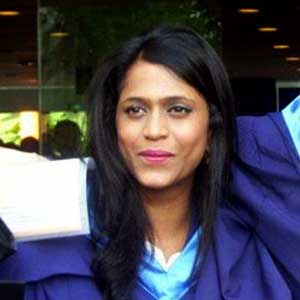
    Roshni MS graduated from ILS Law College in 2011. As a law student she has been quite active and participated in various co-curricular activities. By the time she graduated, she had received a job offer from PricewaterhouseCoopers where she worked for nearly three years. Later, she switched to Economics Law Practices and is currently working as an Associate there.

    In this interview, she talks about:

    • Law school experience at Indian Law Society’s Law College
    • First year work experience at PricewaterhouseCoopers (PwC)
    • Building a career in Indirect Tax law
    • Appointment and work at Economic Laws Practice (ELP)


    Please tell us what motivated you to pursue law as a career? How did you get through to ILS, Pune?

    I did a major part of my schooling in Nagpur, a city that I still hold very close to my heart. Studying at the prestigious Bhartiya Vidya Mandir, I was given ample opportunities to touch base with a lot of facets which could eventually culminate into a career, be it sports, fashion or academics. However, all my life I remember being leaning towards academics despite having a good run with sports. And to choose a profession which marries this interest had to be law, considering my aversion to the numerous doctors and engineers in the family!

    Numbers were a great deal in my family and board exams were euphoria in themselves. I’m sure it is like that in most of yours. The gruelling hours put into studying eventually paid off when I saw my name in the first merit list put up by ILS, Pune. My decision to take it up was well thought and well discussed and I am more than happy to say, it’s the best decision I could have made.


    Please tell us a bit about your time at ILS, Pune. Please tell us about the manner in which you approached academics while in college.

    My time at college, by no means of exaggeration, was the best time of my life. The best thing about ILS, apart from other things, was the college timings: the first two years were roughly 3 hours of college and the next three were about 4 hours. You have the rest of the day to figure out things for yourselves. There were the kind who would join language classes, typing classes, work somewhere, join a diploma. I do not think any other college would give you that kind of leverage.

    The first year of college was a mess. You actually didn’t know how to approach your academics. Studying did not help and my scores plummeted. But after two semesters, and speaking with seniors, doing meticulous research, I approached the exams in a smarter, better prepared manner. I would be lying if I said I did not study, honestly I put in 4 times the effort and ended up securing a place in the merit list. And proudly, that continued.


    roshni-ms-2

    What is your opinion when people say that all that they have learnt is in their years of practice?

    Legal Education is just that, theory. It definitely gives you a ready reckoner in your head and can guide yourself appropriately to the law. But the problem is when you need to put them to use. Except litigation, where you are given practical experience in the form of moots, corporate practice differs in humongous proportions.

    The learning curve begins at college, but literally curves when you join a corporate. It is indeed funny, but true, when people say all that they have learnt is in their years of practice. The approach the majority takes in college is to clear the exam. Unfortunately, while it helps that time, it does nothing for you at the workplace. There was no one to tell us this when we were in college, but I hope this helps you.


    How do you think academic research and writing can be encouraged in Indian law schools?

    Students by their own volition take part in numerous competitions for academic research and legal writing. The drafting and nomenclature which is otherwise used once in awhile in these competitions become a way of life once you venture into corporate life. Hence, inculcating this habit should become a norm.


    How was your first year after graduation? What do you think were the biggest hurdles and challenges in the early days of your career? How did you deal with them?

    My first year after graduation was more or less like first year of college. You are mighty confused all the time. But the truth of the matter is everyone goes through this phase and it is more than okay to be that way.

    Apart from the learning you need to impart yourselves, another important factor which helped me immensely was the fact that I got to work with wonderful people. The work environment is an important factor which makes you the person you become.


    How did your appointment at PwC take place? How was your experience working there? Tell us what a typical day at work was like for you?

    PricewaterhouseCoopers, Mumbai (PwC) will always be special one for me, not only because I started my career there but because I met a lot of wonderful colleagues there. Be it my contemporaries or also the seniors I worked with and those I had a chance to mingle with. PwC had come to campus during our placement week in college and I was very happy to have made it through. What was challenging though was I did not study tax in college and to join a firm that specialized in Indirect Taxation which was a mighty decision in itself. My time spent at PwC taught me everything I know of Indirect Tax today.

    A typical day started with a quick meeting with my manager and discussing the things to do and the meetings to attend to. Everything was organised and of course, there was that break you had to take for a coffee with your friends at work. Once that was done, we were back on our seats and punching vigorously into our laptops. At the end of the day, I was mighty pleased with the things I worked on and the new facets of law I had learnt. Every day was a learning and I used to look forward to being there. I strongly recommend PwC Mumbai as one of the ideal work places to be in.


    roshni-ms-1

    You left PwC to join ELP in their indirect taxes wing. What prompted you to make this choice and what made this shift possible?

    When I moved from Mumbai to Bangalore, a lot of things changed. They say location plays a major role on your work profile. Bangalore, as everyone knows is an IT dominated city and my profile had a major chunk of Indirect Tax compliance related assistance. This was a challenge initially but as I picked up this facade, I realised how important it is to understand the compliance involved in the subject you are working in. I strongly advise that everyone involved in indirect tax advisory must spend some time doing the compliance.

    But after spending a good 11 months in the compliance sector, I wished to move back to the advisory role in Indirect Taxation. And ELP arrived in Bangalore at the precise moment while this thought had initiated. And hence, the shift to move to ELP to join their indirect tax advisory practice.


    What kind of work and responsibilities generally an associate at ELP deals with? What should a student do so that he gets placed in a prestigious firm like ELP?

    An Associate at ELP is typically occupied with immense drafting and litigation assistance. You have some interesting legal opinions to work on and draft some meticulous replies to show cause notices and appeals etc.

    Typically, ELP hires post a scrutiny vide your internship and hence it is of utmost importance that you have a chance to intern here.


    What are the primary professional ethics you follow while at work? How do you deal with mistakes or errors?

    Professional ethics come naturally once you are in the workplace. Some simple terms like collaborate, share, speak, admit and question etc. will help you in a long way. The environment you are at work is what you create of it. If you do commit an error, admit it. But make sure you don’t repeat the same thing again. That will only mean that you are not learning from your mistakes and may tick off the Boss.


    How do you say one can gain expertise in tax law? What does it take to be a good tax lawyer?

    There is no substitute to experience. There is no prodigy in tax law. To be a good tax lawyer is not different from being a good lawyer. Be sincere towards the work bestowed upon you.


    Is the work significantly different from other transactional lawyers? How much of your work does involve litigation, if at all?

    Indirect taxation strives on litigation as much as other laws do. But what is great is that this subject also demands equal attention for the advisory work which improves your research, drafting and technical skills, ultimately which will help during the litigation.


    Tell us about the difference between being an In-house counsel and a Law Firm Associate.

    When I did have the chance to join an industry, this is something I thought about diligently. Being a client facing associate, I was exposed to a variety of industries and accordingly to a vast number of issues. That was something I did not want to lose.

    Alternatively, the clientele you interact with from the companies, be in the Legal team or the Finance team are one of the most passionate and brilliant minds in the legal fraternity. They are the go-to personnel of the Company before any major decisions are taken. That feeling should be irreplaceable.

    However, being in a firm, addressing varied client issues since the start of my career, I will be biased to a Law Firm Associate!


    Recently, the Supreme Court declared the National Tax Tribunal as unconstitutional. What is your take on this?

    While declaring the NTT could be construed as a progressive step, what is a matter of concern is the pending litigation for which the NTT was initially set up. This ruling could also affect all similar tribunals set up to decide substantial question of law. Nevertheless, there must be an alternate remedy for the speedy disposals of the pending matters and increase the confidence of the tax payers


    You have excelled in your academics, interned at top-notch Indian. How can one excel as a law student and enjoy college life?

    There were some seniors in college who told me that you must intern every vacation you had and there were the others who said that it really did not matter. So I did a bit of both.

    I made sure I did not intern in my first year of college. And that I would do a maximum of only 5 internships in the 5 years I spend in college. But what I did was to intern at different environments. So I interned with an individual lawyer, a company and law firms. This gave me a heads up on what to expect where.

    As for the fun part, I had a lot of time for that. I spent most of my free time with my friends or travelled back home to be with my family. I used to play tennis and would catch up on the game at a sports club nearby or you would find me drinking glasses and glasses of cold coffee in the cafeteria. Yup, definitely the best days!


    What do you cherish most about the experience you have had over the past two years?

    My time spent at PwC Mumbai is something that will linger on for times to come. It may not be completely true when someone tells you that you do not make friends at work. But fortunately for me, I was glad to have had that.


    What’s next for you?

    There are definitely some plans up my sleeve but for now, I am just going with the flow.

  • Tanmay Patnaik, Associate, Private Client Practice, AMSS, on an LL.M from Fordham and experience in Modelling

    Tanmay Patnaik, Associate, Private Client Practice, AMSS, on an LL.M from Fordham and experience in Modelling

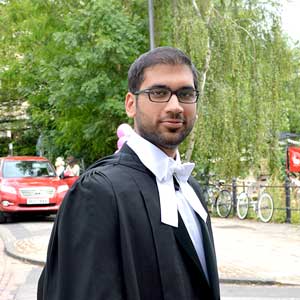
    Tanmay Patnaik graduated from Government Law College, Mumbai. He received the USC Gould School of Law LL.M Scholarship in 2010 and pursued an LL.M in Banking, Corporate and Finance Law from Fordham Law School, New York. He is currently an associate of the General Corporate Practice Team at Amarchand & Mangaldas & Suresh A. Shroff & Co.

    Most amazingly he also partook in modelling assignments for many big brands such as Cadburys, Samsung, Vodafone, etc. and most prominently as the poster boy of Limca. He also had the opportunity to act in the movie ‘Wake Up Sid!’.

    In this interview he talks about:

    • Taking time out for modelling
    • LL.M from Fordham Law School, New York
    • Scholarship from USC Gould School of Law
    • Private Client Practice at AMSS


    Given that most of our readers belong to the legal fraternity, how would you introduce yourself to them?

    I would introduce myself as a ‘trust’ed legal advisor. I am presently a member of the Private Client Practice Team at Amarchand & Mangaldas. The team consists of estate and trust law specialists who have years of experience in advising high net-worth families on a host of matters including succession, estate planning and family governance related matters. I am also a member of the Amarchand Japan desk which is assigned to work on general corporate transactional and advisory matters catering specifically to our Japanese clients.

    I am also an expert in the field of Art and antiquities law. An extrovert by nature, I’ve never believed in defining the boundaries of what a lawyer can or cannot do.


    How did you gravitate towards law? Why law and not engineering or medical studies?

    The formative years of my life were spent in the company of the sons and daughters of bureaucrats and judges. The topic of law was ingrained into every dinner table conversation. I was fascinated and truly taken in by the subject. Since math and sciences were never my cup of tea, narrowing down my career choices was that much easier. I’m honestly glad there’s a pen in my hand rather than a scalpel!


    Do you think being from a non-NLU has ever proved to be a hindrance for you? What has been your experience?

    Personally, it has never been a hindrance to me as I joined Amarchand immediately after completing my LL.M. from Fordham.


    How was your law school experience?  Were you engaged in any co-curricular activities?

    My law school journey has been an interesting one. In the first year of law school, I was honestly a bit lost. I soon found my feet and became very active in the Students Council and the Moot Court Association. I was to become a post holder in both committees for the next 4 years. I was also an active participant in moot court competitions throughout my law school tenure, securing two golds and a silver at the national level.

    However, all this while, I had already decided to break out of the mould of the typical law student and do something different. I had chosen to dabble in the world of acting. Every lawyer has theatrical tendencies brewing in them and I just decided to stir mine. By the end of the fourth year of law school I had managed a fairly decent acting portfolio of print ads, television commercials, music videos and even a role in a Bollywood movie. I soon reached a point where I had to choose to follow through with law or dive into acting full time. It wasn’t easy to drop something that I had invested a fair amount of time in, but I understood that an acting career was fraught with uncertainty. The night I decided to give it up, I decided to work on my LL.M. applications. There was no looking back then.


    tanmay-patnaik-3

    You have been featured as the poster boy of Limca! Please tell us more about your career in modelling, how did it start out, and your present involvement.

    I got my first modelling assignment by chance. A close friend of Mr. Piyush Pandey, who is the Executive Chairman of Ogilvy & Mather India had met me over a family dinner and recommended my name for a print ad which required a fresh teenage face. The people at O&M got in touch with me, I auditioned and 4 weeks later my face was plastered on billboards across the city! I was only 17 at the time and and the feeling was overwhelming. I was soon getting alot of casting calls for print ads and television commercials. By the fourth year of law school I had shot for over 30 top end brands including Limca, Colgate, Cadbury, Samsung, Vodafone, 7Up, Bajaj and Nike.

    tanmay-patnaik-6


    I also got the opportunity to travel to Dubai, Mauritius and Kuala Lumpur for music videos and commercial shoots. It was a good breakaway from the humdrum of regular student life. However, it wasn’t always bright lights and easy money. My biggest take away from the world of acting and modelling was learning how to deal with rejection. For every acting assignment I bagged, I was probably rejected for 5 others. This really helped me grow as a person. My last project was a character role in Wake Up Sid which was exciting because I got to be a part of fairly successful Bollywood movie.

    tanmay-patnaikI haven’t disconnected myself from the world of media altogether though. Last year I was featured and interviewed for the fashion magazine ‘GQ’ . The feature was on style conscious professionals in India donning the sharpest suits. I was later informed that I was the first Indian lawyer to get featured in GQ!

    It was interesting because in my own little way I had stayed in touch with the field of media and fashion. Just driving home the point that no matter how hectic life in a top law firm can get, you can still dive into other things.


    You went to pursue LL.M from Fordham Law School, New York. How did the whole experience turn out to be?

    New York was a game changer. It is truly the city where dreams are made and broken. It is a city which tests your mettle. I had visited New York before and was familiar with what the city had to offer. My time at Fordham taught me to be disciplined, patient and sincere in my efforts. The law school campus is located in the heart of the city and is always bustling with that unique New York City vibe. People often say that an LL.M. has no value for Indian students looking for a job in India. I beg to differ because in my opinion the learning does not start and stop in the classroom. It goes well beyond. Leaving networking aside, it is the softer aspects of the entire LL.M. journey which really equips you for what lies ahead. With your family thousands of miles away from you, you tend to push your boundaries of what you are capable of and this is where your levels of maturity (personally and professionally) start to peak.

    tanmay-patnaik-4The city of New York is like no other. It pushes you to the extreme in every sense. New Yorkers truly value their time and they also respect yours. Located in the heart of the city, being at Fordham afforded you the opportunity to socialize with your peers and other professionals on a regular basis.

    As an LL.M student, it was important that I made the most of the networking opportunities that the city had to offer. This wasn’t restricted solely to lawyers but individuals in the field of media, advertising, corporate finance, investment banking and private equity. There was always something to do, something to explore and people to meet. Being in the city that never sleeps, there was plenty to do once our classes were done and over with.


    Please tell our readers about the application procedure and other requirements like CGPA, internships and recommendation letters.

    First and foremost, it is vital that you identify why you want to apply to a particular school (faculty, program, location, etc.). This will help you think through a host of other questions which follow. Your statement of purpose must be an honest representation of yourself. Marketing yourself is well and truly acceptable, but misrepresentation most certainly isn’t. Maintaining a good grade is a must but restricting your achievements to the classroom isn’t the best way forward. Whilst long term internships and strong recommendation letters are an added bonus to your application, it is important that you try to stand out from the crowd.


    You have received the USC Gould School of Law LL.M Scholarship in 2010. Did your scholarship provide full funding for your LL.M course?

    The USC Gould Scholarship for LL.Ms is a merit based scholarship which does not require a separate formal application. Awards are typically offered in the amount of 10% to 50% of the cost of tuition and the student is notified upon receiving admission. Accordingly, when my admission letter arrived, I was pleasantly surprised to learn that I had also received a 50% scholarship award.


    How did you decide on a specialization in Banking, Corporate and Finance Law? What motivated you?

    I was drawn towards the practice of corporate law ever since I interned with AMSS. The internship was for a period of six months. During this time I was fortunate enough to work under some of the finest corporate lawyers in the country. I had also interned with senior counsels and public prosecutors in the past but I felt that the corporate law environment suited me best.

    I chose Fordham Law over Cornell, Georgetown, George Washington and USC because it not only had an excellent corporate law faculty but it also offered me a chance to study corporate law in one of the financial capitals of the world. Having Professor Richard Squire (who previously taught at Harvard) and Professor Sean Griffith (a former editor of the Harvard Law Review), both celebrated educationists in the field of corporate law, was the icing on the cake. So it was never a spontaneous decision. I had done my homework. The one year I spent at Fordham was invaluable. When I finally graduated, it wasn’t just a degree I was taking home, it was an experience.


    How did your recruitment at Amarchand & Mangaldas take place? How far would you say your LL.M experience was instrumental in this opportunity?

    I applied directly to Amarchand & Mangaldas when I returned to India and I was fortunate enough to hear back from them. An interview was set up with Mrs. Vandana Shroff and it went off quite well. I had graduated from Fordham with Latin Honors and this may helped me build my case. The LL.M most certainly gave me the confidence to hold my own.


    You are presently working in the Private Client Practice (PCP) team and have been associated with Amarchand for the past 3 years. Please tell us about your areas of practice.

    Our Private Client Practice is based on decades of experience in advising promoter families, high-net-worth individuals and entrepreneurs in relation to structuring and holding their wealth and family businesses, especially in a taxation and succession friendly manner. The team has been handpicked by Mr. Shroff himself and confidentiality lies at the core of everything that we do.

    The services we offer are bespoke to each client’s needs and include amongst other things:

    • Estate and succession planning, including preparation of Wills and Codicils; providing probate and executorship services;
    • Establishment of private family trusts (which may include private trustee companies, professional trustees and/or protectors, as desired); on-going advisory services for established domestic and offshore trusts;
    • Restructuring of existing promoter / family holdings in a tax efficient and succession-friendly manner;
    • Creation, implementation and monitoring of family governance structures, including drafting of family constitutions and vision statements;
    • advice on corporate governance and business structuring from the perspective of family governance, and incidental advice on all corporate matters;
    • Advice on family settlements and partitions;
    • Family dispute resolution either through arbitration, mediation, and/or litigation; and
    • Risk management and regulatory advice, including compliance with securities laws, takeover regulations, exchange control laws, liaising and dealing with regulators (especially R.B.I. and S.E.B.I.), as required.


    tanmay-patnaik-7

    People often complain about the highly skewed work-life balance at the top law firms. How do you maintain your work-life balance?

    In any top corporate law firm there are going to be patches of heavy workload. It’s a natural phenomenon and that’s how markets work. The earlier you come to terms with that, the more at ease you will be. However, if you’re perpetually stuck to your desk, you’re doing something wrong. I think at the end of the day it’s upto the individual to make the most of his/her day and the environment he/she is in. I try to start my day early and hit the gym as often as I can. Weightlifting has been a stressbuster since I was in law school. At the end of the day, I try to disconnect with work and connect with my loved ones, being my parents, my beautiful wife and my pet cocker spaniel.


    tanmay-patnaik-8

    What would be your message to our young readers who want to join a corporate law firm in the future?

    Joining a corporate law firm is an excellent choice but I would recommend keeping your expectations in check. Harvey Specter and Mike Ross are works of fiction! That’s not how law firms function. As a first year associate in any top law firm, you can expect long working hours and a heavy workload. Therein lies the challenge you must overcome. There will also be moments when you will feel disillusioned but the key is to remain patient and see it through.

  • Shalaka Patil, Senior Associate, Nishith Desai Associates, on work in Dispute Resolution and LL.M from Harvard

    Shalaka Patil, Senior Associate, Nishith Desai Associates, on work in Dispute Resolution and LL.M from Harvard

    Shalaka Patil graduated from Government Law College, Mumbai in 2009. She started her legal career as an Associate at Bharucha & Partners. Thereafter she went on to pursue Masters from Harvard Law School. She has also been a Rajawali Fellow at the Ash Centre for Democratic Governance, Harvard University, John F. Kennedy School of Government. Thereafter she worked as a Foreign Associate at Pestalozzi, Zurich. Currently, she works as a Senior Associate at Nishith Desai Associates and her main practice area is Dispute Resolution.

    In this interview, she talks about:

    • Law school experience at GLC, Mumbai
    • Choosing to pursue higher studies over job
    • Bagging the Rajawali Fellowship
    • Work at Nishith Desai Associates as a Senior Associate


    How did you decide to pursue legal studies?

    It was fortuitous. I wanted to become a journalist since I had been writing for a number of publications in Bombay from the age of 16. I thought I’d specialize in law so I could report niche cases. But once I enrolled in law, I never looked back!


    shalaka-patil-2

    Did you take part in moots while at GLC, Mumbai or indulge in academic legal writing? Do you think that these activities should be left to the discretion of students or made mandatory?

    I don’t think anything should be mandatory in law school other than your curriculum and avenues that allow you to test your analysis skills. Some people prefer mooting while others like writing, law counselling or projects. I did a few moots until my third year (such as ITAT and DMH) which really helped in engaging with a legal problem and honing my research skills. From the 3rd year though, I wanted to focus on legal writing and getting as many quality publications out as possible.

    I worked with this aim in mind and I also joined the college Students’ Council and Law Review committee. I participated in and won a few legal essay writing competitions as well during this time. In my view, the work that went into research, critically thinking through and defending problems through legal writing went a long way in building a strong foundation during my formative years. I would recommend it to law students who want to pursue a career in academics or even law firms. Mooting helps you think on your feet, writing helps you take a step back and think through the entire problem and give it your own perspective / defence.

    Other than this, I’d say doing a broad variety of internships helped me eliminate what I did not want to do and focus on areas that interested me (even though this area was quite extensive then). So all through law school I worked largely with disputes firms (I started at Bharucha as a trainee and before that I had interned at other law firms as well in Bombay). In addition, I was keen to gain some experience in the area of public policy as well and accordingly I worked at the Indian Parliament with an MP, at a think tank in Delhi and interned at the Law commission as well as an NGO. All of these opportunities gave me a first-hand experience of how the field really works and how policy translates outside of what I had read.


    Right after graduating, you worked for a year at Bharucha & Partners as an Associate and then went for LL.M. Why did you decide to go for higher studies?

    I wanted to study international arbitration and public law. I knew this right from my second year at GLC and I was determined to pursue this goal single-mindedly. The LL.M. was a means to study at a premier institution in an international environment (and one to which I had had limited exposure until then.) I also knew that other than teaching me the nuances of international arbitration and providing me with an excellent network of professionals and academicians, I would also be growing as a person with an exposure to best practices from around the world. The LL.M. proved to be all these things and more.


    Tell us something about your LL.M year at Harvard Law School. How did this influence your career?

    It taught me a number of things I know today and love about international arbitration. It gave me the opportunity to work with international law firms. It introduced me to the writing of experts such as Gary Born, Martin Hunter, Jan Paulsson and an opportunity to meet many of these stalwarts. I also studied and learned to view dispute resolution itself as a field outside of the traditional approach of Bombay High Court litigation that I had known until then. I was introduced to (and now love) investment arbitration and the world of Bilateral Invest Treaties. As a student, I was always interested in international law but knew that working in the field has limited opportunities. International commercial arbitration and investment arbitration allowed me to marry my interests of international law with commercial dispute resolution through arbitration.

    At Harvard I took very unique courses such as “Disputes System Design” where we studied ways of customising and designing dispute resolution systems for work places or companies keeping in mind their problems. I also took the popular ‘negotiations workshop’ in the spring semester where we negotiated through a series of problems whether local or international. Through this I was learning the new language of dispute resolution which was as important to me as court briefs and arguing.  My other interest was (and remains) public law / policy and I had the opportunity to engage in this as well through courses at the Kennedy School on the US Congress and law making.

    Needless to say Harvard is a place where at any given time a number of activities are going on and it is a melting pot where one gets to listen to various significant people and interact with leaders across various fields. I think this multi-disciplinary approach has really shaped my thinking as a lawyer.

    Lastly, not everything was nerdy and I did go out a lot too and met people from various countries and with cultures very different from mine!


    You were a Rajawali Fellow at the Ash Centre for Democratic Governance, Harvard Kennedy School.  Could you tell us about the experience?

    Kennedy School was a phenomenal experience. My research was focussed on political accountability at the Indian parliament. I interacted with a number of other MPP and MPA candidates. One really fun experience was a class I took with Professor David King on campaigning in the US. Here we studied about campaign finance, super PACs and even campaigned for a local election in Boston where one of the candidates was from HKS. The previous year I had done a class on US Congress so this was a good follow up from there. In any case, I am always keenly following new developments in world politics (the Middle East conflict being my current area of interest) and this class was a stepping stone.


    Currently you are working as a Senior Associate at Nishith Desai Associates. How has that experience been?

    I work in the area of disputes (with a focus on arbitration including international arbitration). NDA has given me the opportunity to work with a number of clients across various fields such as infrastructure, oil and gas, private equity and the service sector. It has deepened my understanding of business in these sectors and given me a flavour of trial work (my absolute favourite) since we run our arbitrations independently mostly. At NDA, I started working at the Delhi office and then moved to the Bombay office. Thus, I have had the opportunity to work at various courts other than the Bombay High Court right from the Supreme Court to trial courts in Delhi. NDA has an outward looking focus since a large part of its clientele is international. This is something I always wanted from my career. I was also seconded for a short time to Singapore to another top Singapore law firm which was also a fantastic experience. Having run a few international arbitrations at NDA with institutions such as SIAC, I envision this area of dispute resolution only growing in the coming days.


    What’s a typical day at work like? How do you strike a balance?

    A typical day is usually very busy with urgent deliverables, client calls and hearings and sometimes court work. But the rush of deadlines is what makes it exciting. But one has to just put one’s head down and power through the work. Long hours and lost weekends are a part of the process but as lawyers we all know what we sign up for so when you get some free time you should take it wholeheartedly!


    What do you feel makes an intern stand out and is very important for him to do to have a chance of getting a call back or even a PPO?

    Hard work, the ability to do a thorough job, thinking through questions and excellent research skills. It helps if you have read the latest decisions in your area of interest and are abreast with the latest developments.


    What would be your message to our readers who are budding lawyers and law students?

    Enjoy the process, don’t sweat the small stuff, think big and give it your all.


  • Sonal More, Global Legal Counsel at an MNC talks about Corporate Law, Higher Studies and LPOs

    Sonal More, Global Legal Counsel at an MNC talks about Corporate Law, Higher Studies and LPOs

    Sonal More graduated from GLC, Mumbai and thereafter had worked as an in-house counsel at places like Spykar Jeans, Pangea3 and currently at Firmenich (a global leader in perfumes).

    Even as a Global Legal Counsel at Firmenich currently, she has taken time out to pursue the MBL programme from NLSIU, Bangalore. In this interview we ask her about:

    • Importance of learning a foreign language
    • Work at an MNC like Firmenich
    • Pursuing the Masters in Business Laws from NLSIU


    Please tell us about yourself. What were your reasons for taking up law?

    I belong to a closely-knit Maharashtrian family in Mumbai. Born, brought up and educated in our financial capital, Mumbai. I have always been passionate about art; the freedom to use colours with no boundaries mesmerized me, contradictory to a lawyer’s profession where rules are the key to our survival. Raised by two teachers, reading was inculcated in us right from childhood. My interest in law began when my father gifted me my first novel, Sidney Sheldon’s Rage of Angels, which was based on an American Criminal Defense Attorney. That was my first step towards law. With time, I started reading articles on prominent Indian lawyers and our legal system. I met one of the criminal defense attorneys for guidance and decided I had to find my way in the legal fraternity somehow; so I commenced my law course with Government Law College, Mumbai. Coming from a non legal background, it was difficult to understand which avenue to take, and after 2 years of initial trial and error in my internships I finally found my passion in contracts.


    You have an LL.M and a Postgraduate Diploma as well in Intellectual Property Law. Please tell us how you decided to pursue the diploma also.

    I was introduced to Intellectual Property Law, when I was struggling to decide which area of law I should be focusing on. Being new to the topic, I enrolled myself with National Law School, Bangalore for my Postgraduate Diploma to get more insight into Intellectual Property which helped me simultaneously to prepare for my final year law exams where IPR was my specialization. I pursued LL.M after completing the Post Graduate Diploma; I felt LL.M would give me in depth understanding in comparison to a diploma.


    You also completed a Diploma in Cyber Laws from the Asian School of Cyber Law in Pune. Please comment on the quality and structure of the course. How much practical knowledge did you gain from it?

    The course is designed for beginners and to get basic knowledge as to what comprises of Cyber Laws. It is automatically presumed that Cyber Law essentially means Information Technology Act and nothing more than that. This course helps to understand that Cyber Law is much more. The structure of the course is very concise and appropriate for basic level understanding. The course helped me immensely while drafting, negotiating and understanding IT concepts in software license agreements. For someone who is working on software license agreements, this course is highly recommended.


    You are currently pursuing Masters in Business Laws (MBL) from NLSIU, Bangalore. It is said to be one of the toughest postgraduate law courses in India with a very low pass percentage. What would you say about the quality of the course material?

    I couldn’t agree more that it is indeed the toughest postgraduate law course, at least amongst the ones I have appeared for. My preparation is mainly based on the NLS course material, for any recent updates to the regulations NLS provides additional notes. I would still recommend research on internet for additional information on updates. The material provided by NLS is very elaborate and easy to understand.


    sonal-more-2

    After completing your studies, you started working at Emmay HR Services Pvt. Ltd. as a Legal Assistant. What is the state of HR Departments in big and small companies?

    Emmay HR which is now Randstad India, is a recruitment company so impetus on HR policies was a given. The role required me to understand the different categories of employments, namely permanent, temporary, staffing and contractual. After being a part of various setups and sectors, I realized that there are pros and cons in big and small setups. In my view the HR departments in smaller companies are more connected to the employees and have better visibility on the employee concerns. Bigger companies have robust systems in place which makes daily activities / functions smoother for sure, but at some occasions lack the personal touch till an issue is brought at the forefront. That being said, the most compliant, organized and connected HR teams in my experience are found in a factory setup. Given the number of regulations and statutory requirements, a factory needs to follow, in terms of labourers/ workers; the HR team manages the HR function and to a certain extent statutory function for the organization.


    You then went on to work at Pangea3. How did you secure your appointment? What is an average day of a Senior Specialist like?

    Honestly, like any other law graduate I was not really sure of joining or even interviewing with an LPO at the time. LPO had just stepped in the legal industry at that time and we had no idea how and what the company looks into. A recruiter had reached me several times to consider Pangea3 (which was then not associated with Thomson Reuters) and after having multiple conversations, I finally decided to give it a try and that proved to be a right decision.

    In my role as a Senior Specialist, I functioned more as an extended team member of in house counsel teams for different companies. I was a part of the Corporate Team and more specifically the Contract Drafting Team. Amongst several projects I worked on as a Contract Drafting Attorney, I also worked on some Contract Abstraction projects. Simply put, Contract Abstraction is creating a summary or a snap shot of the executed contract, for the company to refer to. These summaries help the company to keep track of expired contracts and the provisions that were agreed on before; thus giving an insight into the contract without having to read the whole document. An average day as a Senior Specialist would comprise of contract drafting, reviewing and negotiating agreements, depending on the clients we cater to and if on a contract abstraction project, we would have specific targets of reviewing particular number of contracts; pretty much similar to the day of a non litigation lawyer.


    After a year and a half, you switched to Hindustan Unilever Pvt. Ltd. How can one make his presence felt in a large company like HUL? What was your work profile like?

    Unilever is a brand that everyone would like to be a part of, and when I got the opportunity I could not resist it. My profile was more of Indian litigation and contracts, where I had to co-ordinate with Advocates and counsels for the court cases and prepare documents. I wanted to try something different than my previous roles, so I had decided to move from a completely non litigation profile to a litigation profile, however after a few months in the system and attending court proceedings I realized it was not my interest so I had decided to return to non litigation. In any company for that matter, be it large or small, it is difficult to make your presence felt. In larger companies, the opportunities to shine are less frequent as you may have to wait a long time to be recognized if you missed one chance but then again if you show your skill you will succeed. I always keep in mind a message one of my seniors had told me “If you are not at the table, you are on the menu”.


    Currently, you work at Firmenich Aromatics India Pvt. Ltd. as a Legal Counsel (Global). Please describe your job profile for us.

    My role is primarily focused on drafting, reviewing and negotiating global agreements for all divisions in the organization, ranging from software license agreements, sale agreements, purchase agreements, et al across the globe. As an In House Counsel, I also look into company policies, their compliance, preparing training programs for the teams across all functions and partnering with the business teams to ensure adherence to policies and legal requirements. On an average day, I could be negotiating contracts with companies based anywhere in the world or discussing legal provisions with the commercial teams.


    You also hold an Advanced Diploma in Spanish from Instituto Hispania, Mumbai. Does the knowledge of an extra language give you an edge over your peers?

    Being born and brought up in Mumbai, it becomes a part of your characteristic to know at least three languages, which served as a foundation to learn languages quickly. I had chosen Spanish as I felt everyone at the time was focusing on French and I wanted to do something different.

    Knowing an extra language definitely gives you an edge; it opens up different avenues for you as an individual, and exposes you to a different culture. For instance, if one completes all levels of a foreign language, he/she could be an Indian lawyer who can work on a Spanish Contract without the assistance of a translator.

    Although I had to limit myself to three levels due to time constraints, basic proficiency in Spanish helped me immensely when I worked with Latin American clients and peers; and proved to be a training ground for me to deal with foreign accents. I do not think there is any specific foreign language that I would recommend for a law student, however if a student wants to work with European companies, French would be an ideal choice. Learning an additional language will always help you as a lawyer or even otherwise.


    You have only worked in the in-house legal department of companies. Why did you never try for a law firm job or a career in litigation?

    In my earlier days of law school, I had tried working for a litigation lawyer and after a month I realized that my interest did not lie there. So I tried interning with a law firm, which functioned as an extended arm of the in house counsel team as it focused on few clients at the time. That structure intrigued me. As a lawyer in a law firm, I was more focused on the letter of the law with no or limited access to the business or the commercial side of the company and I wanted to understand the business more closely, so I chose to work as an in house counsel.


    It is believed that the work of an in-house counsel is restricted compared to that of a law firm lawyer but the latter has less (or no) work-life balance. Do you think this is true?

    It’s a common misconception; in no way is the work of an In House Counsel restricted. I feel quite the contrary, as an In House Counsel you are forced to think out of the box and consider real business scenarios. You can no longer sit on the sideline and merely state the law, now you are a part of the decision making process and have a say in commercial provisions. As an In House Counsel, we have to wear two hats, one of a lawyer and the other of a commercial person. It is our responsibility to understand the business and ensure that the company complies with the legal requirements and also meets its commercial targets. An In House Counsel in the true sense is a business partner; attuning oneself to understand the business needs to meet targets is a task which requires business acumen and applying your legal knowledge as a lawyer, which does require us at times to burn the midnight oil and sacrifice holidays. That said, I think work-life balance is a personal choice, whether you are a part of a law firm, a company or working with a litigation lawyer, if we really want to do something we either do it or make excuses. My personal guide to maintain work life balance is Mr Narayan Murthy’s (co-founder of Infosys) letter to his employees on the subject.


    What must a law student keep in mind when wishing to pursue a career in corporate law? Is a degree like CS or MBL important for this field?

    While pursuing corporate law, a law student needs to keep an open mind. It is not essential that one can pursue a career in corporate law only in companies, one could gain in depth knowledge also by being a part of a LPO. So I would not restrict one’s aspirations to any specific sector of companies. An additional degree is always helpful, depending on the individual’s interests and future goals. If working as a corporate lawyer or understanding corporate law is the goal then MBL is the course for you, however if the intent is to ensure compliance, statutory related work, one should consider CS.


    Lastly, what message would you leave for our budding lawyers?

    From what I have learnt in the last eight plus years in the fraternity, I would suggest interning in different setups, litigation, law firms, companies, LPOs, et al. Today lawyers are more than just litigation lawyers, and subject matter experts. We are moving towards the new age, where lawyers are entrepreneurs and business oriented. Choose the area you like without any presumptions and prejudice. If you are passionate about what you do, you will create a niche for yourself.

  • Nikhil Singal, Principal Associate at LKS, on all about a career in Tax Law and an MCL from Cambridge

    Nikhil Singal, Principal Associate at LKS, on all about a career in Tax Law and an MCL from Cambridge

    Nikhil K. Singal graduated from ILS, Pune in 2010. Soon after Graduation he started working at LakshmiKumaran and Sridharan as an Associate and then went on to pursue Masters in Corporate Law from the University of Cambridge, U.K. He is also a Company Secretary holding a Licentiate membership of the Institute of Company Secretaries of India. After returning back to India, he joined LKS as a Senior Associate and was promoted to Principal Associate in May, 2014.

    In this interview he talks about:

    • Law School experience at University of Cambridge
    • Interest and expertise in taxation law
    • Growing from an Associate to Principal Associate at LKS


    How would you like to introduce yourself to our readers who are mainly law students and lawyers?

    Hi! I’m Nikhil Singal and I’m currently associated with the Delhi office of Lakshmikumaran&Sridharan (LKS) as a Principal Associate. I graduated from ILS Law College in 2010 and joined LKS right after college. It has been a good journey so far, and I hope it remains the same in the future!

    Over the years, I’ve had the opportunity to work in different teams, handle some very exciting assignments, represent some of the biggest clients, as well as feel good about my personal growth and development. Currently, I’m handling work related to corporate advisory and commercial litigation, along with handling some important tax matters. For a brief period from 2012-2013, I went to pursue my Masters in Corporate Law (MCL) from the University of Cambridge, after which I came back and joined LKS again.

    As a lawyer, my approach has always been to expand my horizon and learn new things. I don’t like to restrict myself to one area of law or one domain. Of course, I understand that it is physically impossible to do everything, or to master everything, and I’m not aiming for that. Instead, I aim to diversify as much as possible and only after a few more years of practice, I will start specializing in a particular field. For me, change is necessary. It gives me a challenge to keep going and to keep exploring. Fortunately, LKS has been very supportive in this approach. As I mentioned, over the years, I’ve worked in different laterals of the firm and in different areas of law. So whether it be work relating to service tax, income tax, contract drafting, transactional work or dispute resolution in any forum in this country, I can very happily do it!


    When and how did you decide to study law? Which universities did you consider for your legal studies? How did you settle for ILS, Pune?

    I actually didn’t decide to study law. As a kid, I was always interested in doing something related to science. I spent three years in Tanzania where my father was posted as a diplomat. I studied in an international school there and loved their teaching approach. I loved all the science subjects. When I came back to India, I found it difficult to cram non-application based science subjects from voluminous books. That is not what I wanted. So I pursued commerce and thought I’ll end up doing Economics from a good college in Delhi. When I finished schooling in 2005, I had an option of going to Hansraj or Venkateshwara College in Delhi. At that time, my father also insisted that I fill up the forms for ILS and Symbiosis, Pune. So I did!

    Ultimately, I had all four options in my pocket and had to make a choice. After much counselling at home, I decided to go ahead with ILS. My parents persuaded me that law is a great field, and with my analytical approach, I would be happier being a lawyer. So honestly, the credit goes to my parents! Nevertheless, I haven’t regretted the choices I’ve made. ILS is a great college, has a great legacy, and personally I believe it was the right choice for me. I enjoy being a lawyer, and I owe a lot to ILS for who I am today.


    Do you think being from a non-NLU has ever proved to be a hindrance for you? Many non-NLU students complain that they feel being discriminated against during career opportunities. What has been your experience?

    Not really. I think what matters the most is what and whom you let influence you, no matter which college it is. ILS has the best of reputation, the best of faculty, and a very good mix of academic and non-academic focus. I admit that everything is not positive, but that is the same in every college or university. In ILS, I met some of the brightest individuals, some of the most dynamic, some radical, some conservative. All of them are doing very well right now, and not all of them have chosen to remain a lawyer. Personally, I believe if you can prove your worth, you eliminate, or substantially reduce your chances of discrimination. This is how my experience has been. I’ve met many Partners from firms in India as well as from London and New York, and all of them know and appreciate ILS as an institution.


    After graduating from ILS, you joined LakshmiKumaran and Sridharan as an Associate. How did the appointment take place? What comprised your work at LKS?

    I did two internships at LKS. The first internship was in the international trade division and the next one was in the service tax division where I focussed on GST. Both my internships were very fruitful. They liked my work and by the end of the second internship, I was offered a pre-placement offer. The placements in college had yet not started, so I was one of the first ones in my batch to get a job! I took the offer knowing very well that the work will be mostly tax oriented, of which I had very little knowledge (though it was interesting indeed).

    Initially, I was assigned to the tax litigation team and focussed on Service Tax and VAT matters. I did this for about a year. It was a good learning experience as the service tax law is still nascent and evolving. I dealt with some very challenging cases, and as any lawyer, there was a lot of grinding! But there was a lot of focus on knowledge enhancement and understanding the working of the law, rather than just doing something mechanically.

    In my second year of work, an option was given to the Associates to opt for shifting in other practices of the firm. I was the only one who opted for a change and I opted for Direct Tax where I spent another year. This was a great opportunity and a great learning experience. I was also doing some service tax work alongside. By doing this, I got the opportunity to understand Indian tax scenario holistically and in totality. This also helped me to understand why and how many commercial decisions are made in businesses around the world. On many matters, I worked directly with Mr. V. Lakshmikumaran and other Senior Partners and all of this ultimately paved my way to get to Cambridge to do my Masters!


    nikhil-singal-2

    Thereafter you went on to pursue Masters in Corporate law from University of Cambridge. Was it a professional requirement to grow expertise in your career? How would you describe your experience as?

    As I mentioned, my tax experience helped me to understand the working of businesses and the reasoning behind various commercial decisions being taken. I was very interested in understanding the rationale behind these business decisions as well as understanding the legal factors which affect the functioning of these businesses. I thought the best way to do this is to study further, and apply that knowledge in my working. I discussed this with Mr. Lakshmikumaran and though this was not a professional requirement, he encouraged me to apply and study further. I thought the time was right and with some professional experience, I went ahead to apply in select Universities in UK and US.

    Cambridge offered me the perfect course and the perfect platform for what I wanted. Ever since I was in ILS, I had it in my mind that I wanted to study in Cambridge for at least a year, and this became a reality! My year at Cambridge was one of the best years I’ve had. Every day was a learning experience, and I met some of the most intelligent and fun loving people from around the world. I don’t think I need to say anything about the quality of education and the faculty etc, as the reputation of Cambridge speaks for itself.

    The course was rigorous, VERY rigorous! The good thing about the course was its practicality. Many of the modules were taught by Barristers and Partners of law firms in London. We worked on live deals and cases. Not only was there a lot of personal development from Cambridge, but this course also greatly helped my transition to being a commercial lawyer, along with having a strong tax background.


    Thereafter you joined LKS as a Senior Associate and currently work as a Principal Associate there. What does it take to be appointed as a Senior Associate at LKS at that stage? How did your promotion happen?

    I had actually never given my resignation in LKS before going to Cambridge. My one year at Cambridge was considered as part of my job profile and was counted towards my work experience. LKS was very considerate in doing this. I met Mr. Lakshmikumaran and the HR upon my return and started working in the corporate advisory and commercial litigation division of the firm. Along with this, as I also do now, I also handled some important tax matters. This profile complemented my experience as a tax lawyer, as well as my academic qualification as a corporate lawyer.

    Therefore, to answer your question more specifically, my promotions were based on my past experience, my academic qualifications, as well as of course the fact that my work was appreciated by my Partner in charge as well as the senior management. The same criterion applies to all Associates in LKS. At times the promotions are “fast-tracked” depending on the performance of the individual, but that is ultimately the decision of the management. In all this, what is most required and appreciated is the hard work coupled with a positive outlook to learn!


    How do you say one can gain expertise in tax law? What does it take to be a good tax lawyer? Is the work significantly different from other transactional lawyers?

    Tax laws are vast and the jurisprudence relating to these laws is very extensive. Within the ambit of tax laws, you can specialize in Direct or Indirect Tax. Even within these categories, you can specialize in corporate taxation, international taxation, service tax, VAT so on and so forth. What is more interesting is that even within these specializations, you can super-specialize in one area. All these specializations and super-specializations are rewarding. In tax laws, it is generally understood and accepted that expertise can be gained by specialization in a particular area over a period of time. This is because each area has its own extensive background and jurisprudence. I’ve also seen and experienced that once you are able to deal with one area of tax laws confidently, dealing with other tax laws and areas becomes much easier. And once you are comfortable in dealing with different tax laws, dealing with non-tax laws becomes much easier. This has been my experience.

    Of course the nature of work done by a transactional lawyer and a tax lawyer is different, but that difference comes mainly at the level of the law and the procedure involved. I know many transactional lawyers who super-specialize in one area within a broad area, whether it be one leg of financing, or a specific type of private equity transaction. The same rules apply in both these contexts.


    How much of your work does involve litigation, if at all?

    Around 60 percent of my work is litigation, a lot of which is commercial litigation and as I mentioned, I am still handling certain important high value tax matters. The good thing here is that I get to do all kinds of litigation, in all forums, and at all levels. The other 40 percent is corporate advisory work.


    Tell us a bit about work culture at LKS and the life of a Principal Associate. What is your current work profile like? Please tell us about the responsibilities you are entrusted with.

    LKS has a good work culture, people are friendly and there is a lot of encouragement to junior Associates by seniors. One thing I appreciate the most in LKS is the ease of access and the open-door policy. Anyone can approach any person of the senior management, including Mr. Lakshmikumaran and Mr. Sridharan. Resources are ample, and people are always willing to help out. This is a big plus point of the firm.

    As I also mentioned above, I am currently dealing with corporate advisory and commercial litigation, along with handling some important tax matters. Many of these matters are dealt directly with Mr. Lakshmikumaran, and many a times with the guidance of Mr. Sridharan. Since LKS is now a full service law firm, the work varies a lot. I’ve handled matters ranging from tax to environment to electricity to competition. The clients I deal with are diverse, ranging from the world’s biggest social networking site to the biggest spiritual society, and LKS allows you to be the point of contact and deal with them directly relating to the matter. There is of course a lot of responsibility on the shoulder of a Principal Associate. Along with mentoring the juniors and ensuring the quality of work, you become responsible for any negative consequences also (though this is all a part of the profession!). There are times when tough decisions are required to be made, and even though LKS allows this freedom to a Principal Associate, the decisions may not always be correct. All of this is nevertheless looked at in positive light by the firm, and is part and parcel of growth process in the firm.


    You must have guided several interns. How would you say that an intern can generate a positive feedback in the limited time they have?

    The most important thing is dedication. You are right about the fact that there is very limited time which the interns have, but many-a-times the interns spend this time doing non-productive work. I’ve mentored interns who were not at all interested in working, no matter how simple the task or proposition was. On the other hand, there have been some interns who have gone a step further and taken the responsibility of the work. Ultimately, if the intern is able to demonstrate that he/she is a team player, willing to accept an assignment, and complete the assignment with diligence and good legal research, the fact that the intern has limited time does not matter.


    What has been your strategy to deal with errors and mistakes? How would you suggest a young associate to deal with them?

    One should always accept and own up to errors and mistakes. Making mistakes is part of the professional learning and without making mistakes you cannot grow in this profession. Nobody is born a good lawyer. But one must always learn from their mistakes, try and reduce the consequences (damage control is necessary!), and try and ensure that the same mistake does not happen again. Sometimes, mistakes in this profession can cost you and the client a lot, and therefore, one has to be extremely careful. This is one of the stress factors of the profession. Nevertheless, all this should be taken in a positive light and part of the growth process.


    People often complain about the highly skewed work-life balance at the top law firms. What is your workday like? How do you maintain your work-life balance?

    Regular work days are always varied, from answering to various clients at the same time to running between different Courts. Work is the only constant, and workhas considerably increased as I’ve progressed in the profession. I’ve definitely learnt to deal with it in a quicker and more efficient manner, and this has helped me to take time out for myself and my family. LKS as a firm also has a good culture of promoting a work life balance and spending time with your family. Of course there are many days when I don’t get to know when the sun rises and when it sets, but this is more than normal in a profession which demands precision and quick turnaround. I have to do some form of physical exercise at least once a day, without which my day is not complete. This keeps me more active at work also. I am also very spiritual and like to read books in this area. Apart from this, I love travelling and watching movies. I spend whatever time I get with my family and try and catch up with friends as often as possible, whom I prefer to be non-lawyers (makes conversations more interesting!).

    I’ve heard quite a few bad stories about different law firms in India, but I honestly think that even there a decent work-life balance can be maintained. Some firms look down at their Associates if they leave on time. This is quite discouraging! Work, if done efficiently and with focus, can be completed in half the time which one normally takes (the Germans are expert at this!). I think this can easily be emulated and unnecessary time wasted in office should be spent on personal development and on something more social and productive!


    What would be your message to our young readers who want to pursue a career in tax laws?

    Pursuing a career in tax laws may sometimes seems intimidating and sometimes boring. This is the impression which I have got from a lot of undergrads. This is actually not the case. On the contrary, it is a very interesting area of law and can be very rewarding once you cross the initial hurdle of understanding how the law works.

    There is a lot of procedure involved and the substantive questions of law are inextricably linked to the procedural part of tax laws. One should always consider this as a positive challenge. Also, as I mentioned above, once you become comfortable with practicing in tax laws, understanding the working of other laws becomes easier. Many of the best counsels in India started off their practice in tax laws and many of them still invariably take up important tax matters.

    Once you start off with your practice as a tax lawyer, there is always a scope for expansion. Even transactional lawyers cannot proceed without understanding the tax position from tax lawyers, and I’ve seen many deals being changed on this count. Tax lawyers are also highly sought after internationally.

    All in all, being a tax lawyer is a highly rewarding, and I highly recommend pursuing a career in tax laws!

  • Jayakar Bathula, Practicing Advocate and Researcher at NALSAR, an inspiring story of facing odds

    Jayakar Bathula, Practicing Advocate and Researcher at NALSAR, an inspiring story of facing odds

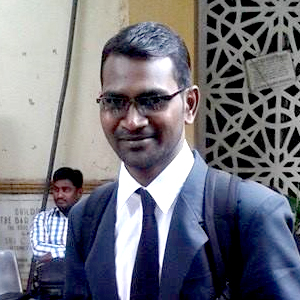
    Jayakar Bathula graduated with an LL.B degree from Mahatma Gandhi Law College, Osmania University. After that he pursued an LL.M degree while specializing in International Trade and Business Law from NALSAR, Hyderabad. He currently works as a Legal Assistant with a group of advocates called Chamber of Lawyers’ Collective, High Court of AP and TS at Hyderabad.

    Jayakar is an inspiring story that needs to be told and retold. The education that he has attained is mostly about the struggles that he had to endure while pursuing them. He is an example and personification of the word ‘tenacity’. Being from a very humble family, he is currently a practising lawyer and also contributes to NALSAR’s repository of study materials through his in-depth aptitude in research and learning.

    In this interview, he talks about:

    • Studying law at Mahatma Gandhi Law College, Osmania University.
    • LL.M from NALSAR, Hyderabad.
    • Preparing study materials for the One Year LL.M Course at NALSAR, Hyderabad.
    • Working at Chamber of Lawyers’ Collective, High Court of A.P and T.S at Hyderabad.


    Our readers consist of law aspirants, law students and young lawyers. How will you introduce yourself to them?

    This is a good opportunity to introduce myself to all law aspirants, students young lawyers and the readers. Briefly, I am working as Legal Assistant with a group of advocates called Chamber of Lawyers Collective, High Court of A.P and T.S at Hyderabad.


    jayakar-bathula-2

    Please tell us a little bit about your childhood and background. Why did you decide to pursue law and what influenced your decision?

    The first and foremost thing which influenced me to pursue law is my social background. I am from a rural village in a hilly area called Morriguda. In my childhood I faced many problems in this village. There was no power, no water and no connectivity, only street lamps which were used by the village heads to show that there is some habitat during night times. We used to drink pond water, carried by my mother from a watering hole outside the village. The street in my village were not even ‘street’, just dirty and muddy pathways.

    The only primary school where the teacher never came, was destroyed by the high flow of the river valley. So I faced lot of problems to get primary education. We went to other villages’ primary schools which were far away from ours. We struggled for primary education. But we smiled even in the crucial times and we enjoyed well.

    These things affected me to pursue higher education in life. Some times every one of us can face money problems. I faced lot of money problems in paying school fees, college Fees, and University fees also. So I worked as a hotel boy at Suprabath Hotel, Hyderabad. Now it has become Royal Derby Hotel, which is good as it has developed. Sometimes, I also worked in MGNREGS to pay University fees.


    From which college did you pursue graduation? Did you have any guidance on how to go about your academics, co-curricular activities and internships?

    I completed my LL.B from Mahatma Gandhi Law College, Osmania University. It was really a great thing in my life; it has given me a good opportunity to work with a group of Advocates called Chamber of Lawyer’s Collective. My college and the Ranga Reddy District Court Complex both are opposite to each other and the Lawyer’s office is also just 5 minutes away from my college. I stayed behind my college. So I would ordinarily attend courts with Senior Advocates and work as a Legal Assistant under them. It has given me good knowledge.

    If we talk about guidance in life… society has been the first guide in my life. I made so many mistakes but I when society has given me punishment, I realised that, this is a mistake I would never do again, I was bound by it.


    What were your areas of interests in college? How did you go about gaining knowledge in these areas?

    The area of my interest was Administrative law and policy. I used to read all the G.O’s which were framed by Governments, Contract and Company Law regulations. I followed journals regularly, and discussed with seniors to clarify my doubts. I pro-Actively participated in all kinds of legal discussions along with senior advocates. Later on we conducted free Coaching classes for A.P JCJ.


    When and how did you decide to pursue an LL.M from NALSAR? Have you thought of applying for foreign universities?

    Once there was advertisement which said that the best law University in India is NALSAR, Hyderabad. So I decided to go NALSAR for higher education. Applying and appearing for the CLAT was ‘O.K’ for me, but I was worried about the University fees and expenses. I let the financial apprehensions go and decided to try the CLAT first, and then see what happens.

    After the CLAT results were declared, I applied to NALSAR, NUJS, NLUJAA, NLIU Bhopal, NLU Delhi, and was selected by NALSAR.

    I started arranging money with the support of friends. I started with 25,000/- and sold my sister’s gold chain (she completed her M.B.A from Hyderabad Central University).

    I went to NALSAR and requested the V.C, Prof. Faizan Mustafa but he had to reject my admission due to no scholarships available and payment of total fees was necessary. I had some friends in NALSAR in their 4th year and I requested them to convince the V.C. Danda Madam cooperated and later V.C Sir called the CLAT Convener and confirmed my seat with a little bit of amount. My LL.M seat was confirmed in NALSAR. My uncle suggested and supported me for an Education Loan with which I settled the NALSAR fees.

    For the rest of the things, my friends have given their shoulders. “The lamp of education needs the oil of finance”.

    Now, how do you say I go abroad to pursue my LL.M? It is only a day dream in my life.

    Here, the most important thing is that after every formality of admission was done with, my every moment was being spent in NALSAR, I was in the Library for almost 18hrs per day with books, journals and laptop. It provided me with a lot of knowledge on international trade and business laws and various emerging fields in law.


    You’ve completed your post – graduation from NALSAR in 2014. How would you describe your experience?

    My experience was good. I did drafting work for the SAARCLAW Bi-Annual Journal under Prof. P.V Rao Sir and prepared short notes for Air and Space Law Students. I was SAARC conference Member; a Legal Adviser for India GEO SPATIAL Conference, as well as a Legal Adviser for the India International Aviation Conference. And this credit goes to my Guide Prof. Balakista Reddy, who is now the Registrar at NALSAR. Congratulations to Prof. Balakista Reddy Sir.


    What motivated you to choose ‘International Trade and Business Law’ as your specialization for LL.M?

    Basically, during my graduation I used to read Administrative Regulations. I was more focussed on contract and Company Laws. Because of this impact I was motivated to opt for International Trade and Business LawsIt is vast area; it deals with Cross Border Business Transactions, the idea that we are living in the Global Village seems true with this.


    jayakar-bathula-1

    What was your topic of dissertation for LL.M? Why did you choose that subject for research?

    This is most important thing I did in my LL.M course. My Dissertation was on the Aviation Sector. It was titled “Air Lines Regulations In India And China: A Critical Analysis”.

    The reason is that the Administrative body, the policy makers, the Administrative mechanisms make some regulations and impose them on the Aviation Sector. I wanted to do research on how the rules and regulations are affecting the Indian Aviation Sector, and what its impact on India’s Economy Growth is. I also discussed so what kind of regulations are there in China, what is not there in India, (like policy regulations, no Uniform Code on Aviation Fuel Tax) Fuel Tax Regulations in India, Region wise Monitoring in China, Monopoly Monitoring system in India, need of Subsidiaries in India and Liberalisation of Air Craft Purchasing in India.

    We have even seen the Kingfisher bankruptcy and M&A in Aviation Sector. There is a need of Regulation in Indian Aviation Sector to access Low Cost Carriers, and to access World Wide Air Crafts, like India allowing the Big Bird from Singapore to land in the Delhi International Air Port. Many things are there in the Dissertation.


    You have prepared LL.M study materials on various subjects for NALSAR. How did you go about preparing such study materials?

    Sometimes we think a hundred times before starting a project, even if it is 30 pages, because we have to take care of Research Methodology, Hypothesis, etc till the Conclusion. My LL.M was a Two Year Course, now it is One year Course (which is great, because now, “Less money + less time = LL.M”).

    International Laws mean you are talking about another Sovereign’s Laws, Regulations, and Administrative System which is unknown, since you are standing in your own Country. The clubbing and framing of two years of material for the One year Course has to look after each and every word consciously and I did this important thing. For this purpose I followed Empirical Research Methodology.

    I referred to books, Journals, On-Line Journals, Westlaw, Lexis Nexis, International Arbitration Council Regulations, ICJ-Regulations, weekly Journals. I collected the material, clubbed and framed it.

    The subjects were “International Telecommunication Laws”, “IPR Law: Relating to Space”, “Mergers and Acquisitions in International Trade”, “Aviation Regulations and M&A in the Aviation Sector” and “Corporative, Comparative and Competition Laws in USA, U.K, E.U, Canada and India”. I also separately prepared material on “Business Aviation Opportunities in India: A Golden Threshold”, “FDIs in Air Ports and Air Traffic Management in Indian Aviation Sector-Under ICAO and IATA-Regulations” and am currently preparing “International Migration and Emigration Laws”.


    How do you think students will benefit from your study materials?

    Exactly, this material is prepared depending on contemporary issues and how to regulate them. At the end of the day all students came to me and collected this material for their future reference. It may be useful for all “International Trade And Business Law” students. We also have to look after the latest regulations and be updated.


    What is the relevance of studying from those materials when there are so many books available in the market?

    Yes, there are so many books on “International Trade And Business Laws” written by prominent authors in the Market. All of these are useful. But my material is prepared depending on latest regulations and updates. Like, U.S.A Federal Laws and States Laws are different. They have a Uniform Commercial Code. It is a command for all the states, but not California which has its own laws. Similarly, E.U Laws are common for all states, and every state has its own sovereign laws. But in India it is different. India is a Union of States; Law is equal into all states. In this, we have to describe, choose, club and frame it for the benefit of our students. 


    Do you think keeping study materials handy helps students in last minute revision before an exam?

    Of course, the handy material may be helpful to students for the sake of examination, but not in practical life.


    What are your future plans?

    I am presently working with the same group of Advocates, Chamber of Lawyer’s Collective. I may get a Law Faculty Position as an Assistant Professor. If I do, I will go for Ph.D, otherwise stay with the Group of Advocates. But I am interested in teaching.


    Going forward, how do you expect the LL.M experience to influence your career?

    Obviously, the LL.M experience will influence my life because my specialisation is “International Trade And Business Laws”. We are in a Global village where Global Consumers are there to consume our Global Products in the Global Market.


    What message would you like to give to our readers?

    Actually, I am not in a position to give such a message. However a few words: Dear readers, I suggest only one thing. Just do the hard work tenaciously, the result will be there.


  • Parineeta Srivatsa, Associate, ALMT Legal, on LL.M from NUS and Corporate Law

    Parineeta Srivatsa, Associate, ALMT Legal, on LL.M from NUS and Corporate Law

    Parineeta Srivatsa graduated from Symbiosis Law School in 2011, and thereafter she had the opportunity to pursue higher studies from the National University of Singapore. While at law school she had huge achievements in mooting. She also has rich experience of interning at top-tier Indian and foreign law firms. After returning to India, she joined MD&T Partners as an Associate. Later, she switched over to ALMT Legal.

    We asked her to share:

    • Her experience while pursuing an LL.M from National University of Singapore
    • Internship experience at foreign law firms including Allen & Overy and Allen & Gledhill
    • Work at ALMT Legal


    When did you decide to take up law as a career? Being a law student, were you only focused on academics? How was the academic pressure?

    I chose a career in law as a matter of elimination. I’m a first generation lawyer in my family and had no background in law apart from a general (albeit misinformed) idea from Perry Mason and John Grisham novels and the Practice marathons. I was always interested in civics, administration and constitutional studies (as part of history) in high school. In the 11th Grade, I chose to opt out of science and engineering and chose to study accounts, economics and political science. Over the course of the two years, law became a career choice and with the support of my family, the right choice. Symbiosis Law School was a game changer. In those five years, I developed a synchronous relationship with everything life in law school had to offer and the learning and un-learning that I did in those five years were the most crucial towards contributing to where I am today.

    I imbibed and absorbed everything I could from what was taught, discussed and happening around me. I will cherish my time there the most. Academics weren’t the only focus but a lot of emphasis was paid to the same. Unlike school, undergraduate school suddenly burdens you with the responsibility to make your own decisions and this takes a while to get used to. The academic pressure, too, depends on how much you opt to do and how self driven you are. I had a great support system to make sure I stayed grounded and focussed despite the million distractions per minute.


    parineeta-s-1

    How was your LL.M experience from National University of Singapore? Did you always have higher studies in your mind? If not, what motivated you to go in for the same?

    The LL.M. at National University of Singapore was fascinating for me in every aspect. Renowned and accomplished professors, state of the art facilities, new country, hard working and dedicated students and challenging colleagues were just some of the many facets to my year in Singapore. I was more motivated than ever before to make the most of my year there and the facilities available at my disposal. The teaching style at NUS was more discussion based and there was abundant reading to be done for each class to encourage students and professors alike to bounce ideas off one and other. Focus was on peer review rather than peer to peer competition. The professors stimulate the discussions as moderators providing direction, valuable inputs, insights and opinions on a range of topics. This was different than what I’d been used to in class in India. Personally, I found writing papers more challenging than writing exams because I had to modify / un-learn my working style in order to cope with the level of detail and analyses required for each module.

    An LL.M. was always on my mind. As an undergraduate student, I was given an introduction to all fields of law and I wanted to hone my interest in corporate and business laws with further in-depth studies on the topics and gain a global perspective on the same. I ended up making some great friends and memories in the process, as well.


    During your days at Symbiosis and NUS, you interned with various foreign law firms like E Line Ventures, Joyce A Tan Partners and Allen & Gledhill. How are these foreign firms different from top-tier Indian law firms?

    My first foreign internship was with a children’s educational games based company in New York called E-Line Ventures. It was a small company and quite an informal environment with many creative and dynamic people. I was their only in-house legal intern at the time and I would help with research on Intellectual Property Laws, the Children’s Online Protection Policy Act and basic trademark searches. While at NUS, I had the opportunity to work with local Singaporean firms as well as foreign firms based in Singapore. From my experience on both sides of the fence, I would say that the integration into a firm and the amount of responsibility in terms of work is more qualitative in Indian firms than in foreign firms. Having said that, foreign firms are more systematic in the training provided to interns.  Associates and partners often conduct training sessions / seminars in the different fields of law and provide a general insight into the field of law that interns would be working in during the tenure of their internships.


    Could you please share with us on applications for internship and interviews, especially with foreign law firms?

    A strong yet crisp C.V., internships, especially in your area of interest, published articles / papers, if any, knowing your C.V. inside out (which is why it is important to have specific points and areas you’ve researched on in your C.V. instead of a general overview on the topic), and most importantly, confidence and a calm demeanour. When it comes to interviews, experience is the best tutor. Re-evaluating each interview after it’s done and picking up on all those points that I thought I’d not answered or could’ve answered better has always worked for me in the past. Also, honesty and sincerity is paramount. An interviewer will know immediately if you’re trying to guess the answer to a question you’re uncertain about.


    parineeta-s-2

    You have also interned at Allen and Overy as an intern. Given that you had already graduated and were pursuing Masters what sort of work did you get? How would you say your legal education helped you in this internship?

    At Allen and Overy my scope of work involved drafting / reviewing closing documents and options agreements and management services agreements, among others. I attended training programs on banking transactions and general corporate and mergers and acquisitions transactions. These helped in future assignments as I wasn’t completely thrown off guard when trying to grasp agreements, jargon and more importantly, the reasoning behind the same. I also researched on enforceability of non-compete and restraint to trade clauses under Singapore laws. My LL.M. was in corporate finance and business laws, so I was equipped with a basic understanding of financial and transactional concepts in law. This helped me in some of the areas of research I was expected to do during the tenure of my internships. I also had a few practical sessions in NUS where corporate lawyers from renowned firms would provide us with problems mimicking day-to-day transactional law situations. These helped a great deal in understanding documents from a transactional perspective for future interviews and work.


    Do you think it makes sense to students to go overseas to study law when they want to practice in India?

    I have been asked this question many times and my answer is, monetarily and as a value add to your C.V. you can get into a top law firm without an LL.M. and more often than not people have. But purely from an academic standpoint, it is definitely a value add in terms of academic depth and learning. Further, due to flexibility, it provides you with an opportunity to explore subjects that you wouldn’t normally learn in an undergraduate degree. This may have opened doors for people who didn’t think they’d be interested in that particular field / subject of law. One of the optional modules I signed up for during my LL.M. was entertainment and celebrity law, with no background or interest in the field. It turned out to be the most interesting and engaging modules that semester. These, from an academic standpoint, may open doors for a prospective student that he/she otherwise wouldn’t have foreseen.


    For those students who are planning to go for higher studies, what do you think would be better- going right after graduation or going after having gained some work experience?

    I would suggest considering an LL.M. after a couple of years of work experience. Having said that, going right after your undergraduate studies has its advantages. You’re still inclined to learn and you’ve gotten used to studying and facing and tackling academic pressure. Many peers who’ve intended to break off for an LL.M after a couple of years of working have not been able to do so due to many reasons, including but not limited to secure jobs and steady incomes.


    Currently, you are working as an Associate as ALMT Legal. What prompted you to make this choice? What kind of work and responsibilities does an Associate at ALMT Legal generally deal with?

    I was a lateral hire in ALMT Legal from MD&T Partners. I had wonderful teachers in MD&T Partners and in my short time there I was able to absorb more than I had expected to, thanks to their guidance. Thereafter, I made the shift to ALMT Legal as I found the same to be more streamlined with my interests. My work at ALMT Legal ranges from everyday general corporate research to private equity and mergers and acquisition transactions. I enjoy working in ALMT Legal and don’t think of the work environment with dread. This is important for anyone who intends to develop a career in corporate law. It is as interesting as you make it. And thus far, in ALMT Legal, with the support of a fantastic team, I have been given responsibilities and have interesting work coming my way so I stay engaged and focussed.


    What is the current scenario of studying corporate law as a career option in India? What are the key qualities one should posses for becoming a corporate lawyer?

    I see courses and seminars and other reading material being offered every other day for practical courses in corporate law. It is definitely a good time to enter the field as a corporate lawyer as India is looking to emerge as a global and market-friendly economy. As regards key qualities, I would say reading and keeping abreast of developments in any field of law, whether by self or through discussions with colleagues and peers and using the resources available at one’s disposal are some of the ways in which one may have an edge over others.


    Do you ever feel that you missed out on the fun part of your college life?

    Symbiosis Law School ensured that fun was never neglected. As for managing with academics and ‘extra-curricular activities’, I was surrounded by brilliant peers who knew exactly how to manage that. We were young and malleable and learnt to inspire, challenge, and push each other’s limits without realising how much of it we were involuntarily absorbing for the better.


    Last but not least, what’s next for you?

    Exploring and pursuing interests and learning inside and outside of work. Knowledge is easily accessible these days so if you don’t know something, you have only yourself to blame. I also enjoy scuba diving, driving and travelling and discovering new places, things and people and I intend to continue to explore that as well.

  • Avik Ghatak, Advocate, Criminal Law, on Litigation and LL.M in Human Rights Law from Univ of Exeter

    Avik Ghatak, Advocate, Criminal Law, on Litigation and LL.M in Human Rights Law from Univ of Exeter

    Avik Ghatak graduated from Jogesh Chandra Chaudhuri Law College, Kolkata in 2011. He started his legal career as an Advocate in the Sub-Divisional Court of Asansol and District Court of Burdwan. Thereafter he pursued Masters from University of Exetor, Devon in International Human Rights Law. He also attended the Certificate Course on International Humanitarian Law organized by the Instituto Internazionale di Diritto Umanitario in San Remo, Italy and Geneva. He has also published numerous papers and currently practises at the High Court at Calcutta.

    In this interview he talks about:

    • Law college experience at JCC Law College, Kolkata
    • Masters at University of Exeter, Devon
    • Publishing various papers
    • Building a career in criminal law litigation at the Trial Courts


    Please introduce yourself to our readers. Tell us a little bit about your childhood and your background?

    A warm hello to all the readers of SuperLawyer. I am Avik Ghatak and I am an Advocate at the Hon’ble High Court at Calcutta. It gives me immense pleasure to be able to reach out to all the readers of this forum and share my views and experiences with them.

    I was born and brought up in Asansol in the state of West Bengal. I studied at St. Patrick’s Higher Secondary School till class X and completed my higher secondary from Burnpur Riverside School.

    After that, I had gotten through to Symbiosis Law School, Pune for my LL.B., but decided to pursue my graduation from Jogesh Chandra Chaudhuri Law College, under the aegis of the University of Calcutta..

    I started my career as a junior advocate at the chamber of Mr. Somenath Chattaraj at the Sub-divisional Court at Asansol.

    Occasionally, I also had the opportunity to appear before the District Court at Burdwan, West Bengal. After a year of practicing as a litigator, I got through to the University of Exeter in the U.K., from where I completed my LL.M. in International Human Rights Law. After completion of the same, I re-joined the profession and started practicing at the Hon’ble High Court at Calcutta.

    While being able to give relief to clients gives me an immense satisfaction as a litigator, academics too, continues to interest me to no end. After having completed a Diploma in Cyber Laws through the distance mode, I was fortunate enough to be able to get the opportunity to attend a short certificate course in International Humanitarian Law last year.


    Do you have lawyers in your family? Would you say your parents were instrumental in your decision to pursue law?

    I am the 4th generation in a line of advocates. There is no dearth of advocates on my mother’s side too. My mother is also an advocate while her elder brother is an Ex-Judge of the High Court at Calcutta and his elder daughter, i.e. my cousin and her husband are advocates too.

    As interesting as it may sound, neither of my parents wanted me to pursue law as a career. In fact, I had decided on leaving Symbiosis Law School after getting through to the same, and joining the University of Calcutta, since I thought that Kolkata would be a better place to prepare for the engineering entrance exams that are held in the state. However, fate had other plans in store for me. By the end of the 1st year of LL.B., I was so interested in the subject of law, that changing my stream was no longer an option for me.


    Your father, Mr. Moloy Ghatak is a prominent lawyer & former Law Minister of West Bengal. How did he influence your career as a mentor? Did you get to hear legal discussions right from your childhood days?

    Considering the fact that almost my whole family is comprised of advocates, including both my parents, there is no denying that I did in fact, come across legal discussions and terminology from a very young age.

    Ever since joining practice, my father has been a source of constant support for me, whether as a senior to consult or a mentor to guide me through the times when I have come under duress. He has always been my idol as a human being. Now, his success as a counsel is also something that I look up to and would like to replicate in the days to come.


    Your father is also an MLA and a member of All India Trinamul Congress party (TMC). Did you ever think of joining politics?

    Like in advocacy, my father is not the first politician of our family. Politics in our family, to the best of my knowledge, goes back even further than advocacy. Inspired, as most young minds are during their college days, by such a background and charged with thoughts of revolutionising the prevalent scenario, I did dabble in college politics for a couple of years before realization dawned on me that politics is most certainly not my cup of tea.


    How would you describe your time at Jogesh Chandra Choudhuri Law College (affiliated to Calcutta University)? Please share some memorable experiences of your college life.

    In two words, it was life changing. I went to J.C.C. Law College as someone who was more interested in preparing for the engineering entrance exams next year. At the end of the 5 years there I was convinced that I would have had committed the greatest blunder of my life had I not decided to pursue a subject as interesting as law. The credit of making someone pretty disinterested in the subject to actually start loving the same goes completely to our professors and lecturers.

    There are probably too many memorable experiences to write home about. Among them, the experience of organising an art and craft competition for the students, re-launching our College’s law journal after a gap of a few years and winning the Moot Court Competition at Hazra Law College, would probably take the cake. Also, our very first class at college, where we were given a lecture by the then Principal of J.C.C. Law College, Dr. Manik Bhattacharya, remains a memorable experience for me. His statement that those coming from families having legal backgrounds ought not take success for granted since expectations from them would be sky high and almost impossible to meet and his quip that ‘A successful advocate barely ever enjoys his life and it is rather his children who do so’, shall remain etched in my memory for a long time to come.


    In Calcutta, universities are always charged up with a political atmosphere. How was your experience in such an atmosphere?

    Yes, I was indeed engulfed by such a political atmosphere and activism till I called quits sometime later. It is perhaps better to enter politics when we have something to give to politics rather than the other way round. The best example that comes to my mind is my father, who established himself professionally before taking the plunge. Another person from our very own High Court would be Mr. Kalyan Banerjee, who rose to the pinnacle of success as an advocate before deciding that it was time enough for him to become a legislator from a litigator.

    My experience in the midst of such an enlightened community of people, as I stated earlier, was very enriching, not only academically but also through the lessons of life that I had the opportunity to learn during my years at the University of Calcutta.


    You have nine publications in various renowned journals. How should one go about writing papers and getting the same published?

    The first and foremost thing that one should keep in mind when one intends to write a paper is whether the question that he/she seeks to answer through his/her research work or the topic he/she wishes to deal with is feasible or not. Being over-ambitious is of little help since choosing a vague or a wide ranging topic would pose significant problems for the author of the paper in collecting primary data. More importantly, to be able to collect and collate such a huge amount of information within the restricted number of words, as most journals tend to have a word limit for the submissions that one makes to them, would become that much tougher if the topic is not precise and focussed. A research paper also needs to be structured in the sense that one needs to be able to clearly define what one wants to say through the paper. The cardinal rule while writing a paper is to always remember that each line and each paragraph in the paper must be related to the question one is trying to answer in the paper.

    Also, last but not the least, there is no use in giving a long winding introduction or in merely compiling existing information vis-a-vis the topic you have chosen. What is rather of more importance is to be able to do some analysis of your own and preferably coming up with some suggestions on how to improve the law and/or the policy dealt with in your paper so that the law/policy is better adapted to the needs of an ever changing world/ society.


    After your graduation in graduating in 2011, you have started your criminal law practice at the Sub-Divisional Court of Asansol and also practised at the District Court of  Burdwan. What did you gather from your experience at the trial courts?

    On seeing most of my friends joining the High Court directly, I had been a bit averse to joining the lower court before making the switch to our state’s only constitutional court. It was on my father’s insistence that I went back to my hometown to start practicing as an advocate at the sub-divisional court situated there. And now I realise that it was a very good decision since when practicing at an appellate court, like the High Court, it is very necessary for you to be having a clear idea about the procedures of the trial court. And that is exactly what you gain if you practice at the lower courts, at least for some time, before making the switch to the higher courts, whether at the state or at the federal level.


    What influenced your decision to start your criminal practice just after graduation?

    Criminal law has always fascinated me. Not surprisingly, it had been my forte at college as well. Also, both my parents were criminal law practitioners. It is perhaps a combination of the above stated factors that influenced me to take up criminal law practice immediately after graduation. I would, however, also like to state that I consider these divisions in legal practice to be very artificial. This is especially true in the backdrop of the fact that at the graduation level we study all the major laws and as advocates, we are supposed to have a basic understanding of all or at least, most of them, even if we cannot claim to hold sway over all of them.
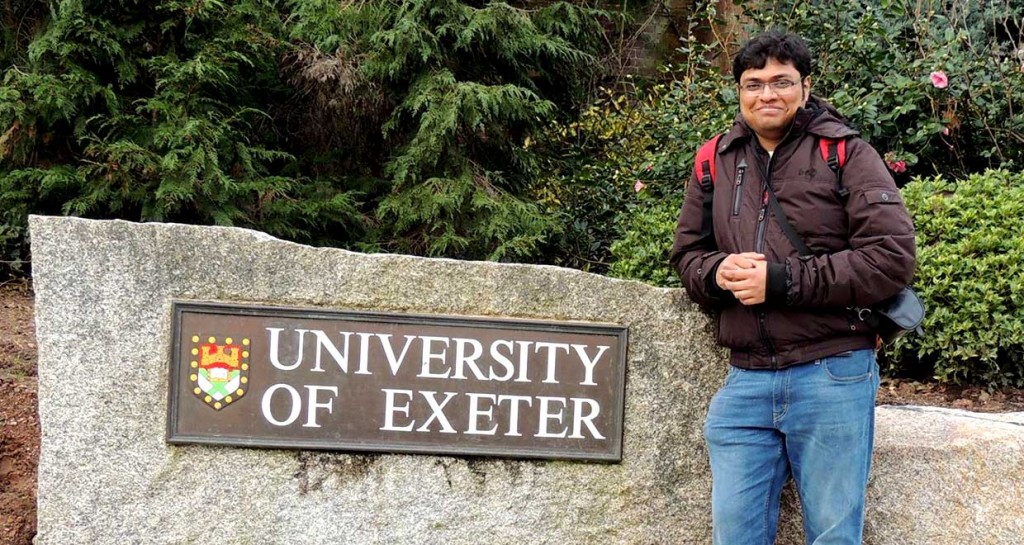
     

    avik-ghatak-2

    At what point did you decide to pursue your Masters at the University of Exeter? What was your motivation?

    It was after spending some time in legal practice that I had a lingering feeling that I still had some academics left in me. A few publications, especially a couple of them in a law journal published by the reputed and respected Common Law House publishers in Kolkata, further fuelled my thoughts in this regard. Aniket Mukherjee, one of our family friends and also a senior at J.C.C. Law College, who had himself completed his masters from the U.K., inspired me to go for an LL.M. One thing led to another and I landed up at the University of Exeter pursuing my Legum Magister.


    How was your experience at Exeter University?

    The experience at Exeter was vastly different from anything that I had come across in India during my graduation days. To begin with, there were no written exams for the subjects (referred to as modules therein) and hence no concept of buying the last ten years question papers and memorizing the answers . However, the absence of written exams did not mean unlimited free time since we were required to submit research essays in all the subjects we had chosen. Legal education over there depends much more on research work and analysis than over here. So, in a way, there weren’t too many shortcuts or last night studies. The path to success lay in the library, if I may say so.

    The library was absolutely fantastic with law journals from all major legal jurisdictions and systems, including those from India. Students over there are also given access to the best online journals available over the internet. I literally had almost the whole legal world at my fingertips while studying as a student at the University.

    A multi-national teaching staff, including among their ranks, a Special Rapporteur of the United Nations Secretary General and also a Refugee Status Determination Officer of the United Nations High Commissioner for Refugees, and a similarly diverse student group, further enhanced the knowledge exchange process. That is something that is available at only very few law universities in India.


    Why have you chosen International Human Rights as your specialization for LL.M?

    Most of whom I know to have done their LL.M., have pursued International Business Laws or International Commercial Laws. Perhaps it is more lucrative in terms of job prospects. But somehow, interest in this particular branch of law continues to elude me till date. International Human Rights Law was thus, pretty much an obvious choice since international law and human rights had been as close to my heart as criminal law.


    How difficult was studying abroad in terms of finding accommodation, finances and settling in?

    I shall begin with the last issue put forth in this question. Settling in was never a problem in the U.K. since they have a multi-cultural society with people from various countries and cultures residing therein for a long period of time. Racism is down to a near zero. All my concerns regarding whether I would be able to integrate into the society over there or not, were laid to rest pretty soon after my arrival at the University.

    Finding an accommodation hadn’t been a problem since I had put up at accommodation provided by the University.. However, when I decided to move out, it proved to be a tough task since as per the agreement with the University, one has to get someone who, at that point of time wasn’t staying at any of the University provided accommodation, to take your place or to continue to pay the entire fees for the University accommodation for the whole year. Fortunately, I did not have to wait for long to get such a replacement. However, my suggestion to anyone reading this and contemplating to pursue his/her LL.M. abroad, would be to decide beforehand as to whether one would like to stay at University provided accommodation or at an independent accommodation because once you ink the accommodation agreement with the University, the way out of the same could be very tough and not everyone could get as lucky as I did in getting a replacement who matches the terms of the agreement.

    Lastly, it is a known fact that studying in the western countries is a much costlier proposition than studying anywhere in India. Hence, prospective students would be better advised to look for scholarships, if the same is on offer. Over and above the same, perhaps putting up at a shared accommodation and not spending too much on travelling, a natural attraction for anyone going abroad for studies, should do the trick as far as the finances are concerned.
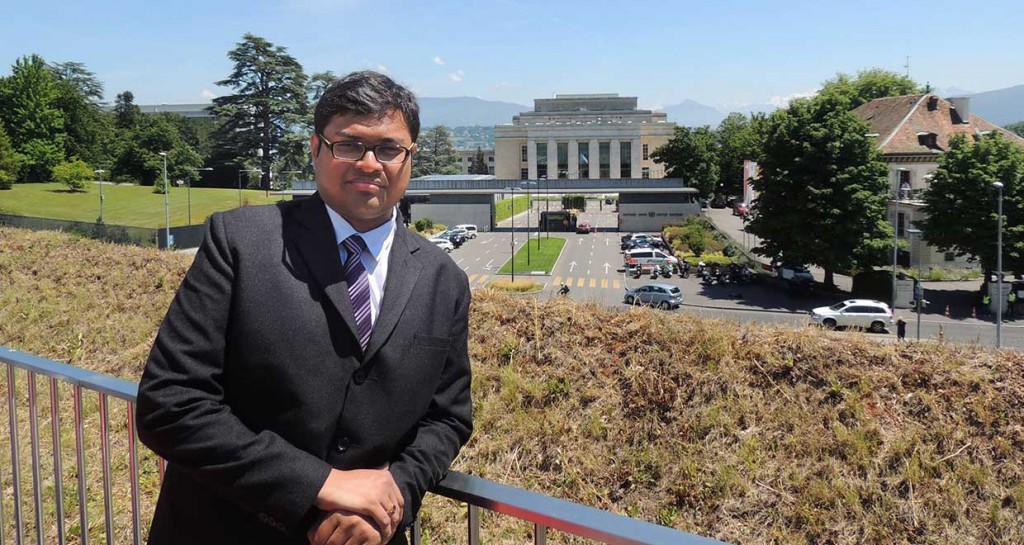
     

    avik-ghatak-3

    You were as one of the 50 professionals from around the world to attend a Certificate Course on International Humanitarian Law organised by the Istituto Internazionale di Diritto Umanitario in San Remo, Italy and also in Geneva. How was the overall experience? What was this course all about?

     I had been fortunate enough to be sent, along with 15 others from my University to attend the 82nd session of the United Nations Committee on the Elimination of Racial Discrimination and the 54th session of the United Nations Committee on the Elimination of Discrimination Against Women at the United Nations Office at Geneva in February, 2013. It is over there that I came to know about the Istituto Internazionale di Diritto Umanitario in San Remo, Italy. The Institute primarily deals with the military personnel from around the world, training them in the rules of engagement in accordance with International Humanitarian Law. In order to achieve their aims in this regard, they work in close collaboration with the likes of the International Committee of the Red Cross and has operational relations with the likes of the European Union and the N.A.T.O. They also organise a handful of courses for civilian personnel and I was fortunate enough to be selected to one such certificate course on International Humanitarian Law.

    The experience of being able to come into contact and converse with military personnel, diplomats, professors, personnel from the UN and other international organisations such as the International Committee of the Red Cross, Amnesty International, Caritas etc. and lawyers drawn from a pool of countries spanning over all the continents on earth is something that perhaps cannot be expressed in words. Understandably, it was a very enriching experience.
    The course was on Humanitarian Law wherein the functioning of the same was explained to us by various military personnel and jurists, including Special Rapporteurs of the United Nations Secretary General and Judges of international courts, at times, through exercises resembling real life decision making inside the battle command centres. Also, the relation that Humanitarian Law shares with Human Rights Law, International Criminal Law and as well as International Refugee Law was explained at length, over the course of two weeks.


    You currently practice at the Appellate side of Calcutta High Court. How is the work atmosphere at the High Court presently?

    As time progresses, our society is faced with newer challenges that are to be overcome. And in an attempt to do that, new laws are enacted by our legislatures or amendments are made to the existing ones. More the number of laws more would be the number of litigations though there may be certain exceptions. Hence the scope for private practice at the High Court is better than ever before and I am of the firm belief that the best days are yet to come. So, under no circumstances would I say that it has become more difficult for a fresher to be successful.
    As far as the atmosphere is concerned, having practiced at other lower courts in the past, I have found the High Court at Calcutta to be much friendlier to new comers than most other places. Most seniors are more than willing to help out the juniors when the juniors find themselves on a sticky wicket. And it is not as if they do so with an expectation of getting briefed by the junior concerned. I, for example, have been fortunate to have had worked with a senior who not only allowed me to brief other senior advocates, if the clients so wished, but also to appear against him in matters where, by a stroke of fate, we ended up representing opposite parties in the same case.

    It would be advisable for a fresh graduate to not expect a huge amount of money in his bank account at the end of every month, at least for the first few years of his practice career. Advocacy surely isn’t the place where one can rake in the money right from the word go. One would do better to do away with any vanity or air of superiority and get his head down into becoming a good clerk to begin with. In the words of my senior at the Asansol Court, ‘One has to first become a good clerk if one is to become a successful advocate later on.’ Basically, one would have to know the procedure of the Court inside out before concentrating on the laws since knowing the procedures himself/herself would make him/her less dependent on others in basic matters such as those relating to the filing of a case, for example. Next comes the knowledge of law and the finesse of arguing a matter in the court, both of which one learns over a span of a life time. There are barely any last minute quick fixes or short cuts to success in this profession.


    Many law students prefer corporate jobs over a career in litigation. What is your take on this? Is it better to work in the corporate sector for a few years before starting litigation?

    A High Court Justice had once famously quipped that he is proud that his college produces eminent lawyers and jurists instead of producing ‘corporate slaves’. An ex-Supreme Court Justice, while in conversation with a representative team from our college had stated that he felt that the corporate lawyers contribute nothing to the legal field in terms of legal jurisprudence and interpretation of the laws.

    Such views, though, are generally restricted to our previous generations. Being someone from a generation, a good chunk of whose members have gone into the corporate sector or into law firms, I don’t possess such a traditional view in this regard. In fact, I do understand that in the initial days, a corporate job does seem to be much more lucrative. We are also in an age when most of our friends who go into other streams, especially engineering, get corporate jobs immediately after graduation and their lifestyle and economic stability does appeal to students of the legal field too.

    Also, some students may actually need the economic support in the form of salary that one would get on joining a corporate job or a firm after passing LL.B. That is something that advocacy, by and large, would fail to provide you with during the initial days. Also, some may not want the daily hassles and the schedule less life that comes along with a career in litigation. Hence, corporate jobs for those in the legal field is also a necessity in today’s age, as it provides an additional career option, and a pretty good one at that, to the law graduates.

    I do not have any previous experience of either interning or working in the corporate sector and hence I may not be the best person to be speaking to in this regard. However, to the best of my belief, I do not think that working for a few years in the corporate sector before starting a career in litigation would make much of a difference, especially since the nature of the work that one does at the corporate sector is vastly different from the work that one would be required to do in litigation. One’s experience in the corporate sector is useful for a career in litigation or not, would perhaps depend on how much exposure one gets to the proceedings of the courts during one’s work as a corporate lawyer. However, the experience relating to the drafting of legal documents that one would be required to undertake in the corporate sector is surely going to come in handy even in litigation.


    How did you get to connect with your clients? How many years of practice do you think would be required to build a firm clientele?

    I believe that working at the lower courts at Asansol, Durgapur and Burdwan went a long way in increasing contacts among the advocates practicing over there. And once I shifted to the High Court, advocates from these places found someone they knew and had worked with, to send their cases to, if and when they needed to send some matter up to the High Court. I also make it a point to visit the lower courts in and around Kolkata on a periodic basis, if and when an opportunity to do so presents itself before me. Such visits however, are never at the cost of my work at the High Court since that is my primary place of work.

    As far as direct interaction with the clients is concerned, one has to remember that most of them come to us only when they are in distress and hence, they may seem to be a bit repetitive with their questions at times and at other times, they may seem not to be able to understand your point of view due to a multitude of reasons including their general lack of legal knowledge. One would do better to keep one’s calm under such circumstances. Ultimately, no matter what one says, even the clients understand that you may lose a matter after all. What matters is that they should be able to see in you the intent to give it your best. Good behaviour with clients is a must because our very profession, after all, is in existence to help them out with their legal problems.

    As far as the number of years it would take someone to build a firm clientele is something that would vary from advocate to advocate and there is no straitjacket answer in this regard.


    How is your experience so far? What is your workday like? Are there new challenges every day or did work fall into a predictable pattern?

    My experience at the High Court has been exciting, complete with its share of ups and downs.
    I tend to reach court a little early, i.e. within 9:30 to 10:00, a habit that was inculcated in me by my senior, Mr. Debasish Roy, when I had joined the High Court. After completing Court in the evening I tend to be able to come back home if there are no conferences and dive headlong into studying for the cases scheduled to come up for hearing on the next day or draft documents that are to be filed in the days to come. If however, I am required to meet some senior for any conference then the time by which I am able to return home completely depends on the timing of such a conference.

    Once in this profession, one has to be ready to attend conferences that are held at the convenience of the seniors, whether they are held at midnight or before sunrise in the morning. Life, effectively becomes schedule less. But then, that is part and parcel of advocacy.

    My grandfather used to say that every day is a battle for an advocate. Quite obviously, when you are engaged in a battle on a daily basis, things would not tend to be predictable at all. Two cases may be similar but no two cases are ever the same and hence predictability is not something that one can come across in this profession since each case requires individual care due to its uniqueness, thereby throwing a new challenge at the advocate handling the same. The only thing predictable about a day in an advocate’s life is perhaps that it would be unpredictable.


    What would be your parting message to law students who want to litigate just after graduation?

    Hard, though intelligent work, an indomitable appetite for legal and as well as other related knowledge, loads of patience and humility can and is bound to lead to a success story after a certain point of time. Those coming into litigation must keep in mind that it is not for nothing that we are referred to as ‘Learned’ advocates from day one. We have to behave and act as learned people if we are to do justice to our profession.

    Having said that, I would like to wish all the best to all the law students wishing to become legal practitioners after graduation.

    Last, but not the least, I would also like to say, in the words of my mentor Mr. Protik Prokash Banerjee, ‘Welcome to the Glorious Uncertainty’.


     

  • Adithya Reddy, Advocate, Tax Matters on setting up an independent litigation practice

    Adithya Reddy, Advocate, Tax Matters on setting up an independent litigation practice

    Adithya Reddy graduated from WBNUJS in 2008 and started his career in litigation as an Associate at HSB Partners. He then moved on to work at the Department of Commercial Taxes, Government of Tamil Nadu as a Government Advocate, and continued working on a variety of commercial law and taxation matters, before leaving to set up his independent practice.

    Here, he talks to us about

    • Why internships in the first three years of law school are a waste
    • Why one must only pursue the field of law they are truly interested in
    • The pros and cons of working as a Government Advocate
    • How to set up an independent litigation practice


    How did you choose to become a lawyer? What were your objectives when you thought about law while still in the preliminary years of at NUJS?

    Law has always offered more career opportunities than what are commonly known. If anything, the variety of opportunities has only increased in recent years. In fact, I remember that this was the first thing Prof. Madhava Menon told me at my interview while joining NUJS in 2003. He said one should leave all career options open at least till the first 3 years of law schools.   This is what I tried to do in NUJS. While I always believed that litigation is where a lawyer can prove his worth the most, I did consider other options like pursuing academics or policy research.

    My friends had no views about my career choice. I would be exaggerating if I say I myself was keen on becoming a lawyer. I was only sure of wanting to become a professional. In fact it was my mother who was totally impressed by her friend’s son who had just graduated from NLS and was drawing a 6-digit salary. She then wanted me to join a law-entrance coaching course, which I did more out of indifference than interest.


    How relevant do you think are internships for a present law student?

    Most people who get a corporate job do so because of one good internship in their 3rd or 4th year. That is why, I see no reason why they should keep interning in different firms right from their 1st or 2nd year, that too twice or thrice a year. Even for litigation, it might, at best, help in gaining some basic idea about how a court works. It gives you no particular advantage when you start as practice. I am also not sure how the number of internships one does makes any difference, say to an LL.M application.


    When did you actually experience the learning curve? What is your opinion when people say that all that they have learnt is in their years of practice?

    My law school experience was very valuable for two reasons:

    First, as you are competing with students of very high calibre, you have to learn independently of anything that the law school may provide for.

    Secondly, a national law school by virtue of its brand and the people at its helm exposes its students to avenues and opportunities that no law student from an ordinary law school can get. I would say my learning curve increased once I found some optional subjects interesting after my third year.

    Many people say that what is taught in law schools is not relevant for a litigating lawyer. This is absolutely true for a lawyer till he establishes good practice and starts arguing cases regularly. Once a lawyer develops enough practice to argue cases involving questions of law on a daily basis his academic knowledge gives him a distinct edge over his peers. So it is important for a national law school student to stay in touch with everything he learnt in law school and keep updating himself/ herself with current legal developments. It is also important to maintain research skills which many national law school students learn well through moots etc.


    How was your work as a litigating lawyer at HSB Partners? Please tell us a little about your work profile while working there. Tell us what a typical day at work was like for you?

    I was a litigating lawyer. HSB has considerable amount of litigation practice. In fact I started working in the city civil court for the first few months. I worked on many high profile litigations involving top corporates in the high court. I also worked in tribunals like the Company Law Board and Consumer forum. Most of the litigation was relating to commercial disputes. I was very lucky to have worked under the firm’s partner Mr. T.K. Bhaskar who was himself a NLS graduate. He gave me full independence in handling much of his litigation practice. Mr. Bhaskar was also kind enough to entrust me with some very interesting non-litigation/ corporate matters, something I never expected.

    A typical day at HSB started with me entering office by 9.00 am, much before most other associates, and sitting with the clerk to note cases in the daily cause list. The next 30-40 minutes involved hectic searching for case bundles and last minute preparation for the day’s cases. I used to leave for court with few other colleagues and come back in the evening. The work day used to end anytime between 8 to 10 pm depending upon the amount of work required to be done for the next day.  The most hectic day used to be when a client needed an urgent case to be filed or when a case involving voluminous documentation and research was being argued in court.


    adithya-reddy-2

    Thereafter you worked as a Government Advocate for the Department of Commercial Taxes, Govt. of Tamil Nadu. How did your appointment take place? What were the responsibilities you were entrusted with?

    Many people fear taking up litigation as a career option for lack of family background or a connections in the profession. My appointment as government advocate is a great example how one can receive help in the profession independent of these things. I was recommended to become a government advocate by an Additional Advocate General only because he had noticed me as a good junior lawyer. I will forever be indebted to him.

    For the first one year (since my appointment in early 2012) I was lawyer for the TN Government’s commercial tax department. Sales Tax/ Value Added Tax is one of the few areas of taxation which falls within state government’s jurisdiction. I argued many cases on behalf of the revenue involving the subject before the High Court. This stint also gave me my first few reported judgments.

    In early 2013 the TN Government appointed a new Advocate General who is also one of Madras High Court’s most senior and knowledgeable lawyers. He had known me from before and requested me assist him in his work on behalf of the government. I readily agreed. I worked with him for one and a half years. The variety of work I did in the AG’s office was mind boggling and I can say with some lack of humility that very few young lawyers would have had such kind of exposure. This was bound to be, because government is the biggest litigant and is involved in cases touching upon almost every branch of law. A lot of credit for this would also go to the AG who treated me very kindly and gave me full independence to interact with the senior-most bureaucrats and officers in the government.


    How and when did you decide to quit your job and start up with independent practice?

    I decided to resign as a government advocate in October 2014 for two reasons. Firstly my work , especially in the AG’s office, left me with very little time for anything else. I was entering my 7th year in the profession with no time to think of my own practice. Developing one’s independent practice involves a lot of struggle. As a government advocate I was getting used to so much comfort that I used to have sleepless nights thinking of how I was going to manage when I begin independently some day. So I decided there was no point postponing the inevitable.

    The second reason which is less significant is that being a government advocate required one also to be loyal to the political dispensation that was in power in the state. Not only did I have no sympathies for the political party ruling in the state, but I had my own political affiliations which I could not and did not want to hide beyond a point. I always felt guilty about having to lie to people about my political views.

    Normally nobody would pay much attention to the political affiliation of a government advocate. But as government advocate attached to the AG’s office I was the centre of a lot of attention. That was when I realized that people were talking behind my back about whether I belonged to the ruling party or not. This prompted me to quicken my decision.


    What are you main practice areas? How has been your experience so far? Is it more comfortable be your own boss or is the pressure of work almost similar?

    It has only been three months since I started independently. For this short period I have got more work than I expected. That only makes me nervous about maintaining this momentum. A lot private work I am getting also relates to the same area I worked on as a government advocate viz. sales tax/ VAT. But I am trying to get more work in other areas.

    It is much less comfortable to be your own boss in the initial years. You have to think of how much you earn because you have expenses to meet. This is something you can blissfully ignore when you are a junior because the senior’s infrastructure, staffs etc. is already there. Also there are expectations to meet.


    As a practicing lawyer how did you manage to learn the basics of court room practice? Did you have anyone to guide and mentor you during the initial days of your practice?

    Every senior I worked with has been a guide and mentor. It is just not possible for me or any junior lawyer to learn court practice without observing seniors and learning how they deal with clients, judges and other lawyers. What happens in the court room is just half of the work that forms part of litigation. There is drafting which you learn more directly from your senior by reading his drafts and by taking dictations from him if necessary. Also there is filing which you learn from the clerk.


    How did your first hearing as an independent practitioner go? Which are the most memorable cases till now?

    Well, as I said it has been only three months since I began independently. So it is too early to talk of memorable cases. The first case I argued after setting up my own practice was for a client who was faced with an adverse sales tax assessment. The judge set aside the assessment holding that the assessing officer had not applied his mind to the issue. I need to mention here that having good judges to represent your cases before is extremely crucial for a young lawyer to make a mark. A client is often only concerned about the result of his case. Judges who pay lesser attention to a case only because it is being argued by a young lawyer put his/her career prospects in great jeopardy. I have been lucky to have appeared to before some very good judges as an independent lawyer.


    What is your workday like? Are there new challenges every day or did work fall into a predictable pattern?

    My work day currently is a lot more relaxed than what it used to be. I don’t miss my daily golf practice and spend little more time on my political/ social activities. Most importantly I don’t miss my calls or at least I ensure I return them at the earliest! This is because now I have freedom to set my own schedule. I can go to court only for the time that my cases are taken up and leave immediately after that. The major challenge is to get new work and to retain clients I’ve just got. I’ve realized that it not always possible to impress a client. As long I am convinced that I have done my best for the client I remain satisfied. These are issues which are far less relevant when you are a junior.


    How far is theoretical knowledge in law schools consistent with the practical arena?

    It is very important once you start arguing your cases regularly. It gives you a clear edge. It is also important to impress your senior when you are still a junior.


    The Bar Council of India has recently come out with new Certificate of Practice and Renewal Rules, 2014. What is your take on this?

    I think it makes sense. Though, what is technically required to be considered by the Supreme Court is only questions of law, it is very essential for a Supreme Court lawyer to know how his case might have been decided at trial. Otherwise the approach tends to be very academic and detached from facts. Also it might help sensitise lawyers to the plight of clients who have to go through the entire process before coming to the Supreme Court.


    How to make a conscious career choice – corporate vs. litigation?

    My advice has always been for people to go with what interests them most. If somebody genuinely believes earning good money, that too pretty early in life, is important than obviously taking up a corporate job is better. I see some of my seniors from NUJS are already partners in the biggest law firms. This is guarantee of a prosperous and comfortable life. But litigation definitely allows you to grow to your full potential as a lawyer.  The uncertainty is what is exciting. The freedom is very satisfying. Also once you are a successful litigator, there is no limit to how much you can earn.

    Another advice would be for students to be sure of what they want to do before taking the plunge. At least in litigation the competition is tough and every day you spend doing something else is a waste. There are many people with a head-start. Lawyers with a family background have a distinct advantage. They can probably afford to try out other options before joining their father/ relative’s practice. But for a fresh lawyer every day brings new opportunities and new contacts.


    What would be your parting message to law students who want to litigate just after graduation?

    Never shy away from litigation because of the uncertainty. That is the most interesting aspect of the career. You could be under stress not knowing what to do next, only to be pleasantly surprised the very next day. It could be in the form of a big case or a big acquaintance, but rewards will keep coming to you from the most unexpected quarters. All that you need to do is show your talent and sincerity. Also, no matter how important success is, honesty and ethics have their own charm and will hold you in good stead throughout your career.

  • Smrity Sudan, In-House Counsel, UD Group, Dubai on her experience in Corporate Law

    Smrity Sudan, In-House Counsel, UD Group, Dubai on her experience in Corporate Law

    Smrity Sudan graduated from CLC, Delhi University in 2007. She holds a B.Com degree also and is a qualified Company Secretary. She has a very rich experience of working in India and Dubai. After graduation, she started working at Bharti Airtel Ltd. and later, switched over to DLF Ltd. Thereafter she moved to Dubai and worked initially at Emirates Legal FZE and then at, Dubai Legal Eagle (Al Dhaheri International). She has recently joined UD Group, Dubai.

    In this interview, she talks about:

    • Working for Bharti Airtel Ltd. and DLF Ltd.
    • Working in Dubai as a Corporate Lawyer


    How would you like to introduce yourself to our readers who are mainly law students and lawyers?

    I am a Corporate Lawyer having experience globally in legal drafting, compliances and International Arbitration.


    When and how did you decide to study law? Which universities did you consider for your legal studies? How did you settle for CLC, DU?

    I decided to do law during my graduation. I enrolled myself for CS in 2003 and acquired interest in law subjects. I always considered CLC to be the most appropriate law college for me. Apart from being a well known university, CLC is the best law college in Delhi.


    Having graduated from a non-premier law school, what would you say to the future graduates of DU regarding this?

    Hardly few people manage to do law from the NLS, Bangalore. Only those who choose law as a career quite early in their lives aspire to join NLS. NLS is not the end. Look beyond and see many successful lawyers from other universities. Soli Sorabjee had graduated from Government College, Mumbai. Harish Salve did his LL.B. from Nagpur University, Mukul Rohatgi from University of Mumbai.


    Many lawyers say that the first year after graduation is the most difficult year for young lawyers. How did you learn the ropes and what were the biggest challenges you faced?

    Facing challenges means you are alive. You will find it in every step of your professional life. People find being exposed for the first time to the professional world a little challenging. As far as my first year of professional life is concerned, it was pleasant being associated with Bharti, a well-known brand, having great HR Policies and highly professional yet empathetic boss. First year of your work life is the year to learn the most when people are more than willing to help you learn. After that expectations begins and you are considered to be an expert. Learn and learn should be the agenda.


    How did you decide to shift from Bharti Airtel to DLF Ltd.?

    As I said, be open to learn the maximum in the initial years. Do not be stuck in the field you don’t find interesting. My reason for change was to learn more of corporate legal work in DLF as my profile was more of secretarial compliances in Bharti. Both are great places to gain valuable experience.


    You left DLF to join Emirates Legal FZE, a law firm in Dubai. What motivated this shift? How did your appointment take place?

    It was a personal reason. After getting married I had to shift to Dubai with my husband. He had secured himself a great job in Dubai and we were excited at the prospect of exploring international work life.

    But, only after 6 months of struggle Emirates Legal was the first break I got in Dubai. I felt that at that time finding a suitable job in Dubai was not easy. Despite having more than four years of experience, I was considered as a fresher. Yes, I was a fresher to a Civil Legal System and to UAE laws.


    Thereafter you worked as a Legal Consultant at Dubai Legal Eagle (Al Dhaheri International). How did the switch from Emirates take place? How was your experience?

    It was a right decision as I was not satisfied with the profile. Dubai Legal Eagle, an International Law firm gave me exposure to International Arbitration. It is an interesting profile for those who possess analytical abilities, enjoy arguing cases before a Tribunal consisting of members appointed from various parts of the world.


    You’ve recently joined UD Group, Dubai. Which events led to your induction into UD Group? Were there any interviews or selection processes?

    Being a Company Secretary and someone who has no interest to litigate, a Corporate Lawyer profile is where I find myself well fitted. Fortunately, the option of UD Group came to me through a consultant and I went through the 3 stages of interviews that lasted for almost 2 months.


    What does your current work profile at UD Group consists of? How is a typical workday like? Can you tell us about a few of the most challenging problems you have faced thus far?

    My work profile at UD Group consists of typical in-house counsel profile, which includes drafting of commercial contracts, negotiating transactions, Merger and Acquisitions, Restructuring, compliances etc. The most challenging part is to think on the lines of Civil Law System since my law degree is on subjects based on Common Law System.


    Tell us a bit about work culture in Dubai.

    The work culture is equally stressful because of long working hours. Magic Circle Firms and MNCs look for people who have acquired degrees from USA, UK, and Australia etc.


    How difficult was the shift to a foreign law firm?

    It was not very difficult rather it poured more confidence to deal with people from different countries and background.


    How has been your B.Com degree helpful in your career?

    Yes, my B.Com degree has indeed been quite helpful in understanding the commercial and business aspects of the transactions.


    Can you give us advice on applications and interviews, especially with foreign law firms?

    Build good CV. Approach consultants and apply directly on the websites of the Companies where you would like to apply. Register on LinkedIn and interact with people. Register on various websites offering services to find jobs like Legalweeks.com, Totallylegal.com.


    What made you gravitate towards this field of Corporate Law?

    I have always wanted to be a Corporate Lawyer. I followed my instincts and not the general perception of the society. I am happy to overcome the challenges coming my way.


    Lastly, what would be your parting message for our readers?

    Believe in yourself, trust your conscience and follow your dreams. Be a winner in the field of your interest. That’s what success is.