Category: Associates, In-House Counsels and Advocates

  • Hita Kumar on leaving AMSS to pursue LL.M from NUS over Cambridge, writing an SOP and getting recommendations

    Hita Kumar on leaving AMSS to pursue LL.M from NUS over Cambridge, writing an SOP and getting recommendations

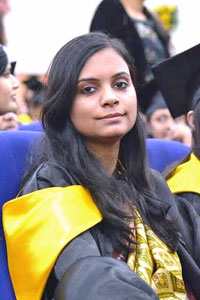
    hita-kumar-2Hita Kumar is a graduate from National Law Institute University, Bhopal (Batch of 2012). Her journey through law school has been one of an ideal student. While maintaining a good CGPA, she bagged a job with AMSS in law school. She worked there for two years. Currently, she is pursuing Masters in Corporate and Financial Services Law from National University of Singapore.

    In this interview Hita talks about:

    • Choosing NUS over Cambridge University for Masters
    • Writing an SOP and getting recommendation letters
    • Work experience at AMSS and leaving it to pursue LL.M


    Most of our readers are law students and young lawyers. How will you introduce yourself to them?

    I am not your stereotypical law student who loves hearing her own voice, arguing for the sake of argument and is very opinionated (no offence!), but rather more of an introvert who is not afraid to speak her mind when a situation requires me to. I’ve been told that I come across as very serious, sincere and nerdy, which is probably true when it comes to my work but people who are close to me know how nutty I can be. I’ve done my BA.LLB (Hons.) from NLIU, worked at AMSS, Bangalore and am now pursuing my Masters in Corporate and Financial Services Law at NUS. On paper I probably look like countless others, but I’ve probably gone through this journey with the least number of hiccups, which only goes to show that consistent hard work generally pays off.


    How did you gravitate towards law? Why law and not engineering or medical studies?

    From the unbiased ethics of law to the high dependence on insightful reasoning, I gravitated towards law for a number of reasons and not specifically one reason, such as wanting to be well-spoken, well read and highly regarded, wanting to be person whom you can trust to resolve issues and wanting to have the power to make right an injustice, to even know an injustice when faced with one. While I enjoyed science during 11th and 12thI never saw myself as an engineer or a doctor because it seemed too common a career choice for people who took up science. An alternative to law that I did seriously consider was a degree in Economics.


    How would you describe your time at NLIU-Bhopal?

    My time at NLIU was quite fulfilling and whilst it was demanding and academics were always a priority; NLIU was structured in the way that we were given a lot of freedom to venture into activities that interested us.It was up to us to take the initiative and develop our skills during our tenure as law students. I tried my hand at mooting, client counselling, negotiation, writing and organising events on campus. I particularly enjoyed my stint as part of the founding editorial team of the NLIU Law Review. Being a sports enthusiast, I often spent time playing basketball, throw ball and badminton. Representing the University for events both; co-curricular and in the sports field was something I always looked forward to. NLIU Bhopal is where I grew up. Entering law school at 18 straight out of school and leaving at 23, with lawyer’s degree in hand, my time at NLIU has had the biggest impact in my life to date.


    You have worked at AMSS for two years. How was the experience?

    In two words, a ‘roller coaster’; there were highs and lows, it was exciting and intimidating, and I left AMSS feeling like it was one hell of a good ride. I was part of the first batch for which there was a rotation policy i.e. we were with three different teams for six months each, before being allotted a specific practice area. This was a great opportunity for a fresh graduate like me, to work on different areas and different teams before finally being allocated permanently with one team. It gave me the opportunity to explore a number of areas of corporate law and get a broader perspective of the working of the Indian corporate legal system. While there was a tremendous learning of various corporate laws but also an emphasis on learning of other skills like client handling, time management, drafting and presenting. I was lucky to have a few mentors who made the transition from being a law student to a lawyer easier than it would have ordinarily been.The fact that I made some really good friends along the way made the journey better than expected!


    The glitz of a corporate job may blind a law student and he may fail to look at different career opportunities. Were you in doubtful before joining NUS? Why did you prefer to pursue Masters over your job?

    I think the emphasis in Indian law schools is always on recruitments and the placement season is invariably a very tough time for most students. The pressure of getting a job, if not a lucrative one, is very high. Being at NUS, I now realise there were/are far more career options and job profiles that I could’ve seriously considered had I known about them; which is why I feel it is extremely important to have a strong working relationship with your alumni, have a wide circle of friends and acquaintances including people beyond your law school and to never be hesitant to reach out to any of them for guidance.

    Having said that, I had to do a lot of soul searching before I could finally come to the conclusion that I wanted to quit my job and study for the Masters program at NUS. There was a constant debate about whether an LLM over AMSS is the so called ‘right’ way to go? Would it bear fruit at the end of day? A dear senior of mine once told me time and again that it’s what you make of the opportunities you choose that determines the outcome and not the choice itself.

    As to why I preferred doing an LL.M over the option of continuing with my job, it would have to be the timing. For me, it was the perfect time to take a step back and reinforce my academic foundation in corporate law. After two years of experience in the profession, I now having a better insight into how the business of law is actually conducted and I could explore this further by studying the areas of law I am interested in during my LL.M.


    When you decided to quit job and pursue LL.M? Was it pre-planned or it just happened during your law firm days? What was your motivation behind doing LL.M.?

    Pursuing an LL.M was not part of the original plan, at least not consciously. At some point, whilst working I realised that I was not ready to be an adult just yet! On a more serious note, I decided to give myself an opportunity to explore the academics in depth before I settle down into my forte. My motivation behind doing an LL.M, and a foreign LL.M at that, was to experience a different kind of education system and culture.


    How did you choose NUS over others? How did you go about choosing a university?

    My choice to study at NUS was a practical one. Having said that I was quite convinced that NUS has an excellent LL.M program, especially for corporate laws and has been consistently ranked as the top university in Asia. To be completely honest, the clincher, was the funding offer I received from NUS. I was granted the Faculty Graduate Scholarship which covered my tuition expenses which made the offer of admission too good to refuse. Whilst I did have the option to take up the MCL program at Cambridge, I guess the practicality and the positives that NUS had to offer outweighed the option of taking up a huge loan for a relatively new program. While choosing a University, it is important to research the actual program you would like to join by speaking with alumni, it’s not ideal just to go by the name and reputation of the University; keeping in mind always, your reasons and priorities for pursuing an LL.M.


    How did you go about writing your SOP? Are there any key factors which one should keep in mind before writing the SOP?

    Writing an SOP and the entire application process in general is extremely testing and can get frustrating at times. My guess is that universities intentionally make it so, to weed out half-hearted applications! I spoke to a lot of people who have been through the process themselves, all whom had varying but valuable input. I think it comes down to putting across those aspects of yourself and your credentials that you feel paint a complete picture of yourself and one that leaves an impression with the admissions committee. There’s no formula to writing an SOP but a couple of things according to me would certainly make a difference would be (1) the reasons you think you standout from the rest of your peers; (2) the reasons you want to get back to academics after your first degree; and(3) correct grammar! It’s also very important to get many as many people as possible to vet your SOP, the more eyes you get on your SOP, the more it will evolve.


    How about recommendation letters? Who all recommended you to pursue LL.M?

    Since I had only worked for two years before completing my LL.M applications, I requested my professors at NLIU to give me their recommendation. They were all very supportive of my decision and asked me for my CV to get a better idea of the particular work I did throughout law school. Of course, there is a fair bit of coordination involved if you are not in university anymore, so I would keep enough time before the deadlines to make all the arrangements and request for a few extra copies should the need arise.


    Does NUS provide students with scholarships? Are there any other institutions, which provide scholarships?

    NUS does give out scholarships on the basis of merit. You may opt to automatically be considered for the various scholarships as part of the application itself. There are various other institutions that give scholarships (full, partial and loan scholarships) which are well known such as given by Inlaks Foundation, Tata Foundation, Aga Khan Foundation, Narottam Sekhsaria Foundation and the Mahindra foundation, amongst others. It’s important to start doing your research on scholarships at a very early stage and keep track of the requirements and deadlines.


    How is your experience so far? Tell us about the faculty and facilities. Anything memorable that is stuck in your mind?

    So far, my experience has been absolutely fantastic. My modules are extremely interesting and the Professors supplement them with excellent lectures and reading materials. The NUS Law faculty is very highly qualified and motivated to teach and engage students. The facilities range from an extensive library (with a large number of E-resources), to sports facilities, from well-regarded centres of research like the Centre for International Law, Centre for Asian Legal Studies and Centre for Banking and Finance Law to state-of-the-art use of IT in various internal systems like the Integrated Virtual Learning Environment, where all the materials for modules you have opted for are posted. Having been here only a couple of months now, I am still soaking it all in. What has been striking has been the frequency and quality of the seminars that are conducted on various topical legal issues by guests to the university. Though, the very first thing that hit me was that my lectures were 3 hours long. But as it turns out, if you like what you hear, 3 hours can fly by fast enough!


    How’s the Indian fraternity over there? Are there many Indian students?

    There are enough and more Indians here that I never feel too far away from home! I think that says it all.


    How difficult was studying abroad in terms of finding accommodation, finances and settling in?

    Singapore is an excellent place for people who have never lived abroad. It’s almost impossible to get lost, filled with Indians and generally some of the most friendly and helpful people. While the cost of living is definitely higher than India, I can’t imagine it being too difficult to manage your finances if you can budget your expenses.


    Where do you see yourself five years from now?

    Probably doing something that I don’t even know of right now, but hopefully something that is exciting. However, options that one could probably look at are working at a foreign law firm, a multi-national corporation, teaching, a legislative think tank, an arbitration institution, a legal team of an international organisation like the WTO, and many others. Taking courses that interest you, talking to people in the field and keeping an open mind will help things fall into place.


    If you could re-live your 5 years in Law school, is there something you would do differently?

    While I have no regrets about my time in NLIU, I’m sure there are things I could’ve done better like taken a few more risks with internships, kept in touch with more alumni and stressed out a little less!


    Lastly, what would be your parting message for our readers?

    Make the most of the opportunities that come your way, so that you don’t have regrets in life!

  • Anamika Ahir on appointment and work at SEBI, internships and publications

    Anamika Ahir on appointment and work at SEBI, internships and publications

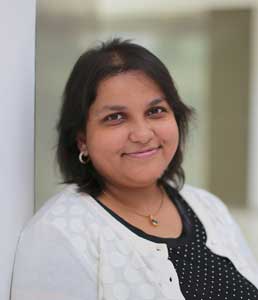
    anamika-2Anamika Ahir graduated from NLIU in 2013. She was an avid mooter during her law school years and has multiple publications to her name. Presently, she is working with the Securities and Exchange Board of India. We asked her to share her experiences with us.

    She tells us about:

    • Recruitment process at SEBI
    • Importance of Internships
    • Writing for journals and publications


    Tell us a bit about yourself – your childhood, life before your career in the field of law and educational background.

    I remember myself to be a little reserved as a child. I took academics seriously but I was also inclined towards extra-curricular activities. I actively participated in creative activities like writing poems, singing, and dramatics in school. I enjoyed camping and outdoor adventures and ended up attending two years of NCC (National Cadet Corps) during school days. Lately, I have developed a fondness towards learning languages and I have already cleared first proficiency level in French.


    How did you choose the field of law as a career?

    I never seriously thought of pursuing law as a career. The idea was suggested to me by my parents, although no one in my family is from legal background. At first I was a bit unsure about it but after giving it a thought I decided to “give it a try”. Fortunately, I managed to get through NLIU, Bhopal and decided to pursue law at once. Since then it has been an awesome journey and there was no looking back.


    How would you describe your time at NLIU? What kind of co-curricular activities did you participate in?

    Law School was a remarkable experience for me. It was more like a roller coaster ride than a cruise. I have had numerous ups and downs, but somehow I’ve been able to land on my feet. All the thrill and fear during the ride has made my persona more resilient than ever. I think that the dearest reward I received from my law school education is the skill to appreciate a particular issue from various perspectives. This, I believe, is the most valuable asset of a lawyer.

    While pursuing law, amongst a host of activities I chose to participate in moot court competitions and presenting papers in seminars. I considered both these activities to be indispensable if I wanted to make the most of my legal education. Personally, I enjoyed mooting the most. I had the opportunity to represent my university at moot court competitions organised by the Bar Council of India and Chandigarh Judicial Academy. Presenting a case before a bench comprising of high court and district court judges was an elating experience for me.


    Which is the most important co-curricular activity in law school considering its relevance to the field of law?

    Honestly, one cannot classify any one co-curricular activity as “most important” based on its relevance to the field of law. The diversity in the field of law forbids any such general classifications. For example, a student interested in legal journalism might find debating and writing papers more useful than mooting.

    However, having said that, I would still recommend students to try their hand at mooting just for the experience. Moot courts are a unique attribute of law schools and this itself makes it worth giving it a try. Mooting develops all critical skills such as legal writing, researching and speaking simultaneously. These skills are more or less relevant for most fields of law.


    You published legal articles in multiple journals when you were in law school. Do you feel this activity just contributes to building a polished CV or does it have relevance beyond that?

    Publishing articles definitely has its relevance way beyond polishing your CV and bragging about it. The main benefit of publishing articles is reaped while writing the article even before it gets published. That’s right! The reason why publishing articles is held in high regard is because it is the best evidence of a student’s researching & writing skills. The process of research and analysis followed while writing a paper ensures the overall development of critical legal skills. It not only builds confidence but also reflects on your academic orientation. Keeping in mind the numerous benefits of publishing a paper, trying your hand at writing is worth the effort and the success in getting your work published is irrelevant.


    How should one get started about publication? How much time is required to write an article?

    The best and the easy way will be to work sincerely on the projects you submit as a part of your curriculum. If you have a well written project half of your job is done. Now, all you need to do is convert your project work into an article by adding the desired research and structure as per the requirement. This is ideal for students who have not yet ventured in the field of writing. For those who have already tried and tested their writing skills, they may identify topics of their interest which have legal relevance and then pursue it to its logical end.

    The time frame within which an article can be written depends on the subject of the article. In my case, I have always written on legal issues highlighted in current affairs. Therefore, it was imperative for me to finish writing within a week or less keeping in mind the ever changing position of law.


    You have worked at ELP, NDA as an intern. Tell us about your experience at these internships. Now that you look back, how do you think these internships influenced your career?

    I managed to score an internship at NDA through the Placement Committee of my university. The selection process involved screening of your CV followed by a telephonic interview. My work profile while interning at NDA majorly involved due diligence of companies and research work related to FEMA and Companies Bill. This was my first internship with a big law firm and I left no stone unturned to ensure that I make the most of it. Unfortunately, I fell very ill during the internship and was not able to put in extra hours of work when required. Nevertheless, I ensured that I did not miss work on any day and was always ready to push myself as much as I could during the office hours. Even after this I was lucky enough to secure a second round of internship at NDA.

    My second internship was at ELP. I applied to the HR of the firm personally and secured an internship. My work profile at ELP was similar to that of NDA as far as the due diligence and research work is concerned. This time I also got to draft and review agreements and affidavits in addition to the research work.

    The whole experience of working within the corporate structure helped me in gauging my potential of working and growing in such organisations at a very early stage. This helped me in making crucial decisions during my placements.


    Did you plan out your internships throughout law school or did it all just happen by chance? Any advice for the young law students as to how they should choose and plan their internships?

    By the end of my second year of law I had decided to pursue a career in corporate law. Since then, all my internships were planned in advance. Luckily for me everything worked out well and I was able to score some good internships.

    According to me following factors should be considered before choosing an internship:

    1. Firstly, decide on what type of law you want to pursue, the earlier you figure out which area of law is crafted for you the better. The first two years of law can be dedicated to discover which area of law you desire to pursue. It is a good idea to intern with an organisation which specializes in the field of law of your choice. For instance, if you pick family law or labour law you might consider an internship with either a boutique law firm or a practising Advocate focussing on the area of your interest.
    2. Secondly, the timing of the internship must be considered while making a decision. Any internship after your second year of law should be well planned and must be associated with the field of law you want to pursue after graduation. All the experimentation and testing must ideally be over by that time. Also keep in mind the part of the year in which you want to intern. If you plan to intern during the summers, don’t forget that courts are closed in June for summer vacation, therefore, interning under a practising Advocate will not give you the expected court room exposure.
    3. Thirdly, the length of your internship must be considered before making any decision. Most internships last for a summer. Such internships allow you to focus on your law school studies during the academic year. You can opt for longer internships provided that your law school attendance and examination rules permit you to do so.
    4. Fourthly, I would advise students to refrain from interning at big law firms in the first two years of their law school. It’s a well known fact that most big law firms do not accept interns from first, second or sometimes even third year of law. Any internship with such organisations in your initial years of law is a giveaway of the fact that the internship was obtained through personal contacts. This will reflect poorly in your resume at a later stage. The other reason to avoid interning with big law firms initially lies in the fact that law students at entry level are not well equipped to deliver the work expected from interns in such organisations.


    How do you think one can make most out of internships?

    There are mainly three things a law student gains out of internships:

    1. Practical knowledge: Internships are a device of bridging the gap between pedantic orientation of a law student and the pragmatic approach of a professional. In order to maximise this, interns should develop a mindset to let go of the idealistic academic approach towards work and focus more on the ultimate goal of “How to accomplish work effectively”. For example, if you are asked to research any topic, it is imperative for the intern not to begin with an academic approach. It is always a good idea to “ASK QUESTIONS” and to know the background in which a specific research work is given before you start your full-fledged research. Most of the time the person giving instructions may not mention why he needs a particular information or what is going to materialise out of the given research exercise. Asking questions will not only give you clarity but also display that your aim is not to mechanically get done with the work but highlight your genuine interest in your work.
    2. Networking: One of the most important advantages of interning is NETWORKING. Building a good rapport within the organisation and also amongst other interns will reward you throughout your career. Starting this as early as possible is a smart move. Networking will open your mind to new opportunities and keep you abreast with the dynamic legal industry.
    3. Building work ethic: Internships are the only occasions during which a law student gets the feel of work culture in the legal industry. One should use this opportunity to build work ethics. Later, this exercise will make your transition from a student to a professional very smooth.


    How relevant did you find your law school education with the kind of work you were required to do during internships?

    Quite relevant, I must say. While interning at law firms, I found myself already equipped with necessary skills of legal research, legal writing and drafting of documents. The law school curriculum ensures that these skills are developed in students to a certain level. All you have to do is put them to use in order to hone them to perfection.


    Right after your graduation, you’re working with SEBI. What is this experience like? What were the obstacles and challenges you faced during this job?

    Working with SEBI is a unique experience. SEBI is a comparatively new regulatory organisation (it was established in the year 1988) with a challenging role assigned to it. Indian securities market is changing with lightning speed. Understandably, the regulator is also making sincere efforts in keeping itself abreast with the dynamic securities market. Being a part of the legal front of SEBI, my role in the organisation is equally challenging.

    The experience of working with SEBI is enjoyable and at the same time full of responsibilities. The biggest challenge while working with SEBI was to understand the fundamentals of the complex functioning of securities markets. When I joined the organisation I had sound theoretical knowledge of laws relating to securities market. But it wasn’t long before it dawned upon me that this wasn’t enough. It took me quite some time to figure out the structural and functional aspects of the securities market. I am still learning the interplay of most of the sophisticated mechanisms of the market.


    What would you suggest a law student should do in order to land a job in SEBI?

    SEBI follows a two tier selection mechanism for recruiting officers.  I would advise all students who are interested in working with SEBI to keep a track of announcements made in this respect. Information regarding the examination is available on the SEBI website. The first tier of the selection process involves Multiple Choice Question (MCQ) based examination. The said examination is conducted for the following subjects:

    1. English
    2. Quantitative Aptitude
    3. Reasoning Ability
    4. General Awareness

    Based on the score of this examination, candidates are shortlisted for the final round of personal interview for recruitment of officers at Grade- A level. Law students must be well versed with the latest developments in laws relating to securities market. In addition to this brushing up constitutional law and procedural law before appearing for the interview will be helpful.


    Lastly, what would be your parting message for our readers?

    I have made a sincere effort to share my insights candidly with the readers. I would advise all the readers to always strive for better and never let the sense of complacency overshadow the urge to grow and excel. To compete with oneself is the best way to push your limits. Remember, the toughest competition is always the one which you have with yourself. Follow this and you will find yourself self-motivated far from envy and unhealthy competition.

  • Shweta Bansal on work at AMSS, leaving firm job for Civil Services and acing it

    Shweta Bansal on work at AMSS, leaving firm job for Civil Services and acing it

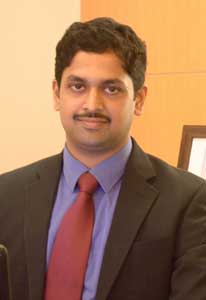
    shweta-bansal-2Shweta Bansal a graduate from NUJS, Kolkata, After a successful career with AMSS, she went for the Civil Services. With utmost diligence and determination, she successfully cleared the Civil Services exam. She gives an insight into her childhood, the hurdles in life which she overcame and how she has been able to mould her life into a real success story.

    In this interview she talks about:

    • Her life and journey as a law student
    • Preparing for the Civil Services
    • Books and other knowledge sources helpful in preparation
    • An insight into the interview process


    Please introduce yourself to the readers? Please tell us a little bit about your childhood and your background?

    I was born and raised in Lucknow and pursued my schooling from the prestigious La Martiniere Girls College Lucknow. My life took a drastic turn at the age of 6 due to a major spinal injury, after which for many years I had to push myself immensely to grapple with a disability. Gradually, with the support of family, friends, and teachers, I continued with my studies. My grandmother has been thoroughly instrumental in my life and is the reason behind my little success story. At the Intermediate level, I studied humanities with Economics and secured a top spot in my class 12th boards. My good performance at school and at extra-curricular activities can be attributed to my teachers, more specifically to Mrs. Bhavna Kalra who taught me the importance of standing up on my own two feet. Thereafter I pursued my law from NUJS and spent few of my most crucial and definitive years there, shaping and building my career in Law.


    How was your experience at NUJS? What activities were you involved in apart from the regular academic curriculum?

    [sociallocker]
    I look back at my experience at NUJS as a great learning experience and despite the struggles I encountered, it provided a strong base to my career in Law. I am a person with a keen interest in a variety of non academic activities and NUJS gave me a brilliant platform to explore various such opportunities to help groom me as a well rounded personality. I fared well academically despite several health challenges and had an opportunity to perform with my college band, participate in fine arts and sketching competitions both at NUJS and at other Fests and Cultural events. I was even fortunate to present my paper at Hong Kong on legal valuation of patents as a solution to farmer suicide due to crop failure.


    You secured a job with AMSS. What worked for you in securing the placement?

    My journey with AMSS has been the best experience of my life. In 2006 after completing a two and a half month internship with AMSS, New Delhi and I was offered a pre placement at the Firm by Ms. Anuradha RV who has been a constant guide and support throughout my career at AMSS and even after. The work experience and firm culture at AMSS is unmatched and goes a long way in understanding and dealing with different areas of law. My experience at AMSS was exceptionally good and Mr. Shardul Shroff has been like a father figure in my life, Ms. Gunjan Shah and Ms. Purva Chadha played an instrumental role in shaping my legal skills and mentoring me.


    When and what inspired you to appear for Civil Services after having a career at AMSS?

    Truly speaking I was always keen to take the civil services exam but wanted to establish myself professionally before taking the plunge. I personally feel having an option to fall back upon provides you with the required security to give your best at the preparation level and if one has law as a career, civil services would tremendously compliment it as a career.


    How did you manage preparing for the Civil Service exam with your law firm job and other commitments?

    I was fortunate to be granted a sabbatical by Mr. Shardul Shroff to help me prepare for the exam.


    When did you start preparing for the exams? When should a person ideally start preparation for the Civil Services exam?

    Civil Service preparation requires absolute dedication and thus in November, 2010, I took a two year sabbatical leave from my work at AMSS and pursued my preparation. I gave my prelims with 5 months of preparation and cleared it however I couldn’t clear the mains due to my Hindi language paper. In my second attempt I cleared all three legs paving my way for the services.


    How many hours did you put in for your preparations every day? Is having a fixed schedule or weekly targets important according to you?

    The key to Civil Service preparation is consistency and diligence. I would plan my preparation targets on a daily basis and made it a point to achieve them so that there is no backlog created as the material to be read and study is extremely vast. My targeted study period was nothing less than 8 hours daily. Reading of The Hindu daily is a must for any civil services aspirant.


    Which were the easiest and the toughest part of your preparation?

    The easiest part for me during the Civil Service preparation was to tackle and remember the material provided by the coaching institutes, which hardly constitutes 30% of the entire bulk of study material one has to go through. Moreover I was extremely fortunate to get great guidance and support from Cyril Darlong Diengdoh and Ashutosh Salil who constantly mentored me. The tough part is primarily to figure out the remaining 70% of the study material and syllabus and this makes all the difference. I also faced the mammoth ‘Maths’ dilemma in CSAT since I had primarily been a student with a humanities background. I consider prelims and General studies papers for the Mains the toughest leg of the entire exercise. Prelims requires a thorough reading of  the fundamental concepts of different subjects and mains requires more focus on the current affairs.Prelims is the first scanning ground so the competition is really tough and negative marking only adds to the competition. Mains in contrast gives you an opportunity to get creative with your answers of course without derailing from the subject. GS paper I and II of Mains require very thorough reading of the editorials and various reports published by the government.


    What are the aspects that a Civil Service aspirant must focus on and start preparing for in advance?

    I would begin by stressing on the basics, they are the cardinal point of the entire preparation for Civil Services and if one is well prepared with the basics, one can tackle most of the questions. It is also important not to get lost in the sea of knowledge. Instead, focus on a few basic books so that revisions are possible. Since Prelims focuses more on the basic concepts, NCERTS can be quite handy, the Main examination is a combination of basic and current affairs, so your focus should be on newspapers, government reports and government websites.


    What were the attributes of your legal education and background which helped you in succeeding in the Civil Service Exams?

    A legal education and background definitely helps in the civil service preparation especially in Polity and General Studies Paper I and II of the Mains. Certain topics are common between the Law paper and Public Administration so that makes life easier. Also having studied law equips you with analysis and digging of most concepts and thereby providing an added advantage in writing answers. My background as a lawyer went a long way especially in my interview as most of my interview questions were based on law.


    What is the importance of CGPA for law students especially for Civil Service exam aspirant? Does it make any difference during the interview?

    CGPA is important and it is a reflection on the attitude and seriousness of a student but it does not per se reflect upon the merit of the person. Thus it makes a good impression to have a good CGPA but it is not the only factor that determines the merit of a student.


    Tell us about your interview? What kinds of questions were asked by the interview board?

    My interview was conducted by a 5 member panel headed by Mr. P.K. Mishra. The panel is always well read and grills you on the basis of your mains form. The major thrust of the questions was about my take on various socio-legal issues like Khap Panchayat, live-in relationship, decriminalization of S. 309 of the Indian Penal Code which criminalises attempt to commit suicide, the Aruna Shanbaug case. My legal background and extensive work experience also helped me tackle questions about good governance and withdrawal of subsidies. The panel also intended to assess my perspective on various problems and my ability to provide a solution for the same, for instance, crimes against women and measures to curb and tackle it. During the interview the objective of the panel is multifaceted since they assess your overall personality and knowledge. In fact the panel asked me to sketch one of the panel members within 30 seconds, since they read about my interest in sketching. The interview is both grueling and unpredictable.  It is very important to maintain your calm and be absolutely honest with the panel. Mr. P.K. Mishra was a great help in my interview once he realized I knew my stuff. He discouraged excessive grueling by other members.


    For the meantime, before your training period starts, you are holding the position of a Consultant with AMSS. What is the nature of your consultancy with AMSS and has your role in the firm changed?

    I came back to AMSS after my mains in 2012 to work with my mentor, Mr. Shardul Shroff on a unique role which has absolute administrative bearings and nothing to do with the transactional work of the firm. At the moment, I aid the firm with regards to firm development and handle the administrative concerns and issues.


    What would be your message for law students who are preparing or planning to prepare to appear for the Civil Service exams?

    The thumb rule should be firstly to focus on your education as a law student, studying and working towards making one’s basics strong. It is exceptionally useful in Civil Service to hold a law degree but before plunging into Civil Service preparation one should secure themselves a career to fall back upon as civil services can be a gamble. Education, work and then Civil Service has been my strategy as I believe that one should never put all their eggs in one basket.


    Lastly, what would be your message for the readers who want to pursue career in Civil Services?

    There is no substitute for hard work and diligence. Consistency and dedication goes a long way in achieving the desired result. One should regard coaching institutions as a very small part of the Civil Service preparation and should rather focus more on self preparation and self study. Be honest in your preparation and give your best. The outcome is never in your hands but the effort is. Civil services requires focused study so its important to isolate yourself socially till you are done with the Mains.[/sociallocker]

  • Kriti Kalyani, Associate, LKS, on tips for interviews and building a profile

    Kriti Kalyani, Associate, LKS, on tips for interviews and building a profile

    kriti-kalyani-2Kriti Kalyani is a graduate from National Law Institute University, Bhopal, batch of 2014. Her diligence paid off when she received a job offer from Lakshmikumaran & Sridharan (LKS) in her fifth year of law school. Currently, she is working as an Associate there.

    In this interview, Kriti talks about:

    • Importance of Internships
    • Preparing for job interviews
    • Securing a job at LKS


    Tell us a bit about your pre-college life.

    I have a theory. I wish to do everything possible, so I don’t have any regrets in life. I am grateful to my school for providing the opportunities and giving ample recognition to students. Studies, co-curriculars like Student Council, debates, elocutions, dances, poems and essays to name a few things I did. I belong to the generation where people judged you if you took Commerce. So I did exactly that and proved them wrong. And fortunately, I love where I am today.

    I am a first generation lawyer in my family. So law was not an easy choice. But in a way, it was good, since there were no standards to match up to.


    Why did you decide to study Law?

    Frankly, there was no inspiration. No Perry Masons, no Boston Legal. I wanted to do something different and Science was out of the mix. I love reading and talking. Being a lawyer pays me to do exactly that. What more can one want in their profession!


    How practical do you think are the shows like The Practice, J.A.G., Boston Legal, Suits, etc. and movies like 12 Angry Men, Philadelphia, etc.?

    These shows miss out on the important details and the unglamorous parts of the profession. But their aim is entertainment and not to raise awareness if the profession, so we cannot really blame them.


    How would you describe your time at National Law Institute University, Bhopal?

    As much as we crib and complain while we are at it, I miss every moment I spent there. NLIU made me what I am today. A college expands your horizon in terms of the people you meet, the work you do, and makes you the person you eventually become. It’s not about what your college gives you but what you take from it. Studies, Moots, Asian Debate Championship, London Mediation Competition, Cultural Events, Sports Fests, are just a few things which I did in college. I managed the mess for a year, and stayed up nights to organize events which our college hosted.  If you do something each day, that your future-self would thank you for, then you have done a good job!


    Do you think mooting is beneficial for Law students or is it just to make your CV look fancy?

    Yes, mooting is beneficial. But in my opinion not to per se make one’s CV fancy. It teaches you to research smart, gives you the argumentative technique, teaches you the importance of paying attention to details and to withstand the judges’ grilling sessions. Not to sound preachy, I had actually quit mooting in my 2nd year, after being a participant in a moot that was fixed. I did one moot as researcher, in 5th year, and our team won it. It reinforced my faith, that it would probably be okay if someone did not moot.


    How did you secure internships with top tier firms?

    Most of the internships, including the last one at Lakshmikumaran & Sridharan, Delhi were through personally sending mails and following up. Nishith Desai and Associates, Bangalore was through College Placement Committee. I consider myself lucky because I never had to pester HRs and got confirmations based on my mails. What worked for me was the cover letter and to understand and similarly modify one’s approach based on the firm one is sending their CV to. Do NOT send a bcc to all firms in one go! Putting in mails well in advance and following up is a must.


    How relevant did you find your law school education with the kind of work you were required to do at law firms?

    Law school education is like how Sheldon in The Big Bang Theory learns to drive a car, sitting in his living room, knowing the physics of it, and learning to drive through a computer simulation. We all know how that would pan out if he were to drive on a busy road.

    My plan was to know the options that the field had to offer before choosing one. I wanted to know what I would like and what I wouldn’t. My internships were 50% plan of what I want, and 50% chance of what I’d get. I have interned at a PSU, a corporate law firm, a litigation firm, an IPR firm, and a tax firm. I finally decided that I liked tax enough to make it my profession. Also, because we are not extensively taught tax in our curriculum, there was more curiosity and eagerness to learn.


    What do you have to say about the advisability of law students pursuing internships at firms alone?

    Corporate law firms are just one part of what this field offers. I agree that it’s probably the most glamorous part in terms of money, but money won’t sustain you in it for long, interest will. So ensure that you like your work before you decide to pick it up. A possible way to go about it could be by way of elimination of available areas of practice. Some people wish to pursue UPSC and Judicial Exams. Corporate law firms wouldn’t really help them much.


    You have been a member of multiple committees while in law school. Do you think these enhanced your skill-sets?

    It’s one of those underrated and creditless things that you do in college. I think it’s equally important to learn the administrative work and to have the ability to make others work. I worked hard for every cell I was part of, for every event I volunteered. Eventually, I became Convener of the Cell for Studies in Intellectual Property Rights (CSIPR) which publishes its Annual IPR Journal. Dealing with college administration, correspondences with authors, ensuring work to be done on time, etc. made me more patient. The clerical and at times monotonous work is a huge part of a lawyer’s life. Trust me, paperwork never leaves you, and the Cell gave me enough experience to not throw papers in somebody’s face!

    I was also part of the Sports Committee for a good four years. Organizing Virudhaka-2013 was an amazing experience and this September-October, I am even getting nostalgic!


    You secured a job at Lakshmikumaran & Sridharan (L&S) in your fifth year of law school. How did you go about achieving this?

    I had applied via mail to L&S for my Summer Internship, and fortunately I got through. My previous internship at Nishith Desai Associates, Bangalore helped. At L&S, the presentation which the interns made in the end was the deciding factor. I read a lot of cases, lot of opinions, prepared a chronology of judicial pronouncements and even prepared the pattern of the mindset of the Tribunal and High Court judges. The presentation was well liked and my mentor put in a good word for me. I got a call back, but L&S came to campus before my scheduled internship and I got placed!


    How many times did you intern at L&S before you bagged the job offer?

    L&S usually follows a policy of 1 call-back and then a PPO. I interned at L&S in June and got a call back for October. However, they came to campus in September and I was recruited.


    How did you go about preparing for your interview?

    My senior had told me, not knowing something which is mentioned on your CV is a criminal offence! So I did my CV well. That means reading up on all recent changes in the topics you did three years ago! Apart from that I brushed up my tax basics. L&S usually does not ask a lot of HR questions, so did not do those much. I was asked Class 12th Accountancy in my interview as well, so there isn’t a 1-2-3-step formula. You can only do so much. Be confident and trust all that you have learnt in five years.


    How do you think one should go about writing a CV when one is applying for a job?

    DO NOT lie on your CV. If you’re going to lie, be smart about it. Add topics/subjects which you know about. Do not add something which you won’t be able to answer in an interview.


    Where do you see yourself five years from now?

    Well, that’s a difficult question. As of now, it’s been three months at L & S, in the service tax litigation team, and so far it has been an amazing experience. I cannot plan too far ahead, so as of now I am learning the tricks of the trade, and it’s good. LL.M. is a distant plan, if at all.


    If you could re-live your five years in Law school, is there something you would do differently?

    If I could re-live the five years, I’d probably try and get an article published. I’d pray for the patience to write one!


    Lastly, what would be your parting message for our readers?

    All life philosophy apart, enjoy your time while you can. As easy-going and independent work life feels, it isn’t! It has its perks, but nowhere close to being in college. Coming back from work, and having just enough time to pick up a book and read one chapter is a luxury. So, make the best of it while you can. Make it count!

  • Kinat Sisodia, Legal Manager, Star India, on being a media and entertainment lawyer, and work at Radio Mirchi

    Kinat Sisodia, Legal Manager, Star India, on being a media and entertainment lawyer, and work at Radio Mirchi

    Kinat Sisodia graduated from Hidayatullah National Law University, Raipur, in 2008. After spending years with Shemaroo Entertainment and Radio Mirchi, Kinat has recently shifted to Star India in capacity of Manager – Legal for its channels Life Ok, Star Jalsha, and Jalsha Movies.

    In this interview, we speak to him about:

    • Working for radio and television
    • The Indian entertainment law regime
    • Striking work-life balance

    What motivated you to choose law as a career?

    My family as most other families laid emphasis on education with freedom for each member to pursue their own educational interests. My father studied pharmacy, which was an unconventional choice of education at his time, and my elder brother went on a completely different tangent to opt for hotel management later. In a similar way, my calling for law came with the opening of National Law University in my hometown Jodhpur. I researched on the changed scenarios for law as a growing choice for a profession and then followed my family tradition of pursuing my own education path.


    How did you come to join Universal Legal?

    I was introduced to Universal Legal by my mentor Mr. Venkatesh Prabhu, with whom I had the honour of undertaking an internship during my final year of college. Under his able guidance and advise I interviewed with Universal Legal’s offices at Delhi and was shortlisted to join. But due to recession, the hiring got frozen. I was later given an option to join their Chennai offices, which I happily availed and joined the firm in February 2009.


    You left a lucrative law firm job and had joined Shemaroo Entertainment as an in-house counsel. What prompted this switchover?

    My move from Chennai was majorly based on sentimental grounds of being away for too long from home, folks and friends. I never planned to make a switch from a law firm to an in-house role, but the chance to be part of glamour and Bollywood was part of the initial appeal for me along with the option of staying close to family and friends.

    After joining Shemaroo, I realized the workload as an in-house counsel demanded almost similar timelines like a law firm. The major practice areas there were contractual drafting and to devote a time and focus on understanding copyright aspects for such drafting.


    How did you get inducted into an FM Radio company?

    (After working with Shemaroo for almost a year Kinat joined Radio Mirchi.)

    Media industry lacks lawyers and therefore with my one year of media experience I started getting couple of job offers. Amongst those offers, I got intrigued by an offer to experience and be part of the events business as part of Radio Mirchi. This gave me a chance to be part of organizing large scale events, viz. Mirchi Music Awards and Spell Bee school competitions to name a few and handling various intellectual property aspects in relation to organizing events.


    What were your primary responsibilities as Senior Manager – Legal at Radio Mirchi?

    I started my stint at Radio Mirchi as part of their events business. Then I also worked for the core FM Radio business for routine compliances, music licenses while negotiating and drafting several different commercial deals. I was also majorly involved in advising and representing the company’s concerns before various forums and courts in relation to changes in the legal system with the introduction of the Indian Copyright Act, 2012.

    With experience in establishing the legal implications for the FM Radio business, I, along with my senior, were also asked to help a sister company for building the FM radio model on the evolving internet radio broadcast business.


    kinat-sisodia-1

    Tell us about your venture into TV.

    That’s a standard interview question I have faced at several times in my career so far. I believe my journey in the media industry started from dealing copyright content (by way of (acquiring/ creating/ licensing) at Shemaroo; later as part of my work at Radio Mirchi I was helping in exploitation of copyright content on the FM Radio and internet platforms on an audio only mode. The logical next move for me therefore was to move towards a platform for exploitation of copyright content on an audio-visual basis and hence television.

    This belief was fueled in the right direction when I was approached to move from top of the FM Radio players to be part of India’s top television network for its relatively new channels Life OK and Bengali channels Star Jalsha and Jalsha Movies.


    How different is the experience of working with a television conglomerate as compared to a FM Radio Company?

    It’s actually a very short time to make any comparisons since I am barely three to four months old at STAR. The significant difference I feel for now while working for television is to be involved in larger projects which have a larger impact on the audience. Also, the functioning and processes for a television conglomerate are many folds since the broadcast happen simultaneously in the entire country as opposed to FM radio where each city has its separate localized broadcast.


    How do you distinguish your role and responsibility as an associate in a law firm and as that of an in-house counsel?

    Working in-house for almost 4 plus years, I have realised that being in-house, lawyers are required to understand the exact requirements of the company not only from immediate legal point but also from a long time business perspective. This becomes a little different for lawyers in law firms since they cater to requirements of multiple clients across different industries on a regular basis. Further, growth for an in-house lawyer is not only on basis of legal knowledge but on an overall understanding of company’s business to support the company’s visions.


    Do you think courts in India are equipped to handle entertainment and media law cases?

    The High Courts of the country are witnessing unique intellectual property cases these days and are dealing them in a commendable way. However, a nation-wide understanding on similar approach remains desirable to effectively mitigate the new intellectual property issues that keep arising.

    The major concerns for all digital platforms are monitored and effectively dealt by a special designated tribunal in India, the Telecom Regulatory Authority of India (TRAI). TRAI not only provides regulatory framework for all digital platforms, but also takes inputs of the stakeholders from such digital platforms to effectively protect the concerns for each platform.


    How do you maintain a work-life balance?

    I feel it can all be handled well if you are able to segregate your work time and family time. It may be little difficult to practice this in the early stages of your career, but it is very important not to carry any work stress once you leave your workplace. In fact, I am pretty sure all of us have handled time crunch in our college lives as part of project deadlines or exams. None of those things bothered us much then because we didn’t carry the stress back, and the same approach needs to be adapted to work life.


    What are your long term objectives? Where do you see yourself by the end of five years?

    Honestly, I didn’t plan my career path to move in any particular way, but here I am after five years in the media and entertainment industry. Nevertheless to answer your question, I would like to make a point that I have been involved in giving suggestions before the passing of the Indian Copyright Act, 2012 in the beginning of my media career. With the way the Indian Copyright Act, 2012 is now being interpreted, I foresee a lot of excitement and challenge to keep me engaged in the media and entertainment sector for the next 5 years hopefully.


    Lastly, what would be your message to an Indian student pursuing a law degree?

    Law is an amazing field and has a plethora of opportunities for everyone. Just maintain your focus for what opportunity you want to aim for and not just because the majority is doing it. Hard work and dedication will take you where you will be content in the long run.

  • Shreya Sood, Law Graduate, RGNUL, on cracking the SSB and joining the Armed Forces

    Shreya Sood, Law Graduate, RGNUL, on cracking the SSB and joining the Armed Forces

    shreya-sood-2Shreya Sood graduated from RGNUL, Patiala. She has cracked the Services Selection Board exam and is all set to join the Indian Army.

    In this interview we speak to her about:

    • Her time at RGNUL
    • Her preparation procedure
    • Plans for the future


    What motivated you to join the army?

    To answer your query, I must say that I have always been a big fan of the Indian Armed Forces from a very young age. I always admired what they did. The tales of raw courage and valour, courtesy the media, on war anniversaries or books, struck a chord within me from an early age itself. The Olive Green became a dream. A long time back, I used to say to myself that wouldn’t it be great if I could be an Army officer? Then I realized that there was no reason that I couldn’t be one! And moving ahead from admiration, I decided that I would opt for the Army as a career when it was time for me to make a choice. A big chunk of my life is related to this. I was an athlete throughout school, but got distant from it while doing law though I did stick to a bit of volleyball. I love travelling, writing, and aviation. My ultimate goal in life is to be of some use to my country, because I am one of the privileged who had access to the best education and resources possible. I am not guided by jingoism, but simply by a sense of responsibility towards India.


    What was your law-school life and routine like?

    Doing law had more to do with practicality than a direct interest in spite of having a grandfather who was a judge, an uncle who is a lawyer and a brother who is the Founder/CEO of the Be More America movement. I wanted to have a professional degree as back-up in case my plan of joining the forces didn’t work out. However, from my very first week in law school, I got hooked to law. I enjoyed every semester thoroughly. Apart from academics, I devoted my time to writing papers, extra reading, volunteering for college events and even a couple of moots. I was always amongst the top ten of my batch. Its necessary for me to dispel the flawed logic of only those joining the army who are weak academically/unaccomplished.  All in all, it was an enriching and wholesome experience. I am glad I am a lawyer!


    Please tell us about your interview?

    The SSB interview was the trickiest and the most difficult interview I have ever faced, simply because it is designed to test your reactions under pressure, to poke you, provoke you and delve deeply into your psyche. The interview was on my birthday, and I don’t think I have ever had a scarier birthday! And yet, it was also fun. I mean, how often do you get to talk about yourself endlessly? The interviewing officer asks fifteen to twenty questions in one go, and once he is done, you start answering, depending upon the questions you manage to remember. This cycle is repeated three to four times. My interview lasted for around 40 minutes, and I was dazed by the end of it. (Going into more detail here doesn’t make sense because then it’s going to be a never-ending post.)

    I cleared CDSE four times. The first three times, I appeared for the exam simply for the heck of it, knowing very well I wasn’t eligible for SSB. Around this time, I discovered my ineligibility for the flying branch of the Indian Air Force due to crossing the age limit by a mere one day, and this caused an immediate dip in my enthusiasm as I had always wanted to be a pilot. I applied for LL.M to a number of foreign universities, and got accepted at almost all of them- Berkeley, UCL, SOAS, Essex, etc.

    I thought I was headed to Europe by September for sure! Then the results of my fourth CDSE exam came out, and I received the letter informing me of my SSB in Allahabad in May. I couldn’t attend it due to final exams in college, and was unsure about the absentee batch in June as I was sure I wouldn’t have my law degree by then. Call it divine intervention or whatever you may, but somehow, exactly a week before the SSB was scheduled to begin, I received my mark sheet, degree and all other important documents from college!

    This put me in a frenzy, because a week was simply too less to prepare for something as challenging as the Service Selection Board! I relied solely on the advice of two of my closest friends, who themselves had cleared their respective SSBs with flying colours (one of them will be an officer by this time next year). Coaching was out of question primarily due to lack of time, but I did download some sample psychological tests and tried working on those. I was a nervous wreck and was sure I would be coming home after the Screening test on Day 1 itself. I even made the train reservations accordingly! Knowing that other candidates must have been preparing for months automatically placed more pressure upon me, which in hindsight was completely unnecessary. We have control over our preparation, and should focus entirely on that.


    What efforts to you make to stay physically fit and train for SSB medical test?

    Physical fitness is as important as mental toughness is one’s physical fitness. In my case, I was exposed to sports at a very young age so running, swimming and cycling were a part of life. Upon moving to Delhi, I started training four times a week in the Israeli martial art of Krav Maga, which was a fantastic workout in every way. Sadly, I couldn’t continue with any of this in law school due to the pressure of its own commitments. I did manage to play a little, and I also completed a gruelling mountaineering course which made me a certified mountaineer. Even if you are not headed into a career where physical fitness is important, you must develop it for your own sake. The old cliché of a healthy mind in a healthy body is actually true, especially in the highly competitive and stressful times of today.

    Regarding the fitness for SSB, I made no special effort as I wasn’t even sure about going, but now that I was free from college, I returned to my running and krav and that helped me. Here, I must add that reporting for SSB at the given time might have been doubtful initially, but once I made up my mind, there was no turning back. I approached it more seriously and strategically than I have ever handled anything else, and that alone is the reason why I not only cleared it but got AIR 3 in the final merit list. Good things in life do not come easy, and every major goal needs commitment, dedication and preparation. Coaching or not is only a tiny part of any prep.


    How difficult is it for a woman to get into the Armed Forces?

    Well, in a society like ours, gender-related realizations come at a dizzying pace. For women to get selected for the army is not much different than it is for men, except that the seats are lesser. The real test lies in proving your mettle to those who believe that the army must stay a man’s bastion, simply because women are not ‘good enough’. And I am prepared to prove that point, beyond any reasonable doubt. I would like to be judged on how I handle the responsibilities entrusted to me, rather than my gender. And yes, people tend to react a little differently once they get to know I am going to be an army officer. It is still not a common career-choice for women to make, I guess. I have been met with respect, admiration, glee, shock and horror. I have heard everything from ‘wow!’ to ‘you are ruining your life’. I met a very senior judicial official of Indian Judiciary on the train back from Allahabad, and he was appalled at my career choice. The whole gamut of reactions the sentence ‘I am joining the Indian Army’ evokes is very amusing!


    Tell us about your travelling experiences.

    Travelling is in my blood. I used to take a number of road trips with my parents, and as I got older, I started travelling solo or with oddly assembled travel companions. I have traveled the length and breadth of India, along with a few foreign trips. Some of the most memorable experiences include riding from Khardung La to Leh on a bike; getting chased by the police for setting up a tent on what turned out to be forest land in Uttarakhand; and a marriage-proposal from a drunken tourist in Bhutan!


    Given a chance to turn back the clock would you have done anything differently from what you’ve done in life?

    By nature, I have been headstrong and stubborn. I have often gone and done exactly what I wanted to. Consequently, I have learnt a lot of tough life lessons, just as I don’t have too many regrets at this stage. Therefore, I really wouldn’t want to turn the clock back.  But yes, I wish I had taken TOPA a little more seriously.


    What’s the next goal on your list?

    My one and only goal as of now is to do justice to my military training that starts next month in OTA, Chennai. I am not thinking of anything beyond that, because how I handle my training will reveal a lot to me about myself, based upon which I shall look ahead.


    Given the license to be preachy, what would you like to tell our readers?

    Ahaan! Given the licence to be preachy, I want to give a holler to all the ladies out there who have dreams and ambition, but are in doubt. Make your own path. From being a partner in top-notch law firm to a volunteer with an animal shelter, from being a Supreme Court judge to a primary teacher, from being an Army Officer to a nun- IT’S YOUR CALL! You alone must choose your future, and not allow society, peers, friends or foes to dictate the course of your destiny. This isn’t about subscribing to feminism or some other sociological phenomenon. It is about standing up for your own self, and never allowing someone to tell you that you are not good enough for this or that. Only you can truly understand your talent, dedication and drive, so make sure you put all of it towards achieving what you want to achieve, and not pandering to what is expected of you.

  • Yuvraj Narvankar, Advocate, Bombay High Court,on cyber law, cyber forensics, and his experience

    Yuvraj Narvankar, Advocate, Bombay High Court,on cyber law, cyber forensics, and his experience

    yuvraj-narvankar-2Yuvraj Narvankar graduated from ILS, Pune in 2010. He has already set up a reputed practice at the Bombay High Court. His expertise in Cyber Law and Cyber Forensics has led the Mumbai Police to consult him in various matters from time to time.

    In this interview we speak to him about:

    • The role of a mentor in the first few years of graduation,
    • Importance of grades
    • Working on important cases


    Tell us about how you decided to study law.

    My father is an advocate practising in District Court. It was possibly those interesting discussions in my home about court life and clients which made me choose this profession.

    I was always fascinated by people who have the gift of the gab and I always thought of this profession as noble and very influential. I always liked to speak and convince people on some topic and my participation and accolades in several elocution and debating competitions were out of my desire to talk to people than any urge to win.

    The fascinating thing which I liked most about the law was its nature. I always felt that law is not alien to our life but every part of it is a law. Law is nothing but a codified common sense. If you think that something should be this way and if your logic is correct, you would inevitably find law or case-law to that effect. So the power of thinking on your own legs is something which makes this faculty most interesting field to study and explore.


    Have you even been motivated by the desire to revolutionize the legal regime in the country?

    I was very active in the field of Legal Aid and was given an award for my contribution in Legal Aid. When I interacted with people from rural areas, I realized the gross ignorance of laws and exploitation of this very ignorance by a few prominent people. And when I entered the profession, fortunately, I was able to espouse several social causes and they also turned out to be milestones in my career.


    What are the tips and strategies you would like to share with our readers who are currently law students?

    (Yuvraj has been among the top rankers in LL.B from Pune University and LL.M from University of Mumbai.)

    For me every subject of law was interesting. In my college days, I was fascinated by books by Lord Denning and writings of other authors like Bryan Garner, Blackstone. It’s interesting to study the genesis of concepts which have shaped legal regimes over centuries. I always wondered about the sophistication of faculty of law in the countries like UK and USA. Just for example for us drafting is all about the precedents and forms but that that is a craft in itself and has to be treated like one. Even oral submission and persuasion are amazing arts and can’t be left to be learnt at an advanced stage of your career. In fact law college is such a platform where you can test all your skills without fear of any professional blunder or injuring your clients’ interests. It’s like the more you sweat in the practice, less you will bleed in the war. I think the best strategy or tip to study law is to study it out of interest and not because it’s in your syllabus. For example, if you are reading a section, put yourself in the role of the client who would be in the trouble which the section seeks to redress and then read the Section again. The section in statute/Article is like key and the problem/case is like a lock. The problem with our educational system is that we are taught to use the key without lock and when you have to actually open the lock (A case in your professional life) you would have forgotten about the key.

    So the best way out is to apply every section practically or look for a situation in your life where you can apply any proposition of law you have learnt. This way you would imbibe law in your thinking and law would be no more in black and white but would be a an amazing colourful spectrum and a panacea for all your problems.

    And I firmly believe that any rank and Gold Medal is a mere by-product of your studies. It may follow or it may not but the actual capital you gain is your habit of hard working, knowledge and thinking process. The knowledge of law does not mean knowing a law by heart but to know how to interpret the law.


    Do you think top notch grades have given you an advantage over others in your arena of litigation?

    Possibly. As Steve Jobs says, it’s all about connecting the dots. Today standing in a court of law while arguing a matter, no one bothers about my rank or medal. But to get here I had to find some mentor, and the ranks helped me to get good mentor and seniors. So it won’t be wrong to say that the ranks did help me to get along with the right persons and at the right time which paved my way to a career in litigation. Because, though unfortunate, rank or marks is the symbol of your capability which can testify about your capacity to some stranger. And once you get a good launch pad, your performance will speak for itself and you have to put your medals and certificates in the cold storage. Gold medal, certificate, or law degree is like a driving license which allows you to drive the Car. Once you get behind the wheel, its your performance that matters and gets you to the destination and not your License. Because when you drive a car, what helps you is the knowledge you gained for obtaining the license and not the license.


    How difficult would you say the first few years after graduation was for you?

    The first few years after graduation are really tough and I won’t describe them as we all know about them. Particularly the starters in litigation know this feeling. In fact, since I always aspired to work in Litigation, I didn’t go for campus placement as I was looking for some hands-on experience in litigation. After my graduation I could make it in one Litigation Firm so I could sustain in Mumbai. This was the time when I did all kinds of matters and appeared extensively in all forums. In fact, all the senior members of the Bar are your mentors and teach you something. Even some Judges teach you law very well. The Court Room is the best class room a law student can get but unfortunately he gets it after he graduates.

    After my stint in the law firm, I took a bold decision of resigning and joined the chambers of Mr. Rafique Dada, former Addnl. Solicitor General of India. It’s only after you move out of your comfort zone and take a plunge into uncertainty that you can achieve something. You must have the guts to move out when you know the ‘cheese’ is turning ‘stale’ though the journey to the unknown is scary.

    It’s because you have to manage without any fixed source of income and what is more deadly is to be without any work. I could learn a great deal of court craft with my senior who is one of the living legends of Bombay Bar.

    My bolder decision came when I decided to even leave his chamber and start on my own without having any place to operate and firm client base. But I always had strong sense of urgency and strong urge to see this world of Litigation without any shelter of firm or senior over my head. Soon I found myself struggling with all odds.

    But I always kept moving ahead somehow and it would not be fair to boast that all my efforts were directed to achieve some goal or aim. Frankly speaking those were only efforts and one must keep walking and one day he would be able to connect the dots. So it would be unfair to other possible modes of walking if I illustrate mine. Only one thing is at the core and that is faith in yourself and in your capability.


    Can you tell us about the law diploma you pursued from NUJS offered by iPleaders?

    Yes. I have taken up several courses like Cyber Law, Housing Law, etc and the latest one being business law course from NUJS. Firstly, any course keeps your learning faculty agile which may otherwise die because soon we get the feeling of contentment. What I liked about the course of business law from NUJS is the curriculum and practical approach of the faculty. I found all the faculty very knowledgeable and very pro active. In fact iPleaders should go ahead and try to make this course part of curriculum in colleges which would benefit students who aspire to become a litigator or a law firm lawyer.


    How difficult would you say it is for a fresh law graduate to get inducted into a litigation firm?

    Yes. It is a challenge for someone like me who doesn’t opt for campus placement because PPOs can make things a lot easier. If you start early and prove your mettle, the law firms would certainly welcome you. Your rank and merit also goes a long way in securing a good position in a law firm. If your basics are good, nothing can stop you.

    The one who wants to make it in litigation, must make it a point to work in a trial court, howsoever uncomfortable it seems at the outset. Because, that is the first step of ladder and it gives you an edge over others when you argue in High Court and Supreme Court.


    How helpful has been mooting in litigation?

    Tremendously helpful. Moot Court is like training on simulator. You learn without any casualty. I did several national and state level moots and I really learnt a lot from them. Only make it a point to learn from every moot. No academic/moot performance should be the same as the previous one. It’s a race with yourself and not with anyone else. And you have to come out of this ‘illusion of competition’. I think one must focus on making oneself better every day and small daily professional improvements will pile up and take one to the Zenith.


    How did your first hearing as an independent practitioner go?

    First thing which I would like to share is about the cases a junior gets to handle. One must remember that you can’t get open and shut cases in the beginning and rather you would get hopeless cases to argue and the briefs which others have said no to. But make it a point to sweat on the small stuff and get into details and try to make something out of those cases. It may seem very hard at first,but once you are master of these ‘messy causes’, you would enjoy working on good briefs.

    For an arguing lawyer every case is close to his heart but to mention a few:

    To begin, within a month of joining the Bar, I had an opportunity to argue a very interesting case on a preliminary issue of Jurisdiction (S.9A of CPC) against one giant at the Bar. It was a very interesting case to argue as there was one Apex Court Judgment against us and issue was narrow and no more res integra. But after hearing me for a  whole day, the court dismissed the opponents’ application for framing preliminary issue. To my interest, this was the case which reaffirmed my faith that law is all about your own thinking and you can turn the case if you think a little outside the box and genuinely convey your emotions to the judge without hurting the ego of the senior advocate for the opponent.

    In fact this case in the first week itself, gave tremendous boost to my confidence and went a long way in shaping my career.

    Later, I appeared in the much spoken about Air India employees case on behalf of the Cabin Crew members and it was a great learning experience.

    When I was working with my senior, I had an occasion to work on BCCI/IPL matter, Coal scam matter and Goa mining case in Supreme Court.

    Then, I had an occasion to conduct some good criminal trials and conducted cross examinations of the witnesses leading to acquittals of my clients. The well conducted cross examination is sheer joy and great learning experience and gives insight into human mind and interplay of emotions.

    Then, I had an interesting case of bogus multiple Development Rights Certificates (TDRs) obtained on the same piece of land and the same was done very cleverly by the concerned revenue officers in connivance with developers. As most of the TDR/DRCs were sold in the open market and already purchased and consumed by the builders, several Senior Counsels were roped in to defend the case. I had to study a truckload of documents to exactly know, where the things went wrong and put in equal amount of efforts to convince the High Court about it, as the High Court is never willing to go into factual details in Writ Jurisdiction.

    Finally, I succeeded and irrespective of huge financial stakes, the High Court set aside all the TDRs/DRCs. This case received very wide media coverage and acted as deterrent to Land Mafias.

    The next interesting matter I argued was of ‘Collection of Toll’ issue in Western Maharashtra. In fact, this issue was very sensitive due to widespread opposition and local violence. As the project was on the verge of completion and the builder had already invested thousands of crores of rupees there was tremendous opposition in the Court of law and the courts were very reluctant to give any interim relief as this was a financial matter. Due to vital constitutional issues, even Advocate General of Maharashtra was issued notice and he appeared and argued extensively. I had to give all my devotion to this case to understand several technical and financial intricacies of PPP. I argued the matter for three consecutive days and the counsels for respondents also took equal time to respond.

    Finally the Judgment was in my favour and first time the unconditional stay was given to the collection of Toll.

    I also represented the students of engineering where we challenged the vires of the one arbitrary provision of the regulations framed under the parent legislation and finally succeeded to the big relief for the students.

    Recently, I appeared in the illegal hoarding matters wherein substantive directions were issued by the High Court, on the lines of Vishakha Judgment, for immediate removal of the illegal hoardings and political banners in Maharashtra and Goa.

    One interesting criminal case I argued was on the illegal detention of the person where after taking the court through the historical meaning of the term custody and concepts related thereto, I could drive home my point and succeed.

    Recently four of my judgements were reported in Arbitration Law, Port Trust laws and Civil procedure law wherein some trend setting judgments were passed by the High Court.


    What is your workday like?

    When you are working in a firm the chances are great that work may fall in predictable pattern. But if you pursue an independent practice, every moment is new and challenging. My day begins at around 8 a.m. and my office remains open till 11/11.30 p.m. Unlike a firm, you have to set your own deadlines and it’s entirely upto you to have your work-life balance. Fortunately my staff is competent and the same is very necessary to operate an independent law office.

    The day in court is always full of challenges and you never know what may come from the bench and also from the Counsel appearing against you. Full preparation and mastery over facts is the best assistant you can ever have in the Court; rest of the things fall in place. This is the world of ‘No-Excuses’.


    What prompted you to leave a firm and start independent practice?

    I would say it was my own gut feeling which prompted me to leave a firm and the same turned out to be the big decision for me. Today when anyone comes to me to join my office, my advice is to learn the basics of drafting and pleading from a litigation firm because unfortunately, though seniors in Bar are very competent, tremendous workload makes it impossible for them to take some time out and teach the junior. Whereas in the Firm you are made to work and you realize the importance of Discipline. Sometimes to maintain a proper file may matter more than arguing the matter.

    But working with an independent practitioner has its own advantages and if you can keep your eyes open, that is the most fertile ground to learn and excel. Start appearing as early as possible.

    And finally you can’t swim by watching others swimming so get into the water, although it may seem rough.


    How is your experience presenting lectures on subjects like Cyber Law and Cyber Forensics?

    (The Mumbai Police Dept. consults Yuvraj on Cyber Law issues from time to time.)

    Yes. I have delivered several lectures across Maharashtra in Bar Associations, Rotary Clubs etc. My subjects vary from Cyber Laws, Succession among Muslim laws, Euthanasia etc. I have completed my advanced course in Cyber laws and Forensics with 1st rank. I have represented the police department in several matters involving cyber law issues and forensic investigation. In one of the recent cases, the accused was refusing to cooperate and refused to give access to his laptops and approached High Court espousing his right of privacy. We contested the case on merits and we succeeded. Maybe it’s the faith you gain in course of time which makes people come to you and entrust their cases.


    Many notable jurists have stated that it is important to know the judge more than the case. How much truth do you find in this?

    So true, but not more than your case. You have to read the Judge and give what he wants and not what you want to give. Don’t suppress anything and be absolutely fair to the Judge.

    I would go a step further. You have to know every person you are dealing with and should be able to express yourself accordingly. At one moment you may be talking to some Law Firms’ partner you are briefed by and the next moment you may find yourself advising a client from distant rural area. You must be able to connect with and adapt yourself to the person you are dealing with.


    How difficult would you say it is to build a reputed practice?

    It depends on what kind of matters you have argued and how much you are known within and outside your circle. Fortunately, I had an occasion to argue some good matters which went a long way and also got me firm clientele. Hard work is something I would not comment on as it is something which is not some special quality for a lawyer but has to be a part of his nature.


    What would be your parting message to law students who want to litigate just after graduation?

    Keep your eyes open and you will see abundant opportunities floating around you. Work hard and read beyond the books as a lawyer cannot sit in an ivory tower and operate. Litigation is fun and a way of life. Focus on your strengths and work on your weaknesses and excel. You must not restrict yourself and build walls around you. Only one word of caution, in the early days of success, many unscrupulous people (Which are many in this profession) may try to use your knowledge or expertise to get something which is unfair or unethical etc. So a junior lawyer must have the guts to say no to such briefs and be always loyal to the court and dignity of this noble profession. Delayed success is always better than the tainted one.

    Best of luck !

  • Manoj Bhati, Civil Judge/Judicial Magistrate, MP Judicial Services, on cracking the exam and his experience

    Manoj Bhati, Civil Judge/Judicial Magistrate, MP Judicial Services, on cracking the exam and his experience

    manoj-bhati-2Manoj Bhati graduated from the National Law Institute University in 2011. In the same year he cleared the Madhya Pradesh Judicial Service Examination. He has been serving on the MP Judiciary for the last two years.

    In this interview we speak to him about:

    • His experience as a law student at the National Law Institute University.
    • Preparing for Judiciary during college years, without coaching
    • Tips on clearing competitive examinations in the country.


    How would you introduce yourself to our readers?

    First of all I would like to thank SuperLawyer for giving me this opportunity to have some words with you. For our readers, I am a BA. LLB (Hons.) from NLIU Bhopal. In the same year I got selected in the M. P. Judicial Services as Civil Judge/ Judicial Magistrate. I have been serving on the Indian Judiciary for the last two years.


    What motivated you to choose law as a career?

    I agree. Back when I joined BA. LLB, pursuing law was considered by the ones who had no other option (I have confirmed it from many seniors of mine), many of my neighbours had no idea how graceful and career oriented the course could be. They only had a thought that like others I too would go and sit in court to become an advocate but now things are different. As we see young chaps are leaving IITs, etc. and joining law programs through CLAT and other exams. As I told earlier I decided to study law to get legal knowledge that would have helped me in my IAS exam.


    Prior to entering law school did you ever wish to be a Judge?

    I never really thought of being a Judge. Initially at NLIU I was a person who wanted to join the corporate sector just not to be an unemployed person whose ultimate destination was civil services. A teacher I knew of, used to teach at Bhopal University, and she became a judge back in 2008. Her selection motivated me and her guidance helped me in preparing for the exam.


    manoj-bhati-1

    When did you start preparing for the exams?

    I started preparing formally at the beginning of 4th year. But I had already started to focus from the 3rd year on subjects which were asked in judicial service exams. My advice to the aspirants is to start preparing by the end of your 3rd year of a five year course and focusing more on subjects like CPC, CrPC, IPC, Evidence act, Constitution, contract act, Hindu Laws, Muslim Laws etc. when we study them in the Law School. It helps us in reducing the workload when we prepare after College. New Subjects which we are not taught in Law School will need time to be prepared thoroughly.


    How valuable do you think coaching institutions can be for preparation of judicial exams?

    To be very frank, I am not a big fan of taking coaching classes. I did not attend any coaching classes. For me, coaching classes just help you in getting disciplined e.g. you will at least study at the coaching time and at home whatever taught at coaching on a particular day. Law school is very hectic and after attending classes 9 through 5 the energy level goes down. On the other side, it is a boon for those aspirants who have not been able to focus on studies due to some problem during college or who need some base to start with. My advice for students is to get Standard Text Books for each subject and start with yourself and if they find it difficult to prepare themselves then only switch to coaching classes.


    What are your views on taking notes in class?

    For me, taking notes is the most important part of your preparation. Notes will help you in revising your subject as you need to revise the subjects more frequently. Better take rough notes in classes and later mend them as per your need to make useful notes.Notes save your time when you have lesser time in between Pre & Mains Exam. I did not adopt any special strategy except to focus on those subjects which are asked in Judicial Service Exams. One should give more time to subjects like CPC, CrPC, IPC, Evidence act, Constitution, contract act, Hindu Laws, Muslim Laws as preparing them in college means preparation half done!!


    Did you undergo a rigorous academic schedule?

    As we know life at a law school is very tough. You have a hectic schedule and time management is a very important aspect. At law school I chose evening time when everyone was busy with sports, gym and other things to avoid disturbances. I still feel sorry for my dear friends who used to knock my door to go to the market or outside but I had to refuse them.


    Tell us about your time at the Judicial Academy.

    For training of new Judges of the District Judiciary of MP we have the State Judicial Academy at Jabalpur. In future when I visit National Judicial Academy as a Judge I will share my experiences with the readers. For me, training period has been just like 1st year at college. You have to start afresh and go ahead just like a beginner. Gradually you grow in confidence with your experience. Thousands of people attempt for judicial exams and only a few get selected.


    Which are the prime skills and expertise required to crack the exam?

    Competition at judicial services is very tough. My tips to aspirants is to start preparation early after you have been taught procedural Laws such as IPC, CPC, Crpc at your college. Starting too early is a waste of time as you won’t be able to understand these subjects without a basic idea. A candidate for judiciary should be well versed at procedural laws because they form the very base of your knowledge. You should be focused on studies. Get previous question papers from the market and try to get a basic idea about sections on subjects which are important and how to prepare them. Maintain good writing speed by practicing as main exams are lengthy and you have to attempt the whole paper to get selected in a tough competition. Prepare Self notes on each subject; they will help you in a quick revision as time is very limited. Keep revising the subjects continuously because if you prepare a subject and then don’t revise, you will end up losing command over it.


    What is the importance of CGPA for law students for judiciary aspirants?

    If you want to join corporate sector CGPA is very important. But for Judiciary CGPA is only important to the extent that you must have a prescribed minimum percentage to sit in the exam which is generally 50-55 %. CGPA does not make a difference at the interview, only the questions during the interview do. The honorable interview committee mainly focuses on legal knowledge, besides how many placement offers you had bagged, why would you want to leave a lucrative city life and want to work in a rural atmosphere and whether you would be able to work at small districts and villages. Besides subjective questions, basic questions on international law and events were asked.


    What is a typical day at work like?

    You have to work 10 AM to 7 PM, 6 days a week. You can say life is just like that of the corporate sector. Important files you have to read at home for the next day’s work i.e. you have to prepare in advance. You have to devote the most of  your 24 hours.


    What do you think of the Indian judicial system?

    Indian judicial system is one of the best judicial systems in the world. As we see judiciary has been protecting the rights of people since independence. Every system has some flaws, and so does our judiciary. For me, the notable thing is legal delays, the reason being lesser number of judges and more number of cases. In India we need adequate number of judges and need police reforms in effective justice delivery system. Plus we need drastic changes in old laws. A judge can’t go beyond what the law is and old laws need changes with respect to changing times.


    What will be your suggestions to our readers who wish to join judiciary?

    Best of luck to all readers who want to join this noble cause. You should develop good reading habits, accumulate knowledge with as much reading as you can, try to be a good listener and prepare thoroughly. You must remain focused and patient.

  • Kumar Rahul, Law Graduate, NUJS, on cracking the MP Judiciary

    Kumar Rahul, Law Graduate, NUJS, on cracking the MP Judiciary

    Kumar Rahul graduated from  NUJS, Kolkata, in 2012. After working for some time he quit to join his true calling, the judiciary. He cracked the MP Judiciary exam, being ranked 4th in MP. His preparation comprised taking mock tests, studying the basics of his law school curriculum, and going through the previous papers of MP Judiciary.

    In this interview he talks about:

    • Preparing for the Judicial Services
    • Books and other knowledge sources helpful in preparation
    • Staple questions which are asked


    What motivated you to appear for judicial services?

    Coming from a small place called Dumka in Jharkhand, I was lucky to have completed my graduation from NUJS. When I was studying law at NUJS, I always thought about pursuing something which would have a direct bearing on the society and people. However, after graduating I joined a corporate firm which I left to join a Public Sector Company but the same did not work out owing to certain exigencies. So, at this stage I had the option of going back to a law firm job or doing something which I had always dreamt of doing. Then, I zeroed in on the two most prestigious services in the country namely-Civil services and Judicial Services. But the higher degree of uncertainty with respect to civil services and my earnest desire to remain associated with the field of law had cleared the dilemma and I started my preparation for judiciary.


    How did you prepare for the judicial services examination?

    I took coaching classes. Coaching helps immensely in saving time as going by the vast syllabus, one may need more than a year to prepare notes while the same is done exhaustively at coaching within ten to eleven months. The second biggest advantage of coaching is that it enables one to focus on core areas and thereby facilitates strategic preparation and the mock tests for prelims as well for mains provide a platform for regular assessment. Apart from this, the environment also keeps one motivated as there are regular interactions between like- minded individuals pursuing a common goal. However, I must say that coaching is not indispensable for preparation but a good and committed coaching institute polishes your concepts and nurtures the judicial bent of mind required for clearing the exams. But one may always prepare on their own with hard work and proper planning.

    I took coaching from one Rahul’s IAS from Mukherjee Nagar, New Delhi. I would definitely recommend this place if anyone wants to join coaching for judiciary.


    Did you take mock tests during your preparation?

    Yes, I did. Mock tests help an aspirant to test if he is able to execute his strategy which includes important aspects like time management, prioritising questions, finding out weak areas and keeping a check on the scores. Sometimes, questions which one has attempted in Mock tests are repeated in judicial examinations as one practices an inventory of questions. Since each mark is important so even if there are three to four questions which are exactly the same as that of the mock test then it provides an edge over the other candidates.


    When did you start preparing for the exams?

    Since I had not decided to write Judicial exams during my college years, I started preparing for the same when I left my job. I think this exam requires one year of preparation and therefore, if anyone wants to sit for judicial service exams, he/she should start preparing for the same during fourth or fifth year of law school.


    How many hours did you put in for your preparations every day?

    I never followed a set routine for everyday during my preparation. I did not study much in the beginning but within five months of my preparation, the notification came for the exam and the number of hours subsequently increased but I would like to mention that one should have fixed targets for the day or a week and not go by the number of hours.


    How much time did you give to each subject?

    I haven’t allocated any fixed time but subjects like CPC, CrPC, IPC, Evidence require more time as compared to less voluminous subjects like SRA, Limitation, etc.


    What approach did you take to remember the sections of the acts in syllabus?

    I have heard from many people that the judiciary exam is all about how much you can remember sections and language of Bare Acts. However, this is a common misconception among the aspirants. The exam primarily tests your concepts and knowledge of law. With the sound understanding of the concepts it is easy to retain important sections more effectively. There may be very few direct questions on a Bare Act in prelims exam. Therefore, only mechanical reading of Bare Acts will not suffice.


    How much of a case law do you need to remember?

    For prelims, one has to remember landmark cases in subjects like Constitution, CPC, CrPC, IPC etc. However, case laws help in writing answers for mains as they develop one’s ability to think like a judge and enhances the application of judicial mind. The quality of answers also automatically improves when we substantiate our answers in mains with the help of case laws.

    One should be updated about the cases which are in news for interview.


    What strategy did you adopt for preparing the subjects you had studied in college?

    Since, the ambit of law is very broad, it becomes important to know what not to read for any competitive examinations. It is humanly impossible to learn everything in all law papers. Therefore, it becomes very important to plan a strategy for preparation. I made a strategy based on the previous year paper and focussed more on important topics.

    Truly speaking, I have not studied subjects like CPC, CrPC, Evidence, IPC properly etc during my college and since, these subjects are very important for judicial service exams, I focussed more on these subjects.

    It does help in your preparation if you have studied in college. I shall advise the judicial service aspirants to make a habit of reading Bare Acts and Case laws. This exam does not require research on any topic but instead,  you have to be very smart with your preparation. You may study less but you should revise regularly whatever you study.


    Which books/materials did you rely on while preparing?

    Since, I got immense help from the notes which I prepared during my classes at coaching institute; I referred to books only for clarifications on few topics.

    However, here is the list of books which one may refer:-


    Subject Book(s) Recommended
    Constitution of India Bare Act, Pratayiogita Darpan (Polity issue), M.P.Jain
    Code of Civil Procedure Bare Act, Takwani
    Transfer of Property Act Bare Act, Poonam Pradhan (lexis Nexis)
    Indian Contract Act Bare Act, Avtar Singh
    Specific Reliefs Act Bare Act, Avtar Singh
    Limitation Act Bare Act, J.D.Jain
    Indian Evidence Act Bare Act, V.P. Sarathi, Batuklal
    Indian Penal Code Bare Act, K.D. Gaur
    Code of Criminal Procedure Bare Act, Kelkar
    Negotiable Instruments Act Bare Act
    MP Accommodation Control Act Bare Act
    MP Land Revenue Code Bare Act


    Which books/material did you use for preparing for the general knowledge section?

    For the static part, I referred to Upkar, Lucent’s GK and Arihant’s GS for MP and for current GK, I referred to a Hindu newspaper and monthly issue of Pratyiogita Darpan.


    How would you recommend one should prepare for the English knowledge and computer knowledge sections?

    One may refer to Objective General English by R.S. Aggarwal and Lucent’s Computer for questions relating to computers.


    Did you regularly read newspapers?

    Yes, I regularly read the Hindu and it helped in attempting General knowledge questions and writing the essay in mains paper. One should at least spend an hour everyday to read any good news paper and if possible, he/she should note down important points. The editorial part regarding legal developments is a very good source for essay.


    How would you rate the preliminary examination question paper on difficulty?

    I honestly do not consider prelims to be difficult provided one prepares with hard work and diligence. Since prelims is gateway for mains and interview, it becomes really important to focus properly on the bare act and one cannot afford to be selective in his preparation for prelims as even a single question can make a huge difference. One should practice questions from a standard book on each subject.


    How did you prepare for the segment on certain state acts passed by the M.P. legislature, since they are not taught in law schools?

    There were two local Acts which are asked in MP Judiciary: – Rent Control Act and Land Revenue Code. I have analysed previous year papers and found that the questions were almost from Bare Acts. Therefore, I have referred to Bare Acts and a few High Court and Supreme Court cases on important topics.


    During the main exams which consist of four papers, you are given two question papers simultaneously. How did you divide your time between the two?

    I gave equal time to all the papers as the marks allotted to each were identical.


    How did you manage your time among the questions in each paper?

    Since, in the first paper, all questions were from law carrying equal marks, I gave equal time to every answer. In the second paper, I divided my time according to the marks allotted to the questions asked in the paper.


    Would you say some of the sections are easier to score compared to others?

    The questions on essay writing, precis and translation do not require as much effort and with weekly preparation also one can excel in those areas whereas the questions of law are more demanding as they require regular revision and brushing of the concepts.


    What structure did you follow for answering a question in the main exam?

    There were mostly theoretical questions from law in Paper I and therefore it becomes very important how you write your answer in mains within a very limited time. I have tried to include object, policy and landmark cases as I believe that these are the requisites of a good answer.


    Did you practice writing the answers?

    I practised writing answers to almost all questions of last ten years which helped me immensely while writing answers during exam with respect to content and time management.


    Had you prepared some topics in advance for the write up section?

    I had chosen a few topics based on the questions asked in previous year.


    How did you prepare for the summarization exercise for the exam?

    The question on summarization exercise was pretty simple. I have not referred to any book for the same. I practised a few questions asked in previous years.


    Did you practice reading lengthy court documents to increase your reading speed and comprehension?

    No, I did not refer to any such documents. However, I read few judgments of MP High Court for judgment writing in mains.


    What is the level of Hindi proficiency required for the translation exercise?

    Since Hindi is mostly used in the lower courts in MP, one should have fair understanding and at the same time the ability to write in Hindi. If one wants to refer to any textbook then Sighal’s guide is a decent book available in the market.


    Did you practice translation exercises during your preparation?

    Yes, I practised a few questions which were asked in previous years.


    How did you prepare for the judgment writing exercise?

    Judgment writing is very important to clear mains. Out of 200 marks in mains, 50 marks have been allotted for judgment writing. This is the part which many students ignore and since there is a minimum cut-off for each paper, it becomes very important to get a good score in judgment writing.

    There are two judgment writing questions asked in the mains- one on civil law and another on criminal law. It is advisable to follow the format of trial court of MP for judgment writing. The main part is how you appraise evidences in a given factual situation. You may decide the case in anyone’s favour but your reasoning should be sound and cogent.

    For judgment writing, I practised previous year papers and read a few High Court judgments.


    How would you rate the main exam question paper on difficulty?

    The exam is not difficult as such provided one has prepared well with a good strategy.


    Did you appear for mock interviews?

    Yes, I attended a few mock interview sessions organized by my coaching institute. These mock interviews helped me a lot in building confidence.


    Any specific strategy you used during the interview?

    I haven’t adopted any specific strategy for my interview preparation. I simply revised all my notes before the interview and prepared questions based on my background, home town, college, work experience, recent legal developments etc.


    Do you remember any of the questions asked during the interview?

    Questions were mostly from simple concepts of procedural law (CPC, CrPC) and local Acts and my background. Some of the questions which I can recall:-

    Why do you want to work in MP?

    Where have you worked previously?

    Why the Judiciary?

    How are issues framed in Civil cases?

    Provisions and safeguards regarding arrest under CrPC

    What is an interpleader suit under CPC?

    Question on power of court under S.313 CrPC.

    Questions on 2013 CrPC Amendment Act.

    Who is a pauper according to CPC?

    Difference between inherent powers under CPC and CrPC.

    Whether accused can be acquitted after prosecution evidence in Court of Session trial?

    Questions relating to Nistar Patrika and Wajib-ul-arz as given under the MP Land Revenue Code.

    Can there be an investigation in a complaint case?


    Lastly, what message would you like to give to graduates aspiring for judicial services?

    Graduates aspiring for judicial services should not be in awe of this exam but move ahead with confidence and a positive attitude. This exam requires constant absorbed hard work with proper planning throughout the preparations. One should be able to identify the core areas of the subject and focus more upon them. Candidates should have their own strategy whatever suits them and stick to it.  They need to stay focused and shall remain detached from any distractions especially the ones coaxing them to think about other career options. Aspirants should never get paranoid about the time they spend while preparing as at the end of the day all their efforts will reap sweet fruits of success. No hard work goes in vain.

  • Nitendra Tomar, Civil Judge, Hoshangabad, on cracking the MP Judiciary exam, and posting as Judicial Magistrate

    Nitendra Tomar, Civil Judge, Hoshangabad, on cracking the MP Judiciary exam, and posting as Judicial Magistrate

    nitendra-tomar-1Nitendra Singh Tomar graduated from HNLU, Raipur in 2009. After preparing for sometime, he secured the 35th rank in the Madhya Pradesh Judicial Service Examination, 2012.

    We have taken this opportunity to ask him about:

    • His experience as a law student at the Hidayatullah National Law University.
    • Importance of coaching for competitive exams.
    • Circumstances that prompted him to prepare for Judicial Exams for 3 years
    • Tips on clearing one of the toughest examinations in the country.


    Given that most of our readers are law students and young lawyers, how will you introduce yourself to them?

    Hello friends, I am Nitendra Singh Tomar, a 2009 law graduate from HNLU Raipur. Presently posted as Civil Judge Class-II/ Judicial Magistrate at Hoshangabad, Madhya Pradesh.


    How did you gravitate towards law and what was your motivation behind attempting for judicial exams? Why and when did you decide to go for MP judiciary?

    I had never planned to pursue law until I passed the twelfth standard. To be very honest, getting admitted into Hidayatullah National law University was just by chance. When I completed my twelfth in 2004, there was hardly any competition for entrance to NLU’s as compared to that for the IIT’s or PMT. Being a Bhopal resident, where NLIU is situated, I had heard a bit about NLUs. So I applied for a few NLUs and secured a seat in HNLU.

    Once I got admitted there, I realized that unknowingly or knowingly I had taken a good decision. Public sector has always charmed me, as my father is also a government servant. Apart from this, the security, respect and eminence attached to the judicial service had always allured me to move forward in this direction. . Being a resident of Madhya Pradesh, M.P Judicial Services had been always a first choice for me. I did apply to other states, but fortunately I cleared MPJS before getting through any other state. During the initial years of my graduation, I wasn’t very sure about my career plans, but gradually at the end of the final year of B.A.LLB, I had decided to go for the Judicial Services. After graduating in 2009, I appeared for MPJS in 2010, 2011 and finally got selected in 2012 and secured Rank 35.


    How did you prepare? What did you do differently in 3rd Attempt, which enabled you to crack it?

    Yes it was indeed. Well there wasn’t any special strategy for the third attempt. But definitely, I devoted more time and attended to my preparation with dedication and sincerity. So I can say that I prepared with more conviction in my third attempt. Also the experience that I gained in my first two unsuccessful attempts helped me a lot.


    What sort of internships did you do while in college? How have they helped you get to where you are now?

    I have done internships in almost every forum, whether be it district court, high court, Supreme Court, NGO, Litigation Firms, Corporate Firms and other governmental organizations dealing with the law enforcement. It helped me a lot as I realized during my internships that the private sector is not my cup of tea. Internships at the various courts also gave me the inside picture and the realization that the courts are quite different as are portrayed in the cinema. So you can say that I took it as a challenge to see myself on the other side of the dais.


    People have a tendency to ignore moots, debates and other extracurricular activities if they want to go into judiciary or civil service exams. What do you think about this?

    Extracurricular activities like moots and debates helps a lot in developing one’s over all personality and should not be ignored at all. If we talk about a Judge, S/he is supposed to be a good listener rather than a speaker, but being a judge is not just about sitting on the dais and delivering judgments, other administrative tasks are also attached to the post you hold. So such extracurricular activities help you a lot in every walk of life.


    When did you start preparing for the exams? When should a person ideally start preparing for the judicial services exam?

    There is no such set time frame to start preparations. Once you have decided to go for it, start preparing from that day itself. In my case, I started preparing by the time I passed out from the College. How many hours did you put in for your preparations every day? Is having a fixed schedule or weekly targets important, according to you? I never had any fixed timetable or schedule for the preparation. I prefer making subject or topic based targets.


    Which were the easiest and the toughest part of your preparation?

    Generally in most of the competitive exams, preliminary screening test is based upon objective type questions where questions are asked about the specific bare provisions and section numbers. I found that part the toughest, but I must mention that in the recent years, number of such memory based questions has decreased and now most of the questions that are asked are concept based. I found the interview part of the whole selection process to be the easiest.


    How did you divide your preparation schedule among the different subjects? Did you take coaching classes?

    Yes, I did take coaching classes. Coaching classes help you a lot in pointing out the important areas of the syllabus. Marking out the important portions of different subjects plays a vital role in preparation as the syllabus, especially for the judicial services, consists of 15 to 20 different subjects and reading each and every topic and remembering it isn’t practically possible. So in that case one can take help of coaching classes. Apart from this, important areas can also be marked out by referring to the previous year’s question papers. It is also important to mention here that the pattern for every state’s judicial service examination is different and the types of the questions are also different, so before starting one must thoroughly go through at least questions of the previous 10 years to have a fair idea about the scheme of the examination and the weightage of different subjects.


    What is the importance of CGPA for law students, especially for judiciary aspirants? Does it make any difference during the interview?

    CGPA isn’t a criterion for selection, but yes, in the interview having a good CGPA gives you an edge over other candidates. Basically your CV consisting of good grades and internships gives a good first impression to the interviewer, but at least you need to answer their questions correctly and smartly to score good marks in an interview.


    Tell us about your interview? What kinds of questions were asked by the interview board?

    Well the interview board consisted of three Hon’ble Justices of the Madhya Pradesh High Court. Most of the questions asked of me were related to the procedural laws and the Constitution. Apart from this, the focus was on the overall personality of the candidate and the knowledge about the practical aspects of different subjects.

    Basically the purpose of the interview is not to check your knowledge as the same was thoroughly tested in the preliminary and mains exam. Interview is all about the personality check and up to an extent for testing practical skills in applying the knowledge in a given situation. The key to get good score in the interview is to not to panic and be calm and composed during the same. In my case I wasn’t able to answer a question based of some substantial law so I panicked a bit, but I was provided then and there with the bare act and was asked to explain the provision, which I did correctly.


    After the training period, where was your first posting? Can you tell us about your experience at your first posting?

    In Madhya Pradesh, field training is also imparted in addition to training in the academy. So I got posted as a Trainee Judge at Hoshangabad District of Madhya Pradesh from day one. Here I also got a separate Trainee Board with a lesser number of files as compared to regular board. Overall experience was very good as the members of the bar and the bench were very supportive and motivating.


    What advice would you give to judicial aspirants? Any message you would like to be passed on to the law students reading this?

    According to me, preparation for judicial services is much easier as compared to any other kind of civil services, but one needs to be consistent while making preparations if you really want to succeed. The three tier process of selection at times becomes irritating and monotonous, so one needs to maintain mental peace and calm.

    First of all, before planning to appear for the judicial services, one must visit lower courts so as to get acquainted with the working culture and the atmosphere out there. Many of the aspirants have the simulated image of the lower courts and after getting into the services the real picture horrifies them. There are lower courts at the tehsil level, also where there are more than a few problems relating to the basic infrastructure.

    Getting into the services and continuing the service are entirely two different things. So before putting in the hard work for the examinations one must make up his mind with full conviction. As per my experience, the very nature of this profession is such that there will be job satisfaction to the fullest.

    Being an active member of the Justice Delivery System gives a feeling of eternal pleasure that can’t be expressed in words. At last I would just like to give a useful tip to the judicial aspirants that the last hour revision plays a vital role as you will fetch a few extra marks by doing this especially in the prelims. Best wishes to all.


    Contributor – Ms. Deepa Chansoliya