Category: Associates, In-House Counsels and Advocates

  • Jeet Shroff, Associate, Allen & Overy, on judicial clerkship, and an LL.M from Harvard

    Jeet Shroff, Associate, Allen & Overy, on judicial clerkship, and an LL.M from Harvard

    Jeet Shroff graduated top of his class from GLC, Mumbai in 2010. Soon after graduating he joined AZB Partners as an Associate. In 2012 Jeet joined Harvard Law School where he pursued a general LL.M. and served as Senior Editor on the Harvard Business Law Review.

    He has now joined Allen & Overy’s international arbitration practice at its Hong Kong office.

    In this interview we speak to him about:

    • Studying at Harvard
    • Getting recruited at firms
    • Judicial clerkships


    jeet-shroffHow would you like to introduce yourself to our readers?
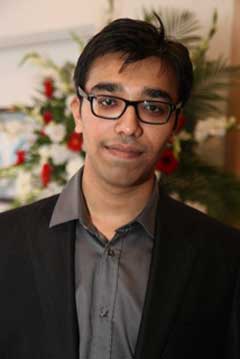
    I graduated from Government Law College, Mumbai in 2010. At GLC I won the Y.V. Dalal Prize ’10 awarded for the best graduating student and the Best Student Prize for the years 2006-07, 2007-08 and 2008-09. I had also served as student-editor of the GLC Law Review for all five years, won several national moot court competitions and assisted with the editing of Wadhwa’s commentary on Insurance Law. I interned with judges at the Bombay High Court and at the Supreme Court, with a senior counsel at the Bombay High Court and worked as a Para-legal at AZB & Partners, Mumbai while at law school. After graduating from GLC I accepted an Associate position at AZB where I worked on matters involving M&A and post M&A disputes, general corporate advisory, securities litigation and international arbitration.

    In 2012 I joined Harvard Law School where I pursued a general LL.M. and served as Senior Editor on the Harvard Business Law Review. I will now be joining Allen & Overy’s international arbitration practice at its Hong Kong office. I publish regularly in leading newspapers and journals in the country. My academic interests include the Legal Profession & Ethics, Corporate Governance, Corporate Social Responsibility, International Arbitration, Constitutional Law, Judicial Review and Constitutional Design Theory.


    Why did you decide to study law?

    I wanted to be a lawyer since my final year in school; but I wasn’t confident enough to pursue it because I had a terrible stammer and I was very bad at public speaking. When I got good grades in the 10th ICSE Board, I didnt have the confidence to back myself for a career in law. My parents wanted me to be a doctor and I went with their vision. I actually appeared for the Maharashtra medical entrance examination and thankfully, I did so badly that I would only have gotten a paid seat in a dental college in Aurangabad. My father wanted me to reappear for the exam. But by then I was sure I didn’t want to do medicine.So I decided to take up what I liked doing. I hadn’t appeared for any of the N-school entrance examinations and I could only apply to Mumbai law schools because they took you on the basis of the 12th HSC Board results where I had done fairly well. I lost my stammer in my second year at GLC after exposing myself repeatedly to public speaking in the moot court eliminations at GLC in my first year.


    What were your areas of interest during your graduation?

    I didn’t have any areas of expertise as such. GLC doesnt have any concentrations. I was deeply interested in Constitutional law and politics. I followed it up with moot court participation, law review membership, authoring articles, interning with judges at the Bombay High Court and the Supreme Court and generally reading up on it over and above course-work. That apart, I was interested in traditional court litigation, securities litigation and corporate disputes. I pursued an internship with senior counsel Mr. Janak Dwarkadas at the Bombay High Court, which I would rate as amongst my best experiences so far. That internship really inspired me to consider a career as an arguing counsel. Finally I was lucky to get placed at AZB where I ‘grew up’ in a sense because I spent my last year as student and the first two years as a full-time practitioner there and I think those years really shape you and teach you the crucial skills you need to imbibe when you have just started.


    What was your motivation behind doing an LL.M. abroad?

    I didn’t think the LL.M. in India would be of much use to me. It’s not as rigorous. It’s a two year program which I think is too long even if you aim to become an academic. And it’s not rated highly in comparison with foreign LL.M. degrees which are now par for the course given the volume of Indian lawyers that spend a year studying aborad. My motivation behind the LL.M. was to experience academic life at a top institution, acquire a US / UK degree which may have its uses in the future, qualify to practice in another jurisdiction and if possible, land a job with an international firm. I was looking to spend a year experiencing a different life and I hoped that this would in turn broaden my horizons and allow me to experience a different culture. I felt it would help me grow, professionally and personally.


    When did you decide that you wanted to do a Masters?

    I decided in my third year at GLC. I hoped to land a scholarship and in fact I turned down an offer from NYU in 2010 because it didn’t come with funding. I took loans to finance the LL.M. eventually.

    It is financially taxing and people question its efficacy given the cost. But if you plan to be a lawyer and if you are keen on studying further for whatever reason, the LL.M. is your degree of choice. That said, I can now think of other degrees that may be more useful for lawyers transitioning to a career in say policy-making, academia or management. But for lawyers with a thirst for further studies, I think there isn’t a substitute for the LL.M.


    How did you choose the universities that you applied to?

    I applied to the top LL.M. programs. That included Harvard, Columbia, Oxford, NYU, Stanford and Yale. These colleges pick themselves. They are acknowledged as top choices for the LL.M. and most are Ivy League as well. To this list I would add Chicago, U.Penn, Cambridge and LSE. I didn’t apply to a larger number of schools because I was working and simply didn’t have the time.


    Did you decide on a course first or the University first?

    I’d say I picked the University first because I wanted to pursue a general LL.M. with a focus on arbitration law, corporate law and constitutional law. Harvard, Oxford, NYU and Yale have excellent courses in each of these areas. Stanford and Columbia are better known for corporate law but since that was an interest area I sent out applications to these two as well. If I had had a specific focus such as say environmental law, I might have applied to Berkley as my first choice but I wanted the flexibility of a general LL.M. with the option of creating my own course structure and choosing how much I would take on in which semester.


    What did you study at Harvard?

    I pursued a general LL.M. with a focus on corporate transactional law, international arbitration law and constitutional law. I split my three semesters between these three areas. My course choices were a result of my interests. I wanted to learn US Corporate Law and litigation so I took up a course on Delaware litigation taught by Chancellor Strine of the Delaware Court. I wanted to try and work in the international arbitration space, hence a course on arbitration. And I have a deep interest in Constitutional law and politics which informed my decision to study the 14th Amendment and the Comparative Politics of Law by Duncan Kennedy.


    Tell us about the faculty and facilities.

    I’d rate my year at Harvard as the best one I’ve had so far. It was a vibrant, fulfilling, fun and demanding year that went a lot faster than any of us in the program might’ve wanted or anticipated. Its thrilling to take courses by professors who are that driven and that accomplished. The campus is beautiful and Cambridge town is very very student friendly. I’d do it all over again, despite the cost and the present exchange rate of the US Dollar.

    The faculty at Harvard is sterling. Although you take a restricted number of courses (a maximum of 27 credits), you have a chance of much wider faculty interaction because of your LL.M. paper. There are Research Assistantships that you can take up and there is the option of doing courses in other Harvard schools as well. The facilities are top class. The Law Library is an iconic building, stacked with books on every topic from every country. You are encouraged to use every facility on offer and there is a genuine sense of pride in how the library is organized and run. The recently constructed Wasserstein Center is obscenely well equipped for any conceivable student / academic need. But I think it’s the attitude that set Harvard apart. It was fantastic to be part of a culture that was incredibly open and liberal, intellectually engaged, so passionate and driven and yet, unfailingly courteous and polite.


    How was the Indian fraternity over there?

    The Indian community at Harvard isn’t that cohesive. There are too many of us to really feel the need to be tight-knit. The LL.M. batch had twelve Indians, the second highest number from any single country after China which contributed sixteen LL.Ms.


    How is the recruitment for overseas students?

    US recruitment for LL.Ms was poor in 2013. Most people landed temporary foreign associate positions – not permanent US attorney positions. Indians did particularly badly with only one student securing a foreign associate position with a top US firm. Of the seven who were looking for law firm jobs, only three managed to secure them. Unless you have over four years of work experience or a personal connection with a law firm partner, I suspect two factors determine your placement chances: 1) How much India work there is at that point in time, which is determined by the volume of big-ticket India deals and which in turn seems to be affected by the state of our economy; 2) Whether vacancies have arisen in the limited number of associate seats allocated for India-lawyers in top US firms. Connections and contacts always help, and in fact could be decisive in a market which isn’t too India-educated or India-enthused. Positions in New York’s dispute-resolution practices are hard to come by for any non-US lawyer.


    How was the academic schedule?

    The US LL.M. is a very flexible program. You can decide how rigorous or otherwise your year will be. I had a very rigorous year indeed – I was doing the maximum number of course credits allowed, editing a journal, serving as Research Assistant, authoring a Long Paper, applying for jobs and travelling the West Coast, New England and New York. Fortunately, I never felt overwhelmed because I had a great support network of friends.


    What about the accommodation?

    I stayed at North Hall which is one of the costlier on-campus dorms because it’s a hotel turned into a campus accommodation. It proved to be a good choice. Cambridge winters can be brutal and we found ourselves in the midst of one of the worst snowstorm in recent years. By the time Snowstorm Nemo was done with us, we had snow almost reaching the first storey of our dorm building. North’s heaters kept us warm and safe. It helped that many LL.M.s chose to live in North, turning it into the de facto LL.M. hub.I formed some close, lifelong friendships with my fellow residents there.


    Does the institute offer any scholarship?

    No, Harvard doesn’t have LL.M. or India specific scholarships. Most Indian students struggle to find adequate funding or scholarships. Inlaks, Sekhsaria and Tata scholarships offer partial and complete financial aid but it’s an uphill task.


    What does a paralegal’s role entail?

    (Jeet has worked at AZB & Partners as a paralegal for a while.)

    I’m not sure what role other para-legals played but as a para-legal I was given the opportunity of being involved in matters full-time and was basically treated as a semi-associate. The idea was to make use of the fact that I was at GLC and could attend office on a full time basis for the entire duration of the year save two breaks of six weeks. So I would end up doing research, drafting, client calls, counsel briefings as well as filing, making lists, indexing etc. I was very lucky that my internship with Mr. Dwarkadas led to my stint at AZB which in turn led to a placement at AZB once I graduated.


    Is the practice of hiring paralegals widespread in the Indian legal industry?

    I’m not sure what the trend is but I had certainly not heard of Paralegals until I joined AZB. I think it’s a great position and it’s especially useful for GLC students. Unlike N-schools, we are located ten minutes away from the Bombay High Court and from all the law firm offices, the college timings are 7 am to 10:30 am and its a two semester as opposed to a trimester system. All of this really helps GLC students work on a full-time basis even while we are still in our third/fourth year of law school and it’s the only way we can narrow gap with the N-schools which admittedly are far superior in terms of their teaching, batch quality and public perception. So as a GLC alumnus, I am a big supporter of this trend. It augurs very well for students from my college and I think firms might gain from it as well. If you have someone you have trained for one or two years before making her an associate, you already have someone who understands how a law firm works, has made all the connections with the seniors and partners and can integrate very easily.


    How was your experience as a judicial clerk?

    I clerked only with one judge at the Supreme Court actually. I clerked with two judges at the Bombay High Court. I think the most important thing I learnt through the clerkships was to understand how a judge’s mind works, what the pressures of the job are and what they are looking for. If you are a first generation lawyer, you tend to be a bit starry-eyed about the judicial office. I think the clerkships helped me place judges in perspective. If I do argue before a court, hopefully those stints might help me be a better counsel. I did them at the time because I was curious about how judges work.


    How can a law student apply for a judicial clerkship?

    The Supreme Court has a straight-forward application process where you send your CV through your college and the Registry places you with a judge who is willing to mentor a trainee. At the Bombay High Court too there is a similar process.

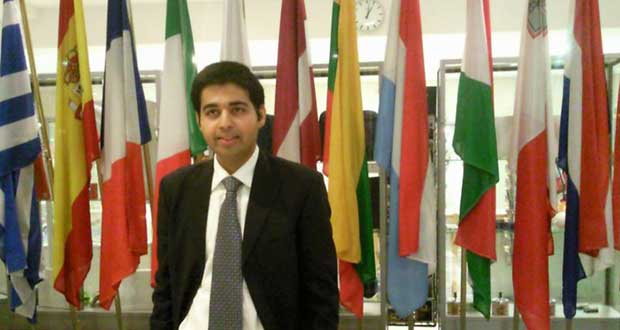
  • Jeet Bhatt, Advocate, High Court, Gujarat, on an LL.M from QMUL, and leaving a lucrative career in corporate law for litigation

    Jeet Bhatt, Advocate, High Court, Gujarat, on an LL.M from QMUL, and leaving a lucrative career in corporate law for litigation

    Jeet Bhatt graduated from the first batch of GNLU, Gandhinagar, in 2009. After working for almost a year, he went on to pursue an LL.M in  Corporate and Commercial Law from Queen Mary University of London. After finishing his Masters he had the opportunity to work at Mark & Co. in property matters.

    He later quit Mark & Co. and came back to Gujarat and joined full-fledged litigation practice.

    In this interview we speak to him about:

    • Requirements and selection procedure for an LL.M program at QMUL
    • Work experience at Mark & Co., London
    • Starting up with litigation practice at Gujarat High Court.


    How would you introduce yourself to our readers?

    I am a lawyer practicing in the High Court of Gujarat. I graduated from Gujarat National Law University in 2009 and got enrolled in the Bar. I practiced Law for a year and then went to London in 2010 to pursue my Masters in Corporate and Commercial Law from Queen Mary University of London. I completed my Masters in 2011 and came back to join litigation. It has been five years since I began my journey as a Lawyer and ten years since I joined Gujarat National Law University and I am going to share with you my vivid and some not so vivid experiences in the Legal Profession. I do belong to the Family of Lawyers for it runs in my blood since three generations.


    How were the formative years of your schooling?

    Formative years of my schooling were similar to that of an average guy less interested in studies and more interested in everything else than studies. I was always interested in sports and used to play cricket for my school. I had opted for Science in Higher Secondary and it turned out to be the greatest challenge of my life. Though I could not pass out with flying colours, with the marks that I got in my 12th Standard, my life surely started looking Black and White with Graduation in Arts the only formidable option.


    Why did you choose law as a career?

    I believe it was more by chance then by choice that I got into the Legal Profession. While I was still considering the few options that I had, I decided to go to Courts and spent a day observing what my father did for a living. He took me to the Court. Without understanding anything about law I was certainly lost in this Fort like High Court of Gujarat. I saw my father presenting a matter before the Judge and that point I thought to myself that it is the easiest thing to do in this world (I did not knew then how wrong I would be proved later). So that was it by the stroke of that midnight hour I did have the tryst with destiny and I started considering myself to be a lawyer. Fortunately GNLU started in 2004 and as it was at its nascent stage somehow by god’s grace I cleared the entrance examination got myself admitted and then there was no looking back.


    Tell us about your years in law school.

    Being the first batch of GNLU everything about it was exciting. Being the first batch there were no seniors and therefore no one to help if you end up at the wrong place doing the wrong things. But we managed and we learnt from our own mistakes. Fortunately for us we had some great faculties and teachers who really inspired us to learn law and made our academic life interesting. Learning the Law is not just about sitting in class and attending lectures, it is not just reading the provisions and rules it is much more than that. It requires an interdisciplinary approach and a constant aptitude for learning. It requires asking questions and finding answers. GNLU provided us that platform where we could build a strong foundation. Law School is all about acquiring the correct skills required for the Legal Profession. It is about investing your valuable time in the right direction. GNLU focussed on research and that immensely helped us in improving our research skills. With internships ranging from NGO’s to Law Firms to Courts and International Organisations being part of the curriculum it truly helped in gaining the first hand experience of the Legal Profession. Internships should be done very seriously as it can open up lot of avenues for the students.

    Time at law school should not just be restricted to academics and studies. One has to find time for extracurricular and cultural/other activities for it helps in developing the overall personality which is very important in today’s competitive market.


    When did you decide to pursue Masters?

    I decided in my last year at GNLU that I would still like to pursue higher studies before getting into full time litigation. When I graduated in 2009 I did start asking lawyers in the High Court that whether an LL.M from Foreign University would be helpful in Litigation. Majority of them said it would be a waste of time and money and you would lose a valuable year in Litigation. I then asked few lawyers who had been to foreign Universities for higher studies and they motivated me to go and pursue masters from Foreign University. Despite of all adversities I was firm of pursuing my academic interests.

    My reason for studying abroad was both personal and professional requirement plus LL.M in UK is a one year program whereas in India it was two years at that point in time. Arbitration was one subject which I was really keen on studying and therefore considering that London being the hub of Arbitration I decided on doing my Masters in a University located in London.


    How important are grades for an illustrious LL.M degree? What is more important for a successful candidature: grades or work experience?

    Grades are most important for getting admission in a reputed University abroad. You need to have a distinguished academic career to be placed in the top Universities abroad. They require you to have a good academic record but good internships and recommendation letters do help. Work experience is not a requirement for Universities but I would certainly recommend students to work for few years, gain considerable knowledge of the subject in which they want to pursue masters and then apply to universities for further studies. Experience helps a lot and it makes more sense to go abroad after having a few years work experience. LL.M programs in Universities abroad are basically structured to cater the needs of foreign students and therefore experience of few years really helps a lot as most of the students coming from other countries have around three to four years working experience. Therefore having work experience prior to going abroad would be certainly beneficial.


    Can you tell our readers about how you shortlisted universities for your masters?

    The first and foremost thing to do is to know in which subject you want to pursue your masters. The Universities abroad give a wide range of subjects which one can choose and therefore depending on which area of law one needs to specialise accordingly you must decide the University. I was very keen on specialising in Arbitration laws and therefore I chose Queen Mary University of London as it has the best faculties in UK for Arbitration. School of Arbitration in QMUL has an excellent program for LLM which is considered better than KCL, UCL as well as LSE and therefore I chose QMUL over other Universities. One has to do a preliminary research and be sure where he wants to study and in which subjects depending on that they must apply to Universities. Application procedure is simple and that the Universities websites provides all the necessary details regarding the same. But one must start this entire exercise one year in advance.


    Tell us about your time at Queen Mary.

    What happens in Queen Mary stays in Queen Mary (jokes apart) but yes I will surely share my academic experience. My time at QMUL was truly enriching and enlightening. I was exposed to 500 other students who had come to pursue LL.M from more than 100 countries. It took one week to get introduced to each other. From graduates to people having more than 10 years experience in top law firms to some having their own firms in different countries were my batch mates. With one year experience in Litigation I tried my best to match to them and to adjust to such an intellectual environment surely took a toll but after meeting fellow Indians I knew I was not alone (no offence meant). The first few weeks are popularly known as shopping weeks where we are allowed to attend all the classes ranging more than 100 subjects of law starting from Arbitration to Banking to Copyright to Design, Finance and you name it. Out of all the varied modules that were offered we had to choose 4 modules which was again a hell of a task. Having worked for more than a year, again attending classes and going to college did seem a task but by the end of the first month it all sinked in and I found the new educational system quite suited to my expectations and I got a lot of time for myself where I had the luxury to read and study the subjects I was interested in. Honestly I did not want academic pressure as I wanted to have the freedom to choose what interested me and I got the perfect academic environment. Being in QMUL you get the access to the Institute of Advanced Legal Studies (IALS) which has the best library in the World.

    Having 4 classes to attend in a week it didn’t seem much of a pressure initially and having just moved in to a city like London you need free time to know the city (it is very important). I really enjoyed the tutorial system where for a batch of 10 students there is one tutor with whom you do lot of case studies. It was unique in the sense that you get so many different perspectives from students coming from different jurisdiction and it was truly enriching in every possible manner. It was a different reality and one must surely experience it. If today someone asks me for my advice on studying abroad I would definitely recommend that, provided you make the most of it.

    QMUL Campus is like a lively city within the University. Students Union is one of the most powerful Unions in UK and is bustling with so many activities. From volunteering to learning different languages to teaching to sightseeing everything you need you get it. It is so well connected to all the Universities and colleges and you get the chance to interact with people from so many nationalities. Living in the University accommodation has many advantages though it might be bit expensive but it is definitely worth it. Socialising and communication is a very important aspect of the program it helps tremendously in our profession.


    jeet-bhatt-1

    While pursuing LL.M could you intern at any firm in London?

    Yes I did get a chance to participate in many other activities happening in London and around the campus. I did attend a study tour to Brussels to visit the European Union and its parliament and to visit the International Court of Justice in Hague as well as the International Criminal Court and did get to see the proceedings going at the court. There are opportunities to intern during the course but one has to choose the timings wisely as it should not end up affecting your classes and tutorials.


    How did your appointment at Mark and Co. Solicitors take place?

    I would say I got lucky to get an appointment at Mark & Co. Solicitors. I happened to meet the partner of the firm at the airport through a common friend. We stuck a good chord and that was it. I had the opportunity to work in a Law Firm in London. I worked there for a few months before I decided that I want to get back to litigation in India. Mark & Co. had a lot of NRI clients, it dealt with a lot of property issues. One important aspect of firms in UK and lawyers in particular is that they certainly want to avoid litigation and going to courts would be the last option. It certainly is very different from our approach as we want every possible dispute or no dispute to go to courts for adjudication. I could not resist the charm of being in Litigation in India and I decided I wanted to get back in Gujarat High Court.


    What influenced your decision to work in the litigation sector?

    Though I did work in a Leading Law firm in Gujarat for a year and I am still associated with it but I purely deal with Litigation. I tried to do both but Non-lit corporate work is not my cup of tea. I like to be a part of all the action that is going on in the Courts. Being in litigation should not be treated like being in a job. It is surely not an employment it is much more than that. One requires a lot of perseverance and patience along with passion to do well in litigation.


     Is it better to work in the corporate sector for a few years before starting litigation?

    Certainly corporate jobs are much more lucrative and why shouldn’t a student prefer it over litigation? Being in litigation is a very tough decision to make and to survive in litigation is even tougher. One has to devote himself completely to do well in litigation knowing that it does not pay well in the initial years. My first salary was Rs. 2500/-pm. I do not want to discourage students from entering litigation but it has to be a very conscious and well thought decision. One needs to be absolutely sure to be in litigation. Litigation is something that you need to learn from scratch. Learning the law and practicing law are at different ends of the spectrum. It requires completely different set of skills and temperament which comes only through experience. Real court room is completely different from moot court rooms. Being a good mooter to becoming a good litigating lawyer is a different ball game altogether.


    What can the law schools do to encourage more people into litigation?

    Law Schools have made their purpose to encourage students to get into Corporate Sector. The purpose of Law Schools should be to make students good litigating lawyers. It does require a paradigm shift in its approach. Students are taught to run after big packages and plush offices and it certainly takes away the cream into non-lit sector. Students need to be taught how to survive in Litigation and how to do well in it. If they are encouraged to be in litigation they can surely do well.


    What were the difficulties you faced in the early days of your practice?

    Even after five years I still feel I am in the early days of my practice. Every day is a new learning day. Coming from a family of lawyers surely helps at the entry point. You do get guidance and work but then you have to build it on your own. I did face lot of challenges in understanding the procedures and functioning of the courts and the registry. From extracting the relevant information from clients to filing of the petition is a long drawn process, presenting the matter comes last. One has to know this nitty gritty of filing a case and availing the right remedy in law before hand. Getting the eye for details and getting to the crux of the matter is very important and it comes gradually. Sitting in Court and observing the proceedings is a must in the initial years. Presenting the matter before the court is also an art which requires a lot of training and experience. Many times after arguing I felt that I should have said this or said that or I missed to show the important facts or law on that matter. Litigation is full of challenges and I have faced some very tough times in court. Fortunately I have had good mentors and the seniors in the Gujarat High Courts are very supportive and helpful. To sum it up my five years experience in the High Court has been very satisfying. Though small but I have had some significant moments in my career, Senior Judge of the High Court was so impressed with my arguments in one matter that he went on to record it in the order although I lost the case but that went a long way to build some reputation. Few judgments where I appeared got reported in law journals and in few, law was settled.


    What would be your message to law students who wish to start their own litigation practice?

    There is no short-cut to hard work, no over-night success stories in this profession. You have to build your career slowly and steadily. Choose a good senior and prove your mettle to him. Figure out your strengths and start working on your weaknesses. Acquire the correct set of skills required and keep on improving them. Read and be up-to-date with judgments. Prepare thoroughly. Be humble and never forget you are in a noble profession. Work ethically and wait for the right opportunities. Remember what my senior always told me “Don’t just strive to become a successful lawyer strive to become an eminent lawyer”.


  • Naman Joshi, Law Graduate, NLUD, on induction into Karanjawala & Co., mooting, debating, and litigation

    Naman Joshi, Law Graduate, NLUD, on induction into Karanjawala & Co., mooting, debating, and litigation

    Naman Joshi graduated from NLU, Delhi in 2014. He is currently an associate at an illustrious litigation firm, Karanjawala & Co. He has been quite involved in Debating and Mooting as a student, and coached the NLU Delhi Team which went on to win the 12th Henry Dunant.

    His engagement in sport, community service, and extra-curricular activity has also been recognised by the H. R. H. Duke of Edinburgh, Prince Philip.

    We asked him about:

    • Being the Best Debater at Outlook SpeakOut North Rounds
    • Coaching the NLU Delhi team to success at 12th Henry Dunant
    • Receiving the Gold Standard of the International Award for Young People

    How would you like to introduce yourself to our readers?

    I am a lawyer who in my free time, likes to read, watch reruns of Friends and Two and a Half Men, and play FIFA.

    I do have lawyers in my family. My mother is one, but she did law late as an afterthought and partly out of boredom. She was working earlier as a consultant and decided she needed something new to do. Apart from that on my paternal side I have two lawyers.


    What brought you into legal studies?

    I did not consider engineering as a career. It never appealed to me. Medicine on the other hand did sound fascinating, especially because I read up a substantial amount about the human body when my father underwent a bypass.I was in 6th Class then and being a surgeon sounded nice. But to be very honest, I neither had the math skills nor the scientific acumen to pursue it at the highest level. It’s not just about being a doctor or an engineer. It’s about being good enough to rise to the top of your game. Law was a conscious choice from quite early on. I’d say about 9th Class onwards. When it came to second language options, I chose Hindi instead of French (lot of lower court proceedings are in Hindi). When it came to choosing subjects in 11th, chose History, Political Science, Economics, and Maths (these subjects barring maths, are taught in law school and are actually helpful when practicing law). Law also gelled with the other things I was doing in school – debating, writing, hosting a TV show on DD Bharti, community service etc.


    naman-joshi-3

    What would be your advice to someone who has never debated earlier?

    (Naman has been awarded the Best Debater spot the Outlook SpeakOut Debate.)

    Honestly, I can think of at least three debaters better than me in my own class from college itself. In fact, I have never even won a debating tournament since I have stepped into college.

    Partly, because the Parliamentary Debate format didn’t feel as comfortable as Oxford-Style did and partly, because I didn’t work on it because I was mooting extensively. So no advice as far as acing a debating tournament is concerned. As far as someone who has never debated earlier is concerned, my only advice would be, give it a shot. What’s the worst that could happen? It is a fun activity where you get to travel along with a couple of your college mates and the downside is missing college for three days or so and the upside is winning some serious cash!


    What separates a good mooter from an average mooter?

    (Naman has represented India at the 53rd and 54th Philip C. Jessup International Law Moot Court Competition. You have been also been ranked the 30th Best Oralist at the 54th Jessup.)

    A good mooter is one who masters not only the brief he or she has prepared but also everything around it and is ready to have a conversation with the judges. An average mooter prepares a brief and goes ahead and argues it. The former understands the context in which the arguments are placed. The reason they are being made at all. The latter looks at the last page, sees the questions of law and opens up a book to cite authorities.

    Mooting is not just an activity you should participate in because it is a check box in your ‘things to do in law school’ book. Do it because you like the activity. Do it because you want to read, write, and talk about a particular thing. For me that happened with international law. Even though I am not mooting anymore and my work is far divorced from international law, I like to stay in touch with the subject because I like it.


    What would you say contributed to the huge success of the team that you coached for the 12th Henry Dunant rounds?

    I think what contributed to the huge success of the team that I coached was the very hard work they all put in. Dhruv, Utkarsh, and Natasha were absolutely dedicated to the cause of winning and they did everything they had to, to do so. Including roping me in as coach, which can be a decision one can later regret (I am sure they all did at some point or the other) because I can be very unpleasant to work with. I expect people to function in a particular way, am extremely pedantic about minute things and easily lose it. Thankfully the team took it all in their stride and it worked out well. They went on become the first Indian team to have ever won the Red Cross Moot and I am extremely happy that I was a part of that. Plus, it has always been a wish of mine to do an international criminal law moot. I never found time for it myself, so vicarious pleasure.

    As far as the difference between them and the teams they faced in each of the finals, I’d say fine margins. At the highest level, everybody works incredibly hard. But if I had to split hairs, I’d say:

    1) the team was better prepared for the questions. They knew what was coming and they had already practiced how to knock a particular question out of the park.

    2) They had contextual understanding. I remember this issue of hate speech coming up in the India rounds and how the team answered the question not only with the international criminal law standard but also how hate speech is understood by national and international human rights courts and adjudicatory mechanisms.


    Tell us about being the Recipient of the Gold Standard of the International Award for Young People, 2009 awarded by H.R.H. Duke of Edinburgh, Prince Phillip.

    Essentially the programme requires you to fulfil certain mandatory hours of engagement in a sport, community service, and extra-curricular activity. There are three level – Bronze, Silver, and Gold.

    As you keep excelling in the respective activities, you keep rising through the levels. So in my case, I played tennis, was President of Interact Club in my school (the Club is affiliated to Rotary International), and was an avid photographer. It is a fulfilling experience and I’d say if your school is a part of the programme, you should definitely participate.


    Tell us about your summer school experience.

    The courses were extremely helpful. There were three:

    – Corporate Law at LSE,

    – International Criminal Law at Leiden University, and

    – Comparative Constitutionalism and European Competition Law at Trinity College, Cambridge.

    I can assure you that anything I know about corporate law is more likely from the three weeks at LSE with Prof. David Kershaw than two semesters of corporate law in college. International Criminal Law, of course, doesn’t get much attention in college. But it came in handy while coaching the aforementioned team. The Cambridge courses were partly academic curiosity and partly a way to test if I want to pursue a LL.M immediately after college. The answer was in the negative for now. But both of them have definitely enhanced my understanding of how I look at constitutional law and competition law.

    Application procedure is fairly simple. These universities have extremely user friendly websites. You can just log on. Complete the form. Scan and attach the relevant documents. And you are good to go.

    The question of institutional support (parent institution) didn’t arise because all these courses were in the vacation. Though the Vice-Chancellor did appreciate what I had learnt abroad and allowed me to use what I have learned abroad effectively by allowing me to coach a team officially. Until then no team had had a university appointed coach.

    I already said before how highly I rate Prof. Kershaw’s corporate law classes. And I think the same applies across to board to all the classes I took abroad. There is no doubting that those classes beat most of the classes that are being taught in any university in India. That said, I did have some seminar classes (elective courses) where the quality of teaching was at par if not better. So I guess it comes down to

    1)      teacher’s understanding of the subject;

    2)      ability to get that understanding across; and

    3)      class size.

    Class size I think is a huge factor so we can’t really blame our teachers. They are doing the best in the situation. In fact I’d say my college is doing better than most considering the recent faculty recruitment and the very serious qualifications these teachers come with National Law University, Delhi.


    How did you manage funding for these courses?

    My parents have been extremely kind. They will not buy me a Playstation or plan a trip to Thailand, but if it comes to down education or professional development, they have never said no, regardless of the amount of money involved. But for those looking for alternate sources of funding, these universities sometimes do have funding available. Getting in touch early on with them is a good idea.


    Did you ever plan to join a corporate law firm?

    No, I did not plan on joining a corporate law firm. One of the reasons is I don’t frankly like corporate law as much. Can I work in the litigation department of a corporate law firm? Sure. Can I standout in an M&A team? No. Moreover, I need the thrill of the courtroom. I need to put on the gown and stand before a judge and argue a case. So litigation was always the thing that I had in mind; that is why I never even interned with a corporate law firm. Plus my first real legal internship was with Mr. Gopal Subramanium when he was the Solicitor General of India. The experience that I left with a month later assured me that this is what I want to be doing. Future plans are fairly straightforward – practice law in the courts and hopefully be recognized for it.


    How did your appointment at Karanjawala & Co. take place?

    My appointment at Karanjawala & Co. was actually a last minute one. While I had interned with them earlier in the summer of 2013, I was already placed at the Chambers of Mr. Gopal Subramanium, Senior Advocate and had never applied for a job at Karanjawala. When Mr. Subramanium’s name came up for elevation to the apex court, I decided to look elsewhere because I assumed that Sir would be elevated to the Supreme Court pursuant to a recommendation of the Collegium (Of course there were certain unbecoming actions of certain persons and entities which rightly led him to withdraw his name.)

    When I started looking for a job I didn’t want my parents or for that matter even Mr. Subramanium to just make a call on my behalf. I wanted to get a job on my merits. So I asked Mr. Trideep Pais who is an advocate in the Delhi High Court and who has taught me criminal law in college to let me know if anyone is hiring so that I could send them my CV and seek an interview. I also asked other persons I knew from college like Mr. Alok Prasana, Mr. Rishabh Sancheti and Mr. Rajshekhar Rao. All of them were extremely helpful and gave me leads about persons they knew who were looking to hire.

    One lead that Trideep Sir gave me was Karanjawala & Co. I went and interviewed with Ms. Meghna Mishra who is a Partner at Karanjawala. Luckily for me she had seen my Karanjawala worksheet and had spoken to other people at the office, all of whom had said kind things about me. She told me she’d get in touch with me soon and that it looked good. I didn’t get a call for few days and I was getting anxious. A few days later I got a call saying Mr. Karanjawala wanted to meet me. I met him, he saw my CV and previous certificates of work, looked at me and asked me if I wanted to work at Karanjawala and when I said yes, he told me told me I am hired. Now I have been working at Karanjawala for a month and it is a great office with a lot of great people plus the office undertakes huge volumes of litigation. In my first month here I have been working on a couple of arbitrations, drafting pleadings, appearing in the High Court, and have even made a solo appearance before the Debt Recovery Tribunal.


    Do you think your experience in mooting shall help you in your litigation career?

    It already does. Mooting teaches you how to critically analyse a legal problem, building up a story using the facts you have around it, pruning out the negative facts or figuring a way of colouring them positively, researching, drafting a brief, arguing it, and answering any questions a judge might have. That’s pretty much what you do when a client comes to you with a problem and wants you to argue for him or her in court.


    Would you consider pursuing an LL.M from a reputed university?

    I would love to go study at Oxford or Cambridge. But let me be very honest. With a CGPA of 4.9/8, I am not very high on their list of prospective candidates. Moreover, I don’t want my parents to pay for it. So, maybe in a couple of years after I have some money of my own and my work experience can supplement my CGPA.


    What would be your message to law students who want to ace in moots?

    Choose a moot for the area of law and not the area of the world where it is held. A lot of students, unfortunately even in my university, want to do a particular moot because the college is paying for the trip abroad. That’s the wrong kind of attitude to begin with.

    Start reading up on that area way before the moot problem comes out.

    Put your fingers to the keyboard from Day 3.

    Start writing based on whatever you understand. You can always polish later.

    In fact you might not even use an argument you thought of early on, in your final brief, but that junked argument is very essential. Either it will tell you what not to say and take down an opponent, who has unwittingly said it, or it will provide you a way out when the argument you actually used didn’t work and you need a Hail Mary pass.

    Whatever research you have done, make notes so that you later remember you read what where. A lot of research is recyclable in a moot problem. You might not need it but that’s exactly what your teammate does.

    Lastly, think of it as real. You have to believe you are the agent/counsel for a particular state/party. If you don’t believe in the cause of a nation bombing another to establish democracy and promote peace or a nation that is sinking because of climate change, you can bet the judge won’t either.

  • Aastha Dhaon, In-house Counsel, Manupatra, on legal publishing, and her diverse experience

    Aastha Dhaon, In-house Counsel, Manupatra, on legal publishing, and her diverse experience

    Aastha Dhaon graduated from RMLNLU, Lucknow, in 2011. During this time she has interned with the likes of Mr. Arun Sinha, Senior Criminal Law Practitioner, Lucknow, India, Mr. Nirmal K. Seth – Senior Counsel, Lucknow, India (Civil), Nanavati Associates, among others. Since then she has gone on to work as Legal Associate at Chambers of Mr. J. N. Mathur, Additional Advocate General, Uttar Pradesh. She is currently in-house counsel, writer and legal editor at Manupatra.

    In this interview we speak to her about:

    • Being a fourth generation lawyer
    • Her interest in publishing
    • Her diverse experience

    How would you like to introduce yourself to our readers?

    I’d rather thank you for giving me this opportunity to connect back to where I belong. I am a proud Lucknowite, working here in Delhi with a lot of support from my mom and dad and a lot many dreams in my eyes.


    Why did you decide to study law?

    Law was never on my radar. I always wanted to be a famous painter. However, I first wanted to be an Architect. I got through the National Institute of Fashion Design (NIFT-Delhi) but, could not get through National Institute of Design (NID, Ahmedabad) the premier institute for design in India.  Hence, to sum it all up, law just happened, for which I usually tell people that it was in my blood.

    I qualified the entrance for the National Law School in Lucknow (Dr. RML NLU) and was part of the first batch of my University. My university really made me what I am today, personally as well as professionally. It really taught me ‘life’.


    What kind of internships did you do while you were a student?

    I never really focused on any one area in law. I interned everywhere I could get through really. Being the first batch of our institute, it really was a task convincing the high and mighty to give us opportunities, but, then we all were made out for law, we grabbed all opportunities coming our way. I interned under some senior Government Counsels, criminal lawyers, law firms, corporate houses and Non-Profit organisations as well. Since, I strongly believe in taking a multi-faceted approach towards things, hence, my aim was to get an experience in all directions so I could make better choices when choosing a particular work area in the legal field.

    My internship under a very well-known criminal lawyer in Lucknow was one of the most heart wrenching experience for me. He was handling quite a lot of famous criminal case, where a lot of media trials happened as well. Everybody used to have opinions on them, and there I was sitting with my boss’ clients in his chamber daily, listening to acts they may have done, and something inside me breaking every time. That was the time I saw a lot of small aspects involved in criminal law and I decided I had to drop my plan of becoming a female criminal lawyer for some time atleast.


    You worked as Legal Associate at Chambers of Mr. J. N. Mathur, Additional Advocate General, Uttar Pradesh. How was your experience there?

    This was an extended vacation time for me right after college, not because I did not work much (believe me I haven’t worked longer hours than I did here), but, because I have had some of the coolest seniors here. However, it was not all play without work. A few months into litigation my seniors gave me chances to handle my own individual cases, which nobody form my batch was really doing till then. Here, I worked on company matters, taxation matters, service matters, etc. Mr. J.N. Mathur has been one of the most dynamic, honest and hard-working advocates I have seen or heard about till date.


    What does a workday at Manupatra look like?

    Legal publishing was one dimension which remained untouched by me during my college days. I am soon completing a year here in Manupatra and it really feels great. Here at Manupatra, if you are really capable and a hard worker, a lot of varied opportunities are given to you time and again to prove your mettle. The senior management is one group of really smart and highly informed individuals, who not only are good at what they officially do, but, they are also adept at dealing with departments that they may have had no knowledge about.

    Just like in any other corporate house or a law firm, work in Manupatra is not as easy as it all looks. A lot of planning and hard work is done to bring forth everything on our site. A lot of value additions are made to our regular judgments, which go a long way in helping us all in our researches. And, of course, it is a big high being a part of something based on whose research we actually passed our law schools.

    Our day starts at sharp 9 a.m. with updation of new legal news, then selecting what judgments are to actually go onto our site, meetings, coffee-breaks, less of chit-chatting and a lot of work, etc. The office usually closes down by 6:30 in the evening. So this job, not only gives me the exposure of working in the best Legal Publishing House in India, but, it also gives me a chance to create a work-life balance in my life.


    What would be your advice to law student interested in working with a publishing house?

    As contrary to how the working in the publishing houses seem, when compared to law firms and litigation, the work scenario is not much different. It requires the same amount of commitment, or even sometimes more, to finish off our assignments within strict guidelines. Online publishing is a race against time. To feel content with your work at the end of the day, there is a lot of running around you need to accomplish during your work hours in office. Publishing demands unflinching attention and the zeal to achieve the best you can in very short spans of time. Everything in a publishing house is urgent. Nothing can be given a second position of importance. You need a lot of time management skills in here. Of course, apart from this, good writing skills could give you the opportunities of getting into legal writing as well. There may be days when you feel like giving up, but, those are really the days when you should just hang on, and wait for something better to happen for you.


    Do you feel that publishing may become a major career avenue for law graduates in the future?

    Publishing is ‘the thing’ coming up for sure. There are very few players in this field at present and the future does hold a lot of open ground for new people to come and settle in. Publishing is a major field abroad, however, it is catching up here in India now. Publishing houses can give you chances of working not only as an editor, but, they can rope you in as their legal advisors as well, giving you a chance of working multi-dimensionally.


    What would have you done, if not law?

    I would definitely have been a professional painter, trying to make this world a more artistic place to live.


    What’s your take on work life balance?

    Work-life balance is very essential. When we start out, with all our ambitions we just throw ourselves into work. Today, the longer working hours you can boast of, the more successful and hard working you are considered. However, a few months down the line, your life shakes up and you realize only work is not going to help you in life. There are a lot of human beings that you need around you to survive; you need to move out and socialize. Yes, I agree our profession does not really give us the liberty to have a life, but, the more you try the easier it is to get out of the vicious circle, and believe me, work’s perfect when you actually do have a life beyond work. More so, what are you going to do with all your hard earned money if you don’t really have the time to even spend some of it! Won’t that really be quite sad?


    How do you spend you time when you are not working? Any hobbies?

    Painting and sketching – that’s what I do. I love going out with my friends, spending time with them, as well as meeting new people. I was so stuck up in my field until recently, when I met a whole bunch of some of the brightest people ever when I got selected to attend RELEAD – an International Conference on Leadership at the Indian Institute of Management (IIM – Bangalore). It gave me a whole new perspective about work, life and the world. It brought in a whole lot of new aspects to my life.


    What would be your message for law students planning to join the publishing industry?

    I would definitely suggest them to try out this new upcoming field. I would ask them to be patient and be ready to slog it out if they really want to enjoy the fruits of their work. And, of course, develop love for what you do, because it is not always that you may do what you really love.

  • Assistant Judge Advocate General, Indian Army, on preparing and clearing the Services Selection Board

    Assistant Judge Advocate General, Indian Army, on preparing and clearing the Services Selection Board

    judge-adv-general-1We got to connect with someone who recently cleared the Service Selection Boards exam and got recruited into the Indian Army as an Assistant Judge Advocate General. This is a much rare career insight which we have the opportunity to feature.

    We had requested her to share her insights with us while promising her the much required anonymity. Therefore we had to also skip on many insights of her achievements as a law student and internships.

    We asked her about:

    • Life at Kerala Law Academy
    • Preparing for the SSB and getting inducted into the Indian Army
    • Job of a Judge Advocate General


    Tell us a bit about yourself.

    I am a very talkative, extrovert, fun loving person who loves to travel and enjoy one’s life. But when it comes to work I am equally serious and dedicated to it. So I think it’s a nice mix!!!


    Tell us about your pre-college life and about your family.

    My family includes my parents & younger brother. My father retired as Deputy Inspector General of Prisons and my mom is a teacher. My brother is pursuing his engineering degree from Kerala. I have done my schooling from Holy Angels & St Thomas School Tvm. I always had the ambition of joining the prestigious Civil Services.


    Was pursuing law always your professional calling?

    I would be lying to you if I say that a career in law was on my cards. In fact, I never had it on my list. It just happened. But I was an Arts student. I had opted for Humanities for my +2 so never had Engg/Med thoughts. But I wanted to take up Political Science & Journalism. But landed up in law as it was a much wider option and I thought that it will encompass everything within itself.


    Did you have a legal lineage that motivated you to choose this field?

    [sociallocker]I come from a non-legal background. I decided on law, firstly I loved the subject, secondly it would give me a professional degree and I could take up law as an option for Civil Service Examination, as I was a Civil Service Aspirant.


    How were you years at Kerala Law Academy College?

    College was fun with all the moot courts. I had participated in around fifteen Moot Courts including Vienna Arbitration Moot, Jessup & Stetson to name a few. We grabbed lots of prizes as a team including individual prizes for myself as Best Lady Adv, Best Student Adv, Best Speaker etc. After graduation I started with my civil service preparation. I had enrolled myself at Rau’s IAS Study Circle before joining Army.


    During the five years of your law school what kind of internships did you do?

    Well, our college never had any internship plan or scheme. It was on individual interest. I kind of did internship on all fields as I wanted to explore and analyse my interests. I did corporate, litigation and NGO internships. That is when I realised that corporate law is not my cup of tea. I enjoyed NGO & litigation work. But was not prepared to settle down in any of that because, I had my Civil Service dream intact with me then.


    Prior to entering law school, did you ever wish to join army?

    As I said before, I was preparing for civil service when I had applied for the same. The notification in the papers asked for law graduates and I applied. I was not really serious about it till the day of my selection. I was seeing the SSB interview as a practise session for me before my civil service stint. But then things just happened.


    Tell us about the application procedure for JAG.

    The application process is kind of simple. They issue notification for JAG entry based on the vacancies. Presently the vacancies are less but in the next five to ten years the vacancies are going to increase tremendously. Minimum 55% marks in a recognised law course is the eligibility. Then there is the SSB process where you are scanned at various stages by various authorities. SSB does not require any preparation, that is what I personally feel about the same. It is all about the right attitude and confidence. Be yourself, don’t try to copy anything or give stereotype answers, try to bring in individuality in your answers.


    What advice would you give to our readers for successfully cracking SBB?

    Well, I beg to differ. SSB is a psychological test where they test your abilities to lead and command a body of troops. They search for leaders, people who can give orders and take orders. That is why I said it is about the right attitude. Furthermore, for JAG interview they might just come up with some legal question. So if you are convincing enough, which any law student will be, then one can easily crack SSB.


    Tell us about your time at Officers Training Academy, Chennai.

    BAD, I mean real bad.

    I was a kind of person who never got into field or was never a sports person. So it was very difficult for me. The basic training for all is the same so one has to undergo eleven months of basic military training which involves a hell lot of physical activity. You can refer to the Lakshya movie for easy reference.  But nothing is impossible. If a person like me who has never attended a sports day in school can complete it, then everyone can.


    After the training period, where was your first posting?

    After eleven months of rigorous training, finally you will be commissioned into the Indian Army. The feeling was great indeed. It was a proud moment when I finally became a part of the Olive Green community. Well I can’t disclose my posting details due to security concerns and existing instructions on the subject.


    What role does the JAG officer play in the Indian Army?

    JAG officers play advisory role in the Indian Army. We are the legal advisors to our commanders in military, discipline and other allied matters. After the basic training and induction into the Dept we will be made to undergo a course in Military law which is like our Bible in day to day functioning. My typical work day is like any other day in a corporate office or firm, just that you are in uniform and of course minus the work pressure and targets that exist in the outside world. Every work has its own advantages and disadvantages. Sometimes it does get monotonous but I think that is the part of any work. But it is also a challenge one has to face every day. We mainly deal with offences committed by members of Army. So, if one likes criminal law and framing charges, then this is the place to be.


    After how many years of practice is one offered the position of Judge Advocate General?

    Judge Advocate General is our top most position. So it will take another 25 more years for me to reach there. I am performing the functions of Asst JAG.


    What difference do you find in the working of Armed Forces Tribunal and other courts?

    Yes, AFT has been set up to provide as an appellate forum for Armed Personnel.  But it has got original jurisdiction also. It deals with service and disciplinary matters. It’s akin to High Court and an appeal against its order lies to SC. It consists of a judicial member and administrative member. It has been set up as a relief measure to armed forces whose litigation has been otherwise pending in the high courts.


    What would be your message to our young readers?

    I don’t think I have achieved anything to provide a message to anyone. Enjoy your life but remember one thing that it is your five years of effort in law college that is going to determine your future address in this world. It’s your hard work as law student that is going to determine your identity. So it’s up to you to determine who you want to be.[/sociallocker]

  • Ashutosh Ray, Law Assistant, on White Industries and Investment Treaty Arbitrations

    Ashutosh Ray, Law Assistant, on White Industries and Investment Treaty Arbitrations

    Ashutosh Ray had graduated in 2012 from GNLU, Gandhinagar. Thereafter he has been working on various Arbitration Proceedings as a Law Assistant to Mr. Justice A M Ahmadi, Former Chief Justice of India.

    The GNLU Digital Media Team had the opportunity to interview him at ‘Changing Face of Arbitration’ seminar about some very specific areas of the Arbitration Law in India.


    After the White Industries award, what are the implications on Investment Treaty Arbitration today?


    Certainly the White Industries award has opened floodgates to a lot of claims. What should be the approach of the Govt. of India now?


    Your views on the issue of transparency?

    (Transparency is a pertinent issue when discussing Investment Arbitration and Ashutosh recently wrote an article on Transparency Issue for Indian Express.)


    What do you think the Govt. of India should do to reshape the position of investment arbitration law which exist today?

  • Rohit Pothukuchi, Affiliated Fellow, Harvard, on Standard Indian Legal Citation, work with White & Case, and speaking at UNESCO

    Rohit Pothukuchi, Affiliated Fellow, Harvard, on Standard Indian Legal Citation, work with White & Case, and speaking at UNESCO

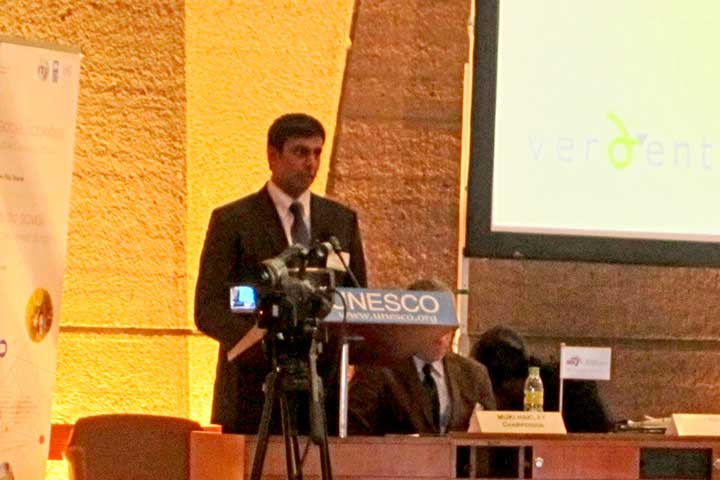
    Rohit Pothukuchi graduated from NALSAR, Hyderabad, in 2013. Subsequently he went on to pursue his Masters from UC Berkley School of Law. He is the Founder and Chief Editor of Standard Indian Legal Citation (SILC). He serves as an Affiliate Student Research Fellow, Harvard Law School Program on the Legal Profession. He will soon be joining White & Case LLP as an associate in NY. In 2013, Rohit was invited to speak as a panelist at UNESCO headquarters in Paris. Rohit will speak to us about:

    • Founding and being Chief Editor for Standard Indian Legal Citation (SILC)
    • Speaking at the UNESCO
    • Joining White & Case, NY as an Associate
    • Serving as an Affiliate Student Research Fellow, Harvard Law School Program on the Legal Profession


    How would you describe your childhood, pre-college life and educational background?

    I spent most of my high school years in Kodaikanal, TN, where I attended the Kodaikanal International School. When I was accepted to NLSIU Bangalore and NALSAR, I chose to attend NALSAR, primarily to spend more time with my family, parents and grandparents. Law and policy have always interested me. Although I almost chose to pursue a career in medicine or finance, I chose law because its such a versatile subject,and it affects so many aspects of society.


    What are your responsibilities as the Chief Editor and the Founding Editor of the Standard Indian Legal Citation (SILC)?

    (Rohit has been a pioneer in creating and promoting our own Indian citation format. SILC now has registered users at over 85 law schools, numerous firms, and courts across India. )

    There was a strong requirement for an Indian citation system. Researchers were frustrated with the difficulty of finding appropriate citation standards for Indian legal sources, most of which are not covered by foreign citation systems. Foreign manuals could be hard to find, expensive, and were just not tailored for India. You have to keep in mind, most of these foreign systems were created for their respective countries (the UK, the US, etc.)—it was time for a change. Debanshu Khettry, Shambo Nandy (the other two founding editors), and I first started discussing this idea when we were doing our B.A.LL.B. At first the task looked very daunting, and even impossible. Convincing the Indian legal community—a group of some of the most argumentative individuals I know—to change their practices is by no means an easy looking task. I didn’t think we could reach a wide enough audience.

    However, I felt it was the right thing to do and that we should put in our best effort. I took leadership as Chief Editor. We have truly been lucky to reach the nation -wide audience that we have, and I am so thankful to all of the practicing lawyers, faculty members, and students who have started using SILC and have taken the initiative to join us in this national movement. SILC has truly been a team effort, Before I speak about my responsibilities, I would like to acknowledge the efforts of our entire team of hard working editors from across India and our phenomenal advisors. SILC would not have taken off without them.

    I especially acknowledge Vikrant Pachnanda, Akshay Sreevatsa, and Megha Mathur, senior editors of SILC, who have put in tremendous efforts and bounds of time to make this citation system a reality. As Chief Editor I was responsible for overseeing all aspects of the citation system. Particularly, setting a vision, building a team, being involved with drafting the citation system, and the daunting task of getting this to a nation-wide audience. I had to think of ways to build an India-centric citation system that was easy and appropriate for a variety of uses and user groups ranging from practicing lawyers to law students to even non-lawyers reading legal material. Seeking the right guidance and building the right team were critical aspects in doing this. As a recent graduate, you can only possess so many skill sets. But in the aggregate, as a team, you can put together the skills needed to create an appropriate citation system. Once our core team of senior editors came together we were able to do this. I reached out to some of the nations leading lawyers and academics to try and get insights on how to make this citation system practical and useful for India—many of them were kind enough to join our advisory panel. Subsequently we added editors from across India who had great experience with journals at their law schools and with legal research.

    I came up with the name “SILC”, because it was catchy and appropriate. Almost everyone I spoke to loved the name, and we stuck with it. I first created the logo on Microsoft word, and eventually ended up providing rough sketches and designs for most of the web-site to our web developers. Our entire team of editors and advisors unanimously wanted a citation system that was not exclusively built and just put online. We wanted this to be a movement of lawyers and students across the nation who are choosing an India-centric citation system that is more suited to the nation’s needs.I hope we have made a move in this direction. We launched a “working draft”, precisely because we wanted to get input from as many practicing lawyers, faculty members, and students as possible. This is, after all, a system built for the Indian legal community, and we wanted to hear from that community before a version 1. Additionally, we wanted this to be accessible to everyone—some foreign citation manuals really can be expensive for Indian audiences and hard to find—cost should not be one of the reasons that deters a student from research.

    If you are interested in learning more, I have spoken about SILC in a podcast/interview with MyLaw, which you can listen to here: http://blog.mylaw.net/a-new-citation-system-for-uniquely-indian-legal-material/


    What is the vision going forward?

    The “working draft” is in circulation and we are getting input from as many students, faculty, and practitioners as possible. I am also conducting a survey for some research, its not directly related to SILC, but is related to citation practices across India and will help us understand areas where citation standards needs to improve. I am thankful to everyone who is able to take it. It can be accessed here.


    What has been the most gratifying moment for you with regard to SILC?

    I think the first few days, launching the citation system, and getting such a fantastic response was frankly a very very happy time for me. I never would have expected registrations from across the country, and such a positive response from academics, students, and practitioners alike. Students from more than 40 law schools registered in the first few days, and we got so many great responses. It’s truly a wonderful feeling to see your vision come to reality. I have to say, I was very nervous before the launch. We still have a long way to go, and our team is committed to working very hard to make this the best it can be.


    rohit-pothukuchi-2

    How was the experience of being invited to UNESCO headquarters to speak as a panelist at the World Summit on the Information Society Review Committee Meeting?

    It was an incredible honor and one of the greatest experiences of my life. The World Summit on the Information Society meetings took place in 2003 & 2005, and came about after the UN General Assembly approved resolution 56/183 resolving for the need for such a summit. The summits were the major effort of the UN to discuss the global information society, access to the internet, the growing digital divide, communication policy, and other issues, amongst nations of the world. The Summits have lead to the establishment of the Internet Governance Forum, and in a sense have helped develop the global vision ahead for dealing with the internet and technology—Wikipedia has a nice summary.

    The Review Committee Meetings which take place pretty much every year look at the issues and upcoming trends as well as developments after the summits. I spoke at one of these Review committee Meetings. A very senior official at UNESCO learnt about some of my work, and subsequently, I received an invitation to speak. Frankly when I saw the email I couldn’t even believe it. I spoke about e-science trends in India, and about Verdentum a non-profit social network I will be launching in Fall this year, which hopes to connect policy makers with students around the world. A portion of my presentation at UNESCO can be found on the UNESCO web page here.

    More information on Verdentum can be found at www.verdentum.org . I never thought I would be invited to give a talk to an audience that would be simultaneously translated into several languages while I was speaking. I kept looking at the translators—I was absolutely baffled. I was a bit nervous, and one of my personal role models, the former head of the Intergovernmental Panel on Climate Change was in the audience, which made it worse! He was speaking on a related panel. Thankfully, I had very positive responses, and I think the talk was well received. Of course, it was such an amazing experience, and I was very very lucky to have been flown there, put up, and have had this opportunity. Paris is a wonderful city.


    How is White & Case different from  top-tier Indian law firms?

    It has been thrilling working with White & Case at three of their offices. The work is some of the best I have seen in any of my internships and experiences–it is truly international, cutting-edge, and exciting. I think there are very few places where, as an intern, you get to help with multi-billion-dollar deals involving 5 or 6 different jurisdictions, and some of the worlds leading corporations, banks, and government bodies. This was especially true at the Abu-Dhabi office, a relatively smaller office, where I had the chance to be involved with the project finance, capital markets, and M&A groups and some of their transactions. Just being able to read through some of the documentation, and having lawyers who care about teaching you the dynamics behind a deal, one can learn so much.

    I thoroughly enjoyed being able to meet and interact with extraordinary, industry-leading lawyers. I never thought I would get to meet some of the lawyers who have truly shaped areas of law, or whom I had read about because of their involvement in prominent deals and transactions. White & Case has an incredibly open culture, most of the doors are open, and even senior associates and partners are really happy to talk about their work, and guide you. I think being in such an environment inspires one to be more involved with his work, and take the extra step. Being at the NY office was an experience in itself, you really cant beat walking into a sky-scraper next to Times Square every morning. I feel incredibly lucky to be joining such a fantastic firm, and to have had these unique experiences. I think the volume of highly international work at White & Case differentiates it from any other firm I know of.

    With that said, the firms I have had the privilege of interning with in India have been outstanding, and I have learned a great deal from being at those firms for even brief periods of time.


    Can you give us advice on applications and interviews, especially with foreign law firms?

    I think that it’s important to tailor one’s application specifically for each separate firm or organization. Many students provide relatively similar or generic answers to most applications. Read through the firm’s web site and identify their core values and principles, ask yourself if your application is in line with those; tailor your answers specifically.

    I think it’s also helpful to ask the question “do I fit into this organization?”—take a look at the lawyers there, their careers, and their achievements, I think that reveals a wealth of information about what the firm is looking for, and what you need to do/work-on to be there. Another piece of advice: build relationships. Don’t just expect to apply one day and get a job, continue to intern there, work with lawyers there to genuinely learn more in fields that interest you, do some research if possible, and have a positive attitude in whatever work you are given. I have interviewed with White & Case, a magic-circle law firm in London, and several international companies/ organizations. I would say do some thorough research about the firm and the deals they are involved in. This information is not easily revealed through the firm’s web-site all the time. Sometimes it helps to talk to lawyers at the firm.

    Know how the firm you are interviewing with is different from other law firms. They will usually have an area of law where they are the absolute best, or particular cases where they have distinguished themselves. Be familiar with the firm’s strategy and vision for the future if possible, ask yourself how you fit into that. I learnt that it really pays off to know a bit about the lawyers interviewing you—the major deals and areas they have worked on. These areas could occasionally come up in your interview.

    Know your CV thoroughly; be ready to answer questions about internships, and research that you have worked on. Additionally, be pleasant and be respectful of your interviewers’ time. Another note: It’s ok to say that you don’t know sometimes. You can’t know the answer to everything, and I don’t think you are expected to always know the answer. Additionally, try to stay positive. The application and interview process can be difficult, and everyone gets at least a few rejections (in my case I got many). As much as there are very low points in this process, learning from those experiences and bouncing back with improved applications is important.


    How did you go about applying for and getting these foreign internships?

    (Rohit has interned with numerous organizations in 5 different countries such as Oracle in Australia, the California Earthquake Authority, Worley Parsons; in India, AMSS, Tatva Legal, SKS Microfinance, and numerous other places.)

    It was very hard getting internships, especially abroad. I had a lot of difficulty. I was an ordinary law student from India, and I didn’t have any contacts who could help me. I had to work very very hard. You are up against candidates who are better suited, are usually graduate students with more experience (because you study law after an undergraduate degree in the US), etc. When I tried getting an internship abroad during an exchange program at Santa Clara University in my 3rd year I think I got rejection letters from most large law firms with offices in the bay area, and most small law firms I applied to as well. Im pretty certain I had at least 30 to 40 rejection letters in my inbox at some point. A litigation-oriented law firm in San-Francisco’s financial district finally gave me a chance.

    The lawyer who gave me the internship was one of the nations leading plaintiff’s attorneys, and truly an inspiring figure, she guided me with my work and we continue to stay in touch today. I’m very thankful for the chance I was given. For the first time I got the feel of a US litigation environment. I got to do hands on work and be involved with real matters. I have to add—it was so awesome working in a sky-scraper in downtown SF. I worked as hard as I could, I tried to catch up on relevant law. I used to travel about two hours by public transport to SF, early in the morning and two hours to come back go to class, and then study till late in the night. I tried to work on research in different areas I was interested in during my second-third year in NALSAR and I tried to seek the guidance of professionals that were in those fields I was interested in.

    Slowly but steadily my internship opportunities increased, and I was very lucky to get the kinds of opportunities I had. I really wanted to travel and see different work environments around the world, and I was able to get foreign internships that paid me enough that I was able to do that. It is possible, it requires perseverance and hard work. My advice is to work hard, build relationships with people and firms that are focused on areas you are interested in, and be perseverant. I have had several mentors from my internships who over the years have given me incredible guidance. Im thankful for their kindness. I think students should seek out mentors who can give them the right advice. If you have a positive attitude and a willingness to work, I think people will help you. I got so many rejection letters, again and again and again, but I kept at it.


    Could you tell us about your current research program at Harvard?

    Headed by Professor David B. Wilkins (Vice Dean for Global Initiatives on the Legal Profession), the Harvard Law School Program on the Legal Profession is a research think-tank which seeks to make a substantial contribution to the modern practice of law by increasing understanding of the structures, norms and dynamics of the global legal profession. As part of it is major, multi-national, multi-diplomacy research on Globalization, Lawyers, and Emerging Economies (GLEE), PLP is actively engaged in examining and understanding the Indian legal profession.

    The GLEE India research team is comprised of scholars from a host of leading universities, research institutions, and law firms in India, the United States, United Kingdom, and Singapore. The GLEE India research team is pursuing the first comprehensive set of studies examining the changes in the Indian corporate legal sector and its effects throughout the legal profession. This includes studying Indian and foreign law firms, in house counsel, legal process outsourcing, trade law capacity and capacity building, senior advocates, legal profession regulation, legal education, the role of gender, small town lawyers, diversity concerns, and pro bono and public interest lawyering.

    Using surveys, interviews, participant observation, and archival research, GLEE’s India research contributes to a richer and more textured understanding of the substantial changes to the corporate sector of the Indian legal profession as well as its relationship to the developments in the legal professions in Brazil, China, and other emerging economies. You can learn more about GLEE – and all of PLP’s research projects – on its website. My current research is focused on citation practices and experiences of lawyers and law students in India, I am currently circulating a survey for my research, the survey can be accessed through this link. I would be thankful to any members of the legal community willing to fill it out. I intend to expand my research to more areas in the future.”


    Tell us about your editorial experience and how it has benefited you as a lawyer.

    (During his time at NALSAR Rohit helped establish the ADR Review and Media Law Review, and served as the highest ranking student editor of two journals simultaneously.)

    I have indeed learnt a lot from this process. As far as the future is concerned I can say that our editors who are in charge are working hard and continuously improving the journals. We are looking at the growing importance of the blog, digital formats, and involving more practitioners. We want to make these journals as relevant as possible to a modern Indian audience. Of course it’s tough getting journals off the ground, but getting experts in the relevant fields to write and being perseverant is really important.


    How were these teams built and what draws students to write an editorial board test for these two journals?

    (Both journals have a truly impressive board of editors that have included winners of prestigious moots such as VIS, Oxford Media Law, etc., associates at leading law firms abroad and in India.)

    We follow a very different approach at the ADR Review & NMLR when it comes to journal leadership and governance. There is hardly any hierarchy. Our editors stay on for the entire period of time at law school. It’s very difficult to be selected, we have a very small intake, but our editors take their job seriously. We also believe in a holistic approach towards selecting editors. As much as the ed-board test plays an important role, we care about leadership and initiative, and people who care about the journals and the subjects—not just people who want to put things on their CV. We strongly believe that it’s difficult to learn enough about a subject and editing in a 1 year period—which is the time span many journals in India continue to keep their editors. We also encourage editors to creatively be a part of the management process and try to actively improve the journals. We are still pretty young, but I believe we have a bright future ahead. We are planning to initiate a mentorship program for editors of our journals, with alumni editors who have graduated, so they can get guidance early on and have access to more career resources in India and abroad.


    How did you manage extracurricular interests with academics?

    (Rohit was a finalist of the Habitat National Geographic Young Visionary Award in your 2nd year, getting through the semi-finals at IIT Chennai.)

    I was pleasantly surprised to have made it through, some of my ideas were climate-change related. I was lucky to be a national finalist. I believe the competition and Award have been discontinued in recent years. I served as the Moot Court Committee Representative to the NALSAR Student Bar Council in my 1st year. I was a bailiff for so many moots, that I never wanted to enter the moot court hall again!

    Well, I guess it’s important to work on what you like. I always did stuff I enjoyed, so it didn’t feel like a lot of work. I had awesome friends through law school. And with some bias I have to say the graduating batch of 2013 is THE best batch NALSAR ever has had and ever will have!! I’ve also gotten to know so many great juniors and seniors. So, spend time with friends. It was a lot of fun taking trips and wasting countless afternoons at local dhabas, driving around the city aimlessly, eating bhajjis on the side of the road, etc. — you need to make time for these kinds of things.

    Also, I would say plan ahead. Just know what you want to do and where you want to be and make schedules (I have to admit I didn’t always do this, but wish I had). You will find that you are hitting your targets and doing what you want to do. Additionally, I tried not to let go of some of my hobbies. I think a lot of people do this, they love to play an instrument or sing, or do something else, and this disappears when they get to law school. Hang on to your passion and continue with it. I tried to continue painting and this really kept me happy. I completed a series of sixteen pieces titled “Shattered Perspectives 1-16”, which are mixed media on paper. I created them for the Disability Law Center at NALSAR, and they are now a permanent installation there. The series of pieces portray the importance of law in piecing together the “shattered perspectives” of society towards persons with disability.


    What would be your message to students who wish to pursue a legal career in a top-tier U.S. law firm?

    I don’t think I’ve come far enough in my career to provide this advice. However, I would say: Start thinking about your goals very early on and seek the right guidance. I wish I had done this earlier. As early as the end of 1st year. I think by the time you reach your 3rd year you realize you’ve lost a lot of valuable time that you could have used towards internships, experimenting in different areas of law, figuring out what you like. Do this early on. Talk to seniors and graduates, find the right mentors, and work on what you love. I think that will take you where you need to be.

  • Kartikey Mahajan, LLM Candidate, Harvard, on mooting, practice at the Supreme Court, and plans for the future

    Kartikey Mahajan, LLM Candidate, Harvard, on mooting, practice at the Supreme Court, and plans for the future

    kartikey-m1Kartikey Mahajan graduated from NLU, Jodhpur in 2011. He has been practicing as an Advocate at the Supreme Court of India, after a stint at Luthra & Luthra. Recently he got admitted into an LL.M. programme at Harvard Law School, with a 50% tuition waiver.

    We took this opportunity to ask him about:

    • Being among the Top Five Oralists at the  World Finals of Stetson Environmental Moot Court
    • Practising as an advocate at the Supreme Court of India
    • Pursuing an LL.M from Harvard Law School


    How would you like to introduce yourself to our readers?

    I did my schooling from Delhi Public School, Mathura Road, New Delhi. Thereafter I decided to pursue law as a career and joined National Law University, Jodhpur. Law school provided me with a platform to participate in a number of moot court competitions and be a part of different committees in various capacities. Law school also made it possible for me to intern with some of the biggest names in litigation and as well as the biggest law firms of the country. These opportunities exposed me to different facets of law and also helped me develop a deeper understanding of our society. It also exposed me to various sectors of our economic functioning. After law school, I joined the Project Finance team of Luthra&Luthra Law Offices, Delhi that was one of the coveted teams to join in the country for corporate law at that time. At Luthra&Luthra, I worked on high profile transactions as well as did a lot of policy work for Planning Commission of India in terms of drafting model PPP documents. After Luthra&Luthra, I joined the chambers of Additional Solicitor General of India where I worked on government matters before the Delhi High Court and Supreme Court of India. The ASG allowed me to take my own private briefs which also helped me learn a lot about handling the matters without anyone else’s supervision. Now I am leaving for my masters at Harvard Law School this fall and intend to concentrate on litigation and arbitration related subjects during my LL.M.


    Did any of your family members motivate you to pursue a legal career?

    Both my father and mother are doctors in New Delhi. My father is in private practice and my mother is with a government hospital. I believe a legal background always helps a lawyer in his early days be it any field of law. Although, I didn’t even remotely have a family member in the legal field, my father always wanted me to become a lawyer.

    In litigation particularly, the benefit of having a legal background becomes more tangible early on, as you can land few clients or have an established office space. However, with respect to any field of law a having a legal family background helps understand the law better, as a person can always take help of his/her family member’s experience to understand the nuances of law. But I am strongly of the opinion that in the long run it’s the individual’s hard work and determination, which helps him. Any person can get those easy breaks when he has a legal background but to sustain it over a long period of time and establish oneself as a reputed lawyer, it is always the competence of that person alone.


    How did you manage being an all rounder in school?

    (Kartikey was awarded the Academic Excellence Award Scholarship in school and was also awarded various awards for playing guitar and drums.)

    Well quite frankly I will not call myself an achiever in school. I hardly used to study in school until 9th grade and I was always involved in extra-curricular activities like playing guitar, drums and being part of cricket and basketball teams. It was only during 9th grade that I started paying attention towards studies as the board exams were due next year, therefore my father asked me to pull up my socks. I consequently, started excelling in studies, which helped me secure Academic Excellence Award Scholarship for the next three years. By the time I started concentrating in studies, I had already acquired the skills of playing sports and recreational activities like guitar and drums, which enabled me to continue these activities without spending that much time which one usually requires for learning a skill. So being an all-rounder came quite gradually over a period of time and just required a little bit of time management. It is this time management skill, which I can say that I learnt at school, which is still helping me engage in multiple activities at the same time.


    Were your sure about pursuing a career in the legal field from the beginning?

    I was always fascinated with doing something different from my parents. Initially I started preparing for medical entrances in 11th grade and since I really enjoyed science, I used to excel at the exam preparation courses at Akash Institute in Delhi (an Institute which helps you prepare for medical examinations). But like I said I was always fascinated with doing something different from my parents, which always made me think about exploring different options and law was certainly one of the options which I had in mind. Then in the beginning of 12th grade my school organised a mock moot court for the students and I participated in the same as a speaker. It was during the preparation of that competition that I realized the thrill and excitement associated with the field of law and I knew that a career in law was right for me.


    Tell us in detail about your time at NLU–J.

    During law school, I participated in a number of moot court competitions like Vis East, Stetson Environmental Moot, Henry Durant and ICC Trial. Mooting was one activity, which I extremely liked during law school and I always wanted to perform better every time I participated in a moot. Besides mooting, I published a number of articles in leading national and international journals and as well as periodicals. Whenever, I got time, I also played basketball and cricket to unwind.


    What skills did you acquire while serving various committees at NLUJ?

    I was fortunate enough to be selected in a number of student committees by the faculty at NLUJ for various important positions. All these roles and positions helped me grow as a professional and as well as an individual. This is because working in any committee always involves coordinating and organising important events. This makes you more patient while dealing with your peers and as well as the University staff and outside organisations. Working for events also enables you to handle pressure without taking too much stress. This is true of every committee whether be is Sports, Cultural, Academic Support, Moot Court etc.

    Well I think my fondest memories of working in any student committee were during my fourth year when I was the Secretary of Legal Aid Committee. During the short stint of one year we organised numerous awareness camps on legal issues in nearby villages of Jodhpur. Rajasthan as you would know is a very conservative state, which has practices of dowry, female foeticide etc. prevalent almost in every part of the state. Before my stint at the committee, I always saw those problems from only an academic point of view. My involvement with the committee was the first time that I saw these sensitive issues up close.  These events certainly had a lasting impact on me and really helped me while dealing with the pro-bono cases at the Delhi High Court Legal Services Committee. I would say that I really absorbed a lot of practical nuances when it comes to common societal problems during my stint at the Legal Aid Committee which made me more sensitive towards these issues of dowry death, child rape etc.


    What difference did you find in the Indian and the world rounds?

    (Kartikey was awarded the Fifth Best Oralist Prize at World Finals of Stetson Environmental Moot Court Competition and also the third best oralist at Northern Rounds of Stetson International Environmental Moot Court Competition.)

    There is a marked level of difference in the judging standards of Indian and world rounds. While at the Indian rounds you will routinely find judges who are alumni of the law schools who tend to grill you on the legal points. So they basically tend to give marks based on your legal knowledge. I have been a judge in few competitions like Jessup, Stetson etc. post law school and I have noticed this tendency amongst the Indian judges to mark the students on the basis of their legal knowledge. Basically if you are good in legal knowledge then mostly you will get higher marks in other sections of the scoring sheet like style, etiquette etc. However, in the international rounds of any competition, the emphasis is mostly on the speaker’s speaking style and his ability to answer the questions with poise and clarity. While legal knowledge is relevant during international rounds, but other sections become equally important.

    Well during the World Finals of Stetson, my team members who were in the Indian rounds could not manage to come with me to Florida due to Visa and Financial issues. So ten days before leaving for the World Finals, I had to speak to the national and international organisational members of the competition to amend their rules and allow me to induct a new member from the University who had a valid US Visa. When the permission was granted, I managed to induct a new partner (Rashi Ahooja) for the World Rounds and she prepared everything in just five days and managed to secure the 6th Best Speaker at the World Finals. The entire period after the Indian rounds until the culmination of the World Finals was an exciting period which involved a lot of challenges and made me learn a lot of things like acting under pressure and petitioning the organisations to amend their rules.


    Can you give three essential tips to our readers who wish to ace the oral rounds of an international moot?

    The First tip would be to know your proposition, memorials and the relevant legal issues thoroughly. You cannot not know the above things. A person should equally devote a substantial amount of tine writing down the structure of his arguments and rehearsing them until you master them. In any moot court, a judge would try to deviate you from your structure but a good mooter would always come back to his structure of arguments after answering the judge’s question. Lastly, always remember to speak slowly when it comes to arguing before international judges, as Indian accent tends to be really fast which the judges may not understand. I essentially followed all the above rules while preparing for any round.


    What kind of internships did you do in your law school?

    During law school, I managed to intern at many different places like law firms, counsels, consultancy firms and corporate organisations. This helped me get exposure to different realms of law and different work environments.

    There used to be institutional support for procurement of internships at law school from third year onwards. However, I always managed to secure an internship for myself without relying on the Placement and Internship Cell.


    Did you plan out the course of your internships?

    I did plan out my internships as initially I interned with counsels to try and understand the basic fields of law like contracts, constitution and procedure statutes including arbitration. Then from third year onwards I interned in law and consultancy firms to get an experience of corporate laws.

    I think it is extremely important for a law student to plan the course of his internships as certain internships like a corporate law related internship can be understood better only when one has read and worked on contract law related issues. So basically doing a corporate law internship in the beginning of second year will not make much sense for a law student. Also, if a person is thinking of applying for LL.M, then he must undertake internships, which will help him show his focus towards the field of law that he wishes to pursue in LL.M.


    Can you give us a few tips to ace the art of paper writing?

    Well there is no tip for writing a paper as such. One just needs to start writing and the person becomes better with time. What I would say is that a person should always pick up a novel topic to write, as there is no point writing on something on which already a lot has been written. I have always picked up topics on which I can add to the scholarship of the subject by highlighting my own original viewpoints.


    Tell us how has moot court participations and paper publishing helped you in acquiring skills that are important for a successful legal career?

    They certainly have. Moot courts made me develop the requisite confidence to appear before a judge in litigation. Although many would say that moots are not at all like a real case, to which I would agree as well, but moots give you a style of presentation and help you being thorough. I am so used to appearing in Court without looking much into my file as I acquired this habit while preparing for moot courts. I have also handled an international arbitration in Singapore and I must say that my mooting experience at Vis moot was extremely relevant for that arbitration interms of my presentation style. Legal writing although did not seem to have contributed to my drafting skills, but it helped me develop thought process and delve deeper into certain legal issues.


    How did you manage your academics, curricular and co-curricular activities?

    Well… I was always interested in basketball and cricket, but it was mostly in my first and the last year that I played these sports on a regular basis.

    Like I said before, time management came naturally to me from school itself and it was never hard to manage all these activities at law school.


    Tell us about your experience at Luthra&Luthra?

    I was offered a job at Luthra&Luthra through campus placement. The experience was very interesting as I got to work in one of the most exciting teams in the country for Project Finance. I worked on few huge transactions, which helped me realise the need of a lawyer to pay attention to detail. Also, the experience helped me read very long documents in lesser time and improve my drafting skills by the end of my stint at Luthra&Luthra.


    Why did you switch from a corporate job to a job of a practicing lawyer?

    (After working in a law firm Kartikey started working as a practicing advocate under Mr. Rajeev Mehra, Additional Solicitor General of India.)

    I switched because I always wanted to pursue litigation and arbitration and argue before the courts. I started with Luthra&Luthra because I wanted to save some money to help me tide over the initial years of litigation and at the same time become familiar with commercial documents.

    The initial major challenge was to remain physically standing by the end of the day. Litigation unlike corporate work, involves a lot of running around the courts and even outside the court to conduct client meetings etc., so after working in a corporate firm one looses touch at being that physically active. Then obviously making new clients is always challenging in litigation as clients usually don’t place confidence in young lawyers to handle their cases. I must say that everyday in litigation is a challenge, which comes with its own set of thrills and excitement. You never know what problem can crop up like a small mistake in filing because of which the registry doesn’t put up your matter, like managing multiple courts on the same day, tackling judges on their bad mood days etc. So basically the uncertainties increase in litigation manifold and it was basically understanding that these uncertainties were very much possible on an everyday basis was the initial challenge.


    Tell us about your work at Supreme Court of India.

    I have majorly handled cases at the High Court and then at the Supreme Court. This is because I was associated with the chambers of Additional Solicitor General of India. The government work is really interesting and at the same time very time consuming not allowing you to find enough time for your private matters. So basically I used to handle atleast 8-10 matters a day for the ASG, which also sometimes turned out to be 15-20 matters per day. Obviously not all of them came up for arguments, many had just small applications or asking times for filing rejoinders/counters etc., many had adjournment motions or many required usage of court craft to ensure that the matter was passed over or put at the end of the board so that it can be rolled over to the next day. But what all these matters put together tested was the organisation and coordination abilities of the juniors as we had to coordinate with the government departments and as well as the Standing Counsels for their instructions. Many a times a 500 to 1000 page brief used to arrive in the office at 9 pm with instructions to appear next morning (We all know how disorganised and lethargic government departments can be). So this helped me read the files faster and understand what the relevant points can be in a short span of time. Whenever I used to have a private brief, then I had to face the additional problem of managing my workload.


    Why did you choose Harvard Law School?

    (Kartikey was awarded Jagdish Bhagwati Fellowship (Columbia Law School) Willams Papsworth Studentship (University of Cambridge) Graduate Dean Award (New York University School of Law), all of he declined to pursue an LL.M at Harvard Law School.)

    All these scholarship applications are basically included in the application procedure for the LL.M Programme. Cambridge had a separate scholarship question in which you basically had to state your reasons for applying for a scholarship. NYU had a question on describing a legal issue facing a country or the world and proposing solutions to address the same. As far as Columbia was concerned, it did not have any separate question.

    Harvard has also offered me a tuition waiver of almost 50%, its just that its not a named scholarship like that of Columbia, Cambridge or NYU. I chose Harvard primarily because it has the best faculty for the courses that I am interested in, like Constitutional Law and Policy. Also, candidly speaking, I intend to return to India post LL.M to continue pursuing dispute resolution for which a Harvard LL.M offers intangible benefits over the other LL.M programs.


    What are the necessary traits required to bag a scholarship?

    I think it’s not only about law school but your overall profile. Curiously, I am still not sure as to what did the admissions committee like about me at every college that I got so many scholarships. I think this question is best suited for admission officers to handle.

    But I would like to say that if I have to think of some factors which would have helped me then I would say a good rank at law school (top 2% is a must), international awards at moots, international publications and both government and corporate work experience would be the factors which could have probably helped. But like I said before, I am not even myself sure to give two cents about this.


    kartikey-m4

    Tell us what motivated you to go for a master’s programme?

    I always harboured a desire to do an LL.M since law school. Its just that I didn’t know what I wanted to study during an LL.M. So that’s why I think that work experience is really important for most people as they get better clarity interms of what they want to study and how they want to utilize their time at LL.M which is just for 9 months.

    The reason why I didn’t opt for an LL.M at Indian University is because I have already studied at one of the best law schools of the country and I didn’t think that pursuing an LL.M at another good Indian law school would enhance my skill set or knowledge base. I think an international LL.M programme always helps you develop different perspectives about a particular legal topic as there is a presence of diverse viewpoints of people from around the world. Additionally, studying your interest areas from the best professors of the world and not that of one country, obviously helps you delve deeper into that subject area.


    What is your area of study at Harvard?

    I intend on pursuing Constitutional Law, Negotiations, Civil Procedure, International Commercial Arbitration and other litigation related courses. I also intend to get involved with trial workshops/clinics and learn the American way of litigating.

    From what I have heard from my friends who are Harvard alumni, I think the educational culture at HLS is really intense and demands a lot of time. This is chiefly because of the Socratic method of teaching which is followed at all US Law schools that involves a lot of reading up before coming to class and the class itself involves only discussion with the professor. Lets not discount the fact that a classroom at Harvard would be filled with some of the brightest minds so you can obviously expect a lot of cross-exchange of indepth analysis of legal issues. I think that’s where the fun lies.


    What are your plans after LL.M.?

    I intend to continue with my Litigation and arbitration practice. As far as a job in corporate sector is concerned, that is definitely not cut out for me. Although, I certainly love corporate laws and I intend on continue doing commercial litigation.


    Lastly, what would be your message to our readers?

    I don’t think I am in a position to offer any advice or a guiding principles to anyone at this time. However, I have always tried to follow what my father used to tell me since I was a child which was that one should pursue whatever he or she feels like. There is no set career path for anyone whether be it litigation, law firms or corporate organisations or NGO’s etc. If one really likes whatever he does, he will never get bored of it. People should ask whether they are willing to get up every day and do that kind of work that they are doing. If not then Quit! If yes then I feel possibilities are limitless.

  • Shezin Hussain on comparative Legal Practice of Bangladesh and India and organising Women’s T20

    Shezin Hussain on comparative Legal Practice of Bangladesh and India and organising Women’s T20

    shezin-h4Shezin Hussain graduated from NUJS, Kolkata in 2009. Being a Bangladeshi citizen educated in India she has the insights of the legal systems of both the countries. After graduating from NUJS, she completed her LL.M. from Southeast University, taught as a guest lecturer at Metropolitan University, Sylhet, and has been a practicing lawyer at the Judges’ Court at Sylhet.

    She has also been an Investigation Officer for BRAC which is the largest NGO in the world. Most amazingly being a passionate sportsperson she has had the opportunity of organising the latest ICC Women’s T20 World Cup 2014 among all her commitments.

    In this interview she has talked about:

    • Life at NUJS and interning at places in India and Bangladesh
    • LL.M. from Southeast University, Dhaka
    • Organising the ICC Women’s T20
    • Being an investigation officer at BRAC
    • The comparative legal practice of India and Bangladesh


    Our readers mainly consist of young lawyers and law students, how would you like to introduce yourself to them?

    Hi, I am Shezin W. Hussain residing in Sylhet, Bangladesh. Currently I am practicing as an Advocate at the Judge’s Court, Sylhet. Apart from that I’m working as guest Lecturer for the Department of Law & Justice, Metropolitan University, Sylhet and a political fellow for Democracy International, a USAID Agency.


    You finished your schooling in India. What prompted you to pursue your education in India? How were your formative years as a school student? Did you partake of all activities in school?

    It was solely my parent’s decision to send me to India to complete my schooling. Both my parents were involved (Mom is still involved) in politics, due to which they couldn’t spend much time on me and my siblings, hence they sent us away to boarding schools for better education.

    During my early school days, I focused more on my academics; hence I worked on my grades instead of concentrating on other activities. Eventually, when my grades started soaring upwards, I started participating in various co-curricular activities.


    How did the thought of pursuing a career in law cross your mind? Did you have lawyers in your family who motivated you to pursue a career in the legal field?

    I never thought of entering the legal profession, it was my dad’s decision that I take up law as a subject after I had completed ISC in 2004.

    My grandfather was a practicing Advocate in the Judge’s Court, Sylhet but I had lost him while I was in Standard VI, so I wasn’t actually motivated by him. It was more of my dad’s decision. Now that I don’t have my father to see me pursuing my career, I feel lucky to have had a father who anticipated the potential in me and asked me to tread the path of the legal profession.


    What prompted you to consider NUJS, Kolkata for your legal studies? How did you get to know about it? Which other universities were in your shortlist?

    My mother, while visiting Kolkata in November 2003, came to know about this University in some newspaper. She had visited the University and collected the application form, which she later posted me. I was preparing for the ISC exam, scheduled in March 2004, I was asked to fill up the application form and post it back to the University. This was the first and last University I had applied for. I didn’t consider looking for any other Universities.


    Please share some of your memorable experiences at NUJS, Kolkata. What made your college life exciting? How well do you think your education at NUJS prepared you for the real world practice of law?

    Securing a place along with other meritorious students made me wonder how I ended up there.

    Initially life in NUJS was hectic, nerve wrecking & challenging. I was not a brilliant student but more of a mediocre student; hence I had to struggle with the study pressure in the beginning. Eventually, when I had settled in, things started to fall into place. My grades stabilised and I could engage in other extra-curricular activities.

    The years I spent at NUJS have been the best 5 years of my life, I made wonderful friends, discovered the vast arena of legal education, and ventured the city of Kolkata in every possible way. Overall, it was a great experience.

    The legal education that I received from NUJS, has helped me imparting knowledge to my students during my teaching experiences. It has also equipped me to deal with the legal complexities of litigation.


    Tell us about your internships. Any remarkable internship experience which shaped up your career? How would you recommend students to go about choosing their internships?

    I have done several Internships, under the Advocate on Record of Supreme Court of India, Kanga & Company, Jyoti Sagar Associates, Mumbai, Senior Advocates of Judge’s Court in Sylhet, Bangladesh. All, these internships have given me an opportunity to experience different aspects of the legal profession. Corporate culture, litigation gave me an opportunity to decide what kind of a career I’d like to pursue. Unfortunately, in my country, there isn’t much scope for students to carry out internships. The sole reason is that the corporate culture in Bangladesh is still developing and  the universities in the country don’t emphasise on Internships, due to which many students are unclear about their careers after graduation. Indian students already know what they’d like to pursue after completing their graduation but  it is important to focus on law firms that you’d like to work with in the future while choosing your internships. A good internship definitely reflects well on your C.V. while recruiters hire you.


    What was your motivation behind pursuing LL.M.? Was it a personal endeavour or a professional requirement? Why didn’t you opt for Indian Universities?

    I wanted to pursue LL.M from the U.K but due to personal anomalies I couldn’t do so. Later, pursuing LL.M was more of a professional requirement than a personal endeavour. I didn’t opt for Indian Universities as they don’t offer specializations in subjects; plus, since the duration is of 2 years, it didn’t seem very encouraging to me.


    You completed your LL.M from Southeast University, Dhaka, Bangladesh. What all did you consider before choosing your subject for Masters? What are the differences you found between Southeast University and NUJS?

    As I said, since it was more of a professional need to pursue LL.M, I opted for Southeast University. Since there was no specialization, it was a general LL.M, and hence I didn’t have the option to choose any subjects.

    There are numerous differences between NUJS and South East University. I cannot compare NUJS with any Private University. If I ever get an opportunity again, I’d like to pursue my LL.M in a foreign country.


    shezin-h3

    You were closely associated with the ICC T20 Women’s World Cup 2014 and the South Asian Games 2010. How was your experience organising these events? Have you been a sportsperson? What draws you to sports?

    I was the MC for the South Asian Games 2010. It was definitely a great experience. That was the first time I faced thousands of people. This experience has definitely added as a boost to my experience during the ICC T20 Women’s World Cup 2014. I worked as a Local Coordinator for the women’s teams along with being the MC for the player of the ceremony after each match. Dealing with ten teams was super challenging and hectic. The event was scheduled for more than a month. It was an eye opening experience as I came in contact with hundreds of officials and employees of the International Cricket Council, the Bangladesh Cricket Board, famous players and match officials. I feel extremely lucky to have been a part of such a stupendous event.

    I was more into sports during my school day and college life. I have played almost all kinds of sports and was a part of the football team and cricket team while at university and the basketball, hockey teams during school days. It’s rejuvenating and I enjoy playing sports.


    You worked as an investigating officer at the Gender Justice & Diversity Section, BRAC, Dhaka, Bangladesh. Tell us what your job profile was all about, what comes under the responsibility of an investigation officer?

    The job as an Investigation Officer in Gender Justice & Diversity at BRAC was interesting and challenging. Basically this job profile was focussed on working with sexually harassed men/women at work place. A grievance cell was created whereby those working with BRAC if they faced any sexual harassment at work place could launch complaint with SHARE Unit, (Sexual Harassment Elimination Unit). After receiving complaint from SHARE, two investigation officers are given the task of visiting the place of occurrence and carry out investigation. After returning back from investigation, report has to be prepared and handed over to the Team Manager. Later Team Manager along with the head of SHARE Unit would decide upon what action to be taken. The punishment could range from termination, temporary suspension and warning. An aggrieved person if not satisfied with the awarding sentence could approach to Ombudsman. The decision of the Ombudsman is final.

    So, as an investigation officer, I had to investigate the matter by visiting the place of occurrence, take statement of the victim, accused and witnesses. It was very challenging job because sometimes the accused would turn hostile, the witnesses would refuse to meet. Most importantly basing on my report following actions would be assigned. So since it was sensitive issue dealing cautiously was essential.

    BRAC’s GJ&D had formulated Sexual Harassment Elimination (SHE) Policy in 2004, following which BRAC was committed to follow the High Court Division’s Guideline against sexual harassment that was promulgated on May 14, 2009.


    Given the Law firms where you interned offer a lucrative pay package and a prestigious career, how did you decide to return back to Bangladesh and start practice? Have you always thought of litigating from your days of being a law student?

    It was simply my father’s decision that I come back to Bangladesh and start working here. Since 1994, I have been in India for education purpose, hence my father wanted me to return back just as I had completed my graduation in 2009. I didn’t think of taking up litigation while I was a law student. The circumstances lead me to opt for this path.


    You are currently working as an advocate at Judge’s Court, Sylhet, Bangladesh. How is the court atmosphere in Bangladesh? Can you share some of your experiences in the first few sessions of the court?

    The Judge’s Court scenario is pretty much different. Though initially I didn’t like the atmosphere but gradually over time I got used to. The first few sessions of the court was challenging as most of the time while appearing for any matter, I am facing a senior opposing counsel. I was nervous at the beginning but over time I have grown confident and hesitation don’t take over me.

    Also, immediately after graduating in 2009 I couldn’t start practice straight away. In the legal system of Bangladesh one has to pass the bar examination before practicing as an Advocate. Passing the bar exam is really challenging as one has to face more than 15,000 or more examinees from all over Bangladesh every passing year.


    Can you tell us about a few highlights of the legal system of Bangladesh? Do you find any major differences between India and Bangladesh?

    The legal System in Bangladesh follows the Common law. The Judiciary is independent. The Supreme Court of Bangladesh is the Apex Court with two divisions, The Appellate Division and the High Court Division. Appellate Division hear and determine appeals from judgments, decrees, orders or sentences of High Court Division. High Court Division has both Appellate and Original Jurisdiction. It hears appeals from orders, decrees and judgment of subordinate courts and tribunals.

    The laws and acts are all most similar except that amendments have made certain changes. The personal law is different than that in India. Also, unlike the Indian System, one has to qualify the bar examination in order to practice in the Judge’s Court in Bangladesh. For enrolment in High Court, minimum two years practice in lower court and if the candidate has LL.M that he /she can sit for enrolment examination of High Court.


    What are the primary requirements of a practicing lawyer in Dhaka? Is it possible for an India educated lawyer to start practice in Dhaka and vice-versa? Do you consider practicing law in India ever? How would it be for you to adjust your career in a city like Delhi or Kolkata?

    Primary requirement for a practicing lawyer is that he/she has to be enrolled after passing the Bar Council Examinations. It is not possible for an Indian Lawyer to practice in Bangladesh unless he/she is a citizen of this country and vice-versa. I had considered practicing in India but since I am not an Indian Citizen, hence I cannot practice. If I would have the opportunity I would comfortably adjust my career in Kolkata, as I’m accustomed to the life in Kolkata after staying there for 5 long years.


    shezin-h1

    Is legal practice in Dhaka as lucrative as in Kolkata? What are the primary challenges in establishing an illustrious career there?

    If you consider the High Court practice, then I would say both Dhaka and Kolkata are on same footing. Even though primarily it’s very tough to build up this career in litigation but with time one can blend in.

    The primary challenge in litigation is being a woman. If the family is not supportive than pursuing litigation, maintaining family could be pretty challenging. Though now days the families are less conservative so this makes the chances a bit better to opt for litigation. And of course competition is there considering clients prefer Barrister-at-Law than other Advocates. This trend has been since there after independence and till date it continues. People have the notion in Bangladesh that if you become a Barrister you are much more qualified than ordinary advocates who are in practice for long years. The trend is changing though, after realising that not all Barristers are worth the penny.


    You have worked in India as an intern in various law firms and under various famous advocates, do you find any difference in the working cultures of India and Bangladesh? How different are both the countries in terms of work culture?

    The work culture is much more different in Bangladesh in comparison to India. The education I got from NUJS has given me an upper hand. In comparison to other graduates from certain private universities and public universities in Bangladesh, I think I had a great exposure in this profession. The experience that I have gained has pushed me ahead in my profession. As a result, I am pursuing litigation along with teaching and also being a political fellow for Democracy International, a USAID agency. Also, the corporate culture is not yet full-fledged in Bangladesh unlike India. It will take another few more years to form the corporate culture like that of India. Also the political instability has direct influence in our legal system, so that works to as a barrier for companies coming in and investing in Bangladesh.


    Lastly, what would be your message to a law student who wants to excel in the legal profession?

    For the law students, please utilise your time wisely while studying and try selecting the good law firms for internships. The internships reflect a lot in what you are capable of pursuing as a lawyer while you will enter professional field. Most importantly, let your heart follow what you want to pursue, don’t follow anyone because making your own identity will always lead you ahead in life no matter what you chose. Good wishes to all the upcoming lawyers.

  • Prashant Mishra on being ranked 64th at UPSC while drifting away from the mainstream legal career

    Prashant Mishra on being ranked 64th at UPSC while drifting away from the mainstream legal career

    prashant-m5Prashant Mishra graduated from the Gujarat National Law University in 2011, after which, he spent a year working at Universal Legal. However, he decided to quit his comfortable lifestyle instead and pursue the UPSC. After two years of training, he scored the 64th rank in the All India Civil Services Examination, 2013. We have taken this opportunity to ask him about:

    • His experience as a law student at the Gujarat National Law University.
    • His time as an employee at Universal Legal.
    • Circumstances that prompted him to give up his secure job and pursue the UPSC instead.
    • Tips on clearing one of the toughest examinations in the country.


    Tell us a bit about yourself as an introduction. Do you come from a family of lawyers?

    Hi! I am Prashant. I come from a middle class family. My father is a government servant and my mother is a home maker. I did my schooling from Patna and went on to join GNLU after that. I do not come from a family of lawyers. I am the first lawyer from my family.


    What got you into legal studies? How did you get through to GNLU? Was it all planned or something that just happened by chance?

    It was in class tenth that I was introduced to law by my father. I did some basic internet research about law schools and decided to pursue law after the twelfth. I appeared in entrance tests for almost all law schools and got through to GNLU (3rd Rank) and HNLU (5th Rank). So, yes it was all well planned out and with quite a bit of preparation.


    prashant-m3

    Please share some of the memorable experiences from your GNLU days. What made your college life exciting? What were the various activities you partook of?

    I enjoyed every bit of my stay in GNLU. I partook of various moots, conferences, etc. Hostel life was real fun and the fact that we lived in a campus which was in the heart of Gandhinagar made our lives really easy as everything was accessible.

    I remember our group ‘addas’ with lots of dear friends. There are so many memorable moments; it’s difficult to pick one out.


    What were your major interests as a student of law? Did any specific legal subject interest you more than others?

    I liked legal studies a lot. It never got me overburdened with lots of academic work. Unlike science or humanities, corporate laws, arbitration and jurisprudence were the kind of subjectsthat I knew would interest me.


    You were awarded four gold medals on graduation, which is a goal for many students. Please share some tips on scoring well.

    All the four gold medals which I was awarded were not a result of meticulous or competitive planning. I got those medals in the subjects that I loved to read (quite the subjects mentioned earlier).

    I would suggest that students should enjoy what they read, instead of studying simply for the sake of passing; also one shouldn’t study simply with the intention of becoming the topper.

    It’s important to study at one’s own pace; recognise subjects which are your favourites.

    I was also lucky to have a friend who used to make wonderful notes and more importantly, share all of those notes with me before the exams.


    You were also the Managing Editor of The GNLU Law Review. How was your experience as the Managing Editor of such an academic journal? What did you get to learn from this experience?

    Being a part of TGLR was a wonderful experience. I had the duty of reviewing articles of my peers. I came across some extremely well written pieces which helped me to learn and emulate the art of writing.

    Along with learning teamwork and multi-tasking, I also learnt how to refuse people politely.


    Almost all your internships were at top-notch law firms. Were you expecting to join a law firm even as a student or did these just happen on the go?

    As a matter of fact, I hardly thought about civil service during law school. I was interested in corporate laws and I was also pursuing the Company Secretary course, so that was what I expectatedto do and also, it made perfect sense for me to join a law firm. I used to plan my internships and enjoy the experiences that came along with them.


    prashant-m1

    After graduating from GNLU you had worked at Universal Legal for almost a year. How did the appointment take place? How helpful do you think CGPA is when it comes to getting recruited?

    I applied to UL on my own and got recruited after thorough interviews with them.

    I don’t think law firms use CGPA as a benchmark anymore to select a group of prospective employees.

    It is the interview and substance in the student which actually makes the difference.


    How difficult would you say it is for freshers to get recruited in law firms now,given the increased number of law students graduating every year?

    I do not agree with the proposition that with more number of law students graduating, there shall be an increased difficulty in finding jobs. There are plenty of opportunities for good people in the legal field.


    How was your work environment at Universal Legal? Could you maintain a proper work/life balance? What prompted you to quit it in August 2012?

    The work environment at UL was pretty balanced. I never missed any deadlines and the work pressure was quite sustainable and reasonable. Even as a fresher, I could directly interact with clients which helped in creating a lot of confidence in myself.

    Time was still the luxury that I enjoyed the most and as compared to other law firms, it was quite different.

    I decided to quit because I realised that the work was settling into a predictable pattern and that life had stopped testing my limits.


    Leaving a comfort zone with a secured lifestyle to study and prepare for the UPSC must have been quite decisive on your part. What made you want to study for the UPSC?

    It wasn’t about leaving a comfort zone. I never considered studying to be a difficult task, and most importantly I had all the support I needed from my parents. So, it was not that difficult to decide on studying for the UPSC.

    I also never thought I would have come along this far. At the outset, the idea was to take a whole hearted attempt and give it my best. And in any case I was a lawyer, I had my legal career to bank upon.


    You came to Delhi for your Civil Services preparations. Were you looking for good Civil Service Coaching institutions? Why Delhi and why not your hometown Patna?

    Delhi has a lot of coaching institutes which provide professional guidance. Also, accessing study materials was never a problem for me.

    In any case, after being accustomed to staying away from home for 6 years, I would not have returned to Patna.


    How valuable do you think coaching institutions can be for UPSC preparation?

    Some of the coaching institutes are really good. They provide you with a platform which you can quickly build on. However, it is not indispensable and with proper guidance, one can clear without taking any coaching.


    You prepared for the UPSC for almost two years. What was the routine you followed everyday throughout these years?How did these two years work out for you?

    I did not follow any set routine. At least that was the whole plan – to stay away from routine. Initially, I did not study much. With exams approaching, the study hours automatically increased. These two years went in a jiffy. At times you tend to get bored, you feel like your competitors are taking great strides, while you are stagnated. However, now I can say that it was all worth it.


    It invariably requires huge mental strength and focus to pursue one goal single-mindedly. What is your experience preparing for the UPSC?

    As has been rightly pointed out by you, the examination process is a long drawn affair and it takes minimum one year for it to get over. In retrospect, I think having a strong will-power and motivation is the key to maintain your sanity.


    What did you do to keep yourself abreast of all domestic and international current affairs? How did you study for static GK?

    For domestic and international current affairs I solely relied on The Hindu, and I used to  religiously read it every day. The current exam pattern of UPSC has very little reliance on Static GK.

    I also subscribed to Yojana, Kurukshetra and Frontline apart from my regular reading of standard text books.


    Lakhs of people attempt the UPSC prelims and only a thousand get selected for the main written exam. Which are the prime skills and expertise required to crack the prelims?

    Even though lakhs of people may attempt it, I think there are only 50,000 who take it seriously. Being a competitive exam, it is the relative knowledge that matters. You need to cover a vast syllabus in a limited period of time and retain and analyse a lot of information.


    Could you please share your views on the questions asked in the prelims?

    In the prelims, questions were asked mostly from Indian history, geography, polity, art & culture, science & tech and economics. I did not read on Science and Tech much, those you can say were difficult for me.


    What kind of posts have you opted for in the UPSC enrolment form? How do you want to serve the nation?

    My preferences for the civil services were:

    IAS – IFS – IPS – IRS in the decreasing order.

    I would like to do the kind of things that I always expected from the people who were already there. I would use my knowledge of law to play a major role in administration.

    Right now, I have not planned much. I intend to assimilate as much as I can and give my best in whatever capacity I am put into.


    What would be your message to law students and lawyers who aspire to become a civil servant?

    Purely from an examination perspective, I think law as an optional has a lot of potential. It helps a lot in civil service. I think it is not as difficult as people project and with intelligence, diligence and hard work, it is possible to clear the so called ‘mother of all exams’.