Category: Entrepreneur and Alternative careerists

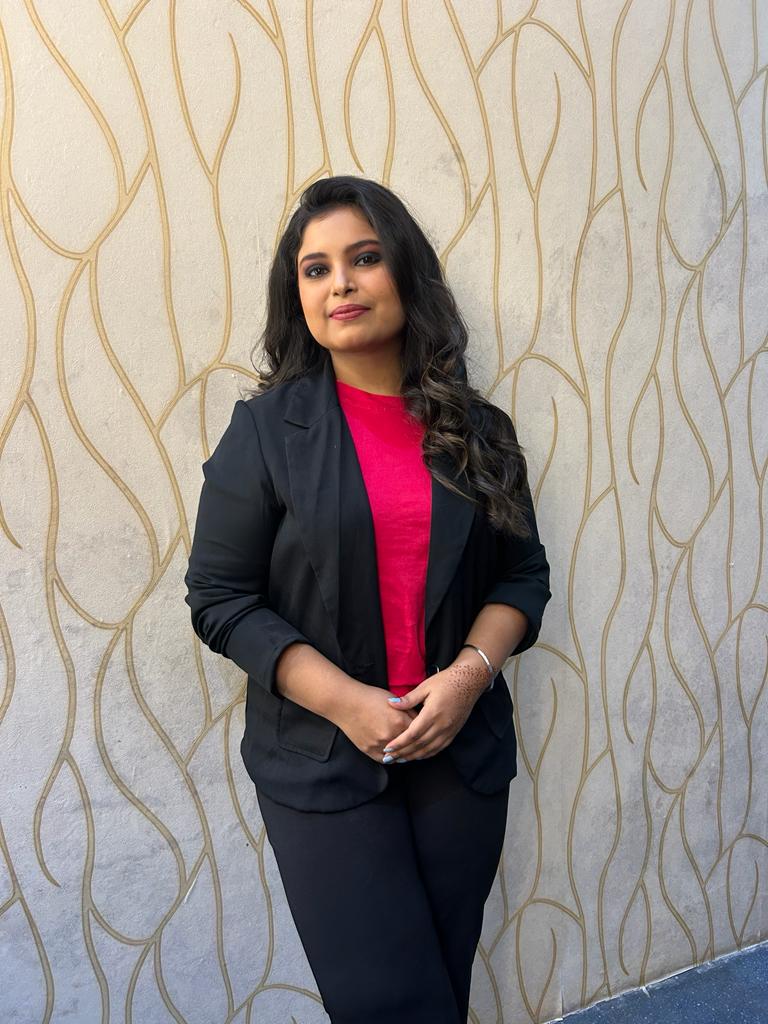
  • “From Knitting, Kitchen, and Kids to Serial Entrepreneur: My Journey from Family Tradition to Entrepreneurial Success.” – Dr. Shweta Singh, a Serial Entrepreneur and Founder of Ennoble IP.

    “From Knitting, Kitchen, and Kids to Serial Entrepreneur: My Journey from Family Tradition to Entrepreneurial Success.” – Dr. Shweta Singh, a Serial Entrepreneur and Founder of Ennoble IP.

    This interview has been published by Anshi Mudgal and The SuperLawyer Team
    Your work in the intellectual property law space is highly specialized. What initially sparked your interest in IP law?

    This is a very interesting question for me. I’ve been asked this many times, and I always say that actually, my personality is such that I get bored easily with things. Things, not people—okay? So, if I am doing something continuously and it feels monotonous, I get bored. Since my childhood, it has been a dream of mine to do something of my own, possibly due to my background or family conditions—a very orthodox family. But I wanted to do something interesting that always excites me.

    It should always give me a kick to do better and better, until I achieve the best, right? So, that’s how I developed my journey. I would say my interest in IP law was sparked during my graduation days when I was actually searching for what I should do.

    And I encountered a book by B.D. Singh with a chapter on patents, and this chapter opened my eyes to the fascinating world of innovation and technology. As I delved deeper, I realized that working in this field means being exposed to new ideas and groundbreaking technologies every day.

    It felt like being on the front line of innovation. Now that you are involved in IP, you will realize why I chose it. What truly drove me to start my journey in IP was that it became not just my passion but my attitude. IP became more than just a field of study for me; it became a part of who I am. I believe I am at my best when I’m working in this space, and this confidence gave me the drive to turn my passion into a business.

    More than working with corporates and universities, I realized that there’s a huge gap in the support provided to universities, startups, and SMEs. When I entered the field of IP, I started catering to these needs. For me, it’s not just about protecting ideas but also empowering innovators and helping them realize the full potential of their creativity.

    During early stages of your career, while you spent four years working as an IP consultant, basically in patent research and analytics, what kind of experience was it that influenced your career trajectory? And what were the key insights that you would prefer to share?

    During the early stages of my career, I spent not four but six years working as an IP professional, focusing on patent research and analytics in both corporate and academic environments.

    I worked in the corporate sector and with Amity University, which was the only university where I worked as an employee. This experience was instrumental in shaping my career trajectory and deepening my understanding of IP from multiple perspectives. I learned how IP is handled in the corporate and business sectors and how it is managed in academia.

    In the corporate sector, I learned business strategies around IP that help companies stay ahead in competitive markets. Large corporations file patents not just to protect their inventions but to monetize them. This taught me how patents drive innovation and secure market advantages.

    In contrast, my time with Amity University exposed me to the academic approach to IP: how research translates into intellectual property and the challenges faced by institutions in managing and leveraging their innovation effectively.

    The biggest lesson I learned during this time was the immense potential of IP to create tangible value—whether for multinational corporations, universities, or startups. It also made me realize the importance of bridging the gap between innovators and the IP process, which ultimately inspired me to start my own venture.

    I also remember a pivotal experience in Singapore, where I attended a conference through WIPO. During the conference, someone remarked that India and China are “jugaad” countries that copy products and lack awareness about protecting intellectual property.

    This comment struck a nerve. It motivated me to return to India, leave my job, and create something that could address this issue. I conducted 75 free workshops for SMEs and universities in 2013 to spread awareness about why IP is important. It wasn’t just about filing; it was about understanding what you are losing by not protecting your ideas.

    You actually are the first-generation serial woman entrepreneur. Can you take us through that journey, through that experience that actually led you to start Ennoble IP and how do you see that this is impacting society at large and majorly women entrepreneurs?

    Let’s not define entrepreneurship by gender. I used to think of myself as a woman entrepreneur, but over time, I realized entrepreneurship transcends gender.

    Yes, as a woman, 20-40% of the challenges we face may be gender-specific. But the rest are the same for all entrepreneurs. I come from a small town in Eastern UP, and I belong to a traditional Rajput family. The mindset in my family was that women were destined for the “3 Ks”—knitting, kitchen, and kids.

    However, my parents, particularly my mother, were rebellious. My mother was determined to ensure that my sisters and I became financially independent. She always emphasized that financial independence is the key to freedom—freedom to make decisions without asking a father, husband, or boss for money.

    My journey as a first-generation entrepreneur has been both challenging and rewarding. During my university days, I discovered my passion for IP and realized I could work with innovators to protect groundbreaking ideas. After gaining industry experience in corporate and academic settings, I saw a significant gap in IP services for startups, universities, and SMEs.

    Starting Ennoble IP was my way of addressing these gaps, but it was also a journey of self-discovery. Each experience taught me resilience, adaptability, and the importance of staying true to my vision.

    So, he makes the decisions on how the house will run. We live in a joint family, and to this day, we still have a joint family. My uncle guided my father, and my grandfather also guided him, saying, “You have a daughter; save money and give her basic education if you want.” But my mother and father were very rebellious—both of them, I would say.

    The first step was taken by my mother, but yes, my father joined hands with her. My mother declared, “I have daughters, but that doesn’t stop me from building their careers or making them financially independent.” And my mother was determined throughout, until we realized the importance of financial independence.

    She taught us that financial independence is the freedom you actually require in your life. Otherwise, you will always have to ask. If you don’t have a brother, you’ll always turn to your father, saying, ‘I want this; give me this money.’ Then you’ll turn to your husband, saying, ‘I want this; give me your money.’ Finally, you’ll turn to your male bosses, asking for a raise.

    So, she asked, “Why don’t you create your own financial freedom so you don’t have to ask anyone?” She even gave her example: “See, if I have to make any decision, I have to ask your father. If I had been earning, I would have sat with him to discuss whether we should invest or not. Instead of asking, ‘I want this—will you help me buy that?’ I would have had the confidence to contribute equally.”

    So, she talked about financial freedom and confidence until the three of us realized how essential they are. My father supported me—I would say he was always the strongest backbone for us, alongside my mother.

    Now, coming to being a first-generation entrepreneur: my journey has been both challenging and incredibly rewarding. I always say, “Be proud of yourself,” and I am very proud of whatever I have achieved.

    Growing up, I didn’t have—as I mentioned—a family business or entrepreneurial legacy to guide me. But I always had a strong drive, inspired by my mother, to create something meaningful.

    The key moment that set me on this path was during my university days when I discovered my passion for IP. The idea that I could work with innovators, support them, and help protect groundbreaking ideas fascinated me immensely.

    After gaining industry experience—both in corporate and academic settings—I saw a significant gap, as I mentioned, in how IP services were being delivered to startups, universities, and SMEs.

    While large corporations had access to world-class IP support systems, smaller entities were often left struggling to navigate the complexities of intellectual property. That was something I wanted to change. That realization was the kick I needed to get started.

    I wanted to be independent, and my independence inspired my sisters, who said, “Yes, we will work.” But I was determined: “No, I don’t want to limit myself to one job. I want to build a business.” At that time, I was young and naïve, but as you grow, wisdom comes. I was still a child back then, thinking, “I will start a business where my daddy’s friends will come and say, ‘Please employ my child.’”

    And these relatives will come and say, “Please help me with the job also.” I was of that mindset, but I was totally wrong. So, for the young people who are watching this, this should not be the driving force for you. I was scared. I was scared, but with the vision, with the wisdom that comes with age and experience, I am not working today for myself.
    I’m working for almost 260 people who are working with me right now. Together, we are working towards that vision. So, entrepreneurship, I would say, is a very beautiful thing if you actually enjoy this journey. Starting Ennoble IP was my way of bridging the gap—not only in the industry but also in my thought process.

    I wanted to create a platform that not only provides IP services but also empowers innovators by making it more accessible, more understandable, and more strategically strong, where they get the support they need. Along the way, the three challenges I faced were, first, learning to navigate the business world without prior experience, second, building a trusted network, and third, establishing credibility as a first-generation entrepreneur.

    Now, coming to your question—yes, I faced challenges being a woman. As I mentioned, it’s only 20–40%, not more than that. The rest of the problems are the same. Trust is the major issue. At the time when I started, I was very thin and looked much younger than my age. This made people reluctant to trust me.

    Once, I was sitting with a vice-chancellor of a university, and after a talk, he said, “Madam, I thought that as the chief guest, you must be very old. Will you be able to handle this workshop and the university’s work? You are just a woman, madam. This university is very big.”

    In my mind, I was thinking, ‘Where have you come from? You have so many female faculty members, yet you doubt me?’ But I said politely, “Sir, I’ll need your help. If you help me, I will be able to manage.” This was me satisfying the male ego.

    After my talk, he said, “You are like chota packet bada dhamaka.” I responded, “No, sir, you are wrong. I may be small or big—I don’t know—but I am definitely a dhamaka.” Then I added, “Never underestimate women because if we can handle a kitchen and kids, we can handle anything.”

    I continued, “If a woman can bring life into this world, she can do anything.” He was silent, but now, we are good friends. I respect him a lot, and he often says, ‘Shweta, you changed my mindset.’ After that, he gave his daughter the wings she wanted.

    What I want to emphasize is that each experience has taught me resilience, adaptability, and, most importantly, staying true to my vision. This is very important. I often say resilience has built me because it’s like fighting against odd situations every time.

    As a woman, we face challenges, but as an entrepreneur, we face even more. It’s resilience that helps us persevere. People these days on Instagram talk about manifestation, right? I didn’t know this word back then, but now I realize that all this while, I was manifesting.

    From my childhood, I manifested something, and I believe in it. My favorite song is Chaand Taare Tod Lau. That song is about manifestation—and look at the actor! It’s all in your mind. You just have to believe.

    These characteristics and skills, no one is born with. You develop them through experience. I was very naïve when I started meeting investors. I didn’t want to raise money for my startup, but I have an NPO where I support women.

    I believe in giving back to society. Through that NPO, we support women. It’s not for profit. I have only invested my own money so far. We do not work for CSR funds because the women we support are doing fantastically well.

    When I started in 2012 or 2013, there wasn’t much exposure. In meetings with investors, they would say, “She may get married soon and plan a family.” I got furious during some of those interviews and said, “Sir, that boy will also plan for a family. He will also have a child.”

    Just because we, as women, go through this process doesn’t mean we are weak. It’s a mutual responsibility. But I have seen a change in the ecosystem now. We have become fearless.

    I had to learn and develop these skills, but this new generation—Gen Z—is already born with this fearless expression and thought process, which is commendable and really cool.

    When we three sisters discuss, we always say that if our mom had received a proper education, she would have been the CEO of a company. My dad has a slow decision-making process. My mom, on the other hand, is quick with decisions.

    But I would again emphasize—until the father supports the mother, she cannot do anything. My father is not a risk-taker, but I inherited that ability from my mother. The values and empathy, however, I got from my father.

    Intellectual properties have often been considered very complex and intimidating for startups. How did you handle those particular challenges whenever you faced those young innovators and startups?

    China is still leading the world in terms of patents. And I believe that we must strive to surpass China because population-wise, we are stronger. First, we are intellectually very sound when it comes to technology. So, I’m a very proud Indian. Actually, I say this often: I travel to a lot of countries, and when I come back, I love inhaling this polluted air. I genuinely love India, despite its challenges. However, India still has a long way to go.

    The scenario has changed. Earlier, there was no awareness. People didn’t know about IP, so they weren’t filing patents. Now, there is awareness. But still, many startups do not file. Why? Because they don’t give priority to IP.

    They think it’s something that can be addressed at a later stage. They ask, ‘Why invest the money now?’ They don’t realize that investing in IP strategies is the key to driving their business forward. They are unaware of the story of Google. They don’t want to know. They just see that Google has become Google—not through business strategy alone, but through its IP strategy.

    Apple is Apple because of its IP strategy. So, this is something I would like to emphasize before starting my answer.

    Coming back to your question, IP law does seem daunting for startups and young innovators, especially when they are more focused on developing their products or services than navigating the legal complexities.

    Some key challenges they face—and this is based entirely on my 10–12 years of experience—are:

    1. Lack of awareness: As I mentioned, many startups are unaware of the importance of intellectual property or the steps required to protect their innovations. IP strategy should be an integral part of the business strategy from the very beginning. They often underestimate how crucial it is to secure patents, trademarks, copyrights, or, if it’s a product, the design, right at the early stages.
    2. Limited resources: Startups, being small businesses, typically operate on tight budgets. This makes it difficult for them to prioritize IP amidst other pressing needs like product development or marketing. They end up investing more in product development and marketing rather than prioritizing IP.
    3. Global complexity: For startups looking to expand internationally, understanding and complying with IP laws across different jurisdictions can be overwhelming.
    4. Timing and strategy: Filing for IP protection too late or without a clear strategy can make startups vulnerable to infringement, competition, or even losing their innovations.

    At Ennoble IP, we address these challenges directly. We have designed our services specifically to tackle these four challenges. We start by educating startups and SMEs about intellectual property and how it can serve as a powerful business asset. We offer tailored solutions that are not only cost-effective but also of the same quality as corporate-grade services, and they align with the startup’s stage of growth.

    For example, we help startups conduct patent searches, explain why it is done, file applications, and ensure that their IP strategy aligns with their business goals. We also do not force startups to file a patent if it is unnecessary. Right? There are different IPs, and you already know this because you are in the same business line. Sometimes, a patent may not even be required—for example, in the music industry, where copyright is often sufficient. So, we create strategies accordingly. We also assist with global filings and provide strategic advice on leveraging IP portfolios for funding, partnerships, and market positioning.

    Our goal is to make the IP process as seamless as possible for startups and SMEs so that they can focus on what they do best: innovating. We always say, “You handle your product and marketing strategy, and we’ll handle your IP strategy.” Marketing also requires IP. Many firms don’t realize that their marketing materials and overall marketing strategy should involve IP considerations.

    Ultimately, IP should not be viewed as a hurdle but as an opportunity for smart businesses—startups and SMEs—to strengthen their competitive edge. As I mentioned, I am passionate about helping in these areas. 

    Given the scenario today, there is a rise of new technologies, there is a growing need for IP protection in the kind of fields where AI is getting involved. How do you see the intersection of IP laws and IP per se with this kind of disruptive tech, which is going to shape the future of innovation in a very different manner specially in the Indian environment and ecosystem?

    I would say that the intersection of IP law and emerging technologies is becoming increasingly crucial in shaping the future of innovation. Technologies like artificial intelligence, blockchain, quantum computing, and biotechnology are evolving rapidly, pushing the boundaries of traditional intellectual property frameworks. This presents both challenges and opportunities. One key challenge is the pace at which technology is advancing, often outpacing the conventional IP systems designed for traditional inventions.

    For instance, questions around the patentability of AI-generated inventions or the ownership of decentralized blockchain solutions are sparking new debates in legal and regulatory spaces. On the other hand, this intersection drives a deeper understanding of the strategic importance of IP. Companies and innovators are recognizing that a robust IP strategy is not just about protecting ideas but also about creating a competitive edge in a technology-driven market.

    Here, you don’t just need an IP strategy; you also need good market research. IP portfolios are becoming integral to attracting investments, forming strategic partnerships, and determining valuations during mergers and acquisitions. A classic example, albeit not recent, is Nokia, Microsoft, and BlackBerry. These cases illustrate how an IP portfolio can protect an entire company.

    At Ennoble IP, we are at the forefront of this intersection. We work with innovators to navigate this complexity, whether it involves filing patents for AI algorithms, protecting proprietary aspects of blockchain applications, or managing IP risks in cross-border collaborations. Our role is not just to protect innovations but also to help innovators leverage their IP to unlock new opportunities.

    Looking ahead, I believe IP law will continue to evolve to address the unique challenges posed by emerging technologies. For instance, there will be greater emphasis on global harmonization of IP laws to address the borderless nature of technology. More collaboration will also emerge between legal, technical, and policy experts to ensure that IP frameworks foster innovation without stifling it.

    The future of innovation will rely heavily on how effectively we align IP protection with the needs of new technologies. By staying ahead of trends and proactively addressing challenges, we can ensure that the innovation ecosystem remains vibrant and sustainable. IP, market research, and business intelligence must work collaboratively. For instance, in the case of AI and blockchain, where new advancements emerge daily, a robust strategy is essential.

    With my UAE office, I have seen how blockchain startups are leveraging IP strategies effectively despite varying jurisdictional rules. This diversity creates challenges, but India is becoming a goldmine for IP service providers. With huge investments in R&D flowing into India, we are at the cusp of something big.

    And believe me, my dad always told me, and this was my dad’s wisdom, people can take away your wealth and other materialistic things; they can take away everything, but two things nobody can rob you of are your knowledge and character. So, always work on those things. Today, I’m not scared, even if I lose everything, because I know I have expertise, and I have knowledge. I can earn again. Since I’m not scared, I always take risks. Knowledge is a very important tool in today’s world.

    Fifth is to create your own opportunities. If you find a door closed, don’t hesitate to build your own. As a first-generation entrepreneur, I didn’t inherit a business, right? I built one from scratch. It’s about being resourceful and proactive in creating pathways where none exist. Let me give you an example: I started a business in a very crowded space. IP is a very crowded space. But I didn’t hesitate to enter because I came up with an innovative model, collaborating with universities, startups, and small businesses.

    Now, the sixth point I would like to mention is to advocate for others. As women, we have a unique opportunity to lift each other up, whether through mentorship, collaboration, or simply sharing stories. Supporting other women can create a ripple effect of empowerment.

    For example, I often refer to the movie Jai Ho. If you’ve seen Salman Khan’s movie, you’ll recall the chain they create. I don’t remember all the details now, but the concept stuck with me. If one woman holds the hand of another and uplifts her, this chain can actually bring about change.

    Because, speaking from my own experience, I got more support from men than women. I didn’t receive much support from women, and that’s why I started my mission through WIF, my NPO, which supports women. Helping others in this way is one of the most meaningful things you can do in life.

    Lastly, the seventh point: embrace resilience. For me, resilience has been key. There will be setbacks, but resilience will carry you through. Every obstacle you overcome adds to your strength and experience, making you better equipped for the next challenge.

    What kind of advice would you give to others, specially women entrepreneurs as we see a lot of technology biases are also there. How do you see that one can navigate through those kinds of obstacles, especially in IP.?

    To all women entrepreneurs, I would say this: don’t let anyone define your potential. Dream big, be ambitious, and proudly say, “I am ambitious.” Don’t feel shy about wanting to make money—it’s okay to say, “I want to make money.” You must aim to build a business that not only fulfills your passion but also generates wealth. And don’t hesitate to seek help when needed.

    So, dream big, be ambitious, work relentlessly, and lead with purpose. Remember, your success is not just your own; it is an inspiration for others who are watching and believing they can do it too.

    Get in touch with Dr. Shweta Singh-

  • “Business helps social empowerment firstly by breaking down barriers, secondly by generating income for livelihood and thirdly by providing mental-emotional support.” – Niharika Gaonkar Naikar, Independent Legal Practitioner & Founder of “KriNi”

    “Business helps social empowerment firstly by breaking down barriers, secondly by generating income for livelihood and thirdly by providing mental-emotional support.” – Niharika Gaonkar Naikar, Independent Legal Practitioner & Founder of “KriNi”

    This interview has been published by Namrata Singh and The SuperLawyer Team

    Could you walk us through your journey from college to becoming an established professional in the Media & Entertainment law sector? What inspired you to pursue a career in law, particularly within this niche industry?

    Absolutely! My journey as a legal professional wasn’t something that I had preplanned like any other child. Anyone who knows me will tell you how creative and artistic I am as an individual. Craft and arts, including performing arts, have been my favourite subjects. So, the childhood dream was always to be a designer. However, my mom was too fascinated by her brother (my mama) who is a first generation lawyer practising in a different field of law and has always been outperforming. He set the bar so high that my parents somewhere deeply wished for me to be a lawyer like him. So, as they say the universe always has better plans, I started my journey with Government Law College, Mumbai and graduated in 2014. Until my last year I was very sure that I would make a career in criminal litigation, however when I studied Intellectual Property Rights in my last year, I was so fascinated by the subject that I decided to build my career in the same. I had the opportunity to intern with a media distribution company in my last year which further made the decision concrete.  

    Your journey has been quite remarkable, transitioning from esteemed organizations to establishing your independent practice. Could you share with us how your experiences in those organizations have shaped your approach to legal practice in the Media & Entertainment industry?

    The choice between being an in-house lawyer vs a law firm lawyer is a tough one. The remuneration of law firms is high but the work-life balance is off. Similarly, there is good work-life balance in an in-house role but there might not be as much diversity in work as compared to a law firm. I started my career with a leading media distribution company where I also did my last internship. I was given an offer to join immediately after I finished my exams. I was honestly more than elated as I loved the work culture there along with the international level exposure I was going to have. Many times I get asked in interviews as to why I have switched places, well I kept transitioning from one Media and Entertainment sector to another like from distribution company to a production house to studios etc. because each such transition allowed me to learn and master the different verticals in the M&E sector. I strongly believe that in-house roles offer you a better understanding of business as well as commercials. Later on moving out from these in-house roles to getting into a law firm was solely because I lost both my parents in the second wave of Covid in a week and I knew that work is the only thing that will keep me going ahead positively and this challenging role will allow me to have a strong change of environment. I consider myself fortunate to have worked at different organisations because it not only helped me grow as a professional but also allowed me to grow into a better person. Be it handling clients to handling tough situations to standing for/ with your team to extensive learnings to working under great mentors (legal as well as non-legal) it all has been a wonderful journey. Starting up my own practice was something that happened a bit earlier in life than what I had planned for but I am deeply grateful for the amount of trust and respect showered by my clients in me. The aim is to build an organisation where fairness is the key.

    Having worked extensively with clients from the Media & Entertainment industry, what would you say are the key challenges they face regarding Intellectual Property rights, especially in the digital age?

    Primarily, it’s the protection of their IP’s that the Clients face challenges in this digital age. However, when I started in 2014 there were 3-4 major categories of rights for generating revenues. Whereas if you see now, there is a plethora of rights with sub-categories. With due respect not all at present be it lawyers or clients understand the possibilities that they have when it comes to rights. So, the key challenge I feel they face is to understand the various options they have to monetise the IP and generate as much revenue as they can. 

    You’ve had the opportunity to work extensively in both Bollywood and the South Indian film industry. How do you adapt your legal strategies and approaches to suit the different dynamics of these industries? Could you please share some insights of emerging trends or challenges faced by these industries?

    The aim of moving down south in 2020 was to understand the industry better. I strongly believe that with just legal knowledge we cannot emerge as great lawyers until we actually understand the practicalities and functioning of the business side of any industry. The M&E industry in the Southern states of India functions very differently from the Bollywood. It was my privilege to help set up a branch office for one of my ex-law firms in Chennai. The challenges that are faced there are very different compared to those in Bollywood. The value system, the modes of working, agreements drafting to negotiations, and remuneration received vary in South and in Bollywood. The legal approach is of course the same as the same set of laws apply, however the functioning is not the same. In my honest opinion, entering the market as a leading law firm or as an eminent lawyer will not get you any place there unless you have the patience to wait until being accepted. 

    Apart from your legal career, you’re also the founder of “KriNi”, aiming to create job opportunities for women. How do you balance your professional life with such philanthropic endeavors, and what role do you think businesses can play in social empowerment?

    Crochet is a hobby turned into side business. My mom and my aunts were crocheters in their young days. One day during the first lockdown while I was cleaning a chest of drawers, I came across a crochet needle and a tiny ball of yarn. I picked up a very basic video on YouTube and started learning and it came out so well that I decided to continue. 6 months down the line I was so addicted that I started picking up random projects and tried to better my craft and then started posting it on my Insta page. Crochet is my therapy! I started getting crazy orders so much so that in January 2023 I got KriNi registered. I was falling short of hands and then I decided that I can take help from family or from people outside. I get messages from women in their 40’s-50’s and kids in colleges wanting to tie up because they are studying/ retired/ bored at home and are looking for some sort of extra income. The goal of KriNi is bigger and I hope I achieve it someday soon. I honestly can’t dedicate as much time as I want to but I make sure that I treat it respectfully and do as much justice as I can. Business help’s social empowerment firstly by breaking down barriers, secondly by generating income for livelihood and thirdly by providing mental-emotional support.

    Your expertise includes talent management in addition to Intellectual Property rights. How do you navigate the legal aspects of talent management while ensuring the best interests of both the talent and the production houses?

    Well, this is one of my favourite aspects of being a M&E lawyer. Having represented multiple artists/ talents in Bollywood as well as South including influencers, when I am on this side of the table the aim is to protect my talents to the maximum possible. That doesn’t mean that I come out with one sided clause. I choose to be a business friendly lawyer who is fair and understands the practicality faced by these production houses but someone who also ensures that the talent is protected as well. I believe closing transactions is an art, we all can very well stretch and argue for hours as lawyers however, it’s important to understand what to fight for and what to let go! 

    As a recipient of the LEX FALCON GLOBAL AWARDS, what advice would you give to aspiring lawyers looking to excel in the field of Intellectual Property, Media, and Entertainment law?

    Firstly, I am honoured to be a recipient of this prestigious award. Today’s aspiring lawyers function contrarily compared to our days. We believed in grilling and not focusing on work-life balance, where money was secondary and grabbing opportunity was primary. Well, the debate on this can go on however my one sincere advice to all aspiring lawyers would be to be honest to your profession. There are plenty of lawyers in the market who might be way more knowledgeable than what you are. But what will make you stand out in the crowd is your honesty and dedication towards your profession. Don’t just stick to the legal side of things, also try to understand the business/ commercial functioning.

    Your dedication to educating students and professionals about the legal and business aspects of the industry is commendable. What motivated you to start these private sessions, and what do you hope participants take away from them?

    I had just finished my 10th boards when my neighbour asked me to help her kid with studies as she had some personal emergencies. The journey started there! It was purely through word of mouth and was unplanned! I was surprised with the kind of response I received. Until my very last year of law college, I took private classes. While my friends were enjoying their college lives, I was busy teaching school kids post my college hours. Abdul Kalam once said that “Teaching is a very noble profession that shapes the character, caliber, and future of an individual. If people remember me as a good teacher, that will be the biggest honor for me.” I am extremely happy to see all my students well settled today. I personally do not like glamourising this side of mine and love to maintain the nobility of the teaching profession. Over the weekends I take online legal classes. The aim is for my students to not just acquire knowledge about the M&E industry but have a mentor whom they can reach out to for any sort of career guidance.

    With such a demanding and dynamic career, how do you unwind and recharge outside of work? Could you share some of your favorite hobbies or activities that help you find balance in your life?

    Travel! With the kind of multi-tasking that I do, travel is the only way I unwind and recharge myself. I work hard so that I can earn more and travel more! Travel adds more colour and adventure to your life. Every New Year’s I have a list of places I manifest to explore and ensure I tick them year after year! My work philosophy is “don’t overexert yourself if you don’t have to”. Hence, it’s very important to maintain a work life balance.

    Get in touch with Niharika Gaonkar Naikar-

  • “It’s not just about legal knowledge; it’s about fostering a sense of dignity, self-worth, and the belief that they deserve justice” – From Courtroom to Community: The Inspirational Journey of Advocate Trishla Malik, Director, AmicusLegal Consultancy

    “It’s not just about legal knowledge; it’s about fostering a sense of dignity, self-worth, and the belief that they deserve justice” – From Courtroom to Community: The Inspirational Journey of Advocate Trishla Malik, Director, AmicusLegal Consultancy

    This interview has been published by Namrata Singh and The SuperLawyer Team

    Your journey reflects a unique blend of legal excellence and entrepreneurship. As a first-generation advocate, how did you decide to carry forward the legacy of your late grandfather, an Honorable District Judge, and establish Amicus Legal Firm and Consultancy LLP?

    I am a follower of law and so was my Nanaji, but with a prolonged illness of dementia and then his demise, my Grandfather left me to forego my legal career as my journey. To which I took it as a challenge and A will to serve the nation through the law. This gave me a vision to enact and carry forward the legacy of law through a different medium which included both entrepreneurship and Advocacy. My entrepreneurial spirit craved innovation, a desire to bridge the gap between legal acumen and real-world solutions. It was then that Amicus Legal Firm & Consultancy LLP took shape in 2019, with my Partner Amol Chitravanshi AOR– a firm built on the unwavering principles of legal excellence, infused with the dynamism and client-centricity of a modern consultancy. We registered our offices in Delhi NCR and commenced our journey of Advocacy in Supreme Court litigation and other country courts. Things come up as challenges when you become a First Generation Advocate, but at the same time makes us proud to be going strong at this young age of not even 30 yrs. Each challenge makes us stronger and much more learned than before, so now we become some of the few law firms in the country delivering legal services beyond the courtrooms. AmicusLegal Consultancy LLP isn’t just about winning cases; it’s about forging partnerships with clients, understanding their needs, and crafting custom-tailored solutions. We go beyond legal counsel, offering strategic guidance, risk management expertise, and proactive solutions to navigate the complexities of the legal landscape. 

    Beyond your legal practice, you’re the Co-Founder and Managing Director of Amicus Legal Firm and Consultancy LLP. What led you to venture into entrepreneurship, and how do you balance your roles as an advocate and a business leader?

    It is not wrong to say that the legal profession is not easy for females. There is a hustle every day. During the initial years, I faced a lot of bias from my seniors who through different means let my motivation down. Especially in States like Uttarakhand, UP and Delhi, the mindset of Seniors is not very progressive for Women lawyers, especially those with no background from the same industry. But this did not stop me, this gave me the motivation to have an enterprise of my own. While advocating for clients in a court filled me with purpose, a part of me craved the challenge of building something, of shaping a space where legal expertise could transcend the confines of traditional practice and truly empower clients. This dream came true, when I and my firm’s Co-Founder Amol Chitravanshi Advocate -on- Record (AOR), who was my batch mate in law school, decided to have a law firm of our own. This was a very challenging journey for both of us, as we both do not belong to the family of advocates in fact both-of us were first-generation lawyers but together came up with a goal of a new-generation law firm in India, which was not just stick to court works but aimed in delivering all kind of legal services to the society. In a short span of 4 years we could achieve, make our presence in elite cases across the High Courts and the honorable Supreme Court. 

    My motivation is my will to deliver the society through law which helps me keep creating a balance in practical approach and legalities in the society. My journey of becoming woman entrepreneur and balancing roles as an Entrepreneur and Advocate could not have been possible without the support of family, close friends, efforts of my Team at the workplace and especially My Partner Adv Amol Chitravanshi, as we worked towards a common goal of uplifting the society and a positive and a constant vision of uplifting the legal industry and giving it a new face. AmicusLegal allows me to extend my impact beyond individual cases, shaping a legal landscape where accessibility, innovation, and client empowerment take centre stage. And that, for me, is the true reward – the satisfaction of building a legacy that extends far beyond the walls of the courtroom.

    Being a certified and recognized woman entrepreneur, you’ve achieved certifications from IIM Bangalore and the National Commission for Women. How has your entrepreneurial spirit influenced your approach to practising law, and what challenges have you encountered as a woman entrepreneur in the legal industry?

    It was challenging to understand the essentials of growth for women at a workspace, due to a patriarchal society.  women, though being talented, have been somehow suppressed over the years. But It was in 2021, luckily I got an opportunity to enrich my expertise when the very first time Indian Institute of Management, Bangalore in collaboration with the National women commission of India conducted A Women’s entrepreneurship Course, in which I was selected on merit and was offered a fully funded course after which I was entitled with the tag of woman entrepreneur by IIMBx. The impact of this course from the Indian Institute of Management Bangalore was crucial for me as a female entrepreneur, I was able to recognise the importance of women entrepreneurs in India not only on the social front but also on the economic front for the country. I was inspired by all the women who were actively participating in different fields which also helped me have a vision of a clear progressive career ahead in life and face different challenges that women go through in their daily lives, but the course helped me enrich my self-belief and confidence. The legal industry, like many others, is not devoid of its gendered challenges. Being a woman entrepreneur in this space has meant navigating. After this, not only did I train women for their entrepreneurship journey but I also awarded them with certification which was of utmost importance to them and their career ahead.

    The journey hasn’t been easy, but it has been deeply rewarding. I’ve learned to navigate the intricate dance between advocating for my clients in the courtroom and leading a dynamic legal firm. Through it all, I’ve remained committed to empowering other women entrepreneurs and redefining what it means to be a successful woman in the legal field. This educational qualification also helped me to understand the challenges as a women entrepreneur in India especially in the legal industry where even today there is a lack of professionalism and gender bias when it comes to female advocates, but evolving each day helped me achieve the desired goals over the time and the journey is still on.

    Apart from your legal pursuits, you are a national medalist in pistol shooting and a certified mountaineer. How do sports and outdoor activities contribute to your personal and professional life? How has this experience influenced your approach to challenges, both in your professional and personal life?

    I have been a believer and promoter of sports all my life. The world of sports and outdoor activities offers me a different terrain for challenge, growth, and a unique perspective on overcoming obstacles. My national medal in pistol shooting and experiences as a certified mountaineer has instilled in me qualities that extend far beyond the physical feats, shaping both my personal and professional life in profound ways. They equip me with the resilience, adaptability, focus, and leadership skills that empower me to navigate the challenges of the legal world with greater confidence and a sharper perspective. They remind me to celebrate the journey, find solace in the stillness, and approach every obstacle with the unwavering spirit of a mountain climber, always aiming for the summit, be it in the courtroom or on the next personal Everest. And in this ongoing journey, the lessons learned on the shooting range and the slopes of the mountains or in any field will forever remain my compass, guiding me towards a future of success, fulfilment, and, most importantly, a relentless pursuit of the next peak, both in the courtroom and in life.
    Your involvement with Apoorvarambh Foundation and various NGOs showcases your commitment to social causes. Could you share a memorable experience or initiative that had a significant impact on the lives of individuals or communities you’ve worked with

    My commitment to social causes finds expression through my collaborations with the Apoorvarambh Foundation and various NGOs, allowing me to use my legal expertise to make a tangible difference in the lives of individuals and communities. One such experience, etched forever in my memory, resonates with the transformative power of law intertwined with social service. 

    I have been actively involved in Prisoners’ Rights and activism through it. Not just ensuring Mental health and value for life, we also conduct different types of literacy events, entertainment events etc to make them feel connected to life and living. Apart from this, I encountered a community grappling with the aftermath of cybercrime, Child Sexual Offences, Youth Development, and Education etc., Young lives were devastated by both online and offline stalking, financial fraud, and the emotional scars of abuse. Witnessing their despair ignited a fire within me, a determination to utilize my legal knowledge to empower them. We identified cases where individuals had been physically or emotionally traumatized. Under my NGO we undergo various disciplines of education and provide wholesome education for living eg. Mental health precautions, financial security, Hygiene, Adolescent Development, Art and Culture awareness, Career guidance etc. I took the cases pro bono, navigating the complexities of crime legislation and fighting for compensation and accountability against perpetrators. We also conducted awareness sessions and literacy sessions in Rural India, helping them give some value addition to life and empowering individuals to navigate the complexities of the world around them. 

    One of my such experiences was when a minor girl was sexually assaulted and her Miss-fortune was that her mother was not able to support and fight with her for her justice. It was then that we stood and fought to the best of the US and provided justice to that family and that minor girl. To which, I under Apoorvarambh Foundation NGO have made a short film on Child Sexual Offences which is around the corner to be telecasted soon. 

    As a legal educationist and awareness trainer, specializing in POCSO and Juvenile Justice, how do you approach educating underprivileged women and children on legal matters, and what motivates you to contribute to their empowerment?

    It’s not just about legal knowledge; it’s about fostering a sense of dignity, self-worth, and the belief that they deserve justice. Through education and awareness, I hope to contribute to a society where underprivileged women and children are not just protected by the law, but empowered to claim their rightful place and live lives free from abuse and injustice. As a legal educationist and awareness trainer specializing in POCSO and Juvenile Justice, my approach to educating underprivileged women and children on legal matters is built on understanding and empowerment.  I try and simplify complex concepts using local languages, everyday examples, and interactive activities. Storytelling, role-playing, and visuals become powerful tools to demystify laws and empower individuals to recognize their rights. I work closely with NGOs, community leaders, and local authorities to raise awareness, create referral networks, and ensure access to essential legal and psychosocial support services. 

    My motivation? Witnessing the spark of understanding in a child’s eyes, the newfound confidence in a woman’s voice, or the courage of a survivor seeking justice – these are my rewards. Knowing that my work empowers individuals to navigate complex legal systems, access their rights, and seek redressal fuels my passion to keep doing more. 

    Your media presence is notable, with appearances on national platforms, national media and news channels.” How do you use these platforms to bring attention to important social issues, and what topics do you find most crucial for public discourse, through being in the legal industry? 

    The legal industry isn’t just about interpreting statutes and winning cases. It’s a powerful platform for advocating for societal change and championing vulnerable communities. My national media presence has become a valuable tool in this mission, allowing me to amplify crucial social issues and spark actionable conversations. Not just my episodes of “Reality check with Adv Trishla Malik” on Facebook, but my inputs on National Media like Times of India, News18, Amar Ujala, Sahara Samay, Bharat Express etc, gravitate towards areas where access to justice is skewed and public awareness can bridge the gap. I use these platforms to demystify the legal system, making it more approachable and empowering for the public.

    Championing ethical practices in the society. The legal profession isn’t immune to ethical lapses. I use my media voice to hold the legal system accountable, highlight issues like corruption or judicial bias, and advocate for reforms that uphold the integrity of the justice system. This is what drives me to keep using my platform as a lawyer and media figure – to ensure that the law doesn’t just serve the privileged few, but becomes a tool for empowerment and a catalyst for positive change for all.

    You’ve been recognized with numerous awards, including the Professional Excellence Award by FICCI Ladies Organisation. What achievements are you particularly proud of, and how do these accolades motivate you in your multifaceted career?

    Ans. I have been an achiever since a very young age not just in academics but I have been a national medalist in sports and have won multiple awards in all aspects of life. In a profession as demanding and competitive as the legal field, recognition isn’t just an honor; it’s a vital source of fuel for the long journey towards justice. While I’m humbled to receive multiple accolades like the prestigious Uttarakhand State Achiever award, the Women Influence Award by multiple organisations, International Medals, the Professional Excellence Award by FICCI Ladies Organisation etc., true pride lies in the tangible impact my work has on communities and individuals. But foremost, Witnessing the relief and empowerment in the eyes of a client who finally found justice after years of fighting against abuse is a feeling and accolade unmatched. My professional fulfilment doesn’t stem from awards, but from the privilege of witnessing lives transformed and justice served. Every case taken and every case won, every policy reform achieved, every community empowered through legal awareness – these are the real treasures, the true markers of success in a multifaceted legal career.

    Having received national recognition and awards for your socio-legal awareness training, what advice do you have for young lawyers aspiring to make a positive impact on society beyond their legal practice? 

    My national recognition for socio-legal awareness training highlights a crucial truth: a lawyer’s impact can extend far beyond the courtroom. For young lawyers passionate about making a positive change, here are some nuggets of wisdom gleaned from my journey:

    1. Champion a Cause: Find a cause close to your heart, something that ignites your passion and compels you to act. Immerse yourself in the issue, connect with grassroots organizations, and understand the legal landscape surrounding it.
    • Advocate Beyond the Courtroom: Public education is key to driving societal change. Organize workshops, participate in panel discussions, or write articles raising awareness about your chosen cause. Use your legal knowledge to break down complex issues into digestible chunks for the public, empowering them to advocate for themselves and their communities.
    • Practice Self-Care: Advocacy can be a demanding journey. Prioritise your well-being by setting boundaries, managing stress, and seeking support from your network. Remember, a burnt-out advocate cannot create sustainable change.
    • Celebrate Small Wins: Don’t wait for landmark victories to celebrate. Acknowledge the incremental progress, the lives touched, and the voices amplified. Every step you take, every positive change you achieve, is a testament to your commitment to making a difference.

    Get in touch with Advocate Trishla Malik-

  • Upasana Singh Chaturvedi, Founder & CEO at Accords International, Arbitrator and Mediator In Conversation with SuperLawyer on Unconventional Careers in Law

    Upasana Singh Chaturvedi, Founder & CEO at Accords International, Arbitrator and Mediator In Conversation with SuperLawyer on Unconventional Careers in Law

    This interview has been published by Prabhjot Singh, Priyanka Karwa and The SuperLawyer Team

    We ask this question to almost everyone, but ma’am looking at your experiences, I would like to flip it a little bit, how did law choose you?

    I come from a family of lawyers, judges, and professors. I think ‘law’ chose me before I was even born. From an early age, I used to sit with my grandfather and used to observe the trials he used to preside over. Also, during my studies in history in my undergraduate course, I realized how a society’s nature is modeled and governed by the legal system that it has. This realization got me interested in exploring law as a professional carrier for myself. The campus law Center, university of Delhi helped me understand law and brush up on my legal and oratory skills.

    What were the struggles you faced in the beginning?

    By ‘beginning’ I believe you mean the beginning of my legal career. I think the biggest struggle is coping with the rigorous work routine and keeping on doing what you like the most. I was always passionate about teaching, so along with my practice, I kept on teaching at Delhi University, IP University, Bennet University, and Sewa Samarpan Samiti, which is an NGO based in India. I think this helped me pursue my dream with passion.  

    Firstly, a big congratulations on starting “Accords International”. Do you mind sharing some obstacles that might come in the way of being a founder at any firm?

    You know I have started to believe in what Elon Musk once said, “starting a company is like eating glass and staring into the abyss”. It is a difficult task to build a company, run it, and earn profits with it. My biggest challenge was to find like-minded people to work with and constitute a team that creates a conducive environment. I have been fortunate to finally find an amazing group of team members. I am liking every bit of it. No doubt you are wearing a crown of thorns, but you are your own boss. Accords International works in mediation and restorative justice. Both these fields are new to India and clients and colleagues are still learning. We provide mediation and restorative services and training regularly.

    When we talk about disputes, most of the time obviously the parties commit the same number of mistakes, and both suffer as well, before even going for conflict resolution, don’t you think there is something out before that? 

    In the event of a disagreement, it is often that the situation escalates to a conflict and then the parties take the matter to the court as a dispute. If the lawyers and other professionals who advise the parties during the initial stages have a non-adversarial mindset, then disputes can be avoided, and disagreements can be amicably settled at very early stages. This is beneficial for all, the clients, the lawyers, the courts, and the society.

    As someone who has also specialized in cybercrimes, bullying, etc, what are the core reasons that these things happen and any unconventional ways to stop the harm?

    Dan Olweus defines simple bullying as ‘unwanted aggressive behavior that is intentional and that involves an imbalance of power. Most often it is repeated over time.  If this is done via an electronic device, then that makes sit cyber-bullying.

    The four Elements of Bullying are- Aggressive Behavior, Power Imbalance, Repeated act, and the players (Perpetrator and victim). If we add a computer, cell phone, and any other electronic device to traditional bullying that will make it cyberbullying.

    The common types of cyberbullying and their reasons are:

    1. Exclusion- Publicly Ostracizing the target from the online world- Possible reason is to make the target vulnerable and lonely.
      1. Flaming- posting personal insults and vulgar texts- possible reasons are power play and intent to humiliate the target.
      2. Impersonation- pretending to be someone else. – possible reason can be entertainment or fraud
      3. Cyberstalking- using the internet and technology to follow someone- (harassment, stalking, revenge, fascination, show-off)
      4. Trolling- to deliberately provoke others- (attention seeking, revenge, boredom, personal amusement, paid by someone else)

    Accords International is working on a model for dealing with cyberbullying and online harm with the help of restorative justice. Teachers, parents, and school management can use restorative practices like regular restorative circles and non-violent communications to de-escalate conflicts at early stages.

    What are the necessary skills to have as a “Trained Mediator”?

    As a mediator, one learns

     To facilitate a conversation between two disputing parties.

    To be objective,

    To be impartial,

    To be an effective communicator,

    To feel empathetic, patient, adaptable,

    To be trustworthy,

    To understand the psychology of conflict,

    To be able to distinguish interests and needs and

    To become a better negotiator.

    “Unconventional careers in law will spoil your degree”, why has this misconception led many people far away from the legal industry revolution and how to excel oneself to reach heights?

    I think this advice worked in the previous century. Today, we live in a world where lawyers are working in tech policy, AI, cyberspace, Outer space, public policy, sustainability, diplomacy, and many other ‘unconventional’ fields. I think law teachers and colleges should update their curriculum on a regular basis and students should not only be exposed to court proceedings but also to the newer developments around the world. Accords International is working with the vision to make such experiences available to Indian students.

     Lastly Upasana, any advice to level up the skill game in this profession?

    I find reading is very important for lawyers to always keep updated and informed. Also, skill-building courses in mediation, drafting, negotiation, tech policy, etc are important to learn about new fields. Accords International has launched its next mediation training for the months of January-February 2023. Training programs like this keep young professionals updated and connected.


    Get in touch with Upasana Singh Chaturvedi-

  • In Conversation with: Aashna Jain, Founder at Career Solutions by Aashna Jain, Public Speaker and Interview Solutions

    In Conversation with: Aashna Jain, Founder at Career Solutions by Aashna Jain, Public Speaker and Interview Solutions

    This interview has been published by Prabhjot Singh, Priyanka Karwa and The SuperLawyer Team

    What motivated you to choose law as a career? And how has been the journey so far for you?

    Both my parents pursued chartered accountancy and while I was in school, I also picked up commerce stream, thinking becoming CA is my destiny. But very quickly, I realized that the world of balance sheets is not my thing and that I don’t view the world objectively in terms of numbers. For me it was much more than that. I have been a very opinionated person right from the time, I was in school and in furtherance of my commerce stream, either MBA or Law was the most befitting choice for me and i decided to pursue law thinking I’ll one day be able to do my part for the society. 

    The journey, haha! As you can see, it is not going in the direction as intended, considering I have quit the practice of law. 

    Do you agree with this statement that being a first generation lawyer, you have to put some extra effort? 

    As unpopular as it would sound, I still agree that being a first generation lawyer you have to put in extra efforts in the following things: 

    • Connections and referrals for internships. 
    • For Litigation lawyers especially: Better opportunities are reserved for those who belong to the family of the advocate. 
    • Direction: How to proceed and what all opportunities are there? 
    • Elevation: We have seen the trend where various generations of one family get elevated as the HC and SC judges. 

    Having said that, I don’t mean to say that first generation lawyers can’t make it big. They definitely can, it’s just that they are almost on their own. They have to spend extra time and effort to find a path for themselves. 

    From an advocate to now a Career Strategist and Employability Coach, how has been the shift for you so far?

    The shift has been nothing less than phenomenal. I like interacting with people. I like providing solutions to the issues at hand. I like making lives’ easier.

    My work as a career strategist has given me the platform to pursue everything that I like starting from making content on social media to talking to hundreds of students and professionals to providing solutions. Further, I get to work for the hours that I want to. 

    The adrenaline rush that I feel after any of my mentees, gets shortlisted or selected for a law firm job or an internship, is amazing. However, the cons are also there, say if the mentee is not successful, the sadness feels personal. 

    Further, in terms of my salary at a tier -1 firm and the exponential increase that it would have, had I stuck to it, is not possible in this venture of mine. 

    But all I can say is that, satisfaction that I have when I explain to someone why they are not getting an internship or a job and how they can remedy that, cannot be replicated in any other job. 

    So all in all the highs have been very high and the lows have been very low. 

    As per the present times, what are some of the skills that are in demand in the legal profession? Please brief our audience wrt both litigation and corporate point of view!

    I would say apart from the basic research and drafting, I believe some skills pertaining to: 

    • Clarity of thought and structure in putting across your points be it in negotiations or while arguing in the court. 
    • Ability to adapt with the latest technology for due-diligence, drafting and court appearances, etc. 
    • Time-management: May sound very obvious but is very underrated and is one of the key reasons why there is hardly and work life balance. 
    • Networking: You can never go independent or not climb the corporate ladder if you cannot being in business for yourself or the law firm that you work for and that can only happen if you are good at networking 
    • Art of emailing: Again very underrated but required on a daily basis and not many are proficient in this. 
    • Ability to constantly upskill and be commercially aware: So that you do not get replaced. 
    • Skill stacking: So that your area of law does not make you redundant in the coming years. 

    We have heard that most law schools don’t focus on practical skills, and the current demands as well, what are your thoughts on the same, and how law students and other professionals can upskill their game?

    I agree that most of the law schools do not focus on practical skill sets. 

    That can be remedied only by coming into the field and doing the work. Through internships. That can be aided through good courses focussing on the practicality of law and not only the theoretical portions of the same. 

    You are also quite active in content creation on some really interesting topics, any specific strategies that you implement and work for you well?

    Haha! I would say I am still figuring out. 

    But yes, creating content after analyzing my target set of audience. 

    Adding only those people in my audience who can resonate with my work and content is also a must. 

    Addressing the pain points of my audiences is also another thing that helped me build a fairly big  audience. 

    Further, not fearing from speaking on controversial topics or giving our unpopular opinion also brings out honest content from within us. 

    Lastly, my personal experiences have allowed me to connect with the audience. 

    So far we’ve seen lawyers not focusing on their mental health because of work pressure and tight deadlines. Please shed some light on this issue, any tips that can make the situation better?

    Time-management is the key if you are at a senior position. 

    If you are a junior lawyer, time management alone will not help you. You need to pick the right boss who is on the same page as you on the issue of mental health. Discuss this wherever possible in your interview, so that you know their viewpoint on the issue of mental health. 

    Join an organization where focus is not only on revenue generation but also employee wellness. Check their website for such policies, ask their ex-employees about the reason for leaving the firm, etc.

    Pick a domain that works well for your mental health.  For example if you pick litigation and expect a work life balance, that will not be possible. But if you try and join some consulting firm in their legal compliance department, you can still hope for some work-life balance. 

    Lastly, journal regularly, have a healthy lifestyle and take therapy (!!!) as and when needed. 

    Lastly, some advice for our readers?

    Law is changing like never before. Not the core law, but its application and its interface with other domains of technology, content, personal branding, management, etc., Explore that and see if there is something that fits the bill for you. Get that first mover advantage while you can. 

    Further, don’t take yourself so seriously. It all pans out well for everyone in the end.

    Everyone has a different journey. It may look similar right now, but in reality so many factors are at play for everyone. So never compare yourself to your peers. Focus on your path and you will be good to go.

    Lastly, talk to at least one new person and read the newspaper for 10 minutes, every day and you will do wonders on your journey of being a lawyer! 


    Get in touch with Aashna Jain

  • In Conversation with: Mirza Aslam Beg, Senior Partner at Mirza & Associates Law Firm & Senior Counsel Central Government

    In Conversation with: Mirza Aslam Beg, Senior Partner at Mirza & Associates Law Firm & Senior Counsel Central Government

    This interview has been published by Prabhjot Singh, Priyanka Karwa and The SuperLawyer Team

    Let’s start from the beginning – What prompted you to choose law? Was choosing law came naturally or it felt easy to adapt?

    Actually, law was in my blood as my father was also from a legal background. When I opened my eyes, I started realizing the rules of justifying the difference between right and wrong and perhaps with the passing of time I started using it to justify my stand during childhood discussions. However, I was never willing to adopt legal practice as my profession because at point of time the legal profession was in very bad shape, especially in small cities. Since I was from science and mathematics background in my study, I always believed to identify and focus on the root cause and key points of any situation.

    This was the time when new computer courses were being designed and attracting science graduates to search for their carrier in computer line which also attracted me. Thereafter when my father was about to retire from legal practice, he advised me to adopt the family profession and keeping in mind my interest in science, mathematics and computer he suggested me to add the skill of my interest in the legal field which will stand me at a different level of legal practice.

    I think even my father has realized that the legal domain is about to knock on the doors of a new era, which will be very fascinating for me. Finally, I started working on legal procedures of hardcore legal practice during my law graduation and also started to do specialization courses in corporate and cyber laws.

    How has been your experience dealing with International Clients on corporate matters, on what grounds do you differentiate between national and international clients? Are there any particular parameters? Also which one’s are easy to get?

    My experience dealing with International Clients is really good and satisfactory. The expectations of international clients are always higher side which makes the work more challenging and interesting. It is always fascinating for me to work in a no-scope-of-error environment. Sometimes your International Clients are not much aware of Indian Laws, especially procedural law and explaining to them the step-by-step strategy and plan of action was really a new experience. The basic difference between a national and international client is their expectations, their thoughts towards existing laws, level of accuracy and perfection in work.

    A national client understands the timeline of each step of litigation and on-ground difficulties whereas an international client does not have any idea about it and only expects a quick resolution. I personally believe that a strong strategy, through practical knowledge and preparation is necessary for handling the work of either a national or international client.

    Do you think that participating in National MUN, National Parliamentary Debate or National Moot Court Competition helps in the legal field?

    Yes, It is correct that participation in Moot Courts, legal debates Competition for law students is very important. I would suggest Law Students not run behind their senior advocates and feel satisfied by only marking their appearance in the Court’s order sheets. Young law graduates should not keep themselves limited to only getting adjournments and Passovers in Court proceedings. They should first try to understand and focus on procedural law.

    Since most of the Law Firms and big offices of Advocates are handling a good number of cases and these law firms and advocates have their own mechanisms for such a big volume cases therefore the Fresher candidates should also understand such mechanisms.

    The actual difficulty is such Law Firms and advocate offices are paying a handsome salary even to the freshers, therefore, all such law firms and advocates expect from a fresher law candidate to start working for them from day one which is not possible. Therefore, it is always advisable for Law Students to actively participate in Moot Court Competitions as much as they can.

    Any special preparations that you suggest for lawyers looking to grow in the Banking & Finance sector as well as for corporate recoveries?

    As we know the Banking and Finance sector is the backbone of any developing country and plays a remarkable role in the growth of the economy. The banking and finance sector has also grown remarkably in the last 20-25 years and supporting Indian Industries. There is a variety of work for advocates from the Banking and Finance industry like, Due to Diligence Report for issuing loans to individuals, Corporate Houses, Hotels, automobiles etc. Similarly, there is a variety of litigation for the recoveries, commercial disputes, interpretation of legal contracts, dishonour of cheques, litigation before DRTs & DRAT for recovery of loans etc.

    I would suggest the young generation of legal professionals to have a good command over the new laws and regulations which are being introduced and good practical knowledge. There is a requirement of focusing on the Banking & Finance laws which are slightly different from other streams of Laws.

    Similarly, if a law graduate wishes to be a specialized legal professional for corporate & commercial recoveries of Companies, firms etc then he/she must start focusing on the latest laws, Codes, regulations, case laws, interpretation of laws and procedures law of such recovery proceedings i.e. Insolvency Petitions, Domestic & International Arbitrations, recoveries under Commercial Court Act.

    We assume that such expanded work requires smart people in the room. So are you a team player or is it a “one-man show”?

    I strongly believe that this is a time of specialized professionals all over and there is a high demand for specialized legal professionals too. Since we regularly meet the General Counsels, Legal Heads and other legal professionals representing big corporate houses, multinational companies, PSUs etc and sometimes they have no hesitation to express their views that they are in contact with many legal professionals, partners of the law firms and renowned advocates offices and they are good to handle the routine work being assigned to them.

    But when we have any legal issue which is either critical or high stack involve these legal professionals having a good communications skills and impressive way of discussion.

    I personally feel that most of the legal professionals are investing their time & energy only in showing off, scheduling meetings and they are moving away from the very basic knowledge of the law which should ideally be their primary concern and because of this kind of approach clients are suffering even when they are ready to pay a handsome professional fee.

    I personally believe and also follow that I must be updated with the latest laws, and trends which are being changed almost every next day. The old traditional laws are not capable to resolve the issues which are coming in the way of this third-largest economy of the world and these all laws are being replaced with the latest laws and regulations. Similarly, legal professionals must be enough smart, quick learners, well-updated, well-equipped with the latest tools & technology and specialized in corporate and commercial laws.

    I remember there was a time when an MBBS doctor treated all kinds of patients but now the time has changed and now there is a specialized doctor for every kind of medical complication. In the same manner, there is a high demand for specialized legal professionals.

    However, nobody can ignore the strength and importance of teamwork. I personally believe that with the help of teamwork we complete the work in a systematic and time bound manner as well as we provide an opportunity for our junior colleagues to learn under the supervision of specialized legal professionals. The pattern of teamwork also provides a high level of accuracy and perfection in the work as it is being checked at multilevel and finally by specialized legal professionals.

    We all know you have dealt with a plethora of cases in your career, is there any special case that has affected you deeply as a person or which has changed your mindset towards the Corporate world?

    Although there are many cases which are in my mind because of something special associated with them but still I remember in one of the cases our foreign client was facing two civil cases for directing them to supply the goods to their dealer where the dealership agreement had already expired and our client was being harassed to keep supply the goods even when there was no such agreement existed between them.

    On top of it, a huge amount of money was due to the dealer and they were not ready to clear the long pending invoices of our client. Finally, on the one end, we vehemently contested the civil cases filed against our client and for the recovery of the amount we decided to approach the NCLT under The Insolvency & Bankruptcy Code. Finally, after great effort and with a quick and result-oriented approach, we got a favorable order from NCLT and Hon’ble Tribunal allowed our Insolvency Petition filed under section 9 of the Code.

    Thereafter, we recovered the entire amount of pending invoices, withdrawal of false civil cases and 50% of the litigation expenses as settlement. From these cases, I understand that it is quite necessary for a Company to have a strong back of legal resources for doing business in a better environment.

    Appearing before various law tribunals and forums needs extra effort, how do you plan your work to be super-efficient?

    Since we also have a high volume of corporate & commercial litigation including, consumer litigation, civil recoveries, Domestic & International Arbitration, Recoveries under the Insolvency & Bankruptcy and the Commercial Court Act, Labour disputes and litigation across India therefore we have developed an automation system for performing the responsibility as per the seniority of the advocates of the firm.

    Whenever a new advocate joins the firm first we identify his capability and level of experience and thereafter fit him in the system at the right place accordingly and give clear visibility about his/her current responsibilities as well as his future plan of action and goal so that the advocate keep performing his current responsibilities with keeping in mind in future goal and achievement in the firm.

    We have a clear automation system of work therefore by investing less effort and time we all give our best and maximum output. Our work environment is unique which encourages each associate, senior associate, partner etc to work with a team spirit. Any matter is not being handled by a single either associate or partner of the Firm and a mutual team works on each matter.

    There is clear demarcation on the roles of the firm members that’s why I myself look after a number of the high stack, profile and higher judicial form matters. As I discussed earlier, we have a very strong and automated system of communication which keep the concerned advocate updated and also reminds the right person for his actionable which turns ultimately into a maximum output even from my end.

    Any advice for young legal professionals?

    Actually, there was a time when advocates had very limited resources and society was not much developed and hardly there were two basic streams for legal practice: Civil and Criminal. But in the last 20-25 years India has opened its doors to foreign investors, traders & companies and there is a remarkable improvement in the Indian corporate society therefore a variety of new legal streams have been opened for lawyers. The new generation of advocates can not keep themselves limited to either one or two streams. 

    But at the same time, advocates can not achieve the specialisation in a day or two and the same will take its own time. Therefore every time when a new client comes with an issue of a new stream the advocate can not seek time for the examination of the issue and its related laws etc.

    In order to counter such a situation, the young generation of advocates needs to develop legal reasoning and analytical skills according to the existing legal mechanism and framework.

    The new generation of advocates also needs to start thinking like lawmakers so that they can understand and predict the redressal of the challenges which are arising in every new and developing sector of India. At the same time, I would also suggest that the young generation of advocates to have a specialisation in the field of their choice and do not hesitate to equip themselves with the latest technologies and tools [hardware/software] supported with artificial intelligence.

    Where do you find the Indian Legal industry in the next 10 years?

    The growth rate of Indian legal Industry is remarkable and the same is going towards a more consolidated format in the next 10 years. Many established industries like E-commerce, Banking & Finance, automobiles, Telecommunications & Internet etc and some new and developing industries like Electric Vehicles, renewable sources of energy, Energy storage devices and Virtual platform for the exchange of money is attracting foreign and internal investment which increases the chances of work for the legal industry.

    Similarly, the enactment of new consumer laws, Data Protection Bills, and Capital regulatory Rules are going to widen the scope of legal support for the Companies and also create work for legal professionals.

    The enactment of new laws is speeding up the disposal of corporate & commercial litigation which earlier used to be pending for a long and the same is encouraging foreign and internal investment in India. I believe in the coming decade specialized legal professionals will help to create an environment for the Companies, Banking & Financial Sector, MNC to work in an environment which is the basic requirement of any developing and under-developing industry and economy of the Country.

    I am sure there will be a requirement of such legal professionals, law firms and legal offices which are well-equipped with the latest technology, Artificial intelligence, and Strong communications storage platforms. I would suggest to the young generation to keep themselves ready to work in a virtual environment and decrease their dependency on paper and physical meetings, seminars, workshops and court appearances.

    I am sure we are going into an era when every associate of a Law Firm or big advocate office must have their own cloud-based mobile application for case management and these applications will reduce the role and assistance of clerks and artificial Intelligence shall perform said responsibilities in a very accurate and effective manner.


    Get in touch with Mirza Aslam Beg-

  • In Conversation with: Josephina Nshunju, Founding Leader & CEO – Association of Privacy Lawyers in Africa and Data Data Privacy Analyst (CIPP/E) at Kazient Privacy Experts

    In Conversation with: Josephina Nshunju, Founding Leader & CEO – Association of Privacy Lawyers in Africa and Data Data Privacy Analyst (CIPP/E) at Kazient Privacy Experts

    This interview has been published by Prabhjot Singh, Priyanka Karwa and The SuperLawyer Team

    Did you always want to become a Lawyer or was it something that you decided in the later part of your school life? What other career options would you have considered, if not law?

    As a child I was drawn to the elegancy of the legal profession. I didn’t know much back then other than the fact that I loved how they dressed and spoke with so much confidence. When I was in high school I became fascinated with Fashion Designing and decided I was going to be a fashion designer but being an African child, I really didn’t have that much freedom of choice. My father felt there was no future for fashion in my country.

    In that day and age he was right. Since I had studied art subjects togather with Fashion science, it was now a matter of so what’s plan B. First I was thinking maybe Business Administration but since I needed to have at least 3 choices I selected law but I was sceptical about it.

    So, being a lawyer was not my first choice but looking back and analyzing the kind of person I am,  I now believe I was always meant to be a lawyer. So naturally this answers your second part of the question as well. If I wasn’t a lawyer I would have either been a Fashion Designer or a Professional Baker. In fact I owned a home baking business before relocating to Sweden and I still bake for my family and friends when they have special celebrations.

    How smooth is it to be an in-house counsel? Or is it the other way round? 

    Well I would it has it’s challenges but if you are comparing it to being a litigation lawyer working in a law firm, I would say in-house is smooth. One thing I love about being an in-house counsel is that you get exposed to a more practical aspect of the corporate culture and that helps you a lot when advising clients. I noticed when I collaborated with our external panel of lawyer on some of our cases, it was a bit of a challenge explaining to the how the processes work in the organisation vis a vis what the law says.

    There are skills I obtained working in-house that have helped me feel comfortable doing tasks that’s weren’t strickly related to legal.

    Not many young female lawyers reach the height you achieved, what was the story behind your success? Were you the privileged child or had to dig in deep to quench the thirst? 

    I have not done much research in this area so I can’t really say whether there are many or few female lawyers that reach this level, but I one thing i know for sure is, there are more female lawyers working in house than in legal practice.

    It takes boldness to be a litigation lawyer and I applaud all the ladies that chose that path. I wouldn’t consider myself privileged but some people might judge me as such because I did obtain my early education and high school education in Zimbabwe which at the time was considered to be the country with the best education in Africa.

    Returning back home to Tanzania for my university education and even when I started working I did notice I had a bit of an advantage because of that experience. I was also very lucky to get my first job two weeks after my final university exam and it was in banking. That is why I never worked in a law firm.

    What can be the real challenges while establishing a career in the field of law?

    Law is very wide as you know. There are many branches of law and areas of practice. One of the challenges faced by many young lawyers is choosing an area of practice as well as whether to work in-house or in a law firm. It’s very important early on to decide your niche and start investing more in it. Trying to be a master of all is ending up being a master of none. When it comes to deciding where to work, it’s another challenge.

    For most law graduates, the first that comes to mind is work in a Law firm, but they quickly realise how tough it is to make it in a firm. This brings confusion because throughout law school (at least where I come from) the lecturers prepare you for a career in a Law firm. But the world is different so you start struggling because you are not sure of where else you fit. We are rarely told of the option to work in-house. It took me a while to understand that I could have an in house career and still get my practising license.

    What responsibilities do companies have under the GDPR?

    Companies have a lot of responsibilities under the GDPR. I can’t go into details listing everything that a company need to comply with but it all comes down to accountability.

    Accountability to itself, its employees, its customers, the general public and the territories in which they operate their businesses. Companies are held accountable under the law for how they govern personal data. So that means from the moment they collect it to the moment it’s destroyed and forgotten.

    A company is responsible for making sure the data is secure both materially and physically, only those who need to access have access, it’s accessed and used for only the purposes for which it was obtained, It should never be kept for longer than is necessary and if it was be shared with other companies or sent to another country the proper security measure should be applied.

    There is a lot that goes on behind the scenes than what I can describe here, but in a nutshell the above gives you an overview of what the GDPR requires.

    As we know, metaverse, NFT’s all are on the rise, but how does it impact our privacy standards and other regulations?

    Unfortunately I am not well versed on what is going on as far as Metaverse and NFT’s are concerned since that has not been my area of focus as yet, so I will refrain from assumptions. I can comment what I know in general. There is a lot that is going on with technology and it’s moving very and it’s quite unfortunate that laws will always be reactive because unfortunately laws are always enacted to solve a problem that has already occured.

    Legislators will need to relook at our privacy laws and other legal instruments to make sure we uphold people’s right to privacy as these new inventions will have access to even more personal information that has potential to cause more damage than what we see today.

    How has been your experience as a Co-Founder and Interim CEO of he Association of Privacy Lawyers in Africa (APLA)

    APLA is still very young, we officially launched it end of September this year. There is a lot to be done. It’s hard to describe it, but I will try.

    When Igxtelle who had the vision for APLA contacted me and mentioned that she believes that she and I would do great things together, I can tell you for sure APLA was nowhere near what I thought she meant. The vision of APLA is so huge that I am often scared even to try to imagine it, but I feel beyond blessed to be part of it’s inception, and now it’s establishment.

    It’s also a huge challenge because nobody has walked this path before us. There are other associations but we all have our uniqueness so working on the organisational structure, setting up everything and managing a team where all of you are new to the tasks, is quite a challenge.

    The good thing is I am not leading it alone. I am with all the other 6 founders supporting me step by step so I don’t feel that much pressure yet. I am excited about what the future holds for us and maybe on our 1 year anniversary I will have a different story to tell.

    Would you like to give few advices to young legal professionals that worked well for you?

    Believe in yourself and focus on your goal until you achieve it, as I always say consistency over perfection. Choose your niche and invest in it academically, professionaly and even in networking. Find a mentor and you can have more than one mentor actually.

    Someone you know you can respect and you see where they are is where you would like to be. This cuts down your learning curve significantly.

    You can have a mentor to guide your professionally and another to help you with your personal brand/profile. Never underestimate the power of continuous personal development. Whether you are employed, in between jobs or self employed always invest in perfecting your craft, attend networking events and learn from other people’s experiences.


    Get in touch with Josephina Nshunju-

  • In Conversation with: Ibrahim Haroon, Co-Founder at DroitWare, Legal Associate at G.Elias & Co, Team Lead at Harib TechLaw Academy and Researcher at International Law Students Association

    In Conversation with: Ibrahim Haroon, Co-Founder at DroitWare, Legal Associate at G.Elias & Co, Team Lead at Harib TechLaw Academy and Researcher at International Law Students Association

    This interview has been published by Prabhjot Singh, Priyanka Karwa and The SuperLawyer Team

    What was your “slam-book career aim”? How well did it go?

    What  I will call my “slam-book career aim” was a really hopeful one. It was clearly to be a lawyer at a time and later to become the chief justice of Nigeria. As this career aim would suggest, I was an audacious child- thinking  I could be anything with little regard to the humongous amount of efforts that great attainments require.

    It is going well- not easy as thought but even more accomplishing, with supports and relentless efforts. I have now become a lawyer and probably will one day become the chief justice of Nigeria. Although the realities of the Nigerian judiciary reduce its attraction.

    You are a young generation lawyer; you must have enjoyed your graduation. Would you like to share any “funny-legal” memories of student life?

    Indeed, I made beautiful memories and enjoyed school and graduation. I was a frequent participant in moot and mock competitions and professional student activities, so I recall several “funny-legal” memories. To point to an interesting one was my time as the Chief Justice of Students in University of Ilorin during my undergraduate days- we would engage in serious court sessions where student lawyers will present serious arguments in the student court which I presided over- it was a serious business which greatly impacted on students lives on campus- looking back the best description for it is “funny-legal” memory.

    I live to relish the memory, it makes me laugh upon reminiscence and realize my endearment of the legal profession and analytical arguments, presentation and adjudication since early university years. I was participating in these activities for reasons I could not exactly point to, it is interesting, how the reasons and justifications for events become clear after the events.

    How has been your experience thus far working as a technology lawyer and how do you see it evolving further?

    The practice of technology law is immersive. Technology law is by far the fastest-paced aspects of law- given the non-stop innovative advancements in the technology space- which the law continuously strive to keep up with. My experience has been eye-opening. On an high level, through my experiences at G. Elias, I have been able to interact with the laws on different level both as a solicitor and barrister- learning directly from advising and representing mainstream companies across different sectors in highly significant transactions and disputes. The role of a lawyer is delicate and demanding.

    The amount of dedicated hours required for work and amount of caution required to ensure that no stone is left uncovered and nothing is amiss in assisting the client go a long way. Being well abreast of the traditional areas of law, being progressively evolving and familiar with emerging technologies and giving in the required amount of work are the hallmark of an excellent technology law practitioner, especially a young one like myself.

    The ever-evolving nature of technology warrants that laws pace faster in innovation and reach. I imagine that in few years, emerging fields and grey areas will become frequented areas of law- the growth and immersion of the blockchain, metaverse, new economies (such as tokens, cryptocurrency and virtual assets) evince this projection. A major challenge however is how far law can in fact regulate technology- giving the superiority of technology in speed and evasion, for instance, the regulation of Big-Tech companies, the policing of cross-border data transfer, jurisdictional conflicts in the metaverse, among many other unresolved aspects.

    Can you please briefly explain the idea behind both of your startups, and what are the brownie points one must consider before building any sort of startup?

    I have co-founded two fast-growing early-stages start-ups; Droitware (www.droitware.com) and Harib Academy. The co-founding of Droitware was motivated by my first-hand experiences with the several issues that the Nigerian (and Africa) legal justice systems face, especially the problems of (i) justice delay, (ii) incoherent legislations and (iii) database asymmetry. Essentially, Droitware is building technology solutions (including AI-enabled systems) that will sustainably solve the problems in (i), (ii) and (iii).

    As for Harib TechLaw Academy, the knowledge gap in technology law-especially in Africa- needs to be savaged. There a number of enthusiasts in technology law among law students and young lawyers, however very few institutions offer any course on relevant areas of technology law or connect adept practitioners of technology law with enthusiasts among students and young lawyers. Harib Academy is dedicated to connects seasoned practitioners with enthusiasts and students and offer free-of-charge certified courses for enthusiasts and students to learn.

    According to you, what’s standing in the way of a Legal Tech Boom?

    I think LegalTech is booming- not to the extent it should- but there is a boom, an incremental one at that. A comparison of the state of legal practice in the past few years and the present state in most jurisdictions will bear witness. Technological systems are being adapted in law practice and justice deliver in an unprecedented manner, for instance the introduction of electronic evidence, electronic signature, virtual hearings, virtual assistance to judges, legal virtual data bases, among others are clear.

    However, the impediment limiting the boom from having a wider reach and exceeding its potentials, may be the non-acceptance and reduced exposure of lawyers to technological advancements. Most laws and practitioners have not been borne off their traditional natures- another flag is the move of startups and innovators towards aspects of technology like FinTech and HealthTech than LegaTech.

    We get to see this question a lot of time, “Will AI research tools replace lawyers”? We would like to take Ibrahim’s take on this question.

    AI is faster and more accurate, AI research tools will go a long way in assisting lawyers in making lawyering more efficient for lawyers that explore AI tools. However, AI tools cannot exactly replace lawyers- the place of critical thinking, “human lawyering”, traditional wisdom and original human idealization cannot be outrightly outstripped by AI tools in law.

    What, in your opinion, could be a social security safety net for lawyers after experiencing various pandemic waves?

    The pandemic waves clearly evince that there is no alternative to LegalTechnology- that is the security safety net for lawyers. From a dispute resolution perspective, the adaption of legal technology in some jurisdictions more than others was the mark of efficiency in justice systems- courts in jurisdictions that fastly adapt technology- such as virtual hearings, electronic filings, proctoring, cloud databasing and the rest navigated the pandemic more easily and efficiently.

    On the other hand, jurisdictions that have not adapted technology in their justice and dispute resolution systems now battle with backlogs that are straining efficiency in justice delivery.

    How important do you consider for lawyers to be tech-savvy?

    Not all lawyers will practice technology law- albeit, it is critical that lawyers across all practice fields develop their knowledge of technology- to enable them maximize the ease that technological adaptions is affording lawyers. Also giving how technology now cuts across all the other areas of technology on one hand and on the other hand the essential need of technology in the current roles of lawyers and the use/adoption of the several technology tools for lawyers make it imperative for lawyers to adapt and get familiar with technology.

    Lastly, any tips for our readers?

    As lawyers, law students and/or general researchers, my parting message will be setting our values rightly in all we do and letting- consistency and identification stay atop of these values. Consistency in our efforts, progress, learnings, advancement and identification of our strength, weakness, interest and calling.

    To shortly put in Obama’s words “Values are faithfully applied to the facts before us, while ideologies override whatever facts call theory into question”.


    Get in toch with Ibrahim Haroon

  • In Conversation with: Kaainat Pundir, Associate at Shardul Amarchand Managaldas & Co and Co-Founder at Sankalp (The Dispute Resolution Organisation)

    In Conversation with: Kaainat Pundir, Associate at Shardul Amarchand Managaldas & Co and Co-Founder at Sankalp (The Dispute Resolution Organisation)

    This interview has been published by Prabhjot Singh, Priyanka Karwa and The SuperLawyer Team

    It is said that the best moments happen when they are unplanned. How true do you find this axiom? Do you anyhow relate to it considering that you were a Science student and had never intended to take law as a career?

    Absolutely, I think my professional journey stands testimony to it – whether it be competing in my first moot competition (Alfred Deakin International Commercial Arbitration Moot) in my final year or bagging the Herbert Smith Freehills vacation scheme prior to that.

    My journey from Sanskriti School to Jindal Global Law School was similar. Having been brought up in a family, surrounded by professionals from the armed forces, engineering and medical background, law was never on my radar.

    After preparing for engineering entrances for three years, I realized I was not passionate towards the field, although I had secured multiple admissions in the field of engineering, commerce and mathematics.

    The decision to enroll into law school was guided by, first, taking a deep look within, and then being mentored by my educationist and career counsellor mother.

    The legacy of my grandfather, a practicing lawyer (alumni of CLC) prior to joining army under the emergency commission, and great grandfather, a leading criminal lawyer/magistrate turned politician (alumni of Law College, Lahore) were definite motivators. In hindsight, studying science until college helped me imbibe a scientific temperament to which I owe my analytical skills, attention to detail and general problem-solving approach.

    The curiosity of a science student drives my interest in the sociological and jurisprudential study of law and understanding the ‘why’ behind concepts.

    You happen to specialize in Mergers & Acquisitions, Investments, and Private Equity Transactions. Can you tell us a bit as to what prompted you towards this field of law? When did you realise that you wanted to specialize in M&A?

    It might surprise you to know that I undertook 16 internships during law school (which allowed me to understand almost all practice areas and work undertaken by corporate lawyers), apart from 2 TAships, 3 RAships and auditing specialized courses (taught by legal doyens like Prof. MP Singh, Sr Adv Ravi Sikri, Ms. Aparna Mehra). Further, being the editor for an interdisciplinary research blog and journal and being part of the college placement team throughout exposed me to a mix of work experience, course work and undertaking research in the field.

    What definitely interested me was the internship at CAM, where I assisted with due diligence and research for the mergers of public sector banks.

    My interest in corporate law grew while studying the Securities & Regulation elective course wherein we drafted a DRHP and I further found my area of specialization during the course on venture capital transactions, taught by Mr. Siddharth Nair, partner at SAM.

    Apart from this, I have actively participated in international mediation competitions which mostly have commercial and cross-jurisdictional disputes case studies – these have trained me to understand the interests of different parties and prepared me for client-facing work.

    Additionally, connecting and discussing with corporate lawyers from Europe and USA, regarding their work/transactions fueled my interest, and mentally prepared me for the hours which come with the job. 

    You also happen to have dealt with some high-profile transactions as well. Not many lawyers can achieve this feat so early on in their career, let alone women lawyers. What was the story behind your success? Did you have to face any kind of stereotypical struggles and if you did, how did you overcome them? 

    In my opinion true gender equity in the Indian scenario is still a long way off – whether it be the higher judiciary, appointment of senior advocates or partnerships at law firms. Having strong leaders who support women’s careers and provide equal opportunity to them contributes a lot to bringing more women into the profession. I feel I am truly blessed to have been mentored by brilliant lawyers, wherein AOR Manisha Karia offered me my first internship and placed her trust in a first-year law student, while Sr Adv Aishwarya Bhati, ASG of India, took special interest in building a strong conceptual foundation for me during my internship, they have been a huge guiding force in my career.

    As compared to litigation, law firms see a much higher female workforce participation. In most part, this is attributable to the strong leadership at law firms which have nurtured an equitable work environment for women to succeed. At SAM, it is Shardul Shroff Sir and Pallavi Shroff Ma’am. My own team, led by Ms. Puja Sondhi, is female-dominated across the echelons.

    The team provides exceptional exposure in terms of venture capital transactions to its associates, having advised on numerous investments into unicorns in the past years. This has allowed me to learn a great deal through various transactions and through the commitment of my seniors to pay particular attention to their juniors’ growth and learning through continuous training and feedback.

    You have made a name in the international ADR circuit for yourself which is quite a distinguished honor so early on and you are also a founder of a dispute resolution organization, Sankalp. Can you tell us about your journey and your organization?

    I trained as a civil and commercial mediator in my first year itself with ADR ODR International. The next year I took it upon myself to learn and improve my skills further by working with Dr. Claudia Winkler at The Negotiation Academy, Vienna for 2 years. During this time, I also participated in multiple national and international competitions including CDRC Vienna and ICC Paris. Over the years I have continued to mentor and still regularly train Indian and International teams both for national and international competitions. I feel privileged to have been invited to judge at international competitions (even as a young law student among a distinguished panel of judges at INADR Georgia and Transatlantic Negotiation Competition by Syracuse University and as a mentor for the maiden mediation training program in Sri Lanka).

    Through such opportunities and having participated in Global Negotiation Conference, I have built a network of friends and colleagues across borders who work in various capacities as political negotiators, corporate lawyers, mediators, et al. The positive support I received from the international community in my endeavors inspired me to expand this community to include more law students and young professionals from across borders to facilitate mentorship relationships with experienced professionals.

    Hence, Thomas John and I founded Sankalp – The Dispute Resolution Organization, which has already garnered support of many professionals and students alike across continents. We are earnestly working towards its growth and collaborating with businesses, institutions and organizations. Our aim is to make business processes more efficient and cost-effective through increased utilization of negotiation and third-party neutrals.

    You worked in Kailash Satyarthi’s organisation and accompanied in their training and child labour raids as well. What was your experience like during such work? And does pro bono work add value to a professional’s life?

    I interned with Bachpan Bachao Andolan in my second year wherein I closely worked with the team on the month-long training prior to the Bharat Yatra (a 35-day long march across the country to build unprecedented awareness on combating child sexual abuse and trafficking). It was truly enlightening to learn from the activists working on-ground across India and to understand the challenges they faced every day to bring about real change and thus secure a safe childhood for children. I also accompanied the team on a raid on sweatshops employing child labour.

    That experience of observing the actions of BBA’s raid team, the accompanying police officials, magistrate, the employers and the children, exposed me to a lot of life’s harsh realities and re-enforced in me the importance of easy access to education and opportunities for children. On days when I was highly tired after my work commitments taking out time to tutor children from lower-income backgrounds or spent weekends volunteering at the nearby children’s home, felt very much worth it.

    Over the years I have stayed connected with the work of the foundation. During the pandemic, I had the opportunity to volunteer with Kailash Satyarthi Children’s Foundation – working on their campaign against child sexual abuse and subsequently, assisted the Delhi Commission for Protection of Child Rights to conduct research relating to the status of children’s well-being and the access to learning resources and activities during the Covid-19 pandemic in government and municipal schools.

    This was utilized as policy inputs for designing effective interventions once schools reopened post the lockdowns.

    It is absolutely essential to do pro bono work – it keeps you motivated, gives one immense satisfaction of helping a person in need and keeps one engaged in the long run. This is also the advice that I have received from multiple senior lawyers and businesspersons. For me, apart from hobbies, education has been an important cause – may that be tutoring school children or coaching and mentoring college students or training professionals in negotiation skills.

    Was it a tough call for you to choose between LLM and job? What points one needs to consider while taking a call between these two options?

    I had first planned to apply for an LLM after receiving my HSF vacation scheme offer since they hire two years in advance as compared to Indian law firms. However, the HSF offer did not pan out as expected in light of the pandemic. Hence, at the time of my graduation, I was presented with the dilemma of moving to London to pursue my Masters or to start work with one of the best transactional law teams in the country.

    I had received offers from University College London and Queen Mary University, and also had the PPO from SAM. Upon weighing the pros and cons, gaining work experience at a tier-1 law firm with a team dealing with VC and PE transactions with exposure to a very active investment market as valuations skyrocketed, was the obvious answer.

    My work with the team has proven my choice to be correct. In college, I lacked sufficient clarity to choose a Masters specialization, and my main motivations to pursue a Masters were intellectual growth and access to a new jurisdiction. However, while working with the best corporate lawyers across jurisdictions, advising on upcoming yet niche areas of law and being part of numerous high-value deals has helped me streamline my professional interests and goals.  

    Our readers will be very much interested in knowing more about Vacation Schemes, the eligibility criteria and more crucial details about it.

    Vacation Scheme is equivalent to securing an assessment internship at a tier-1 law firm in India. UK based law firms have the vacation scheme route to land training contracts with them (which is required to gain qualifying work experience to qualify as a solicitor, however, that is changing with the new SQE regime). Certain top international law firms like Herbert Smith Freehills, Allen and Overy, Linklaters, etc. have India Internship programs wherein each year they invite applications from penultimate year Indian law students and offer vacation schemes to a handful of them selected through a highly competitive multi-stage shortlisting process.

    The process involves an online application and online test which qualifies candidates for a competency interview followed by an assessment centre. The specifics of the process may differ for each firm but are largely similar. There is no one size fits all approach to securing a vacation scheme offer. However, performing well academically, having a good CV including diverse experiences will certainly enhance your chances to succeed.

    There are also a lot of resources available online to prepare you for the process. Reaching out to candidates who have succeeded in the past is always a good idea (I would be happy to help out anyone who reaches that stage). Research well if you are planning to apply. Apart from that, the graduate recruitment teams at the firms are very responsive and helpful throughout the process, so feel free to contact them.

    What would be your parting message to our readers and the young budding lawyers? How can they mark their presence in the niche of venture capital transactions and cross-border M&A?

    Give yourself the time and space to explore your interests to find the area that truly excites you. The legal career is a long one and you should be pursuing what makes you excited to get out of bed each morning. More importantly, be unafraid to put in the hard work to make a name for yourself. The more you persevere in the initial years, the better your learning will be and you will be a better lawyer for it. One has to learn the art of networking both in India and abroad. It is absolutely essential and if you are doing it right, you will realise that most people in this profession are willing and happy to mentor juniors. A great example of such a person is my role model at Jindal, Professor C Raj Kumar despite his multifarious endeavors always finds time to motivate and mentor students.

    There are very few teams working in the niche area of VC. Speak to people, intern and find a team that does the kind of work you want to do, and also, provides a healthy work environment where your seniors motivate you to learn each day and to gain more exposure.

    It is a blessing to be doing the work you love and with the people who inspire you. Further, build mentorship relationships with your seniors to learn from their expertise and experience. For me having a mentor like Mr. Siddharth Nair and learning from my partners, Ms. Puja Sondhi, Mr. Aayush Kapoor and Ms. Manita Doshi, who have each built a name for themselves in the industry and go out of their way to teach me on a daily basis – has made all the difference.


    Get in touch with Kaainat Pundir-

  • Habin George  Sebastian  – International Lawyer, Georgetown University Law Center (USA) alumnus: 2017, ILS (Pune) alumnus: 2016, NUJS Entrepreneurship Diploma Alumnus: 2013

    Habin George Sebastian – International Lawyer, Georgetown University Law Center (USA) alumnus: 2017, ILS (Pune) alumnus: 2016, NUJS Entrepreneurship Diploma Alumnus: 2013

    This interview has been published by Tanmaya Sharma. The Interview was taken by The SuperLawyer Team.


    HOW WOULD YOU INTRODUCE YOURSELF TO OUR READERS?

    I am a self-motivated individual who tries to see positive things in all spheres of my life. “All is well, All is well” is my motto! (I presume you have seen the movie, 3 Idiots.)

    WHAT FACTORS INFLUENCED YOU TO PURSUE LAW. PLEASE TELL US SOMETHING ABOUT YOUR COLLEGE LIFE.

    To be honest, like any high school student I was also in a dilemma whether to choose law or any other subject for a career path. However, I believed my instinct to choose law as my career. I was good at logical reasoning and analysis in every aspect of decision-making in my life and these qualities are required for a lawyer.

    I enjoyed being at ILS, Pune. I was fortunate enough to be taught by Professors such as Prof. Nilma Bhadbhade, Prof. Sonali Jadhav, Prof. Anagha Kadolkar, etc, and even got some wonderful friends for life.

    WHAT IS THE SECRET TO SUCH A SUCCESSFUL ACADEMIC RECORD?

    I don’t have any secret for my academic excellence. However, like anyone else, I worked hard and achieved good grades. But I feel, it’s paramount for everyone to keep a positive attitude when preparing for their exams and never get into exam stress. Make a plan at least 2 months before the Semester exams and make sure that you stick to it.

    YOU HAVE DONE MANY INTERNSHIPS IN TOP-TIER LAW FIRMS DURING YOUR TIME AT LAW SCHOOL. HOW DID YOU BAG THEM? HOW WOULD YOU SAY THAT AN INTERN CAN GENERATE A POSITIVE FEEDBACK IN THE LIMITED TIME THEY HAVE?

    I have done several internships with some of the largest law firms in India. I secured a few of them through their internship opportunity application in their career section and others through networking. To make a positive impact on your internships, it is essential to display that you are passionate about your work. Further, you should be willing to clearly listen to the instructions provided by the Associates and Partners and thereafter, provide them with the exact material they are looking for, which may help them during the corporate transactions. In case, if you didn’t comprehend the specific tasks given, then you may kindly let them know. They will surely simplify the tasks and they may explain the concepts to you. Besides, keep in mind that time is very important and you should submit the work within the given time frame. I also suggest you reach the office early and make yourself ready for the day.

    YOU HAVE PURSUED A DIPLOMA IN ENTREPRENEURSHIP AND BUSINESS LAW FROM NUJS. PLEASE TELL US SOMETHING ABOUT THIS COURSE. WOULD YOU RECOMMEND IT TO LAW STUDENTS?

    I am happy to let you know that I was in the first batch of the NUJS diploma. This course helped me to know more about the basic practical insights of Entrepreneurship and Business Law. I recommend it to all law students. 

    My special thanks to Mr. Ramanuj Mukherjee who guided me throughout my career process.

    WHAT MOTIVATED YOU TO GO FOR A MASTERS PROGRAMME? HOW DID YOU CHOOSE YOUR SPECIALISATION?

    I always wanted to pursue a Master’s from any of the elite institutions in the world. I used to read about top law schools and even dreamed about getting into one of them since my second year of law school. During my research at that time, I came to know about corporate law, and international arbitration, and its possibilities in the real world such as leading and managing mergers and acquisitions, restructuring, private equity, general corporate advisory works, etc, and the role of international arbitration in resolving disputes between an investor and the sovereign state. From that moment, I made up my mind to become an international lawyer and to pursue a specialization in international business law and international arbitration from one of the top three universities in international law in the United States. Fortunately, I got into the International Business and Economic Law program of Georgetown University Law Center with immense hard work and dedication.

    WHICH UNIVERSITIES DID YOU APPLY FOR LLM? HOW DID YOU CHOOSE GEORGETOWN UNIVERSITY LAW CENTRE?

    I have applied to some of the top law schools in the United States. Here, I chose Georgetown Law

    because of several reasons such as the following: 

    1. Location: Georgetown Law is situated in Washington D.C and D.C have enough opportunities for networking in international law-related careers considering most of the international agencies and big US law firms are located in Washington D.C.

    B) Externships: Another reason that I would like to mention here is their Externship programs. They have a lot of great externship programs that may allow you to work with international organizations and international law firms in D.C. 

    C) World-class international law library: Georgetown Law has a brand new world-class library specifically for International Law with the library of Congress nearby.

    D) Celebrity International Law Professors: The other most important factor for my consideration to apply to Georgetown Law is their International Law Professors. Georgetown Law has world-class celebrity international Law Professors to teach international law.

     E) Ranking with respect to International Law: Georgetown Law is always listed ahead of Harvard and Yale in the international law category and most of the time in the top three international law programs in the United States as per the widely recognized US News Ranking. 

    WHAT SHOULD BE KEPT IN MIND WHILE WRITING SOP FOR LLM ABROAD?

    SOP: I must confess that the SOP writing part is the most difficult in the whole LL.M application process. I suggest you write your SOP at least a year before your application submission due date. The SOP must have a proper direction (means must look like a life story linked with real-life events ) where the admission committee can easily follow your genuine motivation towards your LL.M studies: (it is paramount to show your genuineness in your SOP) and what you aim to achieve after the graduation. (Always keep in mind that words should be used in minimal in number maybe 650 words or lesser)

    PLEASE TELL US ABOUT YOUR TIME AT GEORGETOWN UNIVERSITY LAW CENTRE? WHAT SHOULD A LAW STUDENT EXPECT WHEN GOING FOR AN LLM ABROAD?

    It was awesome! I got the opportunity to meet several brilliant minds from all over the world. Now, I can say I got friends from all over the world. 

    Be ready to work hard! Keep your expectation very high and this expectation will strive you to work hard to achieve your target.

    PLEASE TELL US ABOUT THE RECRUITMENT PROCESS AT JSA?

    The recruitment process in JSA is very transparent. You can apply through their career section on their website and wait for their response. 

    WHAT WOULD BE YOUR PARTING MESSAGE TO OUR READERS?

    Always be positive! You are gonna achieve your dreams. If you think you are an average or below-average student, don’t ever stick to that point. Get up and think, think, think! What should I do from now to change myself to my best? You should not compare yourself with others. Believe in yourself!


    Get in touch with: