Category: Entrepreneur and Alternative careerists

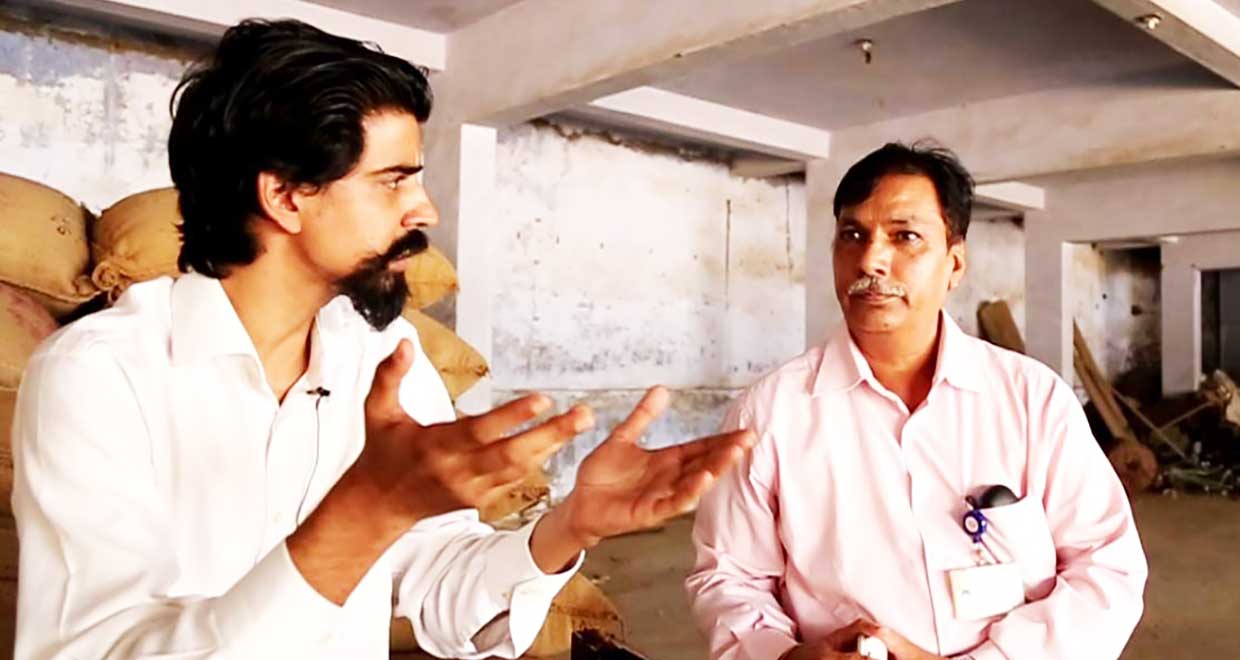
  • Jonathan Rodrigues, Co-Founder, PACT, on challenges of a start up, online mediation, and a career in ADR

    Jonathan Rodrigues, Co-Founder, PACT, on challenges of a start up, online mediation, and a career in ADR

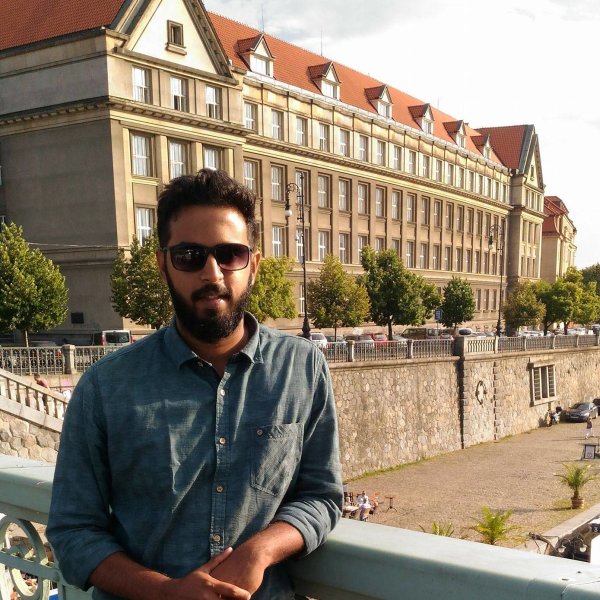
    Jonathan Rodrigues graduated from VM Salgaoncar College of Law in 2016. He is the co-founder of the Peacekeeping and Conflict Resolution Team (PACT) which is focussed on training users of dispute resolution in Negotiation, Mediation and Conciliation skills.

    In this interview we talk to him about:

    • Career in ADR
    • Challenges faced in starting PACT
    • Online Mediation in India
    • Mediation as means of dispute resolution


    HOW WOULD YOU LIKE TO INTRODUCE YOURSELF TO OUR READERS?


    Not all Super Lawyers wear a cape!

    Some choose to take off their courts and suits,

    Facilitating dialogue and resolution.

     An ‘Ideator’ by heart, a nurtured writer, a wanderer by my restless nature, I am, today, a Mediator, by profession. I know I sound ridiculously ambitious, I know the profession is associated with obscurity, but it is my mission in life to create the scope for consensual dispute resolution, that someday, kids may not sound foolish and insane when they say, “When I grow up, I want to be a mediator”.


    WHAT MOTIVATED YOU TO PURSUE LAW AFTER PURSUING B.A. IN PSYCHOLOGY?

    After graduating in Psychology, I went on to pursue criminology and forensic science as a post-graduation interest. I hopped two different universities but failed to find scope in the subject I was attracted to. I discontinued my studies and headed back home to pursue my passion for writing as a journalist. While working with the Times of India, I thought I should give legal studies a chance – this was a consequence of many people telling me I need to find a forum for my argumentative nature. Being a lawyer happened as a result of boredom and experimentation, but I’m glad I took the step. I found my true passion in the midst of all those confusing case laws and endless bare acts. I have always wanted to work to bring people together, work with differences and complications, and I found I could do that in mediation.


    PLEASE TELL US ABOUT YOUR TIME AT VM SALGAOCAR COLLEGE OF LAW?

    My time in law college was a period of a major identity crisis. I am shamelessly proud to have cleared every exam, having worked the night shift as a journalist all through my law college days. I never wished to go to court so I kept asking myself why am I even pursuing my studies in this field? I didn’t like the courtroom jargon, formalities and the ridiculous amount of procedures that are needed to find “justice”. Litigation didn’t attract me then, and that hasn’t changed to date. I couldn’t fathom the idea of the adversarial system, where is no scope to bridge the communication gap or repair relationships. This disturbed me – no matter how much a lawyer prepares and argues a case, the verdict lies in the hands of a judge, and the disputing parties have no say in the outcome.

    Of course, not every case can be referred and resolved through mediation. Similarly, not every case needs to be referred and judged in court.

    Being respectful of the over 1 million advocates and judges who are part of the profession, I believe that “justice” is temporary and not guaranteed, whereas “peace” is permanent and secured. Justice is subjective, whereas peace is objective. I chose peace over justice, and that’s where I am right now. I discovered mediation in my final year of law studies and I am grateful to my principal, who supported me to explore mediation.

    Having successfully competed as a mediator and negotiator at the CDRC Vienna 2015 and ICC Paris 2016, respectively, I co-created Lex Infinitum at V M Salgaocar College of Law – which was a huge turning point with regards to my career choice. For me, Lex Infinitum wasn’t a one-time assignment for my CV, I took it rather personally. This effort had a wider picture – it was the beginning of an endeavour to make mediation a stable profession, not a closeted charitable exercise, run on the lines of arbitration, literally and figuratively. Until I discovered mediation, I read the bare acts for the sake of marks. For instance, I remember studying for my final semester IPR paper. Glancing through my notes, it dawned on me that mediation has tremendous scope in this field. Mediation gave me direction as a law student.


    PLEASE TELL US IN DETAIL WHAT IS PACT FOCUSSED ON? WHAT MOTIVATED YOU TO START THIS?

    The Peacekeeping and Conflict Resolution Team (The PACT) is a collective of trained and certified dispute resolution practitioners who are committed to nurturing this millennial generation with tact and skills in dealing with conflicting situations. The PACT was initially conceptualized by Gracious Timothy and I, in June 2016. As passionate ADR/CDR enthusiasts, who had explored dispute resolution as law students, we were itching to create a platform for dispute resolution to take root in this country. Honestly, we didn’t know what we wanted to achieve then, or how we were going to achieve our goals; but, we knew that as long as we were dreaming and waking up every morning with a zeal to chase those dreams, we would get there.

    Nisshant Laroia is now an integral part of The PACT and as a core team of three, we work closely with national and international ADR and CDR professionals to create awareness and train users and lawyers in the field of dispute resolution. Over the last 18-20 months, The PACT has so far reached out to over 3,000 students, across two dozen law and business schools, spread over 13 states, hosting Negotiation and Mediation Boot Camps. Be it the University of Kashmir in Srinagar, or NALSAR in Hyderabad, GNLU Ahmedabad or NLU Jodhpur, ILS Pune or GLC Mumbai, the response and feedback has been positively overwhelming, encouraging us to go beyond just coaching and mentoring, and set up ADR/CDR cells and clubs in some of these institutions we have reached out to. Besides being majorly involved in Lex Infinitum during its initial years, we have already co-created a new competition (‘Intercessionis’, at ILS Pune), that exclusively deals with community conflict mediation. More such events are in the pipeline for the new academic year.

    We are in the process of creating a unique event in Jammu and Kashmir, in association with University of Kashmir’s law department. The youth of Kashmir are eager and excited to be working with us on this initiative, which will premier in October/November 2018. Similarly, The PACT is brainstorming on something special for the North-eastern states of India for early 2019.

    PACT has also conceptualized the Global Academy for Advocacy in Dispute Resolution, which premiers in Goa from June 11-16, 2018. It is an initiative to endorse skilled mediation and arbitration lawyers, with separate coursework and trainers for both, mediation and arbitration. For more details on the curriculum, trainers, accreditation, venue, fees, etc.

    Please check click on the link below: (https://www.facebook.com/pg/thepactindia/photos/?tab=album&album_id=812635982261471)

    The PACT is focused on building these platforms that empower every woman and man to proudly call themselves followers and users of consensual forms of dispute resolution. Be it conferences, competitions, literature projects, mass media assignments, we are looking to reach out to every potential user across the globe and connect with like-minded individuals who can help us create spaces of dialogue in their regions.

    The PACT was conceptualized by the peaceful beaches in Goa, grew up in colourful parts of India and is now ready to take to the world.


    WHAT WERE THE CHALLENGES YOU FACED INITIALLY ON STARTING PACT AND WHAT IS YET TO BE ACHIEVED?

     I believe our toughest challenge to date has been to find the right mentors and guidance. We have been fortunate to have met many polished and experienced professionals in the field, who have generously shared their time and friendship. We owe them our deepest gratitude for helping us grow and develop as individuals and as a team. They stay connected with us as “Friends of PACT”.

    However, not every follower is a fan, right? We have encountered many senior persons from the legal fraternity scorn and mock our ideas and dreams, but this has only made us stronger and determined. We have heard people say to us, “Burst the bubble, mediation is never going to work in India” or “Stop fooling yourself, this can never be a profession”. For every pessimist, we have met 100 optimists and we choose to work with these positive vibes.

    Yes, we have made mistakes and we have fallen short on many occasions. We don’t regret it because we have taken the approach of “burning our fingers while we learn”. Every time we discover a new limitation, a failing, we accept it and work towards fixing it, immediately. Personally, this has been my favourite part of the journey.
     

    DO YOU THINK THAT MEDIATION AS A MEANS OF DISPUTE RESOLUTION CAN BE SUCCESSFUL IN INDIA CONSIDERING MOST CASES FINALLY END UP IN COURTS?

    Yes, it can be successful, and it will be, soon. We need to ring in a few changes…

    Firstly, REBRAND ‘Mediation’ or for that matter, ‘Conciliation’ as a unique and different tool to dispute resolution. Stop, I repeat, stop clubbing it with arbitration or coin terms such as “other forms of ADR”. The iPhone grew as a brand, because it had its own identity, and it wasn’t marketed as “another phone in the store”. Arbitration is different, mediation is different. Both are unique and need to be treated differently. I am asking for (and we at PACT believe in this) a change in branding terminology, separate events and conferences, specific course/module/ curriculum for law students, the introduction of the concept in other study areas – arts, commerce, science, technology, sports, business, etc. Mediation cannot be looked to as a charitable option to “settle” and “compromise”. It has to be a commercially viable tool that encourages collaboration while maintaining a fine balance between interests and emotions.

    Secondly, LEGAL remedies with regards to a private Mediation settlement agreement need a revamp. The biggest fear that users have is “what happens if the other party dishonours the agreement?” The anxiety of running back to court to enforce “breach of contract” is more frustrating than going to court in the first place. Let’s keep it simple – A private mediation settlement agreement must have the same value as a conciliation settlement agreement – which is an award, treated as a decree of the court. Thus, someone who has been backbitten out of settlement agreement arising out of a private mediation has to simply seek enforcement of the “Mediation Settlement Award”.

    Before, I thought that the above could be achieved with a minor amendment to the Arbitration and Conciliation Act, but I am increasing of the belief that conciliation needs to be extracted from the Arbitration and Conciliation Act, and redrafted as a separate legislation, which also involves Mediation.

    Thirdly, INFRASTRUCTURE annexed to court premises is not something I subscribe to. State governments in India must invest in specially designed premises to create a separate setting for mediation. It may continue to remain court-referred mediation, but it must be away from the clutter and buzzing of the courtroom premises. A perfect example of this is the mediation centres started by Delhi Dispute Resolution Society. This will encourage full-time mediators and not professionals who dedicate their “after hours” time to the profession.


     WHAT WOULD BE YOUR ADVICE TO LAW STUDENTS LOOKING FOR A CAREER IN ADR?

    To those exploring a career in Mediation, I suggest getting yourself trained to be a skilled negotiator or mediator, or a skilled mediation advocate.

    Keep reading – There is a lot of literature online or you can check the Facebook group: PACT FAM – (https://www.facebook.com/groups/153574115135548/). This forum is managed by our student CDR ambassadors, Sandeep Bhalothia (JGLS) and Pallavi Gauri (NALSAR)

    Keep writing – If you want to write a simple article about mediation or dispute resolution, you may do so and send it to thepactindia@gmail.com. We will find you a platform and readers.

    Participate in competitions and conferences taking place in India and abroad. PACT is coming up with at least 3 new competitions in 2018-19, watch out for these announcements on the PACT page (https://www.facebook.com/thepactindia/)


    WHAT IS THE SKILL SET REQUIRED TO SUCCESSFULLY MEDIATE A DISPUTE?

    • Patience! – It’s not a skill as such, but it is the key that puts to test all your skills.
    • You need to have listening ear – go beyond being an active listener and be an empathic listener.
    • Don’t be afraid to compliment what you like, apologize when wrong, acknowledge what seems interesting, accept differences, competitively disagree, creatively brainstorm for mutually-satisfying solutions.


    WHAT IS YOUR ROLE AS MEDIATION CONSULTANT AT PRESOLV360?

    As an empanelled consultant, I assist Presolv360 – India’s first dispute management platform – in connecting with professionals and organisations in the field of dispute resolution and provide support for implementing established mediation practices.


    DO YOU THINK ONLINE MEDIATION CAN BE SUCCESSFULLY IMPLEMENTED IN INDIA?

    I was extremely sceptical of online dispute resolution and I still have my doubts, but this is the tech generation, so why not! This generation demands quick, accessible and tech-ridden supply of solutions to all its needs – be it food, clothing, gadgets, travel, etc. A little delay in delivery of any of these basics needs and you will have the youth shamming the service provider on every possible public forum on the internet. How, then, this generation remains indifferent and accommodating of the time-consuming court system?

    Cost effective, time efficient, comfortably casual, confidential settings, a process devoid of endless documentation, voluntary appointments, neutral facilitators and consensual settlements – it can’t get better for those who live digital lives.


    WHAT WOULD BE YOUR PARTING MESSAGE TO OUR READERS?

     I’m just an ordinary Goan boy who dared to dream beyond the familiar shores of comfort and challenged himself to explore a strange and currently non-existent career.

    Don’t be afraid to look at a career in law from a fresh perspective. If you like law as a subject and you have always wanted to be a lawyer helping people resolve disputes, and you don’t like the idea of arguing in court, there is no need to worry – you now have Mediation.

    Not all Super Lawyers wear a cape; some choose to take off their courts and suits, facilitating dialogue and resolution. As a lawyer, it has always been about your client’s interests; help them discover their true interests. You don’t have to be an adversarial lawyer; you can be a collaborative one. Don’t be afraid to be different. At the end of the day, advocate for your client’s interests, not yours!

     

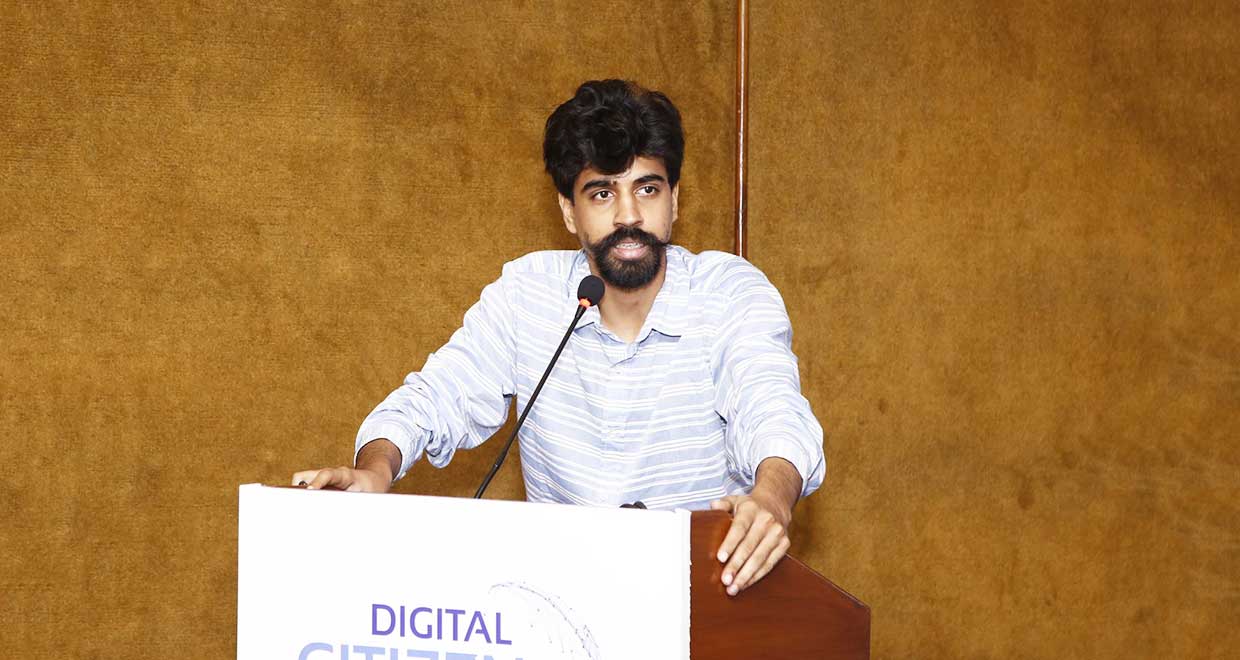
  • Kunal Sarpal, Founder and CEO, White Collar Legal, on being an entrepreneur, TEDx speaker and a corporate lawyer

    Kunal Sarpal, Founder and CEO, White Collar Legal, on being an entrepreneur, TEDx speaker and a corporate lawyer

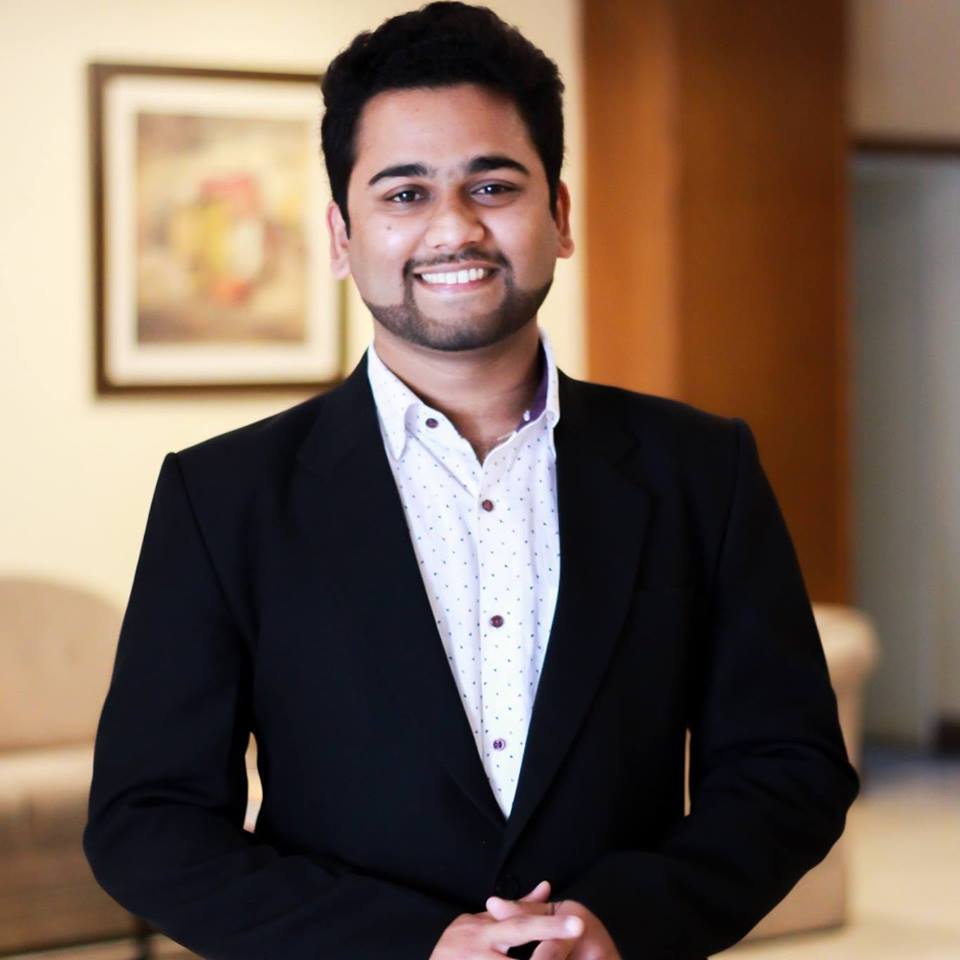
    Kunal Sarpal graduated from ILS Law College in 2016. He is the Founder Partner of White Collar Legal LLP. He is also a company secretary. Very passionate about entrepreneurship, he regularly speaks at various seminars and is also a visiting faculty at various institutes including the TISS, MIT College, Pune. Corporate and IP lawyer, Tedx speaker, entrepreneur, author are only few feathers in his cap.

    In this interview we talk to him about:

    • About specialisation in corporate law
    • Pursuing CS along with LLB
    • Being an Entrepreneur
    • Success of White Collar Legal LLP


    HOW WOULD YOU LIKE TO INTRODUCE YOURSELF TO OUR READERS? PLEASE TELL US SOMETHING ABOUT YOUR PRE-COLLEGE LIFE?

    I was once called a renaissance man by a senior colleague and have always tried to live up to that label. The best part, Leonardo Da Vinci is my all-time idol and inspiration, coincidentally after-whom, the Renaissance man term was coined. Hence, very special for me.

    I practice, teach and preach law and entrepreneurship. By qualification, I’m a Commerce and a Law graduate, a qualified Company Secretary, one of the youngest to clear the course in India at 20 and having started practice immediately.

    I am the Founder Partner of White Collar Legal LLP, a multi-state Corporate and Intellectual Property Law firm, started in 2013 now having over 20 employees and 3 branches.

    I love enterprises and entrepreneurs and how law can be an enabler to anyone who wants to start, scale or save his enterprise.

    I absolutely adore public speaking and hence am routinely giving key note speeches everywhere, am a Tedx Speaker (you can find the talk here https://www.youtube.com/watch?v=-cwTyIOPCC0) and very recently, I have also started making small investments into Social Enterprises.

    Just written a book this year on Internships (you can find it here https://www.flipkart.com/intern-ceo-50-practical-tips-ace-internship/p/itmf3ye9tfhqdbaw)

    Given my love for speaking coupled with teaching, I am fortunate to be a faculty (visiting and adjunct) with Flame University, TISS, MIT and many more, wherein I primarily cover law and entrepreneurship.

    I’d love to go on, but for more (visit my linkedinprofile here https://in.linkedin.com/in/adv-kunal-r-sarpal-3b404635)

    Pre College:

    I can be summoned up in 3 words. Creative. Speaker. Organizer.

    I was all over the place. Extra curricular activities were my thing. Hated academics big time. Still do.

    Loved attending school and college and rarely missed a single day, because there was so much to do!

    Did my schooling from J.N. Petit Technical High School, followed by college at Ness Wadia College of Commerce and ILS Law College. CS was done along-side my Commerce degree. Surprisingly, had great grades throughout after clearing school. Into Top 5 always.

    Throughout school and college, you could find my participating in every event that was going on, be it as a participant, as a delegate or as an organizer. Loved the entire concept of learning from doing. Experiential learning is what they call it today. I have this huge trophy chest and a pile of certificates which I am very proud of.

    Very notorious, always getting into trouble. When my school friends look at me today, they say I’ve changed completely. Few hours spent with them, they realize that not much has changed.


    HOW DID YOU DECIDE TO PURSUE LAW AFTER B.COM? MANY PEOPLE HAVE THE OPINION THAT THE THREE YEAR LLB IS NOT ADEQUATE FOR THE STUDY OF LAW. DO YOU AGREE?

    While I was pursuing my CS along with B.COM, my interest in Company Law and other mercantile laws grew. To satiate this curiosity, I had to do law. Now, after practicing for more than four years, I can safely say that it was a great decision.

    On a lighter note, I’m sure, the only folks who say that are five year law students or graduates!

    To put it straight, the study of law cannot be construed through a tenure or a timeline. It is continuing.

    I enjoyed the three year timeline because it was crisp, all-encompassing and gave me the skill of reading the law. To understand and severe the difference between, what the law is, and between, what the law is for.

    And frankly, that’s all you need to know.

    Interacting with a lot of lawyers now, senior and junior, with a three year and five year law education, I can confidently say that it holds little ground in the long run. Especially in practice. Maybe in employment, the 5 year course is preferred.


    WHAT FACTORS INFLUENCED YOUR DECISION TO SPECIALISE IN CORPORATE LAW?

    My prior education as a CS, study of the legal sector from the practise scope and my inclination towards helping entrepreneurs.

    Since I was the first generation lawyer getting into practise, I knew it’s going to be an uphill task to build clients, generate work, to create a brand and so on.

    Internships were key too. When I interned with lawyers, I realised that litigation at the lower level is not for me. And litigation at the higher level won’t accept me right out of college. So, the choice.

    This also opened a beautiful new area to practise in. The Tribunals. Both NCLT and the IPAT.

    Further, my CS internship with Amanora Group (City Corporation Limited) and my Corporate Law Internship with DSK Legal really gave me exposure to Corporate Law, to practise and to really savour the entire consulting approach to law. I love it till date.

    As a natural corollary, we are now into Intellectual Property Law too.

    I’d say, once you’re really into something you like, things develop. Just give it time. And if you don’t like something, please shift. Don’t give it time.


    YOU ARE ALSO A QUALIFIED COMPANY SECRETARY. WOULD YOU RECOMMEND STUDENTS AIMING TO BE CORPORATE LAWYERS TO ALSO PURSUE CS?

    Oh yes. Definitely. A 100%.

    It’ll help both in employment and practise. Will give you a wider scope and your grasp, especially on Company Law and other allied laws will be super.

    CS is a great course in terms of how it’s administered by ICSI. Especially the examination. Gruelling, lengthy and mind boggling. Application of knowledge is rewarded over reproducing information/retention power. It being a competitive course, clearing it with flying colours will also validate your choice and give you the confidence to choose Corporate Law as a long term career path.


    YOU STARTED YOUR OWN FIRM AFTER YOUR GRADUATION. WHAT WERE THE CHALLENGES IN YOUR INITIAL YEARS? HOW DID YOU OVERCOME THEM?

    Oh my my! (He smiles remembering those days..)

    The challenges just didn’t seem to end for the first few months. As mentioned earlier, no clients, no experience, monthly rent, expenses, over confidence of sitting out of placements, family taunts, not meeting classmates to avoid humiliation, loss of social life, was constantly giving me nightmares. You really need to have to be strong emotionally if you’re starting out from scratch like me. Those were testing times.

    The only thing that kept me going was assignments which came now and then and since I was good at speaking with a decent knowledge of the law, I used to moonlight as a visiting faculty with a few coaching institutions. A habit that stayed, even today, I may have moved on from coaching institutions but am not associated with top Indian Institutions. At most times, I’m teaching students who are my age or older. I think it is fitting to mention here that I’ll be 25 this year.

    By one and half year or so, we had our first employee, office renovated and our names on the building wall with a decent per month takeaway.

    After year two, it was beautiful. A quarter on quarter growth of 25% and above. Since then, no looking back.

    Year three onwards, it’s a well-oiled process driven machine now wherein we target to help 100 new entrepreneurs each year.

    What I did well was, lot of article writing on leading portals and magazines, speaking a lot at conferences and events and teaching. Writing gave me clarity and certain fame. Speaking helped me establish my brand. And teaching helped me stay updated. So in a way, what I loved doing helped me, even though it wasn’t strategic.

    Since we can’t market or solicit clients, the above are excellence avenues to organically create your network. Because your network will eventually become your net worth.


    PLEASE TELL US ABOUT YOUR FIRM WHITE COLLAR LEGAL LLP?

    It’s my baby. My brainchild and comes above everything else.

    To start this journey alone but now sharing it with more than 20+ partners and staff and over 350+ clients is truly rewarding.

    We at White Collar Legal LLP, help individuals and businesses, start up, secure themselves, structure themselves and scale up. Corporate and Intellectual Property Law is where our core competence is. We help execute Ideas. Taking Ideas to IPO or Ideas to Impact.

    We help companies establish their entire legal framework so that the entity is driven by systems and processes and not by promoters or people, so it stands the test of time, the investors and the shareholders. A lot of credit goes to our investors and clients whose constant feedback to us helps us compound our learnings and apply them to future projects. Hence, I’m usually quoted at the office saying that the client feedback is the greatest teacher.

    Right from registering one’s entity to drafting all agreements to getting all the IP secure to advising on M & A, we help entrepreneurs deal with the entire legal framework, partnering with him or her.

    From student startups to large clients like Natural Ice Creams, we cater to them all.


    WHAT DOES IT TAKE TO BE A GOOD ENTREPRENEUR?

    Lots and lots of guts. Being laser focused/Master of one. The ability to eat humiliation for breakfast every day. Clairvoyance to see where you’re industry is headed and accordingly adjusting. A tab on international trends. Using Technology to automate everything non-essential/mundane and for MIS. Incessant reading to keep yourself updated. Very strong skill to sell. A strong WHY/ passion behind doing what you’re doing. Service nature by upbringing. Pro-activeness. Ability to do multiple things. People management. Excellent communication skills. Impeachable character/name/brand. And lastly but most importantly, oodles and oodles of humility.


    YOU HAVE BEEN A TEDx SPEAKER. PLEASE SHARE YOUR EXPERIENCE.

    It was fantastic. Truly. To be able to share your story with the world is something else.

    I feel very lucky and blessed to have had the opportunity. In the Tedx talk, I spoke about youth entrepreneurship. Till date, I keep receiving emails from students about the ideas they have and about people who want to support. An ecosystem is getting built and that’s awesomeness!

    TEDx talk led to many new and better opportunities from a practice, teaching and speaking point of view.


    YOUR FIRM HAS WON NUMEROUS AWARDS. WHAT FACTORS WOULD YOU ATTRIBUTE TO THE SUCCESS OF YOUR FIRM?

    Complete focus on client service. Being their partners in growth and not just cold third party service providers.

    Getting things done. Less talk, more action. Always going out of the way.

    Being young and small, it also helps us stay lean and agile and deploy tech to our advantage, to understand and respond to client needs better.

    The Japanese principle of Kaizen (continuous improvement) is what serves us well.

    To mention my Partner Ms. Isha Eklaspur (ex- VRL Logistics) and two of my key members, Mr. Praful Srivastav and Ms. Gemini Rajgor, who were key in setting the culture of excellence in client service and delivery.


    WHAT SUGGESTIONS DO YOU HAVE FOR LAW STUDENTS AS TO HOW TO BE A GOOD ORATOR? HOW DO STUDENTS OVERCOME STAGE FRIGHT?

    Practice. At every given opportunity.

    Speaking is a skill. And just like archery or swimming or driving or any other skill, you will learn it only by doing it. Not by reading about it or watching videos or listening to lectures.

    10,000 hours of doing anything, will make you bloody good at it!

    And yes, join your nearest Toastmasters Club.


    YOU ARE ALSO A VISITING FACULTY AT TISS, MIT PUNE AND FLAME UNIVERSITY. HOW IS YOUR EXPERIENCE AT TEACHING?

    It is pure bliss and very necessary at the same time. It keeps me updated as I have to read to prepare, it helps me keep in touch with current trends through student discussions and it helps me gain wider perspective, as I have students ranging from all ages and all walks of life.

    I chose to do this only when I received feedback that I was great at it.

    As a student, I always enjoyed listening to visiting, guest or outside faculty a lot. Purely because it brought change and also gave industry perspective. I love doing that with my students. Sharing snippets of what I do with them. Notably, my favorite teachers at college were always visiting faculty. To name a few, Mr. Ajit Kulkarni (for Drafting), Mr. Aglawe (For Land laws), Mr. Dangre (For Criminal law), Mr. Ganu (for CPC) and many others were just fantastic at ILS.

    But we also had equally erudite faculty among others in Mr. Jain (For Constitutional Law), Mrs. Bhadbhade (For Contracts), Mrs. Sagade (For Family law), Mrs. Satya Narayan (For Torts) and Mrs. Sonali Jadhav (For IPC). We were lucky as ILS has the best of both worlds!


    WHAT WOULD BE YOUR WORD OF ADVICE TO YOUNG LAWYERS AND LAW STUDENTS LOOKING TO MAKE A CAREER IN CORPORATE LAW?

    Intern for a minimum of two months and see if you like the work. Work at both small and large firms (at least a quarter dozen) and see if you can do it for 50 years and more of your life.

    Ask questions to your seniors at college and at work. The more the better. The weirder the better. To those who have been there and done that. Don’t assume anything. And don’t settle on Corporate Law or Litigation for extraneous factors such as money, fame or feel good factor. Do it only if you really really love it.

    And if you’re planning to practise, make sure you have all the traits of being an entrepreneur.

    All the best! Crush it!

    Share your thoughts with me at : kunal@whitecollarlegal.in

    Link to company website: www.whitecollarlegal.in


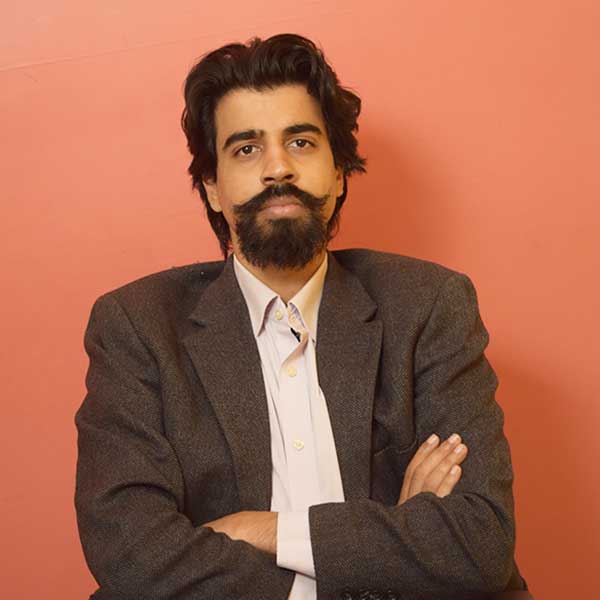
  • Kazim Rizvi, Public-Policy Entrepreneur- The Dialogue, on making change and development a reality through high impact ideas

    Kazim Rizvi, Public-Policy Entrepreneur- The Dialogue, on making change and development a reality through high impact ideas

    Kazim Rizvi graduated in Law from Christ College of Law, Bangalore in 2012. He always has had a deep interest in the government mechanism, social science and politics. Kazim practiced Law for a few months but soon realized that public policy was his true calling in life. He strongly believes that the policy route is the ideal as you understand the gaps in the governance structure hence, helps an effective leader to bring change. Quoting Kazim- “For me, nothing is more important than national service.”

    In 2016, he founded The Dialogue which is a policy institution to drive a dedicated narrative on policy and development in India. Kazim is also the Co-Chair of the public policy division at The Indian National Bar Association.

    In this interview, he talks to us about:

    • His experience at Christ College of Law.
    • His role at The Indian National Bar Association
    • His venture- The Dialogue.
    • The importance of national service.

    How would you like to introduce yourself to our readers?

    Thank you to Superlawyer for reaching out to me. I would like to introduce myself as a policy professional and first-generation entrepreneur based out of New Delhi. Having graduated five years ago from Christ College of Law, I practiced Law for a few months before eventually deciding to move into policy research and advocacy with the objective of making a strong impact to take India forward.


    How did your interest gravitate towards Law?

    Since I was a child, I had a deep interest in politics and social science and was always curious to understand how I could make our country a better place to live. I took commerce in class 11 as I realised that medicine and engineering were not my cup of tea. Law was considered a serious option post class 12 as it was a professional course and the idea of a five-year course made it lucrative to pursue, as opposed to the 3+3 option. For me, the idea of understanding India’s governance structure through the study of Law was more important than finding a job out of Law school, as I had a fair idea that I would eventually move to policy and development. This was re-enforced during my time at Law school, where in the latter stage I started considering policy as a profession.


     How was the experience at Christ University?

    My experience at Christ University was certainly memorable! More importantly, I believe that the decision to go to Bangalore, when I had a couple of options for National Law Schools, was the best decision I have made till now. Moving from Delhi to Bangalore, living on your own, learning new perspectives and throwing yourself at the deep end of intellectual debates shaped my personality and thought process. We had a great set of batch mates who all had a high-level stamina to think through ideas. In my network of friends, we had a great atmosphere of debates, discussions and we were all quite charged up about our opinions. The long drawn political debates at our hostel, outside college, discussions on history, philosophy etc. led to an argumentative and opinionated mind.


    How can a Law student shape up his profile while still in Law school?

    I think learning outside the classroom is as important as the structured learning we go through inside the classroom. Moots and academic writing helped me tremendously, as that laid the basis of conducting proper research. One needs to strike a balance of studies and extra-curricular activities. For someone who has little faith in the rote learning system, extra-curricular activities helped me develop my skills for the real world. And to this day I am reaping the benefits of effective research, asking the right questions, framing the right arguments, analytical skills etc.


    Would you say that Law school prepared you for the real world practice of Law?

    (Soon after graduation Kazim started working at the Law office of Anuj Puri.)

    In my last semester, I gravitated towards litigation as a career option. I am grateful to Mr. Anuj Puri for offering me to work in his office and the few months I spent there gave me a good exposure into the world of litigation. Law school did prepare me for the real world, but only after a few months I realised that whatever I learned in Law school did not matter much as litigation was a different teacher altogether. Once you’re in it, you’re on a very steep learning curve, and after a while, how well you did in Law school matters little.


    How were you associated with the Swaniti Initiative?

    (Swaniti Initiative delivers development solutions to over 90 Parliamentarians across states and party lines on issues of health, education, gender and livelihood.)

    Swaniti was my big break to the world of development and policy. Swaniti started with a development fellowship where they selected fellows to work with an MP to support his/her programmes in the constituency. This was quite innovative back in 2013 and I was fortunate to having being selected and work with Mr. Jay Panda, one of the most dynamic, well-spoken and qualified MPs of our times. The fellowship was challenging as we were tasked with improving the medical infrastructure of his constituency, Kendrapara, off the coast of Odisha. Since there was only one Primary Health Centre at that time, medical access was a major challenge faced by the people of Kendrapada. People had to travel long distances and wait to get health check-ups done and that affected their well-being. To meet this challenge, we devised the idea of “Mobile Health Van”, which would travel across Kendrapada and provide free medical check-ups as well as diagnosis, medicines and basic medical procedures to the people. By the time I left, we had delivered two MHVs that would go from village to village, catering to two hundred people every week. We got the entire programme sponsored externally.


     What are your roles and responsibilities as Co-Chair of the public policy division at the Indian National Bar Association?

    With the Indian National Bar Association, I am involved in planning and executing programmes and public discourses on key policy issues. Right now we are working on data governance and developing programmes to facilitate policy discourse.


    Public policy is your niche; how did you develop an affinity for it?

    As a student of public-policy, I believe that it is too broad a subject to be considered as a niche. However, I do believe those five years after college, I am more of a policy professional than a lawyer, so in that case yes; it is going to be my area of discipline for the rest of my career.

    As I was always interested in politics and development, closer to the end of Law school, I came across the discipline of public-policy, which catered to people who wanted a career in public service and governance issues. I think if you are serious about wanting to make an impact, then the policy route is quite effective, as that provides you with a platform to develop ideas that could solve governance challenges. Even for those who want a political career later in their lives, the policy route is ideal as you understand the gaps in the governance structure and would be an effective leader to bring change. For me, nothing is more important than national service. The opportunity to bring change and development is not just a matter of words, but a reality you see when you work in the policy domain. This gives you the motivation to carry on, and to me, serving the people of India is a matter of great honour.

    One should ideally have a tinge of idealism along with pragmatism to fulfil her/his role as a policy professional. Since I missed out on Civil Services as I never had an inclination to write the exams, working as civil- society to impact policy is what I could do.


    Tell us about your brainchild- The Dialogue.

    The Dialogue is a policy institution to drive a dedicated narrative on policy and development in India. It reports on and analyses development of multiple sectors such as data, education, food security, healthcare, foreign policy, legislations, law reforms, energy and climate change, environment and other relevant development issues. It drives a continuous feed on these issues and simplifies complex policy developments for the reader. We undertake research, monitoring and evaluation, impact assessment, case studies, deliver conferences and communications to drive policy discourse by working closely with our stakeholders and partners.

    We engage with policy and development professionals to publish original and curated content with us. At the same time, we have a team of advisors who are experts in the field of their domain guide the narrative of the website to ensure we publish insightful content. We also have more than twenty knowledge partners in the form of think-tanks and research institutions to drive content and mainstream research briefs and development news by converting them into simple articles.

    Having completed ground level impact studies, research partnerships, and policy campaigns with leading government and non-government stakeholders, The Dialogue consists of a wide array of services aimed at filling the void in the public policy landscape.

    Apart from having a young team of well-qualified and driven public policy professionals, The Dialogue’s work is strongly rooted on the experience of our network consisting of former diplomats, senior military generals, academics, economists, and beyond. This combination is further cemented by a wide array of contributors, each of who are experts in the various sectors that The Dialogue works on.


    You did not opt for the traditional practice in Law. Why?

    I started working in litigation right after college, but by then I was convinced that policy is what I was going to do for the rest of my life. In fact, in my last semester I started looking it up as a serious career option. Back then it was not that popular a stream as it is now, so you did not have much precedence to look up to. I did not know of any seniors or even my contemporaries who were serious about diving into this field. A couple of my friends did touch upon this but it took us a year or two to understand the career path, as it is not as defined as Law. In that case, getting into policy was not straightforward.

    What made me take the road less taken is my passion for serving the country through high-impact ideas. The decision was easy but the path was challenging, as the job market was (and is still not) well defined. So you had to pick and choose carefully, take what comes towards you and build a network of experts. Thankfully, I seem to be going somewhere with The Dialogue, so that is a positive and of course very exciting to look forward.


    How can an interested person contribute to The Dialogue?

    We work with policy professionals, freelancers and researchers for our projects and programmes. Our working model is flexible and gives our people the freedom to work on projects of their liking as and when they want to. We have a core team that looks after the website, research, business development etc. and we bring on board people as and when we feel the need for their expertise for our projects. Anyone who has basic skillset and passion for policy and contribute to The Dialogue in the form of articles and research. We are always open to new research ideas so we welcome those who want to work and deliver projects with us. Those who are interested to conceptualise or work on our existing programmes, please feel free to write to me.


    What would be your parting message to young graduates looking to create an identity in the legal fraternity?

    I believe that we should not rush into any career option after college, rather, take your time to know yourself better and understand where you can make maximum impact professionally. Don’t be afraid to take risks and embrace failures as that will teach you more than success. Things will open up to you gradually and with patience we all get on the right track.

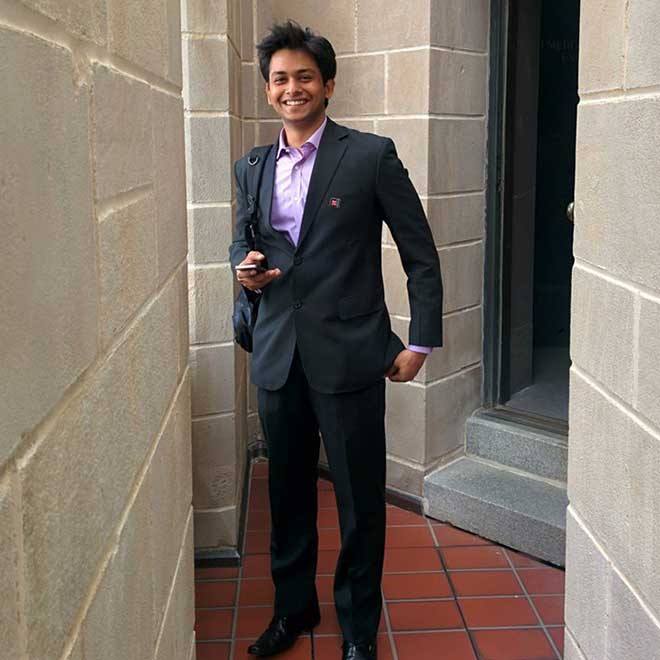
  • Pratik Tayal, IAS Officer, on cracking the UPSC, and achieving AIR 92

    Pratik Tayal, IAS Officer, on cracking the UPSC, and achieving AIR 92

    Pratik Tayal graduated from National Law University, Delhi in 2016. Right after graduation, he appeared for the Union Public Service Commission Examination and secured an All India Rank of 92 in his first attempt. He is the all India topper in civil services with law optional. He also secured the highest marks in GS IV Ethics Paper. During his law school days, he participated in various international moot court and client counseling competitions.

    In this interview, he talks about:

    • His experience as a law student at the National Law University, Delhi.
    • His strategy for the preparation of the Civil Services Examination.
    • Advice to prospective law students aiming to make a career in Civil Services.

    How would you like to introduce yourself to the readers? 

    I was born in Dehradun and brought up in Delhi. I have done my schooling from The Banyan Tree School, Lodi Road where I was an academically inclined student who was engaged in many extra-curricular activities and also served as the Vice Head Boy. I completed my law degree from National Law University, Delhi. As regards my background, my father and brother are in the civil services and my mother is an entrepreneur.   


    Why did you opt for the field of law? 

    My decision to pursue law was borne of an interest that I developed in the subject. I came across the Constitution and other law books during class XI, which stimulated my interest in this field. I do not have any legal background in my family.


    How did a law school education in NLU help you in achieving your dream?

    Law school has an impact on one’s personality, in both direct and indirect ways. The curriculum and pedagogy helps you to broaden your horizons and ponder over societal issues; an emphasis on extra-curricular activities ensures a brilliant exchange of ideas; and staying in a multicultural environment with people from different backgrounds enhances your sensibilities and your appreciation of diversity. At the same time, law school presents different challenges for different people, which at the time may be daunting, but eventually help you introspect and become a stronger individual.

    Having learnt and benefited from these experiences, I was also fortunate to have had a batch full of achievers, from whom I could learn a lot. The atmosphere of excellence shaped me to become serious in life, helped me to develop a goals based attitude towards work, to be focused, ambitious and determined, and most importantly, it taught me the value of hard work.


    Did you focus only on the academics in college life? 

    Since my elder brother had been selected for the Indian Police Service in 2011, I was fairly determined about preparing for the UPSC exam. I tried to balance both academics and preparation throughout, with the balance shifting in either direction at different times. In NLU Delhi, the work load is reasonable. It can be managed along with preparation. The pressure, similar to other things in life, depends on how much you want to take on.   


    What extra-curricular activities did you take part in that helped you in overall development?   

    A lawyer, I was once told, has to master two aspects of his profession: advocacy and client counselling. With this in mind, I tried my hand at mooting and client consultation competitions during law school and these experiences helped me immensely. In mooting, I represented my college in the Oxford IPR Moot Court Competition in 2014. Mooting, as an activity, helps in developing the ability to structure things well, to study a topic from different dimensions, and to be able to effectively answer questions – all of which is extremely advantageous in CSE. In client counselling, I represented India in the Louis M Brown Client Consultation Competition in Nebraska, USA. This experience helped me hone my abilities to appreciate the problem, evaluate different options effectively, and to come up with innovative solutions on the spot. These qualities are important as an administrator and are also tested in GS paper IV (Ethics) in CSE.

    Apart from these two activities that I treasure, I was involved in other pursuits such as research publications, projects, cricket, etc.


    Please tell us about the places you’ve interned at and whether these were all planned or happened on the go?

    I sought to gather wide ranging experiences through my internships. Some experiences were planned while some happened due to opportunities available in the college. I was involved in an RTI internship in DoPT, in UNDP, in NHRC, under a criminal lawyer and in AMSS. Internships are one of the most enriching experiences for a law student. Not only do they help in gaining theoretical and practical knowledge and myriad other benefits, they also, as happened in my case, help to explore uncharted territories and to conclusively decide upon the career path one wishes to follow after law school. Therefore, I would sincerely recommend everyone to not miss out on chances of experiencing different work environments, even if you’ve decided on civil services as your dream career. These will help definitely you understand and appreciate the surroundings better. 


    Did you not get tempted by fancy corporate jobs?

    I don’t believe corporate jobs are a temptation per se. It all depends on what one wants to do and what interests as a calling and professional pursuit. I have always wanted to work for public welfare and contribute to the interface between administration and the public, and I believe that the best possible way in which I can do this is as a civil servant.   


    When did you start preparing for the civil services? 

    I have been intermittently preparing since my second year for this exam. However, my intensive preparation began from my fourth year of law school i.e. 2015, during which time I left my college hostel and became a day scholar.   


    How did you start preparing for the Civil services Exam? 

    I began my preparation by studying, and researching on, previous papers thoroughly. I believe that, to prepare for Civil Services, given the vastness of its syllabus, it is more important to know ‘what not to study’ than to know what to study. Therefore, past year papers should be used to understand the expectations of this exam and then prepare accordingly. As regards coaching, I do not think that it is a prerequisite to this exam. I, for instance, did not take any formal coaching from any institute. However, guidance or the right direction is essential and that is something which is difficult to get. While coaching may help in this, it can be substituted by learning from peers, selected candidates, topper interviews and from sites like mrunal.org. Coaching has its benefits in material and momentum, while its disadvantages include loss of autonomy in your preparation since you are have to compromise your approach to accommodate their schedule.   


    What was the routine you followed everyday throughout the course of your preparation?

    I firmly believe that preparation for this exam is a job in itself and therefore, tried to spend eight hours a day on it, like any other job would require me to do. Beginning from January, 2015, on a usual working day, I would try to get up at 6, study for a bit, commute to and fro college, and resume studying by 12 noon to finally sleep by 11 PM.   


    What was your optional subject?  

    My optional was law.


    Do you think law students might have an edge while preparing for the UPSC exam?

    Law has a significant overlap with the GS syllabus, especially GS paper 2 and 4. However, subject overlap is not the ‘edge’ law students get, I would say. The edge we get is that we have an orientation towards policies and social issues and develop a knack of examining issues from different perspectives. So, while law makes the syllabus easier; law school makes the preparation easier. 


    What did you do to keep yourself motivated all the time during the course of preparation?

    One of the most difficult questions to answer.  Preparation can become overwhelming at times, where one has to be battling with failure, uncertainty, and monotony. To add to this, the cycle of the exam itself is of one year, which raises the stakes for a person. To remain motivated, one needs to have an inner drive and a clear sense of reason as to why he/she wants to be a part of civil services. One additional thing that kept me motivated and helped me to continue studying was the idea that I should not have regrets after the exam about my lack of efforts.    


    Could you please give some tips to those aspirants who are preparing for this exam? 

    The preparation can be divided into four phases: reading, understanding, retaining and reproducing. Emphasis should be given on each one of them separately. The idea should not be to complete the source books as have been recommended, but to understand the concept holistically. Therefore one can be innovative with the sources. Secondly, having understood the concept, it is important to put an extra effort in memorizing which can be done through notes, discussion with peers, etc. Most importantly, it is important to work on answer writing since content alone with not make it possible to score well in the Civil Services Exam. Therefore, devoting time on this aspect is as important as all others combined. Lastly and most importantly, it is important to refer to the past year papers continuously to build an orientation towards the exam and then prepare accordingly.


    Could you tell us in brief what are the skills required to crack prelims and mains exams?

    This exam requires a skill set which is beyond just intelligence. There is a need for emotional intelligence where one is able to identify and manage his emotions. There is a need for introspection and self-awareness where one is able to identify one’s strengths and weaknesses and work upon them. There is a need for humility, which allows you to learn from everyone as everybody has something to offer. Consistency, hardwork, dedication and a drive and passion for this exam are important virtues. For prelims, the ability of calculated guess work is one of the most important skills that can be developed, and can be done through practicing of questions. For Mains, the skill of brevity and clarity of thought should be honed.


    How should a law student approach Interview for the Civil Services Exam?

    Owing to the exposure a law student gets in terms of an ability to formulate and articulate arguments, interview is a relatively easy stage in the whole process. In my experience, my interview entirely revolved around the subject of law. More often than not, the interview does have a component of questioning on the field of one’s graduation, which is done to generally test a student’s general understanding and sincerity towards a thing that he/she was involved in for five years. Therefore, it would be prudent to a) study law well in the five years or b) brush it up before the interview. Apart from that, I think the biggest tip would be to stay calm throughout the process. It reflects on your composure, mental strength and ability to tackle difficult situations – traits that are important for a civil servant.


    What is your experience in preparing for civil services?

    It is a test of one’s temperament, as I already have mentioned. My journey was enriching and made me more knowledgeable, wiser, empathetic and, all in all, a stronger individual. This journey will always be a cherished experience.


    What would your message be to law students who want to pursue their career in the field of Civil Services?

    I firmly believe that there is no formula or one particular way of preparing for this exam. Just have confidence in your abilities and formulate your own strategy keeping in mind your strengths and weaknesses. You can, and should be, innovative in your preparation. Lastly, there is no substitute for hard work which this exam has a keen eye for and consequently, rewards it commensurately.

  • Abhinandan Mishra, Deputy Chief of Bureau, The Sunday Guardian, on journalism, law, and his experience

    Abhinandan Mishra, Deputy Chief of Bureau, The Sunday Guardian, on journalism, law, and his experience

    Abhinandan Mishra graduated in law from NLIU, Bhopal, in 2006. After working as a PO in SBI and as an officer in the Indian Navy, he moved to journalism in 2011. He has worked as the state correspondent for New Indian Express in MP and CG. His expertise is investigation, internal security and political parties.

    In this interview we speak to him about:

    • His time at NLIU
    • His passion for journalism
    • His diverse experience

    How would you like to introduce yourself to our readers?

    I am a journalist with the Sunday Guardian, who did law from NLIU Bhopal.


    What makes the NLIU experience different from other institutions?

    It will be unfair to compare one law school with the others but what I fondly remember about NLIU, Bhopal is the natural surrounding that surrounds the campus. It is perhaps the only law university that has three dams and one reserved forest area within a radius of three km of the college campus.


    In your opinion, what are the law school centric activities that you would recommend as necessary experiences for every law student? 

    I never participated in moot. The one thing that a student should try to focus after entering any law university is developing his or her social skills, read a lot of books, fiction, non-fiction whatever interests the individual. Also try to write articles, opeds and get them published. If you are not able to publish it in a newspaper or a journal, publish it on your own blog. This exercise will help you immensely in countless ways during your college and also when you graduate.

    Growing up, did you have a mentor?

    There were many people who have motivated me to do things at various points of the life including my parents, some of my batchmates, a couple of my seniors and one professor.


    Your career started at SBI, where you were a PO. How did the drastic shift happen from there to the Indian Navy?

    When I graduated in 2006, the first job that I got was in Doha, Qatar with the Qatar Tribune where I was selected on the basis 150 plus articles that I had written and published in national dailies. After I came back, I started preparing for UPSC. However, I could not clear it and during that period I got into SBI as a PO and from there I moved to the Indian Navy in the JAG branch. However, ultimately I got back into journalism. It was in 2011, when I was 28, had worked in six different roles and places, that I finally decided that it is journalism, where I will retire from, hopefully.


    What motivated you towards journalism?

    The fact that the words that you write can bring in a change , in the society and in the life of individuals.


    Did you have to undertake any additional educational training in order to pursue journalism?

    No, I did not. Like every job in journalism too, if you have the heart in it, you will be able to do okay provided you are flexible in your approach and do not shy away from learning and reading about everything under the sun as a journalist is expected to know something about everything.


    Give us a brief capsule of the life of a journalist and your average working day experience.

    I cover internal security and political parties and my average working day consists of talking to ‘sources’, who are nothing but normal people and meeting these sources to dig out a story or to develop information that I already have. During this average working day destiny will present you the opportunity to speak to union ministers and also to  most wanted terrorists.


    What is your message to our readers?

    College is the time when one should explore everything and do a bit of everything. It is the time when responsibilities are few and you are allowed to do things which may look illogical or may go against the herd mentality. Develop your passion, however, small it may look to others. Do not worry about a job, eventually you will land up with a reasonable job if you are street smart and have common sense and it is these two things that no college teaches you but you have to learn it yourself.


  • Rackhee Trust, Transformational Coach and Holistic Healer, Ojas, on working with Cyril Amarchand Mangaldas, and finding her spiritual calling

    Rackhee Trust, Transformational Coach and Holistic Healer, Ojas, on working with Cyril Amarchand Mangaldas, and finding her spiritual calling

    Rackhee graduated in law from Government Law College, Mumbai, in 2011. After a successful stint with Cyril Amarchand Mangaldas as Senior Associate, Rackhee discovered her passion for spiritual healing, and left a lucrative career in law to purse her calling. Rackhee Trust is a transformational coach and holistic healer who works with individuals, corporates, children and groups to facilitate breakthroughs in all areas of life. in 2016 she founded her independent venture, Ojas, which offers personal development, spiritual advancement and holistic well being workshops, coaching for private individuals as well as corporates, Reiki classes and one-on-one sessions all over the world.

    In this interview we speak to her about:

    • Her time as Research Assistant at Harvard
    • Working for Cyril Amarchand Mangaldas
    • Pursuing a career in spiritual healing


    What would you like to say to our readers in the manner of introduction?

    We have become very accustomed to introducing ourselves in professional terms. Over the years, I have come to realise and experience and that each one of us is far more than just that job, just that role or just that career.

    That said, I am simply a seeker. A seeker of the Self. One constantly discovering more about who I am, my purpose here and what life has to offer.We take up several roles to give us an identity and often lose ourselves in this role itself. My journey has been riddled with several such instances. One such milestone being my short stint of five years as a lawyer. Just as they say you can take a girl out of Bombay but can’t take Bombay out of her, you can take me out of law but can’t take law out of me. I cherish the wisdom and skills law gave me as I continue on my path to everlasting learning, seeking and inner work


    What influenced you to do your undergraduate course in International Relations at Tufts University?

    The need to take up an academically challenging subject that proves to be an asset in my career as a lawyer drove me to majoring in International Relationships during my undergraduate at Tufts University, Boston. Naïve and not realising that pure passion should drive these decisions, I allowed my mind to make a logical decision and yet thoroughly enjoyed my years there.


    Tell us a bit about your time studying law at GLC, Mumbai. 

    I was driven to make the most of my time as a law student and gain as much practical experience and exposure during this time. I worked my entire three years during my studentship at GLC, interning in several law firms. I realised even as early as then that this wouldn’t be where I’d end up all the way at the end of my career but it seemed like the right thing to pursue in that moment.


    Could you tell us about the internships you took up, and what you learnt from those experiences?

    My internships were very varied and I am very grateful for that. I strongly urge students to take up diverse internships to explore the different opportunities the law has to offer. Often what we think to be our passion translates into something very different in reality. Getting first hand experience of all those aspects of the law that we know to be of interest or not to be of interest to us can be quite an eye-opener.

    My internships ranged from litigation with a very small home office to a clerkship with a very respected justice of the Hon’ble Bombay High Court, followed by M&A, real estate and banking and finance experience across several prestigious law firms in the city.


    What are the parameters that must be considered in deciding what the next step should be after graduation?

    Given my experience both as a lawyer and law student struggling with a “decision paralysis” as you accurately term it, all I can say is follow your heart. We often make the wrong decision of choosing what is “safe”, “logical”, what will make zyx happy or proud of you. This may not be as easy at it seems because you may need to introspect a lot to really get in touch with what you’re most passionate about or what your heart really wants. However, when you get in touch with your heart you will realise that you also get in touch with the mighty potential deep within you to make that possible.

    The parameters to be considered once you graduate are really: (i) what really makes happy? (ii) for a moment if money didn’t matter what would you be doing? (iii) are you choosing xyz role/job for the money/lifestyle/freedom/independence or something else? (iv) what is really driving your decision? (v) what else can you do to achieve happiness and also the money/lifestyle/independence/something else that you’re looking for?

    If you can answer these questions truthfully to yourself, you will have made the best decision for yourself. Trust that decision and follow through.


    Could you share with us your experiences as a Research Assistant at Harvard’s Center for Public Leadership?

    It was a great experience working as an RA at Harvard’s Centre for Public Leadership, if you like doing research. At this stage, I wasn’t in touch with what I love doing most. The learning experience was wonderful and it definitely honed my research skills which come handy as a lawyer. I encourage all law students to take up as many opportunities to work on their research skills as possible. Not all law schools provide the environment to do so, GLC definitely did not. You may struggle as an intern/lawyer without knowing how best to research.


    Tell us about your early professional experiences at Naik Paranjpe & Company.

    This was quite natural for me as I was accustomed to working when this transition took place. In fact I had been working with Naik Paranjpe & Company for over a year before I graduated. The bonus was the associate pay when I did finally graduate! That’s the only real transition.


    From being a Senior Associate at Amarchand Mangaldas, what inspired you to take the leap in beginning your career as a transformational coach and holistic healer?

    Honestly, doing what I currently do has always been my calling. Sometimes it takes many turns and twists to realise that you landed up where you started off and that is truly who you are. I have been a Reiki practitioner for over eighteen years and the foundation of who I am lies in my spiritual journey and practice which began at the very young age of three when I met my spiritual master and Guru, Swami Chidvilasananda. My life has been riddled with experiences where I have constantly sought the answer to several questions surrounding Who am I? What is my purpose in life, why am I really here? and so on. This introspection and constant questioning lead me on my spiritual journey which has eventually culminated in my following my heart and making a life out of it. Taking this so called leap came very naturally as the time was right and the opportunities simply presented themselves. Like I teach my students now, when you open yourself to the universe, everything simply flows as you are aligned with the flow itself.


    What are the challenges and learning opportunities that you were faced with in establishing Ojas? 

    The challenges I faced were self created obstacles. Obstacles of my own limiting beliefs and as I overcame them with the work I do I began realising the power of what I do itself. My obstacles presented me with the opportunity to overcome them for myself before I could be instrumental in others overcoming their obstacles. So be it in their career, personal life (relationships) or physical/mental/emotional health, I experienced that the answer lay deep within ourselves. In fact, the root of the problem too lies within, although often it may seem to be externalised in the form of a situation, pattern, person, experience, consequence or decision. My biggest challenge was attracting clients who didn’t want to pay or didn’t have the money to pay for what I did. My first two weeks in my new role was the most challenging. I remember sitting down with this and working on myself one late night and there has been no looking back since then. Today I am humbled and grateful to say I earn more than what I earned as an associate leaving Cyril Amarchand Mangaldas, and the earning is effortless.

    The outcome of this experience was the realisation that each of our challenges are presented to us merely as an opportunity to discover what lies beyond it. When we tune in and get in touch with what really lies at the heart of this challenge, it feels like the opening up of a Pandora’s box. Suddenly, everything opens up and before you know it that challenge itself is not there anymore (or is not a challenge any more!). This is what my learning in establishing Ojas brought me to. A very deep understanding of who I am and what I really do.

    Ojas seeks to touch lives. To bring every seeker to a space of Self Empowerment through Knowledge of the Self. Healing, coaching, etc. are very limited labels. At Ojas we simply come together as seekers of knowledge, the Self and the truth. The journey reveals the rest.


    What courses did you take up in preparation for your job as a transformational coach?

    The biggest course has been the learning as a result of my journey through life. Each experience has given me so much that it has added to my unique skill set. No two people who go through the conventional “courses” or “training” will come out the same because each one’s life journey will mould their individual ways.

    That said, I have been through extensive international training in various paths that lead to the healing of the subconscious mind which carries the key to all our suffering and challenges. I am a Reiki Grand Master and practice Reiki while also teaching it. Other than that I am an internationally certified Emotional Freedom Technique (EFT) practitioner, Matrix Reimprinting Practitioner, Neurolinguisitic Programming Pracitioner, Breakthrough Coach, Magnified Healing Practitioner & Teacher, Bach Flower Therapy Teacher and Practitioner, Angel Healing teacher and Practitioner (among a lot else).


    Did you have a mentor or guide during the formative years of your career? 

    I have had several mentors along my journey. The list is endless and I am very grateful to each of them for the role they have played. This is a question that has almost haunted me all my teenage years because I wondered whether it was essential to have one guide, as I never did. Over the years, I realised that there had been several role models and as I evolved they too kept shifting. So in my experience it is very important to keep having more and more mentors or role models for different aspects of ourselves (as we are multi-faceted individuals and not linear) as we continue to evolve. This allows for our evolution to take place consistently without stagnation and in an all round manner.


    As the Founder at Ojas, what does a typical work day look like for you?

    Every day is very unique and that is what I love about what I do. My day usually begins with some self-work in the form of meditation or some such inner practice. Then my day is typically studded with client appointments all across (beginning as early as 6 am and concluding no later than 6 pm). In between I’m busy writing course material for the several courses I deliver and am continuing to develop. Reading, writing, reflecting, sharing, growing and relaxing typically encompass every day in the life of me. I have a beautiful and constantly growing set of students and clients across the world and we reflect and share and grow on a daily basis. This keep my inner work in check on a daily basis and my inner growth continues to take place thanks to each and every one of them.

    Please share with us the initiatives, workshops and projects that Ojas takes up?

    At Ojas we take up several projects, initiatives and workshops ranging from ones offered to individuals, groups as well as corporates and uniquely created to cater to their goals and needs. There is no cookie cutter approach to anything we do because each individual is unique and so what we have to offer to is needed to be such. Our initiatives and workshops range from Reiki classes, manifestation workshops, stress busting initiatives (that work at the level of the subconscious mind), targeting relationship blocks through various tools, trainings on effective speaking, meditation and heartfulness trainings, teaching about Angels and different realms of energies, monthly meditations, Bach Flower Therapy courses and tons more.


    What are the key attributes that one must develop in order to excel in stressful workplaces in the legal profession? 

    My work has brought me to a state of complete stressfreeness. It is an inner journey to get here really. I can say for all my clients and students that they have achieved this or are getting there and there are no “key” attributes that will get anyone there because each one is wired so differently that the remedy for each will be unique.

    That said, the key to each one’s stress lies in the subconscious and when we deal with what’s deep seated within the subconscious mind, a state of stress-free freedom arises spontaneously. Doctors, therapists, counselors etc. are trained to treat surface level issues. Each symptom is treated in isolation. In the work we do at Ojas, each individual is looked at as one whole comprising of all that which makes up who they are.

    The healing takes place deep inside at the level of the root cause (of all surface level issues). Often the root cause lies in some situation, emotion, event, memory etc. that took place several years or even moments ago. That leads to thoughts, feelings, emotions, beliefs, habits, actions, decisions, choices, patterns and personality which eventually manifests in the form of that which is troubling us (as disease, relationship issues, money/finance/career related struggles etc.). When the root cause is healed, the surface level issue disappears spontaneously. This is the answer to releasing stress at your workplace and in life in general and experiencing waves of joyful abundance through a life that may seem dry and regular. Each one of you can have this experience, the question is whether or not you are ready for it!


    How do you manage your time between your professional and personal interests? 

    There is no difference and yet they are balance. My professional and personal interests are one and the same. I am very blessed to have a partner who loves what I do and so what we do is part of our lifestyle. I believe only when you truly are what you do can you enjoy both personal and professional as one and the same.


    What are the challenges you have faced in building up your career as it stands today?

    We are steadily moving in the direction we had envisioned. We are blessed to be moving forward at a faster pace than we envisioned. I don’t believe in planning and envisioning in as much detail (as a five year plan) because even our vision can limit the limitless possibilities. All I know is that Ojas is on to something very big, a universal revolution. It will take us places as also each individual associated with us in any form.


    What advice would you like to give our readers, who are mostly law students and young lawyers?

    Follow your heart. Listen to your inner voice. You know what really makes you happy. You know what YOU really want. Go for it. Life is a miracle, anything is possible. Believe in this. You are capable of achieving far more than you can even imagine. Just trust in the universe a little more than in your own fear and insecurities and watch where all you end up! Enjoy the journey!

  • Dr. Milind Antani, Leader-PharmaHealthcare and Social Sector, Nishith Desai Associates, on switching from medicine to law, managing healthcare practice, and his diverse experience

    Dr. Milind Antani, Leader-PharmaHealthcare and Social Sector, Nishith Desai Associates, on switching from medicine to law, managing healthcare practice, and his diverse experience

    Dr. Milind Antani graduated in law from SP University, Vallabh Vidyanagar, in 2004. Dr. Antani has been a practising ENT surgeon prior to that. He currently leads Pharma & Healthcare Practice and Social Sector Practice at Nishith Desai Associates. He represents clients in matters including mergers and acquisitions, investments, regulatory and transactional matters, intellectual property prosecution and litigation, joint ventures and new companies.

    In this interview, we speak to him about:

    • Making the shift from medicine to law
    • Working with Nishith Desai
    • Developing the pharmaceutical and healthcare practice


    What motivated the shift from medicine to law?

    After my MBBS, I did my Masters (MS) in ENT Surgery. Post that, I practiced for fourteen years as an ENT surgeon in Gujarat. I would rephrase that question and ask who motivated the shift, and not what. Nishith Desai motivated me to consider taking up the legal profession in order to start, develop and groom the pharmaceutical and healthcare practice. He encouraged me to make the difference with the domain knowledge that is so crucial for any profession. And post that what kept motivating me was the challenge to develop this practice. The challenge for the transition was to change mind-set from being a doctor to being a lawyer, being from a small place like Anand in Gujarat to a big place like Mumbai, and understanding the whole domain from the legal perspective.


    Tell us a bit about your time studying law as an undergraduate student.

    Studying law was not easy as I did that along with my active practice. Working out schedules of surgery and classes was a challenge but with good support of college and teachers I could manage the same. I was very focused while pursuing law that would be relevant to the pharma and healthcare practice.


    How has your education in medicine and medical practice of over fourteen years helped you in your career as a lawyer today?

    Significantly. Having knowledge of the domain in which you are working always helps. It has helped me understand client issues easily and then explain it to my colleagues in a better way. Understanding medicine as well as law has helped me work out relevant solutions to problems. Client gets comfortable when lawyer understands his language and speaks the same language too.


    Could you tell us about the internships you took up, and what you learnt from those experiences?

    Unfortunately, due to the professional schedules, I could not do internships during studies. But I must say that internships provide an excellent opportunity to students to gain practical knowledge and application of mind.


    What are the parameters that must be considered in deciding what the next step should be after graduation?

    According to me, decision paralysis is never by default but by choice. I firmly believe in the Seven Habits of Highly Effective People by Stephen Covey. Habit 2, “Begin with the End in Mind” and Habit 3, “Put First Things First” give you the correct perspective on deciding and then managing career. Every law student must keep these in mind and work on their career. I suggest only one parameter and that is “Believe in Yourself” and things will follow. Money should never be the parameter as I strongly believe money is the by-product of good efforts.


    Could you tell us about the Sixth Sense Academy for Human Excellence?

    Soft skill training has always been a passion for me and I am a certified trainer of Indian Junior Chamber (Jaycees). I started this academy to train students of schools and colleges in Anand. I still do such programs whenever the opportunity arises.


    On what parameters do you choose the projects you work on?

    Sometimes you don’t have a choice to choose the project to work on but we need to work on for clients. But yes, projects in which we can make the difference to clients definitely give that kick to work and deliver the best. And to build as specific body is very crucial as we need to tap in the best resource for the work.


    How did you come to work with Nishith Desai Associates?

    As mentioned in my first response it was Nishith Desai who motivated and encouraged me to change career and I haven’t regretted it. It is the ease, the simplicity, the culture, amazing colleagues, the autonomy to work makes it most enjoyable for me.


    What does a typical working day at Pharma & Healthcare Practice look like for you?

    Our firm has consciously moved to “Networked Leadership” from “Partnership” model. Hence no one is partner in the firm and this has led to cultivation of leadership mind-set in every firm member. The firm strongly believes in work-life balance and hence working hours don’t get stressful unless a transaction or a matter demands so. The culture and the processes do not make learning challenging at all at NDA. Personally I have not come across any major challenges to work at NDA as NDA provides ample opportunities to learn at every level from most junior to the most senior.


    What advice would you give to lawyers who aspire to develop a proficiency in multiple fields of law?

    “LOOK up, GO for it. You will GET it.” The challenge is where to look up. So it is important to work hard towards what you want to achieve. Decide what you want, work on the same. I believe it is important for a lawyer to become a visible expert. Hence the lawyer must continue to focus on one specific area and develop expertise of the same that will make him visible in the market.


    Did you have a mentor or guide during the formative years of your career?

    It is very important to have someone to whom you can look up to not only during your formative years but during entire career. And for me Nishith Desai was that person to whom I always look up to. Another person to whom I look up to now for last four years is my son, Kavan, who is twenty years and is an entrepreneur. He has been my greatest guiding force for everything.


    Could you share with us some of your experiences from working on high profile cases while at Nishith Desai Associates?

    Can’t put a finger to anything in particular but it has always been challenging with fun and more unlearning than learning at NDA. And this is vital for development as a professional


    Could you take us through the process you adopt while writing a paper or book?

    (Dr. Antani has co-authored a book on Contract Research and Manufacturing Services in relation to the regulation of the pharmaceutical and biotechnology.)

    Research, team work and application of mind with practical approach. Whatever you write, should be easily readable, understandable, applicable and useful to the reader.


    What books, judgements that you have read would you say have played an integral role in shaping your legal philosophy?

    Rather than books/judgement I would say input from all the colleagues specifically Nishith Desai, Gowree Gokhale, Vaibhav Parikh and Anay Shukla have played a big role in developing my legal philosophy. So my advice to everyone is to develop a capability to listen well and understand feedback and changing accordingly. And of course one needs to go through specific books on law.


    What are the key attributes that one must develop in order to excel in this industry?

    Believe in yourself, set goals (short to mid to long term), decide priorities, unlearn a lot, listen carefully, change when required and act on what you believe is right


    How do you manage your time between your professional and personal interests?

    I always believe that everyone has time what is required is managing time. I enjoy reading books, watching movies and Gujarati plays, watching sports and soft skill training.


    What are the challenges you have faced in building up your career as it stands today?

    The biggest challenge was to disengage myself from the ‘small town’ tag, understand hard core legal nuances, and convince myself and others that a doctor can be a good lawyer too. For next seven to eight years I will keep doing what I have been doing here at NDA, take the practice to next level and give it in the hands of my successor when I retire.


    Given the dynamic nature of the field you practice in, how do you keep yourself updated about the latest developments in the law?

    Read Read Read; Listen Listen Listen; Talk Talk Talk; Discuss Discuss Discuss .Always remain in a playfield attending key events.


    What advice would you like to give our readers, who are mostly law students and young lawyers?

    Set specific goals, stay focused, develop domain expertise and become Visible Expert. And most important believe in yourself.


  • Shivani Verma, Advocate, Jharkhand High Court, on co-founding Legal Eagle, mentoring law aspirants, and her litigation experience

    Shivani Verma, Advocate, Jharkhand High Court, on co-founding Legal Eagle, mentoring law aspirants, and her litigation experience

    Shivani Verma graduated from Gujarat National Law University, Gandhinagar, in 2011. She has been an Associate with India International Jurists for a year, and is currently an Advocate at the Jharkhand High Court. She is empanelled to represent Canara Bank (Jharkhand), Jharkhand High Court Legal Service Committee, etc. Her area of expertise includes civil and criminal law.

    She is also the co-founder of Legal Eagle, an institute that offers different mentorship programs for Class XI and XII students for various law entrance examinations.

    In this interview we speak to her about:

    • Studying at GNLU
    • Being a co-founder at Legal Eagle
    • Choosing between litigation and corporate law


    How would you like to introduce yourself?

    I am a lawyer by profession with almost five years of active litigation experience,  also now involved with the initiative called ‘Legal Eagle’ where we strive to disseminate important information about the field of law as well as mentor students for various law entrance examinations. I belong to the city of Ranchi, Jharkhand and have returned to my hometown to practice law and contribute to the Legal profession and education in my own way.

    When did you decide to take up law as your profession?  

    ‘Degree in law’ is still looked at with some amount of scepticism by people with no background in law, especially in tier-II cities where they are yet to be exposed to the field. It was no different in my case. I am a first generation lawyer and encountered questions like ‘why law?’ though not from within the family, but outside. The idea of doing law came a little late, but did not involve a lot of overthinking. It was in my Senior Secondary that I realised that I wanted to take up Law. A friend of mine told me about the National Law Schools and the interdisciplinary courses being offered at the law Schools. I really liked the course curriculum designed for the National Law Schools in India and decided to go for it. My father belongs to the field of academics and he was very much aware of the new changes taking places in the profession, especially of the concept of National Law Schools in India and the dynamic course curriculum offered by these colleges. Both my parents were very receptive of the idea of me taking up Law.


    Tell us a little bit about your life as student of law at GNLU. 

    Although, I think I could have explored more in my law school days, both in terms of academics and co-curriculars, yet the five years of studying law remains one of the best experiences till date. There is a lot one can do in those five years, lots of things to learn and a lot of things to unlearn. For starters, the curriculum is so designed that the students are made part of several assignments in the first few days of the college itself and deadlines are already set. This is the time when one has the least amount of knowledge on any subject of law and no clue where to seek help. You end up approaching seniors, faculty members, batchmates, outsiders, anyone who can help. This whole process of trying to find solutions breaks the ice between peers as well as somehow defines your college life in a nutshell, where you end up working in teams in so many situations, may be at the cultural fest, representing your college team in a moot, or other several such competitions or merely working in the mess committee together with different sets of people every time, the experiences are very rewarding. Law Schools is not just restricted to learning but also developing one’s personality through the innumerable meaningful interactions that one has as student of law.

    I was pretty much interested in everything. I had participated in every inter college moot organised by the college in the five years I studied at GNLU, irrespective whether I made it to the next round or not. I got the opportunity to represent the University as part of the team in a National Moot Court Competition. I had participated in many seminars organised both within and outside college, presenting papers on different topics. I was never a topper, but there was always a degree of healthy competition in the environment, which pushes you to be better. This later also helps in the career.

    Dividing time between academics and co-curricular was not very difficult as everyone around me was doing the same, and doing it so well. I thought people in my batch were an excellent bunch of people, so many of them good at so many things. In a lot of ways, it was inspiring, and still is.


    How did you develop an interest in litigation?

    Not any one thing in particular, there were several things. The idea of arguing in a matter always seemed to excite me, also a reason I participated in all the moot court competitions in the university. Some subjects like the constitutional law, contract law interested me a lot. As part of academics, I had heard many legal luminaries addressing on several topics and was always fascinated by the real life anecdotes of handling cases and how interpretation of law makes huge impacts in the society we live in. My internship experiences made a lot of things clear to me, also my first job in a law firm where I got the first practical experience of working as a lawyer. This was the time I had decided that I would want go for my independent litigation practice


    Could you tell us about the internships you took up, and what you learnt from those experiences?

    I have undergone several internships during my five years in college, starting from interning at non governmental organisations like CARE International to District Courts at Ranchi, Jharkhand, High Court of Delhi, Supreme Court of India. I interned at some top tier and mid tier- law firms as well like Mulla & Mulla & Craigie Blunt & Caroe Law Offices, New Delhi, Trilegal Delhi, Bharucha & Partners, Mumbai Office, all in the litigation teams. I had also interned at Anand & Anand Law Firm, Mumbai Office for IPR and Publications houses like Indlaw. I tried doing a mixed bag of internships to get to know the work involved and understand where my real interest lay. Litigation somewhere dominated the choice in internships too. All the internships were very rewarding, as along with getting to see the diverse nature of work that the professionals are handling and being part of them, you also get to learn the manner of working in a structured environment.

    How can students avoid a decision paralysis?

    I am of the opinion that ‘Law’ as a field offers the widest arrays of career opportunities and no career choice is bad as such when it comes to a lawyer, as switching from one career option to another is much easier as compared to other fields. Working as an Associate in the Law Firm, and switching to full time litigation in the Courts in India was smooth for me. Similarly, many corporate houses look for candidates with litigation experience to handle their in-house works, so switching from litigation to corporate is also not very difficult and vice versa. There are several examples who have shifted careers and are doing very well in their new fields. ‘Law’ in the country has been ever evolving, and the branches of law ever increasing. One must go with what interests them most and secures their future in it. Decision paralysis, according to me, is only a state of mind. However this can be avoided by undertaking as many diverse internships as one can as a student of law,  if not to understand what one wants than to know what one doesn’t want as a professional

    On the importance of studying further, though I did not opt for further studies right after graduation, I think having a higher degree coupled with in-depth knowledge of a particular branch is always rewarding. Apart from adding to the personality, exposure and confidence of the candidate, a higher degree sometimes becomes vital in terms of the leap you take even in the later stages of your career. Also a higher degree expands the opportunities as some organisations and certain posts are limited for a candidate possessing a graduate degree or more.  It also gives you the flexibility of making big career changes like suddenly switching from a corporate career to academics etc.

    When it comes to deciding what next step is to be taken after graduation, different things work for different people. For some, job satisfaction is more important, some would want more security, while some would opt for creative satisfaction. It is important to choose a path that one may enjoy for the longer run and securing oneself in that. I would also like to add here that even if a decision does not turn out the way one thought it to be, it is never too late to steer in another direction, as sky is the limit in this profession.


    From a law student to a lawyer, how will you describe the transition?

    From a law student to a lawyer, the transition has been at several levels as.  Litigation is a very challenging profession but the results can also bear immense satisfaction for a practitioner of law. Although a lawyer remains a law student throughout his life, the way of looking at things from a professional stand point changes. The profession changes your perspectives on things that you had as a student of law. While a lot of theoretical understanding and brainstorming is done as a student of law, the profession also involves many practical dimensions to an aspect or study. A lawyer who is entrusted with the case owes the highest degree of responsibility to the client as well as to the Court of law and has to accordingly conduct his case. A student of law from the protected environment takes a long leap as a professional amidst cut throat competition.


    Tell us about your early professional experiences as an Associate at India International Jurists. 

    My early professional experiences at India International Jurists was quite an eye opener about the field of law as it was my first job. I learnt a lot while handling diverse kinds of matters in the firm. The confidence of handling the matters on my own and switching to independent litigation are the decisions that followed.


    In deciding between Corporate and Litigation practice, what are the parameters that you considered? 

    In my first job at India International Jurists Law Firm at New Delhi, I got the opportunity to work in both Corporate as well as litigation matters. I was appearing before the Delhi and Gurgaon Courts in several litigation matters and simultaneously also working on some corporate cases, but I enjoyed litigation work more than the corporate practice. And that was the only parameter that guided me to take up litigation in the Courts. In my five years stint in the Jharkhand High Court, I have appeared in a variety of matters ranging from Civil, Service, family disputes, Arbitration matters to some Criminal matters as well, representing the Petitioner’s case as well as the State side. But the maximum work has been on the Civil side, especially Service matters which has become a core area of practice now.

    Do you try to consciously build a specific body of work? 

    It is a fact that apart from doing the maximum number of cases that came my way, as a first generation lawyer, I have also consciously tried to build my Curriculum Vitae doing the maximum variety of work as a lawyer, so as to build a good body of work, not restricting myself to anything specific. This is also the reason that apart from working on my own matters, I had worked with the two former Advocate Generals and Additional Advocate General of the State representing the State of Jharkhand in a variety of matters so as to get maximum exposure in terms of work. I have done Public Interest Litigations, Service/ Employment matters, Civil cases, Property matters both representing the Petitioner’s side in some as well as Defendants in some, as I was appearing from the State Government side too. All the matters that have come in the way have been very interesting, though I would refrain from giving a detailed account of them. I have appeared for some social causes through Public Interest Litigations and they have been immensely satisfying experiences. There have been certain cases for implementation of provisions of motor vehicles act to curb the increasing accidents on the roads, challenging the framework of Right to Education act to make it more effective,  framing of rules for formulating rules for the State police to check the incidents of custodial death. There were several other civil and criminal cases. These cases and many more have helped me build my career as it stands today.


    How did you come to become one of the Founders at Legal Eagle? 

    Legal Eagle is an initiative started by my colleague, Shubham Gautum, an NLIU Graduate and me. In fact, I would like to credit him for this brilliant idea. Belonging to a tier II city, being first generation lawyers, studying in National Law Schools and coming back to our hometowns to practice law makes our journey somewhat similar. We were discussing that a lot many people in the town are still unaware of the field of law and the concept of national law universities and other good colleges, the prospects that it offers as a professional degree, when Shubham came up with the idea that we should contribute to the field by spreading information about this field, counselling kids and their parents and also mentoring kids for the examinations. The idea instantly clicked with me. This motivated us to start this initiative from our own understanding and experience. In the year 2016, we held as many as fifteen seminars and interactive sessions at different schools in Ranchi addressing students of Class XI and XII, informing them about the field, how it works, the pros and cons, what to expect as a student of law and as a professional, the current available options of the interdisciplinary degrees etc. With time a number of students have associated with us.


    What gaps in awareness and legal education does Legal Eagle seek to fill? 

    Legal Eagle’ is more of a platform to make the students and parents know of the field of law as it exists today. It is a fact that most of the families in smaller cities in India are aware of the fields of engineering and medicine but have complete lack of information when it comes to less trodden career fields like  Law, Fashion Technology, Mass Communication, Hotel Management etc. Though law is the emerging career of these times but the awareness about the field still remains quite low, especially in smaller cities. In order to bridge these differences, we are holding seminars, discussions, interactions at various forums addressing all kinds of audiences to spread information about the field. Apart from this we are also mentoring students for the upcoming law entrance examinations giving them full class room environment and preparing them for the upcoming examinations.

    What does the scope of work you undertake include at Legal Eagle? 

    The scope of work at Legal Eagle is wide. Apart from the interactive and counselling sessions, as a Mentorship Institute, we are providing the students the best guidance possible to appear in the law entrance examination through class room teaching for examinations like CLAT. We provide them with the materials, a number of Mock tests on different patterns, sectional mocks, quizzes. We are conducting regular classes for different subjects/ topics covered in these tests. We are in regular touch with the parents of the kids being mentored by us by giving them performance maps. With a fresh batch of students coming up in the month of April, after their Board examination, a lot of time will be involved in that as well.

    ‘Legal Eagle’ is a pet project, very close to our heart. Both me and Shubham believe in it and are working everyday towards the goal. We aim to mentor a limited number of student with the best guidance we can. Right from addressing a crowd to counselling a parent or mentoring students, I  love every aspect of the work in ‘Legal Eagle’ and that makes it very enjoyable.


    Did you have a mentor or guide during the formative years of your career? 

    The importance of mentor or guide has to be acknowledged, be it any field. And especially in this field, where a lot depends on the skills and experience of being in the profession. During the formative years of my career as a litigator, I was working with the Senior Advocate, M. Sohail Anwar, a very well known and respected professional in the field. Working with or being attached to someone in the formative years in the field of litigation cannot be overstated as observing and learning the little nuances of the profession becomes very vital when handling a case on your own, as you shape your future in the backdrop of those experiences. The little things like closely watching your mentor dealing with the client and the case at various stages are very important. Especially for a first generation lawyer, who has no exposure whatsoever, of the field.

    Where would you like to see Legal Eagle five years down the line?

    Five years down the line I see ‘Legal Eagle’ bring a big change in the prevailing environment where people’s reservation of opting for the ‘field of law’ is dispelled and the information about the existing scenarios reaches all and people are able to make informed career choices . We hope Legal Eagle makes an indelible mark on the minds of people, especially the students who are associated with us.  We see Legal Eagle soar in five years time.


    Do you believe that we are becoming open to careers other than those belonging to the STEM disciplines?

    The prevailing mindsets of most of the parents we come across, is to make their children opt for streams like science in the higher secondary so that they can go for professions like engineering and medicine, without even knowing if their interests lie in that field. Also, the people who have done law are only thought to be the ones practicing in the courts and there’s a particular image of the practicing advocates in our country which is not very positive. They are unaware how much the field has expanded and how much it can offer. In fact it has become one of the most dynamic professions of these times, where lawyers are not just restricted to court rooms, but are now part every company’s board room, small and big agencies, banks, public sector enterprises, start ups, think tanks, local, national and international organisations. Corporate sector is full of lawyers in different roles. Lawyers are entering academics. Percentage of lawyers cracking UPSC every year is on a rise. Most bureaucrats and politicians have a background in law and that gives them an edge. We have counselled a number of students and their parents telling them about this field and what it can offer to a professional. Most of the time, a student is very convinced and wants to take up law but faces dissent of the parents. We then counsel the parents about the profession to dispel their doubts. There is definitely a shift in people’s approach. They are becoming aware and are more willing to go for the new age disciplines today. But then again, in a smaller city, the ratio of such people is very less, as compared to a metro city. Hence the pace of the change in the mindsets is also slower.


    As the co-founder at Legal Eagle, what does a typical working day look like for you?

    At Legal Eagle, the classes usually starts early. Planning and organising takes entire days sometimes. Even when the active sessions are not going, the planning is always going in the background. We keep organising free weekly quizzes for students to take maximum benefit of. For the kids we are mentoring, apart from the regular classes in every subject we conduct as many free mocks, sectional tests etc. for them to take maximum benefit of.


    How do you keep yourself updated about the latest developments in the law?

    The best way to be updated about the latest developments in law or in any other field for that matter is by staying aware of the things happening around on a daily basis. Newspapers are the best way of staying abreast with everything around. Apart from that, like the many developments in the field of law, so are there advanced multiple software for legal search. Being updated with the latest laws and accessing them have become easy in today’s times. Also the fraternity is full of people reading and researching on everything new and the out of court intensive discussions with the peers and seniors serve as great advantage to lawyers.


    What books, judgements that you have read would you say have played an integral role in shaping your legal philosophy?

    Every system is a product of its own unique experience, similar is the case with our very own system. ‘India since Independence’ by Bipan Chandra is one such book that has given an account of the history that has lead to the making of the contemporary times and is a very good read to understand where and why India stands today. Legal Philosophy can be built only on the backdrop of history. Another book, ‘Before memory fades’ by Fali S. Nariman describes his journey as a lawyer and gives perspective to budding lawyers on the field of litigation. There are several judgements which have acted as catalysts for taking up the profession.


    What are the causes you feel strongly about?

    There are many social causes I feel strongly about. One of them is women’s cause in the society. I am yet to do a lot and contribute as a lawyer, in whatever capacity I could. I am an empanelled lawyer of JHALSA (Jharkhand State Legal Services Authority) for giving legal advice and assistance to poor persons who are unable to engage a counsel. I have been representing those clients on behalf of JHALSA.

    It is the concern for the legal field which made me take up a project like ‘Legal Eagle’ where awareness and education is one of the causes that I feel needs to be addressed.


    How do you manage your time between your professional and personal interests? 

    I have always consciously tried to create time for my personal interests apart from the professional life, as my personal time gives me the much needed sanity and boost for the work ahead. It becomes very difficult on certain days where I am caught up in work throughout the day but certain days I have the liberty and time to mould according to my interests. My interests outside law are many. I could spend entire days painting, swimming, reading a book, watching movies or travelling someplace.


    What advice would you like to give to students aspiring to build a career in law? 

    For students aspiring to build a career in law, my advice would be to use the immense potential that the degree in law has to offer. Be vigilant, as it is very much important for a law student to be aware of the things happening around. Finally and most importantly, working hard is the only mantra to be successful in your own terms.

    In this cut throat competition, for a student preparing for any competitive examination, the highest degree of commitment is required. The student preparing for the exam should give minimum number of hours of study everyday for the examination and stick to the daily schedule, as being organised is very important at this stage. Solving past year papers, maximum question banks helps one check his speed and accuracy in solving questions. Understanding the nature of questions is very important to understand the examinations. Lastly, belief in oneself should never be lost.

    Like they say, “if the end is clear, the means to the end will take care of itself”.


  • Dr. Claudia Winkler, Negotiation Trainer, on studying in Harvard, being a Fulbright Scholar, and the future of negotiation

    Dr. Claudia Winkler, Negotiation Trainer, on studying in Harvard, being a Fulbright Scholar, and the future of negotiation

    Claudia Winkler is a negotiation and mediation trainer, the Director of the IBA-VIAC CDRC Vienna Mediation and Negotiation Competition and the General Counsel of SMART Recruiting Technologies. Claudia received her Master’s and Doctor’s degree in European and international law from the University of Linz and her LL.M. from Harvard Law School. Her professional experience reaches from law to government, non-for profit, start-up, university and international institutions. She has worked as the ADR development coordinator with the New York International Arbitration Center during her time as a Fulbright scholar and is a licensed Mediator in New York. As a trainer Claudia has worked with law firms, businesses, associations and universities in the United States, Europe, Africa, Asia and Australia. You can find out more about her work at www.claudiawinkler.net.

    In this interview we speak to her about:

    • How long term planning helped her to achieve big goals like a PhD, a Fulbright Scholarship and a degree from Harvard Law School
    • How coffee meetings can be the best tip for your career advancement in ADR and
    • How negotiation skills will determine your legal career in the 21st century.


    How would you describe yourself in one line?

    Hopeless optimist, careful strategist, curious explorist? Is that one line? If I could summarize myself in short I would describe myself as a negotiation enthusiast who stubbornly has set out to bring change to the way lawyers across the world resolve conflict, negotiate with their counterparts and work with their clients.


    What motivated you to take up law?

    I am a first-generation lawyer, coming from a family of wineries (which I hated when I was young but comes in pretty handy now that I enjoy their wine). At the age of fourteen, I started working internships with different law firms every summer and immediately became fascinated with the incredible tool law provides to make a difference in people’s lives. I decided at that age that I would study law and set to my mind that I had to make it into Harvard Law School.


    How did you balance your academics with your co-curriculars? 

    (Claudia has graduated summa cum laude from both her Master and Doctorate at JKU, Linz.)

    Haha, to be honest, when I didn’t study I either slept, ate or did sports. I was a nerd. But I never worked on weekends or holidays, and finished all my degrees below minimum time so I guess it was time efficiently spent without sacrificing any of my relationships and friendships.


    Tell us what got you into negotiation training in the first place.

    (As a negotiation trainer, Claudia has trained lawyers all over Europe, the US, Africa and Australia.)

    After my semester with the negotiation program at Harvard Law School, which got me fascinated in negotiation, I moved to New York to spend my Fulbright time working with the New York International Arbitration Centre. Being in New York I quickly made friends with all the law schools there to audit and later guest lecture negotiation courses there. Every step of the way more and more resembled my passion for working with people, teaching and developing new skills. Once back in Europe I was convinced to have found my calling, quit my tenure tack offer and at the age of 27 set sail to navigate the negotiation oceans from thereon forth.


    Could you tell us about the internships you took up, and what you learnt from those experiences?

    I did a wide variety of internships, from big law firms to small law firms, national to international firms, international organizations like the EU Commission, to teaching English classes in Vietnam. I wanted to make sure to know what the various fields of work are like to be able to decide what I wanted to do by the time I graduate. My biggest learning was to see what environment I thrive in most and where I can apply my skills best. I believe that we can only be our best in fields we truly enjoy, so I used internships to search.


    How does one secure prestigious scholarships?

    (Claudia has received the prestigious Fulbright Scholarship and the Harvard Boas Scholarship in International Legal Studies.)

    There is no magic formula but what certainly helped me was my long-term planning for excellent grades, diverse educations, early connections with great mentors and diverse extra-curriculars and work experiences. In my first year at law school I sought out the professor who also was a Fulbright scholar and Harvard alumna and started working with her wherever I could, including later for my doctorate. My entire studies I focused on gathering the right experiences, credits, credibilities and connections that would later help me achieve my goals. I believe that great visions paired with obsessive planning, great mentors and hard work lead to great success. The earlier you start to plan out our educational steps or career, the better you can work towards gathering the right “assets” that will eventually get you where you want to be.


    Please share with us some of the learning experiences you have had during your LLM at Harvard.

    There was a lot of personal development I took away from being surrounded by so many inspiring people there, many of which have remained close friends and have influenced me over many years after. It is an interesting paradox that, despite the many world- class legal courses, my personal biggest learning was that in the end better negotiation and communication skills give you leverage over better legal skills any time. The most successful lawyers don’t stand out because of what they know but because of HOW they use it.

    What advice would you give students in avoiding a decision paralysis?

    The best way to avoid decision paralysis is to do as many internships in as many different fields as you can. Once you see what various field are like it will be easier to find the right one. Even if you only know what you DON’T want to do, that’s already a great start. Keep being true to yourself and not doing what you found wasn’t the right thing for you.


    In what ways can more awareness about ADR be brought about in countries with higher litigation numbers? 

    Building awareness for a new approach to resolving disputes requires time and needs to start from the next generation. While many senior advocates are well versed in applying alternative methods to resolve disputes, it will be up the generation that is graduating in  the next years to bring the required mindset and awareness to elevate consensual dispute resolution mechanisms like mediation and negotiation to the level of “default go to” they need to become.

    My personal focus in the last few months in India was to, with the help of the network of International Law Students (NILS), train hundreds of law students in Delhi, Mumbai, Chennai and Bangalore, ensuring that they have access to the core skills of negotiation and will approach Dispute Resolution from the right perspective right off the bat. I also spend much of my time providing negotiation trainings to partners and associates in law firms and major conferences like the International Bar Association, helping them to fine tune their negotiation skills and manage the shift to consensual dispute resolution. In this role I have trainer lawyers, judges, public defenders and entrepreneurs across Europe, the US, in Africa, Australia and Asia.

    Can anyone learn to become a great negotiator?

    YES! It is a common misconception that great negotiators are born. Some might be, but most are indeed made. Like any other skill, negotiation can be learned with the right framework, practice and feedback – for sure by an eager student who is truly interested in learning it.

    How do you manage your time between your professional and personal interests? 

    As a self-employed professional I take my work everywhere so it gets difficult to put it away for too long. Over the years I had to learn to balance my ambition and professional goals with keeping a healthy amount of free time. The way I do this is setting fixed schedules and routines. I put personal matters in my calendar – anything that is not in the calendar it’s not happening. My partner and I go sport climbing and enjoy cooking sessions with friends, and yes, they are in the calendar too.


    Why is it so important for lawyers nowadays to learn negotiation skills?

    The time where law was about legal battles is over. The new paradigm in law is problem solving. Today’s lawyer has a new job description: cooperative problem solver, client interest focused adviser, business and law savvy partner to corporations.

    Lawyers are hired just as much for their capabilities to overcome business hurdles for clients, skillfully grow business opportunities and quickly solve challenges as they are for their legal skills, which are considered a given. Negotiation skills are at the very core to all these requirements. Without fine tuned negotiation skills lawyers can simply not live up to today’s client expectations.


    How is teaching negotiation in India different from other countries you have taught?

    Negotiation is part of India’s DNA, it happens everywhere. As a result of the fierce competition between law firms and law graduates AND the vast backlog of cases in court negotiation skills are more crucial to any lawyer’s success than ever before. Within this newly emerging reality teaching law firms across India is particularly stimulating and rewarding – because lawyers here are aware of these major shifts and bring great curiosity, experience and excitement to my workshops.

    What recommendation do you have for young lawyers that want to make it in the ADR, Mediation or the negotiation field?

    It’s hard to start a purely Mediation or Negotiation related career right out of law school since there is no set career path and most of the (rare) jobs need a certain, age-connected, experience and credibility to become accessible. While you often can’t start with a job in this field you can do many things to get you there quickly. Go to trainings, attend conferences, shadow mediations, assist with trainings, publish papers, volunteer in mediation centers, join mediation organizations that have young mediator platforms and most of all continuously meet people that are working in the field. Make it a point to meet at least one interesting new person a week for coffee. Email people that you admire in your field, tell them what you are up to, share what you admire about them, and ask if they would be available to talk to you over coffee to share some of their career insights and learnings with you. You will be surprised how many people will actually write back and be happy to meet you. The learning and network is invaluable. You last sentence in every meeting should then always be “is there anyone that you think would be interesting for me to talk to?”.


  • Rohan Joshi, AVP-International Business, TATA Asset Management, on switching to business from law, his diverse experience, and studying in Spain

    Rohan Joshi, AVP-International Business, TATA Asset Management, on switching to business from law, his diverse experience, and studying in Spain

    Rohan Joshi graduated from Symbiosis Law School, Pune, in 2008. After a successful stint at Kotak Mahindra as Senior Manager, he went on to pursue his Master’s Degree in Management from ESADE Business School, Barcelona.  He is currently part of the International Development and Strategy Team at Tata Mutual Fund, where his role entails Business Development and Marketing for EMEA and Asia (ex-Japan) regions, managing offshore products and legal structures.

    He has also been Vice President-ESADE Alumni, India, for two years now.

    In this interview we speak to him about:

    • Making the shift from law to business
    • Difference in curricula between BBA LLB in India and an MBA in Europe
    • His diverse experience


    How would you like to introduce yourself to our readers?

    I’d say that am an International Business professional with a Business and Law background.


    What motivated you to pursue law?

    My encounter with the legal field was an accidental one. I actually wanted to get an undergraduate degree in business but there weren’t many good schools that were offering the same at that point. It was by sheer chance that I came across the newly launched BBA LLB dual degree program at Symbiosis. The combination of business and law coupled with the opportunity to attend a premier school such as Symbiosis, Pune, really appealed to me and hence I signed up for the same.


    Tell us a bit about your college days at Symbiosis Law School, Pune.

    The decision to go to Symbiosis Law was probably the turning point in my personal and professional development. I owe a major part of what I am today—for better or for worse­—to Symbiosis. Being in that vibrant and multicultural environment where you are surrounded by people who are talented in their own unique ways was such a great experience. The academic life was rigorous, specially a month before the semester exams, and there was a lot to do in terms of extracurricular activities, both on and off campus. The fact that besides contributing its fair share of alumni to the who’s who of the legal fraternity, Symbiosis also has a sizeable alumni base outside of law, which is a testament to the holistic learning and the networks that the school provides.


    Could you tell us about the internships you took up, and what you learnt from those experiences?

    Internships provide key insights into the practical applications of what you learn in law school. I interned with HDFC Bank, Reliance Infocomm, Singhania & Partners, Fox Mandal Little & Co., etc to maintain a balance of working in corporates and law firms. These internships not only gave me exposure to various industries and both the sides of the business (i.e., in-house and law firms) but also gave me the confidence that I could do a decent job as a lawyer.  Eventually it was the internship at HDFC bank that in a way helped me in getting placed with Kotak Bank.


    What areas of law interested you during your legal education?

    Contracts, Arbitration, International Law were and still remain some of my areas of interest.


    Tell us about your early professional experiences at Kotak Mahindra Bank.

    I didn’t have any set parameters of where I wanted to work. However considering my long term goal of transitioning into a business role, I choose the Corporate Track during the placement week. The idea was to do justice to my legal education and work as a Corporate Lawyer for a few years. I was lucky to have been recruited by Kotak Mahindra Bank on the first day of Symbiosis campus placements.

    Having interned with HDFC Bank, I had a fair idea about the in-house legal work in a bank. However like any other law graduate fresh out of law school, I quickly realized that being a full time employee means a whole lot more in terms of work load and overall responsibility. Joining the workforce in 2008 amid the global financial turmoil also meant that there was a steep learning curve as in-house counsels (especially in Financial Services Firms) had to hit the ground running. Luckily the Corporate Legal team at Kotak comprised smart and seasoned legal professionals who were helpful enough to guide me. In fact within six months of joining Kotak, I was managing the legal support for entire northern region operations of a business vertical under the overall guidance of the Regional Legal Head. This responsibility was a bit overwhelming at first but thanks to the faith and guidance of my seniors I managed to do a decent job of the same. After a span of around two years, I was given the opportunity to move to the Corporate Office in Mumbai. After having experienced the work at a regional level, I got to have a closer look at the workings at the corporate level and also got exposure to varied business verticals.


    How did you decide to pursue an MBA, as opposed to a Master’s Degree in Law?

    I always wanted to pursue an MBA and felt that it would fit my long term plans better, hence didn’t really give LLM a thought. I figured I was already a lawyer and needed to develop my business skills. After having worked as an in-house counsel for around five years, I decided it was time to make the switch.

     Tell us about your experience studying in ESADE.

    At the time of applying to International Business Schools my aim, like any other Indian applicant, was to get into a Global Top 20 MBA program. Given the high opportunity cost of a US program and my inclination towards Europe, I decided to focus on the European programs within that list and hence ESADE became an automatic choice for me. I got really sold on the school during an event in Mumbai and decided that that was where I wanted to be. Besides the MBA, the opportunity pick up another language on the side by way of mandatory Spanish language classes also appealed to me.

    The ESADE MBA was a once in a lifetime kind of experience. Living in Barcelona, studying in a multicultural/multilingual environment with talented classmates from around 50 nationalities and being exposed to world class faculty from ESADE and other top global universities was amazing. Add to that the occasional guest lecture by a key industry leader/CEO and live consulting projects with multinational companies, the entire experience was incredible. The icing on the cake was the opportunity to pursue an additional Geopolitics course that was taught by the Former European Union High Representative for the Common Foreign and Security Policy and Former Secretary General of NATO, Mr. Javier Solana.


    How did you receive the ESADE MBA Leadership Scholarship?

    Every year ESADE provides some scholarships under various heads to incoming students who have displayed certain attributes in the past and show reasonable promise for future. I was lucky to have been considered and awarded the leadership scholarship. The application process was straightforward i.e., you had to write a few essays highlighting your leadership experience/potential and how you would contribute/add value to the community. Thanks to my time at Symbiosis and Kotak, I had a series of activities such as being on the University Students Council, the Editorial team for an Kotak’s Legal e-magazine, voluntary military training from NCC, etc. to write about.

    I think students these days are fairly well informed and have well rounded interests but in any case I would recommend current students to explore their interests in co-curricular and extra-curricular activities in school.


    How do you perceive the differences between teaching and learning processes in India and abroad from your LLB and MBA experience?

    Before I compare the two courses, it is only fair to highlight some basic differences in terms of participant profiles and course content – unlike in India, the average experience in any international MBA program is around five to eight years. Further, the MBA is a more generic course that gives you a lot of information about different streams of management in a very short time. Keeping this in mind and the fact that methodology may have changed since it’s been some time since I went to law school, the most obvious difference was that an MBA puts a lot of emphasis on learning by doing. There are a lot of case studies and projects that you have to turn in. You learn from your professors but there is a substantial amount of peer group learning as well. The idea is put smart people with rich experiences in a room and to get a good discussion going. I think most LLB programs are more a one way learning streak mainly because of the nature of content as well.


    What prompted you to take up a position with SBI Mutual Fund?

    (Rohan has handled their business development strategy, offshore funds, along with legal structuring.)

    After the MBA I wanted to work with a big corporation as compared to some of the boutique firms in Europe that I was getting offers from. So I decided to come to India. When presented with the opportunity to work with SBI Funds Management, a JV between State Bank of India and Amundi France, I grabbed it with both hands.

    I joined SBI Funds as a Product Manager and gradually moved to the International Business team. Being my first business role in the Financial Services sector, the learning curve was huge and a lot of time had to be put in. The roles I handled were a good mix of Products, Sales/Business Development, Strategy and Legal Structuring. It was an absolute pleasure working on complex transactions and deals with seasoned professionals and the opportunities available due to the strong brands of the parent companies were also astounding. The biggest take away was probably the realization that I would end up utilizing both my qualifications (MBA and Law) for the kind of work I was/am involved in.


    On what parameters do you choose the projects you work on?

    Well, the choice of projects is a function of the overall strategy for a region, level of maturity of the target market, competitor and regulatory landscape, cost-benefit analysis, etc. While the methodology may change between projects, the rationale is to have a holistic understanding of business and regulatory aspects in order to take an informed decision to capitalize on underlying opportunities.


    What does a typical work day as AVP at Tata Mutual Fund look like?

    I work in the International Business team at Tata Asset Management and work on developing business opportunities around the world. My role is in some ways a combination of Strategy and Business Development with some parts of Product Marketing and Legal thrown in. A typical day would involve a few client meetings to discuss businesses propositions, preparation of some product/marketing documents (presentations, reports etc) on our key investment strategies, internal meetings to monitor the financials of the business vertical, and a bit of structuring work with some consultants and lawyers (in house and/or external).


    Did you have a mentor or guide during the formative years of your career?

    I usually don’t prefer using the term “mentor” whether in someone else’s or in my context, but I do think it’s important to have people to look up to for counsel. Having said that, I also think it’s important to be in tune with what you really want. Only once you have that clarity can you really take a call on whom to approach and what you want to imbibe. In my case I’ve been lucky to have met such people at various stages of my career who have been kind enough to share their experiences/perspectives and have been supportive even if I went with my gut on something. My bosses and colleagues in Kotak, SBI Funds, Tata Asset Management, and my professors and peers through the years have all had an influence on me in one way or the other.


    How do you manage your time between your professional and personal interests?

    I believe that just as it is important to prioritize work and give your 100% in the office, it is equally important to switch off every once in a while to recharge your batteries. I try to manage my time in such a way that most of the work gets done during the five working days. Unless there is some business exigency, I usually try to keep my weekends free and only access my mails once or twice to clear some important emails.

    I have always been passionate about travelling. Having lived in ten cities till date, the idea of being in a place for too long doesn’t appeal to me. This is also a reason why I enjoy the ever changing world of International Business. Like most other people who love to travel, the love for food, experiencing new cultures and some kind of inclination towards fitness is also a given and applies in my case as well.

    Rohan Joshi at ESADE with the ex­-Secretary General of NATO and the Executive Director of IMF
    (former Dy. Governor of RBI)


    What are the challenges you have faced in building up your career as it stands today?
    My career, as the case may be with many of my peers, is still work in progress. There have been a few challenges along the way, leaving law and switching careers was a major one.

    I don’t usually give a lot of thought to where I would be at a certain point in the future. I enjoy what I do currently and think that I have the right skill sets and background to make a reasonable contribution in similar roles. So wouldn’t mind continuing being in a similar role in this or some other industry five years down the line.


    Giving the dynamic nature of the field you practice in, how do you keep yourself updated about the latest happenings in your field?

    Being in International Business, you have to be up to date with a lot of things. Besides being keeping track of market requirements and your own offerings, keeping in tune with the dynamic competitor landscape, the global markets and regulations is very important. There is a fair bit of reading and research that goes on and that usually suffices. However it’s important not to get so tied up with research that you lose focus of running/developing the business. Hence I talk to the consultants and lawyers to understand their view on some of the major developments from time to time. This helps me and my management take an informed view on critical issues pertaining to our business.

    What advice would you like to give our readers, who are mostly law students and young lawyers?

    I don’t know if I’m qualified to give advice but I’d only ask young lawyers to be a bit pragmatic about their choices, especially the ones who are not looking to practice or join law firms. Law is a very broad field of study that equips you with a unique set of skills that have very wide spread applications. For the people joining corporate as in-house counsels, I’d just say that besides striving for excellence in the legal work, make sure you understand the business your company is in. This will help you look things in the right perspective and enable you to discharge your duties more effectively.