Category: Entrepreneur and Alternative careerists

  • Bharat Chugh, Rank 1, Delhi Judicial Services, on resigning from judgeship and returning to civil and criminal practice

    Bharat Chugh, Rank 1, Delhi Judicial Services, on resigning from judgeship and returning to civil and criminal practice

    Bharat Chugh graduated in law from Jamia Millia Islamia in 2011 and thereafter began practicing independently, taking up cases involving a wide range of legal issues, both Civil as well as Criminal.

    In 2013, at the age of 23, he secured first rank in the prestigious Delhi Judicial Service, in all the three stages of the exam. He joined the Delhi Judicial services as the youngest to crack the exam in his batch. After three and a half years of being a magistrate, he recently decided to resign and return to the practice of law.

    He is also an avid writer, currently working on two books and has various publications to his credit. He is also extremely passionate about mentoring ‘future judges’ and contributing to ‘judicial education’.

    With his combined work experience both in litigation and Judgeship, he talks to us about:

    • His introduction to the Legal Profession
    • The need to reform the system of education
    • Trials and Triumphs in Independent practice
    • His experience of acing the Delhi Judicial Services
    • His return to Litigation


    How would you introduce yourself to our readers.

    I graduated in law from Jamia Millia Islamia in 2011 and entered the bar at the age of 21; I practiced law independently for about one and a half years before being selected in the Delhi Judicial Service. I joined as a Civil Judge/Metropolitan Magistrate at the age of 23 years. After heading various criminal/civil judgeship assignments and an extremely fulfilling career as a judge, I decided to return back to my first love – the practice of law.


    Tell us a bit about your initiation and experience with law.

    My father was a practising lawyer, however my initiation in law was by no means a conventional one where a father hands over the baton to his son. My father’s law practice was brought to an abrupt halt when he had a massive stroke. I was 6 years old back then. As a result of which our family’s financial position became extremely precarious. I figured out that a regular school education was not only a needless (and avoidable!) expense, but also kept me from working. I had to contribute to my household in terms of finances, to keep it running. Yes! I am essentially a drop out and left regular schooling after 8th Standard. However, I continued my education through the Open School, frog leaped some classes and ended up gaining two years in the process. I kept working alongside.

    By the age of 13-14 years, I was already accompanying my father to the court, drafting pleadings and arguments. When my classmates were learning the first principles of science and math, or just plain fooling around, I was handling my father’s law practise from a small seat near State Bank of India, right below Tis Hazari Old Nazareth Branch, under the stairs, which was our headquarters. It used to be the hub of all activity. A lot of learning in the actual ways of law happened by osmosis by just being in the middle of the action. Like any other 14 year old, I was at times happy on being excused from the drudgery of banal school work, and at others upset over being plucked rudely from the comforts and certainties of a normal childhood and all that comes with it. However, the early initiation in law, gave me a sense of fortitude and a ‘I can deal with whatever life throws at me’ attitude. I also taught computers, designed websites, worked in a Call Centre for a brief while, just to earn those extra bucks each month. However, what at first blush may appear to be a setback, turned out to be a huge advantage. The exposure to work ethic and law, at a very early age gave me a head-start. Though, I was missing school classes, I was learning some valuable life lessons. This was how I also managed to work my way through college and entered the profession.


    “No two persons can learn something and experience it in the same way.” Can this is said to be applicable to the system of education in india both law and non-law? Tell us about your experience

    I would agree with that. This also explains how different eye witnesses to the same incident give different accounts of it. This also emphasises the need to shift from a conventional text books based learning to experiential learning. It is quite meaningless to talk about isolated learning, especially in the discipline of law, divorced from experience. I must say my early initiation into law and education in the university of adversity and hard knocks of life, set me up in good stead for a career in law.


    How do you say a law student can shape up his profile for litigation while still in law school? Does academic writing help?

    A practising lawyer’s language is his foremost stock in trade. Law Students should work on their verbal as well as writing abilities. The ability to articulate even the most complex of issues clearly and succinctly is extremely important for a lawyer. The most successful lawyers are often the people who know the most and can present it most articulately. So while in Law School one should soak up as much as one can. Master your legal concepts. Discuss with your peers, ask questions, attend talks/lectures/seminars. Mooting is also extremely important. It gives one a sense of what it means to be in a court room. I participated in as many moots/quizzes as I could, and as they say, each drop of sweat in practice, saved blood in War. Mooting helps one develop that quality of being able think on one’s feet. It’s like being in a bouncy, even if you fall you don’t get hurt

    Academic writing does not only look good on the CV, but helps one understand the first principles of law better. This also helps a student hone his drafting skills.


    How important do you think are internships for a law student? What sort of internships did you do while in college?

    Internships are extremely important. I interned with Sr. Advocate Sh. KTS Tulsi, Delhi Legal Services Authority. I also assisted Dr. Tamara Relis from the London School of Economics in some research projects. I also worked briefly as a correspondent for a Law Magazine ‘Legal Era’. All these internships give on quite an insight into law-in-action and an opportunity to survey the legal scene from the shoulders of giants. Throughout this, I also kept assisting my father in his law practice.

    I also did a lot of legal aid work in Law School. Me and my friends started a 24 X 7 Legal Aid Cell, and worked in active collaboration with Delhi Legal Services Authority on a lot of projects. These projects gave us a ringside view of the law. The legal aid projects, which were totally selfless, did finally pay off. After I graduated, these cases would go on to be my first briefs and help me enormously in my initial phase as an independent practising lawyer. (Call it Karma!).



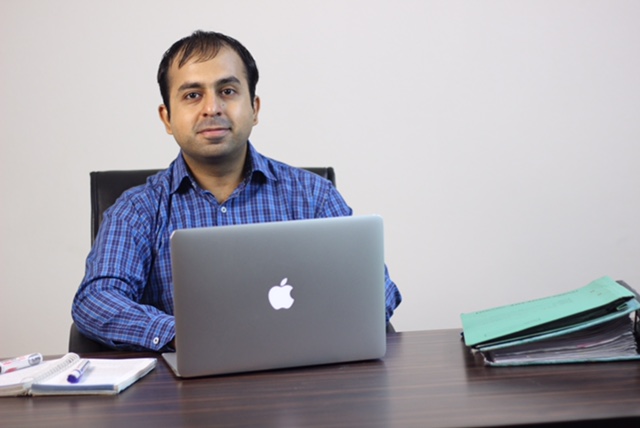
    bharat-chugh-2

    Soon after graduation, you began practising. What challenges did you face in the initial days at the bar? Any memorable trial court experiences?

    Soon after I graduated, I observed a huge vacuum in traditional litigation scene. In this vacuum – I, as a 21 year old lawyer, saw opportunity. Everyone wants to be a Senior Advocate, but few are willing to pull all-nighters for an important case. I used to take up briefs for what people will consider a pittance, and tried to deliver the best service possible. My previous legal aid experience, publications and frequent court appearances ensured that briefs (though not too well paying initially!) still kept me busy.

    During this time, I got to advise my clients on a wide range of legal issues including Criminal Law, Bail Applications, Injunctions, Conventional Civil, Contract, Property and Commercial litigation, Arbitration, Writ Petitions, Cases relating to Negotiable Instruments, Financial Fraud and Cheating, Matrimonial/Inheritance/ Succession/Guardianship and Custody Laws. I had many overseas clients to whom I rendered advise on various issues relating to interface of foreign law with Indian Legal system, enforceability of foreign judgments/awards in India, anti-suit injunctions, etc. Some very vexed issues indeed !

    My favorite court room triumph came in a divorce case where I was cross examining. This was one of my first cross examination cases and I was still pretty naïve in the art. It was a case where I was appearing for the husband in a divorce petition, where he was seeking divorce on the ground of mental cruelty, as his wife had filed a false 498A/ 406 IPC case against him. She had alleged that my client had kept the entire articles of her stridhan and thereby committed criminal breach of trust. The witness in question was the lady’s brother, who had come to depose as to ‘how dutiful his sister was, and it was my client who had treated her cruelly’. As soon as that middle aged North Indian Punjabi Man came into the witness box, I could already see the anger in his gait. He appeared to be a man with an acute sense of honour, and I knew that this potentially might turn out to be his Achilles heel. I planned to hurt his credit and let him burn on his own. I asked him and I remember the exact words :

    ‘I put it to you that you have sold all your sister’s gold articles, and misappropriated the money!’ He just blew his top off on this one and launched a scathing attack on how insensitive I was. I politely reminded him to answer the question first. He blurted out “That is incorrect!” He further volunteered: “It still remains with us”. I immediately followed it up with the finishing coup de grace and drove the proverbial last nail in the coffin: “but you haven’t brought it to the court! You’re lying!”

    He agreed to bring it to the court on the next date of hearing. I got these two answers recorded and concluded the cross examination. Through these two questions, we were able to demonstrate that the 406 IPC charge levelled against my client was false. If we would have asked him whether they had the gold or not directly, he would have clearly denied the same. My client won the case eventually, and this rather damning admission was one of the factors that weighed heavily with the court. A case won by a single question, and a killer argument; nothing compares to this high. One doesn’t need food or drink for days. This made me really happy and yes, the word spread fast, it fetched me a lot of good clients.


    Prior to entering law school, did you ever wish to be a judge? What motivated you to apply for judicial exams?

    Frankly, No. I shared the prevailing stereotype that one doesn’t get to be judge, unless one has more salt than pepper in his hair. I had never imagined I’d be a judge at 23. Since I was initiated into law when I was still 13-14 years, I always wanted to be a lawyer. In my fourth year of law, I got hooked to reading great Judges like Justice Chinappa Reddy, J. Krishna Iyer, J. Chandrachud, Lord Denning, Oliver Wendel Holmes, Lord Atkin & Justice H.R.Khanna, amongst many others. They inspired me a great deal. I was fascinated with how these judges breathed life into the dead letters of law by creative interpretation, fashioned remedies, where they apparently were none and did substantial justice. During this time only, I first got enamoured with the idea of being a judge. I have seen a lot of injustice and inequity early on in my life, my heart used to be rankled at each injustice. This was a beautiful opportunity to be a part of the solution and actually dispense ‘Justice’. A service that allowed one an enormous ability to correct injustices, contribute to the evolution of law, and at the same time, quench one’s penchant for writing.


    What is the structure of the exam and how did you prepare for it? What motivated you to accomplish such a feat?

    (Not only did Bharat secure the first rank in the Delhi Judicial Service Examination but he was also the youngest to do so.)

    I started studying for the Delhi Judicial Service Exam, alongside law practice. I also took took preparatory classes with Mr. Rahul Yadav of Rahul’s IAS (fondly called ‘Rahul Sir’) at Mukherji Nagar, Delhi. The time at his classes did wonders and really helped me build a strong conceptual base and made my job much easier. I also started teaching my juniors in whatever time I was left with after court, classes and my own studies. It dawned on me that the best way to master a subject is to be able to teach it. All in all, I used to spend at least 8-9 hours a day either studying or teaching.

    Armed with about a year of preparation, I appeared for the Delhi Judicial Service Examination (in short ‘DJS’). To give one a fair idea: DJS exam is not rote based exam and is based on real life cases, involving extremely vexed questions of law; issues that have arisen in the recent times before the courts. The examination has the distinction of being the toughest judicial service examination in the country. It is spread over three stages, first stage is the prelims – which is objective type; the second stage consists of 4 written exams which are subjective and test one’s ability to write well, followed by an interview/personality test. The exam is intensive and requires the student to don the mantle of a judge and write proper orders/judgments. The preparations are strenuous but extremely fulfilling for someone who likes to grapple with legal issues.


    How did you feel when you got to know about your excellent scores in the judicial services? Please share with us your experiences thereafter.

    On the day the results were declared, I was arguing a bail application before the High Court. I was ecstatic to find that I had not only cleared the exam but also aced the exam, in all the three successive stages. I was also the youngest at 23 (or rather, the least experienced!) in my batch. I must confess that I was on the horns of dilemma when the results came out. I enjoyed the practice of law immensely and it was hard to let go-of. After thinking days and nights on the trade-off involved, I finally came to the conclusion that ‘a life of reticence’ was a small cost to pay, to be given this opportunity to do so much good. The existing clients, who had reposed great faith in me, were naturally a little sad about it, but happily moved to my friends/associates who took my cases over, making my transition smooth.

    At 23, I took the oath of office on 28th May, 2013. The text still sends adrenaline rushing down my system, each time I read it, and the text will be incomplete if I don’t reproduce it in full :-

    “I, Bharat Chugh, having been appointed a judge, do solemnly affirm that I will bear true faith and allegiance to the Constitution of India as by law established; that I will uphold the sovereignty and integrity of India, that I will duly and faithfully and to the best of ability and knowledge and judgment perform the duties of my office without fear or favour, affection or ill- will and that I will uphold the constitution and the laws. “

    As Wordsworth puts it ‘Bliss was in that dawn to be alive; to be young was very Heaven’. I took over my first judgeship assignment in June, 2014 as a Metropolitan Magistrate (NI Act), Tis Hazari. Life had come a full circle, so to speak; My father had started as a typist in Tis Hazari only, roughly four decades back, and I also began my career from here only as a judge. He was ecstatic to say the least. I had fulfilled the promise that I had made to him. I wanted and always tried to make a meaningful difference to people’s lives and hence took it up.

    I did not find the transition very problematic. My essential duality as a lawyer, and the ability to argue both sides, was never a hindrance in judging. In fact, it helped me appreciate both sides of a question even better.

    On the essential qualities of judging, As Socrates says ‘four things belong to a judge: to hear courteously, to answer wisely, to consider soberly, and to decide impartially’. This, I must confess, is an extremely tall order to go by, but I always tried to abide by this principle. The art of active listening isn’t easy, but once mastered, is worth its weight in gold. One learns a lot that way. I learnt so much from counsels who I had the privilege of hearing in different cases.

    A judge’s life is not easy; it is, in a lot of ways, a hermit’s life. It requires reservoirs of patience that run deep and never dry up. Social Contact is quite limited. But all this, as I’ve said earlier, is a small cost to pay for being able to dispense justice.

    I had the opportunity of writing judgments in countless cases that kept the pangs of writing satisfied. Though arguing was something I always missed.


    Law students aspire to join practice, judiciary or the civil services but usually tend to shy away from providing legal services and see is as a chore. Is such an attitude advisable?

    No. Judicial Services or Civil Services is extremely fulfilling. It does require a lot of preparations but let us not forget that knowledge does not go to waste ever. Even if someone does not make it to the exam, the knowledge holds the student in great stead, throughout their lives. In a knowledge driven economy, the man with knowledge wins sooner or later. I know so many people who were extremely capable, but for some reason could not clear the exam, but armed with such great knowledge entered practice and did extremely well.

    As regards litigation, I agree there are enormous challenges for a young litigator, and the going is extremely tough, at least in the initial few years, especially if one has no legal background. It is also extremely demanding insofar as an individual lawyer has to divide his time between attracting clients and core legal work, however, nothing takes away from the fact that the struggle is extremely sweet, and those three minutes in court kind of justify everything.


    Can you tell us about the training you received at the Delhi and National Judicial Academies. Is there in a need for reform in training programmes of judges?

    After taking the oath of judgeship, I, along with my batchmates underwent one year of extensive induction training at the Delhi Judicial Academy, Dwarka which included – academic sessions as well as hands-on experience in court management, docket management and court craft. We, along with our seniors – presided over various judgeship assignments, such as Civil Judge,, Guardianship Court, Metropolitan Magistrate, Crime Branch court, Special Court for cheque bounce cases, Special Court under the Prevention of Corruption Act, Sessions Trials etc. The Training at the Delhi Judicial Academy is truly transformative. The academy works as a think tank and training institute for newly recruited and existing judges.

    I was also fortunate enough to be at the National Judicial Academy, Bhopal for a brief time and it was truly enlightening. One gets to interact with judges from across the country and exchange best court practices. It is an opportunity that no intern/scholar/judge should miss.

    The training programmes are quite comprehensive and inter-disciplinary. It would be a great idea for the academies to also introduce courses in comparative legal positions in foreign countries and the psychological aspects of judging, heuristics and logical fallacies, which are extremely important for a judge to know.


    Any memorable judging experiences that you would like to share with our readers?

    There are many actually. There is one that I remember off-the-cuff. I was acting as a Railway Judge, for a brief time, as an additional charge (called the link judge), where I was aghast to find that young men and women were being prosecuted for begging/selling tea on the railway platform under an archaic provision of the Railways Act. This was a classic case of, what one author calls, ’Criminalisation of the Poor’. The sight of these unfortunate people mired in poverty, and disowned by the State moved me a lot. I gave voice to my anguish in one of my poems called the ‘Confessions of a young judge’. This gave me sleepless nights, and I had to find out a way to help them, of course within the framework of law. The relevant provision in the Railway Act clearly prohibited such an activity; However, convicting them will amount to me being a court of law and not a court of justice. Taking cue from Justice B. D. Ahmed’s remarkable judgment in Ram Lakhan v. State (2006), I dropped proceedings against many of these people, invoking the doctrine of ‘necessity’. I ruled that: A person was excused from the crime of begging, if he begs in order to save himself from starvation and a certain death. I wrote, with great anguish, that if the so called welfare state could not provide basic necessities for these people, it had no right to prosecute them. These orders were never challenged by the State before the higher echelons, which was undesirable insofar as a judgment by the High Court on this point would have had a wider coverage and could have provided a much needed security cover to these forgotten souls and benefits would have trickled down on a much wider scale.


    The judiciary today is in crisis due to the excessive backlog of cases. Can mediation be a solution to this crisis? Is there any other form of adr which can be looked upon as a potential solution?

    Backlog is a huge issue. Courts are crumbling under pressure. Too many cases on the board deprive cases of the personalised care and attention that they deserve. With such work pressure, it is indeed a challenge to maintain quality not just in the final judgment, but also in the process. I worked in my first assignment for one a half years. It was one of the heaviest courts with over 5000 cases; I managed to dispose of about 3800 cases in the first one and half years. I tried to implement new court and docket management strategies.

    Mediation and ADR is, of course, the way forward, not because of the system’s inability to deliver timely justice, but because of the qualitative worth, finality and superiority of a decision arrived-at, by the parties themselves.

    In order to further the cause of ADR, I also made a reference to the Hon’ble High Court of Delhi on a question of law relating to ‘Mediation/ADR in Criminal cases’. The reference was subsequently entertained, amici appointed to assist the court. A landmark decision is expected on that point which would streamline the mechanism of ADR in criminal cases !


    You recently returned to the practice of law after resigning from judgeship. What were the factors which influenced you to do so?

    All in all, after a three and a half year, and a rather fulfilling stint at judging, I decided to once again return to the practice of law. I sorely missed being able to practice law in the last three and a half years. Once a lawyer, always a lawyer as they say ! I also missed being able to write and teach. Having fulfilled the promise made to my father, I had certain promises to keep with myself and this is but the first step in that direction. Whether I’ll be able to redeem those promises is something that time will tell. But, for now, as Shakespeare would say, there is method in my madness !


    What would be your parting message to our readers?

    There is no substitute for hard work in law. I’ll quote Justice Joseph Story when he said “The law is a jealous mistress and requires a long and constant courtship. It is not to be won by trifling favors, but by lavish homage.”If you are able to do that – there is little else that you’ll need ever again !

  • Justice Sayonara Telles Laad, on bringing justice to the people, legal education and the Indian Judicial System

    Justice Sayonara Telles Laad, on bringing justice to the people, legal education and the Indian Judicial System

    Justice Sayonara Telles Laad is the Ad-hoc District Judge and Assistant Judge, North Goa, graduated in law from G.R. Kare College of Law in the year 1987. She joined practice in the same year went on to become an Assistant Public Prosecutor in 1992. In 1996, she answered her Judiciary Examinations and has been a judge for the past 20 years. This Interview was conducted by Dietrich Almeida of GR Kare College of Law

    IN THIS INTERVIEW SHE TALKS ABOUT:

    • Importance of Extra curricular activities
    • Criminal practice
    • Changes which have impacted the legal profession


    HOW WOULD YOU INTRODUCE YOURSELF TO OUR READERS?

    I am an Ad-hoc District Judge-1 and Assistant Judge Sayonara Telles Laad. I graduated from G.R. Kare College of Law in 1986-87. I started practise as an advocate in 1987 before I joined as the Assistant Public Prosecutor in 1992. I joined the judiciary in 1996 as Civil Judge Junior Division and Judicial Magistrate First Class at Vasco, Sanguem, and Ponda and was later promoted as Senior Civil Judge and Judicial Magistrate First Class at Bicholim, Quepem, and Ponda. It’s been 28 years since I’ve done law.

     TELL OUR READERS A BIT ABOUT YOUR CHILDHOOD AND PRE-COLLEGE LIFE AS WELL AS EDUCATIONAL BACKGROUND. DO YOU HAVE LAWYERS OR BUREAUCRATS IN YOUR FAMILY?

    I have done my schooling at Guardian Angel Higher Secondary at Sanvordem, Curchorem. Then did my Higher Secondary Schooling in Arts and completed my B.A through Parvathibai Chowgule College. I come from a family of bankers and teachers. There are bureaucrats but no lawyers in my family.

     HOW DID YOU DECIDE TO OPT FOR THE FIELD OF LAW?

    Opting for law was not planned, nor was it my ambition to join the legal profession. It just happened, and I went with the flow. I was not focused like the kids now-a-days. I always wanted to study as I had the fever for answering examination. After I completed my graduation in B.A, I thought of doing M.A but in those days to pursue M.A one had to go to Panjim as it had to be done through University of Bombay. Goa University came to be established much later. As G.R. Kare college of Law was closer to home, I opted for LL.B.

     HOW HAVE EXTRA-CURRICULUM ACTIVITIES HELP YOU IN ACHIEVING YOUR GOALS?

    I have always been actively involved in extra- curricular activities like sports and cultural activities and see that I keep myself active. Extra -curricular activities helped me in developing my personality, helped me in adjusting to various situations, developed patience and confidence to be a better human being and it keeps you active and your mind alert.

     DESCRIBE YOUR EXPERIENCE WHEN YOU APPEARED IN THE COURT FOR THE FIRST TIME?

    Well, I guess it was like any other newcomer to any profession- mixture of surprises, apprehension, awe of the judges, the legal luminaries, the imposing atmosphere of the court, nervousness, awkwardness and a feeling of satisfaction to be associated with such a noble profession.

     TELL US ABOUT YOUR EXPERIENCE AS THE ASSISTANT PUBLIC PROSECUTOR.

    I had the opportunity to deal with a number of criminal cases during my tenure as Assistant Public Prosecutor which was for about 4 years before I joined judiciary. Handling criminal cases exposed me to human tendencies, human psychology, the mind-set of victims, offenders. I felt that the victims needed much more justice than they were actually getting as there was no victim compensation awarded to the victims then as per the recent amendment which has introduced victim compensation to the victims.

    rsz_sayonara_laad_2

     WHAT MADE YOU GRAVITATE TOWARDS JUDGESHIP?

    I was an Assistant Public Prosecutor when the opportunity came to apply for the post of Civil Judge Junior Division and Judicial Magistrate First Class in Goa Judiciary. I thought that opting for judiciary would be ideal as I would be exposed to handling Civil matters besides criminal cases and a variety of cases as compared to only handling criminal cases which were limitations of the post of an APP.

     WAS, THERE ANYONE, IN PARTICULAR, WHO INFLUENCED YOU WHILE DECIDING ON JUDGESHIP?

    There was no one that influenced me but I felt that judgeship is a better option for a lady in all ways as it is the next step after being an APP and a privilege to be appointed as a judge considering the nobility of the profession.

     BRIEFLY TELL US ABOUT YOUR INTEREST IN JOURNALISM.

    I dabbled in journalism prior to my legal career as I had always been a voracious reader and had a flair for writing and wanted exchange of views. I wanted to change the mind-set of society to a large number of unjust social norm and superstitious beliefs. It feels wonderful to reach out to a whole group of people out there through this medium. It’s a wonderful feeling when someone says I have read your write-up or article and it was nice and thought provoking.

    DO YOU FEEL THAT THE LEGAL PROFESSION HAS SIGNIFICANTLY CHANGED FROM THE TIME WHEN YOU DECIDED TO STUDY LAW?

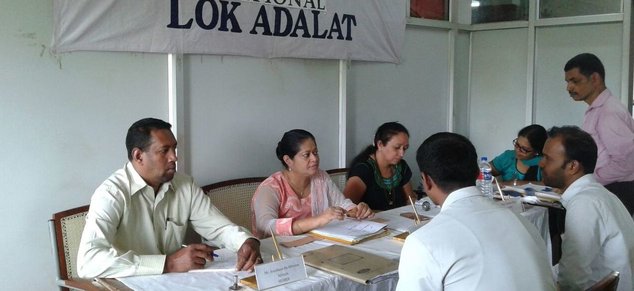
    Yes of course there are a lot of changes in this field. There is computerization and upgrading of infrastructure, newer laws like Domestic Violence Act has come, Sensitization of women Gender Acts, introduction of Alternate Disputes Forum for settling cases, Plea bargaining, appointing of Paralegal Volunteers to work from grass root level, establishing front offices with Retailer Advocates on panel for those who want free legal Aid/Advice, introduction of the mobile van for creating legal awareness and disposing matters through LokAdalats by taking justice at your doorstep.

     THE BAR COUNCIL OF INDIA IS CONTEMPLATING ON THE FORMATION OF A NEW RULE WHICH WILL REQUIRE LAWYERS TO PRACTICE IN LOWER COURTS, BEFORE ARGUING BEFORE THE HIGH COURTS AND THE SUPREME COURT. IF THIS RULE IS MADE CONCRETE, DO YOU THINK IT WILL HELP?

    I think it’s a very good move indeed as the lawyers will have a good insight and in-depth knowledge of the actual practice and procedures of law and the working of the lower courts.

     WHAT DO YOU THINK ABOUT THE INDIAN JUDICIAL SYSTEM? HOW CAN IT IMPROVE ON DELIVERING JUSTICE?

    I would advocate the Common Civil Code as applicable in this state to the rest of India.

     TELL US WHICH SPECIFIC ROLE WOULD YOU LIKE TO SEE YOURSELF AFTER 10 YEARS?

    I would be retired by then and would like to create legal awareness and crusade for settlement of cases through Alternate Dispute Redressal Forum which is introduced under section 89 of the Code of Civil Procedure through means like Arbitration, Conciliation, Judicial Settlement through Lok Adalat and Mediation.

     FINALLY, WHAT PARTING MESSAGE WOULD YOU LIKE TO GIVE OUR READERS?

    I would like to stress that litigants and Advocates should be more open minded to refer matters to Alternate Dispute Redressal Forums and make sincere efforts to settle the cases as settlement of cases is cost effective and time saving and bring about peace and happiness.

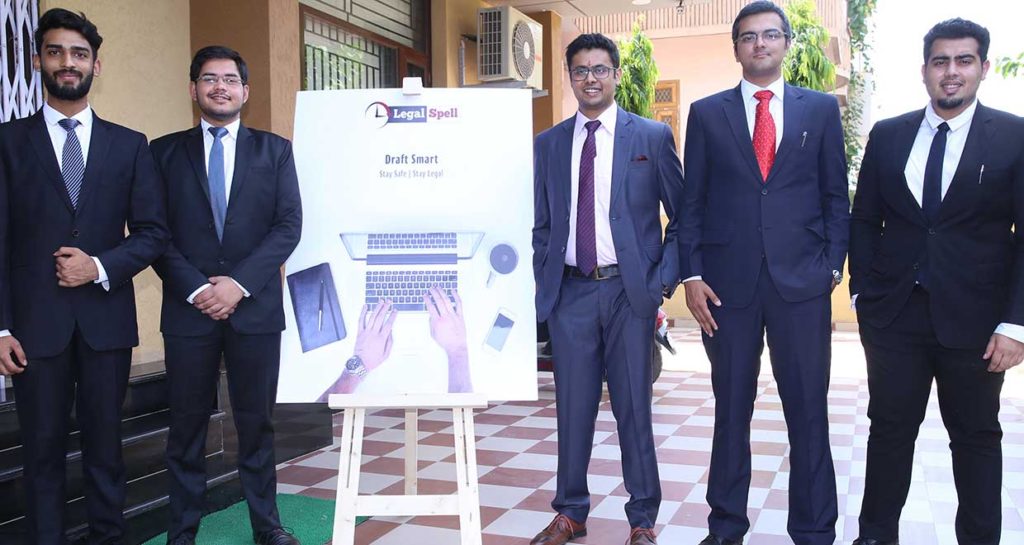
  • Varchasvi Gagal, CEO, LegalSpell, on starting up in legaltech and creating a drafting tool

    Varchasvi Gagal, CEO, LegalSpell, on starting up in legaltech and creating a drafting tool

    Varchasvi Gagal graduated from Jindal Global Law School recently in 2016. After witnessing a wide array of legal cultures through global legal education in college and on exchange at Baltimore School of Law, University of Baltimore, he has been researching the use of legaltech to transform Indian Legal drafting methods, for the past 2 years. He worked at the Legal Clinic of his college to understand the need for documentation among people at the grass roots level.

    Varchasvi has recently launched India’s first DIY document drafting platform for all called LegalSpell. He has been working on his start-up for more than a year ago. His vision is to revolutionize the way document drafting is done in India.

    In this interview he talks to us about:

    • What is LegalSpell and how it is one of its kind.
    • His motivations and inspirations in life and in creating LegalSpell.
    • His journey from a simple law student to the CEO of LegalSpell.
    • His vision to do something path breaking with LegalSpell.
    • Future plans and taking Document Drafting towards a much needed evolution.


    Tell us a bit about yourself. What drives you? What is one achievement you would be most proud of today?

    I come from a background, which involved my upbringing in a small town (Alwar) in a joint family. I have been molded in such a way that commitments are considered to be of the utmost importance.  Being from a business family, I have always admired my father. Watching him work inspired me in so many ways. He struggled hard and created an industry all by himself.

    He drives me towards becoming a better man.

    I like to be honest. I am a straightforward person and in a lot of ways, direct and practical. And maybe that is why I never back out from my commitments. I like to keep things clear, and law taught me that in order to do that, it’s better to do everything legally. And maybe that is why I never back out from my commitments. That was my motivation towards LegalSpell.

    When you are working towards something that you believe in, you just don’t want to stop. And that has made me a workaholic. I just love to work and I can’t sleep until I am satisfied with the inputs I am giving in to achieve my goals.

    Although it took me more than a year to analyze the needs of people, one thing I am proud of today is that, I have finally created something that I once imagined. We created a user interface, which would not only revolutionize drafting, but will cater to anyone and everyone. The tool was specifically designed to adapt to the user, keeping in mind a professional as well as a layman. I am proud that LegalSpell will work directly and indirectly towards legal awareness and safety.


    Tell us a bit about your law school days, and your internship experiences?

    Law School for me was a joyride. It has transformed me in so many ways and yet it was a home away from home. Spending half a decade in a place is not a piece of cake. But Jindal was an experience of a lifetime. The 5 years have taught me so much, made me aware about the world, and has witnessed my transformation in many ways. I was taught by few of the most renowned faculty in India and on the other hand I made friendships to last for a lifetime. The semester exchange program opportunity gave me so much of an insight into the legal cultures of the world.

    Also, I thank my college for giving me some wonderful friends and seniors. Samridh, Ojasvi and Harsh Aggarwal have been my constant support throughout. My seniors, Advocate Jayant Malik and Arjan Sharma have guided me in shaping LegalSpell as a product. In fact, my friends and an integral part of team LegalSpell, Namon, Karan and Hrideja are also from the same college.

    As far as my internships go, I thoroughly cherished interning at Impact law venture. That was the time when Mr. Pankaj (the owner) gave me some brilliant insights into start-ups.


    When was the moment you decided to not pursue the mainstream legal career and dive into entrepreneurship?

    My exchange semester along with the internships played a huge role in my decision in choosing a non-conventional career. I gained a lot of experience at my internships, and a lot of knowledge in my college, however there was always something that was missing. There was always the will to do something path breaking.  Something that not only creates an impact in the legal sphere, but transforms it forever. And when it clicked, nothing was the same ever again. The drive that it brought has borne its fruits in the form of LEGALSPELL.


    What is LegalSpell?

    LegalSpell is an online drafting platform for lawyers, corporates, entrepreneurs, start-ups, freelancers, designers, chartered accountants and laymen alike, a tool facilitating an instinctively easy drafting. LegalSpell ensures a time-efficient and cost effective user experience. Having been designed to automatically customize and personalize the document drafts for the user, this novel drafting platform has convenience imbibed in its core. A user can prepare their customized draft simply by answering a few questions and thereafter, use the drafting platform to personalize their draft to better suit their needs. While using this platform, the user has the flexibility of hand-picking clauses from LegalSpell’s automated draft prepared on the platform or add pre-drafted clauses specifically tailored to suit their draft from the Referrals tool. To add to the user’s experience, the drafting tool also incorporates features like an onscreen Google search and drafting notes, amongst others. The orientation of the drafting platform has been kept well aligned with that of the conventional drafting tools to instill adaptability and for enhancing the user’s ease of use.

    For instance, if a lawyer needs to draft an application under Section 34 of the Arbitration Act (filed for setting aside an arbitral award), all he needs to do is answer a few specific questions and LegalSpell will automatically prepare the draft by creating the Index, Memo of parties, List Of dates, Affidavits and Vakalatnama in just one go.


    What is legaltech? How does LegalSpell use legaltech?

    Legaltech is nothing but a step forward towards a future where the legal fraternity goes hand in hand with technology to attain more efficiency and productivity in legal work. The idea is to revolutionize the legal sphere with advancements of technology to foster the legal needs of people with utmost convenience.

    LegalSpell is driven by the application of technology to redesign the conventional document drafting practices into a neoteric and more sophisticated system of drafting. Our vision is to strive towards efficient and hassle free document drafting through the use of legaltech. Our goal is to innovate and develop technology to make the legal system much smarter, faster and efficient. We believe that while all other spheres of our life have been transformed through the means of technology, the legal system has remained deprived of such transformation. By introducing LegalSpell, we are reshaping those conservative and conventional methods by the use of technology.


    Who all does LegalSpell cater to?

    LegalSpell not only caters to Lawyers, CA’s, Corporates, Start Ups, Freelancers but to layman as well. It is so easy to use that through an easy 5-step process, a highly intricate and complex document can be drafted within minutes. With our initial offerings, LegalSpell provides a platform to draft more than 120 documents, which are divided among Court Related documents, Agreements, business related documents and personal documents. In fact, with the course of time, we are aiming towards a repository of 250+ documents by the end of October. With all that in the cards, we are just getting started. Our goal is to provide our customers with a choice of each and every single document possibly required under the Indian legal system.


    How is LegalSpell of aid to the legal fraternity?

    Being a company started by lawyers, we realized that due to increased cost and time pressure in a highly competitive industry, it had become imperative to invent a cutting-edge solution to the highly cumbersome document drafting methods. LegalSpell serves as the perfect tool to solve these issues.

    The amount of time it takes to create an ironclad document is far beyond imagination for a layman. Be it a lawyer or a paralegal, drafting is and has always been a cumbersome process. But not anymore; LegalSpell caters to the needs of legal fraternity, where it not only saves time, but is also cost effective. No more drafting hassles, instead after a mere work of answering few questions, the user will be served with an automated draft of the selected document in one go.

    Moreover, LegalSpell not only provides the lawyers with a means to increase efficiency and work productivity, but also helps them to expand their horizons into different aspects of law with the diversity of documents that it offers.


    How did LegalSpell come about?

    After spending a whole semester in Baltimore School of Law, studying the functionalities of law in the global sphere and experiencing the digitized legal culture there, I realized how India lagged behind from global standards of fast and efficient document drafting. Being a legal student at that time, it perturbed me that there was no dedicated document-drafting platform in India to cater to the documentation needs of people.

    I realized that the nuances of the legal world have been changing at a pace faster than ever and range into multiple shades of an otherwise black and white regime. The idea behind LegalSpell was to empower everyone to keep up with this change. While technology has transformed the way professional needs and demands are met, the realm of documentation lacks a smart and efficient use of technology to fulfil its demands. By creating a tool for document automation and customization, we are reinventing a smarter and more productive way of generating high quality documents with utmost ease and convenience.

    As a result, I, along with two brilliant lawyers set upon to create LegalSpell, to foster the documentation needs of people.


    varchasvi-gagal-1

    Who are behind LegalSpell?

    Driven by the pursuit of spreading awareness amongst people, LegalSpell was conceptualized by myself with the support of Mrinal Gagal (Entrepreneur) and was, thereafter, pragmatically augmented and developed by two lawyers, Jayant Malik and Arjan Sharma. Our Team Consists of Ojasvi Singh (Advocate), Meghanjali Routh (Economic Strategist), Karan Dhingra (Law Student), Namon Deep Jain (Law Student) and Hrideja Shah (Law Student).


    What were the problems faced while bringing about LegalSpell?

    Everyone believes that a good idea is all that is needed to establish a successful start-up, but take my word, that is merely the beginning. Maybe that is why there’s no copyright on the idea but on its expression.

    The number of hurdles faced over the course of time in the creation of LegalSpell are innumerable, however one of the biggest challenge was to develop an instinctive platform that could respond to all the needs and necessities of the user. The research and development invested in the creation of LegalSpell, is one of the most significant reasons why LegalSpell is one of its kind. It took us a whole year, just to research and analyze the needs and demands of the consumers.

    Also, our I.T. team along with our Legal team faced countless problems while trying to incorporate technology in creating flawless drafts. However, they did a commendable job by working day and night to create a dedicated DIY document-drafting platform.


    Why a start-up over a conventional job or an independent legal practice?

    I am and have always been passionate about law, and at the same time I have always been taught by my father that progress is the key to everything. The idea behind LegalSpell was to create something in the field of law that proves to be a definitive step towards a progressive legal culture.

    Don’t think of LegalSpell as just another product in the market. It is much more than that, it stands tall on the foundations that are built on much higher principles. As a law student, my inspiration has always been backed by the habit of need for quality and excellence, that was instilled in me in my early years of law school. As Aristotle has said “we are what we repeatedly do, and excellence, then, is not an act but a habit.”

    By creating LegalSpell, we are not only progressively catering to the needs of fellow lawyers, but are creating a legal environment where anyone and everyone has access to quality documents which helps them stay legally sound in their respective professions.

    Why serve only yourself by doing a conventional job, when you can serve the whole fraternity by making their work more productive and efficient.


    What can we expect from LegalSpell in the near future?

    This may sound a little over-confident, but we are just getting started. Not only are we planning to come up with three new services by the end of this year, but we are already working on adding a wide array of documents related to every profession, so as to cater to the legal documentation needs of as many people as possible.

    We already have a document offering of 110+ document drafts, and our goal for 2016 is to take it to 500+ documents by late December. On the top of that, our R&D team is constantly working on making LegalSpell’s drafting platform more instinctive, more responsive and even more user friendly, based on the feedbacks from our existing customers.

    If all goes as planned, LegalSpell will transform the way documents are created in India.


    Is LegalSpell intended for the Indian Markets only?

    The answer to the question whether it is “intended” only for the Indian markets won’t do justice to what the future holds for LegalSpell.

    As of now, LegalSpell is specifically focused on catering to the needs of Indian users. It is designed to respond to each and every need of the user while drafting their intended document. The documents are fashioned according to the Indian Legal System to provide utmost precision.

    However, as I mentioned earlier, that we believe in progress and we are not denying the fact that somewhere down the road, LegalSpell might include international documents under its ambit.


    Where do you see LegalSpell in the coming years?

    We believe that with the inception of LegalSpell, we have created something truly incredible. It holds the potential for an endless number of possibilities. We have and still are striving towards revolutionizing the Indian Legal System, and we won’t stop until a truly remarkable revolution is witnessed by our legal system. We take pride in the fact that we are instrumental in doing so.

    We already have plans for the coming years, however they are still in their initial phase, and right now we are working on our plans for the near future, moving forward one step at a time.

    As they say, “the sky is the limit”, but for us, we don’t believe in limits, and that is why “the sky is where we start from.”


    What would be your message to readers?

    Believe in what you do. I believe law, as a career is just not limited to litigation or corporate life. In today’s world especially when India is moving at such a fast pace towards digitization, a law student has multiple avenues to choose from. I believe that in order to sustain or to be successful in such a competitive and fast moving environment that we live in today, one needs to be innovative. We are just at the inception of innovation in the legal field and there is a long way ahead. Courses we study in our law school shape our reasoning abilities. Once we graduate only then do we realize that there has been a significant change in how our reasoning and logical abilities have been boosted. At the end of the day, the only thing that matters is one question, “Are you living your profession” and my answer to that question is YES I Am.


  • Pranit Saxena, Founder, lawyerouno.com, on being a Manager at Tata Consultancy Services

    Pranit Saxena, Founder, lawyerouno.com, on being a Manager at Tata Consultancy Services

    Pranit Saxena graduated from Symbiosis Law School in 2011. He currently works with TCS as a Manager in the BFSI-LPS sphere. He is part of the core team setting up GRC expert augmentation for an EU based clearing bank. The task involves the staffed GRC experts assisting the chief compliance officer with BFSI specific compliance across EU, APAC and Americas.

    Pranit is also the founder of lawyerouno.com. Lawyerouno is a social venture that helps clients contact and make appointments with any lawyer for free. It searches the most appropriate lawyer per the client’s needs.

     In this interview he talks to us about:

    • His experience at Symbiosis Law School.
    • Importance of higher studies for a lawyer.
    • com- where clients contact and make appointments with any lawyer for free.
    • His views on international financial situation owing to upcoming regulations and situations.

    Please introduce yourself to our readers, where did you grow up and complete your initial education? How did you decide to take up law?

    Hi, I am Pranit. I am currently working with TCS setting up their international compliance practice. My initial education was across six cities including Bathinda, Nagpur, Pithoragarh, Noida, Pune etc. in Army Public schools and Kendriya Vidhayalas owing to my dad being in the forces. After a lot shunting, I finally passed my 12th from Noida. I decided to take up law based on my discussions with my teachers in school and my penchant for getting in trouble with the system (school system i.e. repeatedly getting in trouble with the school administration) and I guess it had worked out fine till now.

    You have graduated with BBA LLB Degree from Symbiosis Law School in 2011. Tell us about your law school experience. Share some highlights from your college days that shaped you as a lawyer.

    So Symbiosis back in 2006 was unlike any other law school that you would see right now. We had a limited campus, amazing faculty and even a better ecosystem of students from various fields (symbiosis law school was in the arts and commerce campus). This heterogeneity of students gave us a very early exposure to variety of disciplines and opportunities. It was rightly called the Oxford of the East, as the student community in Pune was very strong. They were perineal college festivals, competitions that used to go on and provided me ample opportunities to explore. Symbiosis Pune had no hostel in the campus and we used to live independently in the city, which was a huge learning in itself. The teachers came from a varied background and were very supportive and encouraging. Apart from the obvious knowledge, what Symbiosis uniquely provides every student, is the independent attitude and a corporate ready culture, which most of us would learn post our law school.

    Did you do any internship? What was the work allotted to you like?

    I completed 24 weeks of internship across law firms like Barucha, fox mandal, companies like Larson & Tubro and Supreme Court attorneys like P.P. Rao. The spectrum covered was intentionally larger to experience a variety of fields within the legal industry. The work allocated was usually around the research projects in law firms, case file summarization in Supreme Court and high courts and occasional arbitration work for L&T. The work also included being a part of the client/vendor meetings with the seniors and keeping a note of issues.

    How did you manage internship with studies? How did the practical exposure compliment the theoretical knowledge imparted to you in college?

    Back then in Symbiosis, internships were only allowed during breaks, which made sure there was never and conflict and balancing the internships with the mandatory attendance requirement was never a challenge.

    The court internships really helped in enhancing the nuances of the procedural laws which helped appreciate the theoretical knowledge.

    There is a huge gap between what we study and what we implement as lawyers in practice. With that being said, all the knowledge and experience in college forms a very robust base for what we lawyers are expected to do at work.

    Do you consider pursuing higher studies after graduation? How important is it for a lawyer to go for higher studies? Were you inclined at any time, towards the civil services?

    Not really till now. Although I feel certifications in specialized fields can add a lot of value to the entire candidature for future opportunities. Higher studies in my view, is helpful if you are looking for a career shift like teaching, MBA, etc. Higher studies can also buy you time in case you are inclined towards exams like civil services, judiciary etc.

    A civil services exam is a different ball game and students must start preparation while in law school as the time period of five years is a huge opportunity in itself. No doubt it is a brilliant career choice.

    Tell us something about lawyerouno.com.

    Lawyerouno is my love-child that I started three years back, just to give something back to the community. It is a platform which connects people looking for lawyers to lawyers for free. We have lawyers from over 60 cities on the portal. We started the venture with a social outlook and we are still trying to be true to it. The basic thought, behind the idea was to provide young lawyers who want to set up their practice, an opportunity to connect with clients. We are also planning a few products on the portal to provide competitive pricing advantage to the clients.

    How difficult was it for you to connect and convince different lawyers to register on lawyerouno.com?

    As the registration for lawyers on the portal was free and the intention was to provide them with an opportunity to connect with the clients, I actually did not face any resistance from them, although the technology for some senior lawyers was a challenge, which we circumvented by assisting them with a unique live chat support feature.

    What is the international financial situation owing to upcoming regulations and situations?

    My current role in TCS involves setting up of compliance support practice for financial sector clients. The financial world ever since the 2008 crisis is in a state of flux. The regulatory authorities are driving regulatory dynamism as an instrument of change. The more they want to be in control the tougher it is getting for the companies. The Brexit will spur a marked shift for financial companies trading or headquartered in the UK. The companies are vying for the regulatory advantage and gearing up their compliance departments for various new regulations like Mifid II, EMIR, Basel 3 etc. More the regulations better it is for us! All in all it is looking good for the lawyers in the compliance sphere.

    Would you say that the work environment at an LPO is completely different from a law firm?

    Although my current profile is consulting, my initial experience with Thomson Reuters in the LPO sphere convinced me that whatever notion we as law students have about LPOs is completely unfounded. In fact if you are looking for a career in corporate as opposed to litigation, LPO is a very good option as it provides you with the right learning opportunities, international exposure and a good work life balance. Several of my colleagues are now well-placed in the field of contracts and forensics with various fortune 500 companies and start-ups. Right after my stint with TR in the Compliance department, I was involved with a start-up Mind Merchants for setting up their global compliance practice, which started with 3 people and is now already 45+, hence my experience within LPO spurred my growth as a legal professional. The stark difference between the work cultures that I see between these industries is the autonomy and independence that any year 1-3 associate gets at an early stage in their career.

    What were your objectives and plans in the preliminary years of the law school?

    As any other student in the initial years the motive was to have fun and explore the college life to the Tee. It is the only in the penultimate and the final year, that I decided to chalk out a plan for myself. The plan was to identify what I enjoyed more, hence most of my firm internships were in those years which made me sure that I did not see it as my life choice.

    Lastly, what message would you leave for our budding lawyers?

    I urge students to explore themselves as much as possible instead of following treaded path blindly and choose what is best for them as a life choice rather than a career choice. Try not to be bound by what you hear, but channelize your choices around what you experience. Five years of law school is an opportunity, so use it well. All the best!

  • Justice Desmond D’ Costa, on bringing justice to the people, legal education and the Indian Judicial System

    desmond-dcosta

    Justice Desmond D’Costa is the Principal District and Sessions Court Judge, South Goa, graduated in law from G.R. Kare College of Law in the year 1982 and answered his Judiciary Examinations in 1992 and has been a judge for the past 24 years. He possess an experience of over 34 years in the legal industry and encourages the students participate in various activities in order to get more experience. His main goal is to serve the society. This Interview was conducted by Dietrich Almeida of GR Kare College of Law

    IN THIS INTERVIEW HE TALKS ABOUT:

    • What motivated him to become a judge

    • Serving for the cause of justice and bringing justice to the people

    • Legal Education

    • The Indian Judicial System and

    • His advice to law students intending to join the Judiciary

    1. HOW WOULD YOU INTRODUCE YOURSELF, GIVEN THAT MOST OF OUR READERS ARE ASPIRANTS OF LAW AND SERVICES, LAW STUDENTS AND PROFESSIONALS?

    I am the Principal District and Sessions Court Judge Desmond D’Costa. I graduated from G. R. Kare College of Law in the year 1982. I’ve been an advocate for 10 years before I answered the judiciary exams in 1992. From 2002 to March 2016, I was an Additional District Judge. I’ve been a judge for the last 24 years. So you can say I’m a follower of law. It has been 34 years since I’ve done my law. In a way you can say I live law, I breathe law, we don’t eat law but we live and breathe law.

    2. WHAT WAS YOUR LIFE LIKE AFTER GRADUATING AND HOW DID YOU BEGIN FOCUSSED PREPARATION IN ORDER TO ACHIEVE YOUR GOAL?

    Like I said I graduated in 1982 and my objective was to serve the cause of justice. So I practised as a lawyer for several years and then when there was an opportunity to join the judiciary I applied for the post of a judge. And I was selected as a judge in 1992. And ever since that time I’m trying to see in what way I can serve the society such as deciding cases as quickly as possible and not keeping matters pending. We always criticize the system, but in joining the system and doing my contribution that’s the way I achieved my goal.

    3. ALONG WITH YOUR HARD WORK AND CAPABILITY, WHICH INDIVIDUAL WOULD YOU LIKE TO ACCORD CREDIT TO IN ATTAINING YOUR GOAL?

    When I became a judge I and my fellow colleagues used to interactions among ourselves and at the end of the day we would sit together and discuss our problems. So you can say my fellow colleagues, my fellow judicial officers are the people I give credit to. Like we always used to share as the saying goes “Knowledge is only a drop in the ocean”, you can read books but sometimes you might not be able to grasp it or remember it but what you get from discussions with your colleagues and sometimes even with lawyers is entirely different. We used to share experiences and in this way improve and sharpen our focus and sharpen our law.

    desmond-34. WHAT WERE YOUR AMBITIONS BEFORE JOINING LAW AND WHAT LED TO YOUR INCLINATION TOWARDS LAW?

    Firstly, I don’t come from a family of lawyers. So when we were students we used to always see injustices all around us. So many students used to fight against injustices. Once you get involved in society, advocates now make you go for legal aid clinics so you see the trouble that people face. And sometimes cases don’t get over and people are frustrated with the system. There’s a lot of distrust and disgust in the system, that is what we felt and thought, let us see in what way we can contribute to put faith in the system. My experience with the student’s movement and tackling different social issues at our level as students made us interested in seeing in what way we could mould the law to bring justice to the people.

    5. DO YOUR FEEL THAT IN INDIA THERE IS STILL A BIT OF RESISTANCE TOWARDS LEGAL EDUCATION?

    So what they say is that the legal profession doesn’t have green pastures, like a student who does his engineering or medicine they start earning immediately. But now of course in Indian law schools such as national universities, students who study there get very good positions. But in Goa, advocacy implies once you are qualified in law and start practicing, for 4- 5 years you have to attend the courts and see the how it functions. Thereafter, by the time people have confidence in such a lawyer, which is very important as no one will entrust a case to you unless he is sure that you’ll win the case for him, it is what’s called a long gestation period. No doubt that some new graduates who come out of law are well experienced by attending courts and they know most procedures and that is why they are able to start practicing immediately but then you have to be with a senior counsellor. Nowadays judgements are easily accessible over the internet but then to win people’s confidence you have to chisel or polish yourself into a well rounded professional which only experience gives you.

    6. WHAT MOTIVATED YOU TO APPLY FOR JUDICIAL EXAMS?

    Well, I never had a wish to be a judge. As they say life is an accident. So, along the road of life, after I became a lawyer, I continued supporting people for the causes of justice as I’ve said before instead of throwing stones at the system as I felt that it is better to join the system and try to be the change. That’s when I applied for the judicial post and completed my exams. I think that I cannot be a judge by myself but I am a part there in the judiciary.

    7. PEOPLE HAVE A TENDENCY TO IGNORE MOOTS, DEBATES AND EXTRA CURRICULAR ACTIVITIES IF THEY WANT TO GO INTO JUDICIARY OR CIVIL SERVICES. WHAT DO YOU THINK ABOUT THIS?

    This is very true because ultimately what happens is that the lawyer has to develop self-confidence. Further, knowing the law by heart and having academic knowledge but not being able to put it into use is of no utility because ultimately law is to be applied in day to day events and to solve the problems and issues in regards to which your clients will come to you. You have to know the remedy and tell them how to tackle their problems. And all this comes partly from experience by participating in moots, debates and extra-curricular activities makes you an all-round citizen.

    It also gives you a social exposure and makes you more practical. There’s a vast difference between the law written in the books and law in practice. Only when you take part in moots, debates, only then your skills sharpen and your outlook broadens. Take the example of a frog in the well in this regards, the size of the sky for the frog is only the small blue part that he can see. So in order to see the whole blue sky he has to come out of the well. In other words, every student should come out of the well and have a broadened approach. He should not be confined to the walls of his room or library but he has to go out and take part in skits, legal aid clinics, speak to people and also learn their language because in the classroom we speak in English but with clients you have to speak in the local language. Therefore, moots, debates and extra-curricular are very important.

    justice-desmond-dcosta8. HOW IS A TYPICAL DAY AT WORK LIKE?

    A judge’s life is 24×7. We hardly have time. And at the end of the day I try to finish the work I have for the day by reading the files and avoiding postponing the dates of judgment. We have to keep on reading. There’s no time to breathe but of course I enjoy it. I would try to do what’s best for the system. The better equipped you are with knowledge the greater use you can put into society. A gain in our knowledge helps us to be more efficient in our work.

    9. DO YOU FEEL THAT THERE IS A NEED TO IMPROVE ON THE SYSTEM OF DELIVERING JUSTICE?

    The Indian judicial system is a system which is so overburdened, the backlog of cases are clogging the wheels of justice. That’s why people say once you enter into the court your life is finished. In India we have a lot of law commissions which keep on saying that the proportion of judges in India presently is 50 per million. So a number of law commissions have recommended that they increase the number of judges and increase the number of courts. This is one of the main reasons for the big backlog of cases. In the last few years, the Supreme Court on their own have been taking the initiative and has been acting as a motivating factor. That is why we have bought in arbitration, mediation, conciliation and negotiation. We also try to have more lok adalats. Now every month we have got a national lok adalat. We are trying to use alternate dispute resolution techniques, (ADR). So in this way we can at least convince people and try to settle disputes. So delivery in justice in the system can occur only if there’s quick delivery of justice, now because of the back log in cases, because of shortage of courts, there’s more and more cases that are piling up. Then the procedures that we have are so lengthy and every order is challenged in the higher court and this is also one of the reasons for delay in justice. So now we have fresh blood coming into the system and the country itself is a country of youth let us hope that they bring a change.

    10. WHAT WILL BE YOUR SUGGESTIONS TO OUR READERS WHO WISH TO JOIN JUDICIARY? WHAT ARE THE ESSETIAL QUALITIES ONE SHOULD CULTIVATE?

    To join the judiciary is in itself very challenging. A judicial post is not so lucrative, so, if you’re looking to becoming a millionaire than you shouldn’t be a judge but if you want to live and feel like you have some responsibilities to the society and want to give back to the society then it is the proper choice.

    To be a judge you have to develop and be balanced in your approach, be open to criticism, put in a lot of hard work and you have to have qualities of being a good human being, believing in good values such as honesty. These days not only in India but throughout the world there is a lot of corruption in public life. Corruption in public life in India is becoming a major challenge. So a judge is supposed to be an epitome of honesty and have good basic values because ultimately we are all social animals, so we have to see in what way we can improve our society. That’s what I tell some of my friends. If you remember that famous poem by Robert Frost, Standing in the woods of a snowy evening, in which he says “the woods are lovely, dark and deep, but I have promises to keep, and miles to go before I sleep and miles to go before I sleep…” this is very inspiring as he says we have a lot of promises to keep. Keep this as you’re motive and you will be a big asset to the society because ultimately everyone thinks about himself first but it is not that we should be selfish but also think about others.

  • Gautami Raikar, Founder and CEO, Lawmate, on her journey from practice to entrepreneurship and the challenges faced by entrepreneurs

    Gautami Raikar, Founder and CEO, Lawmate, on her journey from practice to entrepreneurship and the challenges faced by entrepreneurs

    Ms.Gautami Raikar, founder of lawmate.in, graduated in law from G. R. Kare College of Law in the year 2013 and thereafter she started working as a project Coordinator at the Centre for Incubation and Business Acceleration (C.I.B.A) and is currently pursing her Masters in law. In 2016, she launched the website www.lawmate.in which provides services to entrepreneur and business startups to navigate the law and set up their businesses.This interview has been taken by ANANT DABHOLKAR of G.R KARE OF COLLEGE OF LAW

    IN THIS INTERVIEW SHE TALKS ABOUT:

    • What motivated her to enter the legal industry

    • Entrepreneurship skills

    • Challenges faced by Entrepreneurship and

    • The need to reform Law

    1. COULD YOU TELL US SOMETHING ABOUT YOURSELF AND YOUR JOURNEY INTO THE LEGAL INDUSTRY?
    I am born and brought-up in Goa and have graduated from G.R. Kare College of Law in the year 2013. The reason I joined law is because I always wanted to be an advocate since my childhood.

    I always thought of doing something different than getting into the routine practice, and so soon after my graduation I joined practice for some considerable time but it didn’t interest me much so I started getting into various other sectors which would get some interest in my profession. That is how where I am today.

    2. WHAT COMPELLED YOU TO STUDY LAW?
    I always thought of law as something good. I always had the passion to do law and I wanted to study laws which govern us so that’s a major reason. Further, I did evaluate my qualities as well and found that I am much of an outspoken person and I thought I will be able to deliver well for people considering the problems faced in the society, so that’s one reason why I always felt that I will do something in the field of law.

    3. HOW WAS YOUR LIFE AT THE LAW COLLEGE?
    Fantastic, right now I am more into dual job, where I am also an Alumni of G. R. Kare College law and I am currently working here as a junior executive, besides being a student of L.L.M course pursuing my second year in this college. The experience has been really good; I think the place where I’m today is only because of the faculty of the college, who have always given me the backing and motivation.

    4. DO YOU THINK MOOT COURT COMPETITIONS THAT ARE ORGANIZED BY LAW COLLEGES, REALLY DO HELP THE LAW STUDENTS IN MAKING UP THEIR CAREER AS AN ADVOCATE?
    Yes it does help and it does play a big role. Particularly in respect of the skills that are involved in advocacy, moot courts do play a very important role in polishing them. I think the students from first year itself should get themselves exposed to various national and international level moot-court competitions, since you gain a lot of experience.

    gautami-raikar-25. DO YOU FEEL SUCH EVENTS ARE REQUIRED FOR ENTREPRENEURS?
    Yes indeed, events such as not only moot-court but also other events like elocutions, essay writing also play a vital role when considering entrepreneurship skills. You need to know what are the possibilities and the problems the sectors are facing around you that is something where entrepreneurs play a major role.

    So being a legal entrepreneur, it does play a very important role because you not only learn the skills required to be an entrepreneur but also you know the problem that are faced which helps a lot and really good to scale up the business in future.

    6. WHAT MOTIVATED YOU TO ENTER INTO THE FIELD OF ENTREPRENEURSHIP?
    Well, last year in 2015, I was working with Centre for Incubation and Business Acceleration (C.I.B.A), Where I worked as project coordinator and I was helping entrepreneurs with workshops and was also helping them understand various legal concepts there.

    During that journey I felt that the entrepreneurs did not have a platform where they would get all these legal requirements and that was a major hurdle which everyone faces but none of them knew what was the best and suitable form of entity for their business.So that’s how I started doing research and I felt that in Goa there are engineering colleges that have entrepreneurship cells so I thought why not device the same in G.R. Kare College Of Law.

    Right now G.R. Kare College of Law is the fourth institute if I am correct in India which is having an e-cell, so that’s how again it motivated me to initiate this in the year 2015 itself and by November 2015 I was ready with my business plan in C.I.B.A itself when I was working there and soon when I joined Kare law college as junior executive, I participated at Gujarat National law university for a business plan competition in the domain of law , where I won 2nd runners up, that was the motivational factor and in the month of may I launched my Business lawmate.in.

    7. WHAT ACCORDING TO YOU ARE THE CHALLENGES THAT ARE FACED BY NEW ENTREPRENEURS WHILE BUILDING UP AND ESTABLISHING THEMSELVES IN THIS CAREER?
    Various challenges that would be you identifying various problems that are faced in the legal sector in Goa or anywhere which you want to focus on and getting the research done for that area. Then the investment involved in it, what are the business plans , what will be your marketing segment all that plays a very Important role once when you start up.

    But once you actually enter the line, I think it is pretty comfortable to go ahead as you have planned to do it, though scaling-up the business is quite a challenge considering the market and how you pick-up the clients.

    8. WHAT IS YOUR OPINION ABOUT THE LAWS RELATING TO ENTREPRENEURSHIP? IS THERE A NEED TO REFORM THEM?
    Yes definitely. I have taken the same topic for my dissertation in L.L.M. Lesser legal compliance by M.S.M.E in Goa due to inadequate state section.

    Now M.S.M.E laws are dependent on states, who do not have central legislation like micro medium and Large scale Enterprise Act, Factories Act are there, I do agree with that but In Goa I also noticed that though we have a Goa Investment Promotion Board, which solely looks into the Business sector for giving them the investment for their business but that’s more into a large scale enterprise.When you consider the micro or the small medium enterprises they are not given much support by the government I terms of schemes as well as understanding the legal compliance.

    Now if you consider in Goa, I think if you ask any of the entrepreneur what is the difference between a sole proprietorship and one person company or L.L.P and partnership none of them are able to understand it because most of the senior advocates and C.S or C.A they do not give them this information so law mate will play this one query as an important role on Goa’s part to help the entrepreneur.

    9. WITH RESPECT TO THE PRESENT STATE OF LAW AND MOST SPECIFICALLY THE JUDICIAL SYSTEM, DO YOU THINK THAT THE JUDICIAL SYSTEM HAS BEEN COMPROMISED?
    Yes, I do agree with that and that is one major reason why I left my practice because I thought that law is pretty well compromised in India.

    I do not blame the judiciary for that, as a lawyer I have to respect it, but it doesn’t fall into my conscience to get adjournment when the matter could have been resolved within time so that is one major reason why I left my practice and I thought of getting into sectors which can do well in legal industry. So that is how I thought of becoming an entrepreneur.

    10. WHAT IS YOUR MESSAGE FOR NEW AND UPCOMING YOUNG ENERGETIC LAWYERS?

    There are lot of problems faced by people particularly in the legal field so new upcoming lawyers have to think and focus in that particular area too.I would say they as students of law should not only restrict to practice, you need to think out of the box. I think there are many avenues which law students can do. The concept is being coming up in national law schools and I really want this to come up in Goa, I am looking forward to more legal entrepreneurs from the state of Goa.

  • Shubhi Sharma, Freelance Social Media Expert, Cartoonist on law school and pursuing LL.M from King’s College, London

    Shubhi Sharma, Freelance Social Media Expert, Cartoonist on law school and pursuing LL.M from King’s College, London

    Shubhi Sharma graduated from Symbiosis Law School, Pune in 2007. She then completed her Master’s with a focus on competition law, arbitration and finance from King’s College, University of London. She worked at Vahura as a Talent Management Specialist and a Social Media Artist before moving on to working as a freelancer creative social media manager. In this interview, she talks about:

    • Her decision to pursue law
    • Experience at Symbiosis Law School and Master’s at King’s College
    • Exploring her creative side and eventually taking it up as a full-time profession
    • Decision to not pursue a traditional job in the legal profession
    • Balancing work with personal life
    • Following her passion against all odds


    How would you introduce yourself to our readers in one sentence?

    I am the ‘mother of Egg-Heads’ (popular name for my cartoon characters), who, after a law degree from Symbiosis Law School and a master’s degree from King’s College London, is now practicing the humorous side of law.


    What made you choose law for your graduation? Was there any pressure to join this field?

    Will you believe me if I say that it was an influence of movies and TV shows?  From ‘Meri Jung’ to ‘Ally McBeal’, I was influenced by all of them. However, it was probably my genes that pulled me towards law. My father still is my biggest inspiration and I grew up watching him practice. As a matter of fact, I grew up in an environment where intense discussions were a part of our daily routine. As kids, we were expected to be aware – socially and politically. In addition to that my time at Welham Girls’ School, further enhanced and shaped my debating skills. After winning series of awards in both debating and dramatics, I felt the next best thing was to study law. To be sure, I underwent the necessary career counselling sessions, and my choice of profession seemed in sync with my attributes.


    Tell us about your life at Symbiosis Law School, Pune.

    One thing about the five years at Symbiosis Law School, Pune is that they just flew by. We were the first batch of Symbiosis Deemed University and our management wanted us to have the best of everything. The batch of 2007 was extremely special, each one of us came with our own special traits – focused, diligent, unconventional, highly ambitious and a lively bunch.

    Our classes usually got over by noon, which left us with ample time to do things we liked. This was one of the advantages of a non-residential college. While most of my friends spent time in the library, I was busy converting our study material into humorous study notes- something like a story made from the content of the subject. That was my unique way of preparing for exams. In retrospect, I guess that’s where the seed was sown. This content was an excellent way to study, and was often used by my study group as the last minute resort to memorize for exams – you know – no-body forgets a good joke! Probably it was this interesting style of preparation that helped me win the prestigious Ram Jethmalani Award for Excellence in Law of Evidence.  On the other hand, I also utilised my free time by opting to help a new advertising firm with their IPR queries, but instead, ended up working with their creative team.

    Another interesting thing about Symbiosis was its campus. We had other courses running on the same campus. That gave us the opportunity to befriend students pursuing other courses and expand our knowledge.


    How involved were you in co-curricular and extracurricular activities?

    A lot more than I was involved with books! I did a lot of theatre and debating in my early years.  Being on stage brings out the best in me, it is therapeutic. I wasn’t called ‘Drama Sharma’ for no reason. On the other side, I was very active in contributing ideas to an advertising firm. I can proudly say that my ideas were used in various ad campaigns in and around Pune.


    Why did you choose King’s College, University of London for your Master’s? What was your area of specialisation?

    I was always keen on doing my higher studies outside the country, UK being the priority.  It was about gaining international exposure, meeting fellow students from across the world, and experiencing a different education system. When I was shortlisting colleges, my priority was the ranking of the college, curriculum it offered, and its faculty.  KCL is not only the one of the top ranked colleges, it is also known for its incredible faculty –  Prof Richard Whish, Prof Tennekoon, Toby Landau QC, to name a few. I consider myself lucky to have studied under their guidance.

    My LL.M. was focused on competition law with additional subjects of arbitration and finance.


    How was your experience there? What was your biggest learning experience?

    My LL.M. at KCL not only taught me the intricate details of syndicated loans or gave me the in-depth insight on per se rule in EU Competition law, but it also changed the way I thought. The pedagogy followed at King’s is different from the one in India. It forces you to think beyond the regular. It was intriguing to observe the mix of minds in the class; everyone came with their own opinions, experiences and perspectives. Unlike my previous batches from school and college, my class at KCL had a few students who were way senior to me. Learning about their professional lives and experiences made me realise that we, at the start of our careers, restrict ourselves to walk down a particular paved path. Today, when I look at a few of my class mates from KCL, I see a Competition Law lawyer turned into a full time travel photographer and an associate from a Magic Circle law firm as a legal journalist. To cut the long story short- KCL and the people I met there taught me one thing –  to think beyond the regular.

    My LL.M. was not all about the curriculum, it was an overall experience.  My stay in London gave me the opportunity to travel. I backpacked across half of western and southern Europe with students from across the world!


    shubhi-sharma-2

    After completing your Masters, you started working with Vahura, a legal talent specialist firm. Why did you choose to move away from pure law work in a law firm?

    The original plan was a regular one –  apply to the law firms and make a career. Luckily, I came across Vahura. What really attracted me was their business offering: they are unique in their solutions and the best in the industry. When I met Ritvik Lukose (CEO, Vahura), I was floored by his sense of vision. The concept of Talent Development Service excited me. It was relatively new at that time, and I knew I could contribute a great deal there. I felt I could use my creative side to this project too, which I did. The best part about Vahura was that I could retain my creativity and identity. Ritvik gave us complete freedom to run the show our way and that helped me grow personally as well as professionally.


    Did you ever contemplate joining a top corporate law firm, or even become a litigation lawyer, while a law student?

    I suppose we all grow up the same way and compare ourselves with what our friends or seniors are doing. ‘Career’ becomes all about taking up a secure job. I too belonged to this line of thought.  I would be wrong in saying I am not ambitious, it is just that with time my goal changed. I wanted to be successful and be known for what I do best. Even though I tried, I didn’t see myself fit into closed spaces and a structured environment. I needed the freedom to explore and shape my own identity.


    Please tell us about your work as Talent Management Specialist & Social Media Artist at Vahura.

    At Vahura I worked for the Talent Development Service, now known as the Mentorship programme. This programme is a series of end to end recruitment preparatory services for law students and young professionals, to help them improve their recruitment potential, and make the right professional choice. Something, we all needed during our final year at law school. We created detailed, comprehensive workshops catering to the core needs of students. These workshops were not long, monotonous, yawn-inducing training sessions. In fact, we made sure that there was a good balance of knowledge, psychometrics test, interview snippets of seniors from the industry, and humour – that’s where the Egg-Heads made their first appearance. I enjoyed this role thoroughly, as a major part of this profile included intense market research, interviews of luminaries from the industry, preparation of accurate content, design and presentation.

    My role with Vahura also evolved. As a team, we regularly plan or modify the strategy. My main deliverable is comic banners created under the pen name Pen-Ultimate. It has been two years since we started! Over this time, Vahura gained immense visibility and Pen-Ultimate & Ultimate Lyre gained popularity.


    Why did you leave Vahura?

    The decision to leave Vahura was a difficult one, but necessary at that time. I had started to feel the need of getting into the creative field completely. Although, my profile at Vahura was giving me enough opportunity to pursue that, I wanted more. Honestly, I did not have an immediate plan. But I knew I had to get myself out of my comfort zone to take the step, which, at that time, was completely unknown to me. I was confused but, I never lost focus. I took a much needed break from work, and started figuring out my next career move. I was looking at something where I could use my knowledge of law more creatively. I used this time wisely; I connected with people from the creative industry and took their advice, researched on various options, took a few online courses. Ritvik and Balanand (from Vahura) played a major role in this decision making.  It is they who planted the idea in my head.  Sketching, doodling or just scribbling stick figures has been my stress buster since childhood, and those little puzzles started to fit in together. The creative bug had bitten me by then, and I figured out how to put my artistic brain to good use.

    Currently, I am a freelancer, working as a creative social media manger. I provide creative marketing solutions on various social media platforms. My clientele is mostly from the legal industry, who are either looking at increasing their visibility or targeting to be known in a particular segment of services.


    shubhi-sharma-8

    You are known for your satirical cartoons on the legal field. What is your source of inspiration?

    I don’t have to look for inspiration. It’s all around me- friends, family, former batch-mates, ex-colleagues, former students and my husband. I am a good listener with decent observation skills. I have a mind which sees humour in almost everything. Every work of mine is associated with a real life incident. I use Egg-Heads for my legal cartoons.  I try to depict a general life of a lawyer- working during holidays, dealing with a demanding boss, appraisals, legal subject matter, courts, love lives – and so on.  Other than the usual legal cartoons, one of my personal favourites is a series called ‘Legally Ever After’, showing famous fairy tales with a legal twist. ‘Bollywood’s Special Procedural Laws’ is another very popular series by Pen-Ultimate. Keeping the look and feel of Bare Act, I draft imaginary sections applicable to (in)famous legal system of Bollywood. And they come with case laws too. Chadhha vs Govind 1993. DAM. 32 (Tareek pe Tareek case), State of Bollywood vs Dr. Asha Mathur 1985. MeriJung. 11 to name a few.


    shubhi-sharma-7

    How do you prepare these cartoons?

    Preparing a comic isn’t as easy as it seems.  Thinking of a concept, preparing a script, working on illustrations, all are very time consuming tasks with their own challenges. A lot of research goes into figuring out a concept. Never had I thought that I would be reading articles on legal maxims to get a gag out of it. Once the idea is ready, I write the script. Writing dialogues is a delicate task. A shabby punch line kills the joke completely, and I cannot risk that. Once I have my script in place, I start working on the illustration and presentation. This is the part I enjoy the most, specially working on the character’s expressions. I make sure I add a new style of presentation with each comic. I went from regular one frame cartoon to three-five frame comic.


    Are you planning on developing your cartoons into other forms?

    Yes, there is a lot lined up. A full comic book is my next aim. Other than that, I will be soon launching GIFs of my cartoons. Long term plan is to have animated videos of them. I am currently working on other forms of humorous illustrations, with different characters, pertaining to non-law fields. If all goes well, you will soon be seeing Egg-Heads merchandise as well.  Fingers crossed!


    shubhi-sharma-5

    Did you face any problems?

    Of course! It is not easy to make a lawyer laugh. As soon as they saw a cartoon on legal set-up, they jumped into the technicality of it. It took me some time to understand the right kind of humour and presentation to tickle their funny bones. But this was a part of the learning process.

    The real problem I faced is an artist’s worst nightmare. There was a time my cartoons and banners were being used by others. The tragedy was that they would ruthlessly remove my logo and put theirs. It was very disheartening to see my own comic, which took days of hard work, being circulated with someone else’s logo on it.   There were times I received my own work on WhatsApp! I used to be happy and disturbed that the same time. Luckily, things have changed now. Egg-Heads have found their own identity and so has their original creator-the mother of Egg-Heads. Also, my IPR is in place now. So logo-removing thieves, beware!


    shubhi-sharma-6

    You also freelance as a social media expert. Tell us more about your work.

    Well, it is more of a blend between social media marketing and creative marketing. It’s a digital world today, and everyone is looking for ways to utilise it to their benefit. But, with everyone doing similar kind of marketing, the purpose is somewhat lost. That is where I come into the picture.  I prepare a strategy for my client which enhances their USPs and aims at a good rise in their visibility among the target audience. This mostly comes along with creative content. Keeping in mind the target market, client requirement and the social media platforms, I prepare the content. The basic idea behind this is to get the attention of the viewers and to create an image of the client.


    shubhi-sharma-4

    How hectic can this get? How do you ensure wide publicity?

    Oh! It gets hectic. It is a one-man show as of now. I have to do everything by myself- researching, preparing the plan, its execution, communication with clients, artwork, finances, and also getting myself a cup of tea in between work.  The good thing is that I didn’t have to worry about business development. My work did that for me.

    Honestly, I haven’t felt the need of serious publicity for my work. It is getting attention organically. So far, Facebook, Instagram, Twitter and even LinkedIn have been working well. I am looking at a gradual growth. Today, people have a very limited attention span, it takes a minute to get noticed as well as fade away. I ensure to have active engagement with the audience. I have also gradually started creating more presence across various platforms.


    How do you manage it solely by yourself?

    As of now only one brain is working on this. But with increasing work, I am looking at hiring virtual interns soon.


    You have now completely shifted out of the legal profession. Did you face any opposition or dissent from your family regarding this? How easy a decision was this to make?

    It wasn’t easy, not even close to being easy. I was thinking of moving out of a highly sought after career line. In a typical scenario, that is not something a sane mind would do. Judgemental eyes are always following you around. One little change and you are bombarded with questions. Before answering anyone, I had to be sure myself as it was a drastic, high risk shift. Talking about the ‘road less travelled’ sounds good but to actually plan on walking down that path is like planning to walk into a tunnel, not being sure of finding light at the end of it. The most difficult part was to make that decision; and once I was sure, there was no looking back.

    My friends and my family were extremely supportive in my decision to take the leap of faith. Courtesy to my two fairy God ‘mothers’- my brother and my husband. Thanks to them, I went from manual sketching to fully digital.


    Do you now regret taking up law for your graduation? Do you feel you would have been better off with a degree in closer connection to your current work profile?

    Not at all! I am a mix of things- my knowledge of law/legal industry combined with my creative expertise makes my work unique. I enjoyed studying law, so have no regrets there. Art and humour come naturally to me. And by God’s grace, I have been able to find a way to combine the two. A degree could help, but then imagination cannot be taught.


    shubhi-sharma-3

    Most law students would hesitate to change their fields like this, majorly because they fear economic instability. What would you have to say to such young students?

    Money is important. There are no two thoughts about that. But how can we be sure that it will come to us by following a certain set path? It is a big world out there, with many opportunities.  Think differently, have the courage to pursue your dreams, but first be sure of your dream. A half-hearted passion will take you nowhere. I often hear – “you are so ‘lucky’ to turn your passion into your profession”. Well, to quote Seneca- ‘luck is what happens when preparation meets opportunity’. Cliché as it may be, but there is no substitute to hard work.

    I feel it is more to do with finding your real potential. Had I continued to be a lawyer, right now I would be doodling instead of taking notes during some yawn-inducing con-call. Not a sign of a good lawyer, is it? We’re born with a set of skills and we acquire a few over our lifetime, what matters most is what we make of our unique potential. Money will come eventually.


    How can an Indian law student find their feet in an arena such as creative content development or social media/marketing? Since there is no degree to show for these fields, would it be difficult to find gainful employment?

    I won’t deny the fact that the sector is difficult if you are looking to break away from the regular work. On the other hand, people are experimenting with ideas, and are able to make their presence felt. The challenge will always be there if you want to do anything offbeat. The good news is that we are living in a time of start-ups after all! The best part about social media marketing is the freedom an artist gets to be unique, unconventional and at times even bizarre! There is no set syllabus, no rules or guidelines. Your task is to formulate a strategy which catches the interest of the target groups.

    A law student/graduate willing to make a mark in this field can start with mapping the legal industry. In today’s time, all law firms are seeking visibility. But they cannot be in the news seven days a week. So, the next best place to make their presence felt is on social media. When these firms approach the social media experts, they find it difficult for an outsider to understand the mind-set of the people in the legal industry. They want someone who understands the market as clearly as they do. Who would know the legal market as well as a lawyer does? Another lawyer. There! You have a market ready.  I see  great potential here.


    How do you balance work and personal life?

    Even though I work from home it does get a bit difficult to strike a balance between professional demands and daily household tasks. Well, as they say, creative minds are not very good with time management. I can vouch for that, my brain doesn’t understand 9-5. An idea can strike at the oddest hour and if I do not work on it at that moment, there is a high chance I will lose the essence of the entire concept. Living outside India comes with its own challenges; biggest one being to do everything on your own with no help whatsoever.  But I have no complaints at all. I have a great support system in my better half. Honestly, I don’t know how we do the balancing trick, but at the end of the day, everything is taken care of.


    What is the one advice you would like to give young law students?

    Do not fall into the trap of ‘what will people think’. The day you master that, you will feel free from distractions and obstacles which stop you from reaching your true goal. On the other side, get inspired by success of friends/ acquaintances. Jealously, comparison, and bitter competition will only do one thing- take away your peace of mind.

  • Pratiksh Rai, Chief Counselor and Vice President, myLaw on career counselling for law students and building a sustainable brand

    Pratiksh Rai, Chief Counselor and Vice President, myLaw on career counselling for law students and building a sustainable brand

    Pratiksh Rai graduated from Amity Law School, Delhi, in 2009. In his final year at law school, he earned a PPO from the Capital Markets Partner at Desai & Diwanji and started his legal career as an Associate in the firm. He worked there for about 3 years and gained hands-on experience on a number of large-size transactions and later into high-stake commercial arbitration and litigation matters. The inspiration to search for one’s true vocation or life’s calling made him quit Big Law and look to other areas of work. He explored different practice segments ranging from brief stints at litigating in the courts and tribunals in Delhi to advising start-up entrepreneurs on equity funding to several consulting and business development assignments. This led him to companies focused on the legal ecosystem like Rainmaker which culminated into his current career role at myLaw where he now advises law students and young lawyers on key internships and early stage career opportunities.


    WHERE DID YOU GROW UP? HOW DID YOU DECIDE TO TAKE UP LAW?

    At school, I had never imagined I would finally turn out to be a lawyer. I was born and raised in Delhi and took up science in the senior years at school. Both my parents were from a science background. My father wanted me to do engineering and my mom wanted me to sit for the medical entrance exams so I had to study science – Physics, Chemistry, Math’s and Biology. Though I managed to clear a few entrance examinations, I told my parents that I didn’t see myself studying science any further. What I really wanted to do was to study commerce and start a business of my own some day. I took admission in B.Com at Delhi University but, later, upon my parents’ strong insistence also wrote the law entrance tests and eventually went to Amity Law School.

    WHY DID YOU CHOOSE AMITY LAW SCHOOL?

    I had to choose between Amity Law School and NLU Jodhpur. I chose Amity because it was the nearest to my home in Delhi and I consider myself fortunate because aside from getting a good legal education and making some lifelong friends, I also found my life partner there.

    IS YOUR WIFE ALSO PRACTISING LAW?

    She is now a judge in the Delhi Judicial Services and is currently posted at Tis Hazari Courts.

    HOW DID YOU GET A PPO AT DESAI AND DIWANJI?

    When I was in my final year, I was lucky enough to get two opportunities to intern at D&D. I decided that I was going to work really hard and impress them so that they would recruit me. They recognized my efforts and offered to hire me as soon as I graduated.

    TELL US MORE ABOUT YOUR EXPERIENCE WITH DESAI AND DIWANJI?

    From the start, I was very fortunate to be directly trained and mentored by the recruiting partner himself. He was quite fond of me and took a special interest in ensuring that not only was I burning the midnight oil with legal work but also rapidly developing commercial awareness, a deeper and more pragmatic understanding of the objectives of our clients on each transaction and simultaneously seeking to be more efficient as well as effective in our business. In the first year of practice, I was rigorously groomed so that I could become client facing and then gradually all supervision was tapered off. That led to a very steep learning curve from a practical perspective and eventually loaded me with enormous self-confidence to work independently.

    HOW WAS THE WORK CULTURE AT DESAI AND DIWANJI?

    Unlike other big law firms, the unique advantage here was you could get a wider base of working opportunities across many practice groups. The firm didn’t restrict any younger lawyers from exploring other practice groups within the same office. That inevitably allowed fresh lawyers to become well-rounded early on and ultimately move into the team and practice area where they were most effective. Plus, the usual good elements like good monthly remuneration, fat annual bonuses, foreign off-sites and company-paid drinks, parties and cabs were other attractive aspects of the deal.

    WHAT MOTIVATED YOU TO QUIT BIG LAW?

    While primarily practicing law, I had seen a fair bit of the law firm end of the legal universe. At a personal level, I was already married and we had comfortably settled in at our parents’ house in South Delhi. I was beginning to believe that I should search for my true vocation or calling in life. It was the zeal to go on this journey to reveal my own self that drove me to look beyond the closed spaces of a law firm. I had read that people who found and followed their true calling were the happiest in their lives and work. Frankly, I did not want to miss out. I was also worried that if I waited any longer I might become too comfortable with the way things were to take the plunge later on in my career. Though I was doing fairly well and learning fast, I was often saying to myself that there’s got to be more to the practice of law and living a good life than merely what I had seen. I was already a decent generalist lawyer and was not too excited at the prospect of narrowing down and becoming a super specialist in corporate transactional law plus there was a longing to see what else was out there to experience.

    IMG_9567

    HOW DID YOU START EXPLORING?

    I didn’t want to move away from the world of law and therefore decided to start with a wider patch within the legal industry. I had always been keenly interested in the career trajectory of other lawyers around me and I sought answers and insights into questions way ahead of my stage in the profession. As I was sincere in my work and very respectful of seniors, I was lucky to receive a lot of guidance and mentorship very early in my career. I never missed an opportunity to talk to a lawyer or her/his client to find out how exactly the former was helping the latter achieve her/his objectives – what value the lawyer was adding to the client’s business. What I wanted to do now was get more of first-hand, on-ground experience in newer and unknown areas.  Everything kept adding up and I started enjoying meeting and working along-side newer lawyers.

    HOW DID YOU COME TO MYLAW?

    A lot of people I met started praising my abilities to think strategically and build a business. So I started looking out for business building roles with fast growing companies in the legal sector. That brought me to Rainmaker in early 2014. At the time of my hiring, I was interested in strategy but my sales and marketing skills got me the position. As time elapsed, we all knew the real influence or the big wins were coming through a maturing vision on counseling, coaching and mentoring students, which translated into real and deep value in a student’s life. Today at myLaw, I am able to offer a broader view of law firm work and the key competencies or the essential skills and knowledge required because I have worked on this first-hand and interacted extensively within the profession which also enhances the credibility attached with the brand in the eyes of a student.

    WHAT IS MYLAW’s FOCUS AREA?

    myLaw has a threefold vision to boost the legal ecosystem. The focus is on building high-end legal learning courses, generating interesting legal content and boosting legal careers. The courses and certifications carry a fee but the access to content, the platform and career guidance is free of charge. As experienced professionals, the myLaw team is equipped to understand the demands of the legal industry.As you know, there is a gap between legal education and the skill-set needed for the practice of law as a professional. myLaw is able to bridge the skill gap effectively and that goes a long way in making law students employable by the legal industry.

    WHAT MAKES YOU AN EFFECTIVE COUNSELOR AND COACH?

    Apart from the data, there is a growing self-belief and realization that I was destined to do this. The work I do now feels meaningful and is extremely fulfilling. Given the ecosystems I come from, I am familiar with the initial struggles that law students and young lawyers face at every level. I can completely relate to them because of my own struggles– how, when I was about to graduate, I knew next to nothing about the industry and how I had to learn everything from scratch. Law Students find it difficult to navigate the internship space and feel anxious about making the cut. Each student has her/his own unique set of confusions, doubts and struggles and I usually love helping them around this crucial period by counseling, and providing support and much needed guidance.

    CAN YOU TELL OUR READERS, HOW IS WORKING AT MYLAW DIFFERENT FROM WORKING ANYWHERE ELSE?

    The contours or shape we gradually acquire in our professional roles is a reflection of who we are in our lives. It all adds up. You are the sum and substance of all you have done and been through. It is one thing to work for work’s sake and quite another to do it because you feel nourished by creating absolute value. I had invaluable learning’s and creative ideas to share with law students and therefore don’t necessarily have to focus on run of the mill ideas on promoting enrolments. At myLaw, I could see that I was making a real difference to a student’s career and life. You can feel real gratitude coming your way when your work results in students achieving their goals.

    HOW DOES COUNSELING WORK?

    My counseling work begins by helping a law student appreciate an employer’s perspective which enables her/him to stand out from the pack during internships. Today, law students need to know exactly what law firms value before they walk in the door. That is often the first critical step in building an impression that ultimately helps them land their dream job in a professional world that is getting increasingly competitive. Having been on the inside, I understand the concerns that law firms and senior lawyers have and how they work. I use that exposure to provide career-focused training, grooming, counseling and mentoring and see my role as a catalyst in nurturing and developing legal talent. I help law students think ahead like legal professionals and accelerate their evolution towards becoming better lawyers.

    WHAT ARE THE TOUGH CHALLENGES ASSOCIATED WITH COUNSELING?

    Each student is unique and has a very different mental make-up and situation in life. At times, some students need time to work through their performance issues. The journey at times is not smooth and can turn out to be bumpy. Despite easy access to learning resources, often a student needs time to come to terms with her/his own destructive habits as the process involves letting go of preconceived notions and actually trying to absorb and learn what one has to do to become an ethical, happy and employable legal professional. It takes strength, resolve and a bit of a leap of faith in the process to let go. Mentorship, Support and Hand-holding is effective but a lot of effort and hard work is still required from the student’s end to yield the positive change and experience the desired growth. When that finally happens for a student, it is most rewarding.

    IMG_9568WHY DID YOU PREFER WORKING WITH MYLAW OVER A LAW SCHOOL?

    myLaw provided me with a greater ability to reach out to a lot more students than the limited strength of any law school. The people behind myLaw are very ambitious and temperamentally I am better suited here. I like to dream big and then roll up my sleeves and get the idea executed on my own. This is an ideal space to do this and plus I get to engage and interact with almost all top law schools in the country.

    WHAT ELSE DO YOU DO APART FROM COUNSELING?

    As the Vice President for myLaw, I contribute towards the strategy and planning for building the business and positioning the brand. My role requires me to discover and nurture many strategic relationships for laying a stronger foundation for the company.  As a manager, I am expected to ensure we are using effective channels for marketing and promoting our message. As an executive, in addition to counseling students, I create and deliver presentations and workshops in law schools across the country. I double-up on leading the learning effectiveness measures and overseeing student support for enrolled students. I’m an ardent believer in practical skilling for law students and my work is focused in that direction. Students today realize that merely a high CGPA or earning a law degree is not enough to make them employable. Then, there are everyday miscellaneous communication and decision items to ensure the organisation is running efficiently and teams are coordinating well.

    HOW GOOD IS YOUR REMUNERATION, IF WE ASK?

    Well, I manage to make ends meet. One can’t expect a non-traditional role focused on law students to pay as much as law firm standards. My wife and I have come to see living modestly as a good thing. We don’t have any kids right now and enjoy our relatively simple lifestyle. The job satisfaction is much higher and the position offers new challenges every day. Also, I am hopeful that more money will come in as the company grows larger in the future and the good work permeates the space.

    WHAT ADVICE DO YOU HAVE FOR LAW STUDENTS?

    For Internships

    – Start as early as possible, ideally from your first year in law school. To build a strong foundation as a lawyer, you will need to move outside your comfort zone and pro-actively ask for work on new unknown things. The skills you will build enable you to approach more sophisticated and challenging work by the time you are in the fourth year. Don’t keep waiting for opportunities to fall in your lap rather display enthusiasm, shun all procrastination , take initiative and try to reach out and do more than merely managing to get by law school.

    For better exposure

    – Go exploring and realize that your first few set of internships may not linearly lead to your dream job. They can, however, give you the skills, knowledge, etiquette, discipline and network that you will need to advance towards your ultimate career goals, don’t discount it just because it isn’t something you have decided yet as your final destination. Don’t let uncertainty or doubt hold you back from trying something new.

    For Young Professionals

    – Practicing law is tough. Be realistic. Choose career paths and offices that are in sync with your personality and area of interest. Your work habits, work ethic and reputation go farther than what you might believe. Unless you take personal responsibility for your work and your education, you might not flourish in any profession.

    WHAT ARE YOUR PLANS FOR THE FUTURE?

    I want to continue developing and executing plans that are good for business and simultaneously genuinely good for the legal education ecosystem overall. I strongly believe that a good learning business can only be built by doing real good for your students.


  • Seema Pujani, Indian Foreign Services Officer, AIR 37, 2014, on cracking the UPSC, preparation, and preferring Foreign Services

    Seema Pujani, Indian Foreign Services Officer, AIR 37, 2014, on cracking the UPSC, preparation, and preferring Foreign Services

    In this interview, we talk to Seema Pujani, a graduate of NLSIU, Bangalore in the Batch of 2011. After graduating from one of the most premier law schools in the country, she decided to pursue a career in Civil Services. She talks about her double training experience, firstly at the Indian Institute of Foreign Trade after being assigned the Trade Services initially, and secondly at the at Lal Bahadur Shastri National Academy of Administration for the Foreign Services. She shares her valuable insights with our readers on her experience with the UPSC and her fascinating career graph along with advice on how to crack the toughest exam in the world. This interview includes:

    • Her reasons for choosing the UPSC exam and rejecting an LL.M opportunity.
    • Her reasons for joining the Foreign Services over the Trade Services.
    • Experiences and training at the Lal Bahadur Shastri National Academy of Administration.
    • Her advice for our readers on cracking the UPSC.


    How would you like introduce yourself to our readers who are mostly law aspirants, law students and young lawyers?

    A simple person who with some determination finally made diplomacy her calling. A lawyer by education and training but not at heart.  Also enjoys books, music and movies.


    Tell our readers a bit about your childhood and pre-college life as well as educational background. Do you have lawyers or bureaucrats in your family?

    My father retired from the Haryana Civil Services. He was a lecturer in English in D.A.V College, Amritsar prior to joining the services but completed his graduate and post-graduate studies in law during the course of his career. Currently, he is a legal consultant in Gurgaon. There are some other lawyers as well in my extended family. One of my cousins is a Professor of Law at Osgoode Hall Law School, Toronto, Canada.

    I received most of my schooling in Faridabad. Before the pressure of Board examinations and academics made its headway into life, I used to actively participate in all extra-curricular activities organised in school. To name some: quiz, elocution, recitation, declamation, art and ‘mehendi’ are some of those. Though I never excelled in any sport, I enjoyed swimming. However, academics had always been a priority in the household. Both my elder sisters are doctors specialising in Pathology. Gearing to be an engineer, I had chosen the science stream after class 10th. However, I soon realised that my interests lay in the social sciences and languages that helped me make sense of the world around me. Words also held a peculiar appeal. Thereafter, the decision to appear for law entrance examinations was made in class 12th. A family friend bought me the course material from ‘lawentrance’ and with some preparation, I made it to my dream college.

    You graduated from National Law School of India University, in the year 2011. How would you describe your experience as a student aspiring to study at an NLU? How would you describe your academic life in NLSIU?

    Like the story of the blind men and the elephant, each person has a unique experience in law school to share with others. NLSIU and all other reputed NLUs have a very wide range of opportunities on offer to engage students and hone their personalities. While some take to mooting and debate, others enjoy reading and writing for different journals. Event management, lively interactions, book discussions and movie reviews ensure the plate remains full for all.

    The training here is not just rigorous but the process and content of study deeply influence a person in ways other institutions may not have. Staying in a multicultural environment away from home sharpens one’s sensibilities. I am pretty sure today that the single biggest event of my life so far has been my selection into this premier institute. Owing to the challenging experience, I ended up with such strength and endurance I barely knew myself to be capable of. It is true that most people acquire valuable skills like critical thinking and analysis that can be put to use in a wide range of disciplines. It is rightly said that if you survived law school, you will survive anywhere!


    Did you apply abroad for masters?

    I applied only in the Masters of Law and Business program at the Bucerius Law School, Germany and got through the course that was to start in August, 2011. However, three months before joining I took the decision to defer studies in order to appear for the Civil Services entrance examination. It was a painful and difficult decision that haunted me for a long time to come.


    You were allotted the Indian Trade Service initially. Why didn’t the Trade service appeal to you?

    The only motivation for me to put my life at a standstill, reject all opportunities that came my way over the long duration of preparation and put in hard work was the dream of entering into India’s diplomatic corps. Therefore, no other service but the IFS appealed to me. I had given a high preference to the ITS while filling out the form in 2013 owing to its job content. It was a rich learning experience.


    How was the training at the Indian Institute of Foreign Trade?

    It was great to be trained at a reputed academic institution bustling with energy by experienced faculty and practitioners. Under the aegis of Vijaya Katti Ma’am, Chairperson, Management Development Programme we were exposed to varied aspects of macroeconomics, trade, customs’ procedures, Indian Foreign Trade Policy and law. We even acquired basic skills in French.


    What were your Service Preferences?

    Both in 2013 and 2014, I had filled IFS as my first preference followed by IAS.


    When and why did you decide for the civil services?

    As a child, I had changed my plans for the future as freely as my imagination let me. Since I grew up with dogs and loved playing with them, I had first set my eyes on becoming a veterinary doctor. Thereafter, I thought of becoming an administrator like my father but growing up, I had come to dislike routine transfers. Joining the civil services was not on my mind as a young law school student. I was interested in social reform, international and humanitarian organisations. In 2009, two seniors happened to visit campus. One of them an IAS officer, Mr Srikar Sridhar and another an IFS officer, Ms Aparna Ray. It was then that the idea popped back in my head. There did not seem to be any equivalent to the job and life of a diplomat. To my mind, it wasn’t just a great career to have but truly an honour to serve the nation as part of the hallowed Indian Foreign Service.


    You have secured a very high rank in the UPSC Exam. Tell us a bit about your preparation routine.

    Phew. More than a year after the results came, this is a tough one to answer. There is an interview of mine on YouTube where I elaborately speak on the subject and it is best the readers watch that. I believe one does not plan for or work aiming at a particular rank. The idea is to figure out where one is making mistakes, to correct those and give one’s best. A well informed strategy, reading list and persistence help.


    Tell our readers about your current training experience at Lal Bahadur Shastri National Academy of Administration.

    seema-pujani-3It was an amazing time spent at the Academy. The place is very professionally run and the curriculum is carefully planned in advance. The emphasis in the Foundation Course is on interaction between Officer Trainees who come from different civil services. Officers from Royal Bhutan services also undergo training along with us. I never thought I would go on a nine day Himalayan trek or be a coordinator for a big cultural event in the course of my 3.5 month stay there. The course and the Academy pushes everyone’s limits and inspires excellence. We were kept on our toes from the time we woke up at 5 for morning PT till we dropped dead at night.


    What is the job profile of the Indian Foreign Service?

    The most inspiring and also the most onerous of a diplomat’s duties is to be a representative of the country and its people abroad. One needs to be mindful of her actions, words and behaviour. Today our job involves the entire spectrum of work ranging from political, cultural, consular to commercial and economic diplomacy. We are the spokespersons for the government and its people on any matter of foreign policy. In countries torn by violence, rescue operations such as ‘Operation Raahat’ to ensure safety of our nationals have brought succor to the stranded.

    In a globalised world with significant Indian footprint abroad, any matter that involves the country’s interests is our concern. Be it negotiating agreements, pitching for investors to come to India or doing marketing for different states abroad, the importance and functions of a diplomat are on a constant rise in today’s world. We also come up with useful publications, organise events in India and abroad on a range of issues that come under the purview of the Ministry. As budding diplomats, we report back on developments of political, economic and strategic significance in the host country.


    seema-pujani-2

    How has your training as part of IFS been so far and what is the work assigned to you in the MEA?

    Upon completion of the Foundation Course in Mussoorie, Officer Trainees belonging to different services report to their respective Academies. Ours is the Foreign Service Institute situated very close to IIT and JNU in South Delhi. Starting with the batch of 2015, the duration of our training has been significantly reduced. Therefore, the entire duration of our association with FSI has been reduced to about five and a half months. In this period, not only did I go through classroom training in international relations, foreign policy, international law and the like but also travelled the length and breadth of the country as part of Bharat Darshan and attachments with Army, Navy, Air Force. I also travelled to Myanmar to learn about the working of the Indian Embassy and Consulates.

    In the first week of June, we joined the Ministry of External Affairs as Under Secretary (Officer Trainees). I was allotted the Investment, Technology Promotion and Energy Security (ITP & ES) division therein. My Head of Division is Mr. K. Nagaraj Naidu, IFS batch of 1999. I am fortunate to have been associated early in my career with an officer of his work ethic and sense of duty. Under his able guidance, the division facilitates foreign investment flows and handles all issues relating to energy security in close coordination with other central government Ministries and departments. The Division represents MEA on all issues relating to agriculture (including food processing), civil aviation (including bilateral ASAs), energy (coal, oil, gas and renewables), investments (BIT), social service agreements (SSAs), shipping, ports, highways, railways, telecommunications, electronics, services, tourism, pharmaceuticals etc. The Division supports activities of leading business chambers, media houses and consultancy firms. It works closely with other respective state governments in their international outreach activities. On 30th of July, the Division organised the 6th Pravasi Bharatiya Divas Panel Discussion on the theme “Diaspora: Transferring Knowledge and Encouraging Innovation (Science & Technology, Education, Start-Up India)” that was chaired by the Honourable Minister for External Affairs, Smt Sushma Swaraj. It saw participation from eminent educationists in the country and leading NRIs in these fields. Meaningful discussions held here would form part of a report with recommendations that would be released on Pravasi Bharatiya Divas in January, 2017.


    Finally tell us in which specific role you would like to see yourself after 10 years.

    It is hard to say if any role necessarily stand distinct from each other 🙂 I would just want to be alive and kicking and be doing meaningful work.


    Please give our young readers and followers some tips to help them face the mighty UPSC.

    Each person is unique. Know yourself well and play to strengths. It is not the number of hours one puts in but the quality of output that matters. Neither success nor failure in this exam is the end of the world. One can contribute immensely to the society in multifarious ways. Wishing everyone all the very best! Rise and shine!


  • Vibha Mane, Founder, Law Matters on experience in research work at JGLS and TISS and LL.M from Univ of Glasgow

    Vibha Mane, Founder, Law Matters on experience in research work at JGLS and TISS and LL.M from Univ of Glasgow

    Vibha Mane is a 2006 graduate of Symbiosis Law College, Pune and did a Diploma in Alternative Dispute Resolution from the Asian School of Cyber Law. Thereafter in 2008, she earned a Master’s Degree in International Commercial Law from the University of Glasgow, United Kingdom. She worked for a while as a Research Manager at Rainmaker and then as a Legal Assistant at IC Legal, Advocates and Solicitors. She also worked as a Senior Research Associate at Jindal Global Law School and as a Research Officer at TISS. At present, she is the Director at Law Matters, a company that she founded.

    In this interview she explains to us:

    • Suggestions on engaging in extra and co-curricular activities during law school and how to plan internships
    • Her various job experiences
    • Setting up and working at Law Matters
    • Studying at the University of Glasgow


    How would you like to introduce yourself to our readers?

    I am the Founder & Director of Law Matters LLP based out of Mumbai. Some other terms that are often used to describe me are- a teacher, trainer, researcher, writer, lawyer who doesn’t practise and an entrepreneur by chance!


    Why by chance?

    In ten years of work experience, I tried litigation, law firms, and the state electricity commission. I also worked as a content creator, trainer, teacher and researcher. Of all these experiences, I could relate to academia as my core field of work. I had the opportunity to work with some big educational institutes like Jindal Global Law School and Tata Institute of Social Sciences. These work profiles allowed me to understand my career strengths – content, research and teaching/ training. I realised, my work has a broad spectrum and I could freelance. So, in 2014 Law Matters was emerging as an idea and honestly, it was my husband who encouraged me to think big and take the bold step of setting up Law Matters. I had my inhibitions about this whole ‘starting up on your own’ concept! But it was worth taking a chance.

    Together, we spent a year studying market trends in the legal field, met many principals and vice chancellors, gathered their feedback on lacunae in legal education and Law Matters was conceptualised by February 2015!


    Tell us more about Law Matters.

    We have four faculties- content, training, policy analysis and social projects. We create various courses for law schools and even management schools. We train law students on career options in law, career combinations with law, research methodology, effective communication and writing, soft skills, resume crafting, mock interviews and a lot more. We assist law schools with course content assessment, students’ calibre tests, organising seminars, getting their students job ready etc. Our team also undertakes policy analysis on various topics and we have some interesting social projects lined up. While the first two faculties generate income for us to sustain, the other two faculties are more out of interest for these causes. Law Matters believes that a healthy legal change equals a better social tomorrow and hence these initiatives.


    So how has it been for Law Matters? What challenges did you face?

    vibha-mane-3We are already a year old and are perceived as a finishing school for lawyers. In the first year we did more of training in Pune, Delhi and Satara but this year we are being approached a lot for content from Bangalore, Haryana and Delhi. I am very happy with our progress and particularly with this shift in demand. My biggest challenge has been to make law schools understand that we need to change our traditional methods of teaching law. A mere ‘Drafting, Pleading and Conveyancing’ (DPC) class doesn’t equip them with the skills they need to be ‘employment ready.’We need new and practical courses for law students.The standard courses that one takes through three or five year courses are redundant. Today’s students are always on the lookout for some diploma / certificate courses on upbeat topics. So why not provide them with those? Quality content is critical if we want them to stay up-to-date with changing trends and acquire skills for a good caree start.


    What would you like to share with us about your college time and the impact it had on your views of law?

    My views on law were very dramatic. My family has many lawyers and I was always in awe with their work and reputation.  As a child I gathered soon that lawyers, like police are quite important people! So studying law was natural for me. I had thought, I will get a law degree and then practice in courts, as is the family trend.

    Five years at Symbiosis Law School, Pune made me realise that being a lawyer was quite a task. What I loved most was the pattern of logic and reason that law holds. This makes it so interesting. The course was vast, yes! But thankfully, studying law didn’t seem tough.


    While there, what co-curricular or extra-curricular activities did you indulge in? How did you plan your internships? How did the same affect your overall take away from law school?

    I enjoyed legal-aid workshops and street plays on socio-legal issues. Honestly, I was not much involved in moot courts and elocutions at law school. This is one aspect that is often considered important on a fresher’s resume. Though, its absence never affected my career, it is one of those college things, I still regret not having done. I think, participating in such activities gives a boost to your confidence, it is through these activities that you can actually practice some research and presentation skills.  It also aids in improving your rapport among the social circle.

    About internships; no one ever recommended that I should intern with law firms or corporate houses. I toiled in district courts and the Bombay High Court learning procedural laws. During this time, I got a reality check- law is not as fancy as it seems in cinema! So, unfortunately, my internships lacked planning. This I often see as my career drawback. Learning from my own experience, I suggest that students should get a variety of internships at companies, law firms, NGOs and even start-ups, as they offer a hands-on learning base.


    vibha-mane-2

    What motivated you to pursue an LL.M in Glasgow after graduation?

    I saw this coming!!! You see, my career wasn’t working the way I saw it – in courts. Post degree, I again tried to give litigation a chance in the Bombay High Court but I wasn’t enjoying it. The clueless, ignorant and vulnerable crowd at courts made it even less interesting. I felt I just can’t be practicing law. This self-realisation was scary and difficult to deal with. I obviously wanted more time to think about my options. The senior lawyer I was working with; Advocate Deepa Chavhan, suggested that I do an LLM and appear for QLTS (solicitors’ exams). At that time, I wasn’t sure what it means to be a solicitor but the prospects looked promising. Thus, I began applying for UK universities for Masters in Law. I was happy to get through to the University of Glasgow. Ranked in the top 1% of world universities, it is considered the university of world changers– Adam Smith, James Watt, seven Nobel Laureates and a rich heritage of over 560 years. Besides, I was fascinated with Scotland!


    How did the degree change your perspective on legal practice and development within the country?

    I am truly grateful for the exposure I got while doing a Masters in Law. Within the first few months, I realised I wasn’t equipped or trained to do systematic research, my writing lacked clarity and did not justify the research methodology I had used, and my critical analysis had to be a lot stronger and supportive of my arguments. This was the case with many Indian students studying law there. We weren’t taught these things. We weren’t groomed to be researchers and effective writers. I had to unlearn to write volumes about a topic, instead I struggled to put my point across crisply, in one or two lines. Funny but true!  I also realised that soft skills are a very crucial part of a lawyer’s personality and practice, and Indian law schools were missing the point completely. Our law schools have begun focusing on these issues only recently.


    Your work with Rainmaker stressed on content creation and streamlining legal research skills and techniques. What sort of a gap did you believe existed in the ability of trainees?

    Rainmaker offered great intellectual freedom. The team was committed to bring in a much needed change in the legal field- teaching, training and talent management.  This job helped me execute all that I had learnt during my Masters’ degree. I enjoyed creating content on varied legal topics and training was equally fascinating. Initially I was sceptical about training law students only a few years younger than me and law professionals quite older than me! But most of these trainees – young and old, acknowledged the fact that I knew things they wished to learn, this made my task easy. The biggest gap however, was of virtual intelligence! Being able to type a word document, or writing emails, or having LinkedIn accounts doesn’t mean we are virtually intelligent and technologically effective. There are a zillion little things to make a lawyer’s work look more professional, serious and authentic. So yes, there is still a huge scope for improvement there.


    At the prestigious Jindal Global Law School, what were the finer points of your research projects? What did the process of publishing your work from there entail?

    My year and a half at JGLS was loaded with research on topics like election laws, police reforms, prison industry, laws relating to women, inter-relations between law, society and cinema; right to religious freedom, torts, ragging and a lot more. Some work was published as articles, some as reports. During this time, I also worked as the Managing Editor of the Jindal Global Law Review, for the September 2010 issue. This responsibility proved to be a good opportunity to learn the intricate process of making a piece publishable. It really takes practice to go over the same piece again and again and to fix faults each time. And it is so good to see law students taking keen interest in publishing their work in various law journals. We as teachers and trainers, must encourage them to publish more.


    From your experience of teaching, what would you like to say about the newer generations of law students?

    There are quite a few things I like about this generation of law students- they are open to new ideas, they like mixing law with literature, poetry, documentaries, designs, humour and more. A curious class makes the teacher bring in something new to the desk, always! Plus, these students are aggressive about their career growth. They are sure of their choices. However, they dedicate all their five years towards building one particular resume that supports only their liking, not their ability! And see, this is also something that I have done myself. So, I know what it leads to.

    During our career counselling sessions, we often handle a lot of confusion. For instance, “Can I do CS even if I am weak in my accounts?” The question is how you see CS complimenting law and future prospects. Or something like, “I want to study for a Master’s degree but I am not sure whether to pursue an LLM or MBA.” Again, the answer to this question depends on why you think you need a Master’s degree in the first place and which areas do you want to work on.

    Another prominent trait of this generation is that these kids are setting very high standards for themselves at the very beginning of their career. This quite often leads to disappointment. They usually fail to do a reality check.


    Would you say their education varies from your own experience in college? If so, how?

    Oh yes, certainly! The exposure that law schools offer to their students has tremendously increased. Of course, even we had industry experts teach us. We had active placement cells too, but the law schools were few then. Now private universities are offering world class facilities, state of the art infrastructure, and global faculty! Ten years ago, many practicing lawyers acted as visiting faculty for several law schools. Only a few teachers were committed to teaching law the way it should be taught! No one taught us howto use LexisNexis, Hein Online, Westlaw, JSTOR etc. We learnt these things on job. These days, more or less all law school libraries offer free access to these databases.Besides, earlier; for moot courts, students prepared themselves. Now law schools put up a whole team of industry experts to make students ‘moot ready’ and that’s great, isn’t it?


    Law, Development, and Social Change was the core focus of your work with the Tata Institute of Social Sciences, (TISS) Mumbai. What would you like to tell us about the need and aspirations of the same?

    Every institute has its own unique agenda. Social commitment was an integral part of the proposed LLM course for TISS. So while creating content I had to make a course that evolved around poverty, religion, gender justice, vulnerable groups, alternate advocacy, economic law and development, legal reforms and court and case management. As a lawyer, knowledge of these subjects is indeed crucial but interest in these topics cannot be forced, you have to be passionate about it.

    An emotional quotient is important for lawyers but the levels may vary for everyone. When one has flourishing options to consider from property, real estate, maritime, space, sports, media, arbitration, etc. one tends to favour these topics over the social reform aspects of law. Having said that, I am, by no means, generalising the choices. We still have a good number of law students extremely keen on topics like refugee laws, immigration issues, torture, armed forces’ powers, animal rights, peace treaties, child rights, LGBT and so on.


    From an aspiring SuperLawyer to the Founder of Law Matters LLP, how does the specific skill development you envision set someone apart from the current crop?

    With Law Matters, I and my team are attempting to bring in the desired change in current legal educational environment through new content and innovative teaching techniques. The skills that we envision all lawyers to acquire are very crucial. It is his research and writing ability that helps a lawyer win his bread. Research allows you to get to the details, and writing teaches you to value the information. Most of these professionals and students alike, realise that we are assisting them with acquiring important skills that aren’t taught elsewhere. Basics like how to effectively draft a document, how to use search engines for accurate legal research, what search terms to use -when and where, how to break an issue to reach the most convincing argument, what other technological tools a lawyer can benefit from etc.are gaining popularity and acceptance.


    Finally, do you have any other advice for our readers, most of whom are college students?

    I would strongly recommend they take soft skills seriously. They should focus on developing a good resume from the very beginning. Reading for class and beyond class material is one good habit that they should try to inculcate. Also, a clean and responsible virtual presence adds a lot of credibility to your personality.  Lastly, your years at law school are equally important as your internships. So, don’t get so busy learning the tricks of the trade that you forget to learn the trade.