Category: Entrepreneur and Alternative careerists

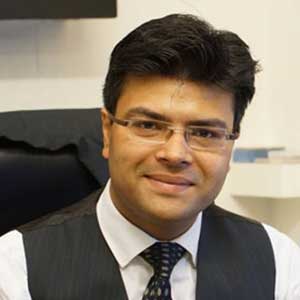
  • Dinesh Bhasin, on Bhasad- The quirky day planner that aims to make working professional’s 9-to-5 less busy and more productive

    Dinesh Bhasin, on Bhasad- The quirky day planner that aims to make working professional’s 9-to-5 less busy and more productive

    Dinesh Bhasin, a seasoned advertising professional, started as a confused Indian graduate. An early stage entrepreneur tasted a failed start-up at the age of 21. His career spanned from working at Unilever in India to TBWA Worldwide in Africa’s and advertising took him further to Netherlands and Hong Kong. Since knew nothing but advertising and the entrepreneurial bug was in his veins, “Bread n Butter”, an ad agency came into inception with an old table and chair in 2011. It now handles the creative mandate for industry biggies, and the other vertical “Butterly Yours” specializes in product design & development, they also carry outCSR activities under the name “Iccha- The Desire” that works for slum kids’ education.

    In this interview Dinesh Bhasin talks about his start up Bhasad that aims to make lives of professionals just a little bit simpler. He specifically talks about:

    1. His inspiration and ideas behind the product.
    2. The needs felt by professionals for this product.
    3. His plans for expansion in the future.


    How did you come up with such an idea?

    bhasad-planner-1The planner was inspired by the frustration and the duality of corporate and working professionals’ lives. On one side we are sophisticated white collar professionals surrounded by people who follow and abide by the decorum of the work place- but deep down we are still the Indian “desi” men and women  who would not miss a chance to hurl slangs when we are hanging out with our best buddies. We wanted to bring that desi and original version of a professional on to his work-desk in the form of a high utility product.

    The idea behind the quirkiness is obvious to many but we wanted to make a product that solves a real pain point. And while we were looking for a real problem waiting to be solved, we realised that the biggest problem with working professionals (especially management) is the constant tussle between deadlines that cannot shift and the procrastinating workforce that is not organised.


    How did we go from an Idea to a product?

    bhasad-planner-2Initially we just created a few samples of the version 1.0 of the product and gave it away to specific people in my circle who would find it useful.

    The feedback we got was very positive which inspired me to turn it into a full-fledged product. Based on the feedback, we created version 2.0 of the product.


    Who would you say is it most useful for?

    It’s the go to product for any working professional who has a to-do list with deadlines that cannot be shifted. This comes with the option of customization with the receiver’s name, and makes for a unique and useful gift!  One of our customers, Mr. Manik Kapoor a corporate professional  ordered 2 pieces to gift both of his kids (both post teens).

    What are you doing to market it? Where can I find it if I want to buy one?

    We are on crowdfunding platform desiredwings.com. And we are offering it at exclusive early bird prices to our initial backers for a limited period of time. It can also be ordered from our website butterlyyours.com.


    How is it going and what is next?

    Every single professional who has seen this product is positive about it and that’s a real motivation. To date, we have sold a total of 468 units in orders and it’s only a matter of time before we can effectively reach and communicate our message to the right target market for such a product.

    Once the planner is available to the public, we plan to launch similar products that solve real pain points but in a funny way, that too once every quarter. We have a few other products are in the pipeline.


    siddharth-jain-1

    SuperLawyer then spoke to Siddharth who is a regular user of the Bhasad Day Planner. Siddharth is a busy legal professional and in this interview he talks about:

    1. His hectic work schedule and;
    2. The usefulness of the product in his life


    Please tell us a bit about yourself.

    I started my career with the Lucknow Bench of the Hon’ble Allahabad High Court whence I worked with the chambers of the noted and famous advocates, namely, Mr. Sanjay Bhasin and Mr. Prashant Chandra, where I was fortunate enough to have the firsthand experience of the practice both representing the State and private individuals in litigation.

    Subsequent to that, I had the opportunity to work with Singhania and Partners and Fox Mandal Little for a substantial period.

    With years of rich experience through varied nature of cases and the snippets of wisdom of luminaries I had the good fortune to work with, combined with the knowledge and experience of my Partners, I, and others at PAMASIS Law Chambers, are determined to carry the legacy and ethics of the profession ahead by providing quality services to our clients.

    We specialise in litigation pertaining to civil, corporate, taxation and competition law apart from advisories and drafting legal documents for the clients.


    How did you come to know about the ‘Bhasad Day Planner’?

    On a mundane Friday morning, I got a gift from Dinesh a packet which contained a rather casual looking ‘diary’. I was impressed but when I flipped it open, I was pleasantly surprised! It was the now famous Bhasad Planner.


    What was your reaction to the name? Do you think professional lawyers like yourself would use it?

    The name sounds quite quirky and unlikely to be seen on a thorough professional’s desk, given its name and the content therein. But a ‘professional’, surely, does not imply a person who is devoid of his or her funny side and the Planner caters to that while sitting on my office desk.


    Quirkiness is fine, but do you see a practical utility in the product?

    siddharth-jain-2On a practical note, the way in which the Planner is designed, it gives a new dimension to managing my appointments and to-do’s. Given the four creatively designed categories, I can divide my schedule according to their urgency and importance and prioritize my time effectively.


    Would you go for it again?

    I have been using the Planner on a daily basis with quiet smile and would be glad to go for it again. I have gone as far as to get 80 pieces customised for my lawyers alumni meet.

  • Sandhya Gorthi, Founder, Sanctum, on being an entrepreneur and pursuing diverse careers

    Sandhya Gorthi, Founder, Sanctum, on being an entrepreneur and pursuing diverse careers

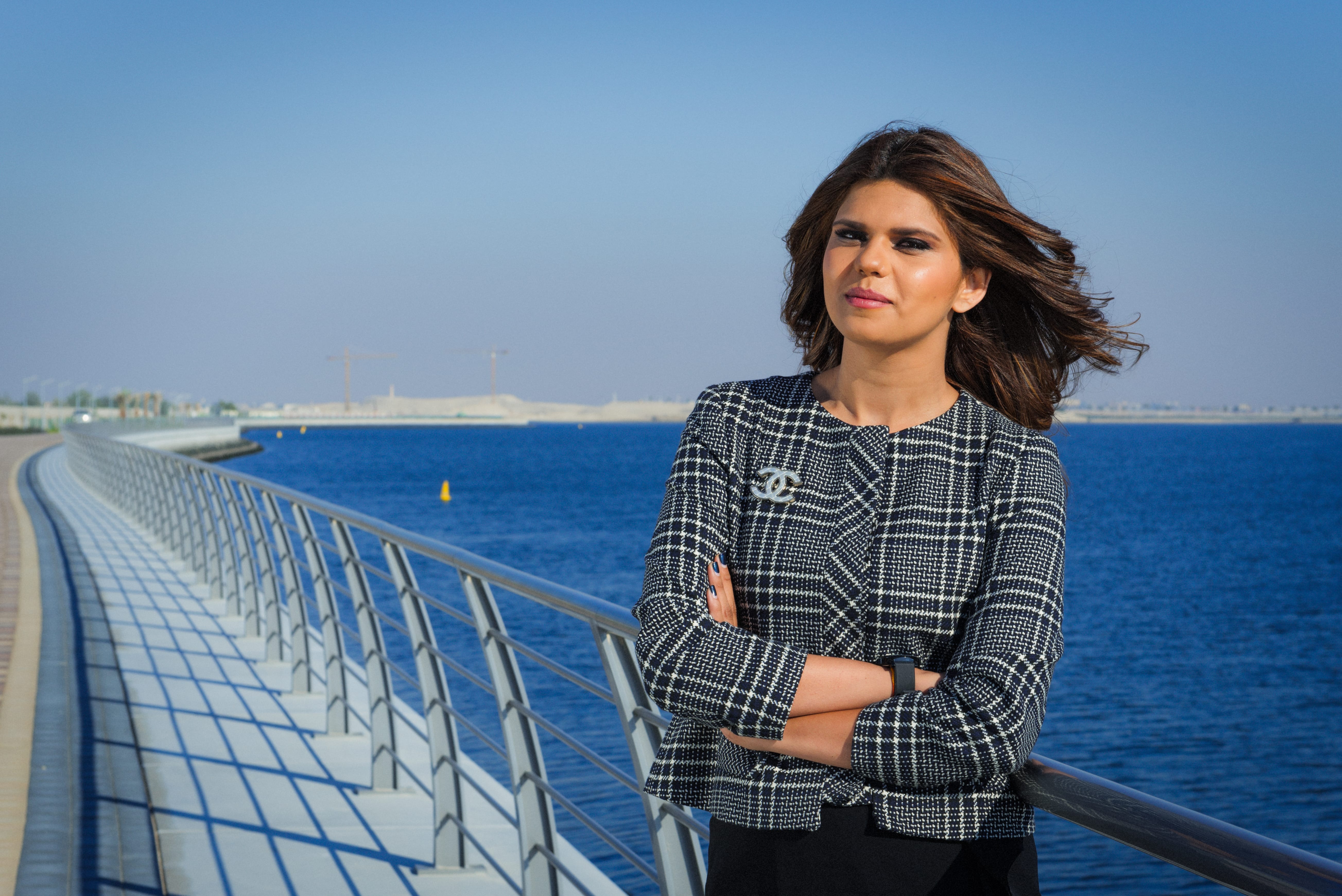
    Sandhya Gorthi is an alumna of NLSIU, Bangalore. She graduated in 1998 and over the course of her career has worked as a radio jockey, a freelance writer,  a soft skills trainer, a Manager of Operations, had a stint with India’s first online art auction website and at present runs Sanctum, a start-up she founded. In addition to her creative arts proclivities, she is a rescue diver, a dancer and has studied Vedanta philosophy for thirteen years now.

    In this interview she talks to us about:

    • Sanctum – the inspiration behind it and its driving principles.
    • The various roles she played in different organizations and with different kinds of work.
    • Career versatility, work ethic and travelling extensively on the job.


    What was the inspiration behind Sanctum? What work do you primarily focus on now?

    I had retail and operations experience and found I was very interested in furniture. I found a gap in the market for well priced natural wood furniture and home accessories with a vintage and international feel, and I started Sanctum. It’s my full time job and I oversee all aspects of the business although I do have a talented and empowered team.


    sandhya-gorthi-2

    What are the driving principles you believe anyone should have to start their own company?

    I’d have to say Number 1 is boundless passion. I don’t feel the need to take a ‘break’ from SANCTUM ever. That doesn’t mean it isn’t important for me to spend time away from the daily routine. It’s vital to get inspired, to keep learning, to meet new people, share ideas…

    Next would be access to some resources – entrepreneurship is risky and all companies have
    ups and downs, so planning for resources and income flow is important. Having said that, I feel having access to endless resources works negatively – then there is no hunger. Often, the most creative ideas are born of necessity and frugal resources. Contacts in the industry, industry knowledge, a mentor, are also valuable resources.


    Where do you see Sanctum headed?

    My vision has always been to create a model that is scalable to create a national and international footprint. We are country with a rich heritage of design, natural resources and talented craftsmen, surely we can produce a unique and international brand with this mix!


    What plans do you envision for yourself career-wise?

    Career wise I think I’ve come full circle. The skills I’ve picked up in law school and in my various professions have all come together for me in entrepreneurship. I hope to carry these skills forward in this line and eventually in public service as well. I owe a lot.


    What was your role in The Shop?

    I partnered with the family that owned the brand and was responsible for bringing the brand to Mumbai – from location search, refreshing the old branding, to curation and entire set up – interiors, compliances, staffing.


    Tell us how you got into soft skills training and your time as the trainer at Prana Worldwide. What would you consider most important in your lessons on soft skills?

    I found, in many of my jobs where I lead teams, that I would spend time training them on professional conduct, email etiquette, customer service and other aspects of corporate culture. That, plus my background in theatre, really helped shape the modules that I developed at Prana. I also worked with modules that had been already created and it was fun working across different professions – pharma, investment banking, hospitality…

    Prana happened right after I had my two kids (now aged 13 and 11) – so it was part time work – but I did find it a little hard to clock a full day or three full days in a row while my two highly accident prone boys unleashed themselves onto the world!

    sandhya-gorthi-3Soft skills are invaluable in creating the right impression, presenting a professional front and help in being diplomatic yet firm in multiple scenarios, whether we’re dealing with customers, vendors, government officials, industry peers or investors.

    I think the most important aspect for me has been customer feedback on how amazing the team at SANCTUM is, and how warm and welcome they feel in the store. That sets us apart for sure and has done more for the brand than any other brand building exercise we have undertaken.


    How did you get engaged as a freelance writer for the Hindustan Times? How do you choose what issues to write on?

    Actually I wrote for several publications. I’ve always loved writing in school and college and learning how to research issues in NLS made it so much easier to present well rounded articles. I’ve done a writing course, been an editor for LexSite.com, Easybuymusic.com and Planetsaffron.com/Saffronart.com. As a freelancer I’ve written on subjects that are important or of interest to me – health, spirituality (I’ve been studying Vedanta philosophy for 13 years) parenting, pets (I contributed regularly to Delhi based pet magazine), art, child sexual abuse and its legal framework, travel…

    Once I got into retail there was so much writing to do…newsletters, blog posts, product descriptions,, website, design stories, press releases, business plans…I also regularly give content relating to home decoration and home care to journalists that they use in their articles. Now, even with a larger team, I always chip in with the writing whenever I can.


    What prompted your stint as a radio jockey? What is the greatest experience you take away from your time as an RJ on Radio Mirchi?

    Like most people I love music, but also music trivia and performing. I first became a professional radio jockey on AIR FM which was the only FM station in the city. I moonlighted as the evening host while I was working at LexSite.com – it was wonderful to connect to so many people, to play music I loved, and to access AIR’s treasure trove of old rock and pop LPs.

    My second stint came with the entry of private FM into the city in 1999. I auditioned with thousands and got selected as evening drive time host of Radio Mirchi, a hectic job that I enjoyed thoroughly even through a tiring pregnancy and after the channel switched to an all Hindi format.

    I also produced other shows, trained tech and talent, and did short stints on other time slots in addition to my 4-5 hours of drive time.

    For me, the greatest lesson was how we can connect with people of different backgrounds despite cultural and language barriers. I didn’t grow up in a typical Indian home nor did I speak very good Hindi at the time, but homemakers, taxi drivers even some Bollywood celebrities would call in and chat with me because they felt I was a friend. This sounds trite but it was really humbling and a valuable life lesson for me that I practice to date.


     You also worked as a Manager of Operations with Planetsaffron. What work did you focus on?

    Planetsaffron was a wonderful experience too. At the time there were three sites – Saffronart, of course, Saffronsoul – which was about holistic healing and Saffronstyle – which was high end fashion. I came on board as head of content and technology – at Saffronart we worked on creating the first online art auction module, for Saffronsoul I was helping two Ayurvedic doctors write a book, and for Saffronstyle we had Mehr Jessia and Tina Tahiliani curating style shoots. It was a lot of work but fun!

    Soon however, I moved more into operations – overseeing the teams, heading the team that took exhibitions of Indian contemporary art all over the world. It was challenging but there was so much learning, so much that we were doing new, so stimulating!


    You were able to travel extensively for the work you did with Planetsaffron. What do you think are the perks and drawbacks of having a job that requires a lot of travelling and how should one deal with it?

    I did. We had exhibitions in New York, LA (9/11 happened during that trip), Hong Kong, London was to follow…the perks are many – you get to see places you might otherwise not have had the opportunity to visit, you get to work with people from different cultures, handle international clients, learn the ins and outs of the logistics, customs, negotiating cross border contracts and generally see how business is done internationally.

    The flip side was that I was just never home. I often worked late into the night or all night, I’d rush home with an hour to spare before my flight and the travel itself was tiring because you’d just hit the ground running when you got back. I don’t think I balanced my work and personal life very well those days. If I had to do it over I would probably have prioritised the latter more. I’ve learnt that no one is indispensible in an organization.

    I travel a lot for work now too, but I do it more sensibly…most of the time (old habits).


    How did you get a job with India’s first online art auction website? How transformative was that experience in your life.

    I was introduced to Dinesh and Minal Vazirani and my profile matched what they were looking for at the time. My legal background helped me research and create the broad framework for the auction – in terms of rules and functionality. My background in writing, and editing meant that I could work with art school graduates to write artist profiles and artwork descriptions. And my technology background meant that I could explain concepts and functionality to the tech team and understand what the technology of the time could or could not do. My theatre and radio background helped me interact with art patrons I suppose (wink)!

    It was a huge learning, I made a lot of mistakes, but it also showed me what a good team leader ought to be and how organizations should be run.


    What was your first job? How has that experience impacted you work ethic thereafter?

    My first job was actually in the theatre and media. I did plays, voice overs for ads in 6 languages, hosted a few shows on TV and sang in the musical Evita. Not just in the media, but from changing jobs so many times, I began to realize the things I valued above all else…integrity, a strong vision that everyone was aligned towards, respect for all team members, a culture of learning and growing, and the importance of a space that allowed the sharing of ideas and for lots of laughter. When I started my own venture I was determined, and I think have been quite successful in, implementing these values.


    How did your tryst with creative arts begin?

    I was a born performer! I used to rally the kids in the neighbourhood to perform plays, dances, songs, dress up…no matter how unwilling they were. I wrote, danced, elocuted, sang, acted and even painted in school. Even today I make sure I’m learning something creative always and my kids and I sing, dance and have these weird (and scary) dress up sessions together.


    What would you say is your greatest strength and how would you say that has served you in terms of career versatility.

    I think the ability to keep an open mind – I believe that ageing is only rigidity of the mind – I have friends who are in their 80s and in their teens and of different ethnicities and backgrounds. I feel I learn from all of them and we share ideas and laughter freely. I tell myself the minute I start wanting things MY way or a particular way and no other, that’s growing old, that’s the beginning of a slow death.

    There are also some values you know are universal and you have to stand up for them and fight for them for yourself and for others who are not able to speak up for themselves. I have made myself quite unpopular on several occasions because of this but I’ve never had a moment’s regret.


    Did you always plan on trying out so many creative outlets or was each change a spontaneous change?

    Good God no! I’m a middle class south Indian girl! But I think you have to be true to yourself. Find your calling. Some of us have more than one…in the end it all comes together. The changes weren’t impulsive. I’ve responded to a strong calling, and have had compelling reasons to change. Maybe things come your way if you’re sending out the correct signals.


    As for trying new things, what would be your suggestions for our readers?

    JUST DO IT! There’s no point telling yourself you’ll try it when the time is right, or once you’ve reached a particular place. If you have a goal or passion, do the research, and jump right in. You have to be prepared to put in the sweat and it won’t always be fun. But keep your goal in sight always and work towards it.

    But I would add a rider that it’s important to first analyse your personality carefully. See if this is really a calling or if it just seems attractive because it’s different from what you’re currently doing. Know if you have the nerves and acumen for the dream you want to fulfil. Some things can always be fun dreams or hobbies too… but you’ll never know for sure if you never even get your feet wet.

  • Suhail Mathur, NLUD graduate, on writing a bestselling book and becoming a cricket commentator

    Suhail Mathur, NLUD graduate, on writing a bestselling book and becoming a cricket commentator

    Suhail Mathur graduated in law from National Law University, Delhi,  batch of 2014. He is currently engaged with a reputable international law firm. He is also the author of the bestselling book The Bhairav Putras, and has been ranked as one of the top 50 Indian authors to follow.

    In this interview, he talks to us about:

    • His experience at NLU, Delhi and his decision to pursue law.
    • His view on internships.
    • His decision to write a book and the challenges he faced as a first time writer.
    • His experience as a cricket commentator.


    What prompted you to consider law as a viable career choice? If not law, what other options would you have considered for your career?

    I wanted to become a film director. But film direction and other related courses all happen to be postgraduate degrees. So I was wondering what other avenues I could explore. During my school days, I was a member of the debating forum, and was extremely passionate about it. So I eventually realized that pursuing law would be the best course of action, as is provides adequate intellectual stimulation, keeps you on your toes and pushes you to keep thinking out of the box. Moreover, the fact that your victories or your losses were not yours alone but were also shared by your client was greater motivation to work harder.


    Describe your experience at NLU, Delhi as an undergraduate law student. Any memorable incidents you would like to share?

    My experience at NLU, Delhi was quite pleasant. We shared a fantastic rapport with our professors and seniors. I’m still in touch with most of them and we keep meeting from time to time. There were only two batches, and everyone knew each other by name. It was a closely knit community. There is a lot of activism now, which wasn’t the case during our time. The campus also possesses a greater degree of gender sensitivity now. The college atmosphere was better during our time.


    What activities were you a part of in college?

    I was heavily into debating. I participated in the Oxford format of debate, which was a rarity since most of the students participated in Parliamentary debates.  I was perhaps the only one who debated in the Oxford style. I participated in 6-7 debating competitions, and I won all of them. Other than that, I would make short films and student films during my tenure whenever we had a session break. I wrote my bestselling book The Bhairav Putras during my time at law school. Since we had fewer classes in the 4th and 5th years, I could actively indulge in creative pursuits. In my 5th year, I also ventured into cricket commentary for Star Sports and Airtel’s mobile application.


    How did you decide to write your first book The Bhairav Putras? What were the challenges you faced as a first-time writer?

    On a lighter note, I always saw authors from IIMs and IITs writing books, and thought that it was high time that an NLU student also did the same. But to be really honest, you need to have the passion to write. Merely wanting to write doesn’t suffice; you need to be skilled as well. I had been in my school’s editorial board and I used to write and direct a lot of plays. There was a point when I was making short films and they were being circulated among friends and family. I realized that all that I was trying to do was tell a good story and if that story were told in the form of a book, it would reach a larger audience.

    History and mythology are two things I am passionate about, and I was very clear that when I write a book, it should be a culmination of both. My book is predominantly a historical thriller with loads of adventure and a dash of mythology.

    As far as challenges are concerned, the challenges are not in writing a book;  they lie in finding a good publisher. When I wrote my book, I got eighteen contracts from publishing houses. Some of the publishing offices were asking me to pay to get published, and I was very clear that I wouldn’t do that. I would rather not have my work published at all than pay. Eventually, Red Ink Publishers came on board, they brought out the book with a huge print run, and the book did exceedingly well. The book is currently in its fourth edition, and it’s been the number one best seller on Amazon eight times and for sixty consecutive weeks it was on Amazon’s bestseller list.


    suhail-mathur-2

    How does one get their book published?

    If you actually want to write a book, you should first go to a literary agent. When my book did very well I was invited to a lot of literary festivals, and I came to know that young authors weren’t being given their due by literary agents. Being an author myself, I wanted to change that. So I started the company, “The Book Bakers”, where we help authors get published and undertake editing, cover designing and marketing work for books. We currently deal with 45-50 publishing houses pan India which includes all the major publishing houses.

    Recently, The Great Khali, the WWE wrestler, collaborated with us on his autobiography, which we placed on Penguin India. I love to work with first-time authors and have helped many of them.

    Many times it happens that if you send out a book directly to a publisher, they may not read it with as much interest because they get thousands of scripts on a daily basis. But a script sent by an agent is better received since as they think it has passed a preliminary test of quality.

    Also, we guys don’t send it to the editorial and submission IDs but to the personal IDs of the individuals looking at different genres of publishing, whether it’s literary fiction, commercial fiction or non-fiction. It becomes much more streamlined and straightforward, and also helps the aspiring authors. I am very accessible on Facebook, as well as on our e-mail ID which is thebookbakers@gmail.com. People are free to write to us and we are always willing to help them.


    How did you manage the time to write a book?

    The thing is that if you have the passion, zeal and dedication to pursue your interest, you will manage to do that. At no point did I write the book in class or in my hostel. I wrote the book only on weekends at home. I finished writing The Bhairav Putras within the 50-60 days that stretched over a year. You have to see how to find time for both the things because you don’t want your law school’s studies to suffer in this. You need to keep your passion and profession side by side, and that’s how you make a perfect mix.

    One of the things I am quite saddened about is that in the legal sphere, the people at the top of the ladder are quite narrow-minded in their conceptualization of a lawyer. On various occasions, they ask me why I wish to continue with  law now that I am a successful author. But what these guys fail to understand is that they are undermining themselves in the process. They are undermining the ability of a lawyer to engage in multitasking. You could be a top corporate lawyer, a good writer, and also a successful literary agent. When people in other occupations and professions can be writers in their concerned fields successfully, I don’t see why lawyers can’t, and that mentality needs to change.


    suhail-mathur-1

    How was your experience when you were interviewed by various news channels? Do you have a PR agent? How did you ensure good publicity for your book?

    In India it was a great thing that a law student was debuting with mythological and historical fiction. So the response that I got was splendid. The very famous legal magazine Lex Witness partnered with us as our official legal magazine partners, for which we thanked them in the trailer and the book. They covered me in three of their issues, including a preview, interview, and a review. The prominent online portal Infibeam was my official online partner, and we had a very successful outing with them too. People showed a lot of encouragement in that aspect.

    I received endorsement blurbs from several known personalities as well. Ajit Agarkar has been my favourite cricketer and I got in touch with his wife, Mrs. Fatema Agarkar and she was very sweet. She got me in touch with Ajit and he wrote an endorsement blurb for my book. My college Vice Chancellor, Professor Ranbir Singh, Professor Sucheta Mahajan, Mr. Amrit Mathur, Mr. Mayank Austen Soofi, and many more wrote endorsement blurbs for my book, which meant a lot to me as a first time writer.

    To ensure good publicity for your book you must, foremost, have a good product with you. Then you need to sell that product. If you are making a good product and not selling it well in the market, then nobody is going to know about it. It was important for the people in the legal field to know what a student of law was capable of doing, because not only did that promote me, but also my college. The first batch had not yet graduated from my college at the time and therefore garnering positive publicity for my alma mater was important to me. It reflects well on my college’s credentials as well as mine.

    The Book Bakers has actually revolutionized the entire system of marketing and PR these days. Most of the PR was earlier confined to social media. Now we have tied up with television channels and radio stations, cinemas, metros, newspapers and magazines, and that’s the kind of PR we are willing to give to our authors and other authors who may want to market their book. Seeing a book trailer on a TV channel is unprecedented, and if people want to do that, we are giving them that opportunity. It’s very important to stand at the place where you are, and have a vision for the future. One must set targets for oneself; think about where they want to see themselves five-ten years down the line and work towards that goal.


    How did you become a cricket commentator for Star Sports and Airtel’s mobile application? Being a lawyer why did you decide to become a cricket commentator?

    Cricket has always been a passion and I always loved watching the game. When I was in the 4th standard I was invited by Indian coach, Mr. Anshuman Gaekwad, to meet the entire team because he was very impressed with my knowledge of the sport. Back then I wanted to write a book on cricketers, describing their personal likes, and get an insider’s view of their lives. I actually met the Indian team on the first day of the Delhi Test match in which Anil Kumble took ten wickets. Mr. Gaekwad sent Mr. VVS Laxman along with me to meet every cricketer and gave me an India cap for my cricket knowledge. I went on a cricket show called “Stumped” and was later invited by Mr. Harsha Bhogle for an hour long chat. And all of this happened when I was just nine years old! Mr. Sunil Gavaskar, who also shares the same date of birth as mine, 10th July, sent a hand written birthday wish to me. People really encouraged me at that point in time, and so the interest was always there. I always used to do commentary at home for fun whenever a match was on, and finally, Mr. Raman Bhanot and his organization, which ties up with the Star Sports and Airtel, provided me with an apt opportunity. Whenever there was a match, I used to do cricket commentary and covered the Ashes, India’s tours to South Africa, New Zealand, the Asia Cup and IPL. It was a great experience and I cherish that a lot and had it not been for my law firm job, I would have continued with this for a longer period of time.


    Is it crucial to participate in various competitive activities in a law school? What was your experience in this regard?

    It’s good to take part in moot courts, debates, and other co-curricular activities as it helps in building self-confidence. The ground reality at law firms  is that they do concentrate on a person’s marks more than anything else. It’s disappointing because it’s necessary for lawyers to have a well-rounded personality. The change needs to start from the law firms’ end, in the way they recruit and filter candidates, rather than the students’ end, because law students are doing wonderfully well in their student life.


    You chose to work at a top law firm. Why not litigation? How did you prepare for your interviews?

    I have always wanted to work for a law firm. Litigation never interested me much. All my internships with law firms have been challenging and rewarding in equal measure. They were great learning curves. I knew that I wanted to eventually work at a law firm and my time interning with some of them just bolstered my conviction further.

    When you are going for an interview you need to know the basics. But what do the basics encompass? Do you consider contract law, criminal law and CPC? There is no definition of what the basics comprise. It is not possible to remember everything about the law and asking the candidates vague questions is unfair. Students are taught the rudiments in their first year but it is impossible to assimilate and retain that information throughout your graduation. There need to be better defined parameters when law firms are testing potential candidates.

    I am generally high on my confidence and possess the ability to convince people. I really worked hard at my internships as well. I had certain achievements under my belt, and I had also worked at the firm and done well as an intern, so there was no reason why I can’t do the same once I actually joined the firm. These are the things you really need to play on. You need to play on your strengths and these were my strengths. Some people sit down and go through each and every book of law and make themselves perfect so that they face no issue while answering questions at interviews.

    The law firms need to select based on the person’s personality and their ability to interpret the law effectively. I hadn’t done any extensive reading right before my interviews, but just played on my strengths with confidence.


    How was your experience as a junior lawyer in a law firm? Did you acquire any important skills while working there?

    I had a great time working there. It is a challenging role to work in a law firm. The idea is to work as much as you can. If there is no work, you begin to stagnate and that’s not a very good thing. If you are getting an opportunity to work, you should take it up, and that’s how you learn more. Also, you will create a good impression in the firm. There is a world of difference between when you are interning and when you are working as a lawyer. As an intern, you are supposed to give out information to the lawyer, but as a lawyer, you are supposed to interpret that information given. So what I learnt was how to interact with the clients when we went for discussions, and how we must convince them.


    What are your views on the desirability of foreign law firms entering the Indian market?

    There are so many law firms abroad and they have been waiting for so many years to enter the Indian market. I just want to tell Indian law firms that if you believe in yourself, let foreign competition come in. You already have a head start in terms of your presence in the country and knowing its laws. The international firms would of course be hiring Indian lawyers but they are the ones who are at a disadvantage because they are entering a new field while the Indian law firms are the established players. So why not help many more law aspirants secure good jobs. I always feel a little saddened when I see a law student not getting placed. There were some very talented people in my batch who couldn’t make the cut, and I felt very bad. When you have made it to a National Law University or a reputed law school, then that should be reason enough for people to trust you and your ability. It’s actually a wrong mindset to continuously prevent foreign law firms from entering the market. If there is globalisation happening all over the world, then why not let foreign players come over here as well!


    Do you think having family members or mentors with a legal background helps in this profession?

    I don’t have anyone in my immediate family who is in the legal industry. I don’t see my lineage as a shortcoming. If there are no lawyers before me, why not be the first one in the family! I don’t consider it to be a disadvantage or a disadvantage. From college, we gave our interviews and came through the hard way. But the process is probably simpler for students with lawyers in their families because they have contacts. I see a lot of lawyers get ahead in their jobs because their parents are partners at the firm.


    What would be your message to our readers?

    You must have set goals and have the ability to complete them but everything isn’t as rosy as it seems. At law school, everyone will tell you to do great internships in order to secure a job. But this isn’t a foolproof plan. One needs to be realistic and only then can one tackle the challenges in this profession better. Also continue with your creative pursuits and don’t limit yourself as a lawyer. There is certainly more to a lawyer than what law firms would tend to make out of them. I balanced my legal work, agency work and my writing and if you divide the time you can achieve success. I have recently signed a three book deal with Om Books International, a noted Indian book store chain which operates abroad as well . If you are passionate about something then the legal work can co-exist with other creative pursuits. Never give up hope, but be realistic too. People will tell you a lot of things and at the end of the day, I believe it is your luck that is going to take you places more than merit. If it was based on merit alone, then a lot of people who are deserving would have got the opportunities they didn’t get. I feel that I was deserving as well as lucky, and am thankful to God for the same.

  • Kanishk Agarwal, Founder, CriTaxCorp on starting out a criminal law practice and legal entrepreneurship

    Kanishk Agarwal, Founder, CriTaxCorp on starting out a criminal law practice and legal entrepreneurship

    Kanishk Agarwal studied at Vivekananda Institute of Professional Studies (VIPS), New Delhi and graduated in the year 2009. He then began his career under Mr. Ashok Batra, and subsequently moved on to PricewaterhouseCoopers India. However, his interest in Criminal Law drove him to establish his own firm, CriTaxCorp. Kanishk is also the creator of the Indian Bare Acts Pack app.

    In this interview, he discusses

    • His career trajectory and the reasons for starting his own firm
    • The development story of the Indian Bare Acts Pack app
    • How to enter a practice of one’s choice for students
    • How to maintain a work-life balance and why it is imperative


    How would you like to introduce yourself to our readers?

    I think the term ‘legapreneur‘ best describes me, which basically is ‘legal entrepreneur’, because I like exploring entrepreneurial qualities in the legal industry. Post my graduation I wanted to work in Criminal law, but instead started working with Service Tax law expert Mr. Ashok Batra who is a Chartered Accountant and the author of books on the subject. What drove me into this field was a practical family decision as my father is a Chartered Accountant and he wanted me to follow his lead in taxation laws. I worked with one of the ‘Big 4’ consulting firms in the world, Pricewaterhouse Coopers for about 18 months, but my love for Criminal law never faded and so and after gaining substantial experience in Taxation law, I started working under the flagship of Senior Advocate Mr. Ramesh Gupta (Delhi High Court) and thereafter I worked in the chamber of Mr. Subhash Gulati. Finally I started my own practice in 2013 by the name of CriTaxCorp after I believed that I had gained enough experience to set up my own law firm. The name of the law firm was put up very strategically to cover the three fields of law I gained my exposure in i.e. Criminal, Taxation and Corporate.


    What would you like to share with our readers about your time spent at VIPS both within and beyond the classroom? How did the city itself play a part in your legal education?

    Looking back, college times seems so distant yet I can remember it vividly. I have learned a lot from my college life, as I was a very shy boy in my school days, and so got a lot of exposure in my college life. I had always been an average student but was an active volunteer in organizing moots, debates, college events and the best was, organizing the college trip for three consecutive years where I had the nightmare of handling 300 law students. However, the exposure was surely a blessing in disguise. Being a Delhiite was always an advantage, but I never got a change from the city to face different cultures. However Delhi has given me great exposure from internships to working under great members of the senior legal fraternity.


    How did your interactions with your peers influence your growth as a law student and a general individual? Did networking and peer mentorship play a big part in defining your student identity?

    I had a good relationship with a few of my seniors and we were a combination of notorious and sincere pupils.  I still remember asking for help with books or notes late at night, or for any other help regarding sorting out a tiff with any student or taking suggestions for my internship plans, and they were always very helpful and I definitely got great help. Once they graduated from college, I got to know about their experiences in independent practices or in law firms and they helped me reach where I am today, owning a firm myself. I always feel pleasure in helping juniors from my college who are worthy by providing them with internships under my tutelage and exposure to a variety of laws.


    During your time spent there, what, if any, extra-curricular or co-curricular activities did you take up? How did the same affect your learning experience and prepare you for the legal sector?

    It is true, college life is a golden period in one’s life. I was always very interactive with teachers and was an active participant in college activities like dancing, organising fests, college trips etc. Being involved in extra-curricular activities really helped me at large because I learned the tricks of management, organising, diplomacy and living up to my responsibilities. It really sharpened my skills to understand human behaviour and their reactions to different things, which a good lawyer must know, as reading a client or witness is half of the lawyer’s work.


    What would you describe your first experience as an associate at A.K. Batra as, and how did the same affect your career trajectory?

    I opted for Service Tax mainly on account of my father being a Chartered Accountant. It was a practical decision made by me to work with Mr. A.K Batra, and it was a great learning process as he provides a lot of exposure to the lawyers and CA’s working with him. He is still a great mentor and I know I can reach out to him whenever I hit the wall in Service Tax query.


    What prompted your shift to PwC India in 2010?

    Anyone and everyone who works in the field of Taxation law has this desire to work with a ‘Big 4’ firm, be it a lawyer or a CA. I am glad I took the step to join PwC as it exposed to me how the real big corporates work, their billing structure, their culture etc. I left PwC because of my love for Criminal law and since I wanted to make an identity of my own. I met some great people who are partners in the firm and still encourage me towards my achievements. It was a good learning experience.


    As the founder of CriTaxCorp, what were the initial challenges you faced as a legal start up in India? What was your competing strategy for taking on larger firms?

    CriTaxCorp started with a rough patch, as we worked towards targeting different sectors where nobody had worked. The “Aha!” moment was when I got a client form the Bitcoin (the digital currency) industry and I got a chance to understand the block chain of digital industry. Thereafter I did some exciting work in online poker regulations, logistic companies, start-up ecosystem etc., and getting into these fields really triggered me to go forward.


    What would you define as your firm’s unique selling proposition?

    While dealing with a matter in Criminal, Taxation or Corporate laws, we combine the knowledge from all major verticals of law. Providing exactly what the client requires is one of our mottos, and we believe in understanding the business of our client more than the client does so that we can deliver our best. This also sharpen our skills to dig deep and helps us understand the core issues of any industry. CriTaxCorp believe in one principle that a professional grows when his client grows.


    kanishk-agarwal-2

    Among your other accolades, what inspired the creation of Indian Bare Acts Pack? What were the challenges faced in creating and establishing the same?

    When I got to know about certain Bare Act Apps available for lawyers I was really amused and amazed at how technology is easing the pain of people at large. However, when I downloaded certain existing legal Bare Acts Apps on one of my senior’s tablet, I got a good thrashing from him as they were not updated since 2008 and reading outdated law is the last thing a lawyer wants to do. So, it got me thinking and I wanted to do something for the legal fraternity, as it has taught me so much. So I decided to put my money where my thought was and I ideated ‘Indian Bare Acts Pack’ mobile application so as to help lawyers. The app has 4 major Acts which are like the bible for any lawyer. CrPC, IPC, Evidence Act and CPC and I also included Service Tax law as I used to work in that field. Making the app was not an easy task, as I had to review the designs, see the working of the app, and pay for doing work. I created around 2800 word files which were formatted, indented and checked word by word by me. I was really overwhelmed when I was informed that the Delhi High Court Bar Association would like to unveil this app in a function which was organised for judges of the Supreme Court and High Courts.

    What just started as a gesture to give back to the legal fraternity has turned out to be the best app in the Bare Acts category reaching to nearly 1,00,000 lawyers. On the request and review of many lawyers, judges, CA’s and law students we are taking it forward and will come up with an updated version with some great features which will be of use to everyone, from law students to respected judges.

    The readers may also like our Facebook page “Indian Bare Acts Pack” to be updated about new features and updates on the app.

    Lastly, yes there were many sleepless nights spent in making this app. I remember that when I got the news that my App was going to be launched, by DHCBA in a function organised to facilitate High Court and Supreme Court Judges, in a matter of 2 days, in those two nights I made nearly 2000+ word files and coordinated with the developer to complete the App on time. It was devastating but it was all worth it!


    What are your views on the current generation of law students and would you say the approach to education has changed since your college days?

    I feel that this generation is full of talent and they are impulsive as well. (Laughingly)As I belong to this generation as well, I will say that this generation is not scared of hard work but they expect prompt success. They must understand that the first five years after graduation could be difficult and full of struggle but once when they get polished they will eventually grow and succeed. One should understand that it is not required to run behind alluring packages. Once they gain all practical knowledge and have a command over the law, money will chase them automatically. I also believe that year by year the concept of a teacher and pupil is also fading, which is something I really hold dear to my heart.


    To our younger audience looking to get into Corporate or Taxation oriented fields, what advice would you give them for breaking into the field?

    The best thing to do is opt for as many internships as they can to get a better understanding and gain practical knowledge, Firstly, they should understand the whole concept of a subject matter, for eg. Taxation is a subject which is either really liked or totally disliked by lawyers, so one needs to understand and explore to see if they have interest in it or not. Also, one should pick one taxation subject at a time because trying to understand all of them in internship period will only confuse them. Secondly, as for Corporate, it is very wide field which ranges from drafting of agreements to regulatory compliances to transaction advisory. It is a field which requires round-the-clock–work, with alluring packages, so one need to understand exactly what they want with respect to work-life balance or money. Corporate law firms have a deadline bomb which is always ticking and the stakes being high, one cannot afford to miss any deadline. I would like to end this question by saying that legal practices are like delicacies you need to get the taste of each of them until you know which one suits your taste buds.


    In the midst of founding a law firm and creating apps for the legal community, how much of your personal life have you had to compromise on, if at all?

    Earlier it was hectic and as I am a workaholic, I have worked round–the-clock on my application. Whenever I get time I read articles for better understanding of technology, but I have adapted all this as a hobby and so it is not a burden. I believe that if things are planned and one knows how to manage time, they can easily coordinate their personal and professional life. I always go out with my family and friends once in two weeks, otherwise what is the fun of being the founder of your own firm and earning well if you can’t have your own time out and spend what you earn. However, one needs to prioritize their practice of law, interest and goal with their time in order to follow a focussed path to their success. I am still experimenting to know the ultimate path, but that is the fun, provided you balance the fun with focus, risk and passion.


    Finally, do you have any other advice for our readers, most of whom are college students?

    I would suggest that they do as many internships as they can in various fields and they must always grind and hustle to get more and more work from their seniors. The exposure they get in internships will help them see the career path they want to choose. Also, I would suggest that since everyone is so engrossed in social media and their mobiles these days, every student should like some of the law news Facebook pages and read some of the important news or judgments that they post. I am trying to do something to solve this for our fellow law students though my app, so let’s see. I would suggest that every lawyer must watch American television series such as Suits, Boston Legal or any other series that relates to law, as I myself have learned a lot from these and imbibed some of the things I have learnt from these shows into my practice.

    They must strengthen their core subjects such as CPC, CrPC, IPC, Evidence Act etc. as these will be used at all times in your practice. Lastly, it is the best time of their life so they should have fun, rough it out and learn from their mistakes.


    In your opinion, what is the role of technology in law and how can students best utilise technology without looking at it as a substitute for hard work?

    Being a technology enthusiast and founder of a technology based start-up I believe that everyone is embracing technology in one form or another. Technology companies such as manupatra or indiankanoon.com has eased the life of lawyers when it comes to browsing through judgments relevant to a case. I have received numerous mails from law students and court staff saying that my application has really helped them many times. Recently, one of the biggest law firms in the US named Baker & Hostetler licensed a software from IBM which is an artificial intelligence software to help law firms in bankruptcy and due diligence, so you can imagine how technology is playing a role in law firms. Also, being a legapreneur I get intrigued by mushrooming legal start-ups these days. To sum it up, technology is playing a significant role in our life and increasingly being adapted in our profession, so one should start embracing it.


    What is your view on these legal start-ups and will it create a new area of law for law students to look into?

    Yes, the start-up ecosystem is witnessing various new law related start-ups and some of them have got funding upto an amount of USD $500,000. However, the start-up eco system in general is witnessing a downtrend with investment/funding transaction dropping nearly 30-50% from last year. I hope all these new legal start-ups pave their way into the start-up ecosystem and a new unicorn is born in law start-ups. (Laughingly) I hope IBAP makes its name too!!

    As for start-ups creating a new line for law students, it purely depends on the interests of the law student and whether he/she gets intrigued by the vision of that start-up or not, because one setback is that start-ups mushrooms rapidly but most of them close rapidly as well, but yes it’s a new era of legal development and opportunities for upcoming law students.

  • Anurag Parihar, Founder and Chief Executive officer, on providing an online e-learning platform for lawyers

    Anurag Parihar, Founder and Chief Executive officer, on providing an online e-learning platform for lawyers

    Anurag Parihar graduated from MATS University in 2014. At present, he is the founder and chief executive officer of Rostrumlegal.com. RostrumLegal.Com is an online e-learning platform for lawyers, law students and anyone who wants to learn law. The company operates with a vision to deliver professional legal education to millions of people from around the world at affordable costs.

    In this interview he talks to us about:

    • Biggest challenges to start a business.
    • How to protect a great idea.
    • How to obtain a domain name.
    • Online courses helpful in starting a business.

    What are the biggest challenges to starting a business?

    I think taking the first step is the biggest challenge. I always say this to people that every tom, dick or harry in this world has one or two business ideas which can be worth millions of dollars but no one dares to materialise those ideas. I think each one of us have experienced that moment in life when, after hearing a news about some cool startup, we say that “I had a similar business idea, I should have given it a try…” Taking the first step is a real big deal in starting any kind of business.

    There are lot of other things, like commitment towards studies or the job, and pressure from family and friends, which prevent us from taking risks. If you think that your idea can create an impact in changing the way people live their lives, you should definitely give it a try.

    How can I protect my great idea?

    It might sound a bit hilarious but from my personal experience both as a law student and an entrepreneur I would say that ideas are the only form of intellectual property which cannot be afforded any legal protection. Also, you cannot sue anyone or claim a compensation for stealing your ‘great idea’. In fact, stopping someone from pursuing the same kind of business as yours can prove to be unlawful and anti-competitive.

    If you have a great business idea in mind and you have fully convinced yourself to start your journey to become the next Steve Jobs or Elon Musk of the industry, it would be a very good thing to share and discuss your idea with as many people as you can to take positive inputs to start. A suggestion from an unknown fellow passenger in a local train can also prove to be helpful in realising your billion-dollar dream!

    Once you have started or when you are already in the business, you can utilise a lot of legal routes to protect the things which are important to your business. Those things can be your logo, the name of your business, software codes, designs or your secret fried chicken masala (it’s better not to spill such secret)!

    How can I obtain the domain name I want?

    I think choosing the right domain name for starting a website or a blog is really important to create a good online presence. Domain names can be very crucial if the business is targeting online users. To choose a domain name one should keep in mind that it should be a unique web address. Also, at the same point of time it should be very general to the industry you are doing your business in. Following this suggestion can help businesses or blogs to get organic traffic from search engines. This can be really helpful in contributing towards the growth of the business especially in early days. The perfect example for such type of domains can be housing.com or conferencealerts.com.

    There are a lot of websites which sell domains and provide other web hosting services. It is advised to go with a big brand and since these service providers sometimes offer great deal on domains and hosting packages, one should do a proper research before buying to crack the best deal. Also, it should be noted that setting up an ecommerce store or a blog is very easy, there are several articles available on the web which can help you in learning to do so.

    How much should I capitalize my business with at the beginning?

    The amount of investment needed while starting the business completely depends on the type of business. Some types of businesses can be started at the cost of very small or zero investment. A YouTube channel or a Facebook page sharing funny posts to make people laugh can be turned into a profitable business, the cost of starting such things is practically nothing. A small e-commerce website or a blog, publishing articles on topics like 10 things to not, can be started at a cost of less than 5000 Rupees.

    On the other hand, there are lot of capital intensive businesses, like a restraint or a manufacturing company, which can require a lot of investment at the beginning itself. A business can be started either with no money or with a lot of investment but it is very important to plan the budget and the source of income for a long run to manage some of necessary spending in future.

    Where can I get money for my business?

    Investment is a very important ingredient for growth or expansion of a business. There are a lot of options available for entrepreneurs to raise funds. Some of the important sources include an angel funding, or a funding from a venture capital fund. Two of these are can be simply differentiated by the amount of money they invest in your start up. The former is an investing company often managed by few people known as angel investors who invest significantly less amount of money when compared to venture capital funds which are usually giant corporations managing a huge pool of money. There are lot of schemes run by government and various public and private sector banks which offer collateral free loans to small and medium scale companies on a lucrative interest rates.

    There are other creative options to raise money like crowd funding where a startup can raise money from general public by simply posting their business plan on crowdfunding website and offering exclusive launch benefits to the investors. There are a lot of competitions which select infant startups and provide them with mentorship and a small amount of initial funding. There are a lot of startup incubators which look for promising early stage startups.

    The amount of money available as compared to the requirement of startups is very less. Only one in a 100 startup is able to attract investors to provide funding. Not only the business idea, but a lot of factors contribute in making a startup attractive to the investors. And, last but not the least, the revenue generated by the business is also an important source of funding.

    How should equity be divided among co-founders of a startup?

    I think that this is the toughest question in the interview and also one of the most confusing decision an entrepreneur has to take in his life.The equity can be divided by looking into various factors like the type of responsibilities each founder has. Such responsibilities can include the development of the product, investing initial capital, formulating and refining the business idea, marketing, business development etc. Sometimes it is good to take advice from a third party who is close to all the founders, knows the business and is not interested in the business of the company.

    It is also important for the founders to enter into a founder’s agreement which decides the share of equity each founder gets and also enlists the responsibility of each of the founders. The agreement should also accommodate plans to include team members and investors who will join the company in future. There a lot of articles, blog posts and tutorial videos which can be referred to gain a clear understanding on this area.

    What online resources are helpful for learning more about starting a business?

    Several types of free resources are available, both online and offline, to learn about the ways of doing business. Just ask google if you are stuck on something and you will surely find the solution to your problem.

    There are a lot of websites like Forbes, Tech Crunch and Entrepreneur who publish a lot of articles on important issues. Also, there are lot You Tube channels who publish videos to help entrepreneur. I would recommend following ‘Google for Entrepreneurs’. It is also advised to know about the life of entrepreneurs and other type of leaders. One can also watch movies and read books to get inspired!

    I would recommend people to watch my latest favourite movies ‘Steve Jobs’ (2015) and ‘The Big Shorts’ (2015). Also,If you are looking for a step by step guide to start a business, you can read ‘The 100 Dollar Startup’ by Chris Guillebeau.

  • Rajesh Sharma, Founder Director of LetsComply.com, on why legal knowledge is necessary for a CFO

    Rajesh Sharma, Founder Director of LetsComply.com, on why legal knowledge is necessary for a CFO

    Rajesh Sharma passed out as a Bachelor of Commerce from Shaheed Bhagat Singh College, the University of Delhi in 1990. After that, he pursued LLB from the University of Delhi and graduated by 1993. Besides LLB, he also pursued Company Secretary from Institute of Company Secretary of India (ICSI) and Cost & Management Accountants from Institute of Cost and Works Accountants of India (ICWAI) and finished these professional courses in 1993.

    With his qualifications in the realm of law, finance and accounting, he started his versatile work life full of enviable achievements. He started his professional career as Manager – Merchant Banking with Category-1 Merchant Banker, collaborated with the manufacturing company and IT companies before joined as the Founder Members of Singhania and Partners LLP. Afterwards, he was the Head of Finance, Accounts & Legal Department of Global Healthline Private Limited – 98.4, one of the best retail pharmacy chains in North India. He played major role at Barista Coffee Company Limited during his long tenure from 2006 to 2012 as a Chief Finance Officer, wherein he was instrumental not only in setting up all systems and processes for nationwide coffee chain, implemented SAP for retail but he was also key member to get Barista acquired by LAVAZZA, Italian Coffee player. Later, he served as a Group CFO at Carnation Auto India Private Limited; wherein he was instrumental for equity and debt fund raising for setting up multi-brand automobile workshops and used car business. He was Partner with Rajani Singhania & Partners, an international Law Firm. Presently he is Director, Fashion TV Hospitality. He founded Juris NextGen LLP and Affari Consulting, Inc. in 2010 and 2011, respectively.

    Finally, being an emerging entrepreneur, he founded LetsComply.com, which is a technology driven platform in India to provide world-class, affordable and convenient professional services relating to legal, finance & taxation at one click under the guidance of an experienced team of professionals, whose knowledge & credentials are proven.

    An independent entrepreneur with a string of achievements at a very young age, Rajesh Sharma talks about his thoughts, ideas, experiences and advice to young entrepreneurs and students of law and CA.

    In this interview, we cover his academic and professional journey, while focusing on:

    • The combination of his qualification in B.Com, LL.B, C.S. and CMA.
    • Varied work experience as a CFO, Founder Members and Director of various companies.
    • Part of Startups, provided Legal, Finance & Taxation support to create systems and processes and helped them to raise funds and now providing mentorship to various startups directly as well as through various incubation centres.

    How would you introduce yourself to our readers? Please tell us about your pre-college days.

    I belong to a very middle class & humble family. In spite of not been able to get the education from Big B-Schools, it is the learning by experience and connectivity with grass-roots for work with qualitative education; I could able to achieve this position.

    What plans did you have for your future? What inspired you to embark on this entrepreneurial journey?

    I feel blessed and fortunate that in spite of limited resources, I find myself at the pinnacle of my career by achieving and delivering good as a Legal & Finance professional. Now, I think this is the time to give back what I have achieved throughout my entire life and career. I got myself associated with a couple of incubation centres, NGOs and other bodies wherein I provide my services as Mentor to the new entrepreneur for their entrepreneurship journey. India is providing an excellent environment for startups, enormous options and opportunities available to the young entrepreneurs, and hence, I am also contributing to my best.

    How important is it for a law firm partner to be good at business development, or are great lawyering skills enough to become a partner? What skills or qualities distinguish the people who become partner from those who don’t?

    Being an entrepreneur, it is not necessary to be a good worker, he/she has to be a good leader at the same point in time. While he/she should be able to understand and manage with expertise, but should be able to manage a good team as well.

    Having done B.Com, what motivated you to choose law along with CS and CMA as a career?

    Though it is obvious, if you want any professional degree beyond graduation. Since I had interest both in Legal & Finance domain, therefore I opted for both courses (also since not having proper guidance, I chose two courses to have backup, if I could not make one)

    What challenges did you face while serving as a CFO at several companies? How did you overcome those challenges?

    Challenges are of multiple kinds, being cost controller and always pushing for implementation of system & process; CFO faces challenges from external as well as internal members of your own organization. No one like to listen no for the money and everybody realizes in the last working hour, therefore, to push your own team members to go to the system and processes, you actually develop negative relationship with your peer group but once you explain and help them to implement these methods, they like and start implementing these processes.

    You’re the Founder Director of LetsComply.com. Please tell us about LetsComply.com.

    LetsComply is the only technology driven platform in India to provide world-class, convenient and affordable professional services relating to legal, finance & taxation at one click.  LetsComply provides services under the guidance of an experienced team of professionals, whose unimpeachable expertise, backed by proven credentials, needs no emphasis.

    In pursuance of our humble resolve to serve, we have always looked for the ways and means to make it easier for the entrepreneurs and corporate establishments to function better, and we realized that since the world is progressing and taking online route to grow and expand, it would go a long way if we could provide Legal, Financial & Taxation services in a structured fashion with the assistance of a team of experts without making it too expensive or inconvenient. That’s how the idea of LetsComply germinated.

    We, at LetsComply, are committed to help entrepreneurs and business owners to start, manage and grow their businesses by taking care of the legal, financial & taxation side of the business so as to allow them to focus on innovation and expansion without having to fret over compliance issues, which certainly matter a great deal and can’t be left unattended.

    We aim to be a partner in the entire business lifecycle at all stages of the entrepreneurship — Startup, Growth, Acceleration & Progression Stage — to make sure that the businesses do not fall back on compliances and grow manifold. In today’s Digital world, we bring you the concept of Virtual Intelligence by way of Virtual CFO (vCFO) and Virtual General Counsel services to enable accelerated growth to your business. We are a team of experienced Chartered Accountants, Company Secretaries, Cost Accountants, Corporate Lawyers, Management Graduates, IP Attorneys and Technologists ready to assist you at all times.

    I believe that today when the world is moving towards a higher technological and economic order, allowing oneself to be bogged down by various mandatory compliances is a waste of precious time and energy. It cannot be ignored that the statutory compliances have a very significant role to play in sustaining the business environment conducive to fair competition and commercial growth. Therefore, it is essential to be cautious about the compliance of various statutes at the initial stage itself to not only avoid later complications and harassment but also to contribute to the sustenance of a healthy business ecosystem. And to keep you comfortable with all the compliances, the professionals at LetsComply are always ready to extend any and every assistance that you might require in this regard.

    How do you plan to expand LetsComply.com regarding operations, infrastructure, as well as attracting more investments? Can we expect a mobile app in forthcoming time?

    We have just started and thrilled with the response we are getting from our users. Therefore, we have preponed our plans for expansion. Operationally, our offerings are quite wide, but we need to create the infrastructure to execute and deliver that. We are working not only to create and set up additional office space but also developing technology team as well. Though for operations, we may not need investments but to expand rapidly and to bring technology and marketing we would need investments. We are not aggressively losing for funding unless we get right partner. Yes, you can certainly expect mobile app.   

    You have a vital role in several companies by providing them a tremendous boost in their business. What are the key areas a Startup needs to focus on?

    The major need for any startup is to focus on execution and have the right partner in place. They should focus on their core activities without losing any attention.

    As you have recently addressed a conference on ESOP in Amity Innovation Incubator, please tell us how does ESOP work as a good tool for startups?

    ESOP is genuinely a very tool to attract & retain the right talent. You can attract talent with entrepreneurship mindset to grow fast.

    How important would you say are business development skills at such higher roles in a corporate law firm?

    Growth is never ending. One should always be hungry for growth so as Business Development skills are. The leader has to lead by examples, and he should always be upfront about facing challenges. Unless the Leader fights from the front, he cannot ask his army to step forward on the battle ground.

    Lastly, what would be your advice to students and young entrepreneurs reading this interview?

    Life moves forward like a “Business Cycle”, wherein phases such as ‘Peak’ and ‘Trough’ are ubiquitous. One needs to establish one’s stand at those stages. If he/she is tangled in the Trough Phase, there is nothing to blame upon. Be focused, there is no shortcut to success. Efforts never go waste. If everything seems to be on his/her side during the Peak Phase, there is nothing to claim upon. Keep your thirst for growth alive and continue to move forward with the same.


  • Paramvir Singh, IAS, AIR 29, on all about preparing for the UPSC

    Paramvir Singh, IAS, AIR 29, on all about preparing for the UPSC

    Paramvir Singh graduated from National Law University, Delhi in 2013. After graduation, he appeared for the Union Public Service Commission Examination and secured an All India Rank of 619. He decided to appear again for this exam and in the year 2014, he was successfully ranked AIR 29 and he is currently undergoing his training period at the Lal Bahadur Shastri National Academy of Administration, Mussoorie. He will be soon joining the Punjab Cadre after the completion of the training.

    In this interview, he talks about: –

    • His experiences as a law student at the National Law University, Delhi.
    • His strategy for the Preparation of this exam
    • Advice to Prospective candidates of Civil Service Examination.


    How would you like to introduce yourself to the readers? Please tell us a bit about your childhood and background.

    I belong to a typical middle class family from Haryana which moved to city from a village only some 20 years back. My father and uncles are first generation graduates and lawyers who all moved to city breaking away from the traditional occupation of farming. Being unfamiliar with the city I received my primary and secondary education at very modest schools in the city, even though academically I performed decently throughout. At senior secondary level I opted for science with a view to get into one of the engineering institutions, blindly imitating others around me. However, the turn of events diverted my plans to take me where I am now stationed.


    Why did you opt for the study of law? Did you find any legal professional in your family and friends?

    I was least career conscious till my senior secondary level; neither had I understood the importance of choosing a career path nor did I put serious efforts to get into top engineering institutions, so at the end of my board exams I was directionless as to the path forward. My father, a lawyer, prodded me to write for law entrance exams which I found required much less time and sustained effort than the sitting for engineering entrance and took up the idea readily. Even though initially it was an accidental choice, as I went through the law school I really enjoyed the kind of environment and exposure it could provide for me.


    What were your objectives and plans in the preliminary years of the law school?

    I really had no elaborate plans or any particular expectations from the law school apart from a degree in law. I did not focus on any particular aspect like aiming for a brilliant CGPA or building a great CV, because I was not much aware of their value in the first place. This lack of focus towards my career path gave me the freedom to explore areas of my interest, and did not weigh me down with making career oriented choices such as choosing a particular kind of internship etc. My singular target was to focus on areas of learning where I lacked behind my peers due to differential and inadequate nature of my education in school. The maximum learning happened not because of the teachers or lectures but from influence of peers who represented diverse backgrounds and carried with them a diverse kind of learning, a little of which I was able to partake over the years in law school.


    Did you focus only on the Academics in the college life? How did you excel in the Academics? How’s the Academic Pressure in NLU Delhi?

    No, as I said there was no particular clarity in my mind on what I wanted to get out of law school, I tried to participate in as many things as possible like mooting, debating and even some research projects. In academics my performance was to my satisfaction and I was generally ranked in the top order. Academic pressure wasn’t all that much except with some courses where the professors sincerely put in effort and expected a good amount of self study from us; the others did not really demand much hard work and were engaged in only a formality of teaching.


    What extra-curricular activities did you take part in that helped you in overall development?

    I took part in many extra-curricular activities which presented to us in the law school such as mooting, some debating, legal courses in other universities, one research project for drafting a law, and a UNDP project. I did not have many publications to show for it, but I was able to learn a lot in terms of my legal acumen and drafting skills to be a successful lawyer if I chose to be.


    What were your areas of interest while you were in Law School? And how did you go about developing expertise and knowledge in these areas?

    As law is a very diverse field comprising of totally disparate kind of subjects, my focus was on gathering as much familiarity with these as the college could offer. The kind of subjects in which I developed more interest were dependent upon the ability of the teachers to make them more interesting and effort worthy. Some of the subjects I had more inclination to study because I found them more fundamental than others were Jurisprudence and Constitution.


    Please tell us about the places you have interned at and if these were all planned. How is an internship helpful for a law student?

    As for internships I was not able to do many and only worked for Delhi Legal Services Authority once. It was because of lack of focus as to what I wanted to do after graduation as also my liking to spend the limited time of vacations at my home. However, I think that internships are a great way for the students to see different work environments for themselves and also for many prospective employers to see their working firsthand.


    Did you not get tempted by fancy corporate jobs?

    My focus during law school was mainly on absorbing whatever learning I could, and had relegated career choices to the very end of law school. I actually was not much attracted by corporate jobs which I thought would not suit my temperament requiring similar kind of work being done over and over, however, to be fair to them I have actually not even interned in a corporate firm. But it was this impression which kept me away from them, as also my inclination not to run after money when I did not much for the kind of life I wanted.


    paramvir-singh-3

    When did you start preparing for the civil services? Did you start preparing for it when you were in college?

    I had heard a lot of good things about civil services from my colleagues and the kind of opportunities it offered in terms of career. However, neither did I have any family member in the services nor any definite guidance, so I did not consider it seriously until the final year of the law school. With very haphazard information at my disposal, but other career paths seeming very tumultuous and long I decided to join a coaching, which was not difficult being in Delhi. The initial preparation was quite unplanned and a probe in the dark. However, after the notification of the exam, which had suddenly slashed the number of optional subjects to be taken to one, I became excited and prepared sincerely for the prelims with another friend to offer me company.


    How did you start preparing for the Civil Services Exam? Do you think coaching is a prerequisite to crack this exam?

    It was a very unplanned and unfocused preparation in the beginning where I was trying to read everything I could get my hands on and remotely related to the exam. In hindsight I think that only served me in good stead as I did not narrow down my focus too much on the syllabus and did not get bogged down by reading only what was being taught at the coaching institutions. I joined a coaching institute only after writing my prelims, and used it as a option to use for guidance whenever I needed any and for some writing practice. With the kind of pattern which is being followed recently Coaching has lost a good deal of relevance in cracking the exam, with focus required on understanding and being able to analyse the current events happening around us. It can be as well got from newspapers and internet and coaching institutes do not have monopoly over the reading material or expertise anymore.

    Most coaching centres do not cater to the specific weaknesses or strengths of the individual student, which can only be understood and worked upon by the individual themselves


    What was the routine you followed everyday throughout the course of your preparation?

    My effort was towards being able to put minimum 6 hours of study everyday which changed from random readings initially to syllabus specific readings just before the exam. Not only reading, but being able to make adequate notes for remembrance and writing skills to reproduce it is equally important for the exam, so I focused on these 3 things.


    What were your optional subjects?

    There was but obvious choice of taking law as the optional subject when there was only one optional to be taken.


    Do you think law students might have an edge while preparing for the UPSC exam?

    Yes, especially because they are well adept through their study in law of filtering out and understanding the real issues involved in any question or problem. As also a student of law is generally familiar with lot of areas which overlap with the exam such as polity as also some familiarity with basic philosophical schools etc which help in the ‘Ethics’ paper. ‘law’ as a optional has performed better than most, with around 6 people being with law optional in top 50 this year. I would definitely recommend it as a much accessible career option for the law students.


    What was your study pattern, the mode of study (online, offline etc). Please mention some of the books you referred to and how did you go about preparing for each stage of the exam?

    My main focus was to free myself of general distractions and to be able to devote at least 6 hours every day to study for the exam. The primary mode of study was through books and newspapers for which I made notes in my laptop. I also referred to some magazines such as Frontline etc which I read online or after printing. For the preliminaries and general studies it is difficult to give a book list as there is a choice of books on every topic, but NCERTs are a good starting point for almost all topics. As for the Law, I referred to Starke for International Law, Bangia for Contracts and Torts, Gaur for IPC, MP Singh for Contracts which were the major topics in Law optional.


    What did you do to keep yourself motivated all the time during the course of preparation?

    Even though my focus on the exam, but I kept on doing a lot of other things to keep myself occupied as well as physically and mentally fit for the exam. I used to go cycling in the hills around my home everyday, would go for music classes and spend a lot of time in learning some new hobby or other everyday which allowed me to be focused on preparation without getting bored or distracted.


    Could you please give some tips to those aspirants who are preparing for this exam? How should they go about preparing different subjects like general awareness, Optional paper of law?

    While preparing a candidate should first have a detailed look at the past year question papers, to understand the mind of the UPSC examiners which can provide a direction in separation of chaff from grain while reading for it. Even though the questions are different every year but they point to a trend which can be helpful in deciding how to prepare. For Law as a optional subject the kind of questions are more or less similar every year which therefore should definitely be looked at.


    Every year lakhs of people attempt this exam and only a thousand people get selected? Could you tell us in brief what are the skills required to crack prelims and mains exams?

    According to me, there are basically three skills required for cracking the exam, reading skills—being able to sit continuously for extended period to read, analytical skills—ability to understand the crux of an issue from what you read and writing skills—being able to express yourself lucidly through your answer writing, which in combination with adequate hard work and dedication can make the person stand out from the hordes of people sitting for the exam every year.


    Mussoorie
    Mussoorie

    How should a law student approach the interview for the Civil Services Exam?

    For interview, there is no special approach or preparation which is desired. The interviewers are generally only looking for the confidence level and communication skills of the candidate which most of the law students are good at and thus interview is mostly the easiest part of the process for a law student.


    What is your experience with the preparation that is required for the civil services? Undisputedly, it requires a huge mental strength and hard work.

    More than anything else it requires a confidence in your ability and the dedication to put in the level of hard work required to achieve it, that is prerequisite for being successful in the exam. To plunge into preparation without adequate mental temperament can inturn be counterproductive.


    You secured Rank 619 in the year 2013 and got through in your first attempt. Why did you decide to take drop of a year? What was your preference of services and why?

    I was working in High Court as a litigation lawyer after taking my first attempt and work was very pleasing to my nature. When I did not get the choice of my service and being confident enough that I will make it to IAS the next year, I decided to not go through the unnecessary hassle of joining one service and leaving it when not inclined to continue in it.


    What would be you message to the law students who want to pursue their carrier in the field of Civil Services?

    The best advice I can give to the aspirants is that there is no set formula or strategy or a list of books/materials which can guarantee you success in the exam. There is a diverse set of very important factors such as your initial level of learning, your reading habits, your writing skills, your retention power, which should guide you in your strategy for preparing for the exam. Most coaching centres do not cater to the specific weaknesses or strengths of the individual student, which can only be understood and worked upon by the individual themselves. The differentiating element between successful and non-successful students is not the kind of coaching they took but their individual effort and their ability to understand their own weaknesses and strengths. I would also advice not to start the preparation too early, as in right after 12th standard. A candidate should use the initial years of graduation to build a solid base, so that the process of specific studies for the UPSC exam can be much smoother. I would also strongly recommend that preparation be done in a group of aspirants who can act as strong motivators to each other. It would relieve the stress of looking for best reading materials to a large extent as the discussion with other companions would sort out the best materials.

    As a career option, civil services, from my limited experience of the field, has a lot to offer and especially IAS offers the diverse exposure which probably no other job can offer to fresher graduates right out of graduation. It offers a lot of autonomy and creativity in the working environment which much more than compensates for the lesser salaries on offer. The service calls for the best minds of the country to the deal with the complex issues facing it today and law students are particularly suited for it.


    This interview was taken by: Shubham Gupta, III year, NLU Delhi

  • Priyan Garg, Associate- Business Development & Knowledge Management, Karanjawala & Co., shares his insight on moving beyond barriers and alternative career opportunities

    Priyan Garg, Associate- Business Development & Knowledge Management, Karanjawala & Co., shares his insight on moving beyond barriers and alternative career opportunities

    Priyan Garg graduated from Amity Law School, Noida in 2015. Having a versatile law school experience has helped Priyan build a wholesome view of the legal world. He has, during his law school years, edited the Amity Journal, coordinated seminars, participated and brought laurels in moot court competitions and helped the society by drafting wills for senior citizens. Right after graduating from law school, he joined as a Marketing Executive at LexisNexis India.

    Currently, he is Associate in Charge – Knowledge Resource handling Business Development and Knowledge Management at Karanjawala & Co.

    In this interview, he talks to SuperLawyer about:

    • His choice of law school and the benefits of going to a law school in Delhi NCR.
    • His life at law school and experience with editing for a journal.
    • His take on opting the unconventional path for law graduates.
    • His unique work profile as  Associate in Charge- Knowledge Resource at Karanjawala & Co.
    • His revelation of the importance of making yourself a brand.

    Please tell our readers a bit about yourself. Why did you choose to do law? Did you have any other interests before deciding to pursue law?

    I’m a lawyer by qualification, currently working as Associate in Charge – Knowledge Resource handling Business Development and Knowledge Management at Karanjawala & Co. While in college, I have interned at a number of places such as PSHRC (Punjab State Human Rights Commission), ASG Pinky Anand, Geeta Luthra, JSA, Luthra & Luthra, Karanjawala & Co., LexisNexis etc. But, right after graduating it was the marketing side of legal world which grabbed my attention. While a lot of fresh law graduates aim to join legal practice as a litigator or in corporate practice, it was the marketing side of legal world which has not received much importance and has a lot of potential.

    I started my career with LexisNexis handling Marketing, Business Development & Strategy portfolios and I am presently with Karanjawala & Co.

    I chose law over sciences because I found one massive advantage in the field. Science in India is a domain that is extremely hard to enter, with difficult competitive examinations and few seats at State-run institutions. After one graduates with a degree in engineering or medicine, however, the task of building a career is less daunting. Law on the other hand, is quite the opposite. It is comparatively easy to study law and become an advocate, and far harder to establish oneself once enrolled. Aged seventeen, I felt it would be easier for me to challenge myself at a later stage, when I was more mature and had the backing of increased knowledge and a professional degree.


    Which law schools did you apply to? How did you zero in on Amity Law School, Noida and why B.B.A. LL.B.?

    To be honest, Amity was not my first choice as a law school. While I had heard good things about the institution, I was fearful of joining a privately run school. After CLAT, I had the option of joining a lesser-known National Law School. Nonetheless, I chose to undertake a program in law at Amity. There were three reasons behind this decision. First, being in Delhi allowed me to be closer to home (Chandigarh was only a few hours’ drive away). Second, in the NCR, I found myself at the heart of the Indian Legal System. Not only did this ensure that many successful personalities would be available in college for guest lectures and seminars, but also it increased my chances of gaining adequate work experience. With the best counsel, law firms and all levels of Courts present in the city, the opportunities for a keen intern were many. Third, I was fascinated by the courses Amity had on offer. The B.B.A., LL.B (Hons.) programme offered the unique opportunity of studying economics and management with law. I find now that this combination has given both, a rounded character to my personality (having now studied science, commerce and arts), as well as prepared me to better understand the needs of corporate clients I may have in the future.


    How would you describe five years of your college life? Please share your experience as an Editor of the Amity Law School Journal. Any tips for law students who aspire to get published?

    I would like to believe that I made the most of my five years at law school. I studied when I was required to, and ensured I had time for my friends and myself too. Law does require lots of studying, yes, but a law school experience is incomplete without participation in volunteer programmes, co-curricular activities and sports. Looking back, I am glad I made the most of the resources I had available.

    As far as Amity’s journal is concerned, I was fortunate to be involved in the publication’s nascent stage. This encompassed work that ranged from receiving an ISBN number to creating an editorial board and calling for academic writing. Needless to say, it was an exhilarating experience.

    My experience in academics is limited to the years I have spent as a student. I do, however, hold very strong views when it comes to the state of academic writing in India today. There is a great void in the legal space when it comes to original academic writing. It is the Indian education system that is largely at fault for this; students are taught to learn another’s views, not taught to think for themselves or to form their own opinions. The legal space is full of unoriginal work. To illustrate, an article titled “The Law of Arbitration in India” is not an original academic work. Such an article, like most one reads nowadays, merely summarizes the law on a subject. At best, a paragraph is saved at the end for the author’s own opinion. It is incredibly rare to find new approaches to law, new solutions to legal problems, or strong criticisms of existing legislation and precedent. My advice to anyone wanting to be published – be original and show something new through your writing.


    You have received a number of Corporate Awards at your college such as “Best Business Acumen and Awareness” citation and Shri Raian Karanjawala Trophy at ALS, please tell our readers about them.

    Apart from classroom studies, internships and mooting activities I always made it a point to be involved in various committees managing events happening in the University which gave me an overall exposure to what goes behind organising and hosting an event. During the five years of my law college I actively organized the Amity International Moot Court Competition, Amity Quiz on Competition Law, Amity Competition on Law Reforms, Debates etc. According to me, there is no substitute for accuracy in knowledge. Know yourself, know your business, know your men, is the mantra of today’s success. Successful business persons understand the thin line of difference between obstacle and opportunity and are able to turn both to their benefits.
    priyan-garg-2

    I received the citation of “Best in Business Acumen and Awareness” for displaying a charismatic persona, administrative acumen and managerial skills of a high order and the ability to combine compassion with steely resolve.

    I received the Shri Raian Karanjawala Trophy on my convocation which has been constituted in the name of “Shri Raian Karanjawala”, an iconic legal luminary and a distinguished senior lawyer of India. His untiring efforts & contribution towards the development and maturing of legal systems have enhanced the image of India globally. Shri Raian Karanjawala Trophy is bestowed upon the student who has displayed extraordinary zeal and dedication towards learning and imbibing the tenets and spirit of law. Also, the student who has shown praiseworthy performance in corporate courses, interned in law offices/firms and attended conferences and seminars based on corporate laws.


    How important is mooting for a law student? Which moot did you enjoy the most, in terms of the organisation and the subject matter? Was there any “dream moot” which you wanted to participate in?

    Aside from academics, mooting is perhaps the most essential activity in a law student’s career. I participated in six moot court competitions focussing primarily on Constitutional Law. One may contest that the arguing system in a moot differs greatly from what one may experience in Court; however, I am of the firm belief that mooting gives one the right level of confidence in arguing etiquette and manner to be able to present cases before a real judge. Further, research being an essential component of any lawyer’s job, mooters will always find themselves at a significant advantage when faced with challenging research propositions at work.

    My favourite moot was the Justice Bodh Raj Sawhny Memorial Moot Court Competition held at NALSAR University. While the moot itself may not compare to others on offer in India, the subject matter – constitutional law – gave participants the opportunity to present unique arguments and step in the shoes of some of our nation’s most eminent senior counsels.

    The Philip C. Jessup moot is perhaps the only competition that comes to mind when I think of a “dream moot”. What is most attractive about this competition is the enormity of the challenge that is qualifying for the international round, the experience of participating alongside the best law schools in the world, and the exceptionally high calibre of judges and mooters alike.


    You have done a variety of internships, while focussing on litigation. Were you always inclined towards litigation? What according to you was instrumental towards gaining so many internships?

    I often compare law to medicine. To a layman, the job of a pathologist, while indispensable, doesn’t seem as exciting as that of a surgeon. To someone not yet initiated into the legal fraternity, the distinction between transactional law and litigation can appear similar. There is an indubitable excitement about litigation, about forming strategies and arguing before judges, that makes litigation attractive. It is for this reason that I found myself lured by the field.

    Having said that, interest in a field is not essential to get an internship in that field. Unfortunately, most internships in India are awarded through the applicant’s contacts or network. Where firms or practitioners accept applications, emphasis is usually laid on the candidate’s academic record and university, with secondary regard being given to non-academic achievements. I was very fortunate to have a good academic record, thereby ensuring that many applications were accepted. I also made a conscious effort to apply early and to continue to follow up with the organisation until they sent me a response. I’ve found that applications are not always replied to; “getting after” a firm to view your application is essential.

    Coming from a non-legal background, there was always a hunger in me to learn and explore different fields of law, owing to which I made it a point to intern and apply at a variety of organisations. I was fortunate to intern at a number of premier institutions such as Punjab State Human Rights Commission (PSHRC), Additional Solicitor General of India (ASG) Pinky Anand, Geeta Luthra, Hon’ble Justice Ravindra Bhat, Luthra & Luthra Law Offices, Jyoti Sagar Associates, PepsiCo India Holdings Pvt. Ltd., Karanjawala & Co., LexisNexis India etc.


    You were the Convenor of Legal Entrepreneurship Clinic at ALS. Please share with us in detail, about the activities of the LEC.

    The Legal Entrepreneurship Clinic is a cell run by the students of Amity Law School, Noida. It is the first ever entrepreneurship cell to be formed in any law school across India. The E-Clinic caters to the intellectual and innovative minds that aspire to become legal entrepreneurs and it aims to foster and promote entrepreneurial spirit amongst such students.

    We at LEC organised workshops, panel discussions, seminars and competitions for aspiring entrepreneurs as an initiative to train and encourage their diverse and dormant talents. The Clinic endeavours to act as an incubator to the thoughts and ideas of aspiring lawyers, so as to make them prepared to be able to develop their ideas and concepts into practical business dimensions thereby helping them set up their own start-up. The Clinic works on the same objective as Centre for Innovation Incubation and Entrepreneurship, IIM Ahmedabad, whose main aim is to foster innovation-driven entrepreneurship.

    As a Convenor of LEC, I organised various Wills Camps for the elderly residing in the jurisdiction of Noida, U.P.; panel discussions on the new Company Law Act, 2013 and the latest being a seminar on financial literacy called FLAP – Financial Literacy Awareness Program.


    One of your last internships as a student was at LexisNexis India as a Marketing Trainee.  What made you shift from law to management?

    Post my stint as a Campus Ambassador at Lawctopus, I applied to be a Student Ambassador at LexisNexis India in my fourth year of law school. Having been associated with LexisNexis India for an entire year, which is a leading legal, taxation and academic publisher, my inclination towards the organisation increased and I was interested in understanding how a publishing house really operates. During the final semester internship I applied for an internship with the LexisNexis India and joined the Marketing Team as a trainee.

    The primary reason for this shift was my desire to explore the second half of my degree, “Business Administration”. LexisNexis India gave me the opportunity to work in the management domain, though within the legal sphere. Legal and managerial knowledge was essential to the job, and I was lucky to have a degree in both. As the final year was almost ending, I realized that I really did not have much enthusiasm in me for a litigation practice. I found litigation to be very procedural and mundane. Pursuing Corporate Law was another option for me, but I felt that it would restrict me to a very niche field. So I gradually drifted towards going for the Management field and challenge myself beyond my comfort zone.

    Secondly, I have never supported the conventional view of necessarily practicing law after studying law. There are a plethora of avenues out there, waiting to be exploited. I always wanted to use my acquired legal skills in a business environment, my long term aim being to become an entrepreneur. I think law gives you the edge of knowing the regulatory framework well enough, understanding the compliances and understanding the statutory and other measures required and applying them to run a business. I believe people working in organizations in the top positions ought to have a decent understanding of the law, in order to manage business in their top capacities. Discovering a new avenue was my primary motivation in this journey.


    As unique as it sounds, tell us about your work as Associate in Charge- Knowledge Resource at Karanjawala & Co., New Delhi. What is your job profile?

    As an Associate in Charge – Knowledge Resource, I look after Business Development & Knowledge Management of the firm. I’m involved in the indirect marketing of the firm by looking after the visibility of the firm. 

    Having worked for 3 years now in the legal marketing profession, I have a sharp view on the marketing of the law firms whilst taking the legal view into account. At Karanjawala & Co. I work with Senior Management and Partners at all levels looking after their Knowledge Management and Business Development – converting potential clients into permanent clients and engaging with even the most sceptical of clients.

    The Job Profile includes:-

    1. Working very closely with The Managing Partner and the Partners on the Marketing Strategies and Business Development of the different practice areas of the firm.
    2. Brand Development
    3. Publications on Legal Media Platforms & Research involved.
    4. Visibility of Firm over different platforms both domestic & international.
    5. Strategic Consulting – Including Business Plans & Marketing Strategy Development.
    6. Preparing Whitepapers for Conferences.
    7. Liaising Strategic Collaborations with Legal Events in the Country and representing the firm in them.
    8. Preparing submissions for legal awards in Indian market & International.
    9. Preparing Write ups and submissions for firm rankings in prominent legal directories such as Asialaw, Chamber & Partners, Indian Business Law Journal, Legal 500 etc.

    What according to you are the skills required to handle Business Development at tier one firms? How does one develop this prowess?

    I have been asked this question a number of times during Guest Lectures and Webinars. According to me for any kind of marketing you need basic understanding of the market, networking with the key people, common sense and passion to take risks and go beyond your comfort zone.

    No Law School or MBA school can really teach you marketing until and unless you practically take it up and convince the people in front why they should listen to you. The most important thing in any role is the willingness to learn and willingness to take a risk of doing something different beyond your set KRA (Key Responsibility Areas). With so much competition in the market and a number of eligible candidates in the pipeline you can only sustain and grow in an organisation if you go beyond what the organisation is expecting out of you. I was lucky to realise this during my final year itself and mould myself accordingly – I studied the Bar Council of India Act extensively and laid down a plan of how legal industry can involve indirect marketing whilst not violating the Act.

    Be it LexisNexis or Karanjawala & Co., for Business Development/ Marketing activities one needs to carry out extensive research to understand the market segment your organisation is serving to and ways in which your law firm can impart knowledge whilst not violating the Bar Council of India Act.

    One of the most important thing for carrying out Business Development is that you need to be a people’s person and have good networking skills, along with a good hold on the language and convincing skills.


    Not following the conventional path, lately a lot of graduates are going for the uncharted waters. You being one; tell us the alternative career options for a law graduate.

     One of the most common mistake which the law graduates make these days is by not finding out their true calling and doing something which their peers are doing. Not only does it leave them demotivated after a period of time, it also hampers their CV.

    It is very important for all the law graduates to go beyond the conventional path of litigation and corporate and look for other untapped areas in the legal field. With foreign law firms entering the Indian market in coming years, a number of new career avenues have come up, such as:-

    1. Legal Journalism- A number of legal media websites such as Bar & Bench, Live Law and Legally India recruit law graduates as Publishing Editors, Editors and Reporters. In addition, all the leading newspapers and news channels of the country have a dedicated legal journalism team to cover all the major legal developments in the country.
    2. Legal Editors- All the newspapers and news agencies hire law graduates to work on their legal stories. In addition, legal editors can also work for blogs or write legal content for publishing houses such as LexisNexis & SCC Online.
    3. Business Development- It’s a very desirable combination if an individual knows both law and marketing. Such law graduates are hired by law firms or engaged by litigants to carry out their marketing activities and increase the visibility of firm on different platforms.
    4. Knowledge Management- Knowledge Management at law firms is all about creating, sharing, using and managing the knowledge and information. A number of law firms regularly submit articles for publishing and it is the duty of Knowledge Management Associates to vet these submissions or prepare Whitepapers for conferences.
    5. Head Hunting for Legal Industry- In the present times the process of legal recruitment and transactional shift has become more systematic due to organisations like Vahura and other independent Consultants. Such organisations engage law graduates who have an idea about the market and can find right talent for an organisation.
    6. Corporate Communication- The role of a Corporate Communication Executive is to act like a bridge between the lawyers and clients. It has been a seen a number of times that there’s a gap in communication between the lawyers and clients due to heavy work load. Corporate Communication Team not only keeps the clients updated about their matter but also roll out important developments taking place in the firm to media. Certain law firms also have a process of periodical Newsletters highlighting their monthly achievements and updates which is again taken care by Corporate Communication Team.


    Even after getting the most sought after opportunity, why did you choose Knowledge Management & Business Development over Litigation at Karanjawala?

    Firstly, I have never supported the conventional view of necessarily practicing law after studying law. There are a plethora of avenues out there, waiting to be exploited. I always wanted to use my acquired legal skills in a business environment, my long term aim being to become an entrepreneur. I think law gives you the edge of knowing the regulatory framework well enough, understanding compliances and understanding the statutory and other measures required to run a business. I believe people working in organizations in the top positions ought to have a decent understanding of the law, in order to manage business in their top capacities. Discovering a new avenue was my primary motivation in this journey.

    Secondly, the reason for my shift was my desire to explore the second half of my degree, “Business Administration”. First LexisNexis gave me the opportunity to work in the management domain, though within the legal sphere and Second, Knowledge Management and Business Development at Karanjawala & Co. not only challenged me to acquire new skill sets but provided an excellent exposure to work with Senior Management, Partners and GCs of leading Corporates.

    Also, I have come to the realization you can make a name for yourself at a very young age if you can undertake responsibilities not being performed by other.

    Is marketing as equally important for lawyers? 

    With the number of CLAT aspirants increasing every year exponentially, the competition in the legal industry has become top notch and the only way to excel is by doing something what others are not doing. Other than good knowledge of law, it’s very important for lawyers to look after their marketing and networking.

    The marketing activities for lawyers can be as basic as managing an active LinkedIn account to writing blog posts on contemporary issues. LinkedIn in present times, not only helps one to showcase their expertise but also helps you to get in touch with professionals 

    from legal field PAN India. Next, I have seen a number of aggrieved individuals reaching out to Lawyers if they are publishing articles on contemporary issues or issues which are most common in the legal field such as Family Law, Criminal Law or CPC.

    Finally, it all comes down to personal connections and networking. Today, all major cities have organisations & establishments organizing Book Launches and other Panel Discussions. Attending such events not only helps the Lawyers to get updated with law but also enables them to meet and network with a number of people at one place.

    If a lawyer is active on social media and networking events. It’s not surprising if they get an offer to author a book by leading publishing houses or also receive invitations from Institutions either as a judge for Moot Court Competitions or as a Guest Speaker.

    It’s all about showcasing you expertise and being omnipresent in the Legal Industry!!


     As a visionary and opportunist, what are your future plans? Where do you see/want to see yourself in the next 5-6 years?

    As a visionary and opportunist I have always followed a motto in life,

    “There is no fun in living a life that you don’t feel proud of. A life where you have just passed your time. Build a list of accomplishments behind you. The learning you will get in the process will transform you and your thinking process completely. That’s what will make you a leader ultimately. There are no short cuts to success. The more grind you undergo- the stronger you become.”

    My future plans involve making my name in Business Development domain and strengthening it with a MBA degree. Also, with the present government being in favour of foreign law firms establishing in India, the domain of Business Development & Knowledge Management has a lot of potential to grow manifolds. With a number of consultation organisations coming up in Indian legal market, this area is going to expand only.




  • Aounkar Anand, A Lawyer, on his startup RostrumLegal.com and current scenario of startup in India

    Aounkar Anand, A Lawyer, on his startup RostrumLegal.com and current scenario of startup in India


    Aounkar Anand is a Co-Founder and COO of RostrumLegal.Com, an online legal education platform. He graduated from School of Law, MATS University, Raipur in 2014. He is currently pursuing LL.M in International Business/Trade/Commerce from National University of Study and Research in Law (NUSRL). Aounkar holds a Diploma in Cyber Law from Asian School of Cyber Law & GLC, Mumbai. Aounkar has interned with Wadia Gandhy & Co., Singhania & Co. LLP, FoxMandal Little, A.O.R Manoj Swarup in Supreme Court of India. Aounkar has Also worked as a Judical Clerk under Hon’ble Justice Satish Sharma, Office of Public Prosecutor District & Session Court Dhanbad, Citizen Consumer and Civic Action Group (CAG).

    In this interview, Aounkar talks about:

    • His experience at the Law School
    • Rostrum Legal and his team
    • How he is managing the finances of his business
    • Current scenario of startup in India

    How would you introduce yourself? Please share a bit of what motivated you to pursue law as a career.

    Born and brought up in the Coal Capital of India, Dhanbad. I have seen the diverse lifestyle starting from the downtrodden people to higher class executives and realised that there do not lies a much difference in a way they are brought up. It is the mind and intellect of each that helps him building his lifestyle. In this scenario, I was a very friendly, helpful and happy to go, person. I enjoyed my schooling in many ways. I even got the opportunity to serve the nation by joining NCC and went up to Sergeant Rank. This gave me a disciplined life and taught me the perfection and management of any work entrusted to me.

    Like many others, I did my higher secondary schooling with the science background and took coaching for engineering entrance examinations for two years. There are numerous reasons for choosing to study law. I was fascinated towards working in the legal system since my childhood. One instance that I remember “Once I became a judge in a role-play in my school” and I think that particular incident was responsible for making me interested in studying law. Entering the law school opened a vast array of career options for me, and I have never regretted choosing to study law.

    AA

    Kindly acquaint us with your college life. What activities were you involved in apart from the regular academic curriculum?

    Life, at law school, was not so comfortable but full of adventures and learning. Being the first batch of the fresh, we were always the part of management’s experiment, but thankfully everything went well. The five years in law school were the best part of my life, and there are numerous stories which I can share.

    I was actively involved in managing and organising various events in the law school. I was the convener of Legal Aid Cell, Library Committee and Moot Court Committee. I utilized these forums, organizing various legal awareness programmes and campaign at various countryside places of Chhattisgarh. These committees helped me a lot in honing my organizational skills, improved my legal understandings and also made me acquainted with real legal perplexity in the society.

    As a sophomore, in a “Management Subject Assignment” I along with my classmates started a t-shirt designing company named “INSANETEES”. We made more than 50 t-shirts and sold it on campus. This exercise was the foundation of my journey as an entrepreneur. Henceforth, The time in law school was overall a fun experience.

    You’re the Co-Founder of RostrumLegal.com. Please tell us about Rostrum Legal.

    RostrumLegal.Com is a brainchild of my Co-Founder Anurag Parihar. Before coming on black and white in December 2012, the embryo was conceived in 2009 itself. It was the hardships that we felt and the law schools having a faculty crunch gave us the idea to start with Rostrum. We started our journey with a course on Consumer Protection Act and amazingly we got 1012 registration in just 8 days. This was a great motivation for us, and we decided to move further and today we have more than 20,000/- learners from across 86 countries worldwide.

    Please explain to our readers how RostrumLegal.com functions.

    Rostrum has a unique team of legal professionals from working people in PSU’s and Private entities along with some of the Professors, Associate Professors and Assistant Professors from different private and National Law Schools. It is accredited with International Accreditation Organisation.

    At Rostrum, we try to provide lectures and study materials from many other faculties of different law schools on a single platform. The idea is to make the same learning platform for a student ranging from a remote law school to an elite one. A learner needs to make a profile on the website and has to access the course of his choice. There lies a discussion forum along with certain badges to bring the enthusiasm to study further. Also, we provide course completion certificate which can be verified either from the website or by writing to the office.

    Could you also introduce us to your team?

    I should not forget to mention the hard effort of the faculties of our law school along with the cooperation of our batch mates and juniors who helped us to form Rostrum and are included as a team. It has been co-founded by Mr. Anurag Parihar, currently pursuing his LL.M. at Melbourne Law School and myself. Also, the team compromises Campus Ambassadors and the legal professionals from different organizations.

    How do you plan to expand Rostrumlegal.com regarding operations, infrastructure, as well as attracting more investments?

    We started our journey from a college hostel and within 3 months of the incorporation, we shifted to a space of 144 sq.ft. in the area in the heart of Raipur. After that in another 10 months, we moved into our second fully customised 1000 sq.ft office having all the unique and modern technology of imparting online education. Subsequently in April 2015, we moved our office to Bengaluru to give a moulding to the on-going process. In near future, we are planning to have professional tie-ups with some of the organizations, and our aim is to make Rostrum a platform for everyone to come and teach or to come and learn and help the society to have a digital world of education.

    What motivated you to start RostrumLegal.com?

    During my journey, I realised that, in India, there is a lack of uniformity in the teaching profession. Though we have more than 1000 law schools, it is only a matter of record. My inner subconscious has an omnipresence saying that “Teaching is a mission, not a profession” and I wanted to justify the same.

    With so much of competition existing in the online legal service field, what makes Rostrum Legal different from its peers?

    It cannot be said that Rostrum is altogether very different from its peers, but the thin line difference is the learner’s satisfaction. We take care of any complaint or suggestion made. We are also very happy to share the certificate verification from not only employers but also for many prestigious universities around the world. The pricing of the courses is pocket-friendly and does not put a burden; the learners are free to take any course at any point of time with a lifetime membership of the course.

    How would you compare the Indian startup scenario with the rest of the world?

    If we talk about the ground zero in India, the reality is very harsh and pathetic. The government is coming with many new policies and laws to regulate the startup community but the officials at the lower level are not manageable. The next big problem is the society not accepting the start-up culture. Parents still want a secured government job and a peaceful life of 10 to 5. Whereas in rest of the world the situation is entirely opposite and there is no role of corruption at the grassroots level.

    How are you financing the business? How do you plan to finance future expansion?

    Initially, we had started with on Rs. 2700/- and after that we are managing with the earnings from the different courses along with the annual classes for CLAT. Rostrum is looking for potential investors to invest in the future expansion and believes to get an investment by early 2017.

    Share the biggest challenges that you faced in the initial days of your career. How did you address them?

    As officially we started in the 3rd year of our law school the biggest challenge was to manage the classes along with the meeting with officials for necessary approvals and associations. Our Campus was 45 kms away from the city and had a difficult time with the internet connectivity. Hence, we used to go to some of the malls to use the internet connectivity. Also, to go hand in hand with classes and certain meeting dates coinciding with examinations were a significant challenge. In our early days, we managed it by working for more than 18 hours a day.

    What skills and qualities do you think have helped you achieve your current position?

    The fresh and calm attitude of both Anurag and me is the key mantra for the success. We did have differences but were able to sort them out due to our ethical mindset. Being a good manager along with the ability to work with perfection has helped me a lot in achieving the current position.

    Aounkar Anand

    Where do you see yourself five years down the line?

    It is very much difficult to predict, but I want to see myself as a person helping millions of people regarding education and wish to build a society which is not divided at least regarding education.

    However, being the Chief Operating Officer of RostrumLegal.Com my dream is to setup a law school with all the ultramodern technologies and unexcelled facilities regarding other resources.

    What would be your message to our readers, particularly young lawyers and law students, who wish to foray into entrepreneurship?

    Well, be it a law student or a person from any background, he should not forget to fight for his rights and should never forget that no work is small or big. Being a law student if we cannot fight for our rights how will we stand for others? To start with entrepreneurship, risk-taking and decision-making capability should be inculcated. This helps you out in any scenario and gives you the way to your success.

  • Aparajita Kapoor, A Lawyer, on working on Multi-Jurisdictional matters and importance of building relationships as a legal professional

    Aparajita Kapoor, A Lawyer, on working on Multi-Jurisdictional matters and importance of building relationships as a legal professional

    Aprajita-3-min

    Aparajita is a corporate lawyer with varied international work experience gained in India and UK.
    She graduated from Hidayatullah National Law University (HNLU) in India in 2010. She commenced her law practice with D. H. Law Associates, Mumbai where she was involved in advising multinational and domestic blue-chip clients on mergers, acquisitions, joint ventures and technical collaborations.

    In 2012, Aparajita moved to England to pursue Masters in Banking and Finance Laws from Queen Mary University of London. In London, she worked for a large international firm in their corporate team where she was involved in advising the clients on transactional and regulatory issues relating to establishing a business presence in London.

    Aparajita is a member of Bar Council of Delhi, India. Her articles feature in national and international journals, and she is a regular speaker at international forums. Her recent publication includes the book titled “Investing in Dubai- made easy”.

    Aparajita is currently involved in Merritz M&A and corporate and commercial practice across the UAE, Central Asia, and India. Her practice also focuses on developing relationships between UAE and Indian businesses and advising them about the legal and regulatory environment in each other’s countries.

    Aparajita is also the Marketing and Operations Co-founder of a SAAS based portal focusing solely on answering questions related to UAE laws at www.lexxplain.com.In this Interview, Aparajita talks about

    In this Interview, Aparajita talks about

    • What made her stand out as a lawyer and see early growth
    • Her experience of working on multi-jurisdictional matters
    • Importance of presentation and networking in the career of a lawyer
    • Why it is important to be simple and friendly


    Tell us about your childhood. How were your growing up years?


    The majority of my life I studied in villages with 5 people on an average in my class, and I was always in the top 2 ;). As a child, very obviously I was developing the feeling of “I am so cool” “I am doing what it takes to be a good student” “Dad got me a bicycle last year- I am surely his hero” and many similar thoughts. As years passed, this attitude inflated even further, and one day I sat down with myself and something hit me. I do not recall the trigger, but I actually realized- “I think too highly of myself” “this village is not the world” “there is a bigger platform, greater competition and a lot of video games in the city- I must move and aspire to see what I have not”, (and, of course, the video games I played were the biggest motivation). I moved to the city, and it all started from there with this permanent shift of challenging the status quo.

    What made you want to study law? What would you say is your source of motivation as a lawyer?

    Lawyering began with the chase for money and recognition. Very natural and fairly acceptable viewpoint. I have woken up to calls from clients saying “we need to conclude this arbitration- my doctor said this stress has increased my chances of cardiac arrest.” Another call – “Aparajita- if we do not settle these high-value disputes, our head office will shut the operations, and thousands of employees will lose their jobs as we are underwriting way beyond limits”. When these words echo, you no more work for the cheques, you work for a purpose, a calling, and a meaningful cause. Now I wake up with the thought of “I cannot let the lady suffer a heart disease” and “I cannot let those people lose their jobs”.  Try to find that purpose – it is in you already deeply embedded. You merely need to expose yourself to as many situations and experiences as possible and allow that purpose to come to the fore. You will realize that as high-end professionals, even photocopying will become enjoyable should you realize YOUR purpose. Find your end. Find out why you are in it and how you can increase the quality of people’s life. Don’t think about how I get successful fast. Think about how I can create something super meaningful and super important.

    How does a foreign LLM help Indian lawyers? Can one expect to start an international legal career following an LLM abroad?

    In my experience, LLM does not seem to be a tool to land a new job in a magic circle firm. Alongside my curriculum, I used the opportunity of studying in London to work in a law firm, learn fashion from my European batch mates, play football, walk around the city, explore international cuisine and spend time with people who are culturally, socially, physically, economically, politically and in several other ways so different from me.  If your idea of LLM is to merely read books, write exams, score a distinction and come back, an online tutorial would do nearly a similar job.

    The legal profession is extremely competitive. As a lawyer, how should one deal with the ugly side of competition?

    I have been noticing a disturbing trend from the day I joined the legal fraternity- we end up considering a lawyer as just another competition.

    Let me paint a picture for you. Your colleague is a phenomenal lawyer, and you know it and accept it. Scenario one-treat him as a competitor and use every single opportunity to beat him down and enjoy your victory. You must also understand this is always not possible if you have limitations. Scenario two- Ask him for a coffee and try to bond. Tell him he is a great asset to his firm and share ideas with him.  I guarantee you the next time you face a legal bottleneck, you can always call him and ask “hey have you handled a similar issue before? May I have your insight as the subject is gray and your experience will do a world of good.”   I bet you will have his guidance and guess what, you will find a friend for life, a much stronger bond than a competitor. It is also critical to develop that “information sphere” around you to support you with soft knowledge which has not been documented in any primary or secondary sources of law.

    What should young lawyers do today in order to develop themselves as extraordinary lawyers of the future?

    Try to identify the most powerful trait in you and work on it regularly. Find ways to sharpen that skill every day. Keep noticing the gradual growth of that trait and eventually, you will realize you have mastered that quality and it is time for you to make it YOUR Unique Selling Proposition!! (it could be your dazzling sense of humor and networking skills or your stunning cricket stardom.)


    You have achieved a lot at a very young age. How does networking help lawyers? Is it necessary to be successful?

    Someone told me- if you cannot say what you do in a sentence, you have already lost the audience. The most amazing relationships are made in the most unexpected places where you are least prepared; therefore, work on your 30-second elevator pitch and that one line which describes “what you do”. With one sentence, I did not mean “Hi- I am a lawyer.” This is considered too broad and is known to include everything. Everything means nothing. For example- “I want a car” vs. “I want a Moroccan Blue 7-series beamer”- go as specific as possible to create that memory hook and allow people to refer you relationships- qualified relationships.

    Take networking seriously. We are very used to doing things which are familiar and comfortable and network with people who are similar to us. Here is the thing- try to build relationships with people who are very different from you. The diverse network is a source of pattern identification and also of wide-ranging solutions because you have people who are thinking differently than you are and their advice will come handy to have multiple perspectives on a situation.


    Most lawyers come across as intellectual, argumentative and distant people who are difficult to talk to. Your personal brand is very different from that. You are very simple, approachable and friendly. How does this impact your career?

    Lawyering has been unfortunately associated with the terms “too intense” “I do not get what lawyers talk” “serious professionals” etc. People wish to see our lighter sides to break the ice and feel comfortable. What I learned along the way is- you need to sound sincere and not serious to win trust. Have that humor alive in you (of course in moderation) and use simple sentences. Industry jargons are for legal drafts and successful lawyers have this unique quality of explaining the most complicated transactions in most simple words.  I connected with my first client on an Italian brand and we spoke on how and why we love those bags or shoes. Today she is one of my biggest and most loyal clients. The connection is a funny thing- happens very unexpectedly.

    Any thoughts on fashion for lawyers? What works and what doesn’t work?Aprajita-11

    Always dress to kill no matter where you are. How we look and how we dress affects how we are perceived and it is so important to project the right image through your fashion. You might be a human rights activist or a general counsel, do not miss out on a single opportunity to dress, impress and inspire.


    What really differentiates ordinary lawyers from the best ones?

    One of those days I heard someone talking about an incident. Two people sitting at NASA reception called the floor cleaner and asked- “don’t you feel terrible about yourself when you are surrounded by the best brains in the world and all you do is clean the floor all day and all life? The guy answered with a smile- I am helping men reach the moon”. Imagine what a delight it would be to learn this life lesson from a floor cleaner that could change your perspective about life in seconds.

    Stay very receptive to the world around and try striking a conversation with everyone to broaden your understanding of fine things in life.


    We hear the term Rainmaker frequently about law firm partners. How can one become a rainmaker in a law firm?

    Over the years I realized that all networking leaders have one thing in common- no matter which profession they represent, whenever they meet someone, their radar automatically switches on and they immediately begin to think “who can I introduce this person to.” Carefully listen to people and connect them to that one person in your contact sphere who you believe will be a valuable relationship. Be a part of their individual journeys and you will leave a remarkable impression behind that would last longer than you survive in this world.

    Lawyers often struggle to catch up with new technology. What’s your thought on this?

    Be it timesheets, billing software, scanning apps, contact management tools, quick links to create designs- always be ahead of technology and look for new tools. It will increase your efficiency manifold (of course besides making you look like a rockstar).  I recently learned Chicago may soon be announcing computer science to be a compulsory core subject for all high school graduation- gets me to think how next 10 years will look.


    How important is it to find a mentor as a lawyer?

    Find yourself mentors and require that they hold you accountable. A mentor can provide a fresh perspective — a new way of looking at a problem. Look for a relationship in which the mentor facilitates your decision-making process by suggesting alternatives rather than telling you what to do.


    How can a lawyer be innovative? Is it even possible?

    Take a mini diary and write 5 ideas every day. These could be ideas around the daily chores you do for example- how to print documents in a go green way, how to wear a tie in 30 seconds, how to create a portal in your firm connecting all the photography lovers and millions of limitless ideas. Do this for six months and you will be surprised how many ideas you have and how remarkably you have trained your brain to get ideas in any given situation. When you get those ideas, don’t hold on and don’t keep it in a closet. Share it with people and assemble the right brains that can help the idea to get better with their own experience.

    How does one build credibility as a lawyer?

    We belong to a profession where trust forms the basis of any relationship, be it client-attorney or associate-partner.  In desperation of meeting revenue targets or cracking a tier 1 firm job, we often start selling ourselves. Do not sell, rather facilitate the sale. Start with making people feel safe around you, give them ideas and tips which may help them in any way- a health tip to a legal tip- it all works. Win the trust and you will never have to look back in your career.

    What does it look like for a lawyer to be a leader in the practice of law?

    I always believe that leaders are never head down and deep neck into daily engagements, they look around corners to shape their future and not just react to it. It is time for you to stand out and prepare yourself not for the predictability of yesterday, but also for the reality of today and those unknown countless possibilities of tomorrow.

    Law firms of late have been complaining about the recession and global downturn. How did it affect you?

    Recession – I am so consumed with this term which has been used as a defense to say “no” to opportunities. A coach perfectly put it – recessions are a part of a normal business cycle. Frequency, intensity and duration may change. Whichever situation you are in, create opportunities and look for a way around it. When I say “create opportunities,” I did not mean to have a pushy and tricky attitude of selling sand to Arabs. I mean, identify the need, find the perfect solutions and there will surely be some opportunity in some form in the most devastating scenario- explore it further.  Never give in to a “no”. Never. Never.


    Is it important for a lawyer to have online profiles?

    Online reviews, your interactions with others and the frequency and quality of your posts help to form a positive impression in the potential clients’ mind, making a future possibility of working together more likely.  If done right, the online experience will always leave a good memorable experience. The quality of content and how it is disseminated relying on social channels such as the blogs and social media pages to spread awareness increases your search engine rankings. A possible tip could be publishing topics of interest and pain points that are relevant to clients and prospects, which will help you stay ahead of trends and build credibility which is the cornerstone of legal practice.

    What are your future plans with respect to your career?

    Taking lawyering as a profession was not enough, I began taking it as a calling, a passion a religion. Alongside the usual revenue targets and deliverable deadlines, I passionately involved myself in co-developing a SAAS based start up Lexxplain www.lexxplain.com, which is a portal of registered UAE lawyers focused solely on answering questions on UAE laws without any fee. Tap the trend and bring a revolution, find a wrong and make it right.

    How can lawyers give back to the society?

    I pledge 5 hours every month for community service. Why is this important to our practice?  Because I simply find it a way to reach out and relate to the pain of an individual and it helps me in building my legal practice around a sound and sensitive approach towards the clients and the community.

    How can busy lawyers have a work life balance?

    Millions of dollars will not compensate the lost smile of your mother- always make an approach to get the priorities right. Take control of work by proactively and efficiently delivering, which will allow you time for the loved ones who can lift your mood in the most distressed and challenging situations and keep you moving and outperforming other lawyers.


    How is it to be a lawyer dealing with multi-jurisdictional issues? Can you share some anecdotes?

    We were representing a company (“Claimants”) in an arbitration against another company (“Respondents”) having offices across 6 countries (as shown on their website). Claimants approached us with great confidence presuming the Respondents have sufficient funds to pay off the claim amount to the Claimants. Rule 1 is to never settle for what clients tell you- look beyond and facilitate their understanding of the chances of success in any matter, which may also require you to communicate that it might appear the Respondents are cash and/or asset rich but it might just be a very superficial thought. Alongside reviewing the documents to find validly existing arbitration clause and exhausting all remedies set out in the contract before invoking the said arbitration clause, we approached the Registrar of Companies (and/or their equivalent) in every jurisdiction where it appeared that the Respondents may have offices. We realized that in some countries the Respondents only had associate partners and in some countries they merely had representative offices. With limited facts, we undertook a SWOT and identified that the ultimate purpose of this matter was to recover the claim amount for our clients (sometimes it is more than just the recovery of claim amount should you do the risk assessment of a dispute right). At the outset, we understood that the Respondents did not have assets as they projected on media and through information available on public domain, which meant the purpose of arbitration will stay frustrated if the Respondents were dissolved or liquidated. Highly demotivating this may sound, no one in my team gave up. We sat down and decided to push the clients to dig down every single document and correspondence they have had with respect to the transaction with any party whatsoever. After days of fact finding, we found a tiny signature on a small letter which turned out to be a guarantee letter signed by another company (“Guarantor”) confirming to fulfill the obligations in the event the Respondents failed to do so. That was a victory. This led us to start chasing the Guarantor and their assets globally. This also required us to travel urgently to places which didn’t have great connectivity, but the lawyers were determined to find a solution no matter what. Spanning from approaching all our relationship in airlines to book us into the first flight available, to carrying a mini dictionary to use the local language as far as possible, we did it all.


    We approached local lawyers in these countries and requested opinions on the precautionary attachment of assets of the Respondents and Guarantor in their respective countries of incorporation. We may not be aware of procedures in their country, but we questioned every step, and it took us to be more than just the lawyers in UAE.


    On the basis of guarantee letter, we filed the arbitration proceedings; however, the Guarantors had also reorganized their company structure and privity of contract became one of the biggest points of discussion.  The arbitration institution was unable to serve the notice of arbitration to the Guarantor and instructed us that in the event we are unable to furnish them the address of the Guarantor, this will result in termination of arbitration proceedings since the party to whom the arbitration notice has not been served, may challenge the award and it may lead to setting aside of the award eventually.  Also, for us to initiate the precautionary attachment in several countries, the courts required proof that the arbitration proceedings have commenced. This led us to find “out of the box” ideas to procure the physical addresses of the Guarantor. We began to contact individually any and all directors, employees, members, officers and employees of the Guarantor on linked in to procure any information- we found heads up, we got some leads, and we worked on it further.


    This matter entailed us to not only sit behind our computers and churn out thousands of pages of written statement or correspondence with the arbitration institution. It took us to step out of our offices, talk, seek help, look around and to not give in to any limitation.

    What would be your advice to law students who want to become extraordinary lawyers going forward?

    The majority of us find the best-paying jobs and believe that’s the end of our chase. A powerful business card, a swanky office, and a pay cheque better than others- is all the consideration we put into while we decide our careers. The intellect, exposure, and strength you have, calls for bigger risks in a wider scheme of things. I personally also applied to big firms and would get demotivated if I was rejected. But I took a moment of solitude for a few days and challenged the way my peer would force me to be. I questioned- why should I restrict my capacity and give in to the trend created by everyone? I joined a small firm and I grew with it. It gave me opportunities to travel around and find my strong traits.  I pursued higher studies, strengthened my core competence, travelled beyond I could imagine, gained exposure, moved to UAE and joined a fast growing firm as a Partner- a firm where we think outside the routine, follow the market movements, expand intelligently and believe in bringing legal revolution. Today we refer legal assignments to those big firms where I once craved to be a small part for the want of the pressure created by others. This is just the beginning and years to come will see a remarkable difference in the way the legal profession has been perceived. Do not settle for the normal, do not believe what has been set as a trend is the end. Question beyond, answer more relevant questions and fight against the routine that has been decided by others for you. Come out of the closet and be the first mover. The trend is changing. I hear lawyers heading business and sales verticals of fortune 500 companies. I hear lawyers being the entrepreneurs and creating new and outstanding technologies to support legal profession.  I hear lawyers running online tutorials and reaching every corner of the world to provide access to legal education for the people who desire to learn but do not have resources to move to the cities and universities. I hear lawyers running successful training companies to teach innovation. Imagine if they settled for the “trend” and the best-paying jobs in their careers? We would never see the world growing into something so inspirational (having said that these risk takers earn a fortune).