Sonal Mattoo graduated from National Law School of India University (NLSIU) in 1996. Since then, she has been practicing as a Criminal Litigator. She founded Helping Hands, in 1996, which helps implement policies against Sexual Harassment/ gender sensitization and other forms of harassment and discrimination at the workplace, besides carrying out training and investigation on complaints filed with the organization.
She is also a founder and principal consultant of Mantran Consultants, a firm specializing in CSR activities, Counselling, Diversity policies, and workshops. She supports various clients as an independent Ombudsperson, handling employee complaints.
Sonal is a Non-Executive Independent Director of Ashiana Housing Limited (a listed company) where she is the Chairperson of Investors Grievance Committee and a member of the Audit Committee and Remuneration Committee of the directors. Sonal is also a Non-Executive Independent Director of Vatika Marketing Limited and V-Mart.
Sonal’s initiatives in these areas and notably on sexual harassment workshops have been covered twice by ‘Femina’, ‘Around Town’ and ‘again twice’ by Cosmopolitan and Readers Digest ‘Joy’. She has also been invited by E-TV to develop and present 12 TV episodes on ‘Legal and General Issues Specific to Women’ for their program, `Nari’.
A keen reader, Sonal has written articles on Sexual Harassment for Human Capital (India’s premier journal on HR), newspapers, seminars, and contributed a chapter on `Sexual Harassment’ for `Empowerment of Women in India, 2003,’ published by Law Publishers, Allahabad.
In this interview she talks about:
Choosing law as a career and her experience at NLSIU, Bangalore
Her experience as a founder director of “Helping Hands”, Its motive and the activities it indulges in
Sexual Harassment at a workplace
Choosing to become an Ombudsman and her programme “Nari”
What prompted you to think of law as a career? If not law, what other options would you have considered for your career?
I always wanted to be part of a justice process. I didn’t have a plan B, so had to make my plan A work.
Describe your experience at National Law School of India University as an undergraduate student.
I was initially intimidated with the level of intellectual competency every student and faculty member possessed. The curriculum was designed to make you think, work hard, understand rather than memorize. An awesome 5 years, difficult to describe, but left a mark on everyone, NLSIU contributed to my personal and professional growth more than any other experience. There was outstanding, dedicated faculty and friends for life were the added bonus.
How did you become a founder director at “Helping Hands”? What were the challenges that you faced?
As a litigating lawyer, I found most people completely unaware of their basic legal rights and options. Moreover, 20 years ago the parallel Redressal mechanism was not as refined as it is now. We saw a gap in these two areas and set up Helping Hands to primarily support and educate people about their legal rights and provide a platform for counseling/conciliation/settlement of disputes.
Helping Hands is a self-funded NGO. Funding was a challenge, so I decided to dedicate a portion of my earnings towards funding the NGO.
What are the activities Helping Hands indulges in?
At a corporate level:
Redressal, inquiry into complaints of workplace harassment,
Awareness sessions, training of ICC members and employees,
Support organizations as an ombudsman.
At a non-corporate level:
Counseling
Education and awareness on legal rights and options
Resolving and negotiating family disputes.
Supporting senior citizens with preparing wills etc.
What were the initial missions of the organization and what kept you motivated?
The initial years were focused on supporting women and children who were victims of domestic violence, sexual abuse. The missions also included creating education and awareness around sexual harassment at the workplace.
What do you think about the current situation of sexual harassment at a workplace? How do you think the situation can be improved?
I’m fortunate to support organizations that have a zero tolerance policy and go beyond the letter and spirit of the law to ensure they are fair and provide a safe and conducive work environment to all employees.
However, from the many independent clients, I advise the lack of sensitivity towards victims, corporate failure to take these matters seriously, protecting star performers and senior management, retaliation towards the Complainant are grim realities.
Mandatory education and awareness are the only way out.
If I want to become a founder director of an NGO how should I go about it?
Find like-minded people to join your cause. Passion and commitment are the only requirements. Leave the rest, like registration, etc. to your lawyer and CA!
How did you become an ombudsman? Is an ombudsman same as a mediator?
As a member of the ICC, my email address and contact details was often circulated to the employees. Several would write requesting for help to resolve workplace issues, not necessarily related to sexual harassment. They were more comfortable speaking with a neutral third party. Hence, I started to support various clients as an independent Ombudsperson. While the primary effort is to resolve the concerns raised and mediate, often concerns raised call for an inquiry and stringent action basis on findings.
Why should the leader(s) of an organization listen to an Ombudsman?
The Office of the Ombudsperson is independent and works in the best interest of the parties involved. A third person’s perspective is always valuable and brings another dimension into the conversation.
Describe your experience as an independent director of Ashiana Housing Ltd, Vatika Marketing Ltd, and V-Mart.
Being the only woman on both boards, it’s driven home the point that both sexes must be represented in decision-making processes. The learning has been great for me. My colleagues on the board are incredibly intelligent and competent individuals, we bring our unique experiences on board and learning and listening to them encourages you to strive harder. I have finally learned to read a balance sheet!
What were the issues you covered in the programme “Nari”?
The programme covered legal issues pertaining to women, dowry, maintenance, legal rights as a victim, etc.
How exactly would you define social entrepreneurship?
The intention to help and bring about a positive change in the lives of people if given a formal structure and direction can have a wider reach with greater impact. The ROI is making a difference in people’s life.
Do you think having family members or mentors with a legal background help in this profession?
I’m sure it does, but it’s not a requirement. Anyone with passion, drive the ability to work hard and committed to the cause, irrespective of their support structures will be a success in the legal profession.
What would be your advice to our readers?
Do what you love and enjoy, the long hours and hard work won’t tire or bore you.
Gulika Reddy is a lawyer in the High Court of Madras, a consultant at the Centre for Child and Law at National Law School of India University, an International Bridges to Justice Fellow and the founder of Schools of Equality. She graduated from ILS Law College in 2011 and since then has worked extensively in the field of human rights, crusading for the rights of women, children, climate refugees and various other victims of discrimination and injustice.
In this interview, she tells us about:
Human rights law – the areas she works in and why.
The International Bridges to Justice Fellowship
Schools of Equality
Advice for law students wishing to pursue Human Rights Law.
Which areas of human rights interest you most and which human rights abuses are you most interested in working to address in your career, and why?
Social groups have been divided on the basis of various facets of identity including race, gender, sexuality, class, caste and religion, resulting in violations of individual or group rights merely due to one or more aspect of one’s identity. Growing up in India, I felt anger at the normalization of this form of social injustice. Since my life experience is closely tied to my gender, related issues were those that resonated most strongly with me. Compounding this was the social acceptance and general sense of apathy towards gender-based violence in India. My untested belief that knowledge of law was empowering and a powerful instrument for social change motivated me to go to law school.
After I graduated, I began practicing in the High Court of Madras and soon realized that in India legal responses have neither reduced its occurrence nor have they improved access to justice for victims. In spite of protective legislations, millions are unaware of their rights, conviction rates are abysmal and attitudes within the judiciary prevent rather than promote justice. Examples of judges telling victims of abuse to “adjust” to their circumstances and suggesting rape victims mediate with or marry their rapist as a form of compromise expose inadequacies in the current system and make evident the need for a change. I have been working towards facilitating this change through interventions in the legal and education system.
You are the recipient of two fellowships the International Bridges to Justice fellowship. Describe the kind of work you’ve done as a part of the fellowship.
While practicing in the High Court of Madras, it became apparent that several other challenges exist which lie outside the ambit of litigation.These relate to lack of rights awareness, inadequate access to affordable and sensitized counsel and ineffective implementation of the law. To address these issues, I began to advise non-profits that work in the field of human rights alongside my litigation practice. In recognition of my work, I was awarded a Fellowship by International Bridges to Justice, which allowed me to scale up my efforts.
Using the fellowship, I set up a collaborative program that brought together non-governmental organizations (NGOs) andacademic institutions and to organize periodic rights awareness programs and dispense free legal aid forindigent and marginalized women. I also set up a pro bono network of lawyers to provide free legal aid for these women in prison, most of whom were sex workers who had been coerced into the sex trade and then abandoned by their families due to the “shame” associated with the trade.
What motivated you to start Schools of Equality? How would you describe the work that it does?
Despite receiving free legal assistance, women at the awareness workshops expressed reluctance to approach the legal system, as they felt further victimized by the judicial process and functionaries under the law. To encourage functionaries to act with sensitivity and a sense of urgency, I conducted training and sensitization programs with human rights lawyer, Ms. Geeta Ramaseshan.In spite of our efforts I observed that attendees were unable to shift deeply entrenched attitudes towards women. It became apparent that the insensitivity present within the Court system was symptomatic of widely held beliefs about women and gender roles in society.
Recognizing that gender socialization begins early and is reinforced by societal institutions, culture and media, I started Schools of Equality, an organization that runs activity-based programs which aim to shift social attitudes that perpetuate gender-based violence. The program encourages students to question notions of power related to gender and its intersectionalities like caste, class, religion and sexuality; to understand the right of choice; and to respect each other’s rights.As a part of the curriculum, they learn about their rights; interact with social justice movements, lawyers, artists, writers, photographers, musicians, performance artists, and therapists; frame their own opinions; learn creative modes of self-expression; and take action to build communities of respect.
What is the format of the program?
Our year-long programme has been incorporated within the mainstream school curriculum. We organize one session a week conducted by a trained facilitator, who exposes the students to a variety of approaches to equality, allowing them to frame their own opinions. Our team of facilitators come from a variety of backgrounds including law, film, journalism, art, education, psychology and theatre. This year, the sessions in the first term focussed on examining issues of identity and stereotypes. Sessions in the second term will focus on creating rights awareness and discussing the impact of media and popular culture on equality and social justice and the final term will see students draft their school constitution, plan campaigns and organise events within their local community.
How have schools responded to the programme? Can you include quotes or testimonials from schools?
Although it was challenging to introduce this curriculum within the existing conservative school system, transformation amongst the students and action taken by them within their communities captured the attention of other schools, the national media and the local government. The local government in Chennai and Kadapa district in Andhra Pradesh appreciated this approach to addressing social justice issues and have now introduced the program in government schools at the city and village level.
We have received extremely positive feedback from teachers, parents and students we work with. Here are some of the responses:
Teachers: “Schools of Equality provides a safe and empathetic platform for students to talk about the most essential yet sensitive, so-called forbidden topics in society…helping students become resilient and global citizens, aware of their rights”
“It’s so nice to see the space you have created for them (the students) where they feel comfortable to speak. They’ve opened up and seemed more confident in their own skin. For some of them, the transformation has been so positive that it’s difficult to even recognize them anymore.”
Parent: “I have been hearing about Schools of Equality from my son. I feel you have made him feel empowered and I see him empathize as well.”
Students:
“I liked all of us interacting and talking about each other’s problems and also realising what empathy is and how much it matters.”
“The questions asked in this class were thought-provoking and intriguing. This class was very useful to us.”
“Schools of Equality has changed the way I view everything.”
What is your vision for the role human rights law and lawyers should play in promoting social justice?
My vision is a human rights framework that provides a robust mechanism to bring national government responses closer to their international commitments. While it is important to carefully assess and arrive at a human rights framework that sufficiently represents all stakeholders, what is even more critical is ensuring states’ compliance with the same.
We have multiple actors and agencies, working on the global issue of social injustice in different locations, at different paces, and none free from partisan politics. Rights on paper are insufficient in the absence of genuine participation in what needs to be a collective effort to deal with issues of social justice internationally. Therefore, while framing law, equal emphasis must be laid on creating fundamental enabling conditions that will aid effective implementation. This will involve building collaborative networks, facilitating coordination between state and non-state actors and conducting training and capacity building to prevent and respond to social justice violations.
Also, lawyers must look beyond formal legal structures and be innovative and creative in developing interventions along with experts in other disciplines. These interventions must appreciate the embededdness of social injustice issues within the larger socio-cultural context, and must involve community engagement to address it at the interface of law and society. Only a multi-pronged approach that is designed with a clear understanding of this systemic problem, the factors that have contributed to it and the societal and institutional roadblocks that contribute to its perpetuation will help address issues of social injustice.
What advice would you give law students wishing to pursue a career in Human Rights Law?
Sagarika graduated from NLU-Jodhpur in 2008 and from the Indian School of Business in 2012 with a Master of Business Administration, Strategy and Marketing degree. She is at present the CEO of Indus IntelliRisk and IntelliSense Services Pvt. Ltd. (“IIRIS”). She has several academic papers and publications to her credit and internships with reputed corporate houses and organizations such as Amarchand Mangaldas Suresh A. Shroff and Co. and ISRO, Bangalore. In this interview she talks to us about:
Activity-oriented law school days at National Law University, Jodhpur.
Her views on the CLAT, mooting in law schooland internships
Her transformation from a corporate lawyer to a risk management expert, leader and manager.
Working at IIRIS and career opportunities there for law graduates.
Her views on management of Non-Performing Assets in the Indian banking industry.
Publishing– books, papers and the history behind her affinity for writing.
Please tell our readers about how your interests gravitated towards law.
I come from a family of engineers, so a degree in law was never considered to be the first preference. However, call it genes (my maternal grandfather was a lawyer) or just the urge to break the monotony – I wanted to become a lawyer ever since I was 12. The fact that I could make a difference with my intellect, my reasoning and help build a change allured to me more than building machines I guess.
How would you describe your time at National Law University, Jodhpur? What all activities did you participate in?
When I graduated from NLU, I recollect that we had to describe the campus in one word amongst a friendly meet up. I referred to it as my “transmorgifier” (reference : Calvin & Hobbes) – for it made me believe in things I otherwise thought I could never achieve and unlike my counterparts outside campus, I knew what I wanted to do and where my passion lay.
I have always been an over ambitious, go getter, who believes in making full use of her time anywhere. So NLU saw me being an active mooter (proud to mention that my team mate and I won the first national trophy in any competition in the history of NLU), active debater, participator in all social activities, legal aid camps and yes being at the helm of affairs of the “Editorial Committee”.
You went to an NLU at a time when CLAT hadn’t started and every law school conducted its own entrance exam. What are your views on the shift to a common law entrance exam?
Well if you ask the prudent me – I think it was implementation of a much needed concept. It helped break the barrier amongst a lot of law schools. However, in the shoes of a prospective student, I would still prefer the old system. Somewhere, it gave us more chances. Now, have one bad day on the CLAT day and you can kiss your National Law University dreams good bye – life gave us second chances in the absence of CLAT to be a part of another campus.
From ISRO, Bangalore to AMSS, you have done versatile internships during your time at law school. How did you go about deciding where to apply? In retrospect, how beneficial were these internships for you?
As I said earlier, unfortunately (or fortunately) I have always been a person who knows what she wants from life and therefore it helps in my planning. Every internship therefore was a well thought of affair. I was representing India for the Manfred Lachs Moot in Sydney, and I saw the ISRO internship to be the perfect opportunity to gain technical knowledge. Call it my good fortune or a lucky stroke, I was involved in the research of Chandrayaan during my tenure there and it gave me tremendous exposure to policy making and international law – an experience I shall always cherish.
Similarly, Kingfisher was my preferred choice, because at that time they were involved in the huge debate of whether the aircrafts being procured should be “leased” or “mortgaged” – a coveted debate in those days. So I was very lucky to be a part of their legal team during my internship there.
As for the law firms – well it is an eternal struggle for a law student to identify where their interest lies, in corporate houses or in law firms. So guess, I used that opportunity to understand why law firms are not for me and why I am more interested in business houses.
Do you think moot courts and client counselling competitions add to a law student’s experience? How much importance did you give to these activities while at law school?
Ha ha, I was a moot court (or any competition) junkie. During my school days I was a national level debater, so moot courts always appealed to me. They helped me oodles in gaining confidence, providing exposure, understanding the importance of networking and yes in helping find a few best friends for life! I cherish each of my experiences of participation in law school – the memorials helped me draft better and emerge as a coherent thinker and writer, the debates helped me sharpen my analytical skills and emerge as a better professional.
From a corporate lawyer you have gradually turned into a risk management expert. How did this interest develop? How do you come up with risk mitigation strategies for a client?
Though a corporate lawyer, I always wanted to also explore the other side of business. For me, the real thrill lay in not only executing a task but being in charge of end to end dealings of an assignment. Unfortunately, as a lawyer that visibility spectrum was not complete. I had always wanted to do an MBA, but was sure of only applying to a geography where I saw myself working – hence India was the only option. Further, I was clear that I wanted to go into the risk mitigation (physical security and corporate investigations) space – unfortunately there are no such dedicated courses in India. ISB being renowned for its strategy courses was my best bet thus!
In my current role, there are no fixed formulae for drawing up mitigation strategies for a client – it all depends on the client need. The same can range from providing an advisory for a potential investment or to providing him with executive protection in order to protect his life and assets. It is just as broad and crazy, as it is fun!
What is your day like as the CEO of IIRIS? What are your roles and responsibilities?
It is a melange of running around, fitting in all meals during drives from one client location to another and brainstorming through the day about cracking hard core white collar crimes. There is one thing that is never there but – a moment of dullness. That is why I guess, it never feels like a job. This profession is my passion and though it also pays my bills, I cherish it to the extent that I solve investigations in my dreams and quite often wake up to scribble a strategy that I thought of in my sleep, lest I forget in the morning.
I am a part of a start up, therefore as a CEO there are no roles per se. Right from licking envelopes to executing confidential assignments – everything is my domain and I love to be a part of it.
How did you transform from a corporate lawyer into a leader and manager? What strategies do you undertake to keep employees happy and efficient?
(In the last one year itself Sagarika has trained over 500 bank officers in areas of Due Diligence and NPA Early Warning tracking. At the same time, she also managed employees and experts at IIRIS.)
If NLU was my “transmorgifier” that helped me believe that I could be whatever I want, ISB was my “metamorphosis cocoon” that helped me change. The ability to multi task, to think and deliver coherently and all together is the best trait that ISB passed on to me during my tenure there. I don’t know how I do it, but I guess when you are passionate about something, your levels of adrenalin are very high and you are in a different zone altogether, where things just get done.
Ha ha, I am quite a tough boss and trust me I go by the philosophy that I cannot make everyone happy, but instead I should try for providing an environment where there is job satisfaction and growth. I am a perfectionist and therefore I am known to push my team, but at the same time I shall only push when I know that I can take over and deliver so that under no circumstances does my team feel that they are being challenged without being provided support or a fall back option. The other philosophy that I have learnt from my mentor (who is also our MD at IIRIS) is that let people discover what they want to do and support their growth – thus we have no JDs at IIRIS – every employee is allowed to discover where their strengths and interests lie during the 6 months of probation and then pursue that.
Does IIRIS take interns from law schools? What is the procedure to apply?
IIRIS is open to internships / recruitment from every scholarly and education field – for we believe that it is your passion and not your degree that helps you shine in the risk mitigation domain. Of course, being a lawyer there is an added advantage (I say this from personal experience) – the analytical abilities and the power to interpret is much higher and therefore we always welcome lawyers to be a part of the team.
All job openings / opportunities are available on the “Careers” page of our website (www.iirisconsulting.com) along with the procedure to apply – just shoot a mail with your interest and the HR shall take care of the rest.
The Govt. of India has been facing the problem of excessive accumulation of gold in households which blocks a lot of potential currency flow and causes hurdles. What is your take on this issue? Do you think successive Govt. policies have been able to solve the problem to some extent?
BFSI is one of my preferred domains and I invest myself a lot in such investigations / risk advisory exercises. It is indeed a challenge that the country is facing, however we also have to acknowledge that India is one of the few countries who are accepting NPAs as a problem, instead a lot of the foreign counterparts who are either under reporting the same or changing definitions to lower such reporting. There are enough policies I feel, the regulators have been prudent enough to provide adequate guidelines – the problem however, lies in awareness and learning the importance of stringent implementation of such policies. The change is needed in the mindset and working methodologies and inwaking up to tackle the problem by the horns through differential risk mitigation approaches – but I am glad to say that things are changing and there’s indeed optimism in the air.
You have several published papers to your name. How difficult was it to write your first published paper? Please share your experience.
This question, actually made me stop and recall my first published research paper and at the risk of sounding conceited, it did take me a while. I give it to my professor Lt. Vedantam Shashtri (NLU, Jodhpur) to have inspired me to pick up the pen and indulge in research. It was a project done for his class that inspired me to take up a working paper along with him. From a tiny mention as a “researcher” to being the “leading author” (and he agreeing on the co-author tag) – I guess somewhere he inspired me to believe that policy making and research was something that came naturally to me. I write as an extension of the dream that drove me to be a lawyer – to bring about change. I know I shall stagnate if I don’t brainstorm and indulge in research – so I guess I am not very different from those who do it to beautify their bios – we all have our own selfish reasons, as long as we are at peace with our reasons for doing it.
How do you find the time to write papers and books despite your busy schedule?
I never chose the pen, the pen chose me. Coming from a Bengali family, intellectual growth was promoted right since childhood. Everyone in my family has picked up the pen for academic or other reasons, so I guess right since childhood I have expressed better through printed / written words. Further, my grandmother made me realise that the greatest power is immortality and words never die. I write in my head, throughout the day and thus, by the time I sit down to write the next chapter of my upcoming book or finish a research paper for a financial institution – there is no additional work that I am doing. I am merely penning down a dictation that my mind is narrating. It comes just as naturally to me.
What is your message to our readers?
Never let people tell you what you can do. Instead understand what they think you cannot do and challenge yourself. Know your passion and no matter how deviant, pursue it. Respect your body, there’s little you can do without it being in the prime condition. Love what you do, strive to be an expert so that when you speak the world knows that you are not there to hog the limelight but that you mean business. Lastly, in your own little way, try to retire to bed with the satisfaction that you have given back to the country that gave you your biggest identity – the nationality / citizenship!
Pooja Terwad graduated in B.L.S.LL.B from Mumbai University in 2012. Thereafter, she went for LL.M from Jindal Global Law School. She got an excellent opportunity to visit Maurer School of Law and work there as a Research Associate for a semester as a part of a fully paid scholarship programme from JGLS.
She is a legal practitioner with expertise in Consumer Law, recently she founded Nivaran Online, a platform which proposes to end all consumer disputes. Let’s talk with her today on National Consumers Rights Day find what drives her to such social initiatives.
Tell us a bit about yourself.
I am a Mumbai girl, from an exceptionally well-educated family. Law is something I did not choose, but it happened by chance. It was only after working for a few years that I realised Law is my true calling. I have been associated with NGOs like Cheshire Home, Indian Development Foundation, and others since I joined Law. Working with the under-privileged made me stronger and determined as an Individual. The consistency I have seen amongst differently abled population has given me the courage to walk a little far and choose a way that is less travelled.
How do you recall your graduation and LL.B days?
I have been an average student throughout my schooling and LL.B days. It was only the desire to achieve something above average and to do something different than most of the law graduates, which got me into Nivaran. The experience of volunteering with Asia’s largest consumer organization, Mumbai Grahak Panchayat, and exposure to intern at Consumer International, Malaysia was a boon. All this experiences further resulted in Nivaran.
Tell us about your professional qualifications.
I completed my B.L.S.LL.B from Mumbai University in 2012. After that, I went for my LL.M from O.P. Jindal Global University, New Delhi. I have been awarded a gold medal for my academic performance and another gold medal as an award for the Law Leadership programme.
I was fortunate to have got an opportunity to go to the United States of America on full scholarship, for pursuing my semester. After, I came back I worked with the Additional Solicitor General of India, Mr. Anil Singh at Bombay High Court. I also had the opportunity to work on serious matters like Adarsh Scam, Campa Cola, etc. under his guidance.
It was in January 2015 that I started my law firm and at the same time began volunteering for Mumbai Grahak Panchayat under the mentorship of renowned consumer activist and Lawyer, Mr. Shirish Deshpande. I am thankful to him for the opportunity to attend a 14-day internship programme at Consumers International, Kuala Lumpur, Malaysia. The guidance of Ms. Indrani Thuraisingham, Head of CI, South Asian Region, has also been very helpful to me while setting up the process at Nivaran Online.
Please tell us about how you got the USA scholarship, and what all did it cover? What did you get to do in the States?
I should thank Jindal Global Law School for my USA scholarship. I was enrolled in the two years’ LL.M course and had a keen interest in Intellectual Property Laws. I was the topper of the first year LL.M at JGLS, and hence, our Director chose to send me to the US for a semester at Maurer School of Law, Indiana University, Indianapolis. Although not an Ivy League college, this is one of the best public universities in the States with the most renowned IPR professors teaching there.
There I got an opportunity to study Patent Law from Prof. Mark Janis, who is an immensely learned and globally renowned IPR attorney. My scholarship covered my entire tuition fees and a Monetary Scholarship of USD 4000. Apart from that, I also received a paid Research Associate position at the University.
Also, I always wanted to work while studying and experience the high of being financially independent. I got the chance to do so while in the States. I did end up doing small jobs in the US and also worked as a Research Associate to professors. It was quite exciting.
Did you think of pursuing your profession at the United States?
More than professional reasons, I had personal reasons to come back. I am the only child, and I was not very keen to leave my parents alone in India in their aging years. And, I am strongly of the belief that, Indians have an incredible potential to transform the country with their innovation. It’s just that we need to overlook the Dollars, and have a strong sense of belief in our potential.
What inspired you to start something like NIVARAN?
While working for Asia’s largest NGO for consumer issues, Mumbai Grahak Panchayat, and working for their Consumer Guidance cell, I realised that NGOs in India work on a micro-economic platform. They do not have the expert resource to work for a single consumer, and get the dispute resolved as a matter of responsibility. Indian consumers needed an organization, where expert legal advice could be provided by lawyers. However, the same should be given at an affordable price. I wanted to establish an institution, where every “justifiably cheated consumer” gets a resolution without going to the courts.
Why do you think Society needs a platform like NIVARAN?
Most of the times, an Indian consumer is left with two choices. Either “GO TO THE COURT” or “GIVE UP ON HIS RIGHT”. I feel both of them are neither viable nor justified. When the loss is of Rs. 25,000 to 50,000, a consumer doesn’t want to go to the court, as he will end up spending much more than the loss amount on lawyers and the judicial system. And ultimately, he gives up on his rights silently. I wish to change this scenario. Every consumer should get a resolution under every circumstance.
What is your role in Nivaran Online?
I am a founder at Nivaran Online, and I look into the Operation and Legal Area.
What is Nivaran’s operational model? Where do you see Nivaran in five years down the line?
With the kind of pendency and delay in Consumer courts, I wish to make Nivaran Online, a centralised platform for resolution of disputes, where brands, as well as consumers, operate on amicable grounds. We have associated with several Consumer NGOs in India, especially the ones founded by people who believe in swift resolution and are open to trying something new, rather than going the monotonous way. They divert consumer complaints from their areas, and we in return, help them with Honorary Funds so that they can further consumer welfare. I wish to tie-up with Organizations, Governmental and Non-Governmental, and ultimately provide the best aid to consumers.
How difficult has it been as a litigator, have you ever faced any gender bias in the legal profession?
Fortunately, I have never suffered any such bias till date. I have been lucky to have met people who judged me by my credentials, rather than my gender. I believe women have proved themselves beyond all doubts. It is true that we do not have many women entrepreneurs in the start-up world. But, male-dominated professions have never discouraged a woman from establishing her identity. So I am highly optimistic, that my gender will never be a hurdle in moving ahead.
Don’t you think starting up with Nivaran can affect your mainstream profession?
I have been in litigation for quite some time. I have my full-service law firm, in the name of Pooja Terwad & Associates. We were fortunate to have established ourselves pretty well without any previous legal background. However, I was always dissatisfied when I appeared in Consumer Courts.
Even in my individual capacity, I ensured that before we go to the court, we try to settle the matter. I also encouraged consumers to argue on their own, if they could not afford lawyers’ fees. But, the highly technical procedures were often discouraging. So, I thought of moving apart from the monotonous and commercialized structure of Courts, help consumers resolve their disputes and charge them nominal fees, which did not exceed 10 percent of the loss value at any cost. So, I chose to do what courts do, however, without going to the court.
What would be your message to our readers?
I feel Indian lawyers are bogged down by competition, all they care is about “packages”. Very few of them wish to experiment, innovate and come up with something exciting which will help the society as a whole.
Our youth I notice is pressurized to such an extent, with stereotypical opinions that he fears to try his hand at something new, something challenging. We are scared to get out of our comfort zone; we are afraid to struggle. We are afraid of failure, not because it would affect us, but because the society might not accept us with a failure tag. I feel we have taken the Society way too seriously. It’s time we do what we feel is going to make us happy and moreover do what we are meant to do.
I would only urge to all of my friends that we have the potential; we just need to be creative and an out-of-the-box thinker.
Abhishek Tripathy graduated from NUJS, Kolkata in 2011. Thereafter, he worked at AMSS, Mumbai for almost a year. Not much later, he realized that working in a corporate law firm was not merely what he wanted. Looking for a work area that allowed him to work at the intersection of law, policy and governance, Abhishek decided to sit for the famously tricky UPSC exams. Today, after a steady pace of determined preparation and hard work, he has qualified the UPSC and is all set to join the IRS.
In this interview, he tells SuperLawyer about:
His early experiences that led him to the desire of working for the people of the country
His realization that mooting and other law school activities helped even those who looked for a non-legal career
His experience at a premier law firm and then his decision to avoid the lures of this firm and prepare for the UPSC
The preparation that went into cracking the UPSC exam
His reason for choosing the IRS
How would you like to introduce yourself to our readers who are mostly law aspirants, law students and young lawyers?
I graduated from NUJS in 2011, and was working briefly at AMSS Mumbai. I decided to write the UPSC CSE in 2012, after leaving AMSS. I have secured a rank of 151 in the 2014 CSE, and will soon join the Indian Revenue Service.
How would you describe your childhood and educational background before college? Do you have lawyers or bureaucrats in your family?
I did my schooling from BJEM School and Class XII from BJB Junior College, both in Bhubaneswar. I had science in my higher secondary course. I was active in extra and co-curriculars all through. I was an avid debater and loved public speaking and elocution.
My family has a great diversity of professionals which includes lawyers and bureaucrats. There was thus never a dearth of role models while growing up. My mother is trained in Indian Classical music. She used to perform songs written by my maternal grandmother, in the All India Radio while she was in college! Music and literature therefore had a tremendous impact on me.
My father was a sports-person and a marathoner. My father and grandfather encouraged me to read the newspaper daily, without fail.
Due to my father’s frequent and long spells of postings in the Kalahandi-Bolangir-Koraput (KBK) region of Odisha, I travelled through these areas quite a bit. What I found tragic was the deprivation, but what was startlingly redeeming was the rich culture of the people. That phase had a deep impact on me. I decided to commit to the UPSC preparation due to an awareness of ground realities in such areas.
Looking back, that helped me learn many practical things.
How would you describe your experience as a student aspiring to study at an NLU? How would you describe your academic life at law school?
(Abhishek graduated from West Bengal National University of Juridical Sciences, in the year 2011)
Education at a leading NLU is as comprehensive as it gets. It exposes you to diverse life experiences. It prepares you for life. To every law school aspirant, my simple message is to just do everything in your capacity to make the cut.
To every law school student, I would simply tell you to absorb as much as your student life offers you. Your experiences will eventually define the lawyer that you will become.
I had a great learning experience in law school. A great pool of motivated and driven batchmates made the experience challenging and thoroughly enjoyable. We were lucky to be taught by some of the finest law professors, from India and abroad. Besides, it was a time when research output was beginning to be focussed on substantially in NUJS, under Prof. MP Singh’s visionary leadership.
Did you like the combination of law and humanities right from the beginning, or was it an afterthought when you realized that you had to prepare for the UPSC exams?
I really liked the humanities subjects, especially Sociology and Political Science. Economics taught at law school helped me a lot during my UPSC preparation, as there is a clear focus on Macro-Eco. Sociology helped me build bridges and link topics. Most importantly, it taught me the art of questioning seemingly mundane aspects of life, which we take for granted.
For example, during one of my internships I was working on sanitation and public health, and in another I was working on disaster mitigation and management and had the opportunity to interact with women’s Self Help Groups (SHGs). This confluence of law, finance, policy and grassroots issues helped me a lot while in law school and as a lawyer. It helped me even more while preparing for the UPSC. I was not just reading concepts and problems, I actually began having a fair idea about how things work in real life.
Further, we had a good set of professors to learn from in NUJS and that in itself is a privilege.
How was your experience with internships? Did they help you in the long run?
I planned my internships in order to have a good variety of work experience on my resume.
I have worked with German and Spanish Red Cross Delegations to India, on some stimulating field and research based internships. I value this phase a lot. I have interned with a Singapore based law firm. The exposure to mediation and alternative dispute resolution mechanisms in Singapore was educative.
I have interned at most of the major law firms in India. Somehow, ironically, I never quite enjoyed these much.
You have academically done well both in NUJS as well as in your Junior College and in School. Any actionable tips to score well in law school for our readers?
I came into law school with the single point agenda of not just building a good CGPA but also of getting an education that taught me practical life skills.
I was always very active in all that each of my educational institutes had to offer. In law school as well, I was focussed on diversifying my resume and learning life skills. Since I was never targeting higher education right after law school, I was not obsessed about my CGPA. But I saw so many around me who went to great lengths to gain astronomic scores, irrespective of what they lost out on. I was never a part of this race!
In the semester I had my lowest GPA, I learnt how to swim, interned at some of the best Indian law firms, wrote and published papers and so on. Looking back, I am richer for the things I did, and the way I prioritised my life at that point, than for the GPAs I lost out on.
Therefore, I value life skills over college grades.
Having said that, I should clarify that for all practical reasons like an LLM or an ideal Day Zero job, a CGPA unfortunately is the sine qua non. But there are ways to find a balance.
I really wish law firms and other recruiters found a more comprehensive way to look at a person’s life experiences. Law is all about the real life dynamics. It should not be evaluated solely on the merits of how many sections one crams or how high your scores shoot up! These are fairly important, but eventually, parts of a whole. At present, these things are treated with undue importance, if I can put it that way.
You were an avid mooter in your law school and participated in national moots. How does mooting help if you choose a non-legal career?
Firstly, I have not really been an ‘avid’ mooter! Yes, I have mooted and enjoyed it. But I have never been obsessed about it really. I did it as something that I ought to have done as a young law student, so that later there were no regrets. NUJS has a thriving mooting culture which is difficult to avoid initially.
As such, mooting structures the thought process of fresh law students. It teaches valuable research skills, presentation of arguments and marshalling of facts. Most importantly, it equips us to look at both sides of a fact. All of these are precious skills, irrespective of which profession one eventually chooses. To illustrate my point, my debating and mooting skills helped me do well at my law firm interviews. My UPSC personality test was also much easier to deal with, given the continued exposure to speaking. And it certainly has helped me improve my inter-personal and communication skills as a professional.
Did you enjoy legal writing while at law school?
To be honest, I was more interested in legal writing and research than mooting. I was in the Magazine Committee with a team of absolutely talented seniors to learn from. I was associated with the NUJS Law Review for a fairly long time, beginning as a junior Associate Member and then subsequently rising to become an Editor. This phase taught me crucial skills like attention to detail, communication, financial and regular administration. In addition, I was taught the important of rigorously skimming through many papers, picking out the better ones and editing them thoroughly. The unique NUJS Law Review model has been path-breaking. I am glad I was a part of it, at a time when this institution was being built from scratch by Professor MP Singh and a team of brilliant seniors.
After law school you joined AMSS, Mumbai. How was the BigLaw experience?
(At AMSS, Abhishek worked for almost a year in the firm’s Private Equity/Mergers and Acquisitions Team)
It was my first job, a day zero placement at that. It shall always be very special. Mumbai shall always be close to my heart for various reasons. I had always wanted to work with a major Indian law firm. But with each of my internships I realised, that I was growing disenchanted with the entire idea of corporate law firms and the typical lifestyle changes that are inevitable.
The real life experience at AMSS made me realize that only corporate law, or even law for that matter, would not motivate me. It had to be more holistic, more challenging, and this transition had to happen on my terms.
When and how did you decide to go for the civil services?
The intersection of law, policy and governance deeply interests me. The Civil Services promised that along with great diversity and a unique opportunity to work for the people directly. I was very happy being a lawyer, but I was not satisfied with just that. I wanted to marry policy and governance to it, which is why the shift to bureaucracy made sense. In many ways, the UPSC CSE presented the next level for me as a lawyer: that is, connecting the citizens and public with law and governance.
But I wanted to pursue this career for the right reasons. So I first decided to put in my papers. I did not leave AMSS because I wanted to do the UPSC CSE.
I left the lure of a very prestigious and glamorous job at the best Indian law firm, because it did not align with my vision and priorities in life. After two months of resigning, I finally struck out all other competing and compelling alternative career choices, and decided that I should give the UPSC exams a shot. It was based on a year-long and excruciating cost-benefit analysis, which had started while I was still in AMSS.
For me, it has always been about following my inner vision and motivation: with some courage, a lot of guts and an unfailing faith in my actions and thoughts. The thrill of risks, backed with thorough background research, gives me an adrenaline rush! I did not write myriad exams just for practice, as many of my friends did. My only singular priority was clearing the UPSC CSE. Nothing more, but nothing less!
To gain exposure for UPSC, what all did you do?
I pursued independent legal and policy research. I got back to blogging on different genres and themes. That helped me in my UPSC preparation tremendously. I was attached to an international NGO, which helped me appreciate the grassroots issues. I was blogging for a junior from law school, on her website www.lawschoolsterrace.com. I liked connecting with the young law school students community through this.
I did not want to be just another aspirant, doing what lakhs of people always do: only study! I wanted to pursue my interests and hobbies also. I wanted to grow as an individual. I wanted to reflect that in my attitude towards this exam.
Tell us what drove you to join the Indian Revenue Service? What were your service preferences?
My service preferences were: IAS-IRS–IPS-IFS.
This is not going to be my first job and as such, I have no star dust in my eyes regarding the civil services. I can only do a job that I am interested in really, and one that fits into my larger vision -personally and professionally. The IRS fit the bill perfectly.
You have secured a very high rank in the UPSC Exam. Tell our readers how to prepare for these exams to achieve success and on preparations you underwent to crack the exam.
This was my second attempt. I failed to clear the prelims in my first attempt as I had no understanding of what the UPSC expects of the students. Lack of focus and complacency are largely to be blamed in hindsight.
I prepared for a year all by myself at Bhubaneswar. I moved to Delhi for around 3 months and joined Sriram’s IAS. Sriram Sir was the perfect mentor I could ask for. That short stint helped me consolidate my preparation. I came back home for my second attempt in 2014, and joined Career Launcher and another local institute, Aarohan, for prelims tests only. I did not attend the classes at these places. I only wanted to polish my preparation.
I made use of the internet and newspapers thoroughly. I wrote tests regularly and had a fixed, yet flexible timetable with daily, monthly and exam level targets. My uncle, Mr. Santosh Behera, helped me prepare systematically for the personality test round.
How do you plan to go ahead in time?
As long as I am committed to my job, and keep referencing back to my law school training, I can ensure I do my work as is expected of me. The biggest impact often comes from doing the simplest of acts with great faith, honesty and sincerity.
Please give our young readers and followers some tips to help them ace the mighty UPSC.
Focus, and you shall have it!
Many of us are obsessed with our Plans B, C, D so much that Plan A (clearing the UPSC) gets compromised. A friend of mine told me once that there is a reason Plan A takes time. Give it the time and energy it deserves. It will reward you, one way or the other.
If I were to borrow the thoughts and words of the Greek poet, Constantine Cavafy, this ‘Journey to Ithaca’, is totally worth its while! So enjoy the process, and wait for success to come at its own time!
Vishnu Ravi Shankar graduated from National Law University, Jodhpur in 2011. He worked at corporate law firms, beginning with Tempus Law Associates in Hyderabad for a year and a half, post which he worked in the Hyderabad and Delhi offices of Trilegal till 2014. Thereafter, he quit to join as a Partner at Ekalavyas, a sports media and talent management enterprise that manages and runs ekalavyas.com.
In this interview, he talks to us about:
His background, inspiration and passion leading him to pursue law
His experience working at corporate law firms and the decision to leave
His decision to work as a Partner at Ekalavayas and the nature of work
His views on the scope of sports and entrepreneurship in India and advice to aspirants in this field.
How would you like to introduce yourself to our readers who are mostly law aspirants, law students and young lawyers?
Well, essentially, I am a corporate lawyer turned entrepreneur who is truly passionate about sports and the business of sport, and the sport of basketball in particular. I used to be a full time corporate lawyer until last year and now, I undertake the dual role of managing my independent corporate law practice along with being a member of the core team at Ekalavyas, a sports media and talent management enterprise that manages and runs www.ekalavyas.com, India’s first and only basketball news website.
Tell our readers a bit about your childhood and pre-college life as well as your educational background. Do you have any lawyers in your family who motivated you to pursue a career in the legal field?
I grew up in a middle-class Telugu family which instilled middle-class values in me. I was born in Chennai, where most of my family is from. The unique aspect of my childhood was that my family lived in a number of places all across the country. I studied in 13 different schools! The good part about all the shifting and moving around was that it familiarized me with the diversity that India had to offer right from a very young age. I experienced the various different cultures of India and this holds me in good stead even today.
I was always into sports. I played basketball, football and cricket at an amateur level, but I was really into swimming and achieved some success at the same at the school level. I was a decent, but not an exceptional student. My parents never pressurized me into choosing any particular career. But the fact that both my father and my grandfather are corporate lawyers did influence me.
In fact, my grandfather was a lawyer as well as a company secretary. My father has been working as an in-house legal counsel for over thirty years, which has included stints in some of India’s biggest companies. So, the profession of law was not something that was alien to me. I had grown up watching my dad go about his business and law was, sort of, a natural choice for me. I was also keen on the practical aspects of companies and businesses and as a result, I pursued Commerce in Classes 11 and 12.
Can you recall any specific incident that made you choose law as a career?
No specific incident as such. As I mentioned earlier, I was inspired by the lawyers in my family. In addition to that, I was quite curious to learn how the legal system of the country works and I had a general spirit of enquiry towards the laws of the land.
How would you describe your experience as a student aspiring to be a professional at NLU Jodhpur?
It was definitely a rewarding experience, but not in the traditional way that you might expect. Obviously, those five years of law school come during a very formative period in your life. From the age of 17 to 22, you live on a residential campus in a hostel environment. It’s a period that does shape your personality to an extent. What I am most thankful for is the friendships I made during those years. Those bonds will remain with me for the rest of my life.
The feeling of playing sports and training with a team was another major aspect of my law school life. That’s the beauty of sport, isn’t it? It teaches you so many life lessons. How to be a leader, how to work in a team, the competition, how to accept defeat and learn from it, the spirit of sportsmanship – it’s just so beautiful. Most of all, you learn from the purity of sport – there are no shortcuts. You just have to put your head down and work HARD.
As regards my legal career, well, having studied in a national law school definitely gave weight to my resume. But academically, the entire law school experience was not ideally what it should have been. Although National Law University, Jodhpur is ranked among the top 5 law schools in India, the reality is that this ranking has very little to do with the quality of teaching there. That ranking and recognition, in my opinion, was mostly built by the students and their own determination to make something of themselves. This was the case with me as well.
I graduated with average grades. But that did not stop me from reaching a good place in my law firm career. So, obviously, there is no set formula for success or for bagging that coveted job placement. But what is essential, in my opinion, is that you continue to gain knowledge and experience. During your initial college years, instead of pre-deciding the field of law you wish to specialize in, I would suggest gaining internship experience working in several different fields. This not only helps you decide what your area of interest is, but also helps you develop a holistic way of thinking, when you are working on any matter. The other factor is to believe in yourself and your ability. Be confident and cut the faff.
What were your areas of interest during your graduation? Did you engage yourself into some extracurricular activities and how was the campus life?
To be honest, for the first two years of my law school life, there was very little that interested me on the academic front. There was too much focus on theory and very little focus on the practical aspects of the legal profession. NLU-J offers an honours system in which you can choose a specialization that ideally would be your calling after you graduate. I chose the field of Business Laws and this is when my interest piqued. Studying the laws that govern businesses, mergers, acquisitions and other corporate transactions was one of the few areas of interest that I had in law school.
Along with the knowledge gained in law school in this area, I also interned in the corporate teams of some of the best law firms in the country and was fortunate to find work pertaining to some fundamental areas of company law. Then, the real knowledge, of course, was gained during my time spent working in law firms.
With regards to extracurricular activities in college, I was mostly into sports – I played on the college basketball team in a few tournaments and the college football team in a couple of tournaments. During my last two years of college, basketball took up most of my extracurricular activity space. We had quite a picturesque basketball court on campus and a bunch of fun guys to play with too. Apart from sports, life on campus was great. There was a lot of freedom given to students during my time, which ensured that kids enjoyed college life the way they should.
Right after graduation, you joined as an Associate at Tempus Law Associates and thereafter Trilegal which is one of the Top law firms in India. What did an average day of work look like?
My first job after graduation was as an Associate with Tempus Law Associates, a mid-size law firm in Hyderabad. My parents were living in Hyderabad at that time, which was convenient as I got a chance to stay at home. As the law firm was still a young and growing one, I got a lot of exposure and first-hand experience advising on matters of corporate law and working on corporate transactions. There was a lot of PE activity in the Hyderabad market at that time in the IT/ ITES sector, mostly with domestic mid-size to established companies. I gained precious experience working on these transactions from end-to-end. As a small and understaffed firm, I got to work on transactions right from the term sheet stage to the due diligence up until the definitive agreements and closing. With this experience under my belt in my first one and half years, I was able to land a job in the Hyderabad office of Trilegal.
When I joined Trilegal, I realized the vast difference in the quality of legal services and the output expected from you. It took me a couple of months to adjust to the expected pace of delivery and quality of work. But once I gained the confidence of my partner and senior associate there, I worked on a number of good transactions. The most important thing that I learned there was the ability to handle matters independently, no matter what the matter was. At the end of the day, as lawyers, no one knows everything there is to know. What is important is that you learn where to look for information, pay attention to detail, approach matters in a logical and structured manner and also take into consideration the practical aspects.
Now the most important question, what made you leave one of the leading law firms, Trilegal, and join as a partner in Ekalavyas? What was the thought process behind taking that decision?
Yes, it was a crucial decision and it did come after a LOT of brainstorming. I was in a good place in my law firm career and the financial incentives were more than adequate. But there is a certain lifestyle that you want to lead and each person has his or her own preferred way of functioning. Although I was happy working on corporate transactions and business laws, the long hours and the way of going about any matter was not to my liking. Besides, sports was my true passion and I realized that I might as well work on something that I was truly passionate about and I had more ownership over. I waited till I had enough savings to last me for a while, and I took the decision to quit and work for Ekalavyas full-time.
What is the motto behind creating Ekalavyas and who are in the core team? What exactly does Ekalavyas do and what is your job role, who are your clients and what are the services offered?
I think for each of the co-founders, the reason behind starting Ekalavyas would be different. The basic idea was to bring attention to non-mainstream sports and sportspersons in India, who are constantly in the shadow of cricket and therefore, immensely suffer.
In any field, a monopoly is never good. There should be always be a healthy balance and fair competition. Unfortunately, when it comes to sports in India, cricket is the dominant sport in the minds and hearts of the majority of the public. A lot has to do with media exposure to a sport. If you really put it in perspective, cricket is played only by a handful of nations and its origins lie in the colonial era. Not that I have anything against cricket. I watch and follow cricket just as much as any other Indian and still continue to do so. But what about people who are passionate about other sports? Do they have to give up their dreams and aspirations of becoming professionals in the sport just because your nation does not pay attention to it? That would be highly unfair and a let down to your fellow countrymen.
Although anti-competitive practices and monopoly is restricted in other sectors in India by law, in the field of sport, there was no restriction to the growth of cricket. Nor should there be, but at the same time, other sports should be given equal attention. Let’s take a fellow commonwealth nation like Australia for example. They are world-beaters in cricket. But at the same time, they manage to qualify for the football world cup, the basketball world cup, are one of the best at rugby and so on and so forth. They even have five-six players currently playing in the top professional basketball league in the world, the NBA.
So the motto behind Ekalavyas is to create an equal and balanced world of sports in India. We aim to bring respect to all sportspersons, irrespective of the sport they choose to excel in. Ekalavyas can be described as a sports media and talent management enterprise. We have started with our focus on Indian basketball, but the plan is to eventually implement this model for other sports as well. On the media front, we are looking to cover as many Indian basketball events and tournaments as possible, as well as major events on the international front. We also provide PR and content creation services for tournament organisers, basketball academies, state basketball associations and other entities.
On the talent management side, we are currently building a database of players and coaches with the aim of finding the right opportunities for them in India and abroad. We have already been involved with sending a couple of India’s best players to play professionally in Japan. We are also focused on building better infrastructure and facilities for basketball around the country. We have a tie-up with sports infrastructure companies for refurbishment of basketball courts. We have a few other ideas and divisions that we intend to begin in due course of time. As a member of the core team, I do have my hands in almost all aspects of the business at some level or the other. But I’m majorly focused on international content for Ekalavyas and the talent management division.
In our short period of existence, we have worked with a variety of clients, both in India and abroad. Some of our major clients include the Basketball Federation of India, NBA team Sacramento Kings and the UBA (Universal Basketball Alliance, the company that organized India’s first professional basketball league). We recently provided location scouting services for basketball courts for an advertisement campaign by Nike. So, with our database of information on players, coaches, referees, basketball courts, etc., we continue to get a range of work from different clients. For more information, visit www.ekalavyas.com.
Vishnu interviewing Satnam Singh (India’s 1st NBA Player)
Tell our readers whether you had a passion for the game of basketball. Did you actively participate in any basketball tournament? How is the work life at Ekalavyas and how do you maintain the work and family life balance?
Yes, of course. I am deeply passionate about basketball. I’ve played the sport at an amateur level throughout my life. In fact, I had the classic ‘hoop in my driveway’ as a kid. But I started taking the sport seriously with regular practice and training only during my college years. I made it to the college basketball team and did participate in a few tournaments. I was a part of the winning team at the sports fest held in RMLNLU, Lucknow. I was the captain of the winning team at the same sports fest the next year. Plus, basketball was a way of life for me in college. We used to play pickup games almost everyday – it was probably the most fun part of college life.
To answer the second part regarding life working at Ekalavyas, it’s obviously good to be your own boss. But this also requires a lot of self-discipline – something that I constantly have to work on! Thing is, I don’t consider this as work. Instead, it’s a way of life. Ekalavyas goes in the direction its founders take it and we only work on those things that interest us. As a business that is still in its initial years, it obviously requires a lot of time and effort. But at the end of day, it’s worth it because we are building something we truly believe in and are passionate about.
Having said that, of course, I still am servicing clients as an independent corporate lawyer and this is necessary for financial sustenance. But since these are also on my own terms, i.e., according to the processes I think best and my own timelines, work-life balance has not really been an issue.
You have been a part of Ekalavyas for a period of more than one year. Tell our readers how the journey has been and the challenges / difficulties encountered by you.
Any startup business faces a number of challenges in its nascent stages. On the personal front, initially, I had to adjust to not receiving a fixed amount of money per month and I had to be careful with the way I spent my money. But as time went on, and money started coming from my legal practice and from Ekalavyas, I gained a certain level of financial comfort.
So far, we have run the business without any external financial aid. We work on a self-sustaining model, where we slowly grow through the revenue earned from providing our services. Without major funding, growth has obviously been slow, but the important point is that we do not have any external pressure or influence in the way we function (which is of paramount importance to us). But now, we’ve reached a stage, where are ready to take things to the next level and will be considering investment offers.
Overall, the journey has been great. I’ve met so many people from literally every state of the country, travelled to so many new places, which I otherwise would have never been able to travel to and I’ve been closely associated with the sport I love. So despite the challenges, I wouldn’t have it any other way.
How did your relatives react to the decision of your quitting Trilegal and joining Ekalavyas? Did your family support you and what was their advice to you?
They were hesitant at first. Understandably, my parents were surprised at my decision to quit Trilegal. They were worried about the financial security I had created for myself. But soon, they realised that I was happy with what I was doing and were very supportive, which was reassuring to me. My parents have always told me to be realistic about anything in life. Their simple advice was that your passion is one thing and it’s great to do something that you’re passionate about. But you have to approach it in a structured manner with long-term vision that yields success. Further, you need to be able to sustain yourself and your lifestyle. I have always kept this advice in mind.
Do you have any plans to pursue higher education in the future, especially in sports laws?
No plans right now. I’m not sure whether any higher education course would be as useful to me compared to the practical experience of running a business. Many of the things that you learn in the real world are rarely taught in any educational institution. As of now, I plan to continue to focus on the growth of Ekalavyas and my independent legal practice. But who knows what the future holds.
Tell our readers what is the growth potential of sports law in India and what suitable measures are needed to promote sports in this country.
Sports law in India is already sort of established. Thing is, sports law is basically an amalgation of various other areas of practice. It involves contract law, labour and employment laws and other commercial laws. Of course, sports law also entails familiarity with international and domestic sporting guidelines (anti-doping, laws governing sporting bodies, professional league rules, etc.). When I was working in the Hyderabad office of Trilegal, I came across my first brush with the field of sports law. I directly worked on drafting of commercial contracts for two prominent cricketers.
With the advent of professional leagues in sports other than cricket and the growing interest in other sports in India, the need for lawyers who specialize in sports law will definitely increase. So, that way, it’s another avenue open for law students today. Unfortunately, sports law is not a course offered in many law schools. NLSIU, Bengaluru, recently held a conference on sports law. So, things are moving in the right direction.
As regards what measures are required to promote sports in the country, well, there is a lot that can be done. Without getting into all that detail, I would simply say that people just need to go out and play! It all starts at home and if people are more sporty and physically active, automatically the respect for various sports and sportspersons will increase. Current facilities and infrastructure should not be used as excuses.
Lastly, what are your plans for the future? What advice would you give law students wishing to work in the niche sector as you?
We have some big plans for the future. We are looking to build a sports conglomerate with focus on various divisions that include media and PR, talent management, coaching and training, sports infrastructure and a lot more.
Look, the advice that I would offer to any student is to focus on living their lives. In college, try and experience as much as you can – don’t hold back, because that time is not going to come back. Apply your own judgment to every situation. Do not just blindly follow people who are senior or higher in command to you. Lastly, try and do something that gives you satisfaction and not something merely for the sake of your bank account.
Finally tell us in which specific role would you like to see yourself-the role of a lawyer, entrepreneur, a founder or a sports enthusiast?
All of them, actually- I am a lawyer, who is also an entrepreneur and founder as well as a major sports enthusiast.
Amit Aggarwal is a co-founder of Effectual Knowledge Services which offers IPR related solutions. EKS provide services in patent search, patent drafting and other allied areas. Having graduated with B.Tech from Kurukshetra University in 2002 and later completed his LL.B from Chaudhary Charan Singh University he joined Reliance Industries Limited as an Assistant Manager. Prior to founding EKS in 2010, he worked with leading organizations such as CPA Global and Evalueserve.
In this interview he talks about:
Studying law post his bachelor’s in engineering from Kurukshetra University
His work experience at CPA Global and Evalueserve
Responsibilities at Effectual Knowledge Services
How would you introduce yourself? Could you please share a little bit of what motivated you to pursue law as a career?
I graduated from Kurukshetra University and was privileged to be part of the academic institution. I was given an opportunity to represent the college in numerous competitions organized by the institution and received many awards. Apart from this, I also pursued LL.B from Chaudhary Charan Singh University which helped me to gain deep insights about the IP industry. Apart from the theoretical knowledge, the study of law had helped me to understand practical aspects of the legal industry. This further motivated me to embrace the challenging and exciting career in the field of Intellectual Property. I was an active participant in all the social and community engagements that took place at the university. Besides this, I consider the quest for learning more about IPR and develop skills as a journey that is rewarding and is still on.
How would you describe your typical day?
I spend most of the time interacting with clients both domestic as well as international and assist them to develop IP strategy in order to achieve business goals. Also, a typical day involves prioritizing work and allocating the same to the colleagues. I also interact with employees to impart IP knowledge, address their concerns and conduct training sessions. I intend to make the team self-reliant so that they can handle complex patent assignments, deliver superior quality work and build long term relations with clients. Majority of the day is consumed by taking informed decisions relating to internal management, business development, assisting technology firms and advising startups. I try and finish the work in time to be home and unwind with my family.
What diverted you to take this entrepreneurial plunge and start Effectual Knowledge Services in 2010? What prompted this move?
I was fortunate enough to gain insights about the IP space while working with esteemed organizations such as CPA global and Evalueserve. In the beginning of my entrepreneurial plunge, I was aware of the fact that entrepreneurship involves bigger risk and rewards. The idea of the firm stemmed from the possibilities and making fundamental change with respect to quality work, timelines, and other deliverables to the client that urged me to undertake my entrepreneurial journey. In addition to this, there is immense potential in the IP space that fuelled me to pursue my dreams and make a mark in the field of IP. The ability to identify, evaluate, and understand business has helped me to run the firm successfully. I also thank my peers and colleagues who shared the same passion and enthusiasm and I am obliged to them for being a part of Effectual’s journey.
What has been your experience in working with international clients since 2010?
The initial days of my entrepreneurial journey were demanding. They involved immense hard work, commitment and dedication to succeed and take the organization to newer heights. Till now, I had worked with thousands of international clients and helped them manage their IP portfolio and achieve business objectives. Since we are known for our quality of work and our search findings, a majority of the revenues is generated through repeat business from these clients.
What prompted you to start the IPSS division in 2014? Tell us a bit more about it.
The IPSS division was started with an objective to help clients in providing services such as patent proofreading, docketing, translation services, and patent illustrations and drawings. There was need to be fulfilled as most of the clients wanted to outsource their paralegal services apart from the regular work like prior art searches infringement searches, patent analysis, etc. The IPSS division is growing at an exponential rate due our superior quality work performed at a quick turnaround time.
What were the biggest hurdles and challenges in the first few months? How did you deal with them?
Every business has its own set of challenges to face with. These challenges include hiring the right people to build a brand. As there is intense competition in the IP space, every firm is looks to acquire clients and maximize its revenues. We had to overcome these challenges by providing superior trainings and mentoring employees to handle complex assignments at a quick turnaround time. Apart from this, we have developed a well structured HR program in order to retain best performing employees and rewarding them for their work. Through our quality work, we bagged the Red Hiring Top 100 Asia Award 2014 and Deloitte Tech Fast 50 in 2014and 2015.
While hiring for your company, what skills do you look for in a prospective employee?
In today’s fast-paced world, every employee should have an ideal mix of skills and competencies to achieve the desired results. In addition to this, leadership and strategic decision making that an employee should be equipped with. Following are the traits that an employee should have:
Team Player
Multi-tasking
Excellent Communication Skills
Organizational Awareness
Problem Solver
Ability to Prioritize
Effective Decision Maker
Learning Ability
Proactive
What have been your successes?
Our success can be defined in terms of the revenue and global expansion. We have been growing at a rapid pace and expanding our team in the countries such as the US, Germany and the UK. Over the years, the business development team has gained client confidence and delivered quality services to clients.
Is there any other tip you would like to give to our budding entrepreneurs?
As mentioned in the earlier question, perseverance is the key to success in entrepreneurship. As India is not very startup friendly and entrepreneurs have to face many hurdles, it is critical for the entrepreneur to believe in his idea and results will follow.
What kind of work and responsibilities does a Manager at CPA Global deal with?
The role and responsibility at CPA global involve providing assistance to US attorneys and Fortune 500 companies in patent prosecution and infringement analysis. I also helped leading technology companies in conducting patentability searches, patent to product mapping, landscape analysis, directed prosecution, claim mapping, prosecution history review and technical analysis of cited prior art and proposing amendments for office action responses. Apart from this, I have worked on number of intellectual property projects related to varied domains such as computer science, telecommunication and information technology, etc. The experience was quite enriching and gave me an opportunity to work on various projects involving prior art search, patent search, etc.
What do you cherish most about the experience you’ve had over the past two years?
The experience at CPA global helped me to gained insights about the intellectual property. During my tenure at CPA, I was awarded every quarter for my dedication and hard work. I have also consistently participated in various competition organized by the company on month-on-month basis.
Elaborate on experience in working with EVS?
I got an opportunity to be a part of the EVS and was handling clients across the globe. The work profile of EVS was interesting and gave me ample opportunities to work on array of projects. Majority of the work included conducting prior art search, invalidation search, and landscape analysis.
You’re the Co-Founder and Director of Effectual Services. Please tell us about Effectual Services. What inspired you to embark on this entrepreneurial journey?
Since the beginning of my professional career, I wanted to become an entrepreneur and make a mark in the field of intellectual property (IP). Back in 2010, we founded Effectual Services – an idea that cropped up during my stint at EVS. I was very intrigued by the idea that there was immense potential in the IP space and building this company will be game changer in my life. During the first year, we realize that providing end-to-end solutions will be a differentiating factor and will lead to success of the company. That realization had led to the fifth year in 2015. Effectual got an amazing start as we were able to acquire international clients and solved complex assignments related to prior art search and invalidation searches. Every year, from 2010 to now, we have had the privilege of working with Fortune 500 companies and law firms.
Effectual Services is based in Noida and is one of leading IP advisor to Fortune 500 companies, law firms, venture capitalists, and PE firms. Out team comprise of multi-disciplinary experts with rich experience in handling complex patent assignments in various domains such as Alternative Energy, Automotive and Aerospace, Biomedical, Biotechnology and Pharmaceuticals, Chemical and Materials, Information Technology, Electrical and Computer, Life Sciences, Telecommunications, etc. We also provide Intellectual Property Support Services (IPSS) such as proofreading, docketing, information disclosure statement, and patent term adjustment (PTA).
What are your future plans?
Being an ambitious person, I always wanted to make it big in my professional career with a perfectionist attitude, which I feel I am endowed with. At the moment, the company is growing at an exponential rate. We are planning to expand in different geographies like the US, the UK, etc.
Lastly, what would be your parting message for our readers?
I believe that success can only be achieved through hard work and diligent effort. Reinvent yourself to stay relevant in the dynamic business environment. Successful people are aware that the knowledge is the backbone of success so they keep on learning new things and explore different avenues in life.
Hitesh Sablok studied law from Vivekananda Institute of Professional Studies (affiliated to IP University, New Delhi) in the Batch of 2003-08. A corporate lawyer by experience, now turned entrepreneur, he has worked at Vaish Associates and Amarchand & Mangaldas. Recently he has started his own business in logistics: PackandShift.com.
PackandShift is his new venture, it is an aggregation based platform which renders economical, reliable and hassle free transportation and relocation services.
In this interview he talks about:
His experience in the corporate world, the responsibilities involved.
Founding a startup, gathering the initial investment, finding a co-founder and other aspects regarding the same.
PackandShift’s main business model and facilities provided.
Advice for law students venturing into entrepreneurship.
Tell us a bit about your childhood and pre-college life as well as educational background. Did you have lawyers in your family?
I was born in Meerut and brought up in Delhi. My complete education has been from Delhi, so it won’t be wrong to call me a Delhi boy! I have been an average student throughout but always had a knack for connecting everything with logic, related concepts, application, techniques etc. My interests ranged from technology and science to nature to war history to superheroes. Major source of all this back then was the Discovery Channel, which started around the same time and till date is my favourite on TV.
My dad, who is also a lawyer, played a very vital role in shaping up my career. In fact, it was on his advice and guidance that I entered into a law school. In fact now we have another lawyer in our family – my better half!
You were till recently working at Vaish Associates as a Principle Associate. What constituted your work profile? What were your daily tasks and responsibilities?
At Vaish Associates I lead teams on transactional assignments; primarily relating to M&A and PE. I was responsible for every aspect of the deal i.e. from structuring of a transaction from a regulatory perspective, discussing and negotiating the commercial terms of the deal with the opposite party, drafting, reviewing and finalizing the agreements required in accordance with the deal structure and last but not the least – ensuring proper closing the transaction (including some post-closing activities/ filings). The day used to start early and revolved around con-calls, client meetings (be it for discussing an ongoing deal or for business development) and finalizing drafts of agreements/ documents for one or the other on-going transactions.
Earlier you were working at Amarchand Mangaldas, what was the work that you dealt with?
At Amarchand Mangaldas I was directly reporting to my Partner and was responsible for any corporate matter that came to our team (be it a transactional matter or an opinion or general corporate advisory); however, even then my work majorly revolved around transactional assignments. It was a short but a beautiful experience working at Amarchand Mangaldas and taught me so many fine things that a professional should practice.
Share the biggest challenges that you faced in the early days of your career. How did you address them?
I entered as an intern and gradually became an associate… Ours was a populated team of about 20 people. Each and everyone wanted to outshine the other and get the best work. Every senior wanted the best junior to work with him, which is a very fair need. That was my initial challenge…to prove my worth! To be the best one out of the lot… I knew that the only way was to prove my ability and that’s what I went after; BUT, how do you do that when you do not have any work? I started taking up assignments which no one was probably wanting to take (cause of whatever reasons) and I also started picking up small researches from my seniors and even from my colleagues and used to give more than my 100% to the minutest aspect possible. It was from one of such researches that I got involved in my first major and full time assignment. To my surprise I was the only junior on that matter and then there was no looking back. However, this was not an easy road – there was endless brainstorming (so as to think out of the box and come up with workable, effective and legally tenable solutions), great deal of hard work (in successfully capturing the understanding in the document) and flawless execution (which used to be the icing on the cake).
The point that I am trying to make here is that till you get an opportunity keep preparing yourself and keep finding ways to generate an opportunity; when you get it – make the best of it.
What are the skills you banked upon to successfully carve out a niche in the corporate world?
A focus on three important skills:
1 – understanding the situation/ facts (UNDERSTAND);
2 – analysing all the pros and cons and regulatory hurdles revolving around the situation (ANALYZE); and
3 – following a problem solving approach and providing a solution basis the first two steps (SOLVE). With one’s experience and knowledge increasing every day, the inputs in the above steps shall keep on increasing; however the outcome remain constant – coming out with a best possible solution!
The above approach coupled with discipline, dedication, hard work and ownership of work will definitely take you a long way!!
Recently you left your job at Vaish Associates, to co-found a start-up. Do tell us a little more about packandshift.com, the business model and the idea behind it?
🙂 After around 6 years in the profession and having experienced everything that a transactional lawyer can imagine, I wanted to take on a bigger challenge and also had this feeling of doing something of my own. After discussing with my family and a few close friends I decided to go for it and give it my best short. But this was only one third of the road to the start point.
The second important thing was to find someone trustworthy to start-up with and on this front I was lucky to have one of my close friends Sougata (my co-founder at www.packandshift.com) to agree on taking this road with me. The last and the most difficult thing for us was to identify the sector. PackandShift’s idea originated from one of our personal experiences wherein my family and I were relocating from Delhi to Gurgaon and it was a pain for us to identify and appoint an economical and a reliable relocation service provider. Very soon we realized that finding both these qualities in one person and that too in this sector was next to impossible. Therefore, we let go of the economical part and moved forward with the reliable part and zeroed in on one of the best relocation companies in India.
This became the starting point of our research into the completely disorganized sector and after months of research and discussion we finalised on transportation/ logistics as the sector where we would operate in and PackandShift was born.
Currently we offer three kinds of services:
1 – Relocation Services – Under this head we arrange for hassle-free, economical and reliable services to the customers so that they can completely sit back and relax throughout the entire relocation process. Being economical and that too along with hassle-free and reliable services is the hardest part of the game as the current players in the market who are reliable and provide hassle-free solutions are definitely not economical from a common man’s perspective.
2 – Intra-City Transportation Services – Under this head we arrange for small trucks for anyone who requires to transport within Delhi NCR. We provide very attractive and transparent prices and the customer is also saved from the hassle of calling multiple transporters and negotiating to get the best price. This segment is very helpful for distributors, retailers, individuals buying items which can’t be transported in their personal vehicle.
3 – Inter-City Transportation Services – Under this head we currently arrange for trucks of any size (basis the requirement) for anyone who requires to transport anything from one city to another.
In how many cities is your business operational?
It is impossible to start all the above segments in multiple cities at the same time. Its only been around 3 months that we have commenced operations. Currently, the focus of our Relocation Services and Intra-City Transportation Services is Delhi NCR; however, for the Inter-City Transportation Services we are currently focusing on any requirement moving to/ from Delhi NCR.
We operate on an aggregation model and for all the above services we have identified and verified transportation partners who actually render the services to the client; however, PackandShift monitors and controls the quality and the prices (in the capacity of a third party) so that the customer can get the best possible user experience.
Is this a new venture and concept in today’s market?
It would be incorrect if I say that this is a new concept in today’s market; however, the approach and the mindset is different. Being transactional lawyers and being in the service industry since long, both Sougata (my co-founder) and I
(i) understand and appreciate the importance of customer satisfaction; and
(ii) are able to understand nuances of any sector quickly and adapt accordingly (as we have been trained to do that while advising our earlier set of clients who were operational in various sectors).
I personally believe the above skills and approach will make the entire difference in developing an economical and a hassle free experience for any client.
Was it a big jump from being a corporate lawyer to being an entrepreneur? Could you elaborate on why you opted out of the legal scenario?
Throughout my legal career I was blessed to have brilliant people around me (which is a luxury today) who taught me and who have guided me always towards the right direction. My seniors always trusted my capabilities and gave me all the room and independence to handle my assignments from a very early stage. Everything was in the right place and I very much enjoyed every bit of it; however, as they say, it lacked soul! There was always an impending feeling of something missing. I always wanted to do something of my own, my own brainchild, and my very own venture! And this feeling became stronger and stronger with every passing day (especially in the last year of my legal career). This feeling coupled with the idea of PackandShift was the time I decided that now was time to take the plunge. It was definitely a very big decision as the switch was from a white collar job and corporate lifestyle (which revolved around AC offices, corner workstation with a beautiful view, client meetings and negotiations, teams and support staff to manage all your requirements etc. etc.) to a blue collar job and complete field job (having no practical office, complete day spends in the field, managing all tasks – from that of a peon to that of a CEO).
How much market research did you conduct before going ahead with the start up? What were the odds that were not in your favour, what all obstacles did you have to overcome?
Once we had identified the problem areas, we undertook a mammoth research to understand whether the solution would qualify as a business case or not. After we had satisfied ourselves with the business viability, we discussed and researched for about 5-6 months to understand the prevailing scenario in the sector followed by competition analysis. Once we had a grip on all this information, we started developing our model and eventually it was time to hang our boots! Honestly speaking we never went into discussing the odds in our favour or against us as we believed that the solution and the service which we aim at rendering shall only make life easy for people and therefore, there was no reason for not liking it.
During all stages of our venture (starting from the conceptualization stage to the operations stage), the greatest obstacle was to understand this highly unorganised sector. Further, acting as an effective medium between the operators/ service providers and the customers also emerged as a herculean task considering that the demands and expectations at both the ends completely differ. However, for every problem we have always had only one solution “Customer Satisfaction” and what differs in every situation is the path to reach that solution.
Since then it has been a continuous learning process and every day new challenges surprise us & we surprise them back! 🙂
How did you find a co-founder? Was it an easy task?
In my case finding a co-founder was easy. Sougata is a very close friend of mine and we have known each other and worked together for around 4 years now. We understand each other’s strengths and weaknesses and are able to make up for each other’s short comings.
For a start-up, probably the most important factor is investment. In this regard, how did you manage the initial investment in your new business?
Very true!! Money is a key ingredient for any start-up recipe and same was the case with us. The only thing which differs from case to case is the quantum of the monetary requirement.
In our case, both Sougata and I have been corporate lawyers and since graduating from college, we have worked with leading law firms of the country. Thanks to our previous jobs and help from our family and friends, we were able to raises the initial investment amount and commence operations of our business.
You have worked at larger law firms earlier and then after starting your own venture do you feel the work/life balance has changed? Is it more comfortable being your own boss or is the pressure of work almost similar?
“Being your own boss” does not make a difference for me. If you are responsible and dedicated to your work then it actually does not matter whether you work for yourself or you work for anyone else. In both the cases you will put in your best to deliver timely results. So practically for me there has been no change in terms of work pressure. The bottom line has always and still remains “complete everything within the deadline and move to the next task”.
Coming to work/ life balance – I definitely feel work/ life balance has changed; work takes more time now 🙂 when you decide to become an entrepreneur, it’s your job to lay down the foundation and set-up the business. At the initial stage one works for the whole office but it’s all futile if you don’t get the desired support from your family. I must say I am lucky and blessed to have a supportive family who always encourage me and stand by me. I try to spend as much time I can with my family…
What advise will you give to young lawyers who aspire to become entrepreneurs?
I only have two pieces of advice.
First – always have a logical reason and a rationale for what you want to do.
Second – understand what you wish to deliver and only then the path would be clear.
Following these two steps have helped me throughout both my careers as they bring clarity to the entire situation and one is able to systematically approach towards the required things.
What skills and qualities do you think have helped you achieve your current position and stature?
I think the journey has just started for me and it’s a bit early to answer this question 🙂
However, the basic skill set comprising of dedication, responsibility, timely delivery, result oriented approach, is useful irrespective profession and therefore, one should aim at developing and mastering them; and the only way to do that is by completely imbibing it in your routine.
Education definitely plays an important role in shaping one’s career, but more importantly, the experience one gathers while working first hand on something, i.e. on the job training, and hard work has NO substitute. One should aim at practical experience as it plays a vital role in developing the overall thought process and the ability to take right decisions. It’s simple – the more you see, the more you understand and better you deliver.
All of these are very small things and have been very critical in shaping my career…
What is your long term plan, with regard to the start up? Do you plan on expanding?
Our current and top most priority is to strengthen and stabilise PackandShift’s operations in the Delhi NCR region and thereafter, we shall plan to expand in different geographies basis the respective market and dynamics.
Abdaal Akhtar graduated from NALSAR, Hyderabad, in 2013. He has previously worked with ITC, Calcutta. He had attempted the UPSC exam twice, and this year with an all India rank of 35 he made it to the IAS. He is currently undergoing the Foundation Course at Lal Bahadur Shastri National Academy of Administration, Mussoorie.
In this interview he talks about:
His years in college, and working on a passion for quizzing.
Working in ITC, Calcutta as an in house counsel.
Cracking the UPSC exam.
Experience at Lal Bahadur Shastri National Academy of Administration, Mussoorie.
Given that most of our readers are law students and young lawyers, how will you introduce yourself to them? Do you come from a family of lawyers?
I was the first lawyer in my family. My father is a Civil Servant who works for the Indian Railways and my mother is a homemaker. Taking up law, that too in 2007, was a rather unconventional choice. This was more so since I then lived in Hyderabad where Engineering and Medicine ruled the roost as preferred career options. However my parents had heard of the National Law Schools and were very supportive of my decision.
What was it that got you interested in the legal field? How did you prepare to get into NALSAR? Was it rigorous preparation or was some luck involved?
There was no single incident as such. Probably some of it had to do with my dislike of Math and Science. But I always had a deep interest in politics, current affairs and modern Indian history. I do not think there is any other field apart from Law that so beautifully marries these areas. Credit must also go to the erstwhile LST. Their website, and the peer group they introduced me to, went a long way in making me aware of law as a career, the various choices that I could pursue in Law School and also assuaged any lingering concerns that I had. My preparation was hardly rigorous. I was studying Political Science in Class 12th and that covered a lot of the Polity syllabus for CLAT. My GK has always been good-largely due to the excellent quizzing environment in Hyderabad. So it is fair to say I approached CLAT with a strong base. Of course there had to be a large dollop of luck involved since I had not bothered to apply elsewhere.
Please do share with us some memories from your five years in college. Did you participate in extra curricular activities?
The five years at NALSAR were not only the best years of my life but also fundamentally changed me as a person. It introduced me to a range of ideas, opinions and people and taught me to respect opposing points of view. I was again very lucky as far as my friends circle was concerned-all extremely bright, well read and smart individuals who helped me grow as a person. Law School was also a lot of fun-dhaba trips, mass bunks, quizzes and the good times from the hostel. Some of it had to do with the fact that NALSAR is a self-contained eco system far away from Hyderabad-so at some level you get to know your college mates much better. Quizzes were the only extra curricular activity I participated in and a couple of us went to great lengths to take part in whatever quizzes were being held in the city.
What according to you can make law students more interested in studying constitutional law and public policy in comparison to, the much sought after, corporate law?
Constitutional Law and Public Policy are not subjects that you can force somebody to develop an interest in. I do tend to think, and I may be wrong, that if you have chosen Law for the right reasons, a fascination with these two subjects is a given. As lawyers, we all read the Constitution but few tend to appreciate the beauty of this document that, to quote Granville Austin, is the ‘cornerstone of a nation’. It offers none of the monetary incentives that taking commercial law courses can, but one must realise that if he/she intends to make a career in public life or litigation, a thorough knowledge of the Constitution is an absolute must.
Did you ever take part in moots or indulge in academic legal writing? Do you feel these are activities that should be left to the discretion of students or something that students should partake in mandatorily as well?
The great advantage of Law School is that it opens multiple doors for you. You can do absolutely anything-from activism to entrepreneurship; and Law School would equip you for it. This is because learning the Law makes you a generally better informed and smarter person. I would not wish to circumscribe this freedom by making legal writing or moots compulsory. This will only worsen the pressure that the sometimes overly competitive law school peer group engenders. For instance, moots never held any interest for me and I stayed clear of them throughout college. Yet, I have seen plenty of my friends becoming better lawyers (or law finders) just by participating in moots regularly. So to each their own.
Were you interested in quizzing from school itself? Or was it something that developed in law school? What advice would you give our readers, to follow the love for quizzing?
Quizzing was something I took up in school and continued throughout Law School. Quizzing is fun, informative and doesn’t make too many demands on your time. NALSAR has a very active quizzing culture and my juniors have left us far behind in the field. I am sure all law students can take a Sunday off every month and attend any of the quiz clubs in their cities. It would be totally worth it.
You’ve had a wide variety of internships during your time as a college student. Do tell us about the places you’ve interned at and whether these were all planned or happened on the go?
I had absolutely no guidance regarding internships. So I picked whatever I could-mostly to explore different facets of the profession. I especially remember my internship with Mr Raju Ramachandran, Sr Advocate, with great fondness. He treated me just like he would treat one of his own juniors. He was kind to a fault and liberal with his time. For a third year student, it was the best initiation into the world of litigation.
After graduating from NALSAR you had worked with ITC Ltd in Calcutta. How did the appointment take place? How helpful do you think a CGPA is to get recruited?
I had interned at ITC during my fourth year, liked what they did and applied for a job there largely because everybody else was taking part in the Placements process too. While my CGPA did play a role, ITC has an intensive recruitment process that comprises of a written test to check your basics in Law followed by an Interview.
Could you please elaborate on the experience of practicing litigation in the High Court and District Courts, during your tenure with ITC?
ITC’s in-house Legal Department is one of the best in the country as far as exposure is concerned. In litigation, for instance, we were involved in the entire process right from the cause of action to briefing the senior counsels. The bosses expect you to shoulder responsibility, take initiative and largely give you the freedom to choose your course of action. It was baptism by fire and I am thankful for it. It taught me more law than I probably learned in five years of college.
How was the work environment at ITC? What prompted you to quit in 2014?
I thoroughly enjoyed my stint with ITC. If I resigned, it was only because Civil Services was a long cherished ambition and one that would just pass by if I did not devote my full time and attention to it. My parents did have some reservations as I was leaving an excellent job but again they came around when they saw that I was insistent on giving a serious shot at the Civil Services Exam. I reckoned that if I were to have any regrets a decade down the line, they better be about the fact that I tried and failed at what I wanted to, rather than that I never even tried.
You attempted UPSC twice. What was the routine you followed everyday till you cracked the exam? How long did you spend preparing for it?
I had my first shot at UPSC while working full time at ITC. The fact that I could make it to the Railways without any serious preparation emboldened me to give another, better prepared shot at it. I resigned and moved to Delhi as my father is posted there. In the five months that followed, I spent no more than 4-5 hours daily preparing for the exam. I must add a note of caution that I could make it with this amount of preparation only because I had a strong base in GK from regular newspaper reading. I did not feel the need to join any coaching institution. A large part of the UPSC General Studies syllabus is nothing but basic Constitutional law that college had already equipped me for. The rest of it was easily managed through regular self study over half a year.
What did you do to keep yourself abreast of all domestic and international current affairs? How did you study for static GK?
There is no better source than newspapers and the Internet for current affairs. An Indian Express or a Hindu is an absolute must. Some people make notes. I did not. You have to choose your own approach. Static GK is best done from NCERTs and certain standard textbooks. I must add that a regular reading habit also helps your immeasurably. It does not matter what you read, as long as you do.
Lakhs of people attempt the UPSC prelims and only a thousand get selected for the main written exam. Which are the prime skills and expertise required to crack the prelims?
A broad and eclectic reading habit is the surest guide to cracking the Prelims. This is not something that can be mastered in a few months and only comes with a genuine interest in the broader world around you. One must be updated with the important events happening both in India and abroad-a task that the Internet makes very easy.
What made you pick IAS over the other service such as IFS, IRS or IPS? How do you want to serve the nation?
The IAS is the supreme generalist service. It expects you to become a Master of all Trades. Thus the challenges it throws up are varied and never ending. I thought it would be an exciting way to spend the next three decades of my life. This takes nothing away from the specialization that an IFS or IPS career expects. These two approaches have their own merits and drawbacks. Serving the nation is a misleading term. As Pt Nehru said in his Tryst with Destiny speech, the service of India is actually the service of her hungry and poor millions. That should be the primary motive of anybody aiming for a career in the Civil Services. If you cannot take the rigours of serving in the remotest corners of the country, trying to make sure that the Government’s welfare schemes benefit those they were intended for, then this career is not for you. Honesty, integrity and strength of character are today much abused and frequently bandied about terms, but one must attempt to live these ideals every day during his/her time in the Civil Services.
Where is your training for IAS being held? What is the duration? Do give us some insight on the experience so far.
As a probationer in the IAS, I am currently undergoing the Foundation Course common to All India and Central Services at Lal Bahadur Shastri National Academy of Administration, Mussoorie. This is a four month long course that seeks to expose you to certain basics of law, economics and political science that are a must for all Civil Servants. It also seeks to build your character and expose you to varied influences through regular treks, group activities, cultural events, village visits and lectures by eminent personalities. It is an extremely hectic yet rewarding time of any Probationer’s career.
Do you think law students might have an edge while preparing for the UPSC exam?
Law students have a great edge while preparing for the UPSC. As I have already mentioned, close to half of the GS syllabus is nothing but basic Constitutional Law. The ability to think logically, write crisply and present multiple sides of an issue are some other traits that lawyers cultivate and UPSC rewards in its exams.
What would be your message to law students and lawyers who aspire to become a civil servant?
The Civil Services as a career is extremely challenging. You have to balance your personal and professional lives with the onerous duties that are placed on your shoulders. You are accountable not to a mere boss but to the people of India. Your indiscretions and mistakes will not lead to a mere delayed promotion but will have real, lasting consequences on the lives of millions. The pay is enough for a comfortable living but is obviously nothing compared to what commercial law firms pay. So do keep these factors in mind when you decide to take the plunge. As I have already mentioned, there is only one good reason to take this up-a genuine desire to serve your country and its people with Constitutional values as your sole guide. If your reasons are different, then you will never be able to see the rewarding side of being a public servant.
Rohan Mahajan started out as a Bachelor of Science from Hans Raj College, Delhi University in 1997, but destiny had other plans for him. Right after in 2000, he opted for law from Campus Law Center, DU, which in turn lead him to his first employment, that with Bharti Airtel Limited. After 4 more job changes from 2002 till 2013, he finally found his niche in the wonderful world of entrepreneurship – beginning his own startup LawRato.com to reach impeccable success and job satisfaction.
In this interview, he talks to us about:
The conflict between the head and the heart in choosing a career;
The journey of establishing LawRato.com;
The attractive aspects of legal entrepreneurship; and
The necessity to choose a career that truly fulfils you.
How would you introduce yourself to our readers? Please tell us about your pre-college days. As a young adult, what plans did you have for your future?
A warm hug to all the SuperLawyer readers here. I come from a family of scholars, and I have two elder sisters who were quite meritorious themselves. While it certainly is a blessing, it turned out to be a tough one, as I had to not only compete with my classmates to get grades better than them, but the competitive environment was equally tough at home as well. So yes, I have been brought up with a sense of competition, and winning is in my genes – a trait quite important in the startup world, where we strive to be the best each day.
You are a B.Sc. (Hons) graduate from Hans Raj College, New Delhi. What was the motivation behind your decision to pursue law? Are there any lawyers in your family?
Those were the last few days of my graduation days at Hans Raj College, and I remember I was sitting quite confused in the college lawns. While my heart was pushing me to pursue an MBA and get a cushy corporate job, my mind was fighting my heart to go ahead and get into a Law college, as I was always fascinated by the authority that the legal profession enjoys, and was always annoyed by people who did not abide the laws. With my father being a practicing lawyer, I suppose I was a little biased, and ended up deciding to pursue law post my graduation.
Was Campus Law Center, New Delhi always your choice for law school, or did you apply to other colleges as well? What was the procedure to secure admission back then in the year 2000? Was there a lot of competition?
Well, with the heart and mind in sync, after their tussle ended up in the mind winning over the heart, the next step was to figure out where to head to in order to get my legal robes. Being a North Campus guy for 3 years, Law Fac, DU was the obvious and only choice, as the thought of continuing coming to the north campus for another 3 years was too exciting to even consider any other law college. You know, once you are sure what you are looking for, achieving it is just a few steps away. I studied hard for the entrance, and came out with flying colors to join the Campus Law Center, Law Faculty, Delhi University as a law student.
Our readers would love to know about your law school days. Tell us a bit about it.
Honestly, the only memories I have from my law school days are those of gorging on food (especially the mutton kebabs at Delhi School of Economics), shopping at the Bunglow Road (North Campus, DU), and helping friends contest the Law Fac elections. As far as studies go, I have always applied logics in everything I have studied, and this ensured that there were no difficulties whatsoever in moving from my science background to the legal studies.
Your marketing career spans an impressive 15 years across various industries. How has the journey been?
It’s said that in the end, the heart wins over the mind. Back then in my 3rd year of Law college, mobile phones were still a big deal, and were a privilege to only a few. I desperately wanted to own one, and my desire became so bad that I even started dreaming of owning one. I suppose the Almighty saw my desperation, and one of my close friends told me about a job offer with Airtel. One of the best days of my life were scripted when the HR offered me a meagre salary, but a Nokia Handset and an Airtel SIM with unlimited calls as part of my remuneration. I cannot describe in words the happiness one gets when one’s dreams come true, quite literally. This first corporate job was followed by another, and then another when I joined this Marketing agency which not only taught me the A to Z of marketing, but also made me travel half the world. This was another dream come true, when your passion becomes your profession and you don’t even know how a decade passed by.
You’re the Founder and CEO of LawRato.com. Please tell us about LawRato. What inspired you to embark on this entrepreneurial journey?
Back in 2009, I was working in Singapore & Jakarta, Indonesia. A legal issue cropped up during my stint, and surprisingly, I was left dangling for help. Even in the age of internet and globalization, I had no platform to seek a verified and a reliable solution to my problem. It occurred to me how there would be many more stranded like me. And hence, the seeds of LawRato were sown.
There is no way whatsoever by which a common man can evaluate and identify the right lawyer for their legal situation. With no data available on the lawyers’ performance and track record, its next to impossible to tell which lawyer would be the right one for your need. It becomes more difficult, as unlike healthcare, where there are clear specialists for different healthcare problems (cardiologist, neurologist, etc.), lawyers take up matters across multiple practice areas and there are no defined specialists for each practice area like property matters, matrimonial matters and others.
With 3 Crore pending matters and 17 Lac new cases filed each month in various courts in the country, there was no transparent way to get access to the right lawyer so far. This becomes graver as 1 in 5 clients seeking legal consultation files a case. This makes it a whopping 1 crore consultations each month. With most of us not knowing where and how to find the right lawyer, we end up either reaching out to someone through a close reference or finding one through local directory listings. Either of these routes have no way to promise the credibility and quality of the lawyer as references are mostly based on 1 or 2 past experiences and local listings have no control over who is listing themselves as professionals.
A lot of clients end up in legal issues where they need a counsel to represent them in a faraway city. Be it a property situated in another city where relatives are having an illegal possession or a cheque bounce matter where the other party has filed a case in another city or matrimonial matters where one of the spouse has gone to his / her parental home thousands of miles away and pressed criminal charges in the local police station, the need to a local counsel in that city is of utmost importance to ensure the matter is handled in the most appropriate manner.
We have top rated verified lawyers in 110+ cities in India, and one can consult with them with a click of a button at the platform. Clients needing lawyers in faraway cities have actually called us as life-savers as we not only save them the time needed to physically travel to another city to find the right lawyer, but as mentioned earlier, even if they would have travelled to the city, there was no way to evaluate and identity the right lawyer so far. In today’s world where everything is so connected and transparent, having access to top level legal support is certainly the need of the hour.
LawRato.com ensures that this need of having access to transparent & guided legal support system is covered with their highly curated and verified lawyer listings and ratings and reviews for each lawyer on the platform. The team conducts in depth online and offline verification of each lawyer before getting them onboard which includes verification through referral. Each user consulting a lawyer on the platform gets to rate and review them once the consultation is received.
Please explain to our readers how LawRato.com functions. How do you manage your extensive database of lawyers across cities and varying fields of law?
LawRato.com works as an introduction-cum-Service partner for the clients and also Top Rated Verified Lawyers across any city and any court in India.
It handholds the user right from the initial consultation with the lawyer to the final outcome of the case. The portal offers multiple modes of engagement in the form of email, phone, video calling, meeting & their home/office meetings to avail the services of the listed lawyers. The aim is to set transparency and trust in a highly cluttered and disorganized Legal Industry in India.
Could you also introduce us to your team?
The Team:
Rohan Mahajan (Founder & CEO)
A law graduate from Law Faculty (DU), obsessed with helping solve people’s problems
Operations specialist with 14 years’ experience in BTL marketing across APAC.
Spearhead of Wizcraft’s BTL operations. Expanded Digitas’ operations in Indonesia as Country head – Handled field sales & telesales teams.
Nikhil Sarup (Co-Founder & CTO)
A software engineer by education, still putting his B.Tech(CSE) degree to good use, coding open source apps.
16 years’ experience in Digital & Direct marketing. Previously headed digital strategy for Razorfish & Digitas India. Deep expertise in E-commerce platforms, CRM systems, and social communities.
The crazy duo are supported by a team comprising of 4 law graduates who handle all incoming client requirements, and 2 marketing and relationship managers who take care of lawyer onboarding, management and other PR activities.
How do you plan to expand LawRato.com, in terms of operations, infrastructure, as well as attracting more investments? Can we expect a mobile app soon?
We have received angel funding a few months ago, and are chasing tough targets which are reviewed on a weekly basis, since the aim is to achieve a sizeable traction before raising the next round of funding. We currently have 500+ top lawyers on-board, across 100+ cities and are targeting to take this number to 3000+ lawyers across 200 cities in 6 months from now. We are happy growing a little slow, since our process of bringing new lawyers on-board involves online and offline verification of the lawyer’s credentials, as the quality of lawyers we offer is the best in the business and that’s what sets us apart from any competition. On the User traction, we are currently getting 1500 daily site visitors and 100 client requirements per day, out of which we are able to help 5-10 clients hire a lawyer through the portal. We have been reaching a measurement of growth at @ 10-15% on a weekly basis, and are now aiming to handle 10,000 visitors and 1000 client requirements per day in 6 months from now. A user app and a separate lawyer app that enables onboard lawyers to answer client queries and manage their client appointments, are under development and are expected to be launched in October / November 2015.
Will you be practicing law in the near future? Do you aim to do pro bono work?
Honestly, practicing law is on my mind, but not for another 4-5 years, atleast. I really want to get involved in pro bono practice to take up matters of public interest. The idea is to grow LawRato.com to a level where we are able to take up CSR projects and offer free legal aid to the needy. I would love to do this in association with the Government’s legal aid program.
What would be your message for our readers, particularly young lawyers and law students, who wish to foray into entrepreneurship?
Entrepreneurship is for people who want to see a change in the way they lead their daily lives. If you feel that you can, in some way, impact the life of a few people, give your idea a shot and see how it works. If your prototype is able to impact even one person’s life, go ahead and get involved in full time entrepreneurship. However, also remember that there is nothing such as work-life balance if you are looking into starting up on your own.
One of my favourite quotes is – In entrepreneurship, you live a few years of your life like no one else does, so that you can live the rest of your life like no one else can!
Never Miss Out on Important Updates!
Subscribe to notifications and get instant alerts for everything that matters to you. Stay ahead with real-time updates!
Allow notifications
Enable notifications to get the latest updates, tips, and insights delivered straight to your device.
Click "Allow" on the browser popup to subscribe.
If the modal does not open automatically, then follow these steps.

 What are the activities Helping Hands indulges in?

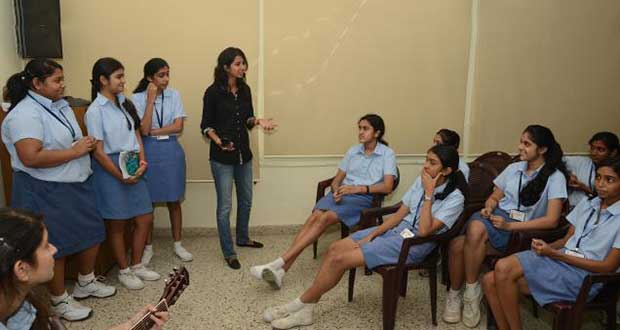
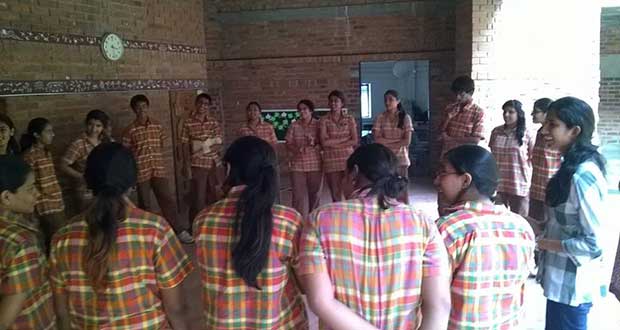






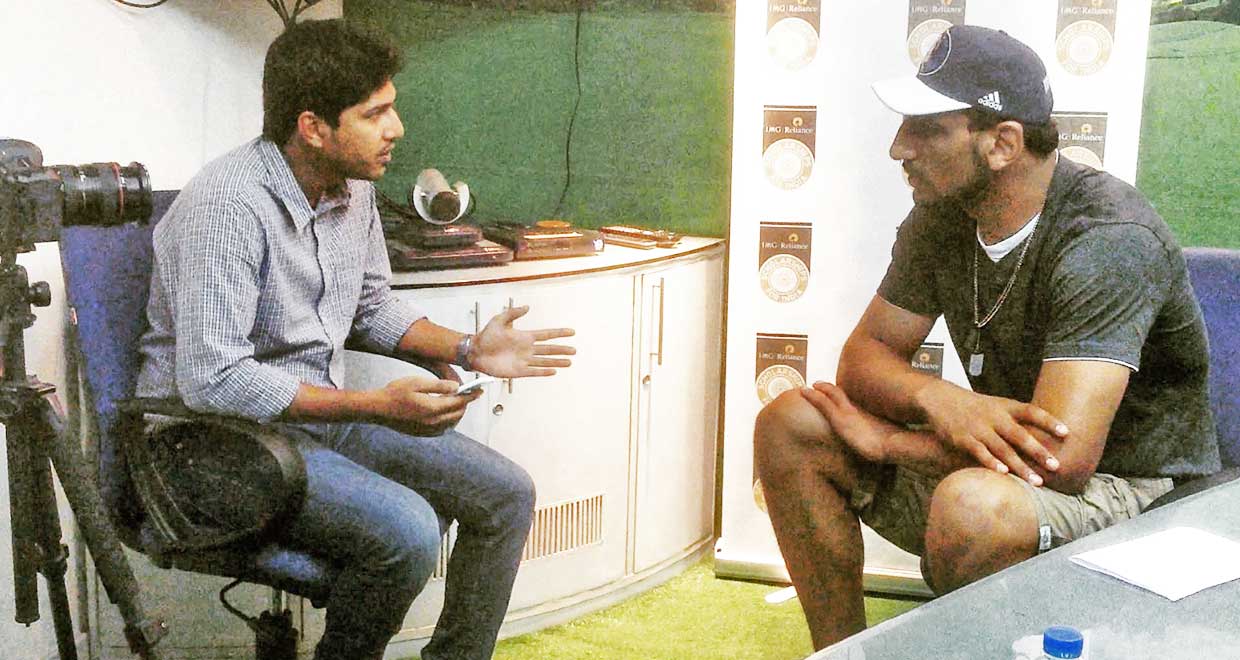






 Allow notifications