Category: Entrepreneur and Alternative careerists

  • Siddhant Mishra on founding Aap Vakeel Hain and lawsheet.com

    Siddhant Mishra on founding Aap Vakeel Hain and lawsheet.com

    Siddhant Mishra is  a final year student at School of Law, KIIT University, Bhubaneswar. During his law school days, he founded the popular Facebook page, Aap Vakeel Hain and lawsheet.com, a website for law students.

    In this interview, Siddhant talks about:

    • His journey through law school and the internship experiences.
    • Founding Aap Vakeel Hai and lawsheet.com
    • Challenges faced in his entrepreneurial journey

    Could you share with us for deciding to study law? Did you have lawyers in your family?

    My foray into studying law was unplanned as I do not come from a legal background and am a first generation lawyer.

    You know you are a law student when math’s is..!

    I choose Humanities as my study stream for my plus two boards; initially graduation in Arts was the only formidable option left with me. It was more by chance than by choice that I got into the Legal Profession.

    How did you choose KIIT as the law school to attend?

    Not being able to get through CLAT, I prepared for KLSAT and joined KIIT. KIIT helped in gaining exposure in an array of fields, here we learned through experimentation and from our own mistakes. On academics, we had a robust curriculum, and the standards are pretty good which helped in getting introduced to the world of legal practice. Campus has a cosmopolitan crowd & I made some of the closest friends, learnt new things (good and bad).

    What co-curricular activities have you partaken in your law school years so far?

    Being a member of committees and societies helps in building one’s personality and career; it taught me the skill of networking that is terribly underrated in our system. At KIIT I was associated with committees conducting in-house and national events which helped me stay motivated and added a good blend of work with fun.

    siddhant sl 2

    Can you talk about your internships, and how they helped you?

    Internships were a rewarding experience for me. I was fortunate enough to flavor different kinds of work experiences, having got the opportunity to work with Law firms, NGO’s, Publishing House & in the chambers of some eminent practitioners; all this helped me learn researching and drafting. I learnt time management and prioritizing, which, I believe, hold equal value in our profession. Working as an intern in the chambers of Shri Mohan Parasaran (Ex- Solicitor General of India) made me realized that my interest lies to work as a litigant or to start with something of my own & that I was never interested in working in a corporate structured firm. In my opinion internships give a wider approach to the law students.

    You’re a prolific blogger, and you run a website ‘AapVakeelHain’. Can you tell us why you started both?

    The very idea of starting a rostrum for law students came in the second year of my college when I realized the dynamic transition i.e an online interface which is about to change the legal industry; but I was confused as which model will hand in glove and build a strong community for law students . Facebook was the answer! Being a student of second year I felt I will sound mindless if discussed this idea with anyone, so I started the work by my own.  I created a page with the name “Aap Vakeel Hain” which prospected me as spellbinding and start uploading sketch works commonly referred as “memes” depicting the subtle and overt hilarity of Law School.

    “A Law Student who loves to write & marketize”

    I started writing and blogging for few websites on my propositions where I get some good replies, met with few excellent mentors and worked hard in crafting my skills, later few of my write-ups got projected in the local newspapers &it’s from here when I decided to transmute the idea of a Facebook page into a Website.

     How was ‘AapVakeelHain’ been received by the legal fraternity so far?

    Surprisingly it went in an year time, with the sketch works being liked & shared from hundreds to thousands & website blogs started receiving fair traffic in a year time. Aap Vakeel Hain is currently running with the highest followers (30k+) in this segment and has a strong and growing online presence. We have built a good name, strong networks and hosted series of events in collaboration with Law Schools across the nation. Journey so far is really good.

    What do you hope to be the future of ‘AapVakeelHain’?

    “The best way to predict future is to create it” at present I’m tied in creating a team that will be looking for the upcoming plans. Aap Vakeel Hain will be registered as a company in the near future and will be enduring many marketing & networking programs which will help in solving legal education with online solutions on which I’m active on. I wish the future comes one day at a time.

    How has a strong and growing online presence helped you? What are the major challenges you face?

    A strong online presence has developed an advanced networking skills, I have led multiple projects; developed and implemented new policies and procedures.

    Starting a website requires little money which my father pooled in, he was hopeful and happy to hear my purpose & so were my friends Aqib Alam ( Content Creator),  Nishant , Snehil, & Akshay.

    Aap Vakeel Hain was initially run and managed single-handedly which at times become troublesome in striking a balance with other ongoing work, as you have to update it daily or else the readers will lose their pursuit and page will weak its reach. I tried to find few potential administrators but then it didn’t work out and it came on my head all again.

    There came a time when I was not too sure to expand this whole Idea, thankfully I had few good tie-ups which helped in administering the tasks swiftly.

    Aap Vakeel Hain is a self sustaining and profit earning entity now.

    What are your plans after post-graduation? Is a masters in the pipeline?

    I will go for LL.M which will allow me to further specialize in Criminal Law and thus prepare me better for my career as a litigant.

    SuperLawyer.in serves the best when it comes on sharing the career insights, (specially the detailed interviews discussing about the LL.M programs & fellowships) browsing the website directory will be of great help for law students.

    Can you tell us about your new venture lawsheet.com?

    “Lawsheet.com” A website by law students for law students, is an upcoming project which runs parallel with Aap Vakeel Hain; designed with a vision to help you through Law Schools.

    This website will be maintained and written by several different law students from different schools and in different years of their studies.

    Aside from offering their tips, advice, and experiences, the bloggers will be able to use it as a sort of outlet and stress reliever from their hectic law school schedules.

    You plan to help law students with greater visibility through lawsheet.com. How do you plan to achieve it?

    • Lawsheet, among many other things, will depict entries about current events, technology and social networking as it relates to law.
    • Lawsheet aims in sharing how to decide if law school is best for you while offering what must-haves you are going to need and how and what you need to prepare for important exams.
    • Lawsheet will talks about everything – from eating habits, to studying habits, to writing papers and case briefs!

    We are on it, hopeful to launch in the coming months.

    What motivated you towards the entrepreneurial initiatives you’ve taken?

    Primary motive is the desire to start something of my own. I’m not sure what’s coming down the curve but it is a thrill. We all have that one idea running in our mind of which we are sure of, what’s required is to implement it.

    While I was scripting for my Interview I took a break and watched TVF Pitchers (an Indian Comedy Drama Series) in which Naveen (Played as CEO of a upcoming venture) highlights the difference that exists in the European and the Indian model of Entrepreneurships, where in Europe they will ask “WHAT is the Model” in India they will ask “WHY Entrepreneurships”

    This difference in the support and attribution systems requires a reformation.

    What are the unconventional career alternatives for law students out there?

    A degree in Law doesn’t guarantee you a career in Law!

    • Entrepreneur- A degree in Law will help in understanding and negotiating contracts related to the business.
    • Politics- Both house of parliament are filled with politicians pioneering a degree in Law. Few even managed with fake degrees!
    • Journalism/Writing- I have a name “Tanuj Kalia” founder of Lawctopus and a graduate of WBNUJS wrote a book “Law as a career” you may start scripting yours.
  • Kanan Dhru, Founder, RFGI, LawToons, LawForMe, on being a Social Entrepreneur and work experience in Policy Research

    Kanan Dhru, Founder, RFGI, LawToons, LawForMe, on being a Social Entrepreneur and work experience in Policy Research

    Kanan Dhru graduated in B.Com from Gujarat University in 2003, thereafter she pursued Bachelor of Laws from the prestigious London School of Economics and graduated by 2006.

    With her qualification in law, she started her versatile work life full of enviable achievements like being a member of a Prime Minister’s advisory body, consultant for Members of Parliament, and, interestingly, practising advocate at the Gujarat High Court.

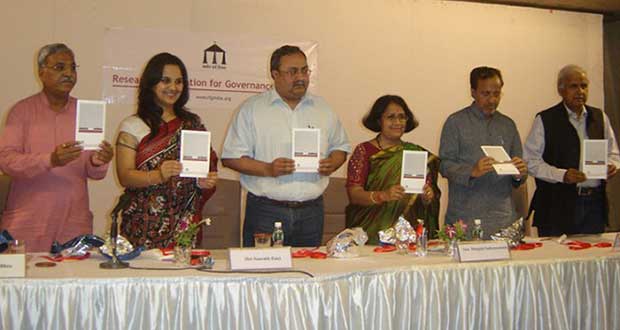
    Finally, the social entrepreneur in her motivated her to found the Research Foundation for Governance in India (RFGI) in 2009. RFGI is a think-tank that is working on legal and political reforms in India. Kanan is dealing with issues like backlog of cases, education for lawyers as well as engaging youth in governance through her work in RFGI.

    Recently, she has founded LawForMe (an app that guides people to the answers to their legal queries with the help of flowcharts) and Lawtoons (a cartoon series on the basic laws of India). LawForMe has won the Innovating Justice award of the Hague Institute for the Internationalisation of Laws, 2014.

    A successful woman social entrepreneur with a string of achievements at a very young age, Kanan talks about her thoughts, ideas, experiences and advice to young social entrepreneurs and law students.


    Please introduce yourself to the readers telling us a little bit about your childhood and your background.

    I come from a traditional Gujarati family. Our family is one of the old families of Ahmedabad. My grandmother’s grandfather has been instrumental in starting the Gujarat Law Society. The importance of arts and culture has been instilled in me since my childhood. My parents made a conscious decision to put me in C N Vidyalaya, a Gujarati-medium Gandhian school which stressed on simplicity, self-reliance and authenticity as the way of life. Children are taught to spin the wheel (and make Khadi cloth by themselves), agriculture, carpentry. In fact, our uniform was also made of Khadi!

    A certain percentage of students came from nearby villages and their parents were farmers, daily labourers and the like. At the same time, there were students who came from well-to-do families and I grew up seeing inequalities all around me.


    You studied Law after B.Com from Gujarat University. Was studying law an event of chance or an effect of a deliberate plan? What inclined you to choose law?

    I always wanted to be a lawyer. Since I grew up questioning our unequal society, I wondered where did the answers lie and where does the buck stop? I saw that all our leaders were lawyers and that by getting the education in justice delivery, I can help create a fairer society.


    You have completed your Bachelor of Laws from the prestigious London School of Economics. How different is the style of teaching at LSE? Do they focus more on the practical aspects of law as compared to the NLUs?

    My exposure to the education system at NLUs has come from my younger sister, who studied at one of them. At LSE, the teaching methodology is highly analytical. Emphasis is put on the nature and need of law in the society and the ingredients of rule of law. The black letter law becomes the focus only after graduation – just before the graduate decides to take up the path of becoming a solicitor or a barrister.


    Why did you choose a foreign university to pursue Law instead of an Indian law school?

    While I was very clear about pursuing law, my parents wanted me to study law from a good university. I did apply for NLUs after my 12th standard, but at that time, the application system was different. Every university had a different application system. I only applied to NLSIU and NALSAR and frankly, did not make it to either.


    Tell us about your time at LSE. How was the academic pressure? Tell us about campus life at LSE. How difficult was it for you to adjust to a U.K. based education system?

    My time at LSE was fabulous – my horizons were expanded manifolds. Of course, the delivery of lectures and communication during the classes was very different and I had to adjust to the change in the teaching methodology.

    Along with studies, I slowly started involving myself in the extra-curricular activities on campus. I became the editor of the law society’s legal journal, started SPICE (Society for the Promotion of Indian Culture and Ethos) and also founded India Week – one of the prominent celebrations on the LSE campus – where we hosted Professor Amartya Sen and involved the Indian Embassy in the founding year. I was awarded the ‘Honorary Studentship’ by the LSE Student Union – which is awarded to 20 students in the graduating batch every year.


    What kind of internships did you do while you were an LSE student? Are there any remarkable experiences during your internships that shaped your career choices later?

    In the first year, I interned at Nishith Desai Associates in India and in the second year, I interned with the World Health Organisation (WHO) in Geneva.

    Honestly, the WHO experience was quite significant since I was able to meet and interact with a very different set of people, mainly health professionals, and I was able to have very in-depth conversations with them. There were many people from the USA, whom I found really open and friendly.

    At WHO, I was able to see how an international organisation functions and how it is able to create dialogue across stakeholders. I also saw how different countries could get themselves represented at the international platforms. This fascinated me and made me start thinking about policy work in India.


    How did you secure your appointment at the NKC? What was the nature of your work at the NKC?

    (After graduating from LSE, Kanan came back to India and worked at the National Knowledge Commission for a year. The NKC is one of the Prime Minister’s Advisory body.)

    After coming back to India, I was still looking at different options. My father encouraged me to apply for the National Knowledge Commission. However, I wondered how could I secure a place at such a prestigious institution? I wrote an email directly to Sam Pitroda (then head of the NKC) with my CV and to my surprise, he replied positively the very next day!

    Working at the NKC was an extremely enriching experience. I was able to travel across the country and work with a team of highly accomplished individuals driven towards the development of the nation. I worked on issues such as library development, entrepreneurship and traditional knowledge. It was at the NKC that I realised that in order to create a sustainable impact through any policy, law played a crucial role. I decided to start practicing law then.


    You left NKC and started your independent practice as an Advocate at the Gujarat High Court. Do you think that was the perfect time for you to go independent?

    Practicing law fascinated me. I believed that by gaining exposure to litigation, I would be able to see how law was actually implemented in the society. This became clearer after my NKC stint.

    I did not strategise the timing. It just felt like the right thing to do!


    How did you overcome your initial jitters in a courtroom full of experienced lawyers and judges? Tell us about the highs and the lows.

    The atmosphere in the court is indeed quite overwhelming and intimidating for any youngster. However, people around me constantly kept on asking me why I joined litigation after a law degree from LSE! There were also those who asked me whether I was actually serious about litigation or whether I was there to find a suitable partner for marriage.

    As a junior, I was lifting files and running around the courtrooms, keeping time for my senior lawyers lest their case comes up. I was quite disappointed at the fact tht this was how I had to start gaining the exposure.

    I was even more disappointed to see that ‘justice’ was so slow to attain – the entire machinery to deliver justice seemed quite inefficient and I saw how so many people had to wait for years to obtain justice. It was a question of their lives and they were going from pillar to post, and still they did not know what their rights were!

    There were so many different kinds of lawyers! I met lawyers who were part-time tailors or rickshaw-drivers and then there were those who owned a Mercedes or a BMW and had really fancy offices. Were their clients equally represented?

    I kept wondering why things were not moving faster. Did we really need all these difficult jargons and procedures for fairness to prevail?

    My experience in the court made me realise that something drastic had to be done to change the way the legal machinery operated and that’s how RFGI was born.


    Please tell us about your experience with your first few sessions in court. Has it become more difficult for a fresher to achieve success nowadays?

    How and when you get a chance to appear in the court depends on a lot of things. It depends on who is your senior lawyer – is he/she your relative? – if that’s the case or if you have good relations with your senior, then your chances to appear would be higher. Else, you might have to push the files for quite a while before you are actually entrusted with a matter. Usually the judges are quite encouraging to youngsters.

    The first case I got to argue was a case of the year 1982 where a bus conductor had sued the state bus company, because of whose negligence he had to get his leg amputated. The amount claimed was around Rs. 14,000 plus interest. I put forward my argument and got the judgment in the favour of the bus conductor, but when I tried to inform him about the outcome, I realised that he had passed away a few years ago.

    All these factors led me to start taking my work at RFGI seriously.


    Tell us about your “Management Matters Project’’. What was your role and responsibilities in this Project?

    (Kanan undertook this Project at London School of Economics, McKinsey & Co. [New Delhi] and also at Stanford University)

    When I was at LSE, I got through a project between LSE and McKinsey & Co. to assess the management practices of manufacturing companies across different countries. It was a fascinating project and I learnt a lot about management and what factors contributed to better management practices across geographies. I also saw how the national regulatory and physical infrastructure had an important part to play.

    When McKinsey wanted to roll out this project in India, I got involved and spent time in their Gurgaon office to help set up the initial team. Similarly, even at Stanford, I was invited to help train the first batch of analysts.


    kanan-dhru-3

    Tell us about the story behind RFGI. What challenges did you face to establish an institution like RFGI? What does RFGI do and what is your job profile in the think-tank?

    (Kanan went on to establish and head a think-tank called “Research Foundation for Governance In India’’. RFGI today consists of 3000 members, working on legal and political reforms in India.)

    As I mentioned before, it was my experience at the High Court that led me to create a platform to raise a voice about needing a change within the legal systems, which took form in the shape of RFGI.

    However, initially the idea was to bring together youngsters who wanted to create a change within the governance systems in India and the mandate was quite open ended. Youngsters from different backgrounds started getting involved on a variety of issues. We started organising public debates and conducting research studies on issues such as entry barriers to litigation (which was to understand what are the barriers junior lawyers face to establish themselves in litigation), understanding the status and need for inner party democracy in political parties, analysing the status of legal education among others. We started collaborating on projects with Accountability Initiative (at Centre for Policy Research), with some of the professors at IIM-A, Government agencies and also started to work with a large number of young political party representatives across party lines. Along with this, we started hosting interns from different parts of the world.

    RFGI became a hub of different thought processes and discussions on governance in the city of Ahmedabad and we started gaining accolades from various corners. We started going to different schools and interacting with children on laws and rights.

    Our work profile was to work on research, awareness and consultancy on legal and political reforms related areas in India and to involve youngsters in the process of governance. The entire organisation was working in the spirit of volunteerism.


    Besides working on RFGI, you have contributed your knowledge set as a consultant for members of Parliament of India. Please tell us about your time as their consultant.

    Our work at RFGI and our profile as lawyers wanting a change in the society got us to work with a Member of Parliament on drafting of a legislation. In fact, after my work at the NKC, I was involved with the Education Department of Gujarat in drafting of several bills and ordinances. Our work with the Member of Parliament was to draft a couple of private members bills. It was fascinating work and the impact that we could create with drafting of laws was far reaching.


    What prompted you to take an offer of teaching in spite of working full time for RFGI? What was your teaching methodology there?

    (Kanan taught Ethics in Business and Business Law as a Visiting Faculty to final year Business students in Ahmedabad University.)

    When I was approached specifically to teach ‘Ethics’, I was intrigued. The subject sounded fascinating and I thought it might be a great chance to learn something. Teaching Ethics really changed me. As a teacher, I have always believed in encouraging class participation instead of preaching. The boundaries of ‘right’ and ‘wrong’ that Ethics forces us to delve upon makes you start questioning many of your pre-conceived notions. I challenged the thought premises of my students and tried making them better in tune with themselves.


    In between, you have also pursued Masters in Public Administration from IGNOU. What was the reason behind pursuing this course? Tell us about the course structure and the utility of this course.

    Since I was working in the field of governance, I wanted to have knowledge of the theoretical aspects of policy making and administration. Masters in Public Administration felt like the most relevant degree for me.

    Honestly, I was dabbling between an MBA (to understand how to grow a social enterprise) and an MPA. I also got the Fulbright Fellowship to pursue an MBA in USA but could not take up that offer due to unfavourable circumstances.


    Our readers would be keen to know about your recently started websites “LawForMe’’ and ‘’LAWTOONS’’. What led to the foundation of these two websites? What advantage can law students get from these two websites?

    I can’t express it in fewer words. I would request the readers to read: https://www.facebook.com/notes/579275265508546/ and here’s a brief about Lawtoons: http://www.hindustantimes.com/art/lawtoons-a-comic-series-to-teach-children-their-rights/article1-1281611.aspx


    kanan-dhru-2

    How does it feel to be well recognised at such an early stage in career? And how has your journey as a Social Entrepreneur and Legal Innovator been so far?

    (Apart from being an Acumen India Fellow, Kanan has won the Innovating Justice Award, (2014) and was also selected as an ‘Indian of Tomorrow’ by India Today (2012))

    Acumen’s India Fellows Program is addressing the country’s most pressing social issues by supporting a new generation of Indian leaders willing to challenge broken systems and develop new, inclusive solutions to create impact. Each year, the India Fellows Program brings together up to 20 emerging leaders from different regions, sectors, and socio-economic backgrounds in India. I am honoured to be selected as one of the 20 fellows this year.

    My journey as a social entrepreneur and legal innovator has been quite fascinating and often introspective. As they say, when you are on a journey to create a better society, it may also be a pathway towards your internal journey and vice versa.


    Starting RFGI and winning the Innovating Justice Prize are some of the milestones in your career. Tell us about your success mantra.

    Perhaps what has worked for me is that I focus on what work is to be done and not what I will get out of it. ‘Focusing on work as an end in itself’ is my mantra.


    Please tell us about your two books and how do you get time to pen for the daily newspapers and blogs?

    (Kanan is a regular blogger and columnist for The Huffington Post, Femina Gujarat, Daily News & Analysis and were a former columnist with Times of India (Gujarat). Kanan has also authored two books ‘Kanan Chan in Japan – Diary of an exchange student’ (2003) and authored a book of poems ‘Amara Manma’.)

    Since childhood, I have always loved reading and writing. Writing is a very introspective process and it makes me really happy when I write. It is easy to find time for something that you love! Plus, Ahmedabad being a less happening city, it leaves one with a lot of time to pursue their hobbies and interests!


    kanan-dhru-4

    How do you think knowing law benefits an entrepreneur? What are the prime hurdles that a non-lawyer entrepreneur is likely to come across?

    Being an entrepreneur is all about the will and the aptitude. Being a lawyer or a non-lawyer has little role to play. Of course, a lawyer is more attuned to understanding the regulatory process or has in-built analytical thinking. After that, it is the business acumen and the communication skills that create wonders. Introspection is also an important trait for any self-starter.


    What are your thoughts about raising capital for RFGI? Have you approached any Foundations?

    We believe that our work has potential to make significant impact. While money isn’t really a great motivator, we believe that through social entrepreneurial ideas such as Lawtoons and LawForMe, we will be able to sustain our work.


    When you hire people under you, what kind of skills and profile do you look for? How can law students or marketing students go about developing these skills?

    At RFGI, we usually invite anyone who has his/her heart in the right place. It is a platform to do good work and everyone is welcome! However, over time we have realised that most interns join because they want a certificate, which is such a shame. Now we have become far stricter in looking for the right fit.

    For legal interns, we look for interns who know the law and who respect deadlines. What is fundamentally important is that the person should have a belief about bringing a change in the legal system and creating innovations in law – to have his/her heart in the right place. Rest all can be taken care of.


    What does it take to be a Social Entrepreneur and Legal Innovator? What are the three great skills of an entrepreneur according to you? What differentiates the best from the rest?

    Honestly, I have always followed my heart and did what I thought was the right thing to do. It has not always been easy – but it has been worth it. Three great skills of an entrepreneur according to me are:

    • Knowing one’s self well (knowing what you stand for, your likes and dislikes and the non-negotiables as well as your limitations)
    • Knowing that you can be wrong too (humility)
    • Knowing that your dreams will come true


    How has the journey been for you as a woman entrepreneur?

    Somebody once told me that the value of RFGI is also because it represents the voice of a young female on governance and legal system. I consider this an honour. I think my journey has been exciting and full of interesting ups and downs. Being a woman entrepreneur has been both positive and negative.

    At times, I wonder what my journey would have been if I were a guy? Perhaps I would have been taken more seriously in our society, perhaps I would not have so many social pressures to fit into a specific box, perhaps I would have been a lot more aggressive in my work, perhaps my life would have been easier.

    But then, I feel that it is because I am a woman, I need to do what I do – even with more enthusiasm and self-belief.


    Your main object is to work towards legal reforms in India through Research Foundation for Governance in India, Lawtoons and LawForMe. Where do you want to see yourself five years down the line?

    5 years down the line, I see Lawtoons and LawForMe as flourishing entities, making laws and legal processes simple and easily understood. RFGI would of course be the umbrella organisation facilitating dialogue and discussion on access to justice.

    I also aim to see many more legal start-ups in India and a thriving ecosystem providing access to justice in India.

    I don’t know much about myself but about the legal system in India, I have so many dreams! I want to see a legal culture in India where justice is a primary value, respected and enforced fairly and efficiently. I want to see a culture of legal aid actively provided to those in need and where efforts are being made to make people aware about laws and rights. I visualise the legal climate where with the help of technology, access to justice has become easy, process faster and transparency is taken for granted. I don’t know if 5 years is too short a time for this dream to materialise but my efforts will continue in this direction for sure.


    Is there scope for legal internships in RFGI? If so, what is the process of application?

    We are highly selective about the interns we take. Please email info@rfgindia.org for internship opportunities.


    Tell us a bit about mountaineering. Did you take any hard-core training before climbing? Why have you chosen this hobby which needs maximum tenacity and mental strength?

    (Kanan has scaled Mount Kilimanjaro in 2012 and has travelled over 30 different countries.)

    While I am very passionate about my work, I am also thoroughly interested in traveling, sports (yes, I love playing tennis!) reading, knowing about different cultures and outdoor adventures. Being with nature is so important! Work is important but it is equally important, if not more, to grow as a person. The extra-curricular activities do make you a stronger and more composed person. Over time, I have also grown very curious about understanding human nature and I keep reading about it every now and then.

    I have travelled over 30 countries and have gathered so many interesting experiences. In fact, on my Japan trip alone, I have written a book called ‘Kanan Chan in Japan’! Perhaps Super Lawyer should do another interview with me to capture those insights! J


    What is your message for law students who aspire to be Social Entrepreneurs one day?

    “Follow your heart and take risks. You only live once.”


  • Sidhartha Peddinti, Startup Lawyer & Business Consultant at GlobalQuest Ventures LLC, on being a business lawyer and strategy adviser

    Sidhartha Peddinti, Startup Lawyer & Business Consultant at GlobalQuest Ventures LLC, on being a business lawyer and strategy adviser

    Sidhartha Peddinti graduated in Law from University of London through an unique programme through London School of Economics, in 2011. A graduate of Business & Economics from University of Toronto, he is currently a Startup Lawyer & Business Consultant at GlobalQuest Ventures LLC.

    He started working in the Immigration Law Offices of RAK at USA. Thereafter he went on to become partner at California Law Services where he handled immigration and bankruptcy work. He describes himself to be a lawyer with an entrepreneurial mindset.

    In this interview he talks about:

    • His choice to become a lawyer even after specialising in economics;
    • The options for a lawyer to become an entrepreneur;
    • How he joined LSE and his experience at the institution; and
    • His journey as an entrepreneur.


    Tell us about yourself. Since when are you living in US? Where did you get your primary education from?

    I am a real international citizen, in that I was born in Dubai, raised all over the Middle East, then spent three years during middle school at an international boarding school called Rishi Valley in India, moved to Toronto with my family in high school, obtained a bachelors degree from Toronto, a law degree from London, and then another advanced law degree from Los Angeles. So, my varied experiences and vastly different background has shaped my mentality, my attitudes, and my interests to be a hybrid of an Indo-Canadian-Middle Eastern, rounded up with an outdoor Californian lifestyle. I have been in the US since 2011, and have been an attorney since the past year and a half, i.e. January 2014.


    You did your bachelors in Business & Economics from the prestigious University of Toronto, tell us something about the course, the school and why you choose business & Economics?

    A pivotal moment shaped the way I thought about business and my career was in high school. I read a book called ‘Rich Dad – Poor Dad’ which I bought at a garage sale for $5. It explained the difference between (what the author referred to as the 4 quadrants) employees and self employed persons who fall in quadrants one and two, business owners and investors fell into 3 and 4. 1 & 2 work for their money – they don’t show up to work – they don’t get paid (even most lawyers fall in here – no client, no money). 3 and 4 found a way to be involved in multiple avenues and still accumulate wealth, while they are busy doing other things with their time or managing multiple assets they own.

    I wanted to understand more about how I could end up in the sectors 3 and 4 – where I can get my money to work for me, a state where, through my acquired and vested interests in companies, homes, stocks, and other assets, I could receive multiple sources of income. This was the start of my interest into economics, and business – I simply had to understand the way different business models worked, how the market worked, and how to operate a business. After getting accepted into the best University of Toronto – the number 1 University in Canada, it was a real no-brainer that I had to pick this school. It was over 175 years old, and in the top 25 best universities in the world. The courses were very challenging, but it was rewarding to complete the degree and understand how market cycles worked, and how each industry was affected by these cycles.


    A degree in Business and Economics is often enough to land anyone lucrative job at a big company. Why did you choose to do Restructuring through CAIRP, and then choose law after that, rather than accounting, finance, investments – the natural course for business majors?

    Good question. Following from the previous question, after I understood the way the different models worked, I knew that there was a recession that was going to affect North America, atleast thats what our Economics Professors were predicting around 2005/2006. I researched this theory and found the bubble was about to burst since everyone had their credit over-extended. Virtually all my friends ended up choosing a big firm for either accounting, audit, strategy, or some for an MBA. I wanted to prove my theory of the recession and be involved in that game of using the market to my advantage I hunted for a boutique law firm that specialized in Bankruptcy law and restructuring law, and choose to join their practice as an Estate Administrator – a job that gave me a brief overview of the process involved. The pay was less than half of what my friends were accepting immediately after graduating, but almost immediately after joining the firm, I started a course, sponsored by the lawyer, in Bankruptcy & Restructuring law & consulting, through the association that monitored Restructuring Professionals in Canada called CAIRP – Canadian Association of Insolvency & Restructuring Professionals. I received my certification to consult in a very short time since I was lucky to finish all my courses and pass the state exam in one sitting. As soon I completed all my practical training, within 6 months of initially joining this industry, I started a firm called Clear Debt Solutions. From 2007 – 2012, I had over 1000 cases that I personally handled, close to 500 being business bankruptcies. The firm still exists and is controlled by partners who I hired when I joined law school in 2009.

     

    sidhartha-peddinti-3

    You did your law from London Scool of Economics, through the International Law Program from University of London from 2009-2011. Tell us about your time there, and why you choose that program over Canadian or US schools?

    After being exposed to many lawyers in my restructuring practice, I wanted to add law school to complete my quest to understand more about business and the legality of doing business. I started law school from the UK, rather than in North America, because I wanted to have a unique edge to my portfolio, that separates me from the normal law applicant. I choose the International Law Program specifically, because it was flexible in its timings, its lectures delivery methods, and its study methodology. During these years, my consulting firm was booming, as the recession got worse, my revenue got better, and by mid-2010, I operated 5 locations throughout Toronto. I had a partner, few employees and hundreds of clients every year. I could not leave all this to complete a full time law program, which most Canadian law schools offered (Only 8 in Canada by the way), and which was also required by Immigration for me to attend law school in the US.

    By choosing to study in an International Program, based out of London, yet not being required to physically be present one hundred percent of the time, allowed me to work and study simultaneously – something that enhanced my understanding of the subject matter, while being able to practically utilize and gain ‘lawyerly skills’ through my practice in Toronto. Sure, it was hectic, since I flew back and forth, balancing school and work in two continents. I simply could not let either of them go. Of course, the fact that it was University of London, one of the best schools in world had a lot to do with it, and when they offered me an entire law degree in under $20,000 (plus still able to work) compared to $150,000 in the US – I could not pass up that offer, and in the end did not rack up a single dollar of student debt as compared to an average law student who has over $150k debt in the US.


    Did you interact with Indian students there, given that UK law schools are a popular choice among Indian law students?

    I met some incredible students who were also part of the international program. In fact, it allowed me to network with students from almost 50 countries directly through a portal system, something I checked out before I started the program, and many of those people are still my close friends to this day, in Canada, India, Pakistan, and even from Brasil and other countries. The pass rate at the International Law Program was roughly 25% after the 3rd year, so unfortunately many of the Indian students I met did not manage to complete the program, or moved on from law into other areas.


    With your LLM from Southwestern University, USA, you have received legal training from three countries. In what ways has this versatile academic environment helped you?

    To remain true to my original quest of being in quadrant 3 and 4 – business owner and an investor, I knew that the opportunity for this dream truly existed in the US, compared to Canada or the UK (from a global standpoint). So, while finishing law school from London in 2010, I applied to LLM programs all over Canada and the US for the 2011 Fall start session. I knew that the market was slowly starting to pick up now, and in a few years the market would be in the re-building stages again. I wanted to be in the center of this movement, and by being in California – the world’s hub for innovation and technology, I could not go wrong being a lawyer and entrepreneur in California. I was lucky enough to be accepted into all the schools I applied to, and they even allowed me to start the LLM program before my final grades were released from University of London. It was a miracle, since the administrators office at Southwestern made this exception for the first time for a foreign student in over 100 years. In two weeks of starting, I received my grades, and another miracle happened where I was in the 15% of students who passed all the courses that year, thus getting my degree after I had already started working towards a LLM degree.

    I picked Southwestern in Los Angeles because it was a school that had a flexible course options, and one that allowed me to complete the courses that I wanted to take. My eventual strategy was to attempt the dreadful California bar exam with 15% pass rate for foreign lawyers, and I knew I had to be prepared for it, since I am competing with local students with 3 years or legal training, compared to only 1 year for me.

     

    sidhartha-peddinti-1

    You never took a job at BIGLAW while you do have an impressive lawyerly profile. Why so?

    My interests, skills, and passion lies in entrepreneurship. I choose to do law to become a lawyer, but more importantly to become a good businessman. I believe that it has allowed me to think in a manner that is different from the lay person. I did not take up any positions at large firms because I believed that I have a unique skill set that would be wasted at a large firm, doing routine work, albeit they pay a lot for it. Many of my friends work a large firms, and making large paychecks, but the very thought of a desk job never appealed to me, and I have rejected some very lucrative offers in the last year, since I prefer to be out and about, running around making things happen. I am a very high energy individual who needs to constantly be in motion, and although for some of my friends BIGLAW has worked out great, it was never my cup of tea.


    The California Bar is said to be the hardest law exam in North America with less than 15% pass rates for foreign trained lawyers over the past 30 years. Explain why you choose to do this crazy step, given these statistics?

    I knew the statistics and I knew the high chances of failure. No one thought I could make this happen, since there are horror stories all over the web of people failing the California Bar 5 or 6 times. I thoroughly researched about every course I was expected to take, and by carefully selecting only Bar Courses, and some international law (my interest) courses in my LL.M, I was able to complete all core courses required by Californian law students that were going to be tested on the Bar. This allowed me to get the local training I needed for those courses, plus having international exposure. I nevertheless decided to take the bar and give it a shot, and luckily I was among the 22% of LL.M students that passed the Bar in my round of the California Bar Exam for July 2013.


    Before we go into your entrepreneurship ventures, tell us about your legal consultancy work. How did you establish such a vibrant consultancy practice?

    In my quest to be in quadrant 3 and 4, I engraved in my personal charter that I would understand different business models, so that I would eventually have various companies in my own portfolio. This is still my mission, and every time I meet an entrepreneur in a different industry, one unknown to me, I gladly take on the case to understand the industry better.

    I had this mentality since I started my first business, and I have enjoyed every business I have consulted with. Thus, my present consulting practice is one that can cater to clients from many industries, and clients from all stages of the business cycle. I now understand how these different models work, and am easily able to put myself in the shoes of my client, the entrepreneur, and advice, strategize, and legalize – all in one chain of thought. It is a lot of work, since I spend the time to research about different industries, but I suppose I am hooked to it. This has left me at the crossroads of law and entrepreneur.


    How is Canada or US as a career choice for Indian law students?

    Canada is a great place for Indian lawyers – especially those in the midst of their careers. The process of qualification and the exams are easier, with almost a 80% pass rate. In my opinion, it is great for an entrepreneurial lawyer, especially one who wants to serve the Indian community – especially in Criminal, Real Estate, or Divorces. Litigation is primarily taken up by local law students – Indian or otherwise, and largely dominated by those who received local training.

    US is a different beast altogether. The laws are also similar to British, but the legal ecosystem is very different. The bar is tougher, longer, and more intense. There are a lot of restrictions and qualifications the applicant has to go through. That said, a US lawyer is valued globally, and opens far more international doors than I would had as a Canadian lawyer in the international and startup up space. There are a lot of jobs in the US, especially for litigators, since the laws are geared towards solving grievances in court. There is also a lot more work for lawyers in the US, in terms of the types of law, the types of cases, and the truly unique legal system they have created here (I find a vast contrast from the Canadian and British legal culture). So, be ready to get comfortable knowing about the local culture, if you want to be a successful American lawyer in the US.


    Why did you make the shift from Canada to the US?

    My move was primarily because of two reasons: (i) large opportunity to be involved in the upswing of the economy in terms of products, startups, and opportunities; (ii) great weather compared to the bitter Canadian winters.

    I have always wanted to be involved in the globalization of economies, and being in California was more suited to my needs than to accomplish that from Toronto. However, since I have a consulting practice in Toronto, I still fly there often and work there.


    In the US you started working at Immigration Law Offices of the RAK. How is the work culture there and did the local reference help you understand the culture better?

    In my attempt to find out the local work culture and integrate into local legal scene, I decided to work for a solo lawyer, plus he knew immigration laws, so I did not really have to pay a hefty price for an immigration lawyer to figure out my visa. To understand immigration laws in the US is very important, it is the most complex system in the world, and a simple violation can be disastrous. I figured by working for an Immigration lawyer, I could hit three birds with one stone – (a) local work experience, training, and integration; (b) learning about immigration laws; and (c) did not have to pay for an immigration lawyer since he mentored me to fill my own paperwork which I wanted to get a grip on anyway.


    You were a partner California Law Services and worked there for a year. Where are you currently working, what kind of work do you do there?

    I worked as an Immigration and Bankruptcy lawyer with my previous employer, RAK, turned partner at the new firm. We mainly handled immigration and bankruptcy work, both which were areas I had some comfort with. I found both areas to be very competitive, and faced fierce competition. Meanwhile, my personal interests in entrepreneurship were not being fulfilled, so post my return from India last December to explore the startup scene, I joined as a partner at a boutique firm which was focused on law, entrepreneurship and startups.

    I currently work as a partner at GlobeQuest Ventures, LLC – as the name indicates, we travel the world looking for startups and companies to help them in their entrepreneurial journeys – legally, strategically, and practically. I absolutely love it – and finally have been able to combine my passion of law and entrepreneurship in one.


    Please tell our readers something about your entrepreneurship journey, and how you lived your 20’s working and studying?

    As I mentioned earlier, reading that book changed my career path. I was getting the education and theory side of it, but I also wanted to work on the practical side of it. I started my first business as soon as I finished the book in high school, aged around 18 or so. I have never looked back, and have been fortunate enough to have made that step at such an early age. I had some sacrifices along the way, but I see those as opportunity costs, and have not regretted any missed vacations, or parties (missed many of them). I made sure to have a very vibrant social when I could and led an active lifestyle to compensate from the stress from my business and school. Sports was my way of balancing myself, and I enjoyed playing 5 different competitive sports in my 20’s.


    How many companies in total have you founded?

    I have been fortunate to be part of 8 different companies to date. I have recently acquired equity portions in 3 new companies, and hope to be part of another 100 companies in the next 20 years or so.

     

    sidhartha-peddinti-4

    How do you define yourself, as a Lawyer or as an entrepreneur?

    A lawyer with an entrepreneurial mindset. My dream of combining both my passions has led to work in a dual capacity – working as a lawyer when needed, or as a founder, partner, strategic advisor, or in-house lawyer. I value flexibility and adaptability greatly, and my past experiences that allowed me to transition into role with relative ease.


    Tell us something about your latest startup venture.

    Through GlobalQuest Ventures, LLC, my recent clients have primarily been disruptive technologies that are in the mobile app space. One is a disruptive journalism app, another is a Uber for private planes, and another is a revolutionary dating site for a selected and elite customer.

    Another venture I started is called LLMbartutoring.com, a tutoring school that is dedicated to helping foreign trained lawyers integrate into the California system by assisting in local cultural transition, job training, course assistance, Application help and California Bar Exam training. This information can also be found in my personal ventures section on my webpage.

    On the other side, I started working on some revolutionary product lines with some very famous scientists, who specialize in holistic medical formulations. I have approached some celebrities and famous television personalities to team up with us, and can possibly secure a very large deal in the next 2 months that can help us potentially move millions of units every year. That would satisfy my itch to be a co-founder in a truly non-legal business – a turmeric infused skin care line, scientifically backed and tested by the foremost expert in turmeric infusions.


    Your website sidharthapeddinti.com seems to be offering a complete ecosystem of service for startups. How did you manage to that?

    By finding a way to incorporate all my interests in one way through GlobalQuest Ventures, LLC, I decided to put all my thoughts on one site, that describes me as a person, as a lawyer, an entrepreneur and eventually as an investor (with my portfolio). Thank you for mentioning my page, since I built that page myself in less than a day. I have no previous computer training, programming or coding or any other backend experience, but I knew that by watching the right videos and reading the right articles, I could do it myself. I have since created 5 webpages, and even got some people asking me for a referral for the company who created my site. In short, I want to prove and inspire people to understand that anything can be done, with the right mindset, and if a non-tech person like myself can make wesites in a day, others can live their dreams and make it happen over night as well. That was the real motivation for the site – inspiring people to live their dreams by quitting their boring jobs as a first step.


    Are you also working with any Indian companies who are looking to expand internationally?

    I have started to form many strategic partnerships with corporate lawyers, startups consultants, and other individuals who are involved in the Indian startup scene. I am eager to enter the Indian startup space and help take those companies international – US, Canada or other countries. We look to form strategic alliances, joint ventures, mergers, acquisitions, and even where lucky, take it public.

    I am looking to team up with key individuals in India who can help me in this quest. That is the reason my company is called GlobalQuest Ventures, LLC – where law meets entreprenrurship and strategy.


    What advise will you give to young lawyers who want to become an entrepreneur?

    I find the practice of law requires a different set of entrepreneurial skills than a mobile app company or a revolutionary product. Being part of an elite subset of society, one that is highly regulated and controlled (worldwide), lawyers have to follow certain protocols that other entrepreneurs may not necessarily face, especially relating to contacting potential clients, or advertising standards, or types of deals that one can take one.

    Thus, solo lawyers who want to hang their own shingles should think like a lawyer first, and only after taking all the protective measures, one should engage in their targeted marketing campaigns. So, it’s a unique type of an entrepreneur who should expect 3-5 years, at a minimum, to start realizing the resulting they imagine. I know a lot of lawyers, and virtually every single highly successful lawyer that I know, has been practicing for at least 5 years. So, there is no way to get around patience.

  • Manojna Yeluri, Founder, Artistik License, on IPR awareness and LL.M in Media and IPR from UCLA

    Manojna Yeluri, Founder, Artistik License, on IPR awareness and LL.M in Media and IPR from UCLA

    Manojna Yeluri is a graduate of the 2010 batch of National Academy of Legal Studies and Research University (NALSAR). She started working at the Bangalore office of Amarchand & Mangaldas & Suresh A Shroff& Co. (AMSS), right after graduating. She soon left her job to pursue her Masters in Entertainment, Media and Intellectual Property Law at the University of California, Los Angeles (UCLA), in the year 2011.

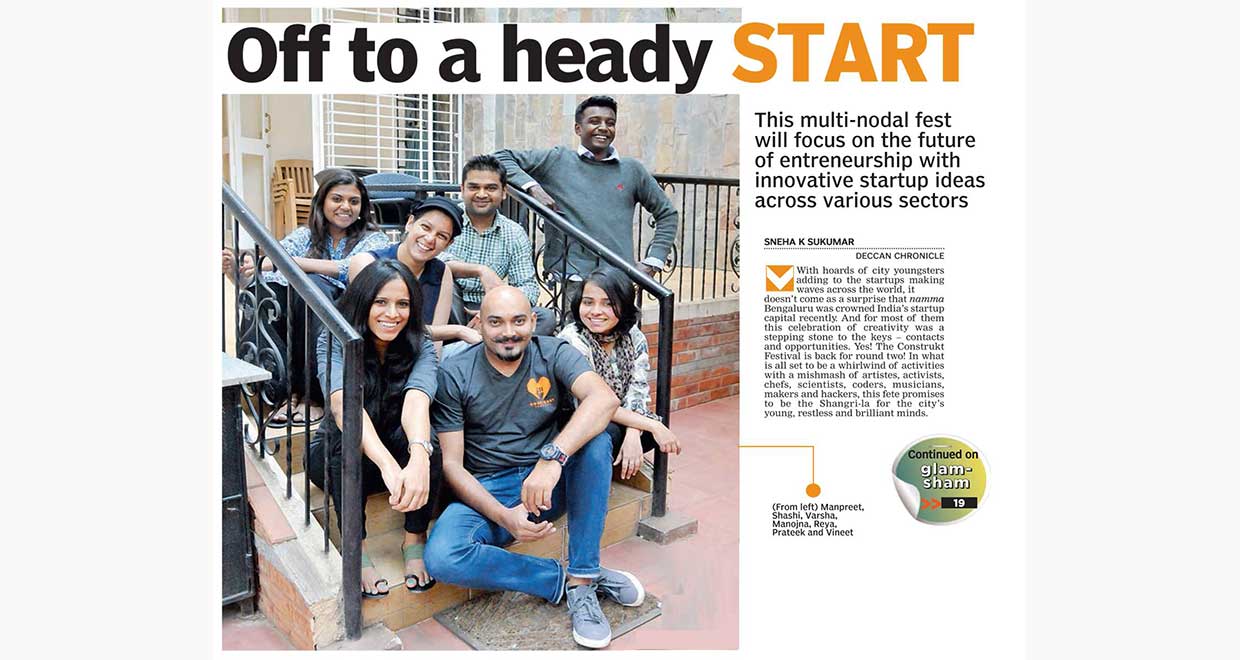
    Since returning, she has founded Artistik License, an organisation specialising in the rights of artists, entrepreneurs and other creative professionals. She is also a Business Development Consultant at Vahura, a legal recruitment firm, and this year, she held the post of Content Curator and Co-ordinator at Construkt Festival 2015.

    In this interview, Manojna opens up about:

    • What made her choose to pursue Entertainment and Media Law, despite having a job at the largest law firm, AMSS;
    • The application process to UCLA, as well as the importance of a Statement of Purpose (SoP);
    • Her work experience at Artistik License, Vahura and ConstruktFestival 2015.


    Whatmade you choose Law as your profession? Is there anyone else in your family who works in the legal field?

    To be fair, pursuing a career in law was not my first choice. Growing up, I was led to believe that I could pursue a career in any field so long as I worked hard at it and made a good living from it. By the time I decided to give law school a shot, I had already thought of becoming a biologist (a thought I abandoned after my 10th standard experience with Chemistry and Physics) and later, I sincerely wanted to pursue a career in Sociology and Psychology. Things didn’t quite work out the way I planned, which just goes to show you that you can’t always foresee and plan for everything. Following my 12th standard Board Exams, I ended up moving to Bangalore because of my father’s job, and during a very very brief stint at Mount Carmel College, decided that perhaps law school would provide me the kind of opportunities I wanted, particularly in the realm of Humanities. My father and grandfather (my dad’s father) are both law graduates who did not practice, but ended up using their legal knowledge in their careers as Government officials. My other grandfather (my mum’s dad) is a retired Police officer, who has always had a strong love for criminal law. I do have family in the legal profession – specifically my cousins and my father’s uncle (an astute man and a retired Judge),who have all made, and are continuing to make an impact in the legal world through their own efforts and contributions.

    For all practical purposes though, I really am a first generation lawyer in my tiny nuclear family.


    What was life likeas a law student at NALSAR? How did your five years in the university influence your personal growth?

    My years at NALSAR are definitely some of the most eventful and insightful, and I pretty much carry memories and lessons from my time at law school, into everything I do. When I was studying at NALSAR, things were a bit different  – we were a lot more interested in actually meeting one another and since we were so far away from thecity (nearly 35 kms away) and living on a student budget, I think many of us found ourselves more deeply involved in campus life than we expected to be. For me, it was a wonderful and scary time, since it was the first time I was staying in a hostel, but any hesitations I had were eradicated thanks to the friendships Imade – some of which have evolved into strong relationships that I turn to in times of joy and crisis.

    One of the most important lessons I learnt in NALSAR is that life is what you make of it. As individuals, many of us have access to several opportunities, however,there are only a few who choose to truly make the most of them. Looking back, there are a few things Iwish I had done, and there were many batchmates, seniors and juniors who displayed enthusiasm, initiative and creativity that I never thought was possible – so I have to say that law school can be quite an inspiring place so long as you know where and who to look to.

    As an institution, NALSAR offers its students a wide array of opportunities, but then again, as I mentioned earlier, it’s upto you to make the most of it. Besides my time on campus, I also ended up learning a great deal about myself thanks to a Student Exchange Programme I took part in just as I entered my third year of law school. I had a blast at Griffith University, Brisbane and it was really a professor there and his courses that sowed the seeds for my fascination with entertainment law.


    Did you take part in moot court competitions? How important do you think are such competitions for getting acceptance for Masters in the USA?

    I was not a mooter. I’ve admired mooting, but only from a distance. In my experience, mooting requires a skill set and an emotional endurance that I’m not sure I had, or was really interested in developing. When I was in law school, I remember hearing that conferences and publications were far more important than Moot court competitions when it came to applying for a Masters, however as we all know, that’s not always true. Moot court competitions help develop certain qualities that are very important to a career in law, however, as is the case with everything, I’m not entirely sure that there’s a fixed formula that states that Moot courts or conferences might considerably increase one’s chances of admission into a Masters program anywhere – I think what matters is ensuring that one’s Statement of Purpose is tight, sincere and clear.


    At a time when most people primarily focus either on Litigation or on Corporate Law, what turned you to Entertainment, Media and Intellectual Property Law?

    It’s funny that I embraced my fascination for Entertainment law and IPR only after I left law school, since I might have been able to do more while I was at NALSAR. I did bite the bullet and make the initial foray into the world of corporate law for a very brief period of time. Isat for recruitment and was picked up by AMSS (Bangalore) and believe me when I say that at the time, Iwas overjoyed and excited because I thought “Hey! My life is set now”. Shortly after joining AMSS, I found myself increasingly reading up on Entertainment law and IPR and when finally my curiosity couldn’t take it anymore, I chose to leave to pursue a Masters in either Entertainment or Media law. It wasn’t a very easy decision though – working in corporate law brings with it, its set of privileges, like a solid income and respect, and foregoing that, especially when you’re a fresher in the job market, seems a tad bit risky. However, I did receive a great deal of support from my folks, particularly my mom, who really helped me during such a difficult transition.


    Were your internships mostly related to Media/IPR law? Which was the most enriching internship experience for you?

    Most of my internships were not consciously oriented towards Media/IPR law because all through law school, I had convinced myself that I was probably going to become a corporate lawyer. I had interned in almost every holiday break and because I always wanted to keep my options open and balanced, I ensured I did one corporate internship followed by one NGO internship. My most memorable corporate law internships were at JSA, Bombay and Luthra&Luthra, Bombay because of the kind of experiences and learning that happened. With respect to non-corporate internships, my internship at Majlis, Bombay (run by Flavia Agnes) and Loksatta, Hyderabad were instrumental in teaching me a lot about the interaction between law and content-creation. My serious Entertainment/IPR law internship only happened years later during my time at the University of California, Los Angeles (UCLA), at an independent film studio (NuMedia), run by a lawyer. Nestled in the middle of Hollywood, it was a pretty cool way to learn about entertainment lawyers and the industry.


    How did you choose to pursue your masters at University of California, Los Angeles?

    The University of California, Los Angeles or UCLA is considered the best school in the world for the Entertainment, Media and IPR law programme. To be honest, that’s one of the major reasons I wanted to pursue a masters there. I had applied to two other schools that year – SOAS and LSE, and I was fortunate enough to have gotten accepted into both but my heart was set on UCLA because of how well structured its Entertainment law program and department was.

    I think that it’s always important to choose to pursue a Masters or any degree at an institution that has developed a great reputation and infrastructure to teach the subject that one wants to pursue a higher education/career in. A lot of people wondered why I had chosen UCLA, and the answer is actually very obvious – it’s the best place in the world to study Entertainment law. UCLA had an entertainment law department that had some wonderful faculty who brought years of experience from Hollywood and other international entertainment industries, into the classroom. Imagine being able to study about being a lawyer with a record label from someone who actually worked with Capitol Records and works with Warner Brothers – that’s exactly what UCLA offered me, and in my opinion, it’s that kind of specialized focus and infrastructure that actually helps students gain a more informed and insightful understanding of the area of study they are focussing on.


    How did you go about your application to UCLA? What are the prerequisites to applying to a university in the USA?

    I would love to say moots, conferences, publications, solid recommendation letters, extra-curriculars during law school, internships – the works, but I think at the end of the day what matters the most is clarity. One needs to be very clear about why one wants to pursue higher education at a university in the USA and that clarity needs to translate itself into a well structured, well written and sincere Statement of Purpose. I’ve always been a bit of a nerd and so pursuing a Masters was always something I wanted to do, and perhaps accordingly, I ensured that I had a fair balance (not a lot – emphasis on the word fair) of conferences and internships, however even the greatest recommendation letter in the world cannot substitute for a good Statement of Purpose. I definitely took time out to focus and re-write my SoP which I think also had a huge role to play in securing some financial assistance for my education. It’s also good to understand why you want to study further – a few people I know have referred to their LLM year as a holiday year- I have no idea what they are talking about. Studying abroad is a memorable but potentially difficult experience where you have to get used to studying a whole new jurisdiction while ensuring that you cook edible meals and live on a shoe-string budget.  However, coming back to the prerequisites of applying to a US university, it’s always good to focus on a good SoP, good and relevant recommendation letters and research.


    After having completed your masters in the USA, what made you come back to India, especially since Entertainment, Media and IPR Law is a more established arena there?

    I’ve always been an art-lover at heart and I’ve been fortunate enough to know and meet some wonderful artists living and working in India. While I love to travel and experience new cultures, a part of me always has to come back to India so in a way, I’m a bit of a boomerang. A career in Entertainment law in the US, particularly LA would have definitely been a lot more sensible and exciting in some ways, however there were many practical and cultural factors that influenced my decision to head back. For starters, opportunities in theUS legal market were scarce and I felt that the efforts to pursue a career there far outweighed the benefits. India also offered so many opportunities with its own big entertainment industry, my relationships with artists and creatives back home and most of all, thechallenge of doing something a little different in your own backyard.


    How has your Masters from UCLA affected your career in the long run? Do you think a person without a similar Masters degree from a foreign university would face significantly lower chances of success in the Indian market?

    Contrary to popular belief, there are quite a few Entertainment and Media lawyers in India and we are not an endangered species at all. There’s an age old debate about whether higher education outweighs experience or vice versa, and the truth is the best chance one has is by achieving a balance of the two. My LLM at UCLA has had a profound impact on the work I do because of many things I learnt and experienced during my time in LA. Whether it’s having achieved a deeper appreciation for artist rights, a more wholesome understanding of copyright law and licensing, or just a greater awareness of all thedifferent kinds of law that Entertainment law encompasses (IPR, Labour law, Contracts, OSH, Tax), my masters from UCLA has definitely shaped the way I perceive issues facing my clients and theindustry I work with. Having said that, I can’t say for sure if a foreign degree would necessarily increase the chances of success in the Indian market, but it might provide one with much needed perspective.


    manojna-yeluri-1

    After returning to India, you founded Artistik License. Please tell us more about it. How was the experience of building up your own start-up?

    I’m still building it up, and I think it’s going to be a lifelong project of mine. After returning to India, I chose to work with CLPR – a research think tank based out of Bangalore, in order to gain more experience as a research associate. However, there came a point where I felt I ought to be doing more work in Entertainment law, and while Ilooked out for opportunities in Entertainment law firms and companies, nothing came close to what I really wanted to do – work with content creators, artists and creative entrepreneurs directly. So, after a lot of searching I decided that it was time to take a leap of faith, and start working independently. Artistik License started off as a blog or a repository of legalese for artists working in India – something which it still serves as today, but after some hard work and lessons, has evolved into a consultancy where I advise artists and creative startups on their rights, as well as provide them with specialized legal services. What really makes Artistik License different, is its focus on independent artists and startups. As an organization, it focuses on two tracks – enabling the independent artist and entrepreneur’s business by way of specialized legal advice as well as by empowering artists, and creative entrepreneurs through rights awareness workshops, discussions and research work.

    Although I was really frightened at first, I think entrepreneurship was something that I was designed for. I had a great support system, comprising of my folks and my friends, who shared my fears and joys, and were a great sounding board for all my ideas. Building your own startup from scratch can be scary but rewarding,so long as you don’t bite off more than you can chew. Considering Artistik License’s niche focus, there was, and might always be, a certain amount of risk involved in what I do, however I can’t think of anything else I would rather be doing. The past two years have seen Artistik License’s clientele grow, and I’ve been invited to present my work at various domestic and international music markets, conferences and events.


    Are artists generally aware of their rights? How can such awareness be increased?

    Some are, and some aren’t; even then, the awareness can be incomplete. There are many factors that contribute to this situation of imperfect knowledge, including access to information and the communication of important information. It’s critical to ensure that artists are made aware of the need to understand why rights awareness is important, but then it’s just as important as law people, to enable that awareness in a manner that is chilled out, and not steeped in legal jargon. There are many ways in which awareness can be increased, and I work closely with many non-law organizations who want more artist rights empowerment. Workshops, discussion groups and online articles are a great way to get this valuable information across. Besides the Artistik License blog, I also write frequently for Campus Diaries (for the younger artists and entrepreneurs) and Indiearth (a platform dedicated indie artists in the Indian ocean region), on topics that might be of potential interest to artists and entrepreneurs alike.


    manojna-yeluri-2

    Artistik License also organises workshops for disseminating knowledge on the subject. Would you consider engaging young law students in these workshops to help them learn along with the artists?

    Of course! I can see creativity and entrepreneurship being an integral part of the law school experience, and it’s always a pleasure to engage and talk to law students from anywhere. I’ve been fortunate enough to have a wonderful time with some very intelligent, very quirky young law students from Christ College, Bangalore and NALSAR, who have been wonderful and so helpful by interning with Artistik License.


    In between all this you have also been working at Vahura. When and how did you join Vahura? Please tell us about your work profile there.

    My relationship with Vahura is both a new and old one. A few years ago, I worked with Rainmaker as a features editor, and a few months ago, I had the opportunity to start working with Vahura and its amazing team. At Vahura, I work with the Business Development and Clients Solution vertical, where I especially focus on business in the South Indian region. I enjoy the unique position of being able to interact with some of the smartest legal professionals and some of the best businesses and law firms in thecountry. A great deal of what I do involves networking and making connections – something I can’t get enough of. As an organization set out to help lawyers do good work, Vahura offers many services besides legal, tax, compliance and governance searches. It also provides strong counsel and research through its mentorship and consulting verticals. While we all help each other out at Vahura, another area that I work closely with is Vahura’s Engage vertical, which provides the legal community opportunities to interact with each other through various professional and community events.


    What insights you would like to share with our readers from your experience in legal recruitments at Vahura?

    My insights into legal recruitment are quite limited at this time, because a great deal of what I do concerns the overall legal market and business. There are others at Vahurawho have a more nuanced understanding of legal search business, and I would be more than happy to put any of your readers in touch with them. I can say this much – these are some exciting times for the law graduate, since I think we’re smack in the middle of an era where there really is something for everyone. So whether you want to be a corporate lawyer, a litigator, a legal academic or a legal entrepreneur, the industry is currently offering a lot of opportunities to pursue any career you wish, and if it’s some counsel and direction you’re looking for, we at Vahura are happy to help. This is probably my biggest learning from Vahura so far –an understanding that we’re far more focussed on helping legal professionals discover their full potential rather than simply place them in suitable positions.


    manojna-yeluri-4

    You held the post of Content Curator and Co-ordinator at Construkt Festival 2015. How may startup festivals such as this prove to be important for a law student?

    I was thrilled for the opportunity to work with Construkt 2015 and must express my gratitude to the festival’s founder, ShashiKiran, who is nothing short of an entrepreneurial powerhouse. Working with him and the Construkt team so closely taught me a great deal about entrepreneurship and the ways in which the right kind of platforms and infrastructure can truly help nurture a great innovation eco-system. I definitely think that more law students need to be open about attending such festivals where entrepreneurship is not only encouraged, but celebrated. For instance, Construkt 2014 and 2015 both celebrated legal entrepreneurship and innovation, by hosting talks by lawyers working in the field of law and technology, entertainment law and startup law. As the content curator for this year’s edition, I had a great time sifting through some amazing content by speakers, but it would be super if we could get more inputs and entries from the legal community as well.


    How do you manage time between your two roles? Are you able to find a work-life balance?

    A few days ago I heardsomeone say that we’ve almost taken it for granted that we’re supposed to struggle, hate our bosses and hate work. The truth is, that if we’re doing something we like,then we don’t even think about things like over-time, and being over-worked. At this point in my life, I am extremely grateful for the opportunity to be more than one person, and to do more than one thing. I’m surrounded by a number of inspiring people from the legal and creative communities (not that the two need to be exclusive), and I find a great deal of joy in what I do. Sure, it’s overwhelming at times and there are days when I just want to throw things at people, but I think the key is to achieve balance in whatever one does, and to remember that we are the best judges of our own situations. I also find that taking care of one’s body and mind goes a long way in ensuring that one can get more out of life. I’m not the fittest fiddle in the world, but over the past year, I’ve noticed that I consciously try to eat healthy, lead an active life and pursue my other interests including creative writing, glass painting, accompanying my musician friends to their shows, and understanding how to lead a more cruelty-free life. I’m a bit of a hippie at heart.


    What is the one advice you would like to give our readers?

    There is no formula to success. Years of conditioning in law school teaches us to assume that we need to fit into one mould or the other, but the truth is there really are no restrictions to the kind of opportunities one can tap into these days. It’s important to be brave and to seek good counsel, and to remember that it’s okay if you don’t fit into the traditional structures and expectations created by your family or the legal fraternity. It’s important to be honest in the work that one does, and to push aside the drama, no matter how tempting it is to overanalyse it. You can be a SuperLawyer just by being yourself, and working hard.

  • Gaury Shetty, Founder, ADEPT on Legal Recruitments Consultancy and law firm job requirements

    Gaury Shetty, Founder, ADEPT on Legal Recruitments Consultancy and law firm job requirements

    Gaury Shetty is the founder of Legal Recruitment Consultancy firm, ADEPT. After completing her B.Sc. from the University of Mumbai, she was a client account manager at Adecco India and was simultaneously pursuing MBA from NMIMS. After leaving Adecco, she joined Executive Tracks Associates (ETA) as a Senior Consultant and further went on to become a Practice – Head at Hays Specialist Recruitment in their Legal / Accounting & Finance department. Her last assignment before ADEPT was as a Director at Unify Search Private Limited.

    Having such a diverse background made her ultimately choose the path to pursue her passion. In this interview she talks about:

    • Her graduation and MBA;
    • Her experience at Adecco, ETA, Hays and Unify;
    • Her motivation to start ADEPT; and
    • What law firms look for in their potential candidates.


    Please introduce yourself to our readers by telling us where you grew and attended your school.

    I am a passionate and innovative soul. I am not made for the mundane and I realised this early in my career. I have been in Mumbai all my life, and did my entire education from here.


    Tell us about your graduation in B.Sc., IT from University of Mumbai. Also, please tell us about the Honours program and your college life experience?

    After high school, I wasn’t too sure what I wanted to do, but I was sure that I didn’t wish to pursue a normal graduation program. I had friends who were not sure about engineering.IT interested me and I picked up a B.Sc., IT program. IT was quite a boom then and I was part of the first batch to graduate from the program. We, being the first batch, were part of the learning curve along with the faculty involved. My college life taught me much about group studies, college festivals, sponsorships and moving on. It was then that I realised I was decent with selling – grabbing a few sponsors felt quite an achievement.


    After your graduation, you have joined Adecco India as a Client Account Manager. How did you secure your appointment? What does Adecco do and what was the nature of your work there?

    Adecco just happened to me. I had visited their office for a job and they hired me for an internal role. I had joined PeopleOne Consulting which got acquired by Adecco. I had joined there as a Recruitment Consultant and gradually moved up to become Client Account Manager in four years. Adecco is the largest staffing company worldwide. They are into HR solutions and operate in more than 60 countries.


    In between, while working with Adecco you have pursued MBA in Human Resource from Narsee Monjee Institute of Management Studies. What prompted you to pursue MBA in HR? Does an MBA degree after graduation help you in your domain?

    When I started working, I realised that I am passionate about people. I had decided to pursue a part-time course as I could not invest in a full-time course since it was expensive. The only thing that I had to decide was the stream of management that I would want to pursue, which was made easy through Adecco. I had quite a few seniors who were pursuing management and helped me make a decision.

    MBA in HR definitely adds value to the work I do. Being a Recruitment Consultant, I need to understand the language HR speaks, add value to my service and it definitely comes from management. We are “people-persons” and thus it’s important to realise different dimensions that the business demands. My knowledge and insight grew tremendously as I had classmates from varied HR backgrounds and they had so much to share. The faculty was great and NMIMS has a trimester system which allowed us to cover lot of subjects.


    You have worked at Adecco for more than 4 years and gathered considerable amount of work experience. How was your experience working there? Also, tell us what prompted you to leave Adecco?

    I started working in the ITeS space, looking for Customer Support Executives. I was moved to the Telecom space after the first six months, where I worked in Sales and Finance. Retail was booming in 2007, we started a new practice called Consumer Services and Retail. I started to manage Sales & Finance roles for Consumer Clients, e.g. Colgate Palmolive, Heinz, Cadbury and then penetrated into the Retail Market.

    We underwent an internal restructuring and my new team was not very welcoming. My team mates could not work in teams and it was stressful to reach out to such people. I find it extremely difficult to invest energy in people who can’t think beyond themselves. I have always believed in teams and collaborations. Thus it was a letdown and I decided to move on.


    Thereafter, you joined Executive Tracks Associates as a Senior Consultant. Tell us, how did your appointment take place at ETA? What kind of responsibilities were you entrusted with?

    I had a friend who started working with ETA, and he referred me to the MD. I was on my way out when this opportunity came by. My discussion with the MD was fantastic; it was that initial feeling that helped me join ETA. They had great plans and I was keen to learn executive search. I started to manage senior roles in Engineering, Telecom and Manufacturing.

    I worked closely with the MD to help him identify senior talent in these spaces. I was entrusted with the role of identifying great talent and helping them understand the job role. I was extensively involved in headhunting and mapping activities for specific roles.


    gaury-shetty-1

    You left ETA and joined Hays Specialist Recruitment in their Legal / Accounting & Finance department as a Practice – Head. What consisted of your work profile at Hays?

    I joined Hays as Senior Consultant for Accountancy & Finance Vertical. My role there involved collaborating with all the teams and assisting them in placing finance & accounting personnel (in-house roles). It was my responsibility to expand the practice base by looping in consulting firms and private practices in the domain.


    What does Hays look for in potential candidates for In-house Legal Department before recruiting them?

    (Gaury has worked on various In house Finance & Legal roles for clients across industries (Sectors like Life sciences, Engineering, Captives, FMCG, e-commerce etc.) while working with Hays [Recruiting experts Worldwide])

    What a recruiter looks in potential candidates is the USP of the recruiter. Hays or any other recruitment company provides you with a platform to function better.

    • Technical Fitment (desired skill set)
    • Cultural & Aspirational curve
    • Realise the NEED
    • Offer a SOLUTION


    Tell us about your achievements at Hays?

    (While working with Hays, Gaury had got three nominations which are Consultant of the year 2010 – 2011; Hays Elite Winner 2010 – 2011 [where Hays Represented Hays India for CeROW Elite trip to Budapest] and also nominated as a Consultant of the Month [Highest biller for Month])

    These achievements were the result of being extremely passionate about learning and delivery. I am an extrovert and at times people perceive it differently at work, they doubt your work capability.

    I wanted to differentiate myself from others. I grabbed every opportunity that came my way to create a measureable result which reflected in my targets. I was the Social Secretary as well – I overlooked team meetings, marketing and acted as a link between the Corporate Office in London and India Business for communication and data gathering that reflected on our intranet.

    I wanted to be part of the global platform and I knew Hays Elite was the way. My goal was clear.


    How did the switch from Hays take place? How did you secure your Directorial position at Unify Search Solutions Pvt. Ltd?

    (Gaury left Hays and joined Unify Search Solutions Pvt. Ltd. as their Director.)

    Hays underwent major restructuring. It was difficult to understand ownership and each location (i.e. Mumbai & Delhi) was striving to keep up with expectations. I got stuck between both the locations, and subsequently  decided to move on as it was difficult to fit into the frame of things that were planned.

    After I left Hays, I took a break for a month to think about what I wanted to do further. It would have been easy to take up another job but I allowed myself to look beyond. I wanted to experience fulfilment. The answer was creating something that combined my values and business understanding. I wanted to create a bigger picture.

    Unify is run by my friend and it was a conscious decision to come together and create an organisation. I had a brief discussion on a working model and some basic arrangements.

    It was great to go with the flow and fine tune along the way.


    What consisted of your work profile at Unify Search Solutions Pvt. Ltd. as a Director? What was the nature of your work over there? Please share with our readers.

    In my first year I started to develop the legal practice with a small team of consultants. I decided to head operations for the entire organisation in my second year along with managing my legal practice.

    My role involved

    • creating a business plan and tracking it closely,
    • streamlining processes,
    • ensuring efficiency and productivity,
    • identifying business gaps and addressing those gaps,
    • employee engagement and managing grievances, and
    • Human Resource activities.


    What motivated you to start ADEPT Consulting Partners? What is the story of your start-up?

    (After working for more than two years with Unify, Gaury founded ADEPT Consulting Partners – Legal Recruitment Specialist.

    After two years with Unify, I realised that what I thought was a great idea was not good enough. A business partnership is no less than a marriage – if either partner feels discomforted beyond a point, they need to part and so I did. Back at Unify, we were great friends but possibly we were not able to respect each other’s opinions and channelise ourselves in same direction. And so ADEPT was born. I have done legal recruitments for a major part of my work life, and we realised a need for an organisation completely dedicated to it. Legal recruitments are different and need special attention. We knew our competition to some extent and there is a lot of opportunity in the legal space. We wanted to make a difference along with being consistent.

    ADEPT’s foundations are laid on passion, customer service, being specialist and curious.


    What do law firms in India look for in potential candidates? What must a law student do to get hired in a top-tier law firm?

    Law firms want lawyers who are dynamic, open and keen to learn. Law is all about articulation of what you studied and how much do you get to work with the firm.

    A law student must have no reservations with the kind of work they do and should be open to learning new things. One cannot have reservations with work-life balance initially. They need to be enthusiastic about learning. Tier 1 law firms have high momentum and fresh lawyer needs to catch up quickly.


    What are key roles/positions or domain that your consultancy firm look for recruitment? What kind of clients do you usually get and what is their demand regarding hiring legal freshers?

    We largely look at work from law firms. Though we are mostly engaged with Tier 1 firms, we assist everybody in the law firm market. We have looked at a few partner placements but we are masters of Associate to PA level hiring. Most of the legal freshers are hired from campuses for most of our clients. We do present fresh lawyers to practices if desired, because usually firms mention to us about campus hires.


    What would you say contributes to the high attrition rate of many top law firms?

    The legal market has matured in the last six years, from being more of reference based recruitment to attracting the best talent in the space. Of late, it is a war for talent. Opportunity is huge and lawyers don’t mind looking at a better role and opportunity. Firms have to match with the market standards in all aspects to keep the attrition in control. Money is an important aspect as well.


    What essential skills are required to work as a Legal Recruitment Specialist?

    A legal recruitment specialist needs to be knowledgeable and keen to learn. Legal recruitment is a lot about references and networking. We constantly need to be in the market all the time.  Being enthusiastic is one of the key skills.


    Please give some advice on CV-building, extracurricular and internships that law students must keep in mind to get recruited by any big law firm.

    Law students should mention an area of interest to learn more during internships. Firms don’t give an option but an interest will help them focus. Make a profile where you make a mention of subjects you enjoyed the most. Extracurricular activities help you develop people skills and realise the management aspect of business. If you get an opportunity, be a part of such events.


    What is your average day look like? Also, tell us about your brief role at “Teach for India”.

    My average day starts with planning important things to do that day. I then strike off every activity one by one. I call at least one client each day to ensure the quality of work is maintained, and at times just to say hello. Each day I try to spend some time with my team, which helps me stay close to business and address their issues if any. I try to look at achievements at the end of each day. “It is nice to see what I did differently today and whether I have moved a step further,” is my motto for each day.


    Five years from now, where do you see ADEPT Consulting Partners?

    Five years from now ADEPT Consulting Partners will emerge as a specialist firm managing Legal, Compliance, Regulatory, Accountancy and Finance. We will create a niche in said areas. We strive for consistency and top class customer service and we focus on these values solely. In five years we expect to be a strong competition in our field. We will become a known brand in the recruitment space.


    What would be your message to law students who dream of having their own Legal Recruitment Consultancy firm one day?

    If any law student dreams of having a legal recruitment consultancy, they can come to us. And I mean it – we are happy to welcome interns. Recruitment is all about passion and loving people. A specialist has more technical knowledge and know-how, but it needs to be polished by speaking to more and more people. Because law doesn’t teach you management you should learn it yourself. There are lot of opportunities for lawyers who want to move to recruitments. Just reach out and you will have a job.


    Many law students aspire to join law firms today. It will be very helpful for them if you throw some light on recruitment process of tier 1 and tier 2 law firms.

    Lawyers today need to be adept with overall industry and should be able to articulate their thoughts on career and practice. Interview processes at most of the firm are similar – Fresh Law Students are usually met by Senior Associates or Principal Associates or equivalent to realise their technical ability. Once they get through this meeting at times there is a written technical test post which the concerned Partner meets up to take a final call on the applicant. In some cases the HR person meets up for salary negotiation and offer. Nowadays firms reach out to specialist like us to look for freshers too in case they miss the campus hiring, so being in touch with few consultants will also help you.


    Many law firms have interviews as a part of their selection process (e.g. Shardul Amarchand Mangaldas & Co.). How should one prepare for these interviews and what do the recruiters expect out of these interviews?

    In my interactions with many law firms, I concluded that quite a few lawyers fail the interview as their basics are weak, it is very important as fresh lawyers to have very strong know how of the basic Law (for e.g.. At times people cannot explain the Company Law too). Recruiters expect you be Jack of all, they expect you to be open and willing to burn out. It is important to know for which practice area are you getting interviewed before you walk in for a meeting, as a Fresh Lawyer you might not get a choice but your preparation has to be strong in areas other than your choice of practice (for e.g. – drafting is essential for litigation, knowledge of company laws is importance for General Corporate, Lending and borrowers knowledge is essential for Banking).


    How much importance do the law firms give to participation in co-curricular and extra-curricular activities?

    Law firms don’t necessarily look at extra-curricular activities much. At the initial screening what matters are the grades.

    Law Firms are partial with the college you pass out from, it is an understood fact that if you are from NLSIU, NALSAR or any other National School, you are an excellent student.


    Do you think that the law firms should evolve their selection process by also giving some importance to factors other than grades, moots, research papers, etc?

    I feel the selection process needs refinement as current processes are more technical in nature and they do not necessarily define quality. While hiring a ranker means a lot but not evaluating the rest would be unfair. I feel the associate band needs to be redefined a bit with some firms as the learning curve needs to get sharper.


    Please share your thoughts as to what is the future in working in the law firms today. Where does the hiring market stand right now?

    Law Firms today are way more competitive and challenging. The market has disrupted in last twelve months creating lot of opportunities for all. Working in Law firms will be a choice one has to cautiously make and take it up with full conviction to perform and learn. It is no longer an option to try and then decide. The market is edgy as the supply is more than the demand, with so many law colleges, lawyers will have to go an extra mile to secure roles and progress with firms.

  • Abhishek Singh on why he decided to join the test prep industry and not a law firm

    Abhishek Singh on why he decided to join the test prep industry and not a law firm

    Abhishek Singh graduated from Ram Manohar Lohiya National Law University in 2014. He was an avid mooter during law school and has represented at the Phillip C. Jessup International Law Moot Court Competition in Washington in 2013. After graduation, he joined CLAT Possible as VP, Academics and Operations. In this interview he talks about:

    • Law school experience at RMLNLU
    • Representing India at Jessup
    • CLAT Possible and the ‘test prep’ industry


    Where did you grow up and attend school? Why did you decide to take up law?

    My hometown is Lucknow and I spent my entire childhood there. I studied at Seth M.R. Jaipuria School and graduated in the year 2008 from my school. I took up science with maths after class tenth, which is one decision I regret till date. I was into public speaking and writing all through my school days which is why I wanted to take up humanities after my tenth boards, but finally I gave in to peer pressure and the whole stigma and social perception attached with boys studying art subjects. After writing twelfth boards, I had decided to drop science for  good.

    The elitist NLU’s had become quite a rage already and being a public speaker, I thought law is surely my cup of tea.


    You graduated with a degree in law from RMLNLU, Lucknow in 2014. What was your law school experience like?

    My law school experience has been quite exciting and inspiring. My college was three years old when I joined. From being a nascent place which was not very well perceived by the law school fraternity to a point where my college became a respectable and sought after place, the efforts we put in to achieve this milestone is worth a mention. The initial 3-4 batches were the founding stones of my college and we ensured that our juniors reaped the benefits of our endeavours.


    abhishek-singh-2

    What activities were you involved in, in law school? What were your main interest areas?

    I was an avid mooter. I participated in various intra and inter-law school moots. My area of interest has primarily been International Law. At this point, I’d like to thank my mentor and senior from college, Siddhartha Singh and my batch mate and moot partner Mohith Pasham, who were instrumental in brushing my concepts in International Law and have been my pillars of support all throughout law school.


    You represented India at the Phillip C. Jessup International Law Moot Court Competition in Washington in 2013. Please describe your experience of doing an international moot.

    It was my second shot at Jessup in 2013, Previously, I had participated in 2012 where we ended up as quarter finalists. The second attempt did wonders for us and I realized my long standing dream of representing the college at the US rounds.

    Preparation for a moot like Jessup requires utmost dedication and is very taxing. From our first attempt, we learnt a lot vis-a-vis the strategy that best suits a moot of such magnanimity. Right from the written submissions to the podium, we learnt from our mistakes and worked day in and day out to achieve this milestone.


    Please tell us about the internships you completed while in law school.

    My last internship before graduating and taking up a job with CLAT Possible, was with Lakshmikumaran and Sridharan. It was my second stint with the taxation giants and I must say it was a great learning experience.


    Upon graduating you joined CLAT Possible as VP, Academics and Operations. Why did you decide to get into the test prep industry? How did you secure your position at CLAT Possible?

    A few months before graduating, my good friend Mr. Debajyoti Das, who was serving as the CEO of CLAT Possible after spending two years at Amarchand Mangaldass, asked me to join him on a part time basis. With nothing much to do in my fifth year, I gave him a nod. Surprisingly, I loved the experience, much more than a desk job stint at all the firms I had previously interned with. My work was appreciated and applauded and I was offered a PPO from Possible Education Ltd., the mother company. The remuneration was lucrative, future prospects seemed promising and I could foresee great growth both in the terms of learning, exposure and monetarily as well.


    What does an average day look like in the life of a person in the Test Prep Industry? What does your work profile include?

    Well the job is taxing, but comes along with immense satisfaction. My organisation is the second largest institute in the field of CLAT Test Prep.

    My work profile at CLAT Possible is varied. I take classes for legal aptitude, take workshops branding my institute, propagate aspects of law as a career option in schools across the country. I am also into anchoring and facilitating tie ups with different law schools across the country. So, to cut a long story short, I am into Education Marketing and Academics. We have establishments in over 15 cities and hence travelling is frequent. I love the travelling part, where one gets to meet and observe different people from all corners of the country.


    Please tell us the essential skills a law student must possess to work in the test prep industry?

    Well one should have a good command over inter-personal communication and possess the ability to convince and connect with people, especially school students since this industry caters to them.


    What advice would you give to law students wishing to take up an alternative career path?

    I wish to spread awareness regarding a very viable career option for law graduates- the Test Prep Industry. Just like leading MBA and engineering Test Prep institutes are run by ex-IITians and IIMites, the law test prep domain can be a great option for law graduates. The field is rewarding with great prospects and one should definitely think of it as a great career option.


  • Hrishikesh Datar, Founder CEO, Vakilsearch.com, on entrepreneurship and starting up

    Hrishikesh Datar, Founder CEO, Vakilsearch.com, on entrepreneurship and starting up

    Hrishikesh Datar is a graduate of the 2010 batch of National Law School of India University, Bangalore. He is an entrepreneur and the Founder CEO of Vakilsearch.com, the leading online legal services facilitator in India. Vakilsearch.com provides online legal services 24/7 and gets about 10,000 clients a year.

    In this interview, Hrishikesh talks about:

    • Being an entrepreneur
    • Starting Vakilsearch.com and its progress so far
    • Internships at Vakilsearch.com


    Almost all our readers know you and your endeavour Vakilsearch. What else would you want us to know about you as an introduction?

    I’m a graduate of the 2010 batch of the National Law School, Bangalore. I opted out of the recruitment process for law firms and spent a year playing with ideas before starting Vakilsearch in 2011.


    Did you have lawyers in your family? What motivated you to choose law as a career?

    Yes, absolutely. My father is a reputed lawyer in the Madras High Court and Supreme Court. My great-grand father was a lawyer in Pune and some of my grand-uncles were lawyers and judges in different courts in Maharashtra.

    I loved debating and I found grey a far more interesting colour than black or white. So the precise sciences were never really my cup of tea. I found the opportunity to be creative and try different approaches interesting about a career in the law.


    Kindly acquaint us with your college life. What activities were you involved in apart from the regular academic curriculum?

    I was a keen debater and mooter. In my fourth year, I started visiting  IIM, Bangalore where my love affair with entrepreneurship began. I started a T-Shirt business in college which convinced me that entrepreneurship was going to be my life.


    What kind of internships did you do while you were a student? How were you at academics?

    I interned at the law offices of P.S. Raman, then the Advocate General of Tamil Nadu. I had a memorable stint with Arun Jaitley, who was then a full time practising advocate. I also worked with a criminal lawyer in New Delhi, a matrimonial lawyer in Chennai as well as on research and book writing assignments.

    I did reasonably well throughout. To start with, yes, there was a pressure and a drive to succeed academically. But once you get used to the ‘system’, things become easier.


    You are an Entrepreneur and the Founder CEO of Vakilsearch.com, the leading online legal services facilitator in India.  What motivated you to start Vakilsearch.com?

    I just feel that the opportunity in India is so immense that we need a hundred companies like us to meet the needs of a billion people.

    And I was deeply motivated by the sheer amount of pain and suffering people face because of not having reliable, affordable and friendly professional support. I saw this in abundance when I worked with different lawyers and firms across India.

    This problem is not limited to the core legal space, it includes CAs and Company Secretaries as well.


    With so much of competition existing in the online legal service field, what makes Vakilsearch different from its peers?

    I would say relentless focus on customer satisfaction, a wide range of offerings and a technology focus.


    Did you visit entrepreneur meetings during the formative years of Vakilsearch? How would you compare the Indian start-up scenario with the rest of the world?

    The Indian scenario is in its early years, even now. And we have a long way to go. Yes, I did visit a lot of meetings at the IIM Bangalore and they were very inspirational.


    You are a businessman and also a lawyer now. Do you feel that doing a business related course like MBA would have been better after studying law?

    No, I don’t think an MBA would have helped. Business is about life and people, and managing both. You can’t learn this in a college. You have to learn it by doing. But yes, spending time with people who have succeeded in the business world, and learning from them is important. You can leapfrog some steps and avoid many mistakes.


    Please tell us more about Vakilsearch.com

    Vakilsearch.com, India’s fastest growing professional services platform on the Internet with offices in Chennai, Hyderabad and Bangalore.
    Our goal is to disrupt the delivery of legal, accounting and compliance services for every individual and every enterprise in India by harnessing cutting edge technological tools – and in the process, introduce transparency, efficiency and reliability. You’ll agree with me that these are huge pain points in India today.

    We get about 10,000 clients a year right now, and they are primarily small businesses and individuals looking for reliable professional support.

    We help them with a wide range of things, ranging from incorporating their companies to getting their trademarks, copyrights and patents, preparing legal documentation and contracts, offering them advice and support and also tax related work. We are very comprehensive.


    You are also in charge of building Vakilsearch.com’s lawyer network, brand building and marketing and alliances. How do you manage all these by yourself?

    We have a dedicated team for that now, so I have plenty of help. I just act as a catalyst, ensuring that problems are smoothened out and that difficulties are handled. That sums up my role today.


    How are you financing the business? How do you plan to finance future expansion?

    We raised finance through internal sources before raising a round of Series A funding with Kalaari Capital this year.


    Who all are associated with Vakilsearch?

    We’ve been funded by Kalaari Capital in a Series A round. We have a great team of mentors and advisors, including Shri Madhava Menon who consented to be an external mentor.


    Are you planning to hire? What do you look for in a prospective applicant?

    We’re looking for the most aggressive, tenacious and determined minds to join our team. If you think you have it in you, write to us and we’ll take it forward.


    Where do you see yourself five years down the line?

    We will be a billion dollar business serving more than a million clients each year.


    Lastly, what would be your message to law students and young lawyers who want to be entrepreneurs?

    Be willing to be ‘unsure’ about what lies ahead. Try different things and keep on looking for what moves you. And to quote Steve Jobs, “never settle”.


  • Tanmay Patnaik, Associate, Private Client Practice, AMSS, on an LL.M from Fordham and experience in Modelling

    Tanmay Patnaik, Associate, Private Client Practice, AMSS, on an LL.M from Fordham and experience in Modelling

    Tanmay Patnaik graduated from Government Law College, Mumbai. He received the USC Gould School of Law LL.M Scholarship in 2010 and pursued an LL.M in Banking, Corporate and Finance Law from Fordham Law School, New York. He is currently an associate of the General Corporate Practice Team at Amarchand & Mangaldas & Suresh A. Shroff & Co.

    Most amazingly he also partook in modelling assignments for many big brands such as Cadburys, Samsung, Vodafone, etc. and most prominently as the poster boy of Limca. He also had the opportunity to act in the movie ‘Wake Up Sid!’.

    In this interview he talks about:

    • Taking time out for modelling
    • LL.M from Fordham Law School, New York
    • Scholarship from USC Gould School of Law
    • Private Client Practice at AMSS


    Given that most of our readers belong to the legal fraternity, how would you introduce yourself to them?

    I would introduce myself as a ‘trust’ed legal advisor. I am presently a member of the Private Client Practice Team at Amarchand & Mangaldas. The team consists of estate and trust law specialists who have years of experience in advising high net-worth families on a host of matters including succession, estate planning and family governance related matters. I am also a member of the Amarchand Japan desk which is assigned to work on general corporate transactional and advisory matters catering specifically to our Japanese clients.

    I am also an expert in the field of Art and antiquities law. An extrovert by nature, I’ve never believed in defining the boundaries of what a lawyer can or cannot do.


    How did you gravitate towards law? Why law and not engineering or medical studies?

    The formative years of my life were spent in the company of the sons and daughters of bureaucrats and judges. The topic of law was ingrained into every dinner table conversation. I was fascinated and truly taken in by the subject. Since math and sciences were never my cup of tea, narrowing down my career choices was that much easier. I’m honestly glad there’s a pen in my hand rather than a scalpel!


    Do you think being from a non-NLU has ever proved to be a hindrance for you? What has been your experience?

    Personally, it has never been a hindrance to me as I joined Amarchand immediately after completing my LL.M. from Fordham.


    How was your law school experience?  Were you engaged in any co-curricular activities?

    My law school journey has been an interesting one. In the first year of law school, I was honestly a bit lost. I soon found my feet and became very active in the Students Council and the Moot Court Association. I was to become a post holder in both committees for the next 4 years. I was also an active participant in moot court competitions throughout my law school tenure, securing two golds and a silver at the national level.

    However, all this while, I had already decided to break out of the mould of the typical law student and do something different. I had chosen to dabble in the world of acting. Every lawyer has theatrical tendencies brewing in them and I just decided to stir mine. By the end of the fourth year of law school I had managed a fairly decent acting portfolio of print ads, television commercials, music videos and even a role in a Bollywood movie. I soon reached a point where I had to choose to follow through with law or dive into acting full time. It wasn’t easy to drop something that I had invested a fair amount of time in, but I understood that an acting career was fraught with uncertainty. The night I decided to give it up, I decided to work on my LL.M. applications. There was no looking back then.


    tanmay-patnaik-3

    You have been featured as the poster boy of Limca! Please tell us more about your career in modelling, how did it start out, and your present involvement.

    I got my first modelling assignment by chance. A close friend of Mr. Piyush Pandey, who is the Executive Chairman of Ogilvy & Mather India had met me over a family dinner and recommended my name for a print ad which required a fresh teenage face. The people at O&M got in touch with me, I auditioned and 4 weeks later my face was plastered on billboards across the city! I was only 17 at the time and and the feeling was overwhelming. I was soon getting alot of casting calls for print ads and television commercials. By the fourth year of law school I had shot for over 30 top end brands including Limca, Colgate, Cadbury, Samsung, Vodafone, 7Up, Bajaj and Nike.

    tanmay-patnaik-6


    I also got the opportunity to travel to Dubai, Mauritius and Kuala Lumpur for music videos and commercial shoots. It was a good breakaway from the humdrum of regular student life. However, it wasn’t always bright lights and easy money. My biggest take away from the world of acting and modelling was learning how to deal with rejection. For every acting assignment I bagged, I was probably rejected for 5 others. This really helped me grow as a person. My last project was a character role in Wake Up Sid which was exciting because I got to be a part of fairly successful Bollywood movie.

    tanmay-patnaikI haven’t disconnected myself from the world of media altogether though. Last year I was featured and interviewed for the fashion magazine ‘GQ’ . The feature was on style conscious professionals in India donning the sharpest suits. I was later informed that I was the first Indian lawyer to get featured in GQ!

    It was interesting because in my own little way I had stayed in touch with the field of media and fashion. Just driving home the point that no matter how hectic life in a top law firm can get, you can still dive into other things.


    You went to pursue LL.M from Fordham Law School, New York. How did the whole experience turn out to be?

    New York was a game changer. It is truly the city where dreams are made and broken. It is a city which tests your mettle. I had visited New York before and was familiar with what the city had to offer. My time at Fordham taught me to be disciplined, patient and sincere in my efforts. The law school campus is located in the heart of the city and is always bustling with that unique New York City vibe. People often say that an LL.M. has no value for Indian students looking for a job in India. I beg to differ because in my opinion the learning does not start and stop in the classroom. It goes well beyond. Leaving networking aside, it is the softer aspects of the entire LL.M. journey which really equips you for what lies ahead. With your family thousands of miles away from you, you tend to push your boundaries of what you are capable of and this is where your levels of maturity (personally and professionally) start to peak.

    tanmay-patnaik-4The city of New York is like no other. It pushes you to the extreme in every sense. New Yorkers truly value their time and they also respect yours. Located in the heart of the city, being at Fordham afforded you the opportunity to socialize with your peers and other professionals on a regular basis.


    As an LL.M student, it was important that I made the most of the networking opportunities that the city had to offer. This wasn’t restricted solely to lawyers but individuals in the field of media, advertising, corporate finance, investment banking and private equity. There was always something to do, something to explore and people to meet. Being in the city that never sleeps, there was plenty to do once our classes were done and over with.


    Please tell our readers about the application procedure and other requirements like CGPA, internships and recommendation letters.

    First and foremost, it is vital that you identify why you want to apply to a particular school (faculty, program, location, etc.). This will help you think through a host of other questions which follow. Your statement of purpose must be an honest representation of yourself. Marketing yourself is well and truly acceptable, but misrepresentation most certainly isn’t. Maintaining a good grade is a must but restricting your achievements to the classroom isn’t the best way forward. Whilst long term internships and strong recommendation letters are an added bonus to your application, it is important that you try to stand out from the crowd.


    You have received the USC Gould School of Law LL.M Scholarship in 2010. Did your scholarship provide full funding for your LL.M course?

    The USC Gould Scholarship for LL.Ms is a merit based scholarship which does not require a separate formal application. Awards are typically offered in the amount of 10% to 50% of the cost of tuition and the student is notified upon receiving admission. Accordingly, when my admission letter arrived, I was pleasantly surprised to learn that I had also received a 50% scholarship award.


    How did you decide on a specialization in Banking, Corporate and Finance Law? What motivated you?

    I was drawn towards the practice of corporate law ever since I interned with AMSS. The internship was for a period of six months. During this time I was fortunate enough to work under some of the finest corporate lawyers in the country. I had also interned with senior counsels and public prosecutors in the past but I felt that the corporate law environment suited me best.

    I chose Fordham Law over Cornell, Georgetown, George Washington and USC because it not only had an excellent corporate law faculty but it also offered me a chance to study corporate law in one of the financial capitals of the world. Having Professor Richard Squire (who previously taught at Harvard) and Professor Sean Griffith (a former editor of the Harvard Law Review), both celebrated educationists in the field of corporate law, was the icing on the cake. So it was never a spontaneous decision. I had done my homework. The one year I spent at Fordham was invaluable. When I finally graduated, it wasn’t just a degree I was taking home, it was an experience.


    How did your recruitment at Amarchand & Mangaldas take place? How far would you say your LL.M experience was instrumental in this opportunity?

    I applied directly to Amarchand & Mangaldas when I returned to India and I was fortunate enough to hear back from them. An interview was set up with Mrs. Vandana Shroff and it went off quite well. I had graduated from Fordham with Latin Honors and this may helped me build my case. The LL.M most certainly gave me the confidence to hold my own.


    You are presently working in the Private Client Practice (PCP) team and have been associated with Amarchand for the past 3 years. Please tell us about your areas of practice.

    Our Private Client Practice is based on decades of experience in advising promoter families, high-net-worth individuals and entrepreneurs in relation to structuring and holding their wealth and family businesses, especially in a taxation and succession friendly manner. The team has been handpicked by Mr. Shroff himself and confidentiality lies at the core of everything that we do.

    The services we offer are bespoke to each client’s needs and include amongst other things:

    • Estate and succession planning, including preparation of Wills and Codicils; providing probate and executorship services;
    • Establishment of private family trusts (which may include private trustee companies, professional trustees and/or protectors, as desired); on-going advisory services for established domestic and offshore trusts;
    • Restructuring of existing promoter / family holdings in a tax efficient and succession-friendly manner;
    • Creation, implementation and monitoring of family governance structures, including drafting of family constitutions and vision statements;
    • advice on corporate governance and business structuring from the perspective of family governance, and incidental advice on all corporate matters;
    • Advice on family settlements and partitions;
    • Family dispute resolution either through arbitration, mediation, and/or litigation; and
    • Risk management and regulatory advice, including compliance with securities laws, takeover regulations, exchange control laws, liaising and dealing with regulators (especially R.B.I. and S.E.B.I.), as required.


    tanmay-patnaik-7

    People often complain about the highly skewed work-life balance at the top law firms. How do you maintain your work-life balance?

    In any top corporate law firm there are going to be patches of heavy workload. It’s a natural phenomenon and that’s how markets work. The earlier you come to terms with that, the more at ease you will be. However, if you’re perpetually stuck to your desk, you’re doing something wrong. I think at the end of the day it’s upto the individual to make the most of his/her day and the environment he/she is in. I try to start my day early and hit the gym as often as I can. Weightlifting has been a stressbuster since I was in law school. At the end of the day, I try to disconnect with work and connect with my loved ones, being my parents, my beautiful wife and my pet cocker spaniel.


    tanmay-patnaik-8

    What would be your message to our young readers who want to join a corporate law firm in the future?

    Joining a corporate law firm is an excellent choice but I would recommend keeping your expectations in check. Harvey Specter and Mike Ross are works of fiction! That’s not how law firms function. As a first year associate in any top law firm, you can expect long working hours and a heavy workload. Therein lies the challenge you must overcome. There will also be moments when you will feel disillusioned but the key is to remain patient and see it through.

  • Nikita Mamtani, Founder LegalHire talks about being an entreprenuer and the Legal Industry

    Nikita Mamtani, Founder LegalHire talks about being an entreprenuer and the Legal Industry

    Nikita Mamtani graduated in 2012 from UPES, Dehradun. She grooms lawyers for a foothold in the legal industry. She had started working at Thomson Reuters months before graduating. The work profile of Academic Specialist for more than a year in Reuters Legal Education business, bestowed on her the opportunity of interacting with plethora of law students, law college authorities and legal professionals of different segments of the industry. A professional with skills in marketing, networking and building relationships, client management with a flair for sales moving to helping students and professionals grow was a natural progression for her.


    When and how did you decide to study law? Which universities did you consider for your legal studies?

    I still remember it was in the year 2006, just a month before my 12th board exams when my father got furious and asked, “what have you thought about your career ahead? What do you want to do in life?” And my sudden answer was, “I want to pursue law, just like you.” So, without even giving it a thought, my unexpected answer made me study law.

    I gave entrance exam for almost all the NLU’s that time and some of the private universities, like Symbiosis. UPES College of Legal Studies was established in 2007, when I gave entrance exams for the second time. I had already decided to switch my field from law to mass media, but then results of UPES were out and I went ahead with pursuing law.


    Do you think being from a non-NLU has ever proved to be a hindrance for you? Many non-NLU students complain that they feel being discriminated against during career opportunities. What has been your experience?

    No, not at all. Never did I think I felt discriminated in the industry where opportunities were concerned. The biggest example of which is getting a PPO. I started working before having a law degree in my hand. What I feel is Law colleges do play a crucial role in your overall career growth, but it’s ultimately the individual, who makes his career path. There are extensive and equivalent resources available, one needs to grab the most and achieve the best of them.


    Tell us about your internships. Did you get any institutional support for internships from your college?

    I had a varied experience during my internships, from Corporate to Law Firms to NGO’s and last but not the least, Courts. I intentionally chose to intern in different segments of the industry to understand & decide, where I see myself after graduating. Internships made me witness the actual career in law. It was much more than and very different from what we used to learn in law school.

    Although there was a Placement & Internship Cell in the college, of which, I was a part for almost four years, I preferred getting all my Internships personally.


    You have done a Judicial Clerkship at High Court of Madhya Pradesh during your graduation. Tell us about your experience as a Judicial Clerk of Justice Rajendra Menon.

    Interning as a Judicial Clerk was a unified experience of both, Bar & the Bench. It was this internship, which clarified the real picture of Indian Courts to me, be it the top lawyers, govt. Advocates or a struggling law graduate. Justice Menon was a great mentor, down to earth, explaining extensively every time I had some query.


    Tell us about your work at Thomson Reuters as an Academic Specialist. What were the key responsibilities which you undertook as an Academic Specialist?

    As an Academic Specialist at Thomson Reuters Professional Skills Training business, my experience ranged from handling the Academics of online courses to managing law firms and law colleges. I was also involved in the development & expansion of Professional Skills Training for those legal professionals with work experience who were interested in upgrading their skills. My role required not only sound administration and management skills but also brought to the forefront my skills in sales and marketing activities.


    nikita-mamtani

    You started up as a Legal Education Consultant at a very young age. What motivated you to choose this career? Did you aspire to become a Legal Education Consultant?

    I am a PR person. I liked networking, meeting new people, sharing experiences and then bringing out a change, some transformation. At Thomson Reuters, I got it all, but wanted to explore more, which I felt can be done only once I work independently. The decision of becoming a Legal Education Consultant went stronger over the period, with my experiences in the Industry, as and when I used to meet more and more law students.


    You have also started your own independent legal practice at High Court of Madhya Pradesh besides your job as a Legal Educational Consultant. How do you manage both at the same time?

    I take up selective cases in High Court. My consulting activities take more of my time than the Courts. So it becomes easy as I prioritise my core working area. At the High Court, I focus on PIL’s and civil matters, mostly arbitration cases. As a consultant, I focus on law students and students who aspire to have a career in law. Outlining their journey from entering a Law School to stepping in the Legal Industry as a professional is my forte. I get to meet all such students in Law Schools and CLAT coaching centres. Consulting becomes much easier through various online platforms where I stay connected with students.


    Why did you decide upon opening a Legal Consultancy Firm? What motivated you to start Legal Hire India? What is the story of your start-up?

    Law happened by chance and not by choice to me.

    In my earlier days of preparing for entrance exams and then in my initial years of law school, I always wanted to do something out of the box. Young entrepreneurs in the Legal Education industry always enthralled me. My career objective was then to not only get into the Legal Industry, but to have a diversified profile too.

    Thereon, I wanted all my skills like marketing, networking, building relationships, helping students and professionals grow, to materialize.

    My driving force was the ever stride of doing something different from what is expected of a law graduate, and hence Legal Hire India…


    Your consultancy firm also conducts Career Counselling. Have you had students who had great profile but still couldn’t make to any Top tier Law Firms after graduation?

    I appreciate the passion of a law student wanting to get into Top tier law firm and to have that tag.

    But it’s all the game of skill set. You can always play with that and mould the direction of your career path.

    As from my professional experience, I firmly believe it’s always better to be a big fry in a small company, rather than being a small fry in a big company.


    Five years from now, where do you see Legal Hire India?

    My short term goal as to Legal Hire India is making it instrumental in the HR and recruitment process of Indian Legal Industry. Every law student should get the best & the most from this industry, be it an NLU graduate or a non-NLU. Our mission also quotes, “Redefining the Legal HR Industry.”


    What would be your message to law students who dream of having their legal consultancy firm one day?

    If you have flair of different professional skills and want to get out of the traditional segments after graduating, go for it..!!!

    And in the end, I would say, follow your Heart. Although it’s an old saying, but I feel this is what works well always. One should end up doing what one loves to do as soon as it is discovered, and the path to success automatically becomes easier.

  • Praveen Sharma, Business Head at Interactive Media on opting for LL.B after MBA

    Praveen Sharma, Business Head at Interactive Media on opting for LL.B after MBA

    Praveen Sharma is a Commerce and an MBA graduate from Kurukshetra University. Right after his MBA he opted for an LL.B from Delhi University and graduated as a lawyer in 2013. Most of you would know about CAClubIndia.com, LawyersClubIndia.com and MBAClubIndia.com; Praveen is the Business Head of Marketing & Partnership of Interactive Media Pvt. Ltd., the company which runs these famous websites.

    Praveen tells us about:

    • Opting for LL.B as a professional requirement after an MBA
    • The formidable mix of LL.B + MBA
    • Work as a Business Head at Interactive Media
    • Utility of online legal courses juxtaposed with the 3 year LL.B


    Please introduce yourself to the readers? Please tell us a little bit about your childhood and your background?

    I’m a traveller, sketcher, stage actor and a football enthusiast who believes that in life “knowing what you don’t want to do is more important than knowing what you want to”. My father was in the Indian Airforce. I was born in Srinagar where he was then posted. Originally from Jind, Haryana, my childhood was spent in Pune and teenage days lived in Ambala. After MBA I pursued LL.B from Delhi University and since then I am in Delhi. Since my childhood days, I am a keen observer of people and nature. Travelling helped me to build my skill of observation & correlation.  Currently I am the Business Head of Marketing & Partnership at Interactive Media Pvt. Ltd (CAclubindia.com, LAWyersclubindia.com and MBAclubindia.com)


    Being a Commerce graduate and having an MBA from Kurukshetra University, how did you decide to pursue legal studies? What motivated you to choose law after MBA?

    Hunger of diversification motivated me. My interest areas are varied and the yearning to learn more every day whether it is through experience or academia is always present. Marketing and Legal subjects were always my favourite and so I decided sometime during my schooling that I will pursue both. My inclination towards law and MBA was inspired by my dad who is also both – a law graduate as well as a MBA. I find marketing an expressive and creative medium while law is fascinating and insightful. I believe both if combined make an extremely attractive and great combination of skills.


    How was your experience studying LL.B from Delhi University? Being a marketing professional how did you manage to take out time for such an intensive course?

    It was rattling, versed and insightful. Delhi University has its own way of treating things. You will find dramatic political scenario during DUSU elections, debate sessions near tea stalls, Haryanvi tea talks and moot court competitions simultaneously. Everything is so self-driven there. Students are mature and faculties are wonderful and make all efforts to justify the course syllabus. Despite the lack of modern infrastructure, I guess the people who teach and study there make the environment conducive to a holistic education.  In evening class you will find people from different background like CAs, IPS-IAS officers, CS, finance and HR professionals who come there to study law. So you can imagine the level of diversity in one class room for one single objective of studying law. Every single individual has different reason and angle of seeing the particular subject of law – imagine how interesting that is!

    As for time, my boss (Mr. Vivek Jain) has always been very supportive, especially during the course and yes, thanks to Delhi metro which made it possible for me to travel 60 km a day on time. When you have passion for something and desire of doing that you find a way to get it done.


    praveen-sharma-1

    You joined Interactive Media Pvt. Ltd., as a Senior Marketing Manager while you were pursuing Law in 2011. Please tell us how did this appointment take place?

    After attaining Management degree, I quit 4 jobs in 2 months, including a campus placement and a job in a PSU. I was reading about some legal topic on the web and found “LAWyersclubindia” link there. I explored the website and it was quite helpful. I joined the website and then sent my CV in careers. After a week I got a call from Interactive Media that the founder wants to meet me for an interview. Initially though reluctant, I went ahead and gave the interview. The meeting was scheduled, I reached there and later Vivek (founder & CEO) came in – a 27 year old, young entrepreneur. We had a long discussion/interview at the end of which he asked me to send a small write-up on the company. I did that and same day got a call confirming my immediate joining. Initially I joined simply to meet my expenses, soon I started getting loads of opportunities to cultivate my skills and learn more- the advantages of working in a start up venture. Vivek trusted me and here I am today.


    Please introduce Interactive Media Pvt. Ltd. to our readers. What are the main focus areas, and who form your target clientele?

    Interactive media is a company having three brands (websites) i.e. CAclubindia.com, LAWyersclubindia.com and MBAclubindia.com, these connect more than 1.7 million finance, legal and management professionals. By the end of 2015 we hope to reach out to more than 2 million professionals. Our ideology is to connect users, specifically professionals, to provide a platform to share, exchange and distribute knowledge amongst the fraternity. The registration is free of cost for all and anyone can contribute to the community.

    We have also introduced e-learning classes (asynchronous mode) with CCI Online Classes on CAclubindia.com in 2012, followed by LCIlexlearn  on LAWyersclubinia.com and MCI learning corner on MBAclubindia.com in 2014. Currently more than 15,000 students are enrolled with us across the globe. The main focus area of e-learning classes is to provide value addition certificate courses at affordable price for our members.

    We get some revenue to maintain running cost from our ad sales and our clientele include some of the financial and legal giants like KPMG, CIMA, ACCA, Thomson Reuters, Becker, Microsoft, Intuit, NIIT etc.


    Being the Business Head of both Marketing & Partnership at Interactive Media Pvt. Ltd. what kind of responsibilities revolve around your job and what kind of activities do you undertake?

    I am primarily responsible for building business partnerships, strategic alliances and branding & marketing of all three portals and sub-brands. I am also involved in new product development & projection strategies. I represent our company on various platforms and am involved in career counselling, motivational and technical seminars, conducting interviews of stalwarts & taking live hangouts. I also take up training classes of the sales and editorial team of the in-house employees & freelancers. In a nutshell my responsibilities revolve around exploring, strategizing & executing the new horizons for various alliances & partnerships and undertaking the holistic marketing activities for a DotCom and e-learning company.


    praveen-sharma-3

    How does your knowledge in law help you in your current work profile? How do you think knowing law can help an entrepreneur?

    My studying law has given me a huge advantage at work. Firstly, we have a website ‘LAWyersclubindia.com’, so it’s easy for me to understand and support operational activities on the website. Secondly, we do lots of partnerships with Indian and foreign entities, my education gave me insight and perception to understand the agreements properly, to negotiate fairly, and to be able to ensure that there are no loopholes which might result in our loss and at the same time taking care of the rights and interests of the other party. It also makes it easy for me to handle technical queries and address them effectively.

    As we are a dot-com company and deal with immense user generated content and so we have to deal with copyright related issues, IT laws on content sharing, user terms and conditions etc. When you have one or two lawyers in your team you can be confident while dealing with such issues.

    Whereas in e-learning we deal with content from third party so Intellectual Property Right comes into the play here. My law background helps me to understand and deal with such issues and gain confidence over partners. Thus, having the basic education in law has given me an immense advantage.

    As knowing finance is a must for entrepreneurs so is basics of law which directly affects their business. Understanding the related laws help an entrepreneur to make new product development strategy or starting a new partnership or venture.  It also gives insight in making a marketing policy. New budding entrepreneurs coming up with startups and running SMEs must learn the basics of law and related laws to their business.

    I believe that every individual should have basic education with regard to their rights and duties. For example laws related to protection against domestic violence, rape, road accident. Laws related to insurance, rights of a minor and more. This helps an individual to exercise their rights and get a broader view of the issue at hand. It helps society to mature as a whole. And a matured society develops faster and remains culturally stable.


    How do you think this formidable mix of MBA and LL.B can help people working in a similar profile? Would you recommend Management and Marketing professionals to learn the law?

    MBA+LLB is a great combination. It helps you develop a unique skill set which enables you to mitigate complex business situations by understanding the legal issues related to the situation and taking the managerial approach to solve the problem.  It gives you an advantage over your peers. You become aware of the power of words and use it advantageously. There are great career options available in the industry requiring the blended skill set of these two degrees. For example: legal consultancy, social networking, content marketing, legal journalism, business consultancy and many more. I strongly recommend management and marketing professionals to learn law.

    I take care of social media marketing for our brands. Now, I should be well versed with cyber laws, IT and social media laws because I need to deal with related issues in my day to day work. So, one can do small courses to have a better understanding of the areas which deals with his/her job profile.


    If there were any part-time online diplomas in Business Laws awarded by one of the top law schools, like the one from NUJS and iPleaders, would you have taken it up?

    Certainly yes! We need to take a pragmatic approach and undertake such certificate and diploma courses to enhance our corporate skills. It is great option for the young graduates and for professionals who are unable to attend full time college due to time and geographical constraints. Online courses are very popular these days and if such diploma course is there online or in my city which gives me flexibility of attending classes I would love to do such course. This kind of certificate/diploma course will have the industry acceptance and it will impart you with updated knowledge and skills.


    What are your long term plans? Do you consider getting into a mainstream legal career ever?

    Mainstream legal career, do you mean litigation? 😀

    Whenever you see shows likes Suits, Boston Legal, The Practice, etc. you feel that urge to go into the court house, argue there and win the case with your charming and witty arguments. But frankly, I am quite satisfied with my current job, I love my job and what I get to do. It gives me the space to think out of the box and come up with new things while letting me stay connected to law. I work on numerous projects at the same time, and there is never a dull moment.

    My long term plan is to be happy and enjoy my work… whatever I choose to do or not to do.

    What would be your message to marketing and management professionals who are thinking of taking up legal studies?

    You have to have love for this profession and desire to learn law. Only then you will be able to use the acquired knowledge properly, to grow intellectually, to help others and to share knowledge.

    Marketing and management professionals should definitely study laws which are directly related to their job profile & business. In general also they should have basic legal understanding. For example if you are a social media manager you must understand copyright laws, Social media laws, cyber laws etc. Finally, the core competency for us is to be able to think and work in diverse situations. So it is a must to know something about everything. Don’t be scared to diversify.


    काममयएवायंपुरुषइति। सयथाकामोभवतितत्क्रतुर्भवति।

    यत्क्रतुर्भवतितत्कर्मकुरुते। यत्कर्मकुरुतेतदभिसंपद्यते॥

    You are what your deep, driving desire is

    As your desire is, so is your will

    As your will is, so is your deed

    As your deed is, so is your destiny!