Category: Entrepreneur and Alternative careerists

  • Prashant Mishra on being ranked 64th at UPSC while drifting away from the mainstream legal career

    Prashant Mishra on being ranked 64th at UPSC while drifting away from the mainstream legal career

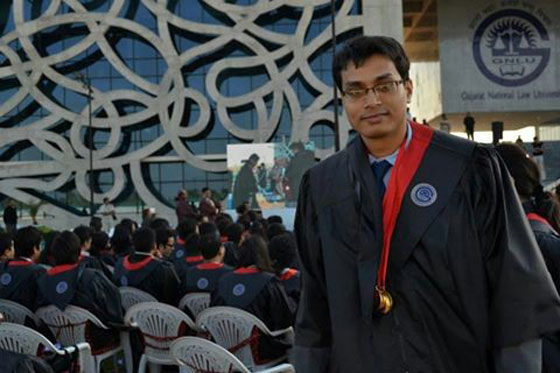
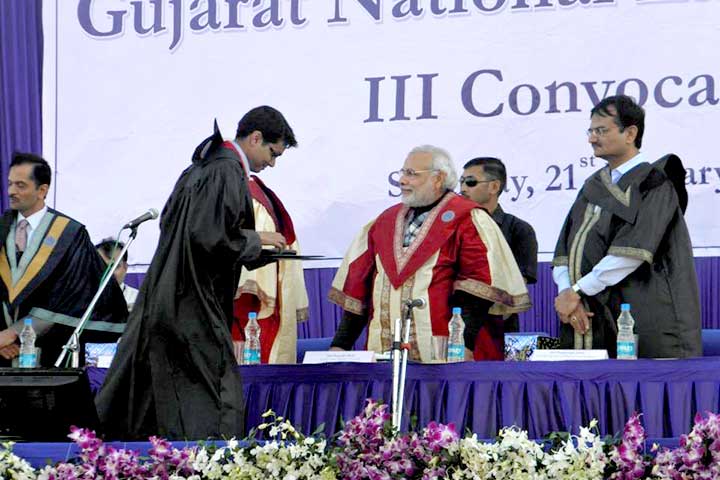
    prashant-m5Prashant Mishra graduated from the Gujarat National Law University in 2011, after which, he spent a year working at Universal Legal. However, he decided to quit his comfortable lifestyle instead and pursue the UPSC. After two years of training, he scored the 64th rank in the All India Civil Services Examination, 2013. We have taken this opportunity to ask him about:

    • His experience as a law student at the Gujarat National Law University.
    • His time as an employee at Universal Legal.
    • Circumstances that prompted him to give up his secure job and pursue the UPSC instead.
    • Tips on clearing one of the toughest examinations in the country.


    Tell us a bit about yourself as an introduction. Do you come from a family of lawyers?

    Hi! I am Prashant. I come from a middle class family. My father is a government servant and my mother is a home maker. I did my schooling from Patna and went on to join GNLU after that. I do not come from a family of lawyers. I am the first lawyer from my family.


    What got you into legal studies? How did you get through to GNLU? Was it all planned or something that just happened by chance?

    It was in class tenth that I was introduced to law by my father. I did some basic internet research about law schools and decided to pursue law after the twelfth. I appeared in entrance tests for almost all law schools and got through to GNLU (3rd Rank) and HNLU (5th Rank). So, yes it was all well planned out and with quite a bit of preparation.
     

    prashant-m3

    Please share some of the memorable experiences from your GNLU days. What made your college life exciting? What were the various activities you partook of?

    I enjoyed every bit of my stay in GNLU. I partook of various moots, conferences, etc. Hostel life was real fun and the fact that we lived in a campus which was in the heart of Gandhinagar made our lives really easy as everything was accessible.

    I remember our group ‘addas’ with lots of dear friends. There are so many memorable moments; it’s difficult to pick one out.


    What were your major interests as a student of law? Did any specific legal subject interest you more than others?

    I liked legal studies a lot. It never got me overburdened with lots of academic work. Unlike science or humanities, corporate laws, arbitration and jurisprudence were the kind of subjectsthat I knew would interest me.


    You were awarded four gold medals on graduation, which is a goal for many students. Please share some tips on scoring well.

    All the four gold medals which I was awarded were not a result of meticulous or competitive planning. I got those medals in the subjects that I loved to read (quite the subjects mentioned earlier).

    I would suggest that students should enjoy what they read, instead of studying simply for the sake of passing; also one shouldn’t study simply with the intention of becoming the topper.

    It’s important to study at one’s own pace; recognise subjects which are your favourites.

    I was also lucky to have a friend who used to make wonderful notes and more importantly, share all of those notes with me before the exams.


    You were also the Managing Editor of The GNLU Law Review. How was your experience as the Managing Editor of such an academic journal? What did you get to learn from this experience?

    Being a part of TGLR was a wonderful experience. I had the duty of reviewing articles of my peers. I came across some extremely well written pieces which helped me to learn and emulate the art of writing.

    Along with learning teamwork and multi-tasking, I also learnt how to refuse people politely.


    Almost all your internships were at top-notch law firms. Were you expecting to join a law firm even as a student or did these just happen on the go?

    As a matter of fact, I hardly thought about civil service during law school. I was interested in corporate laws and I was also pursuing the Company Secretary course, so that was what I expectatedto do and also, it made perfect sense for me to join a law firm. I used to plan my internships and enjoy the experiences that came along with them.
     

    prashant-m1

    After graduating from GNLU you had worked at Universal Legal for almost a year. How did the appointment take place? How helpful do you think CGPA is when it comes to getting recruited?

    I applied to UL on my own and got recruited after thorough interviews with them.

    I don’t think law firms use CGPA as a benchmark anymore to select a group of prospective employees.

    It is the interview and substance in the student which actually makes the difference.


    How difficult would you say it is for freshers to get recruited in law firms now,given the increased number of law students graduating every year?

    I do not agree with the proposition that with more number of law students graduating, there shall be an increased difficulty in finding jobs. There are plenty of opportunities for good people in the legal field.


    How was your work environment at Universal Legal? Could you maintain a proper work/life balance? What prompted you to quit it in August 2012?

    The work environment at UL was pretty balanced. I never missed any deadlines and the work pressure was quite sustainable and reasonable. Even as a fresher, I could directly interact with clients which helped in creating a lot of confidence in myself.

    Time was still the luxury that I enjoyed the most and as compared to other law firms, it was quite different.

    I decided to quit because I realised that the work was settling into a predictable pattern and that life had stopped testing my limits.


    Leaving a comfort zone with a secured lifestyle to study and prepare for the UPSC must have been quite decisive on your part. What made you want to study for the UPSC?

    It wasn’t about leaving a comfort zone. I never considered studying to be a difficult task, and most importantly I had all the support I needed from my parents. So, it was not that difficult to decide on studying for the UPSC.

    I also never thought I would have come along this far. At the outset, the idea was to take a whole hearted attempt and give it my best. And in any case I was a lawyer, I had my legal career to bank upon.


    You came to Delhi for your Civil Services preparations. Were you looking for good Civil Service Coaching institutions? Why Delhi and why not your hometown Patna?

    Delhi has a lot of coaching institutes which provide professional guidance. Also, accessing study materials was never a problem for me.

    In any case, after being accustomed to staying away from home for 6 years, I would not have returned to Patna.


    How valuable do you think coaching institutions can be for UPSC preparation?

    Some of the coaching institutes are really good. They provide you with a platform which you can quickly build on. However, it is not indispensable and with proper guidance, one can clear without taking any coaching.


    You prepared for the UPSC for almost two years. What was the routine you followed everyday throughout these years?How did these two years work out for you?

    I did not follow any set routine. At least that was the whole plan – to stay away from routine. Initially, I did not study much. With exams approaching, the study hours automatically increased. These two years went in a jiffy. At times you tend to get bored, you feel like your competitors are taking great strides, while you are stagnated. However, now I can say that it was all worth it.


    It invariably requires huge mental strength and focus to pursue one goal single-mindedly. What is your experience preparing for the UPSC?

    As has been rightly pointed out by you, the examination process is a long drawn affair and it takes minimum one year for it to get over. In retrospect, I think having a strong will-power and motivation is the key to maintain your sanity.


    What did you do to keep yourself abreast of all domestic and international current affairs? How did you study for static GK?

    For domestic and international current affairs I solely relied on The Hindu, and I used to  religiously read it every day. The current exam pattern of UPSC has very little reliance on Static GK.

    I also subscribed to Yojana, Kurukshetra and Frontline apart from my regular reading of standard text books.


    Lakhs of people attempt the UPSC prelims and only a thousand get selected for the main written exam. Which are the prime skills and expertise required to crack the prelims?

    Even though lakhs of people may attempt it, I think there are only 50,000 who take it seriously. Being a competitive exam, it is the relative knowledge that matters. You need to cover a vast syllabus in a limited period of time and retain and analyse a lot of information.


    Could you please share your views on the questions asked in the prelims?

    In the prelims, questions were asked mostly from Indian history, geography, polity, art & culture, science & tech and economics. I did not read on Science and Tech much, those you can say were difficult for me.


    What kind of posts have you opted for in the UPSC enrolment form? How do you want to serve the nation?

    My preferences for the civil services were:

    IAS – IFS – IPS – IRS in the decreasing order.

    I would like to do the kind of things that I always expected from the people who were already there. I would use my knowledge of law to play a major role in administration.

    Right now, I have not planned much. I intend to assimilate as much as I can and give my best in whatever capacity I am put into.


    What would be your message to law students and lawyers who aspire to become a civil servant?

    Purely from an examination perspective, I think law as an optional has a lot of potential. It helps a lot in civil service. I think it is not as difficult as people project and with intelligence, diligence and hard work, it is possible to clear the so called ‘mother of all exams’.

  • Nishad Vaidya, Law Graduate, on being a Cricket Correspondent at CricketCountry, and moving from law to sport

    Nishad Vaidya, Law Graduate, on being a Cricket Correspondent at CricketCountry, and moving from law to sport

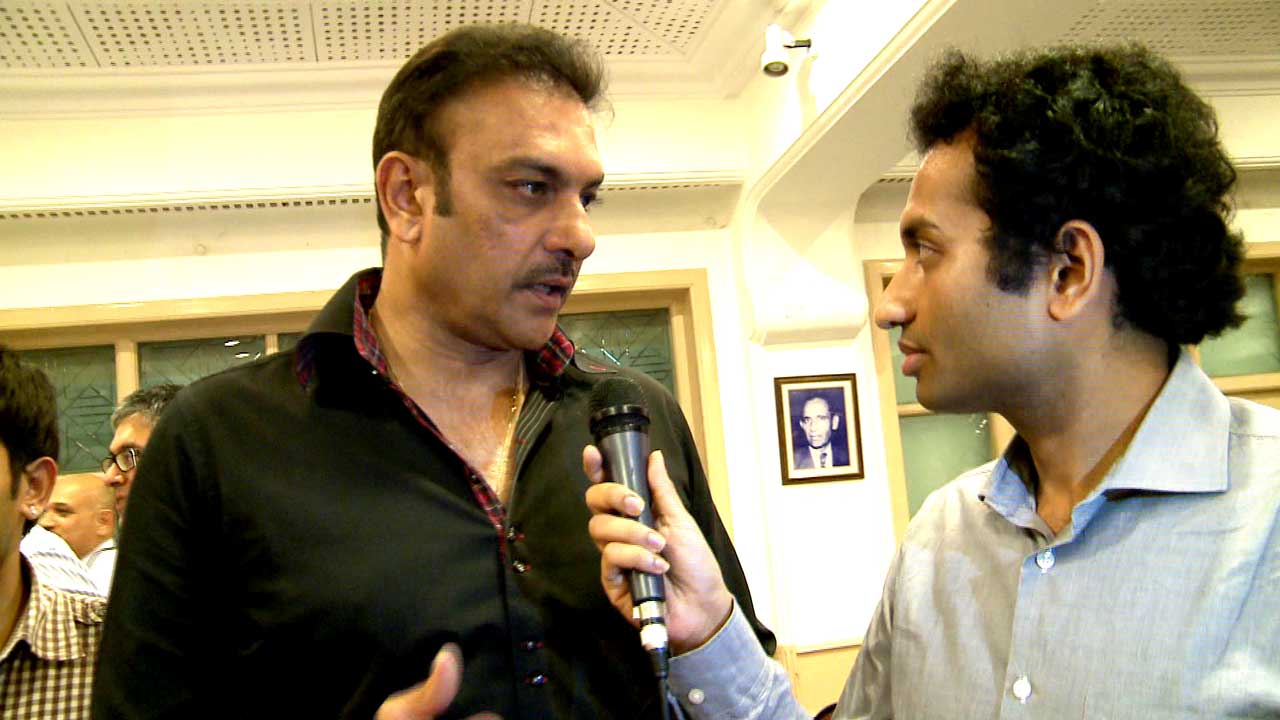
    Nishad Pai Vaidya graduated from NLU, Jodhpur in 2013.  But he then decided to forgo a career in law to pursue his passion, sports journalism. He has been a freelance writer for the Mumbai Indians IPL team, studio lecturer for Banquet Sports, and a cricket correspondent for CricketCountry.com.

    In this interview we speak to him about:

    • Studying in NLUJ
    • Making the transition from law to cricket
    • His experience as a sports journalist


    How would you like to introduce yourself to our readers?

    At present, I am a cricket correspondent at CricketCountry.com. I cover the matches, follow the events etc. I am a graduate of, NLU Jodhpur. I spent five of my years there, and got a degree in B.A. LL.B Hons. And currently I am a full time sports journalist.


    What motivated you to choose law as a career?

    I was originally a science student. I took up science just like my friends.. We all tend to get brainwashed at that age and are convinced that it is best to take that path and become a doctor or an engineer. Ultimately, once I took up science, I realized that it wasn’t my cup of tea. I had to do something where I really, perhaps, could have the chance to shine. So, in my mind even when I was just 16 or 17, I always wanted to do something related to cricket in the media. I could have gone for media science, but then my parents impressed upon me the need to have a solid degree that would add value. I went through a lot of literature about law, and what lawyers do. I was attracted by it all.


    nishad-vaidya3

    In retrospect, how would you compare NLUJ with other premier law institutions of the country?

    I wouldn’t exactly compare NLUJ to other law schools, but I feel that it was different in terms of the infrastructure we had, and the number of courses we had. At that time, NLUJ was the only college offering BBA.L.L.B. The campus was nice and quiet, with a lot of space for sports. That was what allowed us to host an All India Law School Sports Meet called Yuvardha, which is now a biennial event. We had our own individual rooms, which gave us the space we needed in a typical day. That is why we felt that we had an edge over other law schools. There was a person in our batch who had obtained a really high rank, and could have gone to NALSAR or any other popular law college, but he chose to be at NLU Jodhpur because of the whole package. People talk about academics, but that is just one part of life. There are so many things which can’t be taught in class. You have to go out there and figure it out, all by yourself. When you come to law school you are just a kid, and you start learning how to manage yourself; you learn from your bad days; you realize how to manage time and studies. Over the years you learn a wide range of things, apart from academics, which contribute in shaping you into a complete individual. One thing which is very important at this stage is writing projects and making presentations. In law school, I always started writing a project from scratch. The learning curve which you achieve during such research works is unparalleled. This is also something you would be required to do as a lawyer.


    What internships did you pursue when at law school and what influenced your decisions to do so?

    I did two internships at law firms; these were experiences that I enjoyed, but when I saw lawyers drafting case memos, arguing for their clients, etc. I knew that my heart was not in it. So after my third year, I just stopped doing law internships. And then I completely switched over to journalism. As far as law internships are concerned, they do help you in dealing with reality. For example, even in my second year, I used to feel that courts worked the way they were depicted in movies and TV shows. They were supposed to be glamorous places. But the first court I went to left me shocked. I came to know what goes into becoming a lawyer. I didn’t want to be one of those conventional lawyers. And in my 3rd year, I went to intern at CricketCountry.com and have been there ever since.


    How did you approach CricketCountry.com for an internship?

    It was quite interesting. Today, we are in a world that is connected through internet where nothing can be hidden. In a way it’s good because we have so much exposure, as compared to our parents’ generation. I knew that I was not going to end up as a routine lawyer after my last law internship. I decided that I would never step into a law firm for an internship again. I felt that even if I would work in the best law firm of India, I would be a miserable guy. It would also not be fair to someone who deserved the internship more than me. Thereafter I started writing a blog during the 2011 World cup. One of my friends introduced me to a veteran journalist, Mr. H Natarajan. He is one of the biggest names in the field in the country, and used to be the Sports Editor of IndianExpress at one time. I connected with him on Facebook, and sent him my blog link. I also messaged him, telling him that I needed someone for guidance. He replied the next day, saying that I could write, and that CricketCountry was a platform that was there for me. He became my mentor and guide since then. This was during my 6th Semester- that’s when I started writing for them. Soon after, there was this one particular match during IPL 2011, where Sachin Tendulkar was declared to be out based on a wrong replay. I was the only one who spotted the error and I wrote an article about it and sent it to CricketCountry. When the article was put up, it went viral! news channels, online media – basically everyone was talking about it.They were also putting across the fact that a twenty year old law student picked up this mistake. A lot of things changed after that. Later, Mr. Natarajan congratulated me. At that time CricketCountry was just starting up, thus it benefited me, and it benefited everyone else. I requested Mr. Natarajan for an opportunity to learn along with him in the upcoming summer vacation, and he gladly accepted my internship request. I learnt how to frame, compile and edit news reports; how to cover a typical cricket match. That is how I applied for an internship at CricketCountry and I have been a part of it ever since.


    How did you make up your mind to pursue sports journalism?

    Life is not just about following what others do, and what path others have taken. So many beautiful things have happened when people have dared to go and chase what they want. On the one hand people tell me even today that if I were in a law firm, I could have seen huge financial success, but then I have to ask myself :would I have been happy in terms of my work? Even now, I work for most of my day, but while doing that work I am happy. I enjoy what I do, and there’s always something exciting in store. With my colleagues, I am always discussing Sachin Tendulkar, Shivnarine Chanderpaul, Sourav Ganguly and others during work hours, which other people get to talk about only during their tea time. For me, it is this fresh excitement at work I feel every day that motivates me. Initially, it was tough. People used to constantly ask me why I had chosen this path. However, then the years at college passed by and in my fifth year, I was penning down articles every day. With the guidance of Mr. Natarajan, I improved in whatever way I could. One and a half years later, I started getting noticed. We created a YouTube channel and I was anchoring videos. Soon after that I was called for a programme on national television, where I was involved in a cricket talk-show for an hour. This is what I had dreamed of since long back, and ultimately I realized it. Also, fortunately, I have featured in a few more since then. And if I could do it once, I realized that I could do it again. To try new things is not easy; it tests you mentally, physically and emotionally, pushes you to your limits. I have been blessed to get good exposure early in my career, and it is up to me now to work hard and persist with it. This is just the start.


    How did CricketCountry work out?

    As lawyers you tend to do mainly procedural jobs. But in the larger frame of life, there is no such procedure. So what works for me might not work for somebody else. The least one can do is to exercise the right to write a blog, you have the power of YouTube, Facebook and Twitter. You should reach out to people with what you are doing, promote yourself. And ultimately something or the other will work out. I have been very fortunate to meet Natarajan Sir. There isn’t any set procedure; you can do it your own way using the power of the internet. You have to build contacts, you have to reach out to people, that’s how you can head on to any field today.


    Do you think there is a scope for lawyers in the sports journalism arena?

    There is scope of law in sports journalism, but in a very general sense. You have to be very sensitive while writing stories. Your words have to be perfect. If you miss one word here or there, the meaning of a sentence can change, and you may come under some legal fire. Things like defamation, copyright, match fixing, are being dealt with everyday. In a way there is scope, but of course you are a journalist first, being a lawyer can be an added value.


    Do you feel like your training as a lawyer has helped you in any way?

    Yes, truly. Whatever I learnt in those five years at Law School – it does help me. You read something and you how it can be expressed in exact words. For example, being a lawyer, you know how important the word ‘alleged’ is. Also I would say that I wasn’t a good writer when I joined college, but writing all those projects helped me grow.


    nishad-vaidya2

    Tell us about your workplace and what a typical workday in your life looks like?

    When it comes to workplace, it depends. I have played different roles. As far as our YouTube channel is concerned, when I have to make videos for that, then a workday would include getting the footage in place, getting the shots ready, getting yourself ready for the shoot, and then once the shot is done, sitting for another day getting the shots edited. When it comes to the news desk, you edit the copy, you see what the flow of news is like, and then you write down an article describing whatever happened. And legal side of sports controversy – yes I do get to work on that. For example, when the controversy broke out last year during the IPL, I did a few articles on why spot fixing is not an offence under Indian Law, and what exactly is an offence, among other things. It also includes opportunities to interview experienced lawyers. I feel great to do that as far as sports controversies are concerned. It’s not only the law of the place, but even the laws of cricket that I work on. The educational background I had makes it easier to interpret those laws.


    How do you deal with rough patches?

    So far I have not faced any controversies, as such. However, what happens usually is that when you have a story, you have to be absolutely sure about it. It also depends on whether your interviewees are conversing with you on the record or off the record. Suppose that during your interviews, an important person says something a bit controversial. If this was said on the record, then it is brilliant, if not then you can still check with such persons, showing them what they said, and asking them if that is what they truly meant. If they assent to what has been quoted, then you can move ahead with publishing the same. If someone had commented on something then it’s your responsibility to make sure that it is on the record and it is clear. Partly, I am lucky that I didn’t have to experience such rough patches and partly because I have been guided very well. It is important to be honest with the job.


    Where do you see yourself five years down the line?

    It’s very difficult to say. I just look back at my five years, and catch sight of where I was when I was eighteen, and I realize that at that point of time, I was still very serious about my law career. I couldn’t imagine that at 23 I would be doing what I am, currently. Five years down the line, I would certainly like to still be connected with sports journalism. But how I do that, and where I reach is not something under my control. At most, I can give my 100% – I can give my best shot, and leave the rest to God. I haven’t even taken my bar exam, in fact. So, I won’t return to law career.


    What would be your suggestion for law students keen on taking up a job in the world of sports journalism?

    The best suggestion I can give all students is that if you are, say, a football fan, or a basketball fan, or a formula one fan, then you should probably start writing about it. Promote those articles; maybe reach out to people who matter. Start contacting those websites which allow you the opportunity to showcase those articles. It’s very important to be on the web, what with the kind of influence you can have on the web. If you are interested in video journalism or something similar, then you could possibly start your own YouTube channel. The possibilities are endless. You can create your own niche; create your own way to reach your destination. My advice would be start writing if you are really into it and follow it diligently.


  • Mayank Mishra, Founder, TeamResearch, on working in Private Equity and starting up with TeamResearch

    Mayank Mishra, Founder, TeamResearch, on working in Private Equity and starting up with TeamResearch

    Mayank Mishra graduated from HNLU, Raipur in 2009. Long before graduation he had received a PPO from Paras Kuhad & Associates. Later he moved on to Pathak & Associates and at present he is an attorney at Caspian Advisors. Mayank has also started TeamResearch.in, a platform for lawyers and law students to convene and exchange ideas.

    We take this opportunity to ask him about:

    • Studying law and managing internships from HNLU.
    • Working at two major law firms and then moving to Caspian Advisors; and
    • Starting up with and building TeamResearch.in


    How would you like to introduce yourself to our readers?

    With honours in corporate and intellectual property laws, I graduated from Hidayatullah National Law University, Raipur (HNLU) in 2009 and was awarded the Chancellor’s Gold Medal for overall achievement in my law school.

    After graduation, I joined Paras Kuhad & Associates, New Delhi (PKA) and worked for two years with litigation and corporate teams. I shifted to P&A Law Offices, New Delhi (P&A) as a corporate law counsel where I advised domestic and offshore clients for structuring their investments in India. For the last one year I am associated with Caspian Impact Investment Adviser Private Limited, a Private Equity (PE) fund in Hyderabad and handle all its legal matters. Also, I have co-founded www.TeamResearch.in – an online legal research portal meant for lawyers, professionals and law students.

    I have also secured the Post Graduate Certificate in Management (PGCM) in Finance from All Indian Management Association (AIMA), New Delhi and planning to pursue MBA soon.


    How did you gravitate towards law?

    I remember those days when almost every other friend of mine was either preparing for JEE or C-PMT. Being a mathematics student, by default I was a part of the rat race and was getting trained to somehow manage a seat in one of the IITs. The journey to IIT was difficult and I always wanted to opt out of it, but without an alternate career it was difficult to convince my parents. What came to my rescue was an article I read in Hindustan Times by Ms. Pervin Malhotra, a career counsellor who then predicted law as a rewarding career and compared it with IITs. I was quite impressed by the article and was happy to discover a career which was as good as an IIT. After a thorough research on National Law Schools, course curriculum and job potential, I opted for law over engineering and got admitted to HNLU.


    Tell us about your internships.

    Internships are important part of law school life. All together I have interned for more than 300 days in NGOs, District Courts, High Courts, Supreme Court and leading law firms. Despite begin a member of my batch internship committee, all my internships were secured on my own. Unfortunately, I never had those uncles or bhaiyas who could fetch me an internship over a phone call. For many of my other batch mates, HNLU internship committee played a vital role in getting the internships with NGOs, senior counsels and law firms.


    Do you think law schools prepare students adequately for on the job experience?

    During my internship days I always thought that my law school training was sufficient enough to take all possible assignments during my internships. Thanks to that belief and the so called self confidence, I could take various internships and perform to the best of my caliber. However, on hindsight I believe that it’s not about delivering an assignment but the manner in which an assignment is performed matters most in an internship. Hard work which is the bare necessity will be appreciated only if it is coupled with a correct and smart approach. Soft skills including small things like how to write an email or a memo to clients are never made part of a law school curriculum. The projects which we use to submit or the research we did for moots were far away from the real world assignments. After being five years in the profession, I believe that there is a serious disconnect between a law school teachings and what profession actually demands. TeamResearch.in which is my venture is devised to bridge this gap and equip 3rd to 5th year students get a sense of real world experience in their law school. It is my firm belief that one day TeamResearch.in will play a key role in helping students to be better professionals.


    Tell us about the life at HNLU.

    In HNLU I participated in various moot court competitions, debates, extempore, Mock-UN and other customary co-curricular activities. Thanks to the well devised academic calendar, I could get more than twenty articles published in national and international journals and simultaneously have sufficient time to be a part of cricket and football teams of my batch. The idea of TeamResearch.in, which is now a reality, has taken its roots in HNLU. On personal front, HNLU got me more than a few good friends and the life partner. Taken all together, life at HNLU was anything but hectic and monotonous.


    Do you subscribe to the belief that certain NLUs are more elite than the others?

    With the number of law colleges mushrooming every year, lack of experienced faculty members and the poor education quality I believe students of certain ‘elite’ and established NLU’s have a much easier time in kick-starting their career as compared to law students from other colleges. The best example is to compare a final year student of any one of the new NLUs with a NLSIU student. On an average top 5% of NLSIU grads will either have a scholarship from a foreign university or a trainee contract with magic circle firms. However, even after years of inception, toppers of new NLUs struggle hard to secure a job with tier one law firm. However I have always believed the famous saying “It isn’t where you came from; it’s where you’re going that counts.”


    After graduating from HNLU you directly joined Paras Kuhad Associates. How did the appointment take place?

    In the final year of my law school when recession was at its peak I interned at PKA, when I received a pre placement offer. I accepted the offer and opted out of my college recruitment drive. After graduation, I joined the firm and actively worked in both litigation and corporate teams. I was fortunate to personally work with Mr. Kuhad, who is now designated as the Additional Solicitor General of India and learn intricacies of law from him.


    mayank-mishra2What prompted the switchover from PKA to Pathak & Associates Law Offices?

    After working for two years at PKA, I wanted to broaden my learning curve and consensually decided to work with a corporate law firm. One of my senior from HNLU who was then working with P&A helped me to get an interview with Mr. Pathak. The interview went well and I joined P&A.

    In terms of clients and work environment, the two firms were quite different. At PKA we had majority of Indian clients, whereas at P&A we use to serve foreign clients. Likewise while working at PKA, I use to make plans for dinner with my friends, but at P&A I could only manage to get last movie show of the day once in a fortnight. In terms of work quality both these firms were fantastic and helped me to grow as a professional and a person I’m today.


    You thereafter left P&A to start working at Caspian Adviser. What led to this shift?

    Working for P&A was certainly my first choice but starting a venture of my own was something which I always wanted to do. In the midst of love and quest for passion, I decided to shift to Caspian Adviser – a Hyderabad based private equity fund and took a break from demanding law firm’s life. At Caspian, I’m responsible for management of all legal matters. The scope of work includes liasioning with law firms and key managerial personnel of our investee companies, attending board and committee meetings, making periodical presentations to the board of directors, drafting and negotiations of transaction documents and advising the senior management on structuring of domestic and cross border debt and equity transactions.


    mayank-mishra3

    Please tell us about your venture TeamResearch.in.

    TeamResearch.in is India’s 1st professionally managed and most reliable online legal research assistant. With an extensive market analysis and experience gathered, the venture has been designed to effectively assist the lawyers, hard pressed associates in law firms, in-house counsels, professionals and entrepreneurs, in performing the complex legal research on varied areas of law. If I have to summarize in one sentence, TeamResearch.in is designed to redefine the way legal research is being conducted. I endeavour to provide my clients a tailored and most reliable and authentic legal research assistance which they can rely upon.


    What is the overall model of TeamResearch.in?

    I personally ensure simplicity and credibility remains the virtue for TeamResearch.in. The mode of TeamResearch.in is as simple as one can comprehend. The entire venture is divided in following 3 steps:

    One – Lawyers, associates in law firms, in-house counsels, professionals or entrepreneurs (Client/ Query Seeker) who wish to avail services of TeamResearch.in are required to visit our website and post their query online. Once a query is received, we send an email to the Client/Query Seeker confirming the delivery schedule and our bank account details for processing the payment.

    Two – The query is sent to at least two meritorious researchers who are registered with TeamResearch.in and one qualified lawyer of TeamResearch.in.

    Three – All responses are then compiled, reviewed, crosschecked and authenticated by an independent experienced lawyer. Thereafter, a final research note is prepared and delivered to the Client/Query Seeker in a time bound manner. For clarifications and questions, we also arrange on call support services.

    For further details, please refer to http://teamresearch.in/How-it-Works.htm


    How will you ensure the quality of research by students?

    To maintain quality of research note, all queries are independently researched upon by at least one qualified and experienced lawyer of TeamResearch.in. Additionally, TeamResearch.in closely monitors and reviews every research note which it sends out to the Client/ Query Seeker.


    Who do you think will take services of TeamResearch.in?

    The services of TeamResearch.in will be availed by all those individual lawyers who wish to follow their passion, enjoy weekend getaways, spend ‘that’ extra hour with family and friends and more importantly have dearth of capable juniors and resources to conduct exhaustive research on their own. Additionally, small to mid-sized law firms and in house counsels who look forward for reducing their operational cost, will take the services of TeamResearch.in. We also expect budding entrepreneurs and start-ups with financial constrain to take services of TeamResearch.in.


    Apart from your clients, how do you think student fraternity will be benefited by TeamResearch.in?

    Students who are and will be associated with TeamResearch.in are trained to handle work pressure and equip themselves with research skills. Further, TeamResearch.in gives a flavour of gaining real world work experience which a student just can’t get in his/her classroom. Furthermore, TeamResearch.in financially rewards its researchers and pays them for every successful research assignment.


    Where did you get the inspiration for this venture?

    The idea of TeamResearch.in developed its roots during my law school life, where I discussed the idea with my roommate and the co-founder of TeamResearch.in Mr. M. Srinivas. As a student, I have got various opportunities to intern with a broad range of organizations and leading law firms. During my internships I was expected to extract information, research for relevant case laws and process them into a fine deliverable, which formed the basis for answering queries to structuring transactions and arguments in court rooms. I realised the necessity of having a capable and well groomed intern throughout the year and not just during the semester breaks of law schools. As the academic curriculum of most law schools demand high classroom attendance, I visualized making an intern available all round the year on a virtual platform.


    Why will you succeed where so many others have not made the cut?

    (It seems that other competitors have tried this business model earlier and have not been much successful in evolving a revenue stream. Grayscale and Lexbiosis come to our mind.)

    It would not be wise to comment on success or failure of Grayscale and Lexbiosis but certainly the substratum of TeamResearch.in is completely different than its predecessors. Unlike a typical undergrad initiative, TeamResearch.in is an organization which is lead by professionals and meant for professionals. Our core team comprises of qualified lawyers who are well versed with the requirements of legal fraternity. The reason for our success is the effective pricing of our services and credibility of the research assistance.


    How are you financing the business?

    The initial funding came from my personal savings and a portion from Srinivas. With the fantastic pace TeamResearch.in is growing, I believe it should reach its break-even point very soon. After reaching the break-even point, we will be looking for an angel investment to take our start-up to a whole new level. Meanwhile, I wish to recruit a few lawyers in order to cope up with the growing spree of TeamResearch.in.


    You are a corporate professional and also have started-up at the same time. How do you manage these two different involvements?

    I firmly believe that if one deploys his time wisely, managing a venture along with routine professional life is not difficult. Yes, at times I feel pushed but my team is always available for rescue.


    If I want to start up on my own someday, what would be an ideal time in my career to take such a risk?

    As Walt Disney said “The way to get started is to quit talking and start doing.” If the idea is good and one can financially sustain the venture for at least 24 months, any time is a good time. Do remember it’s always good to try than to cry.


    Who all are associated with TeamResearch?

    Apart from Srinivas and my wife Ruchi who is also a lawyer and a member of TeamResearch, we have retained a part-time IT engineer for managing the TeamResearch.in web portal. Presently, we have a database of approximately one-hundred researchers from almost all NLUs and law colleges, an advisory group comprising of fifteen associates/senior associates from leading law firms and one practicing company secretary to handle secretarial compliance. In past, we have also taken services of several experienced lawyers for drafting of petitions and corporate agreements.


    What qualities or factors should one look at while selecting a co-founder?

    I believe that there is no definite mantra. It’s not you but the idea which identifies a co-founder on its own. Compatibility and trust are the two important factors which one must look while selecting a co-founder. I am fortunate to have Srinivas as a co-founder of TeamResearch.in.


    Tell us about the biggest challenge you faced while starting up and how you solved them.

    The biggest challenge which I faced was to come out of my comfort zone and start TeamResearch.in. To overcome the myth that one cannot start a venture while working as a legal professional was difficult to crack. It took me 4 years to make TeamResearch.in a reality. Thanks to Srinivas and Ruchi for the constant support which has helped me to get TeamResearch.in where it stands today.


    Where do you see yourself five years down the line?

    Five years is a very long period. I see TeamResearch.in as a consultancy firm in a few years which will not only help lawyers across the country to identify correct legal position or a case law but also assist fresh graduates from law schools to understand the profession better. I want TeamResearch.in to groom students in their law school life and make them marketable for the real legal world. Just like, moots, publications and courses, I want TeamResearch.in to be a de facto part of every law student’s life.

    Also, we are going to add new services which include drafting of agreements, petitions, preparation of study materials for workshops and conferences and providing research assistance to students who are pursuing higher studies.


  • Tanuj Kalia, Founder, Lawctopus, on his passion for entrepreneurship, blogging, and plans for the future

    Tanuj Kalia, Founder, Lawctopus, on his passion for entrepreneurship, blogging, and plans for the future

    Tanuj KAlia graduated from NUJS, batch of 2013. He is founder, CEO, and publishing editor of Lawctopus, an online portal designed to help law students. The website has been featured in leading dailies such as the Economic Times, The Telegraph, among others. His other achievements include being student mentor for law students at IMS Learning Resources; research intern at A.K. Bansal and Advocates,  Fidus Law Chambers, Research Foundation for Governance in India, among others.

    In this interview we speak to him about:

    • Combining law with his passion for entrepreneurship
    • Working as Vice President of vakilsearch
    • The future of Lawctopus


    How would you like to introduce yourself to our readers?

    I am Tanuj Kalia, born and brought-up in a small town in Himachal called Sundernagar. I started writing poems when I was 9, ended up doing law from NUJS, Kolkata, and started Lawctopus.com thanks to a heady mix of serendipity and chicken pox.


    Tell us something about your life before law school.

    My childhood was spent in a small town in Himachal Pradesh, Sundernagar, and it was an awesome idyllic place with lots of piddu ball cricket. For my Class 11 and 12 and LST I was in Chandigarh, where I did nothing but study well and hard.


    What motivated you to pursue law?

    I was pretty weak in Maths. I could actually feel my brain cells’ synapses give way when I tried to do any mathematical sums. Also, I was quite good in English. My parents never forced me to do Engineering etc., and it was my dad who brought home the 2008 NLSIU paper. After seeing the questions I was like “This requires writing, yippy!”. And so I was in. Also my dad is a civil servant and had studied law, so he knew a bit about the profession.


    How did you get into blogging?

    (Tanuj was awarded ‘Best Legal Blogger in India’ by LegallyIndia.com.)

    I started writing and blogging for Legally India accidentally. When Legally India had just started, I had e-mailed Kian (the founder editor) that I wanted to intern under a good family law lawyer and could not find any information on it. Kian, the fantastic person that he is, put up my query on LI forums where I did get some good replies.

    We got introduced this way and I told him that I loved writing and wanted to write for his website. The freelance rates for Legally India are top-notch and Kian is an excellent mentor. My first write-up for Legally India was on ‘Internships’.

    I was a reluctant blogger, too. But Kian sort of goaded me into writing. And Legal Poet took off.


    How does one become an excellent writer?

    Innate talent is required. But it is just the starting point. If you are not talented, but work hard at this craft, you can get good, but maybe not great at it. Similarly, if you are super talented but do not work hard, you will remain just average.

    I do not think I am up there to offer advice yet. But still, write from the gut, use simple words, short sentences, have shorter paragraphs. And then, edit ruthlessly.


    Tell us about your life at NUJS.

    It did get monotonous for me in the first year, when I was like, “Hey, what should I do?”

    I played quite a bit of cricket then and made it into the University team. So yes, cricket took a bit of time then. Also, I was convinced that ‘internships’ were the be all and end all of a successful career in law and I researched like crazy on internships too.

    In my second year, I took to blogging. In third year it was IDIA and Lawctopus. In the fourth year, love made me crazy! ” And hey! Is there even a fifth year in law school?


    What kind of internships did you do while you were a student?

    I stopped interning after my third year, because Lawctopus was doing well and in my view working on it was as useful as any internship. I interned at a lot of small places doing excellent work.

    My internships sort of convinced me that I can do something similar what these people (the founders of the places I was interning at) are doing and that I should do ‘something of my own’.

    I interned at Malhotra and Malhotra Associates in Chandigarh, which is a nice family and immigration law firm; RFGI, a think tank based in Ahmedabad; Fidus Law Chambers, an IP and Sports Law firm in Noida. I also worked under Ashwinie Kumar Bansal, an author/WIPO mediator.


    What are the skills you have learnt at internships and you could not have learnt otherwise?

    Not skills as such, but internships gave me a perspective.

    Fidus Law Chambers taught me that sometimes you can suck, and it’s ok.

    RFGI taught me how a small group of young people was making good changes, both big and small.

    Malhotra and Malhotra taught me, that, well, there’s loads of money to be made in law.


    How adept are you in Search Engine Marketing and Search Engine Optimization?

    I really do not have proficiency in these areas. But yes, I did a one month course in SEO/SEM so that when I talk to a tech guy I can understand what he says and he can understand what I want.


    How did you fare in your academics at NUJS?

    I did well in my first year. From my third year onwards I took exams just to pass them. So, I used to curse myself if I scored anything above 45 marks (40 is the passing mark, so getting a 50 did not make sense; why work that hard for something you do not want). I ended up in the middle of my batch.

    There was academic pressure, but I did not take it. My parents were again okay with it. They told me, “Complete law in five years, and do whatever you want.”


    What did you do after your graduation?

    I did not sit for campus placements in my fifth year. I was not looking for placements really, but I was sort of ‘open’.

    Now vakilSearch is a very exciting company and I knew about it since my third year and had track its (and Akosha’s) growth since then. Both the companies were an amalgamation of law, entrepreneurship and big change which appealed to me.

    The job and vakilSearch happened accidentally. I was on phone with Hrishikesh Datar (the CEO of vakilsearch) regarding some tie-up with Lawctopus. At the end of the phone call he was like “Why don’t you join vakilSearch?” I told him that if the offer ‘excited’ me, I would be up for it. And well, it indeed was a super exciting offer!

    Frankly speaking, vakilSearch, Akosha, Rainmaker etc. had been on my hit list since the third year and I’d have loved to work for such companies.


    What did you have to do as a VP of Marketing for VakilSearch?

    I worked for six months. Basically I had to oversee lots of things: SEO, site design, social media, tie-ups, affiliates etc.


    Tell us something about getting recognised by iversity as an ambassador.

    I won a competition where you had to get the maximum number of people to join their courses. I did that through the Lawctopus network. And of course, then I had to blog, too, which was more exciting.


    tanuj-kalia1

    How did you manage your academics and Lawctopus together?

    Well, I did NOT manage my academics. I used to study the night before the exam for over six hours straight. I used to be on two red bulls and I speed read well (1000 words+ an hour). So yes, that’s how I mismanaged my academics!


    Did you visit entrepreneur meetings during the formative years of Lawctopus?

    Yes, our common friend, Ramanuj introduced me to Start-up Saturdays and I found the events good, though not great. I’d say start-ups in India are going to rise. (Am patriotic, so anything I say about India is going to be positive).


    How difficult would you say the first two years were of Lawctopus?

    Starting a website requires very little money. So, the five of us just pooled in our pocket money. It was not difficult because we were then just doing it for fun. But yes, there were lots of ups and downs in the initial years. Lawctopus is a self-sustaining, profit-earning entity now. So, if I need to invest in a new related project, the money that Lawctopus generates by itself, does it for me.


    There were news once that Lawctopus had lost all its database and files due to a server crash. Is it true?

    Yes, quite true! Stupidity and carelessness lead to this. Yes, it was devastating. But well, I had come afresh from a gruelling ten day Vipassana meditation retreat (which is by far the best experience I  have had in my life). The crux of the learning is that everything is impermanent and so I took it in my stride. The Lawctopus’ co-founders Prateek and Dhruv worked like maniacs to restore whatever they could via Google cache. It helped, but only a bit. Unfortunately, we could not manage to get all the lost data.


    What were the most difficult times for you regarding Lawctopus?

    The most difficult time was when we had to decide the ‘equity’ for five of us. We had just started as friends without a care for all this. But the fight turned ugly and one of co-founders left the team. We had a great shouting match and I don’t think either of us (both pretty calm souls) has ever been that angry. Luckily, we (the friend who left the team and me) are still best friends and are planning something together.


    What do you have to say about so many people blindly copying the Lawctopus model?

    The egoist in me says: ‘Imitation is the best form of flattery.’ But yes, this mindless copycatting confuses me. There are so many things to be done. Have a look at Legal Sutra. It was such a nice concept. Someone could have done that. They did not. Now, we are trying to do a Legal Sutra!

    I do not think the present lot will sustain themselves for even two or three years. A couple of the clones are already dead. I thought Project Cloud was great and had invested in better technology but they too are not doing much nowadays. But then again Lawctopus is also far from perfect or even excellent. There is so much to be done and I am sure we will soon have a worthy competitor.


    Were there any occupational hazards running Lawctopus?

    The occupational hazard is that you have to be on it daily. You have to be regular or else the readers will lose trust in you. Yes, I do get hate mails. They help us and keep us on our toes. But I do get love mails too. So it sort of balances out. Meditation helps in dealing with all this


    Do you provide any work opportunities for law students?

    We do not take interns. But we have a college manager program, which has been improving in its form and effectiveness.


    What are your thoughts about raising capital for Lawctopus from investors?

    I have had three/four investor talks. But money does not excite me too much. So, I have never taken it seriously.


    What are your plans regarding Lawctopus for the upcoming years?

    We’ll be launching a massive open online law journal (inspired by Legal Sutra), a law school listing and review section (inspired by Zomato), a social networking functionaliy and an app.

    There are two types of growth in my mind: one is slow and steady, but works like magic (just like compound interest does magic to your money) and is achievable with good old hard work. The other type of growth is the massive, black swan types. It takes innovation and hard-work and a bit of luck. The first type of growth should always occur (or else you are dead). One should also strive towards achieving the second by making bold moves and taking big risks; but I don’t think you should be dependent on these.

    So, I don’t think of growth in terms of being ‘ready’ or it being in ‘phases’. You should always be growing.


    What does it take to be an entrepreneur?

    One can be entrepreneurial by default and we can even be inspired and encouraged to be entrepreneurial.

    Three skills required for an entrepreneur:

    • Good at ideating: If you struggle to come up with ideas, maybe this is not your cup of tea. Again, if you fear experimenting and failing at things, drop the plans!
    • Convincing: You need to convince the world at large about your idea. It includes your co-founders and investors and clients. To convince you will need truckloads of passion and be great at talking or writing.
    • Determined: Do your thing relentlessly. Take feedback and work on improvements. But do not get bogged down by what others say.


    Lastly, what would be your message to law students and young lawyers who want to pursue alternative legal careers or entrepreneurship?

    Just go ahead and do it. Start with small achievable goals. Do not lose too much sleep or money on your plan. Bring improvements to your plans and include consistency in your modus operandi. Learn learn learn. Learn from books. Learn from other people. You do not need to reinvent the wheel.

  • Raghul Sudheesh on starting up with LegallyYours, career in legal journalism & being an RTI activist

    Raghul Sudheesh on starting up with LegallyYours, career in legal journalism & being an RTI activist

    Raghul Sudheesh needs no introduction. He is popular among the legal fraternity as someone who used to work at Bar & Bench and later started up with the only Legal newspaper in India: LegallyYours.

    We talk with Raghul about his:

    • Starting up with LegallyYours
    • A career in legal journalism
    • Experience as an RTI activist and importance of RTI


    Tell us about yourself. What were you doing before Legally Yours?

    I graduated from NUALS, Cochin in 2011. While at Law School, I was never interested in a corporate or a law firm career. From my second year till the end of Law School, I interned with Advocate M A Rashid who founded the web portal Answeringlaw. Answeringlaw was a new experiment and was started even before Indian Kanoon; and was providing daily Supreme Court judgment updates along with other relevant legal news updates. It was the turning point in my law school life as it sparked my interest in blogging and my blog Stripped Law<www.strippedlaw.blogspot.com> was my first step into legal writing.

    I was planning to pursue Masters from abroad till my final year; but then things changed suddenly. I decided to work for few years and then pursue Masters. It was Prof. Shamnad Basheer who suggested that I should try my luck with legal journalism; probably he might have felt so after seeing my blog posts. I applied to Bar & Bench and got through because of Prof. Basheer’s reference. From then, there was no looking back. I stayed with Bar & Bench for almost two years covering courts, judiciary and law schools. It was a very fulfilling and heart warming experience!


    legally-yours

    What is Legally Yours and how is it different from working at the other places?

    Legally Yours is focussed on print and is not an online publication. We will have a website soon but the focus is on hard copies as of now. We are a monthly and my challenge is to make it a fortnightly. Also the circulation has to be improved from 10,000 copies to a six digit number. I take this as an exciting opportunity and the Managing Editor, Siby Sudhakaran is an entrepreneurial person. Siby comes up with lot of exciting ideas. Recently, we launched India Law Schools Index [ILSI]. ILSI aims to facilitate and help law aspirants in making an informed decision about a college. ILSI lists all law schools in the country with relevant information. I feel fortunate to work with this young and dynamic team. You don’t get to do that always!


    What is your advice to legal entrepreneurs?

    I would advise them to start small and grow big, rather than going for investors in the initial stages. If you have an investor in the initial stages, it can lead to a situation, where the investor takes the company from you. You will need to have total control over your business and that is very essential. However, in certain cases investors become inevitable. There you need to be very clear on your terms and conditions. Arrange your finance wells in advance. I know start ups where investors went back on their promises and never gave funding as promised. So please don’t wait till funds become so urgent.


    Do we need mentors to be successful in a legal career?

    I do not believe mentors are inevitable for success in law school but guidance is however good. If you see my career, I have had good people to advice me like, Prof. Shamnad Basheer, M A Rashid, Richa Kachhwaha and many others.  I used to reach out to people in the industry and maintain good rapport with everyone. That has always helped me a lot. I would advise my juniors to do the same. Keep networking and speak out to people. Ask them about all the queries you have and they can turn really helpful at times. Also, maintain good relations with peers from other law schools, which can also help a lot!


    What do you have to tell those who want a career in legal journalism?

    My simple advice would be to keep reading and keep writing. Your reading has a direct influence on your writings. This is the best thing you can do to improve your writing skills. This can help a lot, at least that is what my experience has taught me. Writing scholarly articles on law and doing legal journalism are entirely different things. Some people tend to mix up the two. I would suggest following Indian legal news portals, the international ones and prominent newspapers regularly. You need to start writing / freelancing from law school days, so by the time you pass out, you are a familiar face in the legal journalism circle. Legal Journalism – on print and web is growing at a fast rate. I am sure there will not be any dearth of openings. Five minutes before this interview started, I got a call from a Senior Journalist, asking if I can recommend any good legal journalist for their news portal!


    Are you hiring? What kind of people do you need?

    We do not have any major openings as of now but I am looking for a pro active law student as my Research Associate at Legally Yours. The person will have to assist me in all my works and in addition to that the person will be assigned other tasks. If anyone is interested, please mail me: raghul@legallyyours.in


    What role do you believe legal journalism will play in the coming five years?

    As of today, our profession is very rotten. CLAT is full of goof ups, AIBE has been a mess, corruption is even creeping into Judiciary, litigation is much expensive and what not! These are issues which affect law aspirants, law students, advocates and judges. Anything that affects the legal fraternity is likely to impact the society and the country directly or indirectly. Hence, we would be focusing on such issues. Our aim is to bring in more transparency and there by cleaning up the whole system as all the democratic institutions, particularly the judiciary, need to be strengthened.


    How indispensable is RTI for an investigative journalist? What are your thoughts on the proposed RTI Amendment? How has been your experience being an RTI activist?

    RTI Act is an indispensable tool for a legal journalist. We pick many stories from RTI replies and the Act is a must for transparency in this country. The process as of now is simple but there are attempts to make amendments and weaken the Act. Especially, there is an attempt to put a limit on number of words you can ask in your query. All these will make the Act ineffective. I think the Act should continue in its present form and protection for RTI activists must be provided.

    Once I filed an RTI application at a top law school asking details about the expenses of the law school, particularly the Vice-Chancellor’s expenses. One day, when I reached my office at morning, I saw a policeman standing outside and the receptionist conveyed that he was waiting for me. The policeman came to check who I was and what I was doing. They also delivered the RTI reply from the law school in person to me. The Sub-Inspector (over phone) conveyed that the Vice-Chancellor (through the Commissioner’s office) asked to deliver this to me as they could not find my address. I receive more than 10 letters at my office on a daily basis, so I don’t believe their version that they could not trace my address. I found this to be very awkward and an attempt to intimidate me. Had I not been a journalist and the place my office, the situation would have been different. If this is what a law school does to an RTI activist, you can imagine the situation of activists seeking information from government offices! And as of now there is no protection for RTI activists.


    What would be your message to law students?

    My humble advice would be to pursue what your heart says. Do not do something that’s just mechanical and do not just follow what others do. Please stay away from the herd mentality at law school. Just because someone is doing something, you do not have to follow it. Believe in your talents! All the best!

  • Rohan Mukherjee, Founder, Grayscale Legal, on environment law, entrepreneurship, and his internship experience

    Rohan Mukherjee, Founder, Grayscale Legal, on environment law, entrepreneurship, and his internship experience


    rohan-mukherjee1Rohan Mukherjee is a student of NLU Odisha, Cuttack, batch of 2015. In 2013 he started his own entrepreneurial venture, Grayscale Legal, a non-profit company to bridge the gap in demand and supply of good legal research. Grayscale Legal  is a Legal Assistance & Research Service Company aimed at getting law students recognized and placed on the basis of their mettle, rather than their grades. Due to Grayscale’s success he was also inducted as a fellow into Kairos Society – a worldwide association for entrepreneurs and innovators. Apart from being an entrepreneur, he has also received a pre-placement offer from India’s first Environment Law firm – Enviro Legal Defence Firm.

    In this interview he talks to us about:

    • Starting up with GrayScale Legal
    • Getting inducted into Kairos Society
    • His internship experience

    How did you gravitate towards law?

    Well, that could be a long answer for one question. See, I had given up on my science subjects in school because my interest didn’t lie there, and I saw no sense in pursuing something that I, with all my heart, didn’t see myself in. As a child, when you see your relatives around you who happen to be lawyers, enjoying a great lifestyle, it does create an illusion that life gets to be easy with a robe on. Well, of course, we learn otherwise later on, but the money and influence does play an attractive role to a teenager. Changing the world and fighting for ideals comes later.


    What were the different things that you did these five years at NLUO?

    Well, I do play drums and percussion, so that kept me engaged in my initial years, although I failed to set up band for the University. I write a lot, sometimes short opinionated satires, or dabble with my own black humor genre of poetry. My apprehension towards public speaking was removed when I was introduced to parliamentary debates, and those seven minutes of speaking time, still makes my adrenaline pumping. Apart from all this, I have been a part of some other ventures and organizations as well in various capacities, like being the Associate Director of Model Governance Foundation at one point. I started Grayscale Legal in my third year, which is a Legal Assistance & Research Service Company aimed at getting law students recognized and placed on the basis of their mettle, rather than their grades. I was recently inducted into the Kairos Society as well.


    rohan-mukherjee2Please tell us about your project Grayscale Legal.

    We are a Section 25 private limited that provides legal professionals and laymen with Legal Research and Assistance. Our basic aim is to assign students to professionals on various assignments on a monthly basis or a task wise basis in order to get their work recognized by the concerned client which in turn materializes into further opportunities and job offers.


    Where did you get the inspiration for this venture?

    It started as a survival instinct for myself. I knew that just my grades won’t get me ‘placed’ anywhere, but at the same time I also knew that I wasn’t a complete idiot. The only way to make a potential employer know you for your work, for the sheer ability to perform and deliver and to an extent ignore the fact that exams are not your best friend, was to take up assignments from them directly and work in exchange for recognition. Also, law offices do not have legal interns in their office all the time, and being a cloud based company, we get to fill in that gap virtually. Also, with students’ access to campus libraries, online legal databases etc., the research material is vicariously accessible to the clients as well.


    What factors do you think makes your project innovative and successful?

    We are far from successful at this juncture. But I would like to think of Grayscale Legal as a way to bridge the gap between campus and offices. Sure, there is nothing innovative about that, but our aim is not to simply dole out research assignments, our aim is to enable law students to generate their own pool of contacts – established professionals who recognize and recommend them for their professionalism. I should also vouch for the selfish interest factor, where a student is assigned to a client, it is up to him/her to undertake full responsibility for these projects and apart from the commission, the prospect of a  job offer, that you have managed to earn yourself is a kick in itself.


    Initial investment is a big issue for any start- up, how did you manage that?

    Being a cloud based company, and a non-profit one, I was able to bootstrap the initial expenditure from my father and uncle. I am fortunate that they saw some merit in this idea and were on board. Of course, our expenditure is limited to the website maintenance and incorporation costs.


    What challenges arise when you handle law school and entrepreneurship at the same time?

    I don’t really get worked up about on-campus matters, apart from the gnawing fact that I need to graduate next year at all cost. But for me, Grayscale Legal takes complete precedence over everything else. I mean, to be honest, I wouldn’t be where ever I am, giving this interview, I wouldn’t be attending client meetings and speaking to them on a level basis if not for this company. Every week starts off with a full blast of insecurity and every day is a pounding of anxieties when it comes to the future of the company, or daily assignments for that matter. I do tend to micromanage a lot, which was my strategy to prevent anything from getting messed up, but I am gradually training myself to let things go – or to delegate them to other people.


    Tell us a bit about Kairos society. What do you have to do being a part of it? How did you become a member?

    The Kairos Fellowship is designed to support individuals working on high-impact ventures. The newly inducted members are immediately entered into a community of likeminded changemakers, and they’re presented with opportunities to connect with industry leaders and influencers through Kairos events and Kairos partners. When their venture is ready for distribution, they’re encouraged to apply for this Kairos 50 venture program. You can also read a bit about it on Kairos Society

    The Kairos Society started with a vision: What if the leaders of today were friends 30 years ago, working together to solve our world’s grandest challenges? Becoming a Kairos fellow is a commitment to impact, and we hope to take full advantage of the opportunities presented to us throughout the year. More importantly, we hope to continue to support each other on the path to creating meaningful ventures, and build relationships that will last a lifetime.

    To become a member you have to be recommended by an existing fellow or apply on your own. The modalities are on their website. This is open for students working on their ventures that might have a global impact.


    How supportive are your parents and peers towards this project?

    Well, there is plenty of support from my parents. Rest, I haven’t really thought about. Doesn’t matter anyway. As long as you know what you’re doing, and doing it well and with complete dedication, charging after it like a rhino – Support and good wishes from third parties are just a bonus.


    Why are so many aspiring lawyers taking the entrepreneurial plunge?

    No campus placements? Kidding. In my view entrepreneurship and litigation walk hand in hand – the thrill and risk of starting your practice from scratch, making your services worth the client’s money, client retention, growth and expansion of business are all common areas. Of course, we are lucky to be living in this era where the internet apart from making us aware various prospects, has given birth to many ventures as well. Also people have starting to realize that a law degree is a like a passport to a multitude of fields, and is never necessarily bound in a chain. It is brilliant that many are turning to set up their own ventures that have changed the way the legal fraternity interacts with the legal ecosystem. There still has to be a burst in technological innovation in this field – we are still satisfied with an Android app of the Supreme Court listing, where as there are software programs used in other countries, by lawyers, which reduce the time taken for legal research by leaps and bounds. That level of tech-savviness still needs to come in India. Hopefully, our generation will take care of that.


    What specific areas of law education helped you in your venture?

    I would have to say Company Law since it is after all an incorporated entity. But frankly, no legal education really prepares you for this. Today I can rattle out the importance and use of DIN (Director Identification Number), the process of preparing and filing the MoA and AoA, the documents used, the property documents to be produced as proof for office space – and no paper prepared me for this, or it could have, but I didn’t pay attention. I mean, the idea that we could possibly register ourselves as a Section 25 company came to me after going through online articles, and then perusing through Section 25 of the Companies Act itself. Which is also interesting because strictly speaking, the provision chalks out organizations whose purposes are ‘educational’, ‘charitable’ or ‘religious’ – but it is followed by ‘or any other useful purpose’. I reckoned that our work is definitely ‘useful’ so I cast my line based purely on calculated guts.


    Do you intend to work for this project primarily after your graduation?

    After graduation my priorities will naturally change. I need to build myself as a legal professional first and foremost, and I realize that I will not be able to juggle both with equal dedication and in essence, fail to do justice to both of these arenas. I do intend to shift the management of the Company to another student, and of course, in our line of work it makes perfect sense for the person to be personally motivated to see the company grow and evolve and use it as means to your professional life, and that can only appeal to a student, someone who generally will possess that sense of urgency and insecurity. I will still remain a Director, but will restrict my involvement to the bare minimum.


    Did you get any institutional support for internships from your college?

    In my course of four years, I have interned with Sr. Adv. Uday U. Lalit, West Bengal Human Rights Commission, Enviro Legal Defence Firm (ELDF), Sinha & Co., AZB Delhi, AZB Mumbai and  followed by a string of ELDF internships.

    I would say all of them helped shape up my career choice in a great way. Sometimes, only after gaining some experience in a particular office can you be completely assured of your distaste for that work culture or professional life. I remember during my second year, when  was interning with ELDF for the first time, there was a day when the office was almost empty  and our Managing Partner, Sanjay Upadhyay simply asked me to speak to a client who would be coming in a while since he had to leave as well. I mean, it might not seem a big deal, but as a second year student, to be able to interact with a client with no one overseeing your interaction at that point was itself a kick. My subsequent internships with ELDF have been amazing as well – I have also been to our North Eastern office in Guwahati a few months back, and to be involved to this extent at this level, is something very few mentors can successfully do. Of course, you are constantly humbled by the fact when it comes to any field of law, let’s say laws concerning the environment in this case, there is so much to know – and the in-depth knowledge that is required for a person to confidently say, that yeah, I know this subject, takes a lifetime. Or perhaps, more!


    How did you apply to Enviro Legal Defence Firm?

    For an internship, you are required to mail the Internship In-Charge Ms. Suparna Jain at suparna@eldfindia.com and that is usually followed by a submission of your CV and a short essay encircling your statement of purpose etc. A student can intern for four weeks or more and if I remember correctly, during my second year, they did say that they take in students from their third year onwards, but I managed to get an exception since we had covered, on paper, Environmental Law as a subject in our second year.


    Tell us a bit about the firm, your typical workday and the overall work/life balance.

    ELDF is an independent team of erudite legal professionals, which provides services to anyone who approaches us, including Governments, Non-Government Organizations, Educational Institutions, Individuals, Private and External Agencies engaged in areas of environment and development law. We have been a part of numerous international forums and have helped in policy building in many nations. Our firm is divided into two teams – Consultancy and Litigation. There are various regional offices present in cities like Pune, Guwahati, Ernakulam and Ranchi.

    My typical work day is like any other associate at the firm. Since, I work with the litigation team, if a matter I am involved in is listed in the NGT or Supreme Court, I have to be  there for the hearing. If not, the work on the cases/projects assigned which ranges from research, drafting, client meetings, further information gathering and strategy building takes up time. The question of work/life balance is a difficult one, of course.

    I am one of those who believe that if you are passionate about your work, it is difficult to switch your ‘professional life’ off after 9 PM or maintain some form of clock for the same. I won’t say that there is an extreme pressure, but it certainly depends on an individual’s priorities. Even as an intern you are credited at par with associates, and made answerable for any screw-ups as well. Office hours would be from 10 AM to 6 PM, but as in any law office, you are expected to put in extra hours if the work demands so.


    What do you think interns should accomplish in the course of their internship to get a callback?

    (Rohan has secured a PPO with ELDF.)

    You have to market your strengths in any work environment. And it’s not like you have to prowl around for any work offer that may come your way, if you are genuinely interested in a particular field and feel that a particular law office shall provide you with the perfect exposure in the same, go for it.

    After a few conversations with Sanjay Sir, I had made some form of positive impression on him. Hes has also been a guide when I was setting up Grayscale Legal and was instrumental in providing his feedback on the same. It is very difficult to pin-point exactly ‘how it happened’ because it happened very naturally which is how it should be. And naturally, my work with Grayscale Legal certainly played a role in backing this up as well.


    Was there any interview process?

    There wasn’t any formal interview as such for this. There might be one after graduation though.


    Where do you see yourself five years from now?

    The initial 5 years will be difficult, and frankly, I look forward to the nudging and pushing required now. Five years is also a make-it-or-break-it period for myself; the time required to be well versed with the laws and procedures; to have substantial visibility in courts and do my work well. For me, nothing takes priority over a client’s interest – one might get into long ethical debates on the same, but let’s save that for later. For a start, apart from my legal career, I’d love to open up a quaint, warm pub, I’d like to pursue my music as well – so five years down the line, I hope I am happy with where ever I am. Or perhaps not. Being dissatisfied has worked out well for me so far.


    What would be your message to law students who want to start-up?

    Go for it. Trust me, you will not get a better time to fall, fail and learn again.


  • Om Agarwal, Founder, EazyCoach, on being an entrepreneur, the startup climate in India, and juggling law with business

    Om Agarwal, Founder, EazyCoach, on being an entrepreneur, the startup climate in India, and juggling law with business

    Om Agarwal is a student of WBNUJS, Kolkata, batch of 2016. He embarked upon his entrepreneurial venture, AimCLAT along with a few of his batchmates in the beginning of law school. He later developed EazyCoach, an online mentorship portal that helps students discover colleges globally, get admission help from college seniors and alumni, enabling them to pursue their dream. They are a portfolio company of NASSCOM and have been sponsored by tech heavyweights like Google, Microsoft, Amazon, and IBM. He is currently travelling to the US on an all expenses paid trip.

    In this interview we speak to him about:

    • Taking the entrepreneurial plunge
    • Managing law with business
    • Travelling to the US on an all expenses paid trip

    How will you introduce yourself to them?

    Crudely stated, I am an entrepreneur studying law. I love to discuss and experiment with new ideas, no matter how crazy it seems.


    Given your love for tech startups, why law? Why not engineering?

    From Google to Facebook to Snapchat, our lives have been deeply influenced by tech startups. I love using them and am working on creating new ones.  However, you do not have to write lines and lines of code to pursue your love for them. All you need is a great team, determined to work towards a problem worth solving. I love interacting with people and prefer to spend my time knowing what excites them. I know how to build a great team and keep them motivated.

    Law, centered around people and research skills, has helped me with all aspects of my startups: searching for a co-founder, doing market research for my idea, attracting good talent and preparing business plans, which make sense.


    You have been a part of many initiatives. Would you please give us some insight on them?

    Right from AimCLAT, an online portal for law aspirants, to DesignTurks, an organization helping college students create their own digital impression, I have always wanted to solve the problems, faced by students like myself. Aspiring to take this to the next level, I am working round-the-clock on my upcoming startup, EazyCoach.


    So, what is Eazy Coach?

    Simply put, Eazy Coach is a P2P guidance platform for college entrances. It would help students aspiring to get into the top colleges in the world, by getting them personally coached from students already studying the same.


    And what has been the progress till date?

    We have been included in the Microsoft BizSpark programme, entitling us to receive lots of free perks. We even went up to the finals of the business plan competition of IIM Ahmedabad. Right now, a prospective investor of Eazy Coach has sponsored my way to USA to learn the startup ecosystem and network with like-minded entrepreneurs in the West.


    Getting an all expenses paid trip to USA is just awesome! How do you feel about it?

    Well. I am presently in the States and I am loving it. Interacting with people much better than you, is a great experience in itself. Plus, the trips to places like Niagara Falls and Times Square provides the ‘fun’ element. Today (18/05/14), I am going on a weeklong trip to Wharton, Harvard and MIT. Thrilled, is the word.


    So what do you expect to learn from this trip? How would it be beneficial for the EazyCoach project?

    I am taking numerous courses on growth hacking, hiring talent, building revenue models, raising funds, etc. These would definitely help me towards my current and future startups. Apart from this, I am trying to attend as many networking events as possible. New York is turning into one of the most startup friendly state in the world and entrepreneurs are swarming in from all around the world to showcase their awesomeness. It is great to network with such people.


    When are you expecting it to launch?

    Right now, we are on our way to complete the web version of the platform and are busy fixing bugs. We are expecting it to be online in a few weeks. However, you can sign up to get early access by logging on to Eazy Coach.


    How did you find the time to do so many things? What motivates you to keep going?

    Law school is hectic, but we always find time for the things we love. Building a product from scratch, getting it to the market and improvising it every now and then, is an amazing experience. Customer appreciation provides those added cookies.


    How has your entrepreneurial experiences changed your life? Are there any anecdotes on this?

    The one major thing I learnt was to never take yourself lightly. I always felt that being a student, I am somehow at a lower position compared to those people, with years of experience. One thing I learned from Eazy Coach is that age and past experiences do not matter in the startup world. All that matters is your passion and your hard work.

    After a business plan competition last year, I got the first investment offer for Eazy Coach. However, the investor primarily seemed to discount my startup’s valuation due to the fact that I was a student. One side of me wanted the money (which student doesn’t). However, I decided to go with my guts and I rejected the offer. It paid off well and Eazy Coach is currently valued double the offer, even before launch!


    Does law school in any way facilitate or impede your ventures?

    A law school, with its tight deadlines isn’t very supportive of start-ups. There were times, when project submissions were a day away, and I had to complete my pitch deck for a competition. However, it is the love and passion for startups which has kept me afloat till now (and I hope it does for the next two years).


    Will you ever do an MBA?

    Yes. I surely plan to pursue an MBA after law school, provided I can sponsor the same with own initiatives. The entrepreneurship environment of B-Schools interest me more than the classroom teaching. The thought of studying at a place where people are as motivated to bring about a change, as you are, gets me excited. Wish me luck for that.


    What would be your message for wannabe entrepreneurs and law students?

    I can just say one thing from experience. Start-ups always have a J-curve. It is easy to get discouraged if one does not get a viral opening like Facebook; and couple it with the demanding law school life, we decide to quit. But only if we stick through the initial slump of the “J”, can we be eligible for the sharp growth coming our way.


  • Piya Bose on believing in dreams, leaving law firm & starting up Girls on the Go Club

    Piya Bose on believing in dreams, leaving law firm & starting up Girls on the Go Club

    piya-bose1Piya Bose is a corporate lawyer who left her job to follow her passion: Travelling. She now writes regularly for travel magazines and have also given presentations for TEDx events. Here, she discusses her decision to leave a safe, lucrative career and following her dreams. In this interview, she talks about:

    • Discovering her passion for travelling.
    • Her startup – Girls on the Go Club and it empowers woman.
    • Difference between Legal Education and Legal Profession.
    • Why is it important to follow your dreams.


    Given that most of our readers are law students and lawyers, how would you introduce yourself to them?

    Though I have chosen to take up tourism as a profession, it still does give me pride that I have a degree in BSc.LLB from the prestigious National University of Juridical Sciences(NUJS) and have worked with great legal minds.

    The training I received at law school has helped me greatly in the work I do, starting from research methodology, to drafting a contract with people I do business with or being aware of my rights and liabilities as a service provider. So, to sum it up, I would not say I have totally left the profession as law is very integral to the work I do. Being from a legal background, gives greater credibility and respect to the work I do now.


    Though it’s one of the most asked questions but yet, why law?

    Frankly, I never gave much thought to it at the time of applying for the course. I was fresh out of school and it was one of the many options I was exploring. I happened to get through NUJS first and decided to stick to it, as everyone advised me a professional course like this would be a good degree to pursue. So, in a sense I think I just let destiny lead me and I got great exposure to different thought processes and interesting subjects, which are valuable to me even today.


    If you have to sum it up in a word, what would that be?

    Intense.


    You worked with a law firm before starting off with Girls on the Go Club. What made you make the jump?

    Frankly, I could not see myself sitting at a desk for the larger part of the day and working graveyard shifts for the rest of my life. Even when you really like the work you do, there has to be a work – life balance that I found totally missing. My mind would wander off to exotic islands and snow capped mountains and I realised that given the kind of work timings I had I would probably never get to travel to even a fraction of places in my bucket list. So, I had to make a decision about whether I wanted to continue with my current lifestyle and of course earn a great salary or just risk it all, take a leap of faith and start living my bucket list. I chose the latter option and then there was no looking back at all.


    Starting an all girls club is certainly a very interesting concept but why just an all girl club?

    I have been travelling since I was 16 years of age. My first solo trip was to Brazil as a Rotary Exchange student. Little did I know then, but that experience did shape my views greatly and taught me that there is a world outside the box I live in, just waiting to be explored.

    I continued of course with school and went on to get my LLB degree.

    But something in me was begging to get out there and travel. Even while I was working at a law firm, I would get out of the city at every possible opportunity. I would research on interesting travel routes and places. I remember telling a colleague once that it is possible to travel from India to London by land and he thought I had completely lost it. Since I did not have the time for extensive travel, I hosted several travellers from various countries. I remember listening in awe to the tales of a 18 year old woman from Israel and how she had been backpacking for a year and I thought if women from other countries could do it, what was stopping Indian women to travel on their own?

    When my wanderlust got the better of me, I decided to put in my papers one day and take off for a trip from Lucknow – Nepal – Tibet. Standing in front of the Mount Everest I got my calling to do something unique in the field of travel. In the weeks following the trip, I gave it some thought and decided I wanted to infect other women who were scared to travel on their own, with my travel bug. That is when I started ‘Girls On The Go’ in 2008 and since then more than 1,000 women have travelled with us from Nagaland to Bali and now we are braving it to Antarctica.


    Leaving a cushy well paying job and taking the plunge requires good amount of guts, plus our society generally has this concept of being realistic. Keeping all this in mind, did you face any difficulty while starting up?

    Yes, it was like sailing over very choppy waters. Parents and well wishers thought I would just move on to another law firm or do something else in the field of law. They were disturbed to see that I was quitting the legal profession and in their opinion throwing 5 years of legal education down the drain. I could not make them understand that though I would not be in the mainstream legal field, but my 5 years of legal training would come into maximum use now that I was starting a venture on my own.

    Convincing family was really tough, so I had to really steel myself up to work very hard and prove myself. Once the first few trips took off and the media encouraged me by featuring GOTG in prominent newspapers, magazines and news channels, it was only then that they started seeing some sense in what I had set out to do.

    Startup capital was a challenge. I had spent almost all my savings in travelling to Tibet. Everyone thought it was impossible for me to start a business without money. But I knew deep down that with the correct combination of passion, out of the box thinking and determination, I could start my venture on a zero cash model. This is what economists call ‘Human capital’ which we tend to not even consider when we talk about startup capital. I was not scared of failure, because frankly I had nothing in the first place to lose. So, I decided to fully use the potential of my creativity, my power of conviction (thanks to my legal training), research skills etc to get the first trip going. Once the trip took off, I knew I was on the path I was meant to be and there was no going back.


    A roller coaster ride or a pleasant journey in woods, which describes your journey so far in a better way?

    I would say a bit of both. The thrills of a roller coaster ride and the highs and lows and the challenges of coming out in broad day light from the woods unharmed.


    piya-bose2How is a typical day for you like?

    A typical day for me is full of exciting research on the next place to take women travelling to, attending travel conferences, meeting suppliers from various countries, meeting up clients (I really look forward to this, as I get a chance to meet phenomenal women from various backgrounds) or interacting with them on social media, catching up with travellers etc. I also love to write or blog once in a while. English Literature was always the subject I wanted to study, but destiny had different plans for me.

    Most importantly I get to spend quality time with family and friends and have a healthy social life too.


    You have written for publications like Outlook Traveller, Hindustan Times and websites like Makemytrip.com. Tell us something about that.

    I love writing and I love travelling. So, it is but natural that I would do some amount of travel writing, describing the sights and sounds of every new place I visit.


    Not intending to make it sound like a 5 year government plan, but yet, where do you see yourself five years down the line?

    I definitely plan to expand GOTG, so I can get every woman in this country to travel like never before. My work will only be truly fulfilling, when every woman irrespective of her economic background can travel. To me, travel is empowerment and liberating and every woman travelling on her own would be absolute empowerment in my opinion.


    piya-bose3

    Last but not the least, what would be your advice to law students and dreamers?

    A dream is something that does not let you sleep. If there is a burning desire in you to do something, you really must do it. It could be a change within the profession or stepping outside it. Irrespective, your legal knowledge will never go wasted. In fact it will really push you to put all the skills you have learnt in law school and your legal acumen to the very best to survive.

    Law as subjects of study and as a profession are two very different genres and one must remember the difference. You may leave the profession of law (i.e. not work in a law firm, court, in house legal team etc), but you can never really get out of studying law as a subject. Irrespective of the profession you choose, there will always be contracts, legal bindings, tax laws, intellectual property rights etc that one has to be familiar with. Everyone with a legal background is privileged that we have a basic understanding of this discipline and that puts us in a more favourable position. So, in that sense remember ‘you can check out any time you want, but you can never leave’.

  • Arman Sood on starting up E-Shack from Jindal Global Law School and being an entrepreneur

    Arman Sood on starting up E-Shack from Jindal Global Law School and being an entrepreneur

    Arman shares his inspirations for creating a startup that sells bar and party accessories. He tells us about funding for the startup and the supportive college environment which made this endeavour possible. Being an entrepreneur he also tells us how he managed highs and lows.


    Most of our readers are law students and young lawyers. How will you introduce yourself to them?

    My partner and I are both 4th Year Law Students at Jindal Global Law School. We are from Kolkata and Jalandhar respectively and met at Jindal itself. From then on we have been best friends, roommates and now even business partners. We love the work we’re doing, we love law school and are keen sports enthusiasts and like all of you out there we love watching Suits and Game of Thrones and are heavily into TV Shows and Movies.


    Why did you decide to study law?

    Both of us had very different reasons to study the law, Ashwajeet felt it would be great to know the law from a business perspective and always had the entrepreneurial passion in him, I on the other hand love public speaking and if I were to do law it would surely be litigation.


    Tell us about your college life? What do you guys do for fun?

    Haha, that’s a controversial question, lots of things, most of them not allowed on our residential campus. On campus we spend time with friends, play a lot of sports and right next to Jindal there are two theka’s called “Chowki” and “Beeswameel” which we frequent even if it is in the middle of the day to grab a beer and brainstorm.


    How do you think Jindal Global Law School is different than other law schools? Do you think that being there sort of helped in conceiving E- Shack?

    I think Jindal Global Law School is awesome much to the contrary opinion many of my peers from the National Law Schools might have. We are bunch of young hardworking kids who really want to make it big and the institution guarantees that exposure. I don’t know if the institution necessarily helped us in coming up with the idea but it has been both an advantage and disadvantage. The attendance requirement has been a problem for us because we keep travelling out to Delhi and Jalandhar for work and of course the odd days when we just don’t wake up for class. Our friends and professors have been great so that has been an advantage.


    arman-soodComing to E- Shack, how did that happen?

    I don’t remember exactly because we were hammered and in Bangkok, just kidding we used Beer Bongs and played Beer Pong at my father’s 50th Birthday and realized that there was a void in India as far this segment was concerned. We came back skipped our internships and launched eShack after 4 months of hard work.


    Why the name “E- Shack”?

    It was a rather difficult decision. We asked people for help and suggestions and wanted to make it interactive. Finally we chose eShack even though it was Bar and Party Accessories it because it was broad enough to expand to other verticals which we have done now. We have launched a line of T-Shirts and want to expand to other verticals, which we can under this name.


    A roller coaster ride or a pleasant journey in woods, what describes your journey so far in a better way?

    A fine line between the two, there are days where we on a roller coaster and there are days we just sit back and relax enjoying the fruit of our labour.


    Managing classes, projects etc. etc. and running a business. How do you guys manage that without having a clone?

    As I said earlier our friends and professors have been extremely kind and supportive. We make plans, schedules and execute them well in advance. As partners we have an understanding of who does what, when and how and that makes it easy to balance everything. Since we say on campus most of the time we have two trusted employees who run the warehouse and extremely supportive courier agency that makes sure things are in flow while we aren’t around.


    How is a typical day like for you guys?

    A typical workday would be extremely hectic. We have to attend our classes and maintain a 75% attendance as well as do projects, take surprise tests and examinations and manage our law school studies, which are getting tougher by the year. In between classes we make calls, dispatch products, handle the warehouse. Post classes we handle invoices, marketing, PR and taxes and late in the evening we satisfy customer queries and plan the strategies for the next day and week. Since we divide our work well and meet timelines we are able to stay afloat. We usually brain storm late into the night so the only thing we really lose out on is sleep.


    Initial investment is a big issue for any start- up, how did you guys manage that? Are you guys bootstrapping?

    We weren’t born with a silver spoon in our mouths but we had it a little easier than most entrepreneurs. Our start up funding came from our parents. It’s not like we asked them and they said here you go, it was a fun process. We pitched our ideas to them, heard their criticisms, revised our plans and went back with projections and made them believe in the idea and us more than we even did before taking the funding. After that we have been bootstrapping and haven’t taken a penny more.


    Every business has a target market, how would you define the ambit of E- Shack’s market? Do you think students form a major market segment for E- Shack?

    With our product range we have been able to cater to varied preferences and tastes. Even though we showcase only 14 products we have manage to have a little something for beer lovers as well as tequila and vodka aficionados.  Also some of our products such as beer bongs and beer helmets cater to the younger generation and crowd whereas whiskey stones and alcohol dispensers have found a slightly older clientele thus covering a wide audience.


    How has been the profit/loss ratio of E- Shack so far?

    I won’t answer that because I don’t think a figure can define either the work we’ve put in or the results till now or what we can achieve. We’re happy where we are and have a long way to go.


    Not intending to make it sound like a 5 year government plan, but yet, where do you guys see yourself five years down the line?

    Retired!


    Last but not the least, what would be your advice to your fellow students and dreamers?

    There is no right time to start up. It’s a gut feeling an instinct that tells you to take the plunge and when you feel that its best to jump right in. Even if things don’t go your way remember that as an entrepreneur one needs to adapt and innovate and things do always fall into place. Do things the right way, always and it will get you farthest. There are no short cuts in life.

  • Nima Heydarian, Founder, Indianlawyers.net, on the need to modernise the legal industry and his passion for technology

    Nima Heydarian, Founder, Indianlawyers.net, on the need to modernise the legal industry and his passion for technology

    Nima Heydarian is a Controls Engineer in the Oil & Gas industry with an electrical engineering bachelor’s degree from Purdue University. He has been developing websites and applications on the side for the past eleven years. In 2010, he started a new business called “Heritage Law Marketing” focused on marketing the services of the attorneys based on their heritage background, international practice areas and languages that they speak. He has been developing an online marketplace through which one can reach out to Indian lawyers worldwide, Indianlawyers.net.

    In this interview, we speak to him abut:

    • His project and its importance
    • The challenges faced by him
    • How lawyers will benefit from Indianlawyers.net


    nima-hHow did you decide to start a project related to the legal industry?

    I am Iranian. About seven years ago when I was in college I built the website, IranianLawyers.net, to list Iranian lawyers and help them connect with the Iranian community. I built the website as a hobby and completely free of charge. At the back of my mind, I also believed that this could one day be a serious business because I would be addressing a very real need in the market. Also lawyers of other ethnicities are a demographic largely overlooked by the larger legal marketing firms.

    From the beginning my goal was to turn Heritage Law Marketing into a large legal marketing firm so I had to build a solid platform and a set of the tools focused on long term growth. That required time and a decent amount of investment neither of which most senior electrical engineering students have. I graduated college in December 2009 and started the business in March 2010.


    To anyone who’s never come across ‘Indianlawyers.net’, how would you describe it?

    It’s a directory of Indian attorneys around the world. We publish legal articles pertaining to the Indian community. We are working on a ranking system to rank Indian non-corporate law firms in India and elsewhere. We also plan to host various “Indian Legal” events around the world.


    Could you explain your business model to our readers in layman terms?

    Attorneys pay to be included in our directory and we help them connect with clients seeking their services. We also sell legal marketing services such as Adwords, SEO, Web Design, etc.


    What have been some of the challenges?

    The biggest challenge so far has been to stand out among the abundance of the legal directory websites that are out there. We are going to be much more than just a directory and need to do a good job of conveying that message to attorneys who get bombarded by ads from different directories every day.


    How did you go about creating the technology behind the product?

    I did as much of the programming myself to save money but for the more complicated and delicate parts of the script I hired the best programmer I knew from around the web. He wasn’t cheap but the results are obvious in how user friendly, fast loading, and solid the website is.


    What kind of growth has ‘Indianlawyers.net’ seen since its launch?

    I spent the first 3 years mostly building the platform so we didn’t have much growth during that time. Right now I am offering the listings to about 100 select attorneys free of charge to test features of the website, so that I can get feedback, and generate word of mouth advertising. I hope to have 100 attorneys listed with us by end of 2013.


    Any major learning you would like to share with our readers?

    Finding the right people and right team is much harder than it seems.

    What kind of lawyers would benefit from joining the portal? Why should they join it?

    Individual lawyers and small law firms would benefit the most because the legal clients we send to lawyer are mostly individuals, families and small businesses.

    How are you marketing Indianlawyers.net to lawyers?

    I am using a host of different methods right now including social media, article marketing, banner advertising, direct mail, print advertising, etc. I am trying to use as many weapons out of the book Guerrilla Marketing Weapons by Jay Conrad Levinson as possible.


    What message would you like to share with our readers?

    The legal industry in India is old and in need of modernization. Let’s work together and make it happen. I am happy to work with anyone else who is looking to leave an impact on the legal industry in India through the use of technology.