Category: Founder

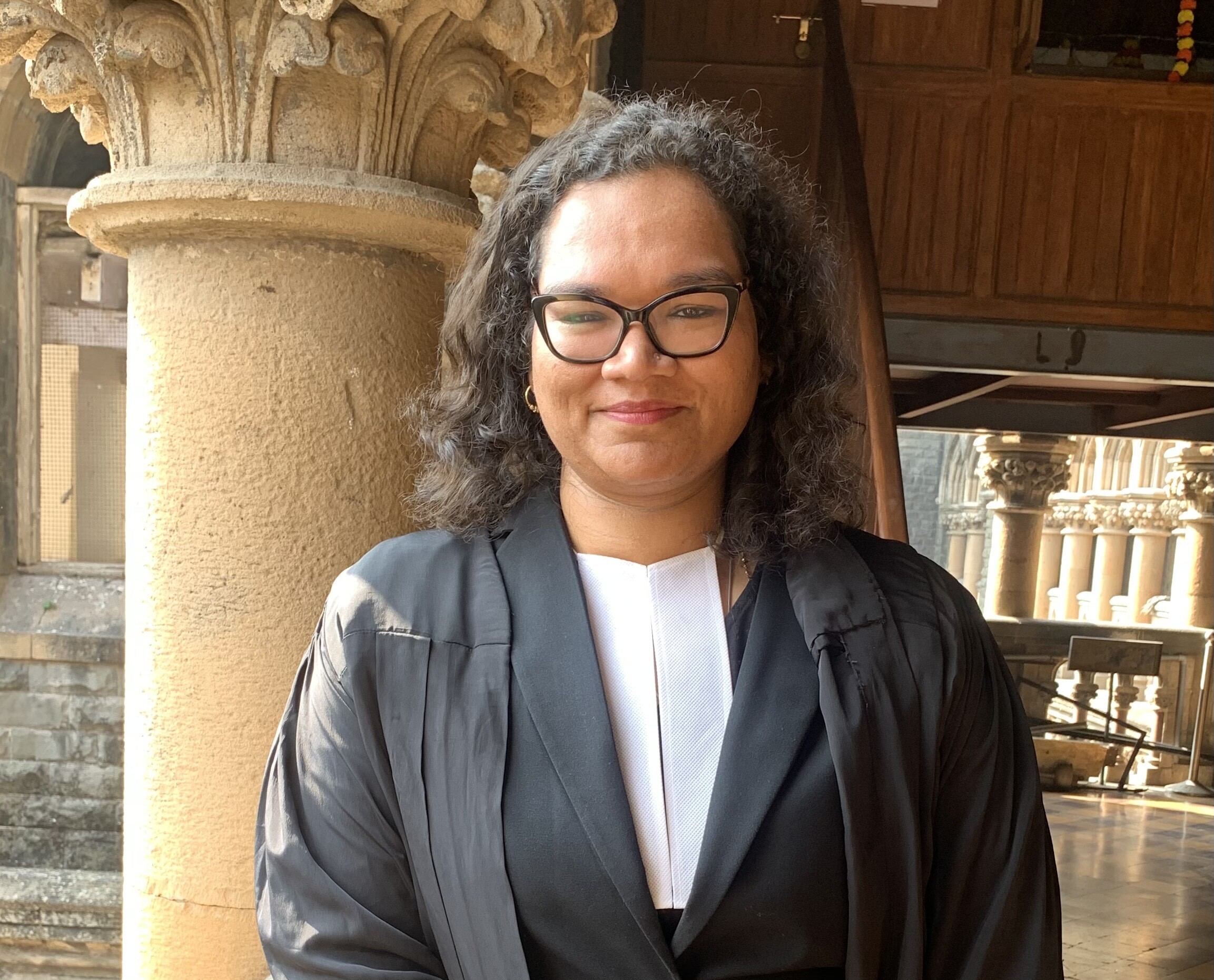
  • “Courtroom practice teaches you quickly that law is not just about theory but about how you apply it in real, practical situations.” – Shubhnit Hans, Founder & Managing Partner at Hans Law Associates.

    “Courtroom practice teaches you quickly that law is not just about theory but about how you apply it in real, practical situations.” – Shubhnit Hans, Founder & Managing Partner at Hans Law Associates.

    This interview has been published by Anshi Mudgal and The SuperLawyer Team

    Having over a decade of experience now, what were the initial years of your practice like? What inspired you to choose law as a career, and how did law school help shape the foundation of your professional journey?

    It’s been 10 years in this profession, yet the early days feel like just yesterday, when I was practicing in Delhi and learning to navigate the world of black and white. It didn’t take long to realize that this profession is far more about practicality than pure theory. Knowing the law and mastering your case file is essential, but equally important is understanding the judge, not personally, but in terms of their courtroom approach: their patterns, reactions, and preferences. From the very beginning, I developed the habit of sitting in court and observing judges closely. That practice, simple as it may seem, has proven invaluable throughout my journey as an advocate. 

    I come from a small town in Haryana called Karnal, where I completed my schooling. After that, I pursued my law degree at Amity University, Noida. My legal journey began with a litigation office in New Delhi, where I practiced for almost four years. In 2018, I moved to Chandigarh to start my own practice. As a first-generation lawyer, it was important for me to establish my name in my hometown, where I felt more connected and grounded. It wasn’t easy, there were no set plans, and no one in my family had a legal background. It all started when a cousin suggested corporate law while I was preparing for my 12th boards in 2010. I gave the entrance exams, got selected at Amity, and the rest unfolded from there.

    You began your career as an associate, handling a wide range of civil litigation and domestic arbitration matters. How did this early exposure influence your approach to complex disputes, and what key skills proved most valuable in the formative years of your practice?

    In the initial years of my practice as an associate, I was fortunate to be exposed to a wide range of civil litigation and domestic arbitration matters. This diversity of work taught me very early on that no two disputes are ever alike. Each case requires a tailored approach in terms of a legal strategy. What shaped me the most was learning how to balance theory with practicality. The law may be uniform, but its application depends on the facts, the forum, and often the perspective of the judge or tribunal. Observing court proceedings, understanding patterns of arguments, and seeing how small details could shift the direction of a case gave me a very grounded view of dispute resolution.

    As a first-generation lawyer, what motivated you to establish your independent practice? What vision did you have when you started, and how has it evolved over time?

    As a first-generation lawyer, what motivated me most to establish my own practice was the desire to build something independent, driven purely by merit, hard work, and client trust. Starting out, I had no legacy to rely upon and that became my greatest strength. It pushed me to focus on credibility, consistency, and results from the very beginning. My initial vision was quite simple: to create a practice that delivered practical, solution-oriented advice rather than just theoretical legal opinions and dragging each and every client to Court even if it could be settled outside the court. That was when Hans Law Associates was established. Over time, that vision has evolved into building a full-service firm where teamwork, innovation, and long-term client relationships are at the core.

    You have represented clients before the Punjab and Haryana High Court, consumer forums, RERA, and various tribunals. How has this diverse litigation experience enhanced your understanding of dispute resolution across different legal platforms?

    Representing clients before the Punjab & Haryana High Court, consumer forums, RERA, and various tribunals has given me a broad perspective on how dispute resolution functions across different platforms. Each forum has its own procedure, pace, and expectations, for instance, the High Court demands sharp legal reasoning and precedent-based arguments, while consumer forums and RERA focus more on quick, pragmatic relief to aggrieved parties. Ultimately, this cross-forum exposure has made me a more versatile advocate, able to approach disputes not just from a legal standpoint, but from a strategic, client-centric perspective.

    You have handled matters before the Haryana Real Estate Appellate Tribunal, the Haryana Real Estate Regulatory Authority, and several other tribunals. What unique challenges have you encountered in this specialized field, and how do you navigate them effectively?

    Handling matters before the HREAT, HRERA, Pkl, and other tribunals has been both challenging and rewarding. Real estate law, especially under the RERA framework, is indeed a booming area of practice. With rapid urbanization and increasing consumer awareness, disputes in this sector are growing both in volume and complexity. The unique challenges I’ve faced include balancing the interests of buyers and developers, staying updated on any recent precedents as it is a very new law and most importantly, ensuring enforcement of orders. While RERA was designed to be consumer-friendly, practical hurdles often arise in execution. I’ve found that navigating this space requires not only sound legal knowledge but also adaptability and persistence. This blend of legal precision and pragmatic follow-through has allowed me to add real value to clients in this fast-growing field.

    As a mediator at the Punjab and Haryana High Court, how do you see ADR evolving in India? In your experience, what advantages does mediation or arbitration offer compared to traditional litigation?

    As a mediator at the Punjab and Haryana High Court, I have witnessed how Alternative Dispute Resolution (ADR) is rapidly evolving in India. With rising pendency in courts, ADR is no longer an alternative but an essential tool for timely and effective justice.

    The recent “Mediation for the Nation” drive initiated by the Hon’ble Supreme Court reflects this growing recognition. By encouraging parties to resolve disputes amicably, the judiciary has underlined mediation’s role in reducing litigation, promoting harmony, and ensuring quicker resolutions. I myself have seen a rise in settlements after the said initiative.

    In my experience, mediation preserves relationships and empowers parties to design their own solutions, while arbitration offers efficiency, confidentiality, and subject-matter expertise. Both provide speed, practicality, and satisfaction compared to traditional litigation that may take years. With institutional support and initiatives like Mediation for the Nation, ADR in India is poised to become a truly transformative mechanism for access to justice.

    You have drafted agreements for a variety of clients, including music and production companies as well as professionals like psychologists. What key challenges do you see in the entertainment sector, and how can these be addressed proactively through careful contract drafting?

    Drafting agreements in the entertainment sector brings its own set of unique challenges. Unlike traditional contracts, these often deal with creative rights, intellectual property, royalties, confidentiality, and moral rights, all of which can be highly sensitive and prone to disputes if not defined clearly. One of the biggest challenges is the ambiguity around ownership of content, whether it lies with the creator, the producer, or the platform. Another is the lack of awareness among artists and professionals about the long-term implications of exclusivity clauses, revenue-sharing models, and termination rights. Proactive solutions lie in clear, precise, and balanced drafting. 

    What advice would you give students aspiring to enter the legal profession, and what resources would you recommend to help them stay ahead in a constantly evolving field?

    My advice to students aspiring to enter the legal profession is to focus on fundamentals and be patient enough to adapt. Courtroom practice teaches you quickly that law is not just about theory but about how you apply it in real, practical situations. Developing habits like observing proceedings, reading judgments daily, and sharpening communication skills goes a long way. It’s a never ending learning process. I see a lot of individuals backing out from the profession as it may not satisfy you monetarily but once you understand the responsibilities that come with it, I am sure we are ready to go a long way. I’d also recommend building a mentor network and learning from senior advocates and peers. In a constantly evolving field, the ability to keep learning, unlearning, and relearning is the best resource you can carry with you.

    Balancing a demanding legal career with personal life can be challenging. How do you manage stress, maintain focus during high-stakes matters, and create balance between your professional and personal responsibilities?

    Balancing a demanding legal career with personal life is indeed challenging, but I’ve learned that discipline and perspective makes the difference. During high-stakes matters, I manage stress by preparing thoroughly as confidence in your case reduces anxiety. I also practice detachment after court hours, giving time to family, fitness, and spirituality, which keeps me grounded. For me, balance isn’t about strict separation but about ensuring that both professional duties and personal responsibilities get the attention they deserve. This balance not only helps me stay focused but also makes me more effective in my practice.

    Get in touch with Shubhnit Hans –

  • Navigating Complexity From Corporate Law to White Collar Investigations with Trust and Insight – Varij Sharma, Founder and Partner at Gravitas Legal.

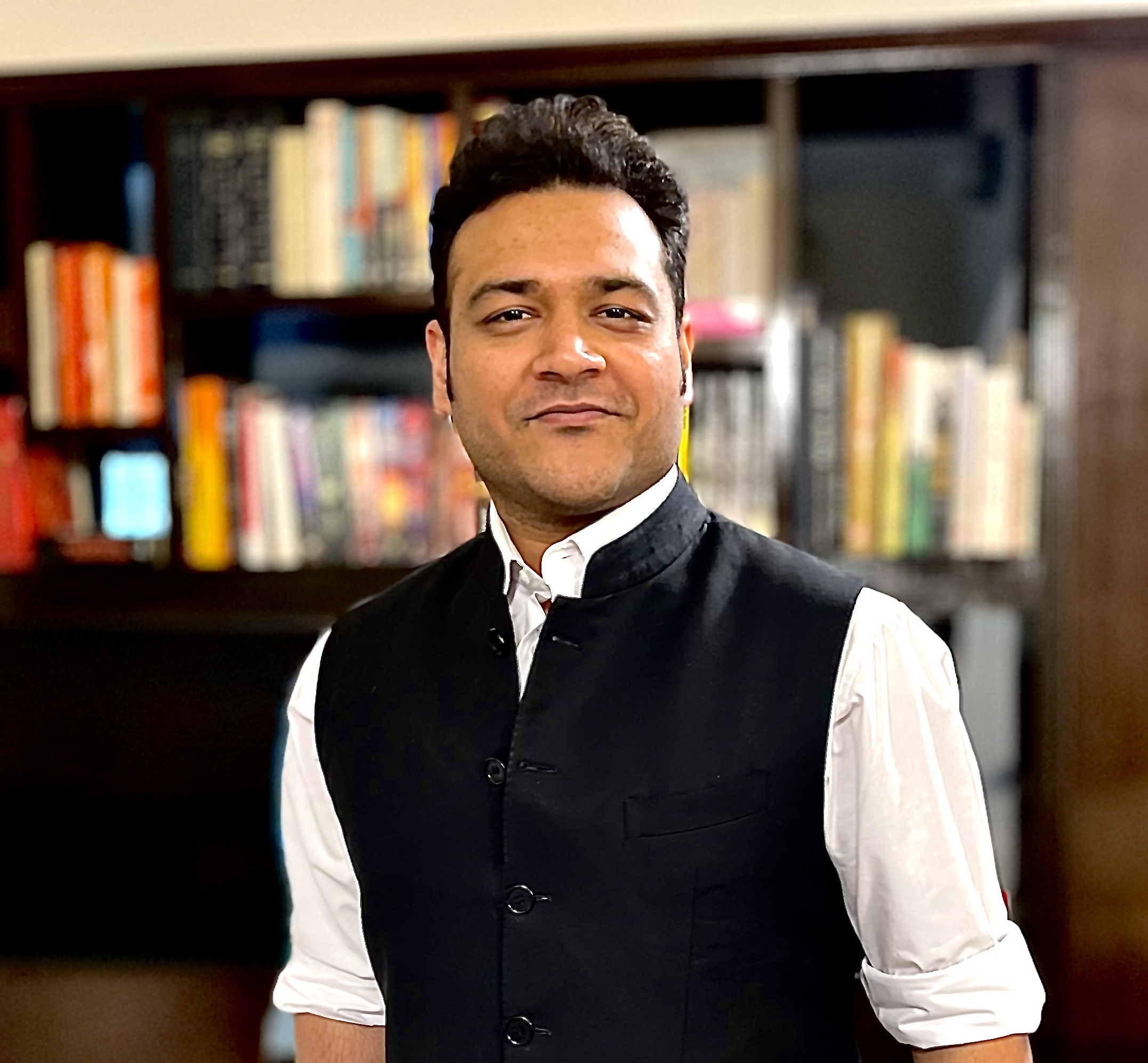
    Navigating Complexity From Corporate Law to White Collar Investigations with Trust and Insight – Varij Sharma, Founder and Partner at Gravitas Legal.

    This interview has been published by Anshi Mudgal and The SuperLawyer Team

    You have worked with a Fortune 50 company and have over 17 years of experience across sectors like corporate and commercial law, white-collar crime, and investment fund-related issues. What has been your motivation behind pursuing these sought-after niche fields, and how do you make them simpler for people who are often uncomfortable discussing them? How did you build your name in this niche of the niche, and what continues to drive you?

    Initially, when I started off as a lawyer, my concentration in fact was that whatever I do, I must do it in the best manner possible. As a young lawyer, that was my motivation. And while growing up, every day, it was almost as if going to a warfront, if I can put it that way, facing new challenges.

    And as a corporate lawyer facing new queries, dealing with different and new expectations every day. But one thing that remained constant was that I used to set my own milestones and my only motivation was that I wanted to be the best at what I could be and first test myself.

    I used to set those expectations for myself. As far as trying to be a general corporate lawyer or a decent enough general corporate lawyer, since the very beginning, I never thought of compartmentalizing myself or restricting myself to a particular field. I think that was also because of my upbringing at Dua Associates and I must take the name of my first mentor, Mr. Salil Gulati, who himself was a general corporate lawyer and I used to report to him. The way he nurtured and mentored me, and made me understand the concepts of law in terms of how they are supposed to be applied, was invaluable, because typically what we do in colleges is much different from what you actually end up applying, or rather how you end up applying.

    Of course, academic education or being good at academics is very important, but at the same time, one should know how to apply it. So since day one, I feel that I had a great mentor and he was the one who inculcated this fact, or rather this idea in my mind, that we don’t need to be specifically focused on a particular practice area.

    As a general corporate lawyer, we are capable enough of advising on all aspects of a company, of a business generally. Progressing from that, when I started Gravitas, beyond simply following the general corporate trajectory, we started two new spaces for ourselves, litigation and corporate strategy. Over a period of time, what had also happened and what I also started realizing was that when you advise companies, when you advise businesses, as a lawyer, you hold a position of great trust and confidence. And when anyone actually approaches you, they don’t approach you with a specific task, at least an Indian client doesn’t. They don’t approach you for a specific task.

    It always tends to evolve into something more. So my concentration always was that I should hold that position of trust and confidence so that people would be able to talk to me about all of their issues, not just a specific project or a particular transaction, but whatever other troubles or problems they are facing.

    So over a period of time I also tried to develop a conversationalist in myself. And today, when I speak to my interns or juniors, I try to make them understand the value of conversations and how, by having those conversations, you can develop trust, and how other people may also see what sort of knowledge you carry and the different aspects you can actually advise people on. Slowly, taking from there, when I deal with our foreign clients or institutions, it so happens that ultimately all of these clients also tend to look for something more than just legal advice from their lawyers. They would want that if there is a project, then there should be something more that a lawyer actually brings to the table, be it project knowledge, financial knowledge, and so on and so forth.

    So I kept on, and I still am, looking at avenues to learn more and develop my knowledge—more holistic knowledge, touching upon not just legal aspects of a deal or a business, but also all other aspects which would otherwise impact a particular scenario.

    Be it a transaction, a project, or generally just a legal query. That perspective also actually helps you in providing the right answer to a problem from the perspective of your client. Because sometimes what happens is we lawyers tend to go into too much detail of legal aspects and ultimately we just sort of go around in circles and probably don’t answer a query that requires a practical solution. So yes, that also enabled me to understand, answer, and respond to queries in a much more effective manner, I would say.

    In India, lawyers often focus only on legal aspects, but clients frequently trust us with personal or even psychological concerns. How have you managed this balance while maintaining professionalism and ethics, especially with international clients who often rely heavily on their lawyers? Additionally, how do you guide your juniors in handling such situations, and what strategies have you found effective?

    Sure. Thank you. So, see, like I said, it was also a drive. I mean, when I started realizing the true meaning of becoming a lawyer, that it is not just hidden in a particular opinion that we give or in a document.

    Regardless of whether you are talking to institutions, there is always a human behind that institution also. I always try and spend time on that human aspect. I give people time. I try to understand where the people are coming from. Sometimes, I would say not just sometimes, most of the time, things are not how they appear to be. I always had the zeal to constantly look behind the curtains. Let me just put it that way. I always wanted to understand where this aspect was coming from, rather than just treating a query or a requirement that our clients would send to us, treating it just on the face of whatever was being sought.

    I would always spend time on that query, and I would just think, you know, okay, fine, if someone is asking me a particular question, where is this coming from? Why is this question being asked? I would spend time on that aspect, and when I would try and answer that query—and of course, this happened much later in my life because initially, the concentration, or rather the focus, always used to be just to be a lawyer.

    You know, one would just be overwhelmed with the fact that this is a job and ultimately I have to do well at it and all of that. But over a period of time and later in my career, and especially this transition actually happened when we started Gravitas Legal.

    We wanted the firm to have a structure. We had thought about what we want, how we want our clients and other people to see us, people who approach us for any sort of assistance. How do we want them to see us? So, it was the drive, I would say it was the drive. And I constantly kept on looking for those behind-the-curtains or behind-the-scenes reasons of why and what was emanating. At the same time, I realized that position of trust and confidence that I was just talking about—everybody seeks that. I don’t think it matters whether it is an Indian client or a foreign client, an individual client, or a small, medium, or large business. They would always want their counsel, their lawyer, to gain that position of trust and confidence.

    And that position of trust and confidence, no matter how sound we are as a firm ethically, or what sort of name we have, generally how people know us, that position of trust and confidence is always reserved for the individual you are interacting with. For our clients, that position of trust and confidence will always be with the individuals they are actually interacting with. So when I interact with my juniors, my ex-juniors also, whenever I have interacted with them on these aspects, on these lighter or rather subtler aspects of relationships, I have always tried to tell them that when your client is actually approaching you, there is always something more. Try and strike friendships.

    Try and strike deeper relationships with them so that they can open up to you—deeper professional relationships, of course—where they are able to speak and open up to you to give you a more holistic picture of where the problem actually lies. It has happened so many times that people who have been representatives of my corporate clients have also ended up approaching me for their personal issues, and I have been more than happy to assist them, of course subject to there being no conflict. But at the same time, I think my ultimate win has always been that people are able to give me that position where they think they can actually rely on me and come and discuss those aspects with me.

    The last thing I would like to add is that I have been a very open communicator with my clients. If I have not felt—and look, a general corporate practice is actually quite different from other corporate practices because we are exposed to many more dimensions of a corporate than other, I would say, focused practices—so with general corporate practice, what tends to happen is that when you get that sort of exposure, you also inevitably get into those wider aspects.

    You get that exposure and you try to make the best out of it. And also when you are getting that exposure, I feel we should not hold ourselves back. We should be able to communicate very clearly what we as trusted counsels believe that a client is exposed to. Sometimes I have seen that people shy away from it—that if someone has asked me a question on the Companies Act, I will just answer that query. But I have never been that. Frankly, I can say one thing that I am very happy about myself as a professional, as a lawyer, is that I have never stopped myself from advising my client and being that voice in their ears saying this is right and this is wrong. And when something is wrong, I would never shy away from saying this is wrong.

    So, yes, that is again something that I have worked on and tried to focus more on.

    When handling internal investigations or whistleblower matters, how do you strike a balance between transparency, compliance, and protecting the reputation of the organization, while also managing sensitive internal information? Additionally, how do you maintain your own mental well-being during this process?

    I will give you some sort of an insight on how investigations, rather whistleblower investigations and white collar crime actually proceed and what tends to go into the process. I mean, everybody knows exactly what it means, but what tends to happen in the process, right?

    See, what happens is that when complaints such as this come through, we are supposed to act independently of the complainant as well as the organization and also probably the group of people who may be the potential accused.

    What tends to happen is that when you enter that arena, no matter who may have appointed you, everybody is just looking at you with a lot of anxiety, let me put it that way: what exactly are they going to find and what are they going to do with that knowledge?

    So you have to develop a very, very focused approach with very clear objectives in mind: what are you exactly here for? It’s very easy in such a situation, and let me tell you, when people actually start in such sensitive situations, when people start talking to you, there will be people ranging from the lower managerial positions right up to the top of the organization whom you have to interview and speak to. You may be required to go through thousands of documents to decipher and understand what exactly has happened, and whether ultimately what is being complained of has actually occurred or not.

    So in such situations, when you sit down and start talking to these people, and again they could be 25, 50, or 100 people that you’re talking to over a very short span of time, once again people open up, and your best case scenario, I mean, if you want to decipher something, it is all about whether these people are going to actually trust you and open up to you.

    Because that’s what you’re relying on. These are people who are actually working for an organization and they know that organization much better than you. It’s very easy to conduct an investigation which is absolutely objective, based on documents and policies, et cetera.

    But at the same time, whenever there is a human angle, you need to understand what is happening behind the scenes. So whenever we are in such a situation where we have to conduct an internal investigation, apart from going through the policies and documents, et cetera, we also need to go into the depths of what people perceive is wrong when a complainant is making a complaint. You have to understand from their perspective what exactly they are saying has happened in a wrong fashion, or the policies that have not been adhered to.

    There’s non-compliance, right?

    And they will not be able to write down that as per this particular policy this is wrong and therefore I’m complaining. It’s never that simple; it’s always gray. The practice of law itself, at least in India, most of the time deals with the gray.

    So as far as this process is concerned, one has to have a deeper understanding and should be able to create a very, very thorough process for themselves which can be followed in order to conduct an impartial investigation as an independent investigator, because most of the time these reports are actually submitted to either the board or the shareholders, and they should be able to communicate very, very clearly what the risk aspects are and what exactly has happened, what steps to take next as per the policy, and what steps are required to be taken as well. So, I would say a very clear and thorough process has to be devised. Most organizations have a very clear internal investigations or whistleblower policy, but of course they don’t prescribe a process, because processes are developed and created by the independent investigator, which comes through.

    And of course, you should be able to communicate very thoroughly and very clearly who the individuals are that you want to interview and what documents you need to look at. There is always resistance. I would say there is always resistance, but at the same time you should be able to get past that and thereafter conduct a meaningful and result oriented investigation.

    When investigating or working with a company, it’s difficult to build immediate trust, and the same applies to team members. You started Gravitas Legal about a decade ago, how did you find the right team members who share mutual trust and understanding with you? With the global presence you are now building, how has that been possible, and what strategies did you follow to develop and sustain that trust within your team?

    See, legal practice has changed a lot in the past decade or so. When we established Gravitas Legal back in 2015, I think that was around the same time there was this spurt of new generation law firms. I think that was the time around 2014, 2015 when there were a lot of breakaway firms that started coming through.

    The idea at that point in time, our main motivation rather, to start Gravitas Legal, was that we wanted to create something new and something better than what we had seen and what we had experienced. There were things that we wanted to do differently and probably advise differently, probably conduct the business differently, probably administratively we wanted to set up something new and different, probably partnership structure-wise, we wanted to create something new and different. So primary motivations were these. I am extremely thankful for all the people who have, in the past 10 years, worked with us, because each one of them has not only been instrumental in our growth but also has always ended up teaching us something new.

    I think the number of people or the newer people that we have worked with, they have kept us grounded in our upbringing also as a firm. Because like I said, in the past 10 years, the practice of law, the practice of law firms, has changed drastically.

    The market has changed drastically. There are opportunities like there have never been before. If you are a hardworking, focused person, there are opportunities galore for youngsters. At the same time, there is freedom. And I would also say that the perspective of clients has also changed.

    Clients have become very result-oriented, and they also allow the freedom that is required by lawyers and law firms to operate. The advent of so many newer firms actually shows that there is enough institutional work.

    There is enough corporate work in the market, and that actually shows the maturity that the Indian clientele is also achieving slowly. Of course, there are foreign clients also, but the Indian client has also matured in that they don’t want to go to the same old lawyers or the same old law firms. So the entire ecosystem has matured quite a bit. As far as my younger colleagues are concerned, younger colleagues or colleagues, my contemporaries are concerned, like I was saying, we are extremely thankful to them that they have spent the time they have spent with us and helped us grow immensely. There are a lot of our ex-colleagues who have now probably moved on and taken new roles in either different law firms or in-house. And actually, when I look back and remember where we all had started from and when I see that time has run so fast and people have grown so much and the growth has been mutual, frankly, that actually shows that perhaps we were doing something right and probably, somehow, slightly, we also contributed to their growth. I would say in that case, more than that position of trust and confidence, I think it was mutual confidence. Like I said, in the past 10 years, there are opportunities galore in the market, and still people trusted us, worked with us, and have been participating in our journey. I’m very thankful for that.

    Growing together not only feels good but also helps a law firm grow exponentially. Over the past 10 years, you and your firm have mutually grown, and along the way, you’ve worked on cross-border transactions, joint ventures, corporate law, and M&A, areas very different from what a general counsel usually handles. In today’s environment, where businesses are moving toward sustainable models, how do you see Gravitas Legal progressing in the next 5–10 years, and what plans have you made? While working in such niche fields, how do you identify which strategies work, which don’t, and how do you explain complex issues in simple language for clients who, though corporate, are still human? How do you train your team to do the same, keep everyone grounded despite pressures like money or mental strain, and ensure work is done beautifully, as you have been doing?

    Sure. Just concentrating on the first part of your question, considering the various areas of my practice or the firm’s practice, the firm actually practices general corporate, M&A, private equity, venture capital. We have a great and flourishing insolvency and restructuring practice, project finance, and we also do corporate litigation, indirect tax, criminal law. And they have developed, and let me just tell you this, we had started off with in the first instance.

    We started off as a boutique project finance law firm at that point in time. And then thereafter, we picked up. I was only 6 or 7 years into the profession when we had started, and I was responsible for building the general corporate and ancillary practices, as I call them. So, general corporate and M&A and PE VC funds, insolvency, restructuring, corporate and litigation strategy, everything came later. We were first a boutique project finance law firm.

    When starting off as a project finance law firm and when we saw that this is the only practice area that we are starting off with, our first concentration was on doing what we do best, which was project finance. Soon, when people also realized that now we are independent of any other tag and this is the ship that we are running, people would approach us, clients would approach us with different requirements.

    As from a young lawyer’s perspective, yes, you have to learn, you have to study while practicing also, you have to study. I have, despite having started Gravitas, while today it seems that time has flown like anything, it has been a journey which has required a lot of hard work. When you look at building new practice areas constantly, there are also things that you are dealing with for the first time. And practice areas which you have probably earlier not touched upon. There has to be an approach that you have to develop.

    It’s like how it goes for any lawyer who is just passing out from a law school and entering this business when they are a complete clean slate. When you start a practice area as a partner also, or rather as a leader at a law firm, the idea is that you should develop first a deeper understanding at your end of what you are dealing with or what you are approaching.

    What is that practice area that you want to master? Or rather, you should be able to go out there and say that we can do a major value add to whoever we are supporting in a new practice area. And then building credibility. Yes, organizations and institutions just don’t line up outside your door to give you work.

    You have to show them that you can actually perform, and there are a lot of smaller things that you would start with, things that make them gain confidence in you, and they should also be able to give you those opportunities.

    So from a young lawyer’s perspective, I would say that yes, these are not the times when you can be completely oblivious to whatever is happening around you. And you can just, you know, like this, you can just go enter your office, do your work, get up and go and live your lives.

    But one should be actually looking constantly at developing themselves as a professional. Keep on adding value into your own personality also. And that is what we try to do as a law firm as well. Probably, I would say the trajectories may be different, but the paths are the same ultimately.

    So, as far as our clients are concerned, yes, you are right. People are trying to create sustainable business models, and there is a huge concentration now on whether people are able to see you as an ethical business with sound governance models, sustainability models. So institutions, organizations, even smaller startups are also very conscious about this nowadays. And that is the way to go. I think the awareness that is now there, generally in the market regarding certain issues, especially environmental issues, there is a huge push towards creating sustainable models.

    When it comes to strategies, I’d like to ask about the base strategy you follow to take care of your own health, mental well-being, and also that of your team. Running a successful law firm obviously comes with pressure and challenges, so how do you overcome those? What kind of practices, trainings, or interactions do you use to ensure that everyone’s mental and physical health is taken care of, with the support and trust you’ve built within the team?

    Since the very beginning of my Gravitas Legal journey, or rather since the very beginning of my career, I’ve been very clear that I don’t carry my work home. By that I don’t for a moment mean that I don’t end up working at home sometimes, but I try to not discuss work at home, because if my family tends to get entangled in my work and if I carry my workplace stress home, then the office hours just keep on elongating. So I’ve tried to do that since the very beginning. I try to keep my Saturdays and Sundays very sacrosanct. It’s an effort, it’s an ongoing effort, but I try to ensure that I’m able to find clear me time or my family time on a very regular basis. My rules with my team are very clear that I will only ask you to work if I am working myself. So if I’m not working beyond 6 or 7 in the evening, they can also head home, enjoy life, enjoy whatever time that we can get.

    From an organization’s perspective, we try to set up a town hall every month or so, where we can just discuss things. It’s a great way to interact among different offices, and we try to discuss other things generally.

    In our town halls, we get to know so much about individuals that we are working with, rather than just the professionals. We found that one of us is a national-level athlete, for example. One of us was a great singer and an instrument player.

    So, in order to break the monotony of work, we try and make these efforts. Then we also try that, on a very regular basis, we do one or two youngster-type holidays, where we drive to the mountains and go to very difficult places where there is a lot of adventure and where everybody’s an equal. These are the kinds of things, at least stress busters, that we try to implement at the office. Generally also, we try to keep a very calm and casual environment in the office where people don’t feel over-pressurized. There is always pressure, there is always stress in the practice of law.

    There is no doubt about it, but at the same time these are the efforts that we try to make, and it’s a constant effort again, because times keep changing. There are a few months when there is no breathing space at all and there is constant struggle, there is no clock.

    Things like those happen, but then we try to manage our work well, and we try and find as much time as individuals also in our own lives.

    Get in touch with Varij Sharma –

  • Fueling the Future of Innovation Through IP Awareness and Advocacy – Nilanshu Shekhar, Founding Partner at KAnalysis

    Fueling the Future of Innovation Through IP Awareness and Advocacy – Nilanshu Shekhar, Founding Partner at KAnalysis

    This interview has been published by Anshi Mudgal and The SuperLawyer Team

    Let me begin by asking you about your decision to do law after having an engineering degree or academic foundation in biotechnology and industrial microbiology. What was your inspiration in bringing intellectual property into your life, and how have you taken this approach to excel in the IP domain and make it a passion?

    As it happens with everybody, the shift to intellectual property from an engineering background, or in my case, the shift from biotechnology and industrial microbiology to IP, was not planned. It happened organically, and I began my career as a patent engineer in my first organization where I was introduced to the world of IP.

    That exposure was an eye-opener for me because I realized IP was the perfect intersection of science, law, strategy, and, more importantly, business. It allowed me to stay close to innovation while also influencing how innovations are protected and commercialized. So that is something that brought me towards IP, and the interest has kept me going to date. Over time, this technical-to-legal transition has shaped my entire approach to how I view IP.

    I don’t look at innovations in isolation. I view them as a larger part of the innovation journey because it’s all incremental and doesn’t happen as a eureka moment. That mindset continues to influence how I advise my clients even today. Whether it’s a startup or a multinational trying to scale its IP, I try to see the bigger picture of what the innovation would mean to them, how it aligns with their business goals, how to strategically protect it because IP, in isolation from business, is of no use.

    That’s how my journey towards IP keeps me motivated and going strong.

    Thank you so much for bringing in this aspect of the intersection of two fields, which are absolutely niche. Way back in 2007 itself, you started KAnalysis, and right now, you have made it a thriving IP law firm. What were some of the key challenges during those early years when you started your journey with a modest three-member team and navigated it through building a firm of this size and reputation, with a mission of making an IP hub in India? How have you done it?

    Well, it has happened gradually, I would say. When we started in 2007, we were working out of a single basement with very limited resources and zero clients. So, the initial challenge was how to show your credibility. Why would anybody trust a young firm or someone who has just started?

    We focused on quality, our responsiveness, and trust, because trust is something that takes you far. Even during our initial phase, we were doing the IP work. Wherever we were trained, we were not good at starting or setting up a business, managing cash flows, or getting clients, or getting an introduction to a client. We could execute a project, we could write a patent, we could search for prior art, or we could do a lot of things, but how to convince somebody to trust you?

    So those were tough initial days, as it happens with everybody. But the real challenge started as we grew. When you try to scale, the biggest challenge is that you should not dilute your core values. Consistency and patience are key. Over time, we have invested in people, set up robust processes, and, being from an engineering background, we could incorporate and adapt technology at various levels.

    People, process, and technology, I would say, are the three pillars we have not compromised on till now. The culture is that we will not compromise on these, however big we grow, because growth at the cost of culture and quality will not last long. Over the years, it has been almost 18 years. We have built slowly and steadily, investing in people, processes, and technology.

    That’s what I claim to be my biggest challenge now. As the team grows now, we are over a hundred people. The majority of my team is in India, but a few members are spread across the globe. The second-largest team is in the US, and we have small offices spread across the globe to take care of various jurisdictions.

    Every step has a new challenge, and as we grow, the challenges keep changing, but you have to adapt and survive.

    You have been resilient, and you have prospered through that. Keeping all that and working towards IP rights for more than 18 years now, what was the role of your engineering background in shaping the strategies that you particularly saw were different from regular lawyers? Obviously, there was a different understanding that came from having an engineering background plus a legal understanding. How have you seen that particular combination help you and your team grow and strategize at the same time?

    Yes, I have a different take on this. Whatever course or degree or exercise you take, it shapes your mind to think in a particular way. That’s what engineering does.

    Engineering doesn’t teach you anything specific. It trains your mind in a particular direction, to think a certain way, to solve issues or problems with a different bent of mind. Engineering teaches you to deconstruct a problem, break down the system into fundamental parts, look at each part individually, and then see their function and assimilate them.

    Law, on the other hand, teaches you to analyze. Law teaches you to connect those individual parts in a logical and legal framework. So, having training in both aspects helps you see the final picture without missing the finer details. That’s what the combination of engineering and law helps you achieve.

    Initially, I was more involved in patent prosecution. Over time, I was exposed to IP litigation, which has added a third dimension to my thinking. When you are prosecuting patents, your basic idea is to get a patent. When you go into litigation, you realize the basic idea is how to get a patent that is enforceable.

    It teaches you what holds in court and what falls apart. This practical insight sharpens my instincts in the entire scheme of things. Now I try to look for the best claim scope or how to draft better claims. As a litigator, I have realized that my ability to draft and interpret claims has also improved.

    Claims should be broad enough, assertable, and defendable even under attack. All those things shape your thinking. Every day is a learning process. Every case teaches you something. So whether I’m guiding someone, I’m not just focused on getting the examination and obtaining a patent, but also on how much I can contribute to obtaining an enforceable patent. My goal is to create IP that is not just strong on paper.

    It should withstand scrutiny. It should attract investors. It should survive litigation, both offensive and defensive, and it should support the business in market entry. Starting and setting up my business also helps me understand the key challenges any company faces with regard to IP protection.

    You don’t go all out and spend all your money on IP. Business is also important. It’s a combination and a learning that has helped me consult clients. I don’t work with clients as just a service provider or as a lawyer. I work hand in glove, even suggesting who they should go to for a merger or whom they should not partner with. I regularly undertake those kinds of activities.

    That’s why I like working with early-stage startups or small tech companies, because there you can be very closely invested. Over time, I’ve seen most of my clients trust me because we make them understand that IP isn’t just about legal protection. It’s a business asset.

    So technical understanding, legal foresight, and business acumen that’s why we have been successful as KAnalysis, I would say. I’ve seen my clients from their first provisional patent to securing multimillion-dollar funding. Those have been brilliant experiences.

    We would also love to understand that particular monetization process and the multimillion-dollar deals that you have done for IP monetization especially.

    But before that, we would love to ask you about your pro bono work also, where you have invested a lot of your time in initiatives like the IP Help Desk for startups and the IP workshops that you keep on doing. What actually fuels your dedication to promoting IP awareness and educating academicians and entrepreneurial communities related to this? Because you do it pro bono and you are also involved in a lot of deals which are for monetization. So how do you find the balance between these two, and how do you find time to do that?

    That’s interesting! I’ll tell you a very humorous anecdote. When I joined IP, it was very difficult to convince my dad what I was doing. And he is a professor. So that is the level of IP awareness in India. It took me a long while because India has no dearth of innovation, but IP awareness and awareness around IP rights remain uneven. Startups, academic institutions, and big companies have their setup because they have realized it the hard way.

    They have been sued or they want to protect, so they have mechanisms. But startups and academia lack IP awareness. Over the years, I have been working and managing one of the largest patent portfolios in India. We are managing portfolios in over 80 countries, spanning over 30,000 patents.

    So, handling that kind of a portfolio, I realized that most of my clients are from outside India. During COVID, you get time to ponder a lot about what we are doing and what we are giving back to society. During those days, I realized, let’s start an IP help desk to help startups, because startups are in the most gullible phase. I have seen investors who are real sharks take over their hard-earned innovation and everything. So I launched the IP help desk just to help them understand their questions, their issues, and guide them or handhold them without charging them. Because initially, they’re short on money and they think everybody is trying to sell something.

    I have done over 150 pro bono workshops across the country in the last two and a half years. These are not just lectures; they’re conversations where I help to demystify IP to the founders, to the people at incubation centers, those who have just started, and I give them practical, usable advice.

    How to stagger the cost. How you can protect yourself with minimum cost. So that when you attract investors, you may pay me but how can we get to that stage where you are attractive to the investor and protected. Because IP should not be an afterthought. It should be part of the innovation process from day one.

    Founders and researchers need to understand their rights and the value of protection. That’s what I do. I try to make them understand where the value lies. It’s not a cost center, it’s an asset. Slowly and gradually, I’m assisting over 1,000 startups at the moment, who are transforming in their trust in me, their confidence, and their outlook. For me, this is a way of giving back to the ecosystem, because ultimately this ecosystem has shaped me, and I ensure that the next generation has all the tools to compete globally. Because Indians should be competing globally. Big companies or multinationals will not build India. It will be the SME sector that writes the next India growth story.

    So that’s what my mission is to enable startups to lead the India story. Whatever little I can contribute, I try to contribute.

    That’s not little, that’s huge. One person can bring in so much change and can bring in so many people together to work towards one goal of making India again an IP hub as you have envisioned for everyone.

    Yeah, that’s why I keep my Fridays open for four hours. Anybody can book a slot and they can ask questions, without any charges. So that’s something that attracts most people.

    Wow! We would love to promote that aspect. And we’ll definitely talk about this the Fridays that you keep open for people to come to you and have that free consultation. That’s something which is not easily available, at least from such senior attorneys who are already managing such big portfolios.

    This is something that is very inspiring for young professionals also. So, sir, how would you like to talk about the intersection of science, innovation, and law, and what kind of core skills these young professionals can seek when they’re trying or thinking of building a career? And what do you propose to build that particular mindset, and what kind of advice would you like to give to them so that they can thrive in this particular field of intellectual property, keeping in mind that they also have to give back to society, as you already are doing?

    For anybody to give back to society, they should first focus on building their career and themselves. And they should enjoy IP, because this is a field where, if you don’t enjoy it, you cannot work a single day. That joy, that kick you don’t have to drag yourself to the office any day. You just look forward to it. And for that, the basics for students or young professionals is that you should develop interdisciplinary fluency.

    You should have a passion for science, an understanding of law, and an ability to look at business so that you are able to connect the dots. That’s something I always suggest. It’s not about mastering one thing. You have to be a jack of all trades. You have to be good at multiple things, because if you go in one direction if you are very good at law, IP is not for you. That’s the core legal side. If you’re good at engineering, IP is not for you either.

    You should have a flair for multiple things. That’s what IP requires. You should also cultivate a habit of deep listening, because the majority of my clients describe symptoms, not problems. My job is to diagnose both.

    They would just give me a situation where they’re stuck. That’s just a symptom. The real problem lies somewhere else. I need to identify what the root problem is and then provide a solution. Somebody has sued them filing a countersuit is not always the solution. There is also room for arbitration.

    If my case is not very strong, I would look for other avenues where I could bring the other party to the negotiating table. So that’s all part of business strategy. Secondly, I would advise the young generation to stay curious, because IP is evolving rapidly, especially with areas like AI, genomics, cleantech, and the majority of the new avenues that are coming.

    If you are not curious, if you are not rigorously reading, it’ll be very difficult to stay updated. This field needs you to be relevant. And finally, last but not the least be ethical. Cutting corners is not going to help you survive long in this field. This field is built on trust. So if you try to cut corners, you might get one or two clients, or you might get one or two cases, which would be shortcuts.

    But integrity will help you build a career. That’s a must. This field rewards only those who are sharp and sensitive. It’s not something you should be ruthless about. Those who can think like a scientist, act like a lawyer, and listen like a consultant. I always say to anybody who is hired that you should have good listening skills, but you should act like a lawyer and think like a scientist.

    That’s what an IP lawyer should be. It’s not a one-dimensional career, I would say. I have been actively mentoring our juniors to understand what I call IP fluency. It’s the ability to connect innovation, law, and commercial relevance. Because there is a brilliant invention that somebody has done, most of the inventors are very passionate about what they have created.

    But is it packaged enough to be marketable as a product? An IP lawyer would stop before that. I go that extra step. How would the market perceive this? What would be the best sales strategy? If you could associate your product with some bigger brand, how would this complement?

    So, those kinds of strategies I come up with because I try to help the business grow rather than just limiting myself to the IP side. So if you are someone who is curious, ethical, and eager to make an impact, IP is the career for you. It’s a very fulfilling career path. But choosing wisely is what I suggest.

    We also have one very good initiative in our organization where we have weekly training sessions for everybody. Whatever is there, they are given specific topics to present to the entire organization. Every fortnight, we have sessions so they get to dive deeper into that particular topic. That is something I have been doing regularly in this organization, because for me, it’s all about the culture that we build. We are here to nurture, and that’s what we have been doing.

    So I’ll start with “curiosity is the key, thinking like a scientist, acting like a lawyer.” Sir, keeping all that in mind, how have you developed this culture inside your organization and made sure that everyone is aligned with the whole process? Because it’s a huge organization.

    It’s in several jurisdictions as well. So the kind of thought process that’s involved also requires an understanding of having very good mental health as well as physical health. How have you worked on that and made sure that all your team members are not only aligned but also following the certain protocols that you may have set? Because it has become a very big and growing issue of mental health problems and compromised physical health and people have started talking about it. So how do you work around that and make sure that you also stay healthy and that your team across the globe is also equally healthy?

    It’s definitely a journey. I would say I’ve been trying hard to maintain a balance, but yes, it’s still a learning curve. I used to equate longer hours with better outcomes.

    That was earlier. Over time, I have realized or with experience, I could do things much quicker and I have realized that clear thinking, a strategic approach, and, I would say, strong leadership all combine to form a structure that helps you remain fit. By fit, I mean mental health more, because lawyers get involved in a case so much that they’re not able to shut down when they’re not working.

    Even in the subconscious mind, a case keeps on going. When you are so involved, a setback in court would ruin your evening, which shouldn’t be.

    So a lot of times it happens, but now I take time and ensure that I switch off. I listen to music, go for walks, or the best I like is speaking to young professionals that helps me unwind.

    And I have a supporting family. I have a very close group of friends. I have kids who help me relax, and that’s how I keep my mental balance. I would say they help me recharge, especially when things get intense and it happens almost every week. So that’s how it is.

    Delegation of work and another important point that I forgot worth mentioning, is building a strong second line. Because as the firm grows, you need to have a second line that takes care of the majority of my issues so that I come into the picture at a very later stage.

    That helps me go out and work daily because prioritizing mental health is not just about myself, but it’s all across the firm. Because if you are not sustainable, it’ll not last long. You’ll burn out.

    So we need to keep that flame alive but that flame should not burn you is what I always tell people. You stay motivated, but at least learn to enjoy, and that enjoyment should come.

    I’m very fortunate to have a set of friends who keep me grounded. They don’t let me fly too long. So that’s how I relax and unwind. And I’m still learning. Scaling means having trust in your second line, having trust in your delegation, having trust in your processes and culture. I’m very thankful that I have built a very good team. It’s a slow and steady process.

    Every hiring goes through a lot of vetting.

    I’m personally involved in most of the hirings that happen in the company because the culture should be intact. The mindset you can teach a person but you can’t change the attitude. So that is one thing I always, always look for in people. Somebody who has not played any sport would not be a good team player, is what I feel.

    So these are small, small things that I keep in mind when I look for people while hiring. I like to speak to them for an hour or so to understand and pick up some things from their mind. That person might be a brilliant asset, but if it’s not a fit for the culture, then he’s not the person for me.

    Amazing views, sir. Thank you so much for talking about building a very strong second line as well as delegating your work obviously with diligence and with the understanding that it’ll work after you have delegated.

    Sir, while you were talking about IP rights and IP management and other aspects of intellectual property, you also talked about negotiations and management. We would like to ask you your thoughts about the arbitrations that keep happening in intellectual property. How do you see the future of IP arbitration in India and globally as well? Because you have a global presence.

    I have been involved in several IP transactions as well, and over time I realized that your biggest competitors could be your potential collaborators in the future. This is a big jigsaw puzzle. Every piece needs to fit in somewhere, and that is something where there is always room for negotiation, because nobody is outrightly against anybody.

    It’s that everybody is protecting their own business interests. So in the broader sense, what we do is we try, as I mentioned earlier, to deconstruct the dispute. What is the major negotiating point? What is a strict no-go?

    Is there any chance where a financial negotiation could also take place?

    Because initially, I was also involved in a lot of IP valuation work as well. So, if there is a dollar value attributed to this particular piece of technology, could there be a royalty scope wherein we could have a negotiation around that?

    Arbitration is not always about having a mandatory step, because these days, courts have been constantly pushing for arbitration, and people should first try out arbitration before starting the trial.

    But arbitration as a first step needs to be taken care of. The real challenge I feel in India is that there are not enough trained arbitrators. Arbitration is a very, very specialized niche that is going to be very lucrative. There is very little expertise in that particular domain.

    Because an arbitrator who specializes in aerospace would not be a good fit for e-commerce.

    So for somebody who is a domain-specific arbitrator it has been a wonderful experience working with some very good arbitrators trained in Singapore or Dubai.

    Because those two centers I really like the framework they have: the training of arbitrators, the certification courses they offer.

    It’s amazing. I have had the fortune of working with quite a few of them, and I wish India had that kind of setup, where we have training schools for arbitrators where there is a specific coursework, six months or eight months, wherein arbitrators are trained to arbitrate. Because most of the time, we have our own biases, and arbitrators shouldn’t be biased.

    So those are small, small things that arbitrators need to inculcate. With training and proper guidance from established institutes across the globe, India can be a major hub because that would lead to a reduction in a lot of the backlog we have in courts, if there is a good arbitration mechanism.

    In IP, I would say it’s very laughable that most of the businesses 500, 600 crore businesses were started by a family. When they split, they don’t have a proper agreement about IPR or brands, and that fight goes on.

    Those family businesses I’ve been involved in a lot of feuds in family businesses where the brand, who owns the brand later, is a real nightmare, because many people don’t understand the value of the brand unless they see that they can’t sell using that brand. Then the valuation starts.

    So it’s still in a very, very nascent stage in India.

    But I am very hopeful that the next crop would be more accustomed to and more inclined towards alternate dispute resolution mechanisms.

    Sir, with the kind of experience and exposure you’re offering through your workshops, I truly hope many others follow your lead so that India can become the IP hub you’ve envisioned. As we come to the end of this conversation, I’d love to understand how you keep yourself updated with everything happening in the IP world. How much do you read, how often do you interact with the international community, and what differences have you observed in the understanding of IP rights across jurisdictions? Since you’ve worked in over 80 jurisdictions, you must have encountered varied approaches to the same IP concepts. It would be great if you could share those insights for the benefit of young professionals.

    Definitely. Because IP is a global thing. It’s not restrained. You need protection in multiple countries, but each country has a different law that we should understand. Each country has a different patentability criterion.

    Some things are patentable here, some things are not patentable here. Method patents are patentable in some countries, some countries only allow system claims. So this kind of thing, where you are seeking global protection if you don’t have a bird’s eye view of different jurisdictions that are patentable in Japan might not be patentable here in India. Or let’s say there is a business method patent, which is allowed in the US but not allowed in India. Software patents we face a lot of issues regarding Section 3D or repurposing of drugs. So all those things you need to work with attorneys across multiple jurisdictions to understand.

    If you are starting with a PCT application, my team has been trained with US attorneys, European attorneys, Canadian attorneys, even Japanese and Chinese attorneys. So when we write a PCT, you have room to amend in that specific jurisdiction when you enter that.

    When you are trying to prosecute applications across the globe if you are working here most people would go and help you to submit with a foreign attorney without giving you the legal perspective. Let’s say if you file in the US with 20 claims.

    Same application if you go to Europe why go with 20 claims if you have to pay an additional claim fee for five extra claims? Because above 15, Europe charges. In China, it charges above 10. Some people I have encountered in the past it’s against my profession but I would say that just to justify the billing of $20,000, they write a 200-page patent.

    That invention was brilliant and beautiful, and it should have been protected across the globe. But the translation cost was so high that the client could not afford to file in non-English jurisdictions. Only nine or ten countries allow you to file in English. The rest all require local language. You get the translation done.

    Why write a textbook when you are writing a patent? Be concise, be compliant, and think about the business of the client rather than your billing is what I always suggest. So having a global perspective with regard to global filings has been the hallmark of our success because our patents get prosecuted in multiple jurisdictions, and we are the ones who are responsible for all the jurisdictions.

    We would not say that we have drafted as per Indian law and the rest you take care of with your local attorneys. Then you keep on having office action after office action after office action, and you end up spending a lot without getting the patent because it was written in such a manner that there is very little room to go ahead.

    I’ll tell you, these days I’m facing a lot of issues with Indian companies, I would say. They cut corners while drafting a patent. They come to us for making a response for a US office action. After our response, the claims are allowed, but the final objection comes that there is no support for those claims in the specification.

    You can amend the claims, but you can’t amend the specification. A brilliant innovation goes down the drain because you have already disclosed most of the things. There are remedies that we suggest, but you end up having your cost at least 1.5 to 1.8 times. You try to save a few dollars and you end up spending a fortune. So that’s something that needs to be told to the people and to the business community that it’s always a penny-wise and pound-foolish situation.

    That is the kind of situation that most Indian businesses are facing these days.

    And as you mentioned at the start, they don’t want to pay. They will pay. They’ll pay when they are in a soup. Why get in a soup? Have preventive strategies first. That’s my advice.

    Why get into a suing battle later when paying upfront can keep you protected for life? I’d really like to understand your thoughts and motivation. How do you envision the IP hub idea becoming a reality in India over the next decade, especially considering the high-profile cases you’ve handled and the challenges you’ve seen businesses face? Since you’re mentoring so many attorneys, startups, and businesses, what would your advice or strategy be to help make this vision real, especially with the government also actively working towards IP awareness? How can both young professionals and seasoned attorneys contribute to this goal?

    I would say that we need to shift our mindset from domestic-first to a global situation. It should be global by design. Most of the people file PCT applications, and I have seen people who say that they have got a worldwide patent.

    So that’s the level of awareness they have. And they don’t enter the national phase, and everything goes down the drain.

    So if you start with a global perspective, then only you’ll be able to compete globally. That’s why KAnalysis started. We came up with the idea everybody laughed at us that how can you manage through a single window so many jurisdictions?

    Step by step, step by step, the team got trained. We got trained in understanding different countries, different jurisdictions, what kind of objections each country has. We have built strategies where you could save at least 40% of your cost if you plan your prosecution and global IP filing strategically. Minimum 40% saving that we have shown repeatedly again and again.

    That’s a huge amount of money considering you are looking at 8 to 10 jurisdictions to file. Of course, India has made commendable strides. It’s not that India has not done anything. At that time, there was no digital filing when I started. Now it’s all digital.

    Expedited examination is a very welcome step that we have. They have increased outreach programs, which is very good. They have stakeholders’ meetings that is a very welcome step.

    The major problem that I see is inconsistency in the examination of patents. Delay has been something that I have always been seeing, but now at least with expedited examinations and all, I’ve been able to get patents within a year, many times.

    So those are some things that have certainly helped. Just like USPTO, the Indian Patent Office needs to adapt to AI for basic things. You can’t replace humans, but at least the formalities checks and all those things could be automated. USPTO has automated all those things.

    That would help us get a better outcome, faster outcome, and reduce the delay in enforcement.

    I empathize with the judiciary because they have a huge backlog, but the Indian system legal reform is the need of the hour. If you want to be business-friendly, you need to have fast-track courts. IP divisions here in two high courts is a very welcome step. It’s really, really helpful. But we need to have more dedicated IP courts across the country.

    IP should be the prime focus of the country. Because if you want to become a so-called Vishwa Guru, then you need to focus on IP. If you don’t do that, you’ll not be a business-friendly jurisdiction. You’ll just be a center for cheap labor, and your manufacturing will move somewhere else because they will be cheaper than you.

    Unless you innovate, unless you try to remain attractive to innovation, unless you create an ecosystem for innovation you’ll just remain like that.

    We have seen examples. Malaysia was one such country which could not innovate. It rose very fast, and then stagnated and phased out. They were calling it the next bright spot.

    Innovation sustains. The US hardly makes anything. They innovate. So innovation needs to be nurtured.

    And at the very grassroots levels, school curriculum should have at least a course on IPR. I tell my kids a very fascinating story. They were making some paintings at home, so I told them to always sign your painting.

    Otherwise, somebody else would take the credit. That’s IPR.

    So that’s something we need to inculcate and create right from the initial days that anything you create, it’s your intellectual property.

    And think beyond. And our education system also needs an overhaul where we have relevant courses that are more aligned with industry requirements.

    That is something I look forward to with this government. Let’s see how much they do.

     Thank you, sir, for being here and for your incredible dedication to intellectual property. It’s rare to see someone live and breathe IP the way you do. We truly appreciate you taking the time to share your insights on IP rights, monetization, valuation, and so much more. Your passion is inspiring, and we hope it drives India closer to becoming a global IP hub.

    One thing I would like to add in the end.

    We should learn to celebrate innovators like we celebrate a lot of things.

    We should have a national program to celebrate innovators. That would be really an encouraging sign for anybody to innovate.

    Get in touch with Nilanshu Shekhar –

  • Bridging Borders: Making Law Accessible for Startups Worldwide – Priyanka Mandhani, Corporate lawyer, Company Secretary and Founder of Juris Summit.

    Bridging Borders: Making Law Accessible for Startups Worldwide – Priyanka Mandhani, Corporate lawyer, Company Secretary and Founder of Juris Summit.

    This interview has been published by Anshi Mudgal and The SuperLawyer Team

    I will start backwards. I’ll not start with the very first question, why you chose law, but I would request you to answer first why and when you decided to start Juris Summit, what was the reason that you started it so soon? What are your plans? How are you going to work on the cross border business laws, and what do you see and where do you see yourself and Juris Summit in next, let’s say five years and a decade?

    I’m so thankful and grateful for all of the SuperLawyer team for bringing this opportunity to me. And yes, I’m looking forward to collaborating with you people and also to giving guidance to all the newcomers who are wishing and willing to start their career on an international platform.

    So, yeah, you know, there are some things, like we said, we get it out of WhatsApp chat.

    So me and my partner Sohan, we met in a WhatsApp group, like in a freelancer group, and at that time, back after two years, we had started our individual freelancing journey. So, we individually found that startups, they struggle, particularly startups, they struggle a lot because there are two things.

    First thing is, particularly I’m talking about the US startups. The United States law firms charge a lot. I would say 800 dollars per hour, and even beyond that. So I was like, what is this? Why are they charging this much?

    Of course, they provide services and they do everything that needs to be done, but we also are authorized to do that, and we can also do it at a lesser price. So that was the first point. And the second point, startups, they want everything fast. They approach any lawyer or somewhere that gives us a template, we will do it ourselves. And in that template, the alignment of business, the clauses, they’re not properly as per their business. They’re not aligned with their business.

    So these are the two things which I felt that I needed to bridge a gap between this thing. So at that time, I had a talk with Sohan. Sohan, this is the problem, we need to fill it out. So he said, so let’s go, let’s build an agency. Then let’s work together.

    And I said, yeah, let’s do it. Why not? And then without a second thought, it was just like bam! Out of a WhatsApp chat. We set up an agency.

    Amazing journey. Amazing start. So let’s now get back to the basics. How did you become convinced that you have to do law as well as company secretaryship?

    And with this kind of dual qualification, how did you pave your way towards not only being an Indian lawyer, but also a lawyer who’s internationally acclaimed and who has moved to Germany and is working from there?

    So, the thing is, I wanted to become a chartered accountant firstly, so I started my journey back then. I’ve cleared my CPT, and after that I could not understand what was happening, but suddenly in that period of time, my interest was very much into law. Then I thought of the professional course of company secretary, and without second thought, again, I enrolled myself into company secretary and successfully I’ve completed everything in the first attempt. And side by side, as this is a law field, I also enrolled myself for an LLB course, a three years course. So I’ve also completed my LLB, and fortunately in the last year of LLB I topped the university, Swami Ramanand Teerth Marathwada University.

    So, this is how I wanted to prepare myself fully, and after all these things were done, still I felt like something was missing. Then I found courses like US corporate laws, then diploma in international business laws.

    And that thing fascinated me. I said I want to do this. I want to set up a remote practice for myself. I wanted to do this thing. So without a second thought, I enrolled myself. And today I’m here so that I can work from Germany with US law firms, and not only US, all over the world, I can work with every country’s client.

    So, with all these things, which you decide on a first go, what kind of experience do you have of the transition that you have done from traditional legal practice to starting, founding and running a specialized legal agency, which is right now catering mostly to international clients, particularly in US, like you already have explained about startups. How is your experience about the agency and how does it work for you and your partner and the kind of challenges that you see in having Indian laws, having international laws and their comparison? How does that work for you?

    I would start with the traditional law firms in India or wherever we can say. So, at the law firm I had access to a predictable environment, and consistent staff support was there. Then we had a particular library where we can read and where we can update ourselves. But mostly there were domestic clients, and there were Indian timelines, as you must be aware of, then billing expectations. And so all these things were somewhere I feel they’re keeping me down, they’re setting up boundaries for me.

    So, when I started a legal agency, these were not the things. There were, obviously, challenges because time zone and communication are the biggest challenges when we start an agency that is hundred percent remote and which deals with international clients.

    So, we have staff, obviously we have staff, and what we do is someone between us is always awake at US time zone so that we can grab all the opportunities, so that we can reply to all the clients. And even if he’s not there, what do we do, because we use technology, right?

    We have to use technology. We set auto replies to that particular person. In that way, we don’t push the client, we can’t talk right now, and it’s not our time zone. This is how we work.

    So even if there is any urgent matter or something  because we see clients that want something within 24 hours, within a few hours we actually do that. We don’t say we can’t do this. This is not a timeline to deliver everything, nothing like that. We’ll do everything.

    Someone from us will have to do that. And we have set our agency like that only. So these are the challenges: timeline and communication.

    So, talking about communication, recently we had a client from Saudi Arabia, and I personally had to deal with him.

    So, the first time I didn’t understand what he’s talking about, his accent was so difficult to understand. But thanks to the notes we take, whenever we start a meeting, on the other end we start taking notes. So thanks to all these things, thanks to technology, we understand these things.

    So these are the challenges we overcome, and that’s how it works.

     This shows that the kind of work that you are doing is getting more and more  reach, and that is something which is the value addition to your work at Juris Summit.  So the kind of driving force that you, your partners and the people who work with you have, what kind of gaps or insufficiencies or legal issues you have seen in US business laws as compared to Indian business laws? And the kind of observation that has helped you overcome those challenges and help US companies or businesses have their legal work done with you.

    Okay, so, I mentioned this before, that for billing, the US firms charge a lot. So this is the first thing that we wanted to fill the gap  to provide services at a lower price than the US law firms.

    The second thing, obviously, about the DIY route you know, templates from online platforms and Reddit forums they get. So these are the gaps Juris Summit set out to fill. We offer a third party responsive, startup-savvy legal support delivered by us. Like we are experienced, we have an experienced team and at a cost that makes sense for early-stage companies.

    I’m talking particularly here about the early stage because businesses which are already set, normally, they don’t hesitate or they don’t struggle this much. So, we focus on flat fees. Not an hourly basis. There’s no surprising billings and nothing like that. Scope-defined engagements and what we call it legal sprints.

    So, founders know exactly what they are paying for. So for example, what if there is a review document with us, we have to review that document, we make sure we provide another document  that we just don’t review it and tell him that these are the findings and these are the loopholes that we need to fill.

    And these are the liability clauses and everything. Not like that. What we suggest from the very first clause, to try to make him understand in a simple language. We make a document and we write it in a simple language, clause to clause, that you should know what you are signing. So this is our approach  to make him understand everything.

    We speak their language in short, I can say we speak their language. We don’t just recite, deliver code or GDPR clauses, we explain what it means for their product, their fundraising, or any contractor agreement. So this is how we work.

    And Juris Summit is all about delivering clarity, speed, strategy at the point where founders need it most. We don’t just drop documents, we help build legally sound businesses one decision at a time. And that’s the gap we saw and the reason we are here.

     So on that note, how do you guys keep yourself updated with the new changes in laws in different jurisdictions. Not only the US, like you just now said that you dealt with a client from Saudi Arabia, then other jurisdictions also. So what is your way of keeping yourself updated and keeping your team updated as well?

     So, what happens is normally when we start our day, normally, we start our day at 9:00 AM. 

    So for the first half hour, particularly of mine, I look for all the US jurisdictions, the updates and everything.  There are many newsletters which I have subscribed to.  Then I also have many attorneys. Like we have a group with US attorneys to get the updates. Hey, what’s going on? What’s new? We talk normally like that. So  I get updates from them. And on the other hand, Sohan, he handles Indian jurisdiction, all the Indian and Asian. So basically our first hour or half an hour is only to update ourselves with all the knowledge.

    And apart from this, what we do is set a meeting every 15 days or weekly, biweekly. And, we exchange each other’s knowledge. Hey, what’s new? What did you see? What did you see in the last 15 days? Please share with us what’s up? And everything is online, so we keep a very friendly manner, very relaxed atmosphere, everyone shares his or her thoughts. So like that we exchange our thoughts and we keep updated.

    Are there any specific reading materials or any channel which you especially look out for? Because there are so many of them. If you could name a few, it would be very helpful for the learners as well.

    There are many channels, newsletters. See, it depends upon the learner, how they find it, how easy it is to get the knowledge from that particular newsletter or particular journal or everything.

    So it depends upon the learner, there are many. If you Google it, you will find it. And there are many AIs. Research tools or even if you go to LexisNexis or Westlaw websites. These are the websites where you get all the knowledge.

    Even if you type, what’s the update here tonight? If you even Google it, you’ll get an idea. You will get a list thoroughly. So not a particular channel or anything I follow, but it depends upon, what exactly I want to see on that particular day, that’s how I Google it. And there are a number of websites and journals and everything.

     So let’s move ahead and understand how you help the startups and SMEs, especially those that are led by non-US founders,  but they are being navigated by US federal laws or state laws. How do you make sure that you explain those things, especially tax compliance and other overwhelming aspects of law to your client and make sure that it has been taken care while you help their startup being established in us from scratch until the time they need your help.

     Yeah, as you mentioned that US Federal and tax compliance may be overwhelming and to simplify this is our job, so we simplify US federal and state tax compliances for non-US founders by removing the overwhelm and breaking everything into clear and actionable steps. So for example, we begin with a founder friendly roadmap.  We draft a simple PDF, a simple agreement or like an information document and that outlines all the key tax obligations across federal or state levels.  So this includes important filings like the EIN, then form 5472 then franchise tax and sales tax registration with its timeline and responsible parties that is clearly indicated in that particular document. So since we don’t use a client portal, we ensure accessibility and clarity by sharing checklists and guides over email and tools like Google Drive, we use that. So, you know, founders can track their progress step by step.

     We provide all necessary templates where it’s 83 B, election letter or a sales tax exemption certificate with instruction return in plain English. This is how we manage it. And for ongoing compliances as well, we partner with experienced CPAs.

    Like we have many CPAs in our touch and bookkeepers who specialize in cross-border entities. So this is how we provide all the information to them.  And once introduced, we stay in loop to ensure filings are accurate, then deadlines are met. And the startup stays in solid ground.

    So, as I mentioned earlier, our goal is very simple. Remove all the complexities, bring structure to compliances and let non-US founders focus on building and remove that overwhelmingness.

    How do you manage your physical and mental health while you are doing all of this in different timelines?

    Because obviously sitting in one timeline and working. But managing different timelines, having that presence all the time, that all 24 hours we are available for clients. How do you manage that particular aspect of your life where you have to take care of your physical health as well as your mental health?

    Yeah, start your day with meditation. And hitting a gym, that thing keeps me going all day because, as you have also already mentioned, I have to keep aligned with every time zone and everything. So obviously, this is hectic, this is not easy. But if you manage things properly, it’s all about time management.

    We can’t say we don’t have time, we can’t say that. We have to manage the time, and then we’ll have time automatically. And for my mental health, I walk a lot. It gives me clarity when I walk. It clears my mind. Take a walk in nature for, let’s say, 15 to 20, even 20 minutes, just one round or something.

    It’ll help you boost your thinking and give clarity on what you are doing. And after every two hours, take a break of 10 minutes. It’ll boost your productivity, we would say. So we have to manage. I don’t say no to anything.

    I say I can do it. So there is nothing that you can’t do, I feel. You have to do it. If you decide, there will be a way. You will have to find a way and you can do it.

     You can do everything with an amazing understanding and the way you are doing it, may you have all the success that you have planned for yourself. It’s an amazing experience to understand how you have gone so far, just by the sheer willpower of being able to do anything and everything under the sun.

     It’s an overwhelming thought as well that you carry forward yourself with the thought of being able to do it.

     One more thing. It’s not easy to keep motivated and to stay positive all the time. Because there were times in my life as well where  I started this freelancing journey, there were times where I didn’t get clients. I had to struggle. But the thing is we have to keep going without giving up.

    This is the mantra. Don’t give up. Stand back. There will be your time.  You can’t give up. That’s it. You can’t give up. You have to keep putting in the hard work.

    Get in touch with Priyanka Mandhani –

  • “I truly realized that law was my calling when I began to understand how the legal system serves as a tool to help individuals identify and secure their rights, while safeguarding their interests.” – Vrinda Daga, Founder at VR LAW.

    “I truly realized that law was my calling when I began to understand how the legal system serves as a tool to help individuals identify and secure their rights, while safeguarding their interests.” – Vrinda Daga, Founder at VR LAW.

    This interview has been published by Anshi Mudgal and The SuperLawyer Team

    With over a decade of experience spanning litigation, arbitration, and corporate advisory, what inspired your transition from an academic background in economics to a full-fledged legal career? What drew you to the practice of law?

    Anyone who chooses to pursue a challenging or demanding field must first ask themselves a fundamental question about their motivation and commitment. For me, the transition from Economics to Law was shaped by a single, thought-provoking evening discussion with my mentor, who questioned me about my future career path while I was in the second year of my undergraduate program. Unlike many of my peers who found Economics dry and difficult subject to grasp, I had a different perspective. Economics not only deepened my understanding of fundamental commercial principles, such as demand and supply, but also sharpened my analytical thinking and ability to evaluate situations rationally. I truly realized that law was my calling when I began to understand how the legal system serves as a tool to help individuals identify and secure their rights, while safeguarding their interests.

    You’ve represented clients in high-stakes civil and commercial disputes. Could you share one of the most challenging cases you’ve handled so far, what made it particularly demanding, and how did it shape your approach?

    Maintaining the confidentiality of parties is essential to preserve their dignity and integrity. One such instance involved a family dispute where the daughter-in-law claimed rights over the assets of her mother-in-law based on a Memorandum of Family Arrangement executed among the family members. The mother-in-law and daughter-in-law were residing in the same house, while the son (and husband of the daughter-in-law) was living abroad.

    The mother-in-law, who had inherited both movable and immovable assets from her deceased husband, was dependent on the court’s intervention to access and utilize these assets for her daily maintenance. However, due to the COVID-19 outbreak, court proceedings were delayed, disrupting the entire legal process. Eventually, through the intervention and mutual discussions facilitated by the legal representatives of both parties, a settlement was amicably reached.

    The family settlement not only resolved long-standing disputes and differences but also brought much-needed relief to the family members, allowing them to move forward amicably in their respective lives. Personally, this case gave me immense satisfaction, as the elderly mother-in-law finally found peace and solace in her old age, gaining relief from what could have been an unending cycle of family disputes and disagreements.

    This experience was one of the most significant family settlements I have been involved in, and it changed my approach to handling family disputes. Since then, I have consistently advised my clients to consider amicable resolution and mutual settlement wherever possible, rather than engaging in prolonged and indefinite litigation.

    In your advisory work with startups on legal compliance and employment law, what are some of the common legal pitfalls you’ve observed? How do you tailor your guidance to meet the unique needs of early-stage businesses?

    Each startup venturing into the development of its unique business model in today’s competitive market is not only driven by innovation but also holds confidential and proprietary data and information. At inception, the intent is almost always to build the business in an atmosphere of complete confidentiality and discretion. However, due to a lack of awareness regarding legal requirements and compliance frameworks, many startup founders inadvertently overlook key statutory obligations.

    When a startup founder or their associate seeks legal advice, I make it a priority to first educate them on the bare minimum legal and compliance requirements necessary to establish their entity in a structured and compliant manner. I then advocate the importance of legal structuring to ensure smooth and sustainable business operations.

    In my view, guidance is not a one-time exercise—it is a continuous process. However, the role of a legal advisor extends beyond merely offering guidance. Accessibility and consistent availability are equally critical in enabling early-stage businesses to remain legally compliant and to gradually manoeuvre independently with confidence. A legal advisor must act not just as a consultant, but as a reliable partner throughout the startup’s journey, ensuring that the foundation is strong and the business is equipped to navigate complexities on its own over time.

    I firmly believe that it is an advocate’s professional and ethical responsibility to provide clients—whether a startup or an individual—with clear interpretations of the law, as well as a thorough explanation of their roles, responsibilities, rights, and duties. This, to me, goes beyond a moral obligation; it is part of our code of conduct as legal professionals.

    Having worked both as an independent practitioner and within a law firm, how would you compare the dynamics, responsibilities, and client expectations in each setting? What motivated your decision to establish a law firm?

    In my view, independent practice and firm practice are two sides of the same coin. As an independent legal practitioner, the focus is largely on litigation matters, including Alternative Dispute Resolution. On the other hand, firm practice generally offers a broader scope—you cater to both litigation and non-litigation matters.

    That said, if a firm intends to maintain a more focused approach, it can adopt a boutique law firm model, which specializes in a limited set of core areas. This ultimately depends on individual choice and the vision one has for their practice.

    At VR Law, we follow the boutique law firm model. We handle a mix of litigation and non-litigation work, such as general commercial litigation and contracts, while consciously narrowing our focus to ensure depth and quality. Our primary intention is to deliver optimum outcomes to our clients.

    Now, if I were to compare firm practice with independent practice, I would say it’s not a matter of one being better than the other—they simply operate differently. In firm practice, there is more structured client interaction, compliance, documentation, and continuous updates to clients. It also requires being consistently aware of amendments, circulars, and procedures in order to provide prompt and accurate solutions.

    Independent practice, of course, carries responsibilities as well, but compared to firm practice, the quantum of compliance and client management is relatively lighter. In the end, both have their own value depending on what a lawyer seeks in their professional journey.

    Your legal practice spans a wide range of sectors from real estate to intellectual property catering to a diverse clientele. How do you keep yourself abreast of changing regulatory frameworks and sector-specific legal developments?

    This is actually a tough one, but I believe there is one thing common to all lawyers—whether attorneys, counsels, or legal practitioners—and that is reading. Regardless of the format or medium we adopt in our daily routine, reading is a must. Like most budding and practicing lawyers, I make it a point to read or listen to the latest judgments, legal updates, circulars, or notifications.

    There are times when professional or administrative responsibilities take over, and I may not be able to keep up on a daily basis. But I always make sure to go back, revisit, and update myself. Thanks to social media platforms and digital resources, access to legal updates has become much easier.

    That said, I firmly believe that nothing can replace the bare act. I make it a habit to go back to the law itself—read the provisions, understand the legislative intent, and refresh my interpretation at regular intervals. What’s interesting is that each time you read a bare act, your understanding of a concept deepens, and your perspective evolves, allowing you to apply it in a more refined and effective manner.

    Most importantly, I would like to share an advice given by my senior, Mr. Chaitanya Mehta (Managing Partner, Dhruve Liladhar & Co.) in the early years of my practice i.e.‘Whatever you read in life never goes wasted.’ This advice has always stayed with me and continues to guide my approach to learning and paving my journey as a lawyer.

    You’ve contributed to legal education through seminars and guest lectures. What drives your commitment to academic engagement, and what is your idea to bridging the gap between classroom theory and real-world legal practice for aspiring lawyers?

    As a first-generation lawyer, my curiosity and drive to learn have always pushed me to attend seminars and lectures that broaden my understanding of different areas of law. Over time, I realized that while these forums provide valuable insights, the information is often presented in a complex and highly technical manner. So, when I got the opportunity to conduct sessions myself, I made it a point to simplify the content, weave in real-life professional and personal experiences, and make it relatable for aspiring lawyers.

    To bridge the gap between classroom theory and real-world practice, I focus on making law relatable and practical. Beyond seminars and guest lectures, I also got opportunities to mentor juniors/budding lawyers. Along with sharing case experiences, I encourage juniors to read and critically evaluate the law, and whenever possible, I give them opportunities to appear and represent clients. 

    This combination of theory, mentorship, and hands-on exposure not only motivates them but also builds their confidence as aspiring lawyers. For me, academic engagement is not just about transferring knowledge—it’s about empowering young lawyers to connect theory with practice and grow into confident professionals.

    Looking back to your early years in the profession, what were some of the initial hurdles you faced as a young lawyer? Now, with a diverse practice in place, what vision do you have for your future and that of your firm?

    The challenges faced as a young legal practitioner vary for each individual. When I began my career as an independent lawyer, I quickly realized that building a practice from scratch extended far beyond courtroom appearances. Key initial hurdles included:

    • Establishing a Professional Network: Building meaningful relationships with fellow colleagues, including senior counsels and peers, was critical to gaining credibility and support in the legal community.
    • Client Accessibility and Trust: Ensuring clients could easily approach me required consistent availability, clear communication, and regular updates on their cases to build trust and confidence.
    • Staying Updated with Legal Developments: Keeping abreast of the ever-evolving legal framework, including new provisions, amendments, and modifications, demanded continuous learning and adaptability.
    • Balancing Multiple Roles: As an independent practitioner, I had to manage not only legal work but also administrative tasks, client consultations, and providing well-reasoned legal opinions.

    When I transitioned from my independent practice to establishing my boutique law firm, the scope of responsibilities expanded significantly. Beyond administrative duties, new challenges emerged such as :

    • Team Management: Leading a team of juniors, associates, and interns involved reviewing their work, discussing their perspectives on cases, assigning clients, and fostering a collaborative environment through team-bonding sessions.
    • Feedback and Growth: Providing constructive feedback to team members while also seeking their input was essential for creating a supportive and dynamic workplace.
    • Self-Evaluation: Continuously assessing my own performance and behavior as a leader and colleague ensured I maintained strong relationships within the team and the broader legal community.

    Hurdles in a legal career never truly disappear; they evolve with time. However, these challenges become more manageable with a supportive team and a strong professional network. My vision for the future of my practice and firm is rooted in growth, collaboration, and excellence by Building a Resilient Team, Expanding Client-Centric Services, Contributing to the Legal Community and Personal and Professional Growth.

    With the unwavering support of my family, colleagues, and team, combined with divine blessings, I was and am still able to navigate challenges and achieve my vision as a lawyer.

    What advice would you offer to students aspiring to enter the legal profession? Are there any resources, reading materials, or experiences you would recommend to help them build a strong foundation?

    Although I personally believe that I am still in the process of maneuvering and exploring the dynamics of legal studies and practice, I firmly believe that one must continuously focus on Learning, Reading, and Adapting.

    Learning goes beyond textbooks—it is about broadening one’s knowledge through practical exposure, observation, and critical engagement with real-world issues. Reading, on the other hand, does not merely mean going through books, judgments, or case studies; it also means reading between the lines, evaluating facts, analysing circumstances, and interpreting the unstated aspects of a situation. Adapting is equally vital—it requires embracing the ever-evolving dynamics of law and thoughtfully adopting them into one’s practice.

    One of the most important lessons I have imbibed and also share with aspiring lawyers is this: always place yourself in the situation first, and then prepare your legal framework. This approach not only safeguards the client’s interest but also enables a lawyer to anticipate potential challenges and assess the possible adverse implications of any act or deed.

    Today, we are surrounded by umpteen sources of knowledge—both in print and digital media. Yet, the strongest foundation for any lawyer lies in the habit of reading bare acts thoroughly. This means not just skimming through provisions, but studying them holistically—from the long title, statement of objects and reasons, and definitions, to the substantive provisions, explanations, and even the repealing and saving clauses. At the initial stage, the significance of this practice may not be apparent. However, as one delves deeper into the subject, it becomes evident that every word in a statute carries its own weight, purpose, and interpretation.

    With the growing judicial backlog in India, ADR mechanisms are increasingly being viewed as effective alternatives. How do you foresee the evolution of ADR in India, especially in light of recent legislative reforms and institutional developments?

    Alternative Dispute Resolution (ADR), particularly arbitration, has fundamentally changed the

    approach to dispute resolution in India. Increasingly, parties—especially in small and medium-sized businesses—are making it a practice to include arbitration clauses in their contracts, reducing judicial dependency and facilitating resolution through neutral third parties.

    The enactment of the Mediation Act, 2023 has given further impetus to ADR by providing statutory recognition to mediation as a structured process, thereby enabling early resolution of disputes and further reducing the burden on courts but at a preliminary stage. Alongside this, the shift towards institutional Arbitration and Mediation is a development we should accept with open arms. Institutional mechanisms ensure greater consistency, procedural discipline, and credibility, in contrast to ad hoc practices which often lead to delays and inefficiencies.

    That said, the evolution of ADR in India will require time and investment in capacity building— whether in terms of institutions, trained professionals, or awareness among litigants. Encouragingly, the interest of the younger generation of lawyers in ADR is growing rapidly. Coupled with legislative reforms and judicial support, these developments are poised to revolutionize India’s dispute resolution framework, making ADR a central pillar of justice delivery in the years ahead.

    Get in touch with Vrinda Daga –

  • “Whether arguing corporate disputes, pursuing PILs, or handling sensitive criminal trials, every brief is a trust placed in my hands, to be discharged with integrity and dignity.” – Shashank Singh, Founding Partner, CTS Partners LLP.

    “Whether arguing corporate disputes, pursuing PILs, or handling sensitive criminal trials, every brief is a trust placed in my hands, to be discharged with integrity and dignity.” – Shashank Singh, Founding Partner, CTS Partners LLP.

    This interview has been published by Anshi Mudgal and The SuperLawyer Team

    How did you transition from your early years in litigation to regularly appearing before the Hon’ble Supreme Court, the Delhi High Court, and various other forums across the country? What were some key early learning experiences that laid the foundation for your practice?

    My transition from the early years of litigation to regularly appearing before the Hon’ble Supreme Court, the Delhi High Court, and other forums across the country was not sudden but a steady climb. I began in the trial courts of Delhi, handling matters where stakes for clients were immediate and personal. Those formative years taught me that advocacy rests on preparation, precision, and respect for procedure. Drafting pleadings instilled discipline, cross-examination taught patience, and interim applications honed the ability to think on my feet.

    Gradually, I began assisting in matters before the Delhi High Court. The shift required a different skill: structuring arguments with clarity and economy so that cases could survive preliminary objections. As clients entrusted me with appellate work, I appeared before various High Courts and Tribunals, while also briefing senior counsel in complex matters, learning how to condense large records into strategic briefs.

    The opportunity to appear before the Hon’ble Supreme Court followed naturally. It began with assisting in Special Leave Petitions and transfer petitions, and over time, I began appearing independently in interlocutory and final hearings. The guiding principle, instilled in me early on, has remained the same: never step into court without absolute command over your brief.

    Looking back, the lessons that shaped me did not come from one case or one forum but from consistently engaging with diverse matters, from trial disputes to appellate work and public interest litigation. Each stage built upon the last, creating a practice grounded not in chance but in cumulative discipline.

    As the Founding Partner of CTS Partners LLP, how do you balance leading the firm’s litigation and advisory verticals, and what vision do you have for the firm’s growth in an evolving legal market?

    Balancing litigation and advisory is less about dividing time than ensuring both strengthen each other. Litigation shows how contracts hold up when tested, while advisory allows disputes to be anticipated and avoided. At CTS Partners, we built our practice on this philosophy. Our litigation work is rooted in preparation, advocacy, and navigating complex forums, while our advisory practice focuses on precise drafting, foresight, and regulatory clarity, sharpened by lessons from court.

    As Founding Partner, I ensure insights flow between the two. A dispute in arbitration refines our contract reviews, while advisory on transactions always factors potential litigation risks. This constant feedback loop is what makes us effective across both fronts.

    My vision for CTS Partners LLP is to be recognised not only for competence but for partnering with clients through the entire lifecycle of their ventures, from inception and compliance to disputes and enforcement. In a rapidly evolving legal market shaped by technology and sectoral change, we aim to combine the rigour of the traditional bar with innovation in delivery. With a deliberate focus on sectors like Aviation, Biotechnology, Renewable Energy, and Infrastructure, we seek to build a firm that creates enduring value for clients while shaping standards in emerging industries.

    Your grandfather, Hon’ble Mr. Justice K. N. Singh, was a towering figure in the legal fraternity. How did his guidance shape your professional philosophy and influence your career choices?

    Law in my family has never been just a profession, it has been a legacy of values passed across generations. My great-grandfather was a judge, my grandfather, Hon’ble Mr. Justice K. N. Singh, served as the 22nd Chief Justice of India, and several of my uncles and cousins have served on the Bench. Growing up, the lessons came not from books, but from conversations with my grandfather where governance, justice, and human dignity were discussed as naturally as daily affairs.

    The principle he impressed upon me was simple: “You may choose to earn or choose to learn. If you choose to learn today, Lady Law shall ensure you never have to worry about the other.” From him I learned that credibility rests on preparation, judgment, and integrity, not just oratory. Even after holding the highest judicial office, he valued respectful disagreement if it was backed by logic and research. That humility before the law left a lasting mark on me. I still recall my first matter, a bail application under the Official Secrets Act. Nervous as I was, I narrated every detail to him afterwards. His focus was not the outcome, but the strategy, questions of law, and procedural nuances. The lesson was clear: never enter a courtroom unprepared.

    These principles have remained my compass. Whether arguing corporate disputes, pursuing PILs, or handling sensitive criminal trials, every brief is a trust placed in my hands, to be discharged with integrity and dignity. My family’s service to the law is not a pedestal for me to stand on, but a standard to live up to. Legacy, in my view, lies not in offices held, but in the work you do case by case, client by client, cause by cause.

    You have worked extensively in the aviation sector, including regulatory compliance, aircraft leasing, and contractual review involving sovereign obligations and global norms. What are the sector specific challenges you encounter, and how do you balance domestic legal frameworks with international regulatory requirements?

    My work in the aviation sector began with PSUs such as Air India Engineering Services Ltd. (AIESL), where every matter sits at the intersection of domestic law, international treaties, and operational realities. Whether it is a long-term aircraft lease, an MRO agreement, or a procurement contract, the advice must be technically sound, commercially viable, and compliant with sovereign obligations.

    The sector’s foremost challenge is reconciling India’s regulatory framework with global commitments. For instance, an aircraft lease must satisfy the Cape Town Convention while also meeting the Directorate General of Civil Aviation’s requirements. Counsel must draft provisions that withstand scrutiny in Indian courts yet remain recognisable abroad. The PSU context adds another layer, requiring compliance with General Financial Rules and vigilance norms, often at odds with international market standards. Bridging this gap without diluting compliance or commercial feasibility is where legal strategy becomes critical.

    Aviation also evolves faster than legislation. Engine configurations, safety protocols, and maintenance cycles change constantly, making flexibility in drafting essential. This requires working closely with engineers, procurement teams, and regulators so that legal language keeps pace with operational realities.

    Balancing domestic and international frameworks comes down to identifying the non-negotiables: statutory mandates, governmental approvals, and compliance procedures on one hand; treaty obligations, OEM standards, and global safety norms on the other. Once these are secured, agreements and dispute strategies can be structured to preserve both sides. In aviation, the cost of error is never just financial – it touches reputation and safety. That is why I approach every matter with the objective of delivering solutions that are watertight in compliance, workable in execution, and defensible before both domestic regulators and international counterparties.

    You have worked on plant genetics and environmental sustainability. How do you see biotechnology law evolving in India, especially in light of climate change and sustainability concerns?

    My engagement with biotechnology law has been rooted in real-world solutions. A case in point is my intervention before the Hon’ble Delhi High Court on the city’s air pollution crisis, where I proposed structured plantation of tissue-cultured Bamboo developed through plant genetics. This variety grows at nearly 1.5 feet per day, reaching 40 feet within two years, is non-invasive, requires minimal maintenance, and has one of the highest carbon absorption capacities among terrestrial plants. Its significance goes beyond ecology—it is also a raw material for CNG, ethanol, and electricity generation, aligning environmental goals with renewable energy targets, employment generation, and revenue creation for the State.

    This experience reflects the direction in which biotechnology law in India must evolve. Our current framework, spanning plant variety protection, patents, biosafety rules, and biodiversity obligations, largely operates in silos, whereas real biotechnology projects cut across them. As climate change accelerates, the law will need to shift from merely managing risk to actively enabling innovation with measurable environmental and social value.

    Three changes are critical. First, integrating climate and sustainability targets into sectoral approvals so projects with clear ecological benefits face streamlined pathways. Second, creating predictable and time-bound regulatory clearance systems that allow innovators to move from laboratory to field efficiently. Third, balancing commercial exploitation with safeguards for biodiversity, soil health, and community rights. My experience shows that when legal strategy is integrated at the inception of a scientific plan, both compliance and commercial viability are far more likely. The future of biotechnology law in India lies in anticipating regulatory concerns early while enabling science to deliver climate resilience, food security, and economic opportunity.

    In the media and entertainment industry, you have handled intellectual property rights, contractual enforcement, and content regulation. How do you approach safeguarding creative rights in an age where digital content is expanding at an unprecedented pace?

    Safeguarding creative rights today requires more than reactive enforcement. With content created and distributed at unprecedented speed, the law must be embedded from the inception of a project. Contracts need to be precise and anticipatory, covering ownership, attribution, territories, and protection across emerging platforms, including streaming, interactive media, and AI-assisted formats.

    Infringement now extends beyond copying to unauthorised adaptations, derivative works, and misappropriation of concepts. My role is to anticipate these risks and ensure that protective clauses and enforcement mechanisms are in place upfront. Globally, frameworks like the US Digital Millennium Copyright Act provide structured procedures for takedowns and intermediary liability. India, however, still relies on broader provisions under the Information Technology Act, which were not designed for AI-driven content or mass online distribution. This absence of a dedicated framework, especially for AI training on copyrighted material, creates significant gaps for creators.

    In this environment, I adopt a proactive approach: contracts that are both jurisdiction-specific and internationally aware, active monitoring of infringement, and swift enforcement across forums. Protecting creative investment requires foresight and adaptability. My objective is to ensure creators can innovate and share their work with confidence, knowing their rights remain secure even as technology evolves.

    What has been one of the most challenging cases in your career, and how did you navigate the legal and personal complexities involved?

    In the course of practice, we encounter matters that test our interpretation of law, our procedural skill, or our ability to strategize under pressure. Then there are cases that demand far more, cases that place you directly before the rawest realities of human cruelty and compel you to carry forth with both the composure of an advocate and the compassion of a human being.

    One of the most difficult matters I have ever handled involved grave offences under Sections 376 and 377 of the Indian Penal Code, along with offences under the POCSO Act. The accused included the father of the victims, a young girl and her brother along with his associates. Representing the children in such circumstances is not merely about applying the statute. It requires a trauma informed approach, where every interaction is measured, where every question is weighed against the risk of inflicting further pain, and where the dignity of the victims is the paramount consideration. The courtroom in such matters is not just a place of law, it becomes a place where emotional safeguards are as vital as legal safeguards.

    What made this case uniquely difficult for me was how close it felt to home. My own nieces and nephews are of the same age as the victims. In the conference, as I listened to these children speak about their lives, their words were those of any child – school, friends, small joys, yet behind them lay a history no child should have to bear. In their eyes I could see my own kin, and that realisation was unsettling. It is one thing to know the facts as counsel, and quite another to feel them through the lens of your own family. The challenge was to channel that proximity into determination rather than distraction. The law required me to be measured, precise, and unwavering in court, while the human reality urged me to protect them as if they were my own. Every procedural choice, every submission, had to preserve the strength of the case while ensuring the children did not have to relive the trauma unnecessarily.

    In the end, what stays with me is not just the legal conclusion but the resilience of those two young lives. Despite their ordeal, they bore themselves with a quiet strength that left an impression far deeper than any verdict could. For me, this case was a stark reminder that advocacy is not only about securing justice on paper, but also about ensuring that those we represent are met with dignity, protection, and faith in the process.

    From environmental issues to governance reforms, your PIL work has addressed causes of broad public significance. In your view, what role will PILs play in shaping India’s legal landscape over the next 20 years?

    Public Interest Litigation has been one of India’s most transformative judicial innovations, allowing citizens to seek structural remedies for systemic wrongs. Its strength lies in a legacy built on landmark interventions: from Kesavananda Bharati’s Basic Structure doctrine which expanded judicial responsibility, to M.C. Mehta’s environmental cases that introduced CNG in Delhi’s transport fleet, to Vishaka which created an entirely new framework against workplace harassment. These cases show how PILs can reshape governance where legislation lags.

    When I intervened in Delhi’s air pollution crisis, I sought not rhetoric but a science-based solution: structured plantation of high-yield tissue-cultured Bamboo with extraordinary carbon absorption capacity and multiple commercial uses in clean fuels. The aim was to confront ecological, economic, and employment concerns in a single implementable measure.

    Looking ahead, the frontier of PILs will broaden to issues like climate change, cross-border crimes, digital privacy, and algorithmic governance. With India yet to enact a comprehensive AI law, it is conceivable that the first major questions of AI ethics and accountability will reach the courts through PILs. The challenge will be to preserve credibility by ensuring PILs remain grounded in research, evidence, and workable outcomes rather than quick, media-driven filings.

    If pursued with rigour and foresight, PILs will remain one of the most powerful levers of systemic reform, holding the State accountable, shaping public policy, and safeguarding constitutional values for the next generation.

    You have been active in mentorship and legal aid. What advice would you give young lawyers who aspire to appear in higher courts and work across diverse legal domains?

    The first thing I realised in practice is that there is no shortcut in law. This profession is not a place for instant gratification. The cases that test you, the seniors who challenge you, and the long hours of research for a matter that may be over in two minutes in court, all form part of the process that shapes a lawyer’s instinct.

    For those aspiring to appear before the Hon’ble Supreme Court, the High Courts, or even specialised tribunals, it is essential to understand that higher court practice is not built on clever argumentation alone. It rests on a solid command over facts, procedure, and precedent, as well as the ability to anticipate the bench’s concerns and respond with clarity. This requires discipline in preparation, not just reading the brief but living with it until every argument becomes second nature. Equally important is the ability to listen. Sometimes, knowing when not to speak is as strategic as knowing what to say.

    In my own journey, one of the most formative experiences was working with Hon’ble Mr. Justice R. S. Endlaw, Retired Judge of the Delhi High Court. He not only taught me how to carry myself in court but also encouraged me to observe the craft of Senior Advocates who argued complex matters before him. He would remind us that the art of advocacy lies as much in how an argument is presented as in the law that supports it. From him, I also learnt the discipline of research, not simply gathering material, but knowing what to look for, how to sift through competing strands of law, and how to present it with clarity. Perhaps most importantly, working under him gave me perspective on how a Judge, not one from my own family background but from outside, views a matter. To this day, I try to place myself in that position, to imagine how a Judge thinks, reacts, and weighs an argument. That training continues to guide me.

    In terms of practice, I feel that the wide range of matters I have handled—from aviation and energy to medical science and biotechnology, has been a real advantage. Some of these areas are highly technical, but that is precisely what the profession demands: the ability to absorb, adapt, and make sense of disciplines far outside one’s own training. The law, by its very design, pushes you to step beyond comfort zones and to develop the capacity to present almost anything with clarity and conviction. In India, this adaptability is becoming even more important. With a rapidly expanding Bar, seniors with decades of experience, and the recent entry of foreign law firms, competition is only going to get more intense. Against that backdrop, being multifaceted is not simply a matter of choice but of survival and effectiveness, since clients increasingly expect lawyers who can handle diverse and often overlapping fields. This is not to suggest that there is anything wrong with focusing on a single specialised field. But in our system, cultivating breadth in the early years gives a young lawyer resilience, perspective, and the confidence to meet very different kinds of challenges.

    Lastly, I believe it is important to never lose sight of the fact that law is a profession of service. Mentorship, legal aid, and pro bono work are not optional extras. They are reminders of why many of us entered the field in the first place. Whether representing a corporation in a regulatory matter or a victim in a criminal trial, the lawyer’s role is not just to safeguard rights but to protect dignity and trust. If one carries that ethic forward, higher courts will not only be places to appear in, but arenas where a lawyer can contribute meaningfully to the living fabric of the law.

    Get in touch with Shashank Singh –

  • “Across every area I’ve worked in, the core principles have remained the same: preparation, clarity of thought, and a deep sense of responsibility toward the client’s case.” – Ankita Tiwari, Founder and Managing Partner at T&P Law Offices.

    “Across every area I’ve worked in, the core principles have remained the same: preparation, clarity of thought, and a deep sense of responsibility toward the client’s case.” – Ankita Tiwari, Founder and Managing Partner at T&P Law Offices.

    This interview has been published by Anshi Mudgal and The SuperLawyer Team

    You’ve worked extensively across multiple domains, from white-collar crime and NDPS litigation to cross-border family law, commercial disputes, and arbitration. What core principles have guided you in navigating such varied legal landscapes?

    Across every area I’ve worked in—be it white-collar crime, international family disputes, or commercial arbitration—the core principles have remained the same: preparation, clarity of thought, and a deep sense of responsibility toward the client’s case. I believe in knowing the facts better than anyone else in the room and staying practical about how the law will operate in real-world scenarios.

    While each domain comes with its own nuances, I’ve found that a strong foundation in legal reasoning and the discipline to prepare thoroughly are what make the difference. Over the years, I’ve had the opportunity to work on complex and sensitive matters, and it has reinforced my belief that there’s no substitute for sincerity and strategic thinking. I may not always take the loudest approach, but I make sure my work speaks for itself—and that has taken me further than I had imagined when I started.

    Handling high-profile matters such as securing bail for a well-known actress in an NDPS case, and assisting in matters like the 2G and Satyam scams, must have come with immense pressure. How do you prepare for such sensitive and high-stakes cases? 

    High-stakes matters bring added pressure, but the key is to focus on the preparation. I had the opportunity to assist in the 2G and Satyam Scam matters early in my career, which helped me understand the scale and complexity of such prosecutions. In sensitive cases, I try to build the legal strategy step-by-step—starting with a solid understanding of the record, anticipating the likely challenges, and keeping the client well-informed throughout. When media or public attention is involved, it’s even more important to stay disciplined and avoid unnecessary noise.

    I was also fortunate to have assisted in landmark matters including Vijay Madanlal Choudhary vs Union of India, where the Supreme Court upheld key provisions of the Prevention of Money Laundering Act (PMLA), and Madras Bar Association vs Union of India, which clarified the framework for the functioning and independence of tribunals in India. These cases shaped critical areas of law, and being part of the teams working on them gave me a deeper understanding of constitutional interpretation and statutory design.

    Moreover, no matter how big or small the matter is, a good lawyer has to put everything into the case. That’s something I’ve always believed in and something I’ve learned from my father. Every case deserves the same level of sincerity and attention, whether it’s a high-profile matter or an everyday dispute.

    As the Founder and Managing Partner of T&P Law Offices, how do you balance your responsibilities as a practitioner, team leader, and mentor particularly in a firm that handles complex, multidimensional disputes?

    Balancing these roles requires careful time management and trust in the team. I try to remain hands-on in most matters while giving space to younger lawyers to take responsibility. I’ve realized that mentoring is as much about listening as it is about guiding. I also make sure we have systems in place that support efficient work—clear division of tasks, regular check-ins, and open communication. Ultimately, if the team works well together, things run more smoothly across the board.

    Representing NewSpace India Ltd., ISRO’s commercial subsidiary, places you at the unique intersection of law, science, and national interest. What legal challenges or insights have stood out to you while working in the space-tech sector?

    It’s a sector that’s still evolving, and every assignment brings new issues to think through. Working with NSIL has required understanding not just the legal aspects but also the technical and policy background. One major insight has been the importance of anticipating regulatory changes and making sure legal advice aligns with broader national objectives.

    You’ve successfully mediated complex cross-border child custody disputes involving countries such as the US and UK. How do you navigate these high-stakes international matters, and what steps do you take to prepare for cases involving multiple jurisdictions?

    My experience as a panel counsel for the National Commission for Protection of Child Rights (NCPCR) has given me practical exposure to cross-border custody matters, which are often both emotionally intense and legally complex. The first step is to develop a holistic understanding of the jurisdictional interplay—knowing when Indian courts will assume jurisdiction, understand the Hague Convention framework, and coordinating with foreign counsel where needed.

    In several matters, I’ve worked closely with the US and UK embassies, and in collaboration with NCPCR, where the legal systems of both countries were able to align in support of the child’s welfare. In such cases, the legal frameworks often coincide in a way that strengthens cooperation between authorities and facilitates effective remedies.

    I also prioritize mediation and alternative dispute resolution, especially when the well-being of children is involved. Each case demands cultural sensitivity, awareness of international norms, and the ability to negotiate without losing sight of legal enforceability.

    One of the practical tools I’ve used successfully is drafting parental plans that outline shared responsibilities and structured arrangements—covering education, visitation, healthcare, and communication between the child and both parents. These plans, drafted keeping the child’s best interest at the core, have often helped in reaching settlements that are acceptable to both parties and enforceable across borders.

    Ultimately, while the legal strategy must be sound, the focus in such matters must always remain on the child’s welfare, not just the legal outcome.

    Having worked with prominent lawyers and leading firms, what were the most important lessons or values you carried forward into your own independent practice? Additionally, what was your motivation to establish your own practice?

    Working with Senior Advocate Mr. Sidharth Luthra taught me how important precision and clarity are—both in how you present a case and how you think about it. At Saraf and Partners, I learned how to handle complex matters that involved a lot of moving parts, and how to function effectively as part of a structured team. Both experiences shaped the way I approach work even today.

    But at some point, I felt the need to build something of my own—something more personal and meaningful. I’ve always wanted to contribute to society in a real way, and that was one of the reasons I joined the Delhi Legal Services Authority early on in my career. That experience reinforced for me that law isn’t just a profession—it can be a tool to help people, to solve problems, and to make space for fairness.

    Starting my own practice was a step toward aligning my work with what I care about. I wanted more control over the kind of matters I take up, and the kind of environment I create for the people I work with. Law has its challenges, but for me, it’s something I’ve genuinely grown passionate about—it gives me a sense of purpose, even when the day-to-day is tough.

    As a practitioner who actively engages with legal education through guest lectures and mentoring, how do you view the relationship between academic involvement and courtroom practice? In what ways has this engagement shaped your growth as a legal professional?

    Academic engagement has always been an integral part of my professional growth. It provides the space to reflect more deeply on legal principles beyond the immediacy of courtroom pressures. Delivering guest lectures or judging moots requires distilling complex legal concepts into accessible ideas, which in turn sharpens my own clarity of thought and argumentation. It’s also intellectually refreshing—interacting with students often brings unexpected questions and fresh perspectives that challenge rigid thinking and encourage a broader view of the law.

    Mentoring, both within and outside the office, has been equally meaningful. I’ve benefited from strong mentors myself, and I try to carry that forward by offering honest, practical guidance to younger lawyers. Teaching and mentoring remind me that legal practice isn’t just about individual success—it’s about contributing to the growth of the profession as a whole.

    Given your specialization in white-collar crime, how do you approach ethical dilemmas, particularly in cases involving allegations of financial misconduct, corruption, or money laundering? Additionally, what drew you to a career in law and led you to focus on this area of practice?

    I was drawn to law because I’ve always appreciated how structured, purpose-driven, and outcome-oriented the profession is. Over time, I naturally gravitated towards white-collar crime because it brings together the two things I find most intellectually engaging—analytical reasoning and investigative problem-solving. The issues are layered, the fact patterns are rarely linear, and the stakes—both reputational and legal—are incredibly high.

    What I enjoy most about working in this space is the challenge of navigating complex regulatory frameworks and making sense of large volumes of financial or digital evidence. Each matter demands a deep dive, not just into legal precedent but also into operational realities—whether of companies, public institutions, or individuals in leadership roles.

    Ethical dilemmas are inherent in this space, and they require a calibrated approach, one that balances legal strategy with integrity and foresight. My role is not just to respond to allegations, but to anticipate implications across forums—criminal, regulatory, and reputational. I believe clients come to you in such situations not only for legal defence, but for clarity, discretion, and a roadmap forward. That’s what I strive to deliver.

    With nearly a decade in the legal profession and diverse exposure to litigation, advisory work, and international law, what advice would you offer young lawyers, especially women, who aspire to build resilient and independent practices like yours?

    My first piece of advice would be: be patient, and keep showing up. There really is no substitute for consistency. A practice isn’t built overnight—it’s the outcome of sustained effort, credibility, and doing the work well, matter after matter.

    For women in particular, the legal profession can present both visible and invisible challenges. It helps immensely to develop a strong support system—whether through peers, mentors, or collaborators. Equally important is to be assertive in taking up space: seek opportunities, ask the questions, and don’t hesitate to say no when something doesn’t align with your professional values or direction.

    Most importantly, don’t let self-doubt become part of your inner vocabulary. The law is demanding, but it’s also deeply rewarding for those who stay committed. With time, clarity, and hard work, your practice will evolve in ways that are both sustainable and fulfilling.

    Get in touch with Ankita Tiwari –

  • “As the legal counsel, we are frequently required to operate in grey zones. It is where legal advice moves beyond compliance to become strategic.” – Gurcaran S. Arora, Co-Managing Partner, Gurcaran Divya Law Offices.

    “As the legal counsel, we are frequently required to operate in grey zones. It is where legal advice moves beyond compliance to become strategic.” – Gurcaran S. Arora, Co-Managing Partner, Gurcaran Divya Law Offices.

    This interview has been published by Anshi Mudgal and The SuperLawyer Team

    From working with one of the biggest firms in the country to co-founding Gurcaran Divya Law Offices, what inspired your transition from a leading full-service firm to launching your own corporate law practice?

    To begin with, technically, I didn’t co-found the firm. What was originally founded in 1977 was J S Arora & Co, a local tax practice set up by my father in a small town in India. He remains the founding partner, and we continue to carry forward the history, values, and professional integrity that defined his practice. That legacy forms the foundation on which Gurcaran Divya Law Offices stands today.

    When I took over the managing seat in 2022, we rebranded the firm and focused on taking it to the next level, both in terms of geographical reach and the range of practice areas. We transitioned it from a local tax-centric setup into a boutique Corporate, M&A and Capital Markets law firm advising clients across industries and borders. In 2023, I was joined by my current co-managing partner, Divya Badlani, and together we now lead the firm.

    The real turning point for me came during a deal I worked on at a leading full-service firm. We were advising the investors, and on the other side was a passionate founder, building something of real value, but his lawyer lacked the expertise to fully understand or push back on the legal risks being placed on him. The deal closed, everyone moved on, and yet I couldn’t. There was something deeply unsettling about watching someone unknowingly give away more than they should have, simply because they didn’t have the right counsel in their corner.

    That experience stayed with me. It made me realise that India doesn’t just need more corporate lawyers, it needs more accessible, business-focused, high-quality legal advisors who can meet founders and businesses where they are, not just those operating in tier 1 firms for large institutional clients. That’s the gap I set out to fill.

    Having worked on numerous high-value cross-border M&A transactions, what have been some of the most challenging aspects of executing such deals within the Indian legal landscape?

    Let’s be honest, navigating the Indian regulatory landscape can be incredibly challenging. It is highly complex, with layers of central, state, and local laws that are often unorganised, outdated, or not readily accessible online. Approvals can take significant time, and there are usually multiple authorities and stakeholders involved, each with their own processes and expectations.

    What makes things even harder is the lack of clarity in several regulatory provisions. Many times, the law is ambiguous, and no formal clarification is issued by the regulators. In such situations, lawyers and dealmakers are left to take a considered view based on legal interpretation, precedent, and practical experience, often under tight timelines.

    Another challenge is the unpredictability of how different regulators or authorities might react to the same issue. A structure that works in one transaction may be flagged in another, even in the same sector. This requires not just legal acumen but also strategic foresight, strong communication with stakeholders, and a solutions-oriented approach.

    Yet, despite all of this, the satisfaction of successfully closing a complex cross border deal in India is unmatched. The legal landscape may be tough, but with the right planning, advice, and execution, it is navigable.

    Having worked extensively in regulatory compliance, especially for clients in dynamic sectors like fintech and renewable energy, what major sector-specific challenges do you frequently encounter?

    Both fintech and renewable energy are evolving faster than the regulatory frameworks meant to govern them. In fintech, the challenge lies in navigating a fragmented regulatory environment involving multiple authorities like the RBI, SEBI, and MeitY. The laws often lag behind innovation, forcing us to interpret legacy frameworks in new contexts.

    In renewable energy, the friction typically stems from federal complexity. Central policies may be progressive, but state-level execution, land laws, and tariff regimes are inconsistent and often unpredictable.

    Across both sectors, regulatory ambiguity is a constant. 

    As the legal counsel, we are frequently required to operate in grey zones and provide commercially grounded solutions where the law offers limited guidance. It is where legal advice moves beyond compliance to become strategic. 

    Given your expertise in capital markets and corporate governance, how do you foresee regulatory trends evolving for listed companies in India over the next few years?

    We are likely to see a steady shift toward greater transparency, accountability, and shareholder empowerment. SEBI has been consistently tightening corporate governance norms, be it around related party transactions, independent directors, or disclosure standards. That trajectory will only intensify as Indian markets continue to integrate with global benchmarks. The recent Jane Street case is a clear example of SEBI’s growing willingness to act decisively against market abuse, even involving global institutional players.

    Environmental, Social, and Governance (ESG) compliance is also set to become more structured and enforcement-driven, moving beyond voluntary reporting. At the same time, we can expect sharper scrutiny of promoter behaviour, board independence, and market conduct, especially in the wake of recent high-profile cases.

    Overall, the direction is clear: listed companies will need to move from a minimum compliance mindset to a culture of proactive governance. Those that lead on this front will be better positioned to attract long term capital and market credibility.

    As someone who has closely advised on FDI and SEBI regulations, what are some common misconceptions or pitfalls that foreign investors face when entering the Indian market?

    One common misconception is that India’s liberalised FDI policy means a deal can be closed quickly. While entry routes may be automatic in many sectors, the reality is that regulatory, procedural, and sectoral nuances often require detailed structuring and proactive compliance.

    Another pitfall is underestimating the role of state-specific laws and local business practices, which can significantly impact timelines, particularly in sectors like infrastructure, retail, and real estate.

    Foreign investors also occasionally assume that SEBI’s disclosure and takeover regulations mirror those of mature markets, but in practice, there are several India-specific requirements, especially around pricing guidelines, minimum public shareholding, and indirect acquisitions, that require careful navigation.

    Ultimately, success in India requires more than just legal compliance. It demands a strategic understanding of regulatory sensitivities, stakeholder expectations, and long-term alignment with Indian business realities.
    How has your legal education at Symbiosis Law School (Noida) shaped your professional journey, and what advice would you offer to law students aspiring to build a career in corporate practice?

    Oh, absolutely yes. My time at Symbiosis Law School (Noida) played a foundational role in shaping my career. One of the best aspects of the institution was its strong emphasis on internships. We were not only encouraged but marked on the quality of internships we pursued. In the final two years, that push became even more intense. The structure of long weekend classes gave us the flexibility to intern during the weekdays, which made a huge difference. I genuinely owe the start of my career to the opportunities I got to intern during law school.

    On the academic front, during our time, subjects like capital markets and transactional law were not deeply embedded in the core curriculum, although optional courses and guest lectures were available. From what I hear now, the curriculum has evolved meaningfully to include more practice-oriented subjects like M&A, securities law, and corporate structuring, which is a great development.

    My advice to law students aspiring to build a career in corporate practice is to structure their internships thoughtfully. Start your internships with boutique or mid-sized firms to build a solid foundation, then move to Tier 2 and Tier 1 firms as your skills mature. About two good internships at each level are enough to learn the ropes. Do not chase Tier 1 firms too early in your law school journey. Reserve them for your final years, when you’re ready to demonstrate what you’ve learned and convert the opportunity into a job. Always focus on quality; what matters is not just where you interned, but what you actually learned and delivered.

    What advice would you give to law students who are just starting out in their careers? What practices should they aim to inculcate early on, and what resources would you recommend to support their growth?
    The single most valuable investment a law student can make early on is in meaningful internships. Not just collecting them, but actually doing quality work, asking the right questions, and learning on the ground. What you take away from those experiences will shape your confidence, skills, and career direction far more than any textbook ever could.

    That said, conceptual clarity is equally important. A solid grasp of core legal principles and staying updated on legal and commercial developments gives depth to your practical work.

    One area that often gets overlooked is networking and personal branding. Your batchmates, seniors, and law school peers will become your professional ecosystem and, very often, your strongest sources of referrals and opportunities. Build those relationships with sincerity, they will serve you far beyond your law school years.

    Given the demands of a high-intensity legal career, how do you maintain a healthy work-life balance? Are there any personal interests or activities that help you unwind and recharge?

    My trick for balancing work and life? I married the firm’s future co-managing partner. 😀 

    Jokes aside, the legal profession is undeniably demanding, and striking a balance takes intention. For me, discipline is key. A structured schedule, clear boundaries, and conscious downtime help keep things in check, especially when there’s no ‘boss’ above you, but accountability still runs deep.

    One habit I’ve tried to inculcate is not setting unrealistic timelines for clients. It helps manage expectations and protects mental bandwidth. Having a partner who understands both the personal and professional pressures makes all the difference, and I’ve been very fortunate to have Divya by my side, keeping both life and law running smoothly.

    Get in touch with Gurcaran S. Arora –

  • “What I have learnt is that even the most complicated matters, sometimes have their answers in first principles.” – Chand Chopra, Dual Qualified Lawyer and Head of Chambers at Chambers of Chand Chopra.

    “What I have learnt is that even the most complicated matters, sometimes have their answers in first principles.” – Chand Chopra, Dual Qualified Lawyer and Head of Chambers at Chambers of Chand Chopra.

    This interview has been published by Anshi Mudgal and The SuperLawyer Team

    From graduating top of your class at NALSAR to training with Allen & Overy in London and Prague, how did your early international exposure shape your approach to dispute resolution and arbitration in India?

    It was transformational. The vacation scheme (akin to an internship) at Allen & Overy (now A&O Shearman) felt like an introduction to a whole new world back in the day. So naturally, I was very excited when I got selected as a Trainee Solicitor at A&O in 2012, straight out of NALSAR, Hyderabad. As a Trainee Solicitor, you had to work for six months each in different practice areas. I had a great time working with the best legal minds in banking law and corporate law. In particular, I learnt and enjoyed the most while working on international commercial arbitrations under the guidance of Angeline Welsh, (now Kings Counsel) at the London office and investment treaty arbitrations under the guidance of Matthew Hodgson at the Prague office. 

    Being exposed to such complex disputes, multinational clients and the best solicitors and barristers in the field of arbitration, at the very start of my career, was an amazing learning experience for me. I am grateful to this day for the training that I received at A&O, especially under someone as brilliant as Ms. Welsh. The excellence and professionalism with which we worked at A&O is something that has stayed with me till today. I approach all my matters with the same vigour, professionalism and discipline. It is because of this training that I am confident of advising my clients in India and across the globe independently on international commercial arbitrations. My international arbitration practice in India is built on the early exposure I had at A&O. In later years, with referrals by former colleagues and seniors from A&O, I have been fortunate to assist foreign law firms in some international commercial arbitrations, on matters arising under Indian law.   

    What inspired you to transition from a global law firm environment to establishing your own chamber practice in Delhi? What were some of the key challenges you faced during that shift?

    The transition from A&O to my own chamber practice has been a rather interesting journey with challenges aplenty. I quit A&O due to a combination of personal and professional reasons. I had already qualified as a Solicitor of England & Wales in 2014 and there were various job opportunities offered to me by A&O at their other overseas offices. However, I knew that my heart was in litigation so I decided to take the plunge and come back to India with a vision to someday have my own Chamber. 

    The challenge with this decision was that I was entirely clueless of what the right way forward was, after coming back to India. I started off with Amritsar District Courts since I belong to Amritsar, Punjab, and later joined a lawyer’s office in the Punjab and Haryana High Court. Soon thereafter, I felt compelled to try the final frontier of litigation for me – Delhi. I came to Delhi with no job in hand and applied relentlessly to all the top lawyers and disputes practices I knew. Most of them rejected my application. But I knew I had to make it work and there was no going back. I may have lost confidence by so many rejections, but I never lost hope. I knew I was meant to be in Delhi and I just needed to wait. Within a few days, I found an office that would form the foundation of my future practice. I started working with HMJ Manmeet Pritam Singh Arora in 2015  and I cannot express in words my gratitude to her as she made me the lawyer I am today. In litigation, if you find the right mentor and you have the hunger to succeed, nothing can stop you from growing. With encouragement and support from her and Mr. D. S. Narula, Sr. Adv.,  I set up my own Chamber in 2018. 

    I realised that while setting up your own Chamber practice is one challenge, the bigger challenge is maintaining your client base, and the biggest challenge is growing your practice, given the tough competition in Delhi. That is where impatience kicks in because growing your practice happens at a consistent but gradual speed. The remuneration commensurate with your effort, also comes in much later. In the age of instant gratification, that can seem very disheartening especially if one falls prey to comparisons with other colleagues who may be growing at a much faster pace. However, if there is one thing that I steer clear of, it is comparison to others. I have come to realise that everyone is fighting their own battles at their own pace and all one can do is be sincere and diligent in their own efforts without comparing their circumstances to others. No two people will have the same background, or education or opportunities or capability or intelligence or luck even. You can only control your life and your actions. I have seen my cause list / clients grow organically and there is no greater joy in seeing your growth on your own terms, with hard work, sincerity and integrity. This growth would of course not have happened without my team. While different associates have come and gone, I am extremely thankful to my clerk, Naved Khan, who has been with me since Day 1 and who singlehandedly manages all the back-end administrative tasks for the Chamber letting me focus entirely on my legal practice. 

    I must add here that the support I have got from the Judges and the bar at the Delhi High Court has been phenomenal. This Court has encouraged me and given me room to grow and that is all I could have ever asked for as a first generation lawyer. The Hon’ble Judges have appointed me as a Sole Arbitrator, Amicus Curiae, Local Commissioner / Court Auctioneer in several matters. If the Court where you are practising is entrusting you with matters, that is the biggest encouragement you need as a first generation lawyer with no legal pedigree. 

    Having said that, there still exist biases in litigation and arbitration, especially towards women. The legal community needs to acknowledge that and take steps to promote more women in this profession, especially as Senior Advocates, Arbitrators and Judges. The profession can also feel exclusionary and elitist at times, and we need to do more to promote diversity and inclusion in our profession. 

    I have been lucky in as much as I have had great mentors in this profession who have held my hand during my most difficult times, especially when I have doubted myself.  Destiny also was kinder to me in Delhi as I met the love of my life, Arshiya, within a few days of moving to Delhi. So all in all, despite the hardships, everything worked out when it had to. All I needed was some patience and faith. I continue to need it, as I work on growing my practice. 

    You represent PSUs and government organizations on sensitive matters including constitutional issues. What are some challenges unique to working with public sector entities?

    Representing PSUs is highly rewarding, but can also get frustrating at times.  For instance, for me, I am a panel counsel for Delhi Development Authority (DDA). Since I was not raised in Delhi, this panel provided me with the unique opportunity to learn about land related issues that are peculiar to Delhi, since DDA is one of the largest land owning agencies in Delhi. With this panel, I have had the privilege and opportunity to appear and argue complex arbitration matters, and constitutional matters as well. The biggest challenge in working with public sector entities is getting clear instructions, which sometimes may not come timely. You have to then be ready to bear the wrath of the judges and also work extra hard to make the case yourself from the limited information you have. Notwithstanding these challenges, I would highly recommend working with a Government / PSU panel because of the sheer variety of cases that you get exposed to and the learning and confidence that comes with the said experience. 

    Through your involvement with the Quarterly Bar Review, Delhi High Court as well as a Research Editor with the Milon K Banerji Arbitration Centre, MKBAC, NALSAR you regularly write and research on issues of legal significance. How do you believe academic writing strengthens legal practice?

    Writing brings clarity of thought and conversely, if you have clarity of thought, you will make a good writer. Academic writing in any particular field of law definitely strengthens your legal practice. For one, you will be seen as a sector expert and it will be easier for clients to reach out to you on issues you have regularly written about. Second, to write an academic article, the level of research you  do,  enhances your knowledge and builds your confidence in that field. Third, it helps build connections with your peers and lastly, it greatly improves your drafting skills. It is very difficult as a practising lawyer, especially given the long hours we work, to find time to write academic articles. But it is certainly something that I aspire to do more often and encourage all young lawyers to as well. 

    You’ve been a vocal advocate for LGBTQ+ rights and speak on panels addressing the community’s legal concerns. How do you see the legal profession’s role in pushing for more inclusive rights in India?

    Being a member of this community, it is my duty to speak and educate people on LGBTQ+ issues and legal concerns in this country.  If I cannot fight for my own rights, how will I ever do justice and fight for my clients’ rights! The legal profession, by its very nature, being the upholder of human rights, ought to be inclusive. The majority of legal professionals I interact with, are keen to see the community grow and are keen to take the fight for equality forward. The lawyers who were representing the petitioners in the Supriyo batch matters are continuing to do a phenomenal job in raising awareness on LGBTQ+ issues and working towards legal solutions for the benefit of the community. I am excited to have joined hands with them. 

    Among the many matters you’ve handled, could you share one particularly challenging case whether due to its legal complexity, or procedural hurdles and how you navigated it? 

    What I love about litigation is that every day and every case is a new challenge. In my practice,  I have worked on some really complex property disputes as well as given legal opinions on a couple of complicated international commercial arbitrations. What I have learnt is that even the most complicated matters, sometimes have their answers in first principles. Therefore, I always start from first principles and then navigate  the development of the law in that area. My most challenging case is still ongoing and I will write about it when we have a judgment, hopefully, in our favour. 

    Being a poet and an avid badminton player, how do these creative and athletic pursuits contribute to your personal and professional growth in a demanding field like law and how do you manage your personal life with the professional pursuits?

    Law is demanding and sometimes too serious a profession. There was no work life balance in my initial years in litigation. However,  that is because I chose to work long hours, as I was driven by the desire to learn and open my own Chamber practice. I did not find time to either write poetry or play badminton then. It is only after about 8 years of rigorous hard work and long hours that I have finally come to a place where I can balance my personal life with my professional pursuits. However, I do firmly believe one has to find time and ways to destress beyond work else the profession can burn you out early on. Playing a sport helps your mental health and also makes you more disciplined with your physical health. Being both, physically and mentally fit, makes you more efficient and energetic at work. Spending quality time with your family and friends is very important for your mental health. I am blessed to have a partner and two families who have supported me in my journey so far and will, no doubt, support me in the longer journey ahead. It is my priority now to balance work in a way that I get to spend time with my loved ones, including my dog. I also love travelling and litigation gives you ample opportunity to travel and take good breaks during Court vacations. 

    With your experience across jurisdictions and forums, what advice would you offer to young lawyers who wish to build a meaningful career in arbitration and civil litigation?

    I certainly feel that young lawyers today (although I do not consider myself too old to be giving this advice!) need to work harder because there is way more competition today than there was 10 years ago. While there may be more technology to assist them, at its core, civil litigation and arbitration require conceptual clarity. You have to understand what you are doing, why you are doing it, read bare acts, and not mindlessly follow formats or read only one line in a judgment and be happy with it. There are no shortcuts in this profession. Also, it is very easy to get swayed these days by social media profiles of legal influencers or the glamour reported at the top tier in the profession, especially in international arbitrations. That is not the reality. Reality is in the daily grind, in turning up day after day without fail, in being prepared for a matter even if it is the last matter on the list, in never giving up, despite the odds being stacked against you. Rewards will follow, but you have to put in the hard work. You have to be committed to your own growth on your own terms while  never losing sight of the fact that you hold great power and responsibility as a lawyer. So be passionate, be diligent, be smart and run your litigation marathon with sincerity, humility and integrity. Surround yourself with people who will be happy with your growth. Most importantly, always be your biggest cheerleader. 

    Get in touch with Chand Chopra –

  • “The legal world is smaller than it seems, and your name carries weight even when you’re not in the room.” – Meenal Duggal, Founder of Meenal Duggal Law Offices.

    “The legal world is smaller than it seems, and your name carries weight even when you’re not in the room.” – Meenal Duggal, Founder of Meenal Duggal Law Offices.

    This interview has been published by Anshi Mudgal and The SuperLawyer Team

    You’ve worked across diverse areas of law. Which ones have you found most intellectually stimulating, and how do you stay updated with developments?

    I’ve had the opportunity to work across a wide spectrum of legal matters, and each area has contributed uniquely to my growth as a litigator. However, I find economic offences and corporate litigation particularly stimulating. These fields are intellectually rigorous—they demand deep strategic planning, constant engagement with evolving jurisprudence, and the ability to navigate complex factual and legal matrices. They keep you on your toes because no two cases are ever truly alike. At the same time, handling matrimonial disputes and IPR matters has been deeply fulfilling, as these areas bring me face-to-face with the human, emotional, and creative dimensions of law.

    To stay current, I treat learning as a non-negotiable part of my routine. I regularly follow recent judgments, legislative updates, and expert commentaries. I attend bar association seminars, workshops, and informal discussions with peers and seniors. In this profession, the law is a living organism—it evolves constantly, and staying attuned to its rhythm is essential.

    In the early stages of your career, what were some of the key skills or insights you gained while assisting senior counsel on these high-stakes cases?

    Starting my legal journey with matters involving serious criminal offences—ranging from economic frauds to murder trials—was a transformative experience. These cases taught me the irreplaceable value of clarity, precision, and presence of mind. Every word matters, every fact must be double-checked, and your ability to stay composed under pressure can be the difference between success and failure in court.

    Assisting senior advocates during those formative years gave me a masterclass in legal strategy. I learned how to dissect a case, anticipate counterarguments, and build a narrative that is both factually robust and legally sound. Most importantly, I absorbed the discipline of courtroom conduct—how to be persuasive without being aggressive, how to command attention while respecting the court. These early lessons still guide me every time I step into a courtroom.

    You’ve handled a broad spectrum of civil and criminal matters, particularly matrimonial disputes which have a high emotional quotient. How do you craft a legal strategy that balances the emotional complexity with the legal rigor these cases demand?

    Matrimonial litigation is unlike any other—it’s not just about statutes and precedents but about people, emotions, relationships, and often, pain. As a lawyer, I believe our role here extends beyond legal representation—we’re also emotional anchors during what can be one of the most vulnerable periods of a client’s life.

    I begin by listening deeply and without judgment. It’s important to understand not just the legal facts, but the emotional currents underlying the conflict. From there, I work to create a strategy that is empathetic yet firm—one that protects my client’s rights while also guiding them toward resolution, not escalation. Wherever possible, I advocate for amicable settlements, particularly where children or long-term emotional repercussions are involved. At the same time, I stand resolute when legal intervention is necessary. It’s a delicate balance—but one that can lead to outcomes that are both just and healing.

    You’ve credited your experience with Mr. Viraj R. Datar as foundational. Could you tell us more about that influence?

    Working under the mentorship of Mr. Viraj R. Datar at the Delhi High Court was one of the most formative chapters of my career. It was in his chamber that I first witnessed what it truly means to practice law with purpose. He wasn’t just a brilliant legal mind—he was deeply ethical, humane, and committed to justice in its truest sense.

    From him, I learned that legal practice is not merely a profession—it’s a service. He taught me the importance of integrity, thorough preparation, and above all, empathy. His approach was never transactional; he cared about the impact of every case on the people involved. Those values left a lasting imprint on me. To this day, I try to uphold those same principles in my independent practice—doing my best not just to win cases, but to ensure fairness, compassion, and dignity are never compromised.

    Starting your independent practice in 2020 must have come with its own set of challenges and opportunities. What inspired you to take that step, and how did you navigate the early phase of building your clientele and case portfolio?

    Starting my independent practice in 2020 was a leap of faith—but one rooted in conviction. After years of chamber work and rich mentorship, I felt ready to take ownership of my legal path and build a practice that reflected my values. I wanted to be more hands-on with clients, more accountable for outcomes, and freer to choose matters that aligned with my sense of purpose.

    The timing, however, was far from ideal—courts were functioning in a limited capacity due to the pandemic, and the entire legal system was undergoing a digital transformation. But adversity became my teacher. I focused on being highly accessible, responsive, and consistent in my work. I relied heavily on referrals, built a network through online legal forums, and made it a point to stay visible within the legal community. Slowly but steadily, the practice grew. Each case taught me something new—not just about the law, but about resilience, adaptability, and faith in one’s own journey.

     You’ve represented several corporate entities, including private limited companies and firms. What are some recurring legal challenges you’ve noticed in business litigation and how do you think they can be avoided at an initial stage?

    One of the most recurring issues I see in business litigation is the prevalence of poorly drafted agreements. Many of the disputes that land in court could have been prevented with a little more legal foresight. Vague clauses, inconsistent terms, and the absence of dispute resolution mechanisms often create avoidable friction between parties.

    Another major challenge is the lack of organized documentation and communication records. In today’s fast-paced commercial environment, businesses sometimes neglect formalities—which leads to evidentiary gaps when disputes arise. My advice to businesses is simple: invest early in sound legal structuring, contracts, and compliance. Preventive legal care is much more cost-effective than reactive litigation.

    Managing a diverse litigation portfolio is demanding. How do you maintain consistency and balance?

    Indeed, litigation can be all-consuming. But over time, I’ve realized that consistency stems from mindful planning and being fully present in each task. I rely heavily on structured routines—prioritizing my week based on urgency, court appearances, and client needs. I carve out time for drafting, case review, and quiet research without distractions.

    Outside of work, I make a conscious effort to reconnect with my roots—be it through time with family, spiritual reading, or simply being in silence. These little rituals ground me and allow me to show up with focus and clarity. I also try to maintain strong professional boundaries, where possible, to avoid burnout. It’s still a work in progress, but I’ve learned that sustainable success comes not from doing everything at once, but from doing each thing with presence and purpose.

    Having worked in reputed chambers and now leading your own firm, what advice would you offer to young lawyers who aspire to develop a well-rounded litigation career spanning multiple areas of law?

    My advice would be: begin with curiosity and carry it with commitment. Don’t pigeonhole yourself too early—explore various domains of law, because each one strengthens a different muscle. Seek out mentors who challenge you to think deeper and work harder. Watch court proceedings, learn how judges think, and observe how experienced lawyers argue—that exposure is invaluable. 

    Focus on building your core skills—research, drafting, procedural clarity, and client interaction. But more than anything else, build your reputation—for reliability, professionalism, and ethics. The legal world is smaller than it seems, and your name carries weight even when you’re not in the room. A well-rounded career doesn’t happen overnight—it’s built over years, with patience, self-discipline, and a genuine love for the law.

    What initially drew you to law, and how did your education shape your decision to pursue litigation?

    What drew me to law was its power to resolve real-world conflicts through reasoning, dialogue, and structured thinking. I was always fascinated by how law could bring order to chaos, how a well-argued case could lead to justice, and how legal tools could be used to empower the voiceless.

    My education laid the foundation for this journey. Moot courts, legal research assignments, and internships gave me a taste of courtroom dynamics early on. I found myself naturally drawn to litigation—it challenged my intellect, honed my articulation, and gave me a platform to engage with real people and their stories. From there, building my own practice felt like the most organic next step—a space where I could not only argue cases but shape my path on my own terms, in a way that resonated with my values and aspirations.

    Get in touch with Meenal Duggal –