You’ve worked across diverse areas of law. Which ones have you found most intellectually stimulating, and how do you stay updated with developments?
I’ve had the opportunity to work across a wide spectrum of legal matters, and each area has contributed uniquely to my growth as a litigator. However, I find economic offences and corporate litigation particularly stimulating. These fields are intellectually rigorous—they demand deep strategic planning, constant engagement with evolving jurisprudence, and the ability to navigate complex factual and legal matrices. They keep you on your toes because no two cases are ever truly alike. At the same time, handling matrimonial disputes and IPR matters has been deeply fulfilling, as these areas bring me face-to-face with the human, emotional, and creative dimensions of law.
To stay current, I treat learning as a non-negotiable part of my routine. I regularly follow recent judgments, legislative updates, and expert commentaries. I attend bar association seminars, workshops, and informal discussions with peers and seniors. In this profession, the law is a living organism—it evolves constantly, and staying attuned to its rhythm is essential.
In the early stages of your career, what were some of the key skills or insights you gained while assisting senior counsel on these high-stakes cases?
Starting my legal journey with matters involving serious criminal offences—ranging from economic frauds to murder trials—was a transformative experience. These cases taught me the irreplaceable value of clarity, precision, and presence of mind. Every word matters, every fact must be double-checked, and your ability to stay composed under pressure can be the difference between success and failure in court.
Assisting senior advocates during those formative years gave me a masterclass in legal strategy. I learned how to dissect a case, anticipate counterarguments, and build a narrative that is both factually robust and legally sound. Most importantly, I absorbed the discipline of courtroom conduct—how to be persuasive without being aggressive, how to command attention while respecting the court. These early lessons still guide me every time I step into a courtroom.
You’ve handled a broad spectrum of civil and criminal matters, particularly matrimonial disputes which have a high emotional quotient. How do you craft a legal strategy that balances the emotional complexity with the legal rigor these cases demand?
Matrimonial litigation is unlike any other—it’s not just about statutes and precedents but about people, emotions, relationships, and often, pain. As a lawyer, I believe our role here extends beyond legal representation—we’re also emotional anchors during what can be one of the most vulnerable periods of a client’s life.
I begin by listening deeply and without judgment. It’s important to understand not just the legal facts, but the emotional currents underlying the conflict. From there, I work to create a strategy that is empathetic yet firm—one that protects my client’s rights while also guiding them toward resolution, not escalation. Wherever possible, I advocate for amicable settlements, particularly where children or long-term emotional repercussions are involved. At the same time, I stand resolute when legal intervention is necessary. It’s a delicate balance—but one that can lead to outcomes that are both just and healing.
You’ve credited your experience with Mr. Viraj R. Datar as foundational. Could you tell us more about that influence?
Working under the mentorship of Mr. Viraj R. Datar at the Delhi High Court was one of the most formative chapters of my career. It was in his chamber that I first witnessed what it truly means to practice law with purpose. He wasn’t just a brilliant legal mind—he was deeply ethical, humane, and committed to justice in its truest sense.
From him, I learned that legal practice is not merely a profession—it’s a service. He taught me the importance of integrity, thorough preparation, and above all, empathy. His approach was never transactional; he cared about the impact of every case on the people involved. Those values left a lasting imprint on me. To this day, I try to uphold those same principles in my independent practice—doing my best not just to win cases, but to ensure fairness, compassion, and dignity are never compromised.
Starting your independent practice in 2020 must have come with its own set of challenges and opportunities. What inspired you to take that step, and how did you navigate the early phase of building your clientele and case portfolio?
Starting my independent practice in 2020 was a leap of faith—but one rooted in conviction. After years of chamber work and rich mentorship, I felt ready to take ownership of my legal path and build a practice that reflected my values. I wanted to be more hands-on with clients, more accountable for outcomes, and freer to choose matters that aligned with my sense of purpose.
The timing, however, was far from ideal—courts were functioning in a limited capacity due to the pandemic, and the entire legal system was undergoing a digital transformation. But adversity became my teacher. I focused on being highly accessible, responsive, and consistent in my work. I relied heavily on referrals, built a network through online legal forums, and made it a point to stay visible within the legal community. Slowly but steadily, the practice grew. Each case taught me something new—not just about the law, but about resilience, adaptability, and faith in one’s own journey.
You’ve represented several corporate entities, including private limited companies and firms. What are some recurring legal challenges you’ve noticed in business litigation and how do you think they can be avoided at an initial stage?
One of the most recurring issues I see in business litigation is the prevalence of poorly drafted agreements. Many of the disputes that land in court could have been prevented with a little more legal foresight. Vague clauses, inconsistent terms, and the absence of dispute resolution mechanisms often create avoidable friction between parties.
Another major challenge is the lack of organized documentation and communication records. In today’s fast-paced commercial environment, businesses sometimes neglect formalities—which leads to evidentiary gaps when disputes arise. My advice to businesses is simple: invest early in sound legal structuring, contracts, and compliance. Preventive legal care is much more cost-effective than reactive litigation.
Managing a diverse litigation portfolio is demanding. How do you maintain consistency and balance?
Indeed, litigation can be all-consuming. But over time, I’ve realized that consistency stems from mindful planning and being fully present in each task. I rely heavily on structured routines—prioritizing my week based on urgency, court appearances, and client needs. I carve out time for drafting, case review, and quiet research without distractions.
Outside of work, I make a conscious effort to reconnect with my roots—be it through time with family, spiritual reading, or simply being in silence. These little rituals ground me and allow me to show up with focus and clarity. I also try to maintain strong professional boundaries, where possible, to avoid burnout. It’s still a work in progress, but I’ve learned that sustainable success comes not from doing everything at once, but from doing each thing with presence and purpose.
Having worked in reputed chambers and now leading your own firm, what advice would you offer to young lawyers who aspire to develop a well-rounded litigation career spanning multiple areas of law?
My advice would be: begin with curiosity and carry it with commitment. Don’t pigeonhole yourself too early—explore various domains of law, because each one strengthens a different muscle. Seek out mentors who challenge you to think deeper and work harder. Watch court proceedings, learn how judges think, and observe how experienced lawyers argue—that exposure is invaluable.
Focus on building your core skills—research, drafting, procedural clarity, and client interaction. But more than anything else, build your reputation—for reliability, professionalism, and ethics. The legal world is smaller than it seems, and your name carries weight even when you’re not in the room. A well-rounded career doesn’t happen overnight—it’s built over years, with patience, self-discipline, and a genuine love for the law.
What initially drew you to law, and how did your education shape your decision to pursue litigation?
What drew me to law was its power to resolve real-world conflicts through reasoning, dialogue, and structured thinking. I was always fascinated by how law could bring order to chaos, how a well-argued case could lead to justice, and how legal tools could be used to empower the voiceless.
My education laid the foundation for this journey. Moot courts, legal research assignments, and internships gave me a taste of courtroom dynamics early on. I found myself naturally drawn to litigation—it challenged my intellect, honed my articulation, and gave me a platform to engage with real people and their stories. From there, building my own practice felt like the most organic next step—a space where I could not only argue cases but shape my path on my own terms, in a way that resonated with my values and aspirations.
With over a decade of experience in corporate legal affairs, what initially drew you to the legal profession? Was it a planned pursuit, or did your interest in law evolve over time?
To be candid, I never planned for my career to shape the way it eventually did. I’ve always believed in the power of timing and going with the flow, and in many ways, the legal profession found me rather than the other way around. Initially, law was more of a functional career choice. However, my interest in the profession evolved significantly during the early years of my corporate tenure.
One of the key turning points was the mentorship I received. I was fortunate to work under a senior who not only trusted me but gave me a free hand to deal with matters independently—whether it was navigating compliance, handling regulatory inquiries, or representing the company before statutory bodies. This autonomy instilled a sense of responsibility and curiosity in me.
I found myself increasingly drawn to the strategic aspect of legal work—how sound legal advice can influence business decisions, mitigate risks, and protect long-term interests. Over time, I began to view the legal function not merely as support but as a value driver within the organization. That shift in perspective was what truly cemented my commitment to the legal profession.
Looking back, what started as a role gradually transformed into a passion. Today, whether it’s regulatory strategy, dispute resolution, or guiding startups through complex compliance landscapes, I find immense satisfaction in the challenges and the continuous learning the field offers.
You’re currently building a specialized platform for startups in the food sector. What are some of the most frequent compliance challenges these businesses face, and how does the platform help them navigate these hurdles in a practical way?
Yes, this has been an idea in the making for quite some time. Having closely observed the food and beverage (F&B) sector, particularly by attending various industry exhibitions and trade fairs, I realized there’s a significant gap in legal awareness and compliance readiness among startups in this space. The food industry in India is evolving rapidly. In fact, according to Invest India, the Indian F&B sector is expected to reach USD 535 billion by 2025, driven by changing consumer preferences, innovation, and a rising number of food startups entering the market each year.
The most frequent compliance challenges startups face are quite fundamental yet critical:
Understanding Regulatory Applicability – Startups often struggle to determine which specific licenses or approvals apply to their product. For example, a plant-based dairy alternative cannot simply replicate the compliance of traditional dairy—its classification and labeling requirements are entirely different.
Knowing Whom to Approach – Navigating through authorities like FSSAI, Legal Metrology, State FDAs, and Pollution Control Boards is overwhelming. Startups don’t know where to begin, especially when their business model spans multiple states or channels (offline, D2C, exports).
Copying Industry Leaders Blindly – Many new entrants simply mimic compliance templates of large FMCG companies, not realizing that their own product category or manufacturing model requires a tailored approach.
This is exactly where our upcoming platform aims to make a difference. It’s being developed as a one-stop ecosystem that not only offers end-to-end compliance support—from FSSAI licensing, label reviews, and legal metrology filings to EPR and state-wise registrations—but also provides legal representation when issues escalate into litigation or adjudication.
The idea is to simplify legal compliance through practical tools, updated regulatory content, and access to on-demand legal professionals who specialize in this domain. The platform is currently in development, and while I can’t share all the details just yet, I can say that it’s being built to bridge a very real and very critical gap in the F&B startup ecosystem.
In the early stages of your career, were there any specific experiences or turning points that deepened your understanding of food laws and regulatory compliance, ultimately guiding you to specialize in this domain?
Yes, there were many such moments. In fact, I often say that having someone place their trust in you early on can completely shape your professional path. I was fortunate to work under mentors who gave me the autonomy to explore, question, and resolve matters independently. That freedom helped me develop a deep, ground-level understanding of how regulations intersect with real business challenges.
One of the turning points was dealing with a product recall that originated from a minor labeling non-compliance. It seemed procedural at first, but the impact was operational, reputational, and financial. That experience taught me that in food law, every word and symbol on a label carries legal weight—and the smallest error can have disproportionate consequences. It was in those moments that my interest in regulatory compliance truly deepened.
Even during my corporate tenure, I made it a point to work across functions—marketing, manufacturing, supply chain—not just to advise them legally, but to understand how decisions were being made on the ground. I always tell the juniors and interns who work with me: don’t wait for permission to get curious. Even if you’re a legal person and your idea in a marketing meeting feels like the dimmest one—speak up. You’ll be surprised how often the “outsider’s perspective” helps, and how much it sharpens your understanding of your own role.
And then, after I transitioned from the corporate setup into independent practice, my learning curve accelerated even more. When you’re working closely with startups and entrepreneurs, especially in the food sector, you begin to see firsthand the complexities and creativity that go into new product development. The challenges are dynamic—whether it’s decoding novel ingredients, managing multi-state compliances, or responding to evolving FSSAI regulations.
Just take a step back and look at the food landscape today. Think about it—five years ago, how many pre-packed food products did we really see in our daily lives? Comparatively few. Today, nearly everything we consume—snacks, beverages, condiments, ready-to-cook meals—is pre-packaged. It’s no longer occasional; it’s integral to our routine. The scope of this sector in the next five to ten years is massive, not just in terms of business growth but also from a regulatory standpoint. It’s an exciting space to be in, and being part of this transformation—while ensuring that safety and compliance go hand-in-hand with innovation—continues to drive my work every day.
Your work spans labour laws, dispute resolution, and policy development. Could you share an experience where you handled a complex labour law issue? How do you stay agile and adapt to the evolving legal landscape in this domain?
Absolutely. One of the most complex and insightful matters I’ve dealt with involved assessing the legal validity of a widespread retainership model adopted by a leading cosmetics brand that operated across various retail formats—including exclusive brand outlets, modern trade counters, and general trade counters.
The company had deployed over 2,000 personnel—primarily as “Beauty Consultants”—engaged on fixed-term retainership contracts. On paper, these individuals were termed as ‘Consultants’ with monthly invoices raised for services rendered. However, upon closer scrutiny, it became evident that the structure did not hold up to the legal tests used to determine the existence of an employer-employee relationship.
We undertook a detailed legal review, mapping the operational realities against judicial benchmarks laid down by the Hon’ble Supreme Court in Balwant Rai Saluja v. Air India Ltd.—specifically focusing on elements like who appoints, who supervises, who pays, who disciplines, and whether continuity of service exists. Our findings revealed that despite the nomenclature of “retainer” or “consultant,” these individuals were under direct control, supervision, and functional command of the management. They were hired, transferred, granted leave, and even disciplined by company supervisors. In other words, the arrangement was more of an employment model disguised as consultancy.
The risk exposure was significant—both under the Contract Labour (Regulation & Abolition) Act, and under core labour laws like the Payment of Gratuity Act, ESI Act, and Maternity Benefit Act. Moreover, since there was no contractor involved, the management couldn’t take shelter under the principal-employer framework either. We advised a comprehensive review and reclassification of roles, alongside a phased transition towards compliant staffing structures, to mitigate future litigation and regulatory risk.
This matter underscored the importance of not just legal drafting, but understanding how the structure plays out on the ground. Labour laws in India are heavily precedent-based and interpretive—courts tend to prioritize substance over form. So, staying agile means continuously aligning HR practices with legal reality, adapting to new judgments, and anticipating regulatory scrutiny—not reacting to it.
Matters like this also highlight why I’ve always believed in being proactive rather than reactive. Labour compliance isn’t about ticking boxes—it’s about ensuring that your internal structures can stand up to judicial and regulatory scrutiny when tested. That’s the mindset I bring to every assignment in this domain.
You’ve overseen compliance across diverse marketing channels, including traditional advertising and influencer-led campaigns. What are some of the major legal challenges in this space, and how do you help brands align creative strategies with regulations such as ASCI guidelines and emerging digital marketing norms?
This is an area where legal, regulatory, and creative disciplines intersect in very real and often challenging ways. Over the past few years, marketing strategies have evolved rapidly—from traditional print and television ads to influencer-driven digital content and real-time engagement campaigns. And while the mediums have changed, the legal obligations have only become more layered.
One of the core challenges is balancing creative freedom with regulatory compliance. Whether it’s the Food Safety and Standards Act (FSSA), the Drugs and Cosmetics Rules, or ASCI’s Code for Self-Regulation in Advertising—every product category, particularly in the FMCG and food space, comes with defined boundaries for advertising claims, disclosures, and substantiation.
For instance, brands often want to use superlatives like “best,” “purest,” or “clinically proven,” but may lack the documentary evidence or test reports to substantiate such claims. In such cases, I advise internal marketing and product teams right from the conceptualization stage—ensuring that claims are backed by appropriate documentation, lab tests, or consumer studies, and that disclaimers are clear, visible, and compliant with ASCI standards.
With influencer marketing, the challenges are different—but equally significant. The ASCI Guidelines for Influencer Advertising in Digital Media, coupled with recent enforcement advisories from the Department of Consumer Affairs, have made it mandatory for influencers to clearly disclose paid partnerships, sponsored content, or brand affiliations through unambiguous tags like #Ad or #Sponsored. Many influencers—and even brand teams—are unaware that simply gifting a product or offering a barter collaboration also qualifies as a material connection requiring disclosure.
In my experience, one of the key gaps is the lack of structured compliance protocols for influencer campaigns. To address this, I’ve helped several brands develop standard influencer contracts, compliance checklists, and pre-approval workflows. These documents cover not just disclosure requirements, but also ensure that influencers do not make unauthorized or misleading claims—especially in regulated sectors like health supplements, beauty, and food products. For example, using a phrase like “immunity booster” or “approved by FSSAI” without factual basis or regulatory clearance could expose the brand to penal action.
Another area that requires careful navigation is comparative advertising—where brands position themselves as superior to competitors. While permitted in principle, comparative ads must be truthful, fair, and not disparaging. This line can be thin, and I’ve often had to work closely with creative agencies to ensure that the tone, visuals, and language don’t cross into unlawful denigration, which could trigger litigation under trademark law or consumer protection statutes.
Moreover, platform-specific policies—like ad restrictions on Meta, Google, and YouTube—add another layer of compliance. Certain product categories, such as tobacco, alcohol, or even baby food, face restrictions not just under Indian laws but also under global content moderation guidelines. It becomes essential to harmonize regulatory approvals with platform rules and ensure that every campaign is vetted through both lenses.
To manage all of this in real time, I advocate a cross-functional compliance model—where marketing, legal, product, and digital teams work in collaboration. I also conduct periodic training and workshops to keep teams updated on evolving norms, such as influencer disclosures, the Digital Personal Data Protection Act, and amendments under the Consumer Protection (E-Commerce) Rules.
In conclusion, marketing compliance isn’t just about saying “no” to risky ideas—it’s about helping brands communicate creatively within a legally sustainable framework. My role has always been to enable campaigns, not obstruct them—by anticipating risk, offering alternatives, and ensuring that creativity and compliance coexist seamlessly.
In managing compliance under the Cigarettes and Other Tobacco Products Act (COTPA), what were the biggest challenges, and how did you ensure consistent compliance and legal challenges? Oh my God—what a question to ask!
When it comes to managing compliance under the Cigarettes and Other Tobacco Products Act (COTPA), you’re stepping into one of the most tightly regulated spaces in Indian law. This isn’t just about compliance—it’s about navigating a minefield of statutory restrictions that govern everything from advertising and packaging to distribution and point-of-sale visibility.
The biggest challenge? Communication. Since both direct and surrogate advertising are prohibited, the question becomes: How do you inform a consumer about something new—without actually telling them? You’re managing a brand that legally can’t raise its voice.
And here’s the beauty of it: when an entire company is working on launching a product, figuring out how to communicate it to the world becomes a massive, complex challenge. This is where great marketing minds meet great legal minds, united by two shared missions: to communicate, and to protect. It’s chess, not checkers.
I won’t reveal the specific tools or tactics—that’s confidential—but working in such a constrained environment forces innovation like few other sectors. Legal and commercial teams must operate not just with creativity, but with precision. You need real-time awareness of law, razor-sharp risk judgment, and a deep understanding of regulatory nuances.
And remember, compliance here isn’t a one-time checkbox—it’s a full-time business philosophy. From pictorial warnings that occupy 85% of the pack, to ensuring the retail shelf doesn’t accidentally violate visibility norms, every pixel and placement matters. One slip, and you’re looking at fines, seizures, or even criminal prosecution.
Ultimately, the art lies in keeping the business alive and thriving—without crossing the legal line. That’s the real thrill of COTPA compliance. You’re not just managing law—you’re helping the business whisper where others shout.
After a successful corporate career, what motivated you to establish your own independent practice? What were some of the initial challenges you faced during the transition, and how did your in-house experience shape the way you now deliver client-focused legal solutions?
To be very honest, when you work in a corporate environment for years and start doing the same set of tasks repeatedly, you eventually hit a point where you feel like you’ve plateaued. The ideas don’t flow like they used to, the work starts to feel cyclical, and somewhere along the way, you stop growing. That’s when I knew — I needed to shake things up.
I’ve always believed in the power of timing. I didn’t leave my in-house role because I was unprepared — in fact, I had long dreamt of building something of my own. But as life would have it, it was a mix of circumstance, instinct, and courage that eventually pushed me over the edge. And I’ve never looked back. I firmly believe that situations never remain constant, and if you don’t evolve with them, you’re choosing stagnation. I chose the challenge.
Starting an independent practice isn’t easy — far from it. The first and biggest question is: Where do you begin? You no longer have structured teams, support systems, or a fixed agenda. In fact, there were days — and weeks — where I didn’t have a full calendar. But I kept showing up. I’d read, draft, network, and build systems because this was a path I chose, and failure wasn’t an option. Especially when others start relying on you — clients, juniors, peers — it becomes more than just your own dream.
Luckily, I had unknowingly been preparing for this for years. During my in-house career, I was fortunate to work with mentors who encouraged us to take ownership of everything end-to-end — be it compliance audits, litigation strategy, contract vetting, or regulatory filings. There was no outsourcing mindset; everything was handled in-house. That exposure helped me develop a problem-solving mindset — not just legally, but strategically.
Of course, transitioning to the client side required a different skill: visibility. You can be the best lawyer, but if people don’t know you exist, it doesn’t matter. So I had to put myself out there — make calls, write emails, meet people, follow up, and tell my story. My interpersonal skills and relationship-building approach really helped in that phase. I didn’t chase big-ticket clients; instead, I focused on building long-term retainers — even if modest at first — because they provide continuity, predictability, and a chance to grow with the client.
In fact, cracking a few retainers with early-stage startups was a turning point. Working with startups taught me how to simplify complex legal frameworks into actionable advice, and how to be more accessible, responsive, and solution-oriented. These experiences reinforced a client-first mindset — something I deeply value in my current practice.
Today, I run a growing independent practice, and I can say with confidence that my corporate background gave me a solid foundation — but the real learning came when I stepped into the unknown. It taught me resilience, humility, and the sheer joy of building something of your own, one client and one challenge at a time.
Looking ahead, how do you envision the growth of your practice and your role within it? Additionally, what advice would you offer to students aspiring to build a career in your area of specialization?
To be honest — and I’ve said this before too — I’ve never been someone who envisions too far ahead. I firmly believe in time. As the Bhagavad Gita says, “Kaalasya chalanam anivarya hai” — time never stops, and you never really know what tomorrow holds. I just keep my head steady and walk the path in front of me. One step at a time.
I didn’t start with a 5-year plan or a vision board. Life pushed, and I moved — that’s always been my way. You adapt, stay honest with your effort, and trust that the path you’ve chosen will unfold as it should.
Over the years, I’ve had the chance to work with some incredible interns — all unique in their own way. Some were quiet, in their shell. Others were confident and unfiltered. But all of them, truly, were just awesome to work with. And honestly, I’ve learned a lot more from them than they probably learned from me.
One thing I always tell my interns: you have to teach me five things before you leave. It can be anything — a new productivity tool, a Gen Z slang like “no cap”, “it’s giving”, or “let’s soft launch this idea”, or even something random like a new music genre or their favorite YouTube rabbit hole. One of my interns was so passionate about reviewing movies, he actually created a rating matrix — acting: 8/10, story: 6.5, background score: 9, cinematography: 7.2 — I mean, it was serious business for him! And I loved it. That kind of passion — whatever the field — is what matters.
So if I have any advice for students, it’s this: please don’t follow a path just because it looks safe or conventional. Follow your curiosity. You don’t have to know everything today. And even if you choose law — you don’t need to pick a specialization on Day 1. Initially, you’ll do a bit of everything — contracts, compliance, litigation, drafting, maybe even filing! Let it all come. It’ll take shape with time.
Whatever you do, just stay open. Learn from everyone — juniors, seniors, clients, even strangers. And don’t be afraid of uncertainty. Sometimes not knowing what comes next is the best part of the journey.
With a career spanning over two decades and expertise in Real Estate, General Corporate, and Commercial Transactions, what were some of the early experiences or influences that drew you to these specific areas of law?
Early years in Practice are experimental, one has to be open to everything, each work adds value to your knowledge, it is like experimenting with your own skill set, it is only with years that your client decides what you are good at, so I guess the choice is more about getting your skills to explore everything rather than being selective in the early years. And as you go through handling transactions, each being its own type, over the years, you realise that every transaction has that one element which is different, and there lies the experience, which gradually grows through such handling and conclusions of transactions, it’s a process and there’s no short cut to it.
You began your academic journey with a degree in B.Com. What led you to pursue law afterward and was it a deliberate choice or something that evolved over time?
My career chose me, I guess. I was always meant to be here. In fact, I also cleared my ICWA, Group III and CS, Group I, but ultimately my passion for Law was stronger. I was inclined to do something which had an element of variety in its execution and detailing and Law, has a wide range of skill sets to choose from, here there is no limit to the learning or stopping from being variant and practicing the streams that one intends to, one can be practicing various domains simultaneously, too.
Having worked with prominent law firms and institutions, what inspired your transition to establishing an independent practice? What were some of the turning points that shaped this decision?
Growth is inevitable and so is learning, any point of saturation leads you to level up. That is the only constant. One always wishes to have an independent set up, not for enjoying freedom but also for being able to take up newer areas of expertise, grow. The Covid times, made start up advisory and POSH Practice my added areas of legal services, that was the time that I started rendering legal services and complete legal handholding to start-ups, MSMEs and handled their entire contract cycle. I guess it’s always about learning and as a Professional that should be one’s priority.
You’ve handled a wide range of real estate transactions. In your experience, what are some of the major legal challenges that often arise during due diligence in the real estate sector?
Real Estate Practice is one of the most challenging practice areas, because of the wide range of enactments in force, gazettes and regulations, with plethora of enactments, due diligence for specific land types, tenures as also proximity to certain sensitive areas and coastal areas, personal laws, etc makes it an extensive area of practice. Out of the many transactions that I have been a part of and handled, one such was while being a part of a 50acre acquisition, it had multiple enactment permissions, sanctions and permissions, under various Acts, prior to my client being able to buy it, it was for a German Company. One of the most exciting acquisitions.
Your work with startups, SEZ developers, and major infrastructure companies. When dealing with SEZs in particular, how do you adapt your legal strategy? What makes the legal landscape involving SEZs distinct from others?
Start up and SEZ are two distinct set ups, calling for totally different approach. While for a start-up it is important to understand their vision statement to be able to legally handhold them, for a SEZ it’s the scale of acquisition, permissions involved. A start up may still be naïve to hiring a Lawyer yesterday, a SEZ has it all along. While SEZ is about scale, a Start up is about measure. Law remains the bottom line for both, the scale differs. As I mentioned practicing law means gauging the requirement, while start up may just require contracts, IP to be its first choice of legal expertise SEZ calls for enumerable sanctions, due diligence, permissions, contracts, Definitive documents and may more to even begin with.
You’ve played an active role in promoting POSH compliance and workplace inclusion. In your view, how is the legal framework in India evolving to support safer, more equitable work environments?
Yes, as I mentioned I started my POSH practice in the year 2019 and it was a turning point in understanding how an organisation can be ignorant about an employee being mentally harassed (sexually). It has been 2013 since the enactment came in force, but the way things have evolved in view of the present workplace and the diversity of the workforce, calls for a different perception of how we would now interpret the enactment, more gender neutral. But by and large it’s the women who need to be safeguarded against the harassment and we have to focus and emphasize more on gender sensitization and education. The practice in POSH is a challenging area of practice, which calls for proper interpretation of law, policies of an organisation and understanding the human aspect of the practice, too. There still needs to be a lot of work to be done in the domain and I personally feel, the real achievement lies in not requiring any Law to tell people how to behave/act with one another. It’s about being able to strike a chord between a healthy and mutually dependable, respectful and growth oriented work environment for all.
With the Data Protection and Digital Privacy Act (DPDPD) gaining prominence, how ready do you believe Indian businesses are to meet compliance requirements? What specific impact does this have in sectors like real estate?
Absolutely ignorant is how I would view it as, as of now. With we still awaiting the Rules to be framed, I guess it’s still a wait and watch scenario with most. Though there is awareness about something, it’s not clear as to how much detrimental it can be, if non-complied with, and that’s a huge gap that we as Professionals, working in this domain, have to fill. You’ve received several accolades for your work. What key advice would you offer to aspiring legal professionals particularly those looking to build a corporate practice?
Law is the profession for the patient players, you cannot rush to success in this field, it’s about Perseverance and constant Learning, here it is about knowledge first. One important thing is never compare your success with any measuring tape, accolades, awards, included. Success means to each its own and thus does not have any set yardstick of measurement. Focus on your journey, upgrading, learning and do everything with a lot of passion and involvement, nothing is Magic, it takes time to shape up and show results. Patience is the key. There are wide choices in todays times and one can pick and choose that one intends to and stay focussed on building that. But, levelling and upgrading is a must. Law is an ever growing field and a need for all, so learning is absolutely inevitable, I know it all attitude, may not work.
With such a diverse and dynamic legal portfolio, what drives your passion for the law each day? What has sustained this motivation and commitment over the years?
Your question has the answer- PASSION and I would value Discipline more than Motivation, Consistency above Perfection, its ones constant effort and dedication that keeps you going, every day.
You’ve worked extensively across sectors like AI, social media, e-commerce, education, and gaming. What early experiences shaped your decision to specialize in technology and regulatory law?
I think the best way to describe it is that a series of decisions brought me to where I am today. My love of political science as a subject sent me down the path of reading law, and my desire to be the prime minister of India one day (among many other professions – across creative and public interest fields) brought me to public policy. Tech was always fascinating to me – one example that comes to mind is how I’d watch product launches and service upgrades, and visualise the journey from the present moment to a future with Irona-esque devices or Tony Stark’s Jarvis assistant. But I was also acutely cognisant of the need for an inclusive regulatory discourse surrounding technology, one that ensures a seat at the table for a cross-section of diverse perspectives.
My early mentors played a formative role in equipping me with the tools to understand this space and build my own voice. While tech public policy was still in its experimental stages as a profession in India, I worked on complex questions surrounding intermediary liability and safe harbour, net neutrality, and privacy. The perfect storm of innovation, impact, and uncertainty reinforced for me the need for thoughtful, future-facing tech regulations. And I realised that I loved the interpretation of law, but I was even more excited about understanding the answers to the underlying questions – of intent, of timing, of form, and of substance – and within that context ensuring that the perspective and agency of the individual remains front and centre.
How did your LL.M in Public International Law from LSE broaden your legal perspective, especially in navigating global tech policy?
LSE gave me a bird’s-eye view of how legal norms are constructed, contested, and negotiated across jurisdictions. It trained me to think beyond domestic legislation and consider global frameworks, power dynamics, and geopolitical context – skills that are essential in tech policy today. Studying international humanitarian and human rights law also deepened my own appreciation of “harms” and what they might mean in the digital world. It taught me to ask not just “is this legal,” but “is this just,” especially when advising on emerging technologies. That normative framing continues to guide my work across borders today.
What I am most grateful for, however, is how LSE opened up a whole new and vibrant world – of people, experiences, and contexts – that I may have read about in the past but got to actually immerse myself in-person. It impressed upon me just how numerous and diverse perspectives on a single issue can be, and how essential it is to make space for them in building the policy ecosystem of tomorrow.
Having worked with top law firms and major companies, what inspired you to launch Data & Co, and what is your vision for the future?
When I thought of my next steps, the answer was quite straightforward – I wanted to focus on the subject matter that I love – of public policy as it applies to the technology sector. Granted that this is work I’ve done for the past 11 years, but I wanted to now thoughtfully and intentionally design my focus. I’m building Data & Co to be a trusted advisor across the spectrum of regulatory stakeholders – businesses, governments, special interest groups alike – as well be a thought leader on emerging policy challenges particularly for fast moving regulatory topics like in AI, digital payments, privacy, online safety, and consumer interest.
Candidly, Data & Co is my professional passion project. I feel inspired to strengthen evidence-based thoughtful policy research on some of these issues, while also collaborating closely with stakeholders for cross-pollination of ideas and building a more resilient and sustainable policy ecosystem. I launched Data & Co to bridge legal nuance with public policy strategy, and to make the approach to compliance not just a checkbox, but a tool for responsible innovation.
A big part of my vision is to invite young minds to this work – new ideas always spark novel answers to complex problems, and that is invigorating. So at Data & Co we welcome young people to share their thinking, and be involved and productive members of the policy discourse.
Given your experience advising both Indian and international clients, how do you navigate evolving regulatory frameworks particularly in the area of data privacy when legal standards are still emerging and often ambiguous?
I treat ambiguity as an opportunity for proactive strategy rather than passive compliance. Navigating emerging frameworks means staying grounded in first principles – think accountability, data principal rights, and purpose limitation for instance. It also means scenario-planning for multiple outcomes, building privacy-by-design muscle early, and engaging constructively with regulators. My approach is typically layered – assess risk, weigh policy direction, and align with business goals, which includes maintaining the interest of the individual customer. I also find it helpful to reiterate that in navigating privacy, building and maintaining trust with data principals is crucial, and using that as a yardstick when exploring emerging regulations can be quite instructive.
With laws like India’s DPDP Act and the growing global focus on AI governance, what guiding principles should companies follow to ensure ethical innovation and long-term regulatory compliance?
I’d go back to the first principles I just mentioned. Transparency, user agency, privacy-by-design, and fairness should be embedded into product and data practices, not retrofitted after the fact. The global AI and privacy regulatory landscape may differ in specifics, but the overall direction is often informed by similar imperatives – that of protecting consumer interest. This means inculcating practices of explainability in clear and simple language, i.e. how and why personal data is collected, and how decisions on/ from/ for that personal data are made.
I also recommend, as a good hygiene practice, to build internal accountability structures. In doing so, cross-functional collaboration and clear documentation go a long way – in both ensuring compliance and building user trust.
You have helped clients through unexpected regulatory shifts. Can you share a specific example of managing a challenging case in relation to global technology regulations?
As public policy professionals, our goal is to work towards limiting instances of unexpected regulatory changes, and contribute constructively to the dialogue. However, every now and then there are surprises that we help our clients navigate. My goal, as the first step, is to understand what is happening, why, who it is intended for, and how it impacts my client. To do all of this, I work closely with cross-functional partners internally within my client organisation and simultaneously with regulatory stakeholders as well as peers in the industry to gain their perspectives.
In situations like these, I personally find clear prioritisation to be incredibly helpful – what is business-critical versus good-to-have. I think it is also essential to manage expectations with honesty, and partner productively with internal and external stakeholders. And I also use these opportunities to remind myself that agility is as important as knowledge.
As a woman leading at the intersection of law, tech, and policy fields traditionally dominated by men, what key challenges and leadership lessons have shaped you, and what advice would you have for others facing similar paths?
One lesson that’s stayed with me is that while credibility is earned, confidence must often be self-issued. Early on, I had to make my peace with being the only woman, or the youngest voice, in many rooms, and to back myself even when others didn’t because of my gender or age. I advocated for inclusion and diversity in these rooms. I learned to speak up not just when I was certain, but also when I was curious. Leading now, I try to build spaces that are collaborative, inclusive, and intellectually honest. I learn from people with shared and different experiences alike, and acknowledge struggles – of the glass ceiling, of imposter syndrome, of credit-theft – that we’ve all been through.
My advice? Be audacious in your ideas and generous with your platform, especially for others trying to find theirs. The only way we’ll succeed in making the profession more inclusive is we intentionally make space for diverse perspectives.
Balancing a demanding legal practice with personal life can be challenging. How do you manage the pressures of a multifaceted career while maintaining your well-being and finding time for reflection?
I believe that as human beings we are the sum total of all our experiences, which includes work and leisure. I am wildly protective of both my boundaries and my ambition.
I have a mentor who used to tell me that outside of breaks or holidays from work, it is really important for us to find small moments of joy on a daily basis. On some days, that means logging off to cuddle with my dog (Data, my firm’s mascot), and on other days, it’s about saying no to a project that doesn’t align with my purpose. I also recognise that it is not pragmatic to believe that I can achieve mathematical balance on each day, and so I listen closely to my body and mind. I travel, read and keep myself creatively stimulated through writing, dance or art, which then translates into a fresh mind for work. The converse is also true – my creative pursuits are often informed by work imperatives!
And beyond that, just super tactically, I approach my time with structure and planning. I find blocking time on my calendar very helpful to visualise how I am spending my day/ year, and I remain flexible about tweaking it on the go. My goal, ultimately, is less about balance, and more about (upon reflection) my time as having brought me joy.
With nearly 12 years of impressive experience in the legal field, what initially inspired you to pursue a career in law? Which aspects of the profession resonated with you the most, and how did your time at NALSAR University of Law shape your legal journey?
I wish I had a more elevated answer to give you on what inspired me to become a lawyer. I think I was 10 years old when I got into a playful argument with my uncle. His son in law watched the entire episode and causally remarked that I should become a lawyer. I said “sure” and from that day I didn’t even conceive of an alternative career. In short, I have my brother in law to credit (or blame, depending on how the day is going).
The way I’ve looked at the profession has changed quite a bit from the time I chose to become a lawyer. Like many other first generation lawyers, my understanding of what a lawyer does was informed by TV shows, movies and books. Of course, NALSAR and my internships during my time in law school made me realise the difference between fiction and reality. During my five years in law school, I was fairly certain that I would litigate – though for the longest time I don’t think I really knew why. Quite naively, I conceived of a career as a lawyer from only two perspectives – litigating lawyer and transactional lawyer. I had tried my hand at corporate law during my internships, and by the process of elimination I knew I did not want to become a transactional lawyer. I also had a keen interest in debating and public speaking, so a career that enabled me to speak to an audience daily for living seemed the right fit.
Your LL.M. studies at the prestigious University of Michigan Law School must have been a transformative experience. How did those studies influence your practice, particularly in the fields of competition law, constitutional law, and criminal justice? Were there any specific courses or professors whose impact on your legal career has been particularly significant?
My LLM program at the University of Michigan Law School was both enriching and perhaps one of the toughest things I’ve done in my life. While I can’t say for sure if the content of the law that I learnt has impacted my career (yet), Michigan Law’s emphasis on teaching you to think like a lawyer definitely has. The professors who taught me the courses were experts at the Socratic method, and each day and each class felt like a very public final exam. Particularly, courses by Prof Don Herzog (Political Corruption), Prof Eve Primus (Criminal Procedure) and Prof Richard Primus (Constitutional Law) were life changing. The professors focused more on making us think of a legal argument from both sides seamlessly and sharpen our legal reasoning abilities. I also got the opportunity to take up courses outside the law school, and had the privilege to be selected for a leadership program by the Stephen M Ross School of Business. So I also got to learn a lot outside the law in Michigan.
Having had the privilege to work with eminent legal figures such as Mr. P.S. Narasimha, the Additional Solicitor General of India, and Justice Dr. S. Muralidhar at the Delhi High Court, what were the key lessons you learned from them? How did these experiences shape your approach to the practice of law, and which habits or skills from these mentors have you integrated into your own professional style?
After NALSAR, I joined Dr. S. Muralidhar, then Judge of the Delhi High Court, as his law clerk for a year. I believe I started to think seriously about the context of the law – and its nuts and bolts – only after joining his office. More importantly, the biggest lesson I learnt during my time as his clerk was that the profession isn’t about me – it isn’t about how I am perceived in court while arguing, how much fame and fortune I get through being a lawyer, or how many important cases I’ve done, but about who I represent and their lived reality.
Carrying this understanding of the profession, I next joined the chambers of Mr. PS Narasimha, then the Additional Solicitor General of India, for two years before I left for my LL.M. In those two years, I had the chance to be part of some landmark cases like the challenge to the NJAC and the challenge to criminal defamation laws. Working with Mr. PS Narasimha — now Justice Narasimha — was a fantastic experience, as I learnt how to at once look at the big picture while handling a case and analyse precedent granularly.
Perhaps most importantly, working under both of them taught me about the value of giving space to a junior lawyer – space to think, to express himself, and to have the freedom to be wrong.
You have represented a Member of Parliament before the High Court of Karnataka in a public interest litigation challenging the orders issued under Section 144 CrPC by the Government of Karnataka in Bengaluru. What were the key legal arguments you put forth in the case, and how did you navigate the complexities and high stakes involved in such a significant matter?
When the client approached us, given the time sensitivities involved, we only had about three or four hours to draft, file, get the matter listed and brief our senior counsel. But despite the short timelines and the pressure of getting the matter heard on time, a bunch of counsel who were representing similar petitioners got together and helped us in the process of filing and listing the matter – exemplifying the collaborative nature of litigation in general, and our bar in particular.
In terms of the merits of the matter, our petition started off focusing on constructing arguments on the values that the Constitution espouses and the meaning of the right to free speech and the right to protest. However, at the time of briefing and during arguments, our senior counsel decided to take a more practical approach to the matter by arguing on administrative law grounds – specifically, whether the orders were issued in a procedurally proper manner, and with reasons. This taught us the value of knowing when to call on a bench to make value-laden calls on the content of rights like free speech and the right to protest, and when to just focus on more objective standards of what the letter of the law permits and prohibits. This approach eventually helped the petitioners win the case, and made me realise the merit of developing tightly reasoned and irrefutable arguments — far from the type that make headlines.
After working with a range of esteemed lawyers and law firms, what motivated you to establish your own practice? What were some of the initial challenges you faced in this transition, and how did you overcome them to establish a successful practice?
Whether I’ve established a successful practice is for time to tell. I suppose I, like most litigating lawyers, always wanted to set up my own practice after working for a few years under someone. And as many litigators will tell you, a big part of being a litigating lawyer is being at the right place and at the right time. Before setting up my own practice, I had the chance to handle some of my own clients while being part of Arista Chambers, run by Promod Nair – now a senior counsel — in 2019. During my time at Arista, I slowly built up a base of clients largely through word of mouth. Then Covid hit and a lot changed. By January 2021, it felt like the time was right to start my own practice.
The real challenge that I faced – and perhaps continue to face – is more internal than anything that involves the actual practice of the law. I don’t know if this is an experience every other litigator has but, for me, I kept (or keep) changing the goalposts. Initially, when I started off, my concerns were about the number of clients and matters I had; this soon changed, and I started to worry about whether I was earning enough to stay on top of things. Very quickly, I moved on to worrying about the kind of matters I was doing and how much of a role I had in various matters. Rinse, repeat. So, essentially, I found myself stressing about different things relating to a career in litigation. Today, I guess I’ve become a bit better at getting some distance from all this, but I would be lying if I said I’ve completely moved beyond these challenges.
You’ve represented an AI startup in the past. How do you see the future of AI and technology law evolving, particularly in relation to intellectual property rights, data privacy, and regulatory frameworks? What challenges do you anticipate in balancing innovation with legal protections in this rapidly advancing field?
This may sound like a cliché, but the biggest challenge, I suppose, will be to see whether the law can keep up with technology that appears to be evolving every few months. We’re already seeing this play out live in the Delhi High Court with ANI taking OpenAI to court for copyright infringement. It’ll be interesting to see how the court applies the current copyright regime to deal with technology that was not even conceived at the time the legislation was enacted. The same goes for data privacy. Machine learning technology is rapidly evolving, and I believe the current consent-based approach to data privacy will be tested. I’m not sure how consent can be practically obtained for every instance of use of data when you consider how Gen-AI repurposes data continuously for new outcomes. We may therefore need to imagine a different, more comprehensive data privacy framework for machine learning – or perhaps a separate regulation policy – which not only accounts for the growth and development of the sector, but also keeps at its centre the individual whom the sector is supposed to ultimately serve.
With your extensive experience spanning constitutional law, commercial disputes, and more, what aspects of the litigation field continue to inspire and drive you? Looking ahead, what vision do you have for both your own career and the future of your firm and how do you balance your personal life with such a demanding career?
Three aspects mainly – firstly, I absolutely love the theatre of it all. I like thinking about the delivery of the argument, what style works before which judge, what the judge is thinking at any given point, how to craft the argument before the delivery, and finally the actual delivery of the argument. Secondly, no two days in litigation are the same. One day we are fighting a contentious shareholder dispute; the next day we are going up against the state to protect a farmer’s rights. I’m not sure there are very many professions that enable such diversity in work. Thirdly, every once in a while, you get to represent someone who has been left out by the system.
My interest in litigation naturally extends to wanting to nurture those who will shape its future (something I’ve gained immensely from thanks to my previous bosses). At Sadananda & Prasad, we’ve been trying to make it a sort of incubation chamber for future lawyers and a safe space to develop as a lawyer. I believe every good litigator eventually has the dream of starting off on their own, and we hope to create a space where lawyers can come, learn, and start to grow their own practice while not being afraid to fail. That is our vision, and we hope in time this vision is realised.
Of course, dedication to this vision, and to the profession as a whole, is demanding. That naturally leads to the question of personal balance. I used to try to unwind by either playing a sport or noodling on the guitar or piano. Now I have a 16-month-old, and I spend a significant chunk of my time pretending to be a monkey for her sake. Truth be told, personally, nothing is more stress-relieving.
What advice would you give to law students aspiring to build a career like yours? What key skills or qualities do you believe are essential for success in these fields? Your journey serves as an inspiration for many, and any advice from you would be invaluable to aspiring legal professionals.
The role of luck is frankly quite underrated. You may be the best legal mind in the room but still not get the opportunities to showcase it merely because it just isn’t your time. I’ve seen far better lawyers than me give up on litigation simply because of this. So my advice to aspiring litigators would be to just wait for it and don’t give up. Be patient and equanimous. Everyone’s time comes in litigation. In the meantime, be prepared for that moment. Observe and learn from your seniors and peers; know the law – the letter of the law, its logic, and finally its actual practice, so that when your chance comes – which it will – you’re ready to take it. And as my ex-boss often insisted, remember, it’s not about you.
Coming from a commerce background, what initially inspired you to pursue law? Was it a long-standing goal, or did your interest in the legal field evolve over time?
Like most 18-year-olds, I had little clue of what I wanted to do with my life. The only streams that most people around me suggested were engineering or medicine, but I knew those weren’t for me. Not because I didn’t respect those fields, but they just didn’t click with who I was. I ended up in commerce because I enjoyed business and finance as it felt naturally coming to me. Toward the end of my degree, I started preparing for CA like most commerce students do. But halfway through, I realized I was just going through the motions. It wasn’t exciting me.
The real turning point was completely random. I was at the canteen at ILS Law College, Pune, chatting with a friend who was studying law. He started talking about constitutional law, contracts, torts and at that point something clicked. The way he described these subjects made me realize law could be the perfect blend of intellectual challenge and real-world impact I was looking for.
I applied to ILS that same year. Best decision I ever made. What I love about this journey is that my commerce background wasn’t wasted, in fact it actually gives me an edge. When I’m advising startups or corporations today, I understand both the legal framework and the business reality. Law isn’t just rules on paper; it’s a tool to make business happen. My advice to young people feeling lost? Don’t panic if you don’t have it all figured out. Stay curious, take calculated risks, and trust that the dots will connect eventually.
You began your legal journey with a prestigious law firm in Delhi. What drew you specifically to intellectual property law, and what early experiences deepened your interest and shaped your expertise in this domain?
I have to credit Prof. Neelima Bhadbade at ILS Law College, Pune for planting the IP seed. Back then, intellectual property was still relatively niche in India, not like today where many are aware of it. She made it fascinating by connecting Indian law with international cases and showing us how IP actually worked in the real world.
Getting campus recruited by an IP firm in Delhi was lucky timing. This Firm then was a small team of 7-8 people, which meant I couldn’t hide in a corner doing research all day. I was thrown into the deep end patent filings, trademark disputes, copyright issues and other wide spectrum of IP practice. My mentor back then, one of the founding partners thankfully gave me real responsibility early on. Scary at the time, but invaluable in hindsight. My personal rule was simple: “never say no to any assignment”. I’d stay late figuring things out, reading cases, calling up senior colleagues with questions. Resources weren’t as easily available as they are now, we had to dig for everything. But that struggle taught me to really understand the fundamentals.
The breakthrough for me was learning to translate complex legal concepts into practical business advice. That’s what clients actually appreciate, not a lecture on case law, but clear guidance on what they should do next. That skill of making law accessible and actionable has been crucial throughout my career.
What keeps me passionate about IP after two decades? The field never stops evolving. From AI-generated content to digital piracy to blockchain, there’s always a new challenge that requires you to think differently.
After beginning in a law firm environment, you transitioned into a corporate role. What motivated this change, and what key differences did you observe in terms of the challenges, culture, and expectations in both settings?
This transition wasn’t something I planned. It happened organically. After several years at the firm, the leadership decided to launch an IP outsourcing company to offer specialized services like patent searches, docketing, and portfolio management. They asked me to lead the IP products division, and I thought, “Why not? This could be interesting.”
The culture shock was immediate and eye-opening. At the law firm, everything revolved around legal excellence. We asked questions like could your argument hold up in court? Would the IP office accept your position? Quality was paramount, even if it took longer. In the corporate environment, it was all about scalable processes, efficiency metrics, and standardized deliverables. Instead of crafting legal strategy, I was building repeatable workflows.
The work rhythm was completely different too. Law firms operate on client urgency and if something’s critical, you work until it’s done. The corporate side was much more structured: 9 to 6 schedules, shift patterns for international clients, strict turnaround times. Frankly, I found it limiting. As a lawyer, I thrive on diving deep into complex problems, which doesn’t always fit neat time slots. What I missed most was the direct client relationship. In a law firm, we were solving strategic problems with general counsels and business leaders.
Having said that, this stint was brief but valuable. It clarified what I really wanted from my career. I realized I am energized by intellectual complexity, client relationships, and strategic problem solving, client facing and all of which led me back to traditional legal practice.
Sometimes you need to step outside your comfort zone to appreciate what you have.
What inspired you to establish your own legal practice, and how did you navigate the challenges of entrepreneurship in the legal field? Were there any pivotal moments that helped solidify your decision?
The decision wasn’t a lightning bolt moment, in fact it evolved over time. After years in firms and that corporate stint, I kept asking myself: “What if I built a practice the way I think it should be done?” The pivotal moment came when I realized if I didn’t try now, I might never get another chance.
Let me be blunt about what entrepreneurship in law really looks like:
Entrepreneurship is lonely. You can have great mentors and supportive family, but at 2 AM when you’re stressing about payroll or a difficult client, it’s just you. Nobody shares your failures, and the tough decisions are yours alone. Accept this reality upfront.
Think long-term or don’t bother. If you expect quick wins, you’ll be disappointed. Building a respected practice takes years. I tell lawyers considering this path: if you can’t commit to a 10 to 15 year horizon, stay in your firm job. Legal entrepreneurship is about compound growth. Trust builds slowly; reputation takes time.
Client relationships are everything. In a big firm, you inherit institutional relationships. As a founder, every client relationship starts from zero. I treated every matter, no matter how small, as if it were my biggest client. That approach led to repeat business and referrals.
Vision with flexibility. I was clear about wanting to create an IP practice that truly served business needs, not just legal technicalities. But I had to adapt constantly because of the client’s changing requirements, the evolution of the legal landscape and market dynamics shift.
Resilience isn’t optional. There will be lean months, difficult clients, and moments when you question everything. What got me through was believing deeply in what I was building and never compromising on quality.
My advice to aspiring legal entrepreneurs is “don’t rush it”. Master your craft first, understand the business of law, and build relationships. Then, when you’re ready, jump with both clarity and courage.
You’ve advised a wide range of clients, from startups and creative agencies to pharmaceutical companies and academic institutions. How do you adapt your IP strategies to meet the unique needs and growth stages of such varied industries?
After 20 years of practice, I’ve learned that one-size-fits-all IP strategies don’t work. My approach is what I call “protection with purpose” – every IP decision must align with the client’s specific business goals.
Startups and creative agencies need agility and smart prioritization. They’re usually cash constrained but need to show IP value to investors. I help them identify their crown jewels i.e. what IP assets will matter most for funding, partnerships, or market differentiation. We might focus on key trademarks, core provisional patents, or critical copyrights first, building the foundation they can expand later.
On the other hand, pharmaceutical companies require sophisticated, multi layered strategies. We’re managing global patent portfolios, complex licensing deals, regulatory considerations. Here, it’s about creating patent thickets around key products such that it covers the compound, formulation, manufacturing process, methods of use. The goal is sustainable competitive advantage across multiple markets.
Academic institutions have unique challenges – they want to commercialize research but maintain an open academic culture. The strategy focuses on identifying commercializable innovations early, filing strategic patents that don’t hinder further research, and creating licensing frameworks that benefit both the institution and industry partners.
The key is spending time upfront understanding each client’s business model, competitive landscape, and growth trajectory. I’m not just filing patents or trademarks – I’m helping build strategic moats around their most valuable assets. What remains constant across all clients is the principle that IP should enable business, not complicate it. Whether I’m talking to a first-time entrepreneur or a Fortune 500 general counsel, the conversation starts with understanding what they’re trying to achieve.
In your experience, what are the most common misconceptions businesses have about intellectual property protection? How do you guide them toward a more accurate understanding?
After two decades of client conversations, I see the same misconceptions repeatedly. Here are the big ones:
IP is only for big companies – Wrong. Some of the most valuable IP I’ve worked on came from small startups. Your trademark or patent could be your most important business asset, regardless of company size.
One filing protects me everywhere – IP rights are territorial. A US patent doesn’t protect you in India. A trademark registered in India doesn’t automatically work in Singapore. Global protection requires global strategy.
Once filed, I’m protected forever – IP requires active management. Patents expire, trademarks need renewal, portfolios need monitoring. I’ve seen valuable rights lost simply because nobody was paying attention to deadlines.
My company name gives me trademark rights – Company registration and trademark rights are separate. You can register “XYZ Private Limited” but that doesn’t give you exclusive rights to use “XYZ” as a brand.
How do I fix these misconceptions? Education and real examples. I show them competitors who got it right and ones who didn’t. I explain IP not as abstract legal concepts but as business tools. How a well-crafted patent portfolio helped one client raise Series A funding, or how trademark vigilance saved another from expensive rebranding.
The conversation always comes back to business strategy. IP isn’t just legal housekeeping, it’s competitive advantage, asset value, and risk management rolled into one.
How do you foresee IP law evolving over the next five years, especially considering emerging technologies, shifting regulatory landscapes, and global geopolitical dynamics?
IP law is entering one of the most dynamic periods in its history. As we look ahead to the next five years, I believe several major forces will reshape how businesses think about and manage their IP and how lawyers will need to adapt their counsel to serve clients effectively.
The rise of emerging technologies particularly AI and blockchain is challenging traditional IP frameworks. Questions such as who owns AI-generated content, or how blockchain can be used for IP rights management and enforcement are already pressing issues. I foresee regulatory bodies around the world moving to update and harmonise IP laws to address these new realities, though this evolution will be gradual and will require active dialogue between industry, policymakers, and the legal community.
We are also witnessing a shift toward a more strategic and data-driven approach to IP management. Businesses increasingly see IP not just as a legal shield but as a core business asset i.e. the one that supports valuation, drives licensing revenue, and enhances market position. In this context, IP lawyers must evolve from being pure legal technicians to becoming strategic advisors who can help clients align IP strategy with business goals. This is where my mantra of “protection with purpose” will be even more relevant going forward.
Geopolitical dynamics and regulatory fragmentation will continue to pose challenges for global IP strategy. With shifting alliances, evolving trade agreements, and varying national approaches to data protection and IP enforcement, businesses will need tailored, jurisdiction-specific advice. I also expect greater emphasis on IP enforcement and brand protection in digital environments, as e-commerce continues to grow, and cross-border infringement becomes more sophisticated.
In short, the future of IP law will be more complex, fast paced, and integrated with business strategy than ever before. As lawyers, we must be prepared to continuously learn, collaborate across disciplines, and help clients navigate this evolving landscape with foresight and purpose.
My advice to clients: don’t wait for perfect regulatory clarity. The companies that adapt quickly to these changes will have sustainable advantages. Those that wait will be playing catch-up.
Managing a demanding legal practice can be intense. How do you maintain a healthy work-life balance, and is there a personal philosophy or motto that has consistently guided you throughout your professional journey?
Let me be honest, work life balance in legal practice isn’t about perfect equilibrium every day. It’s about sustainable intensity over decades.
There are times when the practice demands everything like a major litigation heating up, international deals with tight deadlines or crisis management for key clients. During these periods, I’m all in. But I’ve learned to be equally intentional about recovery periods. When things are quieter, I actively recharge, usually with cycling, hitting the gym, watching mindless TV, or just sitting quietly doing nothing.
Building a strong team was crucial for long-term sustainability. Early in my practice, I tried to handle everything myself. That’s a recipe for burnout. Learning to delegate and trust others was one of my biggest growth areas. A well-functioning team isn’t just good for business, it’s what allows you to have a life outside the office.
My personal motto has evolved over the years, but what guides me now is “Do your best, let go of the rest, and expect less.” In a profession where perfectionism is expected, this mindset keeps me sane. I focus on delivering excellence where it truly matters, accept that I’m human and will make mistakes, and maintain perspective about what really counts in life. Law is what I do, not who I am.
Physical and mental health aren’t luxuries, they’re business necessities. You can’t serve clients well if you’re constantly stressed or burned out. I’ve made peace with the fact that some periods will be all-consuming, but I actively protect time for renewal.
What advice would you offer to young lawyers who aspire to work on IP law? Were there any specific habits, values, or resources that played a significant role in shaping your professional growth in this field?
For young lawyers aspiring to build a career in intellectual property law, my foremost advice is this – develop both depth and breadth. IP is a wonderfully multidisciplinary field, it sits at the intersection of law, technology, business and creativity. IP law is constantly evolving whether through landmark judgments, international treaties or emerging technologies like AI. Develop a habit of reading widely not just case law, but also industry reports, scientific advancements and business news. Always act with professionalism and respect for confidentiality. Develop a mindset of “protection with purpose”, understand why each IP asset matters to the client’s business, and align your advice accordingly.
Lastly, invest time in building mentorship relationships and learning from peers and seniors. In my own journey, I gained immensely from working under exceptional mentors who challenged me and gave me opportunities to grow.
After 20 years in IP practice, here’s what I wish someone had told me when I started:
1. Develop both depth and breadth: Master core IP law principles but also understand the business and innovation contexts you’ll be advising.
2. Adopt a mindset of continuous learning: Stay ahead of evolving IP law, emerging technologies (AI, blockchain), and global IP trends.
3. Build strong values early: Always practice with integrity and diligence
4. Embrace every opportunity to learn: Take on diverse assignments, large and small, and see every task as a learning opportunity.
5. Learn from inspiring seniors and build trust-based networks. These relationships will shape your growth.
What was your experience like pursuing the B.S.L., LL.B. program at Symbiosis Law School, Pune University? What inspired you to choose law as a career path?
I was part of the 2000-2005 batch at Symbiosis Law School, Pune. At the time, that was the only campus of Symbiosis and it was affiliated to Pune University. Coming from the heartlands of Uttar Pradesh, where I studied across various districts, transitioning to a cosmopolitan campus was a cultural shift. School life in U.P. was more traditional and structured, but at Symbiosis, I experienced diversity, freedom of thought, and a broader outlook on the law and society.
I was never inclined toward science or mathematics, which were often the only options given to students back then. I wasn’t great at either. Fortunately, coming from a legal background, law was always present in my environment. It lingered in my mind and triggered a serious interest soon after school. I appeared for the entrance exam and secured admission into Symbiosis, and from that moment onward, I knew I had found my calling. The depth of civil and criminal law captivated me from the very beginning — corporate culture was never my cup of tea. I always wanted to be a courtroom lawyer, and that conviction only grew stronger during my law school years.
In the early stages of your career, you served as State Counsel for Uttar Pradesh at the Supreme Court of India. How did that experience shape your legal perspective, and what impact did it have on your professional growth?
I’ll be honest — nepotism does exist in our profession. But having said that, the opportunity to serve as State Counsel for Uttar Pradesh at the Supreme Court early in my career was a transformative phase. I was entrusted with drafting Criminal SLPs, Article 32 petitions, Reviews, and more. But it wasn’t just about the legal work, it was mainly the environment that shaped me.
Being in court every day, watching legendary lawyers argue, listening to courtroom banter… it was mesmerizing. That exposure taught me courtroom craft like nothing else. It is often said that a lawyer must be crystal clear on the facts, because the judges already know the law. That wisdom stayed with me. The court isn’t impressed by ornamental arguments; it respects clarity and preparation.
What inspired you to establish your own independent practice? Could you share some of the initial challenges you faced and how you navigated through them?
I started my independent practice quite early, opening a one-room office on the second floor of a building in Lajpat Nagar. It wasn’t easy. I had to knock on different doors, asking for work. Gradually, I got empaneled with banks and insurance companies. Alongside, I took on private civil and criminal matters and even matters related to IPR.
I never said no to any work — whether it was registering a marriage or conducting due diligence for agricultural, residential, or commercial properties. That consistency and “go-getter” attitude paid off. Word of mouth remains the best marketing strategy, and that helped me earn the trust of top professionals in MNCs.
Having the bank and insurance panels helped extend my practice pan-India. I proactively offered pan-India services and built a network of trusted lawyers across the country. It wasn’t easy. Far from it! It was, in fact, full of unexpected challenges, but persistence paid off. Today, I can proudly say that I run a reliable pan-India litigation practice serving multiple clients nationwide.
You’ve represented the Delhi Police in numerous cases involving fundamental rights and constitutional matters. Is there a particular case that stands out as especially challenging or impactful?
Every case has its challenges. But the ones that stay with you are those that show you both the human side of crime and the imperfections of our system. I remember one particular case: a brutal murder on a public road using large knives and swords. There were eyewitnesses, there were recoveries, and I was representing the victim.
There was strong evidence, but the accused were powerful. Witnesses were threatened, some were even bought off. I remember walking into the courtroom flanked by over a hundred men glaring at me. We had to move multiple applications to secure protection for the witnesses. Some still turned hostile. Working closely with the police, I saw firsthand how their hard work can be undone by manipulation and intimidation. That case deeply affected me — it showed me both the resilience and the vulnerability of our justice system.
When handling high-stakes criminal matters, how do you balance the legal complexities with the emotional and human elements that often accompany such cases?
In high-stakes criminal matters, it’s never just about law books and precedents. There are real people, real emotions, and very often, deep trauma involved. I’ve seen crimes born out of vengeance, impulse, and even false allegations. Whether I’m representing the victim or the accused, I try to understand the ‘why’ — in legal parlance, the “motive” — the story behind the act. It helps me build my case, because crimes are rarely black and white.
One must be both empathetic and analytical while handling criminal cases. That balance helps in framing a stronger legal strategy and also in dealing with clients and especially their families, who are often emotionally shattered.
In your experience handling matters under Labour & Employment Laws, what are the most common issues establishments face, and how can these be addressed proactively in the early stages?
Being associated with MNCs and institutional clients, I frequently deal with labour and employment contract issues. The most common problems arise due to ambiguous employment agreements, non-compliance with termination procedures, misclassification of employees, and disputes over wages or bonuses.
To avoid these issues, companies must ensure their employment contracts are drafted with legal precision, HR policies are clear and compliant, and they follow due process during hiring, termination, or disciplinary actions. Early legal intervention and internal audits can prevent most of these problems. A stitch in time truly saves nine in labour law.
What are the key considerations and recent developments in bail jurisprudence that legal practitioners should be mindful of when representing clients before the Supreme Court, various High Courts, and district courts in Delhi, Uttar Pradesh, and Haryana?
“Bail is the rule, jail is the exception”: this principle from State of Rajasthan v. Balchand (1977 AIR 2447) is often quoted but rarely followed in spirit. Bail today is a discretionary and often inconsistent domain. Two identical fact situations can yield two very different bail outcomes.
Judgments like Arnesh Kumar v. State of Bihar have helped reduce unnecessary arrests, especially in offences punishable with less than 7 years. But we still lack uniformity. Courts are supposed to consider whether the accused will tamper with evidence, flee, or pressurize witnesses. But over time, “gravity of offence” has taken disproportionate weight, which was never meant to be a primary criterion.
I’ve seen false cases filed to settle personal scores, even invoking POCSO where minors are tutored to speak against relatives in matrimonial disputes. Allegations under 376 IPC or Section 354 are sometimes misused in civil or employment-related vendettas. Of course, not every case is false; but the potential for misuse is real. Legal practitioners must push for more consistency and emphasize the fundamental principles of liberty and fairness.
What advice would you offer to young professionals aspiring to build a career in litigation? Are there any particular habits, resources, or practices that have helped you stay current and sharp in this fast-evolving field?
Use AI and digital tools wisely. They’re helpful, but they’re no substitute for deep legal understanding. Read every word in your draft. Don’t blindly trust technology or florid language from thesauruses or ChatGPT. Courts appreciate clarity and precision, not jargon or verbosity. Big, long drafts may work in corporate circles, but they don’t impress judges.
Precision wins cases. Read regularly — judgments, legal updates, articles — and never stop refining your drafting and argumentation. Litigation is a responsibility. Be present. Be prepared.
Looking ahead, what is your vision for the future of your legal practice and your personal journey within the profession? How do you maintain focus and mindfulness in pursuit of that vision?
Advocacy has become more than just a profession for me. It is my lifestyle, my identity. I cannot imagine a day without the rhythm of courtrooms, case files, and client interactions. It’s what keeps me grounded, challenged, and constantly evolving. My vision is to continue offering honest, effective legal solutions, build on the pan-India practice I’ve established, and serve every client with the same commitment, till my last breath. There is no looking back.
Law runs in my blood; we are a family of lawyers. My father, a retired High Court Judge, has been my lifelong mentor. His insights, clarity of thought, and sense of balance in legal reasoning continue to guide me. Whenever I’m stuck, I know exactly where to turn. My wife is an in-house counsel, my mother (though not practicing) has a deep understanding of law, and not a day goes by in our house without spirited legal debates. Sometimes it’s lively, sometimes it’s noisy, but it’s always engaging. Along with the love and care that bind us, law is also the force that connects and energizes us.
Focus and mindfulness for me come from consistency and determination. The determination to read every document carefully, to understand every client personally, and to never compromise on precision. I believe in showing up — fully present and fully prepared — every single day. That’s what shapes long-term success.
I’ve also been fortunate to have worked under some of the finest seniors, whose mentorship helped me in understanding not just the letter of law, but also the unwritten code of ethics and decorum in the courtroom. Their teachings stay with me even today.
As the profession evolves with technology and new challenges, I remain rooted in traditional advocacy values: clarity, credibility, and compassion. That’s the compass I follow on this lifelong journey.
Let’s understand why and how you chose to pursue a career in law while you had already completed your Bachelor’s in English from Delhi University?
It’s a very interesting question though. I never thought of becoming a lawyer, but I had this idea in my mind that I wanted to do something which has a larger public interest. It was my father who wanted me to become a lawyer. I was a UPSC aspirant and I used to say, this time I’m sure that I’ll clear UPSC. And he used to say that you will become a very good lawyer. So it was his inspiration and the journey when I entered into law. And when I did my first internship, it was at the Delhi Commission for Women. I had goosebumps when I went there for the first time. And for the first week, I could not sleep. I used to say to my mom that I never thought that women are in such a bad condition. What I was seeing was a nine-month pregnant lady saying that her husband pushed her back, threw her out of the house, and beat her so much that she ran away. Another female was raped by ten men. She had married one, and he just captured her in her home, and she was being raped daily by ten people. She said that she had just run out of that place. So that sort of complaint was coming from very basic people who never knew what law was, who never knew what resort they had or where they could go and complain. And when I saw that this power a lawyer has, this knowledge a lawyer has, any female lawyer or a male lawyer can deliver this justice or help in taking that path, this internship changed my outlook. And this was the reason that I decided I will not go for judiciary, I will not go for UPSC, but I will go for litigation.
During the very early stages of your legal career, what kind of experiences do you see have shaped your thoughts in relation to the kind of practice that you want to take forward because you are doing something very unusual? Why? Because your points towards bringing in that social justice in society are very different. And I really would request you to bring in those aspects which were so inspiring for me. And I really don’t want to push anything, but I just want to understand how you came to that thought process because it’s not easy for anyone to just give up something so big and plan something to do for society that easily.
So basically, I had a plain paper when I entered into litigation. No one from my family, no one from my in-laws, no background from lawyers or litigants to the nearest or the far more relatives I could see. I had never experienced or listened to any lawyer or their experience. I just did law and I came as a practitioner. But as soon as I came, I realized that this is the only field which is gender neutral. Gender neutral in the sense that the hard work a male has to do, the same a female has to do. You have to earn your client on your own. You have to work on your own. Suppose I say today that I want to practice in the field of IPR or I want to practice in the corporate field, but I want to be in litigation. That means I should have my own clients. But then I’m getting divorce cases, I’m getting property disputes, depending on the social exposure that I have or the client base or the people who know me as now becoming a lawyer. So the first and foremost thing I realized after becoming a lawyer is that you cannot choose your profession, the profession chooses you. That means the field you can’t choose, the field will choose you. Otherwise, in a job in various law firms, you can apply for a job in which you are interested. But becoming a proper advocate, practicing independently as a litigant, you have to wait for your clients. Then, when I say it is a gender neutral process, a client comes to you, a client doesn’t bother if you are not feeling well, you are married, you have shifted to a new place, you have kids, you don’t have kids, you’re pregnant, you’re not pregnant. Doesn’t matter. For them, they need the delivery of their work. Doesn’t matter whether you’ve eaten or not. And the same things apply to a male. They don’t bother if there’s some mishap in the family, if they’re struggling with something, or if they don’t have people to come. Whatever the problem a male faces, the same problem and even more a female has to face. So I understood that I can’t cry like a crybaby. I have to make sure that I have my own setup. I have my own work culture. I have to set my own standards, and I have to start working the way every second person in this profession is working. Every colleague is working with the same passion that I am working with. What difference do I have to offer to my clients? I should trust them. I should be loyal to their work. I should be readily available to them. These are very important points. It’s very unfortunate that I’m saying this, but clients come to me with this problem that their lawyer is not picking up the call. It is very shocking because taking a case means taking the whole life of an individual. So this moral social obligation that we as lawyers have, ethics also, we know what our ethics say. But fortunately or unfortunately, whatever the circumstances are, I can’t comment on that. But these are three to four very essential things as a lawyer irrespective of whether you are a male or a female, you have to face. But when I went to the court, I saw that actually the condition, the infrastructure is very poor. I strived in the chamber for almost four or five years. I worked from the chamber, and what I realized was that there were no basic amenities, no washroom facilities. If a female is pregnant, then she might have some medical condition if she’s using those washrooms on a daily basis. And when it comes to hygiene, it was very bad. And with respect to females, there’s another factor of hygiene. It was very bad. And with respect to females there’s another factor of regular day-to-day monthly hygiene and basic facilities and amenities, but all of them were lacking. I realized that one of my colleagues, she started practicing with me. She got married, she was blessed with a baby girl, and then she was nowhere to be seen in the court. I asked her, why aren’t you coming? So she said that my baby is too small, and coming to court means you have to start by 9 in the morning, and you don’t know whether you will be reaching back by 8 or 9 or 10. The time is not limited. And I can’t leave work. There is no facility in the court where I could come with the baby and use a creche facility, leave her, do my work, and go back. And this is not about the Honorable Supreme Court or Honorable Delhi High Court. The basic infrastructure at the district court level, where most of the females are working and being independent lawyers, they get cases, independent cases, that means they have their own client base. So they have to first start with district court only. Nobody will give you a direct SLP of the Supreme Court. So they have to struggle for that. And with the gap of the maternity time period, their family also says that you can’t take the child, what are you earning? It doesn’t make sense because those first five years are pretty hard for every lawyer, either male or female. And when we see that there are females of 20 to 25 years, 30 years of age groups from 20 to 30 years, and then you see females from roughly around 40 and above because in those 10 years, most of the females are engaged in their household activities. So for that, I observed that in order to sustain in this field, every female has to find a way out. First, it’s better to establish yourself, and it’s very important that as a female you have a better family who understands you, after marriage and before marriage, who understands your work, respects it, and helps cater to those four to five years of growing up and understands your development and growth. So the challenges of being a female lawyer are very interesting, and it’s very deep. And I enjoy those challenges. And then I see myself that I have actually come out of it, so I feel that it’s worth living.
My next question would be, how do you see all these kind of challenging impacts help you either get better perspective towards law or help you get clients or help you do the networking, because all of these things at the end of the day end up either having a better network which will bring in a long term of change or have better clients who may or may not bring in that particular change.
So how do you see your practice moving towards a specific area of such sorts which actually points out such important things that are not there. That is basic infrastructure, just to practice. So how do you see yourself in times to come?
See, what future to predict I don’t know, but what I can say is it has made me a better human being in that perspective because being a lawyer, being from a well off family, or a family who promotes females to get educated and also in my next family where I am married. They also promote females to be educated, to go out and to have work.
She’s struggling that there are no washrooms in the capital of Delhi in the main courts where almost five to ten lakh people are coming on a daily basis. And again, I’m not talking about Honorable Delhi Court and Honorable Supreme Court. They have very good facilities.
But when we come to district court, I can’t say what Uttar Pradesh, Rajasthan, Punjab, Haryana district courts are to offer to the lawyers. But when I see that there’s no creche facility, no washroom facility.
I can feel that a female who’s not empowered, who’s not having that support from the family, who is not educated, now they have to face daily life problems.
Their husband might die and they might end up in domestic violence disputes with their in-laws.
Or they have husbands who are not supportive. Or the family, they got married and she has to run off and she might be facing some other issues from the family or a girl who has taken a step out and she got married but it doesn’t work the way she had thought. And now she wants to explore legal remedies.
So, since India has so much population, and the population has so much thought process and every individual is different, I feel that this experience which I had in my past five, six years, it not only evolved me as a person but also gave me a thought process that how much a female or a male or a person on daily basis is struggling every day going out and earning for the family and then facing legal issues, what all they have to experience. So when I look down on myself for the next five to ten years, I see that I have to make sure that those people who are actually loyal to their work, who are actually loyal to the system, who actually look at justice as God. They get what law has provided in its books, and it should not be just a book, it should be a delivery system. And we being the representative, we should deliver it to those people.
So, my journey as a whole has started from district court and then High Court and then Supreme Court. If I had gotten a golden plate, I would have started from Supreme and I could have not seen what cross examination is. I could have never seen what evidence is, what are the documents that need to be added in the file, what all evidence I need, and what is the written statement that I have to file.
Or what are the basic ingredients that plaint should have. This is what I have learned from my clients. They have told me that, you know, this document needs to be added because it has this relevance. But when I look into SLPs what I see is down paper trail. Oh, in district court, this paper was not there. Now our case is weak.
So a well learned, educated lawyer should come to district court, they should practice there, and then they should proceed to Honorable High Court, to Honorable Supreme Court, and this should be the step. But nowadays, the generation is that as soon as they do law, they feel that we are lawyers of suits and we just have to jump into some lavish kind of practice. We will get some fame. I don’t know what they think of it.
Actually, they should come to district court and they should understand what a life of a lawyer and clients are.
How does the court function? Very interestingly, I would say, I was in the Rouse Avenue Court. We had one argument in the CBI matter and one of the senior advocates from Maharashtra was there, and I was addressing readers of some work and I said I’ll ask Alhmad. So the senior advocate said, who’s Alhmad? So I said that there is this person who looks into the court’s day to day activity. So he said, but in Maharashtra we don’t call him Alhmad. So how does the court practices vary from state to state?
Even I would not know. I go to a new place, what a reader is called, and when we go to Ghaziabad court, a reader is called Babu.
But being an independent practitioner, I should be aware of all these practices. Even if my clerk would come to me and say that, you know, this much is the cost, I should know that I have gone through all these things. I know how much it may cost. So a lawyer should be the clerk first, then should be an intern, and then should be a litigant.
And this is what I have learned through my journey till now.
Let’s move on and understand certain challenges that you may have encountered while you were dealing with sexual harassment complaints or administrative inquiries during your representation of plans or universities per se, especially University of Delhi.
How have you strategized that and how have you overcome those kinds of challenges?
So I’m not specifically talking about any university per se, but we have to understand the importance of the POSH act. Unfortunately, most of the people are not understanding what POSH act is about and why the POSH act was born.
So in that case, what happens is females are using it, first of all, and also misusing it. So in every sort of institution, administration, these are first and foremost important things that we make sure to understand the genuineness of the case. Secondly, the males are offensive in that case, what they say is, we’re also harassed, this is what I face in most of the training sessions. What the male’s outlook is with respect to the POSH act. We are also being harassed. There are fake female complaints. There are administrative issues with respect to promotions and with respect to work culture, with respect to the hours that they have to work and they do not feel like working.
They file a complaint under ICC, so even males are not understanding where that line is being crossed and it becomes a case of POSH act.
Third and the foremost thing is the ICC committee itself, they’re not even aware what is procedure first of all, they feel they are not even comfortable with the environment that, if a complaint has come how it should be dealt with. Either they panic. What I have observed in most of the corporate companies, what they do is without getting into investigation, they suspend the accused or the respondent. And this is a very dangerous situation. Just in order to prevent your name, your company’s name, you suspended a person without getting to know what has actually happened, without even investigating.
So what’s important is the awareness. Training of POSH is a very fundamental and important aspect that is ignored by most of the institutions until and unless there are complaints which have come. Then they will recommend their final finding that POSH sessions are recommended.
But it is not similar to any gender committee. It’s not similar to any disciplinary committee. It has its legal liability. It has its legal obligation that has to be complied and the birth of the POSH is because of Bhavari Devi case and Nirbhaya rape case.
That is to be understood. It cannot be compared with a male harassment or disciplinary committee harassment. It’s very different perspective and it evolves around that definition of sexual harassment only and those points only determine the complaint. So these are the challenges which I have faced while dealing specifically with the POSH act and the complaints before ICC most of the time.
I would now like to ask you about establishing your law firm at such an early stage. You have made NS Solicitors and after working for such a short span of time, you have built a name for yourself. What do you see or what plans do you have as a mission and vision for your firm, along with the kind of causes that you are fighting for, or you are bringing in those topics, which are absolutely required.
So how do you plan to take forward your law firm, along with the passion that you have for social causes?
One thing which I feel as a lawyer is that a law firm is mandatory for me.
All the juniors, all the associates associated with me, I feel that they should be independent and their independence is not in association with me. Whenever associates or an intern come to me, first and foremost I say you are not here as a permanent member.
You have created your own practice. How can I help you? You have to take my help. You have to go out in public. You have to create your own face. This is how I started. This is how my seniors helped me, and this is how I should help you. This is my obligation that you are being associated with me.
And I should make sure that you have your own life ahead. So the concept of a law firm for me is that all the associates with me, I am associate and they are also associates. I never call myself a founder. I never call myself head of the team. If I am working on a case, I make sure one associate with me is working so both are equal at the stage. I never named my law firm as Niyati Sharma and Associates because not all of us are associated with my name. If they as a lawyer are dealing with their client, they have my office, they have their law firm name, and they can have their card made, they can use their file which has NS Solicitors, and they have their own name on their card.
They’ve got their name on their file. They feel independent, they don’t need infrastructure, they don’t need money for that. So, the idea of a law firm is only for that. Another reason for the law firm is that I have different sects of corporate, civil, criminal, and we all have the head of all the sects and specifically with the IPR. So, I had one of my associates who started his practice from a very early stage. But he was not sure where he had to go and how he could explore cases, how he could get more cases.
So for him specifically, we highlighted a few aspects that were he’s coming from, where his family belongs to, what sort of work he’s into. So what we used to do is, I used to give them Saturday off and they have Sunday off. So on Saturday, they had to go to their gatherings.
They had to meet people and then distribute their cards and tell them that I have my office at this place and if you have any issues with respect to your work, you can let me know. It took him six months. And those regular practices like going on weekends, going to some meetings, some family gatherings, social gatherings.
What I have seen usually is nine to eight associates working, no Saturday or only Sunday off, and it’s a packed job. But whenever my associates touch wood as of now, if they ask for a leave, I make sure they have to inform me beforehand. So, we designed their work in such a manner that it took him six months and one year or so, and gradually his first case came.
And, whenever a first case comes, we make sure we have a cake cutting ceremony or we distribute sweets for our associates. And then randomly another case came, and then another case came. Now that the associate has his own office in Delhi, but he is again associated with us till now.
So, this is how I feel. I do not want to restrict any newcomer. They have their own life. They have their own family. They have their own perspective of looking into society and why should that perspective be limited to my office only.
So I’ll have 10 offices, then it would not be only my single office. So, this is the way I function my law firm, and today I’m proud to say that I have associates and juniors from all over India. From Kolkata, from Nagaland, from Haryana, from Delhi. Those who can obviously travel to Delhi and want to work.
I am open to every sort of work culture just because of the reason that everyone should get equal opportunity and they should get that scope of practicing in Delhi. And they should not be held back that I don’t have anyone, I do not have anyone in Delhi, where should I go. So this is how I want my law firm to be. Today also, when I see interns, I make sure that not specifically Delhi, I have students from different, different parts of states. If they’re applying to me through email, I very proudly welcome that. Just because of the reason that they’re doing so much hard work that they’re finding out the advocates online, and then they’re applying. They’re not coming through their father’s call or through their uncle’s call or through someone. So this is how an experienced advocate who has seen all the journeys should treat youngsters.
Such a positive and noble gesture that you are imparting on so many people. It is already bringing in a lot of change and I feel like it’ll be bringing in a lot more change if everyone whosoever is associated with you, expands their services and their purpose. It’ll be very influential for social causes as well as the practice itself.
So, do you think in doing all of this, has social media contributed in any way, bringing in these kinds of changes, bringing in your awareness aspect in front of the society? And how has that helped you establish even more authority and authenticity in your practice?
Let me say that social media and online practices have evolved a lot. When I started there was no social media. Post Covid, there was actually the beginning of online virtual hearing. And I do remember that when I was in the early phase of my pregnancy, I had an abortion though. During that time, I was running to court and I was sweating and I was out of breath.
And I felt that I might have to end my practice here because I can’t come for another few months in such a conducive environment where I have to run and reach the court. I have to park my car and have to run, move fast and my items are about to reach, this is how lawyers are working, you know, very fast, super fast, but then gradually after 2021, by the end of 2021. There was a transformation to virtual hearing.
And this empowered mostly females who are having maternity issues, who are having health issues, who are having their young ones, and they cannot travel that often that a male advocate can. Obviously, they can go to their office for a few hours and then come back home but they have virtual hearing. If the child is not feeling well, if their husband is not feeling well, if someone in the family is not feeling well, they can take that time, which is involved in traveling and through virtual hearing, they can do that. So the litigation has empowered females a lot via virtual hearing.
Specifically, those females who are around the age of 25 to 40, they can establish their litigation. They can have their family. They can have their clients. Even a female in one room setup at their home can establish her litigation with a virtual hearing setup. She need not go to the chamber, she need not go to office, she need not join another person’s office just because she does not have her own setup.
So, the virtual hearing has increased the participation of women. So. I have this data which says that only 15% of the females used to practice when there was no virtual hearing, but after virtual hearing, the participation of females has increased a lot. Now, a female doesn’t take a break of even six months. So virtual hearing has evolved so much that it has empowered the females.
When it comes to social media, we see that there are so many reels that advocates are making these days, so when I say that while I was starting my practice, I had one case in a month. And another 29 days, I had nothing to do. I used to call people or talk with my friends, or I used to think of it. Now I don’t have time. But when I see those youngsters who have just done their law or are into practice, they started developing their social media to that level. Now they have thousands, lakhs of followers.
And gradually they’ll get work from that space. So, now the client base is not just limited to your near and dear ones. The client base has now changed to social media also.
You get a lot of work from social media and this has empowered those who might not have a circle where they might get a case, but they have that idea where they can deal with artificial intelligence, they can deal with space law, they can deal with environmental law, they can deal with sports law, which is not a common practice when it comes to civil or the criminal sort of work.
So, social media, I guess this is the way it has impacted.
So while you were talking about all these burning issues, I would say, they bring in a lot of food for thought, especially for young lawyers who are starting not only their career, but their lives as well. What is your take on maternity leaves or rather parental leave or paternity leave? How do you see that will bring in more workforce back if one gets ample amount of leave after having a baby?
So this issue was raised by one of the advocates, before the Honorable High Court of Delhi. And it was observed thereby that advocate is a professional-based service and therefore there is no need for maternity leaves. But I would like to add to that, that it’s not just the professional-based services, rather for a female who’s an independent advocate, who is appearing before the court and having a good amount of attendance. The bar should take that criteria in that if you are having supposedly 20 appearances in a year and you have to take maternity leave. So the bar should give a stipend of let’s say 5 thousand, 10 thousand, so that she can take care of herself and her baby during those six months when she’s off from her work. Even the family won’t say that you are not getting anything, being a lawyer.
If you would’ve got a government job, it would’ve been a better position, what are you getting from being a lawyer? So in that case, a small support from the bar will help the females to get out of the six months phase, and then gradually she can start the practice. But when as a female we see that we do not have any support, even if taking leaves, then the gap from going out of career and the line of going out of career starts.
So I think maternity for females is an important aspect, which I think the bar should take that decision just like they had helped in COVID providing stipend to those young advocates who were not doing that good and required some basic stipend. Similarly, those females who are not from that well-off family or they need support to establish their career, they can have this six months stipend. A specific amount should be decided and they should have an attendance prior to practicing or they should have an attendance continuously so that they are eligible for the maternity leaves or the parental leave, let’s say.
You mentioned the bar’s role during COVID, how do you see bar associations, both state and national, contributing to the lives of lawyers in India, especially in promoting gender equality? Given the lack of basic amenities like toilets and maternity support, what role should the bar play, and how does this compare to international bar practices?
So I think now the bar has also become a very strong, opinionated platform where the lawyers and the youngsters are getting into.
Let me tell you, with respect to the Delhi High Court elections, this time there were more recorded voters than ever before. So the participation of advocates is increasing. Similarly, the youngsters are coming into the bar elections. So now the perspective of the bar has changed a lot and the bar has a very important role to play with respect to the basic amenities, the facilities, the outlook, the perspective of lawyers, and what are the challenges the lawyers are facing. It is the bar that takes it up. So, when it comes to the international community how they make sure that the facilities are there,
The perspectives are there. I must tell you, it is the first time that female reservation in the bar came up this time. So the role of the bar has evolved because there were no females, so there were no requirements, there was no urge. So we are at a revolutionary stage with respect to the bar also.
The representation of females has increased. The candidates you may see there are so many females now coming up. In campaigning, there are so many females involved. So now the bar has an important role to play with respect to the basic amenities, the facilities. And now the bar is coming online through social media and telling that these are all the things we have done in the court.
So very interestingly, I’ve seen the president of Delhi High Court or the elected bars of Saket Court, let’s say Dwarka Court. Now they are coming up with what they have done.
Just on the first day of their bar being elected, they come and say that these are the things that we have done. They’re now accountable to lawyers through the social platform also. So that is the reason I’m saying that only the bar can take this issue ahead with respect to maternity and paternity leaves.
Since we have already discussed all these things, all the advice that you have given, we would request you to impart some more wisdom and give some golden nuggets for the aspiring law students who want to build such a kind of social impactful legal career as you are making.
Particularly in the kind of fields that you are interested in that is gender justice, legal policy, public interest litigation, and other social causes which will bring in long-term change.
I would like to say to my young fellows who are now entering into the field or will enter into the field very soon.
I have always seen a few female advocates and a few female judges who had all the things in their life, all the comforts, all the facilities, but they dedicated their life to social work. I might point out a few judges whom I really admire Justice Swarna Kanta Sharma, she has published so many books.
She actually works for the justice of the females. She has worked from Delhi courts to Delhi High Court, and she’s now continuously working for the females. Justice Bela Trivedi, she has worked so much for the cause of females. So I would like to say that first, you have to empower yourself. If you feel that you want to contribute to society,
The first and foremost thing is to make sure that you have your hold on your profession, and through your profession, you have to deliver into society. And this is how all the successful males and females in this field are working. And secondly, you have to target your career and divide it in three-year spans. First three years, you should have a target, next three years, you should have a target. First three years, you should have a target that people should know you. After people should know you, after three years, those people should get back to you. You have to make sure that if there is an advocate, your name should come to their mind.
And then comes the golden phase next three years and you will not know how, after 10 years, you are into those top 10 lawyers. But you have to make sure as a litigant, it’s not a piece of cake that you are entering with lavish gowns, flowing and photographs. This is a very beautiful way to display your profession, but your objective should be clear, your target should be clear that first three days all my people should know that I’m an advocate. You should not expect anything else more than that. And once you’re an advocate and people are coming back to you, then you’re a lawyer. You have established yourself in your field. So this is my message to all the young generation. See what all successful people have done, learn from their mistakes, and then decide how you will be taking your five years ahead.
And one thing more as an advocate, when I started, people used to say it’ll take you five years to establish. I used to say they’re very slow people. They don’t know how to establish themselves. But when I came into this field, I understood why they used to say five years. It is not that you won’t get work till five years. You will get work.
The pace of the work will be very slow. You’ll have to go through a lot of patience and then things will fall into place.
You’ve had an impressive journey-from top-tier law firms to leading legal roles in global MNCs. How has your professional experience shaped your approach to legal advisory today?
Thanks. My career, as a corporate and commercial lawyer, has spanned over twenty years across law firm and in-house roles, and each stage has played a significant part in guiding my approach to proactive and business-centric legal support.
I started my professional journey in 2004 at AZB & Partners (“AZB”), New Delhi. I was involved in complex transactional work, including advising on matters pertaining to FDI, joint ventures, M&A, software licensing, and general corporate advisory. In 2010, while in AZB, I had an opportunity to do a secondment with Boeing International Corporation India Private Limited for a year, where I got my first exposure to an in-house legal environment. It was a transformative phase that helped me understand how legal advice fits within broader business objectives, something not always visible from a pure law firm perspective.
This early insight laid the foundation for what became the most defining part of my career at Bentley Systems India Private Limited, a USA- based software MNC (“Bentley Systems”). At Bentley Systems, I served as Legal Counsel for almost twelve and a half years, across Asia South, and later expanded my remit acrosstheSouth-East Asia region.
My primary responsibilities included managing a wide spectrum of responsibilities, including contract management and negotiation, software licensing, regulatory compliance, employment law matters, corporate leasing, contractual and commercial risk identification, and mitigation. This role further refined my ability to deliver practical, business-focused legal solutions across borders and industry contexts in an in-house legal environment. This role further deepened my appreciation for the unique challenges that businesses face.
Over time, I came to see how legal support, when truly embedded in the business, could shift from being a reactive function to a proactive enabler of growth, innovation, and risk resilience. not just in navigating legal risks I began to see how legal issues were rarely isolated as they were often intertwined with operational realities, commercial strategy, and internal culture. This further broadened my understanding of how legal support must evolve- not just to protect the business, but also to empower it.
What inspired you to start Bridge Counsels?
Working in both top-tier law firms and as in-house counsel gave me a deep insight into how legal services function at both ends of the spectrum. On one hand, I experienced the deep technical expertise and structured advisory of law firms while on the other hand, I saw the need for legal support to be responsive, integrated, and aligned with business realities, especially in fast-moving environments.
What stood out to me over the years was a significant gap in the market, particularly among startups, MSMEs, and even in growth-stage companies, which often lacked access to quality legal advice because they didn’t have the scale or budget to maintain a full-fledged in-house legal team. Yet their need for ongoing, dedicated legal support was no less critical.
I firmly believe that founders should invest their time and energy in the growth of their respective business and leave the legal, commercial and corporate matters to experienced experts. This realization led me to launch Bridge Counsels which is designed to provide Fractional General Counsel (“Fractional GC”) as a service
My focus at Bridge Counsels is to serve as a legal partner offering structured, proactive, and business-focused legal support tailored to each client’s scale and stage of growth. Therefore, at Bridge Counsels, my aim is to bridge the gap between the high-touch, strategic insight of an in-house legal team and the flexibility of an external counsel. The name Bridge Counsels reflects this philosophy, bridging business needs with legal clarity.
How do you define the role of a Fractional general counsel, and how does this model differ from having an in-house legal team or relying solely on traditional law firms?
The role of a Fractional GC is to provide continuous and strategic legal engagement to businesses as their de facto Head of Legal or General Counsel, delivering end-to-end legal support on a flexible, outsourced basis. This setup would help businesses, especially startups or growing companies, to get expert legal support without hiring a full-time employee.
A Fractional GC can offer companies, often startups or small businesses or foreign multinational companies proposing to enter India, the opportunity to work with experienced former in-house lawyers without incurring the cost of a full-time general counsel, helping them manage their daily legal needs and make informed strategic decisions.
Unlike in-house counsel who works full-time for a single company, Fractional GCs can support multiple clients while acting as trusted, long-term advisors. They are more integrated into the company’s daily operations, unlike traditional law firms, often participating in strategic planning and internal meetings. This model suits businesses that want consistent legal guidance tailored to their evolving needs, without the need to form a full legal department.
A Fractional GC not only provides strategic legal support but also acts as a bridge between the company and external legal service providers such as law firms, consultants, and specialists. They help control legal costs, identify the right external resources, and manage them efficiently. At its core, their role is to protect the company’s interests, ensure consistency in legal strategy, and make sure that external advisors align with the business’s goals and risk appetite.
What type of companies would benefit most from hiring a Fractional GC, and at what stage in their journey is it most impactful to bring one on board?
As stated above, startups and emerging enterprises typically benefit the most from hiring a Fractional GC. A Fractional GC can step into an early-stage business and provide high-level commercial advice to the board, especially when there is no established in-house legal leadership. They support key areas, including contracts, employment, data privacy, intellectual property, real estate transactions and regulatory compliance.
The most impactful time to bring in a Fractional GC is during key growth phases. This includes raising funds, expanding the team, entering new markets, or forming significant partnerships. At these stages, decisions carry a higher legal risk, and it becomes crucial to have someone who understands the business and can provide strategic guidance.
While a Fractional GC is often associated with small and medium-sized enterprises, this model is not limited to early-stage companies. Businesses at any stage of growth can benefit from this flexible legal support. Large-scale enterprises may also use a Fractional GC for urgent, short-term projects that need experienced oversight. Fractional GC can efficiently handle routine legal tasks such as drafting and reviewing contracts, updating internal policies, managing compliance calendars, supporting HR and employment matters, coordinating with external counsel, and maintaining legal templates. This allows lean in-house teams to focus on strategic priorities while ensuring day-to-day legal operations run smoothly and compliantly.
As you build bridges, what are the kinds of responsibilities and deliverables you envision handling as a Fractional GC on a recurring basis? How are you preparing to meet those needs from day one?
As a Fractional GC, I am expected to handle a range of responsibilities that align legal strategy with business goals. This includes managing risk proactively before it becomes an issue, supporting contract negotiations, ensuring regulatory compliance, and helping with corporate governance. I also aim to develop legal frameworks that support growth, guide internal teams, and collaborate closely with leadership to make informed, legally sound decisions that move the company forward.
I would prepare myself by deeply understanding the company’s industry, operations, and goals. My primary goal is to be agile, responsive, and business-minded, delivering practical legal advice that aligns with long-term strategy.
As you engage with fast-scaling startups and growth-stage businesses, how do you plan to help them navigate legal risks and regulatory compliance, especially when they operate across sectors or jurisdictions?
When working with fast-growing startups or businesses across sectors, my focus is on offering practical legal guidance that aligns with their pace and growth. I begin by understanding the business model and key regulatory touchpoints, whether in contracts, data privacy, employment, or fundraising. From there, I help build simple, workable systems such as basic compliance processes or policy inputs that support sound decision-making. The aim is to be a steady legal partner, offering clarity and foresight as companies scale and navigate legal challenges. Confidence, knowing they are protected and compliant at every step.
In a Fractional GC model where you’re not embedded full-time, how do you plan to ensure deep alignment, continuity, and confidentiality with leadership teams?
That’s a great question and one I take very seriously. My aim would always be to stay closely connected with founders or businesses through regular interactions and be available when needed. The goal is to be seen not as an outsider, but as a trusted legal partner who understands the business and supports it with consistency and confidentiality.
Startups often move fast. Can a Fractional GC really make a difference during key moments like fundraising, investor negotiations, or M&A? Could you share an example
In India, startups often face complex legal challenges during key growth phases such as raising funds, expanding teams, entering new jurisdictions, or finalizing strategic partnerships. These challenges include navigating investor negotiations, managing ESOPs, ensuring regulatory compliance, and reviewing commercial contracts. A Fractional GC brings senior legal oversight without the cost of a full-time hire, making it ideal not just for early-stage companies but also for growing businesses that need structured legal support without expanding their in-house teams. Established enterprises also use Fractional GCs services for short-term or high-stakes projects requiring experienced legal direction.
What should founders or CXOs look for when choosing a Fractional GC beyond just credentials? What soft skills and instincts make a real difference?
Beyond credentials, founders should look for a Fractional GC who’s practical, business-minded, and easy to talk to, someone who can offer clear advice without legal jargon. They should have the judgment to say “no” when it matters, to protect the company’s interests. Identifying legal risks early, communicating them to leadership, and striking the right balance between legal protection and business growth are key. A good GC doesn’t slow things down; they help you grow smartly and safely.
You’ve also built internship and mentorship opportunities at Bridge Counsels. What role do young lawyers and law students play in your model and what advice would you offer them as they enter the evolving legal profession?
In the Fractional GC model, young lawyers and law students support senior counsel across multiple clients by assisting with contract drafting, compliance research, and legal operations. They gain exposure to varied industries and fast-paced legal issues, learning how to align legal advice with business strategy. Unlike traditional roles with narrowly defined tasks, this model provides a broader, more strategic perspective on how law drives growth. They actively contribute rather than merely observe and build the skills to become future legal advisors with strong commercial judgment and cross-sector experience. It’s a dynamic environment that prepares them to think like trusted advisors rather than technical legal executors. They aren’t passive participants as they engage meaningfully while developing the capabilities needed to grow into future in-house leaders or strategic legal partners.
As you enter the evolving legal profession, my advice is to stay curious and open to learning. Today’s legal landscape demands not only strong legal knowledge but also a deep understanding of business. Focus on sharpening your research, writing, and communication skills while also learning to think commercially and practically. Always ask questions, take initiative, and seek feedback. Don’t aim to know the law; strive to understand how it applies to real-world decisions. Most importantly, be adaptable, because those who grow with change will be the ones who lead it.
After completing your Bachelor’s in Technology in Electronics and Communication, you decided to pursue a career in law. What inspired this shift, and how has your technical background contributed to your legal career?
While I was doing my undergraduate studies in Electronics and Communication Engineering, I developed a strong appreciation for structured problem-solving and analytical thinking. A pivotal moment came when I worked on a project involving video capturing and recognition technology for identifying letters and numbers on car plates. After dedicating significant time and effort to develop this innovation, I discovered that a subsequent batch had replicated my idea for their project. This sparked a deep curiosity in me on how I could protect my work and ensure exclusive rights over something I had created.
This realization led me to explore the legal frameworks that govern innovation and ownership. While I thoroughly enjoyed the technical challenges of engineering, I found myself increasingly drawn to the interplay between technology, commerce, and human interaction—how ideas are protected, commercialized, and integrated into society. This marked the beginning of my journey into the field of law and specially, intellectual property law. I decided to pursue law, with a clear objective to practice IP law once I graduate.
When I began my legal journey, I recognized a clear gap in the market—clients, much like myself in my engineering days, were increasingly seeking nuanced, technology-driven solutions to complex intellectual property challenges, particularly around ownership and innovation. In that moment, I knew I had found my calling.
How did your L.L.M. at Boston University School of Law shape your perspective on Intellectual Property law, and how have the skills and experiences gained there influenced your approach to high-stakes International and domestic IP litigation and advisory?
My LL.M. at Boston University School of Law was a transformative experience that significantly shaped my approach to Intellectual Property law. Beyond the rigorous academic curriculum, one of the most valuable takeaways was learning how to move beyond theoretical understanding and apply legal principles in a practical and commercial context. I had taken classes on trial court advocacy, legal writing, and related practical modules, the insights from which continue to guide my approach to legal practice even today.
Having students from all over the world, not only helped me build lasting professional relationships which I continue to maintain to this day, but also fostered a global legal mindset that has helped me while advising or litigating matters involving international stakeholders.
I strongly encourage those looking to specialize in a particular field of law to pursue a Master’s degree, as it offers both depth of knowledge and invaluable exposure to diverse legal perspectives.
Having worked with various prominent IP law firms, what motivated you to transition to establishing your own practice, what were the hurdles that you faced while founding Nikhil Chawla and Associates?
When I founded Nikhil Chawla and Associates, like with any new venture, the initial phase came with its share of challenges—building a client base, establishing credibility, and navigating the uncertainty that comes with stepping out independently. There were days where I found myself questioning my decision of starting on my own.
During this time, I had the opportunity to interact with several senior advocates. One piece of advice from Swathi Sukumar, Senior Advocate, particularly stayed with me—she said, “you just have to show up at the office every day, the work will eventually come.” That simple yet profound advice became a guiding principle for me in the early days, reinforcing the importance of persistence, presence, and consistency in building a practice.
6 months of feeling doubtful about everything and no sign of progress is the entry price that you have to pay before things start to move in the right direction. Having said that, with relentless hard work and unwavering dedication, you will find yourself moving in the right direction—without it, you risk getting lost in the vast sea of lawyers around you.
As a dual-qualified lawyer and an AI enthusiast and Certified Information Privacy Professional, how do you see the intersection of AI, data protection, and privacy laws evolving in the near future?
The intersection of AI, data protection, and privacy law has become, if not already, the most consequential area of legal and regulatory evolution in the modern era.
With the enactment of the Digital Personal Data Protection Act, 2023, India has taken a foundational step toward codifying privacy rights and data protection obligations. However, the law still leaves several gaps when it comes to regulating AI-specific concerns such as algorithmic transparency, automated decision-making, and the right to explanation. In parallel, India is also formulating its National Strategy for Artificial Intelligence and has published ethical AI guidelines through NITI Aayog. These developments signal the government’s intent to promote responsible AI while safeguarding individual rights.
All of us are already aware that AI has become omnipresent and part of our everyday lives. However, its widespread adoption also raises critical legal and ethical questions ranging from informed consent, purpose limitation, and data minimization to algorithmic accountability. In parallel, concerns around bias, discrimination, and automated profiling are becoming more pronounced. These issues are steadily making their way to the forefront of legal discourse, and our legal systems will soon be called upon to adjudicate upon this, drawing a clear Lakshman Rekha between what is permissible and what is not.
Going forward, professionals with a grounding in both law and technology will be key to shaping this transition, ensuring that innovation does not come at the cost of civil liberties. I believe the future will require lawyers who understand code, technologists who understand rights, and courts who can bridge both worlds.
Could you share your experience while representing a leading music label in a high-profile copyright infringement dispute against an internationally renowned hip-hop artist. How did you prepare for such a case and what were the key outcomes?
When I started my private practice, the first case I was entrusted with involved handling a dispute against the renowned hip hop/rap artist Bohemia. I was representing a music company that had entered into an exclusive artist agreement with Bohemia, which he breached by collaborating with other parties in violation of the agreement’s terms.
During our preparation for this case, we knew that seeking specific enforcement of personal service obligations was not permissible under the Specific Relief Act. However, we were able to identify a negative covenant in the agreement that prohibited him from collaborating with third-party labels during the term of the agreement. We also found legal precedents supporting the enforcement of such negative covenants in agreements involving personal qualifications.
As a result, on the very first day, we secured an ad interim order restraining Bohemia from working with any third-party labels for the remainder of the agreement’s term. This interim injunction ultimately paved the way for an early settlement.
After the settlement, Bohemia even released a track referencing the litigation. The success in the Bohemia matter opened the door for me to handle other high-profile media and entertainment disputes, including cases involving prominent artists such as Badshah and Satinder Sartaaj.
What advice would you offer to young professionals aspiring to follow in your footsteps and build successful careers in intellectual property, technology law, and commercial litigation?
Law is a profession that demands dedication and discipline, it is meant for those who truly love the law. Without that passion, it’s difficult to sustain the commitment the profession requires.
Talking from my own experience, when I had started my legal career, I sometimes relied on shortcuts instead of diligently reading statutes and studying case law. Over time, I came to realize that true success in this profession requires depth, being thorough with the law and cultivating a strong understanding of legal principles. Unfortunately, I see many young professionals today falling into the same trap. What we truly need are students and professionals committed to rigorous legal study and a genuine passion for the craft of law.
It is important to be working with a good mentor, someone who can guide, challenge, and shape you. Equally important is being at the right firm/advocate, where the work culture, values, and opportunities align with your long-term goals.

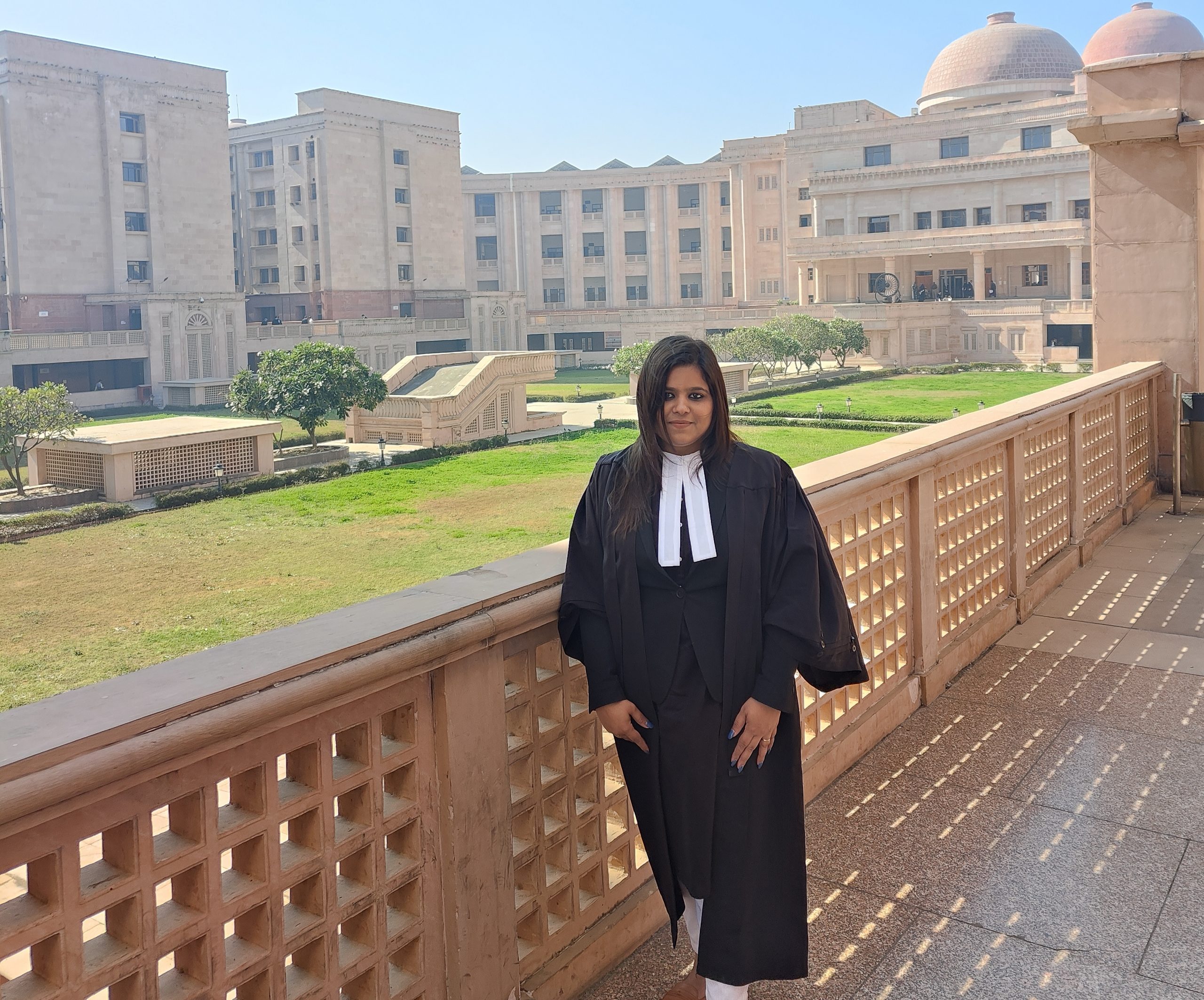







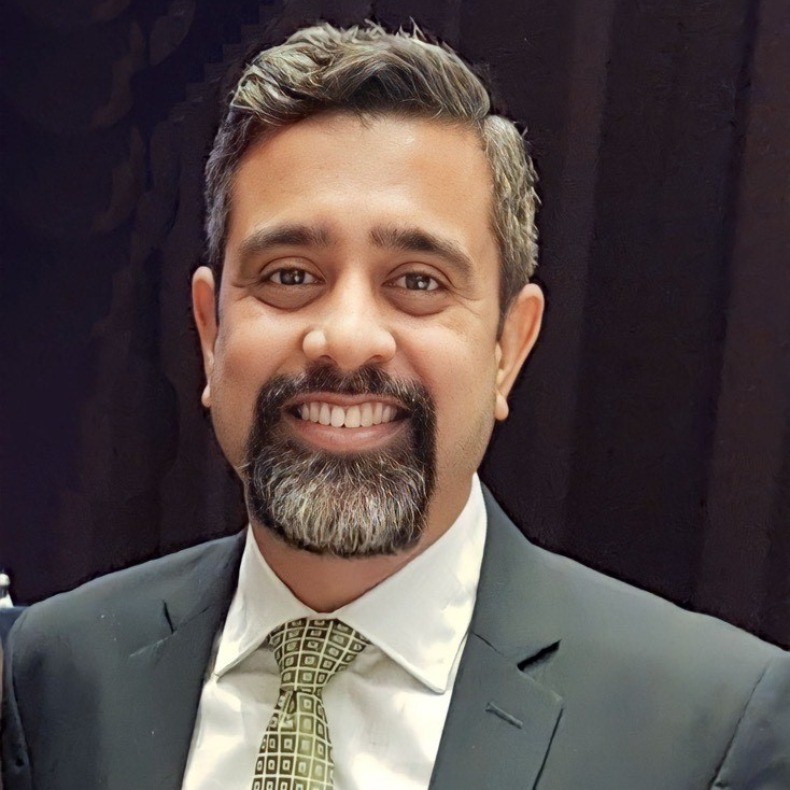

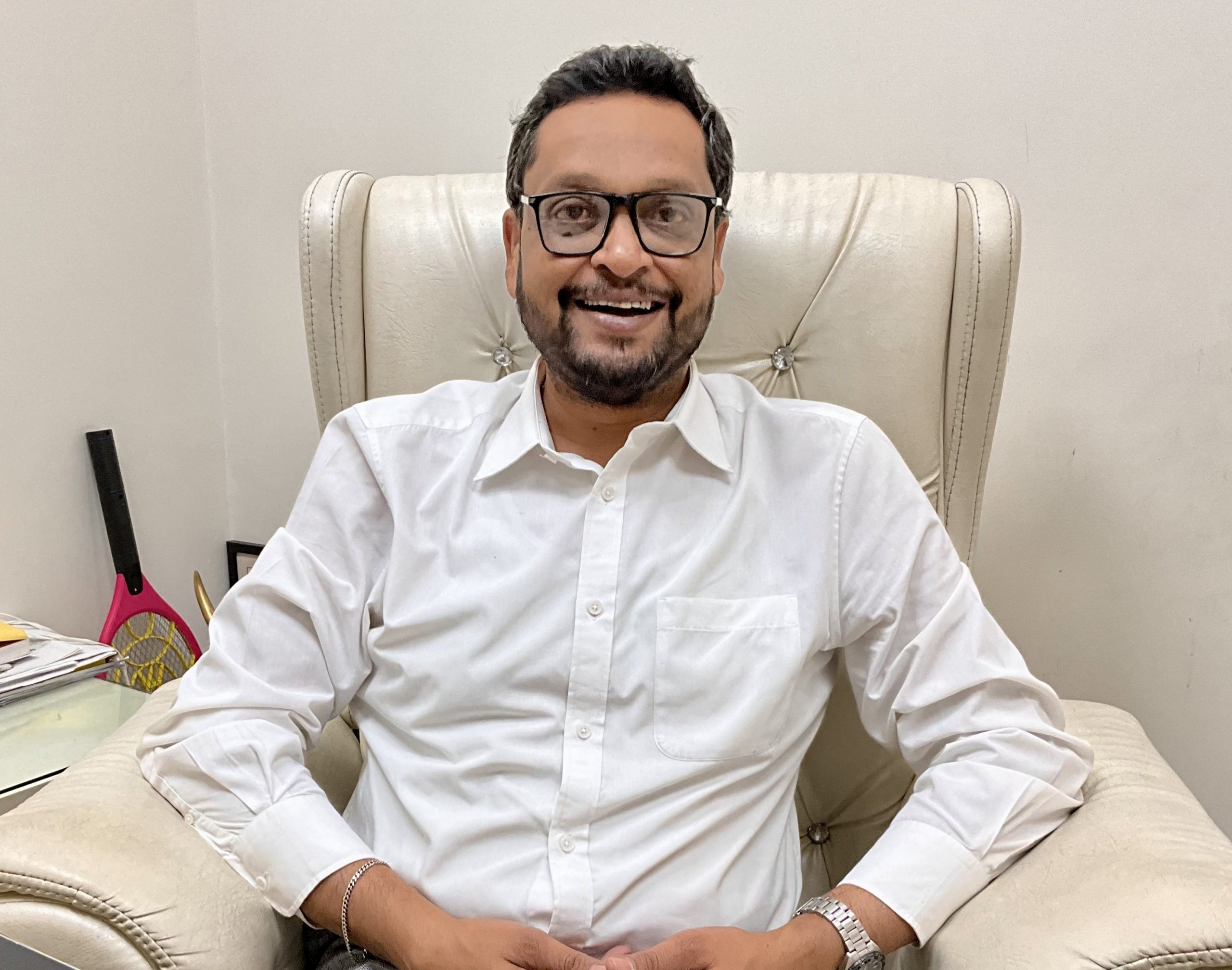




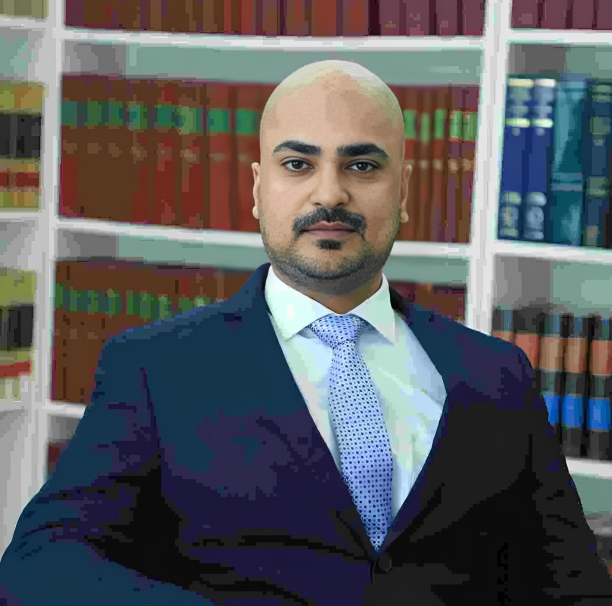


 Allow notifications