Category: Founder

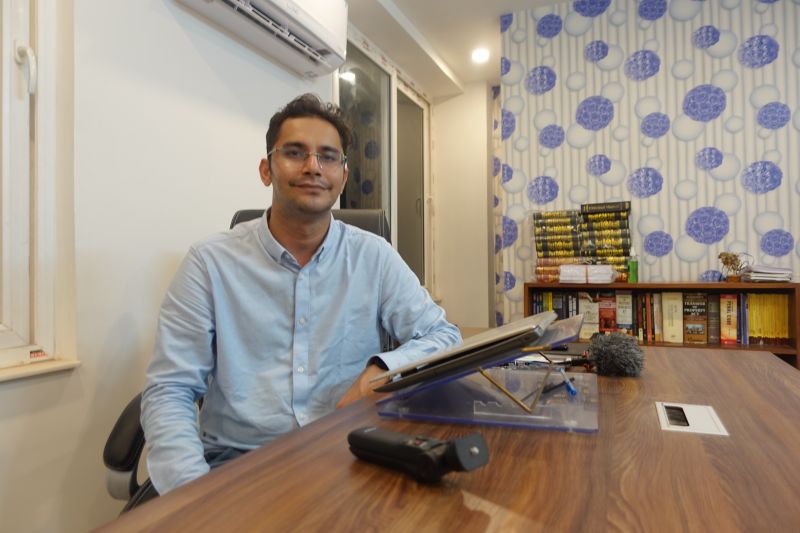
  • Nitish Banka- Founder of Lexspeak Legal who has also marked his steps in Civil, Consumer, Criminal Litigation along with corporate legal support

    Nitish Banka- Founder of Lexspeak Legal who has also marked his steps in Civil, Consumer, Criminal Litigation along with corporate legal support

    This interview has been published by Tanmaya Sharma. The Interview was taken by The SuperLawyer Team.


    You’ve graduated with a Bachelor in Engineering and then went on to pursue Law from the University of Delhi. What motivated you to switch your stream and pursue law?

    It was demotivation that actually motivated me to do law. I was tired of the monotonous routine offered by my previous job and to break that I enrolled in an evening college offered by Delhi University at that time and thereby I entered into law and for some time I was pursuing Job as well as law side by side. But then I quit my job and entered into law and restarted my career as an Intern. Believe me, it is the most difficult task to abandon a good career and restart as an intern in a totally unrelated field and that was the actual motivation to take the law very seriously. Motivation is overrated as I was not that motivated but I had no choice other than to pursue law seriously and improve. It is a consistent effort to become better which actually worked.

    You have been actively taking up Pro-Bono cases and have done a lot of free service in your career trajectory? How important is it for Law Students and professionals to take up Pro-Bono cases and help the needy? 

    At the initial stage, maybe for 2-3 years, you should not think about the fee as the experience you will gain will work wonders in years to come. That will compensate for free or pro bono work. I recommend enrolling with legal service authority in the initial years and helping the society and when you become established in your field then also devote some time to Pro Bono activities.

    Not all students manage to get into good law colleges let alone NLUs. How did you, as an engineering student, become fortunate?

    It is not about college or fortune. It is about how desperate are you? How needy are you? How much hunger do you have? When something is not working, we blame our college, the circumstances and our background. Instead of improving ourselves, putting hours in grooming our skills, we blame them. Your college or background has nothing to do with it. It is your hunger to achieve more.

    Can you walk us through your day in life? What is the life of a Founder of a reputed law firm and a renowned lawyer? 

    I have to reach 10 AM to court if it is an argument, then have to spend a few hours preparing that too in the morning, so you can say, I have to start at 6 AM or 7 AM in the morning.

    Between 10 AM to 4 PM I have to be in court and come to the office at 4 PM or 5 PM then have to start preparing for conferences scheduled for that day. Drafting work and preparation work for the upcoming day is delegated to associates who briefs me by EOD.

    At 7 PM when I finish with conferences, I get briefs from associates and plan for the next day.

    At 8 PM-9 PM, you-tubing and blogging are scheduled.

    On weekends, I focus mainly on Judgement reading and conferences.

    How has social media impacted your career?

    As a first-generation lawyer, I started blogging in 2014, started youtube 2018 and LinkedIn in 2021 so the impact is huge as 90% of clients come through these platforms.

    It is now close to a decade that you have been a Practising Advocate at the Hon’ble Supreme Court of India and also are the Founder of LexSpeak Legal.  What kept you motivated all the way long? 

    Again, I would say motivation is overrated. Someday you will feel motivated and someday you may not. It is consistent efforts and working on different cases, handling challenges that have worked.

    Can you share with us what it is like to build a clientele from scratch? What tips would you like to share with the aspiring lawyers?

    I was blogging for almost 7 years so it was my source but there are many sources for beginners like offering free legal advice on various online/offline platforms, joining legal aid, acting as proxy counsel for various seniors which in future may refer your matters. Socializing/Networking. Taking lead in legally solving social issues.

    What key tips do you suggest to the lawyers representing in the Courts?

    Well, I am still learning things so I am not at that level to give advice or tips. But I would like to emphasize that apart from legal skills lawyers should develop allied skills like marketing, accounting, finance, blogging, business management.


    Get in touch with:

  • Soumya Shekhar- Founder of Remote Lawyer, a scholarship holder from the National University of Singapore who also worked with tier-1 law firms and MNCs

    Soumya Shekhar- Founder of Remote Lawyer, a scholarship holder from the National University of Singapore who also worked with tier-1 law firms and MNCs

    This interview has been published by Tanmaya Sharma. The Interview was taken by The SuperLawyer Team.


    Tell us about yourself – Why did you choose law? If not law, what other career options would you have considered?

    A Law of Torts book had accidentally fallen in my hands when I was in class 11th. The fact that this field required application and interpretation of existing legal principles appealed to me. Since then, I wanted to pursue my higher studies and profession as a lawyer. If not law, then I would have been a journalist or an author. I love to write and would have enjoyed merging my passion with my profession. 

    You were amongst the first batch of students that took the AILET Examinations and you stood at 16th in the All India Ranking. Could you tell us a bit about how you managed to secure such a good ranking and about your experience studying at the prestigious National Law University of Delhi?

    I think the key to securing a good rank in any competitive examination lies in solving as many mock tests as possible. No matter how well you are prepared, what matters, in the end, is how well you did in the limited time that was given to you on the particular day of the exam. To bridge the gap between well-prepared and best-prepared, one should try simulated test-taking. It not only increases the confidence but also assesses the level of your preparedness. 

    National Law University, Delhi laid the foundation for my professional career. The academic pedagogy and the vibrant culture led to holistic development. Located in Delhi, it played a major role in being able to intern even during college days. It is the bedrock of not only my development as a lawyer but also who I am as a person today.

    You have been Course Content Curator, Legal Editor, and Research Consultants to many firms and Organisations. You were also the Research Lead at WHO Legal Development Program in India. It would not be wrong to denote you as a Scholar. Can you tell us what about Research kept you going?

    I am extremely passionate about both writing and law. There was nothing better than merging both my passions together and hence, I commenced my journey as legal research professional. During the initial years of my legal consultancy career, I exclusively worked on legal content creation and knowledge management assignments. I served as an external Knowledge Management Consultant to AZB and Partners and was also the Research Lead for the WHO Legal Development Programme for Road Safety in India. 

    The way research is conceptualized commonly tends to be more theoretical than practical. However, it was the latter aspect of the same that caught my fancy. For instance, while everyone knows what a force majeure clause is, it is its application that is rarely been written about. It was the application of legal concepts that I wanted to discuss rather than the theoretical underpinnings. A reflection of this fascination with the practical perspective of legal research can still be seen on the blog of my firm, Remote Lawyer.

    You have studied at National Law University, Delhi, and completed your Masters at the National University of Singapore in Corporate and Financial Services Law. What difference did you find in the Pedagogy in Indian Schools and abroad?

    One key difference is that schools abroad focus more on understanding than rote learning. For instance, there were many occasions at the National University of Singapore, wherein we had open-book exams, take-home exams, etc. which tested a person’s ability to understand and apply the legal concept rather than reproduce the theory around the same. Another important difference I found was the focus on in-depth legal research. The research papers were thoroughly vetted and the faculty was always looking for an element of originality. 

    What was that one learning experience in your entire career trajectory that you’d credit to have shaped your career and your role as the Founder of “Remote Lawyer”?

    I left a plum middle management job at a multi-national company to start my career as an independent legal consultant in 2018 and the rest is history. My stint as an independent legal consultant taught me more about the legal profession and the field of law than any organized institution would ever have. Experience is the best teacher. When you do not have anyone to correct your mistakes, you start becoming more careful. When you have to solicit clients on your own, you automatically shed the shell of an introvert and learn how to network. It was my 2.5 years as an independent legal consultant that gave me the confidence that I can set up an organization all on my own. It taught me how one can create value in oneself. 

    Can you walk us through a day in your life? What is the life of a Founder of an Online Legal Consultancy Firm like? 

    Managing a virtual legal consultancy, such as Remote Lawyer, with a diverse clientele from varied sectors and different time zones, requires meticulous planning ahead of each day. Before I end work for the day, I create a To-Do list for the next day. Every morning, I review this To-Do list along with the corresponding deadlines and plan accordingly. A typical workday consists of reviewing and drafting agreements, drafting notices and opinions, attending negotiations and client calls. I also run a YouTube channel by the name Remote Lawyer and make it a point to create content for the same, at least once every two weeks. It is a part of my commitment to give back what I have learned to the legal fraternity. Along with client assignments, I also make it a point to take out time to curate content for the blog of my website, at least once a week. 

    It is now close to a decade that you’ve been a part of the legal fraternity. What do you think is the difference between the law profession right now and the profession a decade back? And, what all changes would you like to see in our Indian Law Profession?

    A decade back, the very concept of a virtual legal consultancy would have been unheard of. The fact that legal services can be delivered right in your inbox, without the need for you to meet your lawyer, would have been an unthinkable idea back then. The legal profession today demands change and transition from the traditional to the modern. The fact that legal tech is booming and growing and there are so many software technologies that assist us lawyers in our day-to-day life shows that we need to adopt new technological advances. The subject matter we deal with every day is also fluid. Fintech and Information Technology laws, cryptocurrencies, NFTs, etc. are novel concepts and lawyers need to keep pace with the changing legal landscape. 

    Lastly, is there any suggestion or advice that you’d like to give to our readers?

    I have always felt that creating value in oneself is extremely important. From a young age itself, try to become that resource that every company and firm wants to hire. Be meticulous in what you do. Question everything and accept nothing without supporting evidence. And most importantly, focus on application rather than rote learning. Knowing what the law is will help you to a certain extent, but understanding and applying that law in a way that helps your client is what will enable you to leave your mark as a successful lawyer. 


    Get in touch with:

  • Karthik Jayakumar- a Non-National-Law School graduate who became Founding Partner at Peritum Partners and co-founded an Online Journal of International Law and International Law Consultancy, called The A38 Journal

    Karthik Jayakumar- a Non-National-Law School graduate who became Founding Partner at Peritum Partners and co-founded an Online Journal of International Law and International Law Consultancy, called The A38 Journal

    This interview has been published by Tanmaya Sharma. The Interview was taken by The SuperLawyer Team.


    Is it hard for a non-national-law school graduate to find his/her “first job”? What are your thoughts?

    Unfortunately, yes – a challenge faced by non-national-law school graduates is for finding his/her first job. Several law schools have not developed/grown to the extent that national law schools have, which tends to impact the exposure that students may have. Additionally, the lack of placement opportunities leaves students with the sole choice to apply for jobs on their own – which ultimately leads them to apply to multiple places without a positive response. The pleasant change we are getting to see in the recent past however is that several lawyers/graduates are beginning to work with smaller businesses and corporate houses (as in-house counsels) and with young firms, which perhaps wasn’t so much the trend ten years back. Given the startup boom, many young lawyers are exhibiting an entrepreneurial streak, with the setting up of new firms even fresh out of law school.  

    How did you manage to get your first break at Amarchand Mangaldas?

    This is a question I get quite often. Through my time in law school, I focused on moots, seminars, and the likes. I spent ample time on improving my resume, which I think has helped me quite a bit over the years. It isn’t that I got my first break on the first attempt – I did indeed apply to several firms and did see rejection. A simple word of advice is to not give up and to keep trying to find a role that works for you. I would also take the opportunity for law school students to use the course duration to intern at different organizations/firms, to understand the options of practice areas, etc that are available for them to work towards. Through this process, a student can identify the role they specifically want to apply for and therefore work towards putting together a sharp resume for their job applications. 

    Among civil and corporate litigation, which interests you most and why?

    My pick would be corporate litigation as it is the closest to my practice areas. I feel that I am the most productive and have added most of the value in areas that I’m passionate about and understand well. Civil litigation tends to get quite tedious with the procedure and other things that I prefer not to dabble in. 

    What can be the real challenges while establishing a career in the field of law?

    The primary challenge is to find a way to set yourself apart from everyone else that you compete with. The law is the same for everyone, but finding the simplest solution that saves time, effort and money is perhaps something incredibly valuable to clients. Through the years of practice thus far, I’ve understood that keeping my knowledge up to date is only the tip of the iceberg. It’s important to understand the practical side of things alongside theory. That being said, one of the bigger challenges when it comes to setting up your law practice, is the test of patience. Given that by regulations in India a lawyer cannot solicit work, a large question always remains on how the practice may grow organically. A word of advice I have always received consistently from each of my mentors and seniors is to remain sincere and hardworking while giving each client your absolute best. 

    Karthik Jayakumar

    Funding deal and acquisition sounds like interesting areas to work in. What do you like most in these areas?


    It most definitely is an incredibly interesting area to work in. What I personally like about the areas of work is how one can tangibly secure the interests of the relevant stakeholder while seeing the deal through. The ability to structure deals to enable the growth of businesses that ultimately become larger brands – is a very satisfying process that for me is incomparable to anything else. This becomes all the more exciting when you start to represent businesses that you have been a customer/fan of.

    How does the Indian and Overseas outlook change with respect to litigation? Do overseas companies prefer litigation over ADR?


    I don’t particularly see much of a difference in terms of the outlook domestically and overseas. Conservative approaches are always to remain litigation averse and look to be as compliant as possible. Though, from my experience, it seems to be that parties globally favour ADR over traditional litigation simply because of the swift nature of redressal of disputes. Some legal systems globally are known to resolve disputes rather quickly – but the general tone seems to be leaning more in favour of ADR.

    Can an Advocate be soft-spoken yet established; what do you think about how the legal profession takes this quality?

    Most definitely. I’ve come across many litigation lawyers (including established younger lawyers as well as senior counsels) that are soft-spoken but have made a mark in the profession. Earlier, the stigma attached to a loud booming voice commanding more respect and the same improving the ‘presence’ of a lawyer seems to have vanished over the years. Be it in courtrooms or in board rooms while negotiating deals, it’s a positive change to see people looking at content over form. The ability to put across a point effectively in my opinion is the most important quality than anything else.

    Karthik Jayakumar

    Would you like to give any career/life tips to the readers?

    The simplest tip that I would give to anyone is to always keep things as simple as possible. Sticking to basics and doing that well, can often go a very long way and would help achieve more than trying to do something fancy and over the top. Consistency, hard work, and the thirst to acquire knowledge alongside finding answers are some of the key qualities to develop. As cliched as it may sound, trusting in a well-developed process and following through with the process achieves a lot more than working backwards by focusing solely on the goal. Oftentimes focusing on the goal might only add to the already existing pressure.


    Get in touch with: