Category: Founder

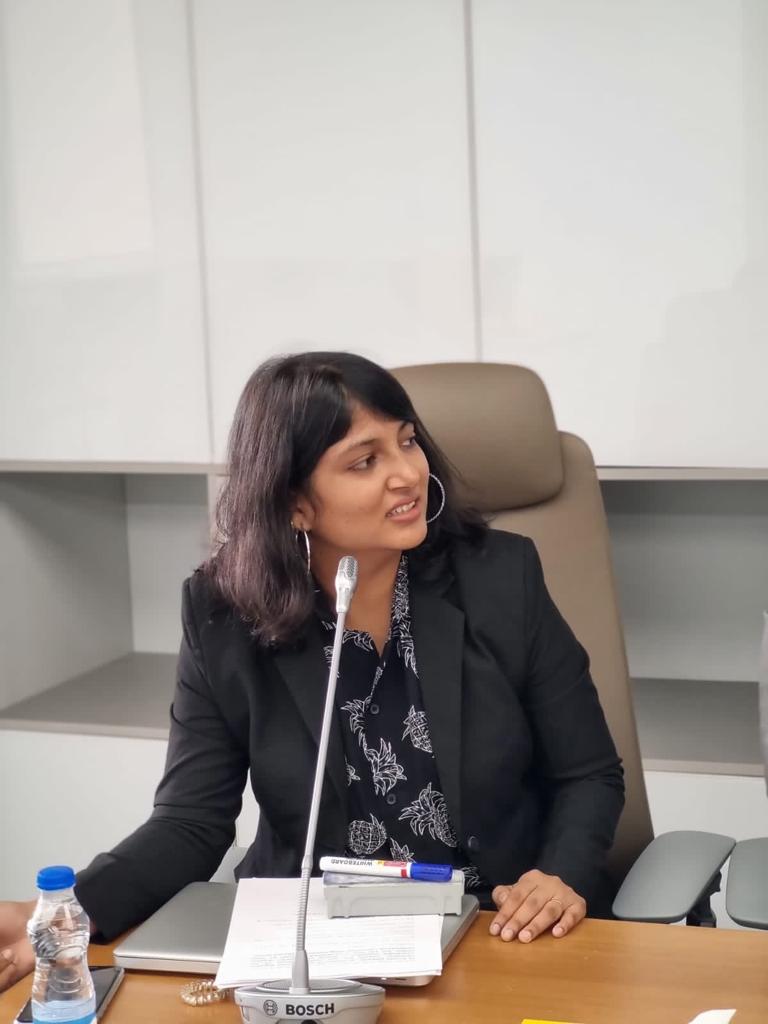
  • In Conversation with: Adv Jagriti Sanghi, Founder at JSL Advocates, Mediator and Consultant

    In Conversation with: Adv Jagriti Sanghi, Founder at JSL Advocates, Mediator and Consultant

    This interview has been published by Prabhjot Singh, Priyanka Karwa and The SuperLawyer Team

    ­Tell us about yourself – Why did you choose law? If not law, what other career options would you have considered?

    Hi, I am Jagriti Sanghi. I am a law graduate of National University of Advanced Legal Studies, Kochi. I am a practising Advocate with 3 years of experience in court/tribunals litigation, dispute resolution and corporate advisory.

    My practice areas include civil, criminal, consumer, family disputes, arbitration, mediation, insolvency and contractual matters. I regularly appear for cases in the courts of Telangana and as well as across India.

    I have a passion in law, be it any subject. If someone asks me about my area of interest in law, I cannot possibly choose one.

    This is because I just love the diversity of subjects from which one gathers immense knowledge. I believe that studying law is an art and it includes various aspects including but not limited to interpreting complex situations, breaking down laws, analyzing judgments, researching precedents, case management and writing simplified Articles/Blogs. 

    If not law, I would have chosen the path of becoming an Army Officer.

    What are the best strategies that work for you while dealing with mediation cases? Tell our audience in detail please

    So, mediation is quite different from the conventional adjudicatory process of courts. In mediation, there is complete party autonomy. The parties decide for themselves the outcome of the settlement/mediation process. Unlike court, mediation is not about winning and losing.

    It is about reaching an amicable and sustainable solution. A court case takes years and years to be decided finally as parties can go for appeals, revision and so on. As a consequence, the parties expend lot of money, time, energy on it. 

    Since I know the peculiarities of litigation and court procedures, I always encourage my clients to go for mediation especially in family disputes.

    The mediator’s duty is to assist the parties in charting out options and showing them the bigger picture after listening to the perspectives of both sides. The parties have to choose the best option for themselves in order to avoid the wasteful battle.  

    In a case, I urged the couple to go for mediation rather than jumping into long drawn contested case. The mediation worked as the couple settled their issues such as lump sum maintenance amount, custody of child, division of property amongst other things and filed for a mutual divorce with their consent terms.

    There are no best strategies as such for mediation to work out. It is primarily about understanding human psychology and brainstorming viable options for the dispute to be settled peacefully between the parties.

    How do you see the unconventional roles in law increasing?

    My 10th Standard teacher suggested me not to choose law because she thought I would waste my talent in doing notary or basic clerical work in courts with no income. However, she didn’t know that a lawyer can don many roles.

    A law graduate can become a Consultant, Paralegal, Human Resource manager, Jounalist, Faculty, Mediator, Contract Specialist, Insolvency Professional, Content Creators, Labour Relations Manager, Arbitrator and I am sure many more.

    There are a variety of alternative career options for lawyers beyond the courts unlike past times.

    Being an NLU student, what are the extra-curricular activities one must take advantage of? And do you believe that the law firms discriminate on the basis of NLU and Non-NLU?

    At University, I used to often participate in moots, research papers, debates, paper presentation and negotiation/mediation competitions as that kept me engaged. These extra-curricular activities enabled me to think critically and opened my mind to new possibilities of research and legal thinking. 

    These activities should be opted by any law student irrespective of their University tag.

    I have interned with many co-interns who were non-NLU students but were equally or in fact more capable and diligent. At least, the law firms I have interned with have not discriminated on the basis of NLU and Non-NLU tag. Their main focus was on the determination and hard work of the candidates.

    How do you define “Thinking Legally”? Please elaborate for our audience.

    Thinking legally is nothing but strategizing for my clients to come up with best and effective solutions within the confines of our legal system. It is also about learning to interpret and apply the law to a specific factual matrix of the case.

    A lawyer has to approach a case from all angles, cull out material facts, avoid emotional entanglement, question everything, accept grey areas, comprehend the objective of laws, precedents and judicial opinions and anticipate the defense.

    This trait comes with practice and experience and obviously cannot be mastered in a day. Thinking legally and differently is an ongoing process for any lawyer.

    What was that one learning experience in your entire career trajectory that you’d credit to have shaped your career?

    I helped a superannuated employee get a favorable order from the High Court of Telangana for his hard earned retirement benefits. It is when I realized that being an Advocate is truly a service to the public. I am devoted to coming up with best solutions for the interest of my clients.

    Do you think that participating in National MUN, National Parliamentary Debate or National Moot Court Competition helps in real litigation or legal field?

    Yes, definitely. Moot court competitions helped me in enhancing my oratory skills. It also instilled in me the confidence of drafting, researching and arguing legal points. The best part about moot court is that one has to prepare from both sides. That allows a law student to think critically on each and every point.

    Because in real life, you can be approached by a client with a very weak side and you are supposed to do represent your client with the best possible arguments.

    These competitions also help us to make friends with students from other Universities. These extracurricular activities enhance drafting, legal knowledge, research, command over the formal language, interpersonal skills, confidence and are always a great learning experience in a law student’s life before actually becoming a professional. 

    Lastly, is there any suggestion or advice that you’d like to give to our readers? 

    Do not ponder so much about your future, Have life goals and strive for it but always remember to enjoy it in the moment. Life is short and has many surprises for us.

    Just make full use of the opportunities at your disposal in the present. This thought will help you to approach things differently. Good luck!


    Get in touch with Jagiriti Sanghi-

  • In Conversation with: Ibrahim Haroon, Co-Founder at DroitWare, Legal Associate at G.Elias & Co, Team Lead at Harib TechLaw Academy and Researcher at International Law Students Association

    In Conversation with: Ibrahim Haroon, Co-Founder at DroitWare, Legal Associate at G.Elias & Co, Team Lead at Harib TechLaw Academy and Researcher at International Law Students Association

    This interview has been published by Prabhjot Singh, Priyanka Karwa and The SuperLawyer Team

    What was your “slam-book career aim”? How well did it go?

    What  I will call my “slam-book career aim” was a really hopeful one. It was clearly to be a lawyer at a time and later to become the chief justice of Nigeria. As this career aim would suggest, I was an audacious child- thinking  I could be anything with little regard to the humongous amount of efforts that great attainments require.

    It is going well- not easy as thought but even more accomplishing, with supports and relentless efforts. I have now become a lawyer and probably will one day become the chief justice of Nigeria. Although the realities of the Nigerian judiciary reduce its attraction.

    You are a young generation lawyer; you must have enjoyed your graduation. Would you like to share any “funny-legal” memories of student life?

    Indeed, I made beautiful memories and enjoyed school and graduation. I was a frequent participant in moot and mock competitions and professional student activities, so I recall several “funny-legal” memories. To point to an interesting one was my time as the Chief Justice of Students in University of Ilorin during my undergraduate days- we would engage in serious court sessions where student lawyers will present serious arguments in the student court which I presided over- it was a serious business which greatly impacted on students lives on campus- looking back the best description for it is “funny-legal” memory.

    I live to relish the memory, it makes me laugh upon reminiscence and realize my endearment of the legal profession and analytical arguments, presentation and adjudication since early university years. I was participating in these activities for reasons I could not exactly point to, it is interesting, how the reasons and justifications for events become clear after the events.

    How has been your experience thus far working as a technology lawyer and how do you see it evolving further?

    The practice of technology law is immersive. Technology law is by far the fastest-paced aspects of law- given the non-stop innovative advancements in the technology space- which the law continuously strive to keep up with. My experience has been eye-opening. On an high level, through my experiences at G. Elias, I have been able to interact with the laws on different level both as a solicitor and barrister- learning directly from advising and representing mainstream companies across different sectors in highly significant transactions and disputes. The role of a lawyer is delicate and demanding.

    The amount of dedicated hours required for work and amount of caution required to ensure that no stone is left uncovered and nothing is amiss in assisting the client go a long way. Being well abreast of the traditional areas of law, being progressively evolving and familiar with emerging technologies and giving in the required amount of work are the hallmark of an excellent technology law practitioner, especially a young one like myself.

    The ever-evolving nature of technology warrants that laws pace faster in innovation and reach. I imagine that in few years, emerging fields and grey areas will become frequented areas of law- the growth and immersion of the blockchain, metaverse, new economies (such as tokens, cryptocurrency and virtual assets) evince this projection. A major challenge however is how far law can in fact regulate technology- giving the superiority of technology in speed and evasion, for instance, the regulation of Big-Tech companies, the policing of cross-border data transfer, jurisdictional conflicts in the metaverse, among many other unresolved aspects.

    Can you please briefly explain the idea behind both of your startups, and what are the brownie points one must consider before building any sort of startup?

    I have co-founded two fast-growing early-stages start-ups; Droitware (www.droitware.com) and Harib Academy. The co-founding of Droitware was motivated by my first-hand experiences with the several issues that the Nigerian (and Africa) legal justice systems face, especially the problems of (i) justice delay, (ii) incoherent legislations and (iii) database asymmetry. Essentially, Droitware is building technology solutions (including AI-enabled systems) that will sustainably solve the problems in (i), (ii) and (iii).

    As for Harib TechLaw Academy, the knowledge gap in technology law-especially in Africa- needs to be savaged. There a number of enthusiasts in technology law among law students and young lawyers, however very few institutions offer any course on relevant areas of technology law or connect adept practitioners of technology law with enthusiasts among students and young lawyers. Harib Academy is dedicated to connects seasoned practitioners with enthusiasts and students and offer free-of-charge certified courses for enthusiasts and students to learn.

    According to you, what’s standing in the way of a Legal Tech Boom?

    I think LegalTech is booming- not to the extent it should- but there is a boom, an incremental one at that. A comparison of the state of legal practice in the past few years and the present state in most jurisdictions will bear witness. Technological systems are being adapted in law practice and justice deliver in an unprecedented manner, for instance the introduction of electronic evidence, electronic signature, virtual hearings, virtual assistance to judges, legal virtual data bases, among others are clear.

    However, the impediment limiting the boom from having a wider reach and exceeding its potentials, may be the non-acceptance and reduced exposure of lawyers to technological advancements. Most laws and practitioners have not been borne off their traditional natures- another flag is the move of startups and innovators towards aspects of technology like FinTech and HealthTech than LegaTech.

    We get to see this question a lot of time, “Will AI research tools replace lawyers”? We would like to take Ibrahim’s take on this question.

    AI is faster and more accurate, AI research tools will go a long way in assisting lawyers in making lawyering more efficient for lawyers that explore AI tools. However, AI tools cannot exactly replace lawyers- the place of critical thinking, “human lawyering”, traditional wisdom and original human idealization cannot be outrightly outstripped by AI tools in law.

    What, in your opinion, could be a social security safety net for lawyers after experiencing various pandemic waves?

    The pandemic waves clearly evince that there is no alternative to LegalTechnology- that is the security safety net for lawyers. From a dispute resolution perspective, the adaption of legal technology in some jurisdictions more than others was the mark of efficiency in justice systems- courts in jurisdictions that fastly adapt technology- such as virtual hearings, electronic filings, proctoring, cloud databasing and the rest navigated the pandemic more easily and efficiently.

    On the other hand, jurisdictions that have not adapted technology in their justice and dispute resolution systems now battle with backlogs that are straining efficiency in justice delivery.

    How important do you consider for lawyers to be tech-savvy?

    Not all lawyers will practice technology law- albeit, it is critical that lawyers across all practice fields develop their knowledge of technology- to enable them maximize the ease that technological adaptions is affording lawyers. Also giving how technology now cuts across all the other areas of technology on one hand and on the other hand the essential need of technology in the current roles of lawyers and the use/adoption of the several technology tools for lawyers make it imperative for lawyers to adapt and get familiar with technology.

    Lastly, any tips for our readers?

    As lawyers, law students and/or general researchers, my parting message will be setting our values rightly in all we do and letting- consistency and identification stay atop of these values. Consistency in our efforts, progress, learnings, advancement and identification of our strength, weakness, interest and calling.

    To shortly put in Obama’s words “Values are faithfully applied to the facts before us, while ideologies override whatever facts call theory into question”.


    Get in toch with Ibrahim Haroon

  • In Conversation with: Kaainat Pundir, Associate at Shardul Amarchand Managaldas & Co and Co-Founder at Sankalp (The Dispute Resolution Organisation)

    In Conversation with: Kaainat Pundir, Associate at Shardul Amarchand Managaldas & Co and Co-Founder at Sankalp (The Dispute Resolution Organisation)

    This interview has been published by Prabhjot Singh, Priyanka Karwa and The SuperLawyer Team

    It is said that the best moments happen when they are unplanned. How true do you find this axiom? Do you anyhow relate to it considering that you were a Science student and had never intended to take law as a career?

    Absolutely, I think my professional journey stands testimony to it – whether it be competing in my first moot competition (Alfred Deakin International Commercial Arbitration Moot) in my final year or bagging the Herbert Smith Freehills vacation scheme prior to that.

    My journey from Sanskriti School to Jindal Global Law School was similar. Having been brought up in a family, surrounded by professionals from the armed forces, engineering and medical background, law was never on my radar.

    After preparing for engineering entrances for three years, I realized I was not passionate towards the field, although I had secured multiple admissions in the field of engineering, commerce and mathematics.

    The decision to enroll into law school was guided by, first, taking a deep look within, and then being mentored by my educationist and career counsellor mother.

    The legacy of my grandfather, a practicing lawyer (alumni of CLC) prior to joining army under the emergency commission, and great grandfather, a leading criminal lawyer/magistrate turned politician (alumni of Law College, Lahore) were definite motivators. In hindsight, studying science until college helped me imbibe a scientific temperament to which I owe my analytical skills, attention to detail and general problem-solving approach.

    The curiosity of a science student drives my interest in the sociological and jurisprudential study of law and understanding the ‘why’ behind concepts.

    You happen to specialize in Mergers & Acquisitions, Investments, and Private Equity Transactions. Can you tell us a bit as to what prompted you towards this field of law? When did you realise that you wanted to specialize in M&A?

    It might surprise you to know that I undertook 16 internships during law school (which allowed me to understand almost all practice areas and work undertaken by corporate lawyers), apart from 2 TAships, 3 RAships and auditing specialized courses (taught by legal doyens like Prof. MP Singh, Sr Adv Ravi Sikri, Ms. Aparna Mehra). Further, being the editor for an interdisciplinary research blog and journal and being part of the college placement team throughout exposed me to a mix of work experience, course work and undertaking research in the field.

    What definitely interested me was the internship at CAM, where I assisted with due diligence and research for the mergers of public sector banks.

    My interest in corporate law grew while studying the Securities & Regulation elective course wherein we drafted a DRHP and I further found my area of specialization during the course on venture capital transactions, taught by Mr. Siddharth Nair, partner at SAM.

    Apart from this, I have actively participated in international mediation competitions which mostly have commercial and cross-jurisdictional disputes case studies – these have trained me to understand the interests of different parties and prepared me for client-facing work.

    Additionally, connecting and discussing with corporate lawyers from Europe and USA, regarding their work/transactions fueled my interest, and mentally prepared me for the hours which come with the job. 

    You also happen to have dealt with some high-profile transactions as well. Not many lawyers can achieve this feat so early on in their career, let alone women lawyers. What was the story behind your success? Did you have to face any kind of stereotypical struggles and if you did, how did you overcome them? 

    In my opinion true gender equity in the Indian scenario is still a long way off – whether it be the higher judiciary, appointment of senior advocates or partnerships at law firms. Having strong leaders who support women’s careers and provide equal opportunity to them contributes a lot to bringing more women into the profession. I feel I am truly blessed to have been mentored by brilliant lawyers, wherein AOR Manisha Karia offered me my first internship and placed her trust in a first-year law student, while Sr Adv Aishwarya Bhati, ASG of India, took special interest in building a strong conceptual foundation for me during my internship, they have been a huge guiding force in my career.

    As compared to litigation, law firms see a much higher female workforce participation. In most part, this is attributable to the strong leadership at law firms which have nurtured an equitable work environment for women to succeed. At SAM, it is Shardul Shroff Sir and Pallavi Shroff Ma’am. My own team, led by Ms. Puja Sondhi, is female-dominated across the echelons.

    The team provides exceptional exposure in terms of venture capital transactions to its associates, having advised on numerous investments into unicorns in the past years. This has allowed me to learn a great deal through various transactions and through the commitment of my seniors to pay particular attention to their juniors’ growth and learning through continuous training and feedback.

    You have made a name in the international ADR circuit for yourself which is quite a distinguished honor so early on and you are also a founder of a dispute resolution organization, Sankalp. Can you tell us about your journey and your organization?

    I trained as a civil and commercial mediator in my first year itself with ADR ODR International. The next year I took it upon myself to learn and improve my skills further by working with Dr. Claudia Winkler at The Negotiation Academy, Vienna for 2 years. During this time, I also participated in multiple national and international competitions including CDRC Vienna and ICC Paris. Over the years I have continued to mentor and still regularly train Indian and International teams both for national and international competitions. I feel privileged to have been invited to judge at international competitions (even as a young law student among a distinguished panel of judges at INADR Georgia and Transatlantic Negotiation Competition by Syracuse University and as a mentor for the maiden mediation training program in Sri Lanka).

    Through such opportunities and having participated in Global Negotiation Conference, I have built a network of friends and colleagues across borders who work in various capacities as political negotiators, corporate lawyers, mediators, et al. The positive support I received from the international community in my endeavors inspired me to expand this community to include more law students and young professionals from across borders to facilitate mentorship relationships with experienced professionals.

    Hence, Thomas John and I founded Sankalp – The Dispute Resolution Organization, which has already garnered support of many professionals and students alike across continents. We are earnestly working towards its growth and collaborating with businesses, institutions and organizations. Our aim is to make business processes more efficient and cost-effective through increased utilization of negotiation and third-party neutrals.

    You worked in Kailash Satyarthi’s organisation and accompanied in their training and child labour raids as well. What was your experience like during such work? And does pro bono work add value to a professional’s life?

    I interned with Bachpan Bachao Andolan in my second year wherein I closely worked with the team on the month-long training prior to the Bharat Yatra (a 35-day long march across the country to build unprecedented awareness on combating child sexual abuse and trafficking). It was truly enlightening to learn from the activists working on-ground across India and to understand the challenges they faced every day to bring about real change and thus secure a safe childhood for children. I also accompanied the team on a raid on sweatshops employing child labour.

    That experience of observing the actions of BBA’s raid team, the accompanying police officials, magistrate, the employers and the children, exposed me to a lot of life’s harsh realities and re-enforced in me the importance of easy access to education and opportunities for children. On days when I was highly tired after my work commitments taking out time to tutor children from lower-income backgrounds or spent weekends volunteering at the nearby children’s home, felt very much worth it.

    Over the years I have stayed connected with the work of the foundation. During the pandemic, I had the opportunity to volunteer with Kailash Satyarthi Children’s Foundation – working on their campaign against child sexual abuse and subsequently, assisted the Delhi Commission for Protection of Child Rights to conduct research relating to the status of children’s well-being and the access to learning resources and activities during the Covid-19 pandemic in government and municipal schools.

    This was utilized as policy inputs for designing effective interventions once schools reopened post the lockdowns.

    It is absolutely essential to do pro bono work – it keeps you motivated, gives one immense satisfaction of helping a person in need and keeps one engaged in the long run. This is also the advice that I have received from multiple senior lawyers and businesspersons. For me, apart from hobbies, education has been an important cause – may that be tutoring school children or coaching and mentoring college students or training professionals in negotiation skills.

    Was it a tough call for you to choose between LLM and job? What points one needs to consider while taking a call between these two options?

    I had first planned to apply for an LLM after receiving my HSF vacation scheme offer since they hire two years in advance as compared to Indian law firms. However, the HSF offer did not pan out as expected in light of the pandemic. Hence, at the time of my graduation, I was presented with the dilemma of moving to London to pursue my Masters or to start work with one of the best transactional law teams in the country.

    I had received offers from University College London and Queen Mary University, and also had the PPO from SAM. Upon weighing the pros and cons, gaining work experience at a tier-1 law firm with a team dealing with VC and PE transactions with exposure to a very active investment market as valuations skyrocketed, was the obvious answer.

    My work with the team has proven my choice to be correct. In college, I lacked sufficient clarity to choose a Masters specialization, and my main motivations to pursue a Masters were intellectual growth and access to a new jurisdiction. However, while working with the best corporate lawyers across jurisdictions, advising on upcoming yet niche areas of law and being part of numerous high-value deals has helped me streamline my professional interests and goals.  

    Our readers will be very much interested in knowing more about Vacation Schemes, the eligibility criteria and more crucial details about it.

    Vacation Scheme is equivalent to securing an assessment internship at a tier-1 law firm in India. UK based law firms have the vacation scheme route to land training contracts with them (which is required to gain qualifying work experience to qualify as a solicitor, however, that is changing with the new SQE regime). Certain top international law firms like Herbert Smith Freehills, Allen and Overy, Linklaters, etc. have India Internship programs wherein each year they invite applications from penultimate year Indian law students and offer vacation schemes to a handful of them selected through a highly competitive multi-stage shortlisting process.

    The process involves an online application and online test which qualifies candidates for a competency interview followed by an assessment centre. The specifics of the process may differ for each firm but are largely similar. There is no one size fits all approach to securing a vacation scheme offer. However, performing well academically, having a good CV including diverse experiences will certainly enhance your chances to succeed.

    There are also a lot of resources available online to prepare you for the process. Reaching out to candidates who have succeeded in the past is always a good idea (I would be happy to help out anyone who reaches that stage). Research well if you are planning to apply. Apart from that, the graduate recruitment teams at the firms are very responsive and helpful throughout the process, so feel free to contact them.

    What would be your parting message to our readers and the young budding lawyers? How can they mark their presence in the niche of venture capital transactions and cross-border M&A?

    Give yourself the time and space to explore your interests to find the area that truly excites you. The legal career is a long one and you should be pursuing what makes you excited to get out of bed each morning. More importantly, be unafraid to put in the hard work to make a name for yourself. The more you persevere in the initial years, the better your learning will be and you will be a better lawyer for it. One has to learn the art of networking both in India and abroad. It is absolutely essential and if you are doing it right, you will realise that most people in this profession are willing and happy to mentor juniors. A great example of such a person is my role model at Jindal, Professor C Raj Kumar despite his multifarious endeavors always finds time to motivate and mentor students.

    There are very few teams working in the niche area of VC. Speak to people, intern and find a team that does the kind of work you want to do, and also, provides a healthy work environment where your seniors motivate you to learn each day and to gain more exposure.

    It is a blessing to be doing the work you love and with the people who inspire you. Further, build mentorship relationships with your seniors to learn from their expertise and experience. For me having a mentor like Mr. Siddharth Nair and learning from my partners, Ms. Puja Sondhi, Mr. Aayush Kapoor and Ms. Manita Doshi, who have each built a name for themselves in the industry and go out of their way to teach me on a daily basis – has made all the difference.


    Get in touch with Kaainat Pundir-

  • In conversation with Mira Banga, a Corporate Lawyer and the Founder of Lawssistance, an online legal service provider

    In conversation with Mira Banga, a Corporate Lawyer and the Founder of Lawssistance, an online legal service provider

    This interview has been published by Sonali ParasharOjuswi Sahay and the SuperLawyer Team


    How did you decide upon choosing law as a career? What adjective would describe your professional journey up until now?

    I was always into public speaking and passage writing in my early school days. I used to score well in subjects like English and computer science in high school. It was my father who pushed me to choose law as a career as he felt I had the knack in me to eventually turn my skills into a profession and become a good lawyer. He always taught me that communication as a skill set is very rare and people spend years polishing it. As per him, I was born with it as he would see me argue and fight by giving logic to my friends or family during any discussion. 

    The adjective which would define my law journey up till now would be ‘Progressive’. My learnings, practice and thinking have been nothing but progressive all these years. I have managed to start my own office only in the 6th year of my practice and I managed to get clients and people to trust me and to go forward with the engagements only through the additional skill sets which I hone on a daily basis. I practice and read about not only law or legal developments but I also continuously work on how I can become a better communicator, a better writer or a better listener. 

    How challenging was establishing yourself first, as an independent practitioner, and then, establishing your own firm- Lawssistance?

    It was very difficult for me to make a decision to start my own practice or to leave my job at that time in 2020. The pandemic had just struck and it was pretty unpredictable as to how the legal ecosystem will be impacted in terms of work and payments. At that time, I was very comfortable working under a boss and doing what I was told but I used to notice that there were clashes when it came to choosing the right method of doing or steering a transaction. I used to face a lot of backlash for having different views and ways of taking up a certain assignment. I used to share these things with my family and they used to ask me to either learn a new way of taking up things or doing the assignments or find a way to do things the way I would want to, as I felt very strongly about what I wanted to do about the work I was given. I slowly started to feel that I must start my own office and practice so that I can further sharpen my skills and my macro-view towards transactions. I could realise that maybe I should try my hand at doing transactions independently and start my own practice. This was my 10-year plan and I eventually wanted to open my own independent law office wherein I would assist clients as per the expertise and skills which I would have gained over the years. This misalignment at work led to the birth of ‘Lawssistance’ in November 2020. 

    In terms of challenges, initially, I did not have an office space and I worked out of my living room because I was still exploring how I would start the practice, how certain policies would be required to be built, and how I would have guidelines for work etc. It was tedious as I was scared and thrilled at the same time. I worked on making a strong LinkedIn page, an Instagram page and a google pin for my office. This way people would recognise me, my office as well as my expertise. I kept posting and continuously adding information on my pages so that I could build a presence. It was a lot of work as I was doing it single-handedly while looking for clients to start working with.

    I will give to my father, who believed in me, guided me through this and supported me through every hurdle on the way. I clearly remember my first client call which I took sitting next to him wondering what to say and how to convince him to trust me with their work or transactions. My father would give me constructive criticism and help me grow into a better communicator and a better lawyer as a whole. I was not a known name in the market or the daughter of a  famous lawyer who would easily get people to trust me. I used to feel like I was being auditioned when the clients would ask me about my team or my office or how much I can handle in terms of the scope of work requested by them. Slowly and gradually I started to become more confident when it came to negotiating commercials with my clients and the rest is just history. We are now turning 2 years in November 2022 and we have built a strong presence in the market as well as in the start-up ecosystem. 

    You know how they say ‘Rome was not built in a day’! I am still working hard and will continue to, until I build my Rome or something even better. 

    Was pursuing Business law always in line with your vision? Tell us about your experience at NLSIU, Bengaluru during your LLM in Business Laws degree?

    You will be surprised to learn that I want to still study more and pursue a philosopher’s degree in law. I have had an interest in books, reading, learning, writing and understanding various concepts and digging deeper into the history of each phenomenon. I certainly enjoy reading and learning about the law. After finishing my Bachelor in Law I wanted to study more and wanted to do a course in LLM from the same college. I then found out that if one has an interest in corporate laws then the same can be studied and explored by pursuing the course, Masters in Business Laws. I tried to find colleges online and applied at various universities and then one day I received an intimation from the NLSIU Bangalore that I could join the course on a distance learning basis as I had already started working with a law firm. 

    Your firm Lawssistance deals with an array of contract management services amongst others. How relevant do you believe this domain of legal service is in the present time and space?

    Every business owner needs to understand the importance of a legal contract. It is pertinent for a growing business to enter into legally binding engagements or partnerships as it can lead to a more consistent and reliable manner of relationship building when it comes to growing at a larger scale as a business. When parties enter into a legal contract they are prepared and sure about what they have to deliver and what would be the repercussions if they breach the obligations stated in a written contract. Without a contract, it becomes very difficult for an entity to control how the other party performs and whether they stick to the terms they have discussed orally. It becomes important after a certain point to always have things written in a legally binding manner and vetted by a lawyer, to protect the interests of each party who is involved. Businesses grow better when there are legally binding contracts signed on the way with each partner or every entity which is playing a crucial role in building a business be it an employee, a co-founder, a manufacturer, a supplier, a distributor or the like. 

    Your firm specialises in dealing with Sports Contracts as well. We would love for you to share with us a few nuances of this domain.

    Yes, we specialise in sports and media contracts as well. It essentially includes agreements like Sponsorship Agreements, Endorsement Agreements, letters of Intent, Artist Agreement etc. These contracts are executed between brands and artists who are obligated to perform as per the terms of the contract. The performance duration and the payment milestones are the two crucial points of negotiation between the parties. I have been doing sports and media contracts for 7 years now and have had a great hold on the drafts in these years. 

    We are seeing that a lot of law students are heading towards Media and Entertainment Law practices recently. What should they be expecting to deal with upon entering this domain?

    As you enter this domain, one needs to understand that they will deal with clients like production houses, producers or artist management companies. Such entities need work to be done fast and sometimes on the same day. The drafts and basic structures of such agreements should be ready and one should be prepared to work at odd hours sometimes because as a practice, the producers, production houses or even artists, all have meetings late in the night after their shoot(s) and mostly require legal assistance in the second half of the day. One should stay prepared and active when it comes to delivering the contracts timely or even on short notice. 

    Tell us about your experience in dealing with clients for wills and succession services? How different is this line of practice from the others for you?

    Due to the pandemic, we have had more clients who have requested will drafting or succession management services, in this domain, one needs to be cautious while drafting the wills. The will must clearly specify the succession decision conveyed by the client and the executant and the beneficiary should be clearly mentioned. We recommend our clients have their wills registered so that there is no issue in executing the instructions stated in the will after their death. It is a very different area of practice as we connect to the client in terms of their savings and hard-earned money distributed amongst their family members. We provide will drafting services for both Hindus and Muslims as per the Indian Succession Act. I started my office solely for the purpose of providing will drafting services, then I gradually included other domains and started to provide all sorts of corporate legal services. 

    Lastly, as a woman in law, what would your advice be for the upcoming female legal practitioners and professionals?

    I treat myself as a lawyer and see all men and women as my colleagues. Just as being a man in law makes no difference to the nature of work, amount of effort or hard work one has to put in their work as a lawyer, similarly being a woman in law is no different. Our country has this practice of bifurcating between entrepreneurs as women entrepreneurs or a lady in business or woman lawyers. One needs to understand that a lawyer is a person who knows the law and practices the law in our country, be it a man or a woman. To all the ladies who are in a similar line of business to mine, please continue to work hard, read a lot, practice communication skills and be confident. I have had the privilege of working with many male entrepreneurs who approach me with full confidence despite me being a woman in law. We are past this classification and we are beyond this categorisation of women and men in any professional service. 


    Get in touch with Mira Banga –

  • Mr Vipul Maheshwari, a prominent and established Advocate and an Author, talking about his latest publications and his love for Law.

    Mr Vipul Maheshwari, a prominent and established Advocate and an Author, talking about his latest publications and his love for Law.

    This interview has been published by Sonali ParasharOjuswi Sahay and the SuperLawyer Team


    Having both a stellar legal career and being a celebrated author, how would you like to introduce yourself to our readers?

    I am a practising Supreme Court Advocate and have a keen interest in our polity. As an advocate and responsible citizen of society, I always feel that I have a duty towards the society to elaborate the comprehensive survey of our Indian democracy and rule of law. 

    What was your Law School journey like? Was Law School where you first tried a hand at writing?

    I had a wonderful journey in my college as a political science student and thereafter as a student leader in Law College. I had lots of opportunities to raise my voice on different platforms but not as a writer.

    Tell us about the book “Ramayana Revisited – An Epic through a legal prism”. What was the idea behind choosing this subject? 

    The Idea has come up with my uncle who is a co-author of the book. We discussed a unique idea which had never been thought about in the legal world. After discussion with him, I was excited and immediately started preparing the defence and prosecution of the characters of Ramayana and we decided to leave it to the readers to decide the culpability. Supreme Court and High Courts Judges, Parliamentarians, Mythologists, Journalists and Vice-Chancellors have appreciated the book.

    You have also written about elections in India in the book titled, “The Power of Ballot”. Was this idea always in your mind or was it something you and your co-author Anil Maheshwari together came up with?

    I have seen personally the election process very closely and hence was always keen to write about the theoretical law and practical reality. I have read and keenly monitored lots of elections and their processes in the country. The writing of the book was there in my mind for almost a decade. In fact, I had petitioned before the Supreme Court for admissibility of the Internet voting on mobiles but those were the days when the Court did not deem it fit to admit the writ petition. Another writ petition on similar lines has been admitted and is under process in the apex court. We have given details of the admitted case in the book.  

    You seem to be deeply interested in History amongst other disciplines. How do you believe writing on this subject is essential in today’s time and age?

    The idea to write on a subject which is very close to every citizen of India as I have always seen that Indians love elections which have become a sort of national festival across the castes, communities and regions in the country. Secondly, I have seen that elections in India in always been dominated by patronage, money, fake news and prediction which made me think to write about the book. Despite all these weaknesses, elections in India are the symbol of a thriving democracy even after seven decades since its introduction way back in 1952 after we attained independence. Let us discuss its shortcomings and make efforts to remove them. 

    You have been a member of the National Executive Committee of FICCI and PHD Chambers of Commerce and Industry in India and have received many accolades from different sections of the society for your literary achievements side, we would like to know what got you interested in Commercial Laws as practice area?

    This is not a variation as I have done the constitutional, civil and criminal litigation for almost three decades; lately, I started enjoying the commercial litigation of corporates. As a student of political science and law, this has always been my first choice and as an active lawyer and political analyst I always think that it would be good to pen my thoughts on law, the festival of democracy, duties, the exercise of the ballot by more than 910 million electors, management of the largest electoral process by the ECI and lastly the lifeline of democracy will be a good idea to share with the readers in the form of a book.

    You have served as the former Additional Advocate General of Haryana and Senior Central Government Standing Counsel of various state governments in the Supreme Court of India. If you had to choose between litigation and writing, what would you choose and why?

    As a lawyer, my first love is my profession and fortunately, it involves a thought process in drafting, therefore both litigation & writing go hand in hand and I would like to continue my passion for writing. 

    You are a founder of the law firm Maheshwari & Co., Advocates and Legal Consultants, a full-service law firm known in India and internationally dealing with corporate, commercial, transactional, mergers and acquisitions, and intellectual property. Please share about the challenges of your role and the advice you have for the next generation.

    As a founder of a Law firm is a big responsibility on one’s shoulder which involves hard work, integrity, dedication, transparency & accountability and lastly the tender job of nurturing young lawyers and help explore their talents. I feel in any sphere of life one should always aspire and try to do a larger good for society.


    Know more about Vipul Maheshwari –

  • In conversation with Mr Arush Khanna, Co-Founder and Partner at Numen Law Offices, and India’s Former National Representative at the International Bar Association in 2019, currently holds two officer positions in the Young Lawyers Committee.

    In conversation with Mr Arush Khanna, Co-Founder and Partner at Numen Law Offices, and India’s Former National Representative at the International Bar Association in 2019, currently holds two officer positions in the Young Lawyers Committee.

    This interview has been published by Sonali ParasharOjuswi Sahay and the SuperLawyer Team


    How did choosing law as a career come into the picture for you? What were your law school days like at Symbiosis Law School and NLSIU?

    Truth be told, Law came in as a default option after I cleared my 12th standard. During my school days, I had aspirations of pursuing a career in cricket. I missed an opportunity of getting into the Delhi Under-17 team in the 11th grade and injured myself soon after which made the cricket option too risky for me to pursue. Since I hadn’t nurtured any other ambition by then and coming from a family of lawyers (persuasive ones at that), I was positively influenced into taking up law as a career. 

    I will always cherish the 5 years I spent at the Symbiosis Law School, Pune. Being away from home and living by myself contributed immensely to my growth as a person. I made some amazing friends who I consider as family. Once in a while, we all get together and regale ourselves by reminiscing our time in Pune. 

    The Master’s program offered by NLSIU was predominantly a distance learning program which I pursued after having spent 3 years at the Bar.  I would only have to visit Bangalore once a year for my examinations. Aligned with NLSIU’s unmatched standards, it was a challenging course especially since I was working professionally and had limited time to devote to academia. I look back with great satisfaction for having taken up this challenge. Getting my degree from the Chief Justice of India, who by convention is also the Chancellor of the College was a special feeling. 

    Being a fifth-generation lawyer, you have been fortunate to have your grandfather, Dr Lalit Bhasin, the President of the Society of Indian Law Firms and also the Managing Partner of Bhasin & Co; along with Senior Advocate Mr Sanjeev Anand, as your mentors. How essential do you believe a role model plays in one’s legal journey?

    Darius Khambatta, one of the finest lawyers at the Bombay Bar once told me that in law, you learn most through Osmosis, which means by observation. He couldn’t have put it better! 

    As a young lawyer, one longs for a sense of direction, purpose and the wisdom to know when to speak your mind and also, when to mind your speech. Ours is a heavy profession and every now and then, we need a dose of inspiration. That is why it is quintessential to have a mentor(s) in our line of work. I am indeed fortunate to have mentors like Dr Bhasin, Mr Karanjawala and Mr Anand. They have guided me at every important junction in my professional career and (*touching wood*) continue to do so. I hope I can make them proud one day. 

    You have had great wins in your litigation journey, including TGIF judgement at Hyderabad, title dispute at the Bombay High Court, and your regular appearances before the Supreme Court, amongst others. What motivates you to scale bigger heights in dispute resolution?

    The TGIF case was an inflection point in my career for it gave me the self-confidence to handle big-ticket litigation independently. I was 26 years old at the time and I still remember that I sought a passover, however, the Ld. Bench of the High Court of Judicature at Hyderabad refused to grant me one and directed me to present my submissions. There was a lot of public glare to this matter as the restaurant was alleged to have served liquor to underage persons which resulted in a fatal accident. It was heartening to get a favourable order whereby the HC quashed the liquor licence suspension order inter-alia on the ground that it was passed in violation of the principles of natural justice. 

    Similarly, the title dispute before the Bombay HC was a memorable experience. Interestingly, we preferred a writ petition in this case and not a civil suit as the PSU had rejected our client’s bid for setting up an Ethanol Plant by stating that the land did not belong to the company but to the Director. I remember working tirelessly on this matter alongside my Partner, Chaitanyaa Bhandarkar and we were pleased to be rewarded by a favourable finding given by a bench of Justice Gautam Patel and Justice Madhav Jamdar after hearing us for two consecutive days. 

    Dispute Resolution (Litigation and Arbitration) has always been my primary area of practice. It is a demanding line of work and one has to learn how to burn the midnight oil.  I make sure I consistently keep motivating (and hopefully, inspiring) my team to keep pursuing excellence in what they do. Notwithstanding the result, which is not in our hands, it is about enjoying the journey, finding the strategic nuances, researching for that clincher point and giving it our best before the Court or Tribunal.  

    Let’s talk about your firm, Numen Law Offices, which you have co-founded and are a partner at. We’d love to know about the conception of this idea of establishing your own office and how have you been taking it forward?

    Back in 2018, I would visit Mumbai almost on a fortnightly basis for work. As cliche as it may sound, I remember telling my cousin while we were driving down from Walkeshwar overlooking the Marine Drive that I wish to have an office here one day. I am glad that I connected with like-minded professionals during my adventures at the Bombay High Court. Everyone understood the need to collaborate as then we would be able to provide more services under one roof. Law is a vast profession and clients prefer specialists. We started Numen Law Offices with 4 Partners, all of whom bring different skill sets to the firm’s repertoire. We currently have two offices, one in New Delhi and the other in Mumbai. We have tried our best to incorporate the best practices, be it in our core legal work or in the managerial side of the firm. We have a dedicated HR, Accounting and IT team all of whom contribute immensely to the running of the firm. It has been a challenging yet rewarding journey thus far but as Robert Frost once famously wrote, “the woods are lovely, dark and deep but I have promises to keep and miles to go before I sleep”

    You also hold a strong association with the International Bar Association, where you were appointed as India’s National Representative in 2019 and currently hold two officer positions in the Young Lawyers Committee. Tell us about your experience at the largest bar association in the world, and how it has helped pave your journey forward?

    My appointment as a National Representative could have been a case of being at the right place at the right time. In 2017, I was selected as a scholar to speak at the IBA Annual Conference in Sydney. A day before the main conference, I attended the Young Lawyers Training Program where I was introduced to the then chair of the YLC by my friend Pranav Srivastava, who, after speaking to me for 10 minutes, suggested that I should apply for the NR position.  I did apply and as luck would have it, my candidature was approved by the YLC Board. That’s where my journey with the IBA began. I was soon appointed as an Officer at the YLC and now hold the position of the Asia Pacific Regional Forum Liaison Officer as well as the Scholarship Officer of the Committee. It’s really been a great journey with the IBA. 

    Our profession has transcended national boundaries and as young lawyers, we must look at opportunities to synergise with our global brethren. In addition to one’s core practice areas (litigation/corporate law etc.), it is important to devote time to increase your bandwidth as a professional. This not only forges life-long relationships but embellishes one’s own profile as well. 

    Amongst your various areas of specialisation including, Commercial Disputes in the field of Arbitration, Insolvency, Real Estate, Projects & Infrastructure, which area of practice excites you the most personally?

    I ventured into independent practice at a fairly young age as a result there were many days when I would not have much work to do. So any new matter coming my way got me excited. I am fortunate to be slightly busier now but that sentiment of excitement about getting a new brief or opinion is still the same as it was 6 years back. 

    All types of commercial disputes excite me. I am involved in some construction arbitrations and also doing noteworthy work in the Insolvency sector. Recently, I have also been instructed to give legal opinions on contractual issues arising out of complex infrastructure projects. They require a very nuanced yet pragmatic approach which aligns with the objectives of the company. I have some white-collar cases on my docket which makes for a great interplay between commercial and criminal jurisprudence. I am happy to be doing good work but it is still very much a work in progress. 

    Not only law practice, but legal academia is your strong suit, with over 25 publications in both national and international journals. How essential do you believe research and writing are in a lawyer’s career?

    I have always believed that legal academia and writing embellish your profile as a professional. Especially for us litigators as it allows us to express our thoughts in a non-confrontational and non-adversarial manner. It improves one’s research, analytical and drafting skills, that too on a far wider canvas as opposed to our briefs, which have several strategic restrictions. 

    At Numen Law Offices, we have started a monthly newsletter wherein our members are mandated to write one short article on a topical issue covering their area of practice. I also encourage my juniors to give lectures/talks at law schools and I do so when the opportunity arises. We try to imbibe a culture that encourages us to look and think beyond our respective briefs. 

    Finally, with so many experiences that you have gathered so early on in your career, what would your advice be for the up and coming legal professionals?

    The first advice would be that one should always feel that they are ‘up and coming’. A sense of satisfaction with one’s position at the bar leads to complacency for which there is no room in our profession. Every day there is something new to learn. We are all tenants of success and need to give our dues regularly to stay in the game. 

    However, what is most important in life, and more so in this profession is to love what you do. Some say the law is a jealous mistress, others call it a lifelong marriage. Whatever it may be, it is quintessential that one is passionate about their work. With the advent of the metaverse and the boom in IT, several new regulations and laws are likely to surface giving opportunities to young lawyers to develop new areas of expertise. The legal services sector has transcended national boundaries so young lawyers today have several opportunities to practice anywhere across the world. It is a great time to be a part of this profession so treat every day as an adventure and every conversation as an opportunity. There is a proverbial saying that if the best time to plant a tree was 20 years ago, the second-best time is now!


    Get in touch with Arush Khanna –

  • In Conversation with Vikrant Parashurami- A Hotel Management grad who went on to pursue Law, and now heads his own Law Firm, P Legal – Parashurami Legal

    In Conversation with Vikrant Parashurami- A Hotel Management grad who went on to pursue Law, and now heads his own Law Firm, P Legal – Parashurami Legal

    This interview has been published by Ojuswi Sahay, Sonali Parashar and the SuperLawyer Team


    What prompted you to pursue a career in Law after graduating in Science from the Institute of Hotel Management, Catering Technology and Applied Nutrition, Mumbai? 

    I wanted to study further after Hotel Management and my preferred course was Law. Also, having both parents in the Legal field further prompted and pushed me to take law as my preferred choice of stream. Having Hotel Management as a previous qualification, the plan was and still is to take up work involving the two core fields of my education i.e. the legal issue relating to the Hotel and Hospitality Industry.

    Was there any specific reason to pursue a Diploma in Modern Applied Psychology after completing Diplomas in Corporate Law, Intellectual Property Law, Cyber Law and a Post Graduate Degree in Alternative Dispute Resolution? 

    Certainly, there was a specific thought process and reason for pursuing and studying Modern Applied Psychology. The Diploma in Modern Applied Psychology involved the science of human behaviour and how to apply it to everyday life and that is an essential and inseparable part of the Legal field, especially the Litigation part of it. A study of this aspect would certainly help in practice (litigation) hence the course was taken up and completed. 

    Do you enjoy training young minds? Do you believe one can always teach and learn at the same time? Would you like to share any skills or habits that you inculcated after having years of experience in teaching?

    I absolutely love interacting with young minds and students and I started teaching right after my graduation in Hotel Management. My first class of students comprised of students from my graduate college i.e. IHM Mumbai. I am a staunch believer that one tends to learn continuously while one teaches and interacts with students.

    I have taught students of the 3 and 5 years law courses and the students in 3 years course are generally from a very broad age group and interacting with such a broad age group always gives you different perspectives about law and life in general. Teaching law students has definitely taught me to be more patient, be more open to different perspectives and be open to the idea that you might not always know everything and that there is always something to learn from everyone. 

    How can a young lawyer step into international practice? Do you think working with foreign firms propels career growth?

    Personally, I got an opportunity to work with an attorney practising with a U K based law firm because one of my professors thought I would be a good fit for the work and that professor was in fact supposed to undertake that work, but due to some prior commitments on the part of that professor, I got an opportunity to work with that Attorney and learn.

    So from my personal experience, I would say that you just have to do your best whenever you get opportunities and make sure you interact with as many people as you can during and after your law graduation or for that matter any course that you take up. Working with a foreign firm certainly gives you great exposure and that certainly helps in getting you prepared for better opportunities that come your way in your career.

    You happen to be empanelled with various Insurance Companies, online platforms, and also BMC. Can you tell us a bit about your role and which role do you enjoy the most and why?

    I am empanelled with various companies including Insurance Companies as their panel advocate. I am empanelled as a dispute resolution professional with online platforms and I am empanelled as a counsel with the Municipal Corporation of Greater Mumbai commonly known as BMC.

    As a panel advocate for insurance companies, I am required to protect their interests before Courts and Tribunals. As a Dispute Resolution Professional, I am required to be an Arbitrator, Mediator or conciliator in disputes that the parties submit to these online platforms for resolution. As a counsel for MCGM or BMC, I have the responsibility of representing the MCGM/BMC before various courts as a Counsel and arguing cases on behalf of the MCGM/BMC. 

    Very frankly I enjoy all the roles and the responsibility that comes with each as all different roles involve dealing with issues under different laws and I prefer working on a variety of laws and issues. As a member of the legal fraternity and as an advocate  I believe it is our duty to give back to the society as much as we can and by taking up different roles and by dealing with issues under a wide range of laws I feel I am getting better equipped to do my part to the best of my capabilities.

    Would you like to share your experience as a member of the Managing Committee of the Advocates Association of Western India (AAWI)? What are the eligibility criteria for this role?

    As a member of the Managing Committee of the Advocates Association of Western India, I have been able to interact with advocates practising at the Bombay High Court, especially on the Appellate Side and have been able to be a part of the committee that is supposed to be the voice for the advocates and take up their issues with the Bar Council of Maharashtra and Goa and with the High Court Association. This has also helped me in understanding another aspect of being a part of the legal fraternity that requires dealing with issues faced by the legal fraternity and resolving them.

    You also happen to be heading your legal firm by the name of P LEGAL – PARASHURAMI LEGAL since October 2019. Can you tell us a bit about your law firm? And, what is the life of a Founder of a reputed law firm and a renowned lawyer like?

    I have been practising since 2012 and have started my law firm by the name P LEGAL – PARASHURAMI LEGAL in 2019. The motto of the firm is to provide Practical, Practicable and Pragmatic legal solutions (If you take a closer look at the logo of the firm, the P in the logo has 3 lines which indicates 3 P’s which in turn stand for Practical, Practicable and Pragmatic in addition to representing my surname).

    As a firm, we take up a variety of work which includes consulting as well as litigation and we represent a variety of clientele in their legal issues and disputes. As a Law firm, it is our endeavour to expand our scope of work and take up varied work in a variety of streams in Litigation as well as non-litigation, while providing legal solutions to our clients. 

    As a firm, we also try to provide law college students opportunities to get practical experience while interning with us. 

    Coming to the aspect of being the founder of a reputed law firm and renowned lawyer, I would only say that there is a long way to go and there is a lot more work that remains to be done as the Legal field is dynamic in nature, there is always scope to do more and learn more and get better every time. 

    Also, being associated with an organisation that is recognised for doing good work and being a professional who is getting recognition for good and genuine work, only adds to the responsibility and makes me strive harder to do better work. While striving to do better you only realise that there is a lot that can be done in the field in general and for society and this entire process is most certainly a humbling experience. 

    At last, would you like to give any parting advice to the young lawyers out there as to how can they practice litigation considering the current era of digitalisation? 

    The advice I would like to give to all the young lawyers, from my personal experience, is that as lawyers we should never shy away from any sort of work that comes our way and that as lawyers we should push our limits and expand our horizons. 

    As I have earlier mentioned, the legal field is dynamic in nature and as such, every advocate gets hands-on experience in dealing with the ever-changing environment in litigation and therefore is well equipped with dealing with new things. Digitisation, I feel, is one such change which every advocate should and can adopt and adapt to and moving forward, that is going to be the way all work would be undertaken. 

    For lawyers who have recently started their practice or would be starting their practice soon, they are better placed according to me as they get an opportunity to digitise all their records right from the very beginning and that would certainly work to their advantage. 

    To wrap it up, I would like to wish all the young lawyers and budding advocates and mention the two lines or sayings that have always helped me and that would certainly help many budding lawyers in practice: 

    Work hard in silence, let your success make the noise & Never say never.


    Get in touch with Vikrant Parashurami –

  • In conversation with Anirudh Suresh – Founder and Partner at Aristo Legal and featured in the list of “Top 50 Disputes lawyers in Asia” by Thomson Reuters

    In conversation with Anirudh Suresh – Founder and Partner at Aristo Legal and featured in the list of “Top 50 Disputes lawyers in Asia” by Thomson Reuters

    This interview has been published by Sonali Parashar and the SuperLawyer Team


    How would you like to introduce yourself to our readers?

    I am Anirudh Suresh, Founder of Aristo Legal, a full-service pan Indian corporate law firm. My success story as a first-generation lawyer was recently published by Brut as I was recognised among the Top 50 Disputes Lawyers in Asia (Litigation and Arbitration) by Thomson Reuters on the basis of my work, market feedback and client recommendations. My interest in law and legal enforcement goes back to my 10th grade. While I don’t exactly recall the genesis of this interest, I sure till date remember and feel its intensity.

    We get that being a first-generation lawyer, it is difficult to find one’s footing. You started off as a Litigating Lawyer and then you moved up to become a Corporate Lawyer. Can you share what all struggles did you face while being a Litigating Lawyer and then as a Corporate Lawyer? What all skills did you learn as a Litigating Lawyer which are now assisting you in your current role?

    As a Litigating Lawyer for the first 5 years, I was working 8 AM to 8 PM, 365 days a year but I never complained about it as I was involved in my work deeply and enjoyed the learning experience step by step. It’s a matter of interest, at the end of the day. I used to appear before all courts in Bangalore for all sorts of matters and this helped me in developing a diverse and strong foundation, eventually allowing me to head the Delhi office of Bathiya Legal successfully as we had a range of matters under the Companies Act, Insolvency and Bankruptcy Code, and Competition Act. I never felt any of these experiences to be a struggle as I enjoyed the work and liked what I was doing. In fact, it never felt like work either. So, the knowledge and court craft I had developed as a litigation lawyer enabled me to successfully implement it for the corporate litigations matters that I took. This journey has given me the confidence to handle any matter before any court.

    You’ve accomplished so much in your career in such a short time; what skills do you think a law student should develop in order to pursue a career in Corporate Law?

    Firstly, I feel like I still have a lot to achieve. I would recommend that law students read the entire commentary on a subject rather than reading only the textbook. This will mean that they would have read thousands of pages, and this reading habit will help improve their drafting skills and legal communication skills. And the hard work put by them in reading so many commentaries will bear fruits when they start practising. Further, they should meet lawyers in different practice areas and understand the practical aspects of those areas. For this, I would recommend students complete at least six months of internship under a corporate law firm or a corporate lawyer. 

    You have graduated with B.A.LL.B. from B.M.S. Law College, and then went on to pursue your PG Diploma and Masters from National Law School of India University and O.P. Jindal Global University. How important do you think it is for a law student to pursue Masters? Does it help one in his career trajectory?

    I often see law students rushing to get a master’s degree immediately after graduating from law. I would recommend that the students should start their practice in a particular area of law and get accustomed to a particular practice area as a working professional and then pursue Masters in that relevant practice area. This would make the master’s degree have value as your work experience and your interest would align with it. 

    You have also led the Delhi Office of Bathiya Legal for about 3.5 years. What exactly were your responsibilities while you were there? How would you describe your experience of working at such a reputed law firm? 

    My responsibility as the head of the Delhi Office was to handle all the corporate litigation matters in Delhi, Jaipur and Chandigarh and work closely on M&A and Private Equity transactions when the buy-side or the sell-side was based in Delhi. I regularly appeared before various forums such as Supreme Court, High Court, NCLAT, NCLT, DRT, Consumer forums, etc. And this journey helped me develop myself as an advocate and realise my potential. I will forever be grateful for the platform that Bathiya Legal gave me. The amount of confidence, trust, and faith that the Partners put in me, and I hope I have reciprocated the same by ensuring positive results with the best of my efforts. I was very much impressed with the values, ethical standards and calmness to approach of the Partners which I too hope to implement. I can go on writing volumes about the positive influence this firm has had on me.

    Your work as a corporate lawyer has earned you a well-deserved appreciation in the legal industry. What have been your key learnings to date? And what does it feel like to be recognized among the Top 50 Disputes Lawyers in Asia (Litigation and Arbitration) by Thomson Reuters?

    I would like to reiterate that I still have a long way to go as known is a drop and unknown is an ocean. My key learnings to date would be that Client satisfaction is key and this can be achieved with extensive research and ensuring timely deliverables. And I feel that my work in the past which involved getting successful reliefs for clients in high profile precedent-setting matters has been acknowledged by this recognition bestowed upon me by Thomson Reuters, Asian Legal Business. 

    It is now close to a decade that you’ve been in the legal profession. What do you think is the difference between the law profession right now and the profession a decade back? And, what all changes would you like to see in our Indian Law Profession?

    The legal profession has completely changed in the past decade. Both substantively and procedurally, one could probably call it one of the most dynamic and important decades. Many new age laws such as the Insolvency and Bankruptcy Code, Companies Act being overhauled, Data protection Law etc. have come up and they are constantly subject to change based on different interpretations given by the courts every other day or based on amendments passed by the government to keep pace with the rapidly growing economy. In terms of practice, the profession and the professionals have been highly digitalised, and it becomes vital for lawyers to be tech-savvy.  

    I would like to see more courts make way for hybrid hearings such as NCLT and NCLAT. The normalization of hybrid hearings would be a much welcome development towards implementation of the online dispute resolution. I would also like to see long term internships that range at least 6 months being made mandatory for law students during their final as it helps them to get a true picture of a particular practice area.

    What would be your parting advice to the budding lawyers? How would you like to inspire those who are unsure about their future in the profession?

    Read, read, read. One should find what motivates them to keep them going. A healthy relationship with colleagues, respect towards seniors and ensuring timely deliverables to clients should be a habit rather than a mode of precaution. Never look back and compare yourself with peers, just keep yourself occupied all the time and the work you do will automatically lead you to the path suitable to you. 

    Get in touch with Anirudh Suresh:

  • In conversation with Manasi Chaudhari, founder and CEO of Pink Legal

    In conversation with Manasi Chaudhari, founder and CEO of Pink Legal

    This interview has been published by Sonali Parashar. The Interview was taken by The SuperLawyer Team.


    Let us start from the beginning, what prompted you to pursue law? Is it true that you are a first-generation lawyer, or did someone from your family inspire you?

    I knew I wanted to be a lawyer since Class 8…don’t ask me why! It was just a gut feeling! Actually, I think it is in my genes. My grandfather was a judge in the Bombay High Court. I remember going to court with him once, when I was five, just to visit. But apart from that, I grew up in Hyderabad. Both my parents are from different professional fields, and I didn’t have any direct contact with the law. So, in a sense, you could say that I am a first-generation lawyer although I come from a family of law. 

    From practising commercial and real estate litigation for three years in the Hyderabad High Court to interning at the Supreme Court of India with Hon’ble Justice Chandrachud. Is there any particular incident that pushed you in the direction that you are in today?

    I had always admired Justice Chandrachud but I never imagined that I would get an opportunity to work under him. It had felt like a distant dream until it really happened. I was feeling saturated with the litigation practice and didn’t see myself deriving joy from my work. Therefore, I decided to try a new path and do something I have never tried earlier. I was passionate about women empowerment and gender equality even in law school. I knew that Justice Chandrachud was on the bench for the Section 377 and Sabarimala temple cases and it seemed like the perfect opportunity to explore my passion, under his tutelage. That’s how I took off for Delhi and found myself in the holy grail of law. 

    Manasi Chaudhari

    You are committed to improving women’s access to legal services and that is reflected in your initiative, Pink Legal. Can you tell us how things turned out when you decided to begin your own initiative? 

    I launched my initiative Pink Legal (an award-winning and India’s only platform to empower women legally) in March 2020. Nyay’ri is an extension of Pink Legal. When I started Pink Legal, I had no idea that it would grow the way it has. I just wanted to create a platform where women can understand their legal rights in an easy manner, and I hoped that at least some women would know that this platform exists! But I guess destiny had other plans and Pink Legal catapulted from a basic platform to an entire organisation for creating legal awareness and providing access to legal services for women. I was suddenly being called a ‘legal entrepreneur’ and had to learn the basics of running an organisation, while on the job, with no pre-requisite MBA! This journey has helped me grow, build a team of fabulous young people (called the Student Squad), and take one step closer to my dream of seeing a gender-equal world. 

    From litigation to establishing your law firm to launching Pink Legal and collaborating with Project Naveli, this has been your journey thus far  Was the goal of forming a team to empower women always in mind, or did it come as a surprise?

    The goal has always been to create a gender-equal world. The path to this dream, through Pink Legal and Nyay’ri, is something that I discovered along the way! I certainly believe that if we all join hands we can accelerate our goals much faster, through collaborations with like-minded people and organisations. Pink Legal already has a growing team of thirty spread all across the country. I would love to expand this further, even across the globe, and make it a movement!

    Would you like to tell us more about your law firm’s practice and what your firm’s main focus is now? 

    I started my law firm (Manasi Chaudhari & Associates) in 2020, the same year as Pink Legal. My firm focuses on business and transactional law work cutting across various sectors such as media and entertainment, intellectual property, information technology, and anything to do with transactions. We have had the good fortune of attracting clients like top movie-production houses in South India, leading national FMCG companies, upcoming start-ups, and business groups. I enjoy my professional practice of advising my clients, negotiating deals, and ensuring that their rights are secured. 

    Is it difficult to balance the demands of running your own law firm and the duties and responsibilities of the CEO of Pink Legal?

    It sure is challenging, but I wouldn’t have it any other way! One is my profession and the other is my passion, but both are equally demanding! There are days when I ace the balance and have a lot of free time on my hands. There are other days when work stretches into the night and my mind refuses to shut off. Sometimes, I feel like I am getting pulled in too many directions. However, I learned a very important lesson on time management from Justice Chandrachud. Despite being one of the most important people in the country, he would always make time for everything, including checking up on us if we weren’t feeling well. So anytime I start losing track, I always think “If Justice Chandrachud can make the time, then I most certainly can!” 

    You are going down in history! From being named as the ‘Legal Entrepreneur of the Year 2020’ by Business World to receiving the ‘Digital Women 2020 Award’ by SheThePeople and Google. Where do you see yourself in the next 10 years, given your affiliation with global players like Puma, Instagram, and Tinder? Are you planning on something big or staying low at the moment? 

    Thank you for your generous words! I am not much of a planner. I believe in the saying that ‘life happens to you when you are busy planning.’ Therefore, if you ask me even about the upcoming 1 year, I will not be able to tell you anything! I have goals and ambitions, but I don’t plan for them. I can probably visualise where I want to be, but how I’m going to get there is a puzzle that even I am looking forward to solving! Sometimes, we get carried away with our dreams and professional goals and mistake them for life. Life is much more than that, and I want to truly live each and every day of it!

    Do you have any advice for our readers who dream of bringing a change?

    Yes, I have a lot of preaching to do! (Just kidding) I would give two pieces of advice: First, identify your passion and work towards it. It doesn’t have to be big. Every step counts and every drop makes the ocean. Most people ‘feel’ they are passionate, but when it comes to actually doing something, they don’t want to put in any effort. They’d rather just reshare an Instagram post. It’s up to you to decide if you want to be a real warrior or a mere keyboard warrior!

    Second, never underestimate financial independence. It is easy to get swayed by clickbait articles claiming ‘XYZ left his corporate job to pursue his passion.’ Great for XYZ, but how will you focus on your passion if you have to worry about paying your bills or you don’t have the independence to decide how to spend your money? Follow your passion by all means but secure yourself first!


    Get in touch with Manasi Chaudhari:

  • Dharmendar Kamti- Managing Partner at Kamti & Singh, Founder of Literate Hub, and also the Member of ICCA & SIAC, paving his own path in the Legal industry

    Dharmendar Kamti- Managing Partner at Kamti & Singh, Founder of Literate Hub, and also the Member of ICCA & SIAC, paving his own path in the Legal industry

    This interview has been published by Tanmaya Sharma. The Interview was taken by The SuperLawyer Team.


    You were born into a family of Lawyers. Was it the guiding factor that made you pursue law as a career? If not the legal profession, what would be your go-to career plan?

    What marks my struggle as unexceptionally remarkable and inspirational is the fact of having a start-up law firm being a First Generation Lawyer. So first things first, my father is associated with a law firm but not as an advocate. I have paved my way to the Law and Legal industry all by my hard work and zeal to be a smart gen commercial lawyer. Curiosity is the best teacher. I was curious to gain and learn about the law and legal framework and thereby, interpreting and relating it in the commercial perspective. If not a lawyer, I would have loved to become a Trading Tycoon and deal with shares. 

    You happen to be a member of the International Council for Commercial Arbitration and Singapore International Arbitration Centre. Can you tell us a bit about your work there and what according to you are the ways in which India can shift and evolve in the arena of Arbitration?

    Arbitration is an evolving mechanism in the Indian Legal perspective that gained substantial attention and demand in the COVID-19 and POST-PANDEMIC ERA. The International Arbitration and Mediation Centre, Hyderabad is the first step towards recognition of International Arbitration in a global perspective in India. The Indian Legal framework has marked the recognition of the very scope and potential of Arbitration. Being a member and having an affiliation with such a prestigious and enlightening Organization, I have witnessed several events relating to Arbitration and its scope and adoption in different countries.  

    You have worked as an Associate at SNG & Partners and then as a Partner at KJS Partners Legal LLP before setting up your own firm Kamti & Singh. What according to you was that one learning experience that you’d credit to have shaped your role as a Managing Partner?

    While every new opportunity in this industry brings with itself a myriad of life-altering experiences, the one learning experience that I can with absolute confidence credited to my current role and position is the Art of management and the beauty of networking. It’s a smart world and you need to pace yourself. Keep learning and keep growing is my life motto.

    KJS Partners was also my start-up idea which I tried to execute with 4 of my friends from the same industry but due to ideology mismatch, it couldn’t reach the heights I wanted it to. But that experience didn’t stop me from having an ace in the field and flourishing in the industry. 

    You are Managing Partner of Kamti & Singh Associates. Does growth in one’s career trajectory relieves one from stressful work or is it the other way around?

    Being sheer honest, I’d say both because being a managing partner gives me the power to delegate work and build a reliable and responsible team of efficient and excellent advocates, interns and clerks. But it’s the work that can be delegated and not the responsibility. So being a managing partner, I have the responsibility of keeping my entrepreneurial streak always active which can lead to sleepless nights. 

    No alternative text description for this image

    You pursued your Bachelors with specialisation in Banking, Corporate, Finance, and Securities Law. What piqued your interest in such subjects and was it something that you decided since the beginning of your law school journey? 

    Everyone at this stage is quite indecisive/lost and naturally so. However, I have always been quite clear with my vision to become a corporate lawyer. I have always been keen to explore the relationship between entrepreneurship and the legal sphere and how it can contribute to a healthy business scenario and an efficient yet speedy legal redressal. Being aware of the know-how of the business world can give you an edge in comprehending various commercial aspects of law like due diligence and auditing.

    What were the activities, curricular and extra-curricular, that you undertook during your law school days which helped to shape your career? / What kind of internships did you undertake during your law school?

    I was always focused on my aim to drench and explore the commercial side of the law. We all have our aims and vision but the ones who take steps in pursuance of their goals are the ones who emerge victoriously. I took small steps towards my ultimate aim and pursued all my internships in commercial law starting from Linklegal, NBCC, Indlegal, Shardul Amarchand Mangaldas, SNG & Partners to later on being an associate at SNG & Partners followed by being a partner of KJS Partners and finally proceeding as a Managing Partner of Kamti & Singh. It has been an utmost hardship yet an inspiring journey for me. Apart from this, I had participated in several Moot Court Competitions and Debate Competitions during my college life to enhance my pool of knowledge and shape my skills.

    Do you think it is crucial to have a career plan beforehand or one should move with the flow?

    One needs to have a vision, but versatility is the key. Be clear as to what you want to do. But be open to exploring the ways and means. Be ready to learn and seek insights into every stream of law and make an informed decision. Ultimately, the goal is to strike a perfect balance between both.

    What would be your parting message to our readers and the young budding lawyers?

    Age is just a number and Curiosity is the best teacher. Be you and stay focused. Enjoy what you do and do what you enjoy. 


    Get in touch with: