Category: Higher Studies

  • Deborshi Barat, Actor and capital markets lawyer on passion for theatre, corporate law and LL.M from Tufts Univ

    Deborshi Barat, Actor and capital markets lawyer on passion for theatre, corporate law and LL.M from Tufts Univ

    Deborshi Barat is a professional actor along with being a corporate lawyer. He had graduated from NUJS, Kolkata in the batch of 2008, thereafter he worked at worked at S&R Associates, Delhi for a little more than two years. Most amazingly he took out time between all these and pursued his passion for acting and theatres.

    His first break was in a national award winning movie ‘Ranjana Ami Ar Ashbona’ thereafter he has acted in many Bengali Megaserials. He is currently pursuing an LL.M and MALD (Master of Arts in Law and Diplomacy) from the Fletcher School, Tufts University. He is also an author having his first book in Magic Realism already published!

    Let’s ask him about:

    • His law school experience at NUJS and work at S&R Associates
    • His passion for movies and theatre, and receiving the first break
    • LL.M experience from Tufts University and future plans


    deborshi-barat-3How would you introduce yourself? Could you please share a little bit of what motivated you to pursue law as a career?

    I was interested in the humanities subjects in school, History, Pol. Science, Civics, the social sciences. In the latter half of my studies at St. Xavier’s Collegiate School, I was involved in debates and public speaking. Various things converged at a definite focal point, and suddenly I was giving the law entrance exams.


    How did you make the initial shift from a science background to law? Would you say it was difficult settling in?

    Not at all. I wasn’t cut out for Science. After a few months into the stream, I realized I would make a shift to something that augured well both for my skill-set and interest. Law was a much better fit for me.


    Please tell us a bit about your time at NUJS. Please tell us about the manner in which you approached academics while in college.

    NUJS was a lot of fun. I approached the academic aspect of law through logic, common sense, and understanding the broader concepts. Getting to the theories and tenets was half the job, obviously requiring further embellishment, but then what are photocopied notes for? Jokes apart, the environment in a lot of classes was one of inquisitive pedagogy, learning through questions, the old Socratic method, and that helped immensely to sustain interest. Other than academics, debates and dramatics kept me occupied.


    deborshi-barat

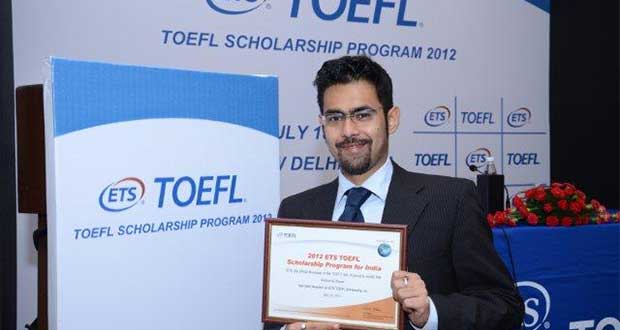
    You had scored an amazing 119/120 in the TOEFL, bagging the scholarship. How much effort would you say it had required you for this achievement? What prompted you to take this test?

    It isn’t very difficult for someone who’s been taught in English through school and college to secure a high score in this test. It’s designed in such a way that Indians, who are better in English than most other nationalities, can perform well. I was applying for a masters degree and so I took the test. Later, when I was looking for funding, I stumbled across the TOEFL scholarship and applied for it.


    When did you start pursuing acting? Was it one of your childhood dreams to act in movies, or did it materialise while at NUJS?

    I’ve been acting on and off through school, especially in the last two years, but it was only after I entered college that I started acting with professional theatre groups. NUJS itself wasn’t a catalyst to pursue acting. Since Calcutta is my hometown and I was enrolled here, I had a lot of time to act, rehearse. Acting in movies wasn’t really a dream, it happened accidentally. I’m mainly a theatre actor.


    deborshi-barat-6

    You have acted in the National award winning movie, Ranjana Ami Ar Ashbona, and many other movies and series. Please share with us how all of this happened. When did you receive your first break?

    I was working at S&R Associates in New Delhi for a little over two years, mainly doing capital markets work. I quit my job around the end of August 2010 to process applications for higher studies in U.S. universities for the next year. Since I was applying for Policy studies as well, I was required to give the GRE. Around the time of the test, the Airtel Theatre Festival was happening in Kolkata and my friends persuaded me to be a part of it. A panel discussion was organized to promote the festival, exploring the intersection of theatre and films. A friend of mine was moderating the discussion, and reputed director Anjan Dutt was a speaker on the panel, while I was a speaker too. Later, Mr. Dutt approached me to cast me in his next film, which was Ranjanaa. Subsequently, on account of certain pressing personal circumstances, I was forced to defer my admission abroad and stay on in Kolkata. During this time, I got a few more offers in a couple of other films and some megaserials. However, I did these projects as a pastime, not as an active pursuit of the creative arts.


    You are the author of a book, ‘The Hunter of Pigeons’, published by Partridge, a Penguin Random House Company. What is this book about? What made you write it?

    This book is a thriller. As a genre, I’ve been deeply fascinated by magic realism, and accordingly, I’ve tried to incorporate elements of it. The book, however, is a fast-paced mass market work of fiction. During the time that I was in Kolkata, after I’d quit my job and was waiting to go abroad, I had some time on my hands and began working on the book.


    Please tell us about your experience with FeminIjtihad as a Supervising Lawyer. What were the responsibilities you were entrusted with?

    A friend of mine at the Fletcher School connected me with Natasha Latiff, the founder of Femin Ijtihad, who was then working on a project in Afghanistan. With her, I render legal opinions aimed at strategic advocacy of human rights, especially for women in Islamic countries. I presently work as a Supervising Lawyer.


    How was your work as a corporate lawyer at S&R Associates between 2008 and 2010. Please tell us a little about your work profile while working there. What were the responsibilities you were entrusted with?

    I completed an internship at S&R and Mr. Sandip Bhagat, partner at S&R, offered me a job while I was in my last year of NUJS. I greatly enjoyed my stint there. Most of my work involved Capital Markets, with some litigation and M&A work. S&R has a superb work culture, with a special emphasis on quality, attention to detail and thoroughness. I learnt a lot on the job.


    deborshi-barat-2

    How did you decide to quit your job and start up with your independent practice?

    My plan was to process applications for higher studies abroad after I quit and leave the country. However, I was constrained to stay back in Kolkata for a couple of years thereafter. Apart from certain medical issues, I was helping out my family with some legal matters related to property and allied concerns. This prompted me to practise independently for some time, mainly liaising with other lawyers, briefing counsel, drafting, etc. Not only were the skills required for practice entirely different, the motivation and environment of work was different as well. Among other things, the process was far less efficient, slow, ridden with procedures, frustrating delays, etc. One had to get used to a slow-moving dynamic after the deadline-driven corporate culture of a firm.


    How is Masters of Arts in Law and Diplomacy along with a Masters in Law from Fletcher School, Tufts University. Please tell us a little about your course structure. What made you choose this programme?

    I wanted to use my law degree and training as a base and explore the Policy paradigm, including International Relations. Hence I applied to the Fletcher School where the keystone degree, the MALD, suited my needs perfectly. Once at Fletcher, I spoke to a few of my professors and they convinced me to apply for a joint LL.M. degree as well. The International Law course structure at Fletcher is one of the best in the world.


    How did you go about the admission process? What are your career plans after the completion of your joint degree?

    The admission process was long and arduous. I took a lot of time picking and choosing the universities/courses for which I’d apply, speaking to many people, researching. The process can be a lot quicker if one knows exactly what he/she is looking for, organizing the paperwork accordingly, focussing on the next step. I have a few career plans, but I’m happy to surprise myself!


    Is there a stark difference in the teaching pedagogy between the teaching model followed in law schools abroad and those in India? What are your views on this?

    In principle, they are the same. In effect, it’s quite different. The Socratic Method is followed more strictly in U.S. universities. The reading materials for each class are usually substantial, and one is required to have reviewed them thoroughly before the class, such that all students can engage in a discussion during the class which the professor moderates. Issues and questions are raised, clarified, argued upon. This may also be a reflection of education at the masters level, which assumes a level of maturity. I can’t vouch for all law schools in India, but from what I’ve heard, the teaching model in the country involves a lot of in-class lectures, where the professor ‘teaches’ (as opposed to leading a discussion among students) and students listen.


    deborshi-barat-5

    What were the biggest hurdles and challenges in the early days of your career as an actor? How did you deal with them?

    I’m still dealing with them! A career as a ‘professional’ actor is one of extreme frustration and patience. Acting is only part of the job, it involves networking, knowing people, haranguing directors, agents, showing up for umpteen auditions, etc. No matter what people say, there’s a huge element of luck. Acting merit is, I think, a very small component of the deal. I am quite bad at networking and following up, so I didn’t do any of it. My bad. My friends and family say I should push more, but I tell them that I didn’t sign up to do all that. I’ve been lucky to get the few projects that I did. Once in them, I tried to do my best. In movies and serials, I haven’t done a major role. So yes, they also serve who only stand and wait.


    How do you manage to divide and manage your time effectively? Have you thought of pursuing a career in acting fulltime?

    If there are multiple interests, one usually finds time for each of them. Of course, one has to have the right circumstances, and I’ve been lucky that way. Often, the time is divided into stages. For example, when I was working at S&R, I didn’t do any theatre. After I quit and I was on my own, I had more freedom, more flexibility to dabble in other stuff, things of interest, writing, acting, theatre. I’ve thought of pursuing acting full-time, and upon careful deliberation, I’ve decided against it. Eventually I would love to be a full-time writer though, god willing.


    As a concluding message, what would be your advice to law students who would innately want to try their time in acting?

    Law and acting have very little in common. It’s tempting to draw parallels but it isn’t true. Courtroom dramas are good for books and movies. If anyone wants to pursue acting, one should be prepared to give it a lot of time. Besides, law students already have the option of lucrative careers, meaningful work, by dint of their education. In that scenario, it is even more difficult not to crack in the middle of a frustrating wait for acting projects to come along.

  • Jai Sahai Endlaw on moots, litigation and an LL.M from Berkeley

    Jai Sahai Endlaw on moots, litigation and an LL.M from Berkeley

    Jai Sahai Endlaw graduated from NLU, Jodhpur in 2013, and thereafter he had the opportunity to pursue higher studies from the University of California, Berkeley. While at law school he had huge achievements in mooting, his team at NLU, Jodhpur went on to win the 16th Stetson IEMCC World Rounds, an Honourable Mention for Best Respondent Memorandum at the 9th Willem C. Vis (East) Arbitration Moot, at UC, Berkeley also his team made it to the Semi-Finals Pacific Coast rounds of the 55th Philip C. Jessup International Law Moot Court Competition.

    With so much to tell you about him, we could ask only a few questions on:

    • Academics and internships for a career in litigation
    • Partaking in the best moots and acing them
    • LL.M experience from UC, Berkeley


    What is it that motivated you to take up law as a career? Was it an engineered move or a sudden decision?

    I knew early on that I wanted to pursue a career in law. Two factors anchored my decision – It being a family profession, the daily challenge of a court room drama was fascinating, and it was matched with my interest in current affairs, debating and reading.


    Would you say your parents were quite instrumental in making you take law as a career option? Did you get to hear legal discussions right from your childhood days?

    My parents were instrumental in helping my shape my career decision. The choice was entirely mine. In fact they are of the opinion that a study in science at school level helps develop and hone analytical abilities – I studied science at school. My father litigated in the District Courts and High Court. During his practice, he largely dealt with matters on the civil side, original and appellate which included property and rent matters. My parents gave me complete freedom to find my calling at law school, and even supported me when I expressed my desire to pursue further studies abroad. Yes, legal discussions were a part of routine dinner table conversations – I’m a third generation lawyer.


    Having a family with legal background may prove to be a huge advantage as far as establishing a practice is concerned. What is your opinion on the same? Did this factor ever play a role in influencing your decision to take up law?

    A legal background and family practice is definitely a privilege and of help, but only to the extent of giving you a realistic perception about the practice and understanding law as a profession. Ultimately, in the business of advising, you bring ‘yourself’ to the table. There may have been some subtle influences acting upon me whilst I made my choices, but it is imperative for the choice to match your area of interests. Only then can one support and sustain a career long term.


    Did your internships motivate you to get more involved in litigation than corporate law?

    Internships are indeed processes of self discovery. If you work on them seriously, 4 – 6 weeks of work in a firm or under a practicing advocate gives you an insight into what your future requirements may be. My core area of interest lay in a litigation practice of my own, and the internships were great learning experiences. In fact, my first internship was with an advocate who practiced in the district courts as well as at the High Court. I followed him in the Courts and observed him arguing over the course of one summer and that cemented my decision to litigate after law school. Since that involved regular Court appearances and briefings, I felt that working with an advocate would be befitting. Practical, hands on work, always helps to either endorse or change your career trajectory.


    What role do academics play in the career of an aspiring litigator?

    Academics and exam scores are baseline platforms for professionals. One must use the time of five years at Law School to learn to examine critically and couple the approach to build a mature thought process and a confident personality. At the end of the day very few lawyers ask you for your transcripts when you apply for a job as a junior advocate. Our profession is such that law school can only effectively prepare you on the theoretical aspect of law, practical knowledge will come on the job but only after you are sound on what the law says.


    Is there anything apart from academics that a student who wishes to pursue litigation must involve himself in during his law school life?

    I don’t think there are any specific categories of activities that one can pursue at Law School that necessarily help you become a better litigator or corporate lawyer. Having said that, moot courts are wonderful modules with fun and competitive ways of learning the law in a specialized area. They involve in depth research for specially constructed problems, and require clarity of mind and articulation. I haven’t written any papers myself, but I’m well aware that the effort, reading and critical reasoning that goes into publishing is another great opportunity for law students, not only to express their views but to test their analytical skills.


    Your team won the 16th Stetson IEMCC World Rounds and also an Honourable Mention for Best Respondent Memorandum at the 9th Willem C. Vis (East) Arbitration Moot. How big a role do you think mooting plays in the overall development of a lawyer?

    For me personally, mooting was definitely a confidence booster. It also taught me that hard work does really pay off. The way international moots are structured, you read and research about specific areas of international law for months and in the process learn the importance of team work and improve your drafting skills. These are important lessons that stay with a lawyer for their entire career. Actual practice before any court is different in terms of the pressure, you plead your case on behalf of a real client, who is depending on your skills and knowledge to get him relief. Mooting definitely helps in aspects such as marshalling the facts of a case and narrowing down and identifying the issues in a legal proceeding, but appearing before a judge who is sitting not only to adjudicate your case but multiple others on the same day is a very different and unique experience.


    How was your LL.M experience from University of California, Berkeley. Did you always have higher studies in your mind? If not, what motivated you to go in for the same?

    A post graduate degree was always very much on the agenda. What really clinched my decision to apply was my experience at international moots, meeting teams from various countries, observing their approach to the moot problem and touring various American Universities after Stetson. You will be surprised at how easy it is to walk into any law school in the U.S., introducing yourself as a law student from a foreign country and informing them of your desire to pursue higher studies in the U.S. and as a consequence being invited to sit in on one of the lectures being held at that time!


    For those students who are planning to go for higher studies, what do you think would be better- going right after graduation or going after having gained some work experience?

    I can only speak from my personal experience. There are no short term benefits of an LL.M degree/diploma in a career in litigation in India. The take away is largely in terms of personal growth. However, from what I told, as you grow in litigation and deal with MNC’s and foreign clients, a degree that such clients can relate to helps in them relating to the degree holder as well. Couple that with an international network that you develop during your LLM, and it’s a powerful combination.

    International experience is one of the most important components of a 21st century education, and a study abroad can be viewed as a step in that direction. Indian university graduates are relatively stronger on ‘soft’ skills such as interpersonal skills. Foreign degree holders appear disposed towards critical thinking skills, and using their knowledge to solve real world problems.

    The eternal conundrum that law students face is when, if at all, to pursue their higher studies. I chose to go straight after law school because I felt that I couldn’t afford to settle into a litigation career of a couple of years only to uproot it and go abroad for a year (or maybe more). On the flip side, I was one of the youngest in my batch at Berkeley Law and that has its own fair share of baggage!


    What do you think is the perfect formula for candidature at a reputed law school for further studies?

    I don’t think anyone has found the perfect formula to get accepted to the best universities in the world. But I do know that the universities definitely look for candidates with diverse backgrounds. Your personal statement should reflect a focussed approach as to why and how the course you are applying for is the right choice for you and what in your qualifications supports that cause. I would definitely advise any one looking to pursue further studies to keep a healthy balance of their academic with co-curricular activities such as mooting, publishing and presenting papers, participating in workshops and conferences in the area you are looking to speacilize/study further in.


    Is there any tip you would like to give to our readers, most of whom are students pursuing law?

    In retrospect, I found that law school makes available a broad canvas of choices to law students and it is imperative for a law student to figure out in the five years – be it through internships or through pure academic interest – where your passion lies. This can be immensely helpful at the time of recruitment as well as applying to foreign universities.

  • Rishabh Jogani on LL.M from Queen Mary, mooting and work in litigation

    Rishabh Jogani on LL.M from Queen Mary, mooting and work in litigation

    Rishabh Jogani graduated with a B.L.S.LL.B. degree from GLC, Mumbai in 2012. Soon after Graduation he worked at the Chambers of Senior Advocate Pradeep Sancheti, Bombay High Court for one year and then went on to pursue a Masters in Comparative and International Dispute Resolution from Queen Mary, University of London. Thereafter he returned back to India and again joined the Chambers of Senior Advocate Pradeep Sancheti, Bombay High Court.

    In this interview, he talks about:

    • Moot Court Competitions and acing them
    • Pursuing further studies and LL.M from Queen Mary
    • Choosing litigation over other opportunities


    Given that most of our readers are law students and lawyers, how would you introduce yourself to them?

    I would introduce myself as a young junior counsel practising before the High Court of Bombay with a keen interest in Intellectual Property Law & Arbitration. I am working with Senior Advocate Mr. Pradeep Sancheti as his junior.


    Though it’s one of the most asked questions but yet, why law?

    The answer to that is with another question, why not? Despite being from a business family I realised that business was not my calling in life. I preferred something more on the professional lines and law was certainly my best plausible choice.


    Tell us about your years in law school. What made your journey with Mumbai University worth it? What are the co-curricular activities you took part at Mumbai University?

    I studied at Government Law College, Mumbai (GLC) the oldest law school in the country. Being at GLC itself made my entire time at University worth it considering the opportunities made available to GLC students. I was greatly involved with college activities, the Rotaract Club in particular. I was President of the Club and responsible for numerous events and activites. The College in appreciation of my involvement also awarded me with the Jotimal Chuganee Trophy for leadership.


    rishabh-jogani-2What were your areas of interest during your graduation? How did you go about developing expertise and knowledge in these areas?

    My areas of interest were Intellectual Property and Arbitration.

    With regard to Intellectual Property, I did some courses from the World Intellectual Property Organisation and a Masters in Intellectual Property Law from IGNOU, New Delhi. However, the strongest addition to my knowledge in the field was an internship with Mr. Himanshu Kane of W.S.Kane & Co. who is probably one of the most knowledgable lawyers in the IP circles. Working with someone of Mr. Kane’s standing and expertise gave me great exposure to IP issues and provided me with a strong grounding with regard to IP law.

    As far as Arbitration is concerned, working with Mr. Sancheti had me learn about the various intricacies of arbitral law. I was involved with numerous arbitrations and matters arising out of them. Thereafter, I pursued an LL.M in Comparative  and International Dispute Resolution from the Queen Mary, University of London where I studied International Commercial Arbitration and Arbitration in relation to Energy Disputes. My LL.M thesis was also based on arbitration.


    Tell us a little about your internship at the Supreme Court of India.

    I interned with Mr. Justice KS Radhakrishnan of the Supreme Court during one of my summer vacations at GLC. The experience was extremely enriching, I would read cases and appeals coming to the Court and then attend the proceedings in Court. In the evenings, along with the other intern, we would have some discussions with the judge about what transpired in Court and what we understood from the cases.


    After your graduation, you started working at the Chambers of Pradeep Sancheti. What influenced your decision of working with him?

    My interest in arbitration drew me to Mr. Sancheti’s practice and the learning experience was extremely wonderful. Working with a Senior Advocate like Mr. Sancheti makes one realise that there is always scope to learn more. He is a great senior who besides being extremely nice to his juniors is always willing to answer all queries that come up in our minds.


    What influenced your decision to work in litigation?

    As a student I had interned at the High Court of Bombay and the Supreme Court of India as well as a few law firms and eventually joined Mr. Sancheti’s Chamber as an intern. I realised that I was never interested in working in a corporate structured firm and hence chose the litigation sector.


    Thereafter, you joined Queen Mary, University of London for an LL.M. At what point did you decide to pursue your Masters? What was your motivation?

    I always wanted some exposure to law on a comparative level and an LL.M was probably the best way to get that experience. After a year into practice at the Bar I decided to go for my LL.M. The zest for learning has probably been my strongest motivator and probably what drove me to the LL.M.


    In addition to academics, what did you do during your LL.M year at Queen Mary?

    Whilst at Queen Mary I was involved with ‘qLegal’ a project of the Legal Advice Centre of the School of Law. The work I did was quite interesting, in the sense that I was involved in drafting toolkits on legal issues. I was put in a team which had to draft notes on ‘Company Structure in the UK’ and ‘Trademarks in the UK’ meant for a non-legal audience. It was quite a task to simplify and explain legal terms and concepts but in the end was a rewarding experience.

    I also wrote the Runner Up Prize winning paper of the Preiskel Prize Essay Competition 2013-2014 for an essay titled, “Big data and Marketing – has the law caught up with the new digital reality.”

    Shortly after my exams, I worked with Zaiwalla & Co. a law firm in London. I did some very interesting work at the firm which involved research on English law and drafting litigation proceedings.


    How did you choose Queen Mary over other colleges? What was the decisive factor?

    The School of International Arbitration at Queen Mary is one of the best in the world and lets students study and work with famous international arbitration experts like Profs. Loukas Mistelis, Dr. Julian Lew QC, Stavros Brekoulakis and Dr. Maxi Scherer. Coupled with the fact that I wanted to live in London, Queen Mary seemed a natural choice.

    While choosing a University one should look at the specific courses offered, the courses of interest, the faculty and its reputation. One should not choose a University wholly based on rankings because not all courses offered by the top universities would have the same kind of academicians.

    The Universities in the UK employed a more wholesome approach to studying. There was certainly less classroom teaching than India but however not less learning. There was always voluminous pre-class reading that made sure that students came to lecture sessions well aware of the basics of the subject of discussion. There was a free exchange of opinion in classes and students were encouraged to express their viewpoints.


    What is your view on the latest trend among law students to pursue Masters abroad? How much of a brain drain do you think this is?

    Having done an LL.M myself I would certainly encourage anyone who can do one to seize the opportunity. No amount of learning is ever wasted and knowledge is something that stays with you for life. Some however, believe that a Masters abroad is easy and nothing but an expensive vacation. I would strongly disagree with that opinion for the simple reason that a Master’s degree from a reputed college is certainly not an easy task. There is a large amount of studying involved to pass the exams and extensive research that one must undertake to be able to write a thesis. If a student spends his time well then the LL.M is certainly an added advantage to his career.


    A lot of law students prefer corporate jobs over a career in litigation. What is your take on this? Is it better to work in the corporate sector for a few years before starting litigation?

    Corporate jobs certainly offer more money than litigation in the start and the allure of money is most understandable. Litigation in its early stages certainly is difficult, especially where finances are concerned but one reaps the reward soon after. I think that those students, who choose corporate work over litigation or vice versa, should always make an informed and practical choice, take into consideration their long term career goals and then decide what side they wish to pick. Working at a firm before joining the litigation sector is certainly advisable as it helps you deal with all facets of the profession.


    How has your mooting experience been? How helpful has been mooting in litigation?

    I had a tremendous amount of experience mooting for Government Law College. I represented GLC at numerous national and international moots. Mooting gets a law student as close as possible to a real Court room. There is a great deal of research and drafting involved in preparing for a moot which certainly helps one in the future at the Bar. Arguing before a moot Court also helps instil confidence in a student who eventually gets called to the Bar.

    I also had the opportunity to be part of the Queen Mary team at the Oxford Price Media Law Moot Court Competition and successfully managed to reach all the way upto the semi finals. As part of our training for the Oxford Moot, our coach was kind enough to arrange for a practice round before a sitting judge of the Queen’s Bench Divison of the High Court of Justice. Having always seen the buildings of the Royal Courts of Justice as a tourist and read a catena of English decisions the lawyer inside me harboured a wish to be able to address that Court one day. Participating in the moot fulfilled an otherwise impossible wish.


    Do you think the law school curriculum at the University of Mumbai requires an overhaul?

    The curriculum certainly needs an overhaul at the University of Mumbai. Students are forced to study some redundant subjects to the extent of even studying some repealed statutes. There is a lot of room for improvement at the University of Mumbai. Also, internships or some sort of work experience should also be made part of the law curriculum.

  • Rakhi Mohanty on Masters in Commercial Law from LSE, litigation at Supreme Court and academic research

    Rakhi Mohanty on Masters in Commercial Law from LSE, litigation at Supreme Court and academic research

    Rakhi Mohanty graduated with a B.A.LLB (Hons) degree from NLIU, Bhopal in 2010.She then went on to litigate in the Supreme Court and later worked with a law firm based in Delhi. She is currently pursuing her Masters in Commercial Law from the London School of Economics.

    In this interview, Rakhi talks about:

    • How to choose internships while in law school
    • Litigation in India and its future
    • Pursuing LLM’s in avant-garde institutions and gruelling academic schedules
    • Academic research in foreign universities


    Please introduce yourself to the readers. Tell us a little about your childhood and your background.

    My name is Rakhi Mohanty and I recently completed my Masters at the London School of Economics and Political Science in Commercial Laws. I am an alumni of National Law Institute University. I come from Bhubaneswar where my father is a succesful enterpreneur and my mother has taken the daunting task of looking after the family and holding us all together. Given the lack of all-round facilities in schools at Bhubaneswar,  in terms of extra-curricular activities, sports etc which are essential for a healthy childhood thanks to my parents,  took the decision to give my sister and me an opportunity to study at one of the best boarding  schools of the country, the Lawrence School, Lovedale, which was our first step to leading independent lives as individuals. My younger sister who has recently completed her Masters at Oxford University.


    When did you decide to take up law as a career? Tell us something about your college life. Being a law student, were you only focused on academics? How was the academic pressure?

    I once had an ex-student visit my school and give a talk on the career attributes of the legal profession and that is very time since when my fixation with the area begun. I was completely taken in by the eloquent manner and by the comprehensive and persuasive power of the speech. As I grew up and kept myself more updated with the day-to-day news from over the world over, I noticed a common pattern of most of the prominent leaders and personalities over the world sharing a common factor of law between them. I would be lying if I say that the John Grisham novels, in their glamorous projection of lawyers, did not play a major role in my decision-making. Luckily for me, I had the privilege of committing to the career at a time of National Law Schools and law firms, which were offering some of the most promising remunerations making it one of the most rewarding professions. By the time I set my foot into the professional arena,  career in law had begun to being considered as one of the most promising careers for a young individual looking for a dynamic and successful life. NLIU provided me with the much needed break in terms of a rigorous five year program which helps a student get a taste of the various subjects that law as a discpline has to offer. We had a trimester system which kept us on our toes as we had exams and project presentations every few months. Having said that, NLIU provided a student with a wide arena of extra curriculars as well which would help one in an all round development as a professional.


    You’ve interned at think-tanks like the Citizen Consumer and Civic Action Group. How instrumental were these internships in helping you decide what field of law you wished to specialize in?

    I think the think tanks that I did intern for, provided me with an opportunity to see aspects of life, not necessarily as a lawyer but as a a citizen, working for the betterment and efficency of the society that we live in. To be entirely honest, I enjoyed my work thoroughly and saw a side to law which requires an amount of sheer grid and determination to go on working effortlessly for the cause of others and for social well-being. They provided me with a wide area of subjects to work under such as environmental law, constitutional law etc. Having said that, as a lawyer, I feel, that one needs to find their specific area of interest to which they are willing to dedicate the next 40-50 years of their lives, working 13-14 hours each day. I found my calling in commercial laws and I am glad that before I branched out to this specific area, I got an opportunity to work and get a gist of the different branches of law, which I may never again get an opportunity to work in from here on.


    After your graduation, you worked in the Supreme Court. What is the reality of litigation in India? Do you think that the effort that is put into litigation does see fruition in all cases or the field of litigation is an overrated career option?

    To be honest, working in the Supreme Court first as a law clerk and then as a lawyer was one of the most defining moments of my career. I got to see the law being exercised from both sides, from the bench and from the other end, the bar. At one point of time I got to work on various judgments and be a part of the evolution of the law and later on, as a lawyer, I was working on the arguments for a case to be presented before the court. Having been asked about litigation, I would be able to explain litigation if I draw an analogy by saying that lttigation is more like running a long distance marathon. It happens at a slower pace, one needs to build up a momentum and gather the stamina, the more one practises the better they get at it and it takes a while to reach the finishing line but there is nothing quite like it. If somebody wants to litigate and feel passionately for it, they should be ready to put in the required dedication for a certain period of time and avoid feeling let down by minor setbacks. However, I think the legal profession demands one’s full time and undeterred time and attention to succeed and to be right at the top. The reality of litigation in India can be very disappointing at times, but to be honest, there is quite a high when you get argue before a bench or are applauded by the bench for presenting a case well or finishing a matter by yourself. However, I personally feel that it could only happen if one pursues something which they feel passionately for and do not feel the heat of long hours and that of a strenuous work life. I tend to be quite impatient as a person and get easily hassled by long bureaucratic processes and felt that I would not be good at litigation. I needed to find something which I could take forward and feel passionately about and that happened for me in the form of competition law.


    You completed your Masters from the London School of Economics. At what point did you decide to pursue your Masters? What was your motivation?

    I had decided from the very beginning that I would pursue my Masters after putting in a couple of years of work so as to be able decide as to what I want to specialise in. I stuck to my plan and after having worked for one year in the Supreme Court and then for another two years as a litigating lawyer, I decided to apply for my Masters and pursue a degree in Commercial Laws. The motivation was excellence. I did not want to slip into mediocricy and that could have only happened if I had the clarity and knowledge, which could be acquired with a Masters program.


    How different is the style of teaching at LSE? Do they focus more on the practical aspects of the law as compared to the NLUs?

    The teaching at LSE was extremely different from that what I had experienced at NLIU. At LSE, the students are expected to finish their readings, research and be well-prepared before a class. During the class, one is expected to voice your opinion and it is more of a discussion and sharing of opinions between the professors and the students instead of a scenario where professors are expected to spoon feed the students. In my opinion, the teaching methodolgy in the universities abroad is far superior to what we have in India as one is compelled to think out of the box, start training their mind as a professional and most importantly, it teaches you to be responsible towards your degree. The whole point of such a methodolgy of teaching is to make sure that students not only study the law as a subject but in the process learn its applications and be able to clear their notions on its implications. Having said that, one cannot forget that the degree that I attained at NLIU was an undergraduate one, which introduced me to the profession, whereas, I entered LSE as a professional, attaining a Masters degree and in the process had to a certain stature and sophistication to my work. It is only fair as to at which point, which university expected what level of work from me.


    How did you choose LSE over other colleges? What was the decisive factor?

    I liked the LL.M program that LSE had to offer and the wide array of subjects to choose from. What not a lot of people are aware of is that the LL.M program at the LSE is one of the intensive and prestigious programs that the University has to offer. Further, LSE offers you that one opportunity to experience life in London, the epicentre of world economy and commercial laws. I think what a lot of people do not understand is that Masters is not just about the course you study but should have the ability to  motivate, make you push your limits and not only change your perception of your life but also be a game-changer for your career. LSE and London did just that for me.


    What is your view on the latest trend among law students to pursue Masters abroad? How much of a brain drain do you think this is?

    In my opinion, pursuing one’s Maters abroad is not a brain drain at all. Pursuing Masters abroad gives a student a much wider perspective of the world at large and provides the much needed incites to bring in a certain level of sophistication to their work and thought process which could be put to much better use even if one decides to head back home and pursue their career in India. I feel Masters abroad is only as much a brain drain as it would be in various scenarios where lawyers working in India decide to settle abroad at some point of time in their lives for various miscellaneous reasons.


    In your opinion, do you think the NLU’s are conducive to academic research on a level that law schools abroad are? What is the future of NLUs?

    I feel that the compulsory requirement for academic research, which is in form of projects etc, that is being conducted by the NLUs is more of a technicality on paper rather than it being something which is actually effective and productive. I think we need to contemplate the level/standard of academic research that is being produced in the NLUs . In my experience abroad, the research work is taken extremely seriously whereby each student is appointed a supervisor who guides and provides incites into the research over the span of time so as to be able to produce something substantial and at the same time mentors the student for better research and drafting skills in terms of academic writing which leads to more international publications and referencing. In my opinion, NLUs need to put in more thought when it comes to academic research when it comes to competing with the world class universities abroad.


    What are your plans after completing your Masters?

    I intend to work in a reputed Competition Law/Antitrust team. I am currently exploring job opportunities in Europe as well India and given the global nature of the subject, I intend to appear for the QLTS or NY Bar exams in the due course of time so as to be able to have a multi-jurisdictional advantage to be able to make my mark as a Competition Law expert across the globe.


    For the benefit of the law students, kindly share some experiences of starting up with a law firm. Students are trying to gather various internship experiences at different places. Do you think internships help a law student?

    I think internships are extremely important when one is pursuing their LL.B. However, what I have learnt from my experience is that, it isn’t important to intern in various number of places but to pick one place which one feels is the best choice for them and to intern there a number of times so as to be able to exhibit their skills in that particular organization. When the time comes for recruitment, a firm or organization tends to prioritise a former intern or recalls that person’s good work over a completely fresh face. I would advice that handpick a couple of places and try to put in your best work there so that the organization either offers you a PPO or prioritises your joining in campus placements. The students should be aware of the reality that working in a law firm is not the easiest ways of life. One would be required to put in their complete time and dedication so as to be able to make a mark in a workplace.


    What would be your parting message to the law students?

    I would urge all budding law students to think out of the box and have the conviction to stand by their career choices, be it being that of a corporate lawyer or that of an environmentalist. We are living in a time and age when doing anything can bring you success, provided you excel in it. It is important the future talent prioritises excellence over being a part of mediocrity.

  • Anujaya Krishna on being a DAAD Scholar and authoring book on Sports Law

    Anujaya Krishna on being a DAAD Scholar and authoring book on Sports Law

    Anujaya Krishna is one of the most diligent scholars of the 2013 batch of NLIU, Bhopal. Anujaya has been the Co-Convenor of the Moot Court Association, editor of the IP Law Journal and has also authored a book on Sports Law. She is the DAAD Scholar for 2014-15 and is currently pursuing her masters in European Law.

    In this interview, Anujaya talks about:

    • Applying for scholarships and choosing the right field of specialization
    • Publications in law school
    • Balancing time for other pursuits while in law school


    When did you decide to take up law as a career? Tell us something about your college life.

    Frankly, coming into law was a matter of chance. More than me choosing law, I’d put it this way (at the risk of sounding archaic) – Law chose me. I was giving engineering examinations and took CLAT along with those. When I secured a good rank in the exam, I decided to take a leap of faith!

    College life cannot be described, but I’ll try. It was splendid- taught me a lot and helped me grow as a person as well as develop a deeper understanding of the profession I was taking up.


    What sort of internships did you do while in law school? How instrumental were these internships in helping you decide what field of law you wished to specialize in?

    I mostly interned with advocates in my hometown, Lucknow. I also interned with UNICEF and the State Legal Services Authority in Lucknow. The only law firm internship I did was with Amarchand & Mangaldas & Suresh A. Shroff & Sons.

    Given that I chose Sports Law as my field of specialization, it was not easy to find work in that field. But I made up for that by doing research on it for my dissertation and projects in the university. In my internships, I got the opportunity to work on cases of mediation, company law, corruption, labour issues, and I also learnt how to go about due diligence and drafting.

    I believe that one should take up an opportunity when it presents itself, because nothing you learn or work on goes in vain, ever.


    You were Co-Convenor of the Moot Court Association. How much emphasis would you place on mooting in law school? How do you think it helps in developing argumentation and analytical skills?

    Mooting is an activity that hones your skills in myriad areas and I strongly recommend that students give it a try in law school. It goes a long way in making one versatile and grow from being a law student to a lawyer as it were.

    Mooting, to my understanding, has something for everyone- whether you are more comfortable speaking or drafting and doing research. Mooting helps gain a better understanding of the law because it enables you to apply what you have learnt and create arguments. Not only that, it also helps you think like a lawyer- focusing not only on your arguments but also on the possible arguments from the other side.


    You have been editor of the NLIU Law Review as well as the IP Law Journal and have several research publications to your credit. What made you develop such a keen interest in writing research papers? How did you develop on them?

    I have been fortunate to get a chance to work on several aspects relating to research and publication. While I was on the content review and editing board for the NLIU Law Review, for the IP Law Journal, I worked on the Management Board. My main motivation for writing research papers has been my interest in exploring and developing Sports Law as a field. If you notice, most of the papers I have written are based on the same.

    As for how I went about developing and writing them, I referred to books in the library and articles available online. Also, I tried conducting surveys or gaining some practical insight into the topics as well. The key point to remember when writing a research paper is to choose a topic that really interests you, so that you are constantly motivated to write about it- irrespective of dearth of resources, time etc.


    Congratulations on your book ‘Sports Law’. Why did you choose sports law to be the subject of your book? What motivated you to take up a field of law that isn’t that well known? What resources did you have at your disposal?

    Thank you! Like I said, Sports Law is a field that has not been explored much and we need more scholarship in that area, especially in India. Whenever I used to mention that I want to specialize in Sports Law, most people were either unaware of the subject or said that I should not set my heart on such an ‘obscure’ topic. It was exactly the fact that this field of law “isn’t that well known” that prompted me to write about it.

    I referred to some books on the subject available in the university library, all by foreign authors but I was fortunate to find one book by an Indian author as well. Case laws from the official website of the Court of Arbitration for Sport (CAS) and other sources also helped. Apart from research papers and newspaper articles on issues revolving around sports law, for instance the (Draft) National Sports Development Bill, there were autobiographies and memoirs of sportspersons that gave me an insight into the status of sports in India and elsewhere.

    I also got a chance to interact with some players and coaches in Lucknow to know their views on the idea of law intervening in sports. Also, I had the guidance of my parents (who are both teachers), brother (who is a budding tennis player) and professors, encouraging me to work on this topic.


    When did you decide to start writing the book? Share with us your experience in getting it published and what was the reception to the book?

    The book is actually based on the dissertation I made in the final year of law school. It was my mother’s idea to get it published.

    I am thankful to Universal Law Publishers who gave a positive response to my proposal to get the book on Sports Law published and it was a smooth process. As regards the reception of the book, apart from positive reviews from my family and friends, I was glad to see that students from other law schools also read and liked the work. As a matter of fact, I recently got an opportunity to write on gaming laws for a website after the editor came across my book. At the same time, there has been some constructive criticism as well and I definitely hope to improve in the future. Reviews and suggestions are always welcome!


    How did you balance out your time while authoring the book? Do you have any future plans of taking up writing as a career?

    I guess you just have to make time to do the things that you love and that is exactly what I did while working on the manuscript for the book. There is no formula for it.

    Writing has always been close to my heart- not just writing on law but even fiction and poetry. It is too early to comment on whether I will take it up as a full-fledged career but I wish to keep writing whenever I get the chance.


    You also worked with AMSS, Bangalore. How was the experience of working in a corporate setup? What sort of research did your job profile entail?

    I feel very fortunate to have gotten a chance to work with AMSS, Bangalore. The work atmosphere is excellent and I got the opportunity to work with some of the best minds in the field of corporate law in India. The seniors were very encouraging and approachable too.

    There were various areas of law that I got to research on. I did extensive due diligence on the labour law compliances as well as on stamp duties for certain types of agreements. I also did research on aspects of contract law as well as FEMA and RBI regulations. The most memorable part was that I got to explore aspects of the new Companies Act (2013) and Rules thereunder, under the aegis of the best law firm with such knowledgeable people.


    You are also the DAAD Scholar for 2014-15. How did you go about applying for the scholarship? What would you advise fresh aspirants to focus on?

    My mother informed me about the scholarship and I applied for it. The most important part is the Statement of Purpose (SoP), so I would advise fresh aspirants to draft an SoP that is honest and reflects their interests and motivation clearly.


    What is the field of specialization you’ve chosen for the LLM?  Why did you choose that subject?

    The scholarship I received is for the study of European law. In my LL.M. course, I will be studying various aspects of European integration and I hope to make my master’s thesis on European Union (EU) policy in the field of sports.

    Coming from India- a country of unity in diversity, I think it will be interesting to understand and learn the way the EU functions, moving towards an ‘ever closer union’. Moreover, the EU has many policies relating to sports such as sports and competition law, and players’ rights etc. that I can use for further research in the field of Sports Law.


    anujaya-krishna-1

    Please tell us a little about your academic schedules and the general experience of studying abroad? How different do you think it is from the pedagogy that Indian Universities follow?

    The schedule is usually packed. While there may not be too many classes in a day, the duration of the classes is more. Also, there is a lot of extra reading required to be done and presentations to be made in class etc. Since the lectures are rather interactive in nature, one is required to read and come prepared for the class. Also, being in an international environment gives you great exposure- not only in terms of studies but also respecting and learning about various cultures and countries. I am also happy that I got to learn a bit of German here!

    I would say that the level of interaction and participation in classes is more here but at the end of the day, I don’t think it is to do with ‘Indian’ or ‘foreign’ universities so much as it is to do with individuals and the will to actively participate. You can make the most out of your education if you want, in whichever part of the world you are!


    What is your view on the rapidly growing trend of Indian students pursuing their masters abroad? Do you think there is a resurgence of the brain drain?

    I think if there is a programme of study that interests one and is feasible, then one must pursue it. As regards the question of brain drain, I sincerely hope there is none and quite frankly, it is hard to comment because it is matter of personal choice and circumstances, and putting everyone under a label would be unfair.


    What would be your parting message to the law students?

    Just one quote by Ralph Waldo Emerson (something I got as a farewell present in university) – “Do not go where the path may lead, go instead where there is no path and leave a trail.

  • Anirudh Hariani on environment law litigations, LL.M. from Cornell and research skills

    Anirudh Hariani on environment law litigations, LL.M. from Cornell and research skills

    Anirudh Hariani graduated from GLC, Mumbai in 2011, with a BLS.LL.B degree. He later went on to pursue his LL.M from Cornell Law School. During his law schools he had the opportunity to intern with many legal luminaries, and in the midst of all these he had managed to score highly on research work and publications.

    We have asked him to share:

    • How research and publications helped him gain admission to Cornell Law School.
    • His experience interning with major Independent counsels.
    • Experience in environment law litigations and working on pro bono.
    • Law school experience at GLC, Mumbai.


    Please tell our readers, what is it that motivated you to take up law right after school?

    I’ve always been interested in two facets of law: argument and problem-solving. This stems from my school days when I participated in Model United Nations conferences. I also enjoy intellectually stimulating challenges, which one is faced with on a daily basis in our profession. My family background in law was also a strong influence on me.


    How was your law school experience at GLC, Mumbai?

    The big advantage of GLC is the fact that you can work while studying. Classes usually get over before noon, so most students take up full time or short-term internships during the year, which I found particularly useful. But this advantage may be diluted due to the recent Bar Council circular barring law students from doing internships during the academic year. The impact, if any, the notice will have on articled clerks intending to appear for the solicitors’ exam is also unclear.

    There’s no doubt that GLC has several deficiencies. Attendance at lectures is very low and the lectures themselves are conducted in a haphazard fashion. There are hardly any full time professors. But during my time there were a handful of highly regarded lecturers, including part-timers, whose lectures were always full. We had a professor who is now a Bombay High Court Judge, and other members of the legal fraternity used to lecture frequently. Their practical insights were invaluable.

    The proximity of GLC to the Bombay High Court, which is literally a stone’s throw away, does provide a conducive environment for students to take up litigation. But at the same time, Mumbai is the commercial hub of the country so you will find graduates taking up all kinds of law careers based on their interests.


    In GLC, guest lectures are organized on a fairly regular basis and extremely prominent luminaries are invited for the same. What role does that have to play when it comes to a student making his career choice?

    GLC has had a strong tradition of co curriculars, which are all student-run. During my time in college we organized an annual lecture series and had some fantastic speakers come to speak to us, including Mr. Soli Sorabjee, Mr. T. N. Andhyarujina, Mr. Anil Divan, Mr. Harish Salve and non-lawyers such as Dr. Shashi Tharoor etc. GLC, being the oldest law school in Asia, has produced many of the top lawyers in the country, over the years, so many of the speakers who would come to speak were alumni. The debating society would organize an annual debate on the steps of the Asiatic Library, which was a panel discussion with academics and policy makers, moderated by Mr. Aspi Chinoy, a senior advocate. During the D.M. Harish moot, GLC’s flagship moot, a Constitution (5-judge) bench of the Bombay High Court would preside the final rounds.

    These experiences of interacting with luminaries, and hearing them speak about their areas of expertise, or hearing their anecdotes while practicing, certainly develops passion in students’ minds. It’s not only theory that you learn, but also context and history, which motivates students greatly.


    anirudh-hariani-2You have done substantial amount of work and research in environmental law. What do you say about it as a field of study? You have also taken up pro bono litigations. What motivated you to take up these not so lucrative tasks?

    In India, despite having been practiced for many years environmental law has not developed into a viable means of full time employment for lawyers. The primary reason for this is that courts do not award exemplary damages, unlike in some countries, and in any case the Bar Council prohibits sharing of the proceeds of a case with the lawyer, so there is little or no incentive for lawyers to take up environmental law full time. Lawyers can’t, as a result, afford to work pro bono all the time.

    I have been involved in a few environmental matters during my time at Hariani & Co., including a major mining case, which was exciting and at the same time humbling experience, though not pro bono. On a smaller scale, I have worked pro bono with environment and animal rights activists, on matters which involve the animal welfare, in the Bombay High Court. The experience of doing such work is extremely rewarding as you can see the direct results of your work.

    I also helped update a book on environmental law, written by a leading senior advocate based in the Supreme Court. While researching for the same, it was remarkable to see the same handful of names being repeated in the cause title of Public Interest Litigations. It appears that there are a small but growing number of litigants taking up environmental causes such as deforestation, irregular development, etc. While environmental law is in its nascent stage in terms of litigation, there is no dearth of laws protecting the environment in India. The main problem is implementation.

    I eventually took up an environmental law course during my LL.M at Cornell. Despite environmental laws in the US being so radically different from Indian law, it was interesting to study the same from a purely academic perspective.


    Most of your litigation internships include ones under Advocate and Attorney General and includes late Mr. Vahanvati. Is there any special reason why you chose to work with independent counsels? Please tell us a bit about your internships.

    I chose to work with independent counsel to get a more holistic view of the law. Litigation is probably the purest form of law. With litigation one can come across all kinds of commercial and civil matters without being restricted to a particular area or niche (not that niche practice is uncommon). Working with counsel I vicariously experienced the thrill of appearing in court, which definitely increased my interest level in law per se.

    I was lucky to have worked with some very senior lawyers during my days at GLC. At different times, I interned with both the former, and present (prior to his appointment) Advocate General of Maharastra. Their preparation and thoroughness for matters taught me that there is no room for complacency in the profession, at the very top.

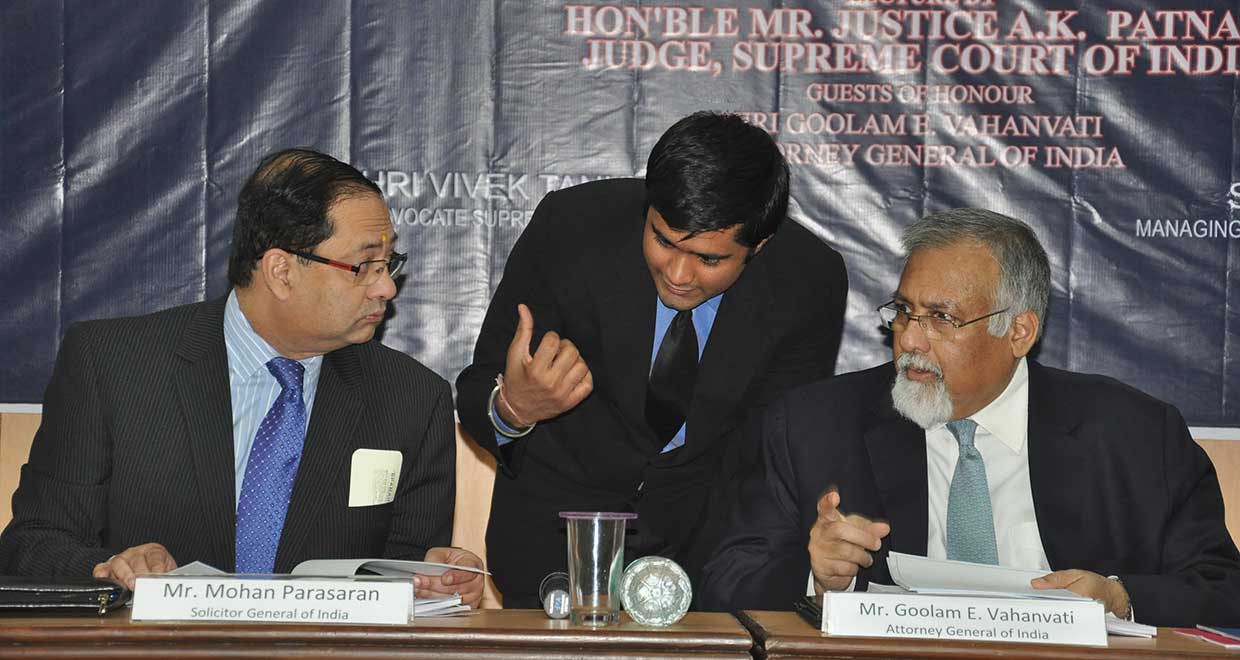
    I also worked with the late Mr. G. E. Vahanvati, former Attorney General for India, who was a very interesting person. He was a hands-on senior with interns. I was permitted to sit in his chamber and he would chat to me about his practice and his experiences at the bar – he too started his career in Mumbai. His general advice was that a student or young lawyer should make sure they learn something new each day. His advice, along with the high profile nature of his briefs, was extremely exhilarating for me, a fourth year intern. His untimely death was truly a loss for the profession.

    Through GLC students were sent to New Delhi, for judicial clerkships with Judges of the Supreme Court. Every lawyer / student must have dreamt at some point of time in their lives of working in the Supreme Court. For me it was no different. Having worked with the Attorney General, it was interesting to see the perspective from the other side of the bar. After court, I would go to the Judge’s house (a beautiful Lutyen’s bungalow) and do research work. It was exciting and somewhat intimidating knowing that your work may eventually appear as part of a judgment of the highest court of the land.

    I also interned with a Judge of the Bombay High Court in my final year, for a six month period. This was truly the icing on the cake, as I had grown accustomed to working in the Bombay High Court and was relatively comfortable in the environment.


    You have done an internship at Kanga & Co, which is one of the oldest law firms in India. How was your experience there?

    Kanga & Co. was my first internship as a law student at the end of my first year. Initially I was pretty clueless. But with the help of some good seniors and co-interns I learned quite a lot, even though we had not begun our proper law subjects at GLC.

    I remember that at one time, a partner required a co-intern and I to urgently draft a petition as he was travelling. Being completely fresh, we did our best with the information at hand. We didn’t know at the time that our first draft would eventually be converted into a full SLP which would be admitted in the Supreme Court!


    You have also interned in corporate law departments. How different was it?

    I interned with J Sagar Associates, Mumbai for one year, as a permanent intern/ paralegal. As I mentioned, apart from during exams, GLC permitted students to work through the year and many students took up long-term internships. As part of a mixed corporate and real estate team, I worked on several transactions, including performing due diligences etc. It was a proper corporate law experience. The environment was friendly and motivated, and I enjoyed working with the people there. The major take-away from my year at JSA was the large law firm culture, and the professionalism and efficiency of associates and partners which I tried to emulate. It was a good experience overall.

    Later on, I had a short stint with a medium-sized law firm in London, and my experience at JSA certainly helped prepare me for working with them. The work culture in the UK was more casual than Indian law firms. Partners would interact with interns and ‘trainee solicitors’ more casually, and would occasionally join them at the end of the week, for a drink at the pub.

    Prior to this, as a second year law student, I had also interned in the legal/ secretarial department of a large pharma company. Most of the people in the department were qualified company secretaries. It was my first brush with corporate law, prior to my JSA experience, although from the angle of the client and not the lawyer. It was a mixture of corporate compliances and reading up on company law from the CS angle, which I found quite interesting.


    You have been an avid writer and you have had many publications. How important do you now find your research skills?

    As a law student, I thoroughly enjoyed legal writing. Putting your thoughts down on paper not only cements your understanding of the topic, but allows you to go in-depth and to formulate your own analysis. I especially enjoyed researching on developing areas of law, such as copyright law. I always looked up to the GLC law review as a fresher, as I had heard seniors talking about it with reverence. That’s where I submitted my first legal paper, and luckily I was selected to be published.

    In my opinion, both legal writing and advocacy are equally important. But while mooting is given its due, legal writing is often overlooked. The emphasis should be equally on both.

    Even as a qualified lawyer, one is constantly preparing opinions or notes on one topic or the other. So legal research and writing skills are very important and are put to practical use. Also, academic writing establishes an in-depth understanding of that particular area of the law, which may not be the case when studying for exams or doing compulsory projects. Also, the satisfaction of seeing your name in print as a student is tremendous.


    After your graduation, you pursued LL.M from Myron Taylor Hall, Cornell University Law School. How helpful did your publications prove to be in gaining an admission there?

    I think my publications definitely helped me gain admission to Cornell Law School. Other things that the admissions officers look at are your statement of purpose, grades, work experience, etc.

    Having pre-existing research skills definitely helps when doing an LLM. In the first week of the LLM, we were given a tour on how to use Westlaw and LexisNexis. Having used Westlaw for an international moot and for articles, my integration was easier. Legal drafting on the other hand was completely different in the US. They have a very informal approach to drafting. While Indian contracts will run into several pages, a contract there would be more concise, informal and to the point. In fact, there was even a whole introductory course offered to LLM students on American legal writing.


    Along with research work, you were pretty active in other co curricular activities like being in OCs, debating, MUN etc. How did that part of law school affect your overall personality?

    Co curricular activities such as mooting, debating, MUN, being part of OCs, etc. are important to any law student’s overall experience, and to get to know people in college. I was very active in such activities in my first few years at GLC. My co curricular activities reduced as I got busier with internships.

    GLC has traditionally been a very good mooting school, but in recent years the emphasis is on national law schools. During my time we had some seniors who were fantastic mooters. Watching them moot and trying to emulate their successes was always what we aspired to do. With mooting I also had the chance to meet law students around the country, some of whom I kept in touch with. So, involving myself in mooting and other co curricular activities definitely impacted me positively.


    Finally, is there any tip you would like to give to our budding lawyers?

    Experiment as much as you can during your five years at law school. Try to develop your ancillary skills and soft skills while in law school, because you will need them during practice.


  • Khushboo Priyadarshini on work as a Lecturer, job as an in-house counsel at SBI General Insurance and LL.M from NLIU

    Khushboo Priyadarshini on work as a Lecturer, job as an in-house counsel at SBI General Insurance and LL.M from NLIU

    Khushboo Priyadarshini graduated from Pune University in 2010. Thereafter she pursued an LL.M from National Law Institute University, Bhopal. After pursuing Masters, she joined Marathwada Mitramandal’s Shankarrao Chavan Law College, Pune afiliated to Pune University as a Lecturer. Later , she switched over to SBI General Insurance Co.Ltd.

    We asked her to share her experience while pursuing an LL.M from NLIU, work experience as a Lecturer and appointment at SBI General Insurance Co.Ltd.


    How would you like to introduce yourself to our readers?

    I am a law student. No, it’s not that I am still pursuing a degree… I completed my graduation from University of Pune and obtained Masters Degree from National Law Institute University, Bhopal. As of now, I am working as a legal executive with State Bank of India General Insurance Company. Yet, I still consider myself as a student because legal education for me is not just limited to obtaining a degree to use it for some end but the real essence of legal education comprises of the opportunity to update one’s knowledge and skills during continuation of one’s profession.


    Why and when did you decide to do law? What interested you most about the subject at the time?

    The period, when I had to make this choice, was one which although offered multiple career options but everyone’s mindset was limited to only two fields – engineering and medicals. And I did not want to be a part of the crowd. Also, I firmly believed that whichever field I would want to make a career in, should be one which provides me the learning space, where application of mind and not just fixed formula or theorem, is crucial. I perceived law as one such subject, as with every case, every situation, there is opportunity to learn something new and today, I can say that I am glad what I perceived then to be true, actually is true in the real world.


    khushboo-priyadarshini-1You have done your graduation from Pune University. How would you describe your time there?

    I will be pretty honest here. Unfortunately, I could not get through any of the NLUs and hence, I decided to pursue my bachelors from Pune University. During my 5-year course, while I got the chance to be under the guidance of some good professors, I also had the experience of studying a few subjects all alone because there were no teachers or lectures for those subjects. I managed to clear every semester with good grades. And when I held my degree on the day of convocation, I felt grateful to everything that happened to me during my course – the good as well as the not-so-good aspects because that’s what made me capable of completing one important stage of my life.


    What do you have to say about the supposed ‘elite’ tag attached to certain law schools? Do you believe branding is something that’s very relevant/ important at any stage in a law student’s career?

    The sad truth of our society is that yes, the ‘elite’ tag attached to schools plays an important role at least at the establishment stage. The perception of the real world about a student’s knowledge and skills is reflected by the brand which the student is associated with. I personally do not believe in this coz ultimately it’s your knowledge that will help you survive and not the brand.


    When and how did you decide to pursue Masters? Was it a professional requirement or a personal endeavour?

    I would say, it was a personal endeavour as well as a professional requirement. As I mentioned earlier, during my graduation period, the kind of experience I had in terms of availability and non-availability of good faculty, which created the interest within me to get into academics, which calls for a Master degree. So, the personal endeavour led me to take it up in order to meet the professional requirements.


    How did you prepare for CLAT?Did you join any coaching?

    No, I had not joined any coaching class. The notes I made during my graduation course really helped me in the preparation.


    You have done your LL.M. from NLIU, Bhopal. What was your specialization? Why did you choose that particular subject?

    I specialized in Business law. I chose this subject because of the scope it offers in terms of career options. It doesn’t limit me to one field. I took up teaching and now I am working in the legal team of SBI General Insurance. So the point I wish to emphasize here is that one has to liberty of choice, to get into academics, practice or corporate sector.


    Can you please share your experience at NLIU?

    In one word – fabulous! I got the opportunity to be under the guidance of learned professors who gave us insight about the real world apart from imparting the theoretical knowledge. And this blend got its magical touch from the heart and soul of the university that is the library – “Gyan Mandir.” Every day was an enriching experience for me and I shall always be grateful to NLIU and the teachers for that.


    Have you considered Doctoral Studies?Any university you have shortlisted for it?

    Yes, it’s certainly in my list. But as of now, I have not shortlisted any university but I plan to do it from one of the nationals.


    How would you describe your legal education? Did you dream of changing the society or working on a revolutionary legal principle while as a law student? Did your legal education prepare you for the real world practice of law?

    I would like to quote Christine Gregoire who said that Education is the foundation upon which we build our future. And to add to it, it also enables us to play a role at times in shaping others’ future.

    I may not have dreamt of bringing about a revolutionary change. But yes, I believe in the power of this foundation. I have and will always try to work towards the benefit of the people I work with.


    What are the main essential qualities of an Academician? What do you think differentiates between lawyers who chose academics from those of other professions?

    Sharing your knowledge is what differentiates academicians from other professionals. While others use their skills and knowledge for their own and the beneficiary’s good, academicians share their skills and knowledge to make others capable of achieving their goals and they also try to keep this cycle moving.

    The job demands one to understand the needs of every student and ensure that not a single student leaves the class without learning. Patience, diligence and continuous learning are the qualities which an academician must possess in order to impart knowledge to the students.


    You worked as a Lecturer for one year. What subjects did you teach there? How was the experience? What kind of skillsets proved to be useful for you during this period?

    I worked with Marathwada Mitramandal’s Shankarrao Chavan Law College, Pune afiliated to Pune University. In a short span of one year I got an opportunity to teach Arbitration, Administrative Law, Criminology, Family law and Jurisprudence. “The one exclusive sign of thorough knowledge is the power of teaching…” I can’t agree more with this statement because as I have mentioned in the previous questions also, teaching is a job which provides the learning space. Also, I think the best job for one is that which leaves a smile on one’s face every day. It has been almost a year and a half that I left working there, yet the students still remember me, call me to share their doubts, their achievements and it is a great feeling. It makes me feel that I was able to do something good.

    In terms of skill set, I updated myself with information; new examples related to subjects and imparted it to the students as required.


    You are currently working at SBI General Insurance Co. Ltd. How did this switch over take place?

    God always has a different plan for you. I still want to be in academics but somehow after my marriage, the things weren’t favourable for me to take up teaching. But the offer from SBI General happened and I made a choice to experience this phase of life also with the belief that one can connect the dots only looking backwards.


    Why SBI General Insurance Co. Ltd? How did you go about achieving this? Please tell us about the recruitment process at SBI General Insurance Co. Ltd?

    There was no plan in my mind to achieve this. I just kept going with the flow and things happened.

    About the recruitment process at SBI general insurance, whenever there is a vacancy, the HR consultants and recruitment agencies shortlist candidates from various portals and the process is taken ahead. My selection consisted of 3 rounds – interview with the Head of Department, Group discussion with fellow candidates and interview with the HR.


    What do Insurance Companies look for in prospective employees? Is the induction process any different from Law Firms?

    The companies look for the candidate’s knowledge about insurance and related laws. I haven’t had any experience of the induction process of law firms so will not be able to comment on the difference. But the induction here includes briefing about the insurance sector, working methodology and certain guidelines which are to be followed for all the tasks.


    What amount of legal work is there? What kind of work you are supposed to do there? How is the experience so far?

    The job profile is strictly related to legal stuff – handling the agreements the company enters into with various service providers, consultants, etc. It also includes negotiating, drafting, vetting of the agreements. I handle the litigation part also which includes cases before various courts, ombudsman matter, arbitration matter to which SBI general is a party.

    The experience so far has been enriching. It helps me grow professionally. I am able to witness implication and application of law in this sector.


    There is a phenomenal obsession amongst law students with maintaining a very high CGPA. How important according to you is this in securing a job?

    It’s a tricky question. I mean it is kind of obvious that sound knowledge and practical experience are important and not just securing good grades. But in our society, good grades are proportional to one’s knowledge. So you have to work accordingly. I hope the scenario changes in the future though.


    What are your long term objectives? Where do you see yourself by the end of five years?

    Pursuing PhD is a priority for me. I just want to keep going with the flow as when there is a set plan, the surprise element gets lost and I want life to constantly bring in surprises for me. I will keep connecting the dots with the hope that the end result is positive.


    Lastly, what would be your message to our readers who are mainly young lawyers and law students?

    Keep reading; keep comprehending because it is the only thing which will take u ahead.


  • Akshata Namjoshi on association with A38, LL.M from NUS over KCL, writing SoP

    Akshata Namjoshi on association with A38, LL.M from NUS over KCL, writing SoP

    Akshata Namjoshi is one of the most diligent and illustrious scholars of the 2014 batch of NLIU, Bhopal. She has participated in various co-curricular activities and has multiple publications to her name. Her interest in Corporate and Financial Laws led her to choose NUS for Masters right after graduation.

    In this interview, Akshata talks about:

    • Writing for journals and publications
    • Importance of co-curricular activities
    • Choosing NUS over King’s College, London for Masters
    • Key ingredients for SoP


    Most of our readers are law students and young lawyers. How will you introduce yourself to them?

    I finished BA.LLB(Hons) from NLIU, Bhopal in 2014. I am currently pursuing LL.M in Corporate and Financial Services Law from NUS, Singapore.


    What motivated you to choose law as a career? Did your family and friends suggest you to take up alternate career options like Medicine or Engineering?

    Definitely, after cricket, engineering is the second biggest religion in India. Widely “professed” and “preached”. I started off as a science student, but soon I realised that engineering was definitely not the career of my choice. I decided to revert back to my childhood dream of becoming a lawyer.


    How would you describe your five years of law school? Please share some of the memorable experiences of your college life. What made your college life exciting?

    The best part about law school is that you can choose what you want to be, what kind of people you want to interact with, which activities interest you or whether you absolutely want to be a couch potato, which of course brings its own challenges.

    For me little additions to my CV here and there made law school exciting. Debating and Mooting occupied my time in my 2nd and 3rd year and publications and blogging in 4th and 5th year.


    Your internships at law school have all been with top tier. How did these experiences help mould you a lawyer and which was more useful for the LL.M applications?

    It is very important to decide the kind of job or life you are looking for. Also, area specific internships in your 3rd year and 4th year help. For instance you can’t expect somebody to accept your LL.M application for Corp and Finance if all your internships have been in IPR. As far as top tier is concerned, I got a chance to intern with few of the best law firms in the country, but definitely, the kind of work that you do is the most useful.


    You have multiple publications in various renowned journals. How should one go about writing papers and getting the same published?

    I was lucky to have 4 publications and 3 paper presentations by the end of 5 years. While writing a paper it is essential to identify your core arguments and one should come to the point immediately, because honestly nobody has time to read a 2+ pages long introduction. Also, “Footnoting is not researching”. Your contribution to the topic, your arguments and analysis matters the most. That has worked for me at least. I am currently serving as the sub-editor of MightyLaws.in and I have been associated with A38 in the past.

    I think students who wish to apply for LL.M applications should start with smaller journals and those which respond quickly (like Monthly or Quarterly Journals). At a later stage one can try and aim for bigger and renowned journals. If you select extremely narrow and restricted topics, the possibility of your paper getting published increases.


    When and how did you decide to pursue Masters? Which universities did you select for your LL.M?

    I always wanted to pursue masters. And at some point in the future I plan to do a Ph.D also. I decided to apply to the top few colleges in USA, UK and Singapore. Majorly because I wanted to specialise in Corporate Law and these were the best options available.


    What prompted you to choose National University of Singapore from the plethora of options available? What was the application procedure?

    I had an offer from King’s College, London, Queen Mary University, London, UC Berkley California and NUS, Singapore. During my research I realised that NUS curriculum is very rigorous and being a global financial hub it would give me a better insight.

    The application procedure was definitely irritating. Every college requires a different set of documents. Many colleges require sealed envelopes, registrar’s signature, director’s bona-fide letter etc. One must start with all of this early. Otherwise you have to run a lot.

    Also, most of the colleges expect your professors to send a Letter of Recommendation directly to them. In that situation one must not run after the designation of a professor. It is better to choose professors according to the subjects that they have taught and somebody you can bother every now and then. Also, be prepared to write a draft LOR all by yourself because most professors expect you to do that.


    How should one go about choosing a university? Which subject you are studying there? Why did you decide to take this particular subject?

    I am pursuing my LL.M in Corporate and Financial Services Law. I went through the modules and exam pattern before deciding on NUS. I would recommend that anybody who wishes to pursue LL.M should speak to Ex-students from that university, even if they are complete strangers. I spoke to numerous ex students from NUS, King’s College, Queen Mary, NUS and UCB. Talking to them helped me understand what I was looking for. Like in this case I decided to chuck big names and went for the university which had an elaborate and exhaustive curriculum.


    How diversified is your batch at National University of Singapore? Do you have any Indians in your batch?

    Our batch is small, with just 25-30 people. I was happy to see large number of Europeans in NUS though. And yes there are Indians in my batch. Accommodation definitely was a problem. College rarely provides you with a hostel. They recommend few hostels and you have to apply individually or you can also rent a flat.


    How does one go about scholarships? Does the Institute offer any scholarship? Do students have part time opportunities? Highlight some of it.

    NUS considers students for scholarships automatically. But other colleges in UK and USA ask for applications. There are partial and full waivers. There are many scholarships which come up every year. Some even bear the costs of living.

    Students can work part time for maximum 16 hours a week in Singapore. In UK it is 20 hours.

    As far as part time opportunities are concerned there are plethora of options. Petrol Pumps to Law Firms, everything is open. I am currently working as a research assistant to a professor in NUS itself. It is the most favoured part time job for many students since it is not too time consuming. One must however remember that LL.M courses in itself require a full-time dedication.


    Do you think that nowadays, some students do an LL.M because it seems the “right thing to do” and not because they know what they want to study or why they want to?

    The truth is that nobody studies properly for 5 years. Once you start with a job you look for a change or revival in your career. If one is thinking of doing an LL.M just because, one didn’t get a job, then that person is in for a hard time. LL.M courses are quite demanding and if one is not interested in the subject that they have chosen, it would be quite counter-productive. You should pursue LL.M absolutely because you get to study a subject of your choice. It helps in understanding your subject through and through which aids in the long run.

    Here in NUS, I hardly remember being bombarded with cases. The professors have taught concepts and concepts only.


    What is the key ingredient of a well written SOP? Any tip to those making their SOPs?

    It is essential to avoid clichés. Also, an SOP is not a self-appraisal which would be like saying that “I want to be a part of football team because I am good at football”. Everybody knows that. Talk about the specifics and why you think that you can be a part of the team. Simple as that. SOP should be channelled and short.

    At the same time you shouldn’t underestimate yourself and you should include all the relevant details. Try looking for things in your CV which define you.


    How do you expect this experience to influence your career?

    In my case, I had a job offer from Trident before leaving college, but by then I had realised that I was still not prepared for a job. It is possible that you bag a job and then perform badly because of lack of knowledge. I wanted to learn more before I tender my services to the market. I expect this LL.M to prepare me fully for a job, at least in terms of strengthening my concepts. I hope that I would know the subject of my choice before I start working.


    Lastly, what would be your parting message for our readers?

    Keep trying. Try everything. Don’t be in a rush to take up a job, after 10 years everybody is going to be in the same position. Find out what you like and what you want to do and then work on it.

  • Kapil Duggal on declining AMSS PPO for an Indian LL.M, driving NLIU MCC to zenith and being a batch topper

    Kapil Duggal on declining AMSS PPO for an Indian LL.M, driving NLIU MCC to zenith and being a batch topper

    Kapil Duggal is the topper of NLIU Batch of 2014 (set to receive the Gold Medal on 15 November), who bagged a PPO at Amarchand & Mangaldas & Suresh A. Shroff & Company, an accomplished mooter, a successful Convenor of Moot Court Association (Took NLIU from #23 to #1 on the MPL and retained the numero uno position for 4 months), a debater and sportsman among others.

    In this interview, he talks about:

    • His experience in taking NLIU from Rank 23 to Rank 1 in MPL
    • Choosing Masters at NLIU over PPO from AMSS
    • Few tips on framing C.V.


    How would you like to introduce yourself to our readers? What motivated you to choose law as a career?

    I am a 2014 batch graduate from National Law Institute University, Bhopal. I would like to take this interview as an opportunity to share my views and insights on life in a law school and career decisions that a law student has to take.

    Law was not my first choice. I was pursuing engineering when at the end of the first Semester, I realized that I was not cut out to be an engineer. A couple of friends suggested me that I should look at law as a career option. I browsed through their preparation material for CLAT, it caught my eye, and a few months later, I ended up at NLIU, Bhopal.


    You’ve done your graduation from NLIU and currently pursuing Masters there. How would you describe your experience?

    Well my experience has been nothing short of fantastic! I’ve got the opportunity to explore many dimensions of my personality. For instance, I had never participated in any public speaking event/competition when I was in school. And one year into law school, I was representing my University at the United Asians Debating Championship in Bangkok, followed by another National Debating Championship at NLU, Delhi.

    National Law Universities provide you with plethora of opportunities in every field. I led the University basketball team at various National Sports Fests like Spiritus, Virudhaka, Yuvardha and Sportomania.

    I also organized the first round table conference on Need for Legal Regulation of Coaching Institutions, wherein after debating and discussing the nitty-gritty of the subject with all the stakeholders, we drafted a paper and forwarded the recommendations to Ministry of Consumer Affairs, Food & Public Distribution, Government of India.

    NLIU also gave me the opportunity to interact with many legal luminaries and have discussions with them over a vast range of subjects. I will never forget my discussion with (Retd.) Justice VS Sirpurkar regarding the challenges faced by the judiciary and the criminal justice system, when he visited our campus for delivering a Guest Lecture and was kind enough to spare some time from his schedule to interact with the students. I also organized a guest lecture by Senior Advocate Ms. Geeta Luthra on Trial by Media, which is cherished by students of NLIU till date.

    So it has been an incredible experience at NLIU, which was one of the reasons I opted to pursue the Master’s degree at the same institution.


    You have been among the top rankers during your college days. What are the tips and strategies you would like to share with our readers who are currently law students?

    Sincerity and dedication are one of the most essential factors to be considered. One need not entirely focus on reading the course material. It might even be tedious at times. A rather interesting approach, which worked well for me, is to read latest judgments on the subject. Actual cases in a courtroom are not quite simple and straightforward, and involve interplay of multiple provisions and in many cases, of multiple statutes. And a Supreme Court judgment would usually trace the first case which dealt with the subject and eventually come to the contemporary interpretation before finally arriving at a conclusion. So by reading one judgment, a law student can understand multiple provisions while getting acquainted with landmark cases.


    kapil-duggal-1

    You were the Convenor of the Moot Court Association at NLIU and during your tenure, NLIU gave its one of the best ever performance in mooting circles. How did you achieve such a feat and what skills do you get to hone while managing such a responsibility?

    NLIU had ended up at #23 on the MPL in 2013 and that’s when I assumed the office of Convenor, MCA. I straightaway took up the challenge of taking NLIU to the zenith. I reviewed the existing policies, inspired the mooters to put it in their 100%, and created a moot pool specially for our First Years students, so that we could groom them and send them for national competitions in their freshman year itself. Our alumni were very supportive and gave us their valuable inputs whenever necessary. Consequently, we were able to achieve #1 on the MPL and retain that position for 4 months i.e. for about one-third of my tenure. Even our mooters from the First Year brought home 4 awards in the moots they participated in.


    You have also judged the 5th NLIU-Juris Corp Moot this year. What is your advice to budding mooters? What factors do you think contributed to your success?

    The first step to success in a moot court is doing good research. And once you are standing before a judge, you should be in a position to argue your case without even glancing at your memorial. You ought to know the facts and the law on your fingertips.

    Having argued before a total of 10 Supreme Court and High Court judges in different moot courts, I’ve experienced that the situation in final round(s) of a moot court is generally a bit different from all other rounds because sitting/retired SC/HC judges would be on the bench, and they generally don’t appreciate inferences drawn from the factsheet, for want of evidence. So you must modify your strategy and strictly argue on points of law.


    How helpful do you think is mooting for a law student? Does it serve to build any practical skill?

    Absolutely. First of all, mooting helps improve your researching skills, which prove to be a great asset during one’s internships. Secondly, since you have to argue on behalf of both the petitioner/appellant and the respondent, you get to train yourself in applying the same law to opposite situations and thereby get to learn interpretation of statutes, which is one skill you hardly get to develop in academics. Thirdly, you get to keep yourself updated of legal aspects of contemporary issues as mostly, moot problems are drafted on contemporary issues.


    What would you say differentiates between the best speakers and the rest? What are the top three things you consider sine qua non for being a great speaker?

    Knowing the law- both for and against a proposition, ability to put your best points forward effectively in the given time frame and, and ability to take the bench with you on every point are the things that differentiate a good mooter from other participants. Equally important is knowing when to concede a point and taking the decision of moving to the next argument. This comes only by experience.


    You secured a PPO from AMSS during fourth year of your graduation. Still, you wrote CLAT and joined NLIU for Masters. What prompted you to leave a lucrative career opportunity and pursue LL.M from an Indian University? Was it a part of your long term plan?

    Interning with AMSS was a great experience, it’s a terrific place to work. I liked the work there, and would have loved to join AMSS. Senior Advocate Ms. Geeta Luthra had a profound effect on my decision-making. She along with Professor (Dr.) S.S. Singh and Prof. (Dr.) Kumar Kartikeya guided me to the nuances of a career in litigation and inspired me to take it up. I intend to practice in the field of Constitutional and Administrative Law (after completing my LL.M degree). It made more sense to me to undertake an in-depth study and analysis of laws that I would be dealing with on a day-to-day basis, as against pursuing LLM from a foreign university, where I wouldn’t have got an opportunity to do so. NLIU, Bhopal being one of the top universities in the country and the only top institution offering a course on Constitutional & Administrative Law, made my decision easier.


    What kind of work did you come across during your internship at AMSS? What are the things you consider sine qua non for positive feedback from an internship?

    I worked with Project Finance and Litigation teams of AMSS, Mumbai. The nature of work included drafting, preparing research notes including for some very interesting topics like law regarding spot-fixing in cricket, etc.

    Sticking to deadlines, formidable research work, making sure that your work is updated with latest case laws are sine qua non for a positive feedback. You must be thorough in the work you are submitting for you can be called at any time and asked to give details regarding the cases you have cited, if the associate finds them of great use.


    Did you have to undergo an interview before securing your PPO? Any tips on how one should go about framing a C.V. and prepare for an interview?

    While drafting your C.V., you must precisely state the topics which you have worked upon during your internships. You must also keep yourself updated of any new developments regarding them. Customize your CV according to the firm/company/lawyer you are applying for, and stress on those parts of your work experience which hold value for them. If your CV is heavily loaded with co-curricular activities, you can cut down on the section of extra-curricular activities in your CV.

    I was interviewed by AMSS as well as by Khaitan & Co. for a PPO. I received an offer from AMSS first and hence I requested Khaitan & Co. to allow me to opt out from the PPO process and they were kind enough to oblige. You must read up on the topics that you have worked on during your internship, including the latest developments. Having knowledge of the market situation and practical aspects is definitely a plus point. You should not miss out on reading up even a single topic which you have mentioned in your CV. You should also be able to readily answer any question regarding the field of law you would like to specialize in, which should be supported by your CV (you should have written papers/articles or participated in moot courts/conference relating to that field of law). These would significantly help you in preparing for an interview.


    Lastly, what would be your message for our readers?

    You must make the most out of your vacations. Intern with a lawyer/firm whenever you get an opportunity to do so, for you will learn the practical aspects of what you read in law school, which will give you an edge over others. Also, manage your time wisely and do take out time for your hobbies/sports, so that you enjoy your time while in law school.

  • Mrudul Dadhich on pursing masters, applying to different universities and recruitment at a top law firm

    Mrudul Dadhich on pursing masters, applying to different universities and recruitment at a top law firm

    mrudul-dadhich-2Mrudul Dadhich is a graduate of the batch of 2014 of  RGNUL, Patiala. He is currently pursuing Masters in European and European Legal Studies from the Europa-Kolleg, University of Hamburg and was awarded the prestigious Dr. Angela Merkel Scholarship Award.

    We spoke to him, among other things, about:

    • Tips on pursuing masters
    • Process of application to foreign universities for masters
    • His recruitment at J. Sagar Associates
    • Scope of career opportunities after graduating from a Tier II/III law school


    How would you introduce yourself to our readers which are mostly young students of law and lawyers?

    Hello everyone, I am Mrudul Dadhich, pursuing Masters in European and European Legal Studies from the Europa-Kolleg, University of Hamburg. I was fortunate to have been awarded the prestigious Dr. Angela Merkel Scholarship Award for pursuing my Masters. I have completed my B.A. LL.B. (Hons.) from Rajiv Gandhi National University of Law, Patiala.


    Please tell us a little about yourself, your hobbies, passions, interests and ultimate goal in life.

    I am young lawyer with a lot of aspirations to find my feet in the legal fraternity. My hobbies include watching sports (especially cricket, football and tennis). I am passionate about cricket in particular and have a special affinity for numbers (which partly explains my love for statistics in sports). As for the ultimate goal, I tend to take things one at a time and prefer to set short term goals, achieve them and then set another set of goals. So it will be difficult to tell you an ‘ultimate’ goal in life at this point.


    How did you decide to study law? Did you have lawyers in your family? Why law and not engineering or medical studies?

    I am a first generation lawyer in my family. During my school days, I was totally inclined towards Engineering and had never thought of taking up law. I didn’t know what I was getting into when I came here and in my first 4 or 5 months I was filled with awe. And over the years I have realized that it was the best decision I ever took. All professions have lot to offer, however, personally for me law has offered more dynamism and it has opened up a lot of opportunities and avenues.


    You have not only interned at some of the best law firms in India but also secured a job at JSA, Advocates and Solicitors. How did you go about achieving this?

    When I was in the 3rd year of my Law School, I realized my inclination towards corporate and business laws and luckily, I got the opportunity in my 3rd year itself to intern with a top-tier firm. Then with the feedback from seniors I soon realized that J. Sagar Associates is a dream place to work at. When I first got the internship I was ecstatic and frankly, was in awe with the work culture and environment at JSA. That internship was a great experience and after that I kept on repeating internships with the firm. And things took their own course afterwards.


    Please tell us the recruitment process at JSA?

    The recruitment process at JSA is quite transparent and well structured. In my case, we had a campus recruitment activity wherein 6 candidates were shortlisted for the final interview. Based on the interview, the final selection was made.


    We note that you have applied for top notch universities for masters. While making applications, what was your strategy – choose a university first and then a course or vice-versa?

    I just applied for 2 programmes. I applied for the BCL course at the University of Oxford and the other one was for the DAAD Scholarship (the Angela Merkel Scholarship). My approach was to first select the course and then the University.


    There is also a great amount of debate when it comes to allocating your time and energy between research papers and moots as a law student. What is your opinion regarding this?

    There is no straight jacket formula for defining which requires greater allocation of time and energy. It works differently for every individual. In my case, I participated in Moots only till my 3rd year. However, I believe that a well balanced CV is more important than excellence in any one field alone. It is very difficult to choose one over the other and one must have fair share of both. Personally, I feel once you have done both then you may decide to pursue the one which interests you more. I had always favoured writing research papers over mooting.


    Being a topper, one may safely assume that you chose to devote a substantial amount of your time to academics. However, a lot of people claim that the role of academics (and more specifically, the “CGPA”) is limited and often over-stated and hyped. What’s your take?

    I think academics do play a significant role. However, having said that, it also depends on what your future goal is. I think that, for securing a place in a prestigious institution for higher education, role of a sound academic record is highlighted. I reiterate that it is important to strike a balance between academics and the extra-curricular activities. I also believe that internships are also very important and are a great platform to gain valuable, practical experience. Finally, to answer your question, I would say that academics are not the only thing but it never hurts to have sound academic record. It always helps!!


    There’s a lot of hue and cry about how the lower-ranked colleges are discriminated against when it comes to opportunities being offered despite at times being equally meritorious as the students from the higher-ranked ones. Do you find any substance in this argument?

    I would not say there is any discrimination in the legal fraternity based on the colleges. Generally the recently established colleges (I prefer to use this phrase rather than ‘lower ranked colleges’ as in absence of a centralised transparent ranking system, it is unfair to call any college higher ranked or vice-versa) have a smaller alumni network which plays a very important role in getting more opportunities. But I don’t think there is any discrimination.


    Did being a student of a Tier II Law School act as a roadblock during your law school days?

    Again I have not come across the categorization of law schools in different Tiers. In my case, I think studying in RGNUL was a boon and since it (RGNUL) was in the nascent stages when I started law school, I got a lot more opportunities to explore and to learn.


    If you could list out 3 activities which on a scale of priority, should be at the top in any law student’s school-life (given that he wants to secure the same set of achievements as you), what would those be?

    I reiterate that maintaining a balance is the most important thing, being perseverant and keeping yourself motivated is the Mantra that worked for me. As for the priority list, I would place Academics (good grades really help you for being accepted for Masters), Internships (this not only gives a practical insight about the different challenges one may face after law school) and Research Papers.


    If you could re-do your 5 years in Law school, is there something you would do differently?

    No, I am happy with the way things have turned out. The greatest fun is in unpredictability and to respond to the situations as and how they come, it will be too boring if everything goes just as we plan them!!!


    Lastly, what would be your message for the readers who want to pursue masters?

    First of all decide if you really want to pursue Masters. Once you are clear about that, select the discipline in which you want to pursue it (based on your area of interest and the opportunities which it may present in future). Look for appropriate scholarships. There are many scholarships so research on that and most importantly, start with your applications well in advance. I wish all the readers the very best in their future endeavours.