Category: Higher Studies

  • Today businesses have become more international than ever, and multijurisdictional experience undoubtedly adds to your credibility- Nitin Kala, Co-founding Partner, RegLaw Chambers

    Today businesses have become more international than ever, and multijurisdictional experience undoubtedly adds to your credibility- Nitin Kala, Co-founding Partner, RegLaw Chambers

    This interview has been published by  Priyanka Karwa and The SuperLawyer Team

    Can you tell us about your journey into the field of law? How did you decide to pursue a career in this field?

    I am a lawyer by default. For me law was an unlikely choice. As a child I was fascinated with planes and so dreamt of pursuing a career in flying but later, since I didn’t have best of the eyesight which is quintessential for being a pilot (particularly Airforce pilot), I harbored interest in doing MBA and eventually taking up c-suite job with an MNC.  Gladly, the universe had other plans for me.    

    Soon after I graduated from Campus Law Centre in 2004, I briefly worked on the original side before trial courts and the High Court of Delhi. In 2006 I went to King’s College London for LLM. During my LLM I secured an opportunity to intern with the British Institute of International and Comparative Law, London, which is one of the leading independent research centers for international and comparative law in the world. It was only during my studies in the UK that I developed interest in law. 

    After coming back from London in September 2007, I worked briefly with Singhania & Partners. Thereafter, the same year I joined Fox Mandal Little. Here I was part of the disputes team doing general litigation and arbitration matters and worked till 2010.  

    In June 2010, I joined J. Sagar & Associates (JSA) in New Delhi, where I worked for almost 7 years. At JSA I was part of the regulatory & policy team and for the first time got introduced to the diverse infrastructure sectors such as energy, telecom, cable & broadcasting, aviation etc.

    I left JSA in December 2016 to head the legal & regulatory function for Media.Net Advertising FZ-LLC (a multibillion-dollar Ad Tech co.). It was a one-year stint as Vice President (Legal & Regulatory), based out of the company’s headquarter in Dubai, UAE, and my role involved advising the management on US, China and EU laws & regulations around the company’s business and technology and coordinating and supervising litigation matters of the company across different jurisdictions. 

    I returned to India in January 2018 to start my own firm along with my partner, who is also ex-JSA, under the name ‘RegLaw Chambers’. The firm specializes in regulatory, policy and legal matters across telecom, media & technology (TMT), cable & broadcasting, space, energy, oil & gas, aviation, environment, ports, real estate, highways and other infrastructure areas. In 2022, I was called to the Bar as Barrister in England & Wales at Gray’s Inn, London.

    What have been your key take aways from your journey as a first-generation lawyer?

    Legal profession is extremely demanding and to sustain a career in law you need to be resolute. Nothing can supplant hard work, commitment, and knowledge. Everything that is required for having a successful legal career only gets amplified for a first-generation lawyer, including the challenges. Therefore, as a first-generation lawyer one needs to have unflinching determination. In my survey the two necessary attributes that one needs as a lawyer are knowledge and articulation, both of which can be acquired with persistent hard work. 

    Could you share some insights into the nature of your work and the sectors you focus on?

    My area of practice is regulatory, disputes and general corporate commercial laws within the regulated sector of the economy, such as telecommunication, cable & broadcasting, technology, space, energy, oil & gas, aviation etc. I advise on certain highly niche areas, such as outer space, undersea cabling, IoT/M2M, privacy & data protection, investments etc. My practice is a good mix of disputes and advisory. I regularly appear before diverse regulatory fora and courts for my clients. While regulatory happens to be the core area of my work, I do take up matters on the civil and criminal side as well. 

    Since you have also worked in-house internationally, could you tell us about some of the challenges working across different jurisdictions presents?

    The fundamental challenges that multi-jurisdictional work entails are different time zones, different laws/regulations and different systems. Certainly cross border issues are generally very complex. When you are coordinating or conducting work across different jurisdictions, the foremost task is to map all applicable laws and survey precedents. Concurrently, you engage with lawyers from different jurisdiction(s) to help gauge the situation and ascertain possible outcomes and recourses available to achieve the desired outcome. All of this requires immense work since you are often working in unfamiliar jurisdictions.  

    In 2018, you started your own regulatory disputes practice under the name ‘RegLaw Chambers.’ What motivated you to establish your own firm?

    While working in the law firm I and my partner (who is also a co-founder with me in RegLaw Chambers) occasionally had chats about someday going independent. But we could not then traverse through the comfort and security of working in a big law firm. In 2016 we parted ways briefly when I left the law firm to pursue an international career. This period of staying away from India was a moment of reckoning for me. During my time abroad I worked closely with founders of billion dollar start ups and was part of the process of setting up start-ups in different countries. I suppose it was then that I gathered confidence to do something on my own and uncovered the real worth of my domain expertise. 

    How has this multi-jurisdictional experience influenced your approach to legal practice?

    Today businesses have become more international than ever, and multijurisdictional experience undoubtedly adds to your credibility.  The wide expanse of my work over the years right from litigation, negotiating deals, closing investments, and handling regulatory investigations across jurisdictions could not have been possible without my multi-jurisdictional experience. 

    The exposure to other jurisdictions surely has had an indelible impact not just personally but also professionally. It has been a point of inflection where today I am not risk averse and more versatile than ever. This aside, the confidence that I acquired in handling complex matters is supreme. 

    Could you share any memorable experiences or lessons you have learned during your journey as a lawyer that have had a lasting impact on your professional and personal life?

    If I was to telescope my several years of experiences and lessons as a lawyer, 

    I would say this – If you create value in you, it’s only a matter of time before the world finds you worthy of notice. 

    I am an ardent believer that what you make of your life is your responsibility. Do not expect people to come and help you. Also do not permit anyone to come and define you for you. Be confident and persevere through all situations.       

    As a final question, considering your extensive experience in the legal field, what advice would you give to fresh graduates who are just starting their careers in law? What skills or qualities do you think are crucial for success in the legal profession?
    My advice to young lawyers would be to constantly invest in yourself to make yourself valuable. By investing, I infer acquiring knowledge and skills needed for practice of law. Never go unprepared to court or for a meeting. Constant improvement and striving to know more than your audience must be the perennial theme. And always work with 3 Cs viz. conviction, confidence, and congruence.

    Get in touch with Nitin Kala-

  • There is no amount of words for the feeling of being able to satisfy your client’s business needs and having your client shower you with praises-Rushmina Murtuza, UK Qualified Barrister & Multi-Jurisdictional Contract Specialist Lawyer

    There is no amount of words for the feeling of being able to satisfy your client’s business needs and having your client shower you with praises-Rushmina Murtuza, UK Qualified Barrister & Multi-Jurisdictional Contract Specialist Lawyer

    This interview has been published by Priyanka Karwa and The SuperLawyer Team

    Can you tell us about your journey in the legal services industry and how you ended up specializing in Tech, Internet, Software, and Contract Law?

    My legal journey started in a boutique law firm, which specialised in a variety of areas of law, including civil, criminal, commercial, property and corporate law. I would spend my time as an intern focusing on obtaining the maximum exposure I could in these afore-mentioned areas of the law, to provide me with not only general legal knowledge but to afford me with the ability to ascertain the branch of law I would later specialise in. Many long hours were spent in front of the photocopy machine during this stage. I soon graduated as an intern to overseeing the commercial and civil departments of this boutique law firm.

    Shortly afterwards, I was afforded the opportunity to move on to mainly in-house counsel roles where I was responsible for heading up the legal department and attending to all corporate matters for a start-up business institute company in South Africa.

    Thereafter, I moved to join the commercial department of an international company based in the U.K., as a Senior Associate. This company specialized in outsourcing legal services to both top-tier law firms and tech savvy businesses around the world. My passion for technology, internet, software and contract law was born during this stage of my legal experiences, where I was working with front runners of the tech industry and their legal needs on a daily basis.  

    Subsequently I was headhunted by a European-based company, with worldwide offices, to join their team as their Head of Legal. This position afforded me with the opportunity to work and grow with a start-up company, where I was responsible not only for the legal aspects a company faces from day-to-day but also the operations, marketing and business performance of the company. This gave me a full house experience of all the operational aspects within a company. However, I soon craved to get back to technology and contract law. It was then that I decided to venture forward to become a freelance legal counsel working with companies across sectors, whilst focusing in the area of business and legal consulting on technological related transactions, outsourcing agreements and covering the full spectrum of commercial and business law related issues.

    As a U.K. qualified Barrister and Multi-Jurisdictional Lawyer, you have worked with clients across local and international borders. How has this diverse experience shaped your perspective on legal issues and cross-border transactions?

    I have found that as businesses continue to grow and open offices in multiple locations, to meet the demands of the evolving global marketplace, clients are keen to obtain trusted legal counsel who are able to understand their business needs and provide specialist advice not only on the local laws of the countries in which the client is based, but also in other jurisdictions. This allows the companies to grow holistically, in that legal counsel is able to support and negotiate on behalf of the company with parties in multiple countries that typically have varying, and sometimes conflicting, legal and regulatory environments. Cross border transactions are often complex and challenging, as you are faced with cultural differences that may impact business negotiations, language barriers, and conflicting laws which can sometimes impede the legal process. However, what is key is to always come from a place of patience, respectfulness, and have open communication.   

    You have extensive experience in reviewing and drafting various types of contracts in the tech industry, including Software Licensing, SaaS, PaaS, IoT, and AI-related contracts. Could you share some insights into the unique challenges and considerations when dealing with these types of agreements?

    The main challenges of drafting and reviewing tech/software/internet related contracts is to ensure that you have understood the client’s business and have obtained the maximum information from the client. As I draft bespoke contracts for my clients, I find it imperative that I understand my client’s business model, needs and concerns before putting pen to paper. This sometimes involves numerous rounds of Q&A. But sticking to the process, no matter how tedious it can sometimes be, ensures that I am able to minimize my client’s potential risks and provide suitable advice and recommendations.

    Contracts are the focus point for many business transactions as they document the relationship, services, products and rights of each of the parties involved. As such, a well drafted contract should always aim to be unambiguous and clear so that it may be understood by a layperson, as well as not being open to judicial interpretation which may not be favourable to the client. Poorly drafted contracts pave the way for possible disputes between the parties when the interpretation of the terms of the contract and intention of the parties are questioned. Contracts should be seen as an asset for the client, protecting the client and other party’s rights, while making them feel safe and understood, so that the client is able to concentrate on important business matters.  

    Internet Law is another area of expertise for you, encompassing website terms and conditions, privacy policies, and contracts related to web-based and mobile applications. How do you navigate the evolving landscape of internet regulations and ensure compliance for your clients?

    The best way to stay abreast of ever-changing regulations is to read continuously. I find that subscribing to legal journals and newsletters, which drop updates in to your mail box frequently are a great way of keeping up to date. Also, speaking with fellow colleagues in the same industry is always an added bonus. I am a firm believer that knowledge should be shared to allow us all to grow and evolve.

    It is important to note that bar councils and other legal authorities are also available to provide guidance and practice notes to assist lawyers in remaining compliant with their legal duties towards their clients, as legal professionals.

    In your role as a Head of Legal, you were responsible for setting up business operations, developing marketing strategies, and managing a team in a global organization. What were some of the key challenges you faced in this position, and how did you overcome them?

    I have always loved practicing law, so whilst embarking on this journey as Head of Legal, I attempted to enjoy each step and to meet any challenges head on. I would say that the most challenging was the constant travelling and the long working hours. It was sometimes difficult to remain motivated when you are working 7 days a week for a minimum of 12 hours. I also had a young family at this time, and sharing my time with them was equally (if not more) important and required great discipline and time management on my part. It is always imperative, as lawyers and legal professionals that we keep in mind what matters in this world, so that you are able to strive for personal development in your career whilst also making memories with those that are close to you. Striking this balance is not always easy, but the rewards are innumerable!

    During your tenure as a Director of Legal Affairs, you focused on corporate administration, contract review, and training programs. Could you elaborate on your experience in developing comprehensive training programs on legal and business-related principles?

    While I was working with this company as the Director of Legal Affairs, the company developed a new branch of their business which aimed at educating both high school graduates and well-seasoned business people on various aspects of business administration and management in the hospitality industry. It was at this time that I was approached, by the company and a recognized university, to work together to develop and offer a training module for their Management Development Programme, focusing on the laws that a business owner would need to successfully run a company. This was a 12 week intensive program, accompanied by assessments to gauge the students understanding of the information being taught. It was a highly rewarding experience which gave me new found respect for teaching professionals, as well as great pride in playing a small part in sharing knowledge with others.

    I subsequently also upskilled myself and became a registered facilitator and moderator for certificate-level training courses.

    You have published several articles on topics such as outsourcing technology services, virtual merger agreements, and executing legal agreements through innovative methods like WhatsApp. What drives you to share your knowledge through these publications, and how do you stay updated on the latest trends and developments in the legal field?

    I believe that knowledge is not something we should keep hidden. Knowledge shared means that we all grow, and as a result we better ourselves but also our environment. Engaging in educational pedagogy sharing is great for building rapport and relationships, makes us become stronger as professionals, and within the workplace, it supports growth and innovation amongst all team members.

    As provided earlier, I stay abreast of the latest trends and developments in the legal field, not only through subscribing to relevant journals/newsletters, but also communicating with my peers, discussing legal cases with them, and developing a thirst to become the best version of myself so that I am able to provide my clients with a high-quality service.

    With your wealth of experience, what advice would you give to fresh law graduates who are considering a career in the legal services industry? What skills and qualities should they focus on developing to succeed in today’s legal landscape?

    To those of you, who have just completed your law studies, I would say that you should concentrate on establishing your passion, put your head down and work hard, absorb as much knowledge (both printed and practical) as you possibly can, remain humble and true to yourself, and always aim to provide an exemplary service to your clients.

    To succeed I would say the qualities you should focus on is to remain authentic, be positive, work hard and be determined and diligent. In terms of skills, the sky is the limit. Choose what you have a passion for, and immerse yourself so that you become an expert whilst always increasing your knowledge either through taking courses, speaking with fellow peers, or reading.

    Throughout your career, you have worked with start-ups, established companies, and individuals. What have been some of the most rewarding aspects of providing legal counsel to these different types of clients?

    The best reward is ALWAYS a happy client. There is no amount of words for the feeling of being able to satisfy your client’s business needs and having your client shower you with praises. Also, having clients from various sectors, and at different stages of their business or personal journey is a learning curve. Each lesson learnt makes for a stronger lawyer when the next client comes along. Each type of client brings their own set of challenges, which as legal professionals we must overcome. The best advice I can give is to take things slow and move one step at a time. Do not rush in too fast. The time taken at the initial meeting with the client is a significant step in ensuring the success of the job and a happy client.

    As the legal landscape continues to evolve, what emerging trends or challenges do you foresee in the areas of Tech, Internet, Software, and Contract Law? How do you anticipate these changes will impact legal professionals and their clients?

    The areas of technology, internet, software and contract law are ever evolving areas especially as we live in a technologically advanced era where change is inevitable. I foresee that these areas will continue to grow and expand, especially as more businesses venture for a global presence. This growth and development will no doubt challenge current legislation which is more suited for traditional businesses. Thus, the legal industry will be forced to adapt so that current legislation meets these changes.

    To stay ahead of the game, legal professionals must keep themselves informed on legal and regulatory changes, but also familiarize themselves with the intricacies of their client’s business models, services/product offering, technology, and not taking a backseat, but becoming immersed and a champion of the client’s business is mandatory. Most important of all is setting the bar high and providing a QUALITY professional service at all times!

    Get in touch with

  • Working in the Supreme Court on a wide range of issues from various fields and areas of law requires a multidimensional approach, which is rewarding- Aditya Bharat Manubarwala, Counsel, Supreme Court of India

    Working in the Supreme Court on a wide range of issues from various fields and areas of law requires a multidimensional approach, which is rewarding- Aditya Bharat Manubarwala, Counsel, Supreme Court of India

    This interview has been published by Priyanka Karwa and The SuperLawyer Team

    Sir, could you please tell us a little about your background and how you first became interested in pursuing a career in law?

    I was born and raised at Mumbai before I finally shifted my primary base to New Delhi to practice at the Supreme Court of India apart from maintaining a dual practice in other regions of India particularly- Mumbai and Chandigarh. I hail from a quintessential family of Advocates and Solicitors. My mother is practicing as an arguing counsel at the Bombay High Court and other forums at Mumbai since the past 37 years while my father is an Advocate, Solicitor qualified from the Bombay Incorporate Law Society and Advocate on Record at the Supreme Court. This year (2023) he completes 50 years as a practicing Advocate. My elder brothers and their wives are Advocates as well. My father founded a full service law firm at Mumbai 45 years ago. I have subsequently established the litigation practice of the firm at New Delhi, Chandigarh and Ahmedabad with associate offices at Vijaywada, Chennai and Kolkata. Interestingly, my wife and her entire family including her parents and grand-father are also Advocates based at Shimla Himachal Pradesh. I have founded my own Litigation Chamber-set at New Delhi by the name –‘Chambers of Aditya Bharat Manubarwala’. My wife – Akriti A Manubarwala and I jointly operate the Chambers; our team includes four full time Junior Counsels as well as Six Of-Counsels at New Delhi and Mumbai.  Undoubtedly, being raised in a family of lawyers had its impact on me; my causal visits to my parents’ law firm, my interaction with their lawyer friends, my occasional visits to the courts, particularly the Bombay High Court made me develop basic knowledge and idea about the legal profession much more profoundly in comparison to my non-lawyer family background friends. However, despite this background, my interests as a child lay in becoming a Doctor; as a teenager I wanted to be a journalist.  My views changed completely after I got exposed to the lectures and interviews of Mr. Arun Jaitley, Senior Advocate, Supreme Court of India and former Finance Minister of India. I have been an ardent follower of Mr. Jaitley and a self-proclaimed fan since my school days. Since school days, it has been my deep desire to contribute to the growth and development of India. Initially I thought I could do so by being a doctor or a journalist, however, upon closely observing Mr Jaitley’s journey, I got inspired to practise litigation while concurrently dabbling in the field of public policy and politics. As a seventh grader, I was caught by parents mimicking an Arun Jaitley speech in front of the dressing table in my house. I feel, subconsciously, I continue copying and attempting to emulate him. He was truly Guru Dronacharya to me. He was a guru I never met, saw, or spoke with, but whose profound influence continues to shape my career and personality to this day and will almost certainly shape me until my death….

    Tell us about your journey from law school, to Supreme Court including your experience pursing the prestigious Master in Law (LL.M) in International Law Degree at the University of Cambridge?

    I graduated from Pravin Gandhi College of Law, University of Mumbai. Being from a conventional law college has its share of challenges in this NLU-driven legal education regime that we find ourselves in. Faced with this gargantuan challenge of proving my worth, I embarked upon my legal education in a rather structured manner thanks to the advice offered to me by Dr. Justice DY Chandrachud, Now Chief Justice of India, then Chief Justice of Allahabad High Court, who suggested I follow a theme-based model in relation to planning my internships. Themes suggested were – an NGO internship, a policy internship, judicial internship, litigation internship, etc. Apart from following the aforesaid model, I concurrently spent a significant amount of time and energy honing my public speaking skills by way of debates. I won fifteen national and international debate competitions and was even featured in The Indian Express for them. I wrote extensively, first in my own blog, then research papers in law journals and finally in newspapers and blogs. My habit of writing has continued, years after my graduation. I believe writing requires clarity of thought and precision derived from sound research. Writing regularly is akin to working out the mind, and this in turn has a direct positive impact on one’s speaking abilities. Regularly writing and researching has helped me develop my courtcraft as a counsel to a great extent. As of 18-10-2021, I have been published in newspapers and journals across nine countries, including the USA, UK, Belgium, Thailand, Bangladesh, Pakistan, India, Nepal, and Afghanistan. Even now I regularly contribute Op-Ed articles to prominent news papers like – The Hindu and The Indian Express    

    Looking back, it seems like quite a journey. My first brush with the Supreme Court was as a “Research Associate” in 2016 to Mr Justice F.M.I. Kalifulla, then a Judge, of the Supreme Court of India. I remember a rather funny anecdote. I was interning with Mr Justice Shantanu S. Kemkar, then a Judge of the Bombay High Court, in June 2016. It was my first judicial internship. Upon completion of my internship in June with Justice Kemkar, I informed him about my next internship as a Research Associate being in the Supreme Court of India in July 2016. Justice Kemkar in jest said that “you got promoted from High Court to Supreme Court in just a month, certainly much faster than me”. Although said in complete jest, his statements proved correct in a rather different sense. Upon commencing work at the Supreme Court, I grappled with vast, disparate laws. The breadth and sheer diversity of the work I experienced in the Supreme Court was far more than what I experienced in the Bombay High Court. It dawned upon me that practising in the Supreme Court is certainly difficult, but the experience and knowledge gained is insurmountable and unparalleled to working in any other court in India, or maybe the world.  My next brush with the Supreme Court was upon my selection as a Law Clerk-cum-Research Assistant to Mr Justice Vineet Saran, Judge, Supreme Court of India. I worked on one thousand cases whilst there. Working as a law clerk and subsequently as an Advocate at the Supreme Court of India has been one of the most enriching experiences of my life. Working in the Supreme Court on a wide range of issues from various fields and areas of law requires a multidimensional approach, which is rewarding.   As a law clerk, I provided significant research on on-going cases up for final hearing. Amongst other things, I also prepared short briefing notes which essentially summarised the entire special leave petition in 1 or a maximum of 2 pages. My ability to comprehend, process, and interpret vast, diverse, and frequently complex legal propositions grew significantly as well. One of the Judges of the Supreme Court of India once told me early in my tenure, that a lawyer, who can write well, is a lawyer who can speak well. I could not agree more with this. As a law clerk, a significant amount of time is spent reading paper books related to important cases, which is then processed and churned out into concise notes; a logical corollary of this is improved writing skills, which, in turn, significantly improves verbal communication. A clerkship serves as a great prepping experience for a lawyer attempting to build his/her life in litigation, especially as an arguing counsel.   Upon completion of my tenure as a law clerk, I pursued an LLM at the University of Cambridge. While there, I was offered a job as an associate by a top-tier law firm in London. However, all my life I viewed the law as a tool towards social transformation. I always believed in making a difference by being the difference. I deftly avoided succumbing to the temptation of a high paying “fancy” job in the UK and decided to return to India to play my small part in nation building. Once back in India, my experiences and exposure as a law clerk motivated me to commence practice at the Supreme Court of India as a counsel. I closely work on cases on behalf of the State of Maharashtra, State of Goa and State of Madhya Pradesh at the Supreme Court, apart from maintaining a commercial and corporate practice at the National Company Law Appellate Tribunal, New Delhi and Bombay High Court. I also appear on a regular basis before Arbitral Tribunals presided over by former Supreme Court and High Court Judges Apart from my life as a litigating lawyer, I also deliver guest lectures and speeches at national law universities, law colleges and professional bodies. I also work closely with the Parliament of India on issues of law and public policy. I have been appointed by the Union of India and the State of Madhya Pradesh as their Counsel at Supreme Court, making me one of the youngest Advocates representing them at Supreme Court.

    Kindly share with our readers your experiences as a young litigator at Supreme Court and share any advice you would like to young law students planning to join the field of litigation.

    I will not lie; initial years as a young litigating lawyer are tough. It is not a bed of roses. There is an assumption that having a legal background helps one get flooded with work. I beg to differ. Clients trust a lawyer by his own ability and more than anything else the results delivered. The best publicity in the legal profession is by word of mouth. It takes several years of hard work and consistent performance for ones practice to start developing. I have been fairly fortunate to have work coming to me from the word go. I initially joined the Chambers of Mr. Tushar Mehta, Solicitor General of India and concurrently worked as Of-Counsel to the then Mr. Arun Pednekar, Standing Counsel of Goa at Supreme Court (now Judge of the Bombay High Court.) Both my seniors were very encouraging, they helped me not only learn the tricks of the trade in terms of knowledge development and exposure but also gave me the freedom and confidence to develop my own private practice. I was advised by Mr. Soli Sorabjee who was our family friend that to survive at Supreme Court one needs appeals coming from at least two states regularly. I took these words very seriously and spent considerable amount of time developing my relations and networks in multiple Indian States including Maharashtra, Goa, Andhra Pradesh, Himachal Pradesh, Punjab, Haryana and Gujarat. Initially, I did not get much success but as time went by my work increased from all these States and now I have regular work flowing from these States. As my work started increasing, I would re-invest my earnings back in the profession by establishing my own office, dedicated team of staff and junior counsels. I believe that for optimal and sustained growth, young professionals should avoid saving money, they should re-invest what they earn back in developing their profession. For every amount invested in the profession, the profession gives back in leaps and bounds. It is important for a young lawyer to not get demotivated or dejected. The first five years in litigation are very demanding and most leave the litigation field due to lack of success. It is also important to not compare your financial growth with your peers in corporate law. The growth in litigation after initial years of struggle is multi-fold and much more than any possible increment in salary. A successful litigating lawyer is any day more well to do financially than a corporate lawyer. I also sincerely suggest young lawyers to never limit themselves to any one forum. I have been fortunate to get lot of work at Supreme Court initially but I am always open to going to other forums for work. Being a ‘Yes man’ is a mantra every young lawyer should master in relation to being open for work in other forums. It is also important to have your work coming from diversified sources. Being too dependent on one source can be very dangerous. For instance, I have not let any one source of work exceed 20% of my total work. This way even if one source of work stops, there is no devastating impact on ones work flow and income.    

    Can you share the type of work you do on a daily basis and the kind of cases you take up?

    I do a mix of commercial, corporate, criminal, service and civil litigation. I also appear on behalf of State of Madhya Pradesh and Union of India as their Counsel at Supreme Court. I also regularly appear before Hon’ble Supreme Court of India, New Delhi High Court, Bombay High Court, National Company Law Appellate Tribunal, National Company Law Tribunal, National Green Tribunal, Central Administrative Tribunal, National Consumer Forum, State Consumer Forum, Appellate Tribunal for Electricity. My area of practice broadly includes – Public & Constitutional Law, Banking law, Corporate laws, Insolvency & Bankruptcy Code, Civil and Commercial law, Energy law, Consumer and Insurance Law, White Collar crimes, Environmental law, Service and Labour law, Real Estate and Property

    Law, SEBI, Electricity laws amongst others.

    You have been in many international roles from the time you graduated-Advisory Board Member for Asian-African Chamber of Commerce and Industry, Global Peace Ambassador to India, Special Advisor to President of Afghanistan. What is the most challenging role you took up? And what is your most favourite role?

    All roles have had their share of challenges. I cannot single out one particular role, but the most unconventional role has been that of being Special Advisor to the Office of the President of Afghanistan, Ashraf Ghani. I assisted in working out a framework for the Afghan National Water Policy, focusing particularly on the international water dispute resolution mechanisms between Afghanistan and Pakistan and Iran. I also prepared a policy document on reforms to the courts and administrative system of Afghanistan adopting a comparative international approach, particularly studying the Indian, UK and American models.

    Get in touch with Aditya Bharat Manubarwala-

    Phone number- +91 98198 25338

  • The best way to approach a tricky case is to fully understand the client’s case and the context of the disputes- Vyom Shah,Counsel, Bombay High Court

    The best way to approach a tricky case is to fully understand the client’s case and the context of the disputes- Vyom Shah,Counsel, Bombay High Court

    This interview has been published by  Priyanka Karwa and The SuperLawyer Team

    Sir, please tell us about your educational background and how you got started in the legal profession?

    Soon after tenth grade, I decided to become a lawyer. With this idea in mind, I finished my Junior College and started the five year law course in Government Law College, Mumbai. While studying, I joined the law firm Desai & Diwanji and I signed my Articles with them. This was my first experience of the legal profession and it was mostly corporate transactional work. I cleared my Solicitors exam in Mumbai and then decided to experience litigation in the Supreme Court, for which I moved to Delhi to work with Mr. Gourab Banerji, Senior Advocate. I enjoyed litigation and realized I wanted to practice as a Counsel. I moved back to Mumbai in June 2017 and since then have been in the Chambers of Mr. Zubin Behramkamdin, Senior Advocate and am practicing in Mumbai.

    How did you decide to specialize in arbitration, civil and commercial litigation, securities, and real estate litigation?

    My specialisations are a result of my interests. I was fortunate to do a fair amount of arbitration and commercial litigation while in Delhi and I found it very interesting. I have continued doing such work since. When I moved back to Mumbai, I also ended up doing a lot of civil and real estate litigation in Bombay High Court and Tribunals. My practice in securities litigation has been more recent but it has always been of interest to me since my time pursuing a corporate practice with Desai & Diwanji.

    Can you describe a particularly challenging case you worked on and how you approached it?

    I think all cases have their own challenges. According to me, the best way to approach a tricky case is to fully understand the client’s case and the context of the disputes. The client’s case is almost always based on their honest assessment of the facts and context and this understanding makes the cases much more manageable. I have also observed that sometimes, very difficult cases acquire their own dimensions as the trial progresses and they become much easier, if handled correctly from the beginning.

    You have worked in both Bombay High Court and Supreme Court. What differences have you noticed between the two courts?

    The differences are many. A major difference is that the Supreme Court essentially looks at matters that involve substantial questions of law and this warrants a lot more focus on the relevant laws and judgments. The facts have already been decided by the Courts below. On the other hand, the legal proceedings such as suits and arbitration petitions filed in the Bombay High Court generally involve disputed questions of facts, which are being agitated in the first forum. The facts are still not decided and therefore, the arguments tend to be more factual. Appeals in the High Court definitely involve more law but also often relate to disputed questions of fact.

    You have also worked in the United States as a visiting attorney. Can you share some of the differences you noticed between the legal systems in India and the US?

    I have pursued my LLM in the University of Chicago Law School, US and practiced as a visiting attorney with a law firm in New York for a short while after that. There are many differences but one that really stood out to me was the difference in the manner of drafting pleadings, pleadings are a lot shorter in the US. There is also a lot more focus on the discovery process of documents in litigation there and of course, one of the most interesting differences is the significant difference in the law of evidence that is applicable to trials with juries in the US.

    You have worked on drafting reports and recommendations for various government bodies. How did you get involved in these appointments, and what was that experience like?

    I was interested in the topics and I was lucky to be in the right place at the right time, I think. The experiences were incredible and I cannot be grateful enough to the distinguished members of the various committees for it. I learned so much from their discussions and deliberations. I started looking at the law from a different perspective because while suggesting amendments, the Committees were also considering the practical difficulties of the relevant laws.

    You have published several papers on legal issues. Can you tell us about one of your favorite papers and why it was meaningful to you?

    I think one of my favourite papers was the paper on carrying on microfinance in India. The concept is fantastic and I only fully understood and appreciated it after commencing the research for the paper. The idea itself is very noble because it provides cheaper loans to the people who need them the most. While there may be some disadvantages, I think those disadvantages are a result of the faulty application of the concept and hopefully, they are resolved sooner than later.

    Looking back on your career, is there anything you would have done differently?

    Honestly, I don’t think so. I did spend a lot of time in various different cities and countries pursuing different types of legal practice at the beginning of my career. Some may recommend starting and continuing one kind of practice from day one. However, the experience I got from each of those practices has been rewarding and I believe, has enriched my thought process. I am a product of all of those experiences and after trying various things, I am also quite sure that the legal practice I am now pursuing is the kind that I enjoy the most.

    Coming to the last question, can you offer any advice for aspiring lawyers who are just starting their careers?

    I think it is most important that you enjoy the practice because it is a demanding profession, which takes a lot of time and effort. I also find that it helps to not make the profession all about the ultimate goals but to take your practice one day at a time, that makes things less stressful and more fun. I also think striking a good work – life balance is essential for lawyers but also very difficult. I am still trying.

    Get in touch Vyom Shah-

  • Nikita Hora, founder at Lawyers Connect shares her experience of joining the family business, taking unconventional pathways and being multi-skilled.

    Nikita Hora, founder at Lawyers Connect shares her experience of joining the family business, taking unconventional pathways and being multi-skilled.

    This interview has been published by Isam Kabir and The Super Lawyer team. The Interview was taken by Priyanka Cholera.


    Your goal of working in the coal and logistics business could have been possible even with a Bachelor’s in Business or Economics. Was there anything in particular that inspired you to study law at Jindal Global Law School instead?

    Joining my father’s coal trading and logistics business was never the ultimate goal when I entered law school. I always wanted to do something in journalism.  I was blessed that the professors at JGLS were very supportive and helped me to shape my idea into reality. During my third year, one of my professors guided me to attend a short term business and entrepreneurship course at Stanford University. 

    Joining the coal trading and logistics business was mere destiny. I had joined the company for a short duration as little legal work had to be taken care of, but then my father wanted to expand his business, and I thought it would be best to take his legacy ahead.    

    If joining dad’s business would have been an ultimate goal after graduation, I would have preferred and opted for law. Every business requires the ability to foresee risk and understand people’s mindset while taking or giving the work and negotiating with the financial institutes and third parties. There are times in the business world where you cannot run to the Chartered Accountant or lawyers while allotting or taking up specific work. One needs to be very quick in decision making. As a lawyer, I am well informed whether we can take up certain aspects of the position and go about compliance and paperwork. Additionally, as law graduates, we attain a different level of convincing power and confidence during class participation, debates, paper presentation, job interview, etc. That can never be gained by doing a Bachelor’s in Business or Economics. 

    Due to my legal knowledge, Not only I  survived and made my place as a female in a highly male-dominated work area. But also I had the edge over others. 

    During your time at JGLS, you worked at the Centre for International Trade and Economics Laws and took a residential summer course at Oxford University. Could you share your experiences working with experts in this field, both in India and abroad? How did the summer course and the Centre help you in building a career in the logistics business? 

    I studied Human Rights in Corporates at Oxford University. At the Centre for International Trade and Economics Laws (CITEL), I learnt about the work done at the World Trade Organization. At CITEL, I read various dispute settlements between countries w.r.t trade, different policies, treaties,  arrangements and worked on Trade Monitoring Policy Reports. There is usually a pattern to draft, understand and interpret certain agreements or documents. So while working with CITEL I gained a deep understanding of the aforementioned requisites. In the coal logistics and trading business, we participate in various tenders with immense terms and conditions, so understanding these documents is easy as I have already dealt with immensely complicated documents with trillions of guidelines. 

    Your profile highlights multiple internships at places including Enhelion, TATA, INDIA LAW LLP, and iPleaders as well. According to you, how are internships helpful in apprehending the practical aspects of the legal sector?

    I have interned in various setups  MNCs, law firms and startups. There is one thing that I feel is common: “a senior’s experience is as important as the knowledge we get from law books and legal websites”. When we land up in the practical world, we start valuing each lesson or suggestion. 

    Secondly, while we are studying or in college, we tend to be very casual about what we speak, the way we sit or stand or network, but while interning, we realize how even our smallest gesture is under observation. Hence Internships are extremely essential in shaping law students for the real world.

    Nikita Hora

    In an interview with JGU, you spoke about your dilemma while choosing your career between entrepreneurship and law. What points did you take into account while making such a crucial decision?

    I enjoyed studying law, writing research papers and have been an active participant in the class. However, I was unsure if I would like to work in a law firm or do litigation. On the other hand, I was also aware that running or starting a business is not as simple as it looks. Growing up I have witnessed my father working day and night similar to how professors tell us about the work-life of successful lawyers. So one thing was very clear that both professions are extremely demanding. So the only solution was to work harder and network more. 

    The best part was that we were allowed to interact with business school professors in college and, after seeking their permission, were allowed to sit in their classes too. Fortunately, business school professors offered two projects, and I have taken those projects too. So, I was reading both business books and law books which was helping me to recognise and shape my interest. 

    The biggest decision maker was when I attended the Business and Entrepreneurship course at Stanford University. I was the youngest student and got an opportunity to network with accomplished individuals who were either working or were planning to start their venture. Then I realized that a professional degree is essential for running any business. 

    In 2014, you worked as a Reporter and Communication Manager at LiveLaw. How would you describe your experience working in the field of legal journalism?

    In a word, I would say “incredible”. I loved working for LiveLaw, and I am very proud that I was part of the team once upon a time. I have learnt a lot at LiveLaw from MA Rashid sir and PV Dinesh sir. Through LiveLaw, I understood the true meaning of journalism. The best part of the team was that they appreciated our skills immensely. I still remember I was given the task to make the questionnaire for the interview, and when they liked my work, I got proper support and guidance, which helped improve my skills. I think there are very few workplaces where students’ ideas are taken seriously. LiveLaw is one of them. It brings a sense of belongingness and is highly motivating. This is an experience that I make sure to implement in my company as well.     

    Before pursuing your LLM in 2016, you had decided to work as a legal analyst. Could you please tell our readers how you gained clarity about your objectives regarding the course and joining your father’s business? 

    I always wanted to do a Masters, my application for LLM was accepted by three Universities in the United States. However, when I was figuring out which University would be a better place to study, one of the very senior people from Tata Steel under whom I had interned guided me that I am more interested in taxation law, but I have better understanding skills towards Corporate Law. Therefore, I should give more time to understand whether my approach towards Taxation Law is better than Corporate Law. Consequently, I decided to work for a year before pursuing a Master’s degree. 

    My father has been expanding his business since I joined him. Eventually, I started dealing with government agencies, business associates, professionals and financial institutes. Additionally, I realized my legal knowledge was beneficial for my father to make quick and confident decisions. It also used to help him negotiate in a better way. So I decided that I should further sharpen my skills and knowledge towards law; therefore, I opted for LLM in Corporate and Financial Law.


    Nikita Hora,

    You are also involved in the marketing operations of HospiBuz. How did the interest in marketing emerge?

    I am blessed with a family where my parents and elder sister are extremely talented, hard-working and multitasking. So I have to make sure that I match their standards. Just Kidding !! As I told you that I have always been keen on entrepreneurship and loved interacting with new people, so marketing was always an area of interest. My mother and elder sister are the founders of Hospitality Lexis’s magazine company with its online presence, HospiBuz. I used to love their work, content and creativity, and I could endlessly appreciate their brand and give them ideas for marketing. While working in Pune, I used to network immensely, and people used to love the magazine and the portal. Eventually, when I relocated to Bhopal, I immediately grabbed the opportunity and took the task of marketing and distribution.  

    Lawyers Connect is one of India’s most extensive networks for lawyers. Did the need to establish this platform arise from personal experiences or hardships that you faced while networking? How do you balance your time and responsibilities with your professional work, as well as with Lawyers Connect?

    To answer the first part of the question I would say both personal experiences as well as hardships. When I realised the importance of referral marketing, I noticed that there is no forum in Pune where Lawyers and Company secretaries can refer to each other. So then I formed Pune Lawyers Connect and used to call for a meet up where Lawyers and Company secretaries would interact and know each other and refer and collaborate. Lawyers and CS from Pune often asked me if I would connect them with lawyers and CS of different cities, then slowly I created forums for different cities like Bangalore, Mumbai, etc. 

    I enjoy my professional work immensely, and Lawyers Connect is my passion, so I am neither tired nor bored working. I get time to work on weekends too. 

    The pandemic has not only changed the way we work but also the way we manage our teams. What are the top three leadership challenges you have faced while working amid the COVID crisis?

    First -It is very difficult to keep personal and professional life separate. We need to make each team member understand how they should prioritize the work instead of giving them a list that needs to be completed within a certain time span. 

    Second,-Few things are not in our control, and we need to move forward and make decisions when things are uncertain. I would say every problem or confusion has a solution, and sometimes it’s good to be patient to get the solution. For example, when the RBI had announced the moratorium, the terms and conditions were a little vague; however, decisions had to be taken, so my father taught me not to panic and analyze each aspect (good and bad) patiently. 

    Third, I would not say challenge, but the realization, our team members and business associates are like our extended family. Therefore, we should value and appreciate each one’s task. During the pandemic, I realized the importance and preciousness of each team member. Therefore I take no team member for granted as few team members are ready to happily sacrifice their comfort so that there is no business loss.   

    Nikita Hora

    What keeps you busy other than work? Could you tell our readers about your hobbies? Any movies, work of art or books that have had a profound impression on you.

    During my time in Pune, I used to be busy networking and meeting new people whenever I could.. The city being a student and startup hub, there were various interactive sessions, meet-ups, and conferences I attended apart from work. As a result, I always enjoy meeting and interacting with the legal profession and entrepreneurs. 

    I am a big-time foodie, so I love reading about the new trends of the food and restaurant industry. In addition, I love to read the interviews of people who are running the show. 

    I also love luxurious holidays, so whenever I am free, I read about the most luxurious hotel and resort brands worldwide. Mostly each hotel and their lobby has some unique story or concepts which are depicted very well.    

    What would your advice be to all the young lawyers and law students who want to make a career in law through unconventional pathways?

    While you are in college, explore all the areas you are interested in without being scared. There is nothing wrong with dreaming big or thinking of doing something out of the box. However, when you think of doing something out of the box, make sure that you work harder, a step more than other people. 

    Success has no shortcuts and is very challenging, so always be ready to take up responsibilities and work very hard, whatever situation you are in. 

    Get in touch with Nikita Hora

  • Dr.Kabir Duggal on working as an Arbitrator in the US, being a Harvard-Oxford-Leiden-NYU scholar and being an inspiration to thousands.

    Dr.Kabir Duggal on working as an Arbitrator in the US, being a Harvard-Oxford-Leiden-NYU scholar and being an inspiration to thousands.

    This interview has been published by Isam Kabir and The Super Lawyer Team. The Interview was taken by Priyanka Cholera.


    Dr Kabir Duggal is a Senior International Arbitration Advisor in Arnold and Porter’s New York office focusing on international investment arbitration, international commercial arbitration, and public international law matters, He is a graduate of the University of Mumbai (Gold Medal), University of Oxford (DHL-Times of India Scholar), NYU School of Law (Hauser Global Scholar), Leiden Law School (2018 CEPANI Academic Prize), and is currently pursuing an SJD Degree from Harvard Law School.

    1. Your accolades and achievements are known to the world, the career trajectory you have witnessed is one everyone dreams of but only a few achieve apart from all these. What is something the media or the world at large doesn’t know about you?

    I am delighted to be here. And very grateful for the kind words. I think two things that people don’t realise, and this is true for everybody, is that we need to be a little more sensitive and give ourselves a little more of a break. Second, there is a lot of hard/smart work behind the scenes but there is going to be a fair bit of failures. For every ten things you do, nine times the answers will be a ‘NO’ but the tenth answer might be a yes! So, you need to keep trying. Keep the good fight on! 

    Further, you need a little bit of the right time and right place and so we must not take for granted the opportunities. In India, in particular, there is so much talent. You need the opportunity to channel it and that sometimes is not fully within your control. But always try and grab opportunities whenever you can.  CaRPE dIEM.

    2. Let’s start from the beginning: why law out all the career choices available?

    I got into law, unlike a lot of people today. Most people today get into law right after high school. I did not. I did the three-year course after I had an undergraduate degree. The decision to enter law was not one that I had taken lightly. This is what I encourage everyone to do: think about your skill set, think about things that make you happy and try to find a career that combines both of these. So I realised that I like speaking, debating, writing and I thought that that skill set fills itself nicely with the legal profession. When I got into law school, I realised – this is fun! 

    3.In your academic trajectory, right from GLC to Harvard, routing through NALSAR, NYU, Oxford, Leiden, you have been denoted as a scholar, rightfully so, what about academia or research kept you going?

    As noted above, my decision to get into the law was a conscious choice. So I got into something I enjoyed, I mean no one is compelling me to do all this. I do it because I enjoy the process–getting to read things that are fun, getting to talk to people who are very smart. Different people can look at the same thing very differently. I think in Jain philosophy, it is the Anekantavada philosophy, where the same thing can be understood in so many different ways. I do feel particularly privileged to have been affiliated with some of the best universities and study with the best minds. 

    4. How has your experience before venturing into arbitration i.e as Judicial Clerk, Honorable Justice Sujata Manohar, Consultant, Development Research Group – At The World Bank Group, Legal Consultant To The Child Protection Unit – Unicef has shaped you and can you share an experience or two?

    Justice Sujata Manohar is a pioneer, a truly remarkable person. She was able to study law at a time when women did not have equal opportunities (and this is true all over the world). She became a Supreme Court Judge but her humanity and compassion made her stand out. I look at her as a mentor and a role model even today. And if I can become half the person that she is, I will consider that a success. 

    My interest when I got into higher education was in the areas of public international law and in human rights. And that’s where UNICEF and the World Bank came in. And both of them were very different but very amazing experiences which are really hard to come by. You really do feel quite privileged to have had those opportunities. UNICEF began as an unpaid internship. It started off that way and became a two and a half year stint. In fact, they invited me to come back after my masters at Oxford and before I started at NYU.  

    While I was at NYU, the World Bank Group offered me a consultancy and that is how that position happened.  Again another fascinating experience. 

     They were very different areas of law. One was looking at child rights and child protection while the other was looking at socio-economic rights in the developing world. This experience has been pretty remarkable because it exposed me to a wide range of areas within international law. 

    5. One of the most interesting observations we have noticed is you have kept human rights in the centre of your academics, what inspired the shift to arbitration? 

    My interest has always been in public international law.  International arbitration, particularly investor-state arbitration, allows me to pursue my interest in public international law and human rights because the cases often involve an intersection between several areas of public international law.  But, my interest in human rights still continues. I am part of a team that has created a global non-profit to increase access for arbitration lawyers from all over the world (https://letsgetrealarbitration.org/) and I work as a consultant for the UN office for Least Developed Countries. 

    6. How has your time at Curtis, Mallet-Prevost, Colt and Mosle LLP, Baker McKenzie, honed you in the arbitrator you’re today?

    It’s been a very exciting journey to work on some of the largest and most prominent disputes. Every firm has a different culture. Every firm has a different way of looking at things. In the investor-state context, in particular, some firms focus more on state work, some focus more on investor work, some do a hybrid of both. So getting exposed to different people, different ways of doing things, I think challenges you and helps you appreciate things in a variety of different ways. Indeed, you can get very comfortable doing the same thing the same way every day. I think having something to challenge you helps you learn a different skill, a different way of doing things.

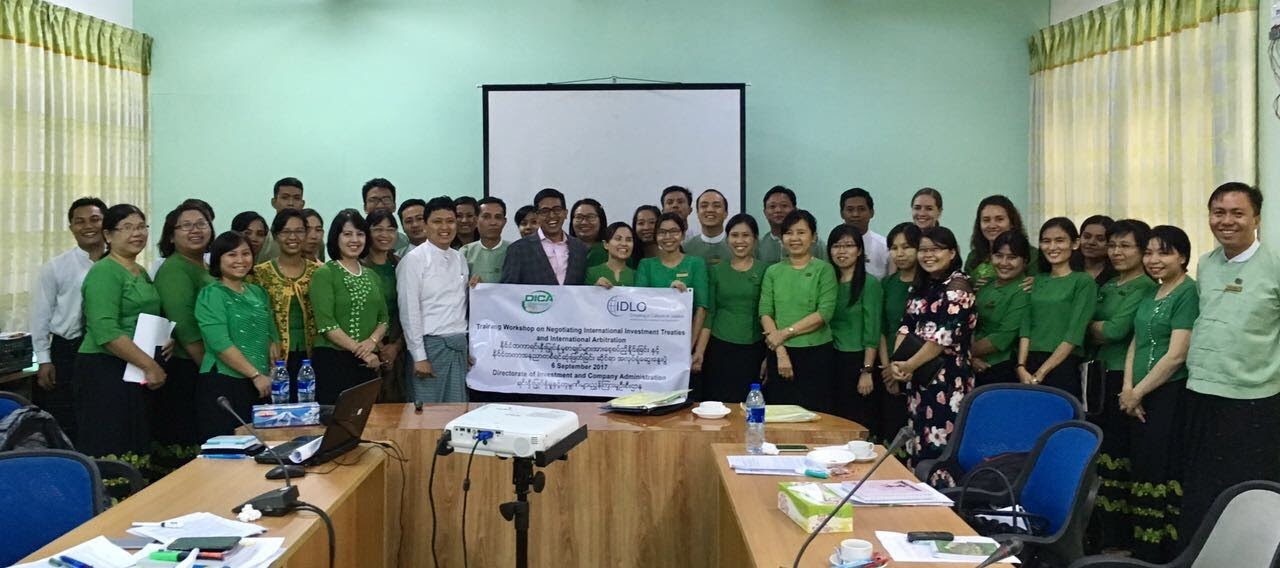
    Undertaking training for the Government of Myanmar

    7. Can you tell us about your PhD thesis on Investor-State Arbitration at Harvard as well as Leiden?

    Investor-State Arbitrations, sometimes you call Investment Arbitration, is a specialised form of International Arbitration. This is arbitration between a foreign investor and a sovereign state. Your Respondent is always going to be a Country or a State and the Claimant is a foreign investor. Here the foreign investor alleges violations of international law that often arise out of investment treaties or (domestic) foreign investment laws. And the dispute is resolved before an arbitral tribunal. Some examples in India are like Vodafone which brought its case against India arising out of a tax measure. This was under the UK-India investment agreement. That would be one example. These are cases against the sovereign so by nature, they tend to be highly political and long-drawn. It’s a lot of fun but there is a lot at stake. 

    At Leiden, my focus was on evidentiary standards in investor-state arbitration. This is a fascinating topic because international arbitration seeks to avoid detailed rules of procedure and evidence.  However, a tribunal is still bound by certain evidentiary rules.  The process was to identify what principles of evidence could be derived from the general practice of states and from public international law that would bind tribunals.  I was very privileged to receive the Academic Prize from the Belgian Arbitration Center for my research.

    My current research at Harvard looks at the intersection of human rights law and investor-state arbitration. Investment disputes often tend to implicate human rights.  For example, an investor may allege that a state policy implicates the right to fair and equitable treatment but the state may seek to justify its actions on human rights considerations.  My research seeks to unpack this tension between investor protection and human rights. 

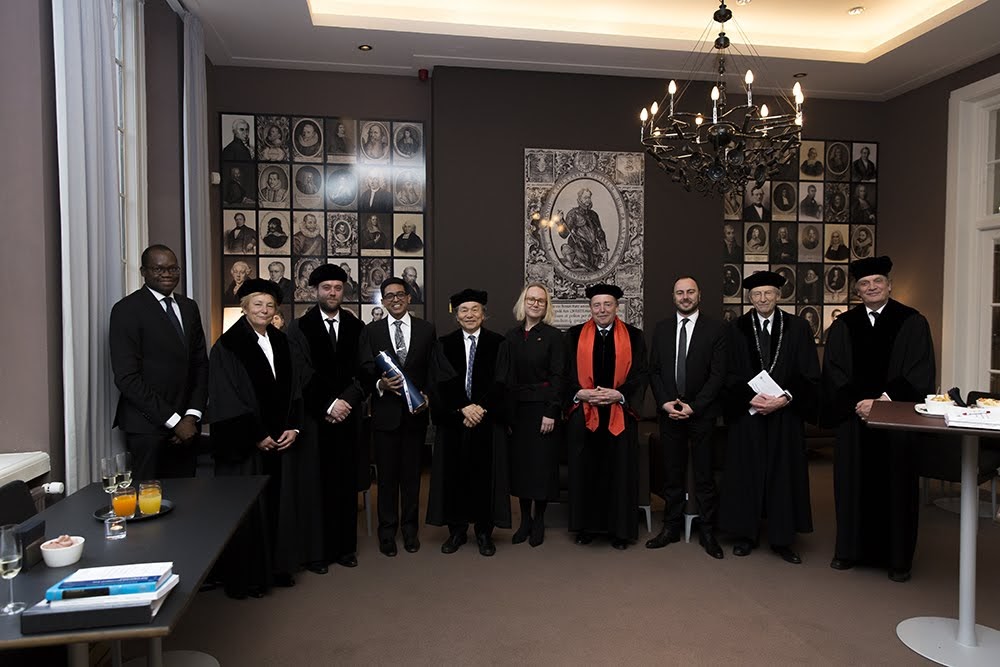
    The Leiden Defense
    The image is following the Leiden Defense

    8. You have been teaching at Columbia for nearly a decade now, and have taught at Madrid, Georgetown University, India, Harvard to name a few that pulled you towards it as given your qualifications you could have easily taken a corporate job or started practising given that you are qualified to practice in New York (U.S.), Washington D.C. (U.S.), England & Wales (Solicitor), Maharashtra and Goa (India)?

    I have always wanted to teach. As of this year, I have completed twelve years of teaching. Indeed, when I had started some of the students at Columbia University were older than I was. I enjoy it. It is something that I enjoy. I am a big believer in people doing things that make them happy. If something makes you happy, go for it. 

    9. You are a part of the Rising Arbitrators executive board, Consultant for the United Nations Office of the High Representative for Least Developed Countries, Landlocked Developing Countries and Small Island Developing States (UN-OHRLLS), you have published over 40 articles and spoken at over 300 arbitration events across the globe, what inspires these endeavours?

    Thank you, All these are things that are fun, I enjoy them. I like writing, speaking, and meeting new people. When you do something you enjoy, it does not seem like work. Some of these activities are also opportunities to make a difference and so I feel particularly privileged to have the opportunity to do so.

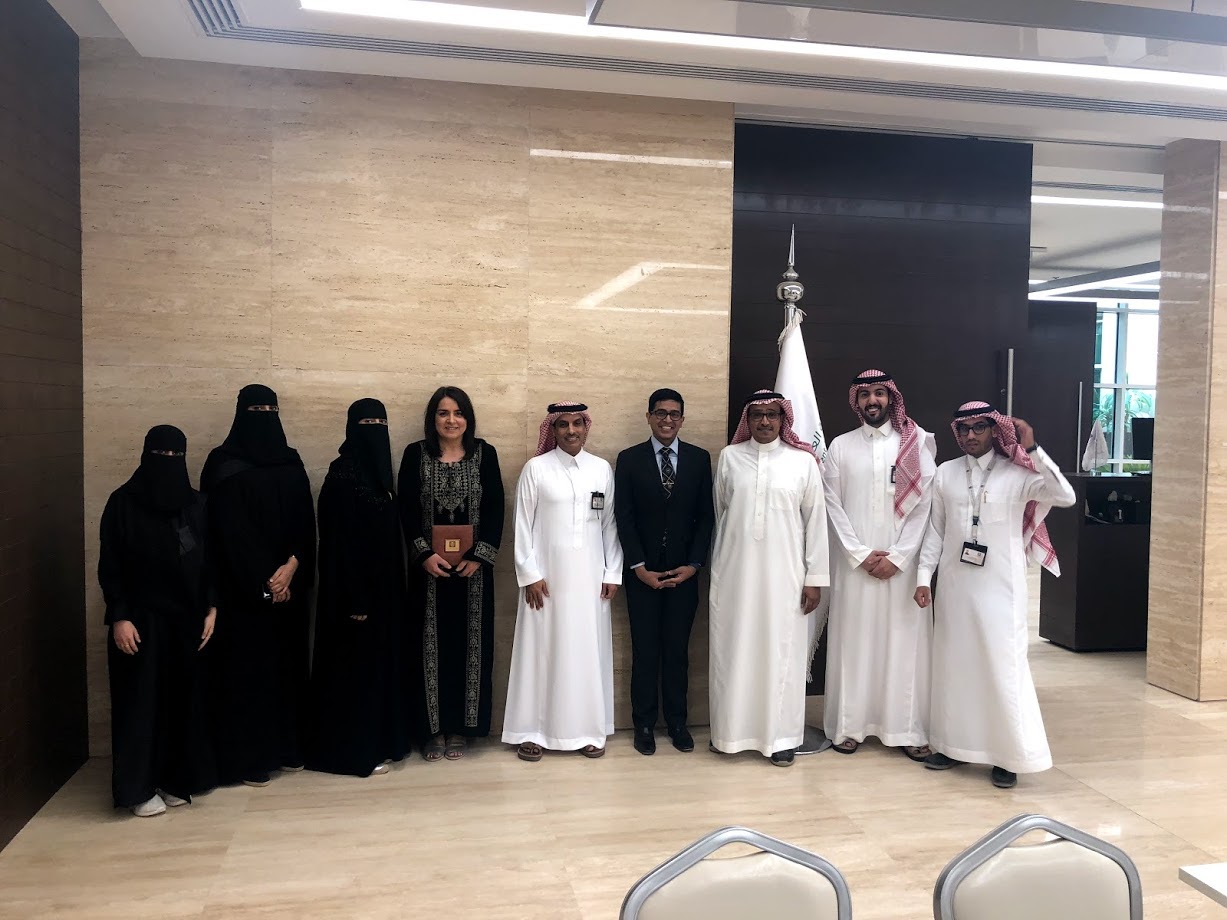
    Undertaking a Government Training with Representatives from Saudi Arabia (which is my country of birth)

    10. You started your journey as a law student in 2001, in GLC you have been part of this fraternity for 20 years now. What has changed for you in this passage of time?

    When I went to law school there was only one national law school.  NALSAR & NUJS had started and they still hadn’t had even the first set of students who had graduated. If we look at the legal landscape in India today it is very competitive. With the proliferation of law schools and people with ambition, it is a rather different reality. 

    Indeed, when I was in law school,  there was some amount of stigma in studying law- “You can’t do anything. So, you’re doing the law.” So, I think that would be the biggest change. There’s a lot more dynamism. The law students are a lot more dynamic and are a lot more willing to be enterprising and that’s a good thing. We are seeing the market evolve as well– for example, we are seeing greater think-tanks, non-profits, academic avenues in India. All this is great for our profession. When I graduated, legal education was still in the nascent stages. I look at it now though, you have people who are very thoughtful scholars today; people who are really engaged. That’s good for India at large. The profession is in better shape than when I was in it. So I look at it as a good thing. It’s becoming quite similar to the American model- very competitive, but the people who get into big law, so to speak, have a very steady career path set for them.

    11. How often have you been the only Indian in the room? Do you think silent racism towards Indians or Asians still persists or they’re still underrepresented in board rooms and classes?

    I think this is a great question and is worth addressing. Does racism exist? The answer is yes. Does racism exist against Indians in the law field in the west? I think the answer to that is also yes. It may not always be direct or overt but it does exist. If we look at the United States, Indian Americans have done extremely well in business, science, technology, engineering. That has still not been the case for the legal profession. But hopefully, things will change and we should always strive to do two things. First, we should always be aware of the privileged position that we are in and we should try, whenever we see bad things happening, to stop it. We’re lawyers and we are in a privileged position to stand up to injustice. There are people who don’t have that, both in India and in the US, and it’s important for us to stand up for injustice (this can often be taking a stand against innocuous sexist or offensive stereotypes). The second point I would just mention is, last year in the US (although this is not unique to just the US), you looked at violence against African Americans and then Asian Americans, which really got us to reflect on the inequities that exist even in our profession. We, therefore, launched an initiative called REAL- Racial Equality Arbitration Lawyers and one of our goals there is to advocate and give access opportunities to people who otherwise don’t get it. We give a lot of scholarships to attend arbitration events which can often be very expensive. I would encourage the viewers to look at this if they’re interested in arbitration, these are put on our LinkedIn Page: https://www.linkedin.com/company/real-racial-equality-for-arbitration-lawyers.  We are free to join the organization so if you are interested, consider signing up.

    12. What are a few pieces of advice you’d like to give to students or lawyers who want to pursue foreign education through scholarships?

    First, You need to start the planning process early. There will be an academic component and there will be an extracurricular component, both are important. Make sure you’re not doing one at the cost of the other. Sometimes you see people who have done like 15 moots, leadership positions in many organizations but grades are mediocre or you see people who’ve only focused on grades and done nothing else. So my suggestion is to find a good balance. 

    Second, have a nice consistent narrative to tell. Can your narrative change? Yes, it can. Tell it in a manner that’s interesting, that’s personable, but reflect a little bit on your story. 

    Third, pay particular attention to scholarships and see the requirements that they have as well as the deadlines. 

    Fourth, access your financial situation and make an individual assessment of whether or not it makes sense for them to pursue higher education if you have to take out a loan. Be prepared for the best and worst-case situation. Jobs outside India are few and far between and highly competitive.

    Finally, consider the visa reality. This is probably one of the areas that are not within your control. This is increasingly becoming harder and harder, as countries are restricting immigration. So when you’re doing your pros and cons, you really need to factor in this reality.

    13. It is known to us that apart from Hindi and English, you are fond of Urdu and have learned Spanish and Sanskrit as well, what are some of your favourite reads?

    I think with time my interest has been becoming greater and greater in reading books on history. And my specific focus, not exclusive, but the specific focus has been on reading about different aspects of Indian history. When you don’t live in India this is one way to remain connected with your heritage. I am currently reading the Age of Wrath by Abraham Early that discusses medieval India (even though the book focuses on the Delhi Sultanate there is a very interesting discussion on the Vijayanagara empire as well). 

    14. In your opinion, how will pandemic change the way we perceive education? Do you think it has achieved the philosophy of the world being a big classroom?

    The pandemic has definitely caused a lot of suffering. I will acknowledge that at the outset. Having said that, some good things have come out of it. And one good thing that has come out has been embracing technology. There is something to be said for in-person meetings but there’s something to be said for having opportunities like this where you can talk to people across time zones, across different countries. So, hopefully, post-pandemic, we keep some of this alive. The world has become a lot closer.  

    15. How does it feel to be a source of inspiration for so many people? 

    I am very grateful to hear this and am touched that people feel inspired.  I believe that my journey has still just only started 🙂 

    16. What would be your parting advice to students and everyone dares to dream big?

    Have a plan and go for it. Dream big and also be realistic. But there’s nothing wrong with aspiring. Take advantage of avenues around you. Avenues like Law Sikho didn’t exist when I was in Law School. Take advantage and be positive, failures will happen and that’s fine. To quote Kelly Clarkson- ‘What doesn’t kill you, probably makes you stronger. Therefore, take charge of your career.  

  • Amrutha Vittal, Partner at Peritum Partners, shares her experience as a corporate lawyer and her advice for LLM aspirants

    Amrutha Vittal, Partner at Peritum Partners, shares her experience as a corporate lawyer and her advice for LLM aspirants

    This interview has been published by Ayush Verma.

    Amrutha Vittal graduated from the School of Excellence in Law, Chennai in the year 2014, and thereafter did her Masters in Corporate and Financial Services Law from the prestigious National University of Singapore in 2015. She has been associated with a couple of law firms on their transactions and advisory wing. Currently, she is a Partner at Peritum Partners, a boutique law firm founded by her friends from the School of Excellence in Law. 

    What inspired you to choose law as a career?

    Coming from a commerce background, my primary focus was to do something different and most of my father’s friends are leading advocates in Chennai. Over the years interacting with them and trying to understand how the legal system functions in India fascinated me towards taking up a career in law. At this juncture, I must convey my heartfelt gratitude to my parents, who have and are being the backbone to every little step I take professionally.

    What were your reasons for deciding to pursue a masters degree right after college, and what went into choosing the right university?

    Once I decided to take up law as my profession, doing masters was always on my bucket list. When I was offered a seat at NUS immediately after my graduation, the only point of contemplation was whether to take it up immediately or revisit this post after a year or two of work experience. But considering the other factors also falling in place, I decided to give it a try for what they say – opportunity knocks the door only once. I decided to open the door and explore the opportunity. 

    How has the experience at NUS shaped you as a professional in the legal field?

    I must thank my professors at NUS for enriching my knowledge further in certain branches of law. Especially Prof. Sornarajah, Prof. Lawrence Boo, Prof. Lin Lin and Prof. Sandra Boysen and of course, the “cool” dean, Prof. Simon Chesterman. I am honoured to have been their student. NUS gives you a wholesome exposure; it’s the best of both worlds. And Arbitration and Banking being my core focus, I think, NUS offered the best of knowledge.

    According to you, what is the relevance of a master’s degree in one’s career in the legal profession? Do you believe continuous education irrespective of your position in your career is essential?

    I see it as an added advantage. But the advantage needs to come in support of your professional goals. I have seen both scenarios, wherein the most successful legal professionals do not have a masters tag and also people with a master’s degree who are still trying to put the pieces of the jigsaw puzzle together. What matters is the purpose and ultimate goal of doing the masters.

    Education, rather, staying updated with the law, is more pertinent in the legal field. So, I am of the view that education and one’s position in their career go hand-in-hand. The more you keep yourself updated with the law, the better you represent your position in your career.

    We have witnessed that there is a huge section of students and professionals who believe studying in a foreign university will give them an edge over other candidates; have you noticed this bias?

    Yes, I certainly have. This has been a trend back from the days when I had joined my under-graduation. I think the infrastructure and exposure available with foreign universities (not to exclude the brand value) are key-factors for students to move towards foreign universities, so also is the term of the course. But that said, legal education in India, as it stands today, does give a tough fight to the curriculum and exposure of foreign universities. But changing these preconceived notions in a student’s mind might take some more time. 

    You have worked in multiple law firms; if you could change something about the firm culture in India, what would it be?

    Work timings perhaps. Doing smart work is always better than hard work. I think it’s a variable though and it really depends on how the person associated takes it.

    What prompted you to work with law firms exclusively and not venture into litigation?

    I interned with a senior advocate at the Hon’ble Madras High Court for 3.5 years of my college life. While I did enjoy visiting courts and understanding the process right from filing an AOS to listing a Writ Petition et al, on self-analysis and considering I was very confident about my decision to go for a  master’s, I believed Transactions would be my cup of tea. On a lighter note, I don’t have to be up for a 10 am mentioning, but more flexible to do a 1 am negotiation call!

    The decision of establishing your law firm – was it a calculated decision or a leap of faith?

    Peritum Partners is the brainchild of my other 2 partners, Mr. Karthik Jayakumar and Ms. Durga Bhatt. I joined them shortly after Peritum was born (incorporated). But to answer this, I would say it’s both a calculated decision after a trial-and-error test and a leap of faith based on our esteemed clients and the collective confidence we have as Team Peritum Partners that keeps us going!

    Could you shed light on the kind of work you undertake as the Partner at Peritum Partners?

    As one of the Partners, I advise start-ups on their investment requirements, right from drafting of term sheets to the drafting of transaction documents, negotiations etcetera all the way until closing. I also advise clients who want to enter into any M&A, PE, VC, Joint Ventures and my advisory services extend to opinions on the Companies Act, FEMA and SEBI Regulations.

    What have been some of the most notable cases of your career?

    Corporate lawyers see cases as deals. Of the many deals I have either led or worked on, the one we recently closed was one of the most exciting deals. We represented Juicy Chemistry, a completely organic store in the D2C segment in its Series A funding. This deal was more special inter alia, working during a pandemic, a very fast-paced yet efficiently done transaction and this is one of the largest investment deals in its segment. 

    It is often known that women have to take a step back for their families. How would you like to address the requirement of career breaks for lawyers?

    Well, that really depends on how a woman sees it plus the kind of support she receives from the family. It is a very subjective topic. I see career breaks, rather short sabbaticals, as more of a phase of self-evaluation, basically to take stock of where one’s life is leading towards, both personally and professionally. It is like the tea-break one takes during long road trips. To stop, take a breather, and look at how to cover or explore the road ahead in a given time crunch before dusk sets in.

    The ongoing pandemic has rocked many boats; what kept you sailing? Being a fairly new law firm, how did you keep going?

    Like I said before, it’s the trust of the clients and the team’s constant and consistent hard work, patience, confidence and want for doing more good work that kept us going. The new normal is well put into practice by all of us at Peritum Partners.

    What do you look forward to most now in terms of your career?

    Working on more exciting deals and making connections, for collective growth. Making the lives of people easier by addressing their legal concerns in a simplified yet effective way has always been Team Peritum Partners’ motto. We strive daily towards this motto.

    What according to you is one branch of law that is gaining momentum and young lawyers can work towards making their niche?

    TMT (Technology, Media and Telecom) is an interesting area that is attracting a lot of young lawyers.

    Lastly, any parting advice for our readers?

    “Arise, awake and stop not till the goal is reached” said Swami Vivekananda. This has been the principle that has kept me going. Especially in these times of “new-normal”, being consistent and focussed are the paramount factors.

  • Shruti Tripathi, Assistant Public Prosecutor, CBI, on preparing for the exam and securing rank 2 in JRF exam

    Shruti Tripathi, Assistant Public Prosecutor, CBI, on preparing for the exam and securing rank 2 in JRF exam

    Shruti Tripathi graduated from ILS Law College, Pune in 2016. Right after graduation, she did her Masters in criminology from Banaras Hindu University.  She also secured rank 2 in JRF/ NET exam conducted by UGC. She then went on to pursue UPSC(CBI(APP)). She shares her valuable insights with our readers on her experience along with advice on how to crack the exam.

    In this interview, she talks about:

    • Her reasons for choosing law.
    • Her strategy for the preparation of the UPSC(CBI(APP)).
    • Advice to prospective law students aiming to make a career in UPSC(CBI(APP)).


    HOW WOULD YOU LIKE TO INTRODUCE YOURSELF TO OUR READERS?

    I thought I didn’t need introductions anymore. Anyway, jokes aside, I would simply describe myself as a stoic. As a day-dreamer and a sloth, I am quintessentially an ambitious soul trapped in a lazy body. My mind is a battleground, wherein there are more losses than wins. Proving people wrong at every step is an utterly satisfying feeling and continuing to do so is pretty much what sums up my existence right now.  I was supposed to keep it short, so moving on now.


    HOW DID YOU DECIDE TO PURSUE LAW?

    Looking at the hindsight I guess it was destiny, really. I was a Science group district topper from Varanasi. The entire North Indian neighborhood expected me to pursue engineering but, I was always drawn towards the enigma that my father’s chamber had to offer.(Yes! He was the Chairman, UP Bar Council, that time). And if I were allowed a bit of dramatics, Law was running down my family’s blood vessels and that’s how I happened to Law & ILS Law College, Pune happened to me. Don’t judge me for my bad theatrics, I am still learning.


    PLEASE TELL US ABOUT YOUR PREPARATION FOR JRF EXAM IN WHICH YOU SECURED RANK 2? WHEN DID YOU START PREPARING FOR UPSC(CBI(APP))?

    Honestly, I wasn’t really aware all these exams ever existed. Like every other legal aficionado, I had my eyes set at cracking my state judicial exams. I still have that dream, though. Nevertheless, like every other government sector exams which test the threshold of one’s patience, judiciary vacancy never came after 2016. So, the waiting period opened up the Pandora’s Box for me and I realised that there was more to law than just judiciary and litigation. Therefore, I started filling all the forms that I could manage and that’s how I ran into UPSC via CBI(APP)

    Since I had done my Masters in criminology from Banaras Hindu University, I was eligible for examinations for PHD and Assistant Professor, NET/JRF exams formerly conducted by UGC. The syllabus was similar to the judicial service examinations with a little modification. I qualified for Centre sponsored fellowship program(JRF) that awards scholarship up to 30k per month to the research scholars. So, I joined as a research scholar in BHU, shortly after being awarded JRF & started hogging on to that money: the money I never knew even existed.


    HOW DID YOU START PREPARING FOR THE EXAMS? DO YOU THINK COACHING IS A PREREQUISITE TO CRACK THIS OR ANY EXAM?

    Preparation for any competitive exams is a tough mistress and is notorious for going haywire, if executed without a pattern. While there isn’t any yardstick to articulate whether or not an individual will need a coaching, the secret recipe is the right form of guidance & a continuous thrust in the appropriate direction, to keep one motivated throughout the entire preparation period(As it gets really frustrating after a point of time).

    Personally, I joined an institution, Varanasi Law Academy, managed by Praveen Dubey sir. Honestly, the kind of command he has over all the subjects including the ready-to-use dossier on the ever increasing career alternatives in legal field is quite enthralling.

    WHAT WAS THE ROUTINE YOU FOLLOWED EVERYDAY THROUGHOUT THE COURSE OF YOUR PREPARATION?

    It was just get up, eat, sleep, and repeat. Adjusting study routine somewhere in between the important endeavours was the arduous task. Sincerely, preparation is all about wasting time and then end up feeling guilty about it. No matter how much you study, there’s always this humongous section of the day, where you didn’t. Each day the fight was to atone for that lost stretch.

    On an average Day, I stole more time from the first half of the day for tough concept based studies & learning gig, while latter part of the day was devoted to making notes and solving question papers.


    WHAT WAS YOUR STUDY PATTERN? PLEASE MENTION SOME OF THE BOOKS YOU REFERRED TO AND HOW DID YOU GO ABOUT PREPARING FOR EACH STAGE OF THE EXAM?

    It might sound preachy, but success indeed knows no shortcuts. Neither notes, nor any coaching materials are going to help you unless you go back and do it conventional way, that is, the Textbooks. Any book which resonates with your style & understanding level is a good book.

    I referred Takwani for Administrative law and CPC, Pillai for IPC, Avtar Singh for evidence and contract law, H.O. Agrawal for international Law & so on and so forth. I prepared my own notes, conducive for my slow processing brain, and would suggest everyone to do that, for law at least.


    WHAT DID YOU DO TO KEEP YOURSELF MOTIVATED ALL THE TIME DURING THE COURSE OF PREPARATION?

    As I said the primary Fillip to my Preparation module was My Teacher, My guide, My mentor, Praveen Sir. Another pillar to my vital mental sanity was & is my Mother, Anita Tripathi. I am just her conceptualised handiwork and owe everything I have, to her endurance and unwavering willpower.

    For the other times where my mind gave up on me, I tried indulging myself in my poor musical taste and gulping down whatever I got. Having a cup of coffee by the window on a rainy day with my favourite author was therapeutic enough to get me through worst of days.


    COULD YOU PLEASE GIVE SOME TIPS TO THOSE ASPIRANTS WHO ARE PREPARING FOR THIS EXAM? HOW SHOULD THEY GO ABOUT PREPARING DIFFERENT SUBJECTS LIKE GENERAL AWARENESS, OPTIONAL PAPER OF LAW?

    There are no shorthand tips when it comes to exams like these. All I can say is having a robust dominance over the bare acts of all the subjects will give an assured and unqualified edge to the candidate over others. For remembering bare acts, I suggest all the novices to start by splitting the subjects into batches and then having it off pat by the correlation method. That would make it easier and less tiresome.

    General awareness, well, I am sorry for the cliffhanger there, but that’s still a sixty-four dollar question for me too. You got to study all your history, geography and economy and current affairs and yet have to pray to be fortunate enough to be able to touch those minimum qualifying marks. At least that’s how it was for me.


    PLEASE TELL US ABOUT HOW DID YOUR INTERVIEW? HOW SHOULD A LAW STUDENT APPROACH THE INTERVIEW FOR THESE EXAMS?

    Haha! I totally savaged my own interview. I still remember passively crying over how bad I was in that room. One experience that I took back home that day was, that no one can prepare you for interview. Inside that space, in front of the panel, you forget that you were told not to be nervous, or to sit straight or not to fidget with hands & you are back to being yourself. And there’s where the key to cracking any interview is, my friends, be you.

    Cliché as it may sound, but that’s what helped me. So, prepare for that panel since day one of your preparation. Act like you have been shortlisted & have to appear before a panel the day after so that the day you enter that room, which you definitely will, you are just yourself; the sheer perfection.


    WHAT WOULD BE YOU MESSAGE TO THE LAW STUDENTS WHO WANT TO PURSUE THEIR CARRIER IN THE FIELD OF LAW?

    Notwithstanding the fact that I don’t see myself as someone who could remotely give a message of great or any consequence for that matter, I’d surely like to write off my experience for future references. I’d suggest don’t be prejudiced against or oriented towards a particular career option. There are plethoras of option we aren’t conscious about. Also, don’t judge your success on the parameters of others, that’s a trouble-free road to depression & frustration; tread on your own risks. Be vigilant; be assiduous while simultaneously being indolent and blithe.

    Here’s me signing off without further ado. Hope you find something helpful or entertaining, to the least, in the excerpt.


  • Rahul Bajaj, Associate, Trilegal, on being awarded prestigious Rhodes Scholar, and making the Legal Ecosystem Disabled-Friendly

    Rahul Bajaj, Associate, Trilegal, on being awarded prestigious Rhodes Scholar, and making the Legal Ecosystem Disabled-Friendly

    Rahul Bajaj graduated in law from the  University of Nagpur in 2017. He has also secured the first position in the B.A. LL.B. course. He is the 2017 recipient of the prestigious Rhodes Scholarship. This scholarship is awarded only to five Indians each year to pursue their postgraduate education at the University of Oxford. He is currently working with Trilegal as an Associate.

    In this interview, Rahul talks about: –

    • His journey towards becoming a Rhodes’ Scholar;
    • Encouraging more persons with disabilities to join the legal profession and;
    • His recruitment at Trilegal


    HOW WOULD YOU LIKE TO INTRODUCE YOURSELF TO OUR READERS?

    First of all, thank you very much for giving me the opportunity to share my thoughts on your wonderful platform. I have never been one for crisp and pithy writing, but I’d say that I’m a 24-year-old lawyer from Nagpur. I enjoy reading, travelling, acting a little silly from time to time, learning about new cultures and swimming (although I barely know how to swim).


    WHAT WAS YOUR FIRST REACTION ON LEARNING THAT YOU ARE BEING AWARDED THE PRESTIGIOUS RHODES SCHOLARSHIP? DO YOU RECALL THE FIRST FEW DAYS AND THE INTERVIEW? WHAT INSPIRED YOU TO APPLY?

    You’ve packed a lot of things into that question. Let me answer your question in a chronological order, based on the order in which each of these events took place.

    I had no plans of applying for the Rhodes when the application window opened last year. In fact I didn’t even know when the application window opened until I decided to apply. While I have always viewed myself as someone who is sure-footed and confident about their abilities, I didn’t think I had any chance of getting the Rhodes. This was principally because of two reasons. First, I didn’t go to an NLU, and almost all Rhodes Scholars from the field of law, in the last two decades have been NLS or NALSAR graduates, with some notable exceptions. Second, I wasn’t sure if the selection committees were prepared to select a student with a disability, not just because of stereotypes, but also because of the very concrete limitations my disability poses and tackling them, even in Oxford, would entail time and effort. I think my inhibitions are best captured by what James J. Barnes, the first blind person to get the Rhodes says in his memoirs:

    “… I know that I can take no credit for blazing the trail, but I have always given my selection committee members, both at the regional and state levels, much appreciation for not eliminating me out of hand. Clearly they looked behind the superficial but very real limitations I possessed and judged the whole personality.”

    My friend, Dhruva Bhat, who got the Rhodes in 2016 was the first person who encouraged me to apply. I then consulted another close friend who told me that there was no one more deserving to get the Scholarship. So I figured that there was no harm in applying and, given that the Scholarship had been awarded to a student from a relatively low-ranked NLU the previous year, my chances were not unquestionably foreclosed.

    The interview panel for the final round was headed by Gopal Krishna Gandhi who went out of his way to make all interviewees feel comfortable and at ease. I had prepared very rigorously for the interviews, with many rounds of mock interviews, so I found the actual interview to be quite manageable from that standpoint.

    My first reaction was one of complete disbelief, followed by unrestrained elation, followed by the recognition that this is just one milestone on a long road.


    HOW DID YOU GO ABOUT WRITING YOUR RÉSUMÉ AND MOST IMPORTANTLY, YOUR STATEMENT OF PURPOSE FOR RHODES SCHOLARSHIP? WOULD YOU LIKE TO SHARE YOUR SOP WITH US?

    Insofar as the resume is concerned, I just modified the resume that I already had to fit their requirements; I structured it in such a way as to make good the point that I meet the four criteria that they look for. Insofar as the SoP is concerned, I thought long and hard about how I wanted it to be. Instead of sharing the text itself, I think it would be more helpful if I share the process of crafting it.

    I wanted to not only highlight my accomplishments and successes, but also make the point that they were all achieved despite being blind since birth. Some might read this and think that I was playing the ‘blindness card’, but my thinking is that someone who has achieved the things that bring you within the zone of consideration for the Rhodes despite being blind has definitely had to work a lot harder to mitigate the impact of a significant objective impairment. So I began my SoP by talking about the challenges that I faced as the first blind legal intern at the Supreme Court working for a judge, through an anecdote. Against that backdrop, I outlined my relevant accomplishments in the areas of IP and constitutional law, in which I am most deeply interested, and closed by trying to drive home the point that my accomplishments, coupled with the odds that I have had to face in achieving them, make me a great fit for the Scholarship.


    DO YOU NEED TO HAVE RECOMMENDATIONS AS WELL? WHAT KIND OF PROFILE IS NEEDED WHILE APPLYING FOR THE SCHOLARSHIP?

    Yes, you need six letters of recommendation – preferably three academic and three extracurricular. I chose my referees in such a way as to be able to make a cogent and compelling case for the proposition that I met all the four criteria that they look for – intellectual ability, ability to use your energy to the full, ability to empathise with and protect the weak and moral force of character and instincts to lead. My referees were Professor Shamnad Basheer, Swaraj Barooah, Justice UU Lalit, Professor Shirish Deshpande, one of my law professors who is himself blind, my constitutional law professor who I’ve described in response to a subsequent question, Professor Varsha Deshpande and my school principal.

    I think anybody who feels that they meet these four criteria should give it a shot, despite whatever grave flaws they might feel their profile suffers from.


    WAS THERE ANY INTERVIEW ROUND? IF YES, HOW WERE YOU PREPARED TO FACE THE PANELISTS? WHAT KIND OF QUESTIONS WERE YOU ASKED?

    Yes, there were two interviews – one technical and one final. The technical interview focuses on questions about: (a) your areas of interest in the field of law; (b) your general legal ability; and (c) your awareness of topical legal and sociological issues. As I mentioned earlier, I had done a lot of mock interviews – in fact with three of the five scholars from the previous year that were very invaluable.

    In the technical interview, I was asked such questions as a question about a piece of research that I did in my internship with Justice Shakdher of the Delhi HC; why I got involved in IDIA’s programme for students with disabilities and what structural barriers they faced; how I thought IP and human rights could be balanced, based on a paper that I had written; if I thought that studying in my home town was a compromise that I had to make; and if my disability should form part of the calculus when assessing my candidature.

    In the final round, I was asked such questions as my views on the right to be forgotten which I had written about and unenumerated rights in general; my internship for Justice UU Lalit of the Supreme Court; the one fundamental transformation in society that I’d like to see; what my future plans were; and my interest in learning languages.


    WHAT WAS THE SELECTION PROCESS LIKE? WHAT WAS THE MOST CHALLENGING PART OF THE PROCESS? HOW DID YOUR LAW SCHOOL EXPERIENCE HELP YOU IN THE PROCESS?

    The process is divided into three parts – written submissions, followed by two rounds of interview, the details of which I have sketched above. The most challenging part, for me, was making the decision that I wanted to apply.

    As for my law school experience, I got a lot of flak when I said in my interview to Bar and Bench after getting the Rhodes that my college, Dr. Ambedkar College of Law, has a lot of scope for improvement and the manner of functioning leaves a lot to be desired. While I continue to maintain that belief, I think I would be doing a huge disservice and injustice to some teachers in law school if I don’t make a mention of their contribution in shaping my thinking as a lawyer. We had an excellent constitutional law professor, who, despite the dispiriting college environment, taught constitutional law with a tremendous amount of energy and passion and unparalleled power of articulation and helped cultivate my love for the subject. We had another great professor who taught us legal language and writing and labour law and devoted significant effort into helping us appreciate the nuances of the subject matter that we were taught. We had a couple of other good professors, too.

    Notwithstanding the above, I think traditional law colleges, such as mine, are characterised by institutionalised mediocrity, as Dr. Manmohan Singh once said. For a student of law who is interested in honing their legal skills and acquiring a deeper appreciation of the law, nothing can be more demotivating and frustrating than having to return home day after day after day because the college doesn’t want to conduct classes for some or the other specious reason or the students and teachers who help perpetuate this culture aren’t taken to task. I don’t say this to demean anyone or because I have an axe to grind, but because I think that there’s no point in the platform that I have been privileged to have been given by virtue of getting this Scholarship if I can’t use it to make a contribution, howsoever insignificant, in helping foster conversation on the issues that I care deeply about and sow the seeds of change.


    WHAT ARE YOUR PLANS AFTER YOUR POST-GRADUATION? WHAT KIND OF CAREER DO YOU ENVISAGE AFTER GRADUATING FROM OXFORD?

    I’d like to litigate in the areas of constitutional law and IP law. I’d also like to pursue a career in policy formulation alongside litigation.


    WHAT FIELD OF LAW DO YOU INTEND TO PURSUE AT OXFORD AND WHY?

    Constitutional law, human rights and intellectual property. These are the areas that I have developed maximum interest in, by dint of the opportunities that I have had in my career thus far.


    DOES THE UNIVERSITY OF NAGPUR PROVIDE EQUAL OPPORTUNITIES TO PERSONS WITH DISABILITIES?

    You see, back in 2012, my family and me didn’t think that an NLU would have the wherewithal to accommodate a student with a disability. The only example of this happening was Moiz Tundawala, who had gone to NUJS and is in fact a resident of Calcutta, so he was a day scholar there. I have always attached great importance to maintaining high standards of excellence in academics. I was not sure an NLU would have an enabling environment to facilitate this. As we saw it, the choice was between being relegated to the fringes at a leading law school and thriving at a lesser known law college where I would have easier access to resources and more time to build my career in the manner in which I wanted to. Further, while it may have been possible for me to adjust, as I eventually did in the Supreme Court, the Delhi High Court, and several other places where I have interned, I was not the person then that I am now, so I didn’t really push the envelope on going to an NLU as assertively as I perhaps should have, in hindsight.

    Our concerns back then weren’t unfounded. Even today, the students with disabilities who are at the NLUS aren’t exactly welcomed with open arms. From faculty members who grudgingly accommodate disabled students at best and make them objects of pity or refuse to accommodate them at worst to registrars and staff members who adopt an adversarial approach when dealing with their needs; from peers who quietly distance themselves from you and are unable to embrace someone who is difference due to ignorance or prejudice to inaccessible infrastructure, the challenges faced by the disabled are large in number.

    That said, change is afoot in many places and we will hopefully see things improve. NLSIU recently admitted the first totally blind student in its 32-year-history and their Law and Society Committee has taken the lead on sensitising all stakeholders about the needs of the disabled.

    Insofar as my own college experience is concerned, as I studied in my hometown, I had access to all the resources I needed to study independently, which is what my legal education mostly boiled down to. My professors were also as helpful as they could be.


    WHAT IMPROVEMENTS DO YOU SUGGEST THAT THE COURTS NEED TO MAKE FOR ENCOURAGING MORE PERSONS WITH DISABILITIES TO JOIN THE LEGAL PROFESSION?

    That’s a very loaded question and probably warrants a separate interview. The challenges are many, and most notably include: (a) inaccessibility of documents, even digital documents; (b) inaccessibility of legal databases; (c) accessibility barriers on court websites; (d) absence of an institutionalised frame work to accommodate disabled lawyers; and (e) inaccessible physical infrastructure, lack of human assistance in courts and overcrowded courts in which even a sighted lawyer would struggle to find their way, let alone someone who is blind. People tell me: now you have digital access, doesn’t that solve your problems? The answer is that digitisation, if not configured with accessibility in mind, can help create and perpetuate barriers rather than breaking them down.

    I have filed an application in the Supreme Court to help effectuate some of these changes. You will hopefully hear about it soon.


    HOW DID YOUR RECRUITMENT TAKE PLACE AT TRILEGAL? IS TRILEGAL A DISABLED FRIENDLY PLACE?

    My recruitment happened by virtue of a PPO that I got after my internship at Trilegal. The answer to your second question would unequivocally be in the affirmative. I can cite several examples of the initiatives that they have taken for me: buying for me a more efficient OCR software; a computer that works better with my screen reader; and encouraging me to figure out ways of doing all the things that my able-bodied counterparts are expected to do.

    As a disabled legal professional, one obviously faces a variety of challenges, given that the working of the profession and the courts is not structured with you in mind. Despite this, Trilegal has done everything possible to accommodate me as fully as they can.


    WHAT WOULD BE YOUR ADVICE TO OUR YOUNG READERS WHO WOULD LIKE TO APPLY FOR RHODES SCHOLARSHIP IN FUTURE?

    I am not old or wise enough to give career advice to anyone. What I would like to close with is this beautiful quote from Marianne Williamson, which more eloquently and forcefully conveys my thinking:

    “Our deepest fear is not that we are inadequate. Our deepest fear is that we are powerful beyond measure. It is our light, not our darkness that most frightens us. We ask ourselves, Who am I to be brilliant, gorgeous, talented, fabulous? Actually, who are you not to be? … Your playing small does not serve the world. There is nothing enlightened about shrinking so that other people won’t feel insecure around you. We are all meant to shine, as children do… And as we let our own light shine, we unconsciously give other people permission to do the same. As we are liberated from our own fear, our presence automatically liberates others.”

    You may dismiss that as a lofty and cheesy expression of sentiment, divorced from the way the world actually works. But I think it conveys a profound message which is this: unless we are able to come to terms with the proposition that we have within us the capacity to achieve our goals and break down the barriers holding us back, how can we ever hope to convince others or translate it into reality?

    So my short message would be that, instead of focusing too much on the cards that you are dealt, try focusing on how best to play them; instead of focusing on what you cannot do, try focusing on what you can. This can hold one in good stead for pursuing any meaningful endeavour, and the Rhodes is no exception.


  • Shriya Maini, Advocate, Supreme Court of India, on Independent practice in law, studying an International LLM from the University of Oxford, and writing research papers

    Shriya Maini, Advocate, Supreme Court of India, on Independent practice in law, studying an International LLM from the University of Oxford, and writing research papers

    Advocate Shriya Maini practices at the Supreme Court of India, the Delhi High Court and District Courts at New Delhi. She specialises in Dispute Resolution and as an unabashed feminist particularly enjoys criminal litigation.

    Ms. Maini is a graduate of Gujarat National Law University, Gandhinagar. She joined the Dispute Resolution team of erstwhile Shardul Amarchand Mangaldas and Suresh A. Shroff, as an Associate in their law firm. Subsequently, she went ahead to pursue her Bachelors in Civil Law (LLM) on a full scholarship namely Dr. Ms. Ambuti Salve Scholarship 2014-2015 at the University of Oxford, United Kingdom. Ms. Maini is also a recipient of the Oxford Global Justice Award for Public International Law, 2015 – 16 which gave her the opportunity to assist the President of International Residual Mechanism for the Criminal Tribunals (“MICT”) at The Hague, Netherlands. Currently, she serves as Visiting Faculty at National Law University, Delhi and Lloyd Law College, Noida. Ms. Maini is an independent consultant for International Law and Legal advisor at the LexQuest Foundation.

    Oxford is a dream college for any law graduate. However, what is life at Oxford like? What happens once you have earned your Oxford degree? Is Independent Practice an option? Being an independent litigator or founder of a firm, in the bubble of the bar, is a pretty big deal. Most who step foot in litigation, often only on nominal remuneration (if any) doled out by well-paid senior lawyers, the dream of the day they can finally set up their own shop. While it might seem to outsiders like all it may take to become a successful advocate is talent and passion, the skills required lie in the business realm more often than in legal.

    In this interview we speak to Ms. Maini about:

    • Tips on writing SOPs and Recommendations required to bag scholarships for foreign LLMs;
    • Masters in Law from the University of Oxford focussing on full scholarship;
    • Transition from a law firm job to Independent Practice;
    • Importance of writing research papers.

    HOW WAS YOUR EXPERIENCE AT GUJARAT NATIONAL LAW UNIVERSITY (“GNLU”) AND WHAT WOULD YOU SAY THAT YOU DID DIFFERENTLY FROM THE REST OF THE STUDENTS TO GRAB FOUR GOLD MEDALS AND EVENTUALLY ADMISSIONS IN BOTH OXFORD AND CAMBRIDGE?

    GNLU was a lovely experience, not only in terms of my professional and academic learning but also personal growth. In college, one is straight out of school and is looking for an avenue where he/she wants to achieve the skies, learn something new, besides of course, making new friends. Hostel life and classroom studies can be real tough taskmasters especially in a place which is far away from what we all call our comfort zone – home. What GNLU taught me was how to adjust well in hostile situations and share my knowledge with possibly everyone around. I also think the quality of the law school really matters, be it their faculty, teaching style or available course options. A great idea would be to speak to as many seniors and alumni and gather information online as to what each law school distinctly offers. When you are picking your college even while filling in your CLAT preferences, be very sure of what you want and where do you want to go. Don’t just follow the names, see for yourself what you want to do, be it social work or firm job or Court practice. For instance, I was very sure that I wanted to litigate and hence, I chose a college closer to my hometown and made a conscious choice that Courts in Gujarat and Delhi could perhaps, help me find plausible internships.

    As for your second question, I didn’t do anything different particularly but I think the one thing that I plausibly did differently was that I paid attention in class. There is a current trend of sleeping through law school classes or being very casual about attending classes thinking that during exams, one can read right at the end and score well. However, I believe it is a great exercise to listen in class and make your own notes, supplementing them with a book perhaps for each subject – for instance say Kelkar for Criminal Law or C.K. Takwani for CPC. These individual notes for me turned out to be best possible sources to study for end-term exams which were subjective in nature. This is in my opinion is one of the easiest ways to score very well in almost every subject in law school (be it civil, criminal or corporate law) and achieve a very high CGPA!

    Another thing that I incessantly followed was writing well researched papers when I was doing assignments or projects at law school. I have converted a lot of them today into top quality publications which have been read world – wide and have helped me garner some great work as an Independent Practitioner and Consultant in Public International Law. So I would say take your projects very seriously and critique the law that’s currently in place. Pick a topic which is perhaps a grey area of law or a burning topic for that matter. These could also help you create some cutting edge research ideas which could set you apart from the rest in class.

    HOW DID YOU GET INTO OXFORD, WHAT ALL DID YOU DO?

    I think for admissions to Oxford and for that matter Cambridge as well, it’s very important that you plan well in advance. Should you want to start your studies the next year, I think it’s important that you start gearing up from August-September this year itself. Start collecting your recommendations, prepare a well-researched Statement of Purpose and apply before the scholarship deadline. To sum up, time management is one thing that you must keep in mind while making Applications to foreign Universities for the LLM course. I suggest it’s a great idea to make a chart or table of all the deadlines of various Universities (with and without scholarship) so that the application process becomes far more coherent and crisp. This is what I personally followed, besides carefully monitoring my Statement of Purpose and Recommendations.

    Another aspect to keep in mind is that when you are applying to a stalwart University like Oxford, it is always advisable to research well about the University and its courses offered. Another suggestion would be to speak to a lot of seniors and alumni who have been to Oxford because these are the only few who seem to know the things at the grass-root level. A quick Google search say of the University, any of the past Statement of Purposes uploaded therein could benefit you manifolds. This would give you a wide array of options to pick from and you could then craft an SOP or Recommendation Letter, suited to your own specific needs, depending upon the college. For instance, Oxford Recommendations and SOPs are very academic unlike a London School of Economics, which focuses more on the practical side of law. I had made up my mind for an Ox-Cam degree and hence, I prepared all my documents accordingly. My SOPs and Recommendations were very specific, academic and crisp alongside, distinctly explaining why I wanted to read which course at a foreign University only.


    WHAT WERE THE OTHER ACTIVITIES THAT YOU UNDERTOOK OTHER THAN WRITING AND PUBLISHING RESEARCH PAPERS?

    That’s a great question! I think these activities which you are referring to – that we undertake at law school form the very basis of the contents of any LLM application. Foreign Universities do not decide Applications solely on the basis of academic scores (which are fairly important) but they look for something extra, what I like to call the “X” Factor. These could be moot court competition, research publications, book or commentary writings etc. I was primarily focussed on mooting for public speaking came rather very easy to me. I participated in two moot Court Competition, the Manfred Lachs and Nani Palkhivala – both which dealt with my interest area – Public International Law. So, mooting for me was like learning the law and enjoying myself while doing just that. Infact, Public International Law is a field that I now constructively engage with on a daily basis. So, I would say, keep your focus intact and start preparing step by step, right from the first year depending upon where you see yourself in the next five years. Focus on your interest areas, be it civil, criminal, corporate or tax. This is how I used the mooting process to my advantage – I researched and learnt the law, developed court mannerisms and soft skills besides inculcating team spirit. Additionally, it is also advisable to engage in atleast one extra circular activity, be it painting, dance or music.

    Another activity that I undertook was attending conferences and research based events. This extensively helped me network and realise how communication is the key to success in this profession. I applied for internships and sought answers to my queries by sending e-mails to my seniors. Today, I receive requests on Social Media on a daily basis requesting information on a plethora of topics, be it my work at the United Nations or Oxford or the LLM Application process in general. I make it a point to take out some time and try and respond to as many students as possible.


    WHAT WERE YOUR CONSIDERATIONS WHILE APPLYING AT THE FOREIGN UNIVERSITIES AND WHAT MADE YOU CHOOSE BCL FROM OXFORD OVER AN LL.M. FROM CAMBRIDGE AND HOW ARE THE TWO ANY DIFFERENT?

    One of the most important considerations apart from academic scores is finding scholarship options while making LLM Applications to foreign Universities. Another consideration for me was place of convenience (England being closer to India than America), a specific law you want to study (International Law for me) or place where you want to practice eventually. Let’s go step by step: While applying for both Oxford and Cambridge, I was categorically focussed on applying for a common law university. It’s a good idea to keep your options open if you are not sure what you really want to major in. Apply for a general LL.M unless you are very keen to practice in a niche area of law, such as International Tax or Intellectual Property Law. I too opted for a general LL.M. with 50 subjects on the table so that I could pick my four most preferred subjects.

    As for differences between Oxford and Cambridge – the BCL course at Oxford looks at the law from a very academic point of view unlike Cambridge, which is more practice oriented. Oxford in general has a very theoretical approach to the law because you have a lot of Queen’s Counsels and Professors teaching on campus who have literally helped lawmakers create the law. So, Oxford in effect teaches you why the law i.e. the reasoning behind the formulation of a law. This is a very interesting approach because the same inculcates critiquing abilities in a student and help form arguments and questions of law subsequently in filing Special Leave Petitions for instance. Again said, the Tutorial system in both these Universities is a fantastic model from which our Indian Universities could benefit manifolds. During the tutorials, one writes a research paper critiquing the law, and the tutor gives him/her individual feedback in person. This teaches the students the art of formulating legal arguments, besides describing how the papers must be structured.


    YOU PUT A LOT OF STRESS ON RESEARCH PAPERS AND PUBLICATIONS. HOW MUCH IMPORTANCE DOES PUBLISHING OF A BLOG OR AN ARTICLE ON INDEPENDENT BLOG WEBSITES HOLD?

    Today, blogging has given the power and leverage to almost everyone to put their thoughts onto paper. When used effectively, this could be an easy and inexpensive gain for any Independent practitioner’s work. Like persuasive and binding value of judgements, if you publish an article in a legal journal, it carries more weightage than an independent publication on a blog-site. Hence, I would suggest either you write something so strikingly different on your own blog or write for a blog – site which has a good readership and is well known in the market. For Example – there is a very famous peer-review blog called EJIL which was started by the University of Oxford students. Today, the blog is very highly regarded and every two months, stalwarts share their views on International Humanitarian Law and International Criminal Law. If you have a publication on EJIL, that’s more prestigious than some of the journals as well. I believe, blogs – sites are the way forward – they are the best spaces for Advocates to work on, to enhance their knowledge and clientele.


    COULD YOU PLEASE TALK ABOUT YOUR APPLICATION FOR THE PRESENT STUDENTS?

    Out of the many who apply to Oxford, only a handful are selected, not because the others don’t have the marks or academic prowess but because their applications starkly lack content and structure. It is essential to be aware of the International standards and approaches when one is making such applications. The most important feature of your Application for an International course is an SOP – “Statement of Purpose”. When you draft an SOP you must state clearly why you want to join a particular University, the subjects you want to study or why do you want to study those subjects in that particular University only, perhaps, because the same are not available in an Indian University. Before making my Application, I thoroughly researched about the Universities that I was keen to apply to, their course modules and current as well as adjunct faculty. I request all of you to decide well in advance which are the subjects you wish to pick for your LLM – so you must know before making your Application which course modules you intend to read in which College. This process immensely helped me craft tailor-made Applications for different Universities and their courses. Additionally, I read my Application twice over prior to submission and applied well in advance, within the Scholarship deadline.


    WHAT IF A PERSON WANTS TO PURSUE THE SAME COURSE WHICH IS AVAILABLE IN A GOOD UNIVERSITY IN INDIA? WHAT SHOULD A STUDENT DO IN THAT CASE?

    I think it is important to realise and fathom the fact that we are still miles away to go when it comes to legal education. There’s a reason why people go out and study. I won’t say that there’s no good faculty in India but what they are doing out there is very different and there is no harm in learning from the foreign Universities how and what they teach. Today, many Indian Universities are collaborating with foreign ones for exchange programmes for their undergraduate students. There must be cogent reasons for the same. Should you compare the course modules that an Indian University offers vis-à-vis a foreign University, you will realize how far ahead they are in terms of teaching innovative subjects, hiring excellent practitioners to teach academic subjects and characteristically bright methods of teaching, such as the tutorial system.

     

    IS AN LL.M. FROM THE UNITED STATES OF AMERICA BETTER OR FROM THE UK? WHAT ARE THE MAIN DIFFERENCES BETWEEN THE TWO?

    The two are essentially very different in their approaches. The UK LL.M. is based totally on Common Law perspectives, though we study a fair bit of Civil Law. On the contrary, the US LL.M. is totally based on Civil Law teachings. This limits the scope of those who want to come back to India at some point in time and practice. So if you want to come back to the Indian Courts, I’d suggest it is always better to go for the United Kingdom. However, many believe that the American market is currently way more welcoming when it comes to hiring Indian students who write the American Bar exam post their LLM. Again said, they both have their own pros and cons.


    HOW IS THE PEDAGOGY AT OXFORD DIFFERENT FROM THE TOP UNIVERSITIES IN INDIA?

    My most favourite memory of the last few years is my time spent at the University of Oxford. This because studying at Oxford is a once in a lifetime opportunity. The environment is intellectually stimulating to the extent that it pushes you to excel, should you take it in the right spirit. It is a student’s city, full of the best minds from all across the globe, bubbling and bursting with knowledge. Even the Pubs and Bars have students lounging and discussing the law. My experience at Oxford taught me how to question and critique the law, without simply accepting and applying it. The teaching methodology at Oxford comprised of lectures and seminars (classroom discussions wherein questions were released a week in advance). We had a system of tutorials wherein we were supposed to write papers every month on topics for subject, only to be assessed and given feedback on in person by our teachers. This personalized attention in a Masters course is what makes Oxford the best of the best. It was inspirational for me to witness how the best University in the world functions, alongside keeping its humanitarian approach intact.


    HOW DID THE 100% SCHOLARSHIP AT OXFORD HAPPEN? COULD YOU TALK ABOUT WHAT HELPED YOU GAIN THAT SCHOLARSHIP?

    I think this is one question I can answer out of sheer experience and nothing else. I never had a Plan A or a Plan B when it came to doing the LLM. I had always decided that I was going to go out and study, and as far as the money was concerned, I knew it was a big amount but I really did not think too much about it while I was making the Application. The best advice that I can pass on is – Do not fret about the funding before applying for a Master’s course. Make your Applications first and alongside or subsequently figure out the funding options available. And the best way to do that is – APPLY EVERYWHERE POSSIBLE FOR SCHOLARSHIPS! This is what I tell all the students who come and ask me about any kind of scholarship questions. The best way to get a scholarship is to apply everywhere because what matters is that one YES, not those numerous NOs. A cent per cent scholarship (including tuition fees and living expenses) may not be easy, but it’s not impossible if you try hard. Almost every University application has a separate scholarship section. So, keep an eye out for these alongside the bursaries and grants that are doled out towards the end of the Application process. There are also numerous Indian donors who can help you out – be it Inlaks or Aga Khan. Please remember all the University linked scholarships have early bird application deadlines with an automatically linked funding application. Also, Universities like Oxford have multiple colleges, be it Exeter or Sommer ville. So, check if any Scholarships are specifically linked to your College. For instance, the Dr Mrs Ambruti Salve Scholarship was linked to Exeter College at the University of Oxford. I was indeed blessed to have received a full grant which included my tuition fees, travel and living expenses.

    Another tip that I give students is that your SOP must in a line or two stress on the need for funds factor. Make it clear and evident even when you are applying to the University that you are looking for funding. Do not feel shy or embarrassed about the fact that you are coming from a third world country, and probably you could do with some monetary help.


    HOW CAN ONE MAKE THE MOST OF A SHORT SUMMER SCHOOL COURSE AT OXFORD UNIVERSITY, MAY BE A MONTH’S COURSE? ARE THEY BENEFICIAL THESE KINDS OF SCHOOLS, OR IS IT BETTER TO GO ON A SCHOLARSHIP?

    I realize that I am on a public platform and I may be quoted if I say this, but I am going to be very brutally honest about it. From a very personal experience, I believe spending money on a month long summer school at a University in England or America is definitely not worth it, unless you have the funding available. I think one can easily enrol for diploma courses online or offline that are available at much cheaper costs in India, instead of these expensive foreign location based summer schools. Please do not spend your parents’ hard earned money, or even your own accumulated money on a summer school option which is only a month long. So, hold on to those green notes for a wiser option, maybe an LL.M.


    WE KNOW FOR A FACT THAT YOU HAVE WORKED AT AMSS BEFORE GOING FOR YOUR BCL. HOW DID YOU UTILISE YOUR TIME AT AMSS TO STEP INTO PRACTICE ?

    The workings of a law firm are very different from how independent practice works. The law firm culture teaches you qualities that practice wouldn’t and vice versa. The most important skill that I acquired from the law firm environment was communication. I learnt how to send out and receive formal e-mails to clients and arbitrators, how to make contacts, how to interact with people, especially client interviews. This is one skill I now utilise in my practice, a lot.

    The second skill which is law firm specific is meeting deadlines. In an independent practice set up, one can get pretty lazy and relaxed, seeking multiple dates for submissions. But the law firm environment teaches you to stick to deadlines because you have a senior to report to. The inherent structural hierarchy teaches you effective time management and smart client billing. These acquired skills are a boon for a practitioner who finds it hard to not only procure work but also bill decently well. I have purely used these skills to grow from one client into fifty more in an ongoing builder-investor dispute. Lastly, the law firm as a junior teaches you how to be resilient and churn out the first draft so that the same can be edited over a series of corrections. Now being in independent practice, I ensure that my drafts are read over and copyedited atleast thrice in the office/chambers before their submission in Court.


    IS THERE ANY POINT IN DOING AN LLM, IF YOU ACTUALLY WANT TO LITIGATE IN INDIA?

    I’m always asked this question because almost all those who cannot make it to an Oxford or Cambridge at the Masters level criticise it thoroughly, saying there is no use wasting a year, better practice in the Indian Courts. However, I do not at all agree with their views. This because the education standards, legal knowledge, command over language and critical thinking are approaches that are best developed at the Masters Level, for the focus becomes very specific on a single subject or topic. This tremendously enhances the aura of a lawyer for he learns how to question why the law. This is why most of the better Supreme Court lawyers in India have a foreign LLM degree. I can proudly say that I draft all my petitions from scratch, analysing precedents and even critiquing them at times, without cut copy pasting judgements. Small skills can go a long way in making a great lawyer. Foreign LLMs train you exactly in that direction and for that purpose. Additionally, foreign LLMs do give you special knowledge which general practice in Court would never. I was fortunate to read International Criminal Law during the BCL at Oxford and today, I teach that subject in Indian Law schools, be it Lloyd Law College or National Law University, Delhi. Indian Court practice wouldn’t have ever taught me the same!


    WHAT CHALLENGES DID YOU FACE DURING THIS TRANSITION FROM THE TOP MOST LAW FIRM TO INDEPENDENT PRACTICE ?

    While at Amarchand, I had waited too long to litigate and appear in Court. The law firm may be a great place for some but I had long realised it was not my calling. When I reached Court, I very well know that I was young and fresh. Noone would so easily entrust me with a brief right at the outset. So I taught myself how to run after work and not money. It took me a few months initially to find my feet but I think I managed rather very well. I was also in an advantageous position because I was a second generation lawyer. These privileges (as much as we shy away from them) do give us a Launchpad and I can never thank my father enough for the same. The best tip is – Do not run after money; lots of money will definitely come to you, at the maximum within a year or two if you’re passionate, hard – working and slightly lucky. Today, I am happy to pass on certain briefs due to paucity of time, only because I was initially hungry for good work and not just good money. Another challenge that one faces is finding work. Now this is the tricky bit. I would suggest you join a boutique law firm or maybe a senior counsel (though for only a few months) before you network for some good work.


    IS THERE ANY EDGE THAT YOU GET OVER THE PEOPLE WHO HAVEN’T DONE AN LLM SPECIFICALLY IF YOU ARE LOOKING FOR A JOB AT THE LAW FIRMS?

    Law firms and I have a very cynical relationship. Don’t get me wrong when I say this – law firms are essentially looking for those who can mechanically deliver on a daily basis what is required of them, may be a contract draft or a petition draft. So, they do not really look at an LLM or a Masters in depth knowledge with any respect because all they want is research and finding out almost every possible detail, without analysing or doing anything path breaking. Many enjoy the economic comforts and benefits of a law firm job and for all those, you can easily get the same with a Bachelor’s degree from India.


    HOW MUCH GPA IS REQUIRED FOR SECURING A PLACE IN A TOP LAW SCHOOL LIKE OXFORD?

    Good question! GPA scores are very important if you are amongst the top three or five in your college. During your Application process, play to your strength and do not forget to mention the same in your Statement of Purpose and Scholarship Application. I wrote almost everywhere that I stood first in my class and this turned out to be a great conversation starter during all my scholarship interviews, besides giving me a cutting edge and good impression. I stressed on how having a high GPA meant that I was one of the best students at my University and I too could bring something unique to the Oxonian high table. On the contrary, if your GPA scores are low, do not mention them unless asked and stress on other aspects such as extra – curricular achievements or books or publications.


    COULD YOU PLEASE GIVE AN ADVICE EACH FOR THOSE WHO ARE APPLYING FOR AN OXFORD LLM; THOSE WHO ARE TRYING TO GET INTO LAW FIRMS AND THOSE WHO INTEND TO UNDERTAKE INDEPENDENT PRACTICE?

    For Oxford Applicants, manage your time effectively and apply well in advance, and of course, flag your scholarship deadlines. Be consistent in your efforts to procure great recommendations from academicians and draft a heartfelt Statement of Purpose. The BCL is a course which you’ll never be able to undertake again in your life, so make the most of it once you are there.

    For Law Firm aspirants, intern at reputed firms all through law school and in a variety of subjects, be it civil, criminal or corporate law. Pick the one that you are most keen in for you have to practice it for a fairly long period of time, once in the firm.

    For Independent Practitioners, dream big to make it happen. Find your feet by interacting with seniors and lawyers alike, network well and be patient. Just run after work and not the money. The latter is bound to follow suit, that too soon.


    Credits : Mr. Manthan Nagpal for transcribing the interview.