Category: Higher Studies

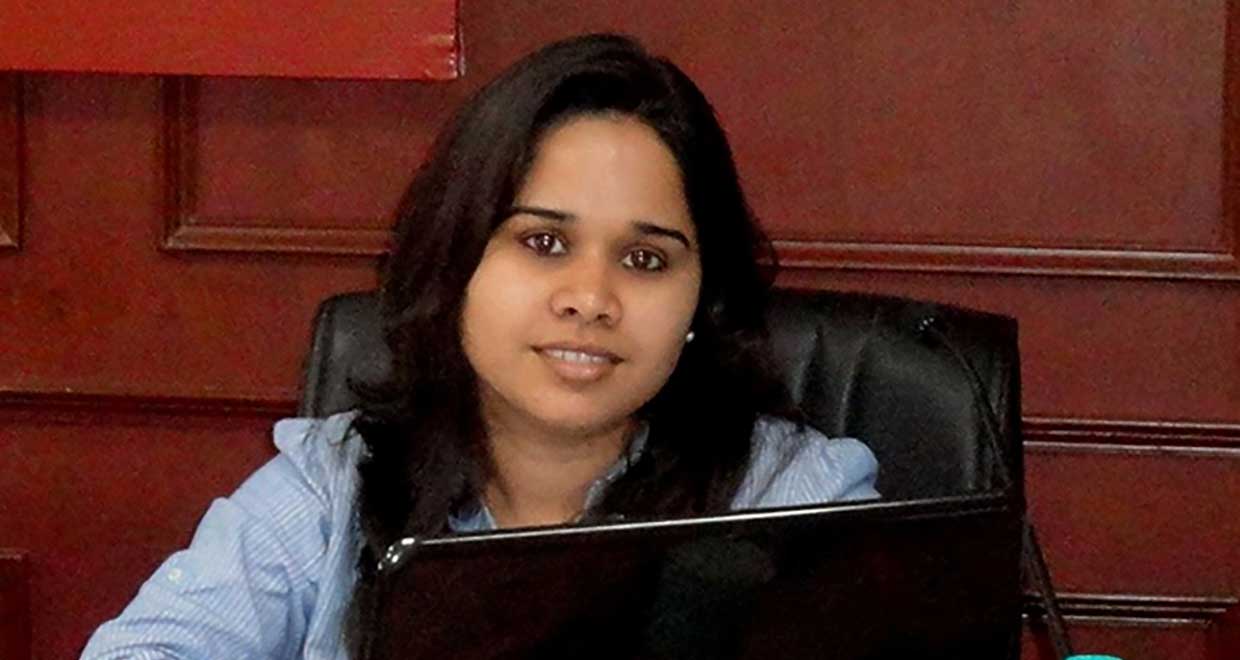
  • Arnavi Panda, Legal Advisor, Global Marketing Systems, on LLM from NUS, preparing for moots and working in shipping industry

    Arnavi Panda, Legal Advisor, Global Marketing Systems, on LLM from NUS, preparing for moots and working in shipping industry

    Arnavi Panda is a graduate from ILS Law College, batch of 2015. She then went on to pursue her Master’s degree in Maritime Law from the National University of Singapore. She has participated extensively in various national and international moots including  Philip C. Jessup International Law Moot and William C. Vis International Arbitration Moot. She is presently a Legal Advisor in Global Marketing Systems, DMCC, Dubai.

    In this interview she talks about:

    • LL.M from NUS
    • Scope of maritime law in India
    • Difference between universities in India and abroad


    HOW WOULD YOU LIKE TO INTRODUCE YOURSELF TO OUR READERS? PLEASE TELL US SOMETHING ABOUT YOUR PRE-COLLEGE LIFE?

    I’d introduce myself as a young lawyer, passionate about the shipping industry and the associated legal practice with a keen interest in arbitration and alternate dispute resolution on weekdays and an amateur Latin American dancer always keen to network over the weekends!

    Prior to college in Pune, I was fortunate to complete my high school life partly in Bombay and partly in Calcutta. The difference in lifestyle in both the cities was my first step to learning to embrace and appreciate diversity. I was always an energetic child, very keen to learn, very curious, a sports aficionado and always came home with scrapped knees or soiled clothes.


    PLEASE TELL YOU SOMETHING ABOUT YOUR COLLEGE LIFE? HOW INSTRUMENTAL HAS YOUR COLLEGE BEEN SHAPING YOUR CAREER?

    I spent five very crucial formative years in ILS Law College, a college I had always heard about being one of the oldest and prestigious colleges in the country for legal studies. It was an honor to have been accepted in face of the stiff competition and competitive cut-off marks.

    ILS as an institution gives its students great autonomy and flexibility to make their own decisions on the course of their career. With five hours of classes a day, I made the most of my leisure time by writing research papers, working on moot court competitions, assisting professors, organising intra-college events and interning at law firms to acquire practical experience. Not only did this serve as great career building exercise but also a character building exercise which taught me to take responsibility for projects I undertook, honed my advocacy and leadership skills and made me realise the importance of being a team player.


    YOU HAVE REPRESENTED YOUR COLLEGE AT PRESTIGIOUS MOOT COURT COMPETITIONS INCLUDING PHILIP C. JESSUP INTERNATIONAL LAW MOOT AND WILLIEM C. VIS INTERNATIONAL ARBITRATION MOOT. HOW DO YOU RECOMMEND ONE SHOULD PREPARE FOR THEM? DO YOU THINK MOOTING IS SIGNIFICANT FOR LAW STUDENTS?

    I have always believed the legal profession to primarily be an interactive profession with regular contact with various parties. Mooting not only hones one’s advocacy skills but also facilitates overcoming stage fear, builds self-confidence and develops public speaking and interpersonal skills.

    Preparing for Philip C Jessup and Willem C. Vis played a major role in my development as a professional for a variety of reasons. My team and I dedicated about six to eight months preparing for these events which required long hours, late nights, developing legal research skills and most importantly knowing how to communicate and work as a team which is an indispensable quality at the work place. I would advise aspirants of these events to firstly pick the right team members who are of a similar professional temperament and are willing to dedicate the same amount of time and effort to these events as they quite literally become your closest friends during this time. It is important to work smart along with working hard which would include seeking guidance from previous participants on what to expect and how to research, the materials to be referred to and how to structure the arguments and lastly prepare with several mock trials. We were fortunate to have very helpful seniors, colleagues and faculty staff who gave us time to review our submissions and prepare for the oral hearing. Preparing and participating for these events is very stressful and I commend my teammates who did not give up despite the odds and went on to qualify as quarter-finalists at Vienna in 2015. Like any other participant of the event, I will have to say that it is absolutely worth every late night, every sacrificed internship and every missed movie/dinner/party!

    While mooting does play a very important role in a law student’s life, I fully recognise that it may not be everyone’s cup of tea. However, I would encourage everyone to have some mooting experience during law school as a career building exercise.


    ARE THERE ANY MEMORABLE MOMENTS DURING YOUR COLLEGE THAT YOU WOULD LIKE TO SHARE?

    Five years of law school created a lot of pleasant memories but if I were to highlight the most memorable one of them all, it would have to be the day my team and I were adjudged as the winner of the intra-college international law moot court qualifying competition. This gave us the opportunity to represent ILS at the Philip C Jessup Moot where we were only two points short of qualifying to the World Rounds. The moto of the team was to only give our very best effort without expectation and consistently challenge ourselves to do better.

    This was a defining moment for us as a team and was testament to the fact that with sincere hardwork, effort and humility, sky is indeed the limit!


    WHAT MOTIVATED YOU TO GO FOR A MASTERS PROGRAMME? WHAT LED YOU TO CHOOSE MARITIME LAW AS YOUR SPECIALISATION?

    I come from a family of teachers who have always believed that education never goes to waste. In the present competitive market, selecting a niche and mastering it is important to establish oneself and it was with thought in mind that I was focused on completing my masters coursework before stepping into the professional job market.

    The shipping industry was an industry which I was familiar with since I was a child by virtue of my father’s affiliation with the Ministry of Shipping for the Government of India where he was the lead advisor and the IMO Representative for the Country on several occasions. The beauty of the maritime industry is that it is extremely multi-dimensional, involves a lot of cross-jurisdictional transactions and disputes and is extremely global in nature. I always knew that I would appreciate a contentious job a lot more than an advisory one and Maritime Law gave me the perfect avenue to combine my passion for international law, commercial laws and dispute resolution.


    WHAT WOULD BE YOUR ADVICE FOR YOUNG LAWYERS AND LAW STUDENTS LOOKING TO SPECIALISE IN MARITIME LAW?

    I would strongly recommend young lawyers to pick maritime law as an area of expertise for a variety of reasons.

    It is an excellent niche area to capitalise on. Given that India is a country with a vast coastline and there is significant Admiralty work which is always done in addition to the new Admiralty Act which was enacted last year; maritime law is a very promising career option.

    However, I would also recommend aspirants to seek internship experience with a firm practising admiralty law to get an insight into the industry to make an informed decision. It is complex; it is contentious; it is challenging at every stage but is also very exciting, very glamorous and very international.

    PLEASE TELL US ABOUT THE APPLICATION PROCESS FOR LL.M. AT NUS?

    The application for LL.M. at NUS is fairly standard as you would find in most universities worldwide. It is important to start preparing early by researching about the program you wish to apply for and the deadlines.

    After submitting an online application, the candidate then has to send a physical copy of the application along with supporting documents (official transcript, degree scroll, recommendation letters) along with the application fee receipt to the university at the indicated address on the website. The results of your application are usually declared only three months after the application. (I remember receiving an acceptance from NUS as one of the last universities as opposed to my acceptances from USA, UK and Australia).

    The information is easily available on the NUS website and the administration and admissions staff is very helpful, friendly and prompt with their assistance.


    WHAT ARE THE NECESSARY TRAITS ARE REQUIRED TO BAG A SCHOLARSHIP FOR LL.M.? WHAT IS THE APPLICATION PROCESS FOR A SCHOLARSHIP AT NUS?

    Like any university, it is highly advisable to have a consistent set of good grades in all years of academic study to secure a scholarship. Universities are usually keen to award scholarships to students who can display merit in academics and outstanding contribution even on extra-curricular activities. NUS has an additional requirement like a few other universities where it requests an Essay from a candidate on a current topic of their interest to assess scholarships awards. It is advisable to select an emerging topic of interest in the field of study that a candidate wishes to specialise in to increase their chances of success.


    WHAT SHOULD BE KEPT IN MIND WHILE WRITING SOPS FOR LLM ABROAD? WOULD YOU BE WILLING TO SHARE YOUR SOP FOR THE BENEFIT OF YOUNG LAW STUDENTS LOOKING TO APPLY ABROAD?

    I cannot stress enough on the importance of being well researched on the coursework, the faculty, the program and most importantly the industry. An ideal statement of purpose in my experience would be one which highlights the candidate’s genuine interest in a field of study even though one may not have taken the ideal modules or courses during undergraduate study for the same. Personally, I have always conceived a SOP to be a personalised document which gives the institution a chnace to understand the candidate’s expectations, aspirations and background better in addition to the professional information that they already have handy from the resume.


    PLEASE TELL US THE RECRUITMENT PROCESS AT GLOBAL MARKETING SYSTEMS, DMCC, DUBAI? HOW DID YOUR APPOINTMENT TAKE PLACE?

    I was introduced to a representative of Global Marketing Systems, DMCC, Dubai while in Mumbai who advised I apply for the position. As is standard procedure, I was interviewed once my Resume was perused and shortlisted prior to an offer being made. Initially I was placed in the Singapore office for a period of 5 months before permanently moving to the head office in Dubai and taking over the complete compliance and legal portfolios at GMS.


    AS LEGAL ADVISOR IN GLOBAL MARKETING SYSTEMS, DMCC, DUBAI, WHAT ARE YOUR ROLES AND RESPONSIBILITIES?

    My current role with Global Marketing Systems in Singapore and Dubai involves extensive risk assessment and legal advisory in relation to contract negotiation, drafting and execution not only for the sale, purchase and demolition of Vessels but also various standard form BIMCO operational contracts, time and voyage charter party contracts, contracts of afreightment, and marine insurance contracts. Currently, I assist and handle three portfolios in the Company namely, compliance and regulatory, legal dispute resolution, insurance claims. I am entrusted with advising the management and the procurement team of the risks in trading and purchasing vessels with prior claims, sanctioned vessels, commercial and legal intricacies of amended contracts and engaging external counsels to represent the Company in various litigation matters in India, Bangladesh and the EU as well as Arbitration proceedings commenced at the London Maritime Arbitrators Association (LMAA) and Singapore Chamber of Maritime Arbitration (SCMA).

    My current profile also involves general corporate advisory in relation to business development and expansion in offshore jurisdictions, employment matters in EU and non-EU jurisdictions and international taxation. This experience gives me a holistic understanding of the Shipping industry.


    YOU HAVE ALSO WORKED AS LITIGATION ASSOCIATE AT CRAWFORD BAYLEY & CO., MUMBAI. WHAT IS THE RECRUITMENT PROCESS THERE?

    I worked as an intern at Crawford Bayley & Co. on three different occasions from May 2012 to July 2014 during the semester break with the Admiralty Partner’s office during which period I was able to get valuable insight into the industry and the associated legal practise. Upon completing my master’s degree coursework, I successfully applied to the firm for a position of an associate and the firm was kind to accommodate me in their team and provide me valuable guidance and mentorship as a young lawyer.

    I would recommend law students to carefully consider their internship experiences and if possible, show loyalty to a firm where they have enjoyed the work and the work environment and would like to see a future. An intern is as much an investment to a firm as a firm is an investment to an intern’s resume.


    PLEASE TELL US ABOUT YOUR TIME AT NUS. WHAT SHOULD ONE EXPECT WHILE STUDYING ABROAD? HOW IS THE ENVIRONMENT DIFFERENT FROM COLLEGES IN INDIA?

    My academic year at NUS was an eye opener for a variety of reasons. Studying abroad gave me the perfect exposure to different cultures, interaction with people of different nationalities and understanding their lifestyle.

    The environment in universities abroad is one of friendly competition which is healthy for growth and encourages one to perform to the best of his/her ability. In my experience, universities abroad usually focus on the overall development of students and are less course intensive as opposed to Indian universities. The coursework and assessment structure is application oriented as opposed to theoretical knowledge which requires a thorough understanding of basic concepts and their applicability. It is this understanding which is ultimately most valuable to a prospective employer.

    While the coursework was tasking, our faculty ensured that there were lots of activities organised to keep the student morale high even during exams which were particularly stressful. Most importantly, my time at NUS was a great platform to network, create lasting memories and have a friendly face to bump into in different parts of the world!


    WHAT WOULD BE YOUR WORD OF ADVICE TO OUR READERS?

    Stay focused, stay motivated and never compromise on your mental and physical health. Make your hobby your job and you will always have a motivator in yourself even when the seas are rough!


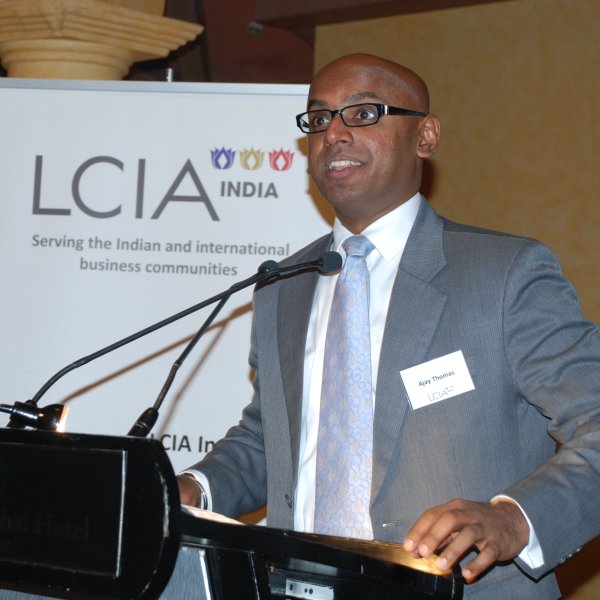
  • Ajay Thomas, Advocate and Arbitrator, on being a good arbitrator and career in International Commercial Arbitration

    Ajay Thomas, Advocate and Arbitrator, on being a good arbitrator and career in International Commercial Arbitration

    Ajay Thomas is an independent arbitrator and advocate based in New Delhi. He is also the Vice-Chair of the ICC’s India Arbitration Group.From 2009-2016, he was Director and Registrar with the Indian subsidiary of the London Court of International Arbitration (LCIA), and also a member of the LCIA India Board of Directors.He graduated from the University of Goa (LLB), and did his LLM from the National University of Singapore (NUS) .

    Prior to joining LCIA India, Ajay was Counsel with the Singapore International Arbitration Centre (SIAC). Ajay was also a member of the expert committee constituted by the Law Commission of India to assist in the preparation of its 246th Report (August 2014) on ‘Amendments to the Arbitration and Conciliation Act, 1996’.

    He is a guest faculty at the Indian Society of International Law (ISIL), New Delhi since 2009, where he teaches international commercial arbitration. Ajay is also Hong Kong 45’s (HK45) Regional Ambassador for India, in addition to serving as the Country Representative for the Asia-Pacific Forum for International Arbitration (AFIA).

    In this interview we speak to him about:

    • Importance of LLM for the career
    • His experience at NUS
    • His roles and responsibilities as the director and registrar of LCIA
    • Skills required for being a successful arbitrator


    HOW WOULD YOU LIKE TO INTRODUCE YOURSELF TO OUR READERS? PLEASE TELL US SOMETHING ABOUT YOUR CHILDHOOD AND PRE-COLLEGE LIFE?

    New Delhi-based independent arbitrator and advocate is what best explains my current professional status.

    Be that as it may, “a serial institutionaliser” is how many in Indian arbitration circles introduce me to their friends and acquaintances. Perhaps, because of the fact that over the past decade or so, I have had the unique distinction of working at four of the world’s leading arbitral institutions: Singapore International Arbitration Centre (SIAC), Singapore Chamber of Maritime Arbitration (SCMA), London Court of International Arbitration (LCIA), and now the International Chamber of Commerce (ICC) – where I have been appointed Vice Chairperson of the ICC’s India Arbitration Group. And, evangelising the cause of arbitration, especially institutional arbitration, has been a very integral part of my professional life.

    I was born in a land situated between the latitudes 14°53′54″ N and 15°40′00″ N and longitudes 73°40′33″ E and 74°20′13″ E, a land blessed with sandy beaches, swaying palms, and magnificent churches. My formative years were spent in the sleepy but charming village of Aldona. Life in those simpler times revolved around school (St Thomas Boys, and later St Britto), the playground which you shared with the neighbourhood water buffalos, and home which was conveniently just a hop, skip and jump away.

    Given my ability to appear at the wrong places at the worst possible times, I had a rather nasty reputation of being a “Jack-in-the box” in primary school, which thankfully evolved to a more respectable “Jack-of-all-trades” in high school. I wasn’t particularly brilliant in studies but was an avid quizzer and excelled in badminton, basketball and the throwing and jumping disciplines on the athletics field.


    WHAT PROMPTED YOU TO BECOME A LAWYER AND WHEN DID YOU THINK OF A CAREER IN INTERNATIONAL COMMERCIAL ARBITRATION?

    Post high school, I enrolled for a Bachelors programme in Commerce, followed it up with an LLB from the Salgaocar College of Law, pursuant to which I spent an eventful few years as a greenhorn litigator at the Bombay High Court.

    I became a lawyer by sheer accident. It was not a conscious well charted journey. Growing up, I was fascinated with being a police officer. Why a police officer? The lure of the khaki, the stars and the Ashoka on your epaulettes, and the bit of idealism left in me that made me think that I could make a difference. When that dream did not materialise, I decided to become a lawyer. But I was clear that I did not want to be a generalist and wanted to find a niche practice area that interested me. I zeroed in on maritime law, and I was extremely fortunate to be accepted as a junior at the Chambers of Senior Advocate S Venkiteswaran (Venki), regarded by many as the guru of maritime and admiralty laws in India.

    Again, it was sheer serendipity that led me to a career in international commercial arbitration. One of the elective courses that I had opted for at the LLM programme at NUS was international commercial arbitration, the teaching for which was led by Adjunct Professor Lawrence Boo, who in those days was the CEO and Deputy Chairman of the SIAC. It so happened that one day during class he mentioned that there was an opening for an India-qualified lawyer at the SIAC and urged the half-dozen Indian lawyers on the course to consider applying for the position. Given the compensation on offer, and the fact that I would be sailing away from maritime law into a totally different arena, I was initially quite hesitant. To cut a long story short, I finally applied and was offered the position subject to me successfully completing my LLM coursework requirements. The SIAC position was effectively my gateway to international commercial arbitration.


    YOU HAVE DONE POSTGRADUATE DIPLOMA COURSES IN ‘INTERNATIONAL LAW AND DIPLOMACY’ AND ‘SHIPPING MANAGEMENT’ HOW FAR HAVE THESE COURSES BEEN HELPFUL?

    My love for ships and the seas, coupled with the desire to specialise in a niche practice area, led me to pursue a “Post Graduate Diploma in Shipping Management”. This held me in very good stead when I started off practicing maritime law at Venki’s Chambers. The course gave me an excellent overview of the dynamics of the shipping industry, which I believe gave me an edge over my peers.

    The course in “International Law and Diplomacy” from the Indian Society of International Law (ISIL) helped me in preparing for the combined civil services exams, where I had opted for law as one of my optional subjects. At the end of the course, fortuitously, I discovered that I had topped the course and was awarded a gold medal, which came in very handy in securing an admission to the LLM programme at NUS.


    CAN YOU PLEASE TELL US ABOUT YOUR EXPERIENCE APPLYING FOR YOUR MASTER’S DEGREE? DO YOU BELIEVE IT IS MORE DIFFICULT FOR NON-NLU STUDENTS TO GET THROUGH INTO FOREIGN UNIVERSITIES?

    Ever since my LLB days, I always wanted to pursue a master’s degree. However, I realised that a couple of years in the profession would make my graduate studies more meaningful and purposeful, and not to mention, more money in the bank to fund my studies. Further, work experience helped me to clarify career objectives and gain invaluable hands-on experience in my area of interest.

    I do think that it takes a bit more effort for non-NLU students to successfully complete the application formalities. I was probably one of the very few students from my college to have applied for an LLM overseas, and consequently I did not have access to the usual advice and war stories from seniors.


    YOU PURSUED AN LLM AFTER HAVING SPENT ALMOST FIVE YEARS IN THE PROFESSION, A LITTLE LATE BY INDIAN STANDARDS. WHAT DO YOU THINK AN LLM DEGREE CAN DO FOR YOUR CAREER?

    An LLM programme in my opinion serves many purposes: for those who have spent some time in the profession, it’s a great way to slow down the pace of life, after the initial rigours and stresses; to look at life from a different perspective; it provides a wonderful opportunity to recharge one’s batteries; and most importantly, it acts as a refresher course to update one’s knowledge and aids in focusing on an area of specialisation.

    A LLM from a foreign university is always appealing to potential employers as it adds a bit of exoticism to your CV which employers love. The fact that you have studied abroad is also quite helpful when it comes to dealing with international clients.

    In my opinion, an LLM is a great option to young lawyers in search for a break from the monotony of a very demanding profession. It gives them some time to stop, ponder and take the right decision as to their future as lawyers. In the bargain, one gets to update one’s knowledge base, acquire new skills and get a hold on one’s life and career.


    WHAT PROMPTED YOU TO CHOOSE THE NATIONAL UNIVERSITY OF SINGAPORE (NUS) FOR YOUR LLM?

    An extremely distinguished faculty; an ambience replete with academic activity; an LLM programme which blended high quality, intensive course work with research; the numerous opportunities to interact with professionals from the legal profession and the commercial world; the hope that the extremely competitive environment at NUS would bring out the best in me, coupled with the fact that Singapore was rapidly emerging as a maritime and arbitration hub were factors that prompted me to choose NUS.

    Further, in those good old days, the fees at NUS and the cost of living in Singapore were relatively reasonable, these were additional but important factors that influenced my decision.


    PLEASE TELL US ABOUT YOUR EXPERIENCE AT NUS?

    The LLM coursework at NUS was extremely demanding, more so in my case, where I was getting back to academia after a very long time. There were hours spent in the library trying to cope with the numerous assignments, and preparation for next day’s classes; the nervous tension to meet deadlines; and copious amounts of Kopi O and Red Bull that were consumed to keep you going. And, now when I look back, I get the feeling that I strangely enjoyed it all.

    The facilities at the Faculty of Law at NUS were brilliant and state-of-the- art. Incidentally, the Faculty of Law along with the School of Public Policy had a bit of exclusivity to it, being located on a lovely secluded hill besides the Singapore Botanic Gardens, and miles away from the crowded main Kent Ridge campus.

    Singapore is also the perfect base to explore the Southeast Asian region. Given the travel bug in me, I took the opportunity of the month-long semester break to explore the region. I spent a few wonderful weeks backpacking through Malaysia, Thailand and Cambodia. It was an amazing journey of discovery!


    NUS IS WELL RENOWNED FOR ITS BRILLIANT FACULTY. HOW WAS YOUR EXPERIENCE WITH THE FACULTY?

    The faculty at NUS were a good mix of regional and international, full-time academics as well as adjuncts-who were usually practitioners from Singapore. I had the good fortune to learn from, and interact with, stalwarts such as Lawrence Boo (international commercial arbitration), Stephen Girvin (maritime law), M Sornarajah (international investment arbitration), and Francis Reynolds QC (admiralty law). I also fondly remember Lee Kiat Seng – who made it a point to treat the entire class to hot coffee, steaming paus (Chinese buns) and curry puffs, perhaps, in the hope that we would be more attentive at our early Saturday morning reinsurance class!


    WHAT WERE YOUR ROLES AND RESPONSIBILITIES AS THE DIRECTOR AND REGISTRAR OF LCIA, INDIA?

    By way of brief background, LCIA India was the established in 2009 as the first independent subsidiary of the London Court of International Arbitration (LCIA) outside of London. The institution aimed at providing a LCIA quality of case-administration services to Indian parties and also international parties doing business in and through India, at localised rates.

    As founding Registrar and Director, I was tasked with establishing the Secretariat in New Delhi, rolling out the India-specific arbitration rules, and popularising the LCIA India arbitration clause amongst end-users – which involved running an extensive and sustained outreach programme, comprising one-on-one meetings, presentations, workshops and conferences. It also fell on me to oversee the administration of cases that came to be referred to LCIA India.

    Being on the LCIA India Board of Directors gave me a great insight into policy making, strategy and planning. And, given that the institution was established as a private limited company, I also donned the hat of defacto General Counsel, ensuring that LCIA India complied with the laws of the land.

    I must say that it was truly a privilege to have been given the responsibility to establish and run an arbitral institution at a relatively young age (thirty two), which would not have been possible but for the unwavering support and guidance from Adrian Winstanley OBE and his hardworking colleagues at 70, Fleet Street.


    WHAT IS THE SKILL-SET REQUIRED FOR A PERSON TO BE A SUCCESSFUL ARBITRATOR?

     Strictly speaking there are no qualifications prescribed to be an arbitrator. In tune with the principle of party autonomy, disputing parties (to quote Professor Gary Born) have the broad freedom to choose dispute resolution mechanisms (and dispute resolvers) “short of authorising trial by battle or more doubtfully by a panel of three monkeys”.

    Be that as it may, I had the recent occasion to meet the Professor Martin Hunter, the author of Redfern and Hunter on International Commercial Arbitration. During the course of our pleasant conversation, over Sula and delicious Delhi kebabs, his advice to young lawyers was that one should never in the early stages of his/her career aspire to be an arbitrator, the emphasis should be to immerse oneself in the theory and practice of arbitration, and aim to be garner as much experience as possible as advocate in arbitration.

    I cannot but agree with Martin that there is nothing like solid work experience to lay the foundations for a future career path as arbitrator. And, whilst one goes about acquiring that broad depth of knowledge and experience, it would be useful to enroll for formal arbitrator accreditation courses such as the Pathways Programme offered by the Chartered Institute of Arbitrators (CIArb). Fellowship of CIArb is one of the minimum qualifications prescribed for formal empanelment as arbitrator with many of the leading international arbitral institutions.


    WHAT WOULD BE YOUR SUGGESTION FOR STUDENTS AIMING FOR A CAREER IN INTERNATIONAL ARBITRATION?

     Work hard, work smart, and tune in to the recent updates to the law and practice of arbitration. It is nice to have a plan, but be open to opportunities, which may not always be what you were hoping for. For all you know it, these opportunities might lead you to a new vista that you never knew existed. Finally, it would be extremely helpful to have an earthly mentor to guide you along the way. Bon voyage!


  • Varsha Ramann, Junior Associate, Bose & Mitra, on studying maritime law from Southampton University, writing SoPs and bagging Scholarships

    Varsha Ramann, Junior Associate, Bose & Mitra, on studying maritime law from Southampton University, writing SoPs and bagging Scholarships

    Varsha Ramann is a graduate from ILS Law College, Pune in 2015.  She pursued an LL.M in maritime law from University of Southampton, England. She has an excellent academic record and participated extensively in various national and international moots including William C. Vis International Arbitration Moot and Insurance Law Moot at Southampton Law. She is presently a Junior Associate at Bose & Mitra & Co.

    In this interview she talks about:

    • LL.M from Southampton University
    • Tips on writing SOPs and traits required to  bag a scholarship
    • Scope of maritime law in India
    • Work experience in Bose & Mitra & Co.


    HOW WOULD YOU LIKE TO INTRODUCE YOURSELF TO OUR READERS? PLEASE TELL US SOMETHING ABOUT YOUR PRE-COLLEGE LIFE?

    I am a full-time lawyer, a full-time Carnatic classical musician (yes, both form equal facets of my life and one is not more or less important than the other) and a part time Jill of many trades. I love learning languages; as a Tamilian raised in Maharashtra, I automatically learnt four languages simultaneously and later took up French and German. Books and libraries are my best friends. I strive for everything I do to be perfect, much to others’ chagrin and usually set very high standards for myself in whatever I take up. I meditate, practice Yoga and crochet and occasionally dabble in other forms of art when I get some time to myself.

    I did my schooling and junior college in Pune and it came as quite a shock to people who knew me when I picked commerce in class XI, after scoring 91% in my board exams. Having decided to pursue law as a career when I was in Class VIII, it was not a difficult decision to make. Two years of junior college at BMCC were mostly spent being editor of the college’s in house magazine, participating in college fests and occasionally studying! I guess I have always been a proud nerd! (by the time I was done with school, I had exhausted the book collection of two libraries and had asked that the libraries be restocked!!)


    PLEASE TELL US SOMETHING ABOUT YOUR COLLEGE LIFE? HOW INSTRUMENTAL HAS YOUR COLLEGE BEEN SHAPING YOUR CAREER ?

    Although I had decided that I wanted to be a lawyer when I was thirteen years old, being a first generation lawyer, I hadn’t the faintest clue about all the available opportunities out there, the different areas of practice, etc. Movies and shows influenced me at that time (Alan Shore from Boston Legal continues to remain a tremendous inspiration till date) and I walked into ILS wanting to be a corporate lawyer (who doesn’t!). One ‘corporate’ internship later, I knew that that was not my cup of tea. I then got my first taste at mooting in my second year and I was addicted to it! After that point, my entire law school life was divided between mooting, more mooting and studying for my exams (in that order). A combination of obsessive mooting and litigation internships made me realise that my true calling lay in litigation. ILS’s rich mooting legacy has certainly contributed a lot to the path that my career has taken. It was, in fact due to a moot that I got my first academic exposure to maritime/ shipping law, in which field I later went on to do my masters degree.

    ILS also introduced me to Dr. Mrs. Nilima Bhadbhade, with whom I had the good fortune to work closely during my college years. I have grown to admire her as a person and consider her my role model. She once told me “never let your profession get in the way of a timely meal. Nothing is more important than eating on time to ensure you remain healthy enough to work well.” I remember these words every time I miss a meal or eat late due to work and try my best to keep my meals on schedule.


    YOU WERE INVOLVED IN MANY EXTRA CURRICULAR ACTIVITIES AT COLLEGE. HOW IMPORTANT IS IT FOR A LAW STUDENT TO PARTICIPATE IN MOOTS AND OTHER EXTRA CURRICULAR ACTIVITIES?

    I have never believed in being a uni-dimensional person. As a child, my parents encouraged me to try my hand at anything I was even remotely interested in and that resulted in me being curious about anything that came my way. I was into debating and elocution through school and junior college and was exposed to the world of mooting and MUNs in college. MUNs bored me but mooting was my thing. I feel it is very important to participate in extra-curricular activities- it is not only a great stress buster but moots, MUNs etc certainly teach you valuable lessons in team work, division of labour and leadership. Mooting also gives you opportunities to travel to other places and interact with people from other universities, which is a fantastic opportunity for networking.

    Focusing more specifically on mooting, I would say that mooting changes the way you approach a legal problem. It strengthens your analytical skills and most importantly, helps build confidence in standing and speaking in front of a ‘judge.’ The real art of lawyering lies in your quick thinking and presence of mind when you are on your feet before a judge and fielding questions that you may not have prepared answers for. Although mooting is a far cry from how things work in real life in courts, it certainly trains you well to face reality.

    The mooting addiction could not be contained even after graduating. I was chosen to be part of the home team in the Insurance Law Moot hosted by Southampton Law School and managed to reach the semi finals with just two days of preparation. This moot was specifically special for three reasons- first I got to meet and interact with Sir Richard Aikens, got to visit the Supreme Court of the United Kingdom (that’s where the final rounds happened) and this moot gave me the topic for my 15,000 words dissertation in marine insurance law.

    A senior of mine in college and I conceptualised ILS’s very own intra-college Contract Drafting Competition under the able guidance of Mrs. Bhadbhade. We had three successful years of the competition until the time I graduated from ILS. Everything from drafting the problem to managing the logistics upto the day of the competition and later were handled by us and these certainly improved our management skills.


    ARE THERE ANY MEMORABLE MOMENTS DURING YOUR COLLEGE THAT YOU WOULD LIKE TO SHARE?

    The third, fourth and fifth years of my college life were the most eventful in terms of good memories. ILS organises an annual intra-college moot court competition called Raghavendra Phadnis Moot Court Competition which witnesses close to 400 participants every year. The top 60 rank holders get to represent the college at national moots of their choice. I secured rank 1 in the Phadnis moot in my third year. In the same year, our team finished as Runners Up at the Surana and Surana National Trial Advocacy Moot 2013.

    In my fourth year, I was fortunate to be part of a team that represented ILS at the Willem C Vis International Arbitration Moot Court Competition in Vienna, which really gave me a whole new perspective on law, mooting and career options and a bunch of new friends from different parts of the world!

    I returned after Vis, full of ideas to improve the mooting standards in college and along with my Vis teammate, co-founded ILS’s Moot Court Society. The last year was all about giving back to the college and guiding and learning from juniors, who were very enthusiastic and full of new ideas!


    WHAT MOTIVATED YOU TO GO FOR A MASTERS PROGRAMME? WHAT LED YOU TO CHOOSE MARITIME LAW AS YOUR SPECIALISATION?

    I was not entirely sure about pursuing a masters degree by the time I finished my third year because by that time, I had discovered my love for litigation and everyone I spoke to advised me that there was no point in having a masters degree because litigation was all about learning ‘practical skills on the job.’ My father, who is a staunch believer in education never really going waste, encouraged me to not shut out the possibility of continuing my education. It was at such an indecisive time of my life that I stumbled by maritime law.

    My discovery of maritime law was a happy accident. When I was preparing for Vis in my fourth year, I happened to read the Philip C. Jessup moot problem for that year, which was on maritime law. It piqued my curiosity and I dug a little into the subject to see what it was all about. What I read got me interested and led to some more reading. By the end of my fourth year I was pretty sure I’d like to do something in this field. I then did an internship at United Maritime Law Chambers in Kochi to get a taste of the practical aspects of the field. The internship helped me decide that I was interested enough in this field to spend a year living in a different country, cooking, cleaning and washing by myself and generally survive on 4 hours of sleep the whole year. Whether to do an LLM or not is surely NOT a decision one can or must take overnight.


    WHAT ARE THE NECESSARY TRAITS ARE REQUIRED TO BAG A SCHOLARSHIP FOR LLM?

    Having decided to pursue my masters in shipping law, I had zeroed down on England as my country of choice. Each university will have their own requirements for eligibility for a scholarship, although a fairly common academic requirement is to have over 60% as your aggregate score in your undergraduate studies. Even if you don’t make it to the 60% mark, some universities may consider giving you a scholarship if you have a good CV with prior work experience in the designated field.


    WHAT SHOULD BE KEPT IN MIND WHILE WRITING SOPS FOR LLM ABROAD?

    I very strongly believe that SoPs must be genuine, believable and from the heart. A good SoP boils down to honesty, a quality that is rarely appreciated these days. It is important to remember that the people who scrutinise your SoPs have probably been doing that for years and years and they will be able to spot a superficial and unnecessarily glorified SoP from a mile away! I have had a lot of juniors send me their SoPs asking me for my opinion- a common thing I have observed across the board is that they all say that the applicant got into law school because they wanted to make the world a better place, wanted to help the poor wanted to be the next Harvey Specter (nope, not kidding!) Please remember that these are poor clichés and will result in one-way tickets to the shredder for your precious SoP. Remember that there are thousands of other applicants vying for your spot and your SoP needs to make the reader sit up and do a double take within the first paragraph. Bring something fresh to the table, humour in small measures helps. DO NOT start with fancy quotations from great personalities- your SoP is about YOU, not the celebrity you are quoting. Another important tip would be to keep it to a maximum of two pages (1.5 would be ideal); brevity is a virtue that will certainly come to your aid.

    My SoP took me two hours to draft, proof read and finalise, after which it was sent to my father and one of my closest friends for their opinion.


    WHAT DIFFERENCES DO YOU SEE IN THE LEGAL EDUCATION SYSTEM IN INDIA AND ABROAD? HOW CAN THE INDIAN EDUCATION SYSTEM IMPROVE?

    I think we all know the answer to this fairly well already- there is no concept of rote learning abroad. As far as classes go, you are expected to come to class having read at least a bare minimum on the topic that would be discussed. It is true that you may not understand a word of what you read when you do this before class, but as the professor explains concepts in more detail, the foggy words come to life in your brain and everything just fits together beautifully like a jigsaw puzzle. Professors who teach you are mostly stalwarts in the field and are a powerhouse of information. They’ll not only give you academic insights but will also teach you practical ‘tricks of the trade’ where pure academic knowledge may not be of much assistance.

    I must say that I was most chuffed with the manner of assessment in examinations. You are assessed as per your understanding of legal concepts and your ability to apply them to practical problems (yes, your question paper will also contain practical legal problems to which you will be expected to apply the law you studied and provide a solution- it’s like a fun mathematics paper!) Universities abroad do not expect you to remember the names of every case law (you’ll study more than 200 of them during the year!) and reproduce them in your answer sheet. Some people are better at remembering case law in the form of a story that happened and as long as you write the correct facts and ratio, you are awarded full marks even if you did not write the name of the case. Question papers are provided to you 30 minutes before your three hours’ time; you are expected to use this time to ‘think’ about your answers, structure them on a rough sheet of paper and give it the right flow. Such application based evaluation and the importance to quality over quantity certainly makes students better equipped to deal with the shocks of the real world when they graduate.

    I think the Indian education system could do with borrowing a leaf or two from universities abroad and be a little less pedantic in their expectations. We presently proudly tell our graduates that their ‘real’ learning will start only once they step into the practical world. While that is true to a certain extent, our current standards of university education do not do even the bare minimum to equip you to deal with the real world.


    AS JUNIOR ASSOCIATE IN BOSE & MITRA & CO, WHAT ARE YOUR ROLES AND RESPONSIBILITIES?

    Junior Associates at Bose & Mitra get to dive head-first into literally every aspect of practicing law, be it drafting pleadings, legal opinions/ advice, research or the occasional appearance in court. While we prepare the first drafts of every opinion or pleadings, our seniors then vet these drafts and tweak it as they deem necessary. This ensures that as juniors, we get to learn to do the big stuff, the seniors can focus on more work since the juniors have already structured the drafts substantially and while vetting their junior’s work, they also get an opportunity to correct our mistakes.


    WHAT IS THE SCOPE OF A CAREER IN MARITIME LAW IN INDIA?

    India is fast growing as a country of maritime activity. Europe has not yet managed to get back on its feet entirely post the 2008 economic slump and the east is now making hay as the sun shines. The scope of a career in maritime law in India has just widened with the coming into force of the Admiralty (Jurisdiction and Settlement of Maritime Claims) Act 2017. The Bombay High Court now loses its pan India jurisdiction to arrest ships all over the country and it would be interesting to see how other jurisdictions blossom on their admiralty side. Although Bombay still remains a commercially sought after jurisdiction and has a rich heritage of maritime judgments, there is now more opportunity for maritime lawyers in India to open shop in other jurisdictions and establish a good maritime practice.


    WHAT WOULD BE YOUR MESSAGE FOR YOUNG LAWYERS AND LAW STUDENTS LOOKING TO SPECIALISE IN MARITIME LAW?

    Maritime law is definitely extremely interesting as a subject but it is also an incredibly niche field. I would advise students considering the field to take a lot of time before deciding to commit to it. Be at least reasonably sure what your priorities are in life and what you want to do with your qualifications- do you want to practice law or work as an in house counsel for a shipping company? Do you want to combine a degree in maritime law with an MBA and get into core business? The opportunities are endless but you have to find what suits you best. Read up on career prospects and universities enough before you make up your mind. If you wish to work abroad after your specialization, ensure that you are well aware of the odds of success on that front- nobody likes disappointment like that. Most importantly, read about the subject a lot (it’s alright even if you don’t understand much, the subject must keep you hooked) and get a taste of at least some practical exposure before you put in your applications to universities abroad.


  • Devottam Sengupta, Senior Legal Counsel, Structured Trade Finance (Global), Louis Dreyfus Company (LDC), Singapore

    Devottam Sengupta, Senior Legal Counsel, Structured Trade Finance (Global), Louis Dreyfus Company (LDC), Singapore

    Devottam Sengupta graduated from NLSIU, Bangalore in 2005. He started his career at Trilegal where his work involved practice in Corporate Finance, Banking, Private Equity, etc. After working at Trilegal for almost two years he went for The European Master Programme in Law and Economics (EMLE) on the Erasmus Mundus scholarship. His EMLE degree was conferred jointly by the University of Hamburg and the University of Manchester.

    After returning from the EMLE programme he joined Amarchand Mangaldas, Delhi in 2008 and then later in 2011 he moved in-house to Cargill where he tasted Structured Trade Finance. He is now responsible as the Senior Legal Counsel at Louis Dreyfus Company (LDC), Singapore where he continues to work in Structured Trade Finance since the last three years.

    In this Interview Devottam shares his insights with Rounak Biswas of SLS, Pune on the topics raised by Reshma Ravipati of NLU, Jodhpur.


    How would you like to introduce yourself to our readers?

    I am the Global Lead Lawyer for Structured and Trade Finance at the Louis Dreyfus Company Group (LDC), based in Singapore. LDC is one of the four biggest agricultural product traders in the world, and is headquartered in Geneva. Working with the STF business, I get to work on banking and trade transactions across the globe – at the moment, I’m advising on matters in places as disparate as Uruguay, Kenya, Qatar and Vietnam!

    However as anyone who has worked in-house would tell you, – you are almost never doing only what your role was meant to be! You have to wear many hats, juggle many roles and be able to pitch in wherever needed to be a successful in-house lawyer. As such, I am also the financing counsel for the LDC Group for Asia-Pacific and a part of the global M&A team.

    But my work is only a part of my life. I’m an avid traveller, a fanatical foodie, a published translator, budding Instagrammer and a regular pub quizzer. My varied interests help contribute to my ability to view issues through multiple lenses, which in turn helps me in bringing new and fresh energy and insights to my work.


    Why did you choose to pursue a degree in law, amidst the many options that you had after school?

    Sadly I don’t have a great answer for this question. I got into law more by chance than a focus on the profession. My legal path was built by the simple fact that I cleared the NLSIU entrance, while I had assumed I would end up doing something in business administration. However, my first year at NLS really changed my perception of law – I stopped looking at it as a job but more as a vocation.

    I do not think that one becomes a lawyer by the simple fact of graduating from law school. The key advantage of the study of law is that you come away with ingrained core skills which give you a foundation to pursue any profession you choose to pursue thereafter. My wife is a lawyer by training but works with the United Nations on social policy by profession; I have close friends who are running successful businesses; there are those who have succeeded in investment banking or consulting. Your options following law school are only limited by your imagination. And this I learnt in my first year of law school, which made me want to stay on and see it through. The rest, as they say, is history.


    Give us a brief overview of your personal experience at NLSIU. Is the NLU culture truly more conducive to legal education, as compared to other universities that provide legal education?

    As with all meaningful experiences, my time at NLSIU was full of ups and downs, just as one’s student life should be. Alongside my law studies, I was deeply involved in co-curricular and extra-curricular activities. During my time at NLSIU (2000-2005), I participated in pretty much every extra-curricular activity, organised some significant academic conferences, was on the student committees, helped my classmates get jobs, and represented NLSIU at various competitions. All of these were as essential a part of my education as my classroom studies, but I wouldn’t have minded a higher CGPA! I can however definitely say that pursuing these multiple co-curricular paths helped me become a more well-rounded individual and have helped me build my career post NLS.

    I think the question on NLU culture is a little misleading in today’s world. I think very little distinguishes NLUs (as originally envisaged) from private law schools and the traditional law schools. The question therefore isn’t so much on NLU culture as it is about culture of the best law schools. The best law schools in India, whether you’re talking NLSIU, GLC Mumbai or ILS, all have a culture of learning and imparting professional skills. Besides, what is an NLU today? Amity Law School, Army Institute of Law, ILS and JGLS have the same format, without being “NLUs”, so what is the dividing line?

    By professional skills, I don’t solely mean the skills required for litigation or corporate law job, but the most basic ones required for all lawyers – research, analysis, problem solving and drafting. No matter which stream you finally end up in – academia, in-house lawyering, completely non-legal jobs, or politics – these basic skills help you succeed. Therefore, it’s more a question of whether your institution creates the right environment and delivers on imparting these skills.

    I think the advantage NLUs start out with is that being (a) residential and (b) over five years, there is more time to deliver and hone these skills, compared to a non-residential or a three-year law school. What the institution (and the students they select) does with the time is what sets apart the best ones from the also-rans. There is no point being structured as an NLU if the students don’t receive access to the best academic resources, to high quality internships, backing for co-curricular and extra-curricular activities, and the space to practice what they learn in the classroom.

    One of the key elements of NLSIU’s success, in my mind, is that the student body has practiced what the Constitution of India has preached. Freedom of speech and expression is sacrosanct, there is equality for all, principles of natural justice are followed and there is representative decision making. I think this manifestation of lessons learnt in the classroom and in other facets of campus life helps to concretise certain core beliefs in most students. This, together with the academic rigour needed to write numerous papers and provide analytical answers in most exams does help in building future lawyers, and I’m happy to see so many NLUs have successfully adopted these methods.


    What are your areas of specialisation and how did you go about choosing these fields to specialise in?

    Formally, I am a structured finance lawyer and a specialist in trade finance, though like I said at the outset, I still consider myself a generalist. Even though I have been a trade finance focused lawyer for many years now, I have concurrently worked on M&A, private equity transactions and general corporate finance, and don’t hesitate to get involved in other areas of law as and when I get the opportunity.

    I didn’t choose structured and trade finance so much as it chose me! My first job after NLSIU was with Trilegal Mumbai, which was best known at the time for its banking and finance practice. The years I spent at Trilegal were during the booming mid-2000s, and I was fortunate that I was able to work on some of the best structured finance work to have taken place in India. This experience laid the groundwork for pretty much the rest of my career, with subsequent jobs with Amarchand & Mangaldas Delhi (now Shardul Amarchand), with earlier Cargill and now LDC, all being grounded in the banking and structured finance experience I gained at my first job.


    At what stage in one’s law school life must one pick a specialisation? What words of wisdom would you offer to someone who is yet to make this choice?

    My humble advice is one should never pick a specialisation voluntarily, especially not in law school. Unless you are absolutely certain you will be miserable doing anything other than criminal law litigation or writing books on public international law, most of us have very little experience of the day-to-day realities of professional life while in law school, and certainly not enough to make career-defining choices before we’re old enough to drink in most states in India.

    I would instead recommend gaining as much experience as possible in a wide variety of fields, so that when you graduate, you are able to cope with anything life throws at you. Whether it’s a corporate role, or litigation or studying further, extra knowledge will never be a waste. Lack of knowledge on the other will always hold you back.

    The right time, to my mind, to specialise, is two to three years after graduating from law school, where you have a more realistic idea of what you want to do with your life and what you enjoy doing professionally. This is borne out by the international standards in the practice of law – US law schools are postgraduate institutions, which do not accept students straight from their undergraduate degrees; UK firms require all associates to have spent two years on a training contract, where you’re shuffled around to gain as much experience as you can, while the firm judges what you’re best suited for. Anecdotally too, I find that most of my friends have ended up specialising in fields quite different from those they had in mind when in law school.

    By all means, we should aim for certain jobs which attract us the most, and do everything that it takes to be considered for that job, including gaining as much knowledge relevant to the dream job as we can, but that shouldn’t to the exclusion of general knowledge.


    Who was your mentor, or main source of inspiration who/which motivated you all along the way?

    Throughout my career, I’ve been fortunate enough to consistently have had seniors from whom I drew inspiration. Before your readers get the wrong idea about this, I’m not saying this to be diplomatic or politically correct! I firmly do believe that I have learnt something from every senior I’ve worked with, and each of them has in some form or fashion motivated me to do better or helped me to grow as a lawyer and a person. I have even found inspiration from some of my talented and hardworking peers. I must however say that working under Mr. Shardul Shroff was a great learning experience, given the breadth of work he handles and the depth of his knowledge.

    A mentor though isn’t necessarily a person who has always been nice and helpful to you, but someone who has taught you lessons you needed to learn in order to grow, even if you do not realise it at the time. You can seek out inspirational figures, but a mentor will not merely inspire you, they will be teachers who can show you the right path.  This is not restricted merely to legal skills, but also extending to crucial soft skills of people management as well as ability to understand business concepts and come at issues from a solution-oriented lens.

    That said, there are individuals whose advice and training have been foundational and critical to my career. From my private practice career, I owe a debt of gratitude to Avinash Umapathy (now at CAM) and Nishant Parikh (Trilegal) for their patience and guidance, which certainly did help shape my career in unexpected ways. And from my in-house life, Aditya Bhagat (India legal head at Cargill) and the current APAC GC for LDC- Massimiliano Talli have taught me about what it takes to be a successful in-house lawyer and become a successful team leader.

    Last but not the least, my understanding of the structured trade finance business would be incomplete without the guidance of Gopul Shah, who used to head the business for Cargill in India.


    You had previously worked with Amarchand & Mangaldas, Delhi and Trilegal, Mumbai. What does it take to make the cut and land a Tier-I job?

    What does it take to make the cut?

    You should be able to demonstrate to the recruiter an ability to work hard, to deliver solutions and an interest in the job beyond the paycheck. Whether this is through selection of elective courses, moot court excellence, articles in journals, organising academic conferences, or something else altogether, there really isn’t a “correct” answer, but it has to be apparent from your CV. It is not sufficient to be considered the smartest person alive by your classmates – what you are able to put down on paper is what helps you get to your dream job.

    At the same time, it is not enough to say you are interested in a particular job if you haven’t done the basic research on it and have no idea what it takes to do well in that field. For example, when applying for a corporate law role, the one article you might have written on corporate law on the developing law of insolvency or that internship with a small corporate law firm in your second year might be more valuable than winning a medical law moot or a dozen debating tournaments. While moot court wins and debating experience does undoubtedly have value, the corporate law angle would demonstrate that you know your audience just that little bit better.

    What law firms look for?

    A disclaimer here – what law firms look for when they’re hiring varies significantly between Indian firms and foreign firms, especially when the economy is booming. In times of rapid growth, the only thing a firm might look for is a heartbeat. That’s a joke, but only just – firms often hire large numbers during good times, secure in the knowledge that they will naturally shed underperformers when times are bad.

    But to be more specific, what gets someone hired in a top tier law firm are certain skills needed to succeed in a corporate law firm role, and which is what most partners look for in prospective associates.

    Primarily, these skills would be

    1. ability to get things done,
    2. ability to multitask and cope with pressure; and
    3. of course a high standard of core legal skills (research, analysis, problem solving and drafting).

    Of these, I think the third one is pretty self-explanatory, so I will focus on the first two parameters.

    When I would interview associates, I would rate a person with decent grades but a broader set of skills over someone who might be ranked first in class but have nothing else at all on their resume. A successful corporate lawyer has to be able to do many things at once –juggling 5 transactions at the same time, developing client relationships, working to grow their practice, thinking proactively of their clients’ future needs, chasing up on bills – no corporate lawyer I know succeeds without being able to multitask.

    Being able to multitask brings with it the ability to cope with competing demands and pressure. You will never have enough time to do everything that is required of you in a law firm. And I don’t mean in your early associate days, but through your entire career as a corporate lawyer. The demands and pressures change, but if you’re not multitasking and trying to cope with time constraints, then your growth as a corporate lawyer may stall.

    And a corollary to the demands on your time is the ability to get things done. This is not the euphemism common in government offices, but refers to being able to find ways to deliver on what you’ve been asked to do. Whether it’s by doing simple things like being enough of a team player for others to help you out when you are overloaded, or your ability to prioritise, or being able to quickly find the right answers, the ability to deliver on promises and expectations goes a very long way in ensuring professional success.

    Lastly, it might be useful to do some research as to which teams the firms hiring for, even if it is for more senior roles. Some teams need more people urgently than others, and it’s always best to spend a little bit of time trying to figure out how you can demonstrate your value for existing vacancies than be lumped in for general roles.


    What is the level importance given to a student’s Grade Point Average with respect to recruitments at Tier-I firms?

    It’s an important consideration as a cut-off. Like I mentioned earlier, law firms try to gauge a candidate’s skills in making a hiring decision, but GPA standalone provides limited insight on quality. What it does provide though is a useful benchmark for determining which students are likeliest to have the necessary skills and qualities.

    I personally had an average GPA, so I wish this wasn’t true, but the fact of the matter is that law firms, especially Tier 1 law firms, have to use GPA a screening mechanism. Each firm receives hundreds of applications for internships and entry level associate roles, and there are a limited set of objective criteria for predicting which applicants might be good enough for the firm – reputation of institution, GPA and past work/ internship experience.

    And more often than not, you’ll be competing with people from the same law school and with similar work experience. GPA is therefore bound to be a major differentiator at the outset. However, once that first hurdle is cleared, then it comes down to subjective criteria, where the lower GPA candidate might actually be a better fit than the higher GPA candidate.


    How do you say interns should go about their work at a firm like Trilegal, so as to get noticed in a positive way in the limited time they have?

    Be excited, willing to learn, open minded and proactive. If you’re morose about being at the firm, whatever be the reason, it will show and come across to the associates and partners as disinterest. No associate is going to stick their neck out for an intern who does not seem to be excited at the prospect of being at the firm.

    Another quality the lawyers at the firm will pick up on is your willingness to learn. Assume you’re pulled into something you’ve never looked at before, or even heard of – very few law students would have ever come across Food Safety Standards or Air Information Circulars. It’s how you react to such a challenge which will be noticed. Did you come in with a closed mind or a willingness to learn and take on the challenge? Did you give up immediately or did you work past the difficulties in finding an answer? Did you go back empty handed or did you ensure you had some leads, if not an answer? More often than not, the partner or associate asking you the question already knows the answer, but wants to check your response.

    Open-mindedness is pretty crucial when interning with any law firm. So you didn’t get the office or the team you really really wanted…so what? You’re still at the firm right? The aim is to get the job offer, so it’s better to be a star intern in the IP team than to be the person who moped about because s/he wasn’t in the Capital Markets pool. Once you get the job, you can always seek an internal transfer after you’ve established your worth. One of the best juniors I’ve had in private practice was originally hired for Amarchand’s tax team, but is now an M&A partner at SAM.

    Lastly, proactively seeking out work will take you a long way. Just because you’re not being given work is no reason for you to skip out early or take a day off for a Netflix marathon. As an intern, you should actively go up to associates, if not partners, and ask for work. If you see your seniors struggling on a project, go and offer to help. If your fellow intern is struggling, lend a hand. You may not learn anything or even be given work, but the fact that you asked will be remembered.

    One bonus tip – always assume you’re auditioning for the job during every interaction at the firm, whether in office or outside. That means always put forward yourself as a candidate, whether that is when you are having coffee with your senior from law school, at the office party, or if you’re stuck in the elevator with the managing partner.


    What was the reason for your transition from firm practice to being an in-house legal counsel for corporate houses? What is difference (if any) in the work culture at the two places?

    I moved from private practice to in-house legal as I wanted to move from a service provider role to a business side role and more specifically participate in the practical running of a business. I acknowledge that some lawyers are so trusted by their clients that they become business advisers, but this more an exception than the norm. Especially in India, but also true generally globally, private practice lawyers have little to no say on business decisions. In my mind I had always wanted to get closer to the business side of things. To this end, even my LL.M wasn’t a traditional legal degree, but a Masters in Law and Economics.

    This is not to generalise and say that in-house lawyers are all heavily involved on the commercial side, but if you choose your employer wisely, build your business skills and demonstrate your acumen, business teams will get you involved on commercial decision-making. I have been fortunate that both in Cargill and in LDC, I’ve worked with business teams who have valued my skills and judgement enough to make me a part of the business decision-making, rather than look at me only as a legal expert or worse as a legal roadblock.

    But I do not want to generalise and compare private practice and in-house roles. There are already too many negative stereotypes and myths about in-house roles, and it will not be helpful to make sweeping statements. Every private practice role comes with its unique challenges, as does every in-house role. So I think it would be better served for me to try and dispel some notions about in-house life.

    One of the silliest and most baseless assumptions I hear about in-house counsels is that lawyers go in-house when they want an easy life. This certainly is not true in today’s cost conscious business world. No company will tolerate the cost of an in-house lawyer who is not working at least as hard as the business team; nor will they tolerate an in-house lawyer who incurs additional costs on external counsel. If anything, in recent years, in-house legal teams have expanded greatly in pretty much every company across the board, which is a testament to how cost effective in-house advice is in comparison to external advice.

    Given the increasing role of in-house legal teams, a natural corollary is increased pressure to deliver. While private practice lawyers live or die by short deadlines, in-house lawyers face a different type of pressure – you MUST find the right answer for your company, because you will be held accountable for it. You cannot go back with a bad answer, because if things go sour, the external counsel is not the one being held accountable. Whether it’s in finding a solution to a seemingly impossible problem, or finding hidden risks in that otherwise sure deal, external counsels are at best trusted advisers, but not the decision makers. In-house lawyers on the other hand are on the hook for every decision taken by them. Remember – no business means no need for your job. So you better get it right!


    Which would you recommend for a fresh graduate who’s looking to start off his/her career?

    There isn’t a right answer to this. For fresh graduates, it might be better to join the in-house team of some companies than to join some law firms, where the former could be a role better suited for the person’s career goals. Many friends have started out in in-house roles and are now highly rated partners in law firms. On the flip side, some friends had joined law firms and had very quickly become disillusioned and left the practice of law altogether. It depends very much on the law firm or the company in question. My recommendation to any fresh graduate is to do their research on the job before saying yes or no. Is the law firm known for promoting their younger talent? Do they work on areas that interest you? Do they have a high attrition rate? Do they have a reputation as a good employer? If the answer to these is no, then you might be better off going to a company.

    At the same time, there are some critical questions which one should reflect on when considering an in-house role:

    What kind of work would be expected of you as a junior lawyer?

    If the answer is primarily corporate secretarial and filings, run away at top speed. Conversely, if you’re expected to review contracts and provide memos, you might actually end up with more responsibilities than your roommate who joined a law firm.

    How big is the in-house legal team and which business teams will be your internal clients?

    Small in-house teams are not necessarily bad, especially if you have a large number of internal clients. But size usually correlates to greater amounts of work for the legal team, which could give you as much exposure as your law firm friend.

    At what stage in transactions is the legal team brought in?

    The earlier the better for you personally, and more generally, would be demonstrative of higher responsibility.

    Who are the internal stakeholders or clients for the role?

    If your clients are primarily business teams or Treasury, your role will give you greater transactional approach, than if you’re primarily dealing with other support teams.


    Give us a brief overview of your current work profile with Louis Dreyfus Company (LDC) Group. What does a regular working day look like for you?

    As the Global Lead lawyer for structured finance at LDC, I am the primary point of contact for the financial services business of the company, and responsible to the business for review of all transaction structures and documents. At the same time, I am responsible to the senior management of the company for controlling risks taken by the business team and for ensuring compliance with company policies and laws generally.

    What this means on a day to day basis is that I have to work with my colleagues on the business side to ensure that we proceed with transactions with counterparties in a manner which is in compliance with the law and safeguards the company’s interests while minimising risks. To do this, I review transactions while they are still being planned, review the transaction documents, work with external counsel to ensure we are accounting for all regulatory requirements, participate in negotiating documents with counterparties, and lastly, work on addressing any concerns raised by other stakeholders and the senior management of the company.

    Given the broad geographical scope of my work, I am often working simultaneously on transactions from places as dissimilar as Colombia, Nigeria and China! Which also means that I could find my mailbox bombarded overnight by my colleagues in South America, try and resolve crises during the day for the China team, and in the evening, get onto calls with colleagues in Africa to negotiate with a counterparty there! Thankfully I have a great set of colleagues on the business side, and great support from juniors in the legal team.


    How important is it to have a foreign qualification in working overseas as an in-house lawyer? Can someone with only an Indian qualification be considered for international roles?

    It is not a prerequisite but it definitely helps to be dual qualified. We are fortunate that India has a common law system, which allows us to easily understand and work on transactions under English or other common law systems. But the Indian legal system is still not as commonly used in international trade as those from England, New York, Singapore or even China. It is possible to be considered for international roles within companies in certain very globalised segments – IP related roles and banking come to mind –  but without a second qualification, you’ll have a tougher time demonstrating your knowledge and ability.

    The good thing is the English law qualification is open to Indians without much hassle, under the Qualified Lawyers Transfer Scheme. It is not cheap, but given the relative cost of an LLM, I think investing in English law qualification is a better bet, especially if it’s one or the other. Even if you never end up working abroad, it shows your international credentials to companies and your interest to international law firms. Also, it might give you an edge when it comes to some very highly sought after in-house positions.
     

    Is there any other suggestion you would like to make to our budding lawyers?

    Keep learning and investing in your personal growth. It doesn’t matter if you work in litigation, private practice, in-house or in academia, if you stop learning, you will cease to be relevant as a lawyer.

    Also, underestimate the importance of networking in the legal profession at your own peril. It is easy to make fun of people who seem to be endlessly attending conferences, or those posting on professional networks or writing for magazines, but remember that your dream employer could be at that conference or reading your post or article and ultimately can will help build your profile to show why you are the ideal candidate for your dream job.


  • Pinky Anand, Additional Solicitor General of India, on studying at Delhi University and at Harvard, and on the formative years of her career

    Pinky Anand, Additional Solicitor General of India, on studying at Delhi University and at Harvard, and on the formative years of her career

    Dr. Pinky Anand is considered one of India’s top lawyers. She is the current Additional Solicitor General of India and a Senior Advocate. An alumna of the Campus Law Centre at Delhi University, she went on to pursue her LL.M from the prestigious Harvard University on an Inlaks scholarship in 1980. She recently came out with the much acclaimed book, Trials of Truth which is available on Amazon. In conversation with Manushi Desai, she shares her experience as a lawyer and the formative years.


    How were the formative years which resulted in such a strong yet warm personality?

    My parents were married very young. My mother’s sensible nature has rubbed on me and so has my joint family’s sharing and caring nature. I have grown up in the streets of Old Delhi and have fond memories of sharing everything with my family which is my support system and I greatly believe in the idea of balance which my family taught me. I further studied in a convent school and the values of discipline and good virtues were inculcated very firmly in my outlook. I endeavoured to participate in all extra curriculars, especially during the law faculty days where I was the student leader within BJP as well.


    How was your Harvard experience?

    It was an ambition to go to Harvard and I achieved it by providing a systematic approach. I was inspired by the movie Paper Chase based on Harvard. I applied for Rhodes actually, I did not get the Rhodes, however, the Rhodes committee recommended me to the Inlaks foundation and that’s how I got into Harvard. Years later, I was called back to Harvard to give a lecture which is when I stumbled across my thesis in the Harvard library archives which is a must read even now to know more about the concept of public policy in arbitration.


    How were the initial years as a lawyer?

    I am a first generation lawyer. After marriage, circumstances were different since my husband is a lawyer, my father in law is a lawyer, but the intial years were not the same. I did not have any benevolent hand in that sense which is quite a necessary part. However, I did not have as bad a struggle as I should have is because my friend Geeta Luthra, who is a senior advocate now and I started practice together. It was very unknown of women partnering with each other in the profession.


    How did you join politics?

    My tryst with politics started when I joined ABVP as a law student and contested the prestigious Delhi University Students Union (DUSU) elections. However, when I went to Harvard and later partnered with Ms. Geeta Luthra, politics took a back seat. This changed later when I headed the BJP National Legal Cell as the first woman convenor which gave me a chance to change people at a grassroot level.


    You have risen high in your domain and have even been named as India’s top influential women in a book. How was the struggle been?

    The principle struggle is not being a part of the old Boy’s club. There is also a prejudice against engaging women counsels. However, beyond a point when you prove yourself, you actually were acknowledged. You have to continue to be twice a man. So the demonstration effect and the visibility or your proving your mettle is something which has to be done at the first degree level. Having done that, you need to have people who kind of support you. My family is a very big support, my in-laws are very supportive and I think that’s a very important feature too, because professional life is a tough one.


    What was the tipping point in your career?

    I fondly state my tipping point to be the retainership we had from a Marwadi business group through which I got exposure to various kinds of cases. It proved that you learn far more on your feet than you learn from any text book. We got a wide exposure to wide variety of cases from that group not only in Delhi, but in various parts of Delhi. We used to go to various even district courts and in fact I think even trial courts.


    Why practice in trial courts when you could, as a Harvard graduate, have easily started in the Delhi High Court or Supreme Court?

    Trial courts are great fun! I think you learn the most there and you have to understand the set up of what law is about and how law is made. For young lawyers, you are trusted far more with the trial court cases than you are with Higher Court cases- so it was a relation you build- you go up the ladder. The ladder is a very slow one, like snakes and ladders – you go up and then you sometimes come down.


    What is the secret sauce to your success?

    I believe in confidence and determination apart from the support of your loved ones. There is constant juggling of the work life balance but it is important to set goals and challenges and strive to achieve them as well.


    This interview was taken by Manushi Satyajeet Desai. Do read her blog at desaimanushi.blogspot.in and follow her on @manushidesai on twitter and instagram.

  • Aakash Sharma, 5th Rank, UP Judicial Services-2016 shares tips and tricks to get a sweet taste of victory

    Aakash Sharma, 5th Rank, UP Judicial Services-2016 shares tips and tricks to get a sweet taste of victory

    Aakash Sharma completed his LL.B. in the year 2014 at Campus Law Centre, Faculty of Law, Delhi University. He went on to pursue an LL.M at National Law University, Delhi in 2015. After qualifying the UGC-NET exam, he taught Law as an Assistant Professor at Lloyd Law College for a year.

    Not lured by the fancy corporate jobs, Aakash got fascinated with the working of the judiciary as a judge is an independent arbiter upon the matter before him and does not have to take sides unlike a lawyer. Hence, to conquer his dream he started with the preparations from scratch without any coaching. He qualified for the UP Judicial Services – 2016 examination with 5th Rank.


    In this interview, he gives us great insights to:

    • The ideal time to start preparing for the Judicial Services exam.
    • His strategy for tackling and remembering the different provisions of Law.
    • Tips for facing the nerve-wracking interview.
    • And his motivational message to the aspirants.

    How would you like to introduce yourself to our readers?

    First of all, thank you for giving me this opportunity to connect with your readers. I did my Law from Campus Law Centre, University of Delhi in the year 2014. Subsequently, I completed an LL.M. from National Law University, Delhi in 2015 and also qualified the UGC-NET Examination the same year. I taught Law for a year, but destiny had something else in store. I was selected in the UP Judicial Services Examination 2016, commonly known as PCS-J.


    How did you gravitate towards Law?

    (Aakash completed his B.A. (Hons.) in Political Science from Kirori Mal College, University of Delhi in the year 2011.)

    I have often wondered what prompted me to take up Law. It now seems to me that the decision of taking up Law after pursuing graduation in Political Science was utterly providence. While subconsciously, I used to find Law and legal process intriguing as a child. But unbeknownst to me, I have somehow drifted to it. Law is a fascinating discipline because it is so dynamic. Every day is an exciting day in law. The credit really goes to my teachers. Prof. Rajiv Khanna, Prof. Usha Tandon and Prof. Raman Mittal at Delhi University; and Prof. Mrinal Satish, Prof. B B Pandey and Prof. M.P. Singh at NLU Delhi. These teachers made Law interesting and turned my initial intrigue for Law into endearment.


    Did you focus only on academics in college life?

    I maintained a healthy balance between co-curricular activities and academics. I was designated the Student Convener of the Seminar & Discussion Society after winning the college debating competition at Campus Law Centre. I used to organize weekly discussions on bills, legislations and judgments. The real secret of excelling in academics is a deadly mix of self-discipline, being attentive in class, making your own notes, reading the best authors, mastering the bare acts and leading judgments, and avoiding cheap guide-books and coaching institutes like the plague.


    What made you choose to serve the Judiciary; did you not get tempted by the fancy corporate jobs?

    Every facet of Law is enjoyable. I chose judicial services because a judge is an independent arbiter upon the matter before him. He need not take sides like a lawyer. I found this especially attractive about judicial services. As far as corporate job is concerned, I got a taste of corporate practice during my internship days and found that it was not my calling.


    Do you think an LL.M. candidate gets leverage to the rest appearing for the Judicial Services?

    Yes, having an LL.M. is definitely advantageous. LL.M. at NLU Delhi is a very rigorous and advanced degree wherein you not only learn the Law, but you critically assess and deeply scrutinize it. This deconstruction of Law is not done as thoroughly in LL.B. As far as leverage over other aspirants is concerned, LL.M. will make you “think” about Laws and not just “know” the Laws; it will improve your writing skills and make you cognizant of legal theory and philosophy. Therefore, an LL.M. candidate has better grasp on the subject over the rest appearing in Judicial Services.


    When should a person ideally start preparing for the Judicial Services exam?

    Nobody can really be very confident that he/she will positively succeed in an exam where the success ratio is 1:200 or a mere 0.005% so I was simultaneously working as an Assistant Professor to have a steady income and a stable back-up if my efforts don’t bear fruition. I did not take coaching. I made my own notes from scratch. It was a painstaking job. Preparation for judicial services can informally start from the law school itself once the candidate has diligently read all the landmark cases in the various subjects. One should also cultivate a rational and reasonable world view and should be able to have independent opinions which are free from any bias. This exam requires utmost dedication from the candidate. It requires at least 1-2 years of dedicated preparation if you are starting from scratch. On the other hand, if you were paying attention in college itself and actually studied from cases and bare acts and not guidebooks, you can clear the exam with 6 months of preparation also.


    How many hours did you devote towards the Judicial Services in terms of your preparation on a daily basis?

    My agenda every day was to stick to a plan of about 2 hours for General Knowledge including the newspaper, 1 hour for Language and Essay, and 4-5 hours for Law. I tried to stick to this schedule the best I could. I revised each and every topic in every law subject at least 5 times before the Mains exam. The result of this kind of meticulousness in preparation was that during Mains I faced no problem at all in answer writing, while other candidates complained of lengthiness of some papers.


    What was your study pattern, the mode of study (online, offline, etc.)?

    My study pattern was well spread out across the day with regular breaks to keep the mind fresh. I referred to Ratanlal for Indian Penal Code, Kelkar for Cr.PC, Takwani for CPC, Avtar Singh for Contracts and Specific Relief and MP Singh for Constitutional Law. For Preliminary Exam, I solved a lot of MCQs and referred to bare acts simultaneously. For Mains Exam, I made notes for all subjects, solved all the previous year’s question papers, pasted the syllabus in my room and consulted it regularly to keep a tab on my preparation. For Interview, I revised the mains exam law syllabus, made notes for general knowledge, and practiced answering questions that are most likely to be asked.


    How did you prepare for the General Knowledge section?

    I read the Indian Express newspaper every day. For static GK I referred to Lucent, Bipin Chandra and Arihant. For current GK I referred to Pratiyogita Darpan, and used online resources from Vision IAS and GK Today.


    Any specific strategy for dealing with the various case laws?

    The approach to remembering the sections is to consult the bare acts again and again while studying law. There is really no other way to remember provisions. For case laws, one should prepare their own subject-wise list of leading cases and their ratio decidendi. This list will aid in last minute revision and one can regularly update it with new rulings. The exam will exhaust you. But it is important that you keep fighting as if your life depends upon it.


    Tell us about your interview.

    My interview lasted 25-30 minutes. I was asked about 25 questions. 2-3 questions about my personal background to break the ice. Followed by 2 questions from current affairs. And about 20 questions from Law. Interview preparation basically comprised of revising all the Law subjects and having an opinion on each and every Law issue I would encounter. The interviewing panel comprised of the UPPSC Chairman, High Court Judge, and two Law professors.

    I was first asked about my background, my education, and what I did and do presently.

    From GK I was asked to explain the rationale behind Demonetization with its pros and cons, and to tell them whether the policy had been successful or not.

    From Law, I was asked:

    • What is a Thug as per IPC?
    • Jurisprudence for unconstitutionality of s. 303 of IPC?
    • Difference between culpable homicide and murder?
    • Definition of consideration in ICA, followed by a problem based question upon it.
    • Elements of Contract and the distinction between Agreement and Contract.
    • The particular section in the Contract Act which defines what a Contract along with is its ingredients.
    • What is the definition of evidence?
    • Whether you can convict someone solely based on circumstantial evidence, the jurisprudence behind it, and the section which makes circumstantial evidence relevant?
    • What are the alternatives available if the police do not register an FIR?
    • Describe in detail the procedure of recording a complaint under section 200, and how you will proceed further with the procedure after it is recorded?
    • How many witnesses must be present along with the Complainant for recording the complaint?
    • Describe an abuse of legal process and explain it by giving an example, also state the remedy available to counter it.
    • Which section and order of the CPC prescribe for the mechanism of ADR?
    • What are the different kinds of ADR, and my comment whether they are desirable?

    Be humble and polite in the interview. Do not show off. Accept your mistake there and then. If the member tries to interrogate you further, do not get defensive and hesitant. Answer respectfully and give to the point answers. The interviewers comprise of experienced persons so do not even think of misleading them.


    Selected for the Judicial Clerkship/Law Researcher at Supreme Court of India in 2015; please share an insight to it.

    Judicial Clerkship comprises of an entrance examination followed by a personal interview with the Chief Justice of India himself! The entrance examination is quite competitive and comprises of English and all the Law Subjects. Students in the merit list are called to appear for a personal interview at the Supreme Court. I was interviewed by Hon’ble Chief Justice T.S. Thakur and Hon’ble Justice Anil R. Dave. It was a memorable experience.


    What would be your tips to those aspirants who are preparing for this exam?

    You have to produce the result of your selection yourself. So don’t count too much on coaching institutes. Judicial Services Examination is not a piece of cake. The competition is immense, so halfhearted attempts can never work. Only the most sincere effort gets rewarded. And once you achieve success, there is nothing sweeter in the world.

  • Rashna Jehani, LL.M Candidate, Columbia Law School, on choosing higher studies over work experience

    Rashna Jehani, LL.M Candidate, Columbia Law School, on choosing higher studies over work experience

    Rashna Jehani graduated from Government Law College, Mumbai in 2012. After having interned with several top legal firms in India, volunteering with various organizations, publishing some of her legal writing, and working full time as an Associate, Rashna is presently pursuing an LL.M. from Columbia Law School.

    In this interview, she tells our readers about:

    • Co-curricular activities during law school
    • Challenges as a young Associate
    • Experience at Columbia Law School


    How would you like introduce yourself to our readers who are mostly law aspirants, law students and young lawyers.

    I am Rashna Jehani, and I am currently pursuing my Masters in Law at the Columbia Law School. Back in India as a corporate lawyer, even though I was involved in the nuances of commercial law, the focus in every transaction remained on the promotion of the right and prioritizing public virtues over personal gains. My varied work in corporate practice has seen me involved with matters ranging from advising multinational and domestic investors in several private equity and debt transactions to representing a global manufacturer in an arbitration claim and being on the empanelment constituted for a consortium of lenders.


    Tell us about your law school experience and what are some of the co-curricular activities that you took part in?

    I ensured that I paved the path towards achieving my goals by securing a First Class throughout the five years of my LL.B. degree. The study of the subjects provided me with the analytical tools and assisted me in understanding the vagaries of the human mind which turned out to be essential in getting to the grips of the codified laws. I was chosen by my professor (Prof. Pithawalla) to assist him in compiling reference books pertaining to the Civil Procedure Code, 1908, Land Laws and the questionnaire for the All India Bar Examination. As a student who believed that the learnings were beyond the classrooms, I represented the college at several national and state level moot court competitions, volleyball tournaments and won medals in shia and kata karate competitions. My commitment to ethics and social responsibility was demonstrated by drafting bail applications for the under-trial prisoners, organizing colloquia and moderating symposiums under the auspices of the Theosophical Order of Service, conducting debates on public policy and current affairs and being one of the principal organizers who undertook the initiative “Shikhar” an exhibition cum sale to promote the articles made by the underprivileged children. The participation at the Harvard Model United Nations hosted by Harvard University also made me realize that with structured thinking and persuasive negotiations a belief could take the shape of a principle which would find a way into the international law-making process if such beliefs were to fulfil the fundamental requirement of fairness.


    What does being a Paralegal mean? How different is it from being an Associate at a law firm?

    Speaking out of experience, I would say I had the good fortune of working with seniors and partners who did not distinguish between a ‘paralegal’ and say a first year associate as at the end of the day it was the work that mattered. Having said that the learnings as a paralegal were quite crucial which certainly aided on a going forward basis.


    How was your first year after graduation? What were the challenges you faced as a young Associate?

    As a first year associate it is very crucial to be well organized with the assignments, do thorough research and be prepared to defend your views.It would be important to have that readiness of speedily formalising yourself with the relevant regulations as you would then be able to make insightful findings during a diligence or while drafting a transaction document. Lastly display a level of integrity which will take you from meeting the strict requirements of the mandates to contributing effectively towards the development of the firm you are associated with.


    Why did you prefer Masters over your job?

    The matters which I undertook made me conversant with subjects including International Finance Law, Banking Law, Company Law and International Commercial Arbitration where I realised that in the wake of globalization, new approaches to legal and policy will require a domestic lawyer to be thoroughly knowledgeable with international law and practices. With a new India looking towards eradicating poverty and meeting the growing needs of its people by increasing its foreign capital and investments, international and transnational laws play an instrumental role in developing corporate laws to deal with commercial issues and enforce human rights. While editing the economic and foreign policy updates of the firm’s policy dossier, I learnt that issues such as the regulation of the international financial system and the fate of the global problems could be accomplished by consolidated international efforts.


    How did you choose Columbia University over others? How did you go about choosing a university?

    I believed that an LL.M. at Columbia Law School would give me the unique opportunity of creating a course structure which will include the traditional law courses as well as focus on practical courses including corporate finance law, mergers and acquisition, corporate governance, transactional practice and dispute resolution. I have no doubts that the enrolment in this specialized program will provide an opportunity to get a comprehensive understanding of the business and management concepts which will augment my capacity to develop my legal practice. This venture would constitute a novel experience for me as I am benefitting by studying the legal principles in an environment and with people who are honest, public-spirited, thoroughly organized and compassionate towards all the sections of the society, just and cultured.


    Can you share a little about your journey so far at Columbia Law School and other activities you have engaged yourself with?

    (1) Volunteering at the NYC Bankruptcy Assistance Project which provides free legal assistance to low income NY residents facing financial difficulties. The work includes filing bankruptcy petitions for the debtors who then represent themselves through the remainder of the process.

    (2) A Mentor with the Columbia Law School High School Law Institute (“HSLI”) which is a student-run organization that serves talented and motivated high school students throughout New York City. Alongside that a teacher with HSLI’s teaching program where we engage in  academic programming in constitutional law, criminal law, mock trial, and moot court on Saturdays.

    (3) Volunteering with the Human Trafficking Intervention Court Project (HTIC). It is a pro bono project work with Sanctuary attorneys to interview foreign-born individuals with cases before the Human Trafficking Intervention Court to identify any trafficking-based or other immigration remedies potentially available to them.


    Lastly, what would be your parting message for our readers?

    Believing in yourself is the first secret to success.

    Start your day with the following 3 words:

    • Try-For a better future
    • True-To your work
    • Trust-In God

    All your dreams can come true if you have the courage to pursue them.


  • Pratik Tayal, IAS Officer, on cracking the UPSC, and achieving AIR 92

    Pratik Tayal, IAS Officer, on cracking the UPSC, and achieving AIR 92

    Pratik Tayal graduated from National Law University, Delhi in 2016. Right after graduation, he appeared for the Union Public Service Commission Examination and secured an All India Rank of 92 in his first attempt. He is the all India topper in civil services with law optional. He also secured the highest marks in GS IV Ethics Paper. During his law school days, he participated in various international moot court and client counseling competitions.

    In this interview, he talks about:

    • His experience as a law student at the National Law University, Delhi.
    • His strategy for the preparation of the Civil Services Examination.
    • Advice to prospective law students aiming to make a career in Civil Services.

    How would you like to introduce yourself to the readers? 

    I was born in Dehradun and brought up in Delhi. I have done my schooling from The Banyan Tree School, Lodi Road where I was an academically inclined student who was engaged in many extra-curricular activities and also served as the Vice Head Boy. I completed my law degree from National Law University, Delhi. As regards my background, my father and brother are in the civil services and my mother is an entrepreneur.   


    Why did you opt for the field of law? 

    My decision to pursue law was borne of an interest that I developed in the subject. I came across the Constitution and other law books during class XI, which stimulated my interest in this field. I do not have any legal background in my family.


    How did a law school education in NLU help you in achieving your dream?

    Law school has an impact on one’s personality, in both direct and indirect ways. The curriculum and pedagogy helps you to broaden your horizons and ponder over societal issues; an emphasis on extra-curricular activities ensures a brilliant exchange of ideas; and staying in a multicultural environment with people from different backgrounds enhances your sensibilities and your appreciation of diversity. At the same time, law school presents different challenges for different people, which at the time may be daunting, but eventually help you introspect and become a stronger individual.

    Having learnt and benefited from these experiences, I was also fortunate to have had a batch full of achievers, from whom I could learn a lot. The atmosphere of excellence shaped me to become serious in life, helped me to develop a goals based attitude towards work, to be focused, ambitious and determined, and most importantly, it taught me the value of hard work.


    Did you focus only on the academics in college life? 

    Since my elder brother had been selected for the Indian Police Service in 2011, I was fairly determined about preparing for the UPSC exam. I tried to balance both academics and preparation throughout, with the balance shifting in either direction at different times. In NLU Delhi, the work load is reasonable. It can be managed along with preparation. The pressure, similar to other things in life, depends on how much you want to take on.   


    What extra-curricular activities did you take part in that helped you in overall development?   

    A lawyer, I was once told, has to master two aspects of his profession: advocacy and client counselling. With this in mind, I tried my hand at mooting and client consultation competitions during law school and these experiences helped me immensely. In mooting, I represented my college in the Oxford IPR Moot Court Competition in 2014. Mooting, as an activity, helps in developing the ability to structure things well, to study a topic from different dimensions, and to be able to effectively answer questions – all of which is extremely advantageous in CSE. In client counselling, I represented India in the Louis M Brown Client Consultation Competition in Nebraska, USA. This experience helped me hone my abilities to appreciate the problem, evaluate different options effectively, and to come up with innovative solutions on the spot. These qualities are important as an administrator and are also tested in GS paper IV (Ethics) in CSE.

    Apart from these two activities that I treasure, I was involved in other pursuits such as research publications, projects, cricket, etc.


    Please tell us about the places you’ve interned at and whether these were all planned or happened on the go?

    I sought to gather wide ranging experiences through my internships. Some experiences were planned while some happened due to opportunities available in the college. I was involved in an RTI internship in DoPT, in UNDP, in NHRC, under a criminal lawyer and in AMSS. Internships are one of the most enriching experiences for a law student. Not only do they help in gaining theoretical and practical knowledge and myriad other benefits, they also, as happened in my case, help to explore uncharted territories and to conclusively decide upon the career path one wishes to follow after law school. Therefore, I would sincerely recommend everyone to not miss out on chances of experiencing different work environments, even if you’ve decided on civil services as your dream career. These will help definitely you understand and appreciate the surroundings better. 


    Did you not get tempted by fancy corporate jobs?

    I don’t believe corporate jobs are a temptation per se. It all depends on what one wants to do and what interests as a calling and professional pursuit. I have always wanted to work for public welfare and contribute to the interface between administration and the public, and I believe that the best possible way in which I can do this is as a civil servant.   


    When did you start preparing for the civil services? 

    I have been intermittently preparing since my second year for this exam. However, my intensive preparation began from my fourth year of law school i.e. 2015, during which time I left my college hostel and became a day scholar.   


    How did you start preparing for the Civil services Exam? 

    I began my preparation by studying, and researching on, previous papers thoroughly. I believe that, to prepare for Civil Services, given the vastness of its syllabus, it is more important to know ‘what not to study’ than to know what to study. Therefore, past year papers should be used to understand the expectations of this exam and then prepare accordingly. As regards coaching, I do not think that it is a prerequisite to this exam. I, for instance, did not take any formal coaching from any institute. However, guidance or the right direction is essential and that is something which is difficult to get. While coaching may help in this, it can be substituted by learning from peers, selected candidates, topper interviews and from sites like mrunal.org. Coaching has its benefits in material and momentum, while its disadvantages include loss of autonomy in your preparation since you are have to compromise your approach to accommodate their schedule.   


    What was the routine you followed everyday throughout the course of your preparation?

    I firmly believe that preparation for this exam is a job in itself and therefore, tried to spend eight hours a day on it, like any other job would require me to do. Beginning from January, 2015, on a usual working day, I would try to get up at 6, study for a bit, commute to and fro college, and resume studying by 12 noon to finally sleep by 11 PM.   


    What was your optional subject?  

    My optional was law.


    Do you think law students might have an edge while preparing for the UPSC exam?

    Law has a significant overlap with the GS syllabus, especially GS paper 2 and 4. However, subject overlap is not the ‘edge’ law students get, I would say. The edge we get is that we have an orientation towards policies and social issues and develop a knack of examining issues from different perspectives. So, while law makes the syllabus easier; law school makes the preparation easier. 


    What did you do to keep yourself motivated all the time during the course of preparation?

    One of the most difficult questions to answer.  Preparation can become overwhelming at times, where one has to be battling with failure, uncertainty, and monotony. To add to this, the cycle of the exam itself is of one year, which raises the stakes for a person. To remain motivated, one needs to have an inner drive and a clear sense of reason as to why he/she wants to be a part of civil services. One additional thing that kept me motivated and helped me to continue studying was the idea that I should not have regrets after the exam about my lack of efforts.    


    Could you please give some tips to those aspirants who are preparing for this exam? 

    The preparation can be divided into four phases: reading, understanding, retaining and reproducing. Emphasis should be given on each one of them separately. The idea should not be to complete the source books as have been recommended, but to understand the concept holistically. Therefore one can be innovative with the sources. Secondly, having understood the concept, it is important to put an extra effort in memorizing which can be done through notes, discussion with peers, etc. Most importantly, it is important to work on answer writing since content alone with not make it possible to score well in the Civil Services Exam. Therefore, devoting time on this aspect is as important as all others combined. Lastly and most importantly, it is important to refer to the past year papers continuously to build an orientation towards the exam and then prepare accordingly.


    Could you tell us in brief what are the skills required to crack prelims and mains exams?

    This exam requires a skill set which is beyond just intelligence. There is a need for emotional intelligence where one is able to identify and manage his emotions. There is a need for introspection and self-awareness where one is able to identify one’s strengths and weaknesses and work upon them. There is a need for humility, which allows you to learn from everyone as everybody has something to offer. Consistency, hardwork, dedication and a drive and passion for this exam are important virtues. For prelims, the ability of calculated guess work is one of the most important skills that can be developed, and can be done through practicing of questions. For Mains, the skill of brevity and clarity of thought should be honed.


    How should a law student approach Interview for the Civil Services Exam?

    Owing to the exposure a law student gets in terms of an ability to formulate and articulate arguments, interview is a relatively easy stage in the whole process. In my experience, my interview entirely revolved around the subject of law. More often than not, the interview does have a component of questioning on the field of one’s graduation, which is done to generally test a student’s general understanding and sincerity towards a thing that he/she was involved in for five years. Therefore, it would be prudent to a) study law well in the five years or b) brush it up before the interview. Apart from that, I think the biggest tip would be to stay calm throughout the process. It reflects on your composure, mental strength and ability to tackle difficult situations – traits that are important for a civil servant.


    What is your experience in preparing for civil services?

    It is a test of one’s temperament, as I already have mentioned. My journey was enriching and made me more knowledgeable, wiser, empathetic and, all in all, a stronger individual. This journey will always be a cherished experience.


    What would your message be to law students who want to pursue their career in the field of Civil Services?

    I firmly believe that there is no formula or one particular way of preparing for this exam. Just have confidence in your abilities and formulate your own strategy keeping in mind your strengths and weaknesses. You can, and should be, innovative in your preparation. Lastly, there is no substitute for hard work which this exam has a keen eye for and consequently, rewards it commensurately.

  • Chaitra Beerannavar, Research Fellow, Cambridge University, on getting a Ph.D, choosing academia, and her passion for teaching

    Chaitra Beerannavar, Research Fellow, Cambridge University, on getting a Ph.D, choosing academia, and her passion for teaching

    Chaitra Beerannavar graduated in law from  University Law College, Dharwad, in 2010. She went on to pursue her Masters from Symbiosis Law School, Pune, batch of 2012. She subsequently pursued her Ph.D from the same university. She is currently Dr. D. C. Pavate Fellow, Department of Politics and International Studies, University of Cambridge, U.K. Her area of research is “India and Its Experience with Bilateral Investment Treaties (BITs): Lessons From BRICS”.

    In this interview we speak to her about:

    • Her interest in academia
    • Being a prolific writer
    • Studying in Cambridge

    What motivated you to take up law?

    I knew many lawyers growing up. My father said I should take the judicial exam to make sure that I followed his suit. I didn’t want to do that but I really had no idea of what I did want to do, beyond choosing law because I was sure that  law as a career opens up the possibility of embarking upon one of the most dynamic and challenging careers available.


    How would you describe your time at ULC Dharwad?

    ULC Dharwad in many ways is self-contained. It focused on life outside the classroom along the themes of off-campus activities, leisure and the arts, and athletics. I had found respite from my studies in activities both solitary and social, on campus and off. During my time, it always focused on engaging with constituencies outside the law school. Alumni/ae and the local and state bar and judiciary were its obvious constituencies. We had an active clinic, which provided greater school outreach to the communities. This kind of non-lawyer support typically took the form of vouching for the law school’s value to the community.


    What are the parameters that must be considered in deciding what the next step should be after graduation?

    Opting for Masters will always broaden one’s horizon. A Masters of Law is internationally recognised, meaning you could study anywhere, and then move anywhere to make use of it. Obviously, there are sometimes limitations (you need to make sure you’ve studied law in the appropriate area). It’s a great opportunity to specialise – whether in taxation law, corporate law or something else entirely. The more obscure an area you’re interested in, the more beneficial you’ll probably find the LLM. If your interest in law lies outside of practising and more in teaching and In order to research and teach about law, you’ll almost certainly need an LLM.

    But when it comes choosing the right one, Students have to decide what matters to them:  scholarly caliber of the faculty?  Numerical credentials of their fellow students?  Clerkships?  Corporate law jobs?  They can narrow down the list of schools to which they’ve been accepted to those they ought to visit and investigate for themselves to see if they’re a good fit for their masters.

    Could you share with our readers some insight on how one can excel in academics and co-curricular activities alike?

    (Chaitra has been awarded with several gold medals right from her LLB days up to her Master’s including several scholarships.)

    Being successful means acknowledging the challenges, so you can deal with them the best that you can before you experience them. Perhaps the key to a successful academic experience is winning the law school mind game. Law school success can be defined in many ways—graduating, getting a job, good grades, creating lifelong relationships. Grades are just part of the equation. If you do not get straight A’s, there are plenty of other ways to make yourself an attractive job applicant. One way to move past bad grades is to acquire practical skills and practical experience. Your GPA is one line on your resume—you need more than that to stand out. If you can create a niche within an area of law—go for it. Independent research and writing classes are a great way to delve into an area that is not covered in class. If you are on law review or a journal, write about a hot-topic in an emerging area of law.


    What was your Ph.D thesis on?

    My Master and Ph.D. theses were based on the research problem of contemporary concern. My Ph.D thesis was on testing the feasibility of Reverse Mergers in Indian capital market. The study is of intricate nature which makes comparative analysis of Reverse Merger with IPO methods.


    When did you decide that teaching was your passion?

    My interest in becoming a law professor began while working as a Research Scholar at Symbiosis Law School, Pune. During my Ph.D., my rigourous doctrinal courses covering a number of fields, serving on law oriented student law journals and in depth intellectual and research relationship with my professors attracted me towards law teaching. Most of all, the relationships students form with their professors allow students to observe how to become and thrive as scholars.


    What do you enjoy most about teaching?

    As a law teacher, I enjoy thinking and talking about the law and working to make the law better and more equitable. Teaching at one’s alma mater can be difficult. Former professors become your colleagues, and you have to overcome the reluctance to challenge or contradict your mentors. You also have to confront suspicions about academic “incest” from outsiders. For me, the experience has been mostly positive.


    What tips would you give students and young lawyers who are inclined to research and academic writing?

    Throughout your career as a lawyer, you’ll be judged professionally on two main things: your interpersonal skills and your writing. Writing a paper engages so much of the lawyer’s art that no other predictor of likely success on the job comes close. A well-written, well-researched, thoughtful paper can clinch that law firm job or clerkship. It is indispensable if you aim to teach. Your pre-law-school writing experience and your first-year writing class will help prepare you for it, but only partly. It’s not easy to create an original scholarly work that contributes to our understanding of the law. So take advanced legal research. Most law schools offer some sort of advanced or specialized legal research course as an elective. But the truth is that there’s never enough time in a legal research class to cover everything. So have continuity in your publications.


    What is the academic environment like at the University of Cambridge? 

    I was a Pavate Fellow at Department of Politics and International Studies, University of Cambridge and also a Senior Member of Sydney Sussex College, UK in the year 2016.

    As far as the fellowship was concerned, it delivered in most aspects. I was adequately trained to read legal and economic articles critically and, write extended pieces coherently and persuasively. Supervisions at the department were also, for the large part, of high quality and I received close guidance from dedicated supervisors and my mentor Prof. James Mayall, Emeritus Sir Patrick Sheehy Professor of International Relations, University of Cambridge, UK.

    Cambridge has a rigid structure, which should, perhaps, come as no surprise, given how steeped in tradition Cambridge is. It tends to focus its course material in such a way that the student is more inclined towards academic thinking. If I could summarise my experience at Cambridge in three words, they would be ‘driven, fulfilling, and challenged’. It was during that time when I truly learnt how to discuss current legal issues and challenge opinions in my readings, essays and thesis, just like any other professional jurist.

    And as far as social life is concerned, I would say that Cambridge was a humbling eye-opener for me. I had the fortune of being friends with some internationally known jurists and scientists at Cambridge. I met some of the most brilliant (in all senses of the word, not just that which extends to intellectual prowess) people in my life and built strong friendships and networks with them.


    Did you have a mentor or guide during the formative years of your career? 

    The single most important thing you can do when you are at a law school is to find and work with a mentor. Ideally, this will be a Professor who teaches you the practice, both substantively and ethically, and serves as a role model.

    When I chose Symbiosis Law School, Pune, it lead me, finally, to Prof.Dr. Shashikala Gurpur, (Fulbright Scholar, Director and Dean of Symbiosis Law School, Pune) who is a legend in Indian Legal academia. This was one of the most impactful mentor relationships that I would ever have. I enjoyed each of her classes immensely, while also learning a lot. That is the greatest gift a professor can give a student, and Professor Gurpur did it repeatedly, not only for me but for so many others over so many years. Professor Gurpur has not only been and remains  a great mentor. I’ve had other great mentors throughout my career, but she was really the first and has guided my adult professional life. She is a tough act to follow but leaves a great legacy, which includes a standard for excellence and dedication that all Law students and professors can learn from.

    Chaitra with Prof. James Mayall, Emeritus Sir Patrick Sheehy Professor of International Relations, University of Cambridge, UK, one of the senior most professors at POLIS, Cambridge, and her mentor and guide.


    What are the challenges you have faced in building up your career as it stands today? 

    It required modest adjustments in what we teach and why we teach it. one of the best ways to learn a field is to teach it and engage in basic research, and this should apply to everyone getting a doctorate in law.

    Down the line, would want peruse my legal research and writing in a more prominent way.

    What books, judgements that you have read would you say have played an integral role in shaping your legal philosophy?

    My early days at law school were highly influenced by many legal philosophers who left their indelible mark on shaping rule of law. As a student of law it is very important to critically examine existing legal philosophies and decisions of courts and legislations from the point of philosophic principles. Most of such readings included William Blackstone’s Commentaries on the Laws of England, John Austin’s theory of sovereign law, Lon Fuller’s The Morality of Law, and Palkiwala’s We the People and We the Nation and few judgements which made the initial law school days more thrilling were that of National Judicial Appointments Commission judgment, basic structure etc.


    Do you feel that law schools have been successful in producing socially relevant lawyers and researchers? 

    Law schools in India have an obligation to produce socially relevant lawyers and researchers. A long way to go in this direction. The role of law schools and legal education must change with new realities of globalization. Most of the Law schools in India are limited in preparing law students to become lawyers, judges, or some other type of legal professional. But even this more limited perspective should recognize the contemporary environment and the coming changes


    What would be your parting message to our readers?

    My experience at law school was always educational. I wouldn’t want to trade those experiences or forget those lessons — they’ve shaped the writer, teacher, friend, and woman I am today.

    Law school is a process of self-discovery. Develop patience to arrive at what you are passionate about.


  • Ronojoy Basu, LLM Graduate, University of Toronto, on academic writing, IPR, and his diverse experience

    Ronojoy Basu, LLM Graduate, University of Toronto, on academic writing, IPR, and his diverse experience

    Ronojoy Basu graduated from Symbiosis International University in 2008. Since then he has worked with Khaitan and Co. as Associate, before moving to Rediffusion Y&R where he was engaged in their project on advertising, corporate communication, and branding. He went on to head the IPR department at Abhay Nevagi & Associates, where he supervised all IP related work done by the firm, mentored juniors in IP related matters and advised Partners on key IP issues.

    Ronojoy is a LLM graduate from University of Toronto, batch of 2016, with a specialisation in IPR, brand protection and entertainment law.

    In this interview we speak to him about:

    • His time at Symbiosis
    • His internship experience and working in IPR
    • Taking time out to pursue his interests outside of law

    How would you like to introduce yourself to our readers?

    I am a recent LLM graduate from the University of Toronto, I have extensive experience and keen interest in matters relating to Trademark, Copyright and Brand Protection strategy.


    What motivated you to pursue law?

    I grew up Bengali and in an all-science family, it was thus expected of me to naturally gravitate towards engineering or medicine. I, however, had an unyielding love for English literature and history and wanted to have nothing to do with chemicals, calculations and circuits. After eliminating journalism and media studies – for back then, journalists were considered badly paid and media studies wasn’t really that well known to be reliable – law became that one field that, we assessed, would enable me to write and make money at the same time. The obsession with science, I believe, has faded over the last decade. If you simply see the number of law graduates the universities churn out nowadays, it’s a tell-tale sign of the times that are. In India, out of every five youngsters I meet today, two are law students and one is interested in IPR. However, with time, I am afraid this too shall hit a plateau like engineering has.

    There was no resistance from my family; in fact my parents were most supportive. What I did get were raised eyebrows from relatives, most of whose children eventually ended up taking law.


    Tell us a bit about your time studying law as an undergraduate student at Symbiosis.

    A significant part of being a lawyer, I realise, is being a matured, unbiased and informed individual, someone with a strong sense of identity and respect for that of others. It was not so much the studies as it was life in Pune and Symbiosis that, I believe, shaped my personality. I met lifelong friends from different corners of the country in Symbiosis and it was the experiences had with them and the exchanges that prepared my mind to accept different perspectives and world views.


    Did you take part in co-curricular activities while in college?

    We at Symbiosis had a set syllabus every semester with a few choices for subjects here and there. Thus, the colour amidst all the black and white, if I may say so, came from co-curricular and extra-curricular activities. One must understand that co-curricular activities don’t mean only moot court competitions. There are Model United Nations debates, legal/non-legal essay writing competitions, human rights activism and a whole bunch of other fun options. Although I did my share of ‘mooting’, I was not the regular law school ‘mooter’ and instead went for Model Unites Nations debates, joined book clubs, attended guest lectures and what not. These experiences are indeed important as, not only do they serve as a respite from academics; they expand your horizons. For instance, my first knowledge of geo-politics came from the MUNs, which eventually encouraged me to take a course on International Law from the Indian Institute of International Law, New Delhi. My point is to gather as many experiences as possible in the time you have because a variety of life experience will go a long way in making you a better professional.


    What were your areas of interest during your legal education?

    I have a bit of a creative bend and so the branch of law that essentially had to do with the protection of creative endeavours would almost organically go on to capture my interest. Initially it did occur to me that IPR, in general, was the area I was interested in but it wasn’t until my internships at Khaitan & Co., that I really knew I wanted a career in it. This realisation pretty much pushed me to get a Diploma in the subject even if it meant an extra set of exams in addition to my regular semester exams. I might add here that I enjoy compliance work as well (thanks to my years at Abhay Nevagi & Associates where I inter alia carried out labour law compliance with my good friend and colleague, Mr. Partha Pati, who is now a partner of said firm). I am someone who does well what he enjoys, I instinctively compare the shapes of products, peer closely into prints and labels to see if they are aligned properly, try to call to mind if I’d heard certain lines on a song or a guitar riff elsewhere – that’s substantially why I favour IP law.

    I would, however, like to add that while it’s good to know what you want to specialise in, initially, I was sagely advised to take whatever work came my way, for the simple reason that having overall knowledge of the workings of courts and procedural law is an incomparable asset for any legal professional.


    Could you tell us about the internships you took up, and what you learnt from those experiences?

    Out of all my internships, my time with Khaitan & Co., Kolkata and British Oxygen Company were most memorable. I had the pleasure of working under Mr. Arvind Jhunjhunwala, Partner, who made sure I was given as much work in other fields of law as I was in IPR. During my initial internships with Khaitan I first encountered the wonders of online legal databases and got to leaf through foreign legal journals. I would attend court almost every day and once in a while get to witness the likes of Arun Jaitley argue. It was here that I learnt court etiquettes and for the first time encountered jargon such as ‘briefs’ and ‘settling’. In the subsequent years, I was allowed to draft legal opinions and attend counsel briefings. At BOC, I had the quintessential in-house experience where I would help the then legal chief plan strategies in pending litigations and carry out researches and I would draft scathing legal notices for issues ranging from breach of contract, trademark violation to unfair competition. The most valued lesson, though, that I learnt from both organisations was not to hang around the espresso machine for too long!


    What advice would you give students caught in a decision paralysis?

    Bearing in mind that everyone’s situation is unique, my advice may sound generic but I speak from experience. I would advise against taking too many opinions and doing your own research and introspection – you have the right to pursue what you enjoy and do not get drawn towards big names and numbers. The digits will follow when you love your job. Do not be afraid to experiment with career options, the world is getting smaller and professional spheres are overlapping more than ever. It is important to acquire skills as you go along, learn a foreign language if you can manage the time, volunteer at an NGO, do that two-week diploma, do not be afraid to diversify your knowledge, every experience is a plus! Lots of people I know are in entirely different careers after graduating from law school and I am here to say, that is okay, it’s what keeps their boat afloat!


    From a law student to a lawyer, how will you describe the transition?

    I received a pre-placement offer from Khaitan & Co. after graduating, sat for interviews and was finally accepted on 16 May 2008. Suffice it to say that in the first week itself I knew that life would never be the same. It’s a lot to adjust to in the first few months; you have responsibilities that now have real consequences, you come face to face with stress and learn to deal with it, you learn to deal with people, clients – it’s like any other job, really. You quickly realise that some skills are relevant to any profession – effective and to-the-point communication, both verbal and written, thorough perusal of documents, attention to detail and people management.


    Tell us about your early professional experiences at Khaitan & Co. 

    Working at Khaitan & Co., was indeed very rewarding; one of the first things I was made familiar with was the trademark filing and prosecution process, which was followed by drafting plaints and petitions in copyright infringement suits for our clients, one of which was a prestigious recording label. Subsequently, I started assisting another associate in civil and criminal matters. Additionally, I was given the opportunity of working extensively on corporate due diligences and property matters. If you are a junior at Khaitan you can always expect to enjoy a smorgasbord of different experiences.


    What motivated you to quit your job at Khaitan & Co. to take up a position with Rediffusion Y&R?

    Early 2010 I decided to take a bit of a detour from the regular law firm life to try something else. Inspired by a cousin who is a poet in the UK and another one, an advertising copywriter also working abroad, I interviewed with Rediffusion and was immediately hired as a writer and trainee. I spent a year at Rediff living the life of a typical advertising creative, I would spend my days writing ad campaigns, punch-lines, TV/radio ads, jingles and street play scripts. I also learnt about the business of advertising, interacted with clients and participated in pitches. It was a wonderful experience and I met some of the most colourful and inspiring individuals ever. It would give me unbridled joy to see my ads playing on radio and on print. What’s interesting was that I also got to advise them on IP matters and sundry legal issues, which made my role in the agency rather unique.

    How did you come to take up a position with Abhay Nevagi and Associates?

    Rediffusion taught me a great deal about brands and that for any brand to avoid dilution or damage to its reputation, apposite brand protection activities had to be undertaken. This was a great bridge between my two great loves, brands and IPR! It was also around this time that I was encouraged to interview with Abhay Nevagi & Associates which was looking to start its own IPR cell. I began at ANA mainly working for the general advisory and labour law teams and gradually, by 2014 began heading their IPR department. At ANA I had the pleasure of working on some ground breaking IP work and with the help of my colleagues, Partha and Bikram, sharpen cease and desist notices, responses and litigation documents with an extra cyber-law edge!


    What was the application process like for your Master’s course?

    The University of Toronto, like any other University of its standing has its set of stringent requirements. IELTS scores, recommendations and grades apart, the Statement of Purpose, I had read, was an exceptionally important determinant. Mine took about four days and fifteen odd drafts to get done! I also remember having had to submit a document outlining my professional achievements. Aside from the UofT, I had considered Osgoode Hall Law School and the IPR program at Franklin Pierce Centre for Intellectual Property. I settled for UofT simply because the faculty included the reputed, Professor Ariel Katz taking charge of IPR and the top guns of Canadian entertainment law, like Tara Parker taking up Entertainment Law and Agreements. Also, UofT granted me a generous scholarship which definitely helped me make up my mind!


    Could you share with us your experiences from the LLM programme you pursued at University of Toronto?

    It was an intense ten to eleven months! All my courses had to do directly with IPR or were related to it and I was happy I made those choices. In our batch, which consisted of Canadian, Latin American and South East Asian candidates, myself and another student from ILS Law College were the only ones representing India. Our instructors were some of the heaviest hitters in the international academic scene like Michael Trebilcock, Matthew Rimmer, Ariel Katz, Simon Stern etc. and hearing them speak was a treat! My most memorable experiences were debates and exchanges had with my colleagues on issues ranging from academics to politics, race, religion, freedom of expression and such like. We also had inside jokes; like one of the pubs within the University campus which was frequented by law students called, ‘Prenup’, got a lot of laughs for obvious reasons.


    What tips would you give students and young lawyers who are inclined to research and academic writing?

    There’s no one method for writing a paper. As for me, I try not to conform to the traditional dos and don’ts simply because I like my papers to be approachable and fun. I, however, do take very seriously issues of attribution and precautions against academic plagiarism. I am not very conscious about the system of citations I use – some journals have their own while others insist on the Harvard Bluebook nineteenth or twentieth Edition – which has cost me a prestigious publication contract in the past, so, that’s a lesson for everybody, make sure you have the Bluebook handy. Have fun with your papers, they need not be a bore; my latest one, ‘Copyright Law and the Drummer’, published on SSRN (I am awaiting responses from other publications too) raises a few relevant questions and also serves as my ‘legal tribute’ to drums and drummers.


    What books, judgements, etc. that you have read would you say have played an integral role in shaping your legal philosophy?

    There are simply too many to mention. Off the cuff, the following come to mind; the US Supreme Court’s decision in Feist Publications, Inc. v. Rural Telephone Service Company [499 US 340 (1991)] and the Canadian Supreme Court’s decision in CCH Canada Ltd. v. Law Society of Upper Canada [2004 SCC 13], [2004] 1 SCR 339 with respect to Copyright law, with respect to trademark law, Mattel, Inc. v. 3894207 Canada Inc. [2006 SCC 22] (also known as the ‘Barbie’ case), the recent personality rights dispute concerning the TV series, Mad Men had also held my intrigue. Two books deserve mention, To Kill a Mockingbird by Harper Lee and The Merchant of Venice by William Shakespeare.


    How do you manage your time between your professional and personal interests?

    It’s hard. I have more interests outside of law than inside. I used to be a pretty good drummer; I wish to get back to it soon. I am passionate about writing, I am a voracious devourer of fiction, a Salman Rushdie fan and harbour ambitions of writing novels someday. I’ve written plays for children that have been performed in schools in India and abroad and I enjoy sketching too. And finally, I am keen on taking up archery at some point in my life!


    Where would you like your career to take you five years down the line?

    To a happy place.


    Given the dynamic nature of the field you practice in, how do you keep yourself updated about the latest developments in the law?

    I read. But I also make sure it’s not always about law, where’s the fun in that? I scour blogs – both legal and otherwise, online journals and magazines like The Economist and The Caravan.


    What advice would you like to give our readers, who are mostly law students and young lawyers?

    1. It’s okay to be lost, do not panic, it’ll come to you.
    2. Do not be afraid to experiment with your career but do your best in whatever you’re doing now.
    3. Communicate clearly.
    4. Stress is a real thing, learn to deal with it early on.
    5. The answer is often in the documents before you.
    6. If you have trouble understanding, ask.