Category: Higher Studies

  • Shikhar Thukral, Legal Officer, Bharat Petroleum, on LL.M from Boalt Hall and work experience at a PSU

    Shikhar Thukral, Legal Officer, Bharat Petroleum, on LL.M from Boalt Hall and work experience at a PSU

    Shikhar Thukral graduated from Government Law College, Mumbai in 2013. Upon graduation, he joined Bharat Petroleum Corporation Limited, Mumbai as a legal officer, and has stayed in that position since. In 2015, he completed a Professional LL.M programme from the Boalt Hall School of Law, University of California. He has interned in leading law firms such as Crawford Bayley & Co., and Luthra and Luthra Law Offices while pursuing his LLB degree.

    In this interview he discusses:

    • Law as a tool of social change and his motivation for pursuing it
    • The reason why knowing corporate laws is important even from a social perspective
    • His experience with pursuing a Professional LL.M
    • His publication on Section 377 of the IPC.


    Tell us a little about why you decided to pursue Law. Has this always been your career plan?

    I come from a family of doctors, which would make one presume that the medical profession was my natural calling. However, of my own volition I decided to ‘don a black coat’, as I always believed in law as an agent of social change. I would like to share a story from my school days which I believe is a precursor to my decision of choosing the legal profession. During my 12th standard I was actively taking part in heading the student body and making representations to our Principal for our needs. We came across an instance were some of the school faculty were offering private tuitions to the students. The students who were availing those tuitions had secured good marks in their pre-board terms and other students, though meritorious, were deprived of marks. I personally brought this to the notice of the school management with a detailed written representation, and finally a decision was taken that such tuitions should be stopped. I chose to study law in the hopes that I will be able to represent the community at large for more such social reforms.


    You have worked with several top tier firms. How do you think your experience with them has shaped your approach to the profession?

    Working with law firms gave me a firsthand knowledge of how to deal with clients in a professional manner. I still leverage that experience in my current role dealing with in-house clients. Moreover, in a law firm environment you cater to different industries whereas working for a company restricts you to a single domain. The law firm paradigm helped me understand that the legal profession is very competitive. However, there is scope for everyone to reach up to a certain level. Beyond that, earning a good reputation chiefly depends on your networking skills with clients.


    Have you always been interested in Contract Law and Corporate Law? How did you choose your specialisations?

    shikhar-thukral-2As I have stated earlier, that my ultimate ambition to pursue law was to necessitate advocacy for social change. However over the years I have learnt that it is also important to know the other side of the story. We often keep hearing that “big oil”, “big tobacco”, and “big bank” companies control the economy of the country. A reform, however laudable its social objectives are, cannot disjoint itself from economic objectives. To accomplish such objectives, it was vital for me to engage my faculties in corporate and commercial laws too. Also, I must candidly admit that as an immigrant in Mumbai, my survival from a fiscal point of view had to be taken care of and the pursuit of noble objectives of socio-economic reforms were not rewarding financially. Hence, my decision to engage in studies of Commercial and Corporate law are attributed to both these reasons. Nevertheless, I have not deterred from my initial ambition. I intend to do more social studies and ultimately work towards achieving social reforms. What I am doing currently is only a stepping stone to what I intend to accomplish later


    You presented a paper on Section 377 of the Indian Penal Code. What is your stance on the issue as it currently stands?

    Now, a great deal depends on the outcome of the curative petitions which are currently pending before the Supreme Court of India on this issue. I have always maintained the stand that a person’s orientation is a basic liberty which should be protected by the contours of fundamental rights in our Constitution. It is quite heartening to see that conservationist groups are also now supporting this position. I was disappointed by the outcome of the efforts undertaken by Shri Shashi Tharoor when his proposal to strike down the provision failed in the Union Legislature. However a new CJI has given us hopes that the LGBT community can survive in the society without any fear of persecution. I must add here that there are some pragmatic limitations on every liberty. I believe in decriminalization but that should not lead to glorification. “Your right to swing your arms ends just where the other man’s nose begins.”


    You have worked extensively with Public Sector Undertakings as an in-house-counsel. Can you tell us about your experience with that? What do you think young lawyers aspiring for the same should always keep in mind?

    It is indeed a very good environment to work and the work load is fairly manageable. Your innovativeness in providing legal solutions, especially in supply chain/product companies would be greatly rewarded.  There is tremendous opportunity to learn and you will also be exposed to important and high stake matters from the very start of your career. I remember giving advice on a 100 Million USD transaction in the first three months of my work. You will also be subjected to soft skill trainings on a regular basis to develop your personality. As an in-house counsel for a Public Sector Undertaking, one must keep in mind that you are discharging a public duty and it is enjoined upon you to be fair and impartial in all your dealings. You will undoubtedly be bound to support the Corporation’s stand, but counsels must be firm in their advice to deter certain practices. It is indeed quite a tough call to make and sometimes your advice will be superseded. I would advice my brethren intending to join a PSU to be accommodating and tolerant in such scenarios. Your passion and devil’s advocacy may be put to test.


    As a lawyer, it is very important to be able to negotiate with clients. How do you build the rapport required for that?

    I have always felt that a personal connection with the client aides towards that end. Before meetings, I usually research on the participants and I try to engage in informal conversations on their likes and dislikes by relating them with myself. Try to exhibit a personal interest in your clients as it helps in building trust. I must also modestly admit that I have a very good sense of humour and that comes in handy while building connections. Even if someone is sitting across the table in the capacity of an opposite party, there is no harm in making an enquiry into their character, business and whereabouts. You never know they may be your client tomorrow


    Tell us a little about your time as a Law Student. How did you prioritise your time?

    I must state that I have been a good student, though I spent most of my time as a vagabond in Mumbai. The hostel life caught up to me and I thoroughly enjoyed the same for the first two years. After my pre-law (B.L.S) years, I engaged myself in internships as at that time I thought that in this profession, experience counts more that education. However I never stopped studying and devoted my nights studying the subjects. I also engaged myself as a remedial lecturer in the Government Law College, teaching the pre-law subject Logic to students. I prioritised my time to ensure that my days are devoted towards internships and nights for studies. The weekends were always devoted to leisure.


    After pursuing your B.L.S. and then LL.B from Government Law College, Mumbai, you went on to obtain a professional LL.M. from Boalt Hall School of Law, University of California, Berkeley. Tell us a little about the application process, and how you got in.

    The application process was indeed a harrowing experience as a lot of things had to be arranged over a short period of time. Apart from the application form, you needed a Statement of Purpose, Reference Letters (academic and professional), transcripts, college degrees etc. At the same time I was also working in my current role and so was overwhelmed initially. However when my Corporation supported me to pursue this, I left no stone unturned to ensure that I got through. I was chiefly selected on my academic performance and my SOP for which I was also awarded a tuition fees scholarship. I would recommend that readers aspiring to join the University do their research on the programme as this is a programme split over two summers and is meant for working professionals. The readers may please refer to llbguide.com to know more about the programme and make an informed decision. The application process is clearly explained on lsac.com and the applications can be made from there.


    In your opinion, how exactly did an LL.M. from abroad benefit you? What was your thought process in deciding to go abroad?

    Doing an LL.M. from any foreign University completely changes your perception of studies as compared to India. Speaking from my experience at Berkeley, I must say that the manner of education abroad is far superior. An LL.M. from a foreign University indeed helped me in my current role as I am regularly applying the knowledge gained therewith to my current work-profile. Moreover, it increases your marketability in India and abroad as a candidate for jobs, though not initially but after achieving 3-5 years PQE. Also, the connections that you make there will benefit you and your organization greatly. Today I can safely say that I am in touch with a lawyer in every major city in the world and my Corporation is also availing their facilities. I chiefly intended to go abroad to experience a full-fledged University style of learning. As I mentioned earlier, I did not attend much of my college in Mumbai as I was busy in internships. Coupled with the scholarship, it was a win-win situation and I was able to gain a firsthand experience of learning in one of the most prestigious law colleges in the world.


    For other aspiring students with their sights set on foreign universities, what do you think is essential for them to keep in mind?

    Foreign Universities are meant to impart learning and should not be viewed as an investment to secure better job prospects. There are many benefits you can gain from foreign Universities. One should experience learning in such an environment to assess where they stand as compared to the world. I understand it is a time consuming and costly endeavour, however for students who really wish to understand law from an international perspective must pursue such opportunities. One must also keep in mind that the experience itself will change how you think about the legal profession.


    The progression of your career seems to be a constant upward slope. How did you plan it? Did you have a set plan from day one?

    You are very kind to have made such an observation. I must admit that I never planned how all pieces will fall into place, but yes I had a broad plan in mind from day one. Like I said earlier, my ultimate ambition is fixed and I am working in a phased manner to achieve that objective till date. It involves both learning and working simultaneously. I am still in the nascent stages of my career and I hope that I continue on the path of achieving my dream. What is important to set your eyes on an objective and pursue the same diligently.


    What do you think are the key elements to focus on with regards to planning one’s career?

    The elements will keep on changing with passage of time. First and foremost comes your education which will give you merit to enter into your career. Selecting the right educational path will determine where you land up ultimately. The second is your working. One must decide whether they wish to work for someone or work for oneself. In practical terms for our profession the same translates to working for a law firm/company or working as a practicing advocate. Self-assessment is very important to decide on the two aspects and making the correct choice. In working, the most important element especially for the legal profession is sincerity. In this profession a lot comes from experience and one can only accomplish the same through sincerity.


    What message would you like to give our young readers?

    Experience everything that life has to offer you. The good, the bad and the ugly. Keep an open mind always.

    I would also like to express my sincerest thanks to Super Lawyer for considering me for this interview and I wish them and their readers immense success in all their ventures. It is really encouraging to see profiles of so many people from our profession and learn from the same. Keep up the good work.


  • Ojasvita Srivastava, Senior Manager – Legal, Reliance Communications, on LL.M from QMUL, writing journals, and Project Abhimanyu

    Ojasvita Srivastava, Senior Manager – Legal, Reliance Communications, on LL.M from QMUL, writing journals, and Project Abhimanyu

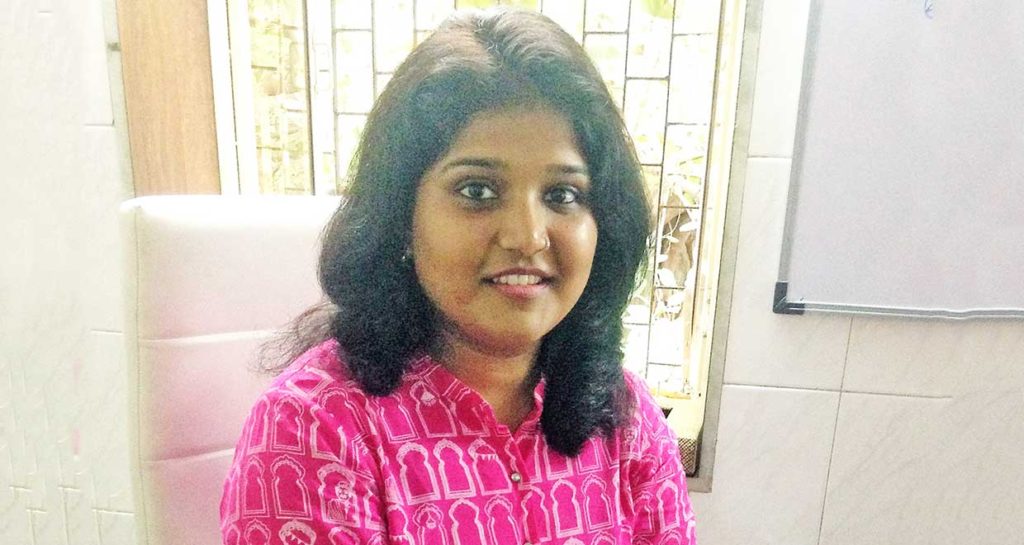
    Ojasvita Srivastava graduated from V. M. Salgaocar College of Law, Goa University (2005-2010). She is a qualified lawyer and an experienced in-house counsel with experience in litigation, arbitration and corporate compliance. She is presently a Senior Manager in the Legal department at Reliance Communications where she deals with Telecom Litigation.

    She pursued an LL.M in Commercial and Corporate Law at the Centre for Commercial Law Studies, Queen Mary University of London, where she served as the Communication and Media Coordinator of her specialisation- Commercial and Corporate Law.

    Ojasvita was also the Co-Founder and Chief Editor of the ‘The Sophists’, Queen Mary Law and Business Journal, which publishes articles on Law, Business and Politics. She contributes articles on Indian economy and legal developments to this journal. She also edits and contributes articles to the monthly Postgraduate Newsletter of the Centre for Commercial Law Studies, London.

    In this interview she talks to us about:

    • Challenges associated with being an in-house counsel.
    • Project Abhimanyu – providing free guidance to law students who do not come from a law background.
    • Services provided under the project “Abhimanyu”.
    • Skills and qualities that helped her achieving the current position.


    How would you like to introduce yourself to our readers?

    I work as a Senior Manager in the Legal and Regulatory Department at Reliance Communications in New Delhi. I handle cases related to telecom, broadcasting and infrastructure disputes before the Supreme Court, various High Courts, the Telecom Tribunal (TDSAT) and various arbitrators, while occasionally getting involved in M&A work and contract vetting. I have a keen interest in litigation and have previously practiced before the Supreme Court, the Delhi High Court, and various District courts in Delhi.


    What made you choose the legal profession as your career option?

    Pursuing law as a career was a last minute decision. I was a student of the Science stream till class XII. Like the rest of my class, I too wrote the AIEEE and did well. I had a state ranking of 37 in Engineering and 7 in Architecture. However, I disliked Chemistry and didn’t want to read a word of it ever again in my life. As I was trying to figure out what to do with my career, I met my mentor, Adv. Vilas P. Thali. He is the former Additional Advocate General of Goa and is a specialist in election laws. After meeting him I was inspired to pursue law. I wrote the entrance exam for V. M. Salgaocar College of Law on 14th June, 2005 and joined his office as an intern on 15th June, 2005. I interned there for more than 3 years spending close to 6 hours a day in his office and visiting courts, meeting clients as well as attending sessions of briefing senior counsels (even though I was just a 12th pass student). I topped the entrance exam at my college and continued to perform well. As a result, I was awarded the merit scholarship throughout my LLB course and paid nothing in tuition fee! Although the joy of saving money was more than offset; thanks to my LLM at Queen Mary, University at London.

    As I am a first generation lawyer, my family was not in favour of me pursuing law as a career. However, I convinced them otherwise and became the only girl in my entire batch at school to join law.


    What were your objectives and plans in the preliminary years of law school?

    Right from the first year, I had a deep interest in litigation and I had a clear mind that I wanted to make a career in this field. Therefore, in my initial years at law school, I aimed at participating in as many moot courts as possible and gave every moot court my best. I won the best lady advocate at a national level moot court competition and the best memorial award at an international moot court, while doing fairly well in all moot courts that I participated in. My mooting experience not only helped me hone my research and oratory skills but more importantly helped me develop a keen attention to detail, which is absolutely essential to win any case.

    Besides this, I interned throughout the first three years of the course; part time when the college was in session and full time during vacations. As my college timings were from noon to half past five in the evening, I could easily dedicate three hours in the morning and in the evening. During the morning sessions, I usually attended proceedings at the Panaji bench of the Bombay High Court or the District Court, where I gained practical experience in court skills and procedure. Evenings were usually dedicated to practising legal research, drafting and attending client meetings. Often students learn these essential skills only after passing out of law school. So I am very grateful to my mentor for hand holding me and making sure that I learnt these skills while still at college.


    What are the challenges associated with being an in-house counsel? How do you handle them?

    There are in-house counsels specialising in various areas of legal practice. I will only talk about the challenges faced by in-house counsels working in the dispute resolution field.

    As an in-house counsel specialising in dispute resolution, the volume of work is more though the in-depth involvement in legal research is limited. Also, one is involved right from the pre-litigation stage of litigation-avoidance correspondence till the execution of the decree, including serving notices, drafting, vetting and settling petitions, briefing senior counsels, attending arguments and then following up for the execution of decrees. During this process, one also needs to keep the management of the company informed about the on-going proceedings almost like the eyes and ears of the management in the court (AKA Sanjay from the Mahabharata).

    The challenge revolves around balancing the volume of work. As an in-house counsel, I have been assigned more than 65 cases. My colleagues, who are senior to me, handle even more cases than me. Thus the responsibility is to keep a tab of all your cases in all the courts across the country and to make sure that the interests of the company are effectively secured. Further, as an in-house counsel, one also needs to understand the technicalities of a case well enough to be able to explain them as her own case. Thus I, for example, have to understand complex science revolving around telecom engineering to be able to explain it to the external counsels on behalf of the company.


    Tell us something about “Project Abhimanyu”.

    ‘Project Abhimanyu’ is a pro bono and voluntary initiative that I recently started. It aims at increasing access to career opportunities in the legal industry by providing free guidance and career counselling to law students who do not come from a law background.

    It endeavours to increase awareness about career options available in the legal profession to students. It works assiduously with students from colleges that do not have a fully functional placement cell and also assists and contributes to the existing services available at academic and professional institutions that are working towards guiding students. It does so by sharing knowledge and seeking guidance from highly trained and experienced professionals in the legal industry who are willing to voluntarily mentor students in their free time. In the long run, Project Abhimanyu will work towards enriching the talent pool available to the legal profession.


    Why have you named it Project ‘Abhimanyu’?

    Abhimanyu was Arjun’s son from the Mahabharata. On the 13th day of the Mahabharata war, he successfully intercepted the Chakravyuh formation created by the Kaurava army, and saved the Pandavas from imminent defeat. What is particularly interesting about this episode though is that Abhimanyu obtained this knowledge of penetrating a Charavyuh formation as a foetus in his mother’s womb. Thus Abhimanyu was born with the knowledge of how to penetrate a Chakravyuh.

    The legal industry is like a Chakravyuh, complex and vast. It would be Project Abhimanyu’s endeavour that, just like Abhimanyu, law students graduating from various colleges must learn to successfully navigate the legal industry. They should be able to make informed career decisions and achieve success proportionate to their calibre and hard work; and they should never get left behind because of a lack of guidance.


    Why inspired you to start this initiative?

    To answer this question, I would first like to give a little context. I graduated in law from V. M. Salgaocar College of Law, Goa in 2010 and later acquired an LLM in Commercial and Corporate Law from Queen Mary, University of London in 2014. In the intermittent period, I worked at a multinational French Pharma company in Mumbai and later practised at the Supreme Court, Delhi High Court and District courts in Delhi, while simultaneously writing the civil services examination. In 2013, I appeared for the interview round of the civil services examination; however, I missed by a narrow margin and thereafter decided to continue my career in law.

    All along this journey, I had little guidance in terms of how to go about making my career in law. As a result, my career grew more in a trial and error fashion. Thankfully, I have reached a comfortable place now, and therefore I want to help other students who are in a similar position.

    Law is a difficult profession not only because it is a complex industry but also because it requires one to really slog to climb up. That said, it becomes all the more difficult when you are a first generation lawyer. The idea behind Project Abhimanyu is to guide first generation law students so that they get a better shot at making a smooth transition from being a law student to becoming a lawyer. Over the past few years, I have been guiding students studying in various colleges in Delhi, Noida, Lucknow, Pune, Bhubaneswar, Cuttack, Patna, Mumbai and Goa. But there are still a lot of students who need guidance and this is what got me motivated to start this platform to reach out to more students across the country.


    How difficult was it for you to connect and convince different lawyers to register on this project?

    It wasn’t difficult at all. Everyone I approached has been very receptive and appreciative of Project Abhimanyu. We have the GCs of MNCs, law firm partners and highly successful litigators on board as Mentors at Project Abhimanyu. In fact, most Mentors at Project Abhimanyu had already been guiding and mentoring students. Project Abhimanyu is only providing them a platform to reach out to more students from across the country. I am very grateful to everyone who has joined this initiative and is sparing time from their busy schedules to help the future generation of lawyers.


    What kind of services do you provide under this project?

    Students can write in to ask any query related to the legal career. These could be about improving their CV, internship applications, job applications, career guidance, civil services examination, higher education abroad, CA/CS courses, working in-house or any other information related to law. They simply need to drop an email to project.abhimanyu@gmail.com and they would be assigned to a mentor who would answer their queries.


    Where do you see this project five years from now?

    In five years, I want Project Abhimanyu to be a self–sustained, fully automated system. We are working towards building a network of lawyers specialising in different areas of law who are voluntarily willing to guide students. Eventually I want Project Abhimanyu to develop into a platform where any law student from any corner of the country could just go to our website, choose a Mentor in a particular field of law from an entire range of specialists and write a message that would directly be received by the Mentor and answered by her/ him. We are also working towards compiling and publishing the advice given by the Mentors for the benefit of other students. I want the advice to be free and fair and therefore, Project Abhimanyu shall always remain a pro bono, voluntary and a not-for-profit organisation.


    What skills and qualities do you think have helped you achieve your current position?

    I think hard work, attention to detail and a passion for reading are essential qualities for anyone aspiring to make a career in litigation. Besides that, the training I received from my mentor and the guidance of my teachers has helped me tremendously. I will be failing in my duty if I forget to mention the complete liberty and unflinching support given to me by mother in shaping my career.


    What would be your advice to our readers?

    An ex-President at Reliance, whom I respect like a father, once passed a remark that struck the very core of my conscience. He told me that ‘your profession (the legal profession) is rather feudal’. What he was inferring was that it is easier for people from a law background to excel in this industry.

    Project Abhimanyu is trying to break free from this notion about the legal industry in India. I would advise every student reading this article to take full benefit of Project Abhimanyu. It is an opportunity for everyone to get a fair shot at law and to make informed career decisions. I would also request every legal professional reading this article to join Project Abhimanyu and help the future generation of lawyers in our country become more productive and efficient.


  • Vibha Mane, Founder, Law Matters on experience in research work at JGLS and TISS and LL.M from Univ of Glasgow

    Vibha Mane, Founder, Law Matters on experience in research work at JGLS and TISS and LL.M from Univ of Glasgow

    Vibha Mane is a 2006 graduate of Symbiosis Law College, Pune and did a Diploma in Alternative Dispute Resolution from the Asian School of Cyber Law. Thereafter in 2008, she earned a Master’s Degree in International Commercial Law from the University of Glasgow, United Kingdom. She worked for a while as a Research Manager at Rainmaker and then as a Legal Assistant at IC Legal, Advocates and Solicitors. She also worked as a Senior Research Associate at Jindal Global Law School and as a Research Officer at TISS. At present, she is the Director at Law Matters, a company that she founded.

    In this interview she explains to us:

    • Suggestions on engaging in extra and co-curricular activities during law school and how to plan internships
    • Her various job experiences
    • Setting up and working at Law Matters
    • Studying at the University of Glasgow


    How would you like to introduce yourself to our readers?

    I am the Founder & Director of Law Matters LLP based out of Mumbai. Some other terms that are often used to describe me are- a teacher, trainer, researcher, writer, lawyer who doesn’t practise and an entrepreneur by chance!


    Why by chance?

    In ten years of work experience, I tried litigation, law firms, and the state electricity commission. I also worked as a content creator, trainer, teacher and researcher. Of all these experiences, I could relate to academia as my core field of work. I had the opportunity to work with some big educational institutes like Jindal Global Law School and Tata Institute of Social Sciences. These work profiles allowed me to understand my career strengths – content, research and teaching/ training. I realised, my work has a broad spectrum and I could freelance. So, in 2014 Law Matters was emerging as an idea and honestly, it was my husband who encouraged me to think big and take the bold step of setting up Law Matters. I had my inhibitions about this whole ‘starting up on your own’ concept! But it was worth taking a chance.

    Together, we spent a year studying market trends in the legal field, met many principals and vice chancellors, gathered their feedback on lacunae in legal education and Law Matters was conceptualised by February 2015!


    Tell us more about Law Matters.

    We have four faculties- content, training, policy analysis and social projects. We create various courses for law schools and even management schools. We train law students on career options in law, career combinations with law, research methodology, effective communication and writing, soft skills, resume crafting, mock interviews and a lot more. We assist law schools with course content assessment, students’ calibre tests, organising seminars, getting their students job ready etc. Our team also undertakes policy analysis on various topics and we have some interesting social projects lined up. While the first two faculties generate income for us to sustain, the other two faculties are more out of interest for these causes. Law Matters believes that a healthy legal change equals a better social tomorrow and hence these initiatives.


    So how has it been for Law Matters? What challenges did you face?

    vibha-mane-3We are already a year old and are perceived as a finishing school for lawyers. In the first year we did more of training in Pune, Delhi and Satara but this year we are being approached a lot for content from Bangalore, Haryana and Delhi. I am very happy with our progress and particularly with this shift in demand. My biggest challenge has been to make law schools understand that we need to change our traditional methods of teaching law. A mere ‘Drafting, Pleading and Conveyancing’ (DPC) class doesn’t equip them with the skills they need to be ‘employment ready.’We need new and practical courses for law students.The standard courses that one takes through three or five year courses are redundant. Today’s students are always on the lookout for some diploma / certificate courses on upbeat topics. So why not provide them with those? Quality content is critical if we want them to stay up-to-date with changing trends and acquire skills for a good caree start.


    What would you like to share with us about your college time and the impact it had on your views of law?

    My views on law were very dramatic. My family has many lawyers and I was always in awe with their work and reputation.  As a child I gathered soon that lawyers, like police are quite important people! So studying law was natural for me. I had thought, I will get a law degree and then practice in courts, as is the family trend.

    Five years at Symbiosis Law School, Pune made me realise that being a lawyer was quite a task. What I loved most was the pattern of logic and reason that law holds. This makes it so interesting. The course was vast, yes! But thankfully, studying law didn’t seem tough.


    While there, what co-curricular or extra-curricular activities did you indulge in? How did you plan your internships? How did the same affect your overall take away from law school?

    I enjoyed legal-aid workshops and street plays on socio-legal issues. Honestly, I was not much involved in moot courts and elocutions at law school. This is one aspect that is often considered important on a fresher’s resume. Though, its absence never affected my career, it is one of those college things, I still regret not having done. I think, participating in such activities gives a boost to your confidence, it is through these activities that you can actually practice some research and presentation skills.  It also aids in improving your rapport among the social circle.

    About internships; no one ever recommended that I should intern with law firms or corporate houses. I toiled in district courts and the Bombay High Court learning procedural laws. During this time, I got a reality check- law is not as fancy as it seems in cinema! So, unfortunately, my internships lacked planning. This I often see as my career drawback. Learning from my own experience, I suggest that students should get a variety of internships at companies, law firms, NGOs and even start-ups, as they offer a hands-on learning base.


    vibha-mane-2

    What motivated you to pursue an LL.M in Glasgow after graduation?

    I saw this coming!!! You see, my career wasn’t working the way I saw it – in courts. Post degree, I again tried to give litigation a chance in the Bombay High Court but I wasn’t enjoying it. The clueless, ignorant and vulnerable crowd at courts made it even less interesting. I felt I just can’t be practicing law. This self-realisation was scary and difficult to deal with. I obviously wanted more time to think about my options. The senior lawyer I was working with; Advocate Deepa Chavhan, suggested that I do an LLM and appear for QLTS (solicitors’ exams). At that time, I wasn’t sure what it means to be a solicitor but the prospects looked promising. Thus, I began applying for UK universities for Masters in Law. I was happy to get through to the University of Glasgow. Ranked in the top 1% of world universities, it is considered the university of world changers– Adam Smith, James Watt, seven Nobel Laureates and a rich heritage of over 560 years. Besides, I was fascinated with Scotland!


    How did the degree change your perspective on legal practice and development within the country?

    I am truly grateful for the exposure I got while doing a Masters in Law. Within the first few months, I realised I wasn’t equipped or trained to do systematic research, my writing lacked clarity and did not justify the research methodology I had used, and my critical analysis had to be a lot stronger and supportive of my arguments. This was the case with many Indian students studying law there. We weren’t taught these things. We weren’t groomed to be researchers and effective writers. I had to unlearn to write volumes about a topic, instead I struggled to put my point across crisply, in one or two lines. Funny but true!  I also realised that soft skills are a very crucial part of a lawyer’s personality and practice, and Indian law schools were missing the point completely. Our law schools have begun focusing on these issues only recently.


    Your work with Rainmaker stressed on content creation and streamlining legal research skills and techniques. What sort of a gap did you believe existed in the ability of trainees?

    Rainmaker offered great intellectual freedom. The team was committed to bring in a much needed change in the legal field- teaching, training and talent management.  This job helped me execute all that I had learnt during my Masters’ degree. I enjoyed creating content on varied legal topics and training was equally fascinating. Initially I was sceptical about training law students only a few years younger than me and law professionals quite older than me! But most of these trainees – young and old, acknowledged the fact that I knew things they wished to learn, this made my task easy. The biggest gap however, was of virtual intelligence! Being able to type a word document, or writing emails, or having LinkedIn accounts doesn’t mean we are virtually intelligent and technologically effective. There are a zillion little things to make a lawyer’s work look more professional, serious and authentic. So yes, there is still a huge scope for improvement there.


    At the prestigious Jindal Global Law School, what were the finer points of your research projects? What did the process of publishing your work from there entail?

    My year and a half at JGLS was loaded with research on topics like election laws, police reforms, prison industry, laws relating to women, inter-relations between law, society and cinema; right to religious freedom, torts, ragging and a lot more. Some work was published as articles, some as reports. During this time, I also worked as the Managing Editor of the Jindal Global Law Review, for the September 2010 issue. This responsibility proved to be a good opportunity to learn the intricate process of making a piece publishable. It really takes practice to go over the same piece again and again and to fix faults each time. And it is so good to see law students taking keen interest in publishing their work in various law journals. We as teachers and trainers, must encourage them to publish more.


    From your experience of teaching, what would you like to say about the newer generations of law students?

    There are quite a few things I like about this generation of law students- they are open to new ideas, they like mixing law with literature, poetry, documentaries, designs, humour and more. A curious class makes the teacher bring in something new to the desk, always! Plus, these students are aggressive about their career growth. They are sure of their choices. However, they dedicate all their five years towards building one particular resume that supports only their liking, not their ability! And see, this is also something that I have done myself. So, I know what it leads to.

    During our career counselling sessions, we often handle a lot of confusion. For instance, “Can I do CS even if I am weak in my accounts?” The question is how you see CS complimenting law and future prospects. Or something like, “I want to study for a Master’s degree but I am not sure whether to pursue an LLM or MBA.” Again, the answer to this question depends on why you think you need a Master’s degree in the first place and which areas do you want to work on.

    Another prominent trait of this generation is that these kids are setting very high standards for themselves at the very beginning of their career. This quite often leads to disappointment. They usually fail to do a reality check.


    Would you say their education varies from your own experience in college? If so, how?

    Oh yes, certainly! The exposure that law schools offer to their students has tremendously increased. Of course, even we had industry experts teach us. We had active placement cells too, but the law schools were few then. Now private universities are offering world class facilities, state of the art infrastructure, and global faculty! Ten years ago, many practicing lawyers acted as visiting faculty for several law schools. Only a few teachers were committed to teaching law the way it should be taught! No one taught us howto use LexisNexis, Hein Online, Westlaw, JSTOR etc. We learnt these things on job. These days, more or less all law school libraries offer free access to these databases.Besides, earlier; for moot courts, students prepared themselves. Now law schools put up a whole team of industry experts to make students ‘moot ready’ and that’s great, isn’t it?


    Law, Development, and Social Change was the core focus of your work with the Tata Institute of Social Sciences, (TISS) Mumbai. What would you like to tell us about the need and aspirations of the same?

    Every institute has its own unique agenda. Social commitment was an integral part of the proposed LLM course for TISS. So while creating content I had to make a course that evolved around poverty, religion, gender justice, vulnerable groups, alternate advocacy, economic law and development, legal reforms and court and case management. As a lawyer, knowledge of these subjects is indeed crucial but interest in these topics cannot be forced, you have to be passionate about it.

    An emotional quotient is important for lawyers but the levels may vary for everyone. When one has flourishing options to consider from property, real estate, maritime, space, sports, media, arbitration, etc. one tends to favour these topics over the social reform aspects of law. Having said that, I am, by no means, generalising the choices. We still have a good number of law students extremely keen on topics like refugee laws, immigration issues, torture, armed forces’ powers, animal rights, peace treaties, child rights, LGBT and so on.


    From an aspiring SuperLawyer to the Founder of Law Matters LLP, how does the specific skill development you envision set someone apart from the current crop?

    With Law Matters, I and my team are attempting to bring in the desired change in current legal educational environment through new content and innovative teaching techniques. The skills that we envision all lawyers to acquire are very crucial. It is his research and writing ability that helps a lawyer win his bread. Research allows you to get to the details, and writing teaches you to value the information. Most of these professionals and students alike, realise that we are assisting them with acquiring important skills that aren’t taught elsewhere. Basics like how to effectively draft a document, how to use search engines for accurate legal research, what search terms to use -when and where, how to break an issue to reach the most convincing argument, what other technological tools a lawyer can benefit from etc.are gaining popularity and acceptance.


    Finally, do you have any other advice for our readers, most of whom are college students?

    I would strongly recommend they take soft skills seriously. They should focus on developing a good resume from the very beginning. Reading for class and beyond class material is one good habit that they should try to inculcate. Also, a clean and responsible virtual presence adds a lot of credibility to your personality.  Lastly, your years at law school are equally important as your internships. So, don’t get so busy learning the tricks of the trade that you forget to learn the trade.


  • Aditya Swarup, Assistant Professor, Jindal Global Law School on being a Rhodes Scholar, and pursuing BCL & M.Phil from Oxford

    Aditya Swarup, Assistant Professor, Jindal Global Law School on being a Rhodes Scholar, and pursuing BCL & M.Phil from Oxford

    Aditya Swarup graduated in law from the  National Academy of Legal Studies and Research University in 2010. He was also awarded the Rhodes’ Scholarship the same year, after which, he obtained his Bachelor of Civil Laws degree from the University of Oxford in 2011. He then went on to do his Masters’ degree in Philosophy from University of Oxford in 2012. During his time at Oxford, he focused on various courses such as Restitution, Civil Procedure and Comparative Public Law.

    After practicing law for a few years, he took a break to focus on his research and teaching. He is currently working as an Assistant Professor at the prestigious Jindal Global Law School and is serving as the Assistant Director of the International Institute of Higher Education and Capacity Building.

    In this interview, Aditya talks about: –

    • What made him pursue a legal career;
    • His interests and areas of focus;
    • His journey towards becoming a Rhodes’ Scholar;
    • His views on the Indian Judicial System; and
    • What a student must have, aside from academics in order to have a successful legal career.


    How would you like to introduce yourself to our readers?

    I am Aditya Swarup, currently an Associate Professor at Jindal Global Law School. Before joining academia, I used to work as an associate at a solicitor’s firm in Mumbai, practising primarily in the Bombay High Court and the Supreme Court.

    What led you to enter the legal profession?

    During my 12th standard, I cleared the UPSC-NDA exam and SSB interview and was slated to join National Defence Academy, Khadakvasla with the prospect of joining the Indian Airforce thereafter. However, after a lot of thinking, I decided not to join the Airforce. At the same time, given that I had secured only 59.8% in my class 12 exams, I was denied admission by most of the good colleges. Law happened to be one of the disciplines where your 12th standard marks didn’t matter and all one had to do was to clear an entrance exam. Accordingly, I took a year off and prepared for the law entrance exams for various law colleges (we didn’t have CLAT then) and got through NALSAR.


    Would you like to share with the readers any particular instances during your time spent at NALSAR, which helped shape your views about the law?

    aditya-swarup-3In or around November, 2008, I had the good fortune of interning with Mr. Tehmtan Andhyarujina, former Solicitor General of India. At the time, he was arguing Selvi v. State, a case concerning the constitutionality of narco analysis before the Supreme Court of India. He had only one junior and involved me extensively in the case. I think preparing for the final arguments in that matter, that went on for two whole weeks, has been one of the best experiences in my life. At the end of my internship, Mr. Andhyarujina gave me the most inspirational talk about litigation and Jamshedji Kanga’s chamber and presented me with a copy of Prashant Bhushan’s book “The case that shook India”, a factual account of Indira Gandhi v. Raj Narain. The book also had a transcript of the Keshavananda Bharti review. It is then that I decided to pursue a career in litigation and Mr. Andhyarujina has helped me ever since.


    What are your primary interests in the legal profession? Why?

    During my formative years at law school and immediately after, I used to be quite interested in human rights advocacy. To this end, I used to pursue a lot of work in Chattisgarh and other conflicted regions. After my B.C.L, I took a keen interest in commercial law. I was intrigued by common law decisions on contracts, restitution and civil procedure and the manner in which each statement by a Judge in his judgment impacts the law. I have pursued an interest in commercial law ever since.


    During your time at NALSAR, what extra–curricular and co–curricular activities, if any, did you participate in? How do you think these activities affected your take away from law school?

    Unlike most students during their time at law school, I did not participate in many moots while at NALSAR. In fact, I participated in just one moot, i.e. the Raj Anand Intellectual Property Moot and incidentally, won the best speaker award there. I also debated just once, that too in my final year. However, I spent most of my time writing papers and in research. I feel this interest allowed me to attempt to critique the law beyond what is given in the text book. In fact, the publications have also immensely helped me with my scholarship and post graduate courses.


    You wrote your M.Phil dissertation on “Interim Injunctions and Judicial Delays in India”, discussing injunction hearings taking the role of mini – trials in India. Can you tell us something about it?

    aditya-swarup-1One of the most significant and engaging aspects of a civil suit is the granting of an interlocutory injunction pending the final decision in the matter. The grant of such an injunction is, in theory, purely provisional in nature, with the objective of maintaining status quo, and in the hope that a party doesn’t suffer from irreparable harm. However, in most circumstances, such injunctions are maintained for the entire length of the suit, the length of the suit then itself being a critical issue. A final determination of a civil suit in India can take anyway upwards of 7 years. This poses a peculiar predicament to the Indian legal system in the sense that though an interim measure is merely meant to be provisional, since it lasts the length of the suit, it achieves a sort of finality- an unintended and inevitable consequence. Considering the predicament that currently plagues the Indian judicial system, i.e., an insurmountable backlog of over 300,000 cases, interim injunctions, instead of serving its purpose now merely serve as a clog in the judicial system.

    In light of the above, I studied the relationship between judicial backlog and interim injunctions, culminating in a phenomenon that has acquired the term ‘mini-trials’- where the court conducts a thorough examination of the merits of the case at the interim stage so as to dispose the matter. A similar situation existed in England in the 1960’s and 70s, and I sought to examine the lessons learnt from that experience and  the viability and desirability of mini trials in tackling judicial backlog in India. As part of my research, I studied every reported case on interim injunctions in India.  


    What is your opinion of the current proposals to reduce judicial backlog? From which country/countries should India draw inspiration to solve this issue? Why?

    I believe that the solution to reducing case pendency is not to merely increase the number of judges but to bring about structural changes in the system. Unfortunately, most authorities, including the Law Commission, and lawyers stress on increasing the number of courts and judges to reduce case pendency.

    We should be mindful and borrow from the American experience. A series of suggestions were made in 1959 in the United States to address the increasing case load. The reforms that made their way out of these suggestions were primarily aimed at increasing the number of courts and judicial officers. The result however, was contrary to what was expected. The records showed that the caseload actually increased subsequent to the implementation of the reforms. This consequence has been explained by the renowned American Judge Richard Posner who rightly argued in a landmark paper that “reforms” increasing the number of judges and courts would only have an ad hoc effect. While being initially effective, in the long run, realising the efficacy of the legal system, it would merely result in more litigation. To buttress his argument – he drew upon a rather unusual analogy – while initially a new highway would serve the purpose of easing out traffic, road conditions would in fact induce people who had previously used other modes of transportation, to switch to driving. This would only result in leading to greater congestion. In this light, merely increasing the number of judges or courts is not going to be enough to tackle the predicament plaguing India’s judicial system – one must also address institutional changes and the culture of litigation prevalent in the country.

    The measures to reduce judicial backlog should also include the introduction of information and communication technology (ICT) support systems, developing online procedures for the filing of documents, notification of court dates, periodic reminders for submission of documents, service of documents via email and the like with an aim to have time bound litigation. A judge ought to decide cases and not allot dates. It is also important that we implement the procedure of costs following the event as provided in the CPC.


    In the year 2010, you were awarded the “Rhodes Scholarship”. How much does one have to achieve in order to be awarded such an esteemed scholarship? How did the scholarship benefit your professional career?

    The Rhodes Scholarship, unlike other scholarships, looks at the all round achievements of the individual based on criteria of academics, co-curriculars, leadership, social services and sports. In this sense, I believe that the Rhodes Scholarship is not just a scholarship to study in Oxford but a process and an experience. A process, in the sense that the very process of applying for the scholarship and meeting the various criteria helps one reflect on their life and achievements. An experience, because once you join Oxford, you are amidst a community of highly qualified achievers and even interacting with them is inspirational. I made some great friends amongst the other scholars. As regards my professional career, very few people in India and more particularly, the Bombay High Court were aware that I got the Rhodes so it didn’t matter.


    What is the primary purpose of the site, Something About the Law?

    (Aditya is currently the owner and author of the website, Something About the Law)

    Something About the Law was a blog that was started by my classmate Arun Mohan and myself while at law school. We used to write on various public policy and social issues from time to time. The idea of the blog was not merely to spread awareness about certain legal issues but also to individually hone our respective writing skills. To this end, I think the blog greatly helped me critically analyse various legal issues. During our penultimate year at law school, we started the Socio-Legal debates – the idea being that we would get distinguished speakers to fly down to NALSAR and debate with each other on issues with the entire debate being streamed online. We secured sponsors for the events and enjoyed packed audiences.


    Many a people in the legal practice are awestruck when they look at your long list of publications. Do you have any advice for any of our readers who might be interested in having their research papers and articles published?

    Haha. I am quite perturbed by the fact that students rarely read full cases or books now a days. If any research needs to be done, one instantly looks at online databases rather than open an authority on the subject and read the entire chapter. In fact, I myself used to do this while at law school till I was told by senior lawyers and well-wishers to read full cases (not just paragraphs or head notes). The utility of opening a book and reading all that is written about an issue, including its theoretical underpinnings also acts as a revision and strengthens the foundations of the reader. On the other hand, merely searching for a point of law online lacks these aspects.

    I believe this practice continues to help me in my research and understanding of the law and I would advise the readers to develop this habit, irrespective of whether they are interested in research and publications.


    You have recently taken a break from practicing law to teach and pursue research. What made you take this break? What are you currently focusing your research on? What are your views on the topic?

    I’ve taken a break primarily to strengthen my own foundations in commercial law, primarily contracts and commercial remedies. I am currently researching on the area of commercial remedies, i.e. injunctions, damages for breach of contracts, specific performance and trust based remedies (a largely ignored subject in India). One of the projects I’ve undertaken is to chart out a theory of damages in India. I’ve also taken a “break” to see if academia is my calling.


    Would you like to share any views on the state of legal education in India?

    There are a few disturbing aspects about the state of legal education and the profession in the country. Each of these stem from the fact that the legal profession in India is largely unorganised.

    First, it is quite tragic that even though we have only about 15 National Law Schools and about 5 other good legal institutions (20 in total), we cannot get adequate faculty to teach in these law schools. I was quite disturbed to read online that students at HNLU Raipur and NLU Assam were constrained to protest because they didn’t have adequate faculty or facilities. What was even more disturbing is the report that students at NLU Ranchi were asked to write their end-semester exams without being taught the subject. This points to an alarming trend in legal education.

    Second, and on a related note, not much is being done to attract talent into academia. A lot of students from national law schools are now pursuing LLMs, M.Phils and Ph.Ds. In fact, as of today, about 35 people from my batch of NALSAR itself have completed their Masters from reputable institutions. However, there is hardly any incentive, monetary or otherwise, for many of these students/alumni to get into academia. If one spends lakhs on their Masters, it is likely that they would need a job that can help pay off the loan. It should not then be expected that such person will join an institution that pays little.

    Third, despite graduating from most of these law schools, it is hard for the students to get jobs. This stems from the fact that the legal sector in India is largely unorganised and it is still hard to make it within the system if you don’t have any support/backing. Any organisation only exists in the law firms where one can be said (though some believe it exists here too) to be recruited on the basis of their competence. However, the supply of graduates from the national law schools and other reputable institutions largely overshadows the demand at the law firms.

    I believe that one of the advantages of a law degree is that there are many career options available to a lawyer after graduation. One may consider a career in litigation, law firms, corporates, human rights, the NGO sector, public policy, UPSC, the UN, journalism and the like. Legal institutions must capitalise on these advantages and help students diversify their career options after law school. At the same time, institutions like the Bar Council of India must strive to organise the profession in such a way that one isn’t disadvantaged because he or she doesn’t have a mentor or any backing in the profession.


    Finally, what is your message for our readers, most of whom are college students?

    The law school curriculum is structured in a way that exposes the student to many facets of the law. However, one notices that the moment a student joins law school, he or she is focused on joining a corporate firm, UPSC or the like. While it is good to be ambitious and have a plan, the student must not shut out his or her options. It is beneficial to be exposed to different areas of the law and then make a decision on what line to pursue. Students must also pursue research.

  • Vishavjeet Chaudhary, Assistant Professor, Jindal Global Law School and Barrister (Inner Temple) on LL.M from Cambridge and academic research

    Vishavjeet Chaudhary, Assistant Professor, Jindal Global Law School and Barrister (Inner Temple) on LL.M from Cambridge and academic research

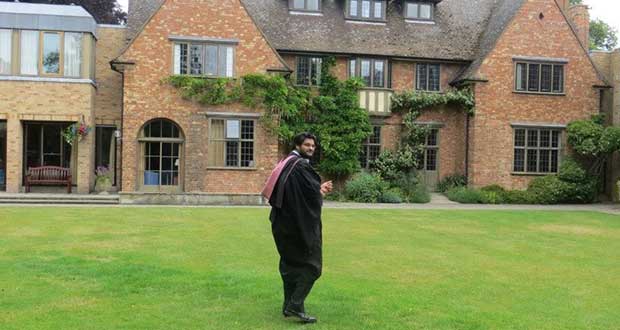
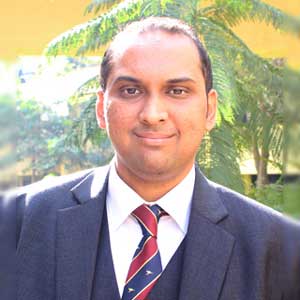
    Vishavjeet Chaudhary graduated in law from University of Kent, Canterbury in 2011 and was called to the Bar in 2012. He went on to complete his Masters’ degree from University of Cambridge in 2013. During his time there, he pursued Criminal Justice, Philosophy of Criminal Law, History of Civil and Criminal Law, and Jurisprudence. Aside from his legal career, he is interested in Human Rights and their protection, poverty alleviation, Social Services, and Economic Empowerment.

    He is a Barrister (Inner Temple) and is currently working as an Assistant Professor at O.P. Jindal Global University’s Jindal Global Law School where he is also the Assistant Director of the Centre for Penology, Criminal Justice and Police Studies.

    In this interview, Vishavjeet talks about: –

    • What made him pursue a legal career;
    • His experience while studying in the UK;
    • His focus on pro-bono and Human Rights related work;
    • The importance of Public Speaking; and
    • The difference between the UK and India with respect to legal systems.


    How would you like to introduce yourself to our readers?

    I am a Barrister, currently working as an Assistant Professor. My areas of interest are criminal law, constitutional law and human rights. I am also a very keen traveller, horse rider and agriculturist!


    What made you get into the legal practice?

    I knew that I wanted to be a lawyer when I was five years old! It partly ran in the family but my decision was not influenced by that in the slightest.  Other than the odd (I have been into full time agriculture for some time!), this resolve has been unwavering. I think one can make a genuine difference in this profession as law is something that touches everyone’s life in one way or the other. Second, this profession allows me to pursue my interests- intellectual endeavours, public speaking and interacting with a wide variety of people. Third, the independence of this area really attracted me.


    vishavjeet-chaudhary-2

    What inspired you to pursue your LL.M at University of Cambridge?

    I chose my undergraduate university based on how liberal it was. The university allowed for tremendously wide multidisciplinary studies. A lot of my tutors there very kindly encouraged me to pursue Masters in Cambridge to gain deeper understanding of the law. Most of my courses were either in jurisprudence, history or crime.

    What made you focus primarily on Criminal Law?

    I find criminal law fascinating- this is an area where all facets of human social interaction are at play. It is also an area that studies the depths of human emotions- passions, insecurities (no pun), deceit and weakness. Human Rights play a pivotal role as well. As I was interested in all these areas, I focused on criminal law.


    While at University, what co-curricular and extra-curricular activities, if any, did you partake in?

    I gave everything a shot – from debating and mooting to Polo and American Football!


    How did they benefit your performance at University, academic or otherwise?

    Intellectual activities like debating helped me in organising my thoughts, developing public speaking skills and communicating my point in a clear and persuasive manner. Sports and other activities helped me in relaxing and letting off steam. Both were also great ways to socialise and get a well-rounded education.


    What does your work for the Centre for Penology, Criminal Justice and Police Studies entail? What purpose does this Centre serve?

    (Vishavjeet is currently serving as the Assistant Director of the Centre for Penology, Criminal Justice and Police Studies at the prestigious Jindal Global Law School)

    The CPCJPS offers cutting edge inter-disciplinary research in the areas such as victim protection, reparation, juvenile justice, police reforms, technically sound training in human rights complaint law enforcement and investigation. Our aim is to encourage dialogue between different players of the criminal justice system to contribute to this area.


    vishavjeet-chaudhary-1

    What made you get interested in Human RIghts? What is the importance of pro-bono work?

    (Vishavjeet has shown keen interest in protection of Human Rights, Social Services and pro-bono work since his University days)

    I feel a big part of human life is to help. I do not say there is anything heroic about that- someone has to do it! I also find it intensely satisfying and enriching to be able to make a difference. There are few things half as rewarding as putting your knowledge to good use for betterment, no matter how small the change!


    How is the role of a Barrister any different from that of an advocate in Indian Courts?

    I was called to the Bar by the Inner Temple. England and Wales have a dual system- a distinction between Barristers and Solicitors. To crudely put it and to crunch centuries of history – Barristers do more advocacy and solicitors do more paper-work, conveyancing, etc.


    What inspirations can the Indian justice system draw from that followed in UK?

    vishavjeet-chaudhary-3Our Justice System is excellent considering everyday challenges. We do however need to urgently address issues like delays, transparency and the occasional malpractice if the system is to enjoy legitimacy and authority. All sections- judges, lawyers, the civil society- all of us need to put our heads together and work out solutions that are sustainable.

     

    How important are activities like Public Speaking and Debating for a law student?

    (During his time at Kent, Vishavjeet was the Vice – President and the Co- Founder of the Kent Debating Society. Further, he was a member of the Speakers’ Committee at Cambridge and has always stressed on the importance of public speaking)

    Exceptionally important I think. The perception is that if you do not want to get into litigation, you do not necessarily need to train as a public speaker. Public speaking regardless helps in developing wit, confidence, succinctness, persuasive knack and the ability to think on your feet. I feel that these are essential skills for a lawyer, irrespective of the area of practice. There certainly are other ways to develop these, but public speaking is definitely one of the best!


    What got you interested in interdisciplinary studies with respect to law? How do you intend on connecting the various disciplines?

    (One of Vishavjeet’s primary interests is appreciating law as an interdisciplinary subject by relating it to other disciplines like Philosphy, Literature and History)

    I feel we should not approach law as an overly technical subject. Borrowing from other areas  like literature and philosophy helps tremendously in broadening horizons and innovating. It is great to break the drudgery sometimes as well!


    From your experience of teaching, what would you like to say about the newer generations of law students? How would you say their education and way of life differs from yours as a student?

    The similarities are striking! Students today have more access (and more distractions) depending on how you use the internet, ‘applications’ and the like. I also feel they make more calculated and informed choices now.


    Finally, what would be your message to our readers?

    Please ensure you are making the best of each day right from day one. Time flies in college! Do talk to as many people as you possibly can, try as many new things as you can and have fun! Learn the basics of law and principles behind it to create strong foundations. Some degree of stress is inevitable, but do not overly stress and remember to enjoy college life! Good luck!

  • Divyakant Lahoti, Advocate on Record, on quitting law firm and setting up independent practice

    Divyakant Lahoti, Advocate on Record, on quitting law firm and setting up independent practice

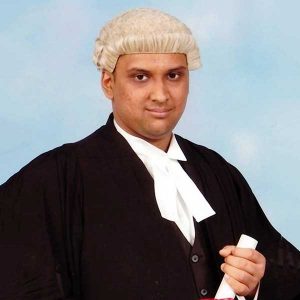
    Divyakant Lahoti graduated from University School of Law and Legal Studies (GGS Indraprastha University, Delhi) in the year 2008. At present he is a third generation lawyer, an Advocate on Record, a dedicated and driven lawyer with an LL.M. qualification in International Commercial Law earned at King’s College London and experience within a wide range of settings.

    In this interview he talks to us about:

    • His experience working with Justice R.C. Lahoti, Former Chief justice of India.
    • The procedure to apply in King’s College, London.
    • Why he specialized in International Commercial Law and IPR.
    • The biggest hurdles in his early days of independent practice.


    How would you like to introduce yourself to our readers?

    I am a third generation lawyer and an Advocate on Record. Since my childhood I was sure that there is no other enterprising and satisfying career option than law. From the early days of my childhood, my career aspiration was to become a true lawyer having a sound knowledge of socio-legal disciplines and related proficiencies so as to make a positive impact on society by taking up a responsible position in the legal practise. My father Justice K. K. Lahoti’s hard work yet smooth-sailing lifestyle as an advocate and then as a High Court Judge appealed to my childhood dreams. My perspective on life changed when I closely observed my father work as an advocate in his office attached to our house. I could closely observe an advocate’s profession and his life. What drew me to this profession was the respect one earns and the satisfaction one derives from advising his clients and securing them justice. Both as an advocate and later as a judge, in my father I saw live-in-action honesty, integrity and devotion to duty, giving me an opportunity to imbibe these rare qualities.

    My entrance into this profession began after pursuing 5-year LL.B. (Honors) from my alma mater University School of Law and Legal Studies (GGS Indraprastha University, Delhi) in the year 2008. My quench for specialised legal knowledge persuaded me to attain an LL.M. from King’s College London, one of the top universities in the World.


    How did you go about your application to King’s College London (KCL)? How different was the study environment in that university?

    In a fiercely competitive environment, the only thing which looks simple is the procedure to apply. You need only three things at that time – an IELTS (International English Language Testing System) Score of 7.5 and above out of 9, a Statement of Purpose (SOP) and Curriculum Vitae (CV) along with the Application Form. However, each of them requires days, if not months, of preparation and persistence –to revise, review and refresh.  IELTS is easy to crack for those who are fluent in English and had English as a medium of instruction in their school and/or college. A few days of preparation is good enough to score the benchmark. The problem lies in drafting, structuring, tailoring and reviewing the SOP and CV. The entire labour lies in presenting a SOP and CV that can stand out and catch the eye of the University who is screening thousands of such equally good and well written SOPs and CVs. However, the procedure keeps on evolving and students are advised to read the updated procedure and policy before applying to the law school.

    One can choose a particular area of expertise which is taught by leading practitioner(s) in that field. The advantage of being taught by such Professors/Practitioners, who are considered authorities in their fields of law, is to provide the student with root information along with innovative and problem solving methods with a focus on a comparative and international outlook.

    At King’s College, the LL.M program offers a wide range of modules that enables the student to grasp a thorough knowledge of the increasingly important areas of law and their concepts and application. King’s College London is a place which is inspired and instructions are imparted by leading experts and the student receives outstanding cultural, research and career opportunities in the very heart of London.


    Which one would you say is better – LL.M from abroad or from India?

    Well, that’s a matter of personal choice coupled with the budget of the student. One of the key reasons for me to pursue LL.M. abroad was its duration of one year. Now, many leading Colleges in India are offering LL.M. programmes of one year. Since this duration gap is bridged, the second question that comes to mind is the quality of education and the expenses for pursuing such a course from India or abroad. Undoubtedly, going abroad is more expensive because of the high College Fee, rent for accommodation and living expenses. The student needs to choose the university wisely depending on multiple factors like the area of specialisation, the professors imparting the specialised knowledge, the university ranking and job prospects after completing the course.

    I personally believe that any College, which has an intellectually rich faculty, a formative environment and rigorous campus discipline on one hand and is collaborative on the other, together with the student’s passion and commitment, is an ideal recipe for success and accomplishment. A graduate from a mediocre college may shine and reach the pinnacle of his profession while a student from a leading college may find it tough to earn even a comfortable living. It all depends on how the student capitalises on the given opportunities during the course and develops himself as a professional. Of course, learning in a good educational institution and from good faculty do have their impact.


    Please share your experience working with Justice R.C. Lahoti, Former Chief Justice of India.

    Learning from, and working with, a living legend is a dream come true. I had the golden opportunity to work with him, on various arbitration and opinion matters, after his retirement as the Chief Justice of India. I have not only learnt the art of advocacy but also lessons of life from him. Success in your profession gives name and power but the qualities of character give a good name and reputation. A gentleman professional is respected and remembered. Such success can be reached by different paths but not by changing paths along the way. According to him, reading spiritual, motivational, inspirational books and biographies/autobiographies is an essential source to augment the knowledge and improvise one’s own personality.

    As a student and then in the early years of my professional career, I had the opportunity of living with Justice Lahoti as a family member. I have closely watched his routine and working style. Working and reading are his passion. He reads a lot, both literature and law. He is an early riser. From the morning till late in the evening, he is busy studying, preparing for arbitration matters which are coming up, dictating orders and awards, and checking and reviewing the dictation well before circulating the same to fellow arbitrators and parties. He has earned recognition for his oration. His speeches and social lectures, cultural and educational event are also prepared by him in advance. The lessons which I have learnt from him are: (1) work is worship; (2) it is never too late to learn; and (3) if you have accepted an assignment, put your heart into it; never compromise on anything less than the best.


    What are the basics of a legal notice and how can one learn to draft one?

    A Legal Notice is the first step to set the civil justice system into motion. Drafting a legal notice is an art and needs the same skill as drafting a suit. It demands legal knowledge, expertise and experience. You need to understand the entire factual background, evidence in hand, the need of the client and the law(s) involved. Once this preparation is done, then the lawyer must proceed to draft the legal notice. A notice is a way which lays down the foundation for future attacks or defence. The tenor and tone of the notice should be proper – not too aggressive. A properly drafted Legal Notice or its reply can avoid litigation or the same could help the parties settle the matter through mediation at a pre-litigation stage or can assist the court in adjudicating the matter. On this subject, one of the must-have books for every lawyer is Mogha’s Law of Pleadings in India.


    How did you decide to specialize in International Commercial Law and IPR?

    In this growing economy, it is indispensable to keep abreast with latest developments in  financial and commercial law to deal with the changing market conditions. Needless to say, to practice law in the corporate and commercial markets today demands niche and specialist knowledge, robust common sense, analytical and problem solving skills with the ability to deliver pragmatic solutions to the clients. Moreover, LL.M. in International Commercial Law provides an impetus for developing the ability to understand, analyse, and solve complex and unprecedented problems. In a corporate and commercial environment, a close proximity with leading legal systems is sine qua non which can be gained by pursuing specialisation course(s). Specialization in IPR was out of sheer interest. I was awarded the Microsoft IPR Scholarship during my graduation for authoring an article on copyrights. Thereafter, I studied an Advance Course on Copyrights and Trademarks from the World Intellectual Property Rights Organisation (WIPO). Pursuant thereto, WIPO had offered me a full scholarship to pursue a 2-year course in Specialisation in IPR from the University of South Africa (UNISA) and WIPO which I completed in the year 2011.

    The knowledge gathered from these specialised courses is immensely helpful in advising clients, and drafting commercial contracts.


    Describe your experience at Luthra&Luthra Law Offices. What led you to shift from the corporate sector to Independent law practice?

    Luthra and Luthra had provided me with an action packed litigation experience, be it 2G or Defence Scam, from heavy stake commercial arbitrations to high profile telecom litigation. Under the able guidance of Mr.Rajeev Luthra, Mr.H.S. ‘Bobby’ Chandhoke, Mr. Siddhartha Datta and Mr. Manu Yadav, I sailed smoothly through the pressures of strenuous and complex litigation. Irrespective of such work pressure, the environment in the firm was always conducive, cordial and friendly. I have made many friends for life at this place and learnt many lessons of professionalism and client interaction. Indeed, it is a Tier 1 Law Firm which values the work and sincerity of its members and also feels concerned for their life and career.

    The Firm gives you the necessary skills and experience to commence an independent legal practise. However, what you would require is to hone your entrepreneurship capabilities. It was a well thought of decision to switch from a leading Law Firm to open up your own firm, though it is a life changing event as it comes with much heavier responsibilities which are all on your shoulders. One of the major advantages of going independent is that there are more opportunities to appear and argue the matters yourself before the Court/Tribunal and make yourself a brand. Such an opportunity is rare in leading law firms where there is a tendency to engage senior advocates even for simple issue(s).  Moreover, in an independent practise, you tend to handle more clients simultaneously unlike in a firm where you would be assigned limited matters/clients. Undoubtedly, there is more flexibility in an independent practise as compared to working in a firm. You are the master of your own time and have the choice of choosing the matters to involve yourself. However, in the initial years of practice, you tend to do whatever comes your way to sustain a living. Once you are established, then you have an option to do or refuse to do certain matters or develop a specialised area of practice.


    divyakant-lahoti-1

    What do you think are the biggest hurdles and challenges in the early days of independent practice?

    One of the biggest hurdles, in setting up your own independent practice, is to have an office, with the amenities and library, preferably near the Court Complex. The purpose of having an office close to the court would be to ensure that you reach the court on time and travel time is minimised so that you can use that time in more productive and meaningful work. The next step is to pitch yourself by informing your friends, acquaintances and your professional colleagues that you have started your own independent practice and your services are now available for private clients. Then, hiring a suitable clerk who has reasonable knowledge of court procedures and filings.

    Establishing your own brand, among the clients and court-rooms, is the foremost real task. An independent practice encompasses not only getting new clients but also retaining them and recover your outstanding fees from them. It is a challenge in itself. A lot of productive time is wasted in recovering the professional fee which is also important or else, your labour is wasted. Another hurdle is running around different courts and forums for the matters listed on the same day. To overcome this hurdle, the only possible solution is to engage competent junior lawyer(s) who are willing to prepare and argue the matter, if the need arises, before the court.


    What would be your message to our readers?

    There are ample opportunities for every lawyer and youngster who should strive for such opportunities and excel. The profession offers humongous prospects for those who are willing to sacrifice their comfort and leave their complacency to make their mark in this field. Due to the changing economy, the chances of young lawyers are enhanced as new chambers are being opened up or existing chambers are merging resulting in larger clientele, bigger premises and pooling of resources such as libraries. These chambers are looking for enterprising younger lawyers who can whole-heartedly devote their expertise and time for productive, qualitative and quantitative work.

    However, youngsters are advised to do their research on such chambers/firms, make enquiry into the status of the lawyers/partners of the chamber/firm and the kind and amount of work they are handling. Some of these chambers may not offer good prospects. For those who are looking forward to litigation practise, it is indispensable for them to join such chambers which have matters regularly before the courts/tribunals so that they can gain experience in court crafts and the art of advocacy from their seniors apart from learning necessary drafting knowledge, the art of cross-examination and the art of addressing judges.

    After choosing the right chamber/firm, the next step is to enhance the ability to communicate.  The objective is to make the Judge understand the case. Youngsters should practice speaking up clearly with modulation. Simultaneously, they should also be able to present the case to the Court/Forum lucidly and with brevity in a humble way, eschewing irrelevant facts and irrelevant arguments.  Undoubtedly, courtesy towards the Judge and court manners, including wearing clean and presentable robes, are of paramount significance.

  • Abhishek Sudhir, Dean, IFIM Law College, on qualifying in law from the UK and on legal academics

    Abhishek Sudhir, Dean, IFIM Law College, on qualifying in law from the UK and on legal academics

    Abhishek Sudhir graduated from The University of Birmingham in 2008 and went on to pursue an LL.M at the University College of London. While there, he pursued Civil Litigation, Jurisprudence, Intellectual Property Law, and Company Law as a part of his general LL.M. His British legal education ended with a BPTC for procedural training in 2011 to appear before a Court in the English system.

    Having returned to India, he pursued academia and teaching at Jindal Global Law School as among the student’s favorite professor. Following his departure from the same, he was recruited as the Dean for IFIM Law College in Bangalore. He has also published on a wide variety of topics and was called upon to deposed before the Parliamentary Standing Committee on Law and Justice on the Judicial Appointments Bill.

    In his interview, he talks about;

    • What drove him to pursue the profession
    • His experience with a legal education in the UK
    • The differences between the two systems and the teaching styles
    • His journey as a law student, and subsequently as a barrister
    • The necessary traits and qualities required by legal professionals and law students today


    How would you like to introduce yourself to our readers?

    Well, I’m 29 years old. I currently serve as Dean at IFIM Law College which is located in my hometown and India’s IT capital Bangalore. I hold three degrees in law, all from the United Kingdom. I am a Barrister from Gray’s Inn, London and I am also enrolled with the Karnataka State Bar Council as an Advocate. I am a freelance journalist and write most often for Scroll, an online news publication. I follow/support the Indian cricket team and Arsenal, two entities that have caused me a significant amount of pain and suffering over the years!


    abhishek-sudhir-3

    Tell us about your childhood and pre-college life. Was it your lifelong dream to be in the legal profession?

    I had a very unconventional childhood. I was raised by my maternal grandfather, who was and continues to be a source of immense support. I was obsessed with cricket and made it my life’s mission to play for India one day, quite an unrealistic dream that my grandfather supported by sending me to yearlong coaching camps for about 6-7 years. When I was about 14, I gave up on this ambition as I was nowhere close to making it and decided to “grow up”.

    Around this time I fell in love with “The Practice”, a popular American TV show that you could say was the “Suits” of my generation. The Practice, unlike Suits which has nothing to do with the law, delved into the intricacies of being a trial lawyer in the United States. The handling of the rules of evidence, the art of cross-examination and its depiction of criminal trials floored me. The cast was brilliant and they just looked so cool when they all walked the corridors of the courtroom in their fancy suits. It was the swagger associated with being a lawyer, at least in popular culture, which drew me to the profession.


    Your legal journey started in 2005 and that too from a foreign law school. Why did you choose a foreign law school over national law schools?

    The answer is very simple: I did not make it to any of the national law schools! Those days there was no CLAT, there were only five national law schools and you had to write individual entrance tests. I prepared for the exam with a friend of mine from school, but both of us were lackadaisical in our approach to the exams. The difference was that he was among the top 5 ranks in both the NLS Bangalore and NALSAR exams, while I was nowhere close to him.

    Not making it to one of the national law schools took its toll on me and I felt I had to prove that I belonged, that I was good enough, and not making it was just an aberration. I chose the University of Birmingham to do a 3-year LL.B for two principal reasons: first, they gave me a generous scholarship, and second, it was recognised by the Bar Council of India. So I started out in 2005 to redeem myself for the poor performance in the entrance tests, by leaving home at the age of 19 and starting afresh. It was a life-changing decision and it paid off handsomely.


    How is the curriculum of a foreign law school different from an Indian one?

    That’s a slightly tricky question to answer as there is no uniformity in curriculum design in Indian law schools. If I were to compare the approach to curriculum design at a State University with that adopted at an English law school, I would say there is quite a huge difference. For starters, English law schools do not teach any procedural subjects. They focus entirely on substantive law, as there are separate professional courses [Legal Practice Course (LPC) for those who want become solicitors and the Bar Professional Training Course (BPTC) for those who want to become barristers] that teach procedural law.

    Another stark difference is the emphasis on reading articles and papers written in academic journals as opposed to merely focusing on the sections in any given Act or chapters in a textbook. One further area of divergence is the minimal amount of time allocated to in-class teaching. In-class lectures are usually delivered to 100-150 students at a time. This is always followed up with tutorials where students, in groups of 10 to 15, are expected to engage with a hypothetical problem based on the in-class lecture. These tutorials are about an hour long and are usually conducted by PhD or post-doctoral students.

    There is no concept of rote learning at a foreign law school and the approach is very much centered on directed learning. The expectation is that the student will come prepared to class. That being said, no one (including the lecturers and tutors) cares if you do not do the required reading. The student is treated as a responsible adult and it is this ethos that is typified in the curriculum design.


    Tell us briefly about your law school experience.

    I attended three different law schools during my time in the U.K., but I would like to dwell on the three years I spent doing an LL.B at the University of Birmingham, which is one of England’s older centres of higher learning. The first year I was like a fish out of water as I was studying complex subjects like Jurisprudence and Land Law. In my first semester I was hauled up for plagiarism; I simply did not know what a citation was and I did not have the ability to construct an argument of my own. I remember getting 38 out of 100 in my very first research paper and failing European Union law by a couple of marks; those were trying times.

    In my first year I worked several part-time jobs, went out most nights and hardly ever went to class. I changed my lifestyle completely and this bore dividends as my results started to pick up in the second year. I went from getting an upper second (second class) to getting an upper first (first class) in all my subjects. This trend continued into my third year and I got a first (distinction) in every subject. I was awarded a distinction in the dissertation on Hindu Law that I wrote in my final year and this gave me immense satisfaction. I had come a long way from not knowing what plagiarism was.

    The credit for my transformation goes not to me or any professor, but to the structures in place at the University. England’s higher education system, central to which is the curriculum design, is geared to ensure that a diligent student succeeds and is given every possible opportunity to excel. It’s quite simple really: work hard or fall by the wayside.


    abhishek-sudhir-1

    Where did you pursue your LL.M from? What considerations should one keep in mind before deciding whether and where to do an LL.M?

    I had LL.M offers from the University of Warwick and University College London (UCL). At the time, Dr. Upendra Baxi was teaching at Warwick and this was a huge attraction. Nevertheless I chose UCL, primarily because it had a richer history and pedigree than Warwick, in addition to being located in the legal capital of the world, London. UCL also had a much bigger selection of subjects to choose from, with faculty from Oxford, King’s College and Cambridge teaching on the LL.M as visiting professors.

    The standard piece of advice people give LL.M aspirants is “make sure you are clear about which area you want to specialize in and chose the University that excels in your chosen area”. I disagree with this line of thought.

    If you have completed 5 years of legal study in India, then doing an LL.M from the U.K. or any foreign University is likely to be a completely new and alien experience. While I had three years in the U.K. before doing an LL.M, most students from India are thrown into the deep end within a few days of starting the LL.M. So it’s really important that you pick a University that has a track record of taking in Indian students and helping them acclimatize. Some Universities that come to mind are Warwick, King’s College, UCL, Cardiff, National University of Singapore, George Washington,  and NYU in the United States.

    Also, choose a General LL.M as it will give you the flexibility to study a wide array of subjects. Unless you’re from the top 5 NLU’s, it is unlikely that you have been exposed to Anglo-American teaching pedagogy and studying diverse subjects will give you much more exposure then studying four subjects dealing only with intellectual property or corporate law.


    After completing your education, you qualified as a Barrister-at-law. Tell us about the procedure and your experience.

    Becoming a Barrister was the fulfillment of a childhood fantasy. History was my favourite subject in school and I really enjoyed studying about the freedom movement. Some of the titans of India’s struggle for freedom, like Nehru, Gandhi, Jinnah and Sardar Patel were all Barristers. So I wanted to be one too! It seems quite silly now, but about a decade ago it was a real ambition of mine.

    In 2005, I decided to become a student-member of Gray’s Inn. Each aspiring Barrister must belong to an Inn, which is essentially his professional home and “dine” at the Inn 12 times. Historically, members of each Inn ate together, lived on the grounds of the Inn and, most importantly, worked together. I chose Gray’s as it is the smallest of the four Inns. Ambedkar, constitutional scholar K.T. Shah, former Chief Justice A.N. Ray and former Speaker of the Lok Sabha Somnath Chatterjee were all members of Gray’s Inn.

    In addition to becoming a member of the Inn, I enrolled in the Bar Professional Training Course (BPTC), which is a rigorous diploma programme that one has to complete before being “called” to the Bar. The BPTC was a once in a lifetime experience, as I was trained for countless hours in advocacy, negotiation, client counseling, examination-in-chief and cross-examination of witnesses. In July 2011, a ceremony was held at the Hall in Gray’s Inn, where I was “published” Barrister. My name appeared in The Times the next day. It was really special.


    What kinds of cases were mainly seen in the courts of England and what was your main area of practice there? What, if any, are the differences between England and India’s judicial system?

    My first job in England saw me working for a firm that dealt with civil litigation. Most of the cases concerned personal injury, the proverbial “slip and fall” cases. I then moved on to work for pro bono organisations that helped individuals who had court hearings but did not have legal representation. I got to take part in proceedings before the Queen’s Bench (High Court) and the Court of Appeal. Finally, I represented clients before the Social Security and Employment Tribunals as a trainee Barrister.

    Believe it or not, the common man in India has far greater access to legal representation than people in England. Litigation costs are unbelievably high and lawyers lack the human touch. Individuals who do not have the resources generally don’t get their day in court and are at the mercy of the legal aid authority. That being said, once you do get your day in court in England, you are more or less guaranteed a timely outcome. The overhaul of the Civil Procedure Rules in England has ensured this, whereas we in India, with our archaic and broken Code of Civil Procedure, 1908, continue to move at a snail’s pace.


    After around 6-7 years you came back to India to pursue you a career in legal academia. Was it pre-planned or was there some other reason?

    Coming back to India was pre-planned. I always wanted to practice in India. In January 2012, I passed a set of qualifying exams conducted by the Bar Council of India for people like me who were Indian nationals with foreign law degrees. In June 2012, I was enrolled as an Advocate, but due to some health issues my career had to take a backseat for almost 2 years. In January 2014, I joined the Jindal Global Law School (JGLS) as a research associate and was promoted to assistant professor in three months. It turned out to be the most rewarding experience of my career thus far, with great highs and some lows.


    You have deposed before the Parliamentary Standing Committee on Law and Justice on the Judicial Appointments Bill. Tell us about your experience.

    Being given an opportunity to depose before the Committee restored my faith in Indian democracy. I wrote a 20 page memo to the Committee, with suggestions on how they could improve the functioning of the proposed National Judicial Appointments Commission. I appeared before the Committee and had the opportunity to interact with the likes of Ram Vilas Paswan, who I must say is one of the most articulate politicians I have come across. The Chairman of the Committee sought me out after the proceedings and complimented me on my performance. It’s an experience that I look back on very fondly.


    You have various publications in academic journals and news organizations. What skills should one develop to write good research papers and articles?

    The only way you can become a better writer is by writing continuously. If you think it, write about it. And make sure you get published. Only when you publish can you gauge what the wider world thinks of your writing, as feedback is invaluable. I write an email with the same amount of thought and effort that I put into writing an article for Scroll or The Hindu. Everything you write should pay homage to the printed word, which is a thing of beauty. Even when I use Whatsapp, I craft my messages carefully!


    You have recently been appointed Dean at IFIM Law College. Tell us about your plans for the law school going forward.

    I am trying to implement everything I learnt in the U.K. at IFIM Law College with the support and guidance of the founder Mr. Sanjay Padode and the Principal Dr. Venugopal. Two things distinguish IFIM Law College are our emphasis on mooting from the first year itself and obtaining internships for each one of our students. We have developed a vibrant mooting culture, and each of our students has taken part in domestic and international moots. We have been able to obtain internships for almost all of our students four weeks before the start of the internship cycle.

    All in all IFIM Law College will be a student-centric law school. If they don’t grow, we don’t grow. So we will do everything in our power to ensure that our students develop into holistic, employable and socially responsible legal professionals. Being given the opportunity to setup a law school from scratch is a rare privilege in itself, but being given such a chance at the age of 29 is a rarity. I want to repay the faith the management has shown in me by making IFIM a prime destination for legal education.


    You have handled both litigation and teaching. Which one is more challenging and interesting?

    Litigation, in India at least, is a game of chess, with its adjournments and stalling tactics. Teaching is outcome-oriented and your performance is measured by how your students perform academically. While in litigation you are often dealing with one or two judges at the most; as a teacher you are dealing with hundreds of students, with varied backgrounds and learning needs. As a teacher, you need to satisfy a lay audience of people in their teens to their early twenties, each with their own idiosyncrasies and moods. Throw in the thankless job of being the Principal, Dean or Director along with teaching responsibilities and litigation starts looking a little easier.


    What advice would you like to give to our readers?

    No advice. I would like to share my favourite quote with them: “You must go on, I can’t go on, I’ll go on.”- Samuel Beckett.

  • Yashasvi Nain, Hans Wilsdorf Scholar at Geneva Academy, on working in International Humanitarian Law and Human Rights

    Yashasvi Nain, Hans Wilsdorf Scholar at Geneva Academy, on working in International Humanitarian Law and Human Rights

    Yashasvi Nain graduated from the Rajiv Gandhi National University of Law, Punjab in 2013 and went on to do an LL.M from the Geneva Academy of International Humanitarian Law & Human Rights. He is also a recipient of the Hans Wilsdorf scholarship and has worked extensively with the UN on various projects and in different capacities. Currently he is working on a UNHCR project to do with statelessness and a few other projects still in their developing stages. In this interview he talks to us about:

    • Choosing Human Rights as an area of specialization
    • His various internships and experiences ranging from working at the Supreme Court to AALCO to the UN
    • His time at the Geneva Academy and how he received the Hans Wilsdorf scholarship
    • Working at the Universal Centre of Human Rights (London), the UNHCR and the UNHRC
    • Advice for readers contemplating commencing a career in the UN


    Please introduce yourself to our readers. Which factors do you believe shaped your decision to pursue law?

    I belong to Jaipur, Rajasthan. I am a lawyer, specializing in the field of public international law.

    Like any other city in India, in Jaipur, one can start early on their chosen field, which is mostly medicine or engineering. So, I started preparing for medico entrance examinations. I agree I was doing that half-heartedly, but then, my father who is an advocate told me about CLAT and related avenues. Out of all of them, I found that Human Rights requires much work to be done by a lawyer. I have always wanted to spread awareness about these basic rights in society and this was the prime reason why I chose law.

    Eventually, I did my B.A., LL. B (Hons.) from Rajiv Gandhi National University of Law, Punjab. That was followed by LL.M from the Geneva Academy of International Humanitarian Law & Human Rights which is a joint center of the Graduate Institute and University of Geneva.

    Currently I am working on a UNHCR project which deals with the issue of statelessness.


    You have had some very unconventional internships through your law school years with prestigious organizations. Could you share your experiences there?

    Well, after doing internship with law firms in the first two years of law school, I realized that this is not the kind of work I would like to do in long run. In fact, I enjoyed working in my dad’s office during vacations, more. It is about what you find challenging as a budding lawyer and pursuing that when you intern. That’s why I opted for options other than a law firm.

    I worked as a law trainee to a Supreme Court judge. I got this traineeship though my university. It was the first time I got to learn from the other side of the bar i.e. from the bench. The work was good – mostly attending court proceedings, preparing the briefs for the Hon’ble Judge. It was nice sometimes to have discussions with the Judge and to get to know his point of view.

    I also worked with ICRC and it was a great experience. This was the place where I actually got the first taste of working in an international organization. Especially with a multinational and a multi-cultural team. It was really fun, and I learned a lot, and it influenced my career. I was given independence to do my assigned work and was even appreciated by the supervisor at every good task. The feedback at such organizations is prompt and you learn so much. As an intern, I realized how positive you feel when you get appreciated and acknowledged for your work. It encourages you at the right stage of your life and you get the confidence to take on bigger tasks.

    I also interned with AALCO, which was also an International organization. Here, I got the chance to attend various international seminars and conferences organized by AALCO. It was very useful from the knowledge point of view and I actually got to know various national and international law issues in depth. After that I researched with various scholars, Embassies and International organizations.

    All these internships and work experiences helped me stay comfortable while working with OHCHR at Geneva. Though I was impressed by the work culture there. From juniors, to the most senior person there, all work like a team if they are working on a project. It has a very wide variety of work like declaration drafting, followed by negotiations and being a part of the working groups.


    When did you decide to create for yourself a career in Human Rights law?

    As I said, my father was the first person to counsel me about the role law can play in realizing the most basic rights in society.  And during college as well, I was always fascinated by Public International Law and not just Human Rights specifically. My friends Rishab and Arnab shared this view. I remember we asked the authorities so much to start an international law specialization group in my University, because we didn’t get a sufficient number of students to start the specialization.

    During my 4th year of law school I chose to intern with ICRC. I loved the work and that motivated me more, to work in International Humanitarian Law. After that I got chances to work on International Criminal Law, Peacekeeping Operations, International Refugee Law, Internally Displaced Persons, migration in International Humanitarian Law and Human Rights Law, in various capacities.

    My future internships were directed towards specializing in international law thereon. During my final year of law I got an offer letter for an LLM course from Geneva Academy (known for its LLM in IHL & Human Rights) and MIDS (known for its LLM in dispute settlement). It was a tough call but I ended up accepting Geneva Academy’s offer. All my experiences during my internships, whether they were related to work culture or the kind of work, helped me make up my mind to pursue international law.

    At this stage as well as earlier, I do what I like doing the most and am not swayed by any other factors whether economic returns or what others are doing. This is the sole motto that gives me work satisfaction.


    Can you tell us about Human Dignity International?

    I give the entire credit to Late Prof. (Dr.) S.R.S. Bedi. Under his guidance RGNUL started a specialization in international law. Unfortunately he passed away some time before my graduation, but in order to continue his vision and idea of human dignity, I started this organization. It mainly focuses on research in the field of international law and on letting students know about the importance of international law. This is done by giving them opportunities through various research projects. I also got good inputs on this one, by many professors and international law experts around the world, who agreed to be part of it in various capacities.


    What shaped your decision to create a career in Human Rights? How did you go about the application process?

    (Yashasvi went on to pursue an LL.M in International Humanitarian Law and Human Rights from the prestigious Geneva Academy of International Humanitarian Law & Human Rights, Geneva.)

    As I mentioned earlier, I interned in various capacities in order to find out where my actual interest lay.  I was not quite attracted to the work in law firms. I wanted a multi- faceted work front which dealt with international law.

    I started working on my application almost a year before graduation. It is very crucial that you write a good application and get recommendations from persons who know you and your work potential. I appreciate my friends who reviewed my SOPs and helped me replicate what I actually felt. Both these factors go into any good application. In general the application process for Geneva Academy is not very technical. There is no application fee. You have to do everything online. You need your transcripts, recommendation letters, SOP and a motivation letter. Another thing which, makes the application process strict is that you need to choose if you want to apply with a scholarship or without a scholarship. If you chose the former then you will not be eligible for the latter. So you really have to make up your mind.


    Please enlighten us on how to get a full scholarship like you did from the Hans- Wilsdorf foundation.

    Well that was something I never expected in my life. I got the offer letter on the night of my farewell when I returned to the hostel. When I saw the email, I couldn’t believe it. I asked my friends who were standing next to me to confirm so that I could actually believe it was true. For the Hans-Wilsdorf scholarship, applications are considered in their entirety, including transcripts, extracurricular and voluntary activities, work experience, personal background, letters of recommendation, the personal statement and language skills. Through individual considerations, the Admission Committee seeks not only to identify individual characteristics that are important to academic success in the programme, but also other qualities that promote diversity and excellence in the student body.

    I personally think there are three things which play an important role in getting a scholarship offer. First, academics and your efforts (through internships, publications) to pursue your interest, that is in the area where you are planning to apply for your LL.M. Second, your statement of purpose (SOP) that shows what is the real motivation behind your application. Third, extracurricular activities, that is you have to show that you are not just good in academics but do have an overall personality, you can highlight your leadership qualities, sports achievements, or if you have achieved something while pursuing your hobbies.


    What are the ways your year at the Geneva Academy has helped you?

    I would say Geneva Academy as well as the city of Geneva itself helped me a lot in developing professionalism. Let me first tell you about the Academy. The first year at the Academy was extremely stressful though it helped me to understand the basics of various international law subjects not just in theory but also in practice. The Academy prepares you to work in all international organizations, and international courts and tribunals …etc. (for instance, in exams they give you a role of prosecutor or defense lawyer and ask you to give legal arguments). Practical and professionalizing activities in leading international agencies make the course more intense. The faculty at the Academy is the best in their field. It was a good experience to be taught by  professors whose books I used to refer to during moot courts.

    On the other hand Geneva also helped me a lot to improve my interpersonal skills. It’s an amazing city with the UN and international organizations, with easy access to them. Year round there are seminars, talks and conferences organized by various UN Missions or Organizations. This also helped me to stay up to date with contemporary issues.


    yashasvi-nain-2

    You are also a Fellow at the Universal Centre of Human Rights (London). Please describe your role there and how the experience is for you.

    It’s more academic but I like it because it helps me to stay connected to the contemporary issues of international law around the world. Fellows are supposed to be reviewing existing literature and prepare a monograph discussing the major problems and possible solutions to the problem.


    You worked at the Office of the UN High Commissioner for Human Rights, Geneva. Please describe to us your role there. How did you get placed?

    I would say Geneva Academy played a major role by equipping me with a strong master and by providing a platform to meet people. I was guided by my professor to work with OHCHR. OHCHR gave me so many opportunities to learn and work on various issues ranging from migrant smuggling and health and Human Rights to early warning indicators. It also gave me an opportunity to work as a member of the Secretariat responsible for organizing open-ended intergovernmental working group (OEIGWG) transnational corporations, business and Human Rights. Also members of the Secretariat organized the2nd OEWG on the draft declaration on the rights of peasants. Other tasks ranged from preparing the final note of the panel on the rights of persons with disabilities in the Human Rights Council 28thSession; preparing background papers for various initiatives and mandates of OHCHR and preparing the report to be submitted to the General Assembly on cultural diversity.


    It is considered extremely difficult to get into the UN. What are the ways to ensure one stands out and gets noticed?

    Definitely! It is crazy competition out there. Especially for us Indians in the sense that I have observed that Indian students have a great CV but it’s very difficult to break the ice because of the lack of approach.

    I think the easier way is to get close to the system, usually by way of doing an LLM or PhD or by doing an internship with them. Once you get in touch with some employees there, then at least you might get exact advice on where to search for openings and gather requisite skills for those. They are very forthcoming in guiding their internees.

    I would like to highlight that since Geneva or New York are expensive cities and most of the UN internships are unpaid, students are not motivated to apply for those internships. But I am telling you there are many positions which are paid, just need to do little bit of research on what suits you best.

    Another hurdle for us is the language barrier. If I talk about Geneva they prefer French along with the English language. So I suggest learning French or Spanish – you need not be proficient, but it will be a deciding factor in cracking the entry to the UN.


    How was your experience with the field research on UNHCR’s project? How is it different than the work at headquarters?

    I was always told by my mentors as well supervisors at the UN that you should never work at headquarters at the beginning stage, it’s always better to get field experience which will actually help in the future and with growth in your career.

    I personally felt the difference during UN conferences and discussions, where opinions or points raised by officers present in the field are so much more practical. So when I got a chance to work on field work, I was quite excited about it.

    It’s a totally different experience, where you go and do ground work and talk to grass root level organizations and with the stateless refugees themselves. It gives you a feeling that you are actually doing something meaningful. It was a great learning experience of how day to day bureaucracy and government works. At the same time it’s challenging also because many a times people don’t want to share their views and information.


    What do you have planned in the future?

    International law is a vast field with infinite opportunities but at the same time you can’t plan it. However, research projects are my constant engagement. I have some enterprises that are in the pipeline, on which we have been working for quite a time now. I can only talk about them once they are floated.


    How has Human Rights law evolved over the past few decades? Where do you see its significance in the future?

    Human rights were always the most basic rights. But in terms of decadal growth, there has been progress on giving them a legal form and building up mechanisms for better enforcement. We have witnessed in the last few years that the judiciary world over has widened the scope and ambit of Human Rights protection. LGBT rights, right to privacy, limitation to the use of force against civilians, right to land, housing, education etc. are now a reality.

    Unlike old times Human Rights are no more just soft laws. Human rights treaties and customary law are as ‘hard’ as any other law.  Though there is an evolution of challenges at the same time in societies going through transition phases. We see, the right to life being viciously violated in Syria. And even now, the right to food, education, health care and adequate housing are yet to be safeguarded.


    What would you say to some of our readers who contemplate making a career in the field of Human Rights?

    I would say that it is an adventure in itself. You know where you start but you don’t know where you will end. You meet a lot of interesting people, and get opportunities to travel around the world. But you need to have a deep conviction that what you are doing is the right thing. On my journey till now I have met some amazing people who work for humanity and are passionate about their work.

    The downside is, you might not get a high salary in the beginning (you might end up doing an unpaid internship while your mates are getting paid internships in law firms. I am sure that will demotivate you at times!!) You also might get short missions, so if you want to settle down in a place you like, it is a bit difficult.

    I would say just write to people who are in the field. Write a random email – you have nothing to lose. Ask them for guidance. Clear your doubts and march forward.  I believe in the inspiring words of one of my mentors who is in the foreign services – “Just dream, the rest will come at its own pace; you are a movie observer and your job is to enjoy the show”.

  • Aahna Mehrotra, Head, Sports Law, TMT Law Practice, on LL.M in sports law from UCLA & ISDE and experience as a sports lawyer

    Aahna Mehrotra, Head, Sports Law, TMT Law Practice, on LL.M in sports law from UCLA & ISDE and experience as a sports lawyer

    Aahna Mehrotra, the head of Sports Law at TMT Law Practice, is a member of the Delhi High Court Bar Association, International Association of Sports Law, and the ASSOCHAM Sports Council.

    After graduating from ILS, Pune in 2011, she has attended various prestigious institutions for varying academic laurels from an LL.M in Entertainment, Intellectual Property and Sports Law from UCLA School of Law to a Master’s Degree in Sports Law from ISDE (Instituto Superior de Derecho y Economia), where she received the Economist & Jurist Scholarship for her practical experience and academic qualifications.

    Her many distinguished achievements include having been chosen / selected to represent the country as a part of the National Women’s Under 19 Cricket team and her involvement in multiple sports at the state level.

    Academically, she has also co-authored “Law and Sports in India”, the second edition. A work dealing with the position of sports within the constitutional framework and recent events such as the IPL probe report, doping controversies, etc.

    In this interview, Aahna talks about;

    • What influences led her to pursue law as a career
    • Her interests beyond the legal sphere and the impact they had
    • The value addition of higher studies in niche areas of the Law
    • The charm of quotes and simple expression


    How would you like to introduce yourself to our readers?

    Lawyer by choice…Writer by chance… Sports enthusiast… Stricken by wanderlust.


    Tell us about your life before you joined law school. What made you gravitate towards law?

    When I was young, my grandfather quoted John Lennon to me: “When I was five years old, my mother always told me that happiness was the key to life. When I went to school, they asked me what I wanted to be when I grew up. I wrote down ‘happy’. They told me I didn’t understand the assignment, and I told them they didn’t understand life.”

    Seeking happiness and fulfilment in every moment I live is amongst the greatest lessons I learnt from my grandfather. He held a law degree but started his career as a sports journalist, going on to become the director of the National Herald. He then moved into the arena of politics and social causes. Wearing the mantle of a trade union leader, he sought happiness in devoting himself to the cause of improving worker benefits. I particularly remember watching him return home on the shoulders of a jubilant crowd after his success in obtaining a favourable judgment in a case involving illegal termination of employment of 300 men. Young as I was, I realised how empowering it is to know the law.

    Perhaps that’s what drew me, at school, to his dual interests: sports and journalism. I was the editor of the School Annual Magazine – resurrecting it from a two-year oblivion and also pioneered the first School Newsletter, that then became a regular feature. I was appointed Captain of the School Cricket team at a time when the school coach had gone on leave. Coaching taught me patience. I learnt that people grow with praise, that critique works only in an environment of trust and emotional security, and that the joy of seeing others grow and score through the training I had given them was a victory sweeter than my own achievements at the wicket. Not only did I lead my school team to victory, but I was also appointed as the captain of the first ever All India Girls’ School Cricket Team and went on to being selected to play for the India Under-19 Cricket Team. My time at school culminated in a very special moment when I was awarded the trophy for ‘Selfless Service and Helpfulness’.

    Having completed high school, while cricket and writing seemed worthy allies, I made a choice to pursue my dream of becoming a lawyer.


    How was your ILS Law College, Pune experience?

    Having lived in a boarding school for 6 years, I was tired of living the hostel life. Therefore it was a personal choice to go to ILS over a National Law School and I have no regrets over my decision to date.

    At ILS, unlike national law schools, there wasn’t a routine time table that lasted from 9 to 5 or a road map to the kind of internships one must pursue. We were done at school by 11 a.m. on most days and had the choice to then plan our day in whatever manner we pleased, also our holidays which were fairly longer compared to national law schools. Several chose to do internships both during college days and in holidays, others spent time perfecting their skills at Moot Court competitions, I on the other hand spent my time learning about Sports Law, pursuing summer school programs and doing internships both in India and abroad.

    At ILS, no two students at the end of their 5 years, turn out to be exactly the same, which I feel is the case with National Law Schools, where most students do the same kind of internships, and therefore the competition on day zero is much harder. Studying at a National Law School has its own brand value and pros, while studying at ILS makes you more independent and responsible in terms of your choices.


    What were your areas of interest in the law? Did you engage in extra-curricular activities while in college?

    My areas of interest had always been intellectual property, entertainment, media and sports laws which sprung from the kind of activities I was involved in back in school.

    In the first year of law school, I remember walking up to my college university representative responsible for organizing the ‘Legalease’, the annual ILS Festival, and requesting for a spot in our ‘class’ (section rather) cricket team. “I hope you know they would be playing with a leather ball!”, he exclaimed. My immediate response “I was chosen to play on the India under-19 cricket team” amused him a little further. He didn’t give me a chance to play on the boys’ team but he did, in all fairness, organize a cricket match for the girls as a part of Legalease, 2006. I also played a little bit of throw ball and volley ball as and when the opportunity arose.

    Apart from playing sport, I participated in the Harvard Model United Nations and pursued a couple of diploma courses.


    What internships and voluntary practical training did you take while in law school and during your LL.M years? What value addition did they provide?

    Like all other law school students, I experimented with a whole bunch of internships. I worked at an NGO, at the Hon’ble Delhi High Court, with Mr. Mukul Rohatgi at the Hon’ble Supreme Court of India, with a barrister specializing in criminal law in London and also at a law firm in Delhi during my first 3 years of law school.

    I learnt a lot during my law firm internship, as I was given the opportunity to interact with some clients, prepare my first cease and desist notice for a trademark infringement, work on matters involving sports persons, and realised that it was what I enjoyed most and not litigation. It also helped to further develop my interest in intellectual property and related areas. I then just stuck with law firm internships and interned at TMT Law Practice twice, after which they made me a pre-placement offer. It always helps to get a job offer, if you go back to an office for a second time to intern, as they are able to gauge your ability and progress better. Also, I chose to intern at a boutique law firm so that I could make a more marked and personal contribution during my internships, instead of being lost at a large law firm.


    You pursued an LL.M from UCLA in entertainment, IP and Sports Law. Tell us about the LL.M course you took, how did you apply for it and what was life at UCLA like?

    An LL.M application is all about your Statement of Purpose (SOP) and they give little weightage to your grades or C.V., is what I learnt from personal experience.

    I applied for an LL.M while in law school to about 8 law schools in the States. It was a decision taken overnight and I did not think the SOPs through. Having been a creative writer in school, I took it all for granted and drafted my SOPs in one night and sent in my applications in December 2010. I was rejected by all 8 law schools.

    I pondered over the rejection, re-read my SOPs, and realised that they made no sense as they were a bunch of disconnected paras put together to comply with the word limit. I took the same drafts, and re-worked the structuring and choice of words and then re-applied in October, 2011. By the summer of 2012, I was spoilt for choice with an admission to all 8 law schools, some even willing to offer me scholarships.

    I had an admission to Duke University, a T-14 law school, and had even paid up the advance to block a seat and done my visa formalities when I heard from UCLA. It was the toughest decision to make, a ‘T-14 Law School’ versus the top school for entertainment law. I tried to choose the best of both worlds. While I chose to disregard the overall rankings and went with the rankings for subjects of my interest and gave importance to professors like Nimmer in picking UCLA for an LL.M., I pursued a summer school course with Duke Law School, a program run by them at the University of Geneva which gives you the opportunity to do up to 6 credits of course work. I studied sports law at the summer school offered by Duke, and then joined UCLA for my LL.M.

    UCLA gives you the opportunity to do 4 credits worth of practical training as a part of their LL.M. This, in my opinion, is what sets UCLA apart from other law schools and gives its students an edge over the others. Once made aware of this opportunity, I sat for campus placements and secured an internship at Warner Bros. Intellectual Property Dept. If there was the slightest doubt in my head about having left Duke for UCLA, I knew at that point for sure, that UCLA had been the best decision I made.

    As far as leisure activities go, all law schools in the States have a concept called the ‘Bar Review’. It has nothing to do with the American Bar Association, it is a concept wherein on every Thursday night you go review / check out a bar / club in town for drinks. Los Angeles being famous for its night life, I don’t remember ever having to repeat a bar.


    How did your interest in these fields develop?

    I constantly missed playing regular cricket through my years at law school. There weren’t too many opportunities available in Pune for women. In fact, I momentarily contemplated moving to GLC as Mumbai had a lot more to offer in terms of women’s cricket. In fact, women’s cricket only came under the auspices of BCCI in 2006, the year I had left playing cricket and started law school. My juniors from school often called and narrated stories of their experiences at Ranji, from a time when we would fund our own travel to them finally being paid Rs. 5000/- for a match. I felt really happy for them and I knew then that true happiness for me lay in uniting both my vocation (law) and passion (sports and writing). While I had lost my touch on the field due to lack of practice, I made a conscious decision to specialize in Intellectual Property and related fields like Entertainment, Media and Sports Law and in some way remain connected to Sport.

    As a writer, of course, you must always be well-versed with copyright law. I always enjoyed music, it was my only other stress buster apart from sport, so I studied Music Laws at UCLA, apart from entertainment, intellectual property and sports laws. I learnt about the dying music industry and the effects of piracy. In fact, the Intellectual Property heads at Warner Bros. even gave me the opportunity to work at the Anti-Piracy dept. for a few days, which has led to me not downloading a single song or movie illegally in the last 3 years.

    So my interest in the kind of law I practice has pretty much sprung from my hobbies and that’s why I love what I do for a living.


    Could you explain to our readers the interrelation between entertainment, IP and Sports Law?

    What is sports law? It, apart from sports specific laws like anti-doping laws and sport specific regulations, involves all laws that effect a sports person or sports league – be it contract law, labour law or intellectual property for that matter. You cannot take away from sports leagues and sports persons trademark rights, brand value, broadcasting rights and other rights like that of privacy and publicity. For any sports league to be a success, you must get into a broadcasting rights deal with the right network provider, have some good sponsorships on board, have the player assign their image rights to the league and team owners and prevent any form of trademark infringement to protect the brand from getting diluted. Players today are filing for trademarks like the ‘eleven of hearts’ by Gareth Bale or the ‘Lightning Bolt’ pose by Usain Bolt. So sports, intellectual property and entertainment are entwined fields and there exists a constant overlap.


    aahna-mehrotra-3

    What is an executive LL.M and what motivated the decision to pursue one on Sports Law Instituto Superior de Derecho y Economia? Tell us about the experience and what you learnt from it.

    An executive LL.M. is a Master’s program which is pursued as a distance learning course by professionals and does not require you to be present in the same city through the year.

    While I gained a fair amount in areas related to intellectual property from my year at UCLA, unfortunately I did not learn as much about Sports that are relevant to the Indian market. Therefore, I decided to pursue a second LL.M from a school in Europe.

    ISDE gave me the opportunity to interact with some of the best sports lawyers in the world in the form of professors as well as network with sports lawyers from all over the globe in the form of classmates. Sports being an international activity and with the advent of so many leagues in India, more often than not, one lands up with matters that involve athletes from other countries, so it is always advantageous to have a rapport with attorneys in other countries.


    You have taken your interest in the field to the next level by assisting Justice Mukul Mudgal in jointly writing the second edition of the book ‘Law and Sports in India’. Tell us about your experience of working with him on the book.

    Justice Mudgal is by far one of the kindest human beings I have come in contact with in the legal profession. He is forever happy to see those working under him grow and provides constant support in any endeavour you choose to pursue.

    aahna-mehrotra-2Since I did not work on the first edition, it wasn’t easy to immediately start drafting or adopt someone else’s style of writing but Justice Mudgal was patient through the process. At the same time, as most of the developments in Sports law in India have only taken place in the last 5 years, it was as good as writing a new book.

    I worked with him on drafting 8 chapters of the book. These were (i) an overview of the sports scenario today, (ii) gender discrimination, (iii) anti-doping, (iv) sports as a business, (v) labour laws, (vi) violence in sports, (vii) sports dispute resolution and (viii) grey areas. I had a huge support system in the interns who researched untiringly on some of the most unheard of issues related to the sporting scenario in India. I learnt so much from them as well, like I didn’t know there was a concept called flip-throw that existed or that a suggestion to bring an orange card into play was being made in the football arena. I learnt so much about the intricacies of sports law as we drafted chapter after chapter.

    With an LL.M in progress, pressure from the publisher to adhere to the timeline and sometimes technology betraying me with an entire chapter getting wiped out just when I was done drafting it, I often did 5 a.m. mornings and eagerly looked forward to the day we would be done drafting. The end result was worth it all. It has been a privilege to work with Justice Mudgal, who feels so strongly about eradicating the malpractices in the sports industry in India, and a great honour to have worked on what has been termed as a ‘monumental work’ and an ‘encyclopaedia’ by Mr. Soli Sorabjee.


    Which new areas can one expect to explore in Sports Law, apart from player contracts, anti-doping or sponsorship related work? Why is this an area of law more people can choose to specialize in?

    With the advent of several leagues, many international athletes are now looking at the Indian market as an avenue so there is a lot of player transfer related work, especially in football. Apart from that, with image rights becoming a popular concept world-wide, a lot of Indian players are looking to protect their rights relating to both privacy and publicity. Scandals like match-fixing give you the opportunity to work on matters that may fall under criminal law. Things like gender-discrimination and the increase in punishment under the new anti-doping code have given rise to human rights and constitutional issues in sports. A lot of broadcasters are looking to either terminate existing contracts due to the leagues not doing well or vice versa – league owners that feel that they have not made the right choice in terms of broadcasters are looking to terminate their contracts and sign new agreements. Taxation issues and labour laws too are areas that have growing issues related to sports. More and more sports management companies seem to want to hire specialists in sports law to form an integral part of their team. As the sports industry in India continues to grow, so do the issues relating to the field, and so does the legal work.


    A lot of sports leagues are mushrooming in India at the moment. What legal challenges do they face and how viable are these leagues in the long run?

    (Aahna was involved in the Player Transfer Transactions of the Indian Super League and have also been involved at various levels with the Indian Badminton League and the Indian Table Tennis League.)

    Along with Mr. Kaushik Moitra, (Partner, TMT Law Practice) the Indian Badminton League in 2013, was the first sports league I worked on. The league failed due to several reasons like mismanagement at venues, lack of staff, the appointed media agency not being proactive, VIPs demanding free tickets and special treatment, state associations not cooperating with the national associations, travel and accommodation being impractical, no itemised budget and being unprofessionalism on the whole. These are some of the most common challenges that are faced at the time of running a league, especially the first season, so all league owners must learn from the IBL 2013 and not make similar mistakes.

    As for viability, it is something that can only be determined in due course of time. The Masters Champions League held in Dubai recently failed to pick up numbers in its first season even though the concept looks very promising. The MCL organizers are hoping that the current cricketers will look at it as an avenue post retirement, so when a Dhoni joins the league on retirement, automatically the numbers will go up, however this again is mere speculation and the question is whether or not they can sustain the league until a Dhoni joins. The Kabaddi League on the other hand did unexpectedly well in the very first season, the ISL picked up a lot of momentum in the second season, so there is no fixed formula for the success of a league.


    You were an integral part of Ludus Legal, one half of which has now been absorbed by TMT Law Practice. What does the shift mean for you and how does such a shift impact the clients?

    It has always been a very enriching experience to be working under Mr. Abhishek Malhotra (Managing Partner, TMT Law Practice). He is someone who has constantly encouraged me to pursue my academic interests apart from doing just legal work for my clients. In fact I remember when I started out with TMT Law Practice, immediately after law school, we had a concept of internal presentation of papers. Every alternate Saturday, an associate would present a paper on a new topic and we would then sit and discuss the issue. It always helped in learning something, increasing our industry knowledge and growing as a lawyer and that is why I was more than willing to join them back, when the opportunity arose.

    Like I said above, it is very hard for sports to survive without intellectual property and related areas. TMT Law Practice is a boutique Technology, Media and Telecommunication law firm which can better cater to the needs of a client. The clients only benefit from this shift, as they now have a full service law firm that caters not only to their sports law needs but also offers to them specialists in the intellectual property and media industry. At Ludus, we would often use the services of TMT Law Practice, to file Trademarks for our clients and use Mr. Anish Dayal and Mr. Nitin Mishra as counsels to argue our litigation matters. Now it can all be done hassle free under one roof.


    Tell us about the kind of work profile you handle every day. What are the challenges you face and what do you like most about the job.

    On a daily basis, I handle a whole lot of agreements covering different aspects of sports law. I often participate in negotiations between league owners and sports bodies or players and league owners.

    However, what is really challenging is when an athlete comes to me for help in a doping case. On most occasions, the consumption of the banned substance is inadvertent, as the athletes come from humble backgrounds and have not been educated about how a banned substance may enter their body. They start training at an extremely young age hoping to make it to the commonwealth games or Olympics one day and maybe win that one medal, which will not only make the entire country proud but also give them a source of livelihood but just when they are about to make it, they get caught for a doping charge against them. With the new code having increased the punishment to four years, which is as good as resulting in the end of an athlete’s career, there is a lot of pressure to have the punishment of an athlete reduced. You sometimes succeed and you feel on top of the world but there are occasions you fail to get a reduction in the punishment which then tends to take a toll on you as you feel responsible for a sports person’s career coming to an end.


    Finally, what would be your parting advice to our readers?

    “Twenty years from now you will be more disappointed by the things you didn’t do than by the ones you did do. So throw off the bowlines. Sail away from the safe harbor. Catch the trade winds in your sails. Explore. Dream. Discover.”- Mark Twain

    Trust your gut, don’t be a part of the rat-race and its okay to sometimes not go by the book.

  • Rajesh Sharma, Founder Director of LetsComply.com, on why legal knowledge is necessary for a CFO

    Rajesh Sharma, Founder Director of LetsComply.com, on why legal knowledge is necessary for a CFO

    Rajesh Sharma passed out as a Bachelor of Commerce from Shaheed Bhagat Singh College, the University of Delhi in 1990. After that, he pursued LLB from the University of Delhi and graduated by 1993. Besides LLB, he also pursued Company Secretary from Institute of Company Secretary of India (ICSI) and Cost & Management Accountants from Institute of Cost and Works Accountants of India (ICWAI) and finished these professional courses in 1993.

    With his qualifications in the realm of law, finance and accounting, he started his versatile work life full of enviable achievements. He started his professional career as Manager – Merchant Banking with Category-1 Merchant Banker, collaborated with the manufacturing company and IT companies before joined as the Founder Members of Singhania and Partners LLP. Afterwards, he was the Head of Finance, Accounts & Legal Department of Global Healthline Private Limited – 98.4, one of the best retail pharmacy chains in North India. He played major role at Barista Coffee Company Limited during his long tenure from 2006 to 2012 as a Chief Finance Officer, wherein he was instrumental not only in setting up all systems and processes for nationwide coffee chain, implemented SAP for retail but he was also key member to get Barista acquired by LAVAZZA, Italian Coffee player. Later, he served as a Group CFO at Carnation Auto India Private Limited; wherein he was instrumental for equity and debt fund raising for setting up multi-brand automobile workshops and used car business. He was Partner with Rajani Singhania & Partners, an international Law Firm. Presently he is Director, Fashion TV Hospitality. He founded Juris NextGen LLP and Affari Consulting, Inc. in 2010 and 2011, respectively.

    Finally, being an emerging entrepreneur, he founded LetsComply.com, which is a technology driven platform in India to provide world-class, affordable and convenient professional services relating to legal, finance & taxation at one click under the guidance of an experienced team of professionals, whose knowledge & credentials are proven.

    An independent entrepreneur with a string of achievements at a very young age, Rajesh Sharma talks about his thoughts, ideas, experiences and advice to young entrepreneurs and students of law and CA.

    In this interview, we cover his academic and professional journey, while focusing on:

    • The combination of his qualification in B.Com, LL.B, C.S. and CMA.
    • Varied work experience as a CFO, Founder Members and Director of various companies.
    • Part of Startups, provided Legal, Finance & Taxation support to create systems and processes and helped them to raise funds and now providing mentorship to various startups directly as well as through various incubation centres.

    How would you introduce yourself to our readers? Please tell us about your pre-college days.

    I belong to a very middle class & humble family. In spite of not been able to get the education from Big B-Schools, it is the learning by experience and connectivity with grass-roots for work with qualitative education; I could able to achieve this position.

    What plans did you have for your future? What inspired you to embark on this entrepreneurial journey?

    I feel blessed and fortunate that in spite of limited resources, I find myself at the pinnacle of my career by achieving and delivering good as a Legal & Finance professional. Now, I think this is the time to give back what I have achieved throughout my entire life and career. I got myself associated with a couple of incubation centres, NGOs and other bodies wherein I provide my services as Mentor to the new entrepreneur for their entrepreneurship journey. India is providing an excellent environment for startups, enormous options and opportunities available to the young entrepreneurs, and hence, I am also contributing to my best.

    How important is it for a law firm partner to be good at business development, or are great lawyering skills enough to become a partner? What skills or qualities distinguish the people who become partner from those who don’t?

    Being an entrepreneur, it is not necessary to be a good worker, he/she has to be a good leader at the same point in time. While he/she should be able to understand and manage with expertise, but should be able to manage a good team as well.

    Having done B.Com, what motivated you to choose law along with CS and CMA as a career?

    Though it is obvious, if you want any professional degree beyond graduation. Since I had interest both in Legal & Finance domain, therefore I opted for both courses (also since not having proper guidance, I chose two courses to have backup, if I could not make one)

    What challenges did you face while serving as a CFO at several companies? How did you overcome those challenges?

    Challenges are of multiple kinds, being cost controller and always pushing for implementation of system & process; CFO faces challenges from external as well as internal members of your own organization. No one like to listen no for the money and everybody realizes in the last working hour, therefore, to push your own team members to go to the system and processes, you actually develop negative relationship with your peer group but once you explain and help them to implement these methods, they like and start implementing these processes.

    You’re the Founder Director of LetsComply.com. Please tell us about LetsComply.com.

    LetsComply is the only technology driven platform in India to provide world-class, convenient and affordable professional services relating to legal, finance & taxation at one click.  LetsComply provides services under the guidance of an experienced team of professionals, whose unimpeachable expertise, backed by proven credentials, needs no emphasis.

    In pursuance of our humble resolve to serve, we have always looked for the ways and means to make it easier for the entrepreneurs and corporate establishments to function better, and we realized that since the world is progressing and taking online route to grow and expand, it would go a long way if we could provide Legal, Financial & Taxation services in a structured fashion with the assistance of a team of experts without making it too expensive or inconvenient. That’s how the idea of LetsComply germinated.

    We, at LetsComply, are committed to help entrepreneurs and business owners to start, manage and grow their businesses by taking care of the legal, financial & taxation side of the business so as to allow them to focus on innovation and expansion without having to fret over compliance issues, which certainly matter a great deal and can’t be left unattended.

    We aim to be a partner in the entire business lifecycle at all stages of the entrepreneurship — Startup, Growth, Acceleration & Progression Stage — to make sure that the businesses do not fall back on compliances and grow manifold. In today’s Digital world, we bring you the concept of Virtual Intelligence by way of Virtual CFO (vCFO) and Virtual General Counsel services to enable accelerated growth to your business. We are a team of experienced Chartered Accountants, Company Secretaries, Cost Accountants, Corporate Lawyers, Management Graduates, IP Attorneys and Technologists ready to assist you at all times.

    I believe that today when the world is moving towards a higher technological and economic order, allowing oneself to be bogged down by various mandatory compliances is a waste of precious time and energy. It cannot be ignored that the statutory compliances have a very significant role to play in sustaining the business environment conducive to fair competition and commercial growth. Therefore, it is essential to be cautious about the compliance of various statutes at the initial stage itself to not only avoid later complications and harassment but also to contribute to the sustenance of a healthy business ecosystem. And to keep you comfortable with all the compliances, the professionals at LetsComply are always ready to extend any and every assistance that you might require in this regard.

    How do you plan to expand LetsComply.com regarding operations, infrastructure, as well as attracting more investments? Can we expect a mobile app in forthcoming time?

    We have just started and thrilled with the response we are getting from our users. Therefore, we have preponed our plans for expansion. Operationally, our offerings are quite wide, but we need to create the infrastructure to execute and deliver that. We are working not only to create and set up additional office space but also developing technology team as well. Though for operations, we may not need investments but to expand rapidly and to bring technology and marketing we would need investments. We are not aggressively losing for funding unless we get right partner. Yes, you can certainly expect mobile app.   

    You have a vital role in several companies by providing them a tremendous boost in their business. What are the key areas a Startup needs to focus on?

    The major need for any startup is to focus on execution and have the right partner in place. They should focus on their core activities without losing any attention.

    As you have recently addressed a conference on ESOP in Amity Innovation Incubator, please tell us how does ESOP work as a good tool for startups?

    ESOP is genuinely a very tool to attract & retain the right talent. You can attract talent with entrepreneurship mindset to grow fast.

    How important would you say are business development skills at such higher roles in a corporate law firm?

    Growth is never ending. One should always be hungry for growth so as Business Development skills are. The leader has to lead by examples, and he should always be upfront about facing challenges. Unless the Leader fights from the front, he cannot ask his army to step forward on the battle ground.

    Lastly, what would be your advice to students and young entrepreneurs reading this interview?

    Life moves forward like a “Business Cycle”, wherein phases such as ‘Peak’ and ‘Trough’ are ubiquitous. One needs to establish one’s stand at those stages. If he/she is tangled in the Trough Phase, there is nothing to blame upon. Be focused, there is no shortcut to success. Efforts never go waste. If everything seems to be on his/her side during the Peak Phase, there is nothing to claim upon. Keep your thirst for growth alive and continue to move forward with the same.