Neha Mishra graduated from NLSIU, Bangalore, batch of 2008. After a brief stint at Herbert Smith, she went on to pursue her masters in Public International Law, from the London School of Economics and Political Science. Since then, she’s served as Lecturer at NLSIU, and as Associate at Economic Laws Practice, before pursuing a second master’s degree in Public Policy from National University of Singapore. She is currently a Doctoral Candidate at The University of Melbourne.
In this interview, we speak to her about:
Her teaching experience
Practising internationally
Balancing extracurricular interests with academics
How did you get into the field of law?
Well, it is hard to remember what got me interested in law as a teenager. I think I was driven by instinct, rather than a rational decision. However, I did feel that the legal profession would be to my liking (of course, some of it may have been a result of watching ultra-glamorized legal dramas on TV). I think it was actually during my years at law school that I built up my motivation to learn more about the field – I was really inspired by several of my teachers and guest lecturers, as well as many of my classmates, who had such a natural flair for legal argumentation and writing.
How is your experience being a Doctoral Candidate in Melbourne Law School, University of Melbourne?
The decision to join Melbourne Law School was largely based on my interview with my current supervisors at the university. They were extremely engaged with the process of mentoring their doctoral students, and it seemed that the school would be an excellent place to pursue my research. The experience so far has been positive, and I have perhaps got more than what I had expected. It also helps that Melbourne has a very vibrant, multicultural feel to it.
Tell us about being admitted to the Bar in India and also having qualified as a solicitor in the UK.
The system for bar admission in India was different when I graduated. I didn’t need to take an examination – it was actually pretty straightforward. However, in UK, I needed to take an exam to qualify as a solicitor. The process was made very easy by the firm I was working for at that time. The exam was not particularly hard, but required some level of effort and systematic studying. I think dual qualification is really helpful if you want to pursue an international career.
How do you go about teaching?
(Neha was invited to teach undergraduate courses in National Law School of India University, and was even invited back because of the popularity of one of her courses.)
I think it is hard to suggest one particular method of teaching or instruction as such – a lot depends on the context – the subject matter, the number of students, the evaluation criteria, the key objectives of the course (for instance, theory-oriented versus practice-oriented). However, a couple of things that I valued as a teacher were: (a) I wanted students to engage in the class and in their assignments with an open mind, without fear or prescription, and to reflect on their original thoughts and arguments–to that extent, I always welcomed arguments that challenged my lectures and new ideas for evaluation; and (b) I think a lot of course materials and teaching/evaluation methods need to updated so as to keep it relevant, which means that teachers need to continuously update themselves too. If you have nothing new to offer, I feel students start feeling disengaged from the process. However, it is not always possible to experiment, given the administrative and logistics limitations at institutions.
How did you develop an interest in languages?
I have always loved learning languages – but to be honest, my approach has largely been casual, and mostly driven by personal interest. Sometimes, learning a new language was also circumstantial–for instance, I had to speak a basic level of Japanese, when I spent a few months in Tokyo. I know a lot of people who pursue this hobby much more seriously than I do and have a high level of fluency at least in two or three languages–I hope in the future I can engage more seriously with this pursuit. I feel learning a new language often helps to learn about a new culture, plus it makes travelling a lot more fun. I also wish that in the future, the education system in India (both at school and at university level) increases focus on learning both vernacular and foreign languages more seriously.
What do you think are the most important skills any aspiring lawyer should possess?
I think there are some basic skills lawyers should try to cultivate early on–attention to detail, a clear writing style, and a general awareness of issues in the society. Most of these skills are sharpened in course of studying and then practising law. I would suggest students to take studies in law school seriously, not necessarily from a grade point of view, but from a learning point of view. The other thing is to continuously upgrade one’s drafting and research skills–I think getting feedback from peers and your superiors (teachers, bosses) is a also a great way to improve. Finally, I think legal practice or writing requires a certain level of confidence that largely comes with thoroughness and sincerity. As a lawyer, one needs to remember that the learning process is always ongoing.
What makes a well-rounded résumé?
I think it is hard to prescribe what a good résumé should contain. Of course, to get admission into most top schools, grades matter. But there are several other factors at play–I think it is up to every student to capitalise on their strengths, and present them effectively in their resume and personal statement. It also depends on what one’s end goals are – pursuing higher studies may require a higher academic orientation, while pursuing a corporate career may require a greater focus on internships, practical experience. What is most important is to enjoy one’s time at law school, by learning as much as one can, not only from the books or course materials, but also from one’s teachers and classmates. Co-curricular activities not only taught me essential legal skills (for instance, while mooting or doing legal aid work) but also taught me to work in teams and build long-term friendships. I think students should aim to achieve a balance between academic pursuits and co-curricular activities, in a manner that suits their personality and long-term interests/goals.
What has it been like working in so many different countries?
I would say the biggest adjustment (or rather lesson) is to work with people from different cultures. Of course, practising across different legal systems requires some unlearning and re-learning. But as long as one’s legal basics are grounded, it is not the biggest challenge. I think the biggest challenge is being able to adjust to different working styles in different countries, and reading into different cultural codes. I think if one has an open mind and a high level of awareness of one’s environment, it becomes easier with time to work across different countries or cultures. Perhaps, in today’s world, it is a necessity for most lawyers, even if they work within a single jurisdiction.
What are your hobbies outside of work?
I like to learn languages, as I mentioned previously. I also love travelling and trying out cooking new cuisines.
If you could, what would you tell yourself in your first year of your B.A. LL.B.?
I think I would tell myself to be more proactive in classroom discussions, and be less intimidated by people who spoke a lot more in class. I would also tell myself that if I just focused on learning, the good grades would come automatically.
What message would you like to leave our readers with?
I think the more one enjoys the process of learning, the higher are the chances of becoming an accomplished lawyer. Also, it is important to relax, have fun and make friends at law school–life as a legal professional can be highly demanding and rigorous, and the opportunities available at law school never really come back.
Subhodeep Jash graduated from Symbiosis Law School, Pune, batch of 2010. He subsequently went on to become a Young India Fellow, and is an alumni of their founding batch. After successful stints with the Department of Commerce, Government of India, and AZB & Partners, he started working with Dua Consulting as Senior Consultant (Regulatory and Public Affairs), where he was responsible for managing and implementing advocacy programs for Google, Cognizant, Harley Davidson, Hershey’s and others. He also drafted position papers, stakeholder maps and policy monitor reports for their government affairs programs. He is currently enrolled at the Master’s program at Hertie School of Governance, Berlin, with a focus on public policy analysis.
In this interview, we speak to him about:
His passion for quizzing and holding a Limca record for the same
Studying public policy, and the need for more lawyers to engage in policy reform
Studying in Europe, and his plans for the future
How would you like to introduce yourself to our readers?
A lawyer by training and a policy wonk by profession, albeit now in a more academic capacity as a Master’s Candidate at the Hertie School of Governance, Berlin. I have a particular interest in policy debates centred around the digital economy. I also happen to be a huge cinephile (including TV shows), a trivia nerd, and an ardent supporter of Manchester United.
What motivated you to pursue law?
I wouldn’t say that I knew with certainty during high school that I wanted to take up law. I guess the most appropriate way to describe this would be that I stumbled into it knowing about law as a career path. Initially, having chosen to pursue science (in the engineering stream) in my 12th grade in school, I didn’t have the benefit of knowing about the wider spectrum of alternate careers such as law and economics. However, I guess the seeds were sown at a very basic level in the general interest I took in current affairs as a quizzer as well in civics during my history lectures for the boards in class 10.
But once I took the decision, I knew that the profession would be challenging, lucrative, intellectually stimulating, and one which plays a significant role in shaping social and economic relations across the globe. The profession does demand a great deal of analytical ability, good research and interpersonal skills, and teamwork, which to some extent I have acquired in law school and over the course of my professional tenure as a researcher at the Ministry of Commerce and as a Consultant at Dua Consulting.
Tell us about how you developed a passion for quizzing and how you continue to pursue it as a prominent interest?
(Subhodeep has won several quizzing accolades, and also holds the national record in the Limca Book of Records for conducting the first ever quiz in the Antarctic Peninsula in March 2016.)
From an early age, I had developed a habit of random reading and learning outside my curriculum. This led to my interest in quizzing. Quizzing is an endless mind game which helps individuals keep abreast of developments in general and in their area of interest. It is much more than a trivial pursuit and is as much about knowledge as problem solving. I guess the pinnacle of taking quizzing as a passion forward in a really big way occurred while at law school, where I essentially took more of an interest in participating in quiz competitions over moot courts.
My interest in knowledge-driven initiatives continued post law school in my association with Walnut Knowledge Solutions (WKS). The idea of starting Walnut occurred in 2011, while I was studying in the Young India Fellowship program. Along with three of my friends from law school, who I believe are amongst the most excellent quizzing minds in India, we envisaged WKS as a knowledge delivery firm utilizing quizzing and other similar knowledge based devices as a means of learning, engagement, and development across schools and colleges. However, since I didn’t wish to deep dive into this in a more full-time capacity, Sachin and Raghav, the two founding partners took this up as a full-time passion project and it gives me great pleasure to see how they’ve grown with this venture. I did wish to remain on board in a more advisory capacity, and hence I do still keep myself engaged with them. When Sachin and Raghav heard that I was heading to the Antarctic for an expedition, they thought that it would be a great platform for me to conduct a quiz surrounding climate change and related issues right in the heart of the Antarctic Peninsula. Just before I was leaving for the expedition, I was telling them how cool would it to be conduct a quiz there and we were wondering on whether something like this has been done on the Antarctic. The rest, as they say, is history!
Could you tell us what it was like to be a part of the international delegation of young leaders to travel on the expedition to the Antarctic with Robert Swan?
I was a part of the India delegation selected for the International Antarctic Expedition 2016 organized by the 2041 Foundation which hosted a leadership program in the Antarctic to debate climate change issues. The Expedition is founded with a mission to inform, engage and inspire the next generation of leaders to take responsibility, be sustainable, and know that now is the time for action in policy development, sustainable business generation and future technologies. This took place for a twelve day period in March 2016 and was led by Robert Swan, OBE, one of the world’s preeminent polar explorers and environmental leaders, who is the first person to have walked both, the North and South Poles.
At a personal level, the myriad of landscapes, wildlife & elemental forces experienced there is quite indescribable. Be it the craggy crevasse of a glacier or the sheer expanse of polar ice, whale-spotting or gazing upon a penguin rookery, zodiac cruising or taking a polar plunge. The glacial calving on display there also portends the urgent need for us to introspect on the need for immediate action when it comes to climate change.
Subhodeep Jash with Robert Swan
Can you tell us about representing your university at some very prestigious events?
(He has represented Symbiosis Law School at the TATA Crucible Quiz in 2008.)
I was fortunate to have found an excellent quizzing partner in the form of my batch mate, Suvajit at Symbiosis Law School. We managed to excel in many of these business quizzes and won several competitions. Winning the Pune regionals of Tata Crucible Business Quiz, a national level business quiz (telecast on CNBC TV18) was definitely a high point, especially at the time, given the fact that we were one of the youngest teams in the fray and also as typically a law school wouldn’t be fancied much at these business quiz competitions.
What were your areas of interest during your legal education?
My theoretical interest in public policy comes from my academic training in Symbiosis Law School and the Young India Fellowship (YIF). At law school, courses in international trade law and arbitration helped me grasp the intricate linkages between the international trade system with industrialization, globalization and multinational corporations. Assignments in law school, business quizzes in national forums, moot court exercises and internships have all been instrumental in inculcating teamwork, adaptability and most importantly, opening up to the idea of a more multi-disciplinary breadth in perspective needed to take up public policy as a career path.
The impetus towards choosing the career path in public policy was shaped largely by the opportunity to pursue a one year stint with the Commerce Ministry, Government of India straight after law school. I was working as a research trainee with the then Joint Secretary, Mr. Rajeev Kher at the Trade Policy Division on international trade policy issues- WTO and bilaterals. I was involved in preparation of opinions and research papers to examine the scope of liberalization of certain sectors in the country under the GATS regime. During my tenure, I observed the Free Trade Agreement (FTA) negotiations with EU, Canada and Singapore and carried out background work in this regard. Therefore, these experiences were quite formative in shaping my interest in this field.
Tell us about the post graduate course as part of the Young India Fellowship that you pursued from Ashoka University.
The Young India Fellowship (YIF) was a holistic learning environment; we had renowned faculty members and mentors and we were exposed to a wide array of practitioners and phenomenal eminent scholars across various disciplines. The courses on economics and public policy taught by leading development economist A. K. Shiva Kumar, international relations by Devesh Kapur (Director, Center for the Advanced Study of India, University of Pennsylvania) and ethics and technology by Kenneth Foster had a deep impact on me, providing the motivation and tools required to look into policy problems from multiple perspectives and not just from the lens of a lawyer. The selection to the YIF was through a highly competitive process. I was among 57 fellows selected for the program, and that too on a full scholarship for the founding batch (of 2012). This post-graduate liberal arts and leadership development program, run by Ashoka University in collaboration with the University of Pennsylvania, was created with the objective of nurturing potential change agents amongst the youth in India. And, this one year experience was quite the tipping point for me in developing the conviction that I don’t really want to take up the more traditional or mainstream career as a lawyer working at a firm or in the sphere of litigation.
What was the experience like working as a Project Trainee for AZB?
I was involved in an eight-month Experiential Learning Module (ELM) project with AZB & Partners, dealing with Competition Law and Policy in India. The project demanded an understanding the Indian Jurisprudence of Competition Act, 2002 in relation to the influence carried in the Western philosophy of evolution of anti-trust jurisprudence. I prepared a report that looked into the legal & economic implications on India’s current Anti-trust regime under the aegis of decisions taken by the antitrust regulator, Competition Commission of India (CCI). It was a great learning experience, especially aided by the able guidance of our mentor for the project, Ms. Vinati Kastia.
What did a typical day of work like for you at your time in Dua?
I worked as a Senior Consultant (Govt. Affairs) with Dua Consulting, the regulatory and public affairs arm of one of India’s leading law firms (Dua Associates) for a span of four years. My responsibilities included managing government affairs advocacy programs for clients across verticals such as IT, telecom, pharma, etc. on specific issues pertaining to their business interests.
Besides the regular clientele work, I also handled the drafting of varied independent submissions to the consultation processes initiated by the telecom regulator- TRAI on issues ranging from spectrum valuation, network neutrality to broadband access and delivery. I believe that this part of my job added an extra dimension to my work expertise and moreover, in developing my interest in the specific area of ICT (information and communication technologies), especially having the privilege of able mentorship from Mr. BK Syngal, a Senior Principal at the firm and the former Chairman and Managing Director of VSNL.
What motivated you to quit your job at Dua and pursue a Master’s degree?
I always did harbour a realization that a more theoretical underpinning and greater academic exposure was needed beyond my training as a lawyer at Symbiosis or in liberal arts at the Young India Fellowship. Hence, I’d made up my mind, around 2014, that I would look to take up a Master’s program in Public Policy.
What was the application process like for the Hertie School of Governance?
The application process at Hertie, as with most policy school applications require a Letter of Motivation, which is more or less akin to a Statement of Purpose, the CV and a broad application form fulfilling certain basic criteria along with two letters of recommendation (one each from the academic and professional spheres).
By the time I applied to Hertie last year, I think I’d become seasoned in writing these policy applications. The first program in fact I’d applied to, was the newly initiated Master of Public Policy (MPP) program at National Law School, Bangalore in the summer of ‘14. I did get an offer from NLS but I wasn’t quite convinced about taking up an MPP in India at the point. Hence, I took the GRE and decided to apply for US policy schools initially in 2015. I did receive admission offers from the Walsh School of Foreign Service at Georgetown, Fletcher School of Law and Diplomacy at Tufts and SAIS at Johns Hopkins but none of these schools offered a significant scholarship, which was imperative for me to take up a program in the US.
Hence, I had to weigh in and take a hard call that I needed to refocus my energies and look at programs in Europe. That’s how I decided to look at the Hertie school, as it seemed to have a great program. A program in Europe also costs significantly lower than the ones in the US, so with the partial scholarship that I received from Hertie, the decision became easier this time around.
How are you finding the academic environment at the Hertie School of Governance?
The academic environment at the Hertie School of Governance is indeed rigorous and challenging, but at the same time the work load isn’t that strenuous that wouldn’t let you soak in the cultural vibe of being in a city like Berlin. I have just completed my first semester which primarily covered core foundational courses in Statistics and Economics along with courses in Public Management and a course on Comparative Political Economy. Right now, as I begin my 2nd semester, I’m in fact taking a Law and Governance course that would examine economic ordering through law in a more European context.
Besides the academic rigor, I’m part of an editorial team of the school’s policy magazine, The Governance Post. During my spare time, I also work as a volunteer with Cinema Politica, a Canadian non-profit organization that hosts alternative and independent film screenings in Berlin.
India often looks to the West and their experiences in developing legislations on emerging fields; how important is it to find an Indian approach to policy making that is indigenous and suited to the Indian context as opposed to borrowing from foreign legislations?
That’s a very good question and quite interesting that you ask me this. I recall that when I was working at the Commerce Ministry and trying to understand the nuts and bolts that comprise policymaking, the process of developing legislations intrigued me especially while examining the discussion paper on FDI in Multi Brand Retail at the time. The process, which is more or less straitjacketed towards floating a consultation paper, seeks stakeholder inputs and these inputs are then clubbed as per the stakeholder responding to it (i.e., industry, civil society, think tanks, etc.)
What didn’t seem organic in this entire process for me, was the very basic initial step, the basis on which this initial consultation paper is floated. There is indeed a tendency for us to just pick up international best practices and blindly suggest a model policy along those lines. Thereafter, of course, I’ve had varied experiences of dealing with consultation papers, which have been evolving towards a more Indianized approach. Definitely, one of the most effective and transparent policy making processes we have in place in this country is the route adopted by TRAI.
I believe, going forward, as we deal with regulation-making in the space of innovation and the digital economy, a more sandbox environment needs to be thought about; that is, to bring in a more collaborative approach with multiple stakeholders involved right from the ancillary stage of floating a consultation paper on a particular issue which would usher in a proactive than reactive paradigm to the policy making process.
Do you feel that law schools have been successful in producing socially relevant lawyers and researchers in the field of policy reform?
I do believe that with the growing recognition of law as a career path beyond family lines, as was prevalent even to some extent when I entered law school, there has been a steady churn of lawyers doing really exciting work that is of great social value. There is of course, now a lot more national schools out there to present prospective lawyers with more options in terms of range of institutions. I guess students in law schools should very much explore alternate paths when it comes to internships and I personally find organizations such as Vidhi, Internet Freedom Foundation, or even something like PUCL very apt in this regard.
But I think there’s still more institutional reform needed in the way the legal profession is governed. Liberalizing the legal services sector would be a bold step in this regard; it’s been an issue that’s been delayed for long, as I recall that this was a point of discussion in the WTO services negotiations, back in 2011. While working at the Ministry, I did even draft a submission in this regard as part of the work at the Trade Policy Division. This would not only be ideal for competition in the traditional legal space but healthy also for opening up new vistas in the more non-conventional paths.
What are your plans after graduating?
I would like to see myself working in a multifaceted institution and work on finding solutions to complex global challenges through the use of technology as an enabler and a driver of inclusive growth in developing nations. The Master’s program that I’m pursuing, I hope will contribute towards providing me with that impetus.
I haven’t really thought about this extensively, but I would prefer working with an international organization in the immediate future.
What would be your parting message to our readers?
I’d strongly encourage those who are either in law school or looking to enter law school, that they should do so with an open mind in terms of the breadth of options that exist beyond a career at a law firm or in litigation. Even for those, who do make up their mind in taking up a traditional career in law, I think it is important that when it comes to the learning aspect, to go beyond just the core law courses and explore learning about developments in other field(s) such as economics and social anthropology. The law school in itself might not provide you the breeding ground on this; hence it’s important to take this initiative by yourself. This would especially help you in understanding problems from multiple perspectives.
And, if anyone does want to explore a career in public policy, post law school, I’d be more than happy to share my thoughts and experiences with them.
Rahul Miranda is a graduate in law from SLS, Pune, batch of 2014. Since then he has worked with Senior Advocate V.J. Mathew in Cochin for a year before securing a judicial clerkship at the High Court of Delhi. He is currently a masters candidate at Swansea University with a focus on maritime law, marine insurance and energy laws
In this interview, we speak to Raul about:
Pursuing a legal avenue as niche as maritime law
His curriculum at Swansea and his decision to go there
Being a judicial clerk at the High Court of Delhi
You were excellent at academics while simultaneously being an avid and successful mooter during your time at SLS, Pune. How did you manage your time and prioritize effectively?
Learning to manage time and prioritize your tasks is an essential skill for any lawyer. My absolute favourite thing about SLS, Pune is how well they prepare you for the real world in this regard. Numerous opportunities are made available but never pressed upon you. It was completely up to you to decide on the load you wanted to take on. You could either easily breeze through with minimal effort or be so heavily yoked that you’d kill for Hermione’s time-turner.
I managed to find a balance fairly quickly during my time there and thoroughly enjoyed being able to switch between my academic commitments and co-curricular interests.
You spent a semester on exchange at Queens University in Kingston. What was your experience like? What were the challenges and opportunities that you faced in making the transition between the two academic environments?
My Semester at Queen’s was the best! Under the auspices of the Ontario-India Exchange Program, I got to take a full course load of upper year JD courses at Queen’s University and was even required to sit through the exams and compete with the home students for a GPA. The quantum of reading and research that was expected was immense and the professors demanded a comprehensive understanding of the course material. As an exchange student who just wanted to travel and take in the new experiences, this was an extremely daunting prospect. I did manage to get through relatively unscathed though and I even managed to squeeze in quite a bit of travel.
An exchange program is something I highly recommend to anyone who has an opportunity to be in one. Apart from the obvious opportunity for professional and personal growth, it gives you a fresh perspective and teaches you to look at an issue from several angles – an essential skill for any successful lawyer.
Given that maritime law is a niche area of practice, we would like to know how you developed an interest in the subject and have come to choose it as your core area of practice.
Shipping is the lynchpin of international trade and brings together the eternal triangle of producers, manufacturers and markets. As the most cost-effective way to move goods and raw materials around the world, shipping accounts for over 90% of the world’s trade. Considering its obvious importance to a developing country like India, I believe the field has a lot of potential for growth and wanted to contribute to this. The government recognizes this potential and is promoting investment in this sector through initiatives such as the Maritime India Summit which was held in Mumbai last April.
As a law student I was intrigued by the several unique challenges and opportunities that this field offered. I took up an internship at Bose & Mitra & Co. and my time there under, the able guidance of the managing partner, Mr. Majumdar, and the rest of his fantastic team truly fanned the flames and got me hooked to this area of practice.
With the crew of the Royal Navy
How did you secure your first job as an Associate at V. J. Mathew & Co.? What was your experience working there like?
I applied for an internship there and was assigned with some very interesting assignments. I was impressed by the quantum of maritime law work that the firm handled and the professional manner in which they functioned. At the end of the internship, I was offered a position and grabbed the opportunity with both hands.
My time at the firm was a period of immense learning and it was a baptism of fire of sorts. Being a boutique firm, I had the opportunity to work closely with the partners on most cases and was made to feel like a valuable part of the team. I am very grateful to Senior Advocate V. J. Mathew for playing the role of a mentor and for trusting me to argue important cases before the Kerala High Court so early in my career. He is also a strong advocate for positive reform in the maritime industry and often got me involved in his research preparation for a big conference or an important paper.
Being a judicial clerk at the High Court of Delhi, what have been your tasks and key learning experiences?
I had always wanted to do a judicial clerkship and so when I got the opportunity to work with Hon’ble Mr. Justice Najmi Waziri I was overjoyed. For those of you not familiar with the concept, a clerkship involves working closely with a judge and attempting to ease their workload by helping with case briefs or research propositions.
In my case, this basically meant trying to learn as much as I could while being as little of a nuisance as possible. And I say this only half jokingly as it’s truly incredible how adept Justice Waziri was at identifying crucial points in the case and I was often out of my depth when trying to brief Sir on a case or while sharing a point of research with him. What the experience did give me was an opportunity to observe from close quarters what it takes to be successful in this field and the level of commitment, hard-work and professionalism that it requires. Justice Waziri is truly a role-model for me and I’m immensely grateful for the opportunity to have been able to learn from him.
Rahul Miranda with Hon’ble Mr. Justice Najmi Waziri
You are currently pursuing a master’s degree in International Maritime Law from Swansea University. How did you decide on the university and why were you keen on getting a masters degree?
The peculiar nature of ships and the shipping industry means that the law governing it also has several peculiarities. In order to fully understand these intricacies in the law I felt that it was necessary to study the subject in depth. Furthermore, a Masters in Law is obviously a lot more than just the degree and offers the opportunity to meet like-minded people from around the world and to participate in conferences and networking events which bring with it a plethora of opportunities.
For this reason, picking the right university to pursue your course from is vital. I was accepted into several programs but finally decided on Swansea University based on the almost singular focus of their program on commercial maritime law, the reputation of their professors within maritime circles and its very strong alumni network. It’s probably also wise to factor in fees, scholarship opportunities and cost of living while picking a course.
What are your career plans after this?
To be honest, I haven’t really thought too much about this yet. I’m looking for an assignment which will challenge me and give me a chance to apply all that I have learnt during my course. I’m going to have to work very closely with the career services office at the university over the next semester to explore my options and find the perfect fit.
Do you feel that adequate exposure is given to students in niche areas of law such as maritime law? What would be your advice to students who are inclined towards a career in the field?
While I was at law school there wasn’t really any exposure to this field of law. Over the last couple of years, however, I have noticed that several law schools are conducting symposiums, conferences and even moot court competitions dedicated to issues involving maritime regulations. I have been invited to speak at these conferences and judge these competitions a few times and remember being impressed by the quality and quantity of participation. If students are interested in this field they should definitely check for these events and participate in them as they offer a good opportunity to get a feel for this area of law and also to network within the field. Applying for internships with firms that deal with maritime matters is obviously another way forward. I wish them the best of luck and will be happy to help them with any further queries they might have.
Mary Dominic is a graduate from NUALS, Kochi, batch of 2017. She is the first student from her university to secure the prestigious Rhodes Scholarship. Mary has always been a passionate advocate for human rights. She has volunteered at a legal aid camp in the Attapady district of Kerala, which sought to enable the indigenous tribal community of the region. She has also interned with HelpAge India and participated in a National Human Rights Commission Survey, in order to fight for the rights of the elderly. She has pursued an online course on International Human Rights by Professor Olivier De Schutter of the Université catholique de Louvai. At Oxford, Mary will read for the Bachelor of Civil Law, focusing on international criminal law and comparative human rights.
In this interview we speak to her about:
Writing the perfect SoP and getting letters of recommendation
Striking a balance between academic merit and extracurricular interests
Her programme in Oxford and her plans thereafter
First of all, congratulations for bagging the prestigious Rhodes Scholarship. How and when did you decide to apply?
I was always in awe of Rhodes scholars, even prior to taking up law. But somehow, I always felt that such a prestigious scholarship was beyond my reach. It was my mother who suggested that I apply for it when she read about it in the newspapers.
The Rhodes Scholarship is celebrated for its tedious application procedure. Could you take us through it?
Firstly, you’re required to send in your CV, personal statement and six references (at least three of which should be academic) along with other personal details to the given mail ID. You can also send it by post. Based on this, some applicants are shortlisted for the preliminary interview. I had mine in Delhi. But I hear there were other centres too.
The preliminary interview is a technical one where the panellists are most likely to be experts in your field. Since I’m a law student, I was interviewed by a legal panel. Likewise, there are panels for science, economics, political science, etc. Based on your performance in the preliminary interview, around eighteen applicants are shortlisted for the final interview. Here, the panel will comprise experts from varied fields. They’ll mostly question you on your area of interest. I think they try to gauge your passion for your proposed area of research.
When is the appropriate time to apply for the Rhodes Scholarship?
If you are currently pursuing a degree, you should ideally apply when you are in the final year of your course. Applications generally open in June for Indian students.
What is the significance of the Statement of Purpose and how long did it take to write yours? Do you have any tips for prospective lawyers out there currently working on their own?
Personal statements are crucial since they help communicate your passion and why you are a suitable candidate for the scholarship. It also helps them evaluate whether or not you possess any of the qualities that are expected of Rhodes Scholars.
I must have spent a week contemplating what exactly to include in my personal statement. But the actual writing should have taken two days. I made a couple of drafts before sending out the final one.
Before writing the personal statement, I watched videos of previous Rhodes scholars that are available online. One thing that all of them agreed on was that there is no straightjacket formula for writing a good personal statement. They do, however, advise you to be honest and explore your own creative self. That would be my suggestion as well.
How do you go about writing a good Statement of Purpose?
Like I said, there is no formula. Everyone has different interests and the Statement of Purpose should reflect those individual interests. Your personal statement should convey your passion for your subject and your research. You can talk about a personal incident that inspired you to pursue a particular field of study, or a specific sport that you draw motivation from. It is completely subjective.
Moving to referrals – how much of a role did they play in your selection? Can you take us through the procedure involved?
You will need to have 6 referees in mind. At least three of them should be academic referees i.e. professors who are teaching you in your current course or have taught you in your last completed course. There is an online application portal where the referees will have to register personally and upload their references.
How important are good grades in order to bag the Rhodes Scholarship?
Academic consistency and reasonably good grades are extremely important, as far as I understand. Since you will be sending in your CV along with other documents, your academic grades will be given sufficient weightage.
How would you describe a well-balanced CV, one that has the potential to make the cut?
It is important to have a good mix of both academic as well as extracurricular interests. I mostly had debates and moot court achievements to show for extracurricular achievements. I used to play the electronic keyboard, which was another non-academic activity that I had included in my CV. Before the final interview, I met other applicants, some of whom were national level dancers or sportspersons.
But most importantly, I believe that the social work you do is extremely relevant because it demonstrates how you propose to give back to society. Internships with NGOs, participating in legal aid camps and volunteering for charitable organisations could have possibly enhanced my application.
Are moots, or any other activity in particular, given significant weightage?
Moot Court experience is definitely adds to your application and equips you to handle questions with confidence and clarity. It supplements your research credentials as well. But not having any significant achievement, will not, by itself, be considered a major deficiency in your application. Most importantly, it is the experience that counts.
How did you prepare for your technical interviews? Describe your most memorable one.
I had indicated in my personal statement that international criminal law was my specific area of interest. So, I focussed primarily on that area. I had already done a few moot courts dealing with the subject, so I revised the basics of what I had learnt. I had also brushed up on recent developments in that area.
During the interview, while I was asked certain questions about international law, I was also asked general questions about current issues. One of the questions was about the alcohol prohibition in Kerala and my views on the same. I remember our discussion not being purely legal in nature, but also slightly political, which I rather enjoyed.
Another question that I distinctly remember and which made me think quite hard was regarding the formation of Telangana and the legal issues surrounding the same. The interview, though challenging, was more like a discussion with the panellists, which was rather enjoyable.
What are the qualities that are being sought in candidates, and do you have tips on how to hone them best?
I am not exactly sure what they look for in the interview. Personally, I tried to answer the questions with confidence and clarity. I essentially thought through the entire discussion and tried to make my arguments logically coherent.
The final round of interviews are notorious for being the most gruelling. What were some of the broad topics touched upon?
You know, the final interview is not strictly a technical one. However, I found it equally nerve-wracking. Our final interview was chaired by Mr Kumara Mangalam Birla, along with nine other eminent panellists. It was a daunting task to hold your own and not be intimidated in the presence of such distinguished personalities.
They asked me a wide range of questions from “Where do you think human rights come from?” to “Would you support the sterilisation of women who are likely to give birth to crack babies?” I also remember being asked about the protection of intangible cultural heritage.
Are the questions random in nature or was there a general broad base where they stemmed from?
Your CV and personal statement form a broad base for them to question you from.
Do they prefer someone whose proposed area of research is interdisciplinary in nature or are they looking for someone who is remarkably accomplished in a more specific field of study?
That is a difficult question to answer. Either way, it is your passion for the subject that really matters.
Did not having any past Rhodes Scholars in your college pose a challenge while applying for this scholarship?
To some extent, yes. I was not sure as to whom to approach for advice regarding the personal statement. But I had plenty of support from the faculty who were always honest about the areas that I could improve on and this proved to be extremely helpful. I was assisted by my friends as well as my seniors who had passed out. Some of them even offered to put me in touch with previous Rhodes scholars they were acquainted with.
What do you wish to do post Oxford University?
I hope to work at the Office of the Prosecutor at the International Criminal Court in Hague. But ultimately, I want to come to India and be a part of the Legal and Treaties Division under the Ministry of External Affairs.
Any final tips that you have for juniors who may have already started the application procedure?
A reasonably good academic performance, participation in extracurricular activities and sparing time for social work is important. For law students in particular, moot court experience and one or two publications might be helpful. However, this does not mean that this is the only way in which you can secure the scholarship. These are merely one or two options that you could consider. Most importantly, try to work on what you think you are passionate about and be honest in your application.
Rajrupa Sinha Roy is an alumnus of NALSAR. Having studied law from Haldia Law College in 2009, she pursued LL.M from NALSAR in the year 2011. Currently pursuing his PhD in Environment Law from Rajiv Gandhi School of Intellectual Property Law, IIT Kharagpur and gainfully employed at Adamas University as an Assistant Professor of law, she has taken part in several conferences in India and abroad. An academician throughout, she has worked in various projects that were funded by Government of India.
In this interview she talks about –
Her college days
Her opinion on importance of Mooting
Her experience as a Junior Research Fellow in Ganga River Basin Management Plan
On pursuing a PhD from an IIT
Her experience of working as a professor
How would you like to introduce yourself to our readers?
I would describe myself as a strong and dynamic personality with a broad temperament as well as someone who is a staunch supporter of innovative and constructive ideas.
Tell us something about your school and college days.
I wish I could travel back in time to be with my friends with whom I cherish fond memories. School and college days had been the best days of my life as it has helped me in shaping my present career. I take pride in being a student of Bethune Collegiate School, Kolkata which has inculcated a sense of discipline in my day to day activities. My tenure as a student at Bethune has always since my graduation from there motivated me to accept the tough challenges presented from time to time. I graciously thank Ms.Rekha Sengupta,my ex Principal, for assisting me to deal with complex situations in life. Graduating from Haldia Law College was no different from my school days since my teachers and friends reserved the same support for the endeavours I had taken now to be a lawyer. My stay at Haldia Law College has nothing but offered immense opportunities in the form of inspiration to take up higher studies that I had taken from my teachers and seniors. I owe a lot of credit to these beautiful people for what I am today.
How important do you think mooting or any co-curricular activity is in shaping one’s future career in law?
I being a student of a non NLU understand the importance of mooting in contemporary academics as I never got the opportunity to participate in any National level Moot-court Competition due to lack of proper guidance in regard thereof. Mooting is a vital co-curricular activity for all law students as it brings out the inquisitive personality in a student. It also helps in building inter-personal skills and all-round development which are basic necessities for a successful lawyer. I strongly believe that whether a NLU or non-NLU, the university should prima-facie focus on conducting moot-court competition both at University and National level to help aspiring law students to hone their skill and exhibit the same. As for other co-curricular activities are concerned a law student must make sincere efforts to undertake publication of Research Papers, Articles, Case Notes etc. in reputed journals. Publications in reputed Journals aids in writing a strong resume for students seeking jobs or applying for higher studies in reputed Universities around the world.
How important a role do you think law school plays in shaping one’s career?
The theoretical and the practical aspects of studying law are divided by a fine line of critical thinking and analysis which can be put into effective usage. Take for example an instance where the culmination of a research oriented topic could be used for framing policies in the legal domain. As the saying goes that knowledge without its application is meaningless, theoretical ideas supplemented by practical usage can go a long way in grooming a law student for achieving a successful career at the best law firms and companies in India.
Please share with the readers your LLM experience at NALSAR. What are the challenges you had faced while studying at NALSAR?
I did not face much difficulty in terms of my academics as while studying for my LLB degree I had a course structure similar to that in most other law schools. However, though the syllabus and other activities were quite similar, I had but two very significant disadvantages; one was ‘Internship’ and second was ‘Moot-Court’. Nevertheless, I still treasure each and every moment of my stay at NALSAR and made friends for life.
After completing your LLM, you worked as a junior research fellow in the ganga river basin management plan and policy project under the MoEF, GOI. Do share your experience on the same.
That was a major turning point in my life where I got the opportunity to begin the most desirable research work on environmental law. I wanted to do my LLM in Environmental Law but that dream materialized in a pragmatic sense only when I started working in the Ganga River Basin Management Project. I worked in the project for almost three years where I mainly researched on various legislation and policies relating to the river Ganga. The association with prodigious academicians as well as the Ministry of Environment and Forest ascertained me with a range of opportunities. I received the chance to not only work with great academicians but to also attend several research-oriented programmes, which eventually helped me to determine the area of my Doctoral Dissertation.
Please tell us about the selection procedure of for the fellowship program which you were inducted into.
There is no specific selection procedure for these kinds of research programmes. It depends upon the types of Projects that are presently in the pipelines or are being initiated and the funding which is available for the same.
Having secured a PhD from IIT, how would you describe the journey to attaining the same?
The moment I enrolled myself for the PhD I was determined to achieve all the goals which would have never been possible before I joined. The application procedure is very simple. The admission is open in July and in December every year. One can apply in four different categories for PhD in IIT. The first category is ‘Regular with Institute Assistantship’, which is the category where you will be ensured a Scholarship from the Institute. The second category is ‘Individual Fellowship’ (CSIR/UGC/DBT/ICAR/INSPIRE etc.). The third category is ‘Sponsored’. The fourth category is ‘Through Project’. You shall find all the rest of the details on the relevant web-page for the programme. The topic of my Doctoral dissertation is ‘Law and Policy Framework on Pollution of River Ganga in West Bengal’. I would not call it a challenge because striving hard for something which makes you knowledgeable and strong is worth the hardship and pain. I never thought in my life that I would go to Oxford University to present my thesis. I would always cherish these memories no matter where I go.
You can be best described as an academician. When did you realize that academics is the place where you can excel professionally?
I have always been fond of becoming an academician ever since I graduated as a law student. Being among the students gives me a sense of power and happiness. I believe I could positively contribute to the society by being a teacher. I could be a role model for students who are the future of this country.
You are now working as an Assistant Professor at School of Law, Adamas University Barasat. How is your work experience so far?
The experience till now has been very wonderful. Teachers and staff have been very kind and supportive. My role as Assistant Professor has been well appreciated by the Dean of law department and, most importantly, by my students. As I have already pointed out before, it was my love for teaching as well as academics that truly prompted me to take up this job of Assistant Professor at Adamas University.
In today’s time, every law graduate wants to get into the rat race of landing a job at a corporate law firm. What prompted you to choose the less charted pathway of teaching law?
Though working with a corporate law firm is a lucrative job, one has to be satisfied as well with what he or she is doing in life. My choice of working as an academician would definitely be more about my sense of satisfaction and happiness. As already mentioned, my love for teaching had a profound influence on me on taking up this job. I believe that teaching as a profession is not a less charted pathway as one can always do better in this field as well.
You have studied at a traditional law college, a NLU, a college constituted under the aegis of IIT, and, currently, you are teaching at a newly instituted private law school. How has the collective experience of that been?
It will be wrong to think that you could list out the pros and cons of a University because it is not the same as measuring how you would measure any place of work or vocation. A more appropriate way to discuss what you mentioned would be to address the challenges I faced as a student at the institutes where I studied or taught. To be very frank, in today’s time, every student faces immense stress related to academics, peer competition and the drive to excel in life. One nevertheless has to remember that opportunities lie in adversity. University is a level playing ground and it is the student who has to decide the rules of the games where he can excel.
Where do you want to see yourself five to ten years down the line?
I am very much keen to pursue Post-doctorate from a reputed University where I can excel in my research skills with regard to environmental law.
What final piece of advice do you want to pass on to the readers of the SuperLawyer?
A good piece of advice for this young generation would be that no matter how hard life plays with you it is upon you ultimately whether or not you want to get up and walk to see what life has in store for you. Never give up and try to give your best shot and leave the rest up to the Almighty.
Vikram Raghavan graduated from NLSIU, Bangalore with eight gold medals in diverse fields of law in the year 1997 and then went to pursue his masters from New York University. Right after that he started work as an attorney at O’Melveny & Myers, an international law firm in New York City.
Currently Vikram is currently a Lead Counsel at the World Bank in Washington, DC, and he advises on conflict, fragility, refugees, and macroeconomics. Among other things, he provides legal advice about military coups; United Nations sanctions; debt relief; and loan conditionality. He has authored a book titled Communications Law in India (LexisNexis, 2006) and co-edited a volume of essays: Comparative Constitutionalism in South Asia (Oxford University Press, 2013). His articles are reflected in The Hindu and Economics and Political Weekly.
In this interview he talks to us about:
Choosing law as a profession and his experience at NLSIU, Bangalore and New York University;
The art of managing life at law school and to develop interests in different curricular activities;
His formative years as a lawyer and his time at O’Melveny & Myers, New York City.
His early life at World Bank as a counsel and moving ahead and becoming the lead counsel at the World Bank.
What made you opt for law as a career?
Well, I was always interested in argumentation. My father was a lawyer and my grandfather was a lawyer as well. But the family profession, so to speak, influenced my decision only so much. When I was about thirteen years old, I read Prashant Bhushan’s book “The Case That Shook India.” I always wanted to do what he did and what he described about the court room drama.
However, it wasn’t an easy decision because at that time law was not considered to be a prestigious profession. The National Law School had just started and not even a single judge had graduated. So, there was a lot of uncertainty about it and ultimately, the fact was I didn’t want to do science. I had taken commerce and my only options were doing economics, commerce or something else entirely. So, law looked like an attractive idea because NLSIU had just started. I gave myself a year to see if law suited me, if it had not- I guess I had an option of coming back to economics.
Could you tell us about your life before you joined college? Where did your interests lie during your school days?
During school, I was a stamp collector first and foremost. Philately, as a hobby, shaped my interest in world events and in general knowledge. I also obtained a lot of confidence in public speaking by speaking at the South India Philatelists Association’s second Sunday meetings in Madras. Everyone who attended had to speak. So it was a nice way to get rid of adolescent stage fright.
What curricular and extra-curricular activities did you participate while being in university?
Well, it was an intense period of five years. The schedule of studies, as you would know, at any National law school is quite demanding. There are deadlines for something or the other, every other week — project submissions, moot courts, mid-terms, and end terms. So I spent most of time by trying to catch up and be on top of the different deadlines that would come.
Of course, when I was in college, there was no proper Internet. The campus itself did not have many facilities besides the library, which closed at 6.00 p.m. And you could borrow only three books. So I couldn’t say I was very productive. But during those five years, I tried my hand at different things. In my first two years, I did judo at the Sports Authority of India campus near the Law School. I tried my hand at quizzing, but there were much better quizzers at the law school than me. To be sure, there were other extra-curricular activities at NLS like sports and debates. But then again the school was filled with many talented students from the best schools in India. I simply did not have the background or training in high school to compete with them.
The incentive system in the law school was also skewed in favour of mainstream academic excellence. There were three big things you did if you wanted to be noticed: moot courts, grades, and articles. So, basically I spent those five years trying to get good grades. And you know I don’t regret those five years. What I am today is due to those five years of hard work.
Could you tell about your internship experiences? What sort of internships did you prefer and what learning experiences did you gain from it?
Well, I did four internships in those five years. The first one was an internship with R. Gandhi, which involved working on a lot of constitutional law matters. Among others, I worked with T. Sivagnanam, who is currently a judge at the Madras High Court and on the law school’s governing council as well I think. I also interned with N. Paul Vasanthakumar, the current chief justice of Jammu and Kashmir as well Ravi Chandra Babu, who is also now a judge. These judges were the three lawyers who I worked most closely with during my first internship. The second internship was in the Madras High Court focusing on criminal law under N.T Vanamamalai, a senior advocate. In my fourth year, I worked with K.K. Venugopal and in my fifth year I went to Sri Lanka to work with the Tamil leader, Dr. Neelan Tiruchelvam on the constitution-making process.
Straight after your under-graduation you went abroad to pursue masters at New York university. What was your experience at NYU and what all differences did you notice in quality of education at NLSIU and NYU?
Well, obviously the facilities over NLSIU were rudimentary. New York University had a lot more facilities. The library was out of this world and the NLS library in those days was still getting built. In those days, we didn’t have the internet so, you know things were different. Also American law schools are rigorous. They put a lot of effort into preparation before class. So, if you don’t read up and come to class then it would be difficult for you to follow.
Could you please tell us about the skills and preparation needed for the moots, building arguments and the way to read a judge’s mind and what are the criteria’s a judge chooses to mark the participant?
(Vikram has represented India at Philip C. Jessup moot court competition and he also served as the executive council member till the year 2011.)
Mooting is something that I strongly recommend because I think it really helps in court craft and you it helps you dig deep into a legal subject. When I was a law student there weren’t so many moots like you have today. More number of moots are opportunities for people to learn and explore. Eeveryone at NLS has to compete internally first for it, and the internal competitions were in itself very intense. These competitions conducted across the different classes, which meant you had to argue against the seniors who know more law than you do.
This was a good process, because it forced you to basically go out of your comfort zone and learn new things very quickly. Participating in the Jessup, no doubt, enhanced my interest in international law. Probably my career today is based on that experience.
You have been an associate at O’Melveny & Myers LLP, An International Law firm. Could you please tell us the experience there?
That was just after NYU. I spent three years at O’Melveny. I worked on corporate and transactional work and also some litigation, basically international arbitration. It was a very intense experience, because U.S Law firms practice law in a way that is very demanding. I think the main thing for me was to be able to practice law with very smart lawyers and clients.
You were the editor of NYU Journal of International law and politics. Could please tell us the role you played and what all things did you achieve during your tenure as an editor?
I wasn’t the editor. A friend of mine was an editor. I was just a graduate editor. If you look at the cover page it has many editors and editor is mostly just a title. I was involved in proof reading some of the articles. I don’t know what the editorial process is like now in Indian law school but it was certainly different from what we did at NLS. At NYU, a lot of care and attention was taken to ensure that the articles are selected properly and carefully formatted and cross-checked. It is a very rigorous exercise.
Could you please tell us about your recruitment at the World Bank and initial days of work? Is it possible for a law student to get an internship at the World Bank?
(Vikram started at World Bank as a counsel and now he is the lead counsel of operational policy at the World Bank.)
After three years at a law firm, I applied for and got hired as a counsel at the World Bank. When I came first here, I was given Sri Lanka and Nepal and later Afghanistan and Iraq. That experience was really worth in a way shaped my profile at the bank, working with conflict prone countries, and more unstable countries. I think it was an exciting portfolio for any lawyer to do because it has a mixture of law and policy. Working on a World Bank project is, in itself, a very challenging and rewarding thing. Sadly, we don’t offer regular internships at the World Bank’s legal department. Most of our interns come from institutional partners like NYU who pay the students a stipend. The World Bank does not have the budget nor can we take unpaid interns.
Could please tell us how to develop writing skills to our readers who are mostly law students?
(Vikram has authored a book on communications law in India and co-edited volumes of essays on comparative constitutionalism in South Asia, his articles are reflected in the editorial columns of The Hindu and Economic and Political Weekly.)
I would recommend students read the work of Bryan A. Garner. He advocates writing simply and elegantly. Read his work. And you will write very differently. I guarantee it.
How did you to continue to maintain the love for history, economics and law, despite such hectic schedule in life?
It is always a challenge. Every day, every minute you have to find time to do different things.
What would be your message to the young law students and budding lawyers?
Well keep working hard, and I believe whoever keeps working hard basically succeeds. It doesn’t matter what school you go to or what grades you get, your hard work helps you. Gain expertise in the subjects that interest you. Build a brand for yourself.
Mr. Tejas RK Motwani, an alumnus of Christ College of Law, Bangalore (now School of Law, Christ University Bangalore) graduated in the year 2012. He was awarded the “Mapanna Kharge Memorial Gold Medal” by the Governor of Karnataka, His Highness Mr. H.R.Bharadwaj for securing the highest marks in Constitutional Law. He pursued an L.L.M from National University of Singapore. He is presently pursuing Master of Public Policy (M.P.P.) at University of Oxford, United Kingdom.
Currently practising as an Assistant Government Pleader for the State of Gujarat, he is the founder and managing partner of Rannim Associates, Gujarat. In addition, he is currently a visiting faculty member at the Institute of Law, Nirma University, where he teaches “WTO and International IPR”. He has experience of being a Foreign Lawyer at Patrick Miranda Co. Pte. Ltd. Singapore. He is also the founder of a philanthropic organisation named as English with Tejas.
In this interview, he talks to us about-
Practicing as a State Counsel in India.
His experiences while initially practicing abroad and consequently practicing in India.
His take of Law school and the decisions and steps necessary for becoming a successful Law student.
How will you introduce yourself to our readers? How did you decide to pursue a career in law?
I’m Tejas and currently serving as an Assistant Government Pleader for the State of Gujarat. I regularly represent the State in its various litigations at the High Court of Gujarat. I was previously working with an international law firm at Singapore.
I choose law almost as an afterthought. I had decided to become a doctor and took up science in my 10+2. However, physics was probably not my cup of tea. As I realized this, I had some wonderful opportunities in my school to participate in debates, declamations and write for school magazine. Some conversations with close friends, family and with my teachers, made me think that law is a good option. Soon I decided to write some entrance exams and landed up in Christ, Bangalore. I was disappointed on not getting through the GNLU entrance exam (at that time there were separate exams for each law school); however, in hindsight I am glad that it did not work out. Bangalore was a wonderful experience and helped me grow both personally and professionally.
You graduated as Gold Medalist in Constitutional law and as a topper in various other subjects. Could you please shed some light on how you accomplished that? Do you want to give any advice on the same?
Constitutional law was something that I started loving since first year of my law school. We had some wonderful teachers who spoke on various nuances of the constitution in our political science classes. This led me to read more about constitutional law. Further, after the second year of my law school I started taking lectures at Law School Tutorial (LST) which is a famous coaching center for cracking law school entrance exams. I used to teach constitutional law at LST. I guess that helped me immensely, as I had to prepare myself before entering the class. I believe that from an examination perspective, I was well prepared. However, I didn’t expect to ace the exam. So when someone called me and said that I had topped Bangalore University (which has some 30+ law colleges affiliated to it), I was elated and surprised.
Similarly, for other subjects like public international law, human rights law, which I topped. I believe that participation at moots, paper presentations, attending conferences prior etc. helped me. The experience from these activities made it easy for me and it was like I already knew few things before being taught in the class. This made exam preparation easy and got reflected in the results.
As a law student, you have been very active in various activities such as mooting, debating, theatre etc. Did these activities help you? How did you strike a balance between academic and non academic pursuits?
Well, there was no particular formula for striking balance. But, these activities certainly helped me and shaped me into a well informed person. I mooted all throughout five years of my law school and for me it was fun each time. I think the most enriching experience was participating in Jessup. We had a competitive challenger round, based on which selection was made. I was lucky to be part of team which had some amazingly hard working seniors from whom I learnt a lot. I remember my senior Shruthi Jagannath telling me that “every line has to be cited and every new idea has to be explained (in the memorial)”. I am grateful to her for insisting on this rule and since then I have imbibed this rule in all my legal writings and it has been truly helpful. Mooting also let me travel to different cities and gather some wonderful experiences.
Similarly, I liked being a part of the theatre team. I was part of 4 – 5 major theatre productions while studying at Christ. Prominent one was being part of ‘Vision 2020’, an annual theatre production performed before audience numbering around 1000. This production involved working with professional theatre artists, and involved lot of learning as well as making new friends. Theatre also let me express myself (or rather the character) in front of crowd and this experience can only be perceived.
While at law school you have interned with prominent law firms such as Amarchand Mangaldas, Wadia Ghandy etc. You have also interned with international law firms such as Drew & Napier LLC and Allen & Gledhill. How did you choose these internships? What were your major takeaways? What should students keep in mind while building up their internship experience?
I experimented with most of the internships. For example, in the fourth year of law school, I interned with a corporate law firm and immediately after it interned with a non-profit law and policy institute. In hindsight, I think most of the internships in earlier years of law school were fun. These internships were without pressure of aspiring or converting them to jobs. My internships in the later years of law schools were part of the rat race, which gets onto almost everyone, in the law school. Somehow, as the final year dawns, there is this pressure of getting a placement and one tends to act in that direction, knowingly or unknowingly. However, many of the internship were useful. I think the major take-away was exposure to different working environments and working styles. Like working style in a government regulatory authority is completely different from style in a top-tier law firm which works in an entirely different manner from an international law firm.
My advice to students would be to be open to experiment and intern with different type of places. I guess, being a student is the only opportune time to experience being in different and varied offices.
You have completed your LL.M. from National University of Singapore. How was your experience? You were awarded ‘Jawaharlal Nehru Award for International Understanding – Dr. Angela Merkel Scholarship’ to study in Germany. How did you choose Singapore over Germany?
Singapore over Germany was based out of convenience and information. Singapore is closer to home and more convenient in terms of language, food, culture and housing. Plus NUS website has lot of useful information regarding the law school, the teachers and their way of working. Back then, I was not very confident about these things in Germany. Hence, despite having a full scholarship I choose to study at Singapore. However, if I am given that option today, I think I might choose Germany. Leaving a fully paid scholarship doesn’t make much sense and I would probably take spirited decision of being in Germany and also simultaneously work hard to grasp the German language and other things.
Your LL.M. research was on Gambling laws. This was also published with SCC. Why this startling choice of subject?
As part of research competent in my LL.M. year, I decided to write on gambling laws. I did not want to write on the conventional constitutional law topics and therefore thought to do something innovative. I happened to read about gambling laws on internet and probed more about it in the Indian context. I must also say that Singapore has world’s best casinos which helped me to gain some firsthand knowledge on what and how gambling functions. I spoke about it to my guide, Professor Arun Thiruvengadam, who thought this subject has some potential. Gambling laws are very interesting and despite being a huge industry in India much less has been written on it. Later, people at SCC were kind enough to publish it; albeit after some changes.
How was your experience working with an international firm? How did the practise there differ from the practise here? What advice would you give to our readers who are keen on working outside India?
My experience working with an international law firm was wonderful. I think one of the first things that law firm teaches you is professionalism. I learnt the manner in which clients should be addressed, how their problems are to be tackled and level of importance that needs to be given to each and every client. I was lucky to have some amazing bosses and colleagues, from whom I have learnt various professional and personal etiquettes. Having said that, I believe law firms comes with its clutter of office politics. Hence, law firm experience also taught me about dealing with dim-witted colleagues.
My advice to the readers who are keen on working in firms outside India, especially Singapore, would be, to first try and get an internship at the respective firm. This would give exposure to international environment and help in building useful contacts. Also, it is important to check the local bar requirements and conditions or country specific prerequisites for working as a foreigner are. Singapore allows foreign qualified lawyers to work with some restrictions.
Currently, you work as Assistant State Pleader for the State of Gujarat. How is it litigating on behalf of the State? What challenges have you faced while handling this position?
Litigating for the State is completely a different experience. State is the biggest litigant in our country and therefore as a state counsel the work is never ending. On a daily basis, 20 to 30 matters are allotted to each assistant pleader in the High Court. This requires reading the files and being prepared for the Court the next day. The initial days are quite tough. But once you get a nag of things, you know what is more important and learn to prioritize the files. One of the most important things that this position provides is continuous face time in the Court. You argue in Court on daily and continuous basis which helps in improving court craft and arguing skills. As state counsel, you are responsible for drafting petitions, replies, affidavits, applications etc. Hence, the learning is immense and experience is certainly worth treasuring.
Also, the position helps you to learn skilled way of presenting things. Just one bad move from the counsel in the Court could have wide ranging effect on the state policies and state exchequer.
You are currently set to pursue another Masters at the University of Oxford. What is your motivation for pursuing second Masters? What do you think are the career prospects of Public Policy in India?
Like many law students, Oxford/Harvard has always been dream destinations for me. I have been thinking of studying at these places since very long. My primary motivation is to be part of the intellectual environment that brews at Oxford. I believe learning subjects from world authorities and discussing areas of interest with them on daily basis would be a very enriching experience. Hence, when I was offered admission from Oxford, I thought it is an experience worth gaining, even if it requires disturbing my settled and edifying job.
Public policy is one of the growing areas in India. Lot of public policy institutes have mushroomed in India in the last few years. Some of these institutes are doing highly credible job in advising governments. I believe in the near future, corporate in India will also hire policy advisors, as done in many of the western countries.
You have also taught as visiting lecturer at the Gujarat National Law University and at Institute of Law, Nirma University. What are your thoughts on the present legal education system in India?
Like many others, I feel that law teaching in India is highly exam-oriented. Course for each subject is pre-set and teacher is expected to only teach on those lines and ask questions only on what is taught. This does not promote discussions on varied ideas in classroom as teacher is under pressure to complete the course. Students also get used to this system and tend to work only towards what is required from the examination perspective. I believe moving away from this and focusing more on learning rather than examinations would be helpful.
You have to your credit more than 35 odd published works with journals and newspapers. How does one take up writing and what does it take to write for journals such as Queen Mary Journal of law and for newspapers like The Times of India? What learning would you share with students who are keen on writing?
I think there is no particular way of learning how to write. The more one writes, the more one learns. For example, when I today look back at the articles which I wrote in former years of my law, I feel some of them are not great in content and quality. I believe the more I write, the more I improve. For those who are keen on writing, I would say start writing. Some of the articles would be rejected and some publishers may not even respond. However, if one persists, after few articles the quality will get better and the work will get published and appreciated.
You have worked at varied places namely,International law firm, at High Court and has also got an experience in teaching. While most people talk about choosing one path, is there any specific reason behind choosing varied areas to work?
This idea of “one passion” or “find your calling” does not appeal to me. I find that this is what people/society wants us to do. I find many people advising that by the time you graduate from law school, you should know what your “calling” is and work towards this. I am not in much support of this and believe that one person can be multi-passionate and can have more than one calling. I like litigation and along with it, I teach part-time because I like teaching equally. Similarly, I liked my law firm job and was equally passionate about it. For some people, the idea of “one calling” may work and they work towards that. However, for many having more than one calling is way of being and I believe that should be respected and people should chase more than one passion. Emilie Wapnick has made an inspiring Ted Talk on this and I invite everyone to watch: https://www.youtube.com/watch?v=QJORi5VO1F8.
Finally, any message for our readers? Would you be willing to guide some of our readers?
Do all things that you like.
I would be very happy to guide in any possible manner. My Email id is motwanitk@gmail.com.
Ahmad Shazeb Azhar graduated from Aligarh Muslim University (2003-2008). He is a lawyer with almost 6+ years of standing at the Bar. He started his career in Delhi in 2010, practising regularly at Supreme Court of India, where he was the panel counsel representing the State of U.P. from 2014 onwards.
His Core Specialties include litigation, dispute resolution, drafting, rendering advice, contracts and agreements, corporate compliance, arbitration, due diligence and legal research and securities markets.
In this interview he talks to us about:
His experience at internships.
Advise for law students who prepare for a career while in college.
Value addition of a Masters degree.
Difference in practice and litigation at Delhi and Lucknow.
How would you like to introduce yourself to the legal fraternity?
I am a lawyer with almost 6+ years of standing at the Bar, at present practicing at the High Court of Judicature at Allahabad, Lucknow Bench. I started my career in Delhi in 2010, practising regularly at Supreme Court of India, where I was the panel counsel representing the State of U.P. from 2014 onwards. I also initially practised on the Original Side of the Delhi High Court, as a junior to Mr. M.R. Shamshad, Adv., dealing with some high profile commercial litigations. At present I am a Partner with a registered law firm called Goswami & Associates, which is an emerging firm, based out of Lucknow, primarily we deal with traditional litigation and dispute resolution, but are delving now into IP and other commercial areas. We have a couple of Government Banks, Insurance Companies, PSU’s and Private Companies as our clients right now.
How did you decide to choose law as a career? Is there anyone in your family who motivated you to opt law?
Well I am a first generation lawyer, who had no inkling what the job I was about to get into entailed. Both of my siblings are doctors in US & UK. The reason I chose law as a career was the mystique surrounding it. I had always been fascinated by the working of lawyers, as to what it was that they read on a piece of paper differently than an ordinary man. What gave them that perspective? That is what enticed me into the profession. There weren’t any family members who were already there in the profession, therefore the mystique and the curiosity was compelling enough for me to get in and explore this world of words, letters, sentences and arguments.
How was your life at Aligarh Muslim University & Dr. RML National Law University? Did you find that your law school education prepared you for your current life?
Life in Aligarh was completely different than expected. It’s a vast University with around 30,000 students and we used to reside in mixed hostels, wherein students from different streams and courses lived together, so that gave me a very diverse perspective of things. The more you interact with people from different fields and areas, the more your mind opens to diversity of views. The case with Dr. RML National Law University at Lucknow, was different where you get to meet the freshest and the best of the legal minds in the country, here I completed my LL.M thesis on Cartelisation under Competition Law. I was good at writing in college, be it essays, critiques or any such sort. The one thing that I regularly followed in college was to keep reading, whatever I could get my hands on, be it fiction, biographies, Russian socialist literature, History, Mythology and even John Grisham. The best part about reading is that it gives you references, analogies and ideas to construct an argument. Analogies, whether historical or mythological provide simplicity of comprehension to the listener.
The legal education in India does not remotely prepare you with the realities of the legal profession. Considering the high premium that is placed upon the procedural aspect of law, the court craft and the client dealing aspect, the only thing that can get you prepared is to actually get in there and practice it. A mere understanding of the substantive law is not sufficient to succeed in the profession.
Could you tell us a bit about your internship experiences?
The first internship I did was under Dr. Sandeep Pandey, Magsaysay Award Winner and Social Activist. I actually got to stay in a village without electricity in U.P. for a month, preparing a report on the discrepancies in the land allotted under Consolidation regime by the government, which was submitted to the District Magistrate, so that was an experience. Thereafter I interned under Mr. M.R. Shamshad, Adv. whose chamber I later on joined in 2010. I also interned at Desai & Diwanji, Delhi office and under Mr. Niladri Bhattacharjee, Adv. who was gracious enough to actually credit us, the interns, by name on the Due-Diligence Report for a major company we helped prepare.
How would you advice a law student if one has to start on to preparing for a career while in college?
By the final year of Law College every student has a slight assumption of his or her own temperament and one’s inclination for the career we would like to choose. If you are prepared for a long meditation, then practice is a good option. But you would have to be mentally and physically prepared to handle the stress that comes with it. A total lack of finances and as a result dwindling motivation everyday is what makes practice really tough. A lot of my colleagues who started practice left it mid way because of these very reasons. Firms are a good option to join, if you have that inclination. Besides now there are so many other options that one can decide and work on right from college, be it getting into judiciary, a private company, a governmental job or even going abroad for higher studies and into academics.
What is the value addition of a Masters in your career?
The Masters Degree and the study for it, gives you the opportunity to delve deep into the existential basis of laws. For example for me in BALLB, the most irrelevant part of a statute was the preamble attached to it. Its importance I realised while in Masters. The basis for a statute, why is it there? What prompted its promulgation? And therefore if there is a discrepancy, how could it be filled in are all the jurisprudential questions that I got the answers to while pursuing my LL.M. With that depth of understanding, you yourself feel motivated enough to delve into and apply that knowledge to any filed you wish to pursue post your Masters.
You have practiced at Delhi & Lucknow. Tell us the difference you feel in terms of practice and litigation between the two places?
Delhi and Lucknow are completely different places when it comes to litigation. Lucknow being a traditional city, the outlook and perception are still evolving. I still get asked the very same question almost everywhere in Lucknow, as to whose chamber I belong to. Traditionally in Lucknow it isn’t common to see a lawyer below 40 years of age practicing independently or having started independently. Delhi has evolved in that aspect. Also in Delhi the wonderful experience of getting to meet or brief such famous senior counsels, is an experience in itself. Significant amongst them is Mr. Arvind Nigam, Senior Counsel, who had the most impact on my career as well as life. Also of significance is the experience I gained when I shifted to Supreme Court and got a chance to brief such excellent Counsels as Mr. Jethmalani, Mr. Sibal, Mr. Soli Sorabjee, Mr. P.P. Rao, Mr. Harish Salve, Mr. Salman Khursheed, Mr. Mukul Rohatgi, Dr. Dhawan etc. Lucknow bar though puts a very high premium on your knowledge of Law and has some very thorough and learned counsels amongst its members, who are as good as any lawyer in Delhi.
What would be your parting advice to our readers?
Be enterprising. Do what you want to do. But the keyword is “Do”. Merely thinking and planning won’t get you far. Mistakes would be made, but the experience gained would be much more beneficial. You will learn much more than what the books can make you aware of.
Nikhil Patel graduated from Symbiosis Law School, Pune in 2010. He has worked with business teams, as a legal expert, in multiple jurisdictions, including India, Malaysia, South Africa on a variety of corporate and commercial issues. He has also managed litigation in civil, criminal and labour related matters in both India and South Africa.
Recently, he moved from being the Chief Legal Officer of Cipla Medpro in Cape Town, South Africa to Senior Legal Counsel for DSM Sinochem Pharmaceuticals in the Hague, The Netherlands. He has an LL.M. in Corporate and Commercial Law from the University of London and currently pursuing M.B.A. from the University of Warwick, both through distance learning courses.
In this interview he talks to us about:
Biggest hurdles in the early days of his career.
Role of an in house/general counsel in India.
Advise for law students on maintaining a good academic profile.
What recruiters look for in law graduates.
How would you like to introduce yourself to our readers?
I’m a 2010 graduate of Symbiosis Law School, Pune. I’ve worked with Suzlon, Biocon and Himatsingka in the past, and recently moved from being the Chief Legal Officer of Cipla Medpro in Cape Town, South Africa to Senior Legal Counsel for DSM Sinochem Pharmaceuticals in the Hague, The Netherlands. I have an LL.M. in Corporate and Commercial Law from the University of London and am currently pursuing my M.B.A. from the University of Warwick, both through distance learning courses.
What motivated you to pursue this field?
I knew I wanted to be a lawyer from a relatively young age, although it was the allure of litigating in court at that point. This quickly changed during my time at college, where I found the intersection between business and law, particularly contract negotiation and creative problem solving, were much more attractive to me. This was particularly evident during my internships, since I enjoyed the in-house internships the most.
What do you think were the biggest hurdles and challenges in the early days of your career? How did you deal with them?
The biggest hurdle for me was about Law school is great for giving you theoretical knowledge, however it doesn’t prepare you very well for the practical side of being an in-house counsel. This meant a lot of late nights working on drafting styles, negotiation tactics and strategies and most importantly a superior that is willing to invest in training you, which is especially difficult in a typically underfunded and understaffed support team. I can’t stress enough on how important it is to find people in positions above you that are willing to spend time giving you context, exposure and knowledge.
Practical legal training aside, there were some skills that I needed to learn (and/or bad habits that I needed to unlearn) like empathetic listening, a risk evaluation and mitigation approach rather than risk avoidance and having a thorough knowledge of the business behind the legal agreements I was negotiating.
What did your work profile at Cipla Medpro consist of and what do you now do at DSM Sinochem? What is the role of an in house/general counsel in India?
My profile at Cipla Medpro included contract drafting and negotiation, litigation strategy and settlements, labour law, strategic advisory and transactional structuring, competition advice, corporate restructuring, compliance and a little IPR with a strong focus on the pharmaceutical sector in South Africa. The pharmaceutical focus continues at DSM Sinochem, though as a global role rather than limited to a particular geographical area.
The in-house counsel is first and foremost a generalist. This means that you tend to do a little bit of everything and are expected to have knowledge (a working knowledge, at minimum) of everything. This means that you have to spend a lot of your time being up-to-date on not only the latest business updates of the industry sector, but also on legal updates pertinent to that sector. You play a vital role in the on-going business of your company – through contracts up and down the supply chain – as well as the future of the company by giving input on the strategic direction and advising on risk management and mitigation. Particularly with the rise in costs of external counsel (and reducing legal team budgets), companies are giving more and more responsibility to their in-house counsels, making the role more dynamic and exciting.
What advice do you have for law students on maintaining a good academic profile?
A good academic profile gives you a ‘foot in the door’. After that, it is up to you to make a great impression in the interview and ensure that you work hard to learn and add value to the place that you work. Of course it always helps that a good academic profile should indicate that your knowledge base is sound.
What do recruiters look for in the current crop of law graduates?
If you are a law graduate fresh out of college most recruiters will test your basic knowledge to ensure that you understand the fundamentals of the law. However, by far the most important aspect, at least from my experience, is attitude and ability. One of my previous superiors once commented while we were interviewing to fill a legal position that everything but attitude and ability can be taught and that those were often the hardest to find.
When and how did you decide to pursue masters? Was it a professional requirement or an endeavor out of academic interests?
I pursued my LL.M. simply because at the time I was working on a large number of agreements that were international and I wasn’t sure that I knew everything that I needed to know while I was drafting them. While it was difficult to manage my obligations and my studies, the LL.M. was fantastic in my opinion. It focused on teaching me how to apply the legal principals I was learning, and since I was working while I was studying the LL.M., I was able to put this into practice immediately.
More recently I realised that if I wanted to grow further in the corporate world, purely legal knowledge is insufficient and that you also need an understanding of how HR, Finance, Marketing, Strategy and the other functions within a company operate. This realisation, coupled with the great experience of the distance learning LL.M. led me to begin the Distance Learning M.B.A. from Warwick Business School.
What would be your advice to our budding lawyers?
My advice would be, once you have decided that you want to practice law (whether in-house, at a law firm or as a litigator), make sure it is something that you truly enjoy doing. You’ll find that makes all the difference in whether you excel at it.
Ajar Rab graduated from National Law School Of India University, Bangalore(2006-2011). At present, he is a partner at Rab & Rab Associates LLP, Dehradun and his work ranges from civil litigation, arbitration and corporate transactions.
He is also an international policy consultant at Lexidale and a Non-Resident Expert at Vidhi where his work includes review of existing laws, policies and regulations, drafting of policy documents, amendments, rules and regulations and research on comparative policy.
In this interview he talks to us about:
His experience at NLS, Bangalore.
His decision to pursue with a dual degree- LL.M. and MBA from Germany.
Skills one must require to become a legal consultant.
His views on how Indian Universities may improve the education regime.
How would you like to introduce yourself? Tell us a bit about your childhood and pre-college life.
I am a lawyer who grew up in the small hill station of Mussoorie where I studied at St. George’s College. My school lay great emphasis on extra-curricular activities and I was an active debater and loved playing sports. I was very lucky to find good friends with whom I have the fondest memories.
What motivated you to choose law as a career?
My parents are also lawyers. My father is a designated senior advocate at the High Court and my mother has spent over 37 years at the trail courts. I guessed I absorbed things like a sponge, never really seeing the big picture directing my interest in law. Though my parents never told me to become a lawyer, somehow their experiences and narrations about court cases and clients generated a keen interest in law.
Please share your experience at National Law School of India University, Bangalore, especially as the first student to be elected as President of the Student Bar Association in absentia.
I feel very lucky and privileged to have had a chance to study at NLS Bangalore. The place changed me for the better and I feel I am an entirely different person, pre and post college. One of my seniors, Nizam Pasha, who was in his final year when I joined, told me “Law School is a land of opportunity” and I don’t think I have better words to describe the place.
My election to the SBA, while I was on exchange, was sheer benevolence of my batch and my close friends. I am truly grateful to all of them for believing and in me and convincing the others who did not at the time. My term at the SBA was full of various highs and lows. I have no hesitation to admit that it changed my world view forever. I learnt a lot about strategy, politics, negotiation and public perception – something we have to deal with daily as lawyers.
Why did you decide to pursue higher studies? What was your motivation?
Working for the general corporate team at Amarchand, I developed an interest in corporate law and transactions. During my time at law school, I always believed I wanted to do only litigation but after working for year, I realized I did not know enough about transactional lawyering so I wanted to pursue higher studies to educate myself.
Why did you pursue with a dual degree- LL.M. and MBA from Germany? Why Germany and not some IVY League University?
I chose the Master of Law and Business program at Bucerius Law School/WHU Otto-Beisheim School of Management, which to my mind, was a unique blend of law and business management, geared towards international commercial transactions. The faculty profile included some of the biggest names in academics and industry and the course outlines were structured as practical applications of concepts rather than mere theory. I guess that seemed like the right fit to learn more about the ins and outs of transactions, both from a legal as well as a commercial perspective.
Do you think that the Indian Law Universities need a change to match up to the standards of foreign Universities? What can be done in order to make NLUs more conducive for learning? How do you think Indian Universities may improve the education regime?
Definitely, the gap between Indian Law Universities and foreign universities is quite big. I feel our traditional style of classroom instruction is out dated with the dynamic application of concepts we learn in class. Exercise oriented class room discussions are far more fruitful for understanding the theory and applying them. At my masters, our professors gave us case studies which are used in IVY league institutions and we were tested on our analysis and conclusions, rather than simply answering theoretical questions in an examination. I think our universities can adopt a similar approach, but my caveat is that our system of school education should also change to accommodate that kind of learning.
What are the skills one must acquire to become a legal consultant?
I think every lawyer is a legal consultant to some extent. The distinction here is more on lawyers who handle litigation in Courts and those that are involved at policy levels or at the level of legal strategy. I don’t think the skills required to become a legal consultant are very different or unique, just that as a consultant, especially a policy consultant, needs to have the broader picture in mind with respect to the ramifications of their advice in various areas.
Share your work experience as the first law firm of Uttarakhand.
I consider myself lucky that our firm has had very versatile experience, in terms of the nature of work and the kind of clients. It is not so say that we did not struggle at the beginning but my seniors and friends have been very kind to refer various matters and as a result though it has been only 5 years since my brother setup the law firm, we have represented some of the biggest names in the country such as the Aditya Birla Group, Birla Tyres, Hyatt group of hotels, Rakesh Roshan, Viom Networks etc., for litigation as well as corporate transactions.I guess the cliché holds true “I get by with a little help from my friends”.
What were the reasons behind leaving Amarchand&Mangaldas and moving to Dehradun?
I learnt a lot at Amarchand but left to pursue my masters. Moving back to Dehradun is a question I am regularly asked about and have been defending since the time I left Amarchand. My brother had already setup a law firm,Uttarakhand was a promising State and there was scope of transactions here. With my experience, I felt moving back would add to our areas of practice and we will be able to service clients within Uttarakhand and outside if we provide quality legal advice.
What kind of work you are entrusted with as a non-resident expert?
My stint with Vidhi has been brief but I was part of a team which was drafting amendments to the Food Safety Act and its Rules.
Many law students aspire to secure a job. What do you think most are doing wrong, from your observation? Please give our readers some tips to nail an interview.
I think sometimes we tend to over sell ourselves and also forget that the person who is interviewing us has also been on the other side of the table. There is no substitute for sincerity and honesty in an interview. One other thing is that students tend to estimate their value by the size of the pay package being offered. I don’t think that is necessarily true. A pay package is a management decision considering various other aspects and costs than just someone’s qualifications and value. Moreover, freshers applying for a job tend to forget that even though they did really well in law school, practicing law in real life is a different ball game altogether – an experience they definitely lack. The aim early-on should to be take a job which allows maximum exposure and experience, rather than a fat pay cheque.
Lastly, what would be your message to our readers who are mainly young lawyers and law students?
Law is a field which requires immense patience and experience. We all aspire to be like Mr. Nariman, Mr. Singhvi or Mr. Rohtagi, but we forget how long they have been in practice. They have a name and charge a fee after decades of being in practice. Students today tend to want a similar lifestyle straight out of law school, which leads to frustration. If the aim is to grow your knowledge of law day-by-day, be better lawyers and work towards your clients’ best interests with utmost dedication, I think we all may land up being where the big names are, but only in due time.
Never Miss Out on Important Updates!
Subscribe to notifications and get instant alerts for everything that matters to you. Stay ahead with real-time updates!
Allow notifications
Enable notifications to get the latest updates, tips, and insights delivered straight to your device.
Click "Allow" on the browser popup to subscribe.
If the modal does not open automatically, then follow these steps.










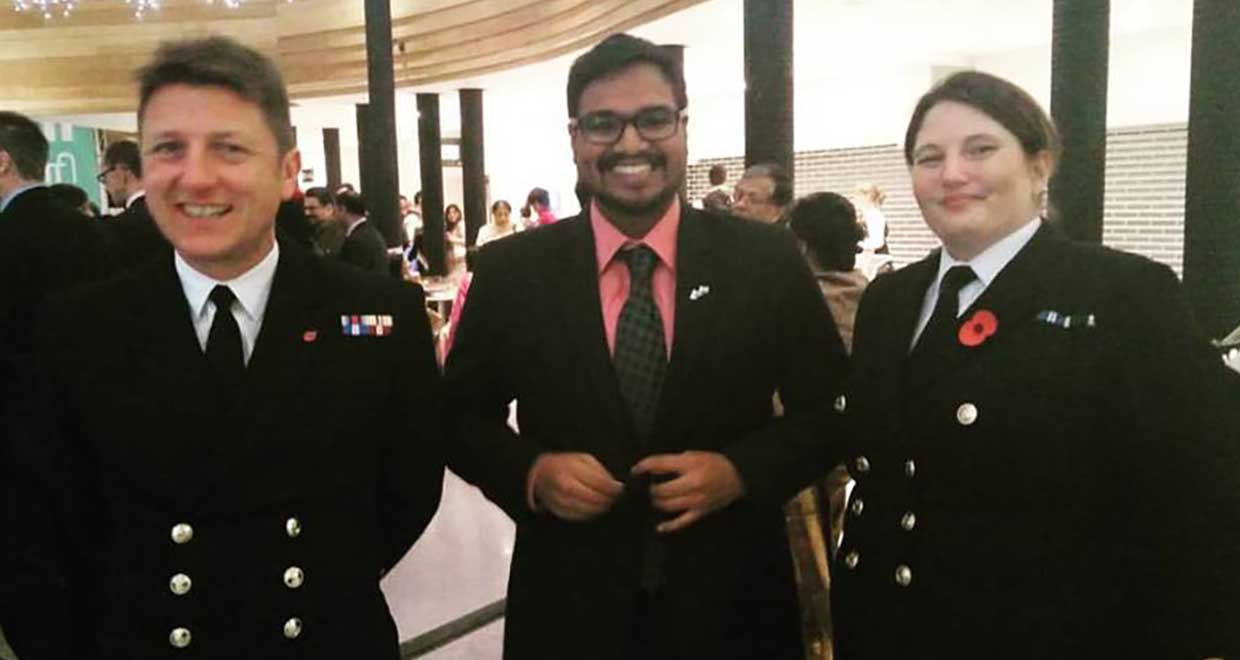
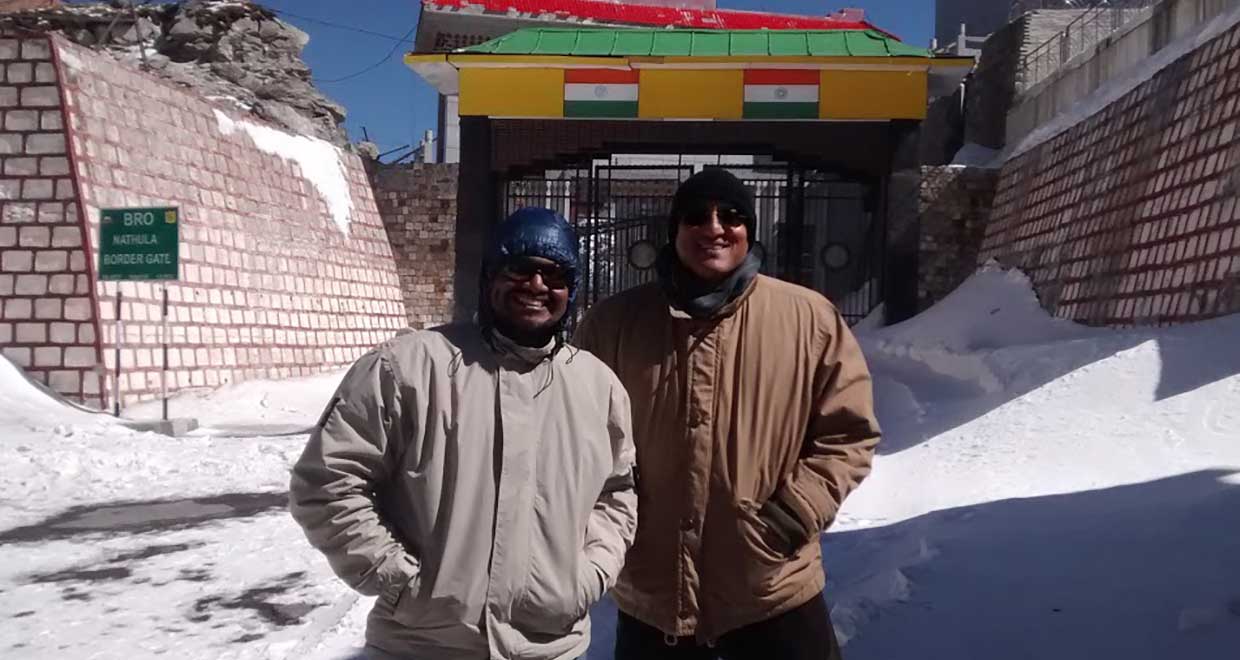

 How would you describe a well-balanced CV, one that has the potential to make the cut?






 Allow notifications