Category: Partners, General Counsels and Senior Advocates

  • Dr. Abhimanyu Chopra, Partner at AZB & Partners In Conversation With SuperLawyer On Careers in Technology law & Many Other Options In Same

    Dr. Abhimanyu Chopra, Partner at AZB & Partners In Conversation With SuperLawyer On Careers in Technology law & Many Other Options In Same

    This interview has been published by Prabhjot Singh, Priyanka Karwa and The SuperLawyer Team

    What was your “slam-book career aim”? How well did it go?

    There wasn’t any slam book career aim as such, but if I have to consider the pivotal point at where I figured out what to do in life that would be in my second year of law school, where I had a couple of friends leave for national law schools after the first year and that made me think about the next steps in life. After that there was no looking back, I interned and mooted whenever and wherever I got a chance.

    All of the internships I did were with different types of organizations involved in diverse areas of law. The aim became to explore and experience everything in law to find my niche and I continue to follow and give the same advice to my juniors and peers as well. 

    For a law student, one must keep on getting evolved and updated with all areas of law to be a jack of all trades and to figure out what is one’s own perfect field to master. 

    As for how well it went, I leave that up to others to tell me. 

    You did LLM and now PHD from well-known universities, how do you carve out time for different responsibilities?

    Honestly, if you ask me about the higher degrees (both LL.M and my PhD) was solely because of my mother, who wanted me to have a “Doctor” in front of my name and nothing more. I don’t see myself reaching here without her nudge. 

    For the remainder of this question, “It takes a village to raise a child” for which I am extremely grateful to my seniors, mentors and colleagues, who stepped in and allowed me those absences from work and always had my back and encouraged me to do it and fulfil my mother’s dreams both professionally and personally. (It’s also one of the reasons that the Acknowledgement part in my thesis is over five pages long)

    On a side note, I encourage all students to keep studying alongside work and learning new areas of law in the early years since time is a commodity, which you have plenty of in your early formidable years and scarcely later in the profession. 

    You were an avid mooter in law school. Do you believe that mooting helps law students to face real-life scenarios?

    Absolutely, I believe that every law student should at least try one external moot during their stint in law school.  

    Mooting not only helps to figure out one’s likes or dislikes in the area of the specialization but also builds the fundamental traits required for an advocate. It helps you to think on your feet, research areas of law and recent issues which you remember forever and more often than not makes you more focused towards your final goal alongside making bonds of friendships with your batchmates and friends even stronger. 
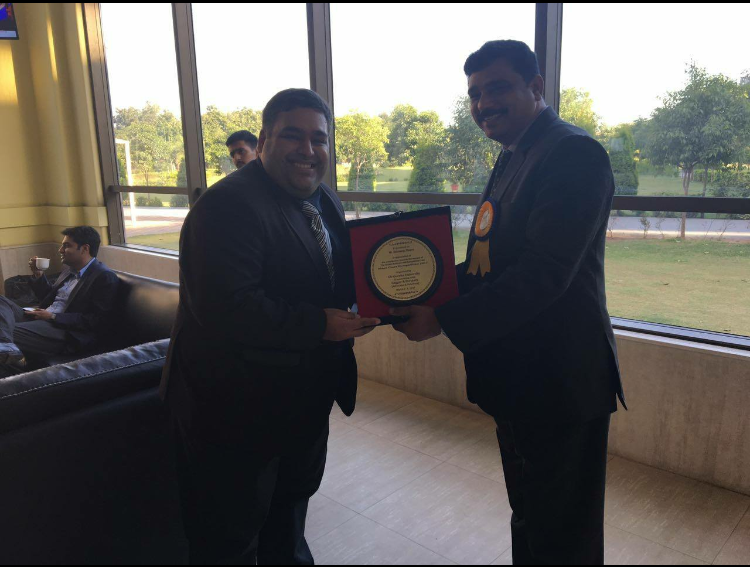
    Nowadays, besides Mooting, there are a lot of different opportunities for law students such as Client Negotiations, ADR/ Mediation Negotiations, Model United Nations etc., which I believe all students should work on. I have been judging some of these new formats of competitions and it is pretty interesting and a good way of improving their oratory and communication skills given the international angle and exposure in such competitions. 

    As a first-generation lawyer, you have moved from a chamber practice to a tier-1 practice, how has your journey been so far? Would you say the opportunity a firm provides for a young lawyer is worth the trade-off in building a reputation?

    This is a complicated answer and this question has possibly taken me my entire career of 11+ years to think about and possibly answer correctly. 

    I think it was Matthew McConaughey who said, “I need each day, something to look up to, another is something to look forward to and another is someone to chase” which is what I would say has been my journey so far. It has been extremely fun filled with various learnings and lessons and has been extremely fulfilling. 

    I started with a wonderful senior and mentor, who trained me with the ways of the various High Court s and District Courts and provided me with the guidance, support to even take private matters and gave me opportunities to appear and address the Courts including my very first day at his chamber. I could give you stories upon stories as to why a good senior and mentor in the profession are key in one’s formidable years and that’s what makes or breaks you.

    Once he got elevated, I moved to another amazing lawyer and his firm, who gave me a lot of opportunities to spread my wings and allowed me to develop and learn the finer things in the legal profession and when I thought I was ready to move on the greener pastures I moved into the tier-1 setup with my current partner and team, who gave me ample opportunities in the most complex and high stake litigations and allowed me a free hand to do what I do best for which I shall be eternally grateful.

    While I believe, that my shift from chamber to tier-1 practice has not had any trade-offs as I have been graced with wonderful opportunities which have only accelerated my growth to become the best version of myself professionally. However, after being a partner in a tier-1 firm, I am of the view, that one shouldn’t directly start with a tier-1 firm at the beginning of their career especially if you have Disputes/Litigation as a career in mind since one needs basic leg work and understanding of the Courts which is not possible in the high-stress environment of the law firms and once you are aware of the basics then the shift to the hustle and bustle of the law firm is much more fruitful.

    In essence, you need to start from the peewee league and hone and develop your skill and game to reach the Yankee’s majors.

    What are your areas of expertise, and how did you come about them?

    My areas of expertise include civil, commercial and criminal disputes, domestic and international arbitrations (both institutional and ad hoc), Cyber, Insolvency and Bankruptcy Law, IPR, Telecom, Gaming and Competition Laws. 

    My mixed bag of expertise is essentially the exposure and opportunities that came my way and it continues to grow each day. 

    You are one of the few tech-savvy lawyers, how did your tech knowledge help during the Covid-19 pandemic?

    I have been arguing through Tablets and Laptops in the Courts and have been pretty much paperless for the past many years so when the virtual setup got expedited and replaced the traditional courts in the beginning, I didn’t face the learning curve which some of my peers did. I was in fact, amongst the first few listed cases when the Courts went completely virtual in various states and was able to argue my cases without too much trouble. Moreover, I had access to all of my files and data for the earlier matters and fresh filings etc. were done by scans so I managed the covid litigations from home fairly easily.  

    The Supreme Court, Delhi High Court and some of the other tribunals also started their e-filing portals so it was easier to have fresh matters filed, reviewed and argued completely digitally. We had tallied that during the pandemic we had filed and argued over 200 odd matters and it was all very seamless.

    Since we have the infrastructure now I hope that the e-filing and virtual system continue for times to come and doesn’t get disbanded. 

    You are a certified mediator with the Delhi High Court Mediation and Conciliation Centre “Samadhan”, tell us about your role and responsibilities.

    I was inducted as a mediator with Samadhan in the year 2017. Samadhan is the result of the joint initiative of the Bench and the Bar of the Delhi High Court who have committed themselves to Mediation as an appropriate method of Alternate Dispute Resolution. As a mediator, the organising committee assigns your cases and you do your best to assist the parties to reach their mutual settlement under the aegis of the Centre. Being the techno-savvy one, I have also assisted Samadhan to set up their website, which is live at https://dhcmediation.nic.in/

    What key tips do you suggest to the lawyers in the present scenarios?

    The legal fraternity has exploded with brilliant talent in recent years and as it continues to grow I have seen some stark improvements and differences. The newer generation of lawyers are confident and have a clear path to the areas of law that interests them.

    If I had to give my two cents for the newer lot and especially for the young budding lawyers who wish to explore litigation, is for them to have more patience, be more compassionate, embrace innovation and most of all stay passionate in this field. This field has a lot to offer but equally requires a lot from you.

    Remember that You can’t be an overnight success but with hard work and persistence, you will definitely prevail. 

    Besides the salient tips in the above questions, I leave my brethren with the thought of the famous comedian Jerry Seinfeld, “To me, a lawyer is basically the person that knows the rules of the country. We’re all throwing the dice, playing the game, moving our pieces around the board, but if there is a problem the lawyer is the only person who has read the inside of the top of the box.” 


    Get in touch with Abhimanyu Chopra-

  • Megha Khanna, Partner at Online Patent Filing, Startup Facilitator, In Conversation With SuperLawyer On Most Important Qualities Of An Effective IP Lawyer

    Megha Khanna, Partner at Online Patent Filing, Startup Facilitator, In Conversation With SuperLawyer On Most Important Qualities Of An Effective IP Lawyer

    This interview has been published by Prabhjot Singh, Priyanka Karwa and The SuperLawyer Team

    What inspired you to choose law as a career? How has been the decision so far?

    A career in law was an informed decision as it has always been fascinating to me. Although a career in law is demanding and intellectually challenging, it also provides personal satisfaction and a sense of accomplishment. My decision of choosing Law as a career has been great as it allows me to explore the diversities and to further hone my skills.

    What were the challenges that you faced in the beginning of your career?

    As I am a first-generation lawyer, I had no Godfather who could guide me. However, I did not take it as a drawback and with consistent efforts and dedication, I worked towards achieving my goals and overcame the impediments. Today, I represent several corporate clients, Start-ups, MSMEs, and individuals. I believe with sincere efforts and dedication one can successfully achieve the goals of their life.

    Megha, what do you think are the most important qualities of an effective IP lawyer?

    Intellectual Property is nothing but creation of minds. A set of intangible assets come under the umbrella of Intellectual Property. I believe, to be an effective IP lawyer, one should have traits such as attentiveness, strong analytical thinking, research skills, time management, effective communication skills etc. to understand the creation of their client. Any advice which is erroneous while protecting the IP, may prove to be fatal to the business(es).  

    Among all the various specialisations and cases you have dealt with, which one do you find the most interesting and challenging? 

    I am an IP lawyer and had once represented a client which happened to be a corporate, in front of the Tribunal. I had to defend a trademark which was highly descriptive. I strategized the case, made pointers and submissions in support of the mark and had successfully secured registration for the same.

    By effectively strategizing a case and listing the valid key points, one can achieve positive results.

    Megha, do you think that for a first-generation lawyer, the journey becomes a little difficult? Please explain the same wrt to your own experience.

    I won’t say that for a first-generation lawyer, the journey becomes a little difficult. That being said, I believe having a mentor always gives you an edge over others. A first-generation lawyer must never let themselves feel gloomy and should remain focused and consistently work towards achieving their objectives. One should never shy away from taking advice or opinion from their seniors or fellow lawyers.

    What can be some of the toughest considerations while someone from a non-legal background has to see before opting law as a career?

    Earlier, a career in law was considered as a traditional concept. But with the changing times, a plethora of career options like journalism, career in banking and insurance sector, legal academia, consultants etc. have emerged and increased and are gaining attention of the law aspirants. One must take into consideration several factors before opting law as a career, like the aim in choosing the field (of law); being prepared for hardship during the initial phase of their career, specially for those who choose a career in litigation; having strong drafting and analytical skills and so on.

    Megha, was there any roadmap that helped you thus far in your journey, or any mentor that supported you from the very beginning, please share how was it for you?

    I have always aimed at continued development of my skills with a strong focus on my work so as to achieve my goals. I had designed a roadmap clearly specifying my goals and was adamant to be where I wanted to be. I have also been fortunate to have knowledgeable seniors and fellow lawyers who have mentored me.

    Megha, what is a typical day like for you and how do you suggest time management strategies for our young law generation?

    I start my day by prioritizing my tasks so as to eliminate the risk of missing any important task or a deadline. I suggest our young lawyers to make a list of their daily tasks according to the priority. One should complete the high efforts task first before moving to a new task. Prioritizing and focusing on one task at a time also helps in managing the time in the most effective manner.

    Could you highlight some of your success habits that enable you to meet your goal?

    I practice a habit of reading a lot, be it a book, an article, a judgement or any other related stuff. It helps me in keeping myself updated with the latest trends and further helps in honing my analytical skills, knowledge and creativity. Other than that, I always make efforts in connecting with others to exchange thoughts. I think networking is an important aspect which helps you grow.

    Lastly, what advice would you give to someone starting out?

    Before planning a career in law, one should be self-aware and must reconnoiter all the areas of law. The foundation of a successful career in law lies in the clarity of subject matter.

    -MEGHA KHANNA

    Get in touch with Megha Khanna-

  • Abhishek Nangia, Partner at RNA, Technology & IP Attorneys In a Discussion With SuperLawyer On Freelancing In Legal Profession and Insights On ‘Fake Consumer Reviews’

    Abhishek Nangia, Partner at RNA, Technology & IP Attorneys In a Discussion With SuperLawyer On Freelancing In Legal Profession and Insights On ‘Fake Consumer Reviews’

    This interview has been published by Prabhjot Singh, Priyanka Karwa and The SuperLawyer Team

    What was your motivation behind choosing law as a career?

    When I was in school, I would often express my interest in becoming a pilot.  However, during my high school days, I used to have regular discussion with my uncle, who was an advocate practicing on the civil side in the Delhi District Court. He would share details of interesting litigation cases handled by him.  The discussions would sometimes stretch for hours and the court experiences shared by him were quite intriguing. These discussions were instrumental in developing my interest in the field of law and I seriously started thinking about pursuing it as a career option.  My family supported me as well and I enrolled myself with a law coaching institute after class 12 board examinations to prepare for law entrance examination.  As luck would have it, I cleared the entrance exam and joined Amity Law School in the year 2000.

    Please share the challenges that you faced in the beginning of your career?

    The first challenge was finding a lawyer or law firm that would offer internship. Though I was fortunate to be offered a job on the basis of my internship during the final year with a leading corporate law firm in Delhi, the renumeration offered was not enough to even cover my expenses and made me realise it will take a while to be financially independent. I spoke to my seniors in the profession and was told that there is a long career ahead of me and the focus should be on learning during the early stage, and most firms do not pay or pay a nominal amount to fresh law graduates

    I accepted the offer and started working at a leading corporate law firm with full vigour and sometimes did not get an off during the weekend too (which was an eye opener for me!). I worked on different facets of law – Companies Act, Labour Law, Contract Act, Tax law, IP law, vetting of Agreements and opinion work. It was interesting and challenging considering all the subject areas were new for me and it involved spending lot of time sitting in the library researching on the topic but at the same time I was excited with the exposure that came my way. I would ask numerous questions. Somehow, I developed an interest in the field of IP and thereafter worked in law firms specializing in the field of IP law. The experience and the knowledge gained during my stint at a leading corporate law firm during my first job has proved to be immensely beneficial!

    Another challenge which I faced was to prove myself at the workplace despite putting in long hours. The initial struggle and challenges made me rethink if I have chosen the right profession.

    Today, when I look back, I believe that the advice received at the start of my career to focus on learning was indeed the right advise and I do not hesitate to pass it to on to the budding law graduates.

    Abhishek, is freelancing worth doing in the legal profession and if yes, how to master the same?

    Freelancing in the legal profession is actually working as a sole practitioner. My advice would be to do it if you are mentally strong to bear the uncertainty in workflow and resultantly the monetary reward. It offers flexibility and comfort, and the individual can pursue the hobbies or spend more time with family. They can work as much or as little as they want

    Self-discipline, timely delivery of work and good networking skills are crucial to master the art of freelancing or being an independent practitioner.

    What are your thoughts on “Moonlighting” and please share its legal implications as well

    Some people believe that Moonlighting is ethical because it allows people to earn extra money to support themselves or their families. Others maintain that moonlighting is unethical because it amounts to cheating (due to conflict of interest) and is unacceptable.

    In my view, Moonlighting is likely to have an impact on the employee’s productivity, possibility of confidential data (names and details of client/potential clients, customer/ supplier name, power point presentations etc.) being shared and use of resources of one company for another cannot be ruled out. According to me, it is a serious misconduct.

    Though, there is no specific law that completely bans Moonlighting, the offer letter or employment contracts are often referred to determine whether it is permitted or not. If the employee engages in Moonlighting in contravention to the terms of employment, he can be held liable for breach of employment contract and proceedings under the Indian Penal Code and Information Technology Act can be initiated in a court of law. It is imperative for employees to adhere to their employment contracts to avoid any legal trouble.

    Abhishek, there has been a lot going around the Data Protection Bill, 2022 since it came up, but we would like to take your views on the same as well!

    The Digital Personal Data Protection Bill refers to

    • Personal data only of a “person” unlike PDP Bill. The PDP Bill addressed sensitive personal data; however, it is missing in the revised Bill. The definition of personal data includes ‘any data’ and presumably includes sensitive data.
    • Relaxed rules on cross-border data flows. The draft Bill mentions that list of countries to whom data fiduciary may transfer personal data will be notified.
    • Deletion of personal data once the purpose for collection is no longer served, or the retention is no longer necessary.
    • Hefty penalties for non-compliance but which are capped without any link to the turnover of the entity.

    The potential areas of concern could be

    • Fixed timelines are missing and may lead to delays – Lack of timeline for the Data Protection Board to complete the inquiry, adjudicate the complaint. Also, lack of timeline to cease processing of personal data (in case of withdrawal of consent by Data Principal), no deadline for the data fiduciary to erase personal data that is no longer necessary etc.
    • If non-compliance is not significant, the Data Protection Board may close the enquiry, and will impose penalty in case non-compliance is significant. The use of the expression “significant” does not seem to be appropriate and may lead to faulty/individualistic interpretation.
    • Wide definition of public interest. 
    • Indian government and state agencies granted exemptions from the proposed law in the interest of national security.
    • Central government is allowed to exempt any data fiduciary from the provisions of the draft Bill and
    • Reduced independence of Data Protection Board to oversee the provisions of the proposed legislation. The Data Protection Board shall be established by the government. The establishment of the body by the government has its own set of problems – lack of resources and technical expertise of members may lead to issuance of erroneous decisions.  The delay in appointment of officers is not uncommon and may not lead to speedy disposal of grievances.

    As per the present times, what are some of the skills that are in demand in the legal profession? Please brief our audience wrt both litigation and corporate point of view!

    • Oral and written communication skills – Good orator and storyteller.
    • Understanding the client’s business and requirements and how you can add value.
    • Problem solving ability and ability to think ‘out of the box’.
    • Negotiation, engaging other side in a discussion especially during settlement discussions. I believe in the mantra – not everything is worth taking to the court.
    • Adopting ethical business practice to achieve the desired goal.
    • Managing client’s expectations.
    • Managing work and time.
    • Being aware of the business and legal developments.

    We have seen “N” no. of cases wrt fake consumer reviews, how can guidelines be better drafted to avoid the same?

    Yes, this is an area of concern. The government has recently issued guidelines to curb fake consumer reviews and unverified ratings on e-commerce websites, online food delivery platforms, social media platforms, hotels and travel-booking platforms. The guidelines come into force from November 25, 2022. 

    As per the guidelines, authors submitting reviews online will be required to verify their identity by platforms. Platforms will need to verify consumers’ identity from email address, phone numbers, IP address etc. The compliance to these guidelines is currently voluntary and may be made mandatory if the menace of fake reviews continues. The government has unveiled a new standard on “Online Consumer Reviews” that will be managed by Bureau of Indian Standards (BIS). Global bodies – including U.K.’s Competition and Markets Authority (CMA) and Federal Trade Commission in U.S. are working towards limiting misleading reviews online. 

    The crackdown on fake reviews is a positive step and clearly conveys the message that protecting consumer interest is of paramount importance!

    Do you see any challenges that AI and Legal Tech have created so far with respect to privacy and other aspects? 

    Global LegalTech Artificial Intelligence Market size is projected to reach USD 10,351 million by the end of 2030, growing at a CAGR of 33.50%The advancement of technology has brought its own set of challenges. Data security and privacy concerns are the key challenges considering lawyers handle confidential and sensitive information. The challenge is to deliver secure legal service considering the chances of experiencing security breaches becomes even higher with the advancement in technology.

    Talking about work-life balance, there has been ample amount of discussion on health issues as a lawyer, what do you believe are the best practices to maintain the equilibrium? 

    There has been a lot of discussion on this topic and more so during Covid phase when there was increasing focus on health. In particular, if there is any right formula to maintain work-life balance. In the past two years, there has been a lot of focus on mental health.

    During my initial years, I would work till late in the office and it I started to develop health problems. I made changes in my working style and prioritized health over work.  I have been working from 8 am-5 pm strictly for the past 14 years and have been quite successful so far. I am the first one to open office and leave on time in the evening.  At one point, I used to go to work out in the gym during lunch hour. I use my time in office carefully (without taking frequent breaks during office hours) and it has helped me in leaving without carrying any baggage or thinking about unfinished emails to spend time with the family and have a good laugh! The mini break helps me to rejuvenate. In fact, I do not encourage juniors/support staff to work late on a regular basis considering it is the general trend in most of the law firms. I must add here that health and wellness sessions are organised at my current workplace and the office has been very supportive on maintaining healthy lifestyle and work life balance.

    Another thing I have done is delegation of work and have trained team members so that they can handle basic tasks independently. This has reduced my workload and the team members are happy with their professional growth as they got the chance to work on something new and build their skillset.  During weekends, I take out time for cycling or go for a long walk. I keep a watch on emails; however, I consciously stay away from responding to emails unless it cannot wait.

    Lastly, any advice you would give to someone considering a career in this field.

    • Good oral and written communication skills
    • Reading and learning never stops until you retire. Reading should not only be confined to the practice area, but business side of things is equally vital for holistic learning.
    • Sometimes you need to get uncomfortable to get comfortable.
    • Be open to ideas, willingness to learn and have solution-oriented approach. 
    • Enjoy your work and success. We are here for a limited time!
    • Health is wealth, due care should be taken despite long working hours.
    • Be willing to experiment and innovate.

    Get in touch with Abhishek Nangia-

  • Sunila Awasthi, Partner at AZB & Partners In a Discussion With SuperLawyer Giving Insights On Practice Areas Such As Corporate Advisory, Employment Laws, And Information Technology

    Sunila Awasthi, Partner at AZB & Partners In a Discussion With SuperLawyer Giving Insights On Practice Areas Such As Corporate Advisory, Employment Laws, And Information Technology

    This interview has been published by Prabhjot Singh, Priyanka Karwa and The SuperLawyer Team

    What was your motivation behind choosing law as a career?

    While I did not consciously plan a career in law, circumstances led me into it. While in Class 12th, my favourite subject was political science and when it was time to decide on graduation, Lady Shri Ram College for Women was my first choice because of its reputation as an excellent college.  I was fortunate enough to get in and it was a life-changing experience for me. It was at LSR I learnt that staying silent (when you really had so many questions to ask) was injurious to only yourself – something that has helped me tremendously in my journey and I pass it onto the new generation! Parallelly, the trajectory of my personal life had already made me super conscious of rights of women at a very young age so the desire to know the legal position had taken a strong hold.

    Additionally, the family had been engaged in civil litigation for long and I was exposed to legal documents, working of litigation system in our country and the immense frustration that came with delays! After graduating in Political Science Honours, I decided to study law and joined the Faculty of Law, Delhi University. My sole motivation to have a career was financial independence and it turned out to be a career in the legal profession. Frankly it was unplanned, but I deeply believe that it was destined for me.

    What were the challenges that you faced in the beginning of your career?

    The first challenge was to find a job which did not require me to be a litigator! I passed out as a lawyer in 1992. No one, including myself had heard of “corporate law”.  But I had absolute clarity that I was not going to practise as a litigator. This puzzled my family as they would ask “then why did you do law?”. I had no answer only a strong belief that there must be something a lawyer can do which does not require her to go to court! I had witnessed the pathetic legal system during the 1980s and early 1990s, with its accompanying unimaginable harassment of litigants.

    The disastrous infrastructure of the courts at Tis Hazari, one of the district level courts at Delhi and only slightly better facilities at the Delhi High Court, were equally demotivating factors. Being a first-generation lawyer and not knowing any lawyers to guide me, I was clueless.

    I would look up classified ads in the newspaper and go for interviews in small companies looking for in-house lawyers. The few interviews that I did have, stalled at my refusal to go to court. In desperation I picked up the yellow pages of the telephone directory (yes, that was during my lifetime!) and shortlisted 10 law firms listed in that (my sole criterion was the distance I would have to travel in the DTC bus from my home – an unavoidable nightmare for any Delhi girl!). To cut a long story short, it was serendipity which brought me to Ajay Bahl & Co. which was looking for a lawyer who did not want to go to court since its corporate law work was just starting to pick up!

    The second challenge was related to the environment in which I started my corporate law career – remember this is 1993 – no precedents (for Joint Venture Agreements etc.); no computers or internet, no search engines or data resources – only physical books; recent economic liberalization meant that everything was new for the regulators, the clients and the lawyers – exciting times full of potential but also a lot more of extra effort was required and the learning curve was really steep! Looking back, I feel it were those initial challenges of scarce resources and limited support which honed my skills to be able to roll up my sleeves and dig in – persistence, resilience and sheer grit to make it happen!

    Sunila as per you, what are the skills required for being a corporate lawyer and any roadmap that a professional should follow to be the same? 

    This is a very difficult question to answer. I have seen such varied people with different skill sets doing well as corporate lawyers that in my view it boils down to individual abilities and destiny. But in general, based on my observations and personal experience, some of the essential skills in today’s scenario are

    (i) an analytical mind to be able to understand the rationale of what we are advising clients;

    (ii) effective communication, whether verbal or in writing, so that non-legal persons can also understand your advise; (iii) confidence, which comes from doing your home-work well – that requires knowledge of the law, doing proper research (as opposed to Google search!), understanding the client perspective and business needs;

    (iv) having an eye for detail and at the same time ability to look at the big picture;

    (v) ability to think things through – this helps tremendously in not giving theoretical advise to clients – world over businesses push advisors to think out-of-the-box to provide workable solutions which are also legally complaint;

    (vi) integrity – towards your profession, the law, your colleagues, organization and clients. Clients disclose the most sensitive commercial information relating to their business to their legal advisors so gaining and maintaining that trust is life-long effort!

    In hindsight I have not followed a roadmap, so I am unable to prescribe a roadmap as I believe its every individual’s journey that she has to undertake.

    Among all the practice areas, i.e. corporate advisory, employment laws, Information Technology, e-commerce, etc, Sunila, which one do you find the most interesting and challenging? 

    I have been fortunate enough to gain experience in diverse practice areas within corporate law at different points in time and each have been, in their own way, interesting as well as challenging. When I first started, I drafted commercial contracts taking help from conveyancing books! When you draft something from scratch, you understand the legal basis for which each provision that is included in the contract and sync it with client requirement. Today, with standard template forms and existing precedents, this opportunity to learn drafting is a huge loss to the profession. For me, the next phase came quite quickly because India had entered the era of economic liberalization.

    Those initial years kept corporate lawyers like me very busy with Joint Ventures & Technical Collaborations with its related drafting & negotiating contracts; obtaining regulatory approvals for foreign investment; advising foreign clients on setting up operations in India which included a whole gamut of laws relating to employment, leasing of offices, compliances and the like.

    There was never a dull moment in those days! Then the mammoth legal due diligence exercises took centre-stage. The excitement revolved around which new city the DD team was going to be based in and for how many days! I found the DD exercises gave incredible opportunity to learn about new laws, regulations and understanding different businesses. The variety for me ranged from alcohol industry, automotive parts, media, pharmaceutical companies to IT and BPOs. The advent of the Information Technology Act, 2000, again shifted the focus of work for me and new practise areas were evolving with online businesses throwing new challenges.

    The big technology companies with large workforce brought its own employment related challenges and learnings. The focus expanded to employee issues including sexual harassment at the workplace. Laws kept changing trying to keep pace with technological developments and new businesses in fast-changing corporate world. I believe the last decade or so has seen the fastest growth in terms of new practise areas for corporate lawyers with data privacy, e-commerce, fintech, crypto, ESG (environmental, social and governance), gig economy and therefore gig workers and the like taking centre stage. From my perspective, even after 30 years, what’s not to love about corporate law?

    How do you push through your worst times?

    The support of your family and your workplace is vital especially in tough times! I have been blessed in both these areas and it is their support which has made it possible for me to face any and every challenge and come out stronger. Over the past few years, for personal reasons I have been actively practising “Gratitude” and “Forgiveness”, including by attending programs conducted by subject-matter specialists, and I have benefitted immensely from it in my professional life too. It has given me a different perspective on life, made me calmer, less stressed and given me the strength to push through some of the toughest times with equanimity and grace. The fact that these changes make it easier to deal with tough clients or work situations is a bonus!

    Talking about work-life balance, there has been ample amount of discussion on health issues as a lawyer, what do you believe are the best practices to maintain the equilibrium? 

    I believe that there is no perfect formula to achieve the right balance simply because the balance must be decided by each person individually. Long before work-life balance became a “thing”, I took a very conscious decision to prioritize my family without compromising on my professional role – this is easier said than done in real life, but I still follow it. Once there is clarity on this, not only will you subconsciously work in sync with this principle, but circumstances also arise which will be conducive to achieving this objective. To use my favourite line, it is as if you set a positive intention for yourself, and the Universe conspires to deliver it to you!!

    The other important decision that I took consciously was to build a team which would make my life easier because no one can be on the treadmill constantly and forever! My mantra was, and continues to be, mentor people to take your place so that you get to get off the treadmill whenever you want to slow down or take a break. There should be no place for insecurity as there is no substitute for experience.

    My workplace gave me freedom and flexibility to achieve this objective and I am grateful for that support. The starting point for this is the coming together of people with right work ethic/drive/passion and committed to their own professional growth as well as the growth of the team and therefore the organization. Teamwork means you can delegate, share responsibilities and distribute the pressure, hopefully equitably – what better way to grow professionally without compromising on family time or “life outside of work”?

    I am also a great believer in taking periodic breaks with complete disengagement from work– whether for family vacations or doing some programs for mental well-being. I also encourage team members to plan vacations or short trips at periodic intervals and spend time with family – in my book switching off is good for rejuvenating your mind and re-charging your batteries – both for personal and professional life – so the work-life balance happens organically. Finally, if one is assured of support from team leader, team and the workplace in times of personal emergencies or family crisis then the major cause for stress is automatically removed.

    How do you make contract drafting and managing look easier for your clients? Our readers are interested in knowing that.

    I am not sure about this question? Most big companies today do contract management internally and do not look at external lawyers for this function. And as I mentioned above, no one is doing drafting today – everything is templated.

    Sunila, could you highlight some of your success habits that enable you to meet your goal?

    If you work as part of an organization then understanding the ethos of your workplace is very important. I have always been a team-player and not pursued individual glory – nothing wrong with pursuing that but I personally have not been motivated by it. As I said earlier, financial independence was my sole driving force to pursue a career. However, over the years, witnessing that your individual success is intrinsically linked to the success of others working with you and of your organization, it motivated me to make conscious effort towards building a solid team which imbibes the true philosophy of the organization.

    Our objective is to deliver the best quality & effective legal advice and support to clients in a timely and cost-efficient way. Simultaneously, the workplace environment provides equal opportunities, encourages dedication to work without compromising on personal priorities, recognizes talent & merit and rewards excellence & commitment. It may sound unreal, but it has been experiential for me. 

    Building a sustainable team has been at the core of my professional success. In my experience, individuals working together cohesively, appreciating & supporting each other while subscribing to same core values tend to thrive. And to make an effective team I put great emphasis on

    (i) mentoring juniors,

    (ii) delegating work & responsibilities while being accessible for guidance,

    (iii) direct interaction with clients,

    (iv) providing regular feedback including appreciation,

    (v) pro-active thinking & taking initiative,

    (vi) professional conduct & integrity, no matter the circumstances,

    (vii) trainings to enhance knowledge building/sharing & staying updated,

    (viii) equitable opportunities to grow individually,

    (ix) support in personal crisis,

    (x) rewards and recognition.

    I firmly believe that the present status of my professional life reflects a sense of belonging and being invested in my work and workplace. Flexibility to evolve and adapt with changing times, openness to keep learning and hear/implement new ideas, approachability and humility have all been contributory factors as well.

    If you could do it all over again, would you choose the same path for yourself? If not, what would you change?

    As I said previously, I did not consciously choose this path, I believe the path chose me! I don’t really believe in do-overs, so I guess at this stage in life I would not like to speculate what could have been…I think it’s a waste of time. What is, it is – that’s all.

    What advice would you give someone who is considering being in this field?

    Do not be blindly allured by the so-called glamour and money associated with a career in corporate law – it is a lot of hard work, nose to the grind, sheer dedication and commitment, before you see the fruits of your labour – this is true for any profession or career. The pressure is compounded by essential requirement to stay up-to-date with any changes in laws/ regulations; case law including impact of judgements or interpretation by courts or regulators. I cannot think of another profession which requires this constant necessity to be fully aware with the latest (legal) position – even if it pertains to knowledge of only your area of practise.

    Finally, in my experience, two factors which are highly overrated, which seriously impact law students or in-coming lawyers in corporate law practice, are firstly, the pedigree of the law college and secondly, the internships done while studying law. I may be old-school, but I sincerely believe, both these factors make little difference as long as the candidate is clear in her focus on what she wants to do and why.

    In all my hiring for my team since I became a partner almost 15 years ago, I have never reviewed a resume based on law college or internships or even previous organization. Having most of the best performers from so-called worst or average law colleges and unknown law firms, I believe it is mostly individual capability and drive which determines the professional path of every person (of course on an esoteric level, I would add destiny or serendipity to it as well!).

    So do not get bogged down by “pedigree” of your law college or “status” of law firms or organizations you intern or previously worked with (whether its Tier I or not etc.), instead focus on what is it that you want to do and how would you want to achieve it.


    Get in touch with Sunila Awasthi-

  • Khushboo Luthra, Associate Partner at Singhania & Partners LLP In Conversation With SuperLawyer On Importance Of Practice Development Department For Growth Oriented Firms

    Khushboo Luthra, Associate Partner at Singhania & Partners LLP In Conversation With SuperLawyer On Importance Of Practice Development Department For Growth Oriented Firms

    This interview has been published by Prabhjot Singh, Priyanka Karwa and The SuperLawyer Team

    Why did you pursue LLB after MBA-Marketing?

    A lot of what happens in our life is because of going with the flow. There were forces around me which pushed me towards law. I finished my MBA during the subprime crisis and had a few friends who were UPSC aspirants, and we used to have enriching discussions around laws, governance, economics, policy, management, international business, and regulatory environment etc.

    Law interested me and I decided to appear for University of Delhi’s Law Entrance Exam without any pressure in my head as I had already secured a PPO from Confederation of Indian Industry after my MBA-internship there. That year most of the law entrance exam was focussed on current affairs and I did not know those socialisations with friends will help me clear the entrance exam.

    You got a job at a Band 1 firm as a professional support lawyer, but you choose law practice development as career?

    I had a good 4 year long and successful stint with industry chambers early in my career. I was fortunate to get international exposure as well. A friend referred my CV for the opening as a Professional Support Lawyer in a renowned law firm and I got an opportunity to work on competition law matters with the finest minds in the country.

    I had thoroughly enjoyed my work in FICCI which involved a lot of marketing-communication, events, writing, and media relations but soon I realised that I was not enjoying being the “lawyer”.

    My heart wanted to pursue a career in management of business of law. Then I got this opportunity with Singhania & Partners which resonated with me and was a perfect opening aligning with my education background (MBA & LL.B.) , interests in communication management, and experience.

    Tell us something about Singhania & Partners and your role as Head- Practice Development at the law firm.

    Singhania & Partners is a full-service law firm and is one of the best places to work. We are recommended in the area of Corporate-M&A, Arbitration & Litigation, Employment Law, Banking and Finance etc. Over the years firm has established itself as an expert in construction disputes and infrastructure sector.  

    I joined the firm as Practice Development Manager in 2015 and was managing communications. Soon after that Mr. Ravi Singhania, Managing Partner entrusted me with implementing his vision which was to ensure that quality and correct legal content should reach information seekers through digital means. Later on, I also led the digital transformation within the organization which is still a work in progress. Over the years my role has expanded to include campus outreach and internships management as well besides other strategic practice development initiatives of the firm.

    What is your two cents of advice for other similar organizations planning digital transformation?

    Having a vision on the objectives of digitisation is an absolute must for driving the digital strategy and creating a digital ecosystem for growth driven firms. No organization would regret investing in technology, each organization is on a different learning curve and systems and processes will continue to improve once we are on this journey. Sooner you start the better it is.

    However, it is must to have a clarity on the objectives of digitisation. For instance, one should know whether through digitisation we are trying to improve marketing and client outreach or reduce duplicity of efforts in matters management, HR process improvement or internal records management or creating a digital ecosystem.

    Lastly, whatever is the objective of investing in technology make sure you click with the service provider. Service provider is as important as the software you are purchasing. Interview and assess the delivery team assigned to you. Make sure that the implementation team is committed, has shown the stability with the company and have genuine interest in understanding your business and its people. Document minutest of details, work on end user feedback, improvise, and check progress regularly.

    Why it has become strategically important to have a practice development department for growth oriented firms?

    We are living in information age; organizations must invest in ensuring that the right communication about their expertise and services reaches to information seeker. Practice development department bridges this gap and play an important role in ensuring visibility across social media, reputation management, and website management through knowledge management of the firm.

    They help create right internal and external communication to create a cohesive experience, and unified message for the prospective customers, prospective employees, internal and external stakeholders, and clients across all digital and physical platforms.

    They do so through various means such as informative content dissemination to demonstrate the firm’s expertise, managing submissions to legal directories, maintaining a record of the firm’s engagement, and facilitating conversations between fee-earners and service seekers.

    There are a lot of start-ups around law practice development consulting. Do you see law firms outsourcing this work to these start-ups?

     Yes, there are a lot of start-ups around practice development consulting of law firm. This is a growing area. However, in my opinion, no outsider can do much to assist in practice development till the firm leaders do not have the buy-in of fee-earners. Planning and execution are two sides of the same coin, the consultants might give good suggestions and plan for you but there is more to it than meet the eyes and at the end execution of these initiatives cannot happen without the involvement of internal stakeholders. If your internal team/ fee-earners are not aligned with you in meeting the practice development objectives consultants won’t be able to deliver much. Those who will be able to bridge the gap between planning and execution will survive and flourish.

    What advice would you give to someone considering a career in the legal field?

    I would recommend aspiring lawyers to do as many internships as possible and take exposure in different practice areas. Even if you have decided on practice area for you, I would recommend that lawyers should do internships in other practice areas as well to develop a holistic perspective.

    I strongly advocate that law students must do internship in the practice development departments of the law firms, and it becomes even more important if they want to establish their own practice after finishing their law degree.


    Get in touch with Khushboo Luthra-

  • Jyotsna Jayaram, Partner (Technology, Media & Telecommunications) At Trilegal In a Quick Chat With SuperLawyer On Importance Of Unconventional Skills For a Lawyer

    Jyotsna Jayaram, Partner (Technology, Media & Telecommunications) At Trilegal In a Quick Chat With SuperLawyer On Importance Of Unconventional Skills For a Lawyer

    This interview has been published by Prabhjot Singh, Priyanka Karwa and The SuperLawyer Team

    What inspired you to choose law as a career? How has been the decision so far?

    I have always been fascinated by the impact that words – verbal or written – can have and when I was in school I was always drawn to the law as a profession, particularly because of the command over language that it requires. Of course as with most children that age, I had romantic notions about becoming a criminal lawyer and being in the thick of high profile cases. However, as I prepared to join law school, I wanted to focus more on gaining a strong knowledge base of all laws before I decided on what to specialise in. I am glad I made the decision to become a lawyer and the constant learning continues to inspire me to become a better lawyer.  

    What were the challenges that you faced in the beginning of your career?

    The primary challenge was to secure a job. I was in the first batch of my law school and at that point we didn’t have established recruitment processes and most firms did not know us. We all had to work doubly hard towards getting our own internships and interviews and making a mark before we were considered for recruitment.

    Then came adapting to a work environment which was very new, highly competitive and incredibly fast paced. While law school helps build the foundation in terms of basic knowledge that is required to start off, a lot of what you need (even at the start of your career) is learned on the job.

    It was a challenge to switch out of a heavily theoretical and academic approach to a more practical style which required you to think on your feet and come up with creative solutions, while being very thorough with the law and its application. It was a also a challenge to adapt to quick timelines, long hours and a much faster pace of life. That said, the environment at work although challenging equipped me to adapt quickly and feel confident about my ability to move from my life as a student to a working professional.  

    What do you consider to be the most challenging and important aspects in this field of IT law?

    The most challenging aspect of the field of technology law is that it is changing and evolving at a very fast pace. From being a field that was subject to very minimal regulation, technology is now at the front and centre of most regulation – either in the form of new laws and regulations, or as a result of amendments and changes being made to existing laws to adapt to the digital revolution. While I believe that it is crucial to regulate the use of technology, it is important for the law to not be overly prescriptive and compliance heavy as that would be counterintuitive to very nature of technology and its ability to evolve.

    As an IT lawyer, it is important to marry the principles that the laws are based on with the functions that various technologies bring with it in such a manner that innovation is not hampered, and the harms that technology brings with it are addressed.

    This often requires us to go back to first principles, be very aware of how technology is being regulated across jurisdictions and actively following the policy initiatives with respect to technology as they most often set the context to new tech regulation.

    Often times, you will find yourself walking into a grey area with no interpretational guidance where you need to take calls based on several factors including your deep understanding of technology, the intent of regulations and regulatory perception.

    Jyotsna, do you remember any exigent experiences while advising clients on all these regulatory aspects, data privacy, etc. ? What suggestion would you give to our young law professionals to tackle the same?

    The field of technology law is very broad and encompasses several areas such as cyber security, data privacy, e-commerce, digital payments, content regulation etc. Very often these areas intersect and it is critical for us as technology lawyers to be able to address the full spectrum of issues that a client is facing without operating in silos. A good example of this is in dealing with cyber security incidents which have become very common. The nature of cyber-attacks that organisations face are highly sophisticated and evolving each day and as a result our assistance as lawyers in advising clients on regulatory and commercial aspects becomes critical.

    Cyber-attacks often come with several considerations including regulatory reporting obligations, an assessment of privacy issues (if personal data is involved), criminal law aspects while examining unauthorised access, ransomwares etc., as well as building strategy around communication to the data subjects, to the public and depending on the sector, sectoral regulators. Most often these attacks are multi-jurisdictional and require understanding and working closely with lawyers in the relevant jurisdiction to develop a common strategy.

    In order to deal with matters like this, and generally on matters related to data, technology and privacy, I would recommend that young law professionals train themselves to be nimble, highly aware of regulatory trends, enforcement and practices across jurisdictions to be able to advice clients in a holistic manner. It is also important to guide the client on an approach that is future proof and based on best practices and this often puts the client in a much better position than others who choose to only do the bare minimum when it comes to compliance.

    Jyotsna, people have started feeling that corporate is a safe option instead of choosing a longer struggling period in law, do you think the same?

    I do sense that in-house as a choice of profession has gained some more traction recently, however I don’t think this is necessarily because it is considered a ‘safe option’ as opposed to a law firm. I think in-house roles have also become an important choice as the demands of the role are similar to a lawyer in a law firm, with companies ramping up and investing in legal departments.

    In fact, the challenge of dealing with legal issues by being a part of the company as opposed to serving as external counsel, is one of the main factors that I think drives people to choose in-house. That said, I think there is generally a push to rethink how one wants to practice the law and there do seem to be several parallel tracks that have come about for professionals to choose from, instead of joining a law firm or sticking to mainstream law.

    How do you balance your work and personal life ?

    My approach to balancing work and personal life has always been to not view one as restricting or impinging on the other. I am conscious of the decisions I make when it comes to work and personal life and at all times I try and ensure that I am honouring each commitment. That said, if I am unable to manage a perfect balance, I make sure I am not hard on myself. It is not doubt easy for work to overwhelm and capture all your mind space but with time and small changes to my routine I have been able to feel like I am in control of both aspects of my life.

    For example, the time I set out for my exercise, or to spend with my child is sacrosanct and I try and schedule it in a way that does not allow work to creep in and reduce the time I set out for this. If it means I start my day an hour later, then that does not faze me and most things can in fact wait. I try and stick to a routine that is simple and flexible so that I am able to respond to the demands at work and home calmly. I also make sure that I take small breaks from work whenever I can so that I don’t feel like it is always catching up to me.

    A lawyer sometimes is expected to do work apart from legal functions as well, what are your views on the same?

    Absolutely, and this is an increasing expectation even from clients. The demand now is not just to provide sound legal advice, but also to be able to identify and balance commercial considerations in arriving at solutions. This may need you to step in to the shoes of the various stakeholders you are dealing with – for e.g. if there is a new technology product that is being launched, you need to be able to understand the objectives and outcomes from a technology, business and legal perspective.

    Further, as a lawyer, it is also important to be aware of and participate in public consultations and policy making as this often shapes the regulation that comes out. Separately, as a lawyer in a law firm, you also have several administrative functions attend to including billing, matter management, knowledge management and building and business development. All of these functions are equally important as being a lawyer and equip you to be a better and more efficient lawyer.

    Jyotsna, was there any roadmap that helped you thus far in your journey, or any mentor that supported you from the very beginning, please share how was it for you?

    I didn’t enter this profession with a specific roadmap. In fact, when I joined Trilegal I wasn’t sure of what I wanted to specialise in. When I joined, we had a rotation system and my first seat was TMT. I have since then only been part of the TMT practice and I couldn’t be happier with how things turned out. While I am not very rigid with how things pan out and often like to play things by ear, I did set various targets for myself in my journey as a lawyer and what I wanted to achieve. Most importantly, I ensure that I am always growing as a lawyer, and learning new things every day. I always kept (and continue to have) an open mind and as a result I have greatly benefited from the perspectives of my juniors, my peers and seniors.

    The partner’s practice who I started off with has always been a mentor for me and has had a huge role to play in my journey as a lawyer at Trilegal. I have learned immensely from him and the focus has always been to develop a high quality practice that focuses on learning, freedom of thought and self-challenge. It is also important to not lose sight of the importance in building out a safe, respectful and encouraging work space and that has been integral to my journey as a lawyer in this firm.

    While being in a law firm is no doubt challenging and competitive and I have had my share of tough times, overall my experience has been nothing but rewarding and enjoyable and that’s what keeps me so invested in this.

    According to you, what networking strategies should be adopted by the first generation lawyers specifically in corporate?

    Jyotsna: Networking in an orchestrated set up is a challenge for most people and at times is not very effective. I think that networking should be woven in to your practice as a lawyer where you ensure that you are meeting and investing in professional relationships in several inorganic ways. For starters, don’t wait for a specific time in your career to start networking.

    It is never too early and the earlier you start the more natural it becomes for you. Take the time out to think of people that you want to meet and engage with, find avenues to meet that person – it could be a conference, it could be a roundtable discussion or perhaps a knowledge session that you conduct, or are a part of. Keep in mind what to be of interest to that individual and if there are relevant developments, find a way to get your thoughts over to them. Don’t be shy of expressing your opinion or taking a stance as that helps the other person understand your approach and views as a lawyer.

    Most importantly, do not network with an expectation to see immediate results. Building professional relationships comes with its own gestation period and it is important to recognise that. You will find that slowly you will make a mark and people will remember you for your expertise and reach out. And for this you do not have to be the loudest voice in the room.

    Lastly, any 3 best pieces of advice for our young lawyers?


    I would just say keep an open mind, stay on top of all regulatory developments and constantly learn. No amount of knowledge is too much. And find a way to truly enjoy what you do.

    – JYOTSNA JAYARAM

    Get in touch with Jyotsna Jayaram-

  • Vijay Pal Dalmia, Partner at Vaish Associates Advocates In Conversation With SuperLawyer On Legal Implications Of Web 3.0 & Role Of Mentor In Legal Profession

    Vijay Pal Dalmia, Partner at Vaish Associates Advocates In Conversation With SuperLawyer On Legal Implications Of Web 3.0 & Role Of Mentor In Legal Profession

    Did you always want to become a Lawyer or was it something that you decided in the later part of your school life? What other career options would you have considered, if not law?

    From school time, I had the intention to become a lawyer, though I was also good at science and my teachers wanted me to opt for the medical field. Once I reached college, I also considered options relating to military and civil services, however, on the death of my father Late B.L. Dalmia in the year 1983, who was a distinguished senior lawyer, I finally opted for law as my profession.

    You have published numerous papers and Articles. How important do you think these are in shaping your understanding of law?

    Article writing and publications always give you an edge in understanding law. One has to do a lot of research and read judgments before writing an article which immensely adds to your knowledge and acumen. In my experience, article and paper writing has always been a boon which helped me immensely in my profession.

    What can be the real challenges while establishing a career in the field of law?

    Information and knowledge are widely available these days after the invent of the internet and particularly Google. However, for establishing a career in the field of law, you need to understand that “A lawyer must know something about everything and everything about something”.

    For building a career in the field of law, it is extremely important to understand the practical side of the law, psychology, body language and judges. One may be a corporate lawyer sitting in the office but it is highly important to understand the ways the judges analyse documents and ask questions. Understanding a judge’s psyche is of utmost importance to be a good lawyer. In my view, every budding lawyer must spend some time in court to be a good lawyer and understand the practical interpretational aspects.

    According to you, what major improvements we need to make in the crypto laws and regulations?

    Presently the most important thing is that the Government must come up with comprehensive legislation on cryptos. Crypto has acquired massive dimensions in society and has practically touched the lives of most people. Cryptos are no more in nascent stage. The entire concept and business have advanced. At present India is facing a situation of being “nowhere” in the domain of crypto laws. There is a stalemate and the Government is indecisive. There are no crypto laws or regulations except to some inadequate extent under tax laws .

    The role of mentor often gets underestimated, what is the importance of mentor as per your experiences thus far?

    Having a mentor is one of the most important aspects of the legal profession. Learning becomes easy and sharp. You come to know about the “tricks of the trade”. Getting guidance becomes easy.

    What can be the legal implications of Web 3.0 according to you?

    Web 3.0, sometimes known as Web 3, is the concept of the next generation of the web, in which most users will be connected via a decentralized network and have access to their data.  The world is on its way to an Internet where people will have complete control over their data and privacy which will be made possible by blockchain technology. Some of the implications relating to Web 3.0 are national security, sovereignty and integrity of the country, public disclosure, privacy, taxation, governance, IPR protection and enforcement. Web 3.0 is a complicated structure.

    Can an Advocate be soft-spoken yet established; what do you think about how the legal profession takes this quality?

    Being soft-spoken is a matter of duty and pride for an Advocate. It is not a matter of choice, rather its obligatory for an advocate to be soft-spoken and polite with clients and in court. Being loud, arrogant or harsh is not a good quality of any advocate. Politeness wins and you get to gain before the court and with the clients. A soft-spoken and polite advocate is always highly appreciated and welcomed by all in the profession.

    Would you like to give any career/life tips to the readers?

    One of my sincere pieces of advice is to write as much as possible on legal topics and circulate it on the web through different forums.

    Give lectures, run your own Youtube channel and educate the public which will bring recognition and clientele to budding legal professionals. In this profession, you can not advertise, and new advocates have to make their presence felt. In my view, there is no other alternative.

    Remember, advocacy is a grey hair profession, and it takes time to succeed. Give time to your profession and yourself. Keep on developing your skills.


    Get in touch with Vijay Pal Dalmia-

  • Zeeshan Ali Khan, Partner-IP Enforcement at Rahul Chaudhary & Partners In Conversation with SuperLawyer On IPR and Networking for First Generation Lawyers

    Zeeshan Ali Khan, Partner-IP Enforcement at Rahul Chaudhary & Partners In Conversation with SuperLawyer On IPR and Networking for First Generation Lawyers

    This interview has been published by Prabhjot Singh, Priyanka Karwa and The SuperLawyer Team

    Being a science student, and then choosing law, what was the idea behind?

    Though I was doing good in science, however somehow, I was not interested in pursuing a career in science and therefore, was looking for options. During this time, my family suggested me to go for a career in law and when I started preparing for entrance exams of different law schools (as we did not have CLAT back then) – it really fascinated me. I started reading about famous lawyers in India and also visited the lower Court in my city, the idea of wearing that collar band and arguing in Court used to give me goosebumps.

    At was during this time that I firmly took a call to make a career and practice law.

    How challenging has it been for you so far in the legal industry?

    It has been a very satisfactory journey so far. I was able to clear the entrance exam of two National Law Universities and two reputation private universities and decided to join HNLU, Raipur. I joined the third batch of HNLU, Raipur in 2004 and was fortunate to have been taught by some of the best faculties at the time. My five year stay at HNLU was both memorable and enlightening at the same time.

    The strict time lines to submit projects and moot court memorials gave me an early introduction of how the legal profession going to be and worked as a solid foundation for later part of my career.

    I joined an IP boutique firm ZuesIP immediately after completing my course and thereafter, my joined current firm Rahul Chaudhry & Partners in 2010.

    My firm and my mentor Mr. Rahul Chaudhry, the Managing Partner of the firm have immensely helped me become the professional I am today. I started as a junior associate in the firm and slowly learned the nuances of IP and law in general. I was designed as Partner – IP Enforcement in 2021 and handles IP Enforcement before the Courts in India, Domain Name as well as Custom Authorities.

    What created your interest in the IP sector? And how did you prepare yourself for everyday challenges in the same? 

    My initial interest in IPR started when we were taught IPR in the second and third years of our law course. The idea of knowing, protecting as well as helping the brands grow attracted me and I decided to intern with IP Firms to better understand the subject. I learned the intricacies of IP as a subject and practical aspects of implementing the same in day-to-day legal practice during these internships.

    Accordingly, I opted for IPR as my honours subject in the university and got a specialization in the same.

    Preparing myself to practice IPR was not a challenge for me as I had a keen interest in the subject. I used to go through all major IP judgments by the Courts to keep myself updated of the latest developments and still try to read as much as I can whenever the schedule permits.

    According to you, what networking strategies should be adopted by the first generation lawyers specifically in corporate?

    Being a first generation lawyer myself, I have never felt any difference in terms of treatment by law firms or corporates. If you have knowledge of the subject and good command over language – you are bound to be noticed. The age old saying that there is no substitute to hard work is absolutely correct. I am a strong supporter of making your work speaks for yourself. If you are getting reliefs for your clients and are being recommended for your work – the world will look for you.

    At the same time, I would suggest one to leverage technology, join industry groups in person or through various social media like LinkedIn and also offer educational resources. Give presentations and educational lectures in various industry gatherings as well as educational institutions.

    What are the most important qualities for an intellectual property lawyer?

    An IP lawyer needs to keep himself updated with latest judgments and industry practices. With the creation of IP Divisions in the Courts, IP has become even more niche practice. Going through PTC on a regular basis and keeping a track of prosecution practice is also very important. I always suggest that to be a successful IP lawyer, one should have a good command over prosecution side as the same forms the foundation of one’s IP practice.

    How a trade mark application is filed, the route it takes for registration and how to overcome the objections raised by the Administrative Authorities (like Trade Marks Registry) are all very important. A wrong advice to the client during prosecution and registration procedure can ruin all future prospects of protecting and enforcing the mark.

    Zeeshan, do these legal tech tools have helped litigants and corporates so far in preparation of different documents or filing and what in the future would be challenges for lawyers in dealing with such tools?

    The tech tools are indeed helpful and I see them playing a greater role in future. Along with saving time, the tools also minimise the chances of an error. Many corporates have started using them to keep a track of their matters pending in the Courts, checking the deadlines and even setting reminders to ensure that no deadlines are being missed. As we all know, deadlines play very important role in our profession.

    The time frame provided by the statues to file pleadings/documents before Courts as well as various administrative authorities are to be strictly followed, specially in IP prosecution. Hence, I believe the tech tools are going to be a game changer in future. With respect to the challenges, I believe the new generation of lawyers will not have any difficulty in handling these tools. I suggest even law schools should start preparing the students to use these tools during their course.

    As a partner of a law firm, how do you manage to balance the work-life aspect?

    Work-life balance is very important to ensure a long-term efficiency in work and a satisfaction in your personal life. My day usually starts at 9 am in the office and then few hours are spent in the Court as well. Being a partner, I also try spending sometime with my team members to interact and discuss work and the general life related aspects. However, one needs to prioritise the work and maintain a discipline during the working hours.

    I am a strong supporter of not carrying the work related stress to home and spend my away time playing with my daughter as well as working out. It is equally important to take care of your health and therefore, I have made it a routine to work out for atleast an hour every morning.

    The same not only helps me stay strong physically but also strengths my mind and helps me to prepare myself for the day.

    Lastly, any advice for our young law generation?

    Legal field requires continuous study and keeping yourself updated of the latest developments. So, it is very important to make an early habit of reading latest judgments as well as precedents. Young lawyers should also visit Courts and hear established legal practitioners argue the cases in Court.


    Get in touch with Zeeshan Ali Khan-

  • Manav Gecil Thomas, Partner at Thomas George and Associates Shares his Thoughts on Networking Strategies in Litigation and Role of Tech and AI in Legal Operations

    Manav Gecil Thomas, Partner at Thomas George and Associates Shares his Thoughts on Networking Strategies in Litigation and Role of Tech and AI in Legal Operations

    This interview has been published by Prabhjot Singh, Priyanka Karwa and The SuperLawyer Team

    What motivated you to take law as a career and how has been the decision so far?

    As all students, I was also confused during my school days as to which profession I should choose. Thereafter, my mom suggested me to take up law in lines of the profession of my father as he has already established a base. I did not qualify CLAT, however, I qualified for UPES, LAWCET and ILS Law College, Pune.

    Keeping the long standing reputation and I decided to join ILS Law College, Pune. All throughout my college life, I enjoyed participating in Moot Court competitions. After completing my law, I immediately joined my father’s law firm i.e., THOMAS GEORGE & ASSOCIATES. Thereafter, my mom was instrumental in insisting me to complete my LL.M.

    I did LL.M in Constitutional Law from O.U.P.G. College, Basheerbagh and secured a Gold Medal which was a lifetime dream come true. My father has been an amazing mentor as he not only trained me in drafting, filing procedures, clerical works but he also gave me the freedom to take up matters and handle them independently from day one …!

    My first appearance itself was arguing a final hearing before the then united Hon’ble Andhra Pradesh High Court of a Criminal Revision Case pertaining to 2008. Ever since then, I have never stopped and I hope to argue many more important cases in the years ahead of my life.

    Arguing the law and interpreting the law are two important facets of my litigation life which I will always cherish. So, though law happened by accident, I am happy to go the way it carries me. There is a unique unexplained sense of happiness that, I feel while arguing cases before different judicial and non-judicial fora throughout the country. With all the tremendous pressures that we as advocates undergo, it is only, that joy that I get, after arguing different kinds of matters that keeps me going ahead…!

    Your internship experiences are filled with reputed Advocates and Judges, was there any roadmap for the same or all did was in flow? How would you guide students in choosing internships?

    As a law student after participating in few moot court competitions, I was inclined towards litigation. My first internship was with my father and mentor who taught me the basic art of advocacy, that includes drafting, filing procedures etc.

    Thereafter, I went on to intern with Designated Senior Counsel Late Padmanabha Reddy where I was mesmerised to see sir argue different kinds of matters at length on his legs from 10:30 AM to 04:30 PM…! I would observe, sir argue most complex matters with utmost patience and he was always calm and composed, the most essential art I learnt. Subsequently, I interned with Adv. S. Niranjan Reddy now Designated Senior Counsel/ Member of Parliament, at whose offices I learnt corporate litigation and its nuances.

    Thereafter, I had the unique opportunity of working with Honourable Justice Kurian Joseph (Retired), Former Judge Hon’ble Supreme Court of India and while interning with his Lordship, I was able to understand what all goes in the minds of the judges post arguments since, I was also involved in the legal research that would assist judges in arriving at their decisions. I was able to see the judicial process closly that goes on after the arguments and before the judgement is pronounced.

    This experience has channelised my arguments in a slightly different manner and I am dedicated His Lordship for imparting this knowledge in me. Thereafter, I had a short stint with late Advocate Lily Thomas who had shown me no matter whatever hurdles and challenges life throws at us one must keep moving. Lastly, in my final year, I interned with Designated Senior Counsel & Hon’ble R. Basant sir Former Kerala High Court Judge. During this internship I received unique lessons of life & law, wherein I learnt how a mentor can treat his associates, juniors and interns with patience & care and at the same time learnt how hard work and dedication plays an important role in the life of an advocate. Students are not always sure as to what kind of an advocate they want to become after graduating, so it is always beneficial to intern at different places where there are variety of matters.

    Students should always start their internships with advocates who have a variety of trial court matters. In trial courts, students can learn about procedural laws, they can observe Cross Examinations and trial advocacy skills.

    Thereafter, students must intern with advocates practising in the High Courts and then the Supreme Court if possible. After this I would suggest students to intern with different corporate law firms. By the end of their internships, I would say with utmost surety, that, the students will be able to decide their career paths…!

    Manav, any specific reason for choosing litigation over corporate, what created your interest in that?

    I hope my answer to this question does not create any controversy amongst corporate law practitioners. I do not feel that I am made up for only drafting contracts or due diligence as I like to see the law in motion and that, only happens in the courts of law. In litigation, one see and meets different types of clients with different issues and in pursuing those issues one has to appear before different judicial and non-judicial fora and convince the Honourable Judges on unique points of laws and facts. Litigation requires a unique skill of being able to put forth your points with absolute clarity and conviction.

    For the same, one has to be well versed and well abreast with the laws and case laws. In corporate law, there are different nuances of law which are being explored on a day-to-day basis but none of the corporate lawyers are able to see their documents being interpreted in the courts of law. That is why, I choose litigation over corporate law.

    However, one must understand that even though I am a litigating lawyer, on a day-to-day basis, I am dealing with various aspects of corporate law which we cannot avoid being a lawyer. Thus, I believe that the so-called difference between a corporate lawyer and a litigating professional is a grey area which cannot be compartmentalised. So, I fix no label to myself….I leave it to the readers to categorise me as any lawyer they feel based on the work I execute.

    As lawyers, society depends on us in a lot of situations and pro-bono matters is one of them. How far do you resonate with this?

    Society depends on a number of aspects that keeps evolving and law is an important part of this evolving society. The changing needs of the society requires dynamic changes by the practitioners of law. In today’s world where everyone is in the rat race to earn, a lot of poor litigants suffer with inefficient representation as the fees that they can pay is less. I completely believe that in the background of the unique requirements of the society as of today, pro bono matters would definitely assist and help the people in need in a unique and effective manner.

    Many a times, I come across poor litigants who are not guided in the right direction due to which they faced unpleasant consequences. In this background all the us at THOMAS GEORGE AND ASSOCIATES believe in helping the really needy clients and when the situation demands we do take up pro bono matters. In criminal matters I observed that the people arrayed as accused in many matters do not have the necessary sources to finance their litigation expenses and tend to seek help from legal aid.

    Many a times, legal aid is not providing effective and efficient representation thereby rendering the whole purpose futile. Thus, professionals with experience taking up pro bono matters really helps the litigants in need.

    According to you, what networking strategies should be adopted by the first-generation lawyers specifically in litigation?

    The struggles of first-generation lawyers are untold in today’s world. There is no secret mantra that can be told as to the strategies that can be adopted, however, these are a few tools which may come handy in the years to come. Networking is a very important part of litigation which one will understand as they progress in their profession. One must always bear in mind that every person one meets in any walk of life can be one’s prospective client and thus one should interact with people and make them know that one is a practising lawyer.

    There is an apt example for the aforementioned statement of mine; once while I was in a club and while I was on the way to the washroom, I met an acquaintance of mine and in a casual conversation made him know that I am practising in Hyderabad. After a year I received a call by this acquaintance who had referred a very big company for coming on board as their retainer. So, one can land up with a client in any place.

    Keeping in touch with your alma mater and alumni will also help you in being referred matters from different states pertaining to your jurisdiction. Being active on social media can also help to a certain extent. Giving internships to students, is a way of giving back to the society and in return over the years to come, one will see the benefit from the same. Also, one must always remember that hard work pays off and the reason I say so, is your work must speak for yourself and that in turn would result in receiving the due benefits of networking.

    Please elaborate for us your current role

    I am currently the Name Partner at THOMAS GEORGE & ASSOCIATES, Hyderabad. The Managing and Founding Partner of the firm is my father, Advocate Thomas George and the Senior Partner is my mother. This being the background of my firm, the positions that we hold really does not matter for us internally. That being said, on a day-to-day basis I appear on various matters before various Judicial and Non-judicial fora throughout India with my base practice in Hyderabad.

    My entire day goes in arguing matters before different courts of law and in the evening, I spend my time in preparing for matters listed either on the immediate next day or for the days to come and also meet my clients. I supervise the administrative matters of the firm.

    I delegate matters to the juniors/associates at the firm, teach/assign work/cross check the drafts assigned to the Associates/Virtual/Non-virtual interns. I brief the Managing and Founding Partner and Senior Partner of the firm on matters that needs to be argued. I also help my Associates in practising their presentations before the courts scheduled for the next day, so that, they do not face any difficulty.

    So far we’ve seen employees being harassed at workplace wrt different situations, how well do you consider the role of employment laws in the same?

    It is always beneficial for employees to research about the firm where they seek employment before scheduling any interview. I also think it will be beneficial if one can speak to people who worked in the said place prior to joining. The role of employment laws is not very effective as, the internal committee for any kind of harassment consist of members of the same firm.

    Furthermore, if any employee raises a complaint and leaves the organisation the next organisation will always look at this employee with a speck in their eyes and thus there is a fear in employees from making any complaints whatsoever.

    How does AI play a significant role in helping lawyers and what are the consequences for the same?

    AI is already playing a significant role in lives of lawyers. As on today we can see AI’s tremendous use in research while comparing to our senior generation lawyers. The search engines have been extremely helpful in researching for case laws as well as to know overruled decisions, landmark decisions et cetera. Case management has become very simple with the help of various digital applications that provides the statuses of all the matters of the firm with the click of a button. Dictation and drafting have become 10 times easier than what it was with the usage of the software that types out whatever we dictate with almost 90% perfection.

    Another application that I have come across in the recent times is a scanner pen which can be used to copy paste contents from various hard copy of agreements/drafts into the word document. AI will always remain a tool in the hands of a lawyer but can never replace mankind especially lawyers, because, the brain used to interpret law in a unique manner is not AI but it is that unique skill of that lawyer. Furthermore, convincing a judge is done by advocates who present their matters in ways they deem fit which again cannot be substituted by AI. For people who disagree then mankind itself will be overtaken by AI.

    There are also applications that are being developed for taking queries from clients through chat boxes and these apps help in consolidating the client consultations to a certain extent. Such client consultations would in a way save the precious time of lawyers. However, how much ever technology advances, if it lacks  human touch in the works of a lawyer then I believe there will not be effective representation in those cases.

    Manav, we’ve been witnessing students shifting from litigation to corporate or most of the times they dont even take litigation as an option, what can be the reasons for the same?

    Personally, I would like to disagree. In the recent years I have seen many students in fact choosing litigation over corporate law firms. The ground reality is that, as on date, there are no vacancies in many chambers as they are already flooded with young students who have just graduated. However, students do prefer a comfortable and stable life with heavy packages which corporate law firms provide and that can be the only reason that students would prefer corporate law firms over litigation.

    Once litigating lawyers start paying their juniors at least the amounts that are required for the basic survival in the cities they practice, students will definitely choose litigation. What I have observed in corporate law firms is that due to tremendous burn outs over the period of time people shift back to litigation thereby losing their initial precious years of the experience. Students must understand that litigation is like an investment which grows manifolds.

    The life of a corporate lawyer or a judicial officer or a lecturer usually ends upon attaining the age of superannuation, however, the life of an advocate has no age limit and in a lighter note; when all your fellow colleagues are retiring, the practising lawyers start earning even more…!

    Lastly, any piece of advice for our young lawyers

    Repeating what you would have already heard from various stalwarts in the profession, I would like to say that there are no shortcuts to success.

    Hard work, dedication, diligence, perseverance, patience are the keystones to success. We must always remember that success cannot be achieved overnight but it requires tremendous hard work.

    Whenever, we see successful professionals, we only tend to see their achievements without knowing the amount of pain, sacrifices, compromise that they had to undergo to reach the place that they are at today.

    Having patience will definitely play a great role in reaching those heights of success that are channelled for you. One must always remember to maintain a work – life balance which everyone has been talking about in the recent times. One must take time off work, spend time with family and friends as well, which are very important.

    I always tell my hardworking interns not to forget to chill in life. All the best!!!


    Get in touch with Manav Gecil Thomas-

  • In Conversation with: Mugdha Sharma, Senior Legal Counsel at Optum, UnitedHealth Group |DCPP

    In Conversation with: Mugdha Sharma, Senior Legal Counsel at Optum, UnitedHealth Group |DCPP

    This interview has been published by Prabhjot Singh, Priyanka Karwa and The SuperLawyer Team

    ***Disclaimer***

    The opinions and views expressed are that of the author and Optum, United Health Group bears no responsibility whatsoever. The thoughts shared are for general informational purposes and should not be construed as any official advisory.

    Why did you choose law as a career, was it planned or all of a sudden you decided to be a lawyer?

    I was a science student, who was coaching herself to be a doctor honestly, so I didn’t really know if law was something I would want to pursue.

    It was definitely not a planned decision to begin with. It was at the middle of my 12th grade, when my fellow students started discussing about courtroom dramas and how they are being inclined towards pursuing law, I started reading and exploring the opportunities in legal field.

    On a lighter note, it wouldn’t be wrong to even admit that I became attracted to courtroom dramas and the more glamorized view of law.

    I started to then consider more seriously what I wanted the most in my career and think I wanted professional stability and financial security. I was also keen to follow a career path that allows me to leverage my communication skills and offers an avenue for continious learning and keeping myself updated with the latest in a field.

    At the time it felt that the law provides both, so I imagined it would be an ideal career for me.

    Then the more I read about it, I started to understand that being such a fascinating field it would offer nuanced challenges to resolve while demanding a variety of skills and this piqued my interest in the field law.

    What were the challenges that you faced in the beginning of your career?

    Learning about law in classrooms compared to real life application in time bound scenarios was the first challenge that I faced.

    There were many days that I had to go back to refer to my internship days or leverage experience of my batch mates/seniors to draft an appropriate clause or provide the most effective advice. Initial days required a lot more hours being spent making the transition from academics to a law associate all the more challenging.

    Apart from this, settling in a big city like Bombay was also a real challenge. Coming from a small town and then being in law schools’ protected environment, it was only now that I had to “go figure” for everything from renting a house, setting it up, making transport arrangements, at the same time putting the extra work in the first few months of your career. The trouble is, no one teaches you this part!

    Mugdha, do you think that for a first-generation lawyer, the journey becomes a little difficult? Please explain the same wrt to your own experience.

    Stepping into law school was a new world, where people who had families with multiple generations of lawyers talked fluently about topics I was making hard efforts to understand myself and that made me feel I had more catching up to do. I had to assess all opportunities independently with my own lens and learn concepts from scratch that some had been exposed to from childhood.

    Looking back I feel now that the extra effort I had put in also created the appreciation that I hold for the field of law.

    Being able to build an experience in M & A and VC deals, what according to you are the most important skills to have?

    Within my limited experience of M&A and VC deals, I believe one of the most important skill is to see the bigger picture. You need to be able to get your head out of the documents to see that you are working the whole process from scratch to end and therefore must be able to build your opinion on the end goal and the manner in which you’d assist your client to achieve it.

    This requires strong business awareness and equally strong legal and commercial understanding of the transaction.This in no sense should take away from the importance of paying attention to detail as the devil is always in those details!

    Apart from this I believe, building a good relationship with both your client and also opposing counsels, help you navigate the negotiations better and sometimes even builds your own power of persuasion. While this may not be practical all the time, trying never hurts.

    As someone who got a chance to work with big companies, was it a smooth sail for you?

    I don’t think it was all rosy by any means. It did take some time and effort and a lot of of unlearning for ultimately learning some more. I worked towards moving from a law firm mindset and started to imbibe an in-house midset.

    The in-house mindset I speak of is much more closer to business, stakeholder requirements and is also customer driven. In the beginning one of the challenges that I personally faced was balancing expectations as an in-house counsel, keeping the business needs ahead of the legal structures and nuances, yet being within the scope of law.

    I’d say, I am still a work in progress.

    India is witnessing amazing growth because of the startups, according to you Mugdha, what are the roles and responsibilities of a lawyer in dealing with start-ups?

    In my opinion, you need to be more of a generalist in the real sense of the word. As a startup lawyer you must know a bit of everything as you advise startups throughout their lifecycle on a variety of issues, while all along living the risks and uncertainties associated with startups. This begins with setting up of their venture and related legal & regulatory compliance, which then moves to routine advisory for general corporate or commercial transactions undertaken on a regular basis.

    The role of the startup lawyer doesn’t end here as now they will also assist the startups for raising capital from angels and VCs and help the startups sail through legal and business issues arising as it scales and grows its businesses.

    Finally, also taking the full circle and reaching the finishing line is the most toughest, but perhaps also one of the more satisfying tasks of a startup lawyer who has seen the emergence and growth of the startup and is now able to help them sell the business or take the company public in an IPO.

    Creating a work-life balance and focusing on mental health has been a challenge lately in this industry, but you manage it well, please tell our audience how?

    I think I am far from managing it well, but I am now at a place where I constantly aim to strike that balance between work and personal life and try and give time to a lot of my dreams beyond just the law and my professional commitments. I now understand when to pause and enjoy life and when to get back to the rigorous work routine.

    I am comfortable assessing how much work is too much work and to take a step back (including mentally), when needed.

    I enjoy creating content when I get some time while I am travelling or just some happy stuff on Instagram. I unapologetically think that it is okay and so I am active on social media because I enjoy it.

    While I understand, to some social media is trivial or toxic and to an extent it maybe is, but I think it is also a great tool to voice your opinion, teach, learn or for just any form of expression and I believe a part of my ‘work-life balance’ comes from being able to show who I am or where my heads at by simply expressing it. It is a very personal view though and to each their own!

    For this I believe one sincerely has to put in efforts to create this space and the right kind of work place often accelerates that effort.

    Apart from expression on social media platform, I love experimenting with food, both to cook and eat. I travel across continents just to experience the culture and I believe a part of that culture is their food. Once am back, for weeks I try to recreate food that I eat on my escapades and I enjoy reliving my travel stories through this.

    I love to travel as it adds perspective to life and keeps me grounded too knowing that theres a huge World out there with variety of people and culture and we, as an individual, are such a small part of this whole story and there is so much to learn and know.

    They say nowadays a lawyer must have that business acumen, do you believe this as well? If yes, briefly describe our audience about it.

    Yes, definitely. The journey becomes smoother once you are able to amalgamate your legal knowledge with business acumen and are able to communicate effectively and efficiently with your stakeholders.

    A lot of decision making is done by weighing and analyzing differentiated opinions and often conflicting priorities, that may even sometime require you to say “No”. As in-house counsel, one should learn to strike that balance.

    In the rapidly growing and dynamic world, it becomes important to anticipate and understand how various factors such as geopolotical scenarios, changing landscapes of policies and increased focus on risk mitigation will impact both businesses and laws.

    Lastly, few tips for our young law professionals?

    For the young law professionals I have just a few tips from my own experiences and that is ;

    ‘Use this time to understand where you want to be in next 10 and 20 years of your career and start making those career choices early on, if possible’

    These are the days of maximum learning but also maximum hardwork so put in that extra effort and it will take you a long way.

    Having said that, don’t lose the sense of self and try and understand your own boundaries, that can help you create space for self-awareness and mental stability.


    Get in touch with Mugdha Sharma-