Category: Partners, General Counsels and Senior Advocates

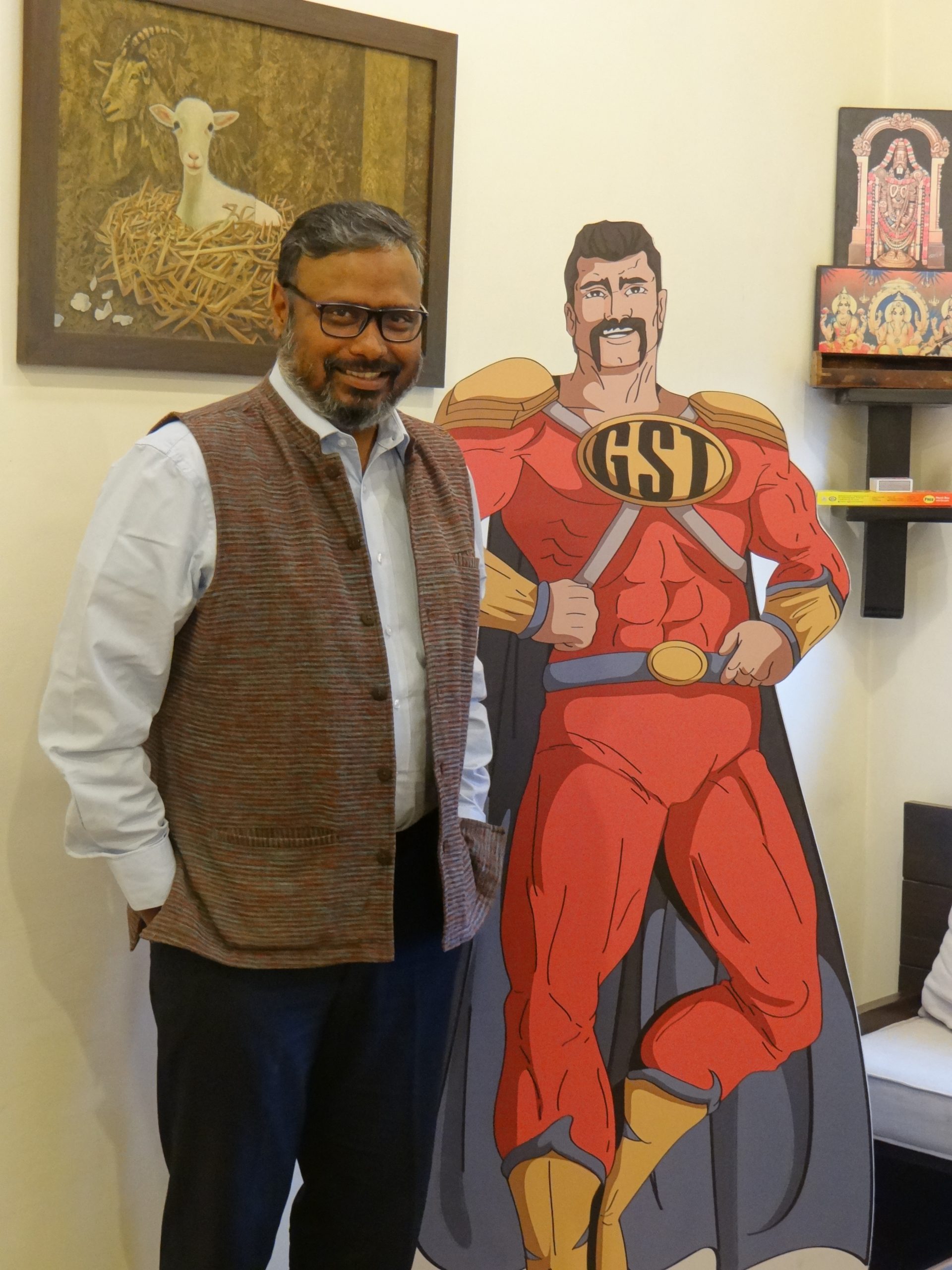
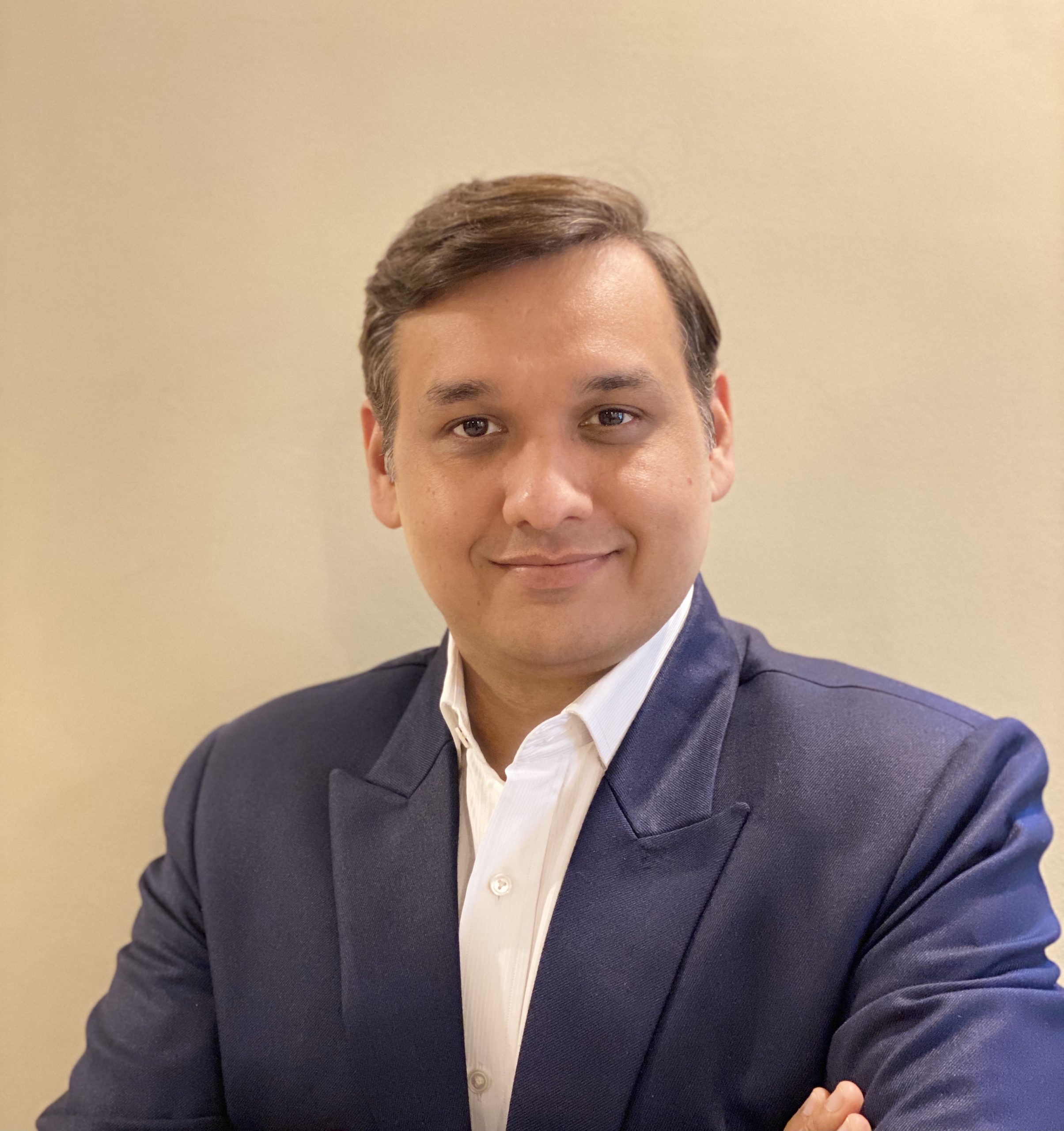
  • ATUL JUVLE, GENERAL COUNSEL AT SCHINDLER INDIA PVT. LTD, ON CHOOSING A CAREER IN LAW, WORKING AS A GENERAL COUNSEL AND HIS ADVICE TO LAW STUDENTS & LAWYERS

    ATUL JUVLE, GENERAL COUNSEL AT SCHINDLER INDIA PVT. LTD, ON CHOOSING A CAREER IN LAW, WORKING AS A GENERAL COUNSEL AND HIS ADVICE TO LAW STUDENTS & LAWYERS

    This interview has been published by Maaz Akhtar Hashmi and The SuperLawyer Team.


    You completed your master’s in finance from the University of Mumbai and went on to pursue an LLB from the same institution. What prompted you to choose law as a career?

    It was a result of push and pull – my inherent abilities and passion to work on complex issues prompted me towards the legal sector. Legal matters carry different facts/backgrounds, which makes it challenging to find the solutions we wish. During the 80s, the economy was static and not dynamic as today, so the comparatively opportunities were less in other sectors.  IPO boom in the decade of 1990 and my basic qualifications Law with CS, worked well for me to taste entry-level success quickly.   I can never forget those days when I was used to getting at least 2/3 interview calls in a month.

    While pursuing your M. Com and LLB from Mumbai University, you were employed as an Executive with a premier public sector bank, the Bank of India. How did you balance work and academics?

    If you wish, you can find time and a way to balance anything.  My willingness to work for extended hours, coupled with my attitude to never deny any kind of professional work, gave me enough elbow to keep going on both fronts. I kept working the extra mile regularly with honouring commitments that genuinely kept me in the good books of my superiors and also the customers of the Bank of India. I take the liberty to thank all my bosses and colleagues at the Bank of India, who encouraged and supported me in that growth struggle.

    It is known to very few people that you have fought tough health battles growing up, can you share with our readers how you overcame these personal challenges?

    It was a bad phase of three years of my early life. It started when I was in the seventh standard.  I was a victim of ill-medical treatment. Everyone, including my father, lost hope of my recovery.

    However, with the strong moral support of my mother and late Dr. Phadke, I could survive and bounce back. My grades during those periods were below good, though I ensured passing every year. This recovery made me internally strong and never-loosing-hope personally.

    You studied at the Institute of Company Secretaries of India (ICSI) post-college and became a Company Secretary. Could you tell us about your experience and why you chose to become a CS?

    Everyone dreams of reaching the TOP. CS is one of those toughest but shortest routes, which allows you to attend Board Meetings with Directors. Though I was a qualified banker, the lesser opportunities forced me to think out of the box.  All this led to my joining and completing my CS Degree. Though I completed CS, I had to work initially on financial work more than CS.  The habit of long working hours, with a helping attitude, enabled me to finetune and convert my fortunes as General Counsel & Compliance professional. I must agree that the CS degree helped me catch my missing bus of destination to Top, which I missed during my twenties.

    You started working with one of the biggest conglomerates of India (TATA) International Limited as a Divisional Manager in their legal team. How did your training in law and finance help you during your stay at the company?

    Working with TATA introduced me to pan-India legal working and also globally accepted ethics standards. My professional experience expanded geographically to cover pan India and south Asia. I thoroughly learned universally accepted governance and ethics during that period.
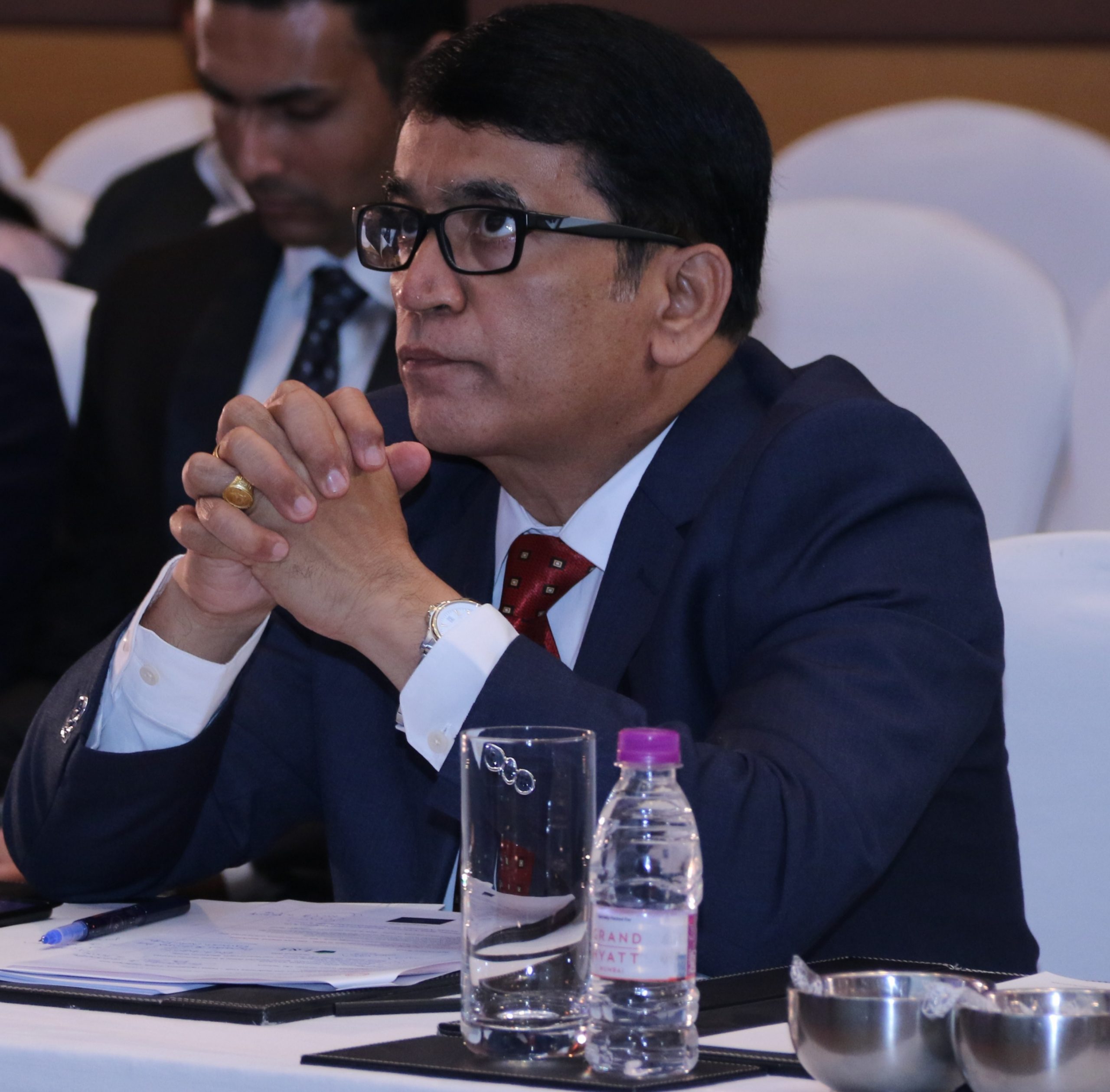
    Atul Juvle: There is nothing like NO-GO, it’s always KNOW & GO.

    You successfully completed two joint venture – what was your learning experience with the same?

    While leading the M&A function, I was able to optimize my commercial and financial knowledge. I could improve my people handling / negotiation skills. Active responsibility and involvement in both the joint ventures from concept to closure enabled me to acquire people management and negotiations skills, besides honing legal aspects in M&A.

    You went on to work at a Private Life Insurance company, where you were the Vice President for Legal and Compliance. Could you tell our readers the charter of legal duties associated with an insurance company?

    Insurance and banking companies are highly regulated companies. I had an exciting experience of interpreting and adjusting the compliance system with the changes. Just to explain to you the compliance dynamism, during the year 2010-11, there were more than 60 circulars, which effected changes in compliance provisions related to Insurance companies. I was able to manage the responsibilities only with the help & support of a capable and work-hungry team.

    You have also worked as Legal Head for Agro-base company. How was that decision to switch from insurance to an agribusiness company rewarding on a personal as well as the professional front?

    On the professional front, I moved on to another highly regulated industry under food safety-FSSAI regulations and metrology provisions.  But the major difference between the two regulations was the penalties for violations, majorly imprisonment and financial penalties. So, compliance becomes more serious compared to insurance. I learned to implement system-based compliance for a majorly unorganised sector.

    The experience was rewarding on a professional front, as was able to change the perception of the legal department and build a dynamic legal team.

    You moved to Schindler India Pvt Ltd., serving as the General Counsel for India and South Asia. Could you explain what kind of work a General Counsel entail? Can you walk our readers through a typical workday?

    Overall compliance of all the applicable laws to business, factory, CRD & overseas distributors.  Legal- advisory, litigations- filing/defending. Code of Conduct- training, audits, investigation. Company secretarial compliances.

    A typical workday begins with refreshing with legal updates for the first half an hour and then moving on with the tasks identified for the day.  Normally the number of identified tasks doesn’t go beyond three. It doesn’t mean that every day, I will always have three tasks.

    Sometimes it can be one also. But such buffer time is used to work on long-term projects and review three-year horizons to keep the legal department future-ready. The other part of a typical day is catching up with the scheduled digital meetings on open tasks or business operations requests. Before the end of the day, the stock is taken on pending activities, new tasks and the calendar for the week’s balance is appropriately amended.

    You have been enlisted as Top General Counsel (GC) in the Forbes Legal Power List of 2020 and ranked in the Top 100 GCs-2020 list published by Business World Legal. What value do these titles hold on the personal and professional front? Are these a parameter of success or a checkpoint?

    Recognition is fuel to success, but before that, it also acts as a checkpoint. When one goes through the questions for nomination, he/she understands – are we performing with Industry standards or not. So, the process acts as a checkpoint as well as an eye-opener. I started filling and dreaming of recognition for the last decade, but the first success I got after failing for 5 years. During the intermittent time, I kept on introspecting, improving, and raising the bar of my professional achievements before making myself self-deserving for recognition. This process automatically tremendously improved my performance in my company internal responsibilities. Benchmarking with the industry always gives a bigger idea of improvements. These titles create legacy value on the personal as well as professional front.
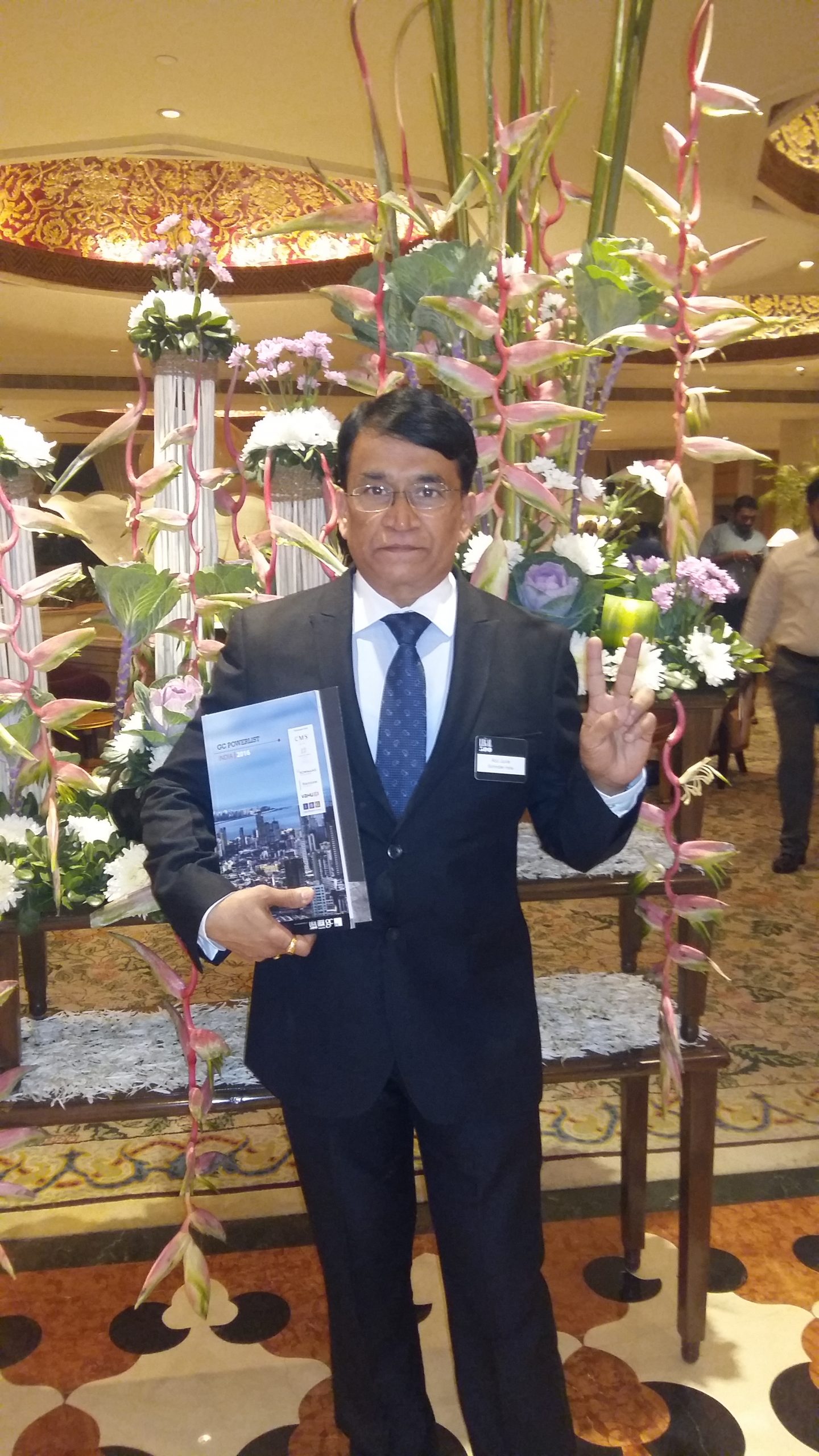
    Your team has been named as one of the Top 100 performing teams by Legal-500 UK. How do you endorse the idea of creating a strong culture of teamwork?

    Promotion is possible in two ways- one way is you perform, and the other way is your team performs. When both the ways work together seamlessly, one can achieve spectacular performance. It’s an amazing journey of the last seven years with Schindler India, building a strong, dynamic team, where each player has its own specialities, but he/she is an all-round performer. Transparency, trust and a win-win attitude are three important requirements to build a team. Transparency includes personal discussions, understanding each other’s expectations, receiving and giving feedback, creating synergies and, most important, keeping commitments. All this leads to the creation of the trust. Win-Win attitude building is slightly difficult, as each one competes with growing, but creating a synergy of individual aspirations makes it easier.

    What are your views on the prospects of the legal industry in the coming decade? Will the face of the legal sector undergo a drastic change, keeping in view the challenges entailed by the pandemic?

    Let me start by thanking the pandemic for pushing the legal industry into digital mode. The changes planned over 5-8 years were brought to the desk in April-May 2020.   

    Prospects for the legal & compliance industry has tremendous potential for the next two decades, as India is poised to grow to 3rd or 2nd level in world GDP countries. This also means the country’s journey towards reaching the destination of developed countries. Legal is required to start, close and also for running business smoothly. All this sounds very well for the legal & compliance industry.

    The legal industry’s future will gradually see 60/70 % of activities done online through machine learning or artificial intelligence. The compliance system has already moved online, and now it’s a turn of legal. With the courts becoming comfortable working on the digital platform, the day is not far when the majority (if not all) litigation activities, including all types of ADRs, will move to the digital platform. Eventually, majority litigation is expected to move to objective arguments & resolution. Efficiency and efficacy of working will improve multifold. The speed and accuracy of artificial intelligence are amazing. Depending on cost-benefit analysis, I feel there may be two classes- big set-ups will have their systems in-house, and small & medium set-ups may use external service providers.  Large legal departments will need to have one tech-savvy counsel.

    Lastly, how do you take time out for your hobbies and family with multiple responsibilities under your belt? What would be your advice for young law students and lawyers?

    I am a strong believer & follower of Stephen Covey- 7 Habits of Highly Successful People. I always plan my professional schedule considering 5 days a week, with 3 major tasks per day, which entitles me a bonus of 2 additional days every week. These two days take care of my overrun of the project in the first five days, if any and hobbies, work-life balance, and becoming ready with full energy for next week. My hobbies include spending time with family, watching movies every week, which keeps me updated with the social environment and also more motivated in life sometimes, new learnings – the habit of at least one certification a year, karaoke singing, Zumba, walking etc.

    To young lawyers & colleagues, I can only share what worked well for me. Planning 5 days a week with 3 major tasks per day helped me a lot in clocking success on professional as well as personal fronts. Planning and staying committed to the plan is rule no.1. The most important aspect of life we always keep in the backseat is taking care of health. I never took sick leave after my childhood three years long health-episode. That doesn’t mean I don’t fall sick, but I take of it at first level and don’t delay or neglect it. Health is person-specific, so one must monitor himself/herself and take care proactively before the doctor prescribes it. If one is not fit, the value of all other qualities normally fades. All successful professionals are student life long, so one should keep learning, relearning, and upskilling to remain relevant in current times and keep oneself future-ready. I learned from my female teammate, who said one should celebrate a birthday only if he/she has learned or achieved something new. I follow this regularly.
    Get in touch with:

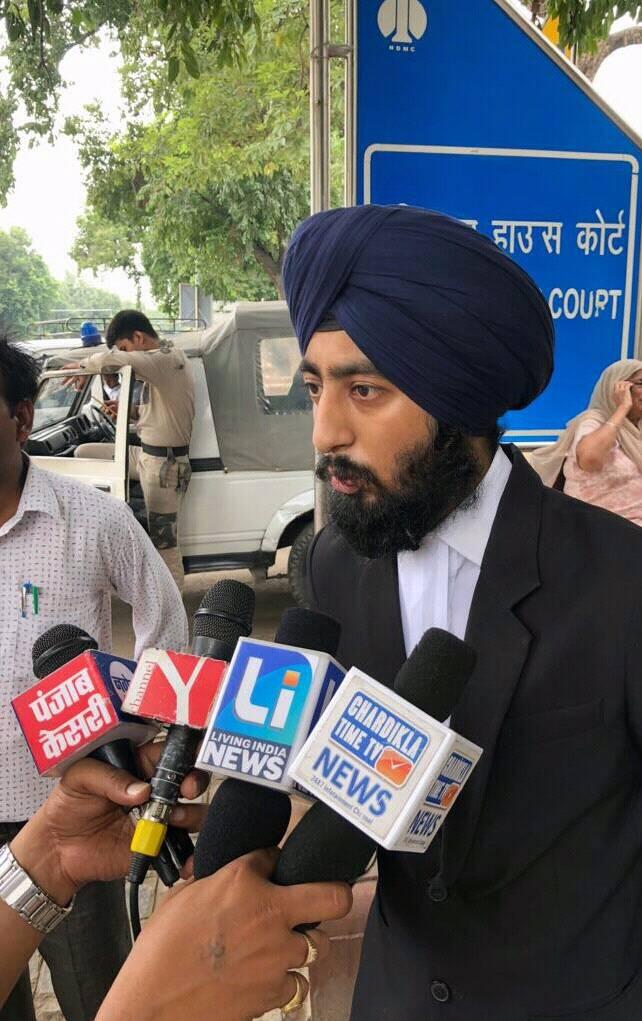
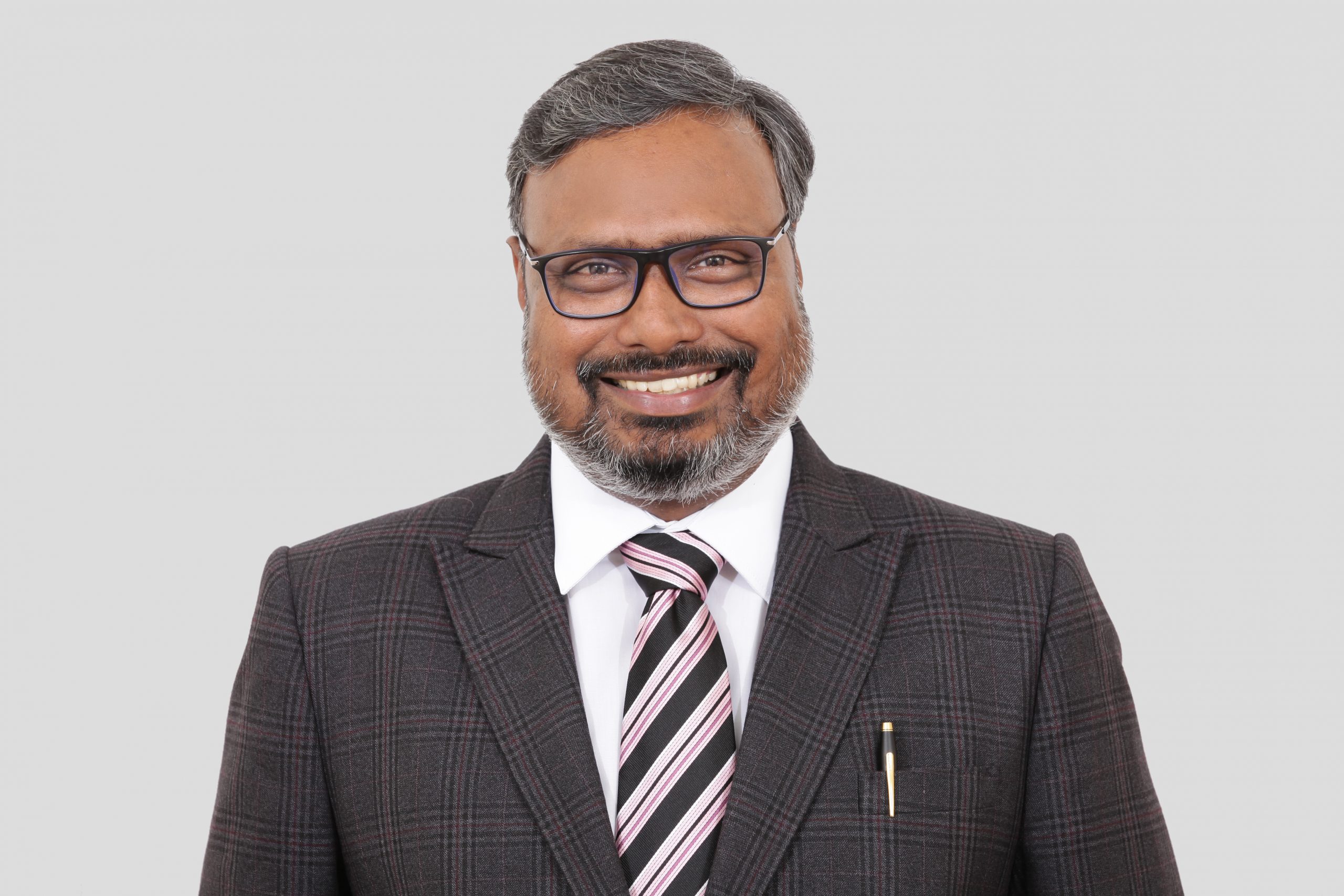
  • UTSAV TRIVEDI, PARTNER AT TAS LAW, ON CHOOSING A CAREER IN LAW, SETTING UP HIS LAW FIRM AND OVER A DECADE OF EXPERIENCE IN THE LEGAL SECTOR

    UTSAV TRIVEDI, PARTNER AT TAS LAW, ON CHOOSING A CAREER IN LAW, SETTING UP HIS LAW FIRM AND OVER A DECADE OF EXPERIENCE IN THE LEGAL SECTOR

    This interview has been published by Maaz Akhtar Hashmi and The SuperLawyer Team.


    With various achievements and accolades credited to your name, you have been involved in various landmark judgments ranging from the Balco’s Case to recent matters relating to the RBI moratorium case. Apart from what makes headlines, how would you like our readers to know you?

    Balco’s case happened when I was working at Parekh and Co. That case holds a special place in my career because it was for this matter that, for the first time, I spent an entire night in the office. I was only six months into the profession, and I was the youngest member of the team working on the matter. I vividly remember it was 9th January 2012, and we had a huge list of judgments/literature that we required for the hearing, which was to begin the next morning before a constitution bench of the Supreme Court. I volunteered to stay back and ensure all the material was in the court bags. It may have been a small task, but it was a very important one. I was glad to be a part of that.

    After starting my own firm, the RBI Moratorium case was the first big (headline-making) case. There were a battery of senior advocates appearing in the matter, and I was not even sure if I would be called upon to argue. Despite the same, I made sure I burned the midnight oil and was fully prepared. Luckily, my petition was the first connected matter, and the bench decided to call up lawyers as per the item numbers. Though there was an option to adopt the submissions made by senior advocates, I decided to put in my two cents, which I was able to because I was prepared.

    The two matters you mentioned, as well as all the others that I’ve had the privilege to be a part of, irrespective of them making the headlines or not, have one thing in common – hard work! It doesn’t matter what role one has. It’s very easy for me to say, ten years later, that I was the most important person on the team. But that doesn’t matter. What matters today is that I know I can make bags in the matter, argue it and do everything else in between. Honestly, one doesn’t need anything more!

    You enrolled yourself for a BA.LLB course at Christ University, Bangalore, in 2006 when the legal profession was still blooming. Looking back, do you think it was serendipity that led you to choose law? What other options would you have considered for your career, if not law?

    Well, I had taken up science in my plus two ISC. So you can say it was serendipity that led me to take up law!

    On a serious note, if not law, then I don’t know. I didn’t fill up forms for any of the engineering exams. So yes, serendipity or sheer lack of ideas – whichever sounds better!

    You bagged a PPO at Parekh & Co. and started working at the firm immediately after law school. How has that experience shaped you and contributed to your interest in the field of litigation?

    Not to take anything away from my colleagues at the bar who practise on the corporate side, but I guess corporate is more about ‘avoiding the problem’ than solving it. I saw this difference in my internships themselves.

    Also, I feel I was lucky to get to work on the matters that I did. I worked at Parekh & Co. for four years, and I don’t remember a single day that I did not want to go to the office. Whenever work got tough, my inclination and zeal towards it increased, and I spent more and more time working. I suppose that is the real charm of litigation – the ‘problem solving’!

    After spending four years at Parekh & Co., you moved on to Karanjawala & Co. as a Senior Associate, handling Civil, Commercial, Real Estate practice as well as litigation advisory. Could you tell our readers how this experience helps you cater to a larger and more diverse clientele in the future?

    After spending four years at Parekh, I was looking for new opportunities. This was when I came across a vacancy at Karanjawala & Co. in Ms. Ruby Singh Ahuja’s team. I had heard a lot of good things about her, like her dedication towards work, her work ethic and the way she conducted herself. That was the reason I decided to give up a well-placed position that I had reached in my first office.

    At Karanjawala, I did matters ranging from telecom to tax, real-estate to insolvency and many more. Apart from being involved in big-ticket matters, I was also given the opportunity to argue final hearing matters before the Supreme Court, NCLT, NCLAT etc.

    Ruby Ma’am always told all her team members, work on the matter like I am not there and come to me when you are stuck. This gave me confidence in abundance. We were taught not only how to deal with existing clients but also how to build new ones.

    At Karanjawala & Co., you had advised on dispute resolution relating to MNCs dealing in sectors such as coal, oil & gas, steel, etc. In pursuance of this, could you explain to our readers the importance of arbitration & conflict resolution keeping in view the problem-solving approach it fosters?

    Unfortunately, for a better part of my career till now, we were stuck in a regime under the Arbitration Act where arbitrations would go on for years and then the Court proceedings under S. 34, 37 and SLP’s before the Supreme Court would also take considerable time. What I felt at the time was that Arbitration only adds more leg to litigation, and considering the semi-formal nature of the proceedings, it gets delayed to another level.

    However, post-2018 amendments, a time frame has been added, and automatic stay on the admission of S. 34 petition has been done away with. What this does is makes the parties a little more serious. And the semi-formal nature of the proceedings has now become a boon. I’ve done some Arbitrations where the parties when they finally come before the Arbitrators, are not as adversarial as they would be in a courtroom. On the very first day, they realize and are willing to explore the idea of settlement – which goes through more often than not and leads to a faster resolution of conflict.

    You parted ways with Karanjawala & Co. to set up your law firm TAS Law (Advocates & Solicitors), despite your implausible expertise in Energy/Oil and Gas, Real Estate, Trade & Contracts, Insolvency, and Company Laws. What were some of the challenges that you faced while setting up your firm?

    Honestly, my partner (Abhinay) and I discussed setting up our own firm in 2018. But we also knew that we should take one year to complete our ongoing professional commitments and give our respective bosses enough notice period. So, when we finally started out in August 2019, we were fully prepared. From office space to email domain and visiting cards etc. – everything was completely planned and executed.

    Our estimate was that within 8-12 months, TAS Law would become financially self-sufficient, and we wouldn’t need to dip into our savings. However, what we, just like the entire world, did not factor in, was the pandemic. Covid hit us, 8 months into our existence.

    However, after a couple of months of complete lockdown, we were back on our feet. While the loss of life and other misery Covid brought upon us as a generation, it was also a social balancer. It was an opportunity for all the first-generation lawyers to overcome what I call the ‘generational bias’.

    Every first-generation lawyer I knew of and was willing to work hard during the pandemic, while the more privileged ones who took time off, has come out of this pandemic successfully and better placed. Hopefully, Covid is now behind us, and we get back to normalcy.

    Can you tell us something about TAS Law and your team? How do you manage to keep your team morale high as well as meet client expectations during high stake matters?

    In approximately two years of its existence, TAS LAW now has 8 lawyers (including the two partners) and has a presence before all major forums in Delhi/NCR. We also have some work in other states. Whatever little TAS Law has achieved is down to each and every individual who has worked here.

    It is impossible to keep everyone’s morale high at all times. This is something every employer needs to get to terms with. Even when you, as an employer, are doing everything right, there will be times when, for whatever xyz reasons, someone or the other will not be up for it. But that is fine. The idea is to give the person his/her space and let them recover. The more time and space you give, the faster the recovery would be. The trick is in knowing who is up for what and when. That’s how one can meet client expectations.

    Besides advising clients over various legal matters, TAS LAW introduced a ‘Pro-Bono Wing’, with an objective to provide requisite legal services to the socially and economically weaker sections. Can you share with our readers, how the said wing has created the desired impact?

    Since the very beginning of my career, I have continuously been involved in extending help, support and advice to the socially and economically weaker sections of our society in their legal struggles. Considering what the entire world is going through due to the pandemic and how the weaker section of the society is suffering the most, this was the ideal time to formalize our pro bono practice.

    After setting up the pro bono wing in December 2020 and with the support of our colleagues at the bar, who were not able to take up the work due to time constraints or other professional limitations, we have helped various people who have reached out to us. We have done a fair bit of pro-bono matters before the Supreme Court, Delhi High Court and some trial courts in Delhi/NCR.

    One of your interviews quoted you as “Legal Profession is a marathon and not a sprint”, according to you, how should one prepare themselves to venture into the legal profession?

    I will repeat exactly what I had said there – Don’t be disheartened by the present situation as there is no retirement age for a lawyer. Remember, this profession is a marathon and not a sprint, and therefore, consistent efforts with or without the pandemic will make you land at your destination sooner or later.

    Would you like to accord our readers with any further suggestions?

    You may not be the smartest person in the room but make sure you are the hardest working. In due course, you will end up being the smartest!


    Get in touch with:

  • ANSHUMAN MOZUMDAR, PARTNER AT L&L PARTNERS (FORMERLY LUTHRA & LUTHRA LAW OFFICES), SHARES HIS EXPERIENCE OF CHOOSING LAW AND GETTING THROUGH LAW SCHOOL, BEING AN INTROVERT IN A PROFESSION THAT IS OFTEN PERCEIVED TO BE FOR EXTROVERTS AND THE IMPORTANCE OF EMPATHY AND PURSUING YOUR INTERESTS

    ANSHUMAN MOZUMDAR, PARTNER AT L&L PARTNERS (FORMERLY LUTHRA & LUTHRA LAW OFFICES), SHARES HIS EXPERIENCE OF CHOOSING LAW AND GETTING THROUGH LAW SCHOOL, BEING AN INTROVERT IN A PROFESSION THAT IS OFTEN PERCEIVED TO BE FOR EXTROVERTS AND THE IMPORTANCE OF EMPATHY AND PURSUING YOUR INTERESTS

    This interview has been published by Maaz Akhtar Hashmi and The SuperLawyer Team. The Interview was taken by Priyanka Cholera.


    How would you define the term SuperLawyer? What does the word represent to you?

    I wasn’t initially comfortable with the fact that I am being interviewed as a “SuperLawyer”. I don’t think that I have achieved something that is “SuperLawyer” worthy. Most of us will have work lives spanning for 35-40 years. Even after 10 years, I feel that I have barely scratched the surface and have a long way to go. I treat my profession as a component of my life (no offence to those who think of themselves as a lawyer 24×7, 365 days a year). Possibly, legal luminaries who have created an impact on the society or fellow lawyers are more suited to such titles.

    Having said that, I do believe that there is a journey that is unique to every individual. I have mine too. My journey as a law student and a professional has been fulfilling and has had its own share of ups and downs. I feel that by narrating my journey and discussing my struggles at a personal and professional level, I may be of help to someone who is experiencing something similar or is looking for guidance or simply wants an assurance that they are on the right path.

    Do you feel serendipity played a factor in your decision to pursue a career in law? On the other hand, did engineering not seem like a better fit for you as a science student?

    I do feel that serendipity played a role in my decision to pursue law. While I must say that my decision worked out well, I didn’t really know what I was aiming to pursue in my professional life at the time of getting into college.

    I don’t have a spectacular backstory on how I decided to pursue law. It wasn’t the case that I felt inspired after reading some book, or meeting a luminary in the field of law, or experiencing some event or tragedy. I finished school from St. Xavier’s Collegiate School, Kolkata, in 2006. In those days, the general trend amongst middle-class family kids with a science background was to pursue engineering or medical. The 5-year integrated LLB wasn’t as prevalent a choice amongst students as it is today. Thankfully, students these days are a lot more aware of other professions (including law) due to the outreach of the internet and the work done by organisations such as Lawsikho.

    My initial goal was to pursue engineering and get into a top IIT. Unfortunately, my preparations took a hit when I contracted a severe case of typhoid in the 12th standard. As expected, my scores in the entrance exams weren’t adequate to secure a seat in a top engineering college. However, I didn’t want to drop a year to prepare for the next year’s entrance exams. My backup plan was to get into a reputed college and pursue an alternative stream that had good job prospects. Unfortunately (like most middle-class family kids), my decisions were driven more with the end objective of securing a decently paying job rather than choosing something which really appealed to me.

    I had heard of the 5-year integrated LLB since NLS and NALSAR were growing in popularity and NUJS was coming up the ranks. The prospect of studying at home (at NUJS) also played a part in me deciding to appear for its entrance exam. Each law university had its own entrance exam in those days. I briefly took entrance exam coaching from a private tutor and went through some of the guidebooks. While I didn’t have much idea about NLU Jodhpur, I decided to appear for its entrance exam to practice for the NLS exam scheduled to be held a couple of days after the NLU Jodhpur exam.

    I got through NLU Jodhpur and only managed to get on the waitlist of a few other NLUs. Though I wasn’t initially thrilled with the outcome, speaking to some of my teachers and school seniors allayed my concerns. NLU Jodhpur was offering an integrated B. Sc. LL.B. degree, which appealed to my science background, as well. My relatives were surprised when I told them that I was going to Rajasthan to study law. My family had to fend questions such as “why law?” and “why Jodhpur?”. While these comments created some initial doubts in my mind, I, fortunately, chose to ignore them.

    How was your law school experience? Being an introvert, did you find it challenging to get through law school? How did you overcome the initial mental barriers linked with the preconception that “introverts aren’t best suited for a legal career”?

    NLU Jodhpur’s first batch had just graduated the year before. In those days, the NLU campus wasn’t the scenic lush green campus with flower beds and so many buildings that you see today. When I stood in front of the college gate for the first time, I remember seeing vast expanses of sand and a few buildings in the middle of it. That sight was quite intimidating for a kid who had never been to a boarding school and had just left the comforts of a highly insulated middle-class environment in a city like Kolkata. My immediate reaction was to look at my father and wonder what I had done and where I had landed.

    My law school journey wasn’t a joyride as it may have been for some others. Some individuals adjust to a new environment a lot faster than others. It won’t be incorrect to say that I took about three out of my five years to fully adjust to a new city and college and “figure things out” (probably the longest amongst my batchmates). I had my own set of struggles with adjusting to a new place and life in a residential university. While I eventually learnt to figure these issues out, I realised that it is a process of self-discovery that everyone has to go through at their own pace – and there are no prizes for figuring things out sooner.  In the process, it is easy to fall prey to frustration and agony if you feel that you are unable to adapt quickly or are unclear on your future goals.

    I am an introvert. I didn’t really know what it really meant to be one until a couple of years earlier when I took a Myers Briggs personality test. It changed the way I perceive myself and helped me understand myself better. Introverts are often passed off as “shy” or “socially awkward” in our society. I used to feel like a fish out of water in college. I could not explain why I didn’t feel the urge to hang out with people more often (even with a familiar bunch of people) or was not very outspoken in my surroundings. Being an introvert does make the process of adjusting to your surroundings difficult. But I promise you – things get better with time.

    Good public speaking skills is an added advantage to every lawyer. However, it doesn’t mean that students who have initial troubles in developing these qualities cannot succeed in the legal profession. This is a misconception largely owed to how the legal profession is portrayed in movies and pop culture. I have come a long way since my initial years of college in terms of the manner in which I conduct myself. While I had my share of low points during my college and professional life, I feel that preparing well and visualizing my professional conversations made me a more confident individual. Finding my interests outside studies/work, pursuing co-curricular activities and learning new things unrelated to work also helped me immensely. At a more personal level, learning to do things without expectations and practising philanthropy (by conduct and not just economically) helped me find inner peace and gain more positivity. I also had some good mentors and teachers who helped me throughout my personal and professional journey.

    In retrospect, how would you describe your initial years at Luthra? Being a young lawyer, how did you balance work and personal commitments?

    I did several internships while in college and wrote publications in order to make my CV more compelling. For me, everything I did was about trying to get a decent job at the end of law school and find financial stability. Unknowingly, I became a part of the rat race without actually learning how to apply the knowledge in practice. It was only when I joined a law firm that I realized that this was not even the tip of the iceberg. You have to unlearn and relearn everything that you have learnt in law school, from a fresh perspective, once you join the profession. Of course, that does not take away the basic fundamentals of laws that you learn in law school – which are extremely important for any professional.

    I joined a private equity and M&A team at Luthra. When I joined, we were a team of four. Within 6 to 7 months, two colleagues (including a senior) left the firm. All of a sudden, I was reporting to the partner directly and handling client-facing work. The next year, our team recruited two more junior colleagues. I was given the responsibility of mentoring them even though I was only a first-year associate.

    The advantage of this set-up was that I wasn’t a mere cog in the wheel and was fully aware of what was happening on a transaction. I was also shouldering administrative duties and playing a managerial role while working with my junior colleagues. At times, junior associates who are a part of larger teams may lose sight of the main objective of an assignment because they aren’t being tasked with the execution of the assignment from the beginning to the end. Hence, even though I was part of a small team, I was getting direct exposure to big transactions. There was one instance where I was given a document to negotiate when I didn’t have any prior experience with negotiation. My partner encouraged me to list out the discussion points and practice what I was going to say before him prior to the negotiation. This experience was definitely a turning point in my career and made me a more confident individual. Despite these positives, there were some drawbacks and sacrifices of working in such a set-up, such as working long hours, working on weekends, losing out on social life or not being able to pursue interests outside work.

    We are looking a decade back, from being interviewed for Luthra during the campus placements and to the firm as a partner. How has this journey been for you?

    My professional journey has been fulfilling and has changed me for the better at a personal level. I have learnt to identify my strengths and translate the same into my work product. My analytical skills have greatly increased. I am also able to contribute to commercial aspects of a transaction, a quality that my clients appreciate. As I mentioned earlier, learning to swim at the deep end of the pool really helped me get early first-hand experience of the skill sets required in the field. The downsides were that I didn’t have much of a life outside the office in my growth years – hence my social life suffered. Whenever someone asks me about how it is to work in a law firm, I tell them that while the job is rewarding in various ways (including financially), it no doubt has its cons and is a tough one to stick to. For this reason, the rate of attrition in law firms is also quite high, and burnouts are quite common.

    While compensation is important, I don’t believe that people stick around in an organisation only for money or out of a sense of loyalty. They have to feel a sense of fulfilment. They have to feel valued and comfortable in the work environment. A firm or a brand name may go to the extent of assuring you of the kind of work you will get or the compensation levels. But it is never the assurance of a great work environment or culture – which is driven largely by the people in the team that you are a part of. It is therefore important for a good leader to possess empathy and good interpersonal skills.

    I stuck around at Luthra because of a positive team and office environment. I was given the freedom to grow as a professional. I made some of my closest friends in the firm. My superiors and co-workers have always been approachable enough to discuss work and personal life. I felt that I was levelling up and learning something new.  It will be incorrect to say that I didn’t have my fair share of disappointments in my professional journey. Every professional in a law firm is bound to face these moments of doubt when they start questioning whether they want to continue in the firm or not. However, overall, I am grateful for the journey and what I have managed to achieve.

    You mentioned that you had to compromise on social life early on in your professional life. Do you believe that socializing today is more about networking than it is about interacting with others?

    I don’t think that professional networking can be equated with socializing. I treat networking as part of my job, which may create opportunities for me or my firm in the future. I never paid attention to networking until I started working. Fortunately, people today are a lot more aware of the concept of networking and why it’s essential. In a week, I try to set aside a few hours to make new connections, reconnect with old ones, or read something that a connection has shared on Linkedin. Networking definitely helps every professional, and one should start as early as one can, but I feel that it’s not the most crucial requirement for a law student. Networking is a continuous process. Even if one is not good at networking initially or has started late, one can always catch up.

    In your career, you have played a key role in various transactions for brands Burger King, Starbucks Corporation and many more. Is it a milestone to represent big names that also hold a personal value as a consumer for millions? How do you keep the team spirits elevated and make a positive environment to work on high-stakes deals?

    No offence to those who feel otherwise, but I feel we corporate lawyers don’t get as many opportunities to make a difference in society as compared to litigation lawyers. While M&A, financing and IPOs form the backbone of a country’s economic activities, I personally feel that a corporate lawyer will not get the same level of satisfaction that a litigation lawyer will get after having successfully filed/argued a PIL or having secured justice for a victim.

    But while working on transactions especially involving consumer-facing parties, one does feel special. When I look at a Burger King restaurant or a Starbucks cafe today, it does bring a smile to my face. It is a representation of a tangible result of the work that I did on the transaction and gives more meaning and a sense of purpose to what I do.

    As regards your second question, I try to inculcate and build a positive work culture as the leader of my team. I detest toxic work environments and gaslighting. Unfortunately, these are quite common in a lot of workplaces and can be detrimental to a person’s self-esteem and career. People often underestimate the impact that their words can have on somebody. While I understand the need for a person to be strict with their co-workers, bad behaviour cannot be tolerated. Unfortunately, I have heard of or come across individuals in the profession who are impatient, yell at their juniors or send obnoxious emails to them when they make mistakes. I understand that it is not easy to always maintain one’s calm amidst work pressure, but one can’t treat their team in such a way. You have no right to yell at your colleagues, especially when you haven’t made an effort to educate them and explain their shortcomings. That’s your job as a senior or as a leader of the team. A lawyer’s ability to empathize with others is crucial for their growth. Everyone is built differently, has different strengths and weaknesses, and is motivated in different ways – and a team leader needs to identify that.

    Congratulations on being in the Forbes 100 Power List of 2020 and securing M&A Deal of the year (Premium) by Asian Legal Business Awards, 2020 (Thomson Reuters). What value do these titles hold on the personal and professional front? Are these a parameter of success or a checkpoint?

    I feel that awards do add some value to one’s resume and does create a good impression on a client, especially when they haven’t previously worked with you. I won’t downplay the value of such awards because it does feel good to get recognized. However, they are definitely not a measure of one’s success or quality. I have been on the side of things far too often where I have felt that I haven’t received the recognition that I deserved. So if you haven’t received an award, it doesn’t mean you are not deserving. At the same time, I will never take any such recognition for granted. At the end of the day, what matters is when the client calls and tells me that I have done a great job.

    What would you tell your younger self if you could go back in time and advise yourself about the journey ahead?

    I would be less harsh and more forgiving on myself. I would take better care of my health and well-being. I would stop putting added pressure on myself to achieve things by a certain time frame. The society sets expectations that we have to achieve certain things by a certain age. We fail to realise that there are no prizes for achieving things earlier in time. I would encourage myself to read more, learn a new language, take more interest in sports and things other than studies as there is a lot more to life than studies and work, and such pursuits help develop positivity.

    What are a few qualities you look for in a prospect when making recruiting decisions?

    Due to the kind of competition, we have in our country, the interview or selection procedure must be completed in a short period, and it may not always be an accurate representation of a candidate’s quality. Many people don’t realize that the competition is tougher in the field of law because, unlike medical or engineering, where there are more jobs and opportunities in a year, the intake in law firms throughout the country is comparatively quite low.

    I personally feel that the interview process is not the most accurate judge of a candidate though we try our best to be as objective as possible in the evaluation. For all that you know, the candidate may be having a difficult day or is generally nervous because of the pressure of trying to create an impression on the interviewer within a short span of time. Unfortunately, we have to assess what is in front of us. Personally, I would prefer to evaluate a candidate during their internship and make recruitment calls on the basis of the same. While I would definitely look into a candidate’s knowledge of basic fundamentals of law, I would also look at their ability to apply legal principles to fact situations or think through a particular problem and provide a solution using logical reasoning, even if they are unaware of the relevant law. The ability to articulate one’s thoughts efficiently also counts. During internships, I generally lookout for candidates who are able to grasp the research problem well, ask the right questions, and provide a concise and well-researched work product. Lastly, I also look for candidates who are hungry to learn and take the initiative or think out of the box to find a solution to a problem.

    What do you hope our readers will take away from your experience?

    A couple of learnings and self-realisations that have helped me in my journey:

    • Not everyone is built the same. You don’t have to be harsh on yourself or question why you behave a certain way. I suggest that everyone takes out a few minutes and attempt to take the Myers -Briggs personality test (online). The feeling of being more connected with yourself is beautiful and empowering.
    • Don’t pile up expectations on yourself or beat yourself up for not achieving them. Be easy on yourself and learn to forgive yourself for things. Everyone has their limits and weaknesses, and even I do. 
    • We don’t realize the impact our words can have on other people. Be kind to others.
    • Share and give more. To the extent feasible, talk about your failures so that others who are battling similar issues can have a better life. Be grateful to your mentors by mentoring someone else. And do so without any expectation. 
    • Never fear asking for help. At times when you feel that no one is around to help you, you will receive help from unexpected quarters. I am a big believer in the quote from Harry Potter – “Help shall be given (at Hogwarts) to those who deserve it“. I promise you that the good you do and the knowledge you impart will come back to help you when you are in need.
    • On a more professional note, set your own goals and standards (and set them high) and try to meet them instead of trying to imagine what standards your senior expects of you and trying to chase such standards. This will lend a sense of positivity to your approach. 
    • Self-evaluate yourself every six months to see if you are learning anything new or doing the same task faster or better than you did before.
    • Develop your interests, whether they are related to or unrelated to your professional life. Engage in creative pursuits outside work whenever you can.

    Get in touch with:

  • SONAL ALAGH, PARTNER AT ALAGH & KAPOOR LAW OFFICES, ON BEING A FIRST-GENERATION LAWYER, HER LITIGATION EXPERIENCE AND ESTABLISHING HER LAW FIRM

    SONAL ALAGH, PARTNER AT ALAGH & KAPOOR LAW OFFICES, ON BEING A FIRST-GENERATION LAWYER, HER LITIGATION EXPERIENCE AND ESTABLISHING HER LAW FIRM

    This interview has been published by Maaz Akhtar Hashmi and The SuperLawyer Team.


    When did it dawn unto you that Law is the correct pathway? Could you walk us through your journey in the field of Law?

    During my high school days, I was very passionate about my extempore and debate competitions. At that point, I decided to be a lawyer who argues in court (I was introduced to the terms litigation only during law school days). However, since my school days, “stage fright” was unknown to me. Therefore, it was not much of an effort game for me to put across my point of view in an easy, convincing, and assertive manner.

    Consistency, persistence, and the go-getter attitude has been a game-changer for me, as I fixed my dream to have my own law firm during my law school days itself. One important lesson that I have been learning all along my journey is never to ignore any opportunity (even the smallest) that comes across your way, as you don’t know what lies on the other side of it.

    You graduated with B.A.LL.B. from Vivekananda Institute of Professional Studies and went on to pursue your masters in Insolvency, Securities, and Investment Law from Government Law College, Mumbai, after litigating for a few years. What prompted you to pursue your masters in Insolvency, Securities and Investment Laws?

    Firstly, in my final year of law school, I opted for banking laws as my specialisation, which helped develop my interest in various RBI schemes of debt resolutions. Subsequently, I was fortunate enough that my graduation was the same as the year of commencement of the Insolvency and Bankruptcy Code, 2016. My interest was further developed in this subject while handling the first mandate in December 2016 while working with the dispute resolution team of Desai & Diwanji.

    In the year 2016 itself, I realised that the insolvency laws provide a fair playing field for all the lawyers and the way the Insolvency Code consolidated various legislations was very intriguing for me. Additionally, I thought it was a perfect combination of commercial litigation and debt resolutions, which made me pursue my masters in this field. During my masters, I realised that insolvency laws could not be seen in isolation without the entire cloud of all the commercial laws. In order to excel in commercial litigations, dispute resolution and debt resolution, insolvency laws seen in isolation are a very small part of it.

    You have multiple titles and achievements credited to your name, from working with Desai and Diwanji, Khaitan Legal Associates, being a consultant to the Oyo Group, to starting your law firm Alagh & Kapoor Law Offices. If you were to introduce yourself in a word or two, how would you do it?

    I am definitely a “Go-Getter Apologist”.

    You have also pursued a diploma in GDPR from Henley Business School, United Kingdom. How do you think GDPR helps in guiding and regulating the way companies across the world handle their customer’s personal information and protect individual’s data?

    Though India does not fall within the circuit of the European Union, and thus, even today, GDPR compliance is highly underrated amongst Indian entities. However, keeping in mind the global approach of all the MNCs and even the Indian entities having their offshore offices, all of them have to comply with the GDPR guidelines. Therefore, in today’s time, any entity has to be very sensitive towards protecting their Client’s data as the Client has provided the same under strict confidentiality.

    Learning about GDPR was very important for me from a long-term view of managing and running your own law firm. Because of this learning graph, today, We – Alagh & Kapoor Law Offices handles its Client’s data with the utmost sensitivity. Often, the team at Alagh & Kapoor Law Offices provides training sessions to Corporates, assisting them in being GDPR Compliant by providing training sessions.

    You joined Desai and Diwanji as Associate Lawyer immediately after law school. How has that experience shaped you and contributed to your interest in the field of litigation?

    While I was interning with Desai & Diwanji during the final year of my law school, I was given a preplacement offer by the dispute resolution team of Desai & Diwanji to join them as an Associate. That has been the biggest stepping stone for me as I cannot stress enough how amazing the Dispute Resolution team of Desai & Diwanji is. Starting from teaching me that how a list of dates has to be drafted to giving me opportunities to even appear before the Supreme Court of India at a very young age has shaped me into what I am today. Therefore, I would take this interview as an opportunity to show my gratitude towards the Desai & Diwanji team (Delhi) as I would not have reached where I am today if they would not have shown confidence in me during my early years.

    During the formative years of your legal practice in Indian Law Firms and Courts, proper guidance and the right tools are required to manage each step of the process. How important is it for someone to find a mentor when a lawyer sets foot into litigation?

    It is one of the most important factors in litigation, especially if you are a first-generation lawyer. I cannot emphasise enough on how important it is to have a good mentor who is ready to invest in you. I have been very fortunate indeed and have utmost gratitude towards all my seniors who have invested their time in teaching me the nuances of the law and the important surviving skills required for the field of litigation.

    You have also been involved in multiple non-performing asset (NPA) accounts referred for the insolvency resolution process under the Insolvency Bankruptcy Code (IBC) mandated by the Reserve Bank of India. How has your experience been working under the tenets of the IBC, 2016?

    The first assignment that I started working on, under tenets of the Insolvency and Bankruptcy Code, was in the month of December 2016 (with Desai & Diwanji’s Team), when the law was too new for anyone to have a grasp on it. The journey of reading the code from scratch, interpreting the same, enhancing my knowledge along with the judicial interpretation of the code, being updated with the innumerable amendments, notifications, precedents and being vigilant on all the developments, all of it together has been one unforgettable bliss.

    To gain an in-depth knowledge of the legal demands of companies, you decided to advise corporates and entered a retainership with the OYO Group as a litigation consultant, wherein you had handled dispute resolution & strategic advisory for contentious litigations. How did this experience help you cater to a larger and more diverse clientele in the future?

    Working with law firms gave me an in-depth understanding of the procedural functioning of the courts, the judicial forums of India. It helped me enhance my efficiency in delivering my assignments. However, working as a litigation consultant for a corporate made me privy to the direct demands of corporates and their expectations when they outsource work to a Law Firm. It has also helped me enhance my knowledge about the working of the corporates, including the backhand operations, which further helps me today to better understand my clients’ needs.

    Alagh & Kapoor Law Offices is a full-service law firm representing various clients ranging from beauty & healthcare, hospitality, infrastructure, banking & finance to real estate. What piece of advice would you like to give to people aspiring to establish their firm?

    My one advice would be to be competitive while quoting the fees and provide the utmost efficient services to the best of your capabilities, which would justify the trust that your client has shown in you while giving you the assignment. Please be open to taking any and every kind of mandate that comes your way. Keep in mind to work consistently on enhancing your networking skills. In the end, it is non-negotiable to be updated on current affairs/precedents/legal developments and to keep brushing your drafting skills.

    The pandemic has not only affected the way we work but also the way we manage our clients. What are the top three leadership challenges you have faced while working amid the COVID crisis?

    I might sound a little unrealistic in my approach towards my work, but the pandemic has been another stepping stone for me. With deep cuts in the pockets of the corporate sector, boutique law firms with competitive fee quotes and equally efficient services were need of the hour. During the pandemic, the advice I received from my seniors in the legal fraternity has also played a very important guiding factor for me. Starting my own youtube vlog on insolvency laws (during lockdown) was very challenging as well as knowledge enriching for me.

    All the challenges that I have faced, from building the trusts of corporates (being young and new market players) to adopting the new litigations technologies of virtual hearings, all have been a very knowledge enriching and learning experience for me; and it continues to be. My top three would be:

    1. Networking by virtual meetings;
    2. Making sure that your team does not lose motivation; and
    3. Being consistent in your efforts, focusing on long terms goals.

    How do you take care of your mental health and strive towards a good work-life balance? Do you still get time to pursue your hobbies amid a busy schedule?

    To be honest, the only thing that has made me conscious about my mental health is the outbreak of the pandemic. And to cope up with the same, the only successful habit I could develop is reading a lot of good books (for example the 5 AM club), that motivates you to further develop efficient habits and help you in being more organised. One thing that we will have to ensure on our own is striving a work-life balance and making sure to leave few hours of your day just for yourself. I prefer it to be early morning. The amount of change a 20 mins early morning workout can bring to your day is highly underrated.

    What would your advice be to all the young lawyers and law students who are deeply passionate about making a career in Law?

    Being a smart worker does not mean you can escape being a hard worker. The only prerequisite to excel in the legal profession is to really have a passion for excelling and achieving in it. Choose law only if you are passionate about it. Don’t expect easy and quick money without having your decent share of struggle. Be open to learning from the experience of your seniors in the fraternity. At last but definitely not the least, be updated.

    In the end, I would like to mention that you might come across a lot of people who might demotivate you or may question your career decisions. However, if you are passionate about your work, do not listen to anyone and follow your heart.


    Get in touch with:

  • ABHISHEK SHARMA, MANAGING PARTNER AT PULASTYA LEGAL, ON ESTABLISHING HIS FIRM AND WORKING AS AN IP LAWYER, HIS STRUGGLES DURING COLLEGE & TAKING RISKS IN LIFE

    ABHISHEK SHARMA, MANAGING PARTNER AT PULASTYA LEGAL, ON ESTABLISHING HIS FIRM AND WORKING AS AN IP LAWYER, HIS STRUGGLES DURING COLLEGE & TAKING RISKS IN LIFE

    This interview has been published by Maaz Akhtar Hashmi and The SuperLawyer Team.


    You had a wholesome experience at law school which included good grades, internships and social connections. How would you summarize your law school journey, and how did it prepare you for your LLM and practice ahead?

    My law school journey was a mix of reasonable opportunities being provided by my law school and a lot of self-exploration. Since we were the first batch of our newly formed law school, we were privileged to be taught by some exceptional visiting faculty as well. I was always in love with general law and order around me, but law school structured it for me to understand how the law works in society and opened my avenues of thinking. My deep interest in law took me to many conferences, seminars and regularly allowed me to have a rendezvous with legal luminaries. I spent a lot of time reading judgments, and legal language always fascinated me. Believe it or not, I wasn’t very good at English, but I took it as a challenge to speak only in English everywhere I went. I participated in several Moot Courts and learned the art of drafting and oral arguments through moot courts. I particularly identified my interest in Intellectual Property Laws in the 3rd year and started paying more attention to IP related news and events. I subscribed to almost all literature available in the libraries and became a keen consumer of knowledge. In my 5th year, I even enrolled for a Post Graduate Diploma in Intellectual Property Laws, from FICCI, where I learned about global IP laws, which took me a step closer towards my LL.M. Overall, I was in love with my law student life and given a chance I would do it all over again.

    You pursued an LLM in Intellectual Property Law from one of the best colleges in the world, i.e., UNH Franklin Pierce School of Law. Could you please tell our readers how the international exposure has helped you gain perspective to improve your skills in the legal field?

    To me, it was no less than a miracle that I ended up in Franklin Pierce School of Law at the University of New Hampshire in the United States. I came from a lower-middle-class background where bread and butter didn’t go together as butter was considered a luxury. However, I dared to dream of pursuing my LL.M. from the US, something that was unheard of in my family. I knew it would be an uphill task as the Indian ways would not be of help in the US. For example, the way we are taught in law schools in India is very different from the US. We are mostly spoon-fed, given notes, taught in a classroom-like structure, with attendance being taken daily.

    The US methodology: In the US, things were very different. Maturity was presumed, and you were expected to pretty much self-study. Classrooms were not for teaching; rather, they were for discussing what everyone had read. We never discussed the black letter law but discussed why the judge decided a certain way—different ways and why the minority opinion should have made more sense. For someone coming from an Indian education setup, it was an eye-opener. Within the first week itself, it taught me that no one would make things happen for me. I am told which books to read and am given access to the world’s largest IP library, but it is only upon me to decide how I want to make the most of it. I was no longer a frog-in-the-well and was exposed to a different methodology of studying and practising law. The hunger to learn more took me to moot courts in the US, where I spent substantial time learning to present a case smartly by juxtaposing the Indian and American art of advocacy.

    Cultural learnings: The legal professional serves the people, and to serve them better, I found it important to understand how the people in the US were. Being a foreigner, I had to learn how they behave, their culture, societal systems, interpersonal ways of dealing with each other and much more. I interacted with a lot of locals and took all opportunities to participate in any social event. This ended up adding to my legal skills while dealing with people later on and assists me even now.

    Studying with international students: In addition to all this, since I was studying with many international students, it was interesting to see how they were taught and in their jurisdictions. I made deeper connections by comparing their legal systems with ours in a foreign land.

    All these combined, I felt my skills were massively upgraded from what I had in my bag when I left India. Eventually, when I landed a job in California, I was a ready resource as I had learned the American ways of legal practice. 

    In law school, you often visited the law offices of Mr. MK Miglani, a renowned IP lawyer in Delhi whose son studied alongside you. You have often spoken about how the impetus of being an IP lawyer began with your conversations with Mr. Miglani. Could you recollect some of the valuable points and advice he gave you during that time?

    The beauty of a lot of things often lies in their simplicity. In the crazy world of music, a flute is often the most soothing sound. Sometimes, it is not just the lesson that makes an impact but the person delivering it or the way it is delivered that makes all the difference. Mr. MK Miglani is a self-made man, and his life lessons were simple. They were not imposed on a 20-something-year-old and were only shared when asked. Being a lawyer, my father told me simple things such as: “Stay true to the work” or “Don’t run after the money“. Mr. Miglani’s teachings were on the same lines. He taught me general principles of the legal profession that perhaps my father taught me but somehow, they made sense to me as they were from a been-there-done-that IP attorney.

    I remember, once he was meeting a client and I was waiting to just say ‘Hi’ to him in the conference room. Fortunately for me, I could overhear some part of the conversation. In a world where lawyers would do anything to bill the client, he advised the client not to file a case and take an alternate route. The way he treated his clients was remarkable. He even introduced me to many publications like PTC (Patent and Trademarks Cases), Kerly’s Law of Trademarks and many more. He even suggested that I should go to Indian Law Institute’s law library in New Delhi. Every session with him, even if it were a casual one at his home, was a discussion of his ongoing litigation that he used to teach us a principle of law and how he framed arguments in that case. The way he prepared for final arguments was super impressive, and he invited me multiple times to High Court to see him argue. All this was a jackpot for an IP enthusiast like me, and I still follow his teachings. I still counsel a client to the best of my abilities without thinking about the billings, and I still hold a ‘thank you’ from a client much more than a paid invoice. 

    Having completed your LLM, you started working in a technology platform dealing with trademarks named Trademarkia in California. Could you share your experiences working in a law firm abroad and a few snippets of dealing with multiple jurisdictions at once?

    Allow me to be candid, and I will tell you that I was very lucky to end up with a job in the US. Of course, I worked towards it; I sent resumes (email and print) to all possible job postings, followed up hard and kept going. Finally, I got a job offer from a California-headquartered IP law firm, Raj Abhyanker LLP and moved to California. I learned the US and International patent filings and patent docketing and assisted the Managing Partner in growing the Firm’s trademark practice. Trademarkia.com, another parallel venture of my the-then boss, was the world’s largest trademark database was conceived to make the trademark registration process simple and easily accessible to the public at large. It grew exponentially, and I was managing the operations of the company. Like a typical start-up, I was a part of hiring, training and scaling the operations. This was my first shift towards managing an enterprise and taking critical decisions that were backed by the CEO. Also, dealing with multiple jurisdictions also opened new avenues of learning. Taking to global law firms, understanding their jurisdiction’s legal processes and presenting to the customers in a simpler D-I-Y format posed its challenges. Still, we were committed way too much for these things to stop us. Trademarkia.com, with its own adaptation, continues to grow.

    Having completed 6 years at Trademarkia, you joined LegalForce RAPC Worldwide, where you rose from a senior associate in the California office to being a Partner at the Firm’s India offices. Could you share some striking characteristics which helped you with this meteoric rise?

    The law firm Raj Abhyanker LLP that I joined in 2006 was renamed to LegalForce RAPC Worldwide later, and Trademarkia.com was a by-product of the Firm’s trademark practice. Since I joined the Firm first, I was an integral part of the Firm’s legal practice and grew within the Firm. I soon became an integral part of the Firm and had all plans to stay in California for a much longer period. However, for reasons best known to God, my work visa got rejected. Turning this situation into an opportunity, I volunteered to take over the Firm’s India operations and expand to include multiple practice areas. We started with an office in Bangalore and later expanded to Nagpur, where we ended up hiring 75+ local attorneys.

    Hard work still has no replacement. I worked day and night to sign up clients, train people in India, travel to the US as and when needed, and scale up things for the Firm. I was blessed to have someone at the top who recognized the value that I created, and soon, I was made a Partner in the India office. I was surprised and motivated like never before to keep going. Apart from hard work, I did not pay much attention to the hierarchy of the law firm or my job profile and was soon the go-to person for almost everything. I did everything that I could in my capacity to see the Firm grow. I did give up on a lot of things on the personal front and don’t regret that at all.

    The other characteristic that came in handy was the people management skills. I came from Delhi, where being socially passive wasn’t an option. Being an introvert was seen as being anti-social and almost rude. On top of it, if you chose the legal professional, dealing with people was a way of living. Hence, I would rate my people management skills as a top characteristic that helped me rise professionally.

    Being a partner for LegalForce RAPC in India, you oversaw global intellectual property matters. Could you share one of the most interesting transactions you witnessed during your time with the Firm? Did you feel any pressure prior to the commencement of such deals?

    One of the best transactions I witnessed was during the first week of my joining. We represented a client based in San Francisco who wanted to buy a global trademark portfolio from an entity based in South Africa. This required me to conduct a global legal audit, negotiate the terms of the transfer with the South African attorneys, and arrive at a fair price. We worked with a London based IP valuation firm to arrive at a fair price. The negotiations were hard, penny driven, and I felt that the trust was being lost during the negotiations. However, since I billed time on this personally, I was able to make it work for the benefit of our client and seal the deal for him. And yes, the pressure is always there. It is natural to feel nervous or have butterflies in your stomach, but the butterflies eventually fly away, and you feel confident handling such deals. The confidence comes from your preparation knowledge and practice. 

    Pulastya Legal is a boutique law firm engaged in providing high-quality Intellectual Property and corporate legal services to its clients. When did the entrepreneurial seed start to grow, and was this a calculated approach or simply a gut decision? Would you please share with our readers the array of work you handle at the Firm?

    As I have shared in my stories on Medium.com, the decision to start with my own law firm was a calculated risk that I/we took. I feel decisions like this cannot be based on one’s gut feeling as there are clients’ legal rights on the line. Yes, there were times when I felt that I would not be able to manage the Firm, but my Partner-stint at LegalForce RAPC Worldwide helped me immensely. I want to credit my younger brother, Mayank Sharma, who is also my Partner in Pulastya Legal came up with the idea of starting something of our own. It was his idea that this would be the right time to take the plunge. However, being the senior one, it was left to me to make and implement a plan. So, the seed of entrepreneurship was unknowingly planted by my Partner at LegalForce as he was a serial entrepreneur with multiple US patents to his credit. He was a rare mix of a lawyer, engineer, and entrepreneur. However, not everyone who worked with him was bitten by the entrepreneurial bug. My grit and the confidence of having my brother next to me motivated me big time.

    As a Managing Partner at Pulastya Legal, I focus on advising several Indian and US-based clients on IP protection, licensing and technology transfer related issues. I am also responsible for originating and managing clients at the Firm. Since I have done hiring and training for my previous ventures, I am also actively involved in nurturing new talent and moulding them to the Firm’s needs. I also speak at law schools (virtually now) and am an active speaker at events at TiE. I, with my team, also offer pro-bono legal advice to entrepreneurs and small businesses on identifying their Intellectual Property and creating effective in-house IP incentive programs. 

    At Pulastya Legal, besides advising clients over various legal matters, you also offer pro-bono legal services to entrepreneurs and small businesses on identifying their Intellectual Property. How much do you think it is essential for a lawyer to provide pro-bono services and what are the effects of such initiatives?

    Law is an exciting profession where we can make a major difference in someone’s life. Our clients’ interests take priority over ours, and it is important that we preserve the nobility of this great profession. Being a second-generation lawyer and being taught by some of the best professors and advocates at some of the best law schools, it only makes sense for me to continue to add to the righteousness of the profession. Yes, it is about billings and all that but never have I ever compromised the best interest of a client or a potential client. Just because they are not able to pay me for my services has never stopped me from providing the best of my counsel. Pro-bono service is a great way to give back to the society that looks up to you for their legal solutions. There is a larger interest that we are expected to serve that to make money out of our time. I feel this is a moral responsibility of every lawyer, and it must continue. One of the best stories that I cite everywhere is my counsel to a company when they needed me the most but made it clear that they won’t be able to afford my services. A few years later, this IT company got funded, moved to a big office, and remembered me for my time back in the day and gave me a 6-figure monthly retainer for my services. The best effect of such pro-bono initiatives is that it creates deeper relationships with the receiver of such services, and they always come back to you for the good that you did. 

    Intellectual Property is an emerging field of law globally. How do you think the Gaming, Entertainment, and Information Technology sectors benefit from it, given the rise of legal protection these invoke?

    It is an understatement that the gaming, entertainment, and IT sectors gain from intellectual property laws. These sectors are driven by creativity, and nothing in these sectors will bear any relevance if IP laws are loose and do not cater to the needs of these sectors. No scriptwriter will ever write, no coder will ever create a game, and there will be no motivation for innovation. In fact, I have been a strong advocate for better implementation of IP laws, both at the administrative and judicial levels, even though our judiciary has been super active in reinforcing the rights of the IP owners. Nevertheless, the IP literature and judicial pronouncements have increased a lot over the last few years, and there is enough support for IP owners in these industries to feel secure in knowing that the law is on their side. 

    India’s Parliamentary Standing Committee on Commerce released a report on Intellectual Property reforms. The committee urged that the recent abolishment of the Intellectual Property Appellate Board (IPAB) be reversed. How do you think this will impact the Intellectual Property field?

    I welcome the recommendation to reverse the abolishment of the Intellectual Property Appellate Board (IPAB). However, I have seen the IPAB work in person, and there is so much more to be achieved there. I agree that abolishing the IPAB will burden the courts immensely but having a system makes no sense if it does not solve the purpose. For me, the delays, the administrative inefficiencies, and the paucity of resources will always be a concern until they are resolved effectively. Particularly, when we represent foreign clients, it becomes difficult to explain to them the delays and inefficiencies of the IPAB, almost to the point that they think we are not managing their matters properly. Hence, simply reversing the decision to reinstate IPAB is not enough. If we are relooking at IPAB’s existence, we might as well make it impactful this time.

    The pandemic has affected people, work, businesses, etc., around the world. How did you cope with the challenges entailed?

    In these testing times, one of the first things that we did was to ensure that our team was taken care of. My Partner and I gave up our salaries and ensured that our attorneys and staff were fully paid on time. Money made so much less sense to us during these times, and we all realized how much we value each other. I was stuck in the US for over 3 months, in March to May 2020, and I had to be evacuated under the Vande Bharat Mission by the Government of India. My team ensured that they spoke to me regularly and showed great concern, and we all grew closer to each other. However, as Managing Partners, we kept a buffer for emergency situations for up to six months, so there was some relief. Our main priority was to stay safe and assist our team in staying safe. Hence we offered whatever help we could.

    Workwise, the billings dried up, many of our legal retainers were put on hold, some cancelled, and it was indeed tough times as the Firm’s income took a nose-dive. Since we had some time at hand, we started preparing for work when we resumed to a state of normalcy. However, little did we know that it would take this long. We focussed on mental and physical health and got to learn some new skills. Fortunately, our relationships with our clients were intact, and as soon as they could, our retainers were reinstated. Hence, with the support of a great time, we sailed through the tough times with sanity and, in fact, we’re not that badly hit. Things are on their way back, and we hope to continue on our path of growth.

    You have always advocated for “more risk, more gain” in life, and your decisions have consistently shown that you aren’t afraid of taking risks. What would be your advice to our readers who believe in stability and want to set off in a similar direction?

    I have always advocated for taking calculated risks. I agree that stability is important, but risks are not bad. Not taking the first step is a big risk. Not having a plan is the biggest risk. Life is all about risks – isn’t it? Risks often come with a negative connotation; hence I always say more calculated risks should be taken. I also believe that one needs to try the following:

    Stay focussed: In the day and age of instants gratification, a lawyer needs to stay focused on his tasks at hand. I often get asked about my career, and I always say, focus on your Daily Tasks, and you will end up with a great career.

    Don’t overthink, just begin: No matter how much you prepare, things can still go wrong. Have faith in your abilities and take the plunge as you can never be 100% ready for everything. There is no guarantee that all seeds will blossom into flowers, but that does not mean we don’t plant seeds or we stop watering them. Life is all about figuring things as we go along. Educate yourself to make informed decisions. Take the first step, and the rest will follow.

    I hate a backup plan: Having a backup plan takes my attention from Plan A, so I am not a fan of Plan B. Unfortunately, we are always taught to have a backup plan, but I personally don’t prepare for it. When we think of having a backup plan somewhere, we are already presuming that our Plan A will not work, and unknowingly, we put less effort into our Plan A.

    Have Fun: Crack a joke, smile at work, and make friends along your journey. As a lawyer, always go the extra mile for your client. Serve them well and thank them for the opportunity to serve their legal needs. Ultimately, we all want to sleep better – right?


    Get in touch with:

  • SRINIVAS KOTNI, FOUNDER & MANAGING PARTNER AT LEXPORT, FROM BEING A CS TO A CORPORATE LAWYER, ON ESTABLISHING HIS LAW FIRM AND SHARING HIS EXPERIENCE OF OVER TWO DECADES IN THE LEGAL PRACTICE

    SRINIVAS KOTNI, FOUNDER & MANAGING PARTNER AT LEXPORT, FROM BEING A CS TO A CORPORATE LAWYER, ON ESTABLISHING HIS LAW FIRM AND SHARING HIS EXPERIENCE OF OVER TWO DECADES IN THE LEGAL PRACTICE

    This interview has been published by Maaz Akhtar Hashmi and The SuperLawyer Team. The Interview was taken by Priyanka Cholera.


    Did any particular incident, interest, or influence prompt you to think of pursuing law? What other options would you have considered for your career, if not law?

    I am a commerce graduate from DU and have taught computer science and worked in the data processing department of a listed company. Although I enjoyed working in IT, I used to get stuck to my screen with minimal human interaction. I remembered the charming subjects of mercantile/business law and taxation law during my university years which triggered my interest in studying law. I thought a legal career associated with commercial enterprise would be tempting. As a qualified Company Secretary, I could appear before all tribunals and courts besides the High Court and Supreme Court. As someone without any legal background, I believe it was my destiny that allowed me to change tracks swiftly.

    Reminiscing about your college days, are there any anecdotes you would like to share?

    The jam-packed life became the norm for me. After my BCom and IT degree, I worked as a computer instructor. The same was true during my time as a law student when I used to work from morning till evening and then attend college. As a working student, I couldn’t take preparatory leaves for my exams, so I adjusted my timetable accordingly. I decided not to pursue academics after the age of 26/27. Even with a fear of burnout, I was willing to go the extra mile and become an able and self-reliant person. My CV was decorated with my working experiences and educational qualifications.

    One should be abreast with what’s happening around. It will change the way you look at things, and the world will become a better place to live and work. I was never a textbook person; the course material was enough for me. People generally lose a lot of time in reading unnecessary stuff, whereas everything in the exams is based on the study material and past question papers and trends.

    You had started your career as a professional working with management information systems, data processing and other company secretarial functions. Could you describe this transition from being a Company Secretary to a Corporate Lawyer?

    During my CS, I learnt about industrial law, HR law, economic legislation etc., and this was the primary reason for doing the course. Although I was interning as a CS, I was still inclined towards the legal profession especially, because of the research, drafting and presentation aspects involved in law. The qualification of CS definitely helped me in developing a macro perspective on the legal field and familiarize myself with the legislative and legal ecosystem.

    After spending half a decade at Lakshikumaran & Sridharan, you set out to establish your firm, Lexport, in 2000. How did your initial years in the practice shape your outlook? What were some of the challenges that you faced while setting up your firm?

    This is a very nostalgic question for me. I was 27 and was determined not to approach the clients I previously worked with. I wanted to work with integrity. I was broke and did not have money in my pocket but had ideas and an utter zeal to do well.

    When you start afresh, getting clients and work is arduous. The first problem was to reach out to clients. I decided to be patient, and with a chair, table, scooter and address I began my journey. Eventually, I started getting a few assignments and met people through events or professional conferences. I am a social person, so even if I meet people for a brief moment, I make sure to establish a connection. People’s perception is extremely important. If they find you competent, they would be more likely to offer you work.

    Could you please share with our readers your journey of over two decades with Lexport. What piece of advice would you like to give to people aspiring to establish their firm?

    I shaped my career in a manner that both my academics and professional experience would be used. I had 5-years of experience before starting Lexport, and in those 5 years, I have put as much effort as people put in 15 years. I gave my 200% to everything I did. At 27, even if you’re competent, you tend to get underpaid. Eventually, we get better at our jobs, build credibility and start attracting bigger roles. Whatever makes you happy gives you peace, and things that do not make you lose love for others are enough to stay happy. The monetary aspect of it is definitely important, but it isn’t something you should lose sleepover. A massive space with a good seating arrangement is unimportant since nothing would be enough, and people’s needs would never end. These days youngsters look at work commercially. I’ve seen some very bright people do routine/repetitive work for an extra buck at random places. While some are built for that field, others just chase it for money. It is about stability and consistency, so be there for 3 or 5 years, you will surely learn something. Money will eventually come and go, but satisfaction, pride and happiness will make you a complete person.

    The Cryptocurrency and Regulation of Official Digital Currency Bill, 2021, has been tabled and will most probably be taken up for discussion in the monsoon session of this parliament. What is your opinion might be some of the tax implications if Cryptocurrency were to be regulated and brought under the Indian tax regime?

    Technology keeps on changing, starting from the earlier era until today; we have seen our lives changing in one aspect or another. Today, the IT revolution has emerged. Being from an IT background, I have seen the change from a dumb PC to what it is today. The concern here is data integrity, and it needs to be secured. Logically, you can only have physical security or some systematic security like passwords etc., and all these can be breached.

    Before coming to the concept of Cryptocurrency, we need to understand blockchain. It is a distributed ledger technology, where your data is residing in bits and pieces in different systems and hard disks around the world and each bit/piece is pointing/cross-referencing towards the other thereby creating a web structure for a database. If you hack into one computer, you would not have access to complete data. So as a database, security and storage concept, I believe it is a path-breaking technology. Thus, many applications came based on this distributed ledger technology and finally the Japanese gentleman Mr. Sutaki I think used this technology for establishing a digital currency. There are several different concepts, it is just a digital currency, and the underlying assets are being traded against that currency based on its value. It is interesting to note that this currency is not physical. This is a logical currency residing in your machine.

    The moment Cryptocurrency emerged and people started honouring it, the countries were threatened, as their domain of monetary policy through their central banks was being taken away. Therefore, some countries adopted it, and some were skeptical. If you look at the RBI circulars, they are non-committal. They are neither saying it is illegal nor banning it. At the end of the day, the Government wants to regulate cross-border transactions and levy taxes.

    In some countries, there are even ATMs where you can withdraw money from the cryptocurrency account. Therefore, formal and informal systems are shaking hands. In India, we should regulate this, but if we kill the idea of Cryptocurrency, then India would lag behind. In a global economy, you cannot do much, and if it’s a system or technology that has to work, it will work. If you want to regulate something, go for it. Nobody knows about its existence and true nature; it’s just an enigma. It is an interesting subject which is here to stay. The country should accept and regulate it but shouldn’t prohibit and/or over-regulate it. Don’t ban or prohibit the idea of Cryptocurrency because if you do so, people will move out. At the end of the day, what matters is whether we want to be a secluded economy or an integrated economy. Don’t kill the hen, which lays golden eggs.

    Taking insights from your illustrious career in the legal profession, what is one essential skill or trait that you believe every lawyer should adapt to?

    Make a choice and stick to it. We have a habit of over-thinking, and we keep on shifting, and eventually, we realize that the first thing we picked up was the best. Being ambitious is fine, but don’t be over-ambitious or impractical. Your skills are your driving force, not your qualification or what others are doing. Different people have different skillsets, backgrounds, tastes and professionalism, so never compare yourself with others. Find out what your strengths and weaknesses are and plan accordingly. You should learn how to communicate with people. Try to improvise your skills and then choose your subject area wisely. You will eventually come across an interest, which will become your passion. Otherwise, be a lawyer and do whatever comes your way. Don’t be rigid and try to mould your life in a positive manner by seeking and accepting good opportunities. There is a lawyer in every family; though it is good, there is limited scope in this area. You need to be good; otherwise, you will waste your opportunities.

    How did your IT and other experiences come together as an aid?

    As an intern in a law or consultancy firm, I was well acquainted with PowerPoint and other similar software back in 1995. Therefore, I could be involved end-to-end in every presentation and was even given the opportunity to present, keeping me much ahead of my peers as far as my learning was concerned. Furthermore, graphics and pictorial presentations helped me to explain complex matters with a small diagram, which would otherwise take a thousand words to explain. And back in the days, I could make such graphical representations even in respect of court matters. Furthermore, programming requires a structural and logical approach and is similar to writing a pleading, where you need to take step after step, first the title, then facts, grounds and finally the prayer. So that systematic approach helped me in my legal profession.

    How do you ensure that your employee’s mental health is in check during this pandemic?

    In the beginning, the lockdown was a little harsh since nobody was used to working from home. Some employees had issues coping up with the arrangement; therefore, we tried to fill the gap with happiness programs, made more interactions and even got a few motivational speakers. I tried to counsel a few who brought their problems to me, assured them that they need not worry, and asked them to discuss their difficulties. If people don’t confide in me, I wouldn’t be able to help, and therefore both the person and the work would suffer, hence creating an unhealthy and unhappy environment.

    The pandemic has affected people, work, businesses, etc., around the world. How did you cope with the challenges entailed?

    At the beginning of the pandemic, the entire workflow and money inflow stopped. Managing daily chores became an issue with people forced to stay at their homes. Fortunately, a couple of years back, we moved all our data to Microsoft one drive. We were also using software for workflow management. We replaced the desktops with laptops and had software packages, which helped us keep up with the assignments and meetings. After an initial 2 to 3 months shock, we got used to the arrangement. We weren’t using our office much and therefore shifted to our own premises to reduce infrastructure costs. Today we have a very flexible work policy, where people have to master their work, need to perform well and meet deadlines. Even the clients are happy to meet online, making it a very comfortable situation by working from home. People have to complete their assignments on time, and if there is not enough work, they can learn new skills sitting at home, which will help them grow in the profession.

    Lawyers have to consider themselves as professionals first. They have to keep in mind the interests of the clients at all times and also keep abreast with new learnings every now and then. Their growth needs to be continual. If they are not working harder, their journey might be tough ahead.

    What advice would you have for law students & young lawyers who want to set off in a similar direction?

    Be very clear about your priorities. Pick a profession only if you are interested in that area, and refrain from showing off things. You should do your work passionately and sincerely and not just for mere name and fame. Do not rush after things because it takes time to become successful.

    Work sincerely and inculcate good ideas into your daily life. Try to stay humble and grounded, as these will help you reach new heights. Overconfidence and overthinking kills people’s time and efforts. Set goals in life and work towards fulfilling them with your heart and soul. Things may take time to come on the right track, but nobody would want to lose you if you are good at your work.

    Get in touch with

  • Sameena Jahangir, Partner at Kochhar and Co, shares her experience of working on Deal, entrepreneurship and hard work is the best formula for success.

    Sameena Jahangir, Partner at Kochhar and Co, shares her experience of working on Deal, entrepreneurship and hard work is the best formula for success.

    This interview has been published by Isam Kabir and The Super Lawyer Team. The Interview was taken by Priyanka Cholera.


    1. There are various acclaimed roles credited to your name, be it a law firm partner, startup founder or mentor. Which of these resonate with you the most?

     I wear different hats, but my core function is to improve myself and learn throughout the journey. The identity of a lawyer resonates with me the most. Even if I had all the money in the world and the luxury of not working, I’d still want to practice law since it’s something that I am passionate about. Law has also allowed me to teach and mentor people. 

    2.What motivated you to pursue law as a career?

    I had strayed from the law after my 10th and pursued science for 2 years with a misconception that I would become a doctor, but I realised early on in my journey that it wasn’t my cup of tea. I was entirely consumed and fascinated by law from the very first day. I come from a family of lawyers. My mother worked for a brief period as a lawyer dealing with insurance and accidental tribunal matters. At the same time, my father was a criminal lawyer, because of which the conversations in the household always circled law. My brother is an academician and teaches corporate, securities and tax laws to professional students. l I discovered a new perspective on the law when I interned at Desai & Diwanji with senior partner Aslesha Gowarikar. 

    3.Could you share with us any experience of discrimination based on your gender or any other trait, if any? 

    There is a lot of bigotry that surrounds women. The way I dress, talk and or carry/groom myself is very westernised and modern. It’s not uncommon for women to be told that they have reached a position because of the way they talk,  look and dress. I have also faced discrimination where I was denied rental houses to reside in due to my religion. There is a lot of bias in society still very prevalent even in developed metro cities which a lot of people have to face on a daily basis, be it, religion, gender, colour or caste.   I firmly believe that playing the victim card doesn’t help anyone. One has to do their part and if there is anything wrong happening not only against you but even to someone else, stand up and speak that’s the only way we can see change. Just keep working and have the results back their merit.  

    Sameena Jahangir Partner at Kochhar and Co

    Partner at Kochhar and Co

    4.Post your LLB, and while acquiring your Company Secretary (CS) from ICSI, you were a full time Articled Associate at Desai & Diwanji. How did you manage your time for your education when your legal career was in its budding stage?

    I started my CS at an early stage. I had already started preparing for it when I was doing law. I allocated any free time towards studying for it. I did not believe in studying long hours. Instead, I indulged in quality studying. I had no social life then because I directed all my focus on studying. As a result, I was both a lawyer and CS. My corporate work helped me to understand CS subjects better. 

    5. In 2019, you co-authored a book called “GOODS AND SERVICE TAX: No masterpiece was ever created by a Lazy Artist.”. Please share with us a little about the writing process. 

    I teach income tax, and I’ve always wanted to publish a book. We’ve previously written textbooks for our students, but a book is a whole other ballgame. So when the legislation for GST was passed, my brother and I decided to publish a book on it after studying the nuances. The aim was to create a useful book for CA/CFA students as well as professionals who need to work on taxes.

    Sameena Jahangir Partner at Kochhar and Co

    6.How did Lex-Sign – e signing portal materialise in 2021? Was entrepreneurship always on the checklist? 

    I have always been zealous about entrepreneurship. When I became a lawyer and started working at Desai & Diwanji, I visited startup seminars on weekends. I loved the environment revolving around discussions of ideas and business. Entrepreneurs offer new-age solutions to the management of problems. During the pandemic, I noticed that most of my clients had problems regarding the execution of documents, procurement of stamp papers, access to documents stored in their offices when personal meetings were impossible.  With the shut down of the trains, access to the office became very difficult. The idea of Lex-Sign came to my mind where we offer to provide easy digitisation of documents so that work can go on seamlessly. It’s a digitally encrypted platform for online signing, digital signing, Aadhar number based signing and procurement of stamp paper from across the country. The confidentiality of the customers is valued and protected. We rolled out this new venture with this mindset, and we’ve gotten a positive response this far. 

    7.What inspired you to move towards a more tech-savvy culture? 

    As part of the WFH culture, we realised the importance of being tech-savvy and digitalised in all aspects of our life. Therefore, it is essential to move to an online platform even for documentation to utilise the force of digitalisation fully. Most of my clients were facing this issue; therefore, something needed to be done about it. As a corporate lawyer, I understood the intricacies of privacy and data privacy laws and hence Lex Sign became a one-stop solution for e documentation.

    8.What steps are you taking to ensure that the process is simplified for anyone who is not tech-friendly or adaptive?

    For Lex-Sign, we arranged for almost no human interface requirement to carry out documentation. If someone needed to execute a document, they can simply go on the LEx Sign portal, order a stamp paper, upload the pdf document and then sign it without needing someone to handhold them through the process. 

    9.A year after joining Kochar & Co. as a senior associate, you were elevated to partnership in the shortest time. How did this transition occur?

    In Kochar, I joined as a senior associate, and within four months, I became a principal associate there. During the pandemic in September 2020, I was made a partner. The journey was very fast-paced, and the firm felt the necessity for a change in my designation. The promotions may seem fast-paced but it is the result of the 11 years  I have put into my career. 

    Sameena Jahangir Partner at Kochhar and Co

    10.You were the core council of advisors for Fincity in their acquisition by MasterCard in 2020, which was part of “Deals of the Year’ by India Business Law Journal. Attending such matters must be different from your other projects. How did you prepare to tackle this mega-deal?

    I was very fortunate to be a part of this said deal which was into the Fintech space. Like most deals, it involved long hours of work and some days felt longer than the others but I always kept a solution-oriented mindset. As a team leader, the most important thing is to not push down the agony and stress on your team members or the lower verticals. The mere role of a mentor or leader is to take control of situations when things fall apart and to accept accountability while cheering everyone else for success. I always tell people to take needed breaks, not to get burn out. That’s the only way one can perform consistently in the long run.

    I believe that in the whole scheme of things, legal advice is merely one segment. One needs to understand the issue holistically from their client’s perspective without sticking to the only nuances of the legality involved but go beyond that into the commercial aspects as well.

    11.Jahangir Tutorials was founded by you, where the mission is to impart education for ambitious CS students. Your enterprise has also achieved considerable feats like your students securing AIR 1 AIR 2 and AIR 3 examinations. Jahangir Tutorials also has a youtube channel where you upload your lectures. Has Jahangir Tutorials evolved their pedagogical approach with time? How well-received and appreciated was the response to this endeavour? 

    At Jahangir Tutorials, subjects for the Company secretary exams are taught for all levels. In the Pre-pandemic period, physical classes were conducted, and anyone with access to it could join us. With the onset of Covid, a change was made to make Jahangir Tutorials accessible to everyone by uploading our lectures online on Youtube. We received a positive response and today we are the fastest-growing CS digital class in India. This is also because we value the time of others and keep our lectures crisp and apt. We received appreciation for our online videos from people all across India and how they helped them with their preparations for CS exams. Teaching is the most fulfilling job because you get a direct stake in creating the leaders of tomorrow. 

    12.Lastly, any words to the wise?

    In my professional journey, I have learnt that there is no substitute for hard work. There is no luck or coincidences but pure results of one’s merit. Don’t let go of the focus at any point. There is no shortcut to being rich either: it’s a simple swap of service for money. However, I always believe that the ultimate important quality to possess is to make sure you’re a better person than you were yesterday. You can be the best lawyer and know the best application of your knowledge, but if you’re not kind and lack empathy, you gain nothing at the end of the day. Speak well always and use your knowledge and communication to do good for others. 

    Get in touch with Sameena Jahangir

  • Harpreet Singh Hora shares his experience of being an engineer turned lawyer, student politics and changing fates through PILs.

    Harpreet Singh Hora shares his experience of being an engineer turned lawyer, student politics and changing fates through PILs.

    This interview has been published by Isam Kabir and The Super Lawyer Team. The Interview was taken by Priyanka Cholera.


    (1) Having pursued a Bachelor’s Degree in Computer Science from LPU, what motivated you to switch streams and pursue law at Delhi University?

    I passed CLAT in 2011 when I got in touch with the current LawSikho management team, which ran a CLATHacker platform back then. However, due to financial restraints and my family’s wish, I pursued Engineering instead and later opted for a three year LLB degree from Delhi University. As far as the reason is concerned, I have always been intrigued by the field of law. I believe that this is a dynamic profession that gives you excellent learning opportunities. Moreover, this profession accentuates your personality, and that’s what perpetually kept me devoted to it.

    (2) During your graduation from Delhi University, you worked as a quiz master at LPU. Later you’ve also provided your services on similar lines at DAV College and MMU Mullana, Ambala. You also occupied the Hot Seat opposite Amitabh Bachchan in Kaun Banega Crorepati, Season 9. What is it about quizzing that interests you so much?

    I was majorly introduced to the culture of quizzing during my school days and then continued it during my college days, both inter and intra college. I participated in a quiz competition organized with the Association of Indian Universities (AIU) in my engineering college, where students from different universities competed at the zonal and national levels. Eventually, I qualified for the nationals. After that, I began conducting quizzes for my hostel and my department in engineering, and from there, the students from other universities and colleges began inviting me to their institutions. So the journey from being a quizzer to a quiz master has been a fascinating one.

    I had been a hot seat contestant in KBC in 2017. It was one of the most memorable experiences in my life.

    Harpreet Singh Hora

    (3) How has your time at Delhi University shaped you as a person? You contested in the elections for the post of General Secretary as a youth leader. How did you happen to join politics?

    Everybody in Delhi University is interested in contesting elections, directly or indirectly, and I was no exception. When I first stepped into the law faculty, before I could see the board where the college’s name was written, I saw posters of students interested in contesting elections. And Delhi University elections were a big deal on the news channels. I discovered that the people in reputed higher political positions in Delhi are associated with student politics at Delhi University, which intrigued me. It was one of the best decisions I have taken because it ultimately helped me network and establish better connections with people active in the Political circles. The university seniors always said that the Delhi University elections teach you a lot, and I agree.  

    Contesting elections in law school, i.e., the University of Delhi law college, is one of the most challenging contests. The University features politics on two different levels, one on the college campus level where the political parties are not officially involved, and the other is at the university level, where parties directly back up the student organizations. In the faculty of law, the students participate at both levels in politics. Most of the faculty of law students are prior students of the Delhi University (during their graduation). They have already experienced student politics for three years at the base level, but it was alien. In my experience, the elections were indeed complex and demanding, but the challenges had taught me indispensable lessons. 

    (4) One thing that sets you apart from other first-gen lawyers is you have dived right into PIL work while most people chase settling and big clients. Was this a conscious choice?

    The issues I have generally dealt with and the case laws that are a part of my research primarily concern the aspects of prison reforms, social justice, and the 1984 Anti Sikh Genocide victims. However, that does not limit my work to PIL as I have my own Pan India practice in criminal law, service law, matrimonial law, and writing. Although, I have always believed that society needs improvement or the system requiring some restructuring. Thereby I have focused on petitions that deal with social justice or public interest. As far as we have noticed, young lawyers are generally more concerned about acquiring potential clients and earning their remuneration, and there is absolutely nothing wrong with it. In conclusion, the positive attribute of this profession is that one can directly contribute to the system’s development and align the same with their professional capabilities. 

    (5) You started your practice as an assistant to Zoheb Hussain, Senior Standing Counsel of Income Tax Department, Delhi High Court. What value did this experience add?

     Working under Zoheb Hussain has been an absolute pleasure. He is a hard-working man, and I am sure he will soon reach new heights in the industry! I did not have prior knowledge about tax law, and neither was I acquainted with commerce. However, the interview mainly focused on our personality and the type of lawyer we aspired to be, rather than focusing on whether we know about the subject. He aimed to make us more responsible as junior associates with a different approach. First, when we received a file from the client, from the receipt of that file to the disposal of the case, everything was responsible for one associate. Secondly, he also gave us the autonomy to monitor the whole case on a micro-level, which involved the responsibility to abide by the dates and timelines. 

    If a petition was drafted, he did not just make corrections and send it back to us; instead, he called us in his office, and he would begin live editing that petition in front of us. l After pointing out the mistakes, he gently; explained the format, the methods and everything that was to be taken care of. Thereby subconsciously, one starts picking up those habits; and would often refrain from repeating the same mistakes. I had noticed that once associates completed their tenure at his office, they had improved as lawyers.

    (6) A good mentor makes a good mentor. Do you also consciously choose to do that for your juniors or your interns, let them see your formatting and styling live in front of you and make sure that you also have the same aura or demeanour as your junior? What do you look for when you hire someone?

    I am still in the learning phase. I try to be with my colleagues. Eventually, all of us are learners. From a recruiter’s point of view, my primary focus during an interview is to know if the interviewee can understand the concepts. Secondly, I judge the knowledge of the candidates based on their CVs. I will not ask the interviewee a random question on constitutional law or criminal law. The academic score in those subjects does not matter to me. However, If the person has written a research paper, they would have to explain it. It also gives me the idea that the individual has learnt through that activity and was not a mere co-worker who got the name published in somebody else’s research.

    (7) You represented the NGO- Justice for Rights in the PIL seeking regulations, licensing, and guidelines on Internet platforms, including Netflix and Amazon Prime Video platforms. How is it like standing in front of the most prominent players in the game?

    As a young lawyer, these types of cases do come off as an opportunity for one to learn, and it hardly matters if a favourable judgment is received or not. The clients, back then, were students and could not find a resolution to the case. I felt that it was a thrilling matter and took this as a great learning opportunity. I was also curious to know about the possibility of any platform that broadcasts audiovisuals on your mobile phone or laptops and if one can go ahead without regulation. On the first day of the argument of this case, the judge had completely bashed me. I believe that it was my fault as a lawyer since I could not convey the point. The honourable bench remarked that if the Censor Board Certification did not have an issue, I did not have the authority to object. Then it struck me a gap between what I was trying to say and what the bench had understood. I then pointed out that they are not even supposed to carry a Censor board certificate. I even attached the RTI, where the ministry provided that they do not have specific regulations on that, and I had an intense exchange of argument with the judge. After this, the bench was half convinced. They had sought a reply from the ministry. Eventually, it came out from the ministry that this is a new phenomenon, and they do not have such regulations which they have asked for on these platforms. We fought the case and brought it to a logical end, but ultimately it got dismissed by the Delhi High Court.

    The students back then were in a dilemma about going behind for an SLP or not and questioned the chances of it succeeding. I believed it looked like a good case and that there was a probability of the conveyance of my point to the Supreme Court that wasn’t conveyed to the bench earlier. And fortunately, they decided to take the case forward. Ultimately, the Supreme Court was convinced to notice the case, and the SLP was admitted. So although the matter is still pending in the Supreme Court, there have been impacts.

    (8) You appeared on behalf of the Delhi Sikh Gurdwara Management Committee to secure the students’ right to the Sikh community to wear Articles of Faith- The Five Ks in the NEET examination. Can you tell us about that experience and case?

    The topics related to the case of these five articles of faith in Sikhism are inherently close to me because I have read in-depth about the history of Sikhs of securing their right to wear a turban starting from the Mughal’s era, to the time of the British Colonisation, to the post-independence phase. Any development of legislation in India, specifically in the respective regions, impacts the legislation in different parts of the world. Back in the 1970s, the right to wear a turban while riding a motorcycle was a major controversial issue in England’s Road Traffic Act. The right to wear a kara, the right to wear a kirpan has been most talked about in different countries and recently, like 10 or 15 days ago, there has been an unfortunate incident in New South Wales, Australia. They are now drawing on some legislation and guidelines on the right to wear kirpan by schools or college students. So this has been a topic that I believe still needs to be researched upon, to include more legislation concerning these topics. These are the grey areas that are often brushed aside. Indeed it was a great experience working on such a case. On the other hand, a phenomenal incident that occurred was that a favourable order was passed just three days before the exam, which eventually changed the fate of the course when I was representing the case for Sikh students.

    (9) You are also working for the up-gradation of facilities in jail and reforms in prison. Can you share the timeline of this journey and how close you are to achieving what you set out to achieve?

    I’ve started working for prison reform. That is a system I always believed needed to be looked into with profound research. But, unfortunately, even after 74 years of Independence, we still follow those archaic prison rules and manuals.

    The issue began when an inmate did not receive adequate physiotherapy facilities in the prison. This was followed by two other cases, where one concerned the assault on inmates and in the other, the fight was for all the inmates respectively. These petitions got clubbed, the local commissioner appointed by the Court took a survey of those prisons and suggested improvements in the petition. we even challenged the discrimination between prisoners’ facilities when the high-security ward prisoners had alleged discrimination in terms of facilities against the facilities provided to the general ward prisoners

    IN another case, an executive order was petitioned against, where the prisoners held under a particular act would not be allowed to conduct mulaqat (meeting) with anyone but their blood relation. The case is pending in the Delhi High Court. I believe there needs to be a great deal of improvement in the prison area. Ironically, if we do not take action right now, it may become a full-fledged practice area in the coming time.

    (10) In what ways has the ongoing pandemic affected your practice? Do you have any suggestions for maintaining one’s mental health, mainly due to the workload that comes with being a lawyer?

     The biggest challenge the young lawyers face is the hiring freeze by law chambers. With the decrease in workload, the chambers are cutting down associates instead of hiring new ones. As a result, many lawyers have relinquished their chambers or offices and have shifted back to their hometowns. They claim that there is hardly any inflow of new clients, and when necessary, the cases can be conducted through video conferencing. As for me, being a workaholic, the dip in the workload has indeed started affecting my mental health.

    Therefore, I would advise all my colleagues to adapt to new technology and the new methods the Court and the authorities are coming up with. I can claim with absolute surety that the technology in law is here to stay. I believe it should remain. Although video conference has its challenges, it has also opened up new doors of opportunities for young lawyers. Furthermore, we need to explore new ways to use this technology to improve our financial status and acquire more work. Presently we have witnessed clients being more inclined towards engaging lawyers who they believe can represent your entrust appropriately in the Court, irrespective of their experience in terms of practice in a number of years. 

    As for keeping oneself sane, it is advisable to use this time to learn the things one has always wished to know or pursue a hobby.

    (11) If given a chance, what would be one piece of advice you would give to first-gen lawyers and law students about beating the odds?

    My advice to everybody alike is to have a clear goal; The sooner you have clarity in what you want to do, the better. The second is to consider achieving that goal, and it would help if you had a good plan coupled with a realistic timeline. Never compare your success with somebody else’s. Some people have struggled in this covid period, and some rose high during this pandemic. Focus on your own goal, even if you think you are lagging. Each person has the time to rise and shine on one’s own accord.


    Reach out to Harpreet Singh Hora

  • Abhinav Bhalaik, Partner at Algo Legal shares his view on founding law firms, working with startups and serendipity.

    Abhinav Bhalaik, Partner at Algo Legal shares his view on founding law firms, working with startups and serendipity.

    This interview has been published by Isam Kabir and The Super Lawyer Team. The Interview was taken by Priyanka Cholera.


    1. What pushed/led you to pursue a career in the legal field? 

    For me, it was more of an accident than anything else. I was playing professional sport so it was a tossup between carrying on with that or maybe doing something in academics. I was almost slated to study economics at Delhi University and I had written a few law school exams. Back in the day, we had individual exams for law schools instead of the CLAT. When I got into NLU Jodhpur and was also on the waitlist at NALSAR, someone told me that it makes more sense to do something professionally and if you’re really passionate about economics, there would be plenty of opportunities later. We had a double honours option at law school, so I majored in economics and law.   That’s how law school happened and one thing led to another.

    2. Please tell us about your experience at NLU Jodhpur. Few people know that your batch was one of the first five batches to graduate; can you tell us how your alma mater contributed to your success in your formative years?

    I look back to my law school days very fondly. It was challenging back then but when you’re younger you have a lot of energy and you can rough it out. Initially, we never had a hostel to live in within the campus of the law school. I remember we were staying in a guest-house in the city which was actually a lot of fun because there were no hostel restrictions, so we could go out, explore the city and sleep late. It was challenging in a lot of ways; from our first moot court participation to our first moot court win as a university, setting up the editorial board and setting up various committees. At the same time, we had Dr Mitra, who had set up NLS and then joined NLU Jodhpur. He was a stickler for academics and inculcated in us a stringent academic discipline. However, he was extremely student-friendly and supported us in whatever we wanted to do. So, we never felt the paucity of funds. But I think it was a very collegiate working environment between the faculty-led by Dr Mitra and all of us. 

    3. It is also known to us that you were offered a Training Contract at Freshfields Bruckhaus Deringer, a leading Magic Circle law firm. Could you tell us a little more about the opportunity and what were the factors that helped you bag this job?

    Back then we were applying to some of the United Kingdom-based firms. Being one of the initial batches you have to figure things out yourself. I went through the interview process and got selected. In fact, I was even slated to go and start my training contract. But it was during the time when the global financial crisis happened due to which most UK law firm training contracts were delayed. But that’s also when I had the opportunity to meet my first partner who I worked under.  He was formerly a Freshfields attorney and had just returned to India to set up Platinum Partners. So, I guess,  things just have a way of playing out. 

    4. Your first job after graduation was with Platinum Partners. Did you find yourself in a similar situation as 2020 graduates, given that 2009 was a period of recession as well?

    My graduation batch was an exceptional one. I have batchmates who are IAS and IFS officers and also a lot of us today are partners in leading law firms across India. So, academically it was a very sound batch and most of us had worked very hard and had extensive internship experience. The people we met during our internships realised that recession or no recession, we were a bunch of students who are hardworking and maybe fairly capable. So, a lot of us got good opportunities despite the recession, but there was a fair number that did not. Once the economy started getting better, although a lot of them started out at places where they ideally wouldn’t have wanted to, because they were good at what they were doing- hardworking as well as resilient, they all landed up where they wanted to be in some years. 

    5. Please tell us about your role and responsibilities at Platinum Partners, especially being part of the firm in the initial years?

    I think I was very fortunate to have started out in a small team. And being a part of the initial bunch of lawyers, your level of exposure and the level of training is at a different level. I ended up working with someone who had more than twenty years of experience than I did. So the learning is huge and you are also challenging yourself every day. Also, I was fortunate because my first partner was a very nice person and a very hard taskmaster. He focused on training us and developing us as lawyers. And by default in a smaller organisation, you have responsibilities. Whether it is bringing together a library, interviewing students in law schools for internships or fresher associates, or even handling business development. So you do have a lot of exposure on the non-client side of things. Also on the client-side of things, you are thrown in the deep end much sooner and though you have a senior looking after you, you are told that you have to swim by yourself.

    6. In 2017 you moved to Shardul Amarchand Mangaldas & Co. What were the new responsibilities that you took on as a partner? How did your journey so far prepare you for this?

    I was not made a partner directly. There was a three to four-month period during which I was as an of-counsel. So, the way I worked at Platinum and the way I work today, I don’t personally believe too much in designations. All law firms have a designation to make people feel good about themselves. I think your growth as a lawyer and as a professional depends on the level of responsibility you can take as you go about with your work. So after five or six or seven years if one is competent, well trained and can take responsibility, whether you are a principal associate or an associate, it is all just a nomenclature. My training and experience were a lot better than the one that you get at larger firms because in bigger law firms you are initially lost all over the place and you’re mostly working with seniors who are at best three or four years more experienced than you. So I think it was the technical and non-technical training that I received at Platinum Partners which did wonders for me. And as I said, if you are ready to become a Partner, you don’t have to be called a PA or a SA beforehand to become a Partner. If given the choice, to go back and redo, I would never pick a big firm to start out with because the quantum of learning is way better in smaller ones. So, I would always pick a small firm to work with and a good senior to learn under. And I think that is the absolute key.

    7. After almost 4 years at Shardul Amarchand Mangaldas, you moved to AlgoLegal as a Partner. What is your vision for Algo Legal, in terms of services and team building? 

    Seeing  Platinum Partners being set up from scratch, I witnessed the entrepreneurial side of a lawyer. I was very clear that at some point in time I would do something on my own. I  come from a business family so for me maybe things sit very differently. After I resigned from SAM, I was in the middle of figuring out what I wanted to do and that’s when we started talking with the few like-minded people who were in a very similar space in life. They were accomplished professionals and legal practitioners who were looking for a different challenge and we’re very focused on value addition to clients along with the use of technology in a big way. And fortunately for me, I had known some of them very closely and had worked with them in my earlier organisations. So things just sort of came together and that’s how it all started with Algo.

    8. How has the ongoing pandemic served as a turning point in the M & A sector and law firm work culture? Do you believe law firms can adapt to work from home for the long haul?

    I do believe that we will see a slightly modified working model. People have realised that we can do a fair bit of work not being in the office every day, but at the same time there is a big merit of being in office too, especially for young lawyers, because the training that you can have in an office environment is very different from what you can have on zoom calls. I think we’ll move towards a hybrid model. The pandemic has been challenging and people are going through a lot. But at the same time clients have been very accommodating. Although times have been difficult and challenging, we’ve seen people being extremely supportive. So I’m very thankful to my colleagues and clients. I think we have all stuck together.
    We are witnessing a lot of M&A activities so the difficult part is executing so much work sitting at home. I have witnessed a fair amount of consolidation happening and when I say consolidation, I mean a lot of the smaller players are selling out to the larger players. So there is a lot of market consolidation taking place and that’s when M&A activity becomes fairly robust. 

    9. AlgoLegal has a particular focus on startups and in furtherance of that, has a free legal kit with important resources and documents. How do you think the Covid – 19 pandemics have shaped the business environment for such startups? The tech industry is seeing a boom; is this really a silver lining in the dark clouds?

    At Algo, we have initiatives where we work with young founders who don’t have a lot of cash or resources. We do a lot of pro bono work. I think we are the only firm in India that is using tech the way we do. We did a very interesting series with NUJS where we were teaching technology and law as a credit course. So we try to do whatever we can. We believe that tech is going to be a big part of law firms going forward. 
    To answer the second question, it hundred per cent has. I would not want to call it a silver lining because a lot of people have suffered. But it has definitely given a spur to technology. It has put tech-forward by at least half a decade. And the toolkit is because we work with a fair number of founders and young people and we realise that while we charge our professional fees, it’s a small gesture on our part as a  way of giving back to the community which has supported us a lot.

    10. How do you feel about most startups suffering immense losses and raising humongous capital in the funding series; is it about being a unicorn? What is your take on it?

    I think there are two models. There is the model that Zerodha has followed, where they have hardly raised any funds from investors. The other model is where people have taken a lot of funding. So I think the model where you take a lot of funding and become a unicorn, what the real aim is to hit a certain volume of sales. And to hit that volume you need to burn cash.  I think everybody is banking on the fact that when you hit those economies of scale your profitability starts becoming better. Because what happens is that your cost beyond a point doesn’t balloon. So to take any company to a level where the economies of scale are keeping in, you need to have substantial funding. You need revenue so, you need to burn cash and to burn cash you need to receive money from investors and the moment you receive that money your valuation changes. And I think a lot of them are eyeing the IPO market because they intend to raise a huge quantum of funds from the public markets. What I will say is that it’s still early days in India. Ten years before, people wrote off these startups. I have been in conversation with people who said, “What is this Zomato? What is this Swiggy?” They made fun of these ventures. But I think the world is changing and it has played a big part in where these startups have reached. So it is a wait-and-watch, but I am very interested to see where it all lands up. 

    11. How has the pandemic that entailed lockdown impacted you personally and professionally?

    Other than battling the virus personally and at home, it has not been too bad. It’s disheartening to see the number of people who have suffered personal losses. Beyond a point, you can’t even blame the government but I think that there has been a systematic failure and many deaths could have been prevented. We have lost some very capable people in the legal fraternity as well. So that’s sad and makes you think about what more one can do. At our firm, we are working on initiatives for our people where we can make them more comfortable; we make sure that topics like mental health are discussed, spoken about and not shoved under the carpet. 

    12. Any parting advice to law students and young lawyers on building a successful career in corporate law and how important are ethics in this professional pursuit?

    The only advice I will give people is that you can listen to as many people talking about their experiences, but at the end of the day, do what works for you. Read my interview but, at the end of the day, there will be things that will work for you and don’t rely on any particular person’s experience. I think everyone’s life experiences are different and every person speaks for himself. Unfortunately, most people want their life experiences and advice to be held up very high but, I don’t really believe in that. My only advice is that if you like something, go for it and you will learn along the way. 

  • Dr.Kabir Duggal on working as an Arbitrator in the US, being a Harvard-Oxford-Leiden-NYU scholar and being an inspiration to thousands.

    Dr.Kabir Duggal on working as an Arbitrator in the US, being a Harvard-Oxford-Leiden-NYU scholar and being an inspiration to thousands.

    This interview has been published by Isam Kabir and The Super Lawyer Team. The Interview was taken by Priyanka Cholera.


    Dr Kabir Duggal is a Senior International Arbitration Advisor in Arnold and Porter’s New York office focusing on international investment arbitration, international commercial arbitration, and public international law matters, He is a graduate of the University of Mumbai (Gold Medal), University of Oxford (DHL-Times of India Scholar), NYU School of Law (Hauser Global Scholar), Leiden Law School (2018 CEPANI Academic Prize), and is currently pursuing an SJD Degree from Harvard Law School.

    1. Your accolades and achievements are known to the world, the career trajectory you have witnessed is one everyone dreams of but only a few achieve apart from all these. What is something the media or the world at large doesn’t know about you?

    I am delighted to be here. And very grateful for the kind words. I think two things that people don’t realise, and this is true for everybody, is that we need to be a little more sensitive and give ourselves a little more of a break. Second, there is a lot of hard/smart work behind the scenes but there is going to be a fair bit of failures. For every ten things you do, nine times the answers will be a ‘NO’ but the tenth answer might be a yes! So, you need to keep trying. Keep the good fight on! 

    Further, you need a little bit of the right time and right place and so we must not take for granted the opportunities. In India, in particular, there is so much talent. You need the opportunity to channel it and that sometimes is not fully within your control. But always try and grab opportunities whenever you can.  CaRPE dIEM.

    2. Let’s start from the beginning: why law out all the career choices available?

    I got into law, unlike a lot of people today. Most people today get into law right after high school. I did not. I did the three-year course after I had an undergraduate degree. The decision to enter law was not one that I had taken lightly. This is what I encourage everyone to do: think about your skill set, think about things that make you happy and try to find a career that combines both of these. So I realised that I like speaking, debating, writing and I thought that that skill set fills itself nicely with the legal profession. When I got into law school, I realised – this is fun! 

    3.In your academic trajectory, right from GLC to Harvard, routing through NALSAR, NYU, Oxford, Leiden, you have been denoted as a scholar, rightfully so, what about academia or research kept you going?

    As noted above, my decision to get into the law was a conscious choice. So I got into something I enjoyed, I mean no one is compelling me to do all this. I do it because I enjoy the process–getting to read things that are fun, getting to talk to people who are very smart. Different people can look at the same thing very differently. I think in Jain philosophy, it is the Anekantavada philosophy, where the same thing can be understood in so many different ways. I do feel particularly privileged to have been affiliated with some of the best universities and study with the best minds. 

    4. How has your experience before venturing into arbitration i.e as Judicial Clerk, Honorable Justice Sujata Manohar, Consultant, Development Research Group – At The World Bank Group, Legal Consultant To The Child Protection Unit – Unicef has shaped you and can you share an experience or two?

    Justice Sujata Manohar is a pioneer, a truly remarkable person. She was able to study law at a time when women did not have equal opportunities (and this is true all over the world). She became a Supreme Court Judge but her humanity and compassion made her stand out. I look at her as a mentor and a role model even today. And if I can become half the person that she is, I will consider that a success. 

    My interest when I got into higher education was in the areas of public international law and in human rights. And that’s where UNICEF and the World Bank came in. And both of them were very different but very amazing experiences which are really hard to come by. You really do feel quite privileged to have had those opportunities. UNICEF began as an unpaid internship. It started off that way and became a two and a half year stint. In fact, they invited me to come back after my masters at Oxford and before I started at NYU.  

    While I was at NYU, the World Bank Group offered me a consultancy and that is how that position happened.  Again another fascinating experience. 

     They were very different areas of law. One was looking at child rights and child protection while the other was looking at socio-economic rights in the developing world. This experience has been pretty remarkable because it exposed me to a wide range of areas within international law. 

    5. One of the most interesting observations we have noticed is you have kept human rights in the centre of your academics, what inspired the shift to arbitration? 

    My interest has always been in public international law.  International arbitration, particularly investor-state arbitration, allows me to pursue my interest in public international law and human rights because the cases often involve an intersection between several areas of public international law.  But, my interest in human rights still continues. I am part of a team that has created a global non-profit to increase access for arbitration lawyers from all over the world (https://letsgetrealarbitration.org/) and I work as a consultant for the UN office for Least Developed Countries. 

    6. How has your time at Curtis, Mallet-Prevost, Colt and Mosle LLP, Baker McKenzie, honed you in the arbitrator you’re today?

    It’s been a very exciting journey to work on some of the largest and most prominent disputes. Every firm has a different culture. Every firm has a different way of looking at things. In the investor-state context, in particular, some firms focus more on state work, some focus more on investor work, some do a hybrid of both. So getting exposed to different people, different ways of doing things, I think challenges you and helps you appreciate things in a variety of different ways. Indeed, you can get very comfortable doing the same thing the same way every day. I think having something to challenge you helps you learn a different skill, a different way of doing things.

    Undertaking training for the Government of Myanmar

    7. Can you tell us about your PhD thesis on Investor-State Arbitration at Harvard as well as Leiden?

    Investor-State Arbitrations, sometimes you call Investment Arbitration, is a specialised form of International Arbitration. This is arbitration between a foreign investor and a sovereign state. Your Respondent is always going to be a Country or a State and the Claimant is a foreign investor. Here the foreign investor alleges violations of international law that often arise out of investment treaties or (domestic) foreign investment laws. And the dispute is resolved before an arbitral tribunal. Some examples in India are like Vodafone which brought its case against India arising out of a tax measure. This was under the UK-India investment agreement. That would be one example. These are cases against the sovereign so by nature, they tend to be highly political and long-drawn. It’s a lot of fun but there is a lot at stake. 

    At Leiden, my focus was on evidentiary standards in investor-state arbitration. This is a fascinating topic because international arbitration seeks to avoid detailed rules of procedure and evidence.  However, a tribunal is still bound by certain evidentiary rules.  The process was to identify what principles of evidence could be derived from the general practice of states and from public international law that would bind tribunals.  I was very privileged to receive the Academic Prize from the Belgian Arbitration Center for my research.

    My current research at Harvard looks at the intersection of human rights law and investor-state arbitration. Investment disputes often tend to implicate human rights.  For example, an investor may allege that a state policy implicates the right to fair and equitable treatment but the state may seek to justify its actions on human rights considerations.  My research seeks to unpack this tension between investor protection and human rights. 

    The Leiden Defense
    The image is following the Leiden Defense

    8. You have been teaching at Columbia for nearly a decade now, and have taught at Madrid, Georgetown University, India, Harvard to name a few that pulled you towards it as given your qualifications you could have easily taken a corporate job or started practising given that you are qualified to practice in New York (U.S.), Washington D.C. (U.S.), England & Wales (Solicitor), Maharashtra and Goa (India)?

    I have always wanted to teach. As of this year, I have completed twelve years of teaching. Indeed, when I had started some of the students at Columbia University were older than I was. I enjoy it. It is something that I enjoy. I am a big believer in people doing things that make them happy. If something makes you happy, go for it. 

    9. You are a part of the Rising Arbitrators executive board, Consultant for the United Nations Office of the High Representative for Least Developed Countries, Landlocked Developing Countries and Small Island Developing States (UN-OHRLLS), you have published over 40 articles and spoken at over 300 arbitration events across the globe, what inspires these endeavours?

    Thank you, All these are things that are fun, I enjoy them. I like writing, speaking, and meeting new people. When you do something you enjoy, it does not seem like work. Some of these activities are also opportunities to make a difference and so I feel particularly privileged to have the opportunity to do so.

    Undertaking a Government Training with Representatives from Saudi Arabia (which is my country of birth)

    10. You started your journey as a law student in 2001, in GLC you have been part of this fraternity for 20 years now. What has changed for you in this passage of time?

    When I went to law school there was only one national law school.  NALSAR & NUJS had started and they still hadn’t had even the first set of students who had graduated. If we look at the legal landscape in India today it is very competitive. With the proliferation of law schools and people with ambition, it is a rather different reality. 

    Indeed, when I was in law school,  there was some amount of stigma in studying law- “You can’t do anything. So, you’re doing the law.” So, I think that would be the biggest change. There’s a lot more dynamism. The law students are a lot more dynamic and are a lot more willing to be enterprising and that’s a good thing. We are seeing the market evolve as well– for example, we are seeing greater think-tanks, non-profits, academic avenues in India. All this is great for our profession. When I graduated, legal education was still in the nascent stages. I look at it now though, you have people who are very thoughtful scholars today; people who are really engaged. That’s good for India at large. The profession is in better shape than when I was in it. So I look at it as a good thing. It’s becoming quite similar to the American model- very competitive, but the people who get into big law, so to speak, have a very steady career path set for them.

    11. How often have you been the only Indian in the room? Do you think silent racism towards Indians or Asians still persists or they’re still underrepresented in board rooms and classes?

    I think this is a great question and is worth addressing. Does racism exist? The answer is yes. Does racism exist against Indians in the law field in the west? I think the answer to that is also yes. It may not always be direct or overt but it does exist. If we look at the United States, Indian Americans have done extremely well in business, science, technology, engineering. That has still not been the case for the legal profession. But hopefully, things will change and we should always strive to do two things. First, we should always be aware of the privileged position that we are in and we should try, whenever we see bad things happening, to stop it. We’re lawyers and we are in a privileged position to stand up to injustice. There are people who don’t have that, both in India and in the US, and it’s important for us to stand up for injustice (this can often be taking a stand against innocuous sexist or offensive stereotypes). The second point I would just mention is, last year in the US (although this is not unique to just the US), you looked at violence against African Americans and then Asian Americans, which really got us to reflect on the inequities that exist even in our profession. We, therefore, launched an initiative called REAL- Racial Equality Arbitration Lawyers and one of our goals there is to advocate and give access opportunities to people who otherwise don’t get it. We give a lot of scholarships to attend arbitration events which can often be very expensive. I would encourage the viewers to look at this if they’re interested in arbitration, these are put on our LinkedIn Page: https://www.linkedin.com/company/real-racial-equality-for-arbitration-lawyers.  We are free to join the organization so if you are interested, consider signing up.

    12. What are a few pieces of advice you’d like to give to students or lawyers who want to pursue foreign education through scholarships?

    First, You need to start the planning process early. There will be an academic component and there will be an extracurricular component, both are important. Make sure you’re not doing one at the cost of the other. Sometimes you see people who have done like 15 moots, leadership positions in many organizations but grades are mediocre or you see people who’ve only focused on grades and done nothing else. So my suggestion is to find a good balance. 

    Second, have a nice consistent narrative to tell. Can your narrative change? Yes, it can. Tell it in a manner that’s interesting, that’s personable, but reflect a little bit on your story. 

    Third, pay particular attention to scholarships and see the requirements that they have as well as the deadlines. 

    Fourth, access your financial situation and make an individual assessment of whether or not it makes sense for them to pursue higher education if you have to take out a loan. Be prepared for the best and worst-case situation. Jobs outside India are few and far between and highly competitive.

    Finally, consider the visa reality. This is probably one of the areas that are not within your control. This is increasingly becoming harder and harder, as countries are restricting immigration. So when you’re doing your pros and cons, you really need to factor in this reality.

    13. It is known to us that apart from Hindi and English, you are fond of Urdu and have learned Spanish and Sanskrit as well, what are some of your favourite reads?

    I think with time my interest has been becoming greater and greater in reading books on history. And my specific focus, not exclusive, but the specific focus has been on reading about different aspects of Indian history. When you don’t live in India this is one way to remain connected with your heritage. I am currently reading the Age of Wrath by Abraham Early that discusses medieval India (even though the book focuses on the Delhi Sultanate there is a very interesting discussion on the Vijayanagara empire as well). 

    14. In your opinion, how will pandemic change the way we perceive education? Do you think it has achieved the philosophy of the world being a big classroom?

    The pandemic has definitely caused a lot of suffering. I will acknowledge that at the outset. Having said that, some good things have come out of it. And one good thing that has come out has been embracing technology. There is something to be said for in-person meetings but there’s something to be said for having opportunities like this where you can talk to people across time zones, across different countries. So, hopefully, post-pandemic, we keep some of this alive. The world has become a lot closer.  

    15. How does it feel to be a source of inspiration for so many people? 

    I am very grateful to hear this and am touched that people feel inspired.  I believe that my journey has still just only started 🙂 

    16. What would be your parting advice to students and everyone dares to dream big?

    Have a plan and go for it. Dream big and also be realistic. But there’s nothing wrong with aspiring. Take advantage of avenues around you. Avenues like Law Sikho didn’t exist when I was in Law School. Take advantage and be positive, failures will happen and that’s fine. To quote Kelly Clarkson- ‘What doesn’t kill you, probably makes you stronger. Therefore, take charge of your career.