What was your “slam-book career aim”? How well did it go?
What I will call my “slam-book career aim” was a really hopeful one. It was clearly to be a lawyer at a time and later to become the chief justice of Nigeria. As this career aim would suggest, I was an audacious child- thinking I could be anything with little regard to the humongous amount of efforts that great attainments require.
It is going well- not easy as thought but even more accomplishing, with supports and relentless efforts. I have now become a lawyer and probably will one day become the chief justice of Nigeria. Although the realities of the Nigerian judiciary reduce its attraction.
You are a young generation lawyer; you must have enjoyed your graduation. Would you like to share any “funny-legal” memories of student life?
Indeed, I made beautiful memories and enjoyed school and graduation. I was a frequent participant in moot and mock competitions and professional student activities, so I recall several “funny-legal” memories. To point to an interesting one was my time as the Chief Justice of Students in University of Ilorin during my undergraduate days- we would engage in serious court sessions where student lawyers will present serious arguments in the student court which I presided over- it was a serious business which greatly impacted on students lives on campus- looking back the best description for it is “funny-legal” memory.
I live to relish the memory, it makes me laugh upon reminiscence and realize my endearment of the legal profession and analytical arguments, presentation and adjudication since early university years. I was participating in these activities for reasons I could not exactly point to, it is interesting, how the reasons and justifications for events become clear after the events.
How has been your experience thus far working as a technology lawyer and how do you see it evolving further?
The practice of technology law is immersive. Technology law is by far the fastest-paced aspects of law- given the non-stop innovative advancements in the technology space- which the law continuously strive to keep up with. My experience has been eye-opening. On an high level, through my experiences at G. Elias, I have been able to interact with the laws on different level both as a solicitor and barrister- learning directly from advising and representing mainstream companies across different sectors in highly significant transactions and disputes. The role of a lawyer is delicate and demanding.
The amount of dedicated hours required for work and amount of caution required to ensure that no stone is left uncovered and nothing is amiss in assisting the client go a long way. Being well abreast of the traditional areas of law, being progressively evolving and familiar with emerging technologies and giving in the required amount of work are the hallmark of an excellent technology law practitioner, especially a young one like myself.
The ever-evolving nature of technology warrants that laws pace faster in innovation and reach. I imagine that in few years, emerging fields and grey areas will become frequented areas of law- the growth and immersion of the blockchain, metaverse, new economies (such as tokens, cryptocurrency and virtual assets) evince this projection. A major challenge however is how far law can in fact regulate technology- giving the superiority of technology in speed and evasion, for instance, the regulation of Big-Tech companies, the policing of cross-border data transfer, jurisdictional conflicts in the metaverse, among many other unresolved aspects.
Can you please briefly explain the idea behind both of your startups, and what are the brownie points one must consider before building any sort of startup?
I have co-founded two fast-growing early-stages start-ups; Droitware (www.droitware.com) and Harib Academy. The co-founding of Droitware was motivated by my first-hand experiences with the several issues that the Nigerian (and Africa) legal justice systems face, especially the problems of (i) justice delay, (ii) incoherent legislations and (iii) database asymmetry. Essentially, Droitware is building technology solutions (including AI-enabled systems) that will sustainably solve the problems in (i), (ii) and (iii).
As for Harib TechLaw Academy, the knowledge gap in technology law-especially in Africa- needs to be savaged. There a number of enthusiasts in technology law among law students and young lawyers, however very few institutions offer any course on relevant areas of technology law or connect adept practitioners of technology law with enthusiasts among students and young lawyers. Harib Academy is dedicated to connects seasoned practitioners with enthusiasts and students and offer free-of-charge certified courses for enthusiasts and students to learn.
According to you, what’s standing in the way of a Legal Tech Boom?
I think LegalTech is booming- not to the extent it should- but there is a boom, an incremental one at that. A comparison of the state of legal practice in the past few years and the present state in most jurisdictions will bear witness. Technological systems are being adapted in law practice and justice deliver in an unprecedented manner, for instance the introduction of electronic evidence, electronic signature, virtual hearings, virtual assistance to judges, legal virtual data bases, among others are clear.
However, the impediment limiting the boom from having a wider reach and exceeding its potentials, may be the non-acceptance and reduced exposure of lawyers to technological advancements. Most laws and practitioners have not been borne off their traditional natures- another flag is the move of startups and innovators towards aspects of technology like FinTech and HealthTech than LegaTech.
We get to see this question a lot of time, “Will AI research tools replace lawyers”? We would like to take Ibrahim’s take on this question.
AI is faster and more accurate, AI research tools will go a long way in assisting lawyers in making lawyering more efficient for lawyers that explore AI tools. However, AI tools cannot exactly replace lawyers- the place of critical thinking, “human lawyering”, traditional wisdom and original human idealization cannot be outrightly outstripped by AI tools in law.
What, in your opinion, could be a social security safety net for lawyers after experiencing various pandemic waves?
The pandemic waves clearly evince that there is no alternative to LegalTechnology- that is the security safety net for lawyers. From a dispute resolution perspective, the adaption of legal technology in some jurisdictions more than others was the mark of efficiency in justice systems- courts in jurisdictions that fastly adapt technology- such as virtual hearings, electronic filings, proctoring, cloud databasing and the rest navigated the pandemic more easily and efficiently.
On the other hand, jurisdictions that have not adapted technology in their justice and dispute resolution systems now battle with backlogs that are straining efficiency in justice delivery.
How important do you consider for lawyers to be tech-savvy?
Not all lawyers will practice technology law- albeit, it is critical that lawyers across all practice fields develop their knowledge of technology- to enable them maximize the ease that technological adaptions is affording lawyers. Also giving how technology now cuts across all the other areas of technology on one hand and on the other hand the essential need of technology in the current roles of lawyers and the use/adoption of the several technology tools for lawyers make it imperative for lawyers to adapt and get familiar with technology.
Lastly, any tips for our readers?
As lawyers, law students and/or general researchers, my parting message will be setting our values rightly in all we do and letting- consistency and identification stay atop of these values. Consistency in our efforts, progress, learnings, advancement and identification of our strength, weakness, interest and calling.
To shortly put in Obama’s words “Values are faithfully applied to the facts before us, while ideologies override whatever facts call theory into question”.
How did choosing law as a career come into the picture for you? What were your law school days like at Symbiosis Law School and NLSIU?
Truth be told, Law came in as a default option after I cleared my 12th standard. During my school days, I had aspirations of pursuing a career in cricket. I missed an opportunity of getting into the Delhi Under-17 team in the 11th grade and injured myself soon after which made the cricket option too risky for me to pursue. Since I hadn’t nurtured any other ambition by then and coming from a family of lawyers (persuasive ones at that), I was positively influenced into taking up law as a career.
I will always cherish the 5 years I spent at the Symbiosis Law School, Pune. Being away from home and living by myself contributed immensely to my growth as a person. I made some amazing friends who I consider as family. Once in a while, we all get together and regale ourselves by reminiscing our time in Pune.
The Master’s program offered by NLSIU was predominantly a distance learning program which I pursued after having spent 3 years at the Bar. I would only have to visit Bangalore once a year for my examinations. Aligned with NLSIU’s unmatched standards, it was a challenging course especially since I was working professionally and had limited time to devote to academia. I look back with great satisfaction for having taken up this challenge. Getting my degree from the Chief Justice of India, who by convention is also the Chancellor of the College was a special feeling.
Being a fifth-generation lawyer, you have been fortunate to have your grandfather, Dr Lalit Bhasin, the President of the Society of Indian Law Firms and also the Managing Partner of Bhasin & Co; along with Senior Advocate Mr Sanjeev Anand, as your mentors. How essential do you believe a role model plays in one’s legal journey?
Darius Khambatta, one of the finest lawyers at the Bombay Bar once told me that in law, you learn most through Osmosis, which means by observation. He couldn’t have put it better!
As a young lawyer, one longs for a sense of direction, purpose and the wisdom to know when to speak your mind and also, when to mind your speech. Ours is a heavy profession and every now and then, we need a dose of inspiration. That is why it is quintessential to have a mentor(s) in our line of work. I am indeed fortunate to have mentors like Dr Bhasin, Mr Karanjawala and Mr Anand. They have guided me at every important junction in my professional career and (*touching wood*) continue to do so. I hope I can make them proud one day.
You have had great wins in your litigation journey, including TGIF judgement at Hyderabad, title dispute at the Bombay High Court, and your regular appearances before the Supreme Court, amongst others. What motivates you to scale bigger heights in dispute resolution?
The TGIF case was an inflection point in my career for it gave me the self-confidence to handle big-ticket litigation independently. I was 26 years old at the time and I still remember that I sought a passover, however, the Ld. Bench of the High Court of Judicature at Hyderabad refused to grant me one and directed me to present my submissions. There was a lot of public glare to this matter as the restaurant was alleged to have served liquor to underage persons which resulted in a fatal accident. It was heartening to get a favourable order whereby the HC quashed the liquor licence suspension order inter-alia on the ground that it was passed in violation of the principles of natural justice.
Similarly, the title dispute before the Bombay HC was a memorable experience. Interestingly, we preferred a writ petition in this case and not a civil suit as the PSU had rejected our client’s bid for setting up an Ethanol Plant by stating that the land did not belong to the company but to the Director. I remember working tirelessly on this matter alongside my Partner, Chaitanyaa Bhandarkar and we were pleased to be rewarded by a favourable finding given by a bench of Justice Gautam Patel and Justice Madhav Jamdar after hearing us for two consecutive days.
Dispute Resolution (Litigation and Arbitration) has always been my primary area of practice. It is a demanding line of work and one has to learn how to burn the midnight oil. I make sure I consistently keep motivating (and hopefully, inspiring) my team to keep pursuing excellence in what they do. Notwithstanding the result, which is not in our hands, it is about enjoying the journey, finding the strategic nuances, researching for that clincher point and giving it our best before the Court or Tribunal.
Let’s talk about your firm, Numen Law Offices, which you have co-founded and are a partner at. We’d love to know about the conception of this idea of establishing your own office and how have you been taking it forward?
Back in 2018, I would visit Mumbai almost on a fortnightly basis for work. As cliche as it may sound, I remember telling my cousin while we were driving down from Walkeshwar overlooking the Marine Drive that I wish to have an office here one day. I am glad that I connected with like-minded professionals during my adventures at the Bombay High Court. Everyone understood the need to collaborate as then we would be able to provide more services under one roof. Law is a vast profession and clients prefer specialists. We started Numen Law Offices with 4 Partners, all of whom bring different skill sets to the firm’s repertoire. We currently have two offices, one in New Delhi and the other in Mumbai. We have tried our best to incorporate the best practices, be it in our core legal work or in the managerial side of the firm. We have a dedicated HR, Accounting and IT team all of whom contribute immensely to the running of the firm. It has been a challenging yet rewarding journey thus far but as Robert Frost once famously wrote, “the woods are lovely, dark and deep but I have promises to keep and miles to go before I sleep”
You also hold a strong association with the International Bar Association, where you were appointed as India’s National Representative in 2019 and currently hold two officer positions in the Young Lawyers Committee. Tell us about your experience at the largest bar association in the world, and how it has helped pave your journey forward?
My appointment as a National Representative could have been a case of being at the right place at the right time. In 2017, I was selected as a scholar to speak at the IBA Annual Conference in Sydney. A day before the main conference, I attended the Young Lawyers Training Program where I was introduced to the then chair of the YLC by my friend Pranav Srivastava, who, after speaking to me for 10 minutes, suggested that I should apply for the NR position. I did apply and as luck would have it, my candidature was approved by the YLC Board. That’s where my journey with the IBA began. I was soon appointed as an Officer at the YLC and now hold the position of the Asia Pacific Regional Forum Liaison Officer as well as the Scholarship Officer of the Committee. It’s really been a great journey with the IBA.
Our profession has transcended national boundaries and as young lawyers, we must look at opportunities to synergise with our global brethren. In addition to one’s core practice areas (litigation/corporate law etc.), it is important to devote time to increase your bandwidth as a professional. This not only forges life-long relationships but embellishes one’s own profile as well.
Amongst your various areas of specialisation including, Commercial Disputes in the field of Arbitration, Insolvency, Real Estate, Projects & Infrastructure, which area of practice excites you the most personally?
I ventured into independent practice at a fairly young age as a result there were many days when I would not have much work to do. So any new matter coming my way got me excited. I am fortunate to be slightly busier now but that sentiment of excitement about getting a new brief or opinion is still the same as it was 6 years back.
All types of commercial disputes excite me. I am involved in some construction arbitrations and also doing noteworthy work in the Insolvency sector. Recently, I have also been instructed to give legal opinions on contractual issues arising out of complex infrastructure projects. They require a very nuanced yet pragmatic approach which aligns with the objectives of the company. I have some white-collar cases on my docket which makes for a great interplay between commercial and criminal jurisprudence. I am happy to be doing good work but it is still very much a work in progress.
Not only law practice, but legal academia is your strong suit, with over 25 publications in both national and international journals. How essential do you believe research and writing are in a lawyer’s career?
I have always believed that legal academia and writing embellish your profile as a professional. Especially for us litigators as it allows us to express our thoughts in a non-confrontational and non-adversarial manner. It improves one’s research, analytical and drafting skills, that too on a far wider canvas as opposed to our briefs, which have several strategic restrictions.
At Numen Law Offices, we have started a monthly newsletter wherein our members are mandated to write one short article on a topical issue covering their area of practice. I also encourage my juniors to give lectures/talks at law schools and I do so when the opportunity arises. We try to imbibe a culture that encourages us to look and think beyond our respective briefs.
Finally, with so many experiences that you have gathered so early on in your career, what would your advice be for the up and coming legal professionals?
The first advice would be that one should always feel that they are ‘up and coming’. A sense of satisfaction with one’s position at the bar leads to complacency for which there is no room in our profession. Every day there is something new to learn. We are all tenants of success and need to give our dues regularly to stay in the game.
However, what is most important in life, and more so in this profession is to love what you do. Some say the law is a jealous mistress, others call it a lifelong marriage. Whatever it may be, it is quintessential that one is passionate about their work. With the advent of the metaverse and the boom in IT, several new regulations and laws are likely to surface giving opportunities to young lawyers to develop new areas of expertise. The legal services sector has transcended national boundaries so young lawyers today have several opportunities to practice anywhere across the world. It is a great time to be a part of this profession so treat every day as an adventure and every conversation as an opportunity. There is a proverbial saying that if the best time to plant a tree was 20 years ago, the second-best time is now!
How would you like to introduce yourself to our readers?
I am Anirudh Suresh, Founder of Aristo Legal, a full-service pan Indian corporate law firm. My success story as a first-generation lawyer was recently published by Brut as I was recognised among the Top 50 Disputes Lawyers in Asia (Litigation and Arbitration) by Thomson Reuters on the basis of my work, market feedback and client recommendations. My interest in law and legal enforcement goes back to my 10th grade. While I don’t exactly recall the genesis of this interest, I sure till date remember and feel its intensity.
We get that being a first-generation lawyer, it is difficult to find one’s footing. You started off as a Litigating Lawyer and then you moved up to become a Corporate Lawyer. Can you share what all struggles did you face while being a Litigating Lawyer and then as a Corporate Lawyer? What all skills did you learn as a Litigating Lawyer which are now assisting you in your current role?
As a Litigating Lawyer for the first 5 years, I was working 8 AM to 8 PM, 365 days a year but I never complained about it as I was involved in my work deeply and enjoyed the learning experience step by step. It’s a matter of interest, at the end of the day. I used to appear before all courts in Bangalore for all sorts of matters and this helped me in developing a diverse and strong foundation, eventually allowing me to head the Delhi office of Bathiya Legal successfully as we had a range of matters under the Companies Act, Insolvency and Bankruptcy Code, and Competition Act. I never felt any of these experiences to be a struggle as I enjoyed the work and liked what I was doing. In fact, it never felt like work either. So, the knowledge and court craft I had developed as a litigation lawyer enabled me to successfully implement it for the corporate litigations matters that I took. This journey has given me the confidence to handle any matter before any court.
You’ve accomplished so much in your career in such a short time; what skills do you think a law student should develop in order to pursue a career in Corporate Law?
Firstly, I feel like I still have a lot to achieve. I would recommend that law students read the entire commentary on a subject rather than reading only the textbook. This will mean that they would have read thousands of pages, and this reading habit will help improve their drafting skills and legal communication skills. And the hard work put by them in reading so many commentaries will bear fruits when they start practising. Further, they should meet lawyers in different practice areas and understand the practical aspects of those areas. For this, I would recommend students complete at least six months of internship under a corporate law firm or a corporate lawyer.
You have graduated with B.A.LL.B. from B.M.S. Law College, and then went on to pursue your PG Diploma and Masters from National Law School of India University and O.P. Jindal Global University. How important do you think it is for a law student to pursue Masters? Does it help one in his career trajectory?
I often see law students rushing to get a master’s degree immediately after graduating from law. I would recommend that the students should start their practice in a particular area of law and get accustomed to a particular practice area as a working professional and then pursue Masters in that relevant practice area. This would make the master’s degree have value as your work experience and your interest would align with it.
You have also led the Delhi Office of Bathiya Legal for about 3.5 years. What exactly were your responsibilities while you were there? How would you describe your experience of working at such a reputed law firm?
My responsibility as the head of the Delhi Office was to handle all the corporate litigation matters in Delhi, Jaipur and Chandigarh and work closely on M&A and Private Equity transactions when the buy-side or the sell-side was based in Delhi. I regularly appeared before various forums such as Supreme Court, High Court, NCLAT, NCLT, DRT, Consumer forums, etc. And this journey helped me develop myself as an advocate and realise my potential. I will forever be grateful for the platform that Bathiya Legal gave me. The amount of confidence, trust, and faith that the Partners put in me, and I hope I have reciprocated the same by ensuring positive results with the best of my efforts. I was very much impressed with the values, ethical standards and calmness to approach of the Partners which I too hope to implement. I can go on writing volumes about the positive influence this firm has had on me.
Your work as a corporate lawyer has earned you a well-deserved appreciation in the legal industry. What have been your key learnings to date? And what does it feel like to be recognized among the Top 50 Disputes Lawyers in Asia (Litigation and Arbitration) by Thomson Reuters?
I would like to reiterate that I still have a long way to go as known is a drop and unknown is an ocean. My key learnings to date would be that Client satisfaction is key and this can be achieved with extensive research and ensuring timely deliverables. And I feel that my work in the past which involved getting successful reliefs for clients in high profile precedent-setting matters has been acknowledged by this recognition bestowed upon me by Thomson Reuters, Asian Legal Business.
It is now close to a decade that you’ve been in the legal profession. What do you think is the difference between the law profession right now and the profession a decade back? And, what all changes would you like to see in our Indian Law Profession?
The legal profession has completely changed in the past decade. Both substantively and procedurally, one could probably call it one of the most dynamic and important decades. Many new age laws such as the Insolvency and Bankruptcy Code, Companies Act being overhauled, Data protection Law etc. have come up and they are constantly subject to change based on different interpretations given by the courts every other day or based on amendments passed by the government to keep pace with the rapidly growing economy. In terms of practice, the profession and the professionals have been highly digitalised, and it becomes vital for lawyers to be tech-savvy.
I would like to see more courts make way for hybrid hearings such as NCLT and NCLAT. The normalization of hybrid hearings would be a much welcome development towards implementation of the online dispute resolution. I would also like to see long term internships that range at least 6 months being made mandatory for law students during their final as it helps them to get a true picture of a particular practice area.
What would be your parting advice to the budding lawyers? How would you like to inspire those who are unsure about their future in the profession?
Read, read, read. One should find what motivates them to keep them going. A healthy relationship with colleagues, respect towards seniors and ensuring timely deliverables to clients should be a habit rather than a mode of precaution. Never look back and compare yourself with peers, just keep yourself occupied all the time and the work you do will automatically lead you to the path suitable to you.
If we start from the beginning, were you always academically diligent? Did you always want to pursue law? What other career would you have chosen if not law?
I have always considered myself a sincere but average student. I was not excessively academically inclined during my school years. Instead, my interests were directed toward art-related extra-curricular activities. Accordingly, my slam-book career goal was to be a fashion designer. At the same time, I had a strong family background in law, with multiple family members being in judiciary and litigation. Being amidst frequent family discussions involving topical legal issues, I gained valuable insight into the legal world and its opportunities. Ultimately, my interest in engaging with current affairs and doing my part to help the people around me pushed me to pursue law as a career.
You have completed your master’s from NLU Jodhpur. Would you like to share a few tips with the students who are preparing for CLAT? How different is the preparation of CLAT PG from that of UG?
The best advice that I can give to students preparing for the CLAT is to do as many practice tests as possible. In my experience, that is the key to cracking any competitive exam. Of course, studying and knowing the basic material that will be tested in the exam is also essential.
I found the CLAT PG preparation to be easier than the UG preparation. The subjects tested in the CLAT PG exam are part of the law school curriculum. If one has studied and built a strong foundation in the relevant law subjects during their undergraduate years, the CLAT PG exam preparation becomes a revision exercise. On the other hand, students preparing for the CLAT UG exam are right out of high school with no formal exposure to legal academia. In such a situation, enrolling in a good entrance prep course is worth considering.
Despite having an LL.M. Degree from NLU Jodhpur, you decided to pursue another LL.M. degree from NYU and had the flexibility of designing your course structure (subjects) there. What major considerations should one take into account while designing their course? What extra efforts have you made being a foreigner?
Many LL.M. programs provide the students with an opportunity to design their coursework. However, one must consider several factors while making this decision. First, the coursework should align with the candidate’s short-term and long-term career aspirations. A career in law is often path-dependent, and the first job often charts the path for future professional endeavours. Second, it is essential to choose an area that complements the candidate’s prior experience. Choosing a field that builds upon the existing credentials ensures that one can make the most out of a short and rigorous LL.M. program. On the other hand, LL.M. also provides a unique opportunity to diversify into new areas. It is essential to consider one’s areas of interest and the corresponding job opportunities while striking that balance.
As a foreigner, one should put extra effort when making space in a completely alien environment. I actively participated in networking events (both within and outside the university) and pro-bono activities, which gave me the familiarity and visibility required to succeed in the US job market. At the same time, being flexible and open-minded facilitated my venture into immigration law, a field that I have since fallen in love with.
Can you share in brief about your current role and responsibilities as a Managing Attorney at a boutique law firm in the NJ/NY area? How do you manage to maintain a work-life balance?
As the Managing Attorney of a boutique law firm, I have a diverse and dynamic set of responsibilities. I am responsible for onboarding clients, managing the cases from inception to completion, and handling the firm’s day-to-day operations. I advise multinational corporations, business units, and individuals on employment-based and family-based immigrant and non-immigrant visa petitions and applications. My role also entails hiring and training junior staff, including attorneys, law clerks, and paralegals.
Compartmentalizing my work and non-work activities helps me maintain a good work-life balance. While at work, I dedicate myself to planning and executing my tasks efficiently. Breaking complex cases and procedures into simple daily tasks helps me leave the office with a sense of completion and accomplishment. It also ensures that work anxiety and stress do not spill over to my personal life. During weekends, I like to travel and engage in cooking, arts, and crafts. Having an active lifestyle rejuvenates me and prepares me for the upcoming work week. However, there are certain times when maintaining a work-life balance is challenging. In those times, having a good support system at home helped me keep my spirits up.
You used to work as an Assistant Professor at Banasthali University, Rajasthan and now you are working in a law firm. What all struggles did you face adjusting in Banasthali and then in a Law Firm? What all things and skills did you learn as an Assistant Professor which are now assisting you in your current role as a Managing Attorney in your Law Firm?
Teaching at a university and working in a law firm is different in certain aspects. As a teacher, I followed a well-structured curriculum and spent all my efforts ensuring that my students remained interested in the topic and benefited from the course. On the other hand, managing a law firm requires me to handle unanticipated challenges daily. However, I have enjoyed both these roles and did not face any issues in transitioning from the former to the latter. Instead, I found that the teaching skills I developed in Banasthali come in handy when I train new hires at the law firm.
Would you like to share a bit about the field of immigration law? What is the future scope and struggles involved in the same?
Immigration is a very dynamic field of law. It involves securing and defending the rights of immigrants from various countries and backgrounds. The legal landscape is constantly evolving, and the changes substantially impact many companies and individuals. The ongoing pandemic has amplified immigration-related issues by forcing many firms to downsize and leaving many immigrants jobless and without a livelihood. Given the ever-increasing importance of the field, it is (arguably) one of the most attractive and rewarding career paths for law students.
You also cleared the NY state bar exam. How strenuous was the preparation? What are the eligibility criteria for the exam?
Preparing for the NY State Bar Exam is like a full-time job. It was one of the most challenging tasks I have undertaken. Enrolling in a good bar prep course is extremely helpful.
There are various qualifying methods to sit for the NY state bar exam. The most common criteria include graduating with a first law degree (J.D.) from an American Bar Association-approved law school. However, in the case of international students/foreign-educated lawyers, the eligibility criteria are pretty cumbersome. All foreign-educated lawyers must submit an online credential evaluation request along with the required documentation to the Board of Law Examiners. One should submit these documents even before the start of the LL.M. program because the evaluation process is time-consuming. LL.M. students must also fulfil the specified credits requirements via classroom courses in substantive and procedural law and professional skills. The official website of the New York State Board of Law Examiners provides the detailed eligibility criteria and application process.
What will be your parting words for our readers?
Focus on having both career goals and life goals. Be ambitious and entrepreneurial but remember that professional success depends heavily on working smart (in addition to working hard). Reach out to people and take their guidance, rather than spending time reinventing the wheel. Be patient and diligent, and success will eventually come. Lastly, prioritize creating a wholesome life experience as it is the journey that counts.
Let us begin with the most important question, did you always dream of becoming a lawyer or, did it happen by chance? Also, tell us about your journey.
Before coming to what led me to become a lawyer- a little bit about me. I hail from Abohar, a small town, about 30 km from the India-Pakistan border, in the State of Punjab. My grandfather was a local politician and social worker, and my father was a lawyer practising at the city civil courts, Abohar who, quite often, also used to attend and appear before the District Courts at Ferozepur (later at Fazilka, a border town). So, I was exposed to the field of law at a very young age.
Since I grew up looking at my father, working diligently as a lawyer and collecting hundreds of books for his library every year, the curiosity towards law was imbibed in me by default. However, I had a huge interest in the field of science during my school days and wanted to become either a doctor or an engineer given the trend prevalent at that time. I went on to study science in the 11th and 12th standard and gave competitive exams such as the IIT, AIEEE, etc. to get admission into engineering courses back then. I had an option to continue that pursuit and become an engineer, however, the innate affinity towards law imbibed within me from childhood, looking at the meticulous way my father used to practise law, pushed me to pursue the study of law. Therefore, rather than getting admission in some renowned engineering college, I enrolled in the B.A.(Hons.) program at DAV College, Chandigarh affiliated to the Panjab University, Chandigarh. I passed BA with a distinction in Political Science in 2005, post which I got selected in the three-year law course at one of the oldest institutions in the region, the Department of Laws, Chandigarh, my father’s alma mater.
Since I was inclined to continue the study of law and give competitive examinations including the judicial services exam, I got admitted to the LL.M course at NALSAR University of Law, Hyderabad through CLAT. I was actively involved in research, pro bono work and co-curricular activities at the university during the LL.M course.
During my days at NALSAR, I was introduced to various opportunities in the field of law. I also got an opportunity to attend the Private International Law Course at the Hague Academy of International Law at, the Hague, the Netherlands in 2009. Eventually, I joined Khaitan & Co. and a decade later – here we are.
The present focus is on advising on regulatory issues, commercial litigation, and the representation of various clients from the entertainment and multiplex industry across India. If we draw a comparison between the global and Indian entertainment and multiplex industries, were you able to predict these advancements in the legal arena?
The advancement in the legal arena surrounding a sector depends upon the growth of that sector. I have been blessed to get exposure to and advise and represent clients in various sectors including in the entertainment and multiplex industry during my career. The Indian entertainment and multiplex industry caters to a very different demographic as compared to the western world. Although we receive some guidance from other countries when it comes to legal issues surrounding this sector. While there is a significant amount of autonomy and minimal regulation in western countries in the sphere of entertainment and cinemas, jurisprudence is still evolving in India. We still see heavy regulation by the government in these spheres and archaic laws which are dealing with these fields. The Indian cinema industry is faced with archaic laws which need to be updated given the fast-paced development in this area. The liberalisation of Indian cinemas and the recent shift to OTT has been a game-changer on how people consume entertainment in today’s world. The recent years have witnessed a massive influx of OTT giants such as Netflix and Amazon foraying into the Indian market. This has led to an increased reliance on Indian lawyers to assist them to find their way into the Indian space and steer clear from legal repercussions. The real challenge is for the regulation to catch up with the development of this sector.
You were named as one of the lawyers for Legal Era’s 40 under 40 list in the field of law for the year 2020, and you also served as the Co-Chair of Competition Law & Consumer Affairs Committee of PHDCCI for Presidential Year 2021-22. Congratulations on adding another feather to your cap. What is your next goal? Is there anything you’d like to tell us about?
I had started with Khaitan & Co as an intern in the year 2009, got a PPO and became a Partner with the Dispute Resolution practice group, New Delhi in the year 2018. I have learnt a lot during this time. Currently, I lead a team of lawyers working on the dispute resolution side with a primary focus on commercial litigation and arbitration. The year 2020 was a very challenging year given the outbreak of the COVID-19 pandemic. It brought the best out of many of us. I was very lucky to have worked on a variety of matters despite the disruption in the legal sector because of the pandemic. It was because of the wide variety of work and the client’s recommendations that helped me get recognised in recent years.
However, I wish to be mindful that it’s a sea out there and there is still more to be achieved. I would want to expand my commercial litigation and arbitration practice, both domestic and international, and engage more in highly complex and challenging disputes.
Besides this, I would also like to contribute to the development of jurisprudence in various nuances of laws including beneficial legislations made for ease of trade and commerce.
Having received so much from the legal fraternity, I would like to take out time to render legal advice to individuals and organisations that are unable to afford legal advice and/or cannot access legal aid. Various organisations are doing good work in this sphere. However, it is particularly overwhelming to see young law students very effectively running legal aid clinics in their colleges and effectively using social media to educate people and spread legal awareness. It would be a privilege to be associated with such benevolent activities.
At this juncture of my career, I would want to engage with law students and young lawyers to share the experiences and learnings, which I have received in my career to date. In fact, in furtherance of this endeavour, I have been actively participating in such webinars and would certainly like to keep that going.
I would conclude with a famous quote – ‘Big tasks are still out there and a lot of hard work yet to be done.
You are involved in research and have authored some extensive research on a variety of topics. How has research work helped you stay updated with the academics as well as policy and legislative changes that we see occur from time to time?
I think the most important tool in a lawyer’s toolbox is his / her ability to research, read and write. During my time at NALSAR University of Law, while pursuing the masters’ course, I realised that one of the best things one could invest in is books, be it academic or otherwise. This habit of reading will inculcate a life-long habit of curiosity and research.
This helped me immensely during my preparation for the coveted Advocate-on-record exam of the Supreme Court of India. Getting admitted is a major achievement as very few lawyers qualify in this annually held examination conducted by the Supreme Court of India.
In addition, knowing and being abreast of the current position of law gives one confidence in dealing with and correctly advising a client.
Further, research methodologies would generally include comparatives analysis of legislation across jurisdictions and critique of legislation and policy prevalent in various jurisdictions. This would in turn give one perspective of laws of developed countries and what legislative changes our country may see.
Mr. Sahil Narang, Partner at Khaitan & Co.
Can you give our readers a brief idea of what they need to prepare for if they want to climb the corporate ladder based on your experience representing international commercial arbitration in a variety of matters?
There is no shortcut to hard work, perseverance, and commitment. I would add that in the initial years, a young lawyer must remain open to all kinds of work whether he/she chooses to join a law firm, a senior counsel or a chamber practice for his/her training. At a later stage, one may discover their interest in a particular field of law.
Further, for one to excel and climb the corporate ladder, it is important to be client-centric, innovative, detail-oriented, and prolific. These virtues will not only make one solution-oriented but also will give them an edge over other contemporaries.
In the field of arbitration, it is important to refer to commentaries of various celebrated authors on arbitration and keep abreast of recent judgments by the courts.
What was the one learning experience throughout your entire career that you’d credit to have shaped your career and brought you to this point?
My family, I would say has been my greatest motivator, and has shaped my career. Seeing my father practising law at the city civil courts, Abohar, working hard, day in and day out, motivated me at a very young age to work hard and excel in academics. Further, having roots in a very small town has made me grounded but at the same time meaningfully ambitious.
Can you take us through a typical day in your life? Is it possible to carve out time for your other interests or hobbies given your hectic schedule as a renowned Partner at Khaitan & Co?
In pre-covid times, most parts of my day were spent either in courts or in office. Substantial time used to be spent commuting from court to office or conferences and venues for arbitration. Travelling used to take a fair share of my time, however, with most courts and tribunals going virtual, I could save a lot of time. Consequently, efficiency increased. During covid times, my day is usually spent on reviewing drafts, attending conference calls with my colleagues in the team, clients, and senior counsel. I also make it a point to read the latest case laws of the Supreme Court and other courts on dispute resolution and arbitration. Even in my hectic schedule, I make it a point to take out time for my family. I love to read books on weekends. My favourite pastime since my college days has been to watch movies in multiplexes and the latest series on OTT platforms. I have recently picked up badminton as a sport and would also like to learn to play the piano soon.
What career advice do you have for our readers? In my opinion, to be successful in the field of law one must inculcate a habit of reading at a young age. One thing that has helped me in being thorough in my work is that I read every document in full, irrespective of any preconceived notions. I would advise law students to read, read and read everything you can get your hands on. To put this in perspective, my favourite quote is by Walt Disney- “There is more treasure in books than in all the pirate’s loot on Treasure Island.”
You were born into a family of Lawyers. Was it the guiding factor that made you pursue law as a career? If not the legal profession, what would be your go-to career plan?
What marks my struggle as unexceptionally remarkable and inspirational is the fact of having a start-up law firm being a First Generation Lawyer. So first things first, my father is associated with a law firm but not as an advocate. I have paved my way to the Law and Legal industry all by my hard work and zeal to be a smart gen commercial lawyer. Curiosity is the best teacher. I was curious to gain and learn about the law and legal framework and thereby, interpreting and relating it in the commercial perspective. If not a lawyer, I would have loved to become a Trading Tycoon and deal with shares.
You happen to be a member of the International Council for Commercial Arbitration and Singapore International Arbitration Centre. Can you tell us a bit about your work there and what according to you are the ways in which India can shift and evolve in the arena of Arbitration?
Arbitration is an evolving mechanism in the Indian Legal perspective that gained substantial attention and demand in the COVID-19 and POST-PANDEMIC ERA. The International Arbitration and Mediation Centre, Hyderabad is the first step towards recognition of International Arbitration in a global perspective in India. The Indian Legal framework has marked the recognition of the very scope and potential of Arbitration. Being a member and having an affiliation with such a prestigious and enlightening Organization, I have witnessed several events relating to Arbitration and its scope and adoption in different countries.
You have worked as an Associate at SNG & Partners and then as a Partner at KJS Partners Legal LLP before setting up your own firm Kamti & Singh. What according to you was that one learning experience that you’d credit to have shaped your role as a Managing Partner?
While every new opportunity in this industry brings with itself a myriad of life-altering experiences, the one learning experience that I can with absolute confidence credited to my current role and position is the Art of management and the beauty of networking. It’s a smart world and you need to pace yourself. Keep learning and keep growing is my life motto.
KJS Partners was also my start-up idea which I tried to execute with 4 of my friends from the same industry but due to ideology mismatch, it couldn’t reach the heights I wanted it to. But that experience didn’t stop me from having an ace in the field and flourishing in the industry.
You are Managing Partner of Kamti & Singh Associates. Does growth in one’s career trajectory relieves one from stressful work or is it the other way around?
Being sheer honest, I’d say both because being a managing partner gives me the power to delegate work and build a reliable and responsible team of efficient and excellent advocates, interns and clerks. But it’s the work that can be delegated and not the responsibility. So being a managing partner, I have the responsibility of keeping my entrepreneurial streak always active which can lead to sleepless nights.
You pursued your Bachelors with specialisation in Banking, Corporate, Finance, and Securities Law. What piqued your interest in such subjects and was it something that you decided since the beginning of your law school journey?
Everyone at this stage is quite indecisive/lost and naturally so. However, I have always been quite clear with my vision to become a corporate lawyer. I have always been keen to explore the relationship between entrepreneurship and the legal sphere and how it can contribute to a healthy business scenario and an efficient yet speedy legal redressal. Being aware of the know-how of the business world can give you an edge in comprehending various commercial aspects of law like due diligence and auditing.
What were the activities, curricular and extra-curricular, that you undertook during your law school days which helped to shape your career? / What kind of internships did you undertake during your law school?
I was always focused on my aim to drench and explore the commercial side of the law. We all have our aims and vision but the ones who take steps in pursuance of their goals are the ones who emerge victoriously. I took small steps towards my ultimate aim and pursued all my internships in commercial law starting from Linklegal, NBCC, Indlegal, Shardul Amarchand Mangaldas, SNG & Partners to later on being an associate at SNG & Partners followed by being a partner of KJS Partners and finally proceeding as a Managing Partner of Kamti & Singh. It has been an utmost hardship yet an inspiring journey for me. Apart from this, I had participated in several Moot Court Competitions and Debate Competitions during my college life to enhance my pool of knowledge and shape my skills.
Do you think it is crucial to have a career plan beforehand or one should move with the flow?
One needs to have a vision, but versatility is the key. Be clear as to what you want to do. But be open to exploring the ways and means. Be ready to learn and seek insights into every stream of law and make an informed decision. Ultimately, the goal is to strike a perfect balance between both.
What would be your parting message to our readers and the young budding lawyers?
Age is just a number and Curiosity is the best teacher. Be you and stay focused. Enjoy what you do and do what you enjoy.
“Man with a silver spoon in his mouth” is what they say to a law student having a family with a law background. How hard was it for you to climb the ladder of success you achieved to your name?
Not just the legal profession, in various professions, next-generation taking up the profession similar to their parents does get the benefit of the best education and are the beneficiaries of the family contacts and networks. Your parents’ experience and knowledge are great resources to learn from in your career. Having a family with a law background does provide you with a foundation. However, you alone have to build a robust structure upon the same with your knowledge, skills, and accomplishments.
The common perception about the term “silver spoon kids” usually is, that they lead an easy and cushy life, are well provided, which ensures that they lead a life of entitlement and privileges. This perception is not correct. There is a huge pressure instilled, where you are constantly compared to the members of the family.
There is a beautiful quote I read somewhere which says – “Focus on doing, creating, and participating in your career in ways that tell the world you have credentials that are yours and not just an extension of your parents.” I truly believe in this. In my view, second or third-generation lawyers have immense pressure, and constant gaze, which leads them to be more deserving of respect, as there are fighting battles that the others may not be even aware of.
I also faced challenges as a young lawyer. I have worked very hard to maintain and expand my client base, set up a law firm, to retain an effective workforce. There are issues to be dealt with on an everyday basis. However, this is a part and parcel of the satisfaction you yield from this profession. These challenges, in fact, now interest me, motivate me and I enjoy dealing with them. Therefore, even if you have a law background, your hard work, life skills, and virtues are what decide your growth.
Let’s start from the beginning – What prompted you to choose law? Was choosing law came naturally or it felt easy to adapt?
Family undeniably influences the level and kind of education or training that their children achieve; the knowledge they have about work; the beliefs and attitudes they have to work, and the motivation they have to succeed. Most of this is learned unconsciously. Dinner table conversations did shape my belief about the meaning that my parents derive from the work they do. Fairly speaking, the decision to pursue law came naturally to me because of my family background but it never felt easy to adapt simply because of my background. I remember the first case I ever argued, my notes for the matter started from ‘my lord’ and ended at ‘obliged your lordship’. I wrote it down like a script, the pressure was real. You learn new skills, concepts, and ideas every single day. Remember your career is a marathon, not a sprint. In an attempt to achieve too much too early, you should not lose your flexibility to adapt to situations and ability to embrace the lessons learned.
It has almost been two decades since you have started your independent practice. What do you think is the difference between the law profession right now and the profession a decade back? And, what all changes would you like to see in our Indian Law Profession?
There is a lot of change in the legal profession over time. The use of technological advances has brought a paradigm shift. We have witnessed a movement towards unlimited use of legal research platforms. Technology has offered many practical solutions to automate work. A keyword search can sort documents in 1/10th of the time it took us physically a decade back. The immense use of technology has also brought new or wider areas of practice such as cyber laws, intellectual property laws, etc. A well-working system of virtual courts that we all experienced during the COVID-19 crisis is another revolution in our profession. This also brings to us immense time saving and creates a potential to execute more work much efficiently. All this has brought an advantage to the young lawyers who are a step ahead in using the technology. Sadly, this is not realized by any of us. As against an age-old perception where the confidence of the client only rested with a senior and experienced lawyer, I see various clients who are satisfied and are more drawn to these young meritorious lawyers.
Technology and globalization have also brought a radical change in the expectations of the client who expects not only legal delivery but a combination of legal, technological, and process expertise. Nowadays, most of our work is done online. It has its benefits. It allows us to work across borders, travel, and have an office on wheels, etc. Legal delivery is not just about lawyers anymore, it is about delivering legal services with strategies, innovation, collaboration, transparency, responsiveness, and accessibility. This is the reason that the law firms have gained popularity over the solo practitioners with the passage of time. Law firms these days provide a one-stop solution where you may find not only lawyers but also MBA’s and Technical Experts who offer a wholesome legal delivery to the clients.
There are still many unexplored areas of technology that can upgrade our judicial system further. Change is inevitable. In our profession, the pace of change has been accelerated by the economic downturn and a surge in new technologies. These changes are significant and permanent. The need of the hour is that we maintain a growth mindset and exhibit a willingness to experiment. Lawyers, who adapt and are proactive, using a growth mindset, can turn changing market drivers into opportunities.
Have you encountered any young rebellious mind yet who positively challenges your litigation tricks?
Yes, a lot of times, I have come across young professionals who are way vocal and expressive about what seems wrong, unacceptable, or unreasonable to them. It is good to be expressive and opinionated. However, young lawyers need to understand the balance between expression and disrespect. In our profession, there are no written rules which tell you how to conduct yourself in the courts. However, there are plenty of unwritten rules which can be understood well only by observing experienced professionals. A lawyer’s patience, presence of mind, and ability to maintain his/her cool is what makes the transition for the lawyer.
I remember an associate who told me that there should be fixed hours of working in a day which should not be more than 8 hours a day and 5 days a week. He termed anything more than this as ‘inhumane’. I expressed my agreement to his proposal but I told him that such agreement will be subject to you leaving aside expectations you had from working with me. This profession requires a person to be switched “on” all the time. One mistake of yours may result in a client’s loss. Young lawyers need to manage their day properly but the one thing that young lawyers have to keep in their mind is that they have to work very, very hard. The initial years for young lawyers are the hardest but over time they get used to it and get better with time. Law is not an abstract practice. Irrelevant of how well someone does academically, at the end of the day lawyers work with people, on behalf of people, and the decisions that are made affect people’s lives. Life skills and people virtues are, therefore, indispensable for becoming a good lawyer. No law schools teach you that. It is the experienced professionals and real-time practice that can make a young lawyer learn all this. Young lawyers have the potential to generate new ideas, but they need to be directed properly by someone who has a lot of experience in the legal world.
You have a team that often burns the candles at both ends, how do you find the perfect balance in being their boss and friend at the same time?
“No matter how brilliant your mind or strategy, if you are playing a solo game, you will always lose out to a team.” This is a very powerful saying. A good team is built by individuals that passionately embrace the vision, believe their contribution is meaningful, and are motivated to give their best effort. I value and admire my team and we trust, respect, and support each other. Making out a time to regularly recognize, reward, and celebrate the team is as much a priority as work for me. I ensure that we sit together weekly for review meetings, be there for as many birthday celebrations as possible, and to give individual time to everyone. It is up to you to find the balance between being friendly with your employees and being a leader to them. For me, it works to spend some good time with them without any ‘work discussion’, to listen and understand their problems, to help them, and to joke around with them.
You have two decades of strong and comprehensive legal experience in almost all sectors, which area, according to you, interests you the most and why?
All the fields of Law have their charm. There are a growing number of legal specialities and subspecialties that cater to almost every legal interest. My predominant area of practice is Infrastructure commercial disputes including resolution of such disputes through Arbitration. I won’t be able to say if I chose it deliberately or I got into it by default. Nevertheless, I thoroughly enjoy practicing it. The foremost reason for the same is that you learn not just law but also various business processes dealing with such disputes. For instance, while handling disputes about the building of national highways, you learn various engineering concepts and terminology and understand how large-scale highways are built and what impact it brings to the development of our economy. This is what I call a fulfilling experience of working which makes you wiser in a manner that no school or coaching class can do.
You are alumni of the Dickinson Law School, Pennsylvania State University, U.S.A. What core life-long values were inculcated in you during that period? And, what difference did you find in the Pedagogy in Indian Schools and abroad?
I am grateful for my experience at Dickinson Law School, Pennsylvania State University, the U.S.A not because it made me a better lawyer but because it exposed me to different types of people that helped me develop people skills. It was the ultimate test in self-reliance, made me more organized, independent, and appreciative of every small thing I have. In so far as education abroad is concerned, you get a chance to become immersed in a different environment which enables you to see and do things you wouldn’t expect, and meet people who have grown up in a different culture. American law school experience is all about analysis and less about memorizing rules and statutes. The system focuses that the lawyers become problem-solvers through analysis of cases and defending with the correct reasoning. It cares less about the section numbers, the statute, or even the case name. However, it is not to say that the American approach works better than the Indian. Both pedagogy systems have produced excellent lawyers.
It would not be wrong to say that you are well-established in the legal profession. Do you want to share your success mantra with our readers?
My foremost advice, which also concerns me a lot, is that young lawyers should make it a habit at a very early age to care for their health. To be a good lawyer, one has to be a healthy lawyer. Sadly, our profession is falling short when it comes to well-being. Exercise every day by cutting down the time you spent watching movies or web series, treat food as fuel, and meditate. This will not only improve physical health but also will make you strong to deal with the pressures and stress that our profession brings along.
Lawyers must be personable, persuasive, and able to read others. Learn people skills, be attentive, and be a good observer. Read a lot. It is an exercise for our mind and a healthy mind has a major role in leading you towards success. Also, a very important virtue of a successful lawyer is to inculcate Perseverance. Perseverance is not a long race; it is many short races one after the other. Be consistent in your efforts. Failure will come and make you stronger if you remain consistent in overcoming them.
Is it hard for a non-national-law school graduate to find his/her “first job”? What are your thoughts?
Unfortunately, yes – a challenge faced by non-national-law school graduates is for finding his/her first job. Several law schools have not developed/grown to the extent that national law schools have, which tends to impact the exposure that students may have. Additionally, the lack of placement opportunities leaves students with the sole choice to apply for jobs on their own – which ultimately leads them to apply to multiple places without a positive response. The pleasant change we are getting to see in the recent past however is that several lawyers/graduates are beginning to work with smaller businesses and corporate houses (as in-house counsels) and with young firms, which perhaps wasn’t so much the trend ten years back. Given the startup boom, many young lawyers are exhibiting an entrepreneurial streak, with the setting up of new firms even fresh out of law school.
How did you manage to get your first break at Amarchand Mangaldas?
This is a question I get quite often. Through my time in law school, I focused on moots, seminars, and the likes. I spent ample time on improving my resume, which I think has helped me quite a bit over the years. It isn’t that I got my first break on the first attempt – I did indeed apply to several firms and did see rejection. A simple word of advice is to not give up and to keep trying to find a role that works for you. I would also take the opportunity for law school students to use the course duration to intern at different organizations/firms, to understand the options of practice areas, etc that are available for them to work towards. Through this process, a student can identify the role they specifically want to apply for and therefore work towards putting together a sharp resume for their job applications.
Among civil and corporate litigation, which interests you most and why?
My pick would be corporate litigation as it is the closest to my practice areas. I feel that I am the most productive and have added most of the value in areas that I’m passionate about and understand well. Civil litigation tends to get quite tedious with the procedure and other things that I prefer not to dabble in.
What can be the real challenges while establishing a career in the field of law?
The primary challenge is to find a way to set yourself apart from everyone else that you compete with. The law is the same for everyone, but finding the simplest solution that saves time, effort and money is perhaps something incredibly valuable to clients. Through the years of practice thus far, I’ve understood that keeping my knowledge up to date is only the tip of the iceberg. It’s important to understand the practical side of things alongside theory. That being said, one of the bigger challenges when it comes to setting up your law practice, is the test of patience. Given that by regulations in India a lawyer cannot solicit work, a large question always remains on how the practice may grow organically. A word of advice I have always received consistently from each of my mentors and seniors is to remain sincere and hardworking while giving each client your absolute best.
Funding deal and acquisition sounds like interesting areas to work in. What do you like most in these areas?
It most definitely is an incredibly interesting area to work in. What I personally like about the areas of work is how one can tangibly secure the interests of the relevant stakeholder while seeing the deal through. The ability to structure deals to enable the growth of businesses that ultimately become larger brands – is a very satisfying process that for me is incomparable to anything else. This becomes all the more exciting when you start to represent businesses that you have been a customer/fan of.
How does the Indian and Overseas outlook change with respect to litigation? Do overseas companies prefer litigation over ADR?
I don’t particularly see much of a difference in terms of the outlook domestically and overseas. Conservative approaches are always to remain litigation averse and look to be as compliant as possible. Though, from my experience, it seems to be that parties globally favour ADR over traditional litigation simply because of the swift nature of redressal of disputes. Some legal systems globally are known to resolve disputes rather quickly – but the general tone seems to be leaning more in favour of ADR.
Can an Advocate be soft-spoken yet established; what do you think about how the legal profession takes this quality?
Most definitely. I’ve come across many litigation lawyers (including established younger lawyers as well as senior counsels) that are soft-spoken but have made a mark in the profession. Earlier, the stigma attached to a loud booming voice commanding more respect and the same improving the ‘presence’ of a lawyer seems to have vanished over the years. Be it in courtrooms or in board rooms while negotiating deals, it’s a positive change to see people looking at content over form. The ability to put across a point effectively in my opinion is the most important quality than anything else.
Would you like to give any career/life tips to the readers?
The simplest tip that I would give to anyone is to always keep things as simple as possible. Sticking to basics and doing that well, can often go a very long way and would help achieve more than trying to do something fancy and over the top. Consistency, hard work, and the thirst to acquire knowledge alongside finding answers are some of the key qualities to develop. As cliched as it may sound, trusting in a well-developed process and following through with the process achieves a lot more than working backwards by focusing solely on the goal. Oftentimes focusing on the goal might only add to the already existing pressure.
Having completed your graduation from the University of Mumbai in commerce, you pursued LLB. What prompted you to choose Law as a career?
I used to assist my uncle, who is an independent advocate in Mumbai. I started going to court during my college vacations. Those days I would just carry the bags and assist the court clerk. I would wait for matters to reach and inform my uncle when they did. The idea was to do something productive during the holidays.
During that time, I heard Mr. Veerendra Tulzapurkar argue a matter. His clarity of thought and precise articulation of the matter really impressed me. That’s when I decided to become a lawyer.
You joined AZB & Partners as Associate Lawyer immediately after law school. How has that experience shaped you and contributed to your interest in Corporate & Commercial Laws?
I had done an internship with a company secretary firm where we would handle compliance for various corporates. After that, I worked with a law firm that represented the Securities and Exchange Board of India before the Securities Appellate Tribunal. I, therefore, had some experience handling corporate and securities work before I joined AZB.
However, my stint at AZB has been the most significant learning experience in my career. I had to unlearn everything I knew to be able to adapt to the way AZB worked. Professionally I experienced about 10 years of learning in my 3.5 years at AZB. I was fortunate to work directly with stalwarts like Zia Modi and Shuva Mandal. However, my most significant learning was under Mr. Nikhil Sakhardande (who is a Senior Advocate in Mumbai now). He trained me with great compassion and patience and revived my interest and confidence in law.
One of the best things about AZB is that it trains you to be an all-round lawyer. However, when I introspect now, I feel I should have done much more justice to my role at AZB, which I missed on account of my puerility.
You worked with J. Sagar Associates (JSA) as a Senior Associate for almost a decade. Would you share with our readers the array of work you handled and one of the most interesting transactions you witnessed during your time with the firm?
I was part of the securities team at JSA under Mr. Somasekhar Sundaresan, a luminary in the securities practice. Our team was a hybrid between a law firm and a counsel’s chamber. We did our drafting, arguing and filing like a one-stop-shop for securities litigation matters. We also did a fair amount of advisory, documentation, structuring and strategy work, especially in the corporate and securities sphere. We even vetted PR strategies, especially in high stake or ground-breaking matters. I could be appearing in court, advising on takeover regulations and conducting an internal audit for a transnational corporate all in a day. The work culture at JSA was as amazing as the work itself.
It is difficult to pinpoint any one mandate that counts as interesting. No matter the stakes involved, each engagement helped shape our ability to look at the law in a different light.
You have been instrumental in representing SEBI, FPIs (Foreign Portfolio Investors), mutual funds, stockbrokers, and other securities market intermediaries and self-regulatory organizations such as AMFI and NSDL. Could you tell our readers how you approach and navigate through high stake matters?
The fundamental assessment is the understanding of the culture, ability and approach of the client. This enables a clear determination of the end goal in every engagement, which in turn enables a clear strategy and approach. Some clients prioritize their legacy, whereas some prefer to save costs. Each client and each engagement, therefore, require a different approach. Knowing the ability and end-goal of the client enables a legal strategy within the confines of the law to ensure the best outcome.
What responsibilities do you shoulder as a Partner at Parinam Law Associates? How do you strive towards a good work-life balance amidst a busy corporate life and law?
The role requires everything from client interaction to drafting to research to office administration work. It is both exciting and challenging at the same time. Fortunately, we have a great partnership and a great team that helps make the work easy.
The most important aspect of balancing work and life is intention. One must intend to not compromise on their professional duties and must want to have a life outside of the profession. Everything else will flow. For instance, someone who is clear about not wanting to take work home will work on ensuring that it gets concluded during office hours. They will proactively ensure that the work is done in a way that there are no loose ends in their deliverables. They will choose to be clear and precise in their work in a way that there is less wastage of time. They will minimize procrastination. The intention to complete the work within office hours is a wonderful tool to ensure heightened productivity, organized approach and time management. This one switch in the approach that my teacher taught helped me immensely.
What qualities do you find to be indispensable while hiring fresh talent for your team?
Dependability. It is an all-encompassing kind of trait that must permeate all aspects of a professional. Being on time, being well-researched, attention to detail, and being a good team player are all aspects of what makes a professional dependable to the organization, their colleagues, and the client.
A clearly drafted CV with specific clarity about the work experience is easy to spot. We once hired someone based on the clarity of their application email.
One of the reasons I prefer to hire people who have interned with us is that there is a clear insight into their work. For lateral hires, I check with their previous seniors about the general approach of the candidate. The method has worked so far, and I have been very glad for most people we have recruited.
Looking a decade back, from being an Associate to Partner at a leading law firm. Could you share some striking characteristics which helped you with this meteoric rise?
It was hardly meteoric. As I said earlier, there were a lot of things I wish I had done differently that would have ensured less struggle for me. Fortunately, I could approach things better after I met my teacher. He taught me the importance of having the clear intention of being proactive, efficient and clear in thinking. I think it all boils down to being sincere in one’s role, whether it is as a professional or partner. Every person one associate with, looks for dependability in whichever role they are in. Sincerity entails understanding what people I associate with, whether they are partners, clients or colleagues, what they expect from me and doing justice to the association. This approach that my teacher taught me has helped manyfold in being able to handle multiple roles. It has also brought relative peace and structure to my life.
The surge in companies reporting frauds amid an uptick in retail investors’ interest in equities is a dangerous trend. According to you, how can the Indian Government step up in monitoring and regulating the Indian capital and securities market?
There is a lot being done. We have some of the best agencies in the world that look at complex businesses and are proactive in regulating markets. However, recently, there has been a spate of failures, especially amongst stockbrokers, that reduce investor confidence.
More efficiency can come about if regulators were to be more objective about their approach. One often finds that there is a lot of regulatory time and cost spent on matters not requiring intervention. That time and cost can be better spent on matters having more impact on the market. Like any other organization, regulators must confer with external experts on general approach and policy at a Board level to enable better direction.
Increased surveillance measures backed by robust IT systems are a need of the hour. Real-time data assimilation with scope for alerts in case of major deviations may enable timely intervention. Another area of improvement is the scope and nature of the audit. Instead of treating audit as compliance, it ought to be made a sub-regulatory measure. Incentivizing auditors for reporting substantial non-compliance and penalizing them in case of failures will act as a strong deterrence.
The pandemic has completely changed the ways industries operate. Which trends do you expect in the legal industry in the upcoming decade?
One of the most positive developments has been the e-filing and online hearing method. Courts were able to function quite well despite the lack of physical interaction. Having some courts online will enable quicker disposal, better reach and lesser costs, especially for litigants. One hopes that it continues alongside regular courts.
Another aspect is cost savings. The pandemic, like all unforeseen events, has brought awareness on a lot of factors previously disregarded. Work from home, rotating schedules, smaller administrative set-ups, leaner workforce are some of the apparent cost-saving devices that should go a long way.
What would your advice be to all the young lawyers and law students, who are passionate about making a career in law?
It is very important to take the initiative. One must make the most of their prime years in the profession by taking up as much work as possible. This will enable a kind of confidence that only comes with experience. Take up any number of internships or assignments that come your way. Do everything from intellectual property to criminal law to labor law to corporate work. Every assignment and every experience will add up. Also, it is important to not let that chip develop on the shoulder – to shrug it from time to time. Don’t expect high marquee deals and matters every time. If you get it, fine; if not, work on small matters with smaller firms and find your way up. Develop lasting professional friendships. One day it will all seem worth it.
Your successful journey as a barrister in Bangladesh is notable and applauded across the globe. What inspired you to study law? Tell us a little bit about your journey of becoming a lawyer.
My first glimpse into the legal profession was through my father’s eyes. He is a Senior Advocate of the Supreme Court of Bangladesh.
Although I was from a pure science background, at the age of 16, I decided to eventually study law. My respect for law and the opportunity it provides for impactful work drew me to the profession. My father was always in a hurry. He wanted us to finish studying, come back, settle down and start practising. So, I opted for a 2 years LLB degree at the University of Buckingham. Buckingham was closely linked to Margaret Thatcher, who as Education Secretary oversaw the creation of the university college in 1973, and as Prime Minister was instrumental in elevating it to a university in 1983 – thus creating the first private university in the UK since the establishment of the University Grants Committee in 1919.
It was a very intense degree, with summer vacations no longer than a few weeks. However, I enjoyed studying, and many would have described me as a nerd back in those days. I wasn’t sure how well I was going to do but eventually shocked everyone with first-class honours’, which opened up further opportunities during my post-graduation.
After my LLB, there was a 9-month gap between LLB and the Bar Vocational Course. During that period, I did an LLM in International and Commercial Law at the University of Buckingham. Afterwards, I went for the Bar Vocational Course and eventually came back to Bangladesh.
Being an alumnus of two of the world’s renowned universities, the University of Oxford and the University of Buckingham, London, is in itself a matter of immense pride and privilege. Could you please tell our readers why is studying at Oxford unique?
I always wanted to get into Oxford. I completed a Bachelor of Civil Law, one of the most prestigious postgraduate law degrees in the world. Only a handful of lawyers in Bangladesh have secured admission and/or completed this degree, and to the best of my knowledge, no Bangladeshi woman till date. The experience there was fantastic. One of the best things about Oxford is that you are surrounded by the best and the brightest so that in itself makes a very intellectual and stimulating atmosphere and a very enriching experience. And not just that, you end up being part of a very elite intellectual network. And you can reach out to this network at any point in your career, should the need arise. The teaching style these Universities have to offer is that they have lectures and round table seminars, but they also have small group sessions. These small group sessions are essential since you get a lot of personal attention from the tutors. It allows you to expand and develop the ideas that are touched upon in the lecture.
On the other hand, talking about irregularities, I felt that prejudice needed to be changed at these Universities/Colleges. Women of colour, brown women, Asian women, whichever way you describe women, deserve to be in these places as much as anyone else. And the decision should be based on nothing but merit. There were quite a few Indians in the BCL course that I was pursuing. I also would be lying if I said that I didn’t feel the pressure because I felt that I was representing a country, especially women. So that made me work harder, it made me take in and absorb as much of the Oxford experience as possible, and also it instilled in me a sense of responsibility. When you get recognition, and you get into a very prestigious University, that gives you visibility. And visibility means 100s and 1000s of people would be looking at you, and you have the ability at that point to provide them with the hope that this is possible, and you can do this as well. That instilled a deep sense of responsibility, which is what keeps me going and keeps me inspired.
The esteemed Bar Vocational Course (BVC) that grants the title of “Barrister” is a gruelling opportunity every student aspires to seize. Although the courts do not recognize the course, why do you think the crowd opts for this course?
I want to give a bit of a background here. In common law jurisdictions, there is a barrister solicitor division. Barristers take instructions from the solicitors, and the solicitors take instructions from the clients. So, barristers specialize in courtroom litigation. But in Bangladesh, this division does not exist, as our lawyers are just one group called advocates. Suppose one does the BVC and becomes a barrister. In that case, he will not get any special exemption from sitting for any bar enrolment exam and would have to go through the same enrolment process as any locally educated lawyer. So, in that sense, there is no added benefit.
However, perception is important. It is perceived to be very prestigious. And the reason is twofold, firstly it’s tradition, as we have had the biggest name in the legal and political arena in the Indian subcontinent who have been Barristers, Nehru, Jinnah. So far as Bangladesh is concerned, most of the legendary lawyers have been barristers. So, that makes it prestigious, and prestige itself gives you a competitive edge.
Moreover, it is not entirely without reason. Some may argue that it’s of no use whatsoever. I beg to differ because it does equip you with a skill set that is very relevant to practice, drafting, opinion writing, client interviewing, and advocacy. These are the tools of trade for a lawyer. Unfortunately, in Bangladesh, there is no equivalent course. However, if there were one, then maybe the significance of the Bar Vocational Course would not be as much. So far as skillset is concerned, you get to acquire many transferable skills and very relevant to the legal profession. So that is why I never thought twice about whether I should do the Bar or not. I always knew I was going to do it eventually.
Talking about LLM and BVC, these are two completely different things. LLM is an academic qualification, and on the other hand, BVC is a professional qualification that is supposed to equip you with professional skills like opinion writing, drafting, client interviewing, etc. So, they both have their merits. But if someone wants to argue that the Bar Vocational Course will not add any value to your practice, that is completely wrong and cannot possibly come from a practising lawyer. Because in practice, this makes a huge difference and will give you a competitive edge. In the end, it’s all about what clients want from their lawyers. Clients would want to go to a barrister as opposed to someone who doesn’t have that tag. Of course, this doesn’t mean that the locally educated lawyers are not as good, but I am only referring to the perception, which gives barristers a competitive edge. So, if you want to practise law, then of course, by all means, go for BVC, but if you want to teach law in Bangladesh, then I would say go for the academic LLM, moving on to a PhD.
Akhtar Imam & Associates is one of the most prestigious law firms in Bangladesh. Would you please share with our readers the array of work you handle at the firm?
At Akhtar Imam & Associates, my main areas of specialization include Corporate and Commercial work, both advisory and dispute resolution (litigation and arbitration), and judicial review or writ. Other areas include foreign investment laws, labour and employment laws and banking. I am very privileged to be in this firm. Currently, I am the firm’s managing partner, and with that comes a lot of managerial responsibilities over and above legal work. Because this is one of the leading firms in the country, we have a great list of clients, which gives a lot of opportunity for high-quality work. As for what a day entails, I wish there were more than 24 hours in a day. But unfortunately, that is not the case. Since we are litigation specialists, the day would start with us going to court; the court is till 4 pm, so afterwards, we usually go back home to change and freshen up, then head for the chambers within 2 hours. And then how late into the night we have to work depends on the workload. On a very good day, I would come out by 9 pm, but it would go way beyond 9 pm on most days. I have had to stay in the firm till midnight, take work back home and work throughout the night. This is fairly common in the life of a busy practitioner in Bangladesh, more so for a firm that specializes in both advisory and litigation.
Despite being a successful corporate and commercial lawyer (advisory and litigation), you devote significant time to public interest litigation (PIL) on issues of grave public importance. Why is that?
I sincerely hope I have made some impact, or at least I am on the way to creating some impact. Impact always mattered to me from day one. I think that’s what gives our life meaning and purpose. I am a purebred corporate and commercial lawyer. While I was enjoying my work for the last 17 years or so, and I was making good money, I wanted to do more meaningful work that would give me and my life a sense of purpose. One of the areas that is really close to my heart is health rights.
Most, if not all, of the PILs you have been involved with, are on health rights. Is this a coincidence or a conscious decision? Could you tell us about some of the landmark PILs you have been involved with?
Healthcare is a provider induced service. Since we don’t have the technical expertise, whatever the advice is from our healthcare service providers, we tend to follow it blindly. So, the need for quality service and accountability in the health care sector is of paramount importance. While the pandemic has taught us many things, one of the biggest revelations is that the healthcare sector in Bangladesh and the subcontinent, in general, is very fragile. There is a dire need to strengthen the healthcare services sector. For that, we need, among others, a robust legal and regulatory framework to ensure quality and timely healthcare services and accountability. So, this is one of the driving forces behind most of the public interest work that I do. I want to help create a supportive legal and regulatory framework to regulate the healthcare sector and work on enforcing health rights. There are legislative gaps all over the place in the laws governing the healthcare sector.
We have very few laws that regulate healthcare services, and even those laws are either archaic or inadequate or in dire need of reform. In 2016, I was one of the filing and conducting lawyers of a landmark PIL to establish a legal framework for emergency medical services for road accident victims and protection of Good Samaritans. We got a landmark judgment in 2018, which issued guidelines mandating the provision of emergency medical services for road accident victims. All private hospitals have to provide emergency medical services irrespective of financial ability or the medico-legal nature of the case. That was just the first step. Miles to go before the guidelines are implemented across the country, and legislation follows.
I also filed a PIL for the prevention of medically unnecessary C-Sections, as a response to the alarming rise in the rate of unnecessary C-Sections on behalf of the leading NGO, BLAST. The case is ongoing. We sought formulation of guidelines in this regard. The guidelines have already been formulated and submitted before the court. Hopefully, after fine-tuning, these guidelines will be given the force of law so that all hospitals and clinics are bound to follow it to bring down the rate.
Another landmark Judgment that I managed to secure through PIL is the Judgment directing reform of the Human Organ Transplantation Act 1999, which has made it possible to allow kidney donation for emotional reasons in exceptional circumstances subject to verification to ensure that trading is not taking place. The donor does not have to be a near relative. This Judgment will go a long way in addressing the huge gap between the demand and supply of kidneys in Bangladesh.
At the beginning of your career, you worked for the London office of Baker & McKenzie as a corporate associate. Could you share your experience working at a major corporate law firm in the UK? How is practising corporate law in England different from Bangladesh?
I worked in the London office of Baker & McKenzie as a corporate associate. Exposure was fantastic in terms of world-class corporate law work, and I got the opportunity to represent global giants, but I always wanted to come back home at the end of the day. So, the idea was to gain as much experience as possible, come back home, resume practice because the scope for impactful work in Bangladesh is much more. I don’t think I can make that much difference in the West since it is already very developed. In contrast, in developing countries like Bangladesh, India, Pakistan, the scope for impactful work is so much more.
So far as law practice is concerned, the kind of support structure behind each lawyer, when you work in London or New York, is tremendous and is nothing compared to the support we have here. There are separate knowledge management departments and online legal resources that make a lawyer’s life much easier than in the Indian subcontinent. So, there is a big difference there in terms of the support system available for each lawyer. Hence, life is easier and simpler, and it’s easier to deliver quality work when working in a large law firm with that support system. M & A in Bangladesh is still at a nascent stage. We have had only a handful of major M&As. But of course, the opportunity to make an impact is so much more here than in Europe or America. I am getting the opportunity to plug the legislative loopholes/gaps in this country, which are fairly significant. So, the scope to actually make a difference and the satisfaction you get from those sorts of work is something I would not have had if I had stayed in London.
You’re also a Senior Fellow at the Youth Policy Forum (YPF). Could you highlight YPF’s vision to make youth an integral part of policy dialogue? Tell us about its activities till date.
Youth Policy Forum is a fairly new forum for young people. What’s fantastic about the Youth Policy Forum is that they have had phenomenal growth over the last few years. I have rarely seen a Youth-Led Organization this interested and effective in the sense of reforming the policy-making system of Bangladesh. Youth are generally not that interested in taking an active part in law and policy reform. But YPF has managed to mobilize the youth of today very effectively and engage the youth with the policymakers and experts from all sectors very effectively in a very short period of time. So, I take great pride in saying that I am one of their senior fellows. They have been doing great work in initiating critical dialogues on law and policy reforms on topical issues. And they offer public policy courses in the Bangla language, which is very useful for the masses in Bangladesh since everyone is not proficient in English so as to be able to develop their expertise and knowledge from the English courses available elsewhere. They are doing a fantastic job, and the impact of YPF is being felt amongst law and policymakers.
You have hosted legal webinars for your organization Academy of Law & Policy (ALAP) and have depicted robust involvement in numerous workshops. Tell us a little bit more about ALAP and how it offers opportunities for impactful work. How can young lawyers and law students get involved?
ALAP is very close to my heart. This is currently a registered trust, authored by my father, barrister Akhtar Imam. I am one of the founder trustees and the executive director. All of the trustees, despite being very busy professionals from leading law firms, have all come together under this umbrella, on a purely pro bono basis, because we all share one common interest: impactful work and law and policy reform. So, this is one of the main agendas with which ALAP was set, where we are going to conduct research on issues of topical importance, engage in advocacy work and much-needed law and policy reforms. Bangladesh is a very new country, and the laws are either discriminatory, archaic or inadequate. We are identifying laws that are in dire need of reform, doing the necessary research, and engaging in advocacy to bring about that reform and, of course, PILs on issues of grave public importance. ALAP has been formed with primarily these in mind. To date, some of its works have been the ongoing legal webinar series; we have filed a PIL to improve access to emergency medical services for all types of patients. We are also actively engaging with the regulator on company law reform. Our Companies Act is fairly old and is in dire need of reform. Reform talks have been going on for quite some time but to no avail. We organized a webinar on company law reform in which we invited the Hon’ble Minister of Commerce as Chief Guest. He appreciated ALAP’s efforts in preparing a reform proposal for the Companies Act and has invited ALAP to submit the reform proposal to the Commerce Ministry.
You adjudicated the Bangladesh Rounds of the prestigious Philip C Jessup International Law Moot Court Competition 2021. How would you describe your experience judging the oldest and the most significant international moot court competition in the world? How are these activities effective in the professional development of law students?
I took great pleasure in being a very mean judge to start with. I was very finicky and asked too many questions, interrupting the speakers to assess their ability to handle a difficult judge. But I enjoyed it a lot, giving everyone a difficult time. Jokes aside, what was fantastic about the experience was that it was very reassuring to see the talent pool in Bangladesh. They are, after all, the future of the Bar and the Bench here. The legal education infrastructure leaves a lot to be desired in Bangladesh. They don’t have the best resources and expertise available to teach these kids. Despite all the limitations, their potential, as evident from their performance, was very reassuring indeed. Personally, it was very refreshing to be on the other side, and I also realized how difficult a job judging or doing justice is. Overall, the experience was fantastic, and more of such mooting competitions should be organized in the future.
Your work as a corporate and commercial lawyer specializing in advisory, arbitration and litigation earned you a well-deserved ranking in renowned international legal directories like Chambers & Partners and Legal 500. How do you feel about that?
I am very happy, fortunate and humbled that my work is being recognized. International legal directories are also very useful for legal practitioners in accessing international markets and getting high quality international legal work.
Did you face discrimination or sexual harassment at the workplace at any point in your career? How did you handle this? How do you create a safe space for yourself in this industry?
The entire experience has been challenging to date, despite being a second-generation lawyer. The legal profession in Bangladesh is entirely male-dominated. There is very low female representation in the Bar and the Bench. In the Supreme Court, a woman lawyer is very much a spectacle; who has the confidence to stand up and argue is almost a spectacle, which is not necessarily a good thing. When I am working, I would like to blend in and focus on my work instead of worrying about people. So far as the other challenges are concerned, Charlotte Whitton once said, “Whatever women do, they must do twice as well as men to be thought half as good.” The legal profession is no exception. I had to work doubly hard and deliver quality work before getting the same level of recognition. And once you are recognized, it’s not like the battle ends there; you just hit the next glass ceiling, which is getting paid as much as your male colleagues for delivering similar quality work. People are much more willing to pay men more for the same quality work.
However, it is not a problem without a solution. Women tend to undervalue themselves. We tend to hold back; we don’t negotiate a higher fee. We want to be liked much more than men do. Once you get recognized and become valuable for your client, negotiate a higher fee, do a little bit of market research, and find out what your male colleagues are being paid for the same quality work and demand that. Coming out of your shell and negotiating a higher fee, that experience would in itself be very empowering; whether or not you eventually get it is a different story. But you will be on the right track.
Your journey will not be as smooth as it is for a man. So, don’t even start your journey with the expectation that you will be treated in the same way. If you are a female litigating lawyer, the client perception is that you are not aggressive enough to make it in an adversarial environment like the court. This can be very demotivating for a young female lawyer. But they have to realize that at the end of the day, clients are all result-oriented. If you deliver results, they will sooner or later gravitate towards you. So, develop a thick skin, and focus on doing a great job.
At the beginning of my career, I used to get very hurt and demotivated when someone underestimated me without even knowing me or my ability. After a while, I realized that this was a huge asset. If the other side is underestimating me, I can catch them off-guard. I may merrily start capitalizing on that.
What advice would you have for others who want to set off in a similar direction?
Advice for young lawyers would be that there are no shortcuts to succeed in the legal profession. You have got to work very hard and smart. If you are here to make quick money, this is not the right profession for you. Especially if it is litigation, be prepared for a good long 10 years struggle before you start making decent money and being recognized for what you do. You have to treat it as a calling and not just a profession. This is not a 9 to 5 job; it’s much more than that. So, you have to give some very serious thought before you venture out and become a practicing lawyer. When it comes to your clients, make yourself indispensable for them, and then the rest of the journey will be smooth for you. Needless to say, when it comes to independent practice, the sky is the limit at the end of the day. So hang in there!
It’s also very important, especially for litigating lawyers, to find the right chambers. You need to find a chamber that takes an active interest in training lawyers.
As for young female lawyers, my first advice is that there is no shame in self-promotion, so promote the good work you are doing and grab the opportunities that come forward. Secondly, if you are ambitious, embrace that. A lot of female lawyers ask me questions about juggling family and practice. If you are ambitious about your legal career, you have to find someone very supportive of that. If you can’t find one, stay single! For dual-career couples, you need to build a support system of family and close friends so that you can reach out to them as and when the need arises.
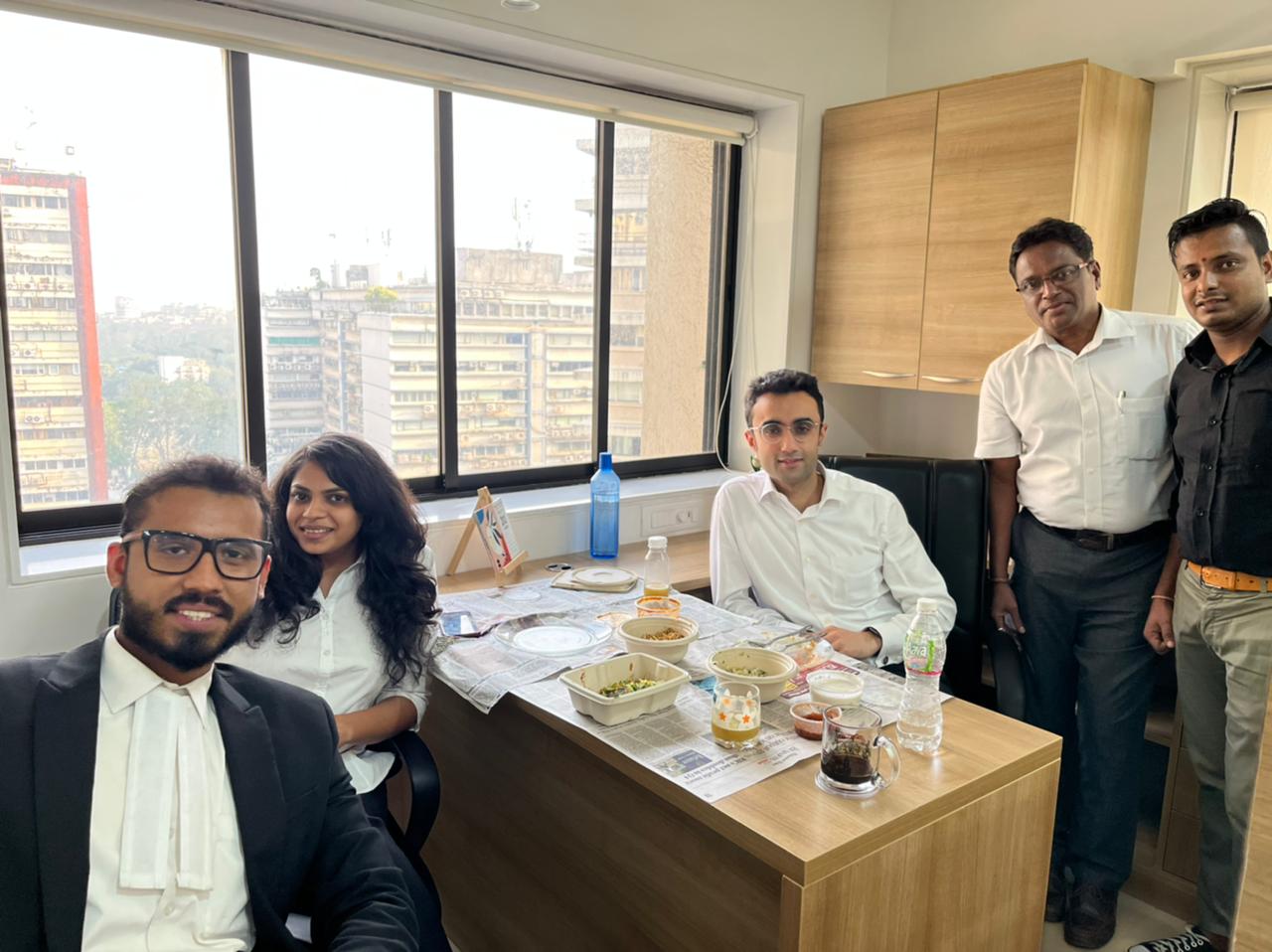
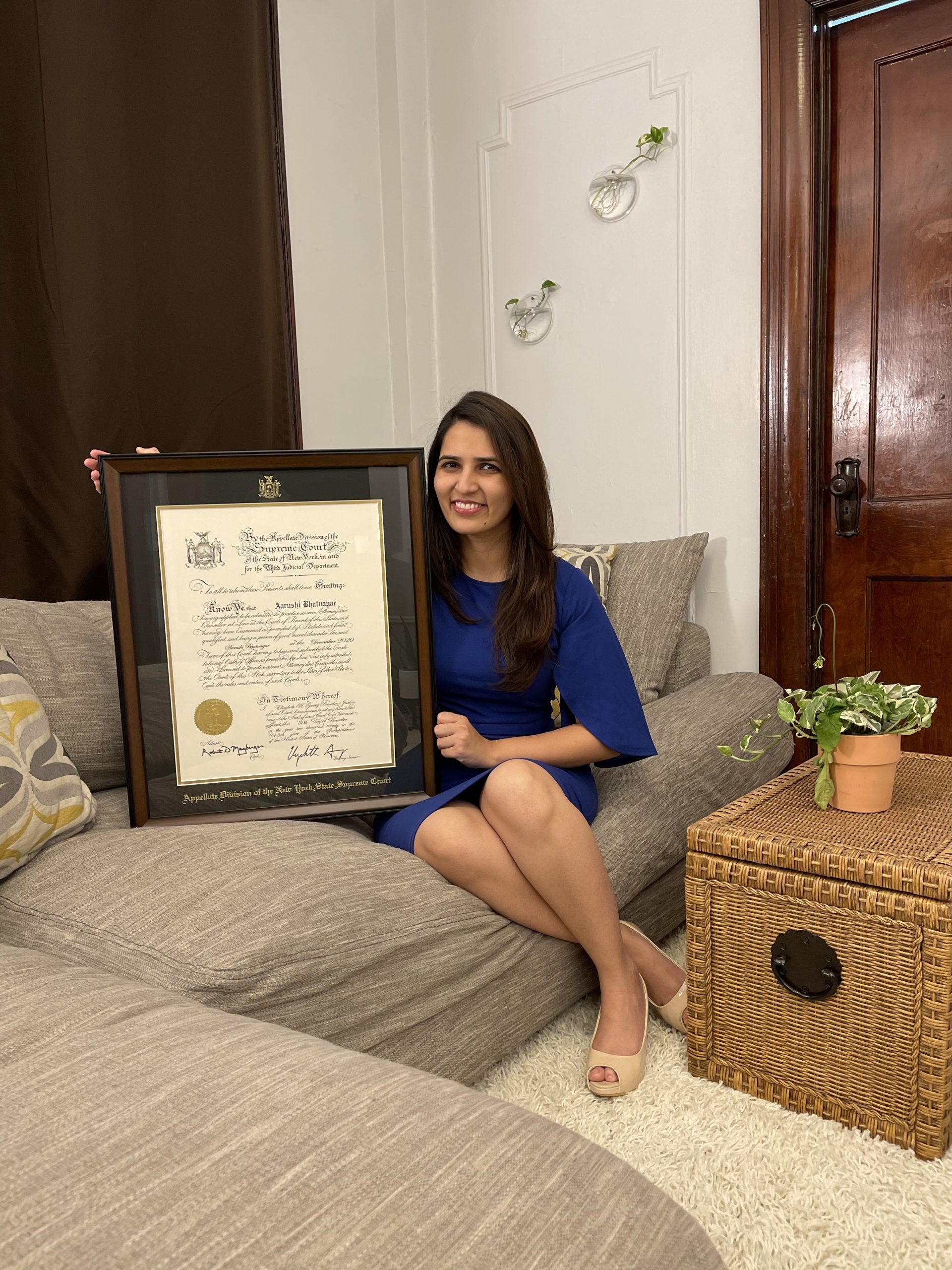
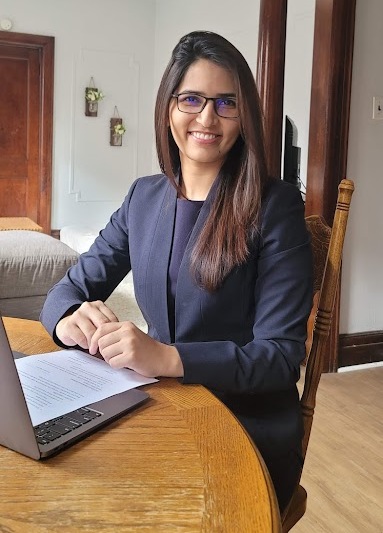









 Allow notifications