Category: Partners, General Counsels and Senior Advocates

  • Vandana Pai, Partner, Bharucha & Partners, on LLM from Columbia Law School, New York and her 18+ years of experience in Private Equity

    Vandana Pai, Partner, Bharucha & Partners, on LLM from Columbia Law School, New York and her 18+ years of experience in Private Equity

    This interview has been published by Ayush Verma.

    Can you walk us through your journey towards the legal field? What inspired you to read law?

    I come from a family of doctors and engineers, and no one in my family had previously studied law. As part of career counselling at my school we were given aptitude tests, and law was identified as one of the professions’ I had an aptitude for. I have always loved to read, and two of my favourite fictional characters growing up were Perry Mason and Horace Rumpole, both formidable criminal defense attorneys. My parents always encouraged me to think for myself, and were supportive when I decided to pursue law. I sat for the National Law School, Bangalore entrance exam, and as they say the rest is history. 

    You’ve graduated and acquired your LLM and LLB from two of the most decorated universities. How did they aid you in becoming the lawyer that you are today?

    My experience at both National Law School, Bangalore and Columbia Law School, New York have helped me become the lawyer I am today. At both institutions, the learning experiences are not limited to the classroom. The student body is amazingly bright and engaged and pushes you to achieve your best. NLS gave me the opportunity to participate in moots, write articles and experience different facets of law through internships. This helped me to identify that my interest lay in corporate law, rather than litigation. At CLS, I loved interacting with people from multiple countries and backgrounds. The level of intellectual rigor the professors brought to every class was an eye opener and taught me to think outside the box. 

    15 years after acquiring your degree in LLM, do you believe academic qualifications or excellence play an important role for a blooming legal career?  

    I believe that as long as there is a will to succeed, each and every one of us can have a blooming legal career. Hard work and intellectual rigour are more important than mere academic qualifications. However, Columbia Law School is known for its expertise in commercial laws, and many of the professors are partners in New York law firms. The LLM helped me hone my commercial acumen, and develop soft skills, which have proved invaluable while interacting with clients and counterparties from around the world.

    Can you walk us through a typical day for you at Bharucha & Partners as a partner at the firm? 

    I am an early riser and am usually at my desk by 8:30 am. I spend the 1st hour responding to emails, and taking a status update on the various matters and transactions which I supervise. Post that the day is usually spent attending calls and meetings, in negotiations, and reviewing documents for clients. I try to spend some time reading up on changes to existing laws, important judgments, etc as it is critical we stay abreast with the rapidly changing regulations. Each day brings its own challenges and wins, and I can definitely say work is never boring. 

    Right after your graduation from law school, you were placed with a tier one law firm. What kind of activities or internships did you pursue during your law school days to land such an offer? 

    I did a 6 week internship with Amarchand Mangaldas in my final year of law school and received a pre-placement offer at the end of the internship. Prior to this, I had interned with a number of law firms, including doing an internship with Drew & Napier, Singapore. I also had good grades through law school, which helped secure the internship at Amarchand Mangaldas. I was fortunate to get an opportunity to work with a couple of partners at Amarchand Mangaldas during that internship. I have always believed that if you try your best and do your work sincerely, your work will speak for you. The partners were happy with my work, and made me a PPO. 

    You’ve also cleared the New York State Bar exam. How did you prepare for that and how is it different from the India Bar Exam?

    When I graduated, the requirement of taking the bar exam in India was not in force and we could enroll on the basis of our law degree. Consequently, I can’t comment on the difference between the 2 exams. However, I must say that studying for the New York Bar Exam was an exercise in discipline, and the skills I picked up then have stood me in good stead throughout my years of practice. 

    While there are a number of popular bar review courses, these courses are expensive. I signed up as a student volunteer for the Pieper Bar Review, which required me to operate their shop at Columbia Law School a few hours every week during the school year, so I could take their course for free. I found the Pieper focus on Mnemonics, and style of teaching incredibly helpful. In addition to taking the course, it took 12 hour days of intensive studying for nearly 3 months to get me over the line. 

    You’re also on the Advisory Board for Cuddles Foundation since 2014. The Foundation provides assistance to pediatric cancer patients. What inspired you to associate yourself with this specific organisation? 

    I have always believed it is important to give back to the society at large, in whatever capacity that I can, whether legal or otherwise. I actively engage with multiple NGOs, including the Cuddles Foundation, an NGO working on providing nutritional assistance to paediatric cancer patients making it the first and only Indian NGO working in the sector. 

    When I 1st met Purnota, who heads Cuddles, she mentioned how they have realized that many children don’t survive treatment because they are malnourished. Further, many children aren’t able to continue treatment since they are often from rural areas, and their parents have no way of earning a livelihood in the city. Often the family is reduced to poverty bearing the treatment costs, and aren’t able to feed their other children. The passion that Purnota and the entire Cuddles team bring to their work struck a chord with me, and caused me to decide to work with them. 

    Their commitment was especially inspiring during the pandemic. They were faced with the challenge of ensuring that the frontline healthcare workers, who were exposed to significant risk of contracting the infection, were protected while ensuring that their work was not hampered. They had to figure out new ways to stay in touch with the patients who could no longer visit hospitals. They needed to ensure the ration baskets and supplements reached the patients and their families, when supplies chains were disrupted. While challenging, it was also extremely satisfying working with them to navigate the rapidly changing legal and commercial scenarios created by the pandemic, and ensuring that their people and interests were protected.

    You’ve worked with giants like RIL, SIDBI, Tata Opportunities Fund. Is there a specific approach you undertake while working with them?  

    For me, the role of a successful lawyer is not restricted only to attaining a positive outcome for the client, but also involves coming to an all-encompassing arrangement that strengthens the client’s current position and does not compromise with their future engagement with the other parties or affected persons. A transactional lawyer needs to find solutions to problems and not create legal bottlenecks. It is important to build trust with your clients, to truly understand their needs and concerns or needs, to empathise and connect with them, and build a long-lasting relationship. 

    Private Equity and Venture Capitals deployed $47.5 billion in Indian companies, making 2020 a record year for the ecosystem. How has the PE or VC work been affected by the ongoing pandemic and what does the future hold for the industry?

    While 2020 was a record year for the ecosystem, it saw a number of high value deals but fewer mid and small investments. In 2020, many of PE/ VCs focused on stabilizing their portfolio companies but are now looking at new opportunities. The pandemic has disproportionately affected some sectors, and benefited others. We are seeing this in the deal activity also where healthcare and online services have seen an uptick in investment. PE/ VC investors have accumulated huge cash piles, and with corrections in valuations brought about by the pandemic and liquidity crush, these investors are well placed to capitalize on opportunities in the market. 

    Lastly, would you like to share any parting advice with our readers?

    Many junior lawyers seem to believe their legal degree has only equipped them to either be litigators or corporate counsel. They aren’t happy, but don’t feel they have options. However, the opportunities available are so much more – setting up a start-up providing innovative legal solutions, a career in research and policy, consulting, teaching, civil service, etc. I would like to end with a quote, “Everybody has a calling. Your real job in life is to figure out why you are here and get about the business of doing it…”

    What do you see as the role of technology in the practice of law?

    I believe technology and artificial intelligence has the power to disrupt the way we practice law, and all lawyers should not just track, but actively evaluate how they can adopt and implement technology in their work. Technology can also provide exciting opportunities to do something new with the law. In 2020, my Firm participated in the FT Innovative Lawyers Hackathon, organised by Global Legal Hackathon and FT innovative Lawyers programme. The hackathon’s goal was to find answers to the most pressing legal, regulatory and civil society challenges emerging from the Covid-19 crisis, and over 184 projects were submitted with really innovative solutions.

  • Mr. Pranav Srivastava, Partner, Phoenix Legal, on optimising law school for a good career and his experience in transactional work and arbitration

    Mr. Pranav Srivastava, Partner, Phoenix Legal, on optimising law school for a good career and his experience in transactional work and arbitration

    This interview has been published by Ayush Verma.

    Please tell us about your journey towards the legal field. What inspired you to pursue law as a career? 

    It was by a stroke of luck that I ended up opting for law as a career. I was a science student while in high school and was preparing to pursue a career in medicine. One of the reasons for this choice was that in those days engineering and medicine were the obvious career choices for anyone who scored above a certain percentage of marks in 10th standard. People opting for other streams, even if they were genuinely interested in those subjects, were painted with a broad brush as being uncommitted.

    However, after studying science for two years in school along with preparation for the pre-medical test, I realized that medicine or any other field in science was not my calling. I knew I had to reassess my career options and that is when one of my relatives sent me a prospectus of a famous law school, which had a couple of pages on career opportunities for lawyers. I then started reading about the legal profession and developed an interest and eventually decided to pursue a career in law.

    Even though I had opted for law as a career, I don’t regret my decision to study science in school as it did prepare me for some rigour and hard work which goes a long way in shaping a legal career.

    What type of co-curricular activities did you participate in during your time at Amity Law School? In what ways have the experiences at your alma mater shaped your career?

    In the legal profession, the floor is too low and the ceiling is too high. If you are not doing well, you may find it difficult to sustain with even basic living standards. On the other hand, if you are doing well, you may earn more than celebrities besides the fact that the career span of lawyers is way longer than that of celebrities. Therefore, coasting along is not an option in this profession. From the beginning of my law school, I knew that in order to be successful, I would have to work hard and continuously push my limits. During law school, studying and writing exams consumed only a small portion of my time and more time was spent on co-curricular activities such as moot court competitions, writing papers and articles, attending extra courses and undertaking internships.  

    The biggest contribution that law school has in shaping my career was a good degree of flexibility which allowed me to participate in a number of moot court competitions, attend internships and undertake other co-curricular activities. Also, the encouragement and support that came from the faculty and the director of the law school was really helpful I believe this is one of the biggest reasons why Amity Law School, despite not bearing the NLU tag is still, churning out excellent lawyers, who you now see as partners in law firms, general counsels in companies and successful litigators in courts. Being located in Delhi NCR was also a big factor and allowed us access to courts and law firms.

    What according to you is the relevance of internships in a law student’s career?

    Law school curriculums have not kept pace with the developments in legal practice and there is a wide gap between the theoretical knowledge that students acquire in law schools and the practical implementation of that knowledge. Additionally, there is an unfortunate emphasis on rote learning and memorization in the Indian education system, due to which there are instances of fresh graduates lacking awareness and understanding of basic legal concepts.

    Given the pace at which legal work is required to be done, the high pressure from the clients and the tight timelines, employers in the legal industry are often not inclined to train fresh law graduates from scratch. Therefore, there is an expectation from fresh law graduates to somewhat hit the ground running and demonstrate basic legal skills such as the ability to conduct legal research, use online research tools, understand basic legal principles and basic level English language legal drafting. In the absence of such a skill-set, it is often difficult for fresh law graduates to find placements and even if they do find jobs, it is difficult for them to acclimatize to the rigorous work environment.

    Internships help bridge this gap as they not only provide the opportunity to experience the real work environment and learn the practical aspects of the legal practice, but they also push the interns to put in hard work which helps sharpen their skills. The mentoring and guidance that law students get during internships enables them to acquire the skill-set necessary for placement and further progress in their careers post law school. Internships also offer a platform to law students to demonstrate their skills and abilities and potentially score a pre-placement offer. This is especially important for students from non-national law schools which may not have robust placement mechanisms for their students.

    Internships are great eye-openers and provide a massive opportunity to make course corrections for law students who have otherwise been coasting along in law school as they come to realise the huge gap that exists between what they learn in their law school and the skill-set they need to acquire in order to land up with a lucrative placement. Often the cut-throat competition amongst interns from different backgrounds becomes the driving force behind efforts that law students put during internships. 

    How and when did you decide to pursue a career in commercial transactions?

    While I believe that every lawyer is a litigator at heart, there is a huge difference between how Harvey Spectre litigates in American courts in “Suits” and how litigation is conducted in  Indian courts. Jokes aside, the Indian judicial system still has a long way to go, to acquire the quality and sophistication that you see in the judicial systems of some western/developed countries. Court litigation in India is more than just knowing the facts, understanding the law and nicely articulating your case before the Court. This, in my view, takes away the fun and discourages many talented young lawyers from pursuing a career in litigation. I was no exception.

    A law firm environment (especially a transactional practice) comes across as a far more lucrative option given the sophisticated work environment and meritocracy-driven culture. The trigger for me was an internship at a big law firm that exposed me to the transactional practice at a law firm and there was no looking back.

    What led to you joining Phoenix Legal right after graduation? Did you consider any other options at the time?

    When I started my internship at Phoenix Legal, the firm was only 2 years old and was widely known as one of the most promising start-ups in the legal industry. The founders were former equity partners of Trilegal and had left to establish Phoenix Legal. The environment at the firm was full of drive and energy and it was already evident that the firm will grow and take its place amongst the top law firms in India, which it eventually did. The culture of the firm was meritocratic and everyone was goal-oriented and willing to serve their clients to the best of their abilities. Also, given the lean team structures, there was close supervision of work by the partners and it was an excellent training ground for young graduates. To me, it was a no-brainer that this was the place to start a legal practice and once I was offered a position in the firm, I did not consider any other options.  

    You have been associated with Phoenix Legal since the start of your career, for over a decade and got promoted to Partnership within six years of practice. How has your journey with the firm been, from starting out as a trainee to going on to become a Partner?

    Phoenix Legal is one of the few law firms in India that is structured in a manner that is similar to how the international law firms are structured. It has an ownership model based on lockstep, which allows all partners to progress to the level of founders. The progression through the lockstep is purely merit-based and evaluation is based on several parameters which are transparent and well known to the partners. Similarly, decisions to hire new resources, internal promotions amongst the associates, and elevations to partnerships, are all purely based on merit and completely transparent.

    The firm invests heavily in its human resource and works very hard to hire, train and retain the best of the lawyers. Our lawyers are closely monitored and work under the supervision and guidance of the partners. This is due to the firm’s partner-centric and partner-led service delivery model which requires a strong and committed partner involvement in all client work.  The lawyers at the firm including the partners work very hard to maintain a high level of responsiveness and availability and provide top-notch quality of service to their clients. 

    Because of these factors, my journey at Phoenix Legal from being a trainee to becoming an equity partner has been somewhat challenging in terms of the time commitment and efforts required but at the same time has been very rewarding.

    What are your day-to-day responsibilities in your current role as a Partner at Phoenix Legal’s Delhi office?

    The primary responsibility of all partners is to service our clients. We work hard to ensure responsiveness, availability, and accuracy of our legal advice. Our partner-centric service delivery model means that all the partners irrespective of their seniority and experience are involved in work execution and take primary responsibility for service delivery to our clients. The other responsibilities as a partner include the building of teams, training junior resources, business development, and administrative matters.

    As the Officer at the International Bar Association, what does your work entail?

    I am currently the Treasurer of the Young Lawyers’ Committee of the International Bar Association (IBA). IBA is the most prestigious organisation of international legal practitioners and law societies formed in the year 1947. It has over 80,000 individual members who are international lawyers from leading law firms around the world and has over 190 bar associations and law societies from over 170 countries as members.  Our job as the Officers of the Young Lawyers’ Committee of the IBA is to encourage young lawyers from various jurisdictions to join and get engaged with various activities of the IBA. We serve as the ‘entrance door’ for young lawyers into the IBA and put them in contact with the rest of the divisions of the IBA to become further involved. We also actively identify, discuss and promote issues involving young lawyers at the IBA.

    With your rich experience of 10+ years in transactional work as well as commercial arbitrations, would you like to tell us about the ways in which India has shifted or evolved in these areas over the last decade?

    Legal practice, like all other businesses, is always evolving especially with the advent of high-speed internet, mobile communication, and other similar technologies. The legal practice also evolves with the evolution in the client’s businesses and consequent changes in the client’s expectations.  

    There have been dramatic changes over the last decade in how legal practice is conducted in both transactional and arbitration fields. For example, on the corporate transactions side, due to the advent of high-speed internet and various platforms to aid online meetings, etc., most activities (such as due diligence, negotiations) for which lawyers used to physically travel are now conducted online from within our offices.  Similarly, because of change in client’s expectations, the nature of work product has also evolved – for example, the clients now seldom expect their lawyers to prepare detailed findings based on due diligence reports (which was almost a norm in the earlier days) and want a significantly shorter list of only the red-flags or high-risk areas as an outcome of the legal diligence exercise.

    Similarly, on the arbitrations side, Indian clients and arbitrators are now starting to adopt technologies like live and real-time transcription services which were earlier seen only in arbitrations outside India.  These have the ability to dramatically increase the speed and efficiency of the arbitration process. Indian arbitrators/clients also prefer to adopt more practical and simpler arbitration procedures in the procedural orders as against the earlier practice of taking cues from the Court procedures which were often pedantic and impractical. 

    What is going to be the long-term impact of the ongoing pandemic on how cross-border transactions or international commercial arbitrations are carried out?

    The pandemic has forced people to change the traditional ways of doing things and has somewhat fast-tracked the process of adoption of new technologies and innovative methods of undertaking the legal business. The virtual hearings in both Courts and arbitrations, I believe, are here to stay even post-pandemic. Similarly, virtual meetings and negotiations, instead of people traveling to conduct meetings and to negotiate deals or transactions, are unlikely to be discontinued post-pandemic. These new technologies and innovative methods have, in addition to allowing business continuity during the pandemic, improved both time and cost efficiency with which legal business is conducted.

    What are some skills or characteristics that you look for while hiring juniors in your team?

    The skill-set and characteristics depend on the level and seniority of the lawyer being considered for a position. A fresh law graduate is not expected to have the same skill-set as an experienced lawyer.  However, factors such as good communication and writing skills, research skills, and understanding of basic legal concepts/principles are a must. In addition, I would look at the softer factors such as willingness to put in the hard yards, enthusiasm to do good work, hunger for success, interest in law and legal practice, and certain other personality traits.

    As a young Partner at one of India’s leading law firms, what are the core principles that got you here? Is there anything in your checklist yet to be achieved?

    I attribute my success to the mentoring and the training I received from my seniors at Phoenix Legal during the initial years of my legal career. A good boss and a mentor can go a long way in shaping your legal career and I was fortunate to be trained by seniors who were not only excellent lawyers but also took great efforts in training and mentoring their juniors. Apart from the mentoring and training, the core principles for any lawyer’s success are consistent and long-term efforts and hard work, enthusiasm and interest in law and the legal practice, desire to do good work, and willingness to take up new challenges.

    On the checklist, all I would say is that I haven’t started ticking the boxes yet. There is a long way to go and this is just the beginning. 

    Any parting advice for young lawyers and law students looking to pursue a career in commercial transactions? What is the relevant skill-set they should inculcate during law school?

    I don’t think there is one method to success. All successes in life are an outcome of a series of small positive actions that you take over a long period of time. Similarly, all failures in life are an outcome of small errors or omissions you make over a long period of time. The key principle, therefore, is a long-term consistent effort to do good work.  

    Never say no to an opportunity because you think it’s beyond your capabilities or you are too busy with something else. Don’t shy away from hard work. Stay enthusiastic about the work that you do and always keep pushing your limits. In the long-term, after consistent effort, you will be surprised by the successes that will start coming your way.

  • Shafaq Uraizee Sapre, Partner, J. Sagar Associates, shares her insights from the niche area of M&A and thriving in the legal profession as a corporate lawyer

    Shafaq Uraizee Sapre, Partner, J. Sagar Associates, shares her insights from the niche area of M&A and thriving in the legal profession as a corporate lawyer

    This interview has been published by Ayush Verma.

    How would you like to introduce yourself to our readers?

    On the professional side, my introduction is that of a lawyer who focuses on mergers and acquisitions along with other forms of corporate transactions, and who is a part of one of India’s best and largest national law firms. On the personal front, I introduce myself as a woman who tries her best, every day, in all the roles she plays. I like to travel, spend time with my family and friends, enjoy watching movies and cooking. I think of myself as a representative of all those who have the will and determination to work hard and make a change. 

    With over 20 years in this profession, how would you describe your journey so far?

    I’ve had the most wonderful experience professionally and I’m thankful to all the people who have been a part of my journey. Every journey has its unique challenging moments, and it is important to recognise the contribution of the people who form part of our support system and make it happen for us; family, friends, mentors, team members, and those who work for us relentlessly in the background such as our helpers and assistants at home and office.  I feel overwhelmed that time has passed so soon and how much I have learned from all the experiences, especially the tough times. Every struggle and failure has made me a better lawyer and person. I was very lucky to have some fantastic mentors who have guided me and showed me the path to where I am today. One has to have a plan and a vision of what they want out of themselves and if they work hard with integrity, determination, and focus on higher standards of quality and professionalism, the road will eventually lead to a good and happy place.  

    At what point did you decide to read the law? Coming from a family of lawyers, did you ever feel the pressure to pursue a career in the legal field? 

    When you are brought up in an environment that has a rich mix of cultural vibrancy with emphasis on education and professional excellence; with more than 80% of the close family members being lawyers or connected to the legal profession in some way, there is a general expectation that you would choose a path that follows the tradition. My calling towards law was neither certain nor forced. It must have been working somewhere in the background in deep routed subconscious levels but overtly. I was at one time quite sure that I wanted to become a professor of literature. I had completed my graduation with a major in English literature and was in fact planning to pursue higher studies towards becoming a professor. My father, who is an ardent reader of literature and philosophy, supported me immensely and in fact guided me through the course. The turning moment was when I accompanied my father to the Bombay High Court during the summer break, after my final exams in the penultimate graduation year, and witnessed him argue a case. I still remember, it was before Hon’ble Justice R.M. Lodha, and I was spellbound seeing my father argue. Observing the proceedings, I found myself being naturally drawn towards the profession. I took admission in the Government Law College after graduation and during my time at law school, I continued to work with my father as an apprentice and attended office and court every day for the three years that I studied law. Ultimately, looking back at these 20 years, I feel it was the right choice for me. In the legal profession, one has the advantage of pursuing their passion for law and also playing the role of a teacher/mentor. I enjoy making presentations, conducting training sessions and masterclasses, and speaking at conferences on various topics of law. In a way, my desire to become a teacher has also been fulfilled.

    You decided to venture into corporate law when it was fairly unheard of, how did you make that choice?

    Deciding to take up a certain type of practice area requires a lot of thinking and analysis of one’s own interest and capabilities along with the right guidance. Some people are very good with negotiations, some are good with their ability to argue matters, and some people are great at research and drafting. To choose a practice area as their main focus, one has to have the opportunity to experience these different areas before deciding to focus on one. Although I started as a litigator with my father, he wanted me to gain experience in other practice areas. I went to work with a senior corporate lawyer for a year who encouraged me to give a serious thought about taking up M&A, after some of the clients had given positive feedback about my ability to bring commercial and business sense to transactions. I then joined Nishith Desai Associates, where I got the opportunity to work on corporate transactions and helped in setting up foundations for what are today some of the big practice areas of the firm. I am grateful that I have had the experience of both litigation and corporate practice. This combination helps me in seeing pitfalls in transactions and rectifying those issues at an early stage before matters end up in court. 

    What does an average day look like for you as a Partner in one of India’s biggest law firms?

    I believe that in any organization, each person in the system, regardless of level and position, has to work hard and be passionate to ensure that the quality of work and responsiveness to clients is exceptional.  People often joke that lawyers are not humans because of our tight schedules and the absolute obsession with quality. I was once asked at a public forum if corporate lawyers indeed do not sleep or eat. Well, on a lighter note, to clarify all doubts, corporate lawyers are humans and we do eat and sleep. As is the case in any job or profession where timelines matter, we often end up doing long hours to cater to our clients’ needs. Personally, I have learned that the only way to get the best out of oneself is to prioritize. My day starts with catching up on important updates in my field, followed by responding to critical emails, calls with colleagues, and then moving on to transactional work like reviews, drafting, brainstorming sessions, and calls with clients and counterparties. Since we cater to both domestic and international clients, our schedule is largely driven by the needs of our clients based in different time zones, and therefore, on many occasions, we end up pushing ourselves late in the night or early in the morning, to accomplish important tasks within the deadlines. 

    Due to the unprecedented situation created by the pandemic, it has become extremely important to stay connected with colleagues and clients, and the timelines are now blurred because of the need to be available to everyone at all times. Prioritizing in these circumstances has become more important than ever before. I have two kids and one is barely 2 years old. I ensure that I give adequate time to the family and check with the elders and those in need of attention a few times during the day. We have to be cognizant of the fact that apart from our work, we have other responsibilities and interests, and this fact must always be kept at the heart of things. Any successful person will tell you that the right balance will get you to a point of satisfaction and contentment in both your personal and professional life.  

    You are one the most celebrated names in M&A. In your experience, how is the niche misrepresented in its portrayal that impacts the perspective of the younger generation of lawyers?

    In my interactions with younger lawyers, I note that they are extremely smart, efficient, competitive, and hard-working. What many of them seem to lack, however, is patience and perseverance. Several of them are drawn to the glamourous depiction of corporate lawyers in the media. While it is quite appealing on the screen, it is, on many occasions far from reality. In this situation, the lawyers who choose this practice area or any practice area for that matter may find it difficult to accept the hard realities of the profession. The burn-out rate is high in the younger generation of lawyers because of the stress that arises out of expectations, coupled with the immense hard work that goes into the practice of law. What is not mentioned on the silver screen is that with patience,  a long-term vision of growth with a charted course of action in place, one can achieve one’s goals and have fun too along the way.  

    How can law students grow in the niche of M&A and mark their presence?

    If you put yourself in the shoes of the client and their legal team, you will realise that what they are looking for is a trusted advisor; someone who obviously knows the law and can also understand their business and expectations. Experienced transactional and commercial lawyers will tell you how it takes years to build this trust and how knowing the client’s business is critical to becoming a  trusted advisor. The only way to become a good M&A lawyer is by understanding the commercial and business needs of every client, the objectives of a transaction, working with your and the client’s team, effective communication and most importantly knowing the law. Good drafting and research capabilities are the other critical skills that have to be developed. Clarity of thought and articulation is the key to successful documentation and negotiations. Clients want a lawyer who recognizes the issues and provides productive legal solutions. M&A lawyers tackle complex regulatory and commercial issues and are required to think “on their feet” and therefore, it is very important to be solution-oriented.  Since it takes years to build these skill sets, students should spend time in good internships and gain as much experience as they can before they join the profession. They can also prepare themselves by reading transactional documents during their internships, writing research papers, and practicing drafting.  

    We have witnessed that there is a huge section of students and professionals who believe that studying in a foreign university will give them an edge over other candidates; have you noticed this bias?

    I agree that at one time there was some preference given to candidates with degrees from foreign universities, but over the years this approach has changed significantly. The quality of education in India is top-notch; and while foreign education provides fantastic exposure and opens one’s mind to different ideas and perspectives, what matters ultimately is performance and caliber.  The fact that many of my friends and colleagues who are successful lawyers, and many of whom are partners in law firms, have all completed their education entirely in India just like me, proves the point. The edge that younger lawyers should try to develop are qualities that will help them in becoming great lawyers in the long run, as discussed earlier. 

    How would you like to address the requirement of career breaks for women lawyers?

    I believe that no man or woman should suffer in any way for prioritizing their families. In this day and age, with discussions on diversity and inclusion even in the legal profession, it is quite unfortunate that one still hears of instances of bias and differential treatment. One should not shy away from a career break if it is important to take one at the relevant time. What is important from a career perspective is that one should be able to give a sense of confidence to the organisation, that you are willing to work hard, and you will demonstrate that the break has not reduced your ability or capacity to perform. As I said before, one must make efforts to draw opportunities towards oneself and the only way to ensure that you make the most from an opportunity is to be dedicated, focused, and stay updated. One of the positive outcomes of the current set-up has shown that working from home does not mean that one cannot perform well and perhaps the pandemic situation has presented workplaces with an opportunity to create more options for its employees to be with their families in times of need and yet be able to sustain their jobs.  

    How has the pandemic that entailed the lockdown been for you personally and professionally?

    We are facing a very unfortunate and unprecedented situation due to the pandemic. The multiple lockdowns and fear of the virus have taken a toll on all our lives, businesses, and livelihoods. The situation has affected us emotionally and professionally with many of us losing some close family, friends, and neighbors to the virus. While we all are dealing with it in some way, in my opinion, the children and elders have suffered the most. It was difficult to restrict kids within the four walls of the house and dealing with online schooling and work at the same time. My husband is a counsel and had to attend virtual hearings, I was working on transactions and my kids were attending school virtually, all at the same time in different parts of the house. It was difficult and hectic at the start but slowly we settled into a routine. The biggest lesson I learned was from my kids, who showed so much resilience and adaptability, that  I was inspired to adapt and continue my work. We are very fortunate that JSA did well despite the challenges with the strong support of our clients. It is true, however, that business, both domestic and global, was affected adversely. Clients had new issues to deal with such as the effect of the pandemic on their businesses and organizations and force majeure provisions were being discussed. While we have all studied these topics academically, we did not imagine the scenarios playing out in our lifetime.  By and large, we all agree that the first two quarters of 2020 were difficult for everyone. We all slowly adapted to this new normal of online communication and work from home. With the tremendous support and understanding from clients, the firm, colleagues, family, and my helpers at home, I have been able to work from home effectively and efficiently.

    As a law firm partner, you shoulder many responsibilities. How do you stay detached from negative outcomes or setbacks?

    Every one of us has suffered from negativity and setbacks and it is only human to feel these emotions. The role becomes more demanding as you progress and grow. It transforms from doing purely execution work to that of a leader, a mentor, and an entrepreneur. I personally have learned the most valuable lessons from setbacks and perhaps those experiences have helped me in dealing with difficult situations today in a constructive manner. I try to break down the problem or set- back into parts and after understanding what could have been done better or differently, I dust off the remains and move on to constructive thoughts and objectives while dealing with one issue at a time. This trick works for both personal and professional matters and I highly recommend this approach. With experience and practice, one learns to deal with such downfalls and it is also important not to dwell on negativity and setbacks for too long. I try to do something that detaches me from negativity such as spending time with my family, having a good laugh, going for a drive or just cooking my favorite meal. I have had the benefit of mentors who have provided their support and splendid advice, so reaching out for help and guidance is also recommended. Keeping a clear head and avoiding overthinking and speculation also helps in the long run if one has to survive in this profession. 

    If you could go back in time and do something differently on the professional front, what would that be?

    I would change absolutely nothing. Each and every day of my career has been fantastic and made me a better lawyer and a better person. I cannot be more grateful for these 20 years of great memories and opportunities. I suppose the only thing I should have done additionally, and not differently, would have been to learn German. I have spent a lot of time in Germany for work while representing many German clients and I have always been so fascinated by the language. It is still on my ‘to do’ list and I hope to learn the language before I hit another 20 years in the profession.

    What would be your advice to upcoming lawyers, especially women who look up to you?

    The advice is clear and straightforward: chalk out a clear path for yourself first and set goals. Work hard towards your goals with integrity, patience, and perseverance. Develop your skill sets, keep reading and be up-to-date with whichever area of law you choose. Try and get as much experience as you can, research, write, build good contacts and people skills. Soft skills are as important as technical skills. Do not be afraid to fail or take a step back. Be determined, adaptable, move forward, and build a good support system. Most importantly, stay grounded and humble.

  • Raghav Awasthi, Litigation Lawyer and member of the RSS, on balancing a successful litigation practice along with a career in politics

    Raghav Awasthi, Litigation Lawyer and member of the RSS, on balancing a successful litigation practice along with a career in politics

    This interview has been published by Ayush Verma.

    Please tell us about your journey towards the legal field. What inspired you to read the law?

    I was never fixated on the idea of being a lawyer but I always had an inclination towards politics and governance which ignited my interest in learning the law. After finishing my schooling at DPS RK Puram, I came to know about the integrated law courses offered by premier law universities such as NLSIU, NALSAR, and NUJS. This was the pre-CLAT era where I had taken admission tests for all three NLUs. I ranked well and took admission in NALSAR which prompted me to spend half of a decade in the city of Hyderabad. I had no family associations in the legal field, therefore, joining a law school was completely my decision and my family supported me in venturing into this profession.

    What are the reforms that you believe the legal education sector needs in India?

    One aspect that I regret from my law school days is that we used to fret over things that do not matter in the long run, such as grades. Moreover, understanding the correct sources of law for a matter is a critical skill for a lawyer which one needs to learn but is not taught in the curriculum of a law school. Furthermore, learning drafting and other practical aspects of the legal profession is an opportunity that lawyers often only get post law school, in a senior’s chamber. These are some reforms in the legal education sector that are needed. 

    What were your reasons for choosing a career in litigation? Were there moments during law school that nudged you towards litigation?

    I come from a family which is well-to-do and while choosing my career path, money was not a relevant factor. My interest in politics and governance subsisted after my law school journey and I felt that I can contribute towards developing law and policy in the best manner by pursuing a litigation practice and humbly contributing to policy-making alongside. Furthermore, I was born and brought up in Delhi which helped because I was in familiar surroundings.

    Would you like to share some insights from the first law office you joined after graduating?

    I joined Karanjawala & Co. and was in Advocate Meghna Mishra’s team for over two years. We primarily handled Delhi High Court matters, including matrimonial, commercial, and property disputes, and work related to commercial transactions. It was a very enriching experience which not only enabled me to learn the law but also understanding and catering to the needs of the client which is one of the most important skills for a lawyer. 

    You have been actively involved in filing and arguing PILs on various constitutionally significant matters such as the constitutional validity of the marital rape exception and the legal recognition of same-sex marriages. Could you tell our readers about the reasons that prompted you to undertake such social causes?

    The social causes such as the PIL for criminalizing marital rape, or the PIL for recognition of homosexual marriages and other matters which I have filed and argued in the Hon’ble Court have been in the position of a lawyer. A lawyer should argue and represent his client while keeping his personal beliefs and biases aside. Accordingly, I am arguing these matters to the best of my abilities and I do agree with the importance of gender justice in society.

    You have also been actively involved in political debates and discussions on various news channels. What was the path you took to join politics?  

    I was in college when 26/11 happened. That incident had a profound change in my perspective towards the politics of the country and especially on the constitutional concept of secularism. In 2009, I joined RSS when it did not wield the power it wields today and I tried my best to represent its views to the general public through debates and discussions in the national media. Furthermore, I continue to contribute towards the Sangh and the country in any form I am deemed fit to.

    What are some skills that are vital for establishing a successful practice as a young lawyer?

    For a First-Generation lawyer with no familial contacts in the profession, it is very important to increase your network and hone your networking skills as much as possible. There is no secret formula for networking, except you have to make sure that you connect with a new person each day. This aspect should be given as much importance as learning the law because a lawyer’s job is not only to argue the legal points but to cater to the needs of the client which can have out-of-the-court solutions. The other skill is cultivating the virtue of humility which is almost indispensable for learning and the process of learning is something that expands from the inception to the end of your journey as a lawyer. Lastly, a lawyer has to learn the art of delegating his work and trusting his juniors in helping his legal practice. This comes over time and is imperative for growth.

    Considering the determination and hard work required in litigation, did you ever consider quitting the profession? What inspired you to persist?

    Quitting is easy. There were times when I did not have any matters for months. However, it was the financial support of my parents and the persistence that kept me going. Persistence is very important in this profession; there can be weeks, months, and even a year when a young lawyer can have no cases to argue. Persistence is what keeps you going during those tough times.

    Where do you envisage yourself in a decade?

    I would have never thought that I would be doing what I am doing today, way back in 2011. However, I would keep applying the same principles which I have applied in the previous decade and hope that I make a broader impact on societal betterment. This could mean contributing towards the practice of law and the Party equally. However, I shall always remain a student of law and politics as I was in the previous decade.

  • Nalini Mishra, Associate Partner at Singhania & Co. LLP, on her journey as an International Lawyer skilled in Dispute Resolution

    Nalini Mishra, Associate Partner at Singhania & Co. LLP, on her journey as an International Lawyer skilled in Dispute Resolution

    This interview has been published by Ayush Verma.

    What inspired you to choose law after graduation?

    I was very good in studies and wanted a professional degree in Accountancy being an alumnus of Sydenham College. But my Dad, a veteran of the Indian air-force, wanted me to pursue law based on  my academics, writing skills along with my personality and nature. His guidance helped me choose this noble profession. 

    How was your journey as a law student; did you participate in moot court competitions and other extracurricular activities?

    It was a great journey indeed. It significantly changed my attitude and my perception towards problems or issues of any kind. I even started noticing legal violations and their ill-effects on the society in general. I have been a part of group debates; we spent hours, and sometimes days, discussing the changing environment in the society and the role of both lawmakers as well as lawyers. In fact each and every headline of the newspaper in those days was critically discussed, whether it was the notorious marine drive assault case or the serial bomb blast in a domestic train.  

    What are your roles and responsibilities in your current position as an Associate Partner?

    I am a part of the team that looks after the firm’s arbitration practice which includes domestic as well as international arbitration. I head the team of associates which is responsible for drafting, researching, discussing substantial issues of the matter with the clients, and finalising all kinds of statements of claim/ defence, evidence etc. I believe research is the backbone of any matter and my team handles some very critical work.

    You are a qualified Independent Director (certified by IICA of MCA, Govt. of India) and you were also recently appointed on the board of a listed company as the female Independent Director. Kindly tell us something about breaking that glass ceiling.

    I don’t believe in any unnecessary debates of supremacy amongst men and women. I feel it is talent, one’s problem-solving attitude and experience which matters the most at the end of the day. Though laws of the land make it compulsory to appoint women directors, it would be wrong to say that they are on board just because of such laws. In my short stint as an Independent Director, I got plenty of time to express myself for the betterment of the company; and  my ideas have not only been appreciated by the other board members but were also implemented frequently.

    How did you develop an interest in Maritime law and Arbitration?

    Before joining Singhania, I practiced as an arbitration lawyer and attended many arbitration matters for National Stock Exchange and other clients. It was sheer chance and good fortune which pushed me into maritime law. It happened during the  summer of 2013, when the Mumbai High Court was on vacation, and as usual most of our colleagues who were in maritime practice were on vacation as well. Consequently, there were plenty of disputes which needed urgent attention and my firm asked me whether I would be interested in taking up these matters and the rest is history.  

    Looking back at your career that spans over a decade, what would you have done differently if you had the chance of starting over today?

    That’s a tough question to answer. Practice of law is nothing but researching, drafting, and convincing (by arguments). I think neither my predecessors nor my successors would be able to change these aspects of law practice. Further, it would be a challenge for any newcomer (as it had been for me) to start and successfully establish a growing practice now due to the distractions created by social media and tougher competition, as the legal practice is more crowded than the time when I had started my practice. Yes, electronic media has made lawyers’ jobs easier in terms of research, accessing resources, and reaching clients but the biggest challenge is to avoid consequential distraction created by these same electronic resources and social media.    

    Can you share your experience of working with different boards of arbitration? What has been your observation regarding the difference of approach in India as compared to other nations?

    I am the co-author of an article “Mr. Arbitrator! When you will change?”. It contains a comparative study of arbitration practice in India and abroad. In International Arbitration, we don’t meet an arbitral tribunal before evidence or even prior to final hearing, and we complete all the proceedings through electronic media which saves a lot of time and resources of the client as well as attorneys. Same practice could also be adopted by the tribunals in India. 

    In February 2021, you have appeared in two days evidentiary hearing before the Swiss court (under Swiss rules, with the lead counsel Mr. Pradeep Kumar Jain, Partner) wherein the witnesses from Geneva, Dubai, and Iran were cross-examined (virtually) by the parties; how was that experience?

    It was a great experience. In all of my other international arbitrations before the pandemic, all parties used to assemble at one place but it was the first time when people from different time zones were appearing for evidence. Some of them even used translators. Though all individuals were sitting at different locations across the world, the intensity and rigour was not less than that of a physical hearing.    

    How has the Pandemic been a period of transition for you personally and professionally?

    The ongoing Pandemic has taught me some rather valuable lessons, such as the importance of taking care of one’s own health, the health of the “mother nature” and the value of family. It also taught me that all of our old traditions are not obsolete and we don’t have to disregard them  altogether. 

    How have you coped with the lockdown blues, in terms of mental health and other challenges?

    First month of the lockdown was exceptionally tough, but it would have been tougher had I not had any work. In fact, I have worked more than usual during the lockdown. 

    As far as work from home is concerned, it’s good but it can’t replace your office. In the legal profession, apart from books and libraries, you learn a lot of things from discussions with your peers and seniors.

    What would be your advice to law students and upcoming lawyers?

    This is a great profession for those who want to read, research, and read some more! Students and young lawyers need to understand that their performance depends upon their knowledge of various laws and they should not be too picky while reading the law and interning with their seniors. In the words of one of my seniors, “A good lawyer invests a few months in his career while great lawyers invest years”. Therefore, it is necessary to work with someone who can give you meaningful practical knowledge and impart the right skill-set. 

  • Ashok K. Gupta, Senior Advocate, Supreme Court of India, on the AOR exam, life in litigation and being on panel of union government

    Ashok K. Gupta, Senior Advocate, Supreme Court of India, on the AOR exam, life in litigation and being on panel of union government

    Ashok K. Gupta  graduated in B.A. (Hons. – Political Science) from University of Delhi in the year 1976.  Then he completed LL.B. from Campus Law Centre, University of Delhi in 1979.

    He enrolled as an Advocate with Bar Council of Delhi in January, 1981.  After practicing in District Court, Delhi for two years, shifted to Supreme Court & joined the chamber of Mr. P.H. Parekh, Advocate Supreme Court of India. He passed the Advocate-on-Record Examination conducted by Supreme Court of India in November, 1986.  And started his Independent Practice in 1987.

    He practices primarily before the Supreme Court, various High Courts like Jabalpur and Indore Benches of MP High Court, High Court of Odisha at Cuttack and Punjab & Haryana High Court, and before various statutory fora like National Consumer Disputes Redressal Commission (NCDRC), National Green Tribunal (NGT) & Appellate Tribunal for Electricity (APTEL) .

    He was appointed Counsel by Delhi High Court (to conduct its cases on the administrative side) before the Supreme Court in the year 2000. The he was appointed Senior Panel Counsel for UOI in Delhi High Court, in January 2001. He was designated as a Senior Advocate in April, 2012. He was the appointed by the supreme court as chairman of three-member committee under the Right to Education Act to report on compliance with various stipulations contained in the Right to Education Act in April, 2014. And also, other pro-bono committees.

    He is also the member of Supreme Court Bar Association, Delhi High Court Bar Association, Odisha High Court Bar Association, Madhya Pradesh High Court Bar Association and International Law Association. Life member of All India Women’s Education Fund Association and in that capacity was elected as member of the Governing Body of Lady Irwin College, University of Delhi during the Academic Year 1996-1997 and 1997-1998. Life member and Treasurer of Confederation of Indian Bar.

    In this interview, we talk to him about:

    • Being a first generation lawyer: college life, internships and interest in litigation;
    • Establishing his independent practice;
    • Cracking the Supreme Court Advocate on Record examination;
    • His wide range of practice encompassing various courts, tribunals and;
    • As Panel of Union Of India for Delhi High Court.


    HOW WOULD YOU LIKE TO INTRODUCE YOURSELF TO OUR READERS?

    I would like to be known as a quintessential Delhi-06 person, who loves his family, puts in honest, hard work, never ceases to learn and practice, and yet, enjoys all the good things of life: food of Old Delhi, and theatre at Mandi House in the evening, to name a few. This is my typical middle-class perception of myself.


    YOU ARE A FIRST GENERATION LAWYER. WHAT LED YOU CHOOSE LAW AFTER GRADUATION IN POLITICAL SCIENCE?

    Right, I am a first-generation lawyer. After my graduation in political science from Delhi University way back in the year 1976, I chose law not because it fascinated me; I chose law because I thought firstly, it would help me in my Civil Services examination, and shall be my second subject apart from political science. The other feeling was that, in case, I fail to make it to the Civil Services (as indeed, I did), I won’t be unemployable and could always do something as a professional lawyer. So, this was with a view to ensure that I don’t remain unemployed and/or unemployable.


    YOU STARTED YOUR CAREER WITH PRACTICE IN DISTRICT COURTS. HOW IMPORTANT IS IT FOR YOUNG LAWYERS TO KNOW BASIC DISTRICT COURT PRACTICE BEFORE MOVING TO THE HIGH COURT AND SUPREME COURT.

    It is correct that I started my career in district courts. Knowing that the nitty-gritty of practice in the Districts Courts is an absolute must for a young lawyer, I’m not suggesting that a lawyer should not aspire to become a High Court/ Supreme Court practitioner. All that I’m suggesting is that one should be fully familiar with the procedural parts of the legal practice, both on the criminal as well as the civil side. At the genesis of one’s career, it is your known circle of acquaintances who approach you, say, for a recovery suit, section 138 complaint, some accident or insurance case, matrimonial disputes and such matters which primarily emanate at the district court level. The ideal situation would be, of course, where one joins a chamber, which handles district court work, besides work in the constitutional courts.


    YOU JOINED THE CHAMBER OF SENIOR ADVOCATE PH PAREKH. PLEASE SHARE YOUR EXPERIENCE WORKING WITH HIM.

    Way back in the early eighties, the experience of working in my senior’s chamber was very fascinating and exhilarating. We were about a dozen junior colleagues at that time and it was not unusual for one junior to be doing two-three cases each day. The day would normally begin with a conference with a Senior Counsel like Mr. Fali Nariman, Mr. Sorabjee, Mr. Mridul or Mr. Tarkunde at around 8:30 A.M in the morning, court thereafter, after which we would be immediately heading towards office for drafting work and, again, the cause list would come around 6:30 P.M, whereupon our senior would allocate matters; the office of Senior Counsel would be informed and conferences fixed for next day morning. Then you head towards home around 9 PM and read the brief for the next day morning conference. But we had great fun; lot of outings and birthday celebrations, with legal conferences and seminars thrown-in between.


    HOW DID YOU DECIDE TO COMMENCE YOUR INDEPENDENT PRACTICE WITHIN A SHORT SPAN OF SIX YEARS AFTER GRADUATION?

    I decided to commence my independent practice once I realised that one cannot be somebody’s junior eternally. By the time I commenced practice, I had already passed my AOR examination and knew that one has to setup his own practice one day.


    WHAT WOULD BE YOUR ADVICE TO LAWYERS APPEARING FOR AOR EXAM NOW?

    I can really advise that a lawyer should thoroughly prepare with case law, latest judgements and equip himself with precise and concise drafting skills. One should know that on the account of the very heavy work load, the Supreme Court judges very much like and appreciate if the pleadings are to the point, not verbose and the point arising in the case is neatly stated. I keep emphasising and reinforcing to my juniors and briefing counsels: “don’t miss the forest for the trees”.


    WHAT ARE THE CHALLENGES IN STARTING INDEPENDENT PRACTICE?

    Challenges in starting independent practice are no different from starting any new venture in any new sphere of activity. But, then, if you put in sufficient quality work, you are bound to be noticed. You have to build up reputation for being an upright and a committed professional. Of course, all this would take time. Nothing good was ever achieved in a short time.


    YOU ALSO TAKE UP AND ARGUE ARBITRATION CASES. HOW IS PRACTICE IN ARBITRATION DIFFERENT FROM LITIGATION PRACTICE IN INDIA?

    I was first introduced to arbitration way back in the mid-eighties when I appeared alongside a noted junior counsel (now, a respectable Judge of the Supreme Court) in an arbitration proceeding pertaining to claims and counter-claims arising out of the 1982 Asian Games held in New Delhi. The Arbitral Tribunal was headed by Justice (Retd.) A.C. Gupta of the Supreme Court. He was a very quiet and taciturn arbitrator, unlike the majority of present-day arbitrators. For a successful arbitration practice, it is indispensable for one to know the basic essentials of handling suits, even though the technicalities of CPC and Evidence Act do not apply to arbitration proceedings. Surely, one must know about admission and denial of documents, framing of issues (not all arbitral tribunals frame issues), and the proof of documents in case of denial by other side, etc. Also, the art of cross-examination assumes a lot of significance and seriousness in an Arbitration proceeding. An arbitration claim is no different from a claim in a suit, except that the procedure is shorn of all the technicalities, and there is much less stress because of less pressure of time.


    YOU HAVE ALSO BEEN ON THE PANEL OF UNION OF INDIA FOR DELHI HIGH COURT. WHAT IS THE MODUS OPERANDI WORKING FOR THE CENTRAL GOVERNMENT?

    This was the first time ever that I worked for any government (Central/ State). I was, hitherto, primarily appearing for private clients and some PSUs. It was, initially, difficult for me to adjust to the role of a government lawyer, inasmuch you hardly receive timely instructions, proper records are not maintained, and most of the time you cut a sorry figure before the Court, not on the account of any lack of professional skill or competence on your part. That said, it is, indubitably, a matter of pride, prestige and honour for any lawyer to be empaneled as a government lawyer.


    WHAT ARE THE SKILLS REQUIRED FOR A LAWYER AIMING TO BE A SENIOR ADVOCATE IN HIS CAREER?

    First, one has to be a competent and honest lawyer and the other, one should totally abjure sharp practices as a lawyer. There have been several instances, where very skilful and competent lawyers were not given the designation of a Senior Advocate by the Court, on account of the perception of lack of ethics on the part of such lawyer. Now, of course, the Supreme Court in the judgement of ‘Ms.Indira Jaising vs. Supreme Court of India’ has laid down the entire procedure for designation of a lawyer as a Senior Advocate.


    BEING A LAWYER, IS IT DIFFICULT TO MAINTAIN WORK-LIFE BALANCE?

    Work-life balance is difficult but not impossible to achieve, just like in any other business or employment. Here the complexities are of a different nature, in the sense, that in the early years as a lawyer, money is hard to come by, hours are uncertain and stress is a little too much to handle. The reason being that the client is primarily concerned with the outcome of his case, not really concerned with your legal knowledge and the hard work put in by you. This does take its toll on one’s health and impacts work life balance.


    WHAT IS THE REQUIRED SKILL-SET OF BEING A SUCCESSFUL LAWYER?

    Being successful in the profession requires no set of different rules than the ones you require in other spheres of activities of life. It is talent, hard work and luck – an amalgamation of all the three.


    PLEASE LET US ABOUT YOUR MOST MEMORABLE CASES.

    I have appeared in hundreds of cases in my career as a lawyer spread over 38 years, as an instructing advocate in the early years of practice, and as a counsel thereafter, and a senior advocate in later part of life. A government-tender matter, wherein I had engaged and instructed Mr. S.S Ray, Sr. Adv. (now deceased) and Dr. Shankar Ghosh, Sr. Adv. to appear before the Jabalpur High Court in 1991-1992 stands out in my mind. The other case that I fondly remember of the nineties was a very complex trademark case before Justice Ajay Noth Roy of the Calcutta High Court against NALCO Chemicals, USA. I found Justice Roy to be an outstanding and brilliant judge, though the Supreme Court collegium, perhaps, thought otherwise. Among the arbitration matters, I have a proclivity towards my case, ‘National Aluminium Company vs. Pressteel & Fabrications Pvt. Ltd.’: (2004) 1 SCC 540, which paved the way for the Supreme Court to rule on the applicability of the 2015 Arbitration Amendment Act in ‘BCCI vs. Kochi Cricket Pvt. Ltd.’. In recent years, in the cases, ‘National Aluminium Company Ltd. vs. Ananta Kishore Rout’: (2014) 6 SCC 756, ‘Chairman-cum-MD vs. Bharat Chandra Behera’: (2013) 16 SCC 622 and ‘Kalinga Mining Corp. vs. UOI’: (2013) 5 SCC 252, I was able to persuade the Supreme Court to sustain my view point.


    HOW CAN JUNIOR WISHING TO WORK UNDER YOU GET IN TOUCH WITH YOU? WHAT QUALITIES WILL YOU LOOK FOR HIRING A JUNIOR?

    A junior wishing to work with me can directly approach me, no need for an intermediary. The only quality I look for in a junior is that he should be hardworking. I have always maintained and continue to maintain till this date, that a talented person might fail but a hardworking person never fails.


    WHAT WOULD BE YOUR WORD OF ADVICE TO YOUNG LAWYERS AND LAW STUDENTS AIMING TO MAKE CAREER IN LITIGATION?

    My advice to young lawyers would be no different than what I received in the early eighties, and it is: “work like a horse, live like a hermit”. Now, a word of unsolicited advice: I would very much like if young lawyers take to politics as well, even as they continue to practice law. There is such a dearth of good people- professionally employed people in Politics. This way you contribute to the well-being of the society, as also enhance your own prospect in the profession. The success achieved by the likes of P. Chidambaram, Arun Jaitley and Kapil Sibal is attributable, in part, to their being seen in politics.

  • Vibhanshu Srivastava, Founder and Partner, Risis Legal, on challenges of litigation, importance of mooting and maintaining work life balance

    Vibhanshu Srivastava, Founder and Partner, Risis Legal, on challenges of litigation, importance of mooting and maintaining work life balance

    Vibhanshu Srivastava, founder and partner at Risis Legal, has diverse experience in handling a vast array of Litigation and Arbitration matters arising out of corporate/commercial transactions, tender-preconditions and terms, winding up of a company, oppression and mismanagement, intellectual property disputes and real-estate dealings. After having finished his graduation in law, Vibhanshu forayed into litigation by joining the Chambers of Prashant Chandra, a celebrated Senior Advocate based at Lucknow who draws crème corporate clientele of the region.

    Vibhanshu heads the Litigation and Dispute Resolution practice of the firm. He has been frequently appearing in the Hon’ble Supreme Court, the Hon’ble Allahabad High Court and its Lucknow Bench, besides the DRT and CESTAT. Vibhanshu has represented known corporate houses such as Ashok Leyland, Idea Cellular, Meraki Inc.,Omaxe, Xiaomi, Indoways E-Commerce & Sales Pvt. Ltd., NGK Infrastructure, besides several individuals, including public servants, etc.

    Vibhanshu is an alumnus of Chanakya National Law University and is registered with the U.P. Bar Council and the Oudh Bar, Lucknow. His inclination and prolific attraction towards litigation acted as a catalyst to pull him towards the walkways of the Court and set up Risis Legal, which has a robust dispute resolution practice.

     In this interview we speak to him about:

    • Importance of academics, internships, and moots
    • Challenges faced in litigation
    • Maintaining work life balance being a partner of a firm


    HOW WOULD YOU LIKE TO INTRODUCE YOURSELF? PLEASE TELL US SOMETHING ABOUT YOUR PRE-COLLEGE LIFE?

    I am a first generation lawyer based predominantly out of Lucknow. I forayed into litigation immediately after graduating from the Law School. After adjusting into the profession which took a while and once I had the feel of it, I went on to set up Risis Legal, a specialised litigation firm. We are thriving hard to make a mark in our sector by extending seamless and comprehensive dispute resolution solutions to our clients.

    My pre-college life was a lot of fun. I studied throughout in an all-boys school and made friends for life back then. During my pre-college days, I used to volunteer in a lot of social activities and gradually, this interest of mine became the stepping stone for me to become one of the founding members of Alexis Society, an international not-for-profit and non-political organisation which promotes creativity, innovation, peace, harmony and inclusive development.


    WHAT FACTORS INFLUENCED YOU TO CHOOSE LAW AS A CAREER? WHY DID YOU CHOOSE CHANAKYA NATIONAL LAW UNIVERSITY FOR PURSUING LAW?

    I always had a knack for public speaking coupled with the fact that math, physics and chemistry were just not meant for me and thus I found my calling in law. Thankfully the realization that I wasn’t meant for technical education and programmes hit me just at the right time and I chose commerce in my HSC over the dreadful P/C/M. By the time I was in my intermediate, I was pretty sure that I was going to pursue law. However, as they say ‘the beauty of life is that, nothing will go per your plan’, I had to joined the B.com (Hons.) programme at the Delhi College of Arts and Commerce(DCAC), South Campus, Delhi University; and almost gave-up on the idea of pursuing a 5 year law programme for I couldn’t secure a decent rank in CLAT. I just didn’t wanted to waste a year and this is what that prompted me opt for B.Com. It was hard to pursue myself that I will go for a traditional 3 year law programme post my graduation.

    But as were things in store for me, a month into the Delhi University already, I got a call from Amity Law School Delhi affiliated by the Guru Gobind Singh Indraprastha University, followed by a call from CNLU Patna. After giving my interview and securing a seat in the Amity Law School, I rushed to Patna to see things myself and make a fair call. After interacting with the students and faculty I met on campus, I had no second thought and on the same day, I was sitting and studying in the B.A., LL.B. (Hons.)-Batch(2009-2014) classroom.


     WHAT ALL ACTIVITIES DID YOU TAKE PART IN DURING YOUR TIME AT LAW SCHOOL?

    I was into mooting big-time. Besides, I even participated in parliamentary debates, paper-presentations, conferences, legal aid camps, law-fests etc. As my association with Alexis Group was at its pinnacle while I was in the law school, I conceptualized and organized many events under the banner of Alexis Group which focused on youth empowerment, sustainability, policy change and development. Law school was fun, all in all.


    YOU HAVE BEEN ARDENT MOOTER AND HAVE WON THE PRESTIGIOUS BAR COUNCIL OF INDIA MOOT COURT COMPETITION, BESIDES REPRESENTING INDIA IN THE STETSON INTERNATIONAL ENVIRONMENTAL LAW MOOT COURT COMPETITION WHICH WAS HELD AT FLORIDA, USA. HOW DO YOU RECOMMEND ONE SHOULD PREPARE FOR THEM? DO YOU THINK MOOTING IS SIGNIFICANT FOR LAW STUDENTS?

    There is no activity in a law school which is as important as mooting, especially if one wishes to join litigation. To begin with the preparation for a moot court competition, one has to submerge in the moot proposition so much so that he/she is completely though with the facts of the case. Unless, this doesn’t happen, one will not be in a position to cull out the legal issues and controversies involved. This is followed by a robust research work on the legal issues identified. The entire team must make earnest and synchronised efforts in the research and the legal issues identified may be divided amongst the team members. Research should be thorough and broad-enough to ensure that none of facets of the legal controversies involved are missed out. Speakers shouldn’t be pre decided and only once the research is exhausted and the memorial drafting begins, one should start thinking on this aspect. Lastly, team efforts are required to win a moot court competition and hence, the team members must be honest and modest in choosing their roles in the team. Let not egos and personal differences come in your way to win a moot court competition. The thumb rule is, choose a team wisely even before you begin preparing for the competition.


    WHAT ALL INTERNSHIPS DO YOU THINK A LAW STUDENT MUST UNDERTAKE DURING THEIR TIME AT LAW SCHOOL AS A STUDENT?

    This should be designed in accordance with the career preference one holds. For example, if one has aspirations to be into litigation, internships right from the first year must be designed accordingly. Thus, one can begin with an internship with a practicing lawyer from the District and Sessions Court, followed by internships with Senior Counsels in the High Court and the Supreme Court. Likewise, one can also intern with the Litigation and Dispute Resolution teams in the reputed Law-Firms.


    HOW DID YOU GET THE INTERNSHIP AT DSK LEGAL?

    Applied through the regular channel and expressed my interest to work with the Lit. group. They have a dedicated office in Colaba, Mumbai from where the Lit. team operates. I was lucky that my request was accommodated and my internship application was approved. Liked the work so much that repeated 2 more internships with them.


    YOU HAVE ALSO REPRESENTED INDIA AT THE PRESTIGIOUS INTERNATIONAL YOUTH FORUM SELIGER, RUSSIA IN 2011. PLEASE SHARE YOUR EXPERIENCE.

    Ahhhhhh, it incredible! We were a handful of us, representing India at the Forum. We were camping a jungle around a lake, called lake Seliger, about 25O miles from Moscow. Lake Seliger is in fact a system of Lakes and the surrounding was pretty picturesque. There were lots of activities, including talks on various agendas, group discussions, key-note sessions with imminent speakers, morning yoga, swim sessions, evening sport activities and what not. Made friends from all across the globe and thankfully we are still in touch. The memories of IYF, Russia are still fresh, all thanks to Alexis Group without whom my participation was impossible.


    HOW DID YOU DECIDE TO CHOOSE LITIGATION OVER TAKING UP A CORPORATE JOB AT A LAW FIRM? WHAT CHALLENGES YOU FACED IN LITIGATION.

    I had no second thought when it came to choosing litigation over a white collar corporate job. I had dreamt of shining into litigation even before I finished my 5 years in the law school. Frankly speaking, I made a conscious choice to begin a career in litigation from my hometown, needless to say to avoid the initial hardships and struggles of the profession; and the decision proved to be great. Three years down the line I was confident enough to go solo and that’s when the idea of Risis Legal struck me. Having said that, litigation will trust your patience and there’ll be times when you will think of ditching the profession in a jiffy, and that’s where you have to calm your nerves and say to yourself ‘Hey! No, don’t do this. You are here to stay!!”


    WHAT ARE YOUR AREAS OF INTEREST IN THE LEGAL FIELD?

    I love doing education matters, and off lately we have been doing many, representing colleges, students and trainees etc. Besides, I like doing matters arising out of corporate/commercial transactions, tender conditions/preconditions and terms, winding up of a company, oppression and mismanagement, intellectual property disputes and real-estate dealings.


    PLEASE SHARE YOUR EXPERIENCE WORKING AT LUCKNOW BENCH OF ALLAHABAD HIGH COURT.

    It is phenomenal. We have been doing matters both at Allahabad and Lucknow. There’s so much young crowd now in comparison to when I Started. Standing on the dice and delivering your arguments is the best experience.


     WHAT IS THE AVERAGE WORKDAY EXPERIENCE OF A PARTNER AT A LAW FIRM LIKE? HOW DO YOU MAINTAIN A WORK-LIFE BALANCE? PLEASE SHARE YOUR ROLES AND RESPONSIBILITIES AT THE FIRM.

    I have been personally monitoring all the important matters being handled by us, either by way of participating with the clients in the meetings, drafting and vetting the pleadings and making frequent appearances in these matters. The day starts early, with a visit to the Court and ends after long hours of work in the Office.

    I travel extensively doing the Court vacations and that’s how I make sure that I make full utilization of the vacations. Post vacations, I join back the Courts with re-enthused vigor and energy.


    HOW CAN A LAW STUDENT APPLY FOR AN INTERNSHIP AT YOUR FIRM?

    One can go to the ‘Careers’ tab on our website, www.risislegal.com. Apply for an internship with by clinking at the relevant link.


     WHAT ADVICE OR SUGGESTION WOULD YOU LIKE TO GIVE TO OUR READERS, WHO ARE PREDOMINANTLY LAW STUDENTS AND YOUNG LAWYERS?

     There’s no shortcut to hard work. Identify your interest at an early stage; say in the late third year of your law and start working in the right direction. Believe my lawyer and to-be lawyer friends, we have chosen a wonderful profession which has many magical sides and colors to it. We get to know each of it just at the right time.


  • Shubneet Panjete, Partner, Lall Lahiri & Salhotra, on a career in Trademark law, choosing specialisation,  and challenges of being a partner

    Shubneet Panjete, Partner, Lall Lahiri & Salhotra, on a career in Trademark law, choosing specialisation, and challenges of being a partner

    Shubneet Panjete completed her graduation from Symbiosis Law College, Pune. She is currently Partner at Lall Lahiri & Salhotra. She heads trademark oppositions at the firm. She has been practicing trademark oppositions and has over ten years of professional experience in the field.

    In this interview, we speak to her about

    • Choosing a specialisation
    • Challenges of being a partner
    • Roles and responsibilities as a partner
    • Importance of grades in law school


    HOW WOULD YOU LIKE TO INTRODUCE YOURSELF TO OUR READERS? PLEASE TELL US SOMETHING ABOUT YOUR PRE-COLLEGE LIFE?

    I am an Intellectual Property Attorney, graduated from Symbiosis Law College and have been working with LLS for over a decade. My specialty is in Trademark Oppositions, where I am now a Partner. Being an Army child, I had the opportunity to study in eleven schools in under fourteen years, pretty much in all corners of our country. I got to live in a lot of different towns & cities, leading a fun & adventurous childhood. This gave me the chance to make many friends and develop my social skills.


    HOW WOULD YOU DESCRIBE YOUR JOURNEY AS A LAWYER?

    Right from class twelveth, I knew I wanted to study & become a lawyer. I joined Symbiosis Law College in 2003 & graduated in the year 2008. As an Associate fresh out of college my knowledge was very limited. I was encouragingly guided by my seniors and Partners especially Mr. Rahul Chaudhry, the ‘Sole Proprietor’ of the firm, Mrs. Anuradha Salhotra and Mrs. Veena Poolakal, in guiding me along the way, both professionally and personally, which helped me to firmly establish myself as an Attorney. I count myself extremely lucky for finding my field of choice in the third year of college itself while doing a one year Diploma course in Intellectual Property Rights, during which I interned at various reputed IP firms. Post college I got the opportunity to join LLS in 2008 & became a Partner after 9 years of hard work. It’s been a fun learning experience providing new challenges and growth opportunities at every step of the way. As Mark Twain said, Find a job you enjoy doing, and you will never have to work a day in your life.”


    WHAT IS YOUR TAKE ON ACADEMICS? HOW IMPORTANT ARE GRADES IN LAW SCHOOL FOR AN ILLUSTRIOUS CAREER?

    Academics play a major role in developing any person in any field. Better grades help you in getting better opportunities faster. Also from a hiring perspective, interviewers do see the mark-sheets as a basis of a performance & consistency in the applicants. However, I am a strict believer of hard work coupled with a growth mindset. Even if in college you weren’t a star or a great student, you can always catch up and push forward your career with dedication and commitment. I personally have seen many friends and colleagues with stellar careers who academically weren’t that good, to begin with.


    HOW FAR DID YOUR INTERNSHIPS DURING LAW SCHOOL HELP YOU IN YOUR CAREER AFTER YOUR GRADUATION? HOW WOULD YOU RECOMMEND THE PRESENT LAW STUDENTS PLAN THEIR INTERNSHIPS?

    As mentioned before my internships helped me find my area of interest. I personally tried interning in different legal fields, before realizing they didn’t appeal to me. My suggestion would be to shortlist your areas of interest, organize them in order of personal preference, and then use the internship opportunities judiciously to focus in on your field of choice. In case you find your calling early, focus on it. In case you don’t find it after a few experiences, keep pressing forward.

    Secondly, internships are extremely important as they help students connect and understand the theory they study with the actual practice of law. Today’s structure of a five-year course offers you the opportunity of at least 10 internships. Even for graduates pursuing a three year LLB, internships can teach and expose the candidate to a lot.


    HOW DID YOU CHOOSE YOUR SPECIALIZATION? HOW DID YOU GO ABOUT ATTAINING EXPERTISE IN THEM?

    Once I’d shortlisted IP as my field of interest, I interned at many reputed IP firms to gain perspective about the field, and the firms as well. I did my internships in Bangalore & Delhi. I’d shortlisted a few firms where I’d ideally like to start my career. Post college I interviewed & got the opportunity to join LLS, which was at the top of my list. Since then I have been a part of the LLS family.

    My expertise in trademark oppositions came with learning while working on matters and more importantly with the clear, structured way in which LLS operates. The workflow is divided as per functional departments & not portfolios. As a result, my expertise in oppositions grew much faster and in a focused manner than it would have in another firm. With Partners and Head of Departments at the helm providing instructions, explanations, guidance, and encouragement, the learning was easy. With their mix of close management and independence, great work output and attention to client satisfaction got implanted in my daily work life. My seniors saw my eagerness & dedication to work, resulting in the Partners guiding me and helping me reach the position of a Partner myself.


    WHAT WOULD BE YOUR ADVICE TO STUDENTS WHO ARE LOOKING TO MAKE A CAREER IN IPR AND MORE SPECIFICALLY IN TRADEMARK?

    Students who have shortlisted IPR as a career choice should definitely intern in a few IP firms to grasp the practical aspects. I can’t stress enough on the gap in the theory and practical aspects of the law that can only be learned while interning. If you have the interest, aptitude but more importantly are willing to work hard you can succeed in any field, including trademarks. Like all legal fields, reading plays a crucial role. Keep updated on case laws related to trademarks, keep a track of impactful judgments, changes and latest developments helps you being sharper than your competition.


    HOW CHALLENGING IS YOUR ROLE AS PARTNER, TRADEMARK OPPOSITIONS? WHAT ARE YOUR ROLES AND RESPONSIBILITIES?

    Being a Partner in one of the best IP firms in the country is obviously a very challenging task, which motivates me to focus, grow, adapt and respond to new challenges and opportunities every day.

    I manage the trademark opposition and rectification practice of the firm for multi-national and Indian clients across all section of the industries. I am responsible for the complete management of all trademark opposition & rectification related work from my team, starting from advising clients on trademark protection strategies, including drafting and filing oppositions, cancellations, preparing evidence in support of proceedings, attending hearings etc. before the Trade Marks Registry and Intellectual Property Appellate Board. All this has to be executed in a timely manner & to the satisfaction of our client. My main job is to guide the team, ensure removal of all bottlenecks that they face in their work, and being responsible for the entire opposition and rectification value chain results.


    WHAT ARE THE SKILLS ONE NEEDS TO DEVELOP TO SUCCEED IN THE LEGAL PROFESSION?

    To put this across in a concise manner, you need to develop strong reading and comprehension skills along with a decent vocabulary. Also, objective analytical skills along with good communication skills will go a long way in enhancing your convincing powers towards resolving matters.


    WHAT IS THE PROCEDURE FOR A LAW STUDENT TO APPLY FOR INTERNSHIP AT YOUR FIRM? HOW DO YOU SUGGEST THE STUDENTS CONVERT THEIR INTERNSHIPS TO PPO?

    Anyone one interested in interning at our firm can simply send their CV’s via email to gpo@lls.in. The concerned persons will review and get back to the selected applicants.

    Converting an internship into a PPO I think has a universal formula. Work hard, show your interest in the field and connect with the required department head on completion of your internship.


    LASTLY, WHAT WOULD BE YOUR PARTING MESSAGE TO OUR READERS?

    Choose your career as early as you can. Thereafter stay focused, do your best, grab opportunities, work hard and enjoy life.


  • Lomesh Kiran Nidumuri, Partner, IndusLaw on LL.M from New York University School of Law, writing SOPs and maintaining work life balance

    Lomesh Kiran Nidumuri, Partner, IndusLaw on LL.M from New York University School of Law, writing SOPs and maintaining work life balance

    Lomesh Nidumuri is a graduate of Delhi University. He also holds a Masters in Law from New York University School of Law. Prior to joining IndusLaw, he has worked at Bharucha & Partners, and Dua Associates.  Asian Legal Business (ALB) featured him in its annual list of “Forty Under Forty ” lawyers in the Asia-Pacific region for 2017. Lomesh’s current practice involves civil and commercial litigation.

    In this interview we talk to him about:

    • His LL.M from New York University School of Law
    • Importance of higher education
    • Tips on writing SOPs and traits required to  bag a scholarship
    • Maintaining a work-life balance being a Partner


    HOW WOULD YOU LIKE TO INTRODUCE YOURSELF TO OUR READERS?

    Thanks very much for having me here for the interview. I must say that to be featured as a “Super Lawyer” is a bit of a misnomer, as far as I am concerned. I still have a long way to go and there is so much waiting to be achieved. However, I am giving this interview with the hope that students can benefit from my experiences, and perhaps give them some direction.

    I am a dispute resolution partner of IndusLaw based out of Bangalore. I have been exposed to all kinds of litigation and with time I have focussed my practice more on arbitration and commercial disputes. Apart from lawyering, I love playing all kinds of sports (particularly football, cycling, and squash) and spending time with my four-year-old son. I love listening to music – particularly psychedelic rock of the 1960’s and 1970’s, blues, jazz and classical. I try and catch up on general reading as much as possible – biographies/autobiographies of great men tested by adversities, espionage, and politics, are some of the genres of books I like.


    WHY DID YOU CHOOSE TO PURSUE A DEGREE IN LAW, AMIDST THE MANY OPTIONS THAT YOU HAD AFTER SCHOOL?

    Growing up, I had a profound interest in a wide range of subjects such as history, politics, geography, civics, physics, and astronomy. I was and continue to be deeply passionate about our defence services. All through my school and college, I was actively involved in extracurricular activities such as debates and elocution, apart from sports. Our education system was a nightmare for someone like me! The choices that are offered in our education system are very rigid and choosing my career path wasn’t easy. I had always liked the idea of being a lawyer in court arguing cases for clients. I was fascinated by the fact that the great freedom fighters of our country were all lawyers and they used their knowledge to ignite the minds of a nation. However, as an eighteen-year-old, just out of Class 12, I wasn’t in a position to firmly decide my career path unlike some of my friends, who somehow had everything figured out!

    While I continued to be fascinated by law, I didn’t want to take a decision that may be influenced by some television drama series or fiction books (which was the case with some of the people I know, who now regret their decision to take up law). It was in my second year of commerce degree that I was finally convinced of my decision to take up law. I realised that no other profession could make me happier and I was more at ease logically analysing the principles of business law (which was a subject we had to study), rather than drawing up balance sheets and profit and loss accounts. I still recall the books of the great Mr. Nani Palkhivala being distributed in my college, which had a very profound effect on me. It also made me realise that law was my calling. I don’t come from a family of lawyers. As a first-generation lawyer, the decision had to be entirely mine. My parents were extremely supportive. In fact, my father later told me that he was sure that I would either become a lawyer or a politician, since I showed keen interest in public speaking from a very early age, which apparently was fuelled by the manner in which I always tried to argue my innocence (though unsuccessfully) before my venerate father! But, he did not let that influence my decision, which he said ought to be entirely mine.

    In fact, pursuant to the campus placement at St. Josephs College of Commerce (where I completed my bachelors in commerce degree), I had got placed into a reputed organisation offering a huge salary (by industry standards in 2001). I turned that down to study further and become a lawyer. My professor pulled me aside and thought I was nuts – because I would be earning more than what he did – after twenty years of his teaching experience! However, by then, I was sure of what I wanted to do and never looked back. I am so glad that I finally chose law as my profession as there are few professions that are as challenging, intellectually stimulating, and give you that sense of independence and ability to make a difference to people’s lives.


    TELL US A LITTLE ABOUT YOUR DAYS IN LAW SCHOOL. IS THERE ANY SPECIFIC ANECDOTE THAT MEANS A LOT TO YOU, WHICH YOU WOULD LIKE TO SHARE WITH OUR READERS?

    I pursued law from Campus Law Centre, Delhi University. I am fortunate that some of the best professors in the country (Professor M.P. Singh, Professor M.C Sharma, Professor B.B. Pandey, Professor Kamala Shankaran, to name a few), who later went on to become Deans/Vice Chancellors of other universities, taught me the law. They made me look at law very differently and instilled in me the importance of having a deeper understanding of the principles on which law was founded, and not just superficially. I utilised my time not just by reading law books, but also books about law and general reading, which has held me in good stead even today. I think as a lawyer it is important to be adept not just at law but also other subjects, as this makes a person develop a more rounded personality.

    Unlike the other law schools, Campus Law Centre didn’t pamper us. We did not get much institutional support for internships and placement. We were left completely on our own – and it was up to us to make the most of the time and resources we had. Since nothing would be served on a platter – I had to go out there, express myself, to achieve my goals and aspirations. In the process, I also faced few rejections and snide remarks. These experiences toughen you up as a person and instills a sense of grit and determination to fight against any odds. These are life lessons that no formal education can ever teach.


    WHAT WERE THE ACTIVITIES, ACADEMIC OR OTHERWISE, THAT YOU UNDERTOOK IN YOUR LAW SCHOOL DAYS WHICH IN YOUR OPINION HAVE SHAPED YOU AND YOUR CAREER?

    I actively took part in moot court competitions. The thrill of researching deeper into law, developing arguments and counter-arguments, and presenting your point of view before a panel, was exhilarating. I wrote few articles but regret not having written more. I also undertook few projects with NGO’s, which was satisfying, as I could see the profound influence that law could have, in making a significant change to the society. I was just very curious and fascinated about the law in general, and didn’t prepare for exams, merely with a view to obtain good grades. This also helped me a great deal in the years to come. While the law school days lay a good foundation, I truly believe that the education for a lawyer begins when he/she starts practicing litigation. Everybody starts with a clean slate upon graduation. Success in the profession entirely depends not just on your ability to work hard with sincerity and dedication, but also doing it smartly!


    WHAT KIND OF INTERNSHIPS DID YOU ENGAGE IN DURING YOUR STUDENT YEARS WHICH YOU FEEL WERE INVALUABLE TO YOU IN REACHING YOUR CURRENT POSITION?

    I took up law for the sheer joy of presenting arguments before a court/tribunal. Therefore, in my first year of law course itself, I was certain that I would become a litigator. My internships were focussed mainly on litigation. I did an internship with an NGO as well. Just to be very sure of my career path, on the advice of my well-wishers, I reluctantly applied for a corporate internship in a reputed law firm in my final year of law. However, in that corporate internship, I was so bored reading only agreements, that I ended up going to courts and assisting the litigation team! I just couldn’t get myself to do anything other than litigation.


    WE SEE THAT YOU’VE COMPLETED YOUR LL.M IN NEW YORK AT THE NEW YORK UNIVERSITY SCHOOL OF LAW. WOULD YOU SAY HIGHER STUDIES ARE RELEVANT FOR A CAREER IN LAW?

    If the candidate is looking at a career in research or teaching or taking specialised jobs at the United Nations, working abroad etc., then LL.M is certainly important. However, LL.M is not crucial for pursuing a career in litigation in India. For litigation, it is about the relevant experience before courts/tribunals. However, pursuing an LL.M certainly has advantages. It’s the whole experience of living in a foreign country and pursuing masters from a reputed university, which is invaluable and adds multiple dimensions to your personality. One gets to meet and network with students from different jurisdictions and learn from the experiences of other students. This helps in understanding people from across jurisdictions and broadens perceptions. The manner in which law is taught in reputed foreign universities is certainly an experience to cherish. LL.M also helps boost your credentials with clients and people you interact. You must keep in mind that studying abroad is very expensive if you don’t have a scholarship. So, please assess your priorities and the finances, before deciding to pursue masters.


    WHAT DOES THE CV OF A STUDENT SEEKING ADMISSION IN A PREMIER UNIVERSITY OFFERING AN LL.M PROGRAM HAVE TO LOOK LIKE? WHAT ARE THE FACTORS LOOKED INTO AND WHAT ARE THE ACTIVITIES THAT THE INTERVIEWERS REGARD FAVOURABLY?

    In addition to a good academic background, the foreign universities take note of the candidate’s extra-curricular activities and the statement of purpose (SOP) which the candidates are required to submit. The candidate must have displayed his/her genuine interest in specialising in that area of law, through academics, publications or relevant work experience. It is also important to highlight how the course would help achieve the future goals and aspirations of the candidate. One must keep in mind that the evaluators probably read thousands of SOP from candidates across the world. It is therefore important to spend some time thinking and writing the SOP and make it as interesting and creative as possible. The originality of thought is the key – as it not uncommon to see candidates writing their SOP after obtaining some templates/drafts from students who have already studied abroad. The candidate must be honest and lucid in expression. It is important to plan and start the application process early. Many times, students miss the bus for scholarships (both at the university that they are applying to and the scholarships granted by various entities in India), since they start the application process late.


    HOW IMPORTANT ARE GRADES, IN YOUR OPINION? TO WHAT EXTENT DOES ONE’S GPA AFFECT ONE’S CHANCES OF SECURING ADMISSION FOR HIGHER STUDIES ABROAD, OR SECURING A JOB IN A TOP NOTCH FIRM?

    Good grades certainly increase the chances of securing admission at a premier institution. However, it is not the sole factor. American universities particularly, don’t focus primarily on good grades, and the candidature is assessed more on other factors such as – a quality of the SOP, relevant experience and publications.


    WHICH IS THE IDEAL TIME TO DO AN LL.M? RIGHT AFTER UNDERGRADUATE STUDIES, OR AFTER A FEW YEARS OF PRACTICE POST UNDERGRADUATE STUDIES?

    It is always advisable to pursue an LL.M after few years of work experience, to enable the candidate to take a mature decision on the area of specialisation. Quite often, candidates fresh out of law school apply for LL.M, without having a clue about the practical aspects of that area of law. The difference between a candidate pursuing LL.M just after law graduation and a candidate pursuing LL.M after having worked for few years is quite stark and evident at the foreign universities. The only flip side of doing an LL.M after few years of work experience is that there would be a break in continuity of practice, which may have an impact in the short run. However, if the scales have to be weighed, it would be better to pursue LL.M after few years of work experience.


    YOU HAVE WORK EXPERIENCE IN BOTH BANGALORE AND MUMBAI. WHAT ARE YOUR VIEWS ON THE WORK CULTURES IN THESE TWO CITIES, WITH SPECIFIC REFERENCE TO THE LEGAL SCENARIO AND WHICH DO YOU PREFER/RECOMMEND?

    The work cultures in Mumbai and Bangalore are different. Each jurisdiction has its pros and cons. I thoroughly enjoyed my stints at both these jurisdictions. Most traditional litigation lawyers/law firms tend to focus more on the legal issue at hand, and not as much on client service. We forget that as lawyers, we are in the service industry, where the interests of clients are paramount. Working in Mumbai taught me the importance of professionally managing clients and servicing them effectively – lessons that have proved invaluable to me.

    For litigation, it is important to work in the jurisdiction that you belong to. This is from the perspective of getting new clients, having the comfort of being at home, and establishing your name in your jurisdiction. However, there is no hard and fast rule, and what you make out of your life is entirely in your hands.


    BACK IN YOUR STUDENT YEARS, DID YOU EVER SEE YOURSELF BECOMING THE PARTNER OF A FIRM AS REPUTED AS INDUSLAW, SOMETIME IN THE FUTURE? WHAT DID IT TAKE TO GET HERE?

    I did not think too far ahead. I took it one step at a time. I just wanted to be a litigator and pursue this passion. My goal has always been to excel in what I do. As long as I earn the respect of my colleagues, clients, and members of the profession, I would consider that an achievement. I did not think too much about getting promotions within the firm or earning laurels, all of which, in the greater scheme of things, is rather nebulous and superficial.

    What it took to get me here? – Well, like Santiago in Ernest Hemingway’s ‘The Old Man and the Sea’, one just has to keep the faith, work hard, believe in their abilities, and stay the course, notwithstanding the numerous obstacles that life and profession throws at you. I have no Godfather in the profession and I don’t come from a family of lawyers or Judges. Whatever I have set out to achieve in this profession would be on my own merit.


    GIVE US A BRIEF CAPSULE OF THE LIFE OF A PARTNER AND YOUR AVERAGE WORKING DAY EXPERIENCE.

    Life as a partner in a reputed firm like IndusLaw is very challenging, and that’s what makes things interesting. Partnership certainly entails more responsibility. I try and do my bit to contribute to the firm and that’s how I look at each day. My working day is like the life of a typical litigation lawyer – attending courts/arbitral tribunals, preparation for the matters including drafting, research, trial, and arguments, meeting clients and advising them on their case, attending to calls and responding to the incessant emails. In addition to this, as a partner, I spend considerable time on building the team practice, the internal processes within the firm and supervising the work of junior colleagues. I speak at conferences and try and find time to write articles. Managing time and priorities is crucial. To keep myself sane, I try and hit and gym and play sports as often as I can! I am fortunate to be surrounded by extremely talented partners, each of who, add unique strengths to the firm. The senior partner in our dispute resolution team Srinivasa Raghavan is one of the most brilliant lawyers that I have worked with. The other litigation partner Nikhilesh Rao is also very competent. The associates who report to me are very talented and hardworking, and I have the greatest admiration for each of them. I am sure they will all go places. I am lucky to be surrounded by such talent, and I relish this huge responsibility to drive the team and the firm forward.


    HOW IMPORTANT ARE GRADES, IN YOUR OPINION? DO YOU BELIEVE THAT THE INDIAN LEGAL EDUCATION SYSTEM IS CONDUCIVE TO ACTUAL LEARNING, OR HAS IT ALREADY BECOME A BLIND RAT RACE?

    More than good grades, I would urge the students to focus more on understanding the law better and spending time thinking about the finer nuances of the law. Getting good grades is only incidental. A good solid foundation would obviously go a long way and help shape a good litigation practice. In my view, even a candidate with average or below average grades can make it big in litigation with hard work, dedication and working smartly. The students today have more access to information and resources, and the opportunities in the legal industry are tremendous.

    I do believe that the education system in India has become a blind rat race. The education system must be robust and conducive to learning. I don’t think the focus of our education is on building leaders. It is not designed for students to think out of the box and be imaginative and creative. The system bogs students down with traditional and regressive thinking and is not aligned with the practicalities of the legal world.

    In my conversations with students and interns, I realise that they are impatient and in a great hurry to achieve success. They are probably of the notion that litigation is a hundred metre sprint, whereas, it is a marathon, where the ones who persevere would ultimately prevail. My former senior and mentor in the profession Mr. K.G. Raghavan (Senior Counsel, Karnataka High Court), who I have the highest regard, admiration, and respect for, always advised me to pursue knowledge and skill, and not chase money, which he said would eventually come. In his words, there are many people who have money, but only the lucky few have money and education!


    IF GIVEN AN OPPORTUNITY, WHAT WOULD YOU DO DIFFERENTLY IN YOUR CAREER JOURNEY UP TO THIS POINT? WHAT COMMON CAREER RELATED BLUNDERS SHOULD A STUDENT DEFINITELY AVOID?

    I don’t have too many regrets. However, given a choice, and if I can travel back in time, I would have enlisted myself for the Territorial Army just after graduating law, which would have given me the flexibility of enlisting for the armed forces, while continuing with my regular law practice. With family and commitments, it is almost impossible to pursue that now.

    The biggest blunder that you can do is not being true to yourself. As long as you are true to yourself, the career decision and the path will follow. Please don’t decide to take up something because you perceive that to be a commercially viable decision – but take up something that you genuinely are passionate about and enjoy, and the success will follow.

    For the ones looking to litigate, I would advise them to spend the first few years in the trial court and learn the nuances of the procedure, evidence, and trial, before practicing at the higher courts. This will lay a good solid foundation and better equip them in litigation practice. Today, many students are enamoured by arbitrations – they have their own perceptions of what this entails. It is somehow believed that a good understanding of the Arbitration Act, would make them very good arbitration lawyers. This is not entirely true. While knowledge of the arbitration laws is certainly important, one must not lose sight of the fact that arbitration proceedings are nothing but a civil claim that is being adjudicated before an arbitrator, where the proceedings are less formal and more effective. Though the rules of evidence don’t apply to an arbitration, it is the ability to better appreciate the nuances of the evidence and the art of cross-examination that ultimately decides the outcome of the case, and makes you stand out as a good arbitration lawyer.


    IS THERE ANY OTHER SUGGESTION YOU WOULD LIKE TO GIVE TO OUR BUDDING LAWYERS?

    Follow your heart and passion, and work hard with all sincerity and honesty. You may not achieve instant success, but with sustained effort and dedication, you will find success and happiness in whatever you do. In this materialistic world where there has been degradation of values and character, and the society filled with naysayers, don’t lose sight of the strength of your own character and integrity, which should always act as your guiding force. Chase your dreams, and no force can stop you from achieving what you want to. In the process, please make some time for your hobbies and interests. Surely, there is more to our lives than just law!

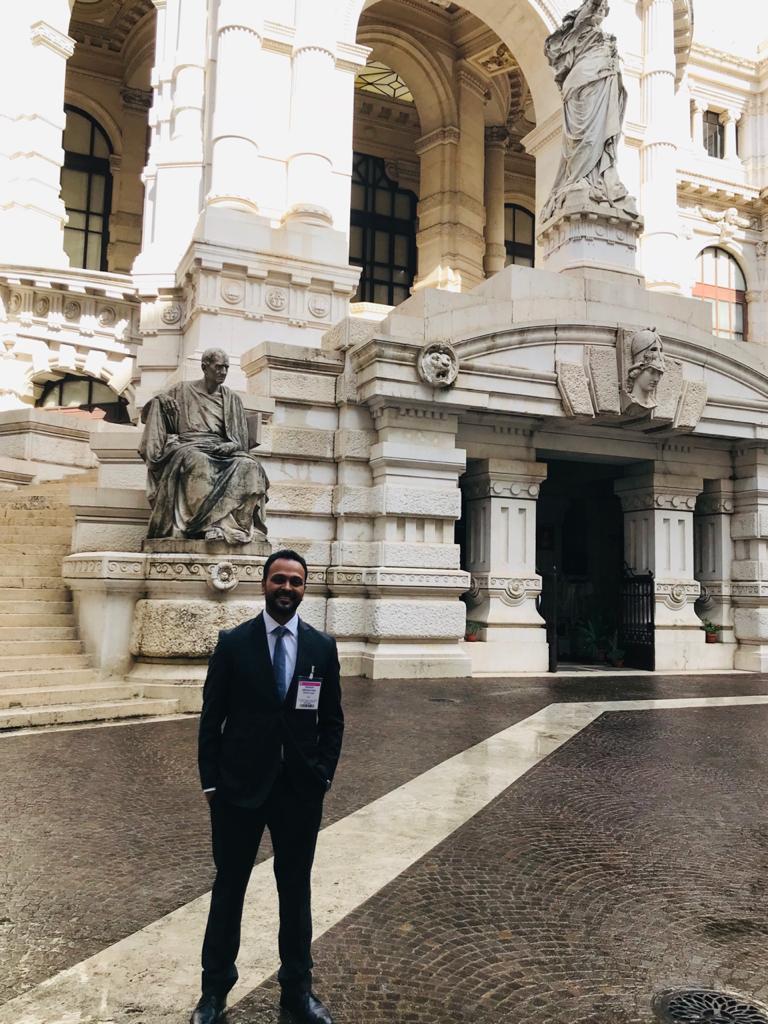


  • Sonal Kumar Singh, Managing Partner, AKS Partners, on managing his firm, studying at Kings College London, and importance of higher education

    Sonal Kumar Singh, Managing Partner, AKS Partners, on managing his firm, studying at Kings College London, and importance of higher education

    Sonal Kumar Singh graduated from CCS University, Meerut, the batch of 2006. He then went on to pursue his Masters from Kings College London. He is currently Managing Partner at AKS Partners, where his work includes business development, to reach out to clients, execute the work and also handle the team well.

    In this interview, we speak to him about:

    • Studying at Kings College London
    • Tips on writing SOPs and traits required to  bag a scholarship
    • Importance of higher education
    • Managing his own firm.


    HOW WOULD YOU LIKE TO INTRODUCE YOURSELF TO OUR READERS? PLEASE TELL US SOMETHING ABOUT YOUR PRE-COLLEGE LIFE?

    I am a corporate and dispute resolution lawyer and the Managing Partner of AKS Partners (formerly known as M/s A.K Singh & Co.) My practice area involves Domestic and International Arbitration, Banking & Finance, IPR & Company Law. Law has always been my passion and there is nothing I enjoy more than working on a challenging case or issue.

    The best I could describe myself is as a person who believes that the only essence of succeeding in life is to constantly strive to learn more and more. I am an ardent believer in the saying “Life itself is your teacher and you are in a state of constant learning”.

    Apart from this, I would describe myself as a book lover and enthusiastic traveler.

    My pre-college life was more of fun and less of studies. I did my schooling from Gyan Bharati School, Delhi and opted for commerce as my stream in the tenth standard. I wanted to be either in armed forces or to be a Chartered Accountant, maybe because a lot of my friends wanted it for themselves. I ruled out armed forces as I was unable to bring my weight down from 100 Kgs till the end of my school life. Chartered Accountancy ruled me out when I was not able to clear my Intermediate Exams. At that time “Law” chose me, as while pursuing my LL.B. (which I was doing more as a side subject), I got an offer from King`s College London to pursue my LL.M. Lot of my friends who were also aspiring to do their LL.M. from Kings College London were more excited than me for my offer.


    HOW WOULD YOU DESCRIBE YOUR JOURNEY AS A LAWYER?

    I would say that my journey as a lawyer started right from the day I started my Masters in Law from Kings College London. I always believed that apart from your course studying, it is very important to interact with the dignitaries of the legal fraternity and gain as much practical knowledge and exposure as one can. While studying, I firstly interned with British Institute of International and Comparative Law based in London where my work profile was of a “Researcher”. During this internship, I extensively researched for a book “Damages in International Investment Law” which was published by BIICL. The author was kind enough to acknowledge my contribution to his work and mention the same in his book.

    After this, I started working with a London based NGO which helped the physically disabled people to get their claims and justice. Fortunately, after my course finished, I had the opportunity to work with and assist Professor Martin Hunter, a renowned dignitary in the field of arbitration. I worked with him as a Research Assistant where I was given extreme exposure to legal knowledge, the working strategies, and atmosphere of a foreign lawyer/firm. After this overwhelming experience of mine, I came back to India where I joined the practice and since then have been constantly working as corporate and dispute resolution lawyer. Meanwhile, I also cleared my exam for qualifying as a Solicitor in England & Wales.

    Over the last 12 years of practice, in the capacity of a partner of AKS Partners (formerly known as M/s A.K Singh & Co.), I have had the opportunity to work with and represent few of the top International and Government companies and clients.

    So I would say my journey as a lawyer till now has been incredibly enriching and delightful but it’s just the beginning.


    HOW WAS YOUR EXPERIENCE AT KINGS COLLEGE LONDON?

    Experience at King`s College London was life-changing for me. It changed me as a person. When I decided to pursue my Masters from Kings College London, the idea was to have a good time in London and also study whenever time would permit. But as soon as I landed in London, I felt differently about myself. On the first day of college, I gave my name for the post of Treasurer for the election of LL.M. Student Committee. I was surprised with my self as I had never taken such initiatives in India. It was just a beginning for me, as I started participating in everything that came my way, be it debating competitions, moot courts, mock courts, student elections and so on. Moreover, I really enjoyed the style of teaching and the exams. For the first time I came across the term “open book exam” and I was very excited and confident as well to top the College as we were permitted to take any book in the examination hall. My happiness was short-lived, as the examination paper was designed in such a manner that it was not possible to find questions in the book and write the paper unless your concepts were clear.


    WHAT ARE YOUR VIEWS ON THE IMPORTANCE OF HIGHER EDUCATION?

    I have always believed that higher education whether in India or abroad gives you better prospects and opportunities. These days in order to have a specialization of a particular law, most people pursue Masters in Law to enable them to choose a particular field of law and getting specialized knowledge in the same. Obviously, great skills and higher education gives a person an edge over others in the job market. But most of all, I believe that if someone, utilizes their time well during the LL.M. it is an extremely useful exposure that anyone can get. Your way of looking at things change. You are completely by yourself and one learns to live life as it comes. Personally higher education drastically changed my personality, perception, and way of working.


    WHAT ARE THE NECESSARY TRAITS ARE REQUIRED TO BAG A SCHOLARSHIP FOR LLM?

    Obtaining a scholarship for LLM especially for universities abroad is not an easy task. Scholarships are either given by the universities directly or through other government or privately funded institutions. The concept of scholarship is taken very seriously abroad as they believe that scholarship shall only be given to those who truly are in need of it or truly deserve it. If one aims to bag a scholarship for LLM, it is recommended that they need to start working beforehand for the same. Earlier you start working better it is. In my experience, the most important aspects or criteria for giving of scholarship is the working or internship background of the candidate, grades of the candidate, writing skills such as publications of articles or papers are given extreme importance.


    WHAT SHOULD BE KEPT IN MIND WHILE WRITING SOPS FOR LLM ABROAD?

    While writing an SOP, one needs to be more realistic and clear in their vision. The purpose of SOP is to be explained in brief to the universities as to what is your background, your achievements and your aim in future.

    One should keep in mind while writing an SOP that you should be well able to communicate your thoughts and vision across and also be clear as to what is the purpose for which they want to pursue Masters and career in Law.


    AS PARTNER WITH M/S A.K. SINGH & CO. (WHICH IS NOW AKS PARTNERS), WHAT ARE YOUR ROLES AND RESPONSIBILITIES AND WHY DID YOU CHANGE THE BRAND NAME OF THE FIRM?

    I was promoted as a partner of M/s A.K. Singh & Co. in 2010. In the beginning, my core responsibility was to head the Arbitration and Dispute Resolution team with around ten advocates. Being a partner in charge, it was entirely my duty to do business development, to reach out to clients, execute the work and also handle the team well.

    Since then I have grown a lot professionally, as when my father Mr. Ashok Kumar Singh who was the founder of the firm M/s A.K. Singh & Co was designated as a Senior Advocate in 2015, he gave up the ownership of the firm and the working and running of the firm came majorly upon my shoulders. However there were other partners at that time, but we had to step up and jointly take the responsibility of the firm. Now in three years, with the right direction and immense support of my seniors and colleagues, we have changed the corporate name and branding of M/s A.K. Singh & Co. to AKS PARTNERS. There is a specific reason to re-brand which was to actually keep up with the market trends and to align our brand or name with the vision of the firm. Also, with the firm’s growing international practice, it was felt necessary to re-brand and rename the firm.


    CAN YOU RECALL THE FIRST TIME YOU APPEARED IN A SIGNIFICANT MATTER IN COURT?

    Yes, I do remember it. It`s still very fresh in my mind. Way back in 2009, I was supposed to appear in a matter with my senior. We were representing a PSU and the legal issue which was involved in the matter was ‘whether the parties are bound by the procedure laid down in the arbitration agreement, even when by subsequent exchange of letters, parties have agreed for a different procedure”. The matter was fixed at 2.15 pm before the Delhi High Court. During the lunch hours, I got a call from my Senior that he will be late and may not reach in time and as the matter is already fixed for 2.15, I should start telling the facts of the matter till the time he reaches the court. I could feel that all the blood drained down my face and my heart started falling in my stomach as I was completely not ready for it. To add to the pain, I saw Mr. Krishnan Venugopal, Sr Advocate, sitting on the other side. Though it was clear that he would be representing the Respondent, somewhere deep inside I was hoping that he is sitting to mention some other matter. I was wrong, he was opposing us in the matter. However, once I started arguing that matter, my arguments went on for almost 45 minutes. I felt relieved once I finished my arguments and turned around to see my senior sitting behind me. He didn’t say anything to me. The other side`s arguments also went on for almost 30 minutes and the order was reserved. My senior went out of the room without saying a word and I was a little confused about his poker face reaction. After fifteen minutes I saw my phone and there was a message from him-“well done”.


    HOW DO YOU SEE THE FUTURE OF YOUNG LAW PROFESSIONALS?

    In the last twelve years of my career, I have had the opportunity to work with young law professionals. Out of that experience and as a general observation I truly believe that the young law professionals are extremely hard working, through professionals and have the zeal to succeed. The qualities are the ingredients of achieving success. So I have no two doubts that the young professionals with their qualities coupled with the opportunities will be extremely successful in future which can be seen from the fact that you would find young professionals in every part of the world in different roles.


    WHAT ARE THE SKILLS ONE NEEDS TO DEVELOP TO SUCCEED IN THE LEGAL PROFESSION?

    There is no set formula or skills one needs to develop to succeed in the legal profession. To succeed in anything in life including legal profession one needs to enjoy what they are doing and be patient. As far as the skills in the legal profession are concerned, it is important to have good communicational and analytical skills. An eye of a perfectionist is what makes you stand out from the crowd. You need to know the art of meeting people and communicating with them. Apart from this, time management and the zeal to learn are the most important things.