Category: Partners, General Counsels and Senior Advocates

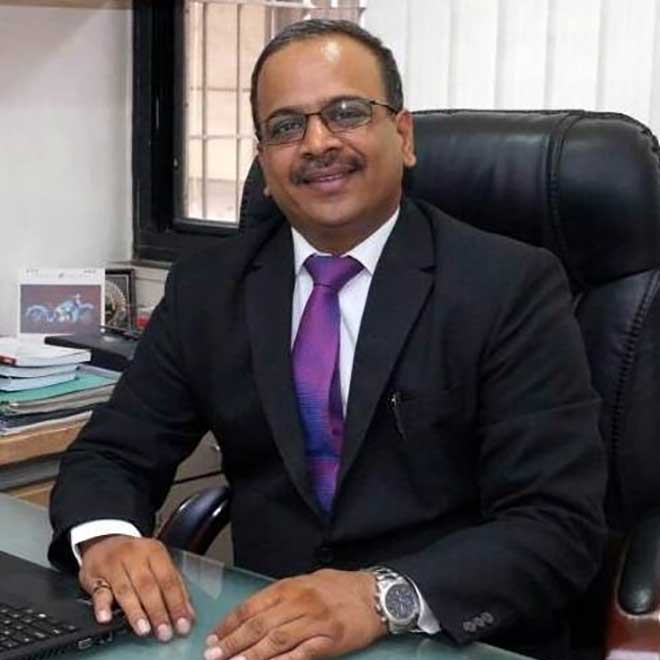
  • Sumit Wadhwa, Partner, IP Litigation, Lall Lahiri & Salhotra on extensive work experience in IPR related issues

    Sumit Wadhwa, Partner, IP Litigation, Lall Lahiri & Salhotra on extensive work experience in IPR related issues

    Sumit Wadhwa graduated from ILS, Pune in 2007. Initially, a B.A Maths (Hons.) from Shaheed Bhagat Singh College, he firmly believes that solving problems, either legal or mathematical is all about using logic and a reliance on logic to solve problems and address issues is crucial in any field. Sumit started his career with Lall Lahiri & Salhotra (LLS) as an Associate in the Prosecution Department and after a year moved to the IPR Litigation and Enforcement team of the firm. He was promoted to Head IPR of the Litigation Department in the year 2015 and later to Partner – IP Litigation

    In this interview he talks to us about:

    • His experience for more than ten years’ in the IP law
    • How with your hard work you can achieve your dream
    • Work ethics which are indispensable for all lawyers in their practice
    • The importance of internships for a law student
    • The discipline of maintaining a work-life balance


    How would you introduce yourself to our readers?

    I am an IP Lawyer, based out of New Delhi, working with Lall Lahiri & Salhotra (LLS) with more than 10 years of experience. I believe that if you work hard, you can achieve your dreams.


    Tell us about your experience at law school?

    The time I spent at ILS was a memorable one and also exceedingly instructive and enlightening. It gave me the tools to become a lawyer, able to look at an issue from differing perspectives and has instilled in me a work ethic that I think is essential for all lawyers in their practice.  During my three years there, I also got the opportunity to meet and interact with people from different cultures and backgrounds, which played a significant role in broadening my outlook and perspective.
     

    Having done Honours in Mathematics, how would you like to describe your transition from mathematics to law?

    I had decided to pursue Honours in Mathematics but was not sure what will I do after finishing the course. After my last year results, I was not quite clear if I wanted to do Masters in Mathematics and thereafter PhD in Mathematics. The uncertainty also stemmed from my underlying interest in legal studies. Since my family was in the business of law books and my brother was also pursuing law at that time, it did seem like a natural trajectory for me to take. The decision was made easier because my exposure to legal and judicial studies had existed since childhood. I decided to pursue Law and got admission at ILS Law College. While both the courses i.e. Mathematics and Law are totally unrelated, over the course of my time in ILS and later at LLS, I have come to believe that solving problems, either legal or mathematical is all about using logic. I believe that the take away here is that every person does not pursue a fully charted course in their lives and one must be open to making changes and adapting to circumstances. I am quite glad that I made this change since my earlier studies gave me a logical bent of mind and clarity of thought that has helped me in my legal work and also allowed me to pursue the field where my aptitude is more suited. I would advise all students to consider their own interests and if a change is called for, then they should not hesitate in making those changes.


    How do you think your degree in mathematics have helped in your law career?

    As I mentioned earlier, a reliance on logic to solve problems and address issues is crucial in any field. I am of the view that the study of mathematics in which you have to solve problems using deductive logic is excellent training for a lawyer. There exist methodological devices which are used in mathematics that are excellent mental training for addressing issues which correspond to those used in the application of the Law. The ability to look at the big picture while also being able to methodically address smaller components of a problem has been useful to me in the practice of law.


    What all law subjects did you find interest in law school?

    I found the following subjects interesting during my Law course-

    • Intellectual Property Rights
    • Code of Civil Procedure
    • Indian Penal Code
    • Family Law

    I was the Topper in Family Law and was awarded – Shri. D.B Bhopatkar, Certificate; Shri J.R. Gharpure Certificate and Principal Pandit Prizes for scoring highest marks in Family Law-II in LL.B at ILS Law College for Pune University in the year 2005-06. I was also honoured with a gold medal for scoring the highest marks in the subject Civil Procedure Code by the University.


    How did you take a decision to pursue a career in IPR? What in your opinion should a law student keep in mind while choosing a particular domain of law to pursue a career in the same?

    I was fascinated with trademark law. Particularly when you are studying IPR, case studies about different brands and their protection strategies can be very interesting. I found that IPR, which encompasses so many aspects of business and legal areas, allows for a wide range of issues to be addressed and while allowing for specialization, also provides new avenues for challenging one’s mind. This became quite clear during my internships with some of the best IPR law firms. Consequently, I decided to practice IP law and also did a Post Graduate Diploma in Intellectual Property Rights, from National Law School of India University, Bangalore.

    I believe that the student should try to do as much internship as possible while pursuing Law. The internships should be done with Lawyers/Law Firms practicing different fields of Law to obtain maximum exposure to practice in various fields. This will enable a student to make his/her mind about the specialization that attracts that individual. Additionally, one must always keep factors like personal aptitude and interests in mind.


    What is your opinion on grades at law school? Many law firms and organizations look for innovative people and the yardstick they use for short listing people for the job in their organization is the marks. Do you think the system is flawed?

    The grades/marks that a student obtains at law school can be immensely helpful to organisations to ascertain how well the student has studied /knows about the subject. Therefore, such marks and grades are important and cannot be discounted. Having said that, I also believe that these marks are not the only indicators of a student’s merit and there are various factors that need to be considered when selecting a candidate.  If anything, marks or grades should be lower in an organization’s order of priorities when looking at a law student.  Internships are crucial to a student’s resume and the extent of practical knowledge that a student obtains from those internships as well as nature of those internships is vital in selecting a student. Similarly, extra-curricular activities undertaken by the student are very important indicators of certain qualities like initiative, hard work and problem solving, all of which are very relevant criteria for a lawyer. The other important factors that a law firm particularly must prioritize over marks and grades are the ability of the student for rational thinking and problem solving as well as ability to cooperate and work as part of a team. Thinking on your feet is also equally important for a good lawyer and one must be able to address hypothetical problems of law in a cogent manner during an interview.


    What all activities did you take part in your law school?

    I participated in Legal Aid programmes where we had gone to villages and held legal awareness programmes to educate people about their rights.


    Please share with our readers about your experience of transitioning within LLS from an Associate to a Partner of the firm.

    It has been a great working experience at LLS. I have worked under the leadership of Mr. Rahul Chaudhry, Managing Partner; Ms. Anuradha Salhotra, Founding Partner and Ms. Veena Poolakal, Partner.  I have learned a lot at this firm and believe that I truly became a lawyer by working at LLS. Law school can of course give you the tools and education that you need but it is only when you start working that you realize the difference between an academic study of the law and its practical application. LLS is such an organisation for me where I have been allowed to grow and learn. LLS provided me with a team of seniors who are leaders in the field of IP Law and as a new lawyer, I was able to gain insights into the workings of this field of law through their work.

    Over the years, I have had the chance to work at all levels in the team, starting as an associate. As a result, I have been able to understand the scope of responsibilities at each level and the firm has equipped me to handle work with a degree of understanding that I think I would not have otherwise obtained. Having begun my career here, I am able to work in a manner that is in line with the firm’s philosophy and work culture. The importance that the firm places on client satisfaction and flawless work are now also ingrained in my work ethic which echoes the firm’s.


    What all internships do you think a law student must undertake during their time at law school as a student?

    As I mentioned earlier, internships are a vital part of legal education and are also important when considering a candidate for a job. A Law student should undertake as many internships possible while pursuing law and in as many different fields of Law as possible. Even if you are sure of the field of law you want to pursue, I believe obtaining experience of and exposure to other practice areas allows for a student to become better-rounded. The nature of internships is also important and if you want to pursue a career in a particular field then you must try and obtain experience in various aspects of that field. For example, if you want to pursue a career in IP Law, obtain a variety of IP Law experience in internships, such as working on copyright issues, trademark prosecution or litigation. It is also important to intern under Trial Court lawyer to understand the court procedure, functioning, arguments, etc.


    What is your average workday experience like? How do you maintain a work-life balance?
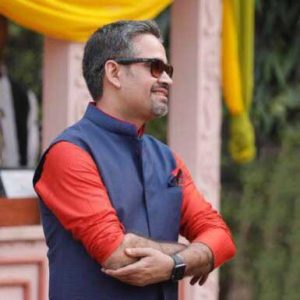
    Work-life balance is important to maintain in order to ensure long term efficiency in your work and also for self-satisfaction with one’s professional life. Since I work in the litigation team and a large part of the day is often spent in court, I have always chosen to live closer to office to reduce time spent in commuting to and from office. This has allowed me to be able to work efficiently while at work but also be available to my family when required.

    For any successful lawyer, certain amount of discipline is also essential. So, time management and prioritising work is vital. Being a litigating lawyer, a typical work day for me starts around 9 at the office after which a few hours are also spent at court. I have found that the scope of my work is quite varied and I work on multiple types of legal actions, such as trademark counterfeiting, IP infringement actions, advertising related matter, customs – registration and enforcement, domain name registration and enforcements. As a result, every day can bring a different challenge and the work is always interesting. As a partner, I also spend time working with members of my team and am fortunate to have seniors who are available to advise my team and me whenever we need any assistance.


    What is your opinion about the concept of mentor and mentee in the legal fraternity?

    In my opinion, this is one of the most important aspects of an individual’s grooming and subsequent growth. Just the way even top professional players (including world’s top most ranked players in Tennis, Badminton, or the teams in football, cricket, hockey etc.) keep experienced coaches, the mentor is an all-time friend, philosopher and guide to be revered as well as a fall back option to seek clarity in complicated matters or conflicting interests and to prevent burn out etc.


    Tell us a bit about the works that you have done so far in the firm.

    I started in the Trade Marks – Protection department of the firm wherein I have drafted replies to the examination reports, attended hearings etc. Thereafter, I was shifted to the Litigation department of the firm – wherein I have undertaken handling of litigation matters, involving the drafting of the pleadings/petitions/applications, attending hearings, conducting civil and criminal raids, briefing seniors, filing domain name actions before the WIPO and .IN registry, Customs applications. I have also done few non IP cases relating to recovery of money, Debt Recovery Tribunal matters.


    How do you stay up to date about the recent developments in all the fields where you work and have an interest?

    I regularly read PTC (Patent Trade Marks Cases) journal, cases on the subject on Manupatra, Linkedln Updates, Spicy IP and other internet websites which provide latest updates on various aspects of the subject. In particular, I try to keep track of some of the most important cases while they are taking place, especially those that contain issues of practical importance or important issues of law.


    What advice or suggestion would you like to give to our readers, who are predominantly law students?

    Pursue your dreams and work hard with full dedication, you will be able to accomplish your dreams. I believe there are no short cuts whether it is in your legal studies or in practice. The legal field involves a continuous study of law and keeping up to date on developments so one must develop a habit of reading new cases and legal precedents, no matter how busy you might be. As an aside, I would like to mention that there can be no substitute for a thorough reading and analysis of all aspects of whatever issue you are tackling, whether at college or in your profession.

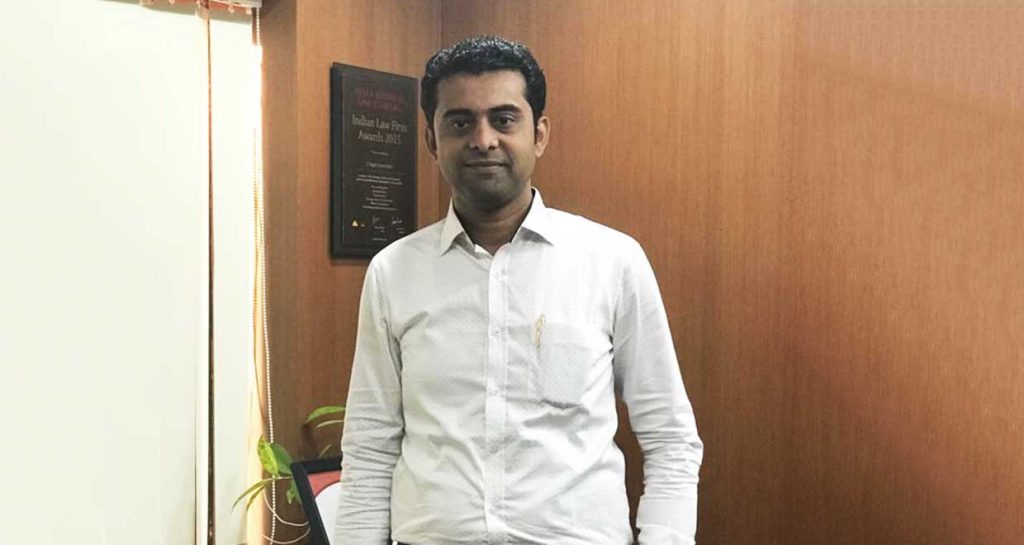
  • Arjun Perikal, Partner, J. Sagar Associates, on specialising in M&A, Corporate Laws and Dispute Resolution

    Arjun Perikal, Partner, J. Sagar Associates, on specialising in M&A, Corporate Laws and Dispute Resolution

    Arjun K. Perikal pursued his LL.B from K.L.E. Society’s Law College, Bangalore in the year 2003. Currently, he is a Partner at Bangalore office of J. Sagar Associates. He specialises in Merger and Acquisitions, General Corporate Commercial and Dispute Resolution. He also advises on the incorporation of companies and general corporate secretarial compliance, corporate contracts and mining licensing. In addition, he also has an extensive experience in advising clients on setting up of townships and liaisoning with Government / Statutory bodies for approvals/consents.  He has been practicing law for fourteen years. He has previously worked with AZB & Partners, Bangalore, and M & C Partners Bangalore.

    In this interview he talks to us about:

    • His motivation to pursue law as a career;
    • The nature of work and his experience as a corporate lawyer;
    • His opinion on the efficacy of the Companies Act, 2013.
    • The essentials of a good corporate lawyer.


    Given that most of our readers are law students, how would you introduce yourself to them? Do you come from a family of lawyers?

    Lawyer by Default! I do not come with a family legacy in law profession, for that matter it does not matter in today’s world. My father is a businessman and my extended family is into politics. I joined Law College to aid me in understanding the founding principles of our society and to support me in my future endeavour. I used to read leading business daily newspapers right from my teenage. Considering rapid economic legislations during 2000’s I felt adventuring in corporate law, about which I was passionate, is a good professional career option. My family and friends encouraged me in my decision.


    What motivated you to pursue a career in the legal field after obtaining a BSc degree? How has this combination been useful to you in your work?

    My graduation BSc was in economics, mathematics and statistics and it was always my plan to take up law studies after graduation. I believed a study of law will aid in better management strategy and be a good consultant. On hind side my economics and law background is helping me to understand and advise clients better. In between I did a management course before joining law college.


    Did you take up any internships or other extracurricular activities?

    I did not do any formal internships during my law college. But I was helping my father in some of his civil matters, business communications and observe his negotiations right from my school days. I used to observe my father’s lawyers work, prepare notes, make filings, argue matters and obtain order copies. I guess that was an intense internship and learning. I believe that experience made me acquainted with the ground work to be done for any civil litigation. Half your case is won, if you know your facts inside out. Then you need to have the acumen to think outside the box and make a crisp and gracious submission for getting an effective order.

    I did participate in couple of moots and client counselling competition. I was from a small old law college called KLE Society’s Law College (which I joined as it was walking distance from my home). There were invites for various competition and hardly any takers from my batch. I am thankful for support I got from my college to participate in such competition, when I evinced interest in participating in such competitions. My team was adjudged as runners-up at the National Level Client Counselling competition held at Kerala Law Academy. Wining over participants from 30 odd premier law institutions participating and going upto the finals was a great morale booster.


    What were your areas of interest in law school and how did you cultivate such interests?

    Constitution law, Corporate law, Law of Contract and Transfer of Property Act have always been my area of interest and my reason for pursuing law as a career.


    What were the factors that the recruiters took into account while hiring you at AZB & Partners?  Can you tell our readers about your work profile as an associate there?

    I wanted to work with a lawyer who specialised in Company law matters. So I went to the High Court registry to find out who was a good company lawyer and I found out about my senior Mr.Murali Ananthasivan. Mr.Murali was an independent lawyer in early 2003. I met him in August 2003 and he mentioned he was shifting to AZB & Partners and I could come to meet him there after a month. After persistently following-up for an opportunity to work with him, I was offered an internship opportunity in Oct ‘03. Then in Dec ‘03, I became an associate of CZB & Partners (It became AZB in 2005). I did not know much about CZB & Partners until I met Mr. Murali and his wife Mrs. Jayshri Murali, except for a vague idea that Mr. Soli Sorabjee’s daughter has opened a corporate law office in Bangalore. My plan B in case, I had not got the opportunity to work at Mr. and Mrs. Murali chambers, was to approach Zia’s office. But as luck had it, I got both under the same roof. The strong subject hold of Mr. Murali, the passion of Zia in grooming her associates to be of world class, Mr. Vivek K.Chandy’s (the other partner of AZB Bangalore) push towards meeting deadlines, and the seamless office atmosphere at AZB to work across offices and partners, helped me shape as a better corporate lawyer.


    You subsequently joined J Sagar Associates. How did this appointment happen? What is that you like about JSA?

    I followed my Senior Mr.Murali to JSA! Mr.Murali is a great person to work with. I am still learning to be  composed and cheerful as he is. I have never seen him stress over a difficult client or a case. The fundamental principles on which Mr.Jyoti Sagar has founded this institution is commendable. I believe Jyoti is a role model in Indian legal  fraternity to have walked the talk, by founding a large institution and exiting on his superannuation. Our current Senior Partner Mr.Amit Kapur is setting the new benchmark on firm standards. Glad to be part of this firm.


    What factors contributed to your being elevated to the position of a Partner?

    Honestly, I do not know what factors elevated me to the position of a Partner. But I do know I did my work diligently, managed to get clients to firms fold even from my AZB days and maintained a good professional relationship with all my colleagues.


    Can you tell our readers about the nature of your work and responsibilities as a Partner at a leading law firm? What does a typical day of work look like for you?

    I have a mixed work profile ranging from corporate structuring advisory, corporate and civil litigation, contract drafting to negotiation and property documentation. As a Partner we need to be on the top of legal developments, manage clients, constantly groom associates, evaluate and trust their skills and build a team to serve clients better.


    Can you recall your first time appearing in court, or a time you have argued a significantly important matter? Can you describe such an event and how you prepared for it?

    I don’t actually remember my first appearance in the court. But my first argument was before a consumer forum. I read facts of the case thoroughly, made notes, did some research and pulled out precedents to support arguments. My senior was to come for the matter, but for some reason he probably let me argue. I got a favorable order and it was really proud of myself as I had only been in this profession for a year at that time.


    The changes to the companies Act and the emergence of the IB code has revamped the corporate laws in India. What are your views about such developments? Are there any significant new developments you strongly agree or disagree with?

    The change to companies act as I would like to call it is like old wine in a new sleek bottle. While some changes are welcome, some amendments are made thinking every corporate default as a crime. This is hindering the ease of doing business in India. As a relief, the Government is constantly trying to bring in amendments and notifications to correct the anomalies. We also need to appreciate the fact that the Government is reactive to the issues and challenges raised, with this a proactive holistic thought process for better governance would help things get better soon.


    You have extensive experience in dispute resolution through arbitration. Do you think arbitration is or should be the future of dispute resolution in India?

    Arbitration is good way to resolve contractual disputes but we need to go to Court to enforce statutory rights. Resolution of the cases by Court vis-à-vis Arbitration has its own pros and cons. I’m sure both will co-exist.


    Did you ever consider pursuing higher education? What are your views on its necessity or importance? What advice would you have for our readers who are undecided about pursuing higher studies?

    I did not consider higher studies in law. I think it is good to pursue higher studies after at least 3-4 years of work experience. One will then know which subject to choose and would appreciate the learning better.


    How do you remain updated with all the new developments in your fields of interest and practice?

    Read updates and journals, interact with colleagues and peers.


    What are the factors you take into account when hiring fresh graduates or young lawyers? How can law students develop the qualities you look for to increase their chances of landing a job?

    Integrity, proficiency in fundamental principles of law and capability to make logical analysis are key characters that I look for in the fresh graduates. Law students should learn to develop patience, focus on their subject of passion, maintain mental composure and never do anything prejudicial to their integrity before the bar and bench. I recollect Zia in my annual appraisals would always say, “clients may say things, but I don’t go before the Bench unless I am convinced and have introspected the facts”.


    What advice do you have for our readers who are primarily college students?

    Do not be swayed by short-term monetary benefits and titles in law firms. Law is a profession you can practice till your brain stops functioning, so equip and enrich knowledge for the long haul.

  • Satyajeet Desai, Advocate and Editor of Mulla on Hindu Law, on building an illustrious practice in litigation

    Satyajeet Desai, Advocate and Editor of Mulla on Hindu Law, on building an illustrious practice in litigation

    Satyajeet A. Desai qualified in law from L. A. Shah College, Gujarat University, in 1988. Soon after graduation he started practice under the tutelage of Suresh Shelat and thereafter Kirtikant Nanavati. In the years to come he worked extensively in various laws including Company and Securities Law and garnered a lot of recognition and accolades.

    He is currently practicing at the Gujarat High Court and is known widely as an authority on Hindu Law. He is the current editor of “Mulla on Hindu law” and of “S.T Desai on Partnership”, both published by the LexisNexis Butterworths.

    In this dialogue with him, we speak to him about:

    • His life as a lawyer and a lecturer.
    • His role in contributing to the literature on Hindu Law.
    • His experience with Companies, International Airlines and Individuals.
    • His ideas about evolution of “Advocacy” as a profession.


    Please tell us a bit about your pre-college years, your life as a student and your ambitions as a young man. Did you have lawyers in your family or among close relatives who inspired you?

    Every youngster has dreams of following some profession or doing some business. Academically, I was better than an average student, my strong points being languages and history rather that mathematics and science. I always scored really well in languages and history and realising this, I decided on the profession of Law as my career choice. I believe that what shapes one’s career decision is not only one’s choices but also the atmosphere one surrounds himself with. In my case, my grandfather, late Justice S. T. Desai has been my hero and idol. Observing him working as a leading Senior Advocate at the Supreme Court, inspired me to become a lawyer. Again, I come from a long line of lawyers, with my great grandfather T. R. Desai and his father R. K. Desai before him both being lawyers of repute.


    How valuable would you say your legal education was and when did you actually experience the learning curve? Also, looking at the booms and busts in the legal industry, what do you think about the future of legal education in India?

    In our time during the Mid-Eighties, the law programme was for three years. There were no five year courses offered as they are today. We had some fine professors and visiting faculties, so overall, my law college experience was quite good. The future augurs well for the profession.

    The Legal education in our country is good, but the number of law colleges should not mushroom much. I would want successful lawyers to come forward and teach the students, because their experiences would benefit them more, as compared to only learning the basics at law schools. I would love to quote an incident during my student days here.

    Once the Professor for Drafting and Pleadings, who was a leading civil court practitioner himself, gave us a home assignment, asking us to draft a Plaint on behalf of an illiterate lady whose property had been taken over by fraud. We all turned in the assignment, duly completed. After a couple of days, the professor told us that though the Plaints were good, only one would pass muster that was mine. The reason was that apart from the issue at hand, I also concentrated on the Plaintiff being illiterate and I placed a thumb mark where the Plaint was supposed to be affirmed. He pointed that out to all of us.

    Later, he asked me how I hit upon the correct thing to do. I told him that “I probably looked up for the same book from which you gave us the assignment.” He said, “You have managed to do two things today, draft well, and look up for older precedents”. This was a valuable lesson indeed!


    Did you participate in any extracurricular activities while at law school?

    I participated in moot court competitions when I was in law school. There were not many moot court competitions then, but that was a good learning experience for me. It also helped me to work with what was to come later. So far as the internships are concerned, during our early years, we did not have any formal internships as in the five year law programme today, but as I said, I wanted to be nothing else but a lawyer, so, I interned with Mr. Suresh Shelat, a Senior Advocate at Gujarat High Court, from the end of the first year at law school till my last year. With this Internship, I got hands on experience of Courts and Litigation and this helped me get an early exposure to the world of Indian courts.


    What are your areas of interest in the legal field?

    I have always been interested to work on commercial laws, and I have been working on the same as well. I also had the opportunity of working on an interesting matter on Aviation Law, the matter relating to an air crash. The case involved an International Convention to be interpreted. For me, the point of interest was the reciprocity arrangement between the two airlines, The carrier that crashed and the International Airline, I represented. I succeeded to show the lack of reciprocity arrangement between the airlines.

    Another field I am very passionate about is Hindu Law. It is fascinating and challenging as the basis lies in old and classical Hindu Law, despite legislations like the Hindu Succession Act and Hindu Marriage Act.


    How were your early years as a lawyer?

    My professional journey as a lawyer was full of challenges. After working with Mr. Suresh Shelat, I worked with Kirtikant Nanavati, Senior Advocate, at his law firm. I would like to share here an incident- once, when I was working with Mr. Shelat.

    Mr. Shelat was arguing a matter before the High Court, which spilled to the afternoon session. The issue was interesting, so I went to the High Court Library in the afternoon and I looked up on a particular issue that I felt was important. I found a judgment on that issue and showed it to my senior. In the course of his arguments later, he referred to that issue and the judgment. The court allowed the matter based on that issue. When the court asked him about the issue, my senior pointed out last and pointing towards me he told the court that, ” my associate Mr. Desai must take the credit for that.” I was floored with the magnanimity shown by Mr. Shelat to a raw junior at the Bar.

    When you are a junior, you not only try to do your best so that it helps you develop as a lawyer, but you also try to get a foothold in a very challenging profession. I believe that hard work and dedication, both, are required to excel, no matter what the field be.


    You have a long and illustrious career as one of the most reputed advocates in India and as a top notch Jurist. What are the primary soft skills necessary in order to have a successful career in the legal profession?

    A lot of times lawyers come across as assertive and opinionated because of the nature of their profession. But that is a part of the overall build-up of a lawyer. I would like to mention a few soft skills, as you call them, which are necessary to have a successful career in the legal profession.

    The first and foremost being that a lawyer must have the patience to listen to his client and gather the necessary information that will help him or her understand what the client wants. Another skill that I think is important is guiding the client properly. Clients sometimes come to us wanting to take immediate legal recourse by the way of litigation. The real success of a lawyer in such a situation is, to try and ascertain whether the issue can be settled by correspondence, and or negotiation. For me, Litigation is always the last resort.


    How was the court atmosphere before as distinguished from now? Did judges talk kindly to new orators? Also, please share with us your experiences during the first few sessions of the court? Do you think it has become more difficult for a fresher to be successful?

    When I initially started my practice, we had some Judges who were really good to the juniors. Their encouragement to perform always encouraged us to better ourselves. I would again like to quote an incident here.

    As a newly minted lawyer, I filed a Petition on behalf of an employee of the Central Government. The petition was against his new transfer soon after he had been transferred to Ahmedabad. The rule then was that normally an employee should not be transferred for 3 years. The judge during the initial hearing, probably wanting to know whether I had researched on the issue, asked me whether there was any judgment on the issue?

    On my affirmative reply, he asked me to come back in the afternoon session with that Judgment. I said that I had the judgment right there and I sought the permission to site it, but before I could open the book, the judge issued notice and granted a stay. He told me that he wanted to find out whether I was ready with the precedent or not.

    I would also like to quote one more incident which is close to my heart. A lawyer had filed a revision application challenging an order of the Civil Court. I was on the opposing side. I succeeded at the end of the hearing. A few months thereafter, I filed a similar matter with the same lawyer opposing me. He pointed out the earlier order to the Judge. The Judge looked at me, smiled and said, “Mr. Desai, you can’t win them all. Petition Dismissed.” I replied with an answer that a similar thing happened to Abraham Lincoln when he was practicing law. The judge asked me about the incident. I replied that when Lincoln was defending a matter in the morning session, the Plaintiff failed and Lincoln succeeded for the Defendant. He was appearing in a similar matter for the Plaintiff in the afternoon session. The judge told him that he must fail now because he succeeded in a similar matter in the morning session. To this. Lincoln’s reply was a classic. He said “I was wrong in the morning session, so I must succeed now.” Well, I lost the matter, but the Judge asked to borrow the book I read the quote from.

    According to me, to become successful, and by that, I don’t mean monetarily, one must put in hard work and inculcate the habit of general and vast reading, even apart from law. For a fresher to be successful, he or she must put in the labour. Success never comes overnight.


    In the past you participated in the Law Commission Workshop on making changes to the Hindu Succession Act. How was the experience?

    Yes, I was invited to a workshop by the Law commission in 1998, when changes to the Hindu Succession Act were being debated upon.

    For one, the experience was very satisfying, as you feel that you are helping towards the progressive development of law. The recommendations presented in that workshop ultimately culminated into amendments to the Hindu Succession Act in 2005. We were debating over a particular issue and one of the delegates posed a question to which Justice Jeevan Reddy, the then Chairman of the Law Commission replied. Justice Leela Seth, the then Vice Chairman, looked at me and asked about my thoughts on the issue. In a lighter vein, I replied that whatever I wanted to say, I already wrote in Mulla’s Hindu Law. Of course, I answered the question thereafter.


    You are a visiting lecturer at several colleges. How is it important for a lawyer to pass on the learning and the experience?

    Currently, I am a visiting faculty at LJ College in Ahmedabad. I have previously lectured at Ahmedabad University, United World Law College and Knowledge Academy. I am often called for guest lectures at various colleges. As I mentioned earlier, I believe that it is very essential for a practicing lawyer to teach at least a few times a year .It would help the students get hold of what they will be facing when they enter the profession. Knowledge only increases when you pass it on.


    You are greatly interested in writing and reading outside of law, can you throw some more light on your hobbies?

    So far as my hobbies are concerned, I would say that reading is a must. I get drawn into whatever book I read, whether it be fiction or non-fiction. Writing on law is passion and a prayer for me. People go to places of worship to pray but for me, writing is my prayer; it’s my holy grail. I would also add here that if you want to write on law, firstly you should be passionate about the subject you want to write about and secondly, you must research it well. Your analysis of law must be palatable in order to be accepted. Also, the language must be lucid and proper so that the reader immediately grasps the point .


    What were the landmarks of your career? Please share with us the challenges and achievements you came across on your journey from being a fresh graduate to one of the most renowned lawyers/jurists in Family Law practice?

    Success is a relative concept, looked at from different angles and eyes. I have appeared for Companies, International Airlines, and a lot of Individuals. You may feel that I am underplaying the situation, but I got great satisfaction in appearing for the companies that challenged an order by the Government, and we were successful in that challenge. But I got the greater satisfaction when I appeared for the three poor brothers whose lands were resumed by the Government, and I successfully helped them out, pro bono. I also do a lot of opinion work on Hindu law and some factual situations I came across, fascinate me even today, because the facts for the most part, are always unique. Being invited for the workshop on the Hindu Succession Act was a landmark for my career.


    You have several best-selling legal books like ‘Mulla on Hindu Law and S T Desai on Partnership’ to your credit. How important is writing for you?

    Legal writing is very important for me. It is my passion. After all, words are a lawyer’s tools and what better way to contribute to this great profession than to give something back by writing on subjects that you are passionate about.


    Can you describe a regular day in your life?

    My typical day starts around 5 AM. I Get up, have a rejuvenating cup of coffee, start reading for whatever court work I have that day, go to court and attend hearings I have. Back home after court, I attend the meetings with clients (in my case non litigation clients on Hindu law as well). I teach once a week, which keeps me firmly earthed and I also stay in touch with academia.


    What advice would you have for our readers who are primarily college students?

    My advice to law students is that study well but also indulge yourself with general reading as that will help you in building your overall personality as a lawyer. Amongst all the professions, law is probably the only profession where you are required to interact a lot verbally. Keep reading and stay updated with the current news and events. You never know when it might come to your aid, After all, a lawyer is required to think on his feet. General reading helps a lot. Your arguments may sound even better if they are interspersed with quotes or similar situations or even humour at times.


  • Shravan Kumar Bansal, Senior Partner, United IPR on building a successful practice in intellectual property law for over a span of two decades

    Shravan Kumar Bansal, Senior Partner, United IPR on building a successful practice in intellectual property law for over a span of two decades

    Shravan Kumar Bansal qualified in law from the Campus Law Centre, Delhi University in 1989. Shravan is a science graduate in the field of Botany, Zoology and Biotechnology and armed with a degree in Law and substantial expertise in patent litigation he is a renowned expert in IPR litigation, counterfeiting and Anton Pillar actions.

    With experience spanning over two decades in litigation he also has expertise in prosecution and enforcement of patents, trademark and copyright cases. He advises clients on diverse aspects of intellectual property including ownership and enforcement matters in India and abroad. He is on the panel of number of Indian as well as international companies and trade-oriented organizations. He is an active member of accredited International IPR organizations and has to his credit several landmark IPR reported judgments passed by different courts in India.


    In this interview, we speak to him about:

    • His journey as a litigating lawyer
    • Importance of IPR in the contemporary times
    • The task of taking over family legal practice
    • His experience with international IPR organisations and landmark judgments in India


    How would you introduce yourself to our readers? Do you come from a family of lawyers?

    I do come from a  family of lawyers, and I belong to the third generation of lawyers in my family. My grandfather was a leading taxation advocate and the Intellectual Property practice was started by my father in 1954. Practising solely in the field of IP Law since 1954, we happen to be one of the first full-service IPR Law Firms in the country dealing solely and dedicatedly in IP Law.


    What motivated you to pursue law after pursuing the sciences? How did you realise your interest in the legal field? How was your experience at law school?

    Science was a subject of personal interest to me as I have always maintained that studying science opens one’s mind to greater curiosity and spirit of inquiry and develops analytical ability in a person which really helps a person in any and all spheres of life and profession. Studying science at the graduation level in the field of Botany, Zoology and Biotechnology has really helped me in Patent Litigation matters and Patent Filings/Analysis of inventions in my profession. My interest in the legal field developed when I was quite young as I was watching my father argue important matters in the court, which gave me a sense of passion and pride and made me want to follow in his footsteps. My experience at law school was one which is difficult to forget, having a great time with friends enjoying college life and reading interesting subjects of law at law school, followed by my daily visit to my father’s law chamber where I used to spend hours on endafter law school, learning the nuances of this profession.


    What piqued your interest in the field of Intellectual Property Law? Can you describe the relevance of this field today in context of domestic and international law?

    I believe that Intellectual Property Law is one of the very few domains of legal practice (apart from Arbitration Law possibly) which is truly global in its outreach and relevance. Criminal Law, Civil Law matters and other domains of the legal practice I believe are nationalized and localized in their approach and relevance; as such laws are limited and vary/differ from one jurisdiction to another. Intellectual Property Law, as opposed to these, offers a global platform for practice in terms of serving a global clientele for their brand protection and IP matters. This is one of the few factors about the IP practice which captures my interest and imagination.

    As to your question about relevance of Intellectual Property law in today’s scenario with respect to domestic and international law, I believe Intellectual Property law is one of the few domains in today’s time which is playing a pivotal role in shaping national and international polices of nations and legal structures at large. Intellectual Property law is intrinsically related to a country’s economy and commerce. The degree of protection which a country is able to offer to the industry in terms of the legal framework in place to protect and encourage intellectual property directly impacts the level of commerce and innovation taking place in the country, as well as the amount of foreign investment coming in. This is the reason why we can see a marked shift in the policy and intention of the present Indian Government which is taking huge steps in areas such as digitizing IP Registration processes, lowering the time taken to grant trademark, copyright and patent registrations by the government and promoting easier enforcement of IP rights through support of enforcement agencies like the Police, Customs and Courts.


    What are your views on the importance and necessity of higher education? What would be your advice to readers undecided about pursuing further studies?

    “Learning is a treasure that will follow its owner everywhere”, is what I believe. However, I do not believe that learning only comes from higher education such as a master’s degree or further higher studies. Of course a Masters Program or such other higher study programs do add to one’s skill set but so does practical experience in the profession and I believe that if one is armed with a basic bachelor’s degree in law in this country, he has ammunition enough to build on that through his own practice and practical learning experiences in the profession.

    I have seen instances of advocates benefitting from pursuing higher education and have also seen others benefit from using those years to excel and learn during  practice of the profession instead.


    Can you recall the first time you appeared in court in a significant matter? How did you prepare for this? What is the attitude of judges and senior lawyers towards young lawyers?

    In my opinion, the attitude of judges and senior lawyers towards young lawyers in India is highly motivating and encouraging as opposed to the general perception which exists, that the attitude is not very positive and embracing. I believe that if a young lawyer possesses the required legal acumen, is well read with his research and has a positive, accommodative and learning attitude, he would be well received by his colleagues and also by senior lawyers and judges.

    I do recall the first time I appeared in court in a significant matter – It was before the Delhi High Court in a Patent Infringement matter. I had prepared thoroughly for this and was lucky enough to have the relief granted in my favour.


    You have been involved in various landmark cases that have shaped the law relating to IPR in India. How did you prepare you arguments in cases where the law was silent?

    Yes, I do feel privileged to be a part of landmark cases which shape the law relating to this domain in India. Interestingly cases do crop up time and again where the law is silent on a complex situation of fact and for which the statue doesn’t really have a straight answer. I believe the rules of interpretation of statutes and borrowings from international jurispudence/case law come in handy in such situations and I have seen judges in my own cases rely on international jurisprudence and arguments based on suggested interpretation of statutes to grant reliefs in such cases.


    Can you tell us about some landmark matters you have worked on and how the court interpreted the point of law?

    Again, I feel privileged to have have had the honour of working on various landmark cases which have helped shape the Intellectual Property jurisprudence in this country through judgements of the courts in these cases. Some such cases are where the court recognized the rights of my clients in the shape trademarks of their products (non-conventional trademarks) for the purpose of enforcement on the basis of the wide use, reputation, goodwill and trans-boundary use of the marks, even when my clients did not have statutory trademark registrations of these marks. The court interpreted the point of law on the basis of the doctrine of passing off in trademark law.

    In a separate set of cases, the courts recognized the rights of my clients in the colour combinations used on their packaging for the purpose of issuing and injunction against the opposite party, restraining it on account of creating confusion in the market following the doctrines of trademark infringement, passing off and rights in trade dress and colour combinations.


    How are custom duties imposed on IPR? How does this tie to international trade law?

    (Shravan has worked closely with governmental authorities in relation to matters of customs enforcement for intellectual property in India.)

    It is true that my colleagues and I have had the privlege to work closely with the Indian Customs office in relation to enforcement of intellectual property at the borders. We have have been extensively practicing in customs enforcement & conducting capacity building training sessions on IPR laws with the customs officials of India across various land, sea and air ports in the country. India being a signatory to the TRIPS Agreement has an obligation to enforce Intellectual Property Rights at the Territorial Borders. In compliance with the said obligation, India came out with IPR Rules for Customs Enforcement in 2007 after which we were one of the first law firms to register our clients’ Intellectual Property Rights with the Indian Customs to facilitate enforcement. IPR enforcement is an integral part of International Trade Law as it helps in ensuring ‘fair trade’ which is one of the founding principles of the World Trade Organization (WTO) and one of the bed-rock principles guiding International Trade. This it ensures by filtering out counterfeit, sub-standard, spurious and harmful products at the territorial borders thus ensuring that legitimate commerce is promoted and countries are not dumped with counterfeit products which more than anything else, affect a country’s economy by lowering its duty collection at the borders and the investment environment as a whole.


    How significant have WTO negotiations and the TRIPS Agreement been in protecting and enforcing trans-boundary intellectual property rights? Has this interest been balanced with social and distributive justice that is significantly important to developing countries?

    I believe WTO negotiations and the TRIPS Agreement which brought about the origin of an obligation on member countries to enforce IP Rights at the territorial borders has been hugely significant in protecting trans-boundary IP Rights. Further, I believe that the enforcement of IP Rights at the borders has in fact resulted in greater social and distributive justice being served as the Indian consumers have been protected from spurious and counterfeit goods due to this enforcement regime and the Indian Government has also benefitted from prevention of loss of revenue resulting from tax evasion and lesser duties being paid by importers of counterfeit goods, which in my opinion is a boon for a developing economy like India.


    As a proponent of academia, do you feel that law schools produce socially relevant lawyers equipped to handle the real world practice of law?

    I feel this is an immensely relevant question and a topic which needs greater discussion across the industry and I am glad to answer this. Though I believe that law schools produce exciting talent in terms of the potential and energy that fresh law graduates possess, the real world practice does come down hard on everyone which is true not just for the legal industry but in any domain, profession or business. I believe law schools can consider increasing the preparedness they provide to youngsters on how to deal with and what to expect when they land in the real world practice of law, which can help fresh law graduates immensely. As far as imparting the correct information and skills is concerned, I believe law schools in today’s time are doing a great job, especially when you look at the practical exposure they provide in terms of a higher stress on internships, moot court competitions and other such activities.


    You are a member of several international IPR related organisations. What role do such organisations play in the development of IPR law? What role do you play in such organisations?

    I believe that the role played by international IPR related organizations in policy advocacy, development of debate and discussion on important facets of IPR practice and bringing the International community with its various stakeholders closer to each other cannot be expressed in a few words and the importance is huge, to say the least. The credit of the IPR practice today being a truly global practice goes to such organizations which have played an immense role over the years. I happen to be part of such International Organizations for over 3 decades now and share the honour of being one of the first few membership holders from India.

    It has been an honour for me over the years to be a part of and lead various high-level policy advocacy initiatives undertaken by such international organizations in the sphere of proposing policy/legislation change to governments of member countries as far as their IPR Laws and Enforcement Mechanisms are concerned.


    What are the skills that one needs to develop to become an effective litigator and how can students develop such skills?

    Command over the language, confidence to express/speak, presence of mind, ability to hustle and strong preparation of the case are the five skills which if mastered, in my opinion, are enough to become a great litigator.

    A litigating lawyer, apart from concentrating on pleading/arguments in the courts also has to set his office in order, ensure smooth client correspondence, case preparation and follow-up which means that any litigating lawyer has to have the ability to hustle and manage his time in a manner such that he is able to make the most of the time he has in a day.

    Presence of mind, amongst other things, involves reading the mind of the Judge and foreseeing/predicting through observation and convention as to what aspects of a case is a particular Judge more interested in on a general basis and preparing a strong case on such points accordingly.


    What are the challenges you have faced in building your career as it stands today? In this respect, how has your family legacy impacted your success as a lawyer?

    Though there are definite advantages of having a family legacy in the same profession, there are various challenges one faces in taking over the reigns of an entire law firm. Apart from focusing on my legal practice and research, I had the added responsibility of management of the entire firm and the human resources at my hand at a very young age. I faced the task of dividing my day meticulously and managing my time between focusing on my personal law research and litigation with managing the affairs of the entire firm and focusing on its growth.

    Apart from this, another obvious challenge which I believe everyone faces is keeping up with stiff competition. Though this is a common challenge faced by all, it is a challenge nonetheless, and one which keeps you from getting comfortable with your success and pushing you to strive to improve every day.


    What advice do you have for our readers who are primarily college students?

    I believe the time available on one’s hand when one is in college is highly valuable in terms of the information and knowledge one can gather and accumulate from different fields of law and the research one can do. I strongly believe that sincere research done on any point of law during law school definitely helps one later in the profession regardless of whether or not he/she remembers the entire research conclusion after so many years. What it does provide is a sense of confidence and familiarity with a point of law researched on albeit years ago which makes it easier for one to grasp and understand affairs during the practice years when the time available on one’s hand to spend on research is lesser and expectations with speed are greater. Therefore my advice to college students would be to put this time to the best possible use while of course experiencing the fun aspects of college life, which is also very important.


  • Roop Loomba, Co-founder and Managing Partner, Loomba Legal Services, on being General Counsel and her diverse experience

    Roop Loomba, Co-founder and Managing Partner, Loomba Legal Services, on being General Counsel and her diverse experience

    Roop graduated in law from Punjab University Campus Law School in 1999. She has over seventeen years of experience in Legal Operations encompassing Legal Strategy Planning, Litigation, Business Partnering, Compliances, Business Divestment, Integration, Demergers, Factory Compliances, etc. She is well versed with Civil, Criminal & Commercial Laws, Corporate Laws, Food Laws and Constitutional Law of India, Legal Metrology Laws, Labour Laws, Sales tax Laws, Competition Law etc. She holds the distinction of administering legal operations across the Indian sub-continent including South Asian countries Like Sri Lanka, Bangladesh, Nepal, and Bhutan.

    In this interview we speak to her about:

    • Her time at Castrol India Limited, HUL, and Philips Electronics.
    • Her role as General Counsel
    • Her experience thus far

    Given that most of our readers are law students, how would you introduce yourself to them?

    Hello, I am lawyer by passion and I was just like any other student in college or University having stars in the eyes and dreams to fulfill. I always dreamt of becoming a successful and a respected lawyer. If you have a dream you will automatically work to fulfill it. So dream big and work hard to redeem it.


    What motivated you to pursue a career in the legal field? Do you come from a family of lawyers?

    I found Law as the most enabling, liberating and powerful profession. I always wanted to pursue a degree which enabled me professionally and  which empowered me not to depend upon a job to fulfill my professional desires.This is the one of the few careers which enables you to become an entrepreneur in your field. This profession also empowers you to secure other’s rights and do justice to the society which is very satisfying. I belong to the family of first generation lawyers, so have been a self starter and self driven.


    Can you share some memorable experiences from you time at law school?

    In our time, unlike these days, we did not have any structured internships. Hence, this deprived us of true mentorship. I participated in moot courts as I liked to prepare legal  propositions and argue the case. After passing out of Department of Law, Panjab University, I joined a chamber of a criminal lawyer in Chandigarh. I learnt some basics of court procedure from him.


    What was your first job out of law school? 

    I started as a practising lawyer and I quickly became a standing counsel of four Government corporations. I thought that a successful practice is a combination of Government litigation as well as your private clients. However even though I came up on panel of four Government corporations I was given meager work as nobody reposed trust in me as a youngster, I was constantly denied opportunities. The more struggle I faced more determined I became. I represented some private clients at the High Court level and my arguments were appreciated. I started teaching the Police officers on IT laws and IPR Laws in Bureau of Police research and development. This made me learn a lot. This also enabled me to develop a never say die attitude. My biggest learning in the profession has been dream big, work hard towards your dream and never lose hope. On the professional side the learning is give the best even in a weak case. If your opposite lawyer is a seasoned lawyer without being arrogant never get over -awed by his presence and use your presence of mind, that really works in courts.


    Can you recall your first time appearing in court, or a time you have argued a significantly important matter? 

    I recall many such events. The first time I appeared in a court was before the Hon’ble High Court of Punjab and Haryana. It was my senior’s matter and a bail matter under NDPS Act. The moment I faced the Judge I got very nervous even though I had prepared the brief I got blank. It was only after two to three minutes that I regained my composure and my flow of words and started addressing the queries of the Hon’ble High court. The bail was granted and I was extremely happy.

    I remember two writ petitions that I argued. One was under article 14 of Constitution of India where I argued the concept of equity and good conscience before Hon’ble Mr. Justice JL Gupta. I also argued a matter under Representation of People’s Act, for lowering the voting age in local bodu elections from 21 years (it had still not been lowered) to eighteen years. The matter was listed before the Hon’ble first bench and since the election process had already started, the Hon’ble court declined to interfere, this is when I used my presence of mind and argued that the Hon’ble court may interfere prospectively and not retrospectively. There was a packed courtroom. The Hon’ble first bench very graciously agreed and issued a notice instead of dismissing the same. They also had a word of praise for me which propelled my courage and morale. When I stepped out of the courtroom many of my seniors and seasoned colleagues complimented me for displaying good advocacy and saving the case from dismissal.


    How did you secure an appointment with Castrol? 

    During my practice days I had also ventured successfully into IP practice as one of the verticals of my Law practice. It was during this time that my Delhi based cousin sent me an advertisement for an IP Lawyer in Castrol. The advertisement had been published in Ascent of Times of India. Initially I declined as I was very passionate about my own legal practice. However, I still decided to appear in the interview and I cleared it. There were close to eight rounds of interview in Delhi and Mumbai as I was the first woman who was being hired for this role which was considered as a challenging role as I was responsible for driving the anti counterfeit strategy in the North region. There are organized counterfeit gangs. It was not an easy role however I would like to highlight a strong support from my seniors which was instrumental in performing my role successfully. One more thing worth highlighting here is a strong support from the family. Both my parents gave me rock solid support during challenging times and my extended family in Delhi which consisted of my cousins never let my morale dip. During testing times one has a tendency to quit and go back as I was putting up alone in Delhi and my family was in Chandigarh. However I decided to hang in and after some time I saw a smooth road ahead.


    How did your appointment at Hindustan Unilever happen?

    My name was referred in HUL as a very informal conversation that happened between two erstwhile colleagues at the airport. Apparently HUL wanted to appoint a lawyer in IP for head office in Mumbai, and one of my colleagues in Castrol referred my name stating that here is a lady who is good in IP. I think my name was referred on Tuesday and I was called to HUL office in Gurgaon for an interview on Thursday of the same week. My interview was conducted by none other than Mr. Saswata Dhar. However unfortunately somehow even though I was liked by the interview panel and was about to be selected the position went on a hold for some time. I was really excited about joining HUL and had also informed my family of my decision of shifting to Mumbai. I got very demoralized and disillusioned. However sometimes things happen only at the time they are destined to happen. In October of the same year (2007) I again got a call from HUL and I was interviewed by the Regional Legal manager and the Executive director Legal and the offer letter was rolled out.

    Joining HUL was like going back to the University as the learning curve was very steep. My job involved assisting the Regional Legal Manager, overseeing close to nine factories for their compliances and litigation, support to the regional leadership team.

    I think working on few issues with Mr. Rajesh Bagga, Mr. Saswata Dhar, Shantanu Sinha was a great learning experience. I owe my knowledge in Labour Laws to Shantanu, my overall approach to work to Mr. Rajesh Bagga (I still remember his advice, “Do whatever you do to the best of your ability and leave your mark in your work, you will be proud of yourself when you work hard and gain knowledge and success.”). I owe my learning in marketing claims cases to Mr. Saswata Dhar. Working with these people was inspiring and which further lead me to try to adhere to their advice as far as possible. The big organisations have many complexities in work and equal challenges for an in-house counsel, you are expected to ensure enablement of business and at the same time compliance with Laws. Also you need to work with speed and accuracy, hence you need to be on top of things. You are also expected to lead the external lawyers and not to be lead by external lawyers. My aspiration to grow and gain exposure in different industries made me take a decision to move from HUL. However I am still in touch with my erstwhile seniors.


    How did you secure a position at Phillips?

    During your professional career you make a lot of friends. This can only happen if you mean well for others and have clear intentions. Also if you are good in your job, your reputation spreads. I got only one job in my career through a job consultant. All my other jobs have been through a word of mouth for my work and domain knowledge. I was referred by a friend in Philips. Joining Philips in 2011 was a liberating experience. I was responsible for giving support to their Consumer Lifestyle vertical of business. I was responsible for giving overall Legal advice to the sector, for their compliances, for integration of the newly acquired company down south. I was also introduced into making Government representations for amendment of Laws by my senior. I owe  lot to my senior who was heading legal department Mr. Rajiv Wani, for polishing my performance as a senior counsel.


    You were involved in a demerger of a major company. Can you describe this process and the challenges you faced?

    Demerger of business was a learning experience and it was highly complex. The entire exercise involved separation of close to ten thousand contracts, obtaining various licenses timely across states and ensuring the continuity of business. I was involved in Demerger along with other responsibilities and was handling other projects, negotiations also. It was a high pressure job. However the management was very generous in appreciating and recognizing my work.


    Can you tell our readers about the general nature of work and responsibilities of a general counsel? 

    (Roop has been listed in the Powerlist of top 100 General Counsel list by Legal 500 for India.)

    In today’s world a General Counsel is expected to wear different hats at different times. You are expected to play a diverse and vital strategic role as opposed to some years back where a General counsel was expected to play only a role of a Legal advisor. Apart from being a key legal advisor for the company, today a General counsel is expected to have a keen business knowledge and is expected to play a role of business enabler along with being strictly responsible for over compliances. A General Counsel is also a member of many corporate committees and is expected to drive many other business strategies apart from just being a legal person.

    To be a successful General counsel one needs to have a very good domain knowledge because if you have domain knowledge then you can speak with depth. You can have a good domain knowledge only if you read a lot . You need to be practical and have logic. You need to be a strong individual and not a people pleaser. A General Counsel should always have the ability to stand up for things. A good GC always thinks out of box and does not toe the line. Above all a good GC should not often be falling back for advice from external counsels but should have adequate domain knowledge to lead things himself/herself. Last but not the least a GC should be upright, ethical and a person of words.

    My advice to young lawyers is to develop good domain knowledge, have curiosity of mind, be strong in approach , upright, and have a clarity of thought and a fearless approach.


    What made you decide to take the path of being a general counsel as opposed to working in a law office? 

    I was more inclined towards a legal practice than taking up a job because I am a fiercely independent person. However, as in my initial days, I was struggling to get business in practice, I had to switch to jobs. However I do not regret the decision even once. I have learnt a lot from all the orgaisations that I worked for. I met some very wonderful people who had a very positive impact in shaping me into an good individual and a professional.

    When you do your own practice you need to be on top of things as there is never a second chance. In a job you may still get a third or fourth chance of survival. In a job you are driven by a company’s strategy. In your own practice you are more entrepreneurial in your approach and way more creative. As an in-house counsel you think more diversely and dynamically than external lawyers to enable business. You clearly know where the business standpoint is coming from and you tend to understand business more.


    Did you ever consider pursuing higher education?

    If I was not employed with Castrol I was going to Glasgow for higher education. I think higher studies helps you to gain more knowledge. However, in my opinion, nothing can replace your learning on the job. Your professional career is steered to the extent of 80% by your on-the-job learning and only twenty percent by your higher education.

    However, each individual should exercise his free will in doing what he wants to do. No decision is bad, it is upon you to make your decision work. Only indecision is bad both for your health and for your career’s health. Always take a decision, own it and make it work.


    How do you remain updated with all the new developments in your fields of interest and practice?

    I have a very curious mind and unless I get into the root of a thing I just keep reading. For a lawyer curiosity of mind and reading habit keeps him updated. 


    Can you give our readers some advice on how they can improve the quality of their articles and generally increase their chances of getting published?

    I think one should be very structured in one’s thought when one starts writing. You can be structured in your thoughts if you have clarity of mind and thoughts. Hence, if you pick up any subject in law to write about, draw up a structure in your mind or a notebook, to ensure that one para logically flows from the other and there is no disconnect. Be objective and precise. It is all about clarity of expression and the rest is magic. Lastly, you must enjoy writing.


    What advice do you have for our readers who are primarily college students?

    I was also a student some years back, who came from Chandigarh without any formal experience, but I still made it. Key takeaways from my experience in life are be fearless in approach, clear in intentions with a good heart, never give up, there is always a smooth road after a road bump. Help others as always positive energy comes back to support you.

  • Nivedita Nivargi, Partner, Samvad Partners, on her current professional role, and her diverse experience

    Nivedita Nivargi, Partner, Samvad Partners, on her current professional role, and her diverse experience

    Nivedita is a 2004 pass out of ILS Law College at Pune. Nivedita also holds a diploma in Consumer Protection Law offered by the Institute of Advanced Legal Studies (IALS), undertaken as part of the ‘Towards Conscious Legal Education’ program. Nivedita started her career in law with Ashira Law, Bangalore. While at Ashira Law, she
    dealt with litigation related to consumer protection, negotiable instruments, family law, and commercial real estate as well as handling of general corporate matters. Nivedita joined Samvad Partners in April of 2006 (then known as Narasappa, Doraswamy & Raja) as the first associate and has been with the firm since then. Nivedita was one of the
    first set of associates to be elevated to partnership from within the firm. Her practice areas comprise corporate and commercial laws with focus on private equity, venture capital funding, mergers and acquisitions, joint ventures and general corporate advisory.

    In this interview we speak to her about:

    • Her time at law school
    • Her role at Samvad Partners
    • Striking a work-life balance

    How would you introduce yourself to our readers? 

    I am a lawyer based out of Bangalore, currently associated with Samvad Partners.  I do not belong to a family of lawyers and am a first-generation lawyer.  I am a fitness enthusiast and aspire to be a long-distance runner someday. I have also been a keen student of several forms of western and Indian classical dancing.     


    What motivated you to pursue law? 

    Although I come from a family of engineers, my family did not influence my choice of career and the decision to take up law was completely my own. During my formative years I always wanted to do something to help the under privileged and those without access to the legal system.  Therefore, my taking up of the formal study of law was in pursuance of this inclination.

    The time I spent at ILS was a memorable one.  During my five years there, I got an opportunity to meet and interact with people from different cultures and backgrounds, which played a significant role in broadening my outlook and perspective.


    Did you take up activities such as moots, debates and sports in law school? 

    While at ILS, I participated in several co-curricular cultural activities. I also took up part time employment with a direct marking associate of ICICI Finance to gain some work experience.  Though this was not entirely relevant (to the practice of law), it helped me inculcate discipline and good work ethics.     


    Can you share some memorable internship experiences with us? 

    During my time, internships were not a compulsory part of the curriculum. As such, my decisions relating to internships were guided to a large extent by the projects that were available and were of interest to me at that time. The internships that I took up were a good mix of corporate as well as NGO work.  One such memorable experience was of the time I volunteered to be part of the relief program conducted by Human Rights Law Network (HRLN), in Gujarat in the wake of the Bhuj earthquake. This was a special experience because it gave me an opportunity to undertake relief work at grassroots level.      

    The trend of increasing competition for internships is a good one, as it requires students to take internships seriously and make the most of the opportunity, with the objective of potentially securing pre-placement offers.     


    What were your areas of interest in law school? 

    At ILS, we did not have a specific comprehensive course on corporate laws as part of the curriculum.  As such, knowledge of various aspects of the practice of corporate laws was mostly gained through corporate internships. My aim was to gain an all-round experience of different fields of law in order for me to choose a definite career path.


    What was your first job after law school? 

    Immediately after graduating from ILS, I joined Ashira Law at Bangalore, primarily as a litigating lawyer, where I was also involved in some pro-bono matters and assisted in representing women in matrimonial disputes.  Apart from practising litigation, I got to deal with general corporate matters, which piqued my interest in corporate law. This gave me the impetus in giving corporate law a try and I really enjoyed it, finally leading to the shift. Since Ashira Law was a fairly new set-up at that point of time, I got the opportunity to be involved with not just client work and deliverables but also with aspects of office management.


    How did your appointment at Samvad Partners come about? 

    I joined Samvad Partners (then known as Narasappa, Doraswamy & Raja) in 2006 as the first associate, and have been with the firm ever since. I got the opportunity to work extensively with the founding partners of the firm and be mentored by them. I must say that this has contributed to a great extent in honing my skills as a lawyer and ingraining the core values of the firm in me. From the very beginning, there was a lot of emphasis placed on building a solid technical knowledge base which has benefited me a great deal.  I was also one amongst the first set of associates who were elevated to partnership from within the firm.  My journey at Samvad has been truly exciting and fulfilling.


    What is the nature of your work as a Partner at Samvad Partners? 

    My practice areas comprise corporate and commercial laws with a focus on private equity, venture capital funding, mergers and acquisitions, joint ventures and general corporate advisory.   


    What motivated you to pursue a diploma in Consumer Protection law? 

    The diploma in Consumer Protection Law was one of the several diploma courses offered by the Institute of Advanced Legal Studies (IALS) as part of the ‘Towards Conscious Legal Education’ program.  In addition to the regular degree course, I pursued this diploma course to add to my knowledge base and it certainly helped since I was also dealing with consumer protection matters while at Ashira Law.    


    What are your views on the importance and necessity of higher education? 

    In my view, higher education is important and helpful if one intends to pursue a career in academia or intends to work abroad.  While higher education provides one with a broader perspective, the flip side would be that one would lose out on additional practical work experience during the time they are pursing higher studies.  Therefore, the decision to pursue higher studies should be a well thought out one.  


    How do you maintain a work life balance?  

    I try and effectively manage my time between work, family and my other interests in order to maintain the desired work life balance. It also helps that Samvad provides an excellent support system and work flexibility, as that gives me the ability to organise my day and prioritise my tasks better.   


    How do you keep yourself updated with legal developments in the numerous areas of law you deal with on a daily basis?

    One needs to follow legal developments on a real time basis to be able to provide up to date and correct legal advice.  Luckily this is not too difficult to do, as most information is now available at the click of a button. I regularly check official websites relating to my practice areas to track any new developments in law.  I also follow a few publications/blogs which carry some excellent articles on topics relevant to corporate laws. At Samvad, we have knowledge building sessions every week, where we discuss specific topics relating to our various practice areas and those help a great deal in gaining knowledge.


    What are the qualities required to succeed in the field of corporate law and in major law firms? 

    In my view, climbing ranks in a major law firm is not the only path that everyone must necessarily follow.  It is important to chart your own path and create a niche for yourself. It helps to be in a place that values your contribution and also in turn contributes to your growth at a professional as well as at a personal level.  Whatever the chosen path may be, I believe there is no substitute for hard work, dedication and tenacity.


    What advice do you have for our readers who are primarily college students?

    I would advise students to make the most of their time at college and participate in as many co-curricular and extra-curricular activities as possible. Not only does this help in building a good CV, but also enables gaining of interesting life experiences and creation of potentially long lasting relationships.    


  • Mekhla Basu, Senior Compliance Counsel, Intel Technologies, on Regulatory Compliance, the importance of higher education, and her experience

    Mekhla Basu, Senior Compliance Counsel, Intel Technologies, on Regulatory Compliance, the importance of higher education, and her experience

    Mekhla Basu graduated in BSL LLB from I.L.S Law College under Pune University in 2005. She is a qualified legal & compliance professional and senior executive with experience in advising top multinationals on operating procedures & business practices for legal & compliance requirements in the Greater Asia Region. In her professional experience, Mekhla has proficiently provided corporate consultancy to management & board of directors in top multinational companies in her career spanning over a decade; has in-depth competence in anti-trust & competition law, Intellectual Property and cyber/ e-commerce laws, privacy & data security, labour & employment, alternate dispute resolution, corporate governance & ethical landscape,  risk mitigation and other complex legal issues applicable to multinational companies across industries like FMCG, Medical & Pharma and IT. Mekhla has been one of India’s youngest Regional GCs, and widely known in the industry for her core competence. Mekhla has also served as country Vice-Chair with Business Software Alliance (“BSA”) in a non-profit role.

    In this interview we speak to her about:

    • The Legal Compliance regime in India
    • Her time at Unilever, GE Healthcare, IBM, and Intel
    • Being one of the youngest General Counsels in the country

    Given that most of our readers are law students and young lawyers, how will you introduce yourself to them?

    I come from a family of business and engineering. In fact, I would like to point out that no one in my extended family has even studied, let alone practised, law. My interest in law started when I was very young. I come from a family of illustrated freedom fighters, including both my grandparents. Since childhood a sense of self respect, freedom and empathy towards human misery was instilled by my family and one of the ways they cleverly did that was by introducing me to reading, very early in life; in fact by the time I started school, I was already home taught to read. A voracious reader as a child, many of the inspiring characters, political thinkers, statesmen of the world were lawyers and I started viewing this profession as a noble one and one where I could help others by standing up for their rights.

    What was it that got you interested in the legal field?

    As I said earlier, my interest in the field of law was purely ideological. I had excellent grades in school, which had offered me an opportunity to pursue any stream – and at one point I did seriously consider studying medicine because psychiatry was another subject that intrigued me (and still does). I have always had a bit of a rebellious streak. In my generation, most bright young people with great grades were pursuing science. I had always loved reading, especially history, sociology, psychology and politics outside of my school curriculum, which had given me enough wisdom to conclude, even at a young age itself that one needs to pursue passion over trends. Even at the cost of criticism from my teachers and well-wishers I took up humanities with pure mathematics as my +2 subjects so I focus on what I want to do next- i.e. law. Through all this, I had unconditional support from my parents on the freedom of choice!


    How was your experience in law school? Do you think law school prepared you for the real world practice of law? 

    My five years in law school was a rewarding experience; partly due to the fact that my education was self-propelled, partly because I had excellent school mates with gifted and curious minds. Debating with class mates over a cup of tea at the famous ILS canteen, or even seniors on jurisprudence was one of our favourite ways to pass time We had very good faculty as well; I still remember Mrs. Jathal and Mrs. Bhadbade who were iconic figures. It was a pleasure attending their classes. However, legal education in India is very theory centric and nothing prepares you for the fast paced, psychotic, dynamic business environment, especially as an in-house counsel that you find yourself landed in, few years hence. I must say however, internships, really help. My interest in extra-curricular was more inclined to human –rights and I had spent a couple of months doing volunteering work during the Gujrat riots, in the violence stricken city of Ahmedabad, especially helping women victims of heinous crimes find their legal rights. As a young adult, this volunteering experience propelled me toward accepting the real, politically tumultuous world we live in. I have also written extensively in books relating to the subjects of women’s rights and violence against women.


    What were your areas of interest in law school? How did you recognise and cultivate such interests?

    My top interest were women’s rights, intellectual property and governance related issues. All of the fields, I have had the good fortune to work in real time. I developed interest in these fields through reading, mostly and they being intrinsic subjects of relevance and interest.


    What are your views about the importance of higher education?  

    I have considered higher studies and to be honest I still am considering. Nothing replaces the power of education and exposure to fellow brilliant minds. My suggestion will be, even though you have scholarship merit or have the means to rely on parental resources—hold-off your masters as long as you can, till you are sure about your interest in the field of law. Also, once you acquire extensive work experience, it is not necessary that an LLM will continue to interest you—getting a degree in management or finance or strategy/ leadership or even risk mitigations are all great avenues for future growth and brand building. Do this outside of India, if you can. Exposure to a foreign culture opens your mind, beyond means you can imagine. Most students use LLM degree to get the ideal job at a mid-career level. Trust me, if you are that lethal combination diligence, resilience and brilliance, you will land great jobs with great companies, anyway. Rather use your PG/ Ph.D or M.Phil degree to enhance your career and the brand you!


    What was your first job after college and how did you secure it? 

    My first job after college was with the biggest IP law firm in the country. I had a fabulous boss who was a senior associate. She taught me the importance of having an eye for detail—the single most important skill that can be acquired through practice and this helps me in my day to day job.


    Do you recall your first time appearing in court?

    There is no end to preparation when it comes to Court appearances. Standing real time, in front of a judge, for a complex IP matter with an equally intimidating oppositing counsel had given me butterflies. However, once I appeared and started arguing my case, my confidence came back—thank god to the power of a thorough homework and doing a lot of research on the client’s business!


    What caused you to move to being an in house counsel from working at a law office? 

    Frankly, I found the experience in law firms a bit limiting and political. Not to criticise anyone, I had excellent mentors in the law firms I had worked and they are still my close friends and confidants in personal/ professional life. I am talking more about the general culture of insecurity and politics and the lack of abject professional attitude with which Indian firms operate. I am extremely to the point and objective by nature who appreciates & deserves fast tracked growth and real accountability—this is where the decision to switch to a multi-national company occurred.


    How did your appointment at Unilever happen? 

    This is an interesting story that reiterates the power of networking—which I am normally very bad at. I had applied to Unilever way back in 2006 but no suitable opportunities were offered. Incidentally, my college mate’s family friend was a senior legal Director in Unilever and during one of my work visits to Mumbai, I went across to meet him. I believe he was very impressed and encouraged me to apply again. I did so after six months, in 2007 in a suitable opening and was called for an interview. I went through five rounds of interview, including one with Executive Director, Legal and was able to impress the senior panelists with my pragmatic sense and foundations of first principles. I was being interviewed for a position in the branch office but post the interview, was told that I will be joining the head office directly, in super interesting newly created role– that of a marketing lawyer. That started my life long journey of being a generalist with an inclination for cutting edge legal issues like competition, privacy, advertising disputes and high value transaction negotiations. Ten years ago, these were very niche fields and very little to fall back on, but I’m truly glad about the trust Unilever reposed on me and having met some fantastic mentors like Mr. Rajesh Bagga and Mr. Saswat Dhar who are almost institutions in the legal fraternity. It goes a long way, when you learn from the best minds.

    How did you secure a position at GE Healthcare? 

    Except for Unilever, in all my jobs, I have been head-hunted. For a personal reason, I needed to move to Bangalore from Mumbai. It was a risk, but one worth taking, hence I took it anyway. Healthcare as an industry is highly regulated and especially in GE the Healthcare division had several sub-divisions like equipment manufacturing, life science, pharma and health care technology. Each of these divisions had their own regulatory as well as ethical challenges and a tight-rope walking to manage the compliance as well as business profitability is a huge challenge for any lawyer in the health care segment.


    How did you secure a position with IBM? 

    Through a leading head-hunter in Asia. This was my first role as a Compliance Officer and the switch I made from a General Counsel to a compliance role. Idealistic, as it may sound, I was tired of making money for the corporations I worked for. I wanted to do something more- make a real difference. Not by doing something drastic like taking up activism, but creating value in the corporate world itself. The role of a Compliance Officer, offers an individual that ability. Just as the nomenclature suggests, appointment as IBM’s Trust and Compliance Officer, made me responsible for the overall ethical and cultural compliance of the company employing over 100,000 people in India alone. Subject area wise, my realm was good governance; anti-corruption; anti-money laundering; employee best practices; in-house forensic investigations and risk identification, analysis and mitigation. As part of the management team, a Compliance Officer has a voice on how to run the company and ensures good governance. There is as much power in this role as there is responsibility.

    Could you tell us how your appointment with Intel happened?

    My appointment with Intel as Intel’s South East Asia Compliance Officer happened earlier this year- again through a head-hunter. In addition to my portfolio in IBM, at Intel, I am responsible for good governance and anti-competition compliance in over 16 countries of operation. The first and foremost challenge is of course- logistical- working across the different time zones, tele-commuting to maximise presence in all the different country’s management teams and establish oneself as a credible leader in Asia. Next, of course, are the differences in legal structure—while a Singapore is very sophisticated and compliant, we have India and Vietnam that are perceived to be corrupt and chaotic markets. Third and the most significant one are the cultural differences that one needs to be mindful of-  not just in the Company but also the eco-system for eg. re-sellers, vendor, distributors partners etc.


    What do you find interesting about Compliance and what are the top compliance concerns in India? 

    Let’s cut a long story short; a company will not go out of operation if there is a mistake in a transaction or if they lose a case in the Court of law, they might go out of operation however, if the employee or even a vendor pays a bribe. We are living in an age where adherence to compliance is increasingly under scrutiny—it helps companies build and retain their brand value, ensures business sustainability and looks after share-holders interest, not only in the country of operation but globally. In the last few years, how many names of companies have you heard that have come under the scrutiny of regulators for unfair business practices, insider trading, unduly influencing Government stakeholders.  Many companies are recruiting top talents from the legal field to join as their chief compliance officer. As a compliance officer, you are acting more like a lawyer to the legal team, a senior executive responsible for the operation of the company at par with CFO or the COO. There is a misconception that compliance is boring, in fact it is exactly the opposite. In how many departments will you get the opportunity to conduct legal and forensic investigations to come to a root of the matter. My advise to young students will be that you consider this field, after a few years into the profession. You cannot however become a good compliance officer unless you are a brilliant lawyer.

    In India there are several compliance related issues that keep me awake at night. Recruiting and integrating lateral hires, into the culture of the company and setting expectations of right conduct. Balancing immense business pressure with ethical demands, is another. Working with third parties who represent the company in the market; expecting them to and ensuring they follow similar ethical standard is a big challenge. Last but not the least, ensuring that there is right tone from top management level and example setting is yet another.

    If I were to list in order of priority, top MNC Tech companies are plagued with privacy and sovereignty of data issue. Along with that comes the challenge to structure innovative distributorship and resell channels, given our burgeoning anti-trust legislation. Many companies hire contract workers, management of contractual workers is also a big issue to be watchful about. Last but not the least, our taxation system is complex and requires much time and resource to manage and simplify.


    How do you stay up to date about the recent developments in all the fields you work in and have an interest in? 

    Read, read, read. Nothing replaces the power of reading and constantly updating what is happening around the world. There is a new trend in the industry to attend several conferences and even at times be a part of panel discussions etc—personally I find that less rewarding and overtly generalised. These days, the largest and the most powerful companies are one that have big data, so imagine what a difference big data can make to personal skills.

    Having said that, in today’s time there is just too much to read and it is important to stream-line one’s interest or goals. But above all, what is happening around the world politically or socially is also strongly connected to the changes in legal field. An example- Brexit is a truth of our generation, can we then delve deep to understand what will be the future of merger control laws? Similarly, if one has an interest—what are the legal implications of self-driven vehicles? There is just too much out there- my suggestion would be to choose your topic in line with your interest and deep dive– this will continue to reward you personally and professionally.


    Can you give our readers some advice that would help them improve their chances of getting published?

    The only advise I have for students or young lawyers when you are looking at publishing is treat your subject like a university dissertation. Three things should come across very clearly- The exact moot point, the analysis- both for and against and a clear, objective conclusion. I read so many article that are pointless and worse still, generic. Please remember, through your article, you are showcasing your intellect and the last thing you want is to show-case is a generic mind. These days there are multiple venues of publications—many online forums. I’m extremely critical about choosing the right medium. Also, if writing is your passion, don’t wait for a forum, start your own legal blog.


    How is being a general counsel different from working in a law office? 

    (Mekhla has been one of India’s youngest General Counsels.)

    Thank you and yes I do feel immensely fortunate in my career to reach an apex point at a young age. I truly believe- you do not need gray hair to show your gray cells. In this entrepreneur and start-up driven world, boards are full of twenty and 30 somethings and it is time large corporations recognise that and value millennials for what they bring to the table- passion, empathy, collaboration, critical thinking, ability to ask probing questions and cultural navigability.

    I get asked this question very often- what makes a successful general counsel and there are no top 5 or 10 qualities. It is, in fact, an amalgamation of a few. A GC should be a fast thinker and a good listener. A GC should have the fragile balance of empathy and assertion. It is important for a young GC to establish quick credibility and in this case, there is no replacement for hard work. I read somewhere, that an average CEO reads 60 books a year—a GC should read more and be totally abreast of legal, social, financial and political issues. I have spoken about eye for detail earlier, this needs to constantly worked on—be that Sherlock Holmes you always wanted to be- your role as an in-house counsel offers you the unique opportunity to be that!

    All these great qualities however are of no use without a reasonable and balanced mind- give yourself regular breaks, spend time with people you value and care and create your own board of directors and supporters within and outside the organisation, who not only vouch for you professionally but as a good person; as a good leader. Look out for your team- they are your family.

    Be kind and be brave.


    What advice do you have for our readers who are primarily college students?

    This may sound professorial, but please constantly self-actualise to see what drives you. Is it the adrenaline rush to appear before court, the sense of fulfilment to stand up for the underprivileged or the fast paced, action packed life of the corporate world. Please experiment and please switch, if it does not suit your personality and aptitude. It is a given that most law students will have an above-average IQ, but do not ignore your building on your EQ. Do as much internships as possible and please do not cast your mind in stone- be adaptable. Please remember, in the end, you will be known for the difference you make in the world and not what your first take-home salary was.   

  • Murtaza Chherawala, Partner, CNS Juris, on starting his own firm, working with the differently abled, and his diverse experience

    Murtaza Chherawala, Partner, CNS Juris, on starting his own firm, working with the differently abled, and his diverse experience

    Murtaza Chherawala graduated from Symbiosis Law School, Pune, in 2002. Prior to that, he held a degree in Commerce from Poona College. After successful stints with Supreme Caterers and Manas Resorts, and Surana & Surana Interntional Attorneys, he founded his own firm, CNS Juris.  CNS Juris is a law firm in Pune, practicing in the areas of Court Litigation, Dispute Resolution, Corporate & Commercial Laws, International Laws, Intellectual Property Laws, Property Laws and Land Laws.

    In this interview we speak to him about:

    • His time at law school
    • His experience with CA firms
    • Founding his own firm

    How would you introduce yourself to our readers? 

    I am a simple person and believe that commitment, quality and ethics are at the heart of all success stories. The legal field was not my first choice of career. In fact, I took up law as a back-up plan and to gain supplementary knowledge while I studied for Chartered Accountancy. My true interest and love for Law developed only after I started practicing, first with a law firm and then independently. I realized that there is no other profession which provides such close and diverse exposure to real life situations and people.


    How was your experience at law school? 

    I was trying to balance a full-time job with attending lectures. I was fortunate that Dr. Mrinal Raste and Dr. C J Rawandale, my faculty at Law school, accommodated and supported me. With such a tough schedule, extra-curricular activities were not an option for me. Also, legal education was not as dynamic then and opportunities were limited. Today though, I believe that if circumstances permit, students should participate in as many moots, debates and surely pursue some sport, to develop into well-rounded, confident individuals.


    What are your views on the importance and necessity of higher education? 

    Higher education and more importantly quality higher education gives an edge to new job seekers over graduates. In my opinion, one should pursue higher education after a few years of work. A Masters course should be approached like a research adventure for acquiring higher knowledge, rather than to acquire one more qualification for job prospects.


    What was your first job after law school? What lessons did it teach you?

    My first job after law school was at Surana and Surana International Attorneys, at Chennai. I learnt drafting, court craft, use of legal research software and many aspects of legal practice. I learnt how to find solutions, when none were readily available. I discovered how to handle my colleagues, both junior and senior, in a professional manner. I understood the nature of work in various departments of law and also how a law-firm worked. Most importantly, I developed my own unique vision of establishing a successful and ethical law-firm.

    How did you secure an appointment at Surana & Surana? 

    I was selected by Surana and Surana through campus interviews at Symbiosis. Initially I handled all the banking and consumer cases, in the Court litigation department. After about two years, I moved to Land & Property deals and also did work relating to Corporate laws. Alongside, I did a lot of research relating to many other areas of law and continued to enrich my knowledge base and skills.

    I missed the cosmopolitan and secular environment of Pune. My family, friends and networks were in Pune, I had a vision to fulfill and so, as Paulo Coelho said, When you want something, all the universe conspires in helping you to achieve it.”


    Can you recall the first time you appeared in a significant matter in court? 

    My first major argument is still my most memorable one. I was only 29 years old and was facing a 72 year old designated senior lawyer, in a Rs. 5.5 Cr. case before the Debts Recovery Appellate Tribunal, Chennai. I was representing a borrower against a bank, which is undoubtedly an uphill task. I had clocked about 200 + hours of research for this argument. The final order was a favourable one and the Bank lost the entire amount, which is quite rare in banking cases. After the argument and the order being passed immediately in Court, several Advocates walked up to me and congratulated me in the courtroom itself. The Hon’ble Judge also applauded me in the open court and announced to all the Advocates, “Court wars are fought in libraries, not in courtrooms”. This was also my first reported judgement. Basking in the glory of the moment, I could barely work for the next three days.


    You have worked extensively with firms specialising in chartered accountancy. Can you tell us about this field and the nature of work?

    A lot of what Chartered Accountants do is related to applying the laws set out for accounting, taxation and statutory compliances and reporting the violations thereof. Just like a Lawyer, a Chartered Accountant is also exposed to multiple businesses and develops the acumen to resolve complex business challenges.

    During my Articleship, I enjoyed Systems Audits and Management Audits, since these Audits focus on the macro-level challenges of an organisation. My work experience with Chartered Accountancy firms equipped me to handle legal matters involving intricate financial transactions.


    What motivated you to found CNS Juris? 

    After shifting to Pune in 2005, I wanted to start my own practise, since I had already worked for over fourteen years in different organisations. I had already visualized the kind of organisation I wanted to build and had a concrete plan in place.

    Originally, my firm started as Chherawala and Associates and evolved to become CNS Juris, with the inclusion of one Partner during 2010 and another during 2014. Currently, we practice in the areas of Civil & Criminal Court Litigation, Corporate Laws, Land & Property Laws and Intellectual Property Laws.

    We faced all the challenges of a newly founded legal practise, the biggest one being organising the investment for growth of infrastructure. Every three years, our entire savings were pumped back into the organisation.


    Can you give our readers some tips on how to approach a moot court competition and how to become successful mooters ?

    (Murtaza has been a judge at a number of national and international moot court competitions, including Stetson and Jessup.)

    I am really amazed to see the kind of preparation, research and study done by the students participating in Moot courts. While the research and analytical skills of the participants are good, many a time the candidates lack presentation skills. Rehearsing the arguments with practicing lawyers would help Mooters to improve the language used, organise the flow of arguments and filter out the unnecessary points. Voice modulation, pauses and body language are also very important, not just in Moots but also in real life litigation.


    Do you think law school prepares students for the real world practice?

    Only a few select colleges like Symbiosis and National Law Schools prepare students for real world practice. Co-curricular activities like Mooting, Internships, Research and availability of Legal Technology can enhance the students’ preparedness for the rigours of real world practice.

    You are a founder of a free legal centre for the disabled. What motivated you to set this up? 

    In Chennai, I was associated with two NGOs working for legal awareness and action, in the area of Disability laws. After I came to Pune, I had some time and decided to take the work forward. We started to offer free legal aid to the disabled, under the cell named “Horizon”. The Commissioner of Disabilities for Maharashtra is also based in Pune, which was an additional advantage. We have fought a few Pro-bono cases and created awareness through participation in many Seminars and Conferences. Sensitization of students and practicing lawyers about the legal aspects relating to the differently abled (disabled) could go a long way. As of now, there is a lack of awareness about this area of law.


    What advice do you have for our readers who are primarily college students?

    Apart from the study of law, internships and additional qualifications, students must surely work harder on their soft skills. A decent level of expertise in Word, Excel, Power Point, Legal Research Software (at least two) and management software used by law firms are a must to start with. Your business communication, legal communication and behavioural skills shall finally decide whether you have an edge over others in this competitive environment. Also, if students are able to identify and decide their area of interest for future practice, they shall save a few years of experimentation and get a head-start in their career.


    What advise would you give fresh law graduates?

    It would be advisable for fresh law graduates to concentrate on enhancement of knowledge and quality of work, during their first five years of their career. Working with a mid-sized or large law-firm would be ideal for developing all-round skills and diverse experience, as they deal with a variety of clientele in multiple sectors.

    I sign off with, “When your Best fails to give you the desired results, you need to better your Best”.

  • Nazneen Ichhaporia, Partner, ANB Legal, on IPR Law, and her diverse experience

    Nazneen Ichhaporia, Partner, ANB Legal, on IPR Law, and her diverse experience

    Nazneen graduated in law from University of Mumbai, in 2009. She is a Partner with ANB Legal since 2014, and heads the Private Equity, M&A, Intellectual Property Rights and General Corporate practice of the Firm. She has expertise in matters relating to venture capital investments, acquisitions of unlisted and listed companies, joint ventures, cross border transactions and structuring, and external commercial borrowings. Nazneen has, in the past, also been a part of various capital markets transactions like Initial Public Offer, Rights Issue and Qualified Institutional Placement.

    In this interview we speak to her about:

    • The Indian IPR regime
    • Her time as Partner at ANB Legal
    • Her experience thus far

    How would you introduce yourself to our readers?

    I come from a family of accountants. My family has not known lawyers for far and wide in our circles. My parents, just like their ancestors had instilled in them, have taught me the philosophy of ‘good thoughts, good words and good deeds’ which is the mantra I try and follow at all times (well, most times, so to speak).  I am the only child and hence have been pampered quite a bit. But that has never prevented me from working hard and going full throttle to achieve what I want. Right from my school days, and through college, I have been very good at academics as well as at various extra-curricular activities. I secured the 7th Merit Rank in Maharashtra State at the HSC exam. I was also the recipient of Maharashtra State Open Merit Scholarship for three consecutive years. I pursued a Diploma in German language from the University of Mumbai in 2004, and secured 2nd merit rank. I was also the recipient of various prestigious awards from my college, such as “Lights Of Podar Award” and the “Principal’s Special Award” in the year 2005-06, for outstanding contributions to various co-curricular and extra-curricular college activities.

    Can you tell our readers how the combination of B.Com and LLB has been beneficial for you in your career?  

    Actually, I started with the three years law course after completing my B.Com, as an interim arrangement while I studied and prepared for my MBA entrance exams.  However, within the first six months of starting the course at Government Law College, Churchgate, I was hooked on to it completely, and decided that this was exactly where I wanted to be, rather than pursuing any management or other degree. B.Com definitely gives you the edge over others, when you have to understand the commercials/financials involved in a transaction, specially an investment or M&A deal. And a better and quicker understanding is the key to help you negotiate and drive the transaction in a particular manner, with the shortest possible turn-around time.  


    Have you ever considered pursuing higher education? 

    In the field of law, your work is your education. I do not think even the most proficient lawyer loses the tag of a student till he/she hangs in his/her boots. Higher education is surely beneficial to a certain extent, but what you learn from practical exposure is what guides you best. To implement what you know and to put it to practice, giving the best way out to the client, is always priceless!


    What were your areas of interest in law school?

    Reading and languages have always been my passion. I have dabbled in both French and German during my college days, in addition to Hindi, Marathi and Gujarati, which I can understand and speak quite fluently. Before joining law school, I had an avid interest in debating, and had won quite a few competitions for my college. This continued in law school, by participating and helping to organize various moot court competitions. I was also an active member of the Social Service League. Pistol shooting is another activity very close to my heart, though I don’t get much time for it these days. I helped coordinate and form the pistol shooting team for our law college, which was ranked among the top five teams from the Mumbai University.


    How did you land your first job?

    One of my good friends, Jayom Shah, who had then recently started practising as an Advocate, helped me with getting my first job as an intern at Kanga & Co., under the senior Corporate Partner, Ms. Preeti Mehta. My work started initially with legal research, opinions and helping out with various legal audits/ due diligence for private equity and M&A transactions. This gradually progressed to learning how to draft and negotiate complex legal documents for such transactions. Since the transactions involved parties across India, I started travelling quite a bit for work, which in turn helped me become more and more independent, and also culminated into my present love for travelling and exploring new places.

    I had a brilliant team when I used to work in Kanga & Co. My colleagues are my friends even today. We discuss legal issues among other stuff and coming from diverse practise areas, help each other whenever need arises. I have a lot to thank this firm for, and am ever so grateful for having landed there with my first internship. The four years that I spent there, from 2007 to 2011, without any doubt, had a very significant influence on me and helped shape up my legal career, leading me to where I am today.


    Can you recall the first time you argued a significant matter?

    Well I am not a litigation lawyer, so my arguments have been in the form of negotiations for various corporate transactions. Having said that, I did appear quite briefly in court, when I did a short stint in the field of litigation with a senior lawyer, Mr. Hakim. He put great faith in me and coaxed me to appear in one of his matters before the Hon’ble Bombay High Court, which I did, and thoroughly enjoyed the experience.


    Can you describe the nature of your work as a young advocate? 

    I have already spoken on the type of work I handled as a young lawyer in the corporate department in Kanga & Co. Being an intrinsic part of various transaction teams while working here, and also getting the benefit of personal interaction and guidance from the Senior Partners of the Firm, helped me to get an inside edge, which I believe has taken me a long way. When I left Kanga & Co., I was again fortunate to be working with another brilliant lawyer, Ramesh Vaidyanathan, at his firm Advaya Legal. I got to learn a lot working with him as well, especially the subtle nuances of dealing with various types of clients, both domestic and international, and always delivering to their satisfaction. He has this amazing knack for simplifying and explaining complex legal issues, to arrive at the most effective/practical solutions, which I have tried my best to imbibe.

    My biggest challenge as a young lawyer, was to step out of my sheltered cocoon, and create an identity for myself, to stand out and hold my own right amidst a brilliant and dynamic set of peers and colleagues. This healthy competitiveness helped me in keeping on my toes during those initial years, and not slackening my pace, which I believe is crucial for all young lawyers. Whatever the odds, you have to keep going at all times if you want to create your own niche.


    How did you come to be a Partner at ANB Legal?

    ANB Legal was the start-up legal venture of one of my good friends, Ashish Bhakta, who is one of the best lawyers I have known. I first met Ashish during my days at Kanga, where he was a Partner when I started my internship. Subsequently, he shifted to London, U.K. and was working there with one of the reputed international law firms. However, due to personal reasons, he had to relocate to Mumbai around the end of 2013. His offer to practice independently with him and his newly started firm ANB Legal, came at just about the right time for me. At that time, I was looking at shifting my practise to part-time independent consultancy, which would give me the discretion and flexibility to manage and devote half of my time for certain family and business interests.

    Today, I am back to full-time legal practice, and am the partner in charge of the corporate practise at ANB Legal. As a part of my role here, I devote equal importance and time to grooming my colleagues and interns, as I do to executing work, and that’s one of the things that I enjoy the most. At ANB Legal, we strongly believe that whoever comes to our Firm has to learn, and benefit from our knowledge and experiences. Our principal and senior associates now handle a lot of independent work, however I make it a point to always be available for them, whenever they require. I also try and keep pace with new knowledge management practices, and strive for constant improvement in all aspects of our work.

    What is your opinion of the Indian IPR regime?

    I think one of the biggest challenges facing our present IP laws, is to keep up with the fast evolving, and ever-changing technology. Blogging, Facebook, twitter and other social media, as also various apps and web-portals for conducting your business online, have put forth a completely new sphere of intellectual property and intellectual property users, that were unheard of earlier.  Owning, managing and exploiting your intellectual property in such scenario, without compromising it, has itself become a challenge. Our IP laws need to be reviewed and updated frequently, to be in sync with these real-time developments and trends. The fact that we have realized this and are initiating steps in the right direction, is evident from the recent move of the Government, by introducing the online filing process for registering Trade Marks and revamping the Trade Mark Rules a few months back. More such updates need to be initiated pro-actively.


    Can you give our readers some advice that will help to increase their chances of getting published?

    Good content, written from the heart and well researched is always appreciated. Do not hesitate in sharing your thoughts and views, merely because they are not in line with the popular opinion. Explain your rationale with logic and illustrations, wherever possible. You never know when a good appreciative reader takes your content higher.


    In your opinion based on your experiences, does law school prepare a student sufficiently for all the things expected from them after graduation?

    No, academic knowledge gained from law schools is necessary, but not entirely sufficient. It needs to be supplemented with practical training and exposure, through various internships and projects.


    Do you think that methods of alternate dispute resolution such as arbitration are the future of dispute resolution in India?

    I think that arbitration as the most effective mechanism of alternate dispute resolution, has great potential and future, specially in India which is a fast growing economy, and likely to be one of the major business hubs of tomorrow. Since I am mainly involved in corporate law and transactional work, I don’t think I am the right person to comment on the required reforms as such. However, I can surely say that I feel the need for an effective ADR mechanism more and more, while being involved in an increasing number of cross-border negotiations and global transactions.


    What is your opinion on the recent proposal to allow foreign law firms to operate in India? 

    If it’s going to be a level playing field, competition is always welcome. We should have faith in ourselves. I don’t see any reason to block them from the legal field in India, specially since they already have been here in other professional fields like tax and accountancy. Professionals who are good, will anyways manage to keep up with the changing times, and don’t really have to worry. Other impact will have to be seen. Whichever way, it should definitely benefit the clients. Let’s wait and watch!


    How do you remain updated about the developments in the numerous areas of law that you deal with on a daily basis?

    Unlike our seniors, we have the advantage of the digital and online world, which makes this task much much easier than the herculean process that they had to adopt to gain knowledge and updates. Today, you have access to various knowledge-share hotlines, websites, apps, etc. which help you keep on top, with minimal effort. Also, conferences and news-letters and magazines on various legal issues and trends are good options to help keep up.


    What advice do you have for our readers who are primarily college students?

    Be true to yourself and the profession, and in turn, the profession will surely give back to you, sooner or later. Don’t have a closed mind and be open/receptive to new opportunities and ideas. You never know where it may lead you. Last but not the least, don’t be intimidated and lose yourself in the jungle out there, forge your own path ahead.  Keep your faith and do not give up, ever!

  • Swapna Sundar, CEO, IP DOME, on Intellectual Property Rights Law, and starting her own firm

    Swapna Sundar, CEO, IP DOME, on Intellectual Property Rights Law, and starting her own firm

    Swapna graduated from Tamil Nadu Doctor Ambedkar Law University, in 2000. She then went on to pursue her Masters from Brussels School of International Studies, University of Kent, in 2002. She is presently the Principal strategist and CEO at IP DOME – IP Strategy Advisors. She co-founded the company with partner, Mr. Raghavendra Ravi, a CEO coach, consultant and expert at operations and supply chain. She has also been teaching European and US patent law at the NALSAR PG diploma course on Patent Laws, in addition to giving guest lectures at different institutions, including the Asian College of Journalism (ACJ), Symbiosis Law School, Vellore Institute of Technology (VIT), IIT-M and Anna University. She also sits on the IP Advisory Committee of the Tamil Nadu Technology Development and Promotion Centre (TNTDPC), an autonomous not-for-profit society of the Government of Tamil Nadu and Confederation of Indian Industry (CII). The TNTDPC helps formulate policies to guide use and protection of IPR in Tamil Nadu.

    In this interview we speak to her about:

    • Starting her own company
    • Her experience in IPR
    • Her teaching experience

    Can you tell our readers about your firm?

    At IP DOME, we work with corporates, MSMEs, research institutions and individual inventors to take their inventions and creations of the mind – books, illustrations, musical works – to the market. We are a multi-disciplinary team, with Hariprasad – a hardware engineer heading operations, Dhanya – a biotechnologist heading analysis, Karthick handling Business Administration, and Prashant – an electronics engineer spearheading market expansion. In addition to being an excellent supply chain expert, Mr. Raghavendra Ravi is a formidable chemist with more than a cursory interest in perfumes and oil. Clients get to meet experts from their area of interest even at the first meeting, besides meeting me or other lawyers at the firm.  Therefore, my work at IP DOME is extremely interesting and I look forward to rewarding discussions and new challenges every day. In the past ten years, we have also learnt how to leverage the opportunities afforded by the bustling Indian market. I am happy to say that our Toolkit for the UK IP Office ‘The IP Smart Approach to Doing Business in India’ has earned us a place as strategic partners of the UK Institute of Exporters’ Doing Business in India Guide.


    What was it that got you interested in the legal field? Do you come from a family of lawyers?

    No, I don’t come from a family of lawyers. My father was a Lieutenant Colonel in the Army. My uncle was a respected public prosecutor at Vellore, but by the time I became a lawyer, he was already semi-retired. I think my interest in law came from my desire to work with people, and I found the logical process of thought required to build arguments fascinating. I do research and teach credit courses on technology law, and then interface between technology and rights.


    Did you participate in extracurricular activities such as moots, debates, etc. in law school?

    I did participate in a couple of moots while at the Madras Law College, but I did not find it very exciting. I have participated in debates while at the Madras Christian College, where I pursued my Bachelor’s degree. I started working in a legal firm from my first year after college hours. I found that very rewarding. I had the opportunity to support a protest by farmers opposing shrimp cultivation, which was destroying the land through inundation of sea water. My task as a (trainee) lawyer was to ensure that the protestors – mostly women and children – were not harmed. Eventually, they were taken to a school where they were made to wait till remand. I took the opportunity to ensure they got water and food, and also taught them a preliminary class on Article 21. Interestingly, the arresting policemen participated avidly in the discussions, pointing out that their human rights were being violated by long hours of ‘bandobast’ duty and unpaid overtime!

    Later, when I was studying for my ML in International Law with International Relations, I worked, as a paralegal, with Monsieur Nicolas Angelet, a lawyer specialising in refugee rights. The cross-cultural work provided me with insights into European governance models, history and notions of nationhood, that I may otherwise not have learnt.


    What was your first job after law school? 

    My first job was that of a junior lawyer, in the very firm where I had interned. I suppose they liked my work and found me competent.


    Can you tell us about being a teaching assistant at the University of Kent where you deliver lectures on British constitutional law and British Human Rights law?

    I studied for my ML at the Brussels School of International Studies (BSIS), which is the European School of the University of Kent at Canterbury. My professor Dr. Wade Mansell, liked my papers on International Relations, where I had explored constitutionalism and colonialism, and how many of the most volatile regions of the earth had been distressed colonies. My papers on the TRIPs agreement were also appreciated. The University of Kent offered me a seat for Ph.D. and a teaching assistantship to help pay the tuition.

    Constitutional law in the books, and Constitutional law on the streets, or in the courts mean different things to different people. UK has no written Constitution; it is derived from many different sources. My background as a lawyer, and my interest in Constitutional law were advantages, since they were looking for someone with practical experience. The British Human Rights Act had been promulgated only in 1998, and not many people were familiar with it. I had an interesting experience giving a lecture on the Act to the Metropolitan Transport Police. They subsequently wrote a very good feedback about my lecture.


    What got you interested in the field of intellectual property?

    Mr. Kamath of Kamath & Kamath strongly recommended that I should register as a Patent attorney and I thank him for that. A patent agent drafts and files the patent application on behalf of the inventor, or the applicant. The role of the patent agent is to capture the invention in its technological brilliance, and fence it with appropriate legal mechanisms. The claims are the most important part of the patent application, although it forms, in general, about 10-15% of the content of the application. Today, my work is largely strategic. I work with our patent engineers and illustrators to communicate a strategic agenda to the application being filed, bringing to it market insights, technology trends and international strategy.

    My exposure to International Economic Law and the macro-economic scene relating to technological advancement, market share, banking and the global development agenda were crucial factors in driving my attention and interest towards IPR. The WIPO course on IP strategy that strengthened my understanding of the connections between Intellectual Property resources, competitive advantage and sustainable growth. It is very interesting to keep track of changes at local and global levels in areas of economics and market, and the volatility keeps us on our toes.


    What caused you to leave teaching and take up a job at a law firm?

    It was always my intention to work. Giving lectures in new and emerging areas is interesting, but I don’t have to grade papers, or guide research. I admire the dedication of law professors, who not only prepare interesting lectures for students, grade papers, and advise on reports, they also find time for their own research and publications, while supporting the institution. I don’t think I could have done it.


    You are currently the CEO of IP Dome Strategy Advisors. What is the nature of your work? 

    As CEO, my job is more administrative than legal. I put out the fires, manage the resources, oversee the operations (without stepping on the toes of competent colleagues), and act as a point of communication between the directors and corporate operations. As a small organisation IP DOME also depends (largely) on me to provide brand visibility, develop markets, reach out to senior associates in India and overseas, and provide expansion plans. As we look to expand into Singapore and USA in the near future, I am also expected to drive the project.

    India is a net importer of technology. I don’t see this changing in the next decade or two. The role of the IP lawyer in India will not remain focused on inventors and research institutions. The IP lawyer or IP firm will have to evolve into market specific entities with wide ranging capabilities, including negotiation, contract management, statistical modelling, data analysis and data management.


    What advice would you give those of our readers who want to pursue a career in the filed of intellectual property?

    It is interesting to note that while young lawyers are interested in IPR, not many are interested in science and technology, or mathematics. I suppose that is why they became lawyers in the first place! We are always looking for whip smart lawyers who are also good in scientific disciplines. Going forward, I foresee a good demand for lawyers with knowledge of science and market or economics and statistics. As the field evolves in India, it would be important to keep track of the changes in IP law and IP regimes across the globe.

    Engineers talk differently from lawyers; biotechnologists and medical professionals use jargon that is incomprehensible to us. Data analysts have a different perspective on an course which we are contemplating. You would be benefited if you learn how to work with people from different scientific disciplines. When contributing your skills or ideas to people from other domains, it helps to be familiar with the jargon or terminology of their discipline. I would also advise learning to read and interpret graphs, trend charts and data models.


    What is your opinion about the importance or necessity of higher education?

    ML at BSIS provided me with an understanding of the market as a powerful agency of amorphous actors, which is nevertheless organised and well-structured. This perspective lends me the ability to identify and re-orient tactically to economic transitions. Higher education, according to me, should enhance competency or skills in a chosen area of work or interest. A lawyer who studies for Master’s with basic knowledge of law supplemented with practical experience, stands to gain the ability to define her role more finely, and align herself with market requirements. Higher education must either drive better understanding of the domain of operations, or help the lawyer to reach professional goals. Choose wisely, both on the basis of what you want to study, and where to study.


    You are a part of the Ethics committees of various institutions. What does this position entail and what kind of matters do you have to deal with?

    I am a member (legal) of the Institutional Human Ethics Committee of the National Institute of Epidemiology, an ICMR body, and a member (legal) of the Ethics Committees of IIT-M, SRM Medical College and Hospital, the National Institute of Siddha and the SRM Institute of Medical Sciences. An ethics committee is an independent body consisting of healthcare professionals and non-medical members, whose responsibility is to protect the rights, safety and wellbeing of human subjects involved in a clinical trial and to provide public assurance of that protection. As member (legal) I keep track of whether the research protocol ensures that the rights of the patients are not violated; at the same time, I also see that the rights of the researcher to conduct research on human participants is not unreasonably curtailed. The other members of the committees look to the lawyers on the committee to ensure that laws are not violated, and that institutions, researchers, contract research organisations and sponsors of trials do not avoid their obligations. We study and comment on the trial protocol, suitability of investigators, adequacy of facilities, significance of number of participants, compensation, consent and waivers, reporting on adverse events and termination of trials.


    What are the measure we should be taking to empower women further?

    In general, we can empower women by promoting gender balance in recruitment and promotions, and by driving a culture of diversity. In India, this includes people from different communities, as well as different states. It is important to realise that if Indian companies fail to recruit and retain talented women, they will only exacerbate the acute shortage of competent personnel. It is necessary to support women by encouraging conversations around gender equity and professional goals in a co-working situation. Women feel valued when their self-assessment of technical competencies, and professional relationships meet and align with the organisation’s assessment of them. An organisation that values its women, promotes a culture that encourages openness, accessibility, collaboration and community, allowing women to contribute with greater confidence. Empowerment also means promoting women to positions of leadership and decision-making.

    At IP DOME, we strive to empower all team members by encouraging a focus on health and wellness, both mentally and physically. We aim to create a workspace and culture that empowers and inspires members to achieve professional excellence. Whether men or women, we encourage team members to ‘be yourself’. This promotes a transparent and balanced company culture. Having a family should not deter either men or women from pursuing a fulfilling career; this means we are prepared to enable flexibility in work schedules and help with education expenses. As a woman CEO, I tell women colleagues to develop a stronger political self, questioning the straitjackets that society may insist on. They should be able to think and act as competent professionals and leaders.


    Do you think law school prepares students for real world challenges?

    The purpose of law schools is to prepare students to pass the Bar Exam and to be responsible and ethical members of the legal fraternity. But I would not say that they are sufficiently prepared for a successful career in law, when they graduate. While a graduate from a good school may meet the knowledge and competency criteria, other crucial skills will have to be learnt from school activities that students participate in, or the internships they take up. Important skills include case management, communications, non-electronic research, drafting, analysis of law and facts, strategies for resolution, and a whole host of client management issues including evaluating potential client engagement, maintaining client trust, arriving at budget and terminating client relationship. In addition, account management, interpersonal skills and working collaboratively – challenges in working any industry, will also have to be learnt by the new graduate.  

    I believe that graduates who allocate sufficient time to planning their careers, and understanding their capacities and competencies stand a good chance of succeeding in their chosen profession. The planning should be a combination of vision and intense, detailed planning. There is one quality that appears to differentiate a successful lawyer from the rest – the ability to be tactically flexible in achieving a strategic goal!


    What are the challenges you have faced in building your career as it stands today? 

    IP DOME entered the market with a clear strategy to promote IP Strategy in India. India’s unique ecosystem – high growth coupled with infrastructural inefficiencies and delays in bureaucracy and judiciary, and the large cost of controlling infringement by many small and micro-unites – call for special measures and strategies. In the last 10 years, we have earned a reputation for strategic IP services. In fact, the UK IP Office commissioned us to write a Toolkit: IP Smart approach to doing business in India, which is available for free download on our website, which has received good feedback.

    The challenges have been in terms of maintaining focus on our core expertise, developing and nurturing a strong network and attracting top talent. Yet another challenge is enabling and encouraging visibility and recognition for our subject matter experts, as many fora recognise only me as a resource person! Brand building requires considerable investment in terms of time and resources from the company as well as the team members, and as we provide highly specialised services, we also invest in education and awareness campaigns in colleges, schools, SME and entrepreneurship development institutes, self-help groups and industry bodies. The experience has taught me that deriving value from IP in India requires tactical planning and strategic deployment of resources from the time of conception of an idea to the launching of it in the market.


    How do you maintain a work- life balance?

    Personally, my method is to apply my mind to many different projects simultaneously; my second book on the Marina pro-Jallikattu Protest – Occupy Marina! will be released in September. I believe that in a balanced life, we must accord equal priority to family, career and other interests that make us who we are. There are a few well-recognised means of ensuring a good work-life balance for the team. The following have worked well for us:

    1. We know we are running a marathon, not a sprint. Endurance as a team is more important than a short burst of speed resulting in burn outs, frustration and high stress levels.
    2. We know we are human, and have limitations. Sleep deprivation, high stress levels, no time to decompress, irregular hours – all these result in less than optimum health. We prefer productive hours to long hours.
    3. Delegation and redistribution. In a sense, we communicate that no one team member is indispensable. This helps us to let people off to take care of family or health matters. When work is distributed evenly, the team feels less burdened, and friendlier towards each other.
    4. Take the help of an organisational consultant. Our organisational consultants, Dr. T.T. Srinath and his colleague, Mr. Sadasivan, encourage a balanced outlook to life, and ensure that we are constantly aware of our current state of stress as individuals, and as members of a team.


    What advice do you have for our readers who are primarily college students?

    OK, here goes: Don’t watch TV. There are other ways to keep yourself informed, and a million things happening around you that will provide you with meaningful entertainment, future visions, opportunities and choices. Don’t get hooked to social media. You will only keep hearing what you like; social media channels, use filters to amplify what you respond to, and filter out what you don’t like. Keep track of trends, but don’t be too quick to specialise. If you have interests in areas like science or fine arts, now is the time to explore. After ensuring good grades, spend more time building relationships. Great marks won’t help you in practice, friends and seniors will. Your free time would be excellently spent if you read a few books, among them, 1984 (George Orwell), The Trial (Franz Kafka), The Social Contract (Jean-Jacques Rousseau), The Handmaid’s Tale (Margaret Atwood), History Will Absolve Me (Fidel Castro), My Name is Red (Orhan Pamuk), Serious Men (Manu Joseph), India after Gandhi (Ramachandra Guha), Clarence Darrow for the Defence (Irving Stone), Midnight’s Children (Salman Rushdie) and One Hundred Years of Solitude (Gabriel Garcia Marquez) – in no particular order.