Category: Partners, General Counsels and Senior Advocates

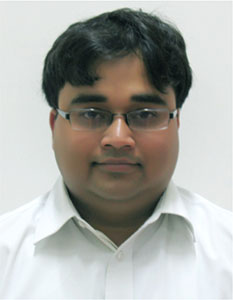
  • Shantanu Sahay, Partner, Anand & Anand, on work experience in IPR and journey from Associate to Partner

    Shantanu Sahay, Partner, Anand & Anand, on work experience in IPR and journey from Associate to Partner

    Shantanu Sahay graduated from National Law Institute University, Bhopal in 2007. With an in-depth knowledge and interest in IPR laws, he joined the litigation team of Anand and Anand as an Associate in 2007. With his work, acumen and diligence, he was quickly elevated to the rank of a partner in June, 2014. We asked him to share his work experiences and career moves with us.

    In this interview, he tells us about:

    • Law School experience at NLIU, Bhopal
    • The journey from an associate to becoming a partner at Anand & Anand
    • Work at a top IPR Law Firm
    • Important skills of a lawyer and a partner


    What brought you into studying law? Was it fate or plan?

    I belong to a family of lawyers. In fact, I am the fifth generation lawyer from my father’s side. My father is still a practicing advocate at the Patna High Court. Also, both my grandfathers have been lawyers. Being born in a family full of lawyers, I definitely had some sort of a natural inclination towards this field and in view of this; it was very much a matter of fate too.

    However, I was also impressed by the concept of five years integrated law school course such as NLS, NLIU, NALSAR etc and thus I decided to sit for law school entrance examinations.

    I had the chance to score rank one at the all India entrance examination for NLIU, Bhopal in 2002 and therefore I decided to join it.


    Please tell us a little about your law school days at the National Law Institute University, Bhopal?

    I was in NLIU from 2002 to 2007 and it was one of the finest days of our lives.

    NLIU offered everything which we aspired as law students. From academics, sports, library and other infrastructural facilities, NLIU was just fantastic. It was five years full of fun and was a world in itself. I made a lot of friends at law school.

    Also, because it was an on campus residential set up, we used to have a lot of activities after college hours. Debating, sports, dramatics, moot courts etc gave us a lot of exposure in shaping our outlook towards life in general and legal profession is particular.
     

    shantanu-sahay-2

    How important do you say is a good CGPA for an illustrious career in legal?

    I would say fifty-fifty. Obviously, good CGPA is an indicator of how much hard work you put in into your academics at law school.

    Also, from the perspective of campus placement, having a good CGPA always stands to be an advantage. But that does not mean that a good CGPA will guarantee an illustrious career.

    Your performance at the law school is totally independent of your performance as a professional. In fact, there have been a lot of cases where a lot of law students who were not that high graders in law school performed really well after they joined the profession.


    You have specialized in IPR. How do you say one can gain expertise in it? What does it take to be good in IPR?

    I got interested in IPR from my first year itself. In the boys hostel during my first year I used to live around my seniors who were interested IPRs. They used to write various articles and do a lot of research work in various field pertaining to IPRs.

    Initially, I used to help them with their researches and it is from there my interested in this particular field of law took off.

    All my internships, publications, moots etc used to be in IPR. In fact, my resume was so much IP specific that I was not even short listed for any corporate based law firms during my final year. I interned at Anand and Anand in 2007 and joined the firm that very year.


    You joined Anand and Anand as an Associate in 2007 and became a Partner in 2014. For a law student it’s very difficult to think about becoming a partner in just seven years of joining work. What would you say helped you to join the ranks of a partner?

    I was inducted in the litigation department at A&A and was involved with the IT and E-commerce law practice group. The partner who was heading this vertical went on to become a client. From 2010, I started heading this practice and in 2014, I was called into partnership as the partner-in-charge of this vertical.


    What kind of effort should a young associate put in to work to get it appreciated? What distinguishes an associate with a partner when it comes to work?

    Execution of the assignments in a diligent manner is the mantra. Hard work and dedication really pays well and associates are recognized very well in terms of their visibility and their importance in a team.


    What does a partner at a Law Firm like Anand and Anand do? What falls within the scope of your responsibility? Tell us about a typical work day.

    As an in-charge of this practice, come a lot of responsibilities, targets and travels. You are responsible to the clients as well as the internal senior leadership. To add, there are also expectations in terms of getting new clients to the firm. These tasks are challenging but fun at the same time.

    Normally in the first half, I go to the Delhi High Court where I attend to my matters along with the team. Then I come back to office (which is in Noida) around lunch time. Post lunch is usually allotted for client meetings and conference calls. In the evening, I respond to all my emails and prepare for the matters listed the coming day. I try to leave office by 9 pm.


    How important is it for a law firm partner to be good at business development, or are great lawyering skills enough to become a partner? What separates the people who become partner from those who don’t?

    As a partner, it is important to engage in Business Development. Especially, as in charge of the vertical, I have been doing BD for a long time now. Rain makers in these law firm structures are always valued by the senior leadership and also increase chances for further promotions. One has to understand that partnership also has its own growth path.


    How is the work culture at Anand and Anand? If an associate commits a mistake or an error what course of action do you follow as a partner?

    Anand and Anand has a fabulous work culture. This is one place where performance takes precedence over seniority. Associates work in a relaxed environment and have a lot of independence and exposure to various challenging legal issues.


    What changes has being a Partner brought into your life, do you ever feel that there is excess of work load on you?

    Not much difference I should say. Work load remains same but responsibilities have increased. Travels have increased and so have client interactions.


    How is internship helpful for a law student? Esp. from the viewpoint of Anand & Anand?

    Anand & Anand in true sense takes internships very seriously and for us an intern is a potential recruit. Internships are important as they can give the real world experience to a law student as to how their life would somewhat be after they pass out from college.

    Internships, if done diligently can result in recruitment as has been my case.


    What are the qualities you look for in an intern at Anand & Anand?

    Hard work, dedication and having a right kind of attitude in terms of taking on assignments from their reporting teams. More than possessing the knowledge of law, it is important to have the right kind of aptitude in terms of knowing where to look for an answer to a legal proposition. Possessing soft skills, knowledge of how to use legal search databases such as SCC online, Manupatra etc. Overall the ability to work hard towards completion of an assignment.


    What do you feel makes an intern stand out and is very important for him to do to have a chance of getting a call back or even a PPO?

    Good performance is always noticed and a second application is accepted or a PPO is offered.


    What would be your message to our readers who are budding lawyers and law students?

    • Have the right kind of attitude towards profession.
    • Money should not be the first criteria in terms of choosing a particular field of law.
    • Give time to your profession and follow your professional ethics.
    • Be persistent and patient. Read a lot.
    • Keep informed about what is happening also at the policy and economic level which has bearing on your field of law.
    • Most importantly, work hard.
  • Ayesha Nair, Senior Manager-Legal, Hexaware Technologies, on work experience

    Ayesha Nair, Senior Manager-Legal, Hexaware Technologies, on work experience

    Ayesha Nair graduated from Mumbai University in 2004 with a B.LS. LL.B. (Hons.) degree. While in college, she worked as a paralegal trainee with Bilawala & Co., after which she joined Sony Pictures Entertainment as Legal Counsel. Thereafter, she joined Hexaware Technologies Ltd. as a Legal Executive and she currently works as Senior Manager-Legal. In this interview she talks about:

    • Studying at Mumbai University
    • Working at Sony, Hexaware and Lehman Brothers
    • Internship and recruitment tips


    How would you describe your legal education? Did your legal education prepare you for the reality of legal practice?

    The legal education I received is the foundation on which my future is built. I would definitely state that the perception of the profession and the education system has changed over the period of years. Students have been keen on exploring other areas of law falling outside the purview of general practice, like corporate laws, intellectual property experts etc. My legal education gave me a better understanding of the actual application of the legal practice in my chosen profession. Having said that, I would also say that one does learn a handful while on the actual job.


    You have graduated with B.LS. LLB.(Hons.) degree from Mumbai University in 2004. Tell us about your law school experience. Share some highlights from your college days that shaped you as a lawyer.

    I did the five year law course which was a new option for aspiring lawyers during that time. I would state that it not only allowed me to complete my education a year earlier than what it would have taken me if I did the three year law course after B.A., but also gave me 5 wonderful years in the law college. The Moot courts were an excellent way of motivating students with actual court room scenarios and building their confidence essential for the profession. One lecture and Professor from Government Law College one would never give a miss, I am sure all students from GLC will agree with this one, Prof. Pithawala – Contracts & Company laws. I think this was one subject that gave me insight and focus to pursue corporate law as a profession today.


    You started your career at Sony Pictures as Legal Counsel and later joined Hexaware Technologies as a Legal Executive and currently work as Senior Legal Manager Legal there. Please tell us about your journey till now.

    As a matter of fact, my first job was in 2002 while I was completing my law education. I worked as a paralegal trainee with a legal firm – Bilawala & Co., pursuant to that in 2004 I joined Sony Pictures Entertainment as Legal Counsel. However there were not too many legal or complicated issues to handle here. I got my appointment in Hexaware through a Manpower placement agency and was initially appointed as a Legal Executive. The journey from a Legal Executive to being a Senior Manager – Legal meant hard work, sincerity to the profession, responsibility and most importantly the focus to reach where you want to. Subsequently, as the Company progressed, so did my career and I continued to deliver my job with dedication, commitment and customer relations.

     
    ayesha-nair-2

    You’ve been at Hexaware for nine years. What would you say has contributed towards your long stay at Hexaware?

    As a matter of fact, I did have a break of a short period in my career at Hexaware. That was when I explored working for a very brief period on the customer front with Lehman Brothers, but the job didn’t raise my adrenalin as much as in Hexaware. The customer front ending, the numerous challenges and the independence to work were all missing. Fortunately for me, Hexaware were unable to get a suitable replacement and they called me back. I was only too happy to rejoin. So in the real sense, if we don’t consider my four months short stint with Lehman Brothers, I will actually complete 10 years with Hexaware.


    Tell us what your typical work day is like. What kind of work and responsibilities do you deal with as Senior Manager – Legal? How has the journey at Hexaware been so far?

    We have a very small team of three legal professionals. With the technical title of Senior Manager – Legal, I functionally head the Legal Dept here. I report to the CFO. My colleagues are competent in their work. Basically the Legal team examines the terms and conditions of all contracts that the Company enters into around the world. There are penalty clauses, arbitration arrangements and certain conditions which are stipulated by different customers. Each contract is to be studied separately from the legal angle. Often we are required to directly interact with the Client’s Legal Department to arrive at mutually acceptable conditions. Apart from contracts we look into various other legal issues related to employees, property, intellectual property and litigations to name a few.


    What type of cases do you deal with? At Hexaware, how often is legal work outsourced? Tell us about a case that you are particularly proud of.

    We primarily deal with corporate laws and contracts, litigations are very rare. Fortunately, we have not lost any contract due to inability to resolve differences with clients and have never endangered the interests of the Company.

    Legal work is outsourced on case to case basis on rare events. I perceive each customer as a critical account and closure of the contracts with each of them brings a sense of pride in me, so it is really difficult to just name one.


    What are the primary professional ethics you follow while at work? How do you keep yourself abreast with latest industry news and trends?

    Protection of my employers interests within the legal parameters of the country. I keep myself abreast with the latest industry news and trends through the internet and various legal news letters. For Client counselling, understanding what the customer wants should be the primary focus.


    What has been your strategy to deal with errors and mistakes? How would you advise a young associate to deal with them?

    Errors and mistakes do happen in all walks of life. However in the legal profession one has to be extra cautious. If a lawyer is defending a person in Court on a murder charge there is no room for error or mistakes. It could make a difference of life versus death. However in the Corporate world there is one question that the fresher has to learn and retain with him/her during their entire career. Ask yourself that if you were the owner of the Company, what you would have done in a difficult situation that is presented before you. You will always get the correct answer.


    What is the procedure to apply for an internship or recruitment at Hexaware? What are the qualities which they look for in one and his/her CV?

    The best approach is to contact the HRD of the Company and ask for permission to submit the CV. One needs to also explain the type of job that he/she is looking for. For freshers, it will obviously be as a trainee only. The CV has to be neatly typed with all the relevant information. A more comprehensive CV is required only when the person is applying for a Senior post.Normally a fresher would needs to keep a watch for vacancies advertised in the newspapers. Manpower placement agencies may not be a good source of employment for freshers.


    What do you think differentiates a good intern from the rest? How can an intern make a positive impression in the limited time they have? What skills would you say is a sine qua non for an intern who wants to excel at work?

    A good impression is created by your presentation. Dress smartly, have a neat and logical CV and keep abreast of the news around the country. The fresher needs to read newspapers every day and watch News programmes on TV. This not only sharpens the mind, but also impresses the interviewer that he is looking at a person who knows what he is talking about. Also never give false information or use guesswork. If you do not know the answer or have not understood the question, they should clearly say so. Speech is also important. As the interview will be in English, the fresher should be proficient in the language.


    What do you cherish most about the experiences you’ve had over the past ten years?

    I cherish and value the growth and the challenges that I have lived through each day in the last ten years. The new challenges with a new day give my excitement levels  a new boost.


    Any plans for an LL.M abroad? What are your long term goals?

    My focus for the last four years have been on my son and office. I haven’t got the time out, but yes, in the future I wouldn’t mind exploring some other options. One area that interests me is Marine Law.


    Lastly, what would be your message for our readers?

    Stay focussed, believe in yourself and anything is achievable.


  • Sumeeta Sharma, DGM Legal, Benett Coleman & Co., on work experience at Law firms and as in-house counsel

    Sumeeta Sharma, DGM Legal, Benett Coleman & Co., on work experience at Law firms and as in-house counsel

    Sumeeta Sharma is a graduate from K.C. Law College, 2003 batch. Her work experience has been diverse including litigation firms like Sharma and Associates, Vyas and Bhalwal and M/s. Thakore Jariwala and Associates. Thereafter she was an Associate at Krishna and Saurastri, an IPR firm. She was also the Legal and Secretarial Head at Samsonite South Asia Pvt. Ltd. before becoming DGM Legal at Bennett Coleman and Co. Ltd. (Times Group). She has recently completed Masters in Business Law from National Law School of India University, Bangalore.

    In this interview she talks about:

    • The importance of internships
    • Working at litigation firms, IPR firms and in the corporate sector
    • Working at Bennett Coleman & Co.


    What got you into legal studies? Was it planned or something that just happened by chance?

    My father has been in this profession and I was always inspired by his way of life.I was often recognized as a person with good debating skills and somewhere deep down I felt I can be a good lawyer. Though it was not planned and I wanted to be a scientist, I feel extremely lucky that I actually could take up a profession which was crafted for my personality. I would say that being a lawyer was my calling.


    How was your experience at K.C. Law College? What activities were you involved in apart from the regular academic curriculum?

    The experience with college was good and K.C. Law College per se conducts lots of activities for young aspiring lawyers to instil the love and passion for the profession. Yes, a couple of writing competitions and moot courts were the activities I was involved in.


    What were your major interests as a student of law?

    My interest was in Intellectual Property Laws, Laws with respect to Medicine (Medical Laws) and of course, laws with respect to the family. I would suggest young lawyers to take up criminal law, personal laws (family law, succession laws) as there seems to be great change required in the age old formulas and I feel if young lawyers take up these subjects not only can they  explore a lot, but also contribute in amendments by questioning the very basics of old fundamentals.


    How important is it for a law student to plan out the course of his/her internships to successfully gain from the internship experience?

    Every lawyer should start internships right at the start, if they cannot spare more time, at least 4 hours a day. It is extremely important to get your basics strengthened right at the start. Law taught in class and court room working is completely different from each other. Thus, I pay a lot of importance on internships. I would suggest young aspiring lawyers to start with a small time lawyer (younger lot) rather than opting from bigger law firms as they may not be able to teach the core working of the court. So, I suggest they should approach their seniors from the college and request for internships. Once you have interned with such independent practising lawyers and the basics are already in place then the students should approach bigger firms.


    Many believe that students of ‘elite’ law schools have an edge over students from other colleges? Is this true at all?

    Yes, that is completely true. However, most students from elite colleges end up in the corporate sector with firms barely into transactional work. We have not seen many students from these elite colleges taking up litigation as their career. I feel there is a dearth of good quality lawyers in litigation, thus every lawyer should opt for litigation as their career.


    After graduation you worked with various litigation firms including Sharma and Associates, Vyas and Bhalwal and M/s. Thakore Jariwala & Associates. How was your experience working at these places?

    I always wanted to be a Generalist and wanted to know various things in one lifetime. Thus, I worked with various law firms in different specialities. As stated earlier, litigation firms are run on age old formulas thus the experience was enriching and I gained a lot from the pool of knowledge these firms hold.


    Thereafter you had joined Krishna and Saurastri as an Associate. What led to the shift from litigation to an IPR law firm? How was your experience working there?

    As I said, I had to taste law in its different form. The experience was enriching as I was exposed to the dynamically changing IPR norms globally. My experience was fantastic and created an interest and love for IPR Laws.


    You thereafter left Krishna and Saurastri to start working at as Legal & Secretarial Head. What does Samsonite do and what was the nature of your work there?

    Post Krishna and Saurastri, I started working as a legal counsel with Financial Technologies. FT and Samsonite both gave me an opportunity to learn the workings from the corporate end. Thus, it’s not only about thinking as a lawyer but also as a business personnel ensuring the company’s interests are legally well taken care of and helping the business accelerate.


    Currently you work as DGM Legal at Bennett Coleman and Co. Ltd. (Times Group). How did the switch from Samsonite take place?

    The Switch was smooth and as I said, I wanted to be a generalist, thus I opted to gain experience with different business sectors.


    Please tell us the recruitment process at Bennett Coleman and Co. Ltd. What do they look for in their prospective employees?

    The typical process takes 2 to 3 months and comprises 3 interviews (HR, Reporting Manager and the Business Head). They look for domain knowledge primarily.


    What does your current work profile at Bennett Coleman consist of?

    My current work profile at Bennett comprises mainly of (70 percent) transactional work and the rest is litigation and IPR.


    Does Bennett Coleman and Co. Ltd. take interns? What is the process for same?

    Yes, you may apply or request various legal heads. (Bennett is segregated into various companies and each company functions separately)


    What would be your parting message for our readers?

    Read as much as you can. Don’t try to mug. Law is nothing but common sense and once you read and analyse things will automatically come to you. Always take guidance from experienced personnel and buckle up for a tough ride if you want to be a good lawyer as first 5 to 6 years are your investment with absolutely no returns.


  • Raghavan Ramabadran, Partner, Service Tax & VAT matters, Lakshmikumaran & Sridharan, on being a Chartered Accountant and Lawyer

    Raghavan Ramabadran, Partner, Service Tax & VAT matters, Lakshmikumaran & Sridharan, on being a Chartered Accountant and Lawyer

    Mr. Raghavan Ramabadran is a Partner at Lakshmikumaran & Sridharan. He currently heads the Service Tax and VAT practice of the Chennai and Hyderabad branches of LKS. He pursued a C.A. degree while simultaneously pursuing a B.Com course from Vivekananda College. His interest in taxation led him to join LKS after qualifying as a C.A. He further pursued a law degree from Law Centre II of Faculty of Law, Delhi University (“LCII”) while working at LKS itself.

    In this interview he talks about:

    • The LL.B and C.A. combination
    • Pursuing a law degree while working
    • Work of a Partner of Lakshmikumaran & Sridharan


    Where did you grow up and attend school? How did you decide to pursue C.A.? Please tell us a bit about yourself.

    I did my schooling in Chennai. I belong to a family full of Sanskrit scholars. In fact, my grandfather is a President’s awardee for excellence in Sanskrit. As a kid I was taught Sanskrit and Vedas. I had in fact completed my Vedic education by the time I finished my XII standard. Though I was always good in Mathematics, Science was not a subject which interested me and hence I chose to pursue a career in accountancy and enrolled myself in the C.A. course while simultaneously pursuing my B. Com course from Vivekananda College. I was always interested in taxes and once I completed my C.A. course, I applied to L&S. After joining L&S I realised how important it is to learn law to fully understand and work in taxes. Mr. Lakshmikumaran and Mr. Sridharan were very kind to me and took me to the Delhi Office for better exposure which also enabled me to attend the evening law course in Delhi University.


    After qualifying as a C.A., you joined Lakshmikumaran & Sridharan. How did you decide to join a law firm instead of practicing as a C.A.?

    As I said, I was always interested in taxes and one of my friends (who is also a C.A.) had already joined L&S. So I knew it was a great firm doing excellent service in the field of taxes. Hence, the choice was easy. I had applied to the firm. I was interviewed by Mr. Lakshmikumaran. The interview happened over several rounds and I was also asked to present a paper on Transfer pricing and the GATT Valuation Code.

    The firm already had the practice of hiring non-lawyers and therefore I was not an exception. Mr. Lakshmikumaran encouraged me to do law and explained to me how the scope of a C.A. is restricted as he cannot practise in High Courts.

    I realised that though a C.A. can render excellent advice, it is ultimately a lawyer whom he has to engage to sustain his advice before a court of law.


    What did your work profile at LKS consist of, before you were a lawyer?

    I was doing a lot of drafting which includes opinions, replies, appeals, writs, SLPs, etc. I used to do research and brief seniors in matters. Study sessions are a part of L&S culture and I was a regular in attending those. I was initially absorbed in the Customs team of L&S. Later when L&S started its practice in VAT, I was moved to the VAT Team. I was working in the VAT team till I became a lawyer.


    Tell us about your law school experience.

    When I look back at my years at LC-II, they were perhaps some of the best years of my life where I came across many intelligent and dynamic batchmates. The professors were very engaging and the curriculum was rigorous and very demanding. Everyday offered a new perspective on one’s approach to appreciating the law. Whatever I say about LC-II and its quality of education and the faculty, will be very little as its reputation speaks for itself.

    Perhaps, it would be interesting to mention here that the courses taught at law school helped me at the workplace too. At the time when the seminal BSNL case was being argued at the Supreme Court, in which L&S was substantially invested, I could appreciate and contribute to the table some of the finer aspects concerning the constitutionality of the provisions that were being debated upon.


    Is there anything you would like to have done differently?

    There is nothing that I would have liked to do differently. Looking back, I think what matters the most is how you allow the experience to enrich you and not overwhelm you. The sheer diversity of the people you meet and the insights you develop on life allow you to become a more practical individual, in a manner of speaking.


    raghavan-ramabadran-1

    How did you manage to eke out time for a regular three-year LL.B from LC-II while working at LKS? Please share with us.

    If you don’t have time in the day, steal it from night. Needless to say, switching back and forth from office to college was a demanding affair indeed. The tight schedule would otherwise be a strain on a normal individual. But maybe, it was the hunger for experience and knowledge that kept me going those years.

    The daily schedule involved coming in to the office by 7:50 A.M. From 8 A.M.-10 A.M. I would attend sales tax study sessions chaired by Mr. Sridharan himself. This was a ritual I stuck to for one and a half years, and it paid off greatly. Regular work would follow this until evening when I would scamper off to college and again head back to office to take care of pending work. Many a times, in fact most often, I would sleepover at the office lobby. Suffice  to say, this was occasionally tiring but never did I feel flushed or demotivated.


    You have more than a decade of experience in handling litigation relating to Service Tax, VAT and other areas of indirect taxes before various forums. What were the differences in your experience as a CA and as a lawyer?

    Completely different. As a lawyer, you can rely on yourself to sustain your interpretation. For a CA, there would be a two-step process to take a legal point across, one to the arguing counsel and the final one to the judge. Whereas for a lawyer, there is only one level to convince, the judge and not the arguing counsel.

    As a C.A., our exposure to law was oriented to the extent of appreciating the application of the law. However, being a lawyer one can delve into the correctness, spirit of the law and formulate its ethics and justifiability. As a C.A., we could hardly acknowledge the fine line of difference between a rule and provision. While studying law, the questioning spirit came alive.


    Currently, you head the Service Tax & VAT practice of the Chennai and Hyderabad branches of LKS. What are the best and worst parts of being a partner at one of the most successful tax law firms in the country?

    The best part easily is the bench strength at the firm. A multitude of good clients, refined nature of the tasks, variety in the kind of deliverables, priority on ethics are some of the traits that would easily attract anyone to the firm. The knowledge chest that L&S has is in its people, be it in excise law or patent prosecution. Other than this, the resources in the form of a heavily standardized information technology system, books, journals, credible physical infrastructure offers one an experience worth its weight in gold.

    The challenging part, and definitely not the worst part, is that the benchmark is very high. There are a lot of expectations to be met. Arguably though, this is something that is expected with the responsibility of being a partner at a leading law firm.

    Pondering over mystical questions like “work life balance” takes a back seat as these are questions that I do not find myself philosophically qualified to answer. Other than this, there are always the clients who keep calling at unexpected hours, which is why I am always nervous whenever my phone battery runs out, lest I miss out on an important call. The work profile for a partner is expectedly very demanding as one has to always stay sharp and alert. But all of this being said, we relished it and continue to do so.


    raghavan-ramabadran-3

    What is a workday like for you? Has work settled into a predictable pattern or are there new challenges every day?

    For a litigating lawyer, I can say that being officers of the court, we are at the mercy and behest of the court. There is no method to this madness, Ha Ha!

    On a serious note, it is always unpredictable. Appointments given to clients during the evening materialize, but where I commit to a meeting during the daytime thinking I may be able to fend some time for it, such is never the case, Add to this the usual rigours of urgent briefs, shuttling between various courts. They tend to take a toll on the body at times.

    The highlight is that being in L&S, repeat matters don’t come. The scope and dimensions of the work is new and it is a treat to get one’s hands on them. Challenging matters are a staple affair and therefore it would be fair to say that there is a negligible chance of having a predictable pattern in terms of work coming in.


    How important would you say are business development skills at such higher roles in a corporate law firm?

    Very crucial. Clients always have alternatives.


    What do you and other partners at LKS measure success by? What must interns and attorneys at LKS do in order to get noticed and/or promoted?

    Show spark. Season that with clarity of thought. L&S encourages an open-door policy and there is complete freedom to speak and express one’s views. The only touchstone that someone’s worth is judged by is sheer merit and hard work. We don’t expect interns and fresher attorneys to be ready for the work profile that comes with working at L&S. Which is why we lay emphasis on training in our daily class-room lectures. We encourage interns and juniors to bring fresh and novel thinking to the table. With commitment and analytical skills to show for it, success can definitely be achieved.


    What advice would you give to law students who wish to pursue C.A. or, alternatively, C.A. students who wish to pursue law?

    While you focus on your areas of interest, make sure you pass all the subjects. Ha Ha!

    What I meant to say is that if you intend to be a lawyer in the future, pursue those subjects in CA in which you plan to make a living in. C.A. background for becoming a lawyer is very useful. Accounting knowledge and commercial understanding of the transaction are traits that come in very handy in both transactional practice and tax litigation. My view is that such an academic profile is a potent combination, especially when it comes to leaving a mark in the realm of commercial laws.


    Lastly, what would be your advice to law students and young lawyers reading this interview?

    What you learn as a student stays in your mind forever. It is important as a student to try and understand the basics of every subject. With experience, we realize that no law is difficult if our basics are strong. Great lawyers are those whose basics are phenomenal and they never commit mistakes in basics. Rather they win complicated cases with basics.

  • Tulika Srivastava, Senior Manager – Legal, at L’Oréal, on law school and building a career after graduation

    Tulika Srivastava, Senior Manager – Legal, at L’Oréal, on law school and building a career after graduation

    Tulika Srivastava graduated from Amity Law School in 2005 and had thereafter worked with Crawford Bayley & Co., DSK Legal and Nicholas Piramal India Ltd. She currently works as Senior Manager – Legal at L’Oreal India Private Limited.

    In this interview, she talks about:

    • Law school experience at Amity Law School
    • Work at Crawford Bayley, DSK Legal and Nicholas Piramal
    • Current work profile of Senior Manager – Legal at L’Oréal


    What inspired you to study Law? How did you get through to Amity Law School?

    Back in 2000, when I passed out of school, I was at that juncture of my life (which every confused and aspiring teenager goes through) where I didn’t know where to head. However, luckily for me, I got the much needed guidance from my school and parents who helped me realise where my true interest lay. I took a conscious decision based on the subjects of my interest back then and, therefore, it only made sense for me to pursue a career in the field of law.

    I had to take an entrance test to get into Amity. This was 15 years ago and a lot has changed since then, including the admission process.


    Tell us about your law school journey from the 1st year till your final year. As a law student which extra activities did you participate in? How important are these co-curricular activities?

    We were the second batch of Amity Law School, and that allowed us to gain exposure in an array of fields. There were no precedents to follow and that only worked in our favour – as we were learning through experimentation and from our own mistakes. We had a sound internal faculty and considering our location and the proximity to the Apex Court of India, we also had a host of legal luminaries as visiting faculty.

    While I was a part of the Internal Moot Court Committee, I also led the Dramatics Society at the same time and won many accolades for my College. Co-Curricular and other activities help you develop an all-round personality, improve your interpersonal skills and also boost your self-confidence. Moreover, law school journey is not an easy one – activities apart from your regular curriculum, therefore, help you refresh the burdened mind as well.


    How should one go about the internships? How important it is for a law student to plan out the course of his internships to successfully gain from the internship experience?

    Internship ‘planning’ can be very unique to each individual depending largely on his/her aspirations. It could be a straight jacketed single stream internship pattern or you could chose to get flavours of various fields. There are pros and cons of both. Whichever method you chose, make sure your internships help you design your career path eventually – whether it’s in corporate, litigation or academia.

    The importance of Internships lies in a simple known fact that Law cannot be taught or learnt merely from textbooks. You have to know the applicability and the consequence of each and every act, rules, sections you learn. This is where internships play a vital role, which gives you a real life practice experience while you are in law school. In fact, at times, internships may also give students an opportunity to learn subjects which may not be a part of their curriculum at law school.

    Primarily, as a law student, you will find yourself spending a lot of time in the library (which also includes legal web portals now) doing researches on diverse subjects. So do not expect much more than that in your first few internships. Subsequently, in finalyears of law college, you may be given opportunities to assist the associates in legal writing as well. Do not fret if you do not master the flair of drafting during your short internship periods, because “drafting” is one skill which requires constant polishing and honing. Make the most of your internships, grab as much as you can, do not be afraid to ask questions, because once you are a law graduate you will be expected to have answers to all those questions.


    Would you say the ‘NLU’ branding helps its students?

    Yes it is true to a certain extent in my opinion. NLU is a fantastic brand to have on your profile, which will definitely ensure you get the best break in this profession. But at the end of the day, your merits and hard work do play a significant role which take you places.


    After graduating you joined Crawford Bayley & Co. as an Associate Trainee. How did the appointment take place? What did your work profile consist of as an Associate Trainee?

    I landed in Mumbai right after I passed out of the Law College, without any leads or contacts, and without any exposure in the Mumbai legal circle. The primary task for me was to chalk out my first Five Year Plan. From the past experiences gathered during my varied internships, I had a fair clue where I was headed. I knew it was imperative for me to start with litigation so as to understand the basics, thereafter broaden my horizon by acquiring knowledge in different streams of law and eventually settle down as an in-house counsel. I, hence, sent my application to a few leading firms specialized in litigation. I got a call back from Crawford Bayley & Co. and an interview meeting was set up with a Senior Partner, pursuant to which I was recruited as an Advocate Trainee in the field of civil and corporate litigation. This was the best start I could hope for because this experience not only helped me create a very strong foundation but also gave me an in-depth knowledge about the City Civil Court and Bombay High Court functioning, its procedures, departments, etc.


    Thereafter you left Crawford Bayley& Co. and had joined DSK Legal. What led to this shift? How was your experience working there?

    I was working towards my set target. The second step now was to acquire exposure and knowledge in diverse fields of law. DSK Legal offered exactly that and was, hence, a natural progression for me.

    While I had joined DSK as an Associate in the Litigation Team of the Firm, I was fortunate enough to be able to undertake a wide variety of tasks ranging from Capital Markets, Equity as well as Debt. I found myself exposed to multiple streams, so it was a little intellectually challenging but at the same time extremely gratifying and rewarding. Each transaction and each matter was full of new experiences and opportunities. All in all, I can say that DSK Legal provided me a well-rounded experience.


    You thereafter left DSK Legal to start working at Nicholas Piramal India Ltd. as Legal Manager. What did this shift happen? What does Nicholas Piramal do and what was the nature of your work there?

    A move like this was scheduled for a little later in my scheme of timelines. However, I didn’t mind when then this opportunity came my way, as it was a part of the bigger game plan in any case. “Sooner the better” I thought and jumped right in when I got an offer to work for the Indian Pharmaceutical giant Piramal Healthcare Limited (erstwhile Nicholas Piramal India Ltd.).

    My work there was a mixed bouquet, which comprised of everything I had learnt till then and much more. I was responsible for end to end legal requirements of the business divisions I was handling, right from litigation, to business and brand acquisition, to intellectual property protection and of course, contract negotiation, drafting and management. The whole transition of switching from a practicing lawyer to an in-house counsel was not as easy as it seemed back then. It was not just a change of job, it was a change in the whole outlook, accountability and orientation as a legal practitioner.


    You are currently working at L’Oréal India Private Limited as Senior Manager – Legal. How did the switch from Nicholas take place?

    Learning is constant – that’s the basic premise for a successful lawyer. After 4 years at Piramal, it only made sense to change my industry in order to maintain my learning graph. L’Oréal gave me an opportunity to use my existing skills and apply the same in a different environment. More importantly it offered acquiring new skill sets essential for a corporate lawyer. I was contacted for a preliminary interview which was followed by several discussions with and within the senior management at L’Oréal and which ultimately got me on board.


    How is a typical workday like?

    L’Oréal is an atypical workplace. It has elements of erraticism due to its young and dynamic yet very structured nature. There is not a single day which is same as any previous day, and that is what maintains the freshness and keeps me going. However, broadly, a regular workday at L’Oréal for me includes co-ordinating with my Business Divisions in order to close their open issues and contracts, advising them on general legal queries from time to time, ensuring compliance and risk mitigation.


    What is your take on the debate of Corporate Practice v. Litigation?

    It has always been a big debate amongst young lawyers – Corporate practice vs. Litigation practice? I am from the school of thought which believes that Litigation is where all the groundwork lies. That’s the reason I started my career with a stint at Crawford Bayley, which gave me a sound experience in the field of civil litigation in Mumbai. I reiterate that this route is an effective way of ensuring a very robust foundation and is an important facet of a career in law. Litigation gives you a huge breadth of areas to work on and learn from. You get to research and innovate strategies in varied fields of law.

    That being said, Corporate definitely increases your in-house marketability. In most companies, there’s more need for corporate activities such as securities filings, corporate governance, contract negotiation and management, etc. Moreover, with the growing number of skilled and expert lawyers, companies are more likely to keep their work “in-house” on the corporate side. If you are irresolute about which area you enjoy more, corporate will definitely provide you more careers options but comes with a bit more risk.

    It is always sensible to choose an area of practice that you are passionate about, where “passionate” is the key word.


    Lastly, what would be your parting message for our readers?

    I am a decade old lawyer today, and my appetite for learning the novelty and unknown is only increasing. Abide by “Stay Hungry, Stay Foolish” – it will take you a long way.

  • Manisha Karia, Advocate on Record, Supreme Court, on quitting law firm and setting up independent practice

    Manisha Karia, Advocate on Record, Supreme Court, on quitting law firm and setting up independent practice

    Manisha Karia graduated from ILS Law School, Pune in 2000. Soon after graduation, she started working as an Associate at Thakker & Thakker, Solicitors & Advocates where she worked for a year. Later she switched to Dua Associates where she worked as a Senior Associate. Thereafter she left her job and started practicing independently before Supreme Court of India, Delhi High Court and other appellate forums at New Delhi. She has been practising independently from last nine years.

    In this interview, she talks about:

    • Work experience at Thakker & Thakker and Dua Associates
    • Co-authoring a chapter in “Electronic Evidence” by LexisNexis, UK
    • Building reputation and clientèle
    • Independent practice and experience of a decade in litigation


    You graduated from ILS, Pune in 2000. What was the legal profession like back then? What were your objectives as a law student?

    I always wanted to peruse challenging carrier to have my own identity as professional and at the same time to serve society. My father always aspired me to take up civil services. There were apprehensions and opposition from friends and relatives about a girl taking up law especially when I was to become first generation lawyer. My parents have been a great support for me throughout. I still remember that with great difficulty, I admission in ILS, Pune as that time five years law course was offered by very few colleges.

    My sole objective was to give my best and to do justice to the opportunity and choice I had made. I made library as my second home and worked really hard to overcome language fear as I have studied throughout in my mother tongue till class 10th. In my 2nd year I participated in moot court competition and I was among top 3 that gave me confidence. My professors were encouraging and involved me in research for Hindu Law and Constitutional Law workshops organised by college. That really diverted me from civil service exam preparation and I was more fascinated to peruse law as my law career and took every opportunity coming on my way and in my 3rd year itself. I started attending chamber of a senior advocate, Mr. S.V. Kanitkar in Pune to understand nuances of original side of civil litigation at trial courts. Initially for 6 months after college, I used to attend court, which gave me clarity about original side of litigation, which is still helping me in my practice in Supreme Court.


    When you pursued law, not much of an importance was laid upon internships. But the scenario now seems to have been changed. How relevant do you think are internships for a present law student?

    During my student years, we only had one internship in final year. Now almost all law schools give prominence to internship as part of curriculum, which I feel is very vital for every law student. Students have options to work with senior advocates, law firms and individual lawyers, PSUs and NGOs. These opportunities provide students an insight into how each practice of law is different from other and they are better equipped to decide about their career in law profession. Also, internship with the judges of High Court and Supreme Court gives fair idea about decision making processes in the Courts. Today is an era of specialisation. Internships immensely help students to determine whether to pursue corporate or litigation practice either in law firms or with Senior Counsel or individual lawyers and also decide area of specialisation.


    How valuable would you say your legal education was at ILS? When did you actually experience the learning curve? What is your opinion when people say that all that they have learnt is in their years of practice?

    As I said, my learning during five years at ILS still helps me every day. Starting from 1st presentation to participating several competitions and workshops and special courses conducted during student days, prepared me to face the challenges of the legal profession. Our professors are still our mentors and guides of lifetime. They treated us as family and guided throughout. We were always encouraged to participate in moot court competitions and many other opportunities for research and presentations. It all depends on how you make best of the opportunities. The Legal Aid Cell helped us to provide practical advice to litigants in early days of student life. The Mock Trials gave us insight into art of cross-examination and in-depth analysis of Evidence Act in practical way, which has become rare in today’s legal education where the subjects on procedural law are being taught in less than six months.

    I believe practicing law is never ending learning process, the older you grow, the expectations and learning increases. Yes, there is no doubt that you learn a lot when you actually start practicing, but if you take student years seriously, that forms a strong base for your further learning. Five years is a long period to built a foundation which none of the law student should miss as once you enter profession with added responsibility and demanding work, one really doesn’t get time improve or devote time to any special skill. I strongly feel that one can only achieve something by investing time and this profession requires dedication in formative years at law school, which can be best used for development of these skills including research, basics of drafting, presentations, debating etc. If the beginning is right, one gets a different level of confidence and clarity in terms of basic knowledge and skills for this noble profession by the time you actually enter the profession.


    How was your work as a corporate lawyer at Dua Associates? Please tell us a little about your work profile while working there. What were the responsibilities you were entrusted with?

    After passing out, being eldest in the family, my siblings were still studying. I wanted share financial responsibility of my father and also gain some law firm experience as I had never experienced firm work culture. Therefore, I joined Thakker & Thakker before even final year results were out. I really learnt a lot starting from how to work long hours (12-16 hours a day) and what is billable and non billable hours, maintaining time sheets and pending work list, drafting of several contracts, FEMA, RBI, SEBI regulations and I got to do my first arbitration and learnt a lot about IPR registrations. I also assisted in two big IPR litigations in Bombay High Court and also got opportunity to do some Tax work.

    Thereafter, I joined Dua Associates, Mumbai office and there again it was branch office of Delhi based firm, so I got to do all kind of work including due diligences, property documents drafting, lots of IPR work (mainly worldwide trade mark and patent registration assignments), attending hearings in Trade Mark Registry and IPR litigation in Bombay High Court along with other corporate commercial litigation. Also I had an opportunity to prepare guidelines/manual for police officers for IPR and information technology law related cases as law was new in India. I was lucky to work in this office and concerned partners had given lot of responsibilities and freedom to work as I was communicating with lawyers / firms from almost 40 countries for trade mark and patent work. I worked in Bombay for about 5 years which were tough years as I used to travel 3 hours every day from New Mumbai to Fort and back, but I really enjoyed work culture and those were foundation years of my life, which really taught me many things in all respect and it was a true struggle as first generation lawyer.


    How did you decide to quit your job and start up with your independent practice?

    That’s like a every girl’s story! I got married in 2004 and shifted base to Delhi. I initially worked with Delhi office of Dua Associates for some time. However, I had to take a break for my daughter’s birth and focus on her upbringing. During this period, I contributed and co-authored a chapter on India in book published by LexisNexis, UK on “Electronic Evidence”, which is an authority on the subject. I also started working with my father-in-law, who is a Senior Advocate and Former Judge of Gujarat High Court and started attending Supreme Court on regular basis.

    I considered options of joining back law firms, but to be able to manage both family and career and to strike that right balance, I decided start up my independent practice. One of my friends from Pune referred Special Leave Petition of her sister in which there was issue as regards to interstate transfer of matter from one state to another state by High Court and I got a chance to argue that matter pro bono before Supreme Court where other side was represented by Senior Advocate. I did my best and it was well appreciated by the Hon’ble Judges as well as other seniors present. I became more confident and I knew that when I do what I love and feel passionate about, I will find a way and can handle the family and my profession too. Then, I started taking matters before High Court of Delhi, NCDRC, Company Law Board and other Appellate Tribunals along with the Supreme Court and after having a few years’ experience in the Supreme Court, I decided to appear in Advocate of Record examination. This has been tough experience with multiple responsibilities, but, yes, I had choice to do my own work at own working hours (apart from courts hours) and family was also taken care of. The clients and briefing lawyers have been really supportive and understanding. Today, after years of struggle, I have my own office and am being able to give full time to my practice.


    What are your main practice areas? How has been your experience so far?

    As an Advocate of Record in Supreme Court, I handle multidisciplinary practice as one cannot have specific practice area we represent and file every type of matter. I have been handling both civil and criminal Special Leave Petitions, Transfer Petitions and Writ Petitions before the Supreme Court. Off late, I have been doing more of Tax and IPR related matters.

    I have been appearing in Constitutional, Company, Consumer, Property, Service law and Environmental law related matters. My journey as a lady lawyer has been full of ups and downs. Legal profession has been somewhat male dominated, however there a change in past few years. I only know how to put my head down and do my work to the best of my abilities and like to take limited work and do justice to the matters I have taken responsibility of.


    As a practising lawyer how did you manage to learn the basics of court room practice? Did you have anyone to guide and mentor you during the initial days of your practice?

    My experience at lower courts during my internship as student gave me real understanding of evidence and procedural aspects and working in a Firm and Bombay High Court really helped me how to handle clients, drafting, preparing for cases and briefing seniors and, yes, I am really blessed to be guided by my father-in-law, who is my mentor and many other seniors who always corrected me and encouraged me. You can really understand court room practice by being vigilant and observant in court rooms and each matter teaches you something new. As young lawyer, in initial days I used to spend lot of time listening to many Senior Advocates arguing in Court during regular hearing days.

    Many things as regards to court room practice, one learns by everyday experience and Supreme Court has wide variety of matters work and has lawyers and clients coming from all over from India. Mastering facts and applicability of law and logical thinking and strategy can really get you through in complicated matters. There is no shortcut and working hard always pays.


    How necessary is it to have a mentor/guide to handhold a young lawyer while still in the formative years of the profession? Did you have one?

    It is very important to have able and good guide/senior in formative years as there are so many things which seniors can help you with their vast experience. It is very necessary to work under an ethical senior and proper guidance as many young lawyers hardly work with seniors or organisations and jump into independent practice and find short cuts to earn fast money. In formative years one needs to work on detail, cultivating habit of reading and full research before drafting and arguing new matters. I was always told by seniors to be updated on recent case laws and by reading judgments one can really improve on legal language. I really learnt basics of litigation from Mr. S. V. Kanitkar and Mr. J. V. Thakker and seniors from the Firms I worked with and in Supreme Court my father-in-law made me understand how to go to the root of the matter by marshalling the facts and doing detailed research before drafting or arguing.


    What were the difficulties you faced in the early days of your practice? How difficult would you say it is to build a reputed practice? How many years of hard work does it require to build a firm clientele?

    Being leady with added responsibility of family, small baby it was very difficult to start and continue with independent practice and survive in the profession in Delhi. It was difficult to revive contacts and get back the trust to come back full time in practice. It takes about 6-7 years to set up full-fledged practice and one need lot of patience, consistency and dedication. Many clients don’t want to pay the due fees to junior lawyers and one has to really struggle hard. In initial days of practice I could barely mange to recover even expenses and to save on cost and time I had office cum residence.


    Did you build everlasting relation with your clients? Please share some of your secret tips on how to boost fiduciary relations with the people we serve?

    Yes, many of my clients and briefing lawyers are old contacts and relations which were developed while working in Mumbai and references from others states. Clients are always result oriented. You may not always get good case, but it depends on how you present it before the Court. If you show your performance by trying your best, many times efforts are well appreciated irrespective of result. I believe in giving clear idea to the clients about favourable and against points in their case and reasonable chance success/failure in the matter before filing any case. Many times this is really helpful and they come back with more work even if the result was not favourable in one of their matters. I have even refused client to file SLP where I felt there was no point when they were advised by others to file the matter. I strongly believe that one has to be honest and sincere to the client. Also being proactive to call or email to keep client updated before they call and to answer queries promptly at any time helps to develop good relations and builds confidence with clients.


    The Bar Council of India has recently come out with new Certificate of Practice and Renewal Rules, 2014. What is your take on this?

    I see the logic and I am sure it is in the interest of young lawyers joining the profession. According to me, basic knowledge and experience of trial court and high court is necessary before starting practice in Supreme Court as that gives better understanding, perspective and ability to conduct cases in efficient and better manner.


    How is the work atmosphere at the Supreme Court presently? Do you think it has become more difficult for a fresher to be successful compared to a decade earlier? What would you advise a fresh graduate as he enters the world of litigation today?

    In the Supreme Court has lawyers and judges coming from all over India and one gets to see diversity and different level of performance, which makes it a very challenging atmosphere. The numbers of lawyers have really increased in past few years and at the same time elevation of eminent practicing lawyers as judges of Supreme Court has really helped in changing the scene. Numbers of designation of AORs as Senior Advocates by Supreme Court and number of practicing lady lawyers and Senior Advocates have also increased. Many Judges are very accommodative and encourage junior lawyers and AORs to argue matters. My advice to the fresh graduate who enters in litigation is to choose good senior or law firm where you will get variety of work to do, improve your drafting as much as you can in initial years, clear your doubts by discussing with seniors, spend maximum time attending court hearing and read judgements on daily basis and research work without entirely relying on online resources. One should never appear in Court without knowing or reading the brief.


    Indian criminal law is, to a large extent, influenced by its British counterpart. Do you think if Indians would have framed our Penal Code, it would have been better?

    Although Indian Penal Code was drafted more than 150 years before it is still effective. Indian laws and entire legal system is largely influenced by English legal system and I do not see that it would have been better if we would have drafted it as over last so many years, we have made several amendments to all archaic laws to meet the changes in society and technology.


    When you hire interns under you, what kind of qualities do you look for? What should an intern do to get noticed in a positive way?

    I prefer interns who are eager to learn and ready to do any legal work assigned with dedication and without any hesitation. As fresher, one would not know how to go about case, but they should ask relevant questions and understand from seniors the subject matter and scope work and research required. To be noticed in positive manner, reading the brief before conferences and hearings and doing detailed research and preparing note on matter in paramount.


    In the last ten years you must have seen the change in litigation field. What would you say about this?

    The litigation field has considerably changed. With e-filing and use of technology, the processes have become easier and faster. It saves time and costs for litigants. Litigation is also becoming very expensive for quality of legal advice. Backlog of cases is increasing every year. With elevation of many eminent lawyers as Judges of Supreme Court and High Courts, the things are really improving. Hopefully, we would see major changes by reducing delays in justice delivery system and making the best legal advice affordable for everyone in coming years.


    What would be your parting message to law students who want to litigate just after graduation?

    In the end, I would like to covey to students to make use of their student years to the maximum, develop writing and speaking skills, do as many internship and participate in moot court competitions. It would really help one develops skills of doing right research and work hard in early days of practice. I wish all students a very best luck in their legal pursuits.

  • Natasha Fernandes, Legal Head, B4U Television on a career in Media Law

    Natasha Fernandes, Legal Head, B4U Television on a career in Media Law

    Natasha Fernandes graduated from Government Law College, Mumbai in 2002 and had thereafter worked as in-house counsels of large corporate houses. She currently heads the Law department of B4U Television Network India Ltd.

    In this interview, she talks about:

    • Building up a career in media law
    • Strategies which she used while working with different places
    • Journey from an Assistant Legal Manager to Legal Head at B4U


    Given that most of our readers are law students and young lawyers, how will you introduce yourself to them? What motivated you to choose law as a career?

    Hi friends, this is Natasha Dsouza.. I head the legal for B4U Television Network India Ltd. Been here since 9 years, with a total rich legal exposure of 12 years.I pursued the 5 years law course from Government Law College, Churchgate. Having no family background in law, the hunger for knowledge was the only factor that kept me going. To be honest, Law was not a career stream for me, rather the interest to know the law of the land so that people could not take me for a ride was the motivation to learn law.


    natasha-fernandes-1

    What all activities did you participate while in your college? What were your areas of interest during your graduation?

    College life was very simple, but fun. Did my 12th from P.D Lions College, Malad and then joined GLC, Churchgate for the 5 year law course. I had a lot of fun with friends but within the four corners of discipline. These years have some of the best memories and friends. College was merely education and fun. All the expertise and practical knowledge was post my completion of law.


    Did you do any internship during the course of your studies? What kind of work did you come across during your internships?

    No, unlike others I did not take up any internship during college. I started my career only post my graduation in law.


    Many lawyers say that the first year after graduation is the most difficult year for young lawyers. How was your first year after graduation?

    I had lived a very simple and protected life, home to college and college to home, never journeyed beyond, rather had always depended on friends or folks to travel to a new place.

    When I joined the law firm after my graduation, I had to appear in all courts all over Mumbai. With no knowledge of routes nor any internship training, had no knowledge about appearing in matters, it was a new world with a plethora of experience, especially with the strict judges who were not very supportive of juniors appearing before them. It was a do it and learn it yourself affair, but a journey that made me independent.


    You had started working at P. V Nichani & Co. right after graduation, and thereafter you joined Shapoorji Pallonji& Co. Ltd.. What led to this shift?

    I always wanted to work for a corporate. I started my career with G.P Consultants and Developers immediately after my graduation in law. On working there, I did feel the need to have procedural and court exposure and hence started my journey with P. V Nichani & Co. Worked there for a year, appeared in all Metropolitan courts in Mumbai, Small Causes Court, City Civil as well as in the Bombay High Court. After a year of enriched experience and exposure, I was approached by Shapoorji Pallonji& Co., and I took up the offer on selection.


    You left SP & Co. Ltd. to join Star India Pvt. Ltd as a Legal Executive. What motivated this shift? What does it take to get job at Star India at that stage?

    STAR motivated this shift. As far as getting a job is concerned, it’s always a matter of confidently marketing your experience and exposure in a way that suits the need of the Company interviewing you. It is very important to know about the job profile and whether you can handle the requirement and an honest answer to everything. It is always good to confess what you don’t know rather than to beat around the bush or lie. Coz even if you sail through the interview, any lie will make you fall flat on your face when you start work.


    Thereafter you started working at B4U Television Network India Ltd. Having been at B4U since 2005 as an in-house counsel, you were promoted to Legal Head; what qualities do you think helped you to achieve this status?

    I joined B4U as an Asst. Manager in 2005 and have been working here since 9 years. My qualities that helped me achieve it, is what every growing employee has..

    • Honesty and sincerity towards work;
    • No saying NO to any work;
    • Constant learning and research. No one knows everything and everyone needs to learn, so never felt ashamed to ask when I didn’t know something. It is better to ask than to make mistakes;
    • Eye to details and re-checking everything that is done;
    • Time management and prioritizing work to achieve within set timeframes
    • And above all my Drafting skills and perfection towards work


    Many lawyers would say that the actual learning takes place in the years of practice. How far would you say it is true? What was the case in your situation?

    Not true in my case. Actual learning takes place wherever there is an intention to learn. You face various challenges as an in-house counsel and also working with a corporate divides your exposure between litigation and non-litigation. Both give you a lot of learning and learning never ends.


    What would be your message to our readers who are budding lawyers and law students?

    • Believe in yourself
    • Be attentive to details
    • Never feel shy to ask what you do not understand
    • Stay positive and self-motivated, focus always on your goal, nothing else matters, no negative comments, no politics, when you know you are working with honest, giving your all, just stay focused, let people not bow you down.
    • Never keep ego at work.


  • Santhosh Mathew, Standing Counsel, Calicut University, on how he built his litigation practice

    Santhosh Mathew, Standing Counsel, Calicut University, on how he built his litigation practice

    Santhosh Mathew is an alumnus of the NLSIU, Bangalore of the 1995 graduating batch. He focused on litigation right from the beginning. A first generation lawyer, he started his practice at Dandapani Associates in 1995. He became independent and co-founded a litigation firm in 2004. He is currently a Standing Counsel for the University of Calicut. His practice areas are in Writ Petitions, Telecom, Media laws, Banking Laws, Company Law and Service Laws.

    In this interview he tells us about:

    • His first few years after graduation
    • Role of mentors in litigation
    • Work of a Standing Counsel
    • Necessary skills for the legal profession


    Tell us a bit about your pre-college years. What motivated you to study law?

    My grandfather was a District Sessions Judge at the time of his retirement in 1964. My father after graduating in law from the Government Law College, Ernakulam, joined ‘Malayala Manorama’ which is a leading Vernacular Daily, as its Personnel and Administration Manager. He used to take care of the Company’s legal matters His classmates from GLC, Mr. K.P Dandapani (A former Judge of the Kerala High Court and the present Advocate General of Kerala) and Mrs. Sumathi Dandapani were very close family friends.

    After completing my 10th Standard like any other youngster at that time I joined for pre degree (equivalent to present day higher secondary) and took Physics, Chemistry and Biology along with Mathematics to pursue a career in Medicine or Engineering. In time, Mr. Dandapani came to know about the National Law School of India University, Bangalore and bought an application form for me. When the entrance results came out, I was in the waiting list and hence joined ILS Pune which has an awesome campus. After two weeks, my admission at NLS Bangalore was confirmed and finally, I landed up at the “Harvard of the East” in 1990 with Roll no: BLIJ 189. The classes back then used to be held in one of the three car sheds which were converted to class rooms later on. That was the beginning of a wonderful journey in my legal Career.


    Tell us about your objectives while in the preliminary years of Law College. What were your plans after graduation?

    In my preliminary year my intention was to clear courses without getting too many repeats. Since I was not a very hard working student I was happy with my B+ grades! I studied the notes prepared by my Classmates Mr. Piyush Joshi and Mr. V. Umakanth. In my first year I interned with Adv. P.C. Abraham in the District court at Kottayam. I feel it is very important that all students start by doing an internship with a lawyer who practices in the lower courts and learn to draft Civil Suits and Criminal Complaints first. Merely by walking along with the Court Clerk will teach you the filing procedure.

    From the Second year onwards I used to do my internship with Mr. & Mrs. Dandapani who used to entrust me with various matters to do research and also with drafting of pleadings. My internships helped me to make up my mind to be a litigator. My appeal to all the law Students reading this is to use all the opportunities you get during your internship to decide what you want to do after graduating. Nobody will entrust you with any responsibility unless you volunteer. Only if you display a passion to take up responsibilities, the seniors with whom you intern will have the confidence or inclination to entrust you with more work. I understand that some lawyers don’t pay the interns. My appeal to those lawyers would be to loosen their purse strings a bit and pay a stipend which will at least cover their expenses.


    santhosh-mathew-2

    Looking back, how significant do you think that your legal education was? When did you happen to experience the learning curve?

    I sincerely regret not being a serious law student. Since I was not a very ambitious person I was more involved in co-curricular activities and did not spend too much time participating in Moot Courts other than the mandatory ones which were required as part of the curriculum. Since we had a fine group of students from all over the country I got to learn about various cultures and made some great friends. The projects done every trimester helped us to learn about different research methodologies and made us better equipped to do legal research.

    By the time we graduated we had a clear idea as to how case law could be worked up. This helped me tremendously in my career as a lawyer. So to all the law students out there, my appeal would be to try and identify a topic you can relate to and do an honest work with all earnestness. During my LL.B. course I ended up doing a lot of absurd projects which on hindsight makes me wonder, “Why on earth did I do those projects?” Please remember that you will be the sole beneficiary of your project and if you do a shabby work, you will be fooling no one but yourself.


    Do you feel that there is a difference in the court atmosphere between now and when you started practice? Has it become easier or more difficult for a young lawyer to establish himself?

    I believe the present day judges are much more accommodative of junior lawyers. In Kerala the Judges never had a fascination for Senior Lawyers from outside. So the local lawyers received great exposure which resulted in improving the quality of such local lawyers. My seniors Mr. K.P. Dandapani and Mrs. Sumathy Dandapani were always encouraging and permitted the juniors to take up their own matters which helped us to build up our careers apart from being a major boost to our self esteem.

    In fact all the juniors who have been mentored by Mr. & Mrs. Dandapani have made a mark for themselves after becoming independent. I was with Dandapani Associates for 9 years from 1995 till 2004 when I set up independent practice with my wonderful partner Mr. Sathish Ninan who is my friend, philosopher and guide. So it is very important to find a good office and work with a senior for a decent span of time. Court crafting is something you don’t acquire over night. It is very important that you don’t compromise on your integrity for monetary gains. If you get a bad name in this profession, you are DOOMED.


    Please tell us about your experience with regard to your first few sessions in court. Has it become more difficult for a fresher to achieve success?

    In my first year of practice there was a complaint filed by the then Chief Minister Mr. E.K. Nayanar against ‘Malayala Manorama’ before the Press Council of India. The complainant had instructed Senior Counsel Mr. Rajeev Dhavan. We had instructed Mr. Gopal Subramanium. Justice Sawanth was the then Chairman of the Press Council.

    When the matter was taken up, Mr. Rajeev Dhavan started arguing and Mr. Gopal Subramaniam became unavailable as he had to go to the Supreme Court for some urgent matter. When our turn came up, “yours truly” had no other option but to argue the matter and with God’s grace we got a favourable verdict. My client was so happy that they celebrated my victory by publishing my photograph in the ‘Malayala Manorama’ newspapers by celebrating it as a victory by a young David over Goliath.

    On a lighter note, a lot of my friends at the Bar after seeing my snap in the newspaper thought I had met with an accident! This was a big boost to my budding career. Thereafter there have been numerous opportunities in the last nineteen years of my career where I have been at the right place at the right time.

    For instance, when Mont Blanc came out with the ‘Mahatma Gandhi pens’, we filed a PIL in the Kerala High Court against the sale of those pens in India alleging violation of the provisions of Emblems and Names (Prevention of Improper Use) Act, 1950. As a result, Mont Blanc undertook before the High Court of Kerala that it will not sell the ‘Mahatma Gandhi series’ pens in India.

    We have conducted a lot of cases before the High Court relating to issues relating to health hazards from Telecommunication Towers. We have been successfully representing most of the major cellular operators and Telecom infrastructure providers in Kerala before the various Courts. We have represented various educational institutions challenging the unreasonable restrictions imposed by the State Government which adversely affected their minority rights guaranteed under the Constitution of India.

    God has been extremely kind to me. One must have the self confidence that he or she can handle any matter that comes his/her’s way. If we don’t know the subject matter in detail, we should study extra hard and consult the seniors who are experts in that field. The legal profession is a unique profession where seniors are willing to go out of their way to guide a junior counsel in need. While arguing a matter if a judge asks a question to which you readily don’t have an answer, have the humility to admit that fact and be assured most of the judges would be more than happy to grant you time to work up and make your submission. Remember Bench and Bar are two sides of the same coin and you have a duty to our client to win a case but you have a bigger duty as a responsible officer of the Court to assist the Court to arrive at legally correct judgments. Therefore, never mislead the Court.


    What was the role of mentors in your case? How important do you think a mentor is in the field of litigation?

    I was extremely lucky to have wonderful seniors like Mr. K.P Dandapani, Mrs. Sumathi Dandapani and Mr. Jaju Babu who are all designated Senior Counsels who mentored me and had tremendous confidence in my abilities. This motivated me to reach office at 7.30 AM and work till late night until the work entrusted was finished completely. They paid me handsomely which was also a very important factor as far as a junior lawyer is concerned. It is very important for a young lawyer to have a mentor to guide him/her just like a toddler during infancy.


    Please tell us about the requisite soft skills which are essential for a young lawyer to build a successful career?

    There is no substitute for hard work. Try to get a good mentor. Be ready to take whatever assignment that is given and never shirk away from responsibilities. Learn to respect your colleagues and opposite side lawyers. Invest in proper infrastructure. Don’t be concerned about money. Always be courteous to the judges. You don’t win any case by picking up a fight with a presiding officer! You will only succeed in losing not only that case but other matters too till the judge gets tired of dismissing your matters! It’s good to have aggression and self confidence but over confidence would land you in trouble. Always be prepared and never go to argue a case without preparing properly. Always take the relevant statutes and the latest case laws on the point when you go to argue a matter. Never underestimate the opposite side.


    How did you build up your client base? How many years of practice would you say it requires to build a firm clientele?

    There is no hard and fast rule for this. Work hard and put in your best effort when a client comes to you. Satisfied clients will in turn, get you more clients. Legal profession is a unique profession where you cannot build up a client base through marketing gimmicks. One needs a lot of luck to be at the right place at the right time. There are so many learned lawyers who have vanished due to lack of opportunities. I genuinely feel that not all are capable of being leaders. There is a lot of space for everyone here. The lawyers who are incapable of building up a client base on their own must find good senior or like minded lawyers and form a firm and learn to manage things. Some are good in impressing clients but may not be effective lawyers. These two categories can form a common platform. Gone are the days of individual practitioners. A group of like minded lawyers providing a one stop shop would become the order of the day in the future.


    What has been your experience of being a Standing Counsel? How is the work pressure and what are your responsibilities like?

    Being a Standing Counsel of an institution like the University of Calicut was purely providential. It was a huge responsibility. In June 2011, nearly 4000 case files were brought over to my office and I didn’t know where to start with. Within three years, I have with the support of my able colleagues Mr. Arun Thomas and Mr. Jennis Stephen, disposed off nearly 2500 cases. I consider it a huge opportunity to help students who have a genuine cause to have their grievance redressed.

    A lot of old service matters could be disposed off. The High Court judges who dealt with the jurisdiction are very efficiently disposing off matters. The biggest challenge was to build a good working relationship with the client and to get instructions on time. Giving timely legal advice and getting instructions from the various departments of the University were all difficult in the beginning but over a period of time it started functioning smoothly like a well oiled bicycle. One must learn to respect the representative of the client who comes to instruct you.

    I was fortunate to have a great team right from the Vice Chancellor till the Assistant in the Legal Department who would be ready to render all possible support and assistance. Each day was a new learning experience. Being a Standing Counsel of a prestigious institution increases your visibility and gives you tremendous exposure. You get to argue cases against the best lawyers in the field. You get to learn the subject in extenso.


    When you hire lawyers, what kind of skills and profile do you look for? What kind of a profile suits best to the profession?

    All the lawyers we have hired have been recommended by my friends. We have been extremely lucky to have a set of sincere hardworking colleagues. I personally feel that young associates must be delegated work depending on their potential. Over burdening a junior lawyer with work he/she cannot do will only help in demoralising them. At the same time I hasten to add that each one should be pushed to their optimum to make them good lawyers and better individuals.

    Right from the time of internship in their first year, law students must try out different options like NGOs, Law Firms, Individual practitioners etc. and by the time one completes the third year he/she must have a clear idea about where they want to be after graduating. As a junior lawyer one must not be bothered too much about the monetary aspect. For the first five years it really helps if one has a generous and understanding father.

    I was really privileged to have a great father who ensured that all my needs were to be taken care of so that I could concentrate in my work. If you are serious about the profession, you must be ready to put in long hours at work. Be assured after some time in your career those long hours you have put in as a young lawyer will definitely help you in your journey. I have seen a lot of youngsters in my time. Some of them have started their blogs, websites, entrance coaching centres etc, taken up theatre and even marriage photography mainly because most of them eventually got fagged out after learning “Law” for five years and this prompted them to do something out of the box.


    Do you think that achievements such as having a landmark judgment to your credit can change one’s recognition drastically?

    I don’t think so. I strongly believe each day is a new day and you have to consistently deliver your best. There is no place for complacency in this profession. You cannot afford to rest on your laurels. In fact some of my important cases which we won did not actually get the client the relief which they ultimately wanted. They were classic cases of “operation successful but patient dead”. It definitely feels nice when your peers send you a text in appreciation of your efforts after reading a reported judgment which you have argued.


    Do you feel that there are differences between students of ‘elite’ law schools and students from other law colleges and traditional universities?

    Frankly it is difficult to generalise. The students from the ‘elite’ law schools have a structured curriculum which makes them better equipped. I guess one gets a 5-10% head start if you graduate from a good law school. But if any student feels that he is superior in any way to his peers who have graduated from other law colleges he is a FOOL.

    Once you enter the profession if you don’t work hard, others will catch up and before you realise it, they will run over you. It is high time and the scheme and syllabus of all law colleges are also structured in a similar fashion which will do away with artificial barriers. With the right kind of opportunities and a proper level playing field, anyone with a passion will be able to make a mark in this profession.


    What are your views on the future of Indian legal education? How would you suggest that a law student manages to stay ahead?

    It is high time the three year courses are stopped. After retirement persons must not be permitted to enter the profession as a litigator. They could be permitted to practise in non litigation areas. The State Bar Councils must provide for a stipend for young lawyers from economically weak backgrounds to survive for at least 5 years after graduation. All lawyers have a duty to contribute to that corpus. Courses which gives more in depth exposure to applications should be evolved and incorporated into the curriculum in place of those which require mugging up and reproducing what you have memorised. An opportunity must be provided to young first generation promising law graduates to get a placement with a successful lawyer. All of us have an obligation to reach out and do our little bit for our young brothers and sisters who join the profession with all earnestness to become “social engineers”.


    What would be your advice to young law students? How do you think that they should approach their career?

    Don’t be an arm chair critic who looks down on everything in life. Learn to appreciate the good things in life. Equip yourself and make yourself marketable. Be ready to work hard. Be practical in what you want to achieve. Everybody cannot be a Harish Salve, K.K. Venugopal, N.R. Madhava Menon, or a Cyril Shroff. India is one of the biggest populations in the world. Everyone has a legal requirement at least once in his/her lifetime. If we can make a qualitative difference to at least one person due to our expertise we can make the world a better place to live in. Ours is a noble profession.

    Let us collectively restore its lost glory. Wish you all a Merry Christmas and a Happy New Year!

  • Neeraj Arora, Expert Investigator, Cyber Crimes, Delhi Police on building a career in Cyber Law

    Neeraj Arora, Expert Investigator, Cyber Crimes, Delhi Police on building a career in Cyber Law

    Neeraj Arora started working in the Delhi police as a sub-inspector in order to support his family, while studying B.Com. Thereafter he did his LL.B from Delhi University.

    After graduating and continuing work in the police force, he developed an interest in cyber crimes and law and took up a variety of certificate courses and diplomas in India and abroad to further his knowledge in the area. Eventually, he started up his own law firm, Hazen Legal Associates which specialises mainly in cyber law and offences.

    Presently, he is a designated Expert Investigator and he has investigated a large number of cases relating to E-mail related crimes, Web-Server/System/Wireless Network Hacking, BPO Data theft, Online Auctions Website Frauds, Obscenity, E-mails/SMS Spoofing, Phishing Frauds etc. for the Delhi Police. He serves as a guest faculty member and a guest lecturer of ISACA, NICFS, Indian Law Institute, Directorate of Enforcement, Indian Institute of Corporate Affairs and many other prominent institutions. He is also an Arbitrator for NSE, ICADR and MCX in online trading matters.

    In this interview we asked Neeraj to share:

    • His initial decisive moments during graduation
    • Being a part of the Delhi police and his work in the Cyber Crimes Cell
    • Doing a number of extra diplomas and certificate courses in Cyber Law and Digital Forensics
    • Being a Consultant for the World Bank
    • Being appointed as an Arbitrator of the National Stock Exchange
    • His experience of starting up his own law firm, Hazen Legal Associates


    Please introduce yourself to our readers and tell us a bit about your college life days. Did you have lawyers in your family?

    After doing my 12th, I started working and took my first job as an Accounts Assistant because my family circumstances required me to earn for my family. I joined B.Com (H) at the School of Correspondence Studies, Delhi University, while continuing my job. I also took up part-time writing work, filing of Income Tax/Sales Tax returns and tuitions to support my family. I am a first generation lawyer in my family.


    You are a Commerce (B.Com) Graduate and a Cost Accountant by qualification. What prompted you to make the transition to law?

    After completing B.Com, I joined ICWA as I intended to join the accountancy profession. Meanwhile, due to my financial troubles, [sociallocker]I joined the Delhi police as a Sub-Inspector. I also continued with ICWA and completed my final in 1996.


    You have pursued PG Diplomas in Arbitration and Drafting long after graduating in LL.B. What prompted you to take up these diplomas?

    I did my LL.B. from Delhi University in 2001 and pursued a PG Diploma in Arbitration & PG Diploma Drafting of Legislation, Treaties, International Agreement & Contracts from 2008 to 2010. I pursued the extra diplomas because the topic fascinated me as it upgrades existing skills and enables one to reach new heights in life as well as the legal profession. After resigning from the Delhi police in 2008, I decided to explore my career in Arbitration which is an upcoming and rewarding career. In 2008, I was appointed as an Arbitrator with the MCX Exchange and to augment my skill in the field of International Arbitration, I joined and completed these two part-time courses, PG Diploma in Arbitration, Drafting of Legislation, Treaties, International Agreement & Contracts.


    You have been practicing cyber law for almost eight years now. How did you become interested in cyber law?

    In 2005, I was transferred to the Cyber Crime Cell of Economic Offences Wing (EOW) of Delhi police and at the time I didn’t have much knowledge of computers. I treated the posting as a punishment, but took it up as a challenge as I foresaw huge potential in the area. I did a number of trainings on cyber offences from various police academies: CBI, CDTS and also did a Certificate Course in Computer Forensic from IP University, Cyber Crime Investigator Course from Asian School of Cyber Law, PG Diploma in Cyber Law from Indian Law Institute (ILI), Delhi, PG Diploma in Cyber Security from Asian School of Cyber Law and MBA (Information Technology) from Manipal University. Consequently, that is also how I became one of the prominent Investigators of the Cyber Crime Cell of the Delhi police.


    neeraj-arora-2

    You are associated with Delhi Police as a Cyber Lawyer & an Expert Cyber Crime Investigator. Please share few interesting experiences of your investigation with our readers and tell us more about these issues.

    On being equipped with knowledge on Information Technology, I got opportunities to investigate a large number of cases relating to E-mail related crimes, Web-Server/System/Wireless Network Hacking, BPO Data theft, Online Auctions Website Frauds, Obscenity, E-mails/SMS Spoofing, Phishing Frauds etc.

    In all the cases, I prepared the mirror images on the spot, collected relevant digital evidence, arrested a number of hackers, filed the charge-sheets in the court, etc. The investigation of cyber offences was quite challenging as there were no precedents, standard operating procedure and no one to guide us. I have collected the requisite information from the internet, various books and journals on digital forensics and by 2008, I was awarded the status of an expert cyber crime Investigator.


    You are a Certified Forensic Computer Expert and an empanelled member of IACIS for more than two years now. What is your job as an expert at IACIS? What kind of issues do you deal with?

    The IACIS (International Association of Computer Investigative Specialists) is the top most organization in the world which specializes in the field of computer forensics. The Certification, “Certified Forensic Computer Examiner” (CFCE) is one of the top most certification which is also recognized by the Forensic Specialities Board of U.S.

    In order to augment my skill and also to gain an in-depth knowledge, I joined the Certification and attended two weeks Hands on Training in Orlando, U.S. and after that I worked hard for another year and passed the six exams which involves analysis of mirror images to find out the Window, Internet and other Artifacts of the Crime.

    The Course was a big challenge as this is the only Certification which requires extracting the evidence without using Forensic Software. The only Software which can be used is Hex Editor and for doing one need to have good knowledge of FAT File System, NTFS etc. as the Data/Artifacts has to be extracted manually by finding the location of data from FAT/MFT Table.


    You have vast experience as an Investigating Officer of CBI, Cyber Crime cell and Economic Offences Wing of Delhi Police and you are also associated with Justice K. Venkataswami Commissioner of Enquiry (Tehelka) for more than a decade. Please share your experience.

    I joined the CBI as Inspector on Deputation and got the opportunity to investigate the huge and technically complex cases of Economic Offences going into hundreds of crores of rupees. My skill and knowledge in the field of Finance, being a Cost Accountant, enable me to investigate these cases and to book the fraudsters. As an Investigating Officer with Justice K. Venkataswami Commissioner of Enquiry (Tehelka), I got the opportunity to investigate the huge scam and I received an award for outstanding investigation in the said assignment.


    You have trained many professionals at Police Organisations, Indian Law Institute, CBI and also at IACIS. Please tell us about your training programme.

    The arena of cyber forensics comprises of three domains namely Computer Forensic, Network Forensic & Mobile Forensic. These domains are inter-connected and integrated in such a manner that the knowledge of three domains is required to handle the Digital Evidence. I have been continuously sharing my knowledge of these domains by way of training. The training I provide is an integration of Bit & Byte, Debit & Credit with investigation and procedural and substantive laws.


    neeraj-arora-3

    You have also delivered a couple of lectures on cyber law. How do you prepare yourself before any presentation or delivering any lecture? Please give some tips to our readers.

    My competence in integrating computer forensics with digital evidence, e-commerce, procedural/substantive laws gives me a unique edge in delivering training in the field of Cyber Crime/Cyber Law/Computer Forensic/Financial Forensic when it is connected to the ground realities of investigation, analysis and presentation in a court of law. I am able to provide a solution to the various gaps in the investigation, collection, analysis, presentation & cross-examination on the digital evidence and integrate it with the applicable principles of digital investigation, digital evidence, cyber laws and other procedural/substantive law.


    From your profile it can be seen that you have strong exposure, knowledge and specialization in Arbitration law. How did you gravitate towards this discipline?

    Arbitration is one of the upcoming fields which require skills of legal procedure, proceedings, appreciation of evidence and discovery. The academic domain, knowledge and experience plays a major role in acquiring these skills and since the entire world is moving to ADR for dispute resolution, this is the most growing field with opportunities increasing exponentially.


    As an Arbitrator and Mediator for NSE, ICADR and MCX what kind of disputes do you deal with? What is the normal time period of disposal of an arbitral proceeding?

    As an Arbitrator on various exchanges, I am adjudicating the disputes relating to the Online Share/Commodity Transactions between the Members of Exchanges (Brokers) and their clients.

    As a member of IGRC on various exchanges, I conduct conciliatory proceedings to resolve disputes relating to the online share/commodity transactions between the Members of Exchanges (Brokers) and their clients. This mechanism provides an opportunity to the litigant to resolve their dispute with the help of Conciliator/Mediator.

    The normal time period of disposal of such dispute is 3-6 months. The disputes are resolved by conducting the proceedings as per the bye-laws and exchanges and the procedure prescribed in Arbitration & Conciliation Act, 1996.


    You were also appointed as a Consultant of World Bank for four years. How did you get associated with the World Bank?

    I was appointed as a Consultant to the World Bank for analysing the contractual issues relating to the projects of World Bank.


    You have started your own firm – Hazen Legal Associates. What were the primary challenges you faced?

    I have started my own firm as the various skills in the field of law, finance & cyber offences gave me an edge. I got a lot of work in the field of criminal laws, cyber offences and consultancy relating to cyber offences. The only challenge was to bring together so many technical and legal aspects, which I did with the help of my colleagues and associates.


    What are the practice areas at Hazen Legal Associates? Do your firm emphasize more on cyber law than other areas of law?

    The main practice area is confined to criminal trials in the field of economic, cyber & anti-corruption cases. Due to heavy demand in the field of cyber law, we are now specializing in consultancy and compliance with cyber law as required by ISO 27001, storage/maintenance of digital evidence, handling cases relating to cyber crimes, cross- examination on digital evidence, handling of cyber security, etc.


    What is the application procedure for interns at HLA? What do you look for in a prospective applicant?

    We keep 3-4 interns at all times. The application procedure requires the applicant to send the detailed profile at on cyber.nk@gmail.com, we shall then follow it up by an interview. The skills required are knowledge of computer and research in the legal field. The networking and programming knowledge adds to the priority for the applicant.


    In spite of having so many involvements in various organizations apart from managing your own law firm, is it easy to have a work-life balance?

    It’s always a challenge but with the support of good colleagues and associates, one can maintain a work life balance.


    How should one go about starting his/her own cyber law practice in India? Please name a few institutes to study cyber law in India. How important are procedural laws in this discipline?

    A good knowledge of computers is a must. A Diploma in Computer Networking is required to understand the Cyber Offences and any further qualification in the field of Computer, Network or Mobile would add to the success of individual in this arena. There are various Institutes which provide courses like Indian Law Institute, NALSAR, IGNOU etc.

    Procedural laws have a very important aspect in Cyber Law, one should have knowledge of Criminal Procedure Code/Civil Procedure Code/Evidence Act. Without a good knowledge of these procedural laws, success in the field of cyber law cannot be achieved because the implementation would be only through these procedural laws.

    The other important aspect is that the Cyber Law caters to only 20% of the Cyber crimes whereas 80% of all Cyber crimes get covered under the IPC and other Laws.


    What would be your advice for aspiring cyber lawyers?

    The aspiring cyber lawyer should develop their skill in the field of procedural laws and Internet Technology at the same time. Later, these practitioners may not get the time/opportunity to develop skills and therefore, I recommend that aspiring legal practitioners should acquire maximum technical skills parallel with their L.L.B which would give them an edge later on.

    In the Europe, U.S., etc. most of the cyber lawyers have a background in technology like B.Tech etc. Now, integrated Course of B.Tech + L.L.B. (5 Years) have been introduced in various Universities/Colleges and pursing these courses would ensure the success in the field of cyber law. It can be said that candidates with such qualifications will dominate the cyber world in the near future.[/sociallocker]

  • Jagruti Dekavadiya, Managing Partner at Arun Oza & Associates on specialisation in Commercial Law from UCL

    Jagruti Dekavadiya, Managing Partner at Arun Oza & Associates on specialisation in Commercial Law from UCL

    Jagruti Dekavadiya is a graduate of the 2012 batch of Institute of Law, Nirma University B.A. LL.B. (Business Laws – Hons.). A lawyer with the qualification of LL.M. (International Commercial Laws) from University College London, (U.K.) and a Registered Trademark Attorney, Govt. of India, she is now the Managing Partner of Arun Oza & Associates.

    In this interview you will get to read what she has to say about:

    • Choosing law as a career option
    • Specialization in Commercial Law
    • Importance of Research and publications and other co curricular activities
    • Working as a Managing Partner at Arun Oza & Associates


    Please tell us what defines you.

    I am a very passionate human being. Routine bores me so to keep going, I need challenges. I graft wonders under pressure. I love challenges and it becomes an obsession to win, be it a boardroom game or on a playground. I believe in maximum output with limited time. Moreover, I like being at peace followed by hard work and complete fairness. I don’t like it I get favoured in anyway. I like to earn it myself than to get it inherited.


    What is it that motivated you to take study law?

    It is actually a very funny story. Till I completed my 12th (Science Stream – Biology Group), I always wondered as to why one chooses being a lawyer. Why would one fight cases and take mental stress dealing with others every day? But during that period, I came in contact with my mentor, guide and philosopher, Shree Arun D. Oza (Former Government Pleader and Public Prosecutor for High Court of Gujarat), who changed my perception about lawyers forever. He is the type of lawyer who fights for justice, always fighting for the cause of justice against oppression and victimisation.

    He is the only lawyer I have seen so far who will ask his filthy rich prospective client bluntly, “Did you do this?” and if the client says “Yes”, he is at fault. Mr. Oza won’t proceed further and will show him the real picture. So his honesty, integrity and power of truth inspired me to become a lawyer and then in the meanwhile, Nirma University launched their Institute of Law and Shree Oza filled out my form and told me on the day of the exam an hour before that you have to go and appear for entrance and so I did.

    My Rank was 81 (Only top 80 were to be selected.) and I got an interview call followed by an admission, and now, I hold the qualification of a B.A. LL.B. (Hons- Business Laws) with University Second Rank (with minor difference of 0.01 points) and I was also among the toppers in the Business Law Honours Subjects. I also hold an LL.M (International Commercial Laws) from University College London (UCL), UK and Registered Trademark Attorney, Govt. of India.


    You have specialized in Commercial law. What made you interested in the same?

    I am a Gujarati, therefore business oriented by birth! The intricacies of business, investment and calculation come natural to me. I always see the pros and cons of everything may it be on professional or personal front. Plus everything has a reason in whatever I do. So, the calculative nature and my interest in learning more about commercial law directed me to specialize in commercial law.


    jagruti-dekavadiya

    Do you say there is room for specialisation and research in Commercial Laws?

    Indeed, there is. Commercial Law is rather a discipline in itself. Very vast and diversified. It has an incredible scope from the academic and research point of view. The study of commerce and market, foreseeing the economic growth, and identifying the best practice to adapt or policy to formulate is the ongoing dynamic and intense area for academicians and researchers and the same is also related to the professionals up to a certain extent. I feel students who want to specialise in this, should think what they want to be – A professional or an academician and then should adapt themselves accordingly, as it’s interdependent and does not have straight jacket formula to follow.


    Most of your internships have been litigation internships. How helpful were they in increasing your skills and competence as a professional in the field of commercial law?

    My internships into litigation were not isolated from the commercial laws. During those internships, I have learnt the intense interdependent aspects of legislations like Income Tax, Carriage of Goods Act, Trade policies etc along with the Constitution of India. At various judicial forums, these internships have helped me learn the basics which every lawyer should know, along with the aspects of interpretations as far as commercial laws are concerned. Moreover, I believe any skill gained is always an advantage. So for me, it was like know the problems with poor contract drafting or policies resulting into litigation, so that I can be prepared to curb them before inception. Knowing what could be the prospective problem, equips you with solutions resulting into excellence and success.


    What do you think about students pursuing CS?

    I believe in adding brownie points to your CV but for the students who already want to specialise in Commercial Law, why do CS? It has more or less the same subjects and same contents. So, I would invest my time in attending workshop on corporate finance or investment or any related area.


    You did your masters from UCL, one of the most prestigious universities of the world in international commercial law. What do you think is the scope in this area?

    UCL is indeed the one of the most prestigious universities in the world and known for its course on International Commercial Law. It was indeed prestigious and an amazing experience to do my LL.M. in International Commercial Laws from there. There is a tremendous scope in this area. It widens your theoretical understanding along with the technical ‘know how’. Proficiency in International Commercial Law has the power to empower one to become a global citizen or a professional in its true sense.


    How do you assess your LL.M program? Was it an intensive academic and research oriented exercise or did it also help from a professional point of view?

    UCL has a very intense and comprehensive program for its LL.M. It is extremely well structured. It comprises of the academic and research aspects on the various topics and also has tutorials and workshops which empower students to have a complete holistic view than just focusing on academics. So, it was very intense from an academic and research point of view but it also offered various training programs and endowed me on the professional front too.


    You have done a lot of publications. How big a role did the same have to play in helping you get admission at Cambridge?

    Having publications on your name and authoring upon the burning topics always adds cherry to the cake. However, I would say that a prestigious University like UCL and Cambridge do note it. As it’s evident in my case, inspite of lacking post study experience, along with A+ Grades, it were my publications which helped me bag admission at Cambridge and UCL too. I believe in collecting options on my plate to choose and pick from later when needed.


    Along with having publications, what all activities did you indulge in as a law student, which helped you secure admission at Cambridge? Do research work and writing papers have a role in building you as a professional?

    I have been very active in co-curricular activities and I firmly believe that it surely played a role for me in getting an admission. I have successfully carried out responsibility in my post as the Chief Executive Editor of Nirma University Law Journal. One of the key achievements out of the list was to be selected as the Chief Coordinator to lead a batch for legal awareness camps at various villages, schools and Sabarmati Central Jail for five years. I have also been the founder and active member in the Moot Court Committee, Debate Committee, and Seminar & Publication research cell. You name any committee or any team; I have played an active role in it. I believe these responsibilities makes you a complete professional along with your academics and it surely distinguishes your profile and leads you on the top of everything. As it did to me, apart from getting admission it also helped me grab the PPO from a London based International Law Firm. (which I rejected, as I was clear of doing an LL.M. and then subsequently having my own law firm which I am doing successfully now.)

    I have presented more than fifteen papers and chaired sessions at various National and International Conferences at leading Universities in India including Bombay, Calcutta, Chandigarh, Indian Business Academy Bangalore, and Indian Society of International Law (ISIL) and as well as some outstanding seminars abroad including Los Angeles in 8th International Conference on New Dimensions of Humanities organized by University of California Los Angeles, USA in February 2010, Mauritius in ICER-2010 by University of Mauritius in September 2010, London in BSA Sociological Association Annual Conference at London School of Economics and Political Science (LSE) in April 2011.

    I have also taken active part in one National and two International Moots – Participated as a Researcher in Surana & Surana National Corporate Law Moot Court Competition 2008 and as a Speaker in 9thPhilip. C. Jessup International Moot Court Competition 2009 and a coach and chief researcher in International Maritime Law Arbitration Moot 2011, organized by Murdoch University, Australia in collaboration with National University of Singapore, National University of Singapore July 2011.

    I firmly believe being professional is not only about skill or knowledge. A professional needs to be equipped with the knowledge and also with a technical ‘know-how’ to face any situation ahead. Hence, I also had equal focus on my academics too. I have scored the highest in the University in Business Laws Honors subjects. I have also scored University Second position with the minor difference of 0.01 points. So, I believe in achieving excellence at every possible thing related to your area and it will be followed by the success never achieved by anyone before, may it be getting admission or a PPO for that matter.


    Along with Commercial law, your profile also shows that you have interest in Trademark and IPR? How closely are the two branches of law related?

    Commercial law is very vast and mammoth. Of course, it has interrelation with IP related issues too. In fact, while I was advising one of my corporate clients, he had issues with breaching contract of confidentiality resulting into the leakage of the trade secret. So, I had to take IP protections for this client. That’s how I actually ended up being qualified as Registered Trademark attorney.


    What are the other areas of study which you think that a law student wanting to excel as a professional in the field of commercial law should be proficient in?

    As I suggested earlier, based on the individual limb of commercial law, whatever area which interests the most to the student, he/she has to be equipped with the skills and knowledge needed. However, if you ask me to pin point them: Maritime Law, International Trade Law, Insurance, Merger & Acquisition and Corporate Finance are the essential areas of study, though each of them have an entire discipline in it.


    How was your first year after graduation? Do law schools in India prepare their students for their professional life?

    My first year was very exciting indeed. There were a lot of challenges to meet with. I doubt that law schools in India are completely adequate enough to prepare the students for their professional life since the curriculum in Indian Law schools is academic centered rather than practice oriented. A law student must enhance his CV with Publications, Paper presentations, Research and Moot Court presentations to compete with other candidates. I believe only academics or only extracurricular will not help. Make your CV that impressive that no one can ignore it.


    How did you get to work at Arun Oza & Associates? Please share with us your journey from your induction into the firm till date?

    Shree Arun Oza is a senior lawyer at the High Court of Gujarat and he served as an inspiration for me to shift to law from my Science background. I have been attending his office since 2007 from my first year of law and now, it’s my firm. I am managing it. My journey was quite tough and taunting as from day one it felt like I was talking responsibility. It was the real experience of being responsible for your act rather than a feeling of being an associate where you know there is always a senior to check. However, the journey was very interesting and to this day it continues to be. I have new challenges and new aspects to explore.


    What is a normal workday like at Arun Oza & Associates? Being the Managing Partner at AOA, what are your responsibilities?

    I head the Corporate and Commercial Department, including Arbitration and Intellectual Property Rights. I also head litigation along with Mr. Oza. My day starts with urgent admissions and other matters on board and ends with meetings and drafting for my commercial clients, especially companies whom I am currently advising on its International affairs too. So, my duties aren’t fixed. It’s kind of like being an entrepreneur and being the head at the same time. I also have to manage associates directly and run for final hearings at Court too. But, it’s very much happening.


    Do you take interns at AOA? What do you look for in a typical cover letter and CV? How can interns manage to get positive feedback in the limited time they have?

    Of course, I do take interns at AOA. Matter of fact, I am currently having three interns directly under me. One from JGLS and other two are from NLUs. I am really picky about their cover letter. I believe, because they are applying for experience, I don’t expect their CV to be full of achievements but I read the cover letter carefully. The way they draft cover letter depicts the confidence level and clarity as to why they want to intern under me or AOA. Once, I approve the cover letter, my office writes back for interview either online or offline and then if they are selected, they directly report to me. I provide them feedback on each and everything. The interns under me aren’t pampered. They get the first hand experience of everything I do. It may range from cracking negotiations with corporate clients to appearing at different final hearing stage in Courts. I give them files to read and also give them the responsibility to assist me inside the Court being on the front desk alongside myself.


    Is there any other tip you would like to give to our budding professionals?

    Strive to learn and stay hungry for knowledge. Take it as a challenge and believe that you can do it. Hard work is important but in this age if you also want to succeed what’s more important, is focused smart work. Know your priorities and act accordingly. No doubt, Law is a lucrative profession but learn to be fair and give back to the society as well.