Category: Interviews

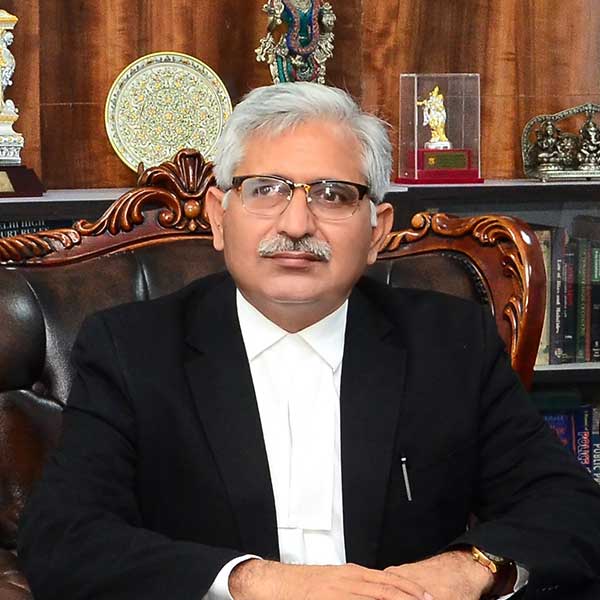
  • Dushyant Mahant, Founding Partner, Mahant and Mahant Advocates on the initial hurdles faced in setting up an IPR firm

    Dushyant Mahant, Founding Partner, Mahant and Mahant Advocates on the initial hurdles faced in setting up an IPR firm

    Dushyant Mahant completed his law graduation from Law Faculty, DU in 2004. He later on went to pursue his LL.M. in IPR from University of Queensland, Australia. His area of expertise lies in IPR. Before setting up his own law firm, he had worked with Hemant Singh for more than two years and then with Chander Lall for two and a half years. He worked in IPR litigation where both the chambers provided him with amazing opportunities.

    Currently, he represents clients in copyright and trademark litigation, commercial disputes pertaining to arbitration and company cases. He also does a considerable amount of pro bono work in High Court and District Courts.

    In this interview, he talks to us about:

    • The importance of mentors in the legal profession.
    • How important grades are in shaping your legal career.
    • The ideal time to pursue an LL.M.
    • His inclination towards IPR Law.

    How would you like to introduce yourself to our readers?

    A lawyer who enrolled in a law school to ensure that no external factors would decide my fate.

    Why did you choose to pursue a degree in law?

    After graduating in 1998, I did float an idea to pursue law but was vehemently opposed by many. Seems like outside the legal fraternity, the profession then was, now also but to a lesser extent, is viewed with less excitement and future prospects. Although I was assisting my father in our family business, I was fascinated with the stock markets since school days. After my graduation, I assisted a National Stock Exchange member for online transactions and portfolio management. I also did a training course in Delhi Stock Exchange in the late 2000 for Derivative and Future Trading since those were the new instrument then.

    In March 2001, a political turmoil crashed the stock markets for consecutive weeks affecting millions of people by eroding their savings. I, then, chose to become a lawyer to manage my career my way. All this could happen because of the immense support of my parents. To them, initially it was more difficult to accept that their stock market trader son had suddenly become a student again. I will not say that those 3 years, from 1998-2001, were wasted; I would have been three batches senior to my peers today.

    What subjects did you take particular interest in during your law school days?

    Constitution, IPR, Criminal Law, Taxation, Muslim Law and Personal Injury Law (Tort) were my favourite. Some were forgettable. Never knew then, can’t figure out still, why we were taught those.

    How did you develop an interest in IP Law?

    Since a very young age, I had a weakness for brands and am loyal to quite a few of them. Selection of a particular name / logo for a brand fascinates me. Since I wanted to practice IP litigation, I was resolved to do an LL. M. instead of a short term diploma course though they are also good. In 2004, when I was about to complete my LL. B., I used to have frequent discussions with a couple of my senior professors, legends in the legal academia, like Mr. B.B. Pandey, Prof. M. P. Singh and Prof. Rajiv Khanna. After much deliberation and research, I finally shortlisted University of Queensland, Australia to do my Masters in IPR. Though I was focused only on US law schools, it was only through sheer guidance I was able to make the best choice for myself.

    What were the activities, academic or otherwise, that you undertook in your law school days?

    Legal Aid Clinics- where we all used to assist Mr. B. B. Pandey. We used to visit slum dwellings and arrange for pro bono work for their requirements. Sir used to take students to Tihar Jail as well for providing assistance to under trial. I still do a considerable amount of pro bono work. Mr. Pandey trained us to help the needy who cannot afford help.

    Who was your mentor, or main source of inspiration?

    In law school it has to be Mr. B. B. Pandey. Since I had joined law school after a stint in commercial world, I made sure to spend entire time in the campus-be it the library or even some lectures which were not so interesting. My attendance was always above 90% and it was always a point of ridicule among friends who were frequenting multiplexes and nearby markets during classes. Since first semester the affection which Sir showed helped all of us greatly.

    What kind of internships did you engage in during your student years?

    I was a unique student. I did no internships whatsoever. Since I am not from a family of lawyers, finding a good lawyer for internship was not easy. No offense but the law school was not of great help in this regard as well for making students busy in great chambers. Without wasting time then, I kept myself busy in law school’s library, a habit which helped me so much in my LL. M. days as well. I lived in Civil Lines, quite close to the law school. Even if the classes got over by 1 PM, I would go home, have my lunch and come back to be in the library till closing the time, daily. It surely improved my reading, grasping and research skills which help me, even today.

    What factors in the CV help a student in seeking admission in a premier university offering an L.L.M program?

    Grades for sure. If a senior professor, who is known abroad can put in a good word then the student is more than lucky. I was lucky enough to be endorsed by Mr. Pandey and Prof. Khanna to UQ. My work during Legal Aid Clinic was also a highlight in my resume. You can never know what clicks. Nowadays, many people do internships with Justices and I am confident that it really bolsters a resume.

    How important are grades, in your opinion?

    Here is the thing. In my first semester, I was a bit disturbed as I did not score well even in certain subjects where I had written fifty one case laws. I spoke to some of the senior professors. Result of the discussion was that if I kept my practice of writing dozens of new and old case laws, grades would not be forthcoming. Precise stereotype answers were the best choice. I chose the road less travelled. Though it also depends on the person checking the papers. I remember my friend Amit Kataria was specially called by a professor since his answers on Environmental Law were phenomenal. I wish there were more teachers like that.

    Job in the top notch firms is available to good grades from good law schools. But grades alone cannot make you excel in those conference rooms and court. I will always advise sharpening research and presentation skills, grades are secondary.

    Which is the ideal time to do an LL.M?

    Once a person enters the profession, she/he will take time to get accustomed to the environment. After spending a year or two in the office/courts, it is really difficult to become a student again. Economics is one factor. Mind-set is another. I, therefore, did not want to get into the same cycle again. I left for UQ immediately after my results were out.

    What motivated you to establish your own law firm? Describe the experience and the initial hurdles (if any).

    After coming to India, I initially joined Mr. Hemant Singh for more than two years and then Mr. Chander Lall for two and a half years, for IP litigation. Both the chambers provided me amazing opportunities for arguing cases on my own. Mr. Hemant Singh is an excellent lawyer in the promotion and training of juniors. Mr. Lall taught me how to argue a case in different circumstances.

    After 5 years in these two impeccable firms and clearing my education loan, I had two options: Either to continue in Lall & Sethi as the litigator or to set up my own small shop round the corner with no savings even to setup a website.

    In this, the credit goes to my wife, Shivani, who is a lawyer herself. Just like my parents supported me for 4 years during my law school days, I needed the same support from Shivani for my private practice. Shivani took a sabbatical from her own good litigation career to manage ourschool going kids and home so that I could focus on work, at unearthly hours at times.

    Initial hurdles were of course fluctuating income each month, some months going better and some worse than previous. Gradually situation improved and after seven years as a private practitioner, with a team of now 5 lawyers with me in 3 separate offices and two chambers in Delhi, I am quite content with my decision to be out of a typical law firm grind. I am handling IP litigation for a couple of big brands and assisting five law firms where I appear for their clients in courts. I am able to attend variety of cases now–like arbitration and criminal matters. I also represent Competition Commission of India in High Court and NCLAT.

    Even in this phase, for guidance, I regularly meet up my lawyer friends like Manu Minocha and a dynamic young lawyer on his own, managing a team of lawyers at Lall Lahiri & Salhotra, Rahul Chaudhry.

    As Ching Chow said, “An hour conversation with a wise man is worth years of study.”

    Do you provide internships at your firm? What are the qualities looked for?

    I do provide internships. I do not look for any particular quality. You cannot understand a law student completely through two A4 sheets. After meeting, I make the intern completely relaxed and focus on researching as many case laws as she can on various propositions. It not only helps her improving her research skills, also prepares her for taking best approach when facing similar cases in future.

    If given an opportunity, what would you do differently in your career journey up to this point?

    I would not change a single thing I have done so far in my legal career. If I was unhappy about a particular thing/format of working/attention to billing hours, once upon a time, that unhappiness is the reason I am currently able to enjoy the attention I give to each client now spending non billing hours at times. We are in service industry. My time is a commodity but I am not. At the end of the day, not spending sufficient time at home cannot be considered as a great career choice. Later at a point of time, when a situation arises where a big law firm hires me and my team, I will surely look for a working culture where I can cater to my family as well.

    An unhappy lawyer can never be productive.

    Students should avoid running after big-shot firms so early in their career. These firms are excellent but it is easy to get disoriented among so many lawyers in a particular floor all chasing their billing for a particular target. If one has an inclination towards litigation, not joining a trial lawyer in the beginning could be fatal. In big firms, focus is on big billing, which is understandable considering the expenses they have to meet and a face to present. However, the mentor to train you for court craft might not be able to devote so much time-since she/he is also on a billing clock.

    Is there any other suggestion you would like to give to our budding lawyers?

    Read. Write. Blog. Tweet. Make sure your interaction is in a far bigger sphere than just lawyers and Judges. We need to be aware about everything to some extent. Never forget that in a courtroom, unless the Judge is upset about something, wit and apart from-legal knowledge are essential requirements. A light moment goes long way.

  • Faizal Latheef, Partner, Kochhar & Co., on practicing Corporate & Commercial Law in the Middle East and DIFC Wills

    Faizal Latheef, Partner, Kochhar & Co., on practicing Corporate & Commercial Law in the Middle East and DIFC Wills

    Faizal Latheef graduated in Law from Mahatma Gandhi University, Kerala in 1998. He has close to twenty years of professional experience and has been practicing corporate and commercial laws in the Middle East for over a decade, with leading firms including the international law firm of Baker & McKenzie. Faizal has represented some of the largest multinational corporations on cross-border transactions and advised them on a multitude of international agreements.

    He is also one of the few lawyers licensed by the DIFC (Dubai International Financial Centre) Wills & Probate Registry to register common law compliant Wills for foreign investors and expatriates in Dubai, UAE.

    In this interview, we speak to him about:

    • His decision to shift from India to Dubai.
    • His role and responsibility as a Partner at Kochhar & Co.
    • The objectives of his personal platform where he mentors law students.
    • Maintaining a work life balance.


    How would you introduce yourself to our readers?

    I am a lawyer by passion and choice!

    I began my professional journey as a Dispute Resolution Lawyer in Kochi. I relocated to Dubai over a decade back and since then, I am practicing corporate laws. Dubai changed my career graph in a magical way as I had the opportunity to work with one of the largest international law firms, a Fortune Global 500 corporation leading its operations in the Middle East and Africa and a top tier local law firm. Now, my primary focus is on foreign investments, joint ventures, mergers and acquisitions, corporate restructuring and compliance, in particular anti-corruption.

    Personally, I am an ordinary guy with some crazy dreams. I do what I enjoy and am passionate about it. I am organized and determined and well aware as to where my destiny lies! I invest in people and have a large number of friends from across the world.

    I do not have any one in my family connected to law and am a first generation lawyer. Witnessing my initial struggles, even others have stayed away from the legal sector. I believe everything is possible in life and hope my journey will be an inspiration to my young friends who do not come with a legal background.


    What motivated you to pursue law? Describe your experience in law school.

    Law has always enthused me! I was into public speaking since my young days and somehow developed a misconception that a good public speaker could be a good lawyer too.

    On a serious note, law is to regulate society and promote social well-being. We all are required to comply with certain norms from early ages, be it at home or in the society. I was an organised child and enjoyed complying with such norms. From this perspective also, I thought law would be a great career choice for me.

    Like most of the law students, law school days are some of the most unforgettable days in my life. Be it some of those inspiring lectures, active participation in student politics or the wonderful time with my friends! I enjoyed every moment of those days! Candidly, I don’t think my law school curriculum sufficiently equipped me to build up a successful legal career. In contrast, it was what I learnt outside of the classroom that shaped my todays and lead me to this amazing journey called life!


    What was your first job after law school?

    It was almost two decades back! I started my professional career in Kochi, the commercial hub of Kerala. The legal industry then was dominated by individual lawyers and they all were into litigation. I practiced before the High Court and primarily focused on civil and commercial matters. I used to work for almost fourteen hours every day, without much financial returns!

    On hindsight, I admit that I did not enjoy litigation much! After spending considerable amount of time outside India and having got the opportunity to understand different legal systems from across the world, I believe our legal system needs a thorough revamp. It needs to be more professional, transparent, tech savvy, appealing to the youngsters and accessible to each and every citizen of the country.

    Nevertheless, those gruelling days helped me in preparing for the future in a tough way. It imparted lot of lessons to me, including the importance of hard work, patience, perseverance and above all, to stay optimistic – That my day will come!


    What caused the decision to shift to Dubai? What were the challenges you faced in this transition?

    I relocated to Dubai out of compulsion. A little over five years into my practice, I met with a near fatal car accident. I was bedridden for a considerable amount of time and could not speak. I lost my clientele in no time and could not come back despite my hard efforts! And I had no option but to quit litigation. Then, Dubai, with its big dreams, was a natural choice for me! If it could become one of the best cities in the world out of sheer grit and determination, I thought the city will have something in it for me too!

    The legal industry in Dubai is quite charming, with many of the top-tier international law firms and large multinational corporations. However, the transition was challenging. It was an alien place to me, with no relatives or friends. The legal system, culture, lifestyle, work ethics, client expectations all were starkly different from what I had experienced in India and it took a while for me to adapt. Fortunately, after a few months, I got into one of the best local law firms. And there started an amazing journey that transformed my life!


    Can you describe your role as an in- house counsel for AbbVie Biopharmaceuticals?

    I joined AbbVie Biopharmaceuticals on a specific mission – to lead its spin-off from Abbott Laboratories in around 35 countries in the Middle East and Africa region. Abbott then had one of the world’s largest selling drugs, which had an annual turnover of over USD fourteen billion. They decided to spin-off their business division which managed the said portfolio and wanted me to lead the transaction.

    The moment I stepped into an in-house counsel’s role, I realised that it’s the beginning of a journey into unchartered waters! Everything I experienced in my new role – from the people I met and their thought process to the work culture – was starkly different from a law firm.

    My in-house experience completely changed my perspective as a lawyer. Only then, I learnt that that the role of a lawyer is not just to enlighten the client about the legal provisions but more about analysing the risks in light of the legal provisions and guiding them to a solution, taking their business objectives into consideration.


    Describe your work profile at Baker & McKenzie Habib Al Mulla? What caused you to leave the firm?

    I spent most of my time in the Middle East with Baker McKenzie Habib Al Mulla. After my relocation to Dubai, my primary focus was on corporate and commercial laws and I continued to have a similar profile with the firm. However, the magnitude was completely different.

    All on a sudden, the nature of clients, transactions and their value changed in a big way. I got the opportunity to lead several multi-billion dollar deals involving some of the world’s largest multinational corporations. I also led the firm’s initiatives in the pharma and healthcare sector. I would proudly admit that I spent some of my best years with them. These eight years challenged me to a great extent and I was forced to reinvent myself all through the period.

    I spent considerably long time with the firm, and at some point, I felt like I am getting into a comfort zone. I wanted to get out of it and explore the unknown world. I was keen to find out if I would be successful in building up my own clientele. If successful, I knew nothing else would be more contenting!


    How did you come to be a Partner at Kochhar & Co.? What are your responsibilities?

    As I mentioned earlier, I wanted to leave Baker McKenzie and was exploring my options. Somewhere around the period, Kochhar & Co. became the only Indian law firm to have been granted license to practice local law in the UAE. I knew Rohit Kochhar, the Chairman of the firm, one of the most enterprising lawyers in India. We thought our interests complement each other and decided to join hands. Great colleagues, quality clients and an excellent office overlooking the iconic Burj Khalifa, the world’s tallest tower, can only be incentives to associate with the firm!

    I focus on three practice areas – corporate, compliance and DIFC Wills. I mostly work with multinational clients, several of them from India too, on a variety of matters including foreign investments, joint ventures, mergers and acquisitions, corporate restructuring and employment. I also do a lot of work on compliance, in particular on anti-corruption. I am one of the few Certified Auditors for the recent ISO 37001 Standards on Anti-Bribery Management Systems, which helps me in designing or auditing the compliance mechanisms of organisations as against an international benchmark.

    I also guide foreign investors in protecting their investments in Dubai through DIFC (Dubai International Financial Centre) Wills. I am one of the few Indian lawyers licensed by the DIFC Wills & Probate Registry to draft and/or register Wills that are not governed by Sharia. Being a Muslim country, inheritance in the UAE is governed by Sharia and foreign investors were concerned about its implications. This new mechanism is a big relief to all non-Muslim investors as they can now effectively secure their investments.


    Does law school prepare a student sufficiently for all the things expected from them after graduation?

    I often interact with teachers and students from various law schools and I understand that many of these schools are preparing their students in an exemplary manner. They offer trainings on a multitude of areas, help them find internship opportunities, arrange expert lectures and all these will help students to get prepared for the coming years.

    However, I believe it is impossible for a law school to fully equip its students for everything that comes after graduation. They can only set a platform for the students. It is for the students to decide as to what they want to achieve and how they want to reach there. They need to build relations with industry experts, find their mentors, expand their knowledge levels and take advantage of every opportunity that life throws at them!

    Nevertheless, an area where I hope to see improvement is on the soft skills part, in particular for law schools from the smaller cities. Many a time, it is not the academic credentials that will help you in reaching greater heights but certain other skills including your ability to connect with people. More importantly, I hope law schools mould their students to become responsible citizens of the society.


    What is your opinion on the recent proposal to allow foreign law firms to operate in India?

    I have been in Dubai for twelve years and spent most of time with Baker McKenzie Habib Al Mulla. I had a truly enriching experience with the firm as I got an opportunity to work with some of the best lawyers in the industry, on multi-jurisdictional transactions involving billions of dollars. I could lead several complex commercial transactions for many of the Fortune Global 500 corporations, all thanks to my association with an international law firm. All these have immensely helped me in evolving myself as a lawyer and as a human being. I would not have had this wonderful journey had I not been with an international law firm!

    The entry of foreign law firms will certainly shake the Indian legal industry and force us to adapt. Many of such firms’ systems, processes, clientele, people, work ethics, professionalism etc. are of a different magnitude that a sizeable portion of our industry has not yet seen. This will offer great opportunities to talented law students. In general, this will initiate a healthy competition and improve the quality of legal services.

    There are a few genuine concerns too, including the importance of setting up a level playing field for our law firms. Nevertheless, these are all minor issues that can be addressed effectively, if we want.


    How do you maintain a work life balance?

    Life in a law firm is always hectic! There are occasions where I have to spend long hours in office, in particular while working on projects involving multiple jurisdictions and tight deadlines. All these will bring in their own share of pressure too.

    I want to enjoy every moment in my life and do not want these long hours or pressure to impact me. I am able to manage these to a great extent by following three simple principles – by being passionate about what I do, being organised and saying ‘no’ wherever required! I try to work on matters that I enjoy. I plan my day before I get out of bed. I also try to practice the art of saying ‘no’ so that my time is efficiently managed. Come what may, I do not skip spending quality time with my family and friends or my squash sessions! Life is all about making the right choices.


    You have created a platform to mentor law students- through your website faizallatheef.com. Why did you come up with such an idea and what are its objectives?

    I started my website about a year back to share legal information on the UAE, in particular Dubai. A few months later, I was invited by Microsoft to be part of their initiative to mentor law students in Dubai, in association with Middlesex University. This was a great programme wherein several industry experts participated and it benefited the students immensely. I had a chance to meet with many students who were talented but confused too on a myriad of matters, who had no clue about how to shape their future. As a first generation lawyer, I could easily relate to their confusions. This is where I thought I must utilise my platform to help the younger generation.

    My objective is to make my website a platform for my young friends to connect with legal experts from across the world. This will help them in gaining great insights into the profession and apt guidance on a variety of matters including internship options, higher education and career choices. I am in the process of creating a panel of mentors with varied background, which includes private practice lawyers, in-house counsels with large multinational corporations and legal counsels from the government sector.

    I also provide internship opportunities to selected students, in our Dubai office. This is an amazing opportunity for students, in particular for those from India, as they get truly international corporate practice exposure.


    What advice do you have for our readers?

    My simple advice to my young friends is ‘enjoy life’! Life is full of possibilities and opportunities. It is up to you to explore and find them. You all are destined to achieve great things in life. So, believe in yourself. Break all the limits that you have set or others may set for yourselves. Dare to have big dreams and pursue them passionately. Life is all amazing!

    And more importantly, add a humane touch to everything that you do.

  • Tejasvini Shirodkar, Partner, Rajani Associates and her expertise in Private Equity and Acquisition (Domestic & Cross Border)

    Tejasvini Shirodkar, Partner, Rajani Associates and her expertise in Private Equity and Acquisition (Domestic & Cross Border)

    Tejasvini Shirodkar graduated in law from New Law College, Matunga in 2003. She passed the Solicitors Examination conducted by the Bombay Incorporated Law Society in June 2006 and has an experience of more than twelve years in Corporate and Commercial Law.
    Currently, she practices as Partner at Rajani Associates and handles various assignments with respect to Private Equity and Acquisition (Domestic & Cross Border).

    In this interview, we speak to her about:

    • Her work profile at Rajani Associates
    • Some tips and tricks for the Solicitors Examination.
    • The challenges of Cross Border Acquisitions.
    • The impact of IBC 2016 on supply contract litigation.


    How would you introduce yourself to our readers?

    Hi, I am Tejasvini Shirodkar and I am a partner at Rajani Associates. At Rajani Associates, I specialize in handling matters related to Private Equity and Acquisition (Domestic & Cross Border). Overall I would say I am fun loving and straight forward in nature. I love to travel and explore new places.


    What influenced you towards the legal profession?

    From childhood I have been a curious and an inquisitive child. Though nobody in my family has been in this profession, the court room dramas shown in English TV Serials have always intrigued me. So I guess that prompted me to join this interesting profession. However, only upon attending law school and after mooting I realized that I had made the right choice!


     How have your formative years helped to shape you as a lawyer?

    While I started my career in litigation in Crawford Bailey & Co and then in Dhru & Co, I gradually developed my interest for corporate matters. I then joined Rajani Associates, where initially I was handling real estate matters and thereafter joined the PE & Acquisition team. I remember initially in Rajani, a senior had instructed me to complete a diligence of a company as old as twenty to twenty five years all by myself. It was my first diligence exercise. That was a complete mind boggling experience, however that helped me learn the basics of diligence exercise and also how important diligence is for any transaction. I would say I was fortunate to work on such wide ranging matters in the early years of my career and also with some great seniors, especially Mr. Rajani (the Managing Partner) who is an excellent tutor. All of this helped me build my foundation to my career.


     What are some of the tips to hone one’s contract drafting skills?

    If you ask me for tips, I would say that while drafting any document, every lawyer needs to be precise and clear in what it needs to capture. During the drafting process, one must always keep in mind to stay within the four corners of Contract Act and such other laws applicable to the subject matter of the contract i.e. Companies Act or FEMA, Transfer of Property Act etc. Care must be taken to ensure that the intent of every clause of the document is conveyed in simple and lucid manner. The reason being at a later stage never should a situation arise where parties have any dispute on interpretation of any clause!


    What is the structure of the Solicitors Examination conducted by the Bombay Incorporated Law Society which you cleared in June 2006?

    There are six papers in total. We had to secure 50% in aggregate and passing of 40 in each subject. Yes, it is a tough examination. It is more practical oriented than theoretical. I was quite thrilled when I cleared this examination. It’s just that you need to know the right method of studying and answering the exam and you are sure you are going to clear this exam.


     Any tips and suggestions to students appearing for the exam?

    The Solicitors Exam requires the student to answer every question in a precise manner. The questions may be answered in two sentence or two words or two paragraphs. Length is never a pre requisite in this exam. However, one should not take the exam questions lightly even if the legal solution may appear simple in some case. Anyone who is pursuing this exam must study each of the subjects in detail. Every question in any subject is framed in such a manner that it tests the students overall knowledge of all the subjects. Hence, there are no short cuts. Overall it’s a great exam which tests your endurance and also you get the chance to study and get an insight of almost every subject of law.


     What would you advise buddying law students to focus on apart from studying their law degree?

    Apart from studying, students should also try to participate in moot court competitions. Such competitions help you build your confidence. I would also suggest that every student should, while they are studying law, do internships in every practice area and not focus on any one area right from start.  Internships give practical knowledge along with theory and also help the students decide the field they would enjoy working and wish to practice after graduating from law school. Along with that each student should also be abreast of the economic developments and changes in law irrespective of the field it relates to.


     Please tell us about your work profile at Rajani Associates?

    I head the Private Equity and the Acquisitions team in Rajani. Acquisition include domestic and cross border acquisitions, joint venture transaction, slump sale transactions and also asset sale.  Private Equity may either be a financial investment by domestic or an offshore fund or a strategic investment or advice on steps towards an effective exit by the investor. Along with PE and Acquisition I also handle, commercial contracts and SEBI diligence matters.

    At Rajani, we handhold our clients right from structuring by working alongside tax experts until closing without leaving any stone unturned. Our USP is personalized attention to a transaction, addressing not just legal issues (which are expected from a lawyer) but also assimilating and providing commercial solutions wherever there is an impasse or if the transaction requires specialized structuring, keeping in mind the end objective of the client.


    How has your experience at Rajani Associates been?

    I have been in Rajani for almost a decade. My experience in Rajani Associates has been quite enriching where I have been fortunate enough to work on wide range of matters right from beginning. My learning curve in Rajani has been great with every transaction different from the previous transaction where each assignment is a like a quest towards a new adventure.


    What are the unique challenges of Cross Border Acquisitions?

    Cross Border Acquisitions are quite interesting. If you ask me for challenges in a cross border acquisition, I would say all acquisitions (domestic or cross border) or more so all transactions, however small in size has its own unique challenges.

    In any Cross Border Acquisition, the challenge is to understand and study the law of the acquiring country and practical issues generally encountered while implementing an acquisition. Since it can, at times, change the parameters of a transaction. For example, acquisitions in Indonesia involve a myriad of laws and regulations. It requires an announcement of the acquisition in an Indonesian newspaper, notification to creditors and employees, creditors and shareholder approval. Further, the Indonesian Government issues a negative list periodically, which lists the relevant sectors (other than banks and companies in the financial sector) that are restricted or prohibited from foreign investment and where participation for local shareholder is compulsory.

    Likewise in Philippines, enterprises with paid up capital of less than USD 2,500,000.00 and engaged in retail trade are to be reserved exclusively to Filipino citizens of corporations wholly owned by Filipino citizens. Further in China too there are certain approval processes from various Governmental Authorities for any inbound or outbound investment process.


     What are the factors driving Private Equity Investment in India from a legal standpoint?

    The Government’s regulatory reforms, such as an overhaul of the archaic company law regime, simplification of investment routes into India, Make in India initiative, Stand up India Start-up India, Digital India, and Demonetization have bolstered investor confidence. Up until few years back, India’s foreign policies were essentially defensive. Apprehending the need for relaxation in foreign investment policies, the Government of India has made various changes in the Foreign Direct Investment Policy to open up the economy and thereby making India an attractive destination for overseas investors. Further with the introduction of regulations governing Real Estate Investment Trust, Alternative Investment Funds and Infrastructure Investment Trusts by the Securities Exchange Board of India, the Government of India has paved way for an internationally acclaimed investment structure in India.


    How has the IBC 2016 impacted supply contract litigation?

    Ordinarily, for any debt due under a supply contract, the claimant would have filed a money recovery suit against the Company. However, now claimants are resorting to relief under Indian Bankruptcy Code, 2016 (“IBC”) more so to threaten the company. Further if you observe the definition of claim under IBC is quite wide.

    As per Section 3(6) “claim” means— (a) a right to payment, whether or not such right is reduced to judgment, fixed, disputed, undisputed, legal, equitable, secured or unsecured; (b) right to remedy for breach of contract under any law for the time being in force, if such breach gives rise to a right to payment, whether or not such right is reduced to judgment, fixed, matured, unmatured, disputed, undisputed, secured or unsecured.

    Further as per Section 3(11) of IBC, Debt means a liability or obligation in respect of a claim which is due from any person and includes a financial debt and operational debt.

    Thus, if there is default under a supply contract for non-payment of an established amount, a creditor can claim under IBC, unless there is an existence of a dispute, if any, and record of the pendency of the suit or arbitration proceedings filed before the receipt of such notice or invoice in relation to such dispute.


    What have been the biggest systemic changes since the implementation of commercial courts?

    Pursuant to the Commercial Courts Act, 2015, it was is mandated to set up commercial courts in India and Commercial division in the High Court for adjudication of commercial disputes of Rs. 1,00,00,000. Commercial divisions have already been set up in Bombay High Court and Delhi High Court. Similarly, Commercial Courts have also been set up in Gujarat, Andhra Pradesh, Rajasthan and Goa. This is a great achievement in light of increasing number of cases pending before the High Courts.


    What would be your parting message to our readers?

    Never forget that every professional is a student at every stage of its life. The key to success is that you should always be receptive, eager to take up new challenges and learn new things and have the quest to perform and succeed. And last but not the least “Success is nothing more than a few disciplines, practiced every day”.


  • Prashant Ramdas, AVP-Legal, ENIL (Times Group) on practising Media Law as an in-house Counsel

    Prashant Ramdas, AVP-Legal, ENIL (Times Group) on practising Media Law as an in-house Counsel

    Prashant Ramdas qualified in Law from Mumbai University, batch of 2005. His area of expertise includes E-Commerce, Media and Entertainment and Technology. He has more than twelve years of work experience and has worked as a practising lawyer as well as an in-house counsel with organizations like NSE.IT Ltd., Reliance Media (ADAG Group), Star India, Balaji Telefilms and Motion Pictures, Zee Entertainment Network, Essel Group and Times Group.

    Currently he is serving as the Associate Vice President – Legal at Entertainment Network India Limited. ENIL is a subsidiary of Times Group and controls Radio Mirchi, Mirchi Movies, Times Outdoors, etc.

    In this interview, he talks to us about:

    • The importance of always being open to learning and zeal for one’s profession.
    • The factors that recruiters take into consideration while recruiting.
    • His responsibilities as an in house lawyer.
    • His inclination towards the media industry.


    How will you introduce yourself to our readers?

    Well for introduction, I am a young lawyer and always a law ‘student’ just like you guys, grown up only in age a bit. Though there have been no lawyers in the family, my grandfather always wished I become one, so I sort of fulfilled the prophecy.


    What was it that got you interested in the legal field and pursue a career in law?

    Law was probably the only subject that intrigued me right from the time I got introduced to it during my B.Com. I always aspired to be a professional and I clearly hated numbers and accounts, so I decided to pursue a career in law which was sans any of it. To be completely honest, in my opinion no combination with LL.B really helps in the profession. All what matters is how focused you are on what you have chosen voluntarily as your career path. B.Com in a way helped me generally to get a quick grasp and understanding of the commercial and business aspects of a transaction which are subject matter of the contracting and negotiations or non-litigation as we call it and which is my main area of interest.


    How was your experience in law school? Which were the activities that you undertook?

    I graduated from a modest evening law school as I had to support my education by working part-time and as such moots and extra-curricular were never my area of focus nor I had bandwidth for it. My internship with a reputed criminal lawyer to start with was surely of immense help. It gave me a clear picture of the struggle that lied ahead to be successful in this field and mentally prepared me for it. I shall forever be grateful to my early mentors to have let me get an early insight into the challenges and many nitty-gritties of legal drafting which laid foundation for my career. The budding lawyers should always remember to be a ‘sponge’ during their internships, take them very seriously and absorb as much as they can during the short stint, it benefits in ways you can never imagine at that stage.


    What are your areas of interest in the legal field?

    My area of interest has always been drafting and documentation, whether it’s pleadings or agreements or the likes. Oratory was never my forte but articulation was and that’s what I decided to focus on. During my internship, my practice in courts and even in corporate as in-house lawyer I made it a point to read drafts and precedents from good lawyers and reputed law firms as well as international documentations. Reading, observing their styles, vocabulary, logical arrangements with intention to merge and inculcate in what I have learnt, with the intent to develop my skill and ways to bring absolute clarity and simplicity in my drafting, always helped me to enhance my skills. And needless to mention, the learning never stops! Always observe, always be a student and stay humble, no matter how much you climb in your career.


    What was your first job after law school?

    I started practicing in Thane District and Sessions court immediately after graduation. A senior lawyer practising there was gracious enough to let me be a part of her chambers. The first lesson it taught me was Investment- Investment in your career and goals. I started with a meagre Rs.250/- per month in 2005 whereas my peers started with minimum Rs.15, 000- Rs.20, 000/- with reputed law firms and corporates. It shifted my focus from money to Law. I believe litigation is the foundation of legal career and every lawyer must get hands-on experience in it irrespective of areas of interest. Once you strengthen the basics, rest falls in line. In few years’ time, I did manage to level up with my peers in spite of starting slow. So never be worried about where you start, be focused on ‘how’ you start. Invest your time and energy in learning, rest will take care of itself.


    What are the factors do recruiters take into consideration while recruiting fresh graduates or young lawyers?

    In my experience, I have always seen recruiters interested in evaluating how much you ‘know’ than how much you ‘scored’ or which law school you belong to. Marks and institution may get you to a door but you can enter only with knowledge. The other factors they consider are how interested you are in learning and exploring various areas of law, whether you are a ‘cultural’ fit to their organisation, how open you are to put in the amount of hard work required for the profile and the zeal for your profession.


    You have been previously associated with Star, Balaji Telefilms, Balaji Motion Pictures, Zee Entertainment Enterprises, Times Group which is in the entertainment industry. Were you always inclined towards this industry?

    I entered this industry of Media and Entertainment by accident and without intent or much information about it to start with. It was a career decision I had to make from perspective of exploring other areas of law, being in early stage of my career i.e. areas other than Real Estate and IT which I started off with. The Media and Entertainment industry is all about Intellectual Property Law and Copyrights majorly. The field of copyrights, apart from being a niche, is immensely complicated and interesting. Just when you start thinking you have learnt a lot, you realise there is a universe out there waiting to be explored. New challenges keep cropping up every single day and that’s what keeps me interested and fascinated about what I do. The work culture in this industry is indeed one of the factors which keep me glued. Most entertainment companies breed work culture that is informal, un-bureaucratic, open to ideas, casual but at the same time dead serious about the things they do. It’s highly time sensitive, cost-sensitive and keeps you alive and on your toes always. You also get a sense of contribution to your organisation as you are entrusted to protect their core i.e. IPRs. So jump in if you want a rollercoaster ride!


    You took up a position at Balaji Telefilms and went on to become the Associate VP of the Legal team at Balaji motion Pictures. Tell us about your professional experience and responsibilities?

    After practising for 2 years in criminal and civil litigation as junior advocate, I got into legal team of NSE.IT (IT arm of National Stock Exchange), from where I moved on to media sector starting from Reliance Media. I was approached by a placement firm for opportunity with Star India and I got in to explore the field of copyrights. I handled legal documentation for all major channels of the company including Star Plus and the English cluster and also their content licensing business. However, working there I realised that though a reputed broadcaster gives you immense international exposure, the detailed knowledge of on-ground production of a television serial/films is equally important, to widen your perspective, understanding and practical realities of media production, which in -turn helps you in your overall understanding of the core business of content production and there was no better place than Balaji Telefilms and Motion picture for learn it. In addition to variety of contracts, it taught me the ground realities of productions, artist negotiations, difficulties faced by production teams etc., which helped me to cover the risks as well as be more articulate, accommodative and to simplify my agreements, to standardise them and ensure quick closures.


    Can you tell us about your responsibilities as the Managing counsel at Zee Entertainment?

    Zee being a media giant gave me exposure to wide variety of businesses and transactions. I handled their major television channels including flagship Zee TV, content acquisition and licensing business, food e-commerce business as well as their digital business apart from general corporate transactions.


    What made you shift to the Times Group? How has your work experience been so far?

    Shifting to Times Group was again a conscious career decision, as I was presented with an opportunity to handle their Radio Broadcasting business under guidance of an experienced professional and chance to handle litigation profile which I was estranged from a long while. Knowledge of copyrights in musical works is core to this business and is also a very important and complicated area of copyrights. Apart from the work profile, the work culture at Times Group is a huge plus, as they give you complete freedom to work as well as to maintain a healthy work-life balance. It also helps to maintain your efficiency at work, which most organisations talk about but never implement.


    What are the skills one needs to develop in order to succeed as an in house lawyer?

    As I mentioned earlier, to succeed in any field, the only thing that helps is to focus on your area of interest. If one is interested in litigation aspects, voracious reading of case laws, pleadings and working under a knowledgeable general practitioner (unless you have pre-decided your area of work) is very crucial. If one is interested in documentation side, reading of as much variety of good contract drafts, understanding of contract law and laws relating to the transactions is very important. Sincerity and hard work in these areas will definitely take you places and will make you confident to take up any challenges in your area of work.


    Describe the typical day of an in house lawyer? How is this different from working at a law firm or a chamber?

    Working in chambers of a lawyer is a whole different experience. You are immersed in research work, reading up laws and precedents and picking up your senior’s manners in dealing with clients. As against that, in-house is more about applying what you learnt in the chambers or law schools. It is more operational in nature and all about meeting deadlines. It also involves the most important and interesting aspect i.e. learning the business models, revenue streams and understanding the business requirements of core business of your organisation. Streamlining and standardising the current processes and continuously evolving your documentation to align it with requirements of your internal customers (i.e. businessmen) to help them expedite document closure, bring in more revenues for the company and at the same time to protect its interest in the best manner. Thus, the core role of an in-house lawyer is to be a ‘business enabler’.


    What are you views on the importance of higher education in the legal profession?

    Education is never ending. Higher education should definitely be pursued, if you firmly believe it is going to add to your present skill sets and knowledge. Its necessity, I believe depends on lot of factors like personal aspirations, targets, interests in higher studies, career benefits considering the position you are working at etc. I personally did not pursue LL.M or other courses as I felt I have enough to learn in my area of practice alone and being focused on it helped me achieve my personal goals. But as I said it’s an individual choice considering their circumstances.


    What are the challenges you have faced in building your career as it stands today?

    The basic challenge at the beginning of my career was sustaining with a very modest income in spite of earning pressures, with a belief and faith in what I was investing in. Due to lack of early guidance, contacts and references and also not being from a top rated law-school did hinder my chances to get a rocketing start, however it also taught me the importance of hard-work, self-reliance, self-development, persistence, self-belief and making way through any challenge. It was never a cake-walk to what I managed to achieve thus far, but it taught me to stay humble, to be open to learning from everyone including interns and peers I work with and to help those who have zeal for this profession in whichever little way I can.


    How do you maintain a work life balance?

    Work never ends. If it does you will no longer be required. Therefore, prioritising is important. Know what is important to be done. Keep a track of your work so that nothing important misses your radar. Work efficiently through the day and more often than not, you will find yourself leaving the office in time, without prejudicing your work. Focus on the fitness levels of your mind and body equally as they in turn help your efficiency at work. Do this and you can maintain a work life balance with ease.


    What advice do you have for our readers?

    Though I am not as accomplished yet as to advice, from my little experiences, I can only reiterate and say ‘Never stop being a student!’ Identify your strengths and decide your area of focus early in your career and work relentlessly. Work hard but most importantly enjoy whatever you do and never forget to have fun. All the best to each one of the readers for their aspirations and thank you for reading. Feel free to reach out to me at prashantramdas@gmail.com should you have anything to ask.

  • Sanjeeth Hegde, Partner, BananaIP Counsels and his diverse working experience in both US and India

    Sanjeeth Hegde, Partner, BananaIP Counsels and his diverse working experience in both US and India

    Sanjeeth Hegde graduated with a Juris Doctorate from the University of New Hampshire School of Law in 2004. Thereafter, he went on to qualify for a Masters in Intellectual Property, Commerce and Technology (MIP) from the same institute. He is a Partner at one of India’s leading IP consultancies, BananaIP Counsels, where he heads the licensing, commercialization and also IP for start-ups practice. He regularly counsels clients such as Samsung, Mahindra & Mahindra, Yash Raj Films, IIT Madras and start-ups out of IIM Bangalore. He is also the co-founder and Managing Partner of the BIP Group, a technology transfer and IP commercialization firm.

    He is entrusted with the responsibility of client engagement, client relationship management, some aspects of operations such as HR, Marketing and IT for the firm.

    In this interview, we speak to him about:

    • The differences between the working environments between the US and India.
    • His role as Managing Partner of the BIP Group.
    • How to avoid a decision paralysis in career options.
    • The importance of mentors in the legal fraternity.
    • The key attributes that one must develop in order to excel as an IP lawyer.


    Hello Sanjeeth, how would you introduce yourself to our readers?

    I consider this interview by SuperLawyer to be a great opportunity to talk about my somewhat unique legal background.  I’m a Senior Partner at BananaIP Counsels (BIP) where I focus on IP licensing, commercialization and strategy.  All of my higher education has been in the US, including my Juris Doctorate, which after completing I worked for several Fortune 500 companies before returning to India.  I’m passionate about teaching and hope to share some my experience with SuperLawyer’s readers.


    Are you a first generation lawyer? What inspired you to take up law as your choice of career?

    Yes, it is true that I am a first generation lawyer from my family.  I happened to relocate to the US during my school years.  Being raised in the US, the two most respected professions that you learn to aspire towards are Medicine and Law.  In fact, I went to college to pursue Medicine but within a short time realized I wasn’t cut out for the rigors of medical school in the US.  So the next best choice, Law. I foolishly left believing law school would be easier.  I was in for a big surprise.


    How would you describe your time at New Hampshire School of Law?

    I pursued my Juris Doctorate from the University of New Hampshire School of Law (then know as Franklin Pierce Law Center), and a Masters in Intellectual Property, Commerce and Technology.  Law school in the US is three years after your graduation.  I found the first year, when the foundation courses in law are taught such as Contracts, Torts, Civil Procedure, etc. to be incredibly difficult.  But as the years progressed I became more comfortable and started to excel.  At my law school senior students are chosen to assist professors as Teaching Assistants.  I had the privilege to be a Teaching Assistant for courses such as Technology Licensing and Alternative Dispute Resolution.  I was a Member of the Licensing Executives Society an intellectual property club and also served as the President of the Indian Law Student Association.


    What is your advice to students to avoid a decision paralysis in career options?

    I strongly believe that nothing beats practical experience.  One of the biggest weaknesses that I find when hiring new law graduates is legal analysis and writing.  Our law programs unfortunately do not adequately prepare our law graduates for the legal profession’s realities.  First, I would advise students to take maximum advantage of internships, not hop from one month internship to the next, you can hardly learn anything in a month.  Pick a firm or an attorney who is willing to invest their time in you and spend at least three month with them.  If at all possible return to the same firm for additional internships as you progress through law school. This progression in your legal learning and experience will pay rich dividends as compared to multiple one month internships.  Second, I would tell students that a post graduate degree such as an LLM immediately following your basic law degree absolutely doesn’t make you any more attractive a hire than a basic LLB graduate.  Grab a job after graduation even if on an apprentice basis and get the necessary exposure to various areas of practice.  After a couple of years you’ll have a good sense of what specialization you like and would like to make a career out of, then pursue a full time, or my recommendation, a part time graduate degree to specialize.  Why part time? Unless you get admission into a top graduate program either in India or abroad, pursuing a full time program at the cost of work experience adds almost no value to your resume.  So if you are one of those who isn’t lucky enough to get into a top graduate program, then continue working and building your portfolio, and pursue a part time or distance education specialization degree in an area of your interest.


    What are the differences you find in the working environments between the US and India?

    Having lived abroad for many years I had this yearning to return home and make something of myself here. I did my homework and felt there were greater opportunities in India than anywhere else.  Though financially I would have to take a step back in the beginning, in the long run I could more than make up for it.  The sophistication and professionalism of the Indian legal practice improves year on year.  I don’t think it is fair to compare the conditions here with any other country as the working environment can vary drastically based on local circumstances.  India’s legal industry is in a constant evolution as a result of the fast growing economy and continues to reshape itself every day.  This is great for all of us in the legal fraternity as we are the ones determining what our environment looks like.  This however might not be the case in places like the US which as a developed economy has a more stable legal working environment.


    What inspired you to choose IP law as your area of expertise?

    My choices were either International Law or Intellectual Property Law.  I chose to specialize in Intellectual Property Law as University of New Hampshire School of Law (formerly Franklin Pierce Law Center) where I got admission, had one of the leading IP faculty in the world and was a highly ranked program.  So if you ask me honestly, though I went to Franklin Pierce to just study law, my interest in IP grew and I ended up doing a second degree specializing in IP, because I was surrounded by some passionate IP professors and fellow students.


    Tell us about your early professional experiences.

    The economy was quite poor when I was graduating and there weren’t many legal jobs to be had.  I was one of the few lucky ones in my batch, I ended up with a contract position with a large multi-national organization working on financial securities though I had no background in this area.  You had to take what you could get.  Luckily within a few months I was able to move into a full time position with the same organization working on IT and technology licensing.  This started my career and I decided to focus on this area for the first several years.


    How important is to have a mentor or guide during the formative years of one’s career?

    Unfortunately I did not have an appropriate mentor during the formative years of my career.  I’m not sure now, looking back, if I just couldn’t find one or if I was not open to having someone as a mentor.  Nonetheless, it is very critical to have someone play this role in a young lawyer’s career as the journey can be professionally and personally complicated.  During the initial years of my career my primary focus was financial advancement.  I was constantly looking for the next opportunity that would pay me more.  This I realize now was at the cost of some good jobs, with good bosses and colleagues, and great learning opportunity.  Nobody was there at the time to tell me this. When I mentor young attorneys or students today, the first thing that I ask them to do is to choose the right boss and not chase pay.  If you learn the right things in the formative years of your career then pay will automatically follow.  Be patient.


    On what parameters do you choose the projects you work on?

    My focus areas at BananaIP Counsels (BIP) are IP licensing, commercialization, and strategy.  This applies to various sectors such as Media & Entertainment, IT/Software, E-commerce and Manufacturing.  We have a very collaborative approach at BIP and a flat hierarchy.  It isn’t uncommon at our firm to have our associate attorney’s lead projects with support from Partners unlike some firms where the Partner is always at the front.  Therefore a good amount of my time is spent on mentoring associates on projects rather than actually working on them.  I do consciously build a specific body of work and this is dictated by what our clients ask us.  The last few years the sophistication of IP in the Entertainment and E-commerce industries has drastically increased and we at BIP have made the conscious effort to up-skill ourselves to meet the demand and capture the opportunity.


    What are the roles and responsibilities that you are entrusted with as a Senior Partner?

    Most people assume that as an attorney you spend all your time on researching, writing and advising clients on legal matters.  That is partially true.  I spend about half my time on client matters. The other half, I have been entrusted with the responsibility of client engagement, client relationship management, some aspects of operations such as HR, Marketing and IT for our firm.  For me it is a balancing act between client projects and operations, one cannot be ignored for the other.


    Could you share with us some of your experiences from the high profile entertainment litigations you have worked on?

    We at BIP have had the opportunity to represent and advice some of the leading film studios of India.  In their business of content creation and monetization it isn’t uncommon to deal with mis-use and infringement on a daily basis, especially with the prevalent options available to infringers through digital media.  Litigation is a very small part of our work in the Entertainment industry; most of our efforts go into contracts as related to engagement of talent, licensing, merchandizing, distribution, and the provision of legal opinion.


    What are the challenges you have faced in building up your career as it stands today?

    IP is an evolving area of law in India and has gained prominence over the last decade.   When we started out we were somewhat ahead of the times, there wasn’t much of a demand for our specialized legal services.  However in time, we have come to be recognized as one of the pioneers of IP in India.  It has taken a lot of effort, and we have probably spent equal amounts of time in educating the client and industry about IP, as much as working on their projects.  Over the next five years I see myself focusing further on areas such as Entertainment and E-commerce and building a steady set of key clients for this practice.  I also see great opportunity in IP valuations and commercialization and this is an area that I will dedicate time to exploring.


    What are the key attributes that one must develop in order to excel as an IP lawyer?

    IP has the ability to transcend beyond mere interpretation and application of the law.  The commercial and strategic elements of IP practice in my opinion play a larger role.  For example, in a software licensing deal, an IP lawyer has to not only think about what laws to apply to the transaction, but also consider how best to get the business deal through without being a legal show stopper.  For many IP lawyers looking beyond law becomes a challenge.  I fortunately through my first few jobs had the role of a deal maker rather than just a lawyer.  As a part of these roles I had to learn to represent an entire organization’s requirements, from Sales, R&D, Finance, and Legal while negotiating and putting win-win technology licensing and collaboration deals in place.  I still rely heavily on these skills in my practice today.


    How has your experience been as a visiting faculty at Alliance University and IIM Bangalore?

    Based on my experience of having taught IP at various law schools and having hired many law graduates, I would say our legal education should get a little more practical.  There should be a stronger emphasis on teaching students legal research and writing as well as create greater opportunities for first-hand experience.  As I had addressed in a previous answer, I had indicated that multiple one month internships, which is the norm in Indian law schools, practically serves no purpose other than getting you to see the nice chairs and tables at a firm, and before you know it, the internship is over.  Rather, students should be given the opportunity to intern for a minimum of three months at the same firm or company during each year of law school.  Secondly, law schools should create law clinics, which are credited full term courses in areas such as IP or Criminal Law, etc…  Clinics are led by a professor and the students would work as associates managing real cases on a pro-bono basis.  I was lucky enough during my law school days to counsel real clients as a part of my IP and Commercial Transaction Clinics.  Yes, I do have plans to spend more time in academia once certain goals that we have been set for BIP Counsels are achieved.


    How do you manage to maintain a work-life balance as a busy legal professional?

    It becomes easier to achieve work-life balance when you gain some seniority in your profession.   If you don’t break away from thinking about work during some point in the day, for example I stop checking work emails once I reach home in the evening, over time you tend to get worn out and your interest in your work starts to diminish.  These days however it is very difficult to achieve this because of smart phones where you are constantly connected and always reachable.  Sometimes I just make a conscious decision not respond to an email or answer a call when I know that it can wait till tomorrow.


    How do you keep yourself abreast with the latest legal developments and industry news?

    This is a very important aspect of the legal profession, the learning can never stop and if it does you are no longer of value to your clients or your colleagues.  We at BIP Counsels address this in a couple of ways, we actively teach at leading institutions, and we regularly write and publish.   Teaching forces you to keep up with a subject through research and preparation of course materials for smart and inquisitive students who will keep you on your toes.  We also manage one of the world’s top 10 IP publication’s, Intellepedia – IP News Center , where we actively write about IP matters and news.


    What advice would you like to give our readers?

    Your legal career is a marathon and I can guarantee you it will never go just as you planned.  Be flexible and open to new opportunities.  Remember the legal profession in India is still evolving, and the demand for qualified legal professionals is constantly increasing.  We have more options today beyond traditional practice.  Be open to in-house positions, LPOs, academia and others.  The first five years of your legal career should be dedicated to learning.  While a decent salary is very important please don’t make it your primary priority in choosing a job.  In the long run, the bosses and colleagues th

  • Kanisshka Tyagi, Partner, Legum Amicuss and practice in Private Equity and Cross Border Transactions

    Kanisshka Tyagi, Partner, Legum Amicuss and practice in Private Equity and Cross Border Transactions

    Kanisshka Tyagi graduated from Campus Law Center, Delhi University in 2007 and joined a Delhi based corporate and commercial law firm, where she got extensive exposure in real estate sector and other general corporate and commercial work. She subsequently worked with leading corporate and commercial law firms in New Delhi (NCR Region) and got the opportunity to expand her practice base to include insolvency, private equity and regularly advised on cross border investment transactions amongst other practice areas.

    She is currently heading commercial practice at Legum Amicuss, a young dynamic law firm having offices at New Delhi and Dubai, UAE. Her personal interest lies in structuring of new businesses/start-ups with a holistic approach.


    In this interview, we speak to her about:

    • Her specialisation in private equity transactions and corporate/commercial litigation.
    • Her role at Legum Amicuss.
    • The importance of gaining practical exposure in maximum areas.
    • Her experience in legal writing and publications.
    • Co-founding the startup WorkPlace.


    How would you like to introduce yourself to our readers?

    I’m a lawyer with an experience of ten years and am still trying to learn law and the tricks of the trade.


    Tell us about your days in law school.

    I did my graduation in law from Delhi University, which is a three years law program. As a law student while my grades were decent but I was not a very serious student. Law college taught me a lot about law and life. I still remember how Prof (Dr.) B B Pandey used to teach us law in a very different way. His classes were really popular and students actually wanted to attend his lectures. He would weave law with some common life situation so that it would become comprehendible to students of every calibre. I still remember the way he taught us Section 25 of the Evidence Act. He narrated a Shahrukh Khan dialogue from the movie Pardes which was something like “Those who want to know the truth do not come with pistol and hatred in their hearts”( Joh sach sunna chahte hai … woh apni jeb mein pistol aur dil mein nafrat lekar nahi aate). He told this movie dialogue to us to bring home the point that any confession to a police officer by an accused cannot be proved against the accused because police officers carry weapons and whatever an accused may state before him may be out of fear. In such a simple way he not only taught us Section 25 but also that law can be learned not just by reading text books but by applying it to practical situations.


    What were the activities that you undertook in your law school days which have shaped you and your career?

    In our college, there was a lot of emphasis on understanding the legal concepts through leading judicial precedents and that is something which is very important for a lawyer. You not only need to be well conversant with the legislative provision but also need to understand it’s judicial interpretation. Also a habit of reading is certainly an essential tool for lawyers.


    What are your areas of specialisation in law?

    I specialise in private equity transactions and corporate/commercial litigation. During my law school days I certainly had an inclination towards corporate laws and I always wanted to be a corporate lawyer. However, it is important in this age of super specialisation to know what are the areas where you see yourself eventually working but at the same it is very important to explore all the areas because many a time you just think that you would not enjoy a particular area of law but you may end up having great time while working on a problem under that area of law. So the aim should be to make full use of college time and read, write and gain practical exposure in maximum areas.


    How were the first few years after your graduation? Would you say law school prepared you for the real world practice of law?

    (Please feel free to discuss where you had started off your career and your journey up to this point.)

    Well, your student life differs from your professional life by leaps and bounds and no college can make you hundred per cent job ready, irrespective of the practical exposure the college offers. The hands on training that you receive while working is critical and college is like your ticket to entry to the real world. Law school is like a mentor who shows you the way but it’s you who has to tread that way. Throughout my professional life I have learned a lot from all my seniors specially Mr. Hemant Batra, Founder, Kaden Boriss. I’m lucky that he mentored me. I owe a lot to my mentors.


    Give us a brief capsule of your role at Legum Amicuss.

    I was a partner at Kaden Boriss when Legum Amicuss was founded by my friends who asked me to join Legum Amicuss. However, I was a newly inducted partner and I didn’t want to lose the opportunity of honing my skills at partner level at a well-established global firm. Few years later when I thought the time is right to be on my own, I joined Legum Amicuss. We are a small firm which is growing every day. So our responsibility is to work, gain knowledge, stay current, network, bring clients and lots more. We face lot of challenges as a firm in this competitive environment, however we are happy with whatever we have achieved.


    Tell us a bit about WorkPlace, which you had co-founded last year.

    Start-up is the trendy word these days. We as a firm wanted to get into the start-up sector and with that aim we decided to venture into this space. WorkPlace is a serviced co-working office space and it did help us to get introduced to a lot of start-ups but this sector is very difficult, they are very different from your usual corporate clients, be it in terms of expectations or willingness to pay. WorkPlace is moving gradually and doing well.


    Do you believe that the Indian legal education system is conducive to actual learning?

    Grades are important but your successful career does not depend on grades. I remember speaking on exactly the same subject at one of the conferences. I would repeat what I discussed there; These days educational institutes are doing a great job in giving maximum practical exposure to students. However, what I feel is that this system is very unfair to students, they intern for a month or sometimes for fewer days and by the time they get to understand the systems at their workplace their internship period gets over. Somehow we need to have longer periods of internship probably after every semester. Also, if we can have a system where they are allowed to assist judges and judicial staff during their college days that will help them a lot in learning the practical aspects of practice. That will give them an opportunity to observe a wider variety of matters.


    Being an avid writer and having publications to your name how do you choose your topics and subjects?

    If you want to be noticed then you have to choose topics and subjects which are relevant in present time and legal world moves at a fast pace so what was relevant a month back may not be relevant now. This basically means you have to read a lot and then choose the topics which are relevant in today’s time.


    If given an opportunity, what would you do differently in your career journey up to this point?

    Nothing. I worked hard at every stage of my professional life and more importantly I worked with lot of integrity and honesty. The one thing that youngsters need to change is their attitude towards work. Don’t just be in a rush to complete your work, give your heart and soul and treat it as if the client depends only on you and not the firm. By putting in your hundred per cent you are helping your own cause. This way you will learn faster and will be able to move up the career ladder faster.


    Is there any other suggestion you would have for budding lawyers?

    Well everybody’s journey is different and throws unique challenges. However, what I can tell budding lawyers is that try and explore all the options during your college days so that by end of it you know what interests you the most. Don’t have pre-conceived prejudices while exploring, just go all out with a clean slate.


  • Sumit Wadhwa, Partner, IP Litigation, Lall Lahiri & Salhotra on extensive work experience in IPR related issues

    Sumit Wadhwa, Partner, IP Litigation, Lall Lahiri & Salhotra on extensive work experience in IPR related issues

    Sumit Wadhwa graduated from ILS, Pune in 2007. Initially, a B.A Maths (Hons.) from Shaheed Bhagat Singh College, he firmly believes that solving problems, either legal or mathematical is all about using logic and a reliance on logic to solve problems and address issues is crucial in any field. Sumit started his career with Lall Lahiri & Salhotra (LLS) as an Associate in the Prosecution Department and after a year moved to the IPR Litigation and Enforcement team of the firm. He was promoted to Head IPR of the Litigation Department in the year 2015 and later to Partner – IP Litigation

    In this interview he talks to us about:

    • His experience for more than ten years’ in the IP law
    • How with your hard work you can achieve your dream
    • Work ethics which are indispensable for all lawyers in their practice
    • The importance of internships for a law student
    • The discipline of maintaining a work-life balance


    How would you introduce yourself to our readers?

    I am an IP Lawyer, based out of New Delhi, working with Lall Lahiri & Salhotra (LLS) with more than 10 years of experience. I believe that if you work hard, you can achieve your dreams.


    Tell us about your experience at law school?

    The time I spent at ILS was a memorable one and also exceedingly instructive and enlightening. It gave me the tools to become a lawyer, able to look at an issue from differing perspectives and has instilled in me a work ethic that I think is essential for all lawyers in their practice.  During my three years there, I also got the opportunity to meet and interact with people from different cultures and backgrounds, which played a significant role in broadening my outlook and perspective.


    Having done Honours in Mathematics, how would you like to describe your transition from mathematics to law?

    I had decided to pursue Honours in Mathematics but was not sure what will I do after finishing the course. After my last year results, I was not quite clear if I wanted to do Masters in Mathematics and thereafter PhD in Mathematics. The uncertainty also stemmed from my underlying interest in legal studies. Since my family was in the business of law books and my brother was also pursuing law at that time, it did seem like a natural trajectory for me to take. The decision was made easier because my exposure to legal and judicial studies had existed since childhood. I decided to pursue Law and got admission at ILS Law College. While both the courses i.e. Mathematics and Law are totally unrelated, over the course of my time in ILS and later at LLS, I have come to believe that solving problems, either legal or mathematical is all about using logic. I believe that the take away here is that every person does not pursue a fully charted course in their lives and one must be open to making changes and adapting to circumstances. I am quite glad that I made this change since my earlier studies gave me a logical bent of mind and clarity of thought that has helped me in my legal work and also allowed me to pursue the field where my aptitude is more suited. I would advise all students to consider their own interests and if a change is called for, then they should not hesitate in making those changes.


    How do you think your degree in mathematics have helped in your law career?

    As I mentioned earlier, a reliance on logic to solve problems and address issues is crucial in any field. I am of the view that the study of mathematics in which you have to solve problems using deductive logic is excellent training for a lawyer. There exist methodological devices which are used in mathematics that are excellent mental training for addressing issues which correspond to those used in the application of the Law. The ability to look at the big picture while also being able to methodically address smaller components of a problem has been useful to me in the practice of law.


    What all law subjects did you find interest in law school?

    I found the following subjects interesting during my Law course-

    • Intellectual Property Rights
    • Code of Civil Procedure
    • Indian Penal Code
    • Family Law

    I was the Topper in Family Law and was awarded – Shri. D.B Bhopatkar, Certificate; Shri J.R. Gharpure Certificate and Principal Pandit Prizes for scoring highest marks in Family Law-II in LL.B at ILS Law College for Pune University in the year 2005-06. I was also honoured with a gold medal for scoring the highest marks in the subject Civil Procedure Code by the University.


    How did you take a decision to pursue a career in IPR? What in your opinion should a law student keep in mind while choosing a particular domain of law to pursue a career in the same?

    I was fascinated with trademark law. Particularly when you are studying IPR, case studies about different brands and their protection strategies can be very interesting. I found that IPR, which encompasses so many aspects of business and legal areas, allows for a wide range of issues to be addressed and while allowing for specialization, also provides new avenues for challenging one’s mind. This became quite clear during my internships with some of the best IPR law firms. Consequently, I decided to practice IP law and also did a Post Graduate Diploma in Intellectual Property Rights, from National Law School of India University, Bangalore.

    I believe that the student should try to do as much internship as possible while pursuing Law. The internships should be done with Lawyers/Law Firms practicing different fields of Law to obtain maximum exposure to practice in various fields. This will enable a student to make his/her mind about the specialization that attracts that individual. Additionally, one must always keep factors like personal aptitude and interests in mind.


    What is your opinion on grades at law school? Many law firms and organizations look for innovative people and the yardstick they use for short listing people for the job in their organization is the marks. Do you think the system is flawed?

    The grades/marks that a student obtains at law school can be immensely helpful to organisations to ascertain how well the student has studied /knows about the subject. Therefore, such marks and grades are important and cannot be discounted. Having said that, I also believe that these marks are not the only indicators of a student’s merit and there are various factors that need to be considered when selecting a candidate.  If anything, marks or grades should be lower in an organization’s order of priorities when looking at a law student.  Internships are crucial to a student’s resume and the extent of practical knowledge that a student obtains from those internships as well as nature of those internships is vital in selecting a student. Similarly, extra-curricular activities undertaken by the student are very important indicators of certain qualities like initiative, hard work and problem solving, all of which are very relevant criteria for a lawyer. The other important factors that a law firm particularly must prioritize over marks and grades are the ability of the student for rational thinking and problem solving as well as ability to cooperate and work as part of a team. Thinking on your feet is also equally important for a good lawyer and one must be able to address hypothetical problems of law in a cogent manner during an interview.


    What all activities did you take part in your law school?

    I participated in Legal Aid programmes where we had gone to villages and held legal awareness programmes to educate people about their rights.


    Please share with our readers about your experience of transitioning within LLS from an Associate to a Partner of the firm.

    It has been a great working experience at LLS. I have worked under the leadership of Mr. Rahul Chaudhry, Managing Partner; Ms. Anuradha Salhotra, Founding Partner and Ms. Veena Poolakal, Partner.  I have learned a lot at this firm and believe that I truly became a lawyer by working at LLS. Law school can of course give you the tools and education that you need but it is only when you start working that you realize the difference between an academic study of the law and its practical application. LLS is such an organisation for me where I have been allowed to grow and learn. LLS provided me with a team of seniors who are leaders in the field of IP Law and as a new lawyer, I was able to gain insights into the workings of this field of law through their work.

    Over the years, I have had the chance to work at all levels in the team, starting as an associate. As a result, I have been able to understand the scope of responsibilities at each level and the firm has equipped me to handle work with a degree of understanding that I think I would not have otherwise obtained. Having begun my career here, I am able to work in a manner that is in line with the firm’s philosophy and work culture. The importance that the firm places on client satisfaction and flawless work are now also ingrained in my work ethic which echoes the firm’s.


    What all internships do you think a law student must undertake during their time at law school as a student?

    As I mentioned earlier, internships are a vital part of legal education and are also important when considering a candidate for a job. A Law student should undertake as many internships possible while pursuing law and in as many different fields of Law as possible. Even if you are sure of the field of law you want to pursue, I believe obtaining experience of and exposure to other practice areas allows for a student to become better-rounded. The nature of internships is also important and if you want to pursue a career in a particular field then you must try and obtain experience in various aspects of that field. For example, if you want to pursue a career in IP Law, obtain a variety of IP Law experience in internships, such as working on copyright issues, trademark prosecution or litigation. It is also important to intern under Trial Court lawyer to understand the court procedure, functioning, arguments, etc.


    What is your average workday experience like? How do you maintain a work-life balance?

    Work-life balance is important to maintain in order to ensure long term efficiency in your work and also for self-satisfaction with one’s professional life. Since I work in the litigation team and a large part of the day is often spent in court, I have always chosen to live closer to office to reduce time spent in commuting to and from office. This has allowed me to be able to work efficiently while at work but also be available to my family when required.

    For any successful lawyer, certain amount of discipline is also essential. So, time management and prioritising work is vital. Being a litigating lawyer, a typical work day for me starts around 9 at the office after which a few hours are also spent at court. I have found that the scope of my work is quite varied and I work on multiple types of legal actions, such as trademark counterfeiting, IP infringement actions, advertising related matter, customs – registration and enforcement, domain name registration and enforcements. As a result, every day can bring a different challenge and the work is always interesting. As a partner, I also spend time working with members of my team and am fortunate to have seniors who are available to advise my team and me whenever we need any assistance.


    What is your opinion about the concept of mentor and mentee in the legal fraternity?

    In my opinion, this is one of the most important aspects of an individual’s grooming and subsequent growth. Just the way even top professional players (including world’s top most ranked players in Tennis, Badminton, or the teams in football, cricket, hockey etc.) keep experienced coaches, the mentor is an all-time friend, philosopher and guide to be revered as well as a fall back option to seek clarity in complicated matters or conflicting interests and to prevent burn out etc.


    Tell us a bit about the works that you have done so far in the firm.

    I started in the Trade Marks – Protection department of the firm wherein I have drafted replies to the examination reports, attended hearings etc. Thereafter, I was shifted to the Litigation department of the firm – wherein I have undertaken handling of litigation matters, involving the drafting of the pleadings/petitions/applications, attending hearings, conducting civil and criminal raids, briefing seniors, filing domain name actions before the WIPO and .IN registry, Customs applications. I have also done few non IP cases relating to recovery of money, Debt Recovery Tribunal matters.


    How do you stay up to date about the recent developments in all the fields where you work and have an interest?

    I regularly read PTC (Patent Trade Marks Cases) journal, cases on the subject on Manupatra, Linkedln Updates, Spicy IP and other internet websites which provide latest updates on various aspects of the subject. In particular, I try to keep track of some of the most important cases while they are taking place, especially those that contain issues of practical importance or important issues of law.


    What advice or suggestion would you like to give to our readers, who are predominantly law students?

    Pursue your dreams and work hard with full dedication, you will be able to accomplish your dreams. I believe there are no short cuts whether it is in your legal studies or in practice. The legal field involves a continuous study of law and keeping up to date on developments so one must develop a habit of reading new cases and legal precedents, no matter how busy you might be. As an aside, I would like to mention that there can be no substitute for a thorough reading and analysis of all aspects of whatever issue you are tackling, whether at college or in your profession.

  • Arjun Perikal, Partner, J. Sagar Associates, on specialising in M&A, Corporate Laws and Dispute Resolution

    Arjun Perikal, Partner, J. Sagar Associates, on specialising in M&A, Corporate Laws and Dispute Resolution

    Arjun K. Perikal pursued his LL.B from K.L.E. Society’s Law College, Bangalore in the year 2003. Currently, he is a Partner at Bangalore office of J. Sagar Associates. He specialises in Merger and Acquisitions, General Corporate Commercial and Dispute Resolution. He also advises on the incorporation of companies and general corporate secretarial compliance, corporate contracts and mining licensing. In addition, he also has an extensive experience in advising clients on setting up of townships and liaisoning with Government / Statutory bodies for approvals/consents.  He has been practicing law for fourteen years. He has previously worked with AZB & Partners, Bangalore, and M & C Partners Bangalore.

    In this interview he talks to us about:

    • His motivation to pursue law as a career;
    • The nature of work and his experience as a corporate lawyer;
    • His opinion on the efficacy of the Companies Act, 2013.
    • The essentials of a good corporate lawyer.


    Given that most of our readers are law students, how would you introduce yourself to them? Do you come from a family of lawyers?

    Lawyer by Default! I do not come with a family legacy in law profession, for that matter it does not matter in today’s world. My father is a businessman and my extended family is into politics. I joined Law College to aid me in understanding the founding principles of our society and to support me in my future endeavour. I used to read leading business daily newspapers right from my teenage. Considering rapid economic legislations during 2000’s I felt adventuring in corporate law, about which I was passionate, is a good professional career option. My family and friends encouraged me in my decision.


    What motivated you to pursue a career in the legal field after obtaining a BSc degree? How has this combination been useful to you in your work?

    My graduation BSc was in economics, mathematics and statistics and it was always my plan to take up law studies after graduation. I believed a study of law will aid in better management strategy and be a good consultant. On hind side my economics and law background is helping me to understand and advise clients better. In between I did a management course before joining law college.


    Did you take up any internships or other extracurricular activities?

    I did not do any formal internships during my law college. But I was helping my father in some of his civil matters, business communications and observe his negotiations right from my school days. I used to observe my father’s lawyers work, prepare notes, make filings, argue matters and obtain order copies. I guess that was an intense internship and learning. I believe that experience made me acquainted with the ground work to be done for any civil litigation. Half your case is won, if you know your facts inside out. Then you need to have the acumen to think outside the box and make a crisp and gracious submission for getting an effective order.

    I did participate in couple of moots and client counselling competition. I was from a small old law college called KLE Society’s Law College (which I joined as it was walking distance from my home). There were invites for various competition and hardly any takers from my batch. I am thankful for support I got from my college to participate in such competition, when I evinced interest in participating in such competitions. My team was adjudged as runners-up at the National Level Client Counselling competition held at Kerala Law Academy. Wining over participants from 30 odd premier law institutions participating and going upto the finals was a great morale booster.


    What were your areas of interest in law school and how did you cultivate such interests?

    Constitution law, Corporate law, Law of Contract and Transfer of Property Act have always been my area of interest and my reason for pursuing law as a career.


    What were the factors that the recruiters took into account while hiring you at AZB & Partners?  Can you tell our readers about your work profile as an associate there?

    I wanted to work with a lawyer who specialised in Company law matters. So I went to the High Court registry to find out who was a good company lawyer and I found out about my senior Mr.Murali Ananthasivan. Mr.Murali was an independent lawyer in early 2003. I met him in August 2003 and he mentioned he was shifting to AZB & Partners and I could come to meet him there after a month. After persistently following-up for an opportunity to work with him, I was offered an internship opportunity in Oct ‘03. Then in Dec ‘03, I became an associate of CZB & Partners (It became AZB in 2005). I did not know much about CZB & Partners until I met Mr. Murali and his wife Mrs. Jayshri Murali, except for a vague idea that Mr. Soli Sorabjee’s daughter has opened a corporate law office in Bangalore. My plan B in case, I had not got the opportunity to work at Mr. and Mrs. Murali chambers, was to approach Zia’s office. But as luck had it, I got both under the same roof. The strong subject hold of Mr. Murali, the passion of Zia in grooming her associates to be of world class, Mr. Vivek K.Chandy’s (the other partner of AZB Bangalore) push towards meeting deadlines, and the seamless office atmosphere at AZB to work across offices and partners, helped me shape as a better corporate lawyer.


    You subsequently joined J Sagar Associates. How did this appointment happen? What is that you like about JSA?

    I followed my Senior Mr.Murali to JSA! Mr.Murali is a great person to work with. I am still learning to be  composed and cheerful as he is. I have never seen him stress over a difficult client or a case. The fundamental principles on which Mr.Jyoti Sagar has founded this institution is commendable. I believe Jyoti is a role model in Indian legal  fraternity to have walked the talk, by founding a large institution and exiting on his superannuation. Our current Senior Partner Mr.Amit Kapur is setting the new benchmark on firm standards. Glad to be part of this firm.


    What factors contributed to your being elevated to the position of a Partner?

    Honestly, I do not know what factors elevated me to the position of a Partner. But I do know I did my work diligently, managed to get clients to firms fold even from my AZB days and maintained a good professional relationship with all my colleagues.


    Can you tell our readers about the nature of your work and responsibilities as a Partner at a leading law firm? What does a typical day of work look like for you?

    I have a mixed work profile ranging from corporate structuring advisory, corporate and civil litigation, contract drafting to negotiation and property documentation. As a Partner we need to be on the top of legal developments, manage clients, constantly groom associates, evaluate and trust their skills and build a team to serve clients better.


    Can you recall your first time appearing in court, or a time you have argued a significantly important matter? Can you describe such an event and how you prepared for it?

    I don’t actually remember my first appearance in the court. But my first argument was before a consumer forum. I read facts of the case thoroughly, made notes, did some research and pulled out precedents to support arguments. My senior was to come for the matter, but for some reason he probably let me argue. I got a favorable order and it was really proud of myself as I had only been in this profession for a year at that time.


    The changes to the companies Act and the emergence of the IB code has revamped the corporate laws in India. What are your views about such developments? Are there any significant new developments you strongly agree or disagree with?

    The change to companies act as I would like to call it is like old wine in a new sleek bottle. While some changes are welcome, some amendments are made thinking every corporate default as a crime. This is hindering the ease of doing business in India. As a relief, the Government is constantly trying to bring in amendments and notifications to correct the anomalies. We also need to appreciate the fact that the Government is reactive to the issues and challenges raised, with this a proactive holistic thought process for better governance would help things get better soon.


    You have extensive experience in dispute resolution through arbitration. Do you think arbitration is or should be the future of dispute resolution in India?

    Arbitration is good way to resolve contractual disputes but we need to go to Court to enforce statutory rights. Resolution of the cases by Court vis-à-vis Arbitration has its own pros and cons. I’m sure both will co-exist.


    Did you ever consider pursuing higher education? What are your views on its necessity or importance? What advice would you have for our readers who are undecided about pursuing higher studies?

    I did not consider higher studies in law. I think it is good to pursue higher studies after at least 3-4 years of work experience. One will then know which subject to choose and would appreciate the learning better.


    How do you remain updated with all the new developments in your fields of interest and practice?

    Read updates and journals, interact with colleagues and peers.


    What are the factors you take into account when hiring fresh graduates or young lawyers? How can law students develop the qualities you look for to increase their chances of landing a job?

    Integrity, proficiency in fundamental principles of law and capability to make logical analysis are key characters that I look for in the fresh graduates. Law students should learn to develop patience, focus on their subject of passion, maintain mental composure and never do anything prejudicial to their integrity before the bar and bench. I recollect Zia in my annual appraisals would always say, “clients may say things, but I don’t go before the Bench unless I am convinced and have introspected the facts”.


    What advice do you have for our readers who are primarily college students?

    Do not be swayed by short-term monetary benefits and titles in law firms. Law is a profession you can practice till your brain stops functioning, so equip and enrich knowledge for the long haul.

  • Satyajeet Desai, Advocate and Editor of Mulla on Hindu Law, on building an illustrious practice in litigation

    Satyajeet Desai, Advocate and Editor of Mulla on Hindu Law, on building an illustrious practice in litigation

    Satyajeet A. Desai qualified in law from L. A. Shah College, Gujarat University, in 1988. Soon after graduation he started practice under the tutelage of Suresh Shelat and thereafter Kirtikant Nanavati. In the years to come he worked extensively in various laws including Company and Securities Law and garnered a lot of recognition and accolades.

    He is currently practicing at the Gujarat High Court and is known widely as an authority on Hindu Law. He is the current editor of “Mulla on Hindu law” and of “S.T Desai on Partnership”, both published by the LexisNexis Butterworths.

    In this dialogue with him, we speak to him about:

    • His life as a lawyer and a lecturer.
    • His role in contributing to the literature on Hindu Law.
    • His experience with Companies, International Airlines and Individuals.
    • His ideas about evolution of “Advocacy” as a profession.


    Please tell us a bit about your pre-college years, your life as a student and your ambitions as a young man. Did you have lawyers in your family or among close relatives who inspired you?

    Every youngster has dreams of following some profession or doing some business. Academically, I was better than an average student, my strong points being languages and history rather that mathematics and science. I always scored really well in languages and history and realising this, I decided on the profession of Law as my career choice. I believe that what shapes one’s career decision is not only one’s choices but also the atmosphere one surrounds himself with. In my case, my grandfather, late Justice S. T. Desai has been my hero and idol. Observing him working as a leading Senior Advocate at the Supreme Court, inspired me to become a lawyer. Again, I come from a long line of lawyers, with my great grandfather T. R. Desai and his father R. K. Desai before him both being lawyers of repute.


    How valuable would you say your legal education was and when did you actually experience the learning curve? Also, looking at the booms and busts in the legal industry, what do you think about the future of legal education in India?

    In our time during the Mid-Eighties, the law programme was for three years. There were no five year courses offered as they are today. We had some fine professors and visiting faculties, so overall, my law college experience was quite good. The future augurs well for the profession.

    The Legal education in our country is good, but the number of law colleges should not mushroom much. I would want successful lawyers to come forward and teach the students, because their experiences would benefit them more, as compared to only learning the basics at law schools. I would love to quote an incident during my student days here.

    Once the Professor for Drafting and Pleadings, who was a leading civil court practitioner himself, gave us a home assignment, asking us to draft a Plaint on behalf of an illiterate lady whose property had been taken over by fraud. We all turned in the assignment, duly completed. After a couple of days, the professor told us that though the Plaints were good, only one would pass muster that was mine. The reason was that apart from the issue at hand, I also concentrated on the Plaintiff being illiterate and I placed a thumb mark where the Plaint was supposed to be affirmed. He pointed that out to all of us.

    Later, he asked me how I hit upon the correct thing to do. I told him that “I probably looked up for the same book from which you gave us the assignment.” He said, “You have managed to do two things today, draft well, and look up for older precedents”. This was a valuable lesson indeed!


    Did you participate in any extracurricular activities while at law school?

    I participated in moot court competitions when I was in law school. There were not many moot court competitions then, but that was a good learning experience for me. It also helped me to work with what was to come later. So far as the internships are concerned, during our early years, we did not have any formal internships as in the five year law programme today, but as I said, I wanted to be nothing else but a lawyer, so, I interned with Mr. Suresh Shelat, a Senior Advocate at Gujarat High Court, from the end of the first year at law school till my last year. With this Internship, I got hands on experience of Courts and Litigation and this helped me get an early exposure to the world of Indian courts.


    What are your areas of interest in the legal field?

    I have always been interested to work on commercial laws, and I have been working on the same as well. I also had the opportunity of working on an interesting matter on Aviation Law, the matter relating to an air crash. The case involved an International Convention to be interpreted. For me, the point of interest was the reciprocity arrangement between the two airlines, The carrier that crashed and the International Airline, I represented. I succeeded to show the lack of reciprocity arrangement between the airlines.

    Another field I am very passionate about is Hindu Law. It is fascinating and challenging as the basis lies in old and classical Hindu Law, despite legislations like the Hindu Succession Act and Hindu Marriage Act.


    How were your early years as a lawyer?

    My professional journey as a lawyer was full of challenges. After working with Mr. Suresh Shelat, I worked with Kirtikant Nanavati, Senior Advocate, at his law firm. I would like to share here an incident- once, when I was working with Mr. Shelat.

    Mr. Shelat was arguing a matter before the High Court, which spilled to the afternoon session. The issue was interesting, so I went to the High Court Library in the afternoon and I looked up on a particular issue that I felt was important. I found a judgment on that issue and showed it to my senior. In the course of his arguments later, he referred to that issue and the judgment. The court allowed the matter based on that issue. When the court asked him about the issue, my senior pointed out last and pointing towards me he told the court that, ” my associate Mr. Desai must take the credit for that.” I was floored with the magnanimity shown by Mr. Shelat to a raw junior at the Bar.

    When you are a junior, you not only try to do your best so that it helps you develop as a lawyer, but you also try to get a foothold in a very challenging profession. I believe that hard work and dedication, both, are required to excel, no matter what the field be.


    You have a long and illustrious career as one of the most reputed advocates in India and as a top notch Jurist. What are the primary soft skills necessary in order to have a successful career in the legal profession?

    A lot of times lawyers come across as assertive and opinionated because of the nature of their profession. But that is a part of the overall build-up of a lawyer. I would like to mention a few soft skills, as you call them, which are necessary to have a successful career in the legal profession.

    The first and foremost being that a lawyer must have the patience to listen to his client and gather the necessary information that will help him or her understand what the client wants. Another skill that I think is important is guiding the client properly. Clients sometimes come to us wanting to take immediate legal recourse by the way of litigation. The real success of a lawyer in such a situation is, to try and ascertain whether the issue can be settled by correspondence, and or negotiation. For me, Litigation is always the last resort.


    How was the court atmosphere before as distinguished from now? Did judges talk kindly to new orators? Also, please share with us your experiences during the first few sessions of the court? Do you think it has become more difficult for a fresher to be successful?

    When I initially started my practice, we had some Judges who were really good to the juniors. Their encouragement to perform always encouraged us to better ourselves. I would again like to quote an incident here.

    As a newly minted lawyer, I filed a Petition on behalf of an employee of the Central Government. The petition was against his new transfer soon after he had been transferred to Ahmedabad. The rule then was that normally an employee should not be transferred for 3 years. The judge during the initial hearing, probably wanting to know whether I had researched on the issue, asked me whether there was any judgment on the issue?

    On my affirmative reply, he asked me to come back in the afternoon session with that Judgment. I said that I had the judgment right there and I sought the permission to site it, but before I could open the book, the judge issued notice and granted a stay. He told me that he wanted to find out whether I was ready with the precedent or not.

    I would also like to quote one more incident which is close to my heart. A lawyer had filed a revision application challenging an order of the Civil Court. I was on the opposing side. I succeeded at the end of the hearing. A few months thereafter, I filed a similar matter with the same lawyer opposing me. He pointed out the earlier order to the Judge. The Judge looked at me, smiled and said, “Mr. Desai, you can’t win them all. Petition Dismissed.” I replied with an answer that a similar thing happened to Abraham Lincoln when he was practicing law. The judge asked me about the incident. I replied that when Lincoln was defending a matter in the morning session, the Plaintiff failed and Lincoln succeeded for the Defendant. He was appearing in a similar matter for the Plaintiff in the afternoon session. The judge told him that he must fail now because he succeeded in a similar matter in the morning session. To this. Lincoln’s reply was a classic. He said “I was wrong in the morning session, so I must succeed now.” Well, I lost the matter, but the Judge asked to borrow the book I read the quote from.

    According to me, to become successful, and by that, I don’t mean monetarily, one must put in hard work and inculcate the habit of general and vast reading, even apart from law. For a fresher to be successful, he or she must put in the labour. Success never comes overnight.


    In the past you participated in the Law Commission Workshop on making changes to the Hindu Succession Act. How was the experience?

    Yes, I was invited to a workshop by the Law commission in 1998, when changes to the Hindu Succession Act were being debated upon.

    For one, the experience was very satisfying, as you feel that you are helping towards the progressive development of law. The recommendations presented in that workshop ultimately culminated into amendments to the Hindu Succession Act in 2005. We were debating over a particular issue and one of the delegates posed a question to which Justice Jeevan Reddy, the then Chairman of the Law Commission replied. Justice Leela Seth, the then Vice Chairman, looked at me and asked about my thoughts on the issue. In a lighter vein, I replied that whatever I wanted to say, I already wrote in Mulla’s Hindu Law. Of course, I answered the question thereafter.


    You are a visiting lecturer at several colleges. How is it important for a lawyer to pass on the learning and the experience?

    Currently, I am a visiting faculty at LJ College in Ahmedabad. I have previously lectured at Ahmedabad University, United World Law College and Knowledge Academy. I am often called for guest lectures at various colleges. As I mentioned earlier, I believe that it is very essential for a practicing lawyer to teach at least a few times a year .It would help the students get hold of what they will be facing when they enter the profession. Knowledge only increases when you pass it on.


    You are greatly interested in writing and reading outside of law, can you throw some more light on your hobbies?

    So far as my hobbies are concerned, I would say that reading is a must. I get drawn into whatever book I read, whether it be fiction or non-fiction. Writing on law is passion and a prayer for me. People go to places of worship to pray but for me, writing is my prayer; it’s my holy grail. I would also add here that if you want to write on law, firstly you should be passionate about the subject you want to write about and secondly, you must research it well. Your analysis of law must be palatable in order to be accepted. Also, the language must be lucid and proper so that the reader immediately grasps the point .


    What were the landmarks of your career? Please share with us the challenges and achievements you came across on your journey from being a fresh graduate to one of the most renowned lawyers/jurists in Family Law practice?

    Success is a relative concept, looked at from different angles and eyes. I have appeared for Companies, International Airlines, and a lot of Individuals. You may feel that I am underplaying the situation, but I got great satisfaction in appearing for the companies that challenged an order by the Government, and we were successful in that challenge. But I got the greater satisfaction when I appeared for the three poor brothers whose lands were resumed by the Government, and I successfully helped them out, pro bono. I also do a lot of opinion work on Hindu law and some factual situations I came across, fascinate me even today, because the facts for the most part, are always unique. Being invited for the workshop on the Hindu Succession Act was a landmark for my career.


    You have several best-selling legal books like ‘Mulla on Hindu Law and S T Desai on Partnership’ to your credit. How important is writing for you?

    Legal writing is very important for me. It is my passion. After all, words are a lawyer’s tools and what better way to contribute to this great profession than to give something back by writing on subjects that you are passionate about.


    Can you describe a regular day in your life?

    My typical day starts around 5 AM. I Get up, have a rejuvenating cup of coffee, start reading for whatever court work I have that day, go to court and attend hearings I have. Back home after court, I attend the meetings with clients (in my case non litigation clients on Hindu law as well). I teach once a week, which keeps me firmly earthed and I also stay in touch with academia.


    What advice would you have for our readers who are primarily college students?

    My advice to law students is that study well but also indulge yourself with general reading as that will help you in building your overall personality as a lawyer. Amongst all the professions, law is probably the only profession where you are required to interact a lot verbally. Keep reading and stay updated with the current news and events. You never know when it might come to your aid, After all, a lawyer is required to think on his feet. General reading helps a lot. Your arguments may sound even better if they are interspersed with quotes or similar situations or even humour at times.


  • Tanushree Nandan, Partner, Red Ant Realty on work at DLF and Genpact and starting Layman’s Lawyer

    Tanushree Nandan, Partner, Red Ant Realty on work at DLF and Genpact and starting Layman’s Lawyer

    Tanushree Nandan graduated from Symbiosis Law School, Pune in 2007. She went on to join DLF Ltd. On of one her trips she realised that there is a need to fill in this massive gap between a layman and a lawyer and she started the “the layman’s lawyer”. Currently, she is a designated partner at Layman’s Lawyer LLP an online legal service provider, and she is also a Partner at Red Ant Realty.


    We asked her about:

    • Experience at Symbiosis
    • Her subsequent jobs at DLF and Genpact
    • Her dream project The Layman Lawyer


    How would you like to introduce yourself?

    I am a lawyer by education, an entrepreneur by profession and a traveller by choice!


    What inspired you to take up law? Did you have to deal with any resistance from family or friends while making that decision?

    (Taking up legal education has not been a popular choice in India with the prime focus on STEM disciplines.)

    Why did I decide to be a lawyer? Boy, that’s quite a story! It was a tiny little thing. My father told me I ought to be an engineer just like the rest of my family because then I would have the support of my family to launch my career. That my father thought me incapable of making a career for myself, even though I was a confident and self-sufficient girl (thanks to him, in fact!), a reasonably good student, excellent at co-curricular & extracurricular, etc. jarred my ego!

    Most of my school friends also thought that I should be an engineer (because of varied reasons: engineering runs in the family; the medical profession is too daunting) although it never bothered me that much, the peer pressure was against legal studies too! In fact, only one of my close friends took up law – for the rest, it wasn’t even an option.

    So, I knew the expectations of my family & friends. After my 10th boards but before beginning with the 11th standard classes, I had to decide whether I would at all take up science for my 12th which I did not want to, due to several reasons. One, I wanted to rebel and prove my worth by making a career all on my own. For another, I found the science subjects fascinating, but they did not seem irresistible to me.

    Commerce, on the other hand, really excited me. I started spending hours in the school library and the computer lab, trying to read up on career choices after 12th for a commerce student. The obvious choices, of course, were CA, CFA, CS, so on and so forth, however, it was legal studies that caught my eye.

    The more I read about the legal profession, the more I became convinced that lawyer was what I was meant to be!

    To say that I faced resistance at home would be an understatement! When I told my parents of my decision, they went through a range of emotions, utter shock, disbelief, rage, and then resignation. Kind of like, well, if she wants to spoil her own life, what can we do?

    I wanted to prove them wrong and show them I was making the right decision with all my being!

    I started by qualifying in two of India’s best law schools – Symbiosis Law School (under SIU) Pune & NALSAR Hyderabad!

    It just so happened that Symbiosis informed me first – so I went to Pune. Never regretted it and never looked back! And neither did my parents. From the time I got through to Symbiosis, they became quite proud of my achievements.


    Did you take part in co-curricular activities while in college? Can you please share with us your experience and opinion on the importance of them in a law student’s life?

    Yes, of course. I participated in national inter-college moots (Raj Anand, BACL Nagpur’s annual moot, etc.).

    They were super enriching – the thrill of the competition mingled with the satisfaction of making new friends. It also taught us a lot of things that aren’t discussed in classrooms – teamwork, balancing grade-work and co-curricular, optimum utilisation of resources, and how to handle sleep-deprivation. These all come in quite handy in a lawyer’s professional life. Especially the sleep-deprivation part!


    How did you develop an inclination towards corporate laws? What were your other areas of interest during your legal education?

    It was when I was reading up on the legal profession after 10th, and I decided to take up law… to be a corporate lawyer was a very early decision for me.

    As I advanced through the course, I also became interested in IPR and international business laws. I had those subjects as my specialisation as well. But luckily for me, I never a found reason to waver from corporate laws.


    Internships provide students with their first exposure to the practical aspects of the legal profession. Could you tell us about the internships you took up, and what you learnt from those experiences?

    I had very exciting internships! I interned with Senior Advocate Mohan Parasaran when he was the Additional Solicitor General of India. This internship gave me a direct insight into a practising lawyer’s life and the proceedings of high profile cases in the Supreme Court of India.

    I interned with the Mumbai office of Kochhar & Co. twice, during which I worked mainly with corporate issues, consumer cases, and also attended an international commercial arbitration. I was taken under the wing by Kamni Ahuja and Sony George.

    I also interned with Luthra Anand & Associates in New Delhi twice. These mostly taught me that marriage is dangerous! J

    I learned a lot there from Sanjeev Sahay and Geeta Luthra. Although, I did not get a chance to work with Pinky Anand, I think she’s totally awesome! I also worked with K. R. Chawla in New Delhi once – it was mostly corporate matters, legal opinions and the like; and with S. Jalan & Co. in Kolkata once too, mainly on land matters.


    Tell us about your early professional experiences at DLF Limited. What have been the main takeaways you have had from your time there?

    I got through to DLF through campus placement. I worked with some superb seniors there – Ms Suneeta Kar, the Eastern Regional Legal Head, was my immediate supervisor. She taught me everything I needed to know about land laws in West Bengal. Mr Surajit Roy & Mr Subha Chakrabarti, who were leading Business Development and Projects in East India, taught me how to balance legalities with business interests. Suneeta left for a better job within a year of my joining, so I kind of by default had to take up the mantle of the Eastern Regional Legal Head. Less than a year of PQE and heading the legal side with such senior and experienced professionals like Surajit & Subha was terrifying in the beginning! That was when Harish Sehgal (then Executive Director – Legal) & Poonam Madan (my immediate supervisor) really helped me grow, giving me the confidence to speak my mind without being intimidated by such senior people. As I let go of the fear, I realised Surajit & Subha were fun, nice people that my fear was only in my mind!


    In deciding between Corporate and Litigation practice, what are the parameters that you considered?

    I never wanted to be in litigation. In my opinion, the ratio of exciting cases versus dull, repetitive cases is quite sad! My internships also reinforced that – except with Mr Parasaran, most cases I handled were pretty routine and required no innovation.


    How have you diversified your work profile during your tenure at Genpact? What did you enjoy most about working here?

    Oh, a lot! While DLF was only about land matters, Genpact was a whole lot more. I worked with national and international contracts, both as a service provider and a service recipient. I was the Eastern Regional Legal Lead there too – I was responsible for all things legal in East India. So I also worked very closely and extensively with the HR team, handling employee issues, disputes and complaints.

    Compliance management & litigation management were part of my profile too.


    What prompted you to start The Layman’s Lawyer?

    Another funny story. I love travelling. Once, I was in this über cool resort, The Misty Mountains, in Uttarakhand. It was literally in the middle of nowhere, some 10 km away from the nearest village, nestled amidst the Himalayas. I was so in love with that place I wanted to stay there forever! And I thought to myself, how can I be a lawyer and stay here at the same time? That’s when it struck me – hey, there was nothing but nature around, but there was internet! And we have very few online legal service providers in India, and the ones that are there are more a marketplace for lawyers and potential customers.

    I discussed this idea when I got back with my co-founder Shankha, who by the way is also a Symbiosis grad from my batch, and we got going to make remote legal services a reality.

    That’s how The Layman’s Lawyer was born!


    Can you please share with our readers your work profile so far at The Layman’s Lawyer?

    The Layman’s Lawyer is trying to make legal services available to the common man (aka “layman”) in his pocket! You need legal services? A phone and internet – that’s all you need to get it! We are concentrating on the non-litigating sector of legal services – drafting, vetting, opinions, compliances, para-legal services. Anyone, individual or business organisation, can use our services. Right now, we operate out of a website – www.thelaymanslawyer.com –and we’re planning to introduce an app soon.

    What does a typical working day look like for you as the Designated Partner? How do you cope with the pressures associated with your position?

    Shankha and I are managing pretty much everything on our own now. So we have our hands full with not only client deliverables but also networking, PR, marketing (whatever little the law allows us!) we often end up working for 18 hours a day! But it’s all good and satisfying – The Layman’s Lawyer has been very well received in the market.


    Given the dynamic nature of the field you practice in, how do you keep yourself updated about the latest developments in the law?

    We read! Magazines, journals, articles, opinions, newspapers, etc. Whatever we can find! I don’t think that there is any other way.


    What books, judgements that you have read would you say have played an integral role in shaping your legal philosophy?

    I am a voracious reader. I read hundreds of books each year.

    It is not one book or judgment that has influenced me – there are many! If I start, I won’t be able to stop naming them.


    What are the causes you feel strongly about?

    I feel strongly about pretty much everything! But I guess the thing that motivates me the most is liberty – we have fought long and hard to be free, and yet we don’t seem to be using our freedom very well. Bans and slurs on what we say, what we eat, what we see, what we wear, who we sleep with when we sleep with them they all depress me. I mean, is this the best way to “cleanse” or “purify” society or whatever? Are we free?


    How do you manage your time between your professional and personal interests? What are your interests outside law?

    Personal life? What’s that??! J

    I love travelling and driving. In April this year, I was part of a team of Indian men and women (and a super cool British woman) who drove from India to London, United Kingdom. We crossed 18 countries including India, it took 50+ days to get there. It was awesome.

    During this time Shankha managed the entire operations of The Layman’s Lawyer by himself. I chipped in from time to time as best as I could.

    I do the same when he requires some personal time.


    Where would you like your career to take you five years down the line?

    We hope to take The Layman’s Lawyer global by then. Wish me luck!