Category: Interviews

  • Biplab Lenin, Consultant, Cyril Amarchand Mangaldas, on building up expertise in Intellectual Property Rights

    Biplab Lenin, Consultant, Cyril Amarchand Mangaldas, on building up expertise in Intellectual Property Rights

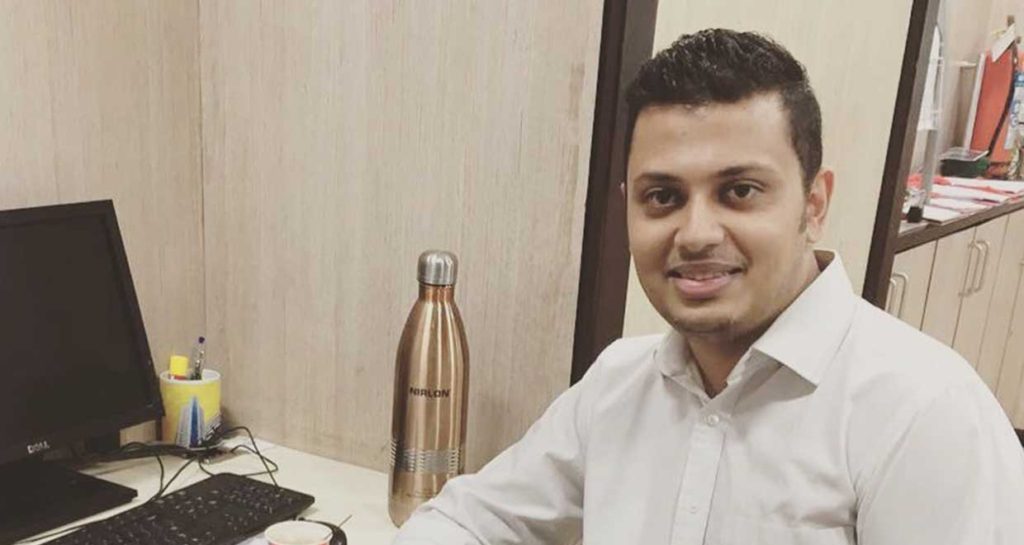
    Biplab Lenin graduated from Rajiv Gandhi School of Intellectual property law (2009-2012). He is a qualified attorney with more than 4 years of both law firm and in-house experience in dealing with general corporate and intellectual property matters. He is registered to practice before Indian patent office and currently working with Cyril Amarchand Mangaldas at its Delhi office. His core areas of work include wide range of transactions, general advisory and intellectual property matters. He has acted on some of the significant and complex transactions that the intellectual property team has been involved with.

    In this interview he talks to us about:

    • How he build up expertise in IPR.
    • Primary essentials of a corporate lawyer.
    • Professional ethics one should follow while at work.
    • Basic subjects one should understand before sitting for an interview.

    How would you introduce yourself, given that most of our readers are law students, law aspirants or professionals in the legal arena?

    I am currently working as a Consultant with Cyril Amarchand Mangaldas in New Delhi. My practice areas include intellectual property laws and corporate laws. I am a registered patent agent at Indian patent office. I completed my LL.B. from Rajiv Gandhi School of Intellectual Property Law (RGSOIPL) in IIT Kharagpur Campus and also hold a graduate degree in Biotechnology Engineering.

    Were you always as fascinated by the field of IP Law or was it an acquired passion that set in through your college years?

    Since my father is also a lawyer, I was never a stranger to legal discussions which my father often used to do with his friends over evening tea after a long day in Court. Nevertheless, after 12th standard I followed the crowd of students doing engineering. In the last semester of my engineering, there was a subject called ” Intellectual property Rights”. Somehow, it attracted me quite a lot mainly because it involved both technology and law. That led me to apply for the course at RGSOIPL at IIT Kharagpur. I guess I was lucky to have studied under tutelage of good teachers and in a diverse peer group that IIT offers. Though I had an inclination towards IP subjects, at the same time, I wanted to do my internships on other subjects as well. Hence, I did internships with law firms as well as corporate in the domain of general corporate law, taxation, disputes, technology transfer and intellectual property law.

    How did you build up your expertise in IPR? Tell us about your work experience.

    My first hands on training on practical aspects of law happened in my internship at Monsanto. After finishing law school, I joined Mahyco as an in-house Counsel where I worked on different IP laws like patents, trademarks, plant variety, biological diversity and technology transfer. More importantly, interactions with several eminent scientists and stalwarts in the agri-biotech domain helped me realize the importance of understanding the technical nuances of the technology involved in any IP law. My engineering education helped me a lot in this area.

    After completing three and half  years of satisfying work at Mahyco, I joined Cyril Amarchand Mangaldas at Delhi where I am working on matters related to patents, plant variety, biodiversity, transfer & assignment of Intellectual property and general corporate transactions. On litigation front, I am a part of the team which is handling patent infringement and drugs ban litigation before the Delhi high Court

    Tell us about your schooling and early life. What do you think are the habits that you cultivated which help you today?

    I did my schooling from Sainik School in Bhubaneswar from Class 6th till Class 12. I think the values of integrity, camaraderie which are a hallmark of the army, are ingrained in me now. Also, Sainik School gave us a lot of endurance training, which helps me when I have to work for long hours in the Firm! I feel that my school experience was also quite instrumental in putting me at ease in any group with diverse cultural backgrounds, which is helpful for an attorney whose work involves people interaction.

    How are internships helpful for a law student? What are the other options available for someone interested in IP?

    Internships have a role to play in one’s professional career as a lawyer. They help us in learning how the law is practically applied. Also, business aspects of transactions are also better appreciated in internship. Skills like corporate communication are sharpened during internship. For those who are interested in making a career in IP, I suggest doing first internship under a practicing lawyer to get a feel of our justice delivery system. It is also important to look for quality work rather than brand name. There is no point in securing an internship in a big organization where there is little work for an intern. Students can join an IP specialized law firm or corporate for doing internships.

    Having Said that, I also feel that one should not be obsessed with stuffing one’s CV with internships. It is important to remember that in college one is a “professional student”and one’s primary duty as a professional student is to study the law books and the basic concepts. What can be learnt in 10 internships over 5 years in a no-pressure situation can be learnt in 6 months in a pressure situation when one starts actually working after college. Many times these days, interns, who have finished more than 10-12 internships in their first 3-4 years of college, but unclear about fundamental legal concepts, which I believe is injustice to one’s profession as a student.

    How do you maintain your work-life balance?

    I have always had a problem with this concept which pre-supposes that work and life are different and need to be balanced. I believe the first step in achieving work-life balance is to love yourself and love your work. Luckily I do both! Presently my focus is on honing my skills. I believe I’m being paid to learn now so I’m not complaining at all! I also believe that even at a senior level people do get time for themselves while managing work and I feel this should not be a concern for us at least at the beginning of our career.

    Any extra-curricular or co-curricular activities did you take up during your time at RGSOIPL and engineering? How did the same affect your learning experience and prepare you for the legal sector?

    I participated in a few moot court competitions during my college. However, I enjoyed parliamentary debate competitions more and also participated in several case study competitions conducted at IIT Kharagpur. During my engineering days as well, I have participated in several paper and poster presentations.

    However, apart from legal skills, I used extra-curricular activities to build my communication skills and inter-personal skills. I was one of the founding members of moot court society and conducted the first parliamentary debate competition at RGSOIPL.

    During my law school days, I worked as a volunteer in an NGO named “Independent Thought” based in Delhi. The NGO works for the Eradication of Social Disparity and Injustice by promotion of Fundamental and Socioeconomic Rights. I used to assist team in doing research and preparing reports with regard to remedies on issues relating to child labour. This experience showed me the humane side of the law and it still keeps my sensitivity intact and reminds me that beyond all the paper work and legal arguments there are real people who are affected by what I do.

    Generally the first year after graduation is the most defining time of a fresh law graduate. What would you suggest a fresh law graduate should do to hold spirit and utilize the opportunities available?

    I would suggest a two-pronged approach:

    1. Many students are thinking about doing an LL.M, immediately after LLB. I feel that an LL.M. without any work experience is just an LLB with some more semesters and a thesis.
      I strongly encourage fresh graduates to take up some professional assignment of their liking instead of academics, be it with a law firm or corporate or even NGO. You’re bound to be confused, so make sure someone’s paying you in the meantime!
    2. In college, we first pay fees and then we learn. In a job, we get paid to learn. Therefore, as a paid student, learn as much as you can about different areas of law and practice. It is important to remember that most books mention “law” and “practice” separately, for example Banking Law and Practice, meaning thereby that practice is something different from mere legal provisions. This will help you in choosing a particular field or subject for your career.

    What are the primary essentials of a corporate lawyer? How do you say a fresh graduate can work on building these skills?

    I think honesty towards the client and one’s colleagues is of utmost importance. One may be low on information about a legal concept, which can be gained, but honesty must come from inside. This of course is a basic human requirement in any profession, so all law graduates must also try to imbibe these values.

    Patience is also a vital asset. One must not get affected by looking at how others are doing in the profession.

    What are the primary professional ethics you follow while at work? How do you deal with mistakes or errors?

    I believe that honesty is the best policy. If there is a mistake, one should admit immediately. Mistakes are bound to happen especially in areas where human effort is involved. In face of mistakes, first requirement is to maintain a cool head, accept a mistake has been made and then immediately start working on a solution. When I’m the team lead, I own the mistakes of my team. I think clients too appreciate such candidness.

    What are the basic subjects which one should read and have understanding of before sitting for an interview?

    From point of view of legal concepts, basic understanding of the following 5 subjects is a must for any civil lawyer regardless of any interview:-
    1. Contracts (including sale of goods and specific relief)
    2. Transfer of property
    3. Evidence
    4. Registration and stamp duty (basic concepts not details)
    5. Constitution (basic concepts)

    Thereafter, one may try to gauge the requirements of any specific interview and prepare accordingly.

    Where do you see yourself ten years down the line?

    Hopefully still on the line!! Jokes apart, my first aim is to build my expertise in my domain, which is more of an internal process. I haven’t really given a thought to any particular designation as such. But I would like to be a lawyer who has earned atleast two things – complete trust of  clients which  allows them to sleep peacefully as far as their legal worries are concerned; and respect from seniors and peers in the profession regarding my professional ethics and competence. Apart from this, designations are trivia!

    Please compare RGSOIPL with other law schools.

    RGSOIPL is a unique law school because admission itself requires a degree in technology or medicine. Being a part of IIT Kharagpur campus, it has an IIT-style admission process with entrance test, group discussion and interviews, which is a great learning in itself. It attracts students from all over the country, which helps in enriching one’s culture and view of life. Also, studying law in the IIT Kharagpur campus in the midst of the crème-de-la-crème of India’s technical brains, gave me 2 important lessons –

    • Law is an instrument to facilitate business and technology;
    • Law cannot be learnt or applied in isolation without an eagerness to learn the technical dynamics of any business.

    RGSOIPL also benefits from the infrastructure of IIT. We had access to major online legal resources like Westlaw, Manupatra and Hein online apart from books.  There are various co-curricular activities which one can pursue to unwind from demanding course schedule.

    How is your experience in working as In house and then shifting to law firm?

    Being an In-house counsel helps to learn the significance of law as a toll for business. However, I would advise to have law firm and court experience at the initial stages of the career and learn court proceedings and allied matters and then shifting to in-house.

    Shifting from In-house to a law firm is tough from a work pressure point of view. Also, subject experts are readily available when you are working in-house, which may not be the case in a law firm full of mostly lawyers. Anyone who wishes to develop a very particular specialization should work in in-house IP department. Law firm gives you a more diversified work. Needless to say, law firm working hours are more strenuous. However, learning as well as growth is much speedier in a law firm.

    What would be your parting message to our readers?

    An excellent CGPA is always good. However, it is important to co-curricular and extracurricular activities as well. Read as much as you can. Take risks when it is required. It is not necessary that every risk you take will result in success. There will be failures too.

    It is important to not think too seriously about oneself and one’s so-called reputation etc. while taking professional decisions. I think the most vital part is that one should feel good both as a human being and a lawyer.


  • Mr. Surendra Naik, Additional Collector and Additional District Magistrate, North Goa, on his experience at law school and mantra for success.

    surendra-naik

    Mr. Surendra Naik, Additional Collector and Additional District Magistrate, North Goa, graduated in law from V. M. Salgaocar College of Law in the year 1999 and shares his views and experiences in his long and successful career. This Interview was conducted by AJAY BORKAR of GR Kare College of Law

    IN THIS INTERVIEW HE TALKS ABOUT:

    • Being part of Government setup

    • His responsibilities as a Magistrate and

    • Views on retirement


    1. What could be a short introduction of yourself?

    A humble ordinary citizen of India, with zeal for social work and to contact with common people, to work for their cause.

    2. Please elaborate on the motivating factors which helped you in choosing legal studies?

    Right from my childhood, I always dreamt of being part of the Indian judiciary since my father always wished that I either become a lawyer or a judge.

    3. How would you describe your academic career while at V. M. Salgaocar College of Law, Goa?

    I did my three years degree course in law in V. M. Salgaocar College of Law. I was privileged to have good faculty, who introduced me to the various legal aspects and assisted me in understanding them. I was ranked 1st in all three years at the Goa university.

    Further, as the institution was located in Panaji which is a hub for lawyers, I had the opportunity to intern with advocate F.E. Noronha in Panjim, wherein I gained some practical knowledge of dealing with the clients and attending cases in court.

    4. What role do you think mooting plays in a law student’s life?

    I hold moot courts at a very high esteem. I think each and every student of law should compulsorily participate in moot court. It enhances their power of understanding and analysing legal situations and enhancing their power of arguments and plays a major role in their overall personality development and legal ethics.

    5. Please tell us about how you decided to pursue your career in civil services? Were you considering any other opportunities?

    After completing by graduation in law, I applied and received Sanad from the Bar Council of Maharashtra and Goa. Also, I joined the chamber of Adv. F.E. Noronha in Panjim, who was basically practicing in various Civil Courts, Tribunals, Revenue Court and also in the High Court of Bombay at Goa. I had an opportunity to work with him for about 7 months. During this time, there appeared an advertisement for post of Mamlatdar, Joint Mamlatdar and Asst. Director of Civil Supply through GPSC, for which I casually applied.

    Thereafter I received a letter for written examination for which I appeared and then I received a letter for oral interview by the GPSC and subsequently I topped the said examination and oral interview and was ranked first in the selected candidates and immediately thereafter I received appointment letter as Mamlatdar. I always wanted to be a Civil Judge or Judicial Magistrate First Class, but during that time there were no advertisement of civil judge. The requirement was 3 years practice as lawyer which I could not fulfill.

    6. What has your experience with legal education been like and how relevant do you feel it has been to your profession after graduating in law?

    As per me, my legal education has helped me immensely. It changed my attitude and my way of looking towards everything. Qualification in Law was the basic requirement for the post of Mamlatdar. It also helped me immensely in discharging my duty as Presiding Officer of the Revenue Courts and also for performing many other quasi-judicial functions.

    7. What are your main responsibilities as the Additional District Magistrate of North Goa?

    Presently I am posted as Additional Collector and Additional District Magistrate, North Goa. My primary functions are mainly Administrative and I also carryout Quasi-Judicial functions under numerous Acts like the Mamlatdar Court Act, Land Revenue Code, RTI Act, etc. The criminal jurisdiction includes maintenance of law and order and various other preventive actions. I also have a duty of granting arm licenses under arms Act.

    8. Do you think the level of law studies has gone down as compared during your time?

    I don’t agree with this. However I think that as the time progresses, the law colleges are becoming more and more professional and training its students in various aspects. Even the introduction of 5 year course is a great step towards legal education. I think compared to our time, there is a lot of improvement in legal education and imparting of professional training to law students.

    9. How do you manage your personal and professional life? Do you keep both separate?

    Apart from professional life, one’s personal life is equally important. And one has to strike a perfect balance between both of them, if your personal life gets disturbed it also adversely affects your professional life. So you should also give time for your family.

    10. Where do you see yourself after your retirement?

    I think there is nothing like retirement in life. One should always keep on continuously contributing to society. Government service is just one phase and there are various opportunities for a competent person to contribute to the society, even after attaining the age of superannuation. One must always keep his body and mind healthy to live life to its fullest satisfaction.

    11. Do you have any advice to all our readers out there?

    It is only hardwork which is the key for success in any field and there are no shortcuts. Shortcuts are only for short term benefits. It is only hardwork which gives you success on long term basis. Overall apart from your hardwork there should always be honesty in whatever you do.


  • Justice Desmond D’ Costa, on bringing justice to the people, legal education and the Indian Judicial System

    desmond-dcosta

    Justice Desmond D’Costa is the Principal District and Sessions Court Judge, South Goa, graduated in law from G.R. Kare College of Law in the year 1982 and answered his Judiciary Examinations in 1992 and has been a judge for the past 24 years. He possess an experience of over 34 years in the legal industry and encourages the students participate in various activities in order to get more experience. His main goal is to serve the society. This Interview was conducted by Dietrich Almeida of GR Kare College of Law

    IN THIS INTERVIEW HE TALKS ABOUT:

    • What motivated him to become a judge

    • Serving for the cause of justice and bringing justice to the people

    • Legal Education

    • The Indian Judicial System and

    • His advice to law students intending to join the Judiciary

    1. HOW WOULD YOU INTRODUCE YOURSELF, GIVEN THAT MOST OF OUR READERS ARE ASPIRANTS OF LAW AND SERVICES, LAW STUDENTS AND PROFESSIONALS?

    I am the Principal District and Sessions Court Judge Desmond D’Costa. I graduated from G. R. Kare College of Law in the year 1982. I’ve been an advocate for 10 years before I answered the judiciary exams in 1992. From 2002 to March 2016, I was an Additional District Judge. I’ve been a judge for the last 24 years. So you can say I’m a follower of law. It has been 34 years since I’ve done my law. In a way you can say I live law, I breathe law, we don’t eat law but we live and breathe law.

    2. WHAT WAS YOUR LIFE LIKE AFTER GRADUATING AND HOW DID YOU BEGIN FOCUSSED PREPARATION IN ORDER TO ACHIEVE YOUR GOAL?

    Like I said I graduated in 1982 and my objective was to serve the cause of justice. So I practised as a lawyer for several years and then when there was an opportunity to join the judiciary I applied for the post of a judge. And I was selected as a judge in 1992. And ever since that time I’m trying to see in what way I can serve the society such as deciding cases as quickly as possible and not keeping matters pending. We always criticize the system, but in joining the system and doing my contribution that’s the way I achieved my goal.

    3. ALONG WITH YOUR HARD WORK AND CAPABILITY, WHICH INDIVIDUAL WOULD YOU LIKE TO ACCORD CREDIT TO IN ATTAINING YOUR GOAL?

    When I became a judge I and my fellow colleagues used to interactions among ourselves and at the end of the day we would sit together and discuss our problems. So you can say my fellow colleagues, my fellow judicial officers are the people I give credit to. Like we always used to share as the saying goes “Knowledge is only a drop in the ocean”, you can read books but sometimes you might not be able to grasp it or remember it but what you get from discussions with your colleagues and sometimes even with lawyers is entirely different. We used to share experiences and in this way improve and sharpen our focus and sharpen our law.

    desmond-34. WHAT WERE YOUR AMBITIONS BEFORE JOINING LAW AND WHAT LED TO YOUR INCLINATION TOWARDS LAW?

    Firstly, I don’t come from a family of lawyers. So when we were students we used to always see injustices all around us. So many students used to fight against injustices. Once you get involved in society, advocates now make you go for legal aid clinics so you see the trouble that people face. And sometimes cases don’t get over and people are frustrated with the system. There’s a lot of distrust and disgust in the system, that is what we felt and thought, let us see in what way we can contribute to put faith in the system. My experience with the student’s movement and tackling different social issues at our level as students made us interested in seeing in what way we could mould the law to bring justice to the people.

    5. DO YOUR FEEL THAT IN INDIA THERE IS STILL A BIT OF RESISTANCE TOWARDS LEGAL EDUCATION?

    So what they say is that the legal profession doesn’t have green pastures, like a student who does his engineering or medicine they start earning immediately. But now of course in Indian law schools such as national universities, students who study there get very good positions. But in Goa, advocacy implies once you are qualified in law and start practicing, for 4- 5 years you have to attend the courts and see the how it functions. Thereafter, by the time people have confidence in such a lawyer, which is very important as no one will entrust a case to you unless he is sure that you’ll win the case for him, it is what’s called a long gestation period. No doubt that some new graduates who come out of law are well experienced by attending courts and they know most procedures and that is why they are able to start practicing immediately but then you have to be with a senior counsellor. Nowadays judgements are easily accessible over the internet but then to win people’s confidence you have to chisel or polish yourself into a well rounded professional which only experience gives you.

    6. WHAT MOTIVATED YOU TO APPLY FOR JUDICIAL EXAMS?

    Well, I never had a wish to be a judge. As they say life is an accident. So, along the road of life, after I became a lawyer, I continued supporting people for the causes of justice as I’ve said before instead of throwing stones at the system as I felt that it is better to join the system and try to be the change. That’s when I applied for the judicial post and completed my exams. I think that I cannot be a judge by myself but I am a part there in the judiciary.

    7. PEOPLE HAVE A TENDENCY TO IGNORE MOOTS, DEBATES AND EXTRA CURRICULAR ACTIVITIES IF THEY WANT TO GO INTO JUDICIARY OR CIVIL SERVICES. WHAT DO YOU THINK ABOUT THIS?

    This is very true because ultimately what happens is that the lawyer has to develop self-confidence. Further, knowing the law by heart and having academic knowledge but not being able to put it into use is of no utility because ultimately law is to be applied in day to day events and to solve the problems and issues in regards to which your clients will come to you. You have to know the remedy and tell them how to tackle their problems. And all this comes partly from experience by participating in moots, debates and extra-curricular activities makes you an all-round citizen.

    It also gives you a social exposure and makes you more practical. There’s a vast difference between the law written in the books and law in practice. Only when you take part in moots, debates, only then your skills sharpen and your outlook broadens. Take the example of a frog in the well in this regards, the size of the sky for the frog is only the small blue part that he can see. So in order to see the whole blue sky he has to come out of the well. In other words, every student should come out of the well and have a broadened approach. He should not be confined to the walls of his room or library but he has to go out and take part in skits, legal aid clinics, speak to people and also learn their language because in the classroom we speak in English but with clients you have to speak in the local language. Therefore, moots, debates and extra-curricular are very important.

    justice-desmond-dcosta8. HOW IS A TYPICAL DAY AT WORK LIKE?

    A judge’s life is 24×7. We hardly have time. And at the end of the day I try to finish the work I have for the day by reading the files and avoiding postponing the dates of judgment. We have to keep on reading. There’s no time to breathe but of course I enjoy it. I would try to do what’s best for the system. The better equipped you are with knowledge the greater use you can put into society. A gain in our knowledge helps us to be more efficient in our work.

    9. DO YOU FEEL THAT THERE IS A NEED TO IMPROVE ON THE SYSTEM OF DELIVERING JUSTICE?

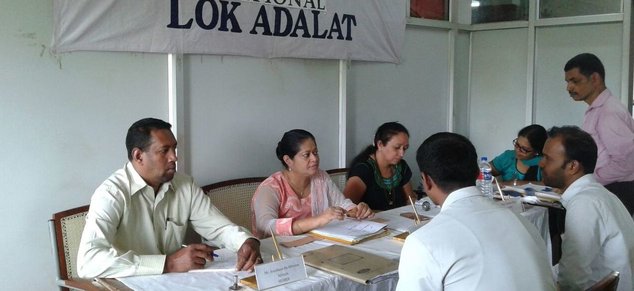
    The Indian judicial system is a system which is so overburdened, the backlog of cases are clogging the wheels of justice. That’s why people say once you enter into the court your life is finished. In India we have a lot of law commissions which keep on saying that the proportion of judges in India presently is 50 per million. So a number of law commissions have recommended that they increase the number of judges and increase the number of courts. This is one of the main reasons for the big backlog of cases. In the last few years, the Supreme Court on their own have been taking the initiative and has been acting as a motivating factor. That is why we have bought in arbitration, mediation, conciliation and negotiation. We also try to have more lok adalats. Now every month we have got a national lok adalat. We are trying to use alternate dispute resolution techniques, (ADR). So in this way we can at least convince people and try to settle disputes. So delivery in justice in the system can occur only if there’s quick delivery of justice, now because of the back log in cases, because of shortage of courts, there’s more and more cases that are piling up. Then the procedures that we have are so lengthy and every order is challenged in the higher court and this is also one of the reasons for delay in justice. So now we have fresh blood coming into the system and the country itself is a country of youth let us hope that they bring a change.

    10. WHAT WILL BE YOUR SUGGESTIONS TO OUR READERS WHO WISH TO JOIN JUDICIARY? WHAT ARE THE ESSETIAL QUALITIES ONE SHOULD CULTIVATE?

    To join the judiciary is in itself very challenging. A judicial post is not so lucrative, so, if you’re looking to becoming a millionaire than you shouldn’t be a judge but if you want to live and feel like you have some responsibilities to the society and want to give back to the society then it is the proper choice.

    To be a judge you have to develop and be balanced in your approach, be open to criticism, put in a lot of hard work and you have to have qualities of being a good human being, believing in good values such as honesty. These days not only in India but throughout the world there is a lot of corruption in public life. Corruption in public life in India is becoming a major challenge. So a judge is supposed to be an epitome of honesty and have good basic values because ultimately we are all social animals, so we have to see in what way we can improve our society. That’s what I tell some of my friends. If you remember that famous poem by Robert Frost, Standing in the woods of a snowy evening, in which he says “the woods are lovely, dark and deep, but I have promises to keep, and miles to go before I sleep and miles to go before I sleep…” this is very inspiring as he says we have a lot of promises to keep. Keep this as you’re motive and you will be a big asset to the society because ultimately everyone thinks about himself first but it is not that we should be selfish but also think about others.

  • Mr. Dileshwar Naik, Prominent advocate and President of Vasco Bar Association, on his two decades journey in the legal field and advice to aspiring legal professionals

    dileshwar-naik-2

    Mr. Dileshwar Naik, Prominent advocate and President of Vasco Bar Association, graduated in law from V. M. Salgaocar College of Law in the year 1997 and shares his views and experiences in his long and successful career. This Interview was conducted by SWITZY BRAGANÇA of GR Kare College of Law.

    IN THIS INTERVIEW HE TALKS ABOUT:

    • His inspiration to enter the legal profession

    • Importance of Academics Writing

    • His views on Human Rights Advocacy

    • His advice to law students

    1. CAN IT BE SAID THAT COLLEGE STUDIES PREPARE YOU FOR REAL LIFE PRACTICE IN COURTS?

    Well, College years are full of fun, however studies are or atleast during my college days were limited to academics and it did not help much in real life practice in courts. Even mooting with academic interest just to score marks doesn’t help law students to succeed in legal field. The subject and the cases which are chosen should be with an eye on legal practice and more and more mooting with the help of expert lawyers will definitely help students when they join practice.

    The best way to prepare for real life practice is to actively take part in the functioning of the court by perhaps joining a practicing lawyer and even through internships. The Practical knowledge and training which I received from my senior Mr. Ulhas Shetye helped me a lot in practice as I got lot of exposure from him.

    2. WHAT SHOULD A LAW STUDENT DO IN YOUR OPINION TO SHAPE HIS/HER PROFILE IN THE LAW FIELD?

    A law student should during their academics if keen to join practice should join some lawyers office or firm and take practical training which will help them to choose their specialization and also make them more confident and ready to take up the challenges when they join real practice in courts.

    3. HOW IMPORTANT YOU THINK ACADEMICS WRITING IS FOR A LAW STUDENT WHO WANTS TO BE AN ADVOCATE?

    Academic writings, as it is practiced currently, I believe are limited to examination and marks and a student who wants to be an advocate needs practical training more than academic writing. Exposure in various courts and learning the procedures in courts helps a person to be a better advocate than the one who concentrates only on academics.

    4. WHAT INSPIRED YOU TO BECOME AN ADVOCATE?

    My late father, who was a police officer always wanted dileshwar-naik-3me to be a professional rather than taking up service though I was more keen to become a police officer like my father. However, as time went on, I realized that I had an interest in the subject that is collectively known as law and this interest slowly tilted me towards the profession.

    5. IS THERE ANY SKILL OR SECRET YOU PICKED UP OVER THE YEARS THAT YOU BELIEVE IS CRITICAL TO A LAWYER’S SUCCESS?

    I would say your devotion and experience automatically improves your skills as a lawyer and more importantly a lawyer should agree with the merits of his or her case and prepare for the case. Similarly is your discipline and behavior in the courts and with your clients. One needs to be sincere to the client and the courts and follow the ethical values for success and it does not need special skills.

    6. TELL US HOW YOU HAVE MANAGED TO HANDLE YOUR FAMILY AND LAW SIMULTANEOUSLY?

    It’s a very tough question, because once you take up the legal profession you are a lawyer 24 hours a day and that very often makes it difficult to handle your family but that again depends upon your time management. A lawyer needs to plan the timings and that is how I have managed both family and law.

    7. WHAT IS YOUR IN HUMAN RIGHTS ADVOCACY IN INDIA OVER THE NEXT DECADE?

    There is definitely a change and a positive change in India and for lawyers to only depend on human rights advocacy, only time will tell. No doubt people are getting aware about their rights and privileges and education is playing a big role. So human rights violations are taken note by everyone.

    8. DO YOU HAVE ANY PARTING ADVICE FOR ALL OUR READERS OUT THERE?

    A lawyer who wants to make legal profession his ultimate goal then has to undergo hardships for at least the first five years, get well versed with the procedures of courts and educate himself and keep track of the latest developments in the legal field. Similarly lot of reading and being sincere to your clients, courts and to your colleague. Follow the legal ethics and prepare your case well in advance before you put up the case in court rather than last minute preparation like we are used to do for academical exams.


  • Alladi Venkatanarayana, retired advocate on internships, higher studies and litigation

    Alladi Venkatanarayana, retired advocate on internships, higher studies and litigation

    img-20160816-wa0002

    Advocate Alladi Venkatnarayana (retd.) hails from a small town in Andha Pradesh, known as Nellore, but settling in Chennai in later years. He is a graduate of the Madras Law College in Chennai, now known as the Dr. Ambedkar Government Law College. Having initially worked under an experienced lawyer in his early days, he would later start working on cases in his individual capacity. Today, his experience in the field of litigation remains unmatched and he is considered a specialist in matters concerning contracts.

    In this interview he talks about:

    • Litigation practice and what to expect to expect in connection to it
    • Evolving and developing one’s preliminary knowledge in the legal industry
    • Judiciary and its various achievements through the years
    • Acing the Supreme Court Advocate-on-record examination
    • How students may plan their respective careers while still in college

    HOW WOULD YOU LIKE TO INTRODUCE YOURSELF TO OUR READERS?

    Hello everyone, this is Alladi Venkatanarayan. I am a retired Senior Advocate of the Supreme Court of India. I hail from a family with a prior legal background. My grandfather, Mr. Alladi Krishnaswamy Iyer was one of the 5 draftsman of our Indian Constitution. Post retirement, I still attempt to keep to the practice of continuously reading various legal journals and books so as to remain updated.


    WHAT ARE THE SKILLS REQUIRED TO BECOME A LITIGATING LAWYER ACCORDING TO YOU?

    Like most people would say, I would say the same, you need to have great communication and argumentative skills. However, I would emphasise also to students to concentrate on the various legal provisions that they should already know or are now learning thoroughly, such as provisions of the Evidence Act, Civil Procedure Code, Criminal Procedure Code and other such important Acts. Having a thorough hold over these subjects gives you the edge over other lawyers. It may even help you in getting an edge over an opposite counsel who has better communication skills than you.


    DO ADDITIONAL QUALIFICATIONS LIKE LLM, MBA, CA, CS, DIPLOMAS HELP IN GETTING THE JOB OR GETTING PROMOTED?

    I wouldn’t say no, but then, in all my years of experience, I have observed that additional qualifications only give you a higher platform to launch yourself on, but from there how much further you would go depends entirely on the the manner in which you make a mark in all the works that you undertake. However, if a person has interest in pursuing a particular subject area within the legal discourse then there is no harm; higher education always adds to your CV which in turn helps you get positioned in a more established practice.


    PLEASE ADVISE STUDENTS PLANNING A CAREER IN LITIGATION AS TO SOME OF THE DO’S AND DON’TS THAT WOULD BE REQUIRED TO BE OBSERVED?

    As far as my experience goes, I can tell you that litigation isn’t going to be as easy as a corporate job. You will face a lot of bumps in the first stages of your career, but later on you would also be able to realise that all those bumps had been helping you to make yourself  better at the various stages of the litigation career i.e. pleading, drafting, etc. It doesn’t matter, all you need to do is just keep learning and keep improving your knowledge day by day and you will definitely establish yourself quite easily. Also, as I mentioned earlier, your basics should be quite strong with respect to the relevant Acts, Sections and Procedures.


    WHY SHOULD ONE CHOOSE LAW AS A CAREER OPTION?

    Personally, I chose law because I couldn’t get into any other stream (laughs). There was certainly always however a kind of pull towards that field right from my very early days in childhood. I always was intrigued by the various ongoing socio-political issues in those days and felt that I would excel at legal studies. For a person to choose law, there can be end number of reasons like good money, reputation, but the most important factor is your personal interest. If you are interested in law, then you should choose law as a career. You will never have the fear of job safety. Becoming a lawyer also gives you the great satisfaction of being able to  help people in dealing with their issues . Also, the gratitude that they show you is invaluable.


    HOW SHOULD ONE WORK IN ORDER TO CRACK THE S.C. ADVOCATE ON RECORD EXAMINATION?

    I would suggest to the people who are taking the test to first practice for some time in lower courts, so, while you are engaged in advocacy work, you learn a lot of things that you would eventually be tested upon. So, that helps a lot. Like my answer to many other previous questions, your basics should be strong with regard to the Civil procedure code, Evidence Act, etc.


    HOW WOULD YOU ADVISE A LAW STUDENT IF ONE HAS TO START PREPARING FOR A CAREER WHILE IN COLLEGE?

    Most students start freaking out after a year or so into their college life when they realise that they have no clarity with regards to what they are going to do after they complete their under-graduation. I would suggest them to just wait until they get interested in a particular subject, to wait until they complete classes of all major subjects of laws and then pursue the one that made  them think the most, the one that they felt intrigued by the most.


     img-20160822-wa0000 WITH RESPECT TO THE LAW SCHOOLS AT THE PRESENT TIME, DO YOU THINK THAT THEY ARE PREPARING THE STUDENTS ENOUGH FOR THE ACTUAL REAL LIFE PRACTICE IN COURTS?

    I think that they are. As far as I know , all the top league law schools are imparting the students with enough basic practical knowledge. The rest can always be learnt by experience in internships and working after the imparting of the degree in courts.


    SINCE INTERNSHIPS PLAY A VITAL ROLE IN SHAPING A STUDENT’S CAREER, WHICH PLACES WOULD YOU SAY ONE SHOULD IDEALLY INTERN IN ORDER THAT THEY MAY ADD WEIGHT TO THEIR CV?

    I think it depends a lot on which field of law they are interested in. As for students who wish to go into litigation, you must first start from the district court and then gradually move on to high court. This is because, at district court level , the various lawyers that you work under will have the time to explain those basics which you otherwise would not be aware of. Court room behaviour, the way you plead, can all be better learnt at district court.


    A LOT OF STUDENTS PREFER A CORPORATE JOB OVER LITIGATION; WHILE INTEREST MAY BE ONE OF THEIR REASONS, THE FEAR OF UNCERTAINTY IN ANY CAREER OTHERWISE IS ALSO A MAJOR ONE. WHAT DO YOU HAVE TO SAY ABOUT THIS?

    That is quite true, but this was the scenario when I had completed my graduation.  This is not scenario now; things have changed. There is no such kind of uncertainty any more really. You can always excel easily here as long as your basics are strong. I keep repeating this because, now-a –days most students have no good grip over these aspects and get affected badly due to this.


    SO, HOW WAS THE EXPERIENCE WORKING IN A COURT FOR THE FIRST TIME? DID YOU GET THE FEELING OF BEING THE LONE ONE DROWNING IN THE SEA?

    I won’t say I felt as if I was lost in the sea because I had already been working under a lawyer before. So, that helped me in knowing the procedure of the courts  beforehand.  However, I was also very eager to take my chances with fate. The lawyer under whom I worked had after a long period entrusted me with a case, so I was rearing to have a go and prove my worth.


    ANY ACHIEVEMENTS THAT YOU FEEL OF THE JUDICIARY ARE UNDERRATED?

    Not many , I think many judgements of the judiciary are quite well appreciated in the legal field but only in the cases which have garnered media attention would the people really follow up and read the judgments in entirety. So, mostly it is the legal fraternity alone that remains alerted to all the legal developments, significant apparently or otherwise, and I don’t remember any judgement that could be termed as underrated.


    YOUR VIEWS ON THE LEGAL EDUCATION BEING IMPARTED AT SCHOOL LEVEL IN OUR COUNTRY?

    At urban level, I think it is being imparted quite properly and sufficiently. At rural level , it is not being done properly. At the rural levels, even basic education is not being imparted properly, so legal education is a far off thing .


    WHAT WOULD BE YOUR PARTING MESSAGE/ADVICE TO OUR READERS WHO ARE ALL MOSTLY BUDDING LAWYERS?

    To all the readers, I hope and pray that you become the best at what you do and achieve great heights in your respective legal careers. Also, never get disheartened by failures in the beginning, keep going no matter what. Always stay aware of latest legal developments at national level as well as at international level. I would also urge you to keep the reputation of our profession at great heights.

  • Arush Sengupta, counsel based out of Delhi on college experience, CGPA and career on litigation

    Arush Sengupta, counsel based out of Delhi on college experience, CGPA and career on litigation

    img-20160819-wa0007_1

    Arush Sengupta is an alumnus of Symbiosis Law School Pune, Symbiosis International University who graduated in the year 2012. Currently working under Mr. Anil Shrivastav, Advocate on Record at Supreme Court of India, he can be best described as a practicing counsel based out of Delhi.

    In this interview he talks about –

    • His college experience
    • The importance of CGPAs and co-curricular activities in shaping one’s career
    • His take on litigation
    • Preparing to shape one’s future career while still being in college.

    How would you like to introduce yourself to our readers?

    Arush Sengupta, SLS Pune Batch of 2007-12, currently pursuing litigation in New Delhi.

    What is your work profile like?

    I work under Mr. Anil Shrivastav, Advocate on Record at the Supreme Court and have been exposed to a wide variety of matters under his guidance and supervision. My work profile involves assisting him with research, drafting and framing of arguments in matters at the Supreme Court, High Court of Delhi, the Central Administrative Tribunal and the National Green Tribunal, among others. The issues we deal with range from disputes arising out of rules governing government servants to border disputes between states, and a number of things in between.  While most of this is in the capacity of a junior, on occasion there are briefs which my senior lets me handle with a great degree of independence and autonomy which exponentially increases the rate of development of one’s skills. Additionally, I try to freelance and get my own matters and clientele, which is challenging work with uncertain outcomes but integral to the process of becoming an independent practitioner.  Out of the latter category, an interesting matter that I am currently engaged in arises out of discrepancies in export documentation under the Customs Act wherein a senior official has been implicated by the CBI and various proceedings connected with it are underway at diverse forums, ranging from the CBI Court to the Rajasthan High Court. Taking up this matter has resulted in fantastic learning, since I got familiar with several laws and procedures that I was not previously aware of.

    What would you say sets SLS, Pune apart from the other law schools in the country?

    I suppose strictly in terms of academics there would be not much to choose from between a set of similarly ranked institutions. However SLS did not provide accommodation within the old campus on SB Road, and consequently we started living independently in the city from the day we landed in Pune. In retrospect, this made a massive difference since we were exposed to the legal aspects of day to day living such as rent agreements, motor vehicle rules and so on. Every now and then one had to deal with the friendly neighbourhood policemen when music at house parties got too loud or when bikes on the way home from the said parties were too fast. If one was fond of such activities invariably the need for finding loopholes in attendance rules, exam rules, etc. would arise. While we were in college it was all part of the fun and games associated with student life out of one’s home town, but I realise now that these experiences equipped a lot of us with problem solving skills, the ability to think on our feet and  familiarized us with the patterns and systems of various laws, rules and regulations. All these soft skills gained inadvertently have helped me immensely and I daresay that had we been a part of a regular residential campus these experiences would have been hard to come by.

    How much do moots, research paper publications impact one’s employability or desirability?

    These activities are very helpful. Perhaps, the value addition that takes place from participating in a moot or writing a research paper is not immediately tangible; except for those who apply for higher studies after college. However, mooting helps in developing public speaking skills, framing logically consistent arguments and the ability to research on tricky topics and obscure points of law. Paper publications create awareness of issues which may not be covered in great depth in the mainstream curriculum. At the very least, mooting and paper publications would definitely help students who have participated in these activities approach real life cases and legal issues with confidence. Personally I draw from my mooting experiences when it comes to figuring out where to look for relevant material or applying arguments and analysis to different matters. Interacting with fellow students, teachers and legal professionals at inter-college moots and other similar events is a good way of getting to know people from the legal fraternity and my inter-personal skills improved as a result of these interactions.
    img-20160819-wa0003

    Do additional qualifications like LLM, MBA, CA, CS, Diplomas help in getting the Job or getting promoted?

    Yes they do. All other things being equal, additional academic qualifications help to distinguish a resume’ from others to a great extent. The potential of an added degree or diploma is maximized if it largely compatible with the areas of interest and work experience on the resume’.

    What will be some challenges faced by freshers and how can they grow within the profession as a lawyer?

    On the basis of my limited experience, I would say that a big challenge is to cope with the sheer magnitude of the legal profession in terms of the number of areas of specialization that one can opt for, the levels and rungs of the court structure, the breadth of knowledge that is required (and should ideally be aspired to for its own sake also) as well as the seemingly innumerable channels of being recruited. It is difficult to make optimum career choices on being faced with such a wide range of options, especially since the information available about the various dimensions of the profession is at times skewed and prone to a high degree of subjectivity, especially for first generation lawyers. As is said often, there is no uniform and standardized method of achieving success as a lawyer. Common questions like whether one is better suited for law firms or litigation, what area of specialization to opt for, whether an MBA is preferable to an LLM in certain cases and so on; are best answered keeping in mind one’s unique strengths and weaknesses rather than on the basis of the conventional wisdom of the day.


    Tell us about your internship experiences. How did you choose your internships? How early did you apply? Are there any things that an applicant must keep in mind?

    I never had an overwhelming preference for any one dimension or branch of the legal profession, so the motive behind my internships was to explore as many different kinds of work environments as I could so as to be able to decide what suited me best. I did 5 internships, at Sanderson & Morgan-a prominent law firm in Kolkata, Price Waterhouse Cooper (Kolkata), under Advocate (Justice) Sandip Mehta at the Rajasthan High Court, at APJ-SLG Law Group- a firm specialising in WTO legislations and international trade in Delhi and finally under my current senior, Advocate Anil Shrivastav at the Supreme Court. I really enjoyed my stint with APJ since I am fascinated by international trade, the WTO and other aspects of international trade and economics and laws relating thereto. However I concluded that it might limit the development of my skills if I entered full time into such a niche branch of law at the very outset, especially without a relevant post grad degree; since the level of academic know how required seemed to be marginally greater than in other branches of the legal profession. That being said it is a field I would be interested in entering at some stage in my career, upon becoming qualified to do so. My final internship under Mr. Shrivastav was also very fruitful since he constantly encouraged me to think and form opinions about a case independently and even allowed me to draft and frame arguments for certain matters, which are responsibilities that seniors are usually hesitant to entrust interns or even associates with. After graduation, I also worked at the chambers of Sr Adv Tilak Bose in Kolkata and as an associate at the firm R.L. Gaggar & Co, which allowed me to gain an insight into the difference between practicing as a litigating lawyer and working at a law firm. Applicants should keep in mind that it is equally important to experiment and get exposed to different kinds of work environments and at the same type keep looking out for places which might have potential for longer term employment and strike a balance between the two.

    How important is a CGPA for recruiters to assess students? How did you maintain a balance between a good academic record at university and your extracurricular activities?

    The CGPA is actually a good indicator of a student’s performance as far as corporate recruiters are concerned since it provides an indication of the academic merit of a potential employee in relation to his entire peer group, as opposed to isolated grades or percentages. This is true especially in the phase immediately after college, when applicants for entry level posts have no substantial work experience to speak off. However it is by no means the only criterion used to select candidates and a good track record vis-a-vis moots, paper presentations, internships and so on also help strengthen one’s candidature for recruitment. Later on, prior work experience becomes a more important factor. Most litigating professionals on the other hand believe, with plenty of justification; that real learning begins after college so it is relatively less of a determining factor if one opts to work at the chambers of a senior after college. Coming to the second part of the question, while my grades are not abysmal, I could have probably balanced co-curricular activities and academics much better than I did. For everyone in law school who is as into moots, MUNs and debates as I was, there will sometimes be at least a slight trade off between grades and pursuance of co-curricular activities, unless you happen to be one of those rare geniuses who excel at absolutely everything. However I wouldn’t exchange the skills and experience I gained from taking part in these events for a few extra decimal points on the final mark sheet, and to the best of my knowledge the same would hold true for most people who pursued similar interests. Most of us who spent a lot of time debating or mooting and MUNing have been fairly well rewarded for the value addition that took place as a result.

    What has been the driving force behind choosing litigation over a well-paying corporate job?

    I enjoyed taking part in moot courts, debates and MUNs in college so in a way a career in litigation is a natural extension of that since it involves elements of public speaking, framing arguments and researching on various issues to a far greater extent than a corporate job. I also feel that the best way to utilise a five year undergrad law degree is to be working in the courts as a practicing advocate. Despite the initial phase of struggle with low pay that it usually involves, it maximises the potential for professional growth. However this opinion is purely personal and subjective and others may have equally or even more compelling reasons for opting for law firms, companies etc. Also, I haven’t ruled out an MBA later on. If I eventually do one, I will re-assess my options since at that stage I could look at corporate jobs beyond the somewhat limited spheres of a legal officer or an executive in a company secretarial role.

    img-20160819-wa0002

    The alumni of any college are often regarded as one of the reasons behind the institute’s success. An active alumni base being of utmost importance, how closely does SLS work with the alumni and in what ways?

    We have a very active alumni network, with frequent reunions and alumni meets. Outside the formal channels too, we have a strong alumni network and I have found seniors and even batchmates and juniors to be extremely helpful and supportive. As far as working closely with SLS goes; from helping students during moots to assisting graduates who are new in the profession with career choices and decisions, the alumni plays an important part in ensuring that the transition from law school to the legal profession is smooth. The legal profession can be intimidating for newcomers and it is always comforting to have people one was at college with as your colleagues in the profession.

    Lastly, do you have any suggestions for students on how to deal and pick from the pandora’s box of legal specializations?

    In as much as choosing an area of specialisation goes I would say keep an open mind and keep learning about various spheres of law. It is important to go beyond the surface if one is to make an informed decision in this regard. For instance, when we first entered college, a lot of people were fascinated with IPR laws and wanted to explore career options in the field. However some of them later discovered that patent laws involved dealing with complicated industrial designs, chemical compounds and other things which require one to be comfortable with physics, chemistry and so on in addition to just the law. On the other hand, tax is a subject that many people find distasteful in college because it is assumed to be a lot of maths, but now I see a few of my friends as well as seniors in the profession who practice tax law and find it fascinating as well as lucrative.

    How would you advise a law student if one has to start on to preparing for a career while in college? Any parting words of wisdom to our readers?

    I will repeat that there is no fixed or ‘one-size fits all’ way in the legal profession, so there is a strong case to be made for assessing your strengths, weaknesses, areas of interest and then moulding your career accordingly. For example, sports law (often coupled with sports management), media law and laws relating to international relations and global governance are emerging fields and involve work in spheres that many people are inherently passionate about and even though they may not yet be conventional areas of practice, I see colleagues do really well at these because they were already interested in the subject matter. Some of my seniors have advised me to not limit myself in the initial stages and gain diversity of work experience, because only thus can one get a grasp of the full spectrum of opportunities that a career in law affords. This approach has worked for me, and I would recommend it especially to those who are inclined towards litigation.

  • Ajar Rab, Partner, Rab & Rab Associates, on Dual degree LL.M. and MBA from Germany, NLSIU graduate, on setting up Uttarakhand’s first law firm

    Ajar Rab, Partner, Rab & Rab Associates, on Dual degree LL.M. and MBA from Germany, NLSIU graduate, on setting up Uttarakhand’s first law firm

    Ajar Rab graduated from National Law School Of India University, Bangalore(2006-2011). At present, he is a partner at Rab & Rab Associates LLP, Dehradun and his work ranges from civil litigation, arbitration and corporate transactions.

    He is also an international policy consultant at Lexidale and a Non-Resident Expert at Vidhi where his work includes review of existing laws, policies and regulations, drafting of policy documents, amendments, rules and regulations and research on comparative policy.

    In this interview he talks to us about:

    • His experience at NLS, Bangalore.
    • His decision to pursue with a dual degree- LL.M. and MBA from Germany.
    • Skills one must require to become a legal consultant.
    • His views on how Indian Universities may improve the education regime.

    How would you like to introduce yourself? Tell us a bit about your childhood and pre-college life.

    I am a lawyer who grew up in the small hill station of Mussoorie where I studied at St. George’s College. My school lay great emphasis on extra-curricular activities and I was an active debater and loved playing sports. I was very lucky to find good friends with whom I have the fondest memories.

    What motivated you to choose law as a career?

    My parents are also lawyers. My father is a designated senior advocate at the High Court and my mother has spent over 37 years at the trail courts. I guessed I absorbed things like a sponge, never really seeing the big picture directing my interest in law. Though my parents never told me to become a lawyer, somehow their experiences and narrations about court cases and clients generated a keen interest in law.

    Please share your experience at National Law School of India University, Bangalore, especially as the first student to be elected as President of the Student Bar Association in absentia.

    I feel very lucky and privileged to have had a chance to study at NLS Bangalore. The place changed me for the better and I feel I am an entirely different person, pre and post college. One of my seniors, Nizam Pasha, who was in his final year when I joined, told me “Law School is a land of opportunity” and I don’t think I have better words to describe the place.

    My election to the SBA, while I was on exchange, was sheer benevolence of my batch and my close friends. I am truly grateful to all of them for believing and in me and convincing the others who did not at the time. My term at the SBA was full of various highs and lows. I have no hesitation to admit that it changed my world view forever. I learnt a lot about strategy, politics, negotiation and public perception – something we have to deal with daily as lawyers.

    Why did you decide to pursue higher studies? What was your motivation?

    Working for the general corporate team at Amarchand, I developed an interest in corporate law and transactions. During my time at law school, I always believed I wanted to do only litigation but after working for year, I realized I did not know enough about transactional lawyering so I wanted to pursue higher studies to educate myself.

    Why did you pursue with a dual degree- LL.M. and MBA from Germany? Why Germany and not some IVY League University?

    I chose the Master of Law and Business program at Bucerius Law School/WHU Otto-Beisheim School of Management, which to my mind, was a unique blend of law and business management, geared towards international commercial transactions. The faculty profile included some of the biggest names in academics and industry and the course outlines were structured as practical applications of concepts rather than mere theory. I guess that seemed like the right fit to learn more about the ins and outs of transactions, both from a legal as well as a commercial perspective.

    Do you think that the Indian Law Universities need a change to match up to the standards of foreign Universities? What can be done in order to make NLUs more conducive for learning? How do you think Indian Universities may improve the education regime?

    Definitely, the gap between Indian Law Universities and foreign universities is quite big. I feel our traditional style of classroom instruction is out dated with the dynamic application of concepts we learn in class. Exercise oriented class room discussions are far more fruitful for understanding the theory and applying them. At my masters, our professors gave us case studies which are used in IVY league institutions and we were tested on our analysis and conclusions, rather than simply answering theoretical questions in an examination. I think our universities can adopt a similar approach, but my caveat is that our system of school education should also change to accommodate that kind of learning.

    What are the skills one must acquire to become a legal consultant?

    I think every lawyer is a legal consultant to some extent. The distinction here is more on lawyers who handle litigation in Courts and those that are involved at policy levels or at the level of legal strategy. I don’t think the skills required to become a legal consultant are very different or unique, just that as a consultant, especially a policy consultant, needs to have the broader picture in mind with respect to the ramifications of their advice in various areas.

    Share your work experience as the first law firm of Uttarakhand.

    I consider myself lucky that our firm has had very versatile experience, in terms of the nature of work and the kind of clients. It is not so say that we did not struggle at the beginning but my seniors and friends have been very kind to refer various matters and as a result though it has been only 5 years since my brother setup the law firm, we have represented some of the biggest names in the country such as the Aditya Birla Group, Birla Tyres, Hyatt group of hotels, Rakesh Roshan, Viom Networks etc., for litigation as well as corporate transactions.I guess the cliché holds true “I get by with a little help from my friends”.

    What were the reasons behind leaving Amarchand&Mangaldas and moving to Dehradun?

    I learnt a lot at Amarchand but left to pursue my masters. Moving back to Dehradun is a question I am regularly asked about and have been defending since the time I left Amarchand. My brother had already setup a law firm,Uttarakhand was a promising State and there was scope of transactions here. With my experience, I felt moving back would add to our areas of practice and we will be able to service clients within Uttarakhand and outside if we provide quality legal advice.

    What kind of work you are entrusted with as a non-resident expert?

    My stint with Vidhi has been brief but I was part of a team which was drafting amendments to the Food Safety Act and its Rules.

    Many law students aspire to secure a job. What do you think most are doing wrong, from your observation? Please give our readers some tips to nail an interview.

    I think sometimes we tend to over sell ourselves and also forget that the person who is interviewing us has also been on the other side of the table. There is no substitute for sincerity and honesty in an interview. One other thing is that students tend to estimate their value by the size of the pay package being offered. I don’t think that is necessarily true. A pay package is a management decision considering various other aspects and costs than just someone’s qualifications and value. Moreover, freshers applying for a job tend to forget that even though they did really well in law school, practicing law in real life is a different ball game altogether – an experience they definitely lack. The aim early-on should to be take a job which allows maximum exposure and experience, rather than a fat pay cheque.

    Lastly, what would be your message to our readers who are mainly young lawyers and law students?

    Law is a field which requires immense patience and experience. We all aspire to be like Mr. Nariman, Mr. Singhvi or Mr. Rohtagi, but we forget how long they have been in practice. They have a name and charge a fee after decades of being in practice. Students today tend to want a similar lifestyle straight out of law school, which leads to frustration. If the aim is to grow your knowledge of law day-by-day, be better lawyers and work towards your clients’ best interests with utmost dedication, I think we all may land up being where the big names are, but only in due time.

  • Gautami Raikar, Founder and CEO, Lawmate, on her journey from practice to entrepreneurship and the challenges faced by entrepreneurs

    Gautami Raikar, Founder and CEO, Lawmate, on her journey from practice to entrepreneurship and the challenges faced by entrepreneurs

    Ms.Gautami Raikar, founder of lawmate.in, graduated in law from G. R. Kare College of Law in the year 2013 and thereafter she started working as a project Coordinator at the Centre for Incubation and Business Acceleration (C.I.B.A) and is currently pursing her Masters in law. In 2016, she launched the website www.lawmate.in which provides services to entrepreneur and business startups to navigate the law and set up their businesses.This interview has been taken by ANANT DABHOLKAR of G.R KARE OF COLLEGE OF LAW

    IN THIS INTERVIEW SHE TALKS ABOUT:

    • What motivated her to enter the legal industry

    • Entrepreneurship skills

    • Challenges faced by Entrepreneurship and

    • The need to reform Law

    1. COULD YOU TELL US SOMETHING ABOUT YOURSELF AND YOUR JOURNEY INTO THE LEGAL INDUSTRY?
    I am born and brought-up in Goa and have graduated from G.R. Kare College of Law in the year 2013. The reason I joined law is because I always wanted to be an advocate since my childhood.

    I always thought of doing something different than getting into the routine practice, and so soon after my graduation I joined practice for some considerable time but it didn’t interest me much so I started getting into various other sectors which would get some interest in my profession. That is how where I am today.

    2. WHAT COMPELLED YOU TO STUDY LAW?
    I always thought of law as something good. I always had the passion to do law and I wanted to study laws which govern us so that’s a major reason. Further, I did evaluate my qualities as well and found that I am much of an outspoken person and I thought I will be able to deliver well for people considering the problems faced in the society, so that’s one reason why I always felt that I will do something in the field of law.

    3. HOW WAS YOUR LIFE AT THE LAW COLLEGE?
    Fantastic, right now I am more into dual job, where I am also an Alumni of G. R. Kare College law and I am currently working here as a junior executive, besides being a student of L.L.M course pursuing my second year in this college. The experience has been really good; I think the place where I’m today is only because of the faculty of the college, who have always given me the backing and motivation.

    4. DO YOU THINK MOOT COURT COMPETITIONS THAT ARE ORGANIZED BY LAW COLLEGES, REALLY DO HELP THE LAW STUDENTS IN MAKING UP THEIR CAREER AS AN ADVOCATE?
    Yes it does help and it does play a big role. Particularly in respect of the skills that are involved in advocacy, moot courts do play a very important role in polishing them. I think the students from first year itself should get themselves exposed to various national and international level moot-court competitions, since you gain a lot of experience.

    gautami-raikar-25. DO YOU FEEL SUCH EVENTS ARE REQUIRED FOR ENTREPRENEURS?
    Yes indeed, events such as not only moot-court but also other events like elocutions, essay writing also play a vital role when considering entrepreneurship skills. You need to know what are the possibilities and the problems the sectors are facing around you that is something where entrepreneurs play a major role.

    So being a legal entrepreneur, it does play a very important role because you not only learn the skills required to be an entrepreneur but also you know the problem that are faced which helps a lot and really good to scale up the business in future.

    6. WHAT MOTIVATED YOU TO ENTER INTO THE FIELD OF ENTREPRENEURSHIP?
    Well, last year in 2015, I was working with Centre for Incubation and Business Acceleration (C.I.B.A), Where I worked as project coordinator and I was helping entrepreneurs with workshops and was also helping them understand various legal concepts there.

    During that journey I felt that the entrepreneurs did not have a platform where they would get all these legal requirements and that was a major hurdle which everyone faces but none of them knew what was the best and suitable form of entity for their business.So that’s how I started doing research and I felt that in Goa there are engineering colleges that have entrepreneurship cells so I thought why not device the same in G.R. Kare College Of Law.

    Right now G.R. Kare College of Law is the fourth institute if I am correct in India which is having an e-cell, so that’s how again it motivated me to initiate this in the year 2015 itself and by November 2015 I was ready with my business plan in C.I.B.A itself when I was working there and soon when I joined Kare law college as junior executive, I participated at Gujarat National law university for a business plan competition in the domain of law , where I won 2nd runners up, that was the motivational factor and in the month of may I launched my Business lawmate.in.

    7. WHAT ACCORDING TO YOU ARE THE CHALLENGES THAT ARE FACED BY NEW ENTREPRENEURS WHILE BUILDING UP AND ESTABLISHING THEMSELVES IN THIS CAREER?
    Various challenges that would be you identifying various problems that are faced in the legal sector in Goa or anywhere which you want to focus on and getting the research done for that area. Then the investment involved in it, what are the business plans , what will be your marketing segment all that plays a very Important role once when you start up.

    But once you actually enter the line, I think it is pretty comfortable to go ahead as you have planned to do it, though scaling-up the business is quite a challenge considering the market and how you pick-up the clients.

    8. WHAT IS YOUR OPINION ABOUT THE LAWS RELATING TO ENTREPRENEURSHIP? IS THERE A NEED TO REFORM THEM?
    Yes definitely. I have taken the same topic for my dissertation in L.L.M. Lesser legal compliance by M.S.M.E in Goa due to inadequate state section.

    Now M.S.M.E laws are dependent on states, who do not have central legislation like micro medium and Large scale Enterprise Act, Factories Act are there, I do agree with that but In Goa I also noticed that though we have a Goa Investment Promotion Board, which solely looks into the Business sector for giving them the investment for their business but that’s more into a large scale enterprise.When you consider the micro or the small medium enterprises they are not given much support by the government I terms of schemes as well as understanding the legal compliance.

    Now if you consider in Goa, I think if you ask any of the entrepreneur what is the difference between a sole proprietorship and one person company or L.L.P and partnership none of them are able to understand it because most of the senior advocates and C.S or C.A they do not give them this information so law mate will play this one query as an important role on Goa’s part to help the entrepreneur.

    9. WITH RESPECT TO THE PRESENT STATE OF LAW AND MOST SPECIFICALLY THE JUDICIAL SYSTEM, DO YOU THINK THAT THE JUDICIAL SYSTEM HAS BEEN COMPROMISED?
    Yes, I do agree with that and that is one major reason why I left my practice because I thought that law is pretty well compromised in India.

    I do not blame the judiciary for that, as a lawyer I have to respect it, but it doesn’t fall into my conscience to get adjournment when the matter could have been resolved within time so that is one major reason why I left my practice and I thought of getting into sectors which can do well in legal industry. So that is how I thought of becoming an entrepreneur.

    10. WHAT IS YOUR MESSAGE FOR NEW AND UPCOMING YOUNG ENERGETIC LAWYERS?

    There are lot of problems faced by people particularly in the legal field so new upcoming lawyers have to think and focus in that particular area too.I would say they as students of law should not only restrict to practice, you need to think out of the box. I think there are many avenues which law students can do. The concept is being coming up in national law schools and I really want this to come up in Goa, I am looking forward to more legal entrepreneurs from the state of Goa.

  • Shikhar Thukral, Legal Officer, Bharat Petroleum, on LL.M from Boalt Hall and work experience at a PSU

    Shikhar Thukral, Legal Officer, Bharat Petroleum, on LL.M from Boalt Hall and work experience at a PSU

    Shikhar Thukral graduated from Government Law College, Mumbai in 2013. Upon graduation, he joined Bharat Petroleum Corporation Limited, Mumbai as a legal officer, and has stayed in that position since. In 2015, he completed a Professional LL.M programme from the Boalt Hall School of Law, University of California. He has interned in leading law firms such as Crawford Bayley & Co., and Luthra and Luthra Law Offices while pursuing his LLB degree.

    In this interview he discusses:

    • Law as a tool of social change and his motivation for pursuing it
    • The reason why knowing corporate laws is important even from a social perspective
    • His experience with pursuing a Professional LL.M
    • His publication on Section 377 of the IPC.


    Tell us a little about why you decided to pursue Law. Has this always been your career plan?

    I come from a family of doctors, which would make one presume that the medical profession was my natural calling. However, of my own volition I decided to ‘don a black coat’, as I always believed in law as an agent of social change. I would like to share a story from my school days which I believe is a precursor to my decision of choosing the legal profession. During my 12th standard I was actively taking part in heading the student body and making representations to our Principal for our needs. We came across an instance were some of the school faculty were offering private tuitions to the students. The students who were availing those tuitions had secured good marks in their pre-board terms and other students, though meritorious, were deprived of marks. I personally brought this to the notice of the school management with a detailed written representation, and finally a decision was taken that such tuitions should be stopped. I chose to study law in the hopes that I will be able to represent the community at large for more such social reforms.


    You have worked with several top tier firms. How do you think your experience with them has shaped your approach to the profession?

    Working with law firms gave me a firsthand knowledge of how to deal with clients in a professional manner. I still leverage that experience in my current role dealing with in-house clients. Moreover, in a law firm environment you cater to different industries whereas working for a company restricts you to a single domain. The law firm paradigm helped me understand that the legal profession is very competitive. However, there is scope for everyone to reach up to a certain level. Beyond that, earning a good reputation chiefly depends on your networking skills with clients.


    Have you always been interested in Contract Law and Corporate Law? How did you choose your specialisations?

    shikhar-thukral-2As I have stated earlier, that my ultimate ambition to pursue law was to necessitate advocacy for social change. However over the years I have learnt that it is also important to know the other side of the story. We often keep hearing that “big oil”, “big tobacco”, and “big bank” companies control the economy of the country. A reform, however laudable its social objectives are, cannot disjoint itself from economic objectives. To accomplish such objectives, it was vital for me to engage my faculties in corporate and commercial laws too. Also, I must candidly admit that as an immigrant in Mumbai, my survival from a fiscal point of view had to be taken care of and the pursuit of noble objectives of socio-economic reforms were not rewarding financially. Hence, my decision to engage in studies of Commercial and Corporate law are attributed to both these reasons. Nevertheless, I have not deterred from my initial ambition. I intend to do more social studies and ultimately work towards achieving social reforms. What I am doing currently is only a stepping stone to what I intend to accomplish later


    You presented a paper on Section 377 of the Indian Penal Code. What is your stance on the issue as it currently stands?

    Now, a great deal depends on the outcome of the curative petitions which are currently pending before the Supreme Court of India on this issue. I have always maintained the stand that a person’s orientation is a basic liberty which should be protected by the contours of fundamental rights in our Constitution. It is quite heartening to see that conservationist groups are also now supporting this position. I was disappointed by the outcome of the efforts undertaken by Shri Shashi Tharoor when his proposal to strike down the provision failed in the Union Legislature. However a new CJI has given us hopes that the LGBT community can survive in the society without any fear of persecution. I must add here that there are some pragmatic limitations on every liberty. I believe in decriminalization but that should not lead to glorification. “Your right to swing your arms ends just where the other man’s nose begins.”


    You have worked extensively with Public Sector Undertakings as an in-house-counsel. Can you tell us about your experience with that? What do you think young lawyers aspiring for the same should always keep in mind?

    It is indeed a very good environment to work and the work load is fairly manageable. Your innovativeness in providing legal solutions, especially in supply chain/product companies would be greatly rewarded.  There is tremendous opportunity to learn and you will also be exposed to important and high stake matters from the very start of your career. I remember giving advice on a 100 Million USD transaction in the first three months of my work. You will also be subjected to soft skill trainings on a regular basis to develop your personality. As an in-house counsel for a Public Sector Undertaking, one must keep in mind that you are discharging a public duty and it is enjoined upon you to be fair and impartial in all your dealings. You will undoubtedly be bound to support the Corporation’s stand, but counsels must be firm in their advice to deter certain practices. It is indeed quite a tough call to make and sometimes your advice will be superseded. I would advice my brethren intending to join a PSU to be accommodating and tolerant in such scenarios. Your passion and devil’s advocacy may be put to test.


    As a lawyer, it is very important to be able to negotiate with clients. How do you build the rapport required for that?

    I have always felt that a personal connection with the client aides towards that end. Before meetings, I usually research on the participants and I try to engage in informal conversations on their likes and dislikes by relating them with myself. Try to exhibit a personal interest in your clients as it helps in building trust. I must also modestly admit that I have a very good sense of humour and that comes in handy while building connections. Even if someone is sitting across the table in the capacity of an opposite party, there is no harm in making an enquiry into their character, business and whereabouts. You never know they may be your client tomorrow


    Tell us a little about your time as a Law Student. How did you prioritise your time?

    I must state that I have been a good student, though I spent most of my time as a vagabond in Mumbai. The hostel life caught up to me and I thoroughly enjoyed the same for the first two years. After my pre-law (B.L.S) years, I engaged myself in internships as at that time I thought that in this profession, experience counts more that education. However I never stopped studying and devoted my nights studying the subjects. I also engaged myself as a remedial lecturer in the Government Law College, teaching the pre-law subject Logic to students. I prioritised my time to ensure that my days are devoted towards internships and nights for studies. The weekends were always devoted to leisure.


    After pursuing your B.L.S. and then LL.B from Government Law College, Mumbai, you went on to obtain a professional LL.M. from Boalt Hall School of Law, University of California, Berkeley. Tell us a little about the application process, and how you got in.

    The application process was indeed a harrowing experience as a lot of things had to be arranged over a short period of time. Apart from the application form, you needed a Statement of Purpose, Reference Letters (academic and professional), transcripts, college degrees etc. At the same time I was also working in my current role and so was overwhelmed initially. However when my Corporation supported me to pursue this, I left no stone unturned to ensure that I got through. I was chiefly selected on my academic performance and my SOP for which I was also awarded a tuition fees scholarship. I would recommend that readers aspiring to join the University do their research on the programme as this is a programme split over two summers and is meant for working professionals. The readers may please refer to llbguide.com to know more about the programme and make an informed decision. The application process is clearly explained on lsac.com and the applications can be made from there.


    In your opinion, how exactly did an LL.M. from abroad benefit you? What was your thought process in deciding to go abroad?

    Doing an LL.M. from any foreign University completely changes your perception of studies as compared to India. Speaking from my experience at Berkeley, I must say that the manner of education abroad is far superior. An LL.M. from a foreign University indeed helped me in my current role as I am regularly applying the knowledge gained therewith to my current work-profile. Moreover, it increases your marketability in India and abroad as a candidate for jobs, though not initially but after achieving 3-5 years PQE. Also, the connections that you make there will benefit you and your organization greatly. Today I can safely say that I am in touch with a lawyer in every major city in the world and my Corporation is also availing their facilities. I chiefly intended to go abroad to experience a full-fledged University style of learning. As I mentioned earlier, I did not attend much of my college in Mumbai as I was busy in internships. Coupled with the scholarship, it was a win-win situation and I was able to gain a firsthand experience of learning in one of the most prestigious law colleges in the world.


    For other aspiring students with their sights set on foreign universities, what do you think is essential for them to keep in mind?

    Foreign Universities are meant to impart learning and should not be viewed as an investment to secure better job prospects. There are many benefits you can gain from foreign Universities. One should experience learning in such an environment to assess where they stand as compared to the world. I understand it is a time consuming and costly endeavour, however for students who really wish to understand law from an international perspective must pursue such opportunities. One must also keep in mind that the experience itself will change how you think about the legal profession.


    The progression of your career seems to be a constant upward slope. How did you plan it? Did you have a set plan from day one?

    You are very kind to have made such an observation. I must admit that I never planned how all pieces will fall into place, but yes I had a broad plan in mind from day one. Like I said earlier, my ultimate ambition is fixed and I am working in a phased manner to achieve that objective till date. It involves both learning and working simultaneously. I am still in the nascent stages of my career and I hope that I continue on the path of achieving my dream. What is important to set your eyes on an objective and pursue the same diligently.


    What do you think are the key elements to focus on with regards to planning one’s career?

    The elements will keep on changing with passage of time. First and foremost comes your education which will give you merit to enter into your career. Selecting the right educational path will determine where you land up ultimately. The second is your working. One must decide whether they wish to work for someone or work for oneself. In practical terms for our profession the same translates to working for a law firm/company or working as a practicing advocate. Self-assessment is very important to decide on the two aspects and making the correct choice. In working, the most important element especially for the legal profession is sincerity. In this profession a lot comes from experience and one can only accomplish the same through sincerity.


    What message would you like to give our young readers?

    Experience everything that life has to offer you. The good, the bad and the ugly. Keep an open mind always.

    I would also like to express my sincerest thanks to Super Lawyer for considering me for this interview and I wish them and their readers immense success in all their ventures. It is really encouraging to see profiles of so many people from our profession and learn from the same. Keep up the good work.


  • Ojasvita Srivastava, Senior Manager – Legal, Reliance Communications, on LL.M from QMUL, writing journals, and Project Abhimanyu

    Ojasvita Srivastava, Senior Manager – Legal, Reliance Communications, on LL.M from QMUL, writing journals, and Project Abhimanyu

    Ojasvita Srivastava graduated from V. M. Salgaocar College of Law, Goa University (2005-2010). She is a qualified lawyer and an experienced in-house counsel with experience in litigation, arbitration and corporate compliance. She is presently a Senior Manager in the Legal department at Reliance Communications where she deals with Telecom Litigation.

    She pursued an LL.M in Commercial and Corporate Law at the Centre for Commercial Law Studies, Queen Mary University of London, where she served as the Communication and Media Coordinator of her specialisation- Commercial and Corporate Law.

    Ojasvita was also the Co-Founder and Chief Editor of the ‘The Sophists’, Queen Mary Law and Business Journal, which publishes articles on Law, Business and Politics. She contributes articles on Indian economy and legal developments to this journal. She also edits and contributes articles to the monthly Postgraduate Newsletter of the Centre for Commercial Law Studies, London.

    In this interview she talks to us about:

    • Challenges associated with being an in-house counsel.
    • Project Abhimanyu – providing free guidance to law students who do not come from a law background.
    • Services provided under the project “Abhimanyu”.
    • Skills and qualities that helped her achieving the current position.


    How would you like to introduce yourself to our readers?

    I work as a Senior Manager in the Legal and Regulatory Department at Reliance Communications in New Delhi. I handle cases related to telecom, broadcasting and infrastructure disputes before the Supreme Court, various High Courts, the Telecom Tribunal (TDSAT) and various arbitrators, while occasionally getting involved in M&A work and contract vetting. I have a keen interest in litigation and have previously practiced before the Supreme Court, the Delhi High Court, and various District courts in Delhi.


    What made you choose the legal profession as your career option?

    Pursuing law as a career was a last minute decision. I was a student of the Science stream till class XII. Like the rest of my class, I too wrote the AIEEE and did well. I had a state ranking of 37 in Engineering and 7 in Architecture. However, I disliked Chemistry and didn’t want to read a word of it ever again in my life. As I was trying to figure out what to do with my career, I met my mentor, Adv. Vilas P. Thali. He is the former Additional Advocate General of Goa and is a specialist in election laws. After meeting him I was inspired to pursue law. I wrote the entrance exam for V. M. Salgaocar College of Law on 14th June, 2005 and joined his office as an intern on 15th June, 2005. I interned there for more than 3 years spending close to 6 hours a day in his office and visiting courts, meeting clients as well as attending sessions of briefing senior counsels (even though I was just a 12th pass student). I topped the entrance exam at my college and continued to perform well. As a result, I was awarded the merit scholarship throughout my LLB course and paid nothing in tuition fee! Although the joy of saving money was more than offset; thanks to my LLM at Queen Mary, University at London.

    As I am a first generation lawyer, my family was not in favour of me pursuing law as a career. However, I convinced them otherwise and became the only girl in my entire batch at school to join law.


    What were your objectives and plans in the preliminary years of law school?

    Right from the first year, I had a deep interest in litigation and I had a clear mind that I wanted to make a career in this field. Therefore, in my initial years at law school, I aimed at participating in as many moot courts as possible and gave every moot court my best. I won the best lady advocate at a national level moot court competition and the best memorial award at an international moot court, while doing fairly well in all moot courts that I participated in. My mooting experience not only helped me hone my research and oratory skills but more importantly helped me develop a keen attention to detail, which is absolutely essential to win any case.

    Besides this, I interned throughout the first three years of the course; part time when the college was in session and full time during vacations. As my college timings were from noon to half past five in the evening, I could easily dedicate three hours in the morning and in the evening. During the morning sessions, I usually attended proceedings at the Panaji bench of the Bombay High Court or the District Court, where I gained practical experience in court skills and procedure. Evenings were usually dedicated to practising legal research, drafting and attending client meetings. Often students learn these essential skills only after passing out of law school. So I am very grateful to my mentor for hand holding me and making sure that I learnt these skills while still at college.


    What are the challenges associated with being an in-house counsel? How do you handle them?

    There are in-house counsels specialising in various areas of legal practice. I will only talk about the challenges faced by in-house counsels working in the dispute resolution field.

    As an in-house counsel specialising in dispute resolution, the volume of work is more though the in-depth involvement in legal research is limited. Also, one is involved right from the pre-litigation stage of litigation-avoidance correspondence till the execution of the decree, including serving notices, drafting, vetting and settling petitions, briefing senior counsels, attending arguments and then following up for the execution of decrees. During this process, one also needs to keep the management of the company informed about the on-going proceedings almost like the eyes and ears of the management in the court (AKA Sanjay from the Mahabharata).

    The challenge revolves around balancing the volume of work. As an in-house counsel, I have been assigned more than 65 cases. My colleagues, who are senior to me, handle even more cases than me. Thus the responsibility is to keep a tab of all your cases in all the courts across the country and to make sure that the interests of the company are effectively secured. Further, as an in-house counsel, one also needs to understand the technicalities of a case well enough to be able to explain them as her own case. Thus I, for example, have to understand complex science revolving around telecom engineering to be able to explain it to the external counsels on behalf of the company.


    Tell us something about “Project Abhimanyu”.

    ‘Project Abhimanyu’ is a pro bono and voluntary initiative that I recently started. It aims at increasing access to career opportunities in the legal industry by providing free guidance and career counselling to law students who do not come from a law background.

    It endeavours to increase awareness about career options available in the legal profession to students. It works assiduously with students from colleges that do not have a fully functional placement cell and also assists and contributes to the existing services available at academic and professional institutions that are working towards guiding students. It does so by sharing knowledge and seeking guidance from highly trained and experienced professionals in the legal industry who are willing to voluntarily mentor students in their free time. In the long run, Project Abhimanyu will work towards enriching the talent pool available to the legal profession.


    Why have you named it Project ‘Abhimanyu’?

    Abhimanyu was Arjun’s son from the Mahabharata. On the 13th day of the Mahabharata war, he successfully intercepted the Chakravyuh formation created by the Kaurava army, and saved the Pandavas from imminent defeat. What is particularly interesting about this episode though is that Abhimanyu obtained this knowledge of penetrating a Charavyuh formation as a foetus in his mother’s womb. Thus Abhimanyu was born with the knowledge of how to penetrate a Chakravyuh.

    The legal industry is like a Chakravyuh, complex and vast. It would be Project Abhimanyu’s endeavour that, just like Abhimanyu, law students graduating from various colleges must learn to successfully navigate the legal industry. They should be able to make informed career decisions and achieve success proportionate to their calibre and hard work; and they should never get left behind because of a lack of guidance.


    Why inspired you to start this initiative?

    To answer this question, I would first like to give a little context. I graduated in law from V. M. Salgaocar College of Law, Goa in 2010 and later acquired an LLM in Commercial and Corporate Law from Queen Mary, University of London in 2014. In the intermittent period, I worked at a multinational French Pharma company in Mumbai and later practised at the Supreme Court, Delhi High Court and District courts in Delhi, while simultaneously writing the civil services examination. In 2013, I appeared for the interview round of the civil services examination; however, I missed by a narrow margin and thereafter decided to continue my career in law.

    All along this journey, I had little guidance in terms of how to go about making my career in law. As a result, my career grew more in a trial and error fashion. Thankfully, I have reached a comfortable place now, and therefore I want to help other students who are in a similar position.

    Law is a difficult profession not only because it is a complex industry but also because it requires one to really slog to climb up. That said, it becomes all the more difficult when you are a first generation lawyer. The idea behind Project Abhimanyu is to guide first generation law students so that they get a better shot at making a smooth transition from being a law student to becoming a lawyer. Over the past few years, I have been guiding students studying in various colleges in Delhi, Noida, Lucknow, Pune, Bhubaneswar, Cuttack, Patna, Mumbai and Goa. But there are still a lot of students who need guidance and this is what got me motivated to start this platform to reach out to more students across the country.


    How difficult was it for you to connect and convince different lawyers to register on this project?

    It wasn’t difficult at all. Everyone I approached has been very receptive and appreciative of Project Abhimanyu. We have the GCs of MNCs, law firm partners and highly successful litigators on board as Mentors at Project Abhimanyu. In fact, most Mentors at Project Abhimanyu had already been guiding and mentoring students. Project Abhimanyu is only providing them a platform to reach out to more students from across the country. I am very grateful to everyone who has joined this initiative and is sparing time from their busy schedules to help the future generation of lawyers.


    What kind of services do you provide under this project?

    Students can write in to ask any query related to the legal career. These could be about improving their CV, internship applications, job applications, career guidance, civil services examination, higher education abroad, CA/CS courses, working in-house or any other information related to law. They simply need to drop an email to project.abhimanyu@gmail.com and they would be assigned to a mentor who would answer their queries.


    Where do you see this project five years from now?

    In five years, I want Project Abhimanyu to be a self–sustained, fully automated system. We are working towards building a network of lawyers specialising in different areas of law who are voluntarily willing to guide students. Eventually I want Project Abhimanyu to develop into a platform where any law student from any corner of the country could just go to our website, choose a Mentor in a particular field of law from an entire range of specialists and write a message that would directly be received by the Mentor and answered by her/ him. We are also working towards compiling and publishing the advice given by the Mentors for the benefit of other students. I want the advice to be free and fair and therefore, Project Abhimanyu shall always remain a pro bono, voluntary and a not-for-profit organisation.


    What skills and qualities do you think have helped you achieve your current position?

    I think hard work, attention to detail and a passion for reading are essential qualities for anyone aspiring to make a career in litigation. Besides that, the training I received from my mentor and the guidance of my teachers has helped me tremendously. I will be failing in my duty if I forget to mention the complete liberty and unflinching support given to me by mother in shaping my career.


    What would be your advice to our readers?

    An ex-President at Reliance, whom I respect like a father, once passed a remark that struck the very core of my conscience. He told me that ‘your profession (the legal profession) is rather feudal’. What he was inferring was that it is easier for people from a law background to excel in this industry.

    Project Abhimanyu is trying to break free from this notion about the legal industry in India. I would advise every student reading this article to take full benefit of Project Abhimanyu. It is an opportunity for everyone to get a fair shot at law and to make informed career decisions. I would also request every legal professional reading this article to join Project Abhimanyu and help the future generation of lawyers in our country become more productive and efficient.