Category: Interviews

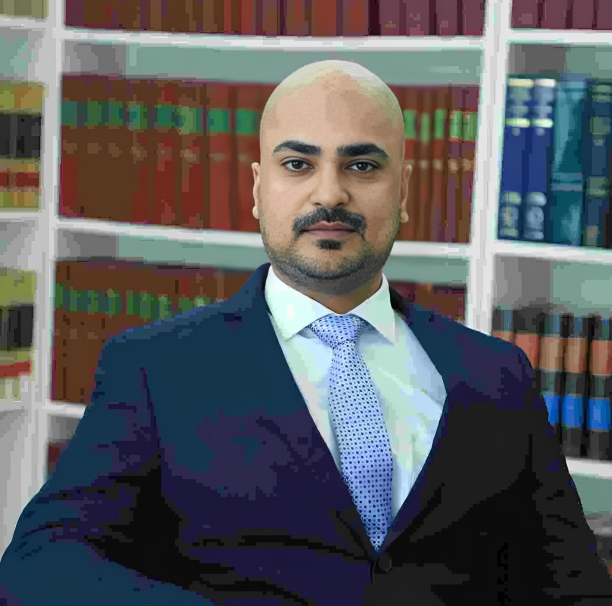
  • “It is one of the privileges of being a litigation counsel to have the opportunity to contribute directly to the evolution of the law through arguments addressed in court.” – Kumar Sudeep, Founder & Principal at Chambers of Kumar Sudeep.

    “It is one of the privileges of being a litigation counsel to have the opportunity to contribute directly to the evolution of the law through arguments addressed in court.” – Kumar Sudeep, Founder & Principal at Chambers of Kumar Sudeep.

    This interview has been published by Anshi Mudgal and The SuperLawyer Team

    Sir, your journey is truly inspiring. After completing a B.Tech in Computer Science & Engineering, you made a noteworthy shift to the field of law. What inspired this transition? 

    I finished schooling from Delhi Public School, R.K. Puram in 1999. At that point I had an offer for a B-Tech degree in Computer Science & Engineering from GGSIP University in New Delhi. Not being very clear about where I wanted to be in the long term, I decided to take up the offer and figure things out with work and life experience. Various opportunities came my way after graduation of which the most noteworthy was a startup called Montalvo Systems with offices in Bengaluru and Silicon Valley, California. This company was acquired by SUN Microsystems in 2008. The feeling of being a bird of passage in engineering came to a head for me at that point in time. I was not feeling very keen on repeating the technology cycle all over again. I joined Nvidia in Bengaluru and while working there started thinking from first principles about a long-term career best suited to my interests and inclinations. This process culminated in my returning to Delhi and joining Campus Law Centre, Delhi University for an LLB degree.  

    In school I rather enjoyed languages and the acts of reading, writing, and argumentation. It was a delightful and easy-going kind of engagement with the use of language; and  it never occurred to me that it could be the basis for any full-fledged career. It was like breathing. It is only after work experience and self-examination that I let these instincts guide me to law as my long-term career. The peace of mind that comes from working alongside, and not too far away from your natural inclinations, is priceless and an abundant source of mental energy. 

    How has your engineering background continued to inform or benefit your legal practice? How has your technical education influenced the way you approach complex cases before the Intellectual Property Division and Commercial Courts of the Delhi High Court?

    A technical degree in a subject like Computer Science or Electronics can enable one to appreciate and analyze a technical system in its entirety: from the top-level algorithm, to the software that implements the algorithm, through the hardware that executes the software, down to the circuits which constitute the hardware, and even the underlying semiconductor materials on which the circuits are etched.

    As a lawyer one can then pause at the required depth in this chain, depending upon the requirements of the case at hand, and synthesize and elucidate the matter in appropriate legal terms to assist the court in reaching a decision. Ultimately technology lawyering is a synthesis of the science of understanding and the art of communicating.

    Further, the general analytical rigour typically imbibed in the study of engineering and technology also seems to carry over naturally to law where precise and accurate analysis of legal and factual propositions is of value. 

    In the initial stages of your legal career, you must have encountered a variety of formative experiences. Could you share a few experiences that deepened your understanding of the law and shaped your approach?

    After LLB., I had the opportunity to work in the chambers of a very experienced and encouraging lawyer at the Tis Hazari courts. Thereafter I joined a law firm and came to the High Court of Delhi and practised primarily in IPR and media law related matters. In 2017 I moved out from the firm and helped set up a new law firm with some of my friends and colleagues from Bengaluru and Chennai —this was the genesis of my Supreme Court practice. I was appointed an Advocate-on-Record by the Supreme Court in 2020. Presently I work as an independent chamber counsel engaged by clients, lawyers, and law firms for their matters at the Supreme Court, High Court of Delhi, and the NCLT/NCLAT.

    Working in the trial courts as a fresh graduate, I recall, gave a feeling of both empowerment and emancipation: empowerment in terms of getting hands-on experience in practice, and emancipation in terms of a mindset shift that with due effort one could learn and practise any branch of the law in any forum available. I therefore usually recommend experiencing the trial courts to law students and lawyers starting out in the profession.

    Another formative experience was listening to other matters being argued in court while I waited for my own matter to be called. This was an easily accessible and enriching source of learning, and it improved my approach to the drafting of pleadings (it was sobering to see experienced lawyers sometimes being put on the spot by the judge for not having impleaded necessary parties, or not having pleaded the cause of action properly, jurisdiction etc.). It also taught me about speaking more, speaking less, and speaking to the point in court.  I still like to listen to the back-and-forth between the bench and the bar while waiting for my matters. 

    What motivated you to take the leap and establish your own legal practice? What were some of the significant challenges you encountered while building your Supreme Court practice, and how did your long-term vision help you navigate the journey particularly leading up to becoming an Advocate-on-Record?

    It was clear to me during LLB. that I wanted to have an independent chamber practice in due course. I was fortunate in getting the work experience and the work opportunities (which sometimes came through sheer happenstance) that enabled me to eventually graduate, as it were, into chamber practice. 

    It also helps to keep in touch with colleagues from the various High Courts who may call upon one for assistance with their appeals to the Supreme Court. Practising in New Delhi provides one the opportunity of being of service to lawyer colleagues from across the country.

    As a salutary reminder of the role of time and chance, along with human effort, I have this quote from Ecclesiastes written in my personal notebook of quotations:

     “I returned, and saw under the sun, that the race is not to the swift, nor the battle to the strong, neither yet bread to the wise, nor yet riches to men of understanding, nor yet favour to men of skill; but time and chance happeneth to them all.” 

    On a lighter note, some practice of writing with pen on paper helps in surviving the Advocate-on-Record examination. I had numb fingers by the end of each three-hours long paper!

     Which are some of the areas of law where you have had an opportunity to make a contribution to the evolution of jurisprudence through the matters you have handled so far?

    My practice has been primarily in commercial litigation, involving: appeals to the Supreme Court from the various High Courts; suits and petitions before the IP Division and the Commercial division of the High Court of Delhi; IBC and Company law matters before the NCLT/NCLAT (New Delhi).

    Accordingly, some of the reported judgements that come to mind also pertain to these areas of law.

    The High Court of Delhi decided a trademark matter where interpretation of the prior-use defence under S.34 of the Trade Marks Act, 1999 was at issue. The court explained the operation of S.34 and laid down elaborate tests for the applicability of the section in trademark disputes.

    In another commercial suit, the High Court of Delhi elaborated the law on the intersection of a counter-claim under the Civil Procedure Code, 1908 with the provision for moratorium under S.14 of the  Insolvency & Bankruptcy Code, 2016. 

    The Supreme Court in an appeal from NCLAT, New Delhi under the Insolvency & Bankruptcy Code, 2016 clarified the law that when a large number of invoices are unpaid by the corporate-debtor, and some of these invoices are older than three years, then the whole claim under S.9 cannot be dismissed as time-barred so long as the invoices that are within limitation together constitute the threshold amount for initiating insolvency resolution.

    A matter, somewhat atypical to my usual practice, was recently decided by the Supreme Court. The matter pertained to retrospective appointment of candidates as medical officers in the State of Karnataka. The court dismissed the appeal filed by the State of Karnataka against such retrospective appointments. I had the opportunity to address arguments as Advocate-on-Record and lead counsel for the respondent.

    There are various ongoing matters where interesting points of law are at issue, and where I am looking forward to the eventual pronouncements. It is one of the privileges of being a litigation counsel to have the opportunity to contribute directly to the evolution of the law through arguments addressed in court.

    What advice would you offer to budding lawyers, especially those looking to transition into the legal field from other professions? Are there specific resources or skills you would recommend they focus on to successfully make this shift?

    Law has traditionally been open to and accepting of graduates from many fields through the three-year LLB. courses. This is reflective of the importance that the field of law has placed upon different streams of knowledge and experience.

     It was only after the introduction of five-year integrated LLB. degrees that interested students had the opportunity to join a law college directly after school. I understand that one of the most reputable of such colleges offering five-year courses now also offers a three-year LLB. course open to graduates from various fields. This seems to me to mark the coming of a full circle in legal education. 

    The decision to transition into law ultimately is a personal decision driven by the individual’s aspirations and motivations. A thorough self-examination is necessary to determine these motivations and aspirations. As the Oracle of Delphi says: Know Thyself.

    In terms of studying the law and then practising it, I only remind the interested of the three-step classical formula which, in my subjective opinion, leads to good outcomes: 1) attentive reading, 2) careful reasoning, and 3) lucid communication —both written and oral.

    Litigation can be mentally and emotionally taxing. How has your long-standing involvement in martial arts, particularly its focus on discipline and mental resilience, helped you maintain balance, composure, and clarity under pressure in your professional life?

    I have trained actively and intensively in the martial arts from the age of eight. I hold a black-belt in Karate, and used to teach pro bono in self-defence workshops during halcyon undergraduate days, and also later, when finding free time used to be easier. More than delivering blows it is a particular kind of mental resilience that comes from the practice of martial arts that I encourage people to explore. I have personally found it beneficial in many aspects of life.

    Sports generally seem to have a good effect on building discipline and mental resilience. Hobbies too are a great source of engagement, entertainment, and the occasional succour when circumstances may seem too much. In due course everything passes, and it is largely about staying busy and positive in the meantime! 

    Get in touch with Kumar Sudeep –

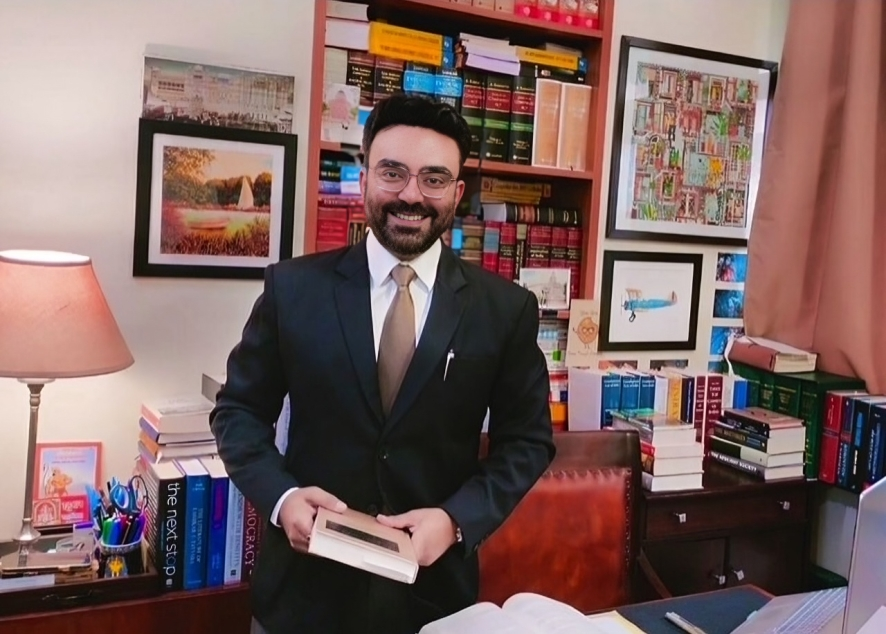
  • “As a lawyer, I’ve always aimed to give my best and carry forward the legacy my father and Senior built. There’s no “end goal” in this profession, it’s a constant journey.” – Palash Tiwari, Managing Partner & Founder at LexLoft LLP.

    “As a lawyer, I’ve always aimed to give my best and carry forward the legacy my father and Senior built. There’s no “end goal” in this profession, it’s a constant journey.” – Palash Tiwari, Managing Partner & Founder at LexLoft LLP.

    This interview has been published by Anshi Mudgal and The SuperLawyer Team

    You’ve built an impressive legal career over the years, beginning your journey at the Chhattisgarh High Court alongside your father. How did that early mentorship influence your legal perspective and shape your advocacy style?

    Being a second-generation lawyer, I was fortunate to learn the basics of litigation from my father, Shri Prakash Tiwari. At home, I was his son—but in the office, I was treated like any other junior, and I always referred to him as “Sir.” From the very first day of my legal career, I felt the responsibility of carrying forward his legacy. So, I made sure every brief I held on his behalf was thoroughly prepared. That discipline helped shape both my drafting and advocacy skills.

    Early in your career, you argued the landmark Aditya Tiwari vs. State of Chhattisgarh case. What moments stood out during that experience, and what were some key challenges you faced in handling such a high-profile constitutional matter?

    When the Ordinance was promulgated by the Hon’ble Governor of Chhattisgarh—raising the reservation in government jobs from 52% to 82%—several petitions were filed, including Aditya Tiwari vs. State of Chhattisgarh. Many of them were led by some of the most prestigious Senior Counsels practicing in the High Court. But seeing my enthusiasm and excitement, they allowed me to lead the challenge.

    The subject of “reservation” is complex, sensitive, and incredibly important—so the stakes were high, and there was no room for error. I had just three days to prepare the entire brief. I was guided through the drafting by Learned AOR Kaustubh Shukla (Supreme Court), whose mentorship was invaluable.

    On the day of the hearing, I was both excited and nervous—especially being the youngest lawyer in the courtroom. That nervousness intensified when I saw who was on the other side: Senior Advocates Vijay Hansaria and Manish Singhvi. But I composed myself and began my arguments, which I continued for about 45 minutes. After I concluded, I turned to my Senior with a nod—and in return, he and two other Seniors gave me a “thumbs up.” That was a moment I’ll never forget. Later, Sr. Advocate Manish Singhvi placed a hand on my shoulder and said, “Well argued, young man.” That’s something I’ll always carry with me. The Ordinance was eventually struck down.

    In 2022, you assumed prestigious roles representing the Union of India, SECL, the State Bar Council, and most recently, the Competition Commission. How have these shaped your legal approach?

    These appointments—especially my role as Central Government Counsel and as Standing Counsel for SECL—exposed me to a whole new side of litigation, where I primarily had to “defend.” This helped me understand how public institutions function and the protocols that must be followed. It wasn’t just about gaining designations—it was about learning how to operate within structured frameworks. I was also introduced to newer areas of law like Land Acquisition and Mining Law, which broadened my legal understanding beyond service law.

    Service law has become a major focus in your practice. What initially attracted you to this area, and how do you view its evolution today?

    It was my Senior who introduced me to Service Law. He holds a substantial number of briefs in this area and possesses a deep understanding of its nuances. Whether it’s about promotions, reservations, pensions, terminations, or departmental inquiries—he guided me at every step. While I don’t claim to know everything about this vast subject, I know where to look, and I know whom to ask. That guidance has shaped my confidence in handling service matters.

    Your public interest litigations have covered areas from internet accessibility to environmental protection and road safety for animals. What motivates these efforts?

    Being a lawyer isn’t just about representing clients—it’s also about serving your surroundings. That may sound cliché, but it’s true. Many young lawyers aspire to land big clients early on, and there’s nothing wrong with that—but we must also remember the voiceless.

    For example, in the Fly Ash PIL: Chhattisgarh is among the top states in power generation from coal, leading to widespread and illegal dumping of fly ash near thermal plants. While urban residents can avoid these areas, villagers are forced to live with the consequences—health hazards, pollution, and more. I had to fight for them.

    The cattle-on-roads PIL is still sub judice, so I can’t comment much, but I strongly believe the state must adopt a robust mechanism and a zero-tolerance approach toward stray cattle. Too many lives—human and animal—have been lost due to administrative apathy.

    Establishing LexLoft Legal Advisory LLP and stepping into Media and Entertainment Law, especially from a tier-two city, is unique. What inspired that journey?

    My passion. I’ve always loved music. In fact, I was once a DJ and music producer during college—infamously known as “DJ Palash.” Some of my songs are still floating around on Spotify and other platforms. That passion inspired me to stay connected to music, but from a legal perspective.

    Interestingly, the contacts I made during those early days helped me a lot when I started. And over time, many of my clients came through referrals—people liked how the firm functioned. While we’re based in Bilaspur, most of our clients are from Mumbai. Of course, sometimes I lose out on potential clients due to the “proximity factor,” but at the end of the day, I know I’m on the right path—doing what I love.

    Not to mention, my Partner, the other co-founder “Prasoon Agrawal” has always stood along with me whenever, in any situation – boldly.

    Having worked with artists and events like MTV Hustle and BMW Joytown Festival, what are the recurring legal challenges in entertainment law?

    The most common challenge is getting the other party’s legal team to agree even on basic terms. I believe most media lawyers face this—statements like “Sorry sir, this can’t be changed, it’s company policy” are all too familiar. The frustrating part is that neither side truly “wins”—because in the end, the client or commercial team just wants the deal closed “as soon as possible.” Navigating that deadlock is where the real skill lies.

    You’ve managed to balance high-stakes litigation with running a growing law firm. How do you maintain focus, energy, and time across these roles?

    That’s probably the hardest question! Honestly, I dedicate most of my time to the profession—and I’m incredibly grateful to my wife, Nidhi Purohit and mother Gayatri Tiwari for their unwavering support. My workday includes not just two but four major areas: my individual practice, daily matters from institutions like SECL, Railways, and Legal Aid; cases assigned by my Senior; and then the law firm itself.

    It gets hectic. In fact, my wife has strictly banned me from touching my laptop on Friday evenings! But I’m actively working on building better time management.

    Looking ahead, what are your goals for your practice and for LexLoft? What advice do you have for young lawyers blending traditional and modern legal fields?

    As a lawyer, I’ve always aimed to give my best and carry forward the legacy my father and Senior built. There’s no “end goal” in this profession—it’s a constant journey.

    But when it comes to LexLoft—I’m greedy! I want it to grow into one of the most recognized names in Media and Entertainment Law. And for starters, I’d love to see “LexLoft” mentioned in an aftermovie’s end credits.

    To young lawyers: This profession may look glamorous from the outside—but it truly tests your patience. It’s not about just one big client or one case—it’s a slow, consistent process. If you remain loyal to the profession, all your hard work will eventually pay off. Just be patient and continue doing the work with consistency.

    Get in touch with Palash Tiwari –

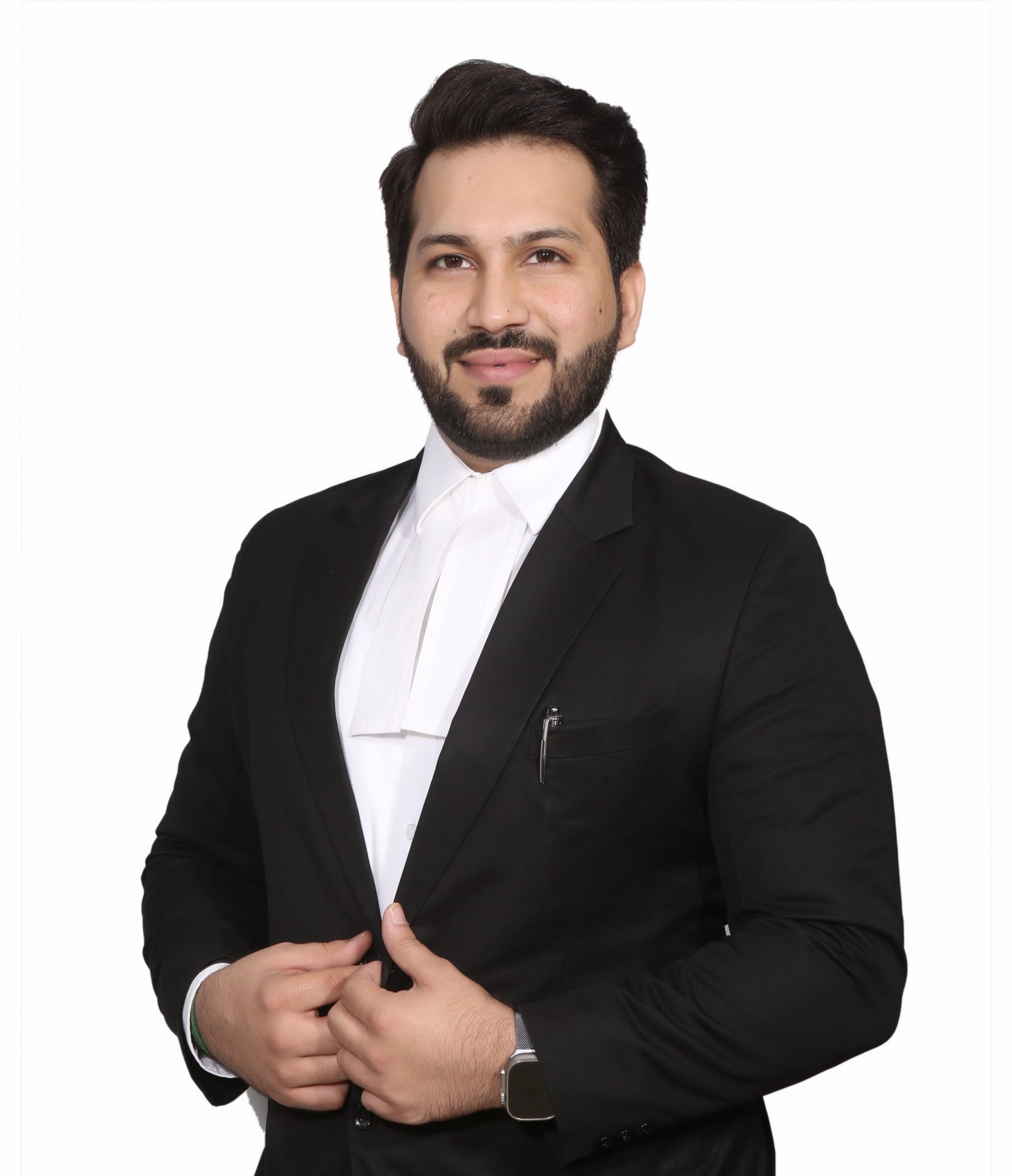
  • “Knowledge, reputation and success are built slowly, case by case, argument by argument.” – Tejasva Mehra, Practicing Advocate at Supreme Court of India.

    “Knowledge, reputation and success are built slowly, case by case, argument by argument.” – Tejasva Mehra, Practicing Advocate at Supreme Court of India.

    This interview has been published by Anshi Mudgal and The SuperLawyer Team

    With almost a decade of experience and an established practice today, what initially inspired you to pursue a career in law? Was becoming a lawyer always part of your plan, or did you come to it gradually over time?

    I decided to pursue law relatively early in life because I always felt a deep desire to do something meaningful for the society at large and to create a real impact. I grew up witnessing my mother devoting 16 to 18 hours of her day in public service. I would wake up every morning to find our drawing room full of people who had come to discuss their concerns and problems. Watching her tirelessly listen to them and help them find a way forward left a profound impression on me. It taught me the value of empathy, responsibility and standing up for others.

    Although I am a first-generation lawyer and had no direct access to the legal world, I was fortunate to interact with some of the finest lawyers in the country. I was always in awe of their distinct personalities and eloquence, their command over the law, awareness of the social issues and the sheer force of conviction with which they carried themselves. Their work inspired me and somewhere deep within, I knew this was the path I wanted to pursue. 

    But perhaps what sealed my destiny was my Nanaji, who always dreamed of seeing me as a practicing lawyer. He was a great admirer of Sh. Nani Palkhivala, and he often spoke of his brilliance, his courtroom charisma and the respect he commanded. That admiration became a seed that grew within me. It aspired me to follow in the footsteps of those who use the law not just as a profession but as a powerful instrument of change. 

    After completing your law degree, you pursued a Master of Laws (LLM) at the University of California, Los Angeles, specializing in Entertainment, Media, and Intellectual Property Law, along with Pretrial Criminal Litigation. What motivated you to choose UCLA and these specific specializations? How did your education there differ from legal education in India, and were there any challenges you faced during the application process?

    I chose to pursue Intellectual Property and Entertainment Laws for my master’s because these areas of law have an increasing global importance and have a universal character, often protected and harmonized through mutually signed international treaties. Its global relevance and increasing demand particularly appealed to me. 

    I chose Criminal Pretrial Advocacy as my minor because I have always been deeply interested in understanding the criminal justice systems across different jurisdictions. It gave me an insight to the jury system followed in the US and for our assignments, I also got a chance to visit the LA County Superior Court to witness trials of the ongoing cases. 

    As for my choice of UCLA School of Law, the decision was significantly influenced by the advice of my Guru, Hon’ble Justice A.K. Sikri. He guided me to prioritize the strength of the faculty of an institution. UCLA offered exactly that – an exceptional faculty with real world experience, especially in the fields of IP and Entertainment Laws. Being located in the heart of Hollywood, UCLA provides unparalleled access to professors who have worked with major studios and production houses, offering a practical and industry-oriented education. It also offered unique networking and internship opportunities. 

    In terms of education, there was a significant difference from India. I felt that the curriculum and teaching at UCLA emphasised more on critical thinking, in depth research and practical application than the rigid curriculum followed in India. The lectures at UCLA were more interactive with active participation of the students, critical analysis and continuous assessment through assignments, mock trials and presentations. Also, the strictness towards plagiarism is something which I feel needs to get implemented in our Indian education system. 

    The early stages of a lawyer’s career often shape one’s understanding of the law. Looking back at your journey, whether as a legal researcher/ law clerk under Justice A.K. Sikri at the Supreme Court of India or as a Legal Associate at Shakti Vahini NGO, what are some of the pivotal experiences that helped form the foundation of your legal career?

     I feel blessed and honoured to have worked under Justice A.K. Sikri as his law clerk/ legal researcher. The experience was not just professionally enriching, but deeply transformative on a personal level as well. Other than the fact that I got to work on some of the most sensitive and high profile cases at the time, I learnt a lot about being humble in life and honest towards your work. Justice Sikri carries a rare blend of deep legal wisdom and an open inquisitive mind. Despite his towering stature in the legal field, his extremely hectic and intense work schedule, he was always approachable and would often encourage a discussion and be open to an independent thought. He fostered an environment where I felt valued and confident even though I was fresh out of law school. I truly believe that my time working as a judicial clerk under Justice Sikri was the perfect start to my legal journey – a rare combination of rigorous legal work, inspiring mentorship and invaluable interactions. My time working under him really helped me boost my confidence and learn the most important lessons of life – work hard and be humble. 

    As I said, I always wanted to serve the society and make an impact, Shakti Vahini helped me to achieve that and the experience I got was profoundly transformative. Shakti Vahini is working towards strengthening women and child rights in India. During my tenure working at Shakti Vahini, I got an opportunity to work on several cases involving minors who were trafficked in Delhi from all parts of the country and exploited for prostitution, child labour and child marriages. I provided legal assistance and representation to these victims once they were rescued and also got an opportunity to be a part of various rescue operations, their counselling sessions and rehabilitation process. I also engaged in legal research and authored papers assessing the shortcomings in our legal system and proposed reforms aimed at making the justice system more efficient, accessible and sensitive to the needs of these minor victims who are extremely vulnerable. I had just returned from the US after completing my masters when I decided to commit my time to pro bono work and got this opportunity. This was a real eye-opener. It reshaped my perspective and exposed me firsthand to the disturbing realities faced by society’s most vulnerable, deepening my commitment to justice and reform. 

    During your time as a Senior Associate at Rajiv Mohan Law Offices, you were involved in high-profile criminal cases. Could you share some of the most challenging aspects of handling one such complex case, particularly with respect to the legal intricacies of laws such as the IPC, NDPS Act, PC Act and PMLA?  

     During my time working under Sh. Rajiv Mohan, I received hands-on training in the nuances of criminal trial practice which included right from preparing for bails, arguments on charge to crafting effective cross-examinations and strategically developing a defence throughout the course of a trial. I also got an opportunity to work on appeals in several high profile cases where the accused were convicted of most heinous offences. His meticulous approach to each stage of a criminal case gave me an invaluable foundation in trial advocacy. One of the most enriching aspects of this experience was the open discussions and brainstorming sessions every evening. The evenings before witness examinations were spent drafting and refining questions often dictated by him with great precision and purpose. It was during these sessions that I truly grasped the art of cross-examination. He often emphasized: “Always know what not to put to a witness.” That single line has stayed with me and shaped the way I think about courtroom strategy. His deep knowledge of medical jurisprudence added another layer to the learning. As a former Senior Special Prosecutor, he brought with him a rare insight into how the prosecution builds its case which helped me learn how to analyze a case not just as a defence lawyer, but from the perspective of the State as well. This dual perspective greatly sharpened my analytical abilities. Mr. Rajiv Mohan also mentored me in navigating cases involving special statutes and complex areas like bail under NDPS Act for commercial quantity or under PMLA, helping me understand how to overcome the stringent twin conditions laid down under Section 37 and 45 respectively. Additionally, as the jurisprudence around the PMLA was evolving at the time, he explained the developing bail laws and the strategic nuances involved in those cases. 

    Among all the cases, it was the murder trials or appeals that intrigued me the most. Observing and participating in the cross-examination of eye witnesses, medical and forensic experts, and investigating officers gave me a deep appreciation of how facts, law and courtroom psychology converge in a trial.The four years that I spent working under Mr. Rajiv Mohan taught me that in the courtroom, it is not just about law, it is about human behaviour, precision and above all, preparation.

    Would also like to mention and thank Mr. Abhimanyu Kampani for playing a pivotal role and trusting in me.

    Having worked with various legal entities, what ultimately drove you to establish your own legal practice? What challenges did you face when starting out, and how did you overcome them?

    Starting my independent legal practice was undoubtedly one of the toughest decisions I have made in my professional journey. In the legal field, there is no clear benchmark that tells you when the “right time” to branch out on your own has arrived. I feel in our profession the decision is highly personal and often requires you to look inward, trust your instincts and take a leap of faith.

    For me, the decision came after a lot of careful thought and self-assessment. I was fortunate to have built a decent clientele base and had secured a couple of clients on retainer basis, which provided a much-needed cushion of financial stability. This base was extremely important because it gave me the confidence that I would not be starting from absolute scratch as I had work that could sustain me as I navigated the uncertainties of independent practice.

    That being said, the journey has not been without its hardships. There were times when I was appearing only two-three times a week in contrast to two-three times a day while I was working with Mr. Rajiv Mohan. There were moments of real struggle and self doubt. However, I have come to realise that the only way forward is to believe in yourself, stay honest and work hard. 

    I firmly believe that the support of one’s family, particularly that of my mother and my wife has been absolutely crucial. Their unwavering encouragement, emotional support and constant belief in my abilities have provided me with the confidence and clarity needed to pursue this challenging path. Their presence has not only been a source of personal reassurance but has also allowed me to remain focused and resilient at times of professional uncertainties.

    Another major factor that encouraged me to take this step was my appointment as a Legal Aid Counsel on the Sessions Court panel with Delhi State Legal Services Authority (DSLSA). I genuinely feel that this appointment was a game changer. Not only did it allow me to gain access to a wide variety of cases including many heinous and high-stakes matters but it also gave me the invaluable opportunity to serve those who truly needed help but lacked the resources to hire legal representation. Representing underprivileged litigants added a new dimension to my practice and brought a deep sense of purpose to my work.

    Looking back, I realize that starting my independent practice was not just a professional move but it was a test of belief in myself. At some point, you have to back yourself, trust in the foundation you have built and have the courage to step into the unknown. It hasn’t been easy but it has been deeply rewarding.

    In cases involving the Prevention of Children from Sexual Offences Act (POCSO), what are some of the most significant challenges you’ve encountered while addressing the complex legal aspects of such sensitive cases?

    Defending a POCSO (Protection of Children from Sexual Offences) case is extremely challenging and demands high emotional quotient. One of the primary reasons is the statutory reverse burden of proof under Section 29 of the POCSO Act. This provision presumes the guilt of the accused once certain foundational facts are established, thereby shifting the burden onto the defence to disprove the allegations. This is a significant departure from the general principle of criminal law where the burden of proof always lies on the prosecution to prove the guilt beyond resoluble doubt. As a defence lawyer, this reversal requires you to strategize your case very differently which means every piece of evidence, every inconsistency and every contradiction must be highlighted with utmost precision.

    Moreover, POCSO cases involve victims who are minors and that brings its own set of sensitivities and responsibilities. Cross-examining a child witness is one of the most delicate tasks a lawyer can undertake. Unlike regular cross-examinations where a more aggressive or confrontational approach may be employed to test the credibility of a witness, here, you have to strike a fine balance. You must be extremely respectful and gentle in your demeanour while still being assertive enough to bring out inconsistencies, contradictions or improbabilities in the testimony. It requires a heightened level of alertness which means that you need to listen very carefully to the nuances of the child’s statements, their body language and the overall circumstances under which they are testifying. Further, courts are also far more protective of minor witnesses, and rightly so. Thus, every question must be carefully framed, keeping in mind the emotional and psychological vulnerabilities of the child. Working on such cases requires not just sharp legal skills but also a great deal of emotional intelligence, patience and empathy.

    As Senior Panel Counsel for the Union of India, you’ve represented various ministries before the Delhi High Court in several legal proceedings. What are some of the most complex legal issues you’ve faced in this role, and how do you manage the intricacies of government representation?

    My appointment as a Senior Panel Counsel is a relatively recent and significant development in my career. It also marks my formal debut into civil litigation. Most of the matters I handle in this role are service-related cases i.e. disputes pertaining to appointments, promotions, transfers, disciplinary actions, pensionary benefits and other service related disputes involving government employees.

    Engaging in civil litigation, particularly service matters, brings with it a whole new dimension of legal practice. These cases require a deep understanding not only of legal principles but also of administrative procedures, departmental rules and government policies. Preparing for these matters involves careful scrutiny of service records, government orders, circulars and applicable service rules. Every case demands a meticulous approach. What makes this responsibility even more serious is that, as a Senior Panel Counsel, I am representing the Government of India and hence it carries immense responsibility and expectation. Every appearance, every submission and every argument must reflect the highest degree of professionalism, preparedness and integrity because it is the sovereign that you are representing. You are expected to defend the government’s actions wherever they are legally sustainable and also to fairly advise when a case ought to be conceded or settled in the interest of justice. 

    One of the unique aspects of this engagement is the presence of departmental officials from the concerned Ministry or Department who are often present to assist during the preparation and hearings. Their assistance is invaluable as they provide important background information, factual clarifications and access to departmental records which might otherwise be difficult to obtain in regular litigation. At the same time, as counsel, I have to exercise independent judgment in assessing the strength of the case, guiding the officials and ensuring that the position taken before the court is legally tenable. This new role has been both challenging and exciting.

    With your background you’re committed to serving the people of India in alignment with the principle of ‘Satyameva Jayate.’ How do these values influence your approach to legal advocacy? Additionally, what advice would you give to aspiring young lawyers who hope to achieve similar success in the legal field?

    In a profession where the pressures are immense and the temptations to take shortcuts can be strong, staying true to the pursuit of truth ensures not only professional integrity but also personal satisfaction and long-term success. Hence, my belief in the principle of “Satyamev Jayate” (which translates to “Truth Alone Triumphs”). It is the very foundation upon which I approach every case, every client interaction and every argument in court.

    To all young and aspiring lawyers, my sincere advice is simple yet uncompromising: there are no shortcuts in this profession. Legal practice demands a tremendous amount of patience, perseverance and hard work. Knowledge, reputation and success are built slowly, case by case, argument by argument.

    Be humble, Be honest and work hard. 

    With your demanding professional commitments, how do you maintain a healthy work-life balance and prioritize your personal well-being while managing such a wide range of responsibilities?

    Maintaining a healthy work-life balance is something that is crucial, especially in a profession as demanding as law, where we have frequent long work hours and constant deadlines. It is essential to understand that while dedication to your work is important, your well-being is the foundation that supports everything else including your performance, your relationships and your long-term success.

    To be honest, at this point in my career, I have not been able to maintain the kind of balance I would ideally want. Building an independent practice, handling sensitive matters and representing clients to the best of my ability have often meant that personal time, fitness and mental relaxation have taken a back seat. However, with time and experience, I have realized that burnout is real, and without consciously making space for your own health both physical and mental it becomes difficult to sustain the level of excellence we all aspire to achieve. I am now committed to prioritizing myself and my well-being more consciously which means setting clearer boundaries. I recognize that nurturing my health is not just good for me but also essential for the quality of work I deliver.

    Get in touch with Tejasva Mehra –

  • “When you see the hours of toiling while doing research, making drafts and constructing arguments in the office yielding results, the adrenaline rush of a favourable outcome, however small or big it may be, is what keeps me consistently inspired.” – Uday Bedi, Independent Practitioner.

    “When you see the hours of toiling while doing research, making drafts and constructing arguments in the office yielding results, the adrenaline rush of a favourable outcome, however small or big it may be, is what keeps me consistently inspired.” – Uday Bedi, Independent Practitioner.

    This interview has been published by Anshi Mudgal and The SuperLawyer Team

    What initially inspired you to pursue a career in law, and were there any specific events or formative experiences that shaped your decision to embark on this journey? Reflecting on your law school years, how did your education influence your understanding of the law, and how did it help you develop a foundational approach to legal practice?

    Even though I was in the science stream, I was never drawn to any of the subjects. I saw myself getting intrigued with current affairs and news in the public domain. In school, I used to take part in Youth Parliament competitions where we used to debate laws which lay the foundation for me to study law. I also always found myself to be an advocate for rights of people from a young age. I also saw myself getting drawn to opportunities of public speaking. Law as a profession sat in the middle of all my interest areas, hence it became an obvious choice for me. 

    I went to O.P. Jindal Global University gave me immense exposure that shaped my world view and opinions. Unlike someone who always wanted to find a reason to stay out of the classroom in School, I mostly stayed in the library or classroom in law school. We had a vast and impressive library and an endless scope for learning which I made good use of. I took every opportunity to expand my horizons so I even took a summer course to study at University of Oxford on international human rights which gave me an opportunity to learn from people across the world their outlook towards human rights and how differently in India we perceive the same rights given our socio-economic background. These experiences helped shape my thinking and become more adaptable and accommodative. I chose my internships and moot court competitions according to the subjects I had studied so that I could get into more depth about those subjects. Soon into law school I realised I wanted to get into litigation and I wanted to be in Court arguing matters regularly so I chose to intern with different offices that were active in High Court as well as trial courts. I took electives and courses that would assist me in areas of constitutional, criminal and civil law, all of which were litigation intensive spheres. The things I learnt in these courses are still relevant in the work that I do and being diligent during law school years has proven to be one of my greatest allies in my professional career. 

    Beginning your career as an Associate at the Chambers of Advocate Ankur Sood must have been pivotal experience in your professional journey. Could you share some of the most valuable lessons and experiences you gained during this early phase, and how did you navigate the challenges of building your reputation as a young lawyer amidst the fast-paced world of legal practice?

    They were most certainly the most transformative years for me as a lawyer. As I always dreamt of having an office of my own, the first valuable lesson I got was the importance of having good professional ethics and organisational skills. I saw my seniors being applauded by clients as well as colleagues for their remarkable abilities to manage an office. The second valuable lesson I got was the importance of having a simple yet impressive legal draft. Easy and well organised drafts always strike a chord with the clients and are designed to make law and justice easily accessible which is a vital legal right of the people. The third valuable lesson I got was that there was no alternate to being well-researched and well-read before appearing in Court. I remember I was once asked in the High Court to argue a matter on my own, barely one month into practice while I was only expecting to take a Passover for my senior. However, being put on the spot and made to argue gave me a massive confidence boost and I never looked back because I learnt that it was only upon me to build my own reputation in the fraternity and that nothing would spread word of mouth faster than my own abilities in the Court. Being a young first generation lawyer is not easy, therefore, I grabbed every opportunity to develop a new relation or a new client because I had the confidence in my ability to do justice to my client. No doubt I faltered at times but I was a quick learner and I did not let any shortcomings ever bog me down. I did not shy away from doing cases that did not pay at all or paid very less as long as they were matters of areas of law that I found interesting and had the confidence to deliver in. The profession requires unrelenting hard work and long hours which I was willing to put in because I saw every hour being put in the work as being a way to hone my skill. We are always learning to be more convincing in court which is a place where we stand alone to represent our own craft. I started my independent office just before COVID-19 struck, however that period came as a blessing in disguise for me as I started appearing in different courts all over the country thanks to the VC facility. Good luck and hard work have both paid off in my case.  

    Transitioning from a focus on civil law to specializing in criminal litigation presents a significant shift in approach and skillset. How did this shift refine your abilities in handling complex criminal cases, particularly high-stakes matters like those related to murder, theft, and the Prevention of Money Laundering Act? Can you describe a particularly challenging case that you came across on the criminal side?

    The most important skills in either area of law are your ability to be diligent with the facts and preparedness with the latest law on the subject. I feel as a lawyer you are anyway taught to wear different hats at different times so you automatically learn to have different approaches to any given situation. Dealing more with criminal cases taught me the value of being brief and direct, something that is lost in the pleadings of civil cases. It can be challenging to move from the civil and commercial side to the criminal side because of the habits developed in civil law to be as detailed and explanatory as possible. For instance, in civil law, you cannot lead evidence beyond your pleadings, so one tends to expand and leave room for directing the case in a particular direction. But largely, both parties are aware about the broad ambit of the case of either party. There is no such concept in criminal law, nor is there scope for filing pleadings at trial. You uncover a criminal case like a plucking petals from a flower, i.e. you keep on opening up your case one layer at a time to check which strategy is giving you the best result. Whether you are prosecuting or defending, it is very important to not delve into detailed merits of the case in the early stages of a criminal case so as to avoid giving away your strategy. 

    I don’t believe in calling any matter having a higher stake than the other because every client comes to you with the hope that you are their last hope. As a nation, we are not very litigation friendly and my experience is that in most cases people come to lawyers when they have no more avenues in front of them. As a litigating lawyer, every day in court is a day involving high stakes because the orders passed on a daily basis form a basis for the final judgment that you are expecting in the case. 

    One particularly challenging case that I have seen on the criminal side is one which I am currently handling. This case involves an alleged GST fraud where the accused is alleged to have prepared forged documents for creation of fake GST registrations in order to pocket large sums of money thereby causing losses of many crores to several persons whose GST details have been allegedly forged. The defence of this person rests on proving that it is not his usage of the laptops that has caused any of the fake GST registrations but rather it is the act of a different person who has impersonated or gained illegal access to my client’s laptop to create the fake registrations. An offence of this nature would be covered under Section 467 IPC which contains a punishment of life imprisonment and therefore becomes an extremely crucial matter that involves knowing technical know-how and the interplay of law and technology. 

    After gaining invaluable experience working with prominent legal minds, what inspired you to establish your own practice? What were some of the key obstacles you encountered while setting up your independent practice, and how did you overcome them to build a sustainable and successful legal career?

    I think almost everyone enters the field of chamber litigation with a dream to run their own office and I was no different. I was lucky to have an amazing set of mentors who gave me the confidence in a short span of 3 years to venture out independently. While there is no right formula to this, I had two critical factors in mind while starting my own office. The first was confirming with myself whether I knew what advice to give to a client who came to me with any kind of legal query. It required knowing what next steps were to be taken in any kind of litigation in order to strategize for the client. This confidence I had got because of a wide variety of cases that I had dealt with before different fora in a span of three years and I had already seen many cases go from the first date till the date of judgment so I was sufficiently abreast with what was required at each stage. I did not feel the need for any more handholding in terms of what lay next in any kind of litigation. 

    The second was the frequency of my appearances in court. I did not want to start my own practice and spend the majority of my days at home or in the office. When I saw that I had sufficient work that would require me to give more importance to it than I could give to my senior’s office, I thought it fit to move on. From the first month of when I went independent, I had 15 appearances in a month in different courts which I thought was a decent tally to be on my own. 

    Key obstacles that I faced were the anxiety of finding more work and building connections. For first generation lawyers, finding work is often tough. I was not in the habit of going out to network and find work. Luckily work flowed in at a decent pace for me as word of mouth spread and many law school friends of mine from other states reposed great faith in me to pursue litigation for their clients in Delhi. In the initial phase, the pace of growth was slow and the outbreak of COVID-19 proved to be a period that required a lot more hard work to be able to sustain a practice. During COVID-19, I spent the first six months gorging on legal commentaries and SCC Online in order to expand my knowledge base. To cut costs, I used to manage the filings by myself and did not keep a clerk until it became essential for me to hire someone. I made many judgment compilations on key legal points that are of great help till today. 

    When handling complex criminal cases, especially those involving multi-jurisdictional issues, what strategies do you employ to navigate the legal intricacies of different courts and jurisdictions?

    Different courts and jurisdictions often mean that the rules of procedure as well as general practices of courts and investigating agencies differ. We have in our country several different wings of investigating agencies and all of them have entirely separate rules of functioning. Scandinavian legal theorists propounded that the life of law is not logic but experience. This is best exemplified when one is faced with multi-jurisdictional issues. Different jurisdictions bring with them challenges and frameworks that are prevalent only within that jurisdiction and the best way to deal with them is to fit in your case within that framework. Every Court has its own procedures, customs and practices. It has to be seen whether any party is indulging in forum shopping in order to invoke different jurisdictions to suit one set of procedures or practices. 

    I am currently dealing with a matter that spans across three states with multiple investigating agencies involved. At the outset, it is always important to look at whether the case is even maintainable under multiple jurisdictions. It is then important to check for overlaps and conflicts in the different jurisdictions and see if they can help in identifying loopholes found during different investigations. For instance, I am handling a case where statements given by one witness to different investigating agencies are contrary to each other fundamentally and a comprehensive reading of the same would allow us to safeguard our client from prosecution in both jurisdictions.  

    In litigation, every step that you take becomes a matter of public record and it is very difficult to hide missteps taken along the way. Therefore, it becomes very crucial to be fully aware about the expected reliefs in any given jurisdiction and to file appropriate pleadings in order to minimise the risks of unfavourable outcomes. 

    Given your extensive experience across a wide spectrum of judicial and quasi-judicial forums from the Supreme Court to specialized tribunals, how do you craft your litigation strategy specifically for RERA matters? In your view, what distinguishes real estate litigation under RERA from traditional civil or commercial disputes?

    RERA disputes come in various forms, i.e. judicial as well as administrative. These proceedings are largely summary in nature, i.e. there are no trials or leading of evidence or cross examination etc. in the traditional sense. Real estate litigation can be very complex because it requires a specific expertise in knowing local land laws, environmental laws, understanding of developmental contracts, builder buyer agreements and also understanding the interplay between government departments and private entities. Since it is a fairly recent legislation, there are several areas of law that remain unexplored and it allows for more room to have fundamental jurisprudential arguments. 

    For instance, I am currently working on a dispute that involves a developer who has abandoned a project and is looking to develop a different project on the same land by seeking new investments. Several key issues arise in this case, such as (a) whether a developer which has failed to deliver a project should at all be allowed to migrate to a different project on the same parcel of land. If yes, what sort of limitations can be placed on the developer for the second phase of development. If no, what happens to the parcel of land and how does one take a project towards deregistration; (b) whether a developer can be allowed to migrate to a different project on the same parcel of land without first satisfying the claims of its original allottees/buyers.  It is also interesting to see how and before which forum these questions can be decided. I would put these cases in the hard category of cases because they require a very in depth analysis of RERA and its objectives and its interplay with other laws because often the plain language of the legislation does not provide all answers.

    One very key factor that is always in mind is that RERA was not only enacted for the purposes of solving real estate litigation, but also for the enhancement of the real estate sector in this country which I feel plays a vital role in strategizing how to go about resolving a dispute. We are often faced with questions that pertain to public policy and socio economic reform. Sometimes, apparent and evident contractual remedies may not be the correct remedies under RERA and therefore our pleadings and arguments are designed in a manner to suit the objectives of RERA Act.

    However, I must add that due to the proceedings being summary in nature, these disputes are usually faster to resolve than traditional civil and commercial suits. So one strategy always is to simplify pleadings and make concise arguments. Earlier, RERA orders were executed through different authorities that was leading to long delays but RERA has recently been given the power to execute its own orders which can often turn out to be a challenge and therefore we are constantly finding ways to shorten the execution proceedings to ensure speedier justice to the people who have secured orders in their favour. 

    What has consistently inspired you to pursue a career in law, especially given the high-pressure demands of litigation? How do you maintain a healthy balance between your professional responsibilities and personal well-being, ensuring sustained performance without burnout?

    There is no greater satisfaction than a good day in Court. When you see the hours of toiling while doing research, making drafts and constructing arguments in the office yielding results, the adrenaline rush of a favourable outcome, however small or big it may be, is what keeps me consistently inspired. I also find that litigation allows one to wear so many hats in a day and puts lawyers in a unique position to understand different walks of life and allows us to have key insights into other professions. For example, doing medical negligence cases allows lawyers to not only learn the legal standards of medical negligence but also widens our horizons to understand hospital procedures. A simple cheque bounce dispute could make one get into understanding the internal workings of corporations etc. which I feel is rarely available to people in any other profession. The high pressure of litigation is therefore well-compensated by the diverse set of skills/knowledge that one learns on the job. 

    In a profession such as litigation, you have to learn to accept unpredictability. A seemingly jam-packed day often turns out to be completely free and vice versa. It is therefore important to find moments every now and then to do activities that lower down stress levels and ensure sustainable working models. I ensure personal well being by remaining physically active by playing a sport or regular exercise. I also like to meet my travel goals to help with the exhaustion of a high pressure job. It would be a good idea to not give up on pursuing hobbies and to take out time for them as and when the opportunity is available instead of waiting for a weekend to clear the schedule up. Lastly, in order to avoid a burnout it is essential to ensure that there is no conflict or doubt in your mind about practising law. 

    With your diverse and accomplished legal journey, what guidance would you offer to aspiring legal professionals? Are there particular strategies, learning resources, or a roadmap you would recommend for law students and young lawyers who aspire to excel in litigation or corporate advisory practice?

    It is very important for young lawyers and law students to enter the field of litigation. I especially feel that more female law students must strive to enter the field of litigation as it will go a long way to break gender based barriers. I personally feel that there is room for female lawyers to enter the field of criminal litigation to ensure more gender sensitive dealing of criminal matters. So, I would really encourage young lawyers to come to Court and join litigation. However, this encouragement comes with certain disclaimers. First and foremost, I would advise every young legal professional to be sure of their key skills and capabilities because litigation and corporate advisories require a completely different set of skills to finesse. There is no substitute for a voracious appetite for studying and reading in litigation because it is very important to remain up to date with latest developments in the law and also having the skill to place the developments in the historical context of how the law has been shaped over the years. Lawyers are bombarded with information and documents day in day out and they are expected to be abreast of all developments and therefore presence of mind with a willingness to grasp more is a sine qua non for every litigator. 

    The second skill is learning professional etiquettes which is helpful not only at the bar but also with the clients. As the legal profession is a noble one, it is very important to uphold the highest sense of loyalty to clients as well as the Courts and know that short cuts and convenience must never take precedence. This is extremely important to uphold the dignity of the profession. Lawyers must protect this dignity through their conduct at all times. 

    The third advice would be to remain inquisitive. It is very important for a legal professional to understand the meaning, scope and applicability of any legal problem before him or her. This curiosity and inquisitive nature will allow room for creative uses of the law which is extremely important especially now that the world is transforming and artificial intelligence is percolating all walks of life. 

    Get in touch with Uday Bedi –

  • “Litigation teaches you to think critically, analyze complex legal matters, and anticipate potential risks, all of which are crucial in identifying compliance issues early on.” – Meenakshy Natesan, Associate Director, Compliance at AB InBev.

    “Litigation teaches you to think critically, analyze complex legal matters, and anticipate potential risks, all of which are crucial in identifying compliance issues early on.” – Meenakshy Natesan, Associate Director, Compliance at AB InBev.

    This interview has been published by Anshi Mudgal and The SuperLawyer Team

    Looking back on over a decade in the legal profession, what initially drew you to pursue law as a career? Were there any pivotal experiences or influential figures that shaped your decision to enter the field?

    As a first-generation lawyer, I didn’t have any role models within the profession to look up to or draw inspiration from. Interestingly, I had made up my mind as early as middle school that I wanted to pursue law. It wasn’t a particular person who inspired me, but rather the idea itself — the notion of standing up for justice, giving voice to those who needed it, and fighting for someone’s rights resonated deeply with me. Choosing law felt almost instinctive and was one of the easiest and most natural decisions of my life. 

    One of the most defining moments came when I had to drop out of school in the 10th grade due to an accident that led to some health challenges. During that difficult period, my unwavering wish to become a lawyer became one of the strongest motivators for my recovery and helped me get back on track.

    With your rich experience spanning litigation, arbitration, and corporate advisory, what guidance would you offer to young lawyers aspiring to thrive in the legal field? Are there particular habits, skills, or mindsets you believe are critical for a long and successful legal career?

    Nothing is more powerful than knowledge. Reading judgments, enactments, commentaries, staying updated with news and articles, attending conferences, and having conversations with knowledgeable people — all of these play a huge role. A lawyer or law student must make continuous learning a habit, because knowledge is ultimately your strongest tool in this profession.

    In terms of skills, being able to articulate yourself well — both oratory and written — is absolutely essential, and it is something that needs to be consciously worked on and honed.

    I would also stress the importance of preparation. Whether it’s reading up and preparing detailed notes before a hearing, or organizing your thoughts and materials before a presentation to senior management, preparation — or the lack of it — is always very evident.

    Soft skills are equally important. Learning to read the room and deliver accordingly is something every lawyer must pick up. Whether it’s presenting a case before a judge, cross-examining a witness, or delivering a presentation in a boardroom, understanding your audience and adapting your approach accordingly makes all the difference.

    When it comes to mindset, I believe resilience is key. This profession constantly throws challenges at you, and there will be times when setbacks and failures will dishearten you. Being resilient and persevering through tough phases is critical.

    Lastly, empathy towards your clients and stakeholders goes a long way. Understanding their concerns and perspectives not only helps you give better advice but also builds long-term trust.

    In the formative years of your career, you had the opportunity to work closely with esteemed lawyers and law firms. What were some of the key lessons or takeaways from that phase that helped shape your legal perspective and skillset?

    I truly believe that the first few years of a lawyer’s career are very critical in determining the kind of lawyer you eventually become, and I was fortunate to have had a lot of opportunities and learnings early on. In your initial years, you are like a sponge absorbing everything around you —you learn from lawyers arguing in court while you wait for your matter to be called, from Judges, from clients and even from court clerks.

    That apart, I was lucky to have had some extremely knowledgeable mentors, including my first boss, designated Senior Counsel S. Sreevatsa, many senior partners at J Sagar Associates, and several senior counsels whom I had the privilege to brief. After moving in-house, I have once again been fortunate to receive guidance not just from legal professionals but also from the business side and this has only widened my exposure.

    What I learnt from seniors in the profession has played a huge role in shaping who I am today. The level of excellence they brought to their work is something I continue to look up to, and serves as a constant reminder that there is a long way to go. Some of the most valuable lessons I picked up were not just about legal acumen, but about character — all the successful lawyers I have known are hardworking, disciplined, and deeply dedicated to their craft. I learnt very early that no amount of skill or technical knowledge can replace these traits.

    Another important lesson I carry with me is to never say no to an opportunity. Often, you might be handed a brief at the last minute and the instinct might be to step back out of fear or self-doubt. But I have learnt that it is by stepping up in those moments and by saying yes even when it feels daunting is when you really grow and find your place.

    Since we are in a knowledge-driven profession, your strongest asset will always be your ability to learn, and stay updated. 

    Apart from the bigger lessons, it is also the smaller things that I have picked up from my seniors —even the way a court file is arranged, to how notes are written, to nuances of court craft and argument styles. These are things I have closely observed and tried to emulate, sometimes from one senior and sometimes from a combination of many.

    I must also mention that my peers have played an important role in my growth at every stage. In this profession, learning is a continuous journey.

    What motivated your move from litigation to corporate roles? How would you compare the challenges and learning opportunities in law firm environments versus corporate legal departments?

    They say law is a jealous mistress, and I believe litigation is even more so. While I loved litigating — and it remains one of my greatest passions — after over 11 years in practice, I reached a point where I wanted to broaden my professional experience and gain closer exposure to business decision-making. At the same time, I was also seeking more flexibility and personal time, which an in-house role could offer. The move felt like a natural next step in my career, aligning both with my personal needs and professional aspirations.

    Both law firms and corporate legal departments offer tremendous opportunities to learn and grow, though the challenges differ in each. This transition from law firm to corporate has involved as much unlearning as learning.

    Law firms cement your foundation with strong knowledge of the law, and instill a great amount of resilience. They train you to understand complex legal matters, develop strong research skills, and build a client-centric approach — all of which equip you for any career in the legal profession. 

    When I moved in-house, I quickly realized that the approach is not purely legal anymore. It’s about offering solutions that align with the business, focusing on efficiency and risk management rather than just legal theory. In-house roles require you to think like a business partner, not just a lawyer. To provide meaningful advice and mitigate risk effectively, you need an in-depth understanding of the business and its goals. This agility — to quickly understand the industry, the business model, and to work closely with stakeholders from non-legal backgrounds — has been both challenging and rewarding. Another challenge has been understanding financial concepts, which does not come naturally to me, but is critical in order to give well-rounded, commercially viable legal advice.

    How does your background in litigation influence your approach to compliance? Are there any particular skills or perspectives that you bring from your past roles that help in your current position?

    My experience in litigation has been instrumental in shaping my approach to compliance. Litigation teaches you to think critically, analyze complex legal matters, and anticipate potential risks, all of which are crucial in identifying compliance issues early on. The high-pressure nature of litigation has also honed my ability to stay focused under stress, making it easier to navigate through the complexities of compliance challenges without losing sight of the bigger picture.

    You develop a heightened awareness of legal risks and the need to mitigate them before they escalate into bigger problems. This forward-thinking approach is crucial when it comes to creating and enforcing compliance frameworks that protect both the organization and its stakeholders.

    Additionally, my experience has taught me the value of clear, effective communication. The skills I developed presenting cases in court — breaking down complex issues into understandable points — now serve me well when engaging with stakeholders. In compliance, it’s crucial to not only convey the legal implications but also guide stakeholders through the practical steps to ensure compliance, and this is something I apply every day in my current role.

    Litigation and compliance can be demanding and high-pressure fields. How have you managed to maintain personal well-being and work-life balance over the years?

    To be honest, I am still learning how to find that ever-elusive work-life balance. I genuinely love the work I do, and long hours have never really bothered me. However, over time, I’ve realized that there are other important responsibilities and aspects of life that deserve equal attention.
    What has helped me the most is detailed planning and setting up structured systems to organize my life. I make lists for almost everything — from professional tasks to personal errands — and this habit of organizing and noting things down frees up a surprising amount of time and mental space.

    If I’ve made a mistake along the way, it’s in not giving enough priority to personal health and well-being. That’s an area I am actively working on, and something I would strongly advise others not to neglect. Prioritizing exercise, rest, and overall wellness is absolutely essential, no matter how busy your professional life gets.

    Another crucial skill for a lawyer is learning to manage stress effectively. We operate in a challenging, high-pressure environment, and unless you consciously develop healthy ways to manage stress, it can quickly take a toll. Finding strategies to protect your mental and physical health is not just important — it’s vital for long-term success and sustainability in this profession.

    Get in touch with Meenakshy Natesan –

  • “Legal training provides a strong foundation by equipping you with the ability to read and interpret laws critically, understand the legislative process, and navigate regulatory frameworks with nuance.” – Ananta Sharma, Assistant Manager (Public Policy and Advocacy) at InMobi.

    “Legal training provides a strong foundation by equipping you with the ability to read and interpret laws critically, understand the legislative process, and navigate regulatory frameworks with nuance.” – Ananta Sharma, Assistant Manager (Public Policy and Advocacy) at InMobi.

    This interview has been published by Anshi Mudgal and The SuperLawyer Team

    With your extensive background in law, what initially inspired you to pursue a career in the legal field, specifically in technology law? Was there a particular factor that influenced your decision, or did you gradually develop an interest over time?

    My interest in law stemmed from an early fondness for social studies, particularly civics, during school. Recognising that a career in law would allow me to engage more deeply with the Indian Constitution, I chose to pursue it professionally. Although I was initially drawn to subjects like cyber law, I was uncertain about specialising in technology law at the time (2014), given its niche status.

    Significant events such as the network neutrality debate and the landmark Shreya Singhal case in 2015 piqued my interest in the intersection of law and technology, prompting me to explore this emerging field more seriously. My selection for the LAMP Fellowship also proved to be critical. It offered the opportunity to engage with experts and mentors in the field and to work alongside like-minded professionals equally passionate about technology law.

    Building on this foundation, I gained practical experience by working with an international non-profit organisation dedicated to advancing and protecting digital rights. I subsequently pursued a master’s degree with a specialisation in technology law, further deepening my expertise in the field.

    How did your experiences at the University of California, Berkeley School of Law shape your approach to technology law and policy? What were the key takeaways from your time there, and what motivated you to pursue an LL.M. program with a specialization in Technology Laws?

    After gaining practical experience in technology law, I recognised the need to deepen my understanding and adopt a global perspective, as the field was rapidly evolving in India. The University of California, Berkeley School of Law’s LL.M. program, with a specialisation in Technology Laws, stood out as an excellent opportunity to achieve this goal. Berkeley Law’s esteemed faculty and comprehensive curriculum allowed me to explore a wide range of subjects, including Fundamentals of U.S. Law, Intellectual Property Rights, Privacy Law, Silicon Valley Antitrust, and Surveillance Law and Technology. Additionally, serving as an LL.M. representative for the Women in Technology Law initiative and contributing to the Berkeley Technology Law Journal provided valuable opportunities to build networks and gain deeper insights into the field.

    These academic and professional engagements made my time at Berkeley Law truly transformative. It provided a strong foundation in U.S. law and the US court system, while the program’s diverse cohort and international exposure introduced me to a range of perspectives. This broadened my understanding of legal concepts and their complexities, highlighting the importance of developing adaptable, context-sensitive solutions. The program also emphasised interdisciplinary approaches, deepening my appreciation of the interplay between technology, law, and policy, and teaching me the value of collaboration and nuanced thinking in addressing the challenges posed by emerging technologies.

    Overall, the LL.M. program at Berkeley Law significantly strengthened my expertise in technology law and policy and prepared me to engage more thoughtfully and strategically within the field.

    In the early stages of your career, you worked with PRS Legislative Research as a Legislative Assistant to a Member of Parliament (LAMP) Fellow. Could you elaborate on your experience and the challenges you encountered while working as a Legislative Assistant? What experiences during that time were pivotal in honing your understanding of technology laws?

    My experience as a Legislative Assistant to a Member of Parliament (LAMP) Fellow at PRS Legislative Research was nothing short of extraordinary. The fellowship provided a unique opportunity to engage in the legislative process, working closely with my MP (Member of Parliament) on various issues. Key responsibilities included assessing and reviewing government schemes, framing parliamentary questions, preparing bill summaries, drafting private member’s bills, and crafting interventions for parliamentary discussions. I also provided research support on constituency-related issues, focusing on sectors such as Finance, Agriculture, Sports and Electronics and IT. 

    During the fellowship, one of the key challenges I faced was navigating the breadth and complexity of issues, particularly those with significant implications for the constituency. Navigating these complexities required a strong understanding of not just local concerns, but also broader policy developments. Recognising this, my MP encouraged me to go beyond desk research by engaging with experts, participating in multi-stakeholder consultations, and helping to formulate informed policy positions.

    Participating in stakeholder consultations, particularly those organised by the telecom regulator, was instrumental in honing my skills and understanding as a technology policy professional. These experiences provided valuable first-hand exposure to the policymaking process and the complex considerations involved in regulating digital technologies.

    Could you share your insights and experiences from your previous role as a Technology Policy Consultant with the Ministry of Electronics and Information Technology (MeitY), India? How do you perceive India’s AI strategy in comparison to global AI governance frameworks? What distinctions or synergies have you observed between the two?

    As a Technology Policy Consultant working at MeitY, I worked on key mandates such as India’s presidency at the Global Partnership on AI (GPAI) and the IndiaAI Mission. I played a key role in India’s GPAI presidency, spearheading key initiatives and contributing to the strategic planning and execution of the GPAI Summit 2023 and the IndiaAI Summit 2024. In addition, I actively supported the IndiaAI Mission, contributing to its core pillars focused on strengthening India’s AI ecosystem. 

    These experiences provided valuable insights into global AI governance frameworks and India’s evolving approach to technology policy. In contrast to stricter regulatory models, such as that of the European Union which prioritises risk mitigation, transparency, and ethics, India has adopted a more balanced strategy — one that seeks to harness AI for public good, enhance public service delivery, and ensure the equitable distribution of its benefits. This vision is reflected in policy documents such as the National Strategy for AI and the report on AI Governance Guidelines Development. The mission also emphasises upskilling, promoting impactful AI applications across sectors like Agriculture, Healthcare, and Climate Change, and establishing safe and trusted AI practices through comprehensive frameworks and guidelines. While recognising potential risks, India has chosen to prioritise citizen education and foster responsible innovation, rather than imposing stringent controls that might inhibit growth.

    Despite differences in regulatory emphasis, there is strong convergence between India’s approach and global frameworks in promoting human-centric AI, embedding ethical safeguards, and advancing AI for social good. This shared commitment positions India to contribute meaningfully to shaping a global, inclusive, and innovation-driven AI governance ecosystem.

    Having previously worked with the government and civil society organizations, and now working as the Assistant Manager in Public Policy and Advocacy at InMobi, how do you approach your current role? What key differences have you noticed between this position and your previous ones? Additionally, what regulatory challenges do you perceive in India, and how do you envision these evolving over time?

    Having previously worked with the government and civil society organisations, and now serving as an Assistant Manager – Public Policy and Advocacy at InMobi, I approach my current role with a focus on bridging perspectives across stakeholders. My earlier experiences equipped me with strong research skills and a deep understanding of the government’s objectives, particularly its emphasis on public interest and social impact. However, transitioning to a corporate environment required a strategic shift: understanding business priorities, anticipating regulatory risks, and proactively engaging to shape policy outcomes that enable responsible industry growth.

    A key aspect of my current role is balancing regulatory compliance with the need for innovation and business growth. While I am familiar with the workings of government and civil society, I am actively building a deeper understanding of industry challenges to better align public policy objectives with sector-specific needs.

    In terms of regulatory challenges, I see several critical areas emerging in India’s technology policy landscape, including AI regulation and liability frameworks, platform governance and digital competition, cybersecurity and critical infrastructure protection, and the regulation of emerging technologies such as quantum computing and the metaverse. As these sectors evolve, sustained engagement between government, industry, and civil society will be crucial to developing agile, evidence-based regulations that balance public interest with India’s ambition to lead in emerging technologies.

    With your vast expertise, what advice would you offer to aspiring lawyers and law students who wish to build a successful and impactful career in Public Policy and Advocacy? Are there specific resources, mentors, or strategies you would recommend for their professional development in today’s rapidly evolving legal landscape?

    As a lawyer, you already hold a significant advantage when building a career in public policy and advocacy. Legal training provides a strong foundation by equipping you with the ability to read and interpret laws critically, understand the legislative process, and navigate regulatory frameworks with nuance. This inherent understanding positions you well to engage meaningfully with policy issues even before they take final shape as a legally binding statute.

    One piece of advice I would offer is to pick an area of interest early on and start examining it through a policy lens — understanding its broader societal, economic, and regulatory implications. Doing so not only builds a multidisciplinary outlook, which is increasingly essential in public policy work, but also provides a clearer sense of direction for your professional growth. Additionally, start writing about your unique solutions to problems as you explore your area of interest, and hone your research and writing skills. This will help you develop a strong voice and perspective in the field.

    There are numerous resources available today to help build a career in public policy. Platforms such as Public Policy India (PPI) and LinkedIn communities offer valuable guidance and list internship opportunities. I would also recommend signing up for newsletters from leading public policy institutes, consulting firms, and law firms, and listening to relevant podcasts to stay updated on sectoral developments. It is important to stay abreast of developments not only within your chosen sector but also across broader national and global trends, as policy is often shaped by larger socio-political contexts.

    Finally, surround yourself with like-minded individuals and build a strong, supportive network. Being in an environment that encourages discussion, debate, and continuous learning can be just as critical as formal knowledge.

    Maintaining a healthy work-life balance is often a challenge for legal professionals. How do you manage to balance the demands of your legal career with your personal life, ensuring both aspects thrive without one compromising the other?

    Achieving a healthy work-life balance is an ongoing journey, and one I am still navigating. While there is no one-size-fits-all formula, I have found that prioritising tasks and optimising work hours are essential. This approach allows me to carve out time for my family, which I consider just as important as my career. I consciously strive to maintain this balance, recognising that both aspects are interdependent and crucial for overall well-being. It is a continuous effort, but one that’s worth making to ensure neither work nor personal life suffers at the expense of the other. 

    Get in touch with Ananta Sharma –

  • “In the legal profession, you remain a student for life, the moment you stop learning is the moment you stop growing.” – Shivansh Soni,  Associate Partner at Zentrum Law Partners.

    “In the legal profession, you remain a student for life, the moment you stop learning is the moment you stop growing.” – Shivansh Soni,  Associate Partner at Zentrum Law Partners.

    This interview has been published by Anshi Mudgal and The SuperLawyer Team

    Your legal journey spans a wide range of practice areas. Looking back, what initially inspired you to pursue a career in law? How did your education at the National Law Institute University, Bhopal lay the foundation for your professional growth, and what enabled you to pursue litigation?

    I had always aspired to join the defence services or become a professional athlete. However, a few months into my 11th standard, I realized that science and mathematics never truly interested me. Juggling academics with my sporting commitments seemed futile, and I eventually decided to switch to commerce for my 12th board exams. This shift effectively closed the door on a future in the armed forces. With no strong pull towards any particular subject, becoming a lawyer in the Army emerged as the only practical path forward—and that’s how my journey into the field of law began.

    Having spent my entire school life immersed in playing tennis and football, I was never much of a bookworm, nor did I venture into co-curricular activities like debating or writing. Naturally, the transition to NLIU Bhopal was overwhelming in the initial few trimesters. NLIU had a vibrant culture of mooting and debating, attracting some of the brightest minds from across the country, making it a place that truly challenged and fostered growth. It was only towards the end of my second year, after I had fractured my leg, that I finally participated in a national moot court competition. Although our team lost in the semi-finals, the experience proved to be a stepping stone that changed my outlook entirely, it finally felt like fitting in. From that moment on, I immersed myself fully in everything NLIU had to offer, from participating in moots, ADR competitions, parliamentary debate and internships at law firms, organisations, and chambers of advocates and senior advocates. I explored them all. 

    A defining moment came during my internship with an Advocate-on-Record, where I had the opportunity to work on the Sahara Case before the Hon’ble Supreme Court. Witnessing Senior Advocate Kapil Sibal’s arguments firsthand captivated me and truly inspired me to pursue litigation. 

    Having explored various areas of legal practice through internships and competitions, I consciously decided not to sit for campus placements and instead commit to a career in litigation. As fate would have it, four months before graduation, a senior I had met during an internship connected me with Advocate Jai Sahai Endlaw, who was looking to hire his first junior. Three months before graduation, I received confirmation—securing the next step in my journey and allowing me to truly enjoy my final trimester at NLIU.

    In the formative years of your career, you worked closely with several prominent Advocates and a Senior Advocate. What were some of the key takeaways from those mentorships, and how did those early experiences shape your litigation style, influence your professional values, and help you diversify your expertise across such varied legal domains over time?

    Naturally, I wasn’t fully prepared for the challenges that lay ahead. Moving to a Tier-1 city on a litigation salary, coupled with the relentless workload of a busy chamber, often left me questioning myself. However, it was the growth and learning I could see within myself under Jai Sir’s guidance that kept me going. Being the only junior during the initial months had its own exhausting drawbacks, but in hindsight, the exposure and opportunities I received were unparalleled compared to any of my batchmates at that time. Beyond his deep subject knowledge, it was Jai Sir’s meticulous approach to case preparation and his courtroom demeanour that became lifelong lessons for me. Most importantly, it was the trust he placed in me that made all the difference. Within just one week into the profession, I was entrusted to argue an application before the District Court. By the end of my two years in his office, I had cross-examined witnesses, concluded final arguments, and independently handled pro bono matters—experiences that gave me immense confidence and cemented my decision to pursue litigation.

    Building on that foundation and experience, I decided to work with a Senior Advocate as the next step before eventually starting my own independent practice. Consequently, after sending tailored emails to few seniors whom I had observed at the Delhi High Court, I was fortunate to be given an opportunity by Senior Advocate Amarjit Singh Chandhiok, who had a profound impact on my professional approach and values. Chandhiok Sir’s stature in the profession and at the Bar was something I had not witnessed before. With over five decades of practice, having held top positions at the Bar and for the government, and having trained over 400 associates, many of whom are now Judges of High Courts, Senior Partners, or General Counsels, his chamber provided a truly unmatched learning environment. I often refer to his chamber as a Gurukul rather than a traditional law office, a place that not only produced skilled and responsible lawyers but also instilled in them a lifelong commitment to never shy away from hard work 

    Apart from them, I have also been fortunate to have the continued support of seniors and faculty from NLIU and individuals I worked for during internships, specifically Manmeet Kaur and Rohan Sharma of Karanjawala & Co., who have been equally instrumental in ensuring that I remained on the right path at every turn.

    Coming to the diversification of work that you had mentioned: I am essentially practicing across all subject matters handled by the offices I’ve been part of. Civil and commercial litigation itself covers a wide ambit of practice areas. However, I believe that if one learns to understand the bare acts and regulations of a particular code, while gaining relevant experience in that area, practicing across different areas becomes less daunting. The real challenge lies in staying updated with the constant legal developments in each field. Moreover, I believe it is crucial to diversify and expand your subject knowledge when managing your own independent practice. Subject matter expertise certainly has its advantages and can help secure corporate roles, but for a court-based practice, having a broad understanding of major laws and a strong command of legal fundamentals is absolutely essential.

    Your work at Zentrum Law Partners and as empanelled counsel for major PSU’s and Financial institutions has placed you at the forefront of commercial litigation and arbitrations. How has this exposure refined your understanding of corporate litigation within the Indian legal framework?

    After concluding my time at Chandhiok Sir’s chamber, I spent the next eight months meeting with individuals, identifying market gaps, and laying the groundwork to build my own clientele. I essentially positioned myself as a travelling advocate, offering services across Madhya Pradesh and Delhi. My previous work experience, coupled with subject knowledge of specific practice areas such as Construction Arbitrations, SARFAESI Laws, the Insolvency and Bankruptcy Code, and IPR laws, not only gave me an extra edge during empanelment interviews and meetings with companies, PSUs, and banking institutions, but also helped ensure a regular workflow. As a result, I began receiving assignments from a range of organizations and individual clients, and soon found myself frequently traveling across cities, with airports and railway stations becoming extensions of my office.

    With a better understanding of market requirements and the commercial world, I realized that having an individual practice would only take me so far. Therefore, to scale the practice and broaden the range of services offered, I eventually partnered with Zentrum Law Partners as an Associate Partner, where I now head a division of their litigation and dispute resolution practice, overseeing matters across Madhya Pradesh and Delhi. 

    There is no doubt that the trust placed in me by all has provided immense exposure and the opportunity to work across diverse subject areas, different jurisdictions and with diverse entities. Having represented state-owned PSUs, banks, private companies, and individual clients, I am constantly involved in commercial aspects of their operations, working in new areas of law, and therefore learning and growing on a daily basis. For instance, while representing IOCL, I had the opportunity to engage with laws related to the Oil and Gas sector. Similarly, representing IDBI Bank and other companies has given me exposure to matters involving white-collar crimes and company law practice. As I move further along in this journey, not only has the scope of learning widened, but my conceptual understanding of “corporate litigation” has also become significantly more refined.

    Having worked in the sports industry, what are the areas of sports law that you specialize in, and how do these align with your broader commercial law practice; particularly in relation to contract management, negotiation, and regulatory compliances?

    Sports have been the most integral part of my journey so far, and therefore working in this sphere has always been more of a passion project than anything else. Plus, being part of the national circuit in lawn tennis once, I was not only a sufferer of systemic issues but also witnessed several incidents of doping violations and arbitrary actions by Sports Associations that effectively ended athletes’ careers.

    Moreover, the sports industry, owing to its autonomy from direct government interference, operates in a very different and often complicated manner. Issues such as monopolistic policies by federations and the limited rights available to athletes and other stakeholders make the landscape even more challenging. To address these multifaceted issues, I founded a sports development initiative last year called ‘Project Yogya’ (https://projectyogya.com), a sports development initiative aimed at providing holistic support to athletes, with a strong focus on legal education and advocacy.

    As part of this initiative, we invited applications for the empanelment of professionals working in the sports industry and received a substantial response. As of today, we have empanelled over 14 sports law practitioners, amongst other professionals, across the country, each specializing in different areas, covering regulatory compliance, doping matters, contract management / negotiations, intellectual property disputes, and more. The objective has been to make a collective effort by specialists for the greater good of the sporting community. 

    On a personal front, I currently advise various stakeholders including sports associations, athletes, teams, and sports management companies on a wide range of issues, contractual disputes, disciplinary proceedings, election-related matters, and doping cases, among others. For me, this work is not just limited to legal representation; it’s about giving back to a field that has shaped who I am.

    Having completed your mediation accreditation from the Straus Institute at Pepperdine University, what were your key takeaways from that experience, and how do you see their practical relevance and application in India’s growing ADR ecosystem, particularly in light of recent statutory developments?

    Completing my mediation accreditation from the Straus Institute at Pepperdine University, in collaboration with SAGE Singapore, was a truly transformative experience. Beyond the fundamentals of mediation, the program offered deep insights into the psychological, societal, and cultural factors that play a crucial role in effective dispute resolution. Alongside practical training for mediating disputes across diverse areas, including commercial, family, employment, and community matters, we explored Neuro-Linguistic Programming (NLP) techniques and strategies for cross-border mediation, with particular emphasis on addressing cultural sensitivities. 

    While the academic and practical learnings were deeply enriching, it became clear that both the U.S. and Singapore were operating in a far more evolved systems of dispute resolution, in contrast to India, that due to its litigation-centric approach that has been unable to make way for mediation, is suffering significantly due to judicial backlogs and unnecessary delays in resolving disputes. However, the enactment of the Mediation Act, 2023 marks a crucial shift towards mandatory mediation in all commercial disputes. The real challenge lies in its practical implementation of the law, as such mediation is often still treated more as a formality than as a genuine opportunity for faster, cost-effective resolution. The recent Lodha Group family settlement, however, serves as a strong example of the potential benefits of mediation even in complex, high stakes matters.

    Drawing from these learnings, I have also made a conscious effort to encourage parties to resolve disputes amicably wherever possible. I have successfully facilitated mediation in numerous disputes, including trademark conflicts, industrial disputes, debt recovery cases, and sensitive marital matters. Moreover, my accreditation has proved especially valuable in advising on sports-related disputes, where the close-knit and interdependent nature of the industry, combined with inherent power imbalances against athletes and professionals makes mediation critical. It not only helps preserve essential relationships but also ensures swift, practical outcomes that protect the careers and interests of athletes, coaches, and other stakeholders.

    Based on your roles with institutions like IDBI Bank and Central Bank of India, what are the key challenges these banks face concerning rising defaults and non-performing assets (NPAs)? Additionally, how can the legal framework be innovated or strengthened to better support their stability and growth?

    In my experience working with institutions like IDBI Bank and Central Bank of India, I have observed that the growing volume of defaults and accumulation of non-performing assets (NPAs) are driven by multiple factors, specifically due to significant gaps in credit assessment, window dressing, willful defaults, and misuse of legislative frameworks to delay or evade repayment. Despite mechanisms like the SARFAESI Act and the Insolvency and Bankruptcy Code (IBC), the recovery process remains lengthy and complex, often leading to deterioration in asset value over time. 

    Additionally, with the increase of incidents of filing false insolvency applications, fraudulent practices, money laundering and financial manipulation, the financial institutes have further been burdened, while also impacting the economy.  In my opinion, while strict adherence to the existing statutory framework and its prescribed timelines is essential, there must also be a parallel emphasis on strengthening borrower credit evaluation and post-sanction monitoring frameworks. Only with robust internal controls and timely enforcement can financial institutions effectively manage risk and contribute to a healthier credit ecosystem.

    What drove you to pursue an LL.M. in Corporate and Finance Law at Jindal Global Law School? How did the program deepen your analytical approach to complex issues such as financial restructuring, cross-border transactions, and regulatory compliance?

    During the COVID-19 lockdown, I took the opportunity to deepen my understanding of Company Law and Insolvency Law, particularly from a corporate law perspective. Having previously worked on matters in these areas, my interest was naturally drawn toward exploring them in greater depth. Enrolling in a course at Jindal, I was pleasantly surprised by how well the faculty lived up to the institution’s reputation, delivering the material with exceptional clarity, practicality, and insight. The experience significantly enhanced my grasp of complex issues such as financial restructuring and regulatory compliance, both of which are central to corporate operations in India. The knowledge I gained has since played a vital role in broadening my legal perspective and strengthening my practice.

    With your extensive and diverse experience in litigation, arbitration, and sports law, what advice would you offer to young lawyers aspiring to build a sustainable career in litigation? Are there particular skills, habits, or resources that you believe are essential for long-term success in the legal profession?

    With a modest practice of seven years at the Bar, I wouldn’t claim to have unlocked the formula for long-term success in the profession just yet. However, based on my observations of several legal luminaries and mentors I deeply admire, one truth stands out: there is no substitute for hard work and perseverance. In the legal profession, you remain a student for life, the moment you stop learning is the moment you stop growing.

    Beyond that, identifying an area of genuine interest and steadily building a practice around it, while maintaining a strong command of core legal principles, is key to staying relevant. In India, there is no dearth of legal disputes and much like in medicine, the demand for skilled, ethical professionals remains constant. Regardless of the path or specialization one chooses – the scope for meaningful growth in this profession continues to be immense.

    Get in touch with Shivansh Soni –

  • Beyond the Courtroom: Building The Contract Consultants Around the Heart of Every Business. – Abhinav Kumar Karn, Founder of The Contract Consultants.

    Beyond the Courtroom: Building The Contract Consultants Around the Heart of Every Business. – Abhinav Kumar Karn, Founder of The Contract Consultants.

    This interview has been published by Anshi Mudgal and The SuperLawyer Team

    Could you share the thought process behind starting this consultancy? What inspired the idea, and why did you choose this particular name?

    In an era of prestigious law firms with legendary names, I wanted to create something different, something that directly conveyed our expertise. That’s why I chose “The Contract Consultants.”

    Throughout my career, I realized that contracts are the heart and soul of any business. Well-drafted contracts protect companies from legal expenses, arbitration, mediation, and compliance issues. Businesses that want to excel should prioritize strong contracts.

    Our expertise lies in contracts, and we wanted our name to reflect that. The idea behind this name is simple: you focus on growing your business while we handle your contracts and documentation.

     What challenges did you face in choosing law as a career, especially when your choices were questioned? With 12 years of experience, how has your journey shaped you?

    I’ll keep it brief. I’m originally from Ranchi, and my house was next to the High Court. Seeing lawyers in their black coats from childhood fascinated me and made me admire the profession.

    However, where I come from, law wasn’t considered prestigious, it was often seen as a fallback option. My entire family had a science background, and my brother is a major in the Indian Army. So, my decision to pursue law was unconventional.

    The first challenge was convincing my family. My father supported me and encouraged me to take the AILET exam. Once I joined law school, I realized the vast opportunities the field offers beyond just becoming a judge or starting a practice.

    I studied law at MS Ramaiah College of Law in Bangalore. Moving from a small town to a metropolitan city was a transformative experience. It broadened my perspective, shaped my career choices, and helped me evolve as a person.

    I started in litigation, then shifted to corporate law. Over time, I realized my true passion was making an impact and building something of my own. For me, success isn’t just about financial gains—it’s about standing for what you believe in. My journey has been a gradual process of discovery, with each experience reinforcing my commitment to law.

     Given your expertise in contracts, particularly in e-commerce, what are the most common pitfalls businesses face? How have you helped address them?

     As a lawyer, two crucial questions guide my approach: What? and How?

    E-commerce businesses often make the mistake of copying existing terms and conditions or privacy policies without considering their specific business model. There are different categories: intermediaries, B2C, and B2B platforms, each requiring tailored contracts.

    Some common issues include:

    Dispute Resolution: Many businesses fail to include clear dispute resolution mechanisms in customer-facing contracts.

    Liability Limitations: Companies don’t define liability properly, leaving them exposed to unexpected claims.

    Regulatory Compliance: Ensuring compliance with laws like India’s IT Rules, Consumer Protection Act, and FDI regulations is crucial

    A well-drafted contract should align with the business model, define liability, include compliance measures, and ensure trade secret protection. Boilerplate clauses are everywhere, but strategic customization is what mitigates risk.

    With rapid technological changes, how have you adapted your approach to risk management and contract negotiations?

    Contracts have evolved significantly over the last decade, especially with AI and data privacy regulations.

    Previously, a simple NDA was considered sufficient for confidentiality. Now, contracts must explicitly define data privacy, data breaches, data transfers, and liability for AI-generated outcomes.

    Key changes include:

    Precise Confidentiality Clauses: Defining what constitutes confidential information and outlining penalties for breaches.

    Regulatory Adaptability: Contracts must allow for amendments in response to legal and technological developments.

    Cross-Border Compliance: Understanding GDPR, CCPA, India’s DPDPA, and other international privacy laws.

    Businesses need contracts that are both legally robust and flexible enough to adapt to evolving regulations.

     What key provisions do you focus on when drafting Master Service Agreements for tech companies?

    Many businesses focus on boilerplate clauses (indemnity, liability, termination, governing law) but overlook critical details.

    Commonly missed elements include:

    Auto-Renewal Clauses: If not properly structured, businesses might get locked into contracts they wanted to exit.

    Audit Rights: Allowing unlimited audits can expose sensitive trade secrets and confidential information.

    Scope of Work Clarity: Vague scopes lead to increased work without additional compensation.

    Early Termination Provisions: Without structured termination clauses, companies may be forced to pay the full contract value despite early exits.

    A well-drafted MSA should protect both short-term and long-term business interests while ensuring flexibility.

    How do you ensure contracts maintain clarity and legal safety in new markets with evolving regulations?

    Compliance is all about understanding “What?” (laws and regulations) and “How?” (implementation).

    We conduct gap analyses, risk assessments, and compliance roadmaps to ensure businesses remain compliant. Using a Red-Amber-Green framework, we prioritize urgent risks while addressing lesser risks systematically.

    When entering new markets, businesses must understand:

    Applicable data protection laws (e.g., GDPR, CCPA, DPDPA).

    Cross-border contractual obligations.

    Industry-specific compliance standards.

    We focus on ensuring that contracts align with regulations while maintaining operational flexibility.

    How has ADR (Alternative Dispute Resolution) evolved, and how do you incorporate it into contracts?

    Dispute resolution isn’t just about litigation, it’s about economic viability and preserving business relationships.

    Key considerations:

    Cost-Benefit Analysis: Is the dispute worth pursuing, or would negotiation be a better option?

    IP Disputes: Clearly defining IP ownership in contracts reduces conflicts.

    Confidentiality Protections: Preventing trade secret exposure during audits or negotiations.

    Effective ADR clauses ensure disputes are resolved efficiently, preserving business continuity.

    How do you stay updated with constant legal and regulatory changes?

    It’s about building a habit.

    Weekly Review Checklist: I set aside time to track key developments.

    Webinars & Newsletters: Staying connected to legal platforms and industry experts.

    Peer Discussions: Conversations with colleagues provide fresh insights.

    Being proactive ensures we anticipate legal changes rather than just reacting to them

    Balancing Corporate Life & Mental Well-being

    How do you maintain work-life balance while thriving in a corporate environment?

    Mental well-being is key. Work culture matters more than the company name. A great manager and team make a huge difference.

    Prioritize mental health over money. Financial success is meaningless if you’re mentally exhausted.

    Corporate life isn’t just about earning; it’s about personal growth.

    The best professionals aren’t just technically skilled; they are resilient, self-aware, and mentally strong. 

    Get in touch with Abhinav Kumar Karn –

  • “Keep saying yes. Even when it is daunting, even when you feel unprepared, put your hand up. Some of the most defining parts of my journey came from saying yes to opportunities I wasn’t sure I was ready for.” – Ishmeet Kaur, Associate at A&O Shearman, UK.

    “Keep saying yes. Even when it is daunting, even when you feel unprepared, put your hand up. Some of the most defining parts of my journey came from saying yes to opportunities I wasn’t sure I was ready for.” – Ishmeet Kaur, Associate at A&O Shearman, UK.

    This interview has been published by The SuperLawyer Team.

    From Head Girl at Modern School Vasant Vihar to an Associate at A&O Shearman in London how do you reflect on your journey?

    Looking back, it hasn’t exactly been a straight line, but I don’t think I’d change anything. Being Head Girl at my high school was probably my first experience juggling twenty things at once – academics, debates, sports, painting, dancing, leadership (and occasionally trying to stop people, including my notorious best friend, from bunking classes). I loved being involved in everything, which has sort of stayed with me.

    In my final year, apart from juggling the many responsibilities that came with being the Head Girl, I was also a national-level runner and represented the state in competitions across the country. At the time, I remember wanting to take it up professionally and hoped to be the next PT Usha, so I dedicated most of my time to training. I also won a sports scholarship.

    When the board results came, I didn’t hit the 95% mark that’s so often treated as the golden ticket. At the time, I thought that meant I’d missed out. But because of all of my achievements, I got admission to Lady Shri Ram College to study Philosophy which turned out to be exactly what I needed. I didn’t know it then, but Philosophy shaped the way I think: it made me comfortable with ambiguity, taught me how to structure arguments, and to ask “why” until something actually made sense. I loved it a lot, and ended up being among the top scorers in the University. It also turned out to be very good prep for a future degree and career in law.

    After law school at Delhi University, I clerked for Justice A.K. Sikri at the Supreme Court. I then went on to Cambridge for my LLM, and from there joined Cyril Amarchand Mangaldas, where I worked in hardcore litigation and both international and domestic arbitration. Later, I moved to London first at a U.S. firm focusing on international arbitration, and now with A&O Shearman, where I’ve been part of the Litigation and Investigations team. I’m currently on secondment with the firm’s Regulation & Conduct team, which has given me a very different (but equally valuable) perspective on how institutions think about risk, regulation, and conduct.

    It’s been a mix of the unexpected and the intentional but somehow, it’s all added up.

    You took on a fairly serious internship while still a student. What made you do that, and what did you take away from it?

    During my first year of college, I interned with Justice Anup Bhambhani, who was then a senior advocate practicing at the Delhi High Court and Supreme Court. It was a long-term internship that I somehow balanced alongside lectures and college life but I really wanted to get stuck in early.

    It was an eye-opener. I was exposed to serious matters criminal, commercial, and constitutional that eventually reached the highest courts in the country. I did a lot of research and drafting work and got to see legal strategy taking shape in real time. He was the best first mentor anyone could ask for, generous with his time, exacting in the best way, and genuinely invested. They say if your first boss is a good boss, you’re lucky I definitely was.

    That experience grounded me early. It helped me see law not just as a subject but as something real, dynamic, and impactful. I think it also gave me the confidence to keep pushing for more, even when things felt intimidating.

    And then a clerkship at the Supreme Court with Justice Sikri right after law school, which was your first step into the full time professional legal world. What was that like?

    The transition from law school to the Supreme Court was like being dropped straight into the deep end – but in the best way. As a clerk to Justice Sikri, I had a front-row seat to some of the most important legal debates in the country. What struck me most was the sheer discipline and clarity with which he approached even the most complex matters. Every footnote, every comma, had to have a reason.

    He was also incredibly open to ideas. I was fresh out of law school, but he always made space for me to question things, to offer my own perspective, and to learn by doing. It taught me the value of precision, yes but also how to look beyond the black letter of the law to the human impact of legal reasoning. That lesson has stuck with me far beyond the court, and I’ll always be grateful to him for cementing my love for the law.

    You pursued an LLM at Cambridge right after. What drove that decision, and what was it like?

    After the intensity of the clerkship, I wanted to step back and immerse myself in deeper academic thinking. Cambridge had always been something of a dream. I applied, not expecting much, and was genuinely shocked when I got in and that too with scholarships from the Cambridge Trust and the Pratibha M. Singh Foundation.

    My time there was everything I hoped for – demanding, inspiring, and also very grounding. I studied international law, information law, advanced private law alongside peers from all over the world. We’d debate the ICC’s latest decisions in the morning, spend afternoons trying (and failing) to punt without falling into the Cam, and evenings at formal dinners where I’d shamelessly sneak in a bottle of Tabasco. It was serious learning with a light touch, and it pushed me to see law in a much more global and comparative way.

    After Cambridge, you returned to India and joined Cyril Amarchand Mangaldas (CAM). What was that experience like?

    CAM was where I properly learned how to be a litigator. I joined the disputes team and was in court or before a tribunal pretty much constantly arguing, drafting, thinking on my feet. It was full throttle, but I loved it. There’s something about being in the thick of it – scrambling to prepare for a hearing at midnight, getting cross-examination notes ready under pressure – that really forces you to trust your instincts.

    I had incredible mentors during that time. Raunak, the partner in the team, was great and generous with his time, and my brother-in-law Aditya – also a lawyer, and at the firm then – was (and still is) someone I lean on for ideas, prep, and perspective. The exposure to substantive matters early on really gave me the confidence to speak up, take ownership, and grow quickly.

    You then moved into international arbitration at a U.S. firm in London. What was the shift like?

    It was a big transition – procedurally, stylistically, culturally. The focus there was on large-scale international arbitration, so the pace was still fast, but the rhythm was different. Less shouting in courtrooms, more strategic planning in very long Zoom calls.

    What I really appreciated was the collaborative nature of cross-border work. You’re often balancing legal regimes, time zones, and business interests at once. I worked closely on issues tied to enforcement risk, and it gave me a clearer sense of how legal exposure often begins long before any formal dispute arises. That experience planted the seed for what’s now a strong interest in how businesses are regulated, the many risks involved, how to mitigate those risks, and when things go south – how best to serve your clients. It also showed me how lawyers can play a proactive role in every stage of that process.

    What have you worked on at A&O Shearman, and what are you doing now in your secondment?

    At A&O Shearman, I joined the Litigation and Investigations team, where I’ve worked on a range of matters: commercial litigation, internal investigations, and regulatory enforcement issues. Several of those matters touched directly on financial crime, fraud, and misconduct, and I found myself increasingly drawn to the investigative and regulatory angles of our work.

    That interest is what led me to take up a secondment with the firm’s Regulation & Conduct team which is part of the risk and compliance function. The role is very strategy-focused – I help assess how emerging regulatory developments might impact the business and its clients, contribute to internal compliance frameworks, and think through conduct from both a legal and cultural lens.

    It’s been fascinating to sit at the intersection of law, risk, and policy, and to understand how large institutions manage internal controls, reporting obligations, and reputational exposure. The secondment has also deepened my interest in working with legal systems that are evolving to meet increasingly complex financial, financial crime, regulatory and technological risks. Its given me a much clearer sense of how clients experience and navigate legal risk internally and I am looking forward to bringing that perspective into my disputes, investigations and regulatory practice, where I can apply it with sharper insight and impact.  

    Outside law, when you were in India you co-founded a teaching academy. Can you tell us about that?

    Yes – this is something very close to my heart. My grandmother is a retired schoolteacher who wanted to keep teaching. So, we started small: just a borrowed desk in a neighbourhood temple, a few local kids, and a lot of chalk dust.

    It grew faster than we expected. Over the years, we’ve taught more than 1,000 students, all from families who couldn’t otherwise afford extra help. We now have a proper space, a volunteer teaching team, and a small but thriving community.

    Even now, from London, I stay involved however I can, mentoring, supporting the team, and helping raise funds. It’s a constant reminder that education doesn’t need to be fancy to be powerful. It just needs to be consistent, kind, and rooted in belief.

    Your journey cuts across court work and litigation, arbitration, investigations, and regulatory compliance. What connects it all?

    The through-line, I think, is clarity. Whether I’m helping a client frame a case, analysing documents related to an investigation, or advising on conduct risks – it’s about unpacking complexity and making it manageable.

    I’ve always been drawn to roles where law intersects with regulation and reputation, especially in high-stakes or high-impact contexts. The kind of work where one wrong move has real consequences, whether it’s a financial crime allegation or a governance failure. That’s what excites me where investigations, compliance, and tech-driven legal thinking all meet. It’s an area I’d love to keep building in.

    And finally, what advice would you give to someone starting out, especially if they feel they’re not on the “perfect” path?

    I’d say – forget perfect. It doesn’t exist. When I didn’t get the course I thought I wanted in undergrad, I felt like I’d already fallen behind. But that so-called “detour” changed everything. So be open. Your path doesn’t have to look like anyone else’s.

    Ask for help. I’ve learned so much just by reaching out to people who were one or two steps ahead of me. And when you’re in a position to, pay that forward.

    Also: keep perspective. Law can be intense, and it will stretch you – but it’s also a long game. Take the work seriously, but don’t let it swallow the rest of your life. Keep reading, travelling, painting, running, resting – whatever makes you feel like a person. That part of you will make you a better lawyer, and a much better colleague!

    And finally, keep saying yes. Even when it is daunting, even when you feel unprepared, put your hand up. Some of the most defining parts of my journey came from saying yes to opportunities I wasn’t sure I was ready for. That’s how I stumbled into Philosophy first and later into areas of law I never expected to love, commercial disputes, regulatory work, investigations, financial crime and the influence of technology in law, these have shaped the way I think today. So take the chance. Sometimes the things you grow to love and the strengths you didn’t know you had are waiting just on the other side of that first ‘yes’.

    Get in touch with Ishmeet Kaur –

  • “At the end of the day, if you are not able to deliver in Court, a last name -no matter how famous- will not get you very far.” – Antony R Julian, Founder and Principal at Julian Law Offices.

    “At the end of the day, if you are not able to deliver in Court, a last name -no matter how famous- will not get you very far.” – Antony R Julian, Founder and Principal at Julian Law Offices.

    This interview has been published by Anshi Mudgal and The SuperLawyer Team

    What initially inspired you to pursue a career in law, particularly at a prestigious institution like University College London (UCL)? What factors influenced your decision to choose UCL, and how would you describe your academic and personal experiences there?

    I always wanted to be a lawyer – even before I understood what a lawyer really does. I have no explanation as to why except guessing that it could be the unconscious conditioning of watching my father (Dr. A. Francis Julian – a Senior Advocate), and hearing stories of my grandfather (who was a lawyer in the erstwhile State of Travancore). I was never consciously influenced to take up the profession by my father. All options were always open. My sister (A dentist and a children’s author) and I were encouraged to explore and see where our intellect and abilities would take us – somehow I always found my way back to the Law.

    This clarity (or blinkered view, if you will) allowed me to focus early on where and how I wanted to study law. I was very clear that I wanted to study law abroad. I had set my sights on going to a law school in the USA. The first time I wrote the LSAT, my scores were not too great. So I decided to take a gap year and write it again. The second time I also wrote the LNAT (the UK equivalent of the LSAT). In the second round, I managed a decent score, and also got scholarships to a couple of good universities in the USA. However, my LNAT scores were comparatively much better and I was offered a place at UCL. 

    Prof. (Dr.) C. Rajkumar (Founding Vice Chancellor of O.P. Jindal Global University) was another profound influence on me from early in my life. I’ve known him from my school days when he used to frequent our home as a law student at Faculty of Law, Delhi University. His stellar academic achievements were inspirational and it was something I tried to emulate. He also counselled and mentored me extensively during the law school admissions process. His time then was especially precious as it was around the same time that OPJGU was being established !

    Seeing the historical relevance of the UCL Law Faculty to India (due to some very famous Indian alumnus, including Mahatma Gandhi), I knew this was where I wanted to go. 

    UCL was a completely different experience after a bachelors degree at Loyola. I struggled a bit initially due to the massive amount of self-study required, but managed to get a decent grade. Life at UCL was not limited to lectures and libraries. The university’s location in the heart of London provided countless opportunities to engage with the city’s cultural and social scene. I learnt the law but more importantly, I learnt a lot about life in my three years there. However, as much as I loved the city,  I didn’t envision myself living there in the long term. So I decided to return to India on completion of my degree.

    After completing your law degree, you pursued an LLM in International Dispute Resolution at Queen Mary University of London (QMUL). What motivated you to specialize in this field, and how did your time at QMUL shape your professional trajectory? In what ways has this specialization influenced your career?

    An LLM is often considered as a purely academic pursuit, unsuited and unnecessary for those in Court litigation. That view, in my opinion, could not be more wrong. The practice of law has become greatly specialised. Having technical expertise is necessary and needed to stand out as a lawyer.  Litigation itself is a vast field, and every field of law has its own form of adversarial litigation, whether before a court, a tribunal, or an arbitrator. 

    QMUL has some of the best faculty in the world when it comes to international arbitration, they are not only academics but also full-time practitioners who have practical experience. They had excellent insights to share during the discussions in the tutorials. 

    In the early stages of your legal career, you worked with Mr. Salman Khurshid. What were some of the most valuable lessons and insights you gained from that experience ?

    Working with Mr. Salman Khurshid was a defining experience in my professional and personal life. Mr. Khurshid (Salman Sir to us) is probably one of the most large hearted persons I have had the opportunity of knowing. He is, of course, a very fine lawyer but above all he is a gentleman and a statesman in the truest sense, he embodied dignity, compassion, and the uncompromising need to ensure justice is done. 

    As his chamber member, I got an opportunity to work on a variety of matters – Constitutional, commercial, criminal, arbitrations- before various judicial fora – the Supreme Court of India, various High Courts, NCLT, NCLAT, TDSAT, COMPAT, etc. 

    Days were spent in Court (this was before the advent of virtual hearings), evenings in the Office. 10-12 hour work days were the norm. But the hardest worker in the office was the head of chambers himself. It was often the case that we would prepare copious notes and go to his house late in the evening to brief him for the next day, only to find him reading the files. This was apart from the various responsibilities he discharged as a leader in the Congress party. 

    Being one of the sought after Senior Counsels in Delhi, he was also a generous paymaster, giving all his chamber members a rather generous retainer coupled with regular bonuses. We were also actively encouraged to take on independent matters and permitted to use the office facilities for our own personal practice. 

    Ours was also a chamber that was very diverse. We had chamber members from at least 10 states in India. We also had a higher number of first generation women lawyers than male lawyers. Of the 20 or so chamber members, only 5 (including me) were male and only 2 were second generation lawyers. 

    Among the many lessons I learnt from my five years (2014-2019) at Mr. Khurshid’s chambers, the one I recall the most is that respect can only be earned, never demanded.

    I have tried my best to emulate these important lessons in mentorship and leadership in my practice as well. Of the four three associates I have had the privilege of working with at Julian Law Offices, all are first generation lawyers, three are women lawyers. One of them is presently doing her LLM in the UK.

    Additionally, being a father to two daughters makes me more conscious of the need to ensure the profession is more welcoming to women. If either of them decide to enter the profession, they need more women role models to look up to. 

    What inspired you to establish your own law practice? What vision guided you in founding your practice, and what were some of the key challenges you encountered during this journey?

    Starting my own practice was a natural trajectory of my career path. Being a law practitioner’s son – I had ready access to a chamber at the Supreme Court, I had a network to tap into, I had a well stocked library of commentaries and law reports at my disposal, and most importantly – credibility capital. These, of course, only get you so far. 

    At the end of the day, if you are not able to deliver in Court, a last name – no matter how famous- will not get you very far. Furthermore, the profession is a rather close knit community and any professional mishaps are rarely forgotten. Having a recognisable last name only increases the scrutiny of your conduct in Court. One is judged much more harshly if one comes from a family of lawyers. Reputations built over a lifetime can be destroyed in a day. For every successful second generation lawyer, there are ten who never made it out of their parents’ shadow.  

    One challenge I faced in establishing my practice was to ensure a steady supply of clientele. Practicing solely at the Supreme Court is not feasible unless one has a ‘feeder’ high court from where one can get a steady supply of matters for appeals. 

    This was the reason I expanded my practice to the Madras High Court in 2021. Having a lot of personal and familial connections in the city, it was a natural move. So far the move has proved 

    Furthermore, my wife and I felt it was a better place for our daughters to grow up in, compared to Delhi.

    You frequently represent clients at the Supreme Court of India. What are unique challenges of advocacy at the Supreme Court, and what strategies do you employ to address them?

    Practice at the Supreme Court of India is unlike practice at any other Court in India. Majority of matters filed at the Supreme Court are Special Leave Petitions (SLPs) under Article 136 of the constitution of India – about 93% according to a recent study. Since this is a completely discretionary jurisdiction, there is no certainty of the appeal being admitted.

    The judges hear about 70 SLPs on Mondays and Fridays (the two days designated for hearing fresh SLPs). The average time granted to make your case in an SLP is about 93 seconds. As counsel one is expected to start in medias res assuming the bench has looked through your petition in detail. You have to know exactly what to say, how to say and (most importantly) when to say it. Brevity is the order of the day and there is no room for any oratorical faff. 

    Another important aspect of Supreme Court practice is drafting. Clarity and Concision are essential. The importance of having a short and concise synopsis cannot be stressed enough. If you cannot state your case in one and half pages of double spaced size 14 font, you have an uphill battle. Early in my career, I used to draft long-winded synopses. I learnt the hard way that this rarely works. 

    If one reads biographies of some of India’s greatest litigation lawyers  (MC Setalvad, Palkhivala, Fali Nariman, etc) you will often find that the common thread in their advocacy is brevity – in pleadings and oral advocacy. 

    Your reputation as a Supreme Court counsel is built on the success in getting SLPs admitted. It is also the way to get a foot in the door so that longer oral submissions can be made when both parties are before the Court and the SLP or Appeal (once leave is granted) is heard at length. 

    A good way to build and protect your reputation at the Supreme Court is to never appear in or file frivolous or meritless SLPs. With adequate experience, one can make a reasonably accurate prediction of whether or not an SLP will be admitted. The SLP should either have legal merit or there should be some grave injustice which is apparent. Without either of these, filing an appeal purely at the instructions of a client is unfair to everyone involved – to the Court as it wastes precious judicial time, to yourself as you will cut a sorry figure in Court, and to your client who ends up wasting resources better spent elsewhere. 

    This can be challenging to do, especially early in your career when it can be tempting to take up every case that comes your way (been there, done that!), But over time you realise that your credibility is built not only on the cases you appear in but also those you don’t appear in. As an Advocate, your duty is not only to your client but also to the Court. Considering the heavy burden on Indian Courts, judges never appreciate their time being consumed by meritless cases. 

     As an arbitration practitioner and a member of the prestigious Chartered Institute of Arbitrators London, what are some of the major challenges in arbitration in India?

    Wiser and more experienced minds have spent much ink on the problems and challenges plaguing Indian Arbitration. Suffice it to say that we cannot continue to run arbitration like courts. We need more non-judge arbitrators.

    Another crucial point is that many businesses, particularly in smaller cities and towns, remain unaware of the advantages of arbitration. With cheaper and faster ODR options available, there are now ways to get low value disputes adjudicated in a faster and efficient manner. Furthermore, there is a need for structured training programs to equip practitioners, arbitrators, and legal professionals with specialized skills in arbitration law and practice

    Another major challenge is post award proceedings. Even though most section 34 challenges fail, the rigmarole of challenge and then enforcement makes arbitration a daunting prospect. Even though it is ultimately much faster than a civil court, post award proceedings are a dampener. 

    What advice would you offer to young lawyers aspiring to build a diverse and successful practice? What key skills, qualities, and mindset do you believe are essential for thriving in the competitive and multifaceted legal profession?

    I am still a ‘young lawyer’ by any measure! And, I am still learning how to build a diverse and successful practice. 

    That said, these are three things which I feel have really helped me in in my personal and professional life.  Firstly, cultivate a reading habit. Read widely, especially non-law books. Fiction, non-fiction, history, humour, mystery – there’s something for everyone. As lawyers, we tell stories (strictly non-fiction!), adhering to certain strict rules, but stories nevertheless. Reading greatly improves the capacity to put complex facts in a coherent manner highlighting aspects that are relevant to your case.

    Secondly, building a great network. The importance of building a good network is crucial for lawyers, especially in India where one cannot market or advertise in any way. A great way to do this is to pursue and cultivate interests outside the law – play sports, join a book club, pursue interests outside the law, take an active interest in your local community. 

    Thirdly, find a good mentor. Ideally someone who’s professional qualities you see yourself emulating. And when the opportunity arises, be a good mentor to others as well. I have had the privilege of watching and learning from some excellent mentors. Mr. Promod Nair, Senior Advocate Karnataka High Court, deserves special mention as someone who has been a good friend, mentor, and guide to me. 

    Balancing the demands of a high-pressure legal career with personal well-being is no easy task. How do you maintain a healthy work-life balance ?

    As a litigation counsel, the demands of the profession can be relentless. There are no fixed working hours, the pressure to consistently perform is high, and unlike salaried positions, there’s no guaranteed monthly income — though the expenses remain constant. This makes litigation a high-stress career, often not very kind to one’s mental and physical health. 

    It’s easy to get consumed by the profession, which is why setting clear personal and professional boundaries early in your career is so important. I firmly believe in prioritising rest, family time, and personal interests without guilt. It’s essential to create space for yourself beyond your work identity. Personally, I avoid carrying work home with me. I’d rather stay late, finish what needs to be done at the office, and keep my home a space of peace and relaxation. This helps maintain a healthy separation between professional responsibilities and personal life. 

    Additionally, taking care of one’s physical well-being is equally important. A balanced diet, regular exercise, and proper sleep aren’t luxuries — they’re necessities for surviving and thriving in this demanding profession. Over time, I’ve realised that discipline in these small, daily habits make it possible to build a sustainable, fulfilling legal career – and life. 

    Get in touch with Antony R Julian –