Category: Interviews

  • Suhail Mathur, NLUD graduate, on writing a bestselling book and becoming a cricket commentator

    Suhail Mathur, NLUD graduate, on writing a bestselling book and becoming a cricket commentator

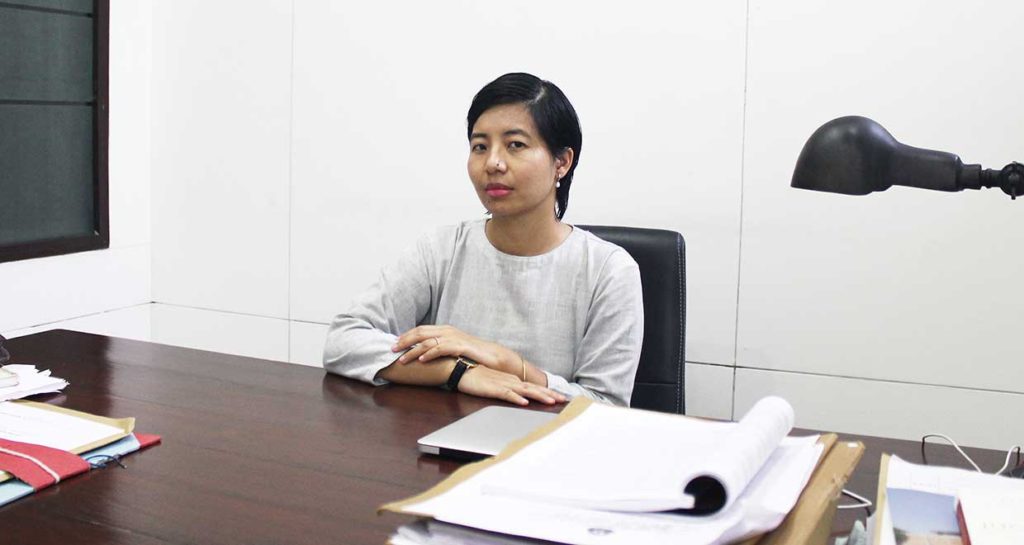
    Suhail Mathur graduated in law from National Law University, Delhi,  batch of 2014. He is currently engaged with a reputable international law firm. He is also the author of the bestselling book The Bhairav Putras, and has been ranked as one of the top 50 Indian authors to follow.

    In this interview, he talks to us about:

    • His experience at NLU, Delhi and his decision to pursue law.
    • His view on internships.
    • His decision to write a book and the challenges he faced as a first time writer.
    • His experience as a cricket commentator.


    What prompted you to consider law as a viable career choice? If not law, what other options would you have considered for your career?

    I wanted to become a film director. But film direction and other related courses all happen to be postgraduate degrees. So I was wondering what other avenues I could explore. During my school days, I was a member of the debating forum, and was extremely passionate about it. So I eventually realized that pursuing law would be the best course of action, as is provides adequate intellectual stimulation, keeps you on your toes and pushes you to keep thinking out of the box. Moreover, the fact that your victories or your losses were not yours alone but were also shared by your client was greater motivation to work harder.


    Describe your experience at NLU, Delhi as an undergraduate law student. Any memorable incidents you would like to share?

    My experience at NLU, Delhi was quite pleasant. We shared a fantastic rapport with our professors and seniors. I’m still in touch with most of them and we keep meeting from time to time. There were only two batches, and everyone knew each other by name. It was a closely knit community. There is a lot of activism now, which wasn’t the case during our time. The campus also possesses a greater degree of gender sensitivity now. The college atmosphere was better during our time.


    What activities were you a part of in college?

    I was heavily into debating. I participated in the Oxford format of debate, which was a rarity since most of the students participated in Parliamentary debates.  I was perhaps the only one who debated in the Oxford style. I participated in 6-7 debating competitions, and I won all of them. Other than that, I would make short films and student films during my tenure whenever we had a session break. I wrote my bestselling book The Bhairav Putras during my time at law school. Since we had fewer classes in the 4th and 5th years, I could actively indulge in creative pursuits. In my 5th year, I also ventured into cricket commentary for Star Sports and Airtel’s mobile application.


    How did you decide to write your first book The Bhairav Putras? What were the challenges you faced as a first-time writer?

    On a lighter note, I always saw authors from IIMs and IITs writing books, and thought that it was high time that an NLU student also did the same. But to be really honest, you need to have the passion to write. Merely wanting to write doesn’t suffice; you need to be skilled as well. I had been in my school’s editorial board and I used to write and direct a lot of plays. There was a point when I was making short films and they were being circulated among friends and family. I realized that all that I was trying to do was tell a good story and if that story were told in the form of a book, it would reach a larger audience.

    History and mythology are two things I am passionate about, and I was very clear that when I write a book, it should be a culmination of both. My book is predominantly a historical thriller with loads of adventure and a dash of mythology.

    As far as challenges are concerned, the challenges are not in writing a book;  they lie in finding a good publisher. When I wrote my book, I got eighteen contracts from publishing houses. Some of the publishing offices were asking me to pay to get published, and I was very clear that I wouldn’t do that. I would rather not have my work published at all than pay. Eventually, Red Ink Publishers came on board, they brought out the book with a huge print run, and the book did exceedingly well. The book is currently in its fourth edition, and it’s been the number one best seller on Amazon eight times and for sixty consecutive weeks it was on Amazon’s bestseller list.


    suhail-mathur-2

    How does one get their book published?

    If you actually want to write a book, you should first go to a literary agent. When my book did very well I was invited to a lot of literary festivals, and I came to know that young authors weren’t being given their due by literary agents. Being an author myself, I wanted to change that. So I started the company, “The Book Bakers”, where we help authors get published and undertake editing, cover designing and marketing work for books. We currently deal with 45-50 publishing houses pan India which includes all the major publishing houses.

    Recently, The Great Khali, the WWE wrestler, collaborated with us on his autobiography, which we placed on Penguin India. I love to work with first-time authors and have helped many of them.

    Many times it happens that if you send out a book directly to a publisher, they may not read it with as much interest because they get thousands of scripts on a daily basis. But a script sent by an agent is better received since as they think it has passed a preliminary test of quality.

    Also, we guys don’t send it to the editorial and submission IDs but to the personal IDs of the individuals looking at different genres of publishing, whether it’s literary fiction, commercial fiction or non-fiction. It becomes much more streamlined and straightforward, and also helps the aspiring authors. I am very accessible on Facebook, as well as on our e-mail ID which is thebookbakers@gmail.com. People are free to write to us and we are always willing to help them.


    How did you manage the time to write a book?

    The thing is that if you have the passion, zeal and dedication to pursue your interest, you will manage to do that. At no point did I write the book in class or in my hostel. I wrote the book only on weekends at home. I finished writing The Bhairav Putras within the 50-60 days that stretched over a year. You have to see how to find time for both the things because you don’t want your law school’s studies to suffer in this. You need to keep your passion and profession side by side, and that’s how you make a perfect mix.

    One of the things I am quite saddened about is that in the legal sphere, the people at the top of the ladder are quite narrow-minded in their conceptualization of a lawyer. On various occasions, they ask me why I wish to continue with  law now that I am a successful author. But what these guys fail to understand is that they are undermining themselves in the process. They are undermining the ability of a lawyer to engage in multitasking. You could be a top corporate lawyer, a good writer, and also a successful literary agent. When people in other occupations and professions can be writers in their concerned fields successfully, I don’t see why lawyers can’t, and that mentality needs to change.


    suhail-mathur-1

    How was your experience when you were interviewed by various news channels? Do you have a PR agent? How did you ensure good publicity for your book?

    In India it was a great thing that a law student was debuting with mythological and historical fiction. So the response that I got was splendid. The very famous legal magazine Lex Witness partnered with us as our official legal magazine partners, for which we thanked them in the trailer and the book. They covered me in three of their issues, including a preview, interview, and a review. The prominent online portal Infibeam was my official online partner, and we had a very successful outing with them too. People showed a lot of encouragement in that aspect.

    I received endorsement blurbs from several known personalities as well. Ajit Agarkar has been my favourite cricketer and I got in touch with his wife, Mrs. Fatema Agarkar and she was very sweet. She got me in touch with Ajit and he wrote an endorsement blurb for my book. My college Vice Chancellor, Professor Ranbir Singh, Professor Sucheta Mahajan, Mr. Amrit Mathur, Mr. Mayank Austen Soofi, and many more wrote endorsement blurbs for my book, which meant a lot to me as a first time writer.

    To ensure good publicity for your book you must, foremost, have a good product with you. Then you need to sell that product. If you are making a good product and not selling it well in the market, then nobody is going to know about it. It was important for the people in the legal field to know what a student of law was capable of doing, because not only did that promote me, but also my college. The first batch had not yet graduated from my college at the time and therefore garnering positive publicity for my alma mater was important to me. It reflects well on my college’s credentials as well as mine.

    The Book Bakers has actually revolutionized the entire system of marketing and PR these days. Most of the PR was earlier confined to social media. Now we have tied up with television channels and radio stations, cinemas, metros, newspapers and magazines, and that’s the kind of PR we are willing to give to our authors and other authors who may want to market their book. Seeing a book trailer on a TV channel is unprecedented, and if people want to do that, we are giving them that opportunity. It’s very important to stand at the place where you are, and have a vision for the future. One must set targets for oneself; think about where they want to see themselves five-ten years down the line and work towards that goal.


    How did you become a cricket commentator for Star Sports and Airtel’s mobile application? Being a lawyer why did you decide to become a cricket commentator?

    Cricket has always been a passion and I always loved watching the game. When I was in the 4th standard I was invited by Indian coach, Mr. Anshuman Gaekwad, to meet the entire team because he was very impressed with my knowledge of the sport. Back then I wanted to write a book on cricketers, describing their personal likes, and get an insider’s view of their lives. I actually met the Indian team on the first day of the Delhi Test match in which Anil Kumble took ten wickets. Mr. Gaekwad sent Mr. VVS Laxman along with me to meet every cricketer and gave me an India cap for my cricket knowledge. I went on a cricket show called “Stumped” and was later invited by Mr. Harsha Bhogle for an hour long chat. And all of this happened when I was just nine years old! Mr. Sunil Gavaskar, who also shares the same date of birth as mine, 10th July, sent a hand written birthday wish to me. People really encouraged me at that point in time, and so the interest was always there. I always used to do commentary at home for fun whenever a match was on, and finally, Mr. Raman Bhanot and his organization, which ties up with the Star Sports and Airtel, provided me with an apt opportunity. Whenever there was a match, I used to do cricket commentary and covered the Ashes, India’s tours to South Africa, New Zealand, the Asia Cup and IPL. It was a great experience and I cherish that a lot and had it not been for my law firm job, I would have continued with this for a longer period of time.


    Is it crucial to participate in various competitive activities in a law school? What was your experience in this regard?

    It’s good to take part in moot courts, debates, and other co-curricular activities as it helps in building self-confidence. The ground reality at law firms  is that they do concentrate on a person’s marks more than anything else. It’s disappointing because it’s necessary for lawyers to have a well-rounded personality. The change needs to start from the law firms’ end, in the way they recruit and filter candidates, rather than the students’ end, because law students are doing wonderfully well in their student life.


    You chose to work at a top law firm. Why not litigation? How did you prepare for your interviews?

    I have always wanted to work for a law firm. Litigation never interested me much. All my internships with law firms have been challenging and rewarding in equal measure. They were great learning curves. I knew that I wanted to eventually work at a law firm and my time interning with some of them just bolstered my conviction further.

    When you are going for an interview you need to know the basics. But what do the basics encompass? Do you consider contract law, criminal law and CPC? There is no definition of what the basics comprise. It is not possible to remember everything about the law and asking the candidates vague questions is unfair. Students are taught the rudiments in their first year but it is impossible to assimilate and retain that information throughout your graduation. There need to be better defined parameters when law firms are testing potential candidates.

    I am generally high on my confidence and possess the ability to convince people. I really worked hard at my internships as well. I had certain achievements under my belt, and I had also worked at the firm and done well as an intern, so there was no reason why I can’t do the same once I actually joined the firm. These are the things you really need to play on. You need to play on your strengths and these were my strengths. Some people sit down and go through each and every book of law and make themselves perfect so that they face no issue while answering questions at interviews.

    The law firms need to select based on the person’s personality and their ability to interpret the law effectively. I hadn’t done any extensive reading right before my interviews, but just played on my strengths with confidence.


    How was your experience as a junior lawyer in a law firm? Did you acquire any important skills while working there?

    I had a great time working there. It is a challenging role to work in a law firm. The idea is to work as much as you can. If there is no work, you begin to stagnate and that’s not a very good thing. If you are getting an opportunity to work, you should take it up, and that’s how you learn more. Also, you will create a good impression in the firm. There is a world of difference between when you are interning and when you are working as a lawyer. As an intern, you are supposed to give out information to the lawyer, but as a lawyer, you are supposed to interpret that information given. So what I learnt was how to interact with the clients when we went for discussions, and how we must convince them.


    What are your views on the desirability of foreign law firms entering the Indian market?

    There are so many law firms abroad and they have been waiting for so many years to enter the Indian market. I just want to tell Indian law firms that if you believe in yourself, let foreign competition come in. You already have a head start in terms of your presence in the country and knowing its laws. The international firms would of course be hiring Indian lawyers but they are the ones who are at a disadvantage because they are entering a new field while the Indian law firms are the established players. So why not help many more law aspirants secure good jobs. I always feel a little saddened when I see a law student not getting placed. There were some very talented people in my batch who couldn’t make the cut, and I felt very bad. When you have made it to a National Law University or a reputed law school, then that should be reason enough for people to trust you and your ability. It’s actually a wrong mindset to continuously prevent foreign law firms from entering the market. If there is globalisation happening all over the world, then why not let foreign players come over here as well!


    Do you think having family members or mentors with a legal background helps in this profession?

    I don’t have anyone in my immediate family who is in the legal industry. I don’t see my lineage as a shortcoming. If there are no lawyers before me, why not be the first one in the family! I don’t consider it to be a disadvantage or a disadvantage. From college, we gave our interviews and came through the hard way. But the process is probably simpler for students with lawyers in their families because they have contacts. I see a lot of lawyers get ahead in their jobs because their parents are partners at the firm.


    What would be your message to our readers?

    You must have set goals and have the ability to complete them but everything isn’t as rosy as it seems. At law school, everyone will tell you to do great internships in order to secure a job. But this isn’t a foolproof plan. One needs to be realistic and only then can one tackle the challenges in this profession better. Also continue with your creative pursuits and don’t limit yourself as a lawyer. There is certainly more to a lawyer than what law firms would tend to make out of them. I balanced my legal work, agency work and my writing and if you divide the time you can achieve success. I have recently signed a three book deal with Om Books International, a noted Indian book store chain which operates abroad as well . If you are passionate about something then the legal work can co-exist with other creative pursuits. Never give up hope, but be realistic too. People will tell you a lot of things and at the end of the day, I believe it is your luck that is going to take you places more than merit. If it was based on merit alone, then a lot of people who are deserving would have got the opportunities they didn’t get. I feel that I was deserving as well as lucky, and am thankful to God for the same.

  • Vishavjeet Chaudhary, Assistant Professor, Jindal Global Law School and Barrister (Inner Temple) on LL.M from Cambridge and academic research

    Vishavjeet Chaudhary, Assistant Professor, Jindal Global Law School and Barrister (Inner Temple) on LL.M from Cambridge and academic research

    Vishavjeet Chaudhary graduated in law from University of Kent, Canterbury in 2011 and was called to the Bar in 2012. He went on to complete his Masters’ degree from University of Cambridge in 2013. During his time there, he pursued Criminal Justice, Philosophy of Criminal Law, History of Civil and Criminal Law, and Jurisprudence. Aside from his legal career, he is interested in Human Rights and their protection, poverty alleviation, Social Services, and Economic Empowerment.

    He is a Barrister (Inner Temple) and is currently working as an Assistant Professor at O.P. Jindal Global University’s Jindal Global Law School where he is also the Assistant Director of the Centre for Penology, Criminal Justice and Police Studies.

    In this interview, Vishavjeet talks about: –

    • What made him pursue a legal career;
    • His experience while studying in the UK;
    • His focus on pro-bono and Human Rights related work;
    • The importance of Public Speaking; and
    • The difference between the UK and India with respect to legal systems.


    How would you like to introduce yourself to our readers?

    I am a Barrister, currently working as an Assistant Professor. My areas of interest are criminal law, constitutional law and human rights. I am also a very keen traveller, horse rider and agriculturist!


    What made you get into the legal practice?

    I knew that I wanted to be a lawyer when I was five years old! It partly ran in the family but my decision was not influenced by that in the slightest.  Other than the odd (I have been into full time agriculture for some time!), this resolve has been unwavering. I think one can make a genuine difference in this profession as law is something that touches everyone’s life in one way or the other. Second, this profession allows me to pursue my interests- intellectual endeavours, public speaking and interacting with a wide variety of people. Third, the independence of this area really attracted me.


    vishavjeet-chaudhary-2

    What inspired you to pursue your LL.M at University of Cambridge?

    I chose my undergraduate university based on how liberal it was. The university allowed for tremendously wide multidisciplinary studies. A lot of my tutors there very kindly encouraged me to pursue Masters in Cambridge to gain deeper understanding of the law. Most of my courses were either in jurisprudence, history or crime.

    What made you focus primarily on Criminal Law?

    I find criminal law fascinating- this is an area where all facets of human social interaction are at play. It is also an area that studies the depths of human emotions- passions, insecurities (no pun), deceit and weakness. Human Rights play a pivotal role as well. As I was interested in all these areas, I focused on criminal law.


    While at University, what co-curricular and extra-curricular activities, if any, did you partake in?

    I gave everything a shot – from debating and mooting to Polo and American Football!


    How did they benefit your performance at University, academic or otherwise?

    Intellectual activities like debating helped me in organising my thoughts, developing public speaking skills and communicating my point in a clear and persuasive manner. Sports and other activities helped me in relaxing and letting off steam. Both were also great ways to socialise and get a well-rounded education.


    What does your work for the Centre for Penology, Criminal Justice and Police Studies entail? What purpose does this Centre serve?

    (Vishavjeet is currently serving as the Assistant Director of the Centre for Penology, Criminal Justice and Police Studies at the prestigious Jindal Global Law School)

    The CPCJPS offers cutting edge inter-disciplinary research in the areas such as victim protection, reparation, juvenile justice, police reforms, technically sound training in human rights complaint law enforcement and investigation. Our aim is to encourage dialogue between different players of the criminal justice system to contribute to this area.


    vishavjeet-chaudhary-1

    What made you get interested in Human RIghts? What is the importance of pro-bono work?

    (Vishavjeet has shown keen interest in protection of Human Rights, Social Services and pro-bono work since his University days)

    I feel a big part of human life is to help. I do not say there is anything heroic about that- someone has to do it! I also find it intensely satisfying and enriching to be able to make a difference. There are few things half as rewarding as putting your knowledge to good use for betterment, no matter how small the change!


    How is the role of a Barrister any different from that of an advocate in Indian Courts?

    I was called to the Bar by the Inner Temple. England and Wales have a dual system- a distinction between Barristers and Solicitors. To crudely put it and to crunch centuries of history – Barristers do more advocacy and solicitors do more paper-work, conveyancing, etc.


    What inspirations can the Indian justice system draw from that followed in UK?

    vishavjeet-chaudhary-3Our Justice System is excellent considering everyday challenges. We do however need to urgently address issues like delays, transparency and the occasional malpractice if the system is to enjoy legitimacy and authority. All sections- judges, lawyers, the civil society- all of us need to put our heads together and work out solutions that are sustainable.


    How important are activities like Public Speaking and Debating for a law student?

    (During his time at Kent, Vishavjeet was the Vice – President and the Co- Founder of the Kent Debating Society. Further, he was a member of the Speakers’ Committee at Cambridge and has always stressed on the importance of public speaking)

    Exceptionally important I think. The perception is that if you do not want to get into litigation, you do not necessarily need to train as a public speaker. Public speaking regardless helps in developing wit, confidence, succinctness, persuasive knack and the ability to think on your feet. I feel that these are essential skills for a lawyer, irrespective of the area of practice. There certainly are other ways to develop these, but public speaking is definitely one of the best!


    What got you interested in interdisciplinary studies with respect to law? How do you intend on connecting the various disciplines?

    (One of Vishavjeet’s primary interests is appreciating law as an interdisciplinary subject by relating it to other disciplines like Philosphy, Literature and History)

    I feel we should not approach law as an overly technical subject. Borrowing from other areas  like literature and philosophy helps tremendously in broadening horizons and innovating. It is great to break the drudgery sometimes as well!


    From your experience of teaching, what would you like to say about the newer generations of law students? How would you say their education and way of life differs from yours as a student?

    The similarities are striking! Students today have more access (and more distractions) depending on how you use the internet, ‘applications’ and the like. I also feel they make more calculated and informed choices now.


    Finally, what would be your message to our readers?

    Please ensure you are making the best of each day right from day one. Time flies in college! Do talk to as many people as you possibly can, try as many new things as you can and have fun! Learn the basics of law and principles behind it to create strong foundations. Some degree of stress is inevitable, but do not overly stress and remember to enjoy college life! Good luck!

  • Kanishk Agarwal, Founder, CriTaxCorp on starting out a criminal law practice and legal entrepreneurship

    Kanishk Agarwal, Founder, CriTaxCorp on starting out a criminal law practice and legal entrepreneurship

    Kanishk Agarwal studied at Vivekananda Institute of Professional Studies (VIPS), New Delhi and graduated in the year 2009. He then began his career under Mr. Ashok Batra, and subsequently moved on to PricewaterhouseCoopers India. However, his interest in Criminal Law drove him to establish his own firm, CriTaxCorp. Kanishk is also the creator of the Indian Bare Acts Pack app.

    In this interview, he discusses

    • His career trajectory and the reasons for starting his own firm
    • The development story of the Indian Bare Acts Pack app
    • How to enter a practice of one’s choice for students
    • How to maintain a work-life balance and why it is imperative


    How would you like to introduce yourself to our readers?

    I think the term ‘legapreneur‘ best describes me, which basically is ‘legal entrepreneur’, because I like exploring entrepreneurial qualities in the legal industry. Post my graduation I wanted to work in Criminal law, but instead started working with Service Tax law expert Mr. Ashok Batra who is a Chartered Accountant and the author of books on the subject. What drove me into this field was a practical family decision as my father is a Chartered Accountant and he wanted me to follow his lead in taxation laws. I worked with one of the ‘Big 4’ consulting firms in the world, Pricewaterhouse Coopers for about 18 months, but my love for Criminal law never faded and so and after gaining substantial experience in Taxation law, I started working under the flagship of Senior Advocate Mr. Ramesh Gupta (Delhi High Court) and thereafter I worked in the chamber of Mr. Subhash Gulati. Finally I started my own practice in 2013 by the name of CriTaxCorp after I believed that I had gained enough experience to set up my own law firm. The name of the law firm was put up very strategically to cover the three fields of law I gained my exposure in i.e. Criminal, Taxation and Corporate.


    What would you like to share with our readers about your time spent at VIPS both within and beyond the classroom? How did the city itself play a part in your legal education?

    Looking back, college times seems so distant yet I can remember it vividly. I have learned a lot from my college life, as I was a very shy boy in my school days, and so got a lot of exposure in my college life. I had always been an average student but was an active volunteer in organizing moots, debates, college events and the best was, organizing the college trip for three consecutive years where I had the nightmare of handling 300 law students. However, the exposure was surely a blessing in disguise. Being a Delhiite was always an advantage, but I never got a change from the city to face different cultures. However Delhi has given me great exposure from internships to working under great members of the senior legal fraternity.


    How did your interactions with your peers influence your growth as a law student and a general individual? Did networking and peer mentorship play a big part in defining your student identity?

    I had a good relationship with a few of my seniors and we were a combination of notorious and sincere pupils.  I still remember asking for help with books or notes late at night, or for any other help regarding sorting out a tiff with any student or taking suggestions for my internship plans, and they were always very helpful and I definitely got great help. Once they graduated from college, I got to know about their experiences in independent practices or in law firms and they helped me reach where I am today, owning a firm myself. I always feel pleasure in helping juniors from my college who are worthy by providing them with internships under my tutelage and exposure to a variety of laws.


    During your time spent there, what, if any, extra-curricular or co-curricular activities did you take up? How did the same affect your learning experience and prepare you for the legal sector?

    It is true, college life is a golden period in one’s life. I was always very interactive with teachers and was an active participant in college activities like dancing, organising fests, college trips etc. Being involved in extra-curricular activities really helped me at large because I learned the tricks of management, organising, diplomacy and living up to my responsibilities. It really sharpened my skills to understand human behaviour and their reactions to different things, which a good lawyer must know, as reading a client or witness is half of the lawyer’s work.


    What would you describe your first experience as an associate at A.K. Batra as, and how did the same affect your career trajectory?

    I opted for Service Tax mainly on account of my father being a Chartered Accountant. It was a practical decision made by me to work with Mr. A.K Batra, and it was a great learning process as he provides a lot of exposure to the lawyers and CA’s working with him. He is still a great mentor and I know I can reach out to him whenever I hit the wall in Service Tax query.


    What prompted your shift to PwC India in 2010?

    Anyone and everyone who works in the field of Taxation law has this desire to work with a ‘Big 4’ firm, be it a lawyer or a CA. I am glad I took the step to join PwC as it exposed to me how the real big corporates work, their billing structure, their culture etc. I left PwC because of my love for Criminal law and since I wanted to make an identity of my own. I met some great people who are partners in the firm and still encourage me towards my achievements. It was a good learning experience.


    As the founder of CriTaxCorp, what were the initial challenges you faced as a legal start up in India? What was your competing strategy for taking on larger firms?

    CriTaxCorp started with a rough patch, as we worked towards targeting different sectors where nobody had worked. The “Aha!” moment was when I got a client form the Bitcoin (the digital currency) industry and I got a chance to understand the block chain of digital industry. Thereafter I did some exciting work in online poker regulations, logistic companies, start-up ecosystem etc., and getting into these fields really triggered me to go forward.


    What would you define as your firm’s unique selling proposition?

    While dealing with a matter in Criminal, Taxation or Corporate laws, we combine the knowledge from all major verticals of law. Providing exactly what the client requires is one of our mottos, and we believe in understanding the business of our client more than the client does so that we can deliver our best. This also sharpen our skills to dig deep and helps us understand the core issues of any industry. CriTaxCorp believe in one principle that a professional grows when his client grows.


    kanishk-agarwal-2

    Among your other accolades, what inspired the creation of Indian Bare Acts Pack? What were the challenges faced in creating and establishing the same?

    When I got to know about certain Bare Act Apps available for lawyers I was really amused and amazed at how technology is easing the pain of people at large. However, when I downloaded certain existing legal Bare Acts Apps on one of my senior’s tablet, I got a good thrashing from him as they were not updated since 2008 and reading outdated law is the last thing a lawyer wants to do. So, it got me thinking and I wanted to do something for the legal fraternity, as it has taught me so much. So I decided to put my money where my thought was and I ideated ‘Indian Bare Acts Pack’ mobile application so as to help lawyers. The app has 4 major Acts which are like the bible for any lawyer. CrPC, IPC, Evidence Act and CPC and I also included Service Tax law as I used to work in that field. Making the app was not an easy task, as I had to review the designs, see the working of the app, and pay for doing work. I created around 2800 word files which were formatted, indented and checked word by word by me. I was really overwhelmed when I was informed that the Delhi High Court Bar Association would like to unveil this app in a function which was organised for judges of the Supreme Court and High Courts.

    What just started as a gesture to give back to the legal fraternity has turned out to be the best app in the Bare Acts category reaching to nearly 1,00,000 lawyers. On the request and review of many lawyers, judges, CA’s and law students we are taking it forward and will come up with an updated version with some great features which will be of use to everyone, from law students to respected judges.

    The readers may also like our Facebook page “Indian Bare Acts Pack” to be updated about new features and updates on the app.

    Lastly, yes there were many sleepless nights spent in making this app. I remember that when I got the news that my App was going to be launched, by DHCBA in a function organised to facilitate High Court and Supreme Court Judges, in a matter of 2 days, in those two nights I made nearly 2000+ word files and coordinated with the developer to complete the App on time. It was devastating but it was all worth it!


    What are your views on the current generation of law students and would you say the approach to education has changed since your college days?

    I feel that this generation is full of talent and they are impulsive as well. (Laughingly)As I belong to this generation as well, I will say that this generation is not scared of hard work but they expect prompt success. They must understand that the first five years after graduation could be difficult and full of struggle but once when they get polished they will eventually grow and succeed. One should understand that it is not required to run behind alluring packages. Once they gain all practical knowledge and have a command over the law, money will chase them automatically. I also believe that year by year the concept of a teacher and pupil is also fading, which is something I really hold dear to my heart.


    To our younger audience looking to get into Corporate or Taxation oriented fields, what advice would you give them for breaking into the field?

    The best thing to do is opt for as many internships as they can to get a better understanding and gain practical knowledge, Firstly, they should understand the whole concept of a subject matter, for eg. Taxation is a subject which is either really liked or totally disliked by lawyers, so one needs to understand and explore to see if they have interest in it or not. Also, one should pick one taxation subject at a time because trying to understand all of them in internship period will only confuse them. Secondly, as for Corporate, it is very wide field which ranges from drafting of agreements to regulatory compliances to transaction advisory. It is a field which requires round-the-clock–work, with alluring packages, so one need to understand exactly what they want with respect to work-life balance or money. Corporate law firms have a deadline bomb which is always ticking and the stakes being high, one cannot afford to miss any deadline. I would like to end this question by saying that legal practices are like delicacies you need to get the taste of each of them until you know which one suits your taste buds.


    In the midst of founding a law firm and creating apps for the legal community, how much of your personal life have you had to compromise on, if at all?

    Earlier it was hectic and as I am a workaholic, I have worked round–the-clock on my application. Whenever I get time I read articles for better understanding of technology, but I have adapted all this as a hobby and so it is not a burden. I believe that if things are planned and one knows how to manage time, they can easily coordinate their personal and professional life. I always go out with my family and friends once in two weeks, otherwise what is the fun of being the founder of your own firm and earning well if you can’t have your own time out and spend what you earn. However, one needs to prioritize their practice of law, interest and goal with their time in order to follow a focussed path to their success. I am still experimenting to know the ultimate path, but that is the fun, provided you balance the fun with focus, risk and passion.


    Finally, do you have any other advice for our readers, most of whom are college students?

    I would suggest that they do as many internships as they can in various fields and they must always grind and hustle to get more and more work from their seniors. The exposure they get in internships will help them see the career path they want to choose. Also, I would suggest that since everyone is so engrossed in social media and their mobiles these days, every student should like some of the law news Facebook pages and read some of the important news or judgments that they post. I am trying to do something to solve this for our fellow law students though my app, so let’s see. I would suggest that every lawyer must watch American television series such as Suits, Boston Legal or any other series that relates to law, as I myself have learned a lot from these and imbibed some of the things I have learnt from these shows into my practice.

    They must strengthen their core subjects such as CPC, CrPC, IPC, Evidence Act etc. as these will be used at all times in your practice. Lastly, it is the best time of their life so they should have fun, rough it out and learn from their mistakes.


    In your opinion, what is the role of technology in law and how can students best utilise technology without looking at it as a substitute for hard work?

    Being a technology enthusiast and founder of a technology based start-up I believe that everyone is embracing technology in one form or another. Technology companies such as manupatra or indiankanoon.com has eased the life of lawyers when it comes to browsing through judgments relevant to a case. I have received numerous mails from law students and court staff saying that my application has really helped them many times. Recently, one of the biggest law firms in the US named Baker & Hostetler licensed a software from IBM which is an artificial intelligence software to help law firms in bankruptcy and due diligence, so you can imagine how technology is playing a role in law firms. Also, being a legapreneur I get intrigued by mushrooming legal start-ups these days. To sum it up, technology is playing a significant role in our life and increasingly being adapted in our profession, so one should start embracing it.


    What is your view on these legal start-ups and will it create a new area of law for law students to look into?

    Yes, the start-up ecosystem is witnessing various new law related start-ups and some of them have got funding upto an amount of USD $500,000. However, the start-up eco system in general is witnessing a downtrend with investment/funding transaction dropping nearly 30-50% from last year. I hope all these new legal start-ups pave their way into the start-up ecosystem and a new unicorn is born in law start-ups. (Laughingly) I hope IBAP makes its name too!!

    As for start-ups creating a new line for law students, it purely depends on the interests of the law student and whether he/she gets intrigued by the vision of that start-up or not, because one setback is that start-ups mushrooms rapidly but most of them close rapidly as well, but yes it’s a new era of legal development and opportunities for upcoming law students.

  • Utsav Gandhi, Associate, Fox Mandal, on 1st year at a law firm and graduating from Nirma University

    Utsav Gandhi, Associate, Fox Mandal, on 1st year at a law firm and graduating from Nirma University

    Utsav Gandhi graduated from the Institute of Law, Nirma University in 2014. He has participated in many reputed International and National Law Moots and has headed various committees. During his time in college he made sure to get his hands on everything college had to offer. He is currently working in the corporate and real estate law team  at Fox Mandal, Ahmedabad and wishes to keep exploring the field and continue the cycle of learning.

    In this interview he talks to us about:

    • His decision of choosing ILNU and the college’s contribution in his career.
    • His views on Moots and other activities in augmenting a CV.
    • His work and experience at Fox Mandal.
    • His views and suggestions on starting a successful legal career.


    How would you like to be known to our readers, most of whom are the law aspirants?

    I am a corporate lawyer based in Ahmedabad and a graduate of the 2014 batch of Institute of Law, Nirma University. Also, I am a first generation lawyer in my family. Initially I thought of studying engineering, but when I started going for the engineering coaching classes the subjects did not capture my interest. While looking at other options I came across law and I immediately took a liking to subjects such as tort law, civil law and criminal law, that I came across while studying for the law entrance exam.


    What specific goals, other than those related to your current line of business, have you established for yourself for the upcoming years?

    None of my plans are set in stone. However, in the coming years I would like to grow as a legal professional and tackle new challenges over time. Further, I would also like to assume a position of leadership and develop expertise in a particular area of law. On a personal front, I was an avid trekker in school and that is something that I would like to proactively pursue as a hobby in the near future.


    What led you choose your college or university?

    When I joined ILNU it was relatively new, with the first batch students still in their 5th year. However, Nirma had a very good reputation for having excellent faculty with amazing infrastructure. In fact the Nirma University campus has to be one of the best in India. Also, when I went through the prospectus, it immediately piqued my interest since the course structure was unique, wherein a student could pursue a specialisation (Hons.) in either Criminal, Corporate, Constitutional or IPR Law. Thus, I believed that joining ILNU would help me immensely in building my career as a legal professional.

    How do you see your university and education and experience it imparted as being helpful in preparing you for a corporate career?

    I would credit the teachers at ILNU for being extremely diligent and focused on teaching the students about the basics of law. Further, I was also given the opportunity to explore many extra-curricular activities such as debating, MUNing and of course, mooting.

    Further the curriculum at ILNU was quite rigorous, with term assignments and exams always keeping me on my toes. This helped me greatly in improving my time management skills and also helped me to work under pressure, s so ILNU through 5 years of college, prepared me for the corporate life.


    Tell us about the activities you participated in while at university that helped boosting your progress?

    I participated in everything that I could get my hands on. I have participated in many international moot courts which have greatly improved my research and communication skills. In fact, mooting was the best thing about college as it also taught me how to work in a team. Further, I also tried my hand at debating and MUNing which helped me in public speaking. Apart from this, I have been part of the ILNU’s Campus Recruitment Committee and Literary Committee, which imbibed in me, the leadership skills, which are invaluable for any lawyer and something that every lawyer should possess.

    Also, I have presented papers at various international as well as national conferences and have got some of them published as well. This gave me the opportunity to extensively research on upcoming areas of law and have now helped me in my career. For example, I presented a paper on Corporate Social Responsibility, which back then was only an evolving concept and there was no legislation on the same. However, my research encompassed various jurisdictions and consequently, set up a strong base for me in that subject. Now, CSR has become a major area of interest/concern in the industry, and it has become extremely easy for me to advise the clients on the same.

    With regard to the internships, I kept an open mind before deciding on a particular area of law. I had not decided to choose corporate law as a career since the beginning. The various internship experiences I did helped me choose a definite career path. Thus, during my early years at ILNU I decided to intern with Nanavati Associates (District Court, Gujarat), Adv. Devang Nanavati (High Court of Gujarat) and Krishna and Saurastri Associates (IPR). Finally, it was when I interned at Phoenix Legal and Trilegal that I decided pursue a career in corporate law.

    Further, I have also completed various courses such as the Thomson Reuters’ Legal Advancement Programme (in my second year) and a diploma course on Entrepreneurship Administration & Business Laws jointly offered by NUJS and iPleaders. These courses helped me improve my knowledge base and have also played a major role in helping me to ace my interview with Fox & Mandal.


    Share with us your working experience as an Associate at Fox Mandal, India’s oldest law firm.

    I have been working on corporate and real estate law matters at the Ahmedabad office of Fox & Mandal for the past 2 years. My work profile mainly comprises of transactional and advisory work in the area of general commercial laws and drafting due diligence reports and advisory opinions on real estate law.

    Fox & Mandal is a huge law firm with over 200 lawyers across India and all the offices regularly connect with the each other. Therefore, I have had the opportunity to interact and work with some of the brightest minds and experts in their fields of law. Further, since the Ahmedabad office is relatively new I have also had the opportunity to network with potential clients across various industries in Gujarat. I believe that no other big law firm would have provided me with this opportunity and I am sincerely grateful to Fox & Mandal, as I believe that this will always be of an immense help to me.


    Would you like to share with us any of your accomplishments before or after joining the Law School or even after your placements?

    The first moot that I went to was the GNLU International Moot Court Competition, where our team won the 2nd Best Memorial Award. Later on, we were the first team from ILNU to get selected for the prestigious D.M. Harish Memorial International Moot Court Competition through the Memorial Round. I was also awarded a gold medal by ILNU in recognition for my moot court achievements.

    Further, I have also won an essay competition which was then consequently published in a book titled “Right to Development – Views and Issues”. I also pursued an online internship with Alexis Society (an organisation dealing with issues relating to youth empowerment), where I was adjudged the Best Intern and I had primarily worked on the research topic of Global internet freedom.

    At present, I am also closely working with Adhrit Foundation as an Editor and an Internship Coordinator. My priority tasks with Adhrit include Editorial Work, Content Development and Talent Development. This role has provided me with the opportunity to mentor many law students who have just begun their law school journey.


    Having seen the dynamic evolution in various facets of law, how did you manage to seize any opportunity that knocked your door?

    One has to really be on their toes and it is very important to keep a lookout for any new opportunity. The best resource for this is of course the internet, which is a multitude of vast information. However, in order to stand apart from my peers, I always chose to do something new and take risks and I give a  100% to whatever I am doing.

    Also, I always keep myself updated with the latest developments in the legal field and immediately prepare concise notes for the clients on the upcoming areas of law which are going to have a big impact on the industry. After joining Fox & Mandal, I have also assisted in organising various conferences and workshops with the latest one being a Workshop on Sexual Harassment of Women at Workplace. Further, I have also delivered a lecture at Apollo Hospital, Ahmedabad on the medico-legal issues that healthcare professionals face. This has helped me in understanding the industry issues and consequently, helped me in addressing their various concerns too.


    How would you advise a law student if one has to start on to preparing for a career while in college?

    I believe that a law student should focus on his academics to ensure that the basic concepts are clear since that is the first thing that the recruiters will look at while short listing a candidate. However, one does not need to be a topper to get a good job. The important thing is that the CV should be well-rounded. Also, I would advise the current crop of law students to moot extensively, irrespective of whether they’re choosing litigation or a corporate law career. Mooting develops ones research and communication abilities to a great extent. Further, other extracurricular activities such as debating and presenting papers at various conferences also helps in developing presentation and research skills.


    In the end, what would you like to communicate to the fresh graduates who are ready to set foot in the law firm?

    Keep an open mind and work on as many areas of law as possible and always interact with everyone across the board, be it an Associate or the senior management. Further, the field of law is dynamic and ever changing, hence, one has to stay abreast with the latest developments and preferably conduct a thorough research on topics which may have a huge impact in the future. Also, ones aim during the first couple of years at a law firm should be to accumulate knowledge on all the aspects of law and not confine themselves to a particular area from the beginning.


    This interview was taken by: Kadambari Tripathi, Student at Institute of Law, Nirma University, Ahmedabad

  • Manas Agarwal, Scale-1 Officer, Karnataka Bank on cracking the Institute of Banking Personnel Selection (IBPS) and the interview rounds

    Manas Agarwal, Scale-1 Officer, Karnataka Bank on cracking the Institute of Banking Personnel Selection (IBPS) and the interview rounds

    Manas Agarwal graduated in the year 2014 from School of Law, Christ University, Bangalore. Immediately upon graduation, he joined Accenture Pvt. Ltd. as a Contract Associate, before appearing for the Institute of Banking Personnel Selection (IBPS) and being selected as a Scale-1 Officer (Law) for Karnataka Bank.

    He holds a Diploma in Business and Legal Studies, apart from having completed a general course on IPR laws conducted by WIPO. He has to his credit many awards ranging from debating to moot courts. In this interview he discusses:

    • The benefit he accrued from studying in a private university with many departments.
    • The IBPS examination and how he cleared it
    • His tips to ace the interview rounds after a selection process
    • The importance of a helpful mentor in a lawyer’s formative years.


    How would you like to introduce yourself to our readers?

    Hey! This is Manas Agarwal. I prefer to introduce myself as a lawyer falling under the ‘Non-Nerd’ category. I graduated from School of Law, Christ University, Bangalore. I am currently working as Scale-1 Officer (Law) for Karnataka Bank.

    Was studying law your dream career? What motivated you to take up this field?

    In all honesty, it was a dream career which I started dreaming of after class 10th. I remember that day when I was sitting on the stairs of my boarding school (Wynberg-Allen School, Mussoorie), staring at the lush green hills under the monsoon clouds and thinking aboutwhat to do with my life. That is when I asked Mr. Tindale (the Principal) who was standing next to me– “Is it a cool thing to be a lawyer?” His ‘Whoa! Attaboy’ expressions followed by a detailed explanation motivated me to take up this field with the never ending support of my parents.


    Tell us a little about your time at School of Law, Christ University, Bangalore. What extra-curricular activities did you participate in and how did it enrich your law school experience?

    Christ University was a good platform for me not only to grow as a budding lawyer but also to grow as an individual as I was being exposed to different multicultural and departmental benefits which a deemed private university could offer. I was an average student academically. I was that guy who enters the class with a basketball in his hand in the morning. Every class has that one guy. I was mostly active outside the classroom being immensely involved in the extra-curricular and co-curricular activities such Client Consultation Competitions, Negotiation Competitions, Moot Court Competitions etc. I was a part of the college’s basketball team and a ‘C’ cert. NCC cadet. I used to have basketball team practice before the class hours and NCC drills on Saturdays post classes. I made a lot of good friends who are not just restricted to the legal industry but belong to different departments such as management, computers, engineering, commerce, arts etc. which again is one of the perks of a private university having different departments under one roof.


    You have won many moots, debates, client counselling and negotiation events during your years at law school. What do you have to say about excelling at such events?

    manas-agarwal-2As we prepare for a competition, we spend hours researching about the problem/topic in the process of preparing the contentions/agenda. In this process of intensive research, many a times, students get deeply engrossed in the problem and reach the advanced level of the research but forget to prepare on the basic or elementary knowledge of the problem in hand which is mostly questioned by the judges in any competition. My advice to students who wish to excel at such competitions would be to start from scratch. Try to understand the problem first and then ask yourself- Did you understand the subject matter? Can you narrate the problem to your friend without looking at it? If not read again. Before turning into an insomniac and shifting to the advanced research levels reached through spending late nights at the library, a student should work on the root questions. If a student is thorough with the basics, half the battle is won.


    You hold a diploma in business laws and have also completed a certificate course on IPR laws offered by WIPO. What is the value addition of such external courses?

    As a student of law, when I took up these courses the thought which hit me first, as it mostly does for the students of that age, was it’ll reflect good on my CV. What I have realised after completing these courses was that more than the CV, the knowledge delivered by these courses which helps in the long run. A decorated CV can only get you an interview call but the knowledge you gained will help you jump rest of the hurdles, both before and after joining.


    You have been selected as Scale-1 Officer (law officer) at Karnataka Bank conducted by IBPS. Would you like to tell our readers a bit about the examination and the process of preparing for it?

    Sure! So IBPS conducted this exam for Karnataka Bank. Firstly, the candidates were shortlisted based on the exam, which was conducted online similar to other bank PO exams. The exam was a 200 mark multiple choice question paper with 5 options. The paper was divided into 5 sections including Quant Aptitude Test (Mathematics, which was the biggest challenge for me being away from the subject for quite a time). There was 1/4th negative marking allotted for each wrong answer. Result of the test was communicated after a few days on the official website of the bank. The selected candidates were given the interview call letters and were accordingly called for the interview at the bank’s head office located in Mangaluru. This year they have selected 73 candidates in total including all categories – General Probationary Officer (PO), Agriculture Science and Law.


    What advice would you give to the candidates short listed for the interview?

    My advice to the aspirants is just to be real. Do not try to fake it or make up stuff. Respect the expertise which the panel possesses. They will easily catch you if you happen to make up stuff. Prepare well and if you do not know a thing then tell them clearly. Remember they want a genuine and honest employee.


    What are the responsibilities of a Law Officer in a bank?

    A Law Officer in a bank deals with the cases related to the bank and acts as an advisor to the bank whenever a question of law is involved. The statutes which a law officer deals with are Acts such as the SARFAESI Act, Indian Contract Act, Banking Regulation Act and various other statues related to the banking industry.


    You worked at Accenture Pvt. Ltd.  prior to this. How was your experience as a contract Associate?

    Accenture was a great place to work. I really enjoyed working there. Starting your career with an MNC such as Accenture teaches you a lot of things, professionalism being top on of that list. It helped me grow as a team player under the guidance of highly qualified managers who were always ready to connect and help me during and post work hours.


    You have interned at different places having different lines of business including Holla and Holla, Bangalore and ICIC Lombard, Bangalore. What were the greatest takeaways from these?

    As a law student, I had planned to design my CV in the most diversified way possible. Where Holla and Holla taught me the research work on property laws, ICICI Lombard extended my knowledge on the applicability of the motor vehicle insurance laws. When a law student enters a law firm or a legal department of a company in his initial years, he expects it to be like the TV series Suits. However,  right after the initial week, he gets his reality check. That’s when he is ready to adopt the new culture of the firm/company and tries to learn their way. This is the time when he actually needs some additional support from the lawyer he is working under or the supervisor. I was fortunate enough to have wonderful leaderships in both of these places which helped me learn the importance of management.


    What would be your message to law students and your fellow colleagues?

    Law school is a wonderful phase of your life. Make the most of it in all possible way. Once you are out of the law school you’ll find yourself in a swimwear on a beach. You’ll be desperate to enter the sea in order to beat the heat but you’ll be wondering from where to enter.  I have gone a bit philosophical on this one but I am sure you’ll relate to it one day. Stop worrying about the packages and CTCs. That should be your last concern (trust me!). It’s the knowledge and experience which matters the most in long run. Don’t forget you are a lawyer now. Do what interests you the most. Always remember what my elder brother (Manav) always told me- ‘First job picks you whereas you pick the second one.’ Don’t panic, you have time. Just focus on the direction you are in and not how much you are earning at the moment. ‘You don’t get a second chance and all’ is utter nonsense. Life never stops giving you chances provided you work and ask for them. Most importantly never ever stop enjoying (chilling- as we like to call it) no matter what you do or how busy you are. We are born to live and not just to work. Good Luck!


  • Indian Institute of Corporate Affairs, Mediation Project

    Indian Institute of Corporate Affairs, Mediation Project

    Indian Institute of Corporate Affairs (IICA) is in the process of setting up India International Mediation Centre (IIMC), the first of its kind in India for handling various domestic and cross border commercial disputes at pre and post litigation stage. As a first step in its initiative, IICA proposes to carry out a series of mediation training across India (Delhi, Mumbai, Ahmedabad, Hyderabad, Kolkata, Chennai and Gauhati).

    The team responsible for conduct of the training program is headed by Dr. Vijay Kumar Singh, head of the School of Corporate Law and Associate Professor at IICA. Vijay has previously worked as Deputy Director (Law) at Competition Commission of India. He is a trained mediator from The International Centre for Alternative Dispute Resolution (ICADR). He is also a certified trainer on “Managing Disputes and Difficult Conversations on the Board” by Centre for Effective Dispute Resolution (CEDR) and the IFC Corporate Governance Group.

    Vijay is assisted by Anuroop Omkar and Kritika Krishnamurthy as consultants for the course. While Anuroop is a trained mediator from USA and Europe, Kritika is trained from The International Centre for Alternative Dispute Resolution (ICADR). They are Fellows of World Mediation Organization (WMO), Berlin, Germany. Anuroop is the youngest mediator appointed by Delhi Dispute Resolution Society, Ministry of Law and Justice, New Delhi.

    In this interview, they talk about

    • The need for mediation as a means of dispute resolution and its future in India
    • Their upcoming training programme and what they hope people will gain from it
    • The number of different types of people in different fields that will benefit from both their training programme and mediation skills in general.


    Tell us a bit about your team

    Vijay: Our team is headed by Dr. Bhaskar Chatterjee, Director General and CEO of Indian Institute of Corporate Affairs (IICA). Dr. Chatterjee is an ex IAS officer and has introduced the concept of CSR in India, as the first principles of CSR for the Public Sector Enterprises were written during his tenure as Secretary, DPE. His work experience has given him wide exposure in negotiation and experience of the fallacies of dispute resolution mechanisms prevalent in India. He believes corporate India is in great need of mediation which saves not only time and money but also goodwill of disputants. I am the Course Director for the training program. I am also the Head of School of Corporate Law at IICA. Before IICA I was working as a Deputy Director at the Competition Commission of India. Anuroop Omkar and Kritika Krishnamurthy are our course consultants. They are practising corporate lawyers, mediators and co-authors of the book ‘The Art of Negotiation and Mediation- Wish Bone, Funny Bone and Backbone’ by LexisNexis.


    What made you conceive the idea of mediation training and International Centre of Mediation when arbitration and litigation are the most accepted ways of dispute resolution?

    Vijay: Time and again we harp on the fact of the overburdened courts in India and the escalating cost of undertaking arbitration which many times leads to court appeals. India is on the way of becoming the global business hub of the world. We are strong propagators of the ‘ease of doing business’ but our rankings are dismal. Most foreign investors and joint venture partners are hesitant of the Indian market because of the stories they have heard of long drawn litigations in India. We need an efficacious dispute resolution mechanism for commercial disputes and mediation is the right fit. Mediation has a success rate of 80-85% in developed jurisdictions. Businesses shall get the chance to negotiate a solution to their own disputes with promise of full confidentiality. But there is lack of trained mediators in India who truly understand the essence of what mediation should be as an experience for disputants. We are on the lookout of promising mediators who can help disputants settle differences in a relaxed, informal atmosphere without prejudice. Hence, the mediation trainings- to train and empanel mediators for our proposed mediation centres.


    Where do you plan to set up the International Mediation Centre?

    Vijay: Of course, we would like to begin with our home ground which is New Delhi. But if we get the right talent pool and collaborations, we wish to set up mediation centres all over India; particularly in the cities where the trainings are planned- New Delhi, Mumbai, Ahmedabad, Hyderabad, Chennai, Kolkata, and Gauhati for the businesses in the North East of India. In our second phase, we may also target other industrial and emerging business centres in India.


    Does this training have any correlation to the NCLT & NCLAT that has been recently brought into force replacing the CLB, which would also exercise powers available with High Courts earlier in certain company law matters?

    Vijay: The pioneering step of commencement of National Company Law Tribunals and Appellate Tribunal has already been taken on June 1 this year. Section 442 of Companies Act, 2013 provides for resolution of company law disputes before the tribunals through mediation. Most of the disputes which come under these provisions are shareholder disputes, oppression and mismanagement, winding up of company owing to inability to pay debts, etc. I think these disputes are apt for resolution through mediation since the parties have a lot at stake and there is scope for win-win solutions and beneficial commercial arrangements through assisted negotiations. If given an opportunity we would be glad to assist the NCLT and NCLAT in mediation of these disputes. We also wish to promote pre-litigation of commercial disputes in India.


    Where all are the trainings happening and what is the duration of each training?

    Kritika: The trainings shall follow the international certification format of 40 hours. The training shall be for 6 days from 2 PM onwards at the following places:

    New Delhi: 19-24 July, 2016

    Mumbai: 25-30 July, 2016

    Hyderabad: 31 July-5 August, 2016

    Ahmedabad: 1-6 November, 2016

    Kolkata: 7-12 November, 2016

    Gauhati: 13-18 November, 2016

    Chennai: 19-24 November, 2016


    What should the course participants expect from the training program?

    Anuroop: Participants should expect skill based learning. Becoming a mediator requires a psychological change in your perception towards disputes. We cannot bring about this change in the participant’s mindset through only one-sided classroom teaching. The training program will also have extensive mock mediation practice and other skill based exercises to engage the participants in the training process and give the participants an actual practical insight into the practice of mediation. The training will equip the participants to deal with difficult disputants and deadlocks in negotiation. These skills are not just useful for a mediator but any corporate professional.


    For whom shall this training be beneficial to attend?

    Kritika: The training is for any person who wishes to become a mediator. It is not necessary for them to be a practising lawyer since we all face disputes and negotiate in everyday life. However, here is a tentative list of persons for whom this training shall be beneficial:

    • Judges
    • Advocates
    • In house counsels
    • Chartered Accountants
    • Company Secretaries
    • Cost & Work Accountants
    • Bureaucrats & public servants
    • Members of National Tribunals
    • Members of National, State and District Consumer Forums
    • Professional Students
    • Faculty (Law, CA, CS, Management, Commerce etc.)
    • Bankers
    • Members and employees of various sector regulators
    • Social Workers
    • Entrepreneurs & Working Professionals
    • HR and Management Professionals

    We welcome both active practioners and superannuated professionals


    Who will be Training faculty for the Mediation Training and why?

    Vijay: Avv. Stefano Cardinale shall be the Master Trainer for all the training programs. Avv. Cardinale is currently a member of the order in Rome and Barcelona, where he practices as a lawyer, professional negotiator, mediator, international management consultant and trainer. He is external independent expert of the EU Commission. He runs his own law firm Legal and Consulting International with offices all over the world. He has been guest speaker in international conflict management and mediation lectures at the World Trade Center of San Diego, at University of California San Diego (USA), at the American Chamber of Commerce of Milan, at the International Development Law Organization, at Magna Graecia University of Catanzaro, at Verona University, at Padova University (Italy), at Kharkov Law School (Ukraine), at Bar Council of India Golden Jubilee Celebrations in 2012 (India).

    The co trainers for the training program shall be practicing mediators from India so that the participants shall get exposure to the international best practices of mediation as well as their applicability in the Indian scenario.

    A tree cannot flourish unless we nourish its roots. Mediation needs to be taught by actively practising international mediators so that the first batch of commercial mediators for the India International Mediation Centre understand the right approach and mindset required to conduct mediation. Mediation fails many times not for any other reason other than faulty practises and hasty mediators. We wish to avoid that. Mediation has set best practices and if we introduce them in India with required customization, it will soon catch up in India. But we need good international exposure.


    Where do you see mediation as a practice of dispute resolution in next 5 years’ time?

    Anuroop: With increasing popularity and success of campaigns such as Startup India, Stand up India and Make in India, India is developing a new brand of entrepreneurs. They are looking for innovative dispute resolution mechanisms which will allow them constructive closure in disputes so that they can devote more time in business development. Business houses will any day choose a mechanism where they have a say in the outcome over a mechanism where there is a win-lose result. If India can learn to recycle, we can also learn to make business out of disputes. With the changing face of corporate India, the dispute resolution mechanism shall also have to keep pace. In the next five years, we see mediation as the ‘Go-to Mechanism’ for commercial disputes in India.


    Any advice for the future commercial mediators of India?

    Anuroop: Mediation has been widely accepted as one of the most preferred dispute resolution mechanism in the world. It has got an acceptance because of its broad elements which includes empathy towards disputants, time effectiveness, confidentiality and win-win solution. Various countries in the world have gone upto legislate mediation as a mandatory practice before resorting to the judicial system. My advice to the future mediators would be- in order to effectively and efficiently advice both domestic and international business houses in India we should understand that time, money and confidentiality hold a great importance to them. Keeping that in mind, we should advise them and structure their various contracts and agreements with an effective dispute resolution clause with mandatory mediation before resort to any other dispute resolution mechanism.


  • Sanjay Hegde, Senior Advocate, on building a legal practice, arguing on landmark cases and on legal journalism

    Sanjay Hegde, Senior Advocate, on building a legal practice, arguing on landmark cases and on legal journalism

    Mr. Sanjay R Hegde, is a Senior Advocate at the Supreme Court of India. He began his illustrious career back in 1989 while working as a lawyer with M/s Mulla & Mulla & Craigie Blunt & Caroe Solicitors. He gained his LL.M while at work and thereafter moved to Delhi to practice in the Supreme Court in the Chambers of Senior Advocate Mr. G. Ramaswamy. During this period he worked on several high profile cases, appeared for the Government of Indian before an international arbitral tribunal and from 1996 to 2004 was on the Union of India’s arguing panel before the Supreme Court. He also worked for a decade as the Advocate on Record for the State of Karnataka and thereafter focused on private practice. He has frequently engaged in legal journalism including appearing on television panels and writing as a columnist for newspapers.

    In this interview, he talks to us about:

    • His career choices and the reasoning behind them.
    • His experiences in the various roles and offices he has assumed over the years.
    • His opinions on miscellaneous topics – the importance of mooting and writing for students, ADR in International Law and legal journalism.
    • His advice to law students while studying, practicing and moulding their careers.


    Please elaborate on the motivating factors which helped you in choosing legal studies.

    I assume you mean, why did I decide to study law? Well, in our days, choosing a career in law, was not a matter of choice but circumstance. Often one did not set out to become a lawyer, but did drift into the profession after exhausting most other avenues. My father was a lawyer as was his uncle and grand-uncle. So as the first of five children, of a not very successful lawyer, a legal career, while available was not necessarily a first choice. I did law, while working in a computer company and studying for the civil services examination. I also did an LL.M simultaneously while working with Mulla & Mulla.


    Please tell us about how you decided to pursue litigation. Were you considering any other opportunities?

    I got selected by the UPSC for a non-IAS service, which I kept on hold for a couple of years, while I started out in the Supreme Court with the then attorney general Mr.G.Ramaswamy who was my guru in court-craft. I had been a debater and a quizzer in my times, so a quiet life behind my desk in a solicitor’s firm (that’s what we called corporate law then), did not appeal to me. It had to be courtrooms or nothing in my case.


    How were your years in college? Did your study prepare you in any way for real-life practice in Courts?

    When I see kids in law schools these days (my son included), prepare so hard with presentations and papers, I am reminded of how little I did in college. I did spend good time in my law college in Bombay (K.C.Law) making friends and eating sandwiches from Ramesh Sandwichwala. My life as a law student, was evening classes after work in my computer company’s administrative job. I attended classes which had good teachers and neglected other subjects. I passed the examinations with undistinguished marks and often found that I scored badly in subjects which I knew well by studying original texts. In those days, examiners had got used to answers mugged up from guides (three test papers) and original stuff may have fazed some of them. Suffice to say, the course did not prepare me for life in court, but I did learn a bit by tagging along with my father and his friends.


    What should a law student do, in your opinion, to shape up his profile for litigation?

    Practice simple things like public speaking and elocution. You would be surprised to see how badly some people express themselves in court, and how judges are grateful to any lawyer who can clearly state the problem, before attempting to persuade them to his side. Some experience of dramatics and the stage are also useful. Both Kapil Sibal and Rajeev Dhavan, had experience in theatre which went a long way towards making a courtroom presence.


    How important do you think Mooting and Academic Writing are for a Law Student aspiring to become an Advocate?

    Both are very important. Mooting helps you deconstruct issues, prepare memorials and briefs and present them to trained minds. Writing is even more important. An ability to clearly express oneself in writing, in simple sentences, is the hallmark of a good mind. While taking people on board, I am more likely to choose, someone who can give me a quick written note, than someone who can turn a wonderful phrase in conversation.


    After your enrolment at the Bar in 1989, you worked in Mumbai for a period of three years. How did these formative years mould you as a lawyer?

    They taught me about handling corporate client problems, and how to turn around work reasonably quickly. More importantly they taught me the value of friends in the profession and the constant peer-review that always accompanies life at the bar.


    You have a rich experience of working under Mr. G Ramaswamy, Senior Advocate and former Attorney General. You have also assisted several distinguished Senior Advocates at the Supreme Court. Please tell us about your work under them.

    Each senior advocate addressing the court, is essentially a performing artiste. At the end of the day, he is not so much concerned with the judgment which is the judge’s job. He is concerned that his performance was the best that could be summoned from within him and that it best expressed all the points in his client’s favour. Mr Ramaswamy had an amazing depth of knowledge and experience, which enabled him with a bare instruction on facts, to argue for hours and place a case in its entire legal perspective. He had the ability to hear a whispered phrase as an instruction from the advocate by his side, and to know exactly what was meant and what needed to be said. In other words, an amazing pickup on the fly. I find the same ability in Sibal and Rohatgi, as well as Salve and Fali Nariman. The latter two also share the breadth of learning that GR had, and Mr Nariman particularly is almost oracular in his wisdom. Among the others I have instructed Mr Sorabjee, stands out for his ability to hit all the right notes without making it seem too heavy, Mr Ashok Desai’s ability to paint a picture and scrap through to a conclusion without angering anyone is a gift to be envied. The late Goolam Vahanvati must be mentioned for his understated, efficient manner of delivery and his incredible ability to turn around written submissions and pleadings in a very short time.


    Many students aspire to practice at the Supreme Court and High Courts. Should a student first practise at the Trial Court to learn the nuances, or is it fine to start at a High Court itself?

    I’d say go wherever there is enough work to keep you occupied. Do not get hung up because you hang around the superior courts, do not feel low in the lower courts. A good grounding in the trial courts, stands you in good stead thereafter. Mr Ramaswamy spent 11 years in the trial courts before moving to the Madras High Court and his base in civil and criminal law, gave him an advantage over his peers who had been appellate court lawyers throughout.


    What are the differences that you see between a practice in a High Court and a practice in the Supreme Court?

    The Supreme Court has greater turnover and greater mortality. In the Supreme Court, you prepare a lot, only to see it destroyed in a two minute performance. High courts are more relaxed but more time consuming.


    What is your opinion on the recent judgement of the Supreme Court which upheld the ‘Collegium’ system?

    (Mr Hegde had appeared for Union of India In Re: Special Reference 1 of 1998 i.e. The Third Judges’ Appointment Case).

    I did assist Mr Sorabjee the attorney general in the Third Judges case. That judgment and the current one, all revolve around independence of the judiciary. Can we have independent judges, if their appointments are made by politicians? The court is part of the political system in a manner of speaking, how far can you keep routine politics away. Has insulating judges, resulted in the creation of a self-perpetuating jurocracy? My personal opinion is that the striking down of the NJAC, is a good blow for judicial independence, especially in an era of majoritarian politics.


    How effective, in your opinion, are Alternative Dispute Resolution mechanisms in International Law?

    (Mr Hegde has appeared before an International Arbitral Tribunal for the Union of India.)

    Well my case was the Government versus Suzuki Motor Corporation which was essentially a private contractual dispute. But in public international law, in the absence of pre-decided judicial forums, alternate dispute resolutions are often the only options available.


    sanjay-hegde-2

    Could you elaborate on your experiences as an AOR for Government of Karnataka?

    (Mr Hegde has been an Advocate-on-Record for the Government of Karnataka at the Supreme Court for a period of ten years, during which he handled many sensational and landmark cases, like the Kaveri and Krishna Water Disputes, Rajkumar Kidnapping case, Swami Shraddhananda case etc.)

    It was personally exhausting, tough and immensely educative all at once. As long as one was not bothered about being adequately paid for the effort, working for the state made me the all-round lawyer that I am. I learnt Criminal law and indirect taxation on the job. A wealth of memories include a chief minister being hauled up for contempt, a chief secretary’s perjury prosecution being stayed, a godman or two being kept in jail for a long period of time. I remember early on Rajkumar being kidnapped and the state preparing to release his associates, till Justice Bharucha yelled, “If you can’t govern constitutionally, then quit”. A few years after the incident, some of the same associates, got death sentences in appeal, where the TADA court had given life imprisonment. So many memories require a book and not a question.


    Other than the Supreme Court, you have appeared before various fora, how is a practice before these Tribunals different? What is your opinion on “Tribunalisation”?

    (Mr. Hegde has appeared before many such tribunals as CESTAT, TDSAT and NGT.)

    Tribunals are more specialised areas and often the monetary impact is much heavier than normal courts. I do think that tribunalisation is the way to go, though courts have increasingly frequent misgivings. After all judges can’t know everything about complicated technical decisions, but experts in these fields can make decisions if judicial members control the fairness of the process.


    You are a designated Senior Advocate of the Supreme Court of India. How is the life of a Senior Advocate different from a normal Advocate? How do you manage the responsibility?

    A senior advocate is a bit like a taxi for hire, for day and date only. If the ride is not smooth he is unlikely to be hired again. But flippancy apart, the biggest responsibility is to give the client and the briefing lawyer, a pre-view of how the case is likely to be appear to the eyes of a judge. A good senior will in all probability leave you with a forecast of how the game will play out in the court and should advise you on your best options, including the negotiating of a settlement if one is possible. Unfortunately people come to seniors at the last minute to try for a win but not for the available reasonable option, of a realistic assessment of their chances in court.


    You are a well-known newspaper columnist and Television Panelist on pressing legal issues. What, in your opinion, is the future of legal journalism as a career, for aspiring people?

    There is a great demand for people who can decode legal processes and put it in simple terms that an ordinary viewer or reader can understand. We still have to develop a culture of great legal reporters in the mould of an Adam Liptak, a Joshua Rozenburg or a Dahlia Lithwick. Indian reporters, out of fear of contempt laws, often tend to get into bare bones reporting of fact, without too much accompanying analysis.


    Students tend to take up plush Corporate Firm jobs, as they find the prospect of an initial struggle at the Bar scary. What would be your message to them?

    They are right to choose whatever makes them comfortable. After all many of them are first generation lawyers, who have spent fortunes on their education and need to start earning as soon as possible. However a law school must provide you with the ability to make decisions and see them through to fruition. If litigation is your thing stick by it, keep working away, offer your services free if needed, to lawyers who are too busy or too tired to attend hearings. If you keep pegging away, cracks will appear in seemingly closed doors and you will make it. Keep going without getting disappointed or turning to drinks and the like, and you will find your niche from which to grow.


    What advice would like to share with our readers who are mostly young lawyers and law students?

    Be curious, read a lot, keep writing from time to time, but argue everything, every time, even if it is within yourself. For a lawyer, the unargued life is not worth living. Have fun and stay within the boundaries of truth. The world will accept you and find a use for you.


    This interview was taken by: Shreesha Kailankaje, IV year, GNLU, Gandhinagar

  • Ritwik Sahay, Partner, Jus Remedium, on building a Corporate/Commercial practice

    Ritwik Sahay, Partner, Jus Remedium, on building a Corporate/Commercial practice

    Ritwik Sahay qualified in law from Delhi University in 2008, prior to which he had attained a bachelor’s degree in Commerce. He has worked as an Advocate at firms like Trilegal and Dua Associates, with his specialization being Corporate Law. He currently heads the Corporate and Commercial team at Jus Remedium.

    In this interview, he talks to us about:

    • The selection of law as a career choice and the role Commerce had to play
    • Starting up Jus Remedium
    • The art of negotiations and liaisons
    • Identification of key areas of responsibilities and taking on assignments in various fields of specialization


    How would you like to introduce yourself to our readers?

    Hi, I am Ritwik Sahay, the Corporate Partner at Jus Remedium Law Offices. I am a law graduate from Delhi University and have completed C.S. (Executive). My core areas of practice include M&A, FDI, general corporate & commercial advisory, labour & employment, and corporate and regulatory compliances. I love reading and that helps me to improvise myself, on a personal as well as a professional front, on a regular basis. My success mantra is hard-work, honesty and collective growth.


    ritwik-sahay-2

    Was Law your first choice as a career? What prompted you to take up this line of work?

    Well, Law was not my first choice as a career. I was aspiring for business administration but could not get through any ‘A’ grade business school. Basically, I started Law to compliment my CS syllabus, but gradually I fell in love with Law and pursued it as my main course. Most lawyers would agree when I say that Law is a challenging career that literally forces you to excel everyday if you want to be in the practice for a long period. I became fascinated towards Law practice after realising that this profession will not only provide me a platform to gain immense knowledge but will also give me opportunities to make a difference in the functioning of corporate sector.


    Did your Bachelors in Commerce in any way prompt you to choose Corporate Law, or further your interest in it?

    Yes, of course. I strongly believe that my commerce background not only prompted me to take up Corporate Law as a practice but also proved to be of great help in understanding the intricacies of corporate structure and requirement. Some of the commerce subjects like economics, accounts and business laws gave me a bigger horizon to understand  Corporate Law issues and measures to tackle them. I also believe that in the present era, legal and business requirements go hand in hand, and you cannot really segregate them especially if you are in Corporate Law practice. Having a commerce degree (and pursuing CS) literally mended my way toward adopting Corporate Law practice. Once you have been in this practice for 7-8 years, you tend to realise that having a good understanding of financial records of a company gives a cutting edge over others, and having a commerce background certainly helps you in decoding these financials records.


    What was your experience like during your stay in Delhi University? What were some of your biggest takeaways?

    Oh, it was a life-time experience staying in DU. I had come to DU from a small town in Bihar/Jharkhand and it was a quite a cultural shock to me initially when I was introduced to DU (during my graduation days). Gradually, DU started taking good care of me and all I had to do was to adapt to the circumstances. Law graduation from DU was, of course, a prestigious thing and I thoroughly enjoyed my days at Law Faculty. I still believe that the Law Faculty trains you to be hard-working, dedicated and innovative. The variety of students you find in Law Faculty will completely change your outlook towards life and your career. Moot courts were really helpful in understanding the importance of the research part of Law practice. Similarly, debate competition literally improved my negotiating skills. It is quite important that you keep participating in these activities during your college days. I had bagged a couple of awards in debate and moot-court competitions in Law Faculty.


    You refer to your ability to act as a liaison and your negotiation skills as some of your key skills. How do you think these have played a relevant role in your career?

    Well, I think liaising and negotiating skills are inseparable part of Corporate Law practice, and these are as important as your knowledge of laws. I am an ardent believer in the fact that if you cannot express or communicate your knowledge, your knowledge will not be useful. As Corporate Law practice largely involves finalising the terms of several agreements, it is not important only to draft these agreements but also to negotiate the terms with the other parties and to convince them to agree to your terms. If you do not have a strong negotiating skill (coupled with knowledge to back it up, of course), it would be difficult for you to get through any transaction. I also believe that adaptability is one of the significant factors that you must possess to enhance your negotiating skills. Likewise, liaising with different Government bodies to conclude a transaction is something which you cannot afford to ignore. It is necessary to understand that different Government bodies function in different styles and you have to adopt different measures to liaise with them.


    A lot of your work involved foreign investment. Do you think the current laws do a satisfactory job at safeguarding and promoting foreign investment?

    Foreign Investment is one of the most important aspects of Corporate Law practice. Majority of the Corporate Law Firms in India, these days, base their practice on foreign investments. As a firm, we are of the view that the current legal regime has been quite successful in attracting foreign investment. There are, of course, certain areas like labour and industrial laws, which – in my view – are archaic and can be improvised to make them simpler and practical, but a large number of current legislations are providing good opportunities to foreign investors to explore Indian market. Further, introduction of the new set of companies laws and bankruptcy & insolvency laws are a good sign which have already attracted the eye balls of foreign investors. Also, the liberalisation in the conditions for foreign investments (through amendments in the foreign exchange laws), on a regular basis, not only signify the Government’s intention to make India a better place to invest in, but also make the investment procedure simpler and smoother. At present, one of the biggest challenges is to eliminate the uncertainty regarding the tax laws (in terms of Goods and Service Tax laws and Direct Tax Code) which, I think, are causing the foreign investors being overcautious.


    Did your internships and/or prior work experience in any way aid you in the furtherance of these?

    Actually, being a commerce graduate and pursuing CS, I always had interest in corporate laws, and the kind of internships I undertook pushed me to take up Corporate Law practice.


    You have worked with issues regarding benefits available to employees under various labour welfare organisations etc. What are your thoughts regarding the Labour Laws present in India today?

    Most of the labour laws in India are welfare legislations and were enacted to protect the interests of labourers to a large extent. The Indian Judiciary, too, have time and again been proven to be labour friendly because of the fact that labourers are considered to be having week bargaining power vis-a-vis their engagements with corporate entities. However, with the evolution of trade unions in India, there has been an immense shift in the bargaining power of the labour force which at times gets exercised in unwanted manners. If you see, a majority of the labour laws in India have failed to adapt the new trend and that causes a regular tussle between the corporate entities and them. Further, these labour laws are so scattered that it is really difficult for a corporate entity to be fully complied. Segregation between Central legislations and State legislations vis-a-vis the labour laws has further added to the complexity of these laws. We, as a firm, strongly believe that now is the time when the Labour Laws need overhauling to make them simpler and practical so at to cater the needs of the labours but at the same time making the compliances easier and smoother for corporate entities.


    What made you decide to start your independent practise Jus Remedium? What are some key differences you have faced in terms of dealing with clients while working under a firm, and being an independent practitioner?

    I think it is broadly a matter of choice whether you wish to continue working with a law firm or want to go independent – both has its pros and cons. For me, I think it was an urge to develop my own philosophy of working which sort of compelled me to start Jus Remedium. Of course, it was a tough decision to leave a settled career in Trilegal and start an independent practice, but it was a bit of self-belief and the support of family and clients-cum-friends that allowed me to go for it.

    I did not find much difference in dealing with clients because of the fact that I have been dealing with similar clients for a substantial period of time while I was in a law firm. One prominent difference would be the added responsibility that you not only have to execute the work but also to develop a relationship with the clients directly to earn works. Initially, it was little difficult to realise that we are a start-up firm and we have to adjust to the clients’ requirement in terms fees and deadlines. But, we adapted quickly and the clients are quite happy with the quality and turn-around-time we offer to them.


    In the short while since you have founded Jus Remedium, you have built a significant network of big corporate clients. What are the key factors to building such a clientele and maintaining their trust?

    These days, competition amongst law firms is acute, and hence it becomes important that your clients are satisfied with the quality of your work. It is not important only to win new clients but also to maintain a healthy relationship with these clients, and this is possible only if they feel safe in your hands. There are several factors which should be focussed on while you are developing your clientele, including your expertise and acumen to understand clients’ specific requirements. Additionally, you have to make your clients feel important irrespective of its size and the industry it belongs to. As a start-up firm, our philosophy is to provide quality work to our clients within a flexible turn-around-time, at a highly competitive price.


    Please share with us your experience with identifying and shouldering Key-Responsibility Areas with regards to assignments in a myriad of fields. How did you go about such a mammoth task?

    Basically, I enjoy identifying and shouldering responsibilities- be it towards clients or other lawyers. It has been quite a journey for me from being an associate to being a partner, and it has really helped me to understand the ground level issues to top level issues. As regards the legal assignments, I strongly believe that you would be able to give your 100% only if you get a sense of attachment with the assignments. It is easy to convince others on any issue but you should always try to convince yourself first before discussing it with others. Once you are convinced with your view, you would have a solid logic to back it up.


    What message would you like to share with our readers?

    Always stick to the fundamentals. Never opt for any shortcuts. Law is such a profession where you have to grow on a daily basis and be updated with the changes around. Since these days, laws are so dynamic: it becomes all the more important to be aware about all the amendments in the legislations you are practicing. My candid suggestion to the readers would be to focus on developing analytical and reasoning skills besides adopting an attitude of getting into the depth of every matter.

  • Sangeeta Lakhi, Partner, Rajani Associates, on leading a practice in Capital Markets

    Sangeeta Lakhi, Partner, Rajani Associates, on leading a practice in Capital Markets

    Sangeeta Lakhi qualified in Law in 1993 and possesses an experience of over 20 years in the legal industry. She has worked as an Associate at Crawford Bayley and is at present a Partner at Rajani Associates. She has been handling the International Capital Markets practice of the firm since 2004 for which she has been recognized as a ‘Leading Lawyer for Capital Markets’ by Legal 500.

    Sangeeta has recently completed 105 issues of GDRs, FCCBs and QIPs, each of them full-fledged transactions, handled by her. Each transaction has been unique and no one transaction has been the same as the other. Sangeeta has handled these issues for companies in almost all sectors, whether they be pharma, textiles, oil, manufacturing, service, etc.

    In this interview, she talks to us about:

    • Choosing law as a profession and changes in the legal sphere since she graduated in 1993.
    • Her career decisions.
    • Working in the corporate sector and her specialization.
    • Advice to students about the Corporate Sector and prioritizing.


    How would you introduce yourself, given that most of our readers are young law students & young lawyers?

    I am a happy lawyer. I love my work and am constantly looking out for more challenges.


    What incidents, influences or interests prompted you to think of law as a career? If not law, what would you have considered for a career?

    At first I was not serious about law and just wanted to study some more. However, after I started working at a law firm and on assignments, I developed a liking for the field and the challenges that each assignment contains and the satisfaction that I get upon their completion. I love to travel so if I hadn’t become a lawyer, I would have been an air hostess!


    What has your experience with legal education in this country been like and how relevant do you feel it has been to your profession after attaining your LL.B in 1993?

    The legal education in our country is improving and I am very proud and happy about it.  I am happy with my education and what I’ve achieved before I started work in 1993. I did my B.Com and then did an MBA and law, not to mention other small courses along the way. All of these have shaped my career and outlook towards people and the world.


    How competitive would you say the legal profession was when you entered it, has it changed since then?

    Not very! A lot has changed now. We hear of new law firms springing up every month and it is constantly getting more and more competitive.


    What led you to a practice in Capital Markets as your area of speciality?

    In 2004 when the market was booming, I chose to work on international capital markets, in which I have completed 105 issues. When the markets fell in 2008 and deals in international capital markets became scarce, I went back to what I was doing prior to 2004, i.e. corporate work.


    sangeeta-lakhi-1

    Did you always prefer corporate practice what thought do you have for litigation?

    Although, I have done some litigation, my preference has always been on the corporate side.


    Please tell us a bit about your time at Crawford and Bayley.

    My years with Crawford Bayley & Co. were very good and taught me many things, not just law. My senior, Mr. Suresh Talwar was the best teacher I could have asked for, and I have learnt a lot from him.


    What prompted the shift from Crawford Bayley to your current Firm?

    I guess I was looking for a change of work. For Rajani it was just the idea of supporting and growing the firm from its inception.


    What were the biggest obstacles and challenges faced by the firm during the initial days?

    At the beginning we were a start-up and did not have a brand which motivated us to prove ourselves with our hard work and dedication and win clients’ confidence and appreciation.


    Were there any trade-offs?

    None. I am a workaholic.


    How do you balance your professional life with your personal life given the heavily demanding working hours of the profession you have chosen?

    It is just a matter of priority. I ensure that both my professional life and my personal life get due attention.


    In dealing with clients within and beyond the domestic markets, what do you personally believe have been your greatest accomplishments through the 105 issues of GDRs, FCCBs, and QIPs you have dealt with so far?

    Each transaction has been unique and has had its own challenges. In dealing with the number of clients, merchant bankers and lawyers across the globe, I have made new friends and we receive, as well as, provide referral clients to each other.


    What are your plans for your career path in the future both presently and in the long term?

    To continue to work hard and be recognised as one of the Magic Circle Law Firms in India.


    What would be your advice to law students and young lawyers looking forward to make a mark in the industry?

    This field is not easy. It requires a lot of hard work and dedication. You must be serious about your career and be ready to deal with various kinds of clients.


    What would your parting advice be to our readers?

    Don’t forget to enjoy life!

  • Amit Cowshish, Partner, Dua Associates, on practicing in Defence Law and serving as a Financial Advisor (Acquisition) in the Ministry of Defence

    Amit Cowshish, Partner, Dua Associates, on practicing in Defence Law and serving as a Financial Advisor (Acquisition) in the Ministry of Defence

    Amit Cowshish, served the Indian Defence Accounts Service in various capacities and retired in 2012. Having studied M.A. and M.Phil in Political Science from the Jawaharlal Nehru University, and qualified in Law from Delhi University, Amit had also received a Diploma in Alternative Dispute Resolution from the Indian Law Institute.

    amit-cowshish-2Amit went on to serve on deputation with the Ministry of Defence, first as Under Secretary and later as Additional Financial Advisor & Joint Secretary and Financial Advisor (Acquisition) & Additional Secretary. He also served as Commissioner for Departmental Inquiries on deputation with the Central Vigilance Commission. He is a presently a Distinguished Fellow with the Indian Institute for Defence Studies and Analyses, and is presently a Partner with Dua Associates, Advocates and Solicitors.

    In this interview, he talks to us about:

    • Working in the arena of Public Administration;
    • His work with the Defence Accounts Department;
    • His responsibilities with the Minsitry of Defence; and
    • His post-retirement transition to a life in corporate law.


    What influenced you to choose law as your profession? Where did you pursue the same?

    Law runs in the family. My father was a lawyer, and so was his father. Both my daughters are lawyers, as well. I had great admiration for the profession right from my early days in school. Destiny took me elsewhere, but after retirement I have returned to the fold, as it were.

    I studied law at the evening centre of the Delhi University while I was in service.


    You hold a pre-degree diploma in the Russian and Persian languages. How did you develop an interest in learning languages?

    Apart from Hindi and English, we were taught Punjabi at school.  I picked up Urdu as it was the language used by a large segment of the local population, and used in the courts. That got me interested in languages. So, when I got an opportunity, I decided to learn a couple of foreign languages as well.


    What steered you into the area of public administration?

    These are institutes where serving government officers are sent for mid-career courses. I was fortunate to have been sent for the courses run by IIPA (Indian Institute of Public Administration) and NDC (National Defence College).


    Do tell us about your journey as part of the Defence Accounts Department.

    I got the opportunity to serve at different stations; travelled far and wide within India; gained vast experience in financial management in defence.


    What were your main responsibilities as the Controller of Defence Accounts?

    Controllers of Defence Accounts are responsible for various functions related to accounting, payment, audit and financial advice in relation to the military establishments located within the jurisdiction of the organizations they head.


    What was the biggest challenge you faced in your role?

    Being a finance person is, in itself, the biggest challenge in any organization!


    What were the different tasks involved in the posts of an Under Secretary, Additional Financial Advisor & Joint Secretary, and Financial Advisor (Acquisition) & Additional Secretary?

    As Under Secretary, I was responsible for matters related to pension policy for the armed forces. As Additional Financial Advisor, my work was related to financial matters concerning the organizations assigned to me as well as defence planning and budget.

    As Financial Advisor (Acquisition), I was associated with all capital acquisitions for the armed forces and the Indian Coast Guard.


    How did you come to be associated you with the drafting of the Defence Procurement Manual 2009? Did having a legal qualification help with the same?

    This task was assigned to me, probably because at that point of time I was associated with revenue procurements. Yes, my legal qualifications did help.


    amit-cowshish-1

    How is it that you came to join Dua Associates as a Partner?

    I joined Dua Associates after my retirement from the Indian Defense Accounts Service in 2012, to keep myself engaged in meaningful work.


    Was it difficult to adapt to a corporate firm after having worked for long in public administration?

    The transition was smooth; I did not face any difficulty.


    Defence being a very niche sector what would be your advice to young lawyers working in defence matters?

    There is not much of a difference as regards keeping abreast of the latest developments whether one is handling the defence sector or any other sector. To make a beginning, one has to develop general familiarity with the subject, study the existing policies and procedures, follow the developments reported in the media and law journals, keep an eye on the official announcements, and pay special attention to the judgements concerning one’s areas of interest. Attending seminars and other events related to defence matters also helps.


    Do you work only on defence related projects at Dua?

    No, the work I do is not confined to defence related projects.


    amit-cowshish-1

    Would you consider taking a few lectures on Defence law and material procurement if invited?

    Certain statutes like the Army Act, the Air Force Act, the Navy Act and the Armed Forces (Special Powers) Act are specific to the armed forces. There are other statues, rules and regulations like the Industries (Development and Regulation) Act, the Companies Act, and policies concerning FDI and exports, etc., which also have a bearing on legal issues concerning the defence sector. However, there is no specific law concerning defence procurement/acquisition by the Ministry of Defence. Defence purchases are primarily governed by the Defence Procurement Procedure and Defence Procurement Manual.

    I would be happy to talk on defence procurement policies and procedures of the Indian Ministry of Defence.


    Being a very niche sector what would be your advice to young lawyers working in defence matters?

    Broadly, legal professionals can contribute with regard to service and contractual matters. It is important that those who are interested in these areas not only keep themselves updated about the applicable laws, rules and procedures, but also acquire a good understanding of the organisational ethos of the armed forces, coast guard, border roads, etc., as well as acquaint themselves with the functioning of the defence industry.