Category: Interviews

  • Matthew Sadler, Academic, Business and Commercial laws, Staffordshire University on career opportunities and higher studies

    Matthew Sadler is an academic from the UK-based Staffordshire University’s Law School and a specialist in Business and Commercial Law with a focus on the Law of Obligations, namely Contract Law & Problem Solving and Tort Law & Civil Liabilities. After having garnered experience in commercial roles early in the domain of domestic ceramics manufacturing, import and export; industrial recruitment and head hunting he chose to pursue an LL.B from Staffordshire University itself and qualified in 2013. He is currently pursuing a PhD from the university.

    In this interview he talks about:

    • The course curriculum and other information about Staffordshire University
    • What led him to study law after experiencing practical business and commercial issues
    • Academics and pursuing higher studies
    • Career opportunities in business and commercial laws.


    How would you introduce yourself to our readers?

    I am Matthew Sadler, Lecturer in Business and Commercial Law at Staffordshire University.


    What incidents, influences or interests prompted you to think of law as a career? If not law, what other options would you have considered for a career?

    Having worked in a variety of commercial roles in my early career including domestic ceramics manufacturing, import and export; industrial recruitment and head hunting; business start up including a commercial aviation company in the Caribbean as well as general Management Consultancy for the hospitality sector I realised how influential on every day practices the law is and how little regard to its importance is often given by business professionals. I wanted to create knowledge for myself so that I could be a more effective businessman.


    To what incident, experience, or influence would you attribute love for Business and Commercial Law?

    After 18 years of experience in a variety of fields, I found law to be a unique impactor on business. I decided to return to education to increase my knowledge, understanding and awareness and pursue a career within academia so I could impart my experiential learning to future business innovators.


     What helped you shape your current professional profile within the field?

    My previous commercial experience shaped my legal knowledge and allowed me to focus on certain commercial law specialisms including Employment (Labour) Law.


    What would you like to tell us about your experience in competitive commercial environments after leaving school?

    Commercial activity is not dissimilar to the law in that it is dynamic and constantly changing and adapting to societal trends. My legal research focuses on the relationship interactions within commercial activity from a legal perspective. This includes power dynamics and socio-legal theory relating to communication within commercial enterprise. This is a reflection of my previous business experience which has heavily influenced my legal research and study. Therefore with a reflective analysis I can look back and see that intra-communication activity is the key to successful business and it is when this breaks down that legal consequences often arise.


    How did the same impact your career path?

    My previous business experience has heavily influenced my legal research and study.


    What perception of the law and the legal system did you have before going in for an LLB and how did the same change through and after your graduation?

    I thought of the law as a twin system in that there were legal professionals that focused on large corporate cases and then smaller firms specialising in individual family or land disputes. This was a huge misconception as I have come to realise that the law infiltrates all aspects of daily life and the legal profession are not merely catalysts to allow conflict to flourish in the courts but are facilitators to allow for dispute resolution for the benefit of all parties.


    What drove you to pursue masters after completing an LLB? Why the higher education over joining a law firm or a legal practise?

    I wanted to increase my knowledge and awareness of the interaction of the law with sociological factors. Does the law influence and guide societal change or is the reverse the case? I had realised I had a passion for research and decided to alter my career plans and remain in academia.


    What made you decide to teach law rather than practise it?

    Teaching law allows me to indulge in my passion for research. Whilst learning new themes and concepts for myself I am able to share this knowledge with my students. Research informed teaching is of paramount importance for academics as we seek to shape the minds of the next generation of legal practitioners.


    Given the chance to re-do the same, would you still choose to teach rather than practise?

    I think if I had the chance to relive my life I might have decided to study law at an earlier age and would most likely have entered professional practice. That being said I also think it is highly likely I would have wanted to share my professional experience with students and would have also entered academia at some stage.


    Further, what prompted the PhD in Employment and Equality law?

    Doctoral studies allow an individual to pursue a niche and specific area of research that ignites a passion in them. Whilst I was working within the professional employment field as a recruiter and head hunter I realised how defective certain practices were and that in some fields there is persistent discrimination and breaches of equality ethos. I wanted to investigate the power relations between employer and employee with respect to pro-activity in relation to anti-discrimination legislation and practice.


    What are your views on the relationship between progressively higher education and their correlating impacts on placements within and beyond the legal sector?

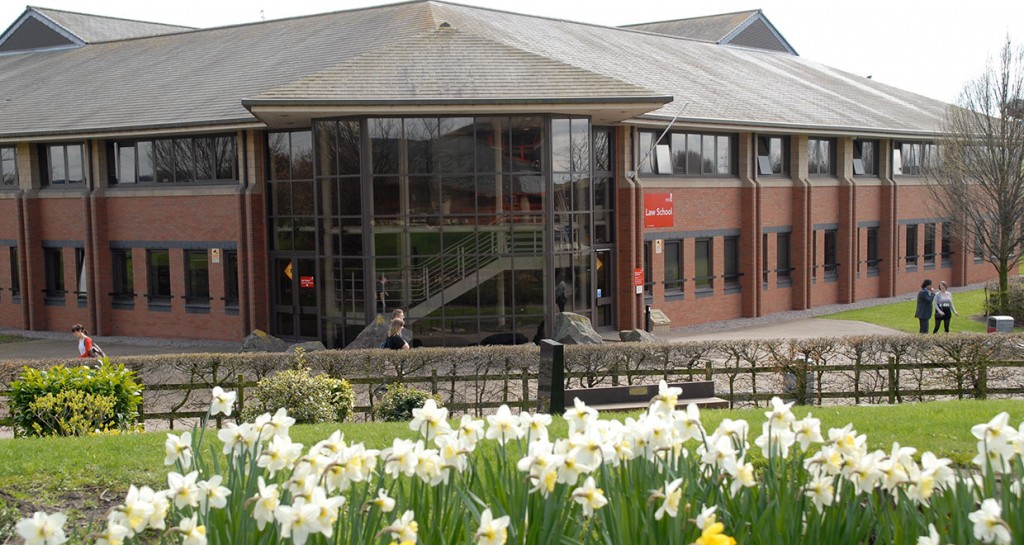
    In the United Kingdom there is huge competition for students who are planning to enter the profession. A reflection of this is that Universities need to prepare students for the world of work with practical skills as well as legal knowledge. We encourage our students to find placements early in the academic career to allow them to foster relationships with potential employers and training providers. This is a central ethos of our legal education at Staffordshire University.
     

    staffordshire-law

    What has your teaching experience been like so far and how would you sell the idea of academia over practise to your students?

    Academic is not for everyone. You need to possess administrative skills, sales skills, empathy characteristics, patience, determination, flexibility and above all a thirst for knowledge. However it is an extremely rewarding career that allows people to progress their knowledge through research whilst educating bright minds.


    How would you advise law students today to approach a career in academia?

    Study hard and remember that nothing worth having comes without some hard work. Aim to be the best informed in your area of interest. Do not study a course or subject because you think you should. You need to follow your passion for a subject area as you are more likely to succeed. Also it is a marathon and not a sprint. It takes time and patience but with perseverance you will succeed.


    What are the advantages of studying law at the Staffordshire University?

    Staffordshire University has a dedicated team of academic professionals that possess excellent teaching skills coupled with real word practitioner experience. We encourage reflective learning techniques coupled with practical and problem based learning in order that students can apply their legal knowledge to real life scenarios. We have a purpose built Law School that is fully integrated into campus life and we boast an impressive Law Library, Moot Court and Legal Advice Clinic. The Legal Advice Clinic, which students can become involved with from their second year of study, allows students to develop work-ready skills which are valued by employers.


    What measures are you taking to ensure that Indian students opting to take up a law course at Staffordshire University can utilise their knowledge in India?

    At Staffordshire University we integrate practical skills with technical and factual legal education throughout our programs of study. All our law courses provide students with the capabilities to apply their legal knowledge and understanding to real world scenarios with practical problem solving skills required by the legal profession. These skills and attributes are relevant in any jurisdiction and will enhance a graduate’s employability in order to attain their career goals.


    Tell us something about School’s new LLM programmes in Human Resource Management and Employment as well as Family Law and Society. Also is there any option of distance learning?

    Both our new programs incorporate business and commercial awareness, socio-legal application, critical analysis of current professional practice alongside intra-disciplinary approaches to legal study. At Staffordshire University we are aware of the importance of Global Citizenship and have tailored our study programs to reflect our desire to encourage student diversity. Consequently we have study options that incorporate attended sessions in the UK alongside electronic engagement that can be conducted from anywhere in the world. We offer Distance Learning options in LLM International Sports Law as well as in International Business Law.


    How do you compare the academic curriculum of law schools in India with that of the United Kingdom’s? Would you suggest any change which is needed to be brought to reform the legal education in India?

    The academic curriculum in India and the United Kingdom is not dissimilar. We have legal systems based upon comparative principles and so the teaching of subject matter is very much aligned. Both countries teach the foundational principles of law such as constitutional law, law of contract, law of torts etc. but will inevitably have niche areas of law that are reflected in their nation’s activities. One such example is a prevalence of opportunity to study Space Law in India which is not a common subject in the UK.


    Tell us something about Staffordshire University Legal Advice Clinic (SULAC).

    Our Legal Advice Clinic allows students to apply their legal skills and attributes within an actual legal practice. We offer pro bono services within the field of civil litigation to the general public as well as students and University staff. The clinic allows students opportunities to help the public with legal issues, such as contract disputes, housing issues and contested wills and probate. Though the work is supervised by a qualified solicitor, it’s the Law School students who prepare the letters of advice. So, students gain authentic learning experiences whilst at University. Students can also utilise their practical experience as part of the Legal Advice Centre module and earn academic credit.


    The career opportunities in Business and Commercial Law

    Students who have studied for a Bachelor’s Degree in Law where exposure to the legal regulations of Business and Commercial activity have a unique opportunity for their career development. They will have gained valuable insight into the commercial world and be able to apply their skills and attributes to the real world. In short, students have the option of progressing on to a career within the legal profession or to pursue a career, for example, within the corporate business or finance sector.

    Many of our alumni are highly successful individuals within entrepreneurial business enterprises. Others work within a variety of law related jobs including the Courts Service, Human Resource Management, Customs and Excise, Accounting and Insolvency Practice, Company Managers, Law Enforcement and the Civil Service.


    What would your parting advice be to our readers?

    Never think of the law as a dormant discipline sitting in dusty textbooks on a shelf in an unvisited library. Law is dynamic, exciting and ever changing and exposure to its multifaceted characteristics provides exciting opportunities for study and career development.

  • Sagarika Chakraborty, CEO, IIRIS, on law school, research work and MBA from ISB, Hyderabad

    Sagarika graduated from NLU-Jodhpur in 2008 and from the Indian School of Business in 2012 with a Master of Business Administration, Strategy and Marketing degree. She is at present the CEO of Indus IntelliRisk and IntelliSense Services Pvt. Ltd. (“IIRIS”). She has several academic papers and publications to her credit and internships with reputed corporate houses and organizations such as Amarchand Mangaldas Suresh A. Shroff and Co. and ISRO, Bangalore. In this interview she talks to us about:

    • Activity-oriented law school days at National Law University, Jodhpur.
    • Her views on the CLAT, mooting in law schooland internships
    • Her transformation from a corporate lawyer to a risk management expert, leader and manager.
    • Working at IIRIS and career opportunities there for law graduates.
    • Her views on management of Non-Performing Assets in the Indian banking industry.
    • Publishing– books, papers and the history behind her affinity for writing.


    Please tell our readers about how your interests gravitated towards law.

    I come from a family of engineers, so a degree in law was never considered to be the first preference. However, call it genes (my maternal grandfather was a lawyer) or just the urge to break the monotony – I wanted to become a lawyer ever since I was 12. The fact that I could make a difference with my intellect, my reasoning and help build a change allured to me more than building machines I guess.


    How would you describe your time at National Law University, Jodhpur? What all activities did you participate in?

    When I graduated from NLU, I recollect that we had to describe the campus in one word amongst a friendly meet up. I referred to it as my “transmorgifier” (reference : Calvin & Hobbes) – for it made me believe in things I otherwise thought I could never achieve and unlike my counterparts outside campus, I knew what I wanted to do and where my passion lay.

    I have always been an over ambitious, go getter, who believes in making full use of her time anywhere. So NLU saw me being an active mooter (proud to mention that my team mate and I won the first national trophy in any competition in the history of NLU), active debater, participator in all social activities, legal aid camps and yes being at the helm of affairs of the “Editorial Committee”.


    You went to an NLU at a time when CLAT hadn’t started and every law school conducted its own entrance exam. What are your views on the shift to a common law entrance exam?

    Well if you ask the prudent me – I think it was implementation of a much needed concept. It helped break the barrier amongst a lot of law schools. However, in the shoes of a prospective student, I would still prefer the old system. Somewhere, it gave us more chances. Now, have one bad day on the CLAT day and you can kiss your National Law University dreams good bye – life gave us second chances in the absence of CLAT to be a part of another campus.


    From ISRO, Bangalore to AMSS, you have done versatile internships during your time at law school. How did you go about deciding where to apply? In retrospect, how beneficial were these internships for you?

    As I said earlier, unfortunately (or fortunately) I have always been a person who knows what she wants from life and therefore it helps in my planning. Every internship therefore was a well thought of affair. I was representing India for the Manfred Lachs Moot in Sydney, and I saw the ISRO internship to be the perfect opportunity to gain technical knowledge. Call it my good fortune or a lucky stroke, I was involved in the research of Chandrayaan during my tenure there and it gave me tremendous exposure to policy making and international law – an experience I shall always cherish.

    Similarly, Kingfisher was my preferred choice, because at that time they were involved in the huge debate of whether the aircrafts being procured should be “leased” or “mortgaged” – a coveted debate in those days. So I was very lucky to be a part of their legal team during my internship there.

    As for the law firms – well it is an eternal struggle for a law student to identify where their interest lies, in corporate houses or in law firms. So guess, I used that opportunity to understand why law firms are not for me and why I am more interested in business houses.


    Do you think moot courts and client counselling competitions add to a law student’s experience? How much importance did you give to these activities while at law school?

    Ha ha, I was a moot court (or any competition) junkie. During my school days I was a national level debater, so moot courts always appealed to me. They helped me oodles in gaining confidence, providing exposure, understanding the importance of networking and yes in helping find a few best friends for life! I cherish each of my experiences of participation in law school – the memorials helped me draft better and emerge as a coherent thinker and writer, the debates helped me sharpen my analytical skills and emerge as a better professional.


    From a corporate lawyer you have gradually turned into a risk management expert. How did this interest develop? How do you come up with risk mitigation strategies for a client?

    Though a corporate lawyer, I always wanted to also explore the other side of business. For me, the real thrill lay in not only executing a task but being in charge of end to end dealings of an assignment. Unfortunately, as a lawyer that visibility spectrum was not complete. I had always wanted to do an MBA, but was sure of only applying to a geography where I saw myself working – hence India was the only option. Further, I was clear that I wanted to go into the risk mitigation (physical security and corporate investigations) space – unfortunately there are no such dedicated courses in India. ISB being renowned for its strategy courses was my best bet thus!

    In my current role, there are no fixed formulae for drawing up mitigation strategies for a client – it all depends on the client need. The same can range from providing an advisory for a potential investment or to providing him with executive protection in order to protect his life and assets. It is just as broad and crazy, as it is fun!


    What is your day like as the CEO of IIRIS? What are your roles and responsibilities?

    It is a melange of running around, fitting in all meals during drives from one client location to another and brainstorming through the day about cracking hard core white collar crimes. There is one thing that is never there but – a  moment of dullness. That is why I guess, it never feels like a job. This profession is my passion and though it also pays my bills, I cherish it to the extent that I solve investigations in my dreams and quite often wake up to scribble a strategy that I thought of in my sleep, lest I forget in the morning.

    I am a part of a start up, therefore as a CEO there are no roles per se. Right from licking envelopes to executing confidential assignments – everything is my domain and I love to be a part of it.


    How did you transform from a corporate lawyer into a leader and manager? What strategies do you undertake to keep employees happy and efficient?

    (In the last one year itself Sagarika has trained over 500 bank officers in areas of Due Diligence and NPA Early Warning tracking. At the same time, she also managed employees and experts at IIRIS.)

    If NLU was my “transmorgifier” that helped me believe that I could be whatever I want, ISB was my “metamorphosis cocoon” that helped me change. The ability to multi task, to think and deliver coherently and all together is the best trait that ISB passed on to me during my tenure there. I don’t know how I do it, but I guess when you are passionate about something, your levels of adrenalin are very high and you are in a different zone altogether, where things just get done.

    Ha ha, I am quite a tough boss and trust me I go by the philosophy that I cannot make everyone happy, but instead I should try for providing an environment where there is job satisfaction and growth. I am a perfectionist and therefore I am known to push my team, but at the same time I shall only push when I know that I can take over and deliver so that under no circumstances does my team feel that they are being challenged without being provided support or a fall back option. The other philosophy that I have learnt from my mentor (who is also our MD at IIRIS) is that let people discover what they want to do and support their growth – thus we have no JDs at IIRIS – every employee is allowed to discover where their strengths and interests lie during the 6 months of probation and then pursue that.


    sagarika-chakraborty-2

    Does IIRIS take interns from law schools? What is the procedure to apply?

    IIRIS is open to internships / recruitment from every scholarly and education field – for we believe that it is your passion and not your degree that helps you shine in the risk mitigation domain. Of course, being a lawyer there is an added advantage (I say this from personal experience) – the analytical abilities and the power to interpret is much higher and therefore we always welcome lawyers to be a part of the team.

    All job openings / opportunities are available on the “Careers” page of our website (www.iirisconsulting.com) along with the procedure to apply – just shoot a mail with your interest and the HR shall take care of the rest.


    The Govt. of India has been facing the problem of excessive accumulation of gold in households which blocks a lot of potential currency flow and causes hurdles. What is your take on this issue? Do you think successive Govt. policies have been able to solve the problem to some extent?

    BFSI is one of my preferred domains and I invest myself a lot in such investigations / risk advisory exercises. It is indeed a challenge that the country is facing, however we also have to acknowledge that India is one of the few countries who are accepting NPAs as a problem, instead a lot of the foreign counterparts who are either under reporting the same or changing definitions to lower such reporting. There are enough policies I feel, the regulators have been prudent enough to provide adequate guidelines – the problem however, lies in awareness and learning the importance of stringent implementation of such policies. The change is needed in the mindset and working methodologies and inwaking up to tackle the problem by the horns through differential risk mitigation approaches – but I am glad to say that things are changing and there’s indeed optimism in the air.


    You have several published papers to your name. How difficult was it to write your first published paper? Please share your experience.

    This question, actually made me stop and recall my first published research paper and at the risk of sounding conceited, it did take me a while. I give it to my professor Lt. Vedantam Shashtri (NLU, Jodhpur) to have inspired me to pick up the pen and indulge in research. It was a project done for his class that inspired me to take up a working paper along with him. From a tiny mention as a “researcher” to being the “leading author” (and he agreeing on the co-author tag) – I guess somewhere he inspired me to believe that policy making and research was something that came naturally to me. I write as an extension of the dream that drove me to be a lawyer – to bring about change. I know I shall stagnate if I don’t brainstorm and indulge in research – so I guess I am not very different from those who do it to beautify their bios – we all have our own selfish reasons, as long as we are at peace with our reasons for doing it.


    How do you find the time to write papers and books despite your busy schedule?

    I never chose the pen, the pen chose me. Coming from a Bengali family, intellectual growth was promoted right since childhood. Everyone in my family has picked up the pen for academic or other reasons, so I guess right since childhood I have expressed better through printed / written words. Further, my grandmother made me realise that the greatest power is immortality and words never die. I write in my head, throughout the day and thus, by the time I sit down to write the next chapter of my upcoming book or finish a research paper for a financial institution – there is no additional work that I am doing. I am merely penning down a dictation that my mind is narrating. It comes just as naturally to me.


    What is your message to our readers?

    Never let people tell you what you can do. Instead understand what they think you cannot do and challenge yourself. Know your passion and no matter how deviant, pursue it. Respect your body, there’s little you can do without it being in the prime condition. Love what you do, strive to be an expert so that when you speak the world knows that you are not there to hog the limelight but that you mean business. Lastly, in your own little way, try to retire to bed with the satisfaction that you have given back to the country that gave you your biggest identity – the nationality / citizenship!

  • Lavin Hirani, Head-Legal Affairs, Red Chillies Entertainments on law and bollywood and importance of IPR

    Lavin Hirani, Head-Legal Affairs, Red Chillies Entertainments on law and bollywood and importance of IPR

    Lavin Hirani, though not a Bollywood actor himself, is a star in his own right. The present Head of Legal Affairs at Red Chillies Entertainments Pvt. Ltd. (Shah Rukh Khan’s Company), he could very well be termed as a mega star in the field of Entertainment and Intellectual Property Rights Law. A graduate of the University of Mumbai (2007), as well as post-graduate from The University of Manchester (2009), he first started off his career as a Litigation Associate with Khaitan & Jayakar, soon moving on to work as a Media & Entertainment Attorney, first with Naik Naik & Co. Advocates, and then with Hariani and Company – leaving the position in August 2015 to join RCE.

    In this interview, he speaks to us about:


    Given that most of our readers belong to the legal fraternity, how would you introduce yourself to them?

    Hello, everyone. My name is Lavin Hirani. I am settled in Mumbai, and have been a practicing lawyer since having graduated from the 3 year LLB course in Mumbai University in the year 2007. I am thrilled to have been given this opportunity to share my modest experience of 8 years as a practising lawyer, with the legal fraternity and readers of Super Lawyer.

    I currently work as the Head of Legal Affairs at Red Chillies Entertainment, a film production studio based out of Mumbai since August this year, prior to which, I was handling the  media and entertainment practice at Hariani & Co.


    Having done B.Com from Mumbai University, what motivated you to choose law as a career from the same University?

    Well, I would love to say that it was an independent decision, however the truth is that I come from a family of lawyers, including my father, who is an active practicing advocate, due to which I was always intrigued by the profession of law. However, I was never sure of the field of law I wanted to specialise in, and therefore I involved myself with different aspects including criminal and civil litigation prior to deciding that I wanted to specialise in Intellectual Property/Copyright and Media Laws.


    Did you find that your law school education had prepared you sufficiently for the many tasks you were required to execute during your internships and later at your job?

    Well, the bitter truth about most of the law schools in India, except for a few of the highly rated national law schools, is that the education and the curriculum never fully prepares you for a career in law.

    Thankfully, I was informed about this by various friends and family members, due to which I went for a law internship even before I started my law education.

    Formal legal education in India can only prepare you so much to help you get an initial background of what the procedural laws / substantive laws in India are all about. The real education starts only once you engage yourself with real life cases, which enable you to realise the intricacies involved in solving the day to day issues faced by clients and how you deal with them.


    Right after graduating, you joined M/s Khaitan & Jayakar as an Associate where you worked for one year, and then went for an LL.M. Why did you decide to go for higher studies?

    I always wanted to pursue a Masters in Law. However, I personally believed that a Masters degree in law would have a greater impact and be more fruitful if I had some kind of practical experience as an advocate before I embarked upon any form of specialised education. And to my credit, it did work for me, as I was better able to imbibe the course and appreciate the finer nuances of law, including the subjects I wanted to specialise in.

    I would also like to add that there is no ideal time to educate yourself. Every opportunity is a good opportunity. I know of several colleagues who waited for 3-4 years after graduating law before enrolling in a Masters degree, and several who jumped into one directly after law school, so there is no real straight-jacket approach to a Masters degree.


    Tell us something about your LL.M year at the University of  Manchester (UOM), United Kingdom. How did this influence your career?

    There are various reasons why one may pursue a Masters degree, especially from a foreign university. Some of the reasons would be – getting a better position with their current employers/law firms, or as the first step in their journey to work and settle abroad, or better earning prospects, etc.

    However, the reason why I chose to pursue my Masters degree abroad, was to get a broader perspective in my chosen career path, and also to gain further expertise in subjects like IPR, Competition and Business/commercial laws, which I was really interested in, with an accredited university like UOM.

    Although I would like to believe that pursuing a Masters degree abroad did help me with my career, I wouldn’t say that a mMasters degree is a must for everyone, as the costs involved are huge, and it may not always directly co-relate to an increased compensation / better position at work once you are back in India, if that’s what one is looking for.


    Soon after Masters, you joined Naik Naik & Company and worked there for two years before joining Hariani & Co. How was your experience working there?

    As I said earlier, one of the subjects I had enrolled in during my masters abroad was intellectual property rights. Naik Naik & Co. was back then and even now one of the few law firms specialising in IP and Media laws and therefore was one of the law firms I interviewed with on my return to India.

    I started working at Naik Naik & Co. from July 2010 for a period of approximately 2.5 years, wherein I got the opportunity of being involved in all kinds of matters ranging from handling transactions related to media and IP related documents to criminal and civil litigation before various courts, commissions, tribunals, CBI, the Supreme Court of India, various High Courts across the country, etc.

    I was involved in several film industry related disputes between producers and broadcasters, guild issues,  issued faced by artists, copyright infringement cases, writ petitions, criminal litigation relating to film personalities, while also being involved in non-media related issues/matters pertaining to land disputes, company petitions, service tax, the Adarsh Scam, etc.

    As a law associate, this was one of the most exciting periods of my professional career back then, as I was engaged in multifarious kinds of litigation and transactions, which is extremely important for any junior starting out in law.


    Since November 2012, you started working with Hariani & Co. Tell us about the nature of work you’re entrusted with therein.

    Hariani & Co. is a full service law firm specialising in real estate, litigation, media & IP laws, with several media and film production companies as clients. Although I was really happy with the kind of work I was doing at Naik Naik & Co., I always had a penchant for transactional IP work, which I was missing out on, due to the humungous litigation practice at Naik Naik & Co. I was entrusted with.

    I joined Hariani & Co. in November 2012, and worked there till August 2015. During my stint at Hariani & Co., I was able to hone my skills and knowledge of IP laws, especially copyright law, due to the substantial film and television related transactional work I was entrusted with, including a fair amount of media related disputes/litigation.

    I would like to mention the name of Mr.Ajay Vazirani, Senior Partner at Hariani & Co., under whose guidance I was heading the M&E practice, where I was given full charge of all media clients including some of the biggest film producers in India.

    I have been fortunate to have worked with a great set of people at both Hariani & Co. and Naik Naik & Co., which I believe is extremely essential for any lawyer, as I believe that the only way one can develop and gain, is from learning from others, including juniors, in addition to keeping yourself abreast with developments in your chosen field of practice.


    You have specialized in IP law. What made you interested in the same? How would you suggestone can gain expertise in IP Law?

    As I said earlier, I was never sure of the field of law I would choose to specialise in, which I think, in today’s world, is extremely important, while also being competent and informed to deal with any other legal issues your client may face.

    I have had the opportunity, at various stages in my career, of dealing with all kinds of laws, including criminal, civil, real estate, commercial, tax, maritime, contracts, customs, etc. However, I, since my college days, have continued to be extremely enamoured with IP laws, especially copyright laws.

    One of the primary reasons I chose to specialise in media and entertainment law is that it is extremely dynamic and ever-changing, and continues to inspire me with so many issues being faced by authors and the industry, in general, especially pursuant to the vast amendments made to the Copyright Act in the year 2012, some of which issues, the film industry continues to battle with.

    In addition to having a special interest in copyright, I am also interested in commercial/business, and contractual laws, which I think is extremely important for any lawyer today. Except for a few branches of law, everything in today’s world is about business and contracts, where another important skill for a lawyer is drafting and negotiation, which also is something I strive to get myself involved with, and improved at, with each passing day.

    Further, I am not aware of how one can gain expertise in IP law, as I do not consider myself to be an expert. However, I believe the best way to get yourself to become an expert in any subject of law, would be to involve oneself with the constant practice of dealing with real world issues of the particular field of law you want to gain expertise in, and also by updating yourself with various developments happening in the said chosen field, including through court judgments, reports and industry specific notifications/updates on a regular basis.


    What are the primary essentials of an IPR lawyer? How might a fresh graduate work on building these skills?

    According to me, the essentials of a good IPR lawyer is knowledge of the acts governing copyright, trademarks, patents and designs, including laws pertaining to contract and specific performance, as most of the acts governing IP provide for the requirement of written agreements recording transfers, assignments and registration of IP.

    It is also good to have some basic knowledge of how litigation works in India, and not just procedural laws governing the subject, as it is very important for a lawyer to understand the difference between probability and possibility of issues arising from any particular clause / agreement negotiated by one, and moving forward accordingly. Every deal/transaction has its own modalities and specifics, and therefore good drafting and analytical skills are an absolute must for a lawyer, as this is something where many lawyers miss the bus.

    I have had the fortune of working with several accomplished lawyers as a junior, and from what I have learnt from watching them from a vantage point over the past several years, I believe the best way to learn for any fresh graduate is to be sincere and spirited, as the only way one can learn is through eagerness and hard work.


    What would be your advice to students interested in Intellectual Property Rights?

    My advice to anyone interested in IPR would be to follow your instinct. There is no right or wrong field in law. There may be ones that are more lucrative than the other. However, you may only succeed if you are interested, and have some form of expertise in your chosen field.


    IPR is also vast, with lawyers specialising in trademarks, copyrights, technology, and also as patent attorneys.


    You have recently joined Red Chillies Entertainment (RCE), which is promoted by Shah Rukh Khan. How did this shift take place?

    Due to my work profile, I was involved with various film production companies, and as some of you may know, RCE has recently adopted a major shift in its strategy towards being a full-fledged film production studio. Knowing my interest and aptitude with film related transactions, and not only as someone having a legal background and approach, but also someone interested in the business end of things, I was offered to join RCE to head the legal department, which, according to me, was an interesting opportunity at this juncture of my career.

    Having known the entire team at RCE, having worked with them closely since the past several years, it wasn’t a difficult decision to make.


    What all falls under your responsibility as Head Legal at Red Chillies? What are the primary requirements for such a role?

    I am engaged in the dual capacity of Head Legal of RCE, and also as a personal in house legal advisor for Mr.Khan’s personal endorsement’s and investments.

    However, in my role as the Head Legal of RCE, I am responsible for all legal issues faced by the company on a daily basis, including being responsible for all transactions pertaining to films produced, and various other IP controlled, by RCE, including acquisition, sale, licensing and distribution of films, brand associations, etc.


    Does specialization in IPR Laws, especially Copyright, help in such a work profile?

    Yes, it does. RCE being involved in the business of production and distribution of films, I deal with issues relating to copyright laws on a daily basis. However, in addition to the same, it is also extremely important for me to delve into various issues concerning the internal workings of the company, for which knowledge of employment and labour laws, corporate, sports, real estate and various other Indian and international laws, is also a must.


    What will be your message to those who aspire to join Bollywood as a lawyer?

    I won’t use the word Bollywood, as it’s an extremely restrictive term, and is used in reference to the film industry in Mumbai, only. However, the media and entertainment space is growing day by day, and furthermore, with the onslaught of entrepreneurial ventures and start-ups in the technology / ecommerce and entertainment space, there is huge potential for IP lawyers in the future, as long as they are willing to be striven towards, and genuinely concerned about IP laws, and not just the sugar coat of the media industry, which fades away in no time.

    As a parting note, all I would like to say is that in addition to having knowledge and experience, it is extremely important that one is pragmatic and enthusiastic about their chosen field of law, including understanding the importance of maintaining inter-personal relationships with fellow lawyers / colleagues, as law is one of the few professions where you are bound to interact, in some form or the other, with your past or present colleagues, seniors, juniors and others, over transactions, deals or some form of dispute/s, and therefore one must not ever under-estimate others or over-estimate oneself, as everyone you interact with will in some way or the other contribute to your being a better lawyer.

    Wishing everyone at SuperLawyer and its readers a very Happy New Year!


  • Kalyan C. Kankanala, Managing Partner, Banana IP Counsels on building a career in IPR and writing novels

    Dr. Kalyan C. Kankanala pursued law at Osmania University, graduating in 2001. From there he went on to do an LL.M in Intellectual Property from Franklin Pierce Law Center and a PhD. in Patent Law from the National Law School of India University in 2006. Kalyan is a renowned Intellectual Property attorney in India. He specializes in helping clients maximize business value from their intellectual assets. He is the founder of Brain League IP Services and BananaIP Counsels. He is also the founder of the popular IP Blog, SiNApSE.

    Kalyan is a prolific writer, with several fiction and non-fiction books and publications to his credit. He teaches at premier institutes like National Law School, Bangalore and IIM, Bangalore. He worked as a consultant for the United Nations Industrial Development Organization and is at present a trustee for the Cane Foundation, and a member of the editorial board of the Journal of Intellectual Property Rights, NISCAIR.

    In this interview, Kalyan speaks to us about:

    • His days as a student and motivations during his academic journey.
    • His tryst with Intellectual Property Law and his work as an IP Attorney.
    • His passion for researching, writing and publishing.
    • The future of IP practice in India.
    • The challenges faced while establishing his start up Brain League, and later BananaIP and his views on social welfare.
    • How he balances his personal and professional life.
    • His Legal Thriller novels and other IP works.


    How would you introduce yourself, given that most of our readers are law students, law aspirants or professionals in the legal arena?

    I am an Intellectual Property attorney, who loves to work with creators and inventors. The merger of law, Science/Technology and Business excites me, and I am glad to have chosen this profession. Apart from practicing IP Law and helping clients realize business value from their intellectual assets, I also teach at institutions like National Law School, Bangalore and the Indian Institute of Management, Bangalore.

    I enjoy writing and have published several articles and books. In addition to academic publications, I also write legal thrillers on socially relevant themes. Right now, I am finishing my third book in the IP Law Thriller Series, The Dravidian, a traditional knowledge thriller. Earlier, I published Road Humps and Sidewalks, a Patent Law Thriller, and Pirates of Bollywood, a Copyright Law Thriller.


    What would you say motivated you to take up law as a career, given that it was not a very popular option in India?

    I was never motivated to pursue a career in law. In fact, I never considered it as an option. My entry into law happened by accident. I wanted to be a medical doctor, and therefore, joined a medical school. After six months in school, I had to leave due to the rapid progress of retinal degeneration, which led to a loss of working and reading vision. Then, on a well-wisher’s advice, I joined a law program in Hyderabad.


    How well did your experience in Hyderabad prepare you for a life of academic prestige and professional success?

    Though I did not study at one of the best law schools in the country, my law college at Hyderabad gave me the foundation and encouragement to pursue higher education and research in Intellectual Property. Some of my Professors at the law college were a great source of knowledge and inspiration, and continue to be so even today. Hyderabad was in fact the starting point of my IP career – both academic and professional.


    What were the influences behind your decision to pursue an LLM in Intellectual Property Law from Franklin Pierce?

    The convergence of Science and Technology with law played a major role in influencing me to pursue an LLM in IP. In those days, Franklin Pierce was rated as the best IP School in USA, and therefore I decided to study at that law school. I was fortunate to not only get a good scholarship from Franklin Pierce, but also funding from the Tata Foundation for my LLM program.


    Were you always as fascinated by the field of IP law or was it an acquired passion that set in through your college years?

    As I mentioned earlier, I joined the LL.B. program by accident, and throughout the course, I was looking for an interesting career subject. Intellectual Property Law caught my attention in my fourth year and I was convinced by the end of the academic year that IP would be my area of specialization. Two factors led me to this decision: the role of IP in creativity and the involvement of Science and Technology in IP Law, especially Patent Law. The fascination started only after I started delving deeper into the subject.


    While most opt to end their education at an LL.M, you pursued a PhD in Patent Law from National Law School of India University. What drove you to higher education in your field of interest?

    Initially, I aspired to have a career in academic research and teaching, and therefore, joined the Ph.D. program at NLSIU, Bangalore. In light of my medical background, I chose Genetic Patent Law as my research theme. However, certain circumstances drove me into IP practice. In fact, I co-founded my first firm, Brain League, now BananaIP, when I was at National Law School, pursuing doctoral research.


    Between founding Brain League (now BananaIP Counsels) in 2004, while pursuing a PhD at NLSIU, and subsequently teaching at NLSIU as visiting faculty from 2005 onwards, how did you manage all of these time intensive tasks together, all while publishing research papers in domestic and foreign journals, and writing novels?

    Well, I love to write and teach, and have never faced issues with managing my time between practicing IP, teaching, and writing. Teaching and writing in fact help me do well in my profession as they drive me to learn continuously and keep abreast of IP developments. I enjoy creative writing, and have found time to write at least one novel every year during the last three years.


    Would you attribute any of your success to the types of internships you were exposed to? How would you advise current students to go about the process of finding and targeting internships?

    During my days at law school, interning was not very prevalent. I did not intern anywhere and missed the opportunity to learn the nuances of legal practice during my student days. Internships are a great way of learning the dynamics of legal work and choosing the right field that fits one’s goals. Students must look to intern at firms and companies specializing in different areas of law to get a flavour of the various fields of practice.


    Where does your love for writing come from? What motivates you to write?

    I do not need motivation to write. I write because I thoroughly enjoy writing. Reading and writing give me great happiness. Sometimes, writing helps me learn and understand a concept/issue better.


    What kind of research and work goes into your publishing?

    Normally, to write 500 words I spend at least five hours on research. Having said that, some topics require much longer, and some others, much less time based on my familiarity with the subject. For example, I take much longer to write on Medical Law when compared to patent law.

    Also, there is a difference between fiction and non-fiction writing. While my fiction is largely driven by experiences and observations, non-fiction is based on law, facts, case laws/studies, etc.


    How would you advise students to go about their careers with respect to research and writing, publishing-grade academic papers?

    I wrote my first article during the second year of LLB. It was not published but it taught me a lot about the topic. My first publication came along only during my LLM Program. It required one full semester of research to be eligible for publication. Nowadays, it is not very difficult to get published if one writes a well-researched, articulate paper on a contemporary issue.


    kalyan-kankanala-2

    What sort of an effort did it take to get published by world-renowned publishing houses like the Oxford University Press, Japanese Innovation Foundation, Thomson West, etc.?

    It was quite challenging to get my first book published. I started by identifying appropriate publishers and writing to them. All publishers send you a proposal form, which asks for much more than details of your book. It is basically a pitch document through which one must make a case for acceptance of his work for publication. In addition to book details and sample chapters, it includes market data, marketing and promotional information, author profile, etc.I sent proposals to six publishers and got offers from three of them. Then, I weighed their stature and published with the one that I felt had the best visibility and reach. Once my first book was published with a reputed publisher, it was easy to get good publishers for my subsequent works.


    What are your upcoming novels? Are they also related to IP?

    Two of my books are set for release in 2016. Both of them do not relate to intellectual property. The first novel, The Oath, is a medico-legal drama. The second one, DogMafia, is a short thriller on the dog abduction mafia in Bangalore.

    My next IP Law Thriller is ‘The Dravidian’. This book is expected to hit the stands in 2017 if I finish it as per schedule.


    In setting up Brain League (now BananaIP), what were the challenges and obstacles you faced as a legal start up in the Indian market?

    Unlike start-ups in other areas, legal start-ups cannot market, advertise, and scale up through standard channels. While incubating out of IIMB’s entrepreneurship cell, we ran around the campus brainstorming for different strategies, only to realize that none of them would apply to us. To make matters worse, I was a fresher out of law school, with very little experience. My partner had some technology experience, but no legal experience or background whatsoever. We were probably in the sixth month when the first opportunity came our way. Sasken Technologies, a company based out of Bangalore, was looking for large-scale IP training and we managed to get the contract. Thereafter, for reasons we cannot really pin point, clients got in touch with us at IIMB and wanted to work with us. At that time, most patent lawyers lacked technology backgrounds and we provided that value to clients. By virtue of the said uniqueness, several newspapers and magazines carried stories about us, and things started falling in place.To cut a long story short, I think we were at the right place at the right time. Also, we were fortunate to get the backing of reputed Professors like Prof. Pavan Mamidi (IIMB), Prof. Ramakrishna (NLSIU), Prof. Anil Suraj (IIMB), Prof. Damodaran (IIMB), Prof. Murali (IIMB) and several others.


    What are your views on career choices other than mainstream corporate or litigation streams such as teaching, etc.? How, if at all, have your views on the same been affected by your time spent as visiting faculty at NLSIU and teaching at IIM, Bangalore?

    Today’s law graduates have more choices than before. The practice of law is getting more specialized, and many new opportunities are opening up on a daily basis.

    I once wanted to be in academic research and teaching, but could not take that path owing to certain circumstances. Unlike those days, the salary scale for teachers is now quite decent and it surely is a very good career option. In addition to teaching, students may also consider options like public interest advocacy, policy level lobbying, government positions, judicial services, etc. Starting up is also a very good option for law graduates. When we started Brain League in 2004, joining a corporate was an attractive proposition, and most of my friends preferred to join law firms or companies. Though we initially made several sacrifices by starting up, we were able to build the third largest IP Firm in India by 2012. Today, BananaIP is one of the fastest growing firms in India, and in hindsight, I feel I made the right decision. At present, the ecosystem in India is very conducive for entrepreneurship, and there is a higher probability of success for legal startups.


    What are your views on Intellectual Property as a lucrative and growing area of legal practice in the global scenario today?

    Intellectual Property is one of the fastest growing fields of law in India. Several areas of IP like licensing, open source, portfolio management, technology transfer, valuation, IP Management and even litigation are still in their early stages, and have a long way to go. These areas will have great growth potential in the coming years.

    IP Practice in India has progressed substantially from the filing, prosecution and registration perspectives, both qualitatively and quantitatively, and I foresee some kind of equilibrium in these areas by 2020. Having said that, if the Indian IP filing scenario grows like that of China, there will be tremendous growth in these areas as well.

    Moreover, there are several areas of law, where IP forms a very important component. Such areas include Entertainment Law, Sports Law, Technology Law, Ecommerce Law, Art Law, etc. These areas of law are still largely unexplored, and I foresee great growth potential in the said areas of practice.


    Having spent nearly three years as a National expert on IP at the United Nations Industrial Development Organization, how did your experiences there affect you as an individual and as a lawyer?

    Working with the United Nations Industrial Development Organization (UNIDO) taught us many things. I took up this work in association with my colleague, Soma Shekar, who is a leading Mechanical Patent Expert, and also, a good friend. At some level, we can say that working with UNIDO changed us as individuals. The work with UNIDO cluster companies in machine tools, plastics, and foundry gave us great insights about the said sectors, and how SMEs in those sectors operate. Today, this experience not only helps us understand SMEs better, but also enables us address their needs effectively. During our fieldwork, we met some very special, yet humble individuals, who have been making telling contributions through their innovative activities for more than thirty years. They taught us a lot about their work, and life in general. We feel privileged to have met them and treasure the knowledge they have given us.


    As a Trustee at the Cane Foundation, what motivated you to participate in social welfare for the disabled?

    Well, I always find it difficult to put this across. I am visually disabled, and had to fight the system for almost everything ranging from getting a scribe to travelling on a flight. We started the Cane Foundation to ensure that other disabled persons do not face the same problems and also, to take disability support to the next level. We were fortunate to get support and funding from people like Prof. Ramakrishna (NLSIU) to get the trust going.


    What advice would you give students looking to build a career in Intellectual Property Laws?

    Intellectual Property is a great field to be in. If you like to work with creators and inventors, have the ability to understand business, science and technology, and can adapt to change quickly, go for it. But, note that working with creators is not the same as creating. You will mostly be at the back end of creativity, helping your clients protect, manage, enforce and make money out of their intellectual assets, and may not get the visibility creators get.


    Amongst so many things do you find enough time for a personal life or does that have to be managed separately?

    Time for family and fun has never been a problem. I enjoy doing most things I do, and do not necessarily manage my personal life separately.


    What factors, facets, or traits would you attribute your success to? What, if at all, do you believe still needs work?

    Intellectual Property as a field is vast, and continuously evolving. To be competitive, you must learn on a daily basis and swiftly adapt to change. Over the years, I have been fortunate to work on some cutting edge projects, and learn from some of the best in the field. So far, I have merely touched the tip of the IP iceberg, and have a long way to go before I can call myself successful.


    What would be your parting advice to our readers?

    Pick a career path you enjoy and give it your best, the rest will fall in place.

  • Vaishnavi Bhaskaran, Partner, Spectrum Legal, on advising startups and Corporate Law

    Vaishnavi Bhaskaran graduated from National Law University, Jodhpur in 2010. She is currently a partner at Spectrum Legal where she heads the Corporate-Commercial and Employment Law Practice. In this interview, she talks to us about:

    • Her experience at NLU, Jodhpur and decision to pursue law
    • Her view on internships and augmenting a CV
    • Her professional journey and founding ‘The Little Black Coat’
    • Spectrum Legal and her views on the field of law in the contemporary context


    What incident, influence or interest prompted you to think of law as a career? If not law, what other options would you have considered for a career?

    I have wanted to be a lawyer since the beginning of my teenage years. The idea (somewhat clichéd) first came to me after I had read a series of John Grisham novels in quick succession. Of course, the reality is vastly different from what one reads about, and I realised that soon after I entered law school. Fortunately for me however, the reality was not unpleasant. I had briefly toyed with the idea of journalism, but in the end, it was to be law.


    What would you like to say about your experience with college admissions and competitive exams?

    I was very clear that I wanted to attend one of the top-ranked national law schools, and I was very fortunate to have found a place at NLU Jodhpur.


    How would you describe your life while studying at NLU Jodhpur? What activities did you tend to favor?

    My time at NLU was undoubtedly one of the best periods of my life, and has gone a long way in shaping me, both as a professional and as a person. While at NLU, I had a clear vision of what I wanted to do once I graduated, and I focussed on doing things that would get me closer to my goal. I tended to focus on subjects that I thought would help me once I started practising, and pursued internships that would further my goals.


    Were you always clear on corporate-commercial law as your field of expertise or were you drawn towards it while studying there?

    It was after my very first litigation internship that I realised that litigation wasn’t my calling. Like most law students who start off thinking they will graduate and pursue litigation, I did initially pursue a couple of litigation internships. After I completed my second year however, I found an internship opportunity where I was given both litigation and non-litigation related work, which is when I realised that I wanted to be a corporate lawyer. Subsequently, I chose to pursue the corporate law honours course that NLU offers, in my fourth and fifth years.


    Beyond academic experience what would augment CVs of law students and make them better candidates for the same?

    Obviously, being from a good university and having a good GPA will more often than not, help you secure a good job in the legal field. However, even internships can open up doors in most organisations, if one is found to be hardworking, resourceful, knowledgeable and eager to learn.


    What kind of internships would you recommend law students opt for to start building the sort of versatility and widened range of law that you are well versed with today?

    Most small to medium law firms in Bangalore do not have the precise demarcations when it comes to areas of practice, as many larger firms do, and as a result, most lawyers tend to have wide exposure within the broader boundaries of their chosen specialisation.

    In my experience, interning with small and medium size firms provides interns an opportunity to learn a wider range of subjects.


    vaishnavi-bhaskaran-1

    Krishnamurthy & Co. (K Law), an established corporate commercial law firm, was your first placement directly after college. How did your experience there help you add to your understanding and practice of law in India?

    Immensely. In my opinion, K Law is an excellent place to start one’s career. During my time there, I worked on a very wide variety of issues and was very fortunate to have been given a high degree of responsibility at a relatively early age. Both these factors were instrumental in helping me start Spectrum Legal.


    What prompted your shift from K Law to Poovayya & Co., Advocates & Solicitors in 2011?

    At that point, I was keen to acquire more exposure and see how other firms functioned. I had interned with Poovayya & Co. previously, and had found the experience very rewarding and enjoyable.


    What went into founding The Little Black Coat in 2013? What were your motivations for the same and how did it affect your perspective on legal startups?

    Even while I was in law school, it remained my ultimate objective to set up my own law firm. At the time when I took the decision to go independent, the startup ecosystem in Bangalore was booming, and it was only a matter of time before they all needed lawyers.


    What did you learn from your experience with startups while running The Little Black Coat?

    Working with startups is a completely different experience from working with bigger and more established entities. Established companies tend to be business savvy and typically require only legal advice. Working with startups however, requires you to do a great deal of handholding and walking them through business and financial issues, in addition to providing them with legal counsel.


    Tell us what drove you to set up Spectrum Legal with Chinnappa and Co.

    By that point I had developed a small client base, and while being an independent practitioner was extremely satisfying, it is also limiting because you cannot service your clients’ needs beyond your area of practice. Additionally, being only one person, you also face issues because of a lack of bandwidth. At that point, setting up a law firm seemed the natural and logical step, and when I met my partners, I found the team a good fit to take that step with.


    What was the motivation behind creating a law firm that aims to provide all types of legal services across different fields of law in the same firm?

    Like I said above, when you practise only one area of law, it can become difficult to service a client in a complete manner. A full-service law firm brings with it a unique synergy and the ability to meet all the legal needs of a client in-house, which was the motivation in creating a firm that provide a broad spectrum of legal services.


    Working for a firm, corporates especially, is generally seen as a time intensive lifestyle which leaves little room for much else. How true would you say this is from your own experience?

    There is a great deal of truth in that. Law is indeed a time-intensive profession, but so are most careers these days. In order to succeed, one must be prepared to put in the hard work. Having said that, I think as one becomes older and more senior, there comes a time when an individual can decide what his or her priorities are, and accordingly devise a schedule in keeping up with those priorities.


    What are your thoughts on the traditional ideas of specialization in singular core areas of law as opposed to the contemporarily broader approach to a wider field of law with multiple specialties?

    In my opinion, this is a result of the market where clients are faced with multiple legal issues. When it comes to law, most of the learning happens while one is working, and as such, a specialisation develops when one has been working for a while. I personally prefer a wider area of functioning, as I find this variety exciting and challenging.


    What would be your parting message to the readers?

    Before you graduate, and during the initial stage of your career, the choices one is faced with and the possibilities can be overwhelming. However, you’re in for the long haul, and it’s imperative to never lose the joy that comes from practising law. Initially, one’s focus should be solely to learn and attempt to master one’s field, everything else will follow at its own pace.

  • Puneet Bansal, Managing Partner, Nitya Tax Associates, on being a CA + Lawyer and practice in Indirect Taxes

    Puneet Bansal graduated in B. Com. from Hansraj College, Delhi University in 1998 and thereafter he acquired an LL.B degree in 2007 by eking out time for the evening classes of Campus Law Centre of Delhi University. Over the course of his highly successful career he has worked as a Partner at Lakshmi Kumaran & Sridharan as well as BMR Associates. He is at present a Managing Partner at Nitya Tax Associates.

    In this interview he tells us about:

    • Chartered Accountancy – his time in college, the contours of the course and tips to ace the entrance exam.
    • The work in an advisory practice, his law degree and experiences as a Partner at two firms.
    • The importance and convergence of law and taxation, advice for Tax Law enthusiasts, his views on the GST and setting up Nitya Tax Associates.


    How would you introduce yourself to our readers? Please tell us about your family and childhood.

    I was born and brought-up in a middle class family. My father is a business man and mother is a house maker. Being in a middle class household, my upbringing was normal. I was a pretty average student till Class X.


    Were you always clear about your career plans considering you pursued commerce in senior secondary and went on to graduate from Hansraj College, Delhi University in B.Com?

    Never. I choose Commerce in Class XI as I was not interested in Science and Arts. It was in Class XI that I developed an interest in studies and started doing well. Since my marks in Class XII were good, I joined Hansraj College. I didn’t have any career plan till then.


    How did you manage college with your CA preparations?

    One of my uncles filled the Chartered Accountancy form and that’s how I started doing CA. Indeed, CA used to be a tough course earlier as well. I used to go to college in the first half and come back to the CA firm in the second half when I was interning. It was a tough 3 years of managing both studies and internships.


    Please tell us about your CA Articleship. What was the application procedure? How competitive was it to secure an Articleship? What was the work assigned to you?

    I did an internship in a medium-size CA firm. My senior in the CA firm was a family friend so I got the internship with ease. I did accounting, company law and Income tax related work during the internship. Importantly, I was not at all exposed to indirect taxes during my internship which is my area of profession now. The period of my internship was a thorough enjoyment and was my first chance to peek into the professional services space.


    You graduated from Hansraj College in 1998 and finished your CA course in 1999 with an All India Rank. Please enlighten our readers with some valuable tips to ace the CA examinations.

    I cleared all CA exams in the first go and was the All India 27th rank holder in the CA final. I have followed one rule for preparation for CA exams, and in fact, now as well when I am practicing on my own I abide by it and that is ‘whatever you do, do with passion and then everything will fall in place. Otherwise do not do it’. I was always interested in understanding concepts rather than clearing exams. The conceptual clarity in all the CA final subjects only helped me in clearing the exams.


    puneet-bansal-2

    Our readers would like to know about your initial days as a CA professional. Could you share with us any interesting anecdotes?

    When I became a CA, I thought that life henceforth would be easy. But I was confronted with reality soon and realized clearing CA is the start of struggles in one’s professional career. Clearing the CA exam only opens the gates to the professional world. At each stage of our professional lives, we need to prove ourselves with hard work and competence.


    Was it difficult for you to shift to a new place of work, which was primarily a law firm? Please tell us about your work experience at L&S.

    (Puneet joined Lakshmikumaran & Sridharan in 2003 as a Chartered Accountant in their indirect tax litigation practice.)

    Indeed. I was working in Maruti Udyog and suddenly decided to shift to L&S. My family was stunned and couldn’t understand my decision. Also, the decision to shift from an Industry to a Law firm was a big change in my career. Working at L&S was a great experience. It was a close knit family environment comprised of competent professionals. Initially I did litigation, and later, set up their advisory practice. It was 9 years well spent in my career.


    In 2004, you joined Delhi University to pursue law. What was the driving force behind this decision?

    As I was working in L&S and wanted to make a career in litigation, I decided to do law. The admission procedure at the Delhi University required clearance of an entrance test. Clearing the entrance test was not tough.


    Please tell us about your law school days. Did you participate in any student activities? How active were you in other college activities?

    I did law from the Campus Law Centre, Delhi University evening batch, so I used to attend the classes and write the exams. As I was working full time in L&S, I didn’t participate in student or college activities during my law school days.


    How helpful was your law degree in terms of the added legal perspective to your existing knowledge? What career advantages did it bring?

    (Puneet qualified in Law in 2007, after that he continued with L&S.)

    The law degree really helped in giving me perspectives on the Indian Constitution and various other Commercial laws. I would recommend it as a “must do” if one needs to practice tax. Further, the law degree opens an opportunity for you to appear in the High Court and Supreme Court.


    What work does advisory practice include? What were the added responsibilities as a partner of one of the leading firm in indirect taxes?

    (After establishing the advisory practice of L&S, Puneet headed this team as a partner from 2010 to 2012.)

    The advisory practice involved advising clients on Indirect Tax issues involving legal interpretation, structuring business models etc. As a Partner of a large law firm, I was responsible for advising leading corporates of India. I also had the responsibility of managing a team of 10 – 12 professionals.


    Please share with us your work experience at BMR.

    (In 2012, Puneet joined BMR & Associates LLP as a partner.)

    My professional journey wouldn’t have been complete without joining BMR. It was a totally different way of practicing when compared to a law firm. The advisory practice was more focused on bringing legal, practical and implementable solution for clients. Furthermore, I really liked the professional practices in BMR. Overall, it was a great experience.


    How important is taxation as a subject for law students? What advice would you give our readers to consider taxation as an area of practice?

    Taxation is a very important subject for law students especially if one is focused on commercial laws. Taxation plays a key role in business transactions and has the effect of making and breaking the business. The current times are most exciting times for tax professionals with so many things coming up or growing up, be it GST, Transfer Pricing, International Taxation etc. This is right time to be in the taxation field.


    What issues did you face while setting up Nitya Tax Associate? Our readers would love to know about the significance of “Nitya” in the firm’s name.

    (Puneet recently founded an independent indirect tax boutique “Nitya Tax Associates” at New Delhi.)

    The decision to start Nitya was an attempt to create something on our known outside a framework of large firm. In professional services firm, only two things are important – clients and people. Some of the leading corporates have reposed faith in us and the going has been good till now. There were initial challenges on getting good people but now, we have a good team.

    The name ‘Nitya’ has its origination in the Sanskrit word and stands for ‘continuity’ / ‘eternity’. The name is a reflection of our belief and commitment to be available to our clients.


    Please introduce us to your team. What plans do you have to take forward Nitya Tax Associates, in terms of workforce as well as setting up branches in other major cities of India?

    We have a good team with some members with experience ranging from five to eight years. Kulraj Ashpnani, Deepak Suneja and Gaurav Narula have worked in large and reputed professional services firms. As of today, we are twelve professionals -a mix of Accountants and Lawyers. As of now, our focus is on NCR though we continue to cater to clients in other parts of India. For the next one, two, years, we plan to operate from Delhi and to strengthen our foothold first.


    What are your views about the upcoming GST regime?

    The GST will significantly simplify the indirect tax regime. During the first few years, it will open a floodgate of opportunities for professionals be it accountants or lawyers.


    What are the preferred legal issues you like to work on? Do you have any hobbies that help you unwind after a long day at work?

    Working on complex Indirect Tax issues for large manufacturing clients is my favorite as of now. I also enjoy doing litigation. Spending time with my kids and watching Hindi movies really helps me unwind.


    What would be your parting message for our readers?

    It does not matter what career you choose, but whatever you choose, do it in the most exemplary way and then everything will fall in place. Success is not a destination; it is a never-ending journey.


  • Ashutosh Pandey, Additional District Judge, Tripura, on preparing and cracking the judicial services exam

    Ashutosh Pandey, Additional District Judge, Tripura, on preparing and cracking the judicial services exam

    Ashutosh Pandey qualified in law from Banaras Hindu University in the 2005 Batch. He has been a practicing lawyer in all the six courts of Delhi since then. He started preparing for the judicial services in 2010 and finally cracked the Tripura Judicial Services in 2015, securing the single Additional District Judge vacancy in higher judiciary. In this interview he talks to us about:

    • His background and the impact on his values and beliefs today
    • His preparation for the Tripura Judicial Services
    • The syllabus and books referred to in order to crack the exam
    • His personal views on the values and inspirations that can lead to success in order to crack such an exam


    How would you introduce yourself, given that most of our readers are aspirants of law and services, law students and professionals?

    I am a native of Buxar, Bihar who has graduated from BHU Law School with a BA LLB in Geography (Hons.). In 2015, I cracked the Tripura Judicial Services exam where there was a single vacancy. I come from a remote area and coming from a background without any legal professionals in the family taught me that the only companion is hard work. I am an individual who believes strongly in the values of sincerity towards preparation and the fight to succeed amidst stiff competition while rectifying one’s weakness alongside.


    What was your life like after graduation and how did you begin focussed preparation in order to achieve your goal?

    I came to Delhi in 2005 and I practiced at the Delhi Bar Association for 7 years as an advocate in all six district courts, tribunals and also had the opportunity to represent in the Delhi High Court and the Supreme Court. Initially, I was simultaneously preparing for the Higher Judiciary along with the practice. I had observed a lot of my classmates who had successfully cracked the exams in order to secure the Magistrate position and were posted all over India. I was confident in my abilities in being selected as an ADJ.

    The chances of selection though are minute, because students from all over India appear for the exam and in huge numbers. Moreover, only 25% of all ADJ position holders are recruited directly from the Bar with 7 years’ experience despite the massive number of applicants while the rest 75% get selected through Departmental exam or promotions. The chances of selection also depend on the different marking criteria along with different syllabus which varies across states.


    Along with your hard work and capability, which individual would you like to accord credit to in your attaining your goal? For what reason did this person have such a massive impact on you?

    I would like to acknowledge my friends and batchmates of 2005 from BHU along with Akhilesh Kumar who also cracked the Rajasthan Higher Judiciary as an ADJ in 2015. The two of us were practising and simultaneously preparing for Judicial Services exams for various states. The two of us share the ideology that hard work coupled with meticulous planning and cooperation are a formula for success in the Higher Judiciary services.

    My father had faith and confidence in me as well and supported my journey to become a judge of Tripura Higher Judicial Services.


    akhilesh-kumar-2

    Did you undertake coaching or mock tests, or refer to any study material during your preparation?

    In my journey, self-study, text books, bare acts and the foundation and understanding of basics developed during my time in law school helped me to attain my goal and I personally believe that one cannot negotiate, or rather that there is no substitute for hard work.

    In today’s day, in my view, there are multiple commercial coaching centres and they are beyond the reach of the pocket of a normal student. I referred to no mock tests and undertook no coaching from any centre but for the purposed of cracking the interview, I took advice from my friends who had appeared for Judicial Services exams.

    I was in the process of serious preparations for the Judiciary since 2009 and was successful in cracking the exam and being selected on 2nd February, 2015 into the Tripura Higher Judicial services.

    I don’t believe in luck or dependence upon any individual or blaming someone else for my own results. What I do believe in immensely is hard work along with 3 important D’s- dedication, devotion and determination and unwavering focus upon the goal one has set out.

    My motto for life is my belief that if someone does hard work, it won’t go in vain, it shall always reap results and lead to success.


    How many hours did you devote towards the Judicial Services in terms of your preparation on a daily basis?

    In order to clear the Higher Judicial Services one requires deep knowledge and practise of advocacy alongside helps one to learn the law more. Apart from that, I used to spend around 5 hours daily on my preparation and study.


    What would be the syllabus and the major acts which should be read by an aspirant of the Judicial exams?

    The syllabus for Higher Judicial Services varies across different states. Moreover, it is lengthy and so a candidate has to prepare according to the syllabus of the concerned state.

    In procedural laws, one needs to be well versed with Criminal Procedure Code, Civil Procedure Code, Evidence Act and in substantive laws, Transfer of Property Act, Indian Penal Code, Negotiable Instruments Act, Family Laws, SC/ST Act, the Narcotic Drugs and Psychotropic Substances Act, the Arbitration and Conciliation Act of 1996 and the Prevention of Corruption Act. One must also keep referring to Supreme Court and High Court judgements and other State laws must also be referred and compared. While writing answers, one must also keep in mind to write them in line with landmark judgements and with comparative study of one act from another.

    One must also remember CSE law on a regular basis and in case, one doesn’t remember the same, the fact or principle held in the Judgements should be remembered.


    What are the books you would recommend in order to prepare for the Higher Judicial Services?

    The books I can recommend are all Bare Acts, all the college text books in general, S.N.Mishra for Indian Penal Code, J.N. Pandey for Constitutional Law, Takwani for Civil Procedure Code, Kelkar for Criminal Procedure Code and TPA as well as Evidence from Mulla and Mulla in particular.


    This interview was taken by: Abhinandan Pandey, III year, ICFAI Law School, Hyderabad

  • Shaun Star, Founder, Australia India Advisory and Australia-India Youth Dialogue on differential experiences of working in Indian and Australian law firms

    Shaun Star graduated in B.Com and qualified in Law from Macquarie University in 2011, he further went on to pursue BCL from Oxford the same year. His dalliance with the Indian legal system started off with his exchange programme from the NLSIU, Bangalore as a part of his curriculum at Macquarie. Shaun is the Co-founder and Chairperson of the Australia-India Youth Dialogue, Co-founder of Crosshack and the founder of an advisory practice – the Australia India Advisory. In this interview, he expounds on:

    • His experience as an exchange student at NLSIU, Bangalore and as a BCL student in Oxford
    • His time at Clayton Utz in Australia and Amarchand Mangaldas and the Law Offices of Nandan Kamath in India.
    • The importance of LL.M degrees, differential experiences of working in Indian and Australian law firms as well as the importance of cross border ties
    • His advice for undergraduate students interested in corporate law and lawyers hoping to pursue transnational careers.


    shaun-star-1

    Your book titled, “Australia and India: Comparative Law and Legal Practice” was recently released in New Delhi? Tell us more about it.

    I edited a book, entitled “Australia and India: A Comparative Overview of the Law and Legal Practice”, which compares the Indian and Australian legal systems. With forewords from the chief justices of India and Australia, the book comprises contributions written by eminent judges, barristers, lawyers and academics from both nations. The book was launched by the Attorney-Generals of Australia and India at the Australian High Commissioner’s residence in New Delhi and subsequently by The Honourable Michael Kirby AC CMG, former Justice of the High Court of Australia. It has been published by Universal Law Publishers, an imprint of Lexis Nexis.

    Each chapter of this volume has been co-authored by some of Australia’s and India’s top legal luminaries including the likes of Gopal Subramanium, Anand Grover, Haigreve Khaitan, Cyril Shroff, Pallavi Shroff, Shardul Shroff, Sumanto Basu, Madhurima Mukherjee, Nisha Kaur Uberoi and V Umakanth.

    This book is important not only because it provides a resource for those interested to learn about how these different regulatory regimes work but also because it promotes collaboration. Through this publication, I have been able to introduce many of the authors to each other for the first time – many of whom have started working on other projects together.

    More information about the book is available here.


    What do you think are the things India can learn from the Australian Legal system?

    Given the common heritage of our legal systems and the many similarities in the form and structure of our federal systems of Government, there are many more opportunities for people in both countries to learn from each other, establishing partnerships of mutual benefit and shared understanding. For example, Australia has undergone a cultural shift with respect to litigation procedures in recent decades, with a focus on efficient and cost-effective litigation. While the Indian judicial system has its own unique challenges – with the sheer size of India’s population – some of these procedures of case management which have been successfully implemented in Australia may be useful in the Indian context. Conversely, Australia can learn from India’s use of public interest litigation which has been a driving force of reform in certain areas of the law, such as in human rights, public health and the environment.


     Tell us about your experience at NLSIU.

    (Shaun’s first introduction to Indian law was as an exchange student at the National Law School of India University, Bangalore (NLSIU).)

    I was selected by the Australian Government to receive an Endeavour Award Scholarship (which is essentially Australia’s equivalent of the Fullbright Scholarship),which entitled me to study and work in India. I thoroughly enjoyed my time studying at NLSIU, where I had the opportunity to learn different aspects of Indian law.I also had the chance to meet some fantastic new friends, many of whom I have remained in contact with eversince.

    While studying at NLSIU, I chose a number of subjects which allowed me to gain an understanding of different elements of the Indian legal system. Two of those subjects were taught by NLSIU alumni who  had extensive experience as legal practitioners – I found these subjects (mergers &acquisitions and commercial arbitration) in particular worthwhile because of the nexus between academia and legal practice.


    shaun-star-3

    As an undergraduate student you worked at Clayton Utz, one of Australia’s top corporate law firms based in Sydney. How did you come across this opportunity? How was your experience at the firm?

    In Australia, many students work alongside their studies – this allows students to gain experience in law firms or other businesses (as a paralegal for instance) while still at university. Working whilst studying is often common for two reasons:

    • our degrees are more flexible, allowing students to shape their timetables around work schedules (or vice versa); and
    • living expenses as a student can be expensive and many students work alongside their studies in order to pay their way through university.

    I worked as a research assistant and paralegal in the international commercial arbitration group at Clayton Utz. In addition, I participated in the summer clerkship program at Clayton Utz which gave me experience in other practice groups (litigation, pro bono and on secondment to one of Australia’s major banks). Throughout my last two years of university, I worked two-three days per week at the firm.


    Tell us about your stint at the Law Offices of Nandan Kamath.

    During my time at the Law Offices of Nandan Kamath, I worked as a foreign qualified lawyer in the areas of sports, entertainment and intellectual property law. I had a fantastic time working with Nandan and his team. I was fortunate enough to be working there during the ICC Cricket World Cup 2011 – this was impeccable timing, given that the firm was engaged by the ICC to provide legal advisory services in connection with the event.

    During my time at the firm, I also worked with Copyright Integrity International, a firm which was engaged to establish and implement a rights protection programme for the World Cup. Through this combined experience, I therefore had great exposure to sports law during such a big international event.


    shaun-star-4

    You previously worked as a Consultant at Amarchand Mangaldas in New Delhi. How did you come across this opportunity? What were the key areas that you worked on at Amarchand?

    As a foreign qualified legal consultant for Amarchand Mangaldas, I worked on a number of domestic and international matters from across a variety of industries in the firm’s corporate advisory, mergers and acquisitions and private equity practice.

    I came across this opportunity quite fortuitously – I remember attending a lecture on Corporate Law in India by Shardul Shroff at Oxford University. After the lecture (during Q & A), I recall asking Mr Shroff about his perspective on whether he thought there was a place for foreign law firms in India. Following our short exchange at Oxford, I remained in contact with the firm and was offered a position as a consultant in the M&A practice. I thoroughly enjoyed the experience as it gave me great exposure to the corporate culture in India, working on a number of significant transactions over the 2.5 years that I worked there.


    How is it different from work at an Australian Law firm?

    The skill-sets acquired in working as a transactional lawyer are transferrable across different common law jurisdictions. Of course there are different nuances in the legal systems, which I had to learn when moving to India. Interestingly, I started working at Amarchand at a time when the new Companies Act was coming into force – so I was not the only one who had to learn how the new machinery of India’s corporate law regime functioned.

    It was also interesting adjusting to daily life in the context of an Indian law firm. In Australia, lawyers arrive at work by 8:30am and aim to leave the office at a reasonable time (although that is often not possible in the context of some transactions). In India, I was not expected to arrive at work until much later – although I would often find myself having dinner at the office with my colleagues.

    This was also due to the fact that the deal-flow in India is consistent and I have had the opportunity to work on numerous large and interesting transactions – there seems to never be a dull moment practicing corporate law in India in recent times. That being said, I always found time to catch-up with my colleagues at the local chai-wallah, a practice that I was not accustomed to in Australia.


    You pursued a BCL from Oxford. Is it true that an LL.M would help you only if you want to pursue a career in teaching rather than a career in the Industry? What is your take on the same?

    I disagree with the argument that an LL.M will only be beneficial for those pursuing a career in academia. Many successful lawyers and businesspeople in India and across the world have graduated with an LL.M. The opportunity cost of studying abroad for a year is that a young lawyer can spend that time working an extra year in a corporate law firm or as a litigator – but in my opinion, lawyers and advocates will be able to gain that practical experience in a firm throughout the rest of their lives. The experiences, networks and different perspectives that one can gain from pursuing an LL.M abroad is invaluable and serve you in good stead in your career as a professional.


    shaun-star-2

    Tell us about your involvement with the Australia-India Youth Dialogue of which you are Co-founder, and what it hopes to achieve in terms of Indo-Australian relations? Is law as a subject on the radar when it comes to AIYD?

    As Co-founder and Chair of the Australia India Youth Dialogue (AIYD), I lead a  team which organises an annual dialogue for a group of Australia’s and India’s most accomplished young leaders. The AIYD is the pre-eminent track-two young leaders’ dialogue between Australia and India. It aims to provide a sustainable platform for the youth of Australia and India to come together and foster an enduring partnership between our two great countries.

    Each year the AIYD brings together young Australian and Indian leaders, CEOs, Members of Parliament, journalists, policy-makers and athletes to discuss opportunities and challenges significant to the Australia-India relationship.

    Of the 150 young leaders who have participated in the AIYD to date, a number of delegates have been qualified lawyers. Many of these delegates have worked in corporate law practices and have had experience working with Australian and Indian clients in cross-border transactions. In addition, a number of these lawyers have policy interests in the Australia-India bilateral relationship.


    You have recently co-founded an organisation which aims to promote collaboration between young entrepreneurs in Australia and India. Can you please tell us a bit more about this?

    In collaboration with two former AIYD delegates, I am building a platform that will encourage young Australian and Indian entrepreneurs to collaborate on projects. The organisation, “Crosshack”, is still in its planning phase and we hope to roll it out in 2016.

    Essentially, Crosshack will bring together groups of entrepreneurs, designers and other young professionals from Australia and India who will meet in Australia or India and collaborate on innovative ideas to build next generation products and services. These ideas will be pitched at an annual conference and it is our hope that Crosshack will lead to collaboration between young entrepreneurs from both countries.


    Since leaving Amarchand, you have founded an advisory practice called Australia India Advisory, can you please tell us more about this.

    Running an advisory practice, I assist Australians to better understand business opportunities in Asia, particularly in India. I currently advise numerous Australian organisations (from start-ups to listed companies), assisting them with their entry and expansion into India. I have represented Australian companies across a variety of sectors, including education, energy and resources, professional services and technology.


    What advice would you give a law student or a fresh law graduate in order to succeed as a corporate lawyer?

    I think the key to success as a corporate lawyer are similar to that of any young professional in the professional services industry. While technical legal skills are important, nowadays the ability to clearly grasp difficult legal concepts and explain them in a concise way is only the first step. As a young lawyer, one has to be hungry to learn (both in terms of legal knowledge and other “soft-skills”). While it is important to work hard, it is equally important to “work smart” and learn the tricks of the trade from those more senior to you. The fantastic thing about starting out your career as a corporate lawyer is that you can see how many businesses operate across various industries – how they succeed and how (and why) they fail. I think it is important for a young lawyer to always try and see the bigger picture and constantly ask questions – by doing so, a seemingly mundane task like reviewing hundreds of documents in a due diligence process may be more rewarding in the long run.


    What advice would you give to Indian Law Grads who want to make a career as a Lawyer practicing across borders?

    My overarching advice would be to go for it! There is an increasing amount of opportunities for lawyers to gain international experience, even from within India. International transactions often involve either international clients or foreign counsel (or both) and you can learn a lot from the manner, professionalism and processes followed by these international lawyers.

    If you have an opportunity to practice abroad during your career, you should take advantage of the experience. The Indian corporate law industry is really competitive and international experience can set you apart from your peers. Applying for positions abroad can be difficult and the standards of applications and interviews are very high – invest enough time in your applications and résumés and seek advice from others who have worked abroad. If successful, work hard and learn as much as you can while working across borders.

  • Akshath Goyal, Assistant Legal Manager, PayU Payments on work experience in IPR, mooting and legal career

    Akshath Goyal, Assistant Legal Manager, PayU Payments on work experience in IPR, mooting and legal career

    Akshath Goyal graduated from the National University of Juridical Sciences in 2012. Just after graduating he worked at the Intellectual Property firm Anand & Anand, and thereafter at Shardul Amarchand Mangaldas and Co. He is passionate about Intellectual Property and has interned and worked in IP related matters since qualification. He is currently the Assistant Legal Manager at a PayU Payments Pvt. Ltd.

    In this interview, he talks to us about:

    • His experience at WBNUJS
    • The importance of clarity, networking, and hard-work
    • The experience of working in big firms and start-ups
    • How to prepare yourself for the profession beyond the first placement


    How would you introduce yourself, given that most of our readers are law aspirants, lawyers-in-the-making & young lawyers?

    I am a first generation lawyer and I graduated from WBNUJS. Post-graduation, I have worked with IP boutique firms, full service firms, and now as a counsel for a fin-tech start up company. Over the course of my relatively short career so far, though it feels like a lifetime of work, I have had the privilege of working on subjects/ areas that I enjoy with some of the smartest people in the fraternity.


    What interest or influence propelled you to pursue Law as a career? What other options were you considering apart from Law and how did you make the final decision?

    Growing up in a family of Army doctors, I was neither exposed to law nor did I grow up with any innate disposition towards the same. Prompted by my nervousness with the onset of college admissions, I spoke to my parents, teachers, counsellors, etc. most of whom, surprisingly, suggested that I try law.

    I assume one of the major reasons for that was the Law School Entrance being the only exam that tested General Knowledge and Logic for under grad admissions, and being in my school’s quiz team, they assumed that I would have an edge. I then spoke to a few seniors of mine from school, who were doing their legal studies from Bangalore and Hyderabad, and they were very encouraging. So I took the entrance exam for NUJS, which used to be held in January back then, and even before my board exams started I had gotten an admission result. That pretty much sealed it and I was off to Calcutta.

    I did think of medicine as a career option, primarily because my father is a Doctor, but once I realised that the Medical entrance exam involved extensive rote learning of facts I realised it wasn’t my cup of tea and that law just seemed to be a more appealing option for me.


    You pursued your Law from the WBNUJS. How would you describe the experience? Would you like to do anything differently if given the chance?

    My time spent at Law school was, without doubt, the happiest 5 years of my life. Calcutta was an excellent city to study in and NUJS had a lot of extremely smart and interesting people. Being a tiny campus with a small student body, you invariably ended up knowing almost everyone and befriending people not just from your batch but from batches above and below yours, which provided for a rich and diverse learning experience.

    I essentially used law school as a platform to explore my interests in law. I mooted, debated, wrote papers, joined societies and committees, conducted events and even played football for my batch team (I still think that’s my greatest achievement in college). I tried my hand at everything law school had to offer and loved every bit of it.

    The one thing that I wish had done differently was maybe focus on my grades a bit more. Unfortunately, despite being one of the best law schools in India, NUJS did not have the best faculty and the entire teaching system was geared towards rewarding rote learning rather than actual legal knowledge and acumen and I think that was one of the reasons why I just never did well academically. Looking back, I probably should have been less stubborn and made the best out of the system that was available. I also regret taking Elective courses simply based on what would appeal to potential recruiters, I now wish that I had taken those that I had genuine interest in and wanted to learn about.


    akshath-goyal-2

    How did you perform on a purely academic scale? Which disciplines did you find especially engaging and challenging? What was the reason for the same?

    On a purely academic scale, I don’t think I did all that well. I could have definitely done better, but I was left extremely disappointed with the teaching system there. We, of course, had some fantastic professors such as M.P. Singh, Ruchira Goswami, Shamnad Basheer and Anirban Mazumdar, all of whom who made a lot of effort in their lectures, but overall the system left much to be desired leaving a lot of us feeling a bit disappointed.

    I enjoyed my IP and Legal history lessons the most. In fact it was because of the fantastic set of IP professors at NUJS during my time there that I ended up choosing the field as my career.

    Having said that, grades obviously are an indicator of performance but beyond my first college arranged recruitment interview my grades haven’t really been a factor in my legal journey so far. Once you’re in an organisation and in the industry in general, your work and skills count for more than your grades. Yes, getting good grades makes it easy to get that first job or get you that first interview but beyond that it’s your knowledge, handwork and passion for the subject counts.


    How did you build a CV which could offset your academic performance?

    Grades only form a part of your application. The CGPA system unfortunately is a very unforgiving one. Abad semester and the math goes against you. Even though I started progressively improving my academic performance after my second year, overcoming the deficit created due my prior performances turned out to be extremely difficult. I would assume that’s where my extensive participation in extra-curricular activates and rigorously pursuing internships helped me off set my academic performance. The fact that I had mooted, wrote and presented papers in India and abroad and organised legal seminars and talks probably tilted the decision in my favour. Having said this, I would also like to advise law students, who are in the same boat as I was, to not underestimate the power of networking. Talk to your seniors, your professors, your friends in other law schools, actively seek advice and recommendations, etc. Most of my internships came because I wrote to people and spoke about my interests and why I wanted to work with them.

    Everyone sends a CV and a generic two liner when applying, what will separate you is the fact that your letter should be able to effectively convey why you want to work with the firm or a particular partner, something that you will only get if you invest time and effort into researching an organisation and then choosing to work with them rather than just applying to the big names.

    By all means, apply to the big 6 but know why you want to work with them, which practise area of theirs fascinates you and why. Once you do the basic leg work and convey the same effectively, I don’t see any reasons why firms will not be glad to have you on board.


    Please share with us your experience of participating in in the Surana and Surana Corporate Moot. Did the same help you find your area of interest?

    (Akshath’s team won the runners-up position at the Surana and Surana Corporate Moot)

    I believe that I owe whatever success I had as a mooter to my seniors and team mates from college. I was extremely fortunate that I had a supportive team who never lost faith in me and we ended up working well together and reached the finals of the competition. Since I hadn’t really studied corporate law before the moot, the experience helped me gain confidence in my research skills and ability to understand and solve complex problems without any formal training in the subject.

    Since I did the moot in my first year, it really was too early for it to have an impact on my choice of corporate law as a career. I did, however, enjoy researching the problem.


    What interest led you to write research papers? What research techniques did you adopt and what focal questions did you ask in order to write such a paper?

    (Akshath co-authored a paper titled ‘Freedom of Modern Media & Privacy’ which was published by the University of Thailand.)

    Technology and its interplay with law was always something that fascinated me. Which is why when an opportunity to contribute to an international journal came up, I grabbed it with both hands. The fact that I was then invited to Thailand to present the paper was just a fantastic experience. Besides this, I have also co-authored papers on Sustainable Tourism and the Impact of International Trade and its impact on the environment.

    I really didn’t follow a particular theme with my articles, I simply worked on issues that fascinated me at different points of time.


    Could you tell the readers about your internships, how you searched and applied for them, the experience and diversity of work you received a chance to engage in, the development it led to?

    Internships were something that I was very careful about. Having decided that I wanted to practise IP laws, I worked in firms with extensive IP work. Even when I did intern in full service firms like Amarchand or Karanjawala, I ensured that I worked on IP disputes and transactions.


    You worked as an Associate at Anand&Anand in Noida. What was your work profile like and how did you secure that job?

    Since I wanted to be an IP lawyer, Anand and Anand was an obvious choice. I spoke to my professor, Mr. Basher, who had previously worked at Anand and he had only good things to say about the firm- its culture and practise. Once I had a general sense of the firm, then it was all a matter of applying and interviewing with the firm. Luckily, the firm liked my previous work experiences in the field and took me in.

    Being the biggest IP firm in the country, Anand provided me with an opportunity to work on some fantastic matters for some high profile clients. Being surrounded by some of the best IP practitioners in the country was an insanely enriching experience and ensured that I built a solid foundation.


    You then went on to work as an Associate at Shardul Amarchand Mangaldas & Co, Delhi. (SAM & Co.) What prompted this shift and what was the nature of your work?

    While Anand was a great place to learn, as with all boutique firms, your role tends to get highly specific and specialised. I personally felt that it was too early for me to specialise in one part of IP. I wanted to not just work on the contentious side of IP but also on the transactional side of it. That’s where SAM & Co. with its massive corporate practise and international clientele was the best choice. At the firm, I was exposed to the various aspects of IP practise such as technology transfer agreements, comprehensive IP Protections mechanisms, Patent litigation, Regulations governing Technology and IP valuation etc. all which prepared me for my next role as counsel for fin-tech start up.


    What qualities do you think a lawyer needs to possess beyond pure numbers on paper? What advice can you provide for a more holistic learning process to attain goals?

    Look don’t get me wrong, numbers help, having great grades gives the employers the confidence that at least you have the basics sorted and that they’re not wasting their time interviewing you. However, having said that, I think one of the biggest qualities a lawyer can possess is having an insatiable hunger for knowledge and information. Don’t just stick to the course material, read things that interest you, talk to people who have been in organisations that you see yourself in.

    I think one of the best things about having a five year college life is that it gives you ample time to figure out what your interests are.  Honestly, my only recommendations to the current bunch of students would be to use this time to understand what you want to do and not where you want to be. Moot, debate, travel, network, and use all the tools available to understand what you want to do and why you want to do it.

    Don’t follow the herd if you know you’re not like them. Understand your strengths and leverage them in your favour, figure out your weaknesses and work on them. Take courses not because they are scoring, but because they interest you (if they happen to be both, then it’s a jackpot). Pursue internships not because they will look good on your CV but because you genuinely want to work in those organisations. When I was interning in Amarchand, I was initially placed in the Projects team but I knew that I wasn’t something I liked. I enjoyed IP and so I spoke to the HR department and they were more than happy to accommodate me and because I had already worked with the Partner at AMSS before, getting the shift from Anand to AMSS was extremely smooth.


    In 2015, you left SAM and Co, to work as an Assistant Legal Manager for PayU Payments. Could you tell us a bit about PayU and the nature of your work? What prompted the shift?

    Like I mentioned before, the interplay of law and technology was always something that fascinated me and there is no better industry to watch this relationship unfold than the fin-tech industry.A law firm just cannot provide you with the kind of exposure that a start up can. To be able to sit with the Product Team and conceive and tweak consumer products, to help market the same to your customers, to be part of business strategies of a young company was something that really got me excited.

    At PayU, my work is more than that of a traditional lawyer. At a firm, your job is mostly restricted to legal and regulatory advisory work, but in a company your mandate is so much more. Not only do you have to ensure the product is compliant with the existing legal and regulatory framework, but you also need to figure out how to tweak it in cases where it is not. Plus, by joining a start up, you get to be a part of something from the very beginning and gain a sense of ownership unlike any firm experience.


    Could you describe your journey from your first job to the present one and how they’ve contributed to your knowledge and skill set? What has been absolutely memorable through this period?

    Well as mentioned before, each of my jobs focussed on developing a certain skill set which I felt was necessary for me to develop as a lawyer. Since my first job was a boutique firm, it helped me strengthen my basics in the field. My job in a full service firm helped me use those basics to further expand my knowledge base. Finally at my in house job, I’ve been finally able to use my acquired skills and knowledge to work in an industry that fascinates me and challenges me on aspects of not just law but business as well.

    The fact that I have worked at some of the best firms in the country, under some of the smartest people in the industry, and had the opportunity to work in a field that I wanted to has been the best part. I have always tried to work in places that have fascinated me and so far its going well.


    Which area of law do you think, personally, has the maximum capacity to develop over the coming years and why do you think so?

    At the risk of sounding biased, I think that IP is the most fascinating field of law. It’s still developing in the country and with all the technological revolution that’s going on around us, IP will start becoming more valuable to companies than traditional tangible assets and that’s when good IP counsels will be extremely sought after. In fact, in the mature jurisdictions of US and EU, patent litigation is one of the most lucrative areas of practise and I see no reason why India will not follow suit.


    What is a typical day of work like for you? What interests do you possess outside of the sphere of the workplace?

    Again, the good thing about working in a start-up is that there is no such thing as a typical work day or work profile. Your day can range from working on internal policies for the company, to sitting with the product team and brainstorming on new ideas, or even to negotiating agreements with your business partners, vendors, auditors or your outside counsels. So there’s always a lot going on and it’s always exciting and engaging.


    What is your advice to students in order to strike the right balance in law school life?

    My advice to law students would be to use their time to figure out their interests and passions. After that, everything becomes a lot clearer and achievable. Study hard but college should also be about stepping outside your comfort zone. So, join societies, organise events, moot, debate, quiz, dance, etc., because these things play an extremely important role in shaping who you are as an individual, and while grades will help you get your first interview, the rest will help you succeed in life.


    Lastly, what makes you believe that you are not a one-shot wonder, or just a lucked out by chance lawyer? What message do you have for our readers?

    Quite honestly, I don’t think I am a one-shot wonder. I say this because I refuse to believe that only the top 10 students in a class can make good lawyers. I went to a college where only 100 kids out of the 25,000 who apply are selected. Almost all of those who end up there are extremely intelligent and motivated individuals with their own inherent strengths and weaknesses, and almost everybody from the college is doing well. So career success isn’t a monopoly for those 10 rank holders. Sure, it makes life easier to get that first job, but after that it’s all a level playing field. That’s where your passion, work ethic, knowledge and networking skills come into play. The simple fact is that the harder you work the luckier you get.

    So just because you didn’t get the grades doesn’t mean that your career is over, because 6 months down the line nobody cares about your grades. What they do care about is your work ethic and dedication, and once you have that there’s nothing that’s going to stop you from achieving your goals.


  • Pooja Terwad, Founder, Nivaran Online on LL.M from Jindal Global Law School and practicing law

    Pooja Terwad, Founder, Nivaran Online on LL.M from Jindal Global Law School and practicing law

    Pooja Terwad graduated in B.L.S.LL.B from Mumbai University in 2012. Thereafter, she went for LL.M from Jindal Global Law School. She got an excellent opportunity to visit Maurer School of Law and work there as a Research Associate for a semester as a part of a fully paid scholarship programme from JGLS.

    She is a legal practitioner with expertise in Consumer Law, recently she founded Nivaran Online, a platform which proposes to end all consumer disputes. Let’s talk with her today on National Consumers Rights Day find what drives her to such social initiatives.


    Tell us a bit about yourself.

    I am a Mumbai girl, from an exceptionally well-educated family. Law is something I did not choose, but it happened by chance. It was only after working for a few years that I realised Law is my true calling. I have been associated with NGOs like Cheshire Home, Indian Development Foundation, and others since I joined Law. Working with the under-privileged made me stronger and determined as an Individual. The consistency I have seen amongst differently abled population has given me the courage to walk a little far and choose a way that is less travelled.


    How do you recall your graduation and LL.B days?

    I have been an average student throughout my schooling and LL.B days. It was only the desire to achieve something above average and to do something different than most of the law graduates, which got me into Nivaran. The experience of volunteering with Asia’s largest consumer organization, Mumbai Grahak Panchayat, and exposure to intern at Consumer International, Malaysia was a boon. All this experiences further resulted in Nivaran.


    Tell us about your professional qualifications.

    I completed my B.L.S.LL.B from Mumbai University in 2012. After that, I went for my LL.M from O.P. Jindal Global University, New Delhi. I have been awarded a gold medal for my academic performance and another gold medal as an award for the Law Leadership programme.

    I was fortunate to have got an opportunity to go to the United States of America on full scholarship, for pursuing my semester. After, I came back I worked with the Additional Solicitor General of India, Mr. Anil Singh at Bombay High Court. I also had the opportunity to work on serious matters like Adarsh Scam, Campa Cola, etc. under his guidance.

    It was in January 2015 that I started my law firm and at the same time began volunteering for Mumbai Grahak Panchayat under the mentorship of renowned consumer activist and Lawyer, Mr. Shirish Deshpande. I am thankful to him for the opportunity to attend a 14-day internship programme at Consumers International, Kuala Lumpur, Malaysia. The guidance of Ms. Indrani Thuraisingham, Head of CI, South Asian Region, has also been very helpful to me while setting up the process at Nivaran Online.


    pooja-terwad-2

    Please tell us about how you got the USA scholarship, and what all did it cover? What did you get to do in the States?

    I should thank Jindal Global Law School for my USA scholarship. I was enrolled in the two years’ LL.M course and had a keen interest in Intellectual Property Laws. I was the topper of the first year LL.M at JGLS, and hence, our Director chose to send me to the US for a semester at Maurer School of Law, Indiana University, Indianapolis. Although not an Ivy League college, this is one of the best public universities in the States with the most renowned IPR professors teaching there.

    There I got an opportunity to study Patent Law from Prof. Mark Janis, who is an immensely learned and globally renowned IPR attorney. My scholarship covered my entire tuition fees and a Monetary Scholarship of USD 4000. Apart from that, I also received a paid Research Associate position at the University.

    Also, I always wanted to work while studying and experience the high of being financially independent. I got the chance to do so while in the States. I did end up doing small jobs in the US and also worked as a Research Associate to professors. It was quite exciting.


    Did you think of pursuing your profession at the United States?

    More than professional reasons, I had personal reasons to come back. I am the only child, and I was not very keen to leave my parents alone in India in their aging years. And, I am strongly of the belief that, Indians have an incredible potential to transform the country with their innovation. It’s just that we need to overlook the Dollars, and have a strong sense of belief in our potential.


    What inspired you to start something like NIVARAN?

    While working for Asia’s largest NGO for consumer issues, Mumbai Grahak Panchayat, and working for their Consumer Guidance cell, I realised that NGOs in India work on a micro-economic platform. They do not have the expert resource to work for a single consumer, and get the dispute resolved as a matter of responsibility. Indian consumers needed an organization, where expert legal advice could be provided by lawyers. However, the same should be given at an affordable price. I wanted to establish an institution, where every “justifiably cheated consumer” gets a resolution without going to the courts.


    pooja-terwad-3

    Why do you think Society needs a platform like NIVARAN?

    Most of the times, an Indian consumer is left with two choices. Either “GO TO THE COURT” or “GIVE UP ON HIS RIGHT”. I feel both of them are neither viable nor justified. When the loss is of Rs. 25,000 to 50,000, a consumer doesn’t want to go to the court, as he will end up spending much more than the loss amount on lawyers and the judicial system. And ultimately, he gives up on his rights silently. I wish to change this scenario. Every consumer should get a resolution under every circumstance.


    What is your role in Nivaran Online?

    I am a founder at Nivaran Online, and I look into the Operation and Legal Area.


    What is Nivaran’s operational model? Where do you see Nivaran in five years down the line?

    With the kind of pendency and delay in Consumer courts, I wish to make Nivaran Online, a centralised platform for resolution of disputes, where brands, as well as consumers, operate on amicable grounds. We have associated with several Consumer NGOs in India, especially the ones founded by people who believe in swift resolution and are open to trying something new, rather than going the monotonous way. They divert consumer complaints from their areas, and we in return, help them with Honorary Funds so that they can further consumer welfare. I wish to tie-up with Organizations, Governmental and Non-Governmental, and ultimately provide the best aid to consumers.


    How difficult has it been as a litigator, have you ever faced any gender bias in the legal profession?

    Fortunately, I have never suffered any such bias till date. I have been lucky to have met people who judged me by my credentials, rather than my gender. I believe women have proved themselves beyond all doubts. It is true that we do not have many women entrepreneurs in the start-up world. But, male-dominated professions have never discouraged a woman from establishing her identity. So I am highly optimistic, that my gender will never be a hurdle in moving ahead.


    Don’t you think starting up with Nivaran can affect your mainstream profession?

    I have been in litigation for quite some time. I have my full-service law firm, in the name of Pooja Terwad & Associates. We were fortunate to have established ourselves pretty well without any previous legal background. However, I was always dissatisfied when I appeared in Consumer Courts.

    Even in my individual capacity, I ensured that before we go to the court, we try to settle the matter. I also encouraged consumers to argue on their own, if they could not afford lawyers’ fees. But, the highly technical procedures were often discouraging. So, I thought of moving apart from the monotonous and commercialized structure of Courts, help consumers resolve their disputes and charge them nominal fees, which did not exceed 10 percent of the loss value at any cost. So, I chose to do what courts do, however, without going to the court.


    What would be your message to our readers?

    I feel Indian lawyers are bogged down by competition, all they care is about “packages”. Very few of them wish to experiment, innovate and come up with something exciting which will help the society as a whole.

    Our youth I notice is pressurized to such an extent, with stereotypical opinions that he fears to try his hand at something new, something challenging. We are scared to get out of our comfort zone; we are afraid to struggle. We are afraid of failure, not because it would affect us, but because the society might not accept us with a failure tag. I feel we have taken the Society way too seriously. It’s time we do what we feel is going to make us happy and moreover do what we are meant to do.

    I would only urge to all of my friends that we have the potential; we just need to be creative and an out-of-the-box thinker.