Category: Interviews

  • Kirthi Srinivas, Associate, HSB Partners, on law school experience at ILS Pune and first year of graduation

    Kirthi Srinivas, Associate, HSB Partners, on law school experience at ILS Pune and first year of graduation

    Kirthi Srinivas holds a degree in B.SL, LL.B. from ILS Law College, Pune, he graduated in 2013. He has participated in various co-curricular activities and has multiple publications to his name. He was also the Convener of Corporate Law Cell at ILS which he had co-founded in his second year of law school and was also associated with ILS Law Journal. While in law school, he also managed to pursue Advanced Course in Copyright and Related Rights (DL – 201) from WIPO and Certificate Course in Competition Law & IPR from FICCI. Soon after graduation, he joined Indiabulls as a Management Trainee/Legal Office. Currently he works as an Associate at HSB Partners.

    In this interview, he talks about: –

    • His law school experience;
    • The importance of academics as well as co-curricular activities at law school; and
    • His experience at India Bulls and HSB Partners.


    Legal studies are still only a backup option for quite a lot of students. What motivated you to choose law as a career? How did you get through to ILS Law College, Pune?

    That is a correct understanding of the psyche,as a lot of students in India end up choosing technical/science or commerce stream after Grade 12primarily because of the career avenues it opens up.However, the trend is changing as a lot more students in India now understand that a legal degree offers anequally wide array of career options beyond court rooms.They recognize that the skills you pick up during law school and during initial years of practicecentres around skills like people management and added to that a lawyer’s ability to communicate effectively helps and these are skills which are at the heart of management skills andthus opens up an array of career option in other fields. Therefore, I agree with the statement in a historical context however, I believe that a career in law is now fast emerging as the primary option for a lot of youngsters in India for the aforesaid reasons.

    In my case, I had taken up science stream after Grade 10, and since, I do not have any lawyers in my immediate family I wasn’t aware of what it means to have a career in the legal profession, but my drift from science stream to legal profession was initiated by my interactions with my cousin who had just graduated from law school at that point in time and had started practising indirect taxation with Lakhsmikumaran and Sridaran at Delhi.Hearing stories abouthis experiences at work were quite interesting and sparked my interest in the legal profession.After some further research on my own I realized that legal profession had a lot to offer than the traditional clichés it is known for. Application to ILS, happened as a conscious effort as I had heard about the college from a school senior and it seemed a good place to study law. Apart from that the college is located in Pune which is known to be a college town.


    How did you fare in your academics at ILS? Would you say a great CGPA is a necessity to kickstart a good career in the legal profession?

    I believe that I had a balanced academic career at ILS, spread between academics and other extra-curricular activities which included being part of the editorial committee of the college law review, taking part in moot courts and being the convenor of the corporate law cellwhich I co-founded during my second year at ILS. I believe that maintaining a decent percentage or CGPA is desirable, but anything below that is not an end of the world scenario. I think percentages apart, a fresher needs to have skills such as willingness to learn in order to kickstart a good career in law as most of what you learn at law school are very theoretical in nature and will be unlearnt to accommodate for practical learnings which cannot be taught at law school.


    Did you have any such experience during an internship which helped you decide your career choice?

    Since ILS has a more traditional approach to testing and evaluation of the students, there was no concept of chapter-wise tests or projects or compulsory presentations etc., therefore theemphasis were on the semester exams. We had a 3 week preparatory leave prior to the semester exams and that took care of the preparation for the semester exams. So, the emphasis was always to score well in the semester exams in order to maintain a healthy aggregate percentage. Apart from that, as an addition to regular classroom academics I had enrolled myself in certain diplomas/certificate programmes thathelped me a lot.

    All my internships were with law firms and with a tax portal which included Mulla&Mulla& Craigie Blunt &Caroe, Crawford Bayley & Co, ALMT Legal, Taxsutra and Juris Corp and revolved around general corporate, mergers and acquisition, banking andcompetition/anti-trust areas of practice. Certain assignments which I carried out during my internship helped me develop interest in my current areas of practice. I feel that each internship taught me something new, but I am biased towards my internship at Crawford Bayley and Juris Corp for certain assignments which I was part of and which I thoroughly enjoyed and revolved my current areas of practice.


    What all activities did you participate in?  How important do you think that extra-curricular activities are to a law student?

    I participated in moot courts actively in the first 4 years of college and later took up drafting moot problems/case studies.As my time at college progressed my interest gravitated towards organising events at college. In second year of college, I co-founded the corporate law cell, a cell whose aim was to have an informal discussion among the student body on the latest news in the world of corporate laws et al. Apart from the aforesaid, I have been part of the editorial board of the college law review.

    Answering the second part of your query, I feel extra-curricular activities were important in shaping me and believe were an integral part of my learning experience, I believe that there is no “one size fits all” concept when it comes to how a student goes about structuring their time at law school. Therefore, it is best left to the discretion of the students.


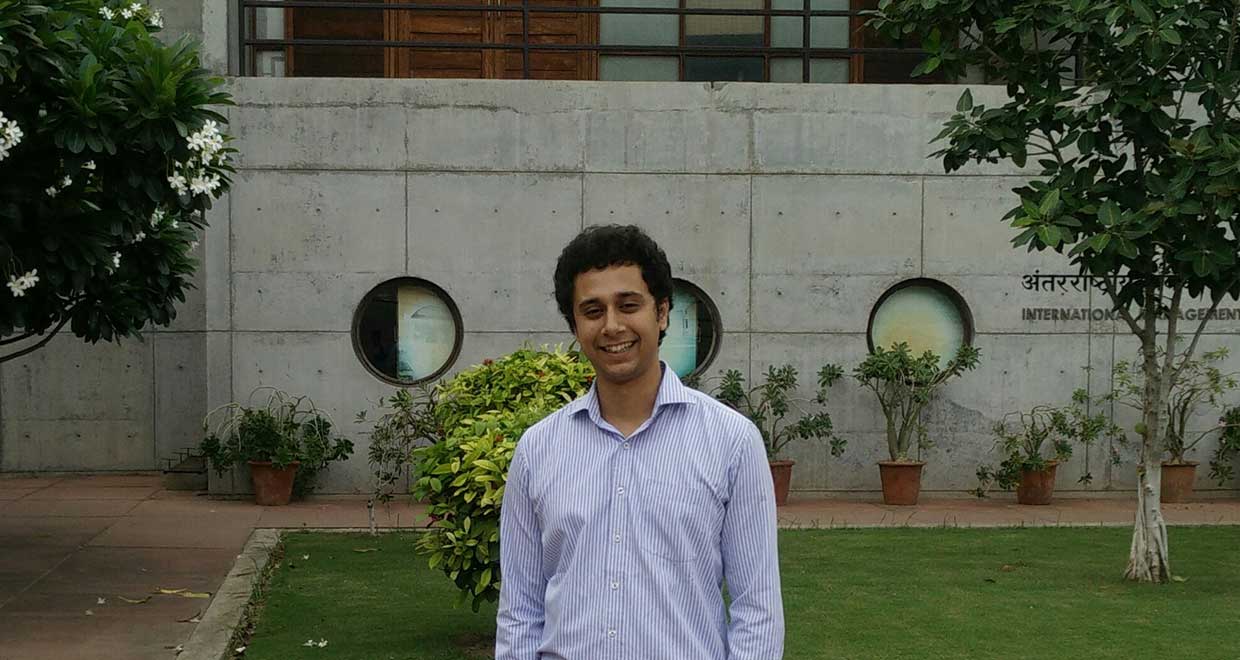
    kirthi-srinivas-2

    What were your areas of interest during your graduation? How did you go about developing expertise and knowledge in these areas?

    My initial interest in law school revolved around international law, contracts, constitutional law as these were the initial law subjects taught to us and were quite interesting. However, over the course of my interactions with certainseniors and exposure I received during internship,my interest shiftedtowards corporate laws especially investment laws, mergers and acquisition and competition law. Developing interest is easy but sustaining it is the tough part. Writing research papers, articles, presenting at conferences are some of the options I explored. I think reading about these subjects both from a legal and a commercial perspective also helped.


    After graduation, you joined Indiabulls as a Management Trainee /Officer – Legal. What had contributed towards this appointment? What did you take away from your experience at Indiabulls?

    I was always interested working in-house for a while, but was reserving such an assignment after spending my initial years after graduation with a firm. The move to Indiabulls, therefore was as a matter of coincidence and happened as part of the placements facilitated by the college. The assignment revolved around dealing with compliances of a mortgages company. Since, my experiences prior to Indiabulls had been in the form of internships at law firms exclusively, working in-house at Indiabulls was unique. However, when I reflect on what it has taught me I would have to say working in-house lends perspective now more than ever as I can relate to being on the other side and can relate better to a client and thus I am equipped to provide appropriate solutions.


    After having worked at Indiabulls for 8 months, how did the shift to HSB Partners take place? How did you go about bagging this job? Please tell us about the recruitment process atHSB Partners?

    I had always wanted to start my career at a firm and then shift to an in-house legal department, but the reverse was true in my case. Therefore, I was on the lookout for an opportunity and heard that the firm was on the lookout for a fresher with about 1 year PQE at that point in time, added to that I wanted to focus on my areas of interest and the firm is known for its transaction and advisory capabilities in venture capital/private equity, m&aetc. and the firm has a strong clientele in South India which prompted me to make the jump. The recruitment process is quite simple and hassle free, and the firm gets in touch with prospective candidatesbased on the applications received and sets up an interview with a partner, it comprised of two rounds of interview in my case (both of which were technical in nature).The interview is based on the resume and latest developments in corporate law/regulations.


    Please give our readers some tips to perform well at a law firm interview.

    I think a law firm interview at a fresher level is designed to test your basic understanding of law, commercial awareness and common sense. First and foremost tip is to keep your resume short and relevant to the kind of opportunity you are targeting, therefore if you are interested in being a transaction lawyer your resume should be tailored to your internship experience relevant to that in case if you are a fresher. Second, you are expected to be well versed with every little detail in your resume e.g. If you have carried out a research during a past internship and the same is listed in your resume, you are required to know the position of law with respect to the same both from its historical and current standpoint.


    How tough were the first six months at your workplace?What are your day-to-day responsibilities? How is the experience so far?

    I wouldn’t say my first six months at HSB were tough. It was interesting from the standpoint of the kind of work/assignment I was exposed to. Work at HSB, generally happens as a product of debate between team mates and senior colleagues are helpful in shaping the discussion towards a productive outcome. The day-to-day responsibilities revolves around tracking various stages in which assignments are and responding accordingly. It involves reviews of opinions/documents, drafting a suite of documents based on the kind of assignment we are engaged in, client meetings and strategies in relation to the aforesaid. So, far my experience has been good. I think most of it is contributed by the variety of work we do and the clients we interact with.


    kirthi-srinivas-3

    How do you keep yourself abreast with latest industry news and trends?

    I think it is very  important to stay well versed with the constant changes to laws/regulations in order to advice client’s effectively, so the obvious answer would be to proactively track certain government websites such as MCA, RBI, SEBI etc., apart from certain blogs to keep abreast with latest changes to policy etc. However, even if one does not proactively stays in sync with the latest updates, it happens as part of work when one has to read various policies/laws/regulations and changes to them while preparing opinions and drafting documentation.


    What are the primary professional ethics you follow while at work? What has been your strategy to deal with errors and mistakes?

    The thumb rule in professional ethics which all lawyers follow is to keep our client’s work confidential. As a young lawyer, I have had my fair share of doubts but my strategy has always been “when in doubt consult your senior”. In my view, it is a better option to minimise errors/mistakes by holding back on the work/responding in haste especially if you are unsure or have a persisting doubt thus you can avoid a faulty decision from translating into an error/mistake.


    Does HSB Partners take interns? What do you feel makes an intern stand out and is very important for him to do to have a chance of getting a call back or even a PPO?

    HSB takes interns throughout the year. Interested applicant’s are required to send a short e-mail with their desired period of internship and attaching their resume, the relevant team in-charges subsequently get back on the availability of a slot for an internship. In general, if an intern has an open mind and willingness to learn coupled with the ability to work intelligently then their chances of getting a call back/ PPO increases dramatically.


    The question that whether one should specialise in a particular area of law or be more of a general lawyer often comes up before law students. What is your opinion on the same?

    I think there are no generalist in law, there are several lawyers who tend to advise on variety of subjects but they too have their specialities through which they are recognized. Being a super specialist right from the start is not advisable because it is very difficult for a lawyer to be sure of their interest right from Day 1 of practice, as the profession is quite dynamic in nature and the scope of work keeps changing, in course of time it would be highly likely that everyone dabbles with multiple practice areas, therefore it would rather be desirable to have a handful of linked subjects/ areas of practice which one has interest towards and see what interests you better in the longer run and focus on those.


    Many lawyers would say that the actual learning takes place in the years of practice. How far would you say it is true? What was the case in your situation?

    I think that is very true. Most of what one learns at law school is oriented towards theory and is vital in laying a strong foundation towards principles that make up the subject. However, law as a subject is constantly evolving therefore it is in a state of constant flux and by that token a lawyer needs to constantly unlearn and learn new things to be able to stay relevant.


    Lastly, what would be your parting message for our readers?

    For freshers specially and those who are thinking of taking up legal profession, the profession as such is slow in terms of growth as compared to investment banking, finance etc., so you will be required to have patience in order to succeed. Second, the other key principle to success in this profession is to work intelligently as opposed to working hard. Thus, it would be wiser to develop the proficiency in order to work faster to deliver with better/faster turn arounds for your clients without compromising on the quality of deliverables.


  • Varun Pathak, Manager, DSK Legal, on Law School experience at GGSIU & LSE, and varied work experience at Law firms and Litigation

    Varun Pathak, Manager, DSK Legal, on Law School experience at GGSIU & LSE, and varied work experience at Law firms and Litigation

    Varun Pathak graduated from Guru Gobind Singh Indraprastha University in 2007. Thereafter he went to pursue Masters in Corporate Commercial Laws from London School of Economics and Political Science. Soon after returning to India, he joined Krishnamurthy & Co. as an Associate and later switched to the office of Amarjit Singh Chandhiok. He has also worked at Paras Kuhad and Associates as an Associate before joining DSK Legal as a Senior Associate in March 2011. Currently he works as a Manager there.

    In this interview he talks about

    • Law school experience at GGSIU and LSE
    • Work experience in litigation and law firm
    • Journey from Senior Associate to Manager at DSK


    Could you please introduce yourself, professionally and academically, to our readers, who are mostly law students and young lawyers?

    I am a Litigator and am happy to be one. I started off being a corporate lawyer but soon realised that my heart lay elsewhere. I loved the hustle and bustle of litigation which I had experienced during my internships. The thrill of arguing in courts regularly is what drives me every day and I love what I am doing. I am presently retained by DSK Legal, Delhi. The majority of work that I am presently handling deals with regulatory and court matters in the infrastructure sector, commercial contractual disputes, arbitration and some constitutional matters.

    I read law at Amity Law School, GGSIPU and thereafter completed my Master of Laws from London School of Economics and Political Science. Academically I have been a merit student and had a 2:1 grade both in my undergrad and graduate degree. I have participated in my share of moot courts, sports and other extra-curricular activities in my student career. They are all important but the most important aspect, which I realised after starting practice, was the importance of reading law regularly. There is no replacement for hard work. Other than legal reading one should also read material from other areas, whatever stimulates one’s brain. A good reading portfolio is an advantage to any aspiring lawyer. Developing reading skills is one of the most (if not the most) important attribute for a Litigator.


    What motivated you to gravitate towards law, as a discipline and a career? Tell us about your induction in GGSIU?

    My foray into the legal field was actually a combination of some serendipitous circumstances and some deductive reasoning. I was very clear in my mind what I did not want to do. So I eliminated what I did not want to do and then narrowed down my choices to a few fields which I thought I would enjoy. So law was one of the options that I foresaw along with a few other career options and as destiny would have it, the cogs feel in place and I joined Amity Law School, GGSIPU. I wanted to be in Delhi so GGSIPU was an obvious choice and arguably Amity Law School was the better institute amongst the constituents and therefore, I chose Amity Law School.


    How was your experience during your five years at GGSIU?

    My time at Amity Law School was a learning experience. Most of my class mates were very competent and there was a sense of positive competition which was very inspiring. Actually we were the fourth batch and had good seniors who used to guide and mentor us regularly. Most of my seniors and batch mates are doing well for themselves and are making a name in the profession. One of the most important experiences in my five years was the sense of camaraderie with my colleagues and batch mates which we all have carried into our professional careers.


    Soon after completing graduation, you went to pursue Masters in Corporate Commercial Laws from London School of Economics and Political Science. How did you decide to go for higher studies?

    Many of our seniors had pursued masters abroad, so their experiences were definitely a factor. I decided to pursue my masters because I wanted global academic exposure and wanted to interact and learn new approaches to dealing with complex issues. My participation in the Stetson International Moot Court at Florida had given me a flavour of the western approach so I decided to enhance my skills by pursuing masters at LSE.


    What should one do differently in college if he wants to pursue higher studies after graduation? Would you suggest having a brief work experience before applying for LL.M?

    In hindsight I would say that there are many things which can be done to improve your chances of pursuing masters at a premier institute. Firstly, one should start preparing for the application from the first year itself by building a varied repertoire of skills. Mooting and internships definitely help however, it is important to be focussed in your approach and it is better to apply to a handful of institutes after narrowing down your areas of interest than making frantic mass applications at the end of the fourth year. Further, please choose the professors of your intended course and do some research before you make that final application.

    With respect to prior work experience it is actually a personal decision for the individual concerned. Some institutes prefer work experience and definitely some work experience will provide you with some good perspective. However, I wanted to be done with my studies before I started practice so went for my masters immediately after my LLB.


    Please tell us about your time at LSE. Please share with our readers, the details about the academic pressure, faculty and campus life.

    LSE was a very good experience. The approach to academics was very different than what we are brought up on. The focus is on analysis and individual application of mind and reasoning. The faculty was some of the best in the world and professors were international authorities in their respective fields. My course in corporate commercial law was one of the best in the world. It was a very intense course with a lot of reading material. Being from a common law country it was not very difficult to adapt to the UK education system however, there were many things that I had to unlearn which I had picked up in our education system.

    My time at LSE was fun and I was part of the students’ body for our LL.M class. I also represented LSE in Willem C. Vis Arbitration Moot at Vienna. In fact, I also used to write for one of the students’ newspaper at LSE.

    All in all LSE was a great experience and taught me many things about myself.It helped me grow both as an individual and also as lawyer.


    What kind of responsibilities you were entrusted with at your workplaces after coming to India? How did you prefer litigation over law firm?

    (After coming back to India, Varun joined Krishnamurthy & Co as an Associate and later switched to Offices of Amarjit Singh Chandhiok as a Junior Associate.)

    I joined Klaw’s Mumbai office and started my practice under the watchful guidance of Naina Krishnamurthy and Shwetambari Rao. Both of them were great leaders in their own light and taught me a lot. However, my true love was litigation and therefore, I moved back to Delhi and started with Mr. Amarjit Singh Chandhiok. Mr. Chandhiok is an institution in himself and at his office I learnt my basics which haveheld me in good stead till date.

    At Klaw, I was reporting to Naina directly. Naina was the Managing Partner. The Mumbai office had just been started so I was responsible for dealing with clients and execution of work under Naina’s and Shweta’s guidance.

    At Mr. Chandhiok’s office I was responsible for assisting him in arguing briefs, preparation of notes, research, et cetera.

    Both the roles were completely different. At Klaw I was a corporate attorney whereas with Mr. Chandhiok I was a Junior Counsel. Since Mr. Chandhiok was a designated Senior Counsel and subsequently Additional Solicitor General of India my job was to assist him in arguing matters in the Court.


    Later you switched to Paras Kuhad & Associates, Advocates and worked there as an Associate for one year. What led to this shift?

    Paras Kuhad & Associates was where I started working as an Associate in a litigation team. I was reporting to Mr. Ravi Prakash there. I moved to DSK Legal along with Mr. Ravi Prakash in 2011.

    The overall experience was good and under Mr. Prakash’s guidance I started handling matters independently and started arguing regularly in various forums.


    Thereafter you joined DSK Legal as a Senior Associate and currently work as a Manager there? How did your appointment take place? How did the promotion happen?

    I had moved with Mr. Prakash in 2011 to DSK Legal. I have been with DSK Legal for more than four years and with Mr. Prakash for more than five years. I have grown as a lawyer and am happy where I am at currently. The designation of Manager was more a consequence than anything else. It was recognition of the fact that I was handling matters independently.


    What does a Manager at a Law Firm like DSK Legal do? What falls within the scope of your responsibility? Tell us about a typical work day.

    The role and responsibility of a Manager is to handle matters independently and assist the Partner whenever required. The role also involves some amount of mentoring and supervising the work of senior associates and associates.

    My typical work day involves going to Court and arguing a matter, meeting clients, drafting, reviewing the work of my juniors and sometimes briefing senior counsels.


    What is the most challenging or stressful part of being a Manager at one of the most successful law firms in the country?

    The stressful part is management part where administratively things have to be taken care off. However, in a firm structure certain things are necessary and have to be followed.

    As a Litigator one has to work very hard because the gestation period is longer. I enjoy what I do and am able to make time for the things that are necessary and important.


    varun-pathak-2

    What kind of effort should a young associate put in to work to get it appreciated?

    For me the willingness to work hard is very important.


    How important would you say are business development skills at such higher roles in a corporate law firm?

    Business development skills are obviously important. We are a service industry and therefore, client satisfaction is of paramount importance. Business development is a necessary evil, one which must be nurtured and developed for continued existence.


    What do you feel makes an intern stand out and is very important for him to do to have a chance of getting a call back or even a PPO?

    Interns should try and shoulder more responsibility and try and execute assignments in the same manner like an Associate. Hard work and perseverance definitely get noticed.


    Do you feel that higher education helps a person to have a successful legal career?

    Higher studies provide you with a good perspective. It may or may not result in a successful career. That depends on your drive and motivation. My advice would be that study only if you want to and not because everyone else if doing it. The same is applicable with anything else.


    What would be your message to our readers who are budding lawyers and law students?

    Work hard and remember that genius is 1% inspiration and 99% perspiration. There is no substitute for hard work. Tiredness is only a state of mind.

    Also please read the bare provisions of the relevant law every single time you work on a matter. Please apply yourself independently and do not follow people blindly, even if that person is your superior. After all the right to make a mistake and be stupid is everyone’s prerogative and Article 14 applies there as well.

  • Sanjeevi Shanthakumar, Dean, Faculty of Law, SGT University, on establishing three elite law schools, teaching and academics

    Sanjeevi Shanthakumar, Dean, Faculty of Law, SGT University, on establishing three elite law schools, teaching and academics

    Prof. Sanjeevi Shanthakumar is a graduate from Dr. Ambedkar Government Law College, Chennai (Madras University) (Batch of 1989). Thereafter he pursued LL.M. from Madras University with specialization in International Law and Constitutional Law.

    Currently he is Dean, Faculty of Law at SGT University, Gurgaon [NCR]. Earlier, he was Director of ITM Law School, ITM University, Gurgaon, Director of MATS Law School, MATS University, Raipur; Controller of Examinations of Hidayatullah National Law University, Raipur; Associate Professor of Law at Hidayatullah National Law University, Raipur; Senior Lecturer at Government, Law College, Madurai; Senior Lecturer at Government Law College, Chennai. Before joining the legal academia he had practiced at the Madras High Court for seven years as legal practitioner.

    He has an unique experience of establishing three elite law schools on a self financing mode.

    He shares his experiences in this interview.


    Please tell us a bit about your pre-college years, you as a student, your ambitions as a child. Did you have lawyers in your family or among close relatives?

    During my school days, I was a studious and enterprising child. Believed in honesty and hard work. Very cooperative and helpful to teachers and the school administration. One day when my class teacher was asking about the subjects we like the most, each student was naming either maths or science. When my turn came, I stood up and said “civics” and all the students in the class laughed at me. I never knew those days that this interest in civics will lead me to study law. I never had any lawyer in the family or amongst my relatives. Hence, was complexly unaware of legal profession.


    What were your objectives when you thought about law while still in the preliminary years of Law College? What were your goals after graduating? What were the options available to you?

    As I said, I never knew about this profession. My father wanted me to be a Medical Practitioner. Since I could not get a seat in the Medical College, I got admitted in B.Sc. [Chemistry] and started attending classes. One day, my dad came to my college and said that we need to go to the Madras law college and the interview is scheduled for admission to five year integrated law degree program. I walked with him without realizing that this is going to be a turning point in my life. Went to the Law College, faced the interview and later was declared selected. That was the starting point of my law journey.

    At the law college things were much unorganized. Was very scared to study in that environment. Was feeling very sad and was repenting my decision of joining the law college. Fortunately got few friends who cajoled me. Started developing interest in studies after meeting a friend called Gnanasekar. He was too elderly to be called a friend and hence we used to call him as “uncle”. He was the one who motivated me to study law. He used to call us outside the class room and started explaining to us each and every topic. He never used to carry text books like any other student. He used to carry with him volumes of AIR and read to us the full judgments of the Supreme Court. This created interest in me to read law through cases and law as interpreted by the Courts. He got opportunity to work on a part-time basis at a very popular law firm in Chennai, our interaction with him got reduced and I assumed his role in teaching my friends. This is how; I started teaching though informally.

    Instant recognition and appreciations after a good lecture fascinated me and forced me to take up teaching. Those were the days when there was a serious dearth of good law teachers. I went for a coaching class for preparing for the Civil Services Examination. The Teacher who was teaching Indian Polity could not come to classes regularly due to certain personal reasons. One day I tried to fill the gap by teaching a topic in Indian Polity. The overwhelming appreciation and feedback from my fellow students gave me confidence to become a good teacher. Based on the feedback from student the Director of the Centre Prof. M.F. Khan insisted that I should teach Indian Polity regularly and I got in to active teaching.

    My practice at the Madras High Court was a great experience. I was with one of the top ranking law firms M/s. Aiyar & Dolia and had a roaring practice. Received appreciations from my seniors, colleagues, clients and judges. In spite of these, my passion was in teaching and hence went for a full time Masters Degree Program at Madras University with specialization in International Law and Constitutional Law. After my Masters I cleared the UGC JRF and got the Junior Research Fellowship to do PhD in Law wherein as part of the fellowship terms and conditions, I had to deliver lectures for LL.M. students. Teaching Post Graduate Law students started this way and later got appointed as Senior Lecturer at the Government Law College, Chennai, and I happily started to teach at the college where I studied law. Later, on official transfer went to Government Law College, Madurai from where I resigned and joined Hidayatullah National Law University, Raipur. After HNLU, went to establish a new Law School for MATS University at Raipur as its founder Director, later established ITM Law School at ITM University, Gurgaon as its founder Director and now establishing the Faculty of Law at SGT University, Gurgaon as its founder Dean.


    Which subject do you enjoy teaching the most?

    (Sanjeevy has taught a number of both traditional legal subjects and the trending ones from Jurisprudence to Constitutional Law to International Law.)

    Not only the above mentioned conventional law subjects. I have the experience of designing curricula for Honours Courses wherein I had taught courses like “Biotechnology and Law”, “National Regulation of International Trade”, Science Technology and Law, etc. However, I enjoyed teaching Environmental Law the most and other subjects like International Law and Constitutional Law. I would also love to teach and enjoy teaching Environmental Law.


    Tell us about your teaching methodology. Do you encourage students to take notes or do you engage your students in active class participation? What advice do you share with your students on scoring higher grades?

    My teaching was never a one way process. I was one of the fortunate few teachers to get trained to teach under a World Bank Capacity Building Project and also at Cardiff University, U.K. under the British Council Funded Project. Whatever new teaching methods I learnt at these programs, I disseminated the same to many other young law teachers, through various training programs for law teachers on law teaching methods, at different universities across the county.

    I focus more on active learning rather than on teaching. It was always student centric. I actively involve the students in the process of learning the subject. During a semester, I deliver very few lectures. Most of the topics used to be learnt through small group discussions, role plays, field visits, seminars and projects. My question papers to assess my students understanding were always unique and different. Questions will never test their memory. Instead, it will encourage them to apply the acquired knowledge over a given situation and to come out with unique solutions, both legal and non-legal.

    I encouraged students in small groups to visit environmentally affected areas and to talk to various stakeholders to find out the real reasons for the problem and approach the administrators to find out what measures have been taken and finally to come out with their original solutions to resolve the problem. These methods helped every student to get engaged in the learning process. I made certain passionate students’ members of a Public Trust founded by me and named as “TREES” Trust for Research and Education on Environment and Sustainable Development” through which they continue to do some good work for the cause of environment, thereby engaging them in a life long learning process.

    My teaching methods for teaching Environmental Law was recently recognized by the Asian Development Bank, Manila by conferring on me the “Environmental Law Champions Development Award”.


    What role do legal researchers and academics play in the Indian legal system? What positive changes would you recommend on this aspect of the legal system?

    I personally feel by the legal academics have a greater role in producing quality legal professionals. As it was rightly said, the “Quality of the Bar determines the Quality of Justice”. Hence, it is the primary responsibility of legal academic to ensure the quality of the bar though developing the quality of law students who enter the bar.

    The only change I would recommend to all my law teaching fraternity is that, ‘Please take law teaching seriously and don’t take law teaching for granted. Do justice to your profession; else the nation will fail as a consequence of chain reaction.


    When would you say that an academician is successful? What are the career goals legal academicians should set for themselves?

    A Legal Academician’s success is measured in terms of the quality of legal professionals he produces. I feel successful, when I hear news about the success stories of my students, whom I have taught at different points of time. I could not avoid but sharing this news that this year four of my students got admitted to the LLM Degree Program at Harvard Law School. This gives me, as an academic to feel successful.

    The one point career goal for any legal academic is to be a good teacher and to be recognized as such. All the other positions and opportunities will automatically follow as and when time progress.

    Most of the opportunities I have had so far came to me through the recommendations of my students. One of my students even recommended to her peers and teachers at Oxford University to invite me to give a talk on Environmental Law at Oxford, which I did.  My students believed that I can do and I try not to disappoint them.


    You have authored several books and have written various research papers. How did you find time to write so many scholarly articles?

    For writing books, you need to have a compelling reason. I wrote books on Environmental Law only to help my students, as they were suffering for want of good reading materials, at that point of time, when Universities started to teach Environmental Law as a compulsory course. I tried to help them again with the help of a group of students, who dedicated a lot of time and energy to collect all the information and data required to author a book.


    What was the biggest challenge that you had to face while building the law schools?

    (Sanjeevy is the founder Director of MATS Law School as well as of ITM Law School, Gurgaon)

    The biggest challenge was to attract good students because without good students around me, I will not be able to experiment or innovate in legal education.


    Any thoughts on the current system in place to train the Indian judiciary and continuous legal education of lawyers? How can these systems be improved and made more effective?

    I believe in the importance of “Continuous Legal Education” for lawyers and judges especially in the trial courts. 15 years back, I conducted one “CLE Program for Young Lawyers”, while I was teaching at the Government Law College, Chennai. I received tremendous response for the same and appreciations for the initiative. I wanted it to be a regular feature. Due to transfers and relocation, I could not continue the CLEP. As Dean of SGT University Faculty of Law, I have started doing it again, and hope to continue it.


    As the current Dean of Faculty of Law, SGT University, how do you feel SGT can take a greater role in social engineering in India?

    As Dean of the Faculty of Law of SGT University I try to leave no stone unturned to make the law school a clinical law school where students learn through experience. I believe in “justice education” in contrast to “legal education”. I am trying to provide my students, maximum exposure to the legal profession through various clinical activities.

    I constantly remind them to think critically and not to accept anything just because it is there. To help the students feel more socially responsible I facilitate their visits to the communities for interaction very frequently through the legal literacy club. These visits to the communities and interaction with legal luminaries gives them a complete picture of the working of the Indian Legal System. Since they are made to personally feel the pain and sufferings of individuals, I sincerely believe that they will do their level best to mitigate pain and ensure justice.


    How do you say a student can manage to stay ahead of the ‘rat race’?

    Today, I find students quite impatient. My only advice to the young law students is that, keep working, work with dedication, sincerely and honestly maintaining the integrity and dignity of the legal profession. Results will follow as a natural consequence. Remember the phrase that “Rome was not built in a day”.


    What would be your message to those hard working law students who did not make it to a top NLU but want to excel in the profession?

    Many of those who are on top of the legal profession today were never a student of an NLU. In fact the NLUs started existing in public knowledge only 5-10 years ago. If they can do, why not you?

  • Rishab Kumar, Junior Associate, David Polk & Wardell, NY, on experience at GLC, Mumbai, the cost of an LL.M from Columbia University and International Law Firms

    Rishab Kumar, Junior Associate, David Polk & Wardell, NY, on experience at GLC, Mumbai, the cost of an LL.M from Columbia University and International Law Firms

    Rishab Kumar is working as a Junior Associate at David Polk & Wardwell LLP. He had graduated from Government Law College, Mumbai in 2009. While in college, he interned as a law clerk with Justice Cyriac Joseph and worked at diverse places such as Reserve Bank of India and Majumdar and Partners. Later, he went on to join the chambers of Mr. Darius Khambata (Additional Solicitor General of India at the time) as a Junior Attorney. After working for a year, he entered into a two year training contract with Linklaters. Thereafter, he went to pursue an LL.M from Columbia University where at the end of his course, he was offered a job at David Polk & Wardwell. This interview brings out the journey of a law student to become a corporate lawyer working in one of the leading law firms in the world.

    In this interview, he talks about:

    • His experience at GLC, Mumbai – being a founder member of GLC, Debating Society and conceiving GLC Policy Debate;
    • His internship experience with Justice Cyriac Joseph, Reserve Bank of India and Majumdar & Partners;
    • Linklaters and his training contract with them;
    • Doing LL.M from Columbia and then joining David Polk LLP.
    • His experience as an expert in Merger and Acquisition between India and China.
    • The merits and demerits of both corporate lawyer and a litigating lawyer.


    How will you introduce yourself to our readers? What motivated you to choose law as a career?

    To introduce myself, I would start by saying that I was born and raised in Bombay (as it was then called) and I went to school and college there. I took to law because it was a field that gathered within itself two possibilities: intellectual stimulation and a rewarding professional career (and also because I wasn’t any good at mathematics). I always enjoyed debating, model UNs and was drawn to the humanities subjects generally, so it seemed like the right choice to me.


    What activities were you involved in as a student? Looking back, is there anything you wish you had done differently?

    Given the way the five year law course at GLC is organized, I always saw it as an opportunity to explore various aspects of the legal profession. Being in Mumbai, I was able to intern at law firms, with senior counsel, at the RBI and law clinics, all with the aim of getting a broader perspective on the industry.

    In college, I spent my time mooting, debating, writing articles and serving as a student editor on the GLC Law Review. All these activities really help developing the skills required to be a good lawyer.

    Looking back, I wish I had better grades through law school, because that’s something you’re always answerable for in black and white. But, it’s not an insurmountable obstacle. I devoted time to co-curricular activities and I don’t regret that – it’s important for everyone to find their own balance.


    What motivated you to start a debating society and why did you decide to organize the ‘GLC Policy Debate’?

    (Rishab was one of the founders of the GLC Debating Society, and also conceived and organized the ‘GLC Policy Debate’.)

    GLC already had a very vibrant community of intellectually curious students who were keen to debate everything from Plato to Pluto. The debating society was meant to be a structured outlet for these discussions and to provide students a platform to express their views. It instils public speaking confidence in those who lacked it. It was a particularly rewarding process because GLC, as a government college, has students from a wide range of backgrounds and this led to a remarkable diversity of opinion.

    The GLC Policy Debate was formed along the lines of the Oxford Union policy debate which used to be framed as “This House has No Confidence in Her Majesty’s Government”. We adapted this to the Indian context and invited noted bureaucrats, academics and journalists to defend and oppose the government’s policies. The debate was conducted on the steps of the Asiatic Society Library, for its symbolic significance as the former Town Hall of Mumbai. This was a unique event in India in that it was a fair and frank assessment of the government’s policies by an intelligent audience, with students voting at the end.

    The most challenging part of organizing this was obtaining the infinite government permits and approvals required to hold this event in a public space – particularly given the controversial topic.


    Please describe your internship experiences for our readers.

    (During Rishab’s time at law school, he interned with Justice Cyriac Joseph, Supreme Court of India, as a Law Clerk; Reserve Bank of India as a Research Intern and Majmudar & Partners as a Trainee.)

    With its early morning classes, the five-year course at GLC allows students to spend time working as an apprentice during the afternoons and gain a very real initiation in the practice of law. Students can either choose to be at one firm/organization for the duration or do a variety of different things. Both paths have their merits, but I chose the latter. The range of experience I gained offered me a unique perspective in that it allowed me to read and research a wide variety of subjects and learn how they were applied in practice. I was also able to meet some extremely inspiring people at these organizations, some of whom remain mentors till today. Most importantly perhaps, this variety in experience was useful to me when I applied to foreign law firms and LL.Ms.

    Clerking in the Supreme Court was a fantastic experience because I was able to witness some of the great lawyers of our time arguing the most significant legal issues of the day. Working as a research intern at the RBI, I learnt to value the role of a central bank in the economy and caught a small glimpse of how policies are formed at such institutions. At Majmudar & Partners, I gained my first experience working at a corporate law firm and interacting with clients. All these experiences gave me a solid foundation and held me in good stead going forward.


    Please tell us about your experience working with Mr. Darius Khambata.

    (After graduation, Rishab joined the Chambers of Mr. Darius Khambata (Additional Solicitor General of India at the time) as a junior attorney and worked there for 1 year before leaving to start a training contract at Linklaters.)

    By the time I joined the Chambers of Mr. Khambata, I knew that I would be leaving in 8-10 months to start a training contract at Linklaters in London. Mr. Khambata was kind enough to let me follow him around during this time. He is a towering figure at the bar and an inspiring human being. Working in his chambers was an extremely rewarding experience.

    My general duties were to research and assist Mr. Khambata in court. Mr. Khambata was the Additional Solicitor General of India at the time, so I was able to research and follow matters that involved constitutional law issues, administrative law issues, international and trade law issues – a variety of interesting subjects. This was really a dream assignment, because as a junior lawyer you typically don’t get to write research memos and spend hours reading Supreme Court cases to formulate and test arguments on such fundamental matters. But this was what I did during my time in chambers and it was a tremendous learning experience. I also enjoyed the camaraderie and tradition of working on the original side of the Bombay High Court.


    When did you start thinking to opt for a training contract from a foreign law firm?

    I started first with the idea of doing an internship abroad, because I thought it would be a valuable experience and good for my CV. At one point, I might have written emails to over 50 firms all over the UK. I didn’t get a single positive response. That’s when I learnt about the Linklaters India Internship program. I had missed the deadline for that year, so I decided to apply the next year. The application process for the internship was quite detailed. I spent a considerable amount of timing drafting and finalizing my application.

    I was thrilled to be offered the internship, which turned out to be more fun than I had expected. Living in London and being wined and dined every other evening was really an enjoyable experience. You also get to do some real work and get a glimpse of what life as a trainee is like. At the end of the internship, you’re invited to interview for a training contract. When I was offered the training contract, I thought that if I was going to practice corporate law, what better place to start than Linklaters in London – the work is exciting, the training is excellent and the compensation is very attractive.


    International Law Firms stress on commercial awareness. What sources, materials, books, newspapers or blogs did you read to crack commercial awareness?

    International firms do stress about this. But, reading the business newspapers and perhaps the Economist should hold you in good stead. You’re not expected to know the closing share price of Infosys the day before – just a general awareness of what’s going on in the world with a particular emphasis on things that would affect the practice of a global law firm.


    Describe your experience applying to Linklaters. Is there any specific point to keep in mind while writing the application process?

    The application process for the internship was quite detailed. Several essays, two rounds of interviews and an aptitude test. My advice to anyone applying is to take the application seriously. Spend time to read it, re-read and then proof-read it. I remember the recruiting department used to say, if an application contains more than three obvious typos, that’s probably a straight cut.


    How did you prepare for the Aptitude Tests in connection with your application? Do you recommend to undergo proper training for this?

    I’m quite certain that the Aptitude Tests don’t require any specific preparation – and that’s part of the objective. It’s probably useful to sample a few IQ tests and maybe the Watson Glazer critical thinking test, but only to get a sense for what to expect. It’s not a test that you’re expected to prepare for. The only thing that can hurt you on this test is to stress about it.


    Could you briefly describe the interview process for us?

    The interview is typically a casual conversation about your past, what you have done with your time and why you’re interested in the firm. Always have a story and explanation for every item on your CV because, if it’s on your CV, an interviewer is entitled to ask you about it. You’ll rarely be tested on a point of law, and even if you are, if you reason your answer correctly, not knowing the actual provision of law is completely acceptable. Research the firm and the interviewer – it’ll help you understand what they’re looking for. Ultimately, it’s just about making intelligent conversation and showing that culturally, you will be the right fit.


    Describe your time at Linklaters during your Training Contract. Also, briefly describe your work experience in various practice areas while undergoing Training Contract at Linklaters in London.

    The training contract is a 2 year contract where you rotate through four different practice areas. I chose to work in Capital Markets, Litigation, Banking and Corporate (M&A). The work you do in each practice area depends on the people you work with and the nature of the transaction/case. In most circumstances, you will play the role of a junior lawyer on the transaction/case, which may involve some tedious work (due-diligence, document review etc.), but you’ll also get asked to do interesting research and even get the opportunity to interact with clients. The people you work with are extremely intelligent and inspiring and the quality of training is really excellent. It’s also exciting to work on the most high-profile cases that you read about the next day in the newspapers. At the end of the training contract, trainees are expected to choose a practice area to ‘qualify’ into and this is a question of preference and a person’s area of interest.

    I enjoyed my time most in the Corporate (M&A) department because out of the various corporate groups, it seemed to me, the most tangible and relatable – a company buying or merging with another company. Every task that you perform is in furtherance of this objective and that simple context makes your work understandable and rewarding.


    What motivated you to leave Linklaters and pursue LL.M. at that point of time?

    (After completing Rishab’s Training Contract, he went on to pursue LL.M. from Columbia University School of Law, New York.)

    I had always wanted to do an LL.M. simply because I wanted to study further. There were a lot of subjects that I wanted to learn more about and to immerse myself in an academic environment. I knew that this would not be possible while working at a corporate law firm. The end of the training contract is a clean break and gave me the opportunity to get away and study for one last time.


    How did you go about writing your SOP for Columbia? Are there any key factors which one should keep in mind before writing the SOP?

    Writing an SOP is a deeply meaningful and personal exercise and one should treat it as such. It’s a process that cannot be rushed – I remember when I applied to Columbia, I had probably started writing my essay in June for a November deadline. I think the most important thing to do with an SOP, is to read the question. Each university has a different format and rather than viewing them all as the same essay, it’s better to look at the specific question and answer the question.


    rishab-kumar-2

    Tell us about the cost of an LL.M. at Columbia Law School? Did you receive any scholarship? Does Columbia Law School provide students with scholarships?

    The cost of an LL.M. at Columbia Law School is approximately US$80,000 (including tuition, rent and reasonable living expenditure). I know that Columbia Law School offers a number of scholarships, but I wasn’t offered any that year and I financed my LL.M. through a student loan. There are several educational trusts in India that will offer scholarships to students, but many of them are in the form of an interest free loan. If a scholarship is not forthcoming or feasible, the cost of an LL.M. is a factor that one should consider thoroughly. It is not easy to find a job after an LL.M. that will pay a salary which allows you to pay off that amount of money fast.


    After completing your LL.M., did you face any obstacles towards finding a job in the US? What is your opinion on LL.M. recruitment vis a vis  J.D. recruitment?

    Whether it is difficult to find a job in the US is often a function of market conditions which cannot be predicted. In 2013 when I graduated, market conditions were not great and there were few jobs for international lawyers.

    However, the key obstacle is the recruitment cycle. The JD program is a three year course. Students interview for summer associate positions during their first and second year and at the end of their second year, law students will intern at a law firm over the summer. Law firms usually finish their first year recruiting from this cohort of summer associates and by the time LL.M. students arrive in the fall, all law firms have completed their recruitment for the following year. This means that unless a specific position opens up, it is very difficult for LL.M. students to find jobs at US law firms.

    That said, if market conditions are favourable and if you are diligent with your search, it is possible to break in; especially for someone who is able to demonstrate a substantial amount of relevant work experience.


    After the LL.M., you joined Davis Polk & Wardwell as an Associate. This is one of the most prestigious and sought-after law firms in the US- how did you come to be offered this position?

    Davis Polk & Wardwell is one of the few firms with a strong India practice and the firm was looking for someone with my profile to do US and Asia cross-border M&A work. At the time, their India practice, as part of the broader Asia practice, was operated mainly out of the Hong Kong office and so I was hired for that position. The firm was a top choice for me and I was extremely fortunate to be offered the position.


    After starting in the New York office, you shifted to the Hong Kong office of Davis Polk. What led to this shift?

    I started in the New York office as any US associate, I worked on a few transactions and went through the introductory training program before moving to the Hong Kong office as always planned. The cross-border India, Asia M&A practice in Hong Kong was the right fit for me at the time and so, I moved to the Hong Kong office.


    rishab-kumar-3

    Your core practice area is Cross-border M&A and PE/VC investments. How did you come to choose this practice area? What skills does one require to be a lawyer in this field?

    I had always been interested in international and cross-border work. But my focus in M&A was developed during the course of my LL.M. The US jurisprudence (Delaware in particular) around corporate M&A transactions is extremely sophisticated and I was drawn to it. Several of my classes were in this field and I enjoyed the nuanced discussion on fiduciary duties, business judgment and shareholder value. I was particularly attracted to the idea that this academic discussion was directly related to the practice of M&A at a US law firm and was constantly evolving.

    Moreover, no two M&A transactions are the same and there is no cookie-cutter method to a transaction. You start with a clean slate each time and tailor your work to the specific context and the client’s objectives. This makes each transaction intellectually stimulating.

    In practice, the role of an M&A lawyer is often to play quarterback to various specialty groups. In any given transaction, there may be labour/employment law issues, tax issues, IP issues, environmental law issues, anti-trust/competition law issues etc. The corporate lawyers have to coordinate and synthesize the advice from such specialist teams and reflect it in the terms of the main transaction documents.

    Ultimately, as an M&A lawyer clients look to you to find solutions. So, thinking on your feet and problem-solving are two crucial skills that a lawyer must possess.


    At Davis Polk, you are working on some challenging and highly complex M&A transactions, especially in relation to India & China. Can you tell us about this experience?

    Working at a firm like Davis Polk is a privilege. You work with extremely intelligent people on cutting-edge transactions. Much of my practice today is representing strategic companies or private equity funds in their acquisitions/investments in India, China and South East Asia. Foreign direct investment transactions in these countries are quite challenging to execute and there is always a higher level of risk. One has to be familiar with the local regulations and work closely with local counsel in the target jurisdiction to come up with a viable transaction structure. However, businesses in these regions are growing at exponential rates and the reward for patient and diligent investments can be quite high. These challenges make the work extremely interesting and serve as a great learning experience for a junior lawyer.


    You have practised law in Mumbai, London, New York and now Hong Kong. Give us some highlights of India practices at International Firms in USA, UK and Asia.

    Logistically speaking, many international firms have their India practices operated in Singapore, Hong Kong or London. The time difference between India and the US, makes it more difficult to service clients and negotiate with the other side during a transaction from New York or the west coast.

    However, law firms are ultimately professional service firms that are responsive to client needs. India practices at law firms are a good example of this. Firms have India practices only to the extent that clients are interested in doing business in India which is in turn dependant on prevailing economic conditions. It is difficult to sustain a practice solely on inbound and outbound transactions related to India and few firms will hire an associate to do solely India work. From an associate’s perspective, while working at an international law firm, it is important to branch out and be a general corporate lawyer with some India experience. If you want to practice solely Indian law, the place to do it is at an Indian law firm in India.

    There was a time when firms operated India practices outside of India in anticipation of the legal markets opening up in India, but that is not the case anymore as there is no clear indication that the market will open up. This event has been 2 years away for 15 years now.


    You have worked with two Top International corporate law firms. Tell us about the work culture of both law firms, their work-ethics, salary package and also comment on the diverse practice areas.

    Linklaters and Davis Polk are both extremely prestigious firms with extremely capable lawyers. They are also both very large organizations and it is impossible to generalize the culture. Both firms demand the highest levels of professionalism and also exhibit tremendous team spirit and work ethic. In terms of offices, magic circle firms tend to be larger and more international than US firms. But, both firms are full service law firms with top-tier corporate practices.

    At a magic circle firm, the first recruits are trainees and most associates were trainees at the firm. The training contract system is a very good start to a legal career. You rotate across departments for two years and that gives you the time to adjust to life in a corporate law firm and sample various practice areas. Coming straight from an Indian law school, this system is an excellent first step to take. A typical magic circle firms pays approximately GBP 40,000 to trainees and approximately GBP 60,000 to its associates (who qualify after two years of training).

    At most US firms, the first port of entry is a summer associateship at the firm between the second and third year of law school. This is much shorter than a training contract and is premised on the fact that by the time students finish their JDs, they are more polished and ready to start practising law. Because, unlike the LL.B. system in the UK, the JD program is a post-graduate program and law graduates are older and have often had some prior work experience. As a result, US law firms typically don’t recruit outside of the JD circuit and international students find it hard to break into the system directly, especially without a US LL.M. However, once you are able to break in the system, a first year associate at a top New York firm will start at US$160,000.


    What is your take on Corporate v. Litigation?

    I believe that practising litigation (as a counsel) in India can be challenging without the support of a mentor. It is difficult to get briefed as a junior counsel without that support and as a result, at a very crucial age in life, you may not have a steady source of income. If you have the financial means and the talent to overcome this barrier, then litigation can be a highly rewarding experience, especially in a place like Bombay where the tradition is for seniors to support juniors and mentor them. The actual day to day work is intellectually stimulating and you are an independent professional, not constantly answerable to a senior.

    Working at a corporate law firm offers you financial stability and can be less daunting to start with because you work as part of a team and are sure to be offered the training and assistance to grow. Also, corporate law often involves problem solving and over time, you can feel like you’ve help build something, whether it’s a company, a power plant or a new product. However, with that stability and sense of accomplishment, comes long, unpredictable hours of a stressful environment.


    Life at a corporate law firm can be very hectic at times. What is your take on work-life balance? How do you unwind?

    Life as a junior associate at a corporate law firm is indeed quite hectic and stressful. However, sometimes, it’s important to step back and look at the bigger picture. My wife is a doctor and she always reminds me, if nobody died or suffered physical pain, it’s a good day.

    Playing a sport has always been very important to me – it’s a complete escape from everything else. So, playing basketball on the weekends is almost a religious activity and I rarely let work come in the way of that.


    Any advice you’d like to give to young lawyers who hope to follow in your footsteps?

    While in college, it’s important to cultivate an intellectual curiosity and let that drive you. Do what you feel passionate about, stick with it and work hard towards it.

  • Kriti Sharma, Research Fellow, Council for Social Development, on all about a work profile in Human Rights Law

    Kriti Sharma, Research Fellow, Council for Social Development, on all about a work profile in Human Rights Law

    Kriti Sharma is an alumnus of NALSAR, Hyderabad (2012). In 2011, she underwent an exchange programme with Redzyner School of Law, Interdisciplinary Center Herzliya, Israel. Thereafter she worked as a research assistant to Justice Dalveer Bhandari and as a judicial clerk to Justice Khanna.

    In this interview, we focus specially on her experience at Council for Social Development, and how she chose this career path in Human Rights. We also try to trace back her journey to NALSAR, her experience at IDC, and her job of a law clerk. At present, she is working as a research fellow at Council for Social Development.


    Please introduce yourself to our readers. Please tell us a little bit about your childhood and your background?

    Fairly simple background, artsy atmosphere as my father dabbled successfully with Hindi poetry, writing and theatre direction. I formed a companionship with books early on since my mother managed the Ramjas Foundation’s library. I grew up mostly in Delhi, except for a few years in London due to my father’s posting.


    How did you gravitate towards law? Did you have someone who inspired you to study law?

    It seemed a good option after studying humanities along with civil services and journalism. Having arrived from England I was not aware of competitive exams but a classmate prodded me on. I grew up sensitive to social conditions and always voiced my opinion against gender discrimination that I saw in practice. In hindsight, law provides a perfect platform to engage with such issues.


    How was your experience at NALSAR, Hyderabad?

    NALSAR undeniably opens a spectrum of opportunities for individuals and is arguably, the best law school in the country. I wasn’t so excited though, as overall the faculty and course options back then were not as impressive and diverse as they are increasingly becoming now. Discussions on raging issues were fodder to my mind, yet at the same time its location denied me the opportunity to pursue extra-curricular activities as much as I wanted to.


    You underwent an academic exchange programme with Redzyner School of Law, IDC, Herzliya, Israel. What did you benefit from the student exchange programme?

    Going on an exchange involves a considerable cost. Therefore I was only willing to take it up if I got my first choice- Israel. I was made aware by a visiting professor from Berkeley that IDC invites distinguished faculty from U.S.A and Europe for lectures, providing me an insight into graduate academic life abroad. I was also personally interested in understanding geo-political and historical situation of the region, for which I extensively travelled through Israeli-Palestine and Jordanian territories and engaged with the local people, apart from taking up academic courses on Arab-Israeli conflict and peace process.


    Also tell us about your experience working as a Research Assistant of Dean Ron Harris, Law Faculty of Tel Aviv University during your Law school days.

    I have had an interest in legal history and wanted to discover what kind of work really happens in this field. I happened to mention my interest to a professor who forwarded my CV to Professor Harris. Professor Harris had been writing a book for publication by Princeton on the ‘Organisation of Early modern Eurasian trade’ for which a Chapter on ‘Early 15th-17th Century Laws of Maritime Trade in India’ required primary and secondary research in Indian archives, museums and libraries. Upon return from the exchange, I researched on this topic- looking closely at the impact of society, family, women and slaves on indigenous trade which was thriving at the turn of 16th century, before the arrival of foreign powers.


    You have interned under Justice Dalveer Bhandari of Supreme Court of India twice when you were at Law school. How did you obtain this golden opportunity to intern twice under him? What kind of work you came across?

    Justice Dalveer Bhandari, who is presently a member of the International Court of Justice, took active interest in training and educating young lawyers. His office was very welcoming and encouraging to interns but also demanded high quality work, without exception. He gave us an opportunity to work on important cases such as Novartis, Bar Council exam case etc. and since I was interested in gender rights, I also worked on an international sexual trafficking case. Apart from this we were expected to brief him on fresh matters every evening, which really was a test because his legal acumen and experience were unmatchable. For internship, one had to simply send a CV to his office secretary and selected candidates were informed for each internship session. Drafting a good request letter is the key, I highlighted his judgments on right to education and caste violence and why I was keen to work with him.


    Almost all your internships were focussed on non-profit and research work involving primarily matters of Human Rights Law. Were these all planned internships or did you just take them up as they came along?

    I followed what interested me. The classroom teaching was mostly academic but field internships in slum areas of Delhi (with Parivartan) and southern tribal belt of Rajasthan (with Mazdor Kisan Shakti Sangathan) made me understand how the law actually affects daily lives of people. In my third and fourth year I carefully explored all options available to a law student – viz. interning at a law firm, a lawyer’s office, Law Commission of India and the Supreme Court, for me to make an informed choice after graduation.


    How do you think the experience of being a clerk is now helping you in your career path?

    (Kriti was engaged as a Law clerk-cum-Research Assistant in Delhi High Court under Justice Sanjiv Khanna specializing in Criminal and Writ Petitions Roster after her graduation.)

    I wanted a right mix of advocacy and research for my career. I was inspired by Flavia Agnes’s work in the courts on gender rights and was interested in working in a Habeas Corpus roster, which in India mostly deals with family matters and elopement cases. Justice Khanna handled these cases with required sensitivity and often the mediation wing of the High Court was also involved. The criminal appellate roster also dealt with terrorism, juvenile justice and other life imprisonment cases which required regular case preparation and drafting. Evidence in each and every criminal case has to be very carefully evaluated as it is a question of an individual’s life and liberty. I also utilised the court exposure to compile an ethnographic report on hostile witnesses. The centuries old criminal system would do well with reforms and I have certain observations regarding this which can be discussed at length some other time. I also learnt that while working with litigants in gender cases, one cannot take an extremely idealised approach, as in practice things work out differently.


    Is it difficult to get a judicial clerkship with a Delhi High Court Judge? What sort of people would you advise to do a judicial clerkship?

    The Supreme Court follows an organised process of recruitment for which one has to apply through the university in the final year of studies. For High Courts, a few of them have a centralised process but individual efforts need to be made. Previous internship with the judge, networking with college seniors, lawyers and court staff and active pursuit helps and if one has good credentials, ways open out on their own. Students who desire to join litigation can gain from experiencing the other side of the courtroom. The academically oriented students of course find it opportune to engage with real time legal questions and gain practical exposure.


    How did you start working as a Legal Researcher in Council for Social Development (CSD), Hyderabad?

    At the end of the clerkship tenure, I decided I wanted to plunge into active advocacy and research on gender rights issues. I was aware of Professor Kannabiran’s work in this area alongside probes into colonial, constitutional and criminal questions relating to subalterns. This perfectly matched my interests and the Organisation also promised me a platform for interdisciplinary studies. I applied by sending an email detailing my motivations, works and aspirations and how I hoped to contribute to the objectives of CSD. I was called for an interview and thereafter received a confirmation.


    What motivated you to write a book on Tribal Advocacy? Can you illustrate us on your book to our readers.

    (Kriti has co-ordinated the “Training and Fellowship Programme for Tribal Advocates” which focuses on advocacy amongst Koya and Chenchun tribal people, training them in law and writing a book on Tribal Advocacy. Her forthcoming book on tribal advocacy is yet to publish.)

    Council for Social Development has a long track record of working closely with adivasis of Koya, Chenchun and other PVTG communities. In 2012 CSD launched a yearlong training programme for tribal advocates from this community. Through this, I learnt about the ground realities in the tribal villages and their struggles in the face of an apathetic administration. Apart from seeking solutions to our local problems, we tried to relate to tribal situation at national and international level and expand our horizons. I particularly tried to sensitize them on other struggles e.g. situation of tribal women within these communities by teaching gender related laws, policies and cases. I even poked them on homosexuality and we had a refreshing debate. In the whole process, an important realization was that there was hardly any legal literature available to deal with tribal cases. Thus, the idea of writing on tribal advocacy based on street law concept for litigators and social activists. The tribal advocates, of course are now successfully fighting human rights cases and bringing awareness to their communities through para-legal courses.


    What kind of response did you get after presenting a report on pending disability bills to the Parliament of India?

    (Kriti has also drafted and presented a report addressing the Standing Committee, Parliament of India on pending disability bills, reflecting deliberations held during the ‘National Consultation on Disability Rights’.)

    Parliament’s conduct rules prohibit discussion of the meeting outside but the Standing Committee has now forwarded its report to the Parliament and it is heartening to see that many of our suggestions have been included. We hope the Parliament will look at these suggestions closely and pass an effective Act. We had months of deliberation with various organisations before we submitted our findings. One key area of my concern was education. For instance, during my empirical study on minority schools I had observed that disabled children are not being admitted to schools in the first place and, therefore, I had recommended that surveys to identify disabled children should not be conducted only within schools but at community level. It was heartening to see that suggestions like these from civil society have been accepted and forwarded to the Parliament. Overall it was a good learning experience and I am grateful to CSD for giving me this opportunity at such a young age.


    You have also conducted field study on impact of “Right to Education law on India’s backward minorities”. What inspired you to take this initiative?

    I had been thinking of conducting this study since college but only the senior academic staff at CSD could provide me the guidance and support to go ahead with it. I am very inspired to work on education in India and it concerns me that certain sections are evidently lagging behind but not enough efforts are being made to bridge this gap. The study area is Kishabagh- an urban slum and a riot prone area at the outskirts of Hyderabad where Sikh-Muslim riots happened last year. I did not face any hindrance during the month that I spent in the field. The informers- school/madrasa staff, students and parents were very welcoming and involved with the whole interview process. The heart wrenching parts were when for e.g. girls revealed that due to impending marriage or economic situation they would not be able to continue education. Once we went to a junior class room and asked how many students worked after school and nearly the whole class put their hands up.

    The most sensitive interview I conducted was with a girl whose young brother was a victim of the quarrel which started the riot. Suffering from fresh wounds, she narrated her family’s perspective on the situation. Overall, I feel students have aspirations but societal pressures and situations quell them and the right kind of guidance is unavailable as even schools/madrasas operate with particular economic/religious motives. It was discomforting to see sub-standard education being meted out to such bright and promising students. My paper is a work in progress but I hope to deal with various aspects and I am going as far as to argue for recognition of madrasas under the right to education legal movement, keeping in perspective each child’s right to education. I hope it will be well received.


    Please share your experience working with CSD for 2 years till now. What is your workday like? Are there new challenges every day?

    Council for Social Development is a unique place to explore interdisciplinary studies. It is an academic institution which houses international and national academicians from varied social science fields and this makes for interesting coffee conversations and discussion programs. We have a well disposed library on South Asian studies and I have tried to make a good use of it. The work day technically is 9.30- 5.30 P.M., five days a week but it is open till 8.00 P.M. I am most grateful for the freedom the institution provides to its writing staff to explore their creative ideas. The opportunity to work with Prof. Kannabiran has been exciting and insightful at many levels. We have interesting projects happening all around the year and in fact I constantly feel there are so many opportunities and such little time.


    How can one apply to CSD for internships?

    It depends on our project requirements. Please do check by writing to us at secretariat@csdhyd.org. You can check out our website www.csdhyd.org for more information and opportunities.


    It is a common belief that working in the areas of human rights and policy research doesn’t pay well. How much of a hindrance is it for people joining this area of work?

    I wouldn’t tell you otherwise. One has to be mentally prepared for that sort of struggle and plunge into this only if there is genuine interest otherwise it is difficult to sustain. The plus side is there are many people to mentor and guide you through. I have had terrific bosses and encouraging seniors from NALSAR throughout. I cannot juxtapose this against law firms, as both jobs serve different purpose and carry different rewards.


    What would be your message to law students who are research enthusiasts?

    It doesn’t help to follow any ‘rules’ that one should do x,y and z things as a law student. I see many law students writing articles for enlarging their CV. Quality matters more than quantity, so no point cluttering space. People should engage in issues that really interest them and feel they will be able to bring out an interesting analysis. There is no set way to write but passion for your subject matters.

  • Abhilasha Nautiyal, Senior Associate, IPR and Competition Law, Anand & Anand, on LL.M from Harvard and job experience

    Abhilasha Nautiyal, Senior Associate, IPR and Competition Law, Anand & Anand, on LL.M from Harvard and job experience

    Abhilasha Nautiyal graduated from Army Institute of Law, Mohali in 2010. While in law school, during her internship at Anand and Anand, she was offered a job which she accepted and started working there after graduation. Thereafter she went to pursue Masters from Harvard Law School. After coming back to India, she again joined Anand and Anand but this time as a Senior Associate. Currently she practices IP and Competition Law at Anand and Anand.

    In this interview, she talks about:

    • Law school experience at AIL
    • LL.M from Harvard
    • Career in Intellectual Property law
    • Work at Anand and Anand


    Tell us about your profile and how did you decide to study law?

    I work with Anand and Anand and practice IP and competition law.

    Law was a fortuitous choice, and going to AIL was also a matter of chance – I was preparing for med school when a friend introduced me to the idea of going to law school. Being from an army background, Army Institute of Law seemed like a law school I could realistically get into.


    What has been your experience on the NLU and Non-NLU divide?

    Yes, there is some truth in that. Luckily for me, I interned and now work at a firm that doesn’t differentiate amongst its resources on an NLU/Non-NLU divide.


    After graduating from AIL, you joined Anand and Anand as an Associate. How did the appointment take place?

    I was offered a job at Anand and Anand during an internship. As an associate, I assisted senior members of the litigation team. The learning curve of a litigating lawyer is steep and there is of course a lot to catch up with in terms of what the law is and how the legal machinery actually functions as opposed to what one thinks of the legal system in law school.


    How would you describe your experience while studying Masters from Harvard Law School?

    I always wanted to have a more fulfilling academic experience, hence an LL.M. I have come across people in the profession who feel that an LL.M. has very limited value for a litigating lawyer. In my experience, the LL.M. year opened my mind to diverse ideas, which I believe is a great ‘value addition’ for a lawyer irrespective of the field of law he or she is practicing. The LL.M. year is not just about academics but is a great opportunity for personal growth.


    After coming back from Harvard you were offered the position of a Senior Associate at Anand and Anand. How would you say the LL.M affected your career?

    There are several factors involved in the process – time at the firm and ability to handle individual responsibility are examples of criteria the firm may look at. I was directly offered the rank of Senior Associate after my LL.M from Harvard.

    An LL.M., at the very least, does refine ones thinking, which is a great boost. My responsibilities at Anand and Anand have increased over the years. One must bear in mind that foreign education comes at the price and must be prepared to make such an investment.


    Tell us a bit about work culture at Anand and Anand and the life of a Senior Associate.

    I am happy to be working with people who are as passionate, if not more, about the law. We enjoy our work and team work is our strength. I handle matters in consultation with the partners. My responsibilities include handling day to day requirements of clients, advisory work, appearances in court and taking forward the competition law practice of the firm.


    abhilasha-nautiyal-2

    How did you build up your expertise in IPR? Tell us about your work experience.

    I learnt a lot during internships and on the job. Like I said before, there is a huge gap between what we study in law school and how we actually practice law. It is important to bridge that gap – a headstart in college by focusing on quality internships is very important. The role of an IP lawyer may involve several facets like transactional work, consultancy, prosecution or litigation. The key is to do your job and to do it well. Attention to detail is a quality that can help one go a long way in this profession.

    I most enjoy working on matters at the cusp of IP and competition law. This includes FRAND and compulsory licensing problems. At the risk of sounding clichéd, I feel there is no substitute for hard work (and good strategy!)

    If you are passionate about IP, life will be much simpler as an IP lawyer.

    Mistakes happen – it’s fine as long as you learn and move on. As I have learnt over the years, it important to try because most mistakes can be corrected.


    How are internships helpful for a law student? What are the other options available for someone interested in IP?

    Internships are a must. Diligence is well appreciated during internships.

    It’s always helpful to have an idea of the relevant substantive and procedural law. General awareness of burning issues in your field of interest will help.

    Working with start ups, or having your own legal start up, may be a lucrative option in some cases. Alternatively, teaching, clerking with courts, or working for a government agency are other options to explore.


    abhilasha-nautiyal-3

    How do you maintain your work-life balance?

    This is a tough one. My husband is also a lawyer so both of us work long hours. The trick is to take benefit of any break, long or short, that comes our way.

  • Sindhu Shankar, Legal Counsel, Infosys, on law school experience at NLU Jodhpur and on work experience

    Sindhu Shankar, Legal Counsel, Infosys, on law school experience at NLU Jodhpur and on work experience

    Sindhu Shankar is a graduate from National Law University, Jodhpur (Batch of 2011). Thereafter she worked with Corporate advisory and Technology practice group of Poovayya & Co., Advocates & Solicitors for two years. Later, she switched to Infosys Ltd. as a Senior Associate Legal Counsel. Recently, she has been promoted to Legal Counsel there.

    In this interview she talks about:

    • Law school experience at NLUJ
    • Work experience at Poovayya & Co.
    • Work and internship procedure at Infosys

    How would you introduce yourself? Could you please share a little bit of what motivated you to pursue law as a career?

    I am an in-house legal counsel with an interest in new technology and related laws and policy. I am currently a Legal Counsel with Infosys Limited, and work with the team advising the Australia and New Zealand part of the company. I was previously with the corporate team of Poovayya & Co., and was part of the firm’s technology practice group. I am an alumnus of National Law University, Jodhpur.

    I harboured a love for literature, excelled at debating in school, and had an aptitude for reasoning and current affairs. Given these interests I was propelled in the general direction of law school.It was only much later that I discovered that law could be applied to my other passions like technology and innovation. The prospects of working on the challenges of new technology over the coming years and the developing legal landscape in the Asia-Pacific region motivated me to pursue a career in this field, with a focus on this region.

    Tell us about your college life at NLUJ. What all activities did you partake in? Please tell us about the manner in which you approached academics while in college.

    I really enjoyed laws relating to technology and innovation, and this served as the focus point from which I perceived other areas of law.I undertook a variety of interesting internships (including a criminal law and sessions court internship experience, the employment team of a public sector undertaking, corporate teams of law firms and my internship with Poovayya& Co.). I also participated and excelled in co-curricular activities relating to public international law. I was also involved in mooting, MUNs, debates, client counselling, and the works. My involvement in the Cultural Committee and the Committee for Protection of Environment largely contributed to my time at National Law University, Jodhpur. Heading various activities of the committees and setting the stage for the first edition of the NH65 cultural fest was very fulfilling and an important part of my college experience.

    What I cherish the most about having attended National Law University, Jodhpur is the sheer variety of opportunities that the college facilitated for us students. Being able to try different activities and explore different aspects of the law helped me learn from each of them, and figure out what I wanted to do (and more importantly, what I did not want to pursue).If law school is all about figuring out what you want to do, and finding a way to do it, I would say it worked out pretty well for me.

    What were your areas of interest during your graduation? How did you go about developing expertise and knowledge in these areas?

    I was drawn to public international law and diplomacy during my graduating year, but did not actively pursue mooting or MUNs in my first two years at law school. In fact I began mooting entirely by chance, and only because a speaker on an international moot team dropped out in the very last minute, and the spot was thrown open to the person topped a written test on public international law. My co-speaker on the team was a seasoned speaker, and with his guidance I started mooting. Preparing for international moot court competitions helped develop my interest in and knowledge of public international law. Health law, which was introduced as an experimental course for my batch, also caught my fancy and I would follow developments in legal aspects of health innovation. Participating in the WIPO panel at the Harvard Model United Nations in my final year, was a culmination of my two interests during graduation – health and technology laws, and public international law.

    I continue to be interested in public international law at an academic level, and judge moot court competitions including the India national rounds of Jessup, the GNLU International Moot Court Competition, and the Surana&Surana National Corporate Law Moot court competition.

    Did you find that your law school education had prepared you sufficiently for the many tasks you were required to execute during your internships and later at your job?

    My law school education equipped me with the ability to find anything I want to find as long as it exists, the ability to learn new things and apply them in a logical manner, and the ability to process a lot of information in a short amount of time and convey it in a simpler manner. I believe these skills were vital for the tasks I was required to execute during my internship and remain very relevant in my current role.

    Soon after graduation, you joined Poovayya& Co., Advocates & Solicitors as an Associate. How did your appointment take place? What worked for you in securing the job?

    I sought an internship with Poovayya&Co., in my final year, with an intent to work with their technology law practice group. During my internship, I found myself thoroughly enjoying the varied nature of work I was handling – from litigation relating to use of new technology to compliance advisory on innovative ideas, for all sorts of clients from multinational companies to baby start-ups. My one month internship was extended, and my internship culminated in a pre-placement with the firm. On graduating I joined the technology practice group of Poovayya& Co., at Bangalore.  I believe my prior interest in and awareness of new technology, appetite for related work and performance during the internship helped me achieving my goal in working for the firm, and the practice group within the firm.

    Generally the first year after graduation is the most defining time of a fresh law graduate. What would you suggest a fresh law graduate should do to hold spirit and utilise the opportunities available?

    If one has not already figured out what one wants to do during law school, the first year after graduation is the best time to cast your fortunes with the opportunity which appeals to you the most, and figure out whether you want to pursue it. While a good salary package is important, most fresh law graduates fail to account for the ‘opportunity factor’ of working in certain roles at certain organisations, which are otherwise less lucrative to start off with. I would suggest that fresh law graduates focus on the experience and learning they are going to gain in the first few years than give importance to the possible signing bonus that lands in their laps. Try everything, you never know what you might like or you might experience.

    You left Poovayya to join Infosys as Senior Associate Legal Counsel in 2013. What prompted you to make this choice and what made this shift possible?

    The chance to work with Infosys presented itself at an opportune time when it made sense for me to gain more hands-on experience in the areas of my interest, and start specializing in a particular area of technology laws. While working at Poovayya& Co. was a fabulous experience in terms of the variety of projects I got to work on and see through, and my learnings from the team I was working with, a role with an in-house team where I would have to look at law through the lens of business and risk profiles, presented a new set of challenges. It certainly helped that the Infosys legal team functions a lot like a firm, and has an established and good reputation in the IT business. It also helped that my mentors at Poovayya& Co. supported my decision to move to Infosys in light of my career interests, and encouraged me to explore the opportunity which was presenting itself.

    Recently, you’ve been promoted to Legal Counsel at Infosys. How did you go about achieving this?

    I work with the team advising the Australia and New Zealand part of the company. I believe working as a part of a close-knit team, working closely with senior team members who are stalwarts in their areas of specialization, and the learning opportunities that working with my senior colleagues have provided me with have furthered my personal and professional development. I also appreciate that at Infosys, I have the flexibility to work on my other areas of interest such as intellectual property and data privacy, and take on projects which interest me.

    We would love to hear about your work profile. What is a normal workday like? Being the Legal Counsel, what are your responsibilities?

    A normal work day would involve drafting/reviewing, negotiating and advising on all kinds of commercial contracts for Infosys’ business in the Australia and New Zealand geography. This would include working with my colleagues who handle other jurisdictions or advise other Infosys group companies, colleagues from other internal teams and business functions on various issues, and front-ending with Infosys’ clients on our transactions. Occasionally, I would also work with internal stakeholders on non-contractual commercial issues such as intellectual property, data privacy or internal policy rollouts. I also oversee the functioning of the Infosys Legal team’s internship program.

    What were the biggest hurdles and challenges in the first few months? How did you deal with them?

    Moving from a law firm to an in-house team, my biggest challenge was in understanding the business of the company and the industry as a whole. Working for a singlepoint client(Infosys) and multiple internal clients also meant there was a lot of history behind the strategy of the company, and that I had to update myself rather quickly on my understanding of the business. Talking to my colleagues and hands-on training on the job helped me deal with the challenges and familiarize myself with the circumstances of my role. The challenges of advising business in a geography I was not familiar with, and working with experienced colleagues in the region has been a massive academic, professional and cultural learning experience for me.

    What are the primary essentials of a corporate lawyer? How do you say a fresh graduate can work on building these skills?

    The essential skills of a corporate lawyer are the ability to acquire knowledge, the ability to act on the knowledge and communicate the same, maintaining a professional network and acting in a professional and ethical manner at all times. The first two are a matter of passion for the field, and a good understanding of the subject matter at hand. A professional network is a matter of time, and professional integrity, as C.S. Lewis puts it, is a matter of ‘doing the right thing even when nobody is looking.’

    What are the primary professional ethics you follow while at work? How do you deal with mistakes or errors?

    Infosys is powered by values based on client value, leadership by example, integrity and transparency, fairness, and excellence. My personal and professional ethics align with that of the company.

    Mistakes and errors are inevitable. I believe that as long as you own up to your mistake, alert those who need to be alerted and bring a solution to the table along with the problem, you can redeem yourself to some extent.

    What is the procedure to apply for an internship at Infosys? What should one do and how to contact them to apply for an internship? What are the qualities which they look for in one and his/her CV?

    The Infosys Legal Internship (ILI) program was initiated approximately ten years ago with the intention of enriching the law student community and bridging the gap between law colleges and corporate legal departments. In this process, the ILI program has reached out to more than 1000 candidates and shortlisted approximately 50 interns over this period.

    We at Infosys Legal are very keen to recognize budding talent and nurture such talent. However, we also are particular that any applications coming through should display uniqueness and a sense of individuality. We wish to remove commonly held myths that brand names and bulk internships or moot courts are the path to securing internships in big corporate legal teams. Our focus is to select those interns who have a passion for the law and using this passion wish to carve their own space in the legal fraternity. The ILI program offers our interns the opportunity to work with our legal functions across our group companies, on a variety of assignments

    Our internship process is relatively simple. Interested candidates may send their CVs to abhijit_poonja@edgeverve.com and sindhu_shankar01@infosys.com. Abhijit and I manage the India ILI program for the Infosys group. From the CVs received and on their respective merits we shortlist candidates for interviews. The shortlisted candidates are then interviewed by us, and this interview determines whether Infosys shall extend a time bound internship offer to the selected candidate. We usually entertain applications only 2-3 months before the candidate’s proposed internship period and as a process we usually select only 1-2 interns each month.

    What are the basic subjects which one should read and have understanding of before sitting for an interview?

    I would suggest gaining a good understanding of how the legal team of each company works, and figuring out where one fits in, in the team. In a vast ocean of opportunities, it helps to be in a role which fits you personally, aligns with your goals, and from where you are able to contribute to the team most effectively. The legal team at Infosys has lawyers with varied career paths and specializations. A few things I find are common characteristics among the people I work with at Infosys are the ability to learn, the ability to adapt with new learning, being a team player, and a strong work ethic.

    Is there any other tip you would like to give to our budding professionals?

    Internships provide an excellent opportunity to experience what it is like to work with different kinds of teams and clients, in different areas of law. I would suggest that law students explore the avenues available to them through internships, before beginning to specialize in a certain kind of legal practice. For budding professionals, it does good to know what you do not want to do, before figuring out and passionately pursuing what you want to do!

  • Priyanka Sinha, Legal Executive, Voltas, on law school and work experience as an in-house counsel

    Priyanka Sinha, Legal Executive, Voltas, on law school and work experience as an in-house counsel

    Priyanka Sinha graduated with a B.L.S.LL.B. degree from ILS Law College in 2013. As a law student she has been quite active and participated in many parliamentary debates, moot court competitions, MUNs and conferences. She has also won Best Speaker and Best Memorial awards in few of these competitions. She also has multiple publications to her name. She has been working with Voltas Ltd., as a Legal Executive since after her graduation. We have taken this opportunity to ask her about the several decisive moments in her career amongst other things including:

    • Importance of co-curricular activities and internships
    • Research papers
    • Recruitment and work at Voltas Ltd.


    How did you decide to study law? Did you have lawyers in your family?

    My decision to study law was quite impulsive to be honest. I had once heard my father say that these days law as a career is quite prospective. Still trying to figure out what he meant by that; but I would not regret the decision whatsoever.

    I am the 1st generation lawyer in my family. It depends on which stream of the profession you want to venture. As you can see, I am answering this interview without having any lawyers in my family; which I believe stands testament to the fact that you really do not need a family base if you wish to enter the corporate world. In the litigation sphere, I have heard it helps, although I do not have any personal account to share in that regard.


    How did you fare in your academics at ILS Law College, Pune? What are your thoughts on CGPA and co-curricular activities?

    I was always quite a research oriented student and I love to read. (Yes, the law books as well). So it would be fair to say that I was a decent performer in my college. A great CGPA certainly helps you to crack the seat for an interview, but to transform that to a job offer, it all depends on your understanding of the subject.

    If you are one of those stage frightened students, then these activities tend to push you out from your zone and challenge your limits. Otherwise, these activities certainly impart that extra perspective to add to your knowledge base and understanding of the legal industry as a whole.


    Having won best speaker at a few moots, what would be your one advice to budding mooters?

    Just be confident in whatever you wish to state before the judges. That is all that helps once you are inside the courtroom. Prior to that, I feel if you have done your research properly, it should not be much of a problem.


    priyanka-sinha-3

    Can you give us a few tips to ace the art of paper writing?

    During my internship days, if I did relevant research on any subject matter I used to pen down my thoughts. Even if not for publication, a write up on any subject matter helps you at any point of time.

    You have to be articulate and know the exact problem that your paper is trying to resolve. I always tried to provide a solution via my research papers. Doing a sporadic research and accumulating data isn’t what a great paper should contain. Infact a good piece of writing must contain a solution to an intricate problem.


    You have been working with Voltas Ltd., as a Legal Executive since after your graduation. Tell us a little about your work profile and the responsibilities you have been entrusted with.

    Being a Tata Group Company it has a distinct style of working and believes in recruiting people who have an appetite for learning.  As a prospective employee you can’t be choosy and must take up every opportunity that comes your way and in due course develop an interest and start working towards that.

    As an In house lawyer, I’m exposed to not only arbitration, general corporate & commercial law, Construction law, Engineering Contracts and policy matters but also substantial part of my work includes research and advisory.


    Can you tell us about a few of the most challenging problems you have faced thus far? How do you manage the workload and your personal life?

    As a fresher the biggest challenge that you face is to understand the commercial and technical aspects. It is easy to ignore the technical bit and restrict to the legality. However, it is necessary for a In-house commercial lawyer to understand the business methods with a lot of patience and bridge the gap between the growth of business and legal aspects.

    I’m equipped enough to prioritize my work and passion for dance (Kathak) and travelling.

    I believe it is not about the hours you spend at work rather it is all about willingness, enthusiasm and a right set of people around you.


    priyanka-sinha-2

    What do you think an intern should accomplish in the course of their internship to get a “callback”?

    Enthusiasm, eagerness to learn, diligence and punctuality-these are few of the essential traits that an intern must possess. For a call back, things may be different, but the aforesaid qualities generally are well appreciated by the superiors.


    What would be the one misconception you’d say you’d always held about real life legal work till the time you were an intern but changed once you started working as a lawyer?

    As an intern it was all about assisting somebody in drafting or carrying out research work but now as a lawyer it involves taking independent decision, work with minimal assistance and research coupled with advisory.


    If you could re-live your 5 years in Law school, is there something you would do differently? Where do you see yourself ten years down the line?

    No. I am quite content with the 5 years I had spent at my alma mater. I would love to go back and relive the same life again.

    I love the work that I am currently doing. I would definitely consider myself to be immensely lucky as I can boast of a job which satisfies me. Consequently, I would want to establish myself as a name in the world of Arbitration.


    Lastly, what would be your message for our readers?

    Just find meaning in whatever you do. Life is short, do not waste your time in something which you do not enjoy or feel content while doing it. As Steve Jobs once famously asked, “If today would have been your last day, would you have been doing what you are doing now?” If the answer is in the affirmative, well done, you are successful already.

    All the best!


  • Tanvi Dubey, Associate, SAM & Co., on her internship experience with legends like Ram Jethmalani, J. Dipak Mishra and Mohan Parasaran and on bagging a job

    Tanvi Dubey, Associate, SAM & Co., on her internship experience with legends like Ram Jethmalani, J. Dipak Mishra and Mohan Parasaran and on bagging a job

    Tanvi Dubey is a recent graduate (2015) from Department of Legal Studies and Research, Barkatullah University. She has secured a job at Shardul Amarchand Mangaldas & Co. During her time in law school, she focused on co-curricular activities, and had consistently been a great performer. She has spent considerable time in writing and presenting research papers and in securing good and diverse internships, etc.

    She has interned with legends such as Ram Jethmalani, Justice Dipak Mishra and Mohan Parasaran. She had also interned twice at AMSS and worked on issues of Corporate Fraud and Buy back of shares.

    This interview shall serve as an anecdote of tenacity and diligence and the fact that no matter where you study law, there will be opportunities always and you have to make the best of them to succeed.

    In this interview she talks about:

    • Her experience from the internships with Ram Jethmalani, Justice Dipak Mishra and Mohan Parasaran;
    • Certificate courses that she did in her law school on Consumer Rights, Human Rights, Course on Law and the Entrepreneur, etc;
    • Importance of enhancing your CV for jobs in law firms and tips regarding the same; and
    • Things one must do at law school.


    Tell us a bit about yourself. How would you like to introduce yourself?

    The Story of my life – I was born and brought up in Bhopal (M.P.). I did my schooling from St. Joseph Sr. Secondary School, Bhopal. I belong from a family of lawyers. My Grandfather is a retired D.S.P. Officer and a renowned layer in Bhopal. My mother is Post Graduate in Home Science. She has always inspired me never to stop and move forward towards my goal. Finally and perhaps most crucially the person who inspires me the most is my father. He is a Legal Practitioner and Legal Advisor to various companies. Pursuing Law looked like a destined path. From the first impression of my grandfather’s library to desperately wanting to be my father’s daughter, I grew up romanticizing the legal profession.

    Five years ago, when I entered the law school challenges were many. But my genuine fondness for law made me excel in this beautiful law school journey. I have been keen to use my legal ability for the unempowered and the youth. I am associated with many Youth Foundations, like the Esteem Youth Foundation to help young minds to be the Changemakers for the future generations. My association with Indian Classical Music has contributed immensely towards my self-discipline, presence of mind and concentration. I have performed nearly 50 Vocal Concerts. Despite these commitments, I have been maintaining my academic standards and I have mostly been a high scorer. I should mention that I learned to prioritise, manage time and work under pressure from these exercises. I also got the opportunity to record two music album covers with Radio Mirchi and My FM which are uploaded on Youtube.


    Legal studies are still only a backup option for quite a lot of students. What motivated you to choose law as a career?

    I have always been inclined towards the purpose the law serves, i.e. justice and hence was forced by myself to study law. Not denying the requirement of an observant and analytical approach which the profession mandates for a person to have, I strongly believe myself possessing the same to fair extent and hence most suitable for the profession. Also, since the profession requires hard work and I have no hesitation in so, I thought it to be the profession made for me.


    tanvi-dubey-4

    As a law student which activities did you participate in? Did you have any guidance on how to go about your academics, co-curricular activities and internships?

    Every moment spent in law school was a long chapter added to the personal history of happiness, joy, anguish and secret sorrows. I loved each day of this journey. I loved the place and the people for what they made of me. I fought my insecurities and struggled for my identity. Law school was not about academic record hopping from grades to grades. Although it took a while to realise that the little revolutionaries in our heart were always restless. We too were restless till we put across our ideas, created some noise and drew attention to what matters the most. There were zillion lectures that I deliberately lived through.  Each mile in this journey transformed me beyond what anyone could have ever imagined. That was the Law School for me.

    To be specific about what I did –

    • Got my Paper published in the national and International Law Journal.
    • Got the brilliant opportunity to intern with the legends like the revered Mr. Ram Jethmalani, Hon’ble Justice Dipak Mishra, Judge Supreme Court of India, Mohan Parasaran, Revered Solicitor General of India. I also tried my internships with the trial court and the District Consumer Forum, which gave a much experience about drafting in the lower courts. I also got the opportunity to intern twice with the litigation Department of AMSS.
    • I am associated with Esteem Youth Foundation, which is involved in organising regular programmes to encourage youth like the Yuvashaktikaran programme, The Changemakers Confluence and many other symposiums.
    • I did many Certification Courses to boost up my CV. These were on various areas of law covering Human Rights, IPR, Consumer Rights and also Business Laws.


    tanvi-dubey-6

    What do you feel about the perception that students of certain ‘elite’ NLU’s have a much easier time in kick-starting their career as compared to law students from other colleges? Is this true at all?

    Well, I think that at the end of the day, it is one’s determined effort that matters. Make your effort count for something. Keep going and don’t slow down until you’re well past the goal. If a student is determined from the very first year of law school to do something great and he/she moves forward towards his goal then I don’t think there is a huge difference between a student graduating from a traditional University or an NLU.

    My advice to the students from traditional universities is:-

    • To focus on good internships and to do additional course as only studying law and getting a degree is not going to be enough.
    • Make the most out of time. Try and do whatever you can by the end of fourth year to be well placed.


    What were your reasons for taking up so many certificate courses?

    (Tanvi did a couple of Certification Courses on Consumer Rights, Human Rights, Course on Law and the Entrepreneur and also attended a Summer Course organized by The Indian Society for International Law.)

    These courses help a student to develop valuable personal and professional skills. The Certification Courses are designed to give junior law students an understanding of the major areas in law, so that they can get a head start in their future careers in corporate law by excelling at their internships and interviews and gaining an understanding of real-world legal practice. I did most the courses to boost up my CV and to get detailed knowledge about the subject matter.


    You have published legal articles in multiple journals when in law school. Do you feel this activity just contributes to building a polished CV or has relevance beyond that?

    There is nothing more important in the practice of law than your ability to put together quality written work. It is important not only for boosting up your CV but also increasing your knowledge in a particular area. Researching skills are incredibly important throughout one’s legal career.

    Firstly, researching skills prove to be a great asset during one’s internships and plays a pivotal role in getting a call back.

    Secondly, you get to keep yourself updated of legal aspects of contemporary issues as most of the research papers are on the contemporary issues.

    Thirdly, publication plays the most important role if one desires to go abroad for his LLM. Most applications for the masters are successful on the basis of the quality of research work he/she did.

    Editing, writing and presenting papers instilled a great amount of confidence in me and improved my research and speaking skills which are very important for any and every law student. I still remember the joy I had when I presented my first paper at the auspicious occasion of completion of 25 Years of Consumer Protection Act at National Law School, Bangalore.


    Our readers would be quite curious to know how you went about securing your law school internships.

    (Tanvi’s internships at law school have all been at different places like AMSS, Chamber of Ram Jethmalani, two Judicial Internships, M.P. State Consumer Dispute Redressal Forum, Directorate of Women and Child Development of Madhya Pradesh and JurisConsultus, a Law firm in Bhopal.)

    I have always applied for my internships well in advance and followed up regularly. It’s also important to keep your CV updated. If a student from the very beginning is interested in Corporate then he must try and intern with the top notch firms. One must also try for an extension and a call back internship. For a call back one must be particular about finer details like formatting, good presentation etc. These are things which can set you apart from the other interns. Diligence as well as intelligence plays the most important role in getting a call back internship. Deliver work on time and once you’re done you should be able to go and brief the person who allocated the work to you in the best manner. My heart was set at Amarchand from the very beginning. I realised that rather than get more ‘names’ on my CV, I intern at the same place again, because that allowed me to get better work, and learn a lot more, as then they trust your capabilities.


    tanvi-dubey-1

    How did you go about securing your internship at the Chamber of Shri Ram Jethmalani? What was the nature of your work at Jethmalani’s chamber?

    I applied at the Chambers of Mr. Ram Jethmalani well in advance by the regular process by sending my Resume as well as my covering letter to his email address. I found myself introduced to a new world of law – better than one I romanticized and more dominant than what I read about in college – when I got the brilliant opportunity to intern under the Legend of Indian Bar, Mr. Ram Jethmalani. His words are constant source of inspiration to me. He always praise that “success comes with lots of hard work and knowledge” that inspires me to work hard and achieve my goal. Ram sir’s way of reading each case, questions asked by him in the conferences amazed me every time. At the age of 92 he is more active than anyone else in his office. Hearing Ram sir taking cross-examination was an enriching experience. I can still not forget the fear on the face of the witness being cross-examined by the undoubted champion of cross-examination.


    Share your experience working with Justice Dipak Mishra, and also with the ‘Solicitor General of India Mr. Mohan Parasaran. What kind of work did they assign you during your internship?

    When you work under a judge of apex court, you feel distinguished from others. Sitting with His Lordship was quite an experience. You have to go through cases and make a detailed analysis on each law interpreting it with your assumptions and comparing with the present law. The work culture was too strict as it was the decorum of the court which was to be maintained. His Lordship is very friendly and down to earth. As he is a well-wisher and also a regular visitor to our University, we had a lot of time talking over many different issues. Office staffs were also very cooperative. Task was allotted to us by His Lordship himself or by his personal secretary or by the permanent JCs working at the office. It basically included creating briefs about all the cases happening in Judge’s court, ranging from civil, criminal, corporate, bail matters, WPs, etc.

    The best part was the keen interest of His Lordship in teaching the interns about the intricacies of court procedure, court manners, judgment writing and delivering, and clarifying the question of law, whenever and wherever we were stuck.


    tanvi-dubey-2

    What do you have to say about the law students pursuing only law firms?

    Well, one must start out with a Trial Court internship in my opinion. If you intern at a firm in the early years, it won’t really be a mutually beneficial experience, that is to say that the firm might not really gain from your contribution, but it is indisputable that you will. If one is determined for corporate than he must to get an internship in the top notch firms and try for a call back. To get a call back, I’d say there is nothing like a good dose of curiosity! Don’t shy away from asking the lawyer the background that they want the research in, it’ll give you a deeper understanding of the way things work. If one is inclined towards judiciary then firm internships do not really matter. He can rather intern under the National Judicial Academy or try for Judicial Clerkship.


    tanvi-dubey-7

    You have interned twice with the Litigation Team of Shardul Amarchand Mangaldas & Co. What do you think contributed towards your appointment for the 2nd time as an intern?

    I had the finest internship experience at AMSS mostly because of the people I worked with and the quality of work I got during internship. I was constantly guided by my team, which allowed me to learn immensely.  I have interned twice in AMSS. During both of these internships, I did my assignments sincerely. I sticked to the deadlines and never hesitated to ask my team members any doubts that I had while doing the research work. Soft skills are very important. In my second internship, I prepared a corporate law PowerPoint presentation. In AMSS, the presentation holds a lot of weightage when it comes to recruitment. Therefore, it’s important to prepare it with diligently. I primarily worked on Corporate Frauds and Buy back of Shares. I also had to submit a detailed report on the various corporate law scandals. For the interview stage, I brushed up my CV and basic concepts of corporate law, contracts etc.


    Did you plan your internships throughout law school did it happen just by chance? How relevant did you find your law school education with the kind of work you were required to do at law firms?

    I was initially inclined towards judiciary. I have been preparing for the Judicial Services from the very first year. The pattern of teaching followed by my college is truly made for judiciary. But, destiny played its role at this place. During my first Supreme Court internship with the Revered Solicitor General of India, I was introduced to a new world of law. Internship under Ram Sir was again an unforgettable experience. Finally and most crucially my internship experience at AMSS changed my mindset and I was very much influenced to work with the brilliant legal minds around. I was looking for varied and challenging work and AMSS provides the best platform to experience the cream of legal work in the country.

    In this journey, I would especially thank SuperLawyer for sharing the profiles of brilliant law students, who have always encouraged me to work hard and instilled the much required confidence in me that I am no less than an NLU student. This had immensely helped me to secure some brilliant internships and prepare for interview.


    Did you learn any skills while interning? What are these skills and how did you acquire them?

    I learned to be focused. I always submitted my work before deadline and this helped me to manage and priorities, time and work. I can assure myself at this moment that joining the firm will grant me contentment in every sense meaning thereby, work culture and experience, exposure, as well as financial security.


    You have also secured a job offer from SAM & Co. Tell us how did your recruitment happen?

    It was a long recruitment process. It started with the questionnaire that I was required to fill up followed by a Legal problem on Arbitration on which I had to give my Legal opinion. After few days I was called for Interview Rounds which started with a Group Discussion, followed by Technical Interview. And the guys who were shortlisted in the technical rounds had to give a final interview that is HR Interview. For the interview, you should not miss out on reading up even a single topic which you have mentioned in your CV. You should also be able to readily answer any question regarding the field of law you would like to specialize in, which should be supported by your CV (you should have written papers/articles or participated in moot courts/conference relating to that field of law). These would significantly help you in preparing for an interview.


    Did you have to undergo an interview before securing your recruitment at SAM & Co.? Any tips on how one should go about framing a C.V. and prepare for an interview?

    Honestly, one mustn’t frame their opinion about interviews based on what others tell them. The reason is that every interview is unique. However, be thorough with your CV, and basics of corporate law, contracts, property law, banking etc. Customize your CV according to the firm/company/lawyer you are applying for, and stress on those parts of your work experience which hold value for them. If your CV is heavily loaded with co-curricular activities, you can cut down on the section of extra-curricular activities in your CV. I was asked questions based on my CV, general corporate law and a couple of HR questions as well. My advice to all reading this is that there’s one thing you constantly need to question- “Why me”. Why should they pick you out of the hordes of applicants?


    How did you manage to keep up your grades?

    Sincerity and dedication are one of the most essential factors to be considered. One need not entirely focus on reading the course material. It might even be tedious at times. A rather interesting approach, which worked well for me, is to read latest judgments on the subject. I tried to make every subject interesting by adopting some different approach towards it like for example I read the comparative analysis in a tabular form of the Companies Act 1956 and Companies Act 2013, which helped me to learn and remember things in a better way. I think regular studies play a very important role in maintaining grades in college.


    There is a phenomenal obsession amongst law students with maintaining a very high CGPA. How important according to you is this in securing a job?

    Grades are extremely important in getting good placements. However, a number of other factors like internships, Certification Courses, Moot Experience co-curricular and extra-curricular activities also add up. Therefore, one must try to be an all-rounder rather than just focusing on grades.


    tanvi-dubey-5

    What should one law student aspiring for a job at top law firms do? How would you recommend they prepare in their last 2 years at law school?

    From the very beginning a student must be very well focused. He must to the additional Courses, do some brilliant internships and MAKE THE BEST OUT OF TIME. He must have an excellent CV by the end of fourth year in order to get a job at a top Law Firm. There is no substitute to hard work. A student must know the right websites to keep him updated and I think everyone will have the right concoction. Try everything that you possibly can, in these five years – participate in competitions, write research papers, volunteer for events, go for fests, and try bring out the real you at the end of this law school journey.


    Lastly, what would be your message to our readers?

    To be able to work with devotion at something one likes can be the greatest and most enduring source of human happiness.”, said Justice M.C. Chagla,

    You must make the most out of your vacations. Intern with a lawyer/firm whenever you get an opportunity to do so, for you will learn the practical aspects of what you read in law school, which will give you an edge over others.

    Strive to have an all round CV. Intern with different courts, companies, law firms and do it early so that when you make a final decision, you are sure about it. Represent your university in at least one moot, be part of at least one committee for 2 years, present at least one paper at a conference and have at least one publication. Also, manage your time wisely and do take out time for your hobbies/sports, so that you enjoy your time while in law school.

  • Khusboo Khatreja, Associate, DSK Legal on LL.B after B.Com and work experience at a law firm

    Khusboo Khatreja, Associate, DSK Legal on LL.B after B.Com and work experience at a law firm

    Khusboo Khatreja is a Bachelor in Commerce graduate from Kirorimal college, Delhi University. While in last year of her college, she was placed in Ernst and Young but due to interest in law, she decided to join Delhi University and completed her LL.B. She graduated in law in 2013.

    She has been outstanding as a student and was mainly focused on academics. Being a commerce graduate, she was inclined towards corporate law and therefore pursued her internships accordingly. She also managed to pursue Company Secretary course along with law. Soon after graduation, she started working with DSK Legal, Delhi and her main practice area includes real estate and general corporate law.

    In this interview, she talks about:

    • LL.B from CLC after B.Com from Kirorimal
    • First year of work at DSK Legal, Delhi
    • Managing deadlines and experience of a steep learning curve


    Given that most of our readers belong to legal fraternity, how would you introduce yourself to them?

    Hi!! I’m Khushboo Khatreja. A 25 years ‘young’ lawyer, who is endeavouring to perceive this dynamic legal profession. I am currently associated with Delhi office of DSK Legal as an Associate. I graduated from Faculty of Law, Delhi University in 2013 and joined DSK Legal right after completing my professional degree. It has been a great experience so far under the guidance of Mr. Niraj Kumar.

    During this short tenure, I have had a chance to work on various exciting assignments and representing some big clients. DSK gives you ample opportunities to handle the assignments in a manner which backs your personal growth and development.

    At this stage, I look towards learning new things, shaping my knowledge and to expand my horizon. Presently, I am handling assignments related to corporate advisory and real estate. My aim is to keep exploring at this level, and have a specialization after certain level of practice.


    Having done B.Com, what motivated you to choose law as a career? Or did it just happen?

    Frankly, I feel this statement is true. I was determined to pursue B.com (Hons.) but that is not the case with LL.B. Choosing law as a career option was not pre planned at all. I got a placement in Ernst and Young during the last year of my graduation. But pursuing LL.B was on my cards, and during that placement period, my cousin motivated me to explore options in legal field. I gave it a thought and tried my luck in Delhi University’s LL.B entrance examination. So, the credit goes to my cousin! And I have no regrets.


    As a graduate of Delhi University, have you faced any comparison with NLUs? What would you say to the future graduates of DU regarding this?

    I have heard people giving statements on this ‘inclination towards NLU grads’. Fortunately, I have not experienced such thing. Delhi University was, is still is and will remain the premier institution when it comes to legal studies. What matters is your knowledge and determination and everything else becomes drab should you have these standards. I owe a lot to Delhi University, be it Kirorimal College or Faculty of Law, for who I am today.


    What were your areas of interest during your graduation? How did you go about developing expertise and knowledge in these areas?

    Being a commerce graduate, my area of interest has always been corporate laws. To explore and have in-depth understanding of corporate laws, I pursued Company Secretary Course as well. It really was beneficial to understand corporate and allied laws theoretically as well as practically through this.  I have to accept that I was a reserved student. I had a limited approach towards my legal studies. I was much occupied during my course on account of handling my CS studies as well.


    What kind of internships did you do while you were a student?

    I interned at Khaitan, Sud and Partners, ASA Law Firm and Jindal Steel and Power Limited. At KSP, I worked on matters related to project finance, at ASA, I had a chance to understand corporate debt restructuring mechanism and at Jindal, it was more of drafting and understanding the complexities involved in various commercial agreements (domestic as well as international). As one can see, I have had a diversified experience in my internships. At that stage, I wanted to explore different fields and I was fortunate that I got to work with the aforementioned entities. Further, I was determined to work on corporate side for reasons explained earlier and thus, no litigation experience is on my plate.


    khusboo-khatreja-2

    What are your thoughts on activities like mooting, debating and publications in journals? What skills do law students acquire by engaging themselves in such activities?

    They play a double fold role in a law student’s life. Apart from brushing your confidence and knowledge, they provide add on to your CV. One improves his/her drafting and soft skills by engaging into these activities. At a start-up level, they do play a vital role. Many firms place importance in these activities while selecting a candidate.


    Did your law school education prepare you sufficiently for the many tasks you were required to execute after graduation?

    Yes of course. Delhi University gives you practical exposure to a particular issue. The curriculum is totally based on precedents. It helps you to understand the real issue at your work place or internships, as the case may be. The theoretical aspect to a particular topic is limited. It’s more of case based studies.


    Many lawyers say that the first year after graduation is the most difficult one. What was your case?

    This indeed is true. At this level you are now all alone striving for an opportunity and yes, the expectations are too high at this stage..!!.During my last semester itself, I started looking for placement. The biggest challenge was not having someone who could guide me. Being the only lawyer in my family, I had to do everything on my own and I had no contacts. With the help of friends and understanding the process, things became clear with time. I feel that in this field contacts can get you anywhere. You can expect a call for an interview at least..!!


    You started your career at DSK Legal, New Delhi and currently work as an Associate there. What had contributed towards this appointment?

    One of my senior told me about this opportunity and I did not let it escape.Otherwise, one can approach DSK by submitting his/her CV at our website www.dsklegal.com. Depending on the candidate’s profile and DSK’s requirement, DSK approaches the candidate.


    What are the main practice areas of Delhi office of DSK Legal? What does your current work profile at DSK consists of? How is a typical workday like?

    We have two partners in Delhi office. One handles litigation and other handles real estate and general corporate practice. My current profile consists of real estate and general corporate practice. It’s a blessing to work at DSK when it comes to ‘work-life’ balance. I start at 9.30 setting out the deliverables of the day first. Work life is pretty comfortable here as my seniors and partner are only concerned with the quality and time line of a deliverable. How I do it, that’s completely my look out.


    Are there new challenges everyday or has work settled into a predictable pattern?

    When you are working in a law firm, forget about anything which is predictable. There are new challenges every day which you face and which helps you to grow as a lawyer. No issue is related with each other. Every client has a different issue and their requirement as well as expectations from a lawyer is different. What I find more interesting is presentation and interpretation of law in such a manner which addresses the client’s issue and requirements. It’s a thinking process at all times.


    Can you tell us about a few of the most challenging problems you have faced thus far?

    When you enter into the job world in this profession, every day is challenging. Beginning was not easy for me as well. Everyday used to be challenging and hectic. And then there comes a transaction for which you are solely responsible and which is your ‘Baptism by Fire’. After initial 3-4 months of joining DSK, I was given to handle a funding transaction on my own and that’s where I felt that it’s not easy to survive in this profession. That is one transaction which still is a nightmare for me.


    How do you deal with mistakes or errors?

    We follow basic professional code of conduct at our workplace. There is no special requirement as such, but yes, there is no compromise on what is expected from you as a professional. Nobody is perfect and mistakes are bound to happen. What matters is how you deal with it and learn from it. I follow the same path. However, mistakes on basic aspects are not acceptable.


    Would you say your undergraduate B.Com degree has been helpful in your career?

    It truly was. It’s so easy to read financial documents and to have an idea about true position of a company while conducting due diligence for a particular transactions. In DU, we have contract law and taxation in our curriculum which provided a base to study these subjects and understand it in a more efficient manner for my law degree.


    What kind of internship/recruitment application do you think stands out positively and has a much higher likelihood of being accepted?

    Applications which are short yet expressive are the ones any recruiter would love to read. A good professional resume without any bragging ingredient in it acts as a deal maker. Keep applications short and simple. Take it not as a comprehensive list of your career history but as a marketing document selling you as the perfect person for the job.


    Would you say that the actual learning takes place in the years of practice? What was the case in your situation?

    This statement is somewhere true. For a practicing professional each assignment is a learning experience. While pursuing a law degree, a student has a limited approach i.e. understanding the legal issue. But at a practicing stage, what should be the approach towards such issue in a cost and time efficient manner is a primary focus. Same is the case with me. My approach towards an issue has changed altogether after entering into what you call a ‘Real World’.


    Where do you see yourself ten years down the line? Do you aspire to be like somebody from this field?

    In 10 years’ time, I see myself at a good position, progressing in legal field and earning new skills to the benefit of my clients. I do not aspire to be like somebody, I would like to be ‘ME’.


    Lastly, what would be your parting message for our readers?

    Pursue your dreams and don’t be afraid of failures. Failures are good experiences which help you in long run. People succeed because they failed in their life at some point of time. Keep going is the myntra!!