Category: Interviews

  • Anwesha Pal, Assistant Professor, Nirma University, on IPR, and the Indian tertiary education regime

    Anwesha Pal, Assistant Professor, Nirma University, on IPR, and the Indian tertiary education regime

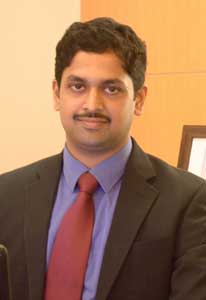
    Anwesha Pal graduated from WBNUJS in 2009, and thereafter pursued her LL.M in IPR from Nottingham University. Presently, she is an Assistant Professor at Institute of Law, Nirma University.

    We had earlier reached out to her to share her LL.M experience at Nottingham:

    Anwesha Pal on LL.M. in Intellectual Property from Nottingham University

    In this interview we speak to her about:

    • Pursuing Masters from Indian and Foreign Universities
    • Best Universities for Intellectual Property studies
    • Opting for teaching and on scoring higher


    When and how did you decide to pursue Masters and further studies?

    It was in my final year of NUJS that I wanted to study further and wanted to apply to the UK before the fees were hiked up due to the cutting down of the Government subsidies to universities. So I zeroed in on various universities including King’s, Queen Mary, UCL, Warwick and Nottingham, out of which I chose University of Nottingham to do my LL.M in International Commercial Law. However, I didn’t think of getting into academics full-time then, and kept my options open.


    Which universities did you select for your LL.M?

    I chose University of Nottingham, King’s College London, UCL, Queen Mary University of London, University College London, and University of Warwick.


    How different is an LL.M in India from one abroad?

    There is quite a difference between the two of them. LL.M in Indian universities is more of a spoon feeding business. However,  in the UK I found that the students had to take the responsibility of their own learning themselves. One difference that I often talk about with my friends is the way dissertations are treated in both the countries. In the UK we were supposed to find out our own topics and research all by ourselves without any help whatsoever from the supervisor and only at the time of getting the topic approved one can meet and consult the supervisor. But in Indian Universities the dissertation supervisor plays a huge role in the shaping of your dissertation. If you do not have a good supervisor you actually will not learn anything and eventually your dissertation’s quality could be compromised.


    What led you to pursue LL.M from Nottingham even after having finished your LL.M from India?

    The laws in India are mostly influenced by the west and to learn from the best people in the business was the biggest incentive for pursuing the LL.M. The academic program was designed in a way to provide ample opportunities for research. Moreover, an international exposure is always a good thing to have. It gives you perspective with regard to the various learning patterns adopted by various students and cultural exchange in more ways than one proved to be a beneficial life lesson too.


    Do you think the Indian higher studies regime requires an overhaul?

    Indian higher studies in law do not need a complete overhaul but definitely needs a stricter curriculum. With all the debate about scrapping the one year LL.M, I do not support the view. I think a trimester system with an intense program dealing with the most important subjects at national law schools would attract not only the best students but would bring in better teachers as well who will be able to deal with such a challenging program. The responsibility of learning in such cases increases manifold for the students and encourages self-learning rather than spoon feeding.


    Which universities do you think are best suited for someone who wants to specialise in IPR?

    In the UK, I found the best faculty for IPR in the University of Nottingham, alternatively one may choose King’s and other colleges under the University of London. In India, apart from GNLU, I have little knowledge about any other national law schools that are providing a specialization in IPR. However, in India there is little scope to choose your subjects since the UGC has made a few subjects completely mandatory for LL.M


    Have you considered Doctoral Studies?

    I have considered doctoral studies and am working on my research proposal. I am keeping my options open at the moment, and haven’t zeroed in on a particular university yet.


    What does it take for a lawyer to get into academia?

    One cannot possibly enlist the essential qualities, since every student or every subject that one is working at brings forth absolutely new challenges with itself. But one can say without a doubt that an academician who is into active teaching and researching needs an immense amount of patience and should not have a fragile ego. There is so much even a teacher can learn from her students. Apart from patience, one needs to have the tenacity to keep working to better one’s teaching and learn more things, instead of being complacent about the knowledge gained so far.


    What were your goals after graduating from Nottingham?

    Nottingham opened new vistas for me and teaching was not the only option that I had considered back then. The decision to move into academics happened gradually through working for iPleaders and at IMS.  The experiences I had while working at both the places were extremely rewarding and enriching. Teaching at Nirma has been a learning experience and equally rewarding so far, mostly because of the diverse student body that has an immense amount of potential, academically.


    What advice do you share with your students on scoring higher grades?

    Scoring high grades is more often than not a result of learning through self-studying. Listening to the teacher patiently and interacting in the class goes a long way in this respect. Taking notes is very important as they are your guides when reading for yourselves. However, I think it is a crime on a student’s part to expect readymade notes from the teacher at the university level.


    What would be your advice for law students who want to take up the profession of teaching?

    One must choose the profession of teaching law for the love of teaching and not only for the love of law. Teaching is a very different ball game from learning for oneself. Different students have very different needs and learning methods and one who can cater to all of them efficiently is considered to be a good teacher. Although, one can only strive to do so.


  • Neha Bhat, on LL.M from Washington College of Law, selecting the correct college & Scholarships

    Neha Bhat, on LL.M from Washington College of Law, selecting the correct college & Scholarships

    Neha Bhat is currently working as an Associate Durable Solutions Officer at United Nations High Commissioner for Refugees. She graduated from WBNUJS, Kolkata in 2007 and had studied further at American University, Washington College of Law. She has specialised in International Organisations, International Human Rights Law and Migration Law and Policy. Without much ado, let’s delve right into her choice to do an LL.M and pursue International Human Rights.

    We asked her to share:

    • Strategies on selecting an university for LL.M
    • Information of Faculty and Facilities of Washington College of Law
    • Applying for Scholarships at WCL


    What was your motivation behind doing LL.M.? When did you finally decide that you needed to do masters?

    I have always wanted to pursue further studies. Even when I was in my final year at NUJS, I was sure that I will complete my masters and subsequently get an advanced degree- you know MPhil or PhD or the like. I genuinely like reading and getting to know subjects and issues. I really enjoy exploring areas of law that I don’t really have much experience in and an LL.M program helps me exactly with that.

    Since you are into the academic arena, you are either writing or researching and reading and that really works well with me. Eventually, later in life I want to teach and therefore I knew I would always have to finish my LL.M and then an advanced degree. But I wanted to have work experience before I joined the Masters degree- that was also because while at NUJS, I hadn’t really done much- I had no serious publications, wasn’t at the top of my class, wrote a really horrible statement of purpose– end result, I didn’t get admitted for my LL.M to any of the places I applied to. Plus I also realised I knew, rather understood very little of things and therefore I realised I needed some good, in depth work experience before pursuing my LL.M.

    So I joined SEBI as a Legal Officer, worked there for about 2.5 years and then went and joined the UN High Commissioner for Refugees in Delhi, where also I worked for almost another 2.5 years. After 5 years, I felt I had a very good idea of what I wanted to focus my LL.M on and even had ideas about further studies- like PhD proposal and the like, and therefore decided to come and get my LL.M degree. Also, my work at the UNHCR was very intense. I loved my work very much, I still love my work very much and I would definitely hope to get an opportunity to work with UNHCR- but I realised that you need to know when to “step back” so you don’t unconsciously burn yourself out. And after 2.5 years, I knew I had reached that point, where I was on the path to burning out in my work.


    neha-bhatHow did you choose the university/ college? How should one go about choosing a university?

    Selecting a University can be one of the most difficult things to do and if not done properly, you could end up feeling a little miserable about your choice. I have had the opportunity to put myself through the LL.M application process three times- once in my final year at NUJS, then in 2008/09 and then finally in 2010/11. When I was at NUJS, in hindsight, I made some of the worst application decisions– I remember applying ONLY to Harvard, California Berkeley, NYU (for the NYU-NUS programme) and Oxford. No other place.

    The problem with my applications was that my Statement of Purpose wasn’t right, and I had no research plan in place, I wanted to do an LL.M because it seemed the “right thing to do” and not because I knew what I wanted to study or why I wanted to do. Obviously, it didn’t work- I was rejected by all universities I applied to. I did panic a bit, thinking maybe I was very bad at this and maybe academics weren’t for me. It was the same time when I had sat for the Rhodes scholarship regional interview in Kolkata, but failed to make it to the National rounds. So it was like a culmination of bad results.

    The second time I applied, I was working with SEBI. In this round, I managed to apply to 3 places, before I came down with chicken pox. I applied to California Berkeley, again to NYU (for the NYU-NUS) programme and also to Stanford. Again, NYU turned me down. Since one of my referees didn’t submit my reference letter for Stanford, my application was incomplete so I was left out of the loop. But this time, I was waitlisted for Berkeley in the first tranche of waitlisted applicants out of some 950 odd people. It was a big moment for me. I had been working long enough at SEBI to know I was not going to study corporate law, so my statement of purpose focused on my desire to teach law and consciously I decided to veer away from corporate law. But eventually I didn’t get through. It was then I decided that I had to get back into the field I wanted to do my LL.M in and thus my job change happened. Eventually in 2010/11, I applied to 6 programs and was admitted to all but one– at LSE. The programs I was admitted to, were regionally, the best for Human Rights– NUS- Singapore, Berkeley-California (yes, again), McGill- Toronto, Warwick- UK and American University- Washington DC.

    I consciously decided to veer away from the very “top” rung places– because I STILL didn’t have (or so I felt, and still continue to feel) any meaningful academic publications etc. or what I felt, a superlative proposal which would ensure admission in these universities. Plus, I was looking at a taught masters program and therefore chose places which did not mandate a compulsory dissertation component.

    I also looked at the field specializations ranking and faculty strength rather than the overall ranking of the school because those are often better indicators of the specific program. So for example, I know that Warwick has a very solid International Human Rights Law program. American University, where I am currently studying does not necessarily come out on top of law school rankings in the US, but its International law program is ranked higher than Berkeley. Plus, it’s the ONLY law school in the US, where you can have the opportunity to study with Special Rapporteurs – past and present. For e.g. I have had the opportunity to study with some really big names in international law, Prof. Juan Mendez who taught me Advanced Human Rights, is the current Rapporteur for Torture. I also studied under Prof. Robert Goldman, who was the previous (and the first) UN Rapporteur on Human Rights and Terrorism. And I also studied under Prof. Diane Orentlicher, who has drafted various UN Guidelines and Standards including on Combating Impunity. I am also lucky that I have the opportunity now to work with her as a research assistant/ dean’s fellow- I started on this position in June and continued working with her till December 2013.

    It’s been one amazing experience- to delve into interesting issues of transitional justice, international criminal law etc. These are factors which make a big difference to me and I think should make a difference to everyone considering a specialisation at the LL.M stage – you should know which fields you are interested in and if the university you are applying to, has professors who teach and/or conduct research in those areas or not. Also, the cost of the program matters a lot– and whether there are scholarships etc. on offer or not. American University has tuition remissions and full tuition + fee scholarships on offer and I was one of the recipients of their Alumni Fund Scholarship (which covers tuition for 24 credits plus all school fees) and for me that was a swinging factor. My top two choices were American or California Berkeley, but the latter didn’t offer me any scholarship. Plus what kind of city you want to live in- for me, Washington DC is a dream because there are so MANY events on International Relations and Affairs which happen here- I get an opportunity to meet people and again gain knowledge. These are opportunities not many cities can offer.


    What did you study? Why did you decide to take this particular subject?

    I am enrolled in a dual degree program at American University. So on completion of 40 credits, I will be conferred with two degrees, the first one is the LL.M in International Legal Studies, which I completed on May 19 (24 credits) with a specialization in International Human Rights Law. My second degree, which starts shortly, is called the LL.M in Law and Government and my area specialization is Regulatory and Administrative Law. I have 16 more credits to finish so I will be completing courses in International Trafficking, Women and Conflict, Global Warming Law and Policy etc. I think it is worthy to invest time, energy and effort into these courses because it offers me further exposure to theory I would need to know, but I may not necessarily get around to studying/ reading on my own. I need to be constantly motivated to do something, and unless there is a personal investment (time or money etc.) I know that I will not be driven to do anything.


    How is your experience so far? Tell us about the faculty and facilities. Anything memorable that is stuck in your mind?

    My experience so far has been fantastic. As I mentioned before, I have had the opportunity to study and work with some of the best known legal minds in my chosen area of law and I don’t think any other experience could be better than this. What I genuinely like in the American academic setting and which is missing in the Indian academic setting is the quality of feedback that you can get from Professors – and if you demonstrate capability to take up new issues, areas of research- they encourage you and offer guidance.

    I have maintained an academic profile at www.ssrn.com, which is an online repository of academic articles and research. And I have often been contacted for some of the projects I am undertaking/ have worked on by people pursuing their PhD and in one instance, Prof. Alston @NYU. And I think these avenues- contact with academics, renowned academics is not available/ not facilitated everywhere- either we are too shy, too inhibited or simply too worried that we do not match the intellectual calibre of our counterparts- and that, as I have come to realise, is a lot of garbage.

    If you have the good luck of studying with Prof. Mendez, he will also perhaps mention sometime that he really enjoys watching Without A Trace, an engaging and absorbing law enforcement series where missing people are tracked down. You will have engaging debates with your classmates on whether the R2P doctrine should be applied in Syria and have the privilege of being one of the chosen few to ask Prof. Theodor Meron, the President of the Intl. Criminal Residual Mechanism for the ICTY and ICTR a question on the future of international criminal law and beyond. Plus there are a lot things that keep happening in DC, like between January- May, 2013 I Was part of the UN Association of the Washington DC (UNA-(N)ational (C)apital (R)egion)’s Graduate Fellow and met individuals like Frank Vogl, of Transparency International, D. Bosco- who writes the Multilaterialist blog at Foreign Policy etc.

    For the scholarship recipients, there are annual dinners as well- 2-3 where you get to meet alumni. American also hosts an annual Embassy Dinner, where you get to meet delegates and staff members from various Embassies and Country Missions in DC- I was very lucky to meet, among others, Mr. Ahmad Haidari, the Cultural Attaché of the Afghanistan Embassy in DC.


    How’s the Indian fraternity over there? Are there many Indian students?

    Not many, at least not in the LL.M class. I guess it is also a function of specialization- American Uni. is famous for its international law programs and not business law/ commercial law. Many students who wish to do commercial/ corporate law programs, like financial and securities regulation or IP choose places like George Washington or Georgetown, which are also located in DC and have better known and better specialized programs in the specific fields. In the JD program however there are many American students of Indian origin.


    How is the recruitment/ placement situation for overseas students?

    It is difficult, but then again, it depends on what kind of job you are looking for. There is a program called the Optional Practice Training, which allows those holding F1 status to remain in the US after completion of their degree and work for a period of one year such placements could be either paid or unpaid. But if you want to work in a law firm, then you have to clear the Bar Exam- the eligibility guidelines for which are continuously revamped (esp. the NY Bar). So for e.g. you have to have 12 credits in courses relevant to the Bar Exam (contracts, family law, evidence, criminal procedure, ethics etc.). From 2015, all candidates for the NY Bar also need 50 hours of pro-bono work.

    My point being, if your area of interest is not commercial/corporate law and if you are not interested in working in a law firm, the NY Bar may not exactly be a very good idea. First, of the 24 credits in an LL.M program, you will have to dedicate half the program to complete courses required for the Bar Exam- this could effectively prohibit you from getting a specialization. Plus, those who want to work with international organisations or NGOs etc., especially at the entry level may not need to clear the Bar exam- but that of course depends on the organization and is different for each organization. I have no idea about corporate/commercial law since that is not my area of interest. However, I do know that AU facilitates participation of LL.M students in the largest job fair which is annually held around March/April in New York and students can apply to work with law firms not only in the US but also in Europe and other areas/ countries.


    How is the academic schedule? Is there a lot of academic work?

    Depends on the classes you take and the Professor, to be very honest. Some professors can and do give upwards of 100 pages a week of reading and some professors may give only 10 pages a week or even less. If you are taking an end of semester exam, you need to have done the readings throughout the semester otherwise it will be impossible to catch up  at the end of the semester. There are however courses where you are required to write papers- 20 pages is minimum but the maximum can be 35-40 pages as well- for e.g. I wrote a 44 page paper for the course I took with Prof. Goldman and a 30 page paper for my course with Prof. Mendez, but I also wrote at least 3-4 papers of upto 20 pages.

    This was a conscious decision on my part– to choose courses where I would be required to write research papers than take exams, I want to build an academic profile and this is one of the best ways of doing it. But it may not be for everyone, especially if you find research, writing and editing/ footnoting cumbersome. For the LL.M in Intl. Legal Studies at American, you need to have completed 2 papers of 20 pages each in the subject in which you wish to specialize. Some professors will ease the norms of referencing and ask you to follow a ‘consistent’ format. But most require Bluebook format- which I guess every mooter knows is the most cumbersome task.


    What about accommodation?

    As an LL.M student, you have to arrange for accommodation yourself. Most people choose to share a room, or find a room in a house shared with other people. I like to live alone so I chose to take up residence in a studio apartment about 30 minutes walking distance from school. It’s very important to find a place which is conveniently located to public transport/ close to school for ease of access etc. My place is connected to the bus routes very well and within 20 minutes walking distance of the American’s shuttle stop and the Metro stops. It’s also very close to Georgetown and grocery stores, restaurants etc.


    Tell us about your classmates – is there a pre-dominantly international crowd? What is the general age group of students?

    Yes, a very diverse student body. In fact one of the main strengths of American’s LL.M program is the diversity of its student body. We have students from every continent and many, many countries and that makes the classes all the more interesting. I think the general age of students varies from 22-35, including Humphrey Fellows and other individuals on specialised programs, although a majority of the class is below 26 years.


    How does one go about scholarships? Does the institute offer any scholarship?

    Yes, American offers a lot of scholarships/ financial-tuition assistance. So there is the Alumni Fund Scholarship which covers tuition+ fee for 3-5 incoming students. But this scholarship is only available for those starting in the Fall Semester or in August each year. The tuition waivers work semester to semester and as required students can apply for them, based on eligibility etc. There is also a $4000 scholarship instituted by current dean, Dean Claudio Grossman which is awarded in the spring semester. Additionally, if you have participated in the American’s Inter-American Moot Court competition, you are eligible to apply for a scholarship. More details can be found at http://www.wcl.american.edu/ilsp/scholarly_competitions.cfm


    Going forward, how do you expect this experience to influence your career?

    I think one good thing that has come out of the LL.M program is that I have realised that there are lot many more areas of international law I am interested in- my specialty remains asylum and refugee law issues, but being in academics, allows you to explore your niche area in relation to other issues/ aspects of law. So you slowly start building a knowledge base in those alternate areas as well. And I think going forward, that can only be a good thing, because the more adaptable you are, the more diversified skills and knowledge you have, the more relevant and transferable your competencies will become. I also think that this exposure somehow makes it easier for me to break into field of transitional justice, international criminal law- because of the stalwarts I have studied under. They are the best guides, mentors and connectors one can have.

  • Prabhash Ranjan, Assistant Professor, on a career in Academics and Research and the Indian Education regime

    Prabhash Ranjan, Assistant Professor, on a career in Academics and Research and the Indian Education regime

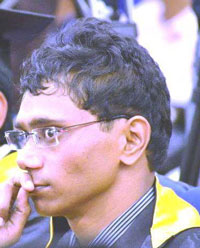
    prabhash-ranjan-2Dr. Prabhash Ranjan graduated as a lawyer from University of Delhi in 2003. Thereafter, he went for higher studies to SOAS, University College, London. Later, he received his Ph.D from King’s College, London. He worked as a consultant to Oxfam, taught at NUJS, Kolkata and NLU, Jodhpur and presently he is an Assistant Professor at South Asian University.

    Being a person of great insight into Academics, we asked him about:

    • Studying Law from Delhi University
    • Pursuing LL.M and Ph.D from reputed universities in London on scholarships
    • Experience as a consultant at Oxfam and as a professor at NUJS and NLUJ
    • Necessary changes in the Indian Education Regime


    How would you like to introduce yourself?

    I am an academic lawyer who teaches and publishes in the area of International Investment law and World Trade law. I hold bachelor degrees in Economics and Law from University of Delhi. For my LL.M, I read at School of Oriental and African Studies (SOAS) and University College London as a Chevening scholar. I hold a Ph.D. in Law from King’s College, London. I was born in Chandigarh and grew up in different cities like Bhubaneswar and Delhi. In my school life, I took part and won prizes in many debate competitions and other extra-curricular activities. As a kid, I aspired to become a medical doctor. I was very fascinated with the idea of having Dr. appended to my name. However, I gave up on this ambition once I realised that one has to be good in Biology to become a medical doctor! However, today I am happy that I have been able to fulfil my cherished dream of having Dr. appended to my name by earning a Ph.D.! In my school days, I greatly enjoyed studying Mathematics and also History (especially Modern History) and Political Science (Civics). Unfortunately, I couldn’t study History and Political Science after class 10th as I opted for Science stream. In those days, as a de facto rule, every good student was expected to study Science after class 10th! I am the first academician in my family. However, I come from a family, which has deep interest in academics and writing. My father earned his Ph.D. from University of Leipzig, Germany (then Karl Marx University in East Germany) in Veterinary sciences. My brother, a senior Army Officer is a very avid reader and is currently researching on naxalism as a Fellow at the ‘Centre for Land Warfare Studies’ (CLAWS). My grandfather, a freedom-fighter who went to jail several times during India’s freedom struggle from British colonial rule, was a prolific reader and writer in both English and Hindi and contributed articles to many English and Hindi newspapers.


    What motivated the switch from Economics to Law?

    (After doing his B.A. (Bachelor of Arts) with Honours in Economics, Prabhash pursued LL.B. from Campus Law Centre, Faculty of Law.)

    While pursuing Economics (Hons.), I had made up my mind that I would pursue Master’s in Economics and probably pursue a career as a professional economist. However, my father urged me to write the entrance examination of Faculty of Law, Delhi University. So, in many ways, the credit for me becoming a lawyer goes to my father.


    Tell us about your college life.

    My undergraduate college life of six years at Delhi University was quite exciting. I used to travel almost twenty kilometres everyday in Delhi University Special buses (old DTC buses popularly known as U Specials) from South Delhi to North Campus of DU in North Delhi. North campus of DU is a great place to study. It has leading colleges of India and various faculties and postgraduate departments providing a unique opportunity to mix and interact with students from different backgrounds. It also provided an opportunity to take part in a wide range of academic and cultural activities. Being part of DU Law Faculty was a terrific feeling for two reasons. First, I was delighted about the fact that I inherited a great legacy of legal scholarship of scholars like Upendra Baxi, P K Tripathi, Lotika Sarkar, M P Singh to name a few. Second, it was a proud feeling to be part of an institution that has produced many eminent academicians, numerous Supreme Court and High Court Judges, many Attorney and Solicitor Generals, leading advocates and attorneys and national leaders. At the Law faculty, I was lucky to be taught by outstanding scholars like Prof. M. P. Singh, Prof. B. B. Pande, Prof. P N Singh and Dr. Kamala Sankaran. Apart from academics, I took part in debate and paper presentation competitions and won a few prizes. My college life was very different from the lives of students I have taught both at NUJS and NLU Jodhpur, primarily because I was a day-scholar and my students were hostellers.


    After LL.B., you pursued a joint LL.M. from School of Oriental and African Studies (SOAS) and University College, London (UCL) as a British Chevening scholar. How was this course?

    Pursuing LL.M at SOAS and UCL was a terrific experience and perhaps one of the best things that happened to me. And winning the coveted Chevening scholarship for my LL.M was indeed a great thing. I opted for the following courses in my LL.M – World Trade Law; International Investment Law; IPR and Development; EC Competition Law; and wrote a 15,000-word dissertation on Indian Bilateral Investment Treaties (BITs). One of the best parts of the LL.M programme was to be taught by leading academics of international stature, from both SOAS and UCL, like Professor Peter Muchlinksi, Professor Joanne Scott, Professor Valentine Korah and Professor Philippe Cullet. For the first time in my life, I was exposed to a totally different pedagogy and method of teaching. Students were expected to read and come to the class. The lecture itself used to be more like a seminar with students and the professor debating on many issues. Further, there was less focus on classroom teaching as such with just one two-hour lecture for every course per week. Rest of the time, students were expected to read on their own some 100 to 200 odd pages per subject for the next week’s class. Reading lists were very carefully and meticulously prepared. I had access to an excellent library and all the major legal databases – something that was missing during my LLB studies at DU. I greatly enjoyed this system, which encouraged me and gave me ample space and time to do my own research, reading and writing. I worked very hard and earned a Distinction in my LL.M and published my dissertation and other course essays in leading international journals. Today, when I look back, I can easily say that my LL.M-year at London was perhaps the most productive year of my life. I simply couldn’t have gained all this by pursuing an LL.M in India.


    Tell us about your experience as research assistant to Prof. Valentine Korah, Emeritus Professor of Competition Law at UCL for her book on EC Competition Law.

    Professor Korah of UCL taught me Competition Law. She was very happy with my performance in the class and thus offered me to be her research assistant for her textbook on EC Competition Law published by Hart Publishers, which she was updating. Though I had never worked in the area of competition law, I readily said yes because it was an offer made by someone who is an authority in competition law not just in UK and Europe but globally. My stint as her research assistant was immensely useful as it gave me an opportunity, not just to earn a few extra pounds, but also to learn a great deal abou t competition law. I would encourage students to readily grab such opportunities of research assistantship, which not only helps one learn the subject but also helps a great deal in strengthening research skills. I always offer such opportunities to my students, as far as possible, whenever I am doing a paper or involved in a research project.


    How was the experience at Oxfam, Great Britain in India as a Research Officer?

    It was a great experience. Oxfam GB is a global brand with established reputation in the development sector. In 2004-05, they had started a new project on trade and development in South Asia. I was selected to work in this project. My job profile included conducting policy research and advocacy on international trade law issues affecting South Asia. One of the most exciting things at Oxfam was to develop and implement new ideas and work with some amazing bunch of individuals who have left a lasting impression on me. In particular, I would like to mention two of my ex colleagues and dear friends – Biplove Choudhary and Robin Koshy – extremely talented individuals from whom I learnt a great deal.


    When did you decide to pursue International Investment Law and Trade Law as a career option?

    The choice to work in the area of international trade, in many ways, was made in the final year of my LLB in 2003, when I interned at a research and advocacy based-NGO called Gene Campaign. As part of my internship, I worked on the TRIPS agreement and the Agreement on Agriculture of the WTO. I thoroughly enjoyed my work because it gave me an opportunity to put to good use not just my training as a lawyer but also my knowledge and skills in economics. It made me realise that a career as a researcher in international trade law is something that I will definitely enjoy. During my internship, I learnt about an organisation called Consumer Unity and Trust Society (CUTS) – an Indian international NGO headquartered in Jaipur, which has done extensive work on international trade. During the course of my final semester LLB examinations, I applied to CUTS and was selected to work as a Legal Researcher on international trade. This was my first job. CUTS proved to be a great training ground to learn many things about international trade and WTO and also about professional life in general. It further cemented my interest and resolve to work in the area of international trade. There has been no looking back since then. As regards investment, I picked it up much later – during the course of my LL.M. While working on international trade, I realised that one also needs sound knowledge of foreign investment laws and thus the motivation to study international investment law.


    In 2009, you were awarded President’s Graduate Fellowship by National University of Singapore. Why did you decide to decline it?

    This fellowship was part of the Ph.D programme at National University of Singapore (NUS). It is quite prestigious and I was tempted to take it. However, I also had very good Ph.D scholarship offers from UK Universities and I finally decided to accept the Ph.D. scholarship offer of King’s College London. Always wanted to go back to London – a city that I am very fond of – for my doctoral studies!


    Why did you decide to take up teaching as your career option, despite the fact that other opportunities would have been more lucrative?

    Yes, sadly that’s true. Being an academic is not as lucrative as pursuing a career in a corporate law firm or even practising law in higher judiciary, though a good academic can earn extra bucks through research consultancies and grants! I was earning much more at Oxfam GB without an LL.M than what I earned at NUJS (my first fulltime academic job) with an LL.M. It is very important to make the teaching profession lucrative to attract the best talent for the job. Temperamentally, I always considered myself more suited to a job that required reading, thinking, writing, and talking about my research. I was somehow never very comfortable with the idea of working in a corporate law firm or practising in courts or becoming a civil servant! (my parents were quite keen that I should write the civil services exam, which I never did, and become a civil servant!). I started my career as a full-time legal researcher and worked as a researcher for more than three years before deciding to pursue LL.M. My career as a full-time researcher was immensely satisfying and rewarding as it gave me an opportunity to read and research on a wide range of topics on international trade law. However, the research agenda was determined by the institution and not by me. Also, I didn’t get much opportunity to talk about my research or subjects in trade law that I enjoyed reading and researching. Thus, I thought that a full-time academic career will give me both the opportunities – to talk about my research (i.e. teach), which I enjoy a lot; and to set my own research agenda and do research. It is for this reason that I decided to pursue fulltime academic career after my LL.M. Today, when I look back, I can say with full confidence that I took a correct decision to pursue an academic career. I am very happy and satisfied with my academic career that gives me opportunities to teach young bright minds (now not just from India but from whole of South Asia), research and write on issues that I am passionate about, and also travel the world! God has been kind! Teaching and researching with the objective to generate new knowledge and contribute to numerous policy and academic debates is indeed very very satisfying and fulfilling.


    How was your experience of teaching at NUJS, Kolkata and NLU Jodhpur?

    NUJS was my first full-time academic job. It was a fantastic experience with challenges and enormous learning opportunities. At NUJS, I worked under a dynamic leader – Professor M P Singh – who introduced many reforms and bold experiments ranging from changes in the curriculum to changes in examination and evaluation pattern in order to make the system academically more robust. He also went out of his way, to appoint bright young faculty like Shamnad Basheer, Pritam Baruah, Saurabh Bhataacharjee and Daniel Mathew. This made a huge impact on the academic culture of NUJS and also positively affected the lives of students. Clearly, Professor Singh’s tenure at NUJS will go down in history of NLUs as a path-breaking phase. I got an opportunity to teach very bright students at NUJS – I learnt more from them than what they learnt from me! I worked at NLU Jodhpur (NLUJ) for only about 16 months. I shall remain grateful to Justice Mathur for giving me the opportunity to teach at NLUJ. Like NUJS, I greatly enjoyed teaching at NLUJ as well. NLUJ also has very bright students. However, I was not very happy with the service conditions at these law schools. Another major problem was huge teaching and evaluation load particularly at NLUJ. At NUJS, the academic reforms initiated by Professor Singh had brought down the teaching and evaluation load from unreasonably high levels at the time of my joining. This was done with the objective to give more time and space to faculty to read, write and publish. However, at NLUJ, I taught 16 hours a week and corrected scripts of some 120 students six times over in a semester (which makes it evaluating 720 scripts in four months). This was totally insane! With so much of quantity of work, quality of work got affected. At NLUJ, I often tried to argue for reducing the ‘quantity’ of teaching, focus more on ‘quality’ of teaching and give more time and space to faculty and students to think, read and write. However, I wasn’t very successful in persuading my seniors. Also, such enormous teaching and evaluation load meant, very little time was available for research and publishing. This forced me to work long hours on weekdays and also work on Saturdays, Sundays and other holidays to publish my papers, which became quite stressful in the end. Eventually, this forced me to look for opportunities outside the NLU system where there was a better balance between teaching and research, and also better service conditions. Thus, I landed at South Asian University. However, I feel very satisfied that despite such heavy teaching and evaluation load, I was able to publish my papers. I am happy that I never allowed the researcher in me to take a back seat despite no institutional motivation to research and publish. In such situations, one has to be self-motivated and internally driven. Also, recognition by the academic community at large motivated me, and continues to do so, to publish in leading international journals.


    Do you think that the Indian law universities need a change to match up to the standards of foreign universities?

    Indian law universities and law departments or faculties have to do a lot of catching up if they wish to meet the standards of foreign universities. First and foremost we need to de-bureaucratise our universities. By de-bureaucratisation, I mean two things – first, excessive and undue interference of regulatory bodies like the UGC, MHRD, BCI etc needs to end. Universities should be given complete autonomy within a broader accountability framework. Second, the bureaucratic mind-set that pervades our Universities needs to change. I have seen many older academicians behave in a deeply bureaucratic, feudal and hierarchy-oriented manner, often considering academic institutions as their personal fiefdoms. This bureaucratic and feudal mind-set has to change if we wish to compete with the best in the world. Currently, Indian legal academia is largely an ocean of institutionalised mediocrity where mediocre people, barring some exceptions, are appointed, nurtured, rewarded and promoted. While NLUs and some other prestigious law departments at traditional universities like Delhi and Bombay have been successful in attracting bright students to study law, it cannot be said about the teaching community. To break this institutionalised mediocrity;there is an urgent need to attract bright and competent lawyers to teaching. There are many law graduates from NLUs and other Universities who went abroad for L.L.M. and Ph.D. and are pursuing academic careers abroad. They are doing very well in their careers and have made a name for themselves in their respective areas of law. Imagine the impact on Indian legal education, if all these people were to return and teach at Indian law schools! Our law schools have failed in creating right conditions to attract these talented people. For this, a number of reforms are needed. As mentioned above, teaching profession should be made more lucrative. I don’t buy the argument that if you wish to earn money you should not pursue a career in academics. Why should one be forced to make a choice between earning money and pursuing academics? Why are earning money and becoming an academician considered mutually exclusive? I fully realise that salaries in Universities can never be as high as salaries in the corporate sector because the nature of the two sectors are very different. However, it is certainly possible to make it better than what it is right now especially at the entry level i.e. at the level of Assistant Professor. However, giving monetary incentives is just one part of the solution. Another key aspect is to create an atmosphere where young and bright lawyers feel motivated to join academics and after joining, feel motivated to achieve greater heights. For this, it is important to treat faculty, especially younger faculty with respect and honour – which means they should be involved in the process of institution building and decision making, should be given academic freedom to design their courses, research goals and other work plans, and should feel emboldened to freely speak-out and comment on any University policy at appropriate forums. Unfortunately, I have seen younger faculty often being treated in a very feudal-like manner, where they feel intimidated to even speak-out their mind. I have often seen that subjects allotted to young faculty members are randomly changed without discussions or consultations. They are over-burdened with teaching and mundane administrative responsibilities. All this demotivates a younger faculty member to work hard and leads to a loss of sense of belonging to the institution, which could prove detrimental to the institution in the long run. The need is to mentor younger faculty so that they can blossom into outstanding teachers and researchers. They should be encouraged to publish, for which ample time, space and resources should be made available. There is a crying need to provide good working conditions to faculty members like modern and independent offices to work, with the best possible infrastructure and other amenities for recreation; a dedicated personalised research fund for academic travel, buying books and other academic expenses; world class research infrastructure and library and many other such things. Also, there is a need to create an academic atmosphere where there is free exchange of ideas and knowledge unhindered by superficial boundaries of hierarchy and seniority. More specifically for NLUs, there is a need to give up this mad obsession with round-the-clock teaching and evaluation. To foster learning, students should be encouraged to think and read widely and deeply, which is possible only if there is a reduction in number of classes and tests, which have become counterproductive. A very important function of a University is to generate knowledge, which means researching and publishing. NLUs are oblivious to this part of their social responsibility. It is high time that NLUs give emphasis to academic publishing along with teaching and make it mandatory for faculty members to publish at least one paper in a leading peer-reviewed journal in a year.


    What was your doctoral thesis about?

    (Prabhash bagged King’s College London School of Law, Doctoral Scholarship and completed your Ph.D from King’s College, London.)

    Yes, a scholarship was a must to pursue a Ph.D. and I got an excellent offer from King’s. My Ph.D thesis was on ‘India’s Bilateral Investment Treaties and India’s Regulatory Power as a Host Nation’. Those who wish to pursue an academic career generally prefer Ph.D. However, in the west, I have seen many people pursuing a career as a law practitioner after a Ph.D. This trend is yet to catch up in India. I am not quite sure about the benefits that a practitioner can derive out of doing a Ph.D. – perhaps strengthened research and analytical skills.


    Also, can a law student assist researchers/academicians on research projects?

    (Prabhash has been awarded a number of research grants/projects and consultancy assignments from various Government Ministries, United Nations (UN) agencies like UNDP and UN-ESCAP and FICCI as well.)

    All these research grants and consultancy projects have happened because of my research work and publications. People/Organisations have found my research work interesting and useful and thus have offered me research grants and consultancy projects. All of these grants and consultancies have been in the field of investment law and trade law. Yes, law students can help/assist academicians in such projects. As mentioned above, I have always tried to give opportunities to my students in such research projects.


    What role do publications play in the life of an academician, especially someone who holds a keen interest in International Law?

    (Prabhash has published in many renowned international Law journals and also in edited collections published by prestigious publishers like OUP, Routledge and Hart.)

    As already mentioned, publications are the soul of an academician’s life working in any field of law not just international law. An academic who simply teaches and does not publish is like a body with a heart but without a soul. In India, unfortunately, many people think that publishing is personal work of an academician and not part of his/her institutional responsibility. I have seen such mind-sets in many places especially in NLUs. Nothing can be more appalling than this. People who say or think like this do not understand the purpose of academics. Undoubtedly, a very important purpose of academics is to teach young students (i.e. reproduction and sharing of knowledge). However, this is just one part. An equally important purpose is to publish (i.e. to produce knowledge and contribute to the existing body of knowledge). If no new knowledge is produced what will one share with students? Also, if India has to make a mark on the global academic map, our Universities have to develop and encourage a culture of publishing. We have to strike a balance between teaching and research, which is currently tilted far too much towards teaching. May I just add that the word ‘publications’ alone might be little misleading in the Indian context. We need to distinguish between ‘good’ publications and ‘bad’ publications. We need to discourage the practice of publishing for the sake of publishing in the form of badly written books, badly edited and non peer-reviewed journals etc. The Indian legal academic market is flooded with many such bad books and bad journals, which have not passed any academic quality tests.


    A law student tries to focus on the element of ‘quantity’ and not ‘quality’? What are your views on this?

    To be honest, I would not expect a student to publish papers. If a student publishes, very well! However, as already mentioned the focus should be on the ‘quality’ of writing and not on ‘quantity’. One or two good quality publications are far better than having ten sub-standard publications.


    Do you feel that we have an adequate Investment Treaty Law regime in place in India?

    I started working on BITs when it was not fashionable in India – these days it has become fashionable primarily because of so many BIT notices that have been issued to the Indian government. We do not have a robust BIT framework or policy. Our policy has always been reactionary.


    Lastly, what would be your message to our readers who are mainly young lawyers and law students?

    Study what you enjoy studying without worrying about so-called future prospects. Don’t choose your subjects because someone has told you that a particular subject has lot of scope. I can say from personal experience that every subject has lot of scope provided you study it well. Remember that the bottom is always very crowded, but there’s always room at the top! Also, determination, passion and commitment are keys to success and not intelligence, as many would like you to believe. Have fire in your belly, be clear in your mind about your goal, be determined and passionate about what you wish to do, work hard, and you will soon see yourself achieving your goals. There are no shortcuts to success!

  • Badrinath Srinivasan, Executive, BHEL, on interning at ONGC, and working with PSUs

    Badrinath Srinivasan, Executive, BHEL, on interning at ONGC, and working with PSUs

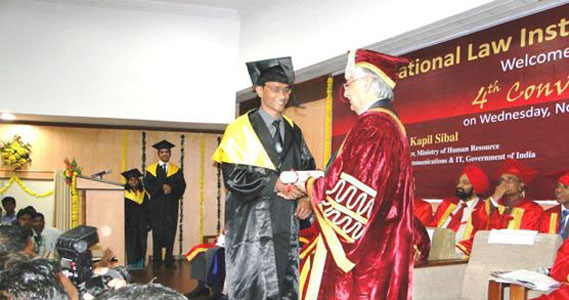
    Badrinath Srinivasan graduated from SDM Law College, Mangalore, in 2006. Thereafter he pursued an LL.M from WBNUJS, Kolkata. After graduating from WBNUJS he joined Gujarat State Petroleum Corporation Ltd. as a Senior Officer in the legal team. Later in 2010, he switched over to Bharat Heavy Electricals Limited.


    In this interview we speak to him about:

    • His time at NUJS
    • Working at PSUs
    • His diverse experience

    What brought you into legal studies?

    During my school days, I found that I was very good in and was comfortable with social sciences. I used to watch my uncle going to the Madras High Court every day and was probably inspired by him to join law.

    Many of my relatives from my mother’s side are lawyers. So I did not face any opposition to legal education, although Law as a profession was new to my parents. Even so, they left the choice to me. My elder brother advised me to choose the science stream in my 11th standard. His advice was very prudent considering that I could always take up law even if I chose Science but I would not be able to choose to do Engineering or Medicine if I took up Commerce or Arts in my 11th standard.

    The advice proved very helpful at work as the companies I have worked so far have predominantly been Engineering companies and there have been lots of disputes involving technical matters. It has been relatively easy for me to understand these technical aspects and even research a lot on such aspects considering my background in Science. I am perhaps lucky to have such supportive parents and brother.


    What do you have to say about the supposed ‘elite’ tag attached to certain law schools?

    I graduated from SDM Law College, Mangalore which is a “Traditional Law School”. I did perform well there. The faculty members and the library staff were extremely supportive. I did my LL.M. from NUJS, Kolkata and therefore I have the experience of studying in a Law School as well. Having been a part of both worlds, I find that following are the limitations in a Traditional Law School:

    1. Infrastructure- No Westlaw, Manupatra or other legal databases although the library at SDM Law College was awesome.
    2. Lack of a competitive environment.
    3. Lack of exposure- In all my five years of law school, I did an internship, did not even read a single judgement in full or a law review article. I hardly participated in moot court competitions. I never realized there was more to Law than a University rank.
    4. Exposure to Social Sciences- In a Traditional Law School, exposure to social sciences was minimal. Although we studied several social sciences subjects such as history, economics, sociology, there was no rigorous way in which these courses were taught. So we hardly studied these in the way it should be. Classes on these were rather bookish and uninteresting. But the way in which the social sciences were taught in NUJS were extremely refreshing. We had a paper in LL.M. on Law and Social Transformation and there was lot of social sciences in Jurisprudence. In fact, we invited a faculty member who taught Economics for undergraduates to take up Law and Economics in our LL.M. course. These were really great.


    There are some benefits of studying in a traditional law school as well. The most important benefit is a better understanding of the society. We had compulsory a legal aid activity in my college at Mangalore where we visited villages nearby to understand the legal issues/ problems people faced. Also, our class consisted of students from diverse backgrounds. The most important quality that I saw among students was humility.


    Being from a non-NLU did you find it disadvantageous to establish a well-grounded career?

    No. There were no problems at all. Although working in a law firm was not something I wanted, I am not sure if getting into a law firm after my LL.M. at NUJS would have been an easy task.


    Why did you decide to pursue LL.M from NUJS?

    After completing my LL.B., I had no strong feelings about taking a specific career path in law. I thought that I would probably become an advocate or work as a legal advisor in a company. But I was very interested in research. The idea of research appealed to me. So I wanted to do an LL.M. As regards the choice of college, I wanted to have the National Law School experience. After my 12th standard, I did write the entrance exam for NLSIU and NALSAR. With hardly any preparation, exposure or guidance, I could not get through. So I joined SDM Law College, Mangalore. So, I wanted to pursue the LLM course, and that too from NLSIU/ NUJS/ NALSAR. At that time, I had no clue about LL.M. abroad.

    During those days (2006), NUJS’ LLM Entrance used to take place in the last week of January. Therefore, I wrote the NUJS entrance exam first. I couldn’t write the NLS exam, as it coincided with my final year exams. I did write NALSAR. By the time the NALSAR results were out, my LLM classes had already started at NUJS. So I opted not to shift to NALSAR. I don’t regret those two years at NUJS- they were probably the best two years of my life.


    How would you describe your legal education?

    I did dream and I do dream of contributing at least a little bit to legal reform. While my UG formed the basis of understanding the law, my PG helped in understanding the theoretical aspects of law further and also taught me the methods and functions of critique. My legal education has immensely helped me in my academic endeavours.

    People often say what people study in law is totally different from what law is in practice. This is wrong. It means that they have never studied law in the first place. One hardly finds time to learn new things after beginning to work as a lawyer. So whatever we learn in law school is important. Whatever is learnt subsequently is at the cost of the client’s life, liberty or property. Therefore, it is important to learn whatever one can in the Law School. The curriculum in law school is framed such that important aspects of most of the significant laws are covered. Therefore, it is expected that many of the laws studied might not be put into use. However, these will be useful at some point or the other.


    How was your experience as an intern at ONGC?

    By the time I presented my dissertation and completed my LL.M. Course (March 2008) at NUJS, I had a job as a Senior Officer in the GSPC GROUP. But there were more than two months before my joining date. So I decided to intern at ONGC just to get a hang of how a government undertaking works. Also, GSPC GROUP and ONGC were both petroleum related companies.

    At ONGC, hardly any work was allotted to me. So, I had time to go through contracts and case files. I did help them out in a couple of issues concerning increase in service tax and minimum wages in the absence of a condition in the contract covering such a situation. People there were really friendly. I took that opportunity to learn a lot on Crude Oil Sale Agreement and Production Sharing Contracts and the petroleum industry. These things helped me when I started my work at GSPC GROUP. In fact, it helped me out immensely in a negotiation on COSA at GSPC. Also, even before I started working in GSPC, I knew a bit about Production Sharing Contracts and Joint Operating Agreements. So I had a lot of ammunition to impress my new boss there!


    What are the top three things you keep in mind while compiling a research work?

    Fortunately, I stay pretty close to my office. So I save a lot of time. Also, my interests coincide with the areas in which I deal with at BHEL.

    Three things to keep in mind while embarking on a research project:

    1. Know in detail what the problem/ issue is.
    2. Before beginning writing the paper, clearly define what you want to say vis-à-vis the problem and how you are going to approach it- structure your research
    3. Stop wasting time on writing the introduction in the beginning. Write it in the end.

    Importantly, one has to be convinced about the idea that he/ she seeks to put forth before the academic community. Another important thing is to have at least one person to review the paper, both from a readability and content perspective. For me it took an equal amount of time to read a paper and review it. Spend a lot of time reviewing the form, structure, and ideas in the paper. Before sending your work to a journal, it is important to give it for review to a faculty member or a subject expert. Also, it would be helpful if the article is read by a person who is very good in grammar. Even reputed authors commit grammatical errors.


    What does it take to get one’s article published in a top notch journal?

    First read the call for papers and the rules regarding publication (such as citation format, number of co-authors, type of research, etc.). Next, ask your seniors and friends whether the journal is really worth publishing in. While it is good for our ego to have publications in as many journals as possible, it is important to get our writings published in prominent journals. But it is always good to start off one’s research career by writing for a law blog or a journal that does not have extremely stringent publication standards as it is good for our confidence.

    As regards reputed journals, glance through a few articles published in the journal to get a hang of the style of writing, citation, structuring, etc. Do a comprehensive literature survey. Talk to a person well versed in the subject. Although such persons cannot substitute a thorough literature survey, they can at least tell you about writings which deal with the subject. It is possible that most of the ideas which we come up with are the ones which have already been published.


    How did you get the job as Senior Officer at Gujarat State Petroleum Corporation Ltd.?

    During my second year (LL.M.) at NUJS (2007-2008), we decided to invite law firms and companies to our campus for recruitment. Gujarat State Petronet Limited (GSPC GROUP), a Government of Gujarat Undertaking came to NUJS for recruiting us. Due to the efforts of the faculty advisor for Recruitment at NUJS, Mr Anirban Mazumdar, and my classmates at NUJS- Biswajit Pal, Nilanjan Banerjee, Jwala Thapa and MLS Kaarmukilan, we were able to institutionalize the recruitment process for LL.M. at NUJS. GSPC Group said they were willing to recruit LLM students. So they came to NUJS.

    If I remember correctly, there were two rounds in the recruitment. The first round had a bit of mathematics, general knowledge and psychometric tests. The second round was an interview. Since GSPC Group’s main business was Petroleum, we read a lot on petroleum laws. Also, we read a lot on current affairs in detail. At that time, the topic that was much spoken about was the subprime crises. We expected questions on the mechanics of how that happened. It really feels good when the preparation for the interview is extensive and questions come from areas which you had prepared. There was actually a question on the subprime crisis!


    What were your responsibilities as a Senior Officer of the Secretarial and Legal Department at ONGC?

    I was a senior officer in GSPC. I loved commercial law, specifically contracts and arbitration. My dissertation at NUJS was on arbitration law. So, the kind of work I got was drafting, negotiating and vetting contracts, handling arbitrations and litigations. Negotiating contracts was real fun, especially with foreign companies. At GSPC, we had a few huge arbitrations and it was a great learning experience there. I did learn a lot from many of the counsels at Mumbai, Delhi and Ahmedabad. I had the opportunity to be a part of the team briefing senior counsels in all these places. Overall, a great learning experience.  Thanks mostly to my boss there Mr. Sandeep Dave, Head of Secretarial and Legal Department, who is probably the best In-House lawyer I have ever known. Working under him, and that too with the excellent work profile at GSPC, is a great thing to do if a person wants to work for a PSU. The salary is not as high as it is in a Central PSU like ONGC but the salary is definitely good and the work is unbelievable.


    You are currently an Executive (Law) at Bharat Heavy Electricals Limited. How did the switch from ONGC take place?

    I was an intern at ONGC before joining GSPC. While I was working in GSPC, there was an open advertisement for recruitment of Law Officers. For personal reasons, it became necessary for me to shift from Gujarat to South India. So I joined BHEL.


    What do PSUs like ONGC and BHEL look for in prospective employees?

    Yes. It is totally different. BHEL used to select candidates through CLAT (LLM). Many of the PSUs such as IOC do select candidates through CLAT. Some PSUs like ONGC, GSPC go for campus recruitment. It is important for the Campus Recruitment Committee (by whatever name you call it) to approach them well in advance (through all means of communication, including visiting them personally if required). I have worked in three PSUs and have heard a lot about other PSUs. The best place to learn is in GSPC under Mr. Sandeep Dave. You’d get to negotiate international contracts worth millions of dollars there if you are really good at what you do. To be honest, the salary is not as much as you’d earn in a Central PSU but the learning is definitely worth it.


    Does BHEL take interns?

    Yes, but BHEL rarely takes law interns.


    What are your long term objectives?

    In five years, I wish to learn a bit about engineering, finance, economics and statistics. In the long term, I would love to be involved a lot more in arbitration and teach law.


    What would be your advice to young law students who wish to join a PSU?

    Lots of your time will be spent on obtaining administrative approvals and justifications from the authorities. One should not get bogged down by paper work as these actually are necessary for accountability reasons. There are two areas in which a lawyer can contribute immensely in a PSU:

    1. There is a great scope for reforming existing practices
    2. Quick decision making.

    While apt legal advice is extremely important in a PSU, aiding quick decision making is more important.

  • Shan Kohli, Associate, AZB Partners, on mooting and blogging, and working at Linklaters

    Shan Kohli, Associate, AZB Partners, on mooting and blogging, and working at Linklaters

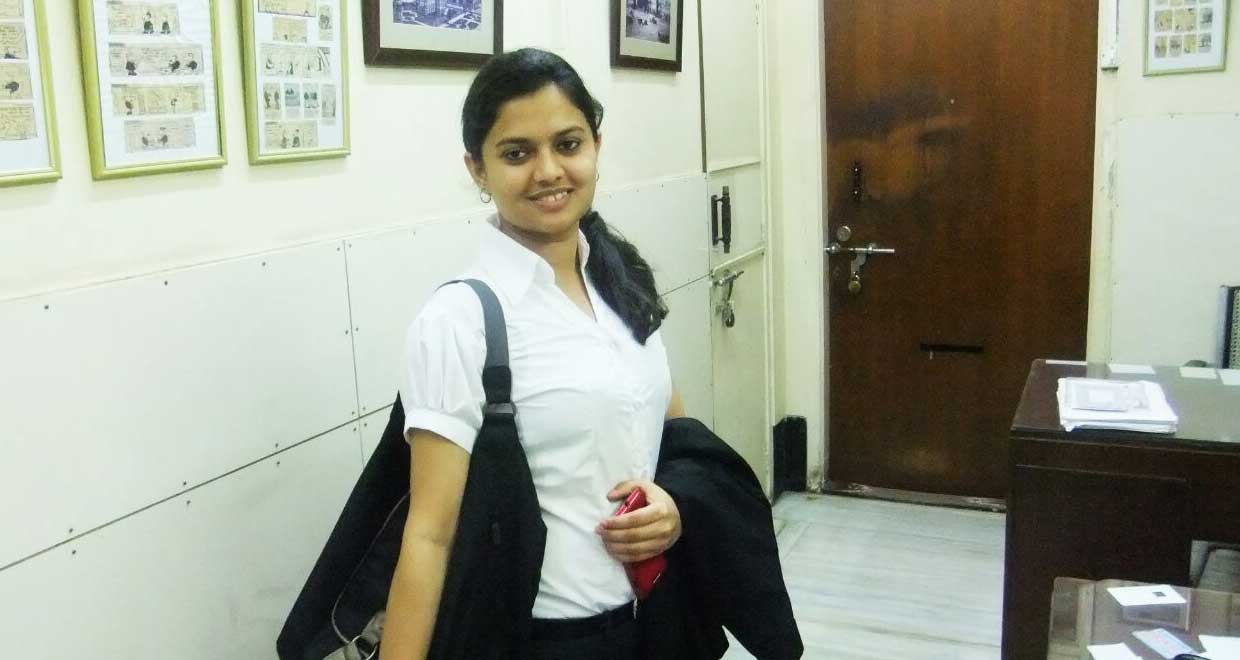
    Shan Kohli graduated from NUJS in 2011. She was an avid blogger at SportsLawyer and she has also been covered in news media as a sports law blogger. After graduating she got a training contract from Linklaters and after working there for sometime she quit to join AZB & Partners.

    In this interview we speak to her about:

    • Getting appointed at Linklaters
    • Necessity of an LL.M degree at a magic circle firm
    • Blogging on SportsLawyer


    How would you like to introduce yourself to our readers?

    I graduated from the National University of Juridical Sciences, Kolkata in 2011, completed my training contract at Linklaters and am currently working at AZB & Partners.  I studied in Bangalore at Sophia High School.  At school I was always very interested in participating in debates, literary events, theater and that laid the ground for a career in law.  I was quite sure by the tenth grade that I wanted to study law.


    Why did you choose law as a career?

    I had no other alternatives planned out. I was quite focused and sure that I wanted to go to law school.  This belief was cemented when I went to the Law School Tutorials (“LST”) classes for the entrance exams.  I enjoyed the discussions and debates.  I had some very sharp peers and trainers. The whole experience was very different from the typical classroom one has in schools, where one isn’t always encouraged to debate and ponder over issues much.  The LST classes gave me an opportunity to apply my mind and think on my feet.  After that, there was no looking back.


    What prompted you to consider NUJS, Kolkata for your legal studies?

    Back in the day when CLAT did not exist, we had to give individual exams for each university.  There was always another shot to do better.  I didn’t apply to too many universities; NUJS was definitely one of my top preferences.  I was elated when I got through the entrance exam.  Honestly, it wasn’t right on top of my list, though looking back if I had to make a choice given what I know now, it would be on top of my list.  Things have a way of working themselves out.


    Tell us about your time at law school.

    During my time at law school, NUJS was at the cusp of a change.  A new VC (Prof. MP Singh) had just taken over the reins and was spearheading a lot of student friendly reforms, bringing in lots of really good professors, introducing more electives etc, so it was quite an interesting time to be there.  I’m sure this is true for a lot of law schools, but in NUJS in particular we had a very vibrant student community.  Everything from the mess to the cyber committee was managed by students.  Everyone was very self-motivated and that sort of forced all of us to pull up our socks and keep up.


    As a law student which activities did you participate in?

    I wanted my law school experience to be holistic.  I wanted to explore every facet of what was on offer, so I tried to dabble in as many things as possible from joining societies, writing for the college newspaper, organizing events etc.  The one co-curricular activity which was constant throughout my five years was mooting.  I tried my hand at it in my first year since I was curious to try it out.  Anyone at law school knows how much fear and trepidation mooting evokes among students.  I was curious to know more and was hooked from my first year.  It also helped that mooting offered the opportunity to travel to interesting places across the world.  I’ve been to Australia and Taipei on my mooting trips.


    What kind of internships have you done?

    The set pattern that law school maps out for you, NGO in the first year, Supreme Court and then at law firms.  I interned at Janaagraha a non profit foundation in Bangalore in my first year, where I got the opportunity to get some hands on experience on a couple of interesting projects relating to urban planning and development.  I was given a lot of responsibility and a free hand to plan my own research within the parameters of the project at hand.  Besides, that I also did a couple of corporate law firm internships.

    Internships don’t really prepare one for their future job, however they help in developing skills like pushing yourself forward, making your work known around the organisation and are a great way of networking and meeting future mentors.  Law firm internships in particular can give you an insight on what a typical day is like for a corporate lawyer, but I don’t think any internship can fully prepare you for the future workplace, given the short duration.  None of my internships were longer than six weeks.


    Tell us about your mooting experience.

    (Shan was a part of the team which won the 10th edition of the ELSA WTO Moot Court Competition.)

    Yes I was, that was a very special moot.  Winning an international moot is the ultimate goal for anyone who moots at law school and I was no exception.  ELSA doesn’t have a national round concept.  We had an Asia Pacific round in Taipei and the finals at Dominican Republic.  The quality of judging and the teams was exceptional.  In one of our courts, we had Professor Bryan Mercurio, who had framed the problem that year, judging us.  He was particularly appreciative of our innovative approach to the problem.  I think that was really the highlight of the moot for me.


    Tell us about your preparation plan for any moot court competition?

    I think a lot of ground work needs to be done even before the moot problem is released. One really needs to understand the nuances of the moot.  Speaking to seniors or friends from other colleges who have gone for the moot in previous years is imperative.  Every moot court competition is different.  We have a tendency to criticise the moot problem, competitors, judging when everything doesn’t go right in a moot.  I think it is also important to understand the way a moot works, who is judging, how the moot is organised etc and crack the system.  We tend to sometimes over look the other factors at play and concentrate only on the legalese, which may not be the best way to win a moot.


    How did you manage mooting with academics?

    It’s quite tough, and to be honest I didn’t always manage it, but I was quite sure I wanted to give mooting a go and if anything were to go amiss I knew I had the opportunity to make up for it in the later years of law school.


    How did your appointment at Linklaters take place?

    The foreign law firms came to NUJS for the first time during my second year and picked up the cream.  We heard stories of lavish vacation schemes and well planned training contracts on offer.  The opportunity to work at some of the best law firms in the world was very appealing.  During my third year, I tried to attend as many of the presentations given by the foreign firms.  I tried to understand what they were looking for and tried to imbibe as much information about the firms as possible.  In my fourth year I was selected for a vacation scheme at Linklaters, at the end of which I received a training contract.

    I had the opportunity of spending six months each at four departments at Linklaters.  There was no sort of typical day, some days were more manic than others.  One of the more interesting departments I had the opportunity of working in was at Banking.  Every deal I worked on was a headline grabbing news worthy deal, which was very exciting.  One gets the opportunity to really sink one’s teeth into some of these deals and once the associates or partners see your interest then the level of responsibility and quality of work given to you also increases substantially.

    There were no challenges as such because Linklaters has fantastic systems and mentors in place.  It is also one of the most diverse firms, so I never felt like an outsider. Though I will say that here in India we tend to romanticize the amount of training one is supposedly given at any foreign law firm.  I think that sometimes training can be very pedantic and doesn’t always push you to engage, which can be counterproductive.


    What would you suggest a law student should do in order to land a job in a magic circle law firm?

    I think the application is the most important, as the starting point.  The application decides whether you can move forward through the subsequent phases.  It is imperative to begin working on the applications and submit them well before the deadline.  The answers should be well thought out, each question should be answered, even the little ones they tend to slip in.  I would recommend proof reading your application a number of times, ask one of your friends to go over it for you as well.  Attention to detail is critical and all magic circle law firms are sticklers for detail.

    At the interview, I think it is most important to really demonstrate that your focus is corporate commercial law that you want to make the move to London and work at their firm on a long term basis.  It is very important to have your thoughts together on what you want from your legal career and your life before the interview.


    shan-kohli-2

    Most of the English Law firms require an associate to complete an LL.M degree with some specialisations. How did you get to join Linklaters without a masters degree?

    Linklaters had no such requirement.  Most of the lawyers in the firm in fact did not have a masters degree.  I would recommend some prior work experience though.  Not just the few internships done at law firms in the holidays, but some significant amount of time at a leading corporate law firm in India, perhaps as a paralegal or an extended internship.  This is not mandatory but I think it would help in exposing oneself to the ways of a large corporate law firm.


    When and how did you decide to come back in India?

    I came back to India last year and joined AZB at their Bangalore office.  I’ve been lucky; I haven’t found any differences in work culture.  I think large firms tend to operate in more or less the same way the world over.


    When did you conceptualize the idea of having a blog about sports laws?

    (Shan used to write on the SportsLawyer, a blog about legal issues around sports and sporting tournaments in India – on branding, doping, broadcasting, national and state level sports associations, etc.)

    Sports law was one of the electives offered in college during my time.  I was very eager to delve into this nascent area of law.  I have always been interested in wanting to pave my own path, and to create something of my own.  The blog was a step in that direction.  I knew that the field of sports law and the issues surrounding it, were not being debated as much as they should have been.  There wasn’t much guidance from literature to rely on so we (my co-bloggers Abhuydaya and Ramanuj) had to do all the groundwork ourselves.


    Lastly, what would be your message to our readers?

    Keep reading SuperLawyer! All the best Donnie for all your endeavors.


  • Ujjaini Ghosh, Assistant VP-Global Transaction Banking, Deutsche Bank, on studying at Oxford, and working with Herbert Smith, and Linklaters

    Ujjaini Ghosh, Assistant VP-Global Transaction Banking, Deutsche Bank, on studying at Oxford, and working with Herbert Smith, and Linklaters

    Ujjaini Ghosh graduated from NUJS, Kolkata in 2006 and went on to pursue her BCL from Oxford. After her BCL she joined Herbert Smith, worked at Linklaters, Singapore with the banking group, and eventually graduated to Deutsche Bank in January 2013.

    In this interview we speak to her about:

    • Her time at Oxford
    • Working at Linklaters
    • Her experience with Herbert Smith

    How would you like to introduce yourself to our readers?

    Well to put it in a nutshell and assuming that the readers are from NUJS, I would introduce myself as an alumnus (batch of 2006) of NUJS who spent some of her best and formative years at this institution, grew as a person, made amazing friends and now looks back fondly and maybe with a tinge of nostalgia at those years gone by.

    Post NUJS, I joined Oxford for my BCL in 2006. After completion of my BCL, I joined Herbert Smith as a trainee solicitor and qualified as an associate in the finance division. I eventually moved to Linklaters in Singapore where I worked as an associate with the banking group and in January 2013 moved to Deutsche Bank where I am currently working as a legal counsel in the global transaction banking department.


    Why and when did you decide to do law?

    To be honest, I decided to do law at a point where law was fast becoming a popular career option after engineering and medicine and I knew for sure that I did want to become a professional and make a difference though not necessarily in medicine or engineering! I joined NUJS after studying English honours for a year at St Xavier’s College, Calcutta.

    It was during my five years at law school that I realized that studying law was probably the best decision I could have made. NUJS was very interactive in its teaching methods and I could clearly link the knowledge of different spheres of legal education to the individual, society and corporations. More than the subject itself, it was the application of the subject that interested me.


    ujjaini-ghoshHow was studying at NUJS like for you?

    The question does make me feel ancient! Studying at NUJS was a very interesting and a brilliant experience, an experience that transformed my personality, made me aspire, made me ambitious and taught me to drive myself as hard as I could. The ambiance, the faculty, the students, the activities made five years literally fly by. NUJS was not just about studies but it was also about the multitudinous activities on offer. I do remember taking part in moot court competitions, cultural activities such as singing, dancing and theatre, coordinating seminars and group discussions, being part of various committees, assisting in legal aid projects and the list goes on.

    Life at NUJS ten years ago was very inspirational for the students. We were part of a fledgling institution and each one of us as students were driven by this urgent need to not only prove ourselves but also to make NUJS reach greater heights. The institution had an incredible moot court society which brought in awards with limited resources. The close knit student community made life in the hostel a lot of fun and the faculty members were not just “teachers” but friends and in some cases confidantes.


    What sort of internships did you do while in college?

    My internships were varied. I interned with Sanlaap (an NGO in Calcutta),  the trial court in Calcutta, Delhi High Court and law firms such as Khaitan and Amarchand & Mangaldas. I also interned with the Singapore International Arbitration Centre and Wong Partnership in Singapore. All the internships have played a defining role as these helped me understand how law worked in the practical world and also provided me with a better idea of what I wanted to do after law school. The internships were a stepping stone towards shaping my career. It’s just been seven years since law school so there is a long way to go!


    What was the first thought that came to you when you got your acceptance letter from Oxford?

    I was ecstatic and actually cried with joy! The experience was brilliant.  The academic curriculum, the students and Oxford the town itself made the experience worthwhile. The BCL is an international course and draws students from all over the world. I made some amazing friends who I am in touch with till today.


    What made you go into the corporate sphere of law?

    The internships did help in making me choose my area of specialization. I found myself natural leaning towards corporate law as compared to other areas where I can see myself making an effort.


    Would you take us through the application process for Oxford?

    Applying to Oxford is similar to applying for any top rated LL.M program in the world. I would say to apply straight after law school requires some planning in terms of studying methodically, participating in extra-curricular activities, preparing good essays and actively seeking out references.


    What was it like working at Herbert Smith?

    Working at Herbert Smith was a fantastic experience. The training program is very thorough and the six months spent in each department goes a long way in understanding different areas of legal practice. The learning curve was steep but the kind of confidence and knowledge that I acquired is unparalleled.  I learnt a lot from the partners, the senior associates and my peers.


    Could you enlighten us, in brief, on the particulars of Islamic finance and your role in the Finance Team at Herbert Smith?

    I was an associate in the acquisition and leveraged finance team at Herbert Smith and subsequently Linklaters. The work has been varied ranging from vanilla lending to secured syndicated finance deals to highly leveraged secured deals.

    Islamic finance to me is simply finance deals that are structured bearing in mind the principles of Shari’ah law e.g. there is no reference to interest in the documentation. However at the end of the day, the basic essence of financing remains the same.


    How does it feel like to be Assistant Vice President – Global Transaction Banking at Deutsche Bank?

    It’s proving to be enjoyable and challenging at the same time. I am part of the transaction banking front office team which means I get to liaise with the different business teams on a daily basis. Its fast paced and solution oriented. Along with legal knowledge, I am expected to understand the various products that are offered to clients and draft/review documents and advise clients on the implications of different contractual arrangements. The work involves dealing with liquidity management products, international fund transfers and trade finance.

    Deutsche Bank is a very fluid organization and I can see my role changing and growing as I grow with the business team.


    What do you think of the young law graduates/students and the standard of education in the field currently?

    I think very highly of them and they are definitely a very focused lot. I have not been deeply involved with the academic field for the past seven years so it’s difficult for me to comment on the standard of education. I do feel that along with theory there should be a focus on the practical implementation of law.


    Any advice you’d like to give to young lawyers who hope to follow in your footsteps?

    I am sure that every young lawyer will be able to chalk their own path, but I would definitely encourage them to enjoy their years at law school and subsequently the practice of law. I would urge them to do what they want to do and not get bogged down in their fifth year and the first few years of legal practice by comparing themselves with their peers or superiors. Each lawyer is unique in his or her own way and there are no set rules to follow.  In seven years, I have learnt that its best to not take oneself too seriously or set very high targets but at the same time to enjoy learning and give 100% to whatever work I do at any point of time. Trust me, success follows when you can give as much as you can to your profession and yet manage to enjoy yourself at the same time.

  • Sneha Thakur, Law Graduate, on winning Best Researcher at Henry Dunant, writing for journals and LL.M from QMUL

    Sneha Thakur, Law Graduate, on winning Best Researcher at Henry Dunant, writing for journals and LL.M from QMUL

    sneha-thakur-2Sneha Thakur graduated from the first batch of RMLNLU, Lucknow in 2006. While at Law School her team won the Henry Dunant Best Researcher spot. As a law student she has been quite active and participated in many debates, MUNs and conferences. Soon after graduating from RMLNLU she was awarded the “Centre of Commercial Law Scholarship” from CCLS at Queen Mary University, London and thus she pursued an LL.M in Corporate Governance and International Comparative Commercial Arbitration from there.

    She is currently preparing for one of the toughest Bar Exams in the world: The California State Bar Exam.

    We asked her about:

    • Importance of mooting and collaborating for Best Researcher at Henry Dunant
    • Writing for journals and publications
    • LL.M experience, faculty and facilities at QMUL


    Given that most of our readers are law students and young lawyers, how will you introduce yourself to them?

    Firstly, I would like to congratulate you and your team for this endeavor. Launching such a website is indeed an innovative and creative step. It is certainly a breath of fresh air. Your website provides a complete ladder to a law student to understand their career path in law. Reading the interviews of top notch people in the legal field would certainly be an intellectually stimulating experience for a young lawyer who would gain first hand insight into the legal profession.

    Law happened to me by choice, it’s one field that has always fascinated me. I completed my law degree from RMLNLU Lucknow. After completing my degree I had an opportunity to work as a corporate lawyer in one of the biggest life insurance (Max Life Insurance) companies in India for a year. Then I was fortunate to be awarded the Centre of Commercial Law Scholarship from CCLS at Queen Mary London and completed my LL.M in Commercial and Corporate Laws with a focus on Arbitration.


    How did you gravitate towards law?

    Being a lawyer was my first occupational choice after careful consideration. Law for me is like a passion that runs in the veins of my family. My dad has always acted as my role model. Being a Senior Advocate, he had influenced me to a great extent to choose the profession. He has been my guiding beacon of light, always encouraging me and also gave me the freedom to take up the profession that interests me the most.

    Five years in RMLNLU has played a very important role in grooming me as I stand today. They were the most fun filled years of my life. It was like a family where you grow and develop yourself. The lesson that a law school teaches is that the end is not nearly as important as the means. I believe law school is a platform where a student is groomed to practice law rather than learn it. For being a successful lawyer always remember to be confident but not arrogant.


    What does it take to be a great researcher?

    (Sneha had won the Best Researcher Award and her team was also one of the quarter finalists at Henry Dunant Moot Court Competition.)

    Being the pioneer batch of RMLNLU we had faced some grave problems as we had no seniors or experienced mooters to guide us through the journey. The whole process of preparation and reaching the quarter finals among 65 teams when we were just in our second years and then bagging the Best Researcher award has been a momentous experience for me. We had put our body and soul for this moot and had spent the whole vacation in ISIL and ILI libraries. We even went to NLSIU and ILS Pune for the research work.

    The key to be a great researcher is to dissect the whole case, a researcher needs to be like a encyclopedia of the case at hand. A good researcher should also have excellent writing skills and should have clear knowledge of citing cases and references in preparation of memorials.

    The real problem faced in law school is to balance your academics with mooting as preparation takes almost as good as six months. In this regard our professors were helpful who provided us some project exemptions. Mooting is like a nerve cracking passion, as much honestly you put in, so shall be the result.


    Share some of your memorable mooting experiences.

    Mooting has been my passion ever since I joined college. The whole feel to argue your case in front of real judges, the period of preparation, research, long hours in library and team work prepare us for those few days in which we get practical insight to the real life of the law profession. The most memorable mooting experience was the one I gained during Willem.C.Vis International Arbitration Competition in Vienna. Arbitration is different form of mooting and competing against 260 teams around the world is indeed a nail biting experience. I have realized that few universities have libraries which have complete set research books for arbitration. In this regard I must say that now RMLNLU, NLSIU, NALSAR and ILS pune libraries are well equipped for arbitration research.

    The second experience I’ll always cherish is the team management skills which I developed when I organized several Moot Court Competitions in my college. Being the Convenor of the MCC one needs to delicately balance the work on hand bracketed with your ability to hold on to your position as a leader. It groomed me to work under timelines and develop the organizational skills which are very important for personal and professional development.

    The mooting tips I would like to share firstly is for the stage of preparation which tends to be the most time consuming part of mooting. You will need to ensure you know what you are expected to argue and read the fact pattern thoroughly and begin assimilating your relevant authorities for discussion. Make sure you know all the cases or authorities you are citing inside out, along with the general area of law on which the moot is based. For mooters always be prepared with your skeleton arguments and question yourself on it no matter how small and irrelevant the fact it may be on. This will prepare you for the final day.

    Secondly, as for the day of the moot, I know your stomach is full of butterflies. But don’t panic! Rehearse your speech in advance and familiarize yourself with the layout of the court room in advance. Secondly don’t write your full speech on paper, indeed write the bullet points on a small number of cue cards. Another thing to remember is to have soft speaking skills and pause while speaking so as to give time to judges to deliberate. Also remember that don’t be very anxious to finish your submissions and do so in a rush. There’s nothing worse you can do when it comes to finishing your moot. Make sure that you end it appropriately; by finishing with a conclusion and by telling the court what you want it to do.


    How helpful do you think is mooting for a law student?

    Mooting is the closest experience that you can get as to appear in a real court.  It a process of learning the Law differentlyand provides a holistic approach of learning by developing research skills, advocacy skills or even just plain old teamwork skills. Mooting boosts up the confidence level of the student and also serves as bolster addition to your C.V. and make oneself more attractive to potential employers. If one harbours any desire to become a practicing advocate then it is safe to say that employers can only look favourably on those who have mooting on their C.Vs, as this is a sure-fire sign that you possess these important attributes needed.


    How important is it to publish articles being in a law school?

    Writing papers serves several important purposes. First, it develops one’s research skills. Second, it provides us with an intensive writing experience in preparing one or more papers of an analytical nature. Third, it provides us with an opportunity to deliberate on the subject and provide our thoughts on the same.

    Publishing articles also serves an attractive point in your CV. As a good internship strikes a gold point this one serves as an additional star. It attracts recruiters as it showcases one’s drafting skills and the ability to research.

    It is rightly remarked that the written word is one of the most important tools of the legal profession. Words are used to advocate, inform, persuade and instruct. Although mastering legal writing skills takes time and practice and are essential to success. But all this depends on you interest and writing skills. One should always aim to analyse the law and add something from their own thought process rather than dissecting the analysis and history written by other authors.


    Do you think participating in extracurricular activities like MUNs, Debates, Seminars and Conferences proves to be of help to law students?

    Participating in such international conferences, seminars and paper presentations provides a firm base to law students to go beyond the books and help students to analyse topics and realms of international and national law which are not taught in law schools. It helps to develop and hone their research skills and provide a platform wherein they can present their own thoughts and insight to the critical legal issues. The ISIL and ILI libraries in Delhi have a huge collection of legal writing and articles which help for the preparation. Also the whole presentation provided me with a confidence to speak freely in public and I am sure these experiences help in professional practical career afterwards.


    How did you go about securing internships at various law firms?

    To secure good internship please be cautious to apply well in advance and keep a track of your application with frequent reminders. These days several national essay competitions are also providing internships as a prizes. Be sure to keep a track of it. Also some of your seniors might help you to get through some good internships.

    It is important to plan out your internship. Start from interning with Counsels and then opt for law firms. You should also mix governmental corporate internship. You don’t need to be specific in law school; try out different platforms so that you are sure at a later stage. While interning everyone has to go through the phase of trivial work. Even researching some basic points or finding case laws should be taken as an opportunity to learn. If you take interest and work diligently and quickly brief your seniors about your work, I am sure you would attract the firm’s attention for a PPO.


    What do you feel about the importance of a good CGPA and contacts when attempting to secure an internship?

    I think your CGPA does play a role in securing an internship and later college placements. As a member of placement committee I had observed most of the top tier law firms has one of the requirement to interview candidates who are among top twenty in their batch. For students who have no contacts in the law firm, it is necessary to secure good CGPA. College is fascinating and it a fun life but my only advice is that they shouldn’t ignore their studies. Even if you are not a topper but it is important to stay focused. Be aware of the happening in the legal world and try to gain more practical experiences.


    What was your motivation behind pursuing an LL.M.?

    I always wanted to pursue LL.M. Initially I was confused from where I should do it. It’s important to know the area one wants to cover in their LL.M program. LL.M provides a path to develop one’s skill and knowledge in a particular field of law. Once I was sure about the course I wanted to take, I decided to pursue an LL.M.


    How did LL.M. from Queen Mary, University of London happen?

    I always had an inclination for studying arbitration in depth, as in recent times the commercial world is taking a path towards dispute resolution mechanisms such as arbitration and mediation. Through my extensive research I found out that Queen Mary is one of the few universities which has also a well-known School of International Arbitration and is a well-respected member of the Arbitration community. The courses are designed in such a manner that they would provide an excellent foundation to the professional career in arbitration, focusing on both practice and procedure.

    I was fortunate enough to get through UCL, LSE, Kings College London, Newcastle University, Leeds University, Edinburg University and Glasgow University. In USA I got through NYU and Georgetown University. I was about take up the arbitration course in combination with commercial law from UCL but was awarded “Centre of Commercial Law Scholarship” from Centre of Commercial Law Study at Queen Mary which covered the entire waiver of tution fees and then Queen Mary happened.


    Please tell our readers about the application procedure and other requirements?

    The application procedure of Queen Mary requires high academic result combined with at least 105/120 TOEFL score. This year as per the Guardian’s Ranking Queen Mary School of Law is at third position after Oxford and Cambridge.

    Queen Mary offers two School of Law Scholarships (full tuition fee waiver) and two Centres of Commercial Law Scholarship (full tuition fee waiver). Queen Mary offers 2 partial scholarships each worth 50% of the tuition fee for the new LLM s –LLM in Energy and Natural Resources Law and LLM in International Shipping Law. Among other scholarships are Commonwealth Scholarships, Chevening Scholarships, Queen Mary Drapers Scholarships, Jean Monnet, CCLS/FGV Rio, Brazil, CCLS/University of Lagos, Nigeria, CCLS/School of Economics and Finance joint M.Sc Law and Finance and LLM in Law and Economics bursaries.


    Please tell our readers a bit about the course of Corporate Governance and International Comparative Commercial Arbitration from QMUL.

    The most attractive part of my academic module was studying International Comparative Commercial Arbitration from the likes of Professors Loukas Mistelis (Winner of Global Arbitration Review Award), Julian Lew and Dr. Stavros Brekoulakis. Studying from the stewards in the fields who are pioneer and leading authors of International arbitration books and leading contributor to the science of international arbitration and litigation. They have close links with major arbitration institutions and international organizations working in the area of arbitration and also conduct frequent research projects in this field. The classes are very interactive and one needs to be prepared to participate in the discussions. This module is designed in a manner to provide a deep understanding of the special characteristics and needs of international arbitration.

    The Module Corporate Governance is especially designed to provide an depth knowledge of financial regulations, impact of globalizations, various corporate governance systems in the world and corporate accountability. Prof Alan Dignam is a renowned writer in commercial law books and is also an advisor to Amnesty International’s Business Group on their corporate accountability.

    The tutorial classes in each module have been fruitful as it gives an insight and one to one chance to interact with the Professors and to know the correct methodology in solving the problem. It has provided me with a chance to study legal issues in classes composed of graduate students from numerous countries, who would resolve these issues differently and provide me with a completely different angle to look at.  Frequent seminars organized by the School of Law regarding the emerging and controversial issues are also very beneficial and useful. There is an abundance of e-resources to research upon and the libraries are well equipped with almost all the possible journals, reports and books.

    Studying in an international environment at Queen Mary, with students of various ethnic and cultural backgrounds has provided me a chance to know and understand different people and cultures which in itself is a wonderful and enriching experience and to add London as a location is perfect as a seat of Arbitration for all the global exposure and experience that one needs as it is the most inspiring and culturally rich city.


    How was the academic schedule?

    You need to study hard before the class. That is it. Every class is not confined to books and preparatory materials. The academic schedule is such that you need to prepare the basics before you enter the class. The classes are interactive and discuss the practical aspects of every subject and how it is dealt in different jurisdictions. Regular reading materials are provided along with reference to different books which the library is well equipped with. Frequent tutorials help in solving the question paper. For dissertation support each mentor guides you through the entire journey from selecting your topic to the division of titles, recommending books for references, guiding you through the current trend, insights to the major cases. One to one interaction with the mentors generally helps one to a clear idea about how to write the perfect dissertation


    How difficult was studying abroad in terms of finding accommodation, finances and settling in?

    Unfortunately, by the time I decided to go for Queen Mary, there was no hostel accommodation available. I stayed in London in a house shared by some of my friends. It must be acknowledged that rental prices are the highest in the capital, and students should be prepared for this even with the extra loan on offer, though you have range of options such as student houses which includes Nido, Mansion Tower and Urbanest as the best options. One also has an option of renting a house, wherein students are exempted from the local tax. And if you feel like earning a bit of extra money, generally part-time work is pretty easy to come by.  The major lifestyle benefits of living and studying in London, ranging from nightlife to food markets and culture, all are located in the centre. London is a student friendly city and there are a lot of activities to do and to enjoy your life in London. Ultimately everyone falls in love with this dynamic city.


    How’s the Indian fraternity over there?

    London is known to be the hub of cultures from students from all over the world. Queen Mary has a vibrant student community. The Indian Student community at Queens frequently organizes parties and get togethers for the celebration of festivals. Everyone is very interactive and helpful in each aspect. The Student Union at Queens also help the new students in settling down and also develop their skills and interests.


    Where do you see your career in the next five years?

    Right now I am living in San Francisco and preparing for California Bar Exam. In next five years I see myself as a commercial lawyer and develop my skills in the field of arbitration, I have been working with a firm based in Dubai which is establishing itself in USA and provides legal help to the companies who have their work base in UAE and Asia.


    Lastly, what would be your message to law students interested in going for higher studies from India?

    My message would be that you should do complete research on the law schools from where you want to pursue their LL.M. Every University has its specialisations in particular legal fields. Make sure you shortlist your choices. Also there are many scholarships given to support your post-graduation from Commonwealth, Chevening Scholarship, Tata Memorial scholarship and individual scholarship of every University.


  • Suveer Bajaj, Co-founder, FoxyMoron, on Digital Marketing, law, and plans for the future

    Suveer Bajaj, Co-founder, FoxyMoron, on Digital Marketing, law, and plans for the future

    suveer-bajaj-3Suveer Bajaj pursued LL.B. from the University of Mumbai, batch of 2012. Prior to that, he had pursued his BMS in Marketing. He is the founding partner of FoxyMoron, a Digital Marketing Company, which is mainly functioning from New Delhi and Mumbai. The company has eminent clients like The L’Oreal Group, Bacardi India, Castrol, Fosters, The Cadbury Group, Asian Paints, The World Wide Media Group, AXN India, VIP Industries, Rajasthan Royals, Quikr and has nine offices between New Delhi and Mumbai.

    In this interview we speak to him about:

    • The switch from law to marketing
    • Essentials for being a successful marketeer.
    • The mechanism behind the rapid growth of FoxyMoron.


    What motivated you to pursue law?

    Law was always the first option for me from an academic perspective right from the time I was old enough to decide what I wanted to study. It definitely wasn’t a virtue of chance. It was a well-educated decision; one I had actually been looking forward to for quite a while before I actually even started studying law.


    How would you describe the chronicles of your college life?

    I always kept myself active and busy through my college days. I started working literally one week after I got out of school. I actively participated in a number of college activities including the Rotaract club, represented my college in almost every inter-collegiate festival and went on to creating a Model UN session for my college which at the time, was the largest college level MUN in Mumbai. I interned actively through my summers and eventually started FoxyMoron in the summer of 2008 after I completed my second year of degree college. This required me to pull odd hours and double up on both my academic and social life, but I was more than happy to make the sacrifice while in college.


    Tell us about your experience as a Space Intern of the renowned newspaper Indian Express.

    I interned with the Indian Express Group in the summer of 2007, which was my first summer in degree college. I worked under the direct mentorship under the (then) General Manager of Space Marketing, also known as ad sales. I learned the ropes of how ad sales were done and actively worked with all teams to understand how the dynamic of print advertising works with various departments. It was my first formal interaction with sales targets, corporate discounts and the IRS. We whiled away our lunch breaks at the art room watching how tediously the art directors created the lovely print ads we see in newspapers today.


    What are the essential ingredients to become a successful marketer?

    There is an age old saying: Sales and Marketing go hand in hand. Neither comes first and neither comes second. In order to understand the ethos of marketing, I think it is important for a good marketer to step out of the grid and start understanding a client’s business objectives as opposed to restricting his horizon to merely a client’s advertising or communication objectives. A good marketer must know how to ad value to his client to extent that he becomes an integral part of the client’s business and thereby becomes indispensable to the business life cycle. Good marketing is always object oriented and resolution led.


    suveer-bajaj-2

    How do you think knowing law benefits an entrepreneur?

    Sound legal knowledge can help any person in any walk of life. Especially whilst doing business. For instance, in the case of FoxyMoron, my legal knowledge assisted me in drafting my initial partnership agreement and leave and license agreement. At a very young age, we were in a position to understand business risk and could therefore account for its protection. An understanding of company law ensured that as an organization, we were compliant with the various different aspects of “business.” By virtue of the industry that we function in, an introduction to Intellectual Property Law helped in ensuring that our creatives were royalty-managed. All in all, from a business structuring and risk assessment perspective, understanding the law has really assist in the speedy growth of our organization. It has ensured that our growth has been rapid and we haven’t been slowed down by heavy law firms. It has ensured that we create an environment in which we are well aware of our rights and responsibilities and can function independently as empowered entrepreneurs.


    How did you choose your co-founder?

    The birth of FoxyMoron was a joint decision that we all made collectively. We were all friends well before we started working together.The best advice I can offer people who are looking forward to collaboration with friends is to learn how to keep your personal and professional lives apart. Remember, that by day, you are colleagues, but by night, you are still friends and will still socialize together. Work must never compromise a friendship and neither must a friendship compromise work.


    What are the prime hurdles that a non-lawyer entrepreneur has to come across?

    One of the prime hurdles that a non-lawyer entrepreneur may have to overcome is insolence due to naivety. It is common with most people that do not know the law to be intimidated by it. It is even more common for people who do not know the law to be taken advantage of, whether commercially or in spirit. Business houses have large legal departments and are often represented by big firms across the company. This by itself can be intimidating. Legal understanding helps put entrepreneurs at par with larger organizations in terms of negotiation. It enables entrepreneurs to understand the extents of their rights and therefore enables them (us) to empower themselves.


    Tell us about your journey with FoxyMoron so far.

    Our journey has been fabulous. We started with just the four of us, with four laptops, with no seed capital, in my bed room. It’s been six long and fun years and we have grown to a family of over 200 with nine offices between Bombay and Delhi. We represent some of the country’s biggest consumer brands and are powered by a young, talented, enthusiastic bunch of twenty-something year olds that are determined to change the digital landscape in India. Our work has gotten us recognition across the world and has received several awards and accolades. Business has grown organically; both in size and scale. It has been a joyous journey, salt and peppered with a lot of ups and downs, a lot of hurdles, sacrifices and compromised.


    What kind of internships would be beneficial for law students who want to pursue entrepreneurship?

    For any students who want to pursue entrepreneurship, the best kind of internships are in start-ups. In a start-up, one is made to do literally everything. The exposure that one gains from working in a startup is unmatched. The experience of watching and contributing to the growth, structure and sustainability of a business is what shapes many vocational choices in life. The fact that you will interact personally with top management, the fact that you will do work that isn’t only limited to data entry, the fact that you might have the opportunity to walk into a meeting with a CEO of your client’s company. The journey of a start-up is un-paralleled.


    How did you get to work with such big brands in just five years of presence?

    (FoxyMoron has served imminent clients like The L’Oreal Group, Bacardi India, Castrol, Fosters, The Cadbury Group, Asian Paints, The World Wide Media Group, AXN India, VIP Industries, Rajasthan Royals, Quikr.)

    In India, most businesses are relationship based. Two things that we have really managed to do right over the last five years is:
    (1) To retain business that we work with year on year. Most of the clients that we work with are happy to have us back renew contracts annually.
    (2) Penetrate large business houses. You may start working with one brand from an organization, but it is important to be able to expand horizontally and vertically inside organization. Working with multiple brands from the same group often assists in sound understanding of the industry and hence helps offer an acute domain specialty.

    And of course, at the end of the day, your work speaks for itself! Good work manages to get around, get noticed and pick up a few awards along the way.


    Do you think Delhi is a better place to start-up in comparison to other metropolitans?

    At present, my work base is still very much Bombay. We have set up shop in Delhi last year and are, in fact, inaugurating our second office in Delhi today, but we are very much head quartered out of Bombay and I very much still operate of Bombay. The capital, however, presents currently, a wonderful diaspora of opportunity. A lot of brands have now shifted head quarters to Gurgoan and hence from a client opportunity stand point, Delhi (Gurgoan) is gold mine from a business perspective.


    What are your thoughts about raising capital for FoxyMoron from investors?

    FoxyMoron has always been a business that has grown organically year on year. Our limited business understanding has ensured that our business has been in the green since year one itself. Services businesses are usually not capital heavy and hence do not require sizable capital to scale. It has never been our intention to raise capital from investors or therefore, offer equity in exchange for the same. One of the best decisions we made while scaling the business was to retain the independence of running the business as flexibly as we wanted. Allow it to naturally take the shape that it has and come through its journey to reach a point of stability.


    When you hire people under you, what kind of skills and profile do you look for?

    When we hire people, we look for people that have a flair for communication and have a zest to learn. In our line of work, we understand that it is hard to come by people that have relevant work experience and are happy to take on freshers and train them. We have a robust training, learning & development program and have recently appointed a Chief Learning Office (CLO) to help up skill our teams and keep them up to speed. Students can help develop skills by consistently reading good literature, following international advertising and interacting with Digital Media themselves.


    Does the knowledge of law help to have any edge in marketing?

    With digital and content marketing, the understanding of Intellectual Property Law is a necessity. The internet is a cess-pool for infringement of IP. The bridge in terms of Law and Digital Marketing definitely lies in understanding IP law and it’s bearings.


    Is there scope of legal internships in FoxyMoron?

    Yes, we do take on legal interns through the year. Applicants can write to us at careers@foxymoron.org


    What is your message for law students who want to pursue entrepreneurship?

    Don’t over think things! As lawyers, we are taught to over think everything five times – often, that is the biggest mistake an entrepreneur can make or can get slowed down by. Entrepreneurship is a virtue of gut and instinct. While it is important to be a little thoughtful and conservative in our approach, they only way the ball rolls is when we stop thinking and start doing. Entrepreneurship is about checking things off the to-do list. Not adding more things on.

  • Dharmendra Chatur, Advocate, King & Partridge, on choosing law over engineering, topping his batch in law school, and plans for the future

    Dharmendra Chatur, Advocate, King & Partridge, on choosing law over engineering, topping his batch in law school, and plans for the future

    Dharmendra Chatur graduated from Christ University School of Law, Bangalore in 2013, where he was class Valedictorian and was awarded  the Basant Kumar Sarala Birla Gold Medal for being the Best Outgoing Student. Currently he is an advocate at King & Partridge.

    In this interview we speak to him about:

    • His experience
    • Requisite skills for being an efficient litigator
    • How to apply for internship at King & Partridge  and research assistantships


    How would you like to introduce yourself to our readers?

    I’m Dharmendra Chatur. I’m currently working as an Advocate at King & Partridge, which is one of the oldest law firms in India (established in 1904). During law school, I was an active mooter and published a few articles in international and national journals. I had a brief stint with debating as well. Being interested in academic writing and research, I was involved in research on and continue to be interested in the fields of law and public policy. I currently follow developments in the areas such as legal and judicial reforms and health and medical law.


    dharmendra-chaturWhy did you decide to study law?

    Honestly, studying law was never a career choice during school. I took up Science in my 11th and 12th and had decided to do engineering (following the herd!). In fact, I enrolled myself into the Mechatronics Engineering programme at Monash University, Australia (Malaysia campus) and spent one month there (February-March 2008) before deciding to call it quits. The realization that I did not want to be an engineer dawned upon me only after I began my engineering courses! However, I had a great time being an international student at Monash – although for a limited time.

    After I returned to India, I did a bit of soul-searching and introspection and thought of giving law a try. Being a first generation college-goer (in any course), I was fortunate to have no family pressure to choose a particular course. The lack of pressure therefore allowed me to explore possibilities with my career choices. I joined LST for a one month crash course to see if I would be interested in law; and prepared for the first edition of the CLAT. Being unsure if I had done well in CLAT, I enrolled myself into Christ University mainly because of the excellent faculty and campus facilities there.


    According to you what are the qualities of a good lawyer?

    Speaking from my limited exposure to the legal profession, a good lawyer must have three qualities – at the very least – firstly, he/she must be sociable and polite; second, he/she must have a good grasp of legal knowledge (both theoretical and practical); third, he/she must aspire to be independent in thought, inclination and action to develop a dispassionate mind.


    What were your areas of interest while you were studying law?

    I was interested in public law generally and a few subject areas in private law especially company law, law of contracts and so on. In addition, I was also fascinated by public international law and conflict of laws.


    You are working with King and Partridge right now. What is a day at work like?

    As I am a practicing Advocate at King & Partridge, my work day involves preparation for and assisting my senior colleagues with appearances in the High Court of Karnataka/Civil courts/Arbitrations in Bangalore.


     What skills and attributes are important according to you to hold a job like yours?

    I believe three skills are important for any litigation job in an Advocate’s formative years: strong grounding in basic aspects of the law, immense patience to learn and grow and learning by observation.

    To law students, I would suggest that they must make consistent efforts to understand certain basic concepts in all areas of law – this will hold them in good stead when they begin (a beginner’s advantage, in a way). In addition, you must better your research, critical thinking and argumentative skills – all of which you can learn by mooting, debating etc. In essence, please utilize every opportunity law school provides you to become your own person – with a voice to be heard.


    What is the most challenging or stressful part of your job?

    The transition from law school to law practice is both challenging and illuminating. Challenging because law schools do not prepare students to face a practical world (which is why some Advocates shine without having attended many classes in law school). However, I believe that time well-spent at law school can only make one better equipped. My transition was illuminating because you get exposed to a very different world which requires strategic planning, execution among other things. Also, you figure that law and justice are ‘personal’, in the sense that from different judges, the same facts and circumstances may elicit responses. Therefore, a successful Advocate is, in my opinion, is a person who can gauge what a judge requires and prepares/presents a case accordingly.


    Is it easy to have a work-life balance in this profession?

    Successfully managing a work-life balance in this profession is very subjective as it is dependent on a variety of factors. These factors may be the firm’s environment, your commitments and so on.

    At King & Partridge, we are fortunate to have a culture that encourages a solid work ethic permitting enough time to rejuvenate so we can be enthusiastic to get to work every Monday morning.


    How do internships help law aspirants?

    Internships are essential to ascertain what kind of legal practice one would be suited to. Although figuring that out may take some time, pursuing a variety of internships will only help a law student decide his/her career options.


    Does your organisation take interns?

    Yes. The interns may apply to the following e-mail address: kingpart@vsnl.net with their CV and a covering e-mail for an internship. Based on availability of slots and an assessment of the profile of the applicant, internships would be confirmed. It usually takes a week to respond to internship applications/queries.


    How does a good academic background help in the profession?

    A sound academic background helps an Advocate in developing legal arguments from a variety of angles. Having said that, it is not necessary that only people will good academic backgrounds can succeed in the profession – because the skill set required to succeed is very different than mere academic merit.


    How important are extra-curricular activities for a legal career?

    (Dharmendra has won moots and published papers in various journals as a student.)

    Moots helped me get over my stage fear and develop confidence as a speaker. They are also helpful in developing research and argumentative skills which are skills useful in a legal career.

    Publications in journals helped me learn good legal writing and developing arguments in writing.

    Having said that, I believe that both moots/publications/ other extra-curricular activities are just ‘kick-starts’ and becoming a good Advocate is only possible by developing an attitude of constant learning and re-learning.


    How was the experience of being a Research Assistant at Centre of Law and Policy Research and Azim Premji University (Law, Governance and Development Initiative)?

    My Research Assistantships at both CLPR and AzimPremji University were an attempt to explore if I could develop an aptitude for law and public policy research. They are both great places to intern/work at if one is seriously considering a career in law and public policy analysis/research. The details for applying for internships/research assistantships are available on the respective websites of the organizations: http://clpr.org.in and http://azimpremjiuniversity.edu.in/lgdi


    What career goals have you set for yourself?

    I aspire to be a good and respected Advocate. I am aware that this will be long journey and perseverance is the key to be focused and never lose hope.


    Is there any success mantra that you follow which you would like to share with our readers?

    Doggedness. Diligence. Dispassion.

  • Sumeet Malik, Director, EBC, on studying at Franklin Pierce, the publishing business, and his experience

    Sumeet Malik, Director, EBC, on studying at Franklin Pierce, the publishing business, and his experience

    sumeet-malik-2Sumeet Malik graduated from NLSIU in 1999. Thereafter he worked briefly for nine months in Mr. K K Venugopal’s chamber and then decided to pursue an LL.M in Intellectual Property from Franklin Pierce. With his legal training and specialisation in Intellectual Property Law, he joined his family-run Eastern Book Company. Currently he is the Director at EBC and manages overall Content and Editing for EBC. We asked him about:

    • Graduating from NLSIU and from Franklin Pierce
    • Work and typical day at EBC
    • Integration of a ‘lawfirmite’ in a publishing house


    Tell us a bit about your childhood and pre-college life as well as educational background.

    I did my schooling from La Martiniere College, Lucknow, an over 150 year old institution. Law was very much in my blood – I was born in a law publishing family. My grandfather, Shri P.L. Malik who was educated only till class X, had by the dint of hard work and perseverance, compiled a book called ‘Industrial Law’ in 1950. It is today the most authoritative book relied on by Industries and Industrial houses in India. My father completed his law from the law faculty, Delhi as a gold medalist and went to do his LL.M. from Columbia University, New York. So yes, there was quite a lot of law in my background.


    The image of a lawyer back in ’94 was neither inspiring nor attractive for most students. What motivated you to choose law for a career?

    Coming from a law publishing background one would imagine studying law to be the choice, but it was an informed decision.


    How was your experience in NLSIU?

    It was a great learning experience. I met many wonderful people but everyone whom I interacted with taught me something. It would not be out of place to mention Prof. Menon and Prof. NS Gopalakrishnan to have had the most influence on me. My biggest academic takeaways from law school were my ability to research the law and how to think like a lawyer and this is what I try and tell all law students today. The law that you study while in law school will change but if you have the skills I mention then you are prepared for the rest of your life.


    Right after graduating from NLSIU you went for an LL.M. in Intellectual Property from Franklin Pierce. How was your experience with faculty and academics there?

    Actually, I worked in Mr KK Venugopal’s chamber for nine months before I went for my LL.M. Those nine months too were a great learning experience. Franklin Pierce has a great faculty. The teaching style is a little different from NLS. There is a greater emphasis on writing papers and class room discussion. The level of academics is quite high in Franklin Pierce. I would say most definitely so. My class had so many people from all over the world and I think I learned from all of them, some a little, others more.


    Would you recommend an LL.M. from Franklin Pierce to people who want to work in the Legal Publishing Industry?

    I think doing an LL.M. or a Masters programme helps in the overall development of a person. You gain a lot of exposure. An LL.M. at Franklin Pierce or any other US law school should be an added bonus for working in the Legal Publishing Industry.


    What does a Director at a publishing house like EBC do?

    EBC is a family run and managed business so each of us have our own responsibilities. My most important responsibility is content development, so whether it is enhancing content for SCC Online or co-ordinating with Authors for new titles. I edit/compile/write fifteen books in a year. Human resources for one division of the group is also looked after by me. It’s a little difficult to tell you about a typical day since each day brings different challenges. In the last year I have also travelled extensively, so there is something new that happens daily.


    What are the top three challenges you faced as a Director of EBC?

    I think that the greatest challenge is in the implementation of systems. Other challenges include the hiring and retaining of the right talent. There is a lot of expectation from the EBC group for making available high quality legal resources and quickly too. So it is important to meet those expectations.


    What would you say are the primary similarities between a conventional law firm and a publishing house?

    I would think that there is little similarity between a conventional law firm and a publishing house. The pace, expectations and deliverables are completely different. A lawfirmite can integrate into the EBC work environment but they will have to readjust all three – the pace, the expectations and the deliverables. Each project on which legal editors work has something new to offer. Learning and personal satisfaction and fulfilment are placed at a premium when working at EBC.


    When you hire law graduates, what kind of skills and profile do you look for?

    When hiring law graduates it is important to gauge their compatibility to the work i.e. of being a legal editor. Good analytical and research skills are needed to work as legal editors and since English is the medium through which this knowledge is communicated good English skills are a must. Some of the requirements are part of a person’s nature and others can be developed through practice and effort.


    What kind of effort should a young associate put in to work to get it appreciated?

    It’s hard to point out the kind of effort required to be appreciated, but honest hard work cannot remain unnoticed for long, so the emphasis should be to complete the task to the best of one’s ability and for the personal satisfaction of one’s self. No one can ever take that away from you. A young associate will usually perform tasks that have been allotted to them and a director will usually be involved in policy formulation and implementation of that policy.


    What is your impression of the current crop of young lawyers?

    There is a lot of casual attitude towards the learning process. A lot of students believe that having got into a prestigious law school is enough to land them a job or success in their lives. That’s not how it works. Develop your legal research skills. The law is ever changing. Also, get the basics right. Always think in first principles.


    Do you offer internships opportunities at EBC?

    We welcome internships at EBC. Those interested can send in their CVs to hr.manager@ebc-india.com. For us if you are willing to learn and utilize the internship for learning you are welcome to EBC.


    What would be your message to a student aspiring to join a publishing house?

    My advice to all such law students shall be: Take your learning seriously.