Category: Interviews

  • Tejas Karia, Partner, AMSS, on the Indian Arbitration Regime

    Tejas Karia, Partner, AMSS, on the Indian Arbitration Regime

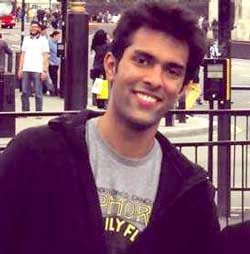
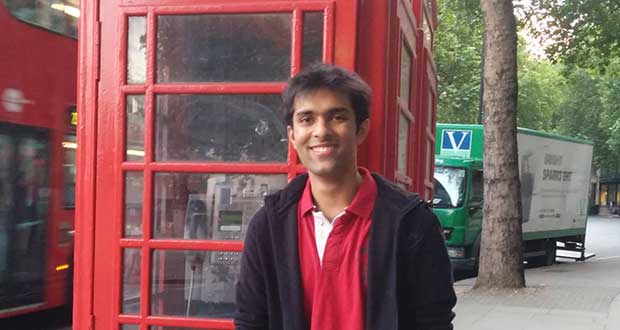
    Mr. Tejas Karia graduated from ILS Law College, University of Pune, in 2000. He then went on to pursue his Masters at Sir L A Shah Law College, University of Gujarat, with a focus on corporate and commercial law, before going to London School of Economics and Political Science for a second Masters degree, with a specialization in international commercial arbitration and commercial laws. Mr. Karia is currently a partner at Amarchand & Mangaldas & Suresh A Shroff & Co. At the recently organised seminar ‘Changing Face of Arbitration’ at Gujarat National Law University he was invited as a panelist.

    The GNLU Digital Media Team requested him to share his thoughts about a few very specific things in the arena of Arbitration.

    At the seminar, he speaks to students about:

    • The current state of arbitration in India
    • His diverse experience
    • Advice for students aspiring to a career in arbitration

    What advise would you have for law students who wish to take up Arbitration as a career option?


    What can a law university do in order to generate interest for Arbitration among the students?


    What are your thoughts on the state of Arbitration Law in our country?


    After the recent White Industries award which went against India, how do you think it shall affect the Arbitration regime of our country?

  • Shezin Hussain on comparative Legal Practice of Bangladesh and India and organising Women’s T20

    Shezin Hussain on comparative Legal Practice of Bangladesh and India and organising Women’s T20

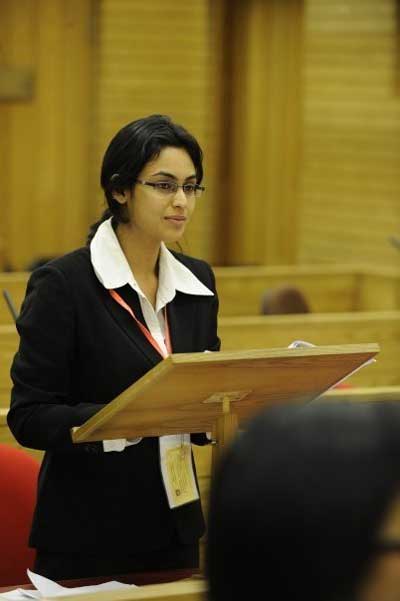
    shezin-h4Shezin Hussain graduated from NUJS, Kolkata in 2009. Being a Bangladeshi citizen educated in India she has the insights of the legal systems of both the countries. After graduating from NUJS, she completed her LL.M. from Southeast University, taught as a guest lecturer at Metropolitan University, Sylhet, and has been a practicing lawyer at the Judges’ Court at Sylhet.

    She has also been an Investigation Officer for BRAC which is the largest NGO in the world. Most amazingly being a passionate sportsperson she has had the opportunity of organising the latest ICC Women’s T20 World Cup 2014 among all her commitments.

    In this interview she has talked about:

    • Life at NUJS and interning at places in India and Bangladesh
    • LL.M. from Southeast University, Dhaka
    • Organising the ICC Women’s T20
    • Being an investigation officer at BRAC
    • The comparative legal practice of India and Bangladesh


    Our readers mainly consist of young lawyers and law students, how would you like to introduce yourself to them?

    Hi, I am Shezin W. Hussain residing in Sylhet, Bangladesh. Currently I am practicing as an Advocate at the Judge’s Court, Sylhet. Apart from that I’m working as guest Lecturer for the Department of Law & Justice, Metropolitan University, Sylhet and a political fellow for Democracy International, a USAID Agency.


    You finished your schooling in India. What prompted you to pursue your education in India? How were your formative years as a school student? Did you partake of all activities in school?

    It was solely my parent’s decision to send me to India to complete my schooling. Both my parents were involved (Mom is still involved) in politics, due to which they couldn’t spend much time on me and my siblings, hence they sent us away to boarding schools for better education.

    During my early school days, I focused more on my academics; hence I worked on my grades instead of concentrating on other activities. Eventually, when my grades started soaring upwards, I started participating in various co-curricular activities.


    How did the thought of pursuing a career in law cross your mind? Did you have lawyers in your family who motivated you to pursue a career in the legal field?

    I never thought of entering the legal profession, it was my dad’s decision that I take up law as a subject after I had completed ISC in 2004.

    My grandfather was a practicing Advocate in the Judge’s Court, Sylhet but I had lost him while I was in Standard VI, so I wasn’t actually motivated by him. It was more of my dad’s decision. Now that I don’t have my father to see me pursuing my career, I feel lucky to have had a father who anticipated the potential in me and asked me to tread the path of the legal profession.


    What prompted you to consider NUJS, Kolkata for your legal studies? How did you get to know about it? Which other universities were in your shortlist?

    My mother, while visiting Kolkata in November 2003, came to know about this University in some newspaper. She had visited the University and collected the application form, which she later posted me. I was preparing for the ISC exam, scheduled in March 2004, I was asked to fill up the application form and post it back to the University. This was the first and last University I had applied for. I didn’t consider looking for any other Universities.


    Please share some of your memorable experiences at NUJS, Kolkata. What made your college life exciting? How well do you think your education at NUJS prepared you for the real world practice of law?

    Securing a place along with other meritorious students made me wonder how I ended up there.

    Initially life in NUJS was hectic, nerve wrecking & challenging. I was not a brilliant student but more of a mediocre student; hence I had to struggle with the study pressure in the beginning. Eventually, when I had settled in, things started to fall into place. My grades stabilised and I could engage in other extra-curricular activities.

    The years I spent at NUJS have been the best 5 years of my life, I made wonderful friends, discovered the vast arena of legal education, and ventured the city of Kolkata in every possible way. Overall, it was a great experience.

    The legal education that I received from NUJS, has helped me imparting knowledge to my students during my teaching experiences. It has also equipped me to deal with the legal complexities of litigation.


    Tell us about your internships. Any remarkable internship experience which shaped up your career? How would you recommend students to go about choosing their internships?

    I have done several Internships, under the Advocate on Record of Supreme Court of India, Kanga & Company, Jyoti Sagar Associates, Mumbai, Senior Advocates of Judge’s Court in Sylhet, Bangladesh. All, these internships have given me an opportunity to experience different aspects of the legal profession. Corporate culture, litigation gave me an opportunity to decide what kind of a career I’d like to pursue. Unfortunately, in my country, there isn’t much scope for students to carry out internships. The sole reason is that the corporate culture in Bangladesh is still developing and  the universities in the country don’t emphasise on Internships, due to which many students are unclear about their careers after graduation. Indian students already know what they’d like to pursue after completing their graduation but  it is important to focus on law firms that you’d like to work with in the future while choosing your internships. A good internship definitely reflects well on your C.V. while recruiters hire you.


    What was your motivation behind pursuing LL.M.? Was it a personal endeavour or a professional requirement? Why didn’t you opt for Indian Universities?

    I wanted to pursue LL.M from the U.K but due to personal anomalies I couldn’t do so. Later, pursuing LL.M was more of a professional requirement than a personal endeavour. I didn’t opt for Indian Universities as they don’t offer specializations in subjects; plus, since the duration is of 2 years, it didn’t seem very encouraging to me.


    You completed your LL.M from Southeast University, Dhaka, Bangladesh. What all did you consider before choosing your subject for Masters? What are the differences you found between Southeast University and NUJS?

    As I said, since it was more of a professional need to pursue LL.M, I opted for Southeast University. Since there was no specialization, it was a general LL.M, and hence I didn’t have the option to choose any subjects.

    There are numerous differences between NUJS and South East University. I cannot compare NUJS with any Private University. If I ever get an opportunity again, I’d like to pursue my LL.M in a foreign country.


    shezin-h3

    You were closely associated with the ICC T20 Women’s World Cup 2014 and the South Asian Games 2010. How was your experience organising these events? Have you been a sportsperson? What draws you to sports?

    I was the MC for the South Asian Games 2010. It was definitely a great experience. That was the first time I faced thousands of people. This experience has definitely added as a boost to my experience during the ICC T20 Women’s World Cup 2014. I worked as a Local Coordinator for the women’s teams along with being the MC for the player of the ceremony after each match. Dealing with ten teams was super challenging and hectic. The event was scheduled for more than a month. It was an eye opening experience as I came in contact with hundreds of officials and employees of the International Cricket Council, the Bangladesh Cricket Board, famous players and match officials. I feel extremely lucky to have been a part of such a stupendous event.

    I was more into sports during my school day and college life. I have played almost all kinds of sports and was a part of the football team and cricket team while at university and the basketball, hockey teams during school days. It’s rejuvenating and I enjoy playing sports.


    You worked as an investigating officer at the Gender Justice & Diversity Section, BRAC, Dhaka, Bangladesh. Tell us what your job profile was all about, what comes under the responsibility of an investigation officer?

    The job as an Investigation Officer in Gender Justice & Diversity at BRAC was interesting and challenging. Basically this job profile was focussed on working with sexually harassed men/women at work place. A grievance cell was created whereby those working with BRAC if they faced any sexual harassment at work place could launch complaint with SHARE Unit, (Sexual Harassment Elimination Unit). After receiving complaint from SHARE, two investigation officers are given the task of visiting the place of occurrence and carry out investigation. After returning back from investigation, report has to be prepared and handed over to the Team Manager. Later Team Manager along with the head of SHARE Unit would decide upon what action to be taken. The punishment could range from termination, temporary suspension and warning. An aggrieved person if not satisfied with the awarding sentence could approach to Ombudsman. The decision of the Ombudsman is final.

    So, as an investigation officer, I had to investigate the matter by visiting the place of occurrence, take statement of the victim, accused and witnesses. It was very challenging job because sometimes the accused would turn hostile, the witnesses would refuse to meet. Most importantly basing on my report following actions would be assigned. So since it was sensitive issue dealing cautiously was essential.

    BRAC’s GJ&D had formulated Sexual Harassment Elimination (SHE) Policy in 2004, following which BRAC was committed to follow the High Court Division’s Guideline against sexual harassment that was promulgated on May 14, 2009.


    Given the Law firms where you interned offer a lucrative pay package and a prestigious career, how did you decide to return back to Bangladesh and start practice? Have you always thought of litigating from your days of being a law student?

    It was simply my father’s decision that I come back to Bangladesh and start working here. Since 1994, I have been in India for education purpose, hence my father wanted me to return back just as I had completed my graduation in 2009. I didn’t think of taking up litigation while I was a law student. The circumstances lead me to opt for this path.


    You are currently working as an advocate at Judge’s Court, Sylhet, Bangladesh. How is the court atmosphere in Bangladesh? Can you share some of your experiences in the first few sessions of the court?

    The Judge’s Court scenario is pretty much different. Though initially I didn’t like the atmosphere but gradually over time I got used to. The first few sessions of the court was challenging as most of the time while appearing for any matter, I am facing a senior opposing counsel. I was nervous at the beginning but over time I have grown confident and hesitation don’t take over me.

    Also, immediately after graduating in 2009 I couldn’t start practice straight away. In the legal system of Bangladesh one has to pass the bar examination before practicing as an Advocate. Passing the bar exam is really challenging as one has to face more than 15,000 or more examinees from all over Bangladesh every passing year.


    Can you tell us about a few highlights of the legal system of Bangladesh? Do you find any major differences between India and Bangladesh?

    The legal System in Bangladesh follows the Common law. The Judiciary is independent. The Supreme Court of Bangladesh is the Apex Court with two divisions, The Appellate Division and the High Court Division. Appellate Division hear and determine appeals from judgments, decrees, orders or sentences of High Court Division. High Court Division has both Appellate and Original Jurisdiction. It hears appeals from orders, decrees and judgment of subordinate courts and tribunals.

    The laws and acts are all most similar except that amendments have made certain changes. The personal law is different than that in India. Also, unlike the Indian System, one has to qualify the bar examination in order to practice in the Judge’s Court in Bangladesh. For enrolment in High Court, minimum two years practice in lower court and if the candidate has LL.M that he /she can sit for enrolment examination of High Court.


    What are the primary requirements of a practicing lawyer in Dhaka? Is it possible for an India educated lawyer to start practice in Dhaka and vice-versa? Do you consider practicing law in India ever? How would it be for you to adjust your career in a city like Delhi or Kolkata?

    Primary requirement for a practicing lawyer is that he/she has to be enrolled after passing the Bar Council Examinations. It is not possible for an Indian Lawyer to practice in Bangladesh unless he/she is a citizen of this country and vice-versa. I had considered practicing in India but since I am not an Indian Citizen, hence I cannot practice. If I would have the opportunity I would comfortably adjust my career in Kolkata, as I’m accustomed to the life in Kolkata after staying there for 5 long years.


    shezin-h1

    Is legal practice in Dhaka as lucrative as in Kolkata? What are the primary challenges in establishing an illustrious career there?

    If you consider the High Court practice, then I would say both Dhaka and Kolkata are on same footing. Even though primarily it’s very tough to build up this career in litigation but with time one can blend in.

    The primary challenge in litigation is being a woman. If the family is not supportive than pursuing litigation, maintaining family could be pretty challenging. Though now days the families are less conservative so this makes the chances a bit better to opt for litigation. And of course competition is there considering clients prefer Barrister-at-Law than other Advocates. This trend has been since there after independence and till date it continues. People have the notion in Bangladesh that if you become a Barrister you are much more qualified than ordinary advocates who are in practice for long years. The trend is changing though, after realising that not all Barristers are worth the penny.


    You have worked in India as an intern in various law firms and under various famous advocates, do you find any difference in the working cultures of India and Bangladesh? How different are both the countries in terms of work culture?

    The work culture is much more different in Bangladesh in comparison to India. The education I got from NUJS has given me an upper hand. In comparison to other graduates from certain private universities and public universities in Bangladesh, I think I had a great exposure in this profession. The experience that I have gained has pushed me ahead in my profession. As a result, I am pursuing litigation along with teaching and also being a political fellow for Democracy International, a USAID agency. Also, the corporate culture is not yet full-fledged in Bangladesh unlike India. It will take another few more years to form the corporate culture like that of India. Also the political instability has direct influence in our legal system, so that works to as a barrier for companies coming in and investing in Bangladesh.


    Lastly, what would be your message to a law student who wants to excel in the legal profession?

    For the law students, please utilise your time wisely while studying and try selecting the good law firms for internships. The internships reflect a lot in what you are capable of pursuing as a lawyer while you will enter professional field. Most importantly, let your heart follow what you want to pursue, don’t follow anyone because making your own identity will always lead you ahead in life no matter what you chose. Good wishes to all the upcoming lawyers.

  • Prashant Mishra on being ranked 64th at UPSC while drifting away from the mainstream legal career

    Prashant Mishra on being ranked 64th at UPSC while drifting away from the mainstream legal career

    prashant-m5Prashant Mishra graduated from the Gujarat National Law University in 2011, after which, he spent a year working at Universal Legal. However, he decided to quit his comfortable lifestyle instead and pursue the UPSC. After two years of training, he scored the 64th rank in the All India Civil Services Examination, 2013. We have taken this opportunity to ask him about:

    • His experience as a law student at the Gujarat National Law University.
    • His time as an employee at Universal Legal.
    • Circumstances that prompted him to give up his secure job and pursue the UPSC instead.
    • Tips on clearing one of the toughest examinations in the country.


    Tell us a bit about yourself as an introduction. Do you come from a family of lawyers?

    Hi! I am Prashant. I come from a middle class family. My father is a government servant and my mother is a home maker. I did my schooling from Patna and went on to join GNLU after that. I do not come from a family of lawyers. I am the first lawyer from my family.


    What got you into legal studies? How did you get through to GNLU? Was it all planned or something that just happened by chance?

    It was in class tenth that I was introduced to law by my father. I did some basic internet research about law schools and decided to pursue law after the twelfth. I appeared in entrance tests for almost all law schools and got through to GNLU (3rd Rank) and HNLU (5th Rank). So, yes it was all well planned out and with quite a bit of preparation.


    prashant-m3

    Please share some of the memorable experiences from your GNLU days. What made your college life exciting? What were the various activities you partook of?

    I enjoyed every bit of my stay in GNLU. I partook of various moots, conferences, etc. Hostel life was real fun and the fact that we lived in a campus which was in the heart of Gandhinagar made our lives really easy as everything was accessible.

    I remember our group ‘addas’ with lots of dear friends. There are so many memorable moments; it’s difficult to pick one out.


    What were your major interests as a student of law? Did any specific legal subject interest you more than others?

    I liked legal studies a lot. It never got me overburdened with lots of academic work. Unlike science or humanities, corporate laws, arbitration and jurisprudence were the kind of subjectsthat I knew would interest me.


    You were awarded four gold medals on graduation, which is a goal for many students. Please share some tips on scoring well.

    All the four gold medals which I was awarded were not a result of meticulous or competitive planning. I got those medals in the subjects that I loved to read (quite the subjects mentioned earlier).

    I would suggest that students should enjoy what they read, instead of studying simply for the sake of passing; also one shouldn’t study simply with the intention of becoming the topper.

    It’s important to study at one’s own pace; recognise subjects which are your favourites.

    I was also lucky to have a friend who used to make wonderful notes and more importantly, share all of those notes with me before the exams.


    You were also the Managing Editor of The GNLU Law Review. How was your experience as the Managing Editor of such an academic journal? What did you get to learn from this experience?

    Being a part of TGLR was a wonderful experience. I had the duty of reviewing articles of my peers. I came across some extremely well written pieces which helped me to learn and emulate the art of writing.

    Along with learning teamwork and multi-tasking, I also learnt how to refuse people politely.


    Almost all your internships were at top-notch law firms. Were you expecting to join a law firm even as a student or did these just happen on the go?

    As a matter of fact, I hardly thought about civil service during law school. I was interested in corporate laws and I was also pursuing the Company Secretary course, so that was what I expectatedto do and also, it made perfect sense for me to join a law firm. I used to plan my internships and enjoy the experiences that came along with them.


    prashant-m1

    After graduating from GNLU you had worked at Universal Legal for almost a year. How did the appointment take place? How helpful do you think CGPA is when it comes to getting recruited?

    I applied to UL on my own and got recruited after thorough interviews with them.

    I don’t think law firms use CGPA as a benchmark anymore to select a group of prospective employees.

    It is the interview and substance in the student which actually makes the difference.


    How difficult would you say it is for freshers to get recruited in law firms now,given the increased number of law students graduating every year?

    I do not agree with the proposition that with more number of law students graduating, there shall be an increased difficulty in finding jobs. There are plenty of opportunities for good people in the legal field.


    How was your work environment at Universal Legal? Could you maintain a proper work/life balance? What prompted you to quit it in August 2012?

    The work environment at UL was pretty balanced. I never missed any deadlines and the work pressure was quite sustainable and reasonable. Even as a fresher, I could directly interact with clients which helped in creating a lot of confidence in myself.

    Time was still the luxury that I enjoyed the most and as compared to other law firms, it was quite different.

    I decided to quit because I realised that the work was settling into a predictable pattern and that life had stopped testing my limits.


    Leaving a comfort zone with a secured lifestyle to study and prepare for the UPSC must have been quite decisive on your part. What made you want to study for the UPSC?

    It wasn’t about leaving a comfort zone. I never considered studying to be a difficult task, and most importantly I had all the support I needed from my parents. So, it was not that difficult to decide on studying for the UPSC.

    I also never thought I would have come along this far. At the outset, the idea was to take a whole hearted attempt and give it my best. And in any case I was a lawyer, I had my legal career to bank upon.


    You came to Delhi for your Civil Services preparations. Were you looking for good Civil Service Coaching institutions? Why Delhi and why not your hometown Patna?

    Delhi has a lot of coaching institutes which provide professional guidance. Also, accessing study materials was never a problem for me.

    In any case, after being accustomed to staying away from home for 6 years, I would not have returned to Patna.


    How valuable do you think coaching institutions can be for UPSC preparation?

    Some of the coaching institutes are really good. They provide you with a platform which you can quickly build on. However, it is not indispensable and with proper guidance, one can clear without taking any coaching.


    You prepared for the UPSC for almost two years. What was the routine you followed everyday throughout these years?How did these two years work out for you?

    I did not follow any set routine. At least that was the whole plan – to stay away from routine. Initially, I did not study much. With exams approaching, the study hours automatically increased. These two years went in a jiffy. At times you tend to get bored, you feel like your competitors are taking great strides, while you are stagnated. However, now I can say that it was all worth it.


    It invariably requires huge mental strength and focus to pursue one goal single-mindedly. What is your experience preparing for the UPSC?

    As has been rightly pointed out by you, the examination process is a long drawn affair and it takes minimum one year for it to get over. In retrospect, I think having a strong will-power and motivation is the key to maintain your sanity.


    What did you do to keep yourself abreast of all domestic and international current affairs? How did you study for static GK?

    For domestic and international current affairs I solely relied on The Hindu, and I used to  religiously read it every day. The current exam pattern of UPSC has very little reliance on Static GK.

    I also subscribed to Yojana, Kurukshetra and Frontline apart from my regular reading of standard text books.


    Lakhs of people attempt the UPSC prelims and only a thousand get selected for the main written exam. Which are the prime skills and expertise required to crack the prelims?

    Even though lakhs of people may attempt it, I think there are only 50,000 who take it seriously. Being a competitive exam, it is the relative knowledge that matters. You need to cover a vast syllabus in a limited period of time and retain and analyse a lot of information.


    Could you please share your views on the questions asked in the prelims?

    In the prelims, questions were asked mostly from Indian history, geography, polity, art & culture, science & tech and economics. I did not read on Science and Tech much, those you can say were difficult for me.


    What kind of posts have you opted for in the UPSC enrolment form? How do you want to serve the nation?

    My preferences for the civil services were:

    IAS – IFS – IPS – IRS in the decreasing order.

    I would like to do the kind of things that I always expected from the people who were already there. I would use my knowledge of law to play a major role in administration.

    Right now, I have not planned much. I intend to assimilate as much as I can and give my best in whatever capacity I am put into.


    What would be your message to law students and lawyers who aspire to become a civil servant?

    Purely from an examination perspective, I think law as an optional has a lot of potential. It helps a lot in civil service. I think it is not as difficult as people project and with intelligence, diligence and hard work, it is possible to clear the so called ‘mother of all exams’.

  • Protik Prokash Banerjee on dealing with success and challenges of a litigator, mettle of law students and opportunities at the Calcutta HC

    Protik Prokash Banerjee on dealing with success and challenges of a litigator, mettle of law students and opportunities at the Calcutta HC

    protik-banerjee7Protik Da talked to us earlier on studying law, career of a litigator at Calcutta High Court and building clientele. This time we requested him to delve more deeper into the nuances of the legal profession. Success, failure, challenges and how he took them on his stride.

    In this interview he shares his insights of:

    • Dealing with challenges and successes
    • Having a few landmark judgments to his credit
    • Difference between the regular and the ‘elite’ law students
    • Opportunities at the Calcutta High Court for an young lawyer


    It is 19 years of your illustrious practice at the Calcutta High Court. You must have encountered difficulties few and far between your successes. What were the most taxing challenges you ever faced? And how did you overcome them?

    The worst challenge I faced was in my early years. I had to appear to argue a Second Appeal before a Division Bench presided over by a very conservative Judge who had, before elevation, a roaring civil practice. The gentleman was so old school that he believed that no junior should argue a second appeal at the stage of Order 41 Rule 11, Code of Civil Procedure unless he had at least ten years’ practice; by that time of course, you were not a junior anymore. He also felt that juniors should lose in his Court at least thrice before they were entitled to an order. The first might have been justified considering the difficulties involved in arguing a second appeal at the Order 41 Rule 11 (popularly but wrongly called ‘admission’) stage, but the second was really tyrannical. I was constrained to argue the matter because the client was standing in the Court room and did not want me to take an adjournment on the ground of the absence of the learned Senior Advocate who had been briefed to lead me.

    The Hon’ble Division Bench first asked me whether I wanted an adjournment; naturally I said I would argue, though I was led by a Learned Senior Advocate. The Judge became very irritated and asked me whether as a Junior I thought I knew enough to argue on a substantial question of law. When I persisted politely, he visibly gnashed his teeth and asked me to begin. He did not look at me or the brief but kept staring out of the window. After gamely going on for an hour, I stopped. He asked me if I had anything more to say. I naturally said that I had completed. He dictated a judgment which did not reflect anything I had argued. It was a rather brief Order by which my second appeal was dismissed on the ground that no substantial question of law was involved. He was the Senior Judge. The Hon’ble Junior Judge, as is customary unless there is strong reason to dissent, indicated his agreement. I came out of the Court Room almost in tears. My client went to Supreme Court. He won there.

    Another time was when I confessed before a Court that my client really had no point on merit but only technical grounds to justify his refusal to allow his tenant to have a separate meter in his name. My client had issues with the tenant and wanted to evict him. The Court became livid since according to it, I was no one to judge whether or not my client had any point on merit, but that it was his duty as a Judge. He recorded my submissions and allowed the writ petition (where I was the private Respondent) and ordered that my client was to pay costs assessed at Rs.5 lakhs each to each of the Respondents and the writ petitioner.

    There were eight respondents apart from my client and one writ petitioner so in effect it was an order for payment of Rs.45 lakhs. This was in the year 1999. It was a big sum in those days. I came out of the Court room stunned, and sat down on a chair outside. I was still dazed when a learned Senior Advocate of our Court, Sri Bikash Bhattacharya, put a hand on my shoulder. I jumped up, to offer him the seat but he forced me to remain sitting. “It’s a blessing in disguise”, he said “now you will easily get a stay from the Division Bench. You can’t just appeal against costs so you will have to appeal against the entire order. Normally with your case you would have lost anyway. Yet now the amount of costs will make the Division Bench be sympathetic.” It worked out exactly in that way.

    My difficulties – then and now – can be summarized in two words. Bad habits. These have ruined my health. Working without sleeping, sometimes without eating and mostly eating the wrong sort of food at odd hours have made it impossible for me to attend Court as regularly I would have liked. Then again, because of my late hours and the consequential effect on the offices of privy, I do not always come to Court on time. These made many learned advocates feel chary about briefing me. Perhaps the worst thing was my substance abuse. I used to drink very heavily and there were times till 2001—2002 when I drank a litre of single malt every day and two litres on Friday evenings. I used to work on, but naturally people get very anxious if they come to brief a lawyer and find him reeking like a distillery. Together these things brought my practice down to nil thrice in these last nineteen years. The fourth time was deliberate, when I became the Standing Counsel for the State of West Bengal. I took a conscious decision to limit my private practice to drafting pleadings, petitions and affidavits in matters where the state government or its agencies were not parties. These three years the challenge was subsisting on the meagre amounts that the government paid, very irregularly, without bringing down my accustomed standard of living. My bank account took a huge blow from which it is yet to recover!


    You became a Govt. Counsel in 2011. What does it take to represent the Govt.? What were the main areas of your expertise you were banking on as a Govt. Counsel?

    I do not claim expertise in anything at all. I am a competent draftsman, and I can speak in English. I read a lot. These are what any lawyer would require to practise law. I had some experience in banking law and interlocutory matters (applications made while a suit is pending, seeking receivers, injunctions and various other interim reliefs and relating to the suit) and I had done some arbitration and winding up proceedings, and I had appeared in quite a number of writ petitions, but these were not what I banked upon. I relied upon my basic honesty and the willingness to learn from anyone.

    I do like the complex laws relating to land in West Bengal. I was briefed in matters of various types, but of these I liked to do land matters most. At one point of time I was briefed in almost all the important land matters of the day. I was also involved in a lot of police inaction or police harassment cases where in my own way I tried to ensure that justice was done and even the writ Petitioners accepted that the State was fair in its treatment.

    To represent the government you need to develop the ability to work for very long hours without getting paid, working on sketchy instructions given by pen-pushers to whom either nothing matters or who are so committed that they stay awake night after night trying to help counsel though they do not get paid anything extra for it. You need to have patience and good manners so that the officer who has come to brief you and who may be your father’s age, does not feel insulted by your behaviour. He calls you sir because your position demands it, but you should also show him the respect that a man of his age or designation is accustomed to. Many of my colleagues working for the government took pride in the fact that they treated Secretaries of Departments and Directors of Directorates like dirt. The way they behaved with lower division clerks – who in most cases know more about the law relating to their department than qualified lawyers – would make you puke. I tried, during my tenure, to treat them exactly as I treated any other client or client’s officer from my days of representing corporates. Perhaps it helped.

    When I left my government position I was humbled by the number of people who expressed their regrets – from my juniors in the government panel of lawyers to the high officers of State whom I had represented and even the staff of the Advocate General’s and Standing Counsels’ offices. This is what I carry with me – the good wishes and blessings of those with whom I have worked. In the end – apart from character and providing for your family – perhaps it is all that matters.


    You have a few landmark judgements to your credit. One which I can readily recall is about amenability of arbitration to the High Court. How does it feel to have a landmark judgment to your credit? Do you think achievements like this can change one’s recognition drastically?

    Landmark judgments do not do much for the client except immortalize his name. Most of the landmark judgments result in a loss for the petitioner. Look at Keshavnand Bharti, Maneka Gandhi or even Olga Tellis. In each of these cases important principles of law were laid down, extolling the Rule of Law, Natural Justice, Basic features and the right to livelihood. Yet after laying down these principles which are vital for any libertarian democracy – the petitioner lost the particular case. Maneka Gandhi’s grievance was held to be one which could be redressed by a post-decisional hearing, the eviction of the squatters was upheld in Olga Tellis and even in Keshavnand Bharti, in the ultimate analysis, I think the Petitioners lost. That is my view.

    The one you referred to is Unik Accurates—v—Sumedha Fiscal. It was the first time that a High Court decided that an arbitral tribunal is amenable to the jurisdiction of the High Court under Article 227 of the Constitution of India. Of course now it has been modified somewhat by the larger Bench of SBP—v—Patel Engineering, where the Supreme Court has laid down that so long as the arbitration proceeding is pending High Courts ought not to intervene due to the existence of an alternative remedy and the statutory scheme, but that does not take away the principle of law settled by the High Court, that under the Arbitration and Conciliation Act of 1996 an arbitral tribunal is a tribunal for the purposes of Article 227 of the Constitution of India, therefore the arbitral tribunal ought to be so also.

    So far oft cited judgments where I appeared are concerned I’d rather not talk about them. They are there online and in law-reports and I am sure if anyone is interested they can be found. I remember fondly only one of them, the case of Labonyamoyee Chanda where a widow of a country doctor was refused treatment and admission by a reputed government hospital on the ground of lack of ‘bed’ though she was in a moribund condition as certified by that hospital while a lady referred by an important politician was admitted immediately, just half an hour later without any bed having been vacated in the meanwhile. My client survived due to charity of people who contributed enough money to have her treated in a private establishment. What made my blood boil was that this lady’s husband, while alive, had given up a lucrative medical career in the city and had devoted his entire life as a doctor in a government hospital treating the poor and indigent but after his death without issues, his wife was treated like a pariah.

    I argued that ‘passing the patient’ was not a game that any hospital could play particularly when she was in a moribund condition and if beds were not available, she ought to have been accommodated on a trolley bed and treated immediately. We won, not merely compensation but also the price of the pace-maker that had to be installed. We were also awarded costs.

    I do not feel particularly different just because a matter which I argued later on became celebrated or is cited very often not just in Calcutta but elsewhere. I will not lie, they make me very happy – but let me make one thing very clear: celebrating reported judgments as landmarks by the lawyer who argued them is like resting on one’s laurels – and that is not the part of the body on which laurels were meant to be worn.


    protik-banerjee5

    You have indiscriminately mentored a lot of students and provided invaluable guidance to many. What are the differences that you found between students of the ‘elite’ law schools and students from other law colleges and traditional universities?

    Those who come from ‘elite’ law schools are also divided into two parts: CLAT and non-CLAT. Those from other law colleges – such as mine – feel that they have a lot more to prove and when they do internships, by and large they are far more open to new ideas and think out of the box. They are taught very little in their colleges and so they know that there is a lot to learn. They keep on ruing that they do not get well paid jobs immediately after graduation, but they are eager to practise for a few years so that ultimately they are picked up by law firms and bodies corporate who want experienced junior litigators to look after procedural matters.

    The students of CLAT law schools, by and large, are very well up on the theory of law. I have had the honour of teaching successive fourth and final year students at the NUJS and have had students from almost every national law school intern with me over the years. Most of them are very good at researching principles of law and cases, even when doing their 3rd semester. This year I wanted to see how their first year students do and though it’s too early to comment, most of them have that brightness in the eye which I want to see in every student. The one thing that I do dislike in the CLAT law school students, though, is their unconscious assumption of superiority just because they have qualified in the CLAT. As I keep on saying an examination is only a test of what you could remember and write on that day. Law as a profession demands consistent excellence every day in the year and not just one day for four or five hours. A lawyer must study. Studying is what you can do equally well while doing a correspondence course so long as you are online. Yes it is true that CLAT law schools have the best libraries I have seen. I am fascinated by the NUJS library which has both reference and text books and journals and which also has a lot of the literature of law. The students are enriched.

    The non-CLAT elite law schools leave me perplexed. Some of them charge almost what a High Court judge makes a year, boast of certifications and collaborations from foreign universities and have their own entrance examinations. They are comparatively new. I know for a fact that their faculty is usually of sterling quality but to afford the fees either you have to be uber-rich or hock your patrimony! I have trained a few students from those law schools and despite the innate goodness of children – for that is how I think of them – I have either smelt the crass stink of easy and new money or the desperation that arranging for student loans entails. I keep asking them, why do you choose to study in those places where neither top-tier jobs nor excellence in practice is certain? They really have no answer.

    I cannot conclude my answer without taking two names: Arun Krishna Dhan, whom I taught in 2006, from NUJS and who knows more Constitution of India and precedents than I did then or would ever know; Koushik Layek, also from the same batch who was the most complete (though a bit of rogue) lawyer I have ever seen. Both showed rare courage in first taking very highly paid jobs in one of the top-tier law firms in Delhi, achieving great heights of both salary and position and then remembering what I had told them about private practice, paying off their student loans, and chucking the jobs to start a private practice. Both are doing well, by God’s Grace.

    Please do not think I am partial to NUJS. I started out hating all National Law Schools, coming as I do from a law college which has a storied past but is nowhere now compared to these law schools. Yet after I went to teach at NUJS as a guest lecturer, I saw these kids first hand, participated in their joys, sorrows and aspirations…and I found something terribly strange: law students the world over are the same; unsure of the step they have taken, the so called glorious uncertainty which can change so quickly into utter failure and mediocrity. Yet they persevere. This experience made me look at National and in fact all law schools in the present light. They are what you must go through to become a lawyer and you cannot be too harsh, for life is short and as Joan Baez sang, nothing is given to man.


    What do you look for in your interns when they apply for a position to work with you? If there is someone who wants your guidance, what should she do?

    Very briefly, I do not like interns who think that they will be able to contribute to my practice or think that they know this field or that very well or want to use this opportunity to hone their skills. I like honest, brief curricula vitae (which I rarely read) and an impression that he or she wants to learn. I want my interns to work very hard when I work hard or ask them to, to play even harder when we are not working, to enjoy internship and think of chambers as a second home. It helps if they mail me or send a private message on Facebook telling me about themselves because ultimately it is a student and a teacher relationship and unless we can respect each other, there would be no process of learning as from a Guru.

    I may not answer telephones but I answer all electronic mails and Facebook and text messages. Sometimes, if the work load is brutal, it might take a few days, but I answer everyone personally. If someone has a query, and it is something I can help them out with I answer questions online personally; they do not have to intern with me for that. Yet with each intern I demand two commitments which persist even after the internship is formally over: they must keep in touch with me so long as I am alive and keep me posted about their work and they ought never to disclose what happens in chambers outside, even to their parents or best friends. This is because critical, confidential and often matters of state importance are discussed in my chambers and except for matrimonial cases I ask my interns to sit in on the conferences. If these leaked out then my clients – especially in high stake matters – would be compromised. Thankfully each of my interns – even those who did not part with me on pleasant terms – has kept this covenant.


    There have been quite a few booms and busts in the legal industry. What do you think about the future of legal education in India? How do you say a student can manage to stay ahead of the ‘rat race’?

    I do not accept that there is a legal industry in India. There is only a profession. A profession is a perennial stream. There is neither a boom nor a bust. There are only professionals who painstakingly and conscientiously do their best for their clients while jealously and vigilantly guarding the rule of law. Those who call themselves lawyers but do not do this, or are only interested in the money have no business being in this river. For them I have only contempt and disgust. These profiteers and speculators in law are the detritus and decay that every institution generates. Let them be relegated to the garbage dump of experience.

    Naturally, in the light of what I feel, the question of staying ahead in a rat-race does not arise. A student must study and acquire and assimilate knowledge. He or she must do a lot of internships to learn the practical side of law. Depending upon proclivities, the student may choose to do more corporate internships or more litigation based internships. The work that a student does imprints itself on the person who checks that work. If the work is good and the student is not obnoxious, the student will get good certificates, good recommendations and most importantly, help which is very important to a young graduate starting out on his career.


    How is the work atmosphere at the High Court presently? Do you think it has become more difficult for a fresher to be successful? What would you advise a fresh graduate as he enters the world of litigation today?

    The opportunities today in the High Court at Calcutta are tremendous and far more than before. Judges accept with good grace juniors submitting before them even on high stake matters. Youth has been given encouragement by our Full Court this year by designating several lawyers with less than 20 years practice as Senior Advocates. All that a fresher needs to know is procedure and there are many older lawyers who are helpful and will guide the junior. For this they neither charge fees nor demand a brief. I guess it is because we all know that freshers are the future of our profession and if we cannot train youngsters to be better than us then the profession as a whole would lose its lustre.

    I would advise him to read and follow knowledge like a sinking star, and perhaps to catch up with it; to learn the procedure and watch as many cases as possible to learn court craft. It would be very helpful if he devilled with a senior in chambers for a year because he would have the benefit of a guidance which I lacked. He should never put on airs, before a Judge or otherwise, but state his case simply and with conviction. If he decides to practice as an advocate on record, it is imperative to work with a solicitor/advocate on record whether a sole practitioner or a law firm, for at least an year or two and follow the solicitor’s clerk to the Department and learn the procedures of filing and taking steps first-hand. I would ask him to analyze all drafts he can get his hands upon to learn the different styles and formats for different proceedings. I would ask him, most importantly, to have patience and not lose faith. Things will work out in the end.


    You must have considered trying out different legal avenues? What are your thoughts about becoming a judge or an arbitrator?

    I have been part of an arbitral tribunal on many occasions. Sometimes I have been a sole arbitrator. Arbitration is a useful way of resolving disputes though being a lawyer in an arbitration is more lucrative than being an arbitrator. I will not recommend becoming an arbitrator by profession. It is something that a lawyer does as part of his profession but it cannot be the only profession of a practising lawyer. Retired judges make very good arbitrators since they are used to judging between man and man.

    A judge is not something one chooses to become in this country. One is asked if one is considered to be worthy. I have no thoughts of it at present except that if asked it would be an honour.


    What would be your advice to all the law students and lawyers regarding success?

    Success is relative. Everyone I know measures success in different terms. Most find success in money, some in fame and a few more in the number of people whose lives they have touched. I can only share with you my life’s lesson: read as much as you can, work hard and do your best even if it be at the cost of your health – leave the rest to God.

    In te Domine speravi non confundar in aeternum.


    You can always reach out to Protik Da on Facebook

  • Fatima Quraishi on application and work of the post of a judicial clerk at Supreme Court

    Fatima Quraishi on application and work of the post of a judicial clerk at Supreme Court

    fatima-s4

    Fatima is a graduate of 2013 batch of RMLNLU, Lucknow. She has extensive experience of the Supreme Court atmosphere and has worked as a judicial clerk just after graduating.

    In this interview we asked her in depth about her experience of working as a judicial clerk under Justice T.S. Thakur, the application procedure and the future prospects of her legal career.


    How would you like to introduce yourself to our readers who are mainly young and aspiring lawyers?

    I’m a 2013 Batch law graduate from Dr. Ram Manohar Lohia National Law University, Lucknow (RMLNLU). I recently completed my contract as a Law Clerk to Hon’ble Mr. Justice T.S. Thakur, Judge, Supreme Court of India. A first generation lawyer, I am very enthusiastic to join the development sector.


    Do you feel that there is a bit of resistance towards legal education in India? How did you incline towards a career in legal field? Do you reckon any specific incident influencing your choice?

    Engineering and Medical studies were sought after because our parents were brought up in that environment and they have continued to have that mindset until now. They could only picture traditional litigation in their heads and were insecure about letting their kids, especially girls join that community.

    Currently, there has been a wave of change in which parents have encouraged this profession because they see dispute resolution in a different light. The working conditions are much more civilised and there is scope and variety in the different roles a lawyer could play. This change has been brought about by the zeal of our generation who was genuinely interested in the profession and took it upon themselves to change opinions. There are Law Firms, Companies, Think Tanks, Non-Government as well as Government sector that absorb the major chunk of law graduates. The most crucial insecurity about the profession is to a great extent addressed with an improvement in job security. For example a litigator who mainly deals with civil/criminal matters has a retainer client for a regular source of income.

    I belong to a family of doctors so law was never on the cards until class 11th where I got introduced to the profession by Mr. Sachin Malhan who visited my school, Loreto Convent to promote LST. Thereafter, things just took shape with my family being ever willing to let me follow my calling.


    fatima-s3How would you describe your time at RMLNLU? What kind of co-curricular activities did you participate in?

    Frankly speaking, I was a very laid back student who just enjoyed the ambience that Law School provided. I had a small bucketlist of things to do in Law School. Moot-check, conference-check, publishing-check but never pursued one thing for long. I hated monotony in my work which has trickled down to my career objective too. I was always inclined to venture out and do different things. I was part of the Placement Cell initially and then switched to the Legal Aid and Welfare Committee. The only thing I was very particular about was internships which provided me a great opportunity to learn and network. I thoroughly enjoyed RMLNLU for its independence, flexibility and facilities.


    Which are the law firms and other places where you interned? Which internships would you consider to be right at the top and why? Tell us about the variety of work you were given during your internships?

    In my first year, I interned with U.P. State Legal Services Authority and Greenpeace which was a very good social sector introduction. Subsequently, I moved on to law firms like Anand & Anand, Remfry & Sagar, JSA,  M.V. Kini & Co., Vaish Advocates Associates and Khaitan & Co. where I mostly worked on Intellectual Property Rights (IPR) issues which was my interest area then. The kind of work I got at each firm depended upon who I was directly working under. It’s always a good option to use every opportunity to directly interact and get work from the partners. I did quite a lot of drafting at Remfry, infrastructure related work at M.V. Kini and prepared presentations on law governing video games in India at Vaish. The rest of the work at my internships was research based.


    Interning at a top-notch firm is a dream of every law student. How did you procure your internships? Can you throw some light on the application and follow up process?

    Although, all law firms have an internship portal or email ID displayed on their website, in reality it’s difficult to get through, considering how all law schools have vacations practically at the same time. I got most of my internships through contacts. Importantly, most of these networks were my own that I had managed to form during my previous internships and conferences. It’s a good strategy to be referred and one can very well ask alumni and seniors for help.


    You have a Diploma in Entrepreneurship Administration & Business Laws. Tell us how helpful these courses have been in your career? Why did you choose to pursue diploma in corporate laws?

    It’s a fantastic course. It’s as good as a senior mentoring you at a law firm without any howler. It’s a study at your own pace program which explains practical aspects of business law lucidly. Career wise, I’m still to use this skill set which I have had no opportunity to use during Clerkship where I was mainly concerned with Criminal and Service law matters.


    Considering the fact that most of your internships have been in corporate firms, what drifted you towards the career of a judicial clerk?

    Clerkship was not my first career option. I was interested in IPR throughout my college days and somehow my law firm PPO in IPR did not work out. Alternatively, I had applied for Clerkship where I got through. I am extremely glad about the way things transpired. It’s an excellent first job experience which I would recommend all recent graduates to pursue.


    How did you obtain the Judicial Clerkship? What is the standard procedure to do so?

    The Supreme Court Registry annually publishes an advertisement inviting all final year National Law University students to apply. I applied through my Internship & Placement Committee at College wherein all applicants were required to send their application form, CV along with attested documents to the Supreme Court Registry.

    Thereafter, short listed candidates were called for an interview and results of the first list were declared within a month from the date of the interview. The list of successful candidates is not published and all selected applicants get individual phone calls from the Registry. As and when a vacancy for clerks arises, calls are made to the rest of the people on the list in accordance with merit. Once one confirms his/her availability for joining, the Registry asks them to report to the Supreme Court at a certain date wherein the person completes all paper work and then is informed about the Judge one is to assist for a term of roughly 10 months. Clerkship can be extended for a further period in consultation and by the approval of the Judge one works with.


    Tell us the daily routine of a judicial clerk? What is the kind of work you come across? How different is it from the corporate field?

    It will be patently wrong on my part to generalize my Clerkship experience as it totally depends on the Judge one is assisting, which continues to be a surprise till the last minute of joining. Speaking for my own self, I had flexible work timings and attending Court proceedings was not mandatory unless there was an important matter for which His Lordship required me to take notes. The office staff was extremely friendly and co-operative and provided me a conducive environment to work. I mostly worked on reserved matters or part heard matters as His Lordship was not inclined to let me make briefs only. The USP of the job was the daily discussions with His Lordship on nearly all matters that came before him. There were also other perks attached to the job which I think are part of the experience if you’re lucky to get a Judge who accommodates it.

    The experience can’t be compared with anything close to what one does as a lawyer, let alone exclusive corporate practice. Since you work for a Judge, your perspective on every matter is very holistic as you have the unique opportunity of weighing both sides of the matter and not be prejudiced. Your aim is the dispensation of justice rather than getting relief for your respective client.


    fatima-s2

    Tell us about your work mantra? What do think are the most essential things required to excel in clerkship?

    I have never followed a rule book but patience, hard work and optimism has worked well for me. For law clerks at The Supreme Court of India, one has to make the best of whatever one gets since there is no certainty. Generally speaking, I feel it will be sensible if one could be flexible enough to mold himself/herself according to the work requirements of the Judge, be cordial to office staff and impeccable with the research notes submitted to His Lordship. Half-heartedly done work is easily detected. It is also helpful if one keeps a track of the Judge’s recent pronouncements, part heard and reserved matters. One will hit solid gold if he/she is fortunate to share a similar passion/hobby as His Lordship because then one will be able to interact with His Lordship on an informal basis.


    Do you consider pursuing an LL.M abroad? A lot of LL.M aspirants opt for judicial clerkship before higher studies; what is your thought on this?

    Writing a recommendation letter is completely the discretion of the Judge. One should be prudent not to bank upon it. Clerkship experience independently is very enriching and has no causal connection towards higher studies except in cases one is pursuing Clerkship only to be referred.

    In my case, I am inclined to go for a Masters Program for Fall, 2015 after working for another year.


    What will be your suggestions to our readers who wish to be a judicial clerk?

    Judicial Clerkship is a privileged short term contractual job that gives you an insight into the way the Bench works, that one can never hope to get otherwise at this age. It’s an opportunity to be mentored by one of the finest fraternity in the Country. No matter how clerical things seem initially, it does inculcate life skills. The experience provides an optimum amount of pressure, moulds, evolves and prepares you to be better equipped on the other side of the Bench.


  • Abhishek Srivastava on moots, requisites of arbitration work and experience at KLRCA and LCIA

    Abhishek Srivastava on moots, requisites of arbitration work and experience at KLRCA and LCIA

    abhishek-srivastava2Abhishek Srivastava graduated from HNLU, Raipur in 2010. After having explored his options at being an in-house counsel, working with a firm and a litigating lawyer, he joined Kuala Lumpur Regional Centre for Arbitrationas a Case Counsel (KLRCA). He then went on to become the Deputy Registrar at the London Court of International Arbitration, India (LCIA-India).

    Most amazingly, his is not the usual path of success, of a brilliant CGPA and high profile internships, but of learning in life as it comes and then acing  it with all the dedication and go-getter attitude that is asked for.

    We take this opportunity to ask him about:

    • The utility of having participated in moots in his profession
    • Working for two major arbitration institutions, i.e. KLRCA and LCIA-India
    • Requisites for making a career in the field of arbitration


    Given that most of our readers are law students and young lawyers, how will you introduce yourself to them?

    I had graduated with a CGPA of 5.1 from HNLU, and thereafter I have been employed in varied job profiles, ranging from an in-house counsel for ETA Star Properties, to working under a lawyer, then working at Kuala Lumpur Regional Centre for Arbitration, and currently being appointed as the Deputy Registrar of London Court of International Arbitration, India.

    I want law students to know that even with this score, I could make it this far. Having said this, I’d like to give out the message that all the people with round about similar CGPA, should never feel that that it is even remotely the end of making a good career in this discipline. CGPA will not be the criteria to determine your success in this field, as long as you are ready to offer the best of your services. One might be an 8 pointer, and that could give him a head start with AZB & Partners or AMSS, but if he doesn’t have the calibre, there is no way he will be able to survive that place beyond six months or one year.


    Why did you decide to study law? Did you consider the conventional options of medical studies or engineering?

    At the very outset, I would like to mention, that studying law happened to me because it was recommended by a school friend — Vidisha Nandi. She was the one who  enlightened me about the potential of this field. And, I knew that had I done engineering or medical, I would not have had the caliber to go further in these domains, because my Maths was weak, and Biology was even worse. Honestly, I wanted to enroll for the flight steward programme, but got confused upon being advised to take up law.

    My father thought it was better to go for law, wherein my mother was still considering the old age adage–people who are not able to make their mark elsewhere, take up law. It took a lot of effort to convince them to allow me to pursue this field, and get an opportunity to explore my options. As a result when I started, I did not have much knowledge about this particular field. I had first applied to Mumbai University, since I had no clue about any of the conventional law colleges or NLSIU and the likes.this was also during the time when there was no CLAT, but  separate entrance tests for each of these colleges instead.

    Amidst all this exploring, just six months down the line, I was already considering giving up on this field. It was around that time, that I happened to read about the entrance exam to be conducted by HNLU, and thus started my journey in this realm. It was after joining HNLU, and interacting with teachers like Professor Shantakumar, and Professor Uday Shankar, that I could realize what law was all about, and what was expected out of me in this profession. This was how I developed an interest in law, and the Jurisprudence classes further went a long way in helping me comprehend this field better.


    Being a first generation lawyer yourself, do you think it is a disadvantageous position to be in? What would be your advice to other people who are similarly placed?

    My grandfather and father, both pursued the course of LLB, but none of themwent on to practice law. In the beginning, I thought that even I would be carrying forward this tradition of just studying law, and not looking back at it thereafter. Now, I feel that even they should have pursued law further, as it would have definitely provided me with many more opportunities. However, I am glad that I have been able to figure it out for myself, and realize that this is my true calling.

    However, there are a few things that a first generation lawyer should keep in mind, right from the time he begins to think about this profession. In my several interactions with CLAT aspirants, I have come across students who are passionate about taking it up, but give higher preference to factors like staying back in the home city, not having to stay in hostels etc., while choosing a college. If one is not ready to compromise on suchsmall things, then he should not take up law at all, for the struggle after graduation is going to be much more than this.

    Also, for the convenience of all the first generation lawyers, I must mention, that whatever be your area of specialization, in order to excel in this field in India, one must be ready for multi-tasking, and not just stick to your one field of specialization. For example, if one wants to make a career in arbitration, he should be well versed with Corporate Law, requisites of litigation etc. as well.


    How did you go about your journey of job-hunting after graduation? How did Kuala Lumpur Regional Centre for Arbitration happen?

    With the kind of CGPA that I had, and  not a great number of good internships as a result thereof, there was only one way to secure a job—getting out in the field and treading the hard way. Hence, right after my graduation, I came down to Delhi, and used to walk into all the law offices that I could get to know of, with my CV. There were only a few good offices that actually entertained this, and were kind enough to conduct interviews. At the same time, I was still confused between taking up a corporate job, or litigation, orexploring many other options that this field could offer.

    In the process, I approached Ramni Taneja, who was associated with Little & Co. at the time. She forwarded my profile to one of her colleagues Mr. Jithesh Thilak, who was the then head of ETA Star Properties in Dubai. Thereafter, I started with my first job as in-house counsel for their company in India, and had to move to Dubai for the required training. It would be interesting to mention over here, that my interview for this job was conducted in a personal meeting with Mr. Jithesh Thilak at Khan Chacha Rolls, when he had come down to India, due to paucity of time on his end.

    Subsequently, I took up my second job under a lawyer, Dr. Adish C. Aggarwala. Coincidentally, it was then that I found my way to KLRCA. He had gone to adjudge the Law Asia Moot Court Competition, and upon his return from there, was carrying a huge compendium. In that compendium, I happened to find the business card of Professor Datuk Sundra Rajoo, Director of KLRCA. It gave me the idea of exploring this new field, and I decided to send across my CV to him.


    What was the application and interview procedure that you had to follow for KLRCA? What did your work profile as a Case Counsel at KLRCA consist of?

    After I had sent across my CV, to my utter surprise, I received a reply from him the very next day. He  told me about the available vacancies in KLRCA, and that they were interested in taking in people. Thereafter, I was interviewed through Skype. I was selected on the basis of this interview, after which I was told to come down to Malaysia immediately.

    As a Case Counsel, I was entrusted with the task of managing the international arbitration cases, which involved one Malaysian party and other international party/ parties. Accordingly, I had to look after things like—the requisite authorities before which the case had to be presented, and routing of funds from the parties etc. Even though I was looking after international arbitrations, I had to be extremely thorough with the Malaysian Arbitration Act.

    Along with this, I was also closely involved with their product development exercise, which required me to assist the Head of the Department in making the fast track rules for the institution. I was also involved in comparative analysis of arbitration procedures worldwide, and the marketing activities of the institution. This provided me a very well rounded job, rather than just being at a 9 to 5 desk job.


    abhishek-srivastava

    How did the huge leap to becoming the Deputy Registrar of the London Court of International Arbitration happen? How is it different from working at Kuala Lumpur Regional Centre for Arbitration?

    I had applied to LCIA-India in accordance with a vacancy notified by them. Thereafter, I was interviewed by the then Deputy Registrar, along with other candidates. Accordingly, candidates were shortlisted on the basis of this interview, whereafter the shortlisted candidates were again interviewed by the Director General of the London office. The final selection for the post was done on the basis of this interview.


    Having been an avid mooter throughout your college life, do you think it assisted  you in this field?

    I believe mooting helped me a great deal, and played an immense role in my performance at different levels. For example, the first opportunity wherein I got to speak in public, apart from law school, was at KLRCA. I strongly believe that while speaking in front of so many arbitration experts, the only thing that aided me in knowing what to say, and the manner of delivery, is my thorough participation in moots.

    So, in order to know the soft skills required during written or oral conversation, I strongly believe that participation in moots goes a long way.

    Specifically, in my case, I was able to project my interest in arbitration to KLRCA, on the basis of two of my moots—International Maritime Arbitration Moot Court organized by Murdoch University, and Willem C. Vis International Commercial Arbitration Moot in Hong Kong. Since I had not taken up any specialization in arbitration, or an LLM, my thorough knowledge in arbitration during interview came from these two moot courts.


    What are the internships that law students can take up, if they want to make a career in arbitration?

    To be able to make a career in this field, one must know what arbitration is all about, which includes—the bare provisions of the Arbitration Act or procedure, and how the entire arbitration process starts, proceeds and ends.

    In order to be able know these intricacies, one can intern with an arbitrator, or with an institution, say KLRCA, LCIA etc., or with an arbitration lawyer, or with a firm having an arbitration department. These internships will help you know about the procedures of arbitration, like request for arbitration, its processing, and when do the actual hearings come into play.

    Also, as one will start working at the aforementioned places, misconceptions about arbitration will draw away, like—arbitration is similar to litigation, except that it happens outside the Court. There are arbitrations where hearings do not take place, instead everything is decided on the documents itself, which does not leave any opportunity for the arbitration lawyer to argue at all.


    What advice would you give a law student who wants to pursue a career in your field? Since you are now on the other side of the table, can you give us the “recruiters’ point of view”, as to what they are looking for in a potential hire?

    What would be looked in for a potential hire in this field is, how well they can project their interest, which could be by way of thorough knowledge of the field during interviews. For example, my question to all those who claim to be interested in the field is – Have you read the BALCO judgement?

    To start with, a potential employee must know the basics of international commercial arbitration, like compositeur, doctrine of separability, etc. And since we are from India, he must also be clear about the basics of the Indian arbitration, especially the landmark judgements.

    Other ways of reflecting interest in the field is by taking up suitable specialization at graduation and post-graduation level. One could pursue an honours in International Commercial Arbitration at graduation level. At the same time, one could also pursue various courses being offered by Chartered Institute of Arbitrators (CIArb), which entails one to membership of the institute in capacity of an associate, a member, or a fellow, depending upon the course that one pursues. Since I had pursued their course in Malaysia while working with KLRCA, I had the opportunity of being taught by some of the best faculties from around the world.

    After graduation, one could pursue an LLM in International Commercial Arbitration, which could open doors directly into the Permanent Court of Arbitration, Singapore International Arbitration Centre, and other similar institutions.


    Where do you see yourself ten years down the line? Do you aspire to be like somebody from this field?

    I would want to be actively working as an arbitration lawyer, arguing before the arbitration panel on behalf of my clients. I would then be able to use my intensive knowledge of rules and procedures of arbitration that I have gained from my current recruitments.

    Also, having worked with these arbitration institutions, I have witnessed a lot of amazing foreign lawyers incorporating some really ingenious methods, while arguing before the panel. So, I will be able take all of that along with me.

    Very humbly, I would want to be like Professor Jan Paulsson. He is one of the leading authorities in the field of arbitration. If one aspires to be an international commercial arbitration lawyer, one must follow him diligently. If somebody has read his works thoroughly, there are absolutely no chances that they would have missed out on anything.


  • Aman on pursuing BCL from Oxford, working with International Organisations and getting higher grades

    Aman on pursuing BCL from Oxford, working with International Organisations and getting higher grades

    aman-cb-4Aman, a graduate of National Law University, Jodhpur, of the 2012 batch, talks about his spectacularly awe-inspiring journey as a Law student. Not one to be charmed by the glamour of law firms, as most University-toppers admit to be guilty of, Aman chose to pursue his academic instincts further, by completing his BCL degree from Oxford University, with a focus on International Law, and then moving onto complete a prestigious internship at the International Criminal Courts, The Hague. All set to join Palestinian Center for Human Rights in Gaza, he shares with all Law Students, the following :

    • What went into winning the Trilok Chand Mangilal Sancheti Gold Medal.
    • The importance of balancing academics, moot courts and extra-curricular activities
    • The significance of choosing the appropriate internships
    • Why one should choose to pursue higher education
    • The experience of studying at Oxford, and of interning at the ICC.


    Most of our readers are law students and young lawyers. How will you introduce yourself to them?

    I am yet to figure out a good response to this question! Anyway – going the conventional way – I finished my undergraduate studies in law and policy sciences from the National Law University, Jodhpur in 2012. Pursuant to that, I proceeded to Oxford where I completed my BCL with a focus on Public International Law, Equality Law, Jurisprudence and Political Theory. Post Oxford, I had been interning at the Trial Chambers at the International Criminal Court, The Hague till March this year. I am preparing to join an organization called the Palestinian Center for Human Rights in Gaza this month.


    How did you gravitate towards law? What interested you most about the subject at the time? Is that interest still intact?

    I have grown up in an environment – both at home and school – where I have been exposed to and sensitised about various social issues. I wanted an education that helped me do something about such issues. Law was one such option (along with Medicine and Journalism)! However when I decided on pursuing Law, I did not have a very clear understanding of how the study of law would be directly instrumental in working towards the issues that motivated me. It was perhaps the interest in gaining more familiarity with social policies and laws; the attraction of the inter-disciplinary approach to legal education that the five year law schools promised; and discussions with a few people who studied/were studying law that convinced me to pursue it.

    The motivation is intact today (though the focus is on fewer issues!). In fact, the interest is much stronger since I have grown to know how the study and the practice of law, through litigation, policy and academia, help in dealing with a variety of problems plaguing the society.


    You have won the Trilok Chand Mangilal Sancheti Gold Medal. Surely a lot of effort must have gone into coming first in BA.LL.B (Hons.). Please provide us with some actionable tips on how to get good grades.

    To be honest, to top the class was never a primary motivation and the effort was never directed towards that. I really enjoyed what I did and, possibly, that was the reason I put in effort in making projects, working on court room exercises, and making assignments/presentations. There were also moments where I did not sit for tests, missed classes (and consequently lost marks that used to be allocated for classroom attendance in the first few semesters at law school) to work on things/participate in events that I enjoyed! Though it did cost me a few grades, I don’t regret it. I just feel it’s best to put in effort and explore the things that we enjoy – the results will automatically follow!


    How did you keep your law school life exciting? Share some memories with us.

    Luckily, I was involved with a lot of things in law school and never really sensed the monotony some of us complained about. Besides dealing with regular tests and assessments, extra-curricular activities like mooting (both as a participant and as an advisor), debating kept me busy. From my first year, I was involved with college committees and editorial boards which also kept me occupied. With time, the responsibilities in these committees also increased! I also found myself actively involved in the organisation of intra university sports fest, literary fest, and cultural fest and moot court competitions at the University. There were also a couple of initiatives by some of us – some of which I had to discontinue my association with because of the time crunch! Basketball was an excellent source of recreation – especially in my fifth year! I also enjoyed taking part in the regular cultural, literary, sports events organised in college.


    You have participated in moot competitions as a participant, advisor and even as a judge. How do you feel a student should go about a moot in order to reap the maximum benefit from it?

    From the time I had been introduced to moot courts, I found it to be an excellent learning experience. Not only does it help one in getting a good grasp over the area of law on which the moot proposition focuses but it also helps one develop researching, drafting and advocacy skills. It won’t be incorrect to say that being a participant at moot court competitions was probably the most rewarding experience! It is perhaps the things that I picked on the way as the participant – through my experience or the wisdom of others – that helped me serve as an advisor or judge moots now! Even as an advisor or a judge I continue to feel the same about moot court competitions and still find it to be a learning experience for me!

    As to how students should go about moots – I am not sure if I am in a position to suggest anything but I always felt that one should take up a competition if they are really keen on mooting. It is definitely not something that has to be mandatorily done in law school. However, if one picks it up – it is essential that one takes it up with all sincerity and gives the proposition the due time it demands – for research, drafting and oral practise. By my experience, I also feel that having someone to guide you in the area of law, drafting and for the oral rounds also helps a lot.

    I also did a bit of debating and played a bit of basketball.


    As an undergraduate student, you have done a variety of internships. Did these happen by chance or did you consciously choose to pursue such internships?

    No, all of the places were consciously chosen. However the guidelines of the placement cell (i.e. to work with X institution at the end of Y semester) was kept in mind. HRLN was an obvious choice when I was looking for NGO options to work around home at the end of the first semester. The internship here introduced me to the MGNREGA. The legislation sparked a lot of interest in me and was the reason that I participated in the said survey under the supervision of Professor Jean Drèze and Dr. Reetika Khera.

    At the end of my third semester, I was keen on working with an advocate practising in appellate courts and ended up working with Mr. Prashanto Sen in New Delhi. The choice of a relatively small office was again a conscious one – it helped me get exposed to a variety of matters and be directly involved at every step. Despite my age back then, the internship helped me gain a great familiarity with the work of a practising lawyer.

    I was also keen on working with a judge at an appellate court and hence the clerkship. Since I stay in Allahabad, the working of the Allahabad High Court was also something I wanted to see.


    You had worked as a Student Teaching Assistant and later with Professor Jean Drèze. These were definitely a bit unconventional. How did your experiences at these places help with your skill development and shaping you as a person?

    I was always very keen about teaching and have given it very serious thought as a long term career option. In fact, the revival of the Student Teaching Assistant Programme in college was with the efforts of some of us. I really enjoyed the experience of teaching public international law to my juniors. This also helped me realise some of the challenges one can face as a teacher in a law school like mine!

    Working with Professor Jean Drèze again was very rewarding. Post my internship with HRLN, I had developed an interest in the Right to Food Movement. After law school when I got the chance to work on a study related to Pubic Distribution System (of food grains), I readily took it up. This involved a field study on the drawing up and the management of BPL lists used for distribution and also focused on the problem of the leakage of grains. This greatly helped me understand some of the problems at the ground level; and the reach, working and the shortcomings of PDS in dealing with hunger. This is one area that I really wish to continue working on!


    When and how did you decide to pursue higher studies?

    I was very keen about pursuing higher studies right from the beginning of law school. I had heard that it opens more avenues – which I later found to be true. Like most people, I was also attracted to the prospects of studying in some of the dream institutions! However, it was only by the end of my third year that I gave it a very serious thought. By then, I had a discovered my inclination for public international law and some areas of public law; I also had some sense of what I wanted to do in life (academics, policy, diplomacy, politics and developmental work). These factors necessarily led me to consider higher studies. By this time, I also had an idea about which institutions were reputed for the courses I was eyeing.


    aman-cb-2

    What was your motivation behind pursuing BCL? Would you say the purpose was well served?

    As I pointed earlier, I was very keen on developing stronger foundations in the areas of law that interested me. Oxford was definitely one of the places high on my list considering the extensive focus BCL offers in the four courses one chooses to study through the year. This was a great motivation and I was very happy to have studied courses like equality law, international law and armed conflict in such detail. Also, as I mentioned earlier, I was looking at postgraduate course with the hope that it would openavenues that were not open or visible to me otherwise. This purpose was also duly served as I do not think it was possible to know of/get internships at the ICC or the PCHR without Oxford. In fact, grants/awards by Oxford Law Faculty also helped/are helping in funding these internships.


    Many law students would want to pursue higher studies from abroad. What would be your suggestions to them?

    If one is interested, I feel it’s good to start considering the LL.M. option at the start of the penultimate year of law school and also take a call if one wishes to apply in the final year (or subsequently). A good way is to talk to seniors who are pursuing/have pursued higher studies abroad and read about the Universities one wishes to apply to. This gives a good understanding about i) the law school – renowned faculty and courses, prospects pursuant to an LL.M from a particular University; ii) what the selection entails and how should one go about the specific application for a particular University; iii) any specific requirements like TOEFEL etc.;  iv) and even scholarship opportunities.

    As for what it takes to get in – it’s difficult to give suggestions! Every LL.M. candidate I met had different experiences and approach towards the application. Perhaps the connecting factor would be a good academic background! Speaking for myself – besides maintaining decent grades, I put in effort in doing all the things I enjoyed all through law school.  I tried to reflect the same through my application. I guess, broadly, every person tries to do the same.


    Does Oxford provide students with scholarships? Are there any other institutions which provide scholarships?

    Oxford offers a couple of scholarships – some are offered by the University, some by the Law Faculty and some by the Colleges at Oxford. A list of such scholarships is available on the website of the law faculty (click here).

    Besides the ones by Oxford there are a few other funding avenues. The popular ones like Rhodes, Felix, Inlaks and Commonwealth are known to all. There are a few less known options which give partial scholarships/ soft loans which one should also explore. These include – KC Mahindra Scholarships for Postgraduate Studies Abroad, Aga Khan Foundation Scholarship, Narotam Sekhsaria Scholarship, Oxford and Cambridge Society of India Scholarship. One must research more on these funding avenues – especially the smaller ones!


    Did you undergo a rigorous academic schedule? How was that different from your under-graduate course?

    Yes, BCL was very demanding. Unlike most classes during my under-graduate course, one had to necessarily prepare for the classes which involved completing a reading list assigned for the said class/seminar. It is difficult to appreciate, and at times follow the discussions in the class hours if one does not complete one’s readings (thus making the limited amount of class hours futile). Besides the regular preparation for the seminars, we also had tutorials spread through the three terms. These were sessions beyond the regular class hours where students discussed their essays/ specific topics with their tutors and a small group of students who had also taken the course. Though it was difficult to work on these tutorials along with the regular readings for class, these tutorials were academically rewarding. Also, unlike law schools back home, Oxford grades depend solely on an end-of-the-year, closed-book examination which makes the preparation for it quite rigorous. In fact, I never felt that there was a concept of a break – as one is busy with reading during both term breaks!


    Oxford is well renowned for its brilliant faculty. How was your experience with the faculty?

    One of the primary motivations to study at an institution like Oxford was to get the chance to interact, and even brainstorm with some of the most renowned scholars in the areas you are studying. Besides the interaction in classes, I greatly benefitted from the one-on-one interactions during tutorials, or the feedback received on my work from my teachers like Dr Dapo Akande, Prof. Sandra Fredman, Prof. John Gardner, Dr. Nicos Stavropoulos, Dr. Tarunabh Khaitan and Dr. Antonios Tzanakopoulos. It was also great to see how they received my ideas and encouraged me. Some of the faculty members had also helped me take some career decisions!


    How difficult was studying abroad in terms of finding accommodation, finances and settling in?

    Not to sound intimidating, but all three were indeed a bit difficult for me.

    I had not got College accommodation and was slightly apprehensive about finding a place in the beginning. Eventually, I did manage to find a great place offered by the University Accommodation Offices (the next best alternative to on-site college accommodation) before the start of the term, but it was slightly far off from the Law Faculty.

    Finances were another issue. Since I could not manage a full scholarship, I had to rely on a student loan.

    Settling in was not that big a problem as compared to the other two. However, it took me some time to adjust with the academic pressure, weather, lifestyle, and also to get used to cooking etc.


    What difference did you find in the pedagogy of Oxford relative to an NLU?

    There is a huge difference! As mentioned earlier, one was expected to read extensively for the seminars – which were more discussion oriented. At NLU the focus was more on class room lectures as opposed to discussions. However, I find the comparison a bit unfair. Though I have my reservations about the way legal education is administered in many Indian law schools, I feel the focus of undergraduate education is to develop an interest in law and should involve more lecturing and it’s not very wise to expect all students to read as much for classes as we were expected to at Oxford. A postgraduate course like BCL is designed on the premise that the candidates have an interest in the study of that area of law and aims towards developing an advanced understanding of the chosen area. That said, it would be nice if the reading component is given some focus which is largely absent in many law schools today.


    How do you think the BCL programme will help you in your career?

    It is difficult to predict how it will help me in my career! I can just say that I feel that I have developed a stronger foundation in some of the areas that interest me and will definitely help me if I am to pursue a career that involves an understanding and application of these areas. BCL has also helped in developing my analytical and writing skills – something that will be useful in whatever I choose to pursue. Besides academic foundations, I also feel that Oxford has made visible, and, in situations, accessible, options that were not visible/accessible otherwise – be it international firms or international courts and originations. For example, it would not have been possible to get an internship at the Trial Chambers ICC without BCL, where I had taken up specific courses on dispute settlement and armed conflict.


    There has been a recent trend amongst Indian law graduates to pursue higher education abroad. Why do you think this is happening?

    Another tough one! There could be multiple motivations. However, I feel that to some extent it’s a result of the exposure that students get these days. A few years back, pursuing LL.M was not really a well-known/advertised option. With more people opting for it, a lot many get exposed to the prospects of an LL.M, and now think of it as another feasible option after their undergraduate studies. Also, the breaking of the myth that an LL.M. is necessarily for those who wish to pursue academics has led many to aim towards specialisation in their practise areas. Many of my friends intend to take up higher studies for this very reason. Some are also interested in exploring opportunities abroad.


    You have recently completed a clerkship at the International Criminal Court, Hague. How did you get it and what prompted you towards it? How was the experience?

    I had applied for this clerkship while I was at Oxford. Desirous of building a career in international dispute resolution, I was looking at some international courts/tribunals back then. Besides the ICC, I had also applied for the ‘ICJ Traineeship Programme’ that is offered to graduates from of a select few universities around the globe (Oxford being one). However, I was unable to get the final offer despite making it to the final shortlist from Oxford. The other option was the ICC. Having taken up a course on International Law and Armed Conflict at Oxford, I was especially keen on working there.

    For the same, I had to make an application which involved completing the application form available on their website. I was also required to send a sample of my written work, a statement of purpose, a copy of my resumé and arrange for two referees who had to send their recommendation letters. This was followed by an interview by the Judge who I eventually worked with.

    I really enjoyed my stay at the ICC. I worked with Judge Eboe-Osuji (Trial Chambers) and the set of legal officers assisting him. While I was at the Court, I assisted the Judge in drafting a number of decisions and separate opinions; prepared memorandums; assisted in the preparation of witness summaries; and helped the judges and the legal officers in other trial procedures. Besides the feedback on my work, I greatly benefitted from the discussions with my judge and the legal officers.


    You have recently taken a series of lectures at NLU, Jodhpur in the subjects of Jurisprudence and Constitutional Law. Can we say you may gravitate towards an academic career in the future?

    I am quite keen! As I mentioned earlier, I was always very keen about teaching and have given it very serious thought as one of the options I wish to pursue in future.


    You are joining the Palestinian Centre for Human Rights in Gaza. Tell us something about this.

    The Centre is a non-profit company, dedicated to protecting human rights, promoting the rule of law and upholding democratic principles in the Occupied Palestinian Territory. It also supports all the efforts aimed at enabling the Palestinian people to exercise its right of self-determination.

    I am expected to be assigned to the International Unit at PCHR which has experts on international law, fundraising and advocacy. The Unit supports other Units of the PCHR in carrying out their work as well as producing reports, position papers and press releases.  Staff in the Unit are often involved in conducting field-visits as part of their advocacy programme or field-research as part of the research programme, and are involved in building relationships between Palestinian, Israeli and international NGOs who work on human rights issues.  The International Unit also produces interventions to international bodies – including the UN. Interns are involved in all these tasks. Considering the small size of the organisation and my background, I am informed that I might also be involved with the work of the Legal Unit (composed of a team of lawyers who give free legal aid and counsel to individuals and groups, especially Palestinian prisoners in Israeli or PNA custody), Democratic Development Unit, Economic and Social Rights Unit and Women’s Unit.

    However, things are still in the pipeline. Though I have been offered the position, I am still waiting for all the clearances that are needed to enter Gaza. I hope things work out soon!


    What are your long term objectives? Where do you see yourself in 5 years’ time?

    It is very difficult to say whereI see myself in 5 year’s time! I am quite keen about pursuing a career in a number of areas and am not blocking any option at this stage. However, if I am to broadly categorise – there is a good chance that in the long run I will be associated with academics, policy making, diplomacy, politics, developmental work, international/domestic dispute settlement or even a combination of a few of these. A lot depends on the opportunities that come my way!


    What would be your message to law students who want to pursue a BCL from Oxford?

    There is not much that I can say to people who wish to go to Oxford! They probably know about the place and all that it has to offer. I suppose it is best for this motivation to stay alive (right till the application stage which can be pretty daunting!) while one continues doing whatever they enjoy doing, with all sincerity!

  • Medhavi Singh on winning Best Oralist at Leiden Sarin and LL.M. from NYU

    Medhavi Singh on winning Best Oralist at Leiden Sarin and LL.M. from NYU

    Medhavi Singh talks about her journey as a Law Student of National Law University, Delhi. She had been awarded the Best Individual Oralist at the Leiden Sarin Air & Space Law Moot Court Competition. She has recently been accepted for a Masters in International Business Regulation, Transnational Litigation and Arbitration at New York University.

    In this interview, she tells us about:

    • The essentials of mooting every Law Student should keep in mind
    • What goes into excelling an International Moot
    • The importance of an LL.M from a foreign University
    • The application process for an LL.M in the U.S.


    How would you like to introduce yourself to our readers? Tell us a bit about your childhood, your hometown and your pre-graduate life as well. What motivated you to choose law as a career?

    I am a student of Delhi Public School, RK Puram. Originally, I am from Patna City, Bihar but have been brought up in Delhi. It was in Grade 7 that I first came across abook written on the subject of law. It was “The Colour of Law” by Mark Gimenez. The protagonist of the book was so inspiring that when I finished reading the book, I immediately knew I had to become like him. Of course, I think differently now since his practice in the book was criminal, but yes, that was my first ever motivation to pursue law as a career. Having this in mind, I took up Humanities with Maths in class 11th and 12th. I knew that subjects such as History and Political Science are tested in the National Law School exams and thought that taking these subjects would definitely be advantageous, which they actually turned out to be! For example, taking up Political Science was extremely helpful in understanding the political system of India as well as the Constitution of India, which is an integral subject from the view point of the entrance examinations.

    None of my family members are lawyers and I didn’t even know anyone who was a lawyer at the time I had decided to take it up. Thankfully, my family gave both my sister and me enough freedom to decide what we wanted to do with our lives, so they were pretty content with my career-goal.


    How did you gravitate into mooting? When did you decide to take up mooting seriously as a law student?

    At the outset, I would like to say that there is probably nothing more fun than mooting when you’re in law school. It’s hard work, for sure but the excitement it brings to a person at law school is absolutely unparalleled. I’m not sure how I ‘gravitated’ into mooting but I guess it’s something that most of the people in law school try anyway! I liked it so much after my first try that I couldn’t stop even when I was in my fifth year! For me, mooting was always a serious activity. It was fun but only as long as the results were positive, for which you needed to be serious about your work.

    I got drawn towards mooting especially when my team reached the finals of the KK Luthra Moot Court Competition on International Criminal Law in 2011. I remember being extremely nervous about not making it to the next round right from the first round but thankfully, it worked out well for us. Arguing in front of distinguished judges, finding loopholes in settled law as well as arguing on and learning about contemporary issues with no settled law seemed extremely exciting!


    medhavi-s2

    You have been the Best individual Oralist at the prestigious Leiden Sarin Air & Space Law Moot Court Competition held in Romania in March this year. Please tell us about your overall experience there regarding the competitors, the judges and other ancillary things.

    This moot was the best experience possible. I had been attempting to go for this moot since the second year of college and for some reason or the other, I couldn’t go until my last year – either I didn’t make the cut or the moot wasn’t included in the list. But anyway, I finally managed to go!

    This moot was special to me because I was very fond of Aviation Law as a subject of law. It was a field of international law that was always on the ‘move’. I must commend the Leiden-Sarin Organisers on the judges that had been called for the moot. During the entire moot, not once was I asked to state the facts and the questions that were posed to my teammate and me were precise, to the point and relevant to the problem at hand. What was more exciting about this problem was that it was based on a topic which has not yet been resolved, which meant that there was scarcity of material on the topic, which in turn helped us to make innovative and new arguments, applying not only to Aviation Law but also to different facets of International Law.


    How much preparation did you require for this success? Did you burn the midnight oil to excel in this moot? How much dedication and hard work was necessary for to ace Leiden Sarin?

    I’m not going to make it sound easy because I don’t think that’s honestly possible. Preparing for this moot was insanely hard. NLU-Delhi has a policy that all students must remain on campus through the week, even if you are from Delhi and I was known to be the one going home all the time for some reason or the other. I can vouch that it was during the time that I was preparing for this moot that I stayed the longest on campus, that too in the December-January winters. So yes, it’ a lot of work, but I am not complaining. I actually enjoyed myself, minus the sleep deprivation!


    What would you say differentiates between the best oralists and the rest? What are the top three things you consider sine qua non for being a great oralist?

    I think the most important criterion for being a great oralist is to be able to read the judge and understand what they’re looking for. We all do our homework in the sense of learning pleadings, facts, authorities etc. but ultimately, it comes down to how you can satisfy the bench before you. A judge may or may not know the problem very well, so it’s extremely important to answer his/her questions in a satisfactory manner, otherwise you end up losing the rapport that you’ve built with him/her. So according to me, on the top it would be understanding what the judge is asking for – for example, either answering questions in a precise manner or a detailed manner-and delivering the same.

    Secondly, I would want to emphasise on the importance of using relevant and contemporary real-life examples to back your case. It’s extremely important to let the judges know that what you’re arguing is in fact being practised at that very moment. I think it creates a huge impact on them.

    Thirdly, it is undeniably important to focus on you mannerisms. When it comes to mooting, most people will have the same amount of knowledge as you do and the only edge that you’ll ever have is to be able to display that knowledge and deliver your arguments effectively and differently by enhancing your mannerisms.

    For the most time that I was practicing my pleadings for the Leiden-Sarin Moot, I was concentrating on speaking slower (owing to the fact that all the judges were going to be from a foreign land) and remaining composed while answering questions. The best way to remain composed is to think of the whole procedure to be a meaningful conversation between the judges and yourself and to not let yourself get intimated by them; you probably know more than them about the problem at hand if you’ve done your research well!


    What prompted you to apply for an LL.M. abroad? Does it help given the career you have chosen? Why didn’t you opt for an LL.M. from India given that now we have 1 year LL.M as well?

    I experienced dispute resolution on an international scale for the first time at the Global Young Leadership Conference held in the US, where I was selected to represent India. Here, I was exposed to the tactful methods of negotiation rendered by people in addressing world issues. To further delve into the realm of international dispute resolution, I took part in Model United Nations, representing different States in various committees. I believe both these events formed the initial basis of my interest in dispute resolution on an International scale.I was drawn to International Law right from the beginning when I took part in the KK Luthra moot and ultimately by the fourth year narrowed down my liking to transnational litigation and international arbitration.

    The reason why I applied to foreign universities as opposed to an Indian one is definitely the courses that were being offered by the foreign universities as opposed to the one that were being offered in India. NYU was one University that offered a course on International Business Regulation, Transnational Litigation and Arbitration. I was excited to apply for this course because it befitted my aspirations perfectly and I wasn’t getting such an option anywhere else.


    You have got through to an LL.M. programme at the New York University. What do you think clicked in your favour during the selection process? How did you plan your Statement of Purpose for NYU?

    I think what worked for me was the clear picture that I had in my head with respect to what subjects I wanted to study as well as what benefit I would derive out of studying those subjects and how I would be able to apply the knowledge acquired by studying those subjects to fulfill my career-goals. My SoP had clear indications of what inspired me to choose this field, how I have already started worked in this field by means of internships, research papers etc. and how studying it would help me achieve my future plans.

    I know for a lot of people, LL.Ms are just ‘further studies’ but I think it’s much beyond that. I know it’s not a pre-requisite for any activity that you would want to undertake after law school but I feel that sometimes, it is quintessential to get expertise in niche areas, especially when you want to specialise in the same.

    Building up on your profile from the view point of an LL.M is essentially maintaining excellent grades through law school. The competition can get to you sometimes but it’s not impossible. Other activities could include mooting, debating, writing papers and even being members of relevant groups at your law school.


    For an LL.M you needed to have a student VISA. What are the requirements for a successful VISA application? As a lot depends on the VISA application did you prepare for the interview?

    The Visa application is a long drawn one month procedure. I can answer this question for the US Universities since that’s the procedure I am privy to. You need to first apply for your I-20, for which your University will provide you with details. The US University would then send you a hard copy of your I-20 which you must keep extremely carefully. After having done that, you must pay a fees online called the SEVIS fees and must keep multiple receipts of the same. Then you have to fill out the DS-160 form and make the visa application fees in cash to the specified banks (Axis or PNB). At the bank, they would generate a number for you which you have to use to schedule an appointment with the US Embassy. Once you have received your I-20 and paid the SEVIS fees, the visa application becomes easy and there’s not much you can do. My interview was a one line question where I was asked why I was going to NYU and which subjects I was specialising in. I was asked to pick my passport up with the visa the very next day! So no, not much preparation is required for the interview. But it’s always safe to carry all the documents with you just in case you’re asked for them.


    What would be your message to law students who look forward to an illustrious law school life?

    I would say it’s about maintaining excellent grades in law school and having a clear picture about what you want to study and why. It’s important to ask yourself these questions to be able to figure out whether you really want it or not. Apart from this, I would recommend all of you to have at least three teachers in mind, who have credibility and are somewhat renowned in their respective fields, who would be willing to help you out with your letters of recommendation. These letters have a huge influence on your application and must not be taken lightly! The whole application procedure seems daunting and you could feel lazy at times but trust me, in the end, it’s definitely worth it!


  • Divya Chawla, LL.M. candidate, University of Pennsylvania, on joining Linklaters and her internship experience

    Divya Chawla, LL.M. candidate, University of Pennsylvania, on joining Linklaters and her internship experience

    divya-chawla2Divya Chawla graduated from NLU Delhi, batch of 2014. She has just been accepted to the University of Pennsylvania. And soon after completing her LL.M. she shall be inducted into Linklaters, London.

    We took this opportunity to ask her about:

    • The process of application for LL.M. to an Ivy League University
    • Planning a successful Statement of Purpose for LL.M.
    • Internship and job offer from Linklaters


    What motivated you to choose law?

    It took me a long time to decide what I really wanted to do, so much so that to buy time I joined Delhi University after Class XII. I studied Political Science Hon. at Jesus and Mary College for a year during which the idea of studying law grew on me gradually. While there were no lawyers in the family, it really helped that my elder brother was studying law at that time. I was able to make a first-hand comparison between the prospects and scope of a traditional graduate degree and a professional degree. In retrospect, the gap year really helped me identify what I wanted to do and I was glad I didn’t rush into something immediately after Class XII.


    Please share some of the memorable experiences of your college life.

    The exciting aspect of being part of a fairly young institution is that one gets the opportunity to be a part of many ‘firsts’ of the University. I had the opportunity to be a part of the editorial board for the first edition of the NLUD Student’s Law Journal. Subsequently, as a member of the RCC, even the recruitment process had to be envisaged and managed from a fairly rough foundation. While the lack of guidance can be daunting, such experiences strengthen character and enhance leadership ability.

    Further, in terms of co-curricular activities I was lucky to be a part of the team representing the University at our first ADR competition endeavour, the Brown-Mosten International Client Counselling Competition in 2011. Mooting was also strongly encouraged right from the start and this helped me improve my research and oratory skills immensely through college.


    What triggered your interest in Arbitration and ADR?

    My initial interest in ADR competitions developed from the unique format. Participation in ADR competitions helps build valuable skills such as strategising, negotiation and problem-solving.  Moreover, these skills are relevant to any path you choose after graduating and are not confined to the career of a negotiator or mediator.


    How did you secure an internship at the Planning Commission of India and World Bank?

    The Planning Commission and the World Bank regularly list internship opportunities on their respective websites. While the Planning Commission internship is a standard program structured over a month, internship opportunities at the World Bank are on a more ad-hoc basis. Both the internships involved working on a research project under a supervisor.

    These internships helped me look at commercial issues from different stand-points. At the Planning Commission I worked on legal issues faced by the Government in airport modernization through public-private partnerships, while at the World Bank I got to analyze an industry perspective on the regulation of the microfinance sector. So this helped me understand different facets of commercial undertakings/projects.


    How does an Indian student get an internship in London?

    International firms such as Linklaters, organize a vacation scheme program each year for penultimate year law students, which is essentially a three week internship at the firm’s London office. As part of this program, the firm focuses on selecting a certain number of students from Indian universities. It is an exciting opportunity but the selection process is quite rigorous and competition is fierce. I think the key to be a successful applicant is to show genuine interest in commercial law and a commitment to the idea of working at an international firm. Relevant internships would demonstrate exposure to the practical side of commercial law. It would also help to highlight any publications relating to commercial issues or an elective/ short-course/ certificate program taken up. This reflects a sincere attempt at developing one’s understanding of the field. Awareness of international deals and business events and an enthusiasm to get involved in cross-border matters helps fortify the commitment towards working at an international law firm.


    How did your internship transform into a job offer?

    At the end of the vacation scheme, the opportunity to interview with a Partner for a training contract is automatically offered. This interview is based on an assignment that is prepared individually during the scheme and involves identifying legal and commercial issues in an international business deal.

    In a nutshell, the scheme provides the opportunity to intern in two different practice areas under an experienced Principal, and also affords a great learning experience through a range of professional development sessions. These sessions are designed to provide a broad understanding of the Firm’s global business strategy and practice areas, as well as the chance to develop skills like mediation and pitching to a client. For me, the best part of the program was when as an intern in the Banking team I got the opportunity to visit Lehman Brothers’ Canary Wharf office and get involved in the insolvency administration.


    What prompted you to apply for an LL.M. abroad?

    The prospect of being able to get an in-depth knowledge of subjects that I was interested in prompted me to apply for a Master’s Degree. Moreover, the Masters program can be structured to suit career goals, like a number of Universities provide a choice between practical skill-intensive courses and research-oriented courses. Some Universities are particularly good for undertaking cross-disciplinary study like NYU, University of Pennsylvania and Northwestern University. So it is basically a year of study focused on subjects that one is keen to pursue further professionally and at the same time there is the fabulous experience of being taught by distinguished professors in a multi-cultural environment.

    Further, an LL.M. provides the opportunity to gain more knowledge of the international market, thus adding a global outlook to one’s perspective. Since I am looking at working in an international legal environment I decided that opting for an LL.M abroad would be more suitable in terms of my career goals.


    What do you think were some of the contributing factors that helped you get into UPenn?

    From my experience with the admissions process I believe US schools are not purely focused on a student’s rank or GPA. It is a more comprehensive selection process which seeks not just ‘intellectual potential’ but also something that sets a candidate apart like volunteer work, leadership experience or professional accomplishments. Despite the obvious upside to this approach, this does bring in a huge amount of subjectivity into the process which makes it all the more difficult to espouse a formula for getting through an Ivy League School.

    It certainly helps to be an all-rounder with achievements across a range of academic subjects and extracurricular pursuits. This is viewed as a definite indicator of future success which to the admissions board is important to assess your value as an alumnus of their University. However, if one falls short of being an all-rounder there’s no need to lose hope! Showing extraordinary caliber in a specific area of interest that has been consistently pursued coupled with a definite future course of action would also make a strong application.


    What other courses and universities did you apply for?

    I applied for the BCL at Oxford and the LL.M at University of Pennsylvania, Harvard, NYU, and Cambridge. An obvious parameter for choosing a University is the brand name, because resume enhancement is a huge plus. On a more subjective front, it’s a good idea to identify what feature of a particular University or program ties in with your career goals, not only for the purpose of making a choice but also to highlight that your application is not a generic submission made to all Universities, but has in fact been carefully thought through.

    Personally, I believe it’s a better idea to opt for a school depending on its ranking in your intended subject area rather than a general ranking. I opted for Penn Law because it has a strong reputation for corporate law which I was interested in studying further. It also has a great cross-disciplinary program for LL.M students called the Wharton Business and Law Certificate (WBLC). Wharton is UPenn’s business school and is ranked as one of the finest. The WBLC offers law students the opportunity to learn about fundamental business, financial and management concepts in a legal context.


    How did you plan your Statement of Purpose?

    How a SOP is planned differs depending on the University. While some schools require that applicants address specific questions in the SOP, others follow a more general and open-ended theme. Typically, it should cover the applicant’s background; academic and professional interests, a persuasive reason for choosing the University and program of study and lastly how this choice ties in with career goals and ambitions. This means being concise is key, because information about your past, present and future must be condensed into a limited word count and must make for a compelling read. So be prepared for endless drafting and editing! Also, a conclusive future course of action that ties in with the applicant’s past and present experiences, and envisions a positive impact in a specific field (could be law, politics, business, the social sector, etc.) shows determination and passion.

    Broadly, my SOP was focused on how my background shaped my ambitions, my experience in commercial law through academics and internships, and how the LL.M. would prepare me for an important role in a trans-national legal environment.

    I’m looking forward to getting a sense of the US legal system and particularly look forward to taking up courses at Wharton during the LL.M. I expect there to be a substantial value addition to my academic credentials and a smoother transition from being a student to working in an international law firm. Finally, I’m excited about being part of a culturally diverse class and hope to build strong relations through the course.


    Which are the scholarships one can apply for at UPenn?

    Penn law is certainly on the expensive side as there aren’t too many options for obtaining financial aid. Applicants belonging to a few specified countries (including India) are automatically considered for financial assistance on a merit basis. There are a few such scholarships but the exact number that is awarded is discretionary and financial need is not a criterion in arriving at a decision. Further, only a part of the total cost incurred towards the LL.M is covered. However, if you are focused on human rights issues there is a dedicated human rights scholarship.

    In addition, in India there are some foundations which accept applications for education-related travel grants, like the Sir Dorabji Tata Trust. Such grants typically cover the cost of travel, insurance and visa fee. Another option is to apply for an interest free loan from the Narotam Sheksarai Foundation which selects awardees based on merit.


    Lastly, what would be your message to all the law students who aspire to work in one of the Magic Circle firms?

    From a technical point of view, I think the most important skill to work on consistently is commercial awareness, preferably of the international market. Equally important is sharpening professional communication ability and social skills.

  • Chitrrangada Singh, Legal Assistant, Appeals Chamber of International Criminal Tribunal, on LL.M. from UC Berkeley and practice at The Hague

    Chitrrangada Singh, Legal Assistant, Appeals Chamber of International Criminal Tribunal, on LL.M. from UC Berkeley and practice at The Hague

    chitrrangadaChitrrangada graduated from University Institute of Legal Studies, Panjab University in 2010. She took a certificate course in Arbitration and Mediation from the WIPO Academy and thereafter in 2011 she went on to pursue her LL.M. from University of California, Berkeley.

    Chitrrangada is working as a legal assistant in a defense team at the Appeals Chamber of International Criminal Tribunal for the former Yugoslavia. Her job entails researching for and defending people who are indicted of international crimes. She has also worked in various high level and landmark cases at The Hague.

    In this interview we asked her about:

    • Studying at UC, Berkeley
    • Interning and practicing at the Appeals Chamber of International Criminal Tribunal (Yugoslavia)
    • Working in landmark cases and representing people indicted of international crimes


    How will you introduce yourself to our readers?

    Hi, I’m Chitrrangada. I’m a lawyer from India. After getting my license to practice at the Punjab & Haryana High Court, Chandigarh, I successfully completed my LL.M. at University of California, Berkeley. Since then, I’ve been working and living in The Hague for the past three years.


    Did you ever feel that not being from an NLU was a disadvantage?

    I graduated from the University Institute of Legal Studies at Panjab University in 2010. Itwas, at the time, the newly established institute setup by the university to offer a five-year B.A. LL.B degree. The faculty and administration, under the leadership of Prof. Dr. R.S. Grewal, was different from the three-year graduate degree in Law offered by the Department of Laws. The batch that I was a part of was the second batch to have graduated from this institute. At the time, we could not boast of a well-connected career placement programme. This experience would resonate with most newly established law schools in India and not just non-NLU schools.

    Further, as I did not graduate from a National Law University, it would be unfair for me to make assumptions about the experiences of an NLU graduate. However, I would say that I did find myself somewhat disadvantaged when it came to opportunities in commercial firms.

    Nevertheless, it would also be too simplistic to say that there is a bias against non-NLU students when it comes to professional opportunities. In retrospect, I think that the avenues, which each of them offers, are different. Therefore, what one can make out of the experience is also different. While the lack of facilities and the bureaucratic hurdles in state universities can threaten one’s chances, strangely, they also make you resourceful, resilient, and patient.

    I believe that, having lived and worked in Chandigarh both at the district court level and at the High Court within a Chamber, helped me immensely during my assignment as an intern and legal assistant at ICTY defence. I was able to integrate faster within the daily court functioning and minimize the adjustment period greatly. More importantly, I was able to observe and learn from seasoned criminal law professors at university and work closely with trial lawyers at the district court level over a period of two years. This gave me invaluable experience, which I was able to obtain by virtue of being at Panjab University.

    My law school experience varied a lot because of the subjects that were being taught each semester and the kind of projects I had aligned myself with every year. I was a mooter and that always kept things interesting. On an average, I was able to fit in a moot and a half per year in my schedule.

    A large part of one’s experience at the university level is determined by the expectations one has of oneself and their career – and then to make the best out of the opportunities available. For me, while it was tempting to work in a high profile commercial law firm in India, I knew that I would miss the daily rush of being in court and working on criminal law cases. I worked from that bottom-line, upwards.

    The institute faced a lot of logistical challenges on account of being newly established. However, overall, I would say that it was a positive experience.

    In conclusion, I think the nature of the law school, in and by itself, cannot change much of your career path if you are aware of what your bottom line is.


    How did tge certificate course from WIPO help your career?

    I took a certificate course from the online WIPO Academy on Arbitration and Mediation Procedure under WIPO Rules under their Distance Learning Program. This program offers different courses on topics related to Intellectual Property over one year and most of them are free of charge. The courses being offered currently are available online here while the full list of the courses offered by this academy can be found here. This course had a fee but it was subsidised for students from developing countries. The course required a good knowledge of the fundamentals of IP law and I had already taken their General Course on IP.

    Reading this course was quite fun actually. It covered three aspects:

    • main features and advantages of the procedures designed by WIPO Arbitration and Mediation Center;
    • selection of an appropriate means of dispute resolution; and
    • drafting appropriate dispute resolution clauses for the purposes of a formal agreement.

    I liked how it focused on the procedural aspects of IP dispute resolution. However, what I liked best about this course was that it helped me look at dispute resolution further in a better way. The course material covered the basics comprehensively and was quite interesting to read. I would recommend taking this course if you’re at all interested in exploring this area of law.


    How did you decide to pursue an LL.M.?

    Having a Master’s degree is almost a requirement for one to entertain the idea of a career in international law. Therefore, I’m glad that I was able to conclude that step at the first given opportunity before seriously building my professional experience around that goal. However, I do think that having some amount of professional experience before beginning the LL.M. helps one make more informed choices about how best to maximize on the one (or two) year(s) of study.

    Further, successfully completing an LL.M. was important for me personally to understand whether or not a life lived abroad was for me. Even though it was at a big financial cost, I think that my experience at Berkeley was instrumental in shaping my life and career for the long term. I would have had a different opinion, had I decided to go back and work in India.

    I had applied for admission into LL.M. in my final year of law school. I did not have vast amounts of practical experience as an advocate to boast of except for numerous mooting stints and internships as a student.I had planned the application in a way that would allow for the examiners to know about me as a person as much as possible. I used my application to show that I had made the best of my situation and would do the same with the opportunities available at Berkeley.


    How different has Berkeley been when compared to your graduating university?

    Both the universities were unique in their own respect, especially in how they shaped me as a professional. In retrospect, I am grateful for the experiences in each of these universities, as they were big stepping stones in how my career developed. Berkeley was different from Panjab University in a lot of ways. What I appreciated the most was the flexibility in planning one’s own curriculum. During the one year of the master’s programme, I was able to pursue both thesis and course track, along with the asylum law clinic, and take courses ranging from foreign investment law to mediation etc. to humanitarian law. This was quite beneficial to me as an entry-level professional; I was able to expand on my substantive learning and build upon my research and writing skills, while graining practical experience in dealing with clients, especially those that don’t speak your language.


    Anything memorable that is stuck in your mind?

    The year at Berkeley was quite memorable and it is difficult to isolate one experience out of the many. The course on International Business Transactions taught by Professor Buxbaum was a delight. The majority of the students in that class were LL.M. students who, apart from the class discussions and readings, were given specific problems to discuss. Personally, I found it quite exciting to observe the various ways and means of problem-solving from the perspective of 20-30 lawyers from around the world. Before this, I was wary of the differences but not of the manner in which they operate in terms of how a problem should be approached, researched, and solved as well as how the solution must be offered and expressed to the client. Not only was this class testing you on the laws governing international transactions in business, it was also preparing us to handle the geographical and cultural sensitivities in the legal profession. I thought that was great!


    How did you apply for an internship to the Appeals Chamber of International Criminal Tribunal for the former Yugoslavia?

    A fellow student from Boalt Hall had successfully completed a six months internship at the ICTY. I spoke with him about his experiences and the life in The Hague. After that, I decided to apply for an internship as well. The online application system on the ICTY website is fairly simple. I applied during my first semester of the LL.M. almost one year in advance of the starting date of the internship. This also gave me time and space to look for other opportunities during the LL.M. career fairs. When I got an offer for an internship at the ICTY, I also had an offer to intern in Los Angeles where I would work on community mediation projects and an offer to stay in Berkeley in pursuance of the J.S.D. degree. I was not able to obtain financial grant for the L.A. internship as well as the J.S.D., so I decided to defer my admission to the J.S.D. and take up ICTY.

    While in The Hague, I was constantly exploring funding options and was able to obtain a grant from Sir Richard May Trust to cover my living costs for the duration of my internship. This went a long way in being able to extend my stay and look for further opportunities.

    As an intern for the drafting team in the case of Prosecutor v. Lukic and Lukic, this was my first experience in a truly international working environment (Case Information Sheet, available here). I had a wonderful team to work in and everyone was very encouraging and supportive. I learnt a lot at this stage about the laborious process of judgement-writing in the appellate stage. Most importantly, I learnt that as a lawyer, one can never underestimate the significance of a carefully thought-out format. I worked on the preparations for the appeal hearing, including the deliberations between the judges.


    You also worked as a Pro-bono Legal Assistant, Defence, Trial Chambers at ICTY. How did you get this opportunity?

    I was recommended for this opportunity by my work supervisor at my internship in the ICTY Appeals Chamber. I applied right away and was selected for an interview. I was interviewed by a Senior Legal Assistant of the defence team. After having received an offer, I was able to start right after concluding my internship. I remember being quite excited about this opportunity. Criminal defence work at the international tribunals is quite hands-on and there is a lot of scope for learning and growth.

    My work included substantive tasks like writing research memos on specific questions of international criminal law, statute of the ICTY, Rules of Procedure and Evidence; reviewing submissions to be filed before the Trial Chamber, as well as case management tasks like organisation of evidence and providing technical and research support to the Case Manager and the counsels during court hearings.


    You are currently working at the ICTY as a part of the defence team. How is the work environment? Who are you representing? How did you start working on this case?

    I am part of the defence team representing Jovica Stanišic in the case of Prosecutor v. Stanišic and Simatovic under Counsel Wayne Jordash and Co-Counsel Scott Martin (Case Information Sheet, available here). Mr. Stanišic was the head of the State Security Service within the Serbian Ministry of Internal Affairs during the regime of Slobodan Miloševic. I started working on this case in February 2012 when I was taken up as a Pro-Bono Legal Assistant in their team. I was hired as Legal Assistant four months afterwards.

    In terms of the work, there was a steep learning curve in the beginning as this case covers very complicated aspects of the five-year conflict. However, I was lucky to have found myself in a team that was very dedicated, motivating, and good-humoured. They came through well together even during the most work-intensive and stressful times during the case. There is not one member of the team, who I have not learnt a lot from.


    You also worked as a junior associate at Global Rights Compliance. What do they do? What was your job as a junior associate?

    Global Rights Compliance, LLP provides international advisory services to business and government, including those operating in conflict-affected and other high-risk areas of the world, to identify, prevent, and mitigate adverse human rights impacts. Details of their recent projects can be found here. They are one of the very few pioneer firms that provide specialised services in international human rights law and responsible business practices, including public international law, international criminal law, and international trade and development.

    My job as a Junior Associate involved conducting intensive research and drafting memoranda on international human rights law and regional treaties, UN Guiding Principles on Business and Human Rights, and complaint mechanisms under the OECD Guidelines for Multi-National Enterprises. I also assisted in preparation of training material on business and human rights and conducting country-specific due diligence on their human rights record and compliance with international human rights standards.

    Earlier this year, I was also able to assist in the two short-term intensive training courses that were undertaken by Global Rights Compliance at NALSAR, Hyderabad on Business and Human Rights and International Criminal Law.


    What is it like working to defend persons indicted of war crimes and crimes against humanity?

    The work of the prosecution is complex, painstaking, and rigourous at any given situation. However, it is still incomplete without a well-functioning defence.

    The criminal justice system is based on respect for human rights, among them being the right to a fair trial. To limit criminal justice solely to a severe contest between the prosecution and the defence and/or the victim and the accused amounts to undermining its objectives. Its objective is to aid the restoration of the imbalance caused by violation of human rights by ascertaining and affixing guilt under law. That restoration can not happen at the cost of the human rights of the accused.

    It is honourable to be working towards assuring that a person, irrespective of their charge, is able to access his right to a criminal defence. Contrary to what is sometimes assumed in respect of the ethical issues relating to this aspect of legal work, I find this work quite meaningful and fulfilling. I don’t see criminal defence as more perverse (or hallowed for that matter) than any other job description in the legal field. It is an exciting,albeit delicate, job and it deserves to be done to anyone’s best of abilities.


    Lastly what would be your message to all the law students who aspire to work at the International Criminal Tribunal?

    I don’t have anything new to say because there is no generic formula for this. In my case, I sometimes feel like I’m making it up as I go along. But there is no right way of doing it. I would, however, advise not to shy away from applying to opportunities that you think you’re suitable for.

    For a long-term career, you will almost definitely require a master’s degree. However, if you’re determined and hardworking, you will get there; to make life easier, it’s best to choose an LL.M. program that can provide you that opportunity. It is important to be mentally prepared to invest a good amount of time and energy in the initial few years; it can be quite a struggle.

    Few of the internships are paid, for example, sometimes the Special Tribunal for Lebanon and the Extraordinary Chambers in the Courts of Cambodia offer stipends. However, most of the internships are unpaid but it’s possible to obtain grants for the entire duration or part of the internship.After my grant dried out and before a job came about, I was babysitting and dog-sitting after work as well.

    I also know of some very determined people who have worked an extra job while interning in order to fund their stay.Lastly, it’s helpful to learn French and to be able to use it fluently. More obviously, it’s very important to like the work and to be committed to it, especially working in criminal law. And once you’re there, you should continue working on yourself.