Category: Interviews

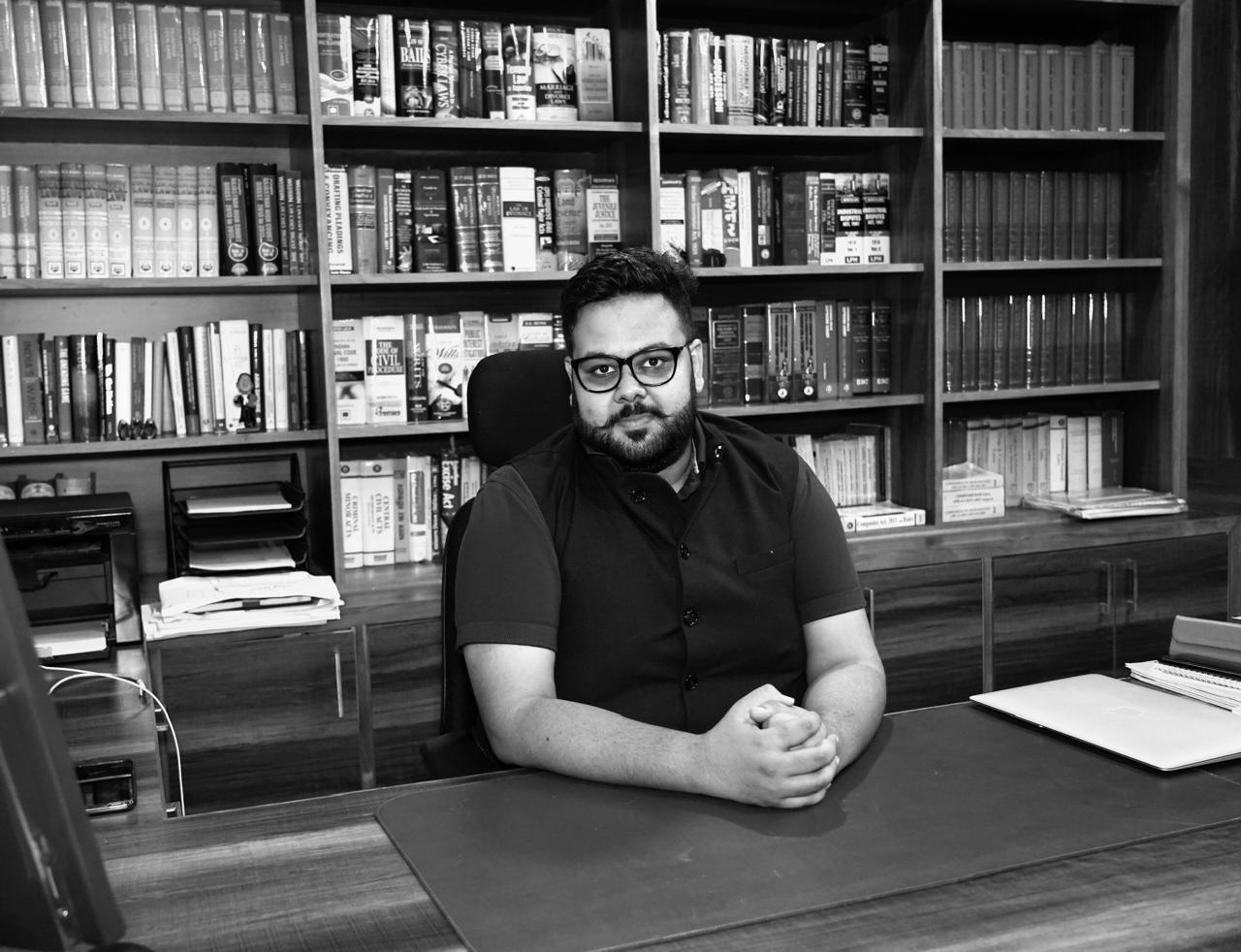
  • “There will be challenges in the core litigation initially especially for the first generation lawyers but ultimately by investing the initial most  productive time you are building your permanent asset as an independent  practitioner.” – Shantanu Jugtawat, Advocate at Supreme Court of India and Senior Public Prosecutor at National Investigation Agency, GOI.

    “There will be challenges in the core litigation initially especially for the first generation lawyers but ultimately by investing the initial most  productive time you are building your permanent asset as an independent  practitioner.” – Shantanu Jugtawat, Advocate at Supreme Court of India and Senior Public Prosecutor at National Investigation Agency, GOI.

    This interview has been published by Anshi Mudgal and The SuperLawyer Team

    What initially inspired you to choose law as your career path? Was there  a particular moment or individual that influenced your decision, and how did  your journey begin at National Law Institute University, Bhopal?  

    I was a student of Science-Mathematics, so initially I wanted to  become an engineer. In my 11th standard I came across an edition of India Today which talked about Country’s top advocates. I was deeply impressed by their  prowess and authority, most importantly their contribution to the political and  legal development of the Nation. It created a subtle effect in my subconscious  mind and gradually I started inclining towards the legal profession. 

    After which I cleared the entrance test of National Law Institute University,  Bhopal and joined NLIU. At NLIU I have been exposed to different approaches to  legal interpretation for example case based approach to see how the law  has evolved over a period of time. It helped me immensely in my future litigation  especially in constitutional and Service matter cases. 

    The initial exposure which I received at NLIU was commendable, for example the  lectures delivered by the Supreme Court and High Court Judges and designated  Senior lawyers. I am quite grateful to the support which I could gather from my  Seniors at law school, for example my Senior Mr. Faizee got me an internship at  the chambers of Additional Solicitor General of India, Late Mr. Amrendra Sharan  in 2007 and eventually, I joined his chamber only. Moreover through the Clerkship programmes by NLIU at Jabalpur High Court I could observe the  minute intricacies of core litigation arguments. 

    When I joined NLIU, I was not clear about my priorities. But then the lectures of  the leading Supreme Court advocates and the Judges created fascination towards the core litigation. But I made sure to have enough exposure to the  corporate side , which was probably the dominant idea in NLIU at that time so I  did internships in almost all the top law firms in corporate areas. Gradually I became convinced to the core that my inherent interest lies in the Core litigation  as in Constitutional and Service matters. Being a first generation advocate, had  no guidance in the legal field, had to create my own path.

    You were associated with the cases like Bar Council of India Vs A.K. Balaji  and Kantaru Rajevaru Vs Indian Young Lawyers’ Association and other landmark  judgments by the Supreme Court. How do such cases shape new legal  dimensions, and what key insights did you gain from working on them? 

    Bar Council of India v. AK Balaji underscores the importance of  regulating the entry and practice of foreign lawyers in India. The judgment  reaffirms the restrictions imposed by the Advocates Act, 1961, on foreign  lawyers practicing law in the country. By upholding these regulations, the court  aims to preserve the ethical standards and integrity of the legal profession in  India while allowing for limited engagement of foreign lawyers in specific legal  activities such as providing legal advice on foreign law and participating in  international arbitration proceedings. This decision strikes a balance between  promoting legal exchange and collaboration while safeguarding the interests of  Indian advocates and maintaining the sanctity of the legal system. 

    Whereas in Sabrimala Case (Indian young lawyers Association versus Union of  India), the Supreme Court upheld the concept of constitutional morality, where  the judiciary interprets the Constitution in a manner that upholds its core values  and principles and went on to clarify that in case of Conflict between  Constitutional morality and Social morality, the objective standards of  Constitutional morality will prevail.  

    While working on these case I have realized that these Landmark cases often  have a profound impact on society, influencing public policy and societal norms,  for example Sabrimala decision allowed the female’s entry into the temple with  in age group of 10-50, hence redefined the standards of social morality in  accordance with Constitutional morality. 

    These cases provided me with deep insights into judicial reasoning and the  interpretative methods used by judges. In fact these cases provided me with  insights which not only enhanced my legal acumen but also contributed to a  broader understanding of mine as to how the law interacts with society and  evolves over time.

    Tell us about your legal journey and mentorship at the Supreme Court of  India. How did that experience shape your foundational years, and how have  those early lessons influenced your practice today? Could you please walk us  through your journey?  

    After my graduation from NLIU I joined a law firm for a brief period but  soon lost interest in law firm culture. I also appeared for Delhi Judicial Services  2010, where I secured 34th rank.  

    Then I joined the chambers of Late Mr. Amrendra Sharan Ji , Additional Solicitor  General at Supreme Court of India, at that time. It helped me a lot in terms of  exposure, especially on the Govt side. As A juniors at his chamber I assisted him  in drafting legal opinions for different government departments, assisted in  arguments before the Supreme Court and drafted replies on behalf of the  government. I have briefed him on many occasions. Later on when I became the  Standing Counsel for the State Govt of Rajasthan, this experience helped me a  lot. He passed away on 12th August 2019. He was a person of eminence, mentor  and guide to many including myself. He will be remembered for his lucid  arguments and his pleasant demeanor at the Court and outside the Court. He  may not be with me physically today but his teachings will always be there. His  gentle demeanor, his smile, and caring disposition will always be missed. 

    My second innings of advocacy started with Senior advocate Mr. Mahabir Singh  Ji at the Supreme Court. A plainspoken man of substance and humility. I was  always amazed at his diversified legal acumen. I have briefed him in my  independent matters also. The biggest learning from briefing him is, to hear  briefs patiently and carefully. Even though he himself is an authority on legal  subject matters, still he would always take briefings very patiently and  accommodate the viewpoints of juniors. The teachings learned at his office  helped immensely in my future practice at the Supreme Court of India.  

    After that I started my own independent practice with Mr. Mukesh Kumar singh, who is now the executive member of SCBA. Together we worked upon many  landmark reportable judgements pronounced by the Supreme Court like Richal  versus Rajasthan Public Service Commission, Employees provident fund  organisation versus Sunil Kumar, Kantaru Rajeevaru versus Indian Young  Lawyers Association ( Sabrimala case), Satyama Dubey Versus Union of India (  Hathras Rape case ), Saurav Yadav versus State of Uttar Pradesh, related to  Vertical and Horizontal reservations in public services etc. to name a few. An  overwhelming sense of pride surges within me as I witness Mr. Mukesh Kumar Singh growing in practice and stature in the legal profession as recently for the third time  he has been elected as Executive Member of Supreme Court Bar Association. I owe him greatly in terms of establishing my private practice at the Supreme Court  of India. Till date we both work as a team.  

    With your extensive experience in handling tax, constitutional, and service matters, could you share your key roles as Standing Counsel for state and national bodies and highlight some important legal opinions you’ve provided? Also, could you explain some settled principles of service law jurisprudence?

    By the grace of Goddess Sh. Karni Ji, I got enough opportunity to defend  the state as well as various Corporations and other national bodies. 

    I have been appointed as Standing Counsel for the Department of Finance  (Commercial Taxes). In that capacity I defended cases for the Department of  Finance, Govt of Rajasthan. In such Writ petitions, Sales Tax Revisions dealing  with GST, VAT, I got them dismissed at the very outset, on preliminary grounds  like not exhausting the alternative reliefs available. 

    Also appointed as Standing Counsel at National Consumer Dispute Redressal  Commission at Delhi for Govt of Rajasthan, National Company Law Tribunal and  NCLAT Delhi for Govt of Rajasthan, Standing Counsel for Department of Stamp  and Registration for Govt Of Rajasthan, Standing Counsel for Rajasthan State  Ganganagar Sugar Mill, Rajasthan State Beverage Corporation Limited.  

    While defending the Corporations I have learned the intricacies of Service  Matter Jurisprudence. In such matters successfully defended the corporations  from being compelled to regularize the services by persons working for a  placement agency. I ensured that we get a categorical order from the Court in  such Service matters directing the petitioners to provide an affidavit proving the  existence of employer – employee relationship between them and the  corporation. This again reinforces the settled legal position that regularization cannot be sought without a clear master- servant relationship. 

    I have drafted the legal opinions as a Standing Counsel for the finance department,  Rajasthan Govt in the matters of Commercial Tax Officer versus M/S Larsen  Toubro Ltd., Apollo Pipes Pvt. Limited Vs Tonk Water Supply Limited, Kishna Grit Udhyog Vs State of Rajasthan and Ors. Drafting legal opinions involves high  responsibilities as depending upon your opinion, the state will adopt a future Course of action. Hence the legal opinion should always provide clear and concise  conclusions and it must answer the legal question posed at the beginning while discussing all the relevant statutes, case laws and legal principles which apply to  the issue. 

    Recently you have been appointed as Senior Public Prosecutor for the National Investigation Agency by the Ministry of Home Affairs, Union Government,  this role will be entirely different from core litigation in Constitutional or Service  matters, so in that capacity what will be your role and challenges? 

    My appointment as a special public prosecutor for the National  Investigation Agency (NIA) involves handling cases related to national security  and terrorism. The NIA is India’s primary counter-terrorism law enforcement  agency, and it investigates and prosecutes offenses affecting the sovereignty,  security, and integrity of India. 

    In this capacity, I would be responsible for presenting the NIA’s cases in court,  ensuring that the prosecution is robust and that justice is served. This includes  preparing legal documents, presenting evidence, and arguing cases in court. This  work often involves high-profile and sensitive cases that require a deep  understanding of both national and international law. 

    In the initial years of my practice I always ensured that I gave myself enough  exposure at the Session Courts, especially Criminal side. I have argued criminal  cases on behalf of the accused especially in POCSO and Session trials. I have also  succeeded in keeping a high acquittal rate for my clients in that capacity. But this  time as Public Prosecutor at NIA my role will be from the State side and I would play my level best to prosecute the accused, ensuring that justice is served and the accused gets conviction beyond any reasonable doubt. 

    How do you manage the workload and pressure from these diverse roles and what strategies do you use to maintain a balance between your professional  and personal life?  

    Definitely many a time the litigation becomes hectic and stressful due  to high Stakes involved and demanding nature of the profession. With the  increase in workload I have deployed a team of junior lawyers and started  allocating them specific work. Since I have to maintain my private practice at the Supreme Court so I made myself available at Supreme Court in the matters  which required my direct involvement. At the same time I started delegating work  at the High Court to my juniors, they helped me a lot. I am thankful to  Sudeep Lakhotia, who helped me immensely in Commercial Tax Litigation  matters at Jaipur High Court. I trusted my team and delegated tasks that don’t  require my direct involvement.  

    In fact the post COVID phase brought tremendous changes to the core litigation. Now a lawyer sitting at any remote place can attend the litigation at the  Supreme Court quite easily. All thanks to COVID and advancements in  technology. It has enabled me to manage multiple cases very easily simultaneously, sitting at one place and giving time equally to diverse legal forums.  

    As an experienced lawyer, do you actively mentor young advocates or law students? What is your approach to mentoring, and what values do you aim  to instill in the next generation of legal professionals?  

    In fact I am an advocate by profession and teacher by passion. I am  always very keen on taking lectures over Constitutional Law of India and its  evolution over a period of time. Many of my students of Constitutional law and  Indian Polity have successfully cleared Civil Services and Judicial Services Examinations. I take immense pride in their Success. I have been associated with  Government initiatives for providing free education to the students of Civil  Services. 

    In fact, for the last 15 years of my practice and teaching students, I am learning  from my students. Students are the most effective teachers of their teachers. I  owe a lot to them for keeping me younger and updated. Every batch  of students brings refreshing vibes and intellectually stimulating energies.

    I always ensured that my students first develop an interest into the discipline,  knowledge and its application will be the by-products automatically. It’s the  interest into the discipline which will ensure the application part and will  subsequently help them, cracking the questions. Students have always  appreciated my teaching methodologies, especially when they have cracked the  judicial or civil services and went into the field. They could successfully connect  the theory with practice. Without knowing the practical application, theories are  meaningless. While teaching the students I always emphasized the importance of integrity, honesty and ethical behavior in all professional activities. 

    For fresh law graduates aspiring to pursue a career in litigation, what  would your advice be—should they start at the district courts or aim for the High  Court or Supreme Court early on in their careers. Especially what is your advice  for law students from law schools where the dominant idea is always in favor  of joining corporate law firms? 

    It is always advisable to start practice at the District and lower courts  where one will learn basic advocacy, nuances of conducting a trial and client  handling which eventually help him in the long run in the career as an advocate. In fact for a brief period I was also associated initially with the Session Court  where I argued in the POCSO cases and Session trials. After that one can move  to the High Court or Supreme Court. 

    My suggestion to current NLIU students will be to break their comfort Zone which is being provided by corporate law firms in the initial years after their graduation. There will be challenges in the core litigation initially especially for the first generation lawyers but ultimately by investing the initial most  productive time you are building your permanent asset as an independent  practitioner. In most of the law firms after a certain point the growth becomes  stagnated.  

    In this context it’s also important to identify your inherent interest in the field, I  mean it’s highly a subjective question. I personally felt that at NLIU there was  always a dominant trend in favor of corporate law firms, even I was perplexed  many a time but then ultimately it’s your inherent inclination which is bound to  supersede every other consideration. Don’t give too much importance to the  monetary considerations initially because these years are the most productive years  in which you can construct a business for yourself.

    Having been part of many landmark judgments, can you throw some light over your pro bono work in terms of teaching law students or at litigation where such work not only impacted the society but also changed your personal  perspective of profession?  

    I have been part of pro bono work at both the levels as in litigation as  well as teaching law students especially the Constitutional Law of India. 

    At the level of litigation my first Pro Bono case pertained to an employee of  Hindustan Salt limited and Samber Salt Limited, ( A Government enterprise ) for  revising the payment scale and releasing the arrears and other emoluments.  

    At the level of teaching I have taken many lectures on Constitutional law of India on a pro bono basis, many of such students have also been successful in Judicial Services as well as Civil services. Nothing can be more satisfactory than  enabling the students to understand the intricacies of the complex legal  principles. Engaging in pro bono teaching helps law students develop practical skills that are essential for their future careers. They gain exposure to real-world  legal issues and learn how to apply theoretical knowledge in practical settings. 

    Pro bono teaching allows students to explore different areas of law and develop  competencies they might not encounter in the classroom. This experience can  be invaluable in shaping their career paths.

    Get in touch with SHANTANU JUGTAWAT-

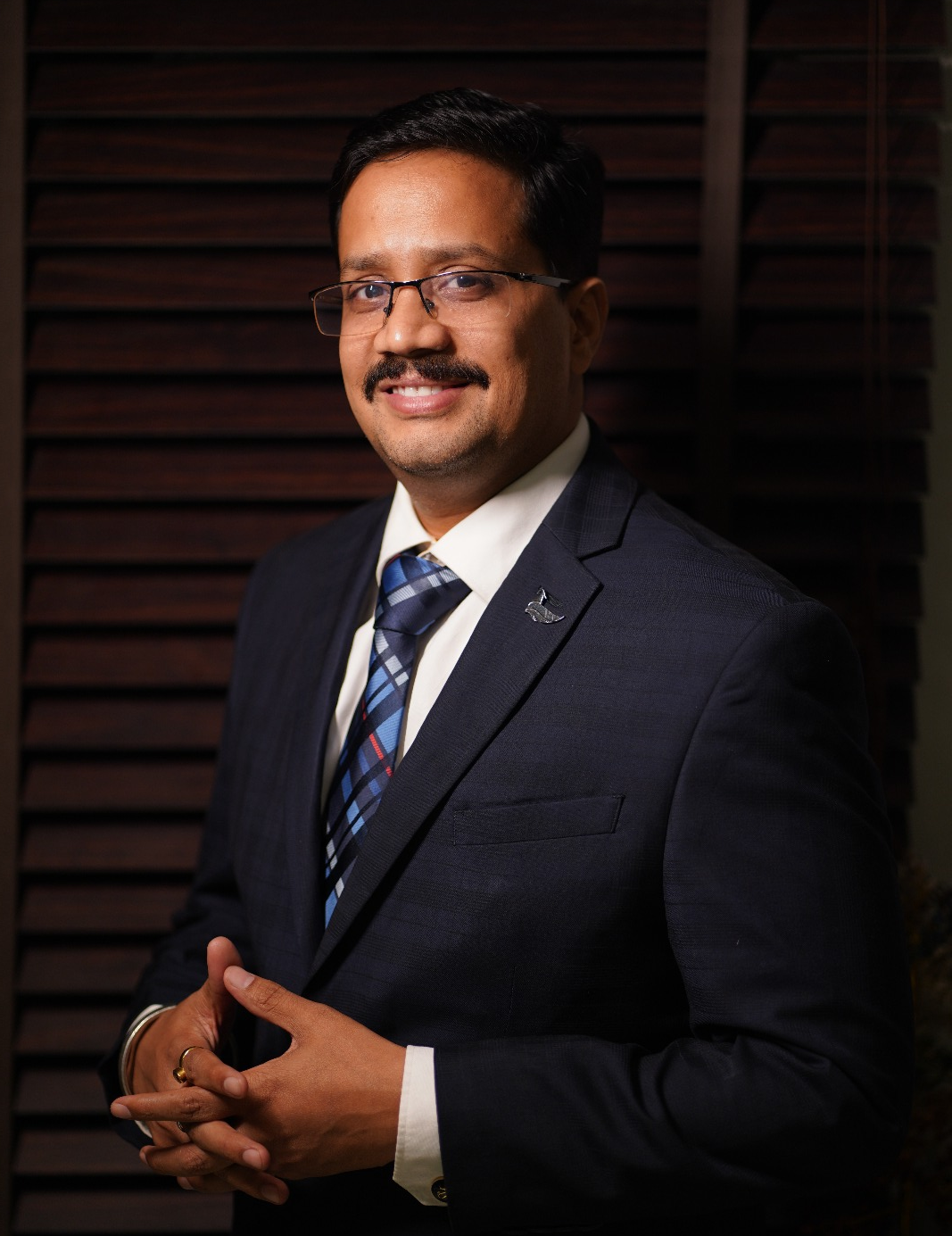
  • “Nothing comes free in this world. In this profession you have to do the smart work in addition to the hard work” – Dr. Venkat Reddy Donthi Reddy, Senior Advocate at High Court of Telangana.

    “Nothing comes free in this world. In this profession you have to do the smart work in addition to the hard work” – Dr. Venkat Reddy Donthi Reddy, Senior Advocate at High Court of Telangana.

    This interview has been published by Anshi Mudgal and The SuperLawyer Team

    From the Indian Air Force to a Senior Advocate, your career transition is fascinating. Can you share the pivotal moment that inspired you to pursue law while serving in the Air Force?  

    As part of my job in the Indian Air Force (1985 to 2003), I was posted as instructor to NCC cadets at Hyderabad (Posted to the unit – No.2 Air NCC t at Hyderabad). I have availed the opportunity to study LLB and LLM in evening college under Osmania University. It was my goal to excel myself in life instead of working under someone. 

    Truly speaking Studying law is not planned. Once I joined the law course, I decided to prove to myself as one of the distinguished advocates across the legal fraternity and public at large.

    You have a Ph.D. in Trademark Law and are actively involved in international intellectual property forums. What new dimensions have you observed in global IPR law, and how can India contribute to these evolving trends?  

    I did my Ph. D in Trademark Law. I have been studying all through my life. I have also done a PG diploma in ADR, PG diploma in Cyber Laws and Intellectual Property Rights, PG diploma in Human Resources Development etc., While doing Ph. D, I have done extensive research on the topic “Law relating to Trademarks in India – A study with special reference to passing off and Infringement of Trademarks”. Some of the suggestions were given to be implemented.

    Attending the various conferences in IPR across the globe viz., INTA (International Trademark Association), AIPPI (International Association for the Protection of Intellectual Property), WIPF (World Intellectual Property Rights Forum), GIPC (Global Intellectual Property Convention), APAA (Asian Patent Attorneys Association), MARQUES etc., is of immense help. It enhances the awareness on the subject in different countries. Latest developments happening across the globe and evolution of jurisprudence is being shared. Since the subject of Intellectual Property Rights is global, understanding the developments in the courts across the world is essential.

    The kind of orders, Mareva injunction, Anton pillar order, John doe order and quia timet action etc., are the evolution of new jurisprudence, which are only being heard in IP related matters.

    Contribution of India.:

    On a personal note, abolition of IPAB (Intellectual Property Appellate Board) by Tribunal Reforms Act, is discouraging. Globally, the countries across the world are showing great importance to IPR and contra, the steps taken by the  Government of India are not impressive. Lack of qualified personnel in prosecution of the IPR applications, lack of infrastructure, delay in prosecuting the applications and delay in court proceedings is not encouraging.

    Unfortunately none of the cities in India has got infrastructure to host the seminars/conferences like INTA etc.,

    The Government of India shall.:

    1. Organise seminars/conferences/workshops among the entrepreneurs, judiciary, advocates, technocrats to bring awareness of IPR.
    2. Shall be part of the international conferences.
    3. IPR professionals, Judges and employees working in IPR divisions to be compulsorily trained and made to attend the international and national conferences wherein a lot of knowledge sharing happens.

    As the founder of RVR Associates, you built a successful law firm specializing in IPR and other areas of law. What motivated you to step away from the firm and take up the role of a Senior Advocate at the High Court of Telangana in December 2022? How has this new role enriched your legal journey compared to your experience as a law firm founder?  

    On RVR Associates.:

    Incidentally I have not joined any Senior Advocate or law firm after my enrolment in September 2003 except having undergone the internship for a period of 3 months under Late Srinivasa Murthy, the Trademark agent to understand Trademark Prosecution. As I am interested in litigation, I got associated with my LLM classmate and started the firm by name M/s. RVR Associates, IPR attorneys and advocates. My classmate is no more the partner of the firm.

    The discipline of the Air Force, dedication, hard work and zeal to excel in the field of law were instrumental for my success. Being a late entry into the profession, a lot of challenges were faced by me. Having not worked with any senior advocate and as no one to support in my legal practice, it made me work harder.

    As a Senior Advocate.:

    I believe in strong ethics and morals. Because of the IPR practice chosen by me, I had an occasion to argue against the leading law firms for the Indian Companies (the Defendants) in various courts viz., High Courts at Delhi, Chennai, Bombay, Ahmedabad, Aurangabad, Bangalore, Dharwad, Allahabad, Hyderabad, Amaravathi etc., By my performance and recognition across the legal fraternity, I started appearing for multinational companies (Mostly Plaintiffs). Then I realised the importance of the experience and the role of Senior Advocate. It was my dream to be Senior Advocate. On application made by me in pursuance of the guidelines framed in Indira Jaisingh judgement, I am bestowed with the designation as Senior Advocate by the High court for the state of Telangana in December 2022.

    New role as Senior Advocate.:

    It is tougher to be a Senior Advocate to a person like me. Now I started reading more to upkeep justice. It comes with a lot of responsibility. Occasions, where I have given up some of the briefs, where I am not satisfied with the proposition of law, on which I have to argue. Earning money is not the sole criteria. 

    In principle, I cannot be part of my law firm and accordingly, I got disassociated with the firm sooner I become Senior Advocate in December 2022. The principles laid down, work culture and system created by me is being continued with my colleagues/advocates. I always remain a mentor for them. Now I am getting more time to prepare thoroughly for my briefs. Unfortunately, no one can be a master in every branch of the law. This is only the profession; you need to study till you die. More you become senior, the more work and pressure. Keeping good health is a serious concern for every advocate.

    You have appeared for many prestigious clients across India. Could you share one of your most challenging cases and the key learnings that shaped your approach to advocacy?

    The intellectual calibre of the advocate alone will not bring the results. various court crafts would also be taken into consideration in getting the results to the clients. Understanding the law and mindset of the court is very important, which cannot be ignored.

    For the sake of confidentiality and non-disclosure, I am not disclosing the names of clients and cases and few of the interesting cases are as follows.:

    1. In one of the cases, the court has appreciated the arguments and the legal points raised, the suit is dismissed at the interlocutory stage itself, without any application being filed for such relief.
    1. In one another case, the writ was to be dismissed, as the court was not convinced on the point and arguments rendered. As it is posted for counter and in the meantime, it got posted before another bench, that court has taken a different view being convinced with the arguments and I won the case.
    1. Most of the cases are badly drafted and it would result in losing of the cases despite merits in the case. Several cases are won by me without getting into the merits of the case, due to the bad drafting and the mistakes committed by the other side.
    1. One should have a determined client to support you arguing on a particular proposition of law otherwise, the reputation of the advocate will be at stake.

    You’ve been involved in teaching for over 30 years, lecturing at prestigious universities. How have you seen students and the field of legal education evolve over the years? Additionally, what has teaching law taught you about your own practice, and how has it influenced your legal approach? 

    Teaching is my passion. The students at universities are not taught the practical aspects of law. Practicing in the courts is a different ball game. While I discuss the practical aspects with illustrations and examples, students are benefited. This profession is no more by chance, it is by chance and hence it will be more competitive and encouraging in coming days. Many times, I learnt from the students while they argue effectively in moot court competitions for which we are designated as judges.

    What role do you believe non-governmental organizations like ALERT play in improving access to legal education, and how does your work as its president contribute to the success of aspiring legal professionals?  

    As part of my profession, I do a lot of pro bono cases also. Ignorance of law is not an excuse, if so, all citizens would be taught the basics of law. As an NGO, I feel it is to spread the basics of law among the citizens and downtrodden people. Government colleges are not as equipped in all aspects while compared to the national law schools. The role of NGO plays a vital role.

    You’ve been supporting students in government schools for over 30 years. How has this philanthropic work impacted your perspective on education and community building?  Please share some insights.

    My father was a teacher, and all his students still remember him for his contribution towards his profession and in up bringing of the students in all aspects of life. In his remembrance, I do encourage the students for the last 30 years by motivating and supporting them in their endeavours. Students do not know what they have to do for their career while they complete their 12th standard. Lot of motivation and guidance is required. Sometimes I do engage the professional speakers and motivators to teach them regarding the aspects of life and career.

    With such a vast and varied career, what advice would you give to young lawyers looking to create a successful and meaningful career in law, particularly in intellectual property and other specialized fields?  

    My advice to the aspiring lawyers in Intellectual property cases and specialized fields.:

    1. No substitute for hard work
    2. Stick on to senior/law firm for considerable period of time
    3. Practice at lower courts for relevant period before switching to the constitutional courts (high Court and supreme court)
    4. Get yourself decided whether you fit to be in house counsel or arguing counsel. Your interest and skills to be taken into consideration.
    5. Keep attending the seminars and conferences in relevant field of law to know the developments
    6. While learning at initial stages of practice, do not give importance to the earnings until you become an asset to the institution/advocate you are working for.
    7. No case is small or bigger. Every case will teach you something new and we are playing with the lives and career of citizens. So similar attention be given to all cases irrespective of social and financial status of the clients.
    8. Upgrade with the latest technology.

    With such a diverse and demanding career spanning the Indian Air Force and legal practice, how do you find time to unwind and relax? What activities help you maintain a balanced life outside of work?  

    Very interesting question. I do relax, while I travel abroad for seminars and conferences. Credit to be given to family members, for their understanding and co-operation. I believe in the logic/ paraphrases 

    “more you sweat in peace less you bleed in war” – Avoid last minute preparation

    “to get something, you need to lose something” – nothing comes free in this world. In this profession you have to do the smart work in addition to the hard work

    I am a sports person, so I keep attending the gym workouts and swimming.

    Get in touch with Dr. Venkat Reddy Donthi Reddy-

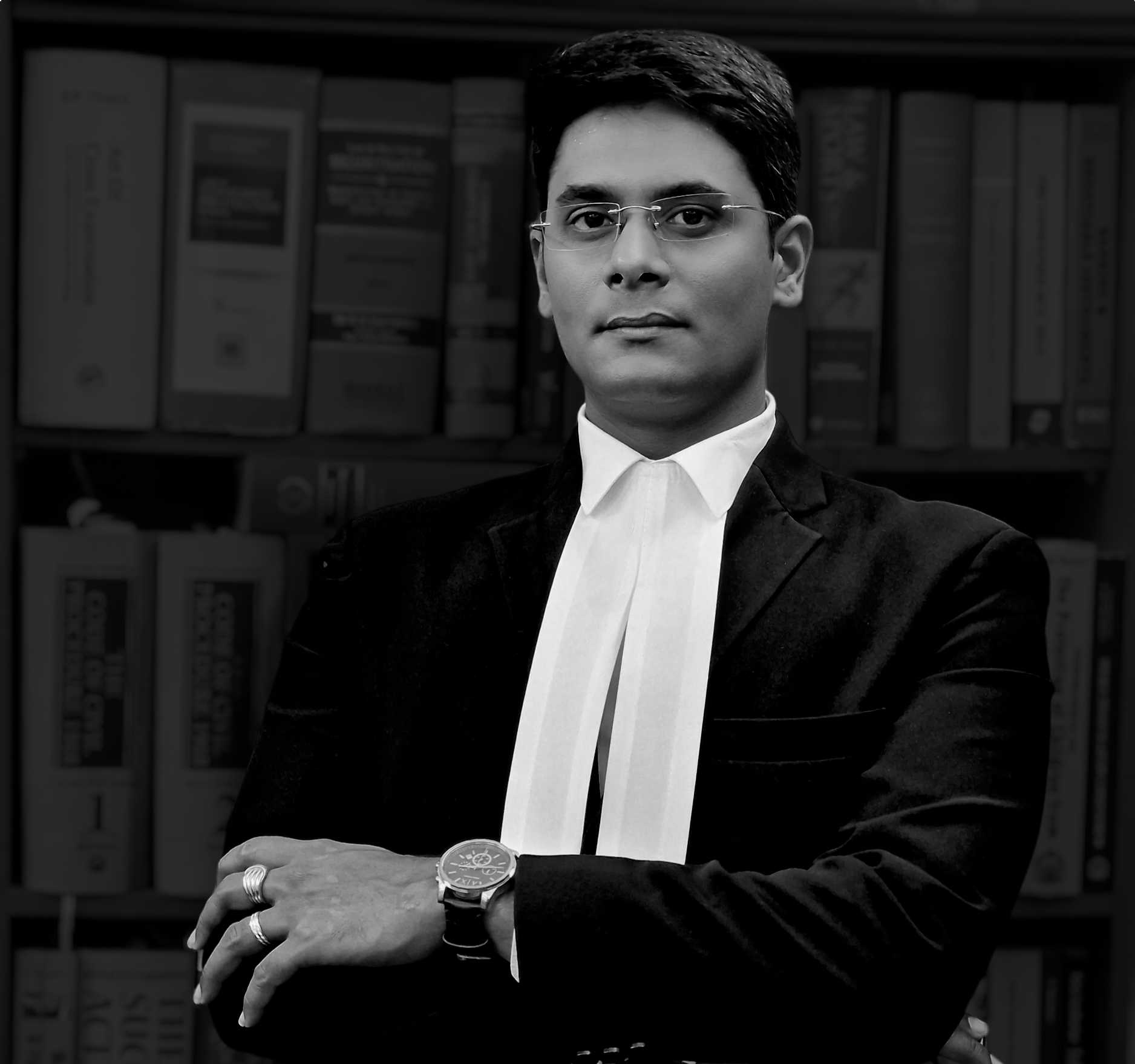
  • “Being the most knowledgeable person in the room means understanding not only when to speak but also when to listen.” – Arunima Jha Esq., Head of Legal Compliance at KnowledgeWorks Global Ltd.

    “Being the most knowledgeable person in the room means understanding not only when to speak but also when to listen.” – Arunima Jha Esq., Head of Legal Compliance at KnowledgeWorks Global Ltd.

    This interview has been published by Anshi Mudgal and The SuperLawyer Team

    You started your educational journey at the University of Mumbai, where you achieved rank holder status. Reflecting on that time, was law a predetermined career path for you? What motivated you to eventually pursue an MBA?

    Law wasn’t always a clear-cut path for me. I kind of stumbled into it, like someone taking the scenic route and unexpectedly discovering a hidden gem. Becoming a rank holder at the University of Mumbai made me realize that I had a real talent for it, and it opened doors to a fulfilling career. Pursuing an MBA was a natural next step—it felt like adding a new dimension to my skill set. I wanted to combine my legal expertise with a business mindset, giving me an extra edge. After all, understanding the rules is important, but mastering the strategy is what truly makes a difference.

    After completing your bachelor’s degree in law, you pursued a Master’s degree specialising in Business and Corporate Law. What sparked your interest in this specialisation, and how has it influenced your career?

    Specializing in Business and Corporate Law was like deciding to take on the whole challenge, not just a part of it. I’ve always been fascinated by how businesses operate—from their internal structures to the deals that shape their growth. Getting into this field gave me the opportunity to hone my technical skills in areas like contract negotiation, risk management, and regulatory compliance. Managing mergers, acquisitions, and high-value contracts has become second nature, and I’ve gained the ability to analyse the finer details that make or break a deal. It’s not just about understanding the law but about applying it strategically to achieve the best outcomes. This specialization has equipped me with the expertise to craft legally sound documents while ensuring that the business objectives are met, making me confident in driving complex negotiations from start to finish.

    At the beginning of your career, you worked for 4 years as a legal associate before finally switching to corporate as an in-house counsel. What inspired your transition and could you share your experience working in both cultures?

    Transitioning from a legal associate to an in-house counsel felt like going from being a spectator in the stands to actively playing on the field. As an associate, the focus is more on legal technicalities, but in-house, you’re embedded in the business, facing challenges side by side with your team. One key aspect I’ve realized is that having a solid understanding of litigation is essential for any in-house counsel. It helps in recognizing potential legal risks, understanding the procedures, and confidently handling disputes when they arise. In fact, as in-house counsel, we often handle certain litigation matters ourselves, which has allowed me to become more comfortable with the unknown. This experience equips me with the knowledge to not only address issues as they surface but to anticipate them and strategically guide the business through them.

    Having collaborated with many prominent names, you are now the Head Legal Counsel for Knowledge Works Global Ltd. (KGL), a CJK Group Company. What has been one of the most interesting cases you’ve worked on, and what was your approach to handling it?

    Oh, where to start! One of the most exciting parts of my work is handling tech deals. I love collaborating with the tech teams—there’s always something new to learn. Sometimes I wonder if I’m asking too many simple questions, but honestly, it’s an amazing journey, and those questions help me dive deeper.

    That said, if I had to choose one standout contract, it would be the one I handled for Virat Kohli’s brand promotion with HSBC. The negotiations were intense, and it took me more than six months to finalize. By the end, I could feel the exhaustion setting in, but I knew I had to keep a cool head when the stakes were high. The approach? It was all about meticulous preparation, staying patient, and playing the long game. At the end of the day, it came down to finding that sweet spot where everyone walked away happy—or at least convinced they had come out ahead. After all, it’s not just about how you play the hand, but how you sell it to the table.

    In your impressive career spanning over 10 years, you’ve likely worked with numerous national and international clients. How has being a Certified Information Privacy Professional/Europe (CIPP/E) enhanced your understanding of the complexities surrounding privacy issues in different international jurisdictions?

    Being CIPP/E-certified has been crucial in enhancing my understanding of the complex landscape of privacy laws across various jurisdictions. While it’s fundamental to recognize the existence of privacy laws, comprehending the specific nuances and differences between countries is where the real expertise lies. For instance, Europe’s General Data Protection Regulation (GDPR) imposes strict requirements on data handling and protection, while other regions may have more relaxed policies that vary significantly.

    This certification has equipped me with the knowledge necessary to provide effective advice to clients regarding cross-border data flows. It allows me to help businesses understand their obligations under different legal frameworks and the implications of non-compliance. Moreover, in a constantly evolving legal environment, staying updated on these regulations is essential for ensuring that my clients not only meet legal requirements but also adopt best practices for data protection.

    Ultimately, my CIPP/E certification enables me to offer strategic insights that empower my clients to navigate the complexities of international privacy laws confidently. It’s about providing them with the tools and knowledge to thrive in a global market while safeguarding their data and maintaining compliance with relevant regulations.

    During your time at Book My Show, you managed contracts for major live events featuring international artists. In your opinion, what are the key aspects that a legal practitioner, particularly one specialising in contract management, should consider when drafting contracts with international legal implications?

    When drafting international contracts, it’s essential to approach the process with the mindset of a strategist, anticipating potential developments well into the future. This involves several key considerations, such as thoroughly understanding the regulatory landscape in each jurisdiction involved. Selecting the appropriate governing law is crucial, as it sets the framework for how the contract will be interpreted and enforced.

    Additionally, addressing data privacy concerns at the outset is vital, given the varying regulations across countries. This ensures that all parties are aware of their responsibilities regarding data protection from the beginning. Furthermore, incorporating flexibility in critical terms, such as force majeure, is important, particularly when contracts involve live events that may be susceptible to unforeseen circumstances, ranging from a global pandemic to natural disasters.

    The goal is to effectively address potential “what ifs” without unnecessarily complicating the agreement. This balance allows for a comprehensive contract that protects the interests of all parties while maintaining clarity and simplicity in the terms. By doing so, we can create agreements that are not only legally sound but also adaptable to the unpredictable nature of international business.

    As a strategic legal counsel supporting the company’s legal operations across global jurisdictions, how do you believe the Digital Personal Data Protection Act 2023 is reshaping the digital landscape in India? What practices would you implement to navigate the changes introduced by this act?

    The DPDP Act 2023 is fundamentally transforming the landscape of data privacy, compelling companies to rethink how they collect, process, and safeguard data. This legislation encourages organizations to enhance their data-handling practices and embrace a privacy-first mindset.

    To effectively respond to these changes, I recommend that businesses prioritize updating their data management policies and conducting regular audits. It’s also crucial to ensure that the entire team is thoroughly familiar with the new compliance requirements. Think of this process as analogous to upgrading your operating system—it’s essential to ensure that everything operates seamlessly and efficiently, minimizing the risk of unexpected challenges. By proactively adapting to these new standards, organizations can not only achieve compliance but also build trust with their customers.

    With over a decade of experience, what advice would you offer to our young readers who aspire to become successful corporate and commercial lawyers in the future?

    Always bring your best to the negotiation table—being the most knowledgeable person in the room means understanding not only when to speak but also when to listen.

    First and foremost, it is essential to adopt a mindset of continuous learning, as the legal landscape is ever-evolving. Staying current is vital for success in this field. It is important not to confine oneself to theoretical knowledge; gaining practical experience through real-world cases can greatly enhance one’s understanding. Additionally, developing both legal expertise and business acumen is crucial. By combining these skills, as a legal professional one can solve complex situations more effectively and make informed decisions that benefit all parties involved.

    Get in touch with Arunima Jha-

  • “The most important facet an individual should have in the field of law is that he should be a keen observer, good learner, hardworking and have perseverance in attaining the desired results even if it takes time.” – Subrat Sahu, Founder at Legumlatum LLP.

    “The most important facet an individual should have in the field of law is that he should be a keen observer, good learner, hardworking and have perseverance in attaining the desired results even if it takes time.” – Subrat Sahu, Founder at Legumlatum LLP.

    This interview has been published by Anshi Mudgal and The SuperLawyer Team

    Since you belong to a science background, what made you switch your career from Science to Law after attaining degrees such as B.Sc. in Zoology, Animal Biology and M.Sc. in Anthropology?

    Since I have a Science Background I have developed an analytical understanding of things during the course of my study. Also, the knowledge which I acquired was theoretical and which has a limited use. It is only applicable in a limited sphere, only in the realm of my study after that the knowledge is futile. I always wanted to work for the purposes of the poor and downtrodden people.

    Which can be done through addressing the plights of the undertrials and accused persons who do not get any legal help and are being languished in the jails.  The legal profession is dynamic and it gets changed day by day and which requires the technological know-how in a lawyer which is essential for addressing the plights of the litigants and lawyers and the judges who are not tech-savvy. These days the laws or statutes require the basic knowledge of science or scientific temperament in a lawyer to address some technological statutes, such as the IT act 2020, The Data protection Act, The food and adulteration act, The Patents Act-1970, The Mental Health Act, The Medical Termination of Pregnancy Act, Air and Water Pollution Control Act. Further the law provides the application of the knowledge obtained during the scientific studies and can be applied in the legal arena. As Scientific knowledge or scientific temperament is required by the legislators who frame the laws or statutes then comes the lawyers or paralegals who practice or draft the petitions or applications which require the scientific knowledge. Then comes the interpreters, they are the puisne judges, thus a scientific taskforce is needed in the legal framework to cater the techno legal subjects. There is a large demand of Engineers whether they are Civil, Mechanical, Electronics engineers in Patents drafting, and removing the defects mentioned in the Examination Reports of the patents examiner. There is a huge demand of the techno-legal professionals Many engineers, Science Graduates and Post Graduates are qualified lawyers, thus bridging the gap of the application of the technology on law and the law on technology. I specifically being a Science Graduate and Postgraduate driven by the need of the techno-legal professionals considered to go. 

    You have worked with various firms before setting up your own firm Legumlatum LLP. What according to you were the learning experiences that shaped your role as the Founder and Managing Partner of the firm?

    I had worked in different law firms, prior to launching of my own law firm and during the term there, I have learned the time management, the team work, done work diligently with the efforts to perform the work assigned. Also, during the course of the day we had discussions and we used to put all efforts or inputs among the teammates regarding the work assigned. We used to take views from all the team members regarding the work and put the best efforts in it. Thus, I inculcated the habits and the skills which I learnt during my tenures at different organisations. Also, being a first-generation lawyer, I worked hard to learn the nitty gritty of the legal profession and was never before earning the money. As I put my earnest efforts in the learning, during my tenures I did not hesitate in learning things by doing the work assigned, whether it is arranging the legal documents, and in drafting the suits, agreements etc. I never denied to do the work assigned to me as this is not of my domain.

     I paid utmost attention and put the efforts in the completion of the job assigned, for which I had done the research in various databases, like SCC online, Manupatra, DLT. All these efforts which are taken during the working hours made me a workaholic I used to learn from the mistakes of mine and others to cope with the situation in ordinary course.

    You have appeared before multiple legal forums including NCLT, High Courts, and the Supreme Court. How does preparing for and arguing cases at different levels of the judiciary differ, and what has been your approach?

    Preparation of the cases at different forums are altogether different. In the district courts there the wholesome preparation for the trial is needed, whether it is at the pleadings stage where complaint is to be filed and then the pleadings are to be completed, then the evidence stage where evidence has to be tendered in the civil cases the evidence by way of affidavit, then framing of the issues are to be done and arguments are to be tendered. Similarly, during the preparation of the cases at the National Company Law Tribunal, i.e. NCLT the soft copy of the petition is to be uploaded and the hard copy of the petition is to be filed. In the High Court the filing and listing is altogether different, then the listing of the matter after the filing is done by the registry of the High Court. The proceedings at High Court are different than the District Courts. Thus, the legal proceedings at the Supreme Court are different governed by the Supreme Court rules. Thus, it is to be said that the filing, proceedings are different in various legal forums. Thus, the preparation of the different cases at different forums are altogether distinct and the efforts to be put in these cases are different, and accordingly the strategy is being made to dealt with these cases at different forums.

    Being an independent practitioner with such vast experience, you must have come across interesting cases. Can you share with us the most interesting cases you’ve dealt with and your preparation for such cases? 

    I can share a civil case where the plaintiff is a senior citizen about 80 years age. The defendant is the daughter in law of the plaintiff. The plaintiff was allotted a property from the Government being the member of the Schedule Caste category. The plaintiff had allowed his sons and their families to stay in some portion of the allotted property and the Plaintiff was staying in one of the portions. The defendants had sold the property where the plaintiff used to stay to a third party by the registered sale deed by producing the false chain of documents. As per the notification of the government the piece of land which was allotted to the plaintiff can only be transferred to a member of the Scheduled Caste. Thus, there was a conflict to the ownership of the property where there are two parties declaring themselves to be the owner of the property. In the meanwhile, or during the course of the litigation, the plaintiff died and before the death of the plaintiff he had bequeathed the property in the name of his daughter by executing registered will, Power of Attorney, and gift deed.

    I put my submissions before the hon’ble court that the plaintiff is the owner of the said property and consequently his daughter became the absolute owner after the death of the plaintiff by virtue of the registered will, Power of Attorney, and Gift deed in her favour. The hon’ble court accepted my submissions and accordingly made his daughter the absolute owner of the property, thus now the plaintiff’s daughter has stepped into the shoes of her father and she will initiate the legal proceedings against the third party who is claiming to be the owner of the suit property. 

    IPR Law is a vast and dynamic field with new changes coming up every single day. Since you have immense experience in Patent Prosecution how do you think the dynamics have changed over the years including the recent amendment in the Indian Patent Rules,2024?

    Yes, I agree with you that the Patents Act-1970 is dynamic with new changes occurring every day. The Patents Act-1970 had transitioned in the British Era to the present day and is changing day by day. The Patents Act-1970 has taken shape in the form of the act VI of 1856 which was based on the British Patent law of 1852, in which certain exclusive privileges were granted to inventors of new manufacturers for a period of 14 years. In the year 1859 the act was modified as act XV as patent monopolies called exclusive privileges making, selling, and using inventions in India and authorising others to do so for 14 years from the date of filing specifications. 

    In the year 1872 the Patents and Designs protection Act came into force. Then in 1883, the protection of inventions came into force and in the year 1888 the consolidated to Inventions and Designs Act. In the year 1911 the Indian Patents and Designs Act came into existence. Further in the year 1970 the Patents act came into existence. Since 1970 there are six amending acts had shaped the Patents Act-1970. The recent was the Tribunals Reforms Act- 2021 which came into effect from 04.04.2021 after that there were amendments to the Indian Patents Act-1970 by the enactment of the Jan Vishwas (Amendment of Provisions Act, 2023) which decriminalised and rationalised offences to further enhance the trust-based governance for ease of living and doing business. The Indian Patents (Amendment Rules, 2024 were notified on March 15, 2024 which aimed to expedite the patent application process, provide flexibility on certain deadlines, simplify requirements for foreign filings, particulars and working statements and reduce frivolous pre-grant oppositions.

    You have over 15 Years of Experience, what advice would you give to the young generation who are starting out in their careers and wish to pursue the field of IPR?

    My advice to young generation who wish to pursue the field of IPR is that to be clear in the vision regarding the domain which they would require to pursue in IPR whether it is the Patents, Copyrights, or Trademarks or the Commercial law. The youngsters must exercise their choice to practice in the specific field of either IPR or Commercial Law.

    You mentioned being an ardent learner, gaining insights from both your own and others’ mistakes. Could you share an instance where a challenging case taught you a valuable lesson that has influenced your practice?

    As I had mentioned that I am an ardent learner, gaining insights from my and others mistakes, such a mistake from which I had learned is that I was not attentive to the specific timelines which are to be followed in various cases whether it is to be revision, or appeal or other instances. In IPR the filing of the documents is time bound and if the action is not taken in the stipulated time period, then in such cases the application gets abandoned.

    As someone who manages a legal firm and personally handles cases, how do you strike a balance between running the business side of Legumlatum LLP and being actively involved in legal proceedings?

    As I told you that I do manage the business of the Legumlatum LLP and also take care of the cases, I do such cases in the supervisory role in both the instances. I supervise the work done by our associates. I supervise the work done by our associates who are being delegated the work. Further the work which was being done at Legumlatum LLP is the team work.

    What do you think is the most necessary facet a lawyer should have if they wish to have a successful career in the field of law, especially IPR and Commercial Law?

    The most important facet an individual should have in case he has to have a great career in the field of law is that he should be a keen observer, good learner, and hardworking and have perseverance in attaining the desired results even if it takes time. 

    Get in touch with Subrat Sahu-

  • “If you put out value, people will value you. Charge your worth and be reasonable is how I have reached $100K in 14 months on Upwork.” – Meghna Khetrapal (Maggie) , Managing Partner at Aerie Law, Freelancer.

    “If you put out value, people will value you. Charge your worth and be reasonable is how I have reached $100K in 14 months on Upwork.” – Meghna Khetrapal (Maggie) , Managing Partner at Aerie Law, Freelancer.

    This interview has been published by Anshi Mudgal and The SuperLawyer Team

    How did you prepare yourselves to get into NLU Bhopal and what was your motivation to pursue a career in law?

    I’d like to say that when it comes to choosing law as a profession, it came to me naturally by virtue of wanting to be someone who wanted to solve a problem and be someone of value. I was very fond of reading about providing proper solutions to people. I grew up in a family with a very strong academic background. And they always encouraged me to think about a solution-oriented approach to complex problems. So that’s how eventually I zeroed down to law because I did not want to be an investment banker. I was not great with math. So, that’s the core of my practice when I started the profession. And that’s the core of my practice even today. Solving problems through value addition is really what I wanted to do.

    After completing your career as a law graduate, you started with a tier 2 law firm and then moved your way to a tier 1 law firm like Shardul Amarchand Mangaldas & Co. What was your experience relating to the cultural shift in both the establishments and what were the adjustments you made while making this particular transition?

    Yes, this is a personal background story that not many people know of. When I graduated from NLIU, I did not get into the Tier 1 law firms although I had a fantastic base, it is just that my interviews did not go as well as was planned because I was anxious, nervous and attached and it was a very human thing. Therefore, I started off with a Tier 2 law firm, but I think everything does happen for a reason.

    I’m very thankful for my journey. The entire journey of going to a tier 2 law firm and then moving to a tier 1 law firms through my work, honing client handling skills and learning to deliver value has been a wholesome journey that happened for a reason and therefore now that I look back at it, it all just adds up, beautifully.

    If you were to ask me today, there’s nothing about my journey I’d like to change. When I was in a tier 2 law firm, I experienced a lot of personal training. I experienced people paying attention to my work. Seniors were a little more approachable and relaxed and that is also when I started my preparation for the tier 1 law firms. I joined a lot of courses in LawSikho and gradually the preparation led to Tier 1 which was a different experience on its own and boom I had a couple of offers, I could choose from after my experience.

    In Tier 1, there was a lot of exposure relating to international clients and a varied work culture while working with a Tier-1 Law firm.

    So, both Tier 2 and Tier 1 firms have taught me a lot. The experiences and the values have been different in terms of what I have taken away from both of them. But, like I said, the journey was the journey for a reason.

    Moving on from there, would you be interested in sharing any case, which was very interesting for you while you were working in these top tier law firms, especially in the sector of corporate governance?

    I think I’ve been very fortunate to be in a lot of very good deals where I’ve had a lot to learn.

    But if you were to talk about my work experience in terms of what I learned, I think I learned the most in SAMVĀD Partners in the sense that the training was very in-depth and they taught you how to think. That skill is irreplaceable. I remember a particular bunch of cases that we did for a couple of venture capital investors, where they were investing in different sectors in India. Preparing the diligence reports required a lot more thought than what people generally think it is, it’s not black and white. There were different types of transaction documents and different natures of transactions which I was exposed to.

    I think it’s difficult to pick one case. But let me just say it was so perfect and so beautiful.  I learned at every step of the journey. Actually, if you’re in a fast-paced law firm, you learn so much on a regular basis because you work with a different team.

    There’s so much to take from there. You work with a senior, learn tricks like how to handle a document better, there’s something to take from everyone. So, everything combined goes a long way.

    After working with high-profile law firms, when did you decide to switch to freelancing? What key learnings do you continue to uphold while working with these international clients from over 50 countries?

    This is interesting, when COVID hit and the markets were down, at least for me in a tier 2 at that time, I felt the wrath of it because there were salary cuts. There was so much happening. That’s when I explored Fiverr, so this was way back in and at that time I remember I did not have the money in my bank account to have an Upwork profile and buy connects, and I still give Upwork the feedback that, they are expensive for somebody who’s trying to begin their journey because on Upwork one keeps applying initially and it takes time to really crack the market. I remember at that time it was so hard, I couldn’t justify buying so many connects. So, I was only on Fiverr for about 2 months and each month I made a decent amount of money at that time, I mean thank God I had food on the table during COVID. So, for me, I did well on Fiverr and I was happy but the scalability was still missing.

    Then I thought, okay, let me explore and go to a law firm. So, I happened to get on the law firm track and then life just took a full circle with Upwork, when I finally reached out to Abhyuday, while I was in a tier 1 law firm and talked to him about how I feel like giving Upwork a real shot.

    There was something in me at that time that told me I was prepared for Upwork. From January to August, 2023, I was just recouping and was just all over the place, nothing productive but in August, 2023, I told myself, I need to get my life together and my life unveiled to me the most beautiful journey there could have been as that is when I started Upwork. One more noteworthy factor is that I was never attached to the idea of making USD 100,000 in 14 months or 12 months. I was out there genuinely enjoying what I was doing and that is why I was doing what I was doing without any breaks or without any need for a break.

    I really liked it and the profile kept growing. I told Abhyuday somewhere around September/ October, 2023 that this is what I was supposed to do all this while. This is my life journey and I attracted my mentors who helped me through it all – Jean-Luc, Abhyuday, Ramanuj, Priyanka. In my family, my parents, specifically my mom, mama and chacha were always there for me and so was my friend Kartika, she has helped me manage my not-so-good days.

    Upwork has taught me a lot even in terms of soft skills. It has taught me first that every project is not going to be perfect, maybe one project in a 100 will not go as planned but we should still do the best we can. You learn through your mistakes, say that it’s fine and that everyone has bad days. And the second thing is that if you put out value, people will value you. Like I said, I don’t undersell myself too much on Upwork. It’s not like I’m the cheapest freelancer there and neither am I the most expensive, but I charge my worth and put out real value to the best of my abilities.

    So don’t do something that doesn’t make you feel good in the long run. Charge your worth and be reasonable.

    Maintaining a constant workflow of projects and dealing with various clients all over the globe must be very tedious to you. How do you actually manage the same while balancing your personal life?

    Okay, Number one, the trick to this when I was discussing this with Ramanuj also, is that you save time if you have a repeat client. So, if you have a repeat client, imagine you don’t have to pitch, you don’t have to go out to someone and convince them of your abilities again, the same client hires you again and again.

    Establishing a repeat customer rate makes life easier and saves you time. And therefore, you can take out some time for your personal life.

    I have 3 pets at home, actually. I have 1 dog and I have 2 rabbits and I’m in the process of, hopefully if everyone in the house agrees, then also have fish in the house. I take care of my pets also. So, there is a personal life and it’s how you save time by virtue of establishing a clientele, which will help you go a long way.

    There must be various statutes and laws that you must research before providing the advice to the clients as they are from different jurisdictions. How do you actually prepare for such opportunities? And what kind of strategies have you developed over the years to keep up with the new emerging trends?

    So firstly, there are certain jurisdictions where my clients are concentrated. I have a lot of clients in the US, UK and Australia. So those are 3 jurisdictions, which I know I need to focus on. And secondly, there is a certain joy that I find in reading about a more evolved law in certain aspects. Now when I read different laws, I see that there is a certain level of evolution in specific legislative areas.

    So, I find a lot of joy in that process, which is the joy of discovering something new. And it comes with practice but it’s about studying, reading and working on something new every day. It compounds and accumulates over time and you don’t have to overwhelm yourself; in one month saying, I’m going to become an expert. There is no expert – we are all works in progress, working on ourselves, striving for excellence.

    What would be the advice given to your younger self, going back a couple of years or the younger generation, which is entering the field of law, on how to make this vertical of freelancing a success for them?

    I think to my younger self, I would definitely say, please chill, relax a little bit, life’s not going to end and there’s no one victory or one defeat, which will define your career that doesn’t happen. Take care of your mental health, your needs and be kind to yourself first. Then find a bigger purpose. My bigger purpose is to care for animals and maybe create an animal shelter one day, invest in mental health, financially help especially abled people – that gives me more joy than anything else.

    I would also tell myself that it is every day work that defines who you are. And there is no such thing as big or small. I remember when I had started working on Upwork, there were a lot of people who felt it’s just not glamorous enough or not “big enough” for them. So, I would say that, there’s nothing that’s too small. If you think there’s a client you want to work with on Upwork or on Fiverr, whatever your place of interest is, if you like and enjoy it, you should do it. There’s nothing like small – you define your small, you define your big.

    And second is don’t undersell yourself because of a client. That’s just something I’ve realized because what I feel is that I have only 24 hours in a day. It makes sense for me to define what I want to do in those 24 hours and who it is that I want to be associated with in those 24 hours.

    I therefore like to have my own boundaries in terms of what are the prices I charge or what is it that I put forward in terms of value. So, you should define what keeps you in the journey for the long run and work as per those principles and put out values that match those principles and I think that’s just the way of it.

    It’s the interweaving of your values, what you put out and what you really think you deserve. Also, it’s just everything put together, which culminates into a beautiful journey.

    Get in touch with Meghna Khetrapal-

  • “The most important to excel in the legal field is to seek mentorship by connecting with experienced lawyers. Also, be open to changing your mind as you gain more experience” – Monika Bhatelia, Associate Partner at Singhania & Co LLP.

    “The most important to excel in the legal field is to seek mentorship by connecting with experienced lawyers. Also, be open to changing your mind as you gain more experience” – Monika Bhatelia, Associate Partner at Singhania & Co LLP.

    This interview has been published by Anshi Mudgal and The SuperLawyer Team

    Can you tell us about how you began your career in law and what led you to do law and specialize in commercial litigation, arbitration, and maritime law? Please allow us to walk through your journey.

    During my undergraduate law studies, I discovered a fascination with the legal aspects of business. An internship at a law firm provided invaluable practical experience, sparking a passion for advocating justice. As I explored various legal areas, my conviction grew. Commercial litigation, arbitration, and maritime law perfectly merged law and commerce, captivating me. The dynamic nature of commercial disputes and solving complex problems drew me in. Specializing in arbitration enabled efficient conflict resolution outside the courtroom, benefiting businesses. Maritime law’s international trade and unique challenges further solidified my interest. My journey toward specialization was driven by curiosity and a passion for justice. Working on diverse cases reinforced my dedication to honing skills in these fields.

    Maritime law is a unique area of practice. What drew you to admiralty and maritime matters, and what are some key insights you’ve gained from dealing with ship arrests, maritime liens, and international arbitration?   

    My fascination with admiralty and maritime law has been sparked by the intricate and global nature of this field. The convergence of law with international trade, shipping, and commerce presents distinctive challenges and opportunities. Through my involvement in ship arrests and maritime liens, I understood the critical role these legal mechanisms play in safeguarding the interests of creditors in a swift, high-stakes environment. Grasping the intricacies of jurisdiction and the interaction between various legal systems is essential, given that maritime cases often span multiple countries. 

    Given your extensive work with the Insolvency & Bankruptcy Code (IBC), what challenges have you encountered in insolvency matters? How do you think the IBC has transformed the legal landscape in India?  

    Let me tell you, working with the Insolvency & Bankruptcy Code can be quite a rollercoaster ride. One of the major challenges I’ve encountered is navigating through the complex legal framework and understanding all the intricate details of insolvency proceedings. The code is quite extensive and can be tricky to navigate, especially when it comes to interpreting certain provisions and their implications. It’s like diving into a maze sometimes, trying to figure out what steps to take next. There’s always pressure to meet tight deadlines and adhere to strict timelines laid out in the code, which can be stressful at times. 

    The Insolvency and Bankruptcy Code (IBC) has been a game-changer in India’s legal landscape by providing a more structured and efficient framework for dealing with insolvency cases. With the introduction of the IBC in 2016, companies now have a more streamlined process for resolving insolvency matters, which has significantly reduced the time taken to complete such proceedings. 

    The lBC has also brought about increased transparency and efficiency in insolvency proceedings, creating a more favourable environment for both creditors and debtors. Additionally, the IBC has encouraged a culture of accountability among businesses, as it mandates timely resolution of insolvency cases to prevent financial losses for creditors. Overall, the IBC has transformed the legal landscape by providing a faster and more effective mechanism for resolving insolvency cases efficiently.

    Your work involves representing cases in various courts, including the Bombay High Court, City Civil & Sessions Court, NCLT/NCLAT, and Family Court. How do you prepare differently for civil suits versus arbitration or family law matters?  

    Preparing for civil suits, arbitration, and family law matters requires tailored approaches due to their distinct legal frameworks and procedural requirements.

    When it comes to civil suits, my focus is on gathering comprehensive evidence, drafting detailed pleadings, and understanding the applicable laws and precedents. Court procedures, such as discovery and witness preparation, are crucial aspects that require meticulous attention. This often involves extensive research and documentation review to build a strong case.

    In the case of arbitration, the emphasis shifts towards confidentiality and efficiency. I prepare by thoroughly reviewing the arbitration agreement and focusing on procedural rules specific to the chosen institution. Developing persuasive arguments and preparing for a more informal setting are essential, as well as strategies for cross-examining witnesses.

    Family law matters involve emotions and relationships along with legalities so preparation may involve counselling clients about potential outcomes and helping them navigate complex personal dynamics. While documentation remains important, the approach often leans towards mediation and negotiation to resolve disputes amicably, with a focus on the best interests of any children involved.

    Although the core legal principles may overlap, the strategies and considerations for preparation differ significantly based on the context and desired outcomes. Each area of law requires a unique approach to ensure the best possible outcome for clients.

    As a visiting faculty and someone who frequently interacts with students and freshers entering the legal field, what are your thoughts on the current generation of aspiring lawyers? In your experience, what strengths do they bring to the profession, and in which areas do you think they need to improve or focus more on for their personal and professional development?  

    The current generation of aspiring lawyers is incredibly driven and passionate about making a difference in the legal field. They are eager to learn, and open to new methodologies, which can enhance efficiency in legal practice. Their familiarity with technology and innovative approaches to problem-solving brings impressive strengths to the profession. 

    I am impressed by their passion and dedication to the field, these students genuinely care about making a difference in society through their work. They are tech-savvy, well-informed, and have a strong sense of social justice, which is very encouraging to see. However, there are areas for improvement. One key aspect is the development of practical skills, such as negotiation and client management, which are essential for success in real-world legal practice. I also notice that they struggle with time management skills due to the heavy workload and pressure to excel. Encouraging internships and hands-on opportunities, enabling students to put their theoretical knowledge into practice and cultivate the essential skills needed for their future endeavours. Furthermore, I have observed a deficiency in practical experience among certain students when it comes to real-world legal environments, a crucial element in shaping a holistic comprehension of the field. 

    I am impressed by the dedication and enthusiasm of these aspiring lawyers as they have the potential to bring about positive change in the legal professional no doubt that they will go on to achieve great things in their careers.

    For young lawyers aspiring to build a strong foundation in litigation, what key steps or practices would you recommend they focus on during the early stages of their career to establish themselves in this competitive field?  

    For young lawyers aspiring to build a strong foundation in litigation, several key steps can help establish a successful career

    1. Gain Practical Experience: Seek internships and clerkships with litigation-focused firms. Hands-on experience in courtrooms and exposure to case preparation are invaluable.

    2. Develop Strong Research and Writing Skills: Mastering legal research and effective writing is crucial. Focus on drafting pleadings, motions, and legal briefs to enhance clarity and persuasion.

    3. Understand Court Procedures: Familiarize yourself with the rules and procedures of the courts where you plan to practice. Knowing the ins and outs can significantly impact case management.

    4. Build a Professional Network: Attend legal seminars, join bar associations, and connect with experienced practitioners. Networking can lead to mentorship opportunities and valuable insights.

    6. Stay Informed: Regularly read legal journals, case law, and various updates to remain current on developments in litigation and related areas.

    7.Learn Continuously: Be open to constructive criticism and use it to improve your skills. Learning from both successes and failures is key to growth.

    By focusing on these areas, young lawyers can create a solid foundation for a successful career in litigation.

    With such a demanding career in law, how do you unwind and relax after a challenging day? Do you have any personal routines or activities that help you maintain a healthy work-life balance?  

    Maintaining a healthy work-life balance is essential in a demanding legal career. After a challenging day, I find it helpful to unwind through several activities:

    1. Spending Time with Family and Friends: Engaging in quality time with loved ones helps me recharge and provides a supportive network. I am a mother of a toddler so my little one helps me to recharge my energy completely after a hectic day at work.
    2. Hobbies: I also dedicate time to hobbies like cooking and shopping which provides a creative outlet and distraction from work.

    These routines help me maintain perspective and stay grounded, enabling me to approach my work with renewed energy and focus.

    You’ve worked with renowned legal minds like former justices and senior counsels. Can you share a memorable experience or piece of advice from a mentor that has profoundly influenced the way you approach your practice?

     One memorable experience with my mentor Mr. Pradeep Kumar Jain, the Managing partner of Singhania & Co LLP, He often reminded me that the legal profession is not just about winning cases but also about upholding justice and serving clients with honesty.

    His advice to always consider the broader impact of our work—on clients, the legal system, has profoundly influenced my approach. It reinforced the idea that every case is an opportunity to contribute positively to the legal field. This perspective has guided me in making thoughtful decisions and striving for fairness, rather than merely focusing on outcomes. It’s a principle I carry with me in every aspect of my practice.

    With such a broad spectrum of specializations within the legal field, what advice would you give to young lawyers on the best ways to decide which area of the legal industry they should enter? How did you navigate this decision in your own career? 

    Deciding on a specialization in the legal field can be challenging, but there are several strategies young lawyers can use to find their path:

     The young lawyers should get exposure through internships, clerkships and court work. This hands-on experience can help identify what interest the individual the most. The most important to excel in the legal field is seek mentorship by connecting with experienced lawyers in different specialities. Consider what aspects of law excites you be it advocacy, negotiation or analytical work. The last piece of advice that I would like to share with all budding lawyers is, be open to changing your mind as you gain more experience. Many lawyers find their niche evolves over time. 

    In my own career, I navigated this decision by engaging in diverse experiences early on, which helped me discover my passion for commercial litigation. I was fortunate to have my mentor who guided me, allowing me to make informed choices about my interest. Ultimately combining passion and dedication with practical experience has been key to my journey. 

    Get in touch with Monika Bhatelia-

  • “Stay focused in all your endeavours and distance yourself from people and environments that don’t respect you. Never compromise your integrity.” – Sheffy Bhatia, Head Corporate Legal at Law Veritas : North.

    “Stay focused in all your endeavours and distance yourself from people and environments that don’t respect you. Never compromise your integrity.” – Sheffy Bhatia, Head Corporate Legal at Law Veritas : North.

    This interview has been published by Anshi Mudgal and The SuperLawyer Team

    You have extensive experience in handling multiple legal sectors including insurance, electricity distribution, healthcare, financial services, and corporate law. How would you describe your professional journey until now?

    My professional journey has been exhilarating! I’ve been fortunate to explore the legal intricacies of diverse sectors like insurance, electricity distribution, healthcare, financial services, and corporate law, each with its unique challenges and legal complexities. Embracing change whenever new opportunities arose has been the key to my growth and success. This journey wouldn’t have been possible without the unwavering support of my parents, who gave me the courage to move forward and face each challenge head-on.

    To start at the beginning, was studying law a pre-decided career path for you? What was your motivation behind growing within the legal field?

    Studying law was never a pre-decided career path for me. I initially aspired to become a veterinary doctor but was destined to become a lawyer. Once I began my legal journey, I realized that law is like a vast ocean—how much you explore depends on your commitment to integrity and hard work.

    My journey from Faculty of Law, University of Delhi, to becoming a Senior Partner at Law Veritas: North has been one of constant growth and learning. After completing my studies, I was drawn to law for its potential to positively impact society, inspiring me to contribute to the legal framework and serve justice.

    You have headed various legal departments of different companies and managed legal and compliance matters and now are the Senior Associate Partner and the Head of Corporate Legal & Litigation at Law Veritas North where being client centric is one of the fundamental values. How do you ensure a smooth workflow and a collaborative and supportive environment within your team?

    Ensuring a smooth workflow and fostering a collaborative environment begins with empathy. Being empathetic costs nothing, yet it builds trust and mutual respect within the team, which is essential for a cohesive work culture. I believe in empowering my team rather than micromanaging. Tasks are delegated equitably, with clear deadlines and responsibilities, allowing each member to take ownership of their work.

    I also implement work rotation to keep things dynamic and encourage skill development. Additionally, we hold fortnightly knowledge-sharing sessions, where team members present case studies, fostering an environment of continuous learning and collaboration. This not only sharpens our collective expertise but also reinforces a supportive and client-centric approach, aligning with our core values at Law Veritas North.

    With 25 years of comprehensive legal expertise across various sectors of law. What is your work day like and how do you balance your personal commitments with a demanding career?

    With 25 years of comprehensive legal experience across various sectors, my workdays are typically fast paced and demanding. When I’m in the office, time flies as I manage complex legal matters, client consultations, and team collaborations. However, balancing personal commitments with a demanding career is essential for me. Once I’m home, the digital ecosystem plays a significant role in maintaining this balance. With most tasks accessible via smartphone, I can manage urgent work issues efficiently while still making time for my family. This flexibility allows me to stay connected professionally without compromising on quality time with the loved ones.

    Your expertise in structuring legal frameworks that align with business goals of your clients is commendable. What are the key instances in your professional career that you’d credit to have shaped your career?

    Key factors that have shaped my career are integrity, hard work, and adhering to promised timelines. Maintaining integrity has helped me build long-lasting relationships with the clients, while hard work has been the foundation of every success I’ve achieved. Sticking to deadlines, no matter how challenging, has allowed me to gain trust and credibility with both clients and colleagues. Over the years, I’ve also had the opportunity to work on complex legal frameworks that align with clients’ business goals, and these experiences have not only sharpened my skills but also strengthened my commitment to delivering best results.

    In your experience negotiating complex contracts and handling high-stakes litigation for insurance and financial institutions, what has been one of the most challenging experiences for you that you’d like to share with us?

    One of the most challenging experiences I’ve faced in negotiating complex contracts and handling high-stakes litigation is aligning all stakeholders. It can be incredibly time-consuming and mentally draining to ensure everyone is on the same page, but it’s crucial for achieving a successful outcome and maintaining strong professional relationships throughout the process.

    Your contributions to the legal field have been widely recognized and you have received several prestigious awards and accolades. How do these recognitions motivate you in your career?

    While I appreciate the recognition and awards, I’ve received, they don’t significantly motivate me. My true drive comes from the work itself, the challenges I face, and the positive impact I can make in my clients’ lives. Focusing on results and client satisfaction is what truly inspires me.


    What advice would you give to the younger generation, especially women lawyers who aspire to excel in the field of law?

    Stay focused in all your endeavours and distance yourself from people and environments that don’t respect you. Never compromise your integrity. The legal field is vast and ever-changing, so it’s essential to keep up with the legal developments. Manage your finances wisely and invest early. Finally, maintain a strong support system at home and delegate time-consuming tasks to ensure a balanced and productive life.

    You are also involved in various CSR activities, including cancer awareness camps and vaccination drives for children in rural areas which reflects your commitment to social responsibility. What drives you to be involved in such activities and are there more such activities that you’re involved in?

    As citizens, we have a moral obligation to give back to society in any way we can. Participating in CSR activities, such as cancer awareness camps and vaccination drives, not only supports those in need but also enhances our sense of purpose and fulfilment. This commitment to social responsibility inspires us to strive for greater positive impact in our communities.

    Get in touch with Sheffy Bhatia-

  • “The prosecutor’s job is not always to secure convictions of the accused at all costs, but to place before the courts all such evidence to enable them to decide the cases appropriately in the interest of justice and equity.” – Bharat Toodi, Company Prosecutor at Ministry of Corporate Affairs.

    “The prosecutor’s job is not always to secure convictions of the accused at all costs, but to place before the courts all such evidence to enable them to decide the cases appropriately in the interest of justice and equity.” – Bharat Toodi, Company Prosecutor at Ministry of Corporate Affairs.

    This interview has been published by Anshi Mudgal and The SuperLawyer Team

    Your legal journey began after completing your education at NALSAR University of Law. What motivated you to pursue law, and how did you get started in your career after graduation? 

    It was in the year 2003 when I completed my 12th class schooling. Thereafter, my orientation towards preparation for the civil services exam made me pursue Bachelor of Arts (B.A.) in a college at Hyderabad. It was during such time, where my inclination for pursuing Law degree course from the recognised National Law Schools in India made me to prepare for writing competitive entrance exams for each of the National Law Schools in India which enabled me to secure a Rank in Nalsar University of Law, Hyderabad in the year 2004 after discontinuing the graduation in Arts course. So, my basic motivation to pursue law was for one reason, to have a demanding and captivating career by having a graduation degree in law thinking it can also be useful for practicing law as a career and for the second reason that at the same time it can be used for preparation of Civil Services Examination through UPSC by taking Law as one of the optional subjects. 

    It was in the year 2009, I graduated with B.A., LL. B(Hons.) from Nalsar University of Law, Hyderabad and got enrolled as an Advocate in the year 2009 in the Bar Council for the State of Andhra Pradesh (Now State of Telangana). I had joined as an Associate in a law firm at Hyderabad in the litigation team. During that stage, my keen interest towards corporate litigation practice developed and my drafting abilities for preparation of various memos, petitions and counter affidavits for writ petitions were learnt including the observation of court proceedings in different judicial forums and arbitrations. 

    You have worked on a wide range of cases under the Companies Act and received commendations for achieving convictions. Can you share a memorable case that had a significant impact on your professional growth? 

    There are around three to four specific cases which were dealt by me under the Companies Act in which I have successfully achieved convictions with imprisonment, and they were claimed to be one of the rarest of rare cases as well under the Companies Act. One such interesting prosecution was related to a case filed under Section 628 of the Companies Act, 1956 where the Managing Director and a Director of a Company were impleaded as the accused on the basis that they were the signatories to the Balance Sheets which were uploaded online to the jurisdictional Registrar of Companies (ROC), and that case was proved by concluding that the Balance Sheets filed by the Company were false statements / false documents under Section 628 of the Companies Act, 1956, in which the Hon’ble Special Judge for Economic Offences Court at Hyderabad has sentenced the said accused with imprisonment and with fine.

    As someone who handles corporate frauds and violations, what have been the most challenging aspects of prosecuting such cases, and what insights have you gained that you think every legal professional should be aware of? 

     When the Going Gets Tough, the Tough gets Going. Every prosecution is in itself a very challenging task, as the prosecutors never know on which point a defence counsel can challenge the whole case for it to be proved as a false case initiated and achieve acquittal of the accused. Sometimes, though the case has been properly conducted by the prosecutors, the end results don’t seem to have achieved the required result which disappoints us. However, it is stated that winning a case or losing a case should not be the priority but rather such results should enrich our knowledge thereby leading to improve our work experience in future times. Nevertheless, the prosecutor’s job is not always to secure the convictions of the accused at all costs but to place before the courts all such evidence to enable the courts to decide the cases appropriately in the interest of justice and equity. To be honest, a prosecutor’s job is tiring / stressful and is never appreciated. It is under these circumstances, when appreciation letters from the Government of India Ministry of Corporate Affairs were issued to me with the kind cooperation and supporting roles from the higher authorities of the office of ROC and the Regional Director, made me relieved with such stress and made me to be more responsible, diligent and furthermore to work hard. On the other hand, I would also like to state that there are various persons in my life since the time that I have joined the law course who have made me a complete person of what I am today. So, my gratitude towards such persons whether from family or friends or relatives is always heartfully indebted. 

    One of the challenging aspects of prosecuting cases where corporate frauds and violations are observed is about making ourselves equipped with the knowledge of latest precedents and apply the same to be fitted into the facts of each case. As the Companies Act is an evolving law day by day and is being amended with a view to strengthen corporate governance with the ‘ease of doing business’ for making the companies to be incorporated, the prosecution gets tougher to prove a case because non-compliance under the provisions of the Companies Act is not about always having elements like ill motive / malafide intention to defraud the public at large which includes public interest (non-compoundable offences) but rather it is also about technical in nature for the companies to comply certain mandatory compliances within stipulated time periods given under the law (compoundable and adjudicable offences). 

    What really matters is not only about how the prosecution is dealt with and conducted by a prosecutor or by an advocate being the defence counsels to defend their clients but to know the art of court craft / tactics to enlighten the Hon’ble Courts with the new set of precedents and on the new interpretations of law set by various judicial forums and to know for their applications in the times of need. It is important to enlighten the Hon’ble Courts with the exact interpretation of laws and the provisions available to enable the Courts to arrive at a just decision of a case. This skill also includes to immediately refer to the relied citations or draw the Court’s attention to the relevant document(s) on the point of alleged issues, so as to be clarified to the Hon’ble Courts when sought for. 

    Could you share some of the most significant challenges and learning experiences you’ve encountered as a Company Prosecutor in the Central Government service, and how these experiences have shaped your approach to corporate litigation and prosecution under the Companies Act? 

    I am a first-generation lawyer nor was there any first-hand experience at the time when I was recruited as a Company Prosecutor through the UPSC, to deal with prosecutions under the Companies Act. Therefore, each case dealt by me in the initial days was with a fear that I had in my mind that I should not commit any errors or mistakes while conducting trial proceedings like marking of each document as exhibits which also included the task to produce additional documents as exhibits to be marked wherever required, or by re-calling the prosecution witnesses / defence witnesses whenever required, etc. That thought of mind made me study the cases with attentive mind with the importance of the prosecution documents relied during trial and put forth in my final arguments before the Hon’ble Courts that the prosecution case on hand is a fit case to be prosecuted for making the accused punished in accordance with law beyond all reasonable doubt. My significant challenge or the learning experiences was when I needed to prepare for cross examination of the defence after Section 313 Examination of the Accused was completed. The questions that I prepare and pose during the cross examination of the defence emphasized on the allegations of the prosecution relevant to the facts of the case i.e. ‘the art of cross examination’ and at the same time to make the defence to admit the suggestions being put forth while referring to the exhibited documents, which made / makes my job easy during hearing of final arguments. 

    Therefore, my outlook towards corporate litigation is all about mandatory compliance of the Companies with the laws within stipulated time periods. On other hand, the Prosecutor should make sure that the prosecution is launched within the limitation period in order to realize that the accused or the defence side does not have an extra edge to get an acquittal / discharge based on the very technical issue of the prosecution complaint being barred by limitation. In other words, it means Vigilantibus Non Dormientibus Jura Subveniunt – “The law assists only those who are vigilant, and not those who sleep over their rights.” So, wherever I felt there was a necessity to file an application for delay condonation for filing the prosecution complaint before the Hon’ble Court of law, I made sure that the prosecution complaint was calculated with the exact number of days being delayed in filing the same before the Hon’ble Court and with a prayer being made before the Hon’ble Court on the grounds elicited in the petition so as to condone the delay in the interest of justice and equity. Merely an application for filing of Condonation of Delay is filed on behalf of the Prosecution, it does not mean the Hon’ble Courts will always accept the said Application. Therefore, it was one of the challenges that I specifically faced to apprise the Hon’ble Court that the delay being sought to be condoned on various grounds as requested does not make the defence / accused to be prejudiced and pray that it is also a matter of fact that public interest is involved so that the Company and its Directors are prosecuted rightfully in the interests of justice. 

    You have published legal articles and won accolades for your writing. How important do you believe legal research and writing are for a successful legal career, and what role have they played in your journey? 

    During my law school days, we used to have project works for each subject in each of the semesters. It was during those days, my interest for writing legal articles developed with my initial research work in projects. As law students we need to also undertake internships during semester breaks in various academic / government institutes, organizations, advocate offices, law firms, etc. When I started writing legal articles it was all about making my resume look better to draw the attention upon my resume on such skills I possessed with interest. For example, one of my project works in Law and Poverty course had made me to publish an article about the child labour issues which was related to an internship in an NGO that I underwent during 1st year law student. Later the said project work was further improvised with the concepts studied in Law and Poverty course and thereafter it was published in one of the leading journals of the Indian Institute of Public Administration (IIPA), New Delhi. I won the first prize in the best-case study competitions conducted by IIPA, which was an article written based upon the practical exposure that I had undergone during my internship and as well as by application of concepts that I learnt in the Law and Poverty Course. This was one such instance, where I can say my drafting skills and legal research were improved. As learning is a continuous process, I am still striving to continue with improving my skills wherever possible. In today’s scenario, writing and drafting skills are also helpful in all my court crafts while preparing for the written arguments to be submitted before the Hon’ble Courts. 

    Definitely, legal research and writing skills makes one life easier in terms of litigation practice when the advocates issue legal notices, file their petitions / applications / affidavits etc., before the Hon’ble Court of Laws by praying for the causes for which such applications are filed and seek for Orders. So as to reiterate once again, one has to keep themselves updated with the overall developments and legal precedents which can be useful for their cases in future. So writing skills or legal drafting skills helps once self to critically evaluate the issues in hand of a case and makes us think about concluding the issue with the application of provisions of law at the right stage and right point of time including providing the actual suggestions to improve the current situations in hand. Such skills can make one think about pursuing other professional plans in their career as well. 

    Your career journey has taken you from private law firms to a significant government role. How has this transition shaped your understanding of law and governance, and what advice would you offer to lawyers considering public service? 

    As stated earlier, my career plans were altogether different for the purposes of choosing law as a course subject during my graduation. So, my destiny made me pursue law which enabled me to join the Central Government Services as a Prosecutor under the Companies Act, though my action plan for the career was different. To be honest, it was only after joining as a Prosecutor that I can say that I fulfilled my dreams of getting into a Government Service though it was in a different field. By having stated the same, when my career with a private law firm was started, I was not confident enough in the litigation practice. It was only when the role of prosecutor’s job was undertaken before the Designated Special Court under the Companies Act, I feel I have improved my understanding of law, its true interpretation with its application to the facts of each case and then my argument skills were developed to impress upon the Hon’ble Courts for the desired results. Therefore, according to me, one can do their best when their performance of the task is done with whole heartedness and with passion towards it seeking for the end results as anticipated. 

    What has worked for me may not work for everyone pursuing law so that they may end up in Government Services. However, I can surely advise the younger lawyers to keep their options open when deciding about their future plans for litigation practice, that being in Government Services (whether State of Central) by conducting prosecutions as a Prosecutor can also fulfil their dreams of having a litigation practice from the Government’s perspective. This type of trail court practice enables one to understand the Government’s policies, Governance and application of law from the Government’s view. Therefore, one may also consider entering into public services, if interested, as one of their litigation practice plans by becoming Public Prosecutors / into Judicial Services etc. 

    As a mentor to upcoming lawyers and legal professionals, what advice would you give to those who aspire to specialize in corporate prosecution and arbitration? What are the key skills they should focus on developing? 

    Qualities like Focus, Priorities, Dedication and Determination (FPDD) are essential for the upcoming lawyers to be developed within themselves. One must firstly choose a field in which he/she is interested to pursue in their career. Based on such a chosen option, one must give priority to that chosen field to get the best results out of it by way of keen practice and acquiring knowledge on the chosen subjects. That can be possible by focusing on such priorities, without any unnecessary deviations in the mind set. Finally, it is only with utmost dedication and determination that those priorities focusing on end results can successfully be achievable. 

    Corporate Laws are one of the law subjects which have been evolving rapidly and amendments to various laws are being taken place by the Government of India with an intention of making Companies / LLPs to be incorporated ‘with an ease of doing business’. All the upcoming lawyers or legal professionals must keep themselves informed with such latest amendments by regularly updating themselves through legal references like law journals, newspaper articles etc. One must also have the practical exposure to appear before different judicial forums especially before the trial courts, as trial courts are the first and foremost important forums where the applicability of basic knowledge of laws studied during the study of law courses at graduation level are applied practically. For these purposes, all law students should try to participate in the moot court competitions that are being carried out as a part of their curriculum during their law course. This will enable them to articulate their ideas into expressions without any hesitation or vanish their stage fear and at the same time they inculcate the habit of learning about how to acknowledge the crux of the issues involved in a case by implementation of law provisions into the case on hand. Therefore, one should not only be involved in just study of law subject as a course in itself but must also jump into the practical field work for getting the true essence of being a lawyer by practicing law, right from doing internships during their law study etc. For such work experiences, one must need a source of inspiration from their friends or family or any senior professionals / colleagues who can be their guide throughout their career, which in turn can help them to get the in-depth work experiences as may be required. 

    As someone deeply involved in corporate prosecutions, what emerging trends in corporate law do you foresee, and how do you think legal professionals should prepare to address these new challenges? 

    Corporate Social Responsibility included as a part of Corporate Governance is one of the emerging trends in Corporate Laws. Further, important topics like acceptance of deposits by the Public, Corporate Frauds including related party transactions, oppression and mis-management, mergers and amalgamations under the Companies Act, Dissolutions and Voluntary Liquidations under IBC provisions are few important topics among others to mention a few, for which every legal professional interested to pursue litigation in corporate laws must be thorough with. One must comprehend that they advise their clients based on their own legal due diligence on what makes their corporate decisions to be good for their companies rather than doing an act which only appears to be good on paper but not in accordance with the true spirit of law. Further, I also advise that any legal opinions / advice to their clients must always ensure that their clients respond to the Notices issued from any Government body / agency for alleged non-compliance of laws, if any, by way of a reply to be issued within a stipulated period mentioned in the said Notices. The clients should be also advised that they should not ‘refuse’ nor ‘un-claim’ those Notices addressed to them from the regulatory / administrative bodies. By doing so, they will not welcome any unnecessary litigation that may crop up by side-lining the real concerns related to the companies concerns. Therefore, it is not only the requirement for the companies to be vigilant in compliance with the laws in a time frame but also the legal professionals to be watchful enough to oversee their client’s requirements with correct advice to be given at the right time to avoid any unforeseen legal complications. The duty of the lawyer is to make sure that their client’s grievances are addressed before the appropriate courts of law timely who are seeking for justice, whenever the proposed cause of action will arise or ought to have arisen.

    With such a demanding career, what do you do in your free time to unwind and maintain a healthy work-life balance? 

    I travel with family, I like to paint and draw, I spend time with friends and watch movies during free time. I also like to focus on my physical and mental well-being / appearance by way of maintaining a fit body with exercises and walking / running.

    Get in touch with Bharat Toodi-

  • “Embrace challenges and don’t shy away from stepping out of your comfort zone, as each new challenge is an opportunity for growth and learning.” – Barath Kumar U., Senior Legal Manager at Sona Comstar.

    “Embrace challenges and don’t shy away from stepping out of your comfort zone, as each new challenge is an opportunity for growth and learning.” – Barath Kumar U., Senior Legal Manager at Sona Comstar.

    This interview has been published by Anshi Mudgal and The SuperLawyer Team

    You started your career in 2009 after completing your law from Dr. Ambedkar Law University, Chennai. What motivated you to pursue law as a career and could you walk us through your journey from your early years in law to where you are now?

    From a young age, I always knew that a career in law was my calling. Even at my early days, I was fascinated by the idea of solving complex problems, advocating for justice, and using my skills to make a real difference. This early passion led me to meticulously develop the essential traits of a successful lawyer—command over written and spoken language, keen analytical thinking, and a strong sense of discipline and time management.

    In 2004, I embarked on my formal legal education at Dr. Ambedkar Law University, Chennai. During my time there, I had the privilege of interning under a couple of Senior Advocate at Kanchipuram Courts and Madras High Court, gaining practical insights into the legal profession. My active participation in moot courts, where I won two gold medals, helped refine my skills in advocacy and legal reasoning. These experiences solidified my decision to pursue law as a lifelong career.

    Upon graduating in 2009, I chose to deepen my expertise by pursuing a Master of Laws (LLM) with a specialization in Contracts, including Mercantile Law. This academic foundation provided me with a nuanced understanding of the complexities of contract law, further shaping my ability to provide strategic legal advice.

    Over the past 15 years, I have built a diverse and rich career in the legal field. My journey has taken me through various industries, including logistics and shipping, insurance, automobile manufacturing, elevators/escalators, and the IT/ITES sector. My practice areas have expanded to include litigation and contract management, compliance, corporate advisory, data privacy, real estate, labor disputes, statutory compliance, mergers and acquisitions, and intellectual property rights.

    In my current role as a Corporate Legal Counsel, I have learned the value of being both a collaborative team player and an independent problem solver. I pride myself on thriving under pressure, approaching challenges with a solution-oriented mindset, and maintaining a meticulous attention to detail. My ability to communicate fluently in English, Tamil, and Hindi, along with my experience in managing legal operations across PAN India, has equipped me to navigate complex legal landscapes effectively.

    Today, my journey in law continues to be driven by the same curiosity and commitment that motivated me as a young aspiring lawyer. I am excited to bring this passion, along with my extensive legal expertise, to new challenges and opportunities, as I continue to grow and make an impact in the legal field.

    You started your career with litigation at the Madras High Court. How did working in litigation shape your perspective towards law and what are your key takeaways from your early years?

    Starting my career in litigation at the Madras High Court provided me with a strong foundation in the legal profession. The experience taught me the importance of meticulous research, attention to detail, and the ability to think on my feet. It gave me a firsthand understanding of courtroom dynamics, judicial processes, and the art of persuasive advocacy.

    Litigation exposed me to diverse legal challenges, from civil disputes to intricate constitutional matters. This exposure sharpened my analytical skills and deepened my understanding of how the law operates in practice. It also instilled in me a sense of resilience and adaptability, as I learned to navigate the complexities of legal proceedings.

    My key takeaways from those early years include the value of thorough preparation, the significance of clear communication, and the importance of empathy towards clients. These principles have been instrumental as I transitioned into corporate roles, enabling me to offer practical and effective legal solutions in a business environment.

    Over the years, you have managed legal departments of many big companies in the past, what has been the most challenging experience for you and how did you prepare to tackle that challenge?

    Over the years, I have had the privilege of managing legal operations for large companies across diverse industries, such as logistics and shipping, insurance, manufacturing, and IT/ITES. Each role brought its own set of challenges, but one of the most formidable experiences I faced involved navigating a complex regulatory compliance issue for a multinational company in the manufacturing sector.

    The challenge involved navigating a dynamic legal landscape, where new regulations were being introduced, requiring the legal team to adapt swiftly. Preparing for this involved a multi-pronged approach. I began by immersing myself in the new regulations to understand their full implications. Simultaneously, I collaborated closely with other departments, like compliance and finance, to ensure a holistic understanding of the challenges and their impact on the business.

    To tackle this, I also ensured continuous training for my team, so everyone was aligned with the latest legal developments. Regular consultations with external experts helped us stay ahead of potential risks. Ultimately, the challenge taught me the value of proactive communication and strategic foresight in legal risk management. It reinforced my belief that, as a legal leader, it’s crucial to be both a subject matter expert and a strategic business partner, providing solutions that support the company’s objectives while ensuring compliance.

    You are currently pursuing your Master’s Degree in Contracts including Mercantile Law. What motivated you to pursue this field as a specialisation?

    Pursuing a Master’s Degree in Contracts, including Mercantile Law, was driven by my passion for understanding the intricate relationships that form the backbone of business operations. Over the years, as I handled various legal roles, I realized that contracts are not just legal documents; they are crucial frameworks that drive business strategy and risk management.

    My experience working with diverse companies exposed me to the complexities of commercial transactions and the importance of well-drafted contracts in safeguarding business interests. This motivated me to deepen my knowledge in this area, so I could provide more strategic advice, mitigate risks, and support my clients or employers with robust contract management.

    Specializing in this field allows me to better navigate the evolving commercial landscape, offering solutions that are not only legally sound but also aligned with business goals. It has also enhanced my ability to negotiate and structure deals more effectively, which is essential in today’s competitive market

    You started your career with litigation. What were the instances that made you switch to corporate in the later years of your career? What advice would you give to lawyers who also wish to transition into corporate roles?

    Starting my career in litigation at the Madras High Court was an enriching experience that laid the foundation for my legal skills. However, as my career progressed, I found myself increasingly drawn to the strategic aspects of law, especially how legal frameworks shape business decisions and drive growth. The desire to be a part of this strategic decision-making process motivated my transition to corporate roles.

    One pivotal instance was when I was working on a case that involved intricate contractual disputes for a corporate client. I realized that my contributions could be even more impactful if I could help structure deals and provide legal insights upfront, rather than addressing issues after they arose in litigation. This led me to explore opportunities in corporate legal departments where I could be involved in preventive legal strategies, compliance, and risk management.

    To lawyers considering a transition to corporate roles, my advice would be to focus on understanding the business side of things. It’s important to develop a commercial mindset and see how legal advice can align with business objectives. Building expertise in areas like contract law, compliance, and regulatory matters can be incredibly valuable. Additionally, networking and seeking mentors who have made similar transitions can provide insights and guidance on navigating this shift effectively.

    Since law is an ever-evolving field with compliances and procedures changing rapidly. Being the Senior Legal Manager at your organization how do you keep up with such changes and what strategies do you employ to mitigate any inconvenience?

    Law is indeed a dynamic field, with new regulations and compliance requirements emerging frequently. As a Senior Legal counsel, staying updated with these changes is critical to ensuring that the organization remains compliant and that legal risks are effectively managed.

    To keep up with the evolving legal landscape, I follow a multi-layered approach. Firstly, I make it a point to stay informed through continuous professional development, including attending webinars, seminars, and legal conferences. Subscribing to legal journals and updates from reputable law firms and regulatory bodies also keeps me abreast of the latest developments.

    In addition, I actively engage with external legal experts and participate in industry networks, which provide valuable insights into trends and best practices. I ensure that my team and I participate in regular training sessions, which helps us collectively stay prepared for any upcoming changes.

    To mitigate inconvenience and ensure smooth transitions, I believe in proactive planning. This includes conducting regular compliance audits and updating our internal policies and processes in anticipation of new regulations. I also prioritize open communication with other departments, making sure that they are aware of any legal changes that could impact their operations. By taking a collaborative approach, we are able to adapt more quickly and minimize disruption to business operations

    You have had over 15 years of experience in the legal profession and have received various awards and recognitions from companies you have worked with. How do these recognitions motivate you and how do you manage your personal life with such a demanding career?

    Having over 15 years of experience in the legal profession, I’ve been fortunate to receive awards and recognitions from the companies I’ve worked with. These acknowledgments are deeply motivating, as they validate my dedication and the value I bring to my role. They encourage me to strive for excellence, constantly refine my skills, and approach each challenge with a renewed sense of commitment.

    However, I also believe that true motivation comes from a passion for the law and the desire to make a meaningful impact—whether it’s providing sound legal counsel, protecting my organization’s interests, or mentoring the next generation of legal professionals. Awards are milestones, but they also serve as reminders that there’s always more to learn and achieve.

    Balancing a demanding career with personal life is indeed challenging, especially in a field like law. For me, time management and setting clear priorities have been key. I ensure that I carve out time for my family, particularly my daughter, and make the most of those moments by being fully present. This balance keeps me grounded and helps me return to work with greater focus and energy.

    I also believe in self-care and pursuing activities outside of work that help me recharge, such as reading and spending time outdoors. Maintaining this balance has been crucial in ensuring that I can continue to give my best both at work and at home.

    You have had an exceptional career with expertise in Litigation, Contracts, Compliance, Corporate Affairs and Liaising with Labor & Govt Authorities across Diverse Sectors. What advice would you give to the younger generation who aspire to have a successful corporate career in the future? 

    Having had the opportunity to work across various areas like Litigation, Contracts, Compliance, Corporate Affairs, and liaising with Labor and Government Authorities, I’ve learned that a successful corporate career is built on a foundation of continuous learning, adaptability, and integrity.

    For the younger generation aspiring to build a career in the corporate world, my advice would be to first master the basics. A strong understanding of the law and its application is crucial, as it serves as the bedrock for offering sound legal advice, regardless of the sector you work in.

    It’s also important to develop a commercial mindset—understanding how businesses operate and how legal decisions impact broader business objectives. This allows you to provide practical, business-friendly solutions. Embrace challenges and don’t shy away from stepping out of your comfort zone, as each new challenge is an opportunity for growth and learning.

    Networking is another key aspect—build relationships with mentors and peers who can offer guidance and support. Stay updated with industry trends and changes, as the legal landscape is ever-evolving, and being proactive will set you apart. Lastly, maintain a strong sense of ethics and professionalism. In the long run, trustworthiness and integrity are qualities that will shape a lasting career and reputation in the corporate world.

    By focusing on these aspects, young lawyers can not only navigate the complexities of a corporate career but also make a meaningful impact in the organizations they serve.

    We see that you are committed to pro bono work with various NGOs and indulge also in career guidance. Can you share your motivation for the same and are there any other hobbies that you’d like to share with us?

    My commitment to pro bono work with various NGOs and providing career guidance stems from a desire to give back to the community and make a positive impact beyond the corporate world. The legal profession has given me a lot, and I believe it’s important to use my skills and experience to support those who may not have access to quality legal advice. It’s incredibly fulfilling to help those in need, and it also allows me to stay grounded and connected to the core values of justice and fairness.

    Similarly, offering career guidance, especially to young law graduates, is my way of paying it forward. I remember how valuable mentorship was for me in my early years, and I aim to offer the same to the next generation, helping them navigate the challenges of the legal profession.  

    If any young law graduates are seeking career coaching, they are welcome to share their updated CV at barathkumar.legal@gmail.com. I will circulate it within my network for any suitable opportunities. Additionally, they can connect with me on LinkedIn at https://www.linkedin.com/in/barath7887/ and join the Legal Job Updates group through this link: https://chat.whatsapp.com/JAzckYGhIfW2ixww31T4gl.

    As for my hobbies, I find a lot of joy in outdoor activities, particularly hiking and nature walks, which help me recharge and find balance amidst a demanding career. I am also passionate about sports like badminton and cricket—they are great ways to stay active and foster a sense of teamwork and discipline. These activities allow me to maintain a well-rounded lifestyle, which I believe is essential for personal and professional growth.

    Get in touch with Barath Kumar U-

  • “No matter what happens in your professional career it is important that you soldier on without giving up. Be positive and look ahead with vigour.” – Ashwin Mathew, Independent Law Practice Professional.

    “No matter what happens in your professional career it is important that you soldier on without giving up. Be positive and look ahead with vigour.” – Ashwin Mathew, Independent Law Practice Professional.

    This interview has been published by Anshi Mudgal and The SuperLawyer Team

    You completed your law degree from National Law School of India University, Bangalore and received various awards and accolades, what were the instances that made you pursue a career in law?

    I think my decision to pursue law as a career was influenced by two distinct phases in my life. The first phase was before I joined NLSIU, Bangalore. I was an avid reader and enjoyed the works of Erle Stanley Gardener and Henry Denker. The former created Perry Mason who was an excellent criminal defense attorney and the latter combined law and medicine in his books which appealed to my background as a science student. The second phase was after I joined NLSIU, Bangalore. NLSIU, Bangalore was a nascent institution at that time but the structure that had been put in place ensured that I truly appreciated the intricacies of law. NLSIU, Bangalore had a superb Director in the late Dr. N. R. Madhava Menon, who all of us students admired, a dedicated group of teachers, an excellent student pool and extremely supportive staff. The curriculum of NLSIU, Bangalore was rigorous. It was based on the trimester system. Each trimester had 4 subjects. For each subject a project had to be submitted. There were also two sets of exams and a viva voce for each project. Attendance was also marked and anyone with less than 75% attendance could not sit for the final exam. This challenging curriculum made me appreciate the various laws and the intricacies involved. Initially my performance was average but in the 3rd year when the subjects were all legal, I flourished and my cumulative grade point average rose. I fully appreciated that law was about problem solving with regard to which my science background helped immensely. This convinced me that law was a sound career option.

    You have completed your master’s degree from the University of Cambridge, United Kingdom where you specialised in subjects such as International Banking and Financial Law, Corporate Finance, International Commercial Litigation and Jurisprudence. What piqued your interest in Corporate and Commercial Laws as a specialisation?

    My interest in corporate and commercial laws was piqued during my first job at Amarchand & Mangaldas. I was recruited from campus by the erstwhile Amarchand & Mangaldas to work in Mumbai. I was assigned to the team of Mr. M. P. Bharucha and Mrs. Alka Bharucha. At that time, I was completely green on the practice of corporate and commercial law and made some embarrassing mistakes at the start. Mr. and Mrs. Bharucha were excellent seniors and mentors who provided superlative advice and guidance which helped me appreciate the nuances of corporate and commercial law. Also, their practice was not specialised so I was exposed to different kinds of matters. As time went by, I got to work on more and more complex matters. Amarchand was the premier law firm of the time and as a result there was no dearth of such transactions. I worked for 6 years at Amarchand and in the end I had an abiding interest in corporate and commercial law. Therefore, it was natural to choose corporate and commercial law as a specialisation at University of Cambridge, UK (“Cambridge”). At this point I must mention what my experience at Cambridge was like. Cambridge is one of the premier institutes of learning in the world. I did my Masters in Law or LL.M at Cambridge. Students from different nationalities come to Cambridge each year making it a melting pot of cultures and backgrounds. Cambridge also exudes a sense of learning by fostering the growth of knowledge. A Masters at Cambridge focusses on self-study. Classes are few although taken by giants in their field. A Masters student is expected to spend the rest of his or her time studying on their own. At the end of the course period examinations are held which are difficult. If you want to broaden your mind by being exposed to a different approach to education than institutes like Cambridge are for you. The only factors you need to keep in mind are the challenges in getting admission and the costs.

    You have worked with various law firms and advised domestic as well as international clients with issues relating to corporate and commercial laws. What has been the most interesting issue you have faced and how did you resolve that issue?

    This is a difficult question to answer. In my experience, every matter you work on throws up interesting issues. Of the many issues I have had to grapple with, a few come to mind. The enforceability of pre-emption rights and put and call options in a shareholders agreement or joint venture agreement, the enforceability of notice periods in employment contracts given the legal restrictions on restraint of trade, whether the indemnity provisions in the Indian Contract Act, 1872 are a complete code, the relationship between indemnity and damages, the distinction between representations and warranties, the effect of imperfections in the procedure followed under SARFAESI on the ultimate sale of the secured asset and finally, stamp duty on documents executed outside a state when brought into a state and effect of non-payment of stamp duty. These issues aside, I think my most memorable experience with a prickly issue happened when I was at Lakshmikumaran & Sridharan (“L&S”). The question was whether a subsidiary company would include a limited liability partnership (“LLP”) for the purposes of the Companies Act, 2013. The definition of a subsidiary company provides that the expression “company” in the definition includes any body corporate. The definition of “body corporate” is an inclusive definition and includes a company incorporated outside India. These two definitions did not provide any clarity on the issue before us. I then sat down with a person I consider to be one of the finest lawyers in India, Mr. V. Sridharan, Senior Counsel and one of the founders of L&S to examine the issue. At Mr. Sridharan’s behest we examined all the background material pertaining to this issue. This included the Companies Act, 1956, the Companies Act, 1913, the Statement of Objects and Reasons and Notes on Clauses contained in the various Companies Bills that preceded the Acts and various Committee reports. At the end of this comprehensive analysis, we concluded that an LLP was a body corporate for the purposes of the definition of a subsidiary company under the Companies Act, 2013. This experience with Mr. Sridharan was an eye-opener for me on the importance of thorough research where every aspect is examined before a conclusion is reached. It also emphasized one of the cardinal rules of statutory interpretation which postulates that when a statute is ambiguous you must look to the objects of the clause in the statute to determine its meaning. I am eternally grateful to Mr. Sridharan for the lessons he taught me during our interaction.

    You have immense knowledge and practice in areas relating to corporate and commercial laws, private equity investments, mergers-acquisitions and joint ventures, financing, insolvency and bankruptcy matters and other allied areas. Which of these areas is the most interesting to you and how do you keep up with the changing trends in law pertaining to these areas?

    I think that the areas that I enjoyed the most were private equity investments, joint ventures, insolvency and bankruptcy and general corporate advisory. There is no fixed way to keep current in a field of law. Some professionals read law journals and others follow the latest news. My methodology was a little different. When an issue came before me in any of these practice areas, I researched every aspect of the law related to that issue so that I was current. Another thing I do is regularly read newsletters of top law firms on latest developments.

    Your expertise in the Commercial and Corporate law area is commendable, would you like to share with us how your journey has been so far?

    My journey so far has been exhilarating even though it has had some extreme lows. The only things I wish could have been different is if I had been re-instated as partner in Khaitan & Co and if I had continued at Lakshmikumaran & Sridharan where I am confident, I could have made a difference. That said I am ever grateful that I got to work with, and learn from, some of the finest legal and business minds in India and abroad. I have also had excellent juniors who were quick to learn, helped me learn and made my job so much easier. I have advised on significant, complex and cutting-edge transactions all thanks to the faith reposed in me by the various organisations I worked for. All this has helped me grow as a professional and as a person.

    Would you like to share with us one key learning that you have always followed throughout your career which has helped you navigate the rough patches?

    There are a few things that I follow that give me strength and courage. The first is the motto of my school – Never Give In. No matter what happens in your professional career it is important that you soldier on without giving up. After all there is always light at the end of a dark tunnel. So be positive and look ahead with vigour. The second is a quote of Abraham Lincoln which my father swears by, “If I had eight hours to chop down a tree, I’d spend the first six hours sharpening my axe.” This quote emphasizes the importance of preparation and how working smart is sometimes better than working for long periods of time. The third is a coffee mug quote which resonated with me “Quality only happens when you care enough to do your best. Always care about what you do to ensure that the outcome is of a high standard. I have tried to stay true to these sayings to my benefit.

    You have advised many national and international clients in investments that involve a huge amount of money, what is your experience in dealing with such responsibility and pressures?

    I have never had a problem handling the responsibility and pressures of my work. This is because I loved what I was doing and always had very good professionals working with me to lessen the burden. I handled these big matters when I was part of top firms with several bright professionals and I never did it alone. There was always a team working with me to ensure that the load was not concentrated in any person.

    What advice would you give to the young lawyers just starting out, aiming to pursue a career in the field of Commercial Laws and Private Equity Investments?

    My primary advice to young lawyers is that every practice area is unique and it is important to understand the basic and key elements of the practice area you are working in and the main drivers of such practice area. Also, a young lawyer must not be afraid to speak up and raise doubts because only then will he or she learn. If a young lawyer is given a piece of research, he or she must examine the issue threadbare by looking at the statute book, commentary, case law and articles by prominent authors. Finally, a young lawyer must pick his or her senior’s brain when he or she hits a roadblock because many a time experience trumps book learning.

    As regards private equity investments, a young lawyer must understand the various kinds of investment and the various kinds of companies that receive such investment. A start-up company receives seed funding and venture capital funding which could be spread over a number of rounds. Private equity investment on the other hand is risk free capital (for the investee company) invested in a mature company for a minority stake. From the investor’s perspective the investment is high risk but the potential returns can be substantial. The investment has a certain horizon and the investor must be given an exit at the end of this period, either through an initial public offering (“IPO”) by the investee company or a buyback by the promoters / investee company at a certain internalised rate of return. Most private equity investors prefer to exit through an IPO since the return can be very high but that may not always be feasible given market conditions. The other thing to bear in mind for private equity investments is that the investor only holds a minority stake. The Companies Act, 2013 has various thresholds of shareholding each of which give a certain set of rights to the shareholder who holds that percentage or more. Depending on the extent of a private equity investor’s holding and considering the thresholds under the Companies Act, 2013, a basket of rights must be granted to the investor.

    The reason I have discussed some aspects of private equity investments is to give young lawyers a flavour of the issues that they need to grapple with and provide some insight on how these issues need to be addressed. A prominent private equity investor once told me that the most important consideration while negotiating a deal is fairness. If a demand made by the other side is fair, there must be very strong reasons to reject it. If this mantra is followed not just in private equity deals getting a deal done would be expedited.

    You must have a fast-paced work schedule, how do you manage a work life balance with a demanding career?

    I strongly believe that a legal professional must ensure that he has a life outside the workplace. To do this he or she must not spend long hours at the workplace unless warranted by the demands of the job. In my case, I made it a point not to waste the normal working hours at the office. If you use the 9-10 hours at the office wisely, there is no need to sit late. This would ensure that after you got home you could pursue your other interests allowing you to maintain a healthy work-life balance. Another point in this regard is the importance of cultivating your interest in a myriad areas of life so that there is never a point when you feel bored.

    What have been some of the most important cases you have dealt with and is it possible for you to share details of any of your cases and your modus operandi to approach and prepare for that case?

    There are three matters that I would like to share but unfortunately due to confidentiality constraints I can only give you the broad contours. I cannot go into details or my modus operandi to approach and prepare for the matters. The first matter is the failed consolidation of the erstwhile Birla, Tata and AT&T with BPL Communications. As part of the Amarchand & Mangaldas team we helped draft the consolidation agreement. After the consolidation failed, BPL approached the Bombay High Court. The matter was argued before Justice A. P. Shah by Mr. M. C. Chagla, Senior Counsel and Mr. P. Chidambaram, Senior Counsel. This was the first time I witnessed an agreement drafted by us being tested in court.

    The other two matters involve Blackstone’s investments in Gateway Rail Freight Limited and Jagran Prakashan Limited.

    If the question pertains to litigation, I must admit I have not appeared in many cases before the courts. For the cases where I have appeared, I have found that strong preparation is very important. Knowing the dates and events is paramount. Also, it is very important to know the pleadings and the exhibits. You also must know all relevant case law. You must weave a story for the judge while also anticipating the arguments of the other side and pre-empting such arguments.

    Get in touch with Ashwin Mathew-