Could you share a bit about your educational journey, particularly how you transitioned from your LL.B. degree to pursuing LL.M. in Intellectual Property Law at The George Washington University Law School?
While completing my BA.LL.B, I enrolled in a diploma course in Intellectual Property Laws at the Indian Institute of Law during my third year of law school. It was during my fourth year, as part of my curriculum, that I delved deeper into Intellectual Property law, sparking a keen interest in the subject. By the time I reached my final year, my aspiration for higher education had crystallized, leading me to forgo immediate employment in favour of pursuing advanced studies. I applied to several esteemed law schools in both the US and UK renowned for their offerings in Intellectual Property Law. Upon receiving admission to George Washington University, widely recognized for its excellence in this field, my decision was made without hesitation.
Your LL.M. focused on Intellectual Property Law, among other areas. What sparked your interest in this field, and how has this specialization influenced your career path?
I became interested in intellectual property law (IP) while studying it during my undergraduate studies. It is fascinating because it mixes law, technology, creativity, and new ideas. During my LL.M., I became even more interested in the subject. In today’s corporate landscape, whether working as a corporate lawyer for a multinational corporation in industries such as oil and gas, IT, pharmaceuticals, or others, it’s imperative to have a keen awareness of the intellectual property (IP) owned by your company. Understanding how to safeguard these assets from infringement is paramount. My master’s degree in Intellectual Property Law has played a pivotal role in meeting this requirement. I’ve found that understanding and safeguarding intellectual property is crucial for the success of any company. It’s been instrumental in my ability to comprehend and effectively protect the intellectual property assets of the organization I work for.
You’ve had significant experience in both law firms and corporate legal departments. How did these varied experiences shape your understanding of legal practice, especially in the context of intellectual property law and corporate governance?
Upon completing my master’s degree, I sought advice from industry peers and well-wishers who advised me against exclusively focusing on IP at the outset of my career. As a result, I began my career in litigation. After gaining experience in litigation for several years, I transitioned into a role as a corporate lawyer within a software company. It was within this company that I once again engaged with IP matters. Particularly during negotiations for licensing agreements, my prior experience with IP proved invaluable.
Can you elaborate on your role as a Principal Attorney at McDermott, specifically in the domain of sustainability and governance? How do you integrate legal expertise with sustainable practices within a corporate environment?
As Principal Attorney at McDermott, my responsibility is to assist our supply chain team in their endeavours to procure materials and services essential for project execution. In addition to contract negotiation, my team and I provide legal training to enhance their understanding of relevant clauses, thereby empowering them during negotiations. Ensuring adherence to the code of business conduct is paramount in all our activities, particularly concerning sustainability and governance initiatives.
You’ve worked extensively in drafting and negotiating various contracts, including those related to engineering procurement. How do you navigate the complexities of legal frameworks across different jurisdictions, given your experience in regions like the Middle East, India, Europe, and Africa?
In our contractual agreements, we opt for common law as our governing jurisdiction. This choice is deliberate, as contracts governed by common law principles share remarkable similarities across various jurisdictions worldwide. This uniformity simplifies our navigation of legal frameworks and enhances our ability to manage contractual obligations effectively across different regions and jurisdictions.
As someone deeply involved in legal compliance and risk management, how do you stay updated with evolving regulations, especially in areas like intellectual property and corporate mergers?
As someone deeply involved in legal compliance and risk management, staying updated with evolving regulations, especially in areas like intellectual property and corporate mergers, is crucial. I employ various strategies to ensure I’m informed about the latest developments. This includes continuous learning through workshops and seminars, staying updated with legal publications and journals, active participation in professional networks, regular engagement with legal counsel, and monitoring government and regulatory websites for official updates. These efforts enable me to proactively manage legal compliance and mitigate associated risks for our organization.
Transitioning from law school to your current role, what were some of the challenges you faced, and how did you overcome them? Are there any lessons you learned along the way that you would like to share with aspiring legal professionals?
It has been over a decade since I graduated from law school, and I must say, it has been a journey of continuous learning for me. Transitioning from litigation to corporate law posed its challenges. Initially, my experience in litigation wasn’t fully recognized, and I found myself starting from scratch in the corporate world. However, as time progressed, my background in litigation has proven to be advantageous. Today, it gives me a unique edge over other corporate lawyers.
To all aspiring legal professionals, I offer this advice: remain open to learning every day. Be like an empty vessel, ready to absorb new knowledge and experiences. This mindset is essential for growth and success in the legal field.
Finally, considering your journey and expertise, what advice would you give to fresh law graduates aspiring to build a successful career in intellectual property law or corporate governance?
For fresh law graduates aspiring to excel in intellectual property law or corporate governance, specializing and staying informed are paramount. Choose a specific area within these fields and immerse yourself in its intricacies, constantly updating your knowledge with the latest developments and regulations. Practical experience is equally crucial; seek internships or entry-level positions to gain hands-on exposure and insight into real-world applications. Additionally, effective networking is key to building a successful career. Engage with professionals in the industry through events and associations, fostering relationships that can provide valuable guidance and opportunities for growth. By combining specialization, practical experience, and effective networking, aspiring legal professionals can lay a strong foundation for a rewarding career in intellectual property law or corporate governance.
Starting with your journey, could you share with us how you began your career in law, particularly focusing on your early days and what drew you to specialize in Intellectual Property matters?
A career in law was almost a given, since I grew up seeing my father, who’s also a lawyer, burn the midnight oil to build up his law practice and how despite putting in hours and hours of his day in his cases, he never seemed to get tired, his determination fuelled by the sense of satisfaction he derived from achieving justice for his clients. Since my father’s practice primarily focuses on IP law, my own interest in this branch of law was undoubtedly influenced by him. However, I also consider myself fortunate to have entered the legal profession during a pivotal moment in India’s legal landscape, when our laws were being amended to ensure they are TRIPS compliant. This period marked a significant turning point in the discourse surrounding intellectual property in India, and I was eager to be a part of the dynamic debate and evolution within this field.
Being actively involved in organizations like the International Trademarks Association (INTA), what inspired you to take up leadership roles in the organization, and what are some of the key responsibilities you undertake in your current positions?
I was fortunate to become a part of INTA early in my legal career, joining from the very first year I became a lawyer. INTA has played a crucial role in broadening my understanding of IP law, not just within the context of India but also on a global scale, keeping me informed about the latest developments and trends in the field and forging lifelong friendships with lawyers around the world. As I dedicated my efforts and time to volunteering with INTA to advance its objectives, I found myself taking on leadership roles within the organization.
Currently, I have the privilege of serving as the Chair of INTA’s enforcement committee, which is an integral part of INTA’s Advocacy Group. In this capacity, my responsibilities are to lead a team of about 180 members from around the world examining legislations and IP policies worldwide, particularly focusing on enforcement issues. We advocate on pressing matters in IP, aligning our efforts with INTA’s established positions on these issues. It’s truly fascinating work, and I find great satisfaction in contributing to the advancement of IP law on a global scale.
As the Managing Partner of Worldwide Intellec, you hold a significant leadership role within the firm. Could you tell us about your responsibilities in this position and how you navigate the balance between overseeing the firm’s operations and continuing to actively engage in legal practice?
Running your own firm, regardless of its size, presents a stark contrast to being solely a practicing lawyer. The role of a Managing Partner encompasses a multitude of responsibilities beyond legal matters. It involves overseeing operations, managing human resources, ensuring efficient billing processes, and ultimately taking accountability for anything that goes wrong, regardless of its origins. My responsibilities extend to maintaining a comprehensive overview of all aspects of the firm’s functioning.
While I refrain from micromanaging every detail, as it’s neither feasible nor conducive to productivity, there are instances where my intervention becomes necessary. Striking the right balance between attending to the firm’s administrative needs and continuing to actively engage in legal practice is indeed a delicate task. It entails allocating time effectively to both facets of my role—nurturing the growth of the firm while also fulfilling my duties as a practicing lawyer.
In your opinion, what are some of the biggest challenges currently facing the field of Intellectual Property, and what steps do you think can be taken to address them effectively?
In my opinion, one of the most pressing challenges confronting the field of Intellectual Property (IP) is the rise of artificial intelligence (AI) and its implications for IP law. While it’s challenging to single out one issue as the most significant, the rapid advancement of AI presents a formidable obstacle and challenges the very fundamentals of IP law. The trajectory of AI development is bound to test the boundaries of IP law in unprecedented ways.
As AI continues to evolve, we’re encountering complex questions regarding ownership, authorship, and the protection of creations generated by machines. It’s inevitable that we’ll need to grapple with the legal frameworks surrounding machine-created inventions. Embracing AI-driven innovations will necessitate a re-evaluation of existing IP laws to ensure they remain relevant and effective in the face of technological progress.
As the Chair of the Enforcement Committee and Co-Chair of the Global Advisory Council for South East Asia at INTA, what are some of the key initiatives or projects you’ve been involved in, and how do they contribute to the field of Intellectual Property enforcement?
As part of the Enforcement Committee at INTA, I’ve had the privilege of being part of various initiatives that significantly contribute to the field of Intellectual Property enforcement.
One notable project we recently undertook within the Enforcement Committee was the comprehensive evaluation of laws pertaining to preliminary injunctions across more than 60 countries worldwide. This involved analysing existing practices and identifying best practices in this aspect of IP law. Additionally, we conducted a thorough examination of laws concerning the grant of damages in several jurisdictions, pinpointing areas where legislative gaps exist and improvements are needed.
These endeavours resulted in the formulation of board resolutions by INTA, reflecting the collective insights and recommendations of our team. Witnessing the culmination of efforts into concrete policy positions is immensely gratifying. It underscores the importance of collaborative efforts in shaping the landscape of IP enforcement.
You’ve been invited to speak at various seminars and conferences worldwide on Intellectual Property issues. Could you share a bit about the topics you’ve addressed and the experiences you’ve gained from these speaking engagements?
I have been fortunate to have the opportunity to share my experiences and insights in the field of Intellectual Property (IP) law at numerous seminars and conferences worldwide. Each of these engagements has played a pivotal role in broadening my perspective and deepening my understanding of various facets of IP.
From conducting IP awareness programs aimed at educating stakeholders about the importance of intellectual property rights, to delving into complex topics such as digital rights management and copyright law, I have had the privilege of addressing a diverse range of subjects. These speaking engagements have allowed me to engage with audiences from different backgrounds, facilitating meaningful discussions and exchanges of ideas.
One particularly notable experience was speaking in Geneva at the 15th session of the Advisory Committee on Enforcement (ACE) convened by the World Intellectual Property Organization (WIPO). This platform provided an invaluable opportunity to contribute to discussions on global IP enforcement strategies and initiatives, alongside esteemed delegates from around the world.
In today’s digital age, online infringement of intellectual property is rampant. How do you approach the challenge of protecting your clients’ IP rights in the virtual realm, particularly in the face of emerging threats like deepfakes and AI-generated content?
In today’s digital landscape, the rampant infringement of intellectual property (IP) online presents a formidable challenge for lawyers tasked with protecting their clients’ rights. What I’ve learned is that there’s no one-size-fits-all strategy in this world. Each case presents its own unique complexities, and what works in one instance may not be applicable in another.
Emerging threats like deepfakes and AI-generated content further complicate matters. While it’s tempting to rely solely on legal frameworks to address these challenges, the reality is that a multifaceted approach is necessary. As the saying goes, “When all you have is a hammer, everything looks like a nail.” Instead, the solution lies in a combination of technology and law.
Integrating technological solutions alongside legal strategies can enhance our ability to combat online infringement effectively. This might involve employing digital tools for monitoring and detecting unauthorized use of IP, implementing robust encryption and authentication measures, and leveraging artificial intelligence for proactive enforcement measures.
By embracing a holistic approach that incorporates both technological advancements and legal expertise, we can better safeguard our clients’ IP rights in the virtual realm. It’s imperative that we remain adaptable and innovative in our approaches to address the evolving landscape of online infringement.
Apart from your professional endeavours, do you have any personal hobbies or interests that you enjoy pursuing in your free time?
Well, between the demands of practicing law and running a firm, free time is a rare commodity. But when I do manage to carve out some moments, I like to retreat to my first love – music. Playing the piano has always been a passion of mine, and I’ve even set up a small recording space of my own. It’s my go-to sanctuary when I need a bit of solitude and creative expression amidst the hustle and bustle of professional life.
Given your wealth of experience, what advice would you offer to the current generation of professionals aiming to build a successful career in law, particularly in the realm of Intellectual Property?
The practice of law can be very demanding. Do not give up, and do not work for money in your formative years. Put in all your heart and soul in learning all there has to be learnt in whatever field of law you want to practice. And trust me – truckloads of money will follow you, eventually!
Can you share with us what initially sparked your interest in pursuing a career in law, especially in the field of corporate transactions and mergers and acquisitions?
From my days in high school, when I needed to make a decision on my career, I was quite clear that I wanted to take up a career in law. I felt that a legal career would give me flexibility across other disciplines as well, such as journalism (which was my second option). While all my internships in law school were with litigators and litigation firms, I realised thereafter that my interest and skill sets were more suited to corporate transactions. Having said that, I still believe that all young lawyers should ideally start off with a litigation practice to gain an understanding of our courts system. Contracting, conveyancing and litigating in the courts (or in arbitration) are all inter-connected. If you look at any of the older generation of lawyers, they are equally comfortable in a court, arbitration process, or negotiating an M&A or financing deal.
With over a decade of experience advising clients across various sectors, could you highlight a pivotal moment or experience that solidified your passion for corporate law?
I don’t think I can highlight any one moment. It’s a gradual process. Certainly, after the initial 3-5 years of practice, I did see myself working as a lawyer long-term and I continue to enjoy my work. The regulatory developments and changing business requirements ensure that there’s always a challenge to confront.
You’ve worked with esteemed law firms in India for several years before joining Quillon Partners. How did these early experiences shape your understanding of the legal profession and influence your career trajectory?
Each experience was unique and fulfilling. I have been extremely lucky to always have worked with not just wonderful lawyers, but wonderful human beings. My early experiences taught me the value of attention to detail, hard work and the right attitude. The rest will fall in place.
Your representative experience includes advising on significant transactions such as fundraise, investments, and mergers. Can you walk us through one of the most challenging projects you’ve tackled and the strategies you employed to navigate it successfully?
I was advising a client on a fast-track merger sometime around 2017-2018, which is when the provisions had been recently introduced and notified. The process was getting delayed, impacting the companies’ operations. We didn’t really have a template process / precedent to follow, other than the merger approvals under the regular S.230-232 provisions. I decided to appear before the Regional Director’s office to allay their concerns, pointing out relevant precedents under the regular S.230-232 provisions and we managed to secure the approval shortly thereafter.
Another challenging project was securing merger-control approval from the CCI back in 2013. It was one of the first merger-control filings our office was handling (the merger-control provisions had been notified a few years previously).
I think it’s important to bear in mind that we always need to keep our clients’ interests paramount and advocate their cases accordingly, whether before a regulator or across counterparties in any deals.
Having published articles on key reforms proposed by India’s capital markets regulator, could you discuss the importance of staying updated with regulatory changes in the legal field, especially in your area of expertise?
I cannot overemphasise the importance of staying updated with regulatory changes and developments. This impacts the advice we give our clients on a daily basis, whether in terms of structuring transactions or negotiating an investment. It’s a key differentiator in providing high quality and effective advice.
Transitioning from the Bangalore office to the Mumbai office of Quillon Partners, what factors contributed to this move, and how has it impacted your professional growth?
It’s been a wonderful experience, with a new set of challenges. It’s really taken me out of my comfort zone, but I have enjoyed the transition. Of course, it’s helped that I continue to work out of both the Mumbai and Bangalore offices and get to enjoy the best of both worlds. As an M&A lawyer, it just made sense to make the move, but I also needed to be sure of working with the right set of people. In a world that’s increasingly interconnected and where physical boundaries no longer remain a challenge, I felt it shouldn’t really make a difference, whether I’m based out of Mumbai or London or Singapore.
Drawing from your extensive experience, what advice would you offer to law graduates aspiring to specialize in transactional law and navigate the complex landscape of corporate transactions and mergers?
Don’t stop learning. Whether we have completed 5 years or 15 years of post-qualification experience, we need to keep learning, given the demands of this profession. Don’t restrict yourself to strictly ‘legal’ knowledge. Expand your horizons of learning. Keep abreast with great cinema, the arts and culture. This better informs your skill sets, especially soft skills, which is invaluable as a lawyer.
Can you share with us your journey into the field of law? What motivated you to pursue this career path, particularly focusing on corporate and securities laws?
It was continuously new learning every day and at every stage of my journey in the field of Law. After my law college and enrolment at Bar Council my first Guru is Sr. Advocate Mr. Kamal Nayan Choubey. He is one of the best Sr lawyer and legal luminaries practicing at Patna High Court. I have learnt a lot from him. He taught me court crafting and also taught me how much dedication is required to practice the law. During Practice I have also worked as Advocate Member at Mobile Lok Adalat under Bihar Legal Services Authority, also while practicing as a junior advocate associates with Sr Advocate Mr. K.N. Choubey I was thinking and dreaming about the in-house counsel’s/Legal Managers role in the corporate houses who earns well and dresses well, although my senior K.N Choubey ji was not in favour me to join any corporate houses.. as he used to say and pass comments on me jokingly that what In house counsels earn monthly you can earn more than that daily. But I had decided to join corporate house so started as Legal Manager at Pacific Development Corp Limited (Pacific Group, Delhi), then joined Treasure World Developers Pvt Ltd at Indore M.P, then returned to Delhi again and joined Omaxe Ltd. as Chief Manager Legal, then GM Legal as SGS Group and presently working as Head of Legal at a large conglomerate MBD Group, it is clarified here that while you work as Head of Legal team then you have to have good knowledge in all field of Law, not specific. However, during my journey additionally, I did LLM in Corporate and Securities Law, Diploma in Cyber Law, PG Diploma in Human Rights, which helps me while dealing with the matters pertaining to the respective laws.
With such a diverse educational background ranging from botany to law, how do you think your interdisciplinary knowledge has influenced your approach to legal practice, especially in the realms of corporate law and litigation management?
In the initial days, after my 10th I wanted to become a Scientist who has knowledge of plants/medicines so that I can formulate life saving drugs and Plant tonics, hence in 12th course taken Biology and thereafter in graduation Botany Hons. However, a litigation in my family changed my journey from Scientist to Lawyer/In House Counsel. Certainly the knowledge of Science always helps me in thinking systematically and with utmost patience in finding the right solution to any situation, because study of science requires a systematic approach and patience for the end result.
You’ve worked with various esteemed organizations in different capacities such as GM-Legal, Corporate Counsel, and Chief Manager-Legal. Could you elaborate on how each role has contributed to your growth as a legal professional?
Fortunately , I always got the lead role in the Legal Team in my past organizations since starting as Legal Manager in Pacific till Legal Head in MBD, but yes each role has contributed to my skills and experience whatever I have at present time. Every organization has its own working style/process and each organization teaches something new, Like, while I was appointed first time Legal Manager then I learnt how to work in the corporate culture which is altogether different from working with a law firm or designated Sr Advocate. Nature of work is also different. As inhouse counsel you work as a Client who knows the Law/court procedure and deals with the matter through external counsel. As Inhouse counsel, I have learnt how to mitigate the Legal risk, and started thinking like a Business man so that transactions can be materialized in a legal framework, also Team handling is a major learnings which came over the period of time.
Having handled litigations across a wide spectrum including commercial disputes, arbitration, consumer forums, and more, what do you consider as the most challenging aspect of litigation management, and how do you navigate through it effectively?
I have learnt that for proper management of any litigation of any nature the main thing is the collating the documents and relevant information pertaining to the case, management of case files, means one should must have grip on the facts of the matter and complete documents handy in the court , what and when to be presented before the court that is called court crafting and handling of litigations. Proper management of facts and documents increase 80% chances of winning the case and 20% merit in the matter. You do not require to explain to the Court what is Law but require to present your matter/facts events wise with all the supporting documents/information.
Your expertise extends to drafting a myriad of legal documents and agreements. Could you walk us through your approach to drafting and vetting contracts, ensuring clarity and legal compliance?
I personally enjoy drafting, vetting and negations on the terms of the Agreement and drafting/vetting of the Legal Documents. It is an art and comes gradually when you practice more and more. While drafting I start visualizing the events and consequences of the things not covered in your drafting. For example, if I draft any Construction Agreement on behalf of the Owner who desires to build a building on his plot, then I place myself in the place of Owner and think like Owner and start visualising the consequences of not covering in the Clause of the specific events which eventually shall take place.
As a legal head, you’ve been involved in mergers, acquisitions, and other corporate transactions. What strategies do you employ to ensure smooth legal processes in such complex endeavors?
I try to understand the exact requirement of the Management/Stakeholders and then start collating the data/information and documents. Thereafter we make a team of professionals who shall perform the work in a legal framework and achieve the desired goal.
Over your 16+ years of experience, what have been the most significant shifts or developments in corporate law and litigation management, and how have you adapted to these changes?
There are several changes taken place and still going on day by day, like some Acts/Law changed such as Company Law, amendments in Arbitration, RERA law introduced, forum changed like Company law board to NCLT, new RERA and Tribunal introduced, also some new Acts introduced like Insolvency and Bankruptcy Code and for litigation management changed from manual management to digital management. Legal profession requires regular updates and demands one should be always adaptive with the changes either in law and technology.
Finally, considering your vast experience and achievements, what advice would you offer to fresh law graduates aspiring to embark on a similar career path in the legal field, particularly focusing on corporate law and litigation management?
I would suggest being dedicated and focused on the subject, because it is not a part time job. He or she has to read apart from basic course materials all the subject related to corporate/commercial such as Company Law, Contract Act, Securities Law, SEBI Guidelines, Consumer Law, Arbitration, Competition law, IT Act, Data Protection Law, Cyber Laws, Partnership Act, Specific Relief Act, Bankruptcy & Insolvency Law, SARFAESI, Tax Laws, Employment Laws, T.P Act, RERA, PMLA, etc. It is also pertinent to mention herein that during study of law at least basic requirements of this profession should be well prepared.. such as command over the English language, knowledge of basic computer knowledge, knowledge of words, excel, power point, video conferencing ..means he or she should prepare him/herself to be well versed with the Technology/tools and systems used in the court proceedings. Reading habits of Judgements/orders and case study shall help in increasing the understanding of the delivery of judgement/order and thinking of the court on the subject matter. One should also visit the court to understand the business of courts.
Dr. Kalyan, as a founder, could you give us an overview of BananaIP Counsels and describe your current responsibilities within the firm?
Absolutely. At BananaIP Counsels, we pride ourselves on being a forward-thinking IP firm that is not only technology-driven but also champions diversity, with a strong emphasis on women leadership and inclusivity of persons with disabilities. Our combination of technological specialization, legal expertise, and business insight allows us to provide high quality IP services to clients.
Our firm has specialized departments led by experienced partners in various technology sectors. Additionally, we also have focused departments dealing with Trademarks, Copyrights, E-commerce Law, Entertainment Law, Open Source Law, and Technology Law, some of which are integrated IP divisions.
In my current role, I lead the innovation, consulting, and strategy department of the firm. Our department focuses on the strategic IP needs of our clients, and the professional growth and knowledge development of our associates. We handle strategic and complex IP projects that cover a broad spectrum, from IP mining and audits to devising IP protection strategies, and from resolving disputes to facilitating licensing and commercialization efforts.
Interesting! We noted that this year marks the 20th anniversary of BananaIP Counsels. Could you share some insights into the firm’s evolution and highlight some of the key milestones achieved along the way?
BananaIP Counsels is marking its 20th anniversary this year, having initially taken root in IIM Bangalore’s entrepreneurship cell (NSRCEL) back in 2004 as Brain League IP Services. Our journey through the years has been a tale of survival, stabilization, and success. Despite the hurdles and destabilizing events encountered along the way, we have achieved at least part of what we set out to do. We believe that our efforts have contributed to the current IP ecosystem in India at different levels. Overall, our endeavors over the past 20 years have fostered IP knowledge development, human capital growth, policy and legislative advancement, and the enhancement of IP service standards.
From your experience, what is your assessment of the current IP landscape in India? Additionally, can you tell us your predictions for its development over the next decade?
Over the past twenty years, the Intellectual Property (IP) system has witnessed considerable advancements in terms of IP filing numbers, the processes and systems introduced by the IP office, enforcement mechanisms, and the judiciary’s responsiveness. As of now, the IP system in India can be described as ‘reasonably friendly’.
Despite these advancements, there remains substantial work to be done to cultivate an IP ecosystem in India that is both business-friendly and equitable. Currently, the system faces challenges such as limited accessibility, inconsistency and diversity in Court processes and speed, difficulties in digital IP enforcement, an underdeveloped licensing framework, and low hygiene levels. Over the next five to ten years, I anticipate progress in these areas, and I also expect a significant rise in IP filings and registrations.
I believe the upcoming decade will be a ‘golden era’ for IP in India.
With the ongoing discussions around Artificial Intelligence (AI) and its influence across sectors, what impacts do you foresee AI having on the field of IP, specifically regarding IP management and practices?
Today’s discussions on AI encompass a range of IP issues, including protectability, ownership, enforcement, and dispute resolution. While important, these topics will not be the focus of this response. Instead, I will briefly touch upon how BananaIP is leveraging AI in our operations and our future plans for its use.
BananaIP has always been an early adopter of technology, and we have developed several tools to enhance the quality and efficiency of our work. Currently, we utilize AI to assist us in reviewing and refining our work products, and to supplement some of our file management and communications. Due to concerns over confidentiality, we do not use AI for drafting patents and designs at this time.
Additionally, we have developed complementary tools that aid in file management and the review of competitor filings. We are also in the process of creating predictive and analytical tools aimed at automating audits, portfolio management, and project documentation.
While General AI has the potential to draft legal documents, the quality of its current output does not yet meet our firm’s standards. However, we anticipate significant advancements in this area, and believe that AI will soon be capable of producing first drafts that exceed the quality produced by our new recruits. Although we do not foresee AI replacing IP professionals in the near future, we do expect a notable adjustment in the distribution of tasks and responsibilities.
Looking ahead, our goal for the next three years is to develop proprietary tools that will assist us in creating certain deliverables, reviewing projects, and automating manual processes. Whether we like it or not, I believe that the IP profession has to adapt to the advancements in AI technology, and we must reconsider some of our current practices.
Based on your experience, do interdisciplinary teams having technology, law and business experts work well together? What has your experience been?
Our experience with interdisciplinary teams has been excellent. The interdisciplinary approach at BananaIP fosters a stimulating and intellectually rewarding work environment. Our operational model blends the openness of research labs with the structured discipline of law firms. Our team comprises technology specialists, many of whom are also qualified patent agents or attorneys with a deep understanding of the law. Our lawyers specialize in IP, and have an open mind to learning the science and technology relevant to their work. They bring unique perspectives and contributions to each project, which add significant value to our work products.
We have learned that BananaIP does not function like a typical law firm, and has a unique culture. Can you tell us about your culture and values?
BananaIP offers a welcoming, intellectually stimulating and open work environment. We value balancing work and life as much as we value our clients’ IP and business needs. Unlike many IP law firms, we don’t have a strict hierarchy and rigid structures. Our structure is mostly flat. Diversity, equity, and inclusion are integral to our culture and values.
Honesty, integrity, and dedication to our client’s cause form the core of all our services.
You have been talking a lot about accessibility off late, why do you believe accessibility is crucial for the IP system?
One of the primary objectives of the IP system is the benefit of the public. It promotes creativity and inventive activity, and grants exclusive rights over inventions and creations with the objective of eventually benefitting the general public. This objective is achieved through access, disclosure and publication of ideas and creations, and unless these are fully accessible, a large portion of the public will not be able to benefit from them. In other words, accessibility of the IP system and disclosures plays an important role in achieving the ultimate goal of public benefit, and if there is no accessibility, the very purpose of the IP system will not be served. Therefore, it is important to make the IP system fully accessible to everyone, and to ensure that no one is left behind.
In your interactions, you have often highlighted the suitability of the IP profession for individuals with disabilities. Could you explain your perspective on this?
Certainly, to start with, let me state that I am a person with blindness, and I have been able to successfully practise as an IP attorney. This of course would not have been possible without the help and assistance of my colleagues, and confidence reposed in me by my clients. From my experience in the field, I strongly believe that the IP system is very suitable for persons with disabilities. Many reasons led me to this belief, and I will tell you three of them:
A. Firstly, IP filing and prosecution is today fully online, and one can practise this without the barriers relating to physical movement and inaccessible premises. Several Courts have also gone online, and have taken some steps to facilitate accessibility of documents and materials.
b. The IP Office has issued accessibility guidelines, and has established a system to seek reasonable accommodations. While there is much to be done to make its online systems fully accessible, the IP Office has shown the intent to do so. This makes it relatively easy for persons with disabilities to overcome accessibility hurdles, and participate fully/equally in the IP process.
c. To get into this profession, a person with a disability need not be a lawyer. Persons with any degree can qualify as trademark agents, and persons with a technical background can get into the patent profession.
Overall, the IP profession is welcoming, and companies are not too uncomfortable in working with persons with disabilities. In my opinion, if a person with a disability is looking for an option that provides independence, autonomy, and respectability, the IP profession is a good choice.
You have been interacting with the Indian IP Office to improve accessibility to persons with disabilities. What do you think the IP Office must do to make its systems and processes accessible to persons with disabilities?
The IP Office has taken an important step by releasing guidelines to improve access for all. However, this intention needs to be put into practice effectively. The IP Office must take the following steps:
a. The IP Office should organize training sessions to educate their staff about the needs of individuals with disabilities and highlight the importance of providing access. Currently, many officials believe that they have the right to refuse accessibility requests, thinking that the rules in IP laws are more important than the requirements of the Rights of Persons with Disabilities Act. Changing this mindset will make it easier for individuals with disabilities to engage with the IP Office.
b. It is also important for the IP Office to enhance the accessibility of its online platforms. Despite some progress, their systems do not meet essential accessibility standards. Improving the accessibility of their filing systems and documents would be significantly beneficial.
c. Furthermore, the IP Office has to consider issuing guidelines or circulars that require the submission of documents in an accessible format. This will ensure that everyone, including those with disabilities, can access these documents easily. Many High Courts have already required documents to be submitted in a format that is readable by optical character recognition (OCR), and the IP Office should follow this example.
By implementing these measures, the IP Office can facilitate full and equal participation of all individuals, including those with disabilities, in the IP process.
These steps do not seem very complex, and we hope the IP Office will look into them seriously. We noted that you recently published a book on accessibility entitled ‘Understanding Accessibility’ in which you have pointed out that everyone can contribute to accessibility. Can you tell us how we can do that?
Well, if you have the intent and willingness to make a difference, you may consider the following simple steps:
Share any document or information you file or distribute in accessible formats. This is easy, and you may consider doing this for all types of documents you share in general, or file before Courts or Tribunals. Here is a link that gives accessibility guidance for word documents, PDFs, and PPTs: https://www.adcet.edu.au/inclusive-teaching/accessible-content/accessible-documents
Whenever you share something on social media, ensure that you include alternative text, image descriptions, video captions, etc. Most social media and messaging platforms have enabled these features, and all you need to do is spend an extra minute to make your post, photo, video, or document, accessible. You will find some accessibility tips at this link: https://disabilityin.org/resource/creating-accessible-social-media-content/
I hope you will consider incorporating these as a part of your day to day interactions and engagements.
Can you share with us your journey into law? What motivated you to pursue both chartered accountancy and a bachelor’s degree in law?
Since I was born in the family of lawyers, I would further like to say that both my grandfather and my father, who themselves were in the field of law as regular practitioners mainly in the state High Court & from them I was fully inspired to join the profession of law. My elder brother who already had preferred to join the same profession in the established law firm Khanna And Associates. Being fully inspired & encouraged joining the law firm passionately, & finding fully satisfied positively ensuring myself in choosing this right path into the profession of law.
It needs no mention to state that the repute and the status that this profession owed to our family is un parallel and being able to make an impact in the society by using the law in the best interest of the society is always the motivation behind pursuing the law
Not to forget the black uniform, the British formalities, and being able to express yourself more profoundly seemed charming to the younger version of me back in the days of opting for law.
I always wanted to work with big corporations shoulder to shoulder and thus law and chartered accountancy both has opened this gateway for me.
Your expertise lies in a diverse range of legal areas, from corporate compliance to taxation and intellectual property. How did you develop such a multifaceted skill set?
When you plan to work in business law, you have to equip yourself with whatever it takes. There is no exception to that. As a corporate lawyer your job expects you to guide your client in all the aspects of law applicable to them and since your client is a corporate entity you have to equip yourself with all the laws applicable to the entity and such dynamics keep changing with the change of law or change of business circumstances.
Your expertise has to vary in various areas of corporate/business law :
Whether it is forming/incorporating a company in the best business structure for your clients business.
Devising the best tax strategy, acting as their legal architect, formulation of a plan for them to execute their business or routing the funds by abiding the banking laws thus forcing you to become an expert in banking law as well.
Once when the company is set up then you have to devise various internal controls for which you have to be well versed with various auditing procedures, practices and standards enabling you to guide your client entity to manage itself without disputes and with full transparency. Thus Auditing knowledge comes into picture and you are required to have the knowledge of this field.
When your client starts recruiting employees then you are assumed to be a contractual law expert along with tax and employment laws as applicable to the respective industry.
When your client begins operation/production you are expected to be an expert in seeking various licenses and IPR laws.
Then finally after all this spade work you reach corporate advisory. Advising provisions as applicable to directors and KMP and the entity as well.
Thus as a corporate lawyer you have to put your mind in various branches of law that offshoots from company law itself.
As the founder of Startup Solicitors LLP, you’ve been deeply involved in helping startups navigate legal complexities. Could you tell us about a particularly challenging case or project you’ve worked on and how you tackled it?
As a law firm we are more likely than not to face challenges in terms of legal complexities. The world is evolving with unprecedented pace and keeping up with the AI and Web3.0 hand in hand with legalities which are not adapting with the pace of technology.
Though there are many challenging project that came before us, but one interesting project that I would like to draw your attention to would be is of a US client who is working in the blockchain technology and wanting to launch their cryptocurrency few years back when lawmakers did not inked a word on the legality of cryptocurrency. The challenges that we faced were many :-
Whether the cryptocurrency can be tendered as a legal currency in India ?
Whether Crypto mining is acceptable in India ?
Can Cryptocurrency be listed in regulated markets in India ? If not can a Crypto exchange be formulated ?
What is the Tax applicability on crypto transactions in India ?
How to report cryptocurrency to the government Authorities in India ?
Which country in the globe is most suitable for ICO launch and Crypto mining if not India?
It took us a lot of research work in both the legal and geo political field in understanding the mindsets of various countries towards crypto currency acceptance enabling us to advise the client in choosing India vs Rest of the world for its multi-billion dollar idea. Helping him find the right country for setting up business, choosing the right country for its distinctive operations keeping in mind the future plans of our client.
Today, we can see the global acceptance of crypto currency. The law remains in grey areas in various parts of the globe.
With your experience in assisting multi-million dollar companies expand into India and serving on their boards, what are some common challenges these companies face when entering the Indian market, and how do you address them?
The major problem that multi-million dollar companies face while entering India to expand is choosing the wrong shareholding structure and wrong business structure delaying the corporate compliances and inviting various penalties.
We address the same by emulating a documentary check and analyzing the business structure comprehensively from all corners and creating timeline keeping in mind the MCA compliances, RBI Compliance, FRRO Compliances and tax laws prior to executing the incorporation process for setting up company in India
You’ve been involved in setting up new businesses and handling legal and financial consultations. Could you walk us through the process of setting up a new business, highlighting the key legal considerations and steps involved?
Setting up a new business involves several key legal considerations and steps. Here’s an outline of the process:
Choose a Business Structure: Decide on the legal structure of your business. Common options include sole proprietorship, partnership, limited liability company (LLC), or corporation. Each structure has different legal and tax implications, so it’s essential to choose the one that best fits your needs.
Register Your Business: Register your business name with the appropriate government authorities. This may involve registering a “Doing Business As” (DBA) name or incorporating your business with the state.
Obtain Necessary Permits and Licenses: Depending on your industry and location, you may need to obtain specific permits or licenses to operate legally. Research the requirements in your area and ensure compliance.
Secure Intellectual Property Rights: If your business involves unique products, services, or branding, consider securing intellectual property rights through patents, trademarks, or copyrights. This can help protect your business from infringement and establish your ownership of valuable assets.
Set Up Taxation and Financial Systems: Obtain an Employer Identification Number (EIN) from the IRS if necessary. Set up accounting and financial systems to track income, expenses, and taxes. Consult with a tax advisor to ensure compliance with tax regulations.
Draft Legal Documents: Create legal documents such as contracts, agreements, and terms of service. These documents define the rights and responsibilities of your business and its stakeholders, including customers, suppliers, and employees.
Hire Employees: If you plan to hire employees, familiarize yourself with employment laws and regulations. Create employment contracts, establish payroll systems, and adhere to labor laws regarding wages, working hours, and workplace safety.
Protect Your Business: Purchase insurance coverage to protect your business against potential risks such as property damage, liability claims, or employee injuries. Consider general liability insurance, professional liability insurance, and other relevant policies.
Comply with Regulations: Stay informed about industry-specific regulations and compliance requirements. Depending on your business activities, you may need to adhere to environmental regulations, health and safety standards, or data protection laws.
Create a Business Plan: Develop a comprehensive business plan outlining your goals, strategies, and financial projections. A well-crafted business plan can help attract investors, secure financing, and guide your business’s growth and development.
Open a Business Bank Account: Separate your personal and business finances by opening a dedicated business bank account. This will simplify accounting, tax reporting, and financial management.
Market Your Business: Develop a marketing plan to promote your products or services and attract customers. Consider online and offline marketing channels, such as websites, social media, advertising, and networking events.
Stay Compliant and Adapt: Regularly review and update your business practices to ensure ongoing compliance with legal requirements and industry standards. Stay informed about changes in regulations or market conditions that may impact your business operations.
Your background includes work with Forbes Asia Pacific Enlisted clients and conducting audits for various organizations. How do you maintain a high level of professionalism and attention to detail in your audit processes?
That is just experience and practice. You learn every day, you evolve and you grow every day.
Could you share a particularly rewarding moment in your career, where you felt your expertise made a significant impact on a client’s success or outcome?
Well, there are many and I would like to share few:
Standing shoulder to shoulder with my father and assisting him in arguing a matter in High Court, witnessing him argue with perfection and representing the client was not less than a reward for me in my early days of career.
Now today as the time has passed since my inception in the field of law and finance I feel very happy seeing that we helped some European Jewelry companies and US based IT companies set up their base in India leading them to scale volumes and generate employment in INDIA.
Lastly, considering your extensive experience and knowledge, what advice would you give to fresh graduates aspiring to enter the fields of law and finance? What key lessons have you learned throughout your career that you believe would benefit them?
Be genuine. Be Honest with your client. Say no if he cannot win the case.
Could you please share a bit about your journey into the fintech sector and what initially drew you to this industry?
My journey in the fintech space started with Ola Money. When I joined Ola, I was initially working on Ola cab and other core Ola businesses. But soon an opportunity presented itself for me to take up the Ola Money charter. I wasn’t sure about what it involved (since I hadn’t worked on financial products before), but took it up as a challenge and a chance for me to learn something new. Since then, there has been no looking back for me – with Ola Money (now Ola Financial Services) and now Amazon Pay. The excitement I felt when I first started working in the fintech space, is something I still feel today. The fintech space has seen tremendous growth in the past decade, a trend that I expect will continue. I am grateful I had the opportunity to explore this sector, and work on a range of fintech products over the years, including wallets, postpaid payments, insurance, payment aggregation, mutual funds and more.
You’ve had experience working both in-house and with law firms. How do these experiences differ, and how have they shaped your approach to legal counsel?
That’s right, I started my work experience in law firms, and then moved to in-house roles. I personally think I got to experience the best of both worlds. The law firm experience is what helped me understand and learn the intricacies of law, and its application to everyday issues. This formative experience laid the groundwork for my subsequent transition to in-house roles. When I moved to an in-house role, I had to further learn how to translate legal advice into on-ground executable inputs, and how to deal with ambiguity. I had to analyze situations from multiple perspectives (business, tech etc.), evaluate risks, and make informed decisions in the absence of absolute certainty. I believe these experiences have made me a much better lawyer as I am able to understand and appreciate both the business and compliance aspects of operating a business.
With your extensive background in regulatory compliance, particularly in emerging areas like fintech, what challenges have you faced, and how have you navigated them?
Working in emerging areas presents a unique set of opportunities and challenges that make work both exciting and demanding. There is a constant exposure to the unknown! Almost every day brings forth a new scenario, a fresh set of variables, or a problem that requires novel solutions. This situation demands a combination of creativity, critical thinking, and a willingness to explore new paths.
In the absence of established precedents, the ability to exercise sound judgment becomes paramount. Making informed decisions in the face of ambiguity requires a deep understanding of the subject matter, a thorough analysis of available information, and the capacity to weigh potential risks and benefits. It is a skill that is honed through experience and continuous learning.
I have also found that regulators are very open to engagement and discussions. This creates a collaborative environment where regulators, industry participants, and stakeholders can work together to shape policies and regulations in a manner that promotes innovation, while ensuring public safety and welfare.
So if I had to summarize, working in emerging areas offers a dynamic and ever-evolving environment where the unknown becomes a catalyst for growth and innovation. It is a space where individuals with a thirst for learning, a knack for problem-solving, and a commitment to excellence, can thrive and make a meaningful impact.
Could you elaborate on your role as a strategic business advisor for legal compliance in new business operation areas? How do you stay ahead of the curve in such dynamic environments?
As a legal counsel, it is crucial to operate as a strategic partner, collaborating with business to ensure we navigate the regulatory landscape successfully, and supporting innovation at the same time. This involves providing comprehensive advice and guidance that goes beyond the letter of the law, encompassing the spirit and intent behind regulations as well. In most instances, I have seen the goal of the regulations and business to be the same – give customers a product/ service offering, which is safe, secure, and easy to use.
To stay ahead of the curve, it is important to stay on top of new regulations, actively engage with the industry and regulator, and track what is happening in the industry. To balance what business wants, what customers want and what regulations mandate, is a fine balance.
Having worked with giants like Amazon and Ola, what have been some of the most significant legal considerations unique to these tech-driven businesses?
I have realized that each company is unique, having its own set of distinctive characteristics and objectives! For instance, I have worked on the wallet business in both Ola Money and Amazon Pay, but the kind of work I have done in both organizations is very different. Like I spoke of earlier, the advice varies considering what a particular business wants to achieve, the applicable legal considerations, technology build and so on. So, my advice would depend on various such factors.
These varied experiences have taught me that there is no one-size-fits-all approach when it comes to designing and implementing business and legal solutions. Each company has its unique set of requirements, customer base, and business model, which necessitates a tailored approach. Understanding these nuances is important in providing effective counsel. Also, one needs to apply the right judgement and understanding of what the regulations require, in letter and spirit, including what changes to expect, and how customers may perceive something. Factoring all this into my guidance is a critical part of how I work.
Your educational background includes an LLM from the London School of Economics. How has this academic pursuit influenced your career trajectory?
Education has always been a fundamental aspect of my life. Growing up, my family instilled in me the significance of acquiring a quality education. I think I always knew that pursuing a Master’s degree would be a natural progression for me. After my studies at Symbiosis, I applied for a Masters in the UK and was fortunate enough to get into LSE, where I completed my Masters in Law in Corporate and Commercial laws. My LLM experience was truly remarkable. I tried to make the most of it not just by focusing on studies (with some amazing professors), but participating in extra-curriculars, absorbing new cultural experiences, and making friends from all corners of the globe! Meeting individuals with varied backgrounds at LSE was a transformative experience. Their experiences and perspectives broadened my understanding of the legal profession and exposed me to various career options available to me. These interactions played a pivotal role in shaping my professional aspirations and goals.
From drafting and reviewing contracts to undertaking due diligence, you’ve covered a wide spectrum of legal tasks. Can you share a particularly challenging or rewarding project from your career?
I know it will sound like a clichéd response, but honestly, I don’t think I can pick something in particular. Each experience I have had so far, has helped shape me into the person/ legal counsel I am today. What is most rewarding for me is to work to solve problems/ challenges for customers, and every day that I am able to do that, it keeps me going! I have been working in the fintech space for almost a decade now, and I have been blessed to see this space grow and innovate. Being part of this journey has been very rewarding to me!
As someone with rich experience in the legal field, what advice would you offer to fresh graduates aspiring to pursue a career in law, especially in the realm of corporate and commercial law?
Firstly, one size won’t fit all! So my advice is purely based on what I have experienced. As a fresh graduate, I would say your main focus should be on learning. Find opportunities where you can do that, and build a strong foundation. Embrace opportunities to learn from senior colleagues, attend workshops/ seminars, and engage in continuous professional development. Also, don’t feel pressured to pick a specialty area of work right out of college. Experiment and try new things. When you do end up specializing down the line, you will be clear on what you want.
What has also helped me during this entire journey, was having some great mentors. If you are fortunate enough to have a mentor, actively seek out their knowledge and learn as much as you can from them.
Reflecting on your college days, what prompted you to pursue a career in law, and could you share some fond memories or experiences from your time as a law student? AlsoCan you share with us some pivotal moments or experiences that shaped your career, especially during your early years of practice?
My decision to pursue Law and become a lawyer was not planned. Upon completion of my matriculation from Delhi Public School, R.K. Puram, New Delhi, I opted for the Commerce stream as I had intended to pursue Chartered Accountancy and become a Chartered Accountant. In furtherance of the same, I took up the B.Com (Hons.) course in Delhi University in 1986 and persuaded the same till 1989. During the said period, I came in contact with another student in my college, whose father was a practicing advocate in the District Courts and the Delhi High Court. During my frequent visits to my friend’s residence in that period, I also had the occasion to communicate and interact with my friend’s father and he encouraged me to pursue a career in law and become a lawyer. That shaped the trajectory of my career and I decided to travel the path towards becoming an advocate.
Talking about my time as a Law Student in the Campus Law Centre, Delhi University makes me feel all nostalgic. The three year period was filled with excitement, hard-work and also the apprehension about the future which the legal profession would hold for me. I was anxious and happy at the same time. However the entire period of my graduation in law was very informative, enriching and satisfying wherein I was taught by best legal brains and scholars in multifarious subjects of law, which included Professor Upendra Baxi, Professor Mata Din, Professor Tahir Mahmood and Professor M.P. Singh. As a student, I was always zealous to learn and gain knowledge. I remember an instance when Professor Upendra Baxi did not come to the college on a particular day. Determined, not to miss a class and the passion to learn , I attended another class which was being taught by Professor Mool Chand Sharma, despite the fact that I was not a student of Professor Sharma’s class. I am also reminded of the fact that during that period we had wooden benches and tables in our classroom and had a small canteen, unlike a café today, where I used to have my tea during the Class breaks, along with some of my batchmates. We hardly had any moot courts at that point of time. My travel used to be in a DTC Bus on a monthly pass of Rs. 12.50 and the journey to and fro my residence and my college is still fresh in my mind.
During my initial and formative years as a Lawyer, I learned invaluable lessons from my seniors. I had the benefit of being mentored and guided by two seniors viz Mr. Justice Sanjay Karol, an incumbent Supreme Court Judge, who was a practicing advocate at that point of time and Mr. Sanjay Jain, Senior Advocate and ex-Additional Solicitor General of India. They taught me to be work centric and being meticulous in my work. I was asked to prepare my cases at least a week in advance of their hearing dates. I was also briefed about the manner in which case notes were to be prepared and how to undertake and execute quick and effective legal research qua any particular subject of law and dig out the most appropriate legal precedents . I also learnt the invaluable lessons of being “all ears to one’s clients”, to read the relevant statute(s) before venturing out to draft any pleadings, to be respectful towards the judges and practice ethically in the profession.
One instance which I would like to share with my readers relates to a judgment which had been passed by the Delhi High Court against one of our Clients. My Senior asked me to assail the same but without specifying whether the same should be done by means of a Review Petition or an Appeal. I drafted and filed an Appeal and when the same was listed for hearing , I apprised my Senior that I had drafted and filed an Appeal before the Division Bench of the High Court. After reading the judgment under Appeal , my Senior pointed out that the appropriate remedy was a Review Petition and not an Appeal. Though I attempted to convince him legally that an Appeal was the appropriate remedy instead of a Review, he was apprehensive that the Appeal would not be entertained and asked me to appear before the Appellate court. I appeared reluctantly and argued the Appeal for Admission . The Division Bench on the first hearing itself allowed the Appeal in our favour and disposed of the matter . The reward was prompt and my Senior took me out for lunch the very same day.
Your expertise spans across various branches of law including Arbitration, Capital Market, Electricity, Environment, Insolvency, Insurance, Intellectual Property (specially Patents) and Telecom. What inspired you to diversify your practice, and how do you manage to stay updated with the ever-evolving legal landscape in multiple domains?
I had the advantage of undertaking myriad and multitudinous cases for drafting, research and arguments in different Courts and Forums including the Supreme Court, High Court, MRTPC, NCDRC, Press Council of India, CAT, DRAT, DRT, CLB , during my initial years of practice , as my Seniors practice spanned over multifarious courts and Tribunals. I owe my knowledge and expertise in the niche subjects of law to the work which was entrusted to me during my period as a Junior Advocate / Associate and also to my decision to be acquainted with varied branches of law, instead of specializing in one branch which would have curtailed my legal knowledge. Specialization in a particular branch of law comes with its strengths but also has its disadvantages. It ultimately depends on the personal choice of a lawyer as to whether he wishes to attain specialization in a particular branch of law or specific branches of law or explore all branches of law. I chose to specialize in some upcoming and niche branches of law and to delve in other branches of law also.
After the grooming in my formative seven (7) years as a Junior Lawyer / Associate , I decided to venture out on my own and resultantly I joined hands with another lawyer and expanded my practice in diversified branches of law which included Arbitration Law, Banking Laws, Commercial Laws, Capital Market Law, Competition Law, Corporate Law, Criminal Laws, Electricity Law, Environmental Laws, Indirect Taxes, Insolvency Law, Insurance Law, Intellectual Property Rights related laws, Mining Law and Telecom Law, whereafter I was designated as a Senior Advocate in 2017.
It is very important to keep oneself abreast of the latest developments in all branches of laws including the amendments in various statute(s) and the latest judicial pronouncements on various branches of laws . Since I am an avid reader, I have subscribed to various online legal softwares besides different legal journals , which keeps me updated about the latest developments in law. Besides the above , I also read books and commentaries on various subjects of law in which I specialize . Legal Conferences also give me an insight to the latest developments as well as the changing trends around the globe and I actively participate in Indian and International Conferences. Additionally, I also run through articles on different subjects of law and articles which critically examine the interpretation of various judgments.
Your contribution to the development of competition law in India, especially through challenging the levy of pre-payment penalties by banks, is noteworthy. Could you share some insights into the challenges you faced during such landmark cases and how they have influenced your approach to similar matters?
Answer: In the year 2009, I filed a Complaint in my name under Section 19(1) of The Competition Act, 2002 against various Banks and the Indian Banks Association. My Complaint alleged that various banks were indulging in the practice of imposing prepayment penalty charges for the premature closure of housing loans which was ranging from 1 – 4 % , either on the entire principal amount of the loan or on the outstanding balance of the loan and this practice was creating a deterrent to a borrower from switching over and migrating to another Bank offering a lower rate of interest which could enable a borrower to avail of a reduced rate of interest and thereby a cheaper loan (also called refinancing the loan) from the other Bank . This practice was thus anti competitive and anti consumer as the same indirectly determined and controlled the price of the services and also created a barrier for new entrants in the market. Thus as per my Complaint, the Banks were contravening the provisions of Sec 3(1), 3(2), 3(3) (a) and 3(3) (b) and Sec 4(1), 4(2) (a) (i) of The Competition Act, 2002. My complaint was numbered as Case No. 5/2009 and was titled as Neeraj Malhotra, Advocate V/s Deutsche Post Bank Home Finance Ltd. & Ors.
The Commission after hearing me as the informant and considering the information and the documents filed by me arrived at a prima facie finding that a case of appreciable adverse effect on Competition existed against the Banks as mentioned in my Complaint and ordered investigation by the Director-General, CCI (DG) vide its order dated 10.09.2009.
The DG in his report recorded the finding that the allegations pertaining to the Banks imposing prepayment penalty/charges were found to be correct . Further, concerning my allegations of violation of Section 3(3) (a) & Section 3(3)(b) of the Act, the DG recorded his finding that Section 3(3) (b) of the Act was violated. The DG investigation further revealed that in the context of Section 19(3) of the Act, levying of prepayment penalty created a barrier to a new entrant in the market in a way that if the new entrant was providing competitive/lower interest rates, better services etc, the borrower of the existing banks could only avail the services of the new entrant by incurring an additional cost in the form of prepayment charges. The levy of prepayment penalty by banks made the exit expensive and thus acted as a deterrent to the borrower. It was further stated by the DG in his report that the group of banks (under the IBA) had come together and taken a collective decision to limit market competition and to generate fee-based income. The said collective decision of the bank was beneficial to the banks but on the contrary, was anti-consumer and anti-competitive. Given above, the DG came to a finding that levy of prepayment charges by the banks violated the provision of Section 19(3) (a) (c) and (d) also.
However, by a majority judgment of 4:2 pronounced on 02.12.2010, the Commission held that there was no contravention of Sections 3 and 4 of the Competition Act. The minority decision however dissented from the majority judgment and held that the Banks could not enter into any agreement for charging the above prepayment penalty.
I think the major takeaway from the above case was that after the passing of the above judgment, the Reserve Bank of India took up the said issue and clarified that the Banks and NBFCs could not impose prepayment penalties on loans sanctioned to individual borrowers., After the same, a substantial number of Banks waived off the prepayment penalty.
The biggest challenge faced by me while researching and drafting the above case was the collection of data pertaining to the banks which were levying the prepayment penalties, the rates of the penalties, the extent of loans availed of by the borrowers who intended to switch over to other banks ,the percentage of such borrowers etc. In addition to the same the law which was prevalent in other jurisdictions across the Globe pertaining to levy of prepayment loan penalty had also to be unearthed . During the stage of arguments , the tough queries put to me by the 6 member bench of the Commission , which consisted of experts on the subject , were also very challenging.
Being an avid writer and reader, how do you think literature and the habit of reading have enriched your legal practice? Are there any particular books or authors that have had a profound impact on your professional journey?
I have always been a very avid and a keen reader and devote a substantial part of my time on reading books relating to law. I believe that all of us, irrespective of being lawyers or not, must inculcate a habit of reading in any form whatsoever. Literature, viz. Written works are a form of human expression and have a high and lasting value on a human mind, be it Classical Literature, Modern Literature or Legal Literature. The benefit of reading enables a reader to understand the form of expressing an idea and also to improve one’s vocabulary and his manner of speech. Speaking about myself, I can say that the habit of reading has immensely contributed to my development as a lawyer. I attribute a significant part of my proficient drafting and oratory skills to my habit of reading . Literature has also contributed to my learning the art of cross-examination and I take pride in the fact that I am one of the few lawyers who have and are being engaged specially to cross-examine witnesses , including expert witnesses in highly complicated and high value disputes , before courts and in Arbitrations.
I have in the past two decades focused on books primarily pertaining to conducting cross examination, law lexicon with maxims, conducting civil and criminal trials besides books discussing aspects of articulating arguments, the thinking of judges, the idea of justice and the due process of law. In addition to the above, the autobiographies and biographies of various Legal Eagles including Nani Palkhivala, Fali S. Nariman, Moti Lal Setalvad, Justice Rajinder Sachhar have also been my favourite reads.
My favourite authors have been Lord Alfred Denning, Fali S. Nariman, Bhawani Lal, Moti Lal Setalvad, M.K. Gandhi, Richard A. Posner and Micheal S. Lief. Some of the books, which have contributed to my successful legal journey, include – My Life – Law & Other Things, How Judges Think, The Articulate Advocate, The Idea of Justice, You Must Know Your Constitution, The Due Process of Law, Courtroom Genius, The Devil’s Advocate and Extraordinary Trials.
You’ve authored a handbook on the Capital Market Laws. What motivated you to undertake this initiative, and what insights have you covered in this book?
Answering: My association with the Capital Market Regulator viz. Securities & Exchange Board of India (SEBI) relates back to the year 1997 when I got empaneled with SEBI and started conducting cases for SEBI in the Delhi High Court. Due to my proficient handling of their cases, I was assigned further matters by SEBI in other courts and Tribunals in the following years and my scope of work increased. I was one of the few lawyers who was handling important and sensitive matters of the Capital Market Regulator before the High Court of Delhi , Special Criminal Court, Central Information Commission , Company Law Board etc.
Due to my long and continuous association with SEBI, my expertise in the said Branch of Law and on account of my frequent appearances before the Delhi High Court, I was asked by one of the sitting judges of the Delhi High Court in early 2016 to author a handbook on SEBI for a better and holistic understanding of the law pertaining to the Securities Market, as the same was a Specialized branch of law. Taking a cue from the same and also considering the fact that knowledge was meant to be disseminated for the benefit of the Institution , I ventured on the job of penning down a basic hand-book on SEBI which I titled as “Securities & Exchange Board of India – A Broad Overview – 2016”.
The said hand-book gave a broad overview of the Securities Market Regulator wherein I traced the origin of the Securities Market in India, dealt with the history of the regulator of the securities market prior to the birth of SEBI viz, the Controller of Capital Issues, elucidated SEBI’s objectives, duties and powers, cited the key Regulations governing the securities market, touched upon other statutes which are interconnected with the SEBI Act, referred to the significant developments in the securities market, adverted to some important legal precedents and finally culled out the notable achievements of SEBI since its inception.
After printing the said hand-book , I presented a copy of the same to all the sitting judges of the Delhi High Court.
With the legal profession undergoing rapid changes, especially in the digital era, what advice would you give to aspiring lawyers looking to build a successful career in today’s dynamic legal landscape?
The legal profession is very challenging and equally competitive. In the past two decades, the legal profession has witnessed a large number of aspiring as well as practicing lawyers going abroad for studies to hone their knowledge in the legal field. The aspiring lawyers should realise that the legal profession has benefited immensely from the advancement in technology in the last two decades and the accessibility to the legal software on the mobiles and laptops has enabled them to be more aware and informed about the latest developments in law while being on the move and they should take advantage of the same . Aspiring lawyers should participate in moot courts and take up regular internships so as to build up their confidence and also get more exposure to real time practice in Courts and Tribunals. They should also make the optimum use of legal softwares and develop a strong aptitude for legal research. They should also endeavor to host webinars on different legal subjects by calling reputed lawyers from diversified fields of law. They should participate in legal conferences and widen their legal spectrum. They should be mindful of their objective and interests while choosing a Seniors chamber and should endeavour to associate themselves with a Chamber which aligns with the areas and branches of law of their interest and the courts/ forums where they intend to practice in the future. They must watch and observe the manner in which their Senior addresses arguments in the courts. They should remember that there is no substitute to hard work. They must be strong, be determined , be focused and be ethical.
Balancing a successful legal career with personal interests and hobbies can be challenging. How do you manage to maintain this balance, and are there any activities or hobbies that you find particularly rejuvenating outside the courtroom?
It is very important but equally difficult to balance one’s professional career, his hobbies and family commitments at the same time. The balance attains importance in view of the facts that a lawyer cannot put his professional guard down and has to be dedicated to his professional career. At the same time, he has to devote ample time towards his family and also has to cull out time for himself to pursue his hobbies in his areas of interest.
I balance my work, my hobbies and my family time to the best of my abilities. I ensure that I wind up my work by 9.00 PM and thereafter I spend quality time with my family till 11.00 PM. Hereafter again I read my briefs till around 1.00 AM. I manage to rise by 7.00 AM and thereafter go out for my walk / jog or play badminton. What I find very rejuvenating is to go out on a small vacation for 3-4 days and spent a relaxing time during the said sojourn by going out for walks or simply by reading my favourite books.
Your involvement in addressing sitting Judges from various High Courts on different aspects of law is commendable. Can you share some insights from these experiences and how they have influenced your perspective on legal education and awareness?
Answer: I have had the occasion to address sitting judges from various High Courts in the National Judicial Academy, Bhopal on more than one occasion. The first address by me was on the law pertaining to the Capital Markets and the said address was co-chaired by me along with Mr. U.K. Sinha, the then Chairman of SEBI. The second address was on the law pertaining to the Partnership Act, which I co-chaired along with Justice (Retd.) Sanjay Kishan Kaul, an erstwhile judge of the Supreme Court of India.
The experience of addressing sitting High Court Judges was very unique and interesting. The fact of a lawyer being on the dias and speaking on a branch of law in front of sitting High Court Judges actually reverses the role of a judge and lawyer , as otherwise the judges usually address lawyers on legal issues in legal conferences and seminars. The experience in the Academy was very meaningful inasmuch as the sitting judges actively participated in the session and put various queries to the Speakers. This was a manifestation of the fact that law is ever evolving and one is always a student of law, be it a lawyer or a judge . It should be understood that there are always areas to be explored in different branches of law and one can never be a jurist unless he reads, listens , queries and explores. The informal interaction by the sitting judges after the session was over was very encouraging and equally heartening as the judges praised the speakers for their in depth knowledge of the particular branch of law . This further evidenced the simplicity of the judges and their openness to become aware of the specialized branches of law. As the saying goes – Education is not subject to the law of diminishing returns.
As someone who has mentored and guided numerous aspiring lawyers, could you share your perspective on the importance of internships for law students? What advice would you give to students seeking meaningful internships to enhance their legal education and practical skills?
There is no substitute for hard-work, dedication and commitment in the legal profession. If you are focused on your work, you will succeed. An aspiring lawyer must have the zeal and enthusiasm to train oneself and emerge as a formidable lawyer. The stream of practice and the chamber which a lawyer joins, determines the trajectory of the career of lawyer.
Internships are a very important facet in the career of a lawyer. Internships give an aspiring lawyer a real feel of being on the job. Aspiring lawyers should prefer undertaking online internships instead of offline and should juxtapose legal research along with attending courts and observing court proceedings during their internships. During this period, they should also emphasis on writing legal articles on different aspects of law, which would enable them to improve their thinking, writing and research skills. They should be part of the conferences which takes place between their Seniors and Clients so as to learn the art of dealing with and handling of, the clients. They must have a full overview of the case before they go to the Court and should observe how their seniors argue in the Court. During their entire college tenure, they should endeavor to undertake internships in different chambers viz; with an individual lawyer, a designated senior lawyer, a law firm and also with Arbitrators, so as to have a myriad experience of different chambers of law .
Can you walk us through your journey into the field of law? What inspired you to pursue a career in law, and could you share some insights into your college experience and how it shaped your professional path?
Since my 8th standard I always wanted to be a Lawyer. My father is in the uniform job, hence serving the nation and the community in the best possible way runs in my upbringing and in my blood. I am an Alumni of Guru Gobind Singh Indraprastha University. Law college no doubt is the first step into our legal journey and it is not a common Graduation that we pursue, it is a professional degree hence the approach should also be professional. I was fortunate enough to get the best faculty in the city and that too through my 5 year programme. Till date my professors are torch bearers in the legal field as well.
As someone who has pursued diverse disciplines in law, what sparked your interest in becoming a mediator and arbitrator alongside your practice as an attorney?
ADR I would say is not the Alternative Dispute Resolution Mechanism, rather is the Appropriate Dispute Resolution Mechanism System. Serving my clients with their legal battles for years and seeing them suffer emotionally, financially, physically sometimes (irrespective of the outcomes or reliefs they get from the Courts), ADR is the swiftest way to resolve disputes. Cases that take decades in courts can be resolved in a few months through Mediation or Arbitration. Being a Mediator or an Arbitrator satisfies not only the pocket but the soul as well! (On a lighter note!)
You’ve delved into various areas of law, from matrimonial disputes to trademark matters. Is there a specific field that you find most fulfilling, and if so, why?
I feel a perfect lawyer is the one who is a Master of all the fields. He should be able to serve his client with all principles intact. I find Matters pertaining to women to be most fulfilling. Since then, the legislative has made several laws purely for the protection of women. Hence, striking the balance of their rights and duties towards their families and spouses etc. and proceeding with them in the right direction is really challenging and fulfilling at times.
As a former prosecutor and now an advocate, what advice would you give to aspiring legal professionals who aim to make a positive impact in society?
One who knows the law well knows how to use it to suit his client. Sometimes it may go against the lawyer’s ethics. In such circumstances one must listen to their heart and proceed. As a young prosecutor, there were many challenges before me, such as dealing with the police machinery etc, but when you know the law and your cases well, no one can mess it up against you. One should always keep the head and the heart in Sync-mode and you become an asset to the society.
With your expertise in alternative dispute resolution, what role do you see technology playing in shaping the future of legal proceedings?
With the coming up of the Online Dispute Resolution ( ODR-ADR) mechanisms, disputes can be resolved at any place and at any time. AI apps like Peacegate etc. help in resolving disputes in a smarter way and the disposal rate is absolute. Post COVID technology has served several purposes, even hearings are being done virtually which saves a lot of time and money.
As someone who has judged various moot court competitions, what qualities do you look for in aspiring lawyers and mediators?
One must be sound in various fields of law and must be willing to serve the society. Sitting across the table with an open head and heart and helping the parties to navigate the disputes to resolutions is the only skill a Mediator should ace!
Outside of your legal career, what are some of your favorite hobbies or activities that help you unwind and recharge? How do you find balance between your professional and personal interests?
Being a mom of two young daughters is my hobby! And beyond that I love to meditate. This helps me rejuvenate energies and help me find balance in life. I love to travel, I have travelled to several countries, different cultures, and people attract me a lot. It helps me recharge and find a purpose in life.
Reflecting on your educational journey, how pivotal were your internships in shaping your understanding of the legal profession? Could you share a particularly impactful experience from your time as an intern? Also how important is internship in shaping anyone’s career path?
Internships are indeed an integral part of the legal curriculum. It is through these internships that I could locate my interest in the legal field. The best of my internships was in my second year, where I worked with the Delhi Legal Service Authority at the Tihar Jail. I got the opportunity to
interact with the inmates and help them with their cases. This helped me to dream about becoming a Prosecutor and represent the State.
Balancing multiple roles as a legal practitioner, mediator, arbitrator, and trademark attorney must require excellent time management skills. Could you share some strategies or routines you employ to effectively manage your time and responsibilities?
It is indeed difficult and you get exhausted at the end of the day but effective time management is the key and above that a team of equally efficient and trained lawyers to work beside you is an asset. I am fortunate enough to have such people associated with me and hence working alongside becomes easier. Also fixing days for specific forums or courts can prove to be helpful too.
Your journey from a small village in Bengal to becoming a leading figure in the legal industry is truly inspiring. Can you take us back to when you first started your law education and share some of the challenges you faced during those initial stages of your career? How did you overcome them, and what lessons did you learn along the way that have shaped your path to success today?
Yes it’s always a difficult journey for everyone who hails from a small area with no opportunities, less exposures, no proper infrastructures and so was mine being born in a Family where providing best of educations to girl child ( specially in the legal field) and sending them to English Medium or even to different cities like Mumbai, Kolkata, Delhi, Varanasi etc for getting Higher Education was so very financially , socially difficult and challenging even for my parents that time. Gratitude to them. Through sheer perseverance and determination, I’ve managed to carve out a path for myself in this profession. Visualisation, Full Commitments and love towards your work Resilience and believing in your dreams can take you places. You don’t need to come from a family of lawyers to make it in this field
Journey has been filled with challenges and triumphs that I never could have imagined. When Arjun asked for guidance, Krishna said the Gita. In it he went to the root of all conflict: the conflict between the human will and the divine will. See the omniscient has the best plan for everything; When we willingly and intelligently play our part in His plan, we enjoy the fulfillment of love and the achievement of success and that’s what I am doing till date amidst all my challenges and conflicts in this life Initially, my Father had this vision of me going into civil services or judiciary, but fate had other plans for me. When I was in Delhi preparing for my UPSC my social passion in my heart that we are born on this earth for some purpose, pulled me towards the law and appeared for the entrance and then did my LLB from Faculty of Law University of Delhi. The law faculty days were also challenging at the same time they were a great life learning lessons from attending faculty classes, contesting Student Union Elections, attending Seminars, conferences etc in ISIL, working with Professional Book Publishers , to going to learn basics Tis Hazari Courts to Supreme Court of India to gain practical knowledge. I remember it was difficult during those days to get internships in big law firms, with big dignatories in the legal arena as compared to now in this easy digitally approached world. I was opposed and obstructed by many when I thought after completion of law to start independently initially Anjana Law Offices from Delhi many factors were there like being underestimated ,no family background /generations also initial stage who will give cases and how will I manage finances and everything but I just went with the Flow as I believe in the Super Power who is there to guide and enlighten and make our path we are not the doers everything is destined only we have to enlighten ourselves in such a way that we get that light which will show that path and we just have to walk on with our full dedication by believing in ourselves.
Journey as a first-generation and also a female lawyer to face in a profession that was earlier dominated by men for so long has been quite a rollercoaster ride
Initial struggle days were same like many first generation lawyers from starting with no work no money (not getting clients, cases, initially with no office space, as it was hard to get one without money and somehow getting both ends meet) and many other issues to reaching out to this level after 15 years I am living in gratitude always. With Benedictions of God and well wishers and family we have now expanded our wings. Deciding to have a law firm office in commercial city Mumbai in Maharashtra, that was also a whole different ball game. I mean, grappling with a new language, dealing with financial constraints, and not having any family background in law—it was tough, to say the least. But I wasn’t about to let any of that hold me back. I dove headfirst into learning the language, worked tirelessly, often without even getting paid, and I made some incredible connections with fellow enthusiasts along the way.
As the founder of Anjana Law Offices, you’ve expanded your practice across multiple cities, recently launching a branch office in Chandigarh. What motivated you to establish such a widespread presence, and what challenges did you face along the way?
As someone who’s deeply connected to spirituality, I have this unwavering belief in the vastness of the world around us. It’s like echoing the timeless wisdom of Sanatan, where even the cosmos itself is in a perpetual state of expansion. I see myself as just a tiny part of this grand essence of Brahma, playing my role in the greater unfolding of things.
And speaking of expansion, our decision to grow Anjana Law Offices into multiple cities, including our recent branch in Chandigarh, wasn’t merely a strategic move. It was a deep commitment to providing top-notch legal services. Sure, we faced some hefty challenges along the way, like maintaining our high standards and navigating through complex regulations. But our expansion is fueled by a fierce determination to reach out to diverse communities and make a positive impact.
Through sheer perseverance and a steadfast dedication to our core values, we’ve managed to overcome these obstacles. It’s a testament to our unshakable commitment to ethical excellence in everything we do.
Your dedication to social causes, especially your work with senior citizens, women, children, and the differently-abled, is commendable. Can you tell us about a particularly impactful case or initiative where your legal expertise made a significant difference in the lives of those you’ve helped?
Our Constitution of India also ensures that everyone regardless of their background or financial status has the ability to have their legal rights and grievances properly heard, represented and addressed. However despite its importance, access to justice for many people we see while practicing is a challenge altogether. Role of lawyers is very important. I firmly believe in this quote “Being a lawyer is not merely a vocation. It is a public trust, and each of us has an obligation to give back to our communities”.
In one of my recent case in the Supreme Court wherein it held that the Sessions Court or High Court that would have the power to grant interim/transit anticipatory bail, when the FIR is not registered within the territory of a particular State but in a different State has not only impacted our client life but also will have an impact in many innocent people’s lives Earlier different courts had different views on such issue but now after this judgment there is a clarity so far as this bail criminal jurisprudence is concerned. At our office we also give time in helping people who are really needy and are victims too to help them come out of their legal problems to the best of their capacity. Through our social projects we have been able to help many needy people through law. Many times I have even faced threats to my life and limb. I am grateful for having a great team who is my ALO Pariwar I call who always assists me wholeheartedly whether it be my social initiatives or may it be our corporate business commitments. Well there are many cases which were landmark in my and my firms growth covering almost all spheres of laws and cannot be shared in details here There is a case which comes to my mind where a Senior Citizen was admitted by children to a renowned Hospital for treatment, she never had imagined that she would be lying there for almost 8 months with no visible improvement in her health and also was a victim of medical negligence her health has only become worsen but somehow the hospital managed to rack up a bill of Rs more than 30 lakh She left to the heavenly abode though but the legal entanglement faced by children is still going on and we are still fighting for her rights. As in medical negligence cases so far as our country is concerned the fight is real tough the way we find the views of Courts recently MP High Court had quashed petition of medical negligence in case of three doctors, then Karnataka High Court quashed similar petition for want of expert opinion. One divyangjan who lost his life at a port trust his family got compensation Recently I fought for rights of a victim who was just 36 years old and he was forced to burn himself alive before the DSP office for not registering the FIR against culprits and he also had released a video. Beyond legal help we also tried to help him get blood and other requirements when he was admitted. Such cases involves lot of risk to life and limb as it’s a fight with the system is very challenging specially
Your commitment to social engineering and providing pro bono legal services to the needy is remarkable. Could you share a story or experience that touched your heart and reinforced your belief in the power of law to bring about positive change in society?
Indeed Law is a powerful tool if effectively used to spread peace and humanity throughout. Well at the end justice matters and lawyers are the powerful social engineers who can bring great transformation to the society. However though in practice many times it is seen that justice is delayed however not denied. This happens because when we talk about rule of law and democracy there are wide gaps between policies and practical procedures and also lack of awareness of basic laws The Supreme Court of India has priorities and bolstered legal aid by forging a crucial link between Article 21 of the Indian Constitution and the right to free legal assistance, particularly highlighted in the Hussainara Khatoon v. State of Bihar case it was commitment to empower marginalized communities and enhance legal awareness, the Supreme Court established the Supreme Court Legal Services Committee also
Well I remember one matter where helping one girl child from Bihar and her family trapped in a false Child Labour Offence case is worth mentioning. I remember not sleeping for a couple of days when we were at this project with goose bumps. It gave us practical hands-on experience with the darker side of an 94 year old NGO institution whose administration involved abusing physically, mentally and sexually abusing the children. It was a real tough legal battle where we used our legal knowledge with par excellence and strategizing the case Well the basic objective of the Child Labour (Prohibition & Regulation) Act, 1986, was to ban employment of children below the age of 14 years in factories, mines and hazardous employments, and to regulate the working conditions of children in other employments, however how some syndicates are operating whereby genuine people are trapped also is a big question mark on the government , administration, policy and implementations system.
Your authored book, “The Art of Managing Housing Society,” is a notable achievement. What inspired you to write this book, and could you provide us with an overview of its contents and the key insights it offers to readers, particularly those involved in housing society management?
“The Art of Managing Housing Society” was inspired by the need to address the unique challenges faced by housing societies in India. I was involved in a few society matters where people came to me to take legal help both from management committee against their members and members against their management committee corruption exposures.During that time only I had taken a stay order against one management committee notification given to a third party parking contractor. So I realized that people are entangled in legal issues from various spheres and most of the cases occurred due to lack of legal knowledge towards society’s laws. This book offers practical insights tailored to the Indian context, covering legal compliance, administrative best practices, financial management, conflict resolution, and community engagement. Readers gain practical guidance on effectively managing housing societies, promoting harmonious living environments, and fostering a sense of community. Through this resource, I aim to empower readers to navigate the complexities of housing society management and promote a culture of cooperation and well-being.
Having represented various high-profile clients, political figures, media professionals, and Bollywood personalities, among others, what are some key lessons you’ve learned about navigating the complexities of legal representation in such cases?
Representing high-profile clients, including political figures, media professionals, and Bollywood personalities, has provided me with valuable insights into navigating the complexities of legal representation in such cases. Here are key lessons learned: Confidentiality: Strict adherence to privacy and discretion builds trust and credibility. Media Management: Clear communication strategies help shape public perception and protect the client’s reputation. Legal Strategy: Thorough analysis and strategic planning are essential for achieving favourable outcomes. Ethical Standards: Upholding professional ethics safeguards the lawyer-client relationship and the integrity of the legal process. Effective Communication: Transparent communication fosters trust and collaboration between the legal team and the client. Crisis Management: Swift action and proactive planning are crucial for mitigating potential damage. Collaborative Approach: Leveraging diverse expertise ensures comprehensive support tailored to the client’s needs
As someone who has conducted numerous workshops and training sessions on law and legal awareness, what do you think are the most pressing legal issues facing society today, and how can individuals contribute to addressing them?
Here are the most pressing legal issues facing society today and how individuals can contribute to addressing them: Access to Justice: Many face barriers in accessing legal services. Individuals can support legal aid organizations and advocate for equal access to justice for all. Discrimination and Gender-Based Violence: Promoting awareness of laws against discrimination and gender-based violence and supporting initiatives that address these issues are crucial steps in protecting human rights. Environmental Protection: Advocating for stronger environmental regulations and supporting conservation efforts can help address environmental challenges such as climate change and pollution. Cybersecurity and Data Privacy: Increasing awareness of online risks and advocating for robust data protection laws are essential in safeguarding individuals’ privacy and security in the digital age. Criminal Justice Reform: Supporting efforts to address systemic inequalities in the criminal justice system, advocating for police accountability, and promoting restorative justice practices are vital for reform. By educating themselves, supporting advocacy efforts, engaging in legal advocacy, and promoting dialogue and collaboration, individuals can contribute to addressing these pressing legal issues and promoting justice and equality in society.
You’ve been recognized for your persuasive communication skills and spiritual quotient. How do you incorporate spirituality into your legal practice, and how does it influence your approach to advocacy and mentorship?
Incorporating spirituality into my legal practice is integral to my approach to advocacy and mentorship. As someone who practices yoga and pranayama techniques and reads spiritual philosophy, I prioritize maintaining a clear head, good health, and spiritual wellbeing. These practices help me rise above stress and short-term thinking, allowing me to approach legal matters with a calm and centered mindset. Spirituality influences my advocacy by fostering empathy, compassion, and a deep understanding of human nature. I strive to connect with clients on a deeper level, recognizing their inherent dignity and worth. This approach enables me to advocate for their rights and interests with authenticity and conviction, seeking outcomes that align with principles of justice and fairness. In mentorship, spirituality guides my interactions with aspiring legal professionals. I emphasize the importance of integrity, ethical conduct, and mindfulness in their legal practice. Through mentorship, I encourage them to cultivate a sense of purpose and meaning in their work, empowering them to make a positive impact in the lives of others. Overall, spirituality infuses my legal practice with a sense of purpose, mindfulness, and compassion. By integrating yoga and pranayama techniques into my daily routine and engaging with spiritual philosophy, I strive to maintain balance, clarity, and spiritual well-being, enriching both my professional and personal life.
Apart from your impactful work in the legal field and your dedication to social causes, what activities or hobbies bring you joy and relaxation outside of your professional life? How do you unwind and recharge after a busy day of advocating for justice and supporting those in need?
Outside of my demanding professional life, finding time for relaxation and rejuvenation is crucial. Though my schedule leaves me with limited free time, I prioritize spending quality moments with my loved ones which brings me immense joy and provides a sense of balance amidst the demands of my work. Additionally, I find solace and fulfillment in pursuing my personal interests, even within the realm of law. I devote time to reading legal texts out of my own volition, continuously seeking to expand my knowledge and deepen my understanding of the field. Furthermore, I am drawn to Indian spiritual and philosophical texts, which offer profound insights and nourishment for the soul. Engaging with these texts not only enriches my spiritual journey but also provides a source of inspiration and perspective beyond the realm of law. In essence, while my professional commitments are demanding, I prioritize finding moments of relaxation and enrichment outside of work. Whether spending time with loved ones, delving into legal literature, or exploring spiritual texts, these activities allow me to unwind, recharge, and find fulfillment beyond the courtroom.
Your dedication to mentoring youth and first-generation lawyers is commendable. Can you share a piece of advice or a mantra that has guided you throughout your career and that you pass on to those you mentor?
For young juniors entering the field of law, trust, confidentiality, patience and diligence are paramount. In advocacy your good behaviour and your communication skills also matters as people who come to you to seek justice are already in trouble. Working under a seasoned senior provides invaluable guidance and a platform for learning. Curiosity about the ever-evolving landscape of law is essential, especially in the face of advancing AI technologies and the consequential social and political shifts. Developing strong drafting skills begins with being a voracious reader. Reading extensively about law and related subjects not only enhances knowledge but also hones the ability to craft articulate arguments and documents. With the convenience and accessibility of e-books and smartphones, there’s never been a better time to cultivate a habit of reading. I believe big dreams become pure only after overcoming big difficulties. This is the truth. There is never a shortcut to anything in life. It is necessary to apply it with the spirit of human welfare Your company also matters with whom you sit, it is very important that intention is important, with what intention you are doing the work, it is necessary to surrender to the Master all your acts, be spiritually dedicated towards your work , make it your love and worship, only then will you get a stable success and blessings will pour like anything in all forms no matter what you do, he will always be with you.








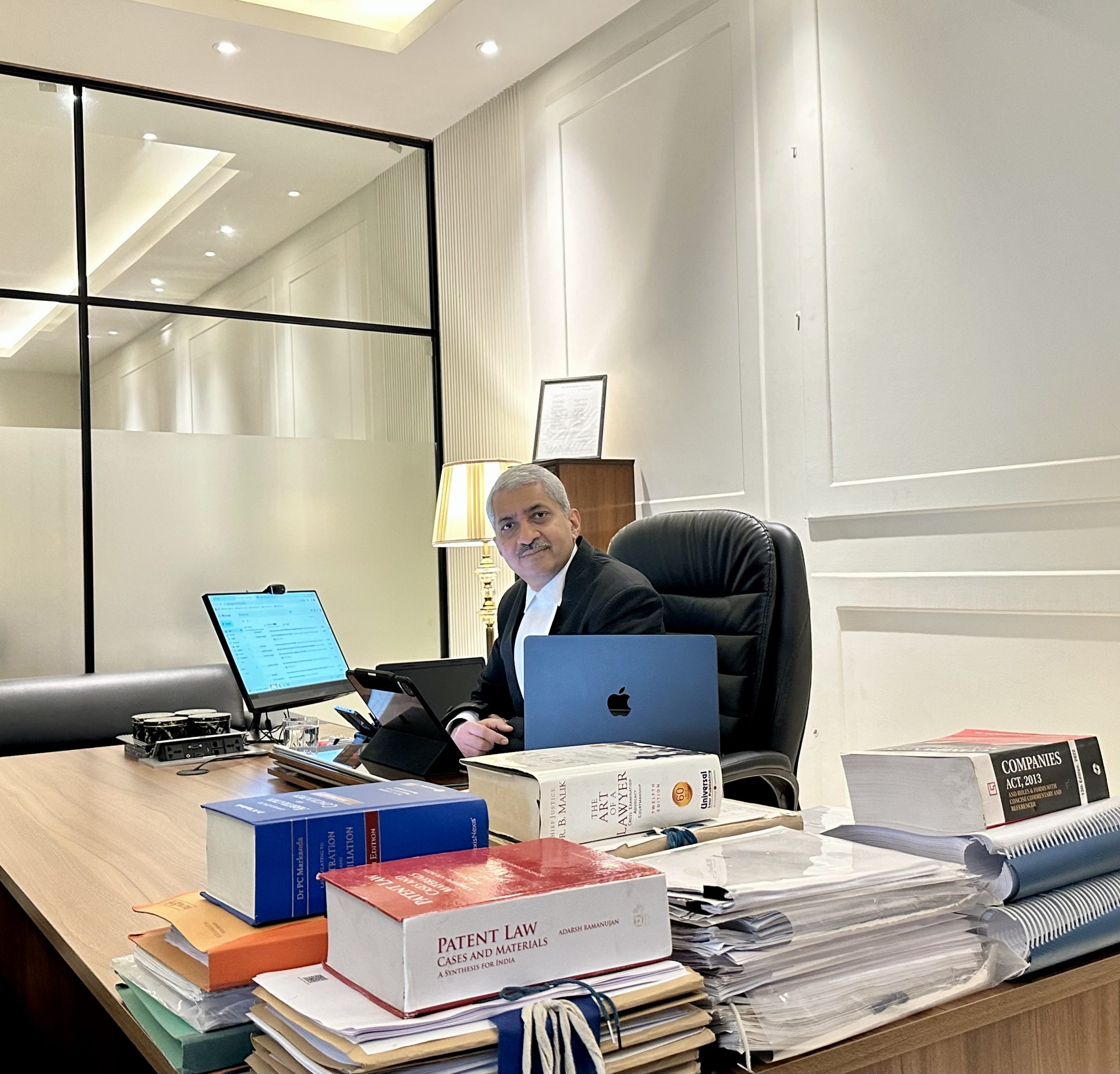






 Allow notifications