You have various roles and achievements credited to your name, from working with Lakshmikumaran & Sridharan, Aarna Law, King & Partridge, to being an In-house Counsel at HSBC. Apart from what makes headlines, what would you like our readers to know about you?
I believe my journey so far is filled with highs and lows, acceptances and rejections and good and bad days, but every single event has definitely contributed to it. Apart from being a passionate footballer and football fan and a topper in law college, my legal journey includes various shifts from a Tier 1 law firm to a boutique law firm, from senior designations within the organization, to being the youngest legal head of a Company, to starting off from scratch, from tax laws to corporate and commercial laws and from a fintech startup to a Global Bank. I was also blessed with the opportunity to work with two of the greatest legal minds in the industry, my forever mentors and well-wishers, Mr. KP Kumar (Senior Counsel) and Mr. G Shivadas (Senior Counsel).
I think it’s important for people in the field to know that one’s achievements/experience should never be defined by designations or places of work, rather by the things they have learned along the way (both about law and life), the people they have met and learnt from, the mentors they can look up to and the impact they have had on the people they have worked with.
Having studied law at MS Ramaiah Law College, you established a keen interest in Corporate Law., what drew you towards making a career in law?
I am a first-generation lawyer coming from a very traditional Indian family who believed (at the time) that the only way to make a career and name for yourself was to take up engineering. In fear of disappointing my family, I pursued science in 11th and 12th and even did a year of B.sc post that. It was during this year that I realized that I wanted to be part of a profession where I would be making a difference each day and would stand out from the crowd. At this point, I met a few lawyers who gave me a lot of insight into how the industry functions and from the get-go, it had my attention. It is one of the hardest decisions to leave a course by choice and pursue something completely new and different. There is no way to be completely sure, but you have to believe and listen to that inner voice and follow your instinct. When I took this step, I knew that I had to outperform myself to prove that I made the right decision, and it introduced me to a whole new side of myself. I worked harder than ever before and topped my course. But the best part? I enjoyed every minute of it and met some great friends along the way.
You pursued an LLM in Corporate & Competition Law from Durham University. Could you please tell our readers how the international exposure has helped you gain perspective to improve your skills in the legal field?
International experience is something I would always recommend. Apart from the course structure itself, it is the style of teaching and method of examinations which is something I had never experienced before. It gives you a more holistic view of the subject and helps you think outside the box. It is not just limited to topics which you may study from a textbook and also vastly improves your research skills. This really helped me during my work as I started to think outside the normal course of the law and started to question judgements, articles and the applicability of certain laws itself. Also, my method of research changed vastly, and it was no longer limited to just textbooks, bare acts and case laws, but moved to commentaries, articles on the subject etc., to understand the history and different opinions on the point before I could form my own.
What are the most important things that students pursuing their LLM abroad should keep in mind?
To start off, I would say that it is always better to work for a year or two before pursuing an LLM. This not only gives you work experience but changes the experience of your LLM completely. Your outlook on the subject increase, and you are also able to apply what you have learnt from your previous work experience to excel in your LLM. This also helps while applying for a job abroad, as prior work experience in the field is always an added advantage.
I believe that the overall experience of studying abroad is sometimes lost among students due to the pressure of having to find a job abroad as soon as possible. This makes them miss the little joys and experiences of day-to-day life, which goes a long way in shaping perspective, people skills and attitude – critical for a lawyer! Therefore, my second advice to students would be to make the most of each day. Enjoy the experience, take part in as many extracurricular activities, meet and speak to as many foreign students as possible and make the most of your time abroad.
You started your legal career with Lakshmikumaran and Sridharan (L&S) as an Associate immediately after law school. How has that experience shaped you and contributed to your interest in Corporate & Commercial Laws?
This is actually a very interesting question as L&S had a huge role to play in many career decisions I took. I started my career as an Indirect Tax litigator, working under the smartest Indirect Tax lawyers in the Country. I adapted quickly to the pressure of being in a Tier 1 law firm and started to enjoy the overall experience of finally applying to practice what I had learnt for 5 years in law school. Everything was a new experience. From your first case and client to your first mistake, your first victory in the legal profession, your many defeats which teach you so much, watching your seniors argue and trying to replicate their mannerisms while you argued etc. was such a great and cherishing experience, and when I look back on it now, it paved such an important path to the professional I am today.
At the same time, I wanted to gain experience in different laws and sectors. Since I started off with Tax, I wanted to explore other Corporate and financial laws so as to expand my legal knowledge and horizon. This led me to pursue an LLM in Corporate and Competition Law in the United Kingdom. Upon completion of my LLM, I returned to L&S for a short period before eventually moving out to gain more experience in Corporate and Commercial laws.
You recently joined HSBC as a Counsel providing Global Legal Services to the clients. Could you explain what kind of work an In-house Counsel entail?
Initially, it was a huge change for me, moving from litigation and advisory role in a law firm to an in-house legal team of a Company. The structure of an in-house role is designed in such a way that your clients are the other teams within the same organization, and there are a lot more processes to follow. You need to provide efficient and timely support to your internal stakeholders to ensure the smooth running of the business. It also involves a lot of negotiation and consultation with other in-house Counsels from different Corporates, along with awareness and knowledge of all laws and the constant changes to them.
Currently, at HSBC, I draft and negotiate derivative contracts with our Clients across the world. This was a completely new sector for me and the opportunity to learn something which I had never done in the past. This is what excited me the most, as I always wanted to learn more than just one kind of law. Working in a Global Bank comes with its own excitement and challenges. You get to learn a lot about the Global financial market and the laws regulating the same. It requires a lot of hard work, uneven hours, and it requires you to think on your feet. Everyday is a challenge and an opportunity to learn something new from immensely talented lawyers all over the world. It broadens your entire legal horizon as it gives you Global exposure and gets you used to a tried and tested process.
Your practice areas include Fintech Law, Regulations governing NBFC’s, Corporate and Commercial advisory and litigation, Contract Management, Civil and Commercial Litigation, Dispute Resolution, Arbitration, Consumer Disputes, Corporate and Tax litigation and advisory. Which area, according to you, interests you the most and why?
Having started off with Tax law and having learnt Tax from 2 of the most prominent Senior Counsels in the field i.e Mr. KP Kumar and Mr. Shivadas, I believe that I will always have a soft corner for Tax. Arguably, Tax law is one of the toughest laws in the Country and learning to interpret Tax law always gives you the advantage while interpreting or understanding any other law.
Having said that, I absolutely enjoy what I am doing today, and every law I have practiced in the past has given me a different insight into the profession. Although I do advocate specialization in the field of one’s choice, I do believe that one should get their feet wet in a few areas of law before deciding what they want to excel in.
The pandemic has completely changed the ways industries operate. Will the face of the legal sector undergo a drastic change, keeping in view the challenges entailed by the pandemic?
When it comes to litigation, I believe that physical hearings will always be more prominent than virtual hearings, and I trust that virtual hearings may never fully replace physical hearings. Although virtual hearings did have a positive side as much as one could attend hearings in different cities, from their home or office, I do believe that physical hearings can never and will never be replaced. Therefore, other than E filing of documents, I don’t think there will be a drastic change in the field of litigation.
With non-litigation roles, however, I do think that there will be a drastic change as far as work from home is concerned. I believe more and more companies and firms are switching to a hybrid work from home model, which I believe to be very successful.
Being extremely busy working in a corporate setup, how do you take care of your mental health and strive towards a good work-life balance?
Mental (and physical) health is a growing concern all over the world, and rightly so. I try to take care of my mental and physical health by keeping fit, spending time, and travelling with family and friends.
I always was and still am very passionate about sports, especially football and badminton, and I make sure that I have time to play them both at least once a week. In fact, I still enjoy playing competitive football and recently also represented the Advocates Associate Bangalore in the inter bar association tournament.
I think it is more and more important for organizations to understand the importance of the mental and physical health of their employees and take active measures to ensure that each one of them focuses on the same. However, more than the organization, it is also equally important for each individual to understand the importance of this, to make time to do what they always loved and speak out whenever something is bothering them.
Would you like to accord our readers with any further suggestions?
The legal profession is a roller coaster, and there will always be ups and downs. Try to stay positive through the entire journey, and life will always find a way. Don’t let rejections get you down. Never be afraid to make a shift and trust your instinct. Work hard but also try to enjoy a bit in the process. Most importantly, never let any person or organization change or hamper your identity.
It is famously said that when you save one person, you save the entire world; do you believe your personal goals of community service align with this?
I believe that the work we do is imperative to our general community in the UK but also an initiative that should be taken aboard worldwide. We are all connected and should aim to work in unison as one species, yet there are so many factors that intentionally or unintentionally divide us.
What does the word community mean to you, and what does it represent to you?
The word community means united under one vision. I do not limit to geographical locations but a shared vision, goal or idea where a mindset is shared to partake in something together. It represents unison.
You have recently embarked your journey at Barclays. How do you feel about progressing the direction of banking and financial services? Which is known to be your area of interest to pursue.
I finished a two-month mentorship programme with them recently. A few weeks ago, I completed a week of legal work experience with them. It was such an enjoyable experience and a great way to see how financial institutions are so integral to the functioning of society in more ways than we realise. It is important for prospective law students to keep an open mind because you will experience multiple seats in a training contract. However, it is great that if you have an interest in a particular area of law that you keep up to date with what is going on in that legal sector as well as seek practical experience. A lot of practice areas are a very different experience when doing it in practice than when studying it at university.
You have been associated with various law firms and legal enforcement agencies while pursuing your LLB from Cardiff. How did you balance work along with education?
One of the many key skills for a lawyer is to be very organised. I was very proactive and made sure to note down all my responsibilities, including university classes and then prioritised. I would focus on getting my key work finished in the morning and afternoon. I would then spend my evenings visiting law firms on open days or setting key time aside to do research into said firms as well as the legal sector in general. I had many extracurriculars such as societies and sports clubs that I had to factor in as well. It is a good idea to keep a timetable that you can be flexible with.
You were awarded with Student mentor of the year, where one of your students got admission to the prestigious SPARK SCHEME at Clifford Chance; how did it feel to fulfil another dream?
It felt really fulfilling, and I had a great sense of accomplishment. I want to use my life to be a blessing to others and bring them on the right path using my experience. Ever since I can remember, I always had a passion for helping people. My mum used to see if you have the power, time or ability to help someone, then choose to be that blessing in that person’s life. My mentee reached out to me to help her with her application as well as with doing mock interviews, and we spent a lot of time in the library together to narrow it all down.
You have been a massive advocate for pro bono SQE. Can you elaborate on how that mission will come to fruition, given the coaching and training expenses?
The purpose of the SQE is to increase accessibility into the legal sector. This will be done by having the examination replace the expensive Legal Practice Course, which is around £17,000, most commonly in London, where many aspiring solicitors tend to flock to. This has been a significant blockade to many students who were not privileged enough to have access to the support or funds to pursue this almost necessary action to qualify as a solicitor. It could prove to be a financially detrimental investment for those who completed a law degree but are not sure whether to pursue a career in law and choose to do something else after completing the LPC. This includes those who take the financial plunge of doing the LPC but can’t get a training contract because of how competitive the process is. The SQE has come in effect to help alleviate that financial burden and improve diversity by allowing people from all backgrounds to afford to pursue their dream of becoming a solicitor. The SQE takes the form of two exams that is, in theory, open to everyone rather than an expensive year-long course. SQE 1 costs £1558, and SQE 2 costs £2422, so, therefore, it is a total cost of £3980, which is significantly cheaper. There is also the factor that the LPC route demanded that you complete either a law degree or do a law conversion course. So, if you decided after your non-law degree that you want to know to pursue a legal career, you would have to do the Graduate Diploma in Law (GDL) which costs:
The total candidate fee for the new Solicitors Qualifying Examination (SQE) is £3,980.
SQE1 – £1,558
SQE2 – £2,422
This is substantially cheaper.
“Our mission is to take on the casework as paralegals that charities/firms/legal organisations cannot.”, how has the past year been for The National Community Law Project (henceforth termed as “NCLP”) and the team successfully contributed to this vision?
The past year has been absolutely incredible for us. We have established an enormous community of over 300 members across the world, working together through our platform to be able to provide the support that is desperately needed that no one will take up. We have successfully helped over 60 clients and have secured over 15 partnerships with other organisations we constantly collaborate with, such as LawSikho. We have expanded our reach internationally, where we are now operating in places like Africa and India. It led to many great opportunities that I would not have been privy to before. For example, I was invited onto Radio Cardiff, where I recorded a Spotify podcast with Black Owned Minority Businesses UK. I was also a guest speaker on the Flex Legal ‘Humans of Law’ podcast and was featured in one of their articles as I was discussing the new qualifying regime in the legal sector. We got to be one of the main pioneers of entering this new era of the SQE in the law sector by providing this qualified work experience.
How do you see NCLP growing and serving society in the coming years, given that it has already done paralegal work on behalf of 350 law firms?
We generate partial income through a commission by having the 24/7 live chat service, which is operated by these 350 law firms. Now more than ever, especially with the pandemic, people still need a lot of help out there. We have recently set up two stores in Cardiff and have established both a welfare division and a fundraising team that focus specifically on supporting the disenfranchised on a more direct level. We look to keep growing even more exponentially and take on many more students to help them get their first step into the legal sector.
NCLP has a large set of volunteers and paralegals around the globe; how do you keep your team inspired and motivated?
The motivation is self-sustaining because we are all volunteers. This means that it is our strong passion to help those in need that make us work as hard as we do to make sure that they are taken care of. We have core values at NCLP that we make sure that all our members fully represent both within the teams and towards our clients when they are with us. We all look out for each other and support one another when work gets too stressful or complex, but we have achieved our own community where we continue to lift each other up and celebrate everyone’s accomplishments.
NCLP has been established for bringing in change in society. The active topics have been feminism, refugee relief and all facets of human rights. How would you describe the impact it brings not only in the community but the students and paralegals who join on board?
We have seen the impact quite clearly in the pandemic. It has widened the gap and ostracised the already marginalised communities from everyone else in terms of equality which these relevant topics all involve. As we are seeing the impacting effects at the forefront in real-time, it has led to an increase in volunteers who specifically want to go into law to work on issues like immigration which they come to us to facilitate.
It is known to us that you are fond of playing the piano, drums and guitar. How has music been instrumental in your personal development?
I have been a self-taught musician since the age of 6. I have always loved and have been passionate about it. I have almost 10 instruments in my flat right now, including a grand piano, a keyboard, and 2 guitars (electric and acoustic). It is important for everyone, especially in this sector, to have passions outside of work and a work-life balance that you know suits you. There have been many who have fused their passion for music with their law careers by being legal advisers for those in the music industry. It is good not to be consumed by your legal work but to set aside time to recuperate and enjoy yourself or learn a new skill. This mindset has allowed me to thoroughly enjoy the legal work that I do as I don’t allow it to burn myself out as I take breaks in between where I focus on other aspects of my life to overall become a more well-rounded person, which law firms are looking for.
Your life mantra is “Achieve the destination but Enjoy the Journey, Work Hard and Stay Humble”, at the age of 21, where people usually unfold life. How did you welcome this enlightenment?
I embedded this practice into my life when I finally found peace within myself. I discovered who I was and what I wanted out of life. I had ambitions that I wanted to achieve, and I made detailed personal/professional development plans on how to achieve them. From trial and error, as I developed as a person, I gained a deep understanding of how I work and subconsciously see the world. I learnt about my own strengths and weaknesses. I saw the biggest surge of my growth when I came to university, where I truly found myself and flourished into the being I am today. I built up a vast array of connections and support networks that I could rely on. I knew that I was no longer alone, and there were people who believed in me and were willing to invest in helping me achieve my vision for my life. That is when I was able to finally able to achieve the balance where I wouldn’t have to struggle on my own. I will work extremely hard and make sure I achieve what I set out for. However, because I have support, I don’t have to be self-obsessed with it and miss out on enjoying the opportunities that life passes at the moment because I was too focused on the big overall endgame.
What advice would you give to students worldwide who want to contribute to the bigger picture in society and build a career?
I would say to them my life mantra, as stated above. However, I would also say that whilst you need to work hard overall, you need to first take time to reflect and see what priorities you want out of life. You need to know who you want to help, why you want to help them and how you are going to do that. Once you have those goals penned down, you have a clear objective that you can break down into smaller objectives that are more manageable to achieve over a longer period of time. One of the most critical things young people can do right now in building their careers and changing society is to find those who have already embarked on their path and learn from their experiences. Seek out mentors who have gone down the road that you want to go on and let them navigate you through the obstacles so you can avoid all the mistakes that they encountered on their own journeys. They can also provide you with the connections that may multiply into even greater opportunities that you couldn’t even comprehend.
Having studied law at KIIT University, you established a keen interest in Intellectual Property Rights (IPR) and corporate law, what drew you towards IP and Technology?
I was always expected to go into the conventional fields of engineering or medicine. But the zeal of writing and my interest in policies governing the nation drew my initial interests towards the field of law. Further, during my law school days, having my background as a science student attracted my interest in the field of IP and technology – which is an ever-emerging field that draws a lot of curiosity among the young and old minds alike.
During your graduation, you also were an Offshore Research Assistant for Cobalt Business Counsel PC. Could you explain how you stumbled upon this opportunity and the roles and responsibilities you undertook during your tenure?
Cobalt Business Counsel is a Canadian legal processing firm, which was introduced to me by one of my seniors at the law college. Being offshore research assistants – we are expected to research Canadian case laws and make summary reports. Additionally, we also handled contract extraction to create clause banks for the team. The engagement at Cobalt was particularly important since it gave me first-hand knowledge of working with lawyers outside of India. This job also gave us the much-required financial independence while still studying in college.
You joined the offices of Wadia Ghandy & Co., one of the country’s premier law firms, immediately after law school. How has that experience shaped you and contributed to your interest in the field of media & entertainment laws?
I got selected for Wadia Ghandy & Co. during my college placements, wherein initially I worked in the banking and finance team and then in the general corporate team. While being at the firm, I got a few assignments on the media domain, which is where my interest grew in the field of media and entertainment, and that’s when I decided to specialize in that subject.
You joined the postgraduate program at NALSAR, where you specialized in media laws. Can you tell our readers the importance of work experience before choosing an area of specialization?
I completed the post-graduation in Media Laws from NALSAR while I was working with the law firm. This was particularly important since I had already worked on a few assignments. This is when I decided to specialize and enhance my learnings in the field of media, which ultimately opened better opportunities for me in the M&E industry.
You started working as a Senior Legal Executive with Shemaroo Entertainment Limited. Could you share your experiences working with a leading Indian media and entertainment industry?
The transition from a corporate lawyer at a law firm to being an in-house lawyer at a media company was particularly interesting. Being an in-house counsel has its fair share of advantages since the work was not limited to advising on the legal side of a particular deal. It is expected to understand both the legal as well as the business aspects in a more detailed manner and provide informed advice to the benefit of the company. At Shemaroo – I got the first-hand knowledge to know the distribution business of a prominent media company which further honed my skills as an in-house media counsel.
You went ahead to work with BBC Studios as their lawyer for Business and Legal Affairs (Asia). Would you like to recall your interesting role working with arguably one of the biggest media broadcasting companies in the world?
I was the sole legal counsel for the BBC Studios for their business in India, and working therein was an overwhelming experience. At the BBC – my team was based out of Singapore & London, which gave me the opportunity to work with lawyers around the globe. This role gave me insight into what it takes to be an in-house lawyer on a truly global scale while adjusting to different cultural ethics and time differences. I was also fortunate to find some great mentors while working therein and whose advise, and experience have further ushered my skills and expertise in the media and entertainment domain.
After your brief stint with BBC, you joined Viacom18 Media Private Limited in their legal team. What responsibilities do you shoulder being part of the aforementioned team?
At Viacom18, my role primarily requires me to handle agreements for its flagship entertainment channel ‘Colors’. A general day revolves around drafting and negotiating various types of agreements, including but not limited to production agreements, agreements with various artists/talents, agreements with music labels, content acquisitions, and syndication agreements, amongst others. Being a part of the legal team of a major broadcaster provides for a wider opportunity to understand the nuances of the ever-changing media landscape in the country while working for some very exciting big-ticket deals.
The newly implemented IT Rules introduced by the government lay down a three-tier regulatory mechanism for the OTT platforms. How do you foresee the present rules will affect the media & entertainment industry?
OTT platforms have become increasingly popular in our country, especially during the pandemic. Unlike the laws regulating the traditional media, no specific laws are regulating the content available on these digital platforms, save and except for certain sections under the Information Technology Act, 2000. While most of the platforms had signed a self-regulatory code, the Ministry of Information and Broadcasting enacted the Intermediary Guidelines and Digital Media Ethics Codes, Rules,2021. These rules make it imperative for the platforms to self-classify the content and to set up a 3-tier grievance redressal mechanism. With the unprecedented growth of the OTT platforms in the country, regulations were always expected to come out. And I believe that the regulations will also assist in streamlining the content that is being made available on the digital platforms and bring about some or little level playing field vis-à-vis the traditional television/film industry.
Your LinkedIn bio reads that “you are an experienced negotiator who thrives on applying the law to negotiate and close a deal keeping in mind the best interests of a client.” Can you share with us any professional anecdotes where you had a similar takeaway?
I believe one of the most important soft skills that are essential for any corporate lawyer is to excel in is the art of contractual negotiation. And this applies to all fields and industries alike. And as a business and legal counsel – it is more than imperative to understand the exact needs of a particular deal and to be a business enabler. An in-house counsel is expected to provide informed advice to the business teams while mitigating the legal exposure of the Company.
What advice would you have for law students & young lawyers who want to pursue a career in media law?
Indisputably, a career specializing in the M&E field is an exciting choice, given its visual appeal. It does give a sense of genuine satisfaction to see the project that you were working upon, coming live on the big screen, and seeing your name in the credits roll. However, having said that – students and young lawyers need to be mindful of the fact that the opportunities in the M&E industry are limited in comparison to other sectors. Hence, they should keep their options open, especially when they are just starting. I strongly believe that one should try a few different avenues and fields of law – before finding his/her “Ikigai” and then excelling at it with full force. Nonetheless, the entertainment industry has undergone a paradigm shift in recent times with the penetration of the internet to the masses and the ever-increasing popularity of digital platforms. Hence, it’s safe to suggest that there cannot be a better and more exciting time to be an entertainment counsel.
While pursuing your graduation from NLIU, Bhopal, you interned with several corporate law firms, including Dua Associates, Singhania and Co LLP etc. Can you tell our readers about your time at law school and foundational years?
I had my initial schooling in my home state of Assam. I have been blessed with amazing and supportive teachers throughout my life. They have had a profound impact on me. One of the early lessons I learnt was – there’s no substitute for hard work. And that always push your limits, when working on your goals. Following on this, in law school (both at undergraduate and master’s level), I strived to participate in every event and do all that I could.
I pursued a 5-year B.A, LL. B course from BMS College of Law, Bengaluru between 2003 and 2008. My college had some of the best teachers I have come across. They ensured our basics are strong. At college, I served as cultural secretary for four years and organised events of all sorts; participated in moots and co-curricular activities like debates inside and outside the college; wrote; and was amongst the top students of the class. Simultaneously with the LLB course, I successfully completed a one-year programme on Intellectual Property Rights Law from National Law School of India University, Bengaluru (NLSIU). During this time, I discovered what a treasure the NLSIU’s library was. From then on, I was at the NLSIU library atleast two days every week. From seventh semester, I interned with a litigation firm for about 8 months to learn more about how the law works on the ground. I would work at their offices after college hours till late in the night. In my tenth semester, I decided to pursue a master degree in law. In law school, I was lucky to make some good friends for life.
At National Law Institute University, Bhopal (NLIU) too, I was amongst the top students of my LL.M (Business Laws) batch, served as Secretary of an active cell called Centre for Business and Corporate Laws, served the LL.M placement committee for most part of the 2-year course, organised conferences including an international conference, participated in events and wrote papers. I also pursued a few certificate courses on the side. During vacations, I would intern with law firms in the metros.
At home, we generally lead a sheltered life, all our needs are taken care of. It is only when you step out to live alone you realise what a blessing your parents and family are. In Bengaluru, I chose to share a house with friends. There I had to manage my house and related paraphernalia, but I could also set my own timetable, travel around the city and could have interests and friends outside college. At NLIU, I pursued a residential course. The two lives were pretty distinct. At NLIU, I could devote more time to academics. Because the university was some distance away from Bhopal city, having interests outside the college or visiting the city were a challenge. Both lives taught me a lot. One common lesson I learnt was – your goals should matter more than your distractions. We live far away from our families. This itself is a huge sacrifice not just for us but for our families too. We need to make every day count.
Post your graduation, you joined M/s Corporate Lexport as a Junior Associate. Could you summarize your company journey and tell us some of the essential values your first job instilled in you?
I had joined Lexport after an internship with them, so I was familiar with the culture and people there. Even though I had joined the firm as a corporate associate, the firm’s founder and managing partner Mr. Srinivas Kotni gave me litigation work too, given my interest. He was always eager for new and challenging work. We probably drafted the first application in India under the prepaid payment instruments’ regulations. We studied what other jurisdictions were dealing with similar instruments, tried understanding the technology these instruments were using and generally did everything in our power to best serve our client. It was a great experience. I also drafted an SLP for an indirect tax matter within the first 6 months of joining. Professionally, my journey with the firm was enriching.
The first year and the first job for most professionals entails a steep learning curve. Mine was no different. I would say many of the lessons I learnt till then have held me in good stead even now. For example – one needs to be a lifelong learner if one wants serve their clients and the profession well. If we do the small things well, bigger things would come to us. We all make mistakes but how open we are to rectify our mistakes is the key. These days, people do not accept their mistakes. It is important that we do. It is also equally important to not beat ourselves with it, instead find a solution. A good leader and boss would also value associates who accept their mistakes and bring a viable solution on the table.
Post your time at Corporate Lexport, you went on to work as a consultant in OSC Services and simultaneously joined as a guest faculty with the business law course at IMT Ghaziabad. What prompted the shift towards the academic side, and what was your mantra as a teacher while coaching students?
I have always loved teaching. One of the reasons for pursuing an LL.M was to be able to teach. Also, in most jurisdictions, especially the western ones, you would find the best lawyers spending a part of their time in academia. In India too, you can find some of our best lawyers teaching as guest faculty in various institutions.
I have always felt that to be good at the legal profession, one needs to invest time in academia too. Also, it is important to share what we have learnt with the next generation. This is how human civilization has progressed. At IMT Ghaziabad, I taught two courses – Business Laws and Economics. More than the students, I would say I have learnt from them. After IMT also, I have had the opportunity to share my knowledge with students. My mantra while teaching has been to make the classes interactive and interesting.
You joined the Competition Commission of India (CCI) as an expert, part of the combinations team. You also drafted policy documents while working at CCI. Could you tell us some policies you were passionate about and what changes you feel are necessary when evaluating companies entering into combinations?
When I had joined CCI in 2013, combination regulations were still at a nascent stage. The substantive sections on combination regulation, i.e., sections 5 and 6 of the Competition Act, 2002 were notified in June 2011. The principal subordinate legislation on combination regulation – The Competition Commission of India (Procedure in regard to the transaction of business relating to combinations) Regulations, 2011 – was notified in May 2011. So, there was a lot that could be done. I was pretty excited about the opportunity, after all how often do fairly newbie lawyers get a chance to create jurisprudence.
At CCI, I had the opportunity to work with an amazing team. I particularly learned a lot from Mr.Kapil Aggarwal, Mr. Shyamal Misra and Ms. Archana Goel Gulati. We wrote papers on various topics including non-compete. We also introduced the concept of material influence within the meaning of control. In terms of procedure and practice, we for the first time collaborated with another jurisdiction on a matter. We also called for information from third parties in Phase I when we found the information furnished by parties to be inadequate. Inter alia, we created internal procedures for Phase II cases, given they are time sensitive.
For a law to attain its purpose, it is imperative that the law is enforced and the defaulter penalised. Competition Law is a welfare legislation. In a free market economy, it is essential that there is a level playing field and that consumer interest is protected, this is where competition law comes in. For me therefore the most satisfying part was working on unreported transactions, where we successfully initiated penalty proceedings against the defaulting parties before the Commission. I am happy to share that the ratios laid down in our cases are still good law.
Having had an impressive stint at the CCI, you went on to become a legal consultant at Fedders Lloyd Corporation Ltd., where you handled all legal matters for the group. How was your role different as compared to in-house counsel?
I joined Fedders as head of their non-lit function. My role I would say was a mix of – rendering opinions (to the management of the group companies), negotiating agreements along with business heads with external parties and seeing to it that the legal advice the Group received and agreements it entered were worked on the ground. I was also entrusted to handle the group’s antitrust cases. So, I wouldn’t say my role was different from that of a typical in-house counsel. I understand that in-house counsels these days handle company affairs’ just as law firm lawyers do. These days, I feel in-house counsels need better business acumen and personality management skills.
Continuing your love for competition law, you joined CCI again as their resource person for Competition law advocacy, following which you joined Samvad Partners in their Competition law team. How would you advise a younger set of lawyers/law students who want to venture into the said niche?
Here, I would like to correct you. The role of Resource Person with CCI was concurrent with my role with Samvad. There was no conflict between the two roles.
Not as an advice but more as life learnings – please read not just Competition Law of India but also allied laws like Contracts and Companies Act. SEBI is an older regulator in India and I would say amongst the more successful ones too. SEBI’s discussion papers and orders can help you understand how an economic regulator ‘thinks’. Further, since Competition Act, 2002 is pretty new, one needs to regularly read about how the EU and the US are dealing with competition cases there. Also, because India is an OECD member state, ideally one should keep oneself abreast of OECD round tables and discussions.
You were a part of the Competition team at Samvad, where you came up the ranks from an Associate to a Senior Associate. Considering the attrition rate at Tier-1 law firms is so high, what would be your suggestions to young associates on surviving the pressure and climbing the ranks?
Actually, I was legal head of Fedders Lloyd group for its non-lit function. It may sound very cliché but to be honest so far in my life I haven’t really cared much about positions. Probably because of my family of entrepreneurs. I have always felt that a person makes the position rather than the other way round. In every walk of life, you would find that people who are good at what they do, command respect. In 2016, I had joined Samvad’s Mumbai office because of the work I could do there. Samvad’s Mumbai partner Ms. Vineetha MG is amongst the best lawyers I have worked with so far. Amazing work ethic, self-made and a good human being. I am glad I chose to work with her.
If I were to advise young lawyers, I would say – (a) Do your work to the best of your abilities. In the long run – your work is all that matters. (b) Network and collaborate. Look for shared goals rather than points of disagreement. (c) If you want to be successful, do not run after big names. Instead look for people you would be happy working with, people who you can learn from. If you find a toxic workplace, just run! Our profession is all our mental ability and strength. No amount of money can compensate for mental trauma.
Being head of Antitrust Compliance at Flipkart Internet Pvt. Ltd. What do you believe will be the significant competition concerns in the online world a few years from now, considering we have multiple businesses for the same area being introduced daily?
Worldwide, e-commerce is growing at a rapid pace. The pandemic has only quickened its pace. The digital economy, unlike the traditional economy, is largely managed by algorithms. With the growth and development of artificial intelligence, I would think human intervention in creating these algorithms would lessen as we go along the path. Regulators worldwide are already grappling with newer challenges posed by constituents of the digital economy – for example, in merger regulation, we are still debating how to value e-enterprises when their revenues are in the negative, and their assets, as we understand in the traditional sense, are way lesser when compared with a traditional business wielding as much market power. Given network effects, an e-commerce enterprise with a considerable subscriber base can fairly easily expand in other markets. E-commerce giants entering payments or established e-commerce enterprises venturing into music streaming and reading devices are cases on point. This benefit may not be as readily available to new enterprises. In India also, we have had a number of cases where the aggrieved parties found fault with actual/potential vertical integration of e-commerce players. Also, it is being argued that collusion in the digital space is easier than amongst traditional businesses. Among e-commerce players, finding or proving concerted action is difficult, mainly because not every competition regulator is equipped to deal with such issues in terms of technological knowhow. Also, many a times what may appear to be concerted action can just be innocent parallel behaviour arising out of algorithms. The other concern would be how to ensure a playing level field qua information or data of consumers. The privacy concerns per se hopefully would be taken care of by separate privacy legislations.
Few know that you have cleared the NET exam and are a Six Sigma Yellow belt holder and a Tax Return Preparer. How did you manage to do all this while being entangled with so much work? What would be your advice on managing work and also continue following the process of learning?
Like I said before, if one wants to serve their clients well, there is no escape from constant learning. I have always enjoyed and loved the profession of law. But in the humdrum of everyday life, many a times we lose focus of our life goals or why we took up the legal profession in the first place. I feel it is nice to reboot sometimes. Also, I feel we shouldn’t wait for retirement to do things we like apart from our profession. So, I consciously make an effort to take breaks of a month or longer every few years, just to explore life. For example, in 2012 I was on a two-month long sabbatical when I took up the Income Tax Department’s TRPS programme and appeared for UGC-NET. These breaks have helped me immensely not just to add to my academic credentials, but also to rejuvenate and reconnect with my roots.
From 2010, you have been associated with Xomidhan as a subject matter expert/counsellor for law, a not-for-profit organization providing career counselling to students of the North East. What advice do you instil in students generally for a successful career in law, and what would be your three most important lessons for any student to follow?
For your readers’ benefit, Xomidhan is a not-for-profit social enterprise which has been providing free career counselling online through a 300+ strong army of subject matter experts. Everyone at Xomidhan works pro bono. Given north-east suffers from information deficit, relatively speaking, we focus mainly on the north-east. Also, since most of us are from the north-east, it helps us to cater to the audience there better. Xomidhan has received multiple recognitions for its services.
At Xomidhan, there has been a massive change in the kind of questions we receive on law as a career stream. In 2010, for example, people would ask if a career in law could sustain them financially. Now the questions are mostly on which law stream they should choose or scope of dual specialisations. Our constant advice through this change has been – work hard, read and like what you do.
You have set up Bondhu, an EdTech social enterprise aiming to provide entrepreneurial opportunities to individuals of the northeast region of India. How this noble idea was conceived in the middle of a pandemic?
Before I answer your question, let me tell you something about myself. I come from a traditional Marwari business family of Upper Assam. I spent the first 10 years of my life in a sprawling joint family home in a small town of Assam called Naharkatia. During those days, connectivity to the outside world was limited. We had little to no cable television. Even newspapers would reach us two days after the date of publication (newspapers like Economic Times would reach us after a week). Our region would suffer from natural and man-made calamities often. Innovation was limited. Our natural resources mostly remained untapped. Apart from tea and timber, we weren’t exporting much outside the region. Even though Assam and the Northeast have changed for the better in the last two decades, the region is a long way away from attaining its full potential. Working with Xomidhan made me realise that our region needs entrepreneurship where home grown entrepreneurs find local solutions for local problems and take the region’s unique offerings to the world. For example, Himalayan turmeric grown in our region has double the amount of curcumin found in other varieties of turmeric. We have a wide variety of indigenous orchids. Most of the north-east is scenic. Bird treks, hills treks, nature walks, adventure sports and training have huge tourism potential. However, entrepreneurship is the last option for most from our region still. I always thought this needs to change but didn’t know how. Opportunity with NSRCEL, IIM-B last year gave a more concrete shape to it. Inter alia, I learnt how to do market research, find solutions, and design the whole process. I also got a huge network of friends as a bonus, which helped me hone my idea even more.
Speaking about Bondhu, what are the goals you intend to fulfil in the next year and how do you see the organization growing over the next few years?
As I was saying before, most people from the northeast think, plan and aim only for jobs. From surveys, we found that people wish to explore entrepreneurship but are stopped mostly by lack of knowledge or knowhow. We at Bondhu want to bridge this gap through education, mentoring and funding support, in that order. We understand that not everyone can be an entrepreneur but after the NSRCEL stint I can say with confidence that an entrepreneurial attitude is necessary to succeed even in a typical job.
For education, we have designed an online weekend-only course to equip participants with necessary know-how to be entrepreneurs. Some of the areas we would be covering are design thinking, how to identify, formulate and solve problems, social media marketing, hiring, basic accounting, pricing strategies, certain soft skills, etc. The programme would be open to all irrespective of domicile. It would be delivered by teachers from premier institutions, successful entrepreneurs and experienced trainers. We would also have scholarships for deserving participants. All the participants, subject to certain conditions, would be eligible to receive mentoring support. They can also pitch to investors through Bondhu for funding support in the future. We plan to launch this programme early next year. At present, we are looking for partnerships to increase the programme’s reach.
Separately, we are also collaborating with incubators countrywide to provide legal services to their incubatees.
In the next 5 years, we want to help develop a crop of entrepreneurs who could take our region and the country forward. In the next two years, we aim to partner with state run incubation centres, where the skills of our participants can be further honed, and they receive state funding to take their ventures forward. In short, I hope Bondhu can help change the entrepreneurship landscape on the ground for the better. So that, no good idea remains buried.
Your journey will inspire our readers to explore new ventures in their careers; can you tell our readers how you bravely pursued various disciplines and not let fear of change hold you back?
Fear is natural. But invariably majority of our fears are unfounded. Personally speaking, I try doing a SWOT (Strength, Weakness, Opportunity, Threat) analysis before venturing into something new. What is the best that can happen and what is the risk-reward ratio? What would it take to be successful? I also try to evaluate what is the worst that can happen if things don’t go as planned. After all, even the best laid plans can fail. Am I ready to face the worst?
For example, in my present role, I have learnt a lot about handling people and emotions, pitching and identifying opportunities. I am sure these learnings would help me in any future role I may take up. So, actually there is very little to lose. I think it also helps because I am okay to start from scratch if required. Probably I will do better the next time.
Any new path presents newer opportunities and challenges every day. It can teach you much more than any academic course in the world. Change is always scary in the beginning. Unless you are happy with status quo, I would think it is important to take calculated risks. One common mistake we make is – we are more concerned with others would think rather than our gut feeling. Don’t take yourself too seriously. No one is thinking of you as much as you think they are. Its okay to fail sometimes. But it is not okay to not try because of fear of failure. In the worst case, even if you were to fail, you would know what not to do, next time.
Having completed your graduation from the University of Mumbai in commerce, you pursued LLB. What prompted you to choose Law as a career?
I used to assist my uncle, who is an independent advocate in Mumbai. I started going to court during my college vacations. Those days I would just carry the bags and assist the court clerk. I would wait for matters to reach and inform my uncle when they did. The idea was to do something productive during the holidays.
During that time, I heard Mr. Veerendra Tulzapurkar argue a matter. His clarity of thought and precise articulation of the matter really impressed me. That’s when I decided to become a lawyer.
You joined AZB & Partners as Associate Lawyer immediately after law school. How has that experience shaped you and contributed to your interest in Corporate & Commercial Laws?
I had done an internship with a company secretary firm where we would handle compliance for various corporates. After that, I worked with a law firm that represented the Securities and Exchange Board of India before the Securities Appellate Tribunal. I, therefore, had some experience handling corporate and securities work before I joined AZB.
However, my stint at AZB has been the most significant learning experience in my career. I had to unlearn everything I knew to be able to adapt to the way AZB worked. Professionally I experienced about 10 years of learning in my 3.5 years at AZB. I was fortunate to work directly with stalwarts like Zia Modi and Shuva Mandal. However, my most significant learning was under Mr. Nikhil Sakhardande (who is a Senior Advocate in Mumbai now). He trained me with great compassion and patience and revived my interest and confidence in law.
One of the best things about AZB is that it trains you to be an all-round lawyer. However, when I introspect now, I feel I should have done much more justice to my role at AZB, which I missed on account of my puerility.
You worked with J. Sagar Associates (JSA) as a Senior Associate for almost a decade. Would you share with our readers the array of work you handled and one of the most interesting transactions you witnessed during your time with the firm?
I was part of the securities team at JSA under Mr. Somasekhar Sundaresan, a luminary in the securities practice. Our team was a hybrid between a law firm and a counsel’s chamber. We did our drafting, arguing and filing like a one-stop-shop for securities litigation matters. We also did a fair amount of advisory, documentation, structuring and strategy work, especially in the corporate and securities sphere. We even vetted PR strategies, especially in high stake or ground-breaking matters. I could be appearing in court, advising on takeover regulations and conducting an internal audit for a transnational corporate all in a day. The work culture at JSA was as amazing as the work itself.
It is difficult to pinpoint any one mandate that counts as interesting. No matter the stakes involved, each engagement helped shape our ability to look at the law in a different light.
You have been instrumental in representing SEBI, FPIs (Foreign Portfolio Investors), mutual funds, stockbrokers, and other securities market intermediaries and self-regulatory organizations such as AMFI and NSDL. Could you tell our readers how you approach and navigate through high stake matters?
The fundamental assessment is the understanding of the culture, ability and approach of the client. This enables a clear determination of the end goal in every engagement, which in turn enables a clear strategy and approach. Some clients prioritize their legacy, whereas some prefer to save costs. Each client and each engagement, therefore, require a different approach. Knowing the ability and end-goal of the client enables a legal strategy within the confines of the law to ensure the best outcome.
What responsibilities do you shoulder as a Partner at Parinam Law Associates? How do you strive towards a good work-life balance amidst a busy corporate life and law?
The role requires everything from client interaction to drafting to research to office administration work. It is both exciting and challenging at the same time. Fortunately, we have a great partnership and a great team that helps make the work easy.
The most important aspect of balancing work and life is intention. One must intend to not compromise on their professional duties and must want to have a life outside of the profession. Everything else will flow. For instance, someone who is clear about not wanting to take work home will work on ensuring that it gets concluded during office hours. They will proactively ensure that the work is done in a way that there are no loose ends in their deliverables. They will choose to be clear and precise in their work in a way that there is less wastage of time. They will minimize procrastination. The intention to complete the work within office hours is a wonderful tool to ensure heightened productivity, organized approach and time management. This one switch in the approach that my teacher taught helped me immensely.
What qualities do you find to be indispensable while hiring fresh talent for your team?
Dependability. It is an all-encompassing kind of trait that must permeate all aspects of a professional. Being on time, being well-researched, attention to detail, and being a good team player are all aspects of what makes a professional dependable to the organization, their colleagues, and the client.
A clearly drafted CV with specific clarity about the work experience is easy to spot. We once hired someone based on the clarity of their application email.
One of the reasons I prefer to hire people who have interned with us is that there is a clear insight into their work. For lateral hires, I check with their previous seniors about the general approach of the candidate. The method has worked so far, and I have been very glad for most people we have recruited.
Looking a decade back, from being an Associate to Partner at a leading law firm. Could you share some striking characteristics which helped you with this meteoric rise?
It was hardly meteoric. As I said earlier, there were a lot of things I wish I had done differently that would have ensured less struggle for me. Fortunately, I could approach things better after I met my teacher. He taught me the importance of having the clear intention of being proactive, efficient and clear in thinking. I think it all boils down to being sincere in one’s role, whether it is as a professional or partner. Every person one associate with, looks for dependability in whichever role they are in. Sincerity entails understanding what people I associate with, whether they are partners, clients or colleagues, what they expect from me and doing justice to the association. This approach that my teacher taught me has helped manyfold in being able to handle multiple roles. It has also brought relative peace and structure to my life.
The surge in companies reporting frauds amid an uptick in retail investors’ interest in equities is a dangerous trend. According to you, how can the Indian Government step up in monitoring and regulating the Indian capital and securities market?
There is a lot being done. We have some of the best agencies in the world that look at complex businesses and are proactive in regulating markets. However, recently, there has been a spate of failures, especially amongst stockbrokers, that reduce investor confidence.
More efficiency can come about if regulators were to be more objective about their approach. One often finds that there is a lot of regulatory time and cost spent on matters not requiring intervention. That time and cost can be better spent on matters having more impact on the market. Like any other organization, regulators must confer with external experts on general approach and policy at a Board level to enable better direction.
Increased surveillance measures backed by robust IT systems are a need of the hour. Real-time data assimilation with scope for alerts in case of major deviations may enable timely intervention. Another area of improvement is the scope and nature of the audit. Instead of treating audit as compliance, it ought to be made a sub-regulatory measure. Incentivizing auditors for reporting substantial non-compliance and penalizing them in case of failures will act as a strong deterrence.
The pandemic has completely changed the ways industries operate. Which trends do you expect in the legal industry in the upcoming decade?
One of the most positive developments has been the e-filing and online hearing method. Courts were able to function quite well despite the lack of physical interaction. Having some courts online will enable quicker disposal, better reach and lesser costs, especially for litigants. One hopes that it continues alongside regular courts.
Another aspect is cost savings. The pandemic, like all unforeseen events, has brought awareness on a lot of factors previously disregarded. Work from home, rotating schedules, smaller administrative set-ups, leaner workforce are some of the apparent cost-saving devices that should go a long way.
What would your advice be to all the young lawyers and law students, who are passionate about making a career in law?
It is very important to take the initiative. One must make the most of their prime years in the profession by taking up as much work as possible. This will enable a kind of confidence that only comes with experience. Take up any number of internships or assignments that come your way. Do everything from intellectual property to criminal law to labor law to corporate work. Every assignment and every experience will add up. Also, it is important to not let that chip develop on the shoulder – to shrug it from time to time. Don’t expect high marquee deals and matters every time. If you get it, fine; if not, work on small matters with smaller firms and find your way up. Develop lasting professional friendships. One day it will all seem worth it.
You’ve presided over debating societies and have been a part of MUNs since your school days. You have also served as the President of the Debating Society at St. Stephen’s College as well as a debate coach to students at Vasant Valley School, New Delhi. Did your inclination towards debating and public speaking make law a natural career option?
Since school, I had participated in and enjoyed theatre, debating, and any other co-curricular activity which involved interacting with people or facing an audience. Growing up, I developed a keen interest in politics and participating in debate competitions meant deliberating upon topical issues of relevance pertaining to both national and international affairs. So, I would say that I was interested in becoming a lawyer since school, but my initial interest in criminal law was triggered at Stephen’s, while reading for history, through my study of the intersection between penal and coercive processes of the colonial rule. My gravitation towards law was a culmination of all the of the above: my flare for debating & public speaking coupled with my study of Indian history!
You graduated with LL.B. from Delhi University and then went on to pursue BCL, you also pursued double Masters from the University of Oxford and Harvard Law School. Can you tell us about your experience at these various world-renowned alma maters?
My experience as a law student at Campus Law Centre, Delhi University, was exciting and enriching. Faculty of Law, Delhi University was like India in a microcosm: a melting pot of diversities. I met students with varied ideological beliefs and opinions. Apart from academic exposure to law, my three years at CLC offered me a real & practical insight into student politics and election campaigning.
My two years at Oxford, academically, were instrumental in giving me a legal and theoretical insight into the functioning of different criminal justice systems. During the BCL, my study of the relationship between criminal justice, security, and human rights helped me understand the interplay between intersecting but ostensibly competing rights of liberty and security, especially in cases of terrorism. Courses such as Children, Families, and the State, helped me gain a foundational understanding of Children’s rights and agency and the way legal systems should accommodate their interests. The MSc, on the other hand, helped me understand the sociological context in which crime occurs and explore both qualitative and quantitative research methodologies in the field of criminal justice.
At Harvard, I decided to venture out of my comfort zone and explore different facets of criminal law through my study of white-collar criminal and cyber-criminal law. Additionally, the Harvard LLM provided me with the opportunity to study Fintech & its interaction with different legal systems in the world. As somebody who had no prior knowledge about Fintech, Blockchain or Cryptocurrency- the course provided me with the unique opportunity to learn about how emerging technology impacts extant legal systems and regulation.
Apart from the academic exposure, I also had the opportunity of making life-long friendships and being mentored by some of the best professors. This made my time there enjoyable and wholesome.
The Rhodes Scholarship is the oldest and perhaps the most prestigious international scholarship programme in the world. Could you suggest to our readers an ideal roadmap to qualify as a Rhodes Scholar?
Simply put, there is no specific roadmap. The Rhodes Scholarship, more than anything, is about authenticity: about unapologetically being yourself. Applying for the scholarship was not a knee-jerk decision for me. In my first year at CLC, I had decided that I wanted to pursue my master’s from an International University. I worked towards that goal for the next three years and finally applied for the scholarship in 2015. During the application process and my interviews, I realised that there is no prototype of a Rhodes scholar: anybody and everybody can and should apply. I think the commitment to service, humility, authenticity, and perseverance are the four pillars of the scholarship. This belief was further strengthened when I met Rhodes Scholars from across the world at Oxford- we were all very different from each other! The only thing in common between us was our collective and individual desire to give back to society.
What would you advise to all the forthcoming applicants who are applying to universities abroad?
Firstly, the decision to pursue your education outside India should not be an impulsive one. It should be well-thought-out and deliberated upon as the application process is extremely tedious and fastidious. It requires a lot of dedication and time.
Secondly, I would recommend extensive research before you begin the process. I spent months just reading up about universities in the United States and the United Kingdom to understand their admission processes, requirements and, more importantly, to gauge the academic ethos of the Universities. The American process is quite different from the English one in terms of SOP focus and academic/extra-curricular requirements. After this, I read up on all the potential scholarships that I was eligible for. Subsequent to this, I prepared a list of my preferred Universities and the scholarships I wanted to apply for. Once my groundwork was done, I had dived into the application process. This helped me streamline the entire process, which can otherwise be a bit overwhelming and daunting.
You have worked as a legal consultant to HAQ – Centre for Child Rights. You have also served as the Convener of the Legal Aid Society. Speaking, retrospectively how can law students make a difference when it comes to legal aid and legal-social work?
My work with the Legal Aid Society and then with HAQ (2018-2019) gave me direct exposure into the actual working of the criminal and the juvenile justice system in India. It additionally also gave me the necessary insight into the systemic challenges faced by our criminal justice system. Particularly, my research projects with the Delhi State Legal Services Authority shed light on the several institutionalised impediments faced by the incarcerated in actualising their legal entitlements and the general apathy of the justice system to prisoner rights and well-being. My work as a paralegal also made me aware of the paucity of research into the causes of criminogenic behaviour and the general gap between academic research and praxis in the field of criminal law.
Law students are in a remarkable position to facilitate change at both the ground level through fieldwork and through the law in courts. Exposure to fieldwork is essential for lawyers and law students alike to discern the complex challenges faced by our criminal justice system in order to craft a purposive and humanised approach or to create feasible/sustainable interventions. Law school is a great place to garner this experience- law students should volunteer as much as they can during their study of the law. I believe legal aid work prepares you for litigation in courts in India.
You are presently working as an Associate at Bharucha and Partners in the Litigation & Disputes Team. Could you highlight how a foreign LLM helped you in litigation? How has your experience in litigation been since you returned from Harvard?
My academic experience helps in legal research and in developing submissions and arguments grounded in legal jurisprudence. The LLM trains one to discern the fundamental legal principle behind an issue. It also inculcates the skill to analyse and organise voluminous material in a coherent manner.
Upon my return to India last September, I hoped to work and broaden my experience in criminal litigation, with a special focus on white-collar criminal law, anti-corruption, governance, and international financial crimes. Bharucha & Partners’ Litigation & Disputes Team was the perfect fit- a small team with a lot of criminal trial work. The litigation team, led by Mr. D.P. Singh and Ms. Sonam Gupta, specializes in white-collar crimes and regularly appears before Courts and Tribunals in cases involving both domestic and international financial crimes and general criminal law. Under their collective tutelage, I have had the chance to appear across all levels of the adjudicatory process.
You recently cleared the New York Bar examination and the England & Wales (MCT) Examination and will be qualified to practice in three jurisdictions soon. Could you throw light on the process to register for bar examinations outside India and how to prepare for the same?
I qualified for the Indian Bar in 2016. I sat for both the New York and England & Wales Bar (MCT) examinations this year.
To be eligible to sit for the New York Bar Exam, you need to have an LLM from an American Law School. Further, you need to dedicate approximately 12 credits to the Bar Exam during your LLM. On the other hand, you don’t require an LLM to sit for the England & Wales Examination. You only need to be a lawyer qualified to practice in a common-law jurisdiction.
It was challenging to manage my preparation with work, and it wouldn’t have been possible without the unconditional support of my team. Preparation for both exams is extremely arduous- especially, New York. Both examinations require consistent dedication and a lot of discipline. I used to devote 4-5 hours during weekdays and approximately 10-12 hours a day during the weekends.
You have also been invited by International Organisations such as WIPO and leading law schools in India to deliver guest lectures on Fintech & Emerging Tech. Your work has also been published in international journals. Are you interested in simultaneously pursuing a career in academia?
I am definitely interested in contributing as visiting faculty at universities and law schools in India. I have been fortunate enough to be invited by some law schools in this regard. Further, I really enjoy legal research and legal writing. Going forward, I would like to write and publish more on topical legal issues. I feel this provides an opportunity to conduct in-depth research on a particular area of law and to pen legal arguments in a cogent manner which in turn helps gain clarity on the law. Similarly, teaching a subject also sharpens your understanding of a particular area of law as you explain the concepts in a simple way (often through illustrations and examples) to students.
What does your legal career trajectory look like? What advice would you have for law students & young lawyers who want to pursue a legal career in a similar direction to yours?
Honestly, my heart lies in child rights and juvenile justice, but I hope to garner as much experience as I can in the next 4-5 years in different areas of law before jumping back into it and establishing my own practice. Eventually, joining politics is also on the cards.
I think my advice is that law students and young lawyers shouldn’t be in a hurry to specialise. There is merit in being a generalist rather than a specialist early on in your legal career. Second, be kind to yourself during the process. I have a hard time practising this as well, so this is my advice to myself too. Failure is inevitable, and you need to keep at it despite it. Third, invest in your friendships and relationships. Take out time for people who matter. Don’t prioritize work over your mental & emotional well-being. On your worst days, your investment in your friendships will always come through.
Your successful journey as a barrister in Bangladesh is notable and applauded across the globe. What inspired you to study law? Tell us a little bit about your journey of becoming a lawyer.
My first glimpse into the legal profession was through my father’s eyes. He is a Senior Advocate of the Supreme Court of Bangladesh.
Although I was from a pure science background, at the age of 16, I decided to eventually study law. My respect for law and the opportunity it provides for impactful work drew me to the profession. My father was always in a hurry. He wanted us to finish studying, come back, settle down and start practising. So, I opted for a 2 years LLB degree at the University of Buckingham. Buckingham was closely linked to Margaret Thatcher, who as Education Secretary oversaw the creation of the university college in 1973, and as Prime Minister was instrumental in elevating it to a university in 1983 – thus creating the first private university in the UK since the establishment of the University Grants Committee in 1919.
It was a very intense degree, with summer vacations no longer than a few weeks. However, I enjoyed studying, and many would have described me as a nerd back in those days. I wasn’t sure how well I was going to do but eventually shocked everyone with first-class honours’, which opened up further opportunities during my post-graduation.
After my LLB, there was a 9-month gap between LLB and the Bar Vocational Course. During that period, I did an LLM in International and Commercial Law at the University of Buckingham. Afterwards, I went for the Bar Vocational Course and eventually came back to Bangladesh.
Being an alumnus of two of the world’s renowned universities, the University of Oxford and the University of Buckingham, London, is in itself a matter of immense pride and privilege. Could you please tell our readers why is studying at Oxford unique?
I always wanted to get into Oxford. I completed a Bachelor of Civil Law, one of the most prestigious postgraduate law degrees in the world. Only a handful of lawyers in Bangladesh have secured admission and/or completed this degree, and to the best of my knowledge, no Bangladeshi woman till date. The experience there was fantastic. One of the best things about Oxford is that you are surrounded by the best and the brightest so that in itself makes a very intellectual and stimulating atmosphere and a very enriching experience. And not just that, you end up being part of a very elite intellectual network. And you can reach out to this network at any point in your career, should the need arise. The teaching style these Universities have to offer is that they have lectures and round table seminars, but they also have small group sessions. These small group sessions are essential since you get a lot of personal attention from the tutors. It allows you to expand and develop the ideas that are touched upon in the lecture.
On the other hand, talking about irregularities, I felt that prejudice needed to be changed at these Universities/Colleges. Women of colour, brown women, Asian women, whichever way you describe women, deserve to be in these places as much as anyone else. And the decision should be based on nothing but merit. There were quite a few Indians in the BCL course that I was pursuing. I also would be lying if I said that I didn’t feel the pressure because I felt that I was representing a country, especially women. So that made me work harder, it made me take in and absorb as much of the Oxford experience as possible, and also it instilled in me a sense of responsibility. When you get recognition, and you get into a very prestigious University, that gives you visibility. And visibility means 100s and 1000s of people would be looking at you, and you have the ability at that point to provide them with the hope that this is possible, and you can do this as well. That instilled a deep sense of responsibility, which is what keeps me going and keeps me inspired.
The esteemed Bar Vocational Course (BVC) that grants the title of “Barrister” is a gruelling opportunity every student aspires to seize. Although the courts do not recognize the course, why do you think the crowd opts for this course?
I want to give a bit of a background here. In common law jurisdictions, there is a barrister solicitor division. Barristers take instructions from the solicitors, and the solicitors take instructions from the clients. So, barristers specialize in courtroom litigation. But in Bangladesh, this division does not exist, as our lawyers are just one group called advocates. Suppose one does the BVC and becomes a barrister. In that case, he will not get any special exemption from sitting for any bar enrolment exam and would have to go through the same enrolment process as any locally educated lawyer. So, in that sense, there is no added benefit.
However, perception is important. It is perceived to be very prestigious. And the reason is twofold, firstly it’s tradition, as we have had the biggest name in the legal and political arena in the Indian subcontinent who have been Barristers, Nehru, Jinnah. So far as Bangladesh is concerned, most of the legendary lawyers have been barristers. So, that makes it prestigious, and prestige itself gives you a competitive edge.
Moreover, it is not entirely without reason. Some may argue that it’s of no use whatsoever. I beg to differ because it does equip you with a skill set that is very relevant to practice, drafting, opinion writing, client interviewing, and advocacy. These are the tools of trade for a lawyer. Unfortunately, in Bangladesh, there is no equivalent course. However, if there were one, then maybe the significance of the Bar Vocational Course would not be as much. So far as skillset is concerned, you get to acquire many transferable skills and very relevant to the legal profession. So that is why I never thought twice about whether I should do the Bar or not. I always knew I was going to do it eventually.
Talking about LLM and BVC, these are two completely different things. LLM is an academic qualification, and on the other hand, BVC is a professional qualification that is supposed to equip you with professional skills like opinion writing, drafting, client interviewing, etc. So, they both have their merits. But if someone wants to argue that the Bar Vocational Course will not add any value to your practice, that is completely wrong and cannot possibly come from a practising lawyer. Because in practice, this makes a huge difference and will give you a competitive edge. In the end, it’s all about what clients want from their lawyers. Clients would want to go to a barrister as opposed to someone who doesn’t have that tag. Of course, this doesn’t mean that the locally educated lawyers are not as good, but I am only referring to the perception, which gives barristers a competitive edge. So, if you want to practise law, then of course, by all means, go for BVC, but if you want to teach law in Bangladesh, then I would say go for the academic LLM, moving on to a PhD.
Akhtar Imam & Associates is one of the most prestigious law firms in Bangladesh. Would you please share with our readers the array of work you handle at the firm?
At Akhtar Imam & Associates, my main areas of specialization include Corporate and Commercial work, both advisory and dispute resolution (litigation and arbitration), and judicial review or writ. Other areas include foreign investment laws, labour and employment laws and banking. I am very privileged to be in this firm. Currently, I am the firm’s managing partner, and with that comes a lot of managerial responsibilities over and above legal work. Because this is one of the leading firms in the country, we have a great list of clients, which gives a lot of opportunity for high-quality work. As for what a day entails, I wish there were more than 24 hours in a day. But unfortunately, that is not the case. Since we are litigation specialists, the day would start with us going to court; the court is till 4 pm, so afterwards, we usually go back home to change and freshen up, then head for the chambers within 2 hours. And then how late into the night we have to work depends on the workload. On a very good day, I would come out by 9 pm, but it would go way beyond 9 pm on most days. I have had to stay in the firm till midnight, take work back home and work throughout the night. This is fairly common in the life of a busy practitioner in Bangladesh, more so for a firm that specializes in both advisory and litigation.
Despite being a successful corporate and commercial lawyer (advisory and litigation), you devote significant time to public interest litigation (PIL) on issues of grave public importance. Why is that?
I sincerely hope I have made some impact, or at least I am on the way to creating some impact. Impact always mattered to me from day one. I think that’s what gives our life meaning and purpose. I am a purebred corporate and commercial lawyer. While I was enjoying my work for the last 17 years or so, and I was making good money, I wanted to do more meaningful work that would give me and my life a sense of purpose. One of the areas that is really close to my heart is health rights.
Most, if not all, of the PILs you have been involved with, are on health rights. Is this a coincidence or a conscious decision? Could you tell us about some of the landmark PILs you have been involved with?
Healthcare is a provider induced service. Since we don’t have the technical expertise, whatever the advice is from our healthcare service providers, we tend to follow it blindly. So, the need for quality service and accountability in the health care sector is of paramount importance. While the pandemic has taught us many things, one of the biggest revelations is that the healthcare sector in Bangladesh and the subcontinent, in general, is very fragile. There is a dire need to strengthen the healthcare services sector. For that, we need, among others, a robust legal and regulatory framework to ensure quality and timely healthcare services and accountability. So, this is one of the driving forces behind most of the public interest work that I do. I want to help create a supportive legal and regulatory framework to regulate the healthcare sector and work on enforcing health rights. There are legislative gaps all over the place in the laws governing the healthcare sector.
We have very few laws that regulate healthcare services, and even those laws are either archaic or inadequate or in dire need of reform. In 2016, I was one of the filing and conducting lawyers of a landmark PIL to establish a legal framework for emergency medical services for road accident victims and protection of Good Samaritans. We got a landmark judgment in 2018, which issued guidelines mandating the provision of emergency medical services for road accident victims. All private hospitals have to provide emergency medical services irrespective of financial ability or the medico-legal nature of the case. That was just the first step. Miles to go before the guidelines are implemented across the country, and legislation follows.
I also filed a PIL for the prevention of medically unnecessary C-Sections, as a response to the alarming rise in the rate of unnecessary C-Sections on behalf of the leading NGO, BLAST. The case is ongoing. We sought formulation of guidelines in this regard. The guidelines have already been formulated and submitted before the court. Hopefully, after fine-tuning, these guidelines will be given the force of law so that all hospitals and clinics are bound to follow it to bring down the rate.
Another landmark Judgment that I managed to secure through PIL is the Judgment directing reform of the Human Organ Transplantation Act 1999, which has made it possible to allow kidney donation for emotional reasons in exceptional circumstances subject to verification to ensure that trading is not taking place. The donor does not have to be a near relative. This Judgment will go a long way in addressing the huge gap between the demand and supply of kidneys in Bangladesh.
At the beginning of your career, you worked for the London office of Baker & McKenzie as a corporate associate. Could you share your experience working at a major corporate law firm in the UK? How is practising corporate law in England different from Bangladesh?
I worked in the London office of Baker & McKenzie as a corporate associate. Exposure was fantastic in terms of world-class corporate law work, and I got the opportunity to represent global giants, but I always wanted to come back home at the end of the day. So, the idea was to gain as much experience as possible, come back home, resume practice because the scope for impactful work in Bangladesh is much more. I don’t think I can make that much difference in the West since it is already very developed. In contrast, in developing countries like Bangladesh, India, Pakistan, the scope for impactful work is so much more.
So far as law practice is concerned, the kind of support structure behind each lawyer, when you work in London or New York, is tremendous and is nothing compared to the support we have here. There are separate knowledge management departments and online legal resources that make a lawyer’s life much easier than in the Indian subcontinent. So, there is a big difference there in terms of the support system available for each lawyer. Hence, life is easier and simpler, and it’s easier to deliver quality work when working in a large law firm with that support system. M & A in Bangladesh is still at a nascent stage. We have had only a handful of major M&As. But of course, the opportunity to make an impact is so much more here than in Europe or America. I am getting the opportunity to plug the legislative loopholes/gaps in this country, which are fairly significant. So, the scope to actually make a difference and the satisfaction you get from those sorts of work is something I would not have had if I had stayed in London.
You’re also a Senior Fellow at the Youth Policy Forum (YPF). Could you highlight YPF’s vision to make youth an integral part of policy dialogue? Tell us about its activities till date.
Youth Policy Forum is a fairly new forum for young people. What’s fantastic about the Youth Policy Forum is that they have had phenomenal growth over the last few years. I have rarely seen a Youth-Led Organization this interested and effective in the sense of reforming the policy-making system of Bangladesh. Youth are generally not that interested in taking an active part in law and policy reform. But YPF has managed to mobilize the youth of today very effectively and engage the youth with the policymakers and experts from all sectors very effectively in a very short period of time. So, I take great pride in saying that I am one of their senior fellows. They have been doing great work in initiating critical dialogues on law and policy reforms on topical issues. And they offer public policy courses in the Bangla language, which is very useful for the masses in Bangladesh since everyone is not proficient in English so as to be able to develop their expertise and knowledge from the English courses available elsewhere. They are doing a fantastic job, and the impact of YPF is being felt amongst law and policymakers.
You have hosted legal webinars for your organization Academy of Law & Policy (ALAP) and have depicted robust involvement in numerous workshops. Tell us a little bit more about ALAP and how it offers opportunities for impactful work. How can young lawyers and law students get involved?
ALAP is very close to my heart. This is currently a registered trust, authored by my father, barrister Akhtar Imam. I am one of the founder trustees and the executive director. All of the trustees, despite being very busy professionals from leading law firms, have all come together under this umbrella, on a purely pro bono basis, because we all share one common interest: impactful work and law and policy reform. So, this is one of the main agendas with which ALAP was set, where we are going to conduct research on issues of topical importance, engage in advocacy work and much-needed law and policy reforms. Bangladesh is a very new country, and the laws are either discriminatory, archaic or inadequate. We are identifying laws that are in dire need of reform, doing the necessary research, and engaging in advocacy to bring about that reform and, of course, PILs on issues of grave public importance. ALAP has been formed with primarily these in mind. To date, some of its works have been the ongoing legal webinar series; we have filed a PIL to improve access to emergency medical services for all types of patients. We are also actively engaging with the regulator on company law reform. Our Companies Act is fairly old and is in dire need of reform. Reform talks have been going on for quite some time but to no avail. We organized a webinar on company law reform in which we invited the Hon’ble Minister of Commerce as Chief Guest. He appreciated ALAP’s efforts in preparing a reform proposal for the Companies Act and has invited ALAP to submit the reform proposal to the Commerce Ministry.
You adjudicated the Bangladesh Rounds of the prestigious Philip C Jessup International Law Moot Court Competition 2021. How would you describe your experience judging the oldest and the most significant international moot court competition in the world? How are these activities effective in the professional development of law students?
I took great pleasure in being a very mean judge to start with. I was very finicky and asked too many questions, interrupting the speakers to assess their ability to handle a difficult judge. But I enjoyed it a lot, giving everyone a difficult time. Jokes aside, what was fantastic about the experience was that it was very reassuring to see the talent pool in Bangladesh. They are, after all, the future of the Bar and the Bench here. The legal education infrastructure leaves a lot to be desired in Bangladesh. They don’t have the best resources and expertise available to teach these kids. Despite all the limitations, their potential, as evident from their performance, was very reassuring indeed. Personally, it was very refreshing to be on the other side, and I also realized how difficult a job judging or doing justice is. Overall, the experience was fantastic, and more of such mooting competitions should be organized in the future.
Your work as a corporate and commercial lawyer specializing in advisory, arbitration and litigation earned you a well-deserved ranking in renowned international legal directories like Chambers & Partners and Legal 500. How do you feel about that?
I am very happy, fortunate and humbled that my work is being recognized. International legal directories are also very useful for legal practitioners in accessing international markets and getting high quality international legal work.
Did you face discrimination or sexual harassment at the workplace at any point in your career? How did you handle this? How do you create a safe space for yourself in this industry?
The entire experience has been challenging to date, despite being a second-generation lawyer. The legal profession in Bangladesh is entirely male-dominated. There is very low female representation in the Bar and the Bench. In the Supreme Court, a woman lawyer is very much a spectacle; who has the confidence to stand up and argue is almost a spectacle, which is not necessarily a good thing. When I am working, I would like to blend in and focus on my work instead of worrying about people. So far as the other challenges are concerned, Charlotte Whitton once said, “Whatever women do, they must do twice as well as men to be thought half as good.” The legal profession is no exception. I had to work doubly hard and deliver quality work before getting the same level of recognition. And once you are recognized, it’s not like the battle ends there; you just hit the next glass ceiling, which is getting paid as much as your male colleagues for delivering similar quality work. People are much more willing to pay men more for the same quality work.
However, it is not a problem without a solution. Women tend to undervalue themselves. We tend to hold back; we don’t negotiate a higher fee. We want to be liked much more than men do. Once you get recognized and become valuable for your client, negotiate a higher fee, do a little bit of market research, and find out what your male colleagues are being paid for the same quality work and demand that. Coming out of your shell and negotiating a higher fee, that experience would in itself be very empowering; whether or not you eventually get it is a different story. But you will be on the right track.
Your journey will not be as smooth as it is for a man. So, don’t even start your journey with the expectation that you will be treated in the same way. If you are a female litigating lawyer, the client perception is that you are not aggressive enough to make it in an adversarial environment like the court. This can be very demotivating for a young female lawyer. But they have to realize that at the end of the day, clients are all result-oriented. If you deliver results, they will sooner or later gravitate towards you. So, develop a thick skin, and focus on doing a great job.
At the beginning of my career, I used to get very hurt and demotivated when someone underestimated me without even knowing me or my ability. After a while, I realized that this was a huge asset. If the other side is underestimating me, I can catch them off-guard. I may merrily start capitalizing on that.
What advice would you have for others who want to set off in a similar direction?
Advice for young lawyers would be that there are no shortcuts to succeed in the legal profession. You have got to work very hard and smart. If you are here to make quick money, this is not the right profession for you. Especially if it is litigation, be prepared for a good long 10 years struggle before you start making decent money and being recognized for what you do. You have to treat it as a calling and not just a profession. This is not a 9 to 5 job; it’s much more than that. So, you have to give some very serious thought before you venture out and become a practicing lawyer. When it comes to your clients, make yourself indispensable for them, and then the rest of the journey will be smooth for you. Needless to say, when it comes to independent practice, the sky is the limit at the end of the day. So hang in there!
It’s also very important, especially for litigating lawyers, to find the right chambers. You need to find a chamber that takes an active interest in training lawyers.
As for young female lawyers, my first advice is that there is no shame in self-promotion, so promote the good work you are doing and grab the opportunities that come forward. Secondly, if you are ambitious, embrace that. A lot of female lawyers ask me questions about juggling family and practice. If you are ambitious about your legal career, you have to find someone very supportive of that. If you can’t find one, stay single! For dual-career couples, you need to build a support system of family and close friends so that you can reach out to them as and when the need arises.
Having studied BA.LLB at Kurukshetra University, Haryana. Did any particular incident, interest, or influence prompt you to think of pursuing law?
I had my senior secondary education with non-medical subjects. However, it was after I met my brother-in-law (who was a civil judge in Haryana Judicial Services at that point of time), I was motivated to pursue a career in law. Considering my limited exposure during my school days and being a small-town boy, my parents always wanted me to get an education from a nearby college. Therefore, I applied for 5 years integrated law course at Kurukshetra University and got myself enrolled.
While choosing to pursue Masters of Law (LLM) from King’s College, London. What were the factors involved in choosing commercial law for advanced studies?
While pursuing my law in India, I used to work with my father in his manufacturing business in order to manage multiple things, wherein at first instance, I got to know in brief about the understanding of corporate law and its role in the economics of the world. Eventually, I did a couple of internships in a corporate team of law firms, wherein I got a further understanding of corporate laws in India and their applicability in day-to-day affairs. Accordingly, in order to broaden my horizons and gain specialization in a specific branch of law, I could think of no better option than going in for the study of commercial law.
What were the key differences between your experience of Indian & British law school? Could you please tell our readers how the international exposure has helped you gain perspective to improve your skills in the legal field?
Being in a British law school is altogether a different ball game in comparison to studying in an Indian law school. One of the major differences I could experience in a British law school is the emphasis given to the practical side of the law, wherein one is asked to solve complex legal problems, whereas, in Indian law schools (limited to what I know), a vital role is played on theoretical practice, although I believe this is changing now. Another major difference is that the British law schools lay particular emphasis on a student having read up in advance the designated chapters of the reading list before attending a particular lecture each day so that an informed discussion could take place in the classroom. Lastly, the student-teacher ratio is generally low, and accordingly, the class size is small.
We are looking a decade back, from being a Trainee at PwC and to an International company as a Senior Counsel. How has this journey been for you?
The journey has been challenging yet rewarding so far, akin to a roller coaster ride. Considering my family’s limited experience in law (especially in corporate law) and recession in various parts of the world during 2008-2009, job hunting was a difficult task when I commenced my career. Further, working in different practice areas such as PE/VC/M&A in IndusLaw, Project Financing in Link Legal, Clasis Law, and IT in HCL has been a bit challenging in the beginning due to the said practice areas being completely different. However, with the passage of time and given my aim of gaining a varied experience, such a challenging experience has become rewarding for me.
After having a stint at renowned law firms, IndusLaw, Link Legal India Law Services, Clasis Law, you moved to an in-house role at HCL Technologies Limited. Could you explain what kind of work an in-house Counsel entail?
At HCL, I got to work in a largely similar fashion like I was working with law firms, except that my thought process of reviewing and negotiating a document became different. In an in-house practice, one has to review the document to figure out the risk involved and to find risk mitigation to such risk, from the point of view of securing the commercial interest of the company and minimising the chances of litigation, either by factoring in such risk in financials or to negotiate the document to the limited sense of removing/limiting such risk.
You moved to ANDRITZ, an international technology company serving as a Senior Legal Counsel. How was that decision to switch from a law firm to an industrial company rewarding on a personal as well as the professional front?
So far, it has been the most rewarding experience due to multiple reasons. The foremost is that I get to work on a multitude of contractual litigation issues. Another one is internal legal team support, wherein one can easily adapt to the environment within a span of a few months.
Your experience includes rendering advisory and transactional services in a variety of practice areas, including Project Finance, Private Equity/Venture Capital investments, Acquisitions and General Corporate Commercial. How do you keep the team spirits elevated and make a positive work environment handling high-stakes deals?
While working in a team, I believe that one has to ensure that you are available for support throughout to provide timely support to your team. Secondly, you have to uplift your junior colleagues while educating/supporting them as and when required. I have always ensured that I follow these in order to have high team spirits.
What keeps you busy other than work? Could you tell our readers about your hobbies? Any movies, work of art or books that have had a profound impression on you.
I really like watching content on OTTs (like Netflix, Amazon Prime) and listening to music and podcasts. I am not very fond of reading novels/books except those pertaining to law and finance, as I have a keen interest in the same. Additionally, I like reading columns written by influencers, as it motivates me to keep my life on track.
The pandemic has affected people, work, businesses, etc., around the world. How do you take care of your mental health and strive towards a good work-life balance?
Though pandemic has affected people and businesses (including me as I got infected by COVID-19), however, I ensure that I follow certain practices in order to safeguard myself and people around me, such as physical training for an hour on a daily basis, eating mostly home-cooked food, or food from hygienic places in case I have to, avoiding travelling to public places and busy market places, especially during the weekend. So far as striving for a good work-life balance is concerned, being able to spend quality time with family and close friends and unwinding by spending time with nature personally helps me achieve that.
You are the meeting point of “A marriage between art and law”? which are known to be a form of rebels and a contradiction to society by nature. For instance, art and law can be comforting as well as intimidating. How would you describe your relationship with these subjects?
I am sometimes called India’s first art lawyer, so let’s begin with the law. Law regulates, and it’s all about rights and responsibilities, and it’s important for people to understand what is legal and what is not legal. Similarly, in the field of art, there are important aspects of property rights, gallery responsibilities, and artists right, to name a few. The art world is a commercial world, where stakes are high since a lot of money is involved, especially if an artist is doing well in their career. So, here stands the meeting point of art and law, particularly since there are a number of problems arising from the circulation of fakes and forgeries, non-payments, fraud. Artworks by painters who are no longer alive are frequently and illegally sold into the secondary markets, alongside stolen artworks. The law regulates all of this, and it respects the rights of the artist alongside the rights of the collectors — giving them the confidence to trade. For me, I combine both these fields because I am interested in both disciples, and as an art lawyer, I am then able to advise on aspects of the law and commercial aspects of the art trade along with the rights of artists and collectors.
Your academic pursuits include an LLB from Lancaster University, an LLM from Nottingham, and studying art history from the London School of Oriental & African Studies. Can you tell us a bit about your time at these universities and their contribution to your present self?
I have been privileged to study in fantastic universities across the world, from Lancaster, Nottingham, Bristol, and London in the UK to Strasbourg in France, Florence in Italy and Cambridge Massachusetts (Tufts & Harvard) in the US. All our experiences combine to enrich our lives and help us to get to where we are going in life. This was most true for me. The campus university where I was at first in the North of England was extremely beautiful, located by the famous lake district. It was an amazing experience; my student-peers and faculty-mentors all helped to shape my mind and interests. Studying abroad indeed played a great part in helping me expand my curiosity and intellectual horizons. I went to Florence, studying at the European University Institute and the René Cassin Institute in Strasbourg, France. Both were programs on international law, and both cities were renowned for their arts and culture, especially Florence. I was exposed to a lot of incredible art there. Interacting with diverse people also helps to broaden your mind and push you out of your comfort zone. Bristol is a beautiful city, and I did my legal professional course there, which was a great experience. I was at the School of Oriental & African Studies, and London itself was a very engaging and fantastic experience. You meet & interact with brilliant faculty and students all the way, so every part of my journey has helped me shape myself as a lawyer. Finally, my US experience was the icing since it’s a very different system, with world-class faculty and students who bring incredible diversity and wonderful friendships.
You have worked as a project finance lawyer with Skadden, Arps, Slate Meagher & Flom LLP (Skadden) and White & Case LLP, London and before that at Nishith Desai Associates (NDA) in Mumbai. What are the skills you learnt as a finance lawyer relevant to being an art lawyer as well?
I was fortunate that I worked at Skadden, White & Case LLP, and NDA in India, some of the top law firms in the world. I started as a junior lawyer, and that means you do everything. You learn so much, but you have to work hard, and you are inspired to do so since you are surrounded by such sharp minds who are extremely hard-working. This kind of training and mentorship is important for every young lawyer who wants to build up a strong base, especially since these skills are transferable. When I started my chamber practice, an important thing I appreciated was that you have to be hard-working, dedicated, and must commit yourself entirely towards building a new niche practice, Art law.
For a lawyer, the key issue of client confidentiality is paramount, and for an art lawyer, it is to provide independent advice on art acquisitions. Equally, we seek to prevent conflict, and this is why I give independent advice along with my team of experts about issues such as whether an artwork is genuine or whether it is worthwhile to buy a certain piece of art.
Now, these are the transferable skills that I learned while working with those top-tier law firms. In art law, you work with very expensive artworks, and there is a high level of trust put forth in you by your clients when you handle their money and collection. But you don’t get overwhelmed by the money or whatever else is going on because you are a professional, and integrity is critical.
You have talked about the passion project you indulged in with your friend’s father that kick-started a thought about art law in India. If that opportunity had not come, would you still be working at law firms, closing billion-dollar deals?
I wish I was closing billion-dollar deals myself, but yes, I was fortunate enough to work on teams that did close multi-billion dollars deals. One of the things that I love about my work is that I get to travel a lot because art law is inherently an internationalized practice. The other aspect which I enjoy is interacting with people from all walks of life, including janitors, sweepers, CEOs and owners. So, if not an art lawyer, I would have pursued something combining my love of travel and interacting with diverse and interesting people.
You are renowned for differentiating authentic art pieces from fakes and forgeries as part of your practice. Can you share a few red flags or signs of fake art?
Yes, the things I specialize in are fakes or forgeries, firstly helping collectors with artworks that have imperfect titles. I also assist in helping to evaluate an artwork before a purchase or sale. Furthermore, I specialize in ADR (Alternative Dispute Resolution), Mediation, and Conciliation. Here, we unravel the whole deal when there is an art-related conflict with clients, and then we come to a settlement that both parties accept.
In terms of fakes and forgeries, I mostly deal with artists that are no longer alive, and there is a huge demand for their work. So the supply is low, and demand is high, making these artworks really expensive and giving fraudsters the incentive to elaborately forge documents or create and sell fake works of art.
Recently, for example, I worked on a case dealing with a beautiful work by Raza — which can be faked easily. There was a signature, and a certificate by Raza himself, so the buyer was going to buy that work thinking it was a genuine artwork by the late master and spending a lot of money. We did our due diligence and got my team of experts to work simultaneously, and with their assistance, we were able to find the red flags, and it was fake work. There, the key thing was disclosure, where you tell the client what we have found and advising them accordingly.
In previous interviews, you have suggested that being an art lawyer is investigative by nature. Do you have any anecdotes from your career where you wore the Sherlock hat?
We have all heard of Amrita Sher-Gil, whose work I am sure we all are familiar with. One of my clients in India was offered a beautiful Amrita Sher-Gil work. It was certified by her own nephew Vivan Sundernam, who is himself a well-known artist. It was coming from the collection of well-known artist Paritosh Sen, with a provenance letter that stated for how long it had been in his collection. In any case, I was asked to do the due diligence.
When I did my research, I found out that Sen had, unfortunately, died a very poor man like many eminent artists of his time. So, it struck me as strange that a man who had a prized Amrita Sher-Gil’s work did not sell it in his time of need. Afterwards, I got in touch with people who knew Paritosh Sen and asked them to have a look at the provenance letter, and one of the persons known to Sen informed me that the style of the letter did not match with that of Sen’s older letters. This was a red flag, and of course, we finally discovered that the letter was forged. So indeed, art law is investigative in nature, and the entire story needs to be verified even if all the documents are there.
Collecting art is one of the most expensive practices. Can you share why do you stand by that India should adopt Japan’s relaxed laws on international art purchases and the notion that GST in India is a miracle in disguise?
In India, we have a very piecemeal legislation called the Indian Antiquities Act, which regulated art & antiques. Particularly, it has a category that certifies objects as national treasures. Essentially, anything that is over a hundred years old is a national art treasure, but this is not a very tenable proposition.
Also, there are named nine national art treasures, which includes the work of artists like Abanindranath Tagore, Amrita Sher-Gil, Rabindranath Tagore, Sailoz Mookerjee, Gaganendranath Tagore, Jamini Roy, Raja Ravi Varma and Nicholas Roerich. These artworks are prohibited from leaving the country. This law can be argued to harm both the value and recognition of the artists and their works.
Japan, for example, has a very progressive legislation regulating the trade of artwork and antiquities. Their law only seeks to publicly preserve and display the best works of art and leaves the rest for the market to freely trade. So, it allows flexibility and freedom.
Now, a boon in the Indian art market has been GST. Previously, people were used to buying a lot of art informally through cash, but with the advent of GST, more and more people are getting used to not having cash transactions and thus leaving a full paper trail. They are paying GST on the artwork, which is a good thing.
You have interacted with students at various universities like Harvard Law School, Harvard Business School, Columbia University, OP Jindal Global University, Ashoka University, and the National University of Singapore. How complex is it to explain Art Law to a generation, which has known art mainly through digital platforms?
I must say I have been fortunate to teach at world-renowned universities with different cultures. But the level of interest is very high wherever I teach, and my students are always very passionate and extremely inquisitive. Art law is a niche area, and so I first try to break it down to them where it fits in the broader scope of the law and then explain issues like fakes & forgeries, art as an alternative assets class, rights of artists, collectors and gallerists.
I used to visit many museums and art fairs across the world during the pre-pandemic times. The pandemic changed all that, but a lot of online classes happened where there would be a lot of images, which all made the experience more interesting. Digital platforms have only increased access to art and art literacy.
How difficult was working during a pandemic, with social distancing and travel restrictions, when one’s work comprises site visits and close examinations?
The pandemic has been tough for everyone, but equally, it has given us incredible links in the form of technology, getting us used to do meetings online. Many investigations happen on video calling with high-resolution JPEGs and digital high definition video, so collectors can see the paintings without travelling to visitthem. We had intermediaries who would be in that city and whose work was essential towards those ends. They look at the work in detail and submit the report. As you may know, the art sale in auction houses went off the roof this past year, and the second-highest price ever paid for an Amrita Sher-Gil work was during these times. People were buying a lot of art during the pandemic, so the art market’s work never stopped.
What are the challenges of being a pioneer? How do you address the knowledge gap with clients when it comes to the authenticity of art?
I know that people coming to me are because of my expertise in this niche area. It is my domain, but I also try my best to listen to and understand their views. This process takes time, and one has to be patient with it. But in the end, they want me to give my expert advice, and if I don’t do that, I would be doing a disservice to the other party. So, if you see, it all comes down to managing relations by being understanding and patient, but also putting your foot down when necessary.
How do you take care of your mental health and strive towards a work-life balance? Do you still get time to pursue your hobbies amid a busy schedule?
People have always struggled with mental health problems worldwide, but the pandemic made it worse. In any profession, you have to take time out for yourself to prevent burnout. For me, travelling is a great outlet. Equally, it is important to surround yourself with people who are kind, patient and empathetic. I am very lucky to have friends of all ages who are more accepting, less judgmental, and can easily let go of things, which has helped me a lot. To keep physically healthy, I used to participate in outdoor activities like running, exercising, and playing sports, but it all came to a halt during the lockdown. We are getting back at it slowly, and I love all things outdoors.
Is formal education in art an inevitable part of being an art lawyer? What would be your advice to someone who wants to practice in this niche?
I think the first thing to know is that anyone who wants to be a lawyer and is interested in art can do it simultaneously. But of course, to practice art law, you must first study law and should practice in some area and gain a wide range of experience, be it at a law firm, in courts, or at a lawyer’s chambers. One must gain experience understanding the nuances of the law. Once you understand different aspects of law, you can begin discovering the artistic and commercial aspects side by side. You attend shows, get acquainted with artists, and do internships where you can learn directly about the area and get hands-on experience.
So, in short, you first become a lawyer, then you become a great lawyer, and then if you are still passionate about art, you branch out. In India, however, this is still a very niche area, and very few people are practicing within it. So, the work is still limited, and you have to do other kinds of legal work as well.
You completed your master’s in finance from the University of Mumbai and went on to pursue an LLB from the same institution. What prompted you to choose law as a career?
It was a result of push and pull – my inherent abilities and passion to work on complex issues prompted me towards the legal sector. Legal matters carry different facts/backgrounds, which makes it challenging to find the solutions we wish. During the 80s, the economy was static and not dynamic as today, so the comparatively opportunities were less in other sectors. IPO boom in the decade of 1990 and my basic qualifications Law with CS, worked well for me to taste entry-level success quickly. I can never forget those days when I was used to getting at least 2/3 interview calls in a month.
While pursuing your M. Com and LLB from Mumbai University, you were employed as an Executive with a premier public sector bank, the Bank of India. How did you balance work and academics?
If you wish, you can find time and a way to balance anything. My willingness to work for extended hours, coupled with my attitude to never deny any kind of professional work, gave me enough elbow to keep going on both fronts. I kept working the extra mile regularly with honouring commitments that genuinely kept me in the good books of my superiors and also the customers of the Bank of India. I take the liberty to thank all my bosses and colleagues at the Bank of India, who encouraged and supported me in that growth struggle.
It is known to very few people that you have fought tough health battles growing up, can you share with our readers how you overcame these personal challenges?
It was a bad phase of three years of my early life. It started when I was in the seventh standard. I was a victim of ill-medical treatment. Everyone, including my father, lost hope of my recovery.
However, with the strong moral support of my mother and late Dr. Phadke, I could survive and bounce back. My grades during those periods were below good, though I ensured passing every year. This recovery made me internally strong and never-loosing-hope personally.
You studied at the Institute of Company Secretaries of India (ICSI) post-college and became a Company Secretary. Could you tell us about your experience and why you chose to become a CS?
Everyone dreams of reaching the TOP. CS is one of those toughest but shortest routes, which allows you to attend Board Meetings with Directors. Though I was a qualified banker, the lesser opportunities forced me to think out of the box. All this led to my joining and completing my CS Degree. Though I completed CS, I had to work initially on financial work more than CS. The habit of long working hours, with a helping attitude, enabled me to finetune and convert my fortunes as General Counsel & Compliance professional. I must agree that the CS degree helped me catch my missing bus of destination to Top, which I missed during my twenties.
You started working with one of the biggest conglomerates of India (TATA) International Limited as a Divisional Manager in their legal team. How did your training in law and finance help you during your stay at the company?
Working with TATA introduced me to pan-India legal working and also globally accepted ethics standards. My professional experience expanded geographically to cover pan India and south Asia. I thoroughly learned universally accepted governance and ethics during that period.
Atul Juvle:There is nothing like NO-GO, it’s always KNOW & GO.
You successfully completed two joint venture – what was your learning experience with the same?
While leading the M&A function, I was able to optimize my commercial and financial knowledge. I could improve my people handling / negotiation skills. Active responsibility and involvement in both the joint ventures from concept to closure enabled me to acquire people management and negotiations skills, besides honing legal aspects in M&A.
You went on to work at a Private Life Insurance company, where you were the Vice President for Legal and Compliance. Could you tell our readers the charter of legal duties associated with an insurance company?
Insurance and banking companies are highly regulated companies. I had an exciting experience of interpreting and adjusting the compliance system with the changes. Just to explain to you the compliance dynamism, during the year 2010-11, there were more than 60 circulars, which effected changes in compliance provisions related to Insurance companies. I was able to manage the responsibilities only with the help & support of a capable and work-hungry team.
You have also worked as Legal Head for Agro-base company. How was that decision to switch from insurance to an agribusiness company rewarding on a personal as well as the professional front?
On the professional front, I moved on to another highly regulated industry under food safety-FSSAI regulations and metrology provisions. But the major difference between the two regulations was the penalties for violations, majorly imprisonment and financial penalties. So, compliance becomes more serious compared to insurance. I learned to implement system-based compliance for a majorly unorganised sector.
The experience was rewarding on a professional front, as was able to change the perception of the legal department and build a dynamic legal team.
You moved to Schindler India Pvt Ltd., serving as the General Counsel for India and South Asia. Could you explain what kind of work a General Counsel entail? Can you walk our readers through a typical workday?
Overall compliance of all the applicable laws to business, factory, CRD & overseas distributors. Legal- advisory, litigations- filing/defending. Code of Conduct- training, audits, investigation. Company secretarial compliances.
A typical workday begins with refreshing with legal updates for the first half an hour and then moving on with the tasks identified for the day. Normally the number of identified tasks doesn’t go beyond three. It doesn’t mean that every day, I will always have three tasks.
Sometimes it can be one also. But such buffer time is used to work on long-term projects and review three-year horizons to keep the legal department future-ready. The other part of a typical day is catching up with the scheduled digital meetings on open tasks or business operations requests. Before the end of the day, the stock is taken on pending activities, new tasks and the calendar for the week’s balance is appropriately amended.
You have been enlisted as Top General Counsel (GC) in the Forbes Legal Power List of 2020 and ranked in the Top 100 GCs-2020 list published by Business World Legal. What value do these titles hold on the personal and professional front? Are these a parameter of success or a checkpoint?
Recognition is fuel to success, but before that, it also acts as a checkpoint. When one goes through the questions for nomination, he/she understands – are we performing with Industry standards or not. So, the process acts as a checkpoint as well as an eye-opener. I started filling and dreaming of recognition for the last decade, but the first success I got after failing for 5 years. During the intermittent time, I kept on introspecting, improving, and raising the bar of my professional achievements before making myself self-deserving for recognition. This process automatically tremendously improved my performance in my company internal responsibilities. Benchmarking with the industry always gives a bigger idea of improvements. These titles create legacy value on the personal as well as professional front.
Your team has been named as one of the Top 100 performing teams by Legal-500 UK. How do you endorse the idea of creating a strong culture of teamwork?
Promotion is possible in two ways- one way is you perform, and the other way is your team performs. When both the ways work together seamlessly, one can achieve spectacular performance. It’s an amazing journey of the last seven years with Schindler India, building a strong, dynamic team, where each player has its own specialities, but he/she is an all-round performer. Transparency, trust and a win-win attitude are three important requirements to build a team. Transparency includes personal discussions, understanding each other’s expectations, receiving and giving feedback, creating synergies and, most important, keeping commitments. All this leads to the creation of the trust. Win-Win attitude building is slightly difficult, as each one competes with growing, but creating a synergy of individual aspirations makes it easier.
What are your views on the prospects of the legal industry in the coming decade? Will the face of the legal sector undergo a drastic change, keeping in view the challenges entailed by the pandemic?
Let me start by thanking the pandemic for pushing the legal industry into digital mode. The changes planned over 5-8 years were brought to the desk in April-May 2020.
Prospects for the legal & compliance industry has tremendous potential for the next two decades, as India is poised to grow to 3rd or 2nd level in world GDP countries. This also means the country’s journey towards reaching the destination of developed countries. Legal is required to start, close and also for running business smoothly. All this sounds very well for the legal & compliance industry.
The legal industry’s future will gradually see 60/70 % of activities done online through machine learning or artificial intelligence. The compliance system has already moved online, and now it’s a turn of legal. With the courts becoming comfortable working on the digital platform, the day is not far when the majority (if not all) litigation activities, including all types of ADRs, will move to the digital platform. Eventually, majority litigation is expected to move to objective arguments & resolution. Efficiency and efficacy of working will improve multifold. The speed and accuracy of artificial intelligence are amazing. Depending on cost-benefit analysis, I feel there may be two classes- big set-ups will have their systems in-house, and small & medium set-ups may use external service providers. Large legal departments will need to have one tech-savvy counsel.
Lastly, how do you take time out for your hobbies and family with multiple responsibilities under your belt? What would be your advice for young law students and lawyers?
I am a strong believer & follower of Stephen Covey- 7 Habits of Highly Successful People. I always plan my professional schedule considering 5 days a week, with 3 major tasks per day, which entitles me a bonus of 2 additional days every week. These two days take care of my overrun of the project in the first five days, if any and hobbies, work-life balance, and becoming ready with full energy for next week. My hobbies include spending time with family, watching movies every week, which keeps me updated with the social environment and also more motivated in life sometimes, new learnings – the habit of at least one certification a year, karaoke singing, Zumba, walking etc.
To young lawyers & colleagues, I can only share what worked well for me. Planning 5 days a week with 3 major tasks per day helped me a lot in clocking success on professional as well as personal fronts. Planning and staying committed to the plan is rule no.1. The most important aspect of life we always keep in the backseat is taking care of health. I never took sick leave after my childhood three years long health-episode. That doesn’t mean I don’t fall sick, but I take of it at first level and don’t delay or neglect it. Health is person-specific, so one must monitor himself/herself and take care proactively before the doctor prescribes it. If one is not fit, the value of all other qualities normally fades. All successful professionals are student life long, so one should keep learning, relearning, and upskilling to remain relevant in current times and keep oneself future-ready. I learned from my female teammate, who said one should celebrate a birthday only if he/she has learned or achieved something new. I follow this regularly.









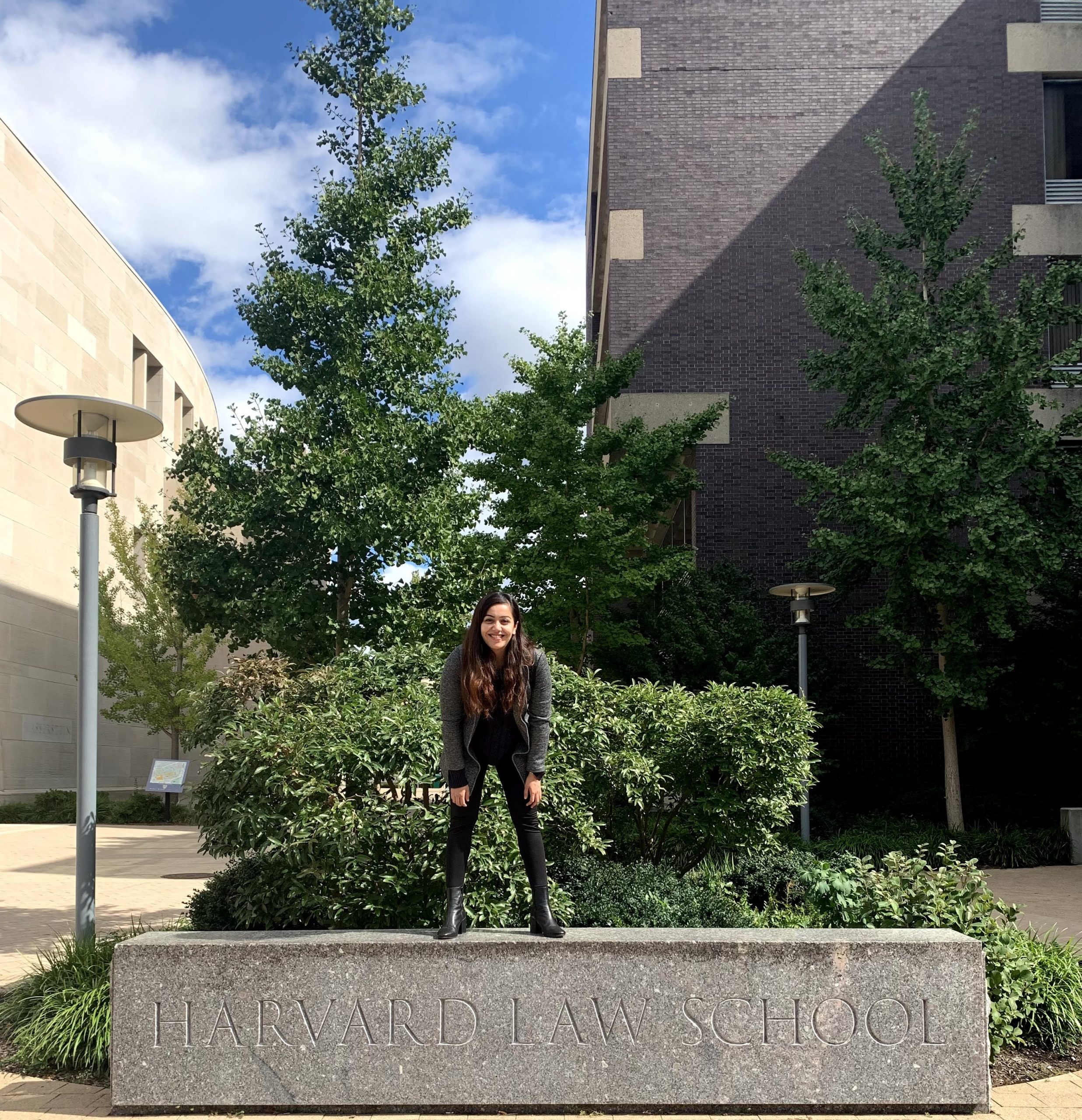
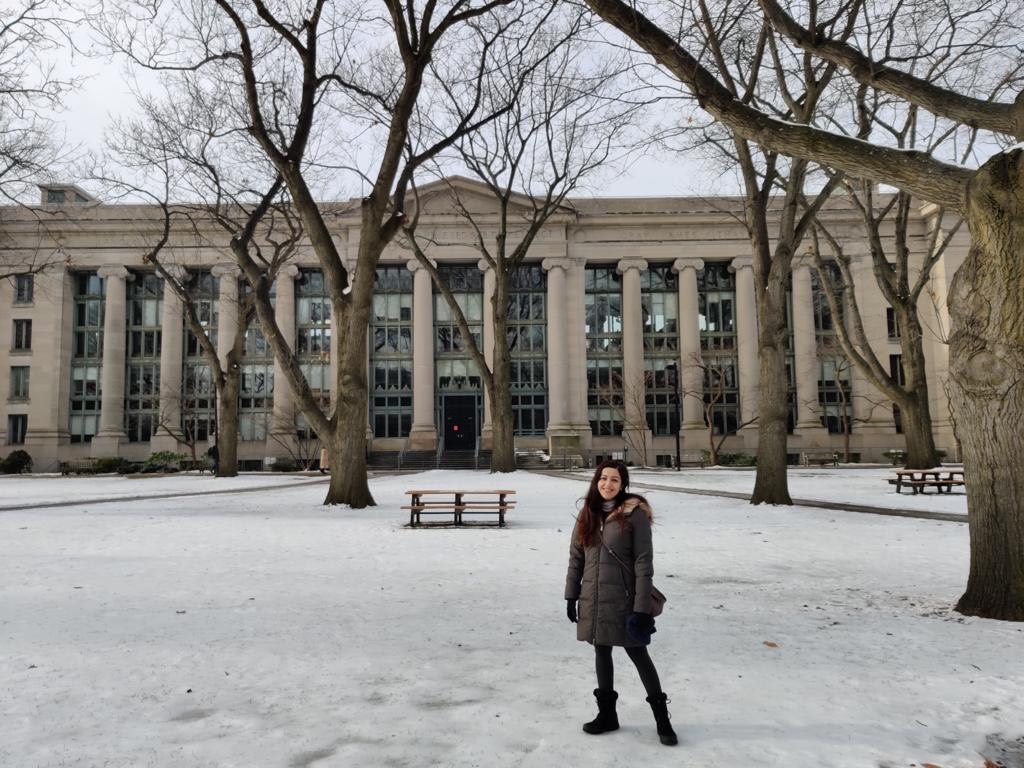
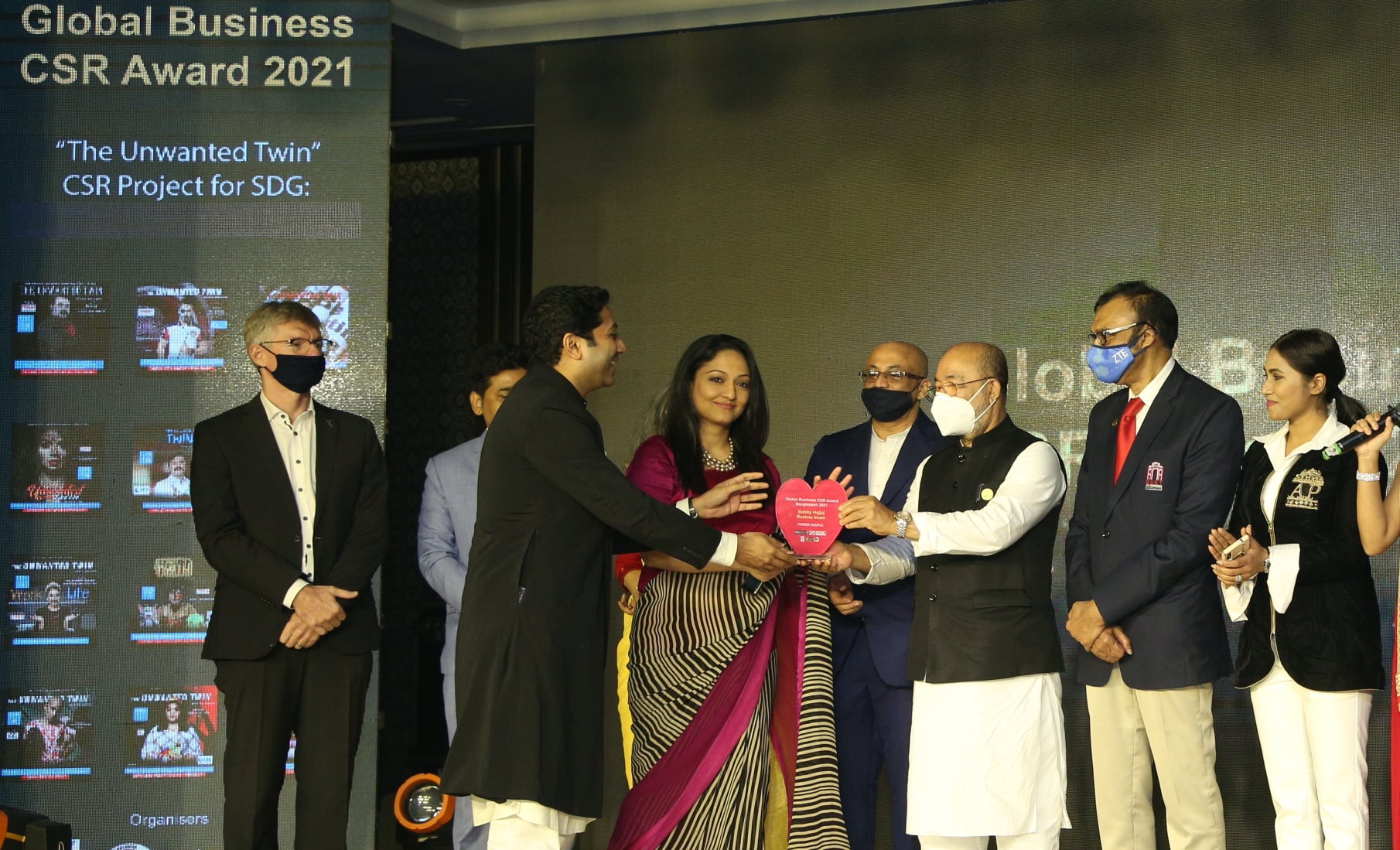

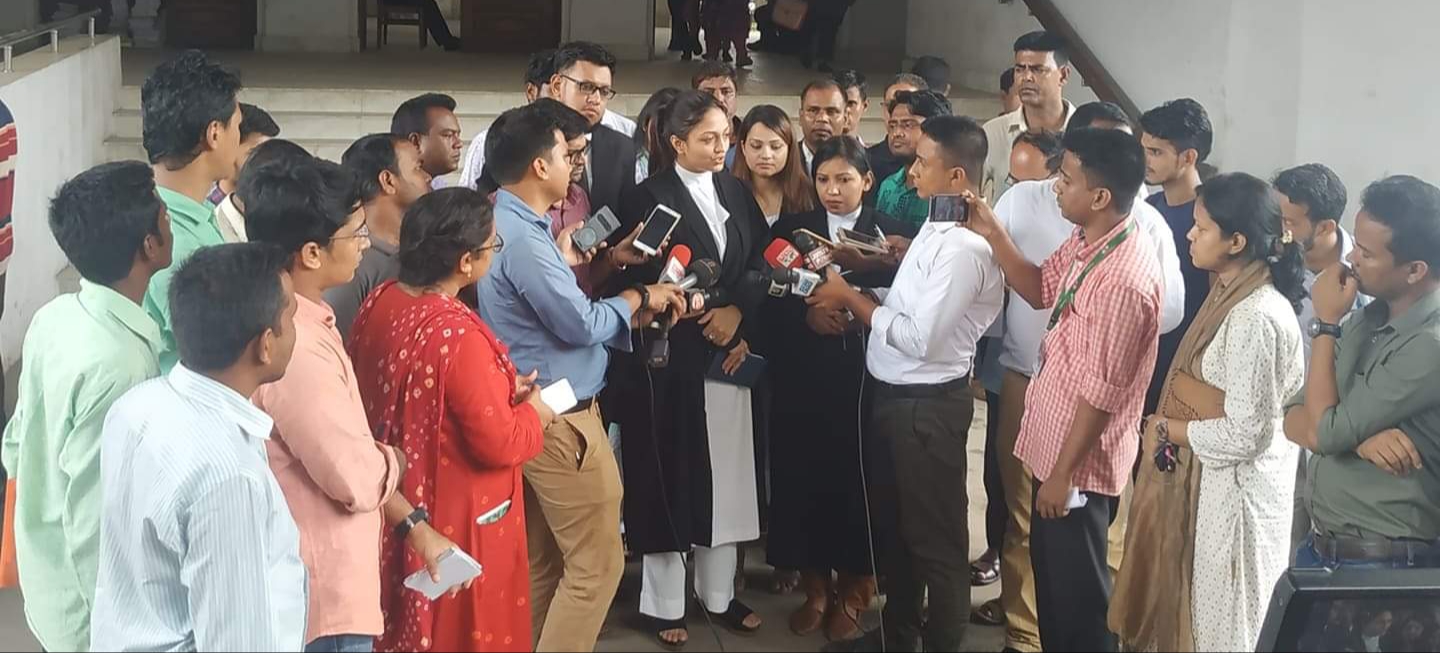


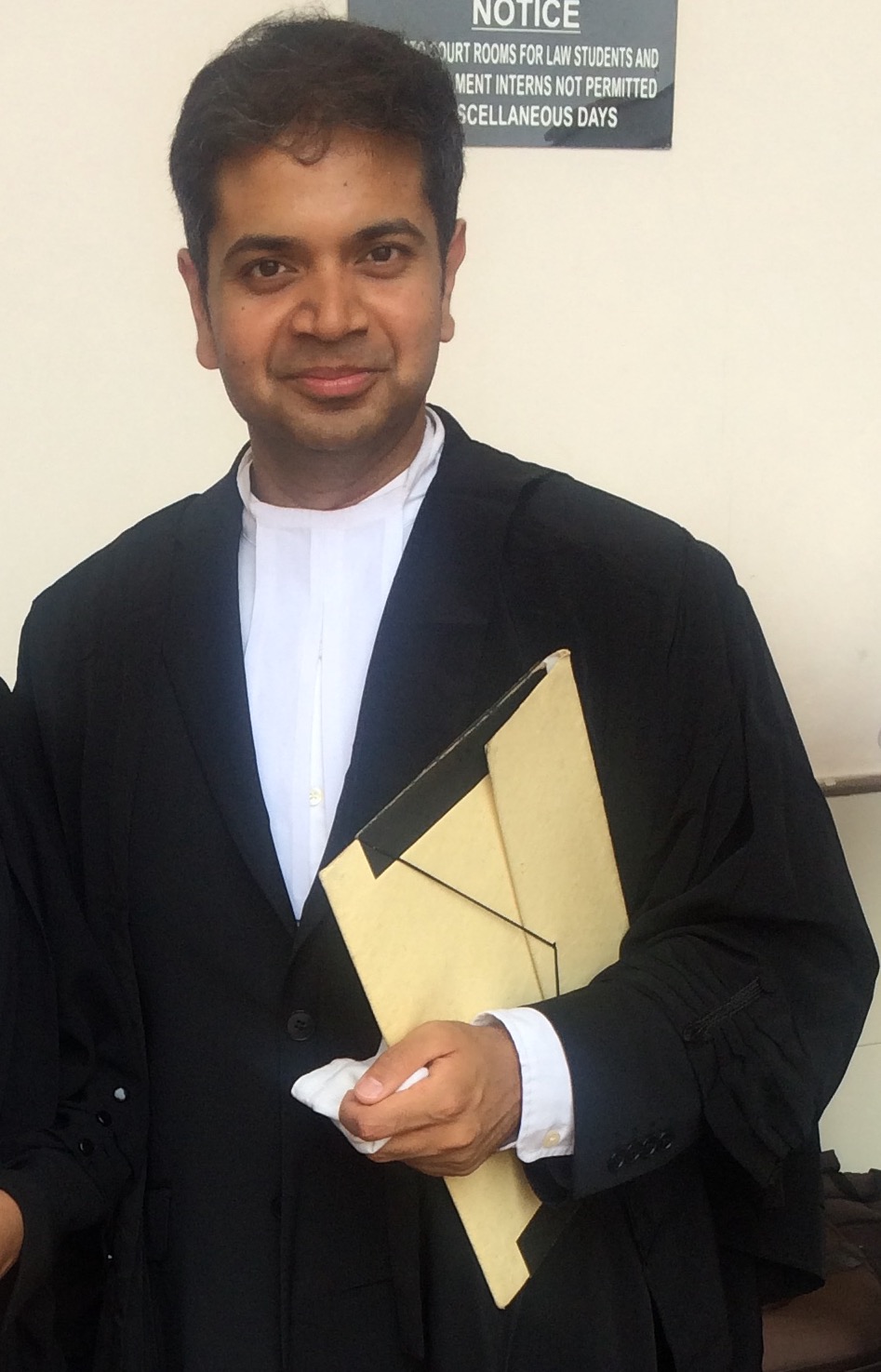
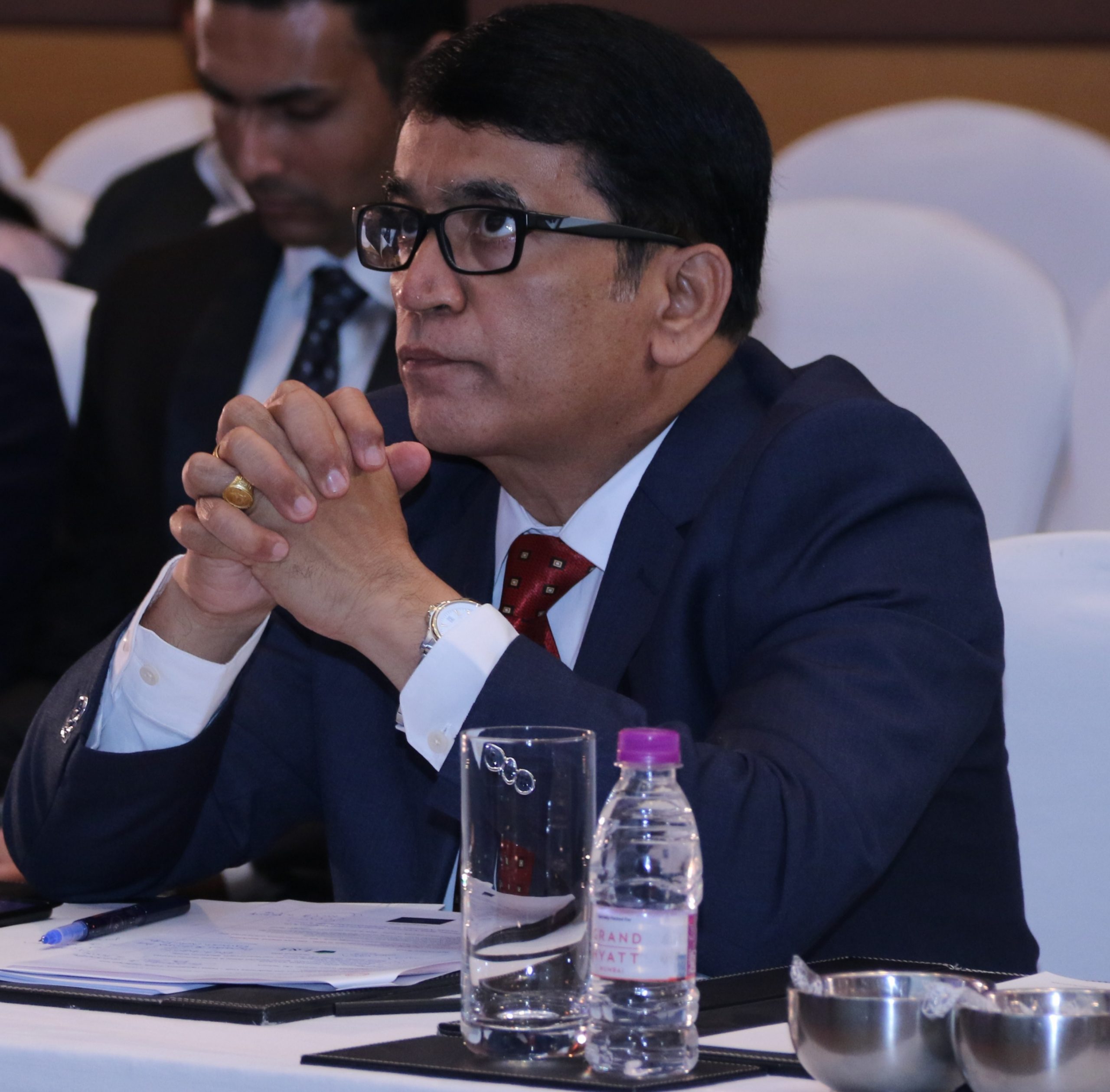
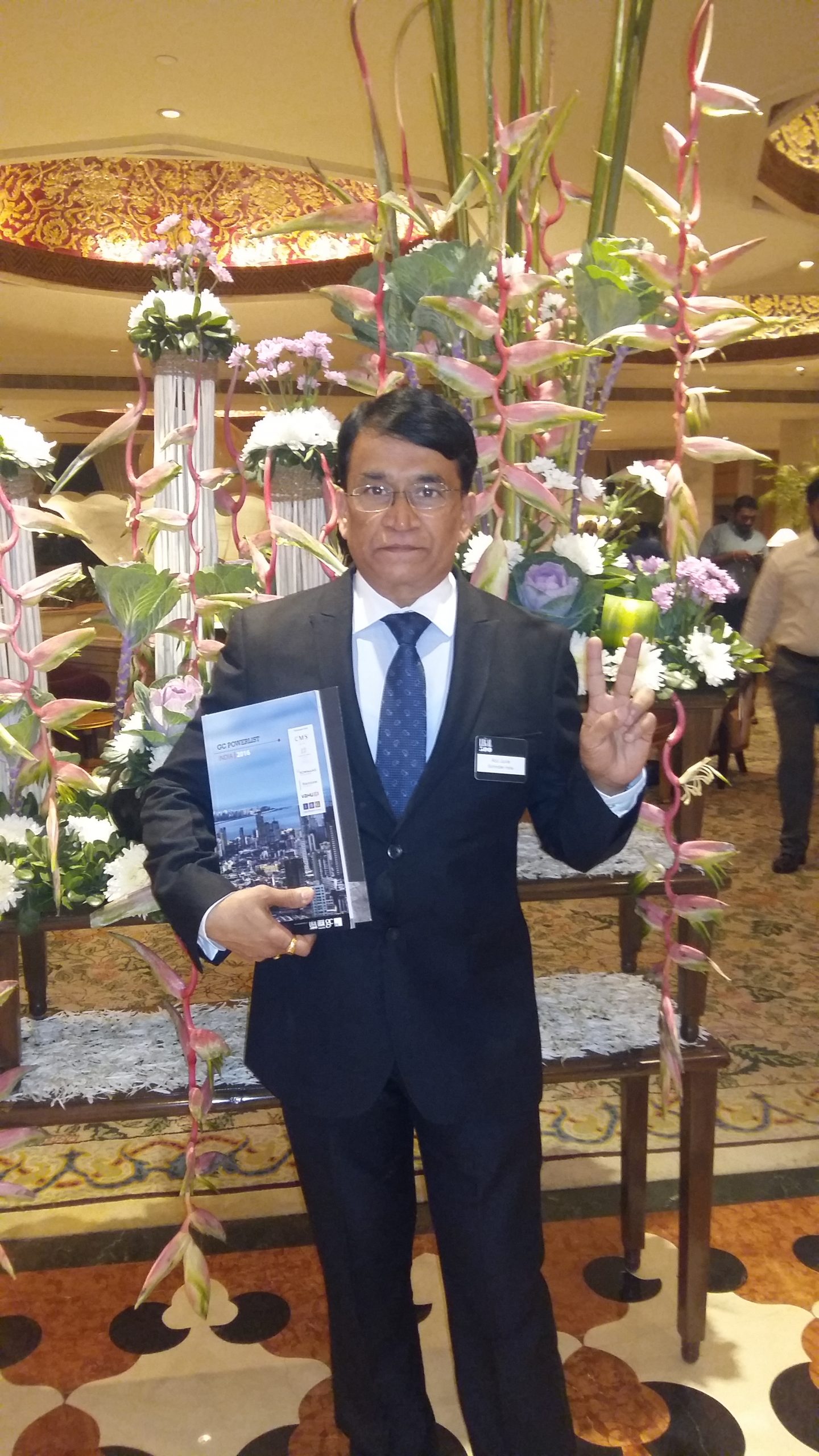


 Allow notifications